SB 1465: Contractors: civil actions: reporting.
- Session Year: 2017-2018
- House: Senate
- Latest Version Date: 2018-09-18
Existing law, the Contractors State License Law, provides for the licensure, regulation, and discipline of contractors by the Contractors State License Board. Existing law requires the board, with the approval of the Director of Consumer Affairs, to appoint a registrar of contractors to serve as the executive officer and secretary of the board. Under existing law, protection of the public is required to be the highest priority for the Contractors State License Board in exercising its licensing, regulatory, and disciplinary functions. Existing law requires a licensee to report to the registrar within 90 days of the date that the licensee has knowledge of the conviction of the licensee for any felony or any other crime substantially related to the qualifications, functions, and duties of a licensed contractor. Existing law also exempts from disclosure to the public a complaint resolved in favor of the contractor, as specified.
This bill would require a licensee to report to the registrar within 90 days of the date that the licensee has knowledge of any civil action resulting in a final judgment, executed settlement agreement, or final arbitration award in an action in which the licensee is named as a defendant or cross-defendant, that meets specified criteria, including that the amount or value of the judgment, settlement payment, or award is $1,000,000 or greater and that the action is the result of a claim for damages to a property or person allegedly caused by specified construction activities of a licensee on any part of a multifamily rental residential structure, as specified. The bill would require the registrar or a designee to review these reports, return them to the licensee, and take no further action if, upon review, the registrar or a designee makes any one of specified findings. The bill would deem a returned report to be a complaint resolved in favor of the licensee. The bill would further require, within 30 days of all or a portion of the insurers payment of the judgment, settlement payment, or award, an insurer providing a specified type of insurance to that licensee to report listed information relating to the judgment, settlement payment, or award to the registrar.
Existing constitutional provisions require that a statute that limits the right of access to the meetings of public bodies or the writings of public officials and agencies be adopted with findings demonstrating the interest protected by the limitation and the need for protecting that interest.
This bill would make legislative findings to that effect.
Existing law, the Contractors State License Law, provides for the licensure, regulation, and discipline of contractors by the Contractors State License Board. Existing law requires the board, with the approval of the Director of Consumer Affairs, to appoint a registrar of contractors to serve as the executive officer and secretary of the board. Under existing law, protection of the public is required to be the highest priority for the Contractors State License Board in exercising its licensing, regulatory, and disciplinary functions. Existing law requires a licensee to report to the registrar within 90 days of the date that the licensee has knowledge of the conviction of the licensee for any felony or any other crime substantially related to the qualifications, functions, and duties of a licensed contractor.
This bill would require a licensee to report to the registrar within 90 days of the date that the licensee has knowledge of any civil action resulting in a final judgment, executed settlement agreement, or final arbitration award against the licensee in an action in which the licensee is named as a defendant or cross-defendant, that meets specified criteria, including that the amount or value of the judgment, settlement payment, or award is $1,000,000 or greater and that the action is the result of a claim for damages to a property or person allegedly caused by specified construction activities of a licensee on any part of a multifamily rental residential structure, as specified. The bill would further require, within 30 days of all or a portion of the judgment, settlement payment, or award, an insurer providing a specified type of insurance to that licensee to report listed information relating to the judgment, settlement payment, or award to the registrar.
Existing law, the Contractors State License Law, provides for the licensure, regulation, and discipline of contractors by the Contractors State License Board. Existing law requires the board, with the approval of the Director of Consumer Affairs, to appoint a registrar of contractors to serve as the executive officer and secretary of the board. Under existing law, protection of the public is required to be the highest priority for the Contractors State License Board in exercising its licensing, regulatory, and disciplinary functions. Existing law requires a licensee to report to the registrar within 90 days of the date that the licensee has knowledge of the conviction of the licensee for any felony or any other crime substantially related to the qualifications, functions, and duties of a licensed contractor.
This bill would require a licensee to report to the registrar within 90 days of the date that the licensee has knowledge of any civil action or administrative action resulting in a final judgment, executed settlement agreement, or final arbitration award against the licensee that meets specified criteria, including that the amount or value of the judgment, settlement, settlement payment, or award is $1,000,000 or greater and that the action is the result of a claim for damages to a property or person allegedly caused by specified construction activities of a licensee on any part of a multifamily rental residential structure, as specified. The bill would further require, within 30 days of payment of all or a portion of the judgment, settlement, settlement payment, or award, an insurer providing a specified type of insurance to that licensee to report listed information relating to the judgment, settlement, settlement payment, or award to the registrar.
Existing law, the Contractors State License Law, provides for the licensure, regulation, and discipline of contractors by the Contractors State License Board. Existing law requires the board, with the approval of the Director of Consumer Affairs, to appoint a registrar of contractors to serve as the executive officer and secretary of the board. Under existing law, protection of the public is required to be the highest priority for the Contractors State License Board in exercising its licensing, regulatory, and disciplinary functions. Existing law requires a licensee to report to the registrar within 90 days of the date that the licensee has knowledge of the conviction of the licensee for any felony or any other crime substantially related to the qualifications, functions, and duties of a licensed contractor.
This bill would require a licensee to report to the registrar within 90 days of the date that the licensee has knowledge of any civil action or administrative action resulting in a final judgment, executed settlement agreement, or final arbitration award against the licensee that meets specified criteria, including that the amount or value of the judgment, settlement, or award is $1,000,000 or greater and that the action is the result of a claim for damages to a property or person allegedly caused by specified construction activities of a licensee on any part of a multifamily rental residential structure, as specified. The bill would further require, within 30 days of payment of all or a portion of the judgment, settlement, or award, an insurer providing a specified type of insurance to that licensee to report listed information relating to the judgment, settlement, or award to the registrar.
Under existing law, the Department of Consumer Affairs is comprised of boards that license and regulate various professions and vocations. Existing law provides that these boards are established to ensure that private businesses and professions are regulated to protect the people of this state. Under existing law, any board has the authority to appoint commissioners on examination, to give the whole or any portion of any examination, as specified. This bill would repeal the above provision authorizing any board to appoint commissioners for these purposes, and would make related, conforming changes.Under existing law, the Department of Consumer Affairs is comprised of boards that license and regulate various professions and vocations. Existing law provides that these boards are established to ensure that private businesses and professions are regulated to protect the people of this state. Under existing law, any board has the authority to appoint commissioners on examination, to give the whole or any portion of any examination, as specified.
This bill would repeal the above provision authorizing any board to appoint commissioners for these purposes, and would make related, conforming changes.
(a)A licensee shall report to the registrar in writing within 90 days after the licensee has knowledge of any civil action resulting in a final judgment, executed settlement agreement, or final arbitration award in which the licensee is named as a defendant or cross-defendant, filed on or after January 1, 2019, that meets all of the following criteria:
(1)The action alleges fraud, deceit, negligence, breach of contract or express or implied warranty, misrepresentation, incompetence, recklessness, wrongful death, or strict liability by the act or omission of a licensee while acting in the capacity of a contractor, whether as a general contractor or as a specialty contractor.
(2)The amount or value of the judgment, settlement payment, or arbitration award for which the licensee is named as a defendant or cross-defendant, is one million dollars ($1,000,000) or greater, not including investigative costs or prior repairs performed by the licensee.
(3)The action is the result of a claim for damages to a property or person that allegedly resulted in a failure or condition that creates a substantial risk of a failure in the load bearing portions of a multifamily rental residential structure.
(4)The action is the result of a claim for damages to a property or person that was allegedly caused by a licensees construction, repair, alteration to, subtraction from, improvement of, moving, wrecking, or demolishing of, any part of a multifamily rental residential structure, either personally or by or through others.
(5)The action, if a civil action, has been designated by a court of competent jurisdiction as a complex case pursuant to rules 3.400 to 3.403, inclusive, of the California Rules of Court because it involves a claim of construction defect or insurance coverage arising out of a construction defect claim, pursuant to paragraph (2) or (7) of subdivision (c) of Rule 3.400 of the California Rules of Court.
(b)This section shall not apply to residential construction subject to any part of Title 7 (commencing with Section 895) of Part 2 of Division 2 of the Civil Code.
(c)In an action that meets the criteria of this section, in which more than one contractor is named as a defendant or cross-defendant, all contractors who are apportioned any liability either by the court or pursuant to an agreement between parties, shall report the action pursuant to subdivision (a). This subdivision does not apply to a contractor who is named as a defendant or cross-defendant, but is assigned liability of less than fifteen thousand dollars ($15,000) in the action.
(d)The reports required by this section shall be signed by the licensee and shall set forth the license number of the licensee and the facts that constitute the reportable event. If the reportable event involves the action of a court, the report shall also set forth the following:
(1)The title of the matter.
(2)The court or agency name.
(3)The docket number.
(4)The claim or file number.
(5)The date on which the reportable event occurred.
(e)(1)The registrar or a designee shall review the reports required by this section. The registrar or designee shall return the report to the licensee and take no further action if, upon review, the registrar or a designee finds any of the following:
(A)The facts of the reportable event would not substantiate an allegation that a licensee has violated this chapter.
(B)There are reasonable grounds to believe that the public interest is sufficiently served by the existing resolution or disposition of the reportable event as reached by the parties to the action or by the court.
(C)Disciplinary action is unnecessary.
(2)Any report returned to a licensee pursuant to this subdivision shall be deemed to be a complaint resolved in favor of the licensee and the facts underlying the event as reported by the licensee shall not be subject to further review by the board, except upon receipt of an independent complaint involving the same underlying facts.
(3)If additional information is necessary to make the determination required by paragraph (1), the registrar or designee shall keep and regard the report as a complaint that shall be subject to Sections 7090 and 7091. The disclosure of any complaint referred to investigation pursuant to this section shall comply with the public disclosure provisions of Section 7124.6.
(f)Failure of a licensee to report to the registrar in the time and manner required by this section shall be grounds for disciplinary action. Criminal penalties shall not be imposed for a violation of this section.
(g)Except as provided in paragraphs (1) and (2) of subdivision (e), nothing in this section is intended to limit the registrars authority on his or her motion, or upon the verified written complaint of another, to investigate the actions of a contractor as specified in Section 7090.
SEC. 2.Section 7071.21 is added to the Business and Professions Code, to read:7071.21.(a)An insurer providing a licensee commercial general liability insurance, construction defect insurance, or professional liability insurance shall report to the registrar within 30 days of all or a portion of the insurers payment of a civil action judgment, settlement payment, or arbitration award, that meets all of the requirements of Section 7071.20, against the licensee all of the following:
(1)The name and license number of the licensee.
(2)The claim or file number.
(3)The amount or value of the judgment, settlement payment, or arbitration award.
(4)The amount paid by the insurer.
(5)The identity of the payee.
(b)(1)The registrar or a designee shall review the reports required by this section. The registrar or designee shall return the report to the licensee and take no further action if, upon review, the registrar or a designee finds any of the following:
(A)The facts of the reportable event would not substantiate an allegation that a licensee has violated this chapter.
(B)There are reasonable grounds to believe that the public interest is sufficiently served by the existing resolution or disposition of the reportable event as reached by the parties to the action or by the court.
(C)Disciplinary action is unnecessary.
(2)Any report returned to a licensee pursuant to this subdivision shall be deemed to be a complaint resolved in favor of the licensee and the facts underlying the event as reported by the licensee shall not be subject to further review by the board, except upon receipt of an independent complaint involving the same underlying facts.
(3)If additional information is necessary to make the determination required by paragraph (1), the registrar or designee shall keep and regard the report as a complaint that shall be subject to Sections 7090 and 7091. The disclosure of any complaint referred to investigation pursuant to this section shall comply with the public disclosure provisions of Section 7124.6.
(c)Except as provided in paragraphs (1) and (2) of subdivision (b), nothing in this section is intended to limit the registrars authority on his or her motion, or upon the verified written complaint of another, to investigate the actions of a contractor as specified in Section 7090.
SEC. 3.Section 7071.22 is added to the Business and Professions Code, to read:7071.22.(a)Sections 7071.20 and 7071.21 shall apply if a party to the civil action, judgment, settlement payment, or arbitration award is or was a licensee, as defined in Section 7096, or was a member of the personnel of the record, a person, or a qualifying person, as those terms are defined in Section 7025.
(b)Notwithstanding any other law, a licensee or person providing a report to the registrar pursuant to Section 7071.20 or 7071.21 shall not be considered to have violated a confidential settlement agreement or other confidential agreement.
(c)The board may adopt regulations to further the purposes of Sections 7071.20 and 7071.21, specifically with regard to the reporting requirements of those sections.
SEC. 4.The Legislature finds and declares that Sections 1 and 2 of this act, which add Sections 7071.20 and 7071.21 to the Business and Professions Code, impose a limitation on the publics right of access to the meetings of public bodies or the writings of public officials and agencies within the meaning of Section 3 of Article I of the California Constitution. Pursuant to that constitutional provision, the Legislature makes the following findings to demonstrate the interest protected by this limitation and the need for protecting that interest:
In order to allow the Contractors State License Board to fully accomplish its regulatory and disciplinary goals, it is necessary to limit access to the reports required by those sections that are favorable to licensees.
(a)A licensee shall report to the registrar in writing within 90 days after the licensee has knowledge of any civil action resulting in a final judgment, executed settlement agreement, or final arbitration award in which the licensee is named as a defendant or cross-defendant, filed on or after January 1, 2019, that meets all of the following criteria:
(1)The action alleges fraud, deceit, negligence, breach of contract or express or implied warranty, misrepresentation, incompetence, recklessness, wrongful death, or strict liability by the act or omission of a licensee while acting in the capacity of a contractor, whether as a general contractor or as a specialty contractor.
(2)The amount or value of the judgment, settlement payment, or arbitration award for which the licensee is named as a defendant or cross-defendant, is one million dollars ($1,000,000) or greater, not including investigative costs or prior repairs performed by the licensee.
(3)The action is the result of a claim for damages to a property or person that allegedly resulted in a failure or condition that would probably result in creates a substantial risk of a failure in the load bearing portions of a multifamily rental residential structure, which portions of the structure are not constructed in compliance with the codes in effect at the time of construction and that the failure or condition results in the inability to reasonably use the affected portion of the structure for which it was intended. structure.
(4)The action is the result of a claim for damages to a property or person that was allegedly caused by a licensees construction, repair, alteration to, subtraction from, improvement of, moving, wrecking, or demolishing of, any part of a multifamily rental residential structure, either personally or by or through others.
(5)The action, if a civil action, has been designated by a court of competent jurisdiction as a complex case pursuant to rules 3.400 to 3.403, inclusive, of the California Rules of Court because it involves a claim of construction defect or insurance coverage arising out of a construction defect claim, pursuant to paragraph (2) or (7) of subdivision (c) of Rule 3.400 of the California Rules of Court.
(b)This section shall not apply to residential construction subject to any part of Title 7 (commencing with Section 895) of Part 2 of Division 2 of the Civil Code.
(c)In an action that meets the criteria of this section, in which more than one contractor is named as a defendant or cross-defendant, all contractors who are apportioned any liability either by the court or pursuant to an agreement between parties, shall report the action pursuant to subdivision (a). This subdivision does not apply to a contractor who is named as a defendant or cross-defendant, but is not assigned any liability of less than fifteen thousand dollars ($15,000) in the action.
(d)The reports required by this section shall be signed by the licensee and shall set forth the license number of the licensee and the facts that constitute the reportable event. If the reportable event involves the action of a court, the report shall also set forth the following:
(1)The title of the matter.
(2)The court or agency name.
(3)The docket number.
(4)The claim or file number.
(5)The date on which the reportable event occurred.
(e)(1)The(e)(1)The registrar or a designee shall review the reports required by this section. The registrar or designee shall return the report to the licensee and take no further action if, upon review, the registrar or a designee finds any of the following:
(A)The facts of the reportable event would not substantiate an allegation that a licensee has violated this chapter.
(B)There are reasonable grounds to believe that the public interest is sufficiently served by the existing resolution or disposition of the reportable event as reached by the parties to the action or by the court.
(C)Disciplinary action is unnecessary.
(2)Any report returned to a licensee pursuant to this subdivision shall be deemed to be a complaint resolved in favor of the licensee and the facts underlying the event as reported by the licensee shall not be subject to further review by the board, except upon receipt of an independent complaint involving the same underlying facts.
(3)If additional information is necessary to make the determination required by paragraph (1), the registrar or designee shall keep and regard the report as a complaint that shall be subject to Sections 7090 and 7091. The disclosure of any complaint referred to investigation pursuant to this section shall comply with the public disclosure provisions of Section 7124.6.
(f)Failure of a licensee to report to the registrar in the time and manner required by this section shall be grounds for disciplinary action. Criminal penalties shall not be imposed for a violation of this section.
(g)Except as provided in paragraphs (1) and (2) of subdivision (e), nothing in this section is intended to limit the registrars authority on his or her motion, or upon the verified written complaint of another, to investigate the actions of a contractor as specified in Section 7090.
SEC. 2.Section 7071.21 is added to the Business and Professions Code, to read:7071.21.(a)An insurer providing a licensee commercial general liability insurance, construction defect insurance, or professional liability insurance shall report to the registrar within 30 days of all or a portion of the insurers payment of a civil action judgment, settlement payment, or arbitration award, that meets all of the requirements of Section 7071.20, against the licensee all of the following:
(1)The name and license number of the licensee.
(2)The claim or file number.
(3)The amount or value of the judgment, settlement payment, or arbitration award.
(4)The amount paid by the insurer.
(5)The identity of the payee.
(b)(1)The(b)(1)The registrar or a designee shall review the reports required by this section. The registrar or designee shall return the report to the licensee and take no further action if, upon review, the registrar or a designee finds any of the following:
(A)The facts of the reportable event would not substantiate an allegation that a licensee has violated this chapter.
(B)There are reasonable grounds to believe that the public interest is sufficiently served by the existing resolution or disposition of the reportable event as reached by the parties to the action or by the court.
(C)Disciplinary action is unnecessary.
(2)Any report returned to a licensee pursuant to this subdivision shall be deemed to be a complaint resolved in favor of the licensee and the facts underlying the event as reported by the licensee shall not be subject to further review by the board, except upon receipt of an independent complaint involving the same underlying facts.
(3)If additional information is necessary to make the determination required by paragraph (1), the registrar or designee shall keep and regard the report as a complaint that shall be subject to Sections 7090 and 7091. The disclosure of any complaint referred to investigation pursuant to this section shall comply with the public disclosure provisions of Section 7124.6.
(c)Except as provided in paragraphs (1) and (2) of subdivision (b), nothing in this section is intended to limit the registrars authority on his or her motion, or upon the verified written complaint of another, to investigate the actions of a contractor as specified in Section 7090.
SEC. 3.Section 7071.22 is added to the Business and Professions Code, to read:7071.22.(a)Sections 7071.20 and 7071.21 shall apply if a party to the civil action, judgment, settlement payment, or arbitration award is or was a licensee, as defined in Section 7096, or was a member of the personnel of the record, a person, or a qualifying person, as those terms are defined in Section 7025.
(b)Notwithstanding any other law, a licensee or person providing a report to the registrar pursuant to Section 7071.20 or 7071.21 shall not be considered to have violated a confidential settlement agreement or other confidential agreement.
(c)The board may adopt regulations to further the purposes of Sections 7071.20 and 7071.21, specifically with regard to the reporting requirements of those sections.
SEC. 4.The Legislature finds and declares that Sections 2 and 3 1 and 2 of this act, which add Sections 7071.20 and 7071.21 to the Business and Professions Code, imposes impose a limitation on the publics right of access to the meetings of public bodies or the writings of public officials and agencies within the meaning of Section 3 of Article I of the California Constitution. Pursuant to that constitutional provision, the Legislature makes the following findings to demonstrate the interest protected by this limitation and the need for protecting that interest:
In order to allow the Contractors State License Board to fully accomplish its regulatory and disciplinary goals, it is necessary to limit access to the reports required by those sections that are favorable to licensees.
(a)A licensee shall report to the registrar in writing within 90 days after the licensee has knowledge of any civil action final judgment, executed settlement agreement, or final arbitration award resulting in a final judgment, executed settlement agreement, or final arbitration award in which the licensee is named as a defendant or cross-defendant, filed on or after January 1, 2019, that meets all of the following criteria:
(1)The action alleges fraud, deceit, negligence, breach of contract or express or implied warranty, misrepresentation, incompetence, recklessness, wrongful death, or strict liability by the act or omission of a licensee while acting in the capacity of a contractor, whether as a general contractor or as a specialty contractor.
(2)The amount or value of the judgment, settlement payment, or arbitration award for which the licensee is named as a defendant or cross-defendant, is one million dollars ($1,000,000) or greater, not including investigative costs or prior repairs performed by the licensee.
(3)The action is the result of a claim for damages to a property or person that allegedly resulted in a failure or condition that would probably result in a failure in the load bearing portions of a multifamily rental residential structure, which portions of the structure are not constructed in compliance with the codes in effect at the time of construction and that the failure or condition results in the inability to reasonably use the affected portion of the structure for which it was intended.
(4)The action is the result of a claim for damages to a property or person that was allegedly caused by a licensees construction, repair, alteration to, subtraction from, improvement of, moving, wrecking, or demolishing of, any part of a multifamily rental residential structure, either personally or by or through others.
(5)The action, if a civil action, has been designated by a court of competent jurisdiction as a complex case pursuant to rules 3.400 to 3.403, inclusive, of the California Rules of Court because it involves a claim of construction defect or insurance coverage arising out of a construction defect claim, pursuant to paragraph (2) or (7) of subdivision (c) of Rule 3.400 of the California Rules of Court.
(b)This section shall not apply to residential construction subject to any part of Title 7 (commencing with Section 895) of Part 2 of Division 2 of the Civil Code.
(c)In an action that meets the criteria of this section, in which more than one contractor is named as a defendant or cross-defendant, all contractors who are apportioned any liability either by the court or pursuant to an agreement between parties, shall report the action pursuant to subdivision (a). This subdivision does not apply to a contractor who is named as a defendant or cross-defendant, but is not assigned any liability in the action.
(d)The reports required by this section shall be signed by the licensee and shall set forth the license number of the licensee and the facts that constitute the reportable event. If the reportable event involves the action of a court, the report shall also set forth the following:
(1)The title of the matter.
(2)The court or agency name.
(3)The docket number.
(4)The claim or file number.
(5)The date on which the reportable event occurred.
(e)The reports required by this section shall be regarded by the registrar as
(1)The registrar or a designee shall review the reports required by this section. The registrar or designee shall return the report to the licensee and take no further action if, upon review, the registrar or a designee finds any of the following:
(A)The facts of the reportable event would not substantiate an allegation that a licensee has violated this chapter.
(B)There are reasonable grounds to believe that the public interest is sufficiently served by the existing resolution or disposition of the reportable event as reached by the parties to the action or by the court.
(C)Disciplinary action is unnecessary.
(2)Any report returned to a licensee pursuant to this subdivision shall be deemed to be a complaint resolved in favor of the licensee and the facts underlying the event as reported by the licensee shall not be subject to further review by the board, except upon receipt of an independent complaint involving the same underlying facts.
(3)If additional information is necessary to make the determination required by paragraph (1), the registrar or designee shall keep and regard the report as a complaint that shall be subject to the provisions of Sections 7090 and 7091. The disclosure of any complaint referred to investigation pursuant to this section shall comply with the public disclosure provisions of Section 7124.6.
(f)Failure of a licensee to report to the registrar in the time and manner required by this section shall be grounds for disciplinary action. Criminal penalties shall not be imposed for a violation of this section.
SEC. 2.Section 7071.21 is added to the Business and Professions Code, to read:7071.21.(a)An insurer providing a licensee commercial general liability insurance, construction defect insurance, or professional liability insurance shall report to the registrar within 30 days of all or a portion of the insurers payment of a civil action judgment, settlement payment, or arbitration award, that meets all of the requirements of Section 7071.20, against the licensee all of the following:
(1)The name and license number of the licensee.
(2)The claim or file number.
(3)The amount or value of the judgment, settlement payment, or arbitration award.
(4)The amount paid by the insurer.
(5)The identity of the payee.
(b)The reports required by this section shall be regarded by the registrar as
(1)The registrar or a designee shall review the reports required by this section. The registrar or designee shall return the report to the licensee and take no further action if, upon review, the registrar or a designee finds any of the following:
(A)The facts of the reportable event would not substantiate an allegation that a licensee has violated this chapter.
(B)There are reasonable grounds to believe that the public interest is sufficiently served by the existing resolution or disposition of the reportable event as reached by the parties to the action or by the court.
(C)Disciplinary action is unnecessary.
(2)Any report returned to a licensee pursuant to this subdivision shall be deemed to be a complaint resolved in favor of the licensee and the facts underlying the event as reported by the licensee shall not be subject to further review by the board, except upon receipt of an independent complaint involving the same underlying facts.
(3)If additional information is necessary to make the determination required by paragraph (1), the registrar or designee shall keep and regard the report as a complaint that shall be subject to the provisions of Sections 7090 and 7091. The disclosure of any complaint referred to investigation pursuant to this section shall comply with the public disclosure provisions of Section 7124.6.
SEC. 3.Section 7071.22 is added to the Business and Professions Code, to read:7071.22.(a)Sections 7071.20 and 7071.21 shall apply if a party to the civil action, judgment, settlement payment, or arbitration award is or was a licensee, as defined in Section 7096, or was a member of the personnel of the record, a person, or a qualifying person, as those terms are defined in Section 7025.
(b)Notwithstanding any other law, a licensee or person providing a report to the registrar pursuant to Section 7071.20 or 7071.21 shall not be considered to have violated a confidential settlement agreement or other confidential agreement.
(c)The board may adopt regulations to further the purposes of Sections 7071.20 and 7071.21, specifically with regard to the reporting requirements of those sections.
SEC. 4.The Legislature finds and declares that Sections 2 and 3 of this act, which add Sections 7071.20 and 7071.21 to the Business and Professions Code, imposes a limitation on the publics right of access to the meetings of public bodies or the writings of public officials and agencies within the meaning of Section 3 of Article I of the California Constitution. Pursuant to that constitutional provision, the Legislature makes the following findings to demonstrate the interest protected by this limitation and the need for protecting that interest:
In order to allow the Contractors State License Board to fully accomplish its regulatory and disciplinary goals, it is necessary to limit access to the reports required by those sections that are favorable to licensees.
(a)A licensee shall report to the registrar in writing within 90 days after the licensee has knowledge of any civil action final judgment, executed settlement agreement, or final arbitration award resulting in a final judgment, executed settlement agreement, or final arbitration award in which the licensee is named in a defending capacity, as a defendant or cross-defendant, filed on or after January 1, 2019, that meets all of the following criteria:
(1)The action alleges fraud, deceit, negligence, breach of contract or express or implied warranty, misrepresentation, incompetence, recklessness, wrongful death, or strict liability by the act or omission of a licensee while acting in the capacity of a contractor, whether as a general contractor or as a specialty contractor.
(2)The amount or value of the judgment, settlement payment, or arbitration award against the licensee for which the licensee is named as a defendant or cross-defendant, is one million dollars ($1,000,000) or greater, not including investigative costs or prior repairs performed by the licensee.
(3)The action is the result of a claim for damages to a property or person that allegedly resulted in a failure or condition that would probably result in a failure in the load bearing portions of a multifamily rental residential structure, which portions of the structure are not constructed in compliance with the codes in effect at the time of construction and that the failure or condition results in the inability to reasonably use the affected portion of the structure for which it was intended.
(4)The action is the result of a claim for damages to a property or person that was allegedly caused by a licensees construction, repair, alteration to, subtraction from, improvement of, moving, wrecking, or demolishing of, any part of a multifamily rental residential structure, either personally or by or through others.
(5)The action, if a civil action, has been designated by a court of competent jurisdiction as a complex case pursuant to rules 3.400 to 3.403, inclusive, of the California Rules of Court because it involves a claim of construction defect or insurance coverage arising out of a construction defect claim, pursuant to paragraph (2) or (7) of subdivision (c) of Rule 3.400 of the California Rules of Court.
(b)This section shall not apply to residential construction subject to any part of Title 7 (commencing with Section 895) of Part 2 of Division 2 of the Civil Code.
(c)In an action that meets the criteria of this section, in which more than one contractor is named as a defendant or cross-defendant, all contractors who are apportioned any liability either by the court or pursuant to an agreement between parties, shall report the action pursuant to subdivision (a). This subdivision does not apply to a contractor who is named as a defendant or cross-defendant, but is not assigned any liability in the action.
(c)(d)The reports required by this section shall be signed by the licensee and shall set forth the license number of the licensee and the facts that constitute the reportable event. If the reportable event involves the action of a court, the report shall also set forth the following:
(1)The title of the matter.
(2)The court or agency name.
(3)The docket number.
(4)The claim or file number.
(5)The date on which the reportable event occurred.
(d)(e)The reports required by this section shall be regarded by the registrar as a complaint that shall be subject to the provisions of Sections 7090 and 7091. The disclosure of any complaint referred to investigation pursuant to this section shall comply with the public disclosure provisions of Section 7124.6.
(e)(f)Failure of a licensee to report to the registrar in the time and manner required by this section shall be grounds for disciplinary action. Criminal penalties shall not be imposed for a violation of this section.
SEC. 2.Section 7071.21 is added to the Business and Professions Code, to read:7071.21.(a)An insurer providing a licensee commercial general liability insurance, construction defect insurance, or professional liability insurance shall report to the registrar within 30 days of all or a portion of a civil action judgment, settlement payment, or arbitration award, that meets all of the requirements of Section 7071.20, against the licensee all of the following:
(1)The name and license number of the licensee.
(2)The claim or file number.
(3)The amount or value of the judgment, settlement payment, or arbitration award.
(4)The amount paid by the insurer.
(5)The identity of the payee.
(b)The reports required by this section shall be regarded by the registrar as a complaint that shall be subject to the provisions of Sections 7090 and 7091. The disclosure of any complaint referred to investigation pursuant to this section shall comply with the public disclosure provisions of Section 7124.6.
SEC. 3.Section 7071.22 is added to the Business and Professions Code, to read:7071.22.(a)Sections 7071.20 and 7071.21 shall apply if a party to the civil action, judgment, settlement payment, or arbitration award is or was a licensee, as defined in Section 7096, or was a member of the personnel of the record, a person, or a qualifying person, as those terms are defined in Section 7025.
(b)Notwithstanding any other law, a licensee or person providing a report to the registrar pursuant to Section 7071.20 or 7071.21 shall not be considered to have violated a confidential settlement agreement or other confidential agreement.
(c)The board may adopt regulations to further the purposes of Sections 7071.20 and 7071.21, specifically with regard to the reporting requirements of those sections.
(a)A licensee shall report to the registrar in writing within 90 days after the licensee has knowledge of any civil action final judgment, executed settlement agreement, or final arbitration award or administrative action resulting in a final judgment, executed settlement agreement, or final arbitration award in which the licensee is named in a defending capacity, filed on or after January 1, 2019, that meets all of the following criteria:
(1)The action alleges fraud, deceit, negligence, breach of contract or express or implied warranty, misrepresentation, incompetence, recklessness, wrongful death, or strict liability by the act or omission of a licensee while acting in the capacity of a contractor, whether as a general contractor or as a specialty contractor.
(2)The amount or value of the judgment, settlement, settlement payment, or arbitration award against the licensee is one million dollars ($1,000,000) or greater, not including investigative costs. costs or prior repairs performed by the licensee.
(3)The action is the result of a claim for damages to a property or person that allegedly resulted in a failure or condition that would pose a substantial risk of probably result in a failure in the load bearing portions of a multifamily rental residential structure, which portions of the structure are not constructed in compliance with the codes in effect at the time of construction and that the failure or condition results in the inability to reasonably use the affected portion of the structure for which it was intended.
(4)The action is the result of a claim for damages to a property or person that was allegedly caused by a licensees construction, repair, alteration to, subtraction from, improvement of, moving, wrecking, or demolishing of, any part of a multifamily rental residential structure, either personally or by or through others.
(5)The action, if a civil action, has been designated by a court of competent jurisdiction as a complex case pursuant to rules 3.400 to 3.403, inclusive, of the California Rules of Court because it involves a claim of construction defect or insurance coverage arising out of a construction defect claim, pursuant to paragraph (2) or (7) of subdivision (c) of Rule 3.400 of the California Rules of Court.
(b)This section shall not apply to residential construction subject to any part of Title 7 (commencing with Section 895) of Part 2 of Division 2 of the Civil Code.
(c)The reports required by this section shall be signed by the licensee and shall set forth the license number of the licensee and the facts that constitute the reportable event. If the reportable event involves the action of an administrative agency or a court, the report shall also set forth the following:
(1)The title of the matter.
(2)The court or agency name.
(3)The docket number.
(4)The claim or file number.
(5)The date on which the reportable event occurred.
(d)The reports required by this section shall be regarded by the registrar as a complaint that shall be subject to the provisions of Sections 7090 and 7091. The disclosure of any complaint referred to investigation pursuant to this section shall comply with the public disclosure provisions of Section 7124.6.
(e)Failure of a licensee to report to the registrar in the time and manner required by this section shall be grounds for disciplinary action. Criminal penalties shall not be imposed for a violation of this section.
SEC. 2.Section 7071.21 is added to the Business and Professions Code, to read:7071.21.(a)An insurer providing a licensee commercial general liability insurance, construction defect insurance, or professional liability insurance shall report to the registrar within 30 days of payment of all or a portion of a civil action judgment, settlement, settlement payment, or arbitration award, that meets all of the requirements of Section 7071.20, against the licensee all of the following:
(1)The name and license number of the licensee.
(2)The claim or file number.
(3)The amount or value of the judgment, settlement, settlement payment, or arbitration award.
(4)The amount paid by the insurer.
(5)The identity of the payee.
(b)The reports required by this section shall be regarded by the registrar as a complaint that shall be subject to the provisions of Sections 7090 and 7091. The disclosure of any complaint referred to investigation pursuant to this section shall comply with the public disclosure provisions of Section 7124.6.
SEC. 3.Section 7071.22 is added to the Business and Professions Code, to read:7071.22.(a)Sections 7071.20 and 7071.21 shall apply if a party to the civil action, judgment, settlement, settlement payment, or arbitration award or administrative action is or was a licensee, as defined in Section 7096, or was a member of the personnel of the record, a person, or a qualifying person, as those terms are defined in Section 7025.
(b)Notwithstanding any other law, a licensee or person providing a report to the registrar pursuant to Section 7071.20 or 7071.21 shall not be considered to have violated a confidential settlement agreement or other confidential agreement.
(c)The board may adopt regulations to further the purposes of Sections 7071.20 and 7071.21, specifically with regard to the reporting requirements of those sections.
(a)A licensee shall report to the registrar in writing within 90 days after the licensee has knowledge of any civil action final judgment, executed settlement agreement, or final arbitration award or administrative action resulting in a final judgment, executed settlement agreement, or final arbitration award in which the licensee is named in a defending capacity, filed on or after January 1, 2019, that meets all of the following criteria:
(1)The action alleges fraud, deceit, negligence, breach of contract or express or implied warranty, misrepresentation, incompetence, recklessness, wrongful death, or strict liability by the act or omission of a licensee while acting in the capacity of a contractor, whether as a general contractor or as a specialty contractor.
(2)The amount or value of the judgment, settlement, or arbitration award against the licensee is one million dollars ($1,000,000) or greater, not including investigative costs.
(3)The action is the result of a claim for damages to a property or person that allegedly resulted in a failure or condition that would pose a substantial risk of a failure in the load bearing portions of a multifamily rental residential structure, which portions of the structure are not constructed in compliance with the codes in effect at the time of construction and that the failure or condition results in the inability to reasonably use the affected portion of the structure for which it was intended.
(4)The action is the result of a claim for damages to a property or person that was allegedly caused by a licensees construction, repair, alteration to, subtraction from, improvement of, moving, wrecking, or demolishing of, any part of a multifamily rental residential structure, either personally or by or through others.
(5)The action, if a civil action, has been designated by a court of competent jurisdiction as a complex case pursuant to rules 3.400 to 3.403, inclusive, of the California Rules of Court because it involves a claim of construction defect or insurance coverage arising out of a construction defect claim, pursuant to paragraph (2) or (7) of subdivision (c) of Rule 3.400 of the California Rules of Court.
(b)This section shall not apply to residential construction subject to any part of Title 7 (commencing with Section 895) of Part 2 of Division 2 of the Civil Code.
(c)The reports required by this section shall be signed by the licensee and shall set forth the license number of the licensee and the facts that constitute the reportable event. If the reportable event involves the action of an administrative agency or court, the report shall also set forth the following:
(1)The title of the matter.
(2)The court or agency name.
(3)The docket number.
(4)The claim or file number.
(5)The date on which the reportable event occurred.
(d)The reports required by this section shall be regarded by the registrar as a complaint that shall be subject to the provisions of Sections 7090 and 7091. The disclosure of any complaint referred to investigation pursuant to the this section shall comply with the public disclosure provisions of Section 7124.6.
(e)Failure of a licensee to report to the registrar in the time and manner required by this section shall be grounds for disciplinary action. Criminal penalties shall not be imposed for a violation of this section.
SEC. 2.Section 7071.21 is added to the Business and Professions Code, to read:7071.21.(a)An insurer providing a licensee commercial general liability insurance, construction defect insurance, or professional liability insurance shall report to the registrar within 30 days of payment of all or a portion of a civil action judgment, settlement, or arbitration award, that meets all of the requirements of Section 7071.20, against the licensee all of the following:
(1)The name and license number of the licensee.
(2)The claim or file number.
(3)The amount or value of the judgment, settlement, or arbitration award.
(4)The amount paid by the insurer.
(5)The identity of the payee.
(b)The reports required by this section shall be regarded by the registrar as a complaint that shall be subject to the provisions of Sections 7090 and 7091. The disclosure of any complaint referred to investigation pursuant to the this section shall comply with the public disclosure provisions of Section 7124.6.
SEC. 3.Section 7071.22 is added to the Business and Professions Code, to read:7071.22.(a)Sections 7071.20 and 7071.21 shall apply if a party to the civil action, judgment, settlement, or arbitration award or administrative action is or was a licensee, as defined in Section 7096, or was a member of the personnel of the record, a person, or a qualifying person, as those terms are defined in Section 7025.
(b)Notwithstanding any other law, a licensee or person providing a report to the registrar pursuant to Section 7071.20 or 7071.21 shall not be considered to have violated a confidential settlement agreement or other confidential agreement.
(c)The board may adopt regulations to further the purposes of Sections 7071.20 and 7071.21, specifically with regard to the reporting requirements of those sections.
(a)A licensee shall report to the registrar in writing within 90 days after the licensee has knowledge of any civil action final judgment, executed settlement agreement, or final arbitration award or administrative action resulting in a final judgment, executed settlement agreement, or final arbitration award in which the licensee is named in a defending capacity, filed on or after January 1, 2019, that meets all of the following criteria:
(1)The action alleges fraud, deceit, negligence, breach of contract or express or implied warranty, misrepresentation, incompetence, recklessness, wrongful death, or strict liability by the act or omission of a licensee while acting in the capacity of a contractor, whether as a general contractor or as a specialty contractor.
(2)The amount or value of the judgment, settlement, or arbitration award is one million dollars ($1,000,000) or greater, not including investigative costs.
(3)The action is the result of a claim for damages to a property or person that allegedly resulted in a failure or condition that would pose a substantial risk of a failure in the load bearing portions of a multifamily rental residential structure, which portions of the structure are not constructed in compliance with the codes in effect at the time of construction and that the failure or condition results in the inability to reasonably use the affected portion of the structure for which it was intended.
(4)The action is the result of a claim for damages to a property or person that was allegedly caused by a licensees construction, repair, alteration to, subtraction from, improvement of, moving, wrecking, or demolishing of, any part of a multifamily rental residential structure, either personally or by or through others.
(5)The action, if a civil action, has been designated by a court of competent jurisdiction as a complex case pursuant to rules 3.400 to 3.403, inclusive, of the California Rules of Court because it involves a claim of construction defect or insurance coverage arising out of a construction defect claim, pursuant to paragraph (2) or (7) of subdivision (c) of Rule 3.400 of the California Rules of Court.
(b)This section shall not apply to residential construction subject to any part of Title 7 (commencing with Section 895) of Part 2 of Division 2 of the Civil Code.
(c)The reports required by this section shall be signed by the licensee and shall set forth the license number of the licensee and the facts that constitute the reportable event. If the reportable event involves the action of an administrative agency or court, the report shall also set forth the following:
(1)The title of the matter.
(2)The court or agency name.
(3)The docket number.
(4)The claim or file number.
(5)The date on which the reportable event occurred.
(d)The reports required by this section shall be regarded by the registrar as a complaint that shall be subject to the provisions of Sections 7090 and 7091. The disclosure of any complaint referred to investigation pursuant to the section shall comply with the public disclosure provisions of Section 7124.6.
(e)Failure of a licensee to report to the registrar in the time and manner required by this section shall be grounds for disciplinary action. Criminal penalties shall not be imposed for a violation of this section.
SEC. 2.Section 7071.21 is added to the Business and Professions Code, to read:7071.21.(a)An insurer providing a licensee commercial general liability insurance, construction defect insurance, or professional liability insurance shall report to the registrar within 30 days of payment of all or a portion of a civil action judgment, settlement, or arbitration award, that meets all of the requirements of Section 7071.20, against the licensee all of the following:
(1)The name and license number of the licensee.
(2)The claim or file number.
(3)The amount or value of the judgment, settlement, or arbitration award.
(4)The amount paid by the insurer.
(5)The identity of the payee.
(b)The reports required by this section shall be regarded by the registrar as a complaint that shall be subject to the provisions of Sections 7090 and 7091. The disclosure of any complaint referred to investigation pursuant to the section shall comply with the public disclosure provisions of Section 7124.6.
SEC. 3.Section 7071.22 is added to the Business and Professions Code, to read:7071.22.(a)Sections 7071.20 and 7071.21 shall apply if a party to the civil action, judgment, settlement, or arbitration award or administrative action is or was a licensee, as defined in Section 7096, or was a member of the personnel of the record, a person, or a qualifying person, as those terms are defined in Section 7025.
(b)Notwithstanding any other law, a licensee or person providing a report to the registrar pursuant to Section 7071.20 or 7071.21 shall not be considered to have violated a confidential settlement agreement or other confidential agreement.
(c)The board may adopt regulations to further the purposes of Sections 7071.20 and 7071.21, specifically with regard to the reporting requirements of those sections.
SECTION 1.Section 111 of the Business and Professions Code is repealed.SEC. 2.Section 5550.3 of the Business and Professions Code is amended to read:5550.3.(a)The board may adopt guidelines for the delegation of its authority to grade the examinations of applicants for licensure to any vendor under contract to the board for provision of an architects registration examination. The guidelines shall be within the boards legal authority to establish the standards for registration in this state, and shall include, but not be limited to:(1)Goals for the appropriate content, development, grading, and administration of an examination, against which the vendors rules and procedures can be judged.(2)Procedures through which the board can reasonably assure itself that the vendor adequately meets the goals established by the board.(b)The board shall not delegate its authority to grade the examinations of candidates for registration in this state to any vendor or any party not in compliance with the guidelines established in subdivision (a).SEC. 3.Section 5651.1 of the Business and Professions Code is amended to read:5651.1.(a)The board may adopt guidelines for the delegation of its authority to grade the examinations of applicants for licensure to any vendor under contract to the board for provision of a landscape architects license examination. The guidelines shall be within the boards legal authority to establish the standards for licensure in this state, and shall include, but not be limited to:(1)Goals for the appropriate content, development, grading, and administration of an examination, against which the vendors rules and procedures can be judged.(2)Procedures through which the board can reasonably assure itself that the vendor adequately meets the goals established by the board.(b)The board shall not delegate its authority to grade the examination of candidates for licensure in this state to any vendor or any party not in compliance with the guidelines established in subdivision (a).(a)Notwithstanding Section 111, the The board may adopt guidelines for the delegation of its authority to grade the examinations of applicants for licensure to any vendor under contract to the board for provision of an architects registration examination. The guidelines shall be within the boards legal authority to establish the standards for registration in this state, and shall include, but not be limited to:
(1)Goals for the appropriate content, development, grading, and administration of an examination, against which the vendors rules and procedures can be judged.
(2)Procedures through which the board can reasonably assure itself that the vendor adequately meets the goals established by the board.
(b)The board shall not delegate its authority to grade the examinations of candidates for registration in this state to any vendor or any party not in compliance with Section 111 or with the guidelines established in subdivision (a).
SEC. 3.Section 5651.1 of the Business and Professions Code is amended to read:5651.1.(a)Notwithstanding Section 111, the The board may adopt guidelines for the delegation of its authority to grade the examinations of applicants for licensure to any vendor under contract to the board for provision of a landscape architects license examination. The guidelines shall be within the boards legal authority to establish the standards for licensure in this state, and shall include, but not be limited to:
(1)Goals for the appropriate content, development, grading, and administration of an examination, against which the vendors rules and procedures can be judged.
(2)Procedures through which the board can reasonably assure itself that the vendor adequately meets the goals established by the board.
(b)The board shall not delegate its authority to grade the examination of candidates for licensure in this state to any vendor or any party not in compliance with Section 111 or with the guidelines established in subdivision (a).
|
Date
|
Status
|
|---|---|
| Sep 18, 2018 | Chaptered by Secretary of State. Chapter 514, Statutes of 2018. |
| Sep 18, 2018 | Approved by the Governor. |
| Sep 12, 2018 | Enrolled and presented to the Governor at 5 p.m. |
| Aug 31, 2018 | Assembly amendments concurred in. (Ayes 32. Noes 6.) Ordered to engrossing and enrolling. |
| Aug 30, 2018 | In Senate. Concurrence in Assembly amendments pending. |
| Aug 30, 2018 | Read third time. Passed. Ordered to the Senate. |
| Aug 21, 2018 | Read second time. Ordered to third reading. |
| Aug 20, 2018 | Read second time and amended. Ordered to second reading. |
| Aug 16, 2018 | From committee: Do pass as amended. (Ayes 12. Noes 0.) (August 16). |
| Aug 8, 2018 | August 8 set for first hearing. Placed on suspense file. |
| Jul 2, 2018 | Read second time and amended. Re-referred to Com. on APPR. |
| Jun 28, 2018 | From committee: Do pass as amended and re-refer to Com. on APPR. (Ayes 17. Noes 0.) (June 26). |
| Jun 20, 2018 | From committee with author's amendments. Read second time and amended. Re-referred to Com. on B. & P. |
| Jun 11, 2018 | Referred to Com. on B. & P. |
| May 31, 2018 | In Assembly. Read first time. Held at Desk. |
| May 30, 2018 | Read third time. Passed. (Ayes 28. Noes 8.) Ordered to the Assembly. |
| May 29, 2018 | Read second time. Ordered to third reading. |
| May 25, 2018 | From committee: Do pass as amended. (Ayes 5. Noes 2.) (May 25). |
| May 23, 2018 | Set for hearing May 25. |
| May 22, 2018 | May 22 hearing: Placed on APPR. suspense file. |
| May 14, 2018 | From committee with author's amendments. Read second time and amended. Re-referred to Com. on APPR. |
| May 14, 2018 | Set for hearing May 22. |
| Apr 24, 2018 | From committee: Do pass and re-refer to Com. on APPR. (Ayes 8. Noes 1.) (April 23). Re-referred to Com. on APPR. |
| Apr 17, 2018 | From committee with author's amendments. Read second time and amended. Re-referred to Com. on B., P. & E.D. |
| Apr 11, 2018 | Set for hearing April 23. |
| Mar 8, 2018 | Referred to Com. on B., P. & E.D. |
| Feb 20, 2018 | From printer. May be acted upon on or after March 22. |
| Feb 16, 2018 | Introduced. Read first time. To Com. on RLS. for assignment. To print. |
|
Date
|
Description
|
Location
|
Votes
|
|
|---|---|---|---|---|
| Aug 31, 2018 | Unfinished Business SB1465 Hill et al. Concurrence | Senate Floor |
Passed |
|
| Aug 30, 2018 | SB 1465 Hill Senate Third Reading By EGGMAN | Assembly Floor |
Passed |
|
| Aug 16, 2018 | Do pass as amended. | Assembly Standing Committee on Appropriations |
Passed |
|
| Jun 26, 2018 | Do pass as amended and be re-referred to the Committee on [Appropriations] | Assembly Standing Committee on Business and Professions |
Passed |
|
| May 30, 2018 | Senate 3rd Reading SB1465 Hill et al. | Senate Floor |
Passed |
|
| May 25, 2018 | Do pass as amended | Senate Standing Committee on Appropriations |
Passed |
|
| May 22, 2018 | Placed on suspense file | Senate Standing Committee on Appropriations |
Passed |
|
| Apr 23, 2018 | Do pass, but first be re-referred to the Committee on [Appropriations] | Senate Standing Committee on Business, Professions and Economic Development |
Passed |
This list shows positions taken on this bill by organizations on the date displayed, which is linked to the original source.
Positions by individuals are not included.
|
Organization
|
Position
|
Date
|
|---|---|---|
| Associated General Contractors Of California | * Against | Apr 23, 2018 |
| Blackrock | ** Support | May 29, 2018 |
| Blackrock Realty | ** Support | Aug 30, 2018 |
| California Apartment Association | * Against Unless Amend | Apr 23, 2018 |
| California Building Industry Association | * Against Unless Amend | Apr 23, 2018 |
| California News Publishers Association | ** Support | Aug 30, 2018 |
| Center for Public Interest Law | ** Support | Aug 30, 2018 |
| City of Rohnert Park | ** Support | May 29, 2018 |
| Consul General Of Ireland, San Francisco | ** Support | Aug 30, 2018 |
| Contractors State License Board | ** Support | Aug 30, 2018 |
| Jesse Arreguin | * Support | Apr 23, 2018 |
| Mayor, City Of Berkeley | ** Support | Aug 30, 2018 |
| self | * Support | Apr 23, 2018 |
| Southern California Contractors Association | ** Against | May 29, 2018 |
| State Building and Construction Trades Council | ** Support | Aug 30, 2018 |
Office of Senate Floor Analyses (916) 651-1520 Fax: (916) 327-4478 | SB |
UNFINISHED BUSINESS
Bill No: SB 1465
:
SENATE BUS., PROF. & ECON. DEV. COMMITTEE: 8-1, 4/23/18
AYES: Hill, Dodd, Galgiani, Glazer, Hernandez, Newman, Pan, Wilk
NOES: Fuller
SENATE APPROPRIATIONS COMMITTEE: 5-2, 5/25/18
AYES: Lara, Beall, Bradford, Hill, Wiener
NOES: Bates, Nielsen
SENATE FLOOR: 28-8, 5/30/18
AYES: Allen, Atkins, Beall, Bradford, Dodd, Galgiani, Glazer, Hernandez, Hertzberg, Hill, Hueso, Jackson, Lara, Leyva, McGuire, Mitchell, Monning, Moorlach, Newman, Nguyen, Pan, Portantino, Roth, Skinner, Stern, Wieckowski, Wiener, Wilk
NOES: Anderson, Bates, Fuller, Gaines, Morrell, Nielsen, Stone, Vidak
NO VOTE RECORDED: Berryhill, Cannella, De León
ASSEMBLY FLOOR: 79-0, 8/30/18 - See last page for vote
DIGEST:
This bill requires contractors and insurers to report specified civil actions resulting in a final judgement, settlement, or arbitration award of $1,000,000 or greater to the Contractors State License Board (CSLB).
Assembly Amendments
add a process for the CSLB to review reports received as required by this bill, delete the requirement that a report received by the CSLB is automatically deemed a complaint, and make findings and declarations.
Existing law:
- Requires the Board to consult with licensees, consumers, and other interested stakeholders in order to prepare a study of judgements, arbitration awards, and settlements that were the result of claims for construction defects for rental residential units and report to the Legislature by January 1, 2018, the results of the study, as specified. (BPC § 7071.18(b)(1))
- Prohibits the qualifying person, any partner of the licensee, or personnel of the licensee named as a judgment debtor in an unsatisfied final judgment from serving as an officer, director, associate, partner, owner, manager, qualifying individual, or other personnel of record of another licensee.
(BPC § 7071.17(j)) - Requires the registrar to make available to members of the public, the date, nature, and status of all complaints against a licensee that do either of the following: have been referred for accusation or have been referred for investigation after a determination by Board staff that a probable violation has occurred. (BPC § 7124.6(a))
This bill:
- Requires a licensee to report to the Registrar in writing, within 90 days after the licensee has knowledge of any civil action resulting in a final judgement, executed civil agreement, or final arbitration award in which the licensee is named as a defendant or cross-defendant, filed on or after January 1, 2019, that meets the following criteria:
- The action alleges fraud, deceit, negligence, breach of contract or express or implied warrant, misrepresentation, incompetence, recklessness, wrongful death, or strict liability by the act or omission of a licensee while acting in the capacity of a general contractor or specialty contractor;
- The amount or value of the judgement, settlement payment, or arbitration award for which the licensee is named as a defendant or cross-defendant is one million dollars or greater, not including investigative costs or prior repairs performed by the licensee;
- The action is the result of a claim for damages to a property or person that allegedly resulted in a failure or condition that creates a substantial risk of a failure in the load bearing portions of a multifamily rental residential structure.
- The action is the result of a claim for damages to a property or person that was allegedly caused by a licensee’s construction, repair, alteration to, subtraction from, improvement of, moving, wrecking, or demolishing of, any part of a multi-family rental residential structure, either personally or through others and;
- The action, if a civil action, has been designated by a court of competent jurisdiction as a “complex case” as defined.
- States that 1) above does not apply to residential construction, as defined.
- Requires all contractors who are apportioned any liability, as specified, in an action that meets the criteria above, in which more than one contractor is named as a defendant or cross-defendant, to report the action, and exempts assigned liability less than $15,000.
- Requires the report in 1) above, to be signed by the licensee and include the license number and the facts that constitute a reportable event.
- Specifies that if the event that caused the report in 1) above, involves the action of a court, the report must also include the following: the title of the matter; the court or agency name; the docket number; the claim or file number; and, the date on which the reportable event occurred.
- Requires the registrar or a designee to review the reports, and return the report to the licensee and take no further action if upon review, the registrar or the designee finds any of the following:
- The facts of the reportable event would not substantiate an allegation that the licensee has violated the law;
- There are reasonable grounds to believe that the public interest is sufficiently served by the existing resolution or disposition of the reportable event as reached by the parties to the action or by the court; or, disciplinary action is unnecessary.
- The facts of the reportable event would not substantiate an allegation that the licensee has violated the law;
- Requires any report returned to a licensee to be deemed to be a complaint resolved in favor of the licensee, as specified.
- Requires the Registrar or a designee to keep and regard the report as a complaint if additional information is necessary to make a determination, as specified.
- Subjects a licensee to discipline for failure to comply with reporting requirements; however, criminal penalties cannot be imposed for failure to comply.
- States that noting in the above requirements is intended to limit the registrar’s authority to investigate the actions of a contractor, unless exempt, as specified.
- Requires an insurer providing a licensee commercial general liability insurance, construction defect insurance, or professional liability insurance to report to the registrar, within 30 days of all or a portion of the insurer’s payment of a civil action judgment, settlement payment, or arbitration award against a licensee that meets the criteria as specified in 1) above, and include all of the following: the name and license number of the licensee; the claim or file number; the amount or value of the judgement, settlement, or arbitration award; the amount paid by the insurer; and, the identity of the payee.
- Requires the Registrar or a designee to review the reports, and return the report to the licensee and take no further action if upon review, the registrar or the designee finds any of the following:
- The facts of the reportable event would not substantiate an allegation that the licensee has violate the law;
- There are reasonable grounds to believe that the public interest is sufficiently served by the existing resolution or disposition of the reportable event as reached by the parties to the action or by the court; or, disciplinary action is unnecessary.
- The facts of the reportable event would not substantiate an allegation that the licensee has violate the law;
- Requires any report returned to a licensee to be deemed to be a complaint resolved in favor of the licensee, as specified.
- Specifies that a person or a licensee that provides a report shall not be considered to have violated a confidential settlement agreement or other confidential agreement.
- Authorizes the Board to adopt regulations to further the purpose of the reporting requirements in 1) and 7) above.
- Makes findings and declarations related to the CSLB’s ability to fully accomplish its regulatory and disciplinary goals, as specified.
Background
CSLB. All businesses and individuals who construct or alter, or offer to construct or alter, any building, highway, road, parking facility, railroad, excavation, or other structure in California must be licensed by the CSLB if the total cost (labor and materials) of one or more contracts on the project is $500 or more. The CSLB licenses contractors in 44 license classifications and two certifications.
SB 465 Compliance. As a result of SB 465 (Hill, Chapter 372, Statutes 2016), the CSLB was required to prepare a study of judgements, arbitration awards, and settlements that were the result of claims for construction defects for rental residential units. The CSLB released the report in December of 2017 titled “Report to the Legislature: Senate Bill 465 (Hill) Study”. The CSLB was required to use specified criteria as part of the study including, the practice of other boards, criteria used by insurers to differentiate between settlements that are for nuisance value and those that are not, whether settlement information or other information can help identify licensees who may be subject to an enforcement action; and if there is a way to distinguish amongst general and separate subcontractors among others. CSLB concluded in its report that “the ability of [CSLB] to protect the public as described in [BPC] Section 7000.6 would be enhanced by regulations requiring licensees to report judgments, arbitration awards, or settlement payments of construction defect claims for rental residential units.”
Reporting Requirements. Under current law (BPC § 7071.17), licensed contractors who have an unsatisfied final judgment are required to notify the CSLB of the judgment within 90 days, and if the judgment is not resolved within the 90 days, then the license is suspended until the judgment is satisfied or a bond is secured. These judgements are typically for regulatory compliance issues such as nonpayment to a contractor, subcontractor, consumer, materials supplier or employee.
Under current law, BPC § 7071.18, a licensee is required to report to the Registrar, within 90 days after the licensee is informed of a conviction of the licensee for any felony and the conviction of the licensee for any other crime that is substantially related to the qualifications, functions and duties of a licensed contractor.
This bill adds a new reporting requirement under the contractor’s law for a licensee to report to the registrar within 90 days of the licensee having knowledge of any civil action resulting in a final judgement, executed settlement agreement, or final arbitration award against the licensee if certain criteria are met. In order to trigger this reporting criteria, the action has to allege fraud, deceit, negligence, incompetence, breach of contract (to name a few) while acting in the capacity as a general or specialty contractor; the amount of the judgement, settlement payment, or award has to be, at a minimum, one million dollars; the action posed would probably result in failure to a rental residential structure; along with, the occurrence of specified construction activities of the licensee.
In addition, this bill requires an insurer who provides general liability insurance, construction defect insurance, or professional liability insurance to a licensee to report to the CSLB any occurrence of a payment of all or a portion of a civil action judgement, settlement payment, or arbitration award, within 30 days of the payment. This bill does not apply to residential construction, as defined.
CSLB’s Complaint Investigation Process. BPC § 7124.6 requires the Registrar to make available to members of the public the date, nature, and status of all complaints on file against a licensee that have either been referred for accusation, or have been referred for investigation after a determination by CSLB enforcement staff that a probable violation has occurred and that if proven would be appropriate for suspension or revocation of the license. In addition, the CSLB is required to create a disclaimer that accompanies the complaint disclosure that states that the complaint is an allegation.
Similar to other regulatory entities, in order to determine whether a complaint is appropriate for investigation, the CSLB reviews information on a case-by-case basis, looking at such factors as the severity of the allegations, and whether a licensee has a history of complaints or discipline. Licensees are required to report unsatisfied final judgments to the CSLB (BPC § 7071.17) and are required to disclose convictions when applying for licensure. This bill does not expand the Board’s enforcement authority with respect to the investigation process as specified in BPC §§ 7090 and 7091. Additionally, as currently drafted, this bill does not require the CSLB to take an enforcement action against a licensee solely based on the receipt of report and the licensee will not be found to have violated a confidential settlement agreement or other confidential agreement by providing a report to the CSLB.
FISCAL EFFECT: Appropriation: Fiscal Com.: Local:
According to the Assembly Appropriations Committee, CSLB estimates costs of $199,000 in 2019-20 and ongoing costs of $183,000 annually for staff time related to new investigation and enforcement workload (Contractors’ License Fund).
BlackRock Realty
California News Publishers Association
Center for Public Interest Law
Consul General of Ireland, San Francisco
Contractors State License Board
Mayor, City of Berkeley
State Building and Construction Trades Council
OPPOSITION: (Verified 8/29/18)
None received
ARGUMENTS IN SUPPORT: The California News Publishers Association and the Mayor of the City of Berkeley write in support, “Currently, the state does not collect information on the legal settlements negotiated by contractors. By requiring contractors to report this information, SB 1465, will improve oversight of their operations, assist the public in identifying structures that may be unsafe, and help root out contractors who exhibit a pattern of defective constructions.”
The Center for Public Interest Law writes in support, “If a pattern of settling cases for significant sums just might shed a poor light on a contractor’s competence, then [the Board] should know about the settlements, with licensees knowing that [the Board] will, like its sister boards, review such information proportionately and appropriately.”
BlackRock Realty, the Contractors State License Board, and the State Building and Construction Trades Council write in support and note that “notifications of potential violations helps the Board better regulate the industry.”
The Consul General of Ireland, San Francisco, writes in support of this bill, “the collapse of a balcony…resulted in a terrible tragedy in which six young people—Irish and Irish-American—lost their lives a further seven suffered life-changing injuries. The tragedy shocked the Irish nation and Irish community across the United States, most particularly here in California. …We would like to make clear our support for Senator Hill’s Initiative.”
ASSEMBLY FLOOR: 79-0, 8/30/18
AYES: Acosta, Aguiar-Curry, Travis Allen, Arambula, Baker, Berman, Bigelow, Bloom, Bonta, Brough, Burke, Caballero, Calderon, Carrillo, Cervantes, Chau, Chávez, Chen, Chiu, Choi, Chu, Cooley, Cooper, Cunningham, Dahle, Daly, Eggman, Flora, Frazier, Friedman, Gabriel, Gallagher, Cristina Garcia, Eduardo Garcia, Gipson, Gloria, Gonzalez Fletcher, Gray, Grayson, Harper, Holden, Irwin, Jones-Sawyer, Kalra, Kamlager-Dove, Kiley, Lackey, Levine, Limón, Low, Maienschein, Mathis, Mayes, McCarty, Medina, Melendez, Mullin, Muratsuchi, Nazarian, Obernolte, O'Donnell, Patterson, Quirk, Quirk-Silva, Reyes, Rivas, Rodriguez, Rubio, Salas, Santiago, Steinorth, Mark Stone, Thurmond, Ting, Voepel, Waldron, Weber, Wood, Rendon
NO VOTE RECORDED: Fong
8/30/18 20:54:23
**** END ****
SENATE THIRD READING
STR Bill Id:SB 1465
Author:(Hill)
As Amended Ver:
Majority vote
SENATE VOTE: 28-8
Committee | Votes | Ayes | Noes |
Business & Professions | 17-0 | Low, Arambula, Baker, Bloom, Voepel, Chen, Chiu, Eggman, Gipson, Grayson, Holden, Irwin, McCarty, Medina, Mullin, Obernolte, Ting | |
Appropriations | 12-0 | Gonzalez Fletcher, Bloom, Bonta, Calderon, Carrillo, Chau, Eggman, Friedman, Eduardo Garcia, Nazarian, Quirk, Reyes |
|
SUMMARY: Requires contractors and insurers to report specified civil actions resulting in a final judgement, settlement, or arbitration award of $1 million or greater to the Contractors State License Board (CSLB). Specifically, this bill:
- Requires a licensee to report to the registrar within 90 days if the licensee has knowledge of a civil action resulting in a final judgment, executed settlement agreement, or final arbitration award in which the licensee is named as a defendant or cross-defendant, filed on or after January 1, 2019, that meets all of the following criteria:
- The action alleges fraud, deceit, negligence, breach of contract or express or implied warranty, misrepresentation, incompetence, recklessness, wrongful death, or strict liability by the act or omission of a licensee while acting in the capacity of a contractor.
- The amount or value of the judgment, settlement payment, or arbitration award for which the licensee is named as a defendant or cross-defendant is $1 million or greater, not including investigative costs or prior repairs performed by the licensee.
- The action is the result of a claim for damages to a property or person that allegedly resulted in a failure or condition that would probably result in a failure in the load bearing portions of a multifamily rental residential structure, which portions of the structure are not constructed in compliance with the codes in effect at the time of construction, and that the failure or condition results in the inability to reasonably use the affected portion of the structure for which it was intended.
- The action is the result of a claim for damages to a property or person that was allegedly caused by a licensee's construction, repair, alteration to, subtraction from, improvement of, moving, wrecking, or demolishing of, any part of a multifamily rental residential structure, either personally or by or through others.
- The action, if a civil action, has been designated by a court of competent jurisdiction as a "complex case" involving a claim of construction defect or insurance coverage.
- Specifies that the reporting requirement does not apply to residential construction, as defined.
- Specifies that, if the action names multiple contractors as a defendant, the reporting requirement only applies to the parties who are apportioned liability.
- Requires the reports to be signed by the licensee, to include the licensee's license number, and to state the facts of the reportable event. If the reportable event involves the action of a court, the report must also contain the following:
- The title of the matter.
- The court or agency name.
- The docket number.
- The claim or file number.
- The date on which the reportable event occurred.
- Makes failure of a licensee to report to the registrar in the time and manner required by this bill grounds for disciplinary action but not criminal action.
- Requires an insurer that provides commercial general liability insurance, construction defect insurance, or professional liability insurance to contractors to report to the registrar within 30 days of payment of all or a portion of a civil action judgment, settlement payment, or arbitration award all the following:
- The name and license number of the licensee.
- The claim or file number.
- The amount or value of the judgment, settlement payment, or arbitration award.
- The amount paid by the insurer.
- The identity of the payee.
- Provides that the reporting requirements under this bill only apply if a party to the civil action, judgment, settlement payment, or arbitration award that is or was a licensee or a member of the personnel of the record, as defined.
- Provides that, notwithstanding any other law, a licensee or person providing a report to the registrar pursuant to the provisions of this bill has not violated a confidential settlement agreement or other confidential agreement.
- Requires the registrar or a designee to review the required reports and return the reports to the licensees and take no further action if, upon review, the registrar or a designee finds any of the following:
- The facts of the reportable event would not substantiate the allegation.
- There are reasonable grounds to believe that the public interest is sufficiently served by the existing resolution or disposition of the reportable event as reached by the parties to the action or by the court.
- Disciplinary action is unnecessary.
- Deems a report returned to a licensee to be a complaint resolved in favor of the licensee and prohibits the facts underlying the event as reported not be subject to further review by the CSLB, except upon receipt of an independent complaint involving the same underlying facts.
- Requires the registrar or designee, if additional information is necessary to make a determination pursuant to a report, to treat the report no differently than any other complaint.
FISCAL EFFECT: According to the Assembly Appropriations Committee, CSLB estimates costs of $199,000 in 2019-20 and ongoing costs of $183,000 annually for staff time related to new investigation and enforcement workload (Contractors' License Fund).
COMMENTS:
Purpose. This bill is sponsored by the author. According to the author:
The majority of complaints CSLB receives are filed by consumers relating to construction on single family homes. Because of that fact, and because there is already a comprehensive legislative scheme for resolving construction defect disputes regarding single family homes (SB 800 (Burton), Chapter 722, Statutes of 2002), this legislation does not apply to single family homes. Rather, [this bill] is intended to provide CSLB with more information about contractors and sub-contractors who settled claims for construction defects on multi-family rental dwellings. Unlike complaints filed by homeowners, construction defect complaints filed by owners of large rental developments are more likely to be settled by respective parties' attorneys and are not reported to CSLB, as evidenced by the litigation history of the Berkeley balcony construction. This information will enable CSLB to better regulate its licensees which may be performing a pattern and practice of defective construction.
Background. This bill was introduced in response to the 2015 Berkeley balcony collapse. The balcony collapse incident, due to decayed wooden joists, killed six young adults and injured seven others, mostly Irish citizens, visiting California as part of a summer exchange program. The incident occurred at the Library Gardens apartment complex, located near the University of California, Berkeley campus.
Ultimately, the Contractor's State License Board revoked the license of Segue Construction, Inc., the general contractor responsible for building the apartment complex where the collapse occurred, as it was alleged that the contractor company "willfully departed from or disregarded building plans or specifications, and willfully departed from accepted trade standards for good and workmanlike construction."
Contractors State License Board. The Contractors' State License Law requires that anyone who contracts to perform work on a project that is valued at $500 or more for combined labor and materials costs must be actively licensed under the CSLB. Contractor licenses are issued to business entities, although an individual contractor can apply for a license as the owner of a sole proprietorship. For multi-member business entities, the law requires a qualifying individual to appear on behalf of the applicant entity. In addition to the qualifying individual, certain types of entities must provide a list the remaining personnel of record, including managers and other responsible associates.
While the CSLB can pursue enforcement actions against licensees, this is not a consumer remedy. Instead, injured parties may bring a civil action against a licensee. To ensure satisfaction and payment of civil judgments, licensees are subject to reporting requirements, including the reporting of court-ordered construction-related "final judgments." Applicants for licensure are prohibited from having unsatisfied final judgments. For an applicant to qualify for licensure or for a licensee to renew a license or change the licensee's personnel of record, the applicant or licensee must file a bond sufficient to guarantee payment of an amount equal to the unsatisfied judgment.
SB 465 (Hill) Chapter 372, Statutes 2016. SB 465 required the CSLB to prepare a study of judgements, arbitration awards, and settlements that were the result of claims for construction defects for rental residential units. The CSLB was required to use specified criteria as part of the study, including, the practices of other boards, criteria used by insurers to differentiate between settlements that are for nuisance value and those that are not, whether settlement information or other information can help identify licensees who may be subject to an enforcement action, and whether there is a way to distinguish amongst general and separate subcontractors among others. The CSLB concluded in its report that "the ability of the [CSLB] to protect the public as described in [Business and Professions Code Section 7000.6] would be enhanced by regulations requiring licensees to report judgments, arbitration awards, or settlement payments of construction defect claims for rental residential units."
Current Reporting Requirements. Existing law requires licensed contractors who have an unsatisfied final judgment are required to notify the CSLB of the judgment within 90 days. If the judgment is not resolved within the 90 days, the license is suspended until the judgment is satisfied or a bond is secured. These judgements are typically for regulatory compliance issues such as nonpayment to a contractor, subcontractor, consumer, materials supplier, or employee.
Further, a licensee is required to report to the registrar within 90 days after the licensee is informed of a conviction of the licensee for any felony and the conviction of the licensee for any other crime that is substantially related to the qualifications, functions and duties of a licensed contractor.
This bill would additionally require a licensee to report to the registrar within 90 days of the licensee having knowledge of any civil action resulting in a final judgement, executed settlement agreement, or final arbitration award against the licensee, if certain criteria are met. To trigger this reporting criteria, the action has to: allege fraud, deceit, negligence, incompetence, breach of contract, among others; result in a judgement, settlement payment, or award of $1 million or more; allege a structural defect in the construction of a multifamily dwelling; and result from the specified construction activities of the licensee.
CSLB Complaint Investigation Process. The CSLB must make available to members of the public the date, nature, and status of all complaints on file against a licensee that have either been: 1) referred for accusation or 2) have been referred for investigation after a determination by CSLB enforcement staff that a probable violation has occurred and that, if proven, would be appropriate for suspension or revocation of the license. In addition, the CSLB is required to create a disclaimer that accompanies the complaint disclosure that states that the complaint is an allegation.
Like other regulatory entities, the CSLB must determine whether a complaint is appropriate for investigation. To do so, the CSLB reviews information on a case-by-case basis, considering the severity of the allegations and whether a licensee has a history of complaints or discipline, among other factors. Although this bill is worded in a way that requires the CSLB to treat the receipt of a report as a complaint, this is to ensure the CSLB does not treat the report differently than other complaints. As a result, this bill does not expand the CSLB's enforcement authority, require discipline, modify the evidentiary burdens, or otherwise impact the CSLB's administrative due process requirements. As currently drafted, this bill does not require the CSLB to take enforcement action against a licensee solely based on the receipt of the report.
Analysis Prepared by: Vincent Chee / B. & P. / (916) 319-3301 FN: 0004099
Date of Hearing: August 8, 2018
ASSEMBLY COMMITTEE ON APPROPRIATIONS
Lorena Gonzalez Fletcher, Chair
SBPCA Bill Id:SB 1465
Author:(Hill) – As Amended Ver:July 2, 2018
Policy Committee: | Business and Professions | Vote: | 17 - 0 |
|
| ||
|
|
Urgency: No State Mandated Local Program: No Reimbursable: No
SUMMARY:
This bill requires contractors and insurers to report specified civil actions resulting in a final judgement, settlement, or arbitration award of $1 million or greater to the Contractors State License Board (CSLB). Specifically, this bill:
- Requires licensed contractors to report construction defect settlements over $1 million to the CSLB within 90 days of the date that the licensee has knowledge of the final judgement.
- Requires insurers to report final settlements to CSLB within 30 days.
FISCAL EFFECT:
CSLB estimates costs of $199,000 in 2019-20 and ongoing costs of $183,000 annually for staff time related to new investigation and enforcement workload (Contractors’ License Fund).
COMMENTS:
- Purpose. This bill is intended to enhance CSLB’s ability to regulate the activities of contractors who have a history of deficient construction practices. According to the author:
[This bill] is intended to provide CSLB with more information about contractors and sub-contractors who settled claims for construction defects on multi-family rental dwellings. Unlike complaints filed by homeowners, construction defect complaints filed by owners of large rental developments are more likely to be settled by respective parties’ attorneys and are not reported to CSLB, as evidenced by the litigation history of the Berkeley balcony construction. This information will enable CSLB to better regulate its licensees which may be performing a pattern and practice of defective construction.
- Background. The CSLB, within the Department of Consumer Affairs, is responsible for the implementation and enforcement of the Contractors State License Law, including the laws and regulations related to the licensure, practice, and discipline of the construction industry in California. All businesses and individuals who construct or alter, or offer to construct or alter, any building, highway, road, parking facility, railroad, excavation, or other structure in California must be licensed by the CSLB if the total cost (labor and materials) of one or more contracts on the project is $500 or more. The CSLB licenses approximately 290,000 contractors in 44 license classifications and two certifications, and also registers an additional 9,600 home improvement salespersons who are engaged in the sale of home improvement goods and services. The CSLB issues approximately 15,000 new licenses each year, and renews more than 121,000 existing licenses.
Existing law requires a licensee to report to the CSLB within 90 days of a conviction for any felony or other crime substantially related to the qualifications, functions, and duties of a licensed contractor, as specified. Although CSLB is authorized to pursue enforcement actions against licensees, individuals or other entities may also bring a civil action against a licensee. As a result, licensees under CSLB’s jurisdiction are subject to certain suspension and reporting requirements related to the issuance of court-ordered “final judgments” which are deemed to be “construction related.” In addition, applicants for licensure are prohibited from having an unsatisfied final judgment entered against them. For an applicant to qualify for licensure or for a licensee to renew a license, the applicant or licensee must file a bond sufficient to guarantee payment of an amount equal to the unsatisfied judgment.
This bill requires a CSLB licensee to report to the CSLB within 90 days of the licensee having knowledge of any civil action resulting in a final judgement, executed settlement agreement, or final arbitration award of $1,000,000 or greater against the licensee, if certain criteria are met. Similar reporting requirements exist for other licensed professionals, including architects, engineers, land surveyors, health practitioners, and accountants.
- Berkeley Balcony Collapse. This bill was introduced in response to the 2015 Berkeley balcony collapse. This incident, due to decayed wooden joists, killed six young adults and injured seven others, mostly Irish citizens, visiting California as part of a summer exchange program. The incident occurred at the Library Gardens apartment complex, located near the University of California, Berkeley campus.
It was discovered that Segue Construction, Inc., the general contractor responsible for building the apartment complex where the collapse occurred, had paid $26.5 million in construction defect lawsuit settlements in the three years prior to the balcony collapse. Although licensed and regulated by the CSLB, the CSLB was unaware of these settlements because, unlike requirements for other licensees, current law does not require contractors to report such settlements.
In response, SB 465 (Hill), Chapter 372, Statutes of 2016, required the CSLB to prepare a study of judgements, arbitration awards, and settlements that were the result of claims for construction defects for rental residential units and report on its findings by January 1, 2018. Among the report’s conclusions was “the ability of the Board to protect the public…would be enhanced by regulations requiring licensees to report judgements, arbitration awards, or settlement payments of construction defect claims for rental residential units.” This bill implements that recommendation.
- Related Legislation. SB 721 (Hill) of the current Legislative Session is a companion to this bill and establishes minimum inspection requirements for the exterior elevated elements, including balconies and decks, of buildings with three or more multifamily dwelling units and common interest developments, as specified. That bill is pending with this Committee.
Analysis Prepared by: Jennifer Swenson / APPR. / (916) 319-2081
Date of Hearing:
ASSEMBLY COMMITTEE ON BUSINESS AND PROFESSIONS
Evan Low, Chair
SBPCA Bill Id:
Author:() – As Ver:
SENATE VOTE:
SUBJECT:
SUMMARY: Requires contractors and insurers to report specified civil actions resulting in a final judgement, settlement, or arbitration award of $1,000,000 or greater to the Contractors State License Board (CSLB).
EXISTING LAW:
- Regulates and licenses professional contracting and building under the Contractors’ State License Law. (Business and Professions Code (BPC) §§ 7000-7191)
- Establishes the Contractors’ State License Board (CSLB) within the Department of Consumer Affairs to administer and enforce the Contractors’ State License Law. (Business BPC §§ 7000.5-7021)
- Authorizes the CSLB to appoint a registrar of contractors to carry out the CSLB’s administrative duties and serve as the CSLB’s executive officer and secretary. (BPC § 7011)
- Defines “contractor” or “builder” as a person who performs, offers, or advertises services involving construction, alteration, repair, or demolition of a building, roadway, excavation, or other structure, project, development, or improvement. (BPC § 7026)
- Authorizes the registrar to investigate the actions of an applicant or contractor, requires the registrar to investigate upon receipt of a verified complaint in writing, and authorizes the registrar to deny or discipline a license for acts or omissions constituting causes for disciplinary action. (BPC § 7090)
- Specifies that, with respect to administrative proceedings or hearings to suspend or revoke a contractor’s license, the registrar has the burden of proof to establish by clear and convincing evidence that the licensee committed a violation. (BPC § 7090).
- Requires an applicant for licensure, renewal, reinstatement, or change of officers or other personnel of record, who has previously been found to have failed or refused to pay a contractor, subcontractor, consumer, materials supplier, or employee based on an unsatisfied final judgment, to file or have on file with the CSLB a bond sufficient to guarantee payment of an amount equal to the unsatisfied final judgment and specifies the process for complying with the requirement, including timing, notice, and penalties. (BPC § 7071.17)
- Prohibits the qualifying person, any partner of the licensee, or personnel of the licensee named as a judgment debtor in an unsatisfied final judgment, from serving as an officer, director, associate, partner, owner, manager, qualifying individual, or other personnel of record of another licensee. (BPC § 7071.17(j))
- Requires landscape architects and their insurers to report to the California Architects Board judgments, settlements, and arbitration awards in excess of $5,000 in actions involving fraud, deceit, negligence, incompetence, or recklessness by the licensee in the practice of architecture. (BPC § 5678.1)
- Requires professional engineers and land surveyors to report to the Board for Professional Engineers, Land Surveyors, and Geologists civil action settlements or administrative actions in excess of $50,000 relating to fraud, deceit, misrepresentation, breach or violation of contract, negligence, incompetence, or recklessness by the licensee in the practice of professional engineering, and civil judgments, binding arbitration awards or administrative actions relating to those topics in excess of $25,000. (BPC §§ 6770, 8776)
THIS BILL:
- Requires a licensee to report to the registrar within 90 days if the licensee has knowledge of a civil action resulting in a final judgment, executed settlement agreement, or final arbitration award in which the licensee is named as a defendant or cross-defendant, filed on or after January 1, 2019, that meets all of the following criteria:
- The action alleges fraud, deceit, negligence, breach of contract or express or implied warranty, misrepresentation, incompetence, recklessness, wrongful death, or strict liability by the act or omission of a licensee while acting in the capacity of a contractor.
- The amount or value of the judgment, settlement payment, or arbitration award for which the licensee is named as a defendant or cross-defendant is $1,000,000 or greater, not including investigative costs or prior repairs performed by the licensee.
- The action is the result of a claim for damages to a property or person that allegedly resulted in a failure or condition that would probably result in a failure in the load bearing portions of a multifamily rental residential structure, which portions of the structure are not constructed in compliance with the codes in effect at the time of construction, and that the failure or condition results in the inability to reasonably use the affected portion of the structure for which it was intended.
- The action is the result of a claim for damages to a property or person that was allegedly caused by a licensee’s construction, repair, alteration to, subtraction from, improvement of, moving, wrecking, or demolishing of, any part of a multifamily rental residential structure, either personally or by or through others.
- The action, if a civil action, has been designated by a court of competent jurisdiction as a “complex case” involving a claim of construction defect or insurance coverage.
- Specifies that the reporting requirement does not apply to residential construction, as defined.
- Specifies that, if the action names multiple contractors as a defendant, the reporting requirement only applies to the parties who are apportioned liability.
- Requires the reports to be signed by the licensee, to include the licensee’s license number, and to state the facts of the reportable event. If the reportable event involves the action of a court, the report must also contain the following:
- The title of the matter.
- The court or agency name.
- The docket number.
- The claim or file number.
- The date on which the reportable event occurred.
- Makes failure of a licensee to report to the registrar in the time and manner required by this bill grounds for disciplinary action but not criminal action.
- Requires an insurer that provides commercial general liability insurance, construction defect insurance, or professional liability insurance to contractors to report to the registrar within 30 days of payment of all or a portion of a civil action judgment, settlement payment, or arbitration award all the following:
- The name and license number of the licensee.
- The claim or file number.
- The amount or value of the judgment, settlement payment, or arbitration award.
- The amount paid by the insurer.
- The identity of the payee.
- Provides that the reporting requirements under this bill only apply if a party to the civil action, judgment, settlement payment, or arbitration award that is or was a licensee or a member of the personnel of the record, as defined.
- Provides that, notwithstanding any other law, a licensee or person providing a report to the registrar pursuant to the provisions of this bill has not violated a confidential settlement agreement or other confidential agreement.
- Requires the registrar to treat the required reports by licensees and insurers no differently than any other complaint.
FISCAL EFFECT: According to the Senate Appropriations Committee, CSLB estimates costs of $199,000 in 2019-20 and ongoing costs of $183,000 annually for staff time related to new investigation and enforcement workload. (Contractors’ License Fund)
COMMENTS:
Purpose. This bill is sponsored by the author. According to the author:
“The majority of complaints CSLB receives are filed by consumers relating to construction on single family homes. Because of that fact, and because there is already a comprehensive legislative scheme for resolving construction defect disputes regarding single family homes (SB 800 (Burton), Chapter 722, Statutes of 2002), this legislation does not apply to single family homes. Rather, [this bill] is intended to provide CSLB with more information about contractors and sub-contractors who settled claims for construction defects on multi-family rental dwellings. Unlike complaints filed by homeowners, construction defect complaints filed by owners of large rental developments are more likely to be settled by respective parties’ attorneys and are not reported to CSLB, as evidenced by the litigation history of the Berkeley balcony construction. This information will enable CSLB to better regulate its licensees which may be performing a pattern and practice of defective construction.”
Background. This bill was introduced in response to the 2015 Berkeley balcony collapse. The balcony collapse incident, due to decayed wooden joists, killed six young adults and injured seven others, mostly Irish citizens, visiting California as part of a summer exchange program. The incident occurred at the Library Gardens apartment complex, located near the University of California, Berkeley campus.
Ultimately, the Contractor’s State License Board revoked the license of Segue Construction, Inc., the general contractor responsible for building the apartment complex where the collapse occurred, as it was alleged that the contractor company “willfully departed from or disregarded building plans or specifications, and willfully departed from accepted trade standards for good and workmanlike construction.”
Contractors State License Board. The Contractors’ State License Law requires that anyone who contracts to perform work on a project that is valued at $500 or more for combined labor and materials costs must be actively licensed under the CSLB. Contractor licenses are issued to business entities, although an individual contractor can apply for a license as the owner of a sole proprietorship. For multi-member business entities, the law requires a qualifying individual to appear on behalf of the applicant entity. In addition to the qualifying individual, certain types of entities must provide a list the remaining personnel of record, including managers and other responsible associates.
While the CSLB can pursue enforcement actions against licensees, this is not a consumer remedy. Instead, injured parties may bring a civil action against a licensee. To ensure satisfaction and payment of civil judgments, licensees are subject to reporting requirements, including the reporting of court-ordered construction-related “final judgments.” Applicants for licensure are prohibited from having unsatisfied final judgments. For an applicant to qualify for licensure or for a licensee to renew a license or change the licensee’s personnel of record, the applicant or licensee must file a bond sufficient to guarantee payment of an amount equal to the unsatisfied judgment.
SB 465 (Hill) Chapter 372, Statutes 2016. SB 465 required the CSLB to prepare a study of judgements, arbitration awards, and settlements that were the result of claims for construction defects for rental residential units. The CSLB was required to use specified criteria as part of the study, including, the practices of other boards, criteria used by insurers to differentiate between settlements that are for nuisance value and those that are not, whether settlement information or other information can help identify licensees who may be subject to an enforcement action, and whether there is a way to distinguish amongst general and separate subcontractors among others. The CSLB concluded in its report that “the ability of the [CSLB] to protect the public as described in [BPC § 7000.6] would be enhanced by regulations requiring licensees to report judgments, arbitration awards, or settlement payments of construction defect claims for rental residential units.”
Current Reporting Requirements. Existing law requires licensed contractors who have an unsatisfied final judgment are required to notify the CSLB of the judgment within 90 days. If the judgment is not resolved within the 90 days, the license is suspended until the judgment is satisfied or a bond is secured. These judgements are typically for regulatory compliance issues such as nonpayment to a contractor, subcontractor, consumer, materials supplier, or employee.
Further, a licensee is required to report to the registrar within 90 days after the licensee is informed of a conviction of the licensee for any felony and the conviction of the licensee for any other crime that is substantially related to the qualifications, functions and duties of a licensed contractor.
This bill would additionally require a licensee to report to the registrar within 90 days of the licensee having knowledge of any civil action resulting in a final judgement, executed settlement agreement, or final arbitration award against the licensee, if certain criteria are met. To trigger this reporting criteria, the action has to: allege fraud, deceit, negligence, incompetence, breach of contract, among others; result in a judgement, settlement payment, or award of $1,000,000 or more; allege a structural defect in the construction of a multifamily dwelling; and result from the specified construction activities of the licensee.
CSLB Complaint Investigation Process. The CSLB must make available to members of the public the date, nature, and status of all complaints on file against a licensee that have either been: (1) referred for accusation or (2) have been referred for investigation after a determination by CSLB enforcement staff that a probable violation has occurred and that, if proven, would be appropriate for suspension or revocation of the license. In addition, the CSLB is required to create a disclaimer that accompanies the complaint disclosure that states that the complaint is an allegation.
Like other regulatory entities, the CSLB must determine whether a complaint is appropriate for investigation. To do so, the CSLB reviews information on a case-by-case basis, considering the severity of the allegations and whether a licensee has a history of complaints or discipline, among other factors. Although this bill is worded in a way that requires the CSLB to treat the receipt of a report as a complaint, this is to ensure the CSLB does not treat the report differently than other complaints. As a result, this bill does not expand the CSLB’s enforcement authority, require discipline, modify the evidentiary burdens, or otherwise impact the CSLB’s administrative due process requirements. As currently drafted, this bill does not require the CSLB to take enforcement action against a licensee solely based on the receipt of the report.
Current Related Legislation. SB 721 (Hill) of the current Legislative Session is a companion to this bill and establishes minimum inspection requirements for the exterior elevated elements, including balconies and decks, of buildings with 3 or more multifamily dwelling units and common interest developments, as specified.
Prior Related Legislation. SB 465 (Hill), Chapter 372, Statutes of 2016 authorized the CSLB to enter into an interagency agreement with state or local agencies to ensure that the CSLB receives specified disciplinary information relating to a contractor in a timely manner; required a licensee to report to the CSLB the occurrence of any conviction of any felony or crime, as specified; required the California Building Standards Commission to convene a specified working group and recommend any statutory changes or changes to the California Building Standards Code; required the Division of Occupational Safety and Health, after consultation with the CSLB, to transmit to the CSLB copies of any citations or other actions taken by the division against a contractor, as defined; and required the CSLB to report the results of a study to determine if the CSLB's ability to protect the public would be enhanced by specified regulations.
ARGUMENTS IN SUPPORT:
BlackRock Realty writes in support, “[a]s you may know, a real estate investment fund managed by BlackRock Realty owns a building in Berkeley where a balcony collapsed in June of 2015 tragically resulting in the deaths of six young people and seriously injuring seven others. BlackRock has reviewed SB 721 and [this bill] and supports your efforts to pass these bills. More generally, we also support the efforts of Jackie Donohoe, whose daughter Ashley was among those who died in this tragic event, to bring attention to the risks of water damage to wood-framed balconies and to improve the safety of such structures in the State of California…. We also believe that the disclosure of significant construction defect awards and settlements as described in [this bill] would help state licensing bodies better regulate the activities of contractors who have histories of deficient construction practices.”
The Consul General of Ireland, San Francisco writes in support, “[t]he collapse of a balcony at 2020 Kittredge Street in Berkeley, then called Library Gardens, on 16 June 2015 resulted in a terrible tragedy in which six young people — Irish and Irish-American — lost their lives and a further seven suffered life-changing injuries. The tragedy shocked the Irish nation, and Irish community across the United States, most particularly here in California. Since then the Irish Government, through the Consulate of Ireland in San Francisco, has strongly supported the endeavours, led by Jackie Donohoe, to strengthen improvements in California legislation and regulation to ensure that such a tragedy will never occur again…. In advance of [the hearing of this bill], we would like to make clear our support for Senator Hill’s initiative.”
The Contractors State License Board writes in support, “CSLB found that requiring licensees to report judgments, arbitration awards, or settlement payments of construction defect claims… would be a good investigative tool in CSLB’s ‘tool box.’ These findings arose out of a research study conducted by CSLB staff, which determined that the ability to protect the public would be enhanced by regulations requiring licensees to report such actions to CSLB.”
“The CSLB study found that hundreds of construction defect lawsuits are filed in California each year and an estimated ninety-five percent of such lawsuits are settled before trial. Settlement agreements in California are confidential and cannot be disclosed unless required by law; as such, information about these disputes is not currently reported to CSLB. This is particularly true for complaints filed by owners of large rental developments, which are more likely to be settled by respective parties’ attorneys and not reported to CSLB…. CSLB effectiveness is enhanced when the public provides notification of potential violations of the Contractors Law, such as those contractors whose acts or omissions depart from industry standards in the rental residential construction industry.”
Jesse Arreguin, the Mayor of the City of Berkeley, writes in support, “[a]s the investigation to the cause of the collapse took place, it emerged that the company that constructed the apartment had paid $26.5 million in construction defect lawsuit settlements within a three-year period before the tragedy in Berkeley. Currently, the state does not collect information on the legal settlements negotiated by contractors. By requiring contractors to report this information, [this bill] will improve oversight of their operations, assist the public in identifying structures that may be unsafe, and help root out contractors who exhibit a pattern of defective constructions.”
The State Building and Construction Trades Council, AFL-CIO, write in support, “'[t]here are two business models in the construction industry. One offers decent pay, quality training, and uses a skilled workforce to complete projects in accordance with building standards so that they are safe and durable. The second business model, the low-road model, cuts costs by violating basic building standards and labor laws. Unfortunately, this model is currently prevalent in the residential construction sector. As we saw in the tragic incident in Berkeley in 2015, this substandard construction can present a great risk to the public, making it essential that every measure is taken to ensure their protection. By requiring contractors to report settlements against them that result in damages of over one million dollars, [this bill] will equip the state with the information that is needed to regulate licensing effectively.
ARGUMENTS IN OPPOSITION:
The Southern California Contractors Association (SCCA)writes in opposition, “SCCA questions the use of civil settlement information as an indicator for faulty construction work. The burden of proof for a civil action and CSLB disciplinary action are incompatible and demonstrate this point. Civil actions governed by a ‘preponderance of the evidence’ while the CSLB must establish a violation by showing ‘clear and convincing evidence.’ These standards are incongruent and undermine [this bill’s] premise that civil settlements should be investigated for potential California License Law violations — civil settlements do not necessarily equate to CSLB violations.”
“It should also be noted that, at times, it is not the contractor but their insurance carrier that agrees to settle a construction defect civil action. In fact, the CSLB's December 2017 ‘Report to the Legislature SB 465 (Hill) Study’ found that 95% of all construction defect actions are settled before trial. When asked if they were settled because they were considered ‘nuisance value,’ the CSLB report said ‘yes.’ The evaluation of whether a claim is considered ‘nuisance’ is made by the insurance carrier, not the contractor, and it is the insurance carrier that ultimately makes the decision to settle.”
“SCCA suggests the state could bolster the complaint driven process currently utilized by the CSLB in order to uncover faulty residential construction work. This may be a better policy approach to identify potentially hazardous work.”
IMPLEMENTATION ISSUES:
The criteria for the reportable actions under this bill are much narrower than other types of similarly-situated licensees. As a result, it is unclear whether the reporting requirement under this bill will be useful to the CSLB. Because the reporting threshold is so high and the qualifying allegations are so specific, the CSLB is not likely to receive many reports.
In addition, the exclusion of administrative actions resulting in a settlement is unique to this bill. If a licensee resolves an administrative action through settlement, or was mandated by the action to do so, and the action met the criteria of this bill, the underlying cause of action is no different than those included under this bill. Contractors are already required to report final disciplinary actions by other boards and agencies substantially-related to the profession.
Further, CSLB staff is concerned that the inclusion of language pulled from the CSLB’s regulations defining “structural defects” (California Code of Regulations, Title 16, § 861.5) is unworkable:
7071.20(a)(3) The action is the result of a claim for damages to a property or person that allegedly resulted in a failure or condition that would probably result in a failure in the load bearing portions of a multifamily rental residential structure, which portions of the structure are not constructed in compliance with the codes in effect at the time of construction and that the failure or condition results in the inability to reasonably use the affected portion of the structure for which it was intended.
If this bill passes this Committee, the author may wish to work with the CSLB and industry stakeholders to determine (1) whether administrative actions should be added in and (2) whether the structural defect limitation should be included or reworded. Further, the CSLB should discuss the utility of the reporting requirement next year during its 2019 Sunset Review.
AMENDMENTS:
- To further reduce the risk of unnecessary investigations or disciplinary action pursuant to a required report, the author should amend the bill as follows:
On page 3, in lines 39-40, strike out “The reports required by this section shall be regarded by the registrar” and insert:
(e) The reports required by this section shall be regarded by the registrar (1) The registrar or a designee shall review the reports required by this section and shall return the report to the licensee and take no further action if, upon review, the registrar or a designee finds any of the following:
(A) The facts of the reportable event would not substantiate an allegation that a licensee has violated this chapter.
(B) There are reasonable grounds to believe that the public interest is sufficiently served by the existing resolution or disposition of the reportable event as reached by the parties to the action or by the court.
(C) Disciplinary action is unnecessary.
(2) Any report returned to a licensee pursuant to this subdivision shall be deemed to be a complaint resolved in favor of the licensee and the facts underlying the event as reported by the licensee shall not be subject to further review by the board, except upon receipt of an independent complaint involving the same underlying facts. Records or documents obtained by the board pursuant to this subdivision that are exempt from public disclosure under the California Public Records Act (Chapter 3.5 (commencing with Section 6250) of Division 7 of Title 1 of the Government Code) shall remain exempt from disclosure pursuant to that act.
(3) If additional information is necessary to make the determination required by paragraph (1), the registrar or designee shall keep and regard the report as a complaint that shall be subject to the provisions of Sections 7090 and 7091. The disclosure of any complaint referred to investigation pursuant to this section shall comply with the public disclosure provisions of Section 7124.6.
- To conform the change with the insurance reporting provision, the author should amend the bill as follows:
On page 4, in lines 23 to 24, strike out “The reports required by this section shall be regarded by the registrar” and insert:
(b) The reports required by this section shall be regarded by the registrar (1) The registrar or a designee shall review the reports required by this section and shall take no further action if, upon review, the registrar or a designee finds any of the following:
(A) The facts of the reportable event would not substantiate an allegation that a licensee has violated this chapter.
(B) There are reasonable grounds to believe that the public interest is sufficiently served by the existing resolution or disposition of the reportable event as reached by the parties to the action or by the court.
(C) Disciplinary action is unnecessary.
(2) Any report not acted upon pursuant to this subdivision shall be deemed to be a complaint resolved in favor of the licensee and the facts underlying the event as reported by the licensee shall not be subject to further review by the board, except upon receipt of an independent complaint involving the same underlying facts. Records or documents obtained by the board pursuant to this subdivision that are exempt from public disclosure under the California Public Records Act (Chapter 3.5 (commencing with Section 6250) of Division 7 of Title 1 of the Government Code) shall remain exempt from disclosure pursuant to that act.
(3) If additional information is necessary to make the determination required by paragraph (1), the registrar or designee shall keep and regard the report as a complaint that shall be subject to the provisions of Sections 7090 and 7091. The disclosure of any complaint referred to investigation pursuant to this section shall comply with the public disclosure provisions of Section 7124.6.
- To correct a minor drafting error duplicating the remedies a licensee is required to report, and to make the arbitration language consistent with other licensees, the author should amend the bill as follows:
On page 2, in lines 5-6, strike out “final judgment, executed settlement agreement, or final arbitration award.” In line 7, strike “or final” and insert:
7071.20. (a) A licensee shall report to the registrar in writing within 90 days after the licensee has knowledge of any civil action final judgment, executed settlement agreement, or final arbitration award resulting in a final judgment, executed settlement agreement, or final binding arbitration award in which the licensee is named as a defendant or cross-defendant, filed on or after January 1, 2019, that meets all of the following criteria:
- To correct a minor drafting error omitting the trigger for an insurer, the author should amend the bill as follows:
On page 4, in line 14, after “all or a portion of” insert:
7071.21. (a) An insurer providing a licensee commercial general liability insurance, construction defect insurance, or professional liability insurance shall report to the registrar within 30 days of all or a portion of the insurer’s payment of a civil action judgment, settlement payment, or arbitration award, that meets all of the requirements of Section 7071.20, against the licensee all of the following:
REGISTERED SUPPORT:
BlackRock Realty
California News Publishers Association
Center for Public Interest Law
Consul General of Ireland, San Francisco
Contractors State License Board
Mayor, City of Berkeley
State Building and Construction Trades Council, AFL-CIO
REGISTERED OPPOSITION:
Southern California Contractors Association
Analysis Prepared by: Vincent Chee / B. & P. / (916) 319-3301
SENATE COMMITTEE ON
Senator Ricardo Lara, Chair
2017 - 2018 Regular Session
SB 1465 (Hill) - Contractors: civil actions: reporting
Version: | Policy Vote: |
Urgency: | Mandate: |
Hearing Date: | Consultant: |
Bill Summary:
SB 1465 would require a licensed contractor to report to the Contractors’ State Licensing Board (CSLB) any civil action or administrative action that meets specified criteria, resulting in a final judgement, executed settlement agreement, or final arbitration award of $1 million or greater, within 90 days, as specified. The bill would also require an insurer to report to the CSLB within 30 days of payment of all or a portion of the judgement, settlement, or award if an insurer provides a specified type of insurance. The CSLB would be required to treat the reporting of these actions as a complaint for purposes of investigation.
*********** ANALYSIS ADDENDUM – SUSPENSE FILE ***********
The following information is revised to reflect amendments
adopted by the committee on May 25, 2018
Fiscal Impact:
- CSLB estimates costs of $199,000 in 2019-20 and ongoing costs of $183,000 annually for staff time related to new investigation and enforcement workload. (Contractors’ License Fund)
Author Amendments:
- Delete the requirement for licensees to report administrative actions that meet specified criteria.
- Exclude prior repairs performed by a licensee from the $1 million threshold for reporting judgements, settlements, or arbitration awards.
- Change a specified standard for a reporting criterion from an action or condition caused by a licensee that would “pose a substantial risk” of failure in the load bearing portions of a specified structure to an action or condition that would “probably result” in failure.
- Add Senator Skinner as a co-author.
-- END --
Office of Senate Floor Analyses (916) 651-1520 Fax: (916) 327-4478 | SB |
THIRD READING
Bill No: SB 1465
:
SENATE BUS., PROF. & ECON. DEV. COMMITTEE: 8-1, 4/23/18
AYES: Hill, Dodd, Galgiani, Glazer, Hernandez, Newman, Pan, Wilk
NOES: Fuller
SENATE APPROPRIATIONS COMMITTEE: 5-2, 5/25/18
AYES: Lara, Beall, Bradford, Hill, Wiener
NOES: Bates, Nielsen
DIGEST:
This bill requires a licensee to report to the Registrar of the Contractors State License Board (Board) any civil action that meets specified criteria, resulting in a final judgement, settlement agreement, or final arbitration award, within 90 days the licensee has knowledge of the action. Requires an insurer to report within 30 days of payment of all or a portion of the judgement, settlement payment, or award if an insurer provides a specified type of insurance. Requires the Board to treat any report outlined above as a complaint for purposes of investigation.
Existing law:
- Authorizes the Registrar to, upon his or her own motion, and requires upon a verified complaint in writing of any person, investigate the actions of any applicant, contractor, or home improvement salesperson. Authorizes denial of licensure or license renewal, or a citation, temporarily suspension, or revocation if the applicant, licensee or registrant is guilty of or commits any one or more of the acts or omissions constituting causes for disciplinary action. (BPC § 7090)
- Requires the Board to consult with licensees, consumers, and other interested stakeholders in order to prepare a study of judgements, arbitration awards, and settlements that were the result of claims for construction defects for rental residential units and report to the Legislature by January 1, 2018, the results of the study, as specified. (BPC § 7071.18(b)(1))
- Specifies specific acts which are cause for disciplinary action, as specified.
(BPC §§ 7109, 7110) - Prohibits the qualifying person, any partner of the licensee, or personnel of the licensee named as a judgment debtor in an unsatisfied final judgment from serving as an officer, director, associate, partner, owner, manager, qualifying individual, or other personnel of record of another licensee.
(BPC § 7071.17(j)) - Requires the registrar to make available to members of the public, the date, nature, and status of all complaints against a licensee that do either of the following: have been referred for accusation or have been referred for investigation after a determination by Board staff that a probable violation has occurred. (BPC § 7124.6(a))
This bill:
- Requires a licensee to report to the Registrar in writing, within 90 days after the licensee has knowledge of any civil action final judgement, executed civil agreement, or final arbitration award resulting in a final judgement, executed settlement agreement, or final arbitration award in which the licensee is named in a defending capacity, filed on or after January 1, 2019, that meets the following criteria:
- The action alleges fraud, deceit, negligence, breach of contract or express or implied warrant, misrepresentation, incompetence, recklessness, wrongful death, or strict liability by the act or omission of a licensee while acting in the capacity of a general contractor or specialty contractor;
- The amount or value of the judgement, settlement payment, or arbitration award against the licensee is one million dollars or greater, not including investigative costs or prior repairs performed by the licensee;
- The action is the result of a claim for damages to a property or person that allegedly resulted in a failure or condition that would probably result in a failure in the load bearing portions of a multi-family rental residential structure, which portions of the structure are not constructed in compliance with the codes in effect at the time of construction and that the failure or condition results in the inability to reasonably use the affected portion of the structure for which it was intended;
- The action is the result of a claim for damages to a property or person that was allegedly caused by a licensee’s construction, repair, alteration to, subtraction from, improvement of, moving, wrecking, or demolishing of, any part of a multi-family rental residential structure, either personally or through others and;
- The action, if a civil action, has been designated by a court of competent jurisdiction as a “complex case” as defined.
- States that the above provision does not apply to residential construction, as defined.
- Requires the report in 1) above, to be signed by the licensee and include the license number and the facts that constitute a reportable event.
- Specifies that if the event that caused the report in 1) above, involves the action of a court, the report must also include the following: the title of the matter; the court or agency name; the docket number; the claim or file number; and, the date on which the reportable event occurred.
- Requires a report received by the Registrar with respect to 1) above, to be treated as a complaint, as specified, and further specifies that the disclosure of any complaint referred to investigation comply with existing requirements for the Board in disclosing complaints against a licensee, as specified.
- Subjects a licensee to discipline for failure to comply with reporting requirements; however, criminal penalties cannot be imposed for failure to comply.
- Requires an insurer providing a licensee commercial general liability insurance, construction defect insurance, or professional liability insurance to report to the registrar, within 30 days of all or a portion of a civil action judgment, settlement payment, or arbitration award against a licensee that meets the criteria as specified in 1) above, and to include all of the following: the name and license number of the licensee; the claim or file number; the amount or value of the judgement, settlement, or arbitration award; the amount paid by the insurer; and, the identity of the payee.
- Requires a report received by the registrar with respect to 7) above, to be treated as a complaint, as specified, and further specifies that the disclosure of any complaint referred to investigation comply with existing requirements for the Board in disclosing complaints against a licensee, as specified.
- Requires the reporting requirement in 1) and 7) above to apply if a party to the civil action, judgement, settlement payment, or arbitration award is or was a licensee, or was a member of the personnel of the record, a person or a qualifying person, as specified.
- Specifies that a person or a licensee that provides a report specified in 1) or 7) above, shall not be considered to have violated a confidential settlement agreement or other confidential agreement.
- Authorizes the Board to adopt regulations to further the purpose of the reporting requirements in 1) and 7) above.
Background
Contractors State License Board. All businesses and individuals who construct or alter, or offer to construct or alter, any building, highway, road, parking facility, railroad, excavation, or other structure in California must be licensed by the Board if the total cost (labor and materials) of one or more contracts on the project is $500 or more. The Board licenses contractors in 44 license classifications and two certifications. Currently, a license may be issued to an individual, partnership, corporation, limited liability company, or joint venture. However, all licenses must have a qualifying individual on the license.
Although the Board can pursue enforcement actions against licensees, often times, individuals or other entities may bring a civil action against a licensee. As a result, licensees under the Board’s jurisdiction are subject to certain suspension and reporting requirements related to the issuance of court-ordered “final judgments” which are deemed to be “construction related”. In addition, applicants for licensure are prohibited from having an unsatisfied final judgment entered against them. For an applicant to qualify for licensure or for a licensee to renew a license or change the licensee’s personnel of record, the applicant or licensee must file a bond sufficient to guarantee payment of an amount equal to the unsatisfied judgment.
SB 465 Compliance. As a result of SB 465 (Hill, Chapter 372, Statutes 2016), the Board was required to prepare a study of judgements, arbitration awards, and settlements that were the result of claims for construction defects for rental residential units. The Board released the report in December of 2017 titled “Report to the Legislature: Senate Bill 465 (Hill) Study”. The Board was required to use specified criteria as part of the study including, the practice of other boards, criteria used by insurers to differentiate between settlements that are for nuisance value and those that are not, whether settlement information or other information can help identify licensees who may be subject to an enforcement action; and if there is a way to distinguish amongst general and separate subcontractors among others. The Board concluded in its report that “the ability of the Board to protect the public as described in [BPC] Section 7000.6 would be enhanced by regulations requiring licensees to report judgments, arbitration awards, or settlement payments of construction defect claims for rental residential units.”
This bill aims to build upon the recommendation at the conclusion of the report, by requiring licensee’s and insurers to report any civil action resulting in judgements, settlement payments, or arbitration awards to the registrar if all five of the reporting conditions are met and the settlement, judgement or arbitration awards is for a rental residential property.
Reporting Requirements. Under current law (BPC § 7071.17), licensed contractors who have an unsatisfied final judgment are required to notify the Board of the judgment within 90 days, and if the judgment is not resolved within the 90 days, then the license is suspended until the judgment is satisfied or a bond is secured. These judgements are typically for regulatory compliance issues such as nonpayment to a contractor, subcontractor, consumer, materials supplier or employee.
Under current law, BPC § 7071.18, a licensee is required to report to the Registrar, within 90 days after the licensee is informed of a conviction of the licensee for any felony and the conviction of the licensee for any other crime that is substantially related to the qualifications, functions and duties of a licensed contractor.
This bill adds a new reporting requirement under the contractor’s law, for a licensee to report to the registrar within 90 days of the licensee having knowledge of any civil action resulting in a final judgement, executed settlement agreement or final arbitration award against the licensee if certain criteria are met. In order to trigger this reporting criteria, the action has to allege fraud, deceit, negligence, incompetence, breach of contract (to name a few) while acting in the capacity as a general or specialty contractor; the amount of the judgement, settlement payment, or award has to be, at a minimum, one million dollars; the action posed would probably result in failure to a rental residential structure; along with, the occurrence of specified construction activities of the licensee.
In addition, this bill requires an insurer who provides general liability insurance, construction defect insurance, or professional liability insurance to a licensee to report to the Board, any occurrence of a payment of all or a portion of a civil action judgement, settlement payment, or arbitration award, within 30 days of the payment. This bill does not apply to residential construction, as defined. In addition, this bill would require the registrar, upon receipt of the report required by this bill to treat it as a complaint. Upon receipt of the report, a licensee would not be suspended or required to obtain a bond, as is currently required under BPC § 7071.17.
Board’s Complaint Investigation Process. BPC § 7124.6 requires the Registrar to make available to members of the public the date, nature, and status of all complaints on file against a licensee that have either been referred for accusation, or have been referred for investigation after a determination by CSLB enforcement staff that a probable violation has occurred and that if proven would be appropriate for suspension or revocation of the license. In addition, the CSLB is required to create a disclaimer that accompanies the complaint disclosure that states that the complaint is an allegation.
Similar to other regulatory entities, in order to determine whether a complaint is appropriate for investigation, the CSLB reviews information on a case-by-case basis, looking at such factors as the severity of the allegations, and whether a licensee has a history of complaints or discipline. Licensees are required to report unsatisfied final judgments to the CSLB (BPC § 7071.17) and are required to disclose convictions when applying for licensure. Although this bill requires the receipt of a report as the basis to refer to investigation as part of the Board’s complaint process, this bill does not expand the Board’s enforcement authority with respect to the investigation process as specified in BPC §§ 7090 and 7091. Additionally, as currently drafted, this bill does not require the Board to take an enforcement action against a licensee solely based on the receipt of report of an arbitration, settlement or judgment that meets the reporting requirements proposed by this bill.
As proposed by this bill, the licensee will not be found to have violated a confidential settlement agreement or other confidential agreement by providing a report to the Board.
FISCAL EFFECT: Appropriation: Fiscal Com.: Local:
According to the Senate Appropriations Committee, CSLB estimates costs of $199,000 in 2019-20 and ongoing costs of $183,000 annually for staff time related to new investigation and enforcement workload. (Contractors’ License Fund)
BlackRock
California News Publishers Association
Center for Public Interest Law
City of Rohnert Park
Consul General of Ireland, San Francisco
Contractors State License Board
Mayor, City of Berkeley
State Building and Construction Trades Council, AFL-CIO
OPPOSITION: (Verified 5/29/18)
Southern California Contractors Association
ARGUMENTS IN SUPPORT: The California News Publishers Association and the Mayor of Berkeley writes in support, “Currently, the state does not collect information on the legal settlements negotiated by contractors. By requiring contractors to report this information, SB 1465, will improve oversight of their operations, assist the public in identifying structures that may be unsafe, and help root out contractors who exhibit a pattern of defective constructions.”
The Center for Public Interest Law writes in support, “If a pattern of settling cases for significant sums just might shed a poor light on a contractor’s competence, then [the Board] should know about the settlements, with licensees knowing that [the Board] will, like its sister boards, review such information proportionately and appropriately.”
BlackRock, the Contractors State License Board, the State Building and Construction Trades Council, and the City of Rohnert Park write in support and note that “notifications of potential violations helps the Board better regulate the industry.”
The Consul General of Ireland in San Francisco writes in support of this bill, “the collapse of a balcony…resulted in a terrible tragedy in which six young people—Irish and Irish-American—lost their lives a further seven suffered life-changing injuries. The tragedy shocked the Irish nation and Irish community across the United States, most particularly here in California. …We would like to make clear our support for Senator Hill’s Initiative.”
ARGUMENTS IN OPPOSITION: The Southern California Contractors Association writes in opposition, “Civil actions are governed by a “preponderance of the evidence” while [the Board] must establish a violation by showing “clear and convincing evidence.” These standards are incongruent and undermine
SB 1465’s premise that civil settlements should be investigated for potential California License Law violations—civil settlements do not necessarily equate to [Board] violations.
5/29/18 17:44:40
**** END ****
SENATE COMMITTEE ON
Senator Ricardo Lara, Chair
2017 - 2018 Regular Session
SB 1465 (Hill) - Contractors: civil actions: reporting
Version: | Policy Vote: |
Urgency: | Mandate: |
Hearing Date: | Consultant: |
This bill meets the criteria for referral to the Suspense File.
Bill Summary:
SB 1465 would require a licensed contractor to report to the Contractors’ State Licensing Board (CSLB) any civil action or administrative action that meets specified criteria, resulting in a final judgement, executed settlement agreement, or final arbitration award of $1 million or greater, within 90 days, as specified. The bill would also require an insurer to report to the CSLB within 30 days of payment of all or a portion of the judgement, settlement, or award if an insurer provides a specified type of insurance. The CSLB would be required to treat the reporting of these actions as a complaint for purposes of investigation.
Fiscal Impact:
- CSLB estimates costs of $199,000 in 2019-20 and ongoing costs of $183,000 annually for staff time related to new investigation and enforcement workload. (Contractors’ License Fund)
Background:
The CSLB, within the Department of Consumer Affairs, is responsible for the implementation and enforcement of the Contractors State License Law, including the laws and regulations related to the licensure, practice, and discipline of the construction industry in California. All businesses and individuals who construct or alter, or offer to construct or alter, any building, highway, road, parking facility, railroad, excavation, or other structure in California must be licensed by the CSLB if the total cost (labor and materials) of one or more contracts on the project is $500 or more. The CSLB licenses approximately 290,000 contractors in 44 license classifications and two certifications, and also registers an additional 9,600 home improvement salespersons who are engaged in the sale of home improvement goods and services. The CSLB issues approximately 15,000 new licenses each year, and renews more than 121,000 existing licenses.
Existing law requires a licensee to report to the CSLB within 90 days of a conviction for any felony or other crime substantially related to the qualifications, functions, and duties of a licensed contractor, as specified. Although CSLB is authorized to pursue enforcement actions against licensees, individuals or other entities may also bring a civil action against a licensee. As a result, licensees under CSLB’s jurisdiction are subject to certain suspension and reporting requirements related to the issuance of court-ordered “final judgments” which are deemed to be “construction related.” In addition, applicants for licensure are prohibited from having an unsatisfied final judgment entered against them. For an applicant to qualify for licensure or for a licensee to renew a license or change the licensee’s personnel of record, the applicant or licensee must file a bond sufficient to guarantee payment of an amount equal to the unsatisfied judgment.
Existing law requires architects, and the companies that insure them, to report to the California Architects Board, any civil action judgment, settlement, arbitration award, or administrative action resulting in a judgment, settlement, or arbitration award against the licensee in any action alleging fraud, deceit, negligence, incompetence, or recklessness by the licensee in the practice of architecture if the amount or value of the judgment, settlement, or arbitration award is five thousand dollars ($5,000) or greater. The report is made within 30 days of payment of all or any portion of the action. Similar reporting requirements exist for other licensed professionals, including engineers, land surveyors, health practitioners, and accountants.
Proposed Law:
SB 1465 would require a licensee to report specified information to the CSLB within 90 days of having knowledge of a civil action final judgment, executed settlement agreement, or final arbitration award or administrative action resulting in a final judgment, settlement agreement, or final arbitration award in which the licensee is named in a defending capacity, filed on or after January 1, 2019 that meets all of the following criteria:
- The action alleges fraud, deceit, negligence, breach of contract or express or implied warrant, misrepresentation, incompetence, recklessness, wrongful death, or strict liability by the act or omission of a licensee while acting in the capacity of a general contractor or specialty contractor.
- The amount or value of the judgement, settlement, or arbitration award is $1 million or more, not including investigative costs.
- The action is the result of a claim for damages to a property or person that allegedly resulted in a failure or condition that would pose a substantial risk of a failure in the load bearing portions of a multi-family rental residential structure, which portions of the structure are not constructed in compliance with the codes in effect at the time of construction and that the failure or condition results in the inability to reasonably use the affected portion of the structure for which it was intended.
- The action is the result of a claim for damages to a property or person that was allegedly caused by a licensee’s construction, repair, alteration to, subtraction from, improvement of, moving, wrecking, or demolishing of, any part of a multi-family rental residential structure, either personally or through others.
- The action, if it’s a civil case, has been designated by a court of competent jurisdiction as a “complex case,” as specified.
The bill requires the required reports to be regarded as complaints that are subject to the investigation requirements in existing law, and requires that any complaints referred to investigation to comply with specified public disclosure provisions. Failure of a licensee to submit timely reports to the CSLB of any of the specified judgments, settlements, or arbitration awards would be grounds for disciplinary action.
SB 1465 would also require a licensee’s specified insurance provider to submit a report to the CSLB of any payments for all or a portion of a civil action judgment, settlement, or arbitration award that meet the specified requirements within 30-days of payment. An insurer’s report would be treated as a complaint that is subject to the investigation requirements in existing law, and requires that any complaints referred to investigation to comply with specified public disclosure provisions. CSLB would be authorized to adopt regulations to further the purposes of the reporting requirements in the bill.
Related Legislation:
SB 465 (Hill), Chap. 372/2016, authorized CSLB to enter into an interagency agreement with state or local agencies to ensure that the it receives specified contractor disciplinary information in a timely manner; required a licensee to report any felony or crime to the CSLB, required the Division of Occupational Safety and Health to transmit to the CSLB copies of any citations or other actions taken by the division against a contractor, as specified, and required CSLB to report the results of a study to determine if the its ability to protect the public would be enhanced by specified regulations.
Staff Comments:
As noted above, SB 465 (Hill, 2016) required CSLB to consult with licensees, consumers, and other interested stakeholders to prepare and submit a study to the Legislature on January 1, 2018. The study was conducted to help determine whether or not CSLB’s ability to protect the public would be enhanced by regulations requiring licensees to report judgements, arbitration awards, or settlement payments of those claims. The bill required CSLB to use specified criteria as part of the study including, the practice of other boards, criteria used by insurers to differentiate between settlements that are for nuisance value and those that are not, whether settlement information or other information can help identify licensees who may be subject to an enforcement action; and if there is a way to distinguish amongst general and separate subcontractors among others. The December 2017 “Report to the Legislature: Senate Bill 465 (Hill) Study” concluded that “the ability of the Board to protect the public as described in [BPC] Section 7000.6 would be enhanced by regulations requiring licensees to report judgments, arbitration awards, or settlement payments of construction defect claims for rental residential units.” This bill would implement the report recommendations.
CSLB anticipates that the bill will result in additional investigation workload of about 200 cases annually, and require the addition of an Enforcement Representative and Office Technician position, at an ongoing cost of approximately $183,000 annually. New staff would be required to open and process reports to determine whether a judgement or settlement requires further investigation, perform investigatory work to identify egregious or repeat offenders, and take any necessary disciplinary action.
-- END --
SENATE COMMITTEE ON
BUSINESS, PROFESSIONS AND ECONOMIC DEVELOPMENT
Senator Jerry Hill, Chair
2017 - 2018 Regular
Bill No: Hearing Date: April 23, 2018
Author: | |||
Version: |
| ||
Urgency: | No | Fiscal: | Yes |
Consultant: | Elissa Silva | ||
Subject: Contractors: civil actions: reporting.
SUMMARY:
Requires a licensee to report to the Registrar of the Contractors State
License Board (Board) any civil action or administrative action that meets specified criteria, resulting in a final judgement, executed settlement agreement, or final arbitration award, within 90 days the licensee has knowledge of the action. Requires an insurer to report within 30 days of payment of all or a portion of the judgement, settlement, or award if an insurer provides a specified type of insurance. Requires the Board to treat any report outlined above as a complaint for purposes of investigation.
Existing law:
- Establishes the Board within the Department of Consumer Affairs (DCA) to enforce and administer the Contractors’ State License Law (law). (Business and Professions Code (BPC) § 7000 et seq.)
- Requires the Registrar to be the executive officer and secretary of the Board and to carry out all of the administrative duties as provided under the law and as delegated to him or her by the Board. (BPC § 7011(b))
- Defines “members of the personnel of record” for purposes of the law, to mean every person listed in the records of the registrar as then associated with the license. (BPC § 7025(a))
- Defines a “person” for purposes of the law to include an individual, a firm, partnership, corporation, limited liability company, association, or other organization or combination thereof. (BPC § 7025(b))
- Defines “qualifying person” or “qualifying individual” or “qualifier” purposes of the law to mean a person who qualifies for a license, as specified. (BPC § 7025(c))
- Authorizes the Board to enter into an interagency agreement with any other state or local agency the Board deems to be in possession of any information relevant to its priority to protect the public. (BPC § 7021)
- Authorizes the Registrar to, upon his or her own motion, and requires upon a verified complaint in writing of any person, investigate the actions of any applicant, contractor, or home improvement salesperson. Authorizes denial of licensure or license renewal, or a citation, temporarily suspension, or revocation if the applicant, licensee or registrant is guilty of or commits any one or more of the acts or omissions constituting causes for disciplinary action. (BPC § 7090)
- Authorizes the Registrar to issue a citation to a licensee or an applicant, if upon investigation, the Registrar has probable cause to believe that a licensee or an applicant for a license has committed any acts or omissions which are grounds for denial, revocation, or suspension, as specified. (BPC § 7099)
- Requires the Board to consult with licensees, consumers, and other interested stakeholders in order to prepare a study of judgements, arbitration awards, and settlements that were the result of claims for construction defects for rental residential units and report to the Legislature by January 1, 2018, the results of the study to determine if the Board’s ability to protect the public would be enhanced by regulations requiring licensees to report judgements, arbitration awards, or settlement payments of those claims, as specified. (BPC § 7071.18(b)(1))
- Specifies specific acts which are cause for disciplinary action, as specified.
(BPC §§ 7109, 7110) - Requires the Board, as a condition of accepting an application for licensure, renewal, reinstatement or change of officers or other personnel of records, where the applicant has failed or refused to pay specified individuals, based on an unsatisfied final judgment to file or have on file with the Board, a bond sufficient to guarantee payment of an amount equal to the unsatisfied final judgment or judgments. (BPC § 7071.17a)
- Prohibits the qualifying person, any partner of the licensee, or personnel of the licensee named as a judgment debtor in an unsatisfied final judgment from serving as an officer, director, associate, partner, owner, manager, qualifying individual, or other personnel of record of another licensee. (BPC § 7071.17(j))
- Requires the registrar to make available to members of the public, the date, nature, and status of all complaints against a licensee that do either of the following: have been referred for accusation or have been referred for investigation after a determination by Board staff that a probable violation has occurred.
(BPC § 7124.6(a))
This bill:
- Requires a licensee to report to the Registrar in writing, within 90 days after the licensee has knowledge of any civil action final judgement, executed civil agreement, or final arbitration award or an administrative action resulting in a final judgement, executed settlement agreement, or final arbitration award in which the licensee is named in a defending capacity, filed on or after January 1, 2019, that meets the following criteria:
- The action alleges fraud, deceit, negligence, breach of contract or express or implied warrant, misrepresentation, incompetence, recklessness, wrongful death, or strict liability by the act or omission of a licensee while acting in the capacity of a general contractor or specialty contractor;
- The amount or value of the judgement, settlement, or arbitration award is one million dollars or greater, not including investigative costs;
- The action is the result of a claim for damages to a property or person that allegedly resulted in a failure or condition that would pose a substantial risk of a failure in the load bearing portions of a multi-family rental residential structure, which portions of the structure are not constructed in compliance with the codes in effect at the time of construction and that the failure or condition results in the inability to reasonably use the affected portion of the structure for which it was intended;
- The action is the result of a claim for damages to a property or person that was allegedly caused by a licensee’s construction, repair, alteration to, subtraction from, improvement of, moving, wrecking, or demolishing of, any part of a multi-family rental residential structure, either personally or through others and;
- The action, if a civil action, has been designated by a court of competent jurisdiction as a “complex case” as defined.
- States that the above provision does not apply to residential construction, as defined.
- Requires the report in Item # 1) above, to be signed by the licensee and include the license number and the facts that constitute a reportable event.
- Specifies that if the event that caused the report in Item # 1) above, involves the action of an administrative agency or court, the report must also include the following:
- The title of the matter;
- The court or agency name;
- The docket number;
- The claim or file number and;
- The date on which the reportable event occurred.
- Requires a report received by the Registrar with respect to Item # 1) above, to be treated as a complaint, as specified, and further specifies that the disclosure of any complaint referred to investigation comply with existing requirements for the Board in disclosing complaints against a licensee, as specified.
- Subjects a licensee to discipline for failure to comply with reporting requirements; however, criminal penalties cannot be imposed for failure to comply.
- Requires an insurer providing a licensee commercial general liability insurance, construction defect insurance, or professional liability insurance to report to the registrar, within 30-days of payment, of all or a portion of a civil action judgment, settlement, or arbitration award that meet the requirements specified in Item # 1) above, against the licensee all of the following:
- The name and license number of the licensee;
- The claim or file number;
- The amount or value of the judgement, settlement, or arbitration award;
- The amount paid by the insurer and;
- The identity of the payee.
- Requires a report received by the registrar with respect to Item # 7) above, to be treated as a complaint, as specified, and further specifies that the disclosure of any complaint referred to investigation comply with existing requirements for the Board in disclosing complaints against a licensee, as specified.
- Requires the reporting requirement in Item # 1) and Item # 7) above to apply if a party to the civil action, judgement, settlement, or arbitration award or administrative action is or was a licensee, or was a member of the personnel of the record, a person or a qualifying person, as specified.
- Specifies that a person or a licensee that provides a report specified in Item #1) or Item #7) above, shall not be considered to have violated a confidential settlement agreement or other confidential agreement.
- Authorizes the Board to adopt regulations to further the purpose of the reporting requirements in Item #1) and Item #7) above.
FISCAL EFFECT:
Unknown. This bill is keyed “fiscal” by the Legislative Counsel.
COMMENTS:
- Purpose. This bill is sponsored by the Author. According to the Author, “[This bill] is intended to provide [the Board] with more information about contractors and sub-contractors who settled claims for construction defects on multi-family rental dwellings. This information will enable [the Board] to better regulate its licensees which may be performing a pattern and practice of defective construction.”
- Background.
Contractors State License Board. The Board is responsible for implementation and enforcement of the Contractors Law and the laws and regulations related to licensure and enforcement of construction related entities in California. All businesses and individuals who construct or alter, or offer to construct or alter, any building, highway, road, parking facility, railroad, excavation, or other structure in California must be licensed by the Board if the total cost (labor and materials) of one or more contracts on the project is $500 or more. The Board licenses contractors in 44 license classifications and two certifications.
Currently, a license may be issued to an individual, partnership, corporation, limited liability company, or joint venture. However, all licenses must have a qualifying individual on the license. A qualifying individual is the person listed on the Board record who satisfies the experience and examination requirements for a license. Depending on the type of license, the qualifying individual must be designated as an owner, responsible managing employee, responsible managing officer, responsible managing manager, responsible managing member, or qualifying partner in the license records. A qualifying individual is required for every classification and on each license issued by Board; the same person may serve as the qualifier for more than one classification, and licensees may change from one license to another.
Although the Board can pursue enforcement actions against licensees, often times, individuals or other entities may bring a civil action against a licensee. As a result, licensees under the Board’s jurisdiction are subject to certain suspension and reporting requirements related to the issuance of court-ordered “final judgments” which are deemed to be “construction related”. In addition, applicants for licensure are prohibited from having an unsatisfied final judgment entered against them. For an applicant to qualify for licensure or for a licensee to renew a license or change the licensee’s personnel of record, the applicant or licensee must file a bond sufficient to guarantee payment of an amount equal to the unsatisfied judgment.
SB 465 Compliance. As a result of SB 465 (Hill, Chapter 372, Statutes 2016) the Board was required to prepare a study of judgements, arbitration awards, and settlements that were the result of claims for construction defects for rental residential units. The requirements set forth in SB 465, were in response to the June 26, 2015, balcony collapse in the city of Berkeley. That tragic event resulted in the deaths of six young adults and injured several others. As part of the subsequent evaluation of the incident, it was reported that the contractor company had past settlement claims.
BPC § 7071.18 required the Board to consult with licensees, consumers, and other interested stakeholders to prepare the study and was required to report back to the Legislature on January 1, 2018. The study was conducted to help the Board determine whether or not the Board’s ability to protect the public would be enhanced by regulations requiring licensees to report judgements, arbitration awards, or settlement payments of those claims. Any participation by licensees or stakeholders was voluntary.
The Board released the report in December of 2017 titled “Report to the Legislature: Senate Bill 465 (Hill) Study”. The Board was required to use specified criteria as part of the study including, the practice of other boards, criteria used by insurers to differentiate between settlements that are for nuisance value and those that are not, whether settlement information or other information can help identify licensees who may be subject to an enforcement action; and if there is a way to distinguish amongst general and separate subcontractors among others.
The Board concluded in its report that “the ability of the Board to protect the public as described in [BPC] Section 7000.6 would be enhanced by regulations requiring licensees to report judgments, arbitration awards, or settlement payments of construction defect claims for rental residential units.”
This bill aims to build upon the recommendation at the conclusion of the report, by requiring licensee’s and insurers to report any civil action or administrative action resulting in judgements, settlements, or arbitration awards to the registrar if all five of the reporting conditions are met and the settlement, judgement or arbitration awards is for a rental residential property.
Reporting Requirements. Under current law (BPC § 7071.17), licensed contractors who have an unsatisfied final judgment are required to notify the Board of the judgment within 90 days, and if the judgment is not resolved within the 90 days, then the license is suspended until the judgment is satisfied or a bond is secured. These judgements are typically for regulatory compliance issues such as nonpayment to a contractor, subcontractor, consumer, materials supplier or employee.
Under current law, BPC § 7071.18, a licensee is required to report to the Registrar, within 90 days after the licensee is informed of a conviction of the licensee for any felony and the conviction of the licensee for any other crime that is substantially related to the qualifications, functions and duties of a licensed contractor.
This bill would add a new reporting requirement under the contractor’s law, for a licensee to report to the registrar within 90 days of the licensee having knowledge of any civil action, or administrative action resulting in a final judgement, executed settlement agreement or final arbitration award against the licensee if certain criteria are met. In order to trigger this reporting criteria, the action has to allege fraud, deceit, negligence, incompetence, breach of contract (to name a few) while acting in the capacity as a general or specialty contractor; the amount of the judgement, settlement or award has to be, at a minimum, one million dollars; the action posed a substantial risk of failure to a rental residential structure; along with, the occurrence of specified construction activities of the licensee.
In addition, this bill would require an insurer who provides general liability insurance, construction defect insurance, or professional liability insurance to a licensee to report to the Board, any occurrence of a payment of all or a portion of a civil action judgement, settlement, or arbitration award, within 30 days of the payment. This bill does not apply to residential construction, as defined. In addition, this bill would require the registrar, upon receipt of the report required by this bill to treat it as a complaint. Upon receipt of the report, a licensee would not be suspended or required to obtain a bond, as is currently required under BPC § 7071.17.
Board’s Complaint Investigation Process. Complaints against contractors may be filed with CSLB by homeowners, other contractors, subcontractors and employees. Other public agencies also may file complaints. Currently, the CSLB does not refer or share complaints related to the CSLB’s jurisdiction with other state agencies. For example, the PUC may share complaint information with the CSLB if the complaint is related to the jurisdiction of the CSLB.
BPC § 7124.6 requires the Registrar to make available to members of the public the date, nature, and status of all complaints on file against a licensee that have either been referred for accusation, or have been referred for investigation after a determination by CSLB enforcement staff that a probable violation has occurred and that if proven would be appropriate for suspension or revocation of the license. In addition, the CSLB is required to create a disclaimer that accompanies the complaint disclosure that states that the complaint is an allegation.
Similar to other regulatory entities, in order to determine whether a complaint is appropriate for investigation, the CSLB reviews information on a case-by-case basis, looking at such factors as the severity of the allegations, and whether a licensee has a history of complaints or discipline. Licensees are required to report unsatisfied final judgments to the CSLB (BPC § 7071.17) and are required to disclose convictions when applying for licensure. Although this bill requires the receipt of a report as the basis to refer to investigation as part of the Board’s complaint process, this bill does not expand the Board’s enforcement authority with respect to the investigation process as specified in BPC §§ 7090 and 7091. Additionally, as currently drafted, this bill does not require the Board to take an enforcement action against a licensee solely based on the receipt of report of an arbitration, settlement or judgment that meets the reporting requirements proposed by this bill.
Similar Reporting Requirements Exist for Other Professions. Architects, and the companies that insure them, are required to report to the California Architects Board, any civil action judgment, settlement, arbitration award, or administrative action resulting in a judgment, settlement, or arbitration award against the licensee in any action alleging fraud, deceit, negligence, incompetence, or recklessness by the licensee in the practice of architecture if the amount or value of the judgment, settlement, or arbitration award is five thousand dollars ($5,000) or greater. The report is made within 30 days of payment of all or any portion of the action. Similar reporting requirements exist for other licensed professionals, including engineers (BPC § 6770), land surveyors (BPC § 8776), health practitioners (BPC § 801), and accountants (BPC § 5063).
As proposed by this bill, the licensee will not be found to have violated a confidential settlement agreement or other confidential agreement by providing a report to the Board.
- Arguments in Support. The California News Publishers Association writes in support, “Currently, the state does not collect information on the legal settlements negotiated by contractors. By requiring contractors to report this information, SB 1465, will improve oversight of their operations, assist the public in identifying structures that may be unsafe, and help root out contractors who exhibit a pattern of defective constructions.”
The Center for Public Interest Law writes in support, “”If a pattern of settling cases for significant sums just might shed a poor light on a contractor’s competence, then [the Board] should know about the settlements, with licensees knowing that [the Board] will, like its sister boards, review such information proportionately and appropriately.”
The Consul General of Ireland in San Francisco writes in support of this bill, “the collapse of a balcony…resulted in a terrible tragedy in which six young people—Irish and Irish-American—lost their lives a further seven suffered life-changing injuries. The tragedy shocked the Irish nation and Irish community across the United States, most particularly here in California. …We would like to make clear our support for Senator Hill’s Initiative.”
- Arguments in Opposition. The Southern California Contractors Association writes in opposition, “Civil actions are governed by a “preponderance of the evidence” while [the Board] must establish a violation by showing “clean and convincing evidence.” These standards are incongruent and undermine SB 1465’s premise that civil settlements should be investigated for potential California License Law violations—civil settlements do not necessarily equate to [Board] violations.
The California Building Industry Association writes in opposition, “While we appreciate the ongoing conversation and efforts to take the bill in a more workable direction, we believe that without additional modifications, [this measure] simply punishes good actors who make every attempt to fix and repair, while shielding bad actors who could potentially jeopardize public safety.”
- Current Related Legislation. SB 721 (Hill) establishes inspection and repair requirements for “exterior elevated elements” as defined, including decks and balconies for buildings with three or more multifamily dwelling units and common interest developments; establishes reporting and repair requirements if repairs are needed, including specific timelines for carrying out the repairs; specifies who can complete the inspections and repairs; and, provides for civil penalties for violations for building owners, as specified. (Status: This bill is pending referral in the Assembly Committee on Rules.)
- Prior Related Legislation. SB 465 (Hill, Chapter 372, Statutes of 2016), authorized Board to enter into an interagency agreement with state or local agencies to ensure that the it receives specified disciplinary information relating to a contractor in a timely manner; requires a licensee to report to the Board the occurrence of any conviction of any felony or crime, as specified; requires the California Building Standards Commission to convene a specified working group and recommend any statutory changes or changes to the California Building Standards Code; requires the Division of Occupational Safety and Health, after consultation with the Board, to transmit to the Board copies of any citations or other actions taken by the division against a contractor, as defined; and requires the Board to report the results of a study to determine if the Board's ability to protect the public would be enhanced by specified regulations.
SUPPORT AND OPPOSITION:
Support:
California News Publishers Association
Center for Public Interest Law
Consul General of Ireland, San Francisco
Opposition:
Southern California Contractors Association
California Building Industry Association
-- END --
Discussed in Hearing
 1MIN
Senate Floor
 1MIN
Assembly Floor
 1H
Assembly Standing Committee on Appropriations
 6MIN
Assembly Standing Committee on Appropriations
 4MIN
Senate Floor
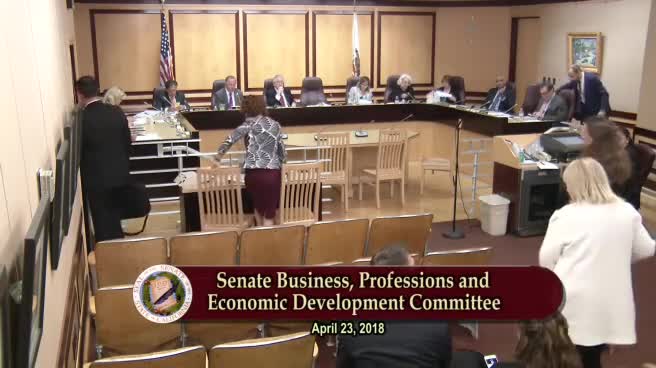 23MIN
Senate Standing Committee on Business, Professions and Economic Development
Bill Author

Bill Co-Author(s):
