SB 1477: Low-emissions buildings and sources of heat energy.
- Session Year: 2017-2018
- House: Senate
- Latest Version Date: 2018-09-13
The California Global Warming Solutions Act of 2006 designates the State Air Resources Board as the state agency charged with monitoring and regulating sources of emissions of greenhouse gases. The act authorizes the state board to include the use of market-based compliance mechanisms in regulating those emissions. The implementing regulations adopted by the state board provide for the direct allocation of greenhouse gas allowances to electrical corporations and gas corporations pursuant to a market-based compliance mechanism.
Under existing law, the Public Utilities Commission has regulatory authority over public utilities, including electrical corporations and gas corporations. Existing law authorizes the commission to allocate up to 15% of the revenues received by an electrical corporation as a result of the direct allocation of greenhouse gas allowances to electrical distribution utilities for clean energy and energy efficiency projects established pursuant to statute that are administered by the electrical corporation, or a qualified 3rd-party administrator as approved by the commission, and that are not otherwise funded by another funding source.
This bill would require the commission to develop and supervise the administration of the Technology and Equipment for Clean Heating (TECH) Initiative, a statewide market development initiative, to require gas corporations to advance the states market for low-emission space and water heating equipment for new and existing residential buildings. The bill would require the commission, as a part of the initiative, to identify and target key low-emission space and water heating equipment technologies that are in an early stage of market development and that would assist the state in achieving its greenhouse gas emissions reduction goals. The bill would require the commission to develop guidelines and evaluation metrics, implement outreach strategies for hard-to-reach customers, and provide for job training and employment opportunities, in supervising the administration of the TECH Initiative.
This bill would require the commission to develop and supervise the administration of the Building Initiative for Low-Emissions Development (BUILD) Program to require gas corporations to provide incentives to eligible applicants, as defined, for the deployment of near-zero-emission building technologies to significantly reduce the emissions of greenhouse gases from buildings, as specified.
This bill would authorize the commission to determine whether each gas corporation or a third party, including the Energy Commission, shall administer the TECH Initiative or BUILD Program.
This bill would require the commission, in fiscal years 201920 to 202223, inclusive, to annually allocate $50,000,000 of the revenues, including any accrued interest, received by a gas corporation as a result of the direct allocation of greenhouse gas emissions allowances provided to gas corporations as part of a market-based compliance mechanism to be allocated to the TECH Initiative and the BUILD Program, as specified.
Existing law makes any public utility and any corporation or person other than a public utility that violates any part of any order, decision, rule, direction, demand, or requirement of the commission guilty of a crime.
Because a violation of commission-ordered requirements under this bill would be a crime, the bill would impose a state-mandated local program.
The California Constitution requires the state to reimburse local agencies and school districts for certain costs mandated by the state. Statutory provisions establish procedures for making that reimbursement.
This bill would provide that no reimbursement is required by this act for a specified reason.
The California Global Warming Solutions Act of 2006 designates the State Air Resources Board as the state agency charged with monitoring and regulating sources of emissions of greenhouse gases. The act authorizes the state board to include the use of market-based compliance mechanisms in regulating those emissions. The implementing regulations adopted by the state board provide for the direct allocation of greenhouse gas allowances to electrical corporations and gas corporations pursuant to a market-based compliance mechanism.
Under existing law, the Public Utilities Commission has regulatory authority over public utilities, including electrical corporations and gas corporations. Existing law authorizes the commission to allocate up to 15% of the revenues received by an electrical corporation as a result of the direct allocation of greenhouse gas allowances to electrical distribution utilities for clean energy and energy efficiency projects established pursuant to statute that are administered by the electrical corporation, or a qualified third-party administrator as approved by the commission, and that are not otherwise funded by another funding source.
This bill would require the commission to develop and administer supervise the administration of the Technology and Equipment for Clean Heating (TECH) Initiative, a statewide market development initiative, to require gas corporations to advance the states market for low-emission space and water heating equipment for new and existing residential and nonresidential buildings. The bill would require the commission, as a part of the initiative, to identify and target key low-emission space and water heating equipment technologies that are in an early stage of market development and that would assist the state in achieving its greenhouse gas emissions reduction goals. The bill would require the commission to develop guidelines and evaluation metrics, implement outreach strategies for hard-to-reach customers, and provide for job training and employment opportunities, in administering supervising the administration of the TECH Initiative.
This bill would require the commission to develop and administer supervise the administration of the Building Initiative for Low-Emissions Development (BUILD) Program to require gas corporations to provide incentives to eligible applicants, as defined, for the deployment of near-zero-emission building technologies to significantly reduce the emissions of greenhouse gases from buildings, as specified.
This bill would authorize the commission to determine whether each gas corporation or a third party, including the Energy Commission, shall administer the TECH Initiative or BUILD Program.
This bill would require the commission, in fiscal years 201920 to 202223, inclusive, to annually allocate $50,000,000 of the revenues, including any accrued interest, received by a gas corporation as a result of the direct allocation of greenhouse gas emissions allowances provided to gas corporations as part of a market-based compliance mechanism to be allocated to the TECH Initiative and the BUILD Program, as specified.
Existing law makes any public utility and any corporation or person other than a public utility that violates any part of any order, decision, rule, direction, demand, or requirement of the commission guilty of a crime.
Because a violation of commission-ordered requirements under this bill would be a crime, the bill would impose a state-mandated local program.
The California Constitution requires the state to reimburse local agencies and school districts for certain costs mandated by the state. Statutory provisions establish procedures for making that reimbursement.
This bill would provide that no reimbursement is required by this act for a specified reason.
The California Global Warming Solutions Act of 2006 designates the State Air Resources Board as the state agency charged with monitoring and regulating sources of emissions of greenhouse gases. The act authorizes the state board to include the use of market-based compliance mechanisms in regulating those emissions. The implementing regulations adopted by the state board provide for the direct allocation of greenhouse gas allowances to electrical corporations and gas corporations pursuant to a market-based compliance mechanism.
Under existing law, the Public Utilities Commission has regulatory authority over public utilities, including electrical corporations and gas corporations. Existing law authorizes the commission to allocate up to 15% of the revenues received by an electrical corporation as a result of the direct allocation of greenhouse gas allowances to electrical distribution utilities for clean energy and energy efficiency projects established pursuant to statute that are administered by the electrical corporation, or a qualified third-party administrator as approved by the commission, and that are not otherwise funded by another funding source.
This bill would require the Energy Commission commission to develop and administer the Technology and Equipment for Clean Heating (TECH) Initiative, a statewide market development initiative, to require electrical corporations and gas corporations to advance the states market for low-emission space and water heating equipment for new and existing residential and nonresidential buildings. The bill would require the Energy Commission, commission, as a part of the initiative, to identify and target key low-emission space and water heating equipment technologies that are in an early stage of market development and that would assist the state in achieving its greenhouse gas emissions reduction goals. The bill would require the Energy Commission, in coordination with the Public Utilities Commission (PUC), commission to develop guidelines and evaluation metrics, implement outreach strategies for hard-to-reach customers, and provide for job training and employment opportunities, in administering the TECH Initiative.
This bill would require the Energy Commission, in consultation with the PUC, commission to develop and administer the Building Initiative for Low-Emissions Development (BUILD) Program to require electrical corporations and gas corporations to provide incentives to eligible applicants, as defined, for the deployment of near-zero-emission building technologies to significantly reduce the emissions of greenhouse gases from buildings, as specified.
This bill would require the PUC, commission, in fiscal years 201920 to 202930, 202223, inclusive, to annually require 5% allocate $50,000,000 of the revenues, including any accrued interest, received by an electrical corporation or a gas corporation as a result of the direct allocation of greenhouse gas emissions allowances provided to those gas corporations as part of a market-based compliance mechanism to be allocated to the TECH Initiative and the BUILD Program, as specified.
Existing law makes any public utility and any corporation or person other than a public utility that violates any part of any order, decision, rule, direction, demand, or requirement of the commission guilty of a crime.
Because the provisions of this bill require action by the commission to implement its requirements, a violation of these commission-ordered requirements under this bill would be a crime, the bill would impose a state-mandated local program by creating a new crime. program.
The California Constitution requires the state to reimburse local agencies and school districts for certain costs mandated by the state. Statutory provisions establish procedures for making that reimbursement.
This bill would provide that no reimbursement is required by this act for a specified reason.
The Warren-Alquist State Energy Resources Conservation and Development Act requires the State Energy Resources Conservation and Development Commission (Energy Commission) to adopt building design and construction standards and energy and water conservation standards for new residential and nonresidential buildings to reduce the wasteful, uneconomic, inefficient, or unnecessary consumption of energy, including energy associated with the use of water. The act requires those standards to be cost effective when taken in their entirety and when amortized over the economic life of the structure compared with historic practice.
The California Global Warming Solutions Act of 2006 designates the State Air Resources Board as the state agency charged with monitoring and regulating sources of emissions of greenhouse gases. The act authorizes the state board to include the use of market-based compliance mechanisms. mechanisms in regulating those emissions.
This bill would require the Energy Commission to develop and administer the Technology and Equipment for Clean Heating (TECH) Initiative, a statewide market development initiative initiative, to require electrical corporations and gas corporations to advance the states market for low-emission space and water heating equipment for new and existing residential and nonresidential buildings. The bill would require the Energy Commission, as a part of the initiative, to identify and target key low-emission space and water heating equipment technologies that are in an early stage of market development and that would assist the state in meeting achieving its greenhouse gas emissions reduction goals and to ensure that the initiative provides job training and employment opportunities. goals. The bill would require the Energy Commission, in coordination with the Public Utilities Commission (PUC), to develop guidelines and evaluation metrics, implement outreach strategies for hard-to-reach customers, and provide for job training and employment opportunities, in administering the TECH Initiative.
This bill would require the Energy Commission, in consultation with the Public Utilities Commission, PUC, to develop and administer an Incentives for New Low-Emissions Technology program the Building Initiative for Low-Emissions Development (BUILD) Program to require electrical corporations and gas corporations to provide incentives to eligible applicants, as defined, for the deployment of near-zero-emission building technologies to significantly reduce the emissions of greenhouse gases from buildings, as specified.
This bill would require the Public Utilities Commission PUC, in fiscal years 201920 to 202930, inclusive, to annually allocate require 5% of the revenues, including any accrued interest, received by an electrical corporation or a gas corporation as a result of the direct allocation of greenhouse gas emissions allowances provided to those corporations as part of a market-based compliance mechanism to be allocated to the statewide market development initiative and Incentives for New Low-Emissions Technology program, TECH Initiative and the BUILD Program, as specified.
Existing law makes any public utility and any corporation or person other than a public utility that violates any part of any order, decision, rule, direction, demand, or requirement of the commission guilty of a crime.
Because the provisions of this bill require action by the commission to implement its requirements, a violation of these commission-ordered requirements would impose a state-mandated local program by creating a new crime.
The California Constitution requires the state to reimburse local agencies and school districts for certain costs mandated by the state. Statutory provisions establish procedures for making that reimbursement.
This bill would provide that no reimbursement is required by this act for a specified reason.
The Warren-Alquist State Energy Resources Conservation and Development Act requires the State Energy Resources Conservation and Development Commission (Energy Commission) to adopt building design and construction standards and energy and water conservation standards for new residential and nonresidential buildings to reduce the wasteful, uneconomic, inefficient, or unnecessary consumption of energy, including energy associated with the use of water. The act requires those standards to be cost effective when taken in their entirety and when amortized over the economic life of the structure compared with historic practice.
The California Global Warming Solutions Act of 2006 designates the State Air Resources Board as the state agency charged with monitoring and regulating sources of emissions of greenhouse gases. The act authorizes the state board to include the use of market-based compliance mechanisms.
This bill would require the commission Energy Commission to develop a statewide market development initiative to advance the states market for low-emission space and water heating equipment for new and existing residential and nonresidential buildings. The bill would require the commission, Energy Commission, as a part of the initiative, to identify and target key low-emission space and water heating technologies that would assist the state in meeting its greenhouse gas emissions reduction goals. The bill would require the commission, in consultation with the Public Utilities Commission, to develop and administer an Incentives for New Low-Emissions Technology (INLET) program to provide incentives to eligible applicants, as defined, for the deployment of near-zero-emission building technologies to significantly reduce the emissions of greenhouse gases from buildings, as specified. goals and to ensure that the initiative provides job training and employment opportunities.
This bill would require the Energy Commission, in consultation with the Public Utilities Commission, to develop and administer an Incentives for New Low-Emissions Technology program to provide incentives to eligible applicants, as defined, for the deployment of near-zero-emission building technologies to significantly reduce the emissions of greenhouse gases from buildings, as specified.
This bill would require the Public Utilities Commission to annually allocate 5% of the revenues, including any accrued interest, received by an electrical corporation or a gas corporation as a result of the direct allocation of greenhouse gas emissions allowances provided to those corporations as part of a market-based compliance mechanism to the statewide market development initiative and Incentives for New Low-Emissions Technology program, as specified.
Existing law makes any public utility and any corporation or person other than a public utility that violates any part of any order, decision, rule, direction, demand, or requirement of the commission guilty of a crime.
Because the provisions of this bill require action by the commission to implement its requirements, a violation of these commission-ordered requirements would impose a state-mandated local program by creating a new crime.
The California Constitution requires the state to reimburse local agencies and school districts for certain costs mandated by the state. Statutory provisions establish procedures for making that reimbursement.
This bill would provide that no reimbursement is required by this act for a specified reason.
The Warren-Alquist State Energy Resources Conservation and Development Act requires the State Energy Resources Conservation and Development Commission to adopt building design and construction standards and energy and water conservation standards for new residential and nonresidential buildings to reduce the wasteful, uneconomic, inefficient, or unnecessary consumption of energy, including energy associated with the use of water. The act requires those standards to be cost effective when taken in their entirety and when amortized over the economic life of the structure compared with historic practice.
This bill would require the commission to develop a statewide market development initiative to advance the states market for low-emission space and water heating equipment for new and existing residential and nonresidential buildings. The bill would require the commission, as a part of the initiative, to identify and target key low-emission space and water heating technologies that would assist the state in meeting its greenhouse gas emissions reduction goals. The bill would require the commission, in consultation with the Public Utilities Commission, to develop and administer the New Zero-Emission Building (NZEB) Program an Incentives for New Low-Emissions Technology (INLET) program to provide incentives to eligible applicants, as defined, for the deployment of near-zero-emission building technologies to significantly reduce the emissions of greenhouse gases from buildings, as specified.
The Warren-Alquist State Energy Resources Conservation and Development Act requires the State Energy Resources Conservation and Development Commission to adopt building design and construction standards and energy and water conservation standards for new residential and nonresidential buildings to reduce the wasteful, uneconomic, inefficient, or unnecessary consumption of energy, including energy associated with the use of water. The act requires those standards to be cost effective when taken in their entirety and when amortized over the economic life of the structure compared with historic practice.
This bill would require the commission to develop a statewide market transformation development initiative to transform advance the states market for low-emission space and water heating equipment for new and existing residential and nonresidential buildings. The bill would require the commission, as a part of the initiative, to identify and target key low-emission space and water heating technologies that would assist the state in meeting its greenhouse gas emissions reduction goals. The bill would require the commission, in consultation with the Public Utilities Commission, to develop and administer the New Zero-Emission Building (NZEB) Program to provide incentives to eligible applicants, as defined, for the deployment of near-zero emission near-zero-emission building technologies to significantly reduce the emissions of greenhouse gases from buildings, as specified.
The Warren-Alquist State Energy Resources Conservation and Development Act requires the State Energy Resources Conservation and Development Commission (Energy Commission) to adopt building design and construction standards and energy and water conservation standards for new residential and nonresidential buildings to reduce the wasteful, uneconomic, inefficient, or unnecessary consumption of energy, including energy associated with the use of water. The act requires those standards to be cost effective when taken in their entirety and when amortized over the economic life of the structure compared with historic practice.
This bill would establish the Zero-Emissions Heating Market Transformation Fund in the State Treasury and would require moneys in the fund, upon appropriation by the Legislature, to be expended for the design and implementation of market development activities for highly efficient and zero-onsite-emissions building technologies, for incentives for new buildings to reduce the emissions of greenhouse gases by more than is required by law, and for incentives for existing buildings to adopt zero-emissions building technologies. The bill would require the Public Utilities Commission to authorize incentive programs that will transform the states market for low-emissions space and water heating technologies. require the commission to develop a statewide market transformation initiative to transform the states market for low-emission space and water heating equipment for new and existing residential and nonresidential buildings. The bill would require the commission, as a part of the initiative, to identify and target key low-emission space and water heating technologies that would assist the state in meeting its greenhouse gas emissions reduction goals. The bill would require the commission, in consultation with the Public Utilities Commission, to develop and administer the Zero-Emission Building Program to provide incentives to eligible applicants, as defined, for the deployment of near-zero emission building technologies to significantly reduce the emissions of greenhouse gases from buildings, as specified.
The Warren-Alquist State Energy Resources Conservation and Development Act requires the State Energy Resources Conservation and Development Commission (Energy Commission) to adopt building design and construction standards and energy and water conservation standards for new residential and nonresidential buildings to reduce the wasteful, uneconomic, inefficient, or unnecessary consumption of energy, including energy associated with the use of water. The act requires those standards to be cost effective when taken in their entirety and when amortized over the economic life of the structure compared with historic practice.
This bill would establish the Zero-Emissions Heating Market Transformation Fund in the State Treasury and would require moneys in the fund, upon appropriation by the Legislature, to be expended for the design and implementation of market development activities for highly efficient and zero-onsite-emissions building technologies, for incentives for new buildings to reduce the emissions of greenhouse gases by more than is required by law, and for incentives for existing buildings to adopt zero-emissions building technologies. The bill would require the Public Utilities Commission to authorize incentive programs that will transform the states market for low-emissions space and water heating technologies.
(a)The Legislature finds and declares all of the following:
(1)The electricity and heating fuels used in buildings are responsible for a quarter of Californias greenhouse gas emissions and contribute to indoor and outdoor air pollution.
(2)There are a range of technologies that can achieve deep emissions reductions in buildings, including advanced energy efficiency technologies, clean heating technologies, energy storage, and load management strategies.
(3)It is more cost effective to achieve near-zero emissions in new buildings compared to retrofitting existing buildings.
(4)Despite the favorable economics of achieving deep emissions reductions in new buildings, there is little uptake of near-zero emissions construction practices and clean heating technologies are not widely available in the marketplace.
(5)It is essential that achieving near-zero emissions in new buildings also improve housing affordability, particularly in low-income communities.
(b)It is the intent of the Legislature to build on the success of the New Solar Homes Partnership Program by providing incentives to builders to design innovative, low-emission buildings, and to make low-emission heating equipment readily available and affordable in California.
(c)It is also the intent of the Legislature that projects receive incentives under the programs created by this act only if they result in utility bill savings for the building occupant.
SEC. 2.Section 748.6 is added to the Public Utilities Code, to read:748.6.Beginning with the fiscal year commencing July 1, 2019, and ending with the fiscal year ending June 30, 2023, the commission shall annually allocate fifty million dollars ($50,000,000) of the revenues, including any accrued interest, received by a gas corporation as a result of the direct allocation of greenhouse gas emissions allowances provided to gas corporations as part of a market-based compliance mechanism adopted pursuant to subdivision (c) of Section 38562 of the Health and Safety Code to fund the Building Initiative for Low-emissions Development (BUILD) Program (Article 12 (commencing with Section 921)) and the Technology and Equipment for Clean Heating (TECH) Initiative (Article 13 (commencing with Section 922)).
SEC. 3.Section 910.4 of the Public Utilities Code is amended to read:910.4.By February 1 of each year, the commission shall report to the Joint Legislative Budget Committee and appropriate fiscal and policy committees of the Legislature, on all sources and amounts of funding and actual and proposed expenditures, both in the two prior fiscal years and for the proposed fiscal year, including any costs to ratepayers, related to both of the following:
(a)Entities or programs established by the commission by order, decision, motion, settlement, or other action, including, but not limited to, the California Clean Energy Fund, the California Emerging Technology Fund, and the Pacific Forest and Watershed Lands Stewardship Council. The report shall contain descriptions of relevant issues, including, but not limited to, all of the following:
(1)Any governance structure established for an entity or program.
(2)Any staff or employees hired by or for the entity or program and their salaries and expenses.
(3)Any staff or employees transferred or loaned internally or interdepartmentally for the entity or program and their salaries and expenses.
(4)Any contracts entered into by the entity or program, the funding sources for those contracts, and the legislative authority under which the commission entered into the contract.
(5)The public process and oversight governing the entity or programs activities.
(b)Entities or programs established by the commission, other than those expressly authorized by statute, under the following sections:
(1)Section 379.6.
(2)Section 399.8.
(3)Section 739.1.
(4)Section 2790.
(5)Section 2851.
(6)Section 921.1.
(7)Section 922.
SEC. 4.Article 12 (commencing with Section 921) is added to Chapter 4 of Part 1 of Division 1 of the Public Utilities Code, to read:12.Building Initiative for Low-Emissions Development (BUILD) Program921.For purposes of this article, the following definitions apply:
(a)Disadvantaged community means a community identified as a disadvantaged community pursuant to Section 39711 of the Health and Safety Code.
(b)Eligible applicants means owners or developers of new residential housing.
(c)Low-income community means a census tract or equivalent geographic area defined by the United States Census Bureau in which at least 50 percent of households have an income less than 60 percent of the area median gross income.
(d)Low-income residential housing means either of the following:
(1)A multifamily residential building of at least two rental housing units that is operated to provide deed-restricted low-income residential housing, as described in clause (i) of subparagraph (A) of paragraph (3) of subdivision (a) of Section 2852, and that meets one or both of the following conditions:
(A)The property is located in a disadvantaged community or low-income community.
(B)At least 80 percent of the households living in the building have incomes at or below 60 percent of the area median income, as defined in subdivision (f) of Section 50052.5 of the Health and Safety Code.
(2)An individual low-income residence, as described in subparagraph (C) of paragraph (3) of subdivision (a) of Section 2852.
(e)(1)Near-zero-emission building technology means technology that reduces both of the following:
(A)The energy demands of a building on the electrical or gas distribution system.
(B)The direct and indirect emissions of greenhouse gases from buildings.
(2)Near-zero-emission building technology includes a single technology, such as heat pumps, solar thermal systems, or advanced energy efficiency systems, and a combination of technologies, such as a solar photovoltaic system with an energy storage system.
(f)Program means the Building Initiative for Low-Emissions Development (BUILD) Program.
921.1.(a)(1)The commission, in consultation with the Energy Commission, shall develop and supervise the administration of the Building Initiative for Low-Emissions Development (BUILD) Program to require gas corporations to provide incentives to eligible applicants for the deployment of near-zero-emission building technologies to significantly reduce the emissions of greenhouse gases from those buildings below the minimum projected emissions reductions that would otherwise be expected to result from the implementation of the prescriptive standards described in Section 150.1 of Subchapter 8 of Part 6 of Title 24 of the California Code of Regulations.
(2)The commission may determine whether each gas corporation or a third party, including the Energy Commission, shall administer the program.
(3)Moneys allocated pursuant to Section 748.6 shall be available to each gas corporation, or the third-party administrator, for allocation consistent with this section.
(b)The amount of the incentive provided pursuant to the program shall take into account the availability of existing incentives and shall be based on the projected amount of reduction in the emissions of greenhouse gases resulting from the installation of the near-zero-emission building technology. The commission shall set the incentives to encourage building designs that reduce greenhouse gas emissions beyond industry practices and to offer greater incentives for larger projected greenhouse gas emissions reductions. Incentives for buildings that serve low-income residents may have different standards from those that serve other residents.
(c)(1)To encourage the adoption of near-zero-emission building technologies in new low-income residential housing located in disadvantaged communities or low-income communities, the program shall reserve a minimum of 30 percent of the amount allocated pursuant to Section 748.6 for new low-income residential housing.
(2)If, following the implementation of the outreach plan pursuant to paragraph (5) of subdivision (d), the moneys reserved pursuant to paragraph (1) remain unspent two years after those moneys were reserved, the commission shall evaluate potential changes to the program to increase participation and may make those moneys, or a portion of those moneys, available for other purposes consistent with the program.
(d)In supervising the administration of the program, the commission shall do all of the following:
(1)Ensure that projects funded with moneys reserved pursuant to subdivision (c) are offered technical assistance to encourage the use of the program.
(2)Provide higher incentives for buildings described in subdivision (c) than for installations in other new residential buildings.
(3)Ensure that projects funded with moneys reserved pursuant to subdivision (c) do not result in higher utility bills for building occupants.
(4)(A)Develop program guidelines that include, at a minimum, a list of eligible technologies, a process for evaluating new technologies, criteria for scoring and selecting projects, and a process and set of metrics by which to evaluate and track the programs results.
(B)Program metrics shall include, at a minimum, the number of low-emission systems installed in each building type, projected utility bill savings, and the cost per metric ton of avoided greenhouse gas emissions.
(5)Implement an outreach plan to encourage applications for projects funded with moneys reserved pursuant to subdivision (c).
(e)Each gas corporation shall provide the commission with any information required by the commission to complete the report on the program required pursuant to Section 910.4.
SEC. 5.Article 13 (commencing with Section 922) is added to Chapter 4 of Part 1 of Division 1 of the Public Utilities Code, to read:13.Technology and Equipment for Clean Heating (TECH) Initiative922.(a)(1)The commission shall develop and supervise the administration of the Technology and Equipment for Clean Heating (TECH) Initiative, a statewide market development initiative, to require gas corporations to advance the states market for low-emission space and water heating equipment for new and existing residential buildings through upstream market development, consumer education, contractor and vendor training, and the provision of upstream and midstream incentives to install low-emission space and water heating equipment in existing and new buildings, with technologies identified pursuant to subdivision (b).
(2)The commission may determine whether each gas corporation or a third party, including the Energy Commission, shall administer the TECH Initiative.
(b)As a part of the TECH Initiative, the commission shall identify and target key low-emission space and water heating equipment technologies that are in an early stage of market development and would assist the state in achieving the states greenhouse gas emissions reduction goal for 2030 and other long-term greenhouse gas emissions reduction goals established by the Legislature. In identifying and targeting these technologies, the commission shall give consideration to technologies that have the greatest potential to reduce greenhouse gas emissions in California and that improve the health and safety of, and energy affordability for, low-income households.
(c)(1)In supervising the administration of the TECH Initiative, the commission, in coordination with the Energy Commission, shall develop guidelines and evaluation metrics, implement outreach strategies for hard-to-reach customers, and provide for job training and employment opportunities.
(2)(A)The guidelines shall include, at a minimum, a list of eligible technologies, a process for evaluating new technologies, and a process and set of metrics by which to evaluate and track the TECH Initiatives results.
(B)The metrics shall include, but are not limited to, the market share for eligible technologies, projected utility bill savings, and the cost per metric ton of avoided greenhouse gas emissions.
(d)Moneys allocated pursuant to Section 748.6 shall be available to each gas corporation, or the third-party administrator, for allocation consistent with this section.
(e)Each gas corporation shall provide the commission with any information required by the commission to complete the report on the TECH Initiative required pursuant to Section 910.4.
SEC. 6.No reimbursement is required by this act pursuant to Section 6 of Article XIIIB of the California Constitution because the only costs that may be incurred by a local agency or school district will be incurred because this act creates a new crime or infraction, eliminates a crime or infraction, or changes the penalty for a crime or infraction, within the meaning of Section 17556 of the Government Code, or changes the definition of a crime within the meaning of Section 6 of Article XIIIB of the California Constitution.
(a)The Legislature finds and declares all of the following:
(1)The electricity and heating fuels used in buildings are responsible for a quarter of Californias greenhouse gas emissions and contribute to indoor and outdoor air pollution.
(2)There are a range of technologies that can achieve deep emissions reductions in buildings, including advanced energy efficiency technologies, clean heating technologies, energy storage, and load management strategies.
(3)It is more cost effective to achieve near-zero emissions in new buildings compared to retrofitting existing buildings.
(4)Despite the favorable economics of achieving deep emissions reductions in new buildings, there is little uptake of near-zero emissions construction practices, practices and clean heating technologies are not widely available in the marketplace.
(5)It is essential that achieving near-zero emissions in new buildings also improve housing affordability, particularly in low-income communities.
(b)It is the intent of the Legislature to build on the success of the New Solar Homes Partnership Program by providing incentives to builders to design innovative, low-emission buildings, and to make low-emission heating equipment readily available and affordable in California.
(c)It is also the intent of the Legislature that projects receive incentives under the programs created by this act only if they result in utility bill savings for the building occupant.
SEC. 2.Section 748.6 is added to the Public Utilities Code, to read:748.6.Beginning with the fiscal year commencing July 1, 2019, and ending with the fiscal year ending June 30, 2023, the commission shall annually allocate fifty million dollars ($50,000,000) of the revenues, including any accrued interest, received by a gas corporation as a result of the direct allocation of greenhouse gas emissions allowances provided to gas corporations as part of a market-based compliance mechanism adopted pursuant to subdivision (c) of Section 38562 of the Health and Safety Code to fund the Building Initiative for Low-emissions Development (BUILD) Program (Article 12 (commencing with Section 921)) and the Technology and Equipment for Clean Heating (TECH) Initiative (Article 13 (commencing with Section 922)).
SEC. 3.Section 910.4 of the Public Utilities Code is amended to read:910.4.By February 1 of each year, the commission shall report to the Joint Legislative Budget Committee and appropriate fiscal and policy committees of the Legislature, on all sources and amounts of funding and actual and proposed expenditures, both in the two prior fiscal years and for the proposed fiscal year, including any costs to ratepayers, related to both of the following:
(a)Entities or programs established by the commission by order, decision, motion, settlement, or other action, including, but not limited to, the California Clean Energy Fund, the California Emerging Technology Fund, and the Pacific Forest and Watershed Lands Stewardship Council. The report shall contain descriptions of relevant issues, including, but not limited to, all of the following:
(1)Any governance structure established for an entity or program.
(2)Any staff or employees hired by or for the entity or program and their salaries and expenses.
(3)Any staff or employees transferred or loaned internally or interdepartmentally for the entity or program and their salaries and expenses.
(4)Any contracts entered into by the entity or program, the funding sources for those contracts, and the legislative authority under which the commission entered into the contract.
(5)The public process and oversight governing the entity or programs activities.
(b)Entities or programs established by the commission, other than those expressly authorized by statute, under the following sections:
(1)Section 379.6.
(2)Section 399.8.
(3)Section 739.1.
(4)Section 2790.
(5)Section 2851.
(6)Section 921.1.
(7)Section 922.
SEC. 4.Article 12 (commencing with Section 921) is added to Chapter 4 of Part 1 of Division 1 of the Public Utilities Code, to read:12.Building Initiative for Low-Emissions Development (BUILD) Program921.For purposes of this article, the following definitions apply:
(a)Disadvantaged community means a community identified as a disadvantaged community pursuant to Section 39711 of the Health and Safety Code.
(b)Eligible applicants means owners or developers of new residential housing.
(b)(c)Low-income community means a census tract or equivalent geographic area defined by the United States Census Bureau in which at least 50 percent of households have an income less than 60 percent of the area median gross income.
(c)(d)Low-income residential housing means either of the following:
(1)A multifamily residential building of at least two rental housing units that is operated to provide deed-restricted low-income residential housing, as described in clause (i) of subparagraph (A) of paragraph (3) of subdivision (a) of Section 2852, and that meets one or both of the following conditions:
(A)The property is located in a disadvantaged community or low-income community.
(B)At least 80 percent of the households living in the building have incomes at or below 60 percent of the area median income, as defined in subdivision (f) of Section 50052.5 of the Health and Safety Code.
(2)An individual low-income residence, as described in subparagraph (C) of paragraph (3) of subdivision (a) of Section 2852.
(d)Eligible applicants mean either of the following:(1)Owners or developers of new residential or new commercial buildings.(2)Owners or developers of new low-income residential housing and new buildings in a disadvantaged community or low-income community.(e)(1)Near-zero-emission building technology means technology that reduces both of the following:
(A)The energy demands of a building on the electrical or gas distribution system.
(B)The direct and indirect emissions of greenhouse gases from buildings.
(2)Near-zero-emission building technology includes a single technology, such as heat pumps, solar thermal systems, or advanced energy efficiency systems, and a combination of technologies, such as a solar photovoltaic system with an energy storage system.
(f)Program means the Building Initiative for Low-Emissions Development (BUILD) Program.
921.1.(a)(1)The commission, in consultation with the Energy Commission, shall develop and administer supervise the administration of the Building Initiative for Low-Emissions Development (BUILD) Program to require gas corporations to provide incentives to eligible applicants for the deployment of near-zero-emission building technologies to significantly reduce the emissions of greenhouse gases from those buildings beyond standards set forth in other laws or regulations. below the minimum projected emissions reductions that would otherwise be expected to result from the implementation of the prescriptive standards described in Section 150.1 of Subchapter 8 of Part 6 of Title 24 of the California Code of Regulations.
(2)The commission may determine whether each gas corporation or a third party, including the Energy Commission, shall administer the program.
(2)(3)Moneys allocated pursuant to Section 748.6 shall be available to each gas corporation, or a the third-party administrator selected by the commission through a competitive bidding process, administrator, for allocation consistent with this section.
(b)(1)The amount of the incentive provided pursuant to the program shall take into account the availability of existing incentives and shall be based on the projected amount of reduction in the emissions of greenhouse gases resulting from the installation of the near-zero-emission building technology beyond the standards set forth in other laws or regulations. technology. The commission shall set the incentives to encourage building designs that reduce greenhouse gas emissions beyond industry practices and to offer greater incentives for larger projected greenhouse gas emissions reductions. Incentives for buildings that serve low-income residents may have different standards from those that serve other residents.
(2)(c)(1)To encourage the adoption of near-zero-emission building technologies in new low-income residential housing and properties located in disadvantaged communities or low-income communities, the program shall reserve a minimum of 30 percent of the amount allocated pursuant to Section 748.6 for both of the following:
(A)New new low-income residential housing.
(B)New buildings located in disadvantaged communities or low-income communities that are owned by a small business, local or state government agency, educational institution, or nonprofit organization.(2)If, following the implementation of the outreach plan pursuant to paragraph (5) of subdivision (d), the moneys reserved pursuant to paragraph (1) remain unspent two years after those moneys were reserved, the commission shall evaluate potential changes to the program to increase participation and may make those moneys, or a portion of those moneys, available for other purposes consistent with the program.
(c)(d)In administering supervising the administration of the program, the commission shall do all of the following:
(1)Ensure that projects funded with moneys reserved pursuant to paragraph (2) of subdivision (b) (c) are offered technical assistance to encourage the use of the program.
(2)Provide higher incentives for buildings described in paragraph (2) of subdivision (b) (c) than for installations in other new residential buildings and new commercial buildings. buildings.
(3)Ensure that projects funded with moneys reserved pursuant to paragraph (2) of subdivision (b) (c) do not result in higher utility bills for building occupants.
(4)(A)Develop program guidelines that include, at a minimum, a list of eligible technologies, a process for evaluating new technologies, criteria for scoring and selecting projects, and a process and set of metrics by which to evaluate and track the programs results.
(B)Program metrics shall include, at a minimum, the number of low-emission systems installed in each building type, projected utility bill savings, and the cost per metric ton of avoided greenhouse gas emissions.
(5)Implement an outreach plan to encourage applications for projects funded with moneys reserved pursuant to paragraph (2) of subdivision (b). (c).
(d)(e)Each gas corporation shall provide the commission with any information required by the commission to complete the report on the program required pursuant to Section 910.4.
SEC. 5.Article 13 (commencing with Section 922) is added to Chapter 4 of Part 1 of Division 1 of the Public Utilities Code, to read:13.Technology and Equipment for Clean Heating (TECH) Initiative922.(a)(1)The commission shall develop and administer supervise the administration of the Technology and Equipment for Clean Heating (TECH) Initiative, a statewide market development initiative, to require gas corporations to advance the states market for low-emission space and water heating equipment for new and existing residential and nonresidential buildings through upstream market development, consumer education, contractor and vendor training, and the provision of upstream and midstream incentives to install low-emission space and water heating equipment in existing and new buildings, with technologies identified pursuant to subdivision (b).
(2)The commission may determine whether each gas corporation or a third party, including the Energy Commission, shall administer the TECH Initiative.
(b)As a part of the TECH Initiative, the commission shall identify and target key low-emission space and water heating equipment technologies that are in an early stage of market development and would assist the state in achieving the states greenhouse gas emissions reduction goal for 2030 and other long-term greenhouse gas emissions reduction goals established by the Legislature. In identifying and targeting these technologies, the commission shall give consideration to technologies that have the greatest potential to reduce greenhouse gas emissions in California and that improve the health and safety of, and energy affordability for, low-income households.
(c)(1)In administering supervising the administration of the TECH Initiative, the commission, in coordination with the Energy Commission, shall develop guidelines and evaluation metrics, implement outreach strategies for hard-to-reach customers, and provide for job training and employment opportunities.
(2)(A)The guidelines shall include, at a minimum, a list of eligible technologies, a process for evaluating new technologies, and a process and set of metrics by which to evaluate and track the TECH Initiatives results.
(B)The metrics shall include, but are not limited to, the market share for eligible technologies, projected utility bill savings, and the cost per metric ton of avoided greenhouse gas emissions.
(d)Moneys allocated pursuant to Section 748.6 shall be available to each gas corporation, or a the third-party administrator selected by the commission through a competitive bidding process, administrator, for allocation consistent with this section.
(e)Each gas corporation shall provide the commission with any information required by the commission to complete the report on the TECH Initiative required pursuant to Section 910.4.
SEC. 6.No reimbursement is required by this act pursuant to Section 6 of Article XIIIB of the California Constitution because the only costs that may be incurred by a local agency or school district will be incurred because this act creates a new crime or infraction, eliminates a crime or infraction, or changes the penalty for a crime or infraction, within the meaning of Section 17556 of the Government Code, or changes the definition of a crime within the meaning of Section 6 of Article XIIIB of the California Constitution.
(a)The Legislature finds and declares all of the following:
(1)The electricity and heating fuels used in buildings are responsible for a quarter of Californias greenhouse gas emissions and contribute to indoor and outdoor air pollution.
(2)There are a range of technologies that can achieve deep emissions reductions in buildings, including advanced energy efficiency technologies, clean heating technologies, energy storage, and load management strategies.
(3)It is more cost effective to achieve near-zero emissions in new buildings compared to retrofitting existing buildings.
(4)Despite the favorable economics of achieving deep emissions reductions in new buildings, there is little uptake of near-zero emissions construction practices, and clean heating technologies are not widely available in the marketplace.
(5)It is essential that achieving near-zero emissions in new buildings also improve housing affordability, particularly in low-income communities.
(b)It is the intent of the Legislature to build on the success of the New Solar Homes Partnership Program by providing incentives to builders to design innovative, low-emission buildings, and to make low-emission heating equipment readily available and affordable in California.
(c)It is also the intent of the Legislature that projects receive incentives under the programs created by this act only if they result in utility bill savings for the building occupant.
SEC. 2.Section 748.6 is added to the Public Utilities Code, to read:748.6.Beginning with the fiscal year commencing July 1, 2019, and ending with the fiscal year ending June 30, 2023, the commission shall annually allocate fifty million dollars ($50,000,000) of the revenues, including any accrued interest, received by a gas corporation as a result of the direct allocation of greenhouse gas emissions allowances provided to gas corporations as part of a market-based compliance mechanism adopted pursuant to subdivision (c) of Section 38562 of the Health and Safety Code to fund the Building Initiative for Low-emissions Development (BUILD) Program (Article 12 (commencing with Section 921)) and the Technology and Equipment for Clean Heating (TECH) Initiative (Article 13 (commencing with Section 922)).
SEC. 3.Section 910.4 of the Public Utilities Code is amended to read:910.4.By February 1 of each year, the commission shall report to the Joint Legislative Budget Committee and appropriate fiscal and policy committees of the Legislature, on all sources and amounts of funding and actual and proposed expenditures, both in the two prior fiscal years and for the proposed fiscal year, including any costs to ratepayers, related to both of the following:
(a)Entities or programs established by the commission by order, decision, motion, settlement, or other action, including, but not limited to, the California Clean Energy Fund, the California Emerging Technology Fund, and the Pacific Forest and Watershed Lands Stewardship Council. The report shall contain descriptions of relevant issues, including, but not limited to, all of the following:
(1)Any governance structure established for an entity or program.
(2)Any staff or employees hired by or for the entity or program and their salaries and expenses.
(3)Any staff or employees transferred or loaned internally or interdepartmentally for the entity or program and their salaries and expenses.
(4)Any contracts entered into by the entity or program, the funding sources for those contracts, and the legislative authority under which the commission entered into the contract.
(5)The public process and oversight governing the entity or programs activities.
(b)Entities or programs established by the commission, other than those expressly authorized by statute, under the following sections:
(1)Section 379.6.
(2)Section 399.8.
(3)Section 739.1.
(4)Section 2790.
(5)Section 2851.
(6)Section 921.1.
(7)Section 922.
SEC. 2.Chapter 11.5 (commencing with Section 25970) is added to Division 15 of the Public Resources Code, to read:11.5.Low-Emissions Building Market Development Act1.Building Initiative for Low-Emissions Development (BUILD) ProgramSEC. 4.Article 12 (commencing with Section 921) is added to Chapter 4 of Part 1 of Division 1 of the Public Utilities Code, to read:12.Building Initiative for Low-Emissions Development (BUILD) Program25970.921.For purposes of this article, the following definitions apply:
(a)Disadvantaged community means a community identified as a disadvantaged community pursuant to Section 39711 of the Health and Safety Code.
(b)Low-income community means a census tract or equivalent geographic area defined by the United States Census Bureau in which at least 50 percent of households have an income less than 60 percent of the area median gross income.
(c)Low-income residential housing means either of the following:
(1)A multifamily residential building of at least two rental housing units that is operated to provide deed-restricted low-income residential housing, as described in clause (i) of subparagraph (A) of paragraph (3) of subdivision (a) of Section 2852 of the Public Utilities Code, 2852, and that meets one or both of the following conditions:
(A)The property is located in a disadvantaged community or low-income community.
(B)At least 80 percent of the households living in the building have incomes at or below 60 percent of the area median income, as defined in subdivision (f) of Section 50052.5 of the Health and Safety Code.
(2)An individual low-income residence, as described in subparagraph (C) of paragraph (3) of subdivision (a) of Section 2852 of the Public Utilities Code. 2852.
(d)Eligible applicants mean either of the following:
(1)Owners or developers of new residential or new commercial buildings.
(2)Owners or developers of new low-income residential housing and new buildings in a disadvantaged community or low-income community.
(e)(1)Near-zero-emission building technology means technology that reduces both of the following:
(A)The energy demands of a building on the electrical or gas distribution system.
(B)The direct and indirect emissions of greenhouse gases from buildings.
(2)Near-zero-emission building technology includes a single technology, such as heat pumps, solar thermal systems, or advanced energy efficiency systems, and a combination of technologies, such as a solar photovoltaic system with an energy storage system.
(f)Program means the Building Initiative for Low-Emissions Development (BUILD) Program.
25970.1.921.1.(a)(1)The commission, in consultation with the Public Utilities Energy Commission, shall develop and administer the Building Initiative for Low-Emissions Development (BUILD) Program to require electrical corporations and gas corporations to provide incentives to eligible applicants for the deployment of near-zero-emission building technologies to significantly reduce the emissions of greenhouse gases from those buildings beyond standards set forth in other laws or regulations.
(2)Moneys allocated pursuant to Section 748.6 of the Public Utilities Code shall be available to each electrical corporation and gas corporation, or a third-party administrator selected by the commission through a competitive bidding process, for allocation consistent with this section.
(b)(1)The amount of the incentive provided pursuant to the program shall take into account the availability of existing incentives and shall be based on the projected amount of reduction in the emissions of greenhouse gases resulting from the installation of the near-zero-emission building technology beyond the standards set forth in other laws or regulations.
(2)To encourage the adoption of near-zero-emission building technologies in new low-income residential housing and properties located in disadvantaged communities or low-income communities, the program shall reserve a minimum of 30 percent of the amount allocated pursuant to subdivision (a) of Section 748.6 of the Public Utilities Code for both of the following:
(A)New low-income residential housing.
(B)New buildings located in disadvantaged communities or low-income communities that are owned by a small business, local or state government agency, educational institution, or nonprofit organization.
(c)In administering the program, the commission shall do all of the following:
(1)Ensure that projects funded with moneys reserved pursuant to paragraph (2) of subdivision (b) are offered technical assistance to encourage the use of the program.
(2)Provide higher incentives for buildings described in paragraph (2) of subdivision (b) than for installations in other new residential buildings and new commercial buildings.
(3)Ensure that projects funded with moneys reserved pursuant to paragraph (2) of subdivision (b) do not result in higher utility bills for building occupants.
(4)(A)Develop program guidelines that include, at a minimum, a list of eligible technologies, a process for evaluating new technologies, criteria for scoring and selecting projects, and a process and set of metrics by which to evaluate and track the programs results.
(B)Program metrics shall include, at a minimum, the number of low-emission systems installed in each building type, projected utility bill savings, and the cost per metric ton of avoided greenhouse gas emissions.
(5)Implement an outreach plan to encourage applications for projects funded with moneys reserved pursuant to paragraph (2) of subdivision (b).
(d)(1)Beginning with the integrated energy policy report due by November 1, 2021, and in all subsequent integrated energy policy reports, the commission shall include a report on the program. The commission shall make this report publicly available on its Internet Web site.(2)(d)Each electrical corporation and gas corporation shall provide the commission with any information required by the commission to complete the report on the program. program required pursuant to Section 910.4.
SEC. 5.Article 13 (commencing with Section 922) is added to Chapter 4 of Part 1 of Division 1 of the Public Utilities Code, to read:2.13.Technology and Equipment for Clean Heating (TECH) Initiative25975.922.(a)The commission shall develop and administer the Technology and Equipment for Clean Heating (TECH) Initiative, a statewide market development initiative, to require electrical corporations and gas corporations to advance the states market for low-emission space and water heating equipment for new and existing residential and nonresidential buildings through upstream market development, consumer education, contractor and vendor training, and the provision of upstream and midstream incentives to install low-emission space and water heating equipment in existing and new buildings, with technologies identified pursuant to subdivision (b).
(b)As a part of the TECH Initiative, the commission shall identify and target key low-emission space and water heating equipment technologies that are in an early stage of market development and would assist the state in achieving the states greenhouse gas emissions reduction goal for 2030 and other long-term greenhouse gas emissions reduction goals established by the Legislature. In identifying and targeting these technologies, the commission shall give consideration to technologies that have the greatest potential to reduce greenhouse gas emissions in California and that improve the health and safety of, and energy affordability for, low-income households.
(c)(1)In administering the TECH Initiative, the commission, in coordination with the Public Utilities Energy Commission, shall develop guidelines and evaluation metrics, implement outreach strategies for hard-to-reach customers, and provide for job training and employment opportunities.
(2)(A)The guidelines shall include, at a minimum, a list of eligible technologies, a process for evaluating new technologies, and a process and set of metrics by which to evaluate and track the programs TECH Initiatives results.
(B)The metrics shall include, but are not limited to, the market share for eligible technologies, projected utility bill savings, and the cost per metric ton of avoided greenhouse gas emissions.
(d)Moneys collected allocated pursuant to Section 748.6 of the Public Utilities Code shall be available to each electrical corporation and gas corporation, or a third-party administrator selected by the commission through a competitive bidding process, for allocation consistent with this section.
(e)(1)Beginning with the integrated energy policy report due by November 1, 2021, and in all subsequent integrated energy policy reports, the commission shall include a report on the TECH Initiative. The commission shall make this report publicly available on its Internet Web site.(2)(e)Each electrical corporation and gas corporation shall provide the commission with any information required by the commission to complete the report on the program. TECH Initiative required pursuant to Section 910.4.
SEC. 3.Section 748.6 is added to the Public Utilities Code, to read:748.6.Beginning with the fiscal year commencing July 1, 2019, and ending with the fiscal year ending June 30, 2030, the commission shall annually require 5 percent of the revenues, including any accrued interest, received by an electrical corporation or a gas corporation as a result of the direct allocation of greenhouse gas emissions allowances provided to those corporations as part of a market-based compliance mechanism adopted pursuant to subdivision (c) of Section 38562 of the Health and Safety Code to be allocated according to both of the following:(a)Eighty-five percent of the allocated revenues for the Building Initiative for Low-emissions Development (BUILD) Program (Article 1 (commencing with Section 25970) of Chapter 11.5 of Division 15 of the Public Resources Code).(b)Fifteen percent of the allocated revenues for the Technology and Equipment for Clean Heating (TECH) Initiative (Article 2 (commencing with Section 25975) of Chapter 11.5 of Division 15 of the Public Resources Code).SEC. 4.SEC. 6.No reimbursement is required by this act pursuant to Section 6 of Article XIIIB of the California Constitution because the only costs that may be incurred by a local agency or school district will be incurred because this act creates a new crime or infraction, eliminates a crime or infraction, or changes the penalty for a crime or infraction, within the meaning of Section 17556 of the Government Code, or changes the definition of a crime within the meaning of Section 6 of Article XIIIB of the California Constitution.
(a)The Legislature finds and declares all of the following:
(1)The electricity and heating fuels used in buildings are responsible for a quarter of Californias greenhouse gas emissions and contribute to indoor and outdoor air pollution.
(2)There are a range of technologies that can achieve deep emissions reductions in buildings, including advanced energy efficiency technologies, clean heating technologies, energy storage, and load management strategies.
(3)It is more cost effective to achieve near-zero emissions in new buildings compared to retrofitting existing buildings.
(4)Despite the favorable economics of achieving deep emissions reductions in new buildings, there is little uptake of near-zero emissions construction practices, and clean heating technologies are not widely available in the marketplace.
(5)It is essential that achieving near-zero emissions in new buildings also improve housing affordability, particularly in low-income communities.
(b)It is the intent of the Legislature to build on the success of the New Solar Homes Partnership Program by providing incentives to builders to design innovative, low-emission buildings, and to make low-emission heating equipment readily available and affordable in California.
(c)It is also the intent of the Legislature that projects receive incentives under the programs created by this act only if they result in utility bill savings for the building occupant.
SECTION 1.SEC. 2.Chapter 11.5 (commencing with Section 25970) is added to Division 15 of the Public Resources Code, to read:11.5.Low-Emissions Building Market Development Act1.Clean Heating and Resilient Technology (CHART) Initiative25970.(a)The commission shall develop a statewide market development initiative to advance the states market for low-emission space and water heating equipment for new and existing residential and nonresidential buildings through upstream market development, consumer education, contractor and vendor training, and the provision of upstream and midstream incentives to install low-emission space and water heating equipment in existing and new buildings, with technologies identified pursuant to subdivision (b).(b)As a part of the initiative, the commission shall identify and target key low-emission space and water heating equipment technologies that would assist the state in achieving the states greenhouse gas emissions reduction goal for 2030 and other long-term greenhouse gas emissions reduction goals established by the Legislature. In identifying and targeting these technologies, the commission shall give consideration to technologies that improve the health and safety of, and energy affordability to, low-income households.(c)In administering the initiative, the commission, in coordination with the Public Utilities Commission, shall ensure that the initiative provides job training and employment opportunities.(d)Moneys collected pursuant to Section 748.6 of the Public Utilities Code shall be available to the commission for allocation consistent with this section.2.1.Incentives Building Initiative for New Low-Emissions Technology (INLET) Development (BUILD) Program25975.(a)25970.For purposes of this article, the following definitions apply:
(1)(a)Disadvantaged community means a community identified as a disadvantaged community pursuant to Section 39711 of the Health and Safety Code.
(2)(b)Low-income community means a census tract or equivalent geographic area defined by the United States Census Bureau in which at least 50 percent of households have an income less than 60 percent of the area median gross income.
(3)(c)Low-income residential housing means either of the following:
(A)(1)A multifamily residential building of at least two rental housing units that is operated to provide deed-restricted low-income residential housing, as described in clause (i) of subparagraph (A) of paragraph (3) of subdivision (a) of Section 2852 of the Public Utilities Code, and that meets one or both of the following conditions:
(i)(A)The property is located in a disadvantaged community or low-income community.
(ii)(B)At least 80 percent of the households living in the building have incomes at or below 60 percent of the area median income, as defined in subdivision (f) of Section 50052.5 of the Health and Safety Code.
(B)(2)An individual low-income residence, as described in subparagraph (C) of paragraph (3) of subdivision (a) of Section 2852 of the Public Utilities Code.
(4)(d)Eligible applicants mean either of the following:
(A)(1)Owners or developers of new residential or new commercial buildings.
(B)(2)Owners or developers of new low-income residential housing and new buildings in a disadvantaged community or low-income community.
(5)(A)(e)(1)Near-zero-emission building technology means technology that reduces both of the following:
(i)(A)The energy demands of a building on the electrical or gas distribution system.
(ii)(B)The direct and indirect emissions of greenhouse gases from buildings.
(B)(2)Near-zero-emission building technology includes a single technology, such as heat pumps, solar thermal systems, or advanced energy efficiency systems, and a combination of technologies, such as a solar photovoltaic system with an energy storage system.
(f)Program means the Building Initiative for Low-Emissions Development (BUILD) Program.
25975.1.25970.1.(a)(1)The commission, in consultation with the Public Utilities Commission, shall develop and administer an Incentives for New Low-Emissions Technology (INLET) program the Building Initiative for Low-Emissions Development (BUILD) Program to require electrical corporations and gas corporations to provide incentives to eligible applicants for the deployment of near-zero-emission building technologies to significantly reduce the emissions of greenhouse gases from those buildings beyond standards set forth in other laws or regulations.
(2)Moneys allocated pursuant to Section 748.6 of the Public Utilities Code shall be available to the commission each electrical corporation and gas corporation, or a third-party administrator selected by the commission through a competitive bidding process, for allocation consistent with this section.
(b)(1)The amount of the incentive provided pursuant to the program shall take into account the availability of existing incentives and shall be based on the projected amount of reduction in the emissions of greenhouse gases resulting from the installation of the near-zero-emission building technology beyond the standards set forth in other laws or regulations.
(2)To encourage the adoption of near-zero-emission building technologies in new low-income residential housing and properties located in disadvantaged communities or low-income communities, the program shall reserve a minimum of 30 percent of the amount allocated pursuant to subdivision (b) (a) of Section 748.6 of the Public Utilities Code, Code for both of the following:
(A)New low-income residential housing.
(B)New buildings located in disadvantaged communities or low-income communities that are owned by a small business, local or state government agency, educational institution, or nonprofit organization.
(c)In administering the Incentives for New Low-Emissions Technology (INLET) program, the commission shall do both all of the following:
(1)Ensure that projects funded with moneys reserved pursuant to paragraph (2) of subdivision (b) are offered technical assistance to encourage the use of the program.
(2)Provide higher incentives for buildings described in paragraph (2) of subdivision (b) than for installations in other new residential buildings and new commercial buildings.
(3)Ensure that projects funded with moneys reserved pursuant to paragraph (2) of subdivision (b) do not result in higher utility bills for building occupants.
(4)(A)Develop program guidelines that include, at a minimum, a list of eligible technologies, a process for evaluating new technologies, criteria for scoring and selecting projects, and a process and set of metrics by which to evaluate and track the programs results.
(B)Program metrics shall include, at a minimum, the number of low-emission systems installed in each building type, projected utility bill savings, and the cost per metric ton of avoided greenhouse gas emissions.
(5)Implement an outreach plan to encourage applications for projects funded with moneys reserved pursuant to paragraph (2) of subdivision (b).
(d)(1)Beginning with the integrated energy policy report due by November 1, 2021, and in all subsequent integrated energy policy reports, the commission shall include a report on the program. The commission shall make this report publicly available on its Internet Web site.
(2)Each electrical corporation and gas corporation shall provide the commission with any information required by the commission to complete the report on the program.
2.Technology and Equipment for Clean Heating (TECH) Initiative25975.(a)The commission shall develop and administer the Technology and Equipment for Clean Heating (TECH) Initiative, a statewide market development initiative, to require electrical corporations and gas corporations to advance the states market for low-emission space and water heating equipment for new and existing residential and nonresidential buildings through upstream market development, consumer education, contractor and vendor training, and the provision of upstream and midstream incentives to install low-emission space and water heating equipment in existing and new buildings, with technologies identified pursuant to subdivision (b).
(b)As a part of the TECH Initiative, the commission shall identify and target key low-emission space and water heating equipment technologies that are in an early stage of market development and would assist the state in achieving the states greenhouse gas emissions reduction goal for 2030 and other long-term greenhouse gas emissions reduction goals established by the Legislature. In identifying and targeting these technologies, the commission shall give consideration to technologies that have the greatest potential to reduce greenhouse gas emissions in California and that improve the health and safety of, and energy affordability for, low-income households.
(c)(1)In administering the TECH Initiative, the commission, in coordination with the Public Utilities Commission, shall develop guidelines and evaluation metrics, implement outreach strategies for hard-to-reach customers, and provide for job training and employment opportunities.
(2)(A)The guidelines shall include, at a minimum, a list of eligible technologies, a process for evaluating new technologies, and a process and set of metrics by which to evaluate and track the programs results.
(B)The metrics shall include, but are not limited to, the market share for eligible technologies, projected utility bill savings, and the cost per metric ton of avoided greenhouse gas emissions.
(d)Moneys collected pursuant to Section 748.6 of the Public Utilities Code shall be available to each electrical corporation and gas corporation, or a third-party administrator selected by the commission through a competitive bidding process, for allocation consistent with this section.
(e)(1)Beginning with the integrated energy policy report due by November 1, 2021, and in all subsequent integrated energy policy reports, the commission shall include a report on the TECH Initiative. The commission shall make this report publicly available on its Internet Web site.
(2)Each electrical corporation and gas corporation shall provide the commission with any information required by the commission to complete the report on the program.
SEC. 2.SEC. 3.Section 748.6 is added to the Public Utilities Code, to read:748.6.The Beginning with the fiscal year commencing July 1, 2019, and ending with the fiscal year ending June 30, 2030, the commission shall annually allocate require 5 percent of the revenues, including any accrued interest, received by an electrical corporation or a gas corporation as a result of the direct allocation of greenhouse gas emissions allowances provided to those corporations as part of a market-based compliance mechanism adopted pursuant to subdivision (c) of Section 38562 of the Health and Safety Code to be allocated according to both of the following:
(a)Fifteen percent of the allocated revenues for the Clean Heating and Resilient Technology (CHART) Initiative (Article 1 (commencing with Section 25970) of Chapter 11.5 of Division 15 of the Public Resources Code.)
(b)(a)Eighty-five percent of the allocated revenues for the Incentives for New Low-Emissions Technology (INLET) Building Initiative for Low-emissions Development (BUILD) Program (Article 2 1 (commencing with Section 25975) 25970) of Chapter 11.5 of Division 15 of the Public Resources Code.) Code).
(b)Fifteen percent of the allocated revenues for the Technology and Equipment for Clean Heating (TECH) Initiative (Article 2 (commencing with Section 25975) of Chapter 11.5 of Division 15 of the Public Resources Code).
SEC. 3.SEC. 4.No reimbursement is required by this act pursuant to Section 6 of Article XIIIB of the California Constitution because the only costs that may be incurred by a local agency or school district will be incurred because this act creates a new crime or infraction, eliminates a crime or infraction, or changes the penalty for a crime or infraction, within the meaning of Section 17556 of the Government Code, or changes the definition of a crime within the meaning of Section 6 of Article XIIIB of the California Constitution.
(a)The commission shall develop a statewide market development initiative to advance the states market for low-emission space and water heating equipment for new and existing residential and nonresidential buildings through upstream market development, consumer education, contractor and vendor training, and the provision of upstream and midstream incentives to install low-emission space and water heating equipment in existing and new buildings, with technologies identified pursuant to subdivision (b).
(b)As a part of the initiative, the commission shall identify and target key low-emission space and water heating equipment technologies that would assist the state in achieving the states greenhouse gas emissions reduction goal for 2030 and other long-term greenhouse gas emissions reduction goals established by the Legislature. In identifying and targeting these technologies, the commission shall give consideration to technologies that improve the health and safety of, and energy affordability to, low-income households.
(c)In administering the initiative, the commission, in coordination with the Public Utilities Commission, shall ensure that the initiative provides job training and employment opportunities.
(d)Moneys collected pursuant to Section 748.6 of the Public Utilities Code shall be available to the commission for allocation consistent with this section.
2.Incentives for New Low-Emissions Technology (INLET) Program25975.(a)For purposes of this article, the following definitions apply:
(1)Disadvantaged community means a community identified as a disadvantaged community pursuant to Section 39711 of the Health and Safety Code.
(2)Low-income multifamily property means a multifamily residential property containing units constructed for lower income households, as defined in Section 50079.5 of the Health and Safety Code.(2)Low-income community means a census tract or equivalent geographic area defined by the United States Census Bureau in which at least 50 percent of households have an income less than 60 percent of the area median gross income.
(3)Low-income residential housing means either of the following:
(A)A multifamily residential building of at least two rental housing units that is operated to provide deed-restricted low-income residential housing, as described in clause (i) of subparagraph (A) of paragraph (3) of subdivision (a) of Section 2852 of the Public Utilities Code, and that meets one or both of the following conditions:
(i)The property is located in a disadvantaged community or low-income community.
(ii)At least 80 percent of the households living in the building have incomes at or below 60 percent of the area median income, as defined in subdivision (f) of Section 50052.5 of the Health and Safety Code.
(B)An individual low-income residence, as described in subparagraph (C) of paragraph (3) of subdivision (a) of Section 2852 of the Public Utilities Code.
(3)(4)Eligible applicants mean either of the following:
(A)Owners or developers of new residential or new commercial buildings.
(B)Owners or developers of new affordable housing, low-income multifamily properties, and residential buildings in disadvantaged communities. low-income residential housing and new buildings in a disadvantaged community or low-income community.
(4)(5)(A)Near-zero-emission building technology means technology that reduces both of the following:
(i)The energy demands of a building on the electrical or gas distribution system.
(ii)The direct and indirect emissions of greenhouse gases from buildings.
(B)Near-zero-emission building technology includes a single technology, such as heat pumps, solar thermal systems, or advanced energy efficiency systems, and a combination of technologies, such as a solar photovoltaic system with an energy storage systems. system.
25975.1.(a)(1)The commission, in consultation with the Public Utilities Commission, shall develop and administer an Incentives for New Low-Emissions Technology (INLET) program to provide incentives to eligible applicants for the deployment of near-zero-emission building technologies to significantly reduce the emissions of greenhouse gases from those buildings beyond standards set forth in other laws or regulations.
(2)Moneys allocated pursuant to Section 748.6 of the Public Utilities Code shall be available to the commission for allocation consistent with this section.
(b)(1)The amount of the incentive provided pursuant to the program shall be based on the projected amount of reduction in the emissions of greenhouse gases resulting from the installation of the near-zero-emission building technology beyond the standards set forth in other laws or regulations.
(2)To encourage the adoption of near-zero-emission building technologies in new affordable housing, low-income multifamily properties, and residential buildings in disadvantaged communities, the program shall provide higher incentives for the installation of those technologies in new affordable housing, low-income multifamily properties, and residential buildings in disadvantaged communities than for installations in other new residential buildings and new commercial buildings.(2)To encourage the adoption of near-zero-emission building technologies in new low-income residential housing and properties located in disadvantaged communities or low-income communities, the program shall reserve a minimum of 30 percent of the amount allocated pursuant to subdivision (b) of Section 748.6 of the Public Utilities Code, for both of the following:
(A)New low-income residential housing.
(B)New buildings located in disadvantaged communities or low-income communities that are owned by a small business, local or state government agency, educational institution, or nonprofit organization.
(c)In administering the Incentives for New Low-Emissions Technology (INLET) program, the commission shall do both of the following:
(1)Ensure that projects funded with moneys reserved pursuant to paragraph (2) of subdivision (b) are offered technical assistance to encourage the use of the program.
(2)Provide higher incentives for buildings described in paragraph (2) of subdivision (b) than for installations in other new residential buildings and new commercial buildings.
SEC. 2.Section 748.6 is added to the Public Utilities Code, to read:748.6.The commission shall annually allocate 5 percent of the revenues, including any accrued interest, received by an electrical corporation or a gas corporation as a result of the direct allocation of greenhouse gas emissions allowances provided to those corporations as part of a market-based compliance mechanism adopted pursuant to subdivision (c) of Section 38562 of the Health and Safety Code according to the following:
(a)Fifteen percent of the allocated revenues for the Clean Heating and Resilient Technology (CHART) Initiative (Article 1 (commencing with Section 25970) of Chapter 11.5 of Division 15 of the Public Resources Code.)
(b)Eighty-five percent of the allocated revenues for the Incentives for New Low-Emissions Technology (INLET) Program (Article 2 (commencing with Section 25975) of Chapter 11.5 of Division 15 of the Public Resources Code.)
SEC. 3.No reimbursement is required by this act pursuant to Section 6 of Article XIIIB of the California Constitution because the only costs that may be incurred by a local agency or school district will be incurred because this act creates a new crime or infraction, eliminates a crime or infraction, or changes the penalty for a crime or infraction, within the meaning of Section 17556 of the Government Code, or changes the definition of a crime within the meaning of Section 6 of Article XIIIB of the California Constitution.
(a)The commission shall develop a statewide market development initiative to advance the states market for low-emission space and water heating equipment for new and existing residential and nonresidential buildings through upstream market development, consumer education, contractor and vendor training, and the provision of upstream and midstream incentives to install low-emission space and water heating equipment in existing and new buildings, with technologies identified pursuant to subdivision (b).
(b)As a part of the initiative, the commission shall identify and target key low-emission space and water heating equipment technologies that would assist the state in achieving the states greenhouse gas emissions reduction goal for 2030 and other long-term greenhouse gas emissions reduction goals established by the Legislature. In identifying and targeting these technologies, the commission shall give consideration to technologies that improve the health and safety of, and energy affordability to, low-income households.
2.New Zero-Emissions Building (NZEB) Incentives for New Low-Emissions Technology (INLET) Program25975.(a)For purposes of this article, the following definitions apply:
(1)Disadvantaged community means a community identified as a disadvantaged community pursuant to Section 39711 of the Health and Safety Code.
(2)Low-income multifamily property means a multifamily residential property containing units constructed for lower income households, as defined in Section 50079.5 of the Health and Safety Code.
(3)Eligible applicants mean either of the following:
(A)Owners or developers of new residential or new commercial buildings.
(B)Owners or developers of new affordable housing, low-income multifamily properties, and residential buildings in disadvantaged communities.
(4)(A)Near-zero-emission building technology means technology that reduces both of the following:
(i)The energy demands of a building on the electrical or gas distribution system.
(ii)The direct and indirect emissions of greenhouse gases from buildings.
(B)Near-zero-emission building technology includes a single technology, such as heat pumps, solar thermal systems, or advanced energy efficiency systems, and a combination of technologies, such as solar photovoltaic system with energy storage systems.
25975.1.(a)The commission, in consultation with the Public Utilities Commission, shall develop and administer a New Zero-Emissions Building (NZEB) an Incentives for New Low-Emissions Technology (INLET) program to provide incentives to eligible applicants for the deployment of near-zero-emission building technologies to significantly reduce the emissions of greenhouse gases from those buildings beyond standards set forth in other laws or regulations.
(b)(1)The amount of the incentive provided pursuant to the program shall be based on the projected amount of reduction in the emissions of greenhouse gases resulting from the installation of the near-zero-emission building technology beyond the standards set forth in other laws or regulations.
(2)To encourage the adoption of near-zero-emission building technologies in new affordable housing, low-income multifamily properties, and residential buildings in disadvantaged communities, the program shall provide higher incentives for the installation of those technologies in new affordable housing, low-income multifamily properties, and residential buildings in disadvantaged communities than for installations in other new residential buildings and new commercial buildings.
(a)The commission shall develop a statewide market transformation development initiative to transform advance the states market for low-emission space and water heating equipment for new and existing residential and nonresidential buildings through upstream market development, consumer education, contractor and vendor training, and the provision of upstream and midstream incentives to install low-emission space and water heating equipment in existing and new buildings, with technologies identified pursuant to subdivision (b).
(b)As a part of the initiative, the commission shall identify and target key low-emission space and water heating equipment technologies that would assist the state in achieving the states greenhouse gas emissions reduction goal for 2030 and other long-term greenhouse gas emissions reduction goals established by the Legislature. In identifying and targeting these technologies, the commission shall give consideration to technologies that improve the health and safety of, and energy affordability to, low-income households.
2.New Zero-Emissions Building Incentives (NZEB) Program25975.(a)For purposes of this article, the following definitions apply:
(1)Disadvantaged community means a community identified as a disadvantaged community pursuant to Section 39711 of the Health and Safety Code.
(2)Low-income multifamily property means a multifamily residential property containing units constructed for lower income households, as defined in Section 50079.5 of the Health and Safety Code.
(3)Eligible applicants mean either of the following:
(A)Owners or developers of new residential or new commercial buildings.
(B)Owners or developers of new or existing affordable housing, low-income multifamily properties, and residential buildings in disadvantaged communities. For an existing affordable building, an owner or operator is an eligible applicant if the owner or operator is engaging in a renovation of the building that requires compliance with the California Building Code (Title 24 of the California Code of Regulations).
(4)(A)Near-zero-emission building technology means technology that reduces both of the following:
(i)The energy demands of a building on the electrical or gas distribution system.
(ii)The direct and indirect emissions of greenhouse gases from buildings.
(B)Near-zero-emission building technology includes a single technology, such as heat pumps, solar thermal systems, or advanced energy efficiency systems, and a combination of technologies, such as solar photovoltaic system with energy storage systems.
25975.1.(a)The commission, in consultation with the Public Utilities Commission, shall develop and administer a Zero Emissions Building Program New Zero-Emissions Building (NZEB) program to provide incentives to eligible applicants for the deployment of near-zero-emission building technologies to significantly reduce the emissions of greenhouse gases from those buildings beyond standards set forth in other laws or regulations.
(b)(1)The amount of the incentive provided pursuant to the program shall be based on the projected amount of reduction in the emissions of greenhouse gases resulting from the installation of the near-zero-emission building technology beyond the standards set forth in other laws or regulations.
(2)To encourage the adoption of near-zero-emission building technologies in residential and commercial affordable housing, low-income multifamily properties, and residential buildings in disadvantaged communities, the program shall provide higher incentives for the installation of those technologies in residential and commercial affordable housing, low-income multifamily properties, and residential buildings in disadvantaged communities than for that installation installations in other new residential and new commercial buildings in communities that are not disadvantaged communities. buildings.
(a)The commission shall develop a statewide market transformation initiative to transform the states market for low-emission space and water heating equipment for new and existing residential and nonresidential buildings through upstream market development, consumer education, contractor and vendor training, and the provision of upstream and midstream incentives to install low-emission space and water heating equipment in existing and new buildings, with technologies identified pursuant to subdivision (b).
(b)As a part of the initiative, the commission shall identify and target key low-emission space and water heating equipment technologies that would assist the state in achieving the states greenhouse gas emissions reduction goal for 2030 and other long-term greenhouse gas emissions reduction goals established by the Legislature. In identifying and targeting these technologies, the commission shall give consideration to technologies that improve the health and safety of, and energy affordability to, low-income households.
2.Zero-Emissions Building Incentives25975.(a)For purposes of this article, the following definitions apply:
(1)Disadvantaged community means a community identified as a disadvantaged community pursuant to Section 39711 of the Health and Safety Code.
(2)Low-income multifamily property means a multifamily residential property containing units constructed for lower income households, as defined in Section 50079.5 of the Health and Safety Code.
(3)Eligible applicants mean either of the following:
(A)Owners or developers of new residential or new commercial buildings.
(B)Owners or developers of new or existing affordable housing, low-income multifamily properties, and residential buildings in disadvantaged communities. For an existing affordable building, an owner or operator is an eligible applicant if the owner or operator is engaging in a renovation of the building that requires compliance with the California Building Code (Title 24 of the California Code of Regulations).
(4)(A)Near-zero-emission building technology means technology that reduces both of the following:
(i)The energy demands of a building on the electrical or gas distribution system.
(ii)The direct and indirect emissions of greenhouse gases from buildings.
(B)Near-zero-emission building technology includes a single technology, such as heat pumps, solar thermal systems, or advanced energy efficiency systems, and a combination of technologies, such as solar photovoltaic system with energy storage systems.
25975.1.(a)The commission, in consultation with the Public Utilities Commission, shall develop and administer a Zero Emissions Building Program to provide incentives to eligible applicants for the deployment of near-zero-emission building technologies to significantly reduce the emissions of greenhouse gases from those buildings beyond standards set forth in other laws or regulations.
(b)(1)The amount of the incentive provided pursuant to the program shall be based on the projected amount of reduction in the emissions of greenhouse gases resulting from the installation of the near-zero-emission building technology beyond the standards set forth in other laws or regulations.
(2)To encourage the adoption of near-zero-emission building technologies in residential and commercial buildings in disadvantaged communities, the program shall provide higher incentives for the installation of those technologies in residential and commercial buildings in disadvantaged communities than for that installation in new residential and new commercial buildings in communities that are not disadvantaged communities.
The Public Utilities Commission shall authorize incentive programs that will transform the states market for low-emissions space and water heating technologies.
25971.There is hereby established in the State Treasury the Zero-Emissions Heating Market Transformation Fund. Moneys in the fund, upon appropriation by the Legislature, shall be expended by the commission to design and implement market development activities for highly efficient and zero-onsite-emissions building technologies, including electric heat pumps, and to offer incentives for new buildings to reduce the emissions of greenhouse gases by more than is required by law and for existing buildings to adopt zero-emissions building technologies to further the goal of achieving the states air quality and climate goals.
|
Date
|
Status
|
|---|---|
| Sep 13, 2018 | Chaptered by Secretary of State. Chapter 378, Statutes of 2018. |
| Sep 13, 2018 | Approved by the Governor. |
| Sep 6, 2018 | Enrolled and presented to the Governor at 4 p.m. |
| Aug 30, 2018 | Assembly amendments concurred in. (Ayes 26. Noes 13.) Ordered to engrossing and enrolling. |
| Aug 29, 2018 | In Senate. Concurrence in Assembly amendments pending. |
| Aug 29, 2018 | Read third time. Passed. Ordered to the Senate. |
| Aug 20, 2018 | Read second time. Ordered to third reading. |
| Aug 16, 2018 | From committee: Do pass. (Ayes 12. Noes 5.) (August 16). |
| Aug 8, 2018 | August 8 set for first hearing. Placed on suspense file. |
| Aug 6, 2018 | From committee with author's amendments. Read second time and amended. Re-referred to Com. on APPR. |
| Jul 5, 2018 | Read second time and amended. Re-referred to Com. on APPR. |
| Jul 3, 2018 | From committee: Do pass as amended and re-refer to Com. on APPR. (Ayes 11. Noes 3.) (June 27). |
| Jun 26, 2018 | From committee: Do pass and re-refer to Com. on U. & E. (Ayes 7. Noes 3.) (June 25). Re-referred to Com. on U. & E. |
| Jun 18, 2018 | June 18 hearing postponed by committee. |
| Jun 18, 2018 | Assembly Rule 56 suspended. |
| Jun 18, 2018 | From committee with author's amendments. Read second time and amended. Re-referred to Com. on NAT. RES. |
| Jun 11, 2018 | Referred to Coms. on NAT. RES. and U. & E. |
| May 31, 2018 | In Assembly. Read first time. Held at Desk. |
| May 30, 2018 | Read third time. Passed. (Ayes 25. Noes 12.) Ordered to the Assembly. |
| May 29, 2018 | Read second time. Ordered to third reading. |
| May 25, 2018 | From committee: Do pass as amended. (Ayes 5. Noes 2.) (May 25). |
| May 23, 2018 | Set for hearing May 25. |
| May 22, 2018 | May 22 hearing: Placed on APPR. suspense file. |
| May 14, 2018 | Set for hearing May 22. |
| May 7, 2018 | May 7 set for first hearing canceled at the request of author. |
| Apr 27, 2018 | Set for hearing May 7. |
| Apr 23, 2018 | Read second time and amended. Re-referred to Com. on APPR. |
| Apr 19, 2018 | From committee: Do pass as amended and re-refer to Com. on APPR. (Ayes 5. Noes 0.) (April 18). |
| Apr 6, 2018 | Set for hearing April 18. |
| Apr 4, 2018 | From committee with author's amendments. Read second time and amended. Re-referred to Com. on EQ. |
| Apr 3, 2018 | From committee: Do pass and re-refer to Com. on EQ. (Ayes 7. Noes 3.) (April 3). Re-referred to Com. on EQ. |
| Mar 22, 2018 | From committee with author's amendments. Read second time and amended. Re-referred to Com. on E., U. & C. |
| Mar 12, 2018 | Set for hearing April 3. |
| Mar 8, 2018 | Referred to Coms. on E., U. & C. and EQ. |
| Feb 20, 2018 | From printer. May be acted upon on or after March 22. |
| Feb 16, 2018 | Introduced. Read first time. To Com. on RLS. for assignment. To print. |
|
Date
|
Description
|
Location
|
Votes
|
|
|---|---|---|---|---|
| Aug 30, 2018 | Unfinished Business SB1477 Stern et al. Concurrence | Senate Floor |
Passed |
|
| Aug 29, 2018 | SB 1477 Stern Senate Third Reading By HOLDEN | Assembly Floor |
Passed |
|
| Aug 16, 2018 | Do pass. | Assembly Standing Committee on Appropriations |
Passed |
|
| Jun 27, 2018 | Do pass as amended and be re-referred to the Committee on [Appropriations] | Assembly Standing Committee on Utilities and Energy |
Passed |
|
| Jun 25, 2018 | Do pass and be re-referred to the Committee on [Utilities and Energy] | Assembly Standing Committee on Natural Resources |
Passed |
|
| May 30, 2018 | Senate 3rd Reading SB1477 Stern | Senate Floor |
Passed |
|
| May 25, 2018 | Do pass as amended | Senate Standing Committee on Appropriations |
Passed |
|
| May 22, 2018 | Placed on suspense file | Senate Standing Committee on Appropriations |
Passed |
|
| Apr 18, 2018 | Do pass as amended, but first amend, and re-refer to the Committee on [Appropriations] | Senate Standing Committee on Environmental Quality |
Passed |
|
| Apr 3, 2018 | Do pass, but first be re-referred to the Committee on [Environmental Quality] | Senate Standing Committee on Energy, Utilities and Communications |
Passed |
This list shows positions taken on this bill by organizations on the date displayed, which is linked to the original source.
Positions by individuals are not included.
|
Organization
|
Position
|
Date
|
|---|---|---|
| 1 individual | ** Support | Jun 22, 2018 |
| 350 Bay Area | ** Support | Aug 30, 2018 |
| Acterra | ** Support | Aug 30, 2018 |
| Adobe | ** Support | Aug 30, 2018 |
| American Institute of Architects, California Council | ** Support | Aug 30, 2018 |
| American Lung Association in California | ** Support | Aug 30, 2018 |
| Arkin Tilt Architects | ** Support | Aug 30, 2018 |
| association for energy affordability | ** Support | Aug 30, 2018 |
| Atelier Ten | ** Support | Aug 30, 2018 |
| Ben & Jerry's | ** Support | Aug 30, 2018 |
| Bernheim & Dean | ** Support | Aug 30, 2018 |
| Brightline Defense | ** Support | Aug 30, 2018 |
| Bvc Architects | ** Support | Aug 30, 2018 |
| California Building Industry Association | ** Support | Aug 30, 2018 |
| California Business Properties Association | ** Support | Aug 30, 2018 |
| California Efficiency & Demand Management Council | ** Support | Aug 30, 2018 |
| California Housing Partnership Corporation | ** Support | Aug 30, 2018 |
| California Municipal Utilities Association | ** Support | Jun 26, 2018 |
| Carbon Free Palo Alto | ** Support | Aug 30, 2018 |
| Carbon Free Silicon Valley | ** Support | Aug 30, 2018 |
| Center For Built Environment | ** Support | Jun 26, 2018 |
| Center for Sustainable Energy | ** Support | Aug 30, 2018 |
| Center For The Built Environment | ** Support | Jun 22, 2018 |
| Center For The Built Environment, Uc Berkeley | ** Support | Aug 30, 2018 |
| Ceres | ** Support | Aug 30, 2018 |
| City and County of San Francisco | ** Support | Aug 30, 2018 |
| City of Berkeley | ** Support | Aug 30, 2018 |
| clif bar | ** Support | Aug 30, 2018 |
| CLIF Bar & Company | ** Support | Jun 26, 2018 |
| Coalition For Renewable Natural Gas | * Indeterminate | Apr 3, 2018 |
| Congress of California Seniors | ** Against | Aug 30, 2018 |
| County of Marin | ** Support | Aug 30, 2018 |
| Design Avenues | ** Support | Jun 22, 2018 |
| Design Avenues Llc | ** Support | Jun 26, 2018 |
| Design Avenues, Llc | ** Support | Aug 30, 2018 |
| Earthjustice | ** Support | Aug 30, 2018 |
| eBay Inc. | ** Support | Aug 30, 2018 |
| Efficiency First California | ** Support | Aug 30, 2018 |
| EHDD Architects | * Support | Apr 18, 2018 |
| Environmental Defense Fund | ** Support | Aug 30, 2018 |
| Environmental Entrepreneurs | ** Support | Jun 26, 2018 |
| Esherick Homsey Dodge And Davis | ** Support | Aug 30, 2018 |
| Essential Habitat Architecture | ** Support | Aug 30, 2018 |
| Fossil Free California | ** Support | Aug 30, 2018 |
| Founding Principal Bvc Architects | ** Support | Jun 22, 2018 |
| Green Cities Ca | ** Support | Jun 26, 2018 |
| Green Cities California | ** Support | Aug 30, 2018 |
| Guttman & Blaevoet | ** Support | Jun 26, 2018 |
| Guttmann & Blaevoet | ** Support | Aug 30, 2018 |
| Integral Group | ** Support | Aug 30, 2018 |
| Interface Engineering | ** Support | Jun 22, 2018 |
| Interface Engineering Inc. | ** Support | Aug 30, 2018 |
| Jll Partners | ** Support | Jun 26, 2018 |
| Marin Clean Energy | ** Support | Aug 30, 2018 |
| Marin County Board Of Supervisors President, Damon Connolly | ** Support | Jun 22, 2018 |
| Menlo Spark | ** Support | Aug 30, 2018 |
| Natural Resources Defence Council | * Support | Apr 18, 2018 |
| Natural Resources Defense Council | ** Support | Aug 30, 2018 |
| Non-Profit Housing Association of Northern California | ** Support | Aug 30, 2018 |
| Pacific Gas And Electric Company | ** Against | Aug 30, 2018 |
| Passive House California | ** Support | Aug 30, 2018 |
| Physicians for Social Responsibility, San Francisco Bay Area | ** Support | Aug 30, 2018 |
| Point Energy Innovations | ** Support | Aug 30, 2018 |
| Rutherford & Chekene | ** Support | Aug 30, 2018 |
| Rutherford + Chekene | ** Support | Jun 26, 2018 |
| Sacramento Municipal Utility District | ** Support | Aug 30, 2018 |
| San Diego Gas and Electric Company | ** Against | Aug 30, 2018 |
| Sempra Energy Utilities | ** Against | Aug 30, 2018 |
| Sera | ** Support | Aug 30, 2018 |
| Series | * Support | Apr 3, 2018 |
| Siegel & Strain Architects | ** Support | Aug 30, 2018 |
| Sierra Club California | ** Support | Aug 30, 2018 |
| Sierra Nevada Brewing Company | ** Support | Aug 30, 2018 |
| Silicon Valley Clean Energy | ** Support | Aug 30, 2018 |
| Silverman & Light | ** Support | Aug 30, 2018 |
| Southern California Gas Company | ** Against | Aug 30, 2018 |
| StopWaste | ** Support | Aug 30, 2018 |
| SunPower | ** Support | Aug 30, 2018 |
| Symantec | ** Support | Aug 30, 2018 |
| Taylor Engineering | ** Support | Aug 30, 2018 |
| Teecom | ** Support | Aug 30, 2018 |
| Tlcd Architecture | ** Support | Aug 30, 2018 |
| UC Berkeley | ** Support | Jun 26, 2018 |
| Unilever | ** Support | Aug 30, 2018 |
| Union Of Concerned Scientists | ** Support | Aug 30, 2018 |
| Wrns Studio | ** Support | Aug 30, 2018 |
Office of Senate Floor Analyses (916) 651-1520 Fax: (916) 327-4478 | SB |
UNFINISHED BUSINESS
Bill No: SB 1477
:
SENATE ENERGY, U. & C. COMMITTEE: 7-3, 4/3/18
AYES: Hueso, Hertzberg, Hill, McGuire, Skinner, Stern, Wiener
NOES: Morrell, Cannella, Vidak
NO VOTE RECORDED: Bradford
SENATE ENVIRONMENTAL QUALITY COMMITTEE: 5-0, 4/18/18
AYES: Wieckowski, Hill, Lara, Skinner, Stern
NO VOTE RECORDED: Stone, Gaines
SENATE APPROPRIATIONS COMMITTEE: 5-2, 5/25/18
AYES: Lara, Beall, Bradford, Hill, Wiener
NOES: Bates, Nielsen
SENATE FLOOR: 25-12, 5/30/18
AYES: Allen, Atkins, Beall, Bradford, Dodd, Galgiani, Glazer, Hernandez, Hertzberg, Hill, Hueso, Jackson, Lara, Leyva, McGuire, Mitchell, Monning, Newman, Pan, Portantino, Roth, Skinner, Stern, Wieckowski, Wiener
NOES: Anderson, Bates, Berryhill, Fuller, Gaines, Moorlach, Morrell, Nguyen, Nielsen, Stone, Vidak, Wilk
NO VOTE RECORDED: Cannella, De León
ASSEMBLY FLOOR: 50-27, 8/29/18 - See last page for vote
SUBJECT: Low-emissions buildings and sources of heat energy
SOURCE: Natural Resources Defense Council
DIGEST:
This bill requires the California Energy Commission (CEC) to develop a statewide market transformation initiative to transform the state’s market for low-emission space and water heating equipment for new and existing residential and nonresidential buildings and to develop an incentive program to fund near-zero emission technology for new residential and commercial buildings.
Assembly Amendments
rename and further define the proposed incentive programs, including shifting the oversight to the California Public Utilities Commission (CPUC), and limit the funding for the program to $50 million annually for five years from the direct allocation of greenhouse gas emission allowances provided to gas corporations as part of the state’s cap-and-trade program.
Existing law:
- Requires the California Air Resources Board (ARB) to ensure that statewide greenhouse gas (GHG) emissions are reduced to at least 40 percent below the 1990 level by 2030. (Health and Safety Code §38566)
- Establishes the California Solar Initiative (CSI) to incentivize the installation of solar photovoltaic and solar thermal systems for customers of the state’s investor-owned utilities (IOUs) and publicly owned utilities (POUs). (Public Utilities Code §2851 et seq.)
- Requires the CPUC, if it determines that it is cost effective for ratepayers and in the public interest, to implement a CSI Thermal rebate program funded by $250 million in IOU ratepayer surcharges to promote the installation of 200,000 solar water heating systems in IOU territories that displace the use of natural gas in California homes and businesses by 2017. (Public Utilities Code §2860 et seq.)
- Requires the California Environmental Protection Agency to identify “disadvantaged communities” in order to help direct investments to disadvantaged communities. (Health and Safety Code §39711 et seq.)
- Defines “low-income residential housing” as either housing financed with low-income housing tax credits, tax-exempt mortgage revenue bonds, general obligation bonds, or local, state, or federal loans or grants, and for which the rents of the occupants who are lower income households do not exceed those prescribed by deed restrictions or regulatory agreements; or as a residential complex in which at least 20 percent of the total units are rented to lower income households and the housing units targeted for lower income households are subject to a deed restriction or affordability covenant with a public entity that ensures that the units will be available at an affordable housing price for a period not less than 30 years. (Public Utilities Code §2861)
- Requires the CPUC to allocate up to 15 percent of revenues received by an electrical corporation as a result of the direct allocation of GHG allowances to electrical distribution utilities to be used for clean energy and energy efficiency projects and otherwise requires revenues to be credited directly to residential, small business, and emission-intensive trade-exposed customers. (Public Utilities Code §748.5)
This bill:
- Establishes the BUILD Program, which:
- Requires CPUC, in consultation with the CEC, to develop and administer a program to require gas corporations to provide incentives for near-zero and zero-emissions building technologies to significantly reduce the emissions of GHG from those buildings below the minimum projected emissions that would otherwise be expected to result from the implementation of the state's building standards.
- To encourage the adoption of near-zero-emission building technologies in new low-income residential housing and properties located in disadvantaged communities or low-income communities, requires the Program to reserve a minimum of 30 percent of the amount allocated for new low-income residential housing and new buildings located in disadvantaged communities or low-income communities that are owned by a small business, local or state governmental agency, educational institution, or nonprofit organization.
- Requires CPUC to:
- Implement an outreach plan and ensure that projects funded with the 30 percent of moneys reserved are offered technical assistance to encourage the use of the program and do not result in higher utility bills for building occupants;
- Provide higher incentives for new low-income residential housing and properties located in disadvantaged communities or low-income communities than for installations in other new residential and commercial buildings; and,
- Develop program guidelines that include a list of eligible technologies, a process for evaluating new technologies, criteria for scoring and selecting projects, and a process and set of metrics to evaluate and track program results.
- Establishes the TECH Initiative, which:
- Requires CPUC to develop and administer the Initiative to require gas corporations to advance the state's market for low-emission space and water heating equipment for new and existing residential and nonresidential buildings through upstream market development, consumer education, contractor and vendor training, and the provision of upstream and midstream incentives to install low-emission space and water heating equipment in existing and new buildings, as specified.
- Requires CPUC to identify and target key low-emission space and water heating equipment technologies that are in an early stage of market development and would assist the state in achieving the state's GHG emissions reduction goals.
- Requires CPUC, in coordination with the CEC, to develop guidelines and evaluation metrics, implement outreach strategies for hard-to-reach customers, and provide for job training and employment opportunities.
- Requires, from July 1, 2019 through June 30, 2023, the CPUC to allocate $50 million annually from gas corporations' GHG emissions allowance revenues for the BUILD Program and the TECH Initiative established by this bill.
- Requires CPUC to annually report to the Legislature on the BUILD Program and the TECH Initiative.
- Establishes legislative findings relating to the GHG emissions and indoor and outdoor air pollution associated with the building sector. Declares the intent of the Legislature that projects receive incentives under the bill only if they result in utility bill savings for building occupants.
Comments
GHGs from buildings. The largest source of GHG emissions from energy use in buildings is related to natural gas consumption. The main sources of natural gas consumption within buildings are space and water heating. In fact, residential water and space heating sectors made up about 34 percent and 25 percent, respectively, of total building end-use natural gas consumption in 2014 (CA IEPR, 2015). However, decarbonizing these sources of emissions is challenging, due to capital and operational costs and consumer preferences and customs.
This bill attempts to model its approach after the CSI New Solar Homes Partnership (NSHP) Program which funded solar installations and contributed to market development for rooftop solar. The author and sponsor of this bill argue for the need to establish a program to help develop a market for zero-emission and near-zero emission technologies in space and water heating, just as CSI’s New Solar Homes Partnership incentivized the installation of solar energy systems. Among the technologies noted are heat pumps for water or space heating, solar thermal systems, advanced energy efficiency systems and a combination of technologies, such as solar photovoltaic system with energy storage, as well as, electrification of water and space heating systems. The CEC has also been exploring opportunities to move buildings towards zero-emission, as a nuanced strategy shift away from a zero-net energy focus which may be proving less practical and cost-effective.
Gas v. electric – capital and operations costs. As noted above, capital and operational costs towards technologies that utilize electricity in lieu of natural gas may be more costly. However, there is some research that demonstrates that in cases where there is new construction, electrification and other decarbonizing methods may be competitive with the low costs afforded by natural gas fuel. However, the jury is largely still out as to the operational costs associated with electricity vs. gas use.
Ratepayer impacts. This bill utilizes revenues from the implementation of the state’s GHG emissions program via cap-and-trade which correspond to each gas corporation. As these are funds that would otherwise be returned to ratepayers via a credit on their utility bills, known as a climate credit, the portion allocated to implementing the initiative and incentive program established by this bill would reduce the amount returned to ratepayers. However, as this bill allocates roughly twenty percent of the funds from gas corporations’ value of GHG emission allowances, the impact on ratepayers is contained to that twenty percent, which is $50 million annually from gas corporations.
Related/Prior Legislation
AB 3232 (Friedman, 2018) establishes goals to achieve zero GHG buildings in the state. The bill is pending signature of the Governor.
AB 3001 (Bonta, 2018) would have established a number of policies to support zero-emissions buildings. The bill has been held in the Assembly Committee on Natural Resources.
AB 797 (Irwin, Chapter 473, Statutes of 2017) extended the CSI-Solar Thermal Program, which offers rebates to customers of IOUs who install solar water heating systems that displace natural gas, propane, or wood combustion.
AB 1470 (Huffman, Chapter 536, Statutes of 2007) created the CSI Thermal rebate program, a $250 million incentive program to promote the installation of 200,000 solar water heating systems that displace the use of natural gas in California homes and businesses by 2017.
FISCAL EFFECT: Appropriation: Fiscal Com.: Local:
According to the Assembly Appropriations Committee:
- Significant annual ongoing costs (special fund) to the CPUC, at least in the high hundreds of thousands of dollars, to develop and supervise the program. For its part, the CPUC estimates annual costs of $1.4 million for eight positions to develop and oversee the programs, develop and manage databases, and manage contracts.
- Dedication to BUILD and TECH of $50 million annually in natural gas GHG auction revenue (Greenhouse Gas Reduction Fund).
Natural Resources Defense Council (source)
350 Bay Area
Acterra
Adobe
American Institute of Architects, California Council
American Lung Association in California
Arkin Tilt Architects
Association for Energy Affordability
Atelier Ten
Ben & Jerry’s
Bernheim & Dean
Brightline Defense
BVC Architects
California Building Industry Association
California Business Properties Association
California Efficiency & Demand Management Council
California Housing Partnership Corporation
Carbon Free Palo Alto
Carbon Free Silicon Valley
Center for Sustainable Energy
Center for the Built Environment, UC Berkeley
Ceres
City and County of San Francisco
City of Berkeley
Clif Bar
County of Marin
Design AVEnues, LLC
E2 (Environmental Entrepreneurs)
Earthjustice
eBay Inc.
Efficiency First California
Environmental Defense Fund
Esherick Homsey Dodge and Davis
Essential Habitat Architecture
Fossil Free California
Green Cities California
Guttmann & Blaevoet
Integral Group
Interface Engineering Inc.
JLL
Marin Clean Energy
Menlo Spark
Non-Profit Housing Association of Northern California
Passive House California
Physicians for Social Responsibility, San Francisco Bay Area
Point Energy Innovations
Rutherford & Chekene
Sacramento Municipal Utility District
SERA
Siegel & Strain Architects
Sierra Club California
Sierra Nevada Brewing Company
Silicon Valley Clean Energy
Silverman & Light
StopWaste
SunPower
Symantec
Taylor Engineering
TEECOM
TLCD Architecture
Unilever
Union of Concerned Scientists
WRNS Studio
OPPOSITION: (Verified 8/29/18)
Congress of California Seniors
Pacific Gas and Electric Company
San Diego Gas and Electric Company
Sempra Energy Utilities
Southern California Gas Company
ARGUMENTS IN SUPPORT: According to the author, “SB 1477 will cut emissions from the building sector through two initiatives. First, SB 1477 will refresh and broaden the successful New Solar Homes Partnership program into the New Zero-Emissions Buildings program, to incentivize adoption of technologies, such as electric heat pumps, that reduce emissions from buildings. SB 1477 will also develop an initiative to transform the state’s market for low-emission space and water heating equipment.”
ARGUMENTS IN OPPOSITION: The opposition to this bill raise several concerns including: 1) inappropriately using gas customers’ funds to electrify buildings, 2) potential for redundant incentive programs, 3) failure to require evaluation of when technology no longer needs subsidies.
ASSEMBLY FLOOR: 50-27, 8/29/18
AYES: Aguiar-Curry, Arambula, Berman, Bloom, Bonta, Burke, Caballero, Calderon, Carrillo, Cervantes, Chau, Chiu, Chu, Daly, Eggman, Frazier, Friedman, Gabriel, Cristina Garcia, Eduardo Garcia, Gipson, Gloria, Gonzalez Fletcher, Holden, Irwin, Jones-Sawyer, Kalra, Kamlager-Dove, Levine, Limón, Low, McCarty, Medina, Mullin, Muratsuchi, Nazarian, O'Donnell, Quirk, Quirk-Silva, Reyes, Rivas, Rodriguez, Rubio, Santiago, Mark Stone, Thurmond, Ting, Weber, Wood, Rendon
NOES: Acosta, Travis Allen, Baker, Bigelow, Brough, Chávez, Chen, Choi, Cooley, Cunningham, Dahle, Flora, Fong, Gallagher, Harper, Kiley, Lackey, Maienschein, Mathis, Mayes, Melendez, Obernolte, Patterson, Salas, Steinorth, Voepel, Waldron
NO VOTE RECORDED: Cooper, Gray, Grayson
8/30/18 9:11:02
**** END ****
SENATE THIRD READING
STR Bill Id:SB 1477
Author:(Stern)
As Amended Ver:August 6, 2018
Majority vote
SENATE VOTE: 25-12
Committee | Votes | Ayes | Noes |
Natural Resources | 7-3 | Muratsuchi, Chau, Eggman, Limón, McCarty, Mark Stone, Reyes | Acosta, Flora, Melendez |
Utilities | 11-3 | Holden, Burke, Cunningham, Eggman, Eduardo Garcia, Muratsuchi, Quirk, Reyes, Santiago, Ting, Friedman | Patterson, Chen, Gallagher |
Appropriations | 12-5 | Gonzalez Fletcher, Bloom, Bonta, Calderon, Carrillo, Chau, Eggman, Friedman, Eduardo Garcia, Nazarian, Quirk, Reyes | Bigelow, Brough, Fong, Gallagher, Obernolte |
SUMMARY: Requires the California Energy Commission (CEC) to develop a statewide market transformation initiative to transform the state's market for low-emission space and water heating equipment for new and existing residential and nonresidential buildings and to develop an incentive program to fund near-zero emission technology for new residential and commercial buildings. Specifically, this bill:
- Establishes the BUILD Program, which:
- Requires CEC, in consultation with the California Public Utilities Commission (CPUC), to develop and administer a program to require gas corporations to provide incentives for near-zero and zero-emissions building technologies to significantly reduce the emissions of greenhouse gas (GHG) from those buildings below the minimum projected emissions that would otherwise be expected to result from the implementation of the state's building standards.
- To encourage the adoption of near-zero-emission building technologies in new low-income residential housing and properties located in disadvantaged communities or low-income communities, requires the Program to reserve a minimum of 30% of the amount allocated for new low-income residential housing and new buildings located in disadvantaged communities or low-income communities that are owned by a small business, local or state governmental agency, educational institution, or nonprofit organization.
- Requires CEC to:
- Implement an outreach plan and ensure that projects funded with the 30% of moneys reserved are offered technical assistance to encourage the use of the program and do not result in higher utility bills for building occupants;
- Provide higher incentives for new low-income residential housing and properties located in disadvantaged communities or low-income communities than for installations in other new residential and commercial buildings; and,
- Develop program guidelines that include a list of eligible technologies, a process for evaluating new technologies, criteria for scoring and selecting projects, and a process and set of metrics to evaluate and track program results.
- Establishes the TECH Initiative, which:
- Requires CEC to develop and administer the Initiative to require gas corporations to advance the state's market for low-emission space and water heating equipment for new and existing residential and nonresidential buildings through upstream market development, consumer education, contractor and vendor training, and the provision of upstream and midstream incentives to install low-emission space and water heating equipment in existing and new buildings, as specified.
- Requires CEC to identify and target key low-emission space and water heating equipment technologies that are in an early stage of market development and would assist the state in achieving the state's GHG emissions reduction goals.
- Requires CEC, in coordination with the CPUC, to develop guidelines and evaluation metrics, implement outreach strategies for hard-to-reach customers, and provide for job training and employment opportunities.
- From July 1, 2019 through June 30, 2023, requires the PUC to allocate $50 million annually from gas corporations' GHG emissions allowance revenues for the BUILD Program and the TECH Initiative established by this bill.
- Requires CEC to annually report to the Legislature on the BUILD Program and the TECH Initiative.
- Establishes legislative findings relating to the GHG emissions and indoor and outdoor air pollution associated with the building sector. Declares the intent of the Legislature that projects receive incentives under the bill only if they result in utility bill savings for building occupants.
FISCAL EFFECT: According to the Assembly Appropriations Committee:
- Significant annual ongoing costs (special fund) to the CPUC, at least in the high hundreds of thousands of dollars, to develop and supervise the program. For its part, the CPUC estimates annual costs of $1.4 million for eight positions to develop and oversee the programs, develop and manage databases, and manage contracts.
- Dedication to BUILD and TECH of $50 million annually in natural gas GHG auction revenue (Greenhouse Gas Reduction Fund).
COMMENTS: According to the California Air resources Board (ARB), the building sector is the second largest source of GHG emissions in the state and offers significant potential to reduce GHG emissions through the sustainable construction, operation, and renovation of new and existing buildings. The Climate Change Scoping Plan identifies actions to reduce GHG emissions from the building sector, including progressively improving building codes and standards, pursuing voluntary efforts to exceed code requirements, and completing existing building retrofits.
According to the California Greenhouse Gas Inventory, in 2015 residential building fuel use generated 23.17 million tons of CO2 equivalent and commercial building fuel use generated 12.77 million tons of CO2 equivalents. The majority of these emissions were generated by burning natural gas.
The Governor has established "climate change pillars" to achieve 2030 GHG reduction goals. The pillars include achieving 50% renewable energy; reducing petroleum use in vehicles by 50%; doubling the energy efficiency in existing buildings; increasing carbon sequestration in natural and working lands; reducing short-lived climate pollutants; and, the Safeguarding California Plan to address climate adaptation. In the Governor's January 15th inaugural address, he stated that by 2030, California will double the energy efficiency savings in existing buildings and make heating fuels cleaner.
In 2015, the Legislature adopted SB 350 (De León), Chapter 547. Primarily, SB 350 increased California's renewable energy procurement goal from 33% by 2020 to 50% by 2030. SB 350 also requires CEC to take specified actions to double the statewide energy efficiency savings in electricity and natural gas by January 1, 2030. In October 2017, CEC adopted energy efficiency targets and subtargets to achieve the SB 350 goal in its report, Senate Bill 350: Doubling the Energy Efficiency Savings by 2030.
In 2008, SB 1473 (Calderon), Chapter 719, established a funding source for the Building Standards Commission (BSC) to fund the development of buildings standards that prioritize green building. In 2010, BSC, with the assistance of other state agencies that develop building standards, adopted CalGreen, the state's green building standards. The CEC develops water and energy efficiency standards that are incorporated into CalGreen.
CalGreen was adopted as a new Part within Title 24 and established new requirements relating to planning and design; energy efficiency; water efficiency and conservation; material conservation and resource efficiency; and, environmental quality. The standards are separated into "tiers" that include minimal mandatory standards and voluntary standards separated into Tier 1 and Tier 2 (Tier 2 indicating the highest level of green measures.) Local authorities may opt to make the tiered standards mandatory within that jurisdiction.
Reducing the direct GHG emissions from California's buildings is a critical step in achieving the state's climate change goals. The state's electricity grid is moving toward renewable energy and generation that significantly reduce GHG emissions; however, natural gas remains inexpensive when compared to electricity so these changes have the potential to increase utility bills. The state's incentive programs have yet to adapt to changing from gas to electricity. Most consumers are eligible for some kind of rebate from their utility company when they replace inefficient electric appliances with more efficient models; however, rebates are not available for moving from gas to electricity. This bill is intended to provide incentives and transform the market to reduce costs of cleaner technology space and water heating.
Natural gas utilities are required to consign to auction a certain portion of the allowances they receive, with the proceeds to be used exclusively for the benefit of retail ratepayers. These proceeds are referred to as GHG allowance proceeds. These funds are returned to ratepayers via a credit on their utility bills, known as the California Climate Credit. This bill allocates $50 million annually of the funds from gas corporations' value of GHG emission allowances for the purposes of this bill.
Analysis Prepared by: Elizabeth MacMillan / NAT. RES. / (916) 319-2092 FN: 0004165
Date of Hearing: August 8, 2018
ASSEMBLY COMMITTEE ON APPROPRIATIONS
Lorena Gonzalez Fletcher, Chair
SBPCA Bill Id:SB 1477
Author:(Stern) – As Amended Ver:August 6, 2018
Policy Committee: | Natural Resources | Vote: | 7 - 3 |
Utilities and Energy | 11 - 3 | ||
|
|
Urgency: No State Mandated Local Program: Yes Reimbursable: No
SUMMARY:
This bill creates two incentive programs to reduce greenhouse gas (GHG) emissions associated with buildings. Specifically, this bill:
- Establishes two new programs—BUILD and TECH—developed and supervised by the California Public Utilities Commission (CPUC), in consultation with the California Energy Commission (CEC), to reduce GHG emissions, as follows:
- BUILD (Building Initiative for Low-Emissions Development) Program of incentives, provided by gas corporations, for the deployment of near-zero-emission (NZE) building technologies to reduce building GHG emissions below what they would otherwise be pursuant to CEC’s building energy efficiency standards.
- Directs CPUC to set incentives to achieve GHG emissions reductions beyond industry practices and to offer greater incentives for larger projected GHG emissions reductions.
- Sets aside 30% of BUILD funds for new low-income residential housing in disadvantaged communities and directs CPUC to ensure such projects receive technical assistance and higher incentives than do other new residential buildings and do not increase utility bills for building occupants.
- TECH (Technology and Equipment for Clean Heating) Initiative for incentives to develop markets for low-emission space- and water-heating equipment for new and existing residential equipment.
- BUILD (Building Initiative for Low-Emissions Development) Program of incentives, provided by gas corporations, for the deployment of near-zero-emission (NZE) building technologies to reduce building GHG emissions below what they would otherwise be pursuant to CEC’s building energy efficiency standards.
- Beginning in fiscal year 2019 through fiscal year 2023, directs the CPUC to annually allocate $50 million of revenues received by a gas corporation from direct allocation of GHG emissions allowances (GHG allowance auction revenue) to BUILD and TECH.
- Authorizes CPUC to determine whether each program should be administered by each gas corporation or by a third party.
- Requires CPUC to report annually on the programs and on related efforts.
FISCAL EFFECT:
- Significant annual ongoing costs (special fund) to the CPUC, at least in the high hundreds of thousands of dollars, to develop and supervise the program. For its part, the CPUC estimates annual costs of $1.4 million for eight positions to develop and oversee the programs, develop and manage databases, and manage contracts.
- Dedication to BUILD and TECH of $50 million annually in natural gas GHG auction revenue (Greenhouse Gas Reduction Fund).
COMMENTS:
- Purpose. The author intends the programs created by this bill—BUILD and TECH—to reduce GHG emissions from the building sector through incentives for installation of technology in new buildings and through market transformation of promising space- and water-heating technologies, respectively. According to the author:
California has set ambitious climate goals to reduce greenhouse gas emissions, clean up our air, and power our economy with clean energy resources. Achieving these goals will not be possible unless we reduce emissions from residential and commercial buildings. Today, emissions from California’s building sector are on par with climate pollution from all in-state power plants, and nearly half of those emissions are due to burning natural gas for water and space heating. Driving down emissions from the building sector will require not only boosting energy efficiency of our buildings and appliances, but also spurring adoption of building technologies that will cut emissions from fossil fuels burned in buildings.
- Buildings a Significant Source of GHG Emissions; the State Intends to Reduce Them. The California Air Resources Board (ARB) reports the building sector is the second largest source of GHG emissions in the state and residential building alone make up 7% of the state’s emission of GHGs. ARB asserts there is significant potential to reduce GHG emissions through the sustainable construction, operation, and renovation of new and existing buildings. The ARB identifies actions to reduce GHG emissions from the building sector, including progressively improving building codes and standards, pursuing voluntary efforts to exceed code requirements, and completing existing building retrofits.
Existing law directs the CEC to focus on and regulate the energy efficiency of buildings. Statute requires the CEC to adopt energy efficiency building standards every three years. These measures are listed in the California Code of Regulations under Title 24, Part 6. In addition, statute requires the CEC to develop and implement a comprehensive program to achieve greater energy savings in California’s existing residential and nonresidential building stock. What’s more, statute requires the CEC to double the statewide energy efficiency savings in electricity and natural gas by January 1, 2030. However, statute does not explicitly direct the CEC to consider the GHGs associated with buildings or to regulate buildings to reduce those emissions.
- Paying for It. Electric and natural gas utilities are required to consign to auction a certain portion of the GHG allowances they receive, with the proceeds to be used exclusively for the benefit of retail ratepayers. These proceeds are referred to as GHG allowance proceeds. Recent gas corporation auction proceeds have ranged between $143 million to $258 million, so there should be ample room to accommodate the BUILD and TECH programs.
Unlike use of the proceeds of auctioning of electrical utility allowances, the use of the proceeds of gas utility allocations are not controlled by statute. The CPUC has recently ordered that gas allocations be included in the annual Climate Credit and be returned to residential retail customers. Unofficially, some at the CPUC have expressed doubts about the efficacy of the Climate Credit.
Analysis Prepared by: Jay Dickenson / APPR. / (916) 319-2081
Date of Hearing: June 27, 2018
ASSEMBLY COMMITTEE ON UTILITIES AND ENERGY
Chris Holden, Chair
SBPCA Bill Id:SB 1477
Author:(Stern) – As Amended Ver:June 18, 2018
SENATE VOTE: 25-12
SUBJECT: Low-emissions buildings and sources of heat energy
SUMMARY: Requires the California Energy Commission (CEC) to develop a statewide market transformation initiative to transform the state’s market for low-emission space and water heating equipment for new and existing residential and nonresidential buildings and to develop an incentive program to fund near-zero emission technology for new residential and commercial buildings. Specifically, this bill:
- Establishes the Building Initiative for Low-Emission Development Program (BUILD), which:
- Requires CEC, in consultation with the California Public Utilities Commission (CPUC), to develop and administer a program to require electrical corporations and gas corporations (IOUs) to provide incentives for near-zero and zero greenhouse gas (GHG) emissions building technologies to significantly reduce the emissions of GHG from those buildings beyond standards set forth in other laws or regulations.
- Requires the amount of the incentive provided to take into account the availability of existing incentives and be based on the projected amount of reduction in GHG emissions resulting from the installation of the near-zero emission building technology beyond the standards set forth in other laws or regulations.
- To encourage the adoption of near-zero-emission building technologies in new low-income residential housing and properties located in disadvantaged communities or low-income communities, requires BUILD to reserve a minimum of 30% of the amount allocated for new low-income residential housing and new buildings located in disadvantaged communities or low-income communities that are owned by a small business, local or state governmental agency, educational institution, or nonprofit organization.
- Requires CEC to do the following in administering BUILD:
- Ensure that projects funded with the 30% of moneys reserved are offered technical assistance to encourage the use of the program and do not result in higher utility bills for building occupants;
- Provide higher incentives for new low-income residential housing and properties located in disadvantaged communities or low-income communities than for installations in other new residential and commercial buildings;
- Develop program guidelines that include a list of eligible technologies, a process for evaluating new technologies, criteria for scoring and selecting projects, and a process and set of metrics to evaluate and track program results; and,
- Implement an outreach plan to encourage applications for projects funded with the 30% of moneys reserved.
- Ensure that projects funded with the 30% of moneys reserved are offered technical assistance to encourage the use of the program and do not result in higher utility bills for building occupants;
- Beginning with the 2021 Integrated Energy Policy Report (IEPR), and in all subsequent IEPRs, requires CEC to report on BUILD. Requires IOUs to provide the CEC with any information required by CEC to complete the report.
- Requires CEC, in consultation with the California Public Utilities Commission (CPUC), to develop and administer a program to require electrical corporations and gas corporations (IOUs) to provide incentives for near-zero and zero greenhouse gas (GHG) emissions building technologies to significantly reduce the emissions of GHG from those buildings beyond standards set forth in other laws or regulations.
- Establishes the Technology and Equipment Clean Heating Initiative (TECH), which:
- Requires CEC to develop and administer the TECH to require IOUs to advance the state's market for low-emission space and water heating equipment for new and existing residential and nonresidential buildings through upstream market development, consumer education, contractor and vendor training, and the provision of upstream and midstream incentives to install low-emission space and water heating equipment in existing and new buildings, as specified.
- Requires the CEC to identify and target key low-emission space and water heating equipment technologies that are in an early stage of market development and would assist the state in achieving the state's GHG emissions reduction goals.
- Requires CEC, in coordination with the CPUC, to develop guidelines and evaluation metrics, implement outreach strategies for hard-to-reach customers, and provide for job training and employment opportunities.
- Beginning with the 2021 IEPR, and in subsequent IEPRs, requires CEC to include a report on the TECH and requires each IOU to provide CEC with any information required by the CEC to complete the report on the TECH.
- Requires CEC to develop and administer the TECH to require IOUs to advance the state's market for low-emission space and water heating equipment for new and existing residential and nonresidential buildings through upstream market development, consumer education, contractor and vendor training, and the provision of upstream and midstream incentives to install low-emission space and water heating equipment in existing and new buildings, as specified.
- From July 1, 2019 through June 30, 2030, requires the CPUC to allocate 5% from IOU GHG emissions allowance revenues for TECH and BUILD, with 85% of the allocation to BUILD and 15% for TECH.
- Establishes legislative findings relating to the GHG emissions and indoor and outdoor air pollution associated with the building sector. Declares the intent of the Legislature that projects receive incentives under the bill only if they result in utility bill savings for building occupants.
EXISTING LAW:
- Requires the Air Resources Board (CARB) to ensure that statewide GHG emissions are reduced to 40% below the 1990 level by 2030. (Health & Safety Code § 38530 et seq.)
- Requires direct allocations of GHG allowances to electric and gas utilities to be used exclusively for the benefit of retail ratepayers of each utility consistent with the goals of AB 32, and may not be used for the benefit of entities or persons other than such ratepayers. (17 CCR § 95892, 95893).
- Creates a charge on electricity and natural gas consumption to fund cost-effective energy efficiency and conservation activities. (Public Utilities Code § 381 and § 890)
- Requires the CPUC to identify all potentially achievable, cost-effective electricity and natural gas efficiency savings and establish energy efficiency targets and ratepayer-funded programs for IOUs. Requires a gas corporation to first meet its unmet resource needs through all available natural gas efficiency and demand reduction resources that are cost effective, reliable, and feasible. (Public Utilities Code §§ 454.55 and 454.56)
- Requires the CPUC to authorize an IOU to provide incentives for the cost of energy efficiency programs based on all estimated energy savings, including energy savings from bringing existing buildings into compliance with mandatory energy efficiency codes for existing buildings issued by the CEC, and authorizes an IOU to recover the costs in rates. Directs the CPUC to allow an IOU to take into consideration the overall reduction in normalized metered energy consumption as a measure of energy savings of the IOU’s energy efficiency program. States that the CPUC may adjust the energy efficiency procurement targets to reflect energy efficiency savings achieved in meeting or exceeding mandatory energy efficiency codes for existing buildings. (Public Utilities Code § 381.2)
- Requires the CPUC to implement a program to promote the installation of solar thermal systems in homes, businesses, and buildings or facilities of eligible customers receiving natural gas service. Eligible customers include single-family and multifamily residential, commercial, industrial, agricultural, governmental, nonprofit, and primary, secondary, and postsecondary educational customers. (Public Utilities Code § 2860 et seq.)
- Requires the CPUC to allocate up to 15 percent of revenues received by an electrical IOU as a result of the direct allocation of greenhouse gas allowances to electrical distribution utilities to be used for clean energy and energy efficiency projects and otherwise requires revenues to be credited directly to residential, small business, and emission-intensive trade-exposed customers. (No such statute exists with regard to proceeds received by a natural gas IOU.) (Public Utilities Code § 748.5)
- Defines “low-income residential housing”, for purposes of the solar thermal water hearing program, as either housing financed with low-income housing tax credits, tax-exempt mortgage revenue bonds, general obligation bonds, or local, state, or federal loans or grants, and for which the rents of the occupants who are lower income households do not exceed those prescribed by deed restrictions or regulatory agreements; or as a residential complex in which at least 20 percent of the total units are rented to lower income households and the housing units targeted for lower income households are subject to a deed restriction or affordability covenant with a public entity that ensures that the units will be available at an affordable housing price for a period not less than 30 years. (Public Utilities Code § 2861)
- Requires the CEC to develop and implement a comprehensive program to achieve greater energy savings in California’s existing residential and nonresidential building stock that fall significantly below the current standards in Title 24. (Public Resources Code § 25943 et seq.)
- Requires the CEC to establish annual targets for statewide energy efficiency savings and demand reduction that will achieve a cumulative doubling of statewide energy efficiency savings in electricity and natural gas final end uses of retail customers, by January 1, 2030 using a specified baseline, and to be achieved through a variety of mechanisms and programs. (Public Resources Code § 25310)
- Requires the CEC to create a building energy-use benchmarking and disclosure program. Establishes energy data collection authority to improve the development and evaluation of policy and programs and the state's energy infrastructure planning efforts. (Public Resources Code § 25402.10)
- Requires the CEC to adopt an integrated energy policy report (IEPR) every two years with an overview of major energy trends and issues facing the state, including, but not limited to, supply, demand, pricing, reliability, efficiency, and impacts on public health and safety, the economy, resources, and the environment. (Public Resources Code § 25302)
FISCAL EFFECT: According to the Senate Appropriations Committee:
- Approximately $750,000 annually for CEC to support five new positions to administer the program.
- Approximately $168,000 for PUC to support one new position to consult and coordinate with CEC in the administration of the program.
BACKGROUND:
New v. Existing Buildings – California energy efficiency policy related to buildings is based on savings of electricity measured in kilowatt hours and gas savings measured in therms. The policies have also distinguished between new construction and older building stock (although building renovations do sometimes fall under new construction regulations). Related programs are highlighted below.
Building Action Plan. This CEC-developed plan provides a ten‐year roadmap to activate market forces and transform California’s existing residential, commercial, and public building stock into high‐performing and energy‐efficient buildings.
Title 24. The Energy Commission is required by law to adopt energy efficiency building standards every three years that are cost effective for occupants over the 30-year lifespan of a building. The standards ensure that builders use the most energy efficient technologies and construction, save energy, increase electricity supply reliability, increase indoor comfort, avoid the need to construct new power plants and help preserve the environment. These measures (Title 24, Part 6) are listed in the California Code of Regulations. Since 1978 the standards have made buildings more comfortable with lower energy costs. Cost-effectiveness is calculated by determining the energy savings associated with a more efficient building standard. Savings are calculated by multiplying cumulative savings in each year by the average residential or commercial electricity rates to determine savings over the life of the measure.
The success of standards and other energy efficiency efforts is a significant factor in California's per capita electricity use remaining flat over the last 40 years while the rest of the country's use continues to rise.
Energy Efficiency – California’s commitment to energy efficiency has resulted in many different efficiency programs across the state. The programs span a variety of sectors encompassing residential homes and commercial buildings, large and small appliances, lighting and HVAC, industrial manufacturers, and agriculture. Within those sectors, efficiency programs may use any number of different tools: financial incentives and rebates, research and development for energy efficiency technologies, financing mechanisms, codes and standards development, education and public outreach, marketing, and others.
Each of these programs helps California be more energy efficient, and collectively, these programs result in significant reductions in California’s greenhouse gas emissions. In total, energy efficiency is expected to make up 15 percent of the state’s greenhouse gas emission reduction targets.
The IOU programs are funded by a portion of electricity and gas rates included in customer bills, which provides over $1 billion per year. These publicly-funded energy efficiency programs are usually administered by the state’s four IOUs: Pacific Gas and Electric Company, Southern California Edison, San Diego Gas & Electric, and Southern California Gas Company. Some programs are administered by Marin Clean Energy or through two “Regional Energy Networks” in the Bay Area and Southern California. All of the programs administered by these different entities are regulated by the CPUC to ensure they are meeting the goals and cost-effectiveness metrics the CPUC is statutorily required to set for the IOU efficiency portfolios.
Publicly-owned utilities are also required to report to the CEC a description of each energy efficiency and demand reduction program, program expenditures, the cost-effectiveness of each program, and expected and actual energy efficiency savings and demand reduction results from providing service to existing residential and nonresidential buildings, while taking into consideration the effect of the program on rates, reliability, and financial resources.
Integrated Energy Policy Report (IEPR) – Every two years the CEC reports on trends and issues concerning electricity and natural gas, transportation, energy efficiency, renewables, and public interest energy research in the Integrated Energy Policy Report or IEPR. The report is updated in the intervening years. A report of findings is formally adopted and transmitted to the Governor and Legislature. A lead commissioner provides oversight and policy direction related to collecting and analyzing data needed to complete the IEPR on trends and issues concerning electricity and natural gas, transportation, energy efficiency, renewables, and public interest energy research.
The CEC recently published its planned research for its 2018 IEPR. They report that a track will be dedicated to “advancing greenhouse gas reductions in California’s buildings” or decarbonizing buildings. The IEPR will:
…discuss the long-term role of natural gas in California buildings, and other greenhouse gas reduction policies and strategies relevant to California’s built environment. This update will also identify market barriers, data collection needs building performance metrics, and grid integration opportunities to develop recommendations that advance California’s energy-related policies and programs on greenhouse gas reductions from buildings.
Building Emissions – CARB reports that the building sector is the second largest source of GHG emissions in the state. Direct emissions from residential and commercial buildings comprise 9% of California's GHG emissions. According to the California Greenhouse Gas Inventory, in 2015 residential building fuel use generated 23.17 million tons of CO2 equivalent and commercial building fuel use generated 12.77 million tons of CO2 equivalents. The majority of these emissions were generated by burning natural gas.
The 2014 updated scoping plan states that CARB and the CEC should “analyze zero and near-zero GHG alternatives for heating, cooking, and commercial energy use and assess the potential economic and technological barriers to switching to these alternatives.”
California Climate Credit – Electric and natural gas utilities are required to consign to auction a certain portion of the GHG allowances they receive, with the proceeds to be used exclusively for the benefit of retail ratepayers. These proceeds are referred to as GHG allowance proceeds.
For electric IOUs, these funds are returned to ratepayers via a credit on their utility bills, known as the California Climate Credit. State law requires 85% to be used for the Climate Credit and permits the CPUC to allocate the remaining 15% for clean energy and energy efficiency projects. Only recently has the CPUC utilized this authority.
The use of gas allocations are not controlled by statute. The CPUC has recently ordered that gas allocations be included in the annual Climate Credit and be returned to residential retail customers.
COMMENTS:
- Author’s Statement. California has set ambitious climate goals to reduce greenhouse gas emissions, clean up our air, and power our economy with clean energy resources. Achieving these goals will not be possible unless we reduce emissions from residential and commercial buildings. Today, emissions from California’s building sector are on par with climate pollution from all in-state power plants, and nearly half of those emissions are due to burning natural gas for water and space heating. Driving down emissions from the building sector will require not only boosting energy efficiency of our buildings and appliances, but also spurring adoption of building technologies that will cut emissions from fossil fuels burned in buildings.
SB 1477 will cut emissions from the building sector through two initiatives. First, the BUILD program will provide incentives for technologies that reduce emissions from new buildings, such as electric heat pumps, solar thermal systems, or advanced energy efficiency systems. Second, SB 1477 also creates the TECH initiative to transform the state’s market for low-emission space and water heating equipment through market development, consumer education, contractor and vendor training, and upstream and midstream incentives to install low-emission technologies in buildings.
- Space & Water Heating Appliances. This bill introduces the concept of measuring and designing programs around the reduction or elimination of GHG emissions directly from building fuel use. Current subsidy programs such as energy efficiency are driven by kilowatt hour and therm savings, with a later report on resulting GHG emissions reductions. This bill starts to turn the focus of energy saving programs on reductions in GHG associated with the use of appliances in buildings. Two separate programs are included in the bill. Both would be administered by the CEC, for IOU customers, utilizing revenues from GHG allowances received by the IOUs for the benefit of retail customers.
- New Construction. BUILD would incent builders to include technologies in new construction that reduce or eliminate GHG emissions directly from building fuel use which generally translates to using non-fossil-fueled space and water heating appliances.
- Fuel Switching. TECH, would require the CEC to develop a program directed at existing building stock to encourage fuel-switching – basically eliminating or reducing the use of space and water heating appliances which utilize gas and switching to non-fossil-fueled appliances generally electricity. The program would focus on manufacturers of appliances (termed “upstream“), consumer education, contractor and vendor training and then incentives to install those technologies.
- New Construction. BUILD would incent builders to include technologies in new construction that reduce or eliminate GHG emissions directly from building fuel use which generally translates to using non-fossil-fueled space and water heating appliances.
- Agency Lead. This bill requires the CEC to develop two programs – BUILD & TECH – to benefit IOU ratepayers using GHG allowances received by IOU electric and gas customers. The CPUC administers IOU ratepayer incentive programs such as the Self Generation Incentive Program and energy efficiency programs. The committee should consider amending this bill to also require the CPUC to develop and administer the BUILD & TECH programs. Although the CEC has experience in working with builders through the New Solar Homes program, the funding and benefits of BUILD & TECH should stay within the respective IOU territories consistent with other IOU programs. Therefore program administration is appropriately limited to the CPUC.
- Funding. This bill allocates 5% of IOU proceeds from the sale of gas or electric GHG emission allowances. Gas allowance proceeds have recently been ordered to be credited to residential gas customer bills on an annual basis. Allowances on the electric side are statutorily allocated – 85% to the credit of electric customers and the remaining 15% can be allocated by the CPUC to clean energy and energy efficiency projects.
The CPUC has ordered 2/3 of the 15% set-aside to fund the Solar on Multifamily Affordable Housing (SOMAH) program, established by SB 693 in 2015, with a special provision to increase solar installation in disadvantaged communities. The remaining 1/3 was just allocated by the CPUC in a June 21st decision last week to two new disadvantaged community programs – a community solar program and a single-family home solar program. If the GHG electric allowances are exhausted, the programs would automatically be funded through new public purpose program charges.
Consequently, although not intended by the author, the funding of BUILD & TECH from the electric GHG allowances will result in a new public purpose program charge on electric customers. To ensure that this spillover to public purpose charges does not occur, the committee may wish to consider limiting the funding of BUILD & TECH to no more than $50 million a year from GHG gas allowances. - Sunset. This bill permits BUILD & TECH to continue through 2030. The committee should consider limiting funding for this program January 1, 2023, to allow the Legislature to revisit the program costs and impacts.
- Related Legislation.
AB 797 (Irwin) Extended the CSI-Solar Thermal Program, which offers rebates to customers of IOUs who install solar water heating systems that displace natural gas, propane, or wood combustion. (Chapter 473, Statutes of 2017)
AB 3001 (Bonta) Establishes the California Zero-Emissions Buildings Act and creates requirements for the CEC and the CPUC to encourage the development of zero-emissions buildings. Status: Assembly Utilities & Energy Committee, no hearing date.
AB 3232 (Freidman) require the CEC to develop a plan to achieve the goal of reducing the emissions of greenhouse gases (GHG) by the state’s residential and commercial building stock by at least 40 percent below the 1990 levels by January 1, 2030. Status: Senate Appropriations Committee.
REGISTERED SUPPORT / OPPOSITION:
Support
Natural Resources Defense Council (Sponsor)
Acterra
Adobe
American Institute Of Architects, Ca Council
Arkin Tilt Architects
Association For Energy Affordability
Atelier Ten
Ben & Jerry's
Bernheim & Dean
BVC Architects
California Building Industry Association
California Business Properties Association
California Efficiency + Demand Management Council
California Housing Partnership Corporation
California Municipal Utilities Association
Carbon Free Palo Alto
Carbon Free Silicon Valley
Center For Built Environment/UC Berkeley
Center For Sustainable Energy
Ceres, Inc.
Clif Bar & Company
Design Avenues LLC
Earthjustice
Ebay Inc.
Efficiency First California
Environmental Entrepreneurs
Esherick Homsey Dodge And Davis
Fossil Free California
Green Cities Ca
Guttman & Blaevoet
Integral Group
Interface Engineering Inc.
JLL Partners
Marin County Board Of Supervisors
Menlo Spark
Passive House California
Physicians For Social Responsibility - San Francisco Bay Area Chapter
Point Energy Innovations
Rutherford + Chekene
Sacramento Municipal Utility District
Sera
Siegel & Strain Architects
Sierra Nevada Brewing Company
Silverman & Light
Symantec
Taylor Engineering
Teecom
TLCD Architecture
Unilever
Union Of Concerned Scientists
WRNS Studio
Opposition
Pacific Gas and Electric Company
Analysis Prepared by: Kellie Smith / U. & E. /
Date of Hearing: June 25, 2018
ASSEMBLY COMMITTEE ON NATURAL RESOURCES
Al Muratsuchi, Acting Chair
SBPCA Bill Id:SB 1477
Author:(Stern) – As Amended Ver:June 18, 2018
SENATE VOTE: 25-12
SUBJECT: Low-emissions buildings and sources of heat energy
SUMMARY: Requires the California Energy Commission (CEC) to develop a statewide market transformation initiative to transform the state’s market for low-emission space and water heating equipment for new and existing residential and nonresidential buildings and to develop an incentive program to fund near-zero emission technology for new residential and commercial buildings.
EXISTING LAW:
- Requires the Air Resources Board (ARB) to ensure that statewide greenhouse gas emissions (GHG) are reduced to 40% below the 1990 level by 2030.
- Requires CEC to establish energy efficiency standards for new residential and new nonresidential buildings.
- Pursuant to the California Residential Building Code, specifies that any work, addition to, remodel, repair, renovation, or alteration of any building or structure may be defined as “new construction” when 50% or more of the exterior weight bearing walls are removed or demolished.
- Requires CEC to establish regulations to develop and implement a comprehensive program to achieve greater energy savings in California's existing residential and nonresidential building stock. The program is targeted at buildings that "fall significantly below" the current Title 24 energy efficiency standards. Requires the program to:
- Minimize the overall costs of establishing and implementing the energy efficiency program requirements.
- For residential buildings:
- Ensure that the energy efficiency assessments, ratings, or improvements do not unreasonably or unnecessarily affect the home purchasing process or the ability of individuals to rent housing; and,
- Determine the appropriateness of the Home Energy Rating System program to support the goals of the program.
- Ensure that the energy efficiency assessments, ratings, or improvements do not unreasonably or unnecessarily affect the home purchasing process or the ability of individuals to rent housing; and,
- For nonresidential buildings:
- Ensure that the energy improvements do not have an undue economic impact on California businesses;
- Determine the availability of an appropriate cost-effective energy efficiency assessment system; and,
- Coordinate with related departments and avoid duplication of existing programs.
- Ensure that the energy improvements do not have an undue economic impact on California businesses;
- Minimize the overall costs of establishing and implementing the energy efficiency program requirements.
- On or before November 1, 2017, requires CEC to establish annual targets for statewide energy efficiency savings and demand reduction that will achieve a cumulative doubling of statewide energy efficiency savings in electricity and natural gas final end uses by January 1, 2030. To achieve this:
- Directs the CEC to specify energy efficiency targets to meet the goal, and specifies programs that may be used to achieve the goal.
- Requires assessments of the effects of energy efficiency on electricity demand statewide and locally, hourly, and seasonally.
- Directs the Public Utilities Commission (PUC) to authorize energy efficiency programs to meet the 50% energy efficiency goal.
- Specifies PUC energy efficiency procurement and reporting requirements.
- Directs publicly owned utilities to meet the energy efficiency targets specified by the CEC.
- Directs the CEC to establish consumer protection guidelines for energy efficiency products.
- Directs the CEC to promote greater project penetration in disadvantaged communities and to use workforce development and job training for residents in disadvantaged communities.
- Requires the PUC to implement a program to promote the installation of solar thermal systems in homes, businesses, and buildings or facilities of eligible customers receiving natural gas service. Eligible customers include single-family and multifamily residential, commercial, industrial, agricultural, governmental, nonprofit, and primary, secondary, and postsecondary educational customers.
- Requires the CEC to adopt an integrated energy policy report (IEPR) every two years. The objective of the IEPR is to evaluate market trends and develop energy policies that will "conserve resources, protect the environment, ensure energy reliability, enhance the state's economy, and protect public health and safety." The IEPR includes "progress toward statewide renewable energy targets and issues facing future renewable development; efforts to increase energy efficiency in existing and new buildings; progress by utilities in achieving energy efficiency targets and potential; improving coordination among the state's energy agencies; streamlining power plant licensing processes; results of preliminary forecasts of electricity, natural gas, and transportation fuel supply and demand; future energy infrastructure needs; the need for research and development efforts to support statewide energy policies; and, issues facing California's nuclear power plants." Beginning 2019, requires the IEPR to include recommendations and an update on progress toward achieving a doubling of energy efficiency savings in electricity and natural gas final end uses by January 1, 2030.
THIS BILL:
- Establishes the Building Initiative for Low-Emission Development Program (Program), which:
- Requires CEC, in consultation with the PUC, to develop and administer a program to require electrical corporations and gas corporations to provide incentives for near-zero and zero-emissions building technologies to significantly reduce the emissions of GHG from those buildings beyond standards set forth in other laws or regulations.
- Requires the amount of the incentive provided to take into account the availability of existing incentives and be based on the projected amount of reduction in the emissions of GHGs resulting from the installation of the near-zero emission building technology beyond the standards set forth in other laws or regulations.
- To encourage the adoption of near-zero-emission building technologies in new low-income residential housing and properties located in disadvantaged communities or low-income communities, requires the Program to reserve a minimum of 30% of the amount allocated for new low-income residential housing and new buildings located in disadvantaged communities or low-income communities that are owned by a small business, local or state governmental agency, educational institution, or nonprofit organization.
- Requires CEC to do the following in administering the program:
- Ensure that projects funded with the 30% of moneys reserved are offered technical assistance to encourage the use of the program and do not result in higher utility bills for building occupants;
- Provide higher incentives for new low-income residential housing and properties located in disadvantaged communities or low-income communities than for installations in other new residential and commercial buildings;
- Develop program guidelines that include a list of eligible technologies, a process for evaluating new technologies, criteria for scoring and selecting projects, and a process and set of metrics to evaluate and track program results; and,
- Implement an outreach plan to encourage applications for projects funded with the 30% of moneys reserved.
- Ensure that projects funded with the 30% of moneys reserved are offered technical assistance to encourage the use of the program and do not result in higher utility bills for building occupants;
- Beginning with the IEPR due November 1, 2021, and in all subsequent IEPRs, requires CEC to report on the Program. Requires any electrical and gas corporation to provide CEC with any information required by CEC to complete the report.
- Requires CEC, in consultation with the PUC, to develop and administer a program to require electrical corporations and gas corporations to provide incentives for near-zero and zero-emissions building technologies to significantly reduce the emissions of GHG from those buildings beyond standards set forth in other laws or regulations.
- Establishes the Technology and Equipment Clean Heating Initiative (Initiative), which:
- Requires CEC to develop and administer the Initiative to require electrical corporations and gas corporations to advance the state's market for low-emission space and water heating equipment for new and existing residential and nonresidential buildings through upstream market development, consumer education, contractor and vendor training, and the provision of upstream and midstream incentives to install low-emission space and water heating equipment in existing and new buildings, as specified.
- Requires CEC to identify and target key low-emission space and water heating equipment technologies that are in an early stage of market development and would assist the state in achieving the state's GHG emissions reduction goals.
- Requires CEC, in coordination with the PUC, to develop guidelines and evaluation metrics, implement outreach strategies for hard-to-reach customers, and provide for job training and employment opportunities.
- Beginning with the IEPR due November 1, 2021, and in subsequent IEPRs, requires CEC to include a report on the Initiative and requires each electrical and gas corporation to provide CEC with any information required by the CEC to complete the report on the Initiative.
- Requires CEC to develop and administer the Initiative to require electrical corporations and gas corporations to advance the state's market for low-emission space and water heating equipment for new and existing residential and nonresidential buildings through upstream market development, consumer education, contractor and vendor training, and the provision of upstream and midstream incentives to install low-emission space and water heating equipment in existing and new buildings, as specified.
- From July 1, 2019 through June 30, 2030, requires the PUC to allocate 5% from both gas corporations' and electrical corporations' GHG emissions allowance revenues for the Initiative and the Program established by this bill, with 85% allocated to the Program and 15% allocated for the Initiative.
- Establishes legislative findings relating to the GHG emissions and indoor and outdoor air pollution associated with the building sector. Declares the intent of the Legislature that projects receive incentives under the bill only if they result in utility bill savings for building occupants.
FISCAL EFFECT: According to the Senate Appropriations Committee:
- Approximately $750,000 annually for CEC to support five new positions to administer the program.
- Approximately $168,000 for PUC to support one new position to consult and coordinate with CEC in the administration of the program.
COMMENTS:
- Author's statement:
As the 2017 Scoping Plan points out, reducing direct and indirect emissions associated with buildings will be critical for meeting our climate goals. Residential and nonresidential buildings are the second largest source of GHG emissions in the state, and are significant sources of air pollution harmful to the health of Californians and the environment. Within the building sector, burning fossil fuels in buildings (mainly for space and water heating) is responsible for nearly half of all GHG emissions. In addition, how buildings are operated (e.g., when they consume electricity) and on-site technologies such as building control systems, solar with smart inverters, and storage affect their contribution to GHG emissions.
While California’s innovative policy has made the electric grid increasingly clean with greater amounts of our energy needs coming from solar, wind and other renewable resources, less attention has been devoted to: 1) reducing GHG emissions from fossil fuels burned in our homes and businesses; and, 2) encouraging the technologies and building design required to best utilize the available renewable energy resources (for example, through on-site demand response and storage capabilities).
To accelerate the decarbonization of our building sector, incentive programs are needed to drive market development for technologies that reduce emissions from buildings, much like the California Solar Initiative and the New Solar Homes Partnership have done for customer-sited PV solar systems. In addition, modern clean technologies, such as electric heat pumps and solar thermal systems, have the potential to dramatically and affordably reduce pollution from the building sector, while helping to integrate high levels of renewable energy into the electric grid.
Large-scale deployment of key clean heating technologies at the pace and scale necessary to achieve California’s air quality and climate goals requires a comprehensive strategy which includes a market transformation initiative to spur upstream market development (with manufactures, distributors, retailers), drive consumer education, provide contractor and vendor training, and offer incentives.
- Building emissions. According to ARB, the building sector is the second largest source of GHG emissions in the state and offers significant potential to reduce GHG emissions through the sustainable construction, operation, and renovation of new and existing buildings. The Climate Change Scoping Plan identifies actions to reduce GHG emissions from the building sector, including progressively improving building codes and standards, pursuing voluntary efforts to exceed code requirements, and completing existing building retrofits.
According to the California Greenhouse Gas Inventory, in 2015 residential building fuel use generated 23.17 million tons of CO2 equivalent and commercial building fuel use generated 12.77 million tons of CO2 equivalents. The majority of these emissions were generated by burning natural gas.
The Governor has established "climate change pillars" to achieve 2030 GHG reduction goals. The pillars include achieving 50% renewable energy; reducing petroleum use in vehicles by 50%; doubling the energy efficiency in existing buildings; increasing carbon sequestration in natural and working lands; reducing short-lived climate pollutants; and, the Safeguarding California Plan to address climate adaptation. In the Governor's January 15th inaugural address, he stated that by 2030, California will double the energy efficiency savings in existing buildings and make heating fuels cleaner.
In 2015, the Legislature adopted SB 350 (De León), Chapter 547. Primarily, SB 350 increased California's renewable energy procurement goal from 33% by 2020 to 50% by 2030. SB 350 also requires CEC to take specified actions to double the statewide energy efficiency savings in electricity and natural gas by January 1, 2030. In October 2017, CEC adopted energy efficiency targets and subtargets to achieve the SB 350 goal in its report, Senate Bill 350: Doubling the Energy Efficiency Savings by 2030. - Sustainable building. In 2003, the Legislature began a push toward more efficient buildings. While the early bills [AB 653 (Nuñez), AB 2924 (Wiggins), and SB 1851 (Bowen)] were not chaptered, they prompted the state to work toward more sustainable building standards. In 2004, Executive Order S-20-04 created the Green Action Team to establish efficiency measures for state-owned buildings, with the goal of reducing energy use 20% by 2015. In 2005, Executive Order S-03-05 established the Climate Action Team to begin an overall reduction of GHG emissions in California. In 2006, the California Global Warming Solutions Act required statewide reductions of GHG emissions to 1990 levels by 2020.
In 2008, SB 1473 (Calderon), established a funding source for the Building Standards Commission (BSC) to fund the development of buildings standards that prioritize green building. In 2010, BSC, with the assistance of other state agencies that develop building standards, adopted CalGreen, the state's green building standards. The CEC develops water and energy efficiency standards that are incorporated into CalGreen.
CalGreen was adopted as a new Part within Title 24 and established new requirements relating to planning and design; energy efficiency; water efficiency and conservation; material conservation and resource efficiency; and, environmental quality. The standards are separated into "tiers" that include minimal mandatory standards and voluntary standards separated into Tier 1 and Tier 2 (Tier 2 indicating the highest level of green measures.) Local authorities may opt to make the tiered standards mandatory within that jurisdiction.
- Reducing emissions. Reducing the direct GHG emissions from California's buildings is a critical step in achieving the state's climate change goals. The state's electricity grid is moving toward renewable energy and generation that significantly reduce GHG emissions; however, natural gas remains inexpensive when compared to electricity so these changes have the potential to increase utility bills. The state's incentive programs have yet to adapt to changing from gas to electricity. Most consumers are eligible for some kind of rebate from their utility company when they replace inefficient electric appliances with more efficient models; however, rebates are not available for moving from gas to electricity. This bill is intended to provide incentives and transform the market to reduce costs of cleaner technology space and water heating.
- California Climate Credit. Natural gas utilities are required to consign to auction a certain portion of the allowances they receive, with the proceeds to be used exclusively for the benefit of retail ratepayers. These proceeds are referred to as GHG allowance proceeds. These funds are returned to ratepayers via a credit on their utility bills, known as the California Climate Credit. This bill allocates 5% of the funds from both electrical and gas corporations’ value of GHG emission allowances, which would reduce the amount returned to ratepayers by that 5%, which is roughly $13 million annually from gas corporations and $50 million annually from electrical corporations.
- Related legislation. AB 3232 (Friedman) requires CEC to develop a plan to ensure that all new residential and nonresidential buildings be zero-emission buildings and a strategy to achieve a 50% reduction in GHG emissions generated by the state's residential and nonresidential building stock by 2030. This bill is awaiting hearing in the Senate Appropriations Committee.
- Double referral. This bill has also been referred to the Assembly Utilities and Energy Committee.
REGISTERED SUPPORT / OPPOSITION:
Support
Acterra
Adobe
American Institute of Architects, California Council
Arkin Tilt Architects
Association for Energy Affordability
Atelier Ten
Ben & Jerry's
Bernheim & Dean
CA Efficiency + Demand Management Council
California Building Industry Association
California Business Properties Association
California Housing Partnership Corporation
California Municipal Utilities Association
Carbon Free Palo Alto
Carbon Free Silicon Valley
Center for Sustainable Energy
Center for the Built Environment
Ceres
Clif Bar
Design AVEnues
E2
Earthjustice
eBay
Efficiency Demand Management Council
Efficiency First California
Esherick Homsey Dodge and Davis
Essential Habitat Architecture
Fossil Free California
Founding Principal BVC Architects
Green Cities California
Guttmann & Blaevoet
Integral Group
Interface Engineering
JLL
Marin County Board of Supervisors President, Damon Connolly
Menlo Spark
Natural Resources Defense Council
Natural Resources Defense Council
Passive House California
Physicians for Social Responsibility, San Francisco Bay Area
Point Energy Innovations
Rutherford + Chekene
Siegel & Strain Architects
Sierra Nevada Brewing Company
Silverman & Light
SMUD
Symantec
Taylor Engineering
TEECOM
TLCD Architecture
Unilever
Union of Concerned Scientists
WRNS Studio
1 individual
Opposition
Pacific Gas and Electric Company
Analysis Prepared by: Elizabeth MacMillan / NAT. RES. /
Office of Senate Floor Analyses (916) 651-1520 Fax: (916) 327-4478 | SB |
THIRD READING
Bill No: SB 1477
Amended: 5/25/18
SENATE ENERGY, U. & C. COMMITTEE: 7-3, 4/3/18
AYES: Hueso, Hertzberg, Hill, McGuire, Skinner, Stern, Wiener
NOES: Morrell, Cannella, Vidak
NO VOTE RECORDED: Bradford
SENATE ENVIRONMENTAL QUALITY COMMITTEE: 5-0, 4/18/18
AYES: Wieckowski, Hill, Lara, Skinner, Stern
NO VOTE RECORDED: Stone, Gaines
SENATE APPROPRIATIONS COMMITTEE: 5-2, 5/25/18
AYES: Lara, Beall, Bradford, Hill, Wiener
NOES: Bates, Nielsen
SOURCE: Natural Resources Defense Council
DIGEST:
This bill requires the California Energy Commission (CEC) to develop a statewide market transformation initiative to transform the state’s market for low-emission space and water heating equipment for new and existing residential and nonresidential buildings and to develop an incentive program to fund near-zero emission technology for new residential and commercial buildings.
Existing law:
- Requires the California Air Resources Board (ARB) to ensure that statewide greenhouse gas (GHG) emissions are reduced to at least 40 percent below the 1990 level by 2030. (Health and Safety Code §38566)
- Establishes the California Solar Initiative (CSI) to incentivize the installation of solar photovoltaic and solar thermal systems for customers of the state’s investor-owned utilities (IOUs) and publicly owned utilities (POUs). (Public Utilities Code §2851 et seq.)
- Requires the California Public Utilities Commission (CPUC), if it determines that it is cost effective for ratepayers and in the public interest, to implement a CSI Thermal rebate program funded by $250 million in IOU ratepayer surcharges to promote the installation of 200,000 solar water heating systems in IOU territories that displace the use of natural gas in California homes and businesses by 2017. (Public Utilities Code §2860 et seq.)
- Requires the California Environmental Protection Agency to identify “disadvantaged communities” in order to help direct investments to disadvantaged communities. (Health and Safety Code §39711 et seq.)
- Defines “low-income residential housing” as either housing financed with low-income housing tax credits, tax-exempt mortgage revenue bonds, general obligation bonds, or local, state, or federal loans or grants, and for which the rents of the occupants who are lower income households do not exceed those prescribed by deed restrictions or regulatory agreements; or as a residential complex in which at least 20 percent of the total units are rented to lower income households and the housing units targeted for lower income households are subject to a deed restriction or affordability covenant with a public entity that ensures that the units will be available at an affordable housing price for a period not less than 30 years. (Public Utilities Code §2861)
- Requires the CPUC to allocate up to 15 percent of revenues received by an electrical corporation as a result of the direct allocation of greenhouse gas allowances to electrical distribution utilities to be used for clean energy and energy efficiency projects and otherwise requires revenues to be credited directly to residential, small business, and emission-intensive trade-exposed customers. (Public Utilities Code §748.5)
This bill:
- Requires the CEC to develop a statewide market transformation initiative to transform the state’s market for low-emission space and water heating equipment for new and existing residential and nonresidential buildings through upstream market development, consumer education, contractor and vendor training, and the provision of upstream and midstream incentives to install low-emission space and water heating equipment in existing and new buildings, with specified technologies. Requires the initiative to provide job training and employment opportunities.
- Requires the CEC to identify and target key low-emission space and water hearing equipment technologies that would assist the state in achieving the state’s GHG emissions reduction goal for 2030 and other long-term GHG emissions reduction goals established by the Legislature. Provides that the CEC shall give consideration to technologies that improve the health and safety of, and energy affordability to, low-income households.
- Requires the CEC, in consultation with the CPUC, to develop and administer a program to provide incentives for near-zero and zero-emissions building technologies to significantly reduce the emissions of GHG from those buildings beyond standards set forth in other laws or regulations.
- Requires the amount of the incentive provided to be based on the projected amount of reduction in the emissions of greenhouse gases resulting from the installation of the near-zero emission building technology beyond the standards set forth in other laws or regulations.
- Requires the program to provide higher incentives for the installation of technologies in residential and commercial buildings in disadvantaged communities or for low-income communities, as defined, as compared to installations in communities that are not.
- Requires the CPUC to allocate five percent from both gas corporations and electrical corporations greenhouse gas emissions allowance revenues for the initiative and the incentive program established by this bill, with 15 percent of revenues for the initiative and 85 percent allocated to the incentive program.
Background
GHGs from buildings. The largest source of GHG emissions from energy use in buildings is related to natural gas consumption. The main sources of natural gas consumption within buildings are space and water heating. In fact, residential water and space heating sectors made up about 34 percent and 25 percent, respectively, of total building end-use natural gas consumption in 2014 (CA IEPR, 2015). However, decarbonizing these sources of emissions is challenging, due to capital and operational costs and consumer preferences and customs.
This bill attempts to model its approach after the CSI New Solar Homes Partnership (NSHP) Program which funded solar installations and contributed to market development for rooftop solar. The author and sponsor of this bill argue for the need to establish a program to help develop a market for zero-emission and near-zero emission technologies in space and water heating, just as CSI’s New Solar Homes Partnership incentivized the installation of solar energy systems. Among the technologies noted are heat pumps for water or space heating, solar thermal systems, advanced energy efficiency systems and a combination of technologies, such as solar photovoltaic system with energy storage, as well as, electrification of water and space heating systems. The CEC has also been exploring opportunities to move buildings towards zero-emission, as a nuanced strategy shift away from a zero-net energy focus which may be proving less practical and cost-effective. Recently, the CEC adopted a building standards update for 2019 that requires, among other items, the installation on solar on new residential buildings meeting specified criteria. Should the Building Standards Commission adopt the CEC’s adopted proposal it would seem those installations would not be eligible for incentives funding from this program as they would not meet the requirements of this bill for incentives “beyond the standards set forth in other laws or regulations.”
Gas v. electric – capital and operations costs. As noted above, capital and operational costs towards technologies that utilize electricity in lieu of natural gas may be more costly. However, there is some research that demonstrates that in cases where there is new construction, electrification and other decarbonizing methods may be competitive with the low costs afforded by natural gas fuel. However, the jury is largely still out as to the operational costs associated with electricity vs. gas use. Nonetheless, the bill limits the incentive program to only new buildings, as opposed to existing buildings where cost-effectiveness of installations have been more challenging.
Ratepayer impacts. This bill utilizes revenues from the implementation of the state’s greenhouse gas emissions program via cap-and-trade which correspond to each electrical and gas corporation. As these are funds that would otherwise be returned to ratepayers via a credit on their utility bills, known as a climate credit, the portion allocated to implementing the initiative and incentive program established by this bill would reduce the amount returned to ratepayers. However, as this bill only allocates five percent of the funds from both electrical and gas corporations’ value of greenhouse gas emission allowances, the impact on ratepayers is contained to that five percent, which is roughly $13 million annually from gas corporations and $50 million annually from electrical corporations.
Related/Prior Legislation
AB 3232 (Friedman, 2018) establishes goals to achieve zero GHG buildings in the state. The bill has been referred to Assembly Floor.
AB 3001 (Bonta, 2018) establishes a number of policies to support zero-emissions buildings. The bill has been held in the Assembly Committee on Natural Resources.
SB 1440 (Hueso, 2018) establishes a program to develop biomethane projects, including using a portion of revenues allocated from gas corporations’ compliance with the greenhouse gas emissions program.
AB 797 (Irwin, Chapter 473, Statutes of 2017) extended the CSI-Solar Thermal Program, which offers rebates to customers of IOUs who install solar water heating systems that displace natural gas, propane, or wood combustion.
AB 2249 (Buchanan, Chapter 607, Statues of 2012) directed the CPUC to complete a review of whether the rebate levels established in the CSI Thermal rebate program will be sufficient to reach the goal of 200,000 solar water heating systems by 2017, and to report the results of the review to the Legislature.
AB 1470 (Huffman, Chapter 536, Statutes of 2007) created the CSI Thermal rebate program, a $250 million incentive program to promote the installation of 200,000 solar water heating systems that displace the use of natural gas in California homes and businesses by 2017.
FISCAL EFFECT: Appropriation: Fiscal Com.: Local: Yes
According to the Senate Appropriations Committee:
- Approximately $750,000 annually for CEC to support five new positions to administer the new program. (Special fund)
- Approximately $168,000 for the CPUC to support one new position to consultant and coordinate with CEC in the administration of the program. (Special fund)
- Redirection of over $100 million that otherwise would become ratepayer rebates, equal to 5 percent, of revenue received by CPUC from electrical and gas corporations resulting from the direct allocation of greenhouse gas emissions allowances. (Ratepayer)
Natural Resources Defense Council (source)
Adobe
Ben & Jerry’s
California Building Industry Association
California Efficiency and Demand Management Council
California Municipal Utilities Association
Clif Bar
eBay Inc.
JLL
Sacramento Municipal Utility District
Sierra Nevada Brewing Company
Symantec
Unilever
OPPOSITION: (Verified 5/25/18)
None received
ARGUMENTS IN SUPPORT: According to the author:
“SB 1477 will cut emissions from the building sector through two initiatives. First, SB 1477 will refresh and broaden the successful New Solar Homes Partnership program into the New Zero-Emissions Buildings program, to incentivize adoption of technologies, such as electric heat pumps, that reduce emissions from buildings. SB 1477 will also develop an initiative to transform the state’s market for low-emission space and water heating equipment.”
5/29/18 10:37:55
**** END ****
SENATE COMMITTEE ON
Senator Ricardo Lara, Chair
2017 - 2018 Regular Session
SB 1477 (Stern) - Low-emissions buildings and sources of heat energy
Version: | Policy Vote: |
Urgency: | Mandate: |
Hearing Date: | Consultant: |
*********** ANALYSIS ADDENDUM – SUSPENSE FILE ***********
The following information is revised to reflect amendments
adopted by the committee on May 25, 2018
Bill Summary:
SB 1477 requires the California Energy Commission (CEC) to develop a statewide market transformation initiative to transform the state’s market for low-emission space and water heating equipment for new and existing residential and nonresidential buildings.
Fiscal Impact:
- Approximately $750,000 annually for CEC to support five new positions to administer the new program. (Special fund)
- Approximately $168,000 for the California Public Utilities Commission (CPUC) to support one new position to consultant and coordinate with CEC in the administration of the program. (Special fund)
- Redirection of over $100 million that otherwise would become ratepayer rebates, equal to 5 percent, of revenue received by CPUC from electrical and gas corporations resulting from the direct allocation of greenhouse gas emissions allowances. (Ratepayer)
Author Amendments:
Require CEC to ensure that the initiative provides job training and employment opportunities; change the definition of specified terms; allocate certain portions of program funds to be allocated to specified communities; and require PUC to allocate 5 percent of its revenue, received as specified, to the program and the statewide market development initiative to be further allocated as specified.
-- END --
SENATE COMMITTEE ON APPROPRIATIONS
Senator Ricardo Lara, Chair
2017 - 2018 Regular Session
SB 1477 (Stern) - Low-emissions buildings and sources of heat energy
Version: April 23, 2018 | Policy Vote: E., U., & C. 7 - 3, E.Q. 5 - 0 |
Urgency: No | Mandate: No |
Hearing Date: May 22, 2018 | Consultant: Narisha Bonakdar |
This bill meets the criteria for referral to the Suspense File.
Bill Summary:
SB 1477 requires the California Energy Commission (CEC) to develop a statewide market transformation initiative to transform the state’s market for low-emission space and water heating equipment for new and existing residential and nonresidential buildings.
Fiscal Impact:
- Approximately $750,000 annually for CEC to support five new positions to administer the new program. (Special fund)
- Approximately $168,000 for the California Public Utilities Commission (CPUC) to support one new position to consultant and coordinate with CEC in the administration of the program. (Special fund)
Background:
Existing law:
- Requires the California Air Resources Board (ARB) to ensure that statewide greenhouse gas (GHG) emissions are reduced to at least 40 percent below the 1990 level by 2030. (Health and Safety Code §38566)
- Establishes the California Solar Initiative (CSI) to incentivize the installation of solar photovoltaic and solar thermal systems for customers of the state’s investor-owned utilities (IOUs) and publicly owned utilities (POUs). (Public Utilities Code §2851 et seq.)
- Requires the CPUC, if it determines that it is cost effective for ratepayers and in the public interest, to implement a CSI Thermal rebate program funded by $250 million in IOU ratepayer surcharges to promote the installation of 200,000 solar water heating systems in IOU territories that displace the use of natural gas in California homes and businesses by 2017. (Public Utilities Code §2860 et seq.)
- Requires the California Environmental Protection Agency to identify “disadvantaged communities” in order to help direct investments to disadvantaged communities. (Health and Safety Code §39711 et seq.)
- Defines “lower income households” as those persons and families whose income does not exceed Section 8 qualifying limits. (Health & Safety Code §50079.5)
- Defines “low-income residential housing” as either housing financed with low-income housing tax credits, tax-exempt mortgage revenue bonds, general obligation bonds, or local, state, or federal loans or grants, and for which the rents of the occupants who are lower income households do not exceed those prescribed by deed restrictions or regulatory agreements; or as a residential complex in which at least 20 percent of the total units are rented to lower income households and the housing units targeted for lower income households are subject to a deed restriction or affordability covenant with a public entity that ensures that the units will be available at an affordable housing price for a period not less than 30 years. (Public Utilities Code §2861)
Proposed Law:
This bill:
- Requires the CEC to develop a statewide market transformation initiative to transform the state’s market for low-emission space and water heating equipment for new and existing residential and nonresidential buildings through upstream market development, consumer education, contractor and vendor training, and the provision of upstream and midstream incentives to install low-emission space and water heating equipment in existing and new buildings, with specified technologies.
- Requires the CEC to identify and target key low-emission space and water hearing equipment technologies that would assist the state in achieving the state’s GHG emissions reduction goal for 2030 and other long-term GHG emissions reduction goals established by the Legislature. Provides that the CEC shall give consideration to technologies that improve the health and safety of, and energy affordability to, low-income households.
- Requires the CEC, in consultation with the CPUC, to develop and administer a “Zero Emissions Building Program” to provide incentives to eligible applicants for the deployment of near-zero-emission building technologies to significantly reduce the emissions of GHG from those buildings beyond standards set forth in other laws or regulations.
- Requires the amount of the incentive provided to be based on the projected amount of reduction in the emissions of greenhouse gases resulting from the installation of the near-zero emission building technology beyond the standards set forth in other laws or regulations.
- Requires the program to provide higher incentives for the installation of technologies in residential and commercial buildings in disadvantaged communities as compared to installations in communities that are not disadvantaged.
Related Legislation:
AB 3232 (Friedman, 2018) would establish goals to achieve zero GHG buildings in the state and is pending on the Suspense File of the Assembly Committees on Appropriations.
AB 3001 (Bonta, 2018) would establish a number of policies to support zero-emissions buildings. AB 3001 was never heard in the Assembly Committees on Natural Resources.
AB 797 (Irwin, Chapter 473, Statutes of 2017) extended the CSI-Solar Thermal Program, which offers rebates to customers of IOUs who install solar water heating systems that displace natural gas, propane, or wood combustion.
AB 2249 (Buchanan, Chapter 607, Statues of 2012) directed the CPUC to complete a review of whether the rebate levels established in the CSI Thermal rebate program will be sufficient to reach the goal of 200,000 solar water heating systems by 2017, and to report the results of the review to the Legislature.
AB 1470 (Huffman, Chapter 536, Statutes of 2007) created the CSI Thermal rebate program, a $250 million incentive program to promote the installation of 200,000 solar water heating systems that displace the use of natural gas in California homes and businesses by 2017.
-- END --
SENATE COMMITTEE ON ENVIRONMENTAL QUALITY
Senator Wieckowski, Chair
2017 - 2018 Regular
Bill No: SB 1477
Author: | Stern | ||
Version: | 3/22/2018 | Hearing Date: | 4/18/2018 |
Urgency: | No | Fiscal: | Yes |
Consultant: | David Ernest García | ||
SUBJECT: Zero-emissions buildings and sources of heat energy
ANALYSIS:
Existing law:
- Establishes the California Energy Resources Conservation and Development Commission (CEC) as the state’s primary energy policy and planning agency. (Public Resources Code (PRC) §25000 et seq.)
- Establishes the California Public Utilities Commission (CPUC) to, among other things, have regulatory authority over public utilities. (California Constitution, Article XII, §1 et seq.)
- Establishes a program to encourage the development of solar thermal heating systems for the purposes of reducing demand for fossil natural gas, as specified. (Public Utilities Code §2860 et seq.)
- Establishes the Air Resources Board (ARB) as the air pollution control agency in California and requires ARB, among other things, to control emissions from a wide array of mobile sources and coordinate, encourage, and review the efforts of all levels of government as they affect air quality. (Health and Safety Code (HSC) §39500 et seq.)
- Requires, under the California Global Warming Solutions Act of 2006 (also known as AB 32), ARB to determine the 1990 statewide greenhouse gas (GHG) emissions level and approve a statewide GHG emissions limit that is equivalent to that level to be achieved by 2020. (HSC §38500 et seq.)
- Requires ARB to ensure that statewide GHG emissions are reduced to at least 40% below the 1990 level by December 31, 2030 (i.e., SB 32). (HSC §38566)
This bill:
- Requires the CEC to develop a statewide market development initiative to advance the state’s market for low-emission space and water heating equipment for new and existing residential and nonresidential buildings, as specified.
- Requires CEC to identify and target key low-emission space and water heating equipment technologies that would assist the state in achieving the state’s GHG emissions reduction goal for 2030 and other long-term GHG emissions reduction goals established by the Legislature, as specified.
- Defines, among other things:
- “Eligible applicants” to mean either (1) owners or developers of new residential or new commercial buildings, or (2) owners or developers of new affordable housing, low-income multifamily properties, and residential buildings in disadvantaged communities.
- “Near-zero-emission building technology” to mean technology that reduces both (1) the energy demands of a building on the electrical or gas distribution system, and (2) the direct and indirect emissions of GHGs from buildings.
- Specifies that near-zero-emission building technology includes a single technology, such as heat pumps, solar thermal systems, or advanced energy efficiency systems, and a combination of technologies, such as solar photovoltaic system with energy storage systems.
- Specifies that near-zero-emission building technology includes a single technology, such as heat pumps, solar thermal systems, or advanced energy efficiency systems, and a combination of technologies, such as solar photovoltaic system with energy storage systems.
- “Eligible applicants” to mean either (1) owners or developers of new residential or new commercial buildings, or (2) owners or developers of new affordable housing, low-income multifamily properties, and residential buildings in disadvantaged communities.
- Requires the CEC, in consultation with the CPUC, to develop and administer a “New Zero Emissions Building Program” to provide incentives to eligible applicants for the deployment of near-zero-emission building technologies to significantly reduce the emissions of GHGs from those buildings beyond standards set forth in other laws or regulations.
- Requires the amount of the incentive provided by the Zero Emissions Building Program to be based on the projected amount of reduction in the emissions of GHGs resulting from the installation of the near-zero-emission building technology beyond the standards set forth in other laws or regulations.
- Requires higher incentives for the installation of near-zero-emission building technology in affordable housing, low-income multifamily properties, and residential buildings in disadvantaged communities.
Background
- California Solar Initiative (CSI). CSI was the solar rebate program for California consumers of the Pacific Gas and Electric, Southern California Edison, and San Diego Gas & Electric. The CSI offered solar customers different incentive levels based on the performance of their solar panels, including such factors as installation angle, tilt, and location rather than system capacity alone. This performance framework was meant to ensure that California maximized solar generation. Rebates for this program have been exhausted.
The CSI program had a total budget of $2.167 billion between 2007 and 2016 and a goal to install approximately 1,940 MW of new solar generation capacity. The CSI-Thermal portion of the program has a total budget of $250 million between 2010 and 2017, and a goal to install 200,000 new solar hot water systems. The CSI program is funded by electric ratepayers and the CSI-Thermal portion of the program is funded by gas ratepayers.- New Solar Homes Partnership (NSHP). The NHSP at the CEC is part of the CSI. The NSHP provides financial incentives and other support to home builders, encouraging the construction of new, energy efficient solar homes that save homeowners money on their electric bills and protect the environment. The NSHP program consisted of a 10 year, $400 million program to encourage solar in new homes by working with builders and developers to incorporate into the homes high levels of energy efficiency and high-performing solar systems.
The NSHP Program is scheduled to sunset on June 1, 2018.
- New Solar Homes Partnership (NSHP). The NHSP at the CEC is part of the CSI. The NSHP provides financial incentives and other support to home builders, encouraging the construction of new, energy efficient solar homes that save homeowners money on their electric bills and protect the environment. The NSHP program consisted of a 10 year, $400 million program to encourage solar in new homes by working with builders and developers to incorporate into the homes high levels of energy efficiency and high-performing solar systems.
- Solar thermal heating. Solar heating and cooling technologies collect the thermal energy from the sun and use this heat to provide hot water, space heating, cooling, and pool heating for residential, commercial, and industrial applications. These technologies displace the need to use electricity or natural gas.
A solar water heating system, for example, uses the sun to heat water. It commonly consists of two parts, a roof-mounted solar collector to heat the water and a storage tank. According to some sources, these systems can typically cost between $5,000 - $6,000 and pay for themselves within 10 years. A typical residential solar water heating system does not replace the existing conventional water heating systems, though it reduces the need for conventional water heating by about two-thirds.
Solar air heating is a solar thermal technology used for commercial and industrial buildings in which the energy from the sun is captured and used to heat air. It addresses one of the largest usages of building energy in heating climates, which is space heating. Most solar air heating systems are wall-mounted, which allow them to capture a maximum amount of solar radiation in the winter. Specially perforated solar collector panels are installed several inches from a south facing wall, creating an air cavity. The air is generally taken off the top of the wall and is heated anywhere from 30-100 degrees F above ambient on a sunny day. The solar heated air is then transported into the building. - State activities related to Zero Net Energy (ZNE) goals for state buildings.
ZNE buildings generate as much energy onsite through renewable sources as they consume over a one-year period. In 2012, Governor Brown issued Executive Order B-18-12, which requires state agencies to take measures toward achieving ZNE for 50% of all square footage of state-owned buildings by 2025. It further requires that 50% of new state-owned buildings beginning their design stage after 2020, and all new state-owned buildings and major renovations beginning their design after 2025, be constructed as ZNE.
In October 2017, the administration issued guidance to state departments on how to implement the executive order. While departments have completed a relatively small number of ZNE buildings thus far, several have plans to build many more ZNE buildings over the next few years.
According to the Legislative Analyst’s Office (LAO), “a mandate for state buildings to be ZNE is not a necessary or cost-effective way for the state to achieve its GHG reduction goals. This is largely because the state has already adopted a cap-and-trade program that limits total emissions from large emitters, such as electricity generators. So, a ZNE mandate will not necessarily reduce emissions more than would otherwise occur. Additionally, a ZNE mandate can potentially increase state costs and present other trade-offs through its emphasis on on-site renewable energy. Accordingly, we find that it is more important that the state assess whether achieving ZNE for each proposed building project would be cost-effective by performing cost-benefit analyses. These analyses would ensure that the state’s tax and fee dollars are used efficiently to reduce long-term costs. Moreover, analyses that prevent the state from undertaking ZNE projects that are not cost-effective would save state funds that could be used in other ways, whether that is to achieve GHG emission reductions from other projects or other state purposes. Despite their critical value, to date, departments have generally not conducted these analyses of their projects.”
Comments
- Purpose of Bill. According to the author, “California has set ambitious climate goals to reduce greenhouse gas emissions, clean up our air, and power our economy with clean energy resources. Achieving these goals will not be possible unless we reduce emissions from residential and commercial buildings. Today, emissions from California’s building sector are on par with climate pollution from all in-state power plants, and nearly half of those emissions are due to burning natural gas for water and space heating. Driving down emissions from the building sector will require not only boosting energy efficiency of our buildings and appliances, but also spurring adoption of building technologies that will cut emissions from fossil fuels burned in buildings.
“SB 1477 will cut emissions from the building sector through two initiatives. First, SB 1477 will refresh and broaden the successful New Solar Homes Partnership program into the New Zero-Emissions Buildings program, to incentivize adoption of technologies, such as electric heat pumps, that reduce emissions from buildings. Furthermore, SB 1477 will develop an initiative to transform the state’s market for low-emission space and water heating equipment.” - Placement in statute and a funding source. SB 1477 currently does not identify a funding source. If General Fund or GGRF moneys are used, for example, then the placement of this bill in the Public Resources Code is appropriate. If, however, ratepayer money is used to fund the bill (i.e., money customers pay on their utility bills), the language in the bill will need to be moved to the Public Utilities Code.
As the author identifies a funding source for this measure, the bill may need to be amended to ensure it is located in the proper code. - ZNE Buildings. As noted in the background, the LAO believes that ZNE buildings are not cost-effective. The LAO recommended that the Legislature adopt its own policies related to ZNE state buildings and that these policies include cost-benefit analyses.
To be clear, SB 1477 doesn’t include a ZNE mandate on buildings; rather, the bill creates an incentive program to support near-zero emission technologies. However, the bill also does not include a cost-benefit analysis of continuing to pursue a moderated version of ZNE building policy through incentives rather than a mandate.
As this bill moves forward, the author should consider including cost-benefit analyses into the program. - What’s in a name? SB 1477 aims to create incentives to install technology in buildings that will reduce emissions, not eliminate them entirely, or even make the buildings emissions net to zero. According to subdivision (a) of Section 25975.1, the purpose of the “New Zero-Emissions Building Program [is] to provide incentives to eligible applicants for the deployment of near-zero-emission building technologies to significantly reduce the emissions of greenhouse gases from those buildings beyond standards set forth in other laws or regulations.”
Furthermore, the title of the Article established by SB 1477 is “Article 2. New Zero-Emissions Building (NZEB) Program.”
Given that the language in the bill does not match the goals, amendments are needed to change the name of the article and program, as appropriate.
Related/Prior Legislation
AB 3001 (Bonta, 2018) aligns the state’s building and energy codes with California’s GHG reduction goals. AB 3001 is pending hearing in the Assembly Natural Resources Committee.
AB 3232 (Friedman, 2018) requires, among other things, the CEC to establish a plan to achieve the goal that all new residential and nonresidential buildings built on or after January 1, 2030, to be zero-emission buildings, and to develop a strategy to achieve a reduction in the emissions of GHGs from the state’s residential and nonresidential building stock of 50% below 1990 levels by Jan. 1, 2030. AB 3232 is pending hearing in the Assembly Utilities and Energy Committee.
AB 797 (Irwin, Chapter 473, Statutes of 2017) extended the CSI-Solar Thermal Program, which offers rebates to customers of IOUs who install solar water heating systems that displace natural gas, propane, or wood combustion.
AB 2460 (Irwin, 2016), similar to AB 797 (Irwin, Chapter 473, Statutes of 2017), would have extended the CSI thermal rebate program by five years and established a program funding cap of $250 million. AB 2460 was held in the Senate Appropriations Committee.
AB 2249 (Buchanan, Chapter 607, Statues of 2012) directed the CPUC to complete a review of whether the rebate levels established in the CSI Thermal rebate program will be sufficient to reach the goal of 200,000 solar water heating systems by 2017, and to report the results of the review to the Legislature.
AB 1470 (Huffman, Chapter 536, Statutes of 2007) created the CSI Thermal rebate program, a $250 million incentive program to promote the installation of 200,000 solar water heating systems that displace the use of natural gas in California homes and businesses by 2017.
DOUBLE REFERRAL:
This measure was heard in the Senate Energy, Utilities and Communications Committee on April 3, 2017, and passed out of committee with a vote of 7-3.
SOURCE:
Author
SUPPORT:
California Efficiency and Demand Management Council
OPPOSITION:
None on file
-- END --
SENATE COMMITTEE ON ENERGY, UTILITIES AND COMMUNICATIONS
Senator Ben Hueso, Chair
2017 - 2018 Regular
Bill No: Hearing Date: 4/3/2018
Author: | |||
Version: | As Amended | ||
Urgency: | Fiscal: | ||
Consultant: | |||
SUBJECT:
DIGEST: This bill would require the California Energy Commission (CEC) to develop a statewide market transformation initiative to transform the state’s market for low-emission space and water heating equipment for new and existing residential and nonresidential buildings.
ANALYSIS:
Existing law:
- Requires the California Air Resources Board (ARB) to ensure that statewide greenhouse gas (GHG) emissions are reduced to at least 40 percent below the 1990 level by 2030. (Health and Safety Code §38566)
- Establishes the California Solar Initiative (CSI) to incentivize the installation of solar photovoltaic and solar thermal systems for customers of the state’s investor-owned utilities (IOUs) and publicly owned utilities (POUs). (Public Utilities Code §2851 et seq.)
- Requires the CPUC, if it determines that it is cost effective for ratepayers and in the public interest, to implement a CSI Thermal rebate program funded by $250 million in IOU ratepayer surcharges to promote the installation of 200,000 solar water heating systems in IOU territories that displace the use of natural gas in California homes and businesses by 2017. (Public Utilities Code §2860 et seq.)
- Requires the California Environmental Protection Agency to identify “disadvantaged communities” in order to help direct investments to disadvantaged communities. (Health and Safety Code §39711 et seq.)
- Defines “lower income households” as those persons and families whose income does not exceed Section 8 qualifying limits. (Health & Safety Code §50079.5)
- Defines “low-income residential housing” as either housing financed with low-income housing tax credits, tax-exempt mortgage revenue bonds, general obligation bonds, or local, state, or federal loans or grants, and for which the rents of the occupants who are lower income households do not exceed those prescribed by deed restrictions or regulatory agreements; or as a residential complex in which at least 20 percent of the total units are rented to lower income households and the housing units targeted for lower income households are subject to a deed restriction or affordability covenant with a public entity that ensures that the units will be available at an affordable housing price for a period not less than 30 years. (Public Utilities Code §2861)
This bill:
- Requires the CEC to develop a statewide market transformation initiative to transform the state’s market for low-emission space and water heating equipment for new and existing residential and nonresidential buildings through upstream market development, consumer education, contractor and vendor training, and the provision of upstream and midstream incentives to install low-emission space and water heating equipment in existing and new buildings, with specified technologies.
- Requires the CEC to identify and target key low-emission space and water hearing equipment technologies that would assist the state in achieving the state’s GHG emissions reduction goal for 2030 and other long-term GHG emissions reduction goals established by the Legislature. Provides that the CEC shall give consideration to technologies that improve the health and safety of, and energy affordability to, low-income households.
- Requires the CEC, in consultation with the CPUC, to develop and administer a “Zero Emissions Building Program” to provide incentives to eligible applicants for the deployment of near-zero-emission building technologies to significantly reduce the emissions of GHG from those buildings beyond standards set forth in other laws or regulations.
- Requires the amount of the incentive provided to be based on the projected amount of reduction in the emissions of greenhouse gases resulting from the installation of the near-zero emission building technology beyond the standards set forth in other laws or regulations.
- Requires the program to provide higher incentives for the installation of technologies in residential and commercial buildings in disadvantaged communities as compared to installations in communities that are not disadvantaged.
Background
GHGs from buildings. The largest source of GHG emissions from energy use in buildings is related to natural gas consumption. The main sources of natural gas consumption within buildings are space and water heating. In fact, residential water and space heating sectors made up about 34 percent and 25 percent, respectively, of total building end-use natural gas consumption in 2014 (CA IEPR, 2015). However, decarbonizing these sources of emissions is challenging, due to capital and operational costs and consumer preferences and customs.
This bill attempts to model its approach after the CSI New Solar Homes Partnership (NSHP) Program which funded solar installations and contributed to market development for rooftop solar. The author and sponsor of this bill argue for the need to establish a program to help develop a market for zero-emission and near-zero emission technologies in space and water heating, just as CSI’s New Solar Homes Partnership incentivized the installation of solar energy systems. Among the technologies noted are heat pumps for water or space heating, solar thermal systems, advanced energy efficiency systems and a combination of technologies, such as solar photovoltaic system with energy storage, as well as, electrification of water and space heating systems. The CEC is also exploring opportunities to move buildings towards zero-emission, as a nuanced strategy shift away from a zero-net energy focus which may be proving less practical and cost-effective.
Gas v. electric – capital and operations costs. As noted above, capital and operational costs towards technologies that utilize electricity in lieu of natural gas may be more costly. However, there is some research that demonstrates that in cases where there is new construction, electrification and other decarbonizing methods may be competitive with the low costs afforded by natural gas fuel. However, the jury is largely still out. Nonetheless, the author and sponsor have requested to amend this bill to limit one of the incentive programs to only new buildings, as opposed to existing buildings. The author and committee may wish to amend this bill with the author requested amendments.
Work in progress – what’s the funding source? This bill establishes a concept for incentive programs to help decarbonize buildings in the state. However this bill does not include a main component of such a program – the funding source. To the extent this bill is modeled after NSHP program, it seems any remaining funds from NSHP could be utilized for this new program. The Governor’s 2018-19 budget proposal estimates nearly $90 million (of the total $400 million authorized) remaining from the NSHP program when it sunsets on June 30th. While the Governor has proposed to redirect these ratepayer recovered funds towards zero emission vehicle efforts, the Legislature could, instead, direct these funds towards building decarbonization efforts. Another source of funding could be revenue from California’s cap-and-trade program. Afterall, the program to decarbonize the building sector is first, and foremost, driven by a desire to reduced GHGs. Nonetheless, without an identified funding source and amount, the impacts to ratepayers are unknown, but could be significant. As such, should the committee support the bill today, the Chair and the committee may wish to have this bill pulled back to committee once the funding source is identified in this bill, particularly if the funds are recovered from ratepayers.
Double Referral. Should this bill be approved by this committee, it will be re-referred to the Senate Committee on Environmental Quality for its consideration.
Prior/Related Legislation
AB 3232 (Friedman, 2018) would establishe goals to achieve zero GHG buildings in the state. The bill has been referred to Assembly Committees on Natural Resources and Energy and Utilities.
AB 3001 (Bonta, 2018) would establish a number of policies to support zero-emissions buildings. The bill has been referred to the Assembly Committees on Natural Resources and Energy and Utilities.
AB 797 (Irwin, Chapter 473, Statutes of 2017) extended the CSI-Solar Thermal Program, which offers rebates to customers of IOUs who install solar water heating systems that displace natural gas, propane, or wood combustion.
AB 2249 (Buchanan, Chapter 607, Statues of 2012) directed the CPUC to complete a review of whether the rebate levels established in the CSI Thermal rebate program will be sufficient to reach the goal of 200,000 solar water heating systems by 2017, and to report the results of the review to the Legislature.
AB 1470 (Huffman, Chapter 536, Statutes of 2007) created the CSI Thermal rebate program, a $250 million incentive program to promote the installation of 200,000 solar water heating systems that displace the use of natural gas in California homes and businesses by 2017.
FISCAL EFFECT: Appropriation: Fiscal Com.: Local:
SUPPORT:
Natural Resources Defense Council (Source)
California Building Industry Association
OPPOSITION:
None received
ARGUMENTS IN SUPPORT: According to the author:
“California has set ambitious climate goals to reduce GHG emissions, clean up our air, and power our economy with clean energy resources. Achieving these goals will not be possible unless we reduce emissions from residential and commercial buildings. Driving down emissions from the building sector will require not only boosting energy efficiency of our buildings and appliances, but also spurring adoption of building technologies that will cut emissions from fossil fuels burned in buildings. SB 1477 will refresh and broaden the successful NSHP program into the New Zero-Emissions Buildings program, to incentivize adoption of technologies, such as electric heat pumps, that reduce emissions from buildings. SB 1477 will also develop an initiative to transform the state’s market for low-emission space and water heating equipment.”
-- END --
Discussed in Hearing
 2MIN
Senate Floor
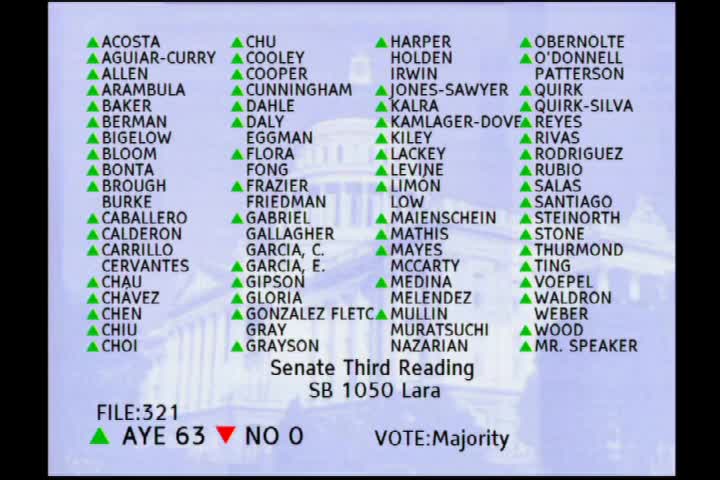 2MIN
Assembly Floor
 1H
Assembly Standing Committee on Appropriations
 2MIN
Senate Floor
 11MIN
Senate Standing Committee on Environmental Quality
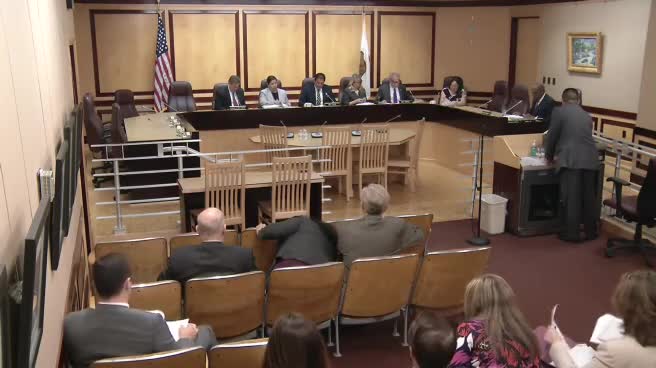 18MIN
Senate Standing Committee on Energy, Utilities and Communications
Bill Author

Bill Co-Author(s):
