SB 184: Social security number truncation program.
- Session Year: 2017-2018
- House: Senate
- Latest Version Date: 2017-10-09
Existing law requires the county recorder of each county to establish a social security number truncation program in order to create a public record version of each official record, in an electronic format, and requires the social security number contained in the record to be truncated, as specified. Existing law requires these provisions to apply to official records recorded on or after January 1, 1980, as specified.
This bill, for each official record recorded before January 1, 1980, would authorize the county recorder to create a copy of that record in an electronic format and truncate any social security number contained in that record.
Existing constitutional provisions require that a statute that limits the right of access to the meetings of public bodies or the writings of public officials and agencies be adopted with findings demonstrating the interest protected by the limitation and the need for protecting that interest.
This bill would make legislative findings to that effect.
This bill would declare that it is to take effect immediately as an urgency statute.Existing law requires the county recorder of each county to establish a social security number truncation program in order to create a public record version of each official record, in an electronic format, and requires the social security number contained in the record to be truncated, as specified. Existing law requires these provisions to apply to official records recorded on or after January 1, 1980, as specified.
This bill, for each official record recorded before January 1, 1980, would authorize the county recorder to create a copy of that record in an electronic format and truncate any social security number contained in that record.
Existing constitutional provisions require that a statute that limits the right of access to the meetings of public bodies or the writings of public officials and agencies be adopted with findings demonstrating the interest protected by the limitation and the need for protecting that interest.
This bill would make legislative findings to that effect.
This bill would declare that it is to take effect immediately as an urgency statute.
Existing law requires the county recorder of each county to establish a social security number truncation program in order to create a public record version of each official record, in an electronic format, and requires the social security number contained in the record to be truncated, as specified. Existing law requires these provisions to apply to official records recorded on or after January 1, 1980, as specified.
This bill, for each official record recorded before January 1, 1980, would authorize the county recorder to create a copy of that record in an electronic format and truncate any social security number contained in that record.
Existing constitutional provisions require that a statute that limits the right of access to the meetings of public bodies or the writings of public officials and agencies be adopted with findings demonstrating the interest protected by the limitation and the need for protecting that interest.
This bill would make legislative findings to that effect.
(a)The county recorder of each county shall establish a social security number truncation program in order to create a public record version of each official record.
(1)The program shall include both of the following components, which the recorder shall implement concurrently:
(A)For each official record recorded between January 1, 1980, and December 31, 2008, the recorder shall create in an electronic format an exact copy of the record except that any social security number contained in the copied record shall be truncated. In order to create a public record copy, the recorder shall first truncate the social security numbers in all records that already exist in an electronic format and then create an electronic version of all other records and truncate social security numbers contained in those records. Each group of records shall be handled in descending chronological order.
(B)For each official record recorded on or after January 1, 2009, the recorder shall create a copy of that record in an electronic format and truncate any social security number contained in that record.
(2)The program may include a component for each official record recorded before January 1, 1980, pursuant to which the county recorder may create a copy of that record in an electronic format and truncate any social security number contained in that record.
(b)Nothing in this article shall be construed to restrict, delay, or modify access to any official record, or modify any existing agreements regarding access to any official record, prior to the creation and availability of a public record version of that official record. A county recorder shall not charge any new fee or increase any existing fees in order to fund the social security number truncation program pursuant to this article, except as provided in subdivision (d) of Section 27361.
(c)Notwithstanding paragraph (1) of subdivision (a), a county recorder shall not be required to create a public record version of an official record if the fee authorized in Section 27304 is determined by the recorder to be insufficient to meet the cost of creating the public record version. In that case, the county recorder shall determine whether the fee is sufficient to meet the cost of creating a public record version of only a fraction of the official records described in paragraph (1) of subdivision (a). If the fee is sufficient to meet the cost of creating a public record version of a fraction of the official records, the recorder shall be required to create a public record version of that fraction only.
SEC. 2.The Legislature finds and declares that Section 1 of this act, which amends Section 27301 of the Government Code, imposes a limitation on the publics right of access to the meetings of public bodies or the writings of public officials and agencies within the meaning of Section 3 of Article I of the California Constitution. Pursuant to that constitutional provision, the Legislature makes the following findings to demonstrate the interest protected by this limitation and the need for protecting that interest:
In order to protect against the risk of identity theft when government documents recorded before January 1, 1980, and maintained by county recorders contain social security numbers, it is necessary to enact legislation that ensures the confidentiality of social security numbers.
SEC. 3.This act is an urgency statute necessary for the immediate preservation of the public peace, health, or safety within the meaning of Article IV of the California Constitution and shall go into immediate effect. The facts constituting the necessity are:In order to protect against the risk of identity theft at the earliest possible time, since government documents recorded before January 1, 1980, and maintained by the county recorders office contain social security numbers, it is necessary for this act to take effect immediately.(a)The county recorder of each county shall establish a social security number truncation program in order to create a public record version of each official record.
(1)The program shall include both of the following components, which the recorder shall implement concurrently:
(A)For each official record recorded between January 1, 1980, and December 31, 2008, the recorder shall create in an electronic format an exact copy of the record except that any social security number contained in the copied record shall be truncated. In order to create a public record copy, the recorder shall first truncate the social security numbers in all records that already exist in an electronic format and then create an electronic version of all other records and truncate social security numbers contained in those records. Each group of records shall be handled in descending chronological order.
(B)For each official record recorded on or after January 1, 2009, the recorder shall create a copy of that record in an electronic format and truncate any social security number contained in that record.
(2)The program may include a component for each official record recorded before January 1, 1980, pursuant to which the county recorder may create a copy of that record in an electronic format and truncate any social security number contained in that record.
(b)Nothing in this article shall be construed to restrict, delay, or modify access to any official record, or modify any existing agreements regarding access to any official record, prior to the creation and availability of a public record version of that official record. A county recorder shall not charge any new fee or increase any existing fees in order to fund the social security number truncation program pursuant to this article, except as provided in subdivision (d) of Section 27361.
(c)Notwithstanding paragraph (1) of subdivision (a), a county recorder shall not be required to create a public record version of an official record if the fee authorized in Section 27304 is determined by the recorder to be insufficient to meet the cost of creating the public record version. In that case, the county recorder shall determine whether the fee is sufficient to meet the cost of creating a public record version of only a fraction of the official records described in paragraph (1) of subdivision (a). If the fee is sufficient to meet the cost of creating a public record version of a fraction of the official records, the recorder shall be required to create a public record version of that fraction only.
SEC. 2.The Legislature finds and declares that Section 1 of this act, which amends Section 27301 of the Government Code, imposes a limitation on the publics right of access to the meetings of public bodies or the writings of public officials and agencies within the meaning of Section 3 of Article I of the California Constitution. Pursuant to that constitutional provision, the Legislature makes the following findings to demonstrate the interest protected by this limitation and the need for protecting that interest:
In order to protect against the risk of identity theft when government documents recorded before January 1, 1980, and maintained by county recorders contain social security numbers, it is necessary to enact legislation that ensures the confidentiality of social security numbers.
SEC. 3.This act is an urgency statute necessary for the immediate preservation of the public peace, health, or safety within the meaning of Article IV of the California Constitution and shall go into immediate effect. The facts constituting the necessity are:
In order to protect against the risk of identity theft at the earliest possible time, since government documents recorded before January 1, 1980, and maintained by the county recorders office contain social security numbers, it is necessary for this act to take effect immediately.
(a)The county recorder of each county shall establish a social security number truncation program in order to create a public record version of each official record. The program
(1)The program shall include both of the following components, which the recorder shall implement concurrently:
(a)(A)For each official record recorded between January 1, 1980, and December 31, 2008, the recorder shall create in an electronic format an exact copy of the record except that any social security number contained in the copied record shall be truncated. In order to create a public record copy, the recorder shall first truncate the social security numbers in all records that already exist in an electronic format and then create an electronic version of all other records and truncate social security numbers contained in those records. Each group of records shall be handled in descending chronological order.
(b)(B)For each official record recorded on or after January 1, 2009, the recorder shall create a copy of that record in an electronic format and truncate any social security number contained in that record.
(2)The program may include a component for each official record recorded before January 1, 1980, pursuant to which the county recorder may create a copy of that record in an electronic format and truncate any social security number contained in that record.
(c)(b)Nothing in this article shall be construed to restrict, delay, or modify access to any official record, or modify any existing agreements regarding access to any official record, prior to the creation and availability of a public record version of that official record. A county recorder shall not charge any new fee or increase any existing fees in order to fund the social security number truncation program pursuant to this article, except as provided in subdivision (d) of Section 27361.
(d)(c)Notwithstanding subdivisions (a) and (b), paragraph (1) of subdivision (a), a county recorder shall not be required to create a public record version of an official record if the fee authorized in Section 27304 is determined by the recorder to be insufficient to meet the cost of creating the public record version. In that case, the county recorder shall determine whether the fee is sufficient to meet the cost of creating a public record version of only a fraction of the official records described in subdivisions (a) and (b). paragraph (1) of subdivision (a). If the fee is sufficient to meet the cost of creating a public record version of a fraction of the official records, the recorder shall be required to create a public record version of that fraction only.
SEC. 2.The Legislature finds and declares that Section 1 of this act, which amends Section 27301 of the Government Code, imposes a limitation on the publics right of access to the meetings of public bodies or the writings of public officials and agencies within the meaning of Section 3 of Article I of the California Constitution. Pursuant to that constitutional provision, the Legislature makes the following findings to demonstrate the interest protected by this limitation and the need for protecting that interest:
In order to protect against the risk of identity theft when government documents recorded before January 1, 1980, and maintained by county recorders contain social security numbers, it is necessary to enact legislation that ensures the confidentiality of social security numbers.
|
Date
|
Status
|
|---|---|
| Oct 9, 2017 | Chaptered by Secretary of State. Chapter 621, Statutes of 2017. |
| Oct 9, 2017 | Approved by the Governor. |
| Sep 11, 2017 | Enrolled and presented to the Governor at 4 p.m. |
| Sep 5, 2017 | Assembly amendments concurred in. (Ayes 40. Noes 0.) Ordered to engrossing and enrolling. |
| Sep 1, 2017 | Ordered to special consent calendar. |
| Aug 31, 2017 | In Senate. Concurrence in Assembly amendments pending. |
| Aug 31, 2017 | Read third time. Passed. Ordered to the Senate. |
| Aug 24, 2017 | Read third time and amended. |
| Jul 17, 2017 | Read second time. Ordered to third reading. |
| Jul 13, 2017 | From committee: Do pass. (Ayes 9. Noes 0.) (July 12). |
| Jun 20, 2017 | From committee: Do pass and re-refer to Com. on L. GOV. with recommendation: To consent calendar. (Ayes 9. Noes 0.) (June 20). Re-referred to Com. on L. GOV. |
| May 18, 2017 | Referred to Coms. on P. & C.P. and L. GOV. |
| Apr 6, 2017 | In Assembly. Read first time. Held at Desk. |
| Apr 6, 2017 | Read third time. Urgency clause adopted. Passed. (Ayes 39. Noes 0. Page 642.) Ordered to the Assembly. |
| Mar 30, 2017 | Read second time. Ordered to consent calendar. |
| Mar 29, 2017 | From committee: Do pass. Ordered to consent calendar. (Ayes 7. Noes 0. Page 539.) (March 28). |
| Mar 23, 2017 | Set for hearing March 28. |
| Mar 22, 2017 | From committee: Do pass and re-refer to Com. on JUD. with recommendation: To consent calendar. (Ayes 7. Noes 0. Page 444.) (March 22). Re-referred to Com. on JUD. |
| Mar 15, 2017 | From committee with author's amendments. Read second time and amended. Re-referred to Com. on GOV. & F. |
| Mar 7, 2017 | Set for hearing March 22. |
| Feb 2, 2017 | Referred to Coms. on GOV. & F. and JUD. |
| Jan 26, 2017 | From printer. May be acted upon on or after February 25. |
| Jan 25, 2017 | Introduced. Read first time. To Com. on RLS. for assignment. To print. |
|
Date
|
Description
|
Location
|
Votes
|
|
|---|---|---|---|---|
| Sep 5, 2017 | Special Consent SB184 | Senate Floor |
Passed |
|
| Aug 31, 2017 | SB 184 Morrell Senate Third Reading By MELENDEZ | Assembly Floor |
Passed |
|
| Jul 12, 2017 | Do pass. | Assembly Standing Committee on Local Government |
Passed |
|
| Jun 20, 2017 | Do pass and be re-referred to the Committee on [Local Government] with recommendation: To Consent Calendar | Assembly Standing Committee on Privacy and Consumer Protection |
Passed |
|
| Apr 6, 2017 | Consent Calendar 2nd SB184 Morrell Urgency Clause | Senate Floor |
Passed |
|
| Mar 28, 2017 | Do pass and be ordered to the Consent Calendar | Senate Standing Committee on Judiciary |
Passed |
|
| Mar 22, 2017 | Do pass, but first be re-referred to the Committee on [Judiciary] with the recommendation: To Consent Calendar | Senate Standing Committee on Governance and Finance |
Passed |
This list shows positions taken on this bill by organizations on the date displayed, which is linked to the original source.
Positions by individuals are not included.
|
Organization
|
Position
|
Date
|
|---|---|---|
| California State Association Of Counties | ** Support | Aug 31, 2017 |
| County of Santa Clara Board of Supervisors | ** Support | Aug 31, 2017 |
| county recorders' association of california | ** Support | Aug 31, 2017 |
| county recorders' association of california [sponsor] | ** Support | Jul 11, 2017 |
| Privacy Rights Clearinghouse | ** Support | Aug 31, 2017 |
| Unknown. | ** Against | Mar 17, 2017 |
Office of Senate Floor Analyses (916) 651-1520 Fax: (916) 327-4478 | SB |
UNFINISHED BUSINESS
Bill No: SB 184
:
SENATE GOVERNANCE & FIN. COMMITTEE: 7-0, 3/22/17
AYES: McGuire, Nguyen, Beall, Hernandez, Hertzberg, Lara, Moorlach
SENATE JUDICIARY COMMITTEE: 7-0, 3/28/17
AYES: Jackson, Moorlach, Anderson, Hertzberg, Monning, Stern, Wieckowski
SENATE FLOOR: 39-0, 4/6/17 (Consent)
AYES: Allen, Anderson, Atkins, Bates, Beall, Bradford, Cannella, De León, Dodd, Fuller, Gaines, Galgiani, Glazer, Hernandez, Hertzberg, Hill, Hueso, Jackson, Lara, Leyva, McGuire, Mendoza, Mitchell, Monning, Moorlach, Morrell, Newman, Nguyen, Nielsen, Pan, Portantino, Roth, Skinner, Stern, Stone, Vidak, Wieckowski, Wiener, Wilk
NO VOTE RECORDED: Berryhill
ASSEMBLY FLOOR: 74-0, 8/31/17 - See last page for vote
SOURCE: County Recorders’ Association of California
DIGEST:
This bill allows county recorders to truncate social security numbers in documents recorded prior to 1980.
Assembly Amendments
delete the bill’s urgency clause.
Existing law:
- Establishes a recorder in each county.
- Requires county recorders to establish a social security number (SSN) truncation program to create a public record version of every official record that contains a SSN for documents recorded since January 1, 1980.
- Requires the public record version to be an exact electronic copy of the official record that has been redacted to show no more than the last four digits of any SSNs in the document.
- Allows, with the authorization of the board of supervisors, a county recorder to charge a $1 fee on the first page of every recorded document to fund this program.
This bill allows a county recorder to include documents recorded prior to January 1, 1980, in its SSN truncation program.
Comments
Purpose of the bill. SSNs are often used to verify identity, and, in the wrong hands, can be used by an identity thief to fraudulently open credit card or utility accounts, access financial accounts, or obtain loans, among other things. County recorders have successfully operated SSN truncation programs that protect this sensitive information from being disclosed to unauthorized parties, as required by current law. But current law only mandates the truncation program to include documents that were recorded on or after January 1, 1980. Some county recorders have expanded their truncation programs to include documents recorded earlier; others have not, in the absence of explicit authorization. The limits of these programs present privacy concerns as electronic access to records expands. SB 184 fixes this issue by making it clear that recorders may voluntarily include documents recorded prior to 1980 in their truncation programs. This simple change reduces the chance of disclosure of SSNs and protects Californians’ personal information.
FISCAL EFFECT: Appropriation: Fiscal Com.: Local:
County Recorders’ Association of California (source)
California State Association of Counties
County of Santa Clara Board of Supervisors
Privacy Rights Clearinghouse
OPPOSITION: (Verified 8/31/17)
None received
ASSEMBLY FLOOR: 74-0, 8/31/17
AYES: Acosta, Aguiar-Curry, Travis Allen, Arambula, Baker, Berman, Bigelow, Bloom, Bocanegra, Bonta, Brough, Burke, Caballero, Calderon, Cervantes, Chau, Chávez, Chen, Chiu, Choi, Chu, Cooley, Cooper, Cunningham, Dababneh, Dahle, Daly, Eggman, Fong, Frazier, Friedman, Gallagher, Eduardo Garcia, Gipson, Gloria, Gonzalez Fletcher, Gray, Grayson, Holden, Irwin, Jones-Sawyer, Kalra, Kiley, Lackey, Levine, Limón, Low, Maienschein, Mathis, Mayes, McCarty, Medina, Melendez, Mullin, Muratsuchi, Nazarian, Obernolte, O'Donnell, Patterson, Quirk, Reyes, Rodriguez, Rubio, Salas, Santiago, Steinorth, Mark Stone, Thurmond, Ting, Voepel, Waldron, Weber, Wood, Rendon
NO VOTE RECORDED: Flora, Cristina Garcia, Harper, Quirk-Silva, Ridley-Thomas
8/31/17 16:29:45
**** END ****
SENATE THIRD READING
STR Bill Id:SB 184
Author:(Morrell)
As Amended Ver:August 24, 2017
Majority Vote
SENATE VOTE: 39-0
Committee | Votes | Ayes | Noes |
Privacy | 9-0 | Chau, Kiley, Baker, Berman, Dababneh, Irwin, Kalra, Obernolte, Reyes | |
Local Government | 9-0 | Aguiar-Curry, Waldron, Bloom, Caballero, Gonzalez Fletcher, Grayson, Lackey, Ridley-Thomas, Voepel |
SUMMARY: Expands existing county programs to remove full social security numbers (SSNs) from official recorded documents by allowing county recorders to begin redacting SSNs from older documents that were recorded before January 1, 1980. Specifically, this bill:
- Authorizes, but does not require, county recorders to truncate official records recorded before January 1, 1980, as part of their existing SSN truncation programs.
- Makes findings and declarations relative to the necessity of limiting the public's right of access to public documents due to the threat of identity theft.
EXISTING LAW:
- Requires the county recorder of each county to establish an SSN truncation program in order to create a public record version of each official record, in an electronic format, and requires the SSN contained in the record to be truncated, as specified. (Government Code Section (GC) 27301)
- Defines "truncate" to mean to redact the first five digits of an SSN, and defines "truncated social security number" as an SSN that displays only the last four digits of the SSN. (GC 27300)
- Specifies that county recorder SSN truncation programs apply to official records recorded on or after January 1, 1980, as specified. (GC 27301)
- Allows each county recorder to charge an additional fee of $1 for the first page of each newly recorded document from January 1, 2008, until December 31, 2017, unless reauthorized and extended by each county board of supervisors. (GC 27361(d)(2))
FISCAL EFFECT: None. This bill has been keyed non-fiscal by the Legislative Counsel.
COMMENTS:
This bill is intended to reduce the risk of identity theft by allowing counties to expand their programs to redact SSNs in all documents recorded and made public through county recorder offices. This bill is sponsored by the County Recorders' Association of California.
Local government agencies are often required to make certain records open and accessible to the public through a public recording system. Usually these records may be reviewed physically on site, but increasingly local agencies are making these records available online. Many of these records, such as abstracts of judgment, property liens, deeds of trust, child support orders, and other legal documents contain social security numbers.
In the early 2000s, the Legislature began passing laws to protect the confidentiality of SSNs and prevent identity theft. Since then, credit unions, health plans, and state agencies, including California's three public college systems, have stopped using full SSNs as account numbers, health plan numbers, customer identification numbers, and student identification numbers. Despite the widespread phase-out of SSNs as primary identifiers, many local public records still contain full SSNs.
In 2007, when the Legislature first passed the law to require counties to truncate SSNs from recorded documents, the Legislature authorized county recorders, with approval of their boards of supervisors, to charge an additional fee of $1 for the first page of each newly recorded document, until December 31, 2017, in order to offset the costs of the programs. Because the original law covered redaction of SSNs from documents recorded back to 1980, the Legislature did not make the $1 fee permanent. Rather, state law allows an extension of the $1 fee per recorded document beyond December 31, 2017, if a county recorder's office obtains specific authorization to do so from its county board of supervisors. This authorization must be granted prior to December 31, 2017, by the board of supervisors in each county in which the fee is to be extended.
The County Recorders' Association of California states: "At the end of 2016, all 58 counties have truncated recorded documents from January 1, 2009, to present and 33 of those counties reported that all recorded documents from 1980 to present are [now] truncated. The other counties continue to work on the truncation back to 1980 as resources become available. Current law is unclear as to whether county recorders are authorized to truncate any social security numbers that are identified on documents recorded prior to 1980 even at the request of a citizen. SB 184 would provide this authority and give this privacy protection to our citizens whose documents were recorded prior to 1980."
Analysis Prepared by: Jessica Langtry / P. & C.P. / (916) 319-2200 FN: 0001344
SENATE THIRD READING
STR Bill Id:SB 184
Author:(Morrell)
As Amended Ver:March 15, 2017
2/3 vote. Urgency
SENATE VOTE: 39-0
Committee | Votes | Ayes | Noes |
Privacy | 9-0 | Chau, Kiley, Baker, Berman, Dababneh, Irwin, Kalra, Obernolte, Reyes | |
Local Government | 9-0 | Aguiar-Curry, Waldron, Bloom, Caballero, Gonzalez Fletcher, Grayson, Lackey, Ridley-Thomas, Voepel |
SUMMARY: Expands existing county programs to remove full social security numbers (SSNs) from official recorded documents by allowing county recorders to begin redacting SSNs from older documents that were recorded before January 1, 1980. Specifically, this bill:
- Authorizes, but does not require, county recorders to truncate official records recorded before January 1, 1980, as part of their existing SSN truncation programs.
- Contains an urgency clause in order to protect against the risk of identity theft at the earliest possible time.
- Makes findings and declarations relative to the necessity of limiting the public's right of access to public documents due to the threat of identity theft.
EXISTING LAW:
- Requires the county recorder of each county to establish an SSN truncation program in order to create a public record version of each official record, in an electronic format, and requires the SSN contained in the record to be truncated, as specified. (Government Code (GC) Section 27301)
- Defines "truncate" to mean to redact the first five digits of an SSN, and defines "truncated social security number" as an SSN that displays only the last four digits of the SSN. (GC 27300)
- Specifies that county recorder SSN truncation programs apply to official records recorded on or after January 1, 1980, as specified. (GC 27301)
- Allows each county recorder to charge an additional fee of $1 for the first page of each newly recorded document from January 1, 2008, until December 31, 2017, unless reauthorized and extended by each county board of supervisors. (GC 27361(d)(2))
FISCAL EFFECT: None. This bill has been keyed non-fiscal by the Legislative Counsel.
COMMENTS:
This bill is intended to reduce the risk of identity theft by allowing counties to expand their programs to redact SSNs in all documents recorded and made public through county recorder offices. This bill is sponsored by the County Recorders' Association of California.
Local government agencies are often required to make certain records open and accessible to the public through a public recording system. Usually these records may be reviewed physically on site, but increasingly local agencies are making these records available online. Many of these records, such as abstracts of judgment, property liens, deeds of trust, child support orders, and other legal documents contain social security numbers.
In the early 2000s, the Legislature began passing laws to protect the confidentiality of SSNs and prevent identity theft. Since then, credit unions, health plans, and state agencies, including California's three public college systems, have stopped using full SSNs as account numbers, health plan numbers, customer identification numbers, and student identification numbers. Despite the widespread phase-out of SSNs as primary identifiers, many local public records still contain full SSNs.
In 2007, when the Legislature first passed the law to require counties to truncate SSNs from recorded documents, the Legislature authorized county recorders, with approval of their boards of supervisors, to charge an additional fee of $1 for the first page of each newly recorded document, until December 31, 2017, in order to offset the costs of the programs. Because the original law covered redaction of SSNs from documents recorded back to 1980, the Legislature did not make the $1 fee permanent. Rather, state law allows an extension of the $1 fee per recorded document beyond December 31, 2017, if a county recorder's office obtains specific authorization to do so from its county board of supervisors. This authorization must be granted prior to December 31, 2017, by the board of supervisors in each county in which the fee is to be extended.
The County Recorders' Association of California states: "At the end of 2016, all 58 counties have truncated recorded documents from January 1, 2009, to present and 33 of those counties reported that all recorded documents from 1980 to present are [now] truncated. The other counties continue to work on the truncation back to 1980 as resources become available. Current law is unclear as to whether county recorders are authorized to truncate any social security numbers that are identified on documents recorded prior to 1980 even at the request of a citizen. SB 184 would provide this authority and give this privacy protection to our citizens whose documents were recorded prior to 1980."
This bill contains an urgency clause in order to protect against the risk of identity theft for government documents recorded before January 1, 1980.
Analysis Prepared by: Jennie Bretschneider / P. & C.P. / (916) 319-2200 FN: 0001168
Date of Hearing: July 12, 2017
ASSEMBLY COMMITTEE ON LOCAL GOVERNMENT
Cecilia Aguiar-Curry, Chair
SBPCA Bill Id:SB 184
Author:(Morrell) – As Amended Ver:March 15, 2017
SENATE VOTE: 39-0
SUBJECT: Social security number truncation program.
SUMMARY: Allows county recorders to include documents recorded prior to January 1, 1980, in their social security number (SSN) truncation programs. Specifically, this bill:
- Allows county recorders to include documents recorded prior to January 1, 1980, in their SSN truncation programs.
- Finds and declares that this bill imposes a limitation on the public’s right of access to the meetings of public bodies or the writings of public officials and agencies within the meaning of Section 3 of Article I of the California Constitution and, pursuant to that constitutional provision, makes the following findings to demonstrate the interest protected by this limitation and the need for protecting that interest: In order to protect against the risk of identity theft when government documents recorded before January 1, 1980, and maintained by county recorders contain SSNs, it is necessary to enact legislation that ensures the confidentiality of SSNs.
- Contains an urgency clause.
EXISTING LAW:
- Establishes a recorder in each county.
- Requires county recorders to establish SSN truncation programs to create a public record version of every official record that contains a SSN for documents recorded since January 1, 1980.
- Requires the public record version to be an exact electronic copy of the official record that has been redacted to show no more than the last four digits of any SSNs in the document.
- Allows a county recorder to charge a $1 fee on the first page of every recorded document to fund the SSN truncation program. A county recorder shall not charge this fee after December 31, 2017, unless the recorder receives reauthorization by the county’s board of supervisors. A county recorder shall not seek reauthorization of the fee by the board before June 1, 2017, or after December 31, 2017.
- In determining the additional period of authorization described in 4), above, the board shall consider the following review. The board shall require the county auditor to conduct two reviews to verify that the funds generated by the fee are used only for the purpose of the program and for conducting these reviews. The reviews shall state the progress of the county recorder in truncating recorded documents, and shall estimate any ongoing costs to the county recorder of complying with the statutes governing the SSN truncation program. The board shall require that the first review be completed not before June 1, 2012, or after December 31, 2013, and that the second review be completed not before June 1, 2017, or after December 31, 2017. The reviews shall adhere to generally accepted accounting standards, and the review results shall be made available to the public.
FISCAL EFFECT: None
COMMENTS:
- Background. The public records of county recorders – such as deeds, deeds of trust, judgments, and liens – often contain Social Security numbers (SSNs). Many public records are increasingly becoming available electronically.
Identity theft occurs whenever someone uses the personal identifying information of another person for an unlawful purpose, including obtaining or attempting to obtain credit, goods, services, or medical information in the name of the other person without that person's consent. For the identity thief, the SSN is the single-most useful tool.
In an attempt to combat identity theft, the Legislature approved AB 1168 (Jones), Chapter 627, Statutes of 2007, which required the truncation of SSNs in various local and state records that may be disclosed to the public. Among other things, AB 1168 required county recorders to establish a SSN truncation program to create a public record version of every official record that contains a SSN. The public record version is an electronic copy of the official record, but redacted to show no more than the last four digits of any SSNs in the document.
Under AB 1168, all documents recorded since January 1, 1980, must be included in the SSN truncation program. However, current law is silent regarding documents recorded prior to that date.
- SSN Truncation Program Fee Authority. AB 1168 allowed a county recorder to charge a $1 fee on the first page of every recorded document to fund the SSN truncation program.
A county recorder is prohibited from charging this fee after December 31, 2017, unless the recorder receives reauthorization by the county’s board of supervisors. A county recorder is able to seek reauthorization during a limited time window, not before June 1, 2017, or after December 31, 2017.
If a board of supervisors determines an additional period of authorization, it must consider specified reviews. The board must require the county auditor to conduct two reviews to verify that the funds generated by the fee are used only for the purpose of the program and for conducting the program reviews. The reviews must state the progress of the county recorder in truncating recorded documents, and must estimate any ongoing costs to the county recorder of complying with the statutes governing the SSN truncation program. The first review must be completed not before June 1, 2012, or after December 31, 2013. The second review must be completed not before June 1, 2017, or after December 31, 2017. The reviews must adhere to generally accepted accounting standards, and the review results must be made available to the public.
- Bill Summary. This bill allows county recorders to include documents recorded prior to January 1, 1980, in their SSN truncation programs. By doing so, this bill would allow recorders, until December 31, 2017, to seek additional fee authority for this purpose from their boards of supervisors. This bill is sponsored by the County Recorders' Association of California.
- Author's Statement. According to the author, "SB 184 would extend existing law by allowing county recorders to include documents recorded before January 1, 1980 in their SSN truncation program. By doing so, this bill will protect the privacy of all our citizens, including those with records established prior to January 1, 1980."
- Arguments in Support. The County Recorders' Association of California, sponsor of this measure, writes, "County recorders report their progress (on implementing AB 1168) annually. At the end of 2016, all 58 counties have truncated recorded documents from January 1, 2009 to present and 33 of counties reported that all recorded documents from 1980 to present are truncated. The other counties continue to work on the truncation back to 1980 as resources become available. Current law is unclear as to whether county recorders are authorized to truncate any SSNs that are identified on documents recorded prior to 1980 even at the request of a citizen. SB 184 would provide this authority and give this privacy protection to our citizens whose documents were recorded prior to 1980."
- Arguments in Opposition. None on file.
- Urgency Clause. This bill contains an urgency clause and requires a 2/3 vote of each house.
- Double-Referral. This bill was heard by the Privacy and Consumer Protection Committee on June 20, 2017, where it passed with a 9-0 vote.
REGISTERED SUPPORT / OPPOSITION:
Support
County Recorders' Association of California [SPONSOR]
California State Association of Counties
Privacy Rights Clearinghouse
Santa Clara County Board of Supervisors
Opposition
None on file
Analysis Prepared by: Angela Mapp / L. GOV. / (916) 319-3958
Date of Hearing: June 20, 2017
ASSEMBLY COMMITTEE ON PRIVACY AND CONSUMER PROTECTION
Ed Chau, Chair
SBPCA Bill Id:SB 184
Author:(Morrell) – As Amended Ver:March 15, 2017
SENATE VOTE: 39-0
SUBJECT: Social security number truncation program
SUMMARY: Expands existing county programs to remove full social security numbers (SSNs) from official recorded documents by allowing county recorders to begin redacting SSNs from older documents that were recorded before January 1, 1980. Specifically, this bill:
- Authorizes, but does not require, county recorders to truncate official records recorded before January 1, 1980, as part of their existing SSN truncation programs.
- Contains an urgency clause in order to protect against the risk of identity theft at the earliest possible time.
- Makes findings and declarations relative to the necessity of limiting the public's right of access to public documents due to the threat of identity theft.
EXISTING LAW:
- Requires the county recorder of each county to establish an SSN truncation program in order to create a public record version of each official record, in an electronic format, and requires the SSN contained in the record to be truncated, as specified. (Government Code (GC) Section 27301)
- Defines “truncate” to mean to redact the first five digits of an SSN, and defines “truncated social security number” as an SSN that displays only the last four digits of the SSN. (GC 27300)
- Specifies that county recorder SSN truncation programs apply to official records recorded on or after January 1, 1980, as specified. (GC 27301)
- Allows each county recorder to charge an additional fee of $1 for the first page of each newly recorded document from January 1, 2008, until December 31, 2017, unless reauthorized and extended by each county board of supervisors. (GC 27361(d)(2))
FISCAL EFFECT: None. This bill has been keyed nonfiscal by the Legislative Counsel.
COMMENTS:
- Purpose of this bill: This bill is intended to reduce the risk of identity theft by allowing counties to expand their programs to redact SSNs in all documents recorded and made public through county recorder offices. This bill is sponsored by the County Recorders’ Association of California.
- Author's statement: According to the author, "SB 184 would extend existing law by allowing County Recorders to include documents recorded before January 1, 1980, in their Social Security Number Truncation Program. By doing so, this bill will protect the privacy of all our citizens, including those with records established prior to January 1, 1980."
- Social security numbers and the risk of identity theft: Identity theft occurs whenever someone uses the SSN and other personal information of another person for any unlawful purpose, although typically it is done to fraudulently obtain credit, goods, or services in the other person’s name. The SSN is the crucial piece of information criminals need to commit identity theft, because it is the primary identifier used in the banking industry to check identity and creditworthiness with the three major credit reporting agencies.
- The California Public Records Act and local government: Local government agencies are often required to make certain records open and accessible to the public through a public recording system. Usually these records may be reviewed physically on site, but increasingly local agencies are making these records available online. Many of these records, such as abstracts of judgment, property liens, deeds of trust, child support orders, and other legal documents contain social security numbers.
Open public records are useful because they provide notice to citizens of various legal or governmental actions that have been taken. However, this purpose can still be served even if the SSNs are truncated or removed. This bill would authorize county recorders to truncate SSNs on recorded documents working backward from January 1, 1980, so that no more than the last four digits are displayed. - Phasing out social security numbers in California: In the early 2000s, the Legislature began passing laws to protect the confidentiality of SSNs and prevent identity theft. Since then, credit unions, health plans, and state agencies, including California’s three public college systems, have stopped using full SSNs as account numbers, health plan numbers, customer identification numbers, and student identification numbers. Despite the widespread phase-out of SSNs as primary identifiers, many local public records still contain full SSNs.
In 2007, the Legislature passed a law to require county recorders to begin truncating SSNs from recorded documents. The original impetus of the truncation programs was the rising incidence of identity theft, especially through the misappropriation of SSNs found in recorded documents that were publicly available. This bill extends the authority of the programs to cover public records recorded before 1980 in order to further protect consumers from the dangers of identity theft and fraud.
- Can counties afford to expand their SSN truncation programs? In 2007, when the Legislature first passed the law to require counties to truncate SSNs from recorded documents, the Legislature authorized county recorders, with approval of their boards of supervisors, to charge an additional fee of $1 for the first page of each newly recorded document, until December 31, 2017, in order to offset the costs of the programs. Because the original law covered redaction of SSNs from documents recorded back to 1980, the Legislature did not make the $1 fee permanent. Rather, state law allows an extension of the $1 fee per recorded document beyond December 31, 2017, if a county recorder’s office obtains specific authorization to do so from its county board of supervisors. This authorization must be granted prior to December 31, 2017, by the board of supervisors in each county in which the fee is to be extended.
- Arguments in support: The County Recorders’ Association of California states: “At the end of 2016, all 58 counties have truncated recorded documents from January 1, 2009, to present and 33 of those counties reported that all recorded documents from 1980 to present are [now] truncated. The other counties continue to work on the truncation back to 1980 as resources become available. Current law is unclear as to whether county recorders are authorized to truncate any social security numbers that are identified on documents recorded prior to 1980 even at the request of a citizen. SB 184 would provide this authority and give this privacy protection to our citizens whose documents were recorded prior to 1980.”
- Previous legislation: AB 1168 (Jones), Chapter 627, Statutes of 2007, established county recorder SSN truncation programs, which required county recorders to redact SSNs from recorded documents dating back to 1980 and allowed a $1 fee per document to offset costs.
SB 168 (Bowen), Chapter 720, Statutes of 2001, prohibited state and local governments from posting or displaying SSNs on any document made available to the public, but made an exception for records subject to the Public Records Act, such as recorded documents.
- Urgency measure: This bill contains an urgency clause in order to protect against the risk of identity theft for government documents recorded before January 1, 1980. As a result, this bill will require a 2/3 vote on the Floor if passed by this Committee.
- Double-referral: This bill is double-referred to the Assembly Local Government Committee, where it will be heard if passed by this Committee.
REGISTERED SUPPORT / OPPOSITION:
Support
County Recorders’ Association of California (sponsor)
California State Association of Counties
Privacy Rights Clearinghouse
Santa Clara County Board of Supervisors
Opposition
None on file.
Analysis Prepared by: Jennie Bretschneider / P. & C.P. / (916) 319-2200
Office of Senate Floor Analyses (916) 651-1520 Fax: (916) 327-4478 | SB 184 |
CONSENT
Bill No: SB 184
Amended: 3/15/17
SENATE GOVERNANCE & FIN. COMMITTEE: 7-0, 3/22/17
AYES: McGuire, Nguyen, Beall, Hernandez, Hertzberg, Lara, Moorlach
SENATE JUDICIARY COMMITTEE: 7-0, 3/28/17
AYES: Jackson, Moorlach, Anderson, Hertzberg, Monning, Stern, Wieckowski
SUBJECT: Social security number truncation program
SOURCE: County Recorders’ Association of California
DIGEST: This bill allows county recorders to truncate social security numbers in documents recorded prior to 1980.
Existing law:
- Establishes a recorder in each county.
- Requires county recorders to establish a social security number (SSN) truncation program to create a public record version of every official record that contains a SSN for documents recorded since January 1, 1980.
- Requires the public record version to be an exact electronic copy of the official record that has been redacted to show no more than the last four digits of any SSNs in the document.
- Allows, with the authorization of the board of supervisors, a county recorder to charge a $1 fee on the first page of every recorded document to fund this program.
This bill:
- Allows a county recorder to include documents recorded prior to January 1, 1980 in its SSN truncation program.
- Declares its urgency because it is necessary for its provisions to go into effect immediately to protect against the risk of identity theft when government documents recorded before January 1, 1980, contain SSNs.
Comments
Purpose of the bill. SSNs are often used to verify identity, and, in the wrong hands, can be used by an identity thief to fraudulently open credit card or utility accounts, access financial accounts, or obtain loans, among other things. County recorders have successfully operated SSN truncation programs that protect this sensitive information from being disclosed to unauthorized parties, as required by current law. But current law only mandates the truncation program to include documents that were recorded on or after January 1, 1980. Some county recorders have expanded their truncation programs to include documents recorded earlier; others have not, in the absence of explicit authorization. The limits of these programs present privacy concerns as electronic access to records expands. SB 184 fixes this issue by making it clear that recorders may voluntarily include documents recorded prior to 1980 in their truncation programs. This simple change reduces the chance of disclosure of SSNs and protects Californians’ personal information.
FISCAL EFFECT: Appropriation: No Fiscal Com.: No Local: No
County Recorders’ Association of California (source)
California State Association of Counties
County of Santa Clara Board of Supervisors
Privacy Rights Clearinghouse
OPPOSITION: (Verified 3/30/17)
None received
Prepared by: Anton Favorini-Csorba / GOV. & F. /
3/30/17 15:36:53
Senator Hannah-Beth Jackson, Chair
2017-2018 Regular Session
Bill No: SB 184 (Author:Morrell)
Version: March 15, 2017
Hearing Date: March 28, 2017
Fiscal: No
Urgency: Yes
Consultant: CK
SUBJECT
Social security number truncation program
DESCRIPTION
This bill would extend the authority of County Recorders to allow them to include records recorded before January 1, 1980, in the existing Social Security Number Truncation Program. This bill would allow County Recorders to create copies of such records in an electronic format and truncate any social security numbers contained therein. This bill would also make legislative findings required to impose such a limitation on public access to public records. It would also make findings supporting its taking effect immediately.
BACKGROUND
A Social Security number (SSN) is a nine-digit number issued to citizens, permanent residents, and certain temporary residents. The number is issued to an individual by the Social Security Administration. Although the primary purpose of the SSN is to track individuals for taxation and distribution of retirement benefits, it has effectively gained use as a national identification number. In fact, the number is used widely as a unique identifier by both the public and the private sector and has been called the “most frequently used recordkeeping number in the United States.”
Social Security numbers are often used to verify identity, and, in the wrong hands, can be used by an identity thief to fraudulently open credit card or utility accounts, access financial accounts, or obtain loans, among other things. The overall growth in the use of SSNs is important to individual SSN holders because this number is one of the personal identifiers most sought after by identity thieves, making its easy availability, particularly in public records, of special concern.
Traditionally, the public records of county recorders have often contained Social Security numbers, including deeds, deeds of trust, judgments, and liens. These records have for years become increasingly available in electronic format and available online. The sensitivity of the information in these records coupled with their increasing availability online prompted legislation enacted in 2007 to protect against identity theft. In relevant part, the law requires the county recorder of each county to establish a social security number truncation program in order to create a public record version of each official record, in an electronic format, and requires the social security number contained in the record to be truncated. However, the law only applied its provisions to official records recorded on or after January 1, 1980. This urgency bill would vest discretion in county recorders to include records recorded before January 1, 1980, in the program.
CHANGES TO EXISTING LAW
Existing law requires the county recorder of each county to establish a social security number truncation program in order to create a public record version of each official record, in an electronic format, and requires the social security number contained in the record to be truncated, as specified. Existing law requires these provisions to apply to official records recorded on or after January 1, 1980, as specified. (Gov. Code Sec. 27301.)
This bill would provide optional authority for County Recorders to include official records recorded before January 1, 1980, in their Social Security Number Truncation Program.
This bill would declare that it is to take effect immediately in order to protect against the risk of identity theft at the earliest possible time.
COMMENT
1. Stated need for the bill
According to the author:
In order to protect against the risk of identity theft when government documents recorded before January 1, 1980, and maintained by county recorders contain social security numbers, it is necessary to enact legislation that ensures the confidentiality of social security numbers.
This bill would provide optional authority for County Recorders to include official records recorded before January 1, 1980[,] in their Social Security Number Truncation Program.
2. Protection against the risk of identity theft
The original impetus of the truncation program was the rising incidence of identity theft, especially through the misappropriation of Social Security numbers found in public records that were publicly available. The purpose of truncating the Social Security numbers was to protect against “fraudsters and ID thieves” gaining access to such personal information in public records. This same principle applies here. This bill would simply extend the authority of the program to cover public records recorded with county recorders before 1980. By allowing county recorders the ability to truncate Social Security numbers in these documents, this bill would further protect consumers from the dangers of identity theft and fraud.
Writing in support, the California State Association of Counties states that this bill would make “a simple change that will help counties as well as members of the public” through an expanded authorization for county records that assists counties in meeting public record requests “while adhering to personal information security measures.” Also in support, the Santa Clara County Board of Supervisors writes that this bill “would reduce the chance of disclosure of social security numbers and help protect California’s personal information.”
3. Urgency Statute
This urgency bill declares that it is “necessary for the immediate preservation of the public peace, health, or safety” and shall go into effect immediately. This bill would make findings supporting such a claim, namely that the risk of identity theft needs to be addressed immediately. As discussed, the presence of full Social Security numbers in public records is problematic and presents an opportunity for identity theft to occur at any time. It should also be noted that the records covered in these amendments to the law have existed in county recorder offices for at least 37 years.
Support: California State Association of Counties; Santa Clara County Board of Supervisors
Opposition: None Known
HISTORY
Source: County Recorders’ Association of California
Related Pending Legislation:
AB 1297 (Chau – 2017) would increase the terms of punishment for persons, with the intent to defraud, to acquire or retain possession of the personal identifying information of more than nine people.
SB 33 (Dodd – 2017) would proscribe certain contracts that require waiver of certain rights that arise as a result of fraud, identity theft, or any other act related to the wrongful use of personal identifying information.
Prior Legislation: AB 1168 (Jones, Ch. 627, Stats. 2007)
Prior Vote: Senate Governance and Finance (Ayes 7, Noes 0)
**************
SENATE COMMITTEE ON GOVERNANCE AND FINANCE
Senator Mike McGuire, Chair
2017 - 2018 Regular
Bill No: | SB 184 | Hearing Date: | 3/22/17 |
Author: | Morrell | Tax Levy: | No |
Version: | 3/15/17 Amended | Fiscal: | No |
Consultant: | Favorini-Csorba | ||
Social security number truncation program
Allows county recorders to truncate Social Security numbers in documents recorded prior to 1980.
Background
The public records of county recorders—such as deeds, deeds of trust, judgments, and liens—often contain Social Security numbers (SSNs). Many public records are increasingly becoming available electronically. The information contained in these documents has become part of databases maintained and mined by data brokers—companies which compile significant amounts of personal information about individual consumers, often from public records.
To mitigate the risk of identity theft, AB 1168 (Jones, 2007) required county recorders to establish a SSN truncation program to create a public record version of every official record that contains a SSN. The public record version must be an exact electronic copy of the official record that has been redacted to show no more than the last four digits of any SSNs in the document. With the authorization of the board of supervisors, a county recorder can charge a $1 fee on the first page of every recorded document to fund this program.
Under AB 1168, all documents recorded since January 1, 1980 must be included in the SSN truncation program. However, current law is silent regarding documents recorded prior to that date. As a result, county recorders have differing interpretations as to whether they can include documents recorded prior to 1980 in their truncation programs. The County Recorders Association wants to ensure that recorders can include these documents in their truncation programs.
Proposed Law
Senate Bill 184 allows a county recorder to include documents recorded prior to January 1, 1980 in its SSN truncation program.
State Revenue Impact
No estimate.
Comments
1. Purpose of the bill. SSNs are often used to verify identity, and, in the wrong hands, can be used by an identity thief to fraudulently open credit card or utility accounts, access financial accounts, or obtain loans, among other things. County recorders have successfully operated SSN truncation programs that protect this sensitive information from being disclosed to unauthorized parties, as required by current law. But current law only mandates the truncation program to include documents that were recorded on or after January 1, 1980. Some county recorders have expanded their truncation programs to include documents recorded earlier; others have not, in the absence of explicit authorization. The limits of these programs present privacy concerns as electronic access to records expands. SB 184 fixes this issue by making it clear that recorders may voluntarily include documents recorded prior to 1980 in their truncation programs. This simple change reduces the chance of disclosure of SSNs and protects Californians’ personal information.
2. Urgency. Regular statutes take effect on January 1 following their enactment; bills passed in 2017 take effect on January 1, 2018. The California Constitution allows bills with urgency clauses to take effect immediately if they're needed for the public peace, health, and safety. SB 184 contains an urgency clause declaring that it is necessary for its provisions to go into effect immediately to protect against the risk of identity theft when government documents recorded before January 1, 1980 contain social security numbers.
3. Double-referred. The Senate Rules Committee has ordered a double-referral of SB 184—first to the Senate Governance & Finance Committee, which has jurisdiction over bills relating to the powers and duties of county recorders, and then to the Senate Judiciary Committee, which has jurisdiction over bills relating to privacy.
Support and Opposition
(3/16/17)
Support: County Recorders’ Association of California (sponsor); California State Association of Counties; Privacy Rights Clearinghouse (PRC).
Opposition: Unknown.
-- END --
Discussed in Hearing
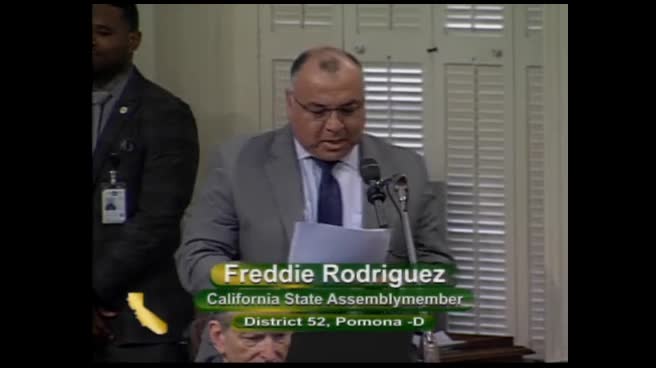 1MIN
Assembly Floor
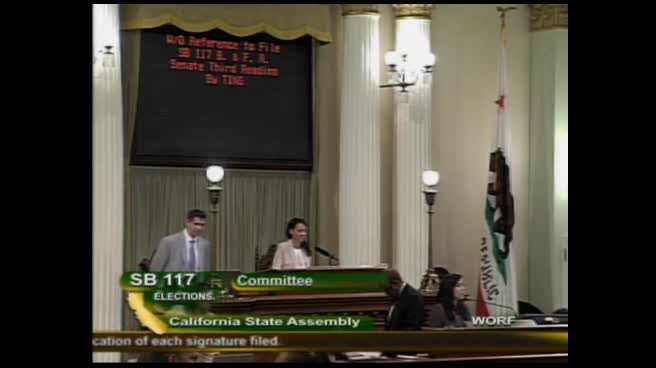 30SEC
Assembly Floor
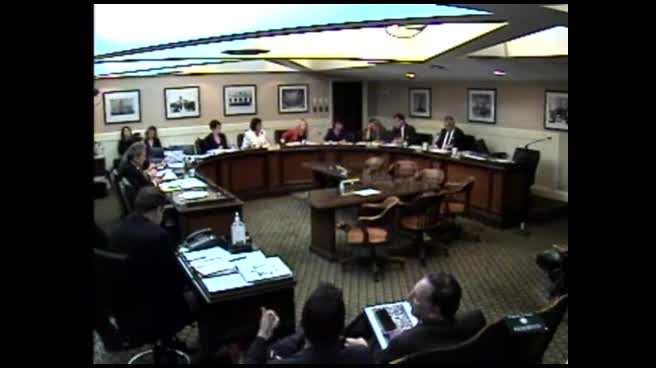 3MIN
Assembly Standing Committee on Local Government
Bill Author

Bill Co-Author(s):