SB 191: Pupil health: mental health and substance use disorder services.
- Session Year: 2017-2018
- House: Senate
- Latest Version Date: 2017-03-28
Existing law requires school districts, county offices of education, and special education local plan areas (SELPAs) to comply with state laws that implement the federal Individuals with Disabilities Education Act, in order that the state may qualify for federal funds available for the education of individuals with exceptional needs. Existing law requires school districts, county offices of education, and SELPAs to identify, locate, and assess individuals with exceptional needs and to provide those pupils with a free appropriate public education in the least restrictive environment, and with special education and related services, including mental health services, as reflected in an individualized education program.
This bill would authorize a county, or a qualified provider operating as part of the county mental health plan network, and a local educational agency to enter into a partnership to create a program that includes, among other things, targeted interventions for pupils with identified social-emotional, behavioral, and academic needs and an agreement to establish that establishes a Medi-Cal mental health and substance use disorder provider that is county operated or county contracted for the provision of mental health and substance use disorder services to pupils of the local educational agency and in which there are provisions for the delivery of campus-based mental health and substance use disorder services through qualified providers or qualified professionals to provide on-campus support to identify pupils with an individualized education program (IEP), and pupils who do not have an IEP, but who a teacher believes may require mental health or substance use disorder services and, with parental consent, to provide those services to those pupils.
The bill would require the Mental Health Services Oversight and Accountability Commission, in consultation with the State Department of Education and the State Department of Health Care Services, to develop guidelines for the use of funds from the Mental Health Services Fund by a county for innovative programs and prevention and early intervention programs to enter into and support the above-mentioned partnerships. The bill would create the County and Local Educational Agency Partnership Fund in the State Treasury, which would be available, upon appropriation by the Legislature, to the State Department of Education for the purpose of funding these partnerships, as specified, and would require the State Department of Education to fund these partnerships through a competitive grant program. The bill would also make related findings and declarations.
Existing law requires school districts, county offices of education, and special education local plan areas (SELPAs) to comply with state laws that implement the federal Individuals with Disabilities Education Act, in order that the state may qualify for federal funds available for the education of individuals with exceptional needs. Existing law requires school districts, county offices of education, and SELPAs to identify, locate, and assess individuals with exceptional needs and to provide those pupils with a free appropriate public education in the least restrictive environment, and with special education and related services, including mental health services, as reflected in an individualized education program.
This bill would authorize a county, or a qualified provider operating as part of the county mental health plan network, and a local educational agency to enter into a partnership to create a program that includes, among other things, targeted interventions for pupils with identified social-emotional, behavioral, and academic needs and an agreement to establish a Medi-Cal mental health and substance use disorder provider that is county operated or county contracted for the provision of mental health and substance use disorder services to pupils of the local educational agency and in which there are provisions for the delivery of campus-based mental health and substance use disorder services through qualified providers or qualified professionals to provide on-campus support to identify pupils with an individualized education program (IEP), and pupils who do not have an IEP, but who a teacher believes may require mental health or substance use disorder services and, with parental consent, to provide those services to those pupils.
The bill would require the Mental Health Services Oversight and Accountability Commission, in consultation with the State Department of Education and the State Department of Health Care Services, to develop guidelines for the use of funds from the Mental Health Services Fund by a county for innovative programs and prevention and early intervention programs to enter into and support the above-mentioned partnerships. The bill would create the County and Local Educational Agency Partnership Fund in the State Treasury, which would be available, upon appropriation by the Legislature, to the State Department of Education for the purpose of funding these partnerships, as specified, and would require the State Department of Education to fund these partnerships through a competitive grant program. The bill would also make related findings and declarations.
The Legislature finds and declares all of the following:
(a)Student mental health and substance use problems are often manifestations of childhood trauma, such as exposure to family and community violence.
(b)Included among the numerous long-term negative health, social, and educational outcomes associated with childhood trauma are special health care needs, suicide attempts and depression, alcoholism and injection drug use, learning difficulties and delays on cognitive and social-emotional indicators, low school engagement and attendance problems, repeating a grade and academic failure, bullying, dating violence, delinquent behavior, physical fighting, and weapon carrying.
(c)Investing in helping students effectively cope with and overcome trauma is particularly important for addressing substance use problems given the strong link between early adversity and substance use. For example, compared to individuals with zero Adverse Childhood Experiences (ACEs), individuals with four or more ACEs are 10.3 times as likely to have ever injected drugs, 7.4 times as likely to consider oneself an alcoholic, and 4.7 times as likely to have ever used illicit drugs.
(d)Mental illness and substance use disorders are so often cooccurring that a joint statement by the American Psychiatric Association and the American Society for Addiction Medicine concluded that it should be the expectation and not the exception. According to the Surgeon General, nearly 50 percent of people with substance use disorders have a cooccurring mental illness. The joint statement also concluded that when there is a cooccurring condition, it should be treated in an integrated program that simultaneously addresses both conditions.
(e)Schools are the best place for early identification and alleviation of behavioral health challenges that are likely to lead to serious mental illness or substance use disorders if not addressed early in their onset.
(f)Multitiered models to improve school climate and culture and to assure prompt referral for support for students showing any level of challenge and comprehensive integrated services for those with serious emotional disturbances or substance use disorders have been demonstrated to have the best outcomes in improving student health and academic performance.
(g)These integrated models, when able to leverage public or private health insurance funds, demonstrate that early investments pay for themselves in reduced special education costs and improved academic success with reducing school dropout rates and related problems.
SEC. 2.Part 5.5 (commencing with Section 5920) is added to Division 5 of the Welfare and Institutions Code, to read:5.5.County and Local Educational Agency Partnerships5920.(a)Notwithstanding any other law, a county, or a qualified provider operating as part of the county mental health plan network that provides substance use disorder services, and a local educational agency may enter into a partnership to create a program that, in addition to reflecting each schools specified culture and needs, includes all of the following:
(1)Leveraging of school and community resources to offer comprehensive multitiered interventions on a sustainable basis.
(2)An initial school climate assessment that includes information from multiple stakeholders, including school staff, pupils, and families, that is used to inform the selection of strategies and interventions that reflect the culture and goals of the school.
(3)A coordination of services team that considers referrals for services, oversees schoolwide efforts, and uses data-informed processes to identify struggling pupils who require early interventions.
(4)Whole school strategies that address school climate and universal pupil well-being, such as positive behavioral interventions and supports or the Olweus Bullying Prevention Program, supports, as well as comprehensive professional development opportunities, that build the capacity of the entire school community to recognize and respond to the unique social-emotional, behavioral, and academic needs of pupils.
(5)Targeted interventions for pupils with identified social-emotional, behavioral, and academic needs, such as therapeutic group interventions, functional behavioral analysis and plan development, targeted skill groups, and eligible services specified by the School-Based Early Mental Health Intervention and Prevention Services Matching Grant Program pursuant to subdivision (h) of Section 4380.
(6)Intensive services, such as wraparound, behavioral intervention, or one-on-one support, that can reduce the need for a pupils referral to special education or placement in more restrictive, isolated settings.
(7)Specific strategies and practices that ensure parent engagement with the school and provide parents with access to resources that support their childrens educational success.
(8)Utilization of designated governmental funds for eligible Medi-Cal Early and Periodic Screening, Diagnosis, and Treatment (EPSDT) services provided to pupils enrolled in Medi-Cal for mental health and substance use disorder service costs, for non-Medi-Cal enrolled pupils with an individualized education program (IEP) pursuant to the federal Individuals with Disabilities Education Act (20 U.S.C. Sec. 1400 et seq.), and for pupils who do not have an IEP if the services are provided by a provider specified in paragraph (9).
(9)(A)An agreement to establish between the county mental health plan, or the qualified provider, and the local educational agency that establishes a Medi-Cal mental health and substance use disorder provider that is county operated or county contracted for the provision of mental health and substance use disorder services to pupils of the local educational agency. The agreement may include provisions for the delivery of campus-based mental health and substance use disorder services through qualified providers or qualified professionals to provide on-campus support to identify pupils with an IEP adopted pursuant to Section 504 of the federal Rehabilitation Act of 1973 (29 U.S.C. Sec. 794(a)) and pupils who do not have an IEP, but who a teacher believes may require those services and, with parental consent, to provide mental health or substance use disorder services to those pupils.
(B)The local educational agency, with permission of the pupils parent, shall provide the county mental health plan provider with the information of the health insurance carrier for each pupil.
(C)The agreement shall address how to cover the costs of mental health and substance use disorder provider services not covered by funds pursuant to paragraph (8) in the event that mental health and substance use disorder service costs exceed the agreed-upon funding outlined in the partnership agreement between the county mental health plan, or the qualified provider, and the local educational agency following a yearend cost reconciliation process, and in the event that the local educational agency does not elect to provide the services through other means. Nothing in this subparagraph shall hold the local educational agency liable for any costs that exceed the agreed-upon funding outlined in the partnership agreement.
(D)The agreement shall fulfill reporting and all other requirements under state and federal Individuals with Disabilities Education Act (20 U.S.C. Sec. 1400 et seq.) and Medi-Cal EPSDT provisions, and measure the effect of the mental health and substance use disorder intervention and how that intervention meets the goals in a pupils IEP or relevant plan for non-IEP pupils.
(E)The agreement shall provide for on-campus services by clinicians who are part of commercial insurance health plan behavioral health networks at schools where a significant percentage of students are not enrolled in Medi-Cal.(E)The agreement shall include a process for resolving disagreements between the local educational agency and county mental health plan network related to any of the elements of the agreement described in this paragraph.
(F)The agreement shall include strategies to support the educational success of pupils who have repeated or prolonged absences from school due to mental illness or substance abuse disorders.
(10)A plan to establish a program described in this section in at least one school within the local educational agency in the first year and to expand the partnership to three additional schools within three years.
(b)The partnership shall participate in the performance outcome system established by the State Department of Health Care Services pursuant to Section 14707.5 to measure results of services provided under the partnership between the county mental health plan, or the qualified provider, and the local educational agency.
(c)For purposes of this section, local educational agency has the same meaning as that term is defined in Section 56026.3 of the Education Code.
(d)Where applicable, and to the extent mutually agreed to by a school district and a plan or insurer, it is the intent of the Legislature that a health care service plan or a health insurer be authorized to participate in the partnerships described in this part.
5921.(a)(1)The Mental Health Services Oversight and Accountability Commission, in consultation with the State Department of Education and the State Department of Health Care Services, shall develop guidelines for the use of funds from the Mental Health Services Fund by a county for innovative programs and prevention and early intervention programs to enter into and support the partnerships described in this part.
(2)The guidelines shall include provisions for integration with funds and services supplemented with funds from the Youth Education, Prevention, Early Intervention and Treatment Account, created pursuant to subdivision (f) of Section 34019 of the Revenue and Taxation Code, to the extent that funds from that account are appropriated for purposes of this part.
(3)The guidelines shall include incentives for counties and local educational agencies to capture savings in reduced special education costs and reinvest those savings to expand the program to new schools each year with an expectation that funds from the Mental Health and Services Act and the Youth Education, Prevention, Early Intervention and Treatment Account, created pursuant to subdivision (f) of Section 34019 of the Revenue and Taxation Code, will only be required for the first three years of a program at each school.(b)The State Department of Education shall develop guidelines for local educational agencies on the manner in which to enter into partnerships described in this part.
(c)The State Department of Health Care Services shall develop guidelines for county behavioral health departments on the manner in which to use funds from the Mental Health Services Fund and funds from the Medi-Cal program to enter into and support the partnerships described in this part.
5922.(a)The County and Local Educational Agency Partnership Fund is hereby created in the State Treasury. Moneys in the fund are available, upon appropriation by the Legislature, to the State Department of Education for the purpose of funding the partnerships described in this part. The State Department of Education shall fund partnerships described in this part through a competitive grant program. Priority in funding shall be given to partnerships with local educational agencies that have demonstrated high levels of childhood adversity, including, but not limited to, high-poverty local educational agencies and schools eligible under the Community Eligibility Provision of the Healthy, Hunger-Free Kids Act of 2010 (Public Law 111-296) and local educational agencies and schools identified in the California Longitudinal Pupil Achievement Data System as having high rates of foster youth and homeless children and youth.
(b)(1)For the 201819 fiscal year and each fiscal year thereafter, to the extent there is an appropriation in the annual Budget Act or another act made for purposes of this part, the Superintendent of Public Instruction shall allocate funds from that appropriation to the County and Local Educational Agency Partnership Fund.
(2)Other funds identified and appropriated by the Legislature may also be deposited into the County and Local Educational Agency Partnership Fund and used for the purposes specified in subdivision (a).
(c)Funds made available in the annual Budget Act for the purpose of providing educationally related mental health and substance use disorder services, including out-of-home residential services for emotionally disturbed pupils, whether required or not by an individualized education program, shall be used only for that purpose and shall not be deposited into the County and Local Educational Agency Partnership Fund. Nothing in this subdivision shall require the use of funds included in the minimum funding obligation under Section 8 of Article XVI of the California Constitution for the partnerships established by this part.
SEC. 3.It is the intent of the Legislature that, commencing with fiscal year 201819, the 201819 fiscal year, the State Department of Health Care Services utilize funds from the Youth Education, Prevention, Early Intervention and Treatment Account created pursuant to subdivision (f) of Section 34019 of the Revenue and Taxation Code to support the partnerships created pursuant to this act, and to allocate a portion of those funds only to counties that also provide funds from the Mental Health Services Fund and Medi-Cal Early and Periodic Screening, Diagnosis, and Treatment mental health and substance use disorder funds for the purposes of this act.
The Legislature finds and declares all of the following:
(a)Student mental health and substance use problems are often manifestations of childhood trauma, such as exposure to family and community violence.
(b)Included among the numerous long-term negative health, social, and educational outcomes associated with childhood trauma are special health care needs, suicide attempts and depression, alcoholism and injection drug use, learning difficulties and delays on cognitive and social-emotional indicators, low school engagement and attendance problems, repeating a grade and academic failure, bullying, dating violence, delinquent behavior, physical fighting, and weapon carrying.
(c)Investing in helping students effectively cope with and overcome trauma is particularly important for addressing substance use problems given the strong link between early adversity and substance use. For example, compared to individuals with zero Adverse Childhood Experiences (ACEs), individuals with four or more ACEs are 10.3 times as likely to have ever injected drugs, 7.4 times as likely to consider oneself an alcoholic, and 4.7 times as likely to have ever used illicit drugs.
(d)Mental illness and substance use disorders are so often cooccurring that a joint statement by the American Psychiatric Association and the American Society for Addiction Medicine concluded that it should be the expectation and not the exception. According to the Surgeon General, nearly 50 percent of people with substance use disorders have a cooccurring mental illness. The joint statement also concluded that when there is a cooccurring condition, it should be treated in an integrated program that simultaneously addresses both conditions.
(e)Schools are the best place for early identification and alleviation of behavioral health challenges that are likely to lead to serious mental illness or substance use disorders if not addressed early in their onset.
(f)Multitiered models to improve school climate and culture and to assure prompt referral for support for students showing any level of challenge and comprehensive integrated services for those with serious emotional disturbances or substance use disorders have been demonstrated to have the best outcomes in improving student health and academic performance.
(g)These integrated models, when able to leverage public or private health insurance funds, demonstrate that early investments pay for themselves in reduced special education costs and improved academic success with reducing school dropout rates and related problems.
SEC. 2.Part 5.5 (commencing with Section 5920) is added to Division 5 of the Welfare and Institutions Code, to read:5.5.County and Local Educational Agency Partnerships5920.(a)Notwithstanding any other law, a county, or a qualified provider operating as part of the county mental health plan network that provides substance use disorder services, and a local educational agency may enter into a partnership to create a program that, in addition to reflecting each schools specified culture and needs, includes all of the following:
(1)Leveraging of school and community resources to offer comprehensive multitiered interventions on a sustainable basis.
(2)An initial school climate assessment that includes information from multiple stakeholders, including school staff, pupils, and families, that is used to inform the selection of strategies and interventions that reflect the culture and goals of the school.
(3)A coordination of services team that considers referrals for services, oversees schoolwide efforts, and uses data-informed processes to identify struggling pupils who require early interventions.
(4)Whole school strategies that address school climate and universal pupil well-being, such as positive behavioral interventions and supports or the Olweus Bullying Prevention Program, as well as comprehensive professional development opportunities, that build the capacity of the entire school community to recognize and respond to the unique social-emotional, behavioral, and academic needs of pupils.
(5)Targeted interventions for pupils with identified social-emotional, behavioral, and academic needs, such as therapeutic group interventions, functional behavioral analysis and plan development, targeted skill groups, and eligible services specified by the School-Based Early Mental Health Intervention and Prevention Services Matching Grant Program pursuant to subdivision (h) of Section 4380.
(6)Intensive services, such as wraparound, behavioral intervention, or one-on-one support, that can reduce the need for a pupils referral to special education or placement in more restrictive, isolated settings.
(7)Specific strategies and practices that ensure parent engagement with the school and provide parents with access to resources that support their childrens educational success.
(8)Utilization of designated governmental funds for eligible Medi-Cal Early and Periodic Screening, Diagnosis, and Treatment (EPSDT) services provided to pupils enrolled in Medi-Cal for mental health and substance use disorder service costs, for non-Medi-Cal enrolled pupils with an individualized education program (IEP) pursuant to the federal Individuals with Disabilities Education Act (20 U.S.C. Sec. 1400 et seq.), and for pupils who do not have an IEP if the services are provided by a provider specified in paragraph (9).
(9)(A)An agreement to establish a Medi-Cal mental health and substance use disorder provider that is county operated or county contracted for the provision of mental health and substance use disorder services to pupils of the local educational agency. The agreement may include provisions for the delivery of campus-based mental health and substance use disorder services through qualified providers or qualified professionals to provide on-campus support to identify pupils with an IEP adopted pursuant to Section 504 of the federal Rehabilitation Act of 1973 (29 U.S.C. Sec. 794(a)) and pupils who do not have an IEP, but who a teacher believes may require those services and, with parental consent, to provide mental health or substance use disorder services to those pupils.
(B)The local educational agency, with permission of the pupils parent, shall provide the county mental health plan provider with the information of the health insurance carrier for each pupil.
(C)The agreement shall address how to cover the costs of mental health and substance use disorder provider services not covered by funds pursuant to paragraph (8) in the event that mental health and substance use disorder service costs exceed the agreed-upon funding outlined in the partnership agreement between the county mental health plan, or the qualified provider, and the local educational agency following a yearend cost reconciliation process, and in the event that the local educational agency does not elect to provide the services through other means.
(D)The agreement shall fulfill reporting and all other requirements under state and federal Individuals with Disabilities Education Act (20 U.S.C. Sec. 1400 et seq.) and Medi-Cal EPSDT provisions, and measure the effect of the mental health and substance use disorder intervention and how that intervention meets the goals in a pupils IEP or relevant plan for non-IEP pupils.
(E)The agreement shall provide for on-campus services by clinicians who are part of commercial insurance health plan behavioral health networks at schools where a significant percentage of students are not enrolled in Medi-Cal.
(10)A plan to establish a program described in this section in at least one school within the local educational agency in the first year and to expand the partnership to three additional schools within three years.
(b)The partnership shall participate in the performance outcome system established by the State Department of Health Care Services pursuant to Section 14707.5 to measure results of services provided under the partnership between the county mental health plan, or the qualified provider, and the local educational agency.
(c)For purposes of this section, local educational agency has the same meaning as that term is defined in Section 56026.3 of the Education Code.
(d)Where applicable, and to the extent mutually agreed to by a school district and a plan or insurer, it is the intent of the Legislature that a health care service plan or a health insurer be authorized to participate in the partnerships described in this part.
5921.(a)(1)The Mental Health Services Oversight and Accountability Commission, in consultation with the State Department of Education and the State Department of Health Care Services, shall develop guidelines for the use of funds from the Mental Health Services Fund by a county for innovative programs and prevention and early intervention programs to enter into and support the partnerships described in this part.
(2)The guidelines shall include provisions for integration with funds and services supplemented with funds from the Youth Education, Prevention, Early Intervention and Treatment Account, created pursuant to subdivision (f) of Section 34019 of the Revenue and Taxation Code, to the extent that funds from that account are appropriated for purposes of this part.
(3)The guidelines shall include incentives for counties and local educational agencies to capture savings in reduced special education costs and reinvest those savings to expand the program to new schools each year with an expectation that funds from the Mental Health and Services Act and the Youth Education, Prevention, Early Intervention and Treatment Account, created pursuant to subdivision (f) of Section 34019 of the Revenue and Taxation Code, will only be required for the first three years of a program at each school.
(b)The State Department of Education shall develop guidelines for local educational agencies on the manner in which to enter into partnerships described in this part.
(c)The State Department of Health Care Services shall develop guidelines for county behavioral health departments on the manner in which to use funds from the Mental Health Services Fund and funds from the Medi-Cal program to enter into and support the partnerships described in this part.
5922.(a)The County and Local Educational Agency Partnership Fund is hereby created in the State Treasury. Moneys in the fund are available, upon appropriation by the Legislature, to the State Department of Education for the purpose of funding the partnerships described in this part. The State Department of Education shall fund partnerships described in this part through a competitive grant program. Priority in funding shall be given to partnerships with local educational agencies that have demonstrated high levels of childhood adversity, including, but not limited to, high-poverty local educational agencies and schools eligible under the Community Eligibility Provision of the Healthy, Hunger-Free Kids Act of 2010 (Public Law 111-296) and local educational agencies and schools identified in the California Longitudinal Pupil Achievement Data System as having high rates of foster youth and homeless children and youth.
(b)(1)For the 201819 fiscal year and each fiscal year thereafter, to the extent there is an appropriation in the annual Budget Act or another act made for purposes of this part, the Superintendent of Public Instruction shall allocate funds from that appropriation to the County and Local Educational Agency Partnership Fund.
(2)Other funds identified and appropriated by the Legislature may also be deposited into the County and Local Educational Agency Partnership Fund and used for the purposes specified in subdivision (a).
(c)Funds made available in the annual Budget Act for the purpose of providing educationally related mental health and substance use disorder services, including out-of-home residential services for emotionally disturbed pupils, required by an individualized education program, shall be used only for that purpose and shall not be deposited into the County and Local Educational Agency Partnership Fund.
SEC. 3.It is the intent of the Legislature that, commencing with fiscal year 201819, the State Department of Health Care Services utilize funds from the Youth Education, Prevention, Early Intervention and Treatment Account created pursuant to subdivision (f) of Section 34019 of the Revenue and Taxation Code to support the partnerships created pursuant to this act, and to allocate a portion of those funds only to counties that also provide funds from the Mental Health Services Fund and Medi-Cal Early and Periodic Screening, Diagnosis, and Treatment mental health and substance use disorder funds for the purposes of this act.
|
Date
|
Status
|
|---|---|
| Feb 1, 2018 | Returned to Secretary of Senate pursuant to Joint Rule 56. |
| May 25, 2017 | May 25 hearing: Held in committee and under submission. |
| May 19, 2017 | Set for hearing May 25. |
| Apr 24, 2017 | April 24 hearing: Placed on APPR. suspense file. |
| Apr 13, 2017 | Set for hearing April 24. |
| Apr 5, 2017 | From committee: Do pass and re-refer to Com. on APPR. (Ayes 9. Noes 0. Page 624.) (April 5). Re-referred to Com. on APPR. |
| Mar 28, 2017 | From committee with author's amendments. Read second time and amended. Re-referred to Com. on HEALTH. |
| Mar 28, 2017 | Set for hearing April 5. |
| Mar 15, 2017 | From committee: Do pass and re-refer to Com. on HEALTH. (Ayes 7. Noes 0. Page 371.) (March 15). Re-referred to Com. on HEALTH. |
| Feb 23, 2017 | Set for hearing March 15. |
| Feb 9, 2017 | Referred to Coms. on ED. and HEALTH. |
| Jan 31, 2017 | From printer. May be acted upon on or after March 2. |
| Jan 30, 2017 | Introduced. Read first time. To Com. on RLS. for assignment. To print. |
|
Date
|
Description
|
Location
|
Votes
|
|
|---|---|---|---|---|
| Apr 24, 2017 | Placed on suspense file | Senate Standing Committee on Appropriations |
Passed |
|
| Apr 5, 2017 | Do pass, but first be re-referred to the Committee on [Appropriations] | Senate Standing Committee on Health |
Passed |
|
| Mar 15, 2017 | Do pass, but first be re-referred to the Committee on [Health] | Senate Standing Committee on Education |
Passed |
This list shows positions taken on this bill by organizations on the date displayed, which is linked to the original source.
Positions by individuals are not included.
|
Organization
|
Position
|
Date
|
|---|---|---|
| Alliance for Boys and Men of Color | ** Support | Apr 3, 2017 |
| American Academy Of Pediatrics, California | ** Support | Mar 14, 2017 |
| California Access Coalition | ** Support | Apr 3, 2017 |
| California Alliance Of Child And Family Services | * Support | Apr 24, 2017 |
| California Council Of Community Behavioral Health Agencies | ** Support | Apr 3, 2017 |
| California Council Of Community Mental Health Agencies | * Support | Mar 15, 2017 |
| California Federation Of Teachers | * Support | Mar 15, 2017 |
| California School Boards Association | ** Support | Apr 3, 2017 |
| California School Nurses Organization | ** Support | Apr 3, 2017 |
| California State PTA | ** Support | Apr 3, 2017 |
| Center for Autism and Related Disorders | ** Support | Apr 3, 2017 |
| Center For Youth Wellness | ** Support | Apr 3, 2017 |
| Children Now | ** Support | Apr 3, 2017 |
| Children's Defense Fund California | ** Support | Apr 3, 2017 |
| Children's Defense Fund--California | ** Support | Mar 14, 2017 |
| Children's Health Coverage Coalition | ** Support | Mar 14, 2017 |
| Childrens Defense Fund California | ** Support | Apr 3, 2017 |
| Childrens Health Coverage Coalition | ** Support | Mar 14, 2017 |
| Hillsides | ** Support | Apr 3, 2017 |
| Lincoln | ** Support | Apr 3, 2017 |
| Los Angeles Trust for Children's Health | ** Support | Mar 14, 2017 |
| Los Angeles Trust for Childrens Health | ** Support | Mar 14, 2017 |
| Nami California | ** Support | Apr 3, 2017 |
| National Center for Youth Law | ** Support | Apr 3, 2017 |
| School for Integrated Academics and Technologies | * Support | Mar 15, 2017 |
| Seneca Family of Agencies | ** Support | Apr 3, 2017 |
| SIATech | ** Support | Mar 14, 2017 |
| SIATech California | ** Support | Apr 3, 2017 |
| Southeast Asia Resource Action | ** Support | Mar 14, 2017 |
| Steinberg Institute | ** Support | Apr 3, 2017 |
| Time for Kids, Inc. | ** Support | Apr 3, 2017 |
| United Way | ** Support | Apr 3, 2017 |
| United Ways Of California | ** Support | Mar 14, 2017 |
| western center on law and poverty | ** Support | Apr 3, 2017 |
SENATE COMMITTEE ON
Senator Ricardo Lara, Chair
2017 - 2018 Regular Session
SB 191 (Beall) - Pupil health: mental health and substance use disorder services
Version: | Policy Vote: |
Urgency: | Mandate: |
Hearing Date: | Consultant: |
This bill meets the criteria for referral to the Suspense File.
Bill Summary:
SB 191 would authorize a local educational agency to enter into a contract with a county or qualified mental health service provider to create a partnership for providing mental health services to students. The bill would create a new special fund, from which funding could be provided to support such programs.
Fiscal Impact:
- One-time cost of about $280,000 for the Department of Education to develop guidelines to implement the bill (General Fund or other fund source). The Department of Education would be required to develop guidelines for local agencies to participate in the partnerships authorized in the bill. In addition, the Department of Education will need to develop guidelines for the competitive grant program authorized in the bill.
- One-time costs, likely about $50,000, for the Mental Health Services Oversight and Accountability Commission to develop the required guidelines for the use of Mental Health Services Fund monies for the purposes of this bill by counties (Mental Health Services Act.)
- One-time costs, likely between $50,000 and $100,000, for the Department of Health Care Services to develop guidelines for county mental health departments to participate in the partnerships by the (General Fund).
- Unknown cost to provide grants to participating local educational agencies (General Fund, Proposition 64 funds, or other unknown fund source). The bill authorizes the Department of Education to provide grant funding, upon appropriation of the Legislature, to provide support to local educational agencies that take part in the authorized partnerships. The bill states legislative intent for the Department of Health Care Services to use specified tax revenues from Proposition 64 (2016) to support the partnerships authorized in the bill. The amount of funding that would be available for the partnerships authorized in the bill would depend on future appropriations by the Legislature and allocations by the Department of Health Care Services. Staff notes supporters of a prior bill similar in concept to this bill indicated anticipated costs of about $500,000 per school site, per year, to fund such partnerships.
- Unknown ongoing costs for the operation of the grant program authorized in the bill by the Department of Education (General Fund and/or County and Local Educational Agency Partnership Fund). The administrative cost to implement the grant program authorized in the bill will depend on the size of the grant program. Typically, grant programs are operated with an administrative budget that does not exceed 5% of grant funds.
Background:
Under state and federal law, the Department of Health Care Services operates the Medi-Cal program, which provides health care coverage to low income individuals, families, and children. Medi-Cal provides coverage to childless adults and parents with household incomes up to 138% of the federal poverty level and to children with household incomes up to 266% of the federal poverty level. The federal government provides matching funds that vary from 50% to 90% of expenditures depending on the category of beneficiary. Under the Medi-Cal program, specialty mental health services have been realigned to the counties. County mental health plans are responsible for providing mental health services to Medi-Cal enrollees with moderate to severe mental illness. The non-federal share of funding for specialty mental health services is paid for with county funds, including realignment funding and Mental Health Services Act (Proposition 63) funds.
Under federal law, local educational agencies are responsible for providing mental health services for students with emotional disturbances. Such students are provided services according to the student’s individualized education program (IEP). Local educational agencies are responsible for funding those identified services.
Prior to 2012, students with an identified need for mental health services in his or her individualized educational program were referred to the county mental health plan to receive mental health services. AB 114 (Statutes of 2011) shifted responsibility for providing required mental health services to students from county mental health plans to local educational agencies. All necessary services identified in a student’s individualized education program must be provided, either by the local educational agency directly or by contract with outside providers (including county mental health plans or their contracted providers).
Oftentimes, there is an overlap between the mental health services identified in a student’s individualized education program and mental health services that the student is entitled to under the Medi-Cal program (for those students who are Medi-Cal eligible). In such case, a local educational agency could use the Medi-Cal program to draw down federal matching funds for the services provided. In order to receive federal matching funds for eligible services, a local educational agency must either participate in the Local Educational Agency Medi-Cal Billing Option Program (under which the local educational agency must enroll with the state as a Medi-Cal provider and meet certain administrative requirements) or a local educational agency may contract with a county mental health plan (under which the county mental health plan can provide the services to students or the local educational agency can become a contracted provider with the county mental health plan in order).
In practice, many local educational agencies have not participated in either of those options to collaborate with the Medi-Cal program, and therefore many local educational agencies are not receiving federal matching funds for mental health services that are being provided.
Proposed Law:
SB 191 would authorize a local educational agency to enter into a contract with a county or qualified mental health service provider to create a partnership for providing mental health services to students. The bill would create a new special fund, from which funding could be provided to support such programs.
Specific provisions of the bill would:
- Authorize a county or qualified provider to a county mental health plan and a local educational agency to enter into a partnership to create a program for providing specified mental health services to students;
- Specify the required components of an authorized partnership, including requirements regarding the funding of services;
- Require each partnership to participate in the Department of Health Care Services performance outcome system;
- Require the Mental Health Services Oversight and Accountability Commission to develop guidelines for the use of Mental Health Services Act funding by counties for the partnerships authorized in the bill;
- Require the Department of Education to develop guidelines for local education agencies to participate in the partnerships authorized in the bill;
- Require the Department of Health Care Services to develop guidelines for counties to use funding from the Mental Health Services Act and Medi-Cal program funding for the partnerships authorized in the bill;
- Create a new special fund, the County and Local Educational Agency Partnership Fund, for the purpose of funding the partnerships authorized in the bill, and make any such funding subject to appropriation by the Legislature;
- Prohibit the use of funds appropriated for educationally related mental health and substance use disorder services to be used for the purposes of the bill;
- State legislative intent that the Department of Health Care Services utilize specified funding authorized in the Adult Use of Marijuana Act (Proposition 64 of 2016) to support the partnerships authorized in this bill.
Related Legislation:
- SB 1113 (Beall, 2016) would have authorized local educational agencies to enter into partnerships with county mental health plans for the provision of mental health services. That bill was vetoed by Governor Brown.
- AB 1664 (Bonta, 2016) would have required the Department of Public Health to create a grant program to provide funding for mental health services by local educational agencies. That bill was held on this committee’s Suspense File.
- SB 276 (Wolk, Statutes of 2015) requires the Department of Health Care Services to seek federal matching funds for covered services provided by local educational agencies to Medi-Cal enrollees, if certain requirements are met.
- AB 1018 (Cooper, 2015) would have required the Department of Health Care Services and the Department of Education to convene a task force to examine the delivery of mental health services to children. That bill was held on this committee’s Suspense File.
- AB 1133 (Achadjian, 2015) would have established a grant program to provide support for local educational agencies providing mental health services. That bill was held on the Assembly Appropriations Committee’s Suspense File.
Staff Comments:
As noted above, there are mechanisms in law that allow local educational agencies to participate in the Medi-Cal program and to receive federal matching funds for covered mental health services that are provided to students who are enrolled in Medi-Cal. However, it seems that the majority of local educational agencies have not participated in such programs. There have been cases where productive partnerships between local educational agencies and county mental health plans have allowed local educational agencies to access federal matching funds, therefore increasing their ability to offer services to students. For example, San Bernardino County and the Desert Mountain SELPA have an agreement in place that allows existing education funding for mental health services to be used to draw down matching federal funds. This both saves the county money and allows additional services to be provided to students.
According to an audit by the Bureau of State Audits (Report 2015-112) only one of four local educational agencies they studied had contracted with their county mental health plan to access Medi-Cal funding for mental health services being provided by the agency. The Bureau of State Audits recommended the Legislature require counties and local educational agencies to enter into contracts to allow local educational agencies to access Medi-Cal funding.
Under the bill, the Mental Health Services Oversight and Accountability Commission, the Department of Education, and the Department of Health Care Services would be required to develop guidelines for counties and local education agencies to participate in the partnerships created in the bill. Most likely, the costs for those activities would be the General Fund (for the Department of Education and the Department of health Care Services) and the Mental Health Services Fund (for the Commission).
The source of funding for the development of the grant program and the grants themselves would depend on future budget action by the Legislature.
The Adult Use of Marijuana Act (Proposition 64 of 2016) requires that taxes collected on recreational marijuana be used for specified purposes – including a requirement that certain funding be allocated to the Youth Education, Prevention, Early Intervention and Treatment Account. Funds in that Account shall be allocated to the Department of Health Care Services for programs designed to educate about and prevent substance use disorders and prevent harm from substance use. The intended uses of those funds overlap with the intended purposes of the partnerships authorized in this bill, in that there is often overlapping issues relating to mental health and substance use. However, the focus on prevention of substance abuse in the Adult Use of Marijuana Act is more narrow that the focus on mental health issues envisioned in this bill. Whether the funding generated by the Adult Use of Marijuana Act can be used for the purposes of this bill is unclear. The Adult Use of Marijuana Act only allows the Legislature to amend the pertinent sections of the Act after July 1, 2028 and any such amendment must be in furtherance of the purposes of the Act.
-- END --
SENATE COMMITTEE ON HEALTH
Senator Ed Hernandez, O.D., Chair
BILL NO: SB 191
AUTHOR: | Beall | ||
VERSION: | March 28, 2017 | ||
HEARING DATE: | April 5, 2017 | ||
CONSULTANT: | Reyes Diaz | ||
SUBJECT: Pupil health: mental health and substance use disorder services
SUMMARY:
Allows a county or a qualified provider, as specified, and a local educational agency to enter into a partnership to create a program, as specified, that targets pupils with mental health and substance use disorders. Creates the County and Local Educational Agency Partnership Fund from which moneys will be made available, as specified, to fund the partnerships. Requires specified entities to develop guidelines on how to enter into the described partnerships. Gives preference for funding to partnerships that maximize and use existing specified funds to support the partnerships.
Existing law:
- Establishes the Medi-Cal program, administered by the Department of Health Care Services (DHCS), under which qualified low-income persons receive health care benefits.
- Establishes, under the terms of a federal Medicaid waiver, a managed care program providing Medi-Cal specialty mental health services for eligible low-income persons administered through local county mental health plans under contract with DHCS.
- Establishes the Medi-Cal Early and Periodic Screening, Diagnosis, and Treatment (EPSDT) program for eligible people under 21 years of age to provide periodic screenings to determine health care needs, and based upon the identified health care need and diagnosis, treatment services are provided. Requires EPSDT services to be administered through local county mental health plans under contract with the DHCS.
- Defines “local educational agency” (LEA) as a school district, a county office of education, a nonprofit charter school participating as a member of a special education local plan area, or a special education local plan area.
- Defines the scope of covered services that an LEA may provide for children with an individualized education plan (IEP) or an individualized family service plan (IFSP).
- Requires that specified services provided by a LEA are Medi-Cal benefits, to the extent federal financial participation (FFP) is available, are subject to utilization controls and standards adopted by DHCS, and are consistent with Medi-Cal requirements for physician prescription, order, and supervision.
- Requires county mental health plans to provide specialty mental health services to eligible Medi-Cal beneficiaries, including both adults and children. Includes EPSDT within the scope of specialty mental health services for eligible Medi-Cal beneficiaries under the age of 21 pursuant to federal Medicaid law.
- Establishes the School-based Early Mental Health Intervention and Prevention Services for Children Act (EMHI) and authorizes the Director of the Department of Mental Health, in consultation with the Superintendent of Public Instruction, to award matching grants to local educational agencies to pay the state share of the costs of providing school-based early mental health intervention and prevention services to eligible students, subject to the availability of funding each year.
- Establishes the Primary Intervention Program, using EMHI funds, to provide school-based early detection and prevention of emotional, behavioral, and learning problems in students in kindergarten and grades 1-3, with services provided by child aides under the supervision of a school-based mental health professional.
- Establishes the Mental Health Services Oversight and Accountability Commission (MHSOAC) to oversee the implementation of the Mental Health Services Act (MHSA), enacted by voters in 2004 as Proposition 63, which provides funds to counties to expand services, and develop innovative programs and integrated service plans, for mentally ill children, adults, and seniors through a one percent income tax on personal income above $1 million.
- Requires DHCS, in collaboration with the California Health and Human Services Agency (CHHS), and in consultation with the MHSOAC, to create a plan for a performance outcome system for EPSDT mental health services provided to eligible Medi-Cal beneficiaries under the age of 21.
- Creates the Youth Education, Prevention, Early Intervention and Treatment Account, pursuant to the 2016 ballot initiative, the “Control, Regulate, and Tax Adult Use of Marijuana Act,” or Proposition 64, to be administered by DHCS for programs for youth that are designed to educate about and to prevent substance use disorders and to prevent harm from substance abuse.
This bill:
- Allows a county, or a qualified provider operating as part of the county mental health plan network that provides substance use disorder services, and a LEA to enter into a partnership to create a program that, in addition to reflecting each school’s specified culture and needs, includes all of the following:
- Leveraging of school and community resources to offer comprehensive multitiered interventions on a sustainable basis;
- An initial school climate assessment that includes information from multiple specified stakeholders that is used to inform the selection of strategies and interventions that reflect the culture and goals of the school;
- A coordination of services team that considers referrals for services, oversees schoolwide efforts, and uses data-informed processes to identify struggling pupils who require early interventions;
- Whole school strategies that address school climate and universal pupil well-being, as specified;
- Targeted interventions for pupils with identified social-emotional, behavioral, and academic needs, as specified;
- Intensive services, as specified, that can reduce the need to a pupil’s referral to special education or placement in more restrictive, isolated settings;
- Specified strategies and practices that ensure parent engagement with the school, as specified;
- Utilization of designated governmental funds, as specified; and
- An agreement between the county mental health plan, or the qualified provider, and a LEA that establishes a Medi-Cal mental health provider that is county operated or county contracted for the provision of mental health and substance use disorder services to pupils of the LEA. Allows the agreement to include the provision of campus-based services through qualified providers or qualified professionals to provide on-campus support to identify pupils with an IEP, as specified, and pupils who do not have an IEP but who a teacher believes may require such services and, with parental consent, to provide services to those pupils.
- Requires an LEA, with the permission of the pupil’s parent, to provide the county mental health plan provider with the information of the health insurance carrier for each pupil.
- Requires an agreement to address how to cover the costs of mental health and substance use disorder provider services not covered by specified government funds in the event costs exceed the agree-upon funding outlined in the partnership agreement, as specified. Prohibits an LEA from being held liable for any costs that exceed the agreed-upon funding in the partnership agreement.
- Requires the agreement to fulfill reporting and all other requirements under state and federal Individuals with Disabilities Education Act (IDEA) and EPSDT provisions, and measure the effect of mental health and substance use disorder intervention, as specified.
- Requires the agreement to include a process for resolving disagreements between the LEA and the county mental health plan network, as specified.
- Requires an agreement to include strategies to support educational success of pupils that have repeated or prolonged absences from school due to mental illness or substance use disorders.
- A plan to establish a program set forth by the provisions in this bill in at least one school within the LEA in the first year and to expand the partnership to three additional schools within three years.
- Requires a partnership, as specified, to participate in the EPSDT performance outcome system established by DHCS to measure results of services provided through the partnership.
- Requires the MHSOAC, in consultation with the California Department of Education (CDE) and DHCS, to develop guidelines for the use of funds from the Mental Health Services Fund by a county for innovative programs and prevention and early intervention programs to enter into and support the partnerships. Requires the guidelines to include provisions for integration with funds and services supplemented with funds from the Youth Education, Prevention, Early Intervention and Treatment Account, as specified, to the extent funds from the account are appropriated for purposes described by provisions of this bill.
- Requires CDE to develop guidelines for LEAs on how to enter into the described partnerships.
- Requires DHCS to develop guidelines for county behavioral health departments on how to use funds from the Mental Health Services Fund and from the Medi-Cal program to enter into and support the described partnerships.
- Creates the County and Local Educational Agency Partnership Fund in the State Treasury from which moneys will be made available, upon appropriation of the Legislature, to CDE for the purpose of funding the described partnerships through a competitive grant program. Requires priority in funding to be given to partnerships with LEAs that have demonstrated high levels of childhood adversity, as specified.
- Requires CDE, for Fiscal Year 2018-19 and each fiscal year thereafter, as specified, to allocate funds to the County and Local Educational Agency Partnership Fund. Allows other funds identified and appropriated by the Legislature to also be deposited into this fund.
- Requires funds made available in the annual Budget Act for purposes of providing educationally related mental health and substance use disorder services, as specified, whether required or not by an IEP to be used only for that purpose, and prohibits those funds from being deposited into the County and Local Educational Agency Partnership Fund.
- Declares the intent of the Legislature that where applicable, and to the extent mutually agreed to by a school district and a plan or insurer, a health care service plan or a health insurer to be authorized to participate in the partnerships set forth by this bill.
- Declares the intent of the Legislature that commencing with Fiscal Year 2018-19 DHCS use funds from the Youth Education, Prevention, Early Intervention and Treatment Account to support the partnerships created pursuant to this bill and to allocate a portion of those funds only to counties that also provide funds from the Mental Health Services Fund and EPSDT mental health and substance use disorder funds.
- Makes declarations and findings related to student mental health and substance use disorder problems, as well as the issues that individuals who have experienced adverse childhood experiences are more likely to face, including substance abuse.
FISCAL EFFECT:
This bill has not been analyzed by a fiscal committee.
COMMENTS:
- Author’s statement. According to the author, the California Health Care Foundation reports approximately 700,000 students (7.5% of all school-age children in California) have a serious behavioral health disorder, but only 120,000 receive therapy or counseling as part of their Individualized Education Program (IEP). A lack of coordinated, integrated approaches by counties and Local Education Agencies (LEAs) to address student mental health and substance use disorders, particularly for those most deeply impacted by childhood adversity, despite the demonstrated need for services and the positive outcomes that these approaches promise, contributes to students’ mental health needs not being met. Schools can reduce barriers to access for children and families, such as stigma, affordability, and problems recognizing symptoms, and provide maximal coverage for universal prevention and early intervention programs.
- Background. The federal IDEA provides that students with exceptional needs identified as having emotional disturbance may be eligible to receive mental health services, which are considered related services and include counseling, psychological services, parent counseling and training, and residential placement, among others. Prior to 2012, a student with exceptional needs, who also had mental health needs and services documented in their IEP, was referred by the LEAs to county mental health agencies for treatment, pursuant to AB 3632 (Brown, Chapter 26, Statutes of 1984). AB 114 (Committee on Budget Chapter 43, Statutes of 2011) shifted responsibility for providing and funding IDEA-related mental health services from county mental health agencies to LEAs (the Superintendent of Public Instruction is responsible for monitoring LEAs to ensure compliance). Any and all services identified in a student’s IEP must be provided, whether directly by LEA employees or through contract with outside providers, such as county mental health agencies. LEAs are required to ensure services are provided to students regardless of who provides or pays for those services.
The EPSDT program is a Medi-Cal benefit for people under the age of 21 who have full-scope Medi-Cal eligibility. This benefit allows for periodic screenings to determine health care needs and, based upon the identified health care need and diagnosis, treatment services are provided. EPSDT services include all services otherwise covered by Medi-Cal, and EPSDT beneficiaries can receive additional medically necessary services. EPSDT provides eligible children access to a range of mental health services that include, among other things, mental health assessment, mental health services, therapy, rehabilitation, therapeutic behavioral services, crisis intervention/stabilization, day rehabilitation/day treatment, medication support, and case management.
LEAs are responsible for educationally necessary mental health services that are identified in a student’s IEP, but are prohibited from directly providing or billing for EPSDT services unless the county mental health department chooses to contract with the LEA for those services (EPSDT is considered specialty mental health). LEAs are required to ensure services identified in a student’s IEP are provided, regardless of whether the county directly provides services, denies services, or reimburses the school for any costs if the LEA provides services (in cases where the LEA provides services covered under general Medi-Cal that overlap with EPSDT services).
According to CDE, LEAs may use one or more of the following options for sourcing mental health services to Medi-Cal eligible students (including EPSDT and other mental health services):
- Provide and pay for services without seeking Medi-Cal reimbursement;
- Use the LEA Medi-Cal Billing Option Program. Through this program, the LEA employs or contracts with qualified practitioners to provide the services pursuant to the IEP, pays for the services, and submits a claim for reimbursement. In order to use this option, the LEA must meet a number of administrative conditions, including enrollment as a Medi-Cal provider; and,
- For EPSDT services, collaborate with county mental health departments to secure the specialty mental health services through the county mental health plan. There are two ways an LEA can secure these services:
- Enter into a contract or Memorandum of Understanding with the mental health plan for a specialty mental health service or an array of specialty mental health services. In this case, county mental health plans provide the service and incur the cost, and bill Medi-Cal for federal reimbursement; or,
- Request to be a certified provider of Medi-Cal specialty mental health services from the county mental health plan. If the county mental health plan certifies the LEA as an organizational provider, the LEA would provide the specialty mental health service through an LEA qualified employee and submit a claim to the county mental health plan for reimbursement.
- Enter into a contract or Memorandum of Understanding with the mental health plan for a specialty mental health service or an array of specialty mental health services. In this case, county mental health plans provide the service and incur the cost, and bill Medi-Cal for federal reimbursement; or,
- Student Mental Health Services Audit. In January 2016, the California State Auditor released report 2015-112 which reviewed the effect of AB 114 of mental health services provided to pupils through IEPs. Among the findings are: 1) The mental health services and providers did not change at the four programs reviewed; 2) In some cases LEAs removed mental health services from student IEPs because of AB 114 and for other students, the LEAs could not explain why services were removed; 3) CDE has not performed an analysis of the education outcomes to determine if pupil outcomes have improved; 4) CDE does not require LEAs to track total expenditures for mental health services; 5) None of the four LEAs could determine their total costs to provide mental health services; and, 6) Only one of the four LEAs has contracted with its county to access certain funding for mental health services through Medi-Cal. The audit recommends the Legislature should require CDE to report annually regarding the outcomes for students receiving mental health services relative to key performance indicators; and, require counties to enter into agreements with SELPAs to allow SELPAs and their LEAs to access EPSDT funding through county mental health programs by providing EPSDT mental health services.
- DHCS Performance Outcome System. The performance outcome system for EPSDT mental health services is intended to improve outcomes at the individual, program, and system levels and inform fiscal decision-making related to the purchase of services, and is part of the reporting effort for the implementation of a performance outcome system for Medi-Cal specialty mental health services for children and youth. Since 2012, DHCS has worked with several groups to create a structure for reporting, develop the Performance Measurement Paradigm, and develop indicators and measures. The performance outcome system will be used to evaluate the domains of access, engagement, service appropriateness to need, service effectiveness, linkages, cost effectiveness and satisfaction. Three reports will be provided: statewide aggregate data; population-based county groups, and county-specific data. Initial reports have been released in 2015.
- Proposition 64. In November 2016, voters passed the Control, Regulate, and Tax Adult Use of Marijuana Act, which, among other things, allocates 60% of taxes on marijuana, by July 15 of each fiscal year beginning in Fiscal Year 2018-19, to the Youth Education, Prevention, Early Intervention and Treatment Account to be administered by DHCS, as specified, for programs for youth that are designed to educate about and to prevent substance use disorders and to prevent harm from substance abuse. Proposition 64 contains a provision that prohibits the Legislature, prior to July 1, 2028, from changing this allocation to DHCS for its stated purposes.
- Double referral. This bill was heard in the Senate Education Committee on March 15, 2017, and passed out on a vote of 7-0.
- Prior legislation. SB 1113 (Beall of 2016) authorized LEAs to enter into partnerships, as specified, with county mental health plans for the provision of EPSDT mental health services, and to expand the allowable uses of specified mental health funds. SB 1113 was vetoed by the Governor, whose veto message stated that the bill created an unfunded new program, and given the precarious balance of the state budget, establishing new programs with the expectation of funding in the future is counterproductive to the Administration's efforts to sustain a balanced budget and to fully fund the Local Control Funding Formula. The Governor further stated that additional spending to support new programs must be considered in the annual budget process.
AB 1018 (Cooper of 2015) would have required DHCS and CDE to convene a joint taskforce to examine the delivery of mental health services to children. AB 1018 was held in the Senate Appropriations Committee.
SB 276 (Wolk, Chapter 653, Statutes of 2015) requires DHCS to seek federal financial participation for covered services that are provided by a LEA to a child who is an eligible Medi-Cal beneficiary, regardless of whether the child has an IEP or an individualized family service plan, or whether those same services are provided at no charge to the beneficiary or to the community at large, if the LEA takes all reasonable measures to ascertain and pursue claims for payment of covered services against legally liable third parties.
AB 1644 (Bonta of 2016) would have required the Department of Public Health (DPH) to establish a four-year program to support local decisions to provide funding for early mental health support services, required DPH to provide technical assistance to local educational agencies, and required DPH to select and support school sites to participate in the program. AB 1644 was held in the Senate Appropriations Committee.
AB 1133 (Achadjian of 2015) would have established a four-year pilot program, the School-Based Early Mental Health Intervention and Prevention Services Support Program (EMHI Support Program), to provide outreach, free regional training, and technical assistance for LEAs in providing mental health services at school sites. AB 1133 was held in the Assembly Appropriations Committee.
AB 1025 (Thurmond of 2015) would have required CDE to establish a three-year pilot program in school districts to encourage inclusive practices that integrate mental health, special education, and school climate interventions following a multi-tiered framework. AB 1025 was held in the Senate Appropriations Committee.
AB 1018 (Cooper of 2015) would have required DHCS and CDE to convene a joint taskforce to examine the delivery of mental health services to children. AB 1018 was held in the Senate Appropriations Committee.
AB 580 (O’Donnell of 2015) would have required CDE to develop model referral protocols for voluntary use by schools to address the appropriate and timely referral by school staff of students with mental health concerns. AB 580 was vetoed by the Governor, whose veto message stated that California does not currently have specific model referral protocols for addressing student mental health as outlined by the bill; however, the California Department of Education recently received a grant from the federal Department of Health and Human Services, Substance Abuse and Mental Health Services Administration to identify and address critical student and family mental health needs. The Governor further stated that it's premature to impose an additional and overly prescriptive requirement until the current efforts are completed and the state can strategically target resources to best address student mental health.
SB 1009 (Committee on Budget and Fiscal Review, Chapter 34, Statutes of 2012) requires DHCS, in collaboration with CHHS, and in consultation with the MHSOAC and a stakeholder advisory committee to develop a plan for a performance outcomes system for EPSDT specialty mental health services provided to eligible Medi-Cal beneficiaries under the age of 21. The purpose of the system is to improve beneficiary outcomes and inform decisions regarding the purchase of services.
AB 2608 (Bonilla, Chapter 755, Statutes of 2012) made permanent and expanded provisions relating to program improvement activities in the Medi-Cal Local Billing Option program, through which LEAs can draw down federal funding for health care services provided to Medi-Cal-eligible students. AB 2608 also expanded the scope of transportation services for which Medicaid reimbursements can receive reimbursement.
AB 114 (Committee on Budget) shifted responsibility for mental health services for students from counties to LEAs.
AB 3632 (Brown) required the referral of student with exceptional needs, who also had mental health needs and services documented in their IEP, by LEAs to county mental health agencies for treatment.
- Support. Supporters of this bill, largely providers and consumer advocates, argue that this bill uses financial incentives to promote partnerships between counties and school districts in an effort to better serve children and to obtain more federal funding by creating sustainable multitiered systems of support. Supporters argue that a lack of coordinated, integrated approaches by counties and LEAs to address student mental health and substance use disorders contributes to students’ mental health needs not being met. Supporters further argue that schools can reduce barriers to access for children and families, such as stigma, affordability, and problems recognizing symptoms, and provide maximal coverage for universal prevention and early intervention programs. NAMI California states that National Institute on Mental Health statistics show for 2016 among children aged 8-15 who needed mental health treatment only half (50.6%) received services in the previous year.
SUPPORT AND OPPOSITION:
Support: Alliance for Boys and Men of Color
California Access Coalition
California Council of Community Behavioral Health Agencies
California School Boards Association
California School Nurses Organization
California State PTA
Center for Autism and Related Disorders
Center for Youth Wellness
Children Now
Children’s Defense Fund California
Hillsides
Lincoln
NAMI California
National Center for Youth Law
Seneca Family of Agencies
SIATech California
Steinberg Institute
Time for Kids, Inc.
United Way
Western Center on Law and Poverty
Oppose: None received
-- END --
SENATE COMMITTEE ON EDUCATION
Senator Benjamin Allen, Chair
2017 - 2018 Regular
Bill No: SB 191 Hearing Date: March 15, 2017
Author: | |||
Version: | January 30, 2017 | ||
Urgency: | No | Fiscal: | Yes |
Consultant: | Lenin Del Castillo | ||
Subject: Pupil health: mental health and substance use disorder services
NOTE: This bill has been referred to the Committees on Education and Health. A “do pass” motion should include referral to the Committee on Health.
SUMMARY
This bill authorizes local educational agencies (LEAs) to enter into partnerships, as specified, with county mental health providers to create programs for the provision of mental health and substance use supports, assessments and services.
BACKGROUND
Existing law:
- Establishes the Medi-Cal Early and Periodic Screening, Diagnosis, and Treatment (EPSDT) program for eligible people under 21 years of age to provide periodic screenings to determine health care needs and based upon the identified health care need and diagnosis, treatment services are provided. Existing law provides that EPSDT services are to be administered through local county mental health plans under contract with the State Department of Health Care Services. (Welfare & Institutions Code § 14700, et seq.)
- Establishes the School-based Early Mental Health Intervention and Prevention Services for Children Act (EMHI) and authorizes the Director of the Department of Mental Health, in consultation with the Superintendent of Public Instruction, to award matching grants to local educational agencies to pay the state share of the costs of providing school-based early mental health intervention and prevention services to eligible students, subject to the availability of funding each year.
(WIC § 4370, et seq.)
- Establishes the Primary Intervention Program, using EMHI funds, to provide school-based early detection and prevention of emotional, behavioral, and learning problems in students in kindergarten and grades 1-3, with services provided by child aides under the supervision of a school-based mental health professional. (WIC § 4343, et seq.)
- Encourages schools, as comprehensive school safety plans are reviewed and updated, to include in school safety plans clear guidelines for the roles and responsibilities of mental health professionals, community intervention professionals, school counselors, school resource officers, and police officers on school campus, if the school district uses these people. The guidelines may include primary strategies to create and maintain a positive school climate, promote school safety, and increase pupil achievement, and prioritize mental health and intervention services, restorative and transformative justice programs, and positive behavior interventions and support. (Education Code § 32282.1)
- Provides that corrective action other than out-of-school suspension includes study teams, guidance teams, resource panel teams, or other intervention-related teams that assess the behavior, and develop and implement individualized plans to address the behavior in partnership with the pupil and his or her parents. (EC § 48900.5)
- Requires that the individualized education team for each student with exceptional needs consider the use of positive behavioral interventions and supports for students whose behavior impedes his or her learning. (EC § 56341.1)
ANALYSIS
This bill:
- Makes various findings and declarations regarding student mental health and substance use disorders and the use integrated models to improve student health and academic performance.
- Provides that a county, or a qualified provider operating as part of the county mental health plan network that provides substance use disorder services, and a local educational agency (LEA) may enter into a partnership to create a program that, in addition to reflecting each school’s specified culture and needs, includes all of the following:
- Leveraging of school and community resources to offer comprehensive multitiered interventions on a sustainable basis.
- An initial school climate assessment that includes information from multiple stakeholders, including school staff, pupils, and families, that is used to inform the selection of strategies and interventions that reflect the culture and goals of the school.
- A coordination of services team that considers referrals for services, oversees schoolwide efforts, and uses data-informed processes to identify struggling students who require early interventions.
- Whole school strategies that address school climate and universal pupil well-being, such as positive behavioral interventions and supports or the Olweus Bullying Prevention Program, as well as comprehensive professional development opportunities, that build the capacity of the entire school community to recognize and respond to the unique social-emotional, behavioral, and academic needs of pupils.
- Targeted interventions for pupils with identified social-emotional, behavioral, and academic needs, such as a therapeutic group interventions, functional behavioral analysis and plan development, targeted skills groups, and eligible services specified by the School-Based Early Mental Health Intervention and Prevention Services Matching Grant Program, as specified.
- Intensive services, such as wraparound, behavioral intervention, or one-on-one support, that can reduce the need for a student’s referral to special education or placement in more restrictive, isolated settings.
- Specific strategies and practices that ensure parent engagement with the school and provide parents with access to resources that support their children’s educational success.
- Utilization of designated governmental funds for eligible Medi-Cal Early and Periodic Screening, Diagnosis, and Treatment (EPSDT) services provided to pupils enrolled in Medi-Cal for mental health and substance use disorder service costs, for non-Medi-Cal enrolled pupils with an individualized education program (IEP), and for pupils who do not have an IEP if the services are provided by a provider, as specified.
- An agreement to establish a Medi-Cal mental health and substance use disorder provider that is county operated or county contracted for the provision of mental health and substance use disorder services to pupils of the local educational agency (LEA), as specified. The LEA, with permission of the pupil’s parent, shall provide the county mental health plan provider with the information of the health insurance carrier for each pupil.
- The agreement shall address how to cover the costs of mental health and substance use disorder provider services not covered by funds, as specified, in the event that mental health and substance use disorder service costs exceed the agreed-upon funding outlined in the partnership agreement between the county mental health plan, or the qualified provider, and the LEA following a yearend cost reconciliation process, and in the event that the LEA does not elect to provide the services through other means.
- The agreement shall fulfill reporting and all other requirements under state, federal and Medi-Cal EPSDT provisions, and measure the effect of the mental health and substance use disorder intervention and how that intervention meets the goals in a pupil’s IEP or relevant plan for non-IEP pupils.
- The agreement shall provide for on-campus services by clinicians who are part of commercial insurance health plan behavioral health networks at schools where a significant percentage of students are not enrolled in Medi-Cal.
- A plan to establish a program, as specified, in at least one school within the local educational agency (LEA) in the first year and to expand the partnership to three additional schools within three years.
- Provides that the partnership shall participate in the performance outcome system established by the State Department of Health Care Services, as specified, to measure results of services provided under the partnership between the county mental health plan, or the qualified provider, and the LEA.
- Specifies that LEA has the same meaning as it is defined in Education Code § 56026.3.
- Provides that where applicable, and to the extent mutually agreed to by a school district and a plan or insurer, it is the intent of the Legislature that a health care service plan or a health insurer be authorized to participate in the partnerships.
- Requires the Mental Health Services Oversight and Accountability Commission, in consultation with the State Department of Education (SDE) and the State Department of Health Care Services, to develop guidelines for the use of funds from the Mental Health Services Fund by a county for innovative programs and prevention and early intervention programs to enter into and support the partnerships.
- Provides that the guidelines shall include provisions for integrations with funds and services supplemented with funds from the Youth Education, Prevention, Early Intervention and Treatment Account, as specified, to the extent that funds from that account are appropriated for those purposes.
- Provides that the guidelines shall include incentives for counties and LEAs to capture savings in reduced special education costs and reinvest those savings to expand the program to new schools each year with an expectation that funds from the Mental Health and Services Act and the Youth Education, Prevention, Early Intervention and Treatment Account, as specified, will only be required for the first three years of a program at each school.
- Requires the SDE to develop guidelines for LEAs on the manner in which to enter into partnerships.
- Provides that the State Department of Health Care Services shall develop guidelines for county behavioral health departments on the manner in which to use funds from the Mental Health Services Fund and funds from the Medi-Cal program to enter into and support the partnerships.
- Creates the County and Local Educational Agency Partnership Fund in the State Treasury, as specified, for the purpose of funding the partnerships, and requires the SDE to fund the partnerships through a competitive grant program. Priority in funding shall be given to partnerships with LEAs that have demonstrated high levels of childhood adversity, as specified, and LEAs and schools identified as having high rates of foster youth and homeless children and youth.
- Provides that to the extent there is an appropriation in the annual Budget Act or another act for this purpose, the Superintendent of Public Instruction shall allocate funds from that appropriation to the County and Local Educational Agency Partnership Fund.
- Provides that other funds identified and appropriated by the Legislature may also be deposited in the County and Local Educational Agency Partnership Fund, and that funds made available in the annual Budget Act for the purpose of providing educationally related mental health and substance use disorder services, including out-of-home residential services for emotionally disturbed pupils, required by an individualized education program, shall be used only for that purpose and shall not be deposited into the County and Local Educational Agency Partnership Fund.
- Specifies that it is the intent of the Legislature that, commencing with the 2018-19 fiscal year, the State Department of Health Care Services utilize funds from the Youth Education, Prevention, Early Intervention and Treatment Account, as specified, to support the partnerships and to allocate a portion of those funds only to counties that also provide funds from the Mental Health Services Fund and Medi-Cal Early and Periodic Screening, Diagnosis, and Treatment mental health and substance use disorder funds for the purposes of this act.
STAFF COMMENTS
- Need for the bill. The author’s office indicates that “according to the California Health Care Foundation, approximately 700,000 students—7.5 percent of all school-age children in California—have a serious behavioral health disorder, but only 120,000 receive therapy or counseling as part of their individualized education programs (IEPs). A lack of coordinated, integrated approaches by counties and local educational agencies (LEAs) to address student mental health and substance use, particularly for those most deeply impacted by childhood adversity, despite the demonstrated need for services and the positive outcomes that these approaches promise, contributes to students’ mental health needs not being met. Schools can reduce barriers to access for children and families, such as stigma, affordability, and problems recognizing symptoms, and provide maximal coverage for universal prevention and early intervention programs.”
This measure is intended to promote partnerships in an effort to better serve children in providing mental health and substance use prevention and early intervention services.
- Provision of mental health services. The federal Individuals with Disabilities Education Act provides that students with exceptional needs identified as having “emotional disturbance” may be eligible to receive mental health services. Mental health services are considered “related services” and include counseling, psychological services, parent counseling and training, and residential placement, among others. (United States Code, Title 20, § 1400, et seq. and Code of Federation Regulations, Title 34, § 300.34)
AB 114 (Committee on Budget, Chapter 43, Statutes of 2011) shifted responsibility for mental health services for students from counties to local educational agency (LEAs). Any and all services identified in a student’s individualized education program (IEP) must be provided, whether directly by LEA employees or through contract with outside providers such as county mental health agencies. LEAs are required to ensure services are provided to students regardless of who provides or pays for those services.
(Education Code § 56139)
- Recent State audit and EPSDT. The Bureau of State Audits released a report in January 2016, titled Student Mental Health Services: Some Students’ Services Were Affected by a New State Law, and the State Needs to Analyze Student Outcomes and Track Service Costs. The Early and Periodic Screening, Diagnosis, and Treatment (EPSDT) program, which is a Medi-Cal benefit for people under the age of 21 who have “full-scope” Medi-Cal eligibility, provides eligible children access to a range of mental health services that include, among other things, mental health assessment, mental health services, therapy, rehabilitation, therapeutic behavioral services, crisis intervention/stabilization, day rehabilitation/day treatment, medication support and case management. EPSDT
services are administered through county mental health plans under contract with the California Department of Health Care Services; LEAs may provide and bill for EPSDT mental health services only pursuant to a contract with the county mental health plan (either the county mental health plan provides and bills for the service, or the LEA becomes a certified provider via the county mental health plan and the LEA provides and bills for the service).
The audit noted that although LEAs cannot access funding for EPSDT services unless they contract with their respective counties, such collaborations could financially benefit both counties and LEAs and increase the provision of services to children. This audit recommended that the Legislature require counties to enter into agreements with special education local plan areas (SELPAs) to allow SELPAs and their LEAs to access EPSDT funding through the county mental health programs by providing EPSDT mental health services.
- Partnerships. According to the recent State audit, the Children’s Center at Desert Mountain SELPA’s collaboration with San Bernardino County is financially beneficial for both the SELPA and the county. The SELPA contributes a portion of San Bernardino’s match of federal reimbursements, saving the county funds that it would otherwise have to contribute as the local entity. Under the terms of its agreement with San Bernardino, Desert Mountain was able to access approximately $4 million in federal EPSDT funds to provide mental health services in fiscal year 2014–15. This arrangement enables Desert Mountain to provide mental health services to Medi‑Cal‑eligible students with and without individualized education program (IEPs). The State audit also describes a contractual agreement between Mt. Diablo Unified School District and the county mental health department for Mt. Diablo to receive Medi‑Cal funds as a provider of EPSDT services to Medi‑Cal‑eligible students.
This bill establishes a framework for partnerships and authorizes counties and LEAs to enter into such partnerships. The Committee may wish to consider whether such statutory authority is necessary, as the Education Code is permissive and the examples of existing partnerships described above demonstrates that such partnerships may exist without explicit language in statute. - Responsibility for costs. This bill requires partnerships to include provisions for local educational agencies (LEAs) to address how to cover the costs of providing mental health services in specific situations. The Committee may wish to consider whether to endorse the formation of partnerships that pre-determine fiscal decisions that may be best left to the local partners.
- Multi-tiered interventions. Many schools voluntarily follow models of tiered interventions to address student needs prior to imposing discipline or making referrals to special education. Models include Schoolwide Positive Behavior Interventions and Supports, Response to Intervention and Positive Environments, Network of Trainers. Typically, the base tier is a schoolwide approach involving instruction, school climate, etc. The middle tier is targeted to students who did not respond to the schoolwide efforts and involved more intense interventions such as tutoring. The top tier focuses on a smaller group of students who continue to need support and may include very intense and frequent services such as counseling.
The Student Success Team, formerly Student Study Team, is a positive schoolwide early identification and intervention process. Working as a team, the student, parent, teacher and school administrator identify the student's strengths and assets upon which an improvement plan can be designed. As a regular school process, the team intervenes with school and community support and an improvement plan that all team members agree to follow. Follow-up meetings are planned to provide a continuous casework management strategy to ensure the needs of students are met.
- Role for the Senate Health Committee. This bill has been double-referred to the Senate Health Committee as it contains provisions within the jurisdiction of that Committee. It is presumed that the Senate Health Committee analysis will address those relevant provisions, such as the requirement for partnership agreements to include the utilization of Early and Periodic Screening, Diagnosis, and Treatment (EPSDT) program funds for mental health and substance use disorder services costs, for non-Medi-Cal enrolled pupils with individualized education programs (IEPs), and pupils who do not have IEPs, as specified, and whether this requirement potentially expands the scope of the use of EPSDT funds.
- Previous legislation. SB 1113 (Beall, 2016) authorized LEAs to enter into partnerships, as specified, with county mental health plans for the provisions of EPSDT mental health services, and to expand the allowable uses of specified mental health funds. SB 1113 was vetoed by the Governor, whose veto message read:
I am returning the following four bills without my signature:
Assembly Bill 1198
Assembly Bill 1783
Assembly Bill 2182
Senate Bill 1113
Each of these bills creates unfunded new programs.
Despite significant funding increases for local educational agencies over the past few years, the Local Control Funding Formula remains only 96 percent funded. Given the precarious balance of the state budget, establishing new programs with the expectation of funding in the future is counterproductive to the Administration's efforts to sustain a balanced budget and to fully fund the Local Control Funding Formula.
Additional spending to support new programs must be considered in the annual budget process.
AB 1644 (Bonta, 2016) required the Department of Public Health (DPH) to establish a four-year program to support local decisions to provide funding for early mental health support services, requires DPH to provide technical assistance to local educational agencies, and requires DPH to select and support schoolsites to participate in the program. AB 1644 was held in the Senate Appropriations Committee.
AB 1133 (Achadjian, 2015) established a four-year pilot program, the School-Based Early Mental Health Intervention and Prevention Services Support Program (EMHI Support Program), to provide outreach, free regional training, and technical assistance for local educational agencies in providing mental health services at school sites. AB 1133 was held in the Assembly Appropriations Committee.
AB 1025 (Thurmond, 2015) required the State Department of Education (SDE) to establish a three-year pilot program in school districts to encourage inclusive practices that integrate mental health, special education, and school climate interventions following a multi-tiered framework. AB 1025 was held in the Senate Appropriations Committee.
AB 1018 (Cooper, 2015) required the Department of Health Care Services and SDE to convene a joint taskforce to examine the delivery of mental health services to children. AB 1018 was held in the Senate Appropriations Committee.
AB 580 (O’Donnell, 2015) required the SDE to develop model referral protocols for voluntary use by schools to address the appropriate and timely referral by school staff of students with mental health concerns. AB 580 was vetoed by the Governor, whose veto message read:
California does not currently have specific model referral protocols for addressing student mental health as outlined by this bill. However, the California Department of Education recently received a grant from the federal Department of Health and Human Services, Substance Abuse and Mental Health Services Administration to identify and address critical student and family mental health needs.
It's premature to impose an additional and overly prescriptive requirement until the current efforts are completed and we can strategically target resources to best address student mental health.
SUPPORT
Alliance for Boys and Men of Color
American Academy of Pediatrics, California
California Council of Community Behavioral Health Agencies
California School Nurses Organization
California State PTA
Central Valley Affiliate of the California Association of School Psychologists
Children’s Defense Fund—California
Children’s Health Coverage Coalition
Los Angeles Trust for Children’s Health
Seneca Family of Agencies
SIATech
Southeast Asia Resource Action
Steinberg Institute
United Ways of California
Western Center on Law and Poverty
OPPOSITION
None received.
-- END --
Discussed in Hearing
 48MIN
Senate Standing Committee on Appropriations
 30SEC
Senate Standing Committee on Appropriations
 16MIN
Senate Standing Committee on Health
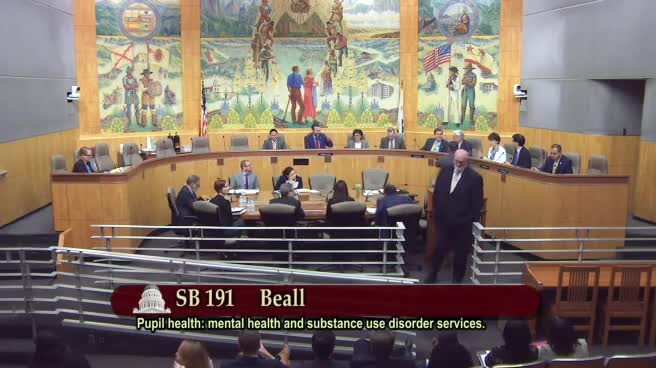 27MIN
Senate Standing Committee on Education
Bill Author