SB 20: Vehicles: buses: seatbelts.
- Session Year: 2017-2018
- House: Senate
- Latest Version Date: 2017-10-08
Existing law prohibits a person from operating a motor vehicle on a highway unless that person and all passengers 16 years of age or over are properly restrained by a safety belt. Existing law makes the violation of this provision an infraction.
This bill would also require a passenger who is 16 years of age or older in a bus that is equipped with safety belts to be properly restrained by a safety belt and would require a motor carrier to maintain those safety belts in good working order for the use of the passengers. The bill would prohibit a parent, legal guardian, or chartering party from transporting on a bus that is equipped with safety belts, or permitting to be transported on a bus that is equipped with safety belts, a child, ward, or passenger who is 8 years of age or older, but under 16 years of age, unless he or she is properly restrained by a safety belt. The bill would also prohibit a parent, legal guardian, or chartering party from transporting on a bus that is equipped with safety belts, or permitting to be transported on a bus that is equipped with safety belts, a child, ward, or passenger who is under 8 years of age and under 4 feet 9 inches in height, unless he or she is acceptably restrained by a safety belt, except as specified. The bill would exempt a passenger leaving his or her seat to use an onboard bathroom from the seatbelt requirement. The bill would also require a motor carrier operating a bus equipped with safety belts to either: (1) require the bus driver to inform passengers of the requirement to wear a seatbelt or (2) post, or allow to be posted, signs or placards informing passengers of the requirement to wear a seatbelt, as specified. The bill would make a violation of the provisions requiring a passenger to wear a safety belt, an infraction punishable by a fine of not more than $20 for a first offense and a fine of not more than $50 for each subsequent offense. By creating a new crime, the bill would impose a state-mandated local program. The bill would specify that these provisions do not apply to a schoolbus or a school pupil activity bus, as defined.
This bill, if the bus is equipped with a driver safety belt, would require the driver to be properly restrained by the safety belt and would require the motor carrier to maintain the driver safety belt. The bill would make violation of these provisions an infraction punishable by a fine of up to $20 for the first violation and of up to $50 for subsequent violations. By creating a new crime, this bill would impose a state-mandated local program.
Existing law requires a charter-party carrier of passengers engaged in charter bus transportation to ensure that drivers of certain vehicles provide each passenger with written or video instructions that include, among other things, the importance of wearing a seatbelt, if available. A violation of this provision is an infraction.
This bill would instead require those written or video instructions to include, among other things, instructions on the requirement to wear a seatbelt, if available, and the penalties for violating that requirement. By changing the definition of a crime, the bill would impose a state-mandated local program.
This bill would also make a technical correction and other conforming changes. The provisions of this bill would become operative on July 1, 2018.
This bill would incorporate additional changes to Section 12810.2 of the Vehicle Code proposed by SB 810 and would make these changes operative only if this bill and SB 810 are enacted and this bill is enacted last.
The California Constitution requires the state to reimburse local agencies and school districts for certain costs mandated by the state. Statutory provisions establish procedures for making that reimbursement.
This bill would provide that no reimbursement is required by this act for a specified reason.
Existing law prohibits a person from operating a motor vehicle on a highway unless that person and all passengers 16 years of age or over are properly restrained by a safety belt. Existing law makes the violation of this provision an infraction.
This bill would also require a passenger who is 16 years of age or older in a bus that is equipped with safety belts to be properly restrained by a safety belt and would require a motor carrier to maintain those safety belts in good working order for the use of the passengers. The bill would prohibit a parent, legal guardian, or chartering party from transporting on a bus that is equipped with safety belts, or permitting to be transported on a bus that is equipped with safety belts, a child, ward, or passenger who is 8 years of age or older, but under 16 years of age, unless he or she is properly restrained by a safety belt. The bill would also prohibit a parent, legal guardian, or chartering party from transporting on a bus that is equipped with safety belts, or permitting to be transported on a bus that is equipped with safety belts, a child, ward, or passenger who is under 8 years of age and under 4 feet 9 inches in height, unless he or she is acceptably restrained by a safety belt, except as specified. The bill would exempt a passenger leaving his or her seat to use an onboard bathroom from the seatbelt requirement. The bill would also require a motor carrier operating a bus equipped with safety belts to either: (1) require the bus driver to inform passengers of the requirement to wear a seatbelt or (2) post, or allow to be posted, signs or placards informing passengers of the requirement to wear a seatbelt, as specified. The bill would make a violation of the provision provisions requiring a passenger to wear a safety belt, an infraction punishable by a fine of not more than $20 for a first offense and a fine of not more than $50 for each subsequent offense. By creating a new crime, the bill would impose a state-mandated local program. The bill would specify that these provisions do not apply to schoolbuses. a schoolbus or a school pupil activity bus, as defined.
This bill, if the bus is equipped with a driver safety belt, would require the driver to be properly restrained by the safety belt and would require the motor carrier to maintain the driver safety belt. The bill would make violation of these provisions an infraction punishable by a fine of up to $20 for the first violation and of up to $50 for subsequent violations. By creating a new crime, this bill would impose a state-mandated local program.
Existing law requires a charter-party carrier of passengers engaged in charter bus transportation to ensure that drivers of certain vehicles provide each passenger with written or video instructions that include, among other things, the importance of wearing a seatbelt, if available. A violation of this provision is an infraction.
This bill would instead require those written or video instructions to include, among other things, instructions on the requirement to wear a seatbelt, if available, and the penalties for violating that requirement. By changing the definition of a crime, the bill would impose a state-mandated local program.
This bill would also make a technical correction and other conforming changes.
This bill would incorporate additional changes to Section 12810.2 of the Vehicle Code proposed by SB 810 and would make these changes operative only if this bill and SB 810 are enacted and this bill is enacted last.
The California Constitution requires the state to reimburse local agencies and school districts for certain costs mandated by the state. Statutory provisions establish procedures for making that reimbursement.
This bill would provide that no reimbursement is required by this act for a specified reason.
Existing law prohibits a person from operating a motor vehicle on a highway unless that person and all passengers 16 years of age or over are properly restrained by a safety belt. Existing law makes the violation of this provision an infraction.
This bill would also require a passenger in a bus that is equipped with safety belts to be properly restrained by a safety belt and would require a motor carrier to maintain those safety belts in good working order for the use of the passengers. The bill would exempt a passenger leaving his or her seat to use an onboard bathroom from the seatbelt requirement. The bill would also require a motor carrier operating a bus equipped with safety belts to either: (1) require the bus driver to inform passengers of the requirement to wear a seatbelt or (2) post, or allow to be posted, signs or placards informing passengers of the requirement to wear a seatbelt, as specified. The bill would make a violation of the provision requiring a passenger to wear a safety belt, an infraction punishable by a fine of not more than $20 for a first offense and a fine of not more than $50 for each subsequent offense. By creating a new crime, the bill would impose a state-mandated local program. The bill would specify that these provisions do not apply to schoolbuses.
This bill, if the bus is equipped with a driver safety belt, would require the driver to be properly restrained by the safety belt and would require the motor carrier to maintain the driver safety belt. The bill would make violation of these provisions an infraction punishable by a fine of up to $20 for the first violation and of up to $50 for subsequent violations. By creating a new crime, this bill would impose a state-mandated local program.
Existing law requires a charter-party carrier of passengers engaged in charter bus transportation to ensure that drivers of certain vehicles provide each passenger with written or video instructions that include, among other things, the importance of wearing a seatbelt, if available. A violation of this provision is an infraction.
This bill would instead require those written or video instructions to include, among other things, instructions on the requirement to wear a seatbelt, if available, and the penalties for violating that requirement. By changing the definition of a crime, the bill would impose a state-mandated local program.
This bill would also make a technical correction and other conforming changes.
The California Constitution requires the state to reimburse local agencies and school districts for certain costs mandated by the state. Statutory provisions establish procedures for making that reimbursement.
This bill would provide that no reimbursement is required by this act for a specified reason.
Existing law prohibits a person from operating a motor vehicle on a highway unless that person and all passengers 16 years of age or over are properly restrained by a safety belt. Existing law makes the violation of this provision an infraction.
This bill would also require a passenger in a bus that is equipped with safety belts to be properly restrained by a safety belt and would require a bus operator motor carrier to maintain those safety belts in good working order for the use of the passengers. The bill would exempt a passenger leaving his or her seat to use an onboard bathroom from the seatbelt requirement. The bill would also require a bus operator motor carrier operating a bus equipped with safety belts to either: (1) require the bus driver to inform passengers of the requirement to wear a seatbelt and would authorize a bus driver to or (2) post, or allow to be posted, signs or placards informing passengers of the requirement to wear a seatbelt, as specified. The bill would make a violation of this the provision requiring a passenger to wear a safety belt, an infraction punishable by a fine of not more than $20 for a first offense and a fine of not more than $50 for each subsequent offense. By creating a new crime, the bill would impose a state-mandated local program. The bill would specify that it does these provisions do not apply to schoolbuses.
This bill, if the bus is equipped with a driver safety belt, would require the driver to be properly restrained by the safety belt and would require the bus operator motor carrier to maintain the driver safety belt. The bill would make violation of these provisions an infraction punishable by a fine of up to $20 for the first violation and of up to $50 for subsequent violations. By creating a new crime, this bill would impose a state-mandated local program.
Existing law requires a charter-party carrier of passengers engaged in charter bus transportation to ensure that drivers of certain vehicles provide each passenger with written or video instructions that include, among other things, the importance of wearing a seatbelt, if available. A violation of this provision is an infraction.
This bill would instead require those written or video instructions to include, among other things, instructions on the requirement to wear a seatbelt, if available, and the penalties for violating that requirement. By changing the definition of a crime, the bill would impose a state-mandated local program.
The California Constitution requires the state to reimburse local agencies and school districts for certain costs mandated by the state. Statutory provisions establish procedures for making that reimbursement.
This bill would provide that no reimbursement is required by this act for a specified reason.
Existing law prohibits a person from operating a motor vehicle on a highway unless that person and all passengers 16 years of age or over are properly restrained by a safety belt. Existing law makes the violation of this provision an infraction.
This bill would also require a passenger in a bus that is equipped with safety belts to be properly restrained by a safety belt. belt and would require a bus operator to maintain those safety belts in good working order for the use of the passengers. The bill would also require a bus operator to inform passengers of the requirement to wear a seatbelt and would authorize a bus driver to post, or allow to be posted, signs or placards informing passengers of the requirement to wear a seatbelt, as specified. The bill would make a violation of this provision an infraction punishable by a fine of not more than $20 for a first offense and a fine of not more than $50 for each subsequent offense. By creating a new crime, the bill would impose a state-mandated local program. The bill would specify that it does not apply to schoolbuses.
This bill, if the bus is equipped with a driver safety belt, would require the driver to be properly restrained by the safety belt and would require the bus operator to maintain the driver safety belt. The bill would make violation of these provisions an infraction punishable by a fine of up to $20 for the first violation and of up to $50 for subsequent violations. By creating a new crime, this bill would impose a state-mandated local program.
Existing law requires a charter-party carrier of passengers engaged in charter bus transportation to ensure that drivers of certain vehicles provide each passenger with written or video instructions that include, among other things, the importance of wearing a seatbelt, if available. A violation of this provision is an infraction.
This bill would instead require those written or video instructions to include, among other things, instructions on the requirement to wear a seatbelt, if available, and the penalties for violating that requirement. By changing the definition of a crime, the bill would impose a state-mandated local program.
The California Constitution requires the state to reimburse local agencies and school districts for certain costs mandated by the state. Statutory provisions establish procedures for making that reimbursement.
This bill would provide that no reimbursement is required by this act for a specified reason.
Existing law prohibits a person from operating a motor vehicle on a highway unless that person and all passengers 16 years of age or over are properly restrained by a safety belt. Existing law makes the violation of this provision an infraction.
This bill would also require a passenger in a bus that is equipped with safety belts to be properly restrained by a safety belt. The bill would also require a bus operator to inform passengers of the requirement to wear a seatbelt and would authorize a bus driver to post, or allow to be posted, signs or placards informing passengers of the requirement to wear a seatbelt, as specified. The bill would make a violation of this provision an infraction punishable by a fine of not more than $20 for a first offense and a fine of not more than $50 for each subsequent offense. By creating a new crime, the bill would impose a state-mandated local program. The bill would specify that it does not apply to schoolbuses.
Existing law requires a charter-party carrier of passengers engaged in charter bus transportation to ensure that drivers of certain vehicles provide each passenger with written or video instructions that include, among other things, the importance of wearing a seatbelt, if available. A violation of this provision is an infraction.
This bill would instead require those written or video instructions to include, among other things, instructions on the requirement to wear a seatbelt, if available, and the penalties for violating that requirement. By changing the definition of a crime, the bill would impose a state-mandated local program.
The California Constitution requires the state to reimburse local agencies and school districts for certain costs mandated by the state. Statutory provisions establish procedures for making that reimbursement.
This bill would provide that no reimbursement is required by this act for a specified reason.
Existing law prohibits a person from operating a motor vehicle on a highway unless that person and all passengers 16 years of age or over are properly restrained by a safety belt. Existing law makes the violation of this provision an infraction.
This bill would also require a passenger in a bus that is equipped with safety belts to be properly restrained by a safety belt. The bill would also require a bus operator to inform passengers of the requirement to wear a seatbelt and would authorize a bus driver to post, or allow to be posted, signs or placards informing passengers of the requirement to wear a seatbelt, as specified. The bill would make a violation of this provision an infraction punishable by a fine of not more than $20 for a first offense and a fine of not more than $50 for each subsequent offense. By creating a new crime, the bill would impose a state-mandated local program.
Existing law requires a charter-party carrier of passengers engaged in charter bus transportation to ensure that drivers of certain vehicles provide each passenger with written or video instructions that include, among other things, the importance of wearing a seatbelt, if available. A violation of this provision is an infraction.
This bill would instead require those written or video instructions to include, among other things, instructions on the requirement to wear a seatbelt, if available, and the penalties for violating that requirement. By changing the definition of a crime, the bill would impose a state-mandated local program.
The California Constitution requires the state to reimburse local agencies and school districts for certain costs mandated by the state. Statutory provisions establish procedures for making that reimbursement.
This bill would provide that no reimbursement is required by this act for a specified reason.
(a)Notwithstanding subdivision (f) of Section 12810, no violation point count shall be given for a conviction of a violation of Section 27315, 27318, or 27319.
(b)The amendments to this section as added by the act that added this subdivision shall be operative on July 1, 2018.
SEC. 1.5.Section 12810.2 of the Vehicle Code is amended to read:12810.2.(a)Notwithstanding subdivision (f) of Section 12810, a violation point count shall not be given for a conviction of a violation of Section 27315, 27318, or 27319.
(b)The amendments to this section as added by the act that added this subdivision shall be operative on July 1, 2018.
SEC. 2.Section 27318 is added to the Vehicle Code, to read:27318.(a)A passenger who is 16 years of age or older in a bus shall be properly restrained by a safety belt.
(b)A parent, legal guardian, or chartering party shall not transport on a bus, or permit to be transported on a bus, a child, ward, or passenger who is eight years of age or older, but under 16 years of age, unless he or she is properly restrained by a safety belt.
(c)Except as provided in subdivision (d), a parent, legal guardian, or chartering party shall not transport on a bus, or permit to be transported on a bus, a child, ward, or passenger who is under eight years of age and under four feet nine inches in height, unless he or she is acceptably restrained by a safety belt.
(d)If it is not possible to ensure a child, ward, or passenger who is under eight years of age and under four feet nine inches in height is acceptably restrained by a safety belt because of his or her size, a parent, legal guardian, or chartering party shall either secure him or her in an appropriate child passenger restraint system that meets applicable federal motor vehicle safety standards, or if the child, ward, or passenger is under two years of age, may authorize a parent, legal guardian, or chartering party to hold him or her.
(e)(1)For purposes of this section, acceptably restrained by a safety belt means all of the following:
(A)The latch plate is securely fastened in the buckle.
(B)The lap belt shall be adjusted to fit low and tight across the hips or upper thighs, not the stomach area.
(C)The shoulder belt shall be adjusted snugly across the chest and the middle of the shoulder, away from the neck.
(D)The shoulder belt shall not be placed behind the back or under the arm.
(2)For purposes of this section, properly restrained by a safety belt means that the lap belt crosses the hips or upper thighs of the occupant and the shoulder belt, if present, crosses the chest in front of the occupant.
(3)For purposes of this section, bus means a bus that is equipped with safety belts, including a bus that is required to be equipped with a seatbelt assembly pursuant to Federal Motor Vehicle Safety Standard No. 208 (49 C.F.R. 571.208).
(f)Subdivisions (a), (b), (c), and (d) do not apply to a passenger that is leaving, has left, or is returning from his or her seat to use an onboard bathroom.
(g)If the bus is equipped with safety belts, the motor carrier shall maintain safety belts in good working order for the use of passengers of the vehicle.
(h)A motor carrier operating a bus equipped with safety belts shall do one of the following:
(1)Require the bus driver, before departure of a bus carrying passengers, to inform passengers of the requirement to wear the seatbelt under California law and inform passengers that not wearing a seatbelt is punishable by a fine.
(2)Post, or allow to be posted, signs or placards that inform passengers of the requirement to wear a seatbelt under California law and that not wearing a seatbelt is punishable by a fine. The signs or placards shall be in a font type and font size that is reasonably easy to read and shall be affixed to a bus in multiple, conspicuous locations.
(i)Notwithstanding subdivision (a) of Section 42001, a violation of subdivision (a), (b), (c), or (d) is an infraction punishable by a fine of not more than twenty dollars ($20) for a first offense, and a fine of not more than fifty dollars ($50) for each subsequent offense.
(j)This section does not apply to a schoolbus described in Section 27316 or a school pupil activity bus described in Section 27316.5.
(k)This section shall be operative July 1, 2018.
SEC. 3.Section 27319 is added to the Vehicle Code, to read:27319.(a)If a bus is equipped with a driver safety belt, the driver of the bus shall not operate the vehicle unless he or she is properly restrained by the safety belt.
(b)If a bus is equipped with a driver safety belt, the motor carrier shall maintain the safety belt in good working order for the use of the driver.
(c)Notwithstanding subdivision (a) of Section 42001, a violation of this section is an infraction punishable by a fine of not more than twenty dollars ($20) for a first offense and a fine of not more than fifty dollars ($50) for each subsequent offense.
(d)The requirements of this section are intended to satisfy the requirements of Section 392.16 of Title 49 of the Code of Federal Regulations, or any similar federal law or regulation, but shall remain in effect in the absence of those laws.
(e)This section shall be operative July 1, 2018.
SEC. 4.Section 34505.8 of the Vehicle Code is amended to read:34505.8.(a)A charter-party carrier of passengers engaged in charter bus transportation shall ensure that the driver of a vehicle as described in paragraph (1) of subdivision (b) of Section 5363 of the Public Utilities Code that is designed to carry 39 or more passengers shall instruct or play a video for all passengers on the safety equipment and emergency exits on the vehicle prior to the beginning of any trip and provide each passenger with written or video instructions that include, at a minimum, a demonstration of the location and operation of all exits, including emergency exits, the requirement to wear a seatbelt, if available, and that not wearing a seatbelt is punishable by a fine.
(b)Notwithstanding any other law, no later than July 1, 2018, the department shall adopt standards and criteria for the implementation of the safety requirements specified in this section.
(c)This section does not alter or affect the requirements of the Passenger Charter-party Carriers Act (Chapter 8 (commencing with Section 5351) of Division 2 of the Public Utilities Code).
(d)The amendments to this section as added by the act that added this subdivision shall be operative on July 1, 2018.
SEC. 5.Section 1.5 of this bill incorporates amendments to Section 12810.2 of the Vehicle Code proposed by this bill and Senate Bill 810. That section shall only become operative if (1) both bills are enacted and become effective on or before January 1, 2018, (2) each bill amends Section 12810.2 of the Vehicle Code, and (3) this bill is enacted after Senate Bill 810, in which case Section 12810.2 of the Vehicle Code, as amended by Senate Bill 810, shall remain operative only until July 1, 2018, at which time Section 1.5 of this bill shall become operative, and Section 1 of this bill shall not become operative.
SEC. 6.No reimbursement is required by this act pursuant to Section 6 of Article XIIIB of the California Constitution because the only costs that may be incurred by a local agency or school district will be incurred because this act creates a new crime or infraction, eliminates a crime or infraction, or changes the penalty for a crime or infraction, within the meaning of Section 17556 of the Government Code, or changes the definition of a crime within the meaning of Section 6 of Article XIIIB of the California Constitution.
(a)Notwithstanding subdivision (f) of Section 12810, no violation point count shall be given for a conviction of a violation of Section 27315, 27318, or 27319.
(b)The amendments to this section as added by the act that added this subdivision shall be operative on July 1, 2018.
SEC. 1.5.Section 12810.2 of the Vehicle Code is amended to read:12810.2.(a)Notwithstanding subdivision (f) of Section 12810, a violation point count shall not be given for a conviction of a violation of Section 27315, 27318, or 27319.
(b)The amendments to this section as added by the act that added this subdivision shall be operative on July 1, 2018.
SEC. 2.Section 27318 is added to the Vehicle Code, to read:27318.(a)A passenger who is 16 years of age or older in a bus shall be properly restrained by a safety belt.
(b)A parent, legal guardian, or chartering party shall not transport on a bus, or permit to be transported on a bus, a child, ward, or passenger who is eight years of age or older, but under 16 years of age, unless he or she is properly restrained by a safety belt.
(c)Except as provided in subdivision (d), a parent, legal guardian, or chartering party shall not transport on a bus, or permit to be transported on a bus, a child, ward, or passenger who is under eight years of age and under four feet nine inches in height, unless he or she is acceptably restrained by a safety belt.
(d)If it is not possible to ensure a child, ward, or passenger who is under eight years of age and under four feet nine inches in height is acceptably restrained by a safety belt because of his or her size, a parent, legal guardian, or chartering party shall either secure him or her in an appropriate child passenger restraint system that meets applicable federal motor vehicle safety standards, or if the child, ward, or passenger is under two years of age, may authorize a parent, legal guardian, or chartering party to hold him or her.
(e)(1)For purposes of this section, acceptably restrained by a safety belt means all of the following:
(A)The latch plate is securely fastened in the buckle.
(B)The lap belt shall be adjusted to fit low and tight across the hips or upper thighs, not the stomach area.
(C)The shoulder belt shall be adjusted snugly across the chest and the middle of the shoulder, away from the neck.
(D)The shoulder belt shall not be placed behind the back or under the arm.
(2)For purposes of this section, properly restrained by a safety belt means that the lap belt crosses the hips or upper thighs of the occupant and the shoulder belt, if present, crosses the chest in front of the occupant.
(3)For purposes of this section, bus means a bus that is equipped with safety belts, including a bus that is required to be equipped with a seatbelt assembly pursuant to Federal Motor Vehicle Safety Standard No. 208 (49 C.F.R. 571.208).
(f)Subdivisions (a), (b), (c), and (d) do not apply to a passenger that is leaving, has left, or is returning from his or her seat to use an onboard bathroom.
(g)If the bus is equipped with safety belts, the motor carrier shall maintain safety belts in good working order for the use of passengers of the vehicle.
(h)A motor carrier operating a bus equipped with safety belts shall do one of the following:
(1)Require the bus driver, before departure of a bus carrying passengers, to inform passengers of the requirement to wear the seatbelt under California law and inform passengers that not wearing a seatbelt is punishable by a fine.
(2)Post, or allow to be posted, signs or placards that inform passengers of the requirement to wear a seatbelt under California law and that not wearing a seatbelt is punishable by a fine. The signs or placards shall be in a font type and font size that is reasonably easy to read and shall be affixed to a bus in multiple, conspicuous locations.
(i)Notwithstanding subdivision (a) of Section 42001, a violation of subdivision (a), (b), (c), or (d) is an infraction punishable by a fine of not more than twenty dollars ($20) for a first offense, and a fine of not more than fifty dollars ($50) for each subsequent offense.
(j)This section does not apply to a schoolbus described in Section 27316 or a school pupil activity bus described in Section 27316.5.
(k)This section shall be operative July 1, 2018.
SEC. 3.Section 27319 is added to the Vehicle Code, to read:27319.(a)If a bus is equipped with a driver safety belt, the driver of the bus shall not operate the vehicle unless he or she is properly restrained by the safety belt.
(b)If a bus is equipped with a driver safety belt, the motor carrier shall maintain the safety belt in good working order for the use of the driver.
(c)Notwithstanding subdivision (a) of Section 42001, a violation of this section is an infraction punishable by a fine of not more than twenty dollars ($20) for a first offense and a fine of not more than fifty dollars ($50) for each subsequent offense.
(d)The requirements of this section are intended to satisfy the requirements of Section 392.16 of Title 49 of the Code of Federal Regulations, or any similar federal law or regulation, but shall remain in effect in the absence of those laws.
(e)This section shall be operative July 1, 2018.
SEC. 4.Section 34505.8 of the Vehicle Code is amended to read:34505.8.(a)A charter-party carrier of passengers engaged in charter bus transportation shall ensure that the driver of a vehicle as described in paragraph (1) of subdivision (b) of Section 5363 of the Public Utilities Code that is designed to carry 39 or more passengers shall instruct or play a video for all passengers on the safety equipment and emergency exits on the vehicle prior to the beginning of any trip and provide each passenger with written or video instructions that include, at a minimum, a demonstration of the location and operation of all exits, including emergency exits, the requirement to wear a seatbelt, if available, and that not wearing a seatbelt is punishable by a fine.
(b)Notwithstanding any other law, no later than July 1, 2018, the department shall adopt standards and criteria for the implementation of the safety requirements specified in this section.
(c)This section does not alter or affect the requirements of the Passenger Charter-party Carriers Act (Chapter 8 (commencing with Section 5351) of Division 2 of the Public Utilities Code).
(d)The amendments to this section as added by the act that added this subdivision shall be operative on July 1, 2018.
SEC. 5.Section 1.5 of this bill incorporates amendments to Section 12810.2 of the Vehicle Code proposed by both this bill and Senate Bill 810. That section shall only become operative if (1) both bills are enacted and become effective on or before January 1, 2018, (2) each bill amends Section 12810.2 of the Vehicle Code, and (3) this bill is enacted after Senate Bill 810, in which case Section 1 of this bill shall not become operative.SEC. 5.Section 1.5 of this bill incorporates amendments to Section 12810.2 of the Vehicle Code proposed by this bill and Senate Bill 810. That section shall only become operative if (1) both bills are enacted and become effective on or before January 1, 2018, (2) each bill amends Section 12810.2 of the Vehicle Code, and (3) this bill is enacted after Senate Bill 810, in which case Section 12810.2 of the Vehicle Code, as amended by Senate Bill 810, shall remain operative only until July 1, 2018, at which time Section 1.5 of this bill shall become operative, and Section 1 of this bill shall not become operative.
SEC. 6.No reimbursement is required by this act pursuant to Section 6 of Article XIIIB of the California Constitution because the only costs that may be incurred by a local agency or school district will be incurred because this act creates a new crime or infraction, eliminates a crime or infraction, or changes the penalty for a crime or infraction, within the meaning of Section 17556 of the Government Code, or changes the definition of a crime within the meaning of Section 6 of Article XIIIB of the California Constitution.
Notwithstanding subdivision (f) of Section 12810, no violation point count shall be given for a conviction of a violation of Section 27315, 27318, or 27319.
SEC. 1.5.Section 12810.2 of the Vehicle Code is amended to read:12810.2.Notwithstanding subdivision (e) (f) of Section 12810, no a violation point count shall not be given for a conviction of a violation of Section 27315. 27315, 27318, or 27319.
SEC. 2.Section 27318 is added to the Vehicle Code, to read:27318.(a)A passenger who is 16 years of age or older in a bus that is equipped with safety belts, including a bus that is required to be equipped with a seatbelt assembly pursuant to Federal Motor Vehicle Safety Standard No. 208 (49 C.F.R. 571.208), shall be properly restrained by a safety belt.
(b)A parent, legal guardian, or chartering party shall not transport on a bus, or permit to be transported on a bus, a child, ward, or passenger who is eight years of age or older, but under 16 years of age, unless he or she is properly restrained by a safety belt.
(c)Except as provided in subdivision (d), a parent, legal guardian, or chartering party shall not transport on a bus, or permit to be transported on a bus, a child, ward, or passenger who is under eight years of age and under four feet nine inches in height, unless he or she is acceptably restrained by a safety belt.
(d)If it is not possible to ensure a child, ward, or passenger who is under eight years of age and under four feet nine inches in height is acceptably restrained by a safety belt because of his or her size, a parent, legal guardian, or chartering party shall either secure him or her in an appropriate child passenger restraint system that meets applicable federal motor vehicle safety standards, or if the child, ward, or passenger is under two years of age, may authorize a parent, legal guardian, or chartering party to hold him or her.
(e)(1)For purposes of this section, acceptably restrained by a safety belt means all of the following:
(A)The latch plate is securely fastened in the buckle.
(B)The lap belt shall be adjusted to fit low and tight across the hips or upper thighs, not the stomach area.
(C)The shoulder belt shall be adjusted snugly across the chest and the middle of the shoulder, away from the neck.
(D)The shoulder belt shall not be placed behind the back or under the arm.
(2)For purposes of this section, properly restrained by a safety belt means that the lap belt crosses the hips or upper thighs of the occupant and the shoulder belt, if present, crosses the chest in front of the occupant.
(3)For purposes of this section, bus means a bus that is equipped with safety belts, including a bus that is required to be equipped with a seatbelt assembly pursuant to Federal Motor Vehicle Safety Standard No. 208 (49 C.F.R. 571.208).
(b)Subdivision (a) does(f)Subdivisions (a), (b), (c), and (d) do not apply to a passenger that is leaving, has left, or is returning from his or her seat to use an onboard bathroom.
(c)(g)If the bus is equipped with safety belts, the motor carrier shall maintain safety belts in good working order for the use of passengers of the vehicle.
(d)(h)A motor carrier operating a bus equipped with safety belts shall do one of the following:
(1)Require the bus driver, before departure of a bus carrying passengers, to inform passengers of the requirement to wear the seatbelt under California law and inform passengers that not wearing a seatbelt is punishable by a fine.
(2)Post, or allow to be posted, signs or placards that inform passengers of the requirement to wear a seatbelt under California law and that not wearing a seatbelt is punishable by a fine. The signs or placards shall be in a font type and font size that is reasonably easy to read and shall be affixed to a bus in multiple, conspicuous locations.
(e)(i)Notwithstanding subdivision (a) of Section 42001, a violation of subdivision (a) (a), (b), (c), or (d) is an infraction punishable by a fine of not more than twenty dollars ($20) for a first offense, and a fine of not more than fifty dollars ($50) for each subsequent offense.
(f)(j)This section does not apply to a schoolbus described in Sections 27316 and 27316.5. Section 27316 or a school pupil activity bus described in Section 27316.5.
SEC. 3.Section 27319 is added to the Vehicle Code, to read:27319.(a)If a bus is equipped with a driver safety belt, the driver of the bus shall not operate the vehicle unless he or she is properly restrained by the safety belt.
(b)If a bus is equipped with a driver safety belt, the motor carrier shall maintain the safety belt in good working order for the use of the driver.
(c)Notwithstanding subdivision (a) of Section 42001, a violation of this section is an infraction punishable by a fine of not more than twenty dollars ($20) for a first offense and a fine of not more than fifty dollars ($50) for each subsequent offense.
(d)The requirements of this section are intended to satisfy the requirements of Section 392.16 of Title 49 of the Code of Federal Regulations, or any similar federal law or regulation, but shall remain in effect in the absence of those laws.
SEC. 4.Section 34505.8 of the Vehicle Code is amended to read:34505.8.(a)A charter-party carrier of passengers engaged in charter bus transportation shall ensure that the driver of a vehicle as described in paragraph (1) of subdivision (b) of Section 5363 of the Public Utilities Code that is designed to carry 39 or more passengers shall instruct or play a video for all passengers on the safety equipment and emergency exits on the vehicle prior to the beginning of any trip and provide each passenger with written or video instructions that include, at a minimum, a demonstration of the location and operation of all exits, including emergency exits, the requirement to wear a seatbelt, if available, and that not wearing a seatbelt is punishable by a fine.
(b)Notwithstanding any other law, no later than July 1, 2018, the department shall adopt standards and criteria for the implementation of the safety requirements specified in this section.
(c)This section does not alter or affect the requirements of the Passenger Charter-party Carriers Act (Chapter 8 (commencing with Section 5351) of Division 2 of the Public Utilities Code).
SEC. 5.Section 1.5 of this bill incorporates amendments to Section 12810.2 of the Vehicle Code proposed by both this bill and Senate Bill 810. That section shall only become operative if (1) both bills are enacted and become effective on or before January 1, 2018, (2) each bill amends Section 12810.2 of the Vehicle Code, and (3) this bill is enacted after Senate Bill 810, in which case Section 1 of this bill shall not become operative.
SEC. 5.SEC. 6.No reimbursement is required by this act pursuant to Section 6 of Article XIIIB of the California Constitution because the only costs that may be incurred by a local agency or school district will be incurred because this act creates a new crime or infraction, eliminates a crime or infraction, or changes the penalty for a crime or infraction, within the meaning of Section 17556 of the Government Code, or changes the definition of a crime within the meaning of Section 6 of Article XIIIB of the California Constitution.
Notwithstanding subdivision (e) (f) of Section 12810, no violation point count shall be given for a conviction of a violation of Section 27315, 27318, or 27319.
SEC. 2.Section 27318 is added to the Vehicle Code, to read:27318.(a)A passenger in a bus that is equipped with safety belts, including a bus that is required to be equipped with a seatbelt assembly pursuant to Federal Motor Vehicle Safety Standard No. 208 (49 C.F.R. 571.208), shall be properly restrained by a safety belt.
(b)Subdivision (a) does not apply to a passenger that is leaving, has left, or is returning from his or her seat to use an onboard bathroom.
(c)If the bus is equipped with safety belts, the motor carrier shall maintain safety belts in good working order for the use of passengers of the vehicle.
(d)A motor carrier operating a bus equipped with safety belts shall do one of the following:
(1)Require the bus driver, before departure of a bus carrying passengers, to inform passengers of the requirement to wear the seatbelt under California law and inform passengers that not wearing a seatbelt is punishable by a fine.
(2)Post, or allow to be posted, signs or placards that inform passengers of the requirement to wear a seatbelt under California law and that not wearing a seatbelt is punishable by a fine. The signs or placards shall be in a font type and font size that is reasonably easy to read and shall be affixed to a bus in multiple, conspicuous locations.
(e)Notwithstanding subdivision (a) of Section 42001, a violation of subdivision (a) is an infraction punishable by a fine of not more than twenty dollars ($20) for a first offense, and a fine of not more than fifty dollars ($50) for each subsequent offense.
(f)This section does not apply to a schoolbus described in Sections 27316 and 27316.5.
SEC. 3.Section 27319 is added to the Vehicle Code, to read:27319.(a)If a bus is equipped with a driver safety belt, the driver of the bus shall not operate the vehicle unless he or she is properly restrained by the safety belt.
(b)If a bus is equipped with a driver safety belt, the motor carrier shall maintain the safety belt in good working order for the use of the driver.
(c)Notwithstanding subdivision (a) of Section 42001, a violation of this section is an infraction punishable by a fine of not more than twenty dollars ($20) for a first offense and a fine of not more than fifty dollars ($50) for each subsequent offense.
(d)The requirements of this section are intended to satisfy the requirements of Section 392.16 of Title 49 of the Code of Federal Regulations, or any similar federal law or regulation, but shall remain in effect in the absence of those laws.
SEC. 4.Section 34505.8 of the Vehicle Code is amended to read:34505.8.(a)A charter-party carrier of passengers engaged in charter bus transportation shall ensure that the driver of a vehicle as described in paragraph (1) of subdivision (b) of Section 5363 of the Public Utilities Code that is designed to carry 39 or more passengers shall instruct or play a video for all passengers on the safety equipment and emergency exits on the vehicle prior to the beginning of any trip and provide each passenger with written or video instructions that include, at a minimum, a demonstration of the location and operation of all exits, including emergency exits, the requirement to wear a seatbelt, if available, and that not wearing a seatbelt is punishable by a fine.
(b)Notwithstanding any other law, no later than July 1, 2018, the department shall adopt standards and criteria for the implementation of the safety requirements specified in this section.
(c)This section does not alter or affect the requirements of the Passenger Charter-party Carriers Act (Chapter 8 (commencing with Section 5351) of Division 2 of the Public Utilities Code).
SEC. 5.No reimbursement is required by this act pursuant to Section 6 of Article XIIIB of the California Constitution because the only costs that may be incurred by a local agency or school district will be incurred because this act creates a new crime or infraction, eliminates a crime or infraction, or changes the penalty for a crime or infraction, within the meaning of Section 17556 of the Government Code, or changes the definition of a crime within the meaning of Section 6 of Article XIIIB of the California Constitution.
Notwithstanding subdivision (e) of Section 12810, no violation point count shall be given for a conviction of a violation of Section 27315. 27315, 27318, or 27319.
SECTION 1.SEC. 2.Section 27318 is added to the Vehicle Code, to read:27318.(a)(1)A passenger in a bus that is equipped with safety belts, including a bus that is required to be equipped with a seatbelt assembly pursuant to Federal Motor Vehicle Safety Standard No. 208 (49 C.F.R. 571.208), shall be properly restrained by a safety belt.
(b)Subdivision (a) does not apply to a passenger that is leaving, has left, or is returning from his or her seat to use an onboard bathroom.
(2)(c)If the bus is equipped with safety belts, the bus operator motor carrier shall maintain safety belts in good working order for the use of passengers of the vehicle.
(b)(1)Before the(d)A motor carrier operating a bus equipped with safety belts shall do one of the following:
(1)Require the bus driver, before departure of a bus carrying passengers in a bus equipped with safety belts, the bus operator shall passengers, to inform passengers of the requirement to wear the seatbelt under California law and shall inform passengers about the penalties for the violation of the requirement to wear a seatbelt pursuant to this section. that not wearing a seatbelt is punishable by a fine.
(2)In addition to the information pursuant to paragraph (1), a bus operator may also post, Post, or allow to be posted, signs or placards that inform passengers of the requirement to wear a seatbelt under California law and the penalties for a violation of the requirement to wear a seatbelt pursuant to this section. that not wearing a seatbelt is punishable by a fine. The signs or placards shall be in a font type and font size that is reasonably easy to read and shall be affixed to a bus in multiple, conspicuous locations.
(c)(e)Notwithstanding subdivision (a) of Section 42001, a violation of subdivision (a) is an infraction punishable by a fine of not more than twenty dollars ($20) for a first offense, and a fine of not more than fifty dollars ($50) for each subsequent offense.
(d)(f)This section does not apply to a schoolbus described in Sections 27316 and 27316.5.
SEC. 2.SEC. 3.Section 27318.5 27319 is added to the Vehicle Code, to read:27318.5.27319.(a)(1)If a bus is equipped with a driver safety belt, the driver of the bus shall be not operate the vehicle unless he or she is properly restrained by the safety belt.
(2)(b)If a bus is equipped with a driver safety belt, the bus operator motor carrier shall maintain the safety belt in good working order for the use of the driver.
(b)(c)Notwithstanding subdivision (a) of Section 42001, a violation of this section is an infraction punishable by a fine of not more than twenty dollars ($20) for a first offense and a fine of not more than fifty dollars ($50) for each subsequent offense.
(c)(d)The requirements of this section are intended to satisfy the requirements of Section 392.16 of Title 49 of the Code of Federal Regulations, or any similar federal law or regulation, but shall remain in effect in the absence of those laws.
SEC. 3.SEC. 4.Section 34505.8 of the Vehicle Code is amended to read:34505.8.(a)A charter-party carrier of passengers engaged in charter bus transportation shall ensure that the driver of a vehicle as described in paragraph (1) of subdivision (b) of Section 5363 of the Public Utilities Code that is designed to carry 39 or more passengers shall instruct or play a video for all passengers on the safety equipment and emergency exits on the vehicle prior to the beginning of any trip and provide each passenger with written or video instructions that include, at a minimum, a demonstration of the location and operation of all exits, including emergency exits, the requirement to wear a seatbelt, if available, and the penalties for a violation of the requirement to wear a seatbelt. that not wearing a seatbelt is punishable by a fine.
(b)Notwithstanding any other law, no later than July 1, 2018, the department shall adopt standards and criteria for the implementation of the safety requirements specified in this section.
(c)This section does not alter or affect the requirements of the Passenger Charter-party Carriers Act (Chapter 8 (commencing with Section 5351) of Division 2 of the Public Utilities Code).
SEC. 4.SEC. 5.No reimbursement is required by this act pursuant to Section 6 of Article XIIIB of the California Constitution because the only costs that may be incurred by a local agency or school district will be incurred because this act creates a new crime or infraction, eliminates a crime or infraction, or changes the penalty for a crime or infraction, within the meaning of Section 17556 of the Government Code, or changes the definition of a crime within the meaning of Section 6 of Article XIIIB of the California Constitution.
(a)(1)A passenger in a bus that is equipped with safety belts, including a bus that is required to be equipped with a seatbelt assembly pursuant to Federal Motor Vehicle Safety Standard No. 208 (49 C.F.R. 571.208), shall be properly restrained by a safety belt.
(2)If the bus is equipped with safety belts, the bus operator shall maintain safety belts in good working order for the use of passengers of the vehicle.
(b)(1)Before the departure of a bus carrying passengers in a bus equipped with safety belts, the bus operator shall inform passengers of the requirement to wear the seatbelt under California law and shall inform passengers about the penalties for the violation of the requirement to wear a seatbelt pursuant to this section.
(2)In addition to the information pursuant to paragraph (1), a bus operator may also post, or allow to be posted, signs or placards that inform passengers of the requirement to wear a seatbelt under California law and the penalties for a violation of the requirement to wear a seatbelt pursuant to this section. The signs or placards shall be in a font type and font size that is reasonably easy to read and shall be affixed to a bus in multiple, conspicuous locations.
(c)Notwithstanding subdivision (a) of Section 42001, a violation of subdivision (a) is an infraction punishable by a fine of not more than twenty dollars ($20) for a first offense, and a fine of not more than fifty dollars ($50) for each subsequent offense.
(d)This section does not apply to a schoolbus described in Sections 27316 and 27316.5.
SEC. 2.Section 27318.5 is added to the Vehicle Code, to read:27318.5.(a)(1)If a bus is equipped with a driver safety belt, the driver of the bus shall be properly restrained by the safety belt.
(2)If a bus is equipped with a driver safety belt, the bus operator shall maintain the safety belt in good working order for the use of the driver.
(b)Notwithstanding subdivision (a) of Section 42001, a violation of this section is an infraction punishable by a fine of not more than twenty dollars ($20) for a first offense and a fine of not more than fifty dollars ($50) for each subsequent offense.
(c)The requirements of this section are intended to satisfy the requirements of Section 392.16 of Title 49 of the Code of Federal Regulations, or any similar federal law or regulation, but shall remain in effect in the absence of those laws.
SEC. 2.SEC. 3.Section 34505.8 of the Vehicle Code is amended to read:34505.8.(a)A charter-party carrier of passengers engaged in charter bus transportation shall ensure that the driver of a vehicle as described in paragraph (1) of subdivision (b) of Section 5363 of the Public Utilities Code that is designed to carry 39 or more passengers shall instruct or play a video for all passengers on the safety equipment and emergency exits on the vehicle prior to the beginning of any trip and provide each passenger with written or video instructions that include, at a minimum, a demonstration of the location and operation of all exits, including emergency exits, the requirement to wear a seatbelt, if available, and the penalties for a violation of the requirement to wear a seatbelt.
(b)Notwithstanding any other law, no later than July 1, 2018, the department shall adopt standards and criteria for the implementation of the safety requirements specified in this section.
(c)This section does not alter or affect the requirements of the Passenger Charter-party Carriers Act (Chapter 8 (commencing with Section 5351) of Division 2 of the Public Utilities Code).
SEC. 3.SEC. 4.No reimbursement is required by this act pursuant to Section 6 of Article XIIIB of the California Constitution because the only costs that may be incurred by a local agency or school district will be incurred because this act creates a new crime or infraction, eliminates a crime or infraction, or changes the penalty for a crime or infraction, within the meaning of Section 17556 of the Government Code, or changes the definition of a crime within the meaning of Section 6 of Article XIIIB of the California Constitution.
(a)A passenger in a bus that is equipped with safety belts, including a bus that is required to be equipped with a seatbelt assembly pursuant to Federal Motor Vehicle Safety Standard No. 208 (49 C.F.R. 571.208), shall be properly restrained by a safety belt.
(b)(1)Before the departure of a bus carrying passengers in a bus equipped with safety belts, the bus operator shall inform passengers of the requirement to wear the seatbelt under California law and shall inform passengers about the penalties for the violation of the requirement to wear a seatbelt pursuant to this section.
(2)In addition to the information pursuant to paragraph (1), a bus operator may also post, or allow to be posted, signs or placards that inform passengers of the requirement to wear a seatbelt under California law and the penalties for a violation of the requirement to wear a seatbelt pursuant to this section. The signs or placards shall be in a font type and font size that is reasonably easy to read and shall be affixed to a bus in multiple, conspicuous locations.
(c)Notwithstanding subdivision (a) of Section 42001, a violation of subdivision (a) is an infraction punishable by a fine of not more than twenty dollars ($20) for a first offense, and a fine of not more than fifty dollars ($50) for each subsequent offense.
(d)This section does not apply to a schoolbus described in Sections 27316 and 27316.5.
SEC. 2.Section 34505.8 of the Vehicle Code is amended to read:34505.8.(a)A charter-party carrier of passengers engaged in charter bus transportation shall ensure that the driver of a vehicle as described in paragraph (1) of subdivision (b) of Section 5363 of the Public Utilities Code that is designed to carry 39 or more passengers shall instruct or play a video for all passengers on the safety equipment and emergency exits on the vehicle prior to the beginning of any trip and provide each passenger with written or video instructions that include, at a minimum, a demonstration of the location and operation of all exits, including emergency exits, the requirement to wear a seatbelt, if available, and the penalties for a violation of the requirement to wear a seatbelt.
(b)Notwithstanding any other law, no later than July 1, 2018, the department shall adopt standards and criteria for the implementation of the safety requirements specified in this section.
(c)This section does not alter or affect the requirements of the Passenger Charter-party Carriers Act (Chapter 8 (commencing with Section 5351) of Division 2 of the Public Utilities Code).
SEC. 3.No reimbursement is required by this act pursuant to Section 6 of Article XIIIB of the California Constitution because the only costs that may be incurred by a local agency or school district will be incurred because this act creates a new crime or infraction, eliminates a crime or infraction, or changes the penalty for a crime or infraction, within the meaning of Section 17556 of the Government Code, or changes the definition of a crime within the meaning of Section 6 of Article XIIIB of the California Constitution.
(a)A passenger in a bus that is equipped with safety belts, including a bus that is required to be equipped with a seat belt assembly pursuant to Federal Motor Vehicle Safety Standard No. 208 (49 C.F.R. 571.208), shall be properly restrained by a safety belt.
(b)(1)Before the departure of a bus carrying passengers in a bus equipped with safety belts, the bus operator shall inform passengers of the requirement to wear the seatbelt under California law and shall inform passengers about the penalties for the violation of the requirement to wear a seatbelt pursuant to this section.
(2)In addition to the information pursuant to paragraph (1), a bus operator may also post, or allow to be posted, signs or placards that inform passengers of the requirement to wear a seatbelt under California law and the penalties for a violation of the requirement to wear a seatbelt pursuant to this section. The signs or placards shall be in a font type and font size that is reasonably easy to read and shall be affixed to a bus in multiple, conspicuous locations.
(c)Notwithstanding subdivision (a) of Section 42001, a violation of subdivision (a) is an infraction punishable by a fine of not more than twenty dollars ($20) for a first offense, and a fine of not more than fifty dollars ($50) for each subsequent offense.
SEC. 2.Section 34505.8 of the Vehicle Code is amended to read:34505.8.(a)A charter-party carrier of passengers engaged in charter bus transportation shall ensure that the driver of a vehicle as described in paragraph (1) of subdivision (b) of Section 5363 of the Public Utilities Code that is designed to carry 39 or more passengers shall instruct or play a video for all passengers on the safety equipment and emergency exits on the vehicle prior to the beginning of any trip and provide each passenger with written or video instructions that include, at a minimum, a demonstration of the location and operation of all exits, including emergency exits, and the importance of wearing the requirement to wear a seatbelt, if available. available, and the penalties for a violation of the requirement to wear a seatbelt.
(b)Notwithstanding any other law, no later than July 1, 2018, the department shall adopt standards and criteria for the implementation of the safety requirements specified in this section.
(c)This section does not alter or affect the requirements of the Passenger Charter-party Carriers Act (Chapter 8 (commencing with Section 5351) of Division 2 of the Public Utilities Code).
SEC. 3.No reimbursement is required by this act pursuant to Section 6 of Article XIIIB of the California Constitution because the only costs that may be incurred by a local agency or school district will be incurred because this act creates a new crime or infraction, eliminates a crime or infraction, or changes the penalty for a crime or infraction, within the meaning of Section 17556 of the Government Code, or changes the definition of a crime within the meaning of Section 6 of Article XIIIB of the California Constitution.
|
Date
|
Status
|
|---|---|
| Oct 8, 2017 | Chaptered by Secretary of State. Chapter 593, Statutes of 2017. |
| Oct 8, 2017 | Approved by the Governor. |
| Sep 19, 2017 | Enrolled and presented to the Governor at 4 p.m. |
| Sep 13, 2017 | Assembly amendments concurred in. (Ayes 38. Noes 0.) Ordered to engrossing and enrolling. |
| Sep 13, 2017 | In Senate. Concurrence in Assembly amendments pending. |
| Sep 12, 2017 | Read third time. Passed. Ordered to the Senate. |
| Sep 5, 2017 | Read third time and amended. |
| Sep 1, 2017 | From consent calendar on motion of Assembly Member Calderon. |
| Aug 31, 2017 | Read second time. Ordered to consent calendar. |
| Aug 30, 2017 | From committee: Do pass. Ordered to consent calendar. (Ayes 15. Noes 0.) (August 30). |
| Aug 23, 2017 | August 23 hearing postponed by committee. |
| Aug 22, 2017 | From committee with author's amendments. Read second time and amended. Re-referred to Com. on APPR. |
| Jul 19, 2017 | July 19 hearing postponed by committee. |
| Jun 28, 2017 | Read second time and amended. Re-referred to Com. on APPR. |
| Jun 27, 2017 | From committee: Do pass as amended and re-refer to Com. on APPR. (Ayes 14. Noes 0.) (June 26). |
| May 18, 2017 | Referred to Com. on TRANS. |
| Apr 20, 2017 | In Assembly. Read first time. Held at Desk. |
| Apr 20, 2017 | Read third time. Passed. (Ayes 40. Noes 0. Page 767.) Ordered to the Assembly. |
| Apr 18, 2017 | Read second time. Ordered to third reading. |
| Apr 17, 2017 | From committee: Do pass. (Ayes 7. Noes 0. Page 708.) (April 17). |
| Apr 6, 2017 | From committee with author's amendments. Read second time and amended. Re-referred to Com. on APPR. |
| Apr 5, 2017 | Set for hearing April 17. |
| Mar 28, 2017 | From committee: Do pass and re-refer to Com. on APPR. (Ayes 12. Noes 0.) (March 28). Re-referred to Com. on APPR. |
| Mar 20, 2017 | From committee with author's amendments. Read second time and amended. Re-referred to Com. on T. & H. |
| Mar 14, 2017 | Set for hearing March 28. |
| Feb 15, 2017 | From committee with author's amendments. Read second time and amended. Re-referred to Com. on T. & H. |
| Jan 12, 2017 | Referred to Com. on T. & H. |
| Dec 6, 2016 | From printer. May be acted upon on or after January 5. |
| Dec 5, 2016 | Introduced. Read first time. To Com. on RLS. for assignment. To print. |
|
Date
|
Description
|
Location
|
Votes
|
|
|---|---|---|---|---|
| Sep 13, 2017 | Unfinished Business SB20 Hill et al. Concurrence | Senate Floor |
Passed |
|
| Sep 12, 2017 | SB 20 Hill Senate Third Reading By NAZARIAN | Assembly Floor |
Passed |
|
| Aug 30, 2017 | Do pass. To Consent Calendar. | Assembly Standing Committee on Appropriations |
Passed |
|
| Jun 26, 2017 | Do pass as amended and be re-referred to the Committee on [Appropriations] | Assembly Standing Committee on Transportation |
Passed |
|
| Apr 20, 2017 | Unfavorable | Senate Floor |
Passed |
|
| Apr 17, 2017 | Do pass | Senate Standing Committee on Appropriations |
Passed |
|
| Mar 28, 2017 | Do pass, but first be re-referred to the Committee on [Appropriations] | Senate Standing Committee on Transportation and Housing |
Passed |
This list shows positions taken on this bill by organizations on the date displayed, which is linked to the original source.
Positions by individuals are not included.
|
Organization
|
Position
|
Date
|
|---|---|---|
| California Bus Association | * Support | Jun 26, 2017 |
| California Police Chiefs Association | ** Support | Jun 23, 2017 |
Office of Senate Floor Analyses (916) 651-1520 Fax: (916) 327-4478 | SB |
UNFINISHED BUSINESS
Bill No: SB 20
:
SENATE TRANS. & HOUSING COMMITTEE: 12-0, 3/28/17
AYES: Beall, Cannella, Allen, Atkins, Bates, McGuire, Mendoza, Morrell, Roth, Skinner, Wieckowski, Wiener
NO VOTE RECORDED: Gaines
SENATE APPROPRIATIONS COMMITTEE: 7-0, 4/17/17
AYES: Lara, Bates, Beall, Bradford, Hill, Nielsen, Wiener
SENATE FLOOR: 40-0, 4/20/17
AYES: Allen, Anderson, Atkins, Bates, Beall, Berryhill, Bradford, Cannella, De León, Dodd, Fuller, Gaines, Galgiani, Glazer, Hernandez, Hertzberg, Hill, Hueso, Jackson, Lara, Leyva, McGuire, Mendoza, Mitchell, Monning, Moorlach, Morrell, Newman, Nguyen, Nielsen, Pan, Portantino, Roth, Skinner, Stern, Stone, Vidak, Wieckowski, Wiener, Wilk
ASSEMBLY FLOOR: 78-0, 9/12/17 - See last page for vote
DIGEST:
This bill requires bus drivers and passengers to wear seat belts in buses that are equipped with them and requires drivers to notify passengers of this requirement and the fine for not wearing a seat belt either before departure or with posted signs or placards.
Assembly Amendments add an operative date, address a chaptering conflict, and address proper restraint of young passengers.
Existing federal law and regulation:
- Requires certain buses, school and transit excluded, manufactured after November 2016 to have seat belts for each driver and passenger seat.
- Requires drivers of commercial motor vehicles to wear a seat belt.
Existing state law:
- Requires the driver of a motor vehicle and all passengers 16 years or older be properly restrained by a seat belt.
- Makes it the responsibility of the driver, parent, or legal guardian to ensure proper passenger restraint of a child younger than 16 years.
- Excludes buses from the requirement to wear a seat belt, not including school buses (see #5-7).
- Punishes seat belt infractions by drivers or passengers with a $20 fine for a first offense and a fine of not more than $50 for subsequent infractions.
- Requires school buses purchased or leased for use in California to have a passenger restraint system at all seating positions if manufactured after either July 1, 2004, or July 1, 2005, depending on the type.
- Requires all passengers in a school bus equipped with passenger restraint systems to use them.
- Prohibits charging any person, school district, or organization for a seat belt violation with relation to school buses equipped with passenger restraint systems.
- Requires a charter-party carrier that can carry 39 passengers or more to notify the passengers on the vehicle in written or video format of the importance of wearing a seat belt, if available, and gives the Department of the California Highway Patrol (CHP) a deadline of July 1, 2018, to adopt standards and criteria for implementation.
This bill:
- Provides that for buses that are equipped with safety belts and except when a passenger is leaving, has left, or is returning from an on-board restroom:
- Requires bus passengers 16 year old or older to be properly restrained by a safety belt.
- Prohibits parents, legal guardians, or a chartering party from transporting or permitting to be transported on a bus a child, ward, or passenger who is at least eight years old but under 16 years old unless properly restrained.
- Prohibits parents, legal guardians, or a chartering party from transporting or permitting to be transported on a bus a child, ward, or passenger who is under eight years old and under four feet nine inches in height unless acceptably restrained, as defined, or, if not possible due to their size, unless in a child passenger restraint system that meets federal standards or, if under two years of age, held by the parent, legal guardian, or chartering party.
- Defines “acceptably restrained by a safety belt” and “properly restrained by a safety belt.”
- Prohibits a bus driver from operating a bus equipped with a driver safety belt unless the driver is properly restrained by the safety belt.
- Requires the motor carrier to maintain the driver and passenger safety belts in good working order.
- Requires motor carriers to either require bus drivers to inform passengers of the safety belt requirement and the violation fine prior to departure or to post or allow to be posted signs or placards informing the passengers of the requirements and penalties.
- Punishes bus safety belt usage or maintenance infractions with a $20 fine for first-time offenses and not more than a $50 fine for subsequent infractions.
- Clarifies that a conviction of a usage or maintenance infraction will not result in a violation point being given.
- Exempts school buses from this bill, which already require the use of safety belts.
- Requires a charter-party carrier engaged in charter bus transportation that can carry 39 passengers or more to notify the passengers on the vehicle in written or video format of the requirement to wear a safety belt, if available, and that not wearing a seat belt is punishable by a fine.
Comments
- Purpose. According to the author, as of November 2016 the National Highway Traffic Safety Administration (NHTSA) requires all new buses of a certain type to have passenger seat belts. Some buses not subject to the NHTSA rule are already voluntarily equipped with seat belts. However, neither NHTSA nor the State of California requires that bus passengers wear seat belts. On January 19, 2016, a Greyhound bus carrying 20 people crashed on Highway 101 in San Jose. According to the National Transportation Safety Board’s (NTSB’s) preliminary report, two of the 20 passengers onboard were fatally ejected and 12 others had minor to serious injuries. The two passengers who were wearing seat belts were not injured. Lastly, in 2015 the NTSB issued a safety recommendation for states to enact legislation to enforce mandatory passenger seat belt laws for all vehicles that have seat belts, including buses. No such legislation has been enacted in California.
- National requirement, state opportunity. According to NHTSA, 83% of bus fatalities occurred in buses with a gross weight vehicle rating over 26,000 pounds. Over half of these fatalities (55%) occurred in rollovers and two-thirds of the fatalities in these rollovers were caused by ejection. As of November 2016, NHTSA requires newly manufactured buses over 26,000 pounds as well as all new over-the-road buses (those that contain a baggage compartment below an elevated passenger platform as commonly used by carriers like Greyhound) to have driver and passenger seat belts, excluding transit, school, and non-over-the-road prison and perimeter-seating (fewer than two rows of forward-facing seats) buses. Prior to this requirement, some carriers already began purchasing only new buses with seat belts, such as Greyhound in 2009 and Megabus.com since 2006. The NHTSA requirement combined with prior compliance by some carriers should result in an increase in the number of buses with seat belts available.
- A question of use. The use rate of seat belts in buses is very low. According to NHTSA, it is usually less than 10%. In Australia, where buses have lap/shoulder belts, usage is measured at 20% or less. Assuming a use rate between 15% and 83%, NHTSA estimates the new federal seat belt requirements could save around 1.7 to 9.2 lives per year and prevent 146 to 858 injuries annually.
- Lessons from passenger vehicles. One of the early surveys of seat belt use in 1982 showed only an 11% usage rate for drivers and front-seat passengers, according to the Centers for Disease Control and Prevention. California’s first seat belt bill took effect in 1986. By 1996, every state but New Hampshire required seat belts for at least drivers and front-seat passengers. These laws have been very effective. According to NHTSA, seat belt use nationwide has increased from 70.7% in 2000 to 90.1% in 2016. California, an early adopter of seat belt laws, came in above average at 97.3% in 2015, while New Hampshire, the only state without a seat belt law, had only a 69.5% use rate in 2015. Importantly, the percent of unrestrained passenger vehicle deaths occurring in the daytime (7am – 6pm) has declined from 51.6% of vehicle fatalities in 2000 to 40.3% in 2015. Seat belt use is higher in states with primary enforcement mechanisms, where vehicles can be pulled over for violating seat belt laws. The 34 states with primary enforcement mechanisms along with Washington, D.C. saw 92.1% combined belt usage in 2016 compared to 83% usage in states with weaker laws.
- A question of enforcement. In passenger vehicles, seat belt laws can be enforced visibly by officers from their patrol units. Bus passengers are often more difficult to observe from the road. Officers would not only have to determine seat belt compliance, but also whether the bus is equipped with seat belts in the first place. This suggests the law would be more similar to a secondary enforcement mechanism, where officers may cite passengers only if the bus was pulled over for another violation. Even in this scenario, it would be difficult to discern whether a passenger put on or unfastened their seat belt after the bus had stopped. States with this type of secondary enforcement have nearly 10% lower seat belt use on average in passenger vehicles.
- Covering the driver. In addition to covering passengers, this bill also requires the bus driver to wear a seat belt. Some transit agencies already require bus drivers to wear seat belts. This requirement would bring California law into line with the Federal Code of Regulations which states that drivers of commercial motor vehicles must wear seat belts when available.
- The bus driver’s role. What is a driver’s liability to enforce the seat belt law? If a passenger is ejected in a crash, is the driver liable? In the case of school buses, which require the use of seat belts if available, current law states that no person, school district, or organization can be charged in relation to a seat belt violation.
- The parent’s role. Amendments in the Assembly require parents, legal guardians, or chartering parties to ensure proper restraint of passengers under 16 years old on buses equipped with safety belts. This is along similar lines to current requirements for automobiles.
- Delayed implementation. Amendments in the Assembly include a delayed implementation for the provisions in this bill, to be operative on July 1, 2018.
- Chaptering out. The latest amendments address a chaptering conflict with SB 810 (Senate Transportation and Housing Committee), which both amend Section 12810.2 of the Vehicle Code, relating to safety belt infraction violation points.
Related/Prior Legislation
AB 731 (Gallagher, Chapter 303, Statutes of 2015) maintenance of the codes – Section 75 – seat belt use on school buses.
FISCAL EFFECT: Appropriation: Fiscal Com.: Local:
According to the Assembly Appropriations Committee:
- One-time costs to the Department of Motor Vehicles of about $50,000 for programming related to the new traffic infractions created by this bill.
- Minor and absorbable costs to the CHP to include information on the requirements of this bill in standards and criteria that CHP must develop related to its oversight and inspection of charter bus services.
None received
OPPOSITION: (Verified 9/12/17)
None received
ASSEMBLY FLOOR: 78-0, 9/12/17
AYES: Acosta, Aguiar-Curry, Travis Allen, Arambula, Baker, Berman, Bigelow, Bloom, Bocanegra, Bonta, Brough, Burke, Caballero, Calderon, Cervantes, Chau, Chávez, Chen, Chiu, Choi, Chu, Cooley, Cooper, Cunningham, Dababneh, Dahle, Daly, Eggman, Flora, Fong, Friedman, Gallagher, Cristina Garcia, Eduardo Garcia, Gipson, Gloria, Gonzalez Fletcher, Gray, Grayson, Harper, Holden, Irwin, Jones-Sawyer, Kalra, Kiley, Lackey, Levine, Limón, Low, Maienschein, Mathis, Mayes, McCarty, Medina, Melendez, Mullin, Muratsuchi, Nazarian, Obernolte, O'Donnell, Patterson, Quirk, Quirk-Silva, Reyes, Ridley-Thomas, Rodriguez, Rubio, Salas, Santiago, Steinorth, Mark Stone, Thurmond, Ting, Voepel, Waldron, Weber, Wood, Rendon
NO VOTE RECORDED: Frazier
9/13/17 10:19:24
**** END ****
SENATE THIRD READING
STR Bill Id:SB 20
Author:(Hill)
As Amended Ver:September 5, 2017
Majority vote
SENATE VOTE: 40-0
Committee | Votes | Ayes | Noes |
Transportation | 14-0 | Frazier, Fong, Aguiar-Curry, Baker, Berman, Bocanegra, Chu, Daly, Friedman, Harper, Mathis, Medina, Nazarian, O'Donnell | |
Appropriations | 15-0 | Gonzalez Fletcher, Bigelow, Bloom, Bocanegra, Bonta, Calderon, Chau, Eggman, Fong, Friedman, Gallagher, Gray, Jones-Sawyer, Obernolte, Reyes |
SUMMARY: Requires a passenger, as defined, or driver of a bus to be properly restrained by a safety belt, if the bus is equipped with one. Specifically, this bill:
- Requires a passenger, as defined, on a bus that is equipped with safety belts, including a bus that is required to be equipped with a seatbelt assembly pursuant to Federal Motor Vehicle Safety Standards (FMVSS) but excluding a schoolbus, be properly restrained by a safety belt, unless the passenger is leaving, has left, or is returning to his or her seat to use an onboard bathroom.
- Defines a passenger as a person who is over sixteen years of age or older shall be properly restrained by a safety belt.
- Does not allow a parent, legal guardian or chartering party to transport a child age eight to 16 unless the child is properly restrained by a safety belt.
- Does not allow a parent, legal guardian or chartering party to transport a child under eight years or and under four feet nine inches in height unless the child is properly restrained by a safety belt or a child passenger restraint system that meets federal standards. Allows a parent to hold children under two years of age.
- Defines safety belt, including how the lap and shoulder belt should fit.
- Requires a motor carrier to maintain the safety belts on a bus in good working order for the use of passengers of the vehicle, if the bus is equipped with safety belts.
- Requires a motor carrier operating a bus equipped with safety belts to either:
- Require the bus driver to inform passengers of the requirement to wear the seatbelt under California law and inform passengers that not wearing a seatbelt is punishable by a fine before departure of a bus carrying passengers; or,
- Post, or allow to be posted, signs or placards that inform passengers of the requirement to wear a seatbelt under California law and that not wearing a seatbelt is punishable by a fine, as specified.
- Prohibits the driver of a bus from operating the vehicle unless he or she is properly restrained by a safety belt, if the bus is equipped with one, and requires the motor carrier to maintain the safety belt in good working order.
- Provides that failing to comply with the requirements to be properly restrained by a safety belt is an infraction punishable by a fine of $20 for a first offense and $50 for each subsequent offense, as specified.
- Provides that no violation point is assessed on a person's driving record for a violation of the requirements imposed by this bill.
- Delays the operative date from January 1, 2018, to July 1, 2018.
- Adds provisions from SB 810 (Committee on Transportation and Housing) of the current legislative session, to avoid chaptering out conflicts.
FISCAL EFFECT: According to the Assembly Appropriations Committee:
- One-time costs to the Department of Motor Vehicles of about $50,000 for programming related to the new traffic infractions created by this bill.
- Minor and absorbable costs to the California Highway Patrol (CHP) to include information on the requirements of this bill in standards and criteria that CHP must develop related to its oversight and inspection of charter bus services.
COMMENTS: In 2013, NHTSA issued a rule requiring lap and shoulder seatbelts for each passenger and driver seat on new buses with a GVWR greater than 26,000 manufactured after November 2016, except transit buses and school buses. According to NHTSA, approximately 21 motorcoach and large bus occupants are killed and 7,934 are injured annually in motor vehicle crashes, and the new requirement could reduce fatalities by up to 44% and reduce the number of moderate to severe injuries by up to 45%. NHTSA found that ejection accounts for 78% of fatalities in heavy bus rollover crashes and 28% of fatalities in non-rollover crashes, and that lap/shoulder belts could reduce the risk of fatal injuries in rollover crashes by 77%.
In 2015, in response to its investigation of a bus crash that killed four passengers, the National Transportation Safety Board (NTSB) issued a recommendation that every state "enact legislation that provides for primary enforcement of a mandatory seat belt use law for all vehicle seating positions equipped with a passenger restraint system," including on all vehicles and all buses. California has mandated the use of seatbelts in passenger vehicles since 1986 and has the highest compliance rate in the nation, at 97.3% in 2015. While the NHTSA rule requires new buses to be equipped with seatbelts, no state requirement exists mandating their use. This bill would require every passenger and driver of a bus that is equipped with seatbelts to use those seatbelts while on the bus. As the FMVSS requiring buses be equipped with seatbelts does not apply to schoolbuses and transit buses, this bill would also not apply to those vehicles.
The author cites a January 2016 bus crash in San Jose in which two of the 20 passengers on the bus were ejected and killed and another 12 were injured as evidence of the need to codify the NTSB's recommendation. In that crash, the bus was equipped with seatbelts, but the passengers were not required to use them. The only two passengers wearing seatbelts were not injured. The author argues that this bill will close a loophole in federal and state safety standards.
By requiring a bus driver to use a seatbelt, this bill will also conform to federal regulations requiring the driver of a commercial vehicle to use a seatbelt. Passengers and drivers would be responsible for using their own seatbelts, while motor carriers would be responsible for ensuring the seatbelts on the bus are in good working order. The fee imposed for a violation of this bill is identical to the fee imposed for a violation of the existing mandatory seatbelt law.
While it is relatively easy for law enforcement to determine if a driver or passenger in a regular motor vehicle is wearing a seatbelt, the elevation of a bus above surrounding traffic may make it difficult for an officer to determine if a passenger in a bus is wearing one. However, even if compliance is below 100%, the requirement to either verbally inform passengers or post placards notifying passengers or the requirement to wear a seatbelt will likely result in an additional safety benefit and potentially fewer injuries and fatalities in bus accidents.
Please see the policy committee analysis for full discussion of this bill.
Analysis Prepared by: Justin Behrens / TRANS. / (916) 319-2093 FN: 0001581
SENATE THIRD READING
STR Bill Id:SB 20
Author:(Hill)
As Amended Ver:August 22, 2017
Majority vote
SENATE VOTE: 40-0
Committee | Votes | Ayes | Noes |
Transportation | 14-0 | Frazier, Fong, Aguiar-Curry, Baker, Berman, Bocanegra, Chu, Daly, Friedman, Harper, Mathis, Medina, Nazarian, O'Donnell | |
Appropriations | 15-0 | Gonzalez Fletcher, Bigelow, Bloom, Bocanegra, Bonta, Calderon, Chau, Eggman, Fong, Friedman, Gallagher, Gray, Jones-Sawyer, Obernolte, Reyes |
|
SUMMARY: Requires a passenger, as defined, or driver of a bus to be properly restrained by a safety belt, if the bus is equipped with one. Specifically, this bill:
- Requires a passenger, as defined, on a bus that is equipped with safety belts, including a bus that is required to be equipped with a seatbelt assembly pursuant to Federal Motor Vehicle Safety Standards (FMVSS) but excluding a schoolbus, be properly restrained by a safety belt, unless the passenger is leaving, has left, or is returning to his or her seat to use an onboard bathroom.
- Defines a passenger as a person who is over sixteen years of age or older shall be properly restrained by a safety belt.
- Does not allow a parent, legal guardian or chartering party to transport a child age eight to 16 unless the child is properly restrained by a safety belt.
- Does not allow a parent, legal guardian or chartering party to transport a child under eight years or and under four feet nine inches in height unless the child is properly restrained by a safety belt or a child passenger restraint system that meets federal standards. Allows a parent to hold children under two years of age.
- Defines safety belt, including how the lap and shoulder belt should fit.
- Requires a motor carrier to maintain the safety belts on a bus in good working order for the use of passengers of the vehicle, if the bus is equipped with safety belts.
- Requires a motor carrier operating a bus equipped with safety belts to either:
- Require the bus driver to inform passengers of the requirement to wear the seatbelt under California law and inform passengers that not wearing a seatbelt is punishable by a fine before departure of a bus carrying passengers; or,
- Post, or allow to be posted, signs or placards that inform passengers of the requirement to wear a seatbelt under California law and that not wearing a seatbelt is punishable by a fine, as specified.
- Prohibits the driver of a bus from operating the vehicle unless he or she is properly restrained by a safety belt, if the bus is equipped with one, and requires the motor carrier to maintain the safety belt in good working order.
- Provides that failing to comply with the requirements to be properly restrained by a safety belt is an infraction punishable by a fine of $20 for a first offense and $50 for each subsequent offense, as specified.
- Provides that no violation point is assessed on a person's driving record for a violation of the requirements imposed by this bill.
- Adds provisions from SB 810 (Committee on Transportation and Housing) of the current legislative session, to avoid chaptering out conflicts.
FISCAL EFFECT: According to the Assembly Appropriations Committee:
- One-time costs to the Department of Motor Vehicles of about $50,000 for programming related to the new traffic infractions created by this bill.
- Minor and absorbable costs to the California Highway Patrol (CHP) to include information on the requirements of this bill in standards and criteria that CHP must develop related to its oversight and inspection of charter bus services.
COMMENTS: In 2013, National Highway Traffic Safety Administration (NHTSA) issued a rule requiring lap and shoulder seatbelts for each passenger and driver seat on new buses with a gross vehicle weight rating (GVWR) greater than 26,000 manufactured after November 2016, except transit buses and school buses. According to NHTSA, approximately 21 motorcoach and large bus occupants are killed and 7,934 are injured annually in motor vehicle crashes, and the new requirement could reduce fatalities by up to 44% and reduce the number of moderate to severe injuries by up to 45%. NHTSA found that ejection accounts for 78% of fatalities in heavy bus rollover crashes and 28% of fatalities in non-rollover crashes, and that lap/shoulder belts could reduce the risk of fatal injuries in rollover crashes by 77%.
In 2015, in response to its investigation of a bus crash that killed four passengers, the National Transportation Safety Board (NTSB) issued a recommendation that every state "enact legislation that provides for primary enforcement of a mandatory seat belt use law for all vehicle seating positions equipped with a passenger restraint system," including on all vehicles and all buses. California has mandated the use of seatbelts in passenger vehicles since 1986 and has the highest compliance rate in the nation, at 97.3% in 2015. While the NHTSA rule requires new buses to be equipped with seatbelts, no state requirement exists mandating their use. This bill would require every passenger and driver of a bus that is equipped with seatbelts to use those seatbelts while on the bus. As the FMVSS requiring buses be equipped with seatbelts does not apply to schoolbuses and transit buses, this bill would also not apply to those vehicles.
The author cites a January 2016 bus crash in San Jose in which two of the 20 passengers on the bus were ejected and killed and another 12 were injured as evidence of the need to codify the NTSB's recommendation. In that crash, the bus was equipped with seatbelts, but the passengers were not required to use them. The only two passengers wearing seatbelts were not injured. The author argues that this bill will close a loophole in federal and state safety standards.
By requiring a bus driver to use a seatbelt, this bill will also conform to federal regulations requiring the driver of a commercial vehicle to use a seatbelt. Passengers and drivers would be responsible for using their own seatbelts, while motor carriers would be responsible for ensuring the seatbelts on the bus are in good working order. The fee imposed for a violation of this bill is identical to the fee imposed for a violation of the existing mandatory seatbelt law.
While it is relatively easy for law enforcement to determine if a driver or passenger in a regular motor vehicle is wearing a seatbelt, the elevation of a bus above surrounding traffic may make it difficult for an officer to determine if a passenger in a bus is wearing one. However, even if compliance is below 100%, the requirement to either verbally inform passengers or post placards notifying passengers or the requirement to wear a seatbelt will likely result in an additional safety benefit and potentially fewer injuries and fatalities in bus accidents.
Please see the policy committee analysis for full discussion of this bill.
Analysis Prepared by: Justin Behrens / TRANS. / (916) 319-2093 FN: 0001626
Date of Hearing: August 30, 2017
ASSEMBLY COMMITTEE ON APPROPRIATIONS
Lorena Gonzalez Fletcher, Chair
SBPCA Bill Id:SB 20
Author:(Hill) – As Amended Ver:August 22, 2017
Policy Committee: | Transportation | Vote: | 14 - 0 |
|
| ||
|
|
Urgency: No State Mandated Local Program: Yes Reimbursable: No
SUMMARY:
This bill requires passengers and the driver of a bus (excluding school buses) to be properly restrained by a seat belt, if the bus is equipped with one. Specifically, this bill:
- Requires a passenger, who is 16 years or older, on a bus that is equipped with seat belts to be properly restrained by the seat belt, unless the passenger is leaving, has left, or is returning to his or her seat to use an onboard bathroom. Requires parents or guardians of children between the ages of 8 to 15 years old to ensure that the child is properly restrained by a safety belt. Requires children under the age of 8 or height of 4’9” to be acceptably restrained by a safety belt, and if the child cannot be acceptably restrained by a safety belt he or she must be seated in a child passenger restraint system (car seat or booster seat), or children under 2 years old may be held in the lap of the parent or guardian.
- Requires a motor carrier to maintain the seat belts on a bus in good working order for the use of passengers of the vehicle, if the bus is equipped with safety belts.
- Requires a motor carrier operating a bus equipped with seat belts to either:
- Require the bus driver to inform passengers before departure of the requirement to wear the seat belt under California law and inform passengers that not wearing a seat belt is punishable by a fine; or,
- Post, or allow to be posted, signs or placards that inform passengers of the requirement to wear a seat belt under California law and that not wearing a seat belt is punishable by a fine, as specified.
- Prohibits the driver of a bus from operating the vehicle unless he or she is properly restrained by a seat belt, if the bus is equipped with one, and requires the motor carrier to maintain the seat belt in good working order.
- Provides that failing to comply with the requirements to be properly restrained by a seat belt is an infraction punishable by a fine of $20 for a first offense and $50 for each subsequent offense, as specified.
FISCAL EFFECT:
- One-time costs to the Department of Motor Vehicles of about $50,000 for programming related to the new traffic infractions created by this bill.
- Minor and absorbable costs to the California Highway Patrol (CHP) to include information on the requirements of this bill in standards and criteria that CHP must develop related to its oversight and inspection of charter bus services.
COMMENTS:
- Background. In the past few years, federal agencies have issued rules and recommendations regarding the use of seat belts on passenger buses to improve safety and reduce fatalities and injuries caused by being ejected from a bus in a crash. Specifically, in 2013, the National Highway Transportation Safety Administration issued a rule requiring buses (except school buses and most transit buses) with a gross vehicle weight rating greater than 26,000 pound manufactured after November 2016 to include a lap and shoulder seat belt for each passenger and the driver. In 2015, the National Transportation Safety Board (NTSB) recommended that every state “enact legislation that provides for primary enforcement of a mandatory seat belt use law for all vehicle seating positions equipped with a passenger restraint system,” including on all vehicles and all buses.
- Purpose. This bill is consistent with the NTSB recommendation that states enact legislation regarding the use and enforcement of seat belts on buses that are equipped with them. In addition, this bill will ensure that the seat belts on new buses are used in order to protect the safety of passengers. According to the author. “SB 20 will require that passengers and drivers wear a seat belt if a bus is equipped with them. It also requires that the seat belts be maintained in working condition.”
- Related Legislation. AB 692 (Chu) of the current Legislative Session will require school districts to report on the number of schoolbuses that are equipped with seat belts. AB 692 also requires the California Department of Education and the California Highway Patrol to jointly develop a plan for ensuring that all schoolbuses are equipped with seat belts by January 1, 2023. AB 692 is scheduled for a hearing in the Senate Education Committee on July 12, 2017.
Analysis Prepared by: Jessica Peters / APPR. / (916) 319-2081
Date of Hearing: June 26, 2017
ASSEMBLY COMMITTEE ON TRANSPORTATION
Jim Frazier, Chair
SBPCA Bill Id:SB 20
Author:(Hill) – As Amended Ver:April 6, 2017
SENATE VOTE: 40-0
SUBJECT: Vehicles: buses: seatbelts
SUMMARY: Requires a passenger or driver of a bus to be properly restrained by a safety belt, if the bus is equipped with one. Specifically, this bill:
- Requires a passenger on a bus that is equipped with safety belts, including a bus that is required to be equipped with a seatbelt assembly pursuant to Federal Motor Vehicle Safety Standards (FMVSS) but excluding a schoolbus, be properly restrained by a safety belt, unless the passenger is leaving, has left, or is returning to his or her seat to use an onboard bathroom.
- Requires a motor carrier to maintain the safety belts on a bus in good working order for the use of passengers of the vehicle, if the bus is equipped with safety belts.
- Requires a motor carrier operating a bus equipped with safety belts to either:
- Require the bus driver to inform passengers of the requirement to wear the seatbelt under California law and inform passengers that not wearing a seatbelt is punishable by a fine before departure of a bus carrying passengers; or,
- Post, or allow to be posted, signs or placards that inform passengers of the requirement to wear a seatbelt under California law and that not wearing a seatbelt is punishable by a fine, as specified.
- Prohibits the driver of a bus from operating the vehicle unless he or she is properly restrained by a safety belt, if the bus is equipped with one, and requires the motor carrier to maintain the safety belt in good working order.
- Provides that failing to comply with the requirements to be properly restrained by a safety belt is an infraction punishable by a fine of $20 for a first offense and $50 for each subsequent offense, as specified.
- Provides that no violation point is assessed on a person’s driving record for a violation of the requirements imposed by this bill.
EXISTING LAW:
- Prohibits a person from operating a passenger vehicle, motortruck, or truck tractor on a highway unless that person and all passengers 16 years of age or over are properly restrained by a safety belt, and prohibits a person 16 years of age or over from being a passenger in such a vehicle on a highway unless that person is properly restrained by a safety belt, as specified.
- Requires the owner of a passenger vehicle, motortruck, or truck tractor operated on a highway to maintain safety belts in good working order, as specified, unless the vehicle was not required to be equipped with safety belts by federal law at the time of the vehicle’s initial sale.
- Provides that a violation of the requirements listed above is an infraction punishable by a fine of $20 for the first offense and $50 for each subsequent offence, as specified.
- Requires every schoolbus purchased or leased for use in California to be equipped with a combination pelvic and upper torso passenger restraint system at all designated seating positions, as specified, unless specifically prohibited by the National Highway Transportation Safety Administration (NHTSA).
- Requires every school pupil activity bus designed for carrying not more than 16 passengers and a driver or with a gross vehicle weight rating (GVWR) of 10,000 pounds or less and designed for carrying not more than 20 passengers and a driver, manufactured on or after July 1, 2004, to be equipped with a combination pelvic and upper torso passenger restraint system at all designated seating positions, as specified, unless specifically prohibited by NHTSA.
- Requires the driver of each vehicle used for charter bus transportation to provide written or video instruction to all passengers on the vehicle's safety equipment and emergency exits including, but not limited to, the importance of wearing a seatbelt, if available, prior to any trip.
- Provides that no violation point is assessed on a person’s driving record for failing to wear a safety belt.
- Establishes, in federal regulations, an FMVSS requiring every bus manufactured after November 28, 2016, except transit buses and school buses, to be equipped with specified seat belt assemblies for drivers and passengers.
FISCAL EFFECT: According to the Senate Appropriations Committee:
- One-time Department of Motor Vehicles costs, likely in the range of $50,000, for programming related to the new traffic infractions that are explicitly not subject to a violation point. (Motor Vehicle Account)
- Minor and absorbable CHP costs to revise standards pertaining to the implementation of safety requirements for charter-party carriers that are currently in development. Updating training and education materials would occur as part of annual updates. (Motor Vehicle Account)
- No state-reimbursable mandate costs. While the bill imposes a state-mandated local program by creating a new crime, existing law specifies that any local costs incurred as a result of a new infraction are not reimbursable.
COMMENTS: In 2013, NHTSA issued a rule requiring lap and shoulder seatbelts for each passenger and driver seat on new buses with a GVWR greater than 26,000 manufactured after November 2016, except transit buses and school buses. According to NHTSA, approximately 21 motorcoach and large bus occupants are killed and 7,934 are injured annually in motor vehicle crashes, and the new requirement could reduce fatalities by up to 44% and reduce the number of moderate to severe injuries by up to 45%. NHTSA found that ejection accounts for 78% of fatalities in heavy bus rollover crashes and 28% of fatalities in non-rollover crashes, and that lap/shoulder belts could reduce the risk of fatal injuries in rollover crashes by 77%.
In 2015, in response to its investigation of a bus crash that killed four passengers, the National Transportation Safety Board (NTSB) issued a recommendation that every state “enact legislation that provides for primary enforcement of a mandatory seat belt use law for all vehicle seating positions equipped with a passenger restraint system,” including on all vehicles and all buses. California has mandated the use of seatbelts in passenger vehicles since 1986 and has the highest compliance rate in the nation, at 97.3% in 2015. While the NHTSA rule requires new buses to be equipped with seatbelts, no state requirement exists mandating their use. This bill would require every passenger and driver of a bus that is equipped with seatbelts to use those seatbelts while on the bus. As the FMVSS requiring buses be equipped with seatbelts does not apply to schoolbuses and transit buses, this bill would also not apply to those vehicles.
The author cites a January 2016 bus crash in San Jose in which two of the 20 passengers on the bus were ejected and killed and another 12 were injured as evidence of the need to codify the NTSB’s recommendation. In that crash, the bus was equipped with seatbelts, but the passengers were not required to use them. The only two passengers wearing seatbelts were not injured. The author argues that this bill will close a loophole in federal and state safety standards.
By requiring a bus driver to use a seatbelt, this bill will also conform to federal regulations requiring the driver of a commercial vehicle to use a seatbelt. Passengers and drivers would be responsible for using their own seatbelts, while motor carriers would be responsible for ensuring the seatbelts on the bus are in good working order. The fee imposed for a violation of this bill is identical to the fee imposed for a violation of the existing mandatory seatbelt law.
While it is relatively easy for law enforcement to determine if a driver or passenger in a regular motor vehicle is wearing a seatbelt, the elevation of a bus above surrounding traffic may make it difficult for an officer to determine if a passenger in a bus is wearing one. However, even if compliance is below 100%, the requirement to either verbally inform passengers or post placards notifying passengers or the requirement to wear a seatbelt will likely result in an additional safety benefit and potentially fewer injuries and fatalities in bus accidents.
Proposed author’s amendments: The author proposes to correct an erroneous cross reference in Section 12810.2 and add a co-author.
Related legislation: AB 692 (Chu) would require school districts to provide information to the California Department of Education and the California Highway Patrol to formulate a plan to have all schoolbuses equipped with passenger restraint systems by January 1, 2023. AB 692 is set to be heard by the Senate Education Committee on June 27, 2017.
Previous legislation: SB 247 (Lara), Chapter 705, Statutes of 2016, required a charter-party carrier of passengers engaged in charter bus transportation to ensure each vehicle operated for that purpose is equipped with specified safety features.
REGISTERED SUPPORT / OPPOSITION:
Support
California Police Chiefs Association
Opposition
None on file
Analysis Prepared by: Justin Behrens / TRANS. / (916) 319-2093
Office of Senate Floor Analyses (916) 651-1520 Fax: (916) 327-4478 | SB |
THIRD READING
Bill No: SB 20
:
SENATE TRANS. & HOUSING COMMITTEE: 12-0, 3/28/17
AYES: Beall, Cannella, Allen, Atkins, Bates, McGuire, Mendoza, Morrell, Roth, Skinner, Wieckowski, Wiener
NO VOTE RECORDED: Gaines
SENATE APPROPRIATIONS COMMITTEE: 7-0, 4/17/17
AYES: Lara, Bates, Beall, Bradford, Hill, Nielsen, Wiener
DIGEST: This bill requires bus drivers and passengers to wear seat belts in buses that are equipped with them and requires drivers to notify passengers of this requirement and the fine for not wearing a seat belt either before departure or with posted signs or placards.
Existing federal law and regulation:
- Requires certain buses, school and transit excluded, manufactured after November 2016 to have seat belts for each driver and passenger seat.
- Requires drivers of commercial motor vehicles to wear a seat belt.
Existing state law:
- Requires the driver of a motor vehicle and all passengers 16 years or older be properly restrained by a seat belt.
- Makes it the responsibility of the driver, parent, or legal guardian to ensure proper passenger restraint of a child younger than 16 years.
- Excludes buses from the requirement to wear a seat belt, not including school buses (see #5-7).
- Punishes seat belt infractions by drivers or passengers with a $20 fine for a first offense and a fine of not more than $50 for subsequent infractions.
- Requires school buses purchased or leased for use in California to have a passenger restraint system at all seating positions if manufactured after either July 1, 2004, or July 1, 2005, depending on the type.
- Requires all passengers in a school bus equipped with passenger restraint systems to use them.
- Prohibits charging any person, school district, or organization for a seat belt violation with relation to school buses equipped with passenger restraint systems.
- Requires a charter-party carrier that can carry 39 passengers or more to notify the passengers on the vehicle in written or video format of the importance of wearing a seat belt, if available, and gives the Department of the California Highway Patrol (CHP) a deadline of July 1, 2018, to adopt standards and criteria for implementation.
This bill:
- Requires bus passengers to be properly restrained by a seat belt in buses equipped with seat belts, except when using an on-board restroom.
- Prohibits a bus driver from operating a bus equipped with a driver seat belt unless the driver is properly restrained by the seat belt.
- Requires the motor carrier to maintain the driver and passenger seat belts in good working order.
- Requires motor carriers to either require bus drivers to inform passengers of the seat belt requirement and the violation fine prior to departure or to post or allow to be posted signs or placards informing the passengers of the requirements and penalties.
- Punishes bus seat belt usage or maintenance infractions with a $20 fine for first-time offenses and not more than a $50 fine for subsequent infractions.
- Exempts school buses from this bill, which already require the use of seat belts.
- Requires a charter-party carrier engaged in charter bus transportation that can carry 39 passengers or more to notify the passengers on the vehicle in written or video format of the requirement to wear a seat belt, if available, and that not wearing a seat belt is punishable by a fine.
Comments
- Purpose. According to the author, as of November 2016 the National Highway Traffic Safety Administration (NHTSA) requires all new buses of a certain type to have passenger seat belts. Some buses not subject to the NHTSA rule are already voluntarily equipped with seat belts. However, neither NHTSA nor the State of California requires that bus passengers wear seat belts. On January 19, 2016, a Greyhound bus carrying 20 people crashed on Highway 101 in San Jose. According to the National Transportation Safety Board’s (NTSB’s) preliminary report, two of the 20 passengers onboard were fatally ejected and 12 others had minor to serious injuries. The two passengers who were wearing seat belts were not injured. Lastly, in 2015 the NTSB issued a safety recommendation for states to enact legislation to enforce mandatory passenger seat belt laws for all vehicles that have seat belts, including buses. No such legislation has been enacted in California.
- National requirement, state opportunity. According to NHTSA, 83% of bus fatalities occurred in buses with a gross weight vehicle rating over 26,000 pounds. Over half of these fatalities (55%) occurred in rollovers and two-thirds of the fatalities in these rollovers were caused by ejection. As of November 2016, NHTSA requires newly manufactured buses over 26,000 pounds as well as all new over-the-road buses (those that contain a baggage compartment below an elevated passenger platform as commonly used by carriers like Greyhound) to have driver and passenger seat belts, excluding transit, school, and non-over-the-road prison and perimeter-seating (fewer than two rows of forward-facing seats) buses. Prior to this requirement, some carriers already began purchasing only new buses with seat belts, such as Greyhound in 2009 and Megabus.com since 2006. The NHTSA requirement combined with prior compliance by some carriers should result in an increase in the number of buses with seat belts available.
- A question of use. The use rate of seat belts in buses is very low. According to NHTSA, it is usually less than 10%. In Australia, where buses have lap/shoulder belts, usage is measured at 20% or less. Assuming a use rate between 15% and 83%, NHTSA estimates the new federal seat belt requirements could save around 1.7 to 9.2 lives per year and prevent 146 to 858 injuries annually.
- Lessons from passenger vehicles. One of the early surveys of seat belt use in 1982 showed only an 11% usage rate for drivers and front-seat passengers, according to the Centers for Disease Control and Prevention. California’s first seat belt bill took effect in 1986. By 1996, every state but New Hampshire required seat belts for at least drivers and front-seat passengers. These laws have been very effective. According to NHTSA, seat belt use nationwide has increased from 70.7% in 2000 to 90.1% in 2016. California, an early adopter of seat belt laws, came in above average at 97.3% in 2015, while New Hampshire, the only state without a seat belt law, had only a 69.5% use rate in 2015. Importantly, the percent of unrestrained passenger vehicle deaths occurring in the daytime (7am – 6pm) has declined from 51.6% of vehicle fatalities in 2000 to 40.3% in 2015. Seat belt use is higher in states with primary enforcement mechanisms, where vehicles can be pulled over for violating seat belt laws. The 34 states with primary enforcement mechanisms along with Washington, D.C. saw 92.1% combined belt usage in 2016 compared to 83% usage in states with weaker laws.
- A question of enforcement. In passenger vehicles, seat belt laws can be enforced visibly by officers from their patrol units. Bus passengers are often more difficult to observe from the road. Officers would not only have to determine seat belt compliance, but also whether the bus is equipped with seat belts in the first place. This suggests the law would be more similar to a secondary enforcement mechanism, where officers may cite passengers only if the bus was pulled over for another violation. Even in this scenario, it would be difficult to discern whether a passenger put on or unfastened their seat belt after the bus had stopped. States with this type of secondary enforcement have nearly 10% lower seat belt use on average in passenger vehicles.
- Covering the driver. In addition to covering passengers, this bill also requires the bus driver to wear a seat belt. Some transit agencies already require bus drivers to wear seat belts. This requirement would bring California law into line with the Federal Code of Regulations which states that drivers of commercial motor vehicles must wear seat belts when available.
- The bus driver’s role. What is a driver’s liability to enforce the seat belt law? If a passenger is ejected in a crash, is the driver liable? In the case of school buses, which require the use of seat belts if available, current law states that no person, school district, or organization can be charged in relation to a seat belt violation. A similar exemption may be needed to protect drivers who properly notified passengers of the law, but are involved in cases where seat belt violations are relevant.
Related/Prior Legislation
AB 731 (Gallagher, Chapter 303, Statutes of 2015) – Maintenance of the Codes – Section 75 – Seat belt use on school buses.
FISCAL EFFECT: Appropriation: Fiscal Com.: Local:
According to the Senate Appropriations Committee:
- One-time Department of Motor Vehicles costs, likely in the range of $50,000, for programming related to the new traffic infractions that are explicitly not subject to a violation point. (Motor Vehicle Account)
- Minor and absorbable CHP costs to revise standards pertaining to the implementation of safety requirements for charter-party carriers that are currently in development. Updating training and education materials would occur as part of annual updates. (Motor Vehicle Account)
- No state-reimbursable mandate costs. While the bill imposes a state-mandated local program by creating a new crime, existing law specifies that any local costs incurred as a result of a new infraction are not reimbursable.
None received
OPPOSITION: (Verified 4/17/17)
None received
4/19/17 14:15:14
**** END ****
SENATE COMMITTEE ON
Senator Ricardo Lara, Chair
2017 - 2018 Regular Session
SB 20 (Hill) - Vehicles: buses: seatbelts
Version: | Policy Vote: |
Urgency: | Mandate: |
Hearing Date: | Consultant: |
This bill does not meet the criteria for referral to the Suspense File.
Bill Summary:
SB 20 would require passengers on a bus equipped with safety belts to be properly restrained by those safety belts, and prohibit bus drivers from operating a bus unless he or she is wearing a seat belt, as specified. The bill would also require passenger notification of safety belt requirements and violation penalties, either by the bus driver or signage conspicuously affixed to the bus.
Fiscal Impact:
- One-time Department of Motor Vehicles (DMV) costs, likely in the range of $50,000, for programming related to the new traffic infractions that are explicitly not subject to a violation point. (Motor Vehicle Account)
- Minor and absorbable California Highway Patrol (CHP) costs to revise standards pertaining to the implementation of safety requirements for charter-party carriers that are currently in development (see staff comments). Updating training and education materials would occur as part of annual updates. (Motor Vehicle Account)
- No state-reimbursable mandate costs. While the bill imposes a state-mandated local program by creating a new crime, existing law specifies that any local costs incurred as a result of a new infraction are not reimbursable.
Background:
Existing law, the Motor Vehicle Safety Act, generally prohibits a person from operating a motor vehicle unless that person and any passengers 16 years of age or older are properly restrained by a safety belt. A violation of this prohibition is an infraction punishable by a fine of up to $20 for a first offense, and up to $50 for each subsequent offense.
Existing law requires school buses purchased or leased for use in California that are manufactured after July 1 of either 2004 or 2005, as specified, to be equipped with passenger restraint systems at all seating positions. All school bus passengers on a bus equipped with seat belts are required to use them.
Existing federal regulations adopted by the National Highway Traffic Safety Administration (NHTSA) require specified buses manufactured after November of 2016, excluding transit and school buses, to be equipped with safety belts for the driver and passengers. Federal regulations also require drivers of commercial vehicles to wear a safety belt.
Existing law requires charter-party carriers of passengers engaged in charter bus transportation to ensure that drivers of buses designed to carry 39 or more passengers to provide passengers with specified written or video instructions on safety requirements and the importance of wearing a seat belt, if available. CHP is required to adopt standards and criteria for the implementation of these safety requirements by July 1, 2018.
Proposed Law:
SB 20 would require a passenger on a bus equipped with safety belts to be properly restrained by a safety belt, except when he or she is not in a seat because of onboard restroom use. A motor carrier must maintain safety belts in good working order, as specified, and do one of the following when operating a bus equipped with safety belts: (1) require the bus driver to inform passengers of the requirement to wear the safety belt under California law and that failure to do so is punishable by a fine; or (2) ensure that specified signs or placards are posted that inform passengers of the requirement to wear the safety belt under California law and that failure to do so is punishable by a fine. These requirements would not apply to school buses.
The bill would also prohibit a bus driver from operating a bus equipped with a driver safety belt unless he or she is properly restrained by the safety belt. A motor carrier must maintain safety belts in good working condition.
A violation of either of these provisions would be an infraction punishable by a fine of up to $20 for a first offense, and up to $50 for each subsequent offense. The bill explicitly states that no violation point would be assigned for a violation of these new infractions.
SB 20 would also revise specified safety equipment notification requirements for passengers of charter buses to include, among other things, the requirement to wear a seat belt, if available, and that failure to wear a seat belt is punishable by a fine, rather than stressing the importance of wearing a safety belt.
Staff Comments:
As noted above, CHP is required to develop standards and criteria related to the implementation of safety requirements for charter buses, including a requirement for bus drivers to provide written or video instructions on safety equipment, emergency exits, and the importance of wearing a seat belt. This bill would require those written or video instructions to instead include a notification to passengers of the requirement to wear a seat belt, if available, and that failure to wear a seat belt is punishable by a fine. CHP indicates that any revisions to the standards and criteria that are currently under development would be minor and absorbable.
-- END --
SENATE COMMITTEE ON TRANSPORTATION AND HOUSING
Senator Jim Beall, Chair
2017 - 2018 Regular
Bill No: Hearing Date: 3/28/2017
Author: | Hill | ||
Version: | 3/20/2017 Amended | ||
Urgency: | No | Fiscal: | Yes |
Consultant: | Mikel Shybut | ||
SUBJECT: .
DIGEST: This bill requires drivers and passengers’ of buses, including charter-party carrier buses, to wear seat belts in vehicles equipped with them and requires drivers to notify passengers of this requirement and the violation penalties before departure.
ANALYSIS:
Existing federal laws and regulations:
- Requires certain buses, school and transit excluded, manufactured after November 2016 to have seat belts for each driver and passenger seat.
- Requires drivers of commercial motor vehicles to wear a seat belt
Existing state law:
- Prohibits auto dealers from selling passenger vehicles manufactured after January 1, 1968 that do not have a seat belt for each seat.
- Requires the driver of a motor vehicle and all passengers 16 or older be properly restrained by a seat belt.
- Makes it the responsibility of the driver, parent, or legal guardian to ensure proper passenger restraint of a child younger than 16 years.
- Excludes buses from the requirement to wear a seat belt, not including school buses (see #7).
- Punishes seat belt infractions by drivers or passengers with a $20 fine for a first offense and a fine of not more than $50 for subsequent infractions.
- Requires school buses purchased or leased for use in California to have a passenger restraint system at all seating positions if manufactured after either July 1, 2004 or July 1, 2005, depending on the type.
- Requires all passengers in a school bus equipped with passenger restraint systems to use them.
- Prohibits charging any person, school district, or organization for a seat belt violation with relation to school buses equipped with passenger restraint systems.
- Requires a charter-party carrier that can carry 39 passengers or more to notify the passengers on the vehicle in written or video format of the importance of wearing a seat belt, if available, and gives the department a deadline of July 1, 2018 to adopt standards and criteria for implementation.
This bill:
- Requires bus drivers and passengers to be properly restrained by a seat belt in buses equipped with seat belts.
- Requires the bus operator to maintain the seat belts in good working order.
- Requires bus operators to inform passengers of the seat belt requirement and the violation penalties prior to departure and allows operators to post signs or placards informing the passengers of the requirements and penalties.
- Punishes bus seat belt wearing or proper maintenance infractions with a $20 fine for first-time offenses and not more than a $50 fine for subsequent infractions.
- Exempts school buses from this bill.
- Requires a charter-party carrier that can carry 39 passengers or more to notify the passengers on the vehicle in written or video format of the requirement to wear a seat belt, if available, and the penalties for violation of the requirement.
COMMENTS:
- Purpose. According to the author, as of November 2016 the National Highway Traffic Safety Administration (NHTSA) requires all new buses of a certain type to have passenger seat belts. Some buses not subject to the NHTSA rule are already voluntarily equipped with seat belts. However, neither NHTSA nor the state of California requires that bus passengers wear seat belts. On January 19, 2016, a Greyhound bus carrying 20 people crashed on Highway 101 in San Jose. According to the National Transportation Safety Board’s (NTSB’s) preliminary report, two of the 20 passengers onboard were fatally ejected and 12 others had minor to serious injuries. The two passengers who were wearing seat belts were not injured. Lastly, in 2015 the NTSB issued a safety recommendation for states to enact legislation to enforce mandatory passenger seat belt laws for all vehicles that have seat belts, including buses. No such legislation has been enacted in California.
- National requirement, state opportunity. According to NHTSA, 83% of bus fatalities occurred in buses with a gross weight vehicle rating (GVWR) over 26,000 pounds. Over half of these fatalities (55%) occurred in rollovers and two thirds of the fatalities in these rollovers were caused by ejection. As of November 2016, NHTSA requires newly manufactured buses over 26,000 pounds as well as all new over-the-road buses (those that contain a baggage compartment below an elevated passenger platform as commonly used by carriers like Greyhound) to have driver and passenger seat belts, excluding transit, school, and non-over-the-road prison and perimeter-seating (fewer than two rows of forward-facing seats) buses. Prior to this requirement, some carriers already began purchasing only new buses with seat belts, such as Greyhound in 2009 and Megabus.com since 2006. The NHTSA requirement combined with prior compliance by some carriers should result in an increase in the number of buses with seat belts available.
- A question of use. The use rate of seat belts in buses is very low. According to NHTSA, it is usually less than 10%. In Australia, where buses have lap/shoulder belts, usage is measured at 20% or less. Assuming a use rate between 15% and 83%, NHTSA estimates the new federal seat belt requirements could save around 1.7 to 9.2 lives per year and prevent 146 to 858 injuries annually.
- Lessons from passenger vehicles. One of the early surveys of seat belt use in 1982 showed only an 11% usage rate for drivers and front-seat passengers, according to the Centers for Disease Control and Prevention (CDC). California’s first seat belt bill took effect in 1986. By 1996, every state but New Hampshire required seat belts for at least drivers and front-seat passengers. These laws have been very effective. According to NHTSA, seat belt use nationwide has increased from 70.7% in 2000 to 90.1% in 2016. California, an early adopter of seat belt laws, came in above average at 97.3% in 2015, while New Hampshire, the only state without a seat belt law, had only a 69.5% use rate in 2015. Importantly, the percent of unrestrained passenger vehicle deaths occurring in the daytime (7am – 6pm) has declined from 51.6% of vehicle fatalities in 2000 to 40.3% in 2015. Seat belt use is higher in states with primary enforcement mechanisms, where vehicles can be pulled over for violating seat belt laws. The 34 states with primary enforcement mechanisms along with Washington, D.C. saw 92.1% combined belt usage in 2016 compared to 83% usage in states with weaker laws.
- A question of enforcement. In passenger vehicles, seat belt laws can be enforced visibly by officers from their patrol units. Bus passengers are often more difficult to observe from the road. Officers would not only have to determine seat belt compliance, but also whether the bus is equipped with seat belts in the first place. This suggests the law would be more similar to a secondary enforcement mechanism, where officers may cite passengers only if the bus was pulled over for another violation. Even in this scenario, it would be difficult to discern whether a passenger put on or unfastened their seat belt after the bus had stopped. States with this type of secondary enforcement have nearly 10% lower seat belt use on average in passenger vehicles.
- Covering the driver. In addition to covering passengers, this bill would also require the bus driver to wear a seat belt. Some transit agencies, including LA Metro, already require bus drivers to wear seat belts. This requirement would bring California law into line with the Federal Code of Regulations which states that drivers of commercial motor vehicles must wear seat belts when available.
- Announcements and signs. This bill requires bus drivers to notify passengers of the requirement to wear a seat belt and to specify the penalties for not doing so prior to departure. Requiring an announcement prior to every departure may be burdensome for transit buses that make frequent stops. The author may want to consider allowing signs and placards in lieu of an announcement, rather than in addition to an announcement as currently proposed. While signs may be more expensive, they would be permanent and would remove some of the liability from the driver. This may be helpful in cases where a passenger accused of violating the seat belt requirement claims they did not receive proper notification from the driver.
- The bus driver’s role. The bus driver or charter-party carrier driver must notify passengers of the seat belt requirement, but should the driver also be required to ensure that the passengers buckle up and stay buckled in during the ride? What is a driver’s liability to enforce the seat belt law? If a passenger is ejected in a crash, is the driver liable? Are passengers allowed to unbuckle in order to use an onboard restroom, if available? For school buses, which require the use of seat belts if available, current law states that no person, school district, or organization can be charged in relation to a seat belt violation. A similar exemption may be needed to protect drivers who properly notified passengers of the law, but are involved in cases where seat belt violations are relevant.
Related Legislation:
AB 731 (Gallagher, 2015) — Maintenance of the Codes – Section 75 –Seat belt use on school buses.
FISCAL EFFECT: Appropriation: No Fiscal Com.: Yes Local: Yes
POSITIONS: (Communicated to the committee before noon on Wednesday,
March 22.)
SUPPORT:
None received.
OPPOSITION:
None received.
-- END --
Discussed in Hearing
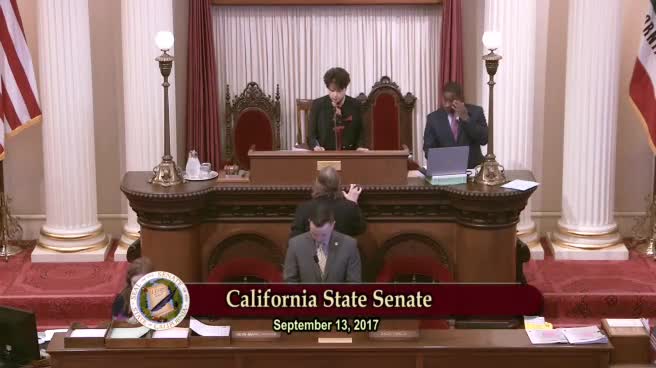 3MIN
Senate Floor
 58SEC
Assembly Floor
 1MIN
Assembly Floor
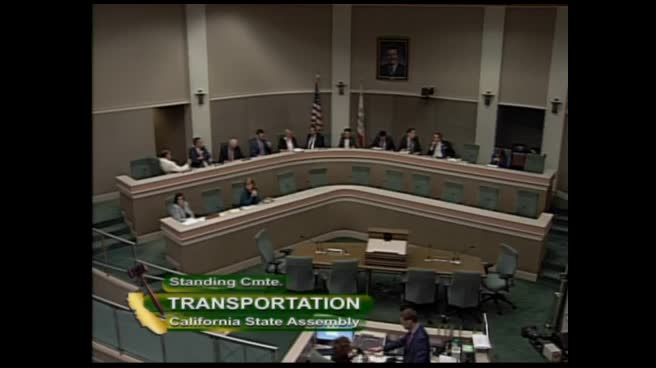 3MIN
Assembly Standing Committee on Transportation
 1MIN
Senate Floor
 2MIN
Senate Standing Committee on Appropriations
 22MIN
Senate Standing Committee on Transportation and Housing
Bill Author



