SB 201: Higher Education Employer-Employee Relations Act: employees.
- Session Year: 2017-2018
- House: Senate
- Latest Version Date: 2017-10-15
(1)Existing law, known as the Higher Education Employer-Employee Relations Act, contains provisions relating to employer-employee relations between the state and the employees of state institutions of higher education, including the University of California and the California State University, as well as the Hastings College of the Law. These provisions assign major responsibilities for implementation to the Public Employment Relations Board.
Under the act, an employee or higher education employee is defined as any employee of the Regents of the University of California, the Directors of the Hastings College of the Law, or the Trustees of the California State University. The act authorizes the board to find student employees whose employment is contingent on their status as students are employees only if the services they provide are unrelated to their educational objectives, or that those educational objectives are subordinate to the services they perform and that coverage under this act would further the purposes of the act.
This bill would make student employees, whose employment is contingent upon their status as students, employees and higher education employees for purposes of the act.
(2)The act grants employees the right to form, join, and participate in the activities of employee organizations of their own choosing for the purpose of representation on all matters of employer-employee relations and for the purpose of meeting and conferring with their employer. Under the act, all matters not within the scope of representation are reserved to the employer and are not subject to meeting and conferring. The act excludes from the scope of representation, for purposes of the University of California only, among other things, conditions for the award of certificates and degrees to students.
This bill would specify that, for purposes of the University of California only, the requirements for students to achieve satisfactory progress toward their degrees are also outside of the scope of representation.
(1)Existing law, known as the Higher Education Employer-Employee Relations Act, contains provisions relating to employer-employee relations between the state and the employees of state institutions of higher education, including the University of California and the California State University, as well as the Hastings College of the Law. These provisions assign major responsibilities for implementation to the Public Employment Relations Board.
Under the act, an employee or higher education employee is defined as any employee of the Regents of the University of California, the Directors of the Hastings College of the Law, or the Trustees of the California State University. The act further provides that authorizes the board may to find student employees whose employment is contingent on their status as students are employees only if the services they provide are unrelated to their educational objectives, or that those educational objectives are subordinate to the services they perform and that coverage under this act would further the purposes of the act.
This bill would make student employees, whose employment is contingent upon their status as students, employees and higher education employees for purposes of the act.
(2)The act grants employees the right to form, join, and participate in the activities of employee organizations of their own choosing for the purpose of representation on all matters of employer-employee relations and for the purpose of meeting and conferring with their employer. Under the act, all matters not within the scope of representation are reserved to the employer and are not subject to meeting and conferring. The act excludes from the scope of representation, for purposes of the University of California only, among other things, conditions for the award of certificates and degrees to students.
This bill would specify that, for purposes of the University of California only, the requirements for students to achieve satisfactory progress toward their degrees are also outside of the scope of representation.
(1)Existing law, known as the Higher Education Employer-Employee Relations Act, contains provisions relating to employer-employee relations between the state and the employees of state institutions of higher education, including the University of California and the California State University, as well as the Hastings College of the Law. These provisions assign major responsibilities for implementation to the Public Employment Relations Board.
Under the act, an employee or higher education employee is defined as any employee of the Regents of the University of California, the Directors of the Hastings College of the Law, or the Trustees of the California State University. The act further provides that the board may find student employees whose employment is contingent on their status as students are employees only if the services they provide are unrelated to their educational objectives, or that those educational objectives are subordinate to the services they perform and that coverage under this act would further the purposes of the act.
This bill would make student employees, whose employment is contingent upon their status as students, employees and higher education employees for purposes of the act.
(2)The act grants employees the right to form, join, and participate in the activities of employee organizations of their own choosing for the purpose of representation on all matters of employer-employee relations and for the purpose of meeting and conferring with their employer. Under the act, all matters not within the scope of representation are reserved to the employer and are not subject to meeting and conferring. The act excludes from the scope of representation, for purposes of the University of California only, among other things, conditions for the award of certificates and degrees to students.
This bill would specify that, for purposes of the University of California only, the requirements for students to achieve satisfactory progress toward their degrees are also outside of the scope of representation.
The Legislature finds and declares all of the following:
(a)A majority of student employees employed by the University of California, the Hastings College of the Law, and the California State University have been granted the opportunity for collective bargaining under the Higher Education Employer-Employee Relations Act (HEERA).
(b)It is the intent of the Legislature to expand the definition of employee under HEERA to include certain student employees who previously had been denied collective bargaining rights.
(c)It is the intent of the Legislature to maintain collective bargaining rights for those student employees who currently have those rights.
SEC. 2.Section 3562 of the Government Code is amended to read:3562.As used in this chapter:
(a)Arbitration means a method of resolving a rights dispute under which the parties to a controversy must accept the award of a third party.
(b)Board means the Public Employment Relations Board established pursuant to Section 3513.
(c)Certified organization means an employee organization that has been certified by the board as the exclusive representative of the employees in an appropriate unit after a proceeding under Article 5 (commencing with Section 3573).
(d)Confidential employee means any employee who is required to develop or present management positions with respect to meeting and conferring or whose duties normally require access to confidential information which contributes significantly to the development of those management positions.
(e)Employee or higher education employee means any employee, including student employees whose employment is contingent on their status as students, of the Regents of the University of California, the Directors of the Hastings College of the Law, or the Trustees of the California State University. However, managerial and confidential employees and employees whose principal place of employment is outside the State of California at a worksite with 100 or fewer employees shall be excluded from coverage under this chapter.
(f)(1)Employee organization means any organization of any kind in which higher education employees participate and that exists for the purpose, in whole or in part, of dealing with higher education employers concerning grievances, labor disputes, wages, hours, and other terms and conditions of employment of employees. An organization that represents one or more employees whose principal worksite is located outside the State of California is an employee organization only if it has filed with the board and with the employer a statement agreeing, in consideration of obtaining the benefits of status as an employee organization pursuant to this chapter, to submit to the jurisdiction of the board. The board shall promulgate the form of the statement.
(2)Employee organization shall also include any person that an employee organization authorizes to act on its behalf. An academic senate, or other similar academic bodies, or divisions thereof, shall not be considered employee organizations for the purposes of this chapter.
(g)Employer or higher education employer means the regents in the case of the University of California, the directors in the case of the Hastings College of the Law, and the trustees in the case of the California State University, including any person acting as an agent of an employer.
(h)Employer representative means any person or persons authorized to act on behalf of the employer.
(i)Exclusive representative means any recognized or certified employee organization or person it authorizes to act on its behalf.
(j)Impasse means that the parties have reached a point in meeting and conferring at which their differences in positions are such that further meetings would be futile.
(k)Managerial employee means any employee having significant responsibilities for formulating or administering policies and programs. No employee or group of employees shall be deemed to be managerial employees solely because the employee or group of employees participates in decisions with respect to courses, curriculum, personnel, and other matters of educational policy. A department chair or head of a similar academic unit or program who performs the foregoing duties primarily on behalf of the members of the academic unit or program shall not be deemed a managerial employee solely because of those duties.
(l)Mediation means the efforts of a third person, or persons, functioning as intermediaries, to assist the parties in reaching a voluntary resolution to an impasse.
(m)Meet and confer means the performance of the mutual obligation of the higher education employer and the exclusive representative of its employees to meet at reasonable times and to confer in good faith with respect to matters within the scope of representation and to endeavor to reach agreement on matters within the scope of representation. The process shall include adequate time for the resolution of impasses. If agreement is reached between representatives of the higher education employer and the exclusive representative, they shall jointly prepare a written memorandum of the understanding, which shall be presented to the higher education employer for concurrence. However, these obligations shall not compel either party to agree to any proposal or require the making of a concession.
(n)Person means one or more individuals, organizations, associations, corporations, boards, committees, commissions, agencies, or their representatives.
(o)Professional employee means:
(1)Any employee engaged in work: (A) predominantly intellectual and varied in character as opposed to routine mental, manual, mechanical, or physical work; (B) involving the consistent exercise of discretion and judgment in its performance; (C) of a character so that the output produced or the result accomplished cannot be standardized in relation to a given period of time; and (D) requiring knowledge of an advanced type in a field of science or learning customarily acquired by a prolonged course of specialized intellectual instruction and study in an institution of higher learning or a hospital, as distinguished from a general academic education or from an apprenticeship or from training in the performance of routine mental, manual, or physical processes.
(2)Any employee who: (A) has completed the courses of specialized intellectual instruction and study described in subparagraph (D) of paragraph (1), and (B) is performing related work under the supervision of a professional person to qualify himself or herself to become a professional employee as defined in paragraph (1).
(p)Recognized organization means an employee organization that has been recognized by an employer as the exclusive representative of the employees in an appropriate unit pursuant to Article 5 (commencing with Section 3573).
(q)(1)For purposes of the University of California only, scope of representation means, and is limited to, wages, hours of employment, and other terms and conditions of employment. The scope of representation shall not include any of the following:
(A)Consideration of the merits, necessity, or organization of any service, activity, or program established by law or resolution of the regents or the directors, except for the terms and conditions of employment of employees who may be affected thereby.
(B)The amount of any fees that are not a term or condition of employment.
(C)Admission requirements for students, conditions for the award of certificates and degrees to students, which include what is required for students to achieve satisfactory progress toward their degrees, and the content and supervision of courses, curricula, and research programs, as those terms are intended by the standing orders of the regents or the directors.
(D)Procedures and policies to be used for the appointment, promotion, and tenure of members of the academic senate, the procedures to be used for the evaluation of the members of the academic senate, and the procedures for processing grievances of members of the academic senate. The exclusive representative of members of the academic senate shall have the right to consult and be consulted on matters excluded from the scope of representation pursuant to this subparagraph. If the academic senate determines that any matter in this subparagraph should be within the scope of representation, or if any matter in this subparagraph is withdrawn from the responsibility of the academic senate, the matter shall be within the scope of representation.
(2)All matters not within the scope of representation are reserved to the employer and may not be subject to meeting and conferring, provided that nothing herein may be construed to limit the right of the employer to consult with any employees or employee organization on any matter outside the scope of representation.
(r)(1)For purposes of the California State University only, scope of representation means, and is limited to, wages, hours of employment, and other terms and conditions of employment. The scope of representation shall not include:
(A)Consideration of the merits, necessity, or organization of any service, activity, or program established by statute or regulations adopted by the trustees, except for the terms and conditions of employment of employees who may be affected thereby.
(B)The amount of any student fees that are not a term or condition of employment.
(C)Admission requirements for students, conditions for the award of certificates and degrees to students, and the content and conduct of courses, curricula, and research programs.
(D)Criteria and standards to be used for the appointment, promotion, evaluation, and tenure of academic employees, which shall be the joint responsibility of the academic senate and the trustees. The exclusive representative shall have the right to consult and be consulted on matters excluded from the scope of representation pursuant to this subparagraph. If the trustees withdraw any matter in this subparagraph from the responsibility of the academic senate, the matter shall be within the scope of representation.
(E)The amount of rental rates for housing charged to California State University employees.
(2)All matters not within the scope of representation are reserved to the employer, and may not be subject to meeting and conferring, provided that nothing herein may be construed to limit the right of the employer to consult with any employees or employee organization on any matter outside the scope of representation.
REVISIONS: HeadingLine 3.The Legislature finds and declares all of the following:
(a)A majority of student employees employed by the University of California, Hastings College of the Law, and the California State University have been granted the opportunity for collective bargaining under the Higher Education Employer-Employee Relations Act (HEERA).
(b)It is the intent of the Legislature to expand the definition of employee under HEERA to include certain student employees who previously had been denied collective bargaining rights.
(c)It is the intent of the Legislature to maintain collective bargaining rights for those student employees who currently have those rights.
SEC. 2.Section 3562 of the Government Code is amended to read:3562.As used in this chapter:
(a)Arbitration means a method of resolving a rights dispute under which the parties to a controversy must accept the award of a third party.
(b)Board means the Public Employment Relations Board established pursuant to Section 3513.
(c)Certified organization means an employee organization that has been certified by the board as the exclusive representative of the employees in an appropriate unit after a proceeding under Article 5 (commencing with Section 3573).
(d)Confidential employee means any employee who is required to develop or present management positions with respect to meeting and conferring or whose duties normally require access to confidential information which contributes significantly to the development of those management positions.
(e)Employee or higher education employee means any employee, including student employees whose employment is contingent on their status as students, of the Regents of the University of California, the Directors of the Hastings College of the Law, or the Trustees of the California State University. However, managerial and confidential employees and employees whose principal place of employment is outside the State of California at a worksite with 100 or fewer employees shall be excluded from coverage under this chapter. The board may find student employees whose employment is contingent on their status as students are employees only if the services they provide are unrelated to their educational objectives, or that those educational objectives are subordinate to the services they perform and that coverage under this chapter would further the purposes of this chapter.
(f)(1)Employee organization means any organization of any kind in which higher education employees participate and that exists for the purpose, in whole or in part, of dealing with higher education employers concerning grievances, labor disputes, wages, hours, and other terms and conditions of employment of employees. An organization that represents one or more employees whose principal worksite is located outside the State of California is an employee organization only if it has filed with the board and with the employer a statement agreeing, in consideration of obtaining the benefits of status as an employee organization pursuant to this chapter, to submit to the jurisdiction of the board. The board shall promulgate the form of the statement.
(2)Employee organization shall also include any person that an employee organization authorizes to act on its behalf. An academic senate, or other similar academic bodies, or divisions thereof, shall not be considered employee organizations for the purposes of this chapter.
(g)Employer or higher education employer means the regents in the case of the University of California, the directors in the case of the Hastings College of the Law, and the trustees in the case of the California State University, including any person acting as an agent of an employer.
(h)Employer representative means any person or persons authorized to act on behalf of the employer.
(i)Exclusive representative means any recognized or certified employee organization or person it authorizes to act on its behalf.
(j)Impasse means that the parties have reached a point in meeting and conferring at which their differences in positions are such that further meetings would be futile.
(k)Managerial employee means any employee having significant responsibilities for formulating or administering policies and programs. No employee or group of employees shall be deemed to be managerial employees solely because the employee or group of employees participates in decisions with respect to courses, curriculum, personnel, and other matters of educational policy. A department chair or head of a similar academic unit or program who performs the foregoing duties primarily on behalf of the members of the academic unit or program shall not be deemed a managerial employee solely because of those duties.
(l)Mediation means the efforts of a third person, or persons, functioning as intermediaries, to assist the parties in reaching a voluntary resolution to an impasse.
(m)Meet and confer means the performance of the mutual obligation of the higher education employer and the exclusive representative of its employees to meet at reasonable times and to confer in good faith with respect to matters within the scope of representation and to endeavor to reach agreement on matters within the scope of representation. The process shall include adequate time for the resolution of impasses. If agreement is reached between representatives of the higher education employer and the exclusive representative, they shall jointly prepare a written memorandum of the understanding, which shall be presented to the higher education employer for concurrence. However, these obligations shall not compel either party to agree to any proposal or require the making of a concession.
(n)Person means one or more individuals, organizations, associations, corporations, boards, committees, commissions, agencies, or their representatives.
(o)Professional employee means:
(1)Any employee engaged in work: (A) predominantly intellectual and varied in character as opposed to routine mental, manual, mechanical, or physical work; (B) involving the consistent exercise of discretion and judgment in its performance; (C) of a character so that the output produced or the result accomplished cannot be standardized in relation to a given period of time; and (D) requiring knowledge of an advanced type in a field of science or learning customarily acquired by a prolonged course of specialized intellectual instruction and study in an institution of higher learning or a hospital, as distinguished from a general academic education or from an apprenticeship or from training in the performance of routine mental, manual, or physical processes.
(2)Any employee who: (A) has completed the courses of specialized intellectual instruction and study described in subparagraph (D) of paragraph (1), and (B) is performing related work under the supervision of a professional person to qualify himself or herself to become a professional employee as defined in paragraph (1).
(p)Recognized organization means an employee organization that has been recognized by an employer as the exclusive representative of the employees in an appropriate unit pursuant to Article 5 (commencing with Section 3573).
(q)(1)For purposes of the University of California only, scope of representation means, and is limited to, wages, hours of employment, and other terms and conditions of employment. The scope of representation shall not include any of the following:
(A)Consideration of the merits, necessity, or organization of any service, activity, or program established by law or resolution of the regents or the directors, except for the terms and conditions of employment of employees who may be affected thereby.
(B)The amount of any fees that are not a term or condition of employment.
(C)Admission requirements for students, conditions for the award of certificates and degrees to students, which include what is required for students to achieve satisfactory progress toward their degrees, and the content and supervision of courses, curricula, and research programs, as those terms are intended by the standing orders of the regents or the directors.
(D)Procedures and policies to be used for the appointment, promotion, and tenure of members of the academic senate, the procedures to be used for the evaluation of the members of the academic senate, and the procedures for processing grievances of members of the academic senate. The exclusive representative of members of the academic senate shall have the right to consult and be consulted on matters excluded from the scope of representation pursuant to this subparagraph. If the academic senate determines that any matter in this subparagraph should be within the scope of representation, or if any matter in this subparagraph is withdrawn from the responsibility of the academic senate, the matter shall be within the scope of representation.
(2)All matters not within the scope of representation are reserved to the employer and may not be subject to meeting and conferring, provided that nothing herein may be construed to limit the right of the employer to consult with any employees or employee organization on any matter outside the scope of representation.
(r)(1)For purposes of the California State University only, scope of representation means, and is limited to, wages, hours of employment, and other terms and conditions of employment. The scope of representation shall not include:
(A)Consideration of the merits, necessity, or organization of any service, activity, or program established by statute or regulations adopted by the trustees, except for the terms and conditions of employment of employees who may be affected thereby.
(B)The amount of any student fees that are not a term or condition of employment.
(C)Admission requirements for students, conditions for the award of certificates and degrees to students, and the content and conduct of courses, curricula, and research programs.
(D)Criteria and standards to be used for the appointment, promotion, evaluation, and tenure of academic employees, which shall be the joint responsibility of the academic senate and the trustees. The exclusive representative shall have the right to consult and be consulted on matters excluded from the scope of representation pursuant to this subparagraph. If the trustees withdraw any matter in this subparagraph from the responsibility of the academic senate, the matter shall be within the scope of representation.
(E)The amount of rental rates for housing charged to California State University employees.
(2)All matters not within the scope of representation are reserved to the employer, and may not be subject to meeting and conferring, provided that nothing herein may be construed to limit the right of the employer to consult with any employees or employee organization on any matter outside the scope of representation.
|
Date
|
Status
|
|---|---|
| Oct 15, 2017 | Chaptered by Secretary of State. Chapter 854, Statutes of 2017. |
| Oct 15, 2017 | Approved by the Governor. |
| Sep 14, 2017 | Enrolled and presented to the Governor at 4 p.m. |
| Sep 8, 2017 | In Senate. Ordered to engrossing and enrolling. |
| Sep 7, 2017 | Read third time. Passed. Ordered to the Senate. |
| Sep 5, 2017 | Read second time. Ordered to third reading. |
| Sep 1, 2017 | Coauthors revised. |
| Jun 28, 2017 | June 28 set for first hearing. Placed on suspense file. |
| Jun 21, 2017 | From committee: Do pass and re-refer to Com. on APPR. (Ayes 9. Noes 3.) (June 20). Re-referred to Com. on APPR. |
| Jun 8, 2017 | Referred to Com. on HIGHER ED. |
| May 31, 2017 | In Assembly. Read first time. Held at Desk. |
| May 30, 2017 | Read third time. Passed. (Ayes 26. Noes 12. Page 1266.) Ordered to the Assembly. |
| May 26, 2017 | Read second time. Ordered to third reading. |
| May 25, 2017 | From committee: Do pass. (Ayes 5. Noes 2. Page 1179.) (May 25). |
| May 19, 2017 | Set for hearing May 25. |
| Apr 17, 2017 | April 17 hearing: Placed on APPR. suspense file. |
| Apr 5, 2017 | Set for hearing April 17. |
| Mar 28, 2017 | From committee: Do pass and re-refer to Com. on APPR. (Ayes 3. Noes 1.) (March 27). Re-referred to Com. on APPR. |
| Mar 17, 2017 | Set for hearing March 27. |
| Mar 13, 2017 | From committee with author's amendments. Read second time and amended. Re-referred to Com. on P.E. & R. |
| Feb 9, 2017 | Referred to Com. on P.E. & R. |
| Feb 1, 2017 | From printer. May be acted upon on or after March 3. |
| Jan 31, 2017 | Introduced. Read first time. To Com. on RLS. for assignment. To print. |
|
Date
|
Description
|
Location
|
Votes
|
|
|---|---|---|---|---|
| Sep 7, 2017 | SB 201 Skinner Senate Third Reading By AGUIAR-CURRY | Assembly Floor |
Passed |
|
| Sep 1, 2017 | Do pass. | Assembly Standing Committee on Appropriations |
Passed |
|
| Jun 20, 2017 | Do pass and be re-referred to the Committee on [Appropriations] | Assembly Standing Committee on Higher Education |
Passed |
|
| May 30, 2017 | Senate 3rd Reading SB201 Skinner et al. | Senate Floor |
Passed |
|
| May 25, 2017 | Do pass | Senate Standing Committee on Appropriations |
Passed |
|
| Apr 17, 2017 | Placed on suspense file | Senate Standing Committee on Appropriations |
Passed |
|
| Mar 27, 2017 | Do pass, but first be re-referred to the Committee on [Appropriations] | Senate Standing Committee on Public Employment and Retirement |
Passed |
This list shows positions taken on this bill by organizations on the date displayed, which is linked to the original source.
Positions by individuals are not included.
|
Organization
|
Position
|
Date
|
|---|---|---|
| afscme, afl-cio, local 3299 | ** Support | May 27, 2017 |
| America, Local 9119 | ** Support | Mar 23, 2017 |
| California Community College Independents | ** Support | May 27, 2017 |
| California Labor Federation | ** Support | Jun 19, 2017 |
| California Nurses Association | ** Support | Jun 19, 2017 |
| California School Employees Association | ** Support | Jun 19, 2017 |
| Committee Of Interns and Residents | ** Support | Jun 19, 2017 |
| Council Of Uc Faculty Associations | ** Support | Jun 19, 2017 |
| local 9119, afl-cio | ** Support | Jun 19, 2017 |
| National Nurses United | ** Support | Jun 19, 2017 |
| SEIU Healthcare | ** Support | Jun 19, 2017 |
| Service Employees International Union | ** Support | Jun 19, 2017 |
| Teamsters Local 2010 | ** Support | Jun 19, 2017 |
| UAW Local 2865 | * Support | Jun 20, 2017 |
| UAW Local 4123 | * Support | Jun 20, 2017 |
| UAW Local 5810, University of California Postdoctoral Researchers | * Support | Jun 20, 2017 |
| United Automobile, Aerospace and Agricultural Implement Workers of America | * Support | Jun 20, 2017 |
| University Of California Student Association | * Support | Jun 20, 2017 |
| University Professional and Technical Employees, Communications Workers of | ** Support | Mar 23, 2017 |
SENATE THIRD READING
STR Bill Id:SB 201
Author:(Skinner)
As Amended Ver:March 13, 2017
Majority vote
SENATE VOTE: 26-12
Committee | Votes | Ayes | Noes |
Higher Education | 9-3 | Medina, Arambula, Bloom, Irwin, Levine, Low, Quirk-Silva, Santiago, Weber | Baker, Choi, Kiley |
Appropriations | 11-5 | Gonzalez Fletcher, Bloom, Bocanegra, Bonta, Calderon, Chau, Eggman, Friedman, Eduardo Garcia, Jones-Sawyer, Reyes | Bigelow, Brough, Fong, Gallagher, Obernolte |
SUMMARY: Amends the Higher Education Employer-Employee Relations Act (HEERA) to provide collective bargaining rights to student employees at the University of California (UC), California State University (CSU), and Hastings College of Law, whose employment is contingent on their status as students. Specifically, this bill:
- Makes findings and declarations that:
- A majority of the UC, CSU, and Hastings College of Law student employees have collective bargaining rights through HEERA;
- The Legislature intends to expand the definition of employee under the HEERA to include certain student employees previously denied collective bargaining rights; and,
- The Legislature intends to maintain collective bargaining rights for those student employees who already have them.
- Amends the HEERA definition of "employee" to specifically include student employees whose employment is contingent upon their status as students.
- Removes statutory language that limits the Public Employment Relations Board (PERB) from finding that student employees currently excluded from the HEERA are "employees."
- Limits the scope of representation for which a recognized employee organization can represent UC student employees to work that does not include work required for students to achieve satisfactory progress toward their degrees.
EXISTING LAW: Establishes HEERA to provide a statutory framework to regulate labor relations at UC, CSU, and Hastings College of Law and their employees; provides the Public Employment Relations Board (PERB) authority to enforce HEERA; defines "employees" under the HEERA; and, authorizes PERB to find a student employee whose employment is contingent on his or her status as a student as an employee only if the services he or she provides is unrelated to his or her educational objectives, or those educational objectives are subordinate to the services he or she performs and that coverage under the HEERA would further the purposes of the HEERA (Government Code Sections 3560-3599).
FISCAL EFFECT: According to the Assembly Appropriations Committee:
- Approximately 14,000 research assistants (RAs) are employed by UC, and about 85% of the funding for union dues and salary increases comes from non-State sources such as Federal funds and private grants, with the remaining costs coming from the General Fund (GF). UC estimates that it will incur first-year total costs ranging between $12.2 million and $16.6 million from the UC GF to implement the provisions of the bill, itemized as follows:
- About $730,000 for collective bargaining negotiations;
- Annual costs of $1.8 million for administering the contracts;
- Anticipated annual costs of $3.1 million to cover the cost of union dues contributions, assumed to be necessary to keep student employees salary-neutral;
- Potential salary increases as a result of negotiations ranging from $6.5 million (assuming a 3% increase) to $10.9 million (assuming a 5% increase).
- Approximately 85% of this funding comes from Federal grants and private sources, with the GF providing support for the remainder); and,
- Approximately 85%of the funding for union dues and salary increases will likely come from Federal grants and private sources, with the GF providing support for the remainder.
- Hastings College of Law indicates potential compensation increases resulting from collective bargaining agreements with student employees and administrative costs to negotiate and manage a collective bargaining agreement. Hastings estimates total increased costs of up to $150,000 annually.
- CSU indicates that the bill would not impact their student employees, who already have the ability to organize and are consequently covered by the collective bargaining process.
COMMENTS: Background. PERB's decision in Regents of the UC & Association of Student Employees, UAW, et al. (1998) (PERB Order No. 1301-H) determined that under the current statutory language, UC's 12,000 Teaching Assistants (TAs), Readers, and Tutors had bargaining rights because their employment is not contingent upon their status as students, but RAs did not.
To note, student employees equivalent to RAs at CSU are covered under HEERA by a voluntary agreement with CSU. Additionally, several public universities in other states including Massachusetts, Washington, Oregon, and Connecticut have granted collective bargaining rights to their RAs.
National Labor Relations Board (NLRB). For 45 years, the NLRB has held jurisdiction over private, nonprofit universities.
Last year, in Trustees of Columbia University in the City of New York and Graduate Workers of Columbia-GWC, UAW, Case 02-RC-143012 (August 23, 2016), the NLRB issued a decision regarding Columbia University, finding that graduate student RAs at private universities have the right to choose collective bargaining.
Although the NLRB does not have jurisdiction over public postsecondary institutions, the Columbia ruling addressed a concern raised in prior opposition to bills similar in nature to this one - that extending collective bargaining rights to RAs could potentially harm the mentoring relationship between faculty and students. After citing data that more than 64,000 graduate student employees are organized in 28 institutions of higher education throughout the country, the NLRB stated, "More recent survey-based research found 'no support' for the contentions that graduate student unionization 'would harm the faculty-student relationship' or 'would diminish academic freedom…'".
Need for the measure. According to the author, "Today, approximately 16,000 TAs, Readers, and Tutors and 7,000 Postdoctoral Scholars in UC successfully bargain. However, TAs have experienced lack of continuity in rights and benefits, as they frequently move in and out of the TA bargaining units, since they are employed as both TAs and RAs during their time in the UC system, which is about five to ten years."
The author contends that the United Auto Workers (UAW) have exhausted all legal avenues to give RAs the right to bargain and that this measure will fix the inequity between RAs and other student employees.
This bill amends the HEERA definition of "employee" to specifically include student employees whose employment is contingent upon their status as students; and, removes statutory language that limits PERB from finding that student employees currently excluded by HEERA are "employees".
Graduate student employment categories. Unlike RAs, TAs and Postdoctoral Scholars may enter into collective bargaining agreements under HEERA because PERB has determined that their employment is not contingent upon their status as students:
- Teaching Assistants/Associates/Fellows are enrolled students, whose primary duty of appointees in these titles is assistance in all aspects of instruction (tutoring, grading, advising, sectional teaching, sectional laboratory teaching, field work teaching, and limited lecturing). These duties are performed under the supervision of faculty "instructors of record" who are vested with the sole and final responsibility for course content, work assignments, performance evaluations and grading in the assigned course. TAs are paid from state funds (instructional money).
- RAs are enrolled students selected for high achievement and promise as creative scholars and assist faculty members with scholarly research. Their research may directly relate to their discipline of study. RAs may not be assigned teaching, administrative, or general assistance duties; they are paid from contracts and grants generated by the faculty.
- Postdoctoral Scholars are not enrolled students; they are individuals who have recently completed a doctoral degree, who seek additional scholarship and continued research training. The Postdoctoral Scholar conducts research under the general oversight of a faculty mentor in preparation for a career position in academe, industry, government, or the nonprofit sector.
Previous legislation. AB 1834 (Williams) of 2014, which was substantially similar to this measure, was held in the Senate Appropriations Committee.
SB 259 (Hancock) of 2012, which was substantially similar to this bill, was vetoed by the Governor, who indicated that he did not have "sufficient and persuasive evidence warranting a change to the current framework within which graduate student researchers and faculty undertake their joint intellectual inquiries." The Governor was also reluctant to place a new mandate on the university system during the fiscal environment at that time.
Analysis Prepared by: Jeanice Warden / HIGHER ED. / (916) 319-3960 FN: 0001668
Date of Hearing: June 28, 2017
ASSEMBLY COMMITTEE ON APPROPRIATIONS
Lorena Gonzalez Fletcher, Chair
SBPCA Bill Id:SB 201
Author:(Skinner) – As Amended Ver:March 13, 2017
Policy Committee: | Higher Education | Vote: | 9 - 3 |
Urgency: No State Mandated Local Program: No Reimbursable: No
SUMMARY:
This bill amends the Higher Education Employer-Employee Relations Act (HEERA) to provide collective bargaining rights to student employees at the University of California (UC), California State University (CSU), and Hastings College of Law, whose employment is contingent on their status as students. Specifically, this bill:
- Amends the HEERA definition of “employee” to specifically include student employees whose employment is contingent upon their status as students.
- Removes statutory language that limits the Public Employment Relations Board (PERB) from finding that student employees currently excluded from the HEERA are “employees”.
- Limits the scope of representation for which a recognized employee organization can represent UC student employees to work that does not include work required for students to achieve satisfactory progress toward their degrees.
FISCAL EFFECT:
- There are approximately 14,000 RA’s employed by UC, and about 85 percent of the funding for union dues and salary increases comes from non-State sources such as Federal funds and private grants, with the remaining costs coming from the General Fund. UC estimates that it will incur first-year total costs ranging between $12.2 million and $16.6 million from the UC General Fund to implement the provisions of the bill, itemized as follows:
- About $730,000 for collective bargaining negotiations;
- Annual costs of $1.8 million for administering the contracts;
- Anticipated annual costs of $3.1 million to cover the cost of union dues contributions, assumed to be necessary to keep student employees salary-neutral;
- Potential salary increases as a result of negotiations ranging from $6.5 million (assuming on 3% increase) to $10.9 million (assuming a 5% increase).
- Approximately 85 percent of this funding comes from Federal grants and private sources, with the GF providing support for the remainder); and,
- Approximately 85% of the funding for union dues and salary increases will likely come from Federal grants and private sources, with the GF providing support for the remainder.
- Hastings College of Law indicates potential compensation increases resulting from collective bargaining agreements with student employees and administrative costs to negotiate and manage a collective bargaining agreement. Hastings estimates total increased costs of up to $150,000 annually.
- CSU indicates that the bill would not impact their student employees, who already have the ability to organize and are consequently covered by the collective bargaining process.
COMMENTS:
- Background. Existing law establishes HEERA to provide a statutory framework to regulate labor relations at UC, CSU, and Hastings College of Law and their employees; and provides the PERB authority to enforce HEERA. State law defines “employees” under the HEERA; and, authorizes PERB to find a student employee whose employment is contingent on his or her status as a student as an employee only if the services he or she provides is unrelated to his or her educational objectives, or those educational objectives are subordinate to the services he or she performs and that coverage under the HEERA would further the purposes of the HEERA.
PERB's decision in Regents of the UC & Association of Student Employees, UAW, et al. (1998) determined that under the current statutory language, UC's 12,000 Teaching Assistants (TAs), Readers, and Tutors had bargaining rights because their employment is not contingent upon their status as students, but Research Assistants (RAs) did not. Unlike UC, Student employees equivalent to RAs at CSU are covered under HEERA by a voluntary agreement with CSU. Additionally, several public universities in other states including Massachusetts, Washington, Oregon, and Connecticut have granted collective bargaining rights to their RAs.
- Purpose. According to the author, "Today, approximately 16,000 TAs, Readers, and Tutors and 7,000 Postdoctoral Scholars in UC successfully bargain. However, TAs have experienced lack of continuity in rights and benefits, as they frequently move in and out of the TA bargaining units, since they are employed as both TAs and RAs during their time in the UC system, which is about five to ten years." The author contends that the United Auto Workers (UAW) have exhausted all legal avenues to give RAs the right to bargain and that this measure will fix the inequity between RAs and other student employees.
- Staff Comments. RAs are enrolled students selected for high achievement and promise as creative scholars and assist faculty members with scholarly research. Their research may directly relate to their discipline of study. RAs may not be assigned teaching, administrative, or general assistance duties; they are paid from contracts and grants generated by the faculty.
Several public universities in other states have granted collective bargaining rights to their RAs. In addition, the National Labor Relations Board (NLRB) issued a decision in 2016 in a dispute involving Columbia University, finding that Graduate Student Research Assistants at private universities have the right to choose collective bargaining.
The California Master Plan for Higher Education designates the UC as the state's primary academic research institution. UC is “given exclusive jurisdiction in public higher education for doctoral degrees and for instruction in law, medicine, dentistry, and veterinary medicine.” As a result, UC has approximately 14,000 RAs employed. Unlike CSU or private non-profit universities, UC has the largest number of RA’s and an increased burden to protect the mentoring relationship between faculty and students. To the extent that negotiations through collective bargaining lead to future salary increases for RAs that are funded through grant awards (as opposed to UC's General Fund support or tuition revenue), because of their limited supply, this bill could result in reductions to the number of RA positions being offered, and/or fewer hours being assigned to each RA.
- Related Legislation. AB 1834 (Williams) of 2014, which was substantially similar to this measure, was held in the Senate Appropriations Committee.
SB 259 (Hancock) of 2012, which was substantially similar to this bill, was vetoed by the Governor, who indicated that he did not have “sufficient and persuasive evidence warranting a change to the current framework within which graduate student researchers and faculty undertake their joint intellectual inquiries.” The Governor also indicated he was reluctant to place a new mandate on the university system during the fiscal environment at that time.
Analysis Prepared by: Daisy Gonzales / APPR. / (916) 319-2081
Date of Hearing: June 20, 2017
ASSEMBLY COMMITTEE ON HIGHER EDUCATION
Jose Medina, Chair
SBPCA Bill Id:SB 201
Author:(Skinner) – As Amended Ver:March 13, 2017
SENATE VOTE: 26-12
SUBJECT: Higher Education Employer-Employee Relations Act: employees.
SUMMARY: Amends the Higher Education Employer-Employee Relations Act (HEERA) to provide collective bargaining rights to student employees at the University of California (UC), California State University (CSU), and Hastings College of Law, whose employment is contingent on their status as students. Specifically, this bill:
- Makes findings and declarations that:
- A majority of the UC, CSU, and Hastings College of Law student employees have collective bargaining rights through HEERA;
- The Legislature intends to expand the definition of employee under the HEERA to include certain student employees previously denied collective bargaining rights; and,
- The Legislature intends to maintain collective bargaining rights for those student employees who already have them.
- Amends the HEERA definition of “employee” to specifically include student employees whose employment is contingent upon their status as students.
- Removes statutory language that limits the Public Employment Relations Board (PERB) from finding that student employees currently excluded from the HEERA are “employees”.
- Limits the scope of representation for which a recognized employee organization can represent UC student employees to work that does not include work required for students to achieve satisfactory progress toward their degrees.
EXISTING LAW: Establishes HEERA to provide a statutory framework to regulate labor relations at UC, CSU, and Hastings College of Law and their employees; provides the Public Employment Relations Board (PERB) authority to enforce HEERA; defines “employees” under the HEERA; and, authorizes PERB to find a student employee whose employment is contingent on his or her status as a student as an employee only if the services he or she provides is unrelated to his or her educational objectives, or those educational objectives are subordinate to the services he or she performs and that coverage under the HEERA would further the purposes of the HEERA (Government Code Sections 3560-3599).
FISCAL EFFECT: According to the Senate Appropriations Committee:
- UC estimates that it would incur first-year total costs ranging between $12.2 million and $16.6 million to implement the provisions of the bill, itemized as follows:
- About $730,000 for collective bargaining negotiations from the General Fund (GF);
- Annual costs of $1.8 million for administering the contracts (GF);
- Anticipated annual costs of $3.1 million to cover the cost of union dues contributions, assumed to be necessary to keep student employees salary-neutral (GF);
- Potential salary increases as a result of negotiations ranging from $6.5 million (assuming on 3 percent increase) to $10.9 million (assuming a five percent increase). Approximately 85 percent of this funding comes from Federal grants and private sources, with the GF providing support for the remainder); and,
- Approximately 85 percent of the funding for union dues and salary increases would likely come from Federal grants and private sources, with the GF providing support for the remainder.
To note, costs to UC would rise in the out-years, largely driven by any negotiated salary increases.
- Similar to UC, Hastings indicates that its costs to administer the bill would include:
- Potential compensation increases resulting from collective bargaining agreements with student employees; and,
- Administrative costs to negotiate and manage a collective bargaining agreement. Hastings estimates total increased costs of up to $150,000 annually (GF).
- CSU indicates that the bill would not impact their student employees, who already have the ability to organize and are consequently covered by the collective bargaining process.
COMMENTS: Background. PERB's decision in Regents of the UC & Association of Student Employees, UAW, et al. (1998) (PERB Order No. 1301-H) determined that under the current statutory language, UC's 12,000 Teaching Assistants (TAs), Readers, and Tutors had bargaining rights because their employment is not contingent upon their status as students, but Research Assistants (RAs) did not.
To note, student employees equivalent to RAs at CSU are covered under HEERA by a voluntary agreement with CSU. Additionally, several public universities in other states including Massachusetts, Washington, Oregon, and Connecticut have granted collective bargaining rights to their RAs.
National Labor Relations Board (NLRB). For 45 years, the NLRB has held jurisdiction over private, nonprofit universities.
Last year, in Trustees of Columbia University in the City of New York and Graduate Workers of Columbia-GWC, UAW, Case 02-RC-143012 (August 23, 2016), the NLRB issued a decision regarding Columbia University, finding that graduate student RAs at private universities have the right to choose collective bargaining.
Although the NLRB does not have jurisdiction over public postsecondary institutions, the Columbia ruling addressed a concern raised in prior opposition to bills similar in nature to this one - that extending collective bargaining rights to RAs could potentially harm the mentoring relationship between faculty and students. After citing data that more than 64,000 graduate student employees are organized in 28 institutions of higher education throughout the country, the NLRB stated, “More recent survey-based research found ‘no support’ for the contentions that graduate student unionization ‘would harm the faculty-student relationship’ or ‘would diminish academic freedom…’”.
Need for the measure. According to the author, "Today, approximately 16,000 TAs, Readers, and Tutors and 7,000 Postdoctoral Scholars in UC successfully bargain. However, TAs have experienced lack of continuity in rights and benefits, as they frequently move in and out of the TA bargaining units, since they are employed as both TAs and RAs during their time in the UC system, which is about five to ten years."
The author contends that the United Auto Workers (UAW) have exhausted all legal avenues to give RAs the right to bargain and that this measure will fix the inequity between RAs and other student employees.
This bill amends the HEERA definition of "employee" to specifically include student employees whose employment is contingent upon their status as students; and, removes statutory language that limits PERB from finding that student employees currently excluded by HEERA are "employees".
Graduate student employment categories. Unlike RAs, TAs and Postdoctoral Scholars may enter into collective bargaining agreements under HEERA because PERB has determined that their employment is not contingent upon their status as students:
- Teaching Assistants/Associates/Fellows are enrolled students, whose primary duty of appointees in these titles is assistance in all aspects of instruction (tutoring, grading, advising, sectional teaching, sectional laboratory teaching, field work teaching, limited lecturing). These duties are performed under the supervision of faculty “instructors of record” who are vested with the sole and final responsibility for course content, work assignments, performance evaluations and grading in the assigned course. TAs are paid from state funds (instructional money).
- RAs are enrolled students selected for high achievement and promise as creative scholars and assist faculty members with scholarly research. Their research may directly relate to their discipline of study. RAs may not be assigned teaching, administrative, or general assistance duties; they are paid from contracts and grants generated by the faculty.
- Postdoctoral Scholars are not enrolled students; they are individuals who have recently completed a doctoral degree, who seek additional scholarship and continued research training. The Postdoctoral Scholar conducts research under the general oversight of a faculty mentor in preparation for a career position in academe, industry, government, or the nonprofit sector.
Previous legislation. AB 1834 (Williams) of 2014, which was substantially similar to this measure, was held in the Senate Appropriations Committee.
SB 259 (Hancock) of 2012, which was substantially similar to this bill, was vetoed by the Governor, who indicated that he did not have “sufficient and persuasive evidence warranting a change to the current framework within which graduate student researchers and faculty undertake their joint intellectual inquiries.” The Governor was also reluctant to place a new mandate on the university system during the fiscal environment at that time.
REGISTERED SUPPORT / OPPOSITION:
Support
American Federation of State, County and Municipal Employees Local 3299, AFL-CIO
California Labor Federation
California Nurses Association/National Nurses United
California School Employees Association
Committee of Interns and Residents/SEIU Healthcare
Council of UC Faculty Associations
Service Employees International Union (SEIU)
Teamsters Local 2010
UAW Local 2865
UAW Local 4123
UAW Local 5810
University of California Student Association
University of Professional and Technical Employees-Communications Workers of America
Local 9119, AFL-CIO
Opposition
None on file
Analysis Prepared by: Jeanice Warden / HIGHER ED. / (916) 319-3960
Office of Senate Floor Analyses (916) 651-1520 Fax: (916) 327-4478 | SB |
THIRD READING
Bill No: SB 201
:
SENATE PUBLIC EMP. & RET. COMMITTEE: 3-1, 3/27/17
AYES: Pan, Leyva, Portantino
NOES: Morrell
NO VOTE RECORDED: Moorlach
SENATE APPROPRIATIONS COMMITTEE: 5-2, 5/25/17
AYES: Lara, Beall, Bradford, Hill, Wiener
NOES: Bates, Nielsen
SOURCE: United Automobile Workers, Local 2865
United Automobile Workers, Local 4123
United Automobile Workers, Local 5810
DIGEST:
This bill amends the Higher Education Employer-Employee Relations Act (HEERA) to provide collective bargaining rights to student employees at the University of California (UC), California State University (CSU), and Hastings College of Law, whose employment is contingent on their status as students. This bill also provides that the scope of representation for UC student employees would not include work required to achieve satisfactory progress toward their academic degrees.
ANALYSIS:
Existing law:
- Establishes HEERA which provides a statutory framework to regulate labor relations between UC, CSU, and Hastings College of Law and their respective employees.
- Sets primary responsibility for enforcing HEERA with the Public Employment Relations Board (PERB).
- Defines “employee” for purposes of HEERA as any employee of the UC Regents, the Hastings Directors, or the CSU Trustees, except managerial and confidential employees and employees based out of California at a worksite with 100 or fewer employees.
- Authorizes PERB to find that student employees whose employment is contingent on their student status are covered under HEERA only if:
- The work is unrelated to the student’s educational objectives, or
- The educational objectives are subordinate to the work they perform and coverage would further the purposes of HEERA.
- Authorizes recognized employee organizations to represent employees covered under HEERA in collective bargaining with their employers over matters within the scope of representation, as defined, including grievances, labor disputes, wages, hours, and other terms and conditions of employment.
This bill:
- Makes findings and declarations that:
- A majority of UC, CSU, and Hastings student employees have collective bargaining rights through HEERA.
- The Legislature intends to expand the definition of employee under HEERA to include certain student employees previously denied collective bargaining rights.
- The Legislature intends to maintain collective bargaining rights for those student employees who already have them.
- Amends the HEERA definition of “employee” to specifically include student employees whose employment is contingent upon their status as students.
- Removes statutory language that limits PERB from finding that student employees currently excluded from HEERA are “employees”.
- Limits the scope of representation for which a recognized employee organization can represent UC student employees to work that does not include work required for students to achieve satisfactory progress toward their degrees.
Background
HEERA provides a statutory framework to regulate labor relations between the UC, the CSU, and Hastings College of Law and their employees. HEERA is administered and enforced by PERB.
PERB’s decision in Regents of the UC & Association of Student Employees, UAW, et al (1998) (PERB Order No. 1301-H) rendered a determination that under the current statutory language, UC’s 16,000 Teaching Assistants (TAs) and Readers and Tutors (RTs), as well as 7,000 Postdoctoral Scholars have bargaining rights but UC’s 14,000 Research Assistants (RAs) do not. This disparity may result in student employment disruptions because student employees often change positions from TAs to RAs, and back again and thus, lose certain rights and benefits they had as TAs while employed as RAs, and are no longer covered by a contract.
Several public universities in other states including Massachusetts, Washington, Oregon, and Connecticut have granted collective bargaining rights to their RAs.
In Trustees of Columbia University in the City of New York and Graduate Workers of Columbia-GWC, UAW, Case 02-RC-143012 (August 23, 2016), the National Labor Relations Board (NLRB) issued a decision regarding Columbia University, finding that Graduate Student Research Assistants at private universities have the right to choose collective bargaining.
Although the NLRB does not have jurisdiction over UC since UC is a public university organized by the state, the Columbia ruling addressed a concern raised in prior opposition to similar bills that extending collective bargaining rights to RAs could potentially harm the mentoring relationship between faculty and students. After citing data that more than 64,000 graduate student employees are organized at 28 institutions of higher education throughout the country, the NLRB stated “More recent survey-based research found ‘no support’ for the contentions that graduate student unionization ‘would harm the faculty-student relationship’ or ‘would diminish academic freedom…’”.
Related/Prior Legislation
AB 1834 (Williams, 2014), substantially identical to this bill, was held in the Senate Appropriations Committee.
SB 259 (Hancock, 2012), substantially identical to this bill, was vetoed by the Governor, who indicated that he did not have “sufficient and persuasive evidence warranting a change to the current framework within which graduate student researchers and faculty undertake their joint intellectual inquiries.” The Governor was also reluctant to place a new mandate on the university system during the fiscal environment at that time.
FISCAL EFFECT: Appropriation: Fiscal Com.: Local:
According to Senate Appropriations Committee:
- UC estimates that it would incur first-year total costs ranging between $12.2 million and $16.6 million. Costs to UC would rise in the out-years, largely driven by any negotiated salary increases.
- UC Hastings estimates total increased costs of up to $150,000 annually (General Fund).
- CSU indicates that this bill will not impact their student employees, who already have the ability to organize and are consequently covered by the collective bargaining process.
United Automobile Workers, Local 2865 (co-source)
United Automobile Workers, Local 4123 (co-source)
United Automobile Workers, Local 5810 (co-source)
AFSCME, AFL-CIO, Local 3299
California Community College Independents
California Labor Federation
California Nurses Association
California School Employees Association, AFL-CIO
Committee of Interns and Residents/SEIU Healthcare
Council of UC Faculty Associations
Service Employees International Union California
Teamsters Local 2010
University of California Student Association
University Professional and Technical Employees, Communications Workers of America, Local 9119
OPPOSITION: (Verified 5/26/17)
None received
ARGUMENTS IN SUPPORT: According to United Automobile Workers (UAW) Local 2865, a co-sponsor and the employee representative of approximately 16,000 UC TAs and RTs, “Research Assistants do much of the cutting-edge research that both makes UC a world-renowned research university and helps bring in billions of dollars in research contracts and grants annually to the UC. Extending the right to choose collective bargaining to RAs would afford them the opportunity to negotiate the working conditions under which they make these contributions.”
The University of California Student Association states that “During their five to ten years at a UC, graduate students move between jobs. When they are employed as RAs, they do not have continuity in their terms and conditions of employment. They lose the contractual rights and benefits they have as TAs, such as family leave, workload protections, contractual redress for non-discrimination and health and safety violations, and grievance and arbitration rights.”
According to the California Labor Federation, “RAs are the only employees in UC’s labs who lack the right to choose collective bargaining. CSU students who work in jobs equivalent to RAs are covered under HEERA by voluntary agreement between the UAW and CSU. Additionally, RAs at California’s private universities now have the right to collectively bargain. The UC is the only educational institution in California where RAs’ right to collectively bargain continues to be denied.”
5/27/17 17:52:23
**** END ****
SENATE COMMITTEE ON
Senator Ricardo Lara, Chair
2017 - 2018 Regular Session
SB 201 (Skinner) - Higher Education Employer-Employee Relations Act: employees
Version: | Policy Vote: |
Urgency: | Mandate: |
Hearing Date: | Consultant: |
This bill meets the criteria for referral to the Suspense File.
Bill Summary: SB 201 would amend the Higher Education Employer-Employee Relations Act to provide collective bargaining rights to student employees at the University of California (UC), California State University (CSU), and Hastings College of Law, whose employment is contingent on their status as students
Fiscal Impact: UC estimates that it would incur first-year total costs ranging between $12.2 million and $16.6 million to implement the provisions of the bill, itemized as follows:
- About $730,000 for collective bargaining negotiations (General Fund).
- Annual costs of $1.8 million for administering the contracts (General Fund).
- Anticipated annual costs of $3.1 million to cover the cost of union dues contributions, assumed to be necessary to keep student employees salary-neutral (General Fund).
- Potential salary increases as a result of negotiations ranging from $6.5 million (assuming on 3 percent increase) to $10.9 million (assuming a five percent increase). Approximately 85 percent of this funding comes from Federal grants and private sources, with the General Fund providing support for the remainder).
- Approximately 85 percent of the funding for union dues and salary increases would likely come from Federal grants and private sources, with the General Fund providing support for the remainder.
Costs to UC would rise in the out-years, largely driven by any negotiated salary increases.
Similar to UC, Hastings indicates that its costs to administer the bill would include (1) potential compensation increases resulting from collective bargaining
agreements with student employees, and (2) administrative costs to negotiate and manage a collective bargaining agreement. Hastings estimates total increased costs of up to $150,000 annually (General Fund).
CSU indicates that the bill would not impact their student employees, who already have the ability to organize and are consequently covered by the collective bargaining process.
Background: The Higher Education Employer-Employee Relations Act (HEERA) provides a statutory framework to regulate labor relations between UC, CSU, and Hastings College of Law and their employees. HEERA is administered and enforced by the Public Employment Relations Board (PERB).
PERB’s decision in Regents of the UC & Association of Student Employees, UAW, et al (1998) (PERB Order No. 1301-H) rendered a determination that under the current statutory language, UC’s 16,000 Teaching Assistants (TAs), Readers, and Tutors had bargaining rights but the Research Assistants (RAs) did not. This inequity may create a continuity problem when student employees change positions from TAs to RAs, and back again since while employed as RAs, they are not covered by a contract and consequently lose certain rights and benefits.
More recently, several public universities in other states have granted collective bargaining rights to their RAs. In addition, the National Labor Relations Board (NLRB) issued a decision in 2016 in a dispute involving Columbia University, finding that Graduate Student Research Assistants at private universities have the right to choose collective bargaining.
Proposed Law: This bill would do all of the following:
- Make findings and declarations that (1) a majority of UC, CSU, and Hastings student employees have collective bargaining rights through HEERA, (2) the Legislature intends to expand the definition of employee under HEERA to include certain student employees previously denied collective bargaining rights, and (3) the Legislature intends to maintain collective bargaining rights for those student employees who already have them.
- Amend the HEERA definition of "employee" to specifically include student employees whose employment is contingent upon their status as students.
- Remove statutory language that limits PERB from finding that student employees currently excluded from HEERA are “employees”.
- Limit the scope of representation for which a recognized employee organization can represent UC student employees to work that does not include work required for students to achieve satisfactory progress toward their degrees.
Related Legislation:
- AB 1834 (Williams, 2014), substantially similar to this bill, was held under submission on the Suspense File of this Committee.
- SB 259 (Hancock, 2013), also substantially similar to this measure, was held under submission on the Suspense File of this Committee.
- SB 259 (Hancock, 2012), also substantially similar to this bill, was vetoed by the Governor, who indicated that he did not have “sufficient and persuasive evidence warranting a change to the current framework within which graduate student researchers and faculty undertake their joint intellectual inquiries.” The Governor was also reluctant to place a new mandate on the university system during the fiscal environment at that time.
Staff Comments: As noted above, this bill would authorize graduate student RAs who are employed by UC, CSU, or Hastings to collectively bargain for their benefits. There are approximately 14,000 such RAs employed by UC, and about 85 percent of the funding for union dues and salary increases comes from non-State sources such as Federal funds and private grants, with the remaining costs coming from the General Fund. Thus, first-year General Fund costs to UC would be between $4 million and $4.6 million, and would rise in the out-years, largely driven by any negotiated salary increases.
UC’s cost estimate related to collective bargaining incorporates bargaining sessions, planning, researching, drafting language, responding to union information requests, travel days and travel expenses for two negotiation positions. The estimate also includes expenses for Faculty Representatives, Labor Relations Campus Representatives, and Labor Relations Assistant.
To the extent that negotiations through collective bargaining lead to future salary increases for RAs that are funded through grant awards (as opposed to UC's General Fund support or tuition revenue), because of their limited supply, this bill could result in reductions to the number of RA positions being offered, and/or fewer hours being assigned to each RA.
-- END --
SENATE COMMITTEE ON
PUBLIC EMPLOYMENT AND RETIREMENT
Dr. Richard Pan, Chair
2017 - 2018 Regular
Bill No: SB 201 Hearing Date: 3/27/17
Author: | Skinner | ||
Version: | 3/13/17 As amended | ||
Urgency: | No | Fiscal: | Yes |
Consultant: | Glenn Miles | ||
Subject: Higher Education Employer-Employee Relations Act: employees
SOURCE: United Automobile Workers, Local 2865 (co-source)
United Automobile Workers, Local 4123 (co-source)
United Automobile Workers, Local 5810 (co-source)
DIGEST: This bill would amend the Higher Education Employer-Employee Relations Act (HEERA) to provide collective bargaining rights to student employees at the University of California (UC), California State University (CSU), and Hastings College of Law, whose employment is contingent on their status as students. The bill also provides that the scope of representation for UC student employees would not include work required to achieve satisfactory progress toward their academic degrees.
ANALYSIS:
Existing law:
- Establishes HEERA which provides a statutory framework to regulate labor relations between UC, CSU, and Hastings College of Law and their respective employees.
- Sets primary responsibility for enforcing HEERA with the Public Employment Relations Board (PERB).
- Defines “employee” for purposes of HEERA as any employee of the UC Regents, the Hastings Directors, or the CSU Trustees, except managerial and confidential employees and employees based out of California at a worksite with 100 or fewer employees.
- Authorizes PERB to find that student employees whose employment is contingent on their student status are covered under HEERA only if:
- The work is unrelated to the student’s educational objectives, or
- The educational objectives are subordinate to the work they perform and coverage would further the purposes of HEERA.
- Authorizes recognized employee organizations to represent employees covered under HEERA in collective bargaining with their employers over matters within the scope of representation, as defined, including grievances, labor disputes, wages, hours, and other terms and conditions of employment.
This bill:
- Makes findings and declarations that:
- A majority of UC, CSU, and Hastings student employees have collective bargaining rights through HEERA.
- The Legislature intends to expand the definition of employee under HEERA to include certain student employees previously denied collective bargaining rights.
- The Legislature intends to maintain collective bargaining rights for those student employees who already have them.
- Amends the HEERA definition of “employee” to specifically include student employees whose employment is contingent upon their status as students.
- Removes statutory language that limits PERB from finding that student employees currently excluded from HEERA are “employees”.
- Limits the scope of representation for which a recognized employee organization can represent UC student employees to work that does not include work required for students to achieve satisfactory progress toward their degrees.
Background
HEERA provides a statutory framework to regulate labor relations between the UC, the CSU, and Hastings College of Law and their employees. HEERA is administered and enforced by PERB.
PERB’s decision in Regents of the UC & Association of Student Employees, UAW, et al (1998) (PERB Order No. 1301-H) rendered a determination that under the current statutory language, UC’s 16,000 Teaching Assistants (TAs) and Readers and Tutors (RTs), as well as 7,000 Postdoctoral Scholars have bargaining rights but UC’s 14,000 Research Assistants (RAs) do not. This disparity may result in student employment disruptions because student employees often change positions from TAs to RAs, and back again and thus, lose certain rights and benefits they had as TAs while employed as RAs, and are no longer covered by a contract.
Several public universities in other states including Massachusetts, Washington, Oregon, and Connecticut have granted collective bargaining rights to their RAs.
In Trustees of Columbia University in the City of New York and Graduate Workers of Columbia-GWC, UAW, Case 02-RC-143012 (August 23, 2016), the National Labor Relations Board (NLRB) issued a decision regarding Columbia University, finding that Graduate Student Research Assistants at private universities have the right to choose collective bargaining.
Although the NLRB does not have jurisdiction over UC since UC is a public university organized by the State, the Columbia ruling addressed a concern raised in prior opposition to similar bills that extending collective bargaining rights to RAs could potentially harm the mentoring relationship between faculty and students. After citing data that more than 64,000 graduate student employees are organized at 28 institutions of higher education throughout the country, the NLRB stated “More recent survey-based research found ‘no support’ for the contentions that graduate student unionization ‘would harm the faculty-student relationship’ or ‘would diminish academic freedom…’”.
Related/Prior Legislation
AB 1834 (Williams, 2014), substantially identical to this bill, was held in the Senate Appropriations Committee.
SB 259 (Hancock, 2012), substantially identical to this bill, was vetoed by the Governor, who indicated that he did not have “sufficient and persuasive evidence warranting a change to the current framework within which graduate student researchers and faculty undertake their joint intellectual inquiries.” The Governor was also reluctant to place a new mandate on the university system during the fiscal environment at that time.
FISCAL EFFECT: Appropriation: No Fiscal Com.: Yes Local: No
SUPPORT:
United Automobile Workers, Local 2865 (co-source)
United Automobile Workers, Local 4123 (co-source)
United Automobile Workers, Local 5810 (co-source)
American Federation of State, County and Municipal Employees, AFL-CIO, Local
3299
California Community College Independents
California Labor Federation
California Nurses Association
California School Employees Association, AFL-CIO
Committee of Interns and Residents/SEIU Healthcare
Council of UC Faculty Associations
Service Employees International Union California
Teamsters, Local 2010
University of California Student Association
University Professional and Technical Employees, Communications Workers of
America, Local 9119
OPPOSITION:
None received
ARGUMENTS IN SUPPORT: According to UAW Local 2865, a co-source and the employee representative of approximately 16,000 UC TAs and RTs, “Research Assistants do much of the cutting-edge research that both makes UC a world-renowned research university and helps bring in billions of dollars in research contracts and grants annually to the UC. Extending the right to choose collective bargaining to RAs would afford them the opportunity to negotiate the working conditions under which they make these contributions.”
The University of California Students Association states that “During their five to ten years at a UC, graduate students move between jobs. When they are employed as RAs, they do not have continuity in their terms and conditions of employment. They lose the contractual rights and benefits they have as TAs, such as family leave, workload protections, contractual redress for non-discrimination and health and safety violations, and grievance and arbitration rights.”
According to the California Labor Federation, “RAs are the only employees in UC’s labs who lack the right to choose collective bargaining. CSU students who work in jobs equivalent to RAs are covered under HEERA by voluntary agreement between the UAW and CSU. Additionally, RAs at California’s private universities now have the right to collectively bargain. The UC is the only educational institution in California where RAs’ right to collectively bargain continues to be denied.”
Discussed in Hearing
 1MIN
Assembly Floor
 1H
Assembly Standing Committee on Appropriations
 30MIN
Assembly Standing Committee on Higher Education
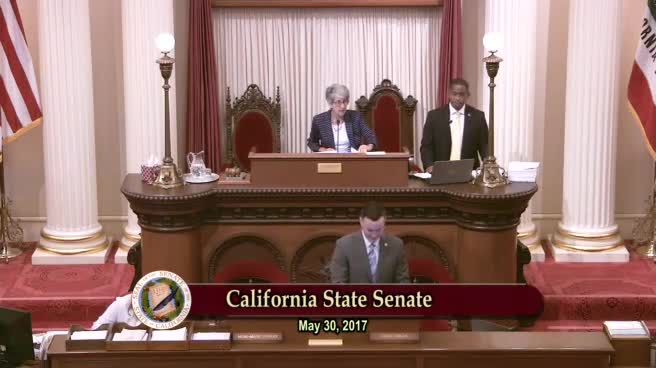 2MIN
Senate Floor
 48MIN
Senate Standing Committee on Appropriations
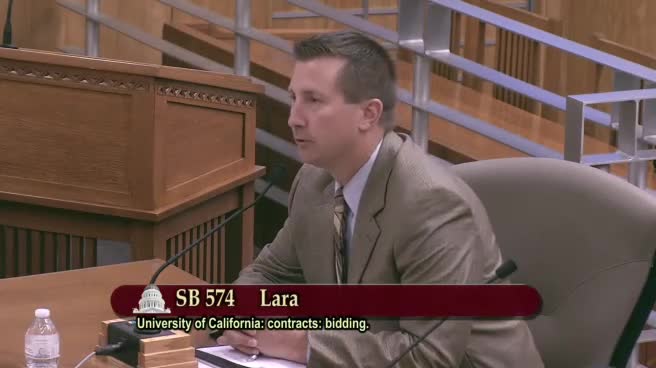 24SEC
Senate Standing Committee on Appropriations
 12MIN
Senate Standing Committee on Public Employment and Retirement
Bill Author

Bill Co-Author(s):