SB 240: County service areas: farmworker housing: County of Napa.
- Session Year: 2017-2018
- House: Senate
- Latest Version Date: 2017-07-17
The County Service Area Law authorizes the formation of county service areas to provide authorized services, including a county service area in the County of Napa for the sole purpose of acquiring, constructing, leasing, or maintaining farmworker housing. That law authorizes the board of supervisors of the County of Napa to levy an annual benefit assessment not to exceed $10 per planted vineyard acre, as provided, for the purposes of this county service area.
This bill would increase the limit on the amount of the annual benefit assessment that the board of supervisors may levy pursuant to this provision from $10 to $15 per planted vineyard acre.
This bill would make legislative findings and declarations as to the necessity of a special statute for the County of Napa.
The County Service Area Law authorizes the formation of county service areas to provide authorized services, including a county service area in the County of Napa for the sole purpose of acquiring, constructing, leasing, or maintaining farmworker housing. That law authorizes the board of supervisors of the County of Napa to levy an annual benefit assessment not to exceed $10 per planted vineyard acre, as provided, for the purposes of this county service area.
This bill would increase the limit on the amount of the annual benenfit assessment that the board of supervisors may levy pursuant to this provision from $10 to $15 per planted vineyard acre.
This bill would make legislative findings and declarations as to the necessity of a special statute for the County of Napa.
(a)In the County of Napa, a county service area may be formed for the sole purpose of acquiring, constructing, leasing, or maintaining, or any combination thereof, farmworker housing. Notwithstanding any other provision of this article, only a county service area formed under this section in the County of Napa may exercise this specific authority.
(b)The Board of Supervisors of the County of Napa may, following the procedures of Article 4.6 (commencing with Section 53750) of Chapter 4 of Part 1 of Division 2 of Title 5, levy an annual assessment not to exceed fifteen dollars ($15) per planted vineyard acre for the purposes of the county service area formed under this section. An annual assessment levied pursuant to this section may remain in effect for a period not exceeding five years. However, an annual assessment levied pursuant to this section may be reauthorized for additional five-year periods pursuant to Article 4.6.
(c)No assessment shall be imposed on any parcel that exceeds the reasonable cost of the proportional special benefit conferred on that parcel.
(d)The board may allocate the proceeds of the annual assessment, as it deems appropriate, for any or all of the following purposes:
(1)Acquiring farmworker housing.
(2)Building farmworker housing.
(3)Leasing farmworker housing.
(4)Providing maintenance or operations for farmworker housing owned or leased by the Napa Valley Housing Authority or another public agency whose principal purpose is to develop or facilitate the development of farmworker housing in the County of Napa.
(e)The board shall appoint an advisory committee that includes, but is not limited to, farmworkers and planted vineyard landowners or agents to advise and counsel the board on the allocation of the proceeds of the annual assessment.
(f)In ascertaining parcels to be included in this county service area, the board shall use data gathered by the Napa County Flood Control and Water Conservation District.
(g)Vineyard property owners who present proof to the board that they are providing housing for their own workers shall be exempt from the assessment. The board and the advisory committee shall audit the programs receiving the proceeds of the allocation every two years and make recommendations for changes.
SEC. 2.The Legislature finds and declares that a special statute is necessary and that a general statute cannot be made applicable within the meaning of Section 16 of Article IV of the California Constitution because of the the unique nature of the agricultural and winemaking industries in the County of Napa and the need to ensure adequate farmworker housing to support those industries.
(a)In the County of Napa, a county service area may be formed for the sole purpose of acquiring, constructing, leasing, or maintaining, or any combination thereof, farmworker housing. Notwithstanding any other provision of this article, only a county service area formed under this section in the County of Napa may exercise this specific authority.
(b)The Board of Supervisors of the County of Napa may, following the procedures of Article 4.6 (commencing with Section 53750) of Chapter 4 of Part 1 of Division 2 of Title 5, levy an annual assessment not to exceed ten fifteen dollars ($10) ($15) per planted vineyard acre for the purposes of the county service area formed under this section. An annual assessment levied pursuant to this section may remain in effect for a period not exceeding five years. However, an annual assessment levied pursuant to this section may be reauthorized for additional five-year periods pursuant to Article 4.6.
(c)No assessment shall be imposed on any parcel that exceeds the reasonable cost of the proportional special benefit conferred on that parcel.
(d)The board may allocate the proceeds of the annual assessment, as it deems appropriate, for any or all of the following purposes:
(1)Acquiring farmworker housing.
(2)Building farmworker housing.
(3)Leasing farmworker housing.
(4)Providing maintenance or operations for farmworker housing owned or leased by the Napa Valley Housing Authority or another public agency whose principal purpose is to develop or facilitate the development of farmworker housing in the County of Napa.
(e)The board shall appoint an advisory committee that includes, but is not limited to, farmworkers and planted vineyard land owners or agents to advise and counsel the board on the allocation of the proceeds of the annual assessment.
(f)In ascertaining parcels to be included in this county service area, the board shall use data gathered by the Napa County Flood Control and Water Conservation District.
(g)Vineyard property owners who present proof to the board that they are providing housing for their own workers shall be exempt from the assessment. The board and the advisory committee shall audit the programs receiving the proceeds of the allocation every two years and make recommendations for changes.
SEC. 2.The Legislature finds and declares that a special statute is necessary and that a general statute cannot be made applicable within the meaning of Section 16 of Article IV of the California Constitution because of the the unique nature of the agricultural and winemaking industries in the County of Napa and the need to ensure adequate farmworker housing to support those industries.
|
Date
|
Status
|
|---|---|
| Jul 17, 2017 | Chaptered by Secretary of State. Chapter 72, Statutes of 2017. |
| Jul 17, 2017 | Approved by the Governor. |
| Jul 5, 2017 | Enrolled and presented to the Governor at 12:30 p.m. |
| Jun 29, 2017 | In Senate. Ordered to engrossing and enrolling. |
| Jun 29, 2017 | Read third time. Passed. Ordered to the Senate. |
| Jun 15, 2017 | Read second time. Ordered to third reading. |
| Jun 14, 2017 | From committee: Do pass. (Ayes 8. Noes 0.) (June 14). |
| May 18, 2017 | Referred to Com. on L. GOV. |
| Apr 4, 2017 | In Assembly. Read first time. Held at Desk. |
| Apr 3, 2017 | Read third time. Passed. (Ayes 35. Noes 1. Page 582.) Ordered to the Assembly. |
| Mar 30, 2017 | Read second time. Ordered to third reading. |
| Mar 29, 2017 | From committee: Do pass. (Ayes 6. Noes 1. Page 537.) (March 29). |
| Mar 8, 2017 | Set for hearing March 29. |
| Feb 16, 2017 | Referred to Com. on GOV. & F. |
| Feb 7, 2017 | From printer. May be acted upon on or after March 9. |
| Feb 6, 2017 | Introduced. Read first time. To Com. on RLS. for assignment. To print. |
|
Date
|
Description
|
Location
|
Votes
|
|
|---|---|---|---|---|
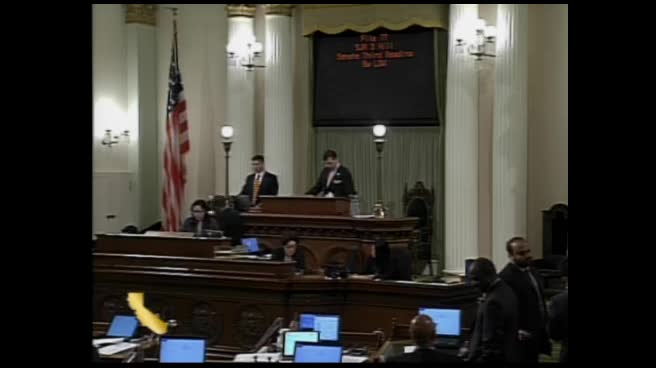
| Jun 29, 2017 | SB 240 Dodd Senate Third Reading By AGUIAR-CURRY | Assembly Floor |
Passed |
|
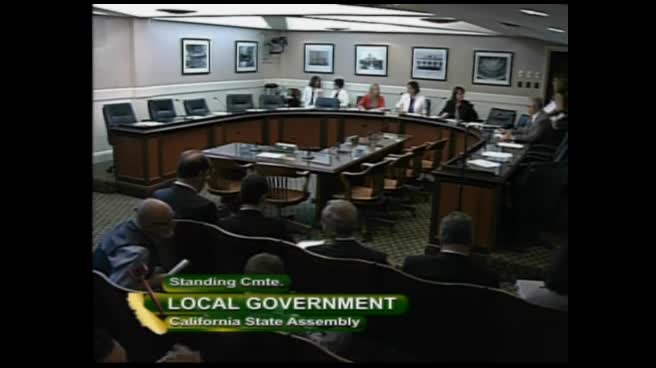
| Jun 14, 2017 | Do pass. | Assembly Standing Committee on Local Government |
Passed |
|
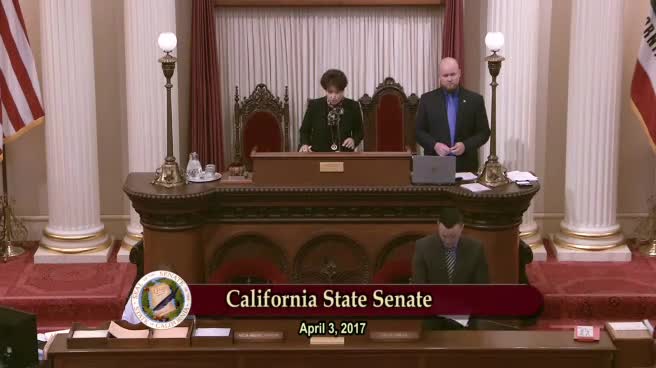
| Apr 3, 2017 | Senate 3rd Reading SB240 Dodd et al. | Senate Floor |
Passed |
|
| Mar 29, 2017 | Do pass | Senate Standing Committee on Governance and Finance |
Passed |
This list shows positions taken on this bill by organizations on the date displayed, which is linked to the original source.
Positions by individuals are not included.
|
Organization
|
Position
|
Date
|
|---|---|---|
| California Farm Bureau Federation | ** Support | Jun 13, 2017 |
| Family Winemakers Of California | ** Support | Jun 13, 2017 |
| Napa County Board of Supervisors | ** Support | Jun 13, 2017 |
| Napa County Farm Bureau | ** Support | Jun 13, 2017 |
| napa farmers guild | ** Support | Jun 13, 2017 |
| Napa Valley Grapegrowers | ** Support | Jun 13, 2017 |
| Napa Valley Transportation Authority | ** Support | Jun 13, 2017 |
| Napa Valley Vintners | ** Support | Mar 30, 2017 |
| napa valley vintners [sponsor] | ** Support | Jun 13, 2017 |
| Unknown. | ** Against | Mar 24, 2017 |
| Winegrowers of Napa County | ** Support | Jun 13, 2017 |
SENATE THIRD READING
STR Bill Id:
Author:(Dodd)
As Introduced Ver:
Majority vote
SENATE VOTE: 35-1
Committee | Votes | Ayes | Noes |
Local Government | 8-0 | Aguiar-Curry, Waldron, Bloom, Caballero, Gonzalez Fletcher, Grayson, Lackey, Ridley-Thomas |
SUMMARY: Increases the maximum annual assessment that may be levied on vineyards in Napa County to support the County's farmworker housing. Specifically, this bill:
- Increases, from $10 to $15 per planted vineyard acre, the amount that the Napa County Board of Supervisors (BOS) may levy, pursuant to Proposition 218 procedures, as an annual assessment for the purposes of the county service area (CSA) formed in Napa County for the sole purpose of acquiring, constructing, leasing, or maintaining farmworker housing.
- Finds and declares that a special statute is necessary and that a general statute cannot be made applicable within the meaning of the California Constitution, Article IV Section 16 because of the unique nature of the agricultural and winemaking industries in the County of Napa and the need to ensure adequate farmworker housing to support those industries.
FISCAL EFFECT: None
COMMENTS:
- Bill Summary. This bill increases, from $10 to $15 per planted vineyard acre, the amount that the Napa County BOS may levy, pursuant to Proposition 218 procedures, as an annual assessment for the purposes of the CSA formed for the sole purpose of acquiring, constructing, leasing, or maintaining farmworker housing in Napa County. This bill is sponsored by the Napa Valley Vintners.
- Proposition 218. Voters in 1996 approved Proposition 218, which limits local agencies' powers to impose taxes, levy assessments, and charge fees. The Legislature implemented Proposition 218 via SB 919 (Rainey), Chapter 38, Statutes of 1997, which specified procedures local agencies must follow when imposing property assessments. Local agencies must send notices to the affected property owners explaining the proposed assessments, including an assessment ballot. At a public hearing, local officials calculate the supporting and opposing ballots, based on the value of the proposed assessment. If a majority of the weighted ballots oppose or "protest" the assessment, proceedings stop.
- CSAs. CSAs are the most common type of special district in California, with roughly 900 CSAs in existence statewide. A county BOS always governs a CSA, which can provide any service that the county provides, or a higher level of service, to an unincorporated area. CSAs deliver additional, tailored county services to specific geographic areas. CSAs provide a wide range of services and facilities, including animal control, libraries, police protection, snow removal, weed abatement, and emergency medical services.
- Napa County's Farmworker Housing CSA. Napa County's economy is based largely on its more than $400 million agriculture industry, the value of which arises almost exclusively from its wine grape crops. This creates a massive demand for farmworkers in the county, and a related need for housing to support these workers.
AB 1550 (Wiggins), Chapter 340, Statutes of 2001, authorized Napa County to establish a CSA for the sole purpose of acquiring, constructing, leasing, or maintaining farmworker housing. The bill was necessary because CSA law otherwise stipulates that land devoted primarily to agricultural uses and being used for commercial production may be included in a CSA only if that land is contiguous to other land within the CSA. Napa County wished to form a CSA that would include all the vineyards in the county, which are not contiguous. AB 1550 was a unique arrangement for Napa County, and specifically stated that its provisions were limited exclusively to Napa County's CSA.
AB 1550 allowed the Napa County BOS to impose an annual assessment of up to $10 per planted vineyard acre to fund the CSA, following the procedures required under Proposition 218 and its implementing statutes. AB 1550 limited the original assessment to a five-year period, but authorized the BOS to seek an extension of the assessment every five years thereafter. Proposition 218 requirements must be followed every time the assessment is extended. AB 1550 placed additional requirements upon the BOS, including requirements to:
- Appoint an advisory committee that consists of farmworkers and planted vineyard land owners to advise and counsel the BOS on the allocation of the proceeds of the assessment;
- Use data gathered by the Napa County Flood Control and Water Conservation District to identify the parcels to be included within the boundaries of the CSA;
- Allow vineyard property owners that present proof to the BOS that they are providing housing for their own farmworkers to be exempt from paying the assessment; and,
- Audit and provide recommendations to the programs receiving funding every two years, in concert with the advisory committee.
The Napa County BOS adopted an ordinance in 2002 to create CSA No. 4 and, with the approval of the affected property owners, levied a $10 assessment per acre of planted vineyard. This assessment was renewed by the landowners in 2007 and 2012 and raises approximately $448,000 annually. Since 2012, the program has provided housing to more than 50,000 farmworkers every year.
- Napa County's Farmworker Centers. Napa County's farmworker centers are different from other farmworker centers in California. State-owned centers are family-style units that are open only 180 days each year during the growing season. In comparison, Napa County's centers are dorm-style operations that cater to single male residents year-round, as the agricultural workforce is needed year-round in the Napa region. Each of the three Napa farmworker centers houses 60 migrant and non-migrant workers in dorm-style accommodations of two renters per room.
The farmworker housing program is a partnership with the County, farmworkers, industry stakeholders, and the local community and is the only such farmworker housing program that exists solely through the County and local business community. All expenses for current operations are paid for through the partnership of approximately $210,000 annually from the Napa County Housing Authority, funding from the CSA assessment, and the farmworkers' daily rent. For $13 per day, workers have access to sleeping quarters, meals, laundry facilities, and a handful of other amenities to support their daily needs.
- Author's Statement. According to the author, "Funding collected by CSA No. 4 has maxed out at $448,000 annually while costs to maintain Napa County's three farmworker housing centers have increased. Napa's farmworker housing program is unique in that it combines funding from the County, farmworkers, industry stakeholders and the community. Despite this partnership the County reports that the rate of inflation and rising costs have created an annual deficit of $250,000-$300,000, leaving the farmworker centers without reserves for capital needs.
"The farmworker housing programs are no longer able to cut additional costs to sustain the program and the assessment cap must be increased to sustain this vital source of farmworker housing. As costs have outpaced incoming revenue, the program is no longer sustainable under the current $10 assessment. Allowing for the voters to increase the assessment amount to $15 per acre will empower the County to run the program without a decrease in service."
- Related Legislation. AB 317 (Aguiar-Curry) of the current legislative session establishes the Napa County Farmworker Centers Account within the Department of Housing and Community Development (HCD) to assist in the financing, maintenance, and operation of the Napa County Housing Authority's (NCHA) Farmworker Centers. AB 317 requires HCD to award up to $250,000 in matching funds to the NCHA upon demonstration that the NCHA is capable of continuing to effectively serve the housing needs of migrant or other farmworkers, and requires the NCHA to provide equal or greater funds from local sources. AB 317 is pending in the Senate Rules Committee.
- Arguments in Support. The Napa Valley Vintners, sponsor of this bill, write, "SB 240, combined with Assembly Member Aguiar-Curry's AB 317, will allow for Napa County's one-of-a-kind farmworker housing program to be sustainable well into the future. In our estimation, the State of California should be encouraging other agricultural regions to adopt a similar program to take care of their farmworkers, thereby allowing the State's limited resources to be stretched much farther. This should be a model for California."
- Arguments in Opposition. None on file.
Analysis Prepared by: Angela Mapp / L. GOV. / (916) 319-3958 FN: 0000966
Date of Hearing: June 14, 2017
ASSEMBLY COMMITTEE ON LOCAL GOVERNMENT
Cecilia Aguiar-Curry, Chair
SBPCA Bill Id:SB 240
Author:(Dodd) – As Introduced Ver:February 6, 2017
SENATE VOTE: 35-1
SUBJECT: County service areas: farmworker housing: County of Napa.
SUMMARY: Increases the maximum annual assessment that may be levied on vineyards in Napa County to support the County's farmworker housing. Specifically, this bill:
- Increases, from $10 to $15 per planted vineyard acre, the amount that the Napa County Board of Supervisors (BOS) may levy, pursuant to Proposition 218 procedures, as an annual assessment for the purposes of the county service area (CSA) formed in Napa County for the sole purpose of acquiring, constructing, leasing, or maintaining farmworker housing.
- Finds and declares that a special statute is necessary and that a general statute cannot be made applicable within the meaning of Section 16 of Article IV of the California Constitution because of the unique nature of the agricultural and winemaking industries in the County of Napa and the need to ensure adequate farmworker housing to support those industries.
EXISTING LAW:
- Limits, pursuant to Proposition 218, local agencies' powers to impose taxes, levy assessments, and charge fees, and requires local agencies to follow specified procedures when doing so.
- Provides for the formation, powers, services and facilities, financing, and revenues of CSAs as a means to finance and provide needed public facilities and services to the residents and property owners of unincorporated areas.
- Authorizes Napa County to form a CSA for the sole purpose of acquiring, constructing, leasing, or maintaining, or any combination thereof, farmworker housing, and provides that only a CSA formed in Napa County may exercise this specific authority.
- Allows the Napa County BOS to levy an annual assessment not to exceed $10 per planted vineyard acre for the purposes of Napa County's farmworker housing CSA. Napa County must follow Proposition 218 procedures in levying this assessment, as specified. This annual assessment may remain in effect for a period not exceeding five years, and may be reauthorized for additional five-year periods, pursuant to Proposition 218 procedures.
- Prohibits any assessment levied for Napa County's farmworker housing CSA from being imposed on any parcel that exceeds the reasonable cost of the proportional special benefit conferred on that parcel.
- Allows the Napa County BOS to allocate the proceeds of the annual assessment, as it deems appropriate, for any or all of the following purposes:
- Acquiring farmworker housing;
- Building farmworker housing;
- Leasing farmworker housing; or,
- Providing maintenance or operations for farmworker housing owned or leased by the Napa Valley Housing Authority or another public agency whose principal purpose is to develop or facilitate the development of farmworker housing in Napa County.
- Requires the Napa County BOS to appoint an advisory committee that includes, but is not limited to, farmworkers and planted vineyard land owners or agents to advise and counsel the BOS on the allocation of the proceeds of the annual assessment.
- Requires the Napa County BOS, in ascertaining parcels to be included in the CSA, to use data gathered by the Napa County Flood Control and Water Conservation District.
- Requires vineyard property owners who present proof to the BOS that they are providing housing for their own workers to be exempt from the assessment.
- Requires the Napa County BOS and the advisory committee to audit the programs receiving the proceeds of the allocation every two years and make recommendations for changes.
FISCAL EFFECT: None
COMMENTS:
- Bill Summary. This bill increases, from $10 to $15 per planted vineyard acre, the amount that the Napa County BOS may levy, pursuant to Proposition 218 procedures, as an annual assessment for the purposes of the CSA formed for the sole purpose of acquiring, constructing, leasing, or maintaining farmworker housing in Napa County. This bill is sponsored by the Napa Valley Vintners.
- Proposition 218. Voters in 1996 approved Proposition 218, which limits local agencies' powers to impose taxes, levy assessments, and charge fees. The Legislature implemented Proposition 218 via SB 919 (Rainey), Chapter 38, Statutes of 1997, which specified procedures local agencies must follow when imposing property assessments. Local agencies must send notices to the affected property owners explaining the proposed assessments, including an assessment ballot. At a public hearing, local officials calculate the supporting and opposing ballots, based on the value of the proposed assessment. If a majority of the weighted ballots oppose or "protest" the assessment, proceedings stop.
- CSAs. CSAs are the most common type of special district in California, with roughly 900 CSAs in existence statewide. A county BOS always governs a CSA, which can provide any service that the county provides, or a higher level of service, to an unincorporated area. CSAs deliver additional, tailored county services to specific geographic areas. CSAs provide a wide range of services and facilities, including animal control, libraries, police protection, snow removal, weed abatement, and emergency medical services.
- Napa County's Farmworker Housing CSA. Napa County's economy is based largely on its more than $400 million agriculture industry, the value of which arises almost exclusively from its wine grape crops. This creates a massive demand for farmworkers in the county, and a related need for housing to support these workers.
AB 1550 (Wiggins), Chapter 340, Statutes of 2001, authorized Napa County to establish a CSA for the sole purpose of acquiring, constructing, leasing, or maintaining farmworker housing. The bill was necessary because CSA law otherwise stipulates that land devoted primarily to agricultural uses and being used for commercial production may be included in a CSA only if that land is contiguous to other land within the CSA. Napa County wished to form a CSA that would include all the vineyards in the county, which are not contiguous. AB 1550 was a unique arrangement for Napa County, and specifically stated that its provisions were limited exclusively to Napa County's CSA.
AB 1550 allowed the Napa County BOS to impose an annual assessment of up to $10 per planted vineyard acre to fund the CSA, following the procedures required under Proposition 218 and its implementing statutes. AB 1550 limited the original assessment to a five-year period, but authorized the BOS to seek an extension of the assessment every five years thereafter. Proposition 218 requirements must be followed every time the assessment is extended. AB 1550 placed additional requirements upon the BOS, including requirements to:
- Appoint an advisory committee that consists of farmworkers and planted vineyard land owners to advise and counsel the BOS on the allocation of the proceeds of the assessment;
- Use data gathered by the Napa County Flood Control and Water Conservation District to identify the parcels to be included within the boundaries of the CSA;
- Allow vineyard property owners that present proof to the BOS that they are providing housing for their own farmworkers to be exempt from paying the assessment; and,
- Audit and provide recommendations to the programs receiving funding every two years, in concert with the advisory committee.
The Napa County BOS adopted an ordinance in 2002 to create CSA No. 4 and, with the approval of the affected property owners, levied a $10 assessment per acre of planted vineyard. This assessment was renewed by the landowners in 2007 and 2012 and raises approximately $448,000 annually. Since 2012, the program has provided housing to more than 50,000 farmworkers every year.
- Napa County's Farmworker Centers. Napa County's farmworker centers are different from other farmworker centers in California. State-owned centers are family-style units that are open only 180 days each year during the growing season. In comparison, Napa County's centers are dorm-style operations that cater to single male residents year-round, as the agricultural workforce is needed year-round in the Napa region. Each of the three Napa farmworker centers houses 60 migrant and non-migrant workers in dorm-style accommodations of two renters per room.
The farmworker housing program is a partnership with the County, farmworkers, industry stakeholders, and the local community and is the only such farmworker housing program that exists solely through the County and local business community. All expenses for current operations are paid for through the partnership of approximately $210,000 annually from the Napa County Housing Authority, funding from the CSA assessment, and the farmworkers' daily rent. For $13 per day, workers receive the following:
- An overnight bed;
- Three meals a day (except Sunday);
- A common recreation area with TV, pool tables, and a library;
- Access to onsite laundry facilities; and,
- Access to pay phones and computers.
The centers also provide opportunities for farmworkers to participate in community gardens, health screenings, and literacy programs.
- Author's Statement. According to the author, "Funding collected by CSA No. 4 has maxed out at $448,000 annually while costs to maintain Napa County’s three farmworker housing centers have increased. Napa’s farmworker housing program is unique in that it combines funding from the County, farmworkers, industry stakeholders and the community. Despite this partnership the County reports that the rate of inflation and rising costs have created an annual deficit of $250,000-$300,000, leaving the farmworker centers without reserves for capital needs.
"The farmworker housing programs are no longer able to cut additional costs to sustain the program and the assessment cap must be increased to sustain this vital source of farmworker housing. As costs have outpaced incoming revenue, the program is no longer sustainable under the current $10 assessment. Allowing for the voters to increase the assessment amount to $15 per acre will empower the County to run the program without a decrease in service."
- Related Legislation. AB 317 (Aguiar-Curry) establishes the Napa County Farmworker Centers Account within the Department of Housing and Community Development (HCD) to assist in the financing, maintenance, and operation of the Napa County Housing Authority's (NCHA) Farmworker Centers. AB 317 requires HCD to award up to $250,000 in matching funds to the NCHA upon demonstration that the NCHA is capable of continuing to effectively serve the housing needs of migrant or other farmworkers, and requires the NCHA to provide equal or greater funds from local sources. AB 317 is pending in the Senate Rules Committee.
- Arguments in Support. The Napa Valley Vintners, sponsor of this bill, write, "SB 240, combined with Assembly Member Aguiar-Curry's AB 317, will allow for Napa County's one-of-a-kind farmworker housing program to be sustainable well into the future. In our estimation, the State of California should be encouraging other agricultural regions to adopt a similar program to take care of their farmworkers, thereby allowing the State's limited resources to be stretched much farther. This should be a model for California."
- Arguments in Opposition. None on file.
REGISTERED SUPPORT / OPPOSITION:
Support
Napa Valley Vintners [SPONSOR]
California Farm Bureau Federation
Family Winemakers of California
Napa County Board of Supervisors
Napa County Farm Bureau
Napa Farmers Guild
Napa Valley Grapegrowers
Napa Valley Transportation Authority
Winegrowers of Napa County
Opposition
None on file
Analysis Prepared by: Angela Mapp / L. GOV. / (916) 319-3958
Office of Senate Floor Analyses (916) 651-1520 Fax: (916) 327-4478 | SB |
THIRD READING
Bill No: SB 240
:
SENATE GOVERNANCE & FIN. COMMITTEE: 6-1, 3/29/17
AYES: McGuire, Beall, Hernandez, Hertzberg, Lara, Moorlach
NOES: Nguyen
DIGEST: This bill increases the limit on the amount that can be levied for an annual benefit assessment from $10 to $15 per planted vineyard acre in Napa County.
Existing law:
- Authorizes the Napa County Board of Supervisors (BOS) to levy a $10 assessment per acre of planted vineyard for the purpose of acquiring, constructing, leasing, or maintaining farmer worker housing.
- Requires the assessment to be approved every five years by the affected landowners.
- Requires the BOS to appoint an advisory committee that consists of farmworkers and planted vineyard land owners to advise and counsel the BOS on the allocation of the proceeds of the assessment.
- Requires that every two years, in concert with the advisory committee, audit and provide recommendations to the programs receiving funding.
This bill increases the annual assessment limit from $10 to $15 per acre of planted vineyard that the BOS can levy for the purposes of county service area (CSA) No. 4 to acquire, build, maintain, or lease farmworker housing.
Background
CSAs are governed by the county board of supervisors and can provide any type service that the county government provides to an unincorporated area. A CSA delivers a higher level of service to a specified area and can pay for these enhanced services by levying additional taxes, assessment, and fees. Generally, counties form CSAs, but the Legislature can when needed.
In 2001, the Legislature enacted AB 1550 (Wiggins, Chapter 340, Statutes of 2001), allowing the BOS to form a CSA to raise funding for the purpose of acquiring, constructing, leasing, or maintaining farmworker housing. Subsequently, the BOS adopted an ordinance in 2002 to create CSA No. 4, and, with the approval of the affected property owners, levied a $10 assessment per acre of planted vineyard.
AB 1550 limited the original assessment levied by CSA No. 4 to a five-year period but authorized the BOS to seek an extension of the assessment every five years thereafter. AB 1550 placed additional requirements upon the BOS, including to:
- Appoint an advisory committee that consists of farmworkers and planted vineyard land owners to advise and counsel the BOS on the allocation of the proceeds of the assessment.
- Use data gathered by the Napa County Flood Control and Water Conservation District to ascertain the parcels to be included within the boundaries of the CSA.
- Allow vineyard property owners that present proof to the BOS that they are providing housing for their own farmworkers to be exempt from paying the assessment.
- Every two years, in concert with the advisory committee, audit and provide recommendations to the programs receiving funding.
Approved by voters in 1996, Proposition 218 limits local officials' powers to impose taxes, levy benefit assessments, and charge fees. The Legislature translated these new constitutional limits on benefit assessments into statutory procedures for notice, hearing, and protests (SB 919, Rainey, Chapter 38, Statutes of 1997). Proposition 218 requirements must be followed every time this assessment is extended. Local officials must send notices to the affected property owners explaining the proposed assessments and include an assessment ballot. At a public hearing, local officials calculate the supporting and opposing ballots, based on the value of the proposed assessment. If a majority of the weighted ballots oppose the assessment, proceedings stop.
The assessment adopted in 2002 was renewed by the landowners in 2007 and 2012 and raises approximately $448,000 annually. Since 2012, the farmworker housing program has provided housing to more than 50,000 farmworkers every year. For $13 per day, workers receive the following:
- An overnight bed.
- Three meals a day (except Sunday).
- A common recreation area with TV, pool tables, and a library.
- Access to onsite laundry facilities.
- Access to pay phones and computers.
According to the BOS, the farmworker housing program is a partnership with the County, farmworkers, industry stakeholders, and the local community and is the only such farmworker housing program that exists solely through the County and local business community. Unfortunately, as costs have outpaced incoming revenue, the program is no longer sustainable under the current $10 assessment. Allowing for the voters to increase the assessment amount to $15 per acre will empower the County to run the program without a decrease in service.
Comments
Purpose of the bill. Funding collected by CSA No. 4 has maxed out at $448,000 annually while costs to maintain Napa County’s three farmworker housing centers have increased. The author argues, “Napa’s farmworker housing program is unique in that it combines funding from the County, farmworkers, industry stakeholders and the community. Despite this partnership the County reports that the rate of inflation and rising costs have created an annual deficit of $250,000-$300,000 leaving, the farmworker centers without reserves for capital needs. The farmworker housing programs are no longer able to cut additional costs to sustain the program and the assessment cap must be increased to sustain this vital source of farmworker housing.” As costs have outpaced incoming revenue, the program is no longer sustainable under the current $10 assessment. Allowing for the voters to increase the assessment amount to $15 per acre will empower the County to run the program without a decrease in service.
Those who pay benefit. The economic principle behind benefit assessments is clear enough: the greater benefit that a property owner receives from a public works project or a public service, the more that property owner pays. The constitutional principle behind benefit assessments is also clear: the property owners who pay higher assessments have more political control over the assessments. Vineyard owners who benefit from public farmworker housing pay the assessments. Those who don't rely on farmworkers who live in public farmworker housing won't pay at all. Those who benefit the most, pay the most. In fact, extending the assessment for farmworker housing in Napa County goes beyond the constitutional standard of majority approval and requires approval of 2/3 of the weighted assessment ballots. The higher vote threshold ensures that a greater consensus is needed to levy the assessment.
FISCAL EFFECT: Appropriation: Fiscal Com.: Local:
California Farm Bureau Federation
Napa County Board of Supervisors
Napa County Farm Bureau
Napa Valley Grapegrowers
Napa Valley Vintners
Winegrowers of Napa County
OPPOSITION: (Verified 3/30/17)
None received
3/30/17 15:34:02
**** END ****
SENATE COMMITTEE ON GOVERNANCE AND FINANCE
Senator Mike McGuire, Chair
2017 - 2018 Regular
Bill No: | SB 240 | Hearing Date: | 3/29/17 |
Author: | Dodd | Tax Levy: | No |
Version: | 2/6/17 | Fiscal: | No |
Consultant: | MacDonald | ||
County service areas: farmworker housing: County of Napa
Increases the limit on the amount that can be levied for an annual benefit assessment from $10 to $15 per planted vineyard acre in Napa County.
Background
CSAs are governed by the county board of supervisors and can provide any type service that the county government provides to an unincorporated area. A CSA delivers a higher level of service to a specified area and can pay for these enhanced services by levying additional taxes, assessment, and fees. Generally, counties form CSAs, but the Legislature can when needed.
In 2001, the Legislature enacted AB 1550 (Wiggins, 2001), allowing the Napa County Board of Supervisors (BOS) to form a county service area (CSA) to raise funding for the purpose of acquiring, constructing, leasing, or maintaining farmworker housing. Subsequently, the BOS adopted an ordinance in 2002 to create CSA No. 4, and, with the approval of the affected property owners, levied a $10 assessment per acre of planted vineyard.
AB 1550 limited the original assessment levied by CSA No. 4 to a five-year period but authorized the BOS to seek an extension of the assessment every five years thereafter. AB 1550 placed additional requirements upon the BOS, including to:
- Appoint an advisory committee that consists of farmworkers and planted vineyard land owners to advise and counsel the BOS on the allocation of the proceeds of the assessment.
- Use data gathered by the Napa County Flood Control and Water Conservation District to ascertain the parcels to be included within the boundaries of the CSA.
- Allow vineyard property owners that present proof to the BOS that they are providing housing for their own farmworkers to be exempt from paying the assessment.
- Every two years, in concert with the advisory committee, audit and provide recommendations to the programs receiving funding.
Approved by voters in 1996, Proposition 218 limits local officials' powers to impose taxes, levy benefit assessments, and charge fees. The Legislature translated these new constitutional limits on benefit assessments into statutory procedures for notice, hearing, and protests (SB 919, Rainey, 1997). Proposition 218 requirements must be followed every time this assessment is extended. Local officials must send notices to the affected property owners explaining the proposed assessments and include an assessment ballot. At a public hearing, local officials calculate the supporting and opposing ballots, based on the value of the proposed assessment. If a majority of the weighted ballots oppose the assessment, proceedings stop.
The assessment adopted in 2002 was renewed by the landowners in 2007 and 2012 and raises approximately $448,000 annually. Since 2012, the program has provided housing to more than 50,000 farmworkers every year. For $13 per day, workers receive the following:
- An overnight bed.
- Three meals a day (except Sunday).
- A common recreation area with TV, pool tables, and a library.
- Access to onsite laundry facilities.
- Access to pay phones and computers.
According to the BOS, the farmworker housing program is a partnership with the County, farmworkers, industry stakeholders, and the local community and is the only such farmworker housing program that exists solely through the County and local business community. Unfortunately, as costs have outpaced incoming revenue, the program is no longer sustainable under the current $10 assessment. Allowing for the voters to increase the assessment amount to $15 per acre will empower the county to run the program without a decrease in service.
Proposed Law
Senate Bill 240 increases the annual assessment limit from $10 to $15 per acre of planted vineyard that the Napa County Board of Supervisors can levy for the purposes of CSA No. 4 to acquire, build, maintain, or lease farmworker housing.
State Revenue Impact
No estimate.
Comments
- Purpose of the bill. Funding collected by CSA No. 4 has maxed out at $448,000 annually while costs to maintain Napa County’s three farmworker housing centers have increased. The author argues, “Napa’s farmworker housing program is unique in that it combines funding from the County, farmworkers, industry stakeholders and the community. Despite this partnership the County reports that the rate of inflation and rising costs have created an annual deficit of $250,000-$300,000 leaving, the farmworker centers without reserves for capital needs. The farmworker housing programs are no longer able to cut additional costs to sustain the program and the assessment cap must be increased to sustain this vital source of farmworker housing.” As costs have outpaced incoming revenue, the program is no longer sustainable under the current $10 assessment. Allowing for the voters to increase the assessment amount to $15 per acre will empower the county to run the program without a decrease in service.
- Those who pay benefit. The economic principle behind benefit assessments is clear enough: the greater benefit that a property owner receives from a public works project or a public service, the more that property owner pays. The constitutional principle behind benefit assessments is also clear: the property owners who pay higher assessments have more political control over the assessments. Vineyard owners who benefit from public farmworker housing pay the assessments. Those who don't rely on farmworkers who live in public farmworker housing won't pay at all. Those who benefit the most, pay the most. In fact, extending the assessment for farmworker housing in Napa County goes beyond the constitutional standard of majority approval and requires approval of 2/3 of the weighted assessment ballots. The higher vote threshold ensures that a greater consensus is needed to levy the assessment.
Support and Opposition (3/23/17)
Support: California Farm Bureau Federation; Napa County Board of Supervisors; Napa County Farm Bureau; Napa Valley Grapegrowers; Napa Valley Vintners; Winegrowers of Napa County.
Opposition: Unknown.
-- END --
Discussed in Hearing
 2MIN
Assembly Floor
 6MIN
Assembly Standing Committee on Local Government
 3MIN
Senate Floor
Bill Author

Bill Co-Author(s):
