SB 263: Climate Assistance Centers.
- Session Year: 2017-2018
- House: Senate
- Latest Version Date: 2017-05-03
Existing law creates the Transformative Climate Communities Program, which is administered by the Strategic Growth Council. Existing law requires the council to award competitive grants to specified eligible entities for the development and implementation of neighborhood-level transformative climate community plans that include greenhouse gas emissions reduction projects that provide local economic, environmental, and health benefits to disadvantaged communities, as defined. Existing law requires the California Environmental Protection Agency to provide assistance in performing outreach to disadvantaged communities and assessing the environmental justice benefits of project awards.
This bill would require the council council, among other things, to establish no less than 10 regional climate assistance centers, as specified. specified, and award competitive grants to eligible entities through an application process, as specified. The bill would require the climate assistance centers to provide to target user groups technical assistance in applying for moneys, provide to target user groups assistance and training in project management and implementation, and work with local organizations to formulate policy ideas policies and programming that accomplish specified goals. The bill would authorize the council and climate assistance centers to solicit and accept nonstate money. The bill would require the council, among other things, to convene an annual statewide summit for climate assistance center staff and grant recipients, as specified. The bill would require the council and the State Air Resources Board to make a specified report to the Legislature.
Existing law creates the Transformative Climate Communities Program, which is administered by the Strategic Growth Council. Existing law requires the council to award competitive grants to specified eligible entities for the development and implementation of neighborhood-level transformative climate community plans that include greenhouse gas emissions reduction projects that provide local economic, environmental, and health benefits to disadvantaged communities, as defined. Existing law requires the California Environmental Protection Agency to provide assistance in performing outreach to disadvantaged communities and assessing the environmental justice benefits of project awards.
The California Global Warming Solutions Act of 2006 designates the State Air Resources Board as the state agency charged with monitoring and regulating sources of emissions of greenhouse gases. The act authorizes the state board to include the use of market-based compliance mechanisms. Existing law requires all moneys, except for fines and penalties, collected by the state board as part of a market-based compliance mechanism to be deposited in the Greenhouse Gas Reduction Fund and to be available upon appropriation.This bill would require the council to establish no less than 10 regional climate assistance centers, equitably distributed across urban and rural areas of the state, to build the capacity of local community organizations, municipalities, and small businesses from disadvantaged communities to participate in state climate investment programs, as specified. The bill would require the council to allocate available moneys to community-based and nonprofit organizations to engage with climate assistance centers and conduct outreach in disadvantaged communities, as specified. The bill would authorize moneys from the Greenhouse Gas Reduction Fund to be available, upon appropriation, for allocation by the council for the purposes of the climate assistance centers. The bill would require the council to establish a state interagency working group, coordinated by the council and including specified state agency staff, to develop integrated outreach information on state climate investment programs and to coordinate outreach activities with the climate assistance centers. to provide to target user groups technical assistance in applying for moneys, provide to target user groups assistance and training in project management and implementation, and work with local organizations to formulate policy ideas that accomplish specified goals. The bill would authorize the council and climate assistance centers to solicit and accept nonstate money. The bill would require the council, among other things, to convene an annual statewide summit for climate assistance center staff and grant recipients, as specified. The bill would require the council and the state board State Air Resources Board to make a specified report to the Legislature.
Existing law creates the Transformative Climate Communities Program, which is administered by the Strategic Growth Council. Existing law requires the council to award competitive grants to specified eligible entities for the development and implementation of neighborhood-level transformative climate community plans that include greenhouse gas emissions reduction projects that provide local economic, environmental, and health benefits to disadvantaged communities, as defined. Existing law requires the California Environmental Protection Agency to provide assistance in performing outreach to disadvantaged communities and assessing the environmental justice benefits of project awards.
The California Global Warming Solutions Act of 2006 designates the State Air Resources Board as the state agency charged with monitoring and regulating sources of emissions of greenhouse gases. The act authorizes the state board to include the use of market-based compliance mechanisms. Existing law requires all moneys, except for fines and penalties, collected by the state board as part of a market-based compliance mechanism to be deposited in the Greenhouse Gas Reduction Fund and to be available upon appropriation.
This bill would require the council to establish no less than 10 regional climate assistance centers, equitably distributed across urban and rural areas of the state, to build the capacity of local community organizations, municipalities, and small businesses from disadvantaged communities to participate in state climate investment programs, as specified. The bill would require the council to allocate available moneys to community-based and nonprofit organizations to engage with climate assistance centers and conduct outreach in disadvantaged communities, as specified. The bill would authorize moneys from the Greenhouse Gas Reduction Fund to be available, upon appropriation, for allocation by the council for the purposes of the climate assistance centers. The bill would require the council to establish a state interagency working group, coordinated by the council and including specified state agency staff, to develop integrated outreach information on state climate investment programs and to coordinate outreach activities with the climate assistance centers. The bill would require the council and the state board to make a specified report to the Legislature.
The Legislature finds and declares all of the following:
(a)The state has designated significant moneys from climate investment programs to enable disadvantaged communities to help meet the states greenhouse gas mitigation and climate adaptation goals while advancing social equity.
(b)Small businesses, community-based nonprofits, local governments, and other eligible entities in disadvantaged communities often lack the resources, capacity, and technical expertise to develop grant and financing options.
(c)For the state to meet its greenhouse gas emissions reduction goals while advancing social equity, every entity and community must have the same opportunity to compete for the funding that is available to meet those goals and should have access to technical assistance to develop funding proposals that will maximize carbon mitigation and climate adaptation benefits for each dollar requested.
(d)Some regions and jurisdictions have existing programs and organizations in place to build local leadership, capacity, and technical expertise for climate mitigation and adaptation, and any additional investments should support and leverage existing efforts to be effective and efficient.
SEC. 2.Part 5 (commencing with Section 75250) is added to Division 44 of the Public Resources Code, to read:5.Climate Assistance Centers75250.For purposes of this part, the following terms have the following meanings:
(a)Center means a climate assistance center established pursuant to this part.
(b)Council means the Strategic Growth Council.
(c)Disadvantaged community means a community identified pursuant to Section 39711 of the Health and Safety Code or Section 75005.
75252.(a)The council shall establish no less than 10 regional centers as follows:75252.(a)The council shall do all of the following:
(1)Establish no less than 10 regional centers as follows:
(1)(A)One center in northern California no later than January 1, 2020.
(2)(B)One center in southern California no later than January 1, 2020.
(3)(C)One center in the San Joaquin Valley no later than January 1, 2020.
(4)(D)The remaining centers shall be equitably distributed across urban and rural areas of the state no later than January 1, 2023.
(b)(1)The council shall develop a policy for siting the centers in subdivision (a) and hold at least one public meeting to solicit public input before adopting the policy.(2)(A)Develop a policy for siting the centers in paragraph (1).
(2)(B)The draft policy shall be posted on the councils Internet Web site at least 30 days prior to the meeting. site.
(3)The council shall respond to all public comments before adopting the policy.(c)Before adopting the site of a center pursuant to subdivision (a), the council shall hold at least one public hearing in the region in which the center will be located to solicit and consider public input on the proposed site. (d)Centers established pursuant to subdivision (a) shall do all of the following:(1)Provide technical assistance to target user groups in applying for moneys, including, but not limited to, any of the following:(A)Programs funded by moneys from the Greenhouse Gas Reduction Fund, created pursuant to Section 16428.8 of the Government Code.(B)Programs funded by moneys pursuant to the Active Transportation Program (Chapter 8 (commencing with Section 2380) of Division 3 of the Streets and Highways Code).(C)Programs funded pursuant to the California Farmland Conservancy Program Act (Division 10.2 (commencing with Section 10200)).(2)Provide assistance and training to target user groups in project management and implementation for the projects funded pursuant to paragraph (1).(3)Work with local organizations, including, but not limited to, community-based organizations, small businesses, and local governments, to formulate policy ideas that accomplish any of the following:(A)Increase community and private sector engagement in addressing climate change.(B)Increase equitable investment in disadvantaged communities.(C)Maximize the cobenefits of climate-related projects.(D)Expand workforce development training.(E)Identify strategies that prevent the displacement of persons and families of low or moderate income, as defined in Section 50093 of the Health and Safety Code, from their homes.(4)Seek scientific and technical support from federal, state, and local sources of expertise in accomplishing the goals of the center, as needed.(3)Hold, before adopting the site of a center pursuant to paragraph (1), at least one public hearing in the region in which the center will be located to solicit and consider public input on the proposed site.
(4)Conduct outreach and provide direct technical assistance to the centers and the public in order to identify relevant state funding programs, develop eligible activities, and prepare applications.
(5)Promote the effective alignment and streamlining of state climate investment programs for low-income customers and disadvantaged communities, including, but not limited to, energy, water, resilience, natural resources, housing, and low-emission transportation infrastructure programs.
(6)Identify potential matching funds from federal, state, and local agencies.
(7)(A)Award competitive grants to eligible entities, through an application process, to staff the regional centers and ensure compliance with this section and Section 75256.
(B)An eligible entity shall be a multistakeholder collaborative of community-based organizations, labor groups, local agencies, small businesses, and other stakeholders, as appropriate. An eligible entity also shall include, at a minimum, a combination of four or more of the following:
(i)A community-based organization.
(ii)A nonprofit organization.
(iii)A faith-based organization.
(iv)A coalition of nonprofit organizations.
(v)A community development finance institution.
(vi)A community development corporation.
(vii)A small business.
(viii)A local agency.
(ix)A local, statewide, or national technical assistance provider.
(e)(b)To support the goals of this part, the council and the centers may solicit and accept nonstate money, including, but not limited to, philanthropic public and private sector donations.
75256.The council shall do all of the following:(a)Conduct outreach and provide direct technical assistance to the centers and the public in order to identify relevant state funding programs, develop eligible activities, and prepare applications.(b)Promote the effective integration of state climate investment programs for low-income customers and disadvantaged communities, including, but not limited to, energy, water, resilience, housing, and low-emission transportation infrastructure programs.(c)Identify potential matching funds from federal, state, and local agencies.(d)Convene an annual statewide summit for center staff and grant recipients. The summit shall include a forum to present individual project details and programmatic changes desired by the centers and grant recipients. The first summit shall be held no later than December 31, 2021.75256.Centers established pursuant to Section 75252 shall do all of the following:
(a)Provide technical assistance to target user groups in applying for moneys, including, but not limited to, any of the following:
(1)Programs funded by moneys from the Greenhouse Gas Reduction Fund, created pursuant to Section 16428.8 of the Government Code.
(2)Programs funded by moneys pursuant to the Active Transportation Program (Chapter 8 (commencing with Section 2380) of Division 3 of the Streets and Highways Code).
(3)Programs funded pursuant to the California Farmland Conservancy Program Act (Division 10.2 (commencing with Section 10200)).
(b)Provide assistance and training to target user groups in project management and implementation for the projects funded pursuant to subdivision (a).
(c)Work with local organizations, including, but not limited to, community-based organizations, small businesses, and local governments, to formulate policies and programming that accomplish any of the following:
(1)Increase community and public and private sector partnerships and engagement in addressing climate change.
(2)Increase equitable investment in disadvantaged communities.
(3)Maximize the cobenefits of climate-related projects.
(4)Expand workforce development training.
(5)Identify strategies that prevent the displacement of persons and families of low or moderate income, as defined in Section 50093 of the Health and Safety Code, from their homes.
(6)Create and secure new funding from public and private sources.
(d)Seek scientific and technical support from federal, state, and local sources of expertise in accomplishing the goals of the center, as needed, including, but not limited to, associations of municipal and county governments.
75260.(a)The council and the State Air Resources Board shall collaborate to develop performance measures for activities pursuant to this part. On or before January 1, 2022, and annually thereafter, the council and the State Air Resources Board shall report to the Legislature on measures that include, but are not limited to, all of the following:
(1)Quantitative assessment of changes in annual participation from eligible entities in disadvantaged communities and the success rate of those applicants.
(2)Survey results from the regions for each center that include, but are not limited to, all of the following:
(A)The impacts and effectiveness of the centers.
(B)Changes to the centers and their services desired in each region.
(C)Any nonstate funding awarded to projects in each region that are also funded by the state.
(3)Quantitative assessment of any change in the efficacy of state climate investment program dollars in achieving state climate mitigation and adaptation goals in disadvantaged communities due to the centers. communities.
(b)A report to be submitted pursuant to this subdivision section shall be submitted in compliance with Section 9795 of the Government Code.
The Legislature finds and declares all of the following:
(a)The state has designated significant moneys from climate investment programs to enable disadvantaged communities to help meet the states greenhouse gas mitigation and climate adaptation goals while advancing social equity.
(b)Small businesses, community-based nonprofits, local governments, and other eligible entities in disadvantaged communities often lack the resources, capacity, and technical expertise to develop grant and financing options.
(c)For the state to meet its greenhouse gas emissions reduction goals while advancing social equity, every entity and community must have the same opportunity to compete for the funding that is available to meet those goals and should have access to technical assistance to develop funding proposals that will maximize carbon mitigation and climate adaptation benefits for each dollar requested.
(d)Some regions and jurisdictions have existing programs and organizations in place to build local leadership, capacity, and technical expertise for climate mitigation and adaptation, and any additional investments should support and leverage existing efforts to be effective and efficient.
SEC. 2.Part 5 (commencing with Section 75250) is added to Division 44 of the Public Resources Code, to read:5.Climate Assistance Centers75250.For purposes of this part, the following terms have the following meanings:
(a)Center means a climate assistance center established pursuant to this part.
(b)Council means the Strategic Growth Council.
(c)Disadvantaged community means a community identified pursuant to Section 39711 of the Health and Safety Code or Section 75005.
75252.(a)The council shall establish no less than 10 regional centers, equitably distributed across urban and rural areas of the state, to build the capacity of local community organizations, municipalities, and small businesses from disadvantaged communities to participate in state climate investment programs. When selecting regions for a center, the council shall do all of the following:(1)Develop and adopt regional site solicitation and evaluation guidelines. The guidelines shall include monitoring and reporting requirements. The guidelines may include a limitation on the dollar amount of the grant to be awarded for a center.(2)Conduct six public meetings to consider public comments before selecting regional sites.(3)Publish the draft solicitation and evaluation guidelines on the councils Internet Web site at least 30 days before the public meetings.(4)Conduct two meetings in separate locations in northern California, two meetings in separate locations in the central valley, and two meetings at separate locations in southern California.(b)A center shall be established locally through multistakeholder partnerships to provide and support technical assistance and capacity-building for local community organizations, municipalities, and small businesses from disadvantaged communities, including, but not limited to all of the following:(1)Working with community-based organizations to establish a regional leadership development network to identify, train, and support climate leaders from these communities. To avoid duplication of effort, the center shall provide support to existing programs that already meet the criteria of this paragraph.(2)Initiating and coordinating regional partnerships and collaboration to support coalition building, community engagement, private sector engagement, and policy opportunities around equitable investments, multibenefit solutions, workforce development, and antidisplacement strategies.(3)Providing funding to community-based and nonprofit organizations to provide technical assistance and planning resources to assist eligible applicants from these communities in project and proposal development, including assistance in using applied research and geospatial data, sustainable best practices, community engagement, and local hiring and job training strategies.(4)Engaging philanthropic and private sector partners to provide direct contributions and in-kind assistance to provide additional technical assistance to match state financial investments in disadvantaged communities through state climate investment programs.75254.(a)The council shall allocate available moneys to community-based and nonprofit organizations to engage with the centers and conduct outreach in disadvantaged communities. Whenever feasible, existing programs and partnerships shall be leveraged and funded to accomplish goals and activities of this part.(b)Moneys from the Greenhouse Gas Reduction Fund, created pursuant to Section 16428.8 of the Government Code, shall be available, upon appropriation by the Legislature, for allocation by the council pursuant to this part.75256.The council shall establish the position of Climate Outreach Coordinator covering each designated geographic region of state that has a center. The coordinator shall conduct outreach and provide direct technical assistance to target user groups for the centers in order to identify relevant state funding programs, develop eligible activities, and prepare applications.75258.(a)The council shall establish a state interagency working group, coordinated by the council and including Climate Outreach Coordinators and staff from the California Transportation Commission, the Department of Transportation, the Department of Food and Agriculture, the Natural Resources Agency, the California Environmental Protection Agency, and the Treasurer, to develop integrated outreach information on state climate investment programs and to coordinate outreach activities with the centers.(b)The state interagency working group shall promote the effective integration of state climate investment programs for low-income customers and disadvantaged communities, including, but not limited to, energy, water, resilience, housing, and low-emission transportation infrastructure programs, by accomplishing all of the following:(1)Identifying opportunities to align program eligibility requirements and reduce redundancies and administrative overhead.(2)Creating incentives and mechanisms to foster collaboration, standardization, streamlining, integration, and cofunding opportunities with related federal, state, and local agencies.(3)Convening an annual summit for center staff and users statewide to learn from one another and innovate new strategies for integrating sustainability and equity locally.75252.(a)The council shall establish no less than 10 regional centers as follows:
(1)One center in northern California no later than January 1, 2020.
(2)One center in southern California no later than January 1, 2020.
(3)One center in the San Joaquin Valley no later than January 1, 2020.
(4)The remaining centers shall be equitably distributed across urban and rural areas of the state no later than January 1, 2023.
(b)(1)The council shall develop a policy for siting the centers in subdivision (a) and hold at least one public meeting to solicit public input before adopting the policy.
(2)The draft policy shall be posted on the councils Internet Web site at least 30 days prior to the meeting.
(3)The council shall respond to all public comments before adopting the policy.
(c)Before adopting the site of a center pursuant to subdivision (a), the council shall hold at least one public hearing in the region in which the center will be located to solicit and consider public input on the proposed site.
(d)Centers established pursuant to subdivision (a) shall do all of the following:
(1)Provide technical assistance to target user groups in applying for moneys, including, but not limited to, any of the following:
(A)Programs funded by moneys from the Greenhouse Gas Reduction Fund, created pursuant to Section 16428.8 of the Government Code.
(B)Programs funded by moneys pursuant to the Active Transportation Program (Chapter 8 (commencing with Section 2380) of Division 3 of the Streets and Highways Code).
(C)Programs funded pursuant to the California Farmland Conservancy Program Act (Division 10.2 (commencing with Section 10200)).
(2)Provide assistance and training to target user groups in project management and implementation for the projects funded pursuant to paragraph (1).
(3)Work with local organizations, including, but not limited to, community-based organizations, small businesses, and local governments, to formulate policy ideas that accomplish any of the following:
(A)Increase community and private sector engagement in addressing climate change.
(B)Increase equitable investment in disadvantaged communities.
(C)Maximize the cobenefits of climate-related projects.
(D)Expand workforce development training.
(E)Identify strategies that prevent the displacement of persons and families of low or moderate income, as defined in Section 50093 of the Health and Safety Code, from their homes.
(4)Seek scientific and technical support from federal, state, and local sources of expertise in accomplishing the goals of the center, as needed.
(e)To support the goals of this part, the council and the centers may solicit and accept nonstate money, including, but not limited to, philanthropic donations.
75256.The council shall do all of the following:
(a)Conduct outreach and provide direct technical assistance to the centers and the public in order to identify relevant state funding programs, develop eligible activities, and prepare applications.
(b)Promote the effective integration of state climate investment programs for low-income customers and disadvantaged communities, including, but not limited to, energy, water, resilience, housing, and low-emission transportation infrastructure programs.
(c)Identify potential matching funds from federal, state, and local agencies.
(d)Convene an annual statewide summit for center staff and grant recipients. The summit shall include a forum to present individual project details and programmatic changes desired by the centers and grant recipients. The first summit shall be held no later than December 31, 2021.
75260.(a)The council and the State Air Resources Board shall collaborate to develop performance measures for activities pursuant to this part. On or before ____, January 1, 2022, and annually thereafter, the council and the State Air Resources Board shall report to the Legislature on measures that include, but are not limited to, all of the following:
(a)(1)Quantitative assessment of changes in annual participation from eligible entities in disadvantaged communities and the success rate of those applicants.
(b)Qualitative assessment of perceived accessibility within disadvantaged communities for relevant state programs.(c)Financial leverage created for state climate investment programs from funding sources outside of state programs.(2)Survey results from the regions for each center that include, but are not limited to, all of the following:
(A)The impacts and effectiveness of the centers.
(B)Changes to the centers and their services desired in each region.
(C)Any nonstate funding awarded to projects in each region that are also funded by the state.
(d)(3)Quantitative assessment of any change in the efficacy of state climate investment program dollars in achieving state climate mitigation and adaptation goals in disadvantaged communities. communities due to the centers.
(b)A report to be submitted pursuant to this subdivision shall be submitted in compliance with Section 9795 of the Government Code.
The Legislature finds and declares all of the following:
(a)The state has designated significant moneys from climate investment programs to enable disadvantaged communities to help meet the states greenhouse gas mitigation and climate adaptation goals while advancing social equity.
(b)Small businesses, community-based nonprofits, and other eligible entities in disadvantaged communities often lack the resources, capacity, and technical expertise to develop grant and financing options.
(c)For the state to meet its greenhouse gas emissions reduction goals while advancing social equity, every entity and community must have the same opportunity to compete for the funding that is available to meet those goals and should have access to technical assistance to develop funding proposals that will maximize carbon mitigation and climate adaptation benefits for each dollar requested.
SEC. 2.Part 5 (commencing with Section 75250) is added to Division 44 of the Public Resources Code, to read:5.Climate Assistance Centers75250.For purposes of this part, the following terms have the following meanings:
(a)Center means a climate assistance center established pursuant to this part.
(b)Council means the Strategic Growth Council.
(c)Disadvantaged community means a community identified pursuant to Section 39711 of the Health and Safety Code or Section 75005.
75252.(a)The council shall establish no less than 10 regional centers, equitably distributed across urban and rural areas of the state, to build the capacity of local community organizations, municipalities, and small businesses from disadvantaged communities to participate in state climate investment programs. When selecting regions for a center, the council shall do all of the following:
(1)Develop and adopt regional site solicitation and evaluation guidelines. The guidelines shall include monitoring and reporting requirements. The guidelines may include a limitation on the dollar amount of the grant to be awarded for a center.
(2)Conduct six public meetings to consider public comments before selecting regional sites.
(3)Publish the draft solicitation and evaluation guidelines on the councils Internet Web site at least 30 days before the public meetings.
(4)Conduct two meetings in separate locations in northern California, two meetings in separate locations in the central valley, and two meetings at separate locations in southern California.
(b)A center shall be established locally through multistakeholder partnerships to provide and support technical assistance and capacity-building for local community organizations, municipalities, and small businesses from disadvantaged communities, including, but not limited to all of the following:
(1)Working with community-based organizations to establish a regional leadership development network to identify, train, and support climate leaders from these communities. To avoid duplication of effort, the center shall provide support to existing programs that already meet the criteria of this paragraph.
(2)Initiating and coordinating regional partnerships and collaboration to support coalition building, community engagement, private sector engagement, and policy opportunities around equitable investments, multibenefit solutions, workforce development, and antidisplacement strategies.
(3)Providing funding to community-based and nonprofit organizations to provide technical assistance and planning resources to assist eligible applicants from these communities in project and proposal development, including assistance in using applied research and geospatial data, sustainable best practices, community engagement, and local hiring and job training strategies.
(4)Engaging philanthropic and private sector partners to provide direct contributions and in-kind assistance to provide additional technical assistance to match state financial investments in disadvantaged communities through state climate investment programs.
75254.(a)The council shall allocate available moneys to community-based and nonprofit organizations to engage with the centers and conduct outreach in disadvantaged communities. Whenever feasible, existing programs and partnerships shall be leveraged and funded to accomplish goals and activities of this part.
(b)Moneys from the Greenhouse Gas Reduction Fund, created pursuant to Section 16428.8 of the Government Code, shall be available, upon appropriation by the Legislature, for allocation by the council pursuant to this part.
75256.The council shall establish the position of Climate Outreach Coordinator covering each designated geographic region of state that has a center. The coordinator shall conduct outreach and provide direct technical assistance to target user groups for the centers in order to identify relevant state funding programs, develop eligible activities, and prepare applications.
75258.(a)The council shall establish a state interagency working group, coordinated by the council and including Climate Outreach Coordinators and staff from the California Transportation Commission, the Department of Transportation, the Department of Food and Agriculture, the Natural Resources Agency, the California Environmental Protection Agency, and the Treasurer, to develop integrated outreach information on state climate investment programs and to coordinate outreach activities with the centers.
(b)The state interagency working group shall promote the effective integration of state climate investment programs for low-income customers and disadvantaged communities, including, but not limited to, energy, water, resilience, housing, and low-emission transportation infrastructure programs, by accomplishing all of the following:
(1)Identifying opportunities to align program eligibility requirements and reduce redundancies and administrative overhead.
(2)Creating incentives and mechanisms to foster collaboration, standardization, streamlining, integration, and cofunding opportunities with related federal, state, and local agencies.
(3)Convening an annual summit for center staff and users statewide to learn from one another and innovate new strategies for integrating sustainability and equity locally.
75260.The council and the State Air Resources Board shall collaborate to develop performance measures for activities pursuant to this part. On or before ____, and annually thereafter, the council and the State Air Resources Board shall report to the Legislature on measures that include, but are not limited to, all of the following:
(a)Quantitative assessment of changes in annual participation from eligible entities in disadvantaged communities and the success rate of those applicants.
(b)Qualitative assessment of perceived accessibility within disadvantaged communities for relevant state programs.
(c)Financial leverage created for state climate investment programs from funding sources outside of state programs.
(d)Quantitative assessment of any change in the efficacy of state climate investment program dollars in achieving state climate mitigation and adaptation goals in disadvantaged communities.
|
Date
|
Status
|
|---|---|
| Feb 1, 2018 | Returned to Secretary of Senate pursuant to Joint Rule 56. |
| May 25, 2017 | May 25 hearing: Held in committee and under submission. |
| May 19, 2017 | Set for hearing May 25. |
| May 15, 2017 | May 15 hearing: Placed on APPR. suspense file. |
| May 5, 2017 | Set for hearing May 15. |
| May 3, 2017 | Read second time and amended. Re-referred to Com. on APPR. |
| May 2, 2017 | From committee: Do pass as amended and re-refer to Com. on APPR. (Ayes 7. Noes 2. Page 828.) (April 25). |
| Apr 7, 2017 | Set for hearing April 25. |
| Apr 5, 2017 | From committee: Do pass and re-refer to Com. on N.R. & W. (Ayes 5. Noes 2. Page 622.) (April 5). Re-referred to Com. on N.R. & W. |
| Mar 21, 2017 | From committee with author's amendments. Read second time and amended. Re-referred to Com. on EQ. |
| Mar 15, 2017 | Set for hearing April 5. |
| Mar 13, 2017 | March 29 hearing postponed by committee. |
| Mar 9, 2017 | Set for hearing March 29. |
| Feb 16, 2017 | Referred to Coms. on EQ. and N.R. & W. |
| Feb 9, 2017 | From printer. May be acted upon on or after March 11. |
| Feb 8, 2017 | Introduced. Read first time. To Com. on RLS. for assignment. To print. |
|
Date
|
Description
|
Location
|
Votes
|
|
|---|---|---|---|---|
| May 15, 2017 | Placed on suspense file | Senate Standing Committee on Appropriations |
Passed |
|
| Apr 25, 2017 | Do pass as amended, but first amend, and re-refer to the Committee on [Appropriations] | Senate Standing Committee on Natural Resources and Water |
Passed |
|
| Apr 5, 2017 | Do pass, but first be re-referred to the Committee on [Natural Resources and Water] | Senate Standing Committee on Environmental Quality |
Passed |
This list shows positions taken on this bill by organizations on the date displayed, which is linked to the original source.
Positions by individuals are not included.
|
Organization
|
Position
|
Date
|
|---|---|---|
| 350 Bay Area | * Support | Apr 25, 2017 |
| 350 San Diego | * Support | Apr 25, 2017 |
| American Lung Association in California | ** Support | Apr 19, 2017 |
| Amigos de los Rios | ** Support | Apr 19, 2017 |
| Arroyos & Foothills Conservancy | ** Support | Apr 19, 2017 |
| Asian Pacific Environmental Network | ** Support | Apr 19, 2017 |
| Audubon California | ** Support | Apr 19, 2017 |
| Bike SGV | ** Support | Apr 19, 2017 |
| CalBike | ** Support | Apr 19, 2017 |
| California Association Of Local Conservation Corps | ** Support | Apr 19, 2017 |
| California League Of Conservation Voters | ** Support | Apr 19, 2017 |
| Central Coast Energy Services | ** Support | Apr 19, 2017 |
| Central Valley Air Quality Coalition | ** Support | Apr 19, 2017 |
| Coalition For Clean Air | ** Support | Apr 19, 2017 |
| COFEM | ** Support | Apr 19, 2017 |
| Community Water Center | ** Support | Apr 19, 2017 |
| Defenders Of Wildlife | * Support | Apr 25, 2017 |
| East Yard Communities for Environmental Justice | ** Support | Apr 19, 2017 |
| Environmental Defense Fund | ** Support | Apr 19, 2017 |
| Fossil Free California | * Support | Apr 25, 2017 |
| Fresno Economic Opportunities Commission | ** Support | Apr 19, 2017 |
| Friends Committee On Legislation Of California | ** Support | Apr 19, 2017 |
| From Lot to Spot | ** Support | Apr 19, 2017 |
| Greenlining Institute | ** Support | Apr 19, 2017 |
| Grid Alternatives | ** Support | Apr 19, 2017 |
| LA County Bike Coalition | ** Support | Apr 19, 2017 |
| Leadership Counsel for Justice and Accountability | ** Support | Apr 19, 2017 |
| Local Government Commission | ** Support | Apr 19, 2017 |
| Los Angeles Neighborhood Initiative | ** Support | Apr 19, 2017 |
| Los Cerritos Wetlands Land Trust | ** Support | Apr 19, 2017 |
| Move LA | ** Support | Apr 19, 2017 |
| National Parks Conservation Association | ** Support | Apr 19, 2017 |
| Pacific Forest Trust | ** Support | Apr 19, 2017 |
| Pacoima Beautiful | ** Support | Apr 19, 2017 |
| Public Advocates | ** Support | Apr 19, 2017 |
| Safe Routes to School National Partnership | ** Support | Apr 19, 2017 |
| San Gabriel Mountains Forever | ** Support | Apr 19, 2017 |
| SCOPE | ** Support | Apr 19, 2017 |
| Sierra Business Council | ** Support | Apr 19, 2017 |
| Sierra Club California | * Support | Apr 25, 2017 |
| The Nature Conservancy | ** Support | Apr 19, 2017 |
| The Watershed Project | ** Support | Apr 19, 2017 |
| Transform | ** Support | Apr 19, 2017 |
| Trust for Public Land | * Support | May 15, 2017 |
| Valley Vision | ** Support | Apr 19, 2017 |
| Voices For Progress Education Fund | ** Support | Apr 19, 2017 |
| Watershed Conservation Authority | * Support | Apr 25, 2017 |
| Wholly H2O | ** Support | Apr 19, 2017 |
SENATE COMMITTEE ON APPROPRIATIONS
Senator Ricardo Lara, Chair
2017 - 2018 Regular Session
SB 263 (Leyva) - Climate Assistance Centers
Version: May 3, 2017 | Policy Vote: E.Q. 5 - 2, N.R. & W. 7 - 2 |
Urgency: No | Mandate: No |
Hearing Date: May 15, 2017 | Consultant: Narisha Bonakdar |
This bill meets the criteria for referral to the Suspense File.
Bill Summary:
SB 263 requires the Strategic Growth Council (SGC) to establish at least 10, equitably distributed regional assistance centers (centers) throughout California, to provide technical assistance to community organizations, municipalities, and small businesses from disadvantaged communities.
Fiscal Impact:
- Unknown, likely in the several millions of dollars annually (cost of implementation or other special fund), for expenses necessary to establish and maintain regional climate assistance centers. (See staff comments)
Background:
The California Global Warming Solutions Act of 2006 (referred to as AB 32) requires the California Air Resources Board (ARB) to determine the 1990 statewide greenhouse gas (GHG) emissions level, to approve a statewide GHG emissions limit equivalent to that level that will be achieved by 2020, and to adopt GHG emissions reductions measures by regulation. ARB is authorized to include the use of market-based mechanisms to comply with the regulations. Under this authority, the ARB initiated the cap-and-trade program. All monies, except for fines and penalties, collected pursuant to the cap-and-trade program are deposited in the Greenhouse Gas Reduction Fund (GGRF). Existing law requires that the GGRF only be used to facilitate the achievement of reductions of GHG emissions consistent with AB 32 (HSC §39710 et seq.).
Cap-and-Trade Auction Revenue. Since November 2012, ARB has conducted eight California-only and nine joint California-Québec cap-and-trade auctions. To date, $3.4 billion has been appropriated by the Legislature to 12 state agencies that have distributed $1.2 billion to projects that have been completed or are under way.
Disadvantaged Communities. SB 535 (de León, Chapter 830, Statutes of 2012) requires the Department of Finance, in the investment plan, to allocate at least 25% of available moneys in the GGRF to projects that provide benefits to disadvantaged communities, and at least 10% to projects located within disadvantaged communities.
To meet the SB 535 mandate, the Office of Environmental Health Hazard Assessment, under the California Environmental Protection Agency’s (CalEPA) guidance, developed a tool (termed CalEnviroScreen) to assess and rank census tracts across the state that are disproportionately affected by multiple types of pollution and areas with vulnerable populations. CalEPA has designated 25% of census tracts in California as disadvantaged communities for the purpose of investing cap-and-trade proceeds.
Budget allocations. SB 862 (Committee on Budget and Fiscal Review, Chapter 36, Statutes of 2014) established a long-term cap-and-trade expenditure plan by continuously appropriating portions of the funds for designated programs or purposes. The legislation appropriates 25% for the state’s high-speed rail project, 20% for affordable housing and sustainable communities grants, 10% to the Transit and Intercity Rail Capital Program, and 5% for low-carbon transit operations. The remaining 40% is available for annual appropriation by the Legislature.
The Governor’s 2017-18 proposed budget proposes the following $2.2 billion expenditure plan: (1) $900 million continuously appropriated for state transit assistance ($75 million), transit and intercity rail ($150 million), the Sustainable Communities Strategy ($300 million), and the state’s high-speed rail project ($375 million), and; (2) $1.3 billion in discretionary funding for a variety of projects. This includes $500 million for the Governor’s transportation package and $363 for the Air Resources Board’s Low Carbon Transportation Program, as well as $392 million for a variety of other greenhouse gas reducing programs.
Proposed Law:
This bill:
- Makes Findings and declarations.
- Defines terms for the purposes of the bill.
- Requires the SGC to establish no less than 10 regional centers. One in each northern California, southern California, and the San Joaquin Valley must be established no later than January 1, 2020; the remaining centers must be equitably distributed across urban and rural areas of the state no later than January 1, 2023.
- Requires the SGC to do all of the following:
- Develop a policy for siting the centers, and post the draft policy on its Internet Web site.
- Hold at least one public hearing in the region in which the center will be located before adopting the site.
- Conduct outreach and provide direct technical assistance to the centers and the public in order to identify relevant state funding programs, develop eligible activities, and prepare applications.
- Promote the effective alignment and streamlining of state climate investment programs for low-income customers and disadvantaged communities.
- Identify potential matching funds from federal, state, and local agencies.
- Award competitive grants to eligible entities to staff the regional centers and ensure compliance.
- Requires that an eligible entity be a multistakeholder collaborative of community-based organizations, labor groups, local agencies, small businesses, and other stakeholders, and requires it to include, at a minimum, a combination of four or more specified types of organizations.
- Authorizes the SGC and the centers to solicit and accept nonstate money.
- Specifies that the centers must provide technical assistance in applying for moneys, provide assistance and training in project management and implementation for the projects funded, work with local organizations to formulate policies and programming to meet specified program goals, and seek scientific and technical support from federal, state, and local sources.
- Requires the SGC and the ARB to develop performance measures for activities and, on or before January 1, 2022, and annually thereafter, to report to the Legislature on performance measure.
Related Legislation:
SB 398 (Leyva, 2015) would have established the Green Assistance Program at CalEPA to accomplish many of the same goals as this will, including providing technical support to small businesses, nonprofits, and disadvantaged communities for the purpose of applying for GGRF moneys. SB 398 died in the Assembly Appropriations Committee.
AB 2293 (Garcia, 2016) would have would have established the Green Assistance Program at CalEPA to provide technical support to small businesses and nonprofits for the purpose of applying for GGRF moneys. AB 2293 died in the Assembly Appropriations Committee.
AB 1179 (Rendon) would have required ARB to prepare and post on its Internet Web site a report on the funded projects that provide benefits to, or are located within, disadvantaged communities. AB 1179 died in the Assembly Appropriations Committee.
Staff Comments:
This bill intends to create regionally-focused, and run, centers that aid rural and disadvantaged communities in the one-time and ongoing technical assistance necessary to apply for and effectively implement GGRF funded programs. The author contends that, without these centers, certain localities are unable to participate in GGRF programs.
While consistent with the state’s goal to expend a significant portion of GGRF funds in disadvantaged communities, this bill creates a significant expense, which will depend upon, among other things, the number of centers, staff needed per center, space that must be leased, and existing expertise and infrastructure that may be leveraged. The bill mandates a minimum of 10 centers; however, it is unclear whether this many will be necessary or sustainable. The author and the committee may wish to consider amending the bill to require the SGC to determine the number of centers necessary to ensure that the bill’s intent is achieved in the most cost-efficient manner.
-- END --
SENATE COMMITTEE ON NATURAL RESOURCES AND WATER
Senator Robert Hertzberg, Chair
2017 - 2018 Regular
Bill No: SB 263 Hearing Date: April 25, 2017
Author: | |||
Version: |
| ||
Urgency: | Fiscal: | ||
Consultant: | |||
Subject: Climate Assistance Centers
BACKGROUND AND EXISTING LAW
Existing law:
- Establishes the Strategic Growth Council (SGC) as a multi-agency council with wide-ranging responsibilities to, among other things, coordinate policy and investments that respond to climate change. The relevant statute is Public Resources Code section 75121.
- Assigns to the SGC the administration of the Transformative Climate Communities Program which is funded with revenues generated by AB 32, the California Global Warming Solutions Act of 2006.
- Requires the SGC to award competitive grants to specified eligible entities for the development and implementation of neighborhood-level transformative climate community plans that include greenhouse gas emissions reduction projects that provide local economic, environmental, and health benefits to disadvantaged communities, as defined.
- Requires the California Environmental Protection Agency to provide assistance in performing outreach to disadvantaged communities and assessing the environmental justice benefits of project awards.
PROPOSED LAW
- Makes findings and declarations about the need for, and current lack of, help for small businesses, community-based nonprofits, and other eligible entities in disadvantaged communities to gain access to Greenhouse Gas Reduction Fund (GGRF) moneys.
- Requires the SGC to establish at least ten, equitably distributed regional assistance centers throughout California. A northern, central, and southern center would be established by January 1, 2020. The remaining seven would be established by January 1, 2023 based on a policy developed by the SGC. At least one public meeting would be held to solicit comments before adopting the siting policy. The policy would also be posted for at least 30 days prior to adoption, and SGC is required to respond to all public comments.
- Requires the regional centers to provide technical assistance so that community organizations, municipalities, and small businesses from disadvantaged communities increase their participation in programs funded with GGRF and other moneys.
- Requires regional centers to provide assistance and training in implementing the projects for which it provides technical assistance in the application process.
- Requires, by the end of 2021, that the SGC host an annual summit for the regional centers.
- Requires the Air Resources Board and the SGC to provide annual reports to the Legislature beginning January 1, 2022, on the effectiveness of the regional centers in terms of increasing participation of eligible entities from disadvantaged communities in applying for and receiving grants, surveys of each region served by a center including any recommended changes to how they operate that are made by the public.
ARGUMENTS IN SUPPORT
According to the author, many small disadvantaged communities suffer not only from poverty, but also from pollution including elevated levels of asthma, cancer, and other diseases. Despite the prioritization of these areas for investments from the state’s cap-and-trade program and other ongoing funding sources, many of these communities lack the technical expertise, infrastructure, and necessary experience to compete successfully for funding. Currently, the author notes that there is no single place for small communities to turn for assistance in accessing funds for mitigating the effects of poor air quality or in reducing greenhouse gases on a localized basis.
The purpose of this bill is to build locally-generated capacity in five areas: leadership development, partnership development, project development, application development, and resource development.
A coalition of environmental and environmental justice organizations is also in support and states that the bill is necessary to ensure that underserved areas in California, whether large, small, urban, or rural must have an equal opportunity and access to tools to lead on climate actions at the local level.
ARGUMENTS IN OPPOSITION
None received.
COMMENTS
- In discussions with the author that focused mainly on the substantive provisions of the bill within the jurisdiction of this committee, (but with one eye on Appropriations as mentioned in Comment 2), the following amendments will be adopted by the author:
- Delete the public meeting requirement before adopting a siting policy (but retain the public hearing requirement in each region prior to siting a center),
- Delete the provision regarding an annual statewide summit, delete the provision regarding the Air Board’s role in developing performance measures.
- In addition, the author will adopt technical amendments in the findings to underscore the goals of the bill.
- In Section 75252 the bill will be amended to add references to public sector partnerships, and expanded leadership development and workforce training opportunities, as well as adding provisions regarding the ability to secure new funds from public and private sources and add a consultative role for associations of municipal and county governments to better inform the council of what works best with local governments.
- In 75256, to ensure that the regional centers better reflect a diversity of local input, the bill will be amended as follows:
The Council shall award competitive grants to eligible entities through an application process to establish regional centers and ensure compliance with section 75252. To be eligible, an entity shall be a multi-stakeholder collaborative of community-based organizations, labor groups, local agencies, small businesses, and other stakeholders, as appropriate. An eligible entity shall include, at a minimum, a combination of four or more of the following:
- A community-based organization.
- A nonprofit organization.
- A faith-based organization.
- A coalition of nonprofit organizations.
- A community development finance institution.
- A community development corporation.
- A small business.
- A local agency.
- A local, statewide, or national technical assistance provider.
- In sections 75256 and 75260 there are clarifying amendments that add a provision for the council to focus on alignment and streamlining of all state competitive grant programs and to add a provision that includes natural resources in the list of programs that will be included. In the latter section, a reporting requirement is added.
- The author is undoubtedly aware that several similar bills have been unsuccessful in recent years, largely because of cost issues.
SB 398 (Leyva, 2015) would have established the Green Assistance Program at CalEPA to accomplish many of the same goals as this will, including providing technical support to small businesses, nonprofits, and disadvantaged communities for the purpose of applying for GGRF moneys. SB 398 died in the Assembly Appropriations Committee.
AB 2293 (Garcia, 2016) would have established the Green Assistance Program at CalEPA to provide technical support to small businesses and nonprofits for the purpose of applying for GGRF moneys. AB 2293 died in the Assembly Appropriations Committee.
AB 156 (Perea, 2015) would have required the GGRF Investment Plan to allocate technical assistance funds to the ARB for the purposes of establishing a technical assistance program for eligible applicants assisting disadvantaged communities and other communities as specified. AB 156 was subsequently amended in the Senate Rules Committee to deal with ammunition and ultimately died on the Senate Inactive File.
AB 1179 (Rendon) would have required ARB to prepare and post on its Internet Web site a report on the funded projects that provide benefits to, or are located within, disadvantaged communities. AB 1179 died in the Assembly Appropriations Committee.
SUGGESTED AMENDMENTS
AMENDMENT 1
In Section 75252 (b) (1), delete “and hold at least one public meeting to solicit public input before adopting the policy” and in (b)(3) delete entirety.
AMENDMENT 2
Several amendments related to 75252:
In 75252 (d) (3), add “policies and programming” after “formulate.”
In 75252 (d)(3) (A) add “public” before and, and add “partnerships and” before engagement.
In 75252(d)(3), add a new (F): Create and secure new funding from public and private sources.”
In 75252 (d)(4) add, at end: “including but not limited to associations of municipal and county governments.”
In 75252 (e), add provision: To support the goals of this part, the council and the centers may solicit and accept nonstate money, including, but not limited to, philantrophic donations.”
AMENDMENT 3
Add amendment identified in comment (1)(e).
AMENDMENT 4
In 75256 (b), add “alignment and streamlining of all” before state, and add “natural resources” after “resilience.”
AMENDMENT 5
Delete 75256(d).
AMENDMENT 6
In 75260, require reporting on or before January 1, 2022, and annually thereafter and in (C) (3), delete “due to the centers.”
SUPPORT
350 Bay Area
American Lung Association in California
Amigos de los Rios
Arroyos & Foothills Conservancy
Asian Pacific Environmental Network
Audubon California
Bike SGV
CalBike
California Association of Local Conservation Corps
California League of Conservation Voters
Central Coast Energy Services
Central Valley Air Quality Coalition
Coalition for Clean Air
COFEM
Community Water Center
East Yard Communities for Environmental Justice
Environmental Defense Fund
Fossil Free California
Fresno Economic Opportunities Commission
Friends Committee on Legislation of California
From Lot to Spot
Greenlining Institute
GRID Alternatives
LA County Bike Coalition
LA Neighborhood Land Trust
Leadership Counsel for Justice and Accountability
Local Government Commission
Los Angeles Neighborhood Initiative
Los Cerritos Wetlands Land Trust
Move LA
National Parks Conservation Association
Pacific Forest Trust
Pacoima Beautiful
Public Advocates
Safe Routes to School National Partnership
San Gabriel Mountains Forever
Scope
Sierra Business Council
The Nature Conservancy
The Watershed Project
Transform
Trust for Public Land
Valley Vision
Voices for Progress Education Fund
Wholly H2O
OPPOSITION
None Received
-- END --
SENATE COMMITTEE ON ENVIRONMENTAL QUALITY
Senator Wieckowski, Chair
2017 - 2018 Regular
Bill No: SB 263
Author: | Leyva | ||
Version: | 3/21/2017 | Hearing Date: | 4/5/2017 |
Urgency: | No | Fiscal: | Yes |
Consultant: | David Ernest García | ||
SUBJECT: Climate Assistance Centers
ANALYSIS:
Existing law:
- Under the California Global Warming Solutions Act of 2006 (also known as AB 32), requires the California Air Resources Board (ARB) to determine the 1990 statewide greenhouse gas (GHG) emissions level and approve a statewide GHG emissions limit that is equivalent to that level, to be achieved by 2020, and to adopt GHG emissions reductions measures by regulation. ARB is authorized to include the use of market-based mechanisms to comply with these regulations. (Health and Safety Code (HSC) §38500 et seq.)
- Further requires ARB to ensure that statewide GHG emissions are reduced to at least 40% below the 1990 level by December 31, 2030. (HSC §38566)
- Establishes the Greenhouse Gas Reduction Fund (GGRF) in the State Treasury, requires all moneys, except for fines and penalties, collected pursuant to a market-based mechanism be deposited in the fund. (Government Code (GOV) §16428.8)
- Prohibits the state from approving allocations for a measure or program using GGRF moneys except after determining that the use of those moneys furthers the regulatory purposes of AB 32, and requires moneys from the GGRF be used to facilitate the achievement of reductions of GHG emissions in California. (HSC §39712)
- Requires the GGRF investment plan to allocate a minimum of 25% of the funds to projects that benefit disadvantaged communities and to allocate 10% of the funds to projects located within disadvantaged communities. (HSC §39713)
- Requires the ARB, in consultation with the California Environmental Protection Agency (CalEPA), to develop funding guidelines for administering agencies receiving allocations of GGRF funds that include a component for how agencies should maximize benefits to disadvantaged communities. (HSC §39715)
- Establishes the Strategic Growth Council (SGC). (PRC §75121)
- Defines a disadvantaged community as areas disproportionately affected by environmental pollution and other hazards that can lead to negative public health effects, exposure, or environmental degradation; and as areas with concentrations of people that are of low income, high unemployment, low levels of homeownership, high rent burden, sensitive populations, or low levels of educational attainment. (HSC §39711)
- Defines disadvantaged community as a community with a median household income less than 80% of the statewide average. (PRC §75005).
- Establishes the Active Transportation Program for the purpose of encouraging increased use of active modes of transportation, such as biking and walking. (Streets and Highways Code §2380 et seq.)
- Establishes the California Farmland Conservancy Program to accomplish, among other things, voluntary long-term private stewardship of agricultural lands by offering landowners financial incentives and improvements to enhance long-term sustainable agricultural uses. (PRC §10200 et seq.)
- Defines, with certain exceptions, “Persons and families of low or moderate income” as families whose income does not exceed 120 percent of area median income, adjusted for family size by the department in accordance with adjustment factors adopted and amended from time to time by the United States Department of Housing and Urban Development pursuant to Section 8 of the United States Housing Act of 1937. (HSC §50093)
- Establishes a process for reports from state and local agencies to be submitted to the Legislature. (GOV §9795)
This bill:
- Makes findings and declarations about the need for, and current lack of, help for small businesses, community-based nonprofits, and other eligible entities in disadvantaged communities to gain access to GGRF moneys.
- Requires the SGC to establish at least ten, equitably distributed regional assistance centers throughout California.
- Establishes a policy and process for siting regional assistance centers.
- Requires the regional centers to provide technical assistance so that community organizations, municipalities, and small businesses from disadvantaged communities increase their participation in programs funded with GGRF and other moneys.
- Requires regional centers to provide assistance and training in implementing the projects for which it provides technical assistance in the application process.
- Requires, by the end of 2021, that the SGC host an annual summit for the regional centers.
- Requires, with specifications, the ARB to provide annual reports to the Legislature beginning January 1, 2022, on the effectiveness of the regional centers.
Background
- Cap-and-Trade Auction Revenue.
Since November 2012, ARB has conducted eight California-only and nine joint California-Québec cap-and-trade auctions. To date, $3.4 billion has been appropriated by the Legislature to12 state agencies that have distributed $1.2 billion to projects that have been completed or are under way.
State law specifies that the auction revenues must be used to facilitate the achievement of GHG emissions reductions and outlines various categories of allowable expenditures. Statute further requires the Department of Finance, in consultation with ARB and any other relevant state agency, to develop a three-year investment plan for the auction proceeds, which are deposited in the GGRF. ARB is required to develop guidance for administering agencies on reporting and quantifying methodologies for programs and projects funded through the GGRF to ensure the investments further the regulatory purposes of AB 32. - Disadvantaged Communities.
SB 535 (de León, Chapter 830, Statutes of 2012) requires the Department of Finance, in the investment plan, to allocate at least 25% of available moneys in the GGRF to projects that provide benefits to disadvantaged communities, and at least 10% to projects located within disadvantaged communities.
To meet the SB 535 mandate, the Office of Environmental Health Hazard Assessment (OEHHA), under the California Environmental Protection Agency’s (CalEPA) guidance, developed a tool (termed CalEnviroScreen) to assess and rank census tracts across the state that are disproportionately affected by multiple types of pollution and areas with vulnerable populations. CalEPA has designated 25% of census tracts in California as disadvantaged communities for the purpose of investing cap-and-trade proceeds.
Additionally, SB 862 (Committee on Budget and Fiscal Review, Chapter 36, Statutes of 2014) requires ARB to develop guidelines on maximizing benefits for disadvantaged communities by agencies administering GGRF funds.
AB 1550 (Gomez, Chapter 369, Statutes of 2016) requires a minimum of 25% of GGRF moneys be spent on projects located within and benefiting disadvantaged communities and an additional minimum of 10% of GGRF moneys be spent on projects that benefit low-income households or are within, and benefit low-income communities. - Legal consideration of cap-and-trade auction revenues.
The 2012-13 Budget analysis of cap-and-trade auction revenue by the Legislative Analyst’s Office noted that, based on an opinion from the Office of Legislative Counsel, the auction revenues should be considered “mitigation” fee revenues, subject to the “Sinclair Nexus Test.” This test requires that a clear nexus must exist between an activity for which a mitigation fee is used and the adverse effects related to the activity on which that fee is levied. The LAO concluded, based on the opinion, that in order for their use to be valid as mitigation fees, revenues from the cap-and-trade auction must be used to mitigate GHG emissions or the harms caused by GHG emissions.
In 2012, the California Chamber of Commerce filed a lawsuit against the ARB claiming that cap-and-trade auction revenues constitute illegal tax revenue. In November 2013, the superior court ruling declined to hold the auction a tax, concluding that it is more akin to a regulatory fee. In February of 2014, the plaintiffs filed an appeal with the 3rd District Court of Appeal in Sacramento. Arguments were heard before the Appellate Court in January of 2017. A decision is expected in late April of 2017. - Budget allocations.
SB 862 (Committee on Budget and Fiscal Review, Chapter 36, Statutes of 2014) established a long-term cap-and-trade expenditure plan by continuously appropriating portions of the funds for designated programs or purposes. The legislation appropriates 25% for the state’s high-speed rail project, 20% for affordable housing and sustainable communities grants, 10% to the Transit and Intercity Rail Capital Program, and 5% for low-carbon transit operations. The remaining 40% is available for annual appropriation by the Legislature.
The Governor’s 2017-18 proposed budget proposes the following $2.2 billion expenditure plan: (1) $900 million continuously appropriated for state transit assistance ($75 million), transit and intercity rail ($150 million), the Sustainable Communities Strategy ($300 million), and the state’s high-speed rail project ($375 million), and; (2) $1.3 billion in discretionary funding for a variety of projects. This includes $500 million for the Governor’s transportation package and $363 for the Air Resources Board’s Low Carbon Transportation Program, as well as $392 million for a variety of other greenhouse gas reducing programs.
The Governor’s 2017-18 proposed budget makes the aforementioned funding contingent on the Legislature confirming ARB’s authority to administer cap-and-trade auctions beyond 2020 with a two-thirds vote.
Comments
- Purpose of Bill.
According to the author, “many of our state’s most polluted areas are small disadvantaged communities – areas with higher rates of poverty and elevated levels of asthma and cancer. California has prioritized climate investments for communities such as these; unfortunately, they often lack the technical expertise, infrastructure, partnerships, resources, and implementation experience to compete for funding. Currently, there is no single place for small communities and businesses to turn to for assistance in accessing funds for mitigating the impacts of poor air quality.
“SB 263 establishes the Community Climate Assistance Program to build capacity for local municipalities and support technical assistance and capacity building in five areas: leadership development, partnership development, project development, application development and resource development. Additionally, the program establishes Outreach Coordinators as liaisons to regional Climate Assistance Centers. In order for the state to meet its climate goals and commitment to disadvantaged communities, every community in California must have an equal opportunity and access to tools to meet our state greenhouse gas emission reduction goals. SB 263 is critical to meeting these goals.” - The Need for Assistance.
Each of the programs administering GGRF moneys have separate guidelines and grant proposal request documents on their respective websites. Eligibility criteria and application processes vary, as do recommendations about working with the administering agency to develop proposals or applications. For those small organizations and disadvantaged communities lacking experience in this area, assistance through regional centers may very well help them successfully apply for and utilize GGRF and other state moneys. - Other Options.
Some programs being funded with GGRF moneys already provide some level of technical assistance and outreach. Certainly that assistance and outreach could be expanded and improved.
As this bill moves forward, the author may wish to consider whether regional centers are the most cost- and time-effective way to get money into the communities this bill is attempting to address.
Related/Prior Legislation
SB 398 (Leyva, 2015) would have established the Green Assistance Program at CalEPA to accomplish many of the same goals as this will, including providing technical support to small businesses, nonprofits, and disadvantaged communities for the purpose of applying for GGRF moneys. SB 398 died in the Assembly Appropriations Committee.
AB 2293 (Garcia, 2016) would have would have established the Green Assistance Program at CalEPA to provide technical support to small businesses and nonprofits for the purpose of applying for GGRF moneys. AB 2293 died in the Assembly Appropriations Committee.
AB 156 (Perea, 2015) would have required the GGRF Investment Plan to allocate technical assistance funds to the ARB for the purposes of establishing a technical assistance program for eligible applicants assisting disadvantaged communities and other communities as specified. AB 156 was subsequently amended in the Senate Rules Committee to deal with ammunition and ultimately died on the Senate Inactive File.
AB 1179 (Rendon) would have required ARB to prepare and post on its Internet Web site a report on the funded projects that provide benefits to, or are located within, disadvantaged communities. AB 1179 died in the Assembly Appropriations Committee.
DOUBLE REFERRAL:
If this measure is approved by the Senate Environmental Quality Committee, the do pass motion must include the action to re-refer the bill to the Senate Natural Resources and Water Committee.
SOURCE:
Trust for Public Land
SUPPORT:
350 Bay Area
American Lung Association in California
Amigos de los Rios
Arroyos & Foothills Conservancy
Asian Pacific Environmental Network
Audubon California
BikeSGV
CalBike
California Association of Local Conservation Corps
California League of Conservation Voters
Central Coast Energy Services
Central Valley Air Quality Coalition
Coalition for Clean Air
COFEM
Community Water Center
East Yard Communities for Environmental Justice
Fossil Free California
Fresno Economic Opportunities Commission
Greenlining Institute
LA County Bike Coalition
LA Neighborhood Land Trust
Leadership Counsel for Justice and Accountability
Local Government Commission
Los Angeles Neighborhood Initiative
Los Cerritos Wetlands Land Trust
Move LA
National Parks Conservation Association
Pacoima Beautiful
Public Advocates
Safe Routes to School National Partnership
San Gabriel Mountains Forever
Scope
Sierra Business Council
The Nature Conservancy
The Watershed Project
Transform
Valley Vision
Voices for Progress Education Fund
Wholly H2O
OPPOSITION:
None received
-- END --
Discussed in Hearing
 48MIN
Senate Standing Committee on Appropriations
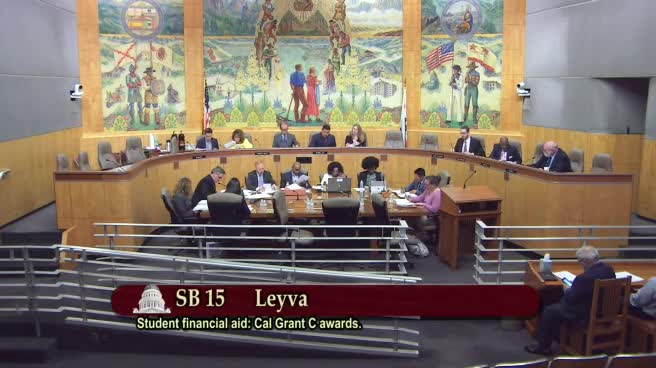 54SEC
Senate Standing Committee on Appropriations
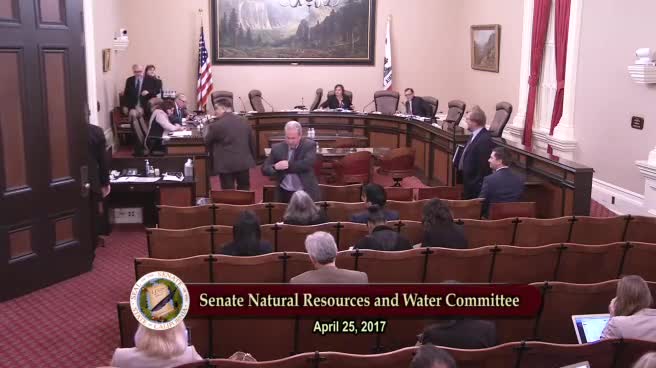 10MIN
Senate Standing Committee on Natural Resources and Water
Bill Author

Bill Co-Author(s):