SB 273: Marriage and domestic partnership: minors.
- Session Year: 2017-2018
- House: Senate
- Latest Version Date: 2018-09-21
Existing law authorizes an unmarried person who is under 18 years of age to marry upon obtaining a court order granting permission and the written consent of at least one of the parents or the guardian of each underage party to the marriage, as specified. Existing law requires the court, if it considers it necessary, as part of the court order granting permission to marry, to require the parties to the prospective marriage of a minor to participate in premarital counseling, as specified.
Existing law provides that 2 unmarried, unrelated adults who have chosen to share one anothers lives in an intimate and committed relationship of mutual caring may establish a domestic partnership by filing a declaration with the Secretary of State if certain requirements are met. Existing law provides that a person under 18 years of age who, together with the person with whom he or she proposes to establish a domestic partnership, meets the requirements for a domestic partnership other than the requirement of being at least 18 years of age, is capable of consenting to and establishing a domestic partnership upon obtaining a court order granting permission to the underage person or persons to establish a domestic partnership. Under existing law, registered domestic partners have the same rights, protections, and benefits as spouses.
This bill would require the court, in determining whether to issue an order granting permission for a person under 18 years of age to marry or establish a domestic partnership, to require Family Court Services to separately interview the parties intending to marry or establish a domestic partnership and at least one of the parents or the guardian, as specified, and to require Family Court Services to prepare and submit to the court a written report containing, among other things, recommendations for either granting or denying the parties permission to marry or establish a domestic partnership. If Family Court Services knows or reasonably suspects that either party is a victim of child abuse or neglect, the bill would require Family Court Services to submit a report of the known or suspected child abuse or neglect to the county child protective services agency. The bill would also require the court to consider whether there is evidence of coercion or undue influence on the minor. The bill would require the court to separately interview each of the parties, as specified, prior to making a final determination regarding the court order.
If the court issues an order granting the parties permission to marry or establish a domestic partnership, and if one or both of the parties are 17 years of age or younger, the bill would make the parties eligible to request a marriage license or to file a Declaration of Domestic Partnership no earlier than 30 days from the time the court order was issued.
The bill would exempt from the above-described requirements a minor who is 17 years of age and who has achieved a high school diploma or a high school equivalency certificate. The bill would exempt from the above-described 30-day waiting requirement a minor who is 16 or 17 years of age and who is pregnant or whose prospective spouse or domestic partner is pregnant.
The bill would require that a minor granted permission to marry or establish a domestic partnership be provided with specified information, including the procedures for legal separation or dissolution of marriage or termination of a domestic partnership, and the rights of a minor to enter into contracts.
The bill would require the court, if it considers it necessary, as part of the court order granting permission to establish a domestic partnership, to require the parties to the domestic partnership of a minor to participate in counseling before the domestic partnership is established, as specified.
Existing law requires the person solemnizing the marriage to return the marriage license, as specified, to the county recorder of the county in which the license was issued within 10 days after the ceremony.
This bill would also require the person solemnizing the marriage to include with the marriage license a copy of the court order granting permission to marry, if one or both of the parties to the marriage were minors at the time of solemnization of the marriage.
Existing law requires the local registrar of marriages, who is the county recorder, to transmit to the State Registrar of Vital Statistics all marriage certificates accepted for registration, as specified.
This bill would also require the local registrar to submit to the State Registrar, at least annually, the total number of marriage certificates and the age and gender of each party, as specified, concerning marriage certificates in which one or both of the parties were minors at the time of solemnization of the marriage. The bill would authorize the local registrar to dispose of this information no earlier than 2 years after the local registrar submits the information to the State Registrar, and to immediately dispose of the copy of the court order after that submission. The bill would authorize the State Department of Public Health to implement these provisions through an all-county letter or similar instruction from the State Registrar without taking regulatory action. By creating new duties for county officials relating to certain marriage certificates, the bill would impose a state-mandated local program.
The bill would require the State Registrar and the Secretary of State to each create a document, no later than March 1, 2020, with annual updates, disaggregated by county, containing only the total number of marriage certificates or registered domestic partnerships, respectively, and the age and gender of each party, concerning marriage certificates or registered domestic partnerships in which one or both of the parties were minors, as specified. The bill would require the State Registrar and the Secretary of State to make the document available to the public upon request. The bill would require, only for purposes of completing the document, the documentation of the gender of each party, if provided, on the above-described court order granting permission to marry or establish a domestic partnership. The bill would also require the documentation of the date of birth of each party on the court order.
This bill would also make conforming changes to related provisions.
Existing law requires a certified copy of a court order granting a minor permission to establish a domestic partnership to be filed with the Secretary of State with the Declaration of Domestic Partnership.
This bill would authorize the Secretary of State to dispose of a certified copy of a court order immediately after the Secretary of State uses the court order to create or update the document reflecting the total number of domestic partnerships and the age and gender of the parties.
Existing law, the Emancipation of Minors Law, provides that a minor is emancipated if he or she meets one of certain conditions, including if he or she has entered into a valid marriage. Under existing law, an emancipated minor is generally considered to be an adult, as specified.
This bill would make a minor emancipated if he or she has established a domestic partnership.
The California Constitution requires the state to reimburse local agencies and school districts for certain costs mandated by the state. Statutory provisions establish procedures for making that reimbursement.
This bill would provide that, if the Commission on State Mandates determines that the bill contains costs mandated by the state, reimbursement for those costs shall be made pursuant to the statutory provisions noted above.
Existing law authorizes an unmarried person who is under 18 years of age to marry upon obtaining a court order granting permission and the written consent of at least one of the parents or the guardian of each underage party to the marriage, as specified. Existing law requires the court, if it considers it necessary, as part of the court order granting permission to marry, to require the parties to the prospective marriage of a minor to participate in premarital counseling, as specified.
Existing law provides that 2 unmarried, unrelated adults who have chosen to share one anothers lives in an intimate and committed relationship of mutual caring may establish a domestic partnership by filing a declaration with the Secretary of State if certain requirements are met. Existing law provides that a person under 18 years of age who, together with the person with whom he or she proposes to establish a domestic partnership, meets the requirements for a domestic partnership other than the requirement of being at least 18 years of age, is capable of consenting to and establishing a domestic partnership upon obtaining a court order granting permission to the underage person or persons to establish a domestic partnership. Under existing law, registered domestic partners have the same rights, protections, and benefits as spouses.
This bill would require the court, in determining whether to issue an order granting permission for a person under 18 years of age to marry or establish a domestic partnership, to require Family Court Services to separately interview the parties intending to marry or establish a domestic partnership and at least one of the parents or the guardian, as specified, and to require Family Court Services to prepare and submit to the court a written report containing, among other things, recommendations for either granting or denying the parties permission to marry or establish a domestic partnership. If Family Court Services knows or reasonably suspects that either party is a victim of child abuse or neglect, the bill would require Family Court Services to submit a report of the known or suspected child abuse or neglect to the county child protective services agency. The bill would also require the court to consider whether there is evidence of coercion or undue influence on the minor. The bill would require the court to separately interview each of the parties, as specified, prior to making a final determination regarding the court order.
If the court issues an order granting the parties permission to marry or establish a domestic partnership, and if one or both of the parties are 17 years of age or younger, the bill would make the parties eligible to request a marriage license or to file a Declaration of Domestic Partnership no earlier than 30 days from the time the court order was issued.
The bill would exempt from the above-described requirements a minor who is 17 years of age and who has achieved a high school diploma or a high school equivalency certificate. The bill would exempt from the above-described 30-day waiting requirement a minor who is 16 or 17 years of age and who is pregnant or whose prospective spouse or domestic partner is pregnant.
The bill would require that a minor granted permission to marry or establish a domestic partnership be provided with specified information, including the procedures for legal separation or dissolution of marriage or termination of a domestic partnership, and the rights of a minor to enter into contracts.
The bill would require the court, if it considers it necessary, as part of the court order granting permission to establish a domestic partnership, to require the parties to the domestic partnership of a minor to participate in counseling before the domestic partnership is established, as specified.
Existing law requires the person solemnizing the marriage to return the marriage license, as specified, to the county recorder of the county in which the license was issued within 10 days after the ceremony.
This bill would also require the person solemnizing the marriage to include with the marriage license a copy of the court order granting permission to marry, if one or both of the parties to the marriage were minors at the time of solemnization of the marriage.
Existing law requires the local registrar of marriages, who is the county recorder, to transmit to the State Registrar of Vital Statistics all marriage certificates accepted for registration, as specified.
This bill would also require the local registrar to submit to the State Registrar, at least annually, the total number of marriage certificates and the age and gender of each party, as specified, concerning marriage certificates in which one or both of the parties were minors at the time of solemnization of the marriage. The bill would authorize the local registrar to dispose of this information no earlier than 2 years after the local registrar submits the information to the State Registrar, and to immediately dispose of the copy of the court order after that submission. The bill would authorize the State Department of Public Health to implement these provisions through an all-county letter or similar instruction from the State Registrar without taking regulatory action. By creating new duties for county officials relating to certain marriage certificates, the bill would impose a state-mandated local program.
The bill would require the State Registrar and the Secretary of State to each create a document, no later than March 1, 2020, with annual updates, disaggregated by county, containing only the total number of marriage certificates or registered domestic partnerships, respectively, and the age and gender of each party, concerning marriage certificates or registered domestic partnerships in which one or both of the parties were minors, as specified. The bill would require the State Registrar and the Secretary of State to make the document available to the public upon request. The bill would require, only for purposes of completing the document, the documentation of the gender of each party, as specified, if provided, on the above-described court order granting permission to marry or establish a domestic partnership. The bill would also require the documentation of the date of birth of each party on the court order.
This bill would also make conforming changes to related provisions.
Existing law requires a certified copy of a court order granting a minor permission to establish a domestic partnership to be filed with the Secretary of State with the Declaration of Domestic Partnership.
This bill would authorize the Secretary of State to dispose of a certified copy of a court order immediately after the Secretary of State uses the court order to create or update the document reflecting the total number of domestic partnerships and the age and gender of the parties.
Existing law, the Emancipation of Minors Law, provides that a minor is emancipated if he or she meets one of certain conditions, including if he or she has entered into a valid marriage. Under existing law, an emancipated minor is generally considered to be an adult, as specified.
This bill would make a minor emancipated if he or she has established a domestic partnership.
The California Constitution requires the state to reimburse local agencies and school districts for certain costs mandated by the state. Statutory provisions establish procedures for making that reimbursement.
This bill would provide that, if the Commission on State Mandates determines that the bill contains costs mandated by the state, reimbursement for those costs shall be made pursuant to the statutory provisions noted above.
Existing law authorizes an unmarried person who is under 18 years of age to marry upon obtaining a court order granting permission and the written consent of at least one of the parents or the guardian of each underage party to the marriage, as specified. Existing law requires the court, if it considers it necessary, as part of the court order granting permission to marry, to require the parties to the prospective marriage of a minor to participate in premarital counseling, as specified.
Existing law provides that 2 unmarried, unrelated adults who have chosen to share one anothers lives in an intimate and committed relationship of mutual caring may establish a domestic partnership by filing a declaration with the Secretary of State if certain requirements are met. Existing law provides that a person under 18 years of age who, together with the person with whom he or she proposes to establish a domestic partnership, meets the requirements for a domestic partnership other than the requirement of being at least 18 years of age, is capable of consenting to and establishing a domestic partnership upon obtaining a court order granting permission to the underage person or persons to establish a domestic partnership. Under existing law, registered domestic partners have the same rights, protections, and benefits as spouses.
This bill would require the court, in determining whether to issue an order granting permission for a person under 18 years of age to marry or establish a domestic partnership, to require Family Court Services to separately interview the parties intending to marry or establish a domestic partnership and at least one of the parents or the guardian, as specified, and to require Family Court Services to prepare and submit to the court a written report containing, among other things, recommendations for either granting or denying the parties permission to marry or establish a domestic partnership. If Family Court Services knows or reasonably suspects that either party is a victim of child abuse or neglect, the bill would require Family Court Services to submit a report of the known or suspected child abuse or neglect to the county child protective services agency. The bill would also require the court to consider whether there is evidence of coercion or undue influence on the minor. The bill would require the court to separately interview each of the parties, as specified, prior to making a final determination regarding the court order.
If the court issues an order granting the parties permission to marry or establish a domestic partnership, and if one or both of the parties are 17 years of age or younger, the bill would make the parties eligible to request a marriage license or to file a Declaration of Domestic Partnership no earlier than 30 days from the time the court order was issued.
The bill would exempt from the above-described requirements a minor who is 17 years of age and who has achieved a high school diploma or a high school equivalency certificate. The bill would exempt from the above-described 30-day waiting requirement a minor who is 16 or 17 years of age and who is pregnant. pregnant or whose prospective spouse or domestic partner is pregnant.
The bill would require that a minor granted permission to marry or establish a domestic partnership be provided with specified information, including the procedures for legal separation or dissolution of marriage or termination of a domestic partnership, and the rights of a minor to enter into contracts.
The bill would require the court, if it considers it necessary, as part of the court order granting permission to establish a domestic partnership, to require the parties to the domestic partnership of a minor to participate in counseling before the domestic partnership is established, as specified.
Existing law requires the person solemnizing the marriage to return the marriage license, as specified, to the county recorder of the county in which the license was issued within 10 days after the ceremony.
This bill would also require the person solemnizing the marriage to include with the marriage license a copy of the court order granting permission to marry, if one or both of the parties to the marriage were minors at the time of solemnization of the marriage.
Existing law requires the local registrar of marriages, who is the county recorder, to transmit to the State Registrar of Vital Statistics all marriage certificates accepted for registration, as specified.
This bill would also require the local registrar to submit to the State Registrar, at least annually, the total number of marriage certificates and the age and gender of each party, as specified, concerning marriage certificates in which one or both of the parties were minors at the time of solemnization of the marriage. The bill would authorize the local registrar to dispose of this information no earlier than 2 years after the local registrar submits the information to the State Registrar, and to immediately dispose of the copy of the court order after that submission. The bill would authorize the State Department of Public Health to implement these provisions through an all-county letter or similar instruction from the State Registrar without taking regulatory action. By creating new duties for county officials relating to certain marriage certificates, the bill would impose a state-mandated local program.
The bill would require the State Registrar and the Secretary of State to each create a document, no later than March 1, 2020, with annual updates, disaggregated by county, containing only the total number of marriage certificates or registered domestic partnerships, respectively, and the age and gender of each party, concerning marriage certificates or registered domestic partnerships in which one or both of the parties were minors, as specified. The bill would require the State Registrar and the Secretary of State to make the document available to the public upon request. The bill would require, only for purposes of completing the document, the documentation of the gender of each party, as specified, on the above-described court order granting permission to marry or establish a domestic partnership. The bill would also require the documentation of the date of birth of each party on the court order.
This bill would also make conforming changes to related provisions.
Existing law requires a certified copy of a court order granting a minor permission to establish a domestic partnership to be filed with the Secretary of State with the Declaration of Domestic Partnership.
This bill would authorize the Secretary of State to dispose of a certified copy of a court order immediately after the Secretary of State uses the court order to create or update the document reflecting the total number of domestic partnerships and the age and gender of the parties.
Existing law, the Emancipation of Minors Law, provides that a minor is emancipated if he or she meets one of certain conditions, including if he or she has entered into a valid marriage. Under existing law, an emancipated minor is generally considered to be an adult, as specified.
This bill would make a minor emancipated if he or she has established a domestic partnership.
Existing law requires a certified copy of a court order granting a minor permission to establish a domestic partnership to be filed with the Secretary of State with the Declaration of Domestic Partnership.This bill would make the certified copy of the court order confidential and not subject to disclosure, except as specified.Existing constitutional provisions require that a statute that limits the right of access to the meetings of public bodies or the writings of public officials and agencies be adopted with findings demonstrating the interest protected by the limitation and the need for protecting that interest.This bill would make legislative findings to that effect.The California Constitution requires the state to reimburse local agencies and school districts for certain costs mandated by the state. Statutory provisions establish procedures for making that reimbursement.
This bill would provide that, if the Commission on State Mandates determines that the bill contains costs mandated by the state, reimbursement for those costs shall be made pursuant to the statutory provisions noted above.
Existing law authorizes an unmarried person who is under 18 years of age to marry upon obtaining a court order granting permission and the written consent of at least one of the parents or the guardian of each underage party to the marriage, as specified. Existing law requires the court, if it considers it necessary, as part of the court order granting permission to marry, to require the parties to the prospective marriage of a minor to participate in premarital counseling, as specified.
Existing law provides that 2 unmarried, unrelated adults who have chosen to share one anothers lives in an intimate and committed relationship of mutual caring may establish a domestic partnership by filing a declaration with the Secretary of State if certain requirements are met. Existing law provides that a person under 18 years of age who, together with the person with whom he or she proposes to establish a domestic partnership, meets the requirements for a domestic partnership other than the requirement of being at least 18 years of age, is capable of consenting to and establishing a domestic partnership upon obtaining a court order granting permission to the underage person or persons to establish a domestic partnership. Under existing law, registered domestic partners have the same rights, protections, and benefits as spouses.
This bill would require the court, in determining whether to issue an order granting permission for a person under 18 years of age to marry or establish a domestic partnership, to require Family Court Services to separately interview the parties intending to marry or establish a domestic partnership and at least one of the parents or the guardian, as specified, and to require Family Court Services to prepare and submit to the court a written report containing, among other things, recommendations for either granting or denying the parties permission to marry or establish a domestic partnership. If Family Court Services knows or reasonably suspects that either party is a victim of child abuse or neglect, the bill would require Family Court Services to submit a report of the known or suspected child abuse or neglect to the county child protective services agency. The bill would also require the court to consider whether there is evidence of coercion or undue influence on the minor. The bill would require the court to separately interview each of the parties, as specified, prior to making a final determination regarding the court order. The bill would exempt from these requirements a minor who is 17 years of age and who has achieved a high school diploma or a high school equivalency certificate.
If the court issues an order granting the parties permission to marry or establish a domestic partnership, and if one or both of the parties are 15 17 years of age or younger, the bill would make the parties eligible to request a marriage license or to file a Declaration of Domestic Partnership no earlier than 30 days from the time the court order was issued.
The bill would exempt from the above-described requirements a minor who is 17 years of age and who has achieved a high school diploma or a high school equivalency certificate. The bill would exempt from the above-described 30-day waiting requirement a minor who is 16 or 17 years of age and who is pregnant.
The bill would require that a minor granted permission to marry or establish a domestic partnership be provided with specified information, including the procedures for legal separation or dissolution of marriage or termination of a domestic partnership, and the rights of a minor to enter into contracts.
The bill would require the court, if it considers it necessary, as part of the court order granting permission to establish a domestic partnership, to require the parties to the domestic partnership of a minor to participate in counseling before the domestic partnership is established, as specified.
Existing law requires the person solemnizing the marriage to return the marriage license, as specified, to the county recorder of the county in which the license was issued within 10 days after the ceremony.
This bill would also require the person solemnizing the marriage to include with the marriage license a copy of the court order granting permission to marry, if one or both of the parties to the marriage were minors at the time of solemnization of the marriage.
Existing law requires the local registrar of marriages, who is the county recorder, to transmit to the State Registrar of Vital Statistics all marriage certificates accepted for registration, as specified.
This bill would also require the local registrar to separate from other marriage certificates and send to the State Registrar the registered marriage certificates for marriage in which one or both of the parties were minors, along with a corresponding copy of the court order granting permission to marry, as specified. submit to the State Registrar, at least annually, the total number of marriage certificates and the age and gender of each party, as specified, concerning marriage certificates in which one or both of the parties were minors at the time of solemnization of the marriage. The bill would authorize the local registrar to dispose of this information no earlier than 2 years after the local registrar submits the information to the State Registrar, and to immediately dispose of the copy of the court order after that submission. The bill would authorize the State Department of Public Health to implement these provisions through an all-county letter or similar instruction from the State Registrar without taking regulatory action. By creating new duties for county officials relating to certain marriage licenses or certificates, the bill would impose a state-mandated local program.
The bill would require the State Registrar and the Secretary of State to, among other things, to each create a document, updated annually, broken down no later than March 1, 2020, with annual updates, disaggregated by county, containing only the age, as specified, and gender of each party to a marriage certificate, or to a registered domestic partnership, respectively, in which one or both of the parties were minors, as specified. the total number of marriage certificates or registered domestic partnerships, respectively, and the age and gender of each party, concerning marriage certificates or registered domestic partnerships in which one or both of the parties were minors, as specified. The bill would require the State Registrar and the Secretary of State to make the document available to the public upon request. The bill would require, only for purposes of completing the document, the documentation of the gender of each party, as specified, on the above-described court order granting permission to marry or establish a domestic partnership. The bill would also require the documentation of the date of birth of each party on the court order.
This bill would also make conforming changes to related provisions.
Existing law, the Emancipation of Minors Law, provides that a minor is emancipated if he or she meets one of certain conditions, including if he or she has entered into a valid marriage. Under existing law, an emancipated minor is generally considered to be an adult, as specified.
This bill would make a minor emancipated if he or she has established a domestic partnership.
Existing law requires a certified copy of a court order granting a minor permission to establish a domestic partnership to be filed with the Secretary of State with the Declaration of Domestic Partnership.
This bill would make the certified copy of the court order confidential and not subject to disclosure, except as specified.
Existing constitutional provisions require that a statute that limits the right of access to the meetings of public bodies or the writings of public officials and agencies be adopted with findings demonstrating the interest protected by the limitation and the need for protecting that interest.
This bill would make legislative findings to that effect.
The California Constitution requires the state to reimburse local agencies and school districts for certain costs mandated by the state. Statutory provisions establish procedures for making that reimbursement.
This bill would provide that, if the Commission on State Mandates determines that the bill contains costs mandated by the state, reimbursement for those costs shall be made pursuant to the statutory provisions noted above.
Existing law authorizes an unmarried person who is under 18 years of age to marry upon obtaining a court order granting permission and the written consent of at least one of the parents or the guardian of each underage party to the marriage, as specified. Existing law requires the court, if it considers it necessary, as part of the court order granting permission to marry, to require the parties to the prospective marriage of a minor to participate in premarital counseling, as specified.
Existing law provides that 2 unmarried, unrelated adults who have chosen to share one anothers lives in an intimate and committed relationship of mutual caring may establish a domestic partnership by filing a declaration with the Secretary of State if certain requirements are met. Existing law provides that a person under 18 years of age who, together with the person with whom he or she proposes to establish a domestic partnership, meets the requirements for a domestic partnership other than the requirement of being at least 18 years of age, is capable of consenting to and establishing a domestic partnership upon obtaining a court order granting permission to the underage person or persons to establish a domestic partnership. Under existing law, registered domestic partners have the same rights, protections, and benefits as spouses.
This bill would require the court, in determining whether to issue an order granting permission to marry or establish a domestic partnership, to require Family Court Services to separately interview the parties intending to marry or establish a domestic partnership and at least one of the parents or the guardian, as specified, and to require Family Court Services to prepare and submit to the court a written report containing, among other things, recommendations for either granting or denying the parties permission to marry or establish a domestic partnership. If Family Court Services knows or reasonably suspects that either party is a victim of child abuse or neglect, the bill would require Family Court Services to submit a report of the known or suspected child abuse or neglect to the county child protective services agency. The bill would also require the court to consider whether there is evidence of coercion or undue influence on the minor. The bill would require the court to separately interview each of the parties, as specified, prior to making a final determination regarding the court order. The bill would exempt from these requirements a minor who is 17 years of age and who has achieved a high school diploma or a high school equivalency certificate.
If the court issues an order granting the parties permission to marry or establish a domestic partnership, and if one or both of the parties are 15 years of age or younger, the bill would make the parties eligible to request a marriage license or to file a Declaration of Domestic Partnership no earlier than 30 days from the time the court order was issued.
The bill would require that a minor granted permission to marry or establish a domestic partnership be provided with specified information, including the procedures for legal separation or dissolution of marriage or termination of a domestic partnership, and the rights of a minor to enter into contracts.
The bill would require the court, if it considers it necessary, as part of the court order granting permission to establish a domestic partnership, to require the parties to the domestic partnership of a minor to participate in counseling before the domestic partnership is established, as specified.
Existing law requires the person solemnizing the marriage to return the marriage license, as specified, to the county recorder of the county in which the license was issued within 10 days after the ceremony.
This bill would also require the person solemnizing the marriage to include with the marriage license a copy of the court order granting permission to marry, if one or both of the parties to the marriage were minors at the time of solemnization of the marriage.
Existing law requires the local registrar of marriages, who is the county recorder, to transmit to the State Registrar of Vital Statistics all marriage certificates accepted for registration, as specified.
This bill would also require the local registrar to, among other things, report to separate from other marriage certificates and send to the State Registrar the date of birth, age, and gender of each party to the marriage license if registered marriage certificates for marriage in which one or both of the parties were minors, along with a corresponding copy of the court order granting permission to marry, as specified. By creating new duties for county officials relating to certain marriage licenses or certificates, the bill would impose a state-mandated local program.
The bill would require the State Registrar and the Secretary of State to, among other things, each create a spreadsheet, document, updated annually, broken down by county, containing only the date of birth, age, as specified, and gender of each party to a marriage certificate, or to a registered domestic partnership, respectively, in which one or both of the parties were minors, as specified. The bill would require the State Registrar and the Secretary of State to make the spreadsheet document available to the public upon request. The bill would require, only for purposes of completing the spreadsheet, document, the documentation of the gender of each party, as specified, on the above-described court order granting permission to marry or establish a domestic partnership.
This bill would also make conforming changes to related provisions.
Existing law, the Emancipation of Minors Law, provides that a minor is emancipated if he or she meets one of certain conditions, including if he or she has entered into a valid marriage. Under existing law, an emancipated minor is generally considered to be an adult, as specified.
This bill would make a minor emancipated if he or she has established a domestic partnership.
The California Constitution requires the state to reimburse local agencies and school districts for certain costs mandated by the state. Statutory provisions establish procedures for making that reimbursement.
This bill would provide that, if the Commission on State Mandates determines that the bill contains costs mandated by the state, reimbursement for those costs shall be made pursuant to the statutory provisions noted above.
Existing law authorizes an unmarried person who is under 18 years of age to marry upon obtaining a court order granting permission and the written consent of at least one of the parents or the guardian of each underage party to the marriage, as specified. Existing law requires the court, if it considers it necessary, as part of the court order granting permission to marry, to require the parties to the prospective marriage of a minor to participate in premarital counseling, as specified.
Existing law provides that 2 unmarried, unrelated adults who have chosen to share one anothers lives in an intimate and committed relationship of mutual caring may establish a domestic partnership by filing a declaration with the Secretary of State if certain requirements are met. Existing law provides that a person under 18 years of age who, together with the person with whom he or she proposes to establish a domestic partnership, meets the requirements for a domestic partnership other than the requirement of being at least 18 years of age, is capable of consenting to and establishing a domestic partnership upon obtaining a court order granting permission to the underage person or persons to establish a domestic partnership. Under existing law, registered domestic partners have the same rights, protections, and benefits as spouses.
This bill would require the court, in determining whether to issue an order granting permission to marry, marry or establish a domestic partnership, to require Family Court Services to separately interview the parties intending to marry or establish a domestic partnership and at least one of the parents or the guardian, as specified, and to require Family Court Services to prepare and submit to the court a written report containing, among other things, recommendations for either granting or denying the parties permission to marry. marry or establish a domestic partnership. If Family Court Services knows or reasonably suspects that either party is a victim of child abuse or neglect, the bill would require Family Court Services to submit a report of the known or suspected child abuse or neglect to the county child protective services agency. The bill would also require the court to consider whether there is evidence of coercion or undue influence on the minor. The bill would require the court to separately interview each of the parties, as specified, prior to making a final determination regarding the court order. The bill would exempt from these requirements a minor who is 17 years of age and who has achieved a high school diploma or a high school equivalency certificate.
The bill would also require the court to separately interview each of the parties, as specified, prior to making a final determination regarding the court order. If
If the court issues an order granting the parties permission to marry, marry or establish a domestic partnership, and if one or both of the parties are 15 years of age or younger, the bill would make the parties eligible to request a marriage license or to file a Declaration of Domestic Partnership no earlier than one month 30 days from the time the court order was issued.
The bill would require that the a minor granted permission to marry or establish a domestic partnership be provided with specified information, including information regarding the procedures for legal separation or dissolution of marriage, marriage or termination of a domestic partnership, and the rights of a minor to enter into contracts.
The bill would require the court, if it considers it necessary, as part of the court order granting permission to establish a domestic partnership, to require the parties to the domestic partnership of a minor to participate in counseling before the domestic partnership is established, as specified.
Existing law requires the person solemnizing the marriage to return the marriage license, as specified, to the county recorder of the county in which the license was issued within 10 days after the ceremony.
This bill would also require the person solemnizing the marriage to include with the marriage license a copy of the court order granting permission to marry, if one or both of the parties to the marriage were minors at the time of solemnization of the marriage.
Existing law requires the local registrar of marriages, who is the county recorder, to transmit to the State Registrar of Vital Statistics all marriage certificates accepted for registration, as specified.
This bill would also require the local registrar to, among other things, report to the State Registrar the date of birth, age, and gender of each party to the marriage license if one or both of the parties were minors, as specified. By creating new duties for county officials relating to certain marriage licenses or certificates, the bill would impose a state-mandated local program.
The bill would require the State Registrar and the Secretary of State to, among other things, each create a spreadsheet, updated annually, broken down by county, containing only the date of birth, age, as specified, and gender of each party to a marriage certificate, or to a registered domestic partnership, respectively, in which one or both of the parties were minors, as specified. The bill would require the State Registrar and the Secretary of State to make the spreadsheet available to the public upon request. The bill would require, only for purposes of completing the spreadsheet, the documentation of the gender of each party, as specified, on the above-described court order granting permission to marry or establish a domestic partnership.
This bill would also make conforming changes to related provisions.
Existing law, the Emancipation of Minors Law, provides that a minor is emancipated if he or she meets one of certain conditions, including if he or she has entered into a valid marriage. Under existing law, an emancipated minor is generally considered to be an adult, as specified.
This bill would make a minor emancipated if he or she has established a domestic partnership.
The California Constitution requires the state to reimburse local agencies and school districts for certain costs mandated by the state. Statutory provisions establish procedures for making that reimbursement.
This bill would provide that, if the Commission on State Mandates determines that the bill contains costs mandated by the state, reimbursement for those costs shall be made pursuant to the statutory provisions noted above.
Existing law authorizes an unmarried person who is under 18 years of age to marry upon obtaining a court order granting permission and the written consent of at least one of the parents or the guardian of each underage party to the marriage, as specified. Existing law requires the court, if it considers it necessary, as part of the court order granting permission to marry, to require the parties to the prospective marriage of a minor to participate in premarital counseling, as specified.
This bill would require the court, in determining whether to issue an order granting permission to marry, to require Family Court Services to separately interview the parties intending to marry and at least one of the parents or the guardian, as specified, and to require Family Court Services to prepare and submit to the court a written report containing, among other things, recommendations for either granting or denying the parties permission to marry. If Family Court Services knows or reasonably suspects that either party is a victim of child abuse or neglect, the bill would require Family Court Services to submit a report of the known or suspected child abuse or neglect to the county child protective services agency. The bill would also require the court to consider whether there is evidence of coercion or undue influence on the minor.
ThisThe bill would also require the court to separately interview each of the parties, as specified, prior to making a final determination regarding the court order. If the court issues an order granting the parties permission to marry, the bill would make the parties eligible to request a marriage license no earlier than one month from the time the court order was issued.
The bill would require that the minor be provided with specified information, including information regarding the procedures for legal separation or dissolution of marriage, and the rights of a minor to enter into contracts.
This bill would also make conforming changes to related provisions.
Existing law authorizes an unmarried person who is under 18 years of age to marry upon obtaining a court order granting permission and the written consent of at least one of the parents or the guardian of each underage party to the marriage, as specified. Existing law requires the court, if it considers it necessary, as part of the court order granting permission to marry, to require the parties to the prospective marriage of a minor to participate in premarital counseling, as specified.
This bill would require the court, in determining whether to issue an order granting permission to marry, to require Family Court Services to separately interview the parties intending to marry and at least one of the parents or the guardian, as specified, and to require Family Court Services to prepare and submit to the court a written report containing, among other things, recommendations for either granting or denying the parties permission to marry. If Family Court Services knows or reasonably suspects that either party is a victim of child abuse or neglect, the bill would require Family Court Services to submit a report of the known or suspected child abuse or neglect to the county child protective services agency.
This bill would also require the court to separately interview each of the parties, as specified, prior to making a final determination regarding the court order. If the court issues an order granting the parties permission to marry, the bill would make the parties eligible to request a marriage license no earlier than one month from the time the court order was issued.
This bill would require the Judicial Council, no later than June 1, 2019, and on or before June 1 of each year thereafter, to track and post on its Internet Web site, for the preceding year and for each county, the number of court orders granting or denying permission to marry, the number of marriage licenses issued involving a minor party, and the age and sex of the parties in the court orders and marriage licenses, as specified. The bill would require each county to report to the Judicial Council the above-mentioned information relating to marriage licenses. By creating new duties for county officials relating to certain marriage licenses, the bill would impose a state-mandated local program.This bill would also make conforming changes to related provisions.
The California Constitution requires the state to reimburse local agencies and school districts for certain costs mandated by the state. Statutory provisions establish procedures for making that reimbursement.This bill would provide that, if the Commission on State Mandates determines that the bill contains costs mandated by the state, reimbursement for those costs shall be made pursuant to the statutory provisions noted above.Existing law authorizes an unmarried person who is under 18 years of age to marry upon obtaining a court order granting permission and the written consent of at least one of the parents or the guardian of each underage party to the marriage, as specified. Existing law requires the court, if it considers it necessary, as part of the court order granting permission to marry, to require the parties to the prospective marriage of a minor to participate in premarital counseling, as specified.
This bill would require the court, in determining whether to issue an order granting permission to marry, to perform certain duties, including, among others, requiring require Family Court Services to separately interview the parties intending to marry and at least one of the parents or the guardian, as specified, and requiring to require Family Court Services to prepare and submit to the court a written report containing, among other things, recommendations for either granting or denying the parties permission to marry. If Family Court Services knows or reasonably suspects that either party is a victim of child abuse or neglect, the bill would require Family Court Services to submit a report of the known or suspected child abuse or neglect to the county child protective services agency.
This bill would establish a rebuttable presumption that marriage prior to 18 years of age is not in the best interest of the minor, and would require an order granting a minor party permission to marry to contain a finding based on clear and convincing evidence that the marriage is in the best interest of the party, and to contain specified affirmative findings, including, among others, that the party is entering into the marriage of his or her own volition. The bill would require the court, in making these findings, to consider specified factors, including, among others, the age difference between the parties, any history of domestic violence, and any criminal record, as specified. also require the court to separately interview each of the parties, as specified, prior to making a final determination regarding the court order. If the court issues an order granting the parties permission to marry, the bill would make the parties eligible to request a marriage license no earlier than one month from the time the court order was issued.
This bill would require the Judicial Council, no later than June 1, 2019, and on or before June 1 of each year thereafter, to track and post on its Internet Web site, for the preceding year and for each county, the number of court orders granting or denying permission to marry, the number of marriage licenses issued involving a minor party, and the age and sex of the parties in the court orders and marriage licenses, as specified. The bill would require each county to report to the Judicial Council the above-mentioned information relating to marriage licenses. By creating new duties for county officials relating to certain marriage licenses, the bill would impose a state-mandated local program.
This bill would also make conforming changes to related provisions.
The California Constitution requires the state to reimburse local agencies and school districts for certain costs mandated by the state. Statutory provisions establish procedures for making that reimbursement.
This bill would provide that, if the Commission on State Mandates determines that the bill contains costs mandated by the state, reimbursement for those costs shall be made pursuant to the statutory provisions noted above.
Existing law authorizes an unmarried person who is under 18 years of age to marry upon obtaining a court order granting permission and the written consent of at least one parent of the parents or the guardian of each underage party to the marriage, as specified.
This bill would instead prohibit a marriage license from being issued to a person who is under 18 years of age. The bill would make conforming changes. require the court, in determining whether to issue an order granting permission to marry, to perform certain duties, including, among others, requiring Family Court Services to separately interview the parties intending to marry and at least one of the parents or the guardian, as specified, and requiring Family Court Services to prepare and submit to the court a written report containing, among other things, recommendations for either granting or denying the parties permission to marry. If Family Court Services knows or reasonably suspects that either party is a victim of child abuse or neglect, the bill would require Family Court Services to submit a report of the known or suspected child abuse or neglect to the county child protective services agency.
This bill would establish a rebuttable presumption that marriage prior to 18 years of age is not in the best interest of the minor, and would require an order granting a minor party permission to marry to contain a finding based on clear and convincing evidence that the marriage is in the best interest of the party, and to contain specified affirmative findings, including, among others, that the party is entering into the marriage of his or her own volition. The bill would require the court, in making these findings, to consider specified factors, including, among others, the age difference between the parties, any history of domestic violence, and any criminal record, as specified. If the court issues an order granting the parties permission to marry, the bill would make the parties eligible to request a marriage license no earlier than one month from the time the court order was issued.
This bill would require the Judicial Council, no later than June 1, 2019, and on or before June 1 of each year thereafter, to track and post on its Internet Web site, for the preceding year and for each county, the number of court orders granting or denying permission to marry, the number of marriage licenses issued involving a minor party, and the age and sex of the parties in the court orders and marriage licenses, as specified. The bill would require each county to report to the Judicial Council the above-mentioned information relating to marriage licenses. By creating new duties for county officials relating to certain marriage licenses, the bill would impose a state-mandated local program.
This bill would also make conforming changes to related provisions.
The California Constitution requires the state to reimburse local agencies and school districts for certain costs mandated by the state. Statutory provisions establish procedures for making that reimbursement.
This bill would provide that, if the Commission on State Mandates determines that the bill contains costs mandated by the state, reimbursement for those costs shall be made pursuant to the statutory provisions noted above.
Existing law authorizes an unmarried person who is under 18 years of age to marry upon obtaining a court order granting permission and the written consent of at least one parent of each party to the marriage, as specified.
This bill would instead provide that a person who is under 18 years of age is not capable of consenting to and consummating marriage and would prohibit that person from entering into a marriage. prohibit a marriage license from being issued to a person who is under 18 years of age. The bill would make conforming changes.
Existing law authorizes an unmarried person who is under 18 years of age to marry upon obtaining a court order granting permission and the written consent of at least one parent of each party to the marriage, as specified.
This bill would instead provide that a person who is under 18 years of age is not capable of consenting to and consummating marriage and would prohibit that person from entering into a marriage. The bill would make conforming changes.
Under existing law, the Public Utilities Commission has regulatory authority over public utilities, including electrical corporations and gas corporations. The Public Utilities Act requires the commission to investigate the cause of all accidents occurring upon the property of any public utility or directly or indirectly arising from or connected with its maintenance or operation, resulting in loss of life or injury to person or property and requiring, in the judgment of the commission, investigation by it, and authorizes the commission to make any order or recommendation with respect to the investigation that it determines to be just and reasonable. The California Constitution authorizes the commission to establish rules for all public utilities, subject to control by the Legislature.This bill would require the commission to adopt a commissionwide gas corporation and electrical corporation safety program that includes specified elements and would authorize the commission to adopt an organizationwide safety program for other public utilities and specified nonutilities that are also subject to the commissions regulatory jurisdiction. The bill would require gas corporations and electrical corporations to have effective programs to continually identify safety hazards and to analyze, assess, and mitigate or eliminate safety risks. The bill would specify the safety-related responsibilities with respect to gas corporations and electrical corporations of various entities within the commission. The bill would require the commission to perform a detailed safety management assessment for each gas corporation and electrical corporation not less often than every 5 years and would require the commission to take official notice of the safety management assessment in relevant proceedings, including general rate cases. The bill would require the commission, by March 1, 2018, to contract with one or more consultants to determine the effectiveness of its internal safety communications and decisionmaking processes and the incentives for staff in primarily safety-related roles compared to the incentives and opportunities for attorneys, administrative law judges, and staff in primarily nonsafety, energy-policy-related roles.Under existing law, a violation of the Public Utilities Act or any order, decision, rule, direction, demand, or requirement of the commission is a crime.Because the provisions of this bill placing additional safety duties upon gas corporations and electrical corporations would be a part of the act, the bill would impose a state-mandated local program by creating a new crime.Existing law requires the commission to appoint an executive director who is responsible for the commissions executive and administrative duties and to organize, coordinate, supervise, and direct the operations and affairs of the commission and expedite all matters within the commissions jurisdiction. Existing law authorizes the executive director to employ those officers, administrative law judges, experts, engineers, statisticians, accountants, inspectors, clerks, and employees as the executive director deems necessary to carry out the provisions of the Public Utilities Act or to perform the duties and exercise the powers conferred upon the commission by law.This bill would require the executive director to provide an engineer to each commissioner to advise him or her on the technical aspects of safety and the technical aspects of other topics within the jurisdiction of the commission.The California Constitution authorizes the commission to establish its own procedures, subject to statutory limitations or directions and constitutional requirements of due process. The Public Utilities Act requires the commission to determine whether a proceeding requires a hearing and, if so, to determine whether the matter requires a quasi-legislative, an adjudication, or a ratesetting hearing. For these purposes, quasi-legislative cases are cases that establish policy rulemakings and investigations which may establish rules affecting an entire industry. Existing law generally permits ex parte communications in quasi-legislative cases.The bill would require that any excess of formality in commission policy or administrative practice not be used to prevent commission staff from submitting findings and evidence relevant to safety into the quasi-legislative proceeding record or from presenting arguments to improve safety in quasi-legislative cases.Pursuant to its existing authority, the commission has issued an interim decision adopting a multiattribute approach and directing certain public utilities to take steps toward a more uniform risk management framework.This bill would void a specified order in that interim decision and direct the Safety and Enforcement Division and executive director of the commission to not implement that order.The California Constitution requires the state to reimburse local agencies and school districts for certain costs mandated by the state. Statutory provisions establish procedures for making that reimbursement.This bill would provide that no reimbursement is required by this act for a specified reason.Under existing law, the Public Utilities Commission has regulatory authority over public utilities, including electrical corporations and gas corporations. The Public Utilities Act requires the commission to investigate the cause of all accidents occurring upon the property of any public utility or directly or indirectly arising from or connected with its maintenance or operation, resulting in loss of life or injury to person or property and requiring, in the judgment of the commission, investigation by it, and authorizes the commission to make any order or recommendation with respect to the investigation that it determines to be just and reasonable. The California Constitution authorizes the commission to establish rules for all public utilities, subject to control by the Legislature.
This bill would require the commission to adopt a commissionwide gas corporation and electrical corporation safety program that includes specified elements and would authorize the commission to adopt an organizationwide safety program for other public utilities and specified nonutilities that are also subject to the commissions regulatory jurisdiction. The bill would require gas corporations and electrical corporations to have effective programs to continually identify safety hazards and to analyze, assess, and mitigate or eliminate safety risks. The bill would specify the safety-related responsibilities with respect to gas corporations and electrical corporations of various entities within the commission. The bill would require the commission to perform a detailed safety management assessment for each gas corporation and electrical corporation not less often than every 5 years and would require the commission to take official notice of the safety management assessment in relevant proceedings, including general rate cases. The bill would require the commission, by March 1, 2018, to contract with one or more consultants to determine the effectiveness of its internal safety communications and decisionmaking processes and the incentives for staff in primarily safety-related roles compared to the incentives and opportunities for attorneys, administrative law judges, and staff in primarily nonsafety, energy-policy-related roles.
Under existing law, a violation of the Public Utilities Act or any order, decision, rule, direction, demand, or requirement of the commission is a crime.
Because the provisions of this bill placing additional safety duties upon gas corporations and electrical corporations would be a part of the act, the bill would impose a state-mandated local program by creating a new crime.
Existing law requires the commission to appoint an executive director who is responsible for the commissions executive and administrative duties and to organize, coordinate, supervise, and direct the operations and affairs of the commission and expedite all matters within the commissions jurisdiction. Existing law authorizes the executive director to employ those officers, administrative law judges, experts, engineers, statisticians, accountants, inspectors, clerks, and employees as the executive director deems necessary to carry out the provisions of the Public Utilities Act or to perform the duties and exercise the powers conferred upon the commission by law.
This bill would require the executive director to provide an engineer to each commissioner to advise him or her on the technical aspects of safety and the technical aspects of other topics within the jurisdiction of the commission.
The California Constitution authorizes the commission to establish its own procedures, subject to statutory limitations or directions and constitutional requirements of due process. The Public Utilities Act requires the commission to determine whether a proceeding requires a hearing and, if so, to determine whether the matter requires a quasi-legislative, an adjudication, or a ratesetting hearing. For these purposes, quasi-legislative cases are cases that establish policy rulemakings and investigations which may establish rules affecting an entire industry. Existing law generally permits ex parte communications in quasi-legislative cases.
The bill would require that any excess of formality in commission policy or administrative practice not be used to prevent commission staff from submitting findings and evidence relevant to safety into the quasi-legislative proceeding record or from presenting arguments to improve safety in quasi-legislative cases.
Pursuant to its existing authority, the commission has issued an interim decision adopting a multiattribute approach and directing certain public utilities to take steps toward a more uniform risk management framework.
This bill would void a specified order in that interim decision and direct the Safety and Enforcement Division and executive director of the commission to not implement that order.
The California Constitution requires the state to reimburse local agencies and school districts for certain costs mandated by the state. Statutory provisions establish procedures for making that reimbursement.
This bill would provide that no reimbursement is required by this act for a specified reason.
(a)A person under 18 years of age who, together with the person with whom he or she proposes to establish a domestic partnership, otherwise meets the requirements for a domestic partnership other than the requirement of being at least 18 years of age, may establish a domestic partnership upon obtaining a court order granting permission to the underage person or persons to establish a domestic partnership.
(b)(1)The court order and written consent of the parents of each person under 18 years of age or of one of the parents or the guardian of each person under 18 years of age, except as provided in paragraph (2), shall be filed with the clerk of the court, and a certified copy of the order shall be filed with the Secretary of State with the Declaration of Domestic Partnership.
(2)If it appears to the satisfaction of the court by application of a person under 18 years of age that the person requires a written consent to establish a domestic partnership and that the minor has no parent or guardian, or has no parent or guardian capable of consenting, the court may make an order consenting to establishing the domestic partnership. The order shall be filed with the clerk of the court and a certified copy of the order shall be filed with the Secretary of State with the Declaration of Domestic Partnership.
(3)Notwithstanding any other law, immediately after the Secretary of State creates or updates the document described in Section 298.8 using the information required for the document and that is contained in a certified copy of a court order filed with the Secretary of State with the Declaration of Domestic Partnership pursuant to this subdivision, the Secretary of State may dispose of the certified copy of the court order.
(c)In determining whether to issue a court order granting permission to establish a domestic partnership, the court shall do all of the following:
(1)Require Family Court Services to separately interview the parties intending to establish a domestic partnership and, if applicable, at least one of the parents or the guardian of each party who is a minor. If more than one parent or guardian is interviewed, the parents or guardians shall be interviewed separately.
(2)Require Family Court Services to prepare and submit to the court a written report, containing any finding of potential force, threat, persuasion, fraud, coercion, or duress by either of the parties or their family members relating to the intended domestic partnership. The report shall also contain recommendations of Family Court Services for either granting or denying the parties permission to establish a domestic partnership. If Family Court Services knows or reasonably suspects that either party is a victim of child abuse or neglect, Family Court Services shall submit a report of the known or suspected child abuse or neglect to the county child protective services agency.
(3)After receiving the report of the findings and recommendations of Family Court Services, as described in paragraph (2), separately interview in camera each of the parties prior to making a final determination regarding the court order.
(4)Consider whether there is evidence of coercion or undue influence on the minor.
(d)If the court issues an order granting the parties permission to establish a domestic partnership, and if one or both of the parties are 17 years of age or younger, the parties shall be eligible to file a Declaration of Domestic Partnership with the Secretary of State no earlier than 30 days from the time the court order was issued.
(e)As part of the court order granting permission to establish a domestic partnership, the court shall, if it considers it necessary, require the parties to the prospective domestic partnership of a minor to participate, before the domestic partnership is established, in counseling concerning social, economic, and personal responsibilities incident to the domestic partnership. The parties shall not be required to confer with counselors provided by religious organizations of any denomination. In determining whether to order the parties to participate in the counseling, the court shall consider, among other factors, the ability of the parties to pay for the counseling. The court may impose a reasonable fee to cover the cost of any counseling provided by the county or the court. The fees shall be used exclusively to cover the cost of the counseling services authorized by this section.
(f)(1)Only for purposes of completing the document described in Section 298.8, and not for purposes of making a determination regarding the court order, the gender of each party intending to establish a domestic partnership, if provided, shall be documented on the court order granting permission to establish the domestic partnership.
(2)The date of birth of each party intending to establish a domestic partnership shall also be documented on the court order granting permission to establish the domestic partnership.
(g)Upon issuance of the order granting permission to establish a domestic partnership, the minor shall be provided with the following information:
(1)The rights and responsibilities of an emancipated minor, including, but not limited to, the effects of emancipation as described in Sections 7050 to 7052, inclusive.
(2)(A)The circumstances under which a domestic partnership may be determined by a court to be void or voidable and adjudged a nullity and the procedure for obtaining that judicial determination.
(B)The procedures for termination of a domestic partnership.
(3)Telephone numbers for the National Domestic Violence Hotline and the National Sexual Assault Hotline.
(4)The conditions under which an unemancipated minor may leave home and seek to remain in a shelter or otherwise live separately from his or her parent or guardian, and whether the consent or acquiescence of a parent or guardian is required to remain away from the home of the parent or guardian, the rights of an unemancipated minor to apply for a protective or restraining order to prevent abuse, and the rights of a minor to enter into contracts, including contracts for legal services and mental health counseling.
(h)(1)Subdivisions (c) and (d) shall not apply to a minor who is 17 years of age and who has achieved a high school diploma or a high school equivalency certificate.
(2)Subdivision (d) shall not apply to a minor who is 16 or 17 years of age and who is pregnant or whose prospective domestic partner is pregnant.
SEC. 2.Section 298.8 is added to the Family Code, to read:298.8.(a)The Secretary of State shall create a document no later than March 1, 2020, with annual updates no later than March 1 of each year thereafter, disaggregated by county, containing only the following information concerning domestic partnerships that were registered during the preceding calendar year and in which one or both of the parties were minors at the time the domestic partnership was established:
(1)The total number of those registered domestic partnerships.
(2)Itemized for each of those registered domestic partnerships, the age of each party at the time the domestic partnership was established.
(3)Itemized for each of those registered domestic partnerships, the gender of each party as documented on the court order pursuant to Section 297.1, unless the court order does not include the gender.
(b)The document shall not contain the names, addresses, or other personal identifying information of parties to a registered domestic partnership, or any information identifying a registered domestic partnership. The document shall not contain a registered domestic partnership or a copy of the court order described in Section 297.1.
(c)The Secretary of State shall make the document available to the public upon request.
SEC. 3.Section 302 of the Family Code is amended to read:302.(a)An unmarried person under 18 years of age may be issued a marriage license upon obtaining a court order granting permission to the underage person or persons to marry, in accordance with the requirements described in Section 304.
(b)The court order and written consent of at least one of the parents or the guardian of each underage person shall be filed with the clerk of the court, and a certified copy of the order shall be presented to the county clerk at the time the marriage license is issued.
SEC. 4.Section 303 of the Family Code is amended to read:303.If it appears to the satisfaction of the court by application of a minor that the minor requires a written consent to marry and that the minor has no parent or has no parent capable of consenting, the court may make an order consenting to the issuance of a marriage license and granting permission to the minor to marry, in accordance with the requirements described in Section 304. The order shall be filed with the clerk of the court and a certified copy of the order shall be presented to the county clerk at the time the marriage license is issued.
SEC. 5.Section 304 of the Family Code is amended to read:304.(a)In determining whether to issue a court order granting permission to marry pursuant to Section 302 or 303, the court shall do all of the following:
(1)Require Family Court Services to separately interview the parties intending to marry and, if applicable, at least one of the parents or the guardian of each party who is a minor. If more than one parent or guardian is interviewed, the parents or guardians shall be interviewed separately.
(2)Require Family Court Services to prepare and submit to the court a written report, containing any finding of potential force, threat, persuasion, fraud, coercion, or duress by either of the parties or their family members relating to the intended marriage. The report shall also contain recommendations of Family Court Services for either granting or denying the parties permission to marry. If Family Court Services knows or reasonably suspects that either party is a victim of child abuse or neglect, Family Court Services shall submit a report of the known or suspected child abuse or neglect to the county child protective services agency.
(3)After receiving the report of the findings and recommendations of Family Court Services, as described in paragraph (2), separately interview in camera each of the parties prior to making a final determination regarding the court order.
(4)Consider whether there is evidence of coercion or undue influence on the minor.
(b)If the court issues an order granting the parties permission to marry pursuant to Section 302 or 303, and if one or both of the parties are 17 years of age or younger, the parties shall be eligible to request a marriage license no earlier than 30 days from the time the court order was issued.
(c)As part of the court order granting permission to marry under Section 302 or 303, the court shall, if it considers it necessary, require the parties to the prospective marriage of a minor to participate in premarital counseling concerning social, economic, and personal responsibilities incident to marriage. The parties shall not be required to confer with counselors provided by religious organizations of any denomination. In determining whether to order the parties to participate in the premarital counseling, the court shall consider, among other factors, the ability of the parties to pay for the counseling. The court may impose a reasonable fee to cover the cost of any premarital counseling provided by the county or the court. The fees shall be used exclusively to cover the cost of the counseling services authorized by this section.
(d)(1)Only for purposes of completing the document described in Section 102233 of the Health and Safety Code, and not for purposes of making a determination regarding the court order, the gender of each party intending to marry, if provided, shall be documented on the court order granting permission to marry.
(2)The date of birth of each party intending to marry shall also be documented on the court order granting permission to marry.
(3)For purposes of the requirements on the person solemnizing the marriage under subdivision (b) of Section 423, and the requirements on the local registrar under subdivision (a) of Section 102356 of the Health and Safety Code, the court shall provide parties who are granted permission to marry with a copy of the court order granting permission to marry.
(e)Upon issuance of the order granting permission to marry, the minor shall be provided with the following information:
(1)The rights and responsibilities of an emancipated minor, including, but not limited to, the effects of emancipation as described in Sections 7050 to 7052, inclusive.
(2)(A)The circumstances under which a marriage may be determined by a court to be void or voidable and adjudged a nullity and the procedure for obtaining that judicial determination.
(B)The procedures for legal separation or dissolution of marriage.
(3)Telephone numbers for the National Domestic Violence Hotline and the National Sexual Assault Hotline.
(4)The conditions under which an unemancipated minor may leave home and seek to remain in a shelter or otherwise live separately from his or her parent or guardian, and whether the consent or acquiescence of a parent or guardian is required to remain away from the home of the parent or guardian, the rights of an unemancipated minor to apply for a protective or restraining order to prevent abuse, and the rights of a minor to enter into contracts, including contracts for legal services and mental health counseling.
(f)(1)Subdivisions (a) and (b) shall not apply to a minor who is 17 years of age and who has achieved a high school diploma or a high school equivalency certificate.
(2)Subdivision (b) shall not apply to a minor who is 16 or 17 years of age and who is pregnant or whose prospective spouse is pregnant.
SEC. 6.Section 423 of the Family Code is amended to read:423.(a)The person solemnizing the marriage shall return the marriage license, endorsed as required in Section 422, to the county recorder of the county in which the license was issued within 10 days after the ceremony.
(b)For purposes of Section 102356 of the Health and Safety Code, the person solemnizing the marriage shall include with the marriage license described in subdivision (a) a copy of the court order granting permission to marry described in Section 304, if one or both of the parties to the marriage were minors at the time of solemnization of the marriage.
SEC. 7.Section 1501 of the Family Code is amended to read:1501.A minor may make a valid premarital agreement or other marital property agreement if the minor is emancipated, is otherwise capable of contracting marriage pursuant to Section 302 or 303, or has entered or is entering a marriage that is valid in the jurisdiction where the marriage is solemnized.
SEC. 8.Section 2210 of the Family Code is amended to read:2210.A marriage is voidable and may be adjudged a nullity if any of the following conditions existed at the time of the marriage:
(a)The party who commences the proceeding or on whose behalf the proceeding is commenced was under 18 years of age, unless the party entered into the marriage pursuant to Section 302 or 303.
(b)The spouse of either party was living and the marriage with that spouse was then in force and that spouse (1) was absent and not known to the party commencing the proceeding to be living for a period of five successive years immediately preceding the subsequent marriage for which the judgment of nullity is sought or (2) was generally reputed or believed by the party commencing the proceeding to be dead at the time the subsequent marriage was contracted.
(c)Either party was of unsound mind, unless the party of unsound mind, after coming to reason, freely cohabited with the other as his or her spouse.
(d)The consent of either party was obtained by fraud, unless the party whose consent was obtained by fraud afterwards, with full knowledge of the facts constituting the fraud, freely cohabited with the other as his or her spouse.
(e)The consent of either party was obtained by force, unless the party whose consent was obtained by force afterwards freely cohabited with the other as his or her spouse.
(f)Either party was, at the time of marriage, physically incapable of entering into the marriage state, and that incapacity continues, and appears to be incurable.
SEC. 9.Section 7002 of the Family Code is amended to read:7002.A person under the age of 18 years is an emancipated minor if any of the following conditions is satisfied:
(a)The person has entered into a valid marriage, or has established a valid domestic partnership, regardless of whether the marriage or the domestic partnership has been dissolved.
(b)The person is on active duty with the Armed Forces of the United States.
(c)The person has received a declaration of emancipation pursuant to Section 7122.
SEC. 10.Section 102233 is added to the Health and Safety Code, to read:102233.(a)The State Registrar shall create a document no later than March 1, 2020, with annual updates no later than March 1 of each year thereafter, disaggregated by county, containing only the information received by a local registrar during the preceding calendar year pursuant to subdivision (a) of Section 102356, concerning marriage certificates in which one or both of the parties were minors at the time of solemnization of the marriage.
(b)The document shall not contain the names, addresses, or other personal identifying information of parties to a marriage certificate, or any information identifying a marriage certificate. The document shall not contain a marriage certificate or a copy of the court order described in Section 304 of the Family Code.
(c)The State Registrar shall make the document available to the public upon request.
SEC. 11.Section 102356 is added to the Health and Safety Code, to read:102356.(a)For purposes of Section 102233, the local registrar of marriages shall submit to the State Registrar, at least annually, all of the following information concerning marriage certificates that are accepted for registration by him or her during the same calendar year and in which one or both of the parties were minors at the time of solemnization of the marriage:
(1)The total number of those marriage certificates.
(2)Itemized for each of those marriage certificates, the age of each party at the time of solemnization of the marriage.
(3)Itemized for each of those marriage certificates, the gender of each party as documented on the court order pursuant to Section 304 of the Family Code, unless the court order does not include the gender.
(b)The information submitted to the State Registrar pursuant to subdivision (a) shall not contain the names, addresses, or other personal identifying information of parties to a marriage certificate, or any information identifying a marriage certificate. The information shall not contain a marriage certificate or a copy of the court order described in Section 304 of the Family Code.
(c)(1)The local registrar of marriages shall not submit any information described in paragraphs (1) to (3), inclusive, of subdivision (a) if no marriage certificate described in subdivision (a) is accepted for registration by him or her during the same calendar year.
(2)For any marriage certificate described in subdivision (a), the local registrar of marriages is not required to submit any information described in paragraphs (1) to (3), inclusive, of subdivision (a) if the local registrar of marriages did not receive a copy of the court order from the person solemnizing the marriage pursuant to Section 423 of the Family Code. The local registrar of marriages may elect to submit any of that information, if otherwise available, even if he or she did not receive the copy of the court order.
(d)(1)Notwithstanding any other law, no earlier than two years after the local registrar of marriages submits the information described in subdivision (a) to the State Registrar, the local registrar may dispose of that information.
(2)Notwithstanding any other law, immediately after the local registrar of marriages submits the information described in subdivision (a) to the State Registrar, the local registrar may dispose of the copy of the court order received from the person solemnizing the marriage pursuant to Section 423 of the Family Code.
(e)Notwithstanding the rulemaking provisions of the Administrative Procedure Act (Chapter 3.5 (commencing with Section 11340) of Part 1 of Division 3 of Title 2 of the Government Code), the State Department of Public Health may implement this section through an all-county letter or similar instruction from the State Registrar without taking regulatory action.
SEC. 12.If the Commission on State Mandates determines that this act contains costs mandated by the state, reimbursement to local agencies and school districts for those costs shall be made pursuant to Part 7 (commencing with Section 17500) of Division 4 of Title 2 of the Government Code.
(a)A person under 18 years of age who, together with the person with whom he or she proposes to establish a domestic partnership, otherwise meets the requirements for a domestic partnership other than the requirement of being at least 18 years of age, may establish a domestic partnership upon obtaining a court order granting permission to the underage person or persons to establish a domestic partnership.
(b)(1)The court order and written consent of the parents of each person under 18 years of age or of one of the parents or the guardian of each person under 18 years of age, except as provided in paragraph (2), shall be filed with the clerk of the court, and a certified copy of the order shall be filed with the Secretary of State with the Declaration of Domestic Partnership.
(2)If it appears to the satisfaction of the court by application of a person under 18 years of age that the person requires a written consent to establish a domestic partnership and that the minor has no parent or guardian, or has no parent or guardian capable of consenting, the court may make an order consenting to establishing the domestic partnership. The order shall be filed with the clerk of the court and a certified copy of the order shall be filed with the Secretary of State with the Declaration of Domestic Partnership.
(3)Notwithstanding any other law, immediately after the Secretary of State creates or updates the document described in Section 298.8 using the information required for the document and that is contained in a certified copy of a court order filed with the Secretary of State with the Declaration of Domestic Partnership pursuant to this subdivision, the Secretary of State may dispose of the certified copy of the court order.
(c)In determining whether to issue a court order granting permission to establish a domestic partnership, the court shall do all of the following:
(1)Require Family Court Services to separately interview the parties intending to establish a domestic partnership and, if applicable, at least one of the parents or the guardian of each party who is a minor. If more than one parent or guardian is interviewed, the parents or guardians shall be interviewed separately.
(2)Require Family Court Services to prepare and submit to the court a written report, containing any finding of potential force, threat, persuasion, fraud, coercion, or duress by either of the parties or their family members relating to the intended domestic partnership. The report shall also contain recommendations of Family Court Services for either granting or denying the parties permission to establish a domestic partnership. If Family Court Services knows or reasonably suspects that either party is a victim of child abuse or neglect, Family Court Services shall submit a report of the known or suspected child abuse or neglect to the county child protective services agency.
(3)After receiving the report of the findings and recommendations of Family Court Services, as described in paragraph (2), separately interview in camera each of the parties prior to making a final determination regarding the court order.
(4)Consider whether there is evidence of coercion or undue influence on the minor.
(d)If the court issues an order granting the parties permission to establish a domestic partnership, and if one or both of the parties are 17 years of age or younger, the parties shall be eligible to file a Declaration of Domestic Partnership with the Secretary of State no earlier than 30 days from the time the court order was issued.
(e)As part of the court order granting permission to establish a domestic partnership, the court shall, if it considers it necessary, require the parties to the prospective domestic partnership of a minor to participate, before the domestic partnership is established, in counseling concerning social, economic, and personal responsibilities incident to the domestic partnership. The parties shall not be required to confer with counselors provided by religious organizations of any denomination. In determining whether to order the parties to participate in the counseling, the court shall consider, among other factors, the ability of the parties to pay for the counseling. The court may impose a reasonable fee to cover the cost of any counseling provided by the county or the court. The fees shall be used exclusively to cover the cost of the counseling services authorized by this section.
(f)(1)(A)Only for purposes of completing the document described in Section 298.8, and not for purposes of making a determination regarding the court order, the gender of each party intending to establish a domestic partnership partnership, if provided, shall be documented on the court order granting permission to establish the domestic partnership, using one of the designations listed in subparagraph (B). The court shall request, but shall not require, the party to identify the gender. partnership.
(B)The court shall choose one of the following designations for purposes of documenting the gender of each party on the court order pursuant to subparagraph (A):(i)Female.(ii)Male.(iii)Nonbinary.(iv)Party declines to identify the gender.(2)The date of birth of each party intending to establish a domestic partnership shall also be documented on the court order granting permission to establish the domestic partnership.
(g)Upon issuance of the order granting permission to establish a domestic partnership, the minor shall be provided with the following information:
(1)The rights and responsibilities of an emancipated minor, including, but not limited to, the effects of emancipation as described in Sections 7050 to 7052, inclusive.
(2)(A)The circumstances under which a domestic partnership may be determined by a court to be void or voidable and adjudged a nullity and the procedure for obtaining that judicial determination.
(B)The procedures for termination of a domestic partnership.
(3)Telephone numbers for the National Domestic Violence Hotline and the National Sexual Assault Hotline.
(4)The conditions under which an unemancipated minor may leave home and seek to remain in a shelter or otherwise live separately from his or her parent or guardian, and whether the consent or acquiescence of a parent or guardian is required to remain away from the home of the parent or guardian, the rights of an unemancipated minor to apply for a protective or restraining order to prevent abuse, and the rights of a minor to enter into contracts, including contracts for legal services and mental health counseling.
(h)(1)Subdivisions (c) and (d) shall not apply to a minor who is 17 years of age and who has achieved a high school diploma or a high school equivalency certificate.
(2)Subdivision (d) shall not apply to a minor who is 16 or 17 years of age and who is pregnant or whose prospective domestic partner is pregnant.
SEC. 2.Section 298.8 is added to the Family Code, to read:298.8.(a)The Secretary of State shall create a document no later than March 1, 2020, with annual updates no later than March 1 of each year thereafter, disaggregated by county, containing only the following information concerning domestic partnerships that were registered during the preceding calendar year and in which one or both of the parties were minors at the time the domestic partnership was established:
(1)The total number of those registered domestic partnerships.
(2)Itemized for each of those registered domestic partnerships, the age of each party at the time the domestic partnership was established.
(3)Itemized for each of those registered domestic partnerships, the gender of each party as documented on the court order pursuant to Section 297.1, unless the court order does not include the gender.
(b)The document shall not contain the names, addresses, or other personal identifying information of parties to a registered domestic partnership, or any information identifying a registered domestic partnership. The document shall not contain a registered domestic partnership or a copy of the court order described in Section 297.1.
(c)The Secretary of State shall make the document available to the public upon request.
SEC. 3.Section 302 of the Family Code is amended to read:302.(a)An unmarried person under 18 years of age may be issued a marriage license upon obtaining a court order granting permission to the underage person or persons to marry, in accordance with the requirements described in Section 304.
(b)The court order and written consent of at least one of the parents or the guardian of each underage person shall be filed with the clerk of the court, and a certified copy of the order shall be presented to the county clerk at the time the marriage license is issued.
SEC. 4.Section 303 of the Family Code is amended to read:303.If it appears to the satisfaction of the court by application of a minor that the minor requires a written consent to marry and that the minor has no parent or has no parent capable of consenting, the court may make an order consenting to the issuance of a marriage license and granting permission to the minor to marry, in accordance with the requirements described in Section 304. The order shall be filed with the clerk of the court and a certified copy of the order shall be presented to the county clerk at the time the marriage license is issued.
SEC. 5.Section 304 of the Family Code is amended to read:304.(a)In determining whether to issue a court order granting permission to marry pursuant to Section 302 or 303, the court shall do all of the following:
(1)Require Family Court Services to separately interview the parties intending to marry and, if applicable, at least one of the parents or the guardian of each party who is a minor. If more than one parent or guardian is interviewed, the parents or guardians shall be interviewed separately.
(2)Require Family Court Services to prepare and submit to the court a written report, containing any finding of potential force, threat, persuasion, fraud, coercion, or duress by either of the parties or their family members relating to the intended marriage. The report shall also contain recommendations of Family Court Services for either granting or denying the parties permission to marry. If Family Court Services knows or reasonably suspects that either party is a victim of child abuse or neglect, Family Court Services shall submit a report of the known or suspected child abuse or neglect to the county child protective services agency.
(3)After receiving the report of the findings and recommendations of Family Court Services, as described in paragraph (2), separately interview in camera each of the parties prior to making a final determination regarding the court order.
(4)Consider whether there is evidence of coercion or undue influence on the minor.
(b)If the court issues an order granting the parties permission to marry pursuant to Section 302 or 303, and if one or both of the parties are 17 years of age or younger, the parties shall be eligible to request a marriage license no earlier than 30 days from the time the court order was issued.
(c)As part of the court order granting permission to marry under Section 302 or 303, the court shall, if it considers it necessary, require the parties to the prospective marriage of a minor to participate in premarital counseling concerning social, economic, and personal responsibilities incident to marriage. The parties shall not be required to confer with counselors provided by religious organizations of any denomination. In determining whether to order the parties to participate in the premarital counseling, the court shall consider, among other factors, the ability of the parties to pay for the counseling. The court may impose a reasonable fee to cover the cost of any premarital counseling provided by the county or the court. The fees shall be used exclusively to cover the cost of the counseling services authorized by this section.
(d)(1)(A)Only for purposes of completing the document described in Section 102233 of the Health and Safety Code, and not for purposes of making a determination regarding the court order, the gender of each party intending to marry marry, if provided, shall be documented on the court order granting permission to marry, using one of the designations listed in subparagraph (B). The court shall request, but shall not require, the party to identify the gender. marry.
(B)The court shall choose one of the following designations for purposes of documenting the gender of each party on the court order pursuant to subparagraph (A):(i)Female.(ii)Male.(iii)Nonbinary.(iv)Party declines to identify the gender.(2)The date of birth of each party intending to marry shall also be documented on the court order granting permission to marry.
(3)For purposes of the requirements on the person solemnizing the marriage under subdivision (b) of Section 423, and the requirements on the local registrar under subdivision (a) of Section 102356 of the Health and Safety Code, the court shall provide parties who are granted permission to marry with a copy of the court order granting permission to marry.
(e)Upon issuance of the order granting permission to marry, the minor shall be provided with the following information:
(1)The rights and responsibilities of an emancipated minor, including, but not limited to, the effects of emancipation as described in Sections 7050 to 7052, inclusive.
(2)(A)The circumstances under which a marriage may be determined by a court to be void or voidable and adjudged a nullity and the procedure for obtaining that judicial determination.
(B)The procedures for legal separation or dissolution of marriage.
(3)Telephone numbers for the National Domestic Violence Hotline and the National Sexual Assault Hotline.
(4)The conditions under which an unemancipated minor may leave home and seek to remain in a shelter or otherwise live separately from his or her parent or guardian, and whether the consent or acquiescence of a parent or guardian is required to remain away from the home of the parent or guardian, the rights of an unemancipated minor to apply for a protective or restraining order to prevent abuse, and the rights of a minor to enter into contracts, including contracts for legal services and mental health counseling.
(f)(1)Subdivisions (a) and (b) shall not apply to a minor who is 17 years of age and who has achieved a high school diploma or a high school equivalency certificate.
(2)Subdivision (b) shall not apply to a minor who is 16 or 17 years of age and who is pregnant or whose prospective spouse is pregnant.
SEC. 6.Section 423 of the Family Code is amended to read:423.(a)The person solemnizing the marriage shall return the marriage license, endorsed as required in Section 422, to the county recorder of the county in which the license was issued within 10 days after the ceremony.
(b)For purposes of Section 102356 of the Health and Safety Code, the person solemnizing the marriage shall include with the marriage license described in subdivision (a) a copy of the court order granting permission to marry described in Section 304, if one or both of the parties to the marriage were minors at the time of solemnization of the marriage.
SEC. 7.Section 1501 of the Family Code is amended to read:1501.A minor may make a valid premarital agreement or other marital property agreement if the minor is emancipated, is otherwise capable of contracting marriage pursuant to Section 302 or 303, or has entered or is entering a marriage that is valid in the jurisdiction where the marriage is solemnized.
SEC. 8.Section 2210 of the Family Code is amended to read:2210.A marriage is voidable and may be adjudged a nullity if any of the following conditions existed at the time of the marriage:
(a)The party who commences the proceeding or on whose behalf the proceeding is commenced was under 18 years of age, unless the party entered into the marriage pursuant to Section 302 or 303.
(b)The spouse of either party was living and the marriage with that spouse was then in force and that spouse (1) was absent and not known to the party commencing the proceeding to be living for a period of five successive years immediately preceding the subsequent marriage for which the judgment of nullity is sought or (2) was generally reputed or believed by the party commencing the proceeding to be dead at the time the subsequent marriage was contracted.
(c)Either party was of unsound mind, unless the party of unsound mind, after coming to reason, freely cohabited with the other as his or her spouse.
(d)The consent of either party was obtained by fraud, unless the party whose consent was obtained by fraud afterwards, with full knowledge of the facts constituting the fraud, freely cohabited with the other as his or her spouse.
(e)The consent of either party was obtained by force, unless the party whose consent was obtained by force afterwards freely cohabited with the other as his or her spouse.
(f)Either party was, at the time of marriage, physically incapable of entering into the marriage state, and that incapacity continues, and appears to be incurable.
SEC. 9.Section 7002 of the Family Code is amended to read:7002.A person under the age of 18 years is an emancipated minor if any of the following conditions is satisfied:
(a)The person has entered into a valid marriage, or has established a valid domestic partnership, regardless of whether the marriage or the domestic partnership has been dissolved.
(b)The person is on active duty with the Armed Forces of the United States.
(c)The person has received a declaration of emancipation pursuant to Section 7122.
SEC. 10.Section 102233 is added to the Health and Safety Code, to read:102233.(a)The State Registrar shall create a document no later than March 1, 2020, with annual updates no later than March 1 of each year thereafter, disaggregated by county, containing only the information received by a local registrar during the preceding calendar year pursuant to subdivision (a) of Section 102356, concerning marriage certificates in which one or both of the parties were minors at the time of solemnization of the marriage.
(b)The document shall not contain the names, addresses, or other personal identifying information of parties to a marriage certificate, or any information identifying a marriage certificate. The document shall not contain a marriage certificate or a copy of the court order described in Section 304 of the Family Code.
(c)The State Registrar shall make the document available to the public upon request.
SEC. 11.Section 102356 is added to the Health and Safety Code, to read:102356.(a)For purposes of Section 102233, the local registrar of marriages shall submit to the State Registrar, at least annually, all of the following information concerning marriage certificates that are accepted for registration by him or her during the same calendar year and in which one or both of the parties were minors at the time of solemnization of the marriage:
(1)The total number of those marriage certificates.
(2)Itemized for each of those marriage certificates, the age of each party at the time of solemnization of the marriage.
(3)Itemized for each of those marriage certificates, the gender of each party as documented on the court order pursuant to Section 304 of the Family Code, unless the court order does not include the gender.
(b)The information submitted to the State Registrar pursuant to subdivision (a) shall not contain the names, addresses, or other personal identifying information of parties to a marriage certificate, or any information identifying a marriage certificate. The information shall not contain a marriage certificate or a copy of the court order described in Section 304 of the Family Code.
(c)(1)The local registrar of marriages shall not submit any information described in paragraphs (1) to (3), inclusive, of subdivision (a) if no marriage certificate described in subdivision (a) is accepted for registration by him or her during the same calendar year.
(2)For any marriage certificate described in subdivision (a), the local registrar of marriages is not required to submit any information described in paragraphs (1) to (3), inclusive, of subdivision (a) if the local registrar of marriages did not receive a copy of the court order from the person solemnizing the marriage pursuant to Section 423 of the Family Code. The local registrar of marriages may elect to submit any of that information, if otherwise available, even if he or she did not receive the copy of the court order.
(d)(1)Notwithstanding any other law, no earlier than two years after the local registrar of marriages submits the information described in subdivision (a) to the State Registrar, the local registrar may dispose of that information.
(2)Notwithstanding any other law, immediately after the local registrar of marriages submits the information described in subdivision (a) to the State Registrar, the local registrar may dispose of the copy of the court order received from the person solemnizing the marriage pursuant to Section 423 of the Family Code.
(e)Notwithstanding the rulemaking provisions of the Administrative Procedure Act (Chapter 3.5 (commencing with Section 11340) of Part 1 of Division 3 of Title 2 of the Government Code), the State Department of Public Health may implement this section through an all-county letter or similar instruction from the State Registrar without taking regulatory action.
SEC. 12.If the Commission on State Mandates determines that this act contains costs mandated by the state, reimbursement to local agencies and school districts for those costs shall be made pursuant to Part 7 (commencing with Section 17500) of Division 4 of Title 2 of the Government Code.
(a)A person under 18 years of age who, together with the person with whom he or she proposes to establish a domestic partnership, otherwise meets the requirements for a domestic partnership other than the requirement of being at least 18 years of age, may establish a domestic partnership upon obtaining a court order granting permission to the underage person or persons to establish a domestic partnership.
(b)(1)The court order and written consent of the parents of each person under 18 years of age or of one of the parents or the guardian of each person under 18 years of age, except as provided in paragraph (2), shall be filed with the clerk of the court, and a certified copy of the order shall be filed with the Secretary of State with the Declaration of Domestic Partnership.
(2)If it appears to the satisfaction of the court by application of a person under 18 years of age that the person requires a written consent to establish a domestic partnership and that the minor has no parent or guardian, or has no parent or guardian capable of consenting, the court may make an order consenting to establishing the domestic partnership. The order shall be filed with the clerk of the court and a certified copy of the order shall be filed with the Secretary of State with the Declaration of Domestic Partnership.
(3)A certified copy of a court order filed with the Secretary of State with the Declaration of Domestic Partnership pursuant to this subdivision shall be confidential and is not subject to disclosure pursuant to the California Public Records Act (Chapter 3.5 (commencing with Section 6250) of Division 7 of Title 1 of the Government Code), except as necessary in response to a subpoena or order of a court of competent jurisdiction.(3)Notwithstanding any other law, immediately after the Secretary of State creates or updates the document described in Section 298.8 using the information required for the document and that is contained in a certified copy of a court order filed with the Secretary of State with the Declaration of Domestic Partnership pursuant to this subdivision, the Secretary of State may dispose of the certified copy of the court order.
(c)In determining whether to issue a court order granting permission to establish a domestic partnership, the court shall do all of the following:
(1)Require Family Court Services to separately interview the parties intending to establish a domestic partnership and, if applicable, at least one of the parents or the guardian of each party who is a minor. If more than one parent or guardian is interviewed, the parents or guardians shall be interviewed separately.
(2)Require Family Court Services to prepare and submit to the court a written report, containing any finding of potential force, threat, persuasion, fraud, coercion, or duress by either of the parties or their family members relating to the intended domestic partnership. The report shall also contain recommendations of Family Court Services for either granting or denying the parties permission to establish a domestic partnership. If Family Court Services knows or reasonably suspects that either party is a victim of child abuse or neglect, Family Court Services shall submit a report of the known or suspected child abuse or neglect to the county child protective services agency.
(3)After receiving the report of the findings and recommendations of Family Court Services, as described in paragraph (2), separately interview in camera each of the parties prior to making a final determination regarding the court order.
(4)Consider whether there is evidence of coercion or undue influence on the minor.
(d)If the court issues an order granting the parties permission to establish a domestic partnership, and if one or both of the parties are 17 years of age or younger, the parties shall be eligible to file a Declaration of Domestic Partnership with the Secretary of State no earlier than 30 days from the time the court order was issued.
(e)As part of the court order granting permission to establish a domestic partnership, the court shall, if it considers it necessary, require the parties to the prospective domestic partnership of a minor to participate, before the domestic partnership is established, in counseling concerning social, economic, and personal responsibilities incident to the domestic partnership. The parties shall not be required to confer with counselors provided by religious organizations of any denomination. In determining whether to order the parties to participate in the counseling, the court shall consider, among other factors, the ability of the parties to pay for the counseling. The court may impose a reasonable fee to cover the cost of any counseling provided by the county or the court. The fees shall be used exclusively to cover the cost of the counseling services authorized by this section.
(f)(1)(A)Only for purposes of completing the document described in Section 298.8, and not for purposes of making a determination regarding the court order, the gender of each party intending to establish a domestic partnership shall be documented on the court order granting permission to establish the domestic partnership. partnership, using one of the designations listed in subparagraph (B). The court shall request, but shall not require, the party to identify the gender.
(B)The court shall choose one of the following designations for purposes of documenting the gender of each party on the court order pursuant to subparagraph (A):
(i)Female.
(ii)Male.
(iii)Nonbinary.
(iv)Party declines to identify the gender.
(2)The date of birth of each party intending to establish a domestic partnership shall also be documented on the court order granting permission to establish the domestic partnership.
(g)Upon issuance of the order granting permission to establish a domestic partnership, the minor shall be provided with the following information:
(1)The rights and responsibilities of an emancipated minor, including, but not limited to, the effects of emancipation as described in Sections 7050 to 7052, inclusive.
(2)(A)The circumstances under which a domestic partnership may be determined by a court to be void or voidable and adjudged a nullity and the procedure for obtaining that judicial determination.
(B)The procedures for termination of a domestic partnership.
(3)Telephone numbers for the National Domestic Violence Hotline and the National Sexual Assault Hotline.
(4)The conditions under which an unemancipated minor may leave home and seek to remain in a shelter or otherwise live separately from his or her parent or guardian, and whether the consent or acquiescence of a parent or guardian is required to remain away from the home of the parent or guardian, the rights of an unemancipated minor to apply for a protective or restraining order to prevent abuse, and the rights of a minor to enter into contracts, including contracts for legal services and mental health counseling.
(h)(1)Subdivisions (c) and (d) shall not apply to a minor who is 17 years of age and who has achieved a high school diploma or a high school equivalency certificate.
(2)Subdivision (d) shall not apply to a minor who is 16 or 17 years of age and who is pregnant. pregnant or whose prospective domestic partner is pregnant.
SEC. 2.Section 298.8 is added to the Family Code, to read:298.8.(a)The Secretary of State shall create a document no later than March 1, 2020, with annual updates no later than March 1 of each year thereafter, disaggregated by county, containing only the following information concerning domestic partnerships that were registered during the preceding calendar year and in which one or both of the parties were minors at the time the domestic partnership was established:
(1)The total number of those registered domestic partnerships.
(2)Itemized for each of those registered domestic partnerships, the age of each party at the time the domestic partnership was established.
(3)Itemized for each of those registered domestic partnerships, the gender of each party as documented on the court order pursuant to Section 297.1, unless the court order does not include the gender.
(b)The document shall not contain the names, addresses, or other personal identifying information of parties to a registered domestic partnership, or any information identifying a registered domestic partnership. The document shall not contain a registered domestic partnership or a copy of the court order described in Section 297.1.
(c)The Secretary of State shall make the document available to the public upon request.
SEC. 3.Section 302 of the Family Code is amended to read:302.(a)An unmarried person under 18 years of age may be issued a marriage license upon obtaining a court order granting permission to the underage person or persons to marry, in accordance with the requirements described in Section 304.
(b)The court order and written consent of at least one of the parents or the guardian of each underage person shall be filed with the clerk of the court, and a certified copy of the order shall be presented to the county clerk at the time the marriage license is issued.
SEC. 4.Section 303 of the Family Code is amended to read:303.If it appears to the satisfaction of the court by application of a minor that the minor requires a written consent to marry and that the minor has no parent or has no parent capable of consenting, the court may make an order consenting to the issuance of a marriage license and granting permission to the minor to marry, in accordance with the requirements described in Section 304. The order shall be filed with the clerk of the court and a certified copy of the order shall be presented to the county clerk at the time the marriage license is issued.
SEC. 5.Section 304 of the Family Code is amended to read:304.(a)In determining whether to issue a court order granting permission to marry pursuant to Section 302 or 303, the court shall do all of the following:
(1)Require Family Court Services to separately interview the parties intending to marry and, if applicable, at least one of the parents or the guardian of each party who is a minor. If more than one parent or guardian is interviewed, the parents or guardians shall be interviewed separately.
(2)Require Family Court Services to prepare and submit to the court a written report, containing any finding of potential force, threat, persuasion, fraud, coercion, or duress by either of the parties or their family members relating to the intended marriage. The report shall also contain recommendations of Family Court Services for either granting or denying the parties permission to marry. If Family Court Services knows or reasonably suspects that either party is a victim of child abuse or neglect, Family Court Services shall submit a report of the known or suspected child abuse or neglect to the county child protective services agency.
(3)After receiving the report of the findings and recommendations of Family Court Services, as described in paragraph (2), separately interview in camera each of the parties prior to making a final determination regarding the court order.
(4)Consider whether there is evidence of coercion or undue influence on the minor.
(b)If the court issues an order granting the parties permission to marry pursuant to Section 302 or 303, and if one or both of the parties are 17 years of age or younger, the parties shall be eligible to request a marriage license no earlier than 30 days from the time the court order was issued.
(c)As part of the court order granting permission to marry under Section 302 or 303, the court shall, if it considers it necessary, require the parties to the prospective marriage of a minor to participate in premarital counseling concerning social, economic, and personal responsibilities incident to marriage. The parties shall not be required to confer with counselors provided by religious organizations of any denomination. In determining whether to order the parties to participate in the premarital counseling, the court shall consider, among other factors, the ability of the parties to pay for the counseling. The court may impose a reasonable fee to cover the cost of any premarital counseling provided by the county or the court. The fees shall be used exclusively to cover the cost of the counseling services authorized by this section.
(d)(1)(A)Only for purposes of completing the document described in Section 102233 of the Health and Safety Code, and not for purposes of making a determination regarding the court order, the gender of each party intending to marry shall be documented on the court order granting permission to marry. marry, using one of the designations listed in subparagraph (B). The court shall request, but shall not require, the party to identify the gender.
(B)The court shall choose one of the following designations for purposes of documenting the gender of each party on the court order pursuant to subparagraph (A):
(i)Female.
(ii)Male.
(iii)Nonbinary.
(iv)Party declines to identify the gender.
(2)The date of birth of each party intending to marry shall also be documented on the court order granting permission to marry.
(3)For purposes of the requirements on the person solemnizing the marriage under subdivision (b) of Section 423, and the requirements on the local registrar under subdivision (a) of Section 102356 of the Health and Safety Code, the court shall provide parties who are granted permission to marry with a copy of the court order granting permission to marry.
(e)Upon issuance of the order granting permission to marry, the minor shall be provided with the following information:
(1)The rights and responsibilities of an emancipated minor, including, but not limited to, the effects of emancipation as described in Sections 7050 to 7052, inclusive.
(2)(A)The circumstances under which a marriage may be determined by a court to be void or voidable and adjudged a nullity and the procedure for obtaining that judicial determination.
(B)The procedures for legal separation or dissolution of marriage.
(3)Telephone numbers for the National Domestic Violence Hotline and the National Sexual Assault Hotline.
(4)The conditions under which an unemancipated minor may leave home and seek to remain in a shelter or otherwise live separately from his or her parent or guardian, and whether the consent or acquiescence of a parent or guardian is required to remain away from the home of the parent or guardian, the rights of an unemancipated minor to apply for a protective or restraining order to prevent abuse, and the rights of a minor to enter into contracts, including contracts for legal services and mental health counseling.
(f)(1)Subdivisions (a) and (b) shall not apply to a minor who is 17 years of age and who has achieved a high school diploma or a high school equivalency certificate.
(2)Subdivision (b) shall not apply to a minor who is 16 or 17 years of age and who is pregnant. pregnant or whose prospective spouse is pregnant.
SEC. 6.Section 423 of the Family Code is amended to read:423.(a)The person solemnizing the marriage shall return the marriage license, endorsed as required in Section 422, to the county recorder of the county in which the license was issued within 10 days after the ceremony.
(b)For purposes of Section 102356 of the Health and Safety Code, the person solemnizing the marriage shall include with the marriage license described in subdivision (a) a copy of the court order granting permission to marry described in Section 304, if one or both of the parties to the marriage were minors at the time of solemnization of the marriage.
SEC. 7.Section 1501 of the Family Code is amended to read:1501.A minor may make a valid premarital agreement or other marital property agreement if the minor is emancipated, is otherwise capable of contracting marriage pursuant to Section 302 or 303, or has entered or is entering a marriage that is valid in the jurisdiction where the marriage is solemnized.
SEC. 8.Section 2210 of the Family Code is amended to read:2210.A marriage is voidable and may be adjudged a nullity if any of the following conditions existed at the time of the marriage:
(a)The party who commences the proceeding or on whose behalf the proceeding is commenced was under 18 years of age, unless the party entered into the marriage pursuant to Section 302 or 303.
(b)The spouse of either party was living and the marriage with that spouse was then in force and that spouse (1) was absent and not known to the party commencing the proceeding to be living for a period of five successive years immediately preceding the subsequent marriage for which the judgment of nullity is sought or (2) was generally reputed or believed by the party commencing the proceeding to be dead at the time the subsequent marriage was contracted.
(c)Either party was of unsound mind, unless the party of unsound mind, after coming to reason, freely cohabited with the other as his or her spouse.
(d)The consent of either party was obtained by fraud, unless the party whose consent was obtained by fraud afterwards, with full knowledge of the facts constituting the fraud, freely cohabited with the other as his or her spouse.
(e)The consent of either party was obtained by force, unless the party whose consent was obtained by force afterwards freely cohabited with the other as his or her spouse.
(f)Either party was, at the time of marriage, physically incapable of entering into the marriage state, and that incapacity continues, and appears to be incurable.
SEC. 9.Section 7002 of the Family Code is amended to read:7002.A person under the age of 18 years is an emancipated minor if any of the following conditions is satisfied:
(a)The person has entered into a valid marriage, or has established a valid domestic partnership, regardless of whether the marriage or the domestic partnership has been dissolved.
(b)The person is on active duty with the Armed Forces of the United States.
(c)The person has received a declaration of emancipation pursuant to Section 7122.
SEC. 10.Section 102233 is added to the Health and Safety Code, to read:102233.(a)The State Registrar shall create a document no later than March 1, 2020, with annual updates no later than March 1 of each year thereafter, disaggregated by county, containing only the information received by a local registrar during the preceding calendar year pursuant to subdivision (a) of Section 102356, concerning marriage certificates in which one or both of the parties were minors at the time of solemnization of the marriage.
(b)The document shall not contain the names, addresses, or other personal identifying information of parties to a marriage certificate, or any information identifying a marriage certificate. The document shall not contain a marriage certificate or a copy of the court order described in Section 304 of the Family Code.
(c)The State Registrar shall make the document available to the public upon request.
SEC. 11.Section 102356 is added to the Health and Safety Code, to read:102356.(a)For purposes of Section 102233, the local registrar of marriages shall submit to the State Registrar, at least annually, all of the following information concerning marriage certificates that are accepted for registration by him or her during the same calendar year and in which one or both of the parties were minors at the time of solemnization of the marriage:
(1)The total number of those marriage certificates.
(2)Itemized for each of those marriage certificates, the age of each party at the time of solemnization of the marriage.
(3)Itemized for each of those marriage certificates, the gender of each party as documented on the court order pursuant to Section 304 of the Family Code, unless the court order does not include the gender.
(b)The information submitted to the State Registrar pursuant to subdivision (a) shall not contain the names, addresses, or other personal identifying information of parties to a marriage certificate, or any information identifying a marriage certificate. The information shall not contain a marriage certificate or a copy of the court order described in Section 304 of the Family Code.
(c)(1)The local registrar of marriages shall not submit any information described in paragraphs (1) to (3), inclusive, of subdivision (a) if no marriage certificate described in subdivision (a) is accepted for registration by him or her during the same calendar year.
(2)For any marriage certificate described in subdivision (a), the local registrar of marriages is not required to submit any information described in paragraphs (1) to (3), inclusive, of subdivision (a) if the local registrar of marriages did not receive a copy of the court order from the person solemnizing the marriage pursuant to Section 423 of the Family Code. The local registrar of marriages may elect to submit any of that information, if otherwise available, even if he or she did not receive the copy of the court order.
(d)(1)Notwithstanding any other law, no earlier than two years after the local registrar of marriages submits the information described in subdivision (a) to the State Registrar, the local registrar may dispose of that information.
(2)Notwithstanding any other law, immediately after the local registrar of marriages submits the information described in subdivision (a) to the State Registrar, the local registrar may dispose of the copy of the court order received from the person solemnizing the marriage pursuant to Section 423 of the Family Code.
(e)Notwithstanding the rulemaking provisions of the Administrative Procedure Act (Chapter 3.5 (commencing with Section 11340) of Part 1 of Division 3 of Title 2 of the Government Code), the State Department of Public Health may implement this section through an all-county letter or similar instruction from the State Registrar without taking regulatory action.
SEC. 12.The Legislature finds and declares that Section 1 of this act, which amends Section 297.1 of the Family Code, imposes a limitation on the publics right of access to the meetings of public bodies or the writings of public officials and agencies within the meaning of Section 3 of Article I of the California Constitution. Pursuant to that constitutional provision, the Legislature makes the following findings to demonstrate the interest protected by this limitation and the need for protecting that interest:The Legislature finds and declares that in order to protect the privacy of a minor establishing a domestic partnership with another person, it is necessary that the certified copy of the court order granting permission to establish the domestic partnership and that is filed with the Secretary of State with the Declaration of Domestic Partnership be confidential, except as necessary in response to a subpoena or order of a court of competent jurisdiction.SEC. 13.SEC. 12.If the Commission on State Mandates determines that this act contains costs mandated by the state, reimbursement to local agencies and school districts for those costs shall be made pursuant to Part 7 (commencing with Section 17500) of Division 4 of Title 2 of the Government Code.
(a)A person under 18 years of age who, together with the person with whom he or she proposes to establish a domestic partnership, otherwise meets the requirements for a domestic partnership other than the requirement of being at least 18 years of age, may establish a domestic partnership upon obtaining a court order granting permission to the underage person or persons to establish a domestic partnership.
(b)(1)The court order and written consent of the parents of each person under 18 years of age or of one of the parents or the guardian of each person under 18 years of age, except as provided in paragraph (2), shall be filed with the clerk of the court, and a certified copy of the order shall be filed with the Secretary of State with the Declaration of Domestic Partnership.
(2)If it appears to the satisfaction of the court by application of a person under 18 years of age that the person requires a written consent to establish a domestic partnership and that the minor has no parent or guardian, or has no parent or guardian capable of consenting, the court may make an order consenting to establishing the domestic partnership. The order shall be filed with the clerk of the court and a certified copy of the order shall be filed with the Secretary of State with the Declaration of Domestic Partnership.
(3)A certified copy of a court order filed with the Secretary of State with the Declaration of Domestic Partnership pursuant to this subdivision shall be confidential and is not subject to disclosure pursuant to the California Public Records Act (Chapter 3.5 (commencing with Section 6250) of Division 7 of Title 1 of the Government Code), except as necessary in response to a subpoena or order of a court of competent jurisdiction.
(c)In determining whether to issue a court order granting permission to establish a domestic partnership, the court shall do all of the following:
(1)Require Family Court Services to separately interview the parties intending to establish a domestic partnership and, if applicable, at least one of the parents or the guardian of each party who is a minor. If more than one parent or guardian is interviewed, the parents or guardians shall be interviewed separately.
(2)Require Family Court Services to prepare and submit to the court a written report, containing any finding of potential force, threat, persuasion, fraud, coercion, or duress by either of the parties or their family members relating to the intended domestic partnership. The report shall also contain recommendations of Family Court Services for either granting or denying the parties permission to establish a domestic partnership. If Family Court Services knows or reasonably suspects that either party is a victim of child abuse or neglect, Family Court Services shall submit a report of the known or suspected child abuse or neglect to the county child protective services agency.
(3)After receiving the report of the findings and recommendations of Family Court Services, as described in paragraph (2), separately interview in camera each of the parties prior to making a final determination regarding the court order.
(4)Consider whether there is evidence of coercion or undue influence on the minor.
(d)If the court issues an order granting the parties permission to establish a domestic partnership, and if one or both of the parties are 15 17 years of age or younger, the parties shall be eligible to file a Declaration of Domestic Partnership with the Secretary of State no earlier than 30 days from the time the court order was issued.
(e)As part of the court order granting permission to establish a domestic partnership, the court shall, if it considers it necessary, require the parties to the prospective domestic partnership of a minor to participate, before the domestic partnership is established, in counseling concerning social, economic, and personal responsibilities incident to the domestic partnership. The parties shall not be required to confer with counselors provided by religious organizations of any denomination. In determining whether to order the parties to participate in the counseling, the court shall consider, among other factors, the ability of the parties to pay for the counseling. The court may impose a reasonable fee to cover the cost of any counseling provided by the county or the court. The fees shall be used exclusively to cover the cost of the counseling services authorized by this section.
(f)(1)Only for purposes of completing the document described in Section 298.8, and not for purposes of making a determination regarding the court order, the gender of each party intending to establish a domestic partnership shall be documented on the court order granting permission to establish the domestic partnership. The court shall request, but shall not require, the party to identify the gender.
(2)The date of birth of each party intending to establish a domestic partnership shall also be documented on the court order granting permission to establish the domestic partnership.
(g)Upon issuance of the order granting permission to establish a domestic partnership, the minor shall be provided with the following information:
(1)The rights and responsibilities of an emancipated minor, including, but not limited to, the effects of emancipation as described in Sections 7050 to 7052, inclusive.
(2)(A)The circumstances under which a domestic partnership may be determined by a court to be void or voidable and adjudged a nullity and the procedure for obtaining that judicial determination.
(B)The procedures for termination of a domestic partnership.
(3)Telephone numbers for the National Domestic Violence Hotline and the National Sexual Assault Hotline.
(4)The conditions under which an unemancipated minor may leave home and seek to remain in a shelter or otherwise live separately from his or her parent or guardian, and whether the consent or acquiescence of a parent or guardian is required to remain away from the home of the parent or guardian, the rights of an unemancipated minor to apply for a protective or restraining order to prevent abuse, and the rights of a minor to enter into contracts, including contracts for legal services and mental health counseling.
(h)Subdivision (c) (1)Subdivisions (c) and (d) shall not apply to a minor who is 17 years of age and who has achieved a high school diploma or a high school equivalency certificate.
(2)Subdivision (d) shall not apply to a minor who is 16 or 17 years of age and who is pregnant.
SEC. 2.Section 298.8 is added to the Family Code, to read:298.8.(a)The Secretary of State shall create a document, updated annually, broken down by county, containing only the age at the time the domestic partnership was established, and gender as documented on the court order described in Section 297.1, unless the court order does not include the gender, of each party to a registered domestic partnership in which one or both of the parties were minors at the time the domestic partnership was established.(b)The document shall not contain the names, addresses, or other personal identifying information of parties to the registered domestic partnerships.(c)The Secretary of State shall make the document available to the public upon request.(d)The Secretary of State shall not, for purposes of this section, collect, track, or post the name, date of birth, address, or other personal identifying information of any party described in this section.SEC. 2.Section 298.8 is added to the Family Code, to read:298.8.(a)The Secretary of State shall create a document no later than March 1, 2020, with annual updates no later than March 1 of each year thereafter, disaggregated by county, containing only the following information concerning domestic partnerships that were registered during the preceding calendar year and in which one or both of the parties were minors at the time the domestic partnership was established:
(1)The total number of those registered domestic partnerships.
(2)Itemized for each of those registered domestic partnerships, the age of each party at the time the domestic partnership was established.
(3)Itemized for each of those registered domestic partnerships, the gender of each party as documented on the court order pursuant to Section 297.1, unless the court order does not include the gender.
(b)The document shall not contain the names, addresses, or other personal identifying information of parties to a registered domestic partnership, or any information identifying a registered domestic partnership. The document shall not contain a registered domestic partnership or a copy of the court order described in Section 297.1.
(c)The Secretary of State shall make the document available to the public upon request.
SEC. 3.Section 302 of the Family Code is amended to read:302.(a)An unmarried person under 18 years of age may be issued a marriage license upon obtaining a court order granting permission to the underage person or persons to marry, in accordance with the requirements described in Section 304.
(b)The court order and written consent of at least one of the parents or the guardian of each underage person shall be filed with the clerk of the court, and a certified copy of the order shall be presented to the county clerk at the time the marriage license is issued.
SEC. 4.Section 303 of the Family Code is amended to read:303.If it appears to the satisfaction of the court by application of a minor that the minor requires a written consent to marry and that the minor has no parent or has no parent capable of consenting, the court may make an order consenting to the issuance of a marriage license and granting permission to the minor to marry, in accordance with the requirements described in Section 304. The order shall be filed with the clerk of the court and a certified copy of the order shall be presented to the county clerk at the time the marriage license is issued.
SEC. 5.Section 304 of the Family Code is amended to read:304.(a)In determining whether to issue a court order granting permission to marry pursuant to Section 302 or 303, the court shall do all of the following:
(1)Require Family Court Services to separately interview the parties intending to marry and, if applicable, at least one of the parents or the guardian of each party who is a minor. If more than one parent or guardian is interviewed, the parents or guardians shall be interviewed separately.
(2)Require Family Court Services to prepare and submit to the court a written report, containing any finding of potential force, threat, persuasion, fraud, coercion, or duress by either of the parties or their family members relating to the intended marriage. The report shall also contain recommendations of Family Court Services for either granting or denying the parties permission to marry. If Family Court Services knows or reasonably suspects that either party is a victim of child abuse or neglect, Family Court Services shall submit a report of the known or suspected child abuse or neglect to the county child protective services agency.
(3)After receiving the report of the findings and recommendations of Family Court Services, as described in paragraph (2), separately interview in camera each of the parties prior to making a final determination regarding the court order.
(4)Consider whether there is evidence of coercion or undue influence on the minor.
(b)If the court issues an order granting the parties permission to marry pursuant to Section 302 or 303, and if one or both of the parties are 15 17 years of age or younger, the parties shall be eligible to request a marriage license no earlier than 30 days from the time the court order was issued.
(c)As part of the court order granting permission to marry under Section 302 or 303, the court shall, if it considers it necessary, require the parties to the prospective marriage of a minor to participate in premarital counseling concerning social, economic, and personal responsibilities incident to marriage. The parties shall not be required to confer with counselors provided by religious organizations of any denomination. In determining whether to order the parties to participate in the premarital counseling, the court shall consider, among other factors, the ability of the parties to pay for the counseling. The court may impose a reasonable fee to cover the cost of any premarital counseling provided by the county or the court. The fees shall be used exclusively to cover the cost of the counseling services authorized by this section.
(d)(1)Only for purposes of completing the document described in Section 102233 of the Health and Safety Code, and not for purposes of making a determination regarding the court order, the gender of each party intending to marry shall be documented on the court order granting permission to marry. The court shall request, but shall not require, the party to identify the gender.
(2)The date of birth of each party intending to marry shall also be documented on the court order granting permission to marry.
(2)(3)For purposes of the requirements on the person solemnizing the marriage under subdivision (b) of Section 423, and the requirements on the local registrar under subdivision (b) (a) of Section 102355 102356 of the Health and Safety Code, the court shall provide parties who are granted permission to marry with a copy of the court order granting permission to marry.
(e)Upon issuance of the order granting permission to marry, the minor shall be provided with the following information:
(1)The rights and responsibilities of an emancipated minor, including, but not limited to, the effects of emancipation as described in Sections 7050 to 7052, inclusive.
(2)(A)The circumstances under which a marriage may be determined by a court to be void or voidable and adjudged a nullity and the procedure for obtaining that judicial determination.
(B)The procedures for legal separation or dissolution of marriage.
(3)Telephone numbers for the National Domestic Violence Hotline and the National Sexual Assault Hotline.
(4)The conditions under which an unemancipated minor may leave home and seek to remain in a shelter or otherwise live separately from his or her parent or guardian, and whether the consent or acquiescence of a parent or guardian is required to remain away from the home of the parent or guardian, the rights of an unemancipated minor to apply for a protective or restraining order to prevent abuse, and the rights of a minor to enter into contracts, including contracts for legal services and mental health counseling.
(f)Subdivision (a) (1)Subdivisions (a) and (b) shall not apply to a minor who is 17 years of age and who has achieved a high school diploma or a high school equivalency certificate.
(2)Subdivision (b) shall not apply to a minor who is 16 or 17 years of age and who is pregnant.
SEC. 6.Section 423 of the Family Code is amended to read:423.(a)The person solemnizing the marriage shall return the marriage license, endorsed as required in Section 422, to the county recorder of the county in which the license was issued within 10 days after the ceremony.
(b)The For purposes of Section 102356 of the Health and Safety Code, the person solemnizing the marriage shall include with the marriage license described in subdivision (a) a copy of the court order granting permission to marry described in Section 304, if one or both of the parties to the marriage were minors at the time of solemnization of the marriage.
SEC. 7.Section 1501 of the Family Code is amended to read:1501.A minor may make a valid premarital agreement or other marital property agreement if the minor is emancipated, is otherwise capable of contracting marriage pursuant to Section 302 or 303, or has entered or is entering a marriage that is valid in the jurisdiction where the marriage is solemnized.
SEC. 8.Section 2210 of the Family Code is amended to read:2210.A marriage is voidable and may be adjudged a nullity if any of the following conditions existed at the time of the marriage:
(a)The party who commences the proceeding or on whose behalf the proceeding is commenced was under 18 years of age, unless the party entered into the marriage pursuant to Section 302 or 303.
(b)The spouse of either party was living and the marriage with that spouse was then in force and that spouse (1) was absent and not known to the party commencing the proceeding to be living for a period of five successive years immediately preceding the subsequent marriage for which the judgment of nullity is sought or (2) was generally reputed or believed by the party commencing the proceeding to be dead at the time the subsequent marriage was contracted.
(c)Either party was of unsound mind, unless the party of unsound mind, after coming to reason, freely cohabited with the other as his or her spouse.
(d)The consent of either party was obtained by fraud, unless the party whose consent was obtained by fraud afterwards, with full knowledge of the facts constituting the fraud, freely cohabited with the other as his or her spouse.
(e)The consent of either party was obtained by force, unless the party whose consent was obtained by force afterwards freely cohabited with the other as his or her spouse.
(f)Either party was, at the time of marriage, physically incapable of entering into the marriage state, and that incapacity continues, and appears to be incurable.
SEC. 9.Section 7002 of the Family Code is amended to read:7002.A person under the age of 18 years is an emancipated minor if any of the following conditions is satisfied:
(a)The person has entered into a valid marriage, or has established a valid domestic partnership, regardless of whether the marriage or the domestic partnership has been dissolved.
(b)The person is on active duty with the armed forces Armed Forces of the United States.
(c)The person has received a declaration of emancipation pursuant to Section 7122.
SEC. 10.Section 102233 is added to the Health and Safety Code, to read:102233.(a)The State Registrar shall create a document, updated annually, broken down by county, containing only the age at the time of solemnization of the marriage, and gender, unless the court order does not include the gender, of each party to a marriage certificate in which one or both of the parties were minors at the time of solemnization of the marriage, as that information was reported by the local registrar pursuant to subdivision (b) of Section 102355.(b)The document shall not contain the names, addresses, or other personal identifying information of parties to the certificates.(c)The State Registrar shall make the document available to the public upon request.(d)The State Registrar shall not, for purposes of this section, collect, track, or post the name, date of birth, address, or other personal identifying information of any party described in this section.SEC. 11.Section 102355 of the Health and Safety Code is amended to read:102355.(a)The local registrar of marriages shall transmit to the State Registrar not less than quarterly all original marriage certificates accepted for registration by him or her during the preceding quarter. Certificates shall be batched by calendar year of event prior to transmission. Certificates may be transmitted at more frequent intervals by arrangement with the State Registrar.(b)Before transmitting marriage certificates pursuant to subdivision (a), the local registrar shall separate, from the remaining certificates, the set of certificates in which one or both of the parties were minors at the time of solemnization of the marriage. The local registrar shall send to the State Registrar, as soon as possible, notwithstanding the requirement in subdivision (a) to transmit other certificates not less than quarterly, the set of certificates along with the corresponding copy of the court order described in Section 304 of the Family Code and received pursuant to Section 423 of the Family Code for purposes of Section 102233.SEC. 10.Section 102233 is added to the Health and Safety Code, to read:102233.(a)The State Registrar shall create a document no later than March 1, 2020, with annual updates no later than March 1 of each year thereafter, disaggregated by county, containing only the information received by a local registrar during the preceding calendar year pursuant to subdivision (a) of Section 102356, concerning marriage certificates in which one or both of the parties were minors at the time of solemnization of the marriage.
(b)The document shall not contain the names, addresses, or other personal identifying information of parties to a marriage certificate, or any information identifying a marriage certificate. The document shall not contain a marriage certificate or a copy of the court order described in Section 304 of the Family Code.
(c)The State Registrar shall make the document available to the public upon request.
SEC. 11.Section 102356 is added to the Health and Safety Code, to read:102356.(a)For purposes of Section 102233, the local registrar of marriages shall submit to the State Registrar, at least annually, all of the following information concerning marriage certificates that are accepted for registration by him or her during the same calendar year and in which one or both of the parties were minors at the time of solemnization of the marriage:
(1)The total number of those marriage certificates.
(2)Itemized for each of those marriage certificates, the age of each party at the time of solemnization of the marriage.
(3)Itemized for each of those marriage certificates, the gender of each party as documented on the court order pursuant to Section 304 of the Family Code, unless the court order does not include the gender.
(b)The information submitted to the State Registrar pursuant to subdivision (a) shall not contain the names, addresses, or other personal identifying information of parties to a marriage certificate, or any information identifying a marriage certificate. The information shall not contain a marriage certificate or a copy of the court order described in Section 304 of the Family Code.
(c)(1)The local registrar of marriages shall not submit any information described in paragraphs (1) to (3), inclusive, of subdivision (a) if no marriage certificate described in subdivision (a) is accepted for registration by him or her during the same calendar year.
(2)For any marriage certificate described in subdivision (a), the local registrar of marriages is not required to submit any information described in paragraphs (1) to (3), inclusive, of subdivision (a) if the local registrar of marriages did not receive a copy of the court order from the person solemnizing the marriage pursuant to Section 423 of the Family Code. The local registrar of marriages may elect to submit any of that information, if otherwise available, even if he or she did not receive the copy of the court order.
(d)(1)Notwithstanding any other law, no earlier than two years after the local registrar of marriages submits the information described in subdivision (a) to the State Registrar, the local registrar may dispose of that information.
(2)Notwithstanding any other law, immediately after the local registrar of marriages submits the information described in subdivision (a) to the State Registrar, the local registrar may dispose of the copy of the court order received from the person solemnizing the marriage pursuant to Section 423 of the Family Code.
(e)Notwithstanding the rulemaking provisions of the Administrative Procedure Act (Chapter 3.5 (commencing with Section 11340) of Part 1 of Division 3 of Title 2 of the Government Code), the State Department of Public Health may implement this section through an all-county letter or similar instruction from the State Registrar without taking regulatory action.
SEC. 12.The Legislature finds and declares that Section 1 of this act, which amends Section 297.1 of the Family Code, imposes a limitation on the publics right of access to the meetings of public bodies or the writings of public officials and agencies within the meaning of Section 3 of Article I of the California Constitution. Pursuant to that constitutional provision, the Legislature makes the following findings to demonstrate the interest protected by this limitation and the need for protecting that interest:
The Legislature finds and declares that in order to protect the privacy of a minor establishing a domestic partnership with another person, it is necessary that the certified copy of the court order granting permission to establish the domestic partnership and that is filed with the Secretary of State with the Declaration of Domestic Partnership be confidential, except as necessary in response to a subpoena or order of a court of competent jurisdiction.
SEC. 12.SEC. 13.If the Commission on State Mandates determines that this act contains costs mandated by the state, reimbursement to local agencies and school districts for those costs shall be made pursuant to Part 7 (commencing with Section 17500) of Division 4 of Title 2 of the Government Code.
(a)A person under 18 years of age who, together with the person with whom he or she proposes to establish a domestic partnership, otherwise meets the requirements for a domestic partnership other than the requirement of being at least 18 years of age, may establish a domestic partnership upon obtaining a court order granting permission to the underage person or persons to establish a domestic partnership.
(b)(1)The court order and written consent of the parents of each person under 18 years of age or of one of the parents or the guardian of each person under 18 years of age, except as provided in paragraph (2), shall be filed with the clerk of the court, and a certified copy of the order shall be filed with the Secretary of State with the Declaration of Domestic Partnership.
(2)If it appears to the satisfaction of the court by application of a person under 18 years of age that the person requires a written consent to establish a domestic partnership and that the minor has no parent or guardian, or has no parent or guardian capable of consenting, the court may make an order consenting to establishing the domestic partnership. The order shall be filed with the clerk of the court and a certified copy of the order shall be filed with the Secretary of State with the Declaration of Domestic Partnership.
(c)In determining whether to issue a court order granting permission to establish a domestic partnership, the court shall do all of the following:
(1)Require Family Court Services to separately interview the parties intending to establish a domestic partnership and, if applicable, at least one of the parents or the guardian of each party who is a minor. If more than one parent or guardian is interviewed, the parents or guardians shall be interviewed separately.
(2)Require Family Court Services to prepare and submit to the court a written report, containing any finding of potential force, threat, persuasion, fraud, coercion, or duress by either of the parties or their family members relating to the intended domestic partnership. The report shall also contain recommendations of Family Court Services for either granting or denying the parties permission to establish a domestic partnership. If Family Court Services knows or reasonably suspects that either party is a victim of child abuse or neglect, Family Court Services shall submit a report of the known or suspected child abuse or neglect to the county child protective services agency.
(3)After receiving the report of the findings and recommendations of Family Court Services, as described in paragraph (2), separately interview in camera each of the parties prior to making a final determination regarding the court order.
(4)Consider whether there is evidence of coercion or undue influence on the minor.
(d)If the court issues an order granting the parties permission to establish a domestic partnership, and if one or both of the parties are 15 years of age or younger, the parties shall be eligible to file a Declaration of Domestic Partnership with the Secretary of State no earlier than 30 days from the time the court order was issued.
(e)As part of the court order granting permission to establish a domestic partnership, the court shall, if it considers it necessary, require the parties to the prospective domestic partnership of a minor to participate, before the domestic partnership is established, in counseling concerning social, economic, and personal responsibilities incident to the domestic partnership. The parties shall not be required to confer with counselors provided by religious organizations of any denomination. In determining whether to order the parties to participate in the counseling, the court shall consider, among other factors, the ability of the parties to pay for the counseling. The court may impose a reasonable fee to cover the cost of any counseling provided by the county or the court. The fees shall be used exclusively to cover the cost of the counseling services authorized by this section.
(f)Only for purposes of completing the spreadsheet document described in Section 298.8, and not for purposes of making a determination regarding the court order, the gender of each party intending to establish a domestic partnership shall be documented on the court order granting permission to establish the domestic partnership. The court shall request, but shall not require, the party to identify the gender.
(g)Upon issuance of the order granting permission to establish a domestic partnership, the minor shall be provided with the following information:
(1)The rights and responsibilities of an emancipated minor, including, but not limited to, the effects of emancipation as described in Sections 7050 to 7052, inclusive.
(2)(A)The circumstances under which a domestic partnership may be determined by a court to be void or voidable and adjudged a nullity and the procedure for obtaining that judicial determination.
(B)The procedures for termination of a domestic partnership.
(3)Telephone numbers for the National Domestic Violence Hotline and the National Sexual Assault Hotline.
(4)The conditions under which an unemancipated minor may leave home and seek to remain in a shelter or otherwise live separately from his or her parent or guardian, and whether the consent or acquiescence of a parent or guardian is required to remain away from the home of the parent or guardian, the rights of an unemancipated minor to apply for a protective or restraining order to prevent abuse, and the rights of a minor to enter into contracts, including contracts for legal services and mental health counseling.
(h)Subdivision (c) shall not apply to a minor who is 17 years of age and who has achieved a high school diploma or a high school equivalency certificate.
SEC. 2.Section 298.8 is added to the Family Code, to read:298.8.(a)The Secretary of State shall create a spreadsheet, document, updated annually, broken down by county, containing only the date of birth, age at the time the domestic partnership was established, and gender as documented on the court order described in Section 297.1, unless the court order does not include the gender, of each party to a registered domestic partnership in which one or both of the parties were minors at the time the domestic partnership was established.
(b)The Secretary of State shall also track the registered domestic partnerships corresponding to the information in the spreadsheet.(c)(b)The spreadsheet document shall not contain the tracked registered domestic partnerships, or the names, addresses, or other personal identifying information of parties to the registered domestic partnerships.
(d)(c)The Secretary of State shall make the spreadsheet document available to the public upon request.
(d)The Secretary of State shall not, for purposes of this section, collect, track, or post the name, date of birth, address, or other personal identifying information of any party described in this section.
SEC. 3.Section 302 of the Family Code is amended to read:302.(a)An unmarried person under 18 years of age may be issued a marriage license upon obtaining a court order granting permission to the underage person or persons to marry, in accordance with the requirements described in Section 304.
(b)The court order and written consent of at least one of the parents or the guardian of each underage person shall be filed with the clerk of the court, and a certified copy of the order shall be presented to the county clerk at the time the marriage license is issued.
SEC. 4.Section 303 of the Family Code is amended to read:303.If it appears to the satisfaction of the court by application of a minor that the minor requires a written consent to marry and that the minor has no parent or has no parent capable of consenting, the court may make an order consenting to the issuance of a marriage license and granting permission to the minor to marry, in accordance with the requirements described in Section 304. The order shall be filed with the clerk of the court and a certified copy of the order shall be presented to the county clerk at the time the marriage license is issued.
SEC. 5.Section 304 of the Family Code is amended to read:304.(a)In determining whether to issue a court order granting permission to marry pursuant to Section 302 or 303, the court shall do all of the following:
(1)Require Family Court Services to separately interview the parties intending to marry and, if applicable, at least one of the parents or the guardian of each party who is a minor. If more than one parent or guardian is interviewed, the parents or guardians shall be interviewed separately.
(2)Require Family Court Services to prepare and submit to the court a written report, containing any finding of potential force, threat, persuasion, fraud, coercion, or duress by either of the parties or their family members relating to the intended marriage. The report shall also contain recommendations of Family Court Services for either granting or denying the parties permission to marry. If Family Court Services knows or reasonably suspects that either party is a victim of child abuse or neglect, Family Court Services shall submit a report of the known or suspected child abuse or neglect to the county child protective services agency.
(3)After receiving the report of the findings and recommendations of Family Court Services, as described in paragraph (2), separately interview in camera each of the parties prior to making a final determination regarding the court order.
(4)Consider whether there is evidence of coercion or undue influence on the minor.
(b)If the court issues an order granting the parties permission to marry pursuant to Section 302 or 303, and if one or both of the parties are 15 years of age or younger, the parties shall be eligible to request a marriage license no earlier than 30 days from the time the court order was issued.
(c)As part of the court order granting permission to marry under Section 302 or 303, the court shall, if it considers it necessary, require the parties to the prospective marriage of a minor to participate in premarital counseling concerning social, economic, and personal responsibilities incident to marriage. The parties shall not be required to confer with counselors provided by religious organizations of any denomination. In determining whether to order the parties to participate in the premarital counseling, the court shall consider, among other factors, the ability of the parties to pay for the counseling. The court may impose a reasonable fee to cover the cost of any premarital counseling provided by the county or the court. The fees shall be used exclusively to cover the cost of the counseling services authorized by this section.
(d)(1)Only for purposes of completing the spreadsheet document described in Section 102233 of the Health and Safety Code, and not for purposes of making a determination regarding the court order, the gender of each party intending to marry shall be documented on the court order granting permission to marry. The court shall request, but shall not require, the party to identify the gender.
(2)For purposes of the requirements on the person solemnizing the marriage under subdivision (b) of Section 423, and the requirements on the local registrar under subdivision (b) of Section 102355 of the Health and Safety Code, the court shall provide parties who are granted permission to marry with a copy of the court order granting permission to marry.
(e)Upon issuance of the order granting permission to marry, the minor shall be provided with the following information:
(1)The rights and responsibilities of an emancipated minor, including, but not limited to, the effects of emancipation as described in Sections 7050 to 7052, inclusive.
(2)(A)The circumstances under which a marriage may be determined by a court to be void or voidable and adjudged a nullity and the procedure for obtaining that judicial determination.
(B)The procedures for legal separation or dissolution of marriage.
(3)Telephone numbers for the National Domestic Violence Hotline and the National Sexual Assault Hotline.
(4)The conditions under which an unemancipated minor may leave home and seek to remain in a shelter or otherwise live separately from his or her parent or guardian, and whether the consent or acquiescence of a parent or guardian is required to remain away from the home of the parent or guardian, the rights of an unemancipated minor to apply for a protective or restraining order to prevent abuse, and the rights of a minor to enter into contracts, including contracts for legal services and mental health counseling.
(f)Subdivision (a) shall not apply to a minor who is 17 years of age and who has achieved a high school diploma or a high school equivalency certificate.
SEC. 6.Section 423 of the Family Code is amended to read:423.(a)The person solemnizing the marriage shall return the marriage license, endorsed as required in Section 422, to the county recorder of the county in which the license was issued within 10 days after the ceremony.
(b)The person solemnizing the marriage shall include with the marriage license described in subdivision (a) a copy of the court order granting permission to marry described in Section 304, if one or both of the parties to the marriage were minors at the time of solemnization of the marriage.
SEC. 7.Section 1501 of the Family Code is amended to read:1501.A minor may make a valid premarital agreement or other marital property agreement if the minor is emancipated, is otherwise capable of contracting marriage pursuant to Section 302 or 303, or has entered or is entering a marriage that is valid in the jurisdiction where the marriage is solemnized.
SEC. 8.Section 2210 of the Family Code is amended to read:2210.A marriage is voidable and may be adjudged a nullity if any of the following conditions existed at the time of the marriage:
(a)The party who commences the proceeding or on whose behalf the proceeding is commenced was under 18 years of age, unless the party entered into the marriage pursuant to Section 302 or 303.
(b)The spouse of either party was living and the marriage with that spouse was then in force and that spouse (1) was absent and not known to the party commencing the proceeding to be living for a period of five successive years immediately preceding the subsequent marriage for which the judgment of nullity is sought or (2) was generally reputed or believed by the party commencing the proceeding to be dead at the time the subsequent marriage was contracted.
(c)Either party was of unsound mind, unless the party of unsound mind, after coming to reason, freely cohabited with the other as his or her spouse.
(d)The consent of either party was obtained by fraud, unless the party whose consent was obtained by fraud afterwards, with full knowledge of the facts constituting the fraud, freely cohabited with the other as his or her spouse.
(e)The consent of either party was obtained by force, unless the party whose consent was obtained by force afterwards freely cohabited with the other as his or her spouse.
(f)Either party was, at the time of marriage, physically incapable of entering into the marriage state, and that incapacity continues, and appears to be incurable.
SEC. 9.Section 7002 of the Family Code is amended to read:7002.A person under the age of 18 years is an emancipated minor if any of the following conditions is satisfied:
(a)The person has entered into a valid marriage, or has established a valid domestic partnership, regardless of whether the marriage or the domestic partnership has been dissolved.
(b)The person is on active duty with the armed forces of the United States.
(c)The person has received a declaration of emancipation pursuant to Section 7122.
SEC. 10.Section 102233 is added to the Health and Safety Code, to read:102233.(a)The State Registrar shall create a spreadsheet, document, updated annually, broken down by county, containing only the date of birth, age at the time of solemnization of the marriage, and gender gender, unless the court order does not include the gender, of each party to a marriage certificate in which one or both of the parties were minors at the time of solemnization of the marriage, as that information was reported by the local registrar pursuant to paragraph (2) of subdivision (b) of Section 102355.
(b)The State Registrar shall also track the marriage certificates corresponding to the information in the spreadsheet.(c)(b)The spreadsheet document shall not contain the tracked marriage certificates, or the names, addresses, or other personal identifying information of parties to the certificates.
(d)(c)The State Registrar shall make the spreadsheet document available to the public upon request.
(d)The State Registrar shall not, for purposes of this section, collect, track, or post the name, date of birth, address, or other personal identifying information of any party described in this section.
SEC. 11.Section 102355 of the Health and Safety Code is amended to read:102355.(a)The local registrar of marriages shall transmit to the State Registrar not less than quarterly all original marriage certificates accepted for registration by him or her during the preceding quarter. Certificates shall be batched by calendar year of event prior to transmission. Certificates may be transmitted at more frequent intervals by arrangement with the State Registrar.
(b)(1)Before transmitting marriage certificates pursuant to subdivision (a), the local registrar shall separate, from the remaining certificates, the set of certificates in which one or both of the parties were minors at the time of solemnization of the marriage. The local registrar shall send to the State Registrar, as soon as possible, notwithstanding the requirement in subdivision (a) to transmit other certificates not less than quarterly, the set of certificates along with the corresponding copy of the court order described in Section 304 of the Family Code and received pursuant to Section 423 of the Family Code for purposes of Section 102233.
(2)The local registrar shall transmit to the State Registrar the separated set of certificates described in paragraph (1) in accordance with subdivision (a). For purposes of completing the spreadsheet described in Section 102233, notwithstanding any other law, the local registrar shall report to the State Registrar the date of birth, age at the time of solemnization of the marriage, and gender as documented on the copy of the court order described in Section 304 of the Family Code and received pursuant to Section 423 of the Family Code, of each party to a certificate in that set, in addition to any other information required by law.SEC. 12.If the Commission on State Mandates determines that this act contains costs mandated by the state, reimbursement to local agencies and school districts for those costs shall be made pursuant to Part 7 (commencing with Section 17500) of Division 4 of Title 2 of the Government Code.
(a)A person under 18 years of age who, together with the person with whom he or she proposes to establish a domestic partnership, otherwise meets the requirements for a domestic partnership other than the requirement of being at least 18 years of age, is capable of consenting to and establishing may establish a domestic partnership upon obtaining a court order granting permission to the underage person or persons to establish a domestic partnership.
(b)(1)The court order and written consent of the parents of each person under 18 years of age or of one of the parents or the guardian of each person under 18 years of age, except as provided in paragraph (2), shall be filed with the clerk of the court, and a certified copy of the order shall be filed with the Secretary of State with the Declaration of Domestic Partnership.
(2)If it appears to the satisfaction of the court by application of a person under 18 years of age that the person requires a written consent to establish a domestic partnership and that the minor has no parent or guardian, or has no parent or guardian capable of consenting, the court may make an order consenting to establishing the domestic partnership. The order shall be filed with the clerk of the court and a certified copy of the order shall be filed with the Secretary of State with the Declaration of Domestic Partnership.
(c)In determining whether to issue a court order granting permission to establish a domestic partnership, the court shall do all of the following:
(1)Require Family Court Services to separately interview the parties intending to establish a domestic partnership and, if applicable, at least one of the parents or the guardian of each party who is a minor. If more than one parent or guardian is interviewed, the parents or guardians shall be interviewed separately.
(2)Require Family Court Services to prepare and submit to the court a written report, containing any finding of potential force, threat, persuasion, fraud, coercion, or duress by either of the parties or their family members relating to the intended domestic partnership. The report shall also contain recommendations of Family Court Services for either granting or denying the parties permission to establish a domestic partnership. If Family Court Services knows or reasonably suspects that either party is a victim of child abuse or neglect, Family Court Services shall submit a report of the known or suspected child abuse or neglect to the county child protective services agency.
(3)After receiving the report of the findings and recommendations of Family Court Services, as described in paragraph (2), separately interview in camera each of the parties prior to making a final determination regarding the court order.
(4)Consider whether there is evidence of coercion or undue influence on the minor.
(d)If the court issues an order granting the parties permission to establish a domestic partnership, and if one or both of the parties are 15 years of age or younger, the parties shall be eligible to file a Declaration of Domestic Partnership with the Secretary of State no earlier than 30 days from the time the court order was issued.
(e)As part of the court order granting permission to establish a domestic partnership, the court shall, if it considers it necessary, require the parties to the prospective domestic partnership of a minor to participate, before the domestic partnership is established, in counseling concerning social, economic, and personal responsibilities incident to the domestic partnership. The parties shall not be required to confer with counselors provided by religious organizations of any denomination. In determining whether to order the parties to participate in the counseling, the court shall consider, among other factors, the ability of the parties to pay for the counseling. The court may impose a reasonable fee to cover the cost of any counseling provided by the county or the court. The fees shall be used exclusively to cover the cost of the counseling services authorized by this section.
(f)Only for purposes of completing the spreadsheet described in Section 298.8, and not for purposes of making a determination regarding the court order, the gender of each party intending to establish a domestic partnership shall be documented on the court order granting permission to establish the domestic partnership. The court shall request, but shall not require, the party to identify the gender.
(g)Upon issuance of the order granting permission to establish a domestic partnership, the minor shall be provided with the following information:
(1)The rights and responsibilities of an emancipated minor, including, but not limited to, the effects of emancipation as described in Sections 7050 to 7052, inclusive.
(2)(A)The circumstances under which a domestic partnership may be determined by a court to be void or voidable and adjudged a nullity and the procedure for obtaining that judicial determination.
(B)The procedures for termination of a domestic partnership.
(3)Telephone numbers for the National Domestic Violence Hotline and the National Sexual Assault Hotline.
(4)The conditions under which an unemancipated minor may leave home and seek to remain in a shelter or otherwise live separately from his or her parent or guardian, and whether the consent or acquiescence of a parent or guardian is required to remain away from the home of the parent or guardian, the rights of an unemancipated minor to apply for a protective or restraining order to prevent abuse, and the rights of a minor to enter into contracts, including contracts for legal services and mental health counseling.
(h)Subdivision (c) shall not apply to a minor who is 17 years of age and who has achieved a high school diploma or a high school equivalency certificate.
SEC. 2.Section 298.8 is added to the Family Code, to read:298.8.(a)The Secretary of State shall create a spreadsheet, updated annually, broken down by county, containing only the date of birth, age at the time the domestic partnership was established, and gender as documented on the court order described in Section 297.1, of each party to a registered domestic partnership in which one or both of the parties were minors at the time the domestic partnership was established.
(b)The Secretary of State shall also track the registered domestic partnerships corresponding to the information in the spreadsheet.
(c)The spreadsheet shall not contain the tracked registered domestic partnerships, or the names, addresses, or other personal identifying information of parties to the registered domestic partnerships.
(d)The Secretary of State shall make the spreadsheet available to the public upon request.
SECTION 1.SEC. 3.Section 302 of the Family Code is amended to read:302.(a)An unmarried person under 18 years of age may be issued a marriage license upon obtaining a court order granting permission to the underage person or persons to marry, in accordance with the requirements described in Section 304.
(b)The court order and written consent of at least one of the parents or the guardian of each underage person shall be filed with the clerk of the court, and a certified copy of the order shall be presented to the county clerk at the time the marriage license is issued.
SEC. 2.SEC. 4.Section 303 of the Family Code is amended to read:303.If it appears to the satisfaction of the court by application of a minor that the minor requires a written consent to marry and that the minor has no parent or has no parent capable of consenting, the court may make an order consenting to the issuance of a marriage license and granting permission to the minor to marry, in accordance with the requirements described in Section 304. The order shall be filed with the clerk of the court and a certified copy of the order shall be presented to the county clerk at the time the marriage license is issued.
SEC. 3.SEC. 5.Section 304 of the Family Code is amended to read:304.(a)In determining whether to issue a court order granting permission to marry pursuant to Section 302 or 303, the court shall do all of the following:
(1)Require Family Court Services to separately interview the parties intending to marry and, if applicable, at least one of the parents or the guardian of each party who is a minor. If more than one parent or guardian is interviewed, the parents or guardians shall be interviewed separately.
(2)Require Family Court Services to prepare and submit to the court a written report, containing any finding of potential force, threat, persuasion, fraud, coercion, or duress by either of the parties or their family members relating to the intended marriage. The report shall also contain recommendations of Family Court Services for either granting or denying the parties permission to marry. If Family Court Services knows or reasonably suspects that either party is a victim of child abuse or neglect, Family Court Services shall submit a report of the known or suspected child abuse or neglect to the county child protective services agency.
(3)After receiving the report of the findings and recommendations of Family Court Services, as described in paragraph (2), separately interview in camera each of the parties prior to making a final determination regarding the court order.
(4)Consider whether there is evidence of coercion or undue influence on the minor.
(b)If the court issues an order granting the parties permission to marry pursuant to Section 302 or 303, and if one or both of the parties are 15 years of age or younger, the parties shall be eligible to request a marriage license no earlier than one month 30 days from the time the court order was issued.
(c)As part of the court order granting permission to marry under Section 302 or 303, the court shall, if it considers it necessary, require the parties to the prospective marriage of a minor to participate in premarital counseling concerning social, economic, and personal responsibilities incident to marriage. The parties shall not be required, without their consent, required to confer with counselors provided by religious organizations of any denomination. In determining whether to order the parties to participate in the premarital counseling, the court shall consider, among other factors, the ability of the parties to pay for the counseling. The court may impose a reasonable fee to cover the cost of any premarital counseling provided by the county or the court. The fees shall be used exclusively to cover the cost of the counseling services authorized by this section.
(d)(1)Only for purposes of completing the spreadsheet described in Section 102233 of the Health and Safety Code, and not for purposes of making a determination regarding the court order, the gender of each party intending to marry shall be documented on the court order granting permission to marry. The court shall request, but shall not require, the party to identify the gender.
(2)For purposes of the requirements on the person solemnizing the marriage under subdivision (b) of Section 423, and the requirements on the local registrar under subdivision (b) of Section 102355 of the Health and Safety Code, the court shall provide parties who are granted permission to marry with a copy of the court order granting permission to marry.
(d)(e)Upon issuance of the order granting permission to marry, the minor shall be provided with the following information:
(1)The rights and responsibilities of an emancipated minor, including, but not limited to, the effects of emancipation as described in Sections 7050 to 7052, inclusive.
(2)(A)The circumstances under which a marriage may be determined by a court to be void or voidable and adjudged a nullity and the procedure for obtaining that judicial determination.
(B)The procedures for legal separation or dissolution of marriage.
(3)Telephone numbers for the National Domestic Violence Hotline and the National Sexual Assault Hotline.
(4)The conditions under which an unemancipated minor may leave home and seek to remain in a shelter or otherwise live separately from his or her parent or guardian, and whether the consent or acquiescence of a parent or guardian is required to remain away from the home of the parent or guardian, the rights of an unemancipated minor to apply for a protective or restraining order to prevent abuse, and the rights of a minor to enter into contracts, including contracts for legal services and mental health counseling.
(f)Subdivision (a) shall not apply to a minor who is 17 years of age and who has achieved a high school diploma or a high school equivalency certificate.
SEC. 6.Section 423 of the Family Code is amended to read:423.(a)The person solemnizing the marriage shall return the marriage license, endorsed as required in Section 422, to the county recorder of the county in which the license was issued within 10 days after the ceremony.
(b)The person solemnizing the marriage shall include with the marriage license described in subdivision (a) a copy of the court order granting permission to marry described in Section 304, if one or both of the parties to the marriage were minors at the time of solemnization of the marriage.
SEC. 4.SEC. 7.Section 1501 of the Family Code is amended to read:1501.A minor may make a valid premarital agreement or other marital property agreement if the minor is emancipated, is otherwise capable of contracting marriage pursuant to Section 302 or 303, or has entered or is entering a marriage that is valid in the jurisdiction where the marriage is solemnized.
SEC. 5.SEC. 8.Section 2210 of the Family Code is amended to read:2210.A marriage is voidable and may be adjudged a nullity if any of the following conditions existed at the time of the marriage:
(a)The party who commences the proceeding or on whose behalf the proceeding is commenced was under 18 years of age, unless the party entered into the marriage pursuant to Section 302 or 303.
(b)The spouse of either party was living and the marriage with that spouse was then in force and that spouse (1) was absent and not known to the party commencing the proceeding to be living for a period of five successive years immediately preceding the subsequent marriage for which the judgment of nullity is sought or (2) was generally reputed or believed by the party commencing the proceeding to be dead at the time the subsequent marriage was contracted.
(c)Either party was of unsound mind, unless the party of unsound mind, after coming to reason, freely cohabited with the other as his or her spouse.
(d)The consent of either party was obtained by fraud, unless the party whose consent was obtained by fraud afterwards, with full knowledge of the facts constituting the fraud, freely cohabited with the other as his or her spouse.
(e)The consent of either party was obtained by force, unless the party whose consent was obtained by force afterwards freely cohabited with the other as his or her spouse.
(f)Either party was, at the time of marriage, physically incapable of entering into the marriage state, and that incapacity continues, and appears to be incurable.
SEC. 9.Section 7002 of the Family Code is amended to read:7002.A person under the age of 18 years is an emancipated minor if any of the following conditions is satisfied:
(a)The person has entered into a valid marriage, whether or not or has established a valid domestic partnership, regardless of whether the marriage or the domestic partnership has been dissolved.
(b)The person is on active duty with the armed forces of the United States.
(c)The person has received a declaration of emancipation pursuant to Section 7122.
SEC. 10.Section 102233 is added to the Health and Safety Code, to read:102233.(a)The State Registrar shall create a spreadsheet, updated annually, broken down by county, containing only the date of birth, age at the time of solemnization of the marriage, and gender of each party to a marriage certificate in which one or both of the parties were minors at the time of solemnization of the marriage, as that information was reported by the local registrar pursuant to paragraph (2) of subdivision (b) of Section 102355.
(b)The State Registrar shall also track the marriage certificates corresponding to the information in the spreadsheet.
(c)The spreadsheet shall not contain the tracked marriage certificates, or the names, addresses, or other personal identifying information of parties to the certificates.
(d)The State Registrar shall make the spreadsheet available to the public upon request.
SEC. 11.Section 102355 of the Health and Safety Code is amended to read:102355.(a)The local registrar of marriages shall transmit to the State Registrar not less than quarterly all original marriage certificates accepted for registration by him or her during the preceding quarter. Certificates shall be batched by calendar year of event prior to transmission. Certificates may be transmitted at more frequent intervals by arrangement with the State Registrar.
(b)(1)Before transmitting marriage certificates pursuant to subdivision (a), the local registrar shall separate, from the remaining certificates, the set of certificates in which one or both of the parties were minors at the time of solemnization of the marriage.
(2)The local registrar shall transmit to the State Registrar the separated set of certificates described in paragraph (1) in accordance with subdivision (a). For purposes of completing the spreadsheet described in Section 102233, notwithstanding any other law, the local registrar shall report to the State Registrar the date of birth, age at the time of solemnization of the marriage, and gender as documented on the copy of the court order described in Section 304 of the Family Code and received pursuant to Section 423 of the Family Code, of each party to a certificate in that set, in addition to any other information required by law.
SEC. 12.If the Commission on State Mandates determines that this act contains costs mandated by the state, reimbursement to local agencies and school districts for those costs shall be made pursuant to Part 7 (commencing with Section 17500) of Division 4 of Title 2 of the Government Code.
(a)An unmarried person under 18 years of age is capable of consenting to and consummating marriage may be issued a marriage license upon obtaining a court order granting permission to the underage person or persons to marry, in accordance with the requirements described in Section 304.
(b)The court order and written consent of at least one of the parents or the guardian of each underage person shall be filed with the clerk of the court, and a certified copy of the order shall be presented to the county clerk at the time the marriage license is issued.
SEC. 2.Section 303 of the Family Code is amended to read:303.If it appears to the satisfaction of the court by application of a minor that the minor requires a written consent to marry and that the minor has no parent or has no parent capable of consenting, the court may make an order consenting to the issuance of a marriage license and granting permission to the minor to marry, in accordance with the requirements described in Section 304. The order shall be filed with the clerk of the court and a certified copy of the order shall be presented to the county clerk at the time the marriage license is issued.
SEC. 3.Section 304 of the Family Code is amended to read:304.(a)In determining whether to issue a court order granting permission to marry pursuant to Section 302 or 303, the court shall do all of the following:
(1)Require Family Court Services to separately interview the parties intending to marry and, if applicable, at least one of the parents or the guardian of each party who is a minor. If more than one parent or guardian is interviewed, the parents or guardians shall be interviewed separately.
(2)Require Family Court Services to prepare and submit to the court a written report, containing any finding of potential force, threat, persuasion, fraud, coercion, or duress by either of the parties or their family members relating to the intended marriage. The report shall also contain recommendations of Family Court Services for either granting or denying the parties permission to marry. If Family Court Services knows or reasonably suspects that either party is a victim of child abuse or neglect, Family Court Services shall submit a report of the known or suspected child abuse or neglect to the county child protective services agency.
(3)After receiving the report of the findings and recommendations of Family Court Services, as described in paragraph (2), separately interview in camera each of the parties prior to making a final determination regarding the court order.
(4)Consider whether there is evidence of coercion or undue influence on the minor.
(b)If the court issues an order granting the parties permission to marry pursuant to Section 302 or 303, the parties shall be eligible to request a marriage license no earlier than one month from the time the court order was issued.
(c)As part of the court order granting permission to marry under Section 302 or 303, the court shall, if it considers it necessary, require the parties to the prospective marriage of a minor to participate in premarital counseling concerning social, economic, and personal responsibilities incident to marriage. The parties shall not be required, without their consent, to confer with counselors provided by religious organizations of any denomination. In determining whether to order the parties to participate in the premarital counseling, the court shall consider, among other factors, the ability of the parties to pay for the counseling. The court may impose a reasonable fee to cover the cost of any premarital counseling provided by the county or the court. The fees shall be used exclusively to cover the cost of the counseling services authorized by this section.
(d)Upon issuance of the order granting permission to marry, the minor shall be provided with the following information:
(1)The rights and responsibilities of an emancipated minor, including, but not limited to, the effects of emancipation as described in Sections 7050 to 7052, inclusive.
(2)(A)The circumstances under which a marriage may be determined by a court to be void or voidable and adjudged a nullity and the procedure for obtaining that judicial determination.
(B)The procedures for legal separation or dissolution of marriage.
(3)Telephone numbers for the National Domestic Violence Hotline and the National Sexual Assault Hotline.
(4)The conditions under which an unemancipated minor may leave home and seek to remain in a shelter or otherwise live separately from his or her parent or guardian, and whether the consent or acquiescence of a parent or guardian is required to remain away from the home of the parent or guardian, the rights of an unemancipated minor to apply for a protective or restraining order to prevent abuse, and the rights of a minor to enter into contracts, including contracts for legal services and mental health counseling.
SEC. 4.Section 1501 of the Family Code is amended to read:1501.A minor may make a valid premarital agreement or other marital property agreement if the minor is emancipated, is otherwise capable of contracting marriage pursuant to Section 302 or 303, or has entered or is entering a marriage that is valid in the jurisdiction where the marriage is solemnized.
SEC. 5.Section 2210 of the Family Code is amended to read:2210.A marriage is voidable and may be adjudged a nullity if any of the following conditions existed at the time of the marriage:
(a)The party who commences the proceeding or on whose behalf the proceeding is commenced was under 18 years of age, unless the party entered into the marriage pursuant to Section 302 or 303.
(b)The spouse of either party was living and the marriage with that spouse was then in force and that spouse (1) was absent and not known to the party commencing the proceeding to be living for a period of five successive years immediately preceding the subsequent marriage for which the judgment of nullity is sought or (2) was generally reputed or believed by the party commencing the proceeding to be dead at the time the subsequent marriage was contracted.
(c)Either party was of unsound mind, unless the party of unsound mind, after coming to reason, freely cohabited with the other as his or her spouse.
(d)The consent of either party was obtained by fraud, unless the party whose consent was obtained by fraud afterwards, with full knowledge of the facts constituting the fraud, freely cohabited with the other as his or her spouse.
(e)The consent of either party was obtained by force, unless the party whose consent was obtained by force afterwards freely cohabited with the other as his or her spouse.
(f)Either party was, at the time of marriage, physically incapable of entering into the marriage state, and that incapacity continues, and appears to be incurable.
(a)An unmarried person under 18 years of age is capable of consenting to and consummating marriage upon obtaining a court order granting permission to the underage person or persons to marry, in accordance with the requirements described in Section 304.
(b)The court order and written consent of at least one of the parents or the guardian of each underage person shall be filed with the clerk of the court, and a certified copy of the order shall be presented to the county clerk at the time the marriage license is issued.
SEC. 2.Section 303 of the Family Code is amended to read:303.If it appears to the satisfaction of the court by application of a minor that the minor requires a written consent to marry and that the minor has no parent or has no parent capable of consenting, the court may make an order consenting to the issuance of a marriage license and granting permission to the minor to marry, in accordance with the requirements described in Section 304. The order shall be filed with the clerk of the court and a certified copy of the order shall be presented to the county clerk at the time the marriage license is issued.
SEC. 3.Section 304 of the Family Code is amended to read:304.(a)In determining whether to issue a court order granting permission to marry pursuant to Section 302 or 303, the court shall do all of the following:
(1)Require Family Court Services to separately interview the parties intending to marry and, if applicable, at least one of the parents or the guardian of each party who is a minor.
(2)Require Family Court Services to prepare and submit to the court a written report, containing any finding of potential force, threat, persuasion, fraud, coercion, or duress by either of the parties or their family members relating to the intended marriage. The report shall also contain recommendations of Family Court Services for either granting or denying the parties permission to marry. If Family Court Services knows or reasonably suspects that either party is a victim of child abuse or neglect, Family Court Services shall submit a report of the known or suspected child abuse or neglect to the county child protective services agency.
(3)After receiving the report of the findings and recommendations of Family Court Services, as described in paragraph (2), separately interview in camera each of the parties prior to making a final determination regarding the court order.
(b)If the court issues an order granting the parties permission to marry pursuant to Section 302 or 303, the parties shall be eligible to request a marriage license no earlier than one month from the time the court order was issued.
(c)As part of the court order granting permission to marry under Section 302 or 303, the court shall, if it considers it necessary, require the parties to the prospective marriage of a minor to participate in premarital counseling concerning social, economic, and personal responsibilities incident to marriage. The parties shall not be required, without their consent, to confer with counselors provided by religious organizations of any denomination. In determining whether to order the parties to participate in the premarital counseling, the court shall consider, among other factors, the ability of the parties to pay for the counseling. The court may impose a reasonable fee to cover the cost of any premarital counseling provided by the county or the court. The fees shall be used exclusively to cover the cost of the counseling services authorized by this section.
SEC. 4.Section 304.5 is added to the Family Code, to read:304.5.(a)The Judicial Council, no later than June 1, 2019, and on or before June 1 of each year thereafter, shall track and post on its Internet Web site all of the following information for the preceding year and for each county:(1)The number of court orders granting, and the number of court orders denying, a minor party permission to marry pursuant to Section 302 or 303, and the age and sex of each party subject to the court order.(2)The number of marriage licenses issued, whereby one or both of the parties to the marriage were minors upon entering into the marriage, in accordance with Section 302 or 303, and the age and sex of each party in the marriage license.(b)The Judicial Council shall not, for purposes of this section, collect, track, or post the name, date of birth, address, or other personal identifying information of any party described in this section.(c)Notwithstanding any other law, each county shall report to the Judicial Council the information described in paragraph (2) of subdivision (a). The county shall not, for purposes of this section, report the name, date of birth, address, or other personal identifying information of any party to a marriage.SEC. 5.SEC. 4.Section 1501 of the Family Code is amended to read:1501.A minor may make a valid premarital agreement or other marital property agreement if the minor is emancipated, is otherwise capable of contracting marriage pursuant to Section 302 or 303, or has entered or is entering a marriage that is valid in the jurisdiction where the marriage is solemnized.
SEC. 6.SEC. 5.Section 2210 of the Family Code is amended to read:2210.A marriage is voidable and may be adjudged a nullity if any of the following conditions existed at the time of the marriage:
(a)The party who commences the proceeding or on whose behalf the proceeding is commenced was under 18 years of age, unless the party entered into the marriage pursuant to Section 302 or 303.
(b)The spouse of either party was living and the marriage with that spouse was then in force and that spouse (1) was absent and not known to the party commencing the proceeding to be living for a period of five successive years immediately preceding the subsequent marriage for which the judgment of nullity is sought or (2) was generally reputed or believed by the party commencing the proceeding to be dead at the time the subsequent marriage was contracted.
(c)Either party was of unsound mind, unless the party of unsound mind, after coming to reason, freely cohabited with the other as his or her spouse.
(d)The consent of either party was obtained by fraud, unless the party whose consent was obtained by fraud afterwards, with full knowledge of the facts constituting the fraud, freely cohabited with the other as his or her spouse.
(e)The consent of either party was obtained by force, unless the party whose consent was obtained by force afterwards freely cohabited with the other as his or her spouse.
(f)Either party was, at the time of marriage, physically incapable of entering into the marriage state, and that incapacity continues, and appears to be incurable.
SEC. 7.If the Commission on State Mandates determines that this act contains costs mandated by the state, reimbursement to local agencies and school districts for those costs shall be made pursuant to Part 7 (commencing with Section 17500) of Division 4 of Title 2 of the Government Code.(a)An unmarried person under 18 years of age is capable of consenting to and consummating marriage upon obtaining a court order granting permission to the underage person or persons to marry, in accordance with the requirements described in Section 304.
(b)The court order and written consent of at least one of the parents or the guardian of each underage person shall be filed with the clerk of the court, and a certified copy of the order shall be presented to the county clerk at the time the marriage license is issued.
SEC. 2.Section 303 of the Family Code is amended to read:303.If it appears to the satisfaction of the court by application of a minor that the minor requires a written consent to marry and that the minor has no parent or has no parent capable of consenting, the court may make an order consenting to the issuance of a marriage license and granting permission to the minor to marry, in accordance with the requirements described in Section 304. The order shall be filed with the clerk of the court and a certified copy of the order shall be presented to the county clerk at the time the marriage license is issued.
SEC. 3.Section 304 of the Family Code is amended to read:304.(a)In determining whether to issue a court order granting permission to marry pursuant to Section 302 or 303, the court shall do all of the following:
(1)Require Family Court Services to separately interview the parties intending to marry and, if applicable, at least one of the parents or the guardian of each party who is a minor.
(2)Require Family Court Services to prepare and submit to the court a written report, containing any finding of potential force, threat, persuasion, fraud, coercion, or duress by either of the parties or their family members relating to the intended marriage. The report shall also contain recommendations of Family Court Services for either granting or denying the parties permission to marry. If Family Court Services knows or reasonably suspects that either party is a victim of child abuse or neglect, Family Court Services shall submit a report of the known or suspected child abuse or neglect to the county child protective services agency.
(3)After receiving the report of the findings and recommendations of Family Court Services, as described in paragraph (2), separately interview in camera each of the parties prior to making a final determination regarding the court order.
(b)(1)There is a rebuttable presumption that marriage prior to 18 years of age is not in the best interest of the minor. An order granting a minor party permission to marry shall contain a finding based on clear and convincing evidence that the marriage is in the best interest of the party.(2)An order granting a minor party permission to marry shall contain affirmative findings of all of the following:(A)That the minor party is entering into the marriage of his or her own volition.(B)That the minor party is not being compelled to enter into the marriage by force, threat, persuasion, fraud, coercion, or duress.(C)That the marriage will not endanger the mental, emotional, or physical safety of the minor.(3)In making the findings pursuant to paragraphs (1) and (2), the court shall consider, among other relevant factors, all of the following:(A)Whether the parties are capable of consenting to, have the adequate understanding of, and have the adequate maturity for, entering into the marriage.(B)The age difference between the parties intending to marry.(C)Whether a power imbalance exists between the parties.(D)Whether a history of domestic violence exists between the parties.(E)Whether a history of domestic violence exists between a minor party and a parent, guardian, or other family member of either party.(F)Whether either party has a criminal record.(c)(b)If the court issues an order granting the parties permission to marry pursuant to Section 302 or 303, the parties shall be eligible to request a marriage license no earlier than one month from the time the court order was issued.
(d)(c)As part of the court order granting permission to marry under Section 302 or 303, the court shall, if it considers it necessary, require the parties to the prospective marriage of a minor to participate in premarital counseling concerning social, economic, and personal responsibilities incident to marriage. The parties shall not be required, without their consent, to confer with counselors provided by religious organizations of any denomination. In determining whether to order the parties to participate in the premarital counseling, the court shall consider, among other factors, the ability of the parties to pay for the counseling. The court may impose a reasonable fee to cover the cost of any premarital counseling provided by the county or the court. The fees shall be used exclusively to cover the cost of the counseling services authorized by this section.
SEC. 4.Section 304.5 is added to the Family Code, to read:304.5.(a)The Judicial Council, no later than June 1, 2019, and on or before June 1 of each year thereafter, shall track and post on its Internet Web site all of the following information for the preceding year and for each county:
(1)The number of court orders granting, and the number of court orders denying, a minor party permission to marry pursuant to Section 302 or 303, and the age and sex of each party subject to the court order.
(2)The number of marriage licenses issued, whereby one or both of the parties to the marriage were minors upon entering into the marriage, in accordance with Section 302 or 303, and the age and sex of each party in the marriage license.
(b)The Judicial Council shall not, for purposes of this section, collect, track, or post the name, date of birth, address, or other personal identifying information of any party described in this section.
(c)Notwithstanding any other law, each county shall report to the Judicial Council the information described in paragraph (2) of subdivision (a). The county shall not, for purposes of this section, report the name, date of birth, address, or other personal identifying information of any party to a marriage.
SEC. 5.Section 1501 of the Family Code is amended to read:1501.A minor may make a valid premarital agreement or other marital property agreement if the minor is emancipated, is otherwise capable of contracting marriage pursuant to Section 302 or 303, or has entered or is entering a marriage that is valid in the jurisdiction where the marriage is solemnized.
SEC. 6.Section 2210 of the Family Code is amended to read:2210.A marriage is voidable and may be adjudged a nullity if any of the following conditions existed at the time of the marriage:
(a)The party who commences the proceeding or on whose behalf the proceeding is commenced was under 18 years of age, unless the party entered into the marriage pursuant to Section 302 or 303.
(b)The spouse of either party was living and the marriage with that spouse was then in force and that spouse (1) was absent and not known to the party commencing the proceeding to be living for a period of five successive years immediately preceding the subsequent marriage for which the judgment of nullity is sought or (2) was generally reputed or believed by the party commencing the proceeding to be dead at the time the subsequent marriage was contracted.
(c)Either party was of unsound mind, unless the party of unsound mind, after coming to reason, freely cohabited with the other as his or her spouse.
(d)The consent of either party was obtained by fraud, unless the party whose consent was obtained by fraud afterwards, with full knowledge of the facts constituting the fraud, freely cohabited with the other as his or her spouse.
(e)The consent of either party was obtained by force, unless the party whose consent was obtained by force afterwards freely cohabited with the other as his or her spouse.
(f)Either party was, at the time of marriage, physically incapable of entering into the marriage state, and that incapacity continues, and appears to be incurable.
SEC. 7.If the Commission on State Mandates determines that this act contains costs mandated by the state, reimbursement to local agencies and school districts for those costs shall be made pursuant to Part 7 (commencing with Section 17500) of Division 4 of Title 2 of the Government Code.
(a)An unmarried person under 18 years of age is capable of consenting to and consummating marriage upon obtaining a court order granting permission to the underage person or persons to marry. marry, in accordance with the requirements described in Section 304.
(b)The court order and written consent of at least one of the parents or the guardian of each underage person shall be filed with the clerk of the court, and a certified copy of the order shall be presented to the county clerk at the time the marriage license is issued.
SEC. 2.Section 303 of the Family Code is amended to read:303.If it appears to the satisfaction of the court by application of a minor that the minor requires a written consent to marry and that the minor has no parent or has no parent capable of consenting, the court may make an order consenting to the issuance of a marriage license and granting permission to the minor to marry. marry, in accordance with the requirements described in Section 304. The order shall be filed with the clerk of the court and a certified copy of the order shall be presented to the county clerk at the time the marriage license is issued.
SEC. 3.Section 304 of the Family Code is amended to read:304.As (a) In determining whether to issue a court order granting permission to marry pursuant to Section 302 or 303, the court shall do all of the following:
(1)Require Family Court Services to separately interview the parties intending to marry and, if applicable, at least one of the parents or the guardian of each party who is a minor.
(2)Require Family Court Services to prepare and submit to the court a written report, containing any finding of potential force, threat, persuasion, fraud, coercion, or duress by either of the parties or their family members relating to the intended marriage. The report shall also contain recommendations of Family Court Services for either granting or denying the parties permission to marry. If Family Court Services knows or reasonably suspects that either party is a victim of child abuse or neglect, Family Court Services shall submit a report of the known or suspected child abuse or neglect to the county child protective services agency.
(3)After receiving the report of the findings and recommendations of Family Court Services, as described in paragraph (2), separately interview in camera each of the parties prior to making a final determination regarding the court order.
(b)(1)There is a rebuttable presumption that marriage prior to 18 years of age is not in the best interest of the minor. An order granting a minor party permission to marry shall contain a finding based on clear and convincing evidence that the marriage is in the best interest of the party.
(2)An order granting a minor party permission to marry shall contain affirmative findings of all of the following:
(A)That the minor party is entering into the marriage of his or her own volition.
(B)That the minor party is not being compelled to enter into the marriage by force, threat, persuasion, fraud, coercion, or duress.
(C)That the marriage will not endanger the mental, emotional, or physical safety of the minor.
(3)In making the findings pursuant to paragraphs (1) and (2), the court shall consider, among other relevant factors, all of the following:
(A)Whether the parties are capable of consenting to, have the adequate understanding of, and have the adequate maturity for, entering into the marriage.
(B)The age difference between the parties intending to marry.
(C)Whether a power imbalance exists between the parties.
(D)Whether a history of domestic violence exists between the parties.
(E)Whether a history of domestic violence exists between a minor party and a parent, guardian, or other family member of either party.
(F)Whether either party has a criminal record.
(c)If the court issues an order granting the parties permission to marry pursuant to Section 302 or 303, the parties shall be eligible to request a marriage license no earlier than one month from the time the court order was issued.
(d)As part of the court order granting permission to marry under Section 302 or 303, the court shall, if it considers it necessary, require the parties to the prospective marriage of a minor to participate in premarital counseling concerning social, economic, and personal responsibilities incident to marriage. The parties shall not be required, without their consent, to confer with counselors provided by religious organizations of any denomination. In determining whether to order the parties to participate in the premarital counseling, the court shall consider, among other factors, the ability of the parties to pay for the counseling. The court may impose a reasonable fee to cover the cost of any premarital counseling provided by the county or the court. The fees shall be used exclusively to cover the cost of the counseling services authorized by this section.
SEC. 4.Section 304.5 is added to the Family Code, to read:304.5.(a)The Judicial Council, no later than June 1, 2019, and on or before June 1 of each year thereafter, shall track and post on its Internet Web site all of the following information for the preceding year and for each county:
(1)The number of court orders granting, and the number of court orders denying, a minor party permission to marry pursuant to Section 302 or 303, and the age and sex of each party subject to the court order.
(2)The number of marriage licenses issued, whereby one or both of the parties to the marriage were minors upon entering into the marriage, in accordance with Section 302 or 303, and the age and sex of each party in the marriage license.
(b)The Judicial Council shall not, for purposes of this section, collect, track, or post the name, date of birth, address, or other personal identifying information of any party described in this section.
(c)Notwithstanding any other law, each county shall report to the Judicial Council the information described in paragraph (2) of subdivision (a). The county shall not, for purposes of this section, report the name, date of birth, address, or other personal identifying information of any party to a marriage.
SEC. 5.Section 1501 of the Family Code is amended to read:1501.A minor may make a valid premarital agreement or other marital property agreement if the minor is emancipated or emancipated, is otherwise capable of contracting marriage. marriage pursuant to Section 302 or 303, or has entered or is entering a marriage that is valid in the jurisdiction where the marriage is solemnized.
SEC. 6.Section 2210 of the Family Code is amended to read:2210.A marriage is voidable and may be adjudged a nullity if any of the following conditions existed at the time of the marriage:
(a)The party who commences the proceeding or on whose behalf the proceeding is commenced was without the capability of consenting to the marriage as provided in Section 301 or 302, unless, after attaining the age of consent, the party for any time freely cohabited with the other as his or her spouse. under 18 years of age, unless the party entered into the marriage pursuant to Section 302 or 303.
(b)The spouse of either party was living and the marriage with that spouse was then in force and that spouse (1) was absent and not known to the party commencing the proceeding to be living for a period of five successive years immediately preceding the subsequent marriage for which the judgment of nullity is sought or (2) was generally reputed or believed by the party commencing the proceeding to be dead at the time the subsequent marriage was contracted.
(c)Either party was of unsound mind, unless the party of unsound mind, after coming to reason, freely cohabited with the other as his or her spouse.
(d)The consent of either party was obtained by fraud, unless the party whose consent was obtained by fraud afterwards, with full knowledge of the facts constituting the fraud, freely cohabited with the other as his or her spouse.
(e)The consent of either party was obtained by force, unless the party whose consent was obtained by force afterwards freely cohabited with the other as his or her spouse.
(f)Either party was, at the time of marriage, physically incapable of entering into the marriage state, and that incapacity continues, and appears to be incurable.
SEC. 7.If the Commission on State Mandates determines that this act contains costs mandated by the state, reimbursement to local agencies and school districts for those costs shall be made pursuant to Part 7 (commencing with Section 17500) of Division 4 of Title 2 of the Government Code.
All matter omitted in this version of the bill appears in the bill as amended in the Senate, April 24, 2017. (JR11)An unmarried person A marriage license shall not be issued to a person who is under 18 years of age is not capable of consenting to and consummating marriage and shall not marry. age.
SEC. 2.Section 303 of the Family Code is repealed.SEC. 3.Section 304 of the Family Code is repealed.304.As part of the court order granting permission to marry under Section 302 or 303, the court shall, if it considers it necessary, require the parties to the prospective marriage of a minor to participate in premarital counseling concerning social, economic, and personal responsibilities incident to marriage. The parties shall not be required, without their consent, to confer with counselors provided by religious organizations of any denomination. In determining whether to order the parties to participate in the premarital counseling, the court shall consider, among other factors, the ability of the parties to pay for the counseling. The court may impose a reasonable fee to cover the cost of any premarital counseling provided by the county or the court. The fees shall be used exclusively to cover the cost of the counseling services authorized by this section.SEC. 3.SEC. 4.Section 1501 of the Family Code is repealed.SEC. 5.Section 2210 of the Family Code is amended to read:2210.A marriage is voidable and may be adjudged a nullity if any of the following conditions existed at the time of the marriage:
(a)The party who commences the proceeding or on whose behalf the proceeding is commenced was without the capability of consenting to the marriage as provided in Section 301 or 302, unless, after attaining the age of consent, 301, unless, after reaching 18 years of age, the party for any time freely cohabited with the other as his or her spouse.
(b)The spouse of either party was living and the marriage with that spouse was then in force and that spouse (1) was absent and not known to the party commencing the proceeding to be living for a period of five successive years immediately preceding the subsequent marriage for which the judgment of nullity is sought or (2) was generally reputed or believed by the party commencing the proceeding to be dead at the time the subsequent marriage was contracted.
(c)Either party was of unsound mind, unless the party of unsound mind, after coming to reason, freely cohabited with the other as his or her spouse.
(d)The consent of either party was obtained by fraud, unless the party whose consent was obtained by fraud afterwards, with full knowledge of the facts constituting the fraud, freely cohabited with the other as his or her spouse.
(e)The consent of either party was obtained by force, unless the party whose consent was obtained by force afterwards freely cohabited with the other as his or her spouse.
(f)Either party was, at the time of marriage, physically incapable of entering into the marriage state, and that incapacity continues, and appears to be incurable.
SEC. 6.Section 68085.1 of the Government Code is amended to read:68085.1.(a)This section applies to all fees and fines that are collected on or after January 1, 2006, under all of the following:
(1)Sections 177.5, 209, 403.060, 491.150, 631.3, 683.150, 704.750, 708.160, 724.100, 1134, 1161.2, 1218, and 1993.2 of, subdivision (g) of Section 411.20 and subdivisions (c) and (g) of Section 411.21 of, subdivision (b) of Section 631 of, and Chapter 5.5 (commencing with Section 116.110) of Title 1 of Part 1 of, the Code of Civil Procedure.
(2)Section 3112 of the Family Code.
(3)Section 31622 of the Food and Agricultural Code.
(4)Subdivision (d) of Section 6103.5, Sections 68086 and 68086.1, subdivision (d) of former Section 68511.3, Sections 68926.1 and 69953.5, and Chapter 5.8 (commencing with Section 70600).
(5)Section 103470 of the Health and Safety Code.
(6)Subdivisions (b) and (c) of Section 166 and Section 1214.1 of the Penal Code.
(7)Sections 1835, 1851.5, 2343, 7660, and 13201 of of, and former Section 2343 of, the Probate Code.
(8)Sections 14607.6 and 16373 of the Vehicle Code.
(9)Section 71386 of this code, Sections 304, 7851.5, former Section 304 and Sections 7851.5 and 9002 of the Family Code, and Section 1513.1 of the Probate Code, if the reimbursement is for expenses incurred by the court.
(10)Section 3153 of the Family Code, if the amount is paid to the court for the cost of counsel appointed by the court to represent a child.
(b)On and after January 1, 2006, each superior court shall deposit all fees and fines listed in subdivision (a), as soon as practicable after collection and on a regular basis, into a bank account established for this purpose by the Administrative Office of the Courts. Upon direction of the Administrative Office of the Courts, the county shall deposit civil assessments under Section 1214.1 of the Penal Code and any other money it collects under the sections listed in subdivision (a) as soon as practicable after collection and on a regular basis into the bank account established for this purpose and specified by the Administrative Office of the Courts. The deposits shall be made as required by rules adopted by, and financial policies and procedures authorized by, the Judicial Council under subdivision (a) of Section 77206. Within 15 days after the end of the month in which the fees and fines are collected, each court, and each county that collects any fines or fees under subdivision (a), shall provide the Administrative Office of the Courts with a report of the fees by categories as specified by the Administrative Office of the Courts. The Administrative Office of the Courts and any court may agree upon a time period greater than 15 days, but in no case more than 30 days after the end of the month in which the fees and fines are collected. The fees and fines listed in subdivision (a) shall be distributed as provided in this section.
(c)(1)Within 45 calendar days after the end of the month in which the fees and fines listed in subdivision (a) are collected, the Administrative Office of the Courts shall make the following distributions:
(A)To the small claims advisory services, as described in subdivision (f) of Section 116.230 of the Code of Civil Procedure.
(B)To dispute resolution programs, as described in subdivision (b) of Section 68085.3 and subdivision (b) of Section 68085.4.
(C)To the county law library funds, as described in Sections 116.230 and 116.760 of the Code of Civil Procedure, subdivision (b) of Section 68085.3, subdivision (b) of Section 68085.4, and Section 70621 of this code, and Section 14607.6 of the Vehicle Code.
(D)To the courthouse construction funds in the Counties of Riverside, San Bernardino, and San Francisco, as described in Sections 70622, 70624, and 70625.
(E)Commencing July 1, 2011, to the Trial Court Trust Fund, as described in subdivision (e) of Section 70626, to be used by the Judicial Council to implement and administer the civil representation pilot program under Section 68651.
(2)If any distribution under this subdivision is delinquent, the Administrative Office of the Courts shall add a penalty to the distribution as specified in subdivision (i).
(d)Within 45 calendar days after the end of the month in which the fees and fines listed in subdivision (a) are collected, the amounts remaining after the distributions in subdivision (c) shall be transmitted to the State Treasury for deposit in the Trial Court Trust Fund and other funds as required by law. This remittance shall be accompanied by a remittance advice identifying the collection month and the appropriate account in the Trial Court Trust Fund or other fund to which it is to be deposited. Upon the receipt of any delinquent payment required under this subdivision, the Controller shall calculate a penalty as provided under subdivision (i).
(e)From the money transmitted to the State Treasury under subdivision (d), the Controller shall make deposits as follows:
(1)Into the State Court Facilities Construction Fund, the Judges Retirement Fund, and the Equal Access Fund, as described in subdivision (c) of Section 68085.3 and subdivision (c) of Section 68085.4.
(2)Into the Health Statistics Special Fund, as described in subdivision (b) of Section 70670 of this code and Section 103730 of the Health and Safety Code.
(3)Into the Family Law Trust Fund, as described in Section 70674.
(4)Into the Immediate and Critical Needs Account of the State Court Facilities Construction Fund, established in Section 70371.5, as described in Sections 68085.3, 68085.4, and 70657.5, and subdivision (e) of Section 70617.
(5)The remainder of the money shall be deposited into the Trial Court Trust Fund.
(f)The amounts collected by each superior court under Section 116.232, subdivision (g) of Section 411.20, and subdivision (g) of Section 411.21 of the Code of Civil Procedure, former Section 304 of, and Sections 304, 3112, 3153, 7851.5, and 9002 of of, the Family Code, subdivision (d) of Section 6103.5, subdivision (d) of former Section 68511.3 68511.3, and Sections 68926.1, 69953.5, 70627, 70631, 70640, 70661, 70678, and 71386 of this code, and Sections 1513.1, 1835, 1851.5, and 2343 of and 1851.5, and former Section 2343, of the Probate Code shall be added to the monthly apportionment for that court under subdivision (a) of Section 68085.
(g)If any of the fees provided in subdivision (a) are partially waived by court order or otherwise reduced, and the fee is to be divided between the Trial Court Trust Fund and any other fund or account, the amount of the reduction shall be deducted from the amount to be distributed to each fund in the same proportion as the amount of each distribution bears to the total amount of the fee. If the fee is paid by installment payments, the amount distributed to each fund or account from each installment shall bear the same proportion to the installment payment as the full distribution to that fund or account does to the full fee. If a court collects a fee that was incurred before January 1, 2006, under a provision that was the predecessor to one of the paragraphs contained in subdivision (a), the fee may be deposited as if it were collected under the paragraph of subdivision (a) that corresponds to the predecessor of that paragraph and distributed in prorated amounts to each fund or account to which the fee in subdivision (a) must be distributed.
(h)Except as provided in Sections 470.5 and 6322.1 of the Business and Professions Code, and Sections 70622, 70624, and 70625 of this code, an agency shall not take action to change the amounts allocated to any of the funds described in subdivision (c), (d), or (e).
(i)The amount of the penalty on any delinquent payment under subdivision (c) or (d) shall be calculated by multiplying the amount of the delinquent payment at a daily rate equivalent to 11/2 percent per month for the number of days the payment is delinquent. The penalty shall be paid from the Trial Court Trust Fund. Penalties on delinquent payments under subdivision (d) shall be calculated only on the amounts to be distributed to the Trial Court Trust Fund and the State Court Facilities Construction Fund, and each penalty shall be distributed proportionately to the funds to which the delinquent payment was to be distributed.
(j)If a delinquent payment under subdivision (c) or (d) results from a delinquency by a superior court under subdivision (b), the court shall reimburse the Trial Court Trust Fund for the amount of the penalty. Notwithstanding Section 77009, any penalty on a delinquent payment that a court is required to reimburse pursuant to this section shall be paid from the court operations fund for that court. The penalty shall be paid by the court to the Trial Court Trust Fund no later than 45 days after the end of the month in which the penalty was calculated. If the penalty is not paid within the specified time, the Administrative Office of the Courts may reduce the amount of a subsequent monthly allocation to the court by the amount of the penalty on the delinquent payment.
(k)If a delinquent payment under subdivision (c) or (d) results from a delinquency by a county in transmitting fees and fines listed in subdivision (a) to the bank account established for this purpose, as described in subdivision (b), the county shall reimburse the Trial Court Trust Fund for the amount of the penalty. The penalty shall be paid by the county to the Trial Court Trust Fund no later than 45 days after the end of the month in which the penalty was calculated.
(a)An unmarried person under 18 years of age is not capable of consenting to and consummating marriage upon obtaining a court order granting permission to the underage person or persons to and shall not marry.
(b)The court order and written consent of at least one of the parents or the guardian of each underage person shall be filed with the clerk of the court, and a certified copy of the order shall be presented to the county clerk at the time the marriage license is issued.SEC. 2.Section 303 of the Family Code is repealed.303.If it appears to the satisfaction of the court by application of a minor that the minor requires a written consent to marry and that the minor has no parent or has no parent capable of consenting, the court may make an order consenting to the issuance of a marriage license and granting permission to the minor to marry. The order shall be filed with the clerk of the court and a certified copy of the order shall be presented to the county clerk at the time the marriage license is issued.SEC. 3.Section 1501 of the Family Code is repealed.1501.A minor may make a valid premarital agreement or other marital property agreement if the minor is emancipated or is otherwise capable of contracting marriage. All matter omitted in this version of the bill appears in the bill as introduced in the Senate, February 9, 2017. (JR11)The Legislature finds and declares all of the following:
(a)Because there are no restrictions on ex parte communications in quasi-legislative proceedings before the Public Utilities Commission, an advisory role for safety staff of the commission confers no benefits in those proceedings, while preventing safety staff from contributing to the proceedings record.
(b)In his June 22, 2015, Report on Key Findings from CPUC Modernization and Reform Project, Edward ONeill, the Governors senior adviser on modernization and reform of the Public Utilities Commission, stated that [i]nformation flow is constrained by a combination of organizational, physical, cultural and legal constraints, which tend to impair rather than promote individual initiative and creativity, as well as collaboration and collective problem solving, and organizational innovation.
(c)In their February 17, 2016, report to Public Utility Commissions Committee on Finance and Administration titled Report on the Safety Management System Implementation at the California Public Utilities Commission, Professors Paul Schulman and Karlene Roberts noted that it is not clear to us that at present either Commission managers or staff see major institutional incentives attached to roles closely connected with safety, and that there does not seem to be a plausible career track for safety specialists in the Commission.
(d)Professors Schuman and Roberts also note, in the same report, that the Public Utilities Commission does not have clear roles for safety staff and the commission has adopted overly restrictive constraints on the safety advocacy of safety staff, writing that [o]ne of the striking things we discovered in our interviews and discussions within the CPUC was the confusion in understanding the roles of advisor, advocate and enforcer among a surprising number of people, and that [i]t seems to us from our interviews that the confusion leads to an overly protective and overly-rigid functional separation in order to avoid any legal violations.
SEC. 2.Ordering paragraph 12 of the Public Utilities Commission Decision 16-08-018 (August 18, 2016), Interim Decision Adopting the Multi-Attribute Approach (or Utility Equivalent Features) and Directing Utilities to Take Steps Toward a More Uniform Risk Management Framework, is void and the Safety and Enforcement Division and executive director shall not implement that paragraph.
SEC. 3.Section 309.2 is added to the Public Utilities Code, to read:309.2.The executive director shall provide an engineer to each commissioner to advise him or her on the technical aspects of safety and the technical aspects of other topics within the jurisdiction of the commission.
SEC. 4.Section 309.8 of the Public Utilities Code is amended and renumbered to read:309.8.315.1.(a)There is hereby established within the commission the Office of the Safety Advocate to advocate for the continuous, cost-effective improvement of the safety management and safety performance of public utilities.
(b)The office shall promote public utility safety by doing all of the following:
(1)Advocating, as a party to commission proceedings and on behalf of the interests of public utility customers, for effective public utility safety management and infrastructure improvements and for the transparency of safety information, including, but not limited to, information relating to past performance.
(2)Recommending improvements to the commissions safety management policy and procedures and its safety culture.
(3)Informing the official record on safety-related risks in applicable commission proceedings and assisting the commission in its efforts to hold public utilities accountable for their safe operation.
(c)On or before January 10 of each year, the office shall provide to the chairpersons of the appropriate fiscal and policy committees of each house of the Legislature all of the following information:
(1)The actions taken by the office to recommend improvements to the commissions safety management policy and procedures and its safety culture related to the oversight of utilities.
(2)The actions taken by the office to recommend improvements to public utility safety management policy and procedures and safety culture.
(3)The proceedings in which the office participated and a brief description of the testimony it filed.
(d)This section shall remain in effect only until January 1, 2020, and as of that date is repealed, unless a later enacted statute that is enacted before January 1, 2020, deletes or extends that date.
SEC. 5.Section 315.2 is added to the Public Utilities Code, to read:315.2.(a)The commission shall adopt a commissionwide gas corporation and electrical corporation safety program that includes all of the following:
(1)Adopting safety policies and objectives, including by determining the responsibilities and accountabilities throughout the commission.
(2)Continually identifying safety hazards and analyzing, assessing, and mitigating or eliminating safety risks and requiring gas corporations and electrical corporations to have effective programs to do the same.
(3)Ensuring safety, including through monitoring, data tracking and analysis, accident investigations, and audits of gas corporation and electrical corporation safety programs.
(4)Promoting safety, including through the establishment of both internal and external processes to provide or facilitate safety training, communication, and dissemination of safety information.
(b)The commission may adopt a commissionwide safety program for other public utilities and those nonutilities that are subject to regulation by the commission pursuant to Division 2 (commencing with Section 3901).
SEC. 6.Section 315.4 is added to the Public Utilities Code, to read:315.4.The following persons and entities within the commission have the following safety responsibilities with respect to electrical and gas corporations:
(a)The director of the division responsible for gas and electrical corporation safety assurance shall be responsible for the following:
(1)Determining an annual safety assurance plan consistent with hazards and risks, and the uncertainty of those risks, identified by the division and by other sources, and with commission orders.
(2)In consultation with the legal division, proposing investigations to the commission.
(b)The gas safety and reliability branch and the electrical safety and reliability branch shall assume a safety assurance role and be responsible for the following:
(1)Identifying and documenting safety violations.
(2)Monitoring and documenting the effectiveness of identified risk controls.
(3)Identifying safety hazards that pose risks that are not sufficiently controlled through existing gas corporation and electrical corporation practices or commission rules and orders.
(c)The risk assessment section shall be responsible for the following:
(1)In consultation with the gas safety and reliability branch and the electrical safety and reliability branch, analyzing gas corporation and electrical corporation and industry safety trends.
(2)In consultation with the gas safety and reliability branch and the electrical safety and reliability branch, analyzing gas corporation and electrical corporation hazard identification processes.
(d)(1)The Office of the Safety Advocate, consistent with Section 315.1, shall be responsible for the following:
(A)Annually proposing to the commission a safety action plan.
(B)In consultation with the risk assessment section, the gas safety and reliability branch, and the electrical safety and reliability branch, identifying risk management needs and proposed safety assurance activities to be performed by gas corporations, electrical corporations, and any other public utilities subject to a safety program pursuant to subdivision (b) of Section 315.2.
(C)In consultation with the risk assessment section, the gas safety and reliability branch, the electrical safety and reliability branch, and the director of the division responsible for gas corporation and electrical corporation safety assurance, developing petitions for rulemakings, petitions for modification, and other procedural means to improve safety at gas corporations, electrical corporations, and any other public utilities subject to a safety program pursuant to subdivision (b) of Section 315.2.
(D)In advocacy in commission proceedings, conferring with the director of the division responsible for gas corporation and electrical corporation safety assurance to determine staff roles within the office and the division responsible for gas corporation and electrical corporation safety assurance.
(E)Proposing safety promotion activities and initiatives to the commission.
(2)Should the Office of the Safety Advocate cease operation pursuant to subdivision (d) of Section 315.1, the responsibilities specified in paragraph (1) shall be transferred to the director of the division responsible for gas corporation and electrical corporation safety assurance.
(e)The news and outreach office shall be responsible for publicizing significant safety-related findings made by the commission and commission staff, including the list of the most hazardous grade crossings in the state and other safety hazards identified by commission staff.
(f)This section shall remain in effect only until January 1, 2023, and as of that date is repealed, unless a later enacted statute that is enacted before January 1, 2023, deletes or extends that date.
SEC. 7.Section 315.6 is added to the Public Utilities Code, to read:315.6.The commission shall perform a detailed safety management assessment for each gas corporation and electrical corporation not less often than every five years. The safety management assessment shall consider the results of safety assurance activities undertaken by the commission, by third parties, and by the gas corporations and electrical corporations, and shall not solely consider physical elements, but shall also include human and organizational factors that can contribute to or mitigate risk. The commission shall take official notice of safety management assessments in relevant proceedings, including, but not limited to, general rate cases.
SEC. 8.Section 315.8 is added to the Public Utilities Code, to read:315.8.By March 1, 2018, the commission shall contract with one or more consultants to determine both of the following:
(a)The effectiveness of its internal safety communications and decisionmaking processes.
(b)The incentives at the commission for staff in primarily safety-related roles, including career advancement opportunities both within the commission and to outside organizations, when compared with incentives and opportunities for attorneys, administrative law judges, and staff in primarily nonsafety, energy-policy-related roles.
SEC. 9.Section 1701.4 of the Public Utilities Code is amended to read:1701.4.(a)This section shall apply only to quasi-legislative cases, except, if the commission pursuant to Section 1701.1 has determined that a quasi-legislative case does not require a hearing, the procedures prescribed by subdivisions (b), (d), and (e) shall not apply.
(b)The assigned administrative law judge and any assigned technical advisory staff shall act as an assistant to the assigned commissioner in quasi-legislative cases. The assigned commissioner shall prepare the proposed rule or order with the assistance of the administrative law judge and any assigned technical advisory staff. The assigned commissioner shall present the proposed rule or order to the full commission in a public meeting. The report shall include the number of days of hearing and the number of days that the commissioner was present.
(c)Ex parte communications in quasi-legislative proceedings are permitted and not subject to the disclosure requirements of this article, except when the commission, by order or ruling, determines either of the following:
(1)That ex parte communications are subject to the disclosure requirements of this article.
(2)That ex parte communications are prohibited and subject to the disclosure requirements of this article.
(d)Any party has the right to present a final oral argument of its case before the commission. Those requests shall be scheduled in a timely manner. A quorum of the commission shall be present for the final oral arguments.
(e)The commission may, in issuing its rule or order, adopt, modify, or set aside the proposed decision or any part of the rule or order. The final rule or order of the commission shall be issued not later than 60 days after the issuance of the proposed rule or order. Under extraordinary circumstances the commission may extend this date for a reasonable period. The 60-day period shall be extended for 30 days if any alternate rule or order is proposed pursuant to Section 311.
(f)No informality in the manner of taking testimony or evidence shall invalidate any order, decision, or rule made, approved, or confirmed by the commission in quasi-legislative cases.
(g)Excess of formality in commission policy or administrative practice shall not be used to prevent commission staff from submitting findings and evidence relevant to safety into the proceeding record or from presenting arguments to improve safety.
SEC. 10.No reimbursement is required by this act pursuant to Section 6 of Article XIIIB of the California Constitution because the only costs that may be incurred by a local agency or school district will be incurred because this act creates a new crime or infraction, eliminates a crime or infraction, or changes the penalty for a crime or infraction, within the meaning of Section 17556 of the Government Code, or changes the definition of a crime within the meaning of Section 6 of Article XIIIB of the California Constitution.
|
Date
|
Status
|
|---|---|
| Sep 21, 2018 | Chaptered by Secretary of State. Chapter 660, Statutes of 2018. |
| Sep 21, 2018 | Approved by the Governor. |
| Sep 6, 2018 | Enrolled and presented to the Governor at 4 p.m. |
| Aug 29, 2018 | Assembly amendments concurred in. (Ayes 37. Noes 0.) Ordered to engrossing and enrolling. |
| Aug 28, 2018 | In Senate. Concurrence in Assembly amendments pending. |
| Aug 28, 2018 | Read third time. Passed. Ordered to the Senate. |
| Aug 24, 2018 | Read third time and amended. |
| Aug 23, 2018 | Read third time and amended. |
| Aug 6, 2018 | Read third time and amended. |
| Jul 2, 2018 | From inactive file. |
| Jun 28, 2018 | Notice of intention to remove from inactive file given by Assembly Member Gonzalez Fletcher. |
| Sep 12, 2017 | Ordered to inactive file on request of Assembly Member Calderon. |
| Sep 8, 2017 | Read third time and amended. |
| Sep 6, 2017 | Read second time. Ordered to third reading. |
| Sep 5, 2017 | Read second time and amended. Ordered to second reading. |
| Sep 1, 2017 | From committee: Do pass as amended. (Ayes 11. Noes 0.) (September 1). |
| Jul 19, 2017 | July 19 set for first hearing. Placed on APPR. suspense file. |
| Jun 28, 2017 | From committee: Do pass and re-refer to Com. on APPR. (Ayes 11. Noes 0.) (June 27). Re-referred to Com. on APPR. |
| Jun 21, 2017 | From committee with author's amendments. Read second time and amended. Re-referred to Com. on JUD. |
| Jun 13, 2017 | June 20 set for first hearing canceled at the request of author. |
| Jun 12, 2017 | Referred to Com. on JUD. |
| Jun 1, 2017 | In Assembly. Read first time. Held at Desk. |
| May 31, 2017 | Read third time. Passed. (Ayes 40. Noes 0. Page 1339.) Ordered to the Assembly. |
| May 26, 2017 | From committee: Do pass as amended. (Ayes 7. Noes 0.) (May 25). |
| May 23, 2017 | Set for hearing May 25. |
| May 22, 2017 | May 22 hearing: Placed on APPR. suspense file. |
| May 16, 2017 | Set for hearing May 22. |
| May 15, 2017 | Read second time and amended. Re-referred to Com. on APPR. |
| May 11, 2017 | From committee: Do pass as amended and re-refer to Com. on APPR. (Ayes 7. Noes 0. Page 1020.) (May 9). |
| May 3, 2017 | From committee with author's amendments. Read second time and amended. Re-referred to Com. on JUD. |
| May 2, 2017 | Set for hearing May 9. |
| May 1, 2017 | May 2 hearing postponed by committee. |
| Apr 24, 2017 | From committee with author's amendments. Read second time and amended. Re-referred to Com. on JUD. |
| Apr 13, 2017 | Set for hearing May 2. |
| Mar 29, 2017 | Re-referred to Com. on JUD. |
| Mar 21, 2017 | Withdrawn from committee. |
| Mar 20, 2017 | From committee with author's amendments. Read second time and amended. Re-referred to Com. on E., U. & C. |
| Mar 16, 2017 | March 21 set for first hearing canceled at the request of author. |
| Mar 9, 2017 | Set for hearing March 21. |
| Feb 23, 2017 | Referred to Com. on E., U. & C. |
| Feb 10, 2017 | From printer. May be acted upon on or after March 12. |
| Feb 9, 2017 | Introduced. Read first time. To Com. on RLS. for assignment. To print. |
|
Date
|
Description
|
Location
|
Votes
|
|
|---|---|---|---|---|
| Aug 29, 2018 | Unfinished Business SB273 Hill et al. Concurrence | Senate Floor |
Passed |
|
| Aug 28, 2018 | SB 273 Hill Senate Third Reading By GONZALEZ FLETCHER | Assembly Floor |
Passed |
|
| Sep 1, 2017 | Do pass as amended. | Assembly Standing Committee on Appropriations |
Passed |
|
| Jun 27, 2017 | Do pass and be re-referred to the Committee on [Appropriations] | Assembly Standing Committee on Judiciary |
Passed |
|
| May 31, 2017 | Senate 3rd Reading SB273 Hill | Senate Floor |
Passed |
|
| May 25, 2017 | Do pass as amended | Senate Standing Committee on Appropriations |
Passed |
|
| May 22, 2017 | Placed on suspense file | Senate Standing Committee on Appropriations |
Passed |
|
| May 9, 2017 | Do pass as amended, but first amend, and re-refer to the Committee on [Appropriations] | Senate Standing Committee on Judiciary |
Passed |
This list shows positions taken on this bill by organizations on the date displayed, which is linked to the original source.
Positions by individuals are not included.
|
Organization
|
Position
|
Date
|
|---|---|---|
| aha foundation | ** Against | Aug 29, 2018 |
| American Atheists | ** Against | Aug 29, 2018 |
| American Civil Liberties Union | * Neutral | May 9, 2017 |
| charter for compassion international women and girls | ** Support | Jun 23, 2017 |
| Children'S Law Center Of California | ** Support | Aug 29, 2018 |
| Coalition to Abolish Slavery and Trafficking | ** Support | Jun 23, 2017 |
| Common Sense Kids Action | ** Support | Jun 23, 2017 |
| compassionate california | ** Support | Jun 23, 2017 |
| Equality Now | ** Against | Aug 29, 2018 |
| Feminist Majority | ** Support | Jun 23, 2017 |
| Girls Learn International Student Advisory Board | * Support | May 9, 2017 |
| Hogan Lovells US LLP | * Support | May 9, 2017 |
| Human Rights Watch | ** Support | Jun 23, 2017 |
| Justice Of The Peace Association | ** Against | Aug 29, 2018 |
| Muslims for Progressive Values | ** Support | Jun 23, 2017 |
| National Center for Youth | * Neutral | May 9, 2017 |
| Planned Parenthood Affiliates Of California | ** Support | Aug 29, 2018 |
| s.a.r.a.h. | ** Support | Jun 23, 2017 |
| Santa Barbara Women's Political Committee | ** Support | Jun 23, 2017 |
| spiritual and religious alliance for hope | ** Against | Aug 29, 2018 |
| tahirih justice center | ** Support | Jun 23, 2017 |
| Two individuals | ** Support | Jun 23, 2017 |
| unchained at last | ** Support | May 27, 2017 |
| University of California, Los Angeles | * Support | May 9, 2017 |
| USC School of Social Work | * Support | May 9, 2017 |
Office of Senate Floor Analyses (916) 651-1520 Fax: (916) 327-4478 | SB |
UNFINISHED BUSINESS
Bill No: SB 273
:
SENATE JUDICIARY COMMITTEE: 7-0, 5/9/17
AYES: Jackson, Moorlach, Anderson, Hertzberg, Monning, Stern, Wieckowski
SENATE APPROPRIATIONS COMMITTEE: 7-0, 5/25/17
AYES: Lara, Bates, Beall, Bradford, Hill, Nielsen, Wiener
SENATE FLOOR: 40-0, 5/31/17
AYES: Allen, Anderson, Atkins, Bates, Beall, Berryhill, Bradford, Cannella, De León, Dodd, Fuller, Gaines, Galgiani, Glazer, Hernandez, Hertzberg, Hill, Hueso, Jackson, Lara, Leyva, McGuire, Mendoza, Mitchell, Monning, Moorlach, Morrell, Newman, Nguyen, Nielsen, Pan, Portantino, Roth, Skinner, Stern, Stone, Vidak, Wieckowski, Wiener, Wilk
ASSEMBLY FLOOR: 73-0, 8/28/18 - See last page for vote
DIGEST:
This bill creates additional requirements and court oversight before a minor can marry or establish a domestic partnership.
Assembly Amendments
(1) extend the bill’s protections to domestic partnerships; provide exemptions to the 30-day waiting period; (2) require that a minor granted permission to marry or establish a domestic partnership be provided with specified information; (3) make minors emancipated if they have established a domestic partnership; (4) require specified reporting to the State Registrar; require the State Registrar and the Secretary of State to each create a specified document concerning marriage certificates or registered domestic partnerships in which one or both of the parties were minors, and to make the document available to the public upon request; and (5) require specified documentation on court orders granting permission to marry or establish a domestic partnership.
Existing law:
- Provides that an unmarried person under 18 years of age is capable of consenting to and consummating marriage upon obtaining a court order granting permission to the underage person or persons to marry. Provides that the court order and written consent of at least one of the parents or guardian of each underage person shall be filed with the clerk of the court, and a certified copy of the order shall be presented to the county clerk at the time the marriage license is issued.
- Provides that if it appears to the satisfaction of the court by application of a minor that the minor requires a written consent to marry and that the minor has no parent or has no parent capable of consenting, the court may make an order consenting to the issuance of a marriage license and granting permission to the minor to marry. The order shall be filed with the clerk of the court and a certified copy of the order shall be presented to the county clerk at the time the marriage license is issued.
- Provides that as part of the court order granting permission to marry under Family Code Section 302 or 303, the court shall, if it considers it necessary, require the parties to the prospective marriage of a minor to participate in premarital counseling concerning social, economic, and personal responsibilities incident to marriage. The parties shall not be required, without their consent, to confer with counselors provided by religious organizations of any denomination. In determining whether to order the parties to participate in the premarital counseling, the court shall consider, among other factors, the ability of the parties to pay for the counseling. The court may impose a reasonable fee to cover the cost of any premarital counseling provided by the county or the court. The fees shall be used exclusively to cover the cost of the counseling services authorized by this section.
- Provides that a minor may make a valid premarital agreement or other marital property agreement if the minor is emancipated or is otherwise capable of contracting marriage. Provides that a marriage is voidable and may be adjudged a nullity if any of the parties who commence the proceeding or on whose behalf the proceeding is commenced was without the capability of consenting to the marriage, unless, after attaining the age of consent, the party for any time freely cohabited with the other as his or her spouse.
- Provides that a person under the age of 18 years is an emancipated minor if any of the following conditions are satisfied: the person has entered into a valid marriage, whether or not the marriage has been dissolved; the person is on active duty with the armed forces of the United States; or the person has received a declaration of emancipation.
- Provides that a domestic partnership may be established if, all of the following requirements are met: both persons have a common residence; neither person is married to someone else or is a member of another domestic partnership; neither person is related by blood in a way that would prevent them from being married to each other; both persons are at least 18 years of age; and either of the following exists: (i) both persons are members of the same sex; or (ii) if members of the opposite sex, one or both persons are over the age of 62; and both persons are capable of consenting to the domestic partnership.
- Permits a person under 18 years of age to enter a domestic partnership with the consent of a parent or guardian and a court order, as provided.
This bill:
- Provides that an unmarried person under 18 years of age may be issued a marriage license or establish a domestic partnership upon obtaining a court order granting permission in accordance with specified requirements. Requires the court to provide the parties with a copy of the order.
- Requires a court determining whether to issue a court order granting a minor permission to marry or establish a domestic partnership to do all of the following, except where a minor is 17 years of age and achieved a high school diploma or equivalency certificate:
- Require Family Court Services to separately interview the parties intending to marry or establish a domestic partnership and, if applicable, at least one parent or guardian. If more than one parent or guardian is interviewed, require Family Court Services to interview them separately;
- Require Family Court Services to prepare and submit to the court a written report, containing any finding of potential force, threat, persuasion, fraud, coercion, or duress by either of the parties or their family members relating to the intended marriage or domestic partnership, as well as recommendations of Family Court Services for either granting or denying the parties permission to marry or establish a domestic partnership;
- Require Family Court Services to submit a report of known or suspected child abuse or neglect to the county child protective services agency if the Family Court Services knows or reasonably suspects that either party is a victim of child abuse or neglect;
- After receiving the report of the findings and recommendations of Family Court Services, separately interview in camera each of the parties prior to making a final determination on the order; and
- Consider whether there is evidence of coercion or undue influence.
- Requires the court, if it considers it necessary, to order the parties to a prospective domestic partnership involving a minor to participate in counseling, prior to entering the domestic partnership, concerning social, economic, and personal responsibilities incident to the domestic partnership, as part of the court's order granting the minor permission to establish the domestic partnership. Provides that the parties not be required, without their consent, to confer with counselors provided by religious organizations. In determining whether to order the parties to participate in the counseling, requires the court to consider, among other factors, the ability of the parties to pay for the counseling. Allows the court to impose a reasonable fee to cover the cost of any counseling provided by the county or the court, which shall be used exclusively to cover the cost of the counseling services.
- Provides that if the court issues an order granting the party's permission to marry or establish a domestic partnership and one or both parties are 17 or younger, the parties shall be eligible to request a marriage license or establish a domestic partnership no earlier than 30 days from the time the court order was issued, but this does not apply to a minor who is 17 years of age and who has achieved a high school diploma or a high school equivalency certificate, or a minor who is 16 or 17 and is pregnant or whose prospective partner is pregnant.
- Requires that upon issuance of an order granting permission to marry or establish a domestic partnership, a minor must be given the following information: rights and responsibilities of an emancipated minor, as provided; the circumstances under which a marriage or domestic partnership may be void or voidable and adjudged a nullity including the procedure; the procedures for legal separation or dissolution; phone numbers for the National Domestic Violence Hotline and Sexual Assault Hotline; and the conditions under which a minor who is not emancipated may leave home and seek shelter and whether parental consent is necessary to remain away from home, seek a restraining order to prevent abuse, and enter into contracts, including contracts for legal services and mental health counseling.
- Requires, for reporting purposes only, that the birth date be included in the court order granting permission for a minor to establish a domestic partnership or marry, if provided.
- Requires the Secretary of State to create a document no later than March 1, 2020 and updated annually, of each domestic partnership established by a minor, disaggregated by county, containing the total number of domestic partnerships entered during the preceding year where one or both parties was a minor, the age at the time the domestic partnership was established, and gender, if included in the order, of each party to the domestic partnership, as provided. Prohibits the document, which is available to the public upon request, from containing personally identifying information. Notwithstanding any other law, allows the Secretary of State to dispose of the court orders immediately after the document is created or updated. Prohibits the Secretary of State from collecting, tracking, or posting specified personally identifying information, as provided.
- Requires local registrars to send to the State Registrar at least annually the following information about marriages where one party is a minor: the total number of marriages entered during the preceding year, the age at the time the marriage was entered, and gender, if included in the order, of each party to the marriage, as provided. Requires the State Registrar to create a document, no later than March 1, 2020 and updated annually, of each marriage involving a minor, with the information provided by each local registrars. Prohibits the document, which is available to the public upon request, from containing personally identifying information. Prohibits the State Registrar from collecting, tracking, or posting specified personally identifying information, as provided.
- Requires the person solemnizing the marriage involving a minor to attach to the marriage license the court order granting permission to marry.
- Allows a minor to make a valid premarital agreement or other marital property agreement if the minor has entered or is entering a marriage that is valid in the jurisdiction where the marriage is solemnized.
- Provides that a marriage is void or voidable if the party who commences the proceeding or on whose behalf the proceeding is commenced was under 18 years of age, unless the party entered into the marriage as provided above.
- Provides that a person under 18 is emancipated if he or she has entered into a valid marriage or domestic partnership, regardless of whether than union has been dissolved.
Comments
The author writes: This bill improves California’s judicial screening process for court orders granting minors’ permission to marry. Under current law in most counties, a minor just needs to get a court order and permission from one parent to get married. SB 273 implements best practices already in effect in counties like Los Angeles and requires that the minor and the adult intending to marry be interviewed separately by Family Court Services and the judge – and requires the judge to consider whether there is evidence of coercion or undue influence on the minor. These reforms will help prevent situations where minors are forced or pressured into marriage against their will.
Marriage is a fundamental right. Marriage, unlike drinking alcohol or joining the military, is a fundamental right. In Planned Parenthood v. Casey, the Supreme Court wrote “our law affords constitutional protection to personal decisions relating to marriage, procreation, contraception, family relationships, child rearing, and education… These matters, involving the most intimate and personal choices a person may make in a lifetime, choices central to personal dignity and autonomy, are central to the liberty protected by the Fourteenth Amendment.” (Planned Parenthood v. Casey (1992) 505 U.S. 833, 851.)
In support, Planned Parenthood Affiliates of California writes: California law currently requires both parental consent and a judicial court order to grant minors the right to marry. SB 273 would increase court oversight and protections to ensure minors are not experiencing coercion or undue influence from adults when they go through this process of applying for a marriage license. By requiring courts to interview the minor and their parent or guardian and adding written reports to the process, judges will gain insight on whether the minor is entering into a marriage of their own free will.
In opposition, Unchained At Last writes: We, at Unchained At Last, who helped to write and promote SB 273 (Hill) to end child marriage in California, must now respectfully oppose this bill [ . . . ] which now contains alarming loopholes that seriously endanger children – particularly girls. Other states are moving to ban all child marriage and two states, Delaware and New Jersey, have recently eliminated all marriage under 18. California should be a leader in the national movement to end this human-rights abuse.
Reasons a minor may wish to marry. In California, there are a number of reasons a minor may wish to exercise this right before they reach the age of 18. The Children’s Law Center of California has shared with the Senate Judiciary Committee a number of instances where their clients have chosen to marry. In cases they have seen, reasons have ranged from clients not wanting their child to be born out of wedlock, minor parents who wanted to become a legally recognized family, and minors who have used their ability to marry as an appropriate way to establish their legal independence and exit the foster care system, among others.
California’s existing process for approving a minor’s request to marry. Existing law allows a minor to marry only if the minor has the written consent of one parent and a court order granting the minor permission to marry. Minors requesting permission to marry must complete Judicial Council form FL-910 to initiate the order process. This form requires the minor and proposed spouse provide their dates of birth, names, addresses, and other contact information. It includes a notice that the court may order premarital counseling prior to granting the order. Additionally, the form requires the minor attach proof of permission from a parent or guardian consenting to their request. Each superior court is then allowed to place additional requirements or restraints on this petition process.
In response to a request from the Senate Committee on Judiciary, the Judicial Council asked Alameda, Fresno, Kern, Los Angeles, Mendocino, Monterey, Napa, Orange, Riverside, Sacramento, San Benito, San Bernardino, San Diego, Santa Clara, Solano, and Shasta Counties to report back on the number of form FL-910 petitions they received from 2012 to 2015. This sampling includes the seven largest courts in the state, which represent approximately 60% of all filings in California. Additionally, Judicial Council reached out to several smaller counties, to ensure there was representation of California’s more rural communities.
The smaller counties, Solano, Napa, Mendocino, Monterey, San Benito, and Shasta reported that they do not receive more than one or two petitions each year. Additionally, each petition they receive is sent out for investigation before a decision is rendered. Los Angeles County reported the highest number, with approximately 44 petitions over the last five years. They require Family Court Services staff to interview the minor, non-minor spouse, and the minor’s guardian. These interviews are done separately by a staff member who is trained to look for signs of exploitation. Additionally, when Los Angeles County Family Court Services staff receives an FL-910 petition that presents a large age difference between the minor and non-minor spouse, they report the petition to child protective services for a child abuse report.
As for the other counties who were able to report back numbers: Alameda County reported five to 10 per year; Fresno County reported 1 petition was filed in 2014 and it was not granted, and one petition was opened in March 2017 with no order yet granted; Kern County reported two total petitions, one petition filed in 2014 and in 2015; Orange County reported 12 total petitions; Riverside County reported three total petitions, one in 2015 and two in 2016; Sacramento County reported that they do not collect this data in a way they could easily respond; San Bernardino County reported 21 total petitions; San Diego County reported they began tracking these petitions in 2016, and have no data available yet; and Santa Clara County provided no response.
FISCAL EFFECT: Appropriation: Fiscal Com.: Local:
According to the Assembly Appropriations Committee: General fund (GF) costs to the courts of between $150,000 and $225,000 annually, assuming 20 to 30 marriage applications each year and assuming that only one of the parties to the proposed marriage is a minor; GF Costs to the State Registrar of $161,000 for one staff person to administer the marriage reporting provisions of the bill; unknown reimbursable mandate for the reporting requirements on local agencies; and minor and absorbable costs to the Secretary of State related to the domestic partnership reporting provisions in the bill.
Children’s Law Center of California
Planned Parenthood Affiliates of California
OPPOSITION: (Verified 8/28/18)
AHA Foundation
American Atheists
Equality Now
Justice of the Peace Association
Spiritual and Religious Alliance for Hope
ASSEMBLY FLOOR: 73-0, 8/28/18
AYES: Acosta, Aguiar-Curry, Arambula, Baker, Berman, Bigelow, Bloom, Bonta, Brough, Burke, Caballero, Calderon, Carrillo, Cervantes, Chau, Chávez, Chen, Chiu, Choi, Chu, Cooley, Cunningham, Daly, Eggman, Flora, Fong, Frazier, Gabriel, Gallagher, Cristina Garcia, Eduardo Garcia, Gipson, Gloria, Gonzalez Fletcher, Gray, Harper, Holden, Irwin, Jones-Sawyer, Kalra, Kamlager-Dove, Kiley, Lackey, Levine, Limón, Low, Maienschein, Mathis, Mayes, McCarty, Medina, Melendez, Mullin, Nazarian, Obernolte, O'Donnell, Quirk, Quirk-Silva, Reyes, Rivas, Rodriguez, Rubio, Salas, Santiago, Steinorth, Mark Stone, Thurmond, Ting, Voepel, Waldron, Weber, Wood, Rendon
NO VOTE RECORDED: Travis Allen, Cooper, Dahle, Friedman, Grayson, Muratsuchi, Patterson
Unchained At Last
8/29/18 8:56:45
**** END ****
SENATE THIRD READING
STR Bill Id:SB 273
Author:(Hill)
As Amended Ver:August 24, 2018
Majority vote
SENATE VOTE: 40-0
Committee | Votes | Ayes | Noes |
Judiciary | 11-0 | Mark Stone, Cunningham, Chau, Chiu, Cristina Garcia, Holden, Kalra, Kiley, Maienschein, Reyes, Ting |
|
Appropriations | 11-0 | Gonzalez Fletcher, Bloom, Bocanegra, Bonta, Calderon, Chau, Eggman, Friedman, Eduardo Garcia, Jones-Sawyer, Reyes |
|
SUMMARY: Creates additional requirements and court oversight before a minor may marry or establish a domestic partnership. Specifically, this bill:
- Provides that an unmarried person under 18 years of age may be issued a marriage license or establish a domestic partnership upon obtaining a court order granting permission in accordance with specified requirements. Requires the court to provide parties granted permission to marry with a copy of the court order.
- Requires a court determining whether to issue a court order granting a minor permission to marry or establish a domestic partnership to do all of the following:
- Require Family Court Services to separately interview the parties intending to marry or establish a domestic partnership and, if applicable, at least one parent or guardian. If more than one parent or guardian is interviewed, require Family Court Services to interview them separately;
- Require Family Court Services to prepare and submit to the court a written report, containing any finding of potential force, threat, persuasion, fraud, coercion, or duress by either of the parties or their family members relating to the intended marriage or domestic partnership, as well as recommendations of Family Court Services for either granting or denying the parties permission to marry or establish a domestic partnership;
- Require Family Court Services to submit a report of known or suspected child abuse or neglect to the county child protective services agency if the Family Court Services knows or reasonably suspects that either party is a victim of child abuse or neglect;
- After receiving the report of the findings and recommendations of Family Court Services, separately interview in camera each of the parties prior to making a final determination on the order; and
- Consider whether there is evidence of coercion or undue influence of the minor;
- The provisions in 2), above, do not apply to a minor who is 17 years of age and who has achieved a high school diploma or a high school equivalency certificate.
- Requires the court, if it considers it necessary, to order the parties to a prospective domestic partnership involving a minor to participate in counseling, prior to entering the domestic partnership, concerning social, economic, and personal responsibilities incident to the domestic partnership, as part of the court's order granting the minor permission to establish the domestic partnership. Provides that the parties not be required, without their consent, to confer with counselors provided by religious organizations. In determining whether to order the parties to participate in the counseling, requires the court to consider, among other factors, the ability of the parties to pay for the counseling. Allows the court to impose a reasonable fee to cover the cost of any counseling provided by the county or the court, which shall be used exclusively to cover the cost of the counseling services.
- Provides that if the court issues an order granting the party's permission to marry or establish a domestic partnership and one or both parties are 17 or younger, the parties shall be eligible to request a marriage license or establish a domestic partnership no earlier than 30 days from the time the court order was issued, but this does not apply to a minor who is 17 years of age and who has achieved a high school diploma or a high school equivalency certificate, or a minor who is 16 or 17 and is pregnant or whose prospective partner is pregnant.
- Requires that upon issuance of an order granting permission to marry or establish a domestic partnership, a minor must be provided with the following information:
- The rights and responsibilities of an emancipated minor, as provided;
- The circumstances under which a marriage or domestic partnership may be void or voidable and adjudged a nullity and the procedure for obtaining such a judicial determination;
- The procedures for legal separation or dissolution;
- Phone numbers for the National Domestic Violence Hotline and Sexual Assault Hotline; and
- The conditions under which a minor who is not emancipated may:
- Leave home and seek shelter and whether parental consent is necessary to remain away from home;
- Seek a restraining order to prevent abuse; and
- Enter into contracts, including contracts for legal services and mental health counseling.
- Requires, for reporting purposes only, that the birth date be included in the court order granting permission for a minor to establish a domestic partnership or marry, if provided.
- Requires the Secretary of State to create a document no later than March 1, 2020 and updated annually, of each domestic partnership established by a minor, disaggregated by county, containing the total number of domestic partnerships entered during the preceding year where one or both parties was a minor, the age at the time the domestic partnership was established, and gender, if included in the order, of each party to the domestic partnership, as provided. Prohibits the document, which is available to the public upon request, from containing personally identifying information. Notwithstanding any other law, allows the Secretary of State to dispose of the court orders immediately after the document is created or updated. Prohibits the Secretary of State from collecting, tracking, or posting specified personally identifying information, as provided.
- Requires local registrars to send to the State Registrar at least annually the following information about marriages where one party is a minor: the total number of marriages entered during the preceding year, the age at the time the marriage was entered, and gender, if included in the order, of each party to the marriage, as provided. Requires the State Registrar to create a document, no later than March 1, 2020 and updated annually, of each marriage involving a minor, with the information provided by each local registrars. Prohibits the document, which is available to the public upon request, from containing personally identifying information. Prohibits the State Registrar from collecting, tracking, or posting specified personally identifying information, as provided.
- Requires the person solemnizing the marriage involving a minor to attach to the marriage license the court order granting permission to marry.
- Allows a minor to make a valid premarital agreement or other marital property agreement if the minor has entered or is entering a marriage that is valid in the jurisdiction where the marriage is solemnized.
- Provides that a marriage is void or voidable if the party who commences the proceeding or on whose behalf the proceeding is commenced was under 18 years of age, unless the party entered into the marriage as provided above.
- Provides that a person under 18 is emancipated if he or she has entered into a valid marriage or domestic partnership, regardless of whether than union has been dissolved.
EXISTING LAW:
- Upon obtaining a court order granting permission, an unmarried person under 18 years of age, who is capable of consenting to and consummating marriage, may marry. Requires that the court order and written consent of at least one parent or guardian of each underage person be filed with the clerk of the court. (Family Code Section 302. Unless stated otherwise, all further statutory references are to that code.)
- If it appears to the satisfaction of the court that a minor requires written consent to marry and that minor has no parent or no parent capable of consenting, allows the court to make an order consenting to the issuance of a marriage license and granting the minor permission to marry. (Section 303.)
- Requires the court, if it considers it necessary, to order the parties to a prospective marriage involving a minor to participate in premarital counseling concerning social, economic, and personal responsibilities incident to marriage, as part of the court's order granting the minor permission to marry. Provides that the parties not be required, without their consent, to confer with counselors provided by religious organizations. In determining whether to order the parties to participate in the premarital counseling, requires the court to consider, among other factors, the ability of the parties to pay for the counseling. Allows the court to impose a reasonable fee to cover the cost of any premarital counseling provided by the county or the court, which shall be used exclusively to cover the cost of the counseling services. (Section 304.)
- Provides that a minor may make a valid premarital agreement or other marital property agreement if the minor is emancipated or is otherwise capable of contracting marriage. (Section 1501.)
- Provides that a marriage is voidable and may be adjudged a nullity if any of the parties who commence the proceeding or on whose behalf the proceeding is commenced was without the capability of consenting to the marriage, unless, after attaining the age of consent, the party for any time freely cohabited with the other as his or her spouse. (Section 2210.)
- Provides that a person under the age of 18 years is an emancipated minor if the person:
- Has entered into a valid marriage, whether or not the marriage has been dissolved;
- Is on active duty with the armed forces of the United States; or
- Has received a declaration of emancipation. (Section 7002.)
- Provides that a domestic partnership may be established if, all of the following requirements must be met: (a) Both persons have a common residence; (b) neither person is married to someone else or is a member of another domestic partnership; (c) neither person is related by blood in a way that would prevent them from being married to each other; (d) both persons are at least 18 years of age; (e) either of the following applies: (i) both persons are members of the same sex; or (ii) if members of the opposite sex, one or both persons are over the age of 62; and (f) both persons are capable of consenting to the domestic partnership. (Section 297.)
- Permits a person under 18 years of age to enter a domestic partnership with the consent of a parent or guardian and a court order, as provided. (Section 297.1.)
FISCAL EFFECT: According to the Assembly Appropriations Committee:
- General fund (GF) costs to the courts of between $150,000 and $225,000 annually, assuming 20 to 30 marriage applications each year and assuming that only one of the parties to the proposed marriage is a minor.
- GF Costs to the State Registrar of $161,000 for one staff person to administer the marriage reporting provisions of the bill.
- Unknown reimbursable mandate for the reporting requirements on local agencies.
- Minor and absorbable costs to the Secretary of State related to the domestic partnership reporting provisions in the bill.
COMMENTS: In response to significant concerns about marriages involving minors, particularly girls, this bill increases court review and oversight before approval of marriages or domestic partnerships involving youth under 18.
Though the risks associated with child marriage are very concerning, there is a lack of reliable information regarding how many minors are marrying in California. California stopped tracking ages on marriage certificates in the 1980s, leaving no easily accessible statewide data on how many minors in California enter legally recognized marriages. The Judicial Council asked the larger courts how many minor marriage petitions have been granted from 2012 to the present. Based on these data, less than 150 petitions to marry have been granted in the last five years in courts representing 70% of the state's population. In addition courts in Mendocino, Monterey, Napa, San Benito, Shasta, Solano, and Shasta report that they do not receive more than one or two petitions each year. Based on the data reported by the courts, albeit limited, it appears that only a very small percentage of Californians under 18 are allowed to marry each year. This bill should provide more accurate data to help understand the extent that minors are marrying in California.
California does not have an absolute prohibition against children marrying or establishing a domestic partnership, but does require parent and court approval first. If the child has no parent or no parent who is capable of consenting, the court may choose to grant permission to marry or establish a domestic partnership even in the absence of the parent. Current law also allows, but does not mandate that courts require counseling, interviews, or additional review before they allow a minor to marry or establish a domestic partnership.
This bill mandates, following what some individual courts already require today, that before a court can grant a petition allowing a minor to marry or establish a domestic partnership, Family Court Services must separately interview the parties intending to marry and, if applicable, at least one parent or guardian. If more than one parent or guardian is interviewed, Family Court Services must interview them separately. Family Court Services must then prepare a written report to the court containing any finding of potential force, threat, persuasion, fraud, coercion, or duress by either of the parties or their family members relating to the intended marriage or domestic partnership. The report must also contain Family Court Services recommendations for granting or denying the parties petition to marry or establish a domestic partnership. Family Court Services must also contact child protective services if the agency knows or reasonably suspects that either party is a victim of child abuse or neglect.
After receiving the report and recommendations from Family Court Services, the court must separately interview in camera each of the parties prior to making a final determination on the order. The court must also consider whether there is evidence of coercion or undue influence on the minor. These multiple interviews and reviews should help ensure that minors are entering marriages or establishing domestic partnerships without any coercion.
These new requirements on minors seeking to marry or establish domestic partnerships should help provide courts with sufficient information to make informed and thoughtful decisions, protect children from abuse and forced unions, and provide children with information on their rights.
Analysis Prepared by: Leora Gershenzon / JUD. / (916) 319-2334 FN: 0004790
SENATE THIRD READING
STR Bill Id:SB 273
Author:(Hill)
As Amended Ver:August 23, 2018
Majority vote
SENATE VOTE: 40-0
Committee | Votes | Ayes | Noes |
Judiciary | 11-0 | Mark Stone, Cunningham, Chau, Chiu, Cristina Garcia, Holden, Kalra, Kiley, Maienschein, Reyes, Ting |
|
Appropriations | 11-0 | Gonzalez Fletcher, Bloom, Bocanegra, Bonta, Calderon, Chau, Eggman, Friedman, Eduardo Garcia, Jones-Sawyer, Reyes |
|
SUMMARY: Creates additional requirements and court oversight before a minor may marry or establish a domestic partnership. Specifically, this bill:
- Provides that an unmarried person under 18 years of age may be issued a marriage license or establish a domestic partnership upon obtaining a court order granting permission in accordance with specified requirements. Requires the court to provide parties granted permission to marry with a copy of the court order.
- Requires a court determining whether to issue a court order granting a minor permission to marry or establish a domestic partnership to do all of the following:
- Require Family Court Services to separately interview the parties intending to marry or establish a domestic partnership and, if applicable, at least one parent or guardian. If more than one parent or guardian is interviewed, require Family Court Services to interview them separately;
- Require Family Court Services to prepare and submit to the court a written report, containing any finding of potential force, threat, persuasion, fraud, coercion, or duress by either of the parties or their family members relating to the intended marriage or domestic partnership, as well as recommendations of Family Court Services for either granting or denying the parties permission to marry or establish a domestic partnership;
- Require Family Court Services to submit a report of known or suspected child abuse or neglect to the county child protective services agency if the Family Court Services knows or reasonably suspects that either party is a victim of child abuse or neglect;
- After receiving the report of the findings and recommendations of Family Court Services, separately interview in camera each of the parties prior to making a final determination on the order; and
- Consider whether there is evidence of coercion or undue influence of the minor;
- The provisions in 2), above, do not apply to a minor who is 17 years of age and who has achieved a high school diploma or a high school equivalency certificate.
- Requires the court, if it considers it necessary, to order the parties to a prospective domestic partnership involving a minor to participate in counseling, prior to entering the domestic partnership, concerning social, economic, and personal responsibilities incident to the domestic partnership, as part of the court's order granting the minor permission to establish the domestic partnership. Provides that the parties not be required, without their consent, to confer with counselors provided by religious organizations. In determining whether to order the parties to participate in the counseling, requires the court to consider, among other factors, the ability of the parties to pay for the counseling. Allows the court to impose a reasonable fee to cover the cost of any counseling provided by the county or the court, which shall be used exclusively to cover the cost of the counseling services.
- Provides that if the court issues an order granting the party's permission to marry or establish a domestic partnership and one or both parties are 17 or younger, the parties shall be eligible to request a marriage license or establish a domestic partnership no earlier than 30 days from the time the court order was issued, but this does not apply to a minor who is 17 years of age and who has achieved a high school diploma or a high school equivalency certificate, or a minor who is 16 or 17 and is pregnant or whose prospective partner is pregnant.
- Requires that upon issuance of an order granting permission to marry or establish a domestic partnership, a minor must be provided with the following information:
- The rights and responsibilities of an emancipated minor, as provided;
- The circumstances under which a marriage or domestic partnership may be void or voidable and adjudged a nullity and the procedure for obtaining such a judicial determination;
- The procedures for legal separation or dissolution;
- Phone numbers for the National Domestic Violence Hotline and Sexual Assault Hotline; and
- The conditions under which a minor who is not emancipated may:
- Leave home and seek shelter and whether parental consent is necessary to remain away from home;
- Seek a restraining order to prevent abuse; and
- Enter into contracts, including contracts for legal services and mental health counseling.
- Requires, for reporting purposes only, that the birth date be included in the court order granting permission for a minor to establish a domestic partnership or marry.
- Requires the Secretary of State to create a document no later than March 1, 2020 and updated annually, of each domestic partnership established by a minor, disaggregated by county, containing the total number of domestic partnerships entered during the preceding year where one or both parties was a minor, the age at the time the domestic partnership was established, and gender, if included in the order, of each party to the domestic partnership, as provided. Prohibits the document, which is available to the public upon request, from containing personally identifying information. Notwithstanding any other law, allows the Secretary of State to dispose of the court orders immediately after the document is created or updated. Prohibits the Secretary of State from collecting, tracking, or posting specified personally identifying information, as provided.
- Requires local registrars to send to the State Registrar at least annually the following information about marriages where one party is a minor: the total number of marriages entered during the preceding year, the age at the time the marriage was entered, and gender, if included in the order, of each party to the marriage, as provided. Requires the State Registrar to create a document, no later than March 1, 2020 and updated annually, of each marriage involving a minor, with the information provided by each local registrars. Prohibits the document, which is available to the public upon request, from containing personally identifying information. Prohibits the State Registrar from collecting, tracking, or posting specified personally identifying information, as provided.
- Requires the person solemnizing the marriage involving a minor to attach to the marriage license the court order granting permission to marry.
- Allows a minor to make a valid premarital agreement or other marital property agreement if the minor has entered or is entering a marriage that is valid in the jurisdiction where the marriage is solemnized.
- Provides that a marriage is void or voidable if the party who commences the proceeding or on whose behalf the proceeding is commenced was under 18 years of age, unless the party entered into the marriage as provided above.
- Provides that a person under 18 is emancipated if he or she has entered into a valid marriage or domestic partnership, regardless of whether than union has been dissolved.
EXISTING LAW:
- Upon obtaining a court order granting permission, an unmarried person under 18 years of age, who is capable of consenting to and consummating marriage, may marry. Requires that the court order and written consent of at least one parent or guardian of each underage person be filed with the clerk of the court. (Family Code Section 302. Unless stated otherwise, all further statutory references are to that code.)
- If it appears to the satisfaction of the court that a minor requires written consent to marry and that minor has no parent or no parent capable of consenting, allows the court to make an order consenting to the issuance of a marriage license and granting the minor permission to marry. (Section 303.)
- Requires the court, if it considers it necessary, to order the parties to a prospective marriage involving a minor to participate in premarital counseling concerning social, economic, and personal responsibilities incident to marriage, as part of the court's order granting the minor permission to marry. Provides that the parties not be required, without their consent, to confer with counselors provided by religious organizations. In determining whether to order the parties to participate in the premarital counseling, requires the court to consider, among other factors, the ability of the parties to pay for the counseling. Allows the court to impose a reasonable fee to cover the cost of any premarital counseling provided by the county or the court, which shall be used exclusively to cover the cost of the counseling services. (Section 304.)
- Provides that a minor may make a valid premarital agreement or other marital property agreement if the minor is emancipated or is otherwise capable of contracting marriage. (Section 1501.)
- Provides that a marriage is voidable and may be adjudged a nullity if any of the parties who commence the proceeding or on whose behalf the proceeding is commenced was without the capability of consenting to the marriage, unless, after attaining the age of consent, the party for any time freely cohabited with the other as his or her spouse. (Section 2210.)
- Provides that a person under the age of 18 years is an emancipated minor if the person:
- Has entered into a valid marriage, whether or not the marriage has been dissolved;
- Is on active duty with the armed forces of the United States; or
- Has received a declaration of emancipation. (Section 7002.)
- Provides that a domestic partnership may be established if, all of the following requirements must be met: (a) Both persons have a common residence; (b) neither person is married to someone else or is a member of another domestic partnership; (c) neither person is related by blood in a way that would prevent them from being married to each other; (d) both persons are at least 18 years of age; (e) either of the following applies: (i) both persons are members of the same sex; or (ii) if members of the opposite sex, one or both persons are over the age of 62; and (f) both persons are capable of consenting to the domestic partnership. (Section 297.)
- Permits a person under 18 years of age to enter a domestic partnership with the consent of a parent or guardian and a court order, as provided. (Section 297.1.)
FISCAL EFFECT: According to the Assembly Appropriations Committee:
- General fund (GF) costs to the courts of between $150,000 and $225,000 annually, assuming 20 to 30 marriage applications each year and assuming that only one of the parties to the proposed marriage is a minor.
- GF Costs to the State Registrar of $161,000 for one staff person to administer the marriage reporting provisions of the bill.
- Unknown reimbursable mandate for the reporting requirements on local agencies.
- Minor and absorbable costs to the Secretary of State related to the domestic partnership reporting provisions in the bill.
COMMENTS: In response to significant concerns about marriages involving minors, particularly girls, this bill increases court review and oversight before approval of marriages or domestic partnerships involving youth under 18.
Though the risks associated with child marriage are very concerning, there is a lack of reliable information regarding how many minors are marrying in California. California stopped tracking ages on marriage certificates in the 1980s, leaving no easily accessible statewide data on how many minors in California enter legally recognized marriages. The Judicial Council asked the larger courts how many minor marriage petitions have been granted from 2012 to the present. Based on these data, less than 150 petitions to marry have been granted in the last five years in courts representing 70% of the state's population. In addition courts in Mendocino, Monterey, Napa, San Benito, Shasta, Solano, and Shasta report that they do not receive more than one or two petitions each year. Based on the data reported by the courts, albeit limited, it appears that only a very small percentage of Californians under 18 are allowed to marry each year. This bill should provide more accurate data to help understand the extent that minors are marrying in California.
California does not have an absolute prohibition against children marrying or establishing a domestic partnership, but does require parent and court approval first. If the child has no parent or no parent who is capable of consenting, the court may choose to grant permission to marry or establish a domestic partnership even in the absence of the parent. Current law also allows, but does not mandate that courts require counseling, interviews, or additional review before they allow a minor to marry or establish a domestic partnership.
This bill mandates, following what some individual courts already require today, that before a court can grant a petition allowing a minor to marry or establish a domestic partnership, Family Court Services must separately interview the parties intending to marry and, if applicable, at least one parent or guardian. If more than one parent or guardian is interviewed, Family Court Services must interview them separately. Family Court Services must then prepare a written report to the court containing any finding of potential force, threat, persuasion, fraud, coercion, or duress by either of the parties or their family members relating to the intended marriage or domestic partnership. The report must also contain Family Court Services recommendations for granting or denying the parties petition to marry or establish a domestic partnership. Family Court Services must also contact child protective services if the agency knows or reasonably suspects that either party is a victim of child abuse or neglect.
After receiving the report and recommendations from Family Court Services, the court must separately interview in camera each of the parties prior to making a final determination on the order. The court must also consider whether there is evidence of coercion or undue influence on the minor. These multiple interviews and reviews should help ensure that minors are entering marriages or establishing domestic partnerships without any coercion.
These new requirements on minors seeking to marry or establish domestic partnerships should help provide courts with sufficient information to make informed and thoughtful decisions, protect children from abuse and forced unions, and provide children with information on their rights.
Analysis Prepared by: Leora Gershenzon / JUD. / (916) 319-2334 FN: 0004640
SENATE THIRD READING
STR Bill Id:SB 273
Author:(Hill)
As Amended Ver:August 6, 2018
Majority vote
SENATE VOTE: 40-0
Committee | Votes | Ayes | Noes |
Judiciary | 11-0 | Mark Stone, Cunningham, Chau, Chiu, Cristina Garcia, Holden, Kalra, Kiley, Maienschein, Reyes, Ting |
|
Appropriations | 11-0 | Gonzalez Fletcher, Bloom, Bocanegra, Bonta, Calderon, Chau, Eggman, Friedman, Eduardo Garcia, Jones-Sawyer, Reyes |
|
SUMMARY: Creates additional requirements and court oversight before a minor may marry or establish a domestic partnership. Specifically, this bill:
- Provides that an unmarried person under 18 years of age may be issued a marriage license or establish a domestic partnership upon obtaining a court order granting permission in accordance with specified requirements. Requires the court to provide parties granted permission to marry with a copy of the court order.
- Requires a court determining whether to issue a court order granting a minor permission to marry or establish a domestic partnership to do all of the following:
- Require Family Court Services to separately interview the parties intending to marry or establish a domestic partnership and, if applicable, at least one parent or guardian. If more than one parent or guardian is interviewed, require Family Court Services to interview them separately;
- Require Family Court Services to prepare and submit to the court a written report, containing any finding of potential force, threat, persuasion, fraud, coercion, or duress by either of the parties or their family members relating to the intended marriage or domestic partnership, as well as recommendations of Family Court Services for either granting or denying the parties permission to marry or establish a domestic partnership;
- Require Family Court Services to submit a report of known or suspected child abuse or neglect to the county child protective services agency if the Family Court Services knows or reasonably suspects that either party is a victim of child abuse or neglect;
- After receiving the report of the findings and recommendations of Family Court Services, separately interview in camera each of the parties prior to making a final determination on the order; and
- Consider whether there is evidence of coercion or undue influence of the minor;
- The provisions in 2), above, do not apply to a minor who is 17 years of age and who has achieved a high school diploma or a high school equivalency certificate or a minor who is 16 or 17 and is pregnant.
- Requires the court, if it considers it necessary, to order the parties to a prospective domestic partnership involving a minor to participate in counseling, prior to entering the domestic partnership, concerning social, economic, and personal responsibilities incident to the domestic partnership, as part of the court's order granting the minor permission to establish the domestic partnership. Provides that the parties not be required, without their consent, to confer with counselors provided by religious organizations. In determining whether to order the parties to participate in the counseling, requires the court to consider, among other factors, the ability of the parties to pay for the counseling. Allows the court to impose a reasonable fee to cover the cost of any counseling provided by the county or the court, which shall be used exclusively to cover the cost of the counseling services.
- Provides that if the court issues an order granting the party's permission to marry or establish a domestic partnership and one or both parties are 17 or younger, the parties shall be eligible to request a marriage license or establish a domestic partnership no earlier than 30 days from the time the court order was issued, but this does not apply to a minor who is 17 years of age and who has achieved a high school diploma or a high school equivalency certificate, or a minor who is 16 or 17 and is pregnant.
- Requires that upon issuance of an order granting permission to marry or establish a domestic partnership, a minor must be provided with the following information:
- The rights and responsibilities of an emancipated minor, as provided;
- The circumstances under which a marriage or domestic partnership may be void or voidable and adjudged a nullity and the procedure for obtaining such a judicial determination;
- The procedures for legal separation or dissolution;
- Phone numbers for the National Domestic Violence Hotline and Sexual Assault Hotline; and
- The conditions under which a minor who is not emancipated may:
- Leave home and seek shelter and whether parental consent is necessary to remain away from home;
- Seek a restraining order to prevent abuse; and
- Enter into contracts, including contracts for legal services and mental health counseling.
- Requires, for reporting purposes only, that the birth date be included in the court order granting permission for a minor to establish a domestic partnership or marry.
- Provides that a court order granting permission for a minor to establish a domestic partnership filed with the Secretary of State is confidential and not subject to disclosure under the California Public Records Act. Makes legislative findings necessary to demonstrate the need for protecting the confidentiality of this information.
- Requires the Secretary of State to create a document no later than March 1, 2020 and updated annually, of each domestic partnership established by a minor, disaggregated by county, containing the total number of domestic partnerships entered during the preceding year where one or both parties was a minor, the age at the time the domestic partnership was established, and gender, if included in the order, of each party to the domestic partnership. Prohibits the document, which is available to the public upon request, from containing personally identifying information. Prohibits the Secretary of State from collecting, tracking, or posting specified personally identifying information, as provided.
- Requires local registrars to send to the State Registrar at least annually the following information about marriages where one party is a minor: the total number of marriages entered during the preceding year, the age at the time the marriage was entered, and gender, if included in the order, of each party to the marriage. Requires the State Registrar to create a document, no later than March 1, 2020 and updated annually, of each marriage involving a minor, with the information provided by each local registrars. Prohibits the document, which is available to the public upon request, from containing personally identifying information. Prohibits the State Registrar from collecting, tracking, or posting specified personally identifying information, as provided.
- Requires the person solemnizing the marriage involving a minor to attach to the marriage license the court order granting permission to marry.
- Allows a minor to make a valid premarital agreement or other marital property agreement if the minor has entered or is entering a marriage that is valid in the jurisdiction where the marriage is solemnized.
- Provides that a marriage is void or voidable if the party who commences the proceeding or on whose behalf the proceeding is commenced was under 18 years of age, unless the party entered into the marriage as provided above.
- Provides that a person under 18 is emancipated if he or she has entered into a valid marriage or domestic partnership, regardless of whether than union has been dissolved.
EXISTING LAW:
- Upon obtaining a court order granting permission, an unmarried person under 18 years of age, who is capable of consenting to and consummating marriage, may marry. Requires that the court order and written consent of at least one parent or guardian of each underage person be filed with the clerk of the court. (Family Code Section 302. Unless stated otherwise, all further statutory references are to that code.)
- If it appears to the satisfaction of the court that a minor requires written consent to marry and that minor has no parent or no parent capable of consenting, allows the court to make an order consenting to the issuance of a marriage license and granting the minor permission to marry. (Section 303.)
- Requires the court, if it considers it necessary, to order the parties to a prospective marriage involving a minor to participate in premarital counseling concerning social, economic, and personal responsibilities incident to marriage, as part of the court's order granting the minor permission to marry. Provides that the parties not be required, without their consent, to confer with counselors provided by religious organizations. In determining whether to order the parties to participate in the premarital counseling, requires the court to consider, among other factors, the ability of the parties to pay for the counseling. Allows the court to impose a reasonable fee to cover the cost of any premarital counseling provided by the county or the court, which shall be used exclusively to cover the cost of the counseling services. (Section 304.)
- Provides that a minor may make a valid premarital agreement or other marital property agreement if the minor is emancipated or is otherwise capable of contracting marriage. (Section 1501.)
- Provides that a marriage is voidable and may be adjudged a nullity if any of the parties who commence the proceeding or on whose behalf the proceeding is commenced was without the capability of consenting to the marriage, unless, after attaining the age of consent, the party for any time freely cohabited with the other as his or her spouse. (Section 2210.)
- Provides that a person under the age of 18 years is an emancipated minor if the person:
- Has entered into a valid marriage, whether or not the marriage has been dissolved;
- Is on active duty with the armed forces of the United States; or
- Has received a declaration of emancipation. (Section 7002.)
- Provides that a domestic partnership may be established if, all of the following requirements must be met: (a) Both persons have a common residence; (b) neither person is married to someone else or is a member of another domestic partnership; (c) neither person is related by blood in a way that would prevent them from being married to each other; (d) both persons are at least 18 years of age; (e) either of the following applies: (i) both persons are members of the same sex; or (ii) if members of the opposite sex, one or both persons are over the age of 62; and (f) both persons are capable of consenting to the domestic partnership. (Section 297.)
- Permits a person under 18 years of age to enter a domestic partnership with the consent of a parent or guardian and a court order, as provided. (Section 297.1.)
FISCAL EFFECT: According to the Assembly Appropriations Committee:
- General fund (GF) costs to the courts of between $150,000 and $225,000 annually, assuming 20 to 30 marriage applications each year and assuming that only one of the parties to the proposed marriage is a minor.
- GF Costs to the State Registrar of $161,000 for one staff person to administer the marriage reporting provisions of the bill.
- Unknown reimbursable mandate for the reporting requirements on local agencies.
- Minor and absorbable costs to the Secretary of State related to the domestic partnership reporting provisions in the bill.
COMMENTS: In response to significant concerns about marriages involving minors, particularly girls, this bill increases court review and oversight before approval of marriages or domestic partnerships involving youth under 18.
Though the risks associated with child marriage are very concerning, there is a lack of reliable information regarding how many minors are marrying in California. California stopped tracking ages on marriage certificates in the 1980s, leaving no easily accessible statewide data on how many minors in California enter legally recognized marriages. The Judicial Council asked the larger courts how many minor marriage petitions have been granted from 2012 to the present. Based on these data, less than 150 petitions to marry have been granted in the last five years in courts representing 70% of the state's population. In addition courts in Mendocino, Monterey, Napa, San Benito, Shasta, Solano, and Shasta report that they do not receive more than one or two petitions each year. Based on the data reported by the courts, albeit limited, it appears that only a very small percentage of Californians under 18 are allowed to marry each year. This bill should provide more accurate data to help understand the extent that minors are marrying in California.
California does not have an absolute prohibition against children marrying or establishing a domestic partnership, but does require parent and court approval first. If the child has no parent or no parent who is capable of consenting, the court may choose to grant permission to marry or establish a domestic partnership even in the absence of the parent. Current law also allows, but does not mandate that courts require counseling, interviews, or additional review before they allow a minor to marry or establish a domestic partnership.
This bill mandates, following what some individual courts already require today, that before a court can grant a petition allowing a minor to marry or establish a domestic partnership, Family Court Services must separately interview the parties intending to marry and, if applicable, at least one parent or guardian. If more than one parent or guardian is interviewed, Family Court Services must interview them separately. Family Court Services must then prepare a written report to the court containing any finding of potential force, threat, persuasion, fraud, coercion, or duress by either of the parties or their family members relating to the intended marriage or domestic partnership. The report must also contain Family Court Services recommendations for granting or denying the parties petition to marry or establish a domestic partnership. Family Court Services must also contact child protective services if the agency knows or reasonably suspects that either party is a victim of child abuse or neglect.
After receiving the report and recommendations from Family Court Services, the court must separately interview in camera each of the parties prior to making a final determination on the order. The court must also consider whether there is evidence of coercion or undue influence on the minor. These multiple interviews and reviews should help ensure that minors are entering marriages or establishing domestic partnerships without any coercion.
These new requirements on minors seeking to marry or establish domestic partnerships should help provide courts with sufficient information to make informed and thoughtful decisions, protect children from abuse and forced unions, and provide children with information on their rights.
Analysis Prepared by: Leora Gershenzon / JUD. / (916) 319-2334 FN: 0003767
SENATE THIRD READING
STR Bill Id:SB 273
Author:(Hill)
As Amended Ver:September 8, 2017
Majority vote
SENATE VOTE: 40-0
Committee | Votes | Ayes | Noes |
Judiciary | 11-0 | Mark Stone, Cunningham, Chau, Chiu, Cristina Garcia, Holden, Kalra, Kiley, Maienschein, Reyes, Ting |
|
Appropriations | 11-0 | Gonzalez Fletcher, Bloom, Bocanegra, Bonta, Calderon, Chau, Eggman, Friedman, Eduardo Garcia, Jones-Sawyer, Reyes |
|
SUMMARY: Creates additional requirements and court oversight before a minor may marry or establish a domestic partnership. Specifically, this bill:
- Provides that an unmarried person under 18 years of age may be issued a marriage license or establish a domestic partnership upon obtaining a court order granting permission in accordance with specified requirements. Requires the court to provide parties granted permission to marry with a copy of the court order.
- Requires a court determining whether to issue a court order granting a minor permission to marry or establish a domestic partnership to do all of the following:
- Require Family Court Services to separately interview the parties intending to marry or establish a domestic partnership and, if applicable, at least one parent or guardian. If more than one parent or guardian is interviewed, require Family Court Services to interview them separately;
- Require Family Court Services to prepare and submit to the court a written report, containing any finding of potential force, threat, persuasion, fraud, coercion, or duress by either of the parties or their family members relating to the intended marriage or domestic partnership, as well as recommendations of Family Court Services for either granting or denying the parties permission to marry or establish a domestic partnership;
- Require Family Court Services to submit a report of known or suspected child abuse or neglect to the county child protective services agency if the Family Court Services knows or reasonably suspects that either party is a victim of child abuse or neglect;
- After receiving the report of the findings and recommendations of Family Court Services, separately interview in camera each of the parties prior to making a final determination on the order; and
- Consider whether there is evidence of coercion or undue influence of the minor;
- The provisions in 2), above, do not apply to a minor who is 17 years of age and who has achieved a high school diploma or a high school equivalency certificate.
- Requires the court, if it considers it necessary, to order the parties to a prospective domestic partnership involving a minor to participate in counseling, prior to entering the domestic partnership, concerning social, economic, and personal responsibilities incident to the domestic partnership, as part of the court's order granting the minor permission to establish the domestic partnership. Provides that the parties not be required, without their consent, to confer with counselors provided by religious organizations. In determining whether to order the parties to participate in the counseling, requires the court to consider, among other factors, the ability of the parties to pay for the counseling. Allows the court to impose a reasonable fee to cover the cost of any counseling provided by the county or the court, which shall be used exclusively to cover the cost of the counseling services.
- Provides that if the court issues an order granting the party's permission to marry or establish a domestic partnership and one or both parties are 15 or younger, the parties shall be eligible to request a marriage license or establish a domestic partnership no earlier than 30 days from the time the court order was issued.
- Requires that upon issuance of an order granting permission to marry or establish a domestic partnership, a minor must be provided with the following information:
- The rights and responsibilities of an emancipated minor, as provided;
- The circumstances under which a marriage or domestic partnership may be void or voidable and adjudged a nullity and the procedure for obtaining such a judicial determination;
- The procedures for legal separation or dissolution;
- Phone numbers for the National Domestic Violence Hotline and Sexual Assault Hotline; and
- The conditions under which a minor who is not emancipated may:
- Leave home and seek shelter and whether parental consent is necessary to remain away from home;
- Seek a restraining order to prevent abuse; and
- Enter into contracts, including contracts for legal services and mental health counseling.
- Requires the Secretary of State to create a document, updated annually, of each domestic partnership established by a minor, broken down by county, containing the age at the time the domestic partnership was established and gender, if included in the order, of each party to the domestic partnership. Prohibits the document, which is available to the public upon request, from containing personally identifying information. Prohibits the Secretary of State from collecting, tracking, or posting specified personally identifying information, as provided.
- Requires local registrars to send separately to the State Registrar marriage certificates where one party is a minor and the court orders permitting those marriages. Requires the State Registrar to create a document, updated annually, of each marriage involving a minor, broken down by county and containing the age, at the solemnization of the marriage, and gender, if included in the court order, of each party to the marriage. Prohibits the document, which is available to the public upon request, from containing personally identifying information. Prohibits the State Registrar from collecting, tracking, or posting specified personally identifying information, as provided.
- Requires the person solemnizing the marriage involving a minor to attach to the marriage license the court order granting permission to marry.
- Allows a minor to make a valid premarital agreement or other marital property agreement if the minor has entered or is entering a marriage that is valid in the jurisdiction where the marriage is solemnized.
- Provides that a marriage is void or voidable if the party who commences the proceeding or on whose behalf the proceeding is commenced was under 18 years of age, unless the party entered into the marriage as provided above.
- Provides that a person under 18 is emancipated if he or she has entered into a valid marriage or domestic partnership, regardless of whether than union has been dissolved.
EXISTING LAW:
- Upon obtaining a court order granting permission, an unmarried person under 18 years of age, who is capable of consenting to and consummating marriage, may marry. Requires that the court order and written consent of at least one parent or guardian of each underage person be filed with the clerk of the court. (Family Code Section 302. Unless stated otherwise, all further statutory references are to that code.)
- If it appears to the satisfaction of the court that a minor requires written consent to marry and that minor has no parent or no parent capable of consenting, allows the court to make an order consenting to the issuance of a marriage license and granting the minor permission to marry. (Section 303.)
- Requires the court, if it considers it necessary, to order the parties to a prospective marriage involving a minor to participate in premarital counseling concerning social, economic, and personal responsibilities incident to marriage, as part of the court's order granting the minor permission to marry. Provides that the parties not be required, without their consent, to confer with counselors provided by religious organizations. In determining whether to order the parties to participate in the premarital counseling, requires the court to consider, among other factors, the ability of the parties to pay for the counseling. Allows the court to impose a reasonable fee to cover the cost of any premarital counseling provided by the county or the court, which shall be used exclusively to cover the cost of the counseling services. (Section 304.)
- Provides that a minor may make a valid premarital agreement or other marital property agreement if the minor is emancipated or is otherwise capable of contracting marriage. (Section 1501.)
- Provides that a marriage is voidable and may be adjudged a nullity if any of the parties who commence the proceeding or on whose behalf the proceeding is commenced was without the capability of consenting to the marriage, unless, after attaining the age of consent, the party for any time freely cohabited with the other as his or her spouse. (Section 2210.)
- Provides that a person under the age of 18 years is an emancipated minor if the person:
- Has entered into a valid marriage, whether or not the marriage has been dissolved;
- Is on active duty with the armed forces of the United States; or
- Has received a declaration of emancipation. (Section 7002.)
- Provides that a domestic partnership may be established if, all of the following requirements must be met: (a) Both persons have a common residence; (b) neither person is married to someone else or is a member of another domestic partnership; (c) neither person is related by blood in a way that would prevent them from being married to each other; (d) both persons are at least 18 years of age; (e) either of the following applies: (i) both persons are members of the same sex; or (ii) if members of the opposite sex, one or both persons are over the age of 62; and (f) both persons are capable of consenting to the domestic partnership. (Section 297.)
- Permits a person under 18 years of age to enter a domestic partnership with the consent of a parent or guardian and a court order, as provided. (Section 297.1.)
FISCAL EFFECT: According to the Assembly Appropriations Committee:
- General fund (GF) costs to the courts of between $150,000 and $225,000 annually, assuming 20 to 30 marriage applications each year and assuming that only one of the parties to the proposed marriage is a minor.
- GF Costs to the State Registrar of $161,000 for one staff person to administer the marriage reporting provisions of the bill.
- Unknown reimbursable mandate for the reporting requirements on local agencies.
- Minor and absorbable costs to the Secretary of State related to the domestic partnership reporting provisions in the bill.
COMMENTS: In response to significant concerns about marriages involving minors, particularly girls, this bill increases court review and oversight before approval of marriages or domestic partnerships involving youth under 18.
Though the risks associated with child marriage are very concerning, there is a lack of reliable information regarding how many minors are marrying in California. California stopped tracking ages on marriage certificates in the 1980s, leaving no easily accessible statewide data on how many minors in California enter legally recognized marriages. The Judicial Council asked the larger courts how many minor marriage petitions have been granted from 2012 to the present. Based on these data, less than 150 petitions to marry have been granted in the last five years in courts representing 70% of the state's population. In addition courts in Mendocino, Monterey, Napa, San Benito, Shasta, Solano, and Shasta report that they do not receive more than one or two petitions each year. Based on the data reported by the courts, albeit limited, it appears that only a very small percentage of Californians under 18 are allowed to marry each year. This bill should provide more accurate data to help understand the extent that minors are marrying in California.
California does not have an absolute prohibition against children marrying or establishing a domestic partnership, but does require parent and court approval first. If the child has no parent or no parent who is capable of consenting, the court may choose to grant permission to marry or establish a domestic partnership even in the absence of the parent. Current law also allows, but does not mandate that courts require counseling, interviews, or additional review before they allow a minor to marry or establish a domestic partnership.
This bill mandates, following what some individual courts already require today, that before a court can grant a petition allowing a minor to marry or establish a domestic partnership, Family Court Services must separately interview the parties intending to marry and, if applicable, at least one parent or guardian. If more than one parent or guardian is interviewed, Family Court Services must interview them separately. Family Court Services must then prepare a written report to the court containing any finding of potential force, threat, persuasion, fraud, coercion, or duress by either of the parties or their family members relating to the intended marriage or domestic partnership. The report must also contain Family Court Services recommendations for granting or denying the parties petition to marry or establish a domestic partnership. Family Court Services must also contact child protective services if the agency knows or reasonably suspects that either party is a victim of child abuse or neglect.
After receiving the report and recommendations from Family Court Services, the court must separately interview in camera each of the parties prior to making a final determination on the order. The court must also consider whether there is evidence of coercion or undue influence on the minor. These multiple interviews and reviews should help ensure that minors are entering marriages or establishing domestic partnerships without any coercion.
These new requirements on minors seeking to marry or establish domestic partnerships should help provide courts with sufficient information to make informed and thoughtful decisions, protect children from abuse and forced unions, and provide children with information on their rights.
Analysis Prepared by: Leora Gershenzon / JUD. / (916) 319-2334 FN: 0002113
SENATE THIRD READING
STR Bill Id:SB 273
Author:(Hill)
As Amended Ver:September 5, 2017
Majority vote
SENATE VOTE: 40-0
Committee | Votes | Ayes | Noes |
Judiciary | 11-0 | Mark Stone, Cunningham, Chau, Chiu, Cristina Garcia, Holden, Kalra, Kiley, Maienschein, Reyes, Ting |
|
Appropriations | 11-0 | Gonzalez Fletcher, Bloom, Bocanegra, Bonta, Calderon, Chau, Eggman, Friedman, Eduardo Garcia, Jones-Sawyer, Reyes |
|
SUMMARY: Creates additional requirements and court oversight before a minor may marry or establish a domestic partnership. Specifically, this bill:
- Provides that an unmarried person under 18 years of age may be issued a marriage license or establish a domestic partnership upon obtaining a court order granting permission in accordance with specified requirements. Requires the court to provide parties granted permission to marry with a copy of the court order.
- Requires a court determining whether to issue a court order granting a minor permission to marry or establish a domestic partnership to do all of the following:
- Require Family Court Services to separately interview the parties intending to marry or establish a domestic partnership and, if applicable, at least one parent or guardian. If more than one parent or guardian is interviewed, require Family Court Services to interview them separately;
- Require Family Court Services to prepare and submit to the court a written report, containing any finding of potential force, threat, persuasion, fraud, coercion, or duress by either of the parties or their family members relating to the intended marriage or domestic partnership, as well as recommendations of Family Court Services for either granting or denying the parties permission to marry or establish a domestic partnership;
- Require Family Court Services to submit a report of known or suspected child abuse or neglect to the county child protective services agency if the Family Court Services knows or reasonably suspects that either party is a victim of child abuse or neglect;
- After receiving the report of the findings and recommendations of Family Court Services, separately interview in camera each of the parties prior to making a final determination on the order; and
- Consider whether there is evidence of coercion or undue influence of the minor;
- The provisions in 2), above, do not apply to a minor who is 17 years of age and who has achieved a high school diploma or a high school equivalency certificate.
- Requires the court, if it considers it necessary, to order the parties to a prospective domestic partnership involving a minor to participate in counseling, prior to entering the domestic partnership, concerning social, economic, and personal responsibilities incident to the domestic partnership, as part of the court's order granting the minor permission to establish the domestic partnership. Provides that the parties not be required, without their consent, to confer with counselors provided by religious organizations. In determining whether to order the parties to participate in the counseling, requires the court to consider, among other factors, the ability of the parties to pay for the counseling. Allows the court to impose a reasonable fee to cover the cost of any counseling provided by the county or the court, which shall be used exclusively to cover the cost of the counseling services.
- Provides that if the court issues an order granting the party's permission to marry or establish a domestic partnership and one or both parties are 15 or younger, the parties shall be eligible to request a marriage license or establish a domestic partnership no earlier than 30 days from the time the court order was issued.
- Requires that upon issuance of an order granting permission to marry or establish a domestic partnership, a minor must be provided with the following information:
- The rights and responsibilities of an emancipated minor, as provided;
- The circumstances under which a marriage or domestic partnership may be void or voidable and adjudged a nullity and the procedure for obtaining such a judicial determination;
- The procedures for legal separation or dissolution;
- Phone numbers for the National Domestic Violence Hotline and Sexual Assault Hotline; and
- The conditions under which a minor who is not emancipated may:
- Leave home and seek shelter and whether parental consent is necessary to remain away from home;
- Seek a restraining order to prevent abuse; and
- Enter into contracts, including contracts for legal services and mental health counseling.
- Requires the Secretary of State to create a spreadsheet, updated annually, of each domestic partnership established by a minor, broken down by county, containing the age, date of birth and gender of each party to the domestic partnership. Prohibits the spreadsheet, which is available to the public upon request, from containing personally identifying information.
- Requires local registrars to separate and transmit to the State Registrar marriage certificates in which one or both parties were a minor at time of solemnization. Requires the State Registrar to create a spreadsheet, updated annually, of each marriage involving a minor, broken down by county, containing the age, date of birth and gender of each party to the marriage. Prohibits the spreadsheet, which is available to the public upon request, from containing personally identifying information.
- Requires the person solemnizing the marriage involving a minor to attach to the marriage license the court order granting permission to marry.
- Allows a minor to make a valid premarital agreement or other marital property agreement if the minor has entered or is entering a marriage that is valid in the jurisdiction where the marriage is solemnized.
- Provides that a marriage is void or voidable if the party who commences the proceeding or on whose behalf the proceeding is commenced was under 18 years of age, unless the party entered into the marriage as provided above.
- Provides that a person under 18 is emancipated if he or she has entered into a valid marriage or domestic partnership, regardless of whether than union has been dissolved.
EXISTING LAW:
- Upon obtaining a court order granting permission, an unmarried person under 18 years of age, who is capable of consenting to and consummating marriage, may marry. Requires that the court order and written consent of at least one parent or guardian of each underage person be filed with the clerk of the court. (Family Code Section 302. Unless stated otherwise, all further statutory references are to that code.)
- If it appears to the satisfaction of the court that a minor requires written consent to marry and that minor has no parent or no parent capable of consenting, allows the court to make an order consenting to the issuance of a marriage license and granting the minor permission to marry. (Section 303.)
- Requires the court, if it considers it necessary, to order the parties to a prospective marriage involving a minor to participate in premarital counseling concerning social, economic, and personal responsibilities incident to marriage, as part of the court's order granting the minor permission to marry. Provides that the parties not be required, without their consent, to confer with counselors provided by religious organizations. In determining whether to order the parties to participate in the premarital counseling, requires the court to consider, among other factors, the ability of the parties to pay for the counseling. Allows the court to impose a reasonable fee to cover the cost of any premarital counseling provided by the county or the court, which shall be used exclusively to cover the cost of the counseling services. (Section 304.)
- Provides that a minor may make a valid premarital agreement or other marital property agreement if the minor is emancipated or is otherwise capable of contracting marriage. (Section 1501.)
- Provides that a marriage is voidable and may be adjudged a nullity if any of the parties who commence the proceeding or on whose behalf the proceeding is commenced was without the capability of consenting to the marriage, unless, after attaining the age of consent, the party for any time freely cohabited with the other as his or her spouse. (Section 2210.)
- Provides that a person under the age of 18 years is an emancipated minor if the person:
- Has entered into a valid marriage, whether or not the marriage has been dissolved;
- Is on active duty with the armed forces of the United States; or
- Has received a declaration of emancipation. (Section 7002.)
- Provides that a domestic partnership may be established if, all of the following requirements must be met: (a) Both persons have a common residence; (b) neither person is married to someone else or is a member of another domestic partnership; (c) neither person is related by blood in a way that would prevent them from being married to each other; (d) both persons are at least 18 years of age; (e) either of the following applies: (i) both persons are members of the same sex; or (ii) if members of the opposite sex, one or both persons are over the age of 62; and (f) both persons are capable of consenting to the domestic partnership. (Section 297.)
- Permits a person under 18 years of age to enter a domestic partnership with the consent of a parent or guardian and a court order, as provided. (Section 297.1.)
FISCAL EFFECT: According to the Assembly Appropriations Committee:
- General fund (GF) costs to the courts of between $150,000 and $225,000 annually, assuming 20 to 30 marriage applications each year and assuming that only one of the parties to the proposed marriage is a minor.
- GF Costs to the State Registrar of $161,000 for one staff person to administer the marriage reporting provisions of the bill.
- Unknown reimbursable mandate for the reporting requirements on local agencies.
- Minor and absorbable costs to the Secretary of State related to the domestic partnership reporting provisions in the bill.
COMMENTS: In response to significant concerns about marriages involving minors, particularly girls, this bill increases court review and oversight before approval of marriages or domestic partnerships involving youth under 18.
Though the risks associated with child marriage are very concerning, there is a lack of reliable information regarding how many minors are marrying in California. California stopped tracking ages on marriage certificates in the 1980s, leaving no easily accessible statewide data on how many minors in California enter legally recognized marriages. The Judicial Council asked the larger courts how many minor marriage petitions have been granted from 2012 to the present. Based on these data, less than 150 petitions to marry have been granted in the last five years in courts representing 70% of the state's population. In addition courts in Mendocino, Monterey, Napa, San Benito, Shasta, Solano, and Shasta report that they do not receive more than one or two petitions each year. Based on the data reported by the courts, albeit limited, it appears that only a very small percentage of Californians under 18 are allowed to marry each year. This bill should provide more accurate data to understand the extent that minors are marrying in California.
California does not have an absolute prohibition against children marrying or establishing a domestic partnership, but does require parent and court approval first. If the child has no parent or no parent who is capable of consenting, the court may choose to grant permission to marry or establish a domestic partnership even in the absence of the parent. Current law also allows, but does not mandate that courts require counseling, interviews, or additional review before they allow a minor to marry or establish a domestic partnership.
This bill mandates, following what some individual courts already require today, that before a court can grant a petition allowing a minor to marry or establish a domestic partnership, Family Court Services must separately interview the parties intending to marry and, if applicable, at least one parent or guardian. If more than one parent or guardian is interviewed, Family Court Services must interview them separately. Family Court Services must then prepare a written report to the court containing any finding of potential force, threat, persuasion, fraud, coercion, or duress by either of the parties or their family members relating to the intended marriage or domestic partnership. The report must also contain Family Court Services recommendations for granting or denying the parties petition to marry or establish a domestic partnership. Family Court Services must also contact child protective services if the agency knows or reasonably suspects that either party is a victim of child abuse or neglect.
After receiving the report and recommendations from Family Court Services, the court must separately interview in camera each of the parties prior to making a final determination on the order. The court must also consider whether there is evidence of coercion or undue influence on the minor. These multiple interviews and reviews should help ensure that minors are entering marriages or establishing domestic partnerships without any coercion.
These new requirements on minors seeking to marry or establish domestic partnerships should help provide courts with sufficient information to make informed and thoughtful decisions, protect children from abuse and forced unions, and provide children with information on their rights.
Analysis Prepared by: Leora Gershenzon / JUD. / (916) 319-2334 FN: 0001691
Date of Hearing: July 19, 2017
ASSEMBLY COMMITTEE ON APPROPRIATIONS
Lorena Gonzalez Fletcher, Chair
SBPCA Bill Id:SB 273
Author:(Hill) – As Amended Ver:June 21, 2017
Policy Committee: | Judiciary | Vote: | 11 - 0 |
|
| ||
|
|
Urgency: No State Mandated Local Program: No Reimbursable: No
SUMMARY:
This bill creates additional requirements and court oversight before a minor may marry. Specifically, this bill:
- Provides that an unmarried person under 18 years of age may be issued a marriage license upon obtaining a court order granting permission in accordance with specified requirements.
- Requires a court determining whether to issue a court order granting a minor permission to marry to do all of the following:
- Require Family Court Services to separately interview the parties intending to marry and, if applicable, at least one parent or guardian. If more than one parent or guardian is interviewed, require Family Court Services to interview them separately;
- Require Family Court Services to prepare and submit to the court a written report, containing any finding of potential force, threat, persuasion, fraud, coercion, or duress by either of the parties or their family members relating to the intended marriage, as well as recommendations of Family Court Services for either granting or denying the parties permission to marry;
- Require Family Court Services to submit a report of known or suspected child abuse or neglect to the county child protective services agency if the Family Court Services knows or reasonably suspects that either party is a victim of child abuse or neglect;
- After receiving the report of the findings and recommendations of Family Court Services, separately interview in camera each of the parties prior to making a final determination on the order; and
- Consider whether there is evidence of coercion or undue influence of the minor.
- Provides that if the court issues an order granting the parties permission to marry, the parties will be eligible to request a marriage license no earlier than one month from the time the court order was issued.
- Requires that upon issuance of an order granting permission to marry, a minor must be provided with specified information, such as information regarding the rights and responsibilities of an emancipated minor, domestic violence information, and information on annulment and dissolution of a marriage.
FISCAL EFFECT:
GF costs to the courts of between $150,000 and $225,000 annually, assuming 20 to 30 marriage applications each year and assuming that only one of the parties to the proposed marriage is a minor.
COMMENTS:
- Background. Under existing law, after obtaining a court order granting permission, an unmarried person under 18 years of age, who is capable of consenting to and consummating marriage, may marry. Existing law also requires that the court order and written consent of at least one parent or guardian of each underage person be filed with the clerk of the court.
- Purpose. In response to significant concerns about marriages involving minors, particularly girls, this bill increases court review and oversight before approval of marriages involving youth under 18. In support of the bill, the author writes, “For the five most recent years data is available in this state, 90% of the marriages involving minors were men 18 or over marrying women under 18. Women who marry before age 19 are 50 percent more likely to drop out of high school than are their unmarried counterparts, and four times less likely to complete college. Women who marry early are more likely to earn low wages and significantly more likely to live in poverty. Women who married before 18 are three times more likely to have been beaten by their spouses than women who married at 21 or older."
Analysis Prepared by: Jessica Peters / APPR. / (916) 319-2081
Date of Hearing: June 27, 2017
ASSEMBLY COMMITTEE ON JUDICIARY
Mark Stone, Chair
SBPCA Bill Id:SB 273
Author:(Hill) – As Amended Ver:June 21, 2017
SENATE VOTE: 40-0
SUBJECT: Marriage: minors
KEY ISSUE: SHOULD THE REQUIRED COURT APPROVAL BEFORE A MINOR IS PERMITTED TO MARRY BE INCREASED IN ORDER TO PREVENT COERCED MARRIAGES, CHILD SEX TRAFFICKING and other negative outcomes?
SYNOPSIS
Children who marry before they turn 18 years of age, particularly girls, face significant risks, both around the world and in the United States. According to various studies, these children face significant health risks, are substantially more likely not to complete their education and to live in poverty, and are more likely to be victims of domestic abuse. California does not have a ban against child marriages, but does require court approval before a child is permitted to marry, and some local courts require much more. Unfortunately, there is no definitive data on how many children are permitted to marry in California today, but, from information provided by the largest trial courts, it appears that only a few hundred children have been permitted to marry in California in the last five years.
In response to the significant concerns about marriages involving children, this bill increases court review and oversight before these marriages are permitted. In particular, this bill requires that before a court can grant a petition allowing a minor to marry, Family Court Services must separately interview the parties intending to marry and, if applicable, at least one parent or guardian. Family Court Services must then prepare a written report to the court containing any finding of potential force, threat, persuasion, fraud, coercion, or duress by either of the parties or their family members relating to the intended marriage. The report must also contain Family Court Services recommendations for granting or denying the petition to marry. Family Court Services must also contact child protective services if the agency knows or reasonably suspects that either party is a victim of child abuse or neglect. After receiving the report and recommendations from Family Court Services, the court must separately interview in camera each of the parties prior to making a final determination on the order. The court must also consider whether there is evidence of coercion or undue influence on the minor. These multiple interviews and reviews should help ensure that minors are entering marriages without any coercion. If the court grants the petition to marry, the parties are not eligible to request a marriage license for one month from the time the court order is issued. This last provision gives the parties more time to decide if marriage is the right decision for them.
This bill is supported by various human rights' and women's organizations, and, in its current form, has no reported opposition.
SUMMARY: Creates additional requirements and court oversight before a minor may marry. Specifically, this bill:
- Provides that an unmarried person under 18 years of age may be issued a marriage license upon obtaining a court order granting permission in accordance with specified requirements.
- Requires a court determining whether to issue a court order granting a minor permission to marry to do all of the following:
- Require Family Court Services to separately interview the parties intending to marry and, if applicable, at least one parent or guardian. If more than one parent or guardian is interviewed, require Family Court Services to interview them separately;
- Require Family Court Services to prepare and submit to the court a written report, containing any finding of potential force, threat, persuasion, fraud, coercion, or duress by either of the parties or their family members relating to the intended marriage, as well as recommendations of Family Court Services for either granting or denying the parties permission to marry;
- Require Family Court Services to submit a report of known or suspected child abuse or neglect to the county child protective services agency if the Family Court Services knows or reasonably suspects that either party is a victim of child abuse or neglect;
- After receiving the report of the findings and recommendations of Family Court Services, separately interview in camera each of the parties prior to making a final determination on the order; and
- Consider whether there is evidence of coercion or undue influence of the minor.
- Provides that if the court issues an order granting the parties permission to marry, the parties shall be eligible to request a marriage license no earlier than one month from the time the court order was issued.
- Requires that upon issuance of an order granting permission to marry, a minor must be provided with the following information:
- The rights and responsibilities of an emancipated minor, as provided;
- The circumstances under which a marriage may be void or voidable and adjudged a nullity and the procedure for obtaining such a judicial determination;
- The procedures for legal separation or dissolution;
- Phone numbers for the National Domestic Violence Hotline and Sexual Assault Hotline; and
- The conditions under which a minor who is not emancipated may:
- Leave home and seek shelter and whether parental consent is necessary to remain away from home;
- Seek a restraining order to prevent abuse; and
- Enter into contracts, including contracts for legal services and mental health counseling.
- Allows a minor to make a valid premarital agreement or other marital property agreement if the minor has entered or is entering a marriage that is valid in the jurisdiction where the marriage is solemnized.
- Provides that a marriage is void or voidable if the party who commences the proceeding or on whose behalf the proceeding is commenced was under 18 years of age, unless the party entered into the marriage as provided above.
EXISTING LAW:
- Upon obtaining a court order granting permission, an unmarried person under 18 years of age, who is capable of consenting to and consummating marriage, may marry. Requires that the court order and written consent of at least one parent or guardian of each underage person be filed with the clerk of the court. (Family Code Section 302. Unless stated otherwise, all further statutory references are to that code.)
- If it appears to the satisfaction of the court that a minor requires written consent to marry and that minor has no parent or no parent capable of consenting, allows the court to make an order consenting to the issuance of a marriage license and granting the minor permission to marry. (Section 303.)
- Requires the court, if it considers it necessary, to order the parties to a prospective marriage involving a minor to participate in premarital counseling concerning social, economic, and personal responsibilities incident to marriage, as part of the court's order granting the minor permission to marry. Provides that the parties not be required, without their consent, to confer with counselors provided by religious organizations. In determining whether to order the parties to participate in the premarital counseling, requires the court to consider, among other factors, the ability of the parties to pay for the counseling. Allows the court to impose a reasonable fee to cover the cost of any premarital counseling provided by the county or the court, which shall be used exclusively to cover the cost of the counseling services. (Section 304.)
- Provides that a minor may make a valid premarital agreement or other marital property agreement if the minor is emancipated or is otherwise capable of contracting marriage. (Section 1501.)
- Provides that a marriage is voidable and may be adjudged a nullity if any of the parties who commence the proceeding or on whose behalf the proceeding is commenced was without the capability of consenting to the marriage, unless, after attaining the age of consent, the party for any time freely cohabited with the other as his or her spouse. (Section 2210.)
- Provides that a person under the age of 18 years is an emancipated minor if the person:
- Has entered into a valid marriage, whether or not the marriage has been dissolved;
- Is on active duty with the armed forces of the United States; or
- Has received a declaration of emancipation. (Section 7002.)
FISCAL EFFECT: As currently in print this bill is keyed fiscal.
COMMENTS: In response to significant concerns about marriages involving minors, particularly girls, this bill increases court review and oversight before approval of marriages involving youth under 18. In support of the bill, the author writes:
In California, it’s statutory rape for someone aged 18 or over to have sex with someone under age 18.
For the five most recent years data is available in this state, 90% of the marriages involving minors were men 18 or over marrying women under 18.
Once the over 24,000 California women under age 18 were married, their older male spouse could no longer be found guilty of statutory rape.
While we don’t have current data for marriages involving minors in this state since we stopped collecting age information on marriage forms, we do know the impacts it can have on young women:
Women who marry before age 19 are 50 percent more likely to drop out of high school than are their unmarried counterparts, and four times less likely to complete college.
Women who marry early are more likely to earn low wages and significantly more likely to live in poverty.
Women who married before 18 are three times more likely to have been beaten by their spouses than women who married at 21 or older.
The author provides statistics showing that child marriages increase girls' risk of experiencing violence, almost always end in failure, and undermine girls' education and economic opportunities, and health.
Significant Risk of Harm for Children Who Marry Before They are 18 Years of Age: Every year, 14 million girls are married worldwide, and one in seven girls in developing countries is married before her 15th birthday, according to information from Human Rights Watch. (Human Rights Watch, Q & A: Child Marriage and Violations of Girls' Rights (June 14, 2013).) Unfortunately, these marriages carry significant and long-term risk for the children who marry, particularly girls. Complications from pregnancy and childbirth are the main cause of death for girls 15-19 in the developing world, and girls under 15 are five times more likely to die in childbirth than women in their 20s. (Ibid.) Child marriage often ends a girl's education, thus limiting her economic prospects for the rest of her life and significantly increasing economic insecurity for her and her children. (Ibid.) It also puts girls at greater risk of domestic and sexual violence. (Ibid.)
The risks to children who marry were summed up succinctly by Unchained At Last executive director Fraidy Reiss:
Women who marry at 18 or younger face a 23 percent higher risk of heart attack, diabetes, cancer and stroke than do women who marry between ages 19 and 25, partly because early marriage can lead to added stress and forfeited education. Women who wed before 18 also are at increased risk of developing various psychiatric disorders, even when controlling for socio-demographic factors.
American girls who marry before 19 are 50 percent more likely than their unmarried peers to drop out of high school and four times less likely to graduate from college. A girl who marries young is 31 percentage points more likely to live in poverty when she is older, a striking figure that appears to be unrelated to preexisting differences in such girls. And, according to a global study, women who marry before 18 are three times more likely to be beaten by their spouses than women who wed at 21 or older. (Fraidy Reiss, Why can 12-year-olds still get married in the United States, Washington Post (February 10, 2017).)
How Often Are Children Marrying in California Today? Though the risks associated with child marriage are very concerning, there is a lack of reliable information regarding how many minors are marrying in California and the harms that they may be experiencing. California stopped tracking ages on marriage certificates in the 1980s, leaving no easily accessible statewide data on how many minors in California enter legally recognized marriages. According to the Pew Research Center, approximately 5.5 of every 1,000 15- to 17-year-olds are married in California, based on census data from 2014. (David McClendon and Aleksandra Sandstrom, Child Marriage is rare in the U.S., though this varies by state (Pew Research Center November 2016).) This is above the national average of 4.6. (Ibid.)
The Judicial Council, at the request of the Senate Judiciary Committee, asked the larger courts how many minor marriage petitions have been granted from 2012 to the present. The courts that provided information, which represent 70 percent of the state's population, reported:
Court | Minor Marriage Petitions Granted 2012 to Present |
Alameda | 5 to 10 per year |
Fresno | 1 petition filed in 2014 was not granted; 1 petition was opened in March 2017 with no order yet granted |
Kern | 1 petition grant in 2014 and 1 in 2015 |
Los Angeles | 44 petitions granted over the past five years |
Orange | 8 petitions granted in 2012, but only 4 since 2012 |
Riverside | About 10 petitions in the last 5 years |
San Bernardino | 21 petitions granted since 2012 |
San Luis Obispo | 3 petitions granted since 2012, but none in the last 3 years |
San Diego | Just began tracking petitions; no data available yet |
San Mateo | Only 1 petition has been filed and is still pending |
Santa Clara | 2 petitions granted since 2012, 1 now pending |
Based on these data, less than 150 petitions to marry have been granted in the last five years in courts representing 70 percent of the state's population. In addition courts in Mendocino, Monterey, Napa, San Benito, Shasta, Solano, and Shasta report that they do not receive more than one or two petitions each year. Based on the data reported by the courts, albeit limited, it appears that only a very small percentage of Californians under 18 are allowed to marry each year.
Unchained at Last, one of the bill's supporters, studied 28 states’ marriage license data to assess the number of individuals under the age of 18 who are married in the United States. From the data acquired in those states, Unchained extrapolated that approximately 3,000 minors are married in California each year. Based on the limited data set provided by the courts, it appears that this figure may be very high, but without accurate data across all counties, it is impossible to know for certain. In an effort to better understand how many children seek to marry each year and how many actually do, this bill had required that both counties and courts report on the number of court orders granting or denying minor marriage requests and the number of such marriage licenses issued. That reporting piece of the bill was deleted by the Senate Appropriations Committee.
Current Law Requires Parent and Court Approval Before Children are Permitted to Marry: California does not have an absolute prohibition against children marrying, but does require parent and court approval first. If the child has no parent or no parent who is capable of consenting, the court may choose to grant permission to marry even in the absence of the parent. Current law also allows, but does not mandate that courts require counseling, interviews, or additional review before they allow a minor to marry.
Family Code Section 304 provides each judge with the authority to require premarital counseling before issuing their order. This is a common tool used by California’s courts in determining whether to grant such a petition. For example, Stanislaus County requires three hours of premarital counseling for both parties. This provides the counselor the opportunity to observe the parties together and see how they interact with one another. The counselor then submits a report to the Court with comment on a variety of topics, including motivations for marriage, personal inventories and communications, financial understanding, problem solving skills, and family planning.
Each superior court may, in addition to the above statutory requirements, place additional conditions or restraints on this minor marriage petition process. For example, the Los Angeles court requires Family Court Services staff to interview the minor, the non-minor prospective spouse, and the minor’s parent or guardian before granting the minor permission to marry, much like this bill proposes. These interviews are done separately by a staff member who is trained to look for signs of exploitation. Additionally, when Family Court Services staff receives a petition that presents a large age difference between the minor and prospective spouse, they apparently report the petition to child protective services for a child abuse report.
The Sacramento court requires that parental consent must be on a notarized document. It also requires that a petitioner complete the Judicial Council's optional FL-910 form, Request of Minor to Marry or Establish a Domestic Partnership, and its own Underage Marriage Permission Applicant Information form. That latter form explains that before a court order granting permission to marry can be obtained, the applicants and the minor’s parent or guardian will each be interviewed by Family Court Services staff. Family Court Services staff then writes a recommendation, based on these interviews, and provides it to the judge for review. The judge then determines if permission to marry will be granted or denied. Additionally, the form requires both parties to provide additional information such as their schooling history, reason for leaving school if not currently attending, their current employment, and their parents' contact information and occupations.
How This Bill Seeks to Better Protect Youth: This bill mandates, following what some individual courts already require today, that before a court can grant a petition allowing a minor to marry, Family Court Services must separately interview the parties intending to marry and, if applicable, at least one parent or guardian. If more than one parent or guardian is interviewed, Family Court Services must interview them separately. Family Court Services must then prepare a written report to the court containing any finding of potential force, threat, persuasion, fraud, coercion, or duress by either of the parties or their family members relating to the intended marriage. The report must also contain Family Court Services recommendations for granting or denying the parties petition to marry. Family Court Services must also contact child protective services if the agency knows or reasonably suspects that either party is a victim of child abuse or neglect.
After receiving the report and recommendations from Family Court Services, the court must separately interview in camera each of the parties prior to making a final determination on the order. The court must also consider whether there is evidence of coercion or undue influence on the minor. These multiple interviews and reviews should help ensure that minors are entering marriages without any coercion. If the court grants the petition to marry, the parties are not eligible to request a marriage license for one month from the time the court order was issued. This last provision gives the parties more time to decide if marriage is the right decision for them.
When a minor's petition to marry is granted, this bill requires that the minor be provided with information on the rights and responsibilities of an emancipated minor; the circumstances under which a marriage may be void or voidable and adjudged a nullity and the procedure for obtaining such a judicial determination; the procedures for legal separation or dissolution; and phone numbers for the National Domestic Violence Hotline and Sexual Assault Hotline. The minor must also receive information on the conditions under which a minor who is not emancipated may leave home and seek shelter and whether parental consent is necessary to remain away from home; seek a restraining order to prevent abuse; and enter into contracts, including contracts for legal services and mental health counseling.
These new requirements on minors seeking to marry should help provide courts with sufficient information to make informed and thoughtful decisions, protect children from abuse and forced marriages, and provide children with information on their rights.
Marriage is a Fundamental Right. Marriage is a fundamental right. (See Turner v. Safely (1987) 482 U.S. 78, 95.) In Planned Parenthood v. Casey, the Supreme Court wrote “our law affords constitutional protection to personal decisions relating to marriage, procreation, contraception, family relationships, child rearing, and education. . . . These matters, involving the most intimate and personal choices a person may make in a lifetime, choices central to personal dignity and autonomy, are central to the liberty protected by the Fourteenth Amendment.” (Planned Parenthood v. Casey (1992) 505 U.S. 833, 851 (citations omitted).)
While placing limits on when a minor may marry, this bill does not appear to unnecessarily infringe on that fundamental right, but instead places reasonable limits to ensure that children are not being coerced into marriage and are not subject to abuse. In earlier iterations, this bill would have banned or effectively banned youth under 18 from marrying. Those versions of the bill were opposed by the American Civil Liberties Union of California, the Children's Law Center and the National Center for Youth Law. This bill, by contrast, places further restrictions on a child's right to marry -- by requiring interviews and reports by Family Court Services and the court itself -- but still permits the child to do so if the court approves.
ARGUMENTS IN SUPPORT: Common Sense Kids Action writes that despite the documented risks to children who marry, "California law does not provide adequate safeguards against coercion or pressure on these children or a meaningful regard for their wellbeing. By requiring Family Court Services to separately interview the guardians and the parties intending to marry . . . SB 273 will step up protections for California's children."
REGISTERED SUPPORT / OPPOSITION:
Support
Charter for Compassion International Women and Girls
Coalition to Abolish Slavery and Trafficking
Common Sense Kids Action
Compassionate California
Feminist Majority
Human Rights Watch
Muslims for Progressive Values
S.A.R.A.H. (Spiritual and Religious Alliance for Hope)
Santa Barbara Women’s Political Committee
Tahirih Justice Center
Two individuals
Opposition
None on file
Analysis Prepared by: Leora Gershenzon / JUD. / (916) 319-2334
Office of Senate Floor Analyses (916) 651-1520 Fax: (916) 327-4478 | SB |
THIRD READING
Bill No: SB 273
:
SENATE JUDICIARY COMMITTEE: 7-0, 5/9/17
AYES: Jackson, Moorlach, Anderson, Hertzberg, Monning, Stern, Wieckowski
SENATE APPROPRIATIONS COMMITTEE: 7-0, 5/25/17
AYES: Lara, Bates, Beall, Bradford, Hill, Nielsen, Wiener
DIGEST:
This bill requires the court perform the following before granting a minor permission to marry: (1) Family Court Services must separately interview the parties intending to marry and, if applicable, at least one of the parents or the guardian of each party who is a minor; (2) Family Court Services must prepare and submit to the court a written report, containing any finding of potential force, threat, persuasion, fraud, coercion, or duress by either of the parties or their family members relating to the intended marriage; and (3) separate, in camera interviews of each of the parties prior to making a final determination regarding the court order.
Existing law:
- Provides that an unmarried person under 18 years of age is capable of consenting to and consummating marriage upon obtaining a court order granting permission to the underage person or persons to marry. (Fam. Code Sec. 302(a).)
- Provides that the court order and written consent of at least one of the parents or guardian of each underage person shall be filed with the clerk of the court, and a certified copy of the order shall be presented to the county clerk at the time the marriage license is issued. (Fam. Code Sec. 302(b).)
- Provides that if it appears to the satisfaction of the court by application of a minor that the minor requires a written consent to marry and that the minor has no parent or has no parent capable of consenting, the court may make an order consenting to the issuance of a marriage license and granting permission to the minor to marry. The order shall be filed with the clerk of the court and a certified copy of the order shall be presented to the county clerk at the time the marriage license is issued. (Fam. Code Sec. 303.)
- Provides that as part of the court order granting permission to marry under Family Code Section 302 or 303, the court shall, if it considers it necessary, require the parties to the prospective marriage of a minor to participate in premarital counseling concerning social, economic, and personal responsibilities incident to marriage. The parties shall not be required, without their consent, to confer with counselors provided by religious organizations of any denomination. In determining whether to order the parties to participate in the premarital counseling, the court shall consider, among other factors, the ability of the parties to pay for the counseling. The court may impose a reasonable fee to cover the cost of any premarital counseling provided by the county or the court. The fees shall be used exclusively to cover the cost of the counseling services authorized by this section. (Fam. Code Sec. 304.)
- Provides that a minor may make a valid premarital agreement or other marital property agreement if the minor is emancipated or is otherwise capable of contracting marriage. (Fam. Code Sec. 1501.)
- Provides that a marriage is voidable and may be adjudged a nullity if any of the parties who commence the proceeding or on whose behalf the proceeding is commenced was without the capability of consenting to the marriage, unless, after attaining the age of consent, the party for any time freely cohabited with the other as his or her spouse. (Fam. Code Sec. 2210.)
- Provides that a person under the age of 18 years is an emancipated minor if any of the following conditions are satisfied:
- The person has entered into a valid marriage, whether or not the marriage has been dissolved;
- The person is on active duty with the armed forces of the United States; or
- The person has received a declaration of emancipation. (Fam. Code Sec. 7002.)
This bill:
- Provides that an unmarried person under 18 years of age is capable of consenting to and consummating marriage upon obtaining a court order granting permission in accordance with set requirements.
- Provides that a court determining whether to issue a court order granting a minor permission to marry shall do all of the following:
- Require Family Court Services separately interview the parties intending to marry and, if applicable, at least one of the parents or the guardian of each party who is a minor;
- Require Family Court Services to prepare and submit to the court a written report, containing any finding of potential force, threat, persuasion, fraud, coercion, or duress by either of the parties or their family members relating to the intended marriage, as well as recommendations of Family Court Services for either granting or denying the parties permission to marry;
- Require Family Court Services to submit a report of known or suspected child abuse or neglect to the county child protective services agency if the Family Court Services knows or reasonably suspects that either party is a victim of child abuse or neglect; and
- Require separate, in camera interviews of each of the parties after receiving the report of the findings and recommendations of Family Court Services and prior to making a final determination on the order.
- Provides that if the court issues an order granting the parties permission to marry, the parties shall be eligible to request a marriage license no earlier than one month from the time the court order was issued.
Comments
Purpose of the bill. In California, its statutory rape for someone aged 18 or over to have sex with someone under age 18. For the five most recent years data is available in this state, 90% of the marriages involving minors were men 18 or over marrying women under 18. Once the over 24,000 California women under age 18 were married, their older male spouse could no longer be found guilty of statutory rape.
While there may be legitimate situations for minors to marry, it’s critical that California improves its process for judicial approval of court orders granting minors’ permission to marry to ensure that it’s in the minor’s best interest and prevent situations where minors are forced or pressured into marriage against their will.
California’s existing process for approving a minor’s request to marry. Existing law allows a minor to marry only if the minor has the written consent of one parent and a court order granting the minor permission to marry. The Judicial Council created form FL-910 for this purpose. It requires the minor requesting permission to marry complete the form to initiate the order process. This form requires the minor and minor’s proposed spouse provide their dates of birth, names, addresses, and other contact information. Additionally, it includes a space for lawyers’ information if one is representing a party and includes notice to the minor requesting the marriage that the court may order premarital counseling prior to granting the order. Additionally, the form requires the minor attach proof of permission from a parent or guardian consenting to their request.
Each superior court is then allowed to place additional requirements or restraints on this petition process. For example, Sacramento County Superior Court requires a petitioner complete an FL-910 form and their own Underage Marriage Permission Applicant Information form (ME-822). This form explains that to obtain a court order granting permission to marry, the applicants and the minor’s parent(s) or guardian will each be interviewed by Family Court Services staff. After each interview is conducted, the staff writes a recommendation based off these interviews and provides it to the judge for review. The judge then determines if permission to marry will be granted or denied. Additionally, the form requires both parties provide additional information such as their schooling history, reason for leaving school if not currently attending, their current employment, and their parent’s contact information and occupations. (For more information see: https://www.saccourt.ca.gov/family/docs/fl-minor-request-marry-packet.pdf [as of April 27, 2017].)
Family Code Section 304 provides each judge with the authority to require premarital counseling before issuing their order. This is a common tool used by California’s superior courts in determining whether to grant such a petition. For example, Stanislaus County requires three hours of premarital counseling for both parties. This provides the counselor the opportunity to observe the parties together and see how they interact with one another. The counselor must then submit a report to the Court with comment on a variety of topics, including motivations for marriage, personal inventories and communications, financial understanding, problem solving skills, and family planning. The report additionally includes a recommendation from the counselor, regarding whether they believe the order should be granted.
The Judicial Council does not currently collect any statewide data on the use of form FL-910. However, some county superior courts do track the petitions they receive regarding a minor’s request to marry. In response to a request from this Committee, the Judicial Council asked Alameda, Fresno, Kern, Los Angeles, Mendocino, Monterey, Napa, Orange, Riverside, Sacramento, San Benito, San Bernardino, San Diego, Santa Clara, Solano, and Shasta Counties to report back on the number of form FL-910 petitions they received from 2012 to 2015. This sampling includes the seven largest courts in the state, which represent approximately 60% of all filings in California. Additionally, Judicial Council reached out to several smaller counties, to ensure there was representation of California’s more rural communities.
The smaller counties, Solano, Napa, Mendocino, Monterey, San Benito, and Shasta reported that they do not receive more than one or two petitions each year. Additionally, each petition they receive is sent out for investigation before a decision is rendered. Los Angeles County reported the highest number, with approximately 44 petitions over the last five years. They require Family Court Services staff to interview the minor, non-minor spouse, and the minor’s guardian. These interviews are done separately by a staff member who is trained to look for signs of exploitation. Additionally, when Los Angeles County Family Court Services staff receives an FL-910 petition that presents a large age difference between the minor and non-minor spouse, they report the petition to child protective services for a child abuse report.
As for the other counties who were able to report back numbers in this short timeframe, the Senate Judiciary Committee received the following information:
- Alameda County reported five to 10 per a year;
- Fresno County reported 1 petition was filed in 2014 and it was not granted, and one petition was opened in March 2017 with no order yet granted;
- Kern County reported two total petitions, one petition filed in 2014 and in 2015;
- Orange County reported 12 total petitions;
- Riverside County reported three total petitions, one in 2015 and two in 2016;
- Sacramento County reported that they do not collect this data in a way they could easily respond;
- San Bernardino County reported 21 total petitions;
- San Diego County reported they had just began tracking these petitions in 2016, and have no data available yet; and
- Santa Clara County provided no response.
Though existing law simply requires a minor to acquire a court order granting permission for them to marry in every case, the above sampling shows that many of California’s superior courts are taking it upon themselves to take additional action to ensure such an order is not harming the minor. The lack of uniformity among the counties suggests that some of California’s superior courts may have better practices and policies for ensuring the marriage is what the minor wants and not a form of coercion or exploitation. A more conclusive review of these different practices, the ages of participants filing the petition, and other information included in the FL-910 petition, would help ensure policy decisions regarding minor’s rights are made with their best interests in mind.
Marriage is a fundamental right. Marriage, unlike drinking alcohol, purchasing tobacco products or joining the military, is a fundamental right. The Supreme Court in Turner v. Safely stated “the decision to marry is a fundamental right.” (Turner v. Safely (1987) 482 U.S. 78, 95.) In Planned Parenthood v. Casey, the Supreme Court wrote “our law affords constitutional protection to personal decisions relating to marriage, procreation, contraception, family relationships, child rearing, and education… These matters, involving the most intimate and personal choices a person may make in a lifetime, choices central to personal dignity and autonomy, are central to the liberty protected by the Fourteenth Amendment.” (Planned Parenthood v. Casey (1992) 505 U.S. 833, 851.)
Reasons a minor may wish to marry. In California, there are a number of reasons a minor may wish to exercise this right before they reach the age of 18. The Children’s Law Center of California has shared with the Senate Judiciary Committee a number of instances where their clients have chosen to marry. In cases they have seen, reasons have ranged from clients not wanting their child to be born out of wedlock, minor parents who wanted to become a legally recognized family, and minors who have used their ability to marry as an appropriate way to establish their legal independence and exit the foster care system, among others.
One story in particular highlights how views relating to marriage vary across cultures. In that particular instance, a parenting minor came to the United States from Guatemala with her child and her husband, who was an adult. The parenting minor was placed in California’s foster care system, along with her child. Eventually she was able to have her marriage recognized, and rejoin her husband outside of the foster care system. With an explicit ban on marriage below age 18, or prohibitive requirements to achieving an order granting a minor the right to marry, she and her child would have been subjected to the difficulties of the foster care system despite her pre-existing, chosen familial relationship. If a ban or excessive prohibitions on a minor’s right to marry had existed, this young adult and her child would have been unable to exercise her above described fundamental rights in terms of choices she had already made regarding her marriage and family.
FISCAL EFFECT: Appropriation: Fiscal Com.: Local: No
According to the Senate Appropriations Committee:
- Family Court Services: Unknown costs (General Fund) for a family law facilitator to separately interview both parties to a proposed marriage and at least one guardian of the minor in the proposed marriage and to prepare a report with recommendations to the court. The Judicial Council estimates at least one day of the facilitator’s time to complete these tasks.
- Court interview: Unknown costs for the court to interview each party to the proposed marriage and the guardian of the minor in the proposed marriage. If the court spends an average of one hour interviewing the specified persons for each petition for marriage by a minor for 11 cases, it would cost the court roughly $10,000 (General Fund). Looking at specific counties with available data, in a recent four-year period, there was an average of 11 legally-recognized marriages including a minor in Los Angeles County. During that same period, Alameda County reported five to 10 per year, while San Bernardino reported 21 total petitions.
AHA Foundation
Coalition to Abolish Slavery & Trafficking
Compassionate California
Feminist Majority
Human Rights Watch
Muslims for Progressive Values
Santa Barbara Women’s Political Committee
Spiritual and Religious Alliance for Hope
Tahirih Justice Center
UnChained at Last
Two individuals
OPPOSITION: (Verified 5/25/17)
None received
ARGUMENTS IN SUPPORT: Feminist Majority states the following about California’s existing law:
The age of eighteen is the recognized International Standard for marriage, yet California has no mandatory minimum age standards at all. Children who have not yet reached the age of majority can easily be forced into marriage or trapped in an abusive marriage. Keep in mind that the data show most children marrying are minor girls wed to adult men. They face significant legal and practical barriers if they try to leave the marriage, enter a domestic violence shelter, retain an attorney, and/or file a legal action such as a divorce. For these reasons and others, our own United States Department considers marriage before eighteen to be a human-rights abuse.
The loophole in California law allows children to be married with the permission of a parent and a court order with no meaningful regard for the well-being of the child, nor effective safeguards against coercion or pressure. Often pregnancy is given as a reason yet studies show pregnant teenagers who stay single actually have better long-term outcomes than do pregnant teenagers who marry. They are also more likely to get divorced – marriage before 18 has a 70 to 80 [percent] chance of ending in failure – and to earn low wages, and thus to live in poverty.
Prepared by: Marisa Shea / JUD. / (916) 651-4113
5/27/17 18:03:43
**** END ****
SENATE COMMITTEE ON
Senator Ricardo Lara, Chair
2017 - 2018 Regular Session
SB 273 (Hill) - Marriage: minors
Version: | Policy Vote: |
Urgency: | Mandate: |
Hearing Date: | Consultant: |
*********** ANALYSIS ADDENDUM – SUSPENSE FILE ***********
The following information is revised to reflect amendments
adopted by the committee on May 25, 2017
Bill Summary:
SB 273 would reform the process by which the court may approve of the marriage of a minor.
Fiscal Impact:
- Family Court Services: Unknown costs (General Fund) for a family law facilitator to separately interview both parties to a proposed marriage and at least one guardian of the minor in the proposed marriage and to prepare a report with recommendations to the court. The Judicial Council estimates at least one day of the facilitator’s time to complete these tasks.
- Court interview: Unknown costs for the court to interview each party to the proposed marriage and the guardian of the minor in the proposed marriage. If the court spends an average of one hour interviewing the specified persons for each petition for marriage by a minor for 11 cases, it would cost the court roughly $10,000 (General Fund). Looking at specific counties with available data, in a recent four-year period, there was an average of 11 legally-recognized marriages including a minor in Los Angeles County. During that same period, Alameda County reported 5 to 10 per year, while San Bernardino reported 21 total petitions.
Committee Amendments:
Strike the mandate to collect and report specified data.
-- END --
SENATE COMMITTEE ON APPROPRIATIONS
Senator Ricardo Lara, Chair
2017 - 2018 Regular Session
SB 273 (Hill) - Marriage: minors
Version: May 15, 2017 | Policy Vote: JUD. 7 - 0 |
Urgency: No | Mandate: Yes |
Hearing Date: May 22, 2017 | Consultant: Shaun Naidu |
This bill meets the criteria for referral to the Suspense File.
Bill Summary:
SB 273 would reform the process by which the court may approve of the marriage of a minor.
Fiscal Impact:
- Programing: Unknown, potentially-significant one-time costs possibly in the low hundreds of thousands of dollars (General Fund*) to reprogram the Judicial Council’s judicial branch statistical information system (JBSIS) and to reprogram family law case management systems to properly report data as required by this bill. Currently, about one-third of the courts do not track marriage records. Some the courts that do track marriage records would be required to manually filter marriage parties by age.
- Family Court Services: Unknown costs (General Fund) for a family law facilitator to separately interview both parties to a proposed marriage and at least one guardian of the minor in the proposed marriage and to prepare a report with recommendations to the court. The Judicial Council estimates at least one day of the facilitator’s time to complete these tasks.
- Court interview: Unknown costs for the court to interview each party to the proposed marriage and the guardian of the minor in the proposed marriage. If the court spends an average of one hour interviewing the specified persons for each petition for marriage by a minor for 11 cases, it would cost the court roughly $10,000 (General Fund). Looking at specific counties with available data, in a recent four-year period, there was an average of 11 legally-recognized marriages including a minor in Los Angeles County. During that same period, Alameda County reported 5 to 10 per year, while San Bernardino reported 21 total petitions.
- Reporting: Unknown, potentially-significant likely-reimbursable local costs (local funds/General Fund) to counties to report the number of marriage licenses issued whereby one or both parties were minors and the age and sex of each person. If it costs each county $1,000 to collect and report this data on an annual basis, it would surpass $50,000.
Judicial Council indicates a .5 FTE would be needed to track, compile, and post court and county information.
*Trial Court Trust Fund
Background:
Existing law authorizes a minor to marry upon obtaining a court order granting permission and the written consent of at least one parent of each party to the marriage, as specified. The court may require, if it determines that it is necessary, the parties to a prospective marriage of a minor to participate in premarital counseling as part of the court order granting permission to marry.
Proposed Law:
This bill would:
- Require the court, in determining whether to issue an order granting permission to marry, to require Family Court Services to separately interview the parties intending to marry and at least one of the parents or the guardian, as specified, and to require Family Court Services to prepare and submit to the court a written report containing, among other things, recommendations for either granting or denying the parties permission to marry.
- Require Family Court Services to submit a report of the known or suspected child abuse or neglect to the county child protective services agency if Family Court Services knows or reasonably suspects that either party is a victim of child abuse or neglect.
- Require the court to separately interview each of the parties, as specified, prior to making a final determination regarding the court order.
- Delay, if the court issues an order granting the parties permission to marry, the parties’ eligibility to request a marriage license to at least one month after the time the court order was issued.
- Require the Judicial Council, no later than June 1, 2019, and on or before June 1 of each year thereafter, to track and post on its website, for the preceding year and for each county, the number of court orders granting or denying permission to marry, the number of marriage licenses issued involving a minor party, and the age and sex of the parties in the court orders and marriage licenses, as specified.
- Require each county to report to the Judicial Council the above-mentioned information relating to marriage licenses.
Related Legislation:
SB 1248 (Evans, Ch. 738, Stats. 2007) made a number of technical and clarifying changes to improve court operations and practice, including the ability for the court to impose a fee to cover the cost of premarital counseling provided by the court to minors.
-- END --
Senator Hannah-Beth Jackson, Chair
2017-2018 Regular Session
Bill No: SB 273 (Author:Hill)
Version: May 3, 2017
Hearing Date: May 9, 2017
Fiscal: Yes
Urgency: No
Consultant: MS
SUBJECT
Marriage: minors
DESCRIPTION
Existing law authorizes a minor to marry upon obtaining a court order granting permission and the written consent of at least one parent of each party to the marriage, as specified. As recently amended, this bill would require the court, in determining whether to issue an order granting a minor permission to marry, perform certain duties, as provided. Additionally, this bill would establish a rebuttable presumption that marriage prior to 18 years of age is not in the best interest of the minor, and would require an order granting a minor party permission to marry to contain a finding based on clear and convincing evidence that the marriage is in the best interest of the party and to contain specified affirmative findings.
This bill would require the Judicial Council, no later than June 1, 2019, and on or before June 1 of each year thereafter, to track and post on its Internet Web site, for the preceding year and for each county, the number of court orders granting and denying a minor’s permission to marry, as well as other information regarding these marriage licenses as provided.
BACKGROUND
According to UNICEF, there are currently more than 700 million women alive today who were married before their 18th birthday. UNICEF further reports that child marriage is most common in South Asia and sub-Saharan African, with Niger having the highest overall prevalence of child marriage in the world. (Ending Child Marriage: Progress and Prospects, Unicef, <https://www.unicef.org/media/files /Child_Marriage_Report_7_17_LR..pdf> [as of April 4, 2017] p. 1.) In these countries studied by UNICEF, marriage of girls 15 years of age and younger has detrimental consequences on their health and financial success. For example, in Nepal, over one third of women aged 20 to 24 who were married before their 15th birthday had three or more children compared to 1 percent of women who married as adults. These outcomes are often compounded by the poverty faced in their communities and their often inadequate access to health care. (Id. p. 4.)
California stopped tracking ages on marriage certificates in the 1980s, leaving us with no easily accessible data on how many minors in California enter legally recognized marriages. Existing California law requires both parental consent and a judicial order granting the minor the right to marry. (Fam. Code Sec. 302.) Judicial Council created form FL-910 for use by minor petitioners seeking the right to marry. A study of the use of this form would enable the Legislature to study data points determining how this issue impacts our state. An initial review provided by Judicial Council and the courts currently tracking these petitions, show a very small percentage of Californians are utilizing the FL-910 process. Even in a county as densely populated as Los Angeles, there have only been 44 petitions by minors to marry over the course of the past five years. This suggests California is doing something right when it comes to empowering minors to make their own decisions, while at the same time balancing that right with their health and safety.
Existing law also enables California’s superior courts to require counseling, interviews, or additional review before they grant an order allowing a minor permission to marry. For example, LA County Superior Courts require Family Court Services staff to interview the minor, non-minor spouse, and the minor’s guardian. These interviews are done separately by a staff member who is trained to look for signs of exploitation. Additionally, when Los Angeles County Family Court Services staff receives a petition that presents a large age difference between the minor and non-minor spouse, they report the petition to child protective services for a child abuse report.
As recently amended, this bill would require the court, in determining whether to issue an order granting a minor permission to marry, perform certain duties, including among others, requiring Family Court Services to separately interview the parties intending to marry, prepare and submit to the court a written report containing recommendations for granting or denying the parties petition, and require separate, in camera interviews of the parties petitioning to marry. Additionally, this bill would establish a rebuttable presumption that marriage prior to 18 years of age is not in the best interest of the minor, and would require an order granting a minor party permission to marry to contain a finding based on clear and convincing evidence that the marriage is in the best interest of the party and to contain specified affirmative findings.
This bill would require the Judicial Council, no later than June 1, 2019, and on or before June 1 of each year thereafter, to track and post on its Internet Web site, for the preceding year and for each county, the number of court orders granting and denying a minor’s permission to marry, the number of marriage licenses issued involving a minor party, and the age and sex of the parties in the court orders and marriage licenses. The bill would require each county to report to the Judicial Council the above-mentioned information relating to marriage licenses.
CHANGES TO EXISTING LAW
Existing law provides that an unmarried person under 18 years of age is capable of consenting to and consummating marriage upon obtaining a court order granting permission to the underage person or persons to marry. (Fam. Code Sec. 302(a).)
Existing law provides that the court order and written consent of at least one of the parents or guardian of each underage person shall be filed with the clerk of the court, and a certified copy of the order shall be presented to the county clerk at the time the marriage license is issued. (Fam. Code Sec. 302(b).)
Existing law provides that if it appears to the satisfaction of the court by application of a minor that the minor requires a written consent to marry and that the minor has no parent or has no parent capable of consenting, the court may make an order consenting to the issuance of a marriage license and granting permission to the minor to marry. The order shall be filed with the clerk of the court and a certified copy of the order shall be presented to the county clerk at the time the marriage license is issued. (Fam. Code Sec. 303.)
Existing law provides that as part of the court order granting permission to marry under Section 302 or 303, the court shall, if it considers it necessary, require the parties to the prospective marriage of a minor to participate in premarital counseling concerning social, economic, and personal responsibilities incident to marriage. The parties shall not be required, without their consent, to confer with counselors provided by religious organizations of any denomination. In determining whether to order the parties to participate in the premarital counseling, the court shall consider, among other factors, the ability of the parties to pay for the counseling. The court may impose a reasonable fee to cover the cost of any premarital counseling provided by the county or the court. The fees shall be used exclusively to cover the cost of the counseling services authorized by this section. (Fam. Code Sec. 304.)
Existing law provides that a minor may make a valid premarital agreement or other marital property agreement if the minor is emancipated or is otherwise capable of contracting marriage. (Fam. Code Sec. 1501.)
Existing law provides that a marriage is voidable and may be adjudged a nullity if any of the parties who commence the proceeding or on whose behalf the proceeding is commenced was without the capability of consenting to the marriage, unless, after attaining the age of consent, the party for any time freely cohabited with the other as his or her spouse. (Fam. Code Sec. 2210.)
Existing law provides that a person under the age of 18 years is an emancipated minor if any of the following conditions are satisfied:
- the person has entered into a valid marriage, whether or not the marriage has been dissolved;
- the person is on active duty with the armed forces of the United States; or
- the person has received a declaration of emancipation. (Fam. Code Sec. 7002.)
This bill would provide that an unmarried person under 18 years of age is capable of consenting to and consummating marriage upon obtaining a court order granting permission in accordance with set requirements.
This bill would provide that a court determining whether to issue a court order granting a minor permission to marry shall do all of the following:
- require Family Court Services separately interview the parties intending to marry and, if applicable, at least one of the parents or the guardian of each party who is a minor;
- require Family Court Services to prepare and submit to the court a written report, containing any finding of potential force, threat, persuasion, fraud, coercion, or duress by either of the parties or their family members relating to the intended marriage, as well as recommendations of Family Court Services for either granting or denying the parties permission to marry;
- require Family Court Services to submit a report of known or suspected child abuse or neglect to the county child protective services agency if the Family Court Services knows or reasonably suspects that either party is a victim of child abuse or neglect; and
- require separate, in camera interviews of each of the parties after receiving the report of the findings and recommendations of Family Court Services and prior to making a final determination on the order.
This bill would provide that there is a rebuttable presumption that marriage prior to 18 years of age is not in the best interest of the minor. An order granting a minor party permission to marry shall contain a finding based on clear and convincing evidence that the marriage is in the best interest of the party. This order shall contain affirmative findings on the following:
- that the minor party is entering into the marriage of his or her own volition;
- that the minor party is not being compelled to enter into the marriage by force, threat, persuasion, fraud, coercion, or duress; and
- that the marriage will not endanger the mental, emotional, or physical safety of the minor.
This bill would provide that the court also consider the following, among other relevant factors, when making a determination that the marriage is in the best interest of the minor:
- whether the parties are capable of consenting to, have the adequate understanding of, and have the adequate maturity for, entering into the marriage;
- the age difference between the parties intending to marry;
- whether a power imbalance exists between the parties;
- whether a history of domestic violence exists between the parties;
- whether a history of domestic violence exists between a minor party and a parent, guardian, or other family member of either party; and
- whether either party has a criminal record.
This bill would provide that if the court issues an order granting the parties permission to marry, the parties shall be eligible to request a marriage license no earlier than one month from the time the court order was issued.
This bill would require that the Judicial Council, no later than June 1, 2019, and on or before June 1 of each year thereafter, shall track and post on its Internet Web site all of the following information for the preceding year and for each county:
- the number of court orders granting, and the number of court orders denying, a minor party permission to marry pursuant to Section 302 or 303, and the age and sex of each party subject to the court order; and
- the number of marriage licenses issued, whereby one or both of the parties to the marriage were minors upon entering into the marriage, in accordance with Section 302 or 303, and the age and sex of each party granted the marriage license.
This bill would prohibit the Judicial Council from collecting, tracking, or posting the name, date of birth, address, or other personal identifying information of any party involved in an FL-910 petition.
This bill would require each county report to the Judicial Council the information regarding the number of marriage licenses issued to minors, and the age and sex of each party in that marriage license, for reporting purposes. The county shall not report a name, date of birth, address, or other personal identifying information.
This bill would make other conforming changes.
COMMENT
- Stated need for this bill
According to the Author:
In California, its statutory rape for someone aged 18 or over to have sex with someone under age 18. For the five most recent years data is available in this state, 90% of the marriages involving minors were men 18 or over marrying women under 18. Once the over 24,000 California women under age 18 were married, their older male spouse could no longer be found guilty of statutory rape.
While we don’t have current data for marriages involving minors in this state since we stopped collecting age information on marriage forms, we do know the impacts it can have on young women:
- Women who marry before 19 are 50 percent more likely to drop out of high school than are their unmarried counterparts, and four times less likely to complete college.
- Women who marry early are more likely to earn low wages and significantly more likely to live in poverty.
- Women who married before 18 are three times more likely to have been beaten by their spouses than women who married at 21 or older.
- Those who marry before 18 have a 70 to 80% chance of getting divorced.
While there may be legitimate situations for minors to marry, it’s critical that California improves its process for judicial approval of court orders granting minors’ permission to marry so we can ensure that it’s in the minor’s best interest and prevent situations where minors are forced or pressured into marriage against their will.
Unchained at Last, the sponsor of this bill, studied 28 states’ marriage license data to assess the number of individuals under the age of 18 who are married in the United States. From the data acquired in these 28 states, Unchained extrapolated that approximately 3,000 minors are married in California each year. Unchained suggests any marriage under the age of 18 is a coerced marriage. Therefore they believe SB 273 is the needed solution to “eliminate[ ] the dangerous exception to the minimum marriage age and reserve[ ] marriage – a serious legal contract – for those who have reached the age of majority.”
- California’s process for approving a minor’s request to marry
Existing law allows a minor to marry only if the minor has the written consent of one parent and a court order granting the minor permission to marry. The Judicial Council created form FL-910 for this purpose. It requires the minor requesting permission to marry complete the form to initiate the order process. This form requires the minor and minor’s proposed spouse provide their dates of birth, names, addresses, and other contact information. Additionally, it includes a space for lawyers’ information if one is representing a party and includes notice to the minor requesting the marriage that the court may order premarital counseling prior to granting the order. Additionally, the form requires the minor attach proof of permission from a parent or guardian consenting to their request.
Writing in support, Feminist Majority states the following about California’s existing law:
The age of eighteen is the recognized International Standard for marriage, yet California has no mandatory minimum age standards at all. Children who have not yet reached the age of majority can easily be forced into marriage or trapped in an abusive marriage. Keep in mind that the data show most children marrying are minor girls wed to adult men. They face significant legal and practical barriers if they try to leave the marriage, enter a domestic violence shelter, retain an attorney, and/or file a legal action such as a divorce. For these reasons and others, our own United States Department considers marriage before eighteen to be a human-rights abuse.
The loophole in California law allows children to be married with the permission of a parent and a court order with no meaningful regard for the well-being of the child, nor effective safeguards against coercion or pressure. Often pregnancy is given as a reason yet studies show pregnant teenagers who stay single actually have better long-term outcomes than do pregnant teenagers who marry. They are also more likely to get divorced – marriage before 18 has a 70 to 80 [percent] chance of ending in failure – and to earn low wages, and thus to live in poverty.
Each superior court is then allowed to place additional requirements or restraints on this petition process. For example, Sacramento County Superior Court requires a petitioner complete an FL-910 form and their own Underage Marriage Permission Applicant Information form (ME-822). This form explains that to obtain a court order granting permission to marry, the applicants and the minor’s parent(s) or guardian will each be interviewed by Family Court Services staff. After each interview is conducted, the staff writes a recommendation based off these interviews and provides it to the judge for review. The judge then determines if permission to marry will be granted or denied. Additionally, the form requires both parties provide additional information such as their schooling history, reason for leaving school if not currently attending, their current employment, and their parent’s contact information and occupations. (For more information see: https://www.saccourt.ca.gov/family/docs/fl-minor-request-marry-packet.pdf [as of April 27, 2017].)
Family Code Section 304 provides each judge with the authority to require premarital counseling before issuing their order. This is a common tool used by California’s superior courts in determining whether to grant such a petition. For example, Stanislaus County requires three hours of premarital counseling for both parties. This provides the counselor the opportunity to observe the parties together and see how they interact with one another. The counselor must then submit a report to the Court with comment on a variety of topics, including motivations for marriage, personal inventories and communications, financial understanding, problem solving skills, and family planning. The report additionally includes a recommendation from the counselor, regarding whether they believe the order should be granted.
The Judicial Council does not currently collect any statewide data on the use of form FL-910. However, some county superior courts do track the petitions they receive regarding a minor’s request to marry. In response to a request from this Committee, the Judicial Council asked Alameda, Fresno, Kern, Los Angeles, Mendocino, Monterey, Napa, Orange, Riverside, Sacramento, San Benito, San Bernardino, San Diego, Santa Clara, Solano, and Shasta Counties to report back on the number of form FL-910 petitions they received from 2012 to 2015. This sampling includes the seven largest courts in the state, which represent approximately 60% of all filings in California. Additionally, Judicial Council reached out to several smaller counties, to ensure there was representation of California’s more rural communities.
The smaller counties, Solano, Napa, Mendocino, Monterey, San Benito, and Shasta reported that they do not receive more than one or two petitions each year. Additionally, each petition they receive is sent out for investigation before a decision is rendered. Los Angeles County reported the highest number, with approximately 44 petitions over the last five years. They require Family Court Services staff to interview the minor, non-minor spouse, and the minor’s guardian. These interviews are done separately by a staff member who is trained to look for signs of exploitation. Additionally, when Los Angeles County Family Court Services staff receives an FL-910 petition that presents a large age difference between the minor and non-minor spouse, they report the petition to child protective services for a child abuse report.
As for the other counties who were able to report back numbers in this short timeframe, this Committee received the following information:
- Alameda County reported 5 to 10 per a year;
- Fresno County reported 1 petition was filed in 2014 and it was not granted, and 1 petition was opened in March 2017 with no order yet granted;
- Kern County reported 2 total petitions, 1 petition filed in 2014 and in 2015;
- Orange County reported 12 total petitions;
- Riverside County reported 3 total petitions, 1 in 2015 and 2 in 2016;
- Sacramento County reported that they do not collect this data in a way they could easily respond;
- San Bernardino County reported 21 total petitions;
- San Diego County reported they had just began tracking these petitions in 2016, and have no data available yet; and
- Santa Clara County provided no response.
Though existing law simply requires a minor to acquire a court order granting permission for them to marry in every case, the above sampling shows that many of California’s superior courts are taking it upon themselves to take additional action to ensure such an order is not harming the minor. The lack of uniformity among the counties suggests that some of California’s superior courts may have better practices and policies for ensuring the marriage is what the minor wants and not a form of coercion or exploitation. A more conclusive review of these different practices, the ages of participants filing the petition, and other information included in the FL-910 petition, would help ensure policy decisions regarding minor’s rights are made with their best interests in mind.
Human Rights Watch, a non-governmental organization who has worked on this issue in the global context, writes in support:
The current law in California requires the consent of a parent or guardian and a judge for marriage under 18. This does not provide sufficient protection to ensure that a marriage is voluntary. Many child marriages are arranged – and often forced- by parents or family members of the child. A requirement for parental consent provides no protection in situations where parents are forcing a girl to marry, and judicial review cannot sufficiently protect children who are being pressured to marry. Under California’s current law, children are at real risk of being coerced into marriage, including under the age of 16 – an age at which marriage should not be permitted under any circumstance.
Children need to be protected from marrying for the same reason there are age limits for other actions – drinking alcohol, joining the military, possessing a handgun. Laws and policies on the minimum age for consent to marriage need to balance the need to protect children with the need to provide autonomy for young people.
It is unclear how changing the age for consent to marriage will eliminate parents or family members’ ability to pressure and abuse children, potentially forcing them to enter coerced relationships. Arguably, these family members opinions regarding the marriage will not change despite the law requiring them to wait until age 18. Furthermore, existing law in California seems to offer extensive protections for minors who may be facing abuse or coercion.
- Marriage is a fundamental right
Marriage, unlike drinking alcohol, purchasing tobacco products or joining the military, is a fundamental right. The Supreme Court in Turner v. Safely stated “the decision to marry is a fundamental right.” (Turner v. Safely (1987) 482 U.S. 78, 95.) In Planned Parenthood v. Casey, the Supreme Court wrote “our law affords constitutional protection to personal decisions relating to marriage, procreation, contraception, family relationships, child rearing, and education… These matters, involving the most intimate and personal choices a person may make in a lifetime, choices central to personal dignity and autonomy, are central to the liberty protected by the Fourteenth Amendment.” (Planned Parenthood v. Casey (1992) 505 U.S. 833, 851.)
Writing in opposition, the American Civil Liberties Union of California states:
The American Civil Liberties Union of California regrets that we must oppose SB 273. As introduced, this measure would have banned all marriages of people under the age of 18. In conversations with your office, we explained that such a ban unnecessarily and unduly intrudes on the fundamental right of marriage without sufficient cause. As recently amended, the bill unfortunately appears to enact a ban by another name – imposing virtually insurmountable barriers to such marriages.
As the Supreme Court has recently reminded us in the same-sex marriage cases, marriage is a fundamental right protected under the Due Process Clause of the Fourteenth Amendment as one of the foundational personal choices central to individual dignity and autonomy. “Like choices concerning contraception, family relationships, procreation, and childrearing, all of which are protected by the Constitution, decisions concerning marriage are among the most intimate that an individual can make.” [1]
Of course, like coercion of other personal choices protected by the Constitution, forced marriage is inherently wrong, and we would be supportive of efforts to prevent coercion in the marriage decision. The problem with SB 273 as currently drafted is that it is predicated on the notion that every marriage involving a person under 18 is coerced. We know of no evidence that this is true, and none has been provided in response to our request. Indeed, we believe that some youth can appropriately make this decision for themselves, and the sponsors of the bill have conceded in dialog with us that not every marriage under 18 is necessarily coerced. Moreover, the contrary is also true – coerced marriage may take place after 18, as some of the sponsor’s anecdotes reflect. Substantially burdening marriage under 18 therefore prohibits the exercise of a fundamental personal right by those who choose it freely, and does not solve the problem of forced marriage. Rather, effectively banning these marriages is likely to simply drive the problem of forced relationships underground by postponing forced marriage until after 18, or arranging for the marriage to take place in another state or country without judicial oversight.
The right to marry may be limited if there is an overriding governmental purpose, the means of doing so are narrowly tailored to advance that interest, and there is no less-restrictive alternative. While protecting against forced marriage is arguably an appropriate state interest, and there is certainly a credible basis for special judicial scrutiny when someone under 18 seeks to marry (as state laws currently recognize), imposing an effective ban against marriage under 18 sweeps too broadly to achieve that objective, while also failing to include forced marriages over the age of 18.
California currently requires both parental consent and judicial approval of marriage under 18, and many courts specifically require premarital counseling and/or professional assessments before permitting such a marriage. We are amenable to clarifying the common practice to refer minor marriage applications to Family Court Services offices to interview the parties and provide information to the court. These offices are staffed by mandated reporters who are trained and required to report any evidence of abuse. As discussed above, we would also support collection and analysis of data documenting the nature, extent, circumstances, and location of forced marriage to potentially craft additional solutions. At this point, however, there appears to be no reliable data regarding the number of marriages taking place in California under 18, much less the number of forced marriages.
- Reasons a minor may wish to marry
In California, there are a number of reasons a minor may wish to exercise this right before they reach the age of 18. The Children’s Law Center (CLC) of California has shared with this Committee a number of instances where their clients have chosen to marry. In cases they have seen, reasons have ranged from clients not wanting their child to be born out of wedlock, minor parents who wanted to become a legally recognized family, and minors who have used their ability to marry as an appropriate way to establish their legal independence and exit the foster care system, among others.
One story in particular highlights how views relating to marriage vary across cultures. In that particular instance, a parenting minor came to the United States from Guatemala with her child and her husband, who was an adult. The parenting minor was placed in California’s foster care system, along with her child. Eventually she was able to have her marriage recognized, and rejoin her husband outside of the foster care system. With an explicit ban on marriage below age 18, or prohibitive requirements to achieving an order granting a minor the right to marry, she and her child would have been subjected to the difficulties of the foster care system despite her pre-existing, chosen familial relationship. If a ban or excessive prohibitions on a minor’s right to marry had existed, this young adult and her child would have been unable to exercise her above described fundamental rights in terms of choices she had already made regarding her marriage and family.
Writing in opposition, CLC states:
As child advocates, we respect the intentions of SB 273 and appreciate the concerns expressed by the sponsors about the potential negative consequences of child marriages. However, we also recognize from firsthand knowledge that for some minors, the decision to marry is based on positive, pro-social factors and the marriage furthers their personal, short and long-term goals. The data relied upon by the sponsors is not specific to California and it is not reflective of what we have seen in our practice. While not commonplace, we have represented a number of clients who have been authorized by the court to marry as minors. We have supported clients in entering marriages that were not the result of coercion or exploitation, but rather the result of thoughtful and deliberate decision-making.
For example, we have represented several pregnant or parenting minors who willfully and with informed consent – after being counseled on the potential positive and negative consequences of marriage – have entered into marriages with their young adult partners in order to become a family. Interestingly, while the sponsors of this bill have indicated that early marriage often interferes with educational attainment, it has been our experience that for some youth the stability provided by the marriage and support provided by in-laws resulted in not only high school completion, but access to higher education as well.
Notably, existing law already provides for certain protections for minors seeking marriage. Parental consent and judicial authorization are both required before a minor can legally marry. For those minors who do not have the ability to gain parental consent, including many foster children, the court must also provide consent for the marriage. In our experience, the petition by a minor to marry is not a request which is rubberstamped. Rather, our clients must participate in lengthy interviews with court staff and many are mandated pursuant to Family Code § 304 to attend premarital counseling to discuss the social, economic and personal responsibilities
- Resulting emancipation
Existing California law provides that any minor who enters into a valid marriage is emancipated, regardless of whether that marriage is dissolved. (Fam. Code Sec. 7002.) Supports of this bill suggests that married minors who find themselves in abusive relationships or wanting to seek a divorce are unable to do so because minors cannot file a legal action or retain an attorney.
Though this may be a real issue in some states, minor’s married in California are emancipated as a matter of law. This ensures they have the same legal rights as other adults, including their potential adult spouse. Thus, a minor married in California is able to file for a divorce or seek other legal protections. This legal emancipation, as well as reaching age 18, does not necessarily reduce pressure or coercion from family or community members.
- Concerns amended language may effectively bar all minors’ ability to marry
As amended Thursday May 3rd, this bill would require Family Court Services separately interview the parties intending to marry. Family Court Services would then be required to prepare and submit to the court a written report, containing any finding of potential force, threat, persuasion, fraud, coercion, or duress by either of the parties or their family members relating to the intended marriage. The report must also contain Family Court Services recommendations for granting or denying the parties petition to marry and requires Family Court Services to contact child protective services should they have reason to know of or suspect child abuse or neglect. These proposed processes seem very similar to the protections already afforded to each minor who files an FL-910 petition in Los Angeles County. By extending these protections beyond Los Angeles County, this bill will help ensure a minor seeking a petition to marry is not being subjected to exploitation or other harms.
Additionally, this bill would require in camera interviews of the parties filing the petition to marry. This is a new and additional protection that seems to ensure the judge has all information needed to make their decision granting or denying the petition. Arguably, this additional protection further addresses the proponent’s concerns that the minor petitioning to marry never has the opportunity to relay their true feelings to the court.
Beyond these requirements, the bill as amended also proposes to create a rebuttable presumption that marriage prior to 18 years of age is not in the best interest of the minor. It would require an order granting a minor permission to marry contain a finding based on clear and convincing evidence that the marriage is in the best interest of the party. This order would also be required to contain findings on all of the following:
- that the minor party is entering into the marriage of his or her own volition;
- that the minor party is not being compelled to enter into the marriage by force, threat, persuasion, fraud, coercion, or duress; and
- that the marriage will not endanger the mental, emotional, or physical safety of the minor.
The court would also be required to consider the following factors, among other relevant factors:
- whether the parties are capable of consenting to, have the adequate understanding of, and have the adequate maturity for, entering into the marriage;
- the age difference between the parties intending to marry;
- whether a history of domestic violence exists between the parties;
- whether a history of domestic violence exists between a minor party and a parent, guardian, or other family member of either party;
- whether either party has a criminal record.
Arguably, it would be difficult for a judicial officer to make a determination regarding parties having an adequate maturity for and understanding of marriage regardless of the parties’ ages. Nor does it seem particularly possible for a judicial officer to make a finding in good conscience as to whether a marriage will not endanger the mental, emotional, or physical safety of the minor, seeing as there are a variety of unknowns that lay ahead for any person who enters the incredibly personal, complex marital relationship.
The Children’s Law Center (CLC) of California and the National Center for Youth Law (NCYL) have raised concerns that these requirements would effectively bar minors access to marriage. As discussed in Comment 3, there are a variety of reasons why youth in California seek the ability to enter a legal marriage before the age of 18. Existing law combined with the additional protections added through this bill’s requirement of Family Court Services interview, in camera interviews, and a Family Court Services report, protects California’s minors from coerced or forced marriages. There is arguably no sound public policy reason to effectively bar a minor’s right to marry. Rather, California’s minors should be empowered to make the decisions that they feel are in their best interest.
Writing in opposition, the National Center for Youth Law explains the need for further amendments changes:
In conversations with sponsors and with Senator Hill’s office, we explained our concern with a blanket ban. We appreciate that the Senator proposed amendments in response to our conversations. However, at their core, the proposed amendments would enact a ban by another name – imposing virtually insurmountable barriers to such marriages. As we explained to the Senator’s office, we believe it is critical to understand the deficits, if any, in the current system and understand the scope and nature of the harm before we take such a drastic step.
We also know that marriage is an important right. Our own experience as youth advocates tells us that not all minor marriages are coerced. Some minors do marry willingly and benefit from being able to make that choice. Because there are minors who benefit from making the choice to marry, any legislation to eliminate this core right must be based on concrete data and information that demonstrates this drastic step is the most effective and appropriate strategy to address the harms being alleged, and that there are not other less extreme options available.
Indeed, without a better understanding of the type of coercive relationships that occur, NCYL is concerned that eliminating the right to marry may do more harm than good by driving coercive or abusive relationships underground. This could make it even harder for appropriate and timely interventions by our protection systems. Once a minor marries, she or he becomes emancipated[2] and has the legal right to enter binding contracts, obtain legal representation, establish his or her own residence, and among other things, divorce.[3] This provides a married minor with greater opportunity to leave a dangerous situation than a minor would have who is in a relationship that has not been legally sanctioned.
We must better understand the scale and scope of the problem in California in order to identify a proper solution. For this reason, we support amendments that would require collection and analysis of data regarding minor marriage and support efforts to document the nature, extent, circumstances, and location of forced marriage. We also are amenable to clarifying the common practice to refer
minor marriage applications to Family Court Services offices to interview the parties and provide information to the court and to require them to report any evidence of abuse. However, we cannot support amendments that burden a minor with extremely high evidentiary standards and require submitting evidence related to vague and hard to apply criteria. Those portions of the amended bill make it impossible for any minor to marry, and for this reason, without evidence that such a drastic step is necessary, we must oppose.
- Need for more information
Though the issue of coerced marriage is a compelling one, there is a dearth of reliable information regarding the problems faced by young Californians when it comes to forced or coerced marriages. Current numbers from the Judicial Council suggest existing law is currently balancing the need to protect a minor’s right to make their own decisions, while also preventing the exploitation of minors. This can be seen in the interview and premarital counseling requirements utilized by superior courts when making their decision on whether to grant petitioner’s request.
Based on the information provided by Judicial Council, it seems that petitions for minors to marry through the FL-910 petition process are few and far between. Additionally, there is little to no information available regarding the reasons why these minors seek marriage, nor the long term impacts of these early marriages. This bill in its newly amended form will require the Judicial Council begin reporting all FL-910 petitions filed and granted on their web site beginning in 2019. Additionally, it will require the counties provide Judicial Council with additional information regarding the parties’ ages and gender for reporting purposes. This will provide California’s decision makers with a better picture of what is actually happening in our state in terms of legally recognized marriages involving minors.
While we are await the reporting of this additional information, it is arguably appropriate to ensure all minors receive the additional protections against exploitation that some courts are already requiring. The information currently available from Judicial Council does not suggest there is a need to place excessive prohibitions on a minor’s ability to obtain an order granting them the right to marry. For these reasons, this Committee suggests the following amendments. These amendments would strike the rebuttable presumption recently added to the bill and resulting required affirmative findings. The concerns raised regarding this presumption and the required affirmative findings suggest that they may be arbitrarily enforced and essentially prohibit any marriage of a minor rather than just the intended coerced marriages.
Suggested amendments:
On page 4, strike lines 7 through 34.
By requiring Family Court Services to separately interview each party and prepare a written report on their findings from this interview, we ensure all minors filings an FL-910 petition receive a version of the existing protections currently provided to minors who file an FL-910 petition in Los Angeles County. These interviews, along with the proposed in camera interviews, arguably will ensure the judge has the information needed to make a decision regarding the minor’s petition that balances the minor’s right to marry with the State’s interest in protecting the minor from exploitation. These proposed amendments would remove the additional requirements that may effectively bar a minor’s ability to marry. This will ensure all minors receive additional protections from exploitation, while further data is collected by the Judicial Council regarding the legally recognized marriages of minors in California.
Support: AHA Foundation; Coalition to Abolish Slavery & Trafficking; Compassionate California; Feminist Majority; Human Rights Watch; Muslims for Progressive Values; Santa Barbara Women’s Political Committee; Spiritual and Religious Alliance for Hope; Tahirih Justice Center; 2 individuals
Opposition: American Civil Liberties Union of California; Children’s Law Center of California; National Center for Youth Law
HISTORY
Source: UnChained at Last
Related Pending Legislation: None Known
Prior Legislation: SB 1248 (Evans, Ch. 738, Stats. 2007) made a number of non-controversial changes to improve court operations and practice by making technical and clarifying changes, including the ability for the court to impose a fee to cover the cost of premarital counseling provided by the court to minors.
**************
Discussed in Hearing
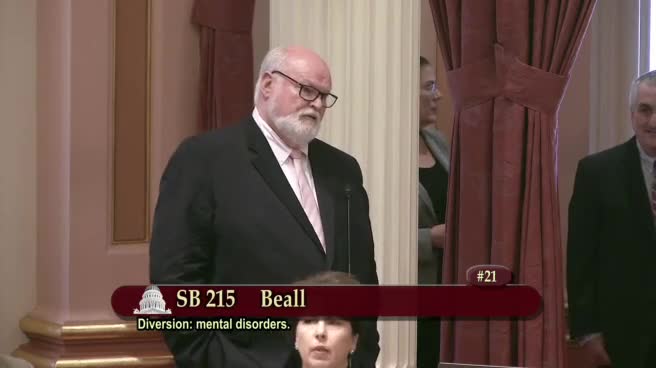 5MIN
Senate Floor
 1MIN
Assembly Floor
 1MIN
Assembly Floor
 1H
Assembly Standing Committee on Appropriations
 2MIN
Assembly Standing Committee on Judiciary
 37SEC
Senate Floor
 48MIN
Senate Standing Committee on Appropriations
 1MIN
Senate Standing Committee on Appropriations
Bill Author

Bill Co-Author(s):
