SB 278: CalFresh: overissuance.
- Session Year: 2017-2018
- House: Senate
- Latest Version Date: 2017-09-30
Existing law provides for the federal Supplemental Nutrition Assistance Program (SNAP), administered in California as CalFresh, under which each county distributes nutrition assistance benefits provided by the federal government to eligible households. Existing law requires each county human services agency to carry out the local administrative responsibilities of this program, subject to the supervision of the State Department of Social Services and to rules and regulations adopted by the department. Existing law requires current and future CalFresh benefits to be reduced, as specified, to recover an overissuance caused by administrative error if required by federal law, or if the overissuance exceeds $125 or the minimum cost-effective threshold for collecting overissuances that the department is authorized to establish, whichever is greater.
This bill would require the department, by January 1, 2019, to finalize an analysis and determine whether it has adequate information to set a minimum statewide cost-effective threshold for collecting overissuances that are greater than $125, and, if it has adequate information, to include that greater threshold in the states claims management plan that is submitted for approval to the United States Department of Agriculture (USDA), Food and Nutrition Service (FNS). The bill would require the department to establish a minimum statewide cost-effective threshold if the claims management plan includes that threshold and the USDA FNS approves the plan. The bill would require the department to submit a report to the Legislature detailing the results of the analysis, as specified, if the department determines that it does not have adequate information to set the minimum statewide cost-effective threshold described above.
Existing federal law requires, if the Secretary of Agriculture of the United States determines that there has been negligence or fraud on part of a state in the certification of applicant households, the state to deposit into the Treasury of the United States, a sum equal to the face value of any benefits issued as a result of the negligence or fraud. Existing federal law authorizes the secretary, if he or she determines that a state overissued benefits to a substantial number of households in a fiscal year as a result of a major systemic error by the state, to prohibit the state from collecting these overissuances and requires the secretary to establish a claim against the state equal to the value of the overissuance caused by the systemic error.
This bill would require a county human services agency to notify the department when a mass overissuance, as defined, has been identified, and to include in the notification information about whether the mass overissuance was caused by specified events. The bill would require the department to report mass overissuances to the USDA FNS, in accordance with federal law and guidance. By increasing the duties of local officials, the bill would impose a state-mandated local program.
The California Constitution requires the state to reimburse local agencies and school districts for certain costs mandated by the state. Statutory provisions establish procedures for making that reimbursement.
This bill would provide that, if the Commission on State Mandates determines that the bill contains costs mandated by the state, reimbursement for those costs shall be made pursuant to the statutory provisions noted above.
Existing law provides for the federal Supplemental Nutrition Assistance Program (SNAP), administered in California as CalFresh, under which each county distributes nutrition assistance benefits provided by the federal government to eligible households. Existing law requires each county human services agency to carry out the local administrative responsibilities of this program, subject to the supervision of the State Department of Social Services and to rules and regulations adopted by the department. Existing law requires current and future CalFresh benefits to be reduced, as specified, to recover an overissuance caused by administrative error if required by federal law, or if the overissuance exceeds $125 or the minimum cost-effective threshold for collecting overissuances that the department is authorized to establish, whichever is greater.
This bill would specify that the department is authorized to establish a minimum statewide cost-effective threshold for collecting overissuances that are caused by administrative error from former CalFresh recipients. If the department does not establish a minimum statewide cost-effective threshold, the bill would authorize a county to request that the state allow for a minimum county cost-effective threshold, as specified. If a county makes that request, the bill would require the department to include the request in the state plan submitted annually to the United States Department of Agriculture, Food and Nutrition Service. require the department, by January 1, 2019, to finalize an analysis and determine whether it has adequate information to set a minimum statewide cost-effective threshold for collecting overissuances that are greater than $125, and, if it has adequate information, to include that greater threshold in the states claims management plan that is submitted for approval to the United States Department of Agriculture (USDA), Food and Nutrition Service (FNS). The bill would require the department to establish a minimum statewide cost-effective threshold if the claims management plan includes that threshold and the USDA FNS approves the plan.
Existing federal law requires, if the Secretary of Agriculture of the United States determines that there has been negligence or fraud on part of a state in the certification of applicant households, the state to deposit into the Treasury of the United States, a sum equal to the face value of any benefits issued as a result of the negligence or fraud. Existing federal law authorizes the secretary, if he or she determines that a state overissued benefits to a substantial number of households in a fiscal year as a result of a major systemic error by the state, to prohibit the state from collecting these overissuances and requires the secretary to establish a claim against the state equal to the value of the overissuance caused by the systemic error.
This bill would require a county human services agency to notify the State Department of Social Services and recipients impacted by a mass overissuance department when a mass overissuance, as defined, has been identified. The bill would require the department to determine whether the state or county may be required to pay the mass overissuance pursuant to the above-mentioned federal law. The bill would require the department, if it makes that determination, to notify the regional office of the United States Department of Agriculture of the mass overissuance and the cause of the overissuance, and would require the State Department of Social Services to facilitate payment if the Secretary of Agriculture of the United States determines that the mass overissuance shall be paid by the state or county. The bill would prohibit the county from beginning to collect for an overissuance from current or former CalFresh recipients unless it has been determined that neither the county nor the state is responsible for payment of the mass overissuance. identified, and to include in the notification information about whether the mass overissuance was caused by specified events. The bill would require the department to report mass overissuances to the USDA FNS, in accordance with federal law and guidance. By increasing the duties of local officials, the bill would impose a state-mandated local program.
The California Constitution requires the state to reimburse local agencies and school districts for certain costs mandated by the state. Statutory provisions establish procedures for making that reimbursement.
This bill would provide that, if the Commission on State Mandates determines that the bill contains costs mandated by the state, reimbursement for those costs shall be made pursuant to the statutory provisions noted above.
Existing law provides for the federal Supplemental Nutrition Assistance Program (SNAP), administered in California as CalFresh, under which each county distributes nutrition assistance benefits provided by the federal government to eligible households. Existing law requires each county human services agency to carry out the local administrative responsibilities of this program, subject to the supervision of the State Department of Social Services and to rules and regulations adopted by the department. Existing law requires current and future CalFresh benefits to be reduced, as specified, to recover an overissuance caused by administrative error if required by federal law, or if the overissuance exceeds $125 or the minimum cost-effective threshold for collecting overissuances that the department is authorized to establish, whichever is greater.
This bill would instead require the department to establish the minimum specify that the department is authorized to establish a minimum statewide cost-effective threshold for collecting overissuances that are caused by administrative error from former CalFresh recipients. If the department does not establish a minimum statewide cost-effective threshold, the bill would authorize a county to request that the state allow for a minimum county cost-effective threshold, as specified. If a county makes that request, the bill would require the department to include the request in the state plan submitted annually to the United States Department of Agriculture, Food and Nutrition Service.
Existing federal law requires, if the Secretary of Agriculture of the United States determines that there has been negligence or fraud on part of a state in the certification of applicant households, the state to deposit into the Treasury of the United States, a sum equal to the face value of any benefits issued as a result of the negligence or fraud. Existing federal law authorizes the secretary, if he or she determines that a state overissued benefits to a substantial number of households in a fiscal year as a result of a major systemic error by the state, to prohibit the state from collecting these overissuances and requires the secretary to establish a claim against the state equal to the value of the overissuance caused by the systemic error.
This bill would require a county human services agency to notify the State Department of Social Services and recipients impacted by a mass overissuance when a mass overissuance, as defined, has been identified. The bill would require the department to determine whether the state or county may be required to pay the mass overissuance pursuant to the above-mentioned federal law. The bill would require the department, if it makes that determination, to notify the regional office of the United States Department of Agriculture of the mass overissuance and the cause of the overissuance, and would require the State Department of Social Services to facilitate payment if the Secretary of Agriculture of the United States determines that the mass overissuance shall be paid by the state or county. The bill would prohibit the county from beginning to collect for an overissuance from current or former CalFresh recipients until unless it has been determined that neither the county nor the state is responsible for payment of the mass overissuance. By increasing the duties of local officials, the bill would impose a state-mandated local program.
The California Constitution requires the state to reimburse local agencies and school districts for certain costs mandated by the state. Statutory provisions establish procedures for making that reimbursement.
This bill would provide that, if the Commission on State Mandates determines that the bill contains costs mandated by the state, reimbursement for those costs shall be made pursuant to the statutory provisions noted above.
Existing law provides for the federal Supplemental Nutrition Assistance Program (SNAP), administered in California as CalFresh, under which each county distributes nutrition assistance benefits provided by the federal government to eligible households. Existing law requires each county human services agency to carry out the local administrative responsibilities of this program, subject to the supervision of the State Department of Social Services and to rules and regulations adopted by the department. Existing law requires current and future CalFresh benefits to be reduced, as specified, to recover an overissuance caused by administrative error if required by federal law, or if the overissuance exceeds $125 or the minimum cost-effective threshold for collecting overissuances that the department is authorized to establish, whichever is greater.
This bill would instead require the department to establish the minimum cost-effective threshold. threshold for collecting overissuances that are caused by administrative error from former CalFresh recipients.
Existing federal law requires, if the Secretary of Agriculture of the United States determines that there has been negligence or fraud on part of a state in the certification of applicant households, the state to deposit into the Treasury of the United States, a sum equal to the face value of any benefits issued as a result of the negligence or fraud. Existing federal law authorizes the secretary, if he or she determines that a state overissued benefits to a substantial number of households in a fiscal year as a result of a major systemic error by the state, to prohibit the state from collecting these overissuances and requires the secretary to establish a claim against the state equal to the value of the overissuance caused by the systemic error.
This bill would require a county human services agency to notify the State Department of Social Services and recipients impacted by a mass overissuance when a mass overissuance, as defined, has been identified prior to sending out notices of action to recipients, and identified. The bill would require the department to determine whether the state or county may be required to pay the mass overissuance pursuant to the above-mentioned federal law. The bill would require the department, if it makes that determination, to notify the regional office of the United States Department of Agriculture of the mass overissuance and the cause of the overissuance, and would require the State Department of Social Services to facilitate payment if the Secretary of Agriculture of the United States determines that the mass overissuance shall be paid by the state or county. The bill would prohibit the county from beginning to collect for an overissuance from current or former CalFresh recipients until it has been determined that neither the county nor the state is responsible for payment of the mass overissuance. By increasing the duties of local officials, the bill would impose a state-mandated local program.
The California Constitution requires the state to reimburse local agencies and school districts for certain costs mandated by the state. Statutory provisions establish procedures for making that reimbursement.
This bill would provide that, if the Commission on State Mandates determines that the bill contains costs mandated by the state, reimbursement for those costs shall be made pursuant to the statutory provisions noted above.
Existing law provides for the federal Supplemental Nutrition Assistance Program (SNAP), administered in California as CalFresh, under which each county distributes nutrition assistance benefits provided by the federal government to eligible households. Existing law requires each county human services agency to carry out the local administrative responsibilities of this program, subject to the supervision of the State Department of Social Services and to rules and regulations adopted by the department. Existing law requires current and future CalFresh benefits to be reduced, as specified, to recover an overissuance caused by administrative error if required by federal law, or if the overissuance exceeds $125 or the minimum cost-effective threshold for collecting overissuances that the department is authorized to establish, whichever is greater.
This bill would instead require the department establish the minimum cost-effective threshold.
Existing federal law requires, if the Secretary of Agriculture of the United States determines that there has been negligence or fraud on part of a state in the certification of applicant households, the state to deposit into the Treasury of the United States, a sum equal to the face value of any benefits issued as a result of the negligence or fraud. Existing federal law authorizes the secretary, if he or she determines that a state overissued benefits to a substantial number of households in a fiscal year as a result of a major systemic error by the state, to prohibit the state from collecting these overissuances and requires the secretary to establish a claim against the state equal to the value of the overissuance caused by the systemic error.
This bill would require a county human services agency to notify the State Department of Social Services when a mass overissuance, as defined, has been identified prior to sending out notices of action to recipients, and would require the department to determine whether the state or county may be required to pay the mass overissuance pursuant to the above-mentioned federal law. The bill would require the department, if it makes that determination, to notify the regional office of the United States Department of Agriculture of the mass overissuance and the cause of the overissuance, and would require the State Department of Social Services to facilitate payment if the Secretary of Agriculture determines that the mass overissuance shall be paid by the state or county. By increasing the duties of local officials, the bill would impose a state-mandated local program.
The California Constitution requires the state to reimburse local agencies and school districts for certain costs mandated by the state. Statutory provisions establish procedures for making that reimbursement.
This bill would provide that, if the Commission on State Mandates determines that the bill contains costs mandated by the state, reimbursement for those costs shall be made pursuant to the statutory provisions noted above.
(a)Current and future CalFresh benefits shall be reduced in accordance with subdivisions (c) and (d) to recover an overissuance caused by intentional program violation, as defined in subdivision (c) of Section 273.16 of Title 7 of the Code of Federal Regulations, fraud, or inadvertent household error.
(b)Current and future CalFresh benefits shall be reduced in accordance with subdivisions (c) and (d) to recover an overissuance caused by administrative error if required by federal law or if the overissuance exceeds one hundred twenty-five dollars ($125) or the threshold established pursuant to subdivision (h), whichever is greater.
(c)A households CalFresh benefits shall not be reduced to recover an overissuance as required or authorized by subdivision (a) or (b) unless the household receives adequate and timely notice of the overissuance, including, but not limited to, the budget worksheet that includes the amount and calculation of the overissuance and the reason for the overissuance.
(d)(1)In recovering an overissuance caused by administrative error, a recipient households monthly CalFresh benefits shall not be reduced by more than 5 percent of the households monthly CalFresh benefits or ten dollars ($10), whichever is greater, unless the recipient elects for the benefits to be reduced at a higher rate.
(2)In recovering an overissuance caused by inadvertent household error, a recipient households monthly CalFresh benefits shall not be reduced by more than 10 percent of the households monthly CalFresh benefits or ten dollars ($10), whichever is greater.
(3)In recovering an overissuance caused by intentional program violation, as defined in subdivision (c) of Section 273.16 of Title 7 of the Code of Federal Regulations, or fraud, a recipient households monthly CalFresh benefits shall be reduced by 20 percent of the households monthly CalFresh benefit or twenty dollars ($20), whichever is greater.
(e)If a household is no longer receiving CalFresh benefits, a CalFresh overissuance caused by administrative error shall not be established, and collection shall not be attempted, if the overissuance is less than one hundred twenty-five dollars ($125) or the threshold established pursuant to subdivision (h), whichever is greater.
(f)If a household is no longer receiving CalFresh benefits, collection shall be attempted if the overissuance is caused by inadvertent household error and the overissuance is thirty-five dollars ($35) or more. All overissuances caused by intentional program violation, as defined in subdivision (c) of Section 273.16 of Title 7 of the Code of Federal Regulations, or fraud shall be collected as required by federal law.
(g)When an overissuance collection is attempted, reasonable cost-effective methods of collection shall be implemented. The department shall define reasonable cost-effective collection methods, which shall include adequate and timely notice of the overissuance, including, but not limited to, all of the following:
(1)The amount and calculation of, and reason for, the overissuance.
(2)A statement of the monetary threshold described in this subdivision.
(3)Information about how to appeal the overissuance.
(4)Instructions for timely commencement of repayment.
(5)Consequences of delinquent payment.
(h)(1)No later than January 1, 2019, the department shall finalize an analysis and make a determination as to whether it has adequate information to set a minimum statewide cost-effective threshold for collecting CalFresh overissuances from former CalFresh recipients that are caused by administrative error that is higher than the threshold established by subdivision (e).
(2)Notwithstanding Section 10231.5 of the Government Code, if, upon finalization of the analysis, the department determines that it does not have adequate information to set a minimum statewide cost-effective threshold for collecting CalFresh overissuances, the department shall submit a report to the Legislature within three months of finalizing the analysis detailing the results of the analysis, as well as the data, methodology, and criteria used to reach the conclusions of the analysis. The report shall be submitted in compliance with Section 9795 of the Government Code.
(3)If, at any time, the department determines that there is adequate information to set a statewide minimum cost-effective threshold greater than the threshold set in subdivision (e), that greater threshold shall be included in the states claims management plan submitted for approval by the United States Department of Agriculture (USDA), Food and Nutrition Service (FNS).
(4)The department shall establish a minimum statewide cost-effective threshold for collecting CalFresh overissuances from former CalFresh recipients that are caused by administrative error that is higher than the threshold set in subdivision (e), if a higher minimum cost-effective threshold has been included in the states claims management plan and that plan has been approved by the USDA FNS.
(i)Nothing in this section shall prevent a county from writing off or terminating an overissuance claim when it meets the provisions of paragraph (8) of subdivision (e) of Section 273.18 of Title 7 of the Code of Federal Regulations.
(j)Nothing in this section shall prevent a county or the state from collecting all overissuances that are identified during a quality control review, as required by Section 275.12 of Title 7 of the Code of Federal Regulations.
(k)Notwithstanding the rulemaking provisions of the Administrative Procedure Act (Chapter 3.5 (commencing with Section 11340) of Part 1 of Division 3 of Title 2 of the Government Code), the department may implement this section through all-county letters or similar instructions from the director no later than January 1, 2014, to allow for automation updates required by this section to be made in coordination with other scheduled updates.
SEC. 2.Section 18927.5 is added to the Welfare and Institutions Code, to read:18927.5.(a)A county human services agency shall notify the department when a mass overissuance has been identified, and include information in the notification as to whether the mass overissuance is known to have been caused by either of the following:
(1)Negligence or fraud on the part of the county human services agency in the certification of applicant households, as defined by subdivision (h) of Section 2020 of Title 7 of the United States Code.
(2)A major systemic error by the state or county human services agency, as defined by paragraph (5) of subdivision (b) of Section 2022 of Title 7 of the United States Code.
(b)For purposes of this section, mass overissuance means an overissuance that is caused by the same action or inaction and impacts either 8 percent of the county CalFresh caseload, or more than 1,000 CalFresh households within the county, whichever is greater.
(c)The department shall report mass overissuances to the United States Department of Agriculture, Food and Nutrition Service, as required by federal law and guidance.
SEC. 3.If the Commission on State Mandates determines that this act contains costs mandated by the state, reimbursement to local agencies and school districts for those costs shall be made pursuant to Part 7 (commencing with Section 17500) of Division 4 of Title 2 of the Government Code.
(a)Current and future CalFresh benefits shall be reduced in accordance with subdivisions (c) and (d) to recover an overissuance caused by intentional program violation, as defined in subdivision (c) of Section 273.16 of Title 7 of the Code of Federal Regulations, fraud, or inadvertent household error.
(b)Current and future CalFresh benefits shall be reduced in accordance with subdivisions (c) and (d) to recover an overissuance caused by administrative error if required by federal law or if the overissuance exceeds one hundred twenty-five dollars ($125) or the threshold established pursuant to subdivision (h), whichever is greater.
(c)A households CalFresh benefits shall not be reduced to recover an overissuance as required or authorized by subdivision (a) or (b) unless the household receives adequate and timely notice of the overissuance, including, but not limited to, the budget worksheet that includes the amount and calculation of the overissuance and the reason for the overissuance.
(d)(1)In recovering an overissuance caused by administrative error, a recipient households monthly CalFresh benefits shall not be reduced by more than 5 percent of the households monthly CalFresh benefits or ten dollars ($10), whichever is greater, unless the recipient elects for the benefits to be reduced at a higher rate.
(2)In recovering an overissuance caused by inadvertent household error, a recipient households monthly CalFresh benefits shall not be reduced by more than 10 percent of the households monthly CalFresh benefits or ten dollars ($10), whichever is greater.
(3)In recovering an overissuance caused by intentional program violation, as defined in subdivision (c) of Section 273.16 of Title 7 of the Code of Federal Regulations, or fraud, a recipient households monthly CalFresh benefits shall be reduced by 20 percent of the households monthly CalFresh benefit or twenty dollars ($20), whichever is greater.
(e)If a household is no longer receiving CalFresh benefits, a CalFresh overissuance caused by administrative error shall not be established, and collection shall not be attempted, if the overissuance is less than one hundred twenty-five dollars ($125) or the threshold established pursuant to subdivision (h), whichever is greater.
(f)If a household is no longer receiving CalFresh benefits, collection shall be attempted if the overissuance is caused by inadvertent household error and the overissuance is thirty-five dollars ($35) or more. All overissuances caused by intentional program violation, as defined in subdivision (c) of Section 273.16 of Title 7 of the Code of Federal Regulations, or fraud shall be collected as required by federal law.
(g)When an overissuance collection is attempted, reasonable cost-effective methods of collection shall be implemented. The department shall define reasonable cost-effective collection methods, which shall include adequate and timely notice of the overissuance, including, but not limited to, all of the following:
(1)The amount and calculation of, and reason for, the overissuance.
(2)A statement of the monetary threshold described in this subdivision.
(3)Information about how to appeal the overissuance.
(4)Instructions for timely commencement of repayment.
(5)Consequences of delinquent payment.
(h)(1)No later than January 1, 2019, the department shall finalize an analysis and make a determination as to whether it has adequate information to set a minimum statewide cost-effective threshold for collecting CalFresh overissuances from former CalFresh recipients that are caused by administrative error that is higher than the threshold established by subdivision (e).
(2)Notwithstanding Section 10231.5 of the Government Code, if, upon finalization of the analysis, the department determines that it does not have adequate information to set a minimum statewide cost-effective threshold for collecting CalFresh overissuances, the department shall submit a report to the Legislature within three months of finalizing the analysis detailing the results of the analysis, as well as the data, methodology, and criteria used to reach the conclusions of the analysis. The report shall be submitted in compliance with Section 9795 of the Government Code.
(3)If, at any time, the department determines that there is adequate information to set a statewide minimum cost-effective threshold greater than the threshold set in subdivision (e), that greater threshold shall be included in the states claims management plan submitted for approval by the United States Department of Agriculture (USDA), Food and Nutrition Service (FNS).
(4)The department shall establish a minimum statewide cost-effective threshold for collecting CalFresh overissuances from former CalFresh recipients that are caused by administrative error that is higher than the threshold set in subdivision (e), if a higher minimum cost-effective threshold has been included in the states claims management plan and that plan has been approved by the USDA FNS.
(i)Nothing in this section shall prevent a county from writing off or terminating an overissuance claim when it meets the provisions of paragraph (8) of subdivision (e) of Section 273.18 of Title 7 of the Code of Federal Regulations.
(j)Nothing in this section shall prevent a county or the state from collecting all overissuances that are identified during a quality control review, as required by Section 275.12 of Title 7 of the Code of Federal Regulations.
(k)Notwithstanding the rulemaking provisions of the Administrative Procedure Act (Chapter 3.5 (commencing with Section 11340) of Part 1 of Division 3 of Title 2 of the Government Code), the department may implement this section through all-county letters or similar instructions from the director no later than January 1, 2014, to allow for automation updates required by this section to be made in coordination with other scheduled updates.
SEC. 2.Section 18927.5 is added to the Welfare and Institutions Code, to read:18927.5.(a)A county human services agency shall notify the department when a mass overissuance has been identified, and include information in the notification as to whether the mass overissuance is known to have been caused by either of the following:
(1)Negligence or fraud on the part of the county human services agency in the certification of applicant households, as defined by subdivision (h) of Section 2020 of Title 7 of the United States Code.
(2)A major systemic error by the state or county human services agency, as defined by paragraph (5) of subdivision (b) of Section 2022 of Title 7 of the United States Code.
(b)For purposes of this section, mass overissuance means an overissuance that is caused by the same action or inaction and impacts either 8 percent of the county CalFresh caseload, or more than 1,000 CalFresh households, households within the county, whichever is greater.
(c)The department shall report mass overissuances to the United States Department of Agriculture, Food and Nutrition Services, Service, as required by federal law and guidance.
SEC. 3.If the Commission on State Mandates determines that this act contains costs mandated by the state, reimbursement to local agencies and school districts for those costs shall be made pursuant to Part 7 (commencing with Section 17500) of Division 4 of Title 2 of the Government Code.
(a)Current and future CalFresh benefits shall be reduced in accordance with subdivisions (c) and (d) to recover an overissuance caused by intentional program violation, as defined in subdivision (c) of Section 273.16 of Title 7 of the Code of Federal Regulations, fraud, or inadvertent household error.
(b)Current and future CalFresh benefits shall be reduced in accordance with subdivisions (c) and (d) to recover an overissuance caused by administrative error if required by federal law or if the overissuance exceeds one hundred twenty-five dollars ($125) or the threshold established pursuant to subdivision (h), whichever is greater.
(c)A households CalFresh benefits shall not be reduced to recover an overissuance as required or authorized by subdivision (a) or (b) unless the household receives adequate and timely notice of the overissuance, including, but not limited to, the budget worksheet that includes the amount and calculation of the overissuance and the reason for the overissuance.
(d)(1)In recovering an overissuance caused by administrative error, a recipient households monthly CalFresh benefits shall not be reduced by more than 5 percent of the households monthly CalFresh benefits or ten dollars ($10), whichever is greater, unless the recipient elects for the benefits to be reduced at a higher rate.
(2)In recovering an overissuance caused by inadvertent household error, a recipient households monthly CalFresh benefits shall not be reduced by more than 10 percent of the households monthly CalFresh benefits or ten dollars ($10), whichever is greater.
(3)In recovering an overissuance caused by intentional program violation, as defined in subdivision (c) of Section 273.16 of Title 7 of the Code of Federal Regulations, or fraud, a recipient households monthly CalFresh benefits shall be reduced by 20 percent of the households monthly CalFresh benefit or twenty dollars ($20), whichever is greater.
(e)If a household is no longer receiving CalFresh benefits, a CalFresh overissuance caused by administrative error shall not be established, and collection shall not be attempted, if the overissuance is less than one hundred twenty-five dollars ($125) or the threshold established pursuant to subdivision (h), whichever is greater.
(f)If a household is no longer receiving CalFresh benefits, collection shall be attempted if the overissuance is caused by inadvertent household error and the overissuance is thirty-five dollars ($35) or more. All overissuances caused by intentional program violation, as defined in subdivision (c) of Section 273.16 of Title 7 of the Code of Federal Regulations, or fraud shall be collected as required by federal law.
(g)When an overissuance collection is attempted, reasonable cost-effective methods of collection shall be implemented. The department shall define reasonable cost-effective collection methods, which shall include adequate and timely notice of the overissuance, including, but not limited to, all of the following:
(1)The amount and calculation of, and reason for, the overissuance.
(2)A statement of the monetary threshold described in this subdivision.
(3)Information about how to appeal the overissuance.
(4)Instructions for timely commencement of repayment.
(5)Consequences of delinquent payment.
(h)(1)No later than January 1, 2019, the department shall finalize an analysis and make a determination as to whether it has adequate information to set a minimum statewide cost-effective threshold for collecting CalFresh overissuances, overissuances from former CalFresh recipients that are caused by administrative error from former CalFresh recipients, that is greater higher than the threshold established by subdivision (e).
(2)Notwithstanding Section 10231.5 of the Government Code, if, upon finalization of the analysis, the department determines that it does not have adequate information to set a minimum statewide cost-effective threshold for collecting CalFresh overissuances, the department shall submit a report to the Legislature within three months of finalizing the analysis detailing the results of the analysis, as well as the data, methodology, and criteria used to reach the conclusions of the analysis. The report shall be submitted in compliance with Section 9795 of the Government Code.
(2)(3)If, at any time, the department determines that there is adequate information to set a statewide minimum cost-effective threshold greater than the threshold set in subdivision (e), that greater threshold shall be included in the states claims management plan submitted for approval by the United States Department of Agriculture (USDA), Food and Nutrition Service (FNS).
(3)(4)The department shall establish a minimum statewide cost-effective threshold for collecting CalFresh overissuances from former CalFresh recipients that are caused by administrative error from former CalFresh recipients that is higher than the threshold set in subdivision (e), if a higher minimum cost-effective threshold has been included in the states claims management plan and that plan has been approved by the USDA FNS.
(i)Nothing in this section shall prevent a county from writing off or terminating an overissuance claim when it meets the provisions of paragraph (8) of subdivision (e) of Section 273.18 of Title 7 of the Code of Federal Regulations.
(j)Nothing in this section shall prevent a county or the state from collecting all overissuances that are identified during a quality control review, as required by Section 275.12 of Title 7 of the Code of Federal Regulations.
(k)Notwithstanding the rulemaking provisions of the Administrative Procedure Act (Chapter 3.5 (commencing with Section 11340) of Part 1 of Division 3 of Title 2 of the Government Code), the department may implement this section through all-county letters or similar instructions from the director no later than January 1, 2014, to allow for automation updates required by this section to be made in coordination with other scheduled updates.
SEC. 2.Section 18927.5 is added to the Welfare and Institutions Code, to read:18927.5.(a)A county human services agency shall notify the department when a mass overissuance has been identified, and include information in the notification as to whether the mass overissuance is known to have been cause caused by either of the following:
(1)Negligence or fraud on the part of the county human services agency in the certification of applicant households, as defined by subdivision (h) of Section 2020 of Title 7 of the United States Code.
(2)A major systemic error by the state or county human services agency, as defined by paragraph (5) of subdivision (b) of Section 2022 of Title 7 of the United States Code.
(b)For purposes of this section, mass overissuance means an overissuance that is caused by the same action or inaction and impacts either 8 percent of the county CalFresh caseload, or more than 1,000 CalFresh households, whichever is greater.
(c)The department shall report mass overissuances to the United States Department of Agriculture Agriculture, Food and Nutrition Services Services, as required by federal law and guidance.
SEC. 3.If the Commission on State Mandates determines that this act contains costs mandated by the state, reimbursement to local agencies and school districts for those costs shall be made pursuant to Part 7 (commencing with Section 17500) of Division 4 of Title 2 of the Government Code.
(a)Current and future CalFresh benefits shall be reduced in accordance with subdivisions (c) and (d) to recover an overissuance caused by intentional program violation, as defined in subdivision (c) of Section 273.16 of Title 7 of the Code of Federal Regulations, fraud, or inadvertent household error.
(b)Current and future CalFresh benefits shall be reduced in accordance with subdivisions (c) and (d) to recover an overissuance caused by administrative error if required by federal law or if the overissuance exceeds one hundred twenty-five dollars ($125) or the threshold established pursuant to subdivision (h), whichever is greater.
(c)A households CalFresh benefits shall not be reduced to recover an overissuance as required or authorized by subdivision (a) or (b) unless the household receives adequate and timely notice of the overissuance, including, but not limited to, the budget worksheet that includes the amount and calculation of the overissuance and the reason for the overissuance.
(d)(1)In recovering an overissuance caused by administrative error, a recipient households monthly CalFresh benefits shall not be reduced by more than 5 percent of the households monthly CalFresh benefits or ten dollars ($10), whichever is greater, unless the recipient elects for the benefits to be reduced at a higher rate.
(2)In recovering an overissuance caused by inadvertent household error, a recipient households monthly CalFresh benefits shall not be reduced by more than 10 percent of the households monthly CalFresh benefits or ten dollars ($10), whichever is greater.
(3)In recovering an overissuance caused by intentional program violation, as defined in subdivision (c) of Section 273.16 of Title 7 of the Code of Federal Regulations, or fraud, a recipient households monthly CalFresh benefits shall be reduced by 20 percent of the households monthly CalFresh benefit or twenty dollars ($20), whichever is greater.
(e)If a household is no longer receiving CalFresh benefits, a CalFresh overissuance caused by administrative error shall not be established, and collection shall not be attempted, if the overissuance is less than one hundred twenty-five dollars ($125) or the threshold established pursuant to subdivision (h), whichever is greater.
(f)If a household is no longer receiving CalFresh benefits, collection shall be attempted if the overissuance is caused by inadvertent household error and the overissuance is thirty-five dollars ($35) or more. All overissuances caused by intentional program violation, as defined in subdivision (c) of Section 273.16 of Title 7 of the Code of Federal Regulations, or fraud shall be collected as required by federal law.
(g)When an overissuance collection is attempted, reasonable cost-effective methods of collection shall be implemented. The department shall define reasonable cost-effective collection methods, which shall include adequate and timely notice of the overissuance, including, but not limited to, all of the following:
(1)The amount and calculation of, and reason for, the overissuance.
(2)A statement of the monetary threshold described in this subdivision.
(3)Information about how to appeal the overissuance.
(4)Instructions for timely commencement of repayment.
(5)Consequences of delinquent payment.
(h)(1)The department may establish a minimum statewide cost-effective threshold for collecting CalFresh overissuances that are caused by administrative error from former CalFresh recipients. If the department determines that the minimum cost-effective threshold is greater than one hundred twenty-five dollars ($125), this threshold shall be included in the states claims management plan submitted annually for federal approval.(2)(A)If the department does not establish a minimum statewide cost-effective threshold for collecting CalFresh overissuances pursuant to paragraph (1), a county may request that the state allow for a minimum county cost-effective threshold based on calculations for cost-effectiveness specific to that county.(B)If a county requests that the state allow for a minimum county cost-effective threshold, the department shall include this request in the state plan submitted annually to the United States Department of Agriculture, Food and Nutrition Service.(h)(1)No later than January 1, 2019, the department shall finalize an analysis and make a determination as to whether it has adequate information to set a minimum statewide cost-effective threshold for collecting CalFresh overissuances, that are caused by administrative error from former CalFresh recipients, that is greater than the threshold established by subdivision (e).
(2)If, at any time, the department determines that there is adequate information to set a statewide minimum cost-effective threshold greater than the threshold set in subdivision (e), that greater threshold shall be included in the states claims management plan submitted for approval by the United States Department of Agriculture (USDA), Food and Nutrition Service (FNS).
(3)The department shall establish a minimum statewide cost-effective threshold for collecting CalFresh overissuances that are caused by administrative error from former CalFresh recipients that is higher than the threshold set in subdivision (e), if a higher minimum cost-effective threshold has been included in the states claims management plan and that plan has been approved by the USDA FNS.
(i)Nothing in this section shall prevent a county from writing off or terminating an overissuance claim when it meets the provisions of paragraph (8) of subdivision (e) of Section 273.18 of Title 7 of the Code of Federal Regulations.
(j)Nothing in this section shall prevent a county or the state from collecting all overissuances that are identified during a quality control review, as required by Section 275.12 of Title 7 of the Code of Federal Regulations.
(k)Notwithstanding the rulemaking provisions of the Administrative Procedure Act (Chapter 3.5 (commencing with Section 11340) of Part 1 of Division 3 of Title 2 of the Government Code), the department may implement this section through all-county letters or similar instructions from the director no later than January 1, 2014, to allow for automation updates required by this section to be made in coordination with other scheduled updates.
SEC. 2.Section 18927.5 is added to the Welfare and Institutions Code, to read:18927.5.(a)A county human services agency shall notify the department and recipients impacted by a mass overissuance when a mass overissuance has been identified. The county shall not begin collecting for an overissuance from current or former CalFresh recipients unless either the department or the United States Department of Agriculture has determined, pursuant to subdivision (c), that neither the county, nor the state, is responsible for payment of the mass overissuance. identified, and include information in the notification as to whether the mass overissuance is known to have been cause by either of the following:
(b)If a county human services agency has reported a mass overissuance pursuant to subdivision (a), the department shall determine whether the state or county may be required to pay the mass overissuance pursuant to either of the following provisions:(1)Section 2020(h) of Title 7 of the United States Code because the mass overissuance was caused by negligence Negligence or fraud on the part of the county human services agency in the certification of applicant households. households, as defined by subdivision (h) of Section 2020 of Title 7 of the United States Code.
(2)Section 2022(b)(5) of Title 7 of the United States Code because the mass overissuance was a result of a A major systemic error by the state or county human services agency. agency, as defined by paragraph (5) of subdivision (b) of Section 2022 of Title 7 of the United States Code.
(c)If the department determines that the state or county may be required to pay the mass overissuance pursuant to subdivision (b), the department shall notify the regional office of the United States Department of Agriculture of the mass overissuance and the cause of the overissuance, and the department shall facilitate payment if the Secretary of Agriculture of the United States determines that the mass overissuance shall be paid by the state or county. (d)(b)For purposes of this section, mass overissuance means an overissuance that is caused by the same action or inaction, impacts 1,000 or more CalFresh households, and occurs in either of the following: inaction and impacts either 8 percent of the county CalFresh caseload, or more than 1,000 CalFresh households, whichever is greater.
(1)A single Statewide Automated Welfare System consortium system.(2)A single county, but only if the county is a Performance Sample County identified in the departments Manual of Policies and Procedures.(c)The department shall report mass overissuances to the United States Department of Agriculture Food and Nutrition Services as required by federal law and guidance.
SEC. 3.If the Commission on State Mandates determines that this act contains costs mandated by the state, reimbursement to local agencies and school districts for those costs shall be made pursuant to Part 7 (commencing with Section 17500) of Division 4 of Title 2 of the Government Code.
(a)Current and future CalFresh benefits shall be reduced in accordance with subdivisions (c) and (d) to recover an overissuance caused by intentional program violation, as defined in subdivision (c) of Section 273.16 of Title 7 of the Code of Federal Regulations, fraud, or inadvertent household error.
(b)Current and future CalFresh benefits shall be reduced in accordance with subdivisions (c) and (d) to recover an overissuance caused by administrative error if required by federal law or if the overissuance exceeds one hundred twenty-five dollars ($125) or the threshold established pursuant to subdivision (h), whichever is greater.
(c)A households CalFresh benefits shall not be reduced to recover an overissuance as required or authorized by subdivision (a) or (b) unless the household receives adequate and timely notice of the overissuance, including, but not limited to, the budget worksheet that includes the amount and calculation of the overissuance and the reason for the overissuance.
(d)(1)In recovering an overissuance caused by administrative error, a recipient households monthly CalFresh benefits shall not be reduced by more than 5 percent of the households monthly CalFresh benefits or ten dollars ($10), whichever is greater, unless the recipient elects for the benefits to be reduced at a higher rate.
(2)In recovering an overissuance caused by inadvertent household error, a recipient households monthly CalFresh benefits shall not be reduced by more than 10 percent of the households monthly CalFresh benefits or ten dollars ($10), whichever is greater.
(3)In recovering an overissuance caused by intentional program violation, as defined in subdivision (c) of Section 273.16 of Title 7 of the Code of Federal Regulations, or fraud, a recipient households monthly CalFresh benefits shall be reduced by 20 percent of the households monthly CalFresh benefit or twenty dollars ($20), whichever is greater.
(e)If a household is no longer receiving CalFresh benefits, a CalFresh overissuance caused by administrative error shall not be established, and collection shall not be attempted, if the overissuance is less than one hundred twenty-five dollars ($125) or the threshold established pursuant to subdivision (h), whichever is greater.
(f)If a household is no longer receiving CalFresh benefits, collection shall be attempted if the overissuance is caused by inadvertent household error and the overissuance is thirty-five dollars ($35) or more. All overissuances caused by intentional program violation, as defined in subdivision (c) of Section 273.16 of Title 7 of the Code of Federal Regulations, or fraud shall be collected as required by federal law.
(g)When an overissuance collection is attempted, reasonable cost-effective methods of collection shall be implemented. The department shall define reasonable cost-effective collection methods, which shall include adequate and timely notice of the overissuance, including, but not limited to, all of the following:
(1)The amount and calculation of, and reason for, the overissuance.
(2)A statement of the monetary threshold described in this subdivision.
(3)Information about how to appeal the overissuance.
(4)Instructions for timely commencement of repayment.
(5)Consequences of delinquent payment.
(h)(1)The department shall may establish a minimum statewide cost-effective threshold for collecting CalFresh overissuances that are caused by administrative error from former CalFresh recipients. If the department determines that the minimum cost-effective threshold is greater than one hundred twenty-five dollars ($125), this threshold shall be included in the states claims management plan submitted annually for federal approval.
(2)(A)If the department does not establish a minimum statewide cost-effective threshold for collecting CalFresh overissuances pursuant to paragraph (1), a county may request that the state allow for a minimum county cost-effective threshold based on calculations for cost-effectiveness specific to that county.
(B)If a county requests that the state allow for a minimum county cost-effective threshold, the department shall include this request in the state plan submitted annually to the United States Department of Agriculture, Food and Nutrition Service.
(i)Nothing in this section shall prevent a county from writing off or terminating an overissuance claim when it meets the provisions of paragraph (8) of subdivision (e) of Section 273.18 of Title 7 of the Code of Federal Regulations.
(j)Nothing in this section shall prevent a county or the state from collecting all overissuances that are identified during a quality control review, as required by Section 275.12 of Title 7 of the Code of Federal Regulations.
(k)Notwithstanding the rulemaking provisions of the Administrative Procedure Act (Chapter 3.5 (commencing with Section 11340) of Part 1 of Division 3 of Title 2 of the Government Code), the department may implement this section through all-county letters or similar instructions from the director no later than January 1, 2014, to allow for automation updates required by this section to be made in coordination with other scheduled updates.
SEC. 2.Section 18927.5 is added to the Welfare and Institutions Code, to read:18927.5.(a)A county human services agency shall notify the department and recipients impacted by a mass overissuance when a mass overissuance has been identified. The county shall not begin collecting for an overissuance from current or former CalFresh recipients unless either the department or the United States Department of Agriculture has determined, pursuant to subdivision (c), that neither the county, nor the state, is responsible for payment of the mass overissuance.
(b)If a county human services agency has reported a mass overissuance pursuant to subdivision (a), the department shall determine whether the state or county may be required to pay the mass overissuance pursuant to either of the following provisions:
(1)Section 2020(h) of Title 7 of the United States Code because the mass overissuance was caused by negligence or fraud on the part of the county human services agency in the certification of applicant households.
(2)Section 2022(b)(5) of Title 7 of the United States Code because the mass overissuance was a result of a major systemic error by the state or county human services agency.
(c)If the department determines that the state or county may be required to pay the mass overissuance pursuant to subdivision (b), the department shall notify the regional office of the United States Department of Agriculture of the mass overissuance and the cause of the overissuance, and the department shall facilitate payment if the Secretary of Agriculture of the United States determines that the mass overissuance shall be paid by the state or county.
(d)For purposes of this section, mass overissuance means an overissuance that is caused by the same action or inaction, impacts 1,000 or more CalFresh households, and occurs in either of the following:
(1)A single Statewide Automated Welfare System consortium system.
(2)A single county, but only if the county is a Performance Sample County identified in the departments Manual of Policies and Procedures.
SEC. 3.If the Commission on State Mandates determines that this act contains costs mandated by the state, reimbursement to local agencies and school districts for those costs shall be made pursuant to Part 7 (commencing with Section 17500) of Division 4 of Title 2 of the Government Code.
(a)Current and future CalFresh benefits shall be reduced in accordance with subdivisions (c) and (d) to recover an overissuance caused by intentional program violation, as defined in subdivision (c) of Section 273.16 of Title 7 of the Code of Federal Regulations, fraud, or inadvertent household error.
(b)Current and future CalFresh benefits shall be reduced in accordance with subdivisions (c) and (d) to recover an overissuance caused by administrative error if required by federal law or if the overissuance exceeds one hundred twenty-five dollars ($125) or the threshold established pursuant to subdivision (h), whichever is greater.
(c)A households CalFresh benefits shall not be reduced to recover an overissuance as required or authorized by subdivision (a) or (b) unless the household receives adequate and timely notice of the overissuance, including, but not limited to, the budget worksheet that includes the amount and calculation of the overissuance and the reason for the overissuance.
(d)(1)In recovering an overissuance caused by administrative error, a recipient households monthly CalFresh benefits shall not be reduced by more than 5 percent of the households monthly CalFresh benefits or ten dollars ($10), whichever is greater, unless the recipient elects for the benefits to be reduced at a higher rate.
(2)In recovering an overissuance caused by inadvertent household error, a recipient households monthly CalFresh benefits shall not be reduced by more than 10 percent of the households monthly CalFresh benefits or ten dollars ($10), whichever is greater.
(3)In recovering an overissuance caused by intentional program violation, as defined in subdivision (c) of Section 273.16 of Title 7 of the Code of Federal Regulations, or fraud, a recipient households monthly CalFresh benefits shall be reduced by 20 percent of the households monthly CalFresh benefit or twenty dollars ($20), whichever is greater.
(e)If a household is no longer receiving CalFresh benefits, a CalFresh overissuance caused by administrative error shall not be established, and collection shall not be attempted, if the overissuance is less than one hundred twenty-five dollars ($125) or the threshold established pursuant to subdivision (h), whichever is greater.
(f)If a household is no longer receiving CalFresh benefits, collection shall be attempted if the overissuance is caused by inadvertent household error and the overissuance is thirty-five dollars ($35) or more. All overissuances caused by intentional program violation, as defined in subdivision (c) of Section 273.16 of Title 7 of the Code of Federal Regulations, or fraud shall be collected as required by federal law.
(g)When an overissuance collection is attempted, reasonable cost-effective methods of collection shall be implemented. The department shall define reasonable cost-effective collection methods, which shall include adequate and timely notice of the overissuance, including, but not limited to, all of the following:
(1)The amount and calculation of, and reason for, the overissuance.
(2)A statement of the monetary threshold described in this subdivision.
(3)Information about how to appeal the overissuance.
(4)Instructions for timely commencement of repayment.
(5)Consequences of delinquent payment.
(h)The department shall establish a minimum cost-effective threshold for collecting CalFresh overissuances. overissuances that are caused by administrative error from former CalFresh recipients. If the department determines that the minimum cost-effective threshold is greater than one hundred twenty-five dollars ($125), this threshold shall be included in the states claims management plan submitted annually for federal approval.
(i)Nothing in this section shall prevent a county from writing off or terminating an overissuance claim when it meets the provisions of paragraph (8) of subdivision (e) of Section 273.18 of Title 7 of the Code of Federal Regulations.
(j)Nothing in this section shall prevent a county or the state from collecting all overissuances that are identified during a quality control review, as required by Section 275.12 of Title 7 of the Code of Federal Regulations.
(k)Notwithstanding the rulemaking provisions of the Administrative Procedure Act (Chapter 3.5 (commencing with Section 11340) of Part 1 of Division 3 of Title 2 of the Government Code), the department may implement this section through all-county letters or similar instructions from the director no later than January 1, 2014, to allow for automation updates required by this section to be made in coordination with other scheduled updates.
SEC. 2.Section 18927.5 is added to the Welfare and Institutions Code, to read:18927.5.(a)A county human services agency shall notify the department and recipients impacted by a mass overissuance when a mass overissuance has been identified prior to sending out notices of action to recipients. identified. The county shall not begin collecting for an overissuance from current or former CalFresh recipients unless either the department or the United States Department of Agriculture has determined, pursuant to subdivision (c), that neither the county, nor the state, is responsible for payment of the mass overissuance.
(b)When If a county human services agency has reported a mass overissuance pursuant to paragraph subdivision (a), the department shall determine whether the state or county may be required to pay the mass overissuance pursuant to either of the following provisions:
(1)Section 2020(h) of Title 7 of the United States Code because the mass overissuance was caused by negligence or fraud on the part of the county human services agency in the certification of applicant households.
(2)Section 2022(b)(5) of Title 7 of the United States Code because the mass overissuance was a result of a major systemic error by the state or county human services agency.
(c)If the department determines that the state or county may be required to pay the mass overissuance pursuant to subdivision (b), the department shall notify the regional office of the United States Department of Agriculture of the mass overissuance and the cause of the overissuance, and the department shall facilitate payment if the Secretary of Agriculture of the United States determines that the mass overissuance shall be paid by the state or county.
(d)For purposes of this section, mass overissuance means an overissuance that is caused by the same action or inaction and inaction, impacts 1,000 or more CalFresh households. households, and occurs in either of the following:
(1)A single Statewide Automated Welfare System consortium system.
(2)A single county, but only if the county is a Performance Sample County identified in the departments Manual of Policies and Procedures.
SEC. 3.If the Commission on State Mandates determines that this act contains costs mandated by the state, reimbursement to local agencies and school districts for those costs shall be made pursuant to Part 7 (commencing with Section 17500) of Division 4 of Title 2 of the Government Code.
(a)Current and future CalFresh benefits shall be reduced in accordance with subdivisions (c) and (d) to recover an overissuance caused by intentional program violation, as defined in subdivision (c) of Section 273.16 of Title 7 of the Code of Federal Regulations, or fraud, or inadvertent household error.
(b)Current and future CalFresh benefits shall be reduced in accordance with subdivisions (c) and (d) to recover an overissuance caused by administrative error if required by federal law or if the overissuance exceeds one hundred twenty-five dollars ($125) or the threshold established pursuant to subdivision (h), whichever is greater.
(c)A households CalFresh benefits shall not be reduced to recover an overissuance as required or authorized by subdivision (a) or (b) unless the household receives adequate and timely notice of the overissuance, including, but not limited to, the budget worksheet that includes the amount and calculation of the overissuance and the reason for the overissuance.
(d)(1)In recovering an overissuance caused by administrative error, a recipient households monthly CalFresh benefits shall not be reduced by more than 5 percent of the households monthly CalFresh benefits or ten dollars ($10), whichever is greater, unless the recipient elects for the benefits to be reduced at a higher rate.
(2)In recovering an overissuance caused by inadvertent household error, a recipient households monthly CalFresh benefits shall not be reduced by more than 10 percent of the households monthly CalFresh benefits or ten dollars ($10), whichever is greater.
(3)In recovering an overissuance caused by intentional program violation, as defined in subdivision (c) of Section 273.16 of Title 7 of the Code of Federal Regulations, or fraud, a recipient households monthly CalFresh benefits shall be reduced by 20 percent of the households monthly CalFresh benefit or twenty dollars ($20), whichever is greater.
(e)If a household is no longer receiving CalFresh benefits, a CalFresh overissuance caused by administrative error shall not be established, and collection shall not be attempted, if the overissuance is less than one hundred twenty-five dollars ($125) or the threshold established pursuant to subdivision (h), whichever is greater.
(f)If a household is no longer receiving CalFresh benefits, collection shall be attempted if the overissuance is caused by inadvertent household error and the overissuance is thirty-five dollars ($35) or more. All overissuances caused by intentional program violation, as defined in subdivision (c) of Section 273.16 of Title 7 of the Code of Federal Regulations, or fraud shall be collected as required by federal law.
(g)When an overissuance collection is attempted, reasonable cost-effective methods of collection shall be implemented. The department shall define reasonable cost-effective collection methods, which shall include adequate and timely notice of the overissuance, including, but not limited to, all of the following:
(1)The amount and calculation of, and reason for, the overissuance.
(2)A statement of the monetary threshold described in this subdivision.
(3)Information about how to appeal the overissuance.
(4)Instructions for timely commencement of repayment.
(5)Consequences of delinquent payment.
(h)The department may shall establish a minimum cost-effective threshold for collecting CalFresh overissuances. If the department determines that the minimum cost-effective threshold is greater than one hundred twenty-five dollars ($125), this threshold shall be included in the states claims management plan submitted annually for federal approval.
(i)Nothing in this section shall prevent a county from writing off or terminating an overissuance claim when it meets the provisions of paragraph (8) of subdivision (e) of Section 273.18 of Title 7 of the Code of Federal Regulations.
(j)Nothing in this section shall prevent a county or the state from collecting all overissuances that are identified during a quality control review, as required by Section 275.12 of Title 7 of the Code of Federal Regulations.
(k)Notwithstanding the rulemaking provisions of the Administrative Procedure Act (Chapter 3.5 (commencing with Section 11340) of Part 1 of Division 3 of Title 2 of the Government Code), the department may implement this section through all-county letters or similar instructions from the director no later than January 1, 2014, to allow for automation updates required by this section to be made in coordination with other scheduled updates.
SEC. 2.Section 18927.5 is added to the Welfare and Institutions Code, to read:18927.5.(a)A county human services agency shall notify the department when a mass overissuance has been identified prior to sending out notices of action to recipients.
(b)When a county human services agency has reported a mass overissuance pursuant to paragraph (a), the department shall determine whether the state or county may be required to pay the mass overissuance pursuant to either of the following provisions:
(1)Section 2020(h) of Title 7 of the United States Code because the mass overissuance was caused by negligence or fraud on the part of the county human services agency in the certification of applicant households.
(2)Section 2022(b)(5) of Title 7 of the United States Code because the mass overissuance was a result of a major systemic error by the state or county human services agency.
(c)If the department determines that the state or county may be required to pay the mass overissuance pursuant to subdivision (b), the department shall notify the regional office of the United States Department of Agriculture of the mass overissuance and the cause of the overissuance, and the department shall facilitate payment if the Secretary of Agriculture determines that the mass overissuance shall be paid by the state or county.
(d)For purposes of this section, mass overissuance means an overissuance that is caused by the same action or inaction and impacts 1,000 or more CalFresh households.
SEC. 3.If the Commission on State Mandates determines that this act contains costs mandated by the state, reimbursement to local agencies and school districts for those costs shall be made pursuant to Part 7 (commencing with Section 17500) of Division 4 of Title 2 of the Government Code.
|
Date
|
Status
|
|---|---|
| Sep 30, 2017 | Chaptered by Secretary of State. Chapter 388, Statutes of 2017. |
| Sep 30, 2017 | Approved by the Governor. |
| Sep 12, 2017 | Enrolled and presented to the Governor at 3 p.m. |
| Sep 7, 2017 | Assembly amendments concurred in. (Ayes 39. Noes 0.) Ordered to engrossing and enrolling. |
| Sep 6, 2017 | Ordered to special consent calendar. |
| Sep 5, 2017 | In Senate. Concurrence in Assembly amendments pending. |
| Sep 5, 2017 | Read third time. Passed. Ordered to the Senate. |
| Aug 31, 2017 | Read third time and amended. |
| Aug 28, 2017 | From consent calendar on motion of Assembly Member Calderon. |
| Aug 24, 2017 | Read second time. Ordered to consent calendar. |
| Aug 23, 2017 | From committee: Do pass. Ordered to consent calendar. (Ayes 15. Noes 0.) (August 23). |
| Jul 18, 2017 | Read second time and amended. Re-referred to Com. on APPR. |
| Jul 17, 2017 | From committee: Do pass as amended and re-refer to Com. on APPR. (Ayes 7. Noes 0.) (July 11). |
| Jul 3, 2017 | From committee with author's amendments. Read second time and amended. Re-referred to Com. on HUM. S. |
| Jun 12, 2017 | Referred to Com. on HUM. S. |
| Jun 1, 2017 | In Assembly. Read first time. Held at Desk. |
| May 31, 2017 | Read third time. Passed. (Ayes 39. Noes 0. Page 1317.) Ordered to the Assembly. |
| May 26, 2017 | Read second time and amended. Ordered to third reading. |
| May 25, 2017 | From committee: Do pass as amended. (Ayes 7. Noes 0. Page 1181.) (May 25). |
| May 19, 2017 | Set for hearing May 25. |
| May 15, 2017 | May 15 hearing: Placed on APPR. suspense file. |
| May 4, 2017 | Set for hearing May 15. |
| Apr 27, 2017 | Read second time and amended. Re-referred to Com. on APPR. |
| Apr 26, 2017 | From committee: Do pass as amended and re-refer to Com. on APPR. (Ayes 4. Noes 0. Page 849.) (April 25). |
| Mar 22, 2017 | Set for hearing April 25. |
| Mar 21, 2017 | March 28 hearing postponed by committee. |
| Feb 28, 2017 | Set for hearing March 28. |
| Feb 23, 2017 | Referred to Com. on HUMAN S. |
| Feb 10, 2017 | From printer. May be acted upon on or after March 12. |
| Feb 9, 2017 | Introduced. Read first time. To Com. on RLS. for assignment. To print. |
|
Date
|
Description
|
Location
|
Votes
|
|
|---|---|---|---|---|
| Sep 7, 2017 | Special Consent Calendar # SB278 | Senate Floor |
Passed |
|
| Sep 5, 2017 | SB 278 Wiener Senate Third Reading By STONE | Assembly Floor |
Passed |
|
| Aug 23, 2017 | Do pass. To Consent Calendar. | Assembly Standing Committee on Appropriations |
Passed |
|
| Jul 11, 2017 | Do pass as amended and be re-referred to the Committee on [Appropriations] | Assembly Standing Committee on Human Services |
Passed |
|
| May 31, 2017 | Senate 3rd Reading SB278 Wiener | Senate Floor |
Passed |
|
| May 25, 2017 | Do pass as amended | Senate Standing Committee on Appropriations |
Passed |
|
| May 15, 2017 | Placed on suspense file | Senate Standing Committee on Appropriations |
Passed |
|
| Apr 25, 2017 | Do pass as amended, but first amend, and re-refer to the Committee on [Appropriations] | Senate Standing Committee on Human Services |
Passed |
This list shows positions taken on this bill by organizations on the date displayed, which is linked to the original source.
Positions by individuals are not included.
|
Organization
|
Position
|
Date
|
|---|---|---|
| Alameda County Community Food Bank | ** Support | Sep 5, 2017 |
| Assembly Floor: 75-1, 9 | ** Against | Sep 5, 2017 |
| Bay Area Legal Aid | ** Support | Sep 5, 2017 |
| Bay Legal | * Support | Jul 11, 2017 |
| California Association Of Food Banks | ** Support | Sep 5, 2017 |
| California Catholic Conference | ** Support | Sep 5, 2017 |
| California Food Policy Advocates | ** Support | Sep 5, 2017 |
| Children'S Defense Fund - California | ** Support | Sep 5, 2017 |
| Coalition of California Welfare Rights Organizations | ** Support | Sep 5, 2017 |
| Common Sense Kids Action | ** Support | Jul 7, 2017 |
| Courage Campaign | ** Support | Sep 5, 2017 |
| Department Of Finance | ** Against | Sep 5, 2017 |
| Feeding San Diego | ** Support | Sep 5, 2017 |
| Food Bank of Contra Costa & Solano County | ** Support | Sep 5, 2017 |
| National Association of Social Workers | ** Support | Sep 5, 2017 |
| No Vote Recorded: Eduardo Garcia, Ridley-Thomas, Steinorth | ** Against | Sep 5, 2017 |
| Noes: Travis Allen | ** Against | Sep 5, 2017 |
| western center on law and poverty | ** Support | Sep 5, 2017 |
Office of Senate Floor Analyses (916) 651-1520 Fax: (916) 327-4478 | SB |
UNFINISHED BUSINESS
Bill No: SB 278
:
SENATE HUMAN SERVICES COMMITTEE: 4-0, 4/25/17
AYES: Wiener, Berryhill, Glazer, Newman
NO VOTE RECORDED: Nguyen
SENATE APPROPRIATIONS COMMITTEE: 7-0, 5/25/17
AYES: Lara, Bates, Beall, Bradford, Hill, Nielsen, Wiener
SENATE FLOOR: 39-0, 5/31/17
AYES: Allen, Anderson, Atkins, Bates, Beall, Berryhill, Bradford, Cannella, De León, Dodd, Fuller, Gaines, Galgiani, Glazer, Hernandez, Hertzberg, Hill, Hueso, Jackson, Lara, Leyva, McGuire, Mendoza, Mitchell, Monning, Moorlach, Morrell, Newman, Nguyen, Nielsen, Pan, Roth, Skinner, Stern, Stone, Vidak, Wieckowski, Wiener, Wilk
NO VOTE RECORDED: Portantino
ASSEMBLY FLOOR: 75-1, 9/5/17 - See last page for vote
SOURCE: Coalition of California Welfare Rights Organizations, Inc.
Western Center on Law and Poverty
DIGEST:
This bill requires the California Department of Social Services (CDSS) to determine whether there is adequate information to set a minimum statewide cost-effective threshold for collecting CalFresh overissuances from former CalFresh recipients caused by an administrative error, and, if it determines that there is adequate information and other specified criteria are met, to set a minimum statewide cost-effective threshold for collecting these CalFresh overissuances.
Assembly Amendments
refine CDSS responsibilities with regard to setting and reporting minimum cost-effective threshold for mass overissuance, modify reporting requirements for county human services agencies in the event of a mass overissuance, and modify the definition of mass overissuance.
ANALYSIS:
Existing law:
- Establishes in federal law the Supplemental Nutrition Assistance Program (SNAP) within the United States Department of Agriculture (USDA) to promote the general welfare and to safeguard the health and wellbeing of the nation’s population by raising the levels of nutrition among low-income households. It establishes SNAP eligibility requirements, including income that is at or below 130 percent of the federal poverty level (FPL) and is determined to be a substantial limiting factor in permitting a recipient to obtain a more nutritious diet.
- Requires that, if the Secretary of the USDA determines that there has been negligence or fraud on the part of the state agency in the certification of applicant households, the state shall, upon request of the Secretary, deposit into the Treasury of the United States, a sum equal to the face value of any benefits issued as a result of such negligence or fraud.
- Permits the Secretary of the USDA to prohibit the state from collecting an overissuance from some or all households if the Secretary determines that a State agency over issued benefits to a substantial number of households in a fiscal year as a result of a major systemic error by the State agency. Requires the Secretary to establish a claim against the state equal to the value of the overissuance caused by the systemic error, as specified.
- Establishes in California statute the CalFresh program to administer the provisions of federal SNAP benefits to low-income families and individuals meeting specified criteria.
- Requires current and future CalFresh benefits to be reduced, as specified, to recover an overissuance caused by administrative error if required by federal law, or if the overissuance exceeds $125 or the minimum cost-effective threshold for collecting overissuances that the CDSS is authorized to establish, whichever is greater.
- Permits CDSS to establish a minimum cost-effective threshold for collecting CalFresh overissuances. If the department determines that the minimum cost-effective threshold is greater than $125, as specified.
This bill:
- Defines "mass overissuance" as an overissuance that is caused by the same action or inaction, and impacts the greater of either 8% of the county CalFresh caseload or 1,000 or more CalFresh households within the county.
- Requires CDSS, by January 1, 2019, to finalize an analysis and determine whether CDSS has adequate information to set a minimum statewide cost-effective threshold for collecting CalFresh overissuances from former CalFresh recipients caused by an administrative error that is higher than the threshold specified in current law.
- Requires CDSS, if it is determined that it does not have adequate information to set a minimum cost-effective threshold for collecting CalFresh overissuances, to submit a report to the Legislature within three months of finalizing the analysis detailing the results of this determination, as well as the data, methodology, and criteria used to reach the conclusions of the analysis, as specified.
- Deletes language permitting CDSS to choose whether to establish a minimum cost-effective threshold for collecting CalFresh overissuances from former CalFresh recipients. Instead requires that, if CDSS determines there is adequate information to set a statewide minimum cost-effective threshold that is higher than the threshold set forth in current law, that greater threshold shall be included in the state’s claims management plan, as specified.
- Requires CDSS to establish a minimum cost-effective threshold for collecting CalFresh overissuances from former CalFresh recipients that are caused by administrative error that is higher than the threshold set in current law, if a higher minimum cost-effective threshold has been included in the state’s claims management plan and that plan has been approved by the USDA Food and Nutrition Services (FNS).
- Requires a county human services agency to notify CDSS when a mass overissuance has been identified, and requires the notification to include information as to whether the mass overissuance was caused by either:
- Negligence or fraud on the part of the county human services agency in the certification of applicant households, as specified; or
- A major systemic error by the state or county human services agency, as specified.
- Requires CDSS to report mass overissuances to the USDA FNS as required by federal law and guidance.
- Makes technical changes.
Background
CalFresh provides qualified low-income households with EBT (electronic benefits transfer) cards which are used to purchase food and seeds or plants that grow food for human consumption. CalFresh is California’s version of the federal SNAP program. It is administered by CDSS at the state level. California’s 58 counties are responsible for administering the program at the local level. CalFresh benefits are 100 percent federally funded and national eligibility standards and benefit levels are established by the federal government.
To participate in CalFresh, households must meet certain income-eligibility standards. Generally, households must have gross income below 130 percent of the FPL, which is $26,208 for a family of three, and net income (after certain deductions) at or below 100 percent of FPL, which is $20,160 for a family of three. A household with an elderly person or a person who is receiving certain types of disability payments only has to meet the net income test. CalFresh benefit levels are based on the household size and income after certain deductions. The average monthly CalFresh benefit in FY 2016-17 is projected at $293 per household and $140 per person.
CalFresh Overissuance
An overissuance, also sometimes called a “claim” or an “overpayment,” occurs when a household gets more CalFresh benefits than it is eligible to receive. When an overissuance is detected, the county CalFresh office recalculates the amount that the recipient should have received and sends a notice to the household requiring that the amount be paid back, and that includes the methodology used to determine the amount to be repaid. CalFresh offices can recoup the overissuances in several ways, including offsets, which reduce subsequent benefits to the household until the amount is repaid, through installment payments, or by intercepting money owed to the family.
Per state regulations, there are three types of overissuances:
- Administrative (Agency) Error: Overissuance caused by the county human services agency. For example, failing to count income provided on official reporting documents or issuing benefits based on a household of four when there were only three people in the household.
- Inadvertent Household Error: Overissuance caused by the household’s unintentional mistake. For example, writing down net rather than gross income on a report form.
- Intentional Program Violation: Overissuance that the household caused on purpose to get CalFresh benefits that the household should not have received. For example, intentionally failing to report wages from a new job. Intentional Program Violations also include “trafficking” stamps.
For current recipients, county human services agencies work with the CalFresh recipients to pay back the overissuance. They do this by reducing the household’s monthly benefits until it is paid off. The county is limited to reducing a benefit no more than five percent per month as a result of an overissuance, unless the recipient affirmatively elects a higher monthly reduction in aid so as to pay off the overissuance faster.
When a household no longer receives CalFresh, members are still responsible for repaying the overissuance, though it becomes harder for the county to collect. This is why the federal government suggests collecting only those that are cost effective to collect. Sometimes counties leave overissuances to be collected by federal and state government through tax refunds or intercepts.
If a mass overissuance was caused by an action or inaction on the part of the county or the state under certain defined circumstances, FNS has the power to shift the burden of these overissuances from innocent families and onto the responsible entity as described below:
- If FNS determines that a substantial number of benefits were overissued because of a major systemic error by the state or the county human services agency, the state/county agency cannot establish claims against the CalFresh recipient household and the state/county agency can be held fiscally responsible for repaying the total amount of the overissuances.
- If FNS determines that there has been negligence in a state or county human services agency’s actions in the certification of applicant households, FNS can place the burden on the state or county human services agency, rather than the victim applicant household, to repay negligently issued benefits.
According to information provided by CDSS, during the first two quarters of federal fiscal year 2017, there were 64,374 administrative (agency) errors resulting in a overissuances totaling $18,606,995. In the same time frame, there were 38,431 inadvertent household errors resulting in overissuances that totaled $24,977,690, and 29 intentional program violations that resulted in overissuances that totaled $58,919.
Related/Prior Legislation
SB 1391 (Liu, Chapter 491, Statutes of 2012) established procedures for recovering CalFresh overissuances for both current and former recipient households. The bill also authorized the CDSS to establish a minimum cost-effective threshold for collecting overissuances, as specified.
FISCAL EFFECT: Appropriation: Fiscal Com.: Local:
According to the Assembly Appropriations Committee, this bill may result in minor and absorbable costs to CDSS, and likely minor (and potentially reimbursable) costs to county human services agencies to notify CDSS of a mass overissuance, and to report a specified cause.
SUPPORT: (Verified 9/5/17 )
Coalition of California Welfare Rights Organizations (co-source)
Western Center on Law and Poverty (co-source)
Alameda County Community Food Bank
Bay Area Legal Aid
California Association of Food Banks
California Catholic Conference
California Food Policy Advocates
Children’s Defense Fund – California
Courage Campaign
Feeding San Diego
Food Bank of Contra Costa & Solano County
National Association of Social Workers
OPPOSITION: (Verified 9/5/17)
Department of Finance
ARGUMENTS IN SUPPORT: Writing as a sponsor of this legislation, the Western Center on Law and Poverty states, "CalFresh recipients are some of the most economically destitute families in California. We should ensure that, when allowed by federal law, we avoid the hardship of paying back an overissuance when the error that caused it was not their fault."
ARGUMENTS IN OPPOSITION: The Department of Finance writes that AB 278 “could result in unknown annual General Fund costs, likely in the hundreds of thousands to millions of dollars annually, to the extent the state is required to repay "mass overissuances" of CalFresh benefits to FNS…To the extent FNS determines the state is responsible for a mass overissuance, as defined in this bill, the state would be required to repay FNS for overissuances and prohibits recoupment from recipients.”
ASSEMBLY FLOOR: 75-1, 9/5/17
AYES: Acosta, Aguiar-Curry, Arambula, Baker, Berman, Bigelow, Bloom, Bocanegra, Bonta, Brough, Burke, Caballero, Calderon, Cervantes, Chau, Chávez, Chen, Chiu, Choi, Chu, Cooley, Cooper, Cunningham, Dababneh, Dahle, Daly, Eggman, Flora, Fong, Frazier, Friedman, Gallagher, Cristina Garcia, Gipson, Gloria, Gonzalez Fletcher, Gray, Grayson, Harper, Holden, Irwin, Jones-Sawyer, Kalra, Kiley, Lackey, Levine, Limón, Low, Maienschein, Mathis, Mayes, McCarty, Medina, Melendez, Mullin, Muratsuchi, Nazarian, Obernolte, O'Donnell, Patterson, Quirk, Quirk-Silva, Reyes, Rodriguez, Rubio, Salas, Santiago, Mark Stone, Thurmond, Ting, Voepel, Waldron, Weber, Wood, Rendon
NOES: Travis Allen
NO VOTE RECORDED: Eduardo Garcia, Ridley-Thomas, Steinorth
9/5/17 18:50:51
**** END ****
SENATE THIRD READING
STR Bill Id:SB 278
Author:(Wiener)
As Amended Ver:August 31, 2017
Majority vote
SENATE VOTE: 39-0
Committee | Votes | Ayes | Noes |
Human Services | 7-0 | Rubio, Choi, Arambula, Maienschein, Reyes, Mark Stone, Thurmond |
|
Appropriations | 15-0 | Gonzalez Fletcher, Bigelow, Bocanegra, Bonta, Brough, Calderon, Chau, Eggman, Fong, Friedman, Gallagher, Gray, Jones-Sawyer, Obernolte, Reyes |
|
SUMMARY: Requires the Department of Social Services (DSS) to determine whether there is adequate information to set a minimum statewide cost-effective threshold for collecting CalFresh overissuances from former CalFresh recipients caused by an administrative error, and, if it determines that there is adequate information and other specified criteria are met, to set a minimum statewide cost-effective threshold for collecting these CalFresh overissuances.
Specifically, this bill:
- Defines "mass overissuance" as an overissuance that is caused by the same action or inaction, and impacts the greater of either 8% of the county CalFresh caseload or 1,000 or more CalFresh households within the county.
- Requires DSS, by January 1, 2019, to finalize an analysis and determine whether DSS has adequate information to set a minimum statewide cost-effective threshold for collecting CalFresh overissuances from former CalFresh recipients caused by an administrative error that is higher than the threshold specified in current law.
- Requires DSS, if it is determined that DSS does not have adequate information to set a minimum cost-effective threshold for collecting CalFresh overissuances, to submit a report, as specified, to the Legislature within three months of finalizing the analysis detailing the results of this determination, as well as the data, methodology, and criteria used to reach the conclusions of the analysis.
- Deletes language permitting DSS to choose whether to establish a minimum cost-effective threshold for collecting CalFresh overissuances from former CalFresh recipients and instead requires DSS, if a minimum cost-effective threshold that is higher than the threshold set forth in current law has been included in the state's claims management plan and that plan has been approved by the United States Department of Agriculture (USDA) Food and Nutrition Service (FNS), to establish a minimum statewide cost-effective threshold for collecting CalFresh overissuances that are caused by administrative error that is higher than the threshold set in current law.
- Requires a county human services agency to notify DSS when a mass overissuance has been identified, and requires the notification to include information as to whether the mass overissuance was caused by either:
- Negligence or fraud on the part of the county human services agency in the certification of applicant households, as specified; or
- A major systemic error by the state or county human services agency, as specified.
- Requires DSS to report mass overissuances to the USDA FNS as required by federal law and guidance.
- Makes technical changes.
EXISTING LAW:
- Establishes under federal law the Supplemental Nutrition Assistance Program (SNAP) pursuant to the Food Stamp Act of 1964 and establishes, in California statute, the CalFresh program to administer the provision of federal SNAP benefits to families and individuals meeting certain criteria, as specified. (Welfare and Institutions Code (WIC) Section 18900 et seq.)
- Allows DSS to establish a minimum cost-effective threshold for collecting CalFresh overissuances and further requires that, if DSS determines that the minimum cost-effective threshold is greater than $125, the threshold be included in the state's claims management plan submitted annually for federal approval. (WIC Section 18927 (h))
- Requires, if the Secretary of the USDA determines that there has been negligence or fraud on the part of a state agency in the certification of applicant households, the state must, upon request of the Secretary, deposit a sum equal to the face value of any benefits issued as a result of such negligence or fraud into the Treasury of the United States. (7 United States Code (U.S.C.) Section 2020 (h)
- Allows the Secretary of the USDA, if the Secretary determines that a state agency overissued benefits to a substantial number of households in a fiscal year resulting from a major systemic error by the state agency, as defined by the Secretary, to prohibit the state agency from collecting these overissuances from some or all households. (7 U.S.C. Section 2022 (b)(5))
FISCAL EFFECT: According to the Assembly Appropriation Committee, on August 23, 2017, this bill may result in minor and absorbable costs to DSS, and likely minor (and potentially reimbursable) costs to county human services agencies to notify DSS of a mass overissuance, and to report a specified cause.
COMMENTS:
CalFresh: CalFresh benefits are funded entirely by the federal government through SNAP, and the USDA sets specific eligibility requirements for SNAP programs across the United States, including a gross and net income test, work requirements, and other documentation requirements. The maximum allowable gross income is 200% of the Federal Poverty Level (FPL). Households with members who are elderly or living with disabilities are not subject to gross income criteria but must have a net monthly income at or below 100% of the FPL. Other households must meet both gross and net monthly income tests. CalFresh is administered locally by county human services agencies, and the federal, state, and county governments share in the cost of administration of the program. Benefits are made available on a monthly basis for food purchased through an ATM-like electronic benefits transfer (EBT) card. However, unlike other types of benefits that may be accessed through an EBT card, CalFresh benefits cannot be withdrawn in cash at point-of-sale terminals or at ATM machines. The average monthly benefit for a CalFresh recipient is $149.05 per month, or $4.96 per person per day.
CalFresh benefits may only be used on foods for human consumption or seeds and plants that can be used to grow food for household use. CalFresh program rules specifically exclude the purchase of non-food items such as pet food, soaps, paper products, household supplies, grooming items and cosmetics. Benefits also exclude the purchase of alcohol and tobacco products, vitamins and medicines, or any food that is eaten in the store or that is marketed to be heated in the store, with the exception of a restaurant located in a county that is approved to operate a restaurant meals program.
Overissuances of CalFresh benefits: An overissuance of CalFresh benefits occurs when a household receives extra benefits in addition to the benefits they are authorized to receive. When an overissuance is detected, the county CalFresh office recalculates the amount that the recipient should have received and sends a notice to the household requiring that the amount be paid back, and that includes the methodology used to determine the amount to be repaid. CalFresh offices can recoup the overissuances in several ways, including offsets, which reduce subsequent benefits to the household until the amount is repaid, through installment payments, or by intercepting money owed to the family. Overissuances fall into three specific categories:
Agency error: Agency error, also referred to as "administrative error," is outlined in DSS regulations, and is an error caused by the CalFresh office. Agency errors include such things as failure to count income reported on a Semi-Annual Report (SAR-7), or issuance of benefits based on a larger-sized household than is accurate.
Inadvertent household error: Inadvertent household errors, as outlined in DSS regulations, is an overissuance that results from an oversight by the household – e.g., reporting net rather than gross income on a SAR-7.
Intentional program violations: Intentional program violations, as outlined in state law and DSS regulations, include instances in which the household caused an overissuance on purpose by making false or misleading statements, or misrepresented, concealed or withheld facts, such as failure to report wages from a new job. Intentional program violations also include committing any acts that constitute a violation of the Food Stamp Act, Food Stamp Program regulations, or any state statute related to the regulation of food stamp benefits.
DSS regulations specify the individuals who are responsible for paying back an overissuance. Specifically, all adult members of a CalFresh household are equally responsible for any overissuance that the household receives. While the county cannot recoup civilly or through tax intercepts from a minor at the time a household was overissued benefits, a person who moves from the original household into a new household remains liable for an overissuance. Similarly, if the adults in the household that received an overissuance have split up and now live in two or more households receiving CalFresh benefits, the CalFresh office may choose to recoup benefits from all the households containing adult members of the original household, or may collect from just one of the households if the CalFresh office so chooses. Federal law dictates that if the FNS determines that a mass overissuance is the result of a major systemic error, or if there has been negligence by a state or county human services agency, the FNS can assign the burden of repayment to the state or county human services agency, rather than the individual households who received the overissuances.
According to information provided by DSS, during the first two quarters of federal fiscal year 2017, there were: 64,374 instances of state agency (administrative) error resulting in an overissuance amount of $18,606,995; 38,431 instances of inadvertent household error for a total overissuance amount of $24,977,690; and 29 instances of intentional program violations for a total overissuance amount of $58,919.
Need for this bill: According to the author's office, "[This bill] will protect CalFresh recipients by requiring a county human services agency to notify DSS when a mass overissuance, defined as either 8% of a county's CalFresh caseload or 1,000 households, whichever is greater, has occurred, as well as the cause of the overissuance. [This bill] also requires DSS to review whether it has adequate information to set a minimum statewide cost-effective threshold for collecting overissuance from former recipients no later than January 1, 2019. Should DSS conclude that there is adequate information to set a minimum statewide cost-effective threshold, [this bill] requires them to do so, if a higher minimum cost-effective threshold has been included in the state's claims management plan, and that plan has been approved by the USDA FNS. [This bill] deals only with overissuances in which the agency, not the recipient, is at fault. [This bill] will protect California's most economically destitute families by adding fairness and accountability to the process through which these overissuances are tracked and addressed."
Writing as a sponsor of this legislation, the Western Center on Law and Poverty states, "CalFresh recipients are some of the most economically destitute families in California. We should ensure that, when allowed by federal law, they avoid the hardship of paying back an overissuance when the error that caused it was not their fault. [This bill] does exactly that."
PRIOR LEGISLATION:
SB 1391 (Liu), Chapter 491, Statutes of 2012, established procedures for recovering CalFresh overissuances, defined minimum thresholds for overissuance establishment and collection caused by administrative error, and authorized DSS to establish a minimum cost-effective threshold for collecting overissuances.
Analysis Prepared by: Kelsy Castillo / HUM. S. / (916) 319-2089 FN: 0001492
SENATE THIRD READING
STR Bill Id:SB 278
Author:(Wiener)
As Amended Ver:July 18, 2017
Majority vote
SENATE VOTE: 39-0
Committee | Votes | Ayes | Noes |
Human Services | 7-0 | Rubio, Choi, Arambula, Maienschein, Reyes, Mark Stone, Thurmond | |
Appropriations | 15-0 | Gonzalez Fletcher, Bigelow, Bocanegra, Bonta, Brough, Calderon, Chau, Eggman, Fong, Friedman, Gallagher, Gray, Jones-Sawyer, Obernolte, Reyes |
|
SUMMARY: Requires the Department of Social Services (DSS) to determine whether there is adequate information to set a minimum statewide cost-effective threshold for collecting CalFresh overissuances from former CalFresh recipients caused by an administrative error, and, if it determines that there is adequate information and other specified criteria are met, to set a minimum statewide cost-effective threshold for collecting these CalFresh overissuances.
Specifically, this bill:
- Defines "mass overissuance" as an overissuance that is caused by the same action or inaction, and impacts the greater of either 8% of the county CalFresh caseload or 1,000 or more CalFresh households.
- Requires DSS, by January 1, 2019, to finalize an analysis and determine whether DSS has adequate information to set a minimum statewide cost-effective threshold for collecting CalFresh overissuances from former CalFresh recipients caused by an administrative error that is higher than the threshold specified in current law.
- Requires DSS, if it is determined that DSS does not have adequate information to set a minimum cost-effective threshold for collecting CalFresh overissuances, to submit a report, as specified, to the Legislature within three months of finalizing the analysis detailing the results of this determination, as well as the data, methodology, and criteria used to reach the conclusions of the analysis.
- Deletes language permitting DSS to choose whether to establish a minimum cost-effective threshold for collecting CalFresh overissuances from former CalFresh recipients and instead requires DSS, if a minimum cost-effective threshold that is higher than the threshold set forth in current law has been included in the state's claims management plan and that plan has been approved by the United States Department of Agriculture (USDA) Food and Nutrition Service (FNS), to establish a minimum statewide cost-effective threshold for collecting CalFresh overissuances that are caused by administrative error that is higher than the threshold set in current law.
- Requires a county human services agency to notify DSS when a mass overissuance has been identified, and requires the notification to include information as to whether the mass overissuance was caused by either:
- Negligence or fraud on the part of the county human services agency in the certification of applicant households, as specified; or
- A major systemic error by the state or county human services agency, as specified.
- Requires DSS to report mass overissuances to the USDA FNS as required by federal law and guidance.
- Makes technical changes.
EXISTING LAW:
- Establishes under federal law the Supplemental Nutrition Assistance Program (SNAP) pursuant to the Food Stamp Act of 1964 and establishes, in California statute, the CalFresh program to administer the provision of federal SNAP benefits to families and individuals meeting certain criteria, as specified. (Welfare and Institutions Code (WIC) Section 18900 et seq.)
- Allows DSS to establish a minimum cost-effective threshold for collecting CalFresh overissuances and further requires that, if DSS determines that the minimum cost-effective threshold is greater than $125, the threshold be included in the state's claims management plan submitted annually for federal approval. (WIC Section 18927 (h))
- Requires, if the Secretary of the USDA determines that there has been negligence or fraud on the part of a state agency in the certification of applicant households, the state must, upon request of the Secretary, deposit a sum equal to the face value of any benefits issued as a result of such negligence or fraud into the Treasury of the United States. (7 United States Code (U.S.C.) Section 2020 (h)
- Allows the Secretary of the USDA, if the Secretary determines that a state agency overissued benefits to a substantial number of households in a fiscal year resulting from a major systemic error by the state agency, as defined by the Secretary, to prohibit the state agency from collecting these overissuances from some or all households. (7 U.S.C. Section 2022 (b)(5))
FISCAL EFFECT: According to the Assembly Appropriation Committee, on August 23, 2017, this bill may result in minor and absorbable costs to DSS, and likely minor (and potentially reimbursable) costs to county human services agencies to notify DSS of a mass overissuance, and to report a specified cause.
COMMENTS:
CalFresh: CalFresh benefits are funded entirely by the federal government through SNAP, and the USDA sets specific eligibility requirements for SNAP programs across the United States, including a gross and net income test, work requirements, and other documentation requirements. The maximum allowable gross income is 200% of the Federal Poverty Level (FPL). Households with members who are elderly or living with disabilities are not subject to gross income criteria but must have a net monthly income at or below 100% of the FPL. Other households must meet both gross and net monthly income tests. CalFresh is administered locally by county human services agencies, and the federal, state, and county governments share in the cost of administration of the program. Benefits are made available on a monthly basis for food purchased through an ATM-like electronic benefits transfer (EBT) card. However, unlike other types of benefits that may be accessed through an EBT card, CalFresh benefits cannot be withdrawn in cash at point-of-sale terminals or at ATM machines. The average monthly benefit for a CalFresh recipient is $149.05 per month, or $4.96 per person per day.
CalFresh benefits may only be used on foods for human consumption or seeds and plants that can be used to grow food for household use. CalFresh program rules specifically exclude the purchase of non-food items such as pet food, soaps, paper products, household supplies, grooming items and cosmetics. Benefits also exclude the purchase of alcohol and tobacco products, vitamins and medicines, or any food that is eaten in the store or that is marketed to be heated in the store, with the exception of a restaurant located in a county that is approved to operate a restaurant meals program.
Overissuances of CalFresh benefits: An overissuance of CalFresh benefits occurs when a household receives extra benefits in addition to the benefits they are authorized to receive. When an overissuance is detected, the county CalFresh office recalculates the amount that the recipient should have received and sends a notice to the household requiring that the amount be paid back, and that includes the methodology used to determine the amount to be repaid. CalFresh offices can recoup the overissuances in several ways, including offsets, which reduce subsequent benefits to the household until the amount is repaid, through installment payments, or by intercepting money owed to the family. Overissuances fall into three specific categories:
Agency error: Agency error, also referred to as "administrative error," is outlined in DSS regulations, and is an error caused by the CalFresh office. Agency errors include such things as failure to count income reported on a Semi-Annual Report (SAR-7), or issuance of benefits based on a larger-sized household than is accurate.
Inadvertent household error: Inadvertent household errors, as outlined in DSS regulations, is an overissuance that results from an oversight by the household – e.g., reporting net rather than gross income on a SAR-7.
Intentional program violations: Intentional program violations, as outlined in state law and DSS regulations, include instances in which the household caused an overissuance on purpose by making false or misleading statements, or misrepresented, concealed or withheld facts, such as failure to report wages from a new job. Intentional program violations also include committing any acts that constitute a violation of the Food Stamp Act, Food Stamp Program regulations, or any state statute related to the regulation of food stamp benefits.
DSS regulations specify the individuals who are responsible for paying back an overissuance. Specifically, all adult members of a CalFresh household are equally responsible for any overissuance that the household receives. While the county cannot recoup civilly or through tax intercepts from a minor at the time a household was overissued benefits, a person who moves from the original household into a new household remains liable for an overissuance. Similarly, if the adults in the household that received an overissuance have split up and now live in two or more households receiving CalFresh benefits, the CalFresh office may choose to recoup benefits from all the households containing adult members of the original household, or may collect from just one of the households if the CalFresh office so chooses. Federal law dictates that if the FNS determines that a mass overissuance is the result of a major systemic error, or if there has been negligence by a state or county human services agency, the FNS can assign the burden of repayment to the state or county human services agency, rather than the individual households who received the overissuances.
According to information provided by DSS, during the first two quarters of federal fiscal year 2017, there were: 64,374 instances of state agency (administrative) error resulting in an overissuance amount of $18,606,995; 38,431 instances of inadvertent household error for a total overissuance amount of $24,977,690; and 29 instances of intentional program violations for a total overissuance amount of $58,919.
Need for this bill: According to the author's office, "[This bill] will protect CalFresh recipients by requiring a county human services agency to notify DSS when a mass overissuance, defined as either 8% of a county's CalFresh caseload or 1,000 households, whichever is greater, has occurred, as well as the cause of the overissuance. [This bill] also requires DSS to review whether it has adequate information to set a minimum statewide cost-effective threshold for collecting overissuance from former recipients no later than January 1, 2019. Should DSS conclude that there is adequate information to set a minimum statewide cost-effective threshold, [this bill] requires them to do so, if a higher minimum cost-effective threshold has been included in the state's claims management plan, and that plan has been approved by the USDA FNS. [This bill] deals only with overissuances in which the agency, not the recipient, is at fault. [This bill] will protect California's most economically destitute families by adding fairness and accountability to the process through which these overissuances are tracked and addressed."
Writing as a sponsor of this legislation, the Western Center on Law and Poverty states, "CalFresh recipients are some of the most economically destitute families in California. We should ensure that, when allowed by federal law, they avoid the hardship of paying back an overissuance when the error that caused it was not their fault. [This bill] does exactly that."
PRIOR LEGISLATION:
SB 1391 (Liu), Chapter 491, Statutes of 2012, established procedures for recovering CalFresh overissuances, defined minimum thresholds for overissuance establishment and collection caused by administrative error, and authorized DSS to establish a minimum cost-effective threshold for collecting overissuances.
Analysis Prepared by: Kelsy Castillo / HUM. S. / (916) 319-2089 FN: 0001473
Date of Hearing: August 23, 2017
ASSEMBLY COMMITTEE ON APPROPRIATIONS
Lorena Gonzalez Fletcher, Chair
SBPCA Bill Id:SB 278
Author:(Wiener) – As Amended Ver:July 18, 2017
Policy Committee: | Human Services | Vote: | 7 - 0 |
|
| ||
|
|
Urgency: No State Mandated Local Program: Yes Reimbursable: No
SUMMARY:
This bill requires the Department of Social Services (DSS) to determine whether there is adequate information to set a minimum statewide cost-effective threshold for collecting CalFresh overissuances caused by an administrative error. Specifically, this bill:
- Defines “mass overissuance” as an overissuance caused by the same action or inaction, and impacts the greater of either 8% of the county CalFresh caseload or 1,000 or more CalFresh households.
- Requires DSS, by January 1, 2019, to finalize an analysis and determine whether DSS has adequate information to set a minimum statewide cost-effective threshold for collecting CalFresh overissuances caused by an administrative error from former CalFresh recipients that is greater than the threshold specified in current law. If so, requires DSS to include the greater threshold in the state’s claims management plan submitted for approval by the US Department of Agriculture (USDA), Food and Nutrition Service (FNS) the new statewide threshold, and to set the new threshold once approved.
- Requires DSS, upon finalizing the analysis, if it determines it does not have enough information to set a minimum statewide cost-effective threshold for collecting overissuances, to submit a report to the Legislature within three months of finalizing the analysis, detailing how it reached this conclusion, as specified.
- Requires a county human services agency to notify DSS when a mass overissuance has been identified, and requires the notification to include information as to whether the mass overissuance was caused by either negligence or fraud on the part of the county human services agency in the certification of applicant households, or a major systemic error by the state or county human services agency, as specified.
- Requires DSS to report mass overissuances to the USDA FNS as required by federal law and guidance.
FISCAL EFFECT:
- Costs to DSS are minor and absorbable.
- Costs to county human services agencies to notify DSS of a mass overissuance, and to report a specified cause, although potentially reimbursable, are likely minor.
COMMENTS:
- Purpose. According to the author’s office, [This bill] deals only with overissuances in which the agency, not the recipient, is at fault. [This bill] will protect California’s most economically destitute families by adding fairness and accountability to the process through which these overissuances are tracked and addressed.”
Writing as a sponsor of this legislation, the Western Center on Law and Poverty states, “CalFresh recipients are some of the most economically destitute families in California. We should ensure that, when allowed by federal law, they avoid the hardship of paying back an overissuance when the error that caused it was not their fault. [This bill] does exactly that.”
- Background. An overissuance of CalFresh benefits occurs when a household gets more CalFresh benefits than it is eligible to receive. Overissuances can occur as an administrative error, an inadvertent household error, or an intentional program violation. County human services agencies work with the CalFresh recipients to pay back an overissuance by reducing the household’s monthly benefits (up to 5% per month unless the recipient elects a higher amount) until it is paid off. Currently, unless the person is receiving benefits, overissuances are not collected if they are the result of administrative error on the part of the county human services agency and if they are $125 or less.
Federal law dictates that if the FNS determines that a mass overissuance is the result of a major systemic error, or if there has been negligence by a state or county human services agency, the FNS can assign the burden of repayment to the state or county human services agency, rather than the individual households who received the overissuances.
Federal law allows states to set their own cost effectiveness level and opt not to pursue a claim for overissuance below the U.S. Food and Nutrition cost-effectiveness threshold of $125. Several other states have set a cost-effectiveness threshold higher than $125 including Maine ($200), Missouri ($400), Connecticut ($500), and New York ($500).
- Prior Legislation. SB 1391 (Liu), Chapter 491, Statutes of 2012, established procedures for recovering CalFresh overissuances, defined minimum thresholds for overissuance establishment and collection caused by administrative error, and authorized DSS to establish a minimum cost-effective threshold for collecting overissuances.
Analysis Prepared by: Jennifer Swenson / APPR. / (916) 319-2081
Date of Hearing: July 11, 2017
ASSEMBLY COMMITTEE ON HUMAN SERVICES
Blanca Rubio, Chair
SBPCA Bill Id:SB 278
Author:(Wiener) – As Amended Ver:July 3, 2017
SENATE VOTE: 39-0
SUBJECT: CalFresh: overissuance
SUMMARY: Requires the Department of Social Services (DSS) to determine whether there is adequate information to set a minimum statewide cost-effective threshold for collecting CalFresh overissuances, and, if it determines that there is adequate information and other specified criteria are met, to set a minimum statewide cost-effective threshold for collecting CalFresh overissuances from former CalFresh recipients caused by an administrative error.
Specifically, this bill:
- Defines “mass overissuance” as an overissuance that is caused by the same action or inaction, and impacts the greater of either 8% of the county CalFresh caseload or 1,000 or more CalFresh households.
- Requires DSS, by January 1, 2019, to finalize an analysis and determine whether DSS has adequate information to set a minimum statewide cost-effective threshold for collecting CalFresh overissuances caused by an administrative error from former CalFresh recipients that is greater than the threshold specified in current law.
- Deletes language permitting DSS to choose whether to establish a minimum cost-effective threshold for collecting CalFresh overissuances and instead requires DSS, if a minimum cost-effective threshold that is higher than the threshold set forth in current law has been included in the state’s claims management plan and that plan has been approved by the United States Department of Agriculture (USDA) Food and Nutrition Service (FNS), to establish a minimum statewide cost-effective threshold for collecting CalFresh overissuances that are caused by administrative error from former CalFresh recipients that is higher than the threshold set in current law.
- Requires a county human services agency to notify DSS when a mass overissuance has been identified, and requires the notification to include information as to whether the mass overissuance was caused by either:
- Negligence or fraud on the part of the county human services agency in the certification of applicant households, as specified; or
- A major systemic error by the state or county human services agency, as specified.
- Requires DSS to report mass overissuances to the USDA FNS as required by federal law and guidance.
- Makes technical changes.
EXISTING LAW:
- Establishes under federal law the Supplemental Nutrition Assistance Program (SNAP) pursuant to the Food Stamp Act of 1964 and establishes, in California statute, the CalFresh program to administer the provision of federal SNAP benefits to families and individuals meeting certain criteria, as specified. (WIC 18900 et seq.)
- Allows DSS to establish a minimum cost-effective threshold for collecting CalFresh overissuances and further requires that, if DSS determines that the minimum cost-effective threshold is greater than $125, the threshold be included in the state’s claims management plan submitted annually for federal approval. (WIC 18927 (h))
- Requires, if the Secretary of the USDA determines that there has been negligence or fraud on the part of a state agency in the certification of applicant households, the state must, upon request of the Secretary, deposit a sum equal to the face value of any benefits issued as a result of such negligence or fraud into the Treasury of the United States. (7 U.S.C. § 2020 (h)
- Allows the Secretary of the USDA, if the Secretary determines that a state agency overissued benefits to a substantial number of households in a fiscal year resulting from a major systemic error by the state agency, as defined by the Secretary, to prohibit the state agency from collecting these overissuances from some or all households. (7 U.S.C. § 2022 (b)(5))
FISCAL EFFECT: The bill as currently in print has not been analyzed by a fiscal committee.
COMMENTS:
CalFresh: CalFresh benefits are funded entirely by the federal government through SNAP, and the USDA sets specific eligibility requirements for SNAP programs across the United States, including a gross and net income test, work requirements, and other documentation requirements. The maximum allowable gross income is 200% of the Federal Poverty Level (FPL). Households with members who are elderly or living with disabilities are not subject to gross income criteria but must have a net monthly income at or below 100% of the FPL. Other households must meet both gross and net monthly income tests. CalFresh is administered locally by county human services agencies, and the federal, state, and county governments share in the cost of administration of the program. Benefits are made available on a monthly basis for food purchased through an ATM-like electronic benefits transfer (EBT) card. However, unlike other types of benefits that may be accessed through an EBT card, CalFresh benefits cannot be withdrawn in cash at point-of-sale terminals or at ATM machines. The average monthly benefit for a CalFresh recipient is $149.05 per month, or $4.96 per person per day.
CalFresh benefits may only be used on foods for human consumption or seeds and plants that can be used to grow food for household use. CalFresh program rules specifically exclude the purchase of non-food items such as pet food, soaps, paper products, household supplies, grooming items and cosmetics. Benefits also exclude the purchase of alcohol and tobacco products, vitamins and medicines, or any food that is eaten in the store or that is marketed to be heated in the store, with the exception of a restaurant located in a county that is approved to operate a restaurant meals program.
Overissuances of CalFresh benefits: An overissuance of CalFresh benefits occurs when a household receives extra benefits in addition to the benefits they are authorized to receive. When an overissuance is detected, the county CalFresh office recalculates the amount that the recipient should have received and sends a notice to the household requiring that the amount be paid back, and that includes the methodology used to determine the amount to be repaid. CalFresh offices can recoup the overissuances in several ways, including offsets, which reduce subsequent benefits to the household until the amount is repaid, through installment payments, or by intercepting money owed to the family. Overissuances fall into three specific categories:
Agency error: Agency error, also referred to as “administrative error,” is outlined in DSS regulations, and is an error caused by the CalFresh office. Agency errors include such things as failure to count income reported on a Semi-Annual Report (SAR-7), or issuance of benefits based on a larger-sized household than is accurate.
Inadvertent household error: Inadvertent household errors, as outlined in DSS regulations, is an overissuance that results from an oversight by the household – e.g., reporting net rather than gross income on a SAR-7.
Intentional program violations: Intentional program violations, as outlined in state law and DSS regulations, include instances in which the household caused an overissuance on purpose by making false or misleading statements, or misrepresented, concealed or withheld facts, such as failure to report wages from a new job. Intentional program violations also include committing any acts that constitute a violation of the Food Stamp Act, Food Stamp Program regulations, or any state statute related to the regulation of food stamp benefits.
DSS regulations specify the individuals who are responsible for paying back an overissuance. Specifically, all adult members of a CalFresh household are equally responsible for any overissuance that the household receives. While the county cannot recoup civilly or through tax intercepts from a minor at the time a household was overissued benefits, a person who moves from the original household into a new household remains liable for an overissuance. Similarly, if the adults in the household that received an overissuance have split up and now live in two or more households receiving CalFresh benefits, the CalFresh office may choose to recoup benefits from all the households containing adult members of the original household, or may collect from just one of the households if the CalFresh office so chooses. Federal law dictates that if the FNS determines that a mass overissuance is the result of a major systemic error, or if there has been negligence by a state or county human services agency, the FNS can assign the burden of repayment to the state or county human services agency, rather than the individual households who received the overissuances.
According to information provided by DSS, during the first two quarters of federal fiscal year 2017, there were: 64,374 instances of state agency (administrative) error resulting in an overissuance amount of $18,606,995; 38,431 instances of inadvertent household error for a total overissuance amount of $24,977,690; and 29 instances of intentional program violations for a total overissuance amount of $58,919.
Need for this bill: According to the author’s office, “[This bill] will protect CalFresh recipients by requiring a county human services agency to notify DSS when a mass overissuance, defined as either 8% of a county’s CalFresh caseload or 1,000 households, whichever is greater, has occurred, as well as the cause of the overissuance. [This bill] also requires DSS to review whether it has adequate information to set a minimum statewide cost-effective threshold for collecting overissuance from former recipients no later than January 1, 2019. Should DSS conclude that there is adequate information to set a minimum statewide cost-effective threshold, [this bill] requires them to do so, if a higher minimum cost-effective threshold has been included in the state’s claims management plan, and that plan has been approved by the USDA FNS. [This bill] deals only with overissuances in which the agency, not the recipient, is at fault. [This bill] will protect California’s most economically destitute families by adding fairness and accountability to the process through which these overissuances are tracked and addressed.”
Writing as a sponsor of this legislation, the Western Center on Law and Poverty states, “CalFresh recipients are some of the most economically destitute families in California. We should ensure that, when allowed by federal law, they avoid the hardship of paying back an overissuance when the error that caused it was not their fault. [This bill] does exactly that.”
Recommended committee amendments: In the event that DSS determines that it does not have adequate information to set a statewide cost-effective minimum threshold for the collection of overissuances, in order to understand the methodologies used by DSS to reach that conclusion, and to provide consistency and clarity in statutory language, alongside technical corrections, committee staff recommends the following amendments:
- On page 5 of the bill, beginning on line 20, make the following changes:
17
(h) (1) No later than January 1, 2019, the department shall
18
finalize an analysis and make a determination as to whether it has
19
adequate information to set a minimum statewide cost-effective
20
threshold for collecting CalFresh overissuances from former CalFresh recipients, that are caused
21
by administrative error from former CalFresh recipients, that is
22
greater higher than the threshold established by subdivision (e).
If, upon finalization of the analysis, the department determines that it does not have adequate information to set a minimum statewide cost-effective threshold for collecting CalFresh overissuances, the department shall submit a report to the Legislature within 3 months of finalizing the analysis detailing the results of the analysis, as well as the data, methodology, and criteria used to reach the conclusions of the analysis.
23
(2) If, at any time, the department determines that there is
24
adequate information to set a statewide minimum cost-effective
25
threshold greater than the threshold set in subdivision (e), that
26
greater threshold shall be included in the state’s claims
27
management plan submitted for approval by the United States
28
Department of Agriculture (USDA), Food and Nutrition Service
29
(FNS).
30
(3) The department shall establish a minimum statewide
31
cost-effective threshold for collecting CalFresh overissuances from former CalFresh recipients that
32
are caused by administrative error from former CalFresh recipients
33
that is higher than the threshold set in subdivision (e), if a higher
34
minimum cost-effective threshold has been included in the state’s
35
claims management plan and that plan has been approved by the
36
USDA FNS.
- On page 6 of the bill, on line 24, make the following changes:
22
of the mass overissuance.identified, and include information in
23
the notification as to whether the mass overissuance is known to
24
have been cause caused by either of the following:
PRIOR LEGISLATION:
SB 1391 (Liu), Chapter 491, Statutes of 2012, established procedures for recovering CalFresh overissuances, defined minimum thresholds for overissuance establishment and collection caused by administrative error, and authorized DSS to establish a minimum cost-effective threshold for collecting overissuances.
REGISTERED SUPPORT / OPPOSITION:
Support
Western Center on Law and Poverty (Co-Sponsor)
Coalition of California Welfare Rights Organizations (Co-Sponsor)
Alameda County Community Food Bank
California Catholic Conference
California Food Policy Advocates
Children’s Defense Fund – California
Common Sense Kids Action
National Association of Social Workers
Opposition
None on file.
Analysis Prepared by: Kelsy Castillo / HUM. S. / (916) 319-2089
Office of Senate Floor Analyses (916) 651-1520 Fax: (916) 327-4478 | SB |
THIRD READING
Bill No: SB 278
Amended: 5/26/17
SENATE HUMAN SERVICES COMMITTEE: 4-0, 4/25/17
AYES: Wiener, Berryhill, Glazer, Newman
NO VOTE RECORDED: Nguyen
SENATE APPROPRIATIONS COMMITTEE: 7-0, 5/25/17
AYES: Lara, Bates, Beall, Bradford, Hill, Nielsen, Wiener
SOURCE: Coalition of California Welfare Rights Organizations, Inc.
Western Center on Law and Poverty
This bill specifies that the California Department of Social Services (CDSS) may establish a minimum statewide cost-effective threshold for collecting CalFresh overissuances, as specified. If CDSS does not establish such as threshold, this bill authorizes a county to a county cost effective threshold, as specified. This bill also establishes procedures for reporting, collecting and paying for mass overissuances of CalFresh benefits, as specified.
Existing law:
- Establishes in federal law the Supplemental Nutrition Assistance Program (SNAP) within the United States Department of Agriculture (USDA) to promote the general welfare and to safeguard the health and wellbeing of the nation’s population by raising the levels of nutrition among low-income households. It establishes SNAP eligibility requirements, including income that is at or below 130 percent of the federal poverty level (FPL) and is determined to be a substantial limiting factor in permitting a recipient to obtain a more nutritious diet (7 CFR 271.1; 7 CFR 273.9)
- Requires that, if the Secretary of the USDA determines that there has been negligence or fraud on the part of the state agency in the certification of applicant households, the state shall, upon request of the Secretary, deposit into the Treasury of the United States, a sum equal to the face value of any benefits issued as a result of such negligence or fraud. (7 US 2020 (h)
- Permits the Secretary of the USDA to prohibit the state from collecting an overissuance from some or all households if the Secretary determines that a State agency overissued benefits to a substantial number of households in a fiscal year as a result of a major systemic error by the State agency. Requires the Secretary to establish a claim against the state equal to the value of the overissuance caused by the systemic error, as specified. (7 US 2022 (b)(5))
- Establishes in California statute the CalFresh program to administer the provisions of federal SNAP benefits to low-income families and individuals meeting specified criteria. (WIC 18900 et seq.)
- Requires current and future CalFresh benefits to be reduced, as specified, to recover an overissuance caused by administrative error if required by federal law, or if the overissuance exceeds $125 or the minimum cost-effective threshold for collecting overissuances that the CDSS is authorized to establish, whichever is greater. (WIC 18927)
- Permits CDSS to establish a minimum cost-effective threshold for collecting CalFresh overissuances. If the department determines that the minimum cost-effective threshold is greater than $125, as specified. (WIC 18927 (h)
This bill:
- Permits CDSS to establish a statewide minimum cost-effective threshold for collecting CalFresh overissuances that are caused by administrative error from former CalFresh recipients.
- Permits a county, in the absence of a statewide threshold, to request the state to allow for a county-specific minimum cost-effective threshold for collecting CalFresh overissuances, as specified.
- Requires CDSS to include a county request for a cost-effective threshold in the state plan submitted annually to the USDA, Food and Nutrition Service (FNS), if such a request is submitted by a county.
- Requires a county human services agency to notify CDSS and recipients impacted by a mass overissuance when a mass overissuance has been identified.
- Prohibits a county from collecting for an overissuance from current or former CalFresh recipients unless either CDSS or the USDA has determined that neither the county, nor the state, is responsible for payment of the mass overissuance.
- Requires CDSS to determine whether the state or county may be required to pay the mass overissuance pursuant to either of the following provisions:
- Section 2020(h) of Title 7 of the United States Code because the mass overissuance was caused by negligence or fraud on the part of the county human services agency in the certification of applicant households.
- Section 2022(b)(5) of Title 7 of the United States Code because the mass overissuance was a result of a major systemic error by the state or county human services agency.
- Requires CDSS, if it determines that the state or county may be required to pay the mass overissuance to notify the regional office of the USDA of the mass overissuance and the cause of the overissuance, and the department shall facilitate payment if the Secretary of Agriculture determines that the mass overissuance shall be paid by the state or county.
- Defines “mass overissuance” to mean an overissuance that is caused by the same action or inaction and impacts 1,000 or more CalFresh households, and occurs in either of the following:
- A single Statewide Automated Welfare System consortium system, or
- A single county, but only if the county is a Performance Sample County identified in the department’s Manual of Policies and Procedures.
Background
According to the author, “Senate Bill 278 will make important operational improvements to the CalFresh program by setting new procedural standards for handling overissuance of CalFresh benefits. Specifically, the bill will provide enhanced protections for CalFresh recipients when they, through no fault of their own, are overissued food benefits as part of a ‘mass overissuance,’ and allow the program to operate more cost effectively by allowing the CDSS to set a minimum statewide cost effective threshold, for collecting CalFresh overissuances that are the result of administrative errors. In the absence of a statewide threshold, counties will be permitted to set their own minimum cost-effective threshold.”
CalFresh
CalFresh provides qualified low-income households with EBT (electronic benefits transfer) cards which are used to purchase food and seeds or plants that grow food for human consumption. CalFresh is California’s version of the federal SNAP program. It is administered by CDSS at the state level. California’s 58 counties are responsible for administering the program at the local level. CalFresh benefits are 100 percent federally funded and national eligibility standards and benefit levels are established by the federal government.
To participate in CalFresh, households must meet certain income-eligibility standards. Generally, households must have gross income below 130 percent of the FPL, which is $26,208 for a family of three, and net income (after certain deductions) at or below 100 percent of FPL, which is $20,160 for a family of three. A household with an elderly person or a person who is receiving certain types of disability payments only has to meet the net income test. CalFresh benefit levels are based on the household size and income after certain deductions. The average monthly CalFresh benefit in FY 2016-17 is projected at $293 per household and $140 per person.
CalFresh Overissuance
An overissuance, also sometimes casually called a “claim” or an “overpayment,” occurs when a household gets more CalFresh benefits than it is eligible to receive. Per state regulations, there are three types of overissuances:
- Administrative (Agency) Error: Overissuance caused by the county human services agency. For example, failing to count income provided on official reporting documents or issuing benefits based on a household of four when there were only three people in the household.
- Inadvertent Household Error: Overissuance caused by the household’s unintentional mistake. For example, writing down net rather than gross income on a report form.
- Intentional Program Violation: Overissuance that the household caused on purpose to get CalFresh benefits that the household should not have received. For example, intentionally failing to report wages from a new job. Intentional Program Violations also include “trafficking” stamps.
For current recipients, county human services agencies work with the CalFresh recipients to pay back the overissuance. They do this by reducing the household’s monthly benefits until it is paid off. The county is limited reducing a benefit no more than five percent per month as a result of an overissuance, unless the recipient affirmatively elects a higher monthly reduction in aid so as to pay off the overissuance faster.
When a household no longer receives CalFresh, they are still responsible for repaying the overissuance, though it becomes harder for the county to collect. This is why the federal government suggests collecting only those that are cost effective to collect. Sometimes counties leave overissuances to be collected by federal and state government through tax refunds or intercepts.
If a mass overissuance was caused by an action or inaction on the part of the county or the state under certain defined circumstances, FNS has the power to shift the burden of these overissuances from innocent families and onto the responsible entity as described below:
- If FNS determines that a substantial number of benefits were overissued because of a major systemic error by the state or the county human services agency, the state/county agency cannot establish claims against the CalFresh recipient household and the state/county agency can be held fiscally responsible for repaying the total amount of the overissuances.
- If FNS determines that there has been negligence in a state or county human services agency’s actions in the certification of applicant households, FNS can place the burden on the state or county human services agency, rather than the victim applicant household, to repay negligently issued benefits.
Related/Prior Legislation
SB 1391 (Liu, Chapter 491, Statutes of 2012) established procedures for recovering CalFresh overissuances for both current and former recipient households. The bill also authorized the CDSS to establish a minimum cost-effective threshold for collecting overissuances, as specified.
FISCAL EFFECT: Appropriation: Fiscal Com.: Local:
According to the Senate Appropriations Committee:
- Potentially significant cost pressure to CDSS for additional workload and staffing costs to complete a cost-benefit analysis to determine a minimum statewide cost-effective threshold. (Federal/GF)
- Potential loss in collection of inadvertent household error or intentional program violation overissuances, to the extent that CDSS establishes a higher minimum threshold for collecting overissuances. This could potentially be offset by ongoing administrative cost savings due to raising the overissuance recovery threshold, however, administrative savings may be difficult to realize and may only result in minimal administrative impact.
- Potentially significant costs to CDSS to establish a method of determining the cause of a mass overissuance. (Federal/GF)
Coalition of California Welfare Rights Organizations, Inc. (co-source)
Western Center on Law and Poverty (co-source)
Alameda County Community Food Bank
Bay Area Legal Aid
California Association of Food Banks
California Catholic Conference
California Food Policy Advocates
Children’s Defense Fund – California
Courage Campaign
Feeding San Diego
Food Bank of Contra Costa & Solano County
National Association of Social Workers
OPPOSITION: (Verified 5/25/17 )
None received
5/27/17 18:43:53
SENATE COMMITTEE ON APPROPRIATIONS
Senator Ricardo Lara, Chair
2017 - 2018 Regular Session
SB 278 (Wiener) - CalFresh: overissuance
Version: April 27, 2017 | Policy Vote: HUMAN S. 4 - 0 |
Urgency: No | Mandate: Yes |
Hearing Date: May 25, 2017 | Consultant: Debra Cooper |
*********** ANALYSIS ADDENDUM – SUSPENSE FILE ***********
The following information is revised to reflect amendments
adopted by the committee on May 25, 2017
Bill Summary:
SB 278 would authorize the California Department of Social Services (CDSS) to establish a minimum statewide cost-effective threshold for collecting CalFresh overissuances and would authorize a county to request a minimum county cost-effective threshold, as specified. This bill would also establish procedures for reporting mass overissuances to the state and federal government.
Fiscal Impact:
- Potentially significant cost pressure to CDSS for additional workload and staffing costs to complete a cost-benefit analysis to determine a minimum statewide cost-effective threshold. (Federal/GF)
- Potential loss in collection of inadvertent household error or intentional program violation overissuances, to the extent that CDSS establishes a higher minimum threshold for collecting overissuances. This could potentially be offset by ongoing administrative cost savings due to raising the overissuance recovery threshold, however, administrative savings may be difficult to realize and may only result in minimal administrative impact.
- Potentially significant costs to CDSS to establish a method of determining the cause of a mass overissuance. (Federal/GF)
Author Amendments:
Authorize CDSS to establish a minimum statewide cost-effective threshold for collecting CalFresh overissuances. Permit counties to set their own cost-effective threshold for collecting a CalFresh overissuance caused by an administrative error from a former CalFresh recipient and require CDSS to submit this request to the USDA, as specified.
-- END --
SENATE COMMITTEE ON
Senator Ricardo Lara, Chair
2017 - 2018 Regular Session
SB 278 (Wiener) - CalFresh: overissuance
Version: | Policy Vote: |
Urgency: | Mandate: |
Hearing Date: | Consultant: |
This bill meets the criteria for referral to the Suspense File.
Bill Summary:
SB 278 would require the California Department of Social Services (CDSS) to establish the minimum cost effective threshold for collecting CalFresh overissuances and would establish procedures for reporting mass overissuances to the state and federal government.
Fiscal Impact:
- Significant costs, likely in the hundreds of thousands of dollars, to CDSS for additional workload and staffing costs to complete a cost-benefit analysis and to establish a method of determining the cause of a mass overissuance. In order to establish a minimum cost-effective threshold for collecting CalFresh overissuances, each county could potentially incur costs to determined their cost-effective threshold and report to CDSS. (Federal/GF)
- Potential loss in collection of inadvertent household error or intentional program violation overissuances, to the extent that CDSS establishes a higher minimum threshold for collecting overissuances. This could potentially be offset by ongoing administrative cost savings due to raising the overissuance recovery threshold, however, administrative savings may be difficult to realize and may only result in minimal administrative impact.
Background:
CalFresh benefits are funded entirely by the federal government through the USDA’s SNAP program, which provides food benefits to eligible households nationwide. The maximum gross income allowed to be eligible is 130% of the federal poverty level. The average monthly benefit for a CalFresh recipient in FY 2016-17 was $293 per household and $140 per person.
An overissuance occurs when a household gets more CalFresh benefits than it is eligible to receive. Overissuances can occur as an administrative error, an inadvertent household error, or an intentional program violation. County human services agencies work with the CalFresh recipients to pay back an overissuance by reducing the household’s monthly benefits (up to 5% per month unless the recipient elects a higher amount) until it is paid off. Currently, unless the person is receiving benefits, overissuances are not collected if they are the result of administrative error on the part of the county human services agency and if they are $125 or less.
Federal law requires that if the U.S. Secretary of Agriculture determines that a state agency overissued benefits to a substantial number of households in a fiscal year as a result of a major systemic error, the Secretary may prohibit the state agency from collecting these overissuances from some or all households until the Secretary makes a final determination. Additionally, if the Secretary determines that there has been negligence or fraud on the part of the State agency the agency is required to deposit the value of the overissuance into the Treasury of the United States.
Proposed Law:
This bill would:
- Require CDSS to establish a minimum cost-effective threshold for collecting CalFresh overissuances. If CDSS determines that the minimum cost-effective threshold is greater than $125, this threshold shall be included in the state’s claims management plan submitted annually for federal approval;
- Require a county human services agency to notify CDSS when a mass overissuance has been identified prior to sending out notices of action to recipients;
- Require CDSS, if the county human services agency has reported a mass overissuance, to determine whether the state or county may be required to pay the mass overissuance because the mass overissuance was caused by negligence or fraud on the part of the county human services agency in the certification of applicant households or because the mass overissuance was a result of a major systemic error by the state or county human services agency;
- Require CDSS, if it determines that the state or county may be required to pay the mass overissuance, to notify the regional office of the United States Department of Agriculture (USDA) of the mass overissuance and the cause of the overissuance, and CDSS shall facilitate payment if the Secretary of Agriculture of the United States determines that the mass overissuance shall be paid by the state or county;
- Define a mass overissuance as an overissuance that that is caused by the same action or inaction, impacts 1,000 or more CalFresh households, and occurs in a single Statewide Automated Welfare System (SAWS) consortium system or in a Performance Sample County.
Related Legislation:
SB 1391 (Liu, Chapter 491, Statutes of 2012) established procedures for recovering CalFresh overissuances for both current and former recipient households and defined minimum thresholds for overissuance establishment and collection caused by administrative error, inadvertent household error, intentional program violation or fraud. This bill also authorized CDSS to establish a minimum cost-effective threshold for collecting overissuances, as specified.
Staff Comments:
There currently are no state regulations or established reporting mechanisms for determining an overissuance and procedures following the determination of an overissuance. This bill would establish those procedures.
Federal law allows states to set their own cost effectiveness level and opt not to pursue a claim for overissuance below the U.S. Food and Nutrition cost-effectiveness threshold of $125. Several other states have set a cost-effectiveness threshold higher than $125 including Maine ($200), Missouri ($400), Connecticut ($500), and New York ($500).
-- END --
SENATE COMMITTEE ON HUMAN SERVICES
Senator Wiener, Chair
2017 - 2018 Regular
Bill No: SB 278
Author: | Wiener | ||
Version: | February 9, 2017 | Hearing Date: | April 25, 2017 |
Urgency: | No | Fiscal: | Yes |
Consultant: | Taryn Smith | ||
Subject: CalFresh: overissuance
SUMMARY
This bill requires the California Department of Social Services (CDSS) to establish the minimum cost-effective threshold for collecting CalFresh overissuances, as specified. This bill also establishes procedures for reporting mass overissuances of CalFresh benefits, as defined, to the state and federal government, as specified. It requires CDSS to facilitate payment if the U.S. Secretary of Agriculture determines that the mass overissuance shall be paid by the state or county.
ABSTRACT
Existing law:
- Establishes in federal law the Supplemental Nutrition Assistance Program (SNAP) within the US Department of Agriculture (USDA) to promote the general welfare and to safeguard the health and wellbeing of the nation’s population by raising the levels of nutrition among low-income households. It establishes SNAP eligibility requirements, including income that is at or below 130 percent of the federal poverty level and is determined to be a substantial limiting factor in permitting a recipient to obtain a more nutritious diet (7 CFR 271.1; 7 CFR 273.9)
- Requires that, if the Secretary of the USDA determines that there has been negligence or fraud on the part of the state agency in the certification of applicant households, the state shall, upon request of the Secretary, deposit into the Treasury of the United States, a sum equal to the face value of any benefits issued as a result of such negligence or fraud. (7 US 2020 (h)
- Permits the Secretary of the USDA to prohibit the state from collecting an overissuance from some or all households if the Secretary determines that a State agency overissued benefits to a substantial number of households in a fiscal year as a result of a major systemic error by the State agency requires the secretary to establish a claim against the state equal to the value of the overissuance caused by the systemic error, as specified. (7 US 2022 (b)(5))\
- Establishes in California statute the CalFresh program to administer the provisions of federal SNAP benefits to low-income families and individuals meeting specified criteria. (WIC 18900 et seq.)
- Requires current and future CalFresh benefits to be reduced, as specified, to recover an overissuance caused by administrative error if required by federal law, or if the overissuance exceeds $125 or the minimum cost-effective threshold for collecting overissuances that the department is authorized to establish, whichever is greater. (WIC 18927)
- Permits CDSS to establish a minimum cost-effective threshold for collecting CalFresh overissuances. If the department determines that the minimum cost-effective threshold is greater than one hundred twenty-five dollars ($125), as specified. (WIC 18927 (h)
This bill:
- Requires CDSS to establish a minimum cost-effective threshold for collecting CalFresh overissuances. If the department determines that the minimum cost-effective threshold is greater than one hundred twenty-five dollars ($125), this threshold shall be included in the state’s claims management plan submitted annually for federal approval.
- Requires a county human services agency to notify CDSS when a mass overissuance has been identified prior to sending out notices of action to recipients.
- Requires CDSS to determine whether the state or county may be required to pay the mass overissuance pursuant to either of the following provisions:
- Section 2020(h) of Title 7 of the United States Code because the mass overissuance was caused by negligence or fraud on the part of the county human services agency in the certification of applicant households.
- Section 2022(b)(5) of Title 7 of the United States Code because the mass overissuance was a result of a major systemic error by the state or county human services agency.
- Requires CDSS, if it determines that the state or county may be required to pay the mass overissuance pursuant to subdivision (b), to notify the regional office of the USDA of the mass overissuance and the cause of the overissuance, and the department shall facilitate payment if the Secretary of Agriculture determines that the mass overissuance shall be paid by the state or county.
- Defines “mass overissuance” to mean an overissuance that is caused by the same action or inaction and impacts 1,000 or more CalFresh households.
FISCAL IMPACT
This bill has not been analyzed by fiscal committee.
BACKGROUND AND DISCUSSION
Purpose of the bill:
According to the author, “Senate Bill 278 will make important operational improvements to the CalFresh program by setting new procedural standards for handling overissuance of CalFresh benefits. Specifically, the bill will provide enhanced protections for CalFresh recipients when they, through no fault of their own, are overissued food benefits as part of a ‘mass overissuance,’ and allow the program to operate more cost effectively by requiring the CDSS to set a minimum cost effective threshold for collecting CalFresh overissuances that are the result of administrative errors.”
Poverty
According to the official poverty measure, nearly 6 million (15.3 percent) Californians lived in poverty in 2015.[1] According to the supplemental poverty measure, a more refined measure that takes into account cost of food, clothing and shelter and utilities and other factors, 8 million (20.6 percent) Californians lived in poverty in 2015.[2] Using a slightly different methodology, the Public Policy Institute of California (PPIC) issued a report[3] that placed the statewide poverty rate at 22 percent. The same PPIC report indicates that 19 percent of adults over 65 years of age were living in poverty.
CalFresh
CalFresh provides qualified low-income households with EBT cards which are used to purchase food and seeds or plants that grow food for human consumption. CalFresh is California’s version of the federal SNAP program. It is administered by CDSS at the state level. California’s 58 counties are responsible for administering the program at the local level. CalFresh benefits are 100 percent federally funded and national eligibility standards and benefit levels are established by the federal government.
To participate in CalFresh, households must meet certain income-eligibility standards. Generally, households must have gross income below 130 percent of the federal poverty level (FPL), which is $26,208 for a family of three, and net income (after certain deductions) at or below 100 percent of FPL, which is $20,160 for a family of three. A household with an elderly person or a person who is receiving certain types of disability payments only has to meet the net income test. CalFresh benefit levels are based on the household size and income after certain deductions. The average monthly CalFresh benefit in FY 2016-17 is projected at $293 per household and $140 per person.
CalFresh Overissuance
An overissuance, also sometimes casually called a “claim” or an “overpayment,” occurs when a household gets more CalFresh benefits than it is eligible to receive. Per state regulations, there are three types of overissuances:
- Administrative (Agency) Error: Overissuance caused by the county human services agency (MPP § 63-102(a)(3)). Examples of administrative error include such things as failing to count income provided on official reporting documents or issuing benefits based on a household of four when there were only three people in the household.
- Inadvertent Household Error: Overissuance caused by the household’s unintentional mistake (MPP § 63-102(i)(5)). For example, writing down net rather than gross income on a report form.
- Intentional Program Violation: Overissuance that the household caused on purpose to get CalFresh benefits that the household should not have received (MPP § 63-102(i)(9) and MPP § 20-300.1). For example, intentionally failing to report wages from a new job. Intentional Program Violations also include “trafficking” stamps.
For current recipients, county human services agencies work with the CalFresh recipients to pay back the overissuance. They do this by reducing the household’s monthly benefits until it is paid off. The county is limited reducing a benefit no more than 5 percent per month as a result of an overissuance, unless the recipient affirmatively elects a higher monthly reduction in aid so as to pay off the overissuance faster.
When a household no longer receives CalFresh, they are still responsible for repaying the overissuance, though it becomes harder for the county to collect. This is why the federal government suggests collecting only those that are cost effective to collect. Sometimes counties leave overissuances to be collected by federal and state government through tax refunds or intercepts. Currently, unless the person is receiving benefits, overissuances are not collected if they are the result of administrative error on the part of the county human services agency and $125 or less.
If a mass overissuance was caused by an action or inaction on the part of the county or the state under certain defined circumstances, FNS has the power to shift the burden of these overissuances from innocent families and onto the responsible entity as described below:
- If FNS determines that a substantial number of benefits were overissued because of a major systemic error by the state or the county human services agency, the state/county agency cannot establish claims against the CalFresh recipient household and the state/county agency can be held fiscally responsible for repaying the total amount of the overissuances. (7 USC § 2022(b)(5))
- If FNS determines that there has been negligence in a state or county human services agency’s actions in the certification of applicant households, FNS can place the burden on the state or county human services agency, rather than the victim applicant household, to repay negligently issued benefits (7 USC § 2020)
Related legislation:
SB 1391 (Liu, Chapter 491, Statutes of 2012) established procedures for recovering CalFresh overissuances for both current and former recipient households. SB 1391 defined minimum thresholds for overissuance establishment and collection caused by administrative error, inadvertent household error, intentional program violation or fraud. This bill also authorized the CDSS to establish a minimum cost-effective threshold for collecting overissuances, as specified.
COMMENTS
The committee suggests the following clarifying and technical amendments:
18972 (h) The department shall establish a minimum cost-effective threshold for collecting CalFresh overissuances that is caused by administrative error from former CalFresh recipients. If the department determines that the minimum cost-effective threshold is greater than one hundred twenty-five dollars ($125), this threshold shall be included in the state’s claims management plan submitted annually for federal approval.
In order to ensure collections of mass overissuance are not initiated until it is determined that such collections are necessary, the committee recommends the following amendment:
18927.5. (a) A county human services agency shall notify the department and recipients impacted by a mass overissuance when a mass overissuance has been identified prior to sending out notices of action to recipients. The county shall not begin collecting for an overissuance from current or former CalFresh recipients unless either the department or the United States Department of Agriculture has determined, pursuant to subdivision (c), that neither the county, nor the state, is responsible for payment of the mass overissuance.
(b) When If a county human services agency has reported a mass overissuance pursuant to paragraph subdivision (a), the department shall determine whether the state or county may be required to pay the mass overissuance pursuant to either of the following provisions:
(1) Section 2020(h) of Title 7 of the United States Code because the mass overissuance was caused by negligence or fraud on the part of the county human services agency in the certification of applicant households.
(2) Section 2022(b)(5) of Title 7 of the United States Code because the mass overissuance was a result of a major systemic error by the state or county human services agency.
The bill currently defines “mass overissuance” as an overissuance that is caused by the same action or inaction and impacts 1,000 or more CalFresh households. The number of CalFresh recipients within California counties ranges from less than 100 to over 500,000, therefore, establishing a mass overissuance at 1,000 would exclude recipients in smaller counties from the protections provided in this bill. Therefore, the committee recommends following amendment:
18927.5 (c) If the department determines that the state or county may be required to pay the mass overissuance pursuant to subdivision (b), the department shall notify the regional office of the United States Department of Agriculture of the mass overissuance and the cause of the overissuance, and the department shall facilitate payment if the Secretary of Agriculture of the United States determines that the mass overissuance shall be paid by the state or county.
(d) For purposes of this section, “mass overissuance” means an overissuance that is caused by the same action or inaction, and impacts 1,000 or more CalFresh households, and occurs in either of the following:
(1) a single Statewide Automated Welfare System consortium system.
(2)A single county, but only if the county is a Performance Sample County identified in the department’s Manual of Policies and Procedures.
POSITIONS
Support:
Coalition of California Welfare Rights Organizations, Inc. (Sponsor)
Western Center on Law and Poverty (Sponsor)
Alameda County Community Food Bank
Bay Area Legal Aid
California Association of Food Banks
California Food Policy Advocates
Children’s Defense Fund – California
Courage Campaign
Feeding San Diego
Food Bank of Contra Costa & Solano County
National Association of Social Workers
Oppose:
None.
-- END --
https://www.census.gov/content/dam/Census/library/publications/2016/demo/acsbr15-01.pdf ↑
https://www.census.gov/content/dam/Census/library/publications/2016/demo/p60-258.pdf ↑
http://www.ppic.org/content/pubs/report/R_1013SBR.pdf ↑
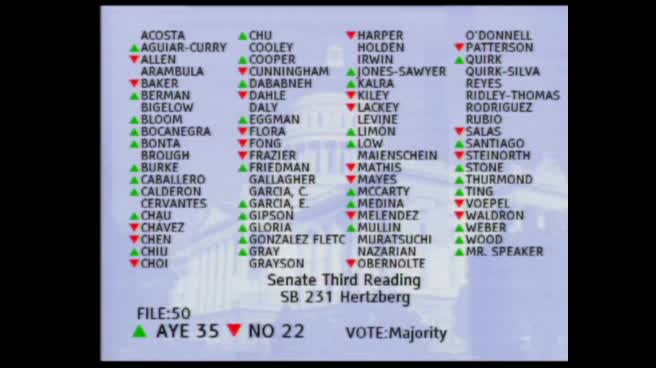

Bill Author

Bill Co-Author(s):