SB 284: Criminal procedure: misdemeanor citations.
- Session Year: 2017-2018
- House: Senate
- Latest Version Date: 2017-02-09
Existing law defines various crimes against property, including burglary, theft, and shoplifting. Existing law requires a peace officer, upon arresting a person for a misdemeanor offense, to issue him or her a notice to appear in court and to release the person, unless the individual demands to be taken before a magistrate. Existing law permits a peace officer to not release a person if, among other reasons, the person is so intoxicated that he or she is a danger to himself or herself or others, there are one or more outstanding arrest warrants for the person, or the person cannot provide satisfactory evidence of personal identification.
This bill would also permit a peace officer to not release an individual if he or she was arrested for a misdemeanor violation of various crimes related to burglary, theft, and shoplifting. By increasing the number of persons subject to detention at the county jail, this bill would create a state-mandated local program.
The California Constitution requires the state to reimburse local agencies and school districts for certain costs mandated by the state. Statutory provisions establish procedures for making that reimbursement.
This bill would provide that, if the Commission on State Mandates determines that the bill contains costs mandated by the state, reimbursement for those costs shall be made pursuant to the statutory provisions noted above.
(a)(1)In any case in which If a person is arrested for an offense declared to be a misdemeanor, including a violation of any city or county ordinance, and does not demand to be taken before a magistrate, that person shall, instead of being taken before a magistrate, be released according to the procedures set forth by this chapter, although nothing prevents an officer from first booking an arrestee pursuant to subdivision (g). If the person is released, the officer or his or her superior shall prepare in duplicate a written notice to appear in court, containing the name and address of the person, the offense charged, and the time when, and place where, the person shall appear in court. If, pursuant to subdivision (i), the person is not released prior to being booked and the officer in charge of the booking or his or her superior determines that the person should be released, the officer or his or her superior shall prepare a written notice to appear in a court.
(2)In any case in which a person is arrested for a misdemeanor violation of a protective court order involving domestic violence, as defined in subdivision (b) of Section 13700, or arrested pursuant to a policy, as described in Section 13701, the person shall be taken before a magistrate instead of being released according to the procedures set forth in this chapter, unless the arresting officer determines that there is not a reasonable likelihood that the offense will continue or resume or that the safety of persons or property would be imminently endangered by release of the person arrested. Prior to adopting these provisions, each city, county, or city and county shall develop a protocol to assist officers to determine when arrest and release is appropriate, rather than taking the arrested person before a magistrate. The county shall establish a committee to develop the protocol, consisting of, at a minimum, the police chief or county sheriff within the jurisdiction, the district attorney, county counsel, city attorney, representatives from domestic violence shelters, domestic violence councils, and other relevant community agencies.
(3)This subdivision shall not apply to the crimes specified in Section 1270.1, including crimes defined in each of the following:
(A)Paragraph (1) of subdivision (e) of Section 243.
(B)Section 273.5.
(C)Section 273.6, if the detained person made threats to kill or harm, has engaged in violence against, or has gone to the residence or workplace of, the protected party.
(D)Section 646.9.
(4)Nothing in this This subdivision shall be construed to does not affect a defendants ability to be released on bail or on his or her own recognizance, except as specified in Section 1270.1.
(b)Unless waived by the person, the time specified in the notice to appear shall be at least 10 days after arrest if the duplicate notice is to be filed by the officer with the magistrate.
(c)The place specified in the notice shall be the court of the magistrate before whom the person would be taken if the requirement of taking an arrested person before a magistrate were complied with, or shall be an officer authorized by that court to receive a deposit of bail.
(d)The officer shall deliver one copy of the notice to appear to the arrested person, and the arrested person, in order to secure release, shall give his or her written promise to appear in court as specified in the notice by signing the duplicate notice which shall be retained by the officer, and the officer may require the arrested person, if he or she has no satisfactory identification, to place a right thumbprint, or a left thumbprint or fingerprint if the person has a missing or disfigured right thumb, on the notice to appear. Except for law enforcement purposes relating to the identity of the arrestee, no person or entity may sell, give away, allow the distribution of, include in a database, or create a database with, this print. Upon the signing of the duplicate notice, the arresting officer shall immediately release the person arrested from custody.
(e)The officer shall, as soon as practicable, file the duplicate notice, as follows:
(1)It shall be filed with the magistrate if the offense charged is an infraction.
(2)It shall be filed with the magistrate if the prosecuting attorney has previously directed the officer to do so.
(3)The duplicate notice and underlying police reports in support of the charge or charges shall be filed with the prosecuting attorney in cases other than those specified in paragraphs (1) and (2).
If the duplicate notice is filed with the prosecuting attorney, he or she, within his or her discretion, may initiate prosecution by filing the notice or a formal complaint with the magistrate specified in the duplicate notice within 25 days from the time of arrest. If the prosecution is not to be initiated, the prosecutor shall send notice to the person arrested at the address on the notice to appear. The failure by the prosecutor to file the notice or formal complaint within 25 days of the time of the arrest shall not bar further prosecution of the misdemeanor charged in the notice to appear. However, any further prosecution shall be preceded by a new and separate citation or an arrest warrant.
Upon the filing of the notice with the magistrate by the officer, or the filing of the notice or formal complaint by the prosecutor, the magistrate may fix the amount of bail that in his or her judgment, in accordance with Section 1275, is reasonable and sufficient for the appearance of the defendant and shall endorse upon the notice a statement signed by him or her in the form set forth in Section 815a. The defendant may, prior to the date upon which he or she promised to appear in court, deposit with the magistrate the amount of bail set by the magistrate. At the time the case is called for arraignment before the magistrate, if the defendant does not appear, either in person or by counsel, the magistrate may declare the bail forfeited, and may, in his or her discretion, order that no further proceedings shall be had in the case, unless the defendant has been charged with a violation of Section 374.3 or 374.7 of this code or of Section 11357, 11360, or 13002 of the Health and Safety Code, or a violation punishable under Section 5008.7 of the Public Resources Code, and he or she has previously been convicted of a violation of that section or a violation that is punishable under that section, except in cases where the magistrate finds that undue hardship will be imposed upon the defendant by requiring him or her to appear, the magistrate may declare the bail forfeited and order that no further proceedings be had in the case.
Upon the making of the order that no further proceedings be had, all sums deposited as bail shall immediately be paid into the county treasury for distribution pursuant to Section 1463.
(f)No warrant shall be issued for the arrest of a person who has given a written promise to appear in court, unless and until he or she has violated that promise or has failed to deposit bail, to appear for arraignment, trial, or judgment or to comply with the terms and provisions of the judgment, as required by law.
(g)The officer may book the arrested person at the scene or at the arresting agency prior to release or indicate on the citation that the arrested person shall appear at the arresting agency to be booked or indicate on the citation that the arrested person shall appear at the arresting agency to be fingerprinted prior to the date the arrested person appears in court. If it is indicated on the citation that the arrested person shall be booked or fingerprinted prior to the date of the persons court appearance, the arresting agency at the time of booking or fingerprinting shall provide the arrested person with verification of the booking or fingerprinting by making an entry on the citation. If it is indicated on the citation that the arrested person is to be booked or fingerprinted, the magistrate, judge, or court shall, before the proceedings begin, order the defendant to provide verification that he or she was booked or fingerprinted by the arresting agency. If the defendant cannot produce the verification, the magistrate, judge, or court shall require that the defendant be booked or fingerprinted by the arresting agency before the next court appearance, and that the defendant provide the verification at the next court appearance unless both parties stipulate that booking or fingerprinting is not necessary.
(h)A peace officer shall use the written notice to appear procedure set forth in this section for any misdemeanor offense in which the officer has arrested a person without a warrant pursuant to Section 836 or in which he or she has taken custody of a person pursuant to Section 847.
(i)Whenever any If a person is arrested by a peace officer for a misdemeanor, that person shall be released according to the procedures set forth by this chapter unless one of the following is a reason for nonrelease, in which case the arresting officer may release the person, except as provided in subdivision (a), or the arresting officer shall indicate, on a form to be established by his or her employing law enforcement agency, which of the following was a reason for the nonrelease:
(1)The person arrested was so intoxicated that he or she could have been a danger to himself or herself or to others.
(2)The person arrested required medical examination or medical care or was otherwise unable to care for his or her own safety.
(3)The person was arrested under one or more of the circumstances listed in Sections 40302 and 40303 of the Vehicle Code.
(4)There were one or more outstanding arrest warrants for the person.
(5)The person could not provide satisfactory evidence of personal identification.
(6)The prosecution of the offense or offenses for which the person was arrested, or the prosecution of any other offense or offenses, would be jeopardized by immediate release of the person arrested.
(7)There was a reasonable likelihood that the offense or offenses would continue or resume, or that the safety of persons or property would be imminently endangered by release of the person arrested.
(8)The person arrested demanded to be taken before a magistrate or refused to sign the notice to appear.
(9)There is reason to believe that the person would not appear at the time and place specified in the notice. The basis for this determination shall be specifically stated.
(10)The person was subject to Section 1270.1.
(11)The person was arrested for a misdemeanor violation of a crime in either Chapter 2 (commencing with Section 458) or Chapter 5 (commencing with Section 484) of Title 13 of Part 1.
The form shall be filed with the arresting agency as soon as practicable and shall be made available to any party having custody of the arrested person, subsequent to the arresting officer, and to any person authorized by law to release him or her from custody before trial.
(j)Once the arresting officer has prepared the written notice to appear and has delivered a copy to the person arrested, the officer shall deliver the remaining original and all copies as provided by subdivision (e).
Any person, including the arresting officer and any member of the officers department or agency, or any peace officer, who alters, conceals, modifies, nullifies, or destroys, or causes to be altered, concealed, modified, nullified, or destroyed, the face side of the remaining original or any copy of a citation that was retained by the officer, for any reason, before it is filed with the magistrate or with a person authorized by the magistrate to receive deposit of bail, is guilty of a misdemeanor.
If, after an arrested person has signed and received a copy of a notice to appear, the arresting officer determines that, in the interest of justice, the citation or notice should be dismissed, the arresting agency may recommend, in writing, to the magistrate that the charges be dismissed. The recommendation shall cite the reasons for the recommendation and shall be filed with the court.
If the magistrate makes a finding that there are grounds for dismissal, the finding shall be entered in the record and the charges dismissed.
Under no circumstances shall a personal relationship with any officer, public official, or law enforcement agency be grounds for dismissal.
(k)(1)A person contesting a charge by claiming under penalty of perjury not to be the person issued the notice to appear may choose to submit a right thumbprint, or a left thumbprint if the person has a missing or disfigured right thumb, to the issuing court through his or her local law enforcement agency for comparison with the one placed on the notice to appear. A local law enforcement agency providing this service may charge the requester no more than the actual costs. The issuing court may refer the thumbprint submitted and the notice to appear to the prosecuting attorney for comparison of the thumbprints. When there is no thumbprint or fingerprint on the notice to appear, or when the comparison of thumbprints is inconclusive, the court shall refer the notice to appear or copy thereof back to the issuing agency for further investigation, unless the court finds that referral is not in the interest of justice.
(2)Upon initiation of the investigation or comparison process by referral of the court, the court shall continue the case and the speedy trial period shall be tolled for 45 days.
(3)Upon receipt of the issuing agencys or prosecuting attorneys response, the court may make a finding of factual innocence pursuant to Section 530.6 if the court determines that there is insufficient evidence that the person cited is the person charged and shall immediately notify the Department of Motor Vehicles of its determination. If the Department of Motor Vehicles determines the citation or citations in question formed the basis of a suspension or revocation of the persons driving privilege, the department shall immediately set aside the action.
(4)If the prosecuting attorney or issuing agency fails to respond to a court referral within 45 days, the court shall make a finding of factual innocence pursuant to Section 530.6, unless the court finds that a finding of factual innocence is not in the interest of justice.
(5)The citation or notice to appear may be held by the prosecuting attorney or issuing agency for future adjudication should the arrestee who received the citation or notice to appear be found.
(l)For purposes of this section, the term arresting agency includes any other agency designated by the arresting agency to provide booking or fingerprinting services.
SEC. 2.If the Commission on State Mandates determines that this act contains costs mandated by the state, reimbursement to local agencies and school districts for those costs shall be made pursuant to Part 7 (commencing with Section 17500) of Division 4 of Title 2 of the Government Code.
|
Date
|
Status
|
|---|---|
| Feb 1, 2018 | Returned to Secretary of Senate pursuant to Joint Rule 62(a). |
| Mar 28, 2017 | March 28 set for first hearing. Failed passage in committee. (Ayes 2. Noes 4.) |
| Mar 16, 2017 | Set for hearing March 28. |
| Feb 23, 2017 | Referred to Com. on PUB. S. |
| Feb 10, 2017 | From printer. May be acted upon on or after March 12. |
| Feb 9, 2017 | Introduced. Read first time. To Com. on RLS. for assignment. To print. |
|
Date
|
Description
|
Location
|
Votes
|
|
|---|---|---|---|---|
| Mar 28, 2017 | Do pass, but first be re-referred to the Committee on [Appropriations] | Senate Standing Committee on Public Safety |
Failed |
This list shows positions taken on this bill by organizations on the date displayed, which is linked to the original source.
Positions by individuals are not included.
|
Organization
|
Position
|
Date
|
|---|---|---|
| 1. Need For This Bill | ** Against | Mar 27, 2017 |
| 2014 | ** Against | Mar 27, 2017 |
| 2016 | ** Against | Mar 27, 2017 |
| 5. Argument In Support | ** Against | Mar 27, 2017 |
| 57729 | ** Against | Mar 27, 2017 |
| According To The Orange County Board Of Supervisors: | ** Against | Mar 27, 2017 |
| ACLU of California | * Against | Mar 28, 2017 |
| American Civil Liberties Union; Courage Campaign | ** Against | Mar 27, 2017 |
| Ballot | ** Against | Mar 27, 2017 |
| California State Sherrif's Association | * Support | Mar 28, 2017 |
| CARL BURNETT FUNERAL HOME | * Support | Mar 28, 2017 |
| Main | ** Against | Mar 27, 2017 |
| Prop-47-110414.Pdf.) | ** Against | Mar 27, 2017 |
| PURPOSE | ** Against | Mar 27, 2017 |
| Study-Cas-Prison-Reform-Didnt-Cause-Crime-Increase | ** Against | Mar 27, 2017 |
| Www.Lao.Ca.Gov | ** Against | Mar 27, 2017 |
| Www.Ppic.Org | ** Against | Mar 27, 2017 |
| Www.Scpr.Org | ** Against | Mar 27, 2017 |
| [As Of Mar. 18, 2017].) | ** Against | Mar 27, 2017 |
SENATE COMMITTEE ON PUBLIC SAFETY
Senator Nancy Skinner, Chair
2017 - 2018 Regular
Bill No: SB 284 Hearing Date: March 28, 2017
Author: | Nguyen | ||
Version: | February 9, 2017 | ||
Urgency: | No | Fiscal: | Yes |
Consultant: | SC | ||
Subject: Criminal Procedure: Misdemeanor Citations
HISTORY
Source: Orange County Sheriff’s Office
Prior Legislation: Proposition 47, approved by California voters in 2014
AB 668 (Eng), Ch. 465, Stats. 2009
AB 1209 (Ma), Ch. 278, Stats. 2009
AB 1488 (Bates), Ch. 30, Stats. 2003
Support: California State Sheriffs’ Association; Orange County Board of Supervisors
Opposition: American Civil Liberties Union; Courage Campaign
PURPOSE
The purpose of this bill is to keep in jail custody persons who have been arrested for misdemeanor offenses related to theft, burglary and shoplifting, rather than releasing those persons with a written notice to appear in court.
Existing law requires nonviolent property crimes where the amount of property taken is $950 or less to be punished as misdemeanors. (Proposition 47, approved by California voters on Nov. 4, 2014.)
Existing law requires a peace officer to release persons arrested for misdemeanors with a written notice to appear in court, containing the name and address of the person, the offense charged, and the time when, and place where, the person shall appear in court, except in specified circumstances. (Pen. Code, § 853.6.)
Existing law prohibits the release of persons arrested for specified violent crimes and crimes related to domestic violence and stalking. (Pen. Code, § 853.6, subd. (a)(2).)
Existing law specifies that if the following reasons exist a peace officer may choose to take into custody a person charged with a misdemeanor upon a written notice to appear in court:
- The person arrested was so intoxicated that he or she could have been a danger to himself or herself or to others;
- The person arrested required medical examination or medical care or was otherwise unable to care for his or her own safety;
- The person was arrested for a Vehicle Code violation and the person fails to present identification, refuses to give his or her promise to appear in court, or demands and immediate appearance before a magistrate;
- There were one or more outstanding arrest warrants for the person;
- The person could not provide satisfactory evidence of personal identification;
- The prosecution of the offense or offenses for which the person was arrested, or the prosecution of any other offense or offenses, would be jeopardized by immediate release of the person arrested;
- There was a reasonable likelihood that the offense or offenses would continue or resume, or that the safety of persons or property would be imminently endangered by release of the person arrested;
- The person arrested demanded to be taken before a magistrate or refused to sign the notice to appear;
- There is reason to believe that the person would not appear at the time and place specified in the notice and the basis for this determination is specifically stated;
- The person is arrested for certain violent crimes requiring a hearing in open court before release. (Pen. Code, § 853.6, subd. (a)(2).)
This bill adds when a person is arrested for misdemeanor theft, burglary or shoplifting as one of the reasons an officer could use to take a person into custody rather than releasing the person upon a written notice to appear in court.
COMMENTS
1. Need for This Bill
According to the author:
Over the last two years California has seen an increase in property crime. According to the FBI’s Uniform Crime Report, in 2015 property crime was up 6.6% from the previous year. Additionally, 41 of the state’s 58 counties saw increases in their property crime rates in 2015. Orange County saw a 23% increase in overall property crime over that same period of time. Property crime has significant impacts on the quality of life in a community. A greater prevalence of such crime poses a threat to both the safety and economic security of a community.
Under current law burglary, theft and shoplifting of property valued under $950 is a misdemeanor. Those arrested for these crimes, per state law, are issued a citation and released. The law does not allow law enforcement the ability to remove these individuals from the community and book them into jail. As a result of this minimal consequence for property theft, those that perpetrate these crimes face no accountability for their actions. This problem is illustrated by stories from the field. In Stanton, CA sheriff’s deputies responded to a shoplifting call at a grocery store. The subject arrested was an individual who had already been cited twice that day for the same crime. Unfortunately, even theft of items of minimal value can add up to exponential losses for local businesses and residents.
Penal Code 853.6 section (g) and (i) lists specific exceptions where a misdemeanor offender may be held by a peace officer and booked into custody. As an example, a person who is arrested for driving under the influence can be taken into custody and booked into jail. Property crimes are not currently included in this list of exceptions and therefore violators of such laws are merely issued a citation and released for their offense. The proposed bill would amend Penal Code 853.6 to give law enforcement the option to book and hold violators of misdemeanor property crimes like burglary theft, and shoplifting. Removing these offenders from the community, even for a limited time, will make it more difficult to re-offend and remove the convenience of committing multiple crimes in a short period of time.
2. Existing Law on Own Recognizance Release of Misdemeanants
Existing law states that any person who is arrested for a misdemeanor need not be taken before a magistrate and may be released on his or her promise to appear in court when required. (Pen. Code, § 853.6, subd. (a)(1).) This practice is commonly referred to as “cite and release” because it authorizes a person to be issued a citation and released on his or her own recognizance. This procedure is not allowed when a person has been arrested for certain crimes involving violence or if a person is arrested for a misdemeanor violation of a protective order involving domestic violence, as specified. In those cases, the arrestee must be taken before the court before he or she may be released from custody.
Additionally, an officer may choose not to release a misdemeanant in certain specified circumstances such as when the person is so intoxicated that he or she could be a danger or when the person has an outstanding warrant. Existing law includes as one of the enumerated reasons for nonrelease when there is a reasonable likelihood that the offense or offenses would continue or resume, or that the safety of persons or property would be imminently endangered by release of the person arrested. (Pen. Code, § 853.6, subd. (i)(7).)
This bill adds misdemeanor arrests of theft, burglary or shoplifting to the list of circumstances that would allow a peace officer to take a person into custody rather than releasing him or her on her own recognizance with a promise to appear in court at a later date. The proponents of this bill state that this change is needed because “[p]roperty crimes are not currently included in this list of exceptions” and “[r]emoving these offenders from the community, even for a limited time, will make it more difficult to re-offend and remove the convenience of committing multiple crimes in a short period of time.” However, it appears that an exception does exist to address this concern. An officer is explicitly allowed to keep a person in custody if “there is a reasonable likelihood that the offense or offenses would continue or resume, or that the safety of persons or property would be imminently endangered by release of the person arrested.” (Pen. Code, § 853.6, subd. (i)(7).) This applies to crimes against property and to those offenders who would repeat or resume their crimes if released. The application of this exception to a nonviolent property crime has been upheld. (Burdett v. Reynoso (N.D.Cal. Aug. 23, 2007, No. C-06-00720 JCS) 2007 WL 2429426 at *66 [case involving a person who was arrested for vandalism after kicking over a motorcycle rather than being cited and released, the court found that officers were reasonable in believing that there was a reasonable likelihood that the person would resume vandalizing the motorcycle if released].)
Should misdemeanor property crimes be added to the list of exceptions to the law requiring cite and release of most misdemeanants when it appears that an exception already exists to allow an officer to take such offenders into custody under certain circumstances?
3. Overview and Purpose of Proposition 47:
Proposition 47, also known as the Safe Neighborhoods and Schools Act, was approved by the voters in November 2014. Proposition 47 reduced the penalties for certain drug and property crimes and directed that the resulting state savings be directed to mental health and substance abuse treatment, truancy and dropout prevention, and victims’ services. Specifically, the initiative reduced the penalties for possession for personal use of most illegal drugs to misdemeanors. The initiative also reduced the penalties for theft, shoplifting, receiving stolen property, writing bad checks, and check forgery valued at $950 or less from alternate felony-misdemeanors to straight misdemeanors. Among the crimes reduced to misdemeanors by Proposition 47 “are certain second degree burglaries where the defendant enters a commercial establishment with the intent to steal. Such offense is now characterized as shoplifting as defined in new [Penal Code] section 459.5.” (People v. Sherow (2015) 239 Cal.App.4th 875, 879.) The measure limited the reduced penalties to offenders who do not have designated prior convictions for serious or violent felonies and who are not required to register as sex offenders. (See Legislative Analyst's Office analysis of Proposition 47 <http://www.lao.ca.gov/ballot/2014/prop-47-110414.pdf>.)
After the passage of Proposition 47, opponents of the initiative have claimed that there was an increase in crime which can be attributed to the initiative. However, reports evaluating the effects of the initiative have found that Proposition 47 had little to no effect on California’s crime rates overall. (California prison reform didn't cause crime increase, study finds, KQED (Feb. 18, 2016) < http://www.scpr.org/news/2016/02/18/57729/study-cas-prison-reform-didnt-cause-crime-increase/> [as of Mar. 18, 2017].)
This bill would add the property crimes that were reduced under Proposition 47 as an exception to the general rule requiring misdemeanants to be cited and released. Considering that California voters have determined that these property crimes deserve misdemeanor penalties, would this bill frustrate the goals of Proposition 47 of reducing prison and jail spending on these low-level offenses?
4. Ongoing Concerns of Large Pretrial Populations in County Jails
While Proposition 47 helped reduce the population in county jails, including the pretrial population by decreasing new bookings on arrests and warrants for Prop 47 offenses (see Mia Bird, et al., How Has Proposition 47 Affected California's Jail Population? Public Policy Institute of California (March 2016)), pretrial inmates still make up a majority of the jail population.
The most recently available data from the Board of State and Community Corrections shows that the majority of jail inmates are unsentenced, roughly 62 percent of the population. Data shows that California relies more heavily on pretrial detention than the rest of the United States. (Sonya Tafoya, Pretrial Detention and Jail Capacity in California, Public Policy Institute of California (July 2015) <http://www.ppic.org/main/publication_quick.asp?i=1154> [as of March 15, 2017].) This dynamic strains the capacity of county jails making it necessary to release sentenced inmates, while people who have not been found guilty of any crimes sit in jail because they have not been released on their own recognizance and cannot afford to post bail.
The existing bail system has come under scrutiny because of claims that it does not promote public safety and it unfairly penalizes defendants who are poor while allowing defendants who have means to buy their way out of jail. (California's Bail System Punishes the Poor, and It's Time for the Government to Do Something About It, Skelton, Los Angeles Times (Jan. 16, 2017) < http://www.latimes.com/politics/la-pol-sac-skelton-california-bail-system-20170116-story.html> [as of Mar. 18, 2017].) The discussion of bail reform is currently ongoing as the Legislature considers bills that would implement major changes to the system (SB 10 (Hertzberg) and AB 42 (Bonta)) and the Judiciary has set up a working group to study current pretrial detention practices and provide recommendations for potential reforms. (Chief Justice Appoints Working Group to Recommend Changes in Pretrial Detention (Oct. 28, 2016) <http://newsroom.courts.ca.gov/news/chief-justice-appoints-working-group-to-recommend-changes-in-pre-trial-detention> [as of Mar. 18, 2017].)
This bill takes a category of offenders who are generally required to be released on their own recognizance and instead allows them to be held in jail where they can either wait several days to appear before the court or post bail. Considering that the current bail system is under scrutiny, should more persons be subjected to bail, especially those who commit low-level property crimes?
5. Argument in Support
According to the Orange County Board of Supervisors:
Current law categorizes burglary, theft, and shoplifting of property valued under $950 as a misdemeanor. Those arrested for these crimes, per state law, are issued a citation and released. As a result of the minimal consequences, the perpetrators of these crimes face no accountability for their actions. In 2015, Orange County experienced a 23% increase in overall property crimes, which significantly impacts the quality of life in a community. Additionally, 41 of the state’s 58 counties saw an increase in their property crime rates in 2015.
SB 284 would allow law enforcement to book and hold violators of misdemeanor property crimes. Removing these offenders for a limited amount of time may help deter offenders from reoffending, lower property crime rates and provide safer and more economically secure communities for our businesses and residents.
6. Argument in Opposition
The American Civil Liberties Union of California is opposed to this bill and writes:
Under current law, when a law enforcement officer arrests a person for a misdemeanor, the officer is generally required to cite and release the person under current law. (Penal Code, §853.6). Cite-and-release provides an efficient, cost-saving, and equitable approach to addressing people have been arrested for crimes and do not need to be held in jail.
There are some eligibility and discretionary exceptions to the cite-and-release statute, though they are generally limited to crimes involving violence or violations of protective orders, emergencies or medical emergencies, and situations where the officer cannot identify a person. (Penal Code, §853.6, subdivisions (a)(2)-(3) & (i).).
Adding arrest for minor misdemeanors like shoplifting or check forgery to the list of situations under which a law enforcement officer may deny cite and release does not follow the spirit or purpose of the other exceptions. Rather, it will serve only to further overcrowd our jails, subject people arrested for minor crimes to the racial and economic inequities plaguing our current money bail system, and waste taxpayer dollars.
Moreover, requiring people arrested for these crimes to go to jail may actually decrease community safety. Research has shown that unnecessary pretrial detention has been found to increase crime. Detaining low-and moderate-risk defendants, even for just a few days, is strongly correlated with higher rates of new criminal activity both during the pretrial period and years after case disposition.[1] When held even 2-3 days, low risk defendants are almost 40% more likely to commit new crimes before trial than equivalent defendants held no more than 24 hours.[2] When held for 8-14 days, these defendants are 51% more likely to commit another crime within 2 years after completion of their cases than equivalent defendants held no more than 24 hours.[3]
-- END –
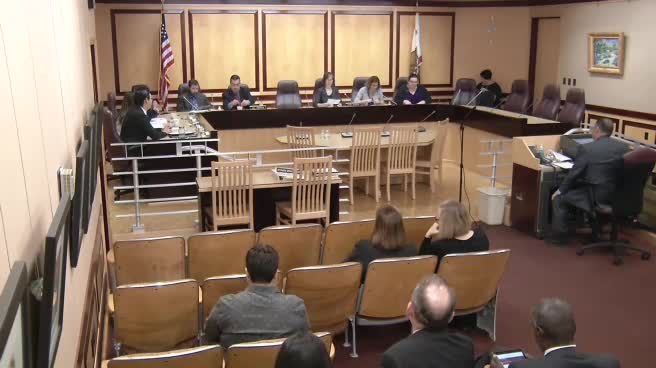
Discussed in Hearing
 26MIN
Senate Standing Committee on Public Safety
Bill Author

Bill Co-Author(s):