SB 30: Insurance: climate change.
- Session Year: 2017-2018
- House: Senate
- Latest Version Date: 2018-09-21
Existing law creates the Department of Insurance, headed by the Insurance Commissioner, and prescribes the commissioners powers and duties, including various duties to regulate the business of insurance in this state and to enforce the execution of those laws.
This bill would require the Insurance Commissioner to convene a working group to identify, assess, and recommend risk transfer market mechanisms that, among other things, promote investment in natural infrastructure to reduce the risks of climate change related to catastrophic events, create incentives for investment in natural infrastructure to reduce risks to communities, and provide mitigation incentives for private investment in natural lands to lessen exposure and reduce climate risks to public safety, property, utilities, and infrastructure. The bill would require the policies recommended to address specified questions. The bill would also include a statement of legislative findings and declarations.
Existing law creates the Department of Insurance, headed by the Insurance Commissioner, and prescribes the commissioners powers and duties, including various duties to regulate the business of insurance in this state and to enforce the execution of those laws.
This bill would require the Insurance Commissioner to convene a working group to identify, assess, and recommend policies to use risk transfer market mechanisms to invest that, among other things, promote investment in natural infrastructure to reduce the risks of climate change related to catastrophic events, including the development of insurance products that, among other things, create incentives for investment in natural infrastructure to reduce risks to communities communities, and provide mitigation incentives for private investment in natural lands to lessen exposure and reduce climate risks to public safety, property, utilities, and infrastructure. The bill would require the policies recommended to address specified questions. The bill would also include a statement of legislative findings and declarations.
Existing law creates the Department of Insurance, headed by the Insurance Commissioner, and prescribes the commissioners powers and duties, including various duties to regulate the business of insurance in this state and to enforce the execution of those laws.
This bill would require the Insurance Commissioner to convene a working group to recommend policies to use market mechanisms to invest in natural infrastructure to reduce the risks of climate change related to catastrophic events, including the development of insurance products that, among other things, create incentives for investment in natural infrastructure to reduce risks to communities and provide mitigation incentives for private investment in natural lands to lessen exposure and reduce climate risks to public safety, property, utilities, and infrastructure. The bill would require the policies recommended to address specified questions. The bill would also include a statement of legislative findings and declarations.
Existing law establishes the border between the United States and Mexico, which includes the southern border of California.This bill would make findings and declarations related to a wall on the border between California and Mexico.This bill, except as specified, would prohibit the state, commencing January 1, 2018, until January 1, 2026, from awarding or renewing any contract with any person that, at the time of bid or proposal for a new contract or renewal of an existing contract, is a prime contractor that is providing or has provided on or after January 1, 2018, goods or services to the federal government for the construction of a federally funded wall, fence, or other barrier along Californias southern border. The bill would define terms for its purposes.Existing law defines responsible bidder for the purposes of public works contracts as a bidder who has demonstrated the attribute of trustworthiness, as well as quality, fitness, capacity, and experience to satisfactorily perform the public works contract.This bill, except as specified, would provide that, until January 1, 2026, for purposes of contracts with the state, the term responsible bidder does not include a bidder who, at the time of the bid or proposal for a new contract or renewal of an existing contract, is a prime contractor that is providing or has provided goods or services on or after January 1, 2018, to the federal government for the construction of a federally funded wall, fence, or other barrier along Californias southern border, as defined.Existing law establishes the border between the United States and Mexico, which includes the southern border of California.
This bill would make findings and declarations related to a wall on the border between California and Mexico.
This bill bill, except as specified, would prohibit the state, commencing January 1, 2018, until January 1, 2026, from awarding or renewing any contract with any person, as defined, that person that, at the time of bid or proposal for a new contract or renewal of an existing contract contract, is a prime contractor that is providing or has provided on or after January 1, 2018, goods or services to the federal government for the construction of a federally funded wall, fence, or other barrier along Californias southern border, as defined. border. The bill would define terms for its purposes.
Existing law defines responsible bidder for the purposes of public works contracts as a bidder who has demonstrated the attribute of trustworthiness, as well as quality, fitness, capacity, and experience to satisfactorily perform the public works contract.
This bill bill, except as specified, would provide that, until January 1, 2026, for purposes of contacts contracts with the state, the term responsible bidder does not include a bidder who, at the time of the bid or proposal for a new contract or renewal of an existing contract, is a prime contractor that is providing or has provided goods or services on or after January 1, 2018, to the federal government for the construction of a federally funded wall, fence, or other barrier along Californias southern border, as defined.
Existing law establishes the border between the United States and Mexico, which includes the southern border of California.
This bill would make findings and declarations related to a wall on the border between California and Mexico.
This bill would prohibit the state, commencing January 1, 2018, from awarding or renewing any contract with any person, as defined, that at the time of bid or proposal for a new contract or renewal of an existing contract is providing or has provided on or after January 1, 2018, goods or services to the federal government for the construction of a federally funded wall, fence, or other barrier along Californias southern border. border, as defined.
Existing law defines responsible bidder for the purposes of public works contracts as a bidder who has demonstrated the attribute of trustworthiness, as well as quality, fitness, capacity, and experience to satisfactorily perform the public works contract.
This bill would provide that, for purposes of contacts with the state, the term responsible bidder does not include a bidder who, at the time of the bid or proposal for a new contract or renewal of an existing contract, is providing or has provided goods or services on or after January 1, 2018, to the federal government for the construction of a federally funded wall, fence, or other barrier along Californias southern border. border, as defined.
Existing law establishes the border between the United States and Mexico, which includes the southern border of California.
This bill would require any federally funded infrastructure project along Californias southern border that exceeds a cost of $1 billion to first be approved by a majority of the voters voting on the issue at a statewide general election. The bill also would make related findings and declarations. declarations related to a wall on the border between California and Mexico.
This bill would additionally prohibit the state, commencing January 1, 2018, from awarding or renewing a any contract for goods or services with any person, as defined, that at the time of bid or proposal for a new contract or renewal of an existing contract is providing or has provided goods or services to the federal government for the construction of a federally funded infrastructure project wall, fence, or other barrier along Californias southern border.
Existing law defines responsible bidder for the purposes of public works contracts as a bidder who has demonstrated the attribute of trustworthiness, as well as quality, fitness, capacity, and experience to satisfactorily perform the public works contract.
This bill would provide that, for purposes of contacts with the state, the term responsible bidder does not include a bidder who, at the time of the bid or proposal for a new contract or renewal of an existing contract, is providing or has provided goods or services to the federal government for the construction of a federally funded wall, fence, or other barrier along Californias southern border.
Existing law establishes the border between the United States and Mexico, which includes the southern border of California.
This bill would require any federally funded infrastructure project along Californias southern border that exceeds a cost of $1 billion to first be approved by a majority of the voters voting on the issue at a statewide general election. The bill also would make related findings and declarations.
This bill would additionally prohibit the state, commencing January 1, 2018, from awarding or renewing a contract for goods or services with any person, as defined, that at the time of bid or proposal for a new contract or renewal of an existing contract is providing or has provided goods or services to the federal government for the construction of a federally funded infrastructure project along Californias southern border.
Existing law establishes the border between the United States and Mexico, which includes the southern border of California.
This bill would require any federally funded infrastructure project along Californias southern border that exceeds a cost of $1 billion to first be approved by a majority of the voters voting on the issue at a statewide general election. The bill also would make related findings and declarations.
The Legislature finds and declares all of the following:
(a)Much of California may have increasing exposure to climate-related events.
(b)California has environmental features that can mitigate damage from climate-related events.
(c)Innovative insurance and reinsurance businesses may provide opportunities to reduce the exposure of local communities and homeowners to these events.
(d)Reinsurance companies are already doing risk assessments and designing risk transfer products that incentivize investment in natural resources to mitigate against climate risks.
SEC. 2.Section 12922.5 is added to the Insurance Code, to read:12922.5.(a)The commissioner shall convene a working group to identify, assess, and recommend risk transfer market mechanisms that promote investment in natural infrastructure to reduce the risks of climate change related to catastrophic events and that:
(1)Create incentives for investment in natural infrastructure to reduce risks to communities.
(2)Provide mitigation incentives for private investment in natural lands to lessen exposure and reduce climate risks to public safety, property, utilities, and infrastructure.
(b)To the extent that the working group recommends risk transfer market mechanisms that would be provided by insurance and reinsurance companies, the working group shall recommend mechanisms that:
(1)Are profitable to insurance and reinsurance companies.
(2)If appropriate, apply to communities or regions, rather than individual land parcels.
(c)The policies recommended pursuant to subdivisions (a) and (b) shall include all of the following questions:
(1)What are the California analogies to examples in other countries for creating incentives for investment in natural infrastructure as part of insurance policies that mitigate elemental risks?
(2)Can we use insurance to create incentives for wetland restoration to help defend the coast against storm surge?
(3)Can we create incentives for forests to be managed to reduce the risk of major fires?
(4)Can we reduce the exposure of insurance companies to climate change-related losses through innovative state policies or insurance pricing mechanisms that reward good behavior and charge premiums for actions that increase public safety risks or losses of property or environmental attributes?
(5)Can we develop rating systems based on community risk factors to climate events, and use insurance incentives to make a community more resilient?
The Legislature finds and declares all of the following:
(a)Much of California may have increasing exposure to climate-related events.
(b)California has environmental features that can mitigate damage from climate-related events.
(c)Innovative insurance and reinsurance businesses may provide opportunities to reduce the exposure of local communities and homeowners to these events.
(d)Reinsurance companies are already doing risk assessments and designing insurance policies risk transfer products that incentivize investment in natural resources to mitigate against climate risks.
(e)Swiss Re Ltd. and The Nature Conservancy, a nongovernmental organization, pioneered an insurance policy in Cancun, Mexico. In this policy, local organizations with an interest in coral reef tourism pay into a collective insurance premium. The reef provides protection against storm events. If any destructive storms damage the reef system, the insurer will pay out sums for restoration.(f)In addition, Swiss Re Ltd. is working with the country of Barbados to proactively invest in protecting and restoring mangrove swamps and coral reefs to mitigate future hurricane losses.(g)These examples are thought to be the first in the world to tie environmental benefits and the ecosystem services, such as storm protection, provided by natural environmental features to firm monetary costs and rewards.SEC. 2.Section 12922.5 is added to the Insurance Code, to read:12922.5.(a)The commissioner shall convene a working group to identify, assess, and recommend policies to use risk transfer market mechanisms to invest that promote investment in natural infrastructure to reduce the risks of climate change related to catastrophic events, including the development of insurance products that: events and that:
(1)Create incentives for investment in natural infrastructure to reduce risks to communities.
(2)Provide mitigation incentives for private investment in natural lands to lessen exposure and reduce climate risks to public safety, property, utilities, and infrastructure.
(b)To the extent that the working group recommends risk transfer market mechanisms that would be provided by insurance and reinsurance companies, the working group shall recommend mechanisms that:
(3)(1)Are profitable to insurance and reinsurance companies.
(4)(2)If appropriate, apply to communities or regions, rather than individual land parcels.
(b)(c)The policies recommended pursuant to subdivision subdivisions (a) and (b) shall address include all of the following questions:
(1)What are the California analogies to examples in other countries for creating incentives for investment in natural infrastructure as part of insurance policies that mitigate elemental risks?
(2)Can we use insurance to create incentives for wetland restoration to help defend the coast against storm surge?
(3)Can we create incentives for forests to be managed to reduce the risk of major fires?
(4)Can we reduce the exposure of insurance companies to climate change-related losses through innovative state policies or insurance pricing mechanisms that reward good behavior and charge premiums for actions that increase public safety risks or losses of property or environmental attributes?
(5)Can we develop rating systems based on community risk factors to climate events, and use insurance incentives to make a community more resilient?
The Legislature finds and declares all of the following:
(a)Much of California may have increasing exposure to climate-related events.
(b)California has environmental features that can mitigate damage from climate-related events.
(c)Innovative insurance and reinsurance businesses may provide opportunities to reduce the exposure of local communities and homeowners to these events.
(d)Reinsurance companies are already doing risk assessments and designing insurance policies that incentivize investment in natural resources to mitigate against climate risks.
(e)Swiss Re Ltd. and The Nature Conservancy, a nongovernmental organization, pioneered an insurance policy in Cancun, Mexico. In this policy, local organizations with an interest in coral reef tourism pay into a collective insurance premium. The reef provides protection against storm events. If any destructive storms damage the reef system, the insurer will pay out sums for restoration.
(f)In addition, Swiss Re Ltd. is working with the country of Barbados to proactively invest in protecting and restoring mangrove swamps and coral reefs to mitigate future hurricane losses.
(g)These examples are thought to be the first in the world to tie environmental benefits and the ecosystem services, such as storm protection, provided by natural environmental features to firm monetary costs and rewards.
SEC. 2.Section 12922.5 is added to the Insurance Code, to read:12922.5.(a)The commissioner shall convene a working group to recommend policies to use market mechanisms to invest in natural infrastructure to reduce the risks of climate change related to catastrophic events, including the development of insurance products that:
(1)Create incentives for investment in natural infrastructure to reduce risks to communities.
(2)Provide mitigation incentives for private investment in natural lands to lessen exposure and reduce climate risks to public safety, property, utilities, and infrastructure.
(3)Are profitable to insurance and reinsurance companies.
(4)If appropriate, apply to communities or regions, rather than individual land parcels.
(b)The policies recommended pursuant to subdivision (a) shall address all of the following questions:
(1)What are the California analogies to examples in other countries for creating incentives for investment in natural infrastructure as part of insurance policies that mitigate elemental risks?
(2)Can we use insurance to create incentives for wetland restoration to help defend the coast against storm surge?
(3)Can we create incentives for forests to be managed to reduce the risk of major fires?
(4)Can we reduce the exposure of insurance companies to climate change-related losses through innovative state policies or insurance pricing mechanisms that reward good behavior and charge premiums for actions that increase public safety risks or losses of property or environmental attributes?
(5)Can we develop rating systems based on community risk factors to climate events, and use insurance incentives to make a community more resilient?
SECTION 1.Chapter 15 (commencing with Section 8900) is added to Division 1 of Title 2 of the Government Code, to read:15.Federally Funded Infrastructure on the California-Mexico Border8900.The Legislature finds and declares all of the following:(a)California and Mexico share more than 130 miles of an international border. The border region is home to tremendous cultural history and economic commerce between the United States and Mexico.(b)In 2015, the value of Californias exports to Mexico was twenty-six billion eight hundred million dollars ($26,800,000,000), making up 17.4 percent of the states total exports, and approximately 177,000 California jobs are related to the commercial relationship with Mexico. Commerce, tourism, and foreign direct investment from Mexico support more than 200,000 jobs in California.(c)Californias border region is also home to numerous threatened and endangered species of plant and animal life, including Californias official state amphibian, the California red-legged frog, and the endangered arroyo toad.(d)A recent binational agreement between the United States and Mexico aims to address pollution, including sewage, waste tires, and polluted stormwater, in the Tijuana River watershed. The river flows through both California and Baja California, impacting bird and wildlife habitat and water quality at local beaches.(e)A proposed border wall between California and Mexico would do serious economic, social, and environmental harm to the state.8900.1.(a)For purposes of this section:(1)The term person means any individual, partnership, joint venture, or association or any other organization or any combination thereof, whether situated within or outside the state.(2)The term prime contractor means the contractor who contracts directly with the awarding authority and does not include subcontractors, suppliers, or ancillary services, including, but not limited to, technology, transportation, and financial services.(3)The term federally funded wall, fence, or other barrier along Californias southern border does not include a port of entry.(b)Notwithstanding any other law, commencing January 1, 2018, the state shall not award or renew any contract with any person that, at the time of bid or proposal for a new contract or renewal of an existing contract, is a prime contractor that is providing or has provided on or after January 1, 2018, goods or services to the federal government for the construction of a federally funded wall, fence, or other barrier along Californias southern border. This section shall not preclude the state from awarding or renewing any contract with any person that has provided goods or services to the federal government for the construction of a federally funded wall, fence, or other barrier along Californias southern border on or before December 31, 2017.(c)(1)The prohibition in subdivision (b) shall not apply to companies that have an existing indefinite delivery, indefinite quantity contract that took effect on or before December 31, 2017.(2)The prohibition in subdivision (b) shall not apply in any of the following circumstances:(A)In the case of a state or local emergency.(B)If the competing bids for the state contract are deemed to be cost-ineffective by the state department or agency.(C)If there are no other responsive bidders for the state contract.(D)If the contract is for essential services, such as water, power, gas, transmission, and reliable services.8900.2.This chapter shall remain in effect only until January 1, 2026, and as of that date is repealed.SEC. 2.Section 1103 of the Public Contract Code is amended to read:1103.(a)Responsible bidder, as used in this part, means a bidder who has demonstrated the attribute of trustworthiness, as well as quality, fitness, capacity, and experience to satisfactorily perform the public works contract.The Legislature finds and declares that this section is declaratory of existing law.(b)(1)For purposes of a contract with the state, a responsible bidder does not include a bidder who, at the time of the bid or proposal for a new contract or renewal of an existing contract, is a prime contractor that is providing or has provided on or after January 1, 2018, goods or services to the federal government for the construction of a federally funded wall, fence, or other barrier along Californias southern border. This subdivision shall not exclude a bidder who has provided goods or services to the federal government for the construction of a federally funded wall, fence, or other barrier along Californias southern border on or before December 31, 2017.(2)For purposes of this subdivision:(A)The term prime contractor means the contractor who contracts directly with the awarding authority and does not include subcontractors, suppliers, or ancillary services, including, but not limited to, technology, transportation, and financial services.(B)The term federally funded wall, fence, or other barrier along Californias southern border does not include a port of entry.(c)(1)The exclusion from the definition of responsible bidder described in paragraph (1) of subdivision (b) shall not apply to companies that have an existing indefinite delivery, indefinite quantity contract that took effect on or before December 31, 2017.(2)The exclusion from the definition of responsible bidder described in paragraph (1) of subdivision (b) shall not apply in any of the following circumstances:(A)In the case of a state or local emergency.(B)If the competing bids for the state contract are deemed to be cost-ineffective by the state department or agency.(C)If there are no other responsive bidders for the state contract.(D)If the contract is for essential services, such as water, power, gas, transmission, and reliable services.(d)This section shall remain in effect only until January 1, 2026, and as of that date is repealed.SEC. 3.Section 1103 is added to the Public Contract Code, to read:1103.(a)Responsible bidder, as used in this part, means a bidder who has demonstrated the attribute of trustworthiness, as well as quality, fitness, capacity, and experience to satisfactorily perform the public works contract.(b)The Legislature finds and declares that this section is declaratory of existing law.(c)This section shall become operative on January 1, 2026.The Legislature finds and declares all of the following:
(a)California and Mexico share more than 130 miles of an international border. The border region is home to tremendous cultural history and economic commerce between the United States and Mexico.
(b)In 2015, the value of Californias exports to Mexico was twenty-six billion eight hundred million dollars ($26,800,000,000), making up 17.4 percent of the states total exports, and approximately 177,000 California jobs are related to the commercial relationship with Mexico. Commerce, tourism, and foreign direct investment from Mexico support more than 200,000 jobs in California.
(c)Californias border region is also home to numerous threatened and endangered species of plant and animal life, including Californias official state amphibian, the California red-legged frog, and the endangered arroyo toad.
(d)A recent binational agreement between the United States and Mexico aims to address pollution, including sewage, waste tires, and polluted stormwater, in the Tijuana River watershed. The river flows through both California and Baja California, impacting bird and wildlife habitat and water quality at local beaches.
(e)A proposed border wall between California and Mexico would do serious economic, social, and environmental harm to the state.
8900.1.(a)(1)For purposes of this section, the section:
(1)The term person means any individual, partnership, joint venture, or association or any other organization or any combination thereof, whether situated within or outside the state.
(2)For purposes of this section, the(2)The term prime contractor means the contractor who contracts directly with the awarding authority and does not include subcontractors, suppliers, or ancillary services, including, but not limited to, technology, transportation, and financial services.
(3)The term federally funded wall, fence, or other barrier along Californias southern border does not include a port of entry.
(b)Notwithstanding any other law, commencing January 1, 2018, the state shall not award or renew any contract with any person that, at the time of bid or proposal for a new contract or renewal of an existing contract, is a prime contractor that is providing or has provided on or after January 1, 2018, goods or services to the federal government for the construction of a federally funded wall, fence, or other barrier along Californias southern border. This section shall not preclude the state from awarding or renewing any contract with any person that has provided goods or services to the federal government for the construction of a federally funded wall, fence, or other barrier along Californias southern border on or before December 31, 2017.
(c)(1)The prohibition in subdivision (b) shall not apply to companies that have an existing indefinite delivery, indefinite quantity contract that took effect on or before December 31, 2017.
(2)The prohibition in subdivision (b) shall not apply in any of the following circumstances:
(A)In the case of a state or local emergency.
(B)If the competing bids for the state contract are deemed to be cost-ineffective by the state department or agency.
(C)If there are no other responsive bidders for the state contract.
(D)If the contract is for essential services, such as water, power, gas, transmission, and reliable services.
8900.2.This chapter shall remain in effect only until January 1, 2026, and as of that date is repealed.
SEC. 2.Section 1103 of the Public Contract Code is amended to read:1103.(a)Responsible bidder, as used in this part, means a bidder who has demonstrated the attribute of trustworthiness, as well as quality, fitness, capacity, and experience to satisfactorily perform the public works contract.
The Legislature finds and declares that this section is declaratory of existing law.
(b)(1)For purposes of a contract with the state, a responsible bidder does not include a bidder who, at the time of the bid or proposal for a new contract or renewal of an existing contract, is a prime contractor that is providing or has provided on or after January 1, 2018, goods or services to the federal government for the construction of a federally funded wall, fence, or other barrier along Californias southern border. This subdivision shall not exclude a bidder who has provided goods or services to the federal government for the construction of a federally funded wall, fence, or other barrier along Californias southern border on or before December 31, 2017.
(2)For purposes of this subdivision, the subdivision:
(A)The term prime contractor means the contractor who contracts directly with the awarding authority and does not include subcontractors, suppliers, or ancillary services, including, but not limited to, technology, transportation, and financial services.
(B)The term federally funded wall, fence, or other barrier along Californias southern border does not include a port of entry.
(c)(1)The exclusion from the definition of responsible bidder described in paragraph (1) of subdivision (b) shall not apply to companies that have an existing indefinite delivery, indefinite quantity contract that took effect on or before December 31, 2017.
(2)The exclusion from the definition of responsible bidder described in paragraph (1) of subdivision (b) shall not apply in any of the following circumstances:
(A)In the case of a state or local emergency.
(B)If the competing bids for the state contract are deemed to be cost-ineffective by the state department or agency.
(C)If there are no other responsive bidders for the state contract.
(D)If the contract is for essential services, such as water, power, gas, transmission, and reliable services.
(d)This section shall remain in effect only until January 1, 2026, and as of that date is repealed.
SEC. 3.Section 1103 is added to the Public Contract Code, to read:1103.(a)Responsible bidder, as used in this part, means a bidder who has demonstrated the attribute of trustworthiness, as well as quality, fitness, capacity, and experience to satisfactorily perform the public works contract.
(b)The Legislature finds and declares that this section is declaratory of existing law.
(c)This section shall become operative on January 1, 2026.
The Legislature finds and declares all of the following:
(a)California and Mexico share more than 130 miles of an international border. The border region is home to tremendous cultural history and economic commerce between the United States and Mexico.
(b)In 2015, the value of Californias exports to Mexico was twenty-six billion eight hundred million dollars ($26,800,000,000), making up 17.4 percent of the states total exports, and approximately 177,000 California jobs are related to the commercial relationship with Mexico. Commerce, tourism, and foreign direct investment from Mexico support more than 200,000 jobs in California.
(c)Californias border region is also home to numerous threatened and endangered species of plant and animal life, including Californias official state amphibian, the California red-legged frog, and the endangered arroyo toad.
(d)A recent binational agreement between the United States and Mexico aims to address pollution, including sewage, waste tires, and polluted stormwater, in the Tijuana River watershed. The river flows through both California and Baja California, impacting bird and wildlife habitat and water quality at local beaches.
(e)A proposed border wall between California and Mexico would do serious economic, social, and environmental harm to the state.
8900.1.(a)The (1)For purposes of this section, the term person, as used in this section, person means any individual, partnership, joint venture, or association or any other organization or any combination thereof, whether situated within or outside the state.
(2)For purposes of this section, the term federally funded wall, fence, or other barrier along Californias southern border does not include a port of entry.
(b)Notwithstanding any other law, commencing January 1, 2018, the state shall not award or renew any contract with any person that, at the time of bid or proposal for a new contract or renewal of an existing contract, is providing or has provided goods or services to the federal government for the construction of a federally funded wall, fence, or other barrier along Californias southern border. This section shall not preclude the state from awarding or renewing any contract with any person that has provided goods or services to the federal government for the construction of a federally funded wall, fence, or other barrier along Californias southern border on or before December 31, 2017.
SEC. 2.Section 1103 of the Public Contract Code is amended to read:1103.(a)Responsible bidder, as used in this part, means a bidder who has demonstrated the attribute of trustworthiness, as well as quality, fitness, capacity, and experience to satisfactorily perform the public works contract.
The Legislature finds and declares that this section is declaratory of existing law.
(b)(1)For purposes of a contract with the state, a responsible bidder does not include a bidder who, at the time of the bid or proposal for a new contract or renewal of an existing contract, is providing or has provided goods or services to the federal government for the construction of a federally funded wall, fence, or other barrier along Californias southern border. This subdivision shall not exclude a bidder who has provided goods or services to the federal government for the construction of a federally funded wall, fence, or other barrier along Californias southern border on or before December 31, 2017.
(2)For purposes of this subdivision, the term federally funded wall, fence, or other barrier along Californias southern border does not include a port of entry.
(a)The Legislature finds and declares all of the following:
(1)(a)California and Mexico share more than 130 miles of an international border. The border region is home to tremendous cultural history and economic commerce between the United States and Mexico.
(2)(b)In 2015, the value of Californias exports to Mexico was twenty-six billion eight hundred million dollars ($26,800,000,000), making up 17.4 percent of the states total exports, and approximately 177,000 California jobs are related to the commercial relationship with Mexico. Commerce, tourism, and foreign direct investment from Mexico support more than 200,000 jobs in California.
(3)(c)Californias border region is also home to numerous threatened and endangered species of plant and animal life, including Californias official state amphibian, the California red-legged frog, and the endangered arroyo toad.
(4)(d)A recent binational agreement between the United States and Mexico aims to address pollution, including sewage, waste tires, and polluted stormwater, in the Tijuana River watershed. The river flows through both California and Baja California, impacting bird and wildlife habitat and water quality at local beaches.
(5)(e)A proposed border wall between California and Mexico would do serious economic, social, and environmental harm to the state.
(6)A federally funded infrastructure project along Californias southern border that exceeds a cost of one billion dollars ($1,000,000,000) may cause harm to Californias precious environmental resources and cause social and economic impacts.(b)Any federally funded infrastructure project along Californias southern border that exceeds a cost of one billion dollars ($1,000,000,000) shall first be approved by a majority of the voters voting on the issue at a statewide general election.(c)For purposes of this section, separate infrastructure projects that are physically connected or adjacent to each other shall be deemed to constitute a single project.8900.1.(a)The term person, as used in this section, means any individual, partnership, joint venture, or association or any other organization or any combination thereof, whether situated within or outside the state.
(b)Notwithstanding any other law, commencing January 1, 2018, the state shall not award or renew a any contract for goods or services with any person that, at the time of bid or proposal for a new contract or renewal of an existing contract, is providing or has provided goods or services to the federal government for the construction of a federally funded infrastructure project wall, fence, or other barrier along Californias southern border.
SEC. 2.Section 1103 of the Public Contract Code is amended to read:1103.(a)Responsible bidder, as used in this part, means a bidder who has demonstrated the attribute of trustworthiness, as well as quality, fitness, capacity, and experience to satisfactorily perform the public works contract.
The Legislature finds and declares that this section is declaratory of existing law.
(b)For purposes of a contract with the state, a responsible bidder does not include a bidder who, at the time of the bid or proposal for a new contract or renewal of an existing contract, is providing or has provided goods or services to the federal government for the construction of a federally funded wall, fence, or other barrier along Californias southern border.
(a)The Legislature finds and declares all of the following:
(1)California and Mexico share more than 130 miles of an international border. The border region is home to tremendous cultural history and economic commerce between the United States and Mexico.
(2)In 2015, the value of Californias exports to Mexico was twenty-six billion eight hundred million dollars ($26,800,000,000), making up 17.4 percent of the states total exports, and approximately 177,000 California jobs are related to the commercial relationship with Mexico. Commerce, tourism, and foreign direct investment from Mexico support more than 200,000 jobs in California.
(3)Californias border region is also home to numerous threatened and endangered species of plant and animal life, including Californias official state amphibian, the California red-legged frog, and the endangered arroyo toad.
(4)A recent binational agreement between the United States and Mexico aims to address pollution, including sewage, waste tires, and polluted stormwater, in the Tijuana River watershed. The river flows through both California and Baja California, impacting bird and wildlife habitat and water quality at local beaches.
(5)A proposed border wall between California and Mexico would do serious economic, social, and environmental harm to the state.
(6)A federally funded infrastructure project along Californias southern border that exceeds a cost of one billion dollars ($1,000,000,000) may cause harm to Californias precious environmental resources and cause social and economic impacts.
(b)Any federally funded infrastructure project along Californias southern border that exceeds a cost of one billion dollars ($1,000,000,000) shall first be approved by a majority of the voters voting on the issue at a statewide general election.
(c)For purposes of this section, separate infrastructure projects that are physically connected or adjacent to each other shall be deemed to constitute a single project.
8900.1.(a)The term person, as used in this section, means any individual, partnership, joint venture, or association or any other organization or any combination thereof, whether situated within or outside the state.
(b)Notwithstanding any other law, commencing January 1, 2018, the state shall not award or renew a contract for goods or services with any person that, at the time of bid or proposal for a new contract or renewal of an existing contract, is providing or has provided goods or services to the federal government for the construction of a federally funded infrastructure project along Californias southern border.
(a)The Legislature finds and declares all of the following:
(1)California and Mexico share more than 130 miles of an international border. The border region is home to tremendous cultural history and economic commerce between the United States and Mexico.
(2)In 2015, the value of Californias exports to Mexico was twenty-six billion eight hundred million dollars ($26,800,000,000), making up 17.4 percent of the states total exports, and approximately 177,000 California jobs are related to the commercial relationship with Mexico. Commerce, tourism, and foreign direct investment from Mexico support more than 200,000 jobs in California.
(3)Californias border region is also home to numerous threatened and endangered species of plant and animal life, including Californias official state amphibian, the California red-legged frog, and the endangered arroyo toad.
(4)A recent binational agreement between the United States and Mexico aims to address pollution, including sewage, waste tires, and polluted stormwater, in the Tijuana River watershed. The river flows through both California and Baja California, impacting bird and wildlife habitat and water quality at local beaches.
(5)A proposed border wall between California and Mexico would do serious economic, social, and environmental harm to the state.
(6)A federally funded infrastructure project along Californias southern border that exceeds a cost of one billion dollars ($1,000,000,000) may cause harm to Californias precious environmental resources and cause social and economic impacts.
(b)Any federally funded infrastructure project along Californias southern border that exceeds a cost of one billion dollars ($1,000,000,000) shall first be approved by a majority of the voters voting on the issue at a statewide general election.
(c)For purposes of this section, separate infrastructure projects that are physically connected or adjacent to each other shall be deemed to constitute a single project.
|
Date
|
Status
|
|---|---|
| Sep 21, 2018 | Chaptered by Secretary of State. Chapter 614, Statutes of 2018. |
| Sep 21, 2018 | Approved by the Governor. |
| Aug 30, 2018 | Enrolled and presented to the Governor at 5 p.m. |
| Aug 24, 2018 | Assembly amendments concurred in. (Ayes 28. Noes 10.) Ordered to engrossing and enrolling. |
| Aug 23, 2018 | From committee: That the Assembly amendments be concurred in. (Ayes 9. Noes 2.) |
| Aug 22, 2018 | Set for hearing August 23. |
| Aug 21, 2018 | From committee: Be re-referred to Com. on INS. pursuant to Senate Rule 29.10(d). (Ayes 5. Noes 0.) Re-referred to Com. on INS. |
| Aug 21, 2018 | Re-referred to Com. on RLS. pursuant to Senate Rule 29.10(d). |
| Aug 21, 2018 | In Senate. Concurrence in Assembly amendments pending. |
| Aug 20, 2018 | Read third time. Passed. Ordered to the Senate. |
| Aug 9, 2018 | Read second time. Ordered to third reading. |
| Aug 8, 2018 | From committee: Do pass. (Ayes 15. Noes 0.) (August 8). |
| Jun 21, 2018 | Read second time and amended. Re-referred to Com. on APPR. |
| Jun 20, 2018 | From committee: Do pass as amended and re-refer to Com. on APPR. (Ayes 12. Noes 0.) (June 20). |
| Jun 14, 2018 | From committee: Be re-referred to Com. on INS. (Ayes 7. Noes 0.) (June 14). Re-referred to Com. on INS. |
| Jun 4, 2018 | Re-referred to Com. on RLS. pursuant to Assembly Rule 96. |
| May 30, 2018 | From committee with author's amendments. Read second time and amended. Re-referred to Com. on A. & A.R. |
| Aug 31, 2017 | From committee with author's amendments. Read second time and amended. Re-referred to Com. on A. & A.R. |
| Jul 12, 2017 | July 12 set for first hearing canceled at the request of author. |
| Jun 15, 2017 | Referred to Com. on A. & A.R. |
| Jun 1, 2017 | In Assembly. Read first time. Held at Desk. |
| Jun 1, 2017 | Read third time. Passed. (Ayes 23. Noes 16. Page 1397.) Ordered to the Assembly. |
| May 26, 2017 | Read second time and amended. Ordered to third reading. |
| May 25, 2017 | From committee: Do pass as amended. (Ayes 5. Noes 2. Page 1176.) (May 25). |
| May 19, 2017 | Set for hearing May 25. |
| May 15, 2017 | May 15 hearing: Placed on APPR. suspense file. |
| May 4, 2017 | Set for hearing May 15. |
| Apr 25, 2017 | From committee: Do pass and re-refer to Com. on APPR. (Ayes 8. Noes 3. Page 826.) (April 25). Re-referred to Com. on APPR. |
| Apr 17, 2017 | From committee with author's amendments. Read second time and amended. Re-referred to Com. on G.O. |
| Mar 30, 2017 | Set for hearing April 25. |
| Mar 2, 2017 | Re-referred to Com. on G.O. |
| Feb 16, 2017 | From committee with author's amendments. Read second time and amended. Re-referred to Com. on RLS. |
| Jan 12, 2017 | Referred to Com. on RLS. |
| Dec 6, 2016 | From printer. May be acted upon on or after January 5. |
| Dec 5, 2016 | Introduced. Read first time. To Com. on RLS. for assignment. To print. |
|
Date
|
Description
|
Location
|
Votes
|
|
|---|---|---|---|---|
| Aug 24, 2018 | Unfinished Business SB30 Lara et al. Concurrence | Senate Floor |
Passed |
|
| Aug 23, 2018 | That the Assembly amendments be concurred in | Senate Standing Committee on Insurance |
Passed |
|
| Aug 20, 2018 | SB 30 Lara Senate Third Reading By DALY | Assembly Floor |
Passed |
|
| Aug 8, 2018 | Do pass. | Assembly Standing Committee on Appropriations |
Passed |
|
| Jun 20, 2018 | Do pass as amended and be re-referred to the Committee on [Appropriations] | Assembly Standing Committee on Insurance |
Passed |
|
| Jun 14, 2018 | Be re-referred to the Committee on [Insurance] | Assembly Standing Committee on Rules |
Passed |
|
| Jun 1, 2017 | Senate 3rd Reading SB30 Lara | Senate Floor |
Passed |
|
| May 25, 2017 | Do pass as amended | Senate Standing Committee on Appropriations |
Passed |
|
| May 15, 2017 | Placed on suspense file | Senate Standing Committee on Appropriations |
Passed |
|
| Apr 25, 2017 | Do pass, but first be re-referred to the Committee on [Appropriations] | Senate Standing Committee on Governmental Organization |
Passed |
This list shows positions taken on this bill by organizations on the date displayed, which is linked to the original source.
Positions by individuals are not included.
Office of Senate Floor Analyses (916) 651-1520 Fax: (916) 327-4478 | SB |
UNFINISHED BUSINESS
Bill No: SB 30
:
PRIOR VOTES NOT RELEVANT
SENATE INSURANCE COMMITTEE: 9-2, 8/23/18 (Pursuant to Senate Rule 29.10)
AYES: Glazer, Galgiani, Hernandez, Hertzberg, Hueso, Lara, Mitchell, Portantino, Roth
NOES: Moorlach, Morrell
NO VOTE RECORDED: Gaines, Berryhill
ASSEMBLY FLOOR: 72-2, 8/20/18 - See last page for vote
DIGEST:
This bill requires the Insurance Commissioner (IC) to convene a working group to identify, assess and recommend risk transfer market mechanisms that promote investment in natural infrastructure to reduce the risks of climate change, including mitigation incentives for private investment to lessen exposure and reduce climate risks to public safety, property, utilities and infrastructure, as specified.
Assembly Amendments
delete the Senate version of the bill and insert the current language.
Existing law:
- Establishes the IC as a statewide elected official responsible for administering and overseeing the California Department of Insurance (CDI).
- Regulates, generally, classes of insurance, including property/casualty insurance.
- Empowers the IC to investigate any subject touching insurance business, or in aid of his or her duties.
This bill:
- Requires the IC to convene a working group to identify, assess and recommend risk transfer market mechanisms that promote investment in natural infrastructure to reduce the risks of climate change, including providing mitigation incentives for private investment to lessen exposure and reduce climate risks to public safety, property, utilities and infrastructure, as specified.
- Requires the working group to address specific questions, including:
- What are the California analogies to examples in other countries for creating incentives for investment in natural infrastructure as part of insurance policies that mitigate elemental risks?
- Can we create incentives for forests to be managed to reduce the risk of major fires?
- Can we reduce the exposure of insurance companies to climate change-related losses through innovative state policies or insurance pricing mechanisms that reward good behavior and charge premiums for actions that increase public safety risks or losses of property or environmental attributes?
- Can we develop rating systems based on community risk factors to climate events, and use insurance incentives to make a community more resilient?
- Requires any recommended risk transfer mechanism to be profitable for insurance and reinsurance companies, and, if appropriate, apply to communities or regions rather than individual land parcels.
Background
In 2017, California experienced the largest and most destructive wildfire season in its history. Nearly 9,000 wildfires tore through the state, burning 1.2 million acres of land, destroying more than 10,800 structures—more than the previous nine years combined—and killing at least 46 people. Insured fire losses for 2017 exceed $11 billion. This year, the Mendocino Complex fire has replaced last year’s Thomas fire as the largest in state history, and it is possible wildfire losses this year could match or exceed last year. Years of drought and climate change are widely believed to be playing a major role in the increasing frequency and intensity of wildfires in California and across the country.
The current IC has taken several actions regarding climate change focusing on the financial health of insurers, including conducting a climate-related financial risk stress test and analysis of insurance companies’ investments in fossil fuels. According to CDI, the insurers analyzed in 2017 held over $500 billion in fossil fuel-related securities. The IC expressed his concern that these investments may present long-term financial risks for investors, and called on insurers to voluntarily divest from thermal coal. This effort and approach generally has been opposed by the insurance industry.
Insurance companies have long been innovators in risk management, including fire safety for homes and communities as part of their efforts to manage risk portfolios. In 2016, global reinsurers held more than $595 billion in risk capital, up from $410 billion in 2007. More money was invested in reinsurance products because of the higher returns after the global recession last decade. Part of that effort was devoted to developing new kinds of risk products. For example, certain reinsurance companies and natural resource groups have recently pioneered an insurance policy in Cancún, Mexico. In this policy, local organizations with an interest in coral reef tourism pay into an insurance fund for the reef. The reef provides protection against storm events, and if any destructive storms damage the reef system, the insurance fund will pay out sums for restoration.
This bill is an effort to work collaboratively with the insurance industry to see if there are new and innovative insurance products that can respond to California’s worsening fire environment.
FISCAL EFFECT: Appropriation: Fiscal Com.: Local:
According to the Assembly Appropriations Committee:
- Approximately $60,000 annually to CDI to convene and staff the working group (Insurance Fund).
American Insurance Association
Climate Resolve
Sierra Club
Southern California Edison
The Nature Conservancy
OPPOSITION: (Verified 8/23/18)
None received
ARGUMENTS IN SUPPORT: Southern California Edison supports SB 30 because it is committed to working with policymakers and stakeholders to help strengthen standards and policies that will reduce the risk and impacts associated with devastating wildfires that have become part of California’s “new normal.” This bill encourages collaboration, information sharing, and understanding of best practices among various stakeholders, which will lead to enhanced, statewide wildfire mitigation practices. The Sierra Club supports SB 30 because it aligns with efforts already advanced by some of the forward-thinking reinsurance companies and natural infrastructure specialists in other parts of the world.
According to the American Insurance Association, “creating incentives and means for innovative, new products that can flourish in this state under our new normal will take time, leadership and a diverse group of stakeholders, which this bill aims to convene. As many of our members are engaging in innovative thinking and processes around the globe, we are pleased to support the bill and look forward to participating in the process.”
ASSEMBLY FLOOR: 72-2, 8/20/18
AYES: Acosta, Aguiar-Curry, Arambula, Baker, Berman, Bigelow, Bloom, Bonta, Burke, Caballero, Calderon, Carrillo, Cervantes, Chau, Chávez, Chen, Chiu, Chu, Cooley, Cooper, Cunningham, Daly, Eggman, Flora, Frazier, Friedman, Gabriel, Cristina Garcia, Eduardo Garcia, Gipson, Gloria, Gonzalez Fletcher, Gray, Grayson, Harper, Holden, Irwin, Jones-Sawyer, Kalra, Kamlager-Dove, Kiley, Lackey, Levine, Limón, Low, Maienschein, Mathis, Mayes, McCarty, Medina, Mullin, Muratsuchi, Nazarian, Obernolte, O'Donnell, Quirk, Quirk-Silva, Reyes, Rivas, Rodriguez, Rubio, Salas, Santiago, Steinorth, Mark Stone, Thurmond, Ting, Voepel, Waldron, Weber, Wood, Rendon
NOES: Travis Allen, Melendez
NO VOTE RECORDED: Brough, Choi, Dahle, Fong, Gallagher, Patterson
8/23/18 16:08:25
SENATE COMMITTEE ON INSURANCE
Senator Steven Glazer, Chair
2017 - 2018 Regular
Bill No: SB 30 Hearing Date: August 23, 2018
Author: | Lara | ||
Version: | June 21, 2018 | ||
Urgency: | No | Fiscal: | Yes |
Consultant: | Erin Ryan | ||
Subject: Insurance: climate change
SUMMARY
Requires the Insurance Commissioner (IC) to convene a working group to identify, assess and recommend risk transfer market mechanisms that promote investment in natural infrastructure to reduce the risks of climate change, including mitigation incentives for private investment to lessen exposure and reduce climate risks to public safety, property, utilities and infrastructure, as specified.
DIGEST
Existing law
- Establishes the IC as a statewide elected official responsible for administering and overseeing the California Department of Insurance (CDI).
- Generally regulates classes of insurance, including property/casualty insurance.
- Empowers the IC to investigate any subject touching insurance business, or in aid of his or her duties.
This bill
- Requires the IC to convene a working group to identify, assess and recommend risk transfer market mechanisms that promote investment in natural infrastructure to reduce the risks of climate change, including providing mitigation incentives for private investment to lessen exposure and reduce climate risks to public safety, property, utilities and infrastructure, as specified.
- Requires the working group to address specific questions, including:
- What are the California analogies to examples in other countries for creating incentives for investment in natural infrastructure as part of insurance policies that mitigate elemental risks?
- Can we create incentives for forests to be managed to reduce the risk of major fires?
- Can we reduce the exposure of insurance companies to climate change-related losses through innovative state policies or insurance pricing mechanisms that reward good behavior and charge premiums for actions that increase public safety risks or losses of property or environmental attributes?
- Can we develop rating systems based on community risk factors to climate events, and use insurance incentives to make a community more resilient?
- Requires any recommended risk transfer mechanism to be profitable for insurance and reinsurance companies, and if appropriate apply to communities or regions rather than individual land parcels.
COMMENTS
- Purpose of the bill According to the author, innovative insurance and reinsurance businesses provide opportunities to reduce the exposure of local communities and homeowners to loss events related to climate change. For example, certain reinsurance companies and natural resource groups have recently pioneered an insurance policy in Cancún, Mexico. In this policy, local organizations with an interest in coral reef tourism pay into an insurance fund for the reef. The reef provides protection against storm events, and if any destructive storms damage the reef system, the insurance fund will pay out sums for restoration. This is a proactive, innovative approach to risk reduction related to climate change.
- Background In 2017 California experienced the largest and most destructive wildfire season in its history. Nearly 9,000 wildfires tore through the state, burning 1.2 million acres of land, destroying more than 10,800 structures—more than the previous nine years combined--and killing at least 46 people. Insured fire losses for 2017 exceed $11 billion. This year, the Mendocino Complex fire has replaced last year’s Thomas fire as the largest in state history, and it is possible wildfire losses this year could match or exceed last year. Years of drought and climate change are widely believed to be playing a major role in the increasing frequency and intensity of wildfires in California and across the country.
The current IC has taken several actions regarding climate change focusing on the financial health of insurers, including conducting a climate-related financial risk stress test and analysis of insurance companies’ investments in fossil fuels. According to CDI, the insurers analyzed in 2017 held over $500 billion in fossil fuel-related securities. The IC expressed his concern that these investments may present long-term financial risks for investors, and called on insurers to voluntarily divest from thermal coal. This effort and approach generally has been opposed by the insurance industry.
Insurance companies have long been innovators in risk management, including fire safety for homes and communities as part of their efforts to manage risk portfolios. In 2016, global reinsurers held more than $595 billion in risk capital, up from $410 billion in 2007. More money was invested in reinsurance products because of the higher returns after the global recession last decade. Part of that effort was devoted to developing new kinds of risk products, including those cited by the author in Cancun, Mexico. This bill is an effort to work collaboratively with the insurance industry to see if there are new and innovative insurance products that can respond to California’s worsening fire environment.
- Support Southern California Edison supports SB 30 because it is committed to working with policymakers and stakeholders to help strengthen standards and policies that will reduce the risk and impacts associated with devastating wildfires that have become part of California’s “new normal.” This bill encourages collaboration, information sharing, and understanding of best practices among various stakeholders, which will lead to enhanced, statewide wildfire mitigation practices. The Sierra Club supports SB 30 because it aligns with efforts already advanced by some of the forward-thinking reinsurance companies and natural infrastructure specialists in other parts of the world.
According to the American Insurance Association, creating incentives and means for innovative, new products that can flourish in this state under our new normal will take time, leadership and a diverse group of stakeholders, which this bill aims to convene. As many of our members are engaging in innovative thinking and processes around the globe, we are pleased to support the bill and look forward to participating in the process.
- Opposition None received
POSITIONS
Support
American Insurance Association
Climate Resolve
Sierra Club
Southern California Edison
The Nature Conservancy
Oppose
None received
Prior Votes
Assembly Floor: 72-2
Assembly Appropriations: 15-0
Assembly Insurance: 12-0
-- END --
SENATE THIRD READING
STR Bill Id:SB 30
Author:(Lara)
As Amended Ver:June 21, 2018
Majority vote
SENATE VOTE: 23-16
Committee | Votes | Ayes | Noes |
Insurance | 12-0 | Daly, Mayes, Bigelow, Calderon, Chen, Chu, Cooley, Cooper, Frazier, Gipson, Grayson, Harper | |
Appropriations | 15-0 | Gonzalez Fletcher, Bigelow, Bloom, Bonta, Brough, Calderon, Carrillo, Chau, Eggman, Friedman, Eduardo Garcia, Nazarian, Obernolte, Quirk, Reyes |
SUMMARY: Requires the Insurance Commissioner (commissioner) to convene a working group on catastrophic risks associated with climate change. Specifically, this bill:
- Requires the commissioner to convene a working group to identify, assess, and recommend insurance market mechanisms to incentivize investment in natural infrastructure that can reduce catastrophe losses related to climate change.
- Requires working group to address the following questions:
- What are the California analogies to examples in other countries for creating incentives for investment in natural infrastructure as part of insurance policies that mitigate elemental risks?
- Can insurance create incentives for wetland restoration to help defend coastal areas against storm surge?
- Can we create incentives for forests to be managed to reduce the risk of major fires?
- Can we reduce the exposure of insurance companies to climate change-related losses through innovative state policies or insurance pricing mechanisms that reward good behavior and charge premiums for actions that increase public safety risks or losses of property or environmental attributes?
- Can we develop rating systems based on community risk factors to climate events, and use insurance incentives to make a community more resilient?
EXISTING LAW:
- Establishes the commissioner as a statewide elected official responsible for administering and overseeing the Department of Insurance.
- Establishes a comprehensive system to regulate the cost of property/casualty insurance.
FISCAL EFFECT: According to the Assembly Appropriations Committee, this bill would increase costs by $60,000 at the California Department of Insurance.
COMMENTS:
Purpose. According to the author, innovative insurance and reinsurance businesses provide opportunities to reduce the exposure of local communities and homeowners to loss events related to climate change. For example, certain reinsurance companies and natural resource groups have recently pioneered an insurance policy in Cancún, Mexico. In this policy, local organizations with an interest in coral reef tourism pay into an insurance fund for the reef. The reef provides protection against storm events, and if any destructive storms damage the reef system, the insurance fund will pay out sums for restoration. This is a proactive, innovative approach to risk reduction related to climate change. What are the California equivalencies to these international examples that create incentives for investment in natural infrastructure? Can we use insurance incentives to reward good behavior and reduce the exposure of the state, local governments, or businesses to climate change related losses? Can we promote incentives for wetland restoration to help defend the coast against storm surge? These are important questions and this bill would direct the Insurance Commissioner to convene a working group to recommend policies that use market mechanisms to invest in natural infrastructure to reduce the risks of climate change related to catastrophic events.
Analysis Prepared by: Paul Riches / INS. / (916) 319-2086 FN: 0004113
Date of Hearing: August 8, 2018
ASSEMBLY COMMITTEE ON APPROPRIATIONS
Lorena Gonzalez Fletcher, Chair
SBPCA Bill Id:SB 30
Author:(Lara) – As Amended Ver:June 21, 2018
Policy Committee: | Insurance | Vote: | 12 - 0 |
Urgency: No State Mandated Local Program: No Reimbursable: No
SUMMARY:
This bill requires the insurance commissioner to convene a working group to identify, assess, and recommend mechanisms to promote investment in natural infrastructure to reduce catastrophic events linked to climate change.
FISCAL EFFECT:
Approximately $60,000 annually to the California Department of Insurance to convene and staff the working group (Insurance Fund).
COMMENTS:
Purpose. According to the author, innovative insurance and reinsurance businesses provide opportunities to reduce the exposure of local communities and homeowners to loss events related to climate change. For example, certain reinsurance companies and natural resource groups have recently pioneered an insurance policy in Cancún, Mexico, whereby local organizations with an interest in coral reef tourism pay into an insurance fund for the reef, the reef in turn protects against storm events, and insurance pays for restoration if any destructive storms damage the reef. This bill would require a working group to study recommend similar mechanisms that may be applicable in a California context.
Analysis Prepared by: Lisa Murawski / APPR. / (916) 319-2081
Date of Hearing: June 20, 2018
ASSEMBLY COMMITTEE ON INSURANCE
Tom Daly, Chair
SBPCA Bill Id:SB 30
Author:(Lara) – As Amended Ver:May 30, 2018
SENATE VOTE: 23-16
SUBJECT: Insurance: climate change.
SUMMARY: Requires the Insurance Commissioner (commissioner) to convene a task force on catastrophic risks associated with climate change. Specifically, this bill:
- Requires the commissioner to convene a working group to recommend market mechanisms to invest in natural infrastructure that can reduce the risk of climate change related to catastrophes.
- Requires task force to address the following questions:
- What are the California analogies to examples in other countries for creating incentives for investment in natural infrastructure as part of insurance policies that mitigate elemental risks?
- Can insurance create incentives for wetland restoration to help defend coastal areas against storm surge?
- Can we create incentives for forests to be managed to reduce the risk of major fires?
- Can we reduce the exposure of insurance companies to climate change-related losses through innovative state policies or insurance pricing mechanisms that reward good behavior and charge premiums for actions that increase public safety risks or losses of property or environmental attributes?
- Can we develop rating systems based on community risk factors to climate events, and use insurance incentives to make a community more resilient?
EXISTING LAW:
- Establishes the commissioner as a statewide elected official responsible for administering and overseeing the Department of Insurance.
- Establishes a comprehensive system to regulate the cost of property/casualty insurance.
FISCAL EFFECT: Undetermined
COMMENTS:
1) Purpose. According to the author, innovative insurance and reinsurance businesses provide opportunities to reduce the exposure of local communities and homeowners to loss events related to climate change. For example, certain reinsurance companies and natural resource groups have recently pioneered an insurance policy in Cancún, Mexico. In this policy, local organizations with an interest in coral reef tourism pay into an insurance fund for the reef. The reef provides protection against storm events, and if any destructive storms damage the reef system, the insurance fund frwill pay out sums for restoration. This is a proactive, innovative approach to risk reduction related to climate change. What are the California equivalencies to these international examples that create incentives for investment in natural infrastructure? Can we use insurance incentives to reward good behavior and reduce the exposure of the state, local governments, or businesses to climate change related losses? Can we promote incentives for wetland restoration to help defend the coast against storm surge? These are important questions and SB 30 would direct the Insurance Commissioner to convene a working group to recommend policies that use market mechanisms to invest in natural infrastructure to reduce the risks of climate change related to catastrophic events.
3) Suggested Amendments. The author should consider amending the bill to remove references to specific insurers and projects in the findings and declarations section and clarify the charge of the working group to focus its recommendations on insurance based market mechanisms that can mitigate catastrophe risk in California.
REGISTERED SUPPORT / OPPOSITION:
Support
Climate Resolve
The Nature Conservancy
Opposition
None received.
Analysis Prepared by: Paul Riches / INS. / (916) 319-2086
Date of Hearing: July 12, 2017
ASSEMBLY COMMITTEE ON ACCOUNTABILITY AND ADMINISTRATIVE REVIEW
Susan Talamantes Eggman, Chair
SBPCA Bill Id:SB 30
Author:(Lara) – As Amended Ver:May 26, 2017
SENATE VOTE: 23-16
SUBJECT: California-Mexico border: federally funded infrastructure
SUMMARY: Prohibits the state from awarding or renewing a contract with a person who is providing or has provided goods or services to the federal government for the construction of a federally funded wall, fence, or other barrier along California's southern border. Specifically, this bill:
- Defines "person" to include any individual, partnership, joint venture, or association or any other organization in California or outside the state.
- Excludes a port of entry from the prohibitions in this bill.
- Allows the state to contract with a person who has provided goods or services for the construction of a federally funded wall, fence, or other barrier along California's southern border prior to January 1, 2018.
- Changes the definition of "responsible bidder" in state law to exclude those who provide goods or services for the construction of the wall, fence, or other barrier along the border.
- Makes various legislative findings and declarations, including that a border wall between California and Mexico would cause "economic, social, and environmental harm to the state."
EXISTING LAW:
- Defines “responsible bidder” for the purposes of public works contracts as a bidder who has demonstrated the attribute of trustworthiness, as well as quality, fitness, capacity, and experience to satisfactorily perform the public works contract.
- Generally requires state entities to award contracts to the lowest responsible bidders.
- Provides some bid preferences and prohibitions in state contracting.
FISCAL EFFECT: According to the Senate Appropriations Committee:
- One-time potential information technology costs for developing resources to create and monitor a list of contractors who enter into new contracts to provide goods and services for the construction of a federally funded border wall, fence, or barrier. (General Fund and special funds)
- Potential increase in state contracting costs, to the extent contractors are deemed ineligible due to providing or having a history of providing goods or services towards the construction of a United States (U.S.) - Mexico border wall, fence, or barrier. Contracting costs could also be impacted by a reduction in the pool of eligible contractors. Reduced competition for state contracts could potentially lead to higher prices for contracts. (GF and special funds)
COMMENTS: This bill prohibits the state, beginning January 1, 2018, from awarding or renewing a contract with a person who is providing or has provided goods or services to the federal government for the construction of a federally funded wall, fence, or other barrier along California's southern border.
According to the author, this bill is in response to the current federal administration's commitment to build a wall between the U.S. and Mexico. President Trump's Executive Order 13767 of January 25, 2017, states that it is the policy of the executive branch to secure the border "through the immediate construction of a physical wall on the southern border. . ."
The author states:
"California and Mexico are economically, socially, and environmentally integrated. A physical barrier along the southern border has the potential to cause significant economic and environmental damage while costing taxpayers billions of dollars. The wall also represents the presidential administration’s commitment to hatred, bigotry, and xenophobia. We need companies to engage in work that moves our state forward, not on a wall that will hurt our economy and take us backward. We need businesses to stand with the people of California and oppose this wall. SB 30 reinforces the state’s commitment to economic prosperity, environmental protection, and social justice for all."
This bill prohibits the state from contracting with any person who "is providing or has provided goods or services to the federal government for the construction of a federally funded wall, fence, or other barrier along California's southern border."
The exact types of businesses that would be banned by this bill are not specified. While the language seems to directly ban a construction company that participates in actually building the wall, it is unclear how providing "goods or services" and "for the construction of" would be interpreted. Specifically, it is unknown if the ban would apply to all subcontractors, material suppliers, project designers, businesses that supply security technology along the border, construction equipment providers, entities that supply food and housing for workers, construction-site phone or internet service providers, or others. Based on this bill's language, it is reasonable to interpret a broad application of the contracting ban.
It is unknown if the proposed wall will actually be built, as the federal government has not approved its funding. If it is built, it is also unknown how many businesses will participate in construction. However, based on most estimates that the wall will cost at least $12 billion and the expansive length of the border between Mexico and the U.S., the project could be massive and likely require several businesses providing goods and services.
While current law generally requires the state to award contracts to the lowest responsible bidder, there are some exceptions. For example, the state has contracting preferences for certified small businesses and disabled veteran businesses. Additionally, the state has banned some businesses from contracting with the state, including certain vendors in the Darfur region of Sudan as well as vendors that provide specified goods, services, or investment activities in the energy sector of Iran.
The Iran ban specifically requires the Department of General Services to maintain and post a list of banned entities, and for potential bidders to certify eligibility prior to bidding.
This bill does not require any state departments to track ineligible people who participate in the wall project and does not specify a process for bidders to certify their eligibility to contract with the state.
Supporters of this bill argue that building the border wall would cause economic, social, and environmental harm to California, and that this bill would help prevent these impacts.
Opponents of this bill state that it is overly broad, moves the state away from the long-standing practice of objective competitive bidding, and punishes businesses for work that is deemed unpopular by the Legislature.
REGISTERED SUPPORT / OPPOSITION:
Support
Audubon California
California Federation of Teachers
California Health Advocates
California Immigrant Policy Center
National Association of Social Workers, California Chapter
Opposition
Associated General Contractors of California
Associated General Contractors-San Diego Chapter
Association Builders and Contractors, Central California
Association Builders and Contractors, San Diego
Association Builders and Contractors, Southern California
California Business Properties Association
California Chamber of Commerce
California Hotel & Lodging Association
National Federation of Independent Business
Sacramento Regional Builders Exchange
Security Industry Association
Southern California Contractors Association
Analysis Prepared by: Scott Herbstman / A. & A.R. / (916) 319-3600
Office of Senate Floor Analyses (916) 651-1520 Fax: (916) 327-4478 | SB |
THIRD READING
Bill No: SB 30
:
SENATE GOVERNMENTAL ORG. COMMITTEE: 8-3, 4/25/17
AYES: Bradford, Dodd, Galgiani, Hill, Hueso, Lara, Mendoza, Portantino
NOES: Berryhill, Gaines, Vidak
NO VOTE RECORDED: Glazer, Cannella
SENATE APPROPRIATIONS COMMITTEE: 5-2, 5/25/17
AYES: Lara, Beall, Bradford, Hill, Wiener
NOES: Bates, Nielsen
DIGEST: This bill prohibits, commencing January 1, 2018, the state from awarding or renewing any contract with any person that, at the time of bid or proposal for a new contract or renewal of an existing contract, is providing or has provided goods or services to the federal government for the construction of a federally funded wall, fence, or other barrier along California’s southern border.
ANALYSIS:
Existing law:
- Establishes the border between the United States and México, which includes the southern border of California.
- Defines “responsible bidder” for the purposes of public works contracts as a bidder who has demonstrated the attribute of trustworthiness, as well as quality, fitness, capacity, and experience to satisfactorily perform the public works contract.
- Requires a state agency, prior to awarding a contract for work to be performed by a contractor, to verify with the Contractors State License Board that the person seeking the contract is licensed in a classification appropriate to the work to be undertaken.
This bill:
- Prohibits the state, commencing January 1, 2018, from awarding or renewing any contract with any person, as defined, that at the time of bid or proposal for a new contract or renewal of an existing contract is providing or has provided goods or services to the federal government for the construction of a federally funded wall, fence, or other barrier along California’s southern border.
- Specifies that this bill shall now preclude the state from awarding or renewing any contract with any person that has provided goods or services to the federal government for the construction of a federally funded wall, fence, or other barrier along California’s southern border on or before December 31, 2017.
- Provides that, for purposes of contracts with the state, the term “responsible bidder,” does not include a bidder who, at the time of the bid or proposal for a new contract or renewal of an existing contract, is providing or has provided goods or services to the federal government for the construction of a federally funded wall, fence, or other barrier along California’s southern border. This bill specifies that this shall not exclude a bidder who has provided goods or services to the federal government for the construction of a federally funded wall, fence, or other barrier along California’s southern border on or before December 31. 2017.
- Defines a “person” as any individual, partnership, joint venture, or association or any other organization or any combination thereof, whether situated within or outside the state.
- Species that the term “federally funded wall, fence, or other barrier along California’s southern border” does not include a port of entry.
- Makes various findings and declarations related to a border wall between California and México.
Background
Purpose of the bill. According to the author, “a wall will slow border crossing, which can already take several hours, thereby delaying cargo delivery, slowing down business, and costing the region valuable jobs. In fact, it is estimated that cross-border commerce brings six billion dollars a year into the region, but congestion at the border steals another seven billion dollars and costs the region as many as 62,000 jobs.”
Furthermore, the author argues that, “California and México are economically, socially, and environmentally integrated. A physical barrier along the southern border has the potential to cause significant damage while costing taxpayers billions of dollars. SB 30 would prohibit the state from contracting with a business that participates in the construction of the wall and reinforces the state’s commitment to economic prosperity, environmental protection, and social justice for all.”
Status of the proposed border wall. At least 200 companies expressed an interest in submitting bid proposals for prototype designs of the border wall, but it is unclear how many companies actually submitted bid proposals by the April 4, 2017 deadline. The federal government is expected to announce the winners of the bid proposal by June 1, 2017.
Various news outlets have reported that the federal government expects that 4 to 10 companies will be chosen to build prototypes of the proposed border wall. While the process is ongoing, it remains unclear when and if the border wall is going to be built, and/or what the border wall will ultimately encompass. During the presidential campaign, President Trump insisted that México would pay for the border wall; he has since asked Congress for the funding. The Department of Homeland Security estimates that the cost of the border wall will be approximately $21 billion, while an MIT study estimates the price closer to $38 billion.
The proposed border wall faces various obstacles. Much of the border wall would need to be built on private property, if owners of the property refused to sell, the administration would most likely have to resort to eminent domain to acquire those lands. Such a process is not only costly but also time consuming.
In addition, about half of the 2,000-mile border is marked by the Rio Grande. A 1970 treaty between the United States and México requires that anything built near the Rio Grande, not obstruct the river’s flow. Furthermore, the proposed border wall will face various environmental regulations that protect various stretches of the border wall and restrict what kind and where those structures can be built.
Related/Prior Legislation
SB 54 (De León, 2017) prohibits state and local law enforcement agencies, including police and security departments, from using resources to investigate, interrogate, detain, detect, or arrest persons for immigration enforcement purposes, as specified. (Pending in the Assembly Public Safety Committee)
AB 946 (Ting and Gonzalez Fletcher, 2017) prohibits the boards of the Public Employees’ Retirement System and the State Teacher’s Retirement System from making new investments or renewing existing investments of public employee retirement funds in a border wall construction company, as defined. (Pending in Assembly Public Employees, Retirement, and Social Security Committee)
FISCAL EFFECT: Appropriation: Fiscal Com.: Local:
According to the Senate Appropriations Committee, one-time potential information technology costs for developing resources to create and monitor a list of contractors who enter into new contracts to provide goods and services for the construction of a federally funded border wall, fence, or barrier.
In addition, potential increase in state contracting costs, to the extent contractors are deemed ineligible due to providing or having a history of providing goods or services towards the construction of a U.S.-Mexico border wall, fence, or barrier. Contracting costs could also be impacted by a reduction in the pool of eligible contractors. Reduced competition for state contracts could potentially lead to higher prices for contracts.
Asian Americans Advancing Justice – California
Asian Pacific Environmental Network
California Environmental Justice Alliance
CaliforniaHealth+ Advocates
Coalition for Humane Immigrant Rights
Defenders of Wildlife
National Association of Social Workers
Natural Resources Defense Council
Service Employees International Union
Sierra Club California
OPPOSITION: (Verified 5/30/17)
Associated General Contractors of California
Associated General Contractors, San Diego
California Chamber of Commerce
Sacramento Regional Builders Exchange
Southern California Contractors Association
ARGUMENTS IN SUPPORT: According to the Natural Resources Defense Council, “the wall could cause significant damage to the fragile desert environment along California’s portion of the border. In other states, border walls and barriers have had dire consequences for vast expanses of pristine wild lands, including wildlife refuges, wilderness areas, and national forests. The proposed wall would threaten numerous threatened and endangered California desert species, as well as critically important cross-border wildlife corridors that ensure genetic diversity in those species’ populations.”
In addition, the California Environmental Justice Alliance argues that, “a physical barrier along the southern border has the potential to cause psychological trauma while costing taxpayers billions of dollars. SB 30 would prohibit the state of California from contracting with a business that participates in the construction of the wall. This bill reinforces the state’s commitment to economic prosperity, environmental protection, and social justice for all.”
ARGUMENTS IN OPPOSITION: The opposition argues that, “Congress, the State Legislature, and local governments lawfully have the right to exercise which projects should or should not be funded. Likewise, contractors should be able to enjoy a comparable right to choose which projects they wish to bid on without fear of reprisal or discrimination. This is a fundamental right that should not be abridged or denied. Legislation that places a political judgment on a type of construction project is to pick indiscriminate winners and losers not based on the merits of the construction job, but instead on the underlying construction project.”
5/30/17 17:35:29
**** END ****
SENATE COMMITTEE ON APPROPRIATIONS
Senator Ricardo Lara, Chair
2017 - 2018 Regular Session
SB 30 (Lara) - California-Mexico border: federally funded infrastructure
Version: April 17, 2017 | Policy Vote: G.O. 8 - 3 |
Urgency: No | Mandate: No |
Hearing Date: May 25, 2017 | Consultant: Debra Cooper |
*********** ANALYSIS ADDENDUM – SUSPENSE FILE ***********
The following information is revised to reflect amendments
adopted by the committee on May 25, 2017
Bill Summary:
SB 30 would prohibit the state from awarding or renewing any contract with any person that, at the time of bid or proposal for a new contract or renewal of an existing contract, is providing goods or services to the federal government for the construction of a federally funded wall, fence, or other barrier along California’s southern border (U.S. - Mexico border).
Fiscal Impact:
- One-time potential IT costs for developing resources to create and monitor a list of contractors who enter into new contracts to provide goods and services for the construction of a federally funded border wall, fence, or barrier. (GF and special funds)
- Potential increase in state contracting costs, to the extent contractors are deemed ineligible due to providing or having a history of providing goods or services towards the construction of a U.S. - Mexico border wall, fence, or barrier. Contracting costs could also be impacted by a reduction in the pool of eligible contractors. Reduced competition for state contracts could potentially lead to higher prices for contracts. (GF and special funds)
Author Amendments:
Clarify that the provisions of the bill will not preclude the state from entering into a contract with any contractor that has provided goods or services to for the construction of a federally funded U.S. - Mexico border wall, fence, or other barrier on or before December 31, 2017. Also clarify that the term “federally funded wall, fence, or other barrier along California’s southern border” does not include a port of entry.
-- END --
SENATE COMMITTEE ON
Senator Ricardo Lara, Chair
2017 - 2018 Regular Session
SB 30 (Lara) - California-Mexico border: federally funded infrastructure
Version: | Policy Vote: |
Urgency: | Mandate: |
Hearing Date: | Consultant: |
This bill meets the criteria for referral to the Suspense File.
Bill Summary:
SB 30 would prohibit the state from awarding or renewing any contract with any person that, at the time of bid or proposal for a new contract or renewal of an existing contract, is providing or has provided goods or services to the federal government for the construction of a federally funded wall, fence, or other barrier along California’s southern border (U.S.- Mexico border).
Fiscal Impact:
- One-time cost for developing a list of contractors who have provided goods or services for the construction of any existing federally funded wall, fence, or barrier along California’s southern border. Additionally, potential IT costs would be necessary to develop resources to monitor what contractors enter into new contacts to provide goods and services for the construction of a federally funded border wall, fence, or barrier, who would then be added to the list of ineligible contractors. (GF and special funds)
- Potential increase in state contracting costs, to the extent contractors are deemed ineligible due to providing or having a history of providing goods or services towards the construction of a U.S.-Mexico border wall, fence, or barrier. Contracting costs could also be impacted by a reduction in the pool of eligible contractors. Reduced competition for state contracts could potentially lead to higher prices for contracts. (GF and special funds)
Background:
In January 2017, President Trump signed an Executive Order directing the construction of a wall on the U.S.-Mexico border. Nearly 700 miles of border wall or fence already exist along the U.S.-Mexico border (which is nearly 2,000 miles long).
The Trump administration solicited proposals from contractors for construction of the wall, which were to be submitted by April 4, 2017. Nearly 450 companies submitted bid proposals by the deadline. In June, the U.S. Department of Homeland Security is expected to choose approximately 20 contractors to build prototype designs of the wall for further consideration. It is unclear how many of these companies are California companies, though nearly 100 California companies submitted interest during the presolicitation phase. It is also unclear how many of these companies have existing contracts with the State of California
Proposed Law:
This bill would:
- Make legislative findings and declarations related to the border between California and Mexico and the proposed border wall between;
- Prohibit the state, commencing January 1, 2018, from awarding or renewing any contract with any individual, partnership, joint venture, or association that, at the time of bid or proposal for a new contract or renewal of an existing contract, is providing or has provided goods or services to the federal government for the construction of a federally funded wall, fence, or other barrier along California’s southern border;
- Provide that for purposes of a contract with the state, a “responsible bidder” does not include a bidder who, at the time of the bid or proposal for a new contract or renewal of an existing contract, is providing or has provided goods or services to the federal government for the construction of a federally funded wall, fence, or other barrier along California’s southern border.
Related Legislation:
SB 54 (De León, 2017) would prohibit state and local law enforcement agencies, including police and security department, from using resources to investigate, interrogate, detain, detect, or arrest persons for immigration enforcement purposes, as specified. This bill is pending in the Assembly Rules Committee.
AB 946 (Ting and Gonzalez-Fletcher, 2017) would prohibit the boards of the Public Employees’ Retirement System and the State Teachers’ Retirement System from making new investments or renewing existing investments of public employee retirement funds in a border wall construction company, as specified. This bill is pending in the Assembly Public Employees, Retirement, and Social Security Committee.
Staff Comments:
Excluding some otherwise qualified bidders on contracts has the potential to result in higher contract costs. Any contracting ban could result in the exclusion of otherwise qualified bidders that meet the criteria for the ban. In cases where one of the excluded suppliers would have been the low bidder with whom the state would enter into a contract, the ban could result in the state paying higher prices for goods, services, or construction to enter into a contract with a higher bidder. The remaining bidders may feel less competitive pressure to bid aggressively if they are aware that key competitors are unable to bid.
The fiscal impact of this bill is difficult to predict. The actual impact depends on how many, and which contractors meet the exclusion criteria delineated in this bill. It is currently unclear how many companies have previously worked on the existing border wall and thus would be prohibited from being awarded or able to renew a contract with the State of California.
-- END --
SENATE COMMITTEE ON GOVERNMENTAL ORGANIZATION
Senator Steven Glazer
Chair
2017 - 2018 Regular
Bill No: 30 Hearing Date: 4/25/17
Author: | |||
Version: | 4/17/2017 Amended | ||
Urgency: | No | Fiscal: | Yes |
Consultant: | Felipe Lopez | ||
SUBJECT: California-Mexico border: federally funded infrastructure
DIGEST: This bill, commencing January 1, 2018, prohibits the state from awarding or renewing any contract with any person that, at the time of bid or proposal for a new contract or renewal of an existing contract, is providing or has provided goods or services to the federal government for the construction of a federally funded wall, fence, or other barrier along California’s southern border.
ANALYSIS:
Existing law:
- Establishes the border between the United States and México, which includes the southern border of California.
- Defines “responsible bidder” for the purposes of public works contracts as a bidder who has demonstrated the attribute of trustworthiness, as well as quality, fitness, capacity, and experience to satisfactorily perform the public works contract.
- Requires a state agency, prior to awarding a contract for work to be performed by a contractor, to verify with the Contractors State License Board that the person seeking the contract is licensed in a classification appropriate to the work to be undertaken.
This bill:
- Prohibits the state, commencing January 1, 2018, from awarding or renewing any contract with any person, as defined, that at the time of bid or proposal for a new contract or renewal of an existing contract is providing or has provided goods or services to the federal government for the construction of a federally funded wall, fence, or other barrier along California’s southern border.
- Provides that, for purposes of contracts with the state, the term “responsible bidder,” does not include a bidder who, at the time of the bid or proposal for a new contract or renewal of an existing contract, is providing or has provided goods or services to the federal government for the construction of a federally funded wall, fence, or other barrier along California’s southern border.
- Defines a “person,” as any individual, partnership, joint venture, or association or any other organization or any combination thereof, whether situated within or outside the state.
- Makes various findings and declarations related to a border wall between California and México.
Background
Purpose of the bill. According to the author, “a wall will slow border crossing, which can already take several hours, thereby delaying cargo delivery, slowing down business, and costing the region valuable jobs. In fact, it is estimated that cross-border commerce brings six billion dollars a year into the region, but congestion at the border steals another seven billion dollars and costs the region as many as 62,000 jobs.”
Furthermore, the author argues that, “California and México are economically, socially, and environmentally integrated. A physical barrier along the southern border has the potential to cause significant damage while costing taxpayers billions of dollars. SB 30 would prohibit the state from contracting with a business that participates in the construction of the wall and reinforces the state’s commitment to economic prosperity, environmental protection, and social justice for all.”
Status of the proposed border wall. At least 200 companies expressed an interest in submitting bid proposals for prototype designs of the border wall, but it is unclear how many companies actually submitted bid proposals by the April 4, 2017 deadline. The federal government is expected to announce the winners of the bid proposal by June 1, 2017.
Various news outlets have reported that the federal government expects that 4 to 10 companies will be chosen to build prototypes of the proposed border wall. While the process is ongoing, it remains unclear when and if the border wall is going to be built, and/or what the border wall will ultimately encompass. During the presidential campaign, President Trump insisted that México would pay for the border wall; he has since asked Congress for the funding. The Department of Homeland Security estimates that the cost of the border wall will be approximately $21 billion, while an MIT study estimates the price closer to $38 billion.
The proposed border wall faces various obstacles. Much of the border wall would need to be built on private property, if owners of the property refused to sell, the administration would most likely have to resort to eminent domain to acquire those lands. Such a process is not only costly but also time consuming.
In addition, about half of the 2,000 mile border is marked by the Rio Grande. A 1970 treaty between the United States and México requires that anything built near Rio Grande, not obstruct the river’s flow. Furthermore, the proposed border wall will face various environmental regulations that protect various stretches of the border wall and restrict what kind and where those structures can be built.
Policy considerations. Nearly 700 miles of border wall/fencing already exists along the United States’ nearly 2,000 mile border with México. As such, any companies that provided goods and services for the construction of the existing border wall would now appear to be prohibited from being awarded or able to renew any contract with the State of California, even though such a prohibition did not exist at the time of the existing border wall.
It is unclear how many companies have previously worked on the existing border wall and thus would be prohibited from being awarded or able to renew a contract with the State of California. It also raises a legal question as to whether the state can legally prohibit such companies from being rewarded or able to renew a contract because of the work they performed or services provided at a time of when the provisions of this bill did not exist.
In addition, some California companies that submitted bid proposals have publicly argued that regardless of their personal views or the negative consequences of any border wall on the economy, environment, and countless other matters, this bill would unfairly punish California companies and therefore California workers. Furthermore, they argue that this bill is also unfair to California companies because it would shift much needed work to out of state companies and put California companies at a competitive disadvantage.
This bill raises a fundamental question of whether the State of California should automatically deny a contract to companies based solely on that companies’ involvement with certain work projects. If the State of California is prohibited from awarding or renewing contracts with companies that have worked on the border wall, would that begin a slippery slope of adding other projects to that list? What would that mean for the competitive bidding process?
Prior/Related Legislation
SB 54 (De León, 2017) would prohibit state and local law enforcement agencies, including police and security departments, from using resources to investigate, interrogate, detain, detect, or arrest persons for immigration enforcement purposes, as specified. (Pending in the Assembly Rules Committee)
AB 946 (Ting and Gonzalez Fletcher, 2017) would prohibit the boards of the Public Employees’ Retirement System and the State Teacher’s Retirement System from making new investments or renewing existing investments of public employee retirement funds in a border wall construction company, as defined. (Pending in Assembly Public Employees, Retirement, and Social Security Committee)
FISCAL EFFECT: Appropriation: Fiscal Com.: Local:
SUPPORT:
California Environmental Justice Alliance
CaliforniaHealth+ Advocates
Coalition for Humane Immigrant Rights
Defenders of Wildlife
National Association of Social Workers
Natural Resources Defense Council
Service Employees International Union
Sierra Club California
OPPOSITION:
Associated General Contractors of California
Associated General Contractors, San Diego
Southern California Contractors Association
ARGUMENTS IN SUPPORT: According to the Natural Resources Defense Council, “the wall could cause significant damage to the fragile desert environment along California’s portion of the border. In other states, border walls and barriers have had dire consequences for vast expanses of pristine wild lands, including wildlife refuges, wilderness areas, and national forests. The proposed wall would threaten numerous threatened and endangered California desert species, as well as critically important cross-border wildlife corridors that ensure genetic diversity in those species’ populations.”
In addition, the California Environmental Justice Alliance argues that, “a physical barrier along the southern border has the potential to cause psychological trauma while costing taxpayers billions of dollars. SB 30 would prohibit the state of California from contracting with a business that participates in the construction of the wall. This bill reinforces the state’s commitment to economic prosperity, environmental protection, and social justice for all.”
ARGUMENTS IN OPPOSITION: The opposition argues that, “Congress, the State Legislature, and local governments lawfully have the right to exercise which projects should or should not be funded. Likewise, contractors should be able to enjoy a comparable right to choose which projects they wish to bid on without fear of reprisal or discrimination. This is a fundamental right that should not be abridged or denied. Legislation that places a political judgment on a type of construction project is to pick indiscriminate winners and losers not based on the merits of the construction job, but instead on the underlying construction project.”
Discussed in Hearing
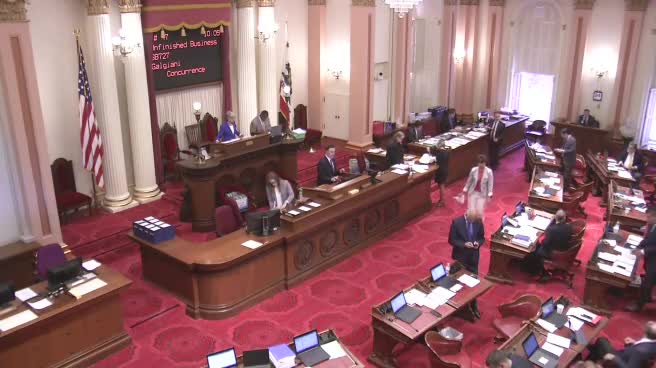 3MIN
Senate Floor
 21MIN
Senate Standing Committee on Insurance
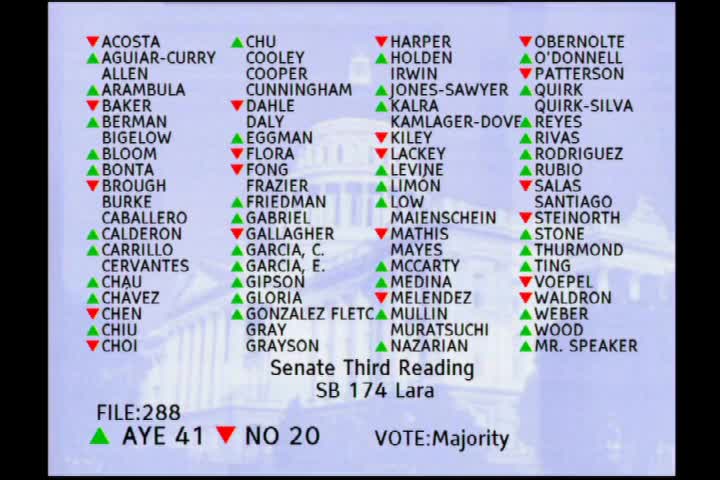 1MIN
Assembly Floor
 1MIN
Assembly Standing Committee on Appropriations
 8MIN
Assembly Standing Committee on Insurance
 18MIN
Senate Floor
 48MIN
Senate Standing Committee on Appropriations
Bill Author

Bill Co-Author(s):
