SB 304: Juvenile court school pupils: joint transition planning policy: individualized transition plan.
- Session Year: 2017-2018
- House: Senate
- Latest Version Date: 2017-09-18
Existing law provides that a county office of education and county probation department shall have a joint transition planning policy that includes collaboration with relevant local educational agencies to coordinate education and services for youth in the juvenile justice system.
This bill would require a pupil detained for more than 20 consecutive schooldays to have an individualized transition plan, as specified, to be developed by the county office of education in collaboration with the county probation department, and to have a transition portfolio, as described, developed by the county office of education to be accessible to the pupil upon his or her release. The bill would require, for pupils detained for 20 consecutive schooldays or less, the pupils individualized learning plan, if one exists, to be made available by the county office of education to the pupil upon his or her release. The bill would require the county office of education, in collaboration with the county probation department, to establish procedures for the timely, accurate, complete, and confidential transfer of educational records, as specified. By imposing additional requirements on local agencies, the bill would impose a state-mandated local program.
The California Constitution requires the state to reimburse local agencies and school districts for certain costs mandated by the state. Statutory provisions establish procedures for making that reimbursement.
This bill would provide that, if the Commission on State Mandates determines that the bill contains costs mandated by the state, reimbursement for those costs shall be made pursuant to the statutory provisions noted above.
Existing law provides that a county office of education and county probation department shall have a joint transition planning policy that includes collaboration with relevant local educational agencies to coordinate education and services for youth in the juvenile justice system.
This bill would require the joint transition planning policy to include additional components, including a pupil detained for more than 20 consecutive schooldays to have an individualized transition plan for each pupil detained for more than 20 consecutive schooldays that includes a transition portfolio that is accessible to the pupil upon his or her release from a juvenile detention facility. plan, as specified, to be developed by the county office of education in collaboration with the county probation department, and to have a transition portfolio, as described, developed by the county office of education to be accessible to the pupil upon his or her release. The bill would require, for pupils detained for 20 consecutive schooldays or less, the pupils individualized learning plan, if one exists, to be made available by the county office of education to the pupil upon his or her release. The bill would require the joint transition planning policy to also include a procedure county office of education, in collaboration with the county probation department, to establish procedures for the timely, accurate, complete, and confidential transfer of records, as specified. By imposing additional requirements on local agencies, the bill would impose a state-mandated local program.
The California Constitution requires the state to reimburse local agencies and school districts for certain costs mandated by the state. Statutory provisions establish procedures for making that reimbursement.
This bill would provide that, if the Commission on State Mandates determines that the bill contains costs mandated by the state, reimbursement for those costs shall be made pursuant to the statutory provisions noted above.
Existing law provides that a county office of education and county probation department shall have a joint transition planning policy that includes collaboration with relevant local educational agencies to coordinate education and services for youth in the juvenile justice system.
This bill would require the joint transition planning policy to include specified additional components, including an individualized transition plan for each pupil detained for more than 4 20 consecutive schooldays and a that includes a transition portfolio for each pupil, that is accessible to the pupil upon his or her release from a juvenile detention facility. The bill would require the joint transition planning policy to also include a procedure for the timely, accurate, complete, and confidential transfer of records, as specified. By imposing additional requirements on local agencies, the bill would impose a state-mandated local program.
The California Constitution requires the state to reimburse local agencies and school districts for certain costs mandated by the state. Statutory provisions establish procedures for making that reimbursement.
This bill would provide that, if the Commission on State Mandates determines that the bill contains costs mandated by the state, reimbursement for those costs shall be made pursuant to the statutory provisions noted above.
Existing law provides that a county office of education and county probation department shall have a joint transition planning policy that includes collaboration with relevant local educational agencies to coordinate education and services for youth in the juvenile justice system.
This bill would require the joint transition planning policy to include specified components, including an individualized transition plan for each pupil detained for more than 4 consecutive schooldays and a transition portfolio for each pupil, as specified. By imposing additional requirements on local agencies, the bill would impose a state-mandated local program.
The California Constitution requires the state to reimburse local agencies and school districts for certain costs mandated by the state. Statutory provisions establish procedures for making that reimbursement.
This bill would provide that, if the Commission on State Mandates determines that the bill contains costs mandated by the state, reimbursement for those costs shall be made pursuant to the statutory provisions noted above.
(a)Local educational agencies are strongly encouraged to enter into memoranda of understanding and create joint policies, systems, including data sharing systems, transition centers, and other joint structures that will allow for the immediate transfer of educational records, create uniform systems for calculating and awarding course credit, and allow for the immediate enrollment of pupils transferring from juvenile court schools.
(b)As part of their existing responsibilities for coordinating education and services for youth in the juvenile justice system, the county office of education and county probation department shall have a joint transition planning policy that includes collaboration with relevant local educational agencies to improve communication regarding dates of release and the educational needs of pupils who have had contact with the juvenile justice system, to coordinate immediate school placement and enrollment, and to ensure that probation officers in the community have the information they need to support the return of pupils who are being transferred from juvenile court schools to public schools in their communities.
(c)Each pupil detained for more than 20 consecutive schooldays shall have an individualized transition plan developed by the county office of education in collaboration with the county probation department, as needed. The individualized transition plan shall be developed before the pupils release and reviewed and revised as needed and shall address, but not be limited to, all of the following:
(1)The academic, behavioral, social-emotional, and career needs of the pupil.
(2)The identification and engagement of programs, including higher education programs, services, and individuals to support a pupils successful transition into and out of the juvenile detention facility.
(d)Each pupil detained for more than 20 consecutive schooldays shall have a transition portfolio developed by the county office of education before the pupils release that is accessible to the pupil upon his or her release from the juvenile detention facility and that contains all of the following:
(1)School transcripts.
(2)The pupils individualized learning plan, if applicable. For purposes of this section, an individualized learning plan is a plan developed collaboratively by a pupil and school personnel that identifies academic and career goals and how the pupil will progress toward meeting those goals.
(3)The pupils individualized education program adopted pursuant to the federal Individuals with Disabilities Education Act (20 U.S.C. Sec. 1400 et seq.), if applicable.
(4)The pupils plan adopted pursuant to Section 504 of the federal Rehabilitation Act of 1973 (29 U.S.C. Sec. 794(a)), if applicable.
(5)Any academic and vocational assessments.
(6)An analysis of credits completed and needed.
(7)Any certificates or diplomas earned by the pupil.
(e)For each pupil detained for 20 consecutive schooldays or fewer, a copy of the pupils individualized learning plan, if one exists, shall be made available by the county office of education to the pupil upon his or her release, where possible.
(f)The county office of education, in collaboration, as needed, with the county probation department, shall establish procedures for the timely, accurate, complete, and confidential transfer of educational records in compliance with state and federal law.
SEC. 2.If the Commission on State Mandates determines that this act contains costs mandated by the state, reimbursement to local agencies and school districts for those costs shall be made pursuant to Part 7 (commencing with Section 17500) of Division 4 of Title 2 of the Government Code.
(a)Local educational agencies are strongly encouraged to enter into memoranda of understanding and create joint policies, systems, including data sharing systems, transition centers, and other joint structures that will allow for the immediate transfer of educational records, create uniform systems for calculating and awarding course credit, and allow for the immediate enrollment of pupils transferring from juvenile court schools.
(b)As part of their existing responsibilities for coordinating education and services for youth in the juvenile justice system, the county office of education and county probation department shall have a joint transition planning policy that includes collaboration with relevant local educational agencies to improve communication regarding dates of release and the educational needs of pupils who have had contact with the juvenile justice system, to coordinate immediate school placement and enrollment, and to ensure that probation officers in the community have the information they need to support the return of pupils who are being transferred from juvenile court schools to public schools in their communities.
(c)Each pupil detained for more than 20 consecutive schooldays shall have an individualized transition plan developed by the county office of education in collaboration with the county probation department. department, as needed. The individualized transition plan shall be developed before the pupils release and reviewed and revised as needed and shall address, but not be limited to, all of the following:
(1)The academic, behavioral, social-emotional, and career needs of the pupil.
(2)The identification and engagement of programs, including higher education programs, services, and individuals to support a pupils successful transition into and out of the juvenile detention facility.
(d)Each pupil detained for more than 20 consecutive schooldays shall have a transition portfolio developed by the county office of education before the pupils release that is accessible to the pupil upon his or her release from the juvenile detention facility and that contains all of the following:
(1)School transcripts.
(2)The pupils individualized learning plan, if applicable. For purposes of this section, an individualized learning plan is a plan developed collaboratively by a pupil and school personnel that identifies academic and career goals and how the pupil will progress toward meeting those goals.
(3)The pupils individualized education program adopted pursuant to the federal Individuals with Disabilities Education Act (20 U.S.C. Sec. 1400 et seq.), if applicable.
(4)The pupils plan adopted pursuant to Section 504 of the federal Rehabilitation Act of 1973 (29 U.S.C. Sec. 794(a)), if applicable.
(5)Any academic and vocational assessments.
(6)An analysis of credits completed and needed.
(7)Any certificates or diplomas earned by the pupil.
(e)For each pupil detained for 20 consecutive schooldays or fewer, a copy of the pupils individualized learning plan, if one exists, shall be made available by the county office of education to the pupil upon his or her release, where possible.
(f)The county office of education, in collaboration, as needed, with the county probation department, shall establish procedures for the timely, accurate, complete, and confidential transfer of educational records in compliance with state and federal law.
SEC. 2.If the Commission on State Mandates determines that this act contains costs mandated by the state, reimbursement to local agencies and school districts for those costs shall be made pursuant to Part 7 (commencing with Section 17500) of Division 4 of Title 2 of the Government Code.
(a)Local educational agencies are strongly encouraged to enter into memoranda of understanding and create joint policies, systems, including data sharing systems, transition centers, and other joint structures that will allow for the immediate transfer of educational records, create uniform systems for calculating and awarding course credit, and allow for the immediate enrollment of pupils transferring from juvenile court schools.
(b)As part of their existing responsibilities for coordinating education and services for youth in the juvenile justice system, the county office of education and county probation department shall have a joint transition planning policy that includes collaboration with relevant local educational agencies to improve communication regarding dates of release and the educational needs of pupils who have had contact with the juvenile justice system, to coordinate immediate school placement and enrollment, and to ensure that probation officers in the community have the information they need to support the return of pupils who are being transferred from juvenile court schools to public schools in their communities.
(c)The joint transition planning policy shall provide for an individualized transition plan that addresses academic, behavioral, social-emotional, and career needs, to be developed prior to the pupils release and reviewed and revised as needed for each pupil detained for more than 20 consecutive school days. The individualized transition plan shall include, but not be limited to, both of the following: (1)A transition portfolio developed prior to the pupils release that is created by the county office of education in collaboration, as needed, with the county probation department, that is accessible to the pupil upon his or her release from the juvenile detention facility, and that contains all of the following:(c)Each pupil detained for more than 20 consecutive schooldays shall have an individualized transition plan developed by the county office of education in collaboration with the county probation department. The individualized transition plan shall be developed before the pupils release and reviewed and revised as needed and shall address, but not be limited to, all of the following:
(1)The academic, behavioral, social-emotional, and career needs of the pupil.
(2)The identification and engagement of programs, including higher education programs, services, and individuals to support a pupils successful transition into and out of the juvenile detention facility.
(d)Each pupil detained for more than 20 consecutive schooldays shall have a transition portfolio developed by the county office of education before the pupils release that is accessible to the pupil upon his or her release from the juvenile detention facility and that contains all of the following:
(A)(1)School transcripts.
(B)(2)The pupils individualized learning plan and individualized education program, plan, if applicable.
(3)The pupils individualized education program adopted pursuant to the federal Individuals with Disabilities Education Act (20 U.S.C. Sec. 1400 et seq.), if applicable.
(4)The pupils plan adopted pursuant to Section 504 of the federal Rehabilitation Act of 1973 (29 U.S.C. Sec. 794(a)), if applicable.
(C)(5)Any academic and vocational assessments.
(D)(6)An analysis of credits completed and needed.
(E)(7)Any certificates or diplomas earned by the pupil.
(2)The identification and engagement of programs, including higher education programs, services, and individuals to support a pupils successful transition in to and out of the juvenile detention facility.(d)The joint transition planning policy shall provide that, for(e)For each pupil detained for 20 consecutive school days schooldays or fewer, a copy of the pupils individualized learning plan plan, if one exists, shall be made available by the county office of education to the pupil upon his or her release, where possible.
(e)The joint transition planning policy shall include a procedure created by the(f)The county office of education education, in collaboration, as needed, with the county probation department department, shall establish procedures for the timely, accurate, complete, and confidential transfer of records in compliance with state and federal law.
SEC. 2.If the Commission on State Mandates determines that this act contains costs mandated by the state, reimbursement to local agencies and school districts for those costs shall be made pursuant to Part 7 (commencing with Section 17500) of Division 4 of Title 2 of the Government Code.
(a)Local educational agencies are strongly encouraged to enter into memoranda of understanding and create joint policies, systems, including data sharing systems, transition centers, and other joint structures that will allow for the immediate transfer of educational records, create uniform systems for calculating and awarding course credit, and allow for the immediate enrollment of pupils transferring from juvenile court schools.
(b)As part of their existing responsibilities for coordinating education and services for youth in the juvenile justice system, the county office of education and county probation department shall have a joint transition planning policy that includes collaboration with relevant local educational agencies to improve communication regarding dates of release and the educational needs of pupils who have had contact with the juvenile justice system, to coordinate immediate school placement and enrollment, and to ensure that probation officers in the community have the information they need to support the return of pupils who are being transferred from juvenile court schools to public schools in their communities.
(c)The joint transition planning policy shall, at a minimum, shall provide for all an individualized transition plan that addresses academic, behavioral, social-emotional, and career needs, to be developed prior to the pupils release and reviewed and revised as needed for each pupil detained for more than 20 consecutive school days. The individualized transition plan shall include, but not be limited to, both of the following:
(1)An individualized transition plan for each pupil detained for more than four consecutive schooldays that addresses academic, behavioral, social-emotional, and career needs. (2)(1)A transition portfolio for each pupil that the pupil may keep developed prior to the pupils release that is created by the county office of education in collaboration, as needed, with the county probation department, that is accessible to the pupil upon exiting a his or her release from the juvenile detention facility facility, and that contains all of the following:
(A)School transcripts.
(B)The pupils individualized learning plan and individualized education program, if applicable.
(C)Any academic, career, or technical academic and vocational assessments.
(D)An analysis of credits completed and needed.
(E)Any certificates or diplomas earned by the pupil.
(3)A procedure for the timely, accurate, complete, and confidential transfer of records in compliance with state and federal law.(4)A plan for completion of financial aid and college enrollment applications.(5)(2)The identification and engagement of programs, including higher education programs, services, and individuals to support a pupils successful transition in to and out of the juvenile detention facility, including, but not limited to, family members, probation services, education services, social services, mental health services, higher education programs, and community-based organizations. facility.
(6)A timeline for regular review and revision of each pupils individualized transition plan.(d)The joint transition planning policy shall provide that, for each pupil detained for 20 consecutive school days or fewer, a copy of the pupils individualized learning plan shall be made available to the pupil upon his or her release, where possible.
(e)The joint transition planning policy shall include a procedure created by the county office of education in collaboration, as needed, with the county probation department for the timely, accurate, complete, and confidential transfer of records in compliance with state and federal law.
SEC. 2.If the Commission on State Mandates determines that this act contains costs mandated by the state, reimbursement to local agencies and school districts for those costs shall be made pursuant to Part 7 (commencing with Section 17500) of Division 4 of Title 2 of the Government Code.
(a)Local educational agencies are strongly encouraged to enter into memoranda of understanding and create joint policies, systems, including data sharing systems, transition centers, and other joint structures that will allow for the immediate transfer of educational records, create uniform systems for calculating and awarding course credit, and allow for the immediate enrollment of pupils transferring from juvenile court schools.
(b)As part of their existing responsibilities for coordinating education and services for youth in the juvenile justice system, the county office of education and county probation department shall have a joint transition planning policy that includes collaboration with relevant local educational agencies to improve communication regarding dates of release and the educational needs of pupils who have had contact with the juvenile justice system, to coordinate immediate school placement and enrollment, and to ensure that probation officers in the community have the information they need to support the return of pupils who are being transferred from juvenile court schools to public schools in their communities.
(c)The joint transition planning policy shall, at a minimum, provide for all of the following:
(1)An individualized transition plan for each pupil detained for more than four consecutive schooldays that addresses academic, behavioral, social-emotional, and career needs.
(2)A transition portfolio for each pupil that the pupil may keep upon exiting a juvenile detention facility that contains all of the following:
(A)School transcripts.
(B)The pupils individualized education program, if applicable.
(C)Any academic, career, or technical assessments.
(D)An analysis of credits completed and needed.
(E)Any certificates or diplomas earned by the pupil.
(3)A procedure for the timely, accurate, complete, and confidential transfer of records in compliance with state and federal law.
(4)A plan for completion of financial aid and college enrollment applications.
(5)The identification and engagement of programs, services, and individuals to support a pupils successful transition in to and out of the juvenile detention facility, including, but not limited to, family members, probation services, education services, social services, mental health services, higher education programs, and community-based organizations.
(6)A timeline for regular review and revision of each pupils individualized transition plan.
SEC. 2.If the Commission on State Mandates determines that this act contains costs mandated by the state, reimbursement to local agencies and school districts for those costs shall be made pursuant to Part 7 (commencing with Section 17500) of Division 4 of Title 2 of the Government Code.
|
Date
|
Status
|
|---|---|
| Mar 3, 2018 | Last day to consider Governor’s veto pursuant to Joint Rule 58.5. |
| Oct 14, 2017 | In Senate. Consideration of Governor's veto pending. |
| Oct 14, 2017 | Vetoed by the Governor. |
| Sep 20, 2017 | Enrolled and presented to the Governor at 4 p.m. |
| Sep 14, 2017 | Assembly amendments concurred in. (Ayes 29. Noes 9.) Ordered to engrossing and enrolling. |
| Sep 14, 2017 | In Senate. Concurrence in Assembly amendments pending. |
| Sep 13, 2017 | Read third time. Passed. Ordered to the Senate. |
| Sep 6, 2017 | Read second time. Ordered to third reading. |
| Sep 5, 2017 | Read second time and amended. Ordered to second reading. |
| Sep 1, 2017 | From committee: Do pass as amended. (Ayes 12. Noes 4.) (September 1). |
| Jul 19, 2017 | July 19 set for first hearing. Placed on APPR. suspense file. |
| Jul 5, 2017 | Read second time and amended. Re-referred to Com. on APPR. |
| Jul 3, 2017 | From committee: Do pass as amended and re-refer to Com. on APPR. (Ayes 5. Noes 1.) (June 21). |
| Jun 13, 2017 | From committee with author's amendments. Read second time and amended. Re-referred to Com. on ED. |
| Jun 8, 2017 | Referred to Com. on ED. |
| May 31, 2017 | In Assembly. Read first time. Held at Desk. |
| May 30, 2017 | Read third time. Passed. (Ayes 29. Noes 9. Page 1269.) Ordered to the Assembly. |
| May 26, 2017 | Read second time. Ordered to third reading. |
| May 25, 2017 | From committee: Do pass. (Ayes 5. Noes 2. Page 1181.) (May 25). |
| May 19, 2017 | Set for hearing May 25. |
| May 1, 2017 | May 1 hearing: Placed on APPR. suspense file. |
| Apr 21, 2017 | Set for hearing May 1. |
| Apr 19, 2017 | From committee: Do pass and re-refer to Com. on APPR. (Ayes 5. Noes 2. Page 747.) (April 18). Re-referred to Com. on APPR. |
| Mar 23, 2017 | Set for hearing April 18. |
| Mar 22, 2017 | From committee: Do pass and re-refer to Com. on PUB. S. (Ayes 6. Noes 1. Page 444.) (March 22). Re-referred to Com. on PUB. S. |
| Mar 7, 2017 | Set for hearing March 22. |
| Feb 23, 2017 | Referred to Coms. on ED. and PUB. S. |
| Feb 14, 2017 | From printer. May be acted upon on or after March 16. |
| Feb 13, 2017 | Introduced. Read first time. To Com. on RLS. for assignment. To print. |
|
Date
|
Description
|
Location
|
Votes
|
|
|---|---|---|---|---|
| Sep 14, 2017 | Unfinished Business SB304 Portantino et al. Concurrence | Senate Floor |
Passed |
|
| Sep 13, 2017 | SB 304 Portantino Senate Third Reading By BOCANEGRA | Assembly Floor |
Passed |
|
| Sep 1, 2017 | Do pass as amended. | Assembly Standing Committee on Appropriations |
Passed |
|
| Jun 21, 2017 | Do pass as amended and be re-referred to the Committee on [Appropriations] | Assembly Standing Committee on Education |
Passed |
|
| May 30, 2017 | Senate 3rd Reading SB304 Portantino | Senate Floor |
Passed |
|
| May 25, 2017 | Do pass | Senate Standing Committee on Appropriations |
Passed |
|
| May 1, 2017 | Placed on suspense file | Senate Standing Committee on Appropriations |
Passed |
|
| Apr 18, 2017 | Do pass, but first be re-referred to the Committee on [Appropriations] | Senate Standing Committee on Public Safety |
Passed |
|
| Mar 22, 2017 | Do pass, but first be re-referred to the Committee on [Public Safety] | Senate Standing Committee on Education |
Passed |
This list shows positions taken on this bill by organizations on the date displayed, which is linked to the original source.
Positions by individuals are not included.
|
Organization
|
Position
|
Date
|
|---|---|---|
| American Academy Of Pediatrics, California | ** Support | Jan 2, 2018 |
| Anti-Recidivism Coalition | ** Support | Jan 2, 2018 |
| California Alliance for Youth and Community Justice | ** Support | Jan 2, 2018 |
| California Association of School Social Workers | ** Support | Jan 2, 2018 |
| California Catholic Conference | ** Support | Jun 19, 2017 |
| California Council Of Community Behavioral Health Agencies | ** Support | Jan 2, 2018 |
| Chief Probation Officers Of California | ** Against | Jan 2, 2018 |
| Children Now | ** Support | Jan 2, 2018 |
| Children'S Defense Fund - California | ** Support | Jan 2, 2018 |
| Healing Dialogue and Action | ** Support | Jan 2, 2018 |
| John Burton Advocates for Youth | ** Support | Jan 2, 2018 |
| Legal Services for Children | ** Support | Jan 2, 2018 |
| National Association Of Social Workers, California Chapter | ** Support | Jan 2, 2018 |
| National Center for Youth Law | ** Support | Jan 2, 2018 |
| Public Counsel | ** Support | Jan 2, 2018 |
| W. Haywood Burns Institute | ** Support | Jan 2, 2018 |
| Young Women's Freedom Center | ** Support | Jan 2, 2018 |
| Youth Justice Coalition | ** Support | Jan 2, 2018 |
| Youth Law Center | ** Support | Jan 2, 2018 |
Office of Senate Floor Analyses (916) 651-1520 Fax: (916) 327-4478 | SB |
VETO
Bill No: SB 304
:
SENATE EDUCATION COMMITTEE: 6-1, 3/22/17
AYES: Allen, Wilk, Galgiani, Leyva, Mendoza, Pan
NOES: Vidak
SENATE PUBLIC SAFETY COMMITTEE: 5-2, 4/18/17
AYES: Skinner, Bradford, Jackson, Mitchell, Wiener
NOES: Anderson, Stone
SENATE APPROPRIATIONS COMMITTEE: 5-2, 5/25/17
AYES: Lara, Beall, Bradford, Hill, Wiener
NOES: Bates, Nielsen
SENATE FLOOR: 29-9, 5/30/17
AYES: Allen, Atkins, Beall, Bradford, De León, Dodd, Fuller, Galgiani, Glazer, Hernandez, Hertzberg, Hill, Hueso, Jackson, Lara, Leyva, McGuire, Mendoza, Mitchell, Monning, Newman, Nguyen, Pan, Portantino, Roth, Skinner, Wieckowski, Wiener, Wilk
NOES: Anderson, Bates, Berryhill, Gaines, Moorlach, Morrell, Nielsen, Stone, Vidak
NO VOTE RECORDED: Cannella, Stern
SENATE FLOOR: 29-9, 9/14/17
AYES: Allen, Atkins, Beall, Bradford, Cannella, De León, Dodd, Galgiani, Glazer, Hernandez, Hertzberg, Hill, Jackson, Lara, Leyva, McGuire, Mendoza, Mitchell, Monning, Newman, Nguyen, Pan, Portantino, Roth, Skinner, Stern, Wieckowski, Wiener, Wilk
NOES: Anderson, Bates, Berryhill, Gaines, Moorlach, Morrell, Nielsen, Stone, Vidak
NO VOTE RECORDED: Fuller, Hueso
ASSEMBLY FLOOR: 55-20, 9/13/17 - See last page for vote
DIGEST:
This bill requires each student detained for more than 20 consecutive schooldays to have an individualized transition plan and transition portfolio, and requires the individualized transition plan and transition portfolio to address specified issues.
Existing law:
- Provides that public school or classes in any juvenile hall or home, day center, juvenile ranch or camp, regional youth educational facility, or Orange County youth correctional center, or in any group home housing 25 or more children and operating one or more additional sites under a central administration, with acceptable school structures at one or more centrally located sites to serve the single or composite populations of juvenile court school pupils shall be known as juvenile court schools. (Education Code § 48645.1)
- Requires the county board of education to provide for the administration and operation of juvenile court schools by the county superintendent of schools or by contract with the respective governing boards of the elementary, high school, or unified school district in which the juvenile court school is located. (EC § 48645.2)
- Prohibits a student from being denied enrollment or readmission to a public school solely on the basis that he or she has had contact with the juvenile justice system. (EC § 48645.5)
- Encourages, strongly, local educational agencies to enter into memoranda of understanding and create point policies, system, including data sharing systems, transition centers, and other joint structures that will allow for the immediate transfer or educational records, create uniform systems for calculating and awarding course credit, and allow for the immediate enrollment of students transferring from juvenile court schools. (EC § 48647)
- Requires the county office of education and probation department to have a joint transition planning policy that includes collaboration with local educational agencies to:
- Improve communication regarding dates of release and the educational needs of students who have had contact with the juvenile justice system.
- Coordinate immediate school placement and enrollment.
- Ensure that probation officers in the community have the information they need to support the return of pupils who are being transferred from juvenile court schools to public schools in their communities. (EC § 48647)
This bill:
- Requires each student detained for more than 20 consecutive schooldays to have an individualized transition plan developed by the county office of education in collaboration with the county probation department, as needed.
- Requires the individualized transition plan to be developed before the student’s release, and reviewed and revised as needed, and requires the plan to address all of the following:
- The academic, behavioral, social-emotional, and career needs of the student.
- The identification and engagement of programs, including higher education programs, services, and individuals to support a student’s successful transition into and out of the juvenile detention facility.
- Requires each student detained for more than 20 consecutive schooldays to have a transition portfolio developed by the county office of education before the student’s release that is accessible to the student upon release and that contains all of the following:
- School transcripts.
- The student’s individualized learning plan, if applicable. This bill provides that an individualized learning plan is a plan developed collaboratively by a student and school personnel that identifies academic and career goals and how the student will progress toward meeting those goals.
- The student’s individualized education program, if applicable.
- The student’s 504 plan, if applicable.
- Any academic and vocational assessments.
- An analysis of credits completed and needed.
- Any certificates or diplomas earned by the student.
- Requires the county office of education to make available to a student upon release the student’s individualized learning plan, for each student detained for 20 consecutive schooldays or fewer.
- Requires the county office of education, in collaboration as needed with the county probation department, to establish procedures for the timely, accurate, complete, and confidential transfer of educational records in compliance with state and federal law.
Comments
- Average length of stay in juvenile hall. Data is insufficient to determine how many students statewide are detained longer than four consecutive schooldays and would be provided an individualized transition plan pursuant to this bill. Data from the Board of State and Community Corrections’ 2015 fourth quarter report shows a statewide average length of stay of 29.7 days (some youth remain for longer periods of time while others spend less than 29.7 days in juvenile detention). According to this same report, the statewide average daily population is 3,284 for juvenile halls and 1,868 for juvenile camps and ranches.
- Report on transition. Existing law requires the Superintendent of Public Instruction to convene a statewide group with stakeholders from the community, advocacy organizations, and education and probation department leaders to develop a model and study existing successful county programs and policies for the immediate transfer of educational records, uniform systems for calculating and awarding credits, transition planning, and the immediate enrollment of students who are being transferred from juvenile court schools. Existing law requires the statewide group to report its findings and provide recommendations for state action to the Legislature and appropriate policy committees by January 1, 2016. This report was submitted to the Legislature on March 7, 2017. Relative to transition planning, the report makes the following recommendations, among other things:
- A student transition team shall be established for each student.
- The student transition team should provide each student with a plan that includes the requisite academic and behavioral actions necessary to establish a clear pathway back to a comprehensive public school in their community.
- Identified staff shall be accountable for providing necessary assistance and effective case management to each transitioning student.
- A transition plan shall be prepared for each student.
- Accurate student records shall be available for all students transitioning into and out of a juvenile court facility.
- A transitioning student from a juvenile court school shall be immediately enrolled regardless of the availability of academic records, among other things.
- Each school district shall identify one or more persons responsible for ensuring the immediate enrollment of a student transitioning from a juvenile court facility.
- County offices of education and school districts should adopt and comply with the California Model Policy, which provides a partial credit calculation formula, explanations of the policy’s provisions, and implementation tools for use by school personnel and social workers.
FISCAL EFFECT: Appropriation: Fiscal Com.: Local:
According to the Assembly Appropriations Committee, this bill imposes potentially significant reimbursable state mandate costs for county offices of education and county probation departments, likely in the low millions of dollars in Proposition 98/General Fund, to develop individualized transition plans, transition portfolios, and procedures for the transfer of records.
Youth Law Center (source)
American Academy of Pediatrics, California
Anti-Recidivism Coalition
California Alliance for Youth and Community Justice
California Association of School Social Workers
California Council of Community Behavioral Health Agencies
Children Now
Children’s Defense Fund - California
Healing Dialogue and Action
John Burton Advocates for Youth
Legal Services for Children
National Association of Social Workers, California Chapter
National Center for Youth Law
Public Counsel
W. Haywood Burns Institute
Young Women’s Freedom Center
Youth Justice Coalition
OPPOSITION: (Verified 9/12/17)
Chief Probation Officers of California
ARGUMENTS IN SUPPORT: According to the Youth Law Center, most youth who attend a juvenile court school aspire to postsecondary education but, because of system barriers to quality education, are more likely to drop out of high school and enter the adult criminal justice system than they are to enroll in college or be gainfully employed as young adults. Youth attending court schools often face significant difficulty in securing transferable academic credits while in court schools and in getting academic credit recognized when they exit and seek re-enrollment in their local school districts. This bill strengthens existing laws by defining the supports court school students need to transition successfully back to their local community school.
ARGUMENTS IN OPPOSITION: According to the Chief Probation Officers of California, this bill takes away the discretion of county offices of education, probation departments and local educational agencies, both from an educational and reentry perspective, to choose which information is relevant in a youth’s transitional planning policy, and adds a prescribed set of requirements that may not be pertinent to every child. Additionally, this bill is unclear as to who is required to gather and compile the information required within a transition portfolio – a process that will no doubt take considerable staff time and resources to complete.
GOVERNOR'S VETO MESSAGE:
I am returning Senate Bill 304 without my signature.
This bill requires a county office of education and county probation department to include in their joint transition planning policy an individualized plan and transition portfolio for juvenile court school students detained for more than 20 consecutive days.
I signed Assembly Bill 2276 in 2014, which requires a county office of education and probation department to develop a joint transition planning policy to assist students transitioning from juvenile court schools to other schools. I believe this provides sufficient guidance to get the job done.
ASSEMBLY FLOOR: 55-20, 9/13/17
AYES: Acosta, Aguiar-Curry, Arambula, Berman, Bloom, Bocanegra, Bonta, Burke, Caballero, Calderon, Cervantes, Chau, Chávez, Chiu, Chu, Cooley, Dababneh, Daly, Eggman, Friedman, Cristina Garcia, Eduardo Garcia, Gipson, Gloria, Gonzalez Fletcher, Gray, Grayson, Holden, Irwin, Jones-Sawyer, Kalra, Lackey, Levine, Limón, Low, McCarty, Medina, Mullin, Muratsuchi, Obernolte, O'Donnell, Quirk, Reyes, Ridley-Thomas, Rodriguez, Rubio, Salas, Santiago, Mark Stone, Thurmond, Ting, Waldron, Weber, Wood, Rendon
NOES: Travis Allen, Baker, Bigelow, Brough, Chen, Choi, Cunningham, Dahle, Flora, Fong, Gallagher, Harper, Kiley, Maienschein, Mathis, Mayes, Melendez, Patterson, Quirk-Silva, Voepel
NO VOTE RECORDED: Cooper, Frazier, Nazarian, Steinorth
1/2/18 9:56:14
**** END ****
Office of Senate Floor Analyses (916) 651-1520 Fax: (916) 327-4478 | SB |
UNFINISHED BUSINESS
Bill No: SB 304
:
SENATE EDUCATION COMMITTEE: 6-1, 3/22/17
AYES: Allen, Wilk, Galgiani, Leyva, Mendoza, Pan
NOES: Vidak
SENATE PUBLIC SAFETY COMMITTEE: 5-2, 4/18/17
AYES: Skinner, Bradford, Jackson, Mitchell, Wiener
NOES: Anderson, Stone
SENATE APPROPRIATIONS COMMITTEE: 5-2, 5/25/17
AYES: Lara, Beall, Bradford, Hill, Wiener
NOES: Bates, Nielsen
SENATE FLOOR: 29-9, 5/30/17
AYES: Allen, Atkins, Beall, Bradford, De León, Dodd, Fuller, Galgiani, Glazer, Hernandez, Hertzberg, Hill, Hueso, Jackson, Lara, Leyva, McGuire, Mendoza, Mitchell, Monning, Newman, Nguyen, Pan, Portantino, Roth, Skinner, Wieckowski, Wiener, Wilk
NOES: Anderson, Bates, Berryhill, Gaines, Moorlach, Morrell, Nielsen, Stone, Vidak
NO VOTE RECORDED: Cannella, Stern
ASSEMBLY FLOOR: 55-20, 9/13/17 - See last page for vote
DIGEST:
This bill requires each student detained for more than 20 consecutive schooldays to have an individualized transition plan and transition portfolio, and requires the individualized transition plan and transition portfolio to address specified issues.
Assembly Amendments
(a) increase the threshold at which point an individualized transition plan and transition portfolio must be developed for a student detained in the juvenile justice system, from four consecutive schooldays to 20 consecutive schooldays; (b) provide that an individualized learning plan is a plan developed collaboratively by a student and school personnel that identifies academic and career goals and how the student will progress toward meeting those goals; (c) require a copy of the individualized learning plan to be made available to the student upon release; and (d) require the county office of education, in collaboration with the county probation department as needed, to establish procedures for the timely, accurate, complete and confidential transfer of educational records.
Existing law:
- Provides that public school or classes in any juvenile hall or home, day center, juvenile ranch or camp, regional youth educational facility, or Orange County youth correctional center, or in any group home housing 25 or more children and operating one or more additional sites under a central administration, with acceptable school structures at one or more centrally located sites to serve the single or composite populations of juvenile court school pupils shall be known as juvenile court schools. (Education Code § 48645.1)
- Requires the county board of education to provide for the administration and operation of juvenile court schools by the county superintendent of schools or by contract with the respective governing boards of the elementary, high school, or unified school district in which the juvenile court school is located. (EC § 48645.2)
- Prohibits a student from being denied enrollment or readmission to a public school solely on the basis that he or she has had contact with the juvenile justice system. (EC § 48645.5)
- Encourages, strongly, local educational agencies to enter into memoranda of understanding and create point policies, system, including data sharing systems, transition centers, and other joint structures that will allow for the immediate transfer or educational records, create uniform systems for calculating and awarding course credit, and allow for the immediate enrollment of students transferring from juvenile court schools. (EC § 48647)
- Requires the county office of education and probation department to have a joint transition planning policy that includes collaboration with local educational agencies to:
- Improve communication regarding dates of release and the educational needs of students who have had contact with the juvenile justice system.
- Coordinate immediate school placement and enrollment.
- Ensure that probation officers in the community have the information they need to support the return of pupils who are being transferred from juvenile court schools to public schools in their communities. (EC § 48647)
This bill:
- Requires each student detained for more than 20 consecutive schooldays to have an individualized transition plan developed by the county office of education in collaboration with the county probation department, as needed.
- Requires the individualized transition plan to be developed before the student’s release, and reviewed and revised as needed, and requires the plan to address all of the following:
- The academic, behavioral, social-emotional, and career needs of the student.
- The identification and engagement of programs, including higher education programs, services, and individuals to support a student’s successful transition into and out of the juvenile detention facility.
- Requires each student detained for more than 20 consecutive schooldays to have a transition portfolio developed by the county office of education before the student’s release that is accessible to the student upon release and that contains all of the following:
- School transcripts.
- The student’s individualized learning plan, if applicable. This bill provides that an individualized learning plan is a plan developed collaboratively by a student and school personnel that identifies academic and career goals and how the student will progress toward meeting those goals.
- The student’s individualized education program, if applicable.
- The student’s 504 plan, if applicable.
- Any academic and vocational assessments.
- An analysis of credits completed and needed.
- Any certificates or diplomas earned by the student.
- Requires the county office of education to make available to a student upon release the student’s individualized learning plan, for each student detained for 20 consecutive schooldays or fewer.
- Requires the county office of education, in collaboration as needed with the county probation department, to establish procedures for the timely, accurate, complete, and confidential transfer of educational records in compliance with state and federal law.
Comments
- Average length of stay in juvenile hall. Data is insufficient to determine how many students statewide are detained longer than four consecutive schooldays and would be provided an individualized transition plan pursuant to this bill. Data from the Board of State and Community Corrections’ 2015 fourth quarter report shows a statewide average length of stay of 29.7 days (some youth remain for longer periods of time while others spend less than 29.7 days in juvenile detention). According to this same report, the statewide average daily population is 3,284 for juvenile halls and 1,868 for juvenile camps and ranches.
- Report on transition. Existing law requires the Superintendent of Public Instruction to convene a statewide group with stakeholders from the community, advocacy organizations, and education and probation department leaders to develop a model and study existing successful county programs and policies for the immediate transfer of educational records, uniform systems for calculating and awarding credits, transition planning, and the immediate enrollment of students who are being transferred from juvenile court schools. Existing law requires the statewide group to report its findings and provide recommendations for state action to the Legislature and appropriate policy committees by January 1, 2016. This report was submitted to the Legislature on March 7, 2017. Relative to transition planning, the report makes the following recommendations, among other things:
- A student transition team shall be established for each student.
- The student transition team should provide each student with a plan that includes the requisite academic and behavioral actions necessary to establish a clear pathway back to a comprehensive public school in their community.
- Identified staff shall be accountable for providing necessary assistance and effective case management to each transitioning student.
- A transition plan shall be prepared for each student.
- Accurate student records shall be available for all students transitioning into and out of a juvenile court facility.
- A transitioning student from a juvenile court school shall be immediately enrolled regardless of the availability of academic records, among other things.
- Each school district shall identify one or more persons responsible for ensuring the immediate enrollment of a student transitioning from a juvenile court facility.
- County offices of education and school districts should adopt and comply with the California Model Policy, which provides a partial credit calculation formula, explanations of the policy’s provisions, and implementation tools for use by school personnel and social workers.
FISCAL EFFECT: Appropriation: Fiscal Com.: Local:
According to the Assembly Appropriations Committee, this bill imposes potentially significant reimbursable state mandate costs for county offices of education and county probation departments, likely in the low millions of dollars in Proposition 98/General Fund, to develop individualized transition plans, transition portfolios, and procedures for the transfer of records.
Youth Law Center (source)
American Academy of Pediatrics, California
Anti-Recidivism Coalition
California Alliance for Youth and Community Justice
California Association of School Social Workers
California Council of Community Behavioral Health Agencies
Children Now
Children’s Defense Fund - California
Healing Dialogue and Action
John Burton Advocates for Youth
Legal Services for Children
National Association of Social Workers, California Chapter
National Center for Youth Law
Public Counsel
W. Haywood Burns Institute
Young Women’s Freedom Center
Youth Justice Coalition
OPPOSITION: (Verified 9/12/17)
Chief Probation Officers of California
ARGUMENTS IN SUPPORT: According to the Youth Law Center, most youth who attend a juvenile court school aspire to postsecondary education but, because of system barriers to quality education, are more likely to drop out of high school and enter the adult criminal justice system than they are to enroll in college or be gainfully employed as young adults. Youth attending court schools often face significant difficulty in securing transferable academic credits while in court schools and in getting academic credit recognized when they exit and seek re-enrollment in their local school districts. This bill strengthens existing laws by defining the supports court school students need to transition successfully back to their local community school.
ARGUMENTS IN OPPOSITION: According to the Chief Probation Officers of California, this bill takes away the discretion of county offices of education, probation departments and local educational agencies, both from an educational and reentry perspective, to choose which information is relevant in a youth’s transitional planning policy, and adds a prescribed set of requirements that may not be pertinent to every child. Additionally, this bill is unclear as to who is required to gather and compile the information required within a transition portfolio – a process that will no doubt take considerable staff time and resources to complete.
ASSEMBLY FLOOR: 55-20, 9/13/17
AYES: Acosta, Aguiar-Curry, Arambula, Berman, Bloom, Bocanegra, Bonta, Burke, Caballero, Calderon, Cervantes, Chau, Chávez, Chiu, Chu, Cooley, Dababneh, Daly, Eggman, Friedman, Cristina Garcia, Eduardo Garcia, Gipson, Gloria, Gonzalez Fletcher, Gray, Grayson, Holden, Irwin, Jones-Sawyer, Kalra, Lackey, Levine, Limón, Low, McCarty, Medina, Mullin, Muratsuchi, Obernolte, O'Donnell, Quirk, Reyes, Ridley-Thomas, Rodriguez, Rubio, Salas, Santiago, Mark Stone, Thurmond, Ting, Waldron, Weber, Wood, Rendon
NOES: Travis Allen, Baker, Bigelow, Brough, Chen, Choi, Cunningham, Dahle, Flora, Fong, Gallagher, Harper, Kiley, Maienschein, Mathis, Mayes, Melendez, Patterson, Quirk-Silva, Voepel
NO VOTE RECORDED: Cooper, Frazier, Nazarian, Steinorth
9/14/17 10:02:48
**** END ****
SENATE THIRD READING
STR Bill Id:
Author:(Portantino)
As Amended Ver:September 5, 2017
Majority vote
SENATE VOTE: 29-9
Committee | Votes | Ayes | Noes |
Education | 5-1 | O'Donnell, Gloria, McCarty, Thurmond, Weber | Kiley |
Appropriations | 12-4 | Gonzalez Fletcher, Bloom, Bocanegra, Bonta, Calderon, Chau, Eggman, Friedman, Eduardo Garcia, Jones-Sawyer, Obernolte, Reyes | Bigelow, Brough, Fong, Gallagher |
SUMMARY: Requires that joint transition policies for students leaving juvenile court schools provide for a transition plan, including a transition portfolio, for students detained for 20 or more consecutive school days. Specifically, this bill:
- Requires that each pupil detained for more than 20 consecutive schooldays have an individualized transition plan developed by the county office of education in collaboration with the county probation department, as needed. Requires that the individualized transition plan be developed before the pupil's release and reviewed and revised as needed, and that it address, but not be limited to, all of the following:
- the academic, behavioral, social-emotional, and career needs of the pupil
- the identification and engagement of programs, including higher education programs, services, and individuals to support a pupil’s successful transition into and out of the juvenile detention facility
- Requires that each pupil detained for more than 20 consecutive schooldays have a transition portfolio developed by the county office of education before the pupil's release that is accessible to the pupil upon his or her release from the juvenile detention facility and that contains all of the following:
- school transcripts
- the pupil's individualized learning plan, if applicable. Defines an individualized learning plan, for purposes of the section being added by the measure, as a plan developed collaboratively by students and school personnel which identifies academic and career goals and how students will progress toward meeting those goals.
- the pupil's individualized education program adopted pursuant to the federal Individuals with Disabilities Education Act, if applicable
- the pupil's plan adopted pursuant to Section 504 of the federal Rehabilitation Act of 1973 (29 United States Code Sec. 794(a)), if applicable
- any academic and vocational assessments
- an analysis of credits completed and needed
- any certificates or diplomas earned by the pupil
For each pupil detained for 20 consecutive schooldays or fewer, a copy of the pupil's individualized learning plan, if one exists, shall be made available by the county office of education to the pupil upon his or her release, where possible.
The county office of education, in collaboration, as needed, with the county probation department, shall establish procedures for the timely, accurate, complete, and confidential transfer of educational records in compliance with state and federal law.
FISCAL EFFECT: According to the Assembly Appropriations Committee, potentially significant reimbursable state mandate costs for COEs and county probation departments, likely in the low millions of dollars in Proposition 98/General Fund, to develop individualized transition plans, transition portfolios, and procedures for the transfer of records.
COMMENTS:
Juvenile court school transition. Research has documented problems high dropout rates and low graduation rates among juvenile court school students, as well as high rates of students not returning to school district programs upon release.
- A report by the California Department of Education (CDE) found that only 21% of juvenile court school students were enrolled at their local school within 30 days after being released.
- A 2016 report published by the Youth Law Center found that many students do not re-enroll in school after leaving a juvenile court school. The report notes that in the 2013-2014 school year, juvenile court school students had a dropout rate of 38%, compared to the statewide adjusted dropout rate of 12%. The report noted that ten counties had court school dropout rates of 60% or higher and that five had dropout rates ranging from 40%-59%.
- A 2013 analysis by the National Bureau for Economic Research found that, compared to students who were charged with a crime but not incarcerated, juvenile incarceration is estimated to decrease the chances of high school graduation by 13 percentage points and increase the chances of adult incarceration by 22 percentage points.
Report on juvenile court school transition recommends individual transition plans. Existing law requires the Superintendent of Public Instruction to convene a statewide group with stakeholders from the community, advocacy organizations, and education and probation department leaders to develop a model and study existing successful county programs and policies for the immediate transfer of educational records, uniform systems for calculating and awarding credits, transition planning, and the immediate enrollment of students who are being transferred from juvenile court schools. Existing law requires the statewide group to report its findings and provide recommendations for state action to the Legislature and appropriate policy committees by January 1, 2016. This report was submitted to the Legislature on March 7, 2017.
One of the findings of the stakeholder group was that "support services are often inappropriately discontinued for transitioning juvenile court pupils." Specifically, the report noted, "mental health and other support services provided to a pupil enrolled in juvenile court school often cease when a pupil transitions to a comprehensive public school environment—even when school staff are aware of the pupil's prior care. For example, this is often the case for young women who are pregnant, lactating, or caring for a child. Continuity of necessary support services is a critical component affecting recidivism and drop-out rates among at-risk students."
The report recommended the following with respect to the transition of students in juvenile court schools:
- A student transition team should be established for each student.
- The student transition team should provide each student with a plan that includes the requisite academic and behavioral actions necessary to establish a clear pathway back to a comprehensive public school in their community.
- Identified staff shall be accountable for providing necessary assistance and effective case management to each transitioning student.
- A transition plan shall be prepared for each student.
- Accurate student records should be available for all students transitioning into and out of a juvenile court facility.
- A transitioning student from a juvenile court school should be immediately enrolled regardless of the availability of academic records, among other things.
- Each school district should identify one or more persons responsible for ensuring the immediate enrollment of a student transitioning from a juvenile court facility.
- COEs and school districts should adopt and comply with the California's Partial Credit Model Policy, which provides a partial credit calculation formula.
Analysis Prepared by: Tanya Lieberman / ED. / (916) 319-2087 FN: 0001671
Date of Hearing: July 19, 2017
ASSEMBLY COMMITTEE ON APPROPRIATIONS
Lorena Gonzalez Fletcher, Chair
SBPCA Bill Id:SB 304
Author:(Portantino) – As Amended Ver:July 5, 2017
Policy Committee: | Education | Vote: | 5 - 1 |
Urgency: No State Mandated Local Program: Yes Reimbursable: Yes
SUMMARY:
This bill requires joint transition policies for students leaving juvenile court schools to provide for an individualized transition plan, including a transition portfolio, for students detained for 20 or more consecutive school days. Specifically, this bill:
- Requires the joint transition policy required to be developed by county offices of education (COE) and the county probation department, to include an individualized transition plan that addresses academic, behavioral, social-emotional, and the career needs of the student.
- Requires the joint transition policy to provide for each student detained 20 consecutive school days or less, a copy of the student’s individualized learning plan made available by the COE to the student upon his or her release, if one exists.
FISCAL EFFECT:
Potentially significant reimbursable state mandate costs for COEs and county probation departments, likely in the low millions of dollars in Proposition 98/General Fund, to develop individualized transition plans, transition portfolios, and procedures for the transfer of records.
According to the California Department of Education (CDE), cumulative enrollment of students in juvenile court schools in 2014-15 totaled 36,378 students, enrolled at 75 juvenile court schools in 48 counties. However, there is insufficient data to determine the exact number of students detained statewide that meet the length of consecutive school days. The Board of State and Community Corrections does report that the average length of detention is 29.7 days, or 20 school days. Assuming COE’s and county probation departments spend a total of 10 hours per 5,000 pupils each year, reimbursable costs would be in the low millions of dollars in Proposition 98/General Fund.
COMMENTS:
- Purpose and Background. Existing law requires the county board of education to provide for the administration and operation of juvenile court schools by the county superintendent of schools or by contract with the respective governing boards of the elementary, high school, or unified school district in which the juvenile court school is located. The COE and probation department must have a joint transition planning policy that includes collaboration with local educational agencies (LEA’s) to: a) improve communication regarding dates of release and the educational needs of students who have had contact with the juvenile justice system; b) coordinate immediate school placement and enrollment; and c) ensure that probation
officers in the community have the information they need to support the return of pupils who are being transferred from juvenile court schools to public schools in their communities.
State law also encourages LEA’s to enter into memoranda of understanding and create joint policies including data sharing systems, transition centers, and other joint structures that will allow for the immediate transfer or educational records, create uniform systems for calculating and awarding course credit, and allow for the immediate enrollment of students transferring from juvenile court schools. State law prohibits a student from being denied enrollment or readmission to a public school solely on the basis that he or she has had contact with the juvenile justice system.
According to the author, “In 2014, 47,655 California youth attended a court school in a juvenile hall or camp. These young people often face significant difficulty in securing transferable academic credits while in court schools and in getting academic credit recognized when they exit and seek to reenroll in their local districts. Additionally, once released, these youth are often deterred from rejoining traditional comprehensive schools but instead are sent to continuation schools with few opportunities to prepare for post-secondary education…The goal of the bill is to ensure continued and consistent educational opportunities for youth involved in the juvenile justice system and to support their highest possible educational attainment.”
- Related Legislation. AB 1124 (Cervantes) permits the education rights holders of students enrolled in juvenile court schools to voluntarily defer the issuance of a diploma for meeting state graduation requirements so that a student may take additional coursework at the juvenile court school or, once released, at a school operated by a local educational agency. AB 1124 is pending in the Senate Appropriations Committee.
- Prior Legislation. AB 2306 (Frazier) Chapter 464, Statutes of 2016, requires school districts to exempt former juvenile court school students who transfer into school districts after their second year in high school from local graduation requirements that exceed those of the state, and requires a county office of education to issue a diploma of graduation to a student who completes state coursework requirements for graduation while attending a juvenile court school.
AB 2276 (Bocanegra) Chapter 901, Statutes of 2014, requires a student who has had contact with the juvenile justice system to be immediately enrolled in a public school, and requires the SPI to convene a statewide group of stakeholders to study and report on juvenile court school transition.
Analysis Prepared by: Daisy Gonzales / APPR. / (916) 319-2081
Date of Hearing: June 21, 2017
ASSEMBLY COMMITTEE ON EDUCATION
Patrick O'Donnell, Chair
SBPCA Bill Id:SB 304
Author:(Portantino) – As Amended Ver:June 13, 2017
SENATE VOTE: 29-9
SUBJECT: Juvenile court school pupils: joint transitions planning policy
SUMMARY: Requires that joint transition policies for students leaving juvenile court schools provide for a transition plan, including a transition portfolio, for students detained for 20 or more consecutive school days. Specifically, this bill:
- Requires that the joint transition policy required to be developed by county offices of education (COE) and the county probation department include an individualized transition plan for each student detained for more than 20 consecutive school days. Requires that the plan address academic, behavioral, social-emotional, and career needs of the student.
- Requires that the individualized transition plan include:
- a transition portfolio developed by the COE and the county probation department, as necessary, prior to the student’s release and accessible to each student upon exiting a juvenile detention facility, that contains:
- school transcripts
- the pupil’s individualized learning plan and individualized education program, if applicable
- any academic and vocational assessments
- an analysis of credits completed and needed
- any certificates or diplomas earned by the pupil
- the identification and engagement of programs, such as higher education programs, services, and individuals to support a pupil’s successful transition in to and out of the juvenile detention facility.
- Requires that the joint transition policy provide that, for each student detained 20 consecutive school days or less, a copy of the student’s individualized learning plan be made available to the student upon his or her release, when possible.
- Requires that the joint transition policy include a procedure created by the COE, in collaboration, as needed, with the county probation department, for the timely, accurate, complete, and confidential transfer of records in compliance with state and federal law.
EXISTING LAW:
- Provides that public school or classes in any juvenile hall or home, day center, juvenile ranch or camp, regional youth educational facility, or Orange County youth correctional center, or in any group home housing 25 or more children and operating one or more additional sites under a central administration, with acceptable school structures at one or more centrally located sites to serve the single or composite populations of juvenile court school pupils shall be known as juvenile court schools.
- Requires the county board of education to provide for the administration and operation of juvenile court schools by the county superintendent of schools or by contract with the respective governing boards of the elementary, high school, or unified school district in which the juvenile court school is located.
- Prohibits a student from being denied enrollment or readmission to a public school solely on the basis that he or she has had contact with the juvenile justice system.
- Strongly encourages local educational agencies (LEAs) to enter into memoranda of understanding and create joint policies, system, including data sharing systems, transition centers, and other joint structures that will allow for the immediate transfer or educational records, create uniform systems for calculating and awarding course credit, and allow for the immediate enrollment of students transferring from juvenile court schools.
- Requires the COE and probation department to have a joint transition planning policy that includes collaboration with LEAs to:
- improve communication regarding dates of release and the educational needs of students who have had contact with the juvenile justice system
- coordinate immediate school placement and enrollment
- ensure that probation officers in the community have the information they need to support the return of pupils who are being transferred from juvenile court schools to public schools in their communities
- improve communication regarding dates of release and the educational needs of students who have had contact with the juvenile justice system
FISCAL EFFECT: According to the Senate Appropriations Committee’s analysis of a prior version of the bill, potentially significant reimbursable state mandate on COEs and county probation departments, likely in the low millions in Proposition 98 General Fund, for the expanded joint transition planning policy requirements.
COMMENTS:
Need for the bill. According to the author, “In 2014, 47,655 California youth attended a court school in a juvenile hall or camp. These young people often face significant difficulty in securing transferable academic credits while in court schools and in getting academic credit recognized when they exit and seek to reenroll in their local districts. Additionally, once released, these youth are often deterred from rejoining traditional comprehensive schools but instead are sent to continuation schools with few opportunities to prepare for post-secondary education.
The transition from court school to a community school, when youth are released from detention, is a critical time when youth are vulnerable to dropping out of school altogether. The goal of the bill is to ensure continued and consistent educational opportunities for youth involved in the juvenile justice system and to support their highest possible educational attainment.”
How many students would receive a plan under this bill? According to the California Department of Education (CDE), cumulative enrollment of students in juvenile court schools in 2014-15 totaled 36,378 students, enrolled at 75 juvenile court schools in 48 counties. According to the Board of State and Community Corrections’ 2015 fourth quarter report, the statewide average daily population is 3,284 for juvenile halls and 1,868 for juvenile camps and ranches.
It is unclear how many juvenile court school students are enrolled for 20 or more consecutive schooldays and would therefore be provided a plan and portfolio as required by this bill. Data from the same Board of State and Community Corrections report shows a statewide average length of detention of 29.7 days, which might translate to 20 days of school enrollment.
Data from two Los Angeles County Office of Education (LACOE) juvenile court schools shows an average continuous enrollment for 10th grade boys of 13-14 days. LACOE holds an initial multidisciplinary team meeting and prepares an initial individual learning plan within the first ten days of enrollment.
Juvenile court school transition. Research has documented problems high dropout rates and low graduation rates among juvenile court school students, as well as high rates of students not returning to school district programs upon release.
- A report by the California Department of Education found that only 21% of juvenile court school students were enrolled at their local school within 30 days after being released.
- A 2016 report published by the Youth Law Center found that many students do not re-enroll in school after leaving a juvenile court school. The report notes that in the 2013-2014 school year, juvenile court school students had a dropout rate of 38%, compared to the statewide adjusted dropout rate of 12%. The report noted that ten counties had court school dropout rates of 60% or higher and that five had dropout rates ranging from 40%-59%.
- A 2013 analysis by the National Bureau for Economic Research found that, compared to students who were charged with a crime but not incarcerated, juvenile incarceration is estimated to decrease the chances of high school graduation by 13 percentage points and increase the chances of adult incarceration by 22 percentage points.
Report on juvenile court school transition recommends individual transition plans. Existing law requires the Superintendent of Public Instruction to convene a statewide group with stakeholders from the community, advocacy organizations, and education and probation department leaders to develop a model and study existing successful county programs and policies for the immediate transfer of educational records, uniform systems for calculating and awarding credits, transition planning, and the immediate enrollment of students who are being transferred from juvenile court schools. Existing law requires the statewide group to report its findings and provide recommendations for state action to the Legislature and appropriate policy committees by January 1, 2016. This report was submitted to the Legislature on March 7, 2017.
One of the findings of the stakeholder group was that “support services are often inappropriately discontinued for transitioning juvenile court pupils.” Specifically, the report noted, “mental health and other support services provided to a pupil enrolled in juvenile court school often cease when a pupil transitions to a comprehensive public school environment—even when school staff are aware of the pupil’s prior care. For example, this is often the case for young women who are pregnant, lactating, or caring for a child. Continuity of necessary support services is a critical component affecting recidivism and drop-out rates among at-risk students.” In response to this finding the report recommended:
a) A student transition team should be established for each student.
b) The student transition team should provide each student with a plan that includes the requisite academic and behavioral actions necessary to establish a clear pathway back to a comprehensive public school in their community.
c) Identified staff shall be accountable for providing necessary assistance and effective case management to each transitioning student.
d) A transition plan shall be prepared for each student.
e) Accurate student records should be available for all students transitioning into and out of a juvenile court facility.
f) A transitioning student from a juvenile court school should be immediately enrolled regardless of the availability of academic records, among other things.
g) Each school district should identify one or more persons responsible for ensuring the immediate enrollment of a student transitioning from a juvenile court facility.
h) COEs and school districts should adopt and comply with the California’s Partial Credit Model Policy, which provides a partial credit calculation formula.
Arguments in opposition. The Chief Probation Officers of California writes, “We support the intent to assist youth transitioning from court schools to schools in the community, and existing law already requires probation departments and county education offices to create a joint transition policy toward this end. SB 304 takes away the discretion of the entities involved, both from an educational and reentry perspective, to choose which information is relevant in a youth’s transitional planning policy, and adds a prescribed set of requirements that may not be pertinent to every child we serve.”
Recommended amendments. Staff recommends that this bill be amended to:
- Move the requirements of the measure from the existing requirements to develop a joint transition policy, into separate sections.
- Clarify that the portfolio requirement is the responsibility of the COE.
- Clarify that the portfolio is to include an individualized learning plan only if applicable, and add 504 plans to the list of documents to be included, if applicable.
- Other technical and conforming changes.
Related and prior legislation. AB 1124 (Cervantes) of this Session permits the education rights holders of students enrolled in juvenile court schools to voluntarily defer the issuance of a diploma for meeting state graduation requirements so that a student may take additional coursework at the juvenile court school or, once released, at a school operated by a local educational agency. AB 1124 is pending in the Senate.
AB 2306 (Frazier) Chapter 464, Statutes of 2016 requires school districts to exempt former juvenile court school students who transfer into school districts after their second year in high school from local graduation requirements that exceed those of the state, and requires a county office of education to issue a diploma of graduation to a student who completes state coursework requirements for graduation while attending a juvenile court school.
AB 167 (Adams) Chapter 224, Statutes of 2009 grants students in foster care an exemption from coursework adopted by a school district in addition to statewide requirements while the student is in grades 11 and 12.
SB 1088 (Price) Chapter 381, Statutes of 2012 prohibits a school district from denying enrollment or readmission of a student solely on the basis that he/she had contact with the juvenile justice system.
AB 2276 (Bocanegra) Chapter 901, Statutes of 2014 requires a student who has had contact with the juvenile justice system to be immediately enrolled in a public school, and requires the SPI to convene a statewide group of stakeholders to study and report on juvenile court school transition.
REGISTERED SUPPORT / OPPOSITION:
Support
Youth Law Center (sponsor)
American Academy of Pediatrics
Anti-Recidivism Coalition
California Alliance for Youth and Community Justice
California Association of School Social Workers
California Catholic Conference
Children Now
Children’s Defense Fund - California
Healing Dialogue and Action
John Burton Advocates for Youth
Legal Services for Children
National Association of Social Workers – California Chapter
National Center for Youth Law
Public Counsel
Young Women’s Freedom Center
Youth Justice Coalition
Opposition
Chief Probation Officers of California
Analysis Prepared by: Tanya Lieberman / ED. / (916) 319-2087
Office of Senate Floor Analyses (916) 651-1520 Fax: (916) 327-4478 | SB |
THIRD READING
Bill No: SB 304
:
SENATE EDUCATION COMMITTEE: 6-1, 3/22/17
AYES: Allen, Wilk, Galgiani, Leyva, Mendoza, Pan
NOES: Vidak
SENATE PUBLIC SAFETY COMMITTEE: 5-2, 4/18/17
AYES: Skinner, Bradford, Jackson, Mitchell, Wiener
NOES: Anderson, Stone
SENATE APPROPRIATIONS COMMITTEE: 5-2, 5/25/17
AYES: Lara, Beall, Bradford, Hill, Wiener
NOES: Bates, Nielsen
DIGEST:
This bill expands the components of the joint transition planning policy relative to coordinating education and services for youth in the juvenile justice system, developed by the county office of education and the county probation department, to include specified information.
Existing law:
- Provides that public school or classes in any juvenile hall or home, day center, juvenile ranch or camp, regional youth educational facility, or Orange County youth correctional center, or in any group home housing 25 or more children and operating one or more additional sites under a central administration, with acceptable school structures at one or more centrally located sites to serve the single or composite populations of juvenile court school pupils shall be known as juvenile court schools. (Education Code § 48645.1)
- Requires the county board of education to provide for the administration and operation of juvenile court schools by the county superintendent of schools or by contract with the respective governing boards of the elementary, high school, or unified school district in which the juvenile court school is located. (EC § 48645.2)
- Prohibits a student from being denied enrollment or readmission to a public school solely on the basis that he or she has had contact with the juvenile justice system. (EC § 48645.5)
- Encourages, strongly, local educational agencies to enter into memoranda of understanding and create point policies, system, including data sharing systems, transition centers, and other joint structures that will allow for the immediate transfer or educational records, create uniform systems for calculating and awarding course credit, and allow for the immediate enrollment of students transferring from juvenile court schools. (EC § 48647)
- Requires the county office of education and probation department to have a joint transition planning policy that includes collaboration with local educational agencies to:
- Improve communication regarding dates of release and the educational needs of students who have had contact with the juvenile justice system.
- Coordinate immediate school placement and enrollment.
- Ensure that probation officers in the community have the information they need to support the return of pupils who are being transferred from juvenile court schools to public schools in their communities. (EC § 48647)
- Improve communication regarding dates of release and the educational needs of students who have had contact with the juvenile justice system.
This bill expands the components of the joint transition planning policy relative to coordinating education and services for youth in the juvenile justice system, developed by the county office of education and the county probation department,
to include specified information as follows:
- Requires the joint transition planning policy to, at a minimum, provide for all of the following:
- An individualized transition plan for each student detained for more than four consecutive schooldays that addresses academic, behavioral, social-emotional, and career needs.
- A transition portfolio for each student that the student may keep upon exiting a juvenile detention facility that contains all of the following:
- School transcripts.
- The student’s individualized education program, if applicable.
- Any academic, career, or technical assessments.
- An analysis of credits completed and needed.
- Any certificates or diplomas earned by the student.
- School transcripts.
- A procedure for the timely, accurate, complete, and confidential transfer of records in compliance with state and federal law.
- A plan for completion of financial aid and college enrollment applications.
- The identification and engagement of programs, services, and individuals to support a student’s successful transition into and out of the juvenile detention facility including but not limited to, family members, probation services, education services, social services, mental health services, higher education programs, and community-based organizations.
- A timeline for regular review and revision of each student’s individualized transition plan.
- An individualized transition plan for each student detained for more than four consecutive schooldays that addresses academic, behavioral, social-emotional, and career needs.
Comments
Average length of stay in juvenile hall. Data is insufficient to determine how many students statewide are detained longer than four consecutive schooldays and would be provided an individualized transition plan pursuant to this bill. Data from the Board of State and Community Corrections’ 2015 fourth quarter report shows a statewide average length of stay of 29.7 days (some youth remain for longer periods of time while others spend less than 29.7 days in juvenile detention). According to this same report, the statewide average daily population is 3,284 for juvenile halls and 1,868 for juvenile camps and ranches.
Report on transition. Existing law requires the Superintendent of Public Instruction to convene a statewide group with stakeholders from the community, advocacy organizations, and education and probation department leaders to develop a model and study existing successful county programs and policies for the immediate transfer of educational records, uniform systems for calculating and awarding credits, transition planning, and the immediate enrollment of students who are being transferred from juvenile court schools. Existing law requires the statewide group to report its findings and provide recommendations for state action to the Legislature and appropriate policy committees by January 1, 2016. This report was submitted to the Legislature on March 7, 2017. Relative to transition planning, the report makes the following recommendations, among other things:
- A student transition team shall be established for each student.
- The student transition team should provide each student with a plan that includes the requisite academic and behavioral actions necessary to establish a clear pathway back to a comprehensive public school in their community.
- Identified staff shall be accountable for providing necessary assistance and effective case management to each transitioning student.
- A transition plan shall be prepared for each student.
- Accurate student records shall be available for all students transitioning into and out of a juvenile court facility.
- A transitioning student from a juvenile court school shall be immediately enrolled regardless of the availability of academic records, among other things.
- Each school district shall identify one or more persons responsible for ensuring the immediate enrollment of a student transitioning from a juvenile court facility.
- County offices of education and school districts should adopt and comply with the California Model Policy, which provides a partial credit calculation formula, explanations of the policy’s provisions, and implementation tools for use by school personnel and social workers.
FISCAL EFFECT: Appropriation: Fiscal Com.: Local:
According to the Senate Appropriations Committee, this bill would impose a potentially significant reimbursable state mandate on county offices of education and county probation departments, likely in the low millions in Proposition 98 General Fund, for the expanded joint transition planning policy requirements.
Youth Law Center (source)
Anti-Recidivism Coalition
California Alliance for Youth and Community Justice
Children Now
Children’s Defense Fund - California
Healing Dialogue and Action
John Burton Advocates for Youth
Legal Services for Children
National Center for Youth Law
W. Haywood Burns Institute
Young Women’s Freedom Center
Youth Justice Coalition
OPPOSITION: (Verified 5/25/17)
None received
5/27/17 18:03:43
**** END ****
SENATE COMMITTEE ON APPROPRIATIONS
Senator Ricardo Lara, Chair
2017 - 2018 Regular Session
SB 304 (Portantino) - Juvenile court school pupils: joint transitions planning policy
Version: February 13, 2017 | Policy Vote: ED. 6 - 1, PUB. S. 5 - 2 |
Urgency: No | Mandate: Yes |
Hearing Date: May 1, 2017 | Consultant: Lenin Del Castillo |
This bill meets the criteria for referral to the Suspense File.
Bill Summary:
This bill expands the joint transition planning policy requirements for county offices of education and county probation departments regarding the transfer of pupils from juvenile court schools to school districts. Specifically, the joint planning policy would be required to include, among other things, an individualized transition plan for each pupil detained for more than four consecutive school days and a transition portfolio for each pupil.
Fiscal Impact:
Potentially significant reimbursable state mandate on county offices of education and county probation departments, likely in the low millions in Proposition 98 General Fund, for the expanded joint transition planning policy requirements.
Background:
Existing law provides that public school or classes in any juvenile hall or home, day center, juvenile ranch or camp, regional youth educational facility, or Orange County youth correctional center, or in any group home housing 25 or more children and operating one or more additional sites under a central administration, with acceptable school structures at one or more centrally located sites to serve the single or composite populations of juvenile court school pupils shall be known as juvenile court schools.
Existing law also requires the county board of education to provide for the administration and operation of juvenile court schools by the county superintendent of schools or by contract with the respective governing boards of the elementary, high school, or unified school district in which the juvenile court school is located.
Further, existing law prohibits a student from being denied enrollment or readmission to a public school solely on the basis that he or she has had contact with the juvenile justice system. Local educational agencies are strongly encouraged to enter into memoranda of understanding and create point policies, system, including data sharing systems, transition centers, and other joint structures that will allow for the immediate transfer or educational records, create uniform systems for calculating and awarding course credit, and allow for the immediate enrollment of students transferring from juvenile court schools.
County offices of education and probation department are required to have a joint transition planning policy that includes collaboration with local educational agencies to:
- Improve communication regarding dates of release and the educational needs of students who have had contact with the juvenile justice system.
- Coordinate immediate school placement and enrollment.
- Ensure that probation officers in the community have the information they need to support the return of pupils who are being transferred from juvenile court schools to public schools in their communities.
Proposed Law:
This bill expands the components of the joint transition planning policy requirements. Specifically, the bill provides that the joint transition planning policy shall, at a minimum, provide for all of the following:
- An individualized transition plan for each student detained for more than four consecutive schooldays that addresses academic, behavioral, social-emotional, and career needs.
- A transition portfolio for each student that the student may keep upon exiting a juvenile detention facility that contains specified information, including school transcripts and the student’s individualized education program, if applicable.
- A procedure for the timely, accurate, complete, and confidential transfer of records in compliance with state and federal law.
- A plan for completion of financial aid and college enrollment applications.
- The identification and engagement of programs, services, and individuals to support a student’s successful transition into and out of the juvenile detention facility including but not limited to, family members, probation services, education services, social services, mental health services, higher education programs, and community-based organizations.
- A timeline for regular review and revision of each student’s individualized transition plan.
Related Legislation:
AB 2276 (Bocanegra, Chapter 901, Statutes of 2014) made various changes to requirements relative to the transfer of pupils from juvenile court schools to district schools, and also required the Superintendent of Public Instruction to convene a statewide group with stakeholders from the community, advocacy organizations, and education and probation department leaders to develop a model and study existing successful county programs and policies for the immediate transfer of educational records, uniform systems for calculating and awarding credits, transition planning, and the immediate enrollment of students who are being transferred from juvenile court schools.
SB 1111 (Lara, Chapter 837, Statutes of 2014) established the right of a student to reenroll in his or her former school or another school upon completion of the term of involuntary transfer to a county community school.
Staff Comments:
This bill imposes new requirements on local agencies relative to the transfer of pupils from juvenile court schools to district schools that are likely to be deemed a reimbursable state mandate. Reimbursable activities include the requirement for joint transition planning policies to include individualized transition plan for each student detained for more than four consecutive schooldays that address academic, behavioral, social-emotional, and career needs, and a transition portfolio for each student upon exiting a juvenile detention facility that contains among other things, school transcripts and the student’s individualized education program. The joint transition planning policies are also to include a procedure for the timely, accurate, complete, and confidential transfer of records.
There is not sufficient data available to determine the number of students statewide that are detained longer than four consecutive school days, but the California Department of Education indicates there are just over 80 juvenile court schools in the state, and the total number of students served by these schools each year is approximately 45,000. If county offices of education and county probation departments were to spend a total of 10 hours on each of 5,000 pupils each year to comply with the bill’s requirements, most notably the development of individualized transition plans, transition portfolios, and procedures for the transfer of records, reimbursable costs would be in the low millions in Proposition 98 General Fund.
-- END --
SENATE COMMITTEE ON PUBLIC SAFETY
Senator Nancy Skinner, Chair
2017 - 2018 Regular
Bill No: SB 304 Hearing Date: April 18, 2017
Author: | Portantino | ||
Version: | February 13, 2017 | ||
Urgency: | No | Fiscal: | Yes |
Consultant: | SJ | ||
Subject: Juvenile Court School Pupils: Joint Transitions Planning Policy
HISTORY
Source: Youth Law Center
Prior Legislation: AB 2306 (Frazier) Ch. 464, Stats. 2016
AB 2276 (Bocanegra) Ch. 901, Stats. 2014
SB 1088 (Price) Ch. 381, Stats. 2012
Support: California Catholic Conference; California Public Defenders Association; Children’s Defense Fund- California; Children Now; National Association for Social Workers, California Chapter; National Center for Youth Law; Public Counsel; Young Women’s Freedom Center
Opposition: None known
PURPOSE
The purpose of this bill is to specify components to be included in the joint transition planning policy relative to coordinating education and other services for youth in the juvenile justice system by a county office of education and county probation department in preparation for the youth’s transition from a court school to a district school.
Existing law defines juvenile court schools as public schools or classes in any juvenile hall or home, day center, juvenile ranch or camp, regional youth educational facility, or Orange County youth correctional center, or in any group home housing 25 or more children and operating one or more additional sites under a central administration, with acceptable school structures at one or more centrally located sites to serve the single or composite populations of juvenile court school pupils. (Ed. Code § 48645.1.)
Existing law requires the county board of education to provide for the administration and operation of juvenile court schools by the county superintendent of schools or by contract with the respective governing boards of the elementary, high school, or unified school district in which the juvenile court school is located. (Ed. Code § 48645.2.)
Existing law requires each public school district and county office of education to accept for credit full or partial coursework satisfactorily completed by a pupil while attending a public school, juvenile court school, or nonpublic, nonsectarian school or agency. Existing law also requires that the coursework be transferred by a standard state transcript. (Ed. Code § 48645.5.)
Existing law requires the school district of residence while a pupil is detained to issue a diploma from the school the pupil last attended before detention if the pupil completes the graduation requirements of the school district. Alternatively, the county superintendent of schools may issue the diploma. (Ed. Code § 48645.5.)
Existing law prohibits a pupil from being denied enrollment or readmission to a public school solely on the basis that he or she has had contact with the juvenile justice system, including, but not limited to arrest, adjudication by a juvenile court, formal or informal supervision by a probation officer, or detention for any length of time in a juvenile facility or enrollment in a juvenile court school. (Ed. Code § 48645.5.)
Existing law requires the county office of education to issue a diploma of graduation to a pupil who completes the statewide coursework requirements for graduation while attending a juvenile court school. The county office of education is prohibited from requiring the pupil to complete coursework or other requirements that are in addition to the statewide coursework requirements. (Ed. Code § 48645.5.)
Existing law encourages local educational agencies to enter into memoranda of understanding and create joint policies, systems, including data sharing systems, transition centers, and other joint structures that will allow for the immediate transfer of educational records, create uniform systems for calculating and awarding course credit, and allow for the immediate enrollment of pupils transferring from juvenile court schools. (Ed. Code § 48647.)
Existing law requires the county office of education and county probation department to have a joint transition planning policy that includes collaboration with local educational agencies to:
- Improve communication regarding dates of release and the educational needs of students who have had contact with the juvenile justice system.
- Coordinate immediate school placement and enrollment.
- Ensure that probation officers in the community have the information they need to support the return of pupils who are being transferred from juvenile court schools to public schools in their communities.
(Ed. Code § 48647)
This bill requires that the joint transition planning policy include an individualized transition plan that addresses the pupil’s academic, behavioral, social-emotional, and career needs. This bill provides that an individualized transition plan only needs to be developed for pupils detained for more than four consecutive school days.
This bill requires that the joint transition planning policy include a transition portfolio, which the pupil may keep upon exiting a juvenile detention facility. The transition portfolio is required to contain all of the following:
- School transcripts
- The pupil’s individualized education program, if applicable
- Any academic, career, or technical assessments
- An analysis of credits completed and needed, and
- Any certificates or diplomas earned by the student.
This bill requires that the joint transition planning policy include a procedure for the timely, accurate, complete, and confidential transfer of records in compliance with state and federal law.
This bill requires that the joint transition planning policy include a plan for completion of financial aid and college enrollment applications.
This bill requires that the joint transition planning policy include the identification and engagement of programs, services, and individuals to support a pupil’s successful transition into and out of the juvenile detention facility, including, but not limited to, family members, probation services, education services, social services, mental health services, higher education programs, and community-based organizations.
This bill requires that the joint transition planning policy include a timeline for regular review and revision of each pupil’s individualized transition plan.
COMMENTS
1. Need for This Bill
According to the author:
In 2014, 47,655 California youth attended a court school in a juvenile hall or camp. Upon release from detention, these youth encounter a number of barriers to reentry and to the pursuit of further education. These young people often face significant difficulty in securing transferable academic credits while in court schools and in getting academic credit recognized when they exit and seek to reenroll in their local districts. Additionally, once released, these youth are often deterred from rejoining traditional comprehensive schools but instead are sent to continuation schools with few opportunities to prepare for post-secondary education. Youth in court schools need support to transition smoothly to a comprehensive high school that can prepare them to achieve their educational goals.
Education is central to the rehabilitative mission of the juvenile justice system. Yet youth who attend court schools because of detention in juvenile halls or camps are far more likely to drop out of high school and enter the adult criminal justice system than they are to enroll in college or be gainfully employed as young adults. Moreover, youth who attend court schools have significantly lower rates of post-secondary enrollment and completion than do public school students. The transition from court school to a community school, when youth are released from detention, is a critical time when youth are vulnerable to dropping out of school altogether. Strong support is needed during that crucial period so that the education of these youth is not disrupted. Current law does not go far enough to ensure that these youth receive the support they need during the pivotal time of transition from court school back to a community school.
SB 304 amends Education Code section 48647 to require that the county office of education and probation department develop and implement an individualized transition plan to meet the academic, behavioral, social-emotional, and career needs of each court school pupil detained for more than four consecutive school days. The bill requires the transition plan to include a transition portfolio with school transcripts, the IEP, assessments and an analysis of credits needed for high school graduation; timely, accurate, complete and confidential transfer of records; a plan to help the pupil with financial aid and college applications; and the identification of programs, services and individuals to support the pupil's successful transition. The goal of the bill is to ensure continued and consistent educational opportunities for youth involved in the juvenile justice system and to support their highest possible educational attainment.
SB 304 clarifies existing law by delineating the components to be included in transition plans for youth involved in the juvenile justice system and enrolled in court schools. By delineating critical components of transition plans for pupils enrolled in court schools, the bill supports these pupils transitioning successfully from court school to community school and achieving their highest possible educational goals.
2. Juvenile Court School Outcomes
According to the California Department of Education, there were 83 juvenile court schools reporting an enrollment of 9,010 students as of October 2010[1]. However, many students attend juvenile court schools for a short period of time, so this “point in time” number does not reflect the total number of students served on an annual basis. CDE states that its demographic reports for prior school years indicate that the total number of students served by these schools over the entire year averaged over 42,000.
A number of studies have found poor educational outcomes and difficulty transitioning back to school districts for these students. A 2010 report[2] by the Center for Juvenile Justice Reform at Georgetown University found that “reenrollment of youth in schools following discharge from a juvenile correctional facility has been a perennial challenge as schools and school districts have resisted reenrollment of formerly incarcerated youth.” A 2014 report[3] by Southern Education Foundation found that incarcerated juveniles were less likely to receive a high school diploma. Finally, a 2016 report[4] published by the Youth Law Center found that many students do not re-enroll in school after leaving a juvenile court school. The report notes that in the 2013-2014 school year, juvenile court schools students had a dropout rate of 37.7%, compared to the statewide adjusted dropout rate of 11.6%. The report noted that ten counties had court school dropout rates of 60% or higher and that another five had dropout rates ranging from 40% to 59%.
3. Report on Transition of Students from Juvenile Court Schools to District Schools
The Superintendent of Public Instruction is required to convene a statewide group with stakeholders from the community, advocacy organizations, and education and probation department leaders to develop a model and study existing successful county programs and policies for the immediate transfer of educational records, uniform systems for calculating and awarding credits, transition planning, and the immediate enrollment of students who are being transferred from juvenile court schools. Existing law requires the statewide group to report its findings and provide recommendations for state action to the Legislature and appropriate policy committees. A report was submitted to the Legislature and made the following recommendations relative to transition planning:
- A student transition team shall be established for each student.
- The student transition team should provide each student with a plan that includes the requisite academic and behavioral actions necessary to establish a clear pathway back to a comprehensive public school in their community.
- Identified staff shall be accountable for providing necessary assistance and effective case management to each transitioning student.
- A transition plan shall be prepared for each student.
- Accurate student records shall be available for all students transitioning into and out of a juvenile court facility.
- A transitioning student from a juvenile court school shall be immediately enrolled regardless of the availability of academic records, among other things.
- Each school district shall identify one or more persons responsible for ensuring the immediate enrollment of a student transitioning from a juvenile court facility.
- County offices of education and school districts should adopt and comply with the California Model Policy, which provides a partial credit calculation formula, explanations of the policy’s provisions, and implementation tools for use by school personnel and social workers.
4. What This Bill Does
This bill expands existing requirements regarding the joint transition planning policy that a county office of education and county probation department develop for a student transferring from a juvenile court school to a public school.
Specifically, this bill requires that the joint transition planning policy include the following:
- An individualized transition plan
- A transition portfolio
- A procedure for the transfer of records
- A plan for completion of financial, aid and college enrollment applications
- The identification and engagement of programs, services, and individuals to support the student’s transition, and
- A timeline for the regular review of each student’s individualized transition plan.
This bill also requires that the transition portfolio contain:
- School transcripts
- The student’s individualized education program, if applicable
- Any academic, career, or technical assessments
- An analysis of credits completed and needed, and
- Any certificates or diplomas earned by the student.
5. Argument in Support
The National Center for Youth Law supports this bill stating:
SB 304 clarifies existing law by ensuring that the joint transition planning policy that county officers of education and probation departments are required to develop includes individualized planning for each court school pupil….
Current law does not go far enough to ensure that youth receive the support they need during the pivotal time of transition from court school back to community school. Under current law, county offices of education and probation departments are required to have a joint transition planning policy to help students transition from court schools to their community schools. However, the statute does not require individualized transition planning for students and does not delineate the critical components to be included in each individualized transition plan. Without an individualized transition plan and strong support for youth transitioning from court schools back to community schools, transitions are often unsuccessful, resulting in poor education outcomes for these youth.
SB 304 requires that county offices of education and probation department develop and implement a joint transition planning policy that includes an individualized transition plan to meet the academic, behavioral, social-emotional, and career needs of each court school pupil detained for more than four consecutive school days. SB 304 will ensure that youth leave detention with a transition portfolio containing all the information they need to forward their education. . . The bill requires that counties make provision for timely, accurate, complete and confidential transfer of records to facilitate quick reenrollment in community schools. Finally, SB 304 will help prepare youth for success in community schools and in higher education by requiring a plan to assist pupils with financial aid and college applications and by providing for the identification of programs, services and individuals to support each pupil’s successful transition.
SB 304 will improve the effectiveness of existing transition planning requirements to ensure continued and consistent educational opportunities for youth involved in the juvenile justice system and to support their highest possible educational attainment.
-- END –
http://www.cde.ca.gov/sp/eo/jc/cefjuvenilecourt.asp ↑
http://cjjr.georgetown.edu/wp-content/uploads/2015/03/EducationalNeedsofChildrenandYouth_May2010.pdf ↑
http://www.southerneducation.org/getattachment/cf39e156-5992-4050-bd03-fb34cc5bf7e3/Just-Learning.aspx ↑
http://www.ylc.org/wp/wp-content/uploads/EDUCATIONAL%20INJUSTICE.pdf ↑
SENATE COMMITTEE ON EDUCATION
Senator Benjamin Allen, Chair
2017 - 2018 Regular
Bill No: Hearing Date: March 22, 2017
Author: | Portantino | ||
Version: |
| ||
Urgency: | Fiscal: | ||
Consultant: | |||
Subject:
NOTE: This bill has been referred to the Committees on Education and Public Safety. A "do pass" motion should include referral to the Committee on Public Safety.
SUMMARY
This bill expands the components of the joint transition planning policy relative to coordinating education and services for youth in the juvenile justice system, developed by the county office of education the county probation department, to include specified information.
BACKGROUND
Existing law:
- Provides that public school or classes in any juvenile hall or home, day center, juvenile ranch or camp, regional youth educational facility, or Orange County youth correctional center, or in any group home housing 25 or more children and operating one or more additional sites under a central administration, with acceptable school structures at one or more centrally located sites to serve the single or composite populations of juvenile court school pupils shall be known as juvenile court schools.
(Education Code § 48645.1) - Requires the county board of education to provide for the administration and operation of juvenile court schools by the county superintendent of schools or by contract with the respective governing boards of the elementary, high school, or unified school district in which the juvenile court school is located.
(EC § 48645.2) - Prohibits a student from being denied enrollment or readmission to a public school solely on the basis that he or she has had contact with the juvenile justice system. (EC § 48645.5)
- Strongly encourages local educational agencies to enter into memoranda of understanding and create point policies, system, including data sharing systems, transition centers, and other joint structures that will allow for the immediate transfer or educational records, create uniform systems for calculating and
awarding course credit, and allow for the immediate enrollment of students transferring from juvenile court schools. (EC § 48647) - Requires the county office of education and probation department to have a joint transition planning policy that includes collaboration with local educational agencies to:
- Improve communication regarding dates of release and the educational needs of students who have had contact with the juvenile justice system.
- Coordinate immediate school placement and enrollment.
- Ensure that probation officers in the community have the information they need to support the return of pupils who are being transferred from juvenile court schools to public schools in their communities.
(EC § 48647)
- Improve communication regarding dates of release and the educational needs of students who have had contact with the juvenile justice system.
ANALYSIS
This bill expands the components of the joint transition planning policy relative to coordinating education and services for youth in the juvenile justice system, developed by the county office of education the county probation department, to include specified information.
- Requires the joint transition planning policy to, at a minimum, provide for all of the following:
- An individualized transition plan for each student detained for more than four consecutive schooldays that addresses academic, behavioral, social-emotional, and career needs.
- A transition portfolio for each student that the student may keep upon exiting a juvenile detention facility that contains all of the following:
- School transcripts.
- The student’s individualized education program, if applicable.
- Any academic, career, or technical assessments.
- An analysis of credits completed and needed.
- Any certificates or diplomas earned by the student.
- School transcripts.
- A procedure for the timely, accurate, complete, and confidential transfer of records in compliance with state and federal law.
- A plan for completion of financial aid and college enrollment applications.
- The identification and engagement of programs, services, and individuals to support a student’s successful transition into and out of the juvenile detention facility including but not limited to, family members, probation services, education services, social services, mental health services, higher education programs, and community-based organizations.
- A timeline for regular review and revision of each student’s individualized transition plan.
- An individualized transition plan for each student detained for more than four consecutive schooldays that addresses academic, behavioral, social-emotional, and career needs.
STAFF COMMENTS
- Need for the bill. According to the author, “In 2014, 47,655 California youth attended a court school in a juvenile hall or camp. These young people often face significant difficulty in securing transferable academic credits while in court schools and in getting academic credit recognized when they exit and seek to reenroll in their local districts. Additionally, once released, these youth are often deterred from rejoining traditional comprehensive schools but instead are sent to continuation schools with few opportunities to prepare for post-secondary education. The transition from court school to a community school, when youth are released from detention, is a critical time when youth are vulnerable to dropping out of school altogether. The goal of the bill is to ensure continued and consistent educational opportunities for youth involved in the juvenile justice system and to support their highest possible educational attainment.”
- Average length of stay in juvenile hall. Data is insufficient to determine how many students statewide are detained longer than four consecutive schooldays and would be provided an individualized transition plan pursuant to this bill. Data from the Board of State and Community Corrections’ 2015 fourth quarter report shows a statewide average length of stay of 29.7 days (some youth remain for longer periods of time while others spend less than 29.7 days in juvenile detention). According to this same report, the statewide average daily population is 3,284 for juvenile halls and 1,868 for juvenile camps and ranches.
- Additional information for students. This bill requires the joint transition planning policy to include a plan for completion of financial aid and college enrollment applications. Staff suggests that the author consider addressing the provision of additional information to students, such as the high school graduation requirements, the A-G course requirements for eligibility for the California State University and the University of California, the various types of financial aid, and how to determine the total cost of attendance.
- Report on transition. Existing law requires the Superintendent of Public Instruction to convene a statewide group with stakeholders from the community, advocacy organizations, and education and probation department leaders to develop a model and study existing successful county programs and policies for the immediate transfer of educational records, uniform systems for calculating and awarding credits, transition planning, and the immediate enrollment of students who are being transferred from juvenile court schools. Existing law requires the statewide group to report its findings and provide recommendations for state action to the Legislature and appropriate policy committees by January 1, 2016. This report was submitted to the Legislature on March 7, 2017. Relative to transition planning, the report makes the following recommendations, among other things:
- A student transition team shall be established for each student.
- The student transition team should provide each student with a plan that includes the requisite academic and behavioral actions necessary to establish a clear pathway back to a comprehensive public school in their community.
- Identified staff shall be accountable for providing necessary assistance and effective case management to each transitioning student.
- A transition plan shall be prepared for each student.
- Accurate student records shall be available for all students transitioning into and out of a juvenile court facility.
- A transitioning student from a juvenile court school shall be immediately enrolled regardless of the availability of academic records, among other things.
- Each school district shall identify one or more persons responsible for ensuring the immediate enrollment of a student transitioning from a juvenile court facility.
- County offices of education and school districts should adopt and comply with the California Model Policy, which provides a partial credit calculation formula, explanations of the policy’s provisions, and implementation tools for use by school personnel and social workers.
- A student transition team shall be established for each student.
SUPPORT
Youth Law Center (sponsor)
Anti-Recidivism Coalition
Children Now
Children’s Defense Fund - California
Healing Dialogue and Action
John Burton Advocates for Youth
Legal Services for Children
National Center for Youth Law
W. Haywood Burns Institute
Young Women’s Freedom Center
Youth Justice Coalition
OPPOSITION
None received
-- END --
Discussed in Hearing
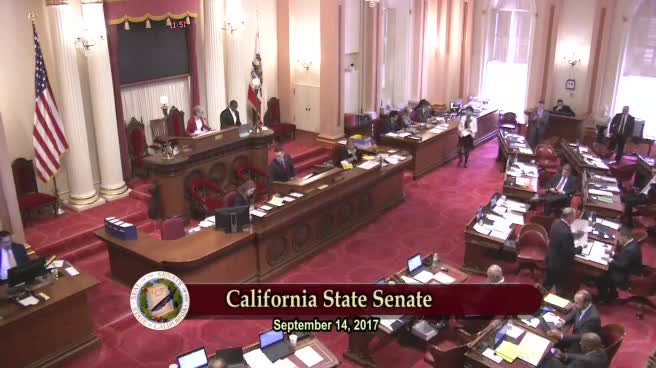 1MIN
Senate Floor
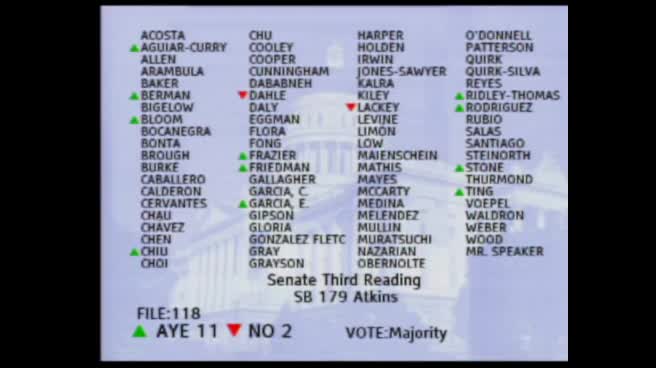 1MIN
Assembly Floor
 1H
Assembly Standing Committee on Appropriations
 13MIN
Assembly Standing Committee on Education
 2MIN
Senate Floor
 48MIN
Senate Standing Committee on Appropriations
 19MIN
Senate Standing Committee on Public Safety
 9MIN
Senate Standing Committee on Education
Bill Author

Bill Co-Author(s):
