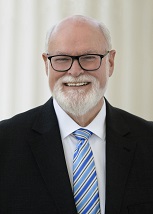
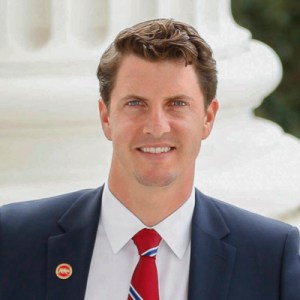
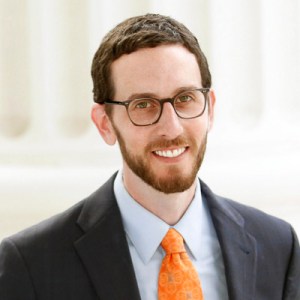
SB 309: License plates: Reproductive Freedom Fund.
- Session Year: 2017-2018
- House: Senate
- Latest Version Date: 2017-05-03
Existing law authorizes the Department of Motor Vehicles (DMV) to issue special license plates, including environmental license plates and specified special environmental design license plates. Under existing law, a state agency is authorized to apply to the DMV to sponsor a special license plate program, and the DMV is required to issue those license plates if the agency meets certain requirements. The DMV is required to charge specified fees for certain services related to the issuance of those plates.
This bill would require the State Department of Health Care Services to apply to sponsor a reproductive freedom license plate program, and would require the DMV to issue the license plates if the State Department of Health Care Services meets certain requirements. The bill would authorize the State Department of Health Care Services to accept and use donated artwork from California artists for the license plate. The bill would require the revenue generated from the license plates, as specified, to be deposited in the California Reproductive Freedom Fund, created by the bill, and to be used, upon appropriation, for the Family Planning, Access, Care, and Treatment program (Family PACT).
(a)The State Department of Health Care Services shall apply to the department, pursuant to Section 5156, to sponsor a reproductive freedom license plate program. The department shall issue specialized license plates for that the program if the State Department of Health Care Services complies with the requirements of Section 5156.
(b)The State Department of Health Care Services may accept and use donated artwork from California artists for the license plate.
(c) Notwithstanding subdivision (c) of Section 5157, the additional fees prescribed by Section 5157 for the issuance, renewal, or transfer of the specialized license plates shall be deposited, after the department deducts its administrative costs, in the California Reproductive Freedom Fund Fund, which is hereby established in the State Treasury. Upon appropriation by the Legislature, the moneys in the fund shall be allocated to the Family Planning, Access, Care, and Treatment Program (Family PACT) administered by the State Department of Health Care Services.
REVISIONS: HeadingLine 4.(a)The State Department of Health Care Services shall apply to the department, pursuant to Section 5156, to sponsor a reproductive freedom license plate program. The department shall issue specialized license plates for that program if the State Department of Health Care Services complies with the requirements of Section 5156.
(b)The State Department of Health Care Services may accept and use donated artwork from California artists for the license plate.
(c) Notwithstanding subdivision (c) of Section 5157, the additional fees prescribed by Section 5157 for the issuance, renewal, or transfer of the specialized license plates shall be deposited, after the department deducts its administrative costs, in the California Reproductive Freedom Fund which is hereby established in the State Treasury. Upon appropriation by the Legislature, the moneys in the fund shall be allocated to the Family Planning, Access, Care, and Treatment program (Family PACT) administered by the State Department of Health Care Services.
|
Date
|
Status
|
|---|---|
| Sep 1, 2017 | September 1 hearing: Held in committee and under submission. |
| Jul 19, 2017 | July 19 set for first hearing. Placed on APPR. suspense file. |
| Jun 27, 2017 | From committee: Do pass and re-refer to Com. on APPR. (Ayes 11. Noes 3.) (June 26). Re-referred to Com. on APPR. |
| Jun 8, 2017 | Referred to Com. on TRANS. |
| May 31, 2017 | In Assembly. Read first time. Held at Desk. |
| May 30, 2017 | Read third time. Passed. (Ayes 28. Noes 12. Page 1279.) Ordered to the Assembly. |
| May 26, 2017 | Read second time. Ordered to third reading. |
| May 25, 2017 | From committee: Do pass. (Ayes 5. Noes 2. Page 1181.) (May 25). |
| May 19, 2017 | Set for hearing May 25. |
| May 15, 2017 | May 15 hearing: Placed on APPR. suspense file. |
| May 5, 2017 | Set for hearing May 15. |
| May 3, 2017 | Read second time and amended. Re-referred to Com. on APPR. |
| May 2, 2017 | From committee: Do pass as amended and re-refer to Com. on APPR. (Ayes 10. Noes 3. Page 857.) (April 25). |
| Apr 4, 2017 | Set for hearing April 25. |
| Feb 23, 2017 | Referred to Com. on T. & H. |
| Feb 14, 2017 | From printer. May be acted upon on or after March 16. |
| Feb 13, 2017 | Introduced. Read first time. To Com. on RLS. for assignment. To print. |
|
Date
|
Description
|
Location
|
Votes
|
|
|---|---|---|---|---|
| Jun 26, 2017 | Do pass and be re-referred to the Committee on [Appropriations] | Assembly Standing Committee on Transportation |
Passed |
|
| May 30, 2017 | Senate 3rd Reading SB309 Jackson et al. | Senate Floor |
Passed |
|
| May 25, 2017 | Do pass | Senate Standing Committee on Appropriations |
Passed |
|
| May 15, 2017 | Placed on suspense file | Senate Standing Committee on Appropriations |
Passed |
|
| Apr 25, 2017 | Do pass as amended, but first amend, and re-refer to the Committee on [Appropriations] | Senate Standing Committee on Transportation and Housing |
Passed |
This list shows positions taken on this bill by organizations on the date displayed, which is linked to the original source.
Positions by individuals are not included.
|
Organization
|
Position
|
Date
|
|---|---|---|
| Access Women's Health Justice | ** Support | May 27, 2017 |
| Act for Women and Girls | ** Support | May 27, 2017 |
| American Nurses Association/California | * Support | Jun 26, 2017 |
| Association of California Commissions on Women | ** Support | May 27, 2017 |
| black women for wellness | ** Support | May 27, 2017 |
| Business and Professional Women of Nevada County | ** Support | May 27, 2017 |
| California Association for Nurse Practitioners | ** Support | Jun 23, 2017 |
| California Catholic Conference | ** Against | Jun 23, 2017 |
| California Chapter National Association of Social Workers | * Support | Jun 26, 2017 |
| California Family Council | * Against | Jun 26, 2017 |
| California Immigrant Policy Center | ** Support | Jun 23, 2017 |
| California Latinas for Reproductive Justice | ** Support | Jun 23, 2017 |
| California NOW | ** Support | May 27, 2017 |
| California Pro Life Council | * Against | Apr 25, 2017 |
| California Right to Life Committee | ** Against | Jun 23, 2017 |
| CaliforniaHealth+ Advocates | ** Support | Jun 23, 2017 |
| Californians for Disability Rights | * Support | Jun 26, 2017 |
| City of West Hollywood | ** Support | Jun 23, 2017 |
| Courage Campaign | ** Support | May 27, 2017 |
| Essential Access Health | ** Support | May 27, 2017 |
| Feminist Majority | ** Support | May 27, 2017 |
| Jewish Community Relations Council | ** Support | May 27, 2017 |
| NARAL Pro-Choice California | ** Support | Jun 23, 2017 |
| National Abortion Federation | ** Support | May 27, 2017 |
| National Asian Pacific American Women's Forum | ** Support | May 27, 2017 |
| national asian pacific women's forum | ** Support | Apr 20, 2017 |
| National Asian Pacific Womens Forum | ** Support | Apr 20, 2017 |
| National Council of Jewish Women, California | ** Support | May 27, 2017 |
| Nevada County Citizens for Choice | ** Support | May 27, 2017 |
| Physicians for Reproductive Health | ** Support | May 27, 2017 |
| Planned Parenthood | * Support | Jun 26, 2017 |
| Planned Parenthood Advocates Pasadena and San Gabriel Valley | ** Support | May 27, 2017 |
| Religious Action Center for Reform Judaism | ** Support | May 27, 2017 |
| San Francisco Department Of Public Health | ** Support | May 27, 2017 |
| San Francisco Mayor Edwin Lee | ** Support | May 27, 2017 |
| San Francisco Women's Political Committee | ** Support | May 27, 2017 |
| San Francisco, City And County Of | * Support | Jun 26, 2017 |
| Santa Barbara Women's Political Committee | ** Support | May 27, 2017 |
| Voices For Progress Education Fund | ** Support | May 27, 2017 |
| West Hollywood City Councilmember Lindsey Horvath | ** Support | May 27, 2017 |
| When | ** Support | May 27, 2017 |
| Women's Community Clinic | ** Support | May 27, 2017 |
| Women's Health Specialists of California | ** Support | May 27, 2017 |
Date of Hearing: July 19, 2017
ASSEMBLY COMMITTEE ON APPROPRIATIONS
Lorena Gonzalez Fletcher, Chair
SBPCA Bill Id:SB 309
Author:(Jackson) – As Amended Ver:May 3, 2017
Policy Committee: | Transportation | Vote: | 11 - 3 |
|
| ||
|
|
Urgency: No State Mandated Local Program: No Reimbursable: No
SUMMARY:
This bill requires the Department of Health Care Services (DHCS) to apply to the Department of Motor Vehicles (DMV) to sponsor a reproductive freedom license plate program. Specifically, this bill:
- Requires DMV to issue specialized license plates for the reproductive freedom license plate program if DHCS complies with the requirements of existing law.
- Authorizes DHCS to accept and use donated artwork from California artists for the license plate.
- Establishes the California Reproductive Freedom Fund in the State Treasury and requires the fees collected pursuant to existing law for the issuance, renewal, or transfer of the specialized license plates to be deposited in the fund (after deducting DMV’s administrative costs) and available for appropriation for the Family Planning, Access, Care, and Treatment Program (Family PACT) administered by DHCS.
FISCAL EFFECT:
- Potential one-time costs to DMV in the range of $540,000 to $590,000 (special funds) to establish the specialized license plate program. This amount includes $440,000 for computer programming changes and updating forms and $100,000 to $150,000 for administrative costs. Pursuant to current law, DMV will make computer programming and form changes only after program applications meet a 7,500-application threshold. Therefore, the DMV will incur these costs only if it receives enough applications to require the SCC to implement the program. The DMV will incur minor ongoing costs to continue issuing specialty license plates and renewals under the program. All of the DMV's initial and ongoing costs will be reimbursed by a portion of the additional $50 fee paid for original specialized license plates and the additional $40 fee to renew such plates.
- Potential ongoing revenue to DHCS of about $200,000 annually upon full implementation of the program. These funds will be available for the Family PACT program administered by DHCS.
- Minor and absorbable costs to DHCS related to plate design and establishment of the program because most of the work will be performed by a non-profit entity that is supporting this bill.
COMMENTS:
- Background. Prior to 2007, any new specialized license plate required specific legislative authorization. This practice was held to be unconstitutional in that the Legislature approved some of the plates, and rejected others, using no standardized or objective criteria for those decisions. Pursuant to AB 84 (Leslie), Chapter 545, Statutes of 2006, the DMV will issue specialized license plates when sponsored by a state agency. In addition, the plate's message and resulting revenues must support that agency's program and the agency must receive at least 7,500 paid license applications. The 7,500-application threshold attempts to assure that DMV's startup costs are fully covered by the portion of the registration fee surcharge directed to the department, and to avoid a proliferation of different types of plates, which can be troublesome from a law enforcement perspective.
- Purpose. The specialized license plate created by this bill will generate revenue for the Family PACT program, which has provided family planning and reproductive health services at no cost to low-income women and men and been administered by the DHCS Office of Family Planning since 1997. According to DHCS, the Family PACT program provides services to 1.1 million income-eligible women and men through a network of 2,200 providers. According to the author, potential federal defunding of certain reproductive health service providers could jeopardize the preventive and reproductive health services for more than 800,000 California women and men each year. The author states that, “This bill creates a tangible way for concerned individuals to demonstrate support for the right of every woman to access safe, affordable, and quality care.”
- Related Legislation. AB 1251 (Allen) requires the State Coastal Conservancy to apply to DMV to sponsor an Endless Summer specialized license program to raise money for a coastal conservancy awareness program. AB 1251 was made a two-year bill and is currently in the Assembly Transportation Committee.
AB 1338 (Low) expands the eligibility criteria regarding persons authorized to obtain a “California Firefighter” special license plate to include a surviving spouse, domestic partner, or child of a deceased firefighter or deceased retired firefighter. AB 1338 was passed by the Legislature and has been sent to the Governor.
SB 673 (Newman) diverts the revenue generated by the Pet Lover’s specialized license plate program to the Department of Food and Agriculture, instead of the Veterinary Medical Board. SB 673 is pending a hearing in this committee.
- Previous Legislation. Since 2011, 14 bills have been introduced directing a state agency to sponsor a specialized license plate for a variety of causes. Four of the most recently enacted bills would authorize specialized license plates to raise funds for Salton Sea restoration [AB 1096 (Nestande), Chapter 353, Statutes of 2014], kidney disease research
[AB 2450 (Logue), Chapter 359, Statutes of 2014], breast cancer awareness [AB 49 (Buchanan), Chapter 351, Statutes of 2014], and domestic violence prevention [AB 2321 (Gomez), Chapter 358, Statutes of 2014].
Analysis Prepared by: Jessica Peters / APPR. / (916) 319-2081
Date of Hearing: June 26, 2017
ASSEMBLY COMMITTEE ON TRANSPORTATION
Jim Frazier, Chair
SBPCA Bill Id:SB 309
Author:(Jackson) – As Amended Ver:May 3, 2017
SENATE VOTE: 28-12
SUBJECT: License plates: Reproductive Freedom Fund
SUMMARY: Requires the State Department of Health Care Services (DHCS) to apply to the Department of Motor Vehicles (DMV) to sponsor a reproductive freedom license plate program. Specifically, this bill:
- Requires DMV to issue specialized license plates for the reproductive freedom license plate program if DHCS complies with the requirements of existing law.
- Authorizes DHCS to accept and use donated artwork from California artists for the license plate.
- Establishes the California Reproductive Freedom Fund in the State Treasury and requires the fees collected pursuant to existing law for the issuance, renewal, or transfer of the specialized license plates to be deposited in the fund, after DMV deducts its administrative costs, to be appropriated to the Family Planning, Access, Care, and Treatment Program (Family PACT) administered by DHCS.
EXISTING LAW:
- Allows any state agency to apply to DMV to sponsor a specialized license plate program.
- Requires DMV to issue specialized license plates for that program if the agency complies with all statutory requirements.
- Prohibits DMV from establishing a specialized license plate program for an agency until it has received not less than 7,500 paid applications for that agency's specialized license plates.
- Requires the agency to collect and hold applications for the plates. Once the agency has received at least 7,500 applications, it must submit the applications, along with the necessary fees, to DMV.
- Prohibits advance payment to DMV of its estimated or actual administrative costs associated with the issuance of a particular specialized license plate from constituting compliance with the 7,500 application threshold requirement.
- Requires funds accruing to a sponsoring state agency from the sale of specialized license plates to be expended exclusively for projects and programs that promote that agency's official policy, mission, or work.
- Allows specialized license plates to feature a distinctive design, decal, or distinctive message in a two-inch by three-inch space to the left of the plate's numerical sequence and a space not larger than 5/8-inch in height below the numerical series.
- Requires DHCS to apply to DMV to sponsor a breast cancer awareness license plate program.
FISCAL EFFECT: According to the Senate Appropriations Committee:
Estimated HCS costs of $25,000 in 2017-18 for plate design, and up to $50,000 in 2018-19 for staff time to collect the initial 7,500 applications and fees for the establishment of the plate program (General Fund). These costs could continue into 2019-20 if the requisite applications and fees are not collected within the first year and HCS applies to DMV for a 12-month extension. There could be additional costs if HCS executes a marketing strategy to attract applicants. If the license plate program is implemented, ongoing costs would likely be minor as funding would go towards an existing program.
- Assuming 7,500 pre-paid applications are collected by HCS, DMV would incur initial administrative costs in the range of $100,000 to $150,000 to produce the plates and process the applications, (depending on how many plates are personalized), and an additional $440,000 in programming and other implementation costs, likely in 2019-20 or 2020-21, partially offset by pre-paid application fees of $375,000, leaving a net cost in the range of $165,000 to $215,000 in the first year (Motor Vehicle Account). These net costs would be reimbursed in the following fiscal year by registration renewal fees from holders of these plates. All ongoing costs thereafter would be fully offset by fees from renewals and issuance of new plates.
- Upon full implementation of the proposed plate program, there would be ongoing revenues of approximately $300,000 annually for allocation to the Family Planning, Access, Care, and Treatment Program (based on 7,500 plate renewals, and not accounting for administrative costs).
COMMENTS: Prior to 2007, any new specialty license plate required specific legislative authorization. That practice was held to be unconstitutional by the federal courts, as the Legislature approved some plates and rejected others, without using any standardized or objective criteria for those decisions. In response to the court decision, AB 84 (Leslie), Chapter 454, Statutes of 2006, established the current specialized license plate program to provide a forum for government speech that promotes California's state policies. AB 84 excluded private organizations from seeking specialized license plates as a forum for private speech, and thus addressed the court's objection. The current specialized license plate program permits a state agency to initiate the development and sponsorship of a specialized plate, thus no additional legislation is required to authorize the creation of a new plate.
Plates created under the current program and the revenue they generate must publicize or promote a state agency, or the official policy, mission, or work of a state agency. Furthermore, the process requires that at least 7,500 paid applications must be received by the state agency prior to notifying DMV. This 7,500-application threshold was previously put into statute in an attempt to ensure that DMV's startup costs would be fully covered by the portion of the registration fee surcharge that is directed to DMV and to avoid a proliferation of different types of plates, which can be troublesome from a law enforcement perspective.
The specialized license plate created by this bill would generate revenue for the Family PACT program, which has provided family planning and reproductive health services at no cost to low-income women and men and been administered by DHCS’ Office of Family Planning since 1997. According to DHCS, the Family PACT program provides services to 1.1 million income-eligible women and men through a network of 2,200 providers. According to the author, discussed federal defunding of certain reproductive health service providers could jeopardize the preventive and reproductive health services for more than 800,000 California women and men each year. The author states that, “This bill creates a tangible way for concerned individuals to demonstrate support for the right of every woman to access safe, affordable, and quality care.”
The specialized license plate program created by this bill would be the second plate program DHCS has been legislatively required to sponsor, after the Breast Cancer Awareness plate program created by AB 49 (Buchanan), Chapter 351, Statutes of 2014.
Related legislation: AB 1251 (Allen) would require the State Coastal Conservancy to apply to DMV to sponsor an Endless Summer specialized license program to raise money for a coastal conservancy awareness program. AB 1251 was set to be heard by this committee but the hearing was cancelled at the request of the author.
AB 1338 (Low) would expands the eligibility criteria regarding persons authorized to obtain a “California Firefighter” special license plate to include a surviving spouse, domestic partner, or child of a deceased firefighter or deceased retired firefighter. AB 1338 is set to be heard by the Senate Appropriations Committee on June 26, 2017.
SB 673 (Newman) would divert the revenue generated by the Pet Lover’s specialized license plate program to the Department of Food and Agriculture, instead of the Veterinary Medical Board. SB 673 is scheduled to be heard by this committee today.
Previous legislation: Since 2011, 14 bills have been introduced directing a state agency to sponsor a specialized license plate for a variety of causes. Since 2014, four were passed by the Legislature and signed by Governor Brown. These bills would raise funds for Salton Sea restoration [AB 1096 (Nestande), Chapter 353, Statutes of 2014], kidney disease research
[AB 2450 (Logue), Chapter 359, Statutes of 2014], breast cancer awareness [AB 49 (Buchanan), Chapter 351, Statutes of 2014], and domestic violence prevention [AB 2321 (Gomez), Chapter 358, Statutes of 2014]. None have yet gathered the necessary number of applications to enter production. In the 2015-16 Legislative Session, seven bills directing a state agency to sponsor a specialized license plate for a specific cause were introduced. Three of them, AB 63 (Bonilla) raising money for school safety, AB 270 (Nazarian) raising money for diabetes awareness, and AB 932 (Daly) raising money for local parks and recreation grant programs passed out of this Committee with no ‘No’ votes and died in the Senate Appropriations Committee. AB 1884 (Harper) raising money for mental health awareness, AB 2131 (Maienschein) raising money for local food banks, AB 2253 (Grove) raising money for affordable services for veterans, and
AB 2303 (Holden) raising money for the Active Transportation Program all passed out of this Committee with no ‘No’ votes and were held on the Assembly Appropriations Committee Suspense File.
REGISTERED SUPPORT / OPPOSITION:
Support
CaliforniaHealth+ Advocates
California Association for Nurse Practitioners
California Immigrant Policy Center
California Latinas for Reproductive Justice
City and County of San Francisco
City of West Hollywood
NARAL Pro-Choice California
National Association of Social Workers, California Chapter
Opposition
California Catholic Conference
California Family Council
California Right to Life Committee
Analysis Prepared by: Justin Behrens / TRANS. / (916) 319-2093
Office of Senate Floor Analyses (916) 651-1520 Fax: (916) 327-4478 | SB |
THIRD READING
Bill No: SB 309
:
SENATE TRANS. & HOUSING COMMITTEE: 10-3, 4/25/17
AYES: Beall, Cannella, Allen, Atkins, McGuire, Mendoza, Roth, Skinner, Wieckowski, Wiener
NOES: Bates, Gaines, Morrell
SENATE APPROPRIATIONS COMMITTEE: 5-2, 5/25/17
AYES: Lara, Beall, Bradford, Hill, Wiener
NOES: Bates, Nielsen
SOURCE: NARAL Pro-Choice California
DIGEST:
This bill requires the Department of Health Care Services (HCS) to apply to the Department of Motor Vehicles (DMV) to sponsor a reproductive freedom license plate program, with the proceeds allocated to the Family Planning, Access, Care, and Treatment program (Family PACT) administered by HCS.
Existing law:
- Provides for a specialized license plate program, under which the DMV may issue new special-interest license plates. Special-interest license plates may only be issued on behalf of state agencies and only provided that:
- The license plate has “a design or contains a message that publicizes or promotes a state agency, or the official policy, mission, or work of a state agency.” The design shall also be confined to the left of and below the numerical series (i.e., no full-plate designs allowed).
- The state agency submits 7,500 applications and accompanying fees to DMV for the license plate. The state agency has 12 months to collect these applications and fees, but it can extend that to a maximum of 24 months if it notifies and offers to refund fees to those who applied during the first 12 months. Once a plate is issued, DMV stops issuing that plate for the agency if the number of plates drops below 7,500.
In addition to the usual registration and license fees, DMV charges the following additional fees for specialized license plates: $50 for the initial issuance, $40 for annual renewal, and $98 to personalize. DMV deducts its administrative costs from the revenues generated. The net revenues derived from a specialized license plate are then available upon appropriation for the sponsoring state agency to expend exclusively on projects and programs that promote the state agency’s official policy, mission, or work.
This bill requires HCS to apply to the DMV to sponsor a reproductive freedom license plate program, with the proceeds allocated to the Family PACT administered by HCS.
Comments
- History of special-interest license plates. Historically, the Vehicle Code required the DMV to issue, upon legislative authorization, a special-interest license plate bearing a distinctive design or decal of a sponsoring organization to any vehicle owner that paid specified fees, provided that the sponsoring organization met certain conditions. These conditions included that the sponsor of a special-interest license plate had to collect 7,500 applications and fees for a special license plate in order to pay DMV’s costs of creating a new plate, which are approximately $375,000 or 7,500 applications times the $50 fee.
In 2004, a federal court decision, Women’s Resource Network v. Gourley, E.D. Cal 2004, F.Supp.2d, 2004 U.S. Dist., invalidated the provisions of the Vehicle Code described above. In the Gourley decision, the court declared California’s special-interest license plate statutes unconstitutional because they violated the First Amendment right to freedom of speech. The court specifically objected to the Legislature “picking and choosing” special license plates that private organizations propose, in essence promoting the message of some organizations while denying this right to others.
A recent decision by the United States Supreme Court has upended the Gourley decision. On June 18, 2015, the Court issued Walker v. Texas Division, Sons of Confederate Veterans, which concluded that license plates are government speech, not private speech. Therefore, the Legislature can direct a license plate to be available for any message because license plates are no longer a forum for private speech.
- Breaking New Ground. California currently offers 14 specialty license plates, none of which are controversial: California Agriculture, Arts Council, California Museums, Collegiate, Environmental, Firefighters, Help Our Kids, Lake Tahoe Conservancy, Memorial, Pet Lovers, Veterans Organizations, Whale Tail (Coastal Commission), Yosemite Conservancy, and 60’s Legacy. This bill will create the first plate to break with that history, offering a potentially controversial message. Perhaps this is inevitable, and indicative of these times. An example: Twenty eight states currently have “Choose Life” license plates, including Massachusetts, Florida, Texas, Maryland, Pennsylvania, Delaware and Ohio.
- Where the Money Goes. The Office of Family Planning (OFP) resides within HCS and is charged with making available to citizens of California who are of childbearing age comprehensive medical knowledge, assistance, and services related to the planning of families. OFP administers the Family PACT which provides comprehensive family planning services to eligible low income (under 200% of the federal poverty level) men and women. Family PACT serves 1.8 million men and women of childbearing age through a network of 2,200 public and private providers. Services include comprehensive education, assistance, and services relating to family planning; abortions are not covered.
- Opposition. Opponents are concerned that this bill puts the state in a one-sided role of promoting abortion. They believe that the state should have no role in encouraging abortions or other reproductive services.
- Outlook is poor. The track record of specialty license plates reaching the 7,500 threshold is poor. Of the 12 legislatively sponsored plates approved this century, only two have met the threshold.
FISCAL EFFECT: Appropriation: Fiscal Com.: Local:
According to the Senate Appropriations Committee:
Estimated HCS costs of $25,000 in 2017-18 for plate design, and up to $50,000 in 2018-19 for staff time to collect the initial 7,500 applications and fees for the establishment of the plate program (General Fund). These costs could continue into 2019-20 if the requisite applications and fees are not collected within the first year and HCS applies to DMV for a 12-month extension. There could be additional costs if HCS executes a marketing strategy to attract applicants. If the license plate program is implemented, ongoing costs would likely be minor as funding would go towards an existing program.
- Assuming 7,500 pre-paid applications are collected by HCS, DMV would incur initial administrative costs in the range of $100,000 to $150,000 to produce the plates and process the applications, (depending on how many plates are personalized), and an additional $440,000 in programming and other implementation costs, likely in 2019-20 or 2020-21, partially offset by pre-paid application fees of $375,000, leaving a net cost in the range of $165,000 to $215,000 in the first year (Motor Vehicle Account). These net costs would be reimbursed in the following fiscal year by registration renewal fees from holders of these plates. All ongoing costs thereafter would be fully offset by fees from renewals and issuance of new plates.
- Upon full implementation of the proposed plate program, there would be ongoing revenues of approximately $300,000 annually for allocation to the Family Planning, Access, Care, and Treatment Program (based on 7,500 plate renewals, and not accounting for administrative costs).
NARAL Pro-Choice California (source)
ACCESS Women’s Health Justice
ACT for Women and Girls
American Nurses Association, California
Association of California Commissions on Women
Black Women for Wellness
Business and Professional Women of Nevada County
California Association of Nurse Practitioners
California Immigrant Policy Center
California Latinas for Reproductive Justice
California NOW
City of West Hollywood
Community Action Fund of Planned Parenthood of Orange and San Bernardino Counties
Courage Campaign
Essential Access Health
Feminist Majority
If/When/How
Jewish Community Relations Council
National Abortion Federation
National Asian Pacific American Women’s Forum
National Council of Jewish Women, California
Nevada County Citizens for Choice
Planned Parenthood Advocacy Project Los Angeles County
Planned Parenthood Advocates Pasadena and San Gabriel Valley
Planned Parenthood Affiliates of California
Planned Parenthood Central Coast Action Fund
Planned Parenthood Mar Monte
Planned Parenthood Northern California Action Fund
Physicians for Reproductive Health
Religious Action Center for Reform Judaism
San Francisco Department of Public Health
San Francisco Mayor Edwin Lee
San Francisco Women’s Political Committee
Santa Barbara Women’s Political Committee
Voices for Progress Education Fund
West Hollywood City Councilmember Lindsey Horvath
Women’s Community Clinic
Women’s Health Specialists of California
OPPOSITION: (Verified 5/25/17)
California Catholic Conference, Inc.
One individual
5/27/17 16:23:22
SENATE COMMITTEE ON
Senator Ricardo Lara, Chair
2017 - 2018 Regular Session
SB 309 (Jackson) - License plates: Reproductive Freedom Fund
Version: | Policy Vote: |
Urgency: | Mandate: |
Hearing Date: | Consultant: |
This bill meets the criteria for referral to the Suspense File.
Bill Summary:
SB 309 would require the Department of Health Care Service (DHCS) to apply to the Department of Motor Vehicles (DMV) to sponsor a reproductive freedom specialized license plate program.
Fiscal Impact:
- Estimated DHCS costs of $25,000 in 2017-18 for plate design, and up to $50,000 in 2018-19 for staff time to collect the initial 7,500 applications and fees for the establishment of the plate program (General Fund). These costs could continue into 2019-20 if the requisite applications and fees are not collected within the first year and DHCS applies to DMV for a 12-month extension. There could be additional costs if DHCS executes a marketing strategy to attract applicants. If the license plate program is implemented, ongoing costs would likely be minor as funding would go towards an existing program.
- Assuming 7,500 pre-paid applications are collected by DHCS, DMV would incur initial administrative costs in the range of $100,000 to $150,000 to produce the plates and process the applications, (depending on how many plates are personalized), and an additional $440,000 in programming and other implementation costs, likely in 2019-20 or 2020-21, partially offset by pre-paid application fees of $375,000, leaving a net cost in the range of $165,000 to $215,000 in the first year (Motor Vehicle Account). These net costs would be reimbursed in the following fiscal year by registration renewal fees from holders of the reproductive freedom plates. All ongoing costs thereafter would be fully offset by fees from renewals and issuance of new plates.
- Upon full implementation of the proposed plate program, there would be ongoing revenues of approximately $300,000 annually for allocation to the Family Planning, Access, Care, and Treatment Program (based on 7,500 plate renewals, and not accounting for administrative costs).
Background:
Prior to 2007, any new special interest license plate required specific legislative authorization. This practice was held to be unconstitutional in that the Legislature approved some of the plates, and rejected others, using no standardized or objective criteria for those decisions. Current law, as enacted by AB 84 (Leslie), Chap. 454/2006, authorizes any state agency to sponsor a special interest license plate, and apply to DMV to establish a new license plate program after collecting at least 7,500 applications and accompanying fees and submitting them to DMV. The applications must be collected within one year, with an option to extend that timeframe by an additional year under specified conditions. The new specialized license plate must have a design or contain a message that publicizes or promotes a state agency, or the official policy, mission, or work of the agency.
In addition to the regular fees for an original or renewal registration, existing law requires payment of the following fees for the issuance, renewal, or transfer of the specialized license plate: $50 for original issuance; $40 for renewal; $15 for transfer to another vehicle; and $35 for substitute replacement plates. Once a specialized license plate program has been implemented, all additional fee revenues associated with the plate, after subtracting DMV administrative costs, are deposited into the Specialized License Plate Fund, and made available to the sponsoring agency upon appropriation by the Legislature for projects and programs that promote the agency’s official policy, mission, or work. A sponsoring agency may not spend more than 25 percent of its license plate fee revenues for administrative, marketing, and promotional costs associated with the plate. If an applicant wishes to personalize a specialized license plate, the following additional fees would apply: $53 for original issuance, $43 for renewal, and $43 for transfer to another vehicle. Any fees paid for personalization would be deposited into the California Environmental License Plate Fund for expenditure on various environmental protection purposes.
Existing law establishes the Family Planning, Access, Care, and Treatment (Family PACT) program, administered by the Office of Family Planning within DHCS, to provide comprehensive family planning services to low-income men and women (those with a family income at or below 200% of the federal poverty level who have no other source of family planning coverage). The program serves approximately 1.8 million men and women of childbearing age through a network of 2,200 enrolled public and private providers. The following comprehensive family planning services are provided to eligible clients through Family PACT: contraception, pregnancy testing with counseling, preconception counseling, male and female sterilization, limited infertility services, sexually transmitted infection testing and treatment, cancer screening, and HIV screening. The program is funded with over $80 million from the state General Fund and approximately $260 million in federal funding.
Proposed Law:
SB 309 would require DHCS to apply to DMV to sponsor a reproductive freedom license plate program pursuant to the requirements of the specialized license plate program in existing law. The bill would authorize DHCS to used donated artwork from California artists for the plate. Additional fees derived from the plate program must be deposited into the California Reproductive Freedom Fund, established by this bill, and revenues would be allocated, upon appropriation by the Legislature, to the Family PACT program, administered by DHCS.
Staff Comments:
As noted above, any state agency may sponsor a specialized license plate program and apply to DMV to issue the plates upon collection of 7,500 pre-paid applications without legislative action. Rather than allow DHCS to sponsor a plate to benefit the services provided under the Family PACT program at its own discretion, this bill would require the department to apply to DMV to sponsor a reproductive freedom plate program, pursuant to the requirements in existing law.
As a sponsoring entity, existing law requires DHCS to design a plate, apply to DMV to sponsor a plate program, and collect 7,500 pre-paid applications within 12 months. If the requisite number of applications has not been reached within a year, DHCS has the option of either returning all fees and deposits to applicants, or notifying DMV that it intends to continue collection efforts to obtain the minimum 7,500 applications within the subsequent 12 months. If DHCS elects to continue collection efforts, it must contact applicants who submitted applications and fees to determine whether they would prefer to continue the application or have their deposits and fees refunded.
Staff estimates that DHCS would incur initial costs of approximately $25,000 in 2017-18 to design the reproductive freedom license plate and apply to DMV to sponsor the plate, and additional costs of up to $50,000 in 2018-19 to collect applications and fees. If 7,500 applications have not been received within 12 months of applying to DMV, DHCS may incur similar costs in 2019-20, if it chooses to apply for an extension. Staff notes that there is no requirement that DHCS incur costs beyond the 12 month period if less than 7,500 applications have been collected.
All DMV costs are contingent upon receipt of 7,500 pre-paid applications, as specified above. If the requisite number of applications are not received by DHCS within the specified timeframes, the reproductive freedom license plate program would not be implemented and there would be no further costs or revenues derived from the bill.
-- END --
SENATE COMMITTEE ON TRANSPORTATION AND HOUSING
Senator Jim Beall, Chair
2017 - 2018 Regular
Bill No: Hearing Date: 4/25/2017
Author: | Jackson | ||
Version: | 2/13/2017 | ||
Urgency: | No | Fiscal: | Yes |
Consultant: | Randy Chinn | ||
SUBJECT: .
DIGEST: This bill requires the Department of Health Care Services (HCS) to apply to the Department of Motor Vehicles (DMV) to sponsor a reproductive freedom license plate program, with the proceeds allocated to the Family Planning, Access, Care, and Treatment program (Family PACT) administered by HCS.
ANALYSIS:
Existing law provides for a specialized license plate program, under which the DMV may issue new special-interest license plates. Special-interest license plates may only be issued on behalf of state agencies and only provided that:
- The license plate has “a design or contains a message that publicizes or promotes a state agency, or the official policy, mission, or work of a state agency.” The design shall also be confined to the left of and below the numerical series (i.e., no full-plate designs allowed).
- The state agency submits 7,500 applications and accompanying fees to DMV for the license plate. The state agency has 12 months to collect these applications and fees, but it can extend that to a maximum of 24 months if it notifies and offers to refund fees to those who applied during the first 12 months. Once a plate is issued, DMV stops issuing that plate for the agency if the number of plates drops below 7,500.
In addition to the usual registration and license fees, DMV charges the following additional fees for specialized license plates: $50 for the initial issuance, $40 for annual renewal, and $98 to personalize. DMV deducts its administrative costs from the revenues generated. The net revenues derived from a specialized license plate are then available upon appropriation for the sponsoring state agency to expend exclusively on projects and programs that promote the state agency’s official policy, mission, or work.
This bill:
- Requires the HCS to apply to the DMV to sponsor a reproductive freedom license plate program, with the proceeds allocated to the Family PACT administered by HCS.
- The Office of Family Planning (OFP) resides within HCS and is charged with making available to citizens of California who are of childbearing age comprehensive medical knowledge, assistance, and services related to the planning of families. OFP administers the Family PACT which provides comprehensive family planning services to eligible low income (under 200% of the federal poverty level) men and women. Family PACT serves 1.8 million men and women of childbearing age through a network of 2,200 public and private providers. Services include comprehensive education, assistance, and services relating to family planning; abortions are not covered.
COMMENTS:
- Author’s Statement. According to the author, reproductive health and family planning services have been identified by the federal government for funding reduction and even elimination. Family PACT providers represent a large portion of patients who go to reproductive health clinics and this funding is directly under threat. Currently the federal government matches California dollars in Family PACT 9 to 1. Federal defunding of Family PACT providers and health centers would significantly disadvantage patients across California, particularly members of underserved communities. This bill is an important step in establishing a mechanism to protect reproductive rights and health in California. This bill creates a tangible way for concerned individuals to further demonstrate support for the right of every woman to access safe, affordable, and quality care.
- History of special-interest license plates. Historically, the Vehicle Code required the DMV to issue, upon legislative authorization, a special-interest license plate bearing a distinctive design or decal of a sponsoring organization to any vehicle owner that paid specified fees, provided that the sponsoring organization met certain conditions. These conditions included that the sponsor of a special-interest license plate had to collect 7,500 applications and fees for a special license plate in order to pay DMV’s costs of creating a new plate, which are approximately $375,000 or 7,500 applications times the $50 fee.
In 2004, a federal court decision, Women’s Resource Network v. Gourley, E.D. Cal 2004, F.Supp.2d, 2004 U.S. Dist., invalidated the provisions of the Vehicle Code described above. In the Gourley decision, the court declared California’s special-interest license plate statutes unconstitutional because they violated the First Amendment right to freedom of speech. The court specifically objected to the Legislature “picking and choosing” special license plates that private organizations propose, in essence promoting the message of some organizations while denying this right to others.
A recent decision by the United States Supreme Court has upended the Gourley decision. On June 18, 2015, the Court issued Walker v. Texas Division, Sons of Confederate Veterans, which concluded that license plates are government speech, not private speech. Therefore, the Legislature can direct a license plate to be available for any message because license plates are no longer a forum for private speech.
- Breaking New Ground. California currently offers 14 specialty license plates, none of which are controversial: California Agriculture, Arts Council, California Museums, Collegiate, Environmental, Firefighters, Help Our Kids, Lake Tahoe Conservancy, Memorial, Pet Lovers, Veterans Organizations, Whale Tail (Coastal Commission), Yosemite Conservancy, and 60’s Legacy. This bill will create the first plate to break with that history, offering a potentially controversial message. Perhaps this is inevitable, and indicative of these times. An example: Twenty eight states currently have “Choose Life” license plates, including Massachusetts, Florida, Texas, Maryland, Pennsylvania, Delaware and Ohio.
- Opposition. Opponents are concerned that this bill puts the state in a one-sided role of promoting abortion. They believe that the state should have no role in encouraging abortions or other reproductive services.
- Outlook is poor. The track record of specialty license plates reaching the 7,500 threshold is poor. Of the 12 legislatively sponsored plates approved this century, only two have met the threshold.
- Amendment. Senator Stern and Assemblymember Garcia wish to be coauthors.
FISCAL EFFECT: Appropriation: No Fiscal Com.: Yes Local: No
POSITIONS: (Communicated to the committee before noon on Wednesday,
April 19, 2017.)
SUPPORT:
NARAL Pro-Choice California (sponsor)
ACCESS Women’s Health Justice
ACT for Women and Girls
American Nurses Association, California
Association of California Commissions on Women
Black Women for Wellness
Business and Professional Women of Nevada County
California Association of Nurse Practitioners
California Latinas for Reproductive Justice
California NOW
Courage Campaign
Essential Access Health
Feminist Majority Foundation
If/When/How
Jewish Community Relations Council
National Abortion Federation
National Asian Pacific Women’s Forum
National Council of Jewish Women, California
Nevada County Citizens for Choice
Planned Parenthood Affiliates of California
Physicians for Reproductive Health
Religious Action Center for Reform Judaism
San Francisco Department of Public Health
San Francisco Mayor Edwin Lee
San Francisco Women’s Political Committee
Voices for Progress Education Fund
West Hollywood City Councilmember Lindsey Horvath
Women’s Community Clinic
Women’s Health Specialists of California
OPPOSITION:
California Catholic Conference, Inc.
One individual
-- END --
Discussed in Hearing
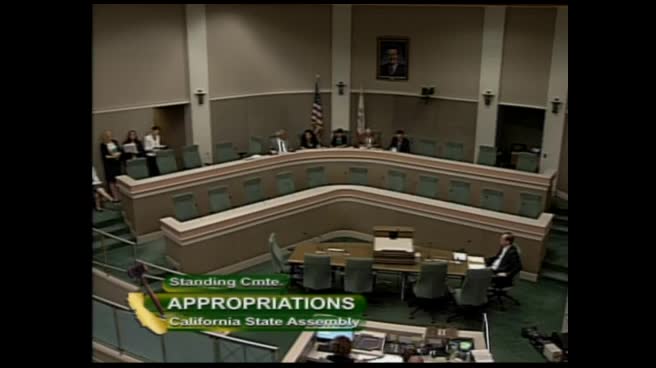 3MIN
Assembly Standing Committee on Appropriations
 13MIN
Assembly Standing Committee on Transportation
 5MIN
Senate Floor
 48MIN
Senate Standing Committee on Appropriations
 1MIN
Senate Standing Committee on Appropriations
 16MIN
Senate Standing Committee on Transportation and Housing
Bill Author
Bill Co-Author(s):