SB 311: Commercial cannabis activity: licensed distributors.
- Session Year: 2017-2018
- House: Senate
- Latest Version Date: 2018-09-19
Existing law, the Medicinal and Adult-Use Cannabis Regulation and Safety Act (MAUCRSA), provides for the licensure and regulation of commercial cannabis activity. Existing law requires a licensed distributor to arrange for a testing laboratory to obtain a representative sample of each cannabis batch at the distributors premises for testing and, upon issuance of a certificate of analysis by a licensed testing laboratory, conduct a quality assurance review before distribution to ensure the labeling and packaging conform to the legal requirements. Existing law authorizes cannabis and cannabis products fit for sale to be transported only from the distributors premises to the premises of a licensed retailer, microbusiness, or nonprofit.
This bill would require that transportation to be for the purpose of retail sale. The bill would also authorize a licensed distributor to transport cannabis or cannabis products that are fit for sale to the premises of another licensed distributor for further distribution.
This bill would declare that it is to take effect immediately as an urgency statute.
Existing law, the Medicinal and Adult-Use Cannabis Regulation and Safety Act (MAUCRSA), provides for the licensure and regulation of commercial cannabis activity. Existing law requires a licensed distributor to arrange for a testing laboratory to obtain a representative sample of each cannabis batch at the distributors premises for testing and, upon issuance of a certificate of analysis by a licensed testing laboratory, conduct a quality assurance review before distribution to ensure the labeling and packaging conform to the legal requirements. Existing law authorizes cannabis and cannabis products fit for sale to be transported only from the distributors premises to the premises of a licensed retailer, microbusiness, or nonprofit.
This bill would require that transportation be for the purpose of retail sale. The bill would also authorize a licensed distributor to transport cannabis or cannabis products that are fit for sale to the premises of another licensed distributor. distributor for further distribution.
This bill would declare that it is to take effect immediately as an urgency statute.
Existing law, the Medicinal and Adult-Use Cannabis Regulation and Safety Act (MAUCRSA), provides for the licensure and regulation of commercial cannabis activity. Existing law requires a licensed distributor to arrange for a testing laboratory to obtain a representative sample of each cannabis batch at the distributors premises for testing and, upon issuance of a certificate of analysis by a licensed testing laboratory, conduct a quality assurance review before distribution to ensure the labeling and packaging conform to the legal requirements. Existing law authorizes cannabis and cannabis products fit for sale be transported only from the distributors premises to the premises of a licensed retailer, microbusiness, or nonprofit.
This bill would authorize a licensed distributor to transport cannabis or cannabis products that are fit for sale to the premises of another licensed distributor.
Existing law, the Medical Cannabis Regulation and Safety Act and the Adult Use of Marijuana Act, requires all cultivators, manufacturers, and licensees holding a producing dispensary license in addition to a cultivation or manufacturing license to send all medical cannabis, medical cannabis products, marijuana, and marijuana products cultivated or manufactured to a distributor for presale quality assurance and inspection by a distributor and for a batch testing by a testing laboratory prior to distribution to a dispensary or retailer. Existing law authorizes a licensee to perform testing on the licensees premises for the purposes of quality assurance of the product in conjunction with reasonable business operations.This bill would also authorize a licensee to perform testing on the licensees premises of cannabis or cannabis products obtained from another licensee for the purpose of quality assurance. The bill would specify that onsite testing does not exempt the licensee from the existing requirements of quality assurance testing by a distributor and testing laboratory.Existing law, the Medical Cannabis Regulation and Safety Act and the Adult Use of Marijuana Act, requires all cultivators, manufacturers, and licensees holding a producing dispensary license in addition to a cultivation or manufacturing license to send all medical cannabis, medical cannabis products, marijuana, and marijuana products cultivated or manufactured to a distributor for presale quality assurance and inspection by a distributor and for a batch testing by a testing laboratory prior to distribution to a dispensary or retailer. Existing law authorizes a licensee to perform testing on the licensees premises for the purposes of quality assurance of the product in conjunction with reasonable business operations.
This bill would also authorize a licensee to perform testing on the licensees premises of cannabis or cannabis products obtained from another licensee for the purpose of quality assurance. The bill would specify that onsite testing does not exempt the licensee from the existing requirements of quality assurance testing by a distributor and testing laboratory.
(a)Cannabis batches are subject to quality assurance and testing prior to sale at a retailer, microbusiness, or nonprofit licensed under Section 26070.5, except for immature cannabis plants and seeds, as provided for in this division.
(b)A licensee that holds a valid distributor license may act as the distributor for the licensees cannabis and cannabis products.
(c)The distributor shall store, as determined by the bureau, the cannabis batches on the premises of the distributor before testing and continuously until either of the following occurs:
(1)The cannabis batch passes the testing requirements pursuant to this division and is transported to a licensed retailer or to another licensed distributor.
(2)The cannabis batch fails the testing requirements pursuant to this division and is destroyed or transported to a manufacturer for remediation as allowed by the bureau or the State Department of Public Health.
(d)The distributor shall arrange for a testing laboratory to obtain a representative sample of each cannabis batch at the distributors licensed premises. After obtaining the sample, the testing laboratory representative shall maintain custody of the sample and transport it to the testing laboratory.
(e)Upon issuance of a certificate of analysis by the testing laboratory that the cannabis batch has passed the testing requirements pursuant to this division, the distributor shall conduct a quality assurance review before distribution to ensure the labeling and packaging of the cannabis and cannabis products conform to the requirements of this division.
(f)(1)There shall be a quality assurance compliance monitor who is an employee or contractor of the bureau and who shall not hold a license in any category or own or have an ownership interest in a licensee or the premises of a licensee.
(2)The quality assurance compliance monitor shall conduct random quality assurance reviews at a distributors licensed premises before distribution to ensure the labeling and packaging of the cannabis and cannabis products conform to the requirements of this division.
(3)The quality assurance compliance monitor shall have access to all records and test results required of a licensee by law in order to conduct quality assurance analysis and to confirm test results. All records of inspection and verification by the quality assurance compliance monitor shall be provided to the bureau. Failure to comply shall be noted by the quality assurance compliance monitor for further investigation. Violations shall be reported to the bureau. The quality assurance compliance monitor shall also verify the tax payments collected and paid under Sections 34011 and 34012 of the Revenue and Taxation Code are accurate. The monitor shall also have access to the inputs and assumptions in the track and trace system and shall be able to verify their accuracy and that they are commensurate with the tax payments.
(g)After testing, all cannabis and cannabis products fit for sale may be transported only from the distributors premises to the premises of another licensed distributor for further distribution, or to a licensed retailer, microbusiness, or nonprofit for retail sale.
(h)A licensee is not required to sell cannabis or cannabis products to a distributor and may directly contract for sale with a licensee authorized to sell cannabis and cannabis products to purchasers.
(i)A distributor performing services pursuant to this section may collect a fee from the licensee for the services provided. The fee may include, but is not limited to, the costs incurred for laboratory testing. A distributor may also collect applicable state or local taxes and fees.
(j)This section does not prohibit a licensee from performing testing on the licensees premises for the purposes of quality assurance of the product in conjunction with reasonable business operations. The testing conducted on the licensees premises by the licensee does not meet the testing requirements pursuant to this division.
SEC. 2.This act is an urgency statute necessary for the immediate preservation of the public peace, health, or safety within the meaning of Article IV of the California Constitution and shall go into immediate effect. The facts constituting the necessity are:
In order to promote the reliable and safe distribution of cannabis at the earliest time possible, it is necessary for this act to take effect immediately.
(a)Cannabis batches are subject to quality assurance and testing prior to sale at a retailer, microbusiness, or nonprofit licensed under Section 26070.5, except for immature cannabis plants and seeds, as provided for in this division.
(b)A licensee that holds a valid distributor license may act as the distributor for the licensees cannabis and cannabis products.
(c)The distributor shall store, as determined by the bureau, the cannabis batches on the premises of the distributor before testing and continuously until either of the following occurs:
(1)The cannabis batch passes the testing requirements pursuant to this division and is transported to a licensed retailer or to another licensed distributor.
(2)The cannabis batch fails the testing requirements pursuant to this division and is destroyed or transported to a manufacturer for remediation as allowed by the bureau or the State Department of Public Health.
(d)The distributor shall arrange for a testing laboratory to obtain a representative sample of each cannabis batch at the distributors licensed premises. After obtaining the sample, the testing laboratory representative shall maintain custody of the sample and transport it to the testing laboratory.
(e)Upon issuance of a certificate of analysis by the testing laboratory that the cannabis batch has passed the testing requirements pursuant to this division, the distributor shall conduct a quality assurance review before distribution to ensure the labeling and packaging of the cannabis and cannabis products conform to the requirements of this division.
(f)(1)There shall be a quality assurance compliance monitor who is an employee or contractor of the bureau and who shall not hold a license in any category or own or have an ownership interest in a licensee or the premises of a licensee.
(2)The quality assurance compliance monitor shall conduct random quality assurance reviews at a distributors licensed premises before distribution to ensure the labeling and packaging of the cannabis and cannabis products conform to the requirements of this division.
(3)The quality assurance compliance monitor shall have access to all records and test results required of a licensee by law in order to conduct quality assurance analysis and to confirm test results. All records of inspection and verification by the quality assurance compliance monitor shall be provided to the bureau. Failure to comply shall be noted by the quality assurance compliance monitor for further investigation. Violations shall be reported to the bureau. The quality assurance compliance monitor shall also verify the tax payments collected and paid under Sections 34011 and 34012 of the Revenue and Taxation Code are accurate. The monitor shall also have access to the inputs and assumptions in the track and trace system and shall be able to verify their accuracy and that they are commensurate with the tax payments.
(g)After testing, all cannabis and cannabis products fit for sale may be transported only from the distributors premises to the premises of another licensed distributor for further distribution, or to a licensed retailer, microbusiness, or nonprofit. nonprofit for retail sale.
(h)A licensee is not required to sell cannabis or cannabis products to a distributor and may directly contract for sale with a licensee authorized to sell cannabis and cannabis products to purchasers.
(i)A distributor performing services pursuant to this section may collect a fee from the licensee for the services provided. The fee may include, but is not limited to, the costs incurred for laboratory testing. A distributor may also collect applicable state or local taxes and fees.
(j)This section does not prohibit a licensee from performing testing on the licensees premises for the purposes of quality assurance of the product in conjunction with reasonable business operations. The testing conducted on the licensees premises by the licensee does not meet the testing requirements pursuant to this division.
SEC. 2.This act is an urgency statute necessary for the immediate preservation of the public peace, health, or safety within the meaning of Article IV of the California Constitution and shall go into immediate effect. The facts constituting the necessity are:
In order to promote the reliable and safe distribution of cannabis at the earliest time possible, it is necessary for this act to take effect immediately.
(a)Cannabis batches are subject to quality assurance and testing prior to sale at a retailer, microbusiness, or nonprofit licensed under Section 26070.5, except for immature cannabis plants and seeds, as provided for in this division.
(b)A licensee that holds a valid distributor license may act as the distributor for the licensees cannabis and cannabis products.
(c)The distributor shall store, as determined by the bureau, the cannabis batches on the premises of the distributor before testing and continuously until either of the following occurs:
(1)The cannabis batch passes the testing requirements pursuant to this division and is transported to a licensed retailer. retailer or to another licensed distributor.
(2)The cannabis batch fails the testing requirements pursuant to this division and is destroyed or transported to a manufacturer for remediation as allowed by the bureau or the Department of Public Health.
(d)The distributor shall arrange for a testing laboratory to obtain a representative sample of each cannabis batch at the distributors licensed premises. After obtaining the sample, the testing laboratory representative shall maintain custody of the sample and transport it to the testing laboratory.
(e)Upon issuance of a certificate of analysis by the testing laboratory that the cannabis batch has passed the testing requirements pursuant to this division, the distributor shall conduct a quality assurance review before distribution to ensure the labeling and packaging of the cannabis and cannabis products conform to the requirements of this division.
(f)(1)There shall be a quality assurance compliance monitor who is an employee or contractor of the bureau and who shall not hold a license in any category or own or have an ownership interest in a licensee or the premises of a licensee.
(2)The quality assurance compliance monitor shall conduct random quality assurance reviews at a distributors licensed premises before distribution to ensure the labeling and packaging of the cannabis and cannabis products conform to the requirements of this division.
(3)The quality assurance compliance monitor shall have access to all records and test results required of a licensee by law in order to conduct quality assurance analysis and to confirm test results. All records of inspection and verification by the quality assurance compliance monitor shall be provided to the bureau. Failure to comply shall be noted by the quality assurance compliance monitor for further investigation. Violations shall be reported to the bureau. The quality assurance compliance monitor shall also verify the tax payments collected and paid under Sections 34011 and 34012 of the Revenue and Tax Taxation Code are accurate. The monitor shall also have access to the inputs and assumptions in the track and trace system and shall be able to verify the their accuracy of those and that they are commensurate with the tax payments.
(g)After testing, all cannabis and cannabis products fit for sale may be transported only from the distributors premises to the premises of another licensed distributor or a licensed retailer, microbusiness, or nonprofit.
(h)A licensee is not required to sell cannabis or cannabis products to a distributor and may directly contract for sale with a licensee authorized to sell cannabis and cannabis products to purchasers.
(i)A distributor performing services pursuant to this section may collect a fee from the licensee for the services provided. The fee may include, but is not limited to, the costs incurred for laboratory testing. A distributor may also collect applicable state or local taxes and fees.
(j)This section does not prohibit a licensee from performing testing on the licensees premises for the purposes of quality assurance of the product in conjunction with reasonable business operations. The testing conducted on the licensees premises by the licensee does not meet the testing requirements pursuant to this division.
SECTION 1.Section 19326 of the Business and Professions Code is amended to read:19326.(a)A person other than a transporter shall not transport medical cannabis or medical cannabis products from one licensee to another licensee, unless otherwise specified in this chapter.(b)(1)All cultivators, manufacturers, and licensees holding a producing dispensary license in addition to a cultivation or manufacturing license shall send all medical cannabis and medical cannabis products cultivated or manufactured to a distributor, as defined in Section 19300.5, for presale quality assurance and inspection by a distributor and for a batch testing by a testing laboratory prior to distribution to a dispensary.(2)Notwithstanding paragraph (1), a cultivator shall not be required to send medical cannabis to a distributor if the medical cannabis is to be used, sold, or otherwise distributed by methods approved pursuant to this chapter by a manufacturer for further manufacturing.(c)(1)Upon receipt of medical cannabis or medical cannabis products from a cultivator, manufacturer, or a licensee holding a producing dispensary license in addition to a cultivation or a manufacturing license, the distributor shall first inspect the product to ensure the identity and quantity of the product and ensure a random sample of the medical cannabis or medical cannabis product is tested by a testing laboratory.(2)Upon issuance of a certificate of analysis by the testing laboratory that the product is fit for dispensing medical cannabis and medical cannabis products shall undergo a quality assurance review by the distributor prior to distribution to ensure the quantity and content of the medical cannabis or medical cannabis product, and for tracking and taxation purposes by the state.(3)This section does not limit the ability of licensed cultivators, manufacturers, and dispensaries to directly enter into contracts with one another indicating the price and quantity of medical cannabis or medical cannabis products to be distributed. However, a distributor responsible for executing the contract is authorized to collect a fee for the services rendered, including, but not limited to, costs incurred by a testing laboratory, as well as applicable state or local taxes and fees.(d)Medical cannabis and medical cannabis products shall be tested by a licensed testing laboratory, prior to dispensing, pursuant to Section 19344.(e)This chapter does not prohibit a licensee from performing testing on the licensees premises for the purposes of quality assurance of the product in conjunction with reasonable business operations. This chapter also does not prohibit a licensee from performing testing on the licensees premises of cannabis or cannabis products obtained from another licensee for the purpose of quality assurance. Onsite testing by the licensee shall not be certified by the Bureau of Marijuana Control and does not exempt the licensee from the requirements of quality assurance testing at a testing laboratory pursuant to this section.(a)A person other than a transporter shall not transport medical cannabis or medical cannabis products from one licensee to another licensee, unless otherwise specified in this chapter.
(b)(1)All cultivators, manufacturers, and licensees holding a producing dispensary license in addition to a cultivation or manufacturing license shall send all medical cannabis and medical cannabis products cultivated or manufactured to a distributor, as defined in Section 19300.5, for presale quality assurance and inspection by a distributor and for a batch testing by a testing laboratory prior to distribution to a dispensary.
(2)Notwithstanding paragraph (1), a cultivator shall not be required to send medical cannabis to a distributor if the medical cannabis is to be used, sold, or otherwise distributed by methods approved pursuant to this chapter by a manufacturer for further manufacturing.
(c)(1)Upon receipt of medical cannabis or medical cannabis products from a cultivator, manufacturer, or a licensee holding a producing dispensary license in addition to a cultivation or a manufacturing license, the distributor shall first inspect the product to ensure the identity and quantity of the product and ensure a random sample of the medical cannabis or medical cannabis product is tested by a testing laboratory.
(2)Upon issuance of a certificate of analysis by the testing laboratory that the product is fit for dispensing medical cannabis and medical cannabis products shall undergo a quality assurance review by the distributor prior to distribution to ensure the quantity and content of the medical cannabis or medical cannabis product, and for tracking and taxation purposes by the state.
(3)This section does not limit the ability of licensed cultivators, manufacturers, and dispensaries to directly enter into contracts with one another indicating the price and quantity of medical cannabis or medical cannabis products to be distributed. However, a distributor responsible for executing the contract is authorized to collect a fee for the services rendered, including, but not limited to, costs incurred by a testing laboratory, as well as applicable state or local taxes and fees.
(d)Medical cannabis and medical cannabis products shall be tested by a licensed testing laboratory, prior to dispensing, pursuant to Section 19344.
(e)This chapter shall does not prohibit a licensee from performing testing on the licensees premises for the purposes of quality assurance of the product in conjunction with reasonable business operations. This chapter also does not prohibit a licensee from performing testing on the licensees premises of cannabis or cannabis products obtained from another licensee for the purpose of quality assurance. On-site On site testing by the licensee shall not be certified by the Bureau of Medical Cannabis Regulation. Marijuana Control and does not exempt the licensee from the requirements of quality assurance testing at a testing laboratory pursuant to this section.
|
Date
|
Status
|
|---|---|
| Sep 19, 2018 | Chaptered by Secretary of State. Chapter 556, Statutes of 2018. |
| Sep 19, 2018 | Approved by the Governor. |
| Aug 31, 2018 | Enrolled and presented to the Governor at 6 p.m. |
| Aug 23, 2018 | Urgency clause adopted. |
| Aug 22, 2018 | From committee: That the Assembly amendments be concurred in. (Ayes 8. Noes 0.) |
| Aug 21, 2018 | Set for hearing August 22. |
| Aug 20, 2018 | From committee: Be re-referred to Com. on B., P. & E.D. pursuant to Senate Rule 29.10(d). (Ayes 5. Noes 0.) Re-referred to Com. on B., P. & E.D. |
| Aug 20, 2018 | Re-referred to Com. on RLS. pursuant to Senate Rule 29.10(d). |
| Aug 16, 2018 | In Senate. Concurrence in Assembly amendments pending. |
| Aug 16, 2018 | Read third time. Urgency clause adopted. Passed. Ordered to the Senate. |
| Jul 5, 2018 | Read second time. Ordered to third reading. |
| Jul 3, 2018 | Read second time and amended. Ordered to second reading. |
| Jul 2, 2018 | From committee: Do pass as amended. (Ayes 19. Noes 0.) (June 26). |
| Jun 18, 2018 | From committee with author's amendments. Read second time and amended. Re-referred to Com. on B. & P. |
| Jun 15, 2017 | Referred to Com. on B. & P. |
| Apr 20, 2017 | In Assembly. Read first time. Held at Desk. |
| Apr 20, 2017 | Read third time. Passed. (Ayes 34. Noes 6. Page 766.) Ordered to the Assembly. |
| Apr 18, 2017 | Read second time. Ordered to third reading. |
| Apr 17, 2017 | From committee: Be ordered to second reading pursuant to Senate Rule 28.8. |
| Apr 5, 2017 | Set for hearing April 17. |
| Mar 27, 2017 | From committee: Do pass and re-refer to Com. on APPR. (Ayes 9. Noes 0. Page 488.) (March 27). Re-referred to Com. on APPR. |
| Mar 16, 2017 | Set for hearing March 27. |
| Feb 23, 2017 | Referred to Coms. on B., P. & E.D. and APPR. |
| Feb 14, 2017 | From printer. May be acted upon on or after March 16. |
| Feb 13, 2017 | Introduced. Read first time. To Com. on RLS. for assignment. To print. |
|
Date
|
Description
|
Location
|
Votes
|
|
|---|---|---|---|---|
| Aug 23, 2018 | Unfinished Business SB311 Pan Urgency Clause Concurrence | Senate Floor |
Passed |
|
| Aug 22, 2018 | That the Assembly amendments be concurred in | Senate Standing Committee on Business, Professions and Economic Development |
Passed |
|
| Aug 16, 2018 | SB 311 Pan Third Reading Urgency By LOW | Assembly Floor |
Passed |
|
| Jun 26, 2018 | Do pass as amended. | Assembly Standing Committee on Business and Professions |
Passed |
|
| Apr 20, 2017 | Not Considered (Civil Justice & Claims Subcommittee) | Senate Floor |
Passed |
|
| Mar 27, 2017 | Do pass, but first be re-referred to the Committee on [Appropriations] | Senate Standing Committee on Business, Professions and Economic Development |
Passed |
This list shows positions taken on this bill by organizations on the date displayed, which is linked to the original source.
Positions by individuals are not included.
|
Organization
|
Position
|
Date
|
|---|---|---|
| Bay Area Delivery Alliance | ** Support | Aug 22, 2018 |
| C4 Distro | * Against | Aug 22, 2018 |
| California Campus Delivery Alliance | * Support | Aug 22, 2018 |
| California Cannabis Industry Association | ** Support | Aug 22, 2018 |
| California Cannabis Manufacturer'S Association | ** Support | Aug 22, 2018 |
| California Growers Association | * Support | Aug 22, 2018 |
| California Manufactures & Technology Association | * Indeterminate | Mar 27, 2017 |
| California Teamsters Public Affairs Council | ** Support | Aug 22, 2018 |
| Cannabis Distribution Association | * Support | Aug 22, 2018 |
| CannaCraft | ** Support | Apr 19, 2017 |
| CannaRoyalty | * Support | Aug 22, 2018 |
| CCDA | ** Support | Aug 22, 2018 |
| CMG Coliva | * Support | Aug 22, 2018 |
| Excelsior Analytical Laboratory | ** Support | Apr 19, 2017 |
| Flow Connor | * Support | Aug 22, 2018 |
| Flow Kana | ** Support | Aug 22, 2018 |
| Fun Uncle | ** Support | Aug 22, 2018 |
| Humboldt Apothecary | ** Support | Aug 22, 2018 |
| Kikoko | ** Support | Aug 22, 2018 |
| Kiva Brands | ** Support | Aug 22, 2018 |
| Kiva Sales And Service | ** Support | Aug 22, 2018 |
| La Vida Verde | ** Support | Aug 22, 2018 |
| Lbs. Distribution | ** Against | Aug 22, 2018 |
| Lola Lola | ** Support | Aug 22, 2018 |
| Los Angeles Delivery Alliance | ** Support | Aug 22, 2018 |
| Marin County Couriers Association | ** Support | Aug 22, 2018 |
| Nativ | ** Support | Aug 22, 2018 |
| Prism | ** Support | Aug 22, 2018 |
| Pure Ratios | ** Support | Aug 22, 2018 |
| River Distribution | * Support | Aug 22, 2018 |
| San Diego Cannabis Delivery Alliance | ** Support | Aug 22, 2018 |
| Sonoma Labworks | * Indeterminate | Mar 27, 2017 |
| Sunstone Distribution | ** Support | Aug 22, 2018 |
| Terra Tech | ** Support | Aug 22, 2018 |
Office of Senate Floor Analyses (916) 651-1520 Fax: (916) 327-4478 | SB |
UNFINISHED BUSINESS
Bill No: SB 311
:
PRIOR VOTES NOT RELEVANT
SENATE BUS., PROF. & ECON. DEV. COMMITTEE: 8-0, 8/22/18 (Pursuant to Senate Rule 29.10)
AYES: Hill, Allen, Dodd, Galgiani, Glazer, Hernandez, Pan, Wilk
NO VOTE RECORDED: Fuller
ASSEMBLY FLOOR: 70-1, 8/16/18 - See last page for vote
SUBJECT: Commercial cannabis activity: licensed distributors
SOURCE: California Growers Association
Cannabis Distribution Association
DIGEST:
This bill authorizes a distributor to transport cannabis and cannabis products to another distributor.
Assembly Amendments
create a new bill.
Existing law:
- Establishes the Medicinal and Adult-Use Cannabis Regulation and Safety Act (MAUCRSA) to regulate the cultivation, distribution, transport, storage, manufacturing, processing, and sale of both medicinal cannabis and adult-use cannabis. (Business and Professions Code (BPC) § 26000)
- Requires all commercial cannabis activity to be conducted between licensees.
(BPC § 26053 (a)) - Requires a distributor to store the cannabis batches on its premises before testing and continuously until either the batch passes the testing requirements and is transported to a retailer or the batch fails the testing requirements and is destroyed or transported to a manufacturer for remediation. Requires the distributor to arrange for a testing laboratory to obtain a representative sample of each cannabis batch at the distributor’s licensed premises. Requires the distributor to conduct a quality assurance review before distribution to ensure the labeling and packaging of the cannabis and cannabis products conform to specified requirements. (BPC § 26110)
- Requires a distributor to ensure certain information and items after receipt of a Certificate of Analysis (COA) from a testing laboratory, or upon transfer from another distributor, before transporting the cannabis goods to one or more retailers or microbusinesses. (16 CCR § 5307)
- Authorizes a distributor to package, re-package, label, and re-label cannabis, including prerolls, for retail sale; however, a distributor shall not package, re-package, label, or re-label manufactured cannabis products except when the licensed distributor also holds a manufacturing license and is packaging, re-packaging, labeling, or re-labeling its own manufactured cannabis products at its licensed manufacturing premises. (16 CCR § 5303 (a)(b))
This bill:
- Authorizes a distributor to transport cannabis batches to another distributor after it passes testing requirements.
- Adds “another distributor” to the list of licensees to whom a distributor may transport cannabis and cannabis products for retail sale after testing.
- Makes technical changes.
- Declares this act an urgency statute in order to promote the reliable and safe distribution of cannabis at the earliest time possible.
Background
The Legislature passed the Medical Cannabis Regulation and Safety Act (MCRSA) in 2015. MCRSA established, for the first time, a comprehensive statewide licensing and regulatory framework for the cultivation, manufacture, transportation, testing, distribution, and sale of medicinal cannabis to be administered by the Bureau of Cannabis Control within the Department of Consumer Affairs, the Department of Public Health, and the California Department of Food and Agriculture, with implementation relying on each agency’s area of expertise. Shortly following the passage of MCRSA in November 2016, California voters passed Proposition 64, the "Control, Regulate and Tax Adult Use of Marijuana Act" (Prop 64), which legalized adult-use cannabis. Less than a year later in June 2017, the California State Legislature passed a budget trailer bill, SB 94 (Committee on Budget and Fiscal Review, Chapter 27, Statutes of 2017), that integrated MCRSA with Prop 64 to create MAUCRSA. MAUCRSA mandates that all commercial cannabis activity be conducted between licensees, but states that all cannabis and cannabis products fit for sale may be transported only from the distributor’s premises to that of a licensed retailer, microbusiness, or nonprofit after testing. Transportation to another distributor was excluded.
Distributors not only transport cannabis products, but are also the hub for quality assurance testing and tax collection. A distributor (although not a transport-only distributor, which is a different license) is responsible for: coordinating laboratory testing and ensuring it either passes, is destroyed, or is remediated; ensuring the COA that the distributor received from the testing laboratory is the COA that corresponds to the batch; cannabis product labeling and packaging are consistent with both the COA and legal requirements; and that all events prior to the distributor’s receipt have been entered into the track and trace system.
Permitting multiple distributors in this supply chain does not change these obligations. The recently released Bureau regulations require each distributor to undergo quality assurance review prior to transporting the product to either another distributor or to retail. Shipping manifests and track and trace further ensure accountability by documenting the chain of custody.
The distributor is also responsible for collecting the cultivation tax either from a cultivator or a manufacturer (who collected it from the cultivator) and the excise tax from the retailer. The California Department of Tax and Fee Administration (CDTFA) has opined that the tax collection aspect of distributors’ duties may be meted out as appropriate to the distributor’s position in the supply chain. CDTFA’s website indicates that the distributor who ultimately sells or transfers the cannabis to the retailer is responsible for collecting and remitting the excise tax to CDTFA; likewise, the distributor who gets the product from the cultivator or manufacturer would be responsible for collecting and remitting the cultivation tax.
FISCAL EFFECT: Appropriation: Fiscal Com.: Local:
California Growers Association (co-source)
Cannabis Distribution Association (co-source)
Bay Area Delivery Alliance
California Cannabis Industry Association
California Cannabis Manufacturer’s Association
California Teamsters Public Affairs Council
CCDA
Flow Kana
Fun Uncle
Humboldt Apothecary
Key
Kikoko
Kiva Brands
Kiva Sales and Service
La Vida Verde
Lola Lola
Los Angeles Delivery Alliance
Marin County Couriers Association
Nativ
Prism
Pure Ratios
RVR
San Diego Cannabis Delivery Alliance
Sunstone Distribution
Terra Tech
OPPOSITION: (Verified 8/22/18)
C4 Distro
lbs. Distribution
ARGUMENTS IN SUPPORT: Supporters say that partnerships with distributors allow them to specialize in critical supply chain functions necessary for an efficient marketplace. Without them, the transfer and sale of product will be significantly stalled and the redundant testing costs for multiple tests on the same batch will provide further hardship for licensees.
ARGUMENTS IN OPPOSITION: Opponents state that California’s policy was set up specifically to ensure that testing occurs at the final point in the supply chain prior to heading to the retail shelf. The purpose of quarantining product in a holding cell while it undergoes randomized third-party testing is to ensure that the product consumers find on dispensary shelves is unquestionably the product that has been tested, and that this test was done recently and under supervision of the distributor who sold the product to the retailer. Without this last-mile test, California’s cannabis consumers will be subject to the significant irregularities and confusion that currently inhabits the California’s nascent cannabis supply chain. The state of California simply cannot tolerate the risk that products might get contaminated in transit or that prior supply chain actors might not be as careful or ethical as they need to be. As this bill originally intended, the last-mile distributor who directly touches the retailer must be the tester and the tax collector.
ASSEMBLY FLOOR: 70-1, 8/16/18
AYES: Acosta, Aguiar-Curry, Arambula, Baker, Berman, Bloom, Bonta, Brough, Burke, Caballero, Calderon, Carrillo, Cervantes, Chau, Chávez, Chen, Chiu, Choi, Chu, Cooley, Cooper, Cunningham, Dahle, Daly, Eggman, Flora, Fong, Frazier, Friedman, Gabriel, Gallagher, Eduardo Garcia, Gipson, Gloria, Gonzalez Fletcher, Gray, Grayson, Harper, Holden, Irwin, Jones-Sawyer, Kalra, Lackey, Levine, Limón, Low, Maienschein, Mathis, Mayes, Medina, Melendez, Mullin, Nazarian, Obernolte, O'Donnell, Quirk, Quirk-Silva, Reyes, Rivas, Rodriguez, Rubio, Santiago, Steinorth, Mark Stone, Thurmond, Ting, Waldron, Weber, Wood, Rendon
NOES: Salas
NO VOTE RECORDED: Travis Allen, Bigelow, Cristina Garcia, Kamlager-Dove, Kiley, McCarty, Muratsuchi, Patterson, Voepel
8/22/18 15:42:24
**** END ****
SENATE COMMITTEE ON
BUSINESS, PROFESSIONS AND ECONOMIC DEVELOPMENT
Senator Jerry Hill, Chair
2017 - 2018 Regular
Bill No: Hearing Date: August 22, 2018
Author: | |||
Version: | July 3, 2018 | ||
Urgency: | Yes | Fiscal: | No |
Consultant: | Sarah Huchel | ||
Subject: Commercial cannabis activity: licensed distributors.
SUMMARY:
Authorizes a distributor to transport cannabis and cannabis products to another distributor.
Existing law:
- Establishes the Medicinal and Adult-Use Cannabis Regulation and Safety Act (MAUCRSA) to regulate the cultivation, distribution, transport, storage, manufacturing, processing, and sale of both medicinal cannabis and adult-use cannabis. (Business and Professions Code (BPC) § 26000)
- Establishes the Bureau of Cannabis Control (Bureau) under the Department of Consumer Affairs (DCA) to regulate cannabis by having the sole authority to create, issue, deny, renew, discipline, suspend, or revoke licenses for microbusinesses, transportation, storage unrelated to manufacturing activities, distribution, testing, and sale of cannabis and cannabis products within the state. (BPC §§ 26010, 26012 (a)(1))
- Requires all commercial cannabis activity to be conducted between licensees.
(BPC § 26053 (a)) - Requires a distributor license for the distribution of cannabis and cannabis products. Requires a distributor licensee to be bonded and insured at a minimum level established by the licensing authority. (BPC § 26070)
- Requires a distributor to complete an electronic shipping manifest, which shall include the unique identifier for the original cannabis product, and securely transmit the manifest to the Bureau and the licensee that will receive the cannabis product prior to transporting cannabis or cannabis products. (BPC § 26070 (e))
- Requires a distributor to store the cannabis batches on its premises before testing and continuously until either the batch passes the testing requirements and is transported to a retailer or the batch fails the testing requirements and is destroyed or transported to a manufacturer for remediation. (BPC § 26110 (c))
- Requires the distributor to arrange for a testing laboratory to obtain a representative sample of each cannabis batch at the distributor’s licensed premises. After obtaining the sample, the testing laboratory representative shall maintain custody of the sample and transport it to the testing laboratory. (BPC § 26110 (d))
- Requires the distributor to conduct a quality assurance review before distribution to ensure the labeling and packaging of the cannabis and cannabis products conform to specified requirements. (BPC § 26110 (e))
- Requires a distributor to ensure the following after receipt of a Certificate of Analysis (COA) from a testing laboratory, or upon transfer from another distributor, before transporting the cannabis goods to one or more retailers or microbusinesses:
(16 CCR § 5307)- The COA for the required testing that the distributor received from the testing laboratory is the COA that corresponds to the batch;
- The label on the cannabis goods is consistent with the COA regarding cannabinoid content and contaminants as required by law;
- The packaging and labeling of the cannabis goods are in compliance with current law;
- The weight or count of the cannabis batch comports with that in the track and trace system.
- All events prior to receipt have been entered into the track and trace system.
- Authorizes a distributor to package, re-package, label, and re-label cannabis, including prerolls, for retail sale; however, a distributor shall not package, re-package, label, or re-label manufactured cannabis products except when the licensed distributor also holds a manufacturing license and is packaging, re-packaging, labeling, or re-labeling its own manufactured cannabis products at its licensed manufacturing premises. (16 CCR § 5303 (a)(b))
- Authorizes a distributor to re-label a cannabis package with the accurate amount of cannabinoids and terpenoids if laboratory testing determines that the manufactured product is labeled with incorrect amounts. Prior to re-labeling the package, the licensed distributor shall send the COA from the licensed testing laboratory to the licensed manufacturer that manufactured the cannabis goods. (16 CCR § 5303 (c))
- Specifies that, after testing, all cannabis and cannabis products fit for sale may be transported only from the distributor’s premises to the premises of a licensed retailer, microbusiness, or nonprofit. (BPC § 26110 (g))
- Authorizes a distributor to transport cannabis goods that pass quality assurance to one or more licensed retailers, licensed distributors, or licensed microbusinesses. (Title 16, California Code of Regulations (CCR) § 5306)
- Requires a distributor to collect the cannabis excise tax from the cannabis retailer. (Revenue and Taxation Code (RTC) § 34011 (b))
- Requires a distributor to collect and remit to the California Department of Tax and Fee Administration (CDTFA) the cultivation tax from either a cultivator or manufacturer on all harvested cannabis that enters the commercial market.
(RTC § 34012 (h))
This bill:
- Authorizes a distributor to transport cannabis batches to another distributor after it passes testing requirements.
- Adds “another distributor” to the list of licensees to whom a distributor may transport cannabis and cannabis products for retail sale after testing.
- Makes technical changes.
- Declares this act an urgency statute in order to promote the reliable and safe distribution of cannabis at the earliest time possible.
FISCAL EFFECT:
Unknown. This bill is not keyed “fiscal” by the Legislative Counsel.
COMMENTS:
- Purpose. This bill is co-sponsored by the Cannabis Distribution Association and the California Growers Association. According to the Author’s office, “A recent opinion by the [Bureau] strictly interpreted existing B&P Code Section 26110 (g) [which] allow tested cannabis and cannabis products only to be transported directly from the distribution premise to a retail premise, and not necessarily be transferred from one distributor to another. [However, the Bureau] recently put out proposed regulations that clarified the intent was to allow approves products to go from one licensed distributor to another.” This bill aligns MAUCRSA with the Administration’s proposed regulations.
- Cannabis Regulatory Background. Cannabis was first legalized in California for medical consumption by Proposition 215, also known as the Compassionate Use Act, in 1996. Proposition 215 protected qualified patients and primary caregivers from prosecution related to the possession and cultivation of cannabis for medicinal purposes.
The Legislature passed the Medical Cannabis Regulation and Safety Act (MCRSA) in 2015. MCRSA established, for the first time, a comprehensive statewide licensing and regulatory framework for the cultivation, manufacture, transportation, testing, distribution, and sale of medicinal cannabis to be administered by the Bureau within DCA, the Department of Public Health (DPH), and the California Department of Food and Agriculture (CDFA), with implementation relying on each agency’s area of expertise.
Shortly following the passage of MCRSA in November 2016, California voters passed Proposition 64, the "Control, Regulate and Tax Adult Use of Marijuana Act" (Prop 64), which legalized adult-use cannabis.
Less than a year later in June 2017, the California State Legislature passed a budget trailer bill, SB 94 (Committee on Budget and Fiscal Review, Chapter 27, Statutes of 2017), that integrated MCRSA with Prop 64 to create MAUCRSA. MAUCRSA mandates that all commercial cannabis activity be conducted between licensees, but states that all cannabis and cannabis products fit for sale may be transported only from the distributor’s premises to that of a licensed retailer, microbusiness, or nonprofit after testing. Transportation to another distributor was excluded.
On January 1, 2018, the Bureau began issuing licenses for medicinal and adult-use cannabis activities relating to retail, distribution, microbusiness, testing laboratories, and cannabis events. These licensed commercial cannabis businesses are in operation under emergency regulations adopted on December 7, 2017 and readopted on June 6, 2017.
On July 13, 2018, the Bureau published new proposed regulations for the non-emergency rulemaking process. These regulations contain language that supports the transfer of cannabis and cannabis products between distributors. Additionally, guidance from CDTFA indicates that it anticipates the transfer of cannabis and cannabis products between distributors.
- Distributor Obligations and Cannabis Logistics. Distributors not only transport cannabis products, but are also the hub for quality assurance testing and tax collection. A distributor (although not a transport-only distributor, which is a different license) is responsible for: coordinating laboratory testing and ensuring it either passes, is destroyed, or is remediated; ensuring the COA that the distributor received from the testing laboratory is the COA that corresponds to the batch; cannabis product labeling and packaging are consistent with both the COA and legal requirements; and that all events prior to the distributor’s receipt have been entered into the track and trace system.
Permitting multiple distributors in this supply chain does not change these obligations. The recently released Bureau regulations require each distributor to undergo quality assurance review prior to transporting the product to either another distributor or to retail. Shipping manifests and track and trace further ensure accountability by documenting the chain of custody.
The distributor is also responsible for collecting the cultivation tax either from a cultivator or a manufacturer (who collected it from the cultivator) and the excise tax from the retailer. CDTFA has opined that the tax collection aspect of distributors’ duties may be meted out as appropriate to the distributor’s position in the supply chain. CDTFA’s website indicates that the distributor who ultimately sells or transfers the cannabis to the retailer is responsible for collecting and remitting the excise tax to CDTFA; likewise, the distributor who gets the product from the cultivator or manufacturer would be responsible for collecting and remitting the cultivation tax.
- Related Legislation. AB 3069 (Cooper) of 2018 clarifies existing law authorizing cannabis educational, informational, or training events where cannabis or cannabis products may not be sold, distributed, or consumed. (Status: This bill has been enrolled and presented to the Governor for consideration.).
AB 2980 (Gipson) clarifies the definition of “premises” in statute to allow multiple licensees to share common use areas wherein no license privileges will be exercised. (Status: This bill is on the Senate floor.).
- Arguments in Support. According to the Cannabis Distribution Association, “The cannabis supply chain depends on multiple points of distribution to efficiently bring product to market. Many operators who are unaware of Business and Professions Code Section 26110(g) have been conducting distributor-to-distributor transfers per the following common examples:
Upstream: Aggregation Centers, Agricultural Cooperatives, and Processors
- Centralized distribution hubs supporting individual Cultivators and Manufacturers in the surrounding region aggregate bulk cannabis flower and convert it to market-ready for downstream Distributors who will take finished retail-ready goods to the final point of sale.
- Each consecutive Distributor in the supply chain is responsible for ensuring that the product it obtains from another Distributor has a corresponding COA from the testing laboratory, matching the unique identifier (UID) on the products to that of the COA batch, and additionally verifying that all packaging and labeling are compliant.
- The distributor who arranges the testing and performs the quality assurance review is responsible for the collection and remittance of the cultivation tax. The distributor who transfers or sells to retail is responsible for the collection and remittance of the excise tax.
- Without this model, operators in rural communities furthest away from the urban retail market and smaller operators with fewer means to establish direct-to-retail channels will suffer the most.
Downstream: Independent Distributors, Storage Providers, and Transporters
- Many Independent Distributors (who do not also produce cannabis or cannabis products) specialize in downstream sales and transportation, and will only purchase retail-ready goods that are pre-verified by another Distributor.
- Similarly, some Type 11 Distributors are strictly in the business of providing the last-mile transportation to Retailers, on behalf of operators who do not have the physical infrastructure for multiple distribution hubs to reach Retailers in specific regions of California.
- Other Type 11 Distributors strictly provide storage services, where Distributors may temporarily store their products until that product has a buyer and needs to be transported to the final destination.
- Cultivators and Manufacturers who also hold a Type 11 Distribution License may not always be able to sell through all their inventory directly to Retailers, and need the flexibility of selling their finished goods to other third-party Distributors.
- Leveraging a network of Distributors to reach across the state helps to support small businesses who cannot afford to have multiple distribution hubs throughout California.
These partnerships allow distributors to specialize in critical supply chain functions necessary for an efficient marketplace. Without them, the transfer and sale of product will be significantly stalled and the redundant testing costs for multiple tests on the same batch will provide further hardship for licensees.”
- Arguments in Opposition. C4 Distro writes, “[SB 311] now amends existing law to allow a distributor to transport cannabis or cannabis products to the premises of another distributor after it is tested. But California’s policy was set up specifically to ensure that testing occurs at the final point in the supply chain prior to heading to the retail shelf. The purpose of quarantining product in a holding cell while it undergoes randomized third-party testing is to ensure that the product consumers find on dispensary shelves is unquestionably the product that has been tested, and that this test was done recently and under supervision of the distributor who sold the product to the retailer. Without this last-mile test, California’s cannabis consumers will be subject to the significant irregularities and confusion that currently inhabits the California’s nascent cannabis supply chain. The state of California simply cannot tolerate the risk that products might get contaminated in transit or that prior supply chain actors might not be as careful or ethical as they need to be. As this bill originally intended, the last-mile distributor who directly touches the retailer must be the tester and the tax collector.”
SUPPORT AND OPPOSITION:
Support:
Cannabis Distribution Association (Sponsor)
California Growers Association (Co-Sponsor)
Bay Area Delivery Alliance
California Cannabis Industry Association
California Cannabis Manufacturer’s Association
California Teamsters Public Affairs Council
CCDA
Flow Kana
Fun Uncle
Humboldt Apothecary
Key
Kikoko
Kiva Brands,
Kiva Sales and Service
La Vida Verde
Lola Lola
Los Angeles Delivery Alliance
Marin County Couriers Association
Nativ
Prism
Pure Ratios
RVR
San Diego Cannabis Delivery Alliance
Sunstone Distribution
Terra Tech
Opposition:
C4 Distro
lbs. Distribution
-- END --
SENATE THIRD READING
STR Bill Id:SB 311
Author:(Pan)
As Amended Ver:July 3, 2018
2/3 vote. Urgency
SENATE VOTE: 34-6
Committee | Votes | Ayes | Noes |
Business & Professions | 19-0 | Low, Arambula, Baker, Bloom, Voepel, Chen, Chiu, Cunningham, Eggman, Fong, Gipson, Grayson, Holden, Irwin, McCarty, Medina, Mullin, Obernolte, Ting |
SUMMARY: Amends existing law to allow a licensed distributor to transport cannabis or cannabis products that are fit for sale to the premises of another licensed distributor.
EXISTING LAW:
- Establishes the Medicinal and Adult-Use Cannabis Regulation and Safety Act (Act). (Business and Professions Code (BPC) Section 26000)
- Establishes the Bureau of Cannabis Control (Bureau) within the Department of Consumer Affairs to administer the Act. (BPC Section 26010)
- Designates the following activities to the respective licensing authorities:
- The Bureau has the authority to create, issue deny, renew, discipline, suspend, or revoke licenses for microbusinesses, transportation, storage unrelated to manufacturing activities, distribution, testing, and the sale of cannabis and cannabis products.
- The Department of Food and Agriculture has the authority to create, issue, deny, and suspend or revoke cultivation licenses.
- The State Department of Public Health has the authority to create, issue, deny, and suspend or revoke manufacturing licenses. (BPC Section 26012)
- Sets standards for quality assurance, inspection, and testing. (BPC Section 26110)
THIS BILL authorizes a licensed distributor to transport cannabis or cannabis products to another licensed distributor after testing.
FISCAL EFFECT: None.
COMMENTS:
Purpose.
This bill is sponsored by the California Distribution Association, the California Growers Association, and the California Cannabis Industry Association. According to the author,
"SB 311 will clarify existing law and explicitly allow tested cannabis goods to go from one distributor to another distributor. When this language was originally drafted, the intent was to ensure cannabis goods undergo certified testing and quality verification before transfer or sale to a retailer, but not to impose the testing occur while in the custody of the final distributor prior to retail (such as a last-mile distributor or a distributor providing storage services). If this issue is not corrected and immediately put into effect, the transfer and sale of product will be significantly stalled and the redundant testing costs for multiple tests on the same batch will provide further hardship for licensees."
Background. History of Legal Cannabis in California. In 1996, California voters passed Proposition 215, legalizing the use of medical cannabis (MC) in the state. In October 2015, nearly 20 years after the authorization of the use of MC, Governor Jerry Brown signed into law a trio of bills [AB 243 (Wood), Chapter 688, Statutes of 2015, AB 266 (Bonta, Cooley, Jones-Sawyer, Lackey, and Wood), Chapter 689, Statutes of 2015, and SB 643 (McGuire), Chapter 719, Statutes of 2015] collectively known as the Medical Cannabis Regulation and Safety Act (MCRSA). MCRSA established the state's first comprehensive regulatory framework for MC.
In 2016, the voters of California passed Proposition 64, the Adult Use of Marijuana Act (AUMA) to legalize the recreational use of cannabis in the state by 2018. In June 2017, AUMA and MCRSA were combined via the budget process to form one system for the regulation of cannabis, MAUCRSA.
Cannabis Distribution. Under existing law, distributors are required to transport cannabis to retailers after receiving passing results from a testing laboratory. Failing cannabis batches must be destroyed or transported to a manufacturer for remediation. Distributors are the nexus between the production side of the cannabis supply pipeline and the retail community. Distributors handle cannabis flower, edibles, concentrates, and vape cartridges, all of which are then held in quarantine while awaiting test results. The provisions of this bill would allow distributors to transport cannabis and cannabis products to another distributor in addition to the allowances in existing law which provide for transport to a licensed retailer, microbusiness, or nonprofit.
Cannabis Distribution Logistics. Cannabis distribution faces a number of logistical challenges in a state as large as California. Commercial drivers are subject to hours of service requirements and may not exceed 11 hours of driving without 10 consecutive hours off duty. Considering the desirability of Northern California cannabis and the efforts to develop appellations of origin it is easily conceivable that it would be popular in the Southern California Market. However, the exportation of cannabis from more remote counties like Humboldt and Mendocino easily exceeds hours of service requirements. A potential workaround for this issue or for distributors that do not have the ability to travel to Southern California is to transfer tested product to another distributor. It is unclear if current law would allow for such a transfer of inventory and the bureau has not issued formal regulations on this matter.
Analysis Prepared by: Jimmy Fremgen / B. & P. / (916) 319-3301 FN: 0003714
Date of Hearing:
ASSEMBLY COMMITTEE ON BUSINESS AND PROFESSIONS
Evan Low, Chair
SBPCA Bill Id:
Author:() – As Ver:
SENATE VOTE:
NOTE: This bill was substantively amended after passage from the Senate to relate to other topics.
SUBJECT:
SUMMARY: Amends existing law to allow a licensed distributor to transport cannabis or cannabis products that are fit for sale to the premises of another licensed distributor.
EXISTING LAW:
- Establishes the Medicinal and Adult-Use Cannabis Regulation and Safety Act (Act). (Business and Professions Code (BPC) Section 26000)
- Establishes the Bureau of Cannabis Control (Bureau) within the Department of Consumer Affairs to administer the Act. (BPC Section 26010)
- Designates the following activities to the respective licensing authorities:
- The Bureau has the authority to create, issue deny, renew, discipline, suspend, or revoke licenses for microbusinesses, transportation, storage unrelated to manufacturing activities, distribution, testing, and the sale of cannabis and cannabis products.
- The Department of Food and Agriculture has the authority to create, issue, deny, and suspend or revoke cultivation licenses.
- The State Department of Public Health has the authority to create, issue, deny, and suspend or revoke manufacturing licenses. (BPC Section 26012)
- Sets standards for quality assurance, inspection, and testing. (BPC Section 26110)
THIS BILL:
- Authorizes a licensed distributor to transport cannabis or cannabis products to another licensed distributor after testing.
FISCAL EFFECT: Unknown, this bill has been keyed fiscal by legislative counsel.
COMMENTS:
Purpose.
This bill is sponsored by the California Distribution Association, the California Growers Association, and the California Cannabis Industry Association. According to the author,
“SB 311 will clarify existing law and explicitly allow tested cannabis goods to go from one distributor to another distributor. When this language was originally drafted, the intent was to ensure cannabis goods undergo certified testing and quality verification before transfer or sale to a retailer, but not to impose the testing occur while in the custody of the final distributor prior to retail (such as a last-mile distributor or a distributor providing storage services). If this issue is not corrected and immediately put into effect, the transfer and sale of product will be significantly stalled and the redundant testing costs for multiple tests on the same batch will provide further hardship for licensees.”
Background. History of Legal Cannabis in California. In 1996, California voters passed Proposition 215, legalizing the use of medical cannabis (MC) in the state. In October 2015, nearly 20 years after the authorization of the use of MC, Governor Jerry Brown signed into law a trio of bills [AB 243 (Wood), Chapter 688, Statutes of 2015, AB 266 (Bonta, Cooley, Jones-Sawyer, Lackey, and Wood), Chapter 689, Statutes of 2015, and SB 643 (McGuire), Chapter 719, Statutes of 2015] collectively known as the Medical Cannabis Regulation and Safety Act (MCRSA). MCRSA established the state’s first comprehensive regulatory framework for MC.
In 2016, the voters of California passed Proposition 64, the Adult Use of Marijuana Act (AUMA) to legalize the recreational use of cannabis in the state by 2018. In June 2017, AUMA and MCRSA were combined via the budget process to form one system for the regulation of cannabis, MAUCRSA.
Cannabis Distribution. Under existing law, distributors are required to transport cannabis to retailers after receiving passing results from a testing laboratory. Failing cannabis batches must be destroyed or transported to a manufacturer for remediation. Distributors are the nexus between the production side of the cannabis supply pipeline and the retail community. Distributors handle cannabis flower, edibles, concentrates, and vape cartridges, all of which are then held in quarantine while awaiting test results. The provisions of this bill would allow distributors to transport cannabis and cannabis products to another distributor in addition to the allowances in existing law which provide for transport to a licensed retailer, microbusiness, or nonprofit.
Cannabis Distribution Logistics. Cannabis distribution faces a number of logistical challenges in a state as large as California. Commercial drivers are subject to hours of service requirements and may not exceed 11 hours of driving without 10 consecutive hours off duty. Considering the desirability of Northern California cannabis and the efforts to develop appellations of origin it is easily conceivable that it would be popular in the Southern California Market. However, the exportation of cannabis from more remote counties like Humboldt and Mendocino easily exceeds hours of service requirements. A potential workaround for this issue or for distributors that do not have the ability to travel to Southern California is to transfer tested product to another distributor. It is unclear if current law would allow for such a transfer of inventory and the bureau has not issued formal regulations on this matter.
ARGUMENTS IN SUPPORT:
The Cannabis Distributors Association writes in support, “(CDA) is pleased to sponsor your SB 311 – a bill that clarifies licensed cannabis distributors can transfer tested cannabis and cannabis products between distribution licensees and premises in order to meet the demands of the regulated marketplace.”
The California Growers Association writes in support, “Without the ability to move products through a regulated network of distributors, there will be significant bottlenecks in supply reaching the retail market. The regulated market is floundering and cannot bear the burden of further unnecessary barriers to regulated commerce. This legislative is important and urgent if the regulated cannabis marketplace is going to pick up much needed momentum in the coming months.”
The California Cannabis Industry Association writes in support, “CCIA is pleased to cosponsor SB 311 (Pan), which addresses an urgent issue raised by the industry following recent guidance issued by the Bureau of Cannabis Control (BCC) which opined that existing Business & Professions (B&P) Code prohibits cannabis and cannabis products from being transferred from one distributor to another distributor prior to being sold to a retailer or microbusiness. “
CMG/Caliva and Blackbird Logistics write in support, “SB 311 will clarify the law and provide for the law to align with legitimate industry practices.”
WeDrop writes in support, “I urge your “aye” vote on SB 311 to support California’s small cannabis operators who lack the infrastructure for multiple distribution hubs across the state, a network of distributors is reasonable and necessary.”
ARGUMENTS IN OPPOSITION:
None on file
AMENDMENTS:
This bill has been approved for an urgency clause by the Assembly Committee on Rules and should be amended as such.
In an effort to clarify the intention and limited scope of the bill, the committee proposes to amend the bill as such:
(g) After testing, all cannabis and cannabis products fit for sale may be transported only from the distributor’s premises to the premises of a licensed distributor, retailer, microbusiness, or nonprofit for retail sale or further distribution.
REGISTERED SUPPORT:
Cannabis Distributors Association
California Growers Association
California Cannabis Industry Association
CMG/Caliva
Blackbird Logistics
WeDrop
REGISTERED OPPOSITION:
None on file
Analysis Prepared by: Jimmy Fremgen / B. & P. / (916) 319-3301
Date of Hearing: June 26, 2018
ASSEMBLY COMMITTEE ON BUSINESS AND PROFESSIONS
Evan Low, Chair
SBPCA Bill Id:SB 311
Author:(Pan) – As Amended Ver:June 18, 2018
SENATE VOTE: 34-6
NOTE: This bill was substantively amended after passage from the Senate to relate to other topics.
SUBJECT: Commercial cannabis activity: licensed distributors
SUMMARY: Amends existing law to allow a licensed distributor to transport cannabis or cannabis products that are fit for sale to the premises of another licensed distributor.
EXISTING LAW:
- Establishes the Medicinal and Adult-Use Cannabis Regulation and Safety Act (Act). (Business and Professions Code (BPC) Section 26000)
- Establishes the Bureau of Cannabis Control (Bureau) within the Department of Consumer Affairs to administer the Act. (BPC Section 26010)
- Designates the following activities to the respective licensing authorities:
- The Bureau has the authority to create, issue deny, renew, discipline, suspend, or revoke licenses for microbusinesses, transportation, storage unrelated to manufacturing activities, distribution, testing, and the sale of cannabis and cannabis products.
- The Department of Food and Agriculture has the authority to create, issue, deny, and suspend or revoke cultivation licenses.
- The State Department of Public Health has the authority to create, issue, deny, and suspend or revoke manufacturing licenses. (BPC Section 26012)
- Sets standards for quality assurance, inspection, and testing. (BPC Section 26110)
THIS BILL:
- Authorizes a licensed distributor to transport cannabis or cannabis products to another licensed distributor after testing.
FISCAL EFFECT: Unknown, this bill has been keyed fiscal by legislative counsel.
COMMENTS:
Purpose.
This bill is sponsored by the California Distribution Association, the California Growers Association, and the California Cannabis Industry Association. According to the author,
“SB 311 will clarify existing law and explicitly allow tested cannabis goods to go from one distributor to another distributor. When this language was originally drafted, the intent was to ensure cannabis goods undergo certified testing and quality verification before transfer or sale to a retailer, but not to impose the testing occur while in the custody of the final distributor prior to retail (such as a last-mile distributor or a distributor providing storage services). If this issue is not corrected and immediately put into effect, the transfer and sale of product will be significantly stalled and the redundant testing costs for multiple tests on the same batch will provide further hardship for licensees.”
Background. History of Legal Cannabis in California. In 1996, California voters passed Proposition 215, legalizing the use of medical cannabis (MC) in the state. In October 2015, nearly 20 years after the authorization of the use of MC, Governor Jerry Brown signed into law a trio of bills [AB 243 (Wood), Chapter 688, Statutes of 2015, AB 266 (Bonta, Cooley, Jones-Sawyer, Lackey, and Wood), Chapter 689, Statutes of 2015, and SB 643 (McGuire), Chapter 719, Statutes of 2015] collectively known as the Medical Cannabis Regulation and Safety Act (MCRSA). MCRSA established the state’s first comprehensive regulatory framework for MC.
In 2016, the voters of California passed Proposition 64, the Adult Use of Marijuana Act (AUMA) to legalize the recreational use of cannabis in the state by 2018. In June 2017, AUMA and MCRSA were combined via the budget process to form one system for the regulation of cannabis, MAUCRSA.
Cannabis Distribution. Under existing law, distributors are required to transport cannabis to retailers after receiving passing results from a testing laboratory. Failing cannabis batches must be destroyed or transported to a manufacturer for remediation. Distributors are the nexus between the production side of the cannabis supply pipeline and the retail community. Distributors handle cannabis flower, edibles, concentrates, and vape cartridges, all of which are then held in quarantine while awaiting test results. The provisions of this bill would allow distributors to transport cannabis and cannabis products to another distributor in addition to the allowances in existing law which provide for transport to a licensed retailer, microbusiness, or nonprofit.
Cannabis Distribution Logistics. Cannabis distribution faces a number of logistical challenges in a state as large as California. Commercial drivers are subject to hours of service requirements and may not exceed 11 hours of driving without 10 consecutive hours off duty. Considering the desirability of Northern California cannabis and the efforts to develop appellations of origin it is easily conceivable that it would be popular in the Southern California Market. However, the exportation of cannabis from more remote counties like Humboldt and Mendocino easily exceeds hours of service requirements. A potential workaround for this issue or for distributors that do not have the ability to travel to Southern California is to transfer tested product to another distributor. It is unclear if current law would allow for such a transfer of inventory and the bureau has not issued formal regulations on this matter.
ARGUMENTS IN SUPPORT:
The Cannabis Distributors Association writes in support, “(CDA) is pleased to sponsor your SB 311 – a bill that clarifies licensed cannabis distributors can transfer tested cannabis and cannabis products between distribution licensees and premises in order to meet the demands of the regulated marketplace.”
The California Growers Association writes in support, “Without the ability to move products through a regulated network of distributors, there will be significant bottlenecks in supply reaching the retail market. The regulated market is floundering and cannot bear the burden of further unnecessary barriers to regulated commerce. This legislative is important and urgent if the regulated cannabis marketplace is going to pick up much needed momentum in the coming months.”
The California Cannabis Industry Association writes in support, “CCIA is pleased to cosponsor SB 311 (Pan), which addresses an urgent issue raised by the industry following recent guidance issued by the Bureau of Cannabis Control (BCC) which opined that existing Business & Professions (B&P) Code prohibits cannabis and cannabis products from being transferred from one distributor to another distributor prior to being sold to a retailer or microbusiness. “
CMG/Caliva and Blackbird Logistics write in support, “SB 311 will clarify the law and provide for the law to align with legitimate industry practices.”
ARGUMENTS IN OPPOSITION:
None on file
AMENDMENTS:
This bill has been approved for an urgency clause by the Assembly Committee on Rules and should be amended as such.
In an effort to clarify the intention and limited scope of the bill, the committee proposes to amend the bill as such:
(g) After testing, all cannabis and cannabis products fit for sale may be transported only from the distributor’s premises to the premises of a licensed distributor, retailer, microbusiness, or nonprofit for retail sale or further distribution.
REGISTERED SUPPORT:
Cannabis Distributors Association
California Growers Association
California Cannabis Industry Association
CMG/Caliva
Blackbird Logistics
REGISTERED OPPOSITION:
None on file
Analysis Prepared by: Jimmy Fremgen / B. & P. / (916) 319-3301
Office of Senate Floor Analyses (916) 651-1520 Fax: (916) 327-4478 | SB |
THIRD READING
Bill No: SB 311
:
SENATE BUS., PROF. & ECON. DEV. COMMITTEE: 9-0, 3/27/17
AYES: Hill, Bates, Dodd, Galgiani, Glazer, Hernandez, Newman, Pan, Wilk
SENATE APPROPRIATIONS COMMITTEE: Senate Rule 28.8
DIGEST: This bill explicitly allows a licensee to test another licensee’s cannabis and cannabis products for quality assurance purposes.
Existing law:
- Establishes the Bureau of Marijuana Control (Bureau) under the Department of Consumer Affairs (DCA) to regulate the medical and recreational cannabis industry. (Business and Professions Code (BPC) § 26010)
- Establishes various licenses for the purposes of regulating the recreational and medical cannabis industry, including a Type 8 license for a medical and recreational cannabis testing laboratory. (BPC §§19300.7, 26050)
- Prohibits a testing laboratory from holding a license in any other category. (BPC §§ 19343, 26053 (b))
- Requires all cultivators, manufacturers, and licensees holding a producing dispensary license in addition to a cultivation or a manufacturing license to send all medical cannabis and medical cannabis products to a distributer for presale quality assurance and inspection by a distributor and for a batch testing by a testing laboratory prior to distribution to a dispensary. (BPC § 19326 (b)(1))
- Requires recreational cannabis to be tested by a certified testing service. (BPC § 26101)
- Allows a licensee to perform tests on their premises without being certified by the Bureau for the purposes of quality assurance of the product in conjunction with reasonable business operations. (BPC § 19326(e))
- Allows a testing laboratory to receive and test samples of medical cannabis or medical cannabis products from a qualified patient or primary caregiver, as specified. (BPC § 19345 (b))
This bill:
- Allows a licensee to perform testing on the licensee’s premises of cannabis or cannabis products obtained from another licensee for the purpose of quality assurance.
- Prohibits any on-site testing by the licensee from Bureau certification.
- Specifies that this bill does not exempt the licensee from the requirements of quality assurance testing at a licensed testing laboratory.
- Makes technical changes.
Background
California’s Marijuana Regulatory Background. California began regulating medical marijuana with the passage of the Compassionate Use Act in 1996, which exempted patients and their primary caregivers from criminal liability under state law for the possession and cultivation of marijuana. In 2003, the Legislature authorized the formation of medical marijuana cooperatives—nonprofit organizations that cultivate and distribute marijuana for medical uses to their members through dispensaries. The Medical Marijuana Regulation and Safety Act (Act) passed in 2015, which created a comprehensive state licensing system for the commercial cultivation, manufacture, retail sale, transport, distribution, delivery, and testing of medical cannabis.
In November 2016, voters approved Proposition 64, which legalized the nonmedical use of cannabis. Under Proposition 64, adults 21 years of age or older can legally grow, possess, and use cannabis for nonmedical purposes, with certain restrictions.
While the Act and Proposition 64 differ in some regulatory aspects, they both require testing of cannabis and cannabis products by independent laboratories (a “Type 8” license) prior to sale. However, the Act explicitly permits a licensee to perform testing on the licensee’s own products for quality assurance purposes as a supplement to Type 8 testing.
The law is silent as to whether a licensee may test another licensee’s product for quality assurance prior to Type 8 testing, though. This bill explicitly allows this activity.
It is incumbent upon cannabis cultivation and manufacturing licensees to ensure their processes yield products that will ultimately meet Type 8 testing criteria. In order to do this, intermediate testing is vital to ensure that proper homogeneity, potency, and other quality standards are met. However, it is cost prohibitive to expect each licensee to establish their own in-house testing facilities. This bill will allow licensees to use other licensees’ testing facilities, thereby helping amortize investment costs and reducing the need for multiple retests in Type 8 labs, already anticipated to be in short supply.
FISCAL EFFECT: Appropriation: Fiscal Com.: Local:
CannaCraft (source)
California Cannabis Industry Association
California Teamsters Public Affairs Council
Excelsior Analytical Laboratory
OPPOSITION: (Verified 4/18/17)
None received
ARGUMENTS IN SUPPORT: CannaCraft writes, “Testing the cannabis products before and during the production process to ensure those products are contaminant free and suitable for consumption is already a common best practice within the industry. Authorizing in-house laboratories owned and operated by existing licensees will protect the viability of those laboratories after the medical and recreational frameworks come online. It will also help reduce that anticipated testing backlog that will likely occur when the mandatory Type 8 testing requirement is triggered in January 2018. Lastly, it will help incentivize testing throughout product development, reducing the possibility of contamination and ensuring consistency before the product is sent out to a Type 8 testing lab for pre-sale quality assurance testing.” California Cannabis Industry Association, California Teamsters Public Affairs Council, and Excelsior Analytical Laboratory express similar sentiments.
4/19/17 14:15:09
**** END ****
SENATE COMMITTEE ON
BUSINESS, PROFESSIONS AND ECONOMIC DEVELOPMENT
Senator Jerry Hill, Chair
2017 - 2018 Regular
Bill No: Hearing Date: March 27, 2017
Author: | |||
Version: | February 13, 2017 | ||
Urgency: | No | Fiscal: | No |
Consultant: | Sarah Huchel | ||
Subject:
SUMMARY:
Explicitly allows a licensee to test another licensee’s cannabis and cannabis products for quality assurance purposes.
Existing law:
- Establishes the Bureau of Marijuana Control (Bureau) under the Department of Consumer Affairs (DCA) to regulate the medical and recreational cannabis industry. (Business and Professions Code (BPC) § 26010)
- Establishes various licenses for the purposes of regulating the recreational and medical cannabis industry, including a Type 8 license for a medical and recreational cannabis testing laboratory. (BPC §§19300.7, 26050)
- Prohibits a testing laboratory from holding a license in any other category. (BPC §§ 19343, 26053 (b))
- Requires all cultivators, manufacturers, and licensees holding a producing dispensary license in addition to a cultivation or a manufacturing license to send all medical cannabis and medical cannabis products to a distributer for presale quality assurance and inspection by a distributor and for a batch testing by a testing laboratory prior to distribution to a dispensary. (BPC § 19326 (b)(1))
- Requires recreational cannabis to be tested by a certified testing service. (BPC § 26101)
- Allows a licensee to perform tests on their premises without being certified by the Bureau for the purposes of quality assurance of the product in conjunction with reasonable business operations. (BPC § 19326(e))
- Allows a testing laboratory to receive and test samples of medical cannabis or medical cannabis products from a qualified patient or primary caregiver, as specified. (BPC § 19345 (b))
This bill:
- Allows a licensee to perform testing on the licensee’s premises of cannabis or cannabis products obtained from another licensee for the purpose of quality assurance.
- Prohibits any on-site testing by the licensee from Bureau certification.
- Specifies that this bill does not exempt the licensee from the requirements of quality assurance testing at a licensed testing laboratory.
- Makes technical changes.
FISCAL EFFECT:
This bill is not keyed “fiscal” by Legislative Counsel.
COMMENTS:
- Purpose. This bill is sponsored by CannaCraft. According to the Author’s office, “SB 311 would allow licensed cannabis operators, who already conduct quality control testing throughout the manufacturing process, to offer their testing lab services to other licensed cannabis operators who do not have testing labs of their own. This bill does not replace or remove the requirement that cannabis operators use a Type 8 license for presale quality assurance testing.”
- California’s Marijuana Regulatory Background. California began regulating medical marijuana with the passage of the Compassionate Use Act in 1996, which exempted patients and their primary caregivers from criminal liability under state law for the possession and cultivation of marijuana. In 2003, the Legislature authorized the formation of medical marijuana cooperatives—nonprofit organizations that cultivate and distribute marijuana for medical uses to their members through dispensaries. The Medical Marijuana Regulation and Safety Act (Act) passed in 2015, which created a comprehensive state licensing system for the commercial cultivation, manufacture, retail sale, transport, distribution, delivery, and testing of medical cannabis.
In November 2016 voters approved Proposition 64, which legalized the nonmedical use of cannabis. Under Proposition 64, adults 21 years of age or older can legally grow, possess, and use cannabis for nonmedical purposes, with certain restrictions.
While the Act and Proposition 64 differ in some regulatory aspects, they both require testing of cannabis and cannabis products by independent laboratories (a “Type 8” license) prior to sale. However, the Act explicitly permits a licensee to perform testing on the licensee’s own products for quality assurance purposes as a supplement to Type 8 testing.
The law is silent as to whether a licensee may test another licensee’s product for quality assurance prior to Type 8 testing, though. This bill would explicitly allow this activity.
It is incumbent upon cannabis cultivation and manufacturing licensees to ensure their processes yield products that will ultimately meet Type 8 testing criteria. In order to do this, intermediate testing is vital to ensure that proper homogeneity, potency, and other quality standards are met. However, it is cost prohibitive to expect each licensee to establish their own in-house testing facilities. This bill will allow licensees to use other licensees’ testing facilities, thereby helping amortize investment costs and reducing the need for multiple retests in Type 8 labs, already anticipated to be in short supply.
- Related Legislation. AB 1627 (Cooley) would transfer the regulation of testing laboratories under Act from the State Department of Public Health to the Bureau.
(Status: This bill is currently pending referral in the Assembly.)
AB 1410 (Wood) would, after all quality assurance, inspection, and testing, require a distributor to collect the cultivation tax from the taxpayer and give the taxpayer a receipt, as specified. (Status: This bill is currently pending referral in the Assembly.)
- Prior Related Legislation. SB 837 (Budget and Fiscal Review, Chapter 32, Statutes of 2016) clarified that licensed operators may test cannabis and cannabis products in-house for quality assurance purposes.
AB 243 (Wood, Chapter 688, Statutes of 2015) requires CDFA, DPR, the State Department of Public Health, the Department of Fish and Wildlife, and the State Water Resources Control Board to promulgate regulations or standards relating to medical cannabis and its cultivation, as specified, and establishes licensing fees, fines, and penalties.
AB 266 (Bonta et al., Chapter 689, Statutes of 2015) established the Act for the licensure and regulation of medical cannabis and establishes the Bureau of Medical Cannabis Regulation within the DCA.
SB 643 (McGuire, Chapter 719, Statutes of 2015) set standards for the licensed cultivation and physician prescription of medical cannabis; establishes a track and trace program for the transportation of medical cannabis; and authorizes counties to impose a tax on medical cannabis.
- Arguments in Support. CannaCraft writes, “Testing the cannabis products before and during the production process to ensure those products are contaminant free and suitable for consumption is already a common best practice within the industry. Authorizing in-house laboratories owned and operated by existing licensees will protect the viability of those laboratories after the medical and recreational frameworks come online. It will also help reduce that anticipated testing backlog that will likely occur when the mandatory a Type 8 testing requirement is triggered in January 2018. Lastly, it will help incentivize testing throughout product development, reducing the possibility of contamination and ensuring consistency before the product is sent out to a Type 8 testing lab for pre-sale quality assurance testing.” California Cannabis Industry Association, California Teamsters Public Affairs Council, and Excelsior Analytical Laboratory express similar sentiments.
NOTE:
Double-referral to Appropriations Committee
SUPPORT AND OPPOSITION:
Support:
CannaCraft (Sponsor)
California Cannabis Industry Association
California Teamsters Public Affairs Council
Excelsior Analytical Laboratory
Opposition:
None on file as of March 21, 2017.
-- END --
Discussed in Hearing
 4MIN
Senate Floor
 10MIN
Senate Standing Committee on Business, Professions and Economic Development
 1MIN
Assembly Floor
 3MIN
Senate Floor
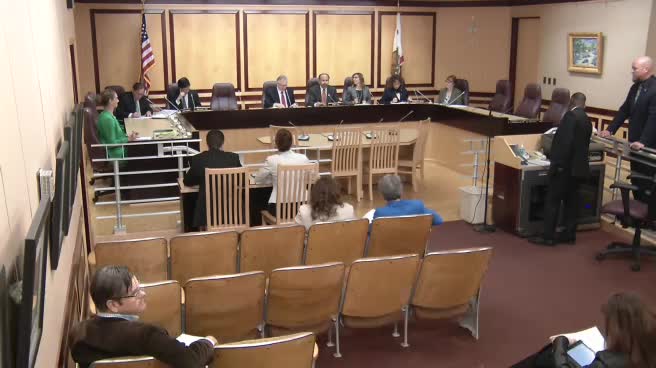 6MIN
Senate Standing Committee on Business, Professions and Economic Development
Bill Author

Bill Co-Author(s):