SB 312: Juveniles: sealing of records.
- Session Year: 2017-2018
- House: Senate
- Latest Version Date: 2017-10-11
(1)Existing law generally subjects any person under 18 years of age who commits a crime to the jurisdiction of the juvenile court, which may adjudge that person to be a ward of the court. Under existing law, juvenile court proceedings to declare a minor a ward of the court are commenced by the filing of a petition by the probation officer, the district attorney after consultation with the probation officer, or the prosecuting attorney, as specified. Existing law requires the juvenile court to order the petition of a minor who is subject to the jurisdiction of the court dismissed if the minor satisfactorily completes a term of probation or an informal program of supervision, as specified, and requires the court to seal all records pertaining to that dismissed petition in the custody of the juvenile court and in the custody of law enforcement agencies, the probation department, or the Department of Justice in accordance with a specified procedure. Existing law prohibits the court from sealing a record or dismissing a petition under this provision if the petition was sustained based on the commission of any specified serious or violent offense, including murder, that was committed when the individual was 14 years of age or older unless the finding on that offense was dismissed or was reduced to a lesser offense that is not listed among those specified offenses.
(2)Existing law generally authorizes a person who is the subject of a juvenile court record, or the county probation officer, to petition the court to seal his or her records, including records of arrest, relating to the persons case in the custody of the juvenile court and the probation officer and any other agencies, including law enforcement agencies and public officials. Existing law authorizes the petition to be filed 5 years or more after the jurisdiction of the juvenile court has terminated as to the person or, if no petition was filed, 5 years or more after the person was cited to appear before a probation officer or was taken before a probation officer or law enforcement officer, or, at any time after the person reaches 18 years of age.
(3)Existing law, as amended by Proposition 21 at the March 7, 2000, statewide primary election, prohibits a court from ordering the persons records sealed, as specified, in any case in which the person has been found by the juvenile court to have committed any specified serious or violent offense, including murder, when he or she was 14 years of age or older. Proposition 21 allows the Legislature to amend its provisions by the enactment of a statute passed in each house by a 2/3 vote.
This bill would expand the exception described in (1) to require the court to seal a record or dismiss a petition under the provisions described in (1) if the finding on that serious or violent offense was reduced to a misdemeanor.
This bill would, except as specified, repeal the limitation of Proposition 21 on the authority of the court to order the sealing of records of those persons who were found to have committed those serious or violent offenses after attaining 14 years of age, and instead would only authorize the filing of a petition to seal the record or records relating to those serious or violent offenses committed after attaining 14 years of age that resulted in the adjudication of wardship by the juvenile court under specified limited circumstances. The bill would authorize certain individuals to access, inspect, or utilize a record relating to those specified serious or violent offenses that has been sealed pursuant to the provisions described in (2) in a subsequent proceeding against the person for specified purposes, or to meet other statutory or constitutional obligations to disclose exculpatory evidence, as specified, and would prohibit the access, inspection, or utilization of a sealed record under those provisions from being deemed an unsealing of the record. The bill would provide that the above-mentioned provisions on sealing records in specified limited circumstances and the authority to access sealed records relating to those serious or violent offenses that were committed after attaining 14 years of age do not apply in cases in which the offense was dismissed or reduced to a misdemeanor by the court.
By expanding the duties imposed on local agencies relating to sealing of juvenile records, this bill would impose a state-mandated local program.
(4)This bill would incorporate additional changes to Section 786 of the Welfare and Institutions Code proposed by AB 529 to be operative only if this bill and AB 529 are enacted and this bill is enacted last.
(5)The California Constitution requires the state to reimburse local agencies and school districts for certain costs mandated by the state. Statutory provisions establish procedures for making that reimbursement.
This bill would provide that with regard to certain mandates no reimbursement is required by this act for a specified reason.
With regard to any other mandates, this bill would provide that, if the Commission on State Mandates determines that the bill contains costs so mandated by the state, reimbursement for those costs shall be made pursuant to the statutory provisions noted above.
(1)Existing law generally subjects any person under 18 years of age who commits a crime to the jurisdiction of the juvenile court, which may adjudge that person to be a ward of the court. Under existing law, juvenile court proceedings to declare a minor a ward of the court are commenced by the filing of a petition by the probation officer, the district attorney after consultation with the probation officer, or the prosecuting attorney, as specified. Existing law requires the juvenile court to order the petition of a minor who is subject to the jurisdiction of the court dismissed if the minor satisfactorily completes a term of probation or an informal program of supervision, as specified, and requires the court to seal all records pertaining to that dismissed petition in the custody of the juvenile court and in the custody of law enforcement agencies, the probation department, or the Department of Justice in accordance with a specified procedure. Existing law prohibits the court from sealing a record or dismissing a petition under this provision if the petition was sustained based on the commission of any specified serious or violent offense, including murder, that was committed when the individual was 14 years of age or older unless the finding on that offense was dismissed or was reduced to a lesser offense that is not listed among those specified offenses.
(2)Existing law generally authorizes a person who is the subject of a juvenile court record, or the county probation officer, to petition the court to seal his or her records, including records of arrest, relating to the persons case in the custody of the juvenile court and the probation officer and any other agencies, including law enforcement agencies and public officials. Existing law authorizes the petition to be filed 5 years or more after the jurisdiction of the juvenile court has terminated as to the person or, if no petition was filed, 5 years or more after the person was cited to appear before a probation officer or was taken before a probation officer or law enforcement officer, or, at any time after the person reaches 18 years of age.
(3)Existing law, as amended by Proposition 21 at the March 7, 2000, statewide primary election, prohibits a court from ordering the persons records sealed, as specified, in any case in which the person has been found by the juvenile court to have committed any specified serious or violent offense, including murder, when he or she was 14 years of age or older. Proposition 21 allows the Legislature to amend its provisions by the enactment of a statute passed in each house by a 2/3 vote.
This bill would expand the exception described in (1) to require the court to seal a record or dismiss a petition under the provisions described in (1) if the finding on that serious or violent offense was reduced to a misdemeanor.
This bill would, except as specified, repeal the limitation of Proposition 21 on the authority of the court to order the sealing of records of those persons who were found to have committed those serious or violent offenses after attaining 14 years of age, and instead would only authorize the filing of a petition to seal the record or records relating to those serious or violent offenses committed after attaining 14 years of age that resulted in the adjudication of wardship by the juvenile court under specified limited circumstances. The bill would authorize certain individuals to access, inspect, or utilize a record relating to those specified serious or violent offenses that has been sealed pursuant to the provisions described in (2) in a subsequent proceeding against the person for specified purposes, or to meet other statutory or constitutional obligations to disclose exculpatory evidence, as specified, and would prohibit the access, inspection, or utilization of a sealed record under those provisions from being deemed an unsealing of the record. The bill would provide that the above-mentioned provisions on sealing records in specified limited circumstances and the authority to access sealed records relating to those serious or violent offenses that were committed after attaining 14 years of age do not apply in cases in which the offense was dismissed or reduced to a misdemeanor by the court.
By expanding the duties imposed on local agencies relating to sealing of juvenile records, this bill would impose a state-mandated local program.
(4)This bill would incorporate additional changes to Section 786 of the Welfare and Institutions Code proposed by AB 529 to be operative only if this bill and AB 529 are enacted and this bill is enacted last.
(4)(5)The California Constitution requires the state to reimburse local agencies and school districts for certain costs mandated by the state. Statutory provisions establish procedures for making that reimbursement.
This bill would provide that with regard to certain mandates no reimbursement is required by this act for a specified reason.
With regard to any other mandates, this bill would provide that, if the Commission on State Mandates determines that the bill contains costs so mandated by the state, reimbursement for those costs shall be made pursuant to the statutory provisions noted above.
(1)Existing law generally subjects any person under 18 years of age who commits a crime to the jurisdiction of the juvenile court, which may adjudge that person to be a ward of the court. Under existing law, juvenile court proceedings to declare a minor a ward of the court are commenced by the filing of a petition by the probation officer, the district attorney after consultation with the probation officer, or the prosecuting attorney, as specified. Existing law requires the juvenile court to order the petition of a minor who is subject to the jurisdiction of the court dismissed if the minor satisfactorily completes a term of probation or an informal program of supervision, as specified, and requires the court to seal all records pertaining to that dismissed petition in the custody of the juvenile court and in the custody of law enforcement agencies, the probation department, or the Department of Justice in accordance with a specified procedure. Existing law prohibits the court from sealing a record or dismissing a petition under this provision if the petition was sustained based on the commission of any specified serious or violent offense, including murder, that was committed when the individual was 14 years of age or older unless the finding on that offense was dismissed or was reduced to a lesser offense that is not listed among those specified offenses.
(2)Existing law generally authorizes a person who is the subject of a juvenile court record, or the county probation officer, to petition the court to seal his or her records, including records of arrest, relating to the persons case in the custody of the juvenile court and the probation officer and any other agencies, including law enforcement agencies and public officials. Existing law authorizes the petition to be filed 5 years or more after the jurisdiction of the juvenile court has terminated as to the person or, if no petition was filed, 5 years or more after the person was cited to appear before a probation officer or was taken before a probation officer or law enforcement officer, or, at any time after the person reaches 18 years of age.
(3)Existing law, as amended by Proposition 21 at the March 7, 2000, statewide primary election, prohibits a court from ordering the persons records sealed, as specified, in any case in which the person has been found by the juvenile court to have committed any specified serious or violent offense, including murder, when he or she was 14 years of age or older. Proposition 21 allows the Legislature to amend its provisions by the enactment of a statute passed in each house by a 2/3 vote.
This bill would expand the exception described in (1) to require the court to seal a record or dismiss a petition under the provisions described in (1) if the finding on that serious or violent offense was reduced to a misdemeanor.
This bill would, except as specified, repeal the limitation of Proposition 21 on the authority of the court to order the sealing of records of those persons who were found to have committed those serious or violent offenses after attaining 14 years of age or older, age, and instead would prohibit only authorize the filing of a petition to seal the record or records relating to those serious or violent offenses committed after attaining 14 years of age or older until 3 years after the date of the commission of the offense. that resulted in the adjudication of wardship by the juvenile court under specified limited circumstances. The bill would authorize certain individuals to access, inspect, or utilize a record relating to those specified serious or violent offenses that has been sealed pursuant to the provisions described in (2) in a subsequent proceeding against the person for specified purposes, and would prohibit the access, inspection, or utilization of a sealed record from being deemed an unsealing of the record. The bill would provide that the 3-year prohibition above-mentioned provisions on sealing records in specified limited circumstances and the authority to access sealed records relating to those serious or violent offenses that were committed after attaining 14 years of age or older do not apply in cases in which the offense was dismissed or reduced to a misdemeanor by the court.
By expanding the duties imposed on local agencies relating to sealing of juvenile records, this bill would impose a state-mandated local program.
(4)The California Constitution requires the state to reimburse local agencies and school districts for certain costs mandated by the state. Statutory provisions establish procedures for making that reimbursement.
This bill would provide that with regard to certain mandates no reimbursement is required by this act for a specified reason.
With regard to any other mandates, this bill would provide that, if the Commission on State Mandates determines that the bill contains costs so mandated by the state, reimbursement for those costs shall be made pursuant to the statutory provisions noted above.
(1)Existing law generally subjects any person under 18 years of age who commits a crime to the jurisdiction of the juvenile court, which may adjudge that person to be a ward of the court. Under existing law, juvenile court proceedings to declare a minor a ward of the court are commenced by the filing of a petition by the probation officer, the district attorney after consultation with the probation officer, or the prosecuting attorney, as specified. Existing law requires the juvenile court to order the petition of a minor who is subject to the jurisdiction of the court dismissed if the minor satisfactorily completes a term of probation or an informal program of supervision, as specified, and requires the court to seal all records pertaining to that dismissed petition in the custody of the juvenile court and in the custody of law enforcement agencies, the probation department, or the Department of Justice in accordance with a specified procedure. Existing law prohibits the court from sealing a record or dismissing a petition under this provision if the petition was sustained based on the commission of any specified serious or violent offense, including murder, that was committed when the individual was 14 years of age or older unless the finding on that offense was dismissed or was reduced to a lesser offense that is not listed among those specified offenses.
(2)Existing law generally authorizes a person who is the subject of a juvenile court record, or the county probation officer, to petition the court to seal his or her records, including records of arrest, relating to the persons case in the custody of the juvenile court and the probation officer and any other agencies, including law enforcement agencies and public officials. Existing law authorizes the petition to be filed 5 years or more after the jurisdiction of the juvenile court has terminated as to the person or, if no petition was filed, 5 years or more after the person was cited to appear before a probation officer or was taken before a probation officer or law enforcement officer, or, at any time after the person reaches 18 years of age.
(3)Existing law, as amended by Proposition 21 at the March 7, 2000, statewide primary election, prohibits a court from ordering the persons records sealed, as specified, in any case in which the person has been found by the juvenile court to have committed any specified serious or violent offense, including murder, when he or she was 14 years of age or older. Proposition 21 allows the Legislature to amend its provisions by a statute passed in each house by a 2/3 vote.
This bill would expand the exception described in (1) to require the court to seal a record or dismiss a petition under the provisions described in (1) if the finding on that serious or violent offense was reduced to a misdemeanor.
This bill would would, except as specified, repeal the limitation of Proposition 21 on the authority of the court to order the sealing of records of those persons who were found to have committed those serious or violent offenses after obtaining attaining 14 years of age or older, and instead would prohibit the filing of a petition to seal the record or records relating to those serious or violent offenses committed after attaining 14 years of age or older until 3 years after the date of the commission of the offense. The bill would authorize certain individuals to access, inspect, or utilize a record relating to those specified serious or violent offenses that has been sealed pursuant to the provisions described in (2) in a subsequent proceeding against the person for specified purposes, and would prohibit the access, inspection, or utilization of a sealed record from being deemed an unsealing of the record. The bill would provide that the 3-year prohibition and the authority to access sealed records relating to those serious or violent offenses that were committed after attaining 14 years of age or older do not apply in cases in which the offense was dismissed or reduced to a misdemeanor by the court.
By expanding the duties imposed on local agencies relating to sealing of juvenile records, this bill would impose a state-mandated local program.
(4)The California Constitution requires the state to reimburse local agencies and school districts for certain costs mandated by the state. Statutory provisions establish procedures for making that reimbursement.
This bill would provide that with regard to certain mandates no reimbursement is required by this act for a specified reason.
With regard to any other mandates, this bill would provide that, if the Commission on State Mandates determines that the bill contains costs so mandated by the state, reimbursement for those costs shall be made pursuant to the statutory provisions noted above.
(1)Existing law generally subjects any person under 18 years of age who commits a crime to the jurisdiction of the juvenile court, which may adjudge that person to be a ward of the court. Under existing law, juvenile court proceedings to declare a minor a ward of the court are commenced by the filing of a petition by the probation officer, the district attorney after consultation with the probation officer, or the prosecuting attorney, as specified. Existing law requires the juvenile court to order the petition of a minor who is subject to the jurisdiction of the court dismissed if the minor satisfactorily completes a term of probation or an informal program of supervision, as specified, and requires the court to seal all records pertaining to that dismissed petition in the custody of the juvenile court and in the custody of law enforcement agencies, the probation department, or the Department of Justice in accordance with a specified procedure. Existing law prohibits the court from sealing a record or dismissing a petition under this provision if the petition was sustained based on the commission of any specified serious or violent offense, including murder, that was committed when the individual was 14 years of age or older unless the finding on that offense was dismissed or was reduced to a lesser offense that is not listed among those specified offenses.
(2)Existing law generally authorizes a person who is the subject of a juvenile court record, or the county probation officer, to petition the court to seal his or her records, including records of arrest, relating to the persons case in the custody of the juvenile court and the probation officer and any other agencies, including law enforcement agencies and public officials. Existing law authorizes the petition to be filed 5 years or more after the jurisdiction of the juvenile court has terminated as to the person or, if no petition was filed, 5 years or more after the person was cited to appear before a probation officer or was taken before a probation officer or law enforcement officer, or, at any time after the person reaches 18 years of age.
(2)(3)Existing law, as amended by Proposition 21 at the March 7, 2000, statewide primary election, prohibits a court from ordering the persons records sealed, as specified, in any case in which the person has been found by the juvenile court to have committed any specified serious or violent offenses, offense, including murder, when he or she was 14 years of age or older. Proposition 21 allows the Legislature to amend its provisions by a statute passed in each house by a 2/3 vote.
This bill would expand the exception described in paragraph (1) to require the court to seal a record or dismiss a petition under the provisions described in paragraph (1) if the finding on that serious or violent offense was reduced to a misdemeanor. By expanding the duties imposed on local agencies relating to sealing of juvenile records, this bill would impose a state-mandated local program.
This bill would repeal the limitation of Proposition 21 on the authority of the court to order the sealing of records of those persons who were found to have committed those serious or violent offenses after obtaining 14 years of age or older, and instead would prohibit the filing of a petition to seal the record or records relating to those serious or violent offenses committed after attaining 14 years of age or older until 3 years after the date of the commission of the offense. The bill would authorize certain individuals to access, inspect, or utilize a record relating to those specified serious or violent offenses that has been sealed pursuant to the provisions described in (2) in a subsequent proceeding against the person for specified purposes, and would prohibit the access, inspection, or utilization of a sealed record from being deemed an unsealing of the record. The bill would provide that the 3-year prohibition and the authority to access sealed records relating to those serious or violent offenses that were committed after attaining 14 years of age or older do not apply in cases in which the offense was dismissed or reduced to a misdemeanor by the court.
By expanding the duties imposed on local agencies relating to sealing of juvenile records, this bill would impose a state-mandated local program.
(3)(4)The California Constitution requires the state to reimburse local agencies and school districts for certain costs mandated by the state. Statutory provisions establish procedures for making that reimbursement.
This bill would provide that with regard to certain mandates no reimbursement is required by this act for a specified reason.
With regard to any other mandates, this bill would provide that, if the Commission on State Mandates determines that the bill contains costs so mandated by the state, reimbursement for those costs shall be made pursuant to the statutory provisions noted above.
(1)Existing law generally subjects any person under 18 years of age who commits a crime to the jurisdiction of the juvenile court, which may adjudge that person to be a ward of the court. Under existing law, juvenile court proceedings to declare a minor a ward of the court are commenced by the filing of a petition by the probation officer, the district attorney after consultation with the probation officer, or the prosecuting attorney, as specified. Existing law requires the juvenile court to order the petition of a minor who is subject to the jurisdiction of the court dismissed if the minor satisfactorily completes a term of probation or an informal program of supervision, as specified, and requires the court to seal all records pertaining to that dismissed petition in the custody of the juvenile court and in the custody of law enforcement agencies, the probation department, or the Department of Justice in accordance with a specified procedure. Existing law prohibits the court from sealing a record or dismissing a petition under this provision if the petition was sustained based on the commission of any specified serious or violent offense, including murder, that was committed when the individual was 14 years of age or older unless the finding on that offense was dismissed or was reduced to a lesser offense that is not listed among those specified offenses.
(2)Existing law, as amended by Proposition 21 at the March 7, 2000, statewide primary election, prohibits a court from ordering the persons records sealed, as specified, in any case in which the person has been found by the juvenile court to have committed any specified serious or violent offenses, including murder, when he or she was 14 years of age or older. Proposition 21 allows the Legislature to amend its provisions by a statute passed in each house by a 2/3 vote.
This bill would expand the exception described in paragraph (1) to require the court to seal a record or dismiss a petition under the provisions described in paragraph (1) if the finding on that serious or violent offense was reduced to a misdemeanor. By expanding the duties imposed on local agencies relating to sealing of juvenile records, this bill would impose a state-mandated local program.
(3)The California Constitution requires the state to reimburse local agencies and school districts for certain costs mandated by the state. Statutory provisions establish procedures for making that reimbursement.
This bill would provide that with regard to certain mandates no reimbursement is required by this act for a specified reason.
With regard to any other mandates, this bill would provide that, if the Commission on State Mandates determines that the bill contains costs so mandated by the state, reimbursement for those costs shall be made pursuant to the statutory provisions noted above.
(a)(1)(A)If a petition has been filed with a juvenile court to commence proceedings to adjudge a person a ward of the court, if a person is cited to appear before a probation officer or is taken before a probation officer pursuant to Section 626, or if a minor is taken before any officer of a law enforcement agency, the person or the county probation officer may, five years or more after the jurisdiction of the juvenile court has terminated as to the person, or, if a petition is not filed, five years or more after the person was cited to appear before a probation officer or was taken before a probation officer pursuant to Section 626 or was taken before any officer of a law enforcement agency, or, if, at any time after the person has reached 18 years of age, petition the court for sealing of the records, including records of arrest, relating to the persons case, in the custody of the juvenile court and probation officer and any other agencies, including law enforcement agencies, entities, and public officials as the petitioner alleges, in his or her petition, to have custody of the records. The court shall notify the district attorney of the county and the county probation officer, if he or she is not the petitioner, and the district attorney or probation officer or any of their deputies or any other person having relevant evidence may testify at the hearing on the petition. If, after hearing, the court finds that since the termination of jurisdiction or action pursuant to Section 626, as the case may be, he or she has not been convicted of a felony or of any misdemeanor involving moral turpitude and that rehabilitation has been attained to the satisfaction of the court, it shall order all records, papers, and exhibits in the persons case in the custody of the juvenile court sealed, including the juvenile court record, minute book entries, and entries on dockets, and any other records relating to the case in the custody of the other agencies, entities, and officials as are named in the order. Once the court has ordered the persons records sealed, the proceedings in the case shall be deemed never to have occurred, and the person may properly reply accordingly to any inquiry about the events, the records of which are ordered sealed.
(B)The court shall send a copy of the order to each agency, entity, and official named in the order, directing the agency or entity to seal its records. Each agency, entity, and official shall seal the records in its custody as directed by the order, shall advise the court of its compliance, and thereupon shall seal the copy of the courts order for sealing of records that the agency, entity, or official received.
(C)If a ward of the juvenile court is subject to the registration requirements set forth in Section 290 of the Penal Code, a court, in ordering the sealing of the juvenile records of the person, shall also provide in the order that the person is relieved from the registration requirement and for the destruction of all registration information in the custody of the Department of Justice and other agencies, entities, and officials.
(D)(i)A petition to seal the record or records relating to an offense listed in subdivision (b) of Section 707 that was committed after attaining 14 years of age and resulted in the adjudication of wardship by the juvenile court may only be filed or considered by the court pursuant to this section under the following circumstances:
(I)The person was committed to the Department of Corrections and Rehabilitation, Division of Juvenile Facilities, has attained 21 years of age, and has completed his or her period of probation supervision after release from the division.
(II)The person was not committed to the Department of Corrections and Rehabilitation, Division of Juvenile Facilities, has attained 18 years of age, and has completed any period of probation supervision related to that offense imposed by the court.
(ii)A record relating to an offense listed in subdivision (b) of Section 707 that was committed after attaining 14 years of age that has been sealed pursuant to this section may be accessed, inspected, or utilized in a subsequent proceeding against the person under any of the following circumstances:
(I)By the prosecuting attorney, as necessary, to make appropriate charging decisions or to initiate prosecution in a court of criminal jurisdiction for a subsequent felony offense, or by the prosecuting attorney or the court to determine the appropriate sentencing for a subsequent felony offense.
(II)By the prosecuting attorney, as necessary, to initiate a juvenile court proceeding to determine whether a minor shall be transferred from the juvenile court to a court of criminal jurisdiction pursuant to Section 707, and by the juvenile court to make that determination.
(III)By the prosecuting attorney, the probation department, or the juvenile court upon a subsequent finding by the juvenile court that the minor has committed a felony offense, for the purpose of determining an appropriate disposition of the case.
(IV)By the prosecuting attorney, or a court of criminal jurisdiction, for the purpose of proving a prior serious or violent felony conviction, and determining the appropriate sentence pursuant to Section 667 of the Penal Code.
(iii)A record relating to an offense listed in subdivision (b) of Section 707 that was committed after attaining 14 years of age that has been sealed pursuant to this section may be accessed, inspected, or utilized by the prosecuting attorney in order to meet a statutory or constitutional obligation to disclose favorable or exculpatory evidence to a defendant in a criminal case in which the prosecuting attorney has reason to believe that access to the record is necessary to meet the disclosure obligation. A request to access information in the sealed record for this purpose shall be submitted by the prosecuting attorney to the juvenile court, and the juvenile court shall approve the request if it determines that access to the record is necessary to enable the prosecuting attorneys compliance with the disclosure obligation. If the juvenile court approves the prosecuting attorneys request, the court shall state on the record appropriate limits on the access, inspection, and utilization of the sealed record information in order to protect the confidentiality of the person whose sealed record is accessed pursuant to this clause.
(iv)A sealed record that is accessed, inspected, or utilized pursuant to clause (ii) or (iii) shall be accessed, inspected, or utilized only for the purposes described therein, and the information contained in the sealed record shall otherwise remain confidential and shall not be further disseminated. The access, inspection, or utilization of a sealed record pursuant to clause (ii) or (iii) shall not be deemed an unsealing of the record and shall not require notice to any other entity.
(E)Subparagraph (D) does not apply in cases in which the offense listed in subdivision (b) of Section 707 that was committed after attaining 14 years of age was dismissed or reduced to a misdemeanor by the court. In those cases, the person may petition the court to have the record sealed, and the court may order the sealing of the record in the same manner and with the same effect as otherwise provided in this section for records that do not relate to an offense listed in subdivision (b) of Section 707 that was committed after the person had attained 14 years of age.
(F)Notwithstanding subparagraphs (D) and (E), a record relating to an offense listed in subdivision (b) of Section 707 that was committed after attaining 14 years of age for which the person is required to register pursuant to Section 290.008 of the Penal Code shall not be sealed.
(2)An unfulfilled order of restitution that has been converted to a civil judgment pursuant to Section 730.6 shall not be a bar to sealing a record pursuant to this subdivision.
(3)Outstanding restitution fines and court-ordered fees shall not be considered when assessing whether a petitioners rehabilitation has been attained to the satisfaction of the court and shall not be a bar to sealing a record pursuant to this subdivision.
(4)The person who is the subject of records sealed pursuant to this section may petition the superior court to permit inspection of the records by persons named in the petition, and the superior court may order the inspection of the records. Except as provided in subdivision (b), the records shall not be open to inspection.
(b)In any action or proceeding based upon defamation, a court, upon a showing of good cause, may order any records sealed under this section to be opened and admitted into evidence. The records shall be confidential and shall be available for inspection only by the court, jury, parties, counsel for the parties, and any other person who is authorized by the court to inspect them. Upon the judgment in the action or proceeding becoming final, the court shall order the records sealed.
(c)(1)Subdivision (a) does not apply to Department of Motor Vehicles records of any convictions for offenses under the Vehicle Code or any local ordinance relating to the operation, stopping and standing, or parking of a vehicle where the record of any such conviction would be a public record under Section 1808 of the Vehicle Code. However, if a court orders a case record containing any such conviction to be sealed under this section, and if the Department of Motor Vehicles maintains a public record of such a conviction, the court shall notify the Department of Motor Vehicles of the sealing and the department shall advise the court of its receipt of the notice.
(2)Notwithstanding any other law, subsequent to the notification, the Department of Motor Vehicles shall allow access to its record of convictions only to the subject of the record and to insurers which have been granted requestor code numbers by the department. Any insurer to which a record of conviction is disclosed, when the conviction record has otherwise been sealed under this section, shall be given notice of the sealing when the record is disclosed to the insurer. The insurer may use the information contained in the record for purposes of determining eligibility for insurance and insurance rates for the subject of the record, and the information shall not be used for any other purpose nor shall it be disclosed by an insurer to any person or party not having access to the record.
(3)This subdivision does not prevent the sealing of any record which is maintained by any agency or party other than the Department of Motor Vehicles.
(4)This subdivision does not affect the procedures or authority of the Department of Motor Vehicles for purging department records.
(d)Unless for good cause the court determines that the juvenile court record shall be retained, the court shall order the destruction of a persons juvenile court records that are sealed pursuant to this section as follows: five years after the record was ordered sealed, if the person who is the subject of the record was alleged or adjudged to be a person described by Section 601; or when the person who is the subject of the record reaches 38 years of age if the person was alleged or adjudged to be a person described by Section 602, except that if the subject of the record was found to be a person described in Section 602 because of the commission of an offense listed in subdivision (b) of Section 707 when he or she was 14 years of age or older, the record shall not be destroyed. Any other agency in possession of sealed records may destroy its records five years after the record was ordered sealed.
(e)The court may access a file that has been sealed pursuant to this section for the limited purpose of verifying the prior jurisdictional status of a ward who is petitioning the court to resume its jurisdiction pursuant to subdivision (e) of Section 388. This access shall not be deemed an unsealing of the record and shall not require notice to any other entity.
(f)This section shall not permit the sealing of a persons juvenile court records for an offense where the person is convicted of that offense in a criminal court pursuant to the provisions of Section 707.1. This subdivision is declaratory of existing law.
(g)(1)This section does not prohibit a court from enforcing a civil judgment for an unfulfilled order of restitution obtained pursuant to Section 730.6. A minor is not relieved from the obligation to pay victim restitution, restitution fines, and court-ordered fines and fees because the minors records are sealed.
(2)A victim or a local collection program may continue to enforce victim restitution orders, restitution fines, and court-ordered fines and fees after a record is sealed. The juvenile court shall have access to any records sealed pursuant to this section for the limited purposes of enforcing a civil judgment or restitution order.
(h)(1)On and after January 1, 2015, each court and probation department shall ensure that information regarding the eligibility for and the procedures to request the sealing and destruction of records pursuant to this section shall be provided to each person who is either of the following:
(A)A person for whom a petition has been filed on or after January 1, 2015, to adjudge the person a ward of the juvenile court.
(B)A person who is brought before a probation officer pursuant to Section 626.
(2)The Judicial Council shall, on or before January 1, 2015, develop informational materials for purposes of paragraph (1) and shall develop a form to petition the court for the sealing and destruction of records pursuant to this section. The informational materials and the form shall be provided to each person described in paragraph (1) when jurisdiction is terminated or when the case is dismissed.
SEC. 2.Section 786 of the Welfare and Institutions Code is amended to read:786.(a)If a person who has been alleged or found to be a ward of the juvenile court satisfactorily completes (1) an informal program of supervision pursuant to Section 654.2, (2) probation under Section 725, or (3) a term of probation for any offense, the court shall order the petition dismissed. The court shall order sealed all records pertaining to the dismissed petition in the custody of the juvenile court, and in the custody of law enforcement agencies, the probation department, or the Department of Justice. The court shall send a copy of the order to each agency and official named in the order, direct the agency or official to seal its records, and specify a date by which the sealed records shall be destroyed. Each agency and official named in the order shall seal the records in its custody as directed by the order, shall advise the court of its compliance, and, after advising the court, shall seal the copy of the courts order that was received. The court shall also provide notice to the person and the persons counsel that it has ordered the petition dismissed and the records sealed in the case. The notice shall include an advisement of the persons right to nondisclosure of the arrest and proceedings, as specified in subdivision (b).
(b)Upon the courts order of dismissal of the petition, the arrest and other proceedings in the case shall be deemed not to have occurred and the person who was the subject of the petition may reply accordingly to an inquiry by employers, educational institutions, or other persons or entities regarding the arrest and proceedings in the case.
(c)(1)For purposes of this section, satisfactory completion of an informal program of supervision or another term of probation described in subdivision (a) shall be deemed to have occurred if the person has no new findings of wardship or conviction for a felony offense or a misdemeanor involving moral turpitude during the period of supervision or probation and if he or she has not failed to substantially comply with the reasonable orders of supervision or probation that are within his or her capacity to perform. The period of supervision or probation shall not be extended solely for the purpose of deferring or delaying eligibility for dismissal of the petition and sealing of the records under this section.
(2)An unfulfilled order or condition of restitution, including a restitution fine that can be converted to a civil judgment under Section 730.6 or an unpaid restitution fee shall not be deemed to constitute unsatisfactory completion of supervision or probation under this section.
(d)A court shall not seal a record or dismiss a petition pursuant to this section if the petition was sustained based on the commission of an offense listed in subdivision (b) of Section 707 that was committed when the individual was 14 years of age or older unless the finding on that offense was dismissed or was reduced to a misdemeanor or to a lesser offense that is not listed in subdivision (b) of Section 707.
(e)(1)The court may, in making its order to seal the record and dismiss the instant petition pursuant to this section, include an order to seal a record relating to, or to dismiss, any prior petition or petitions that have been filed or sustained against the individual and that appear to the satisfaction of the court to meet the sealing and dismissal criteria otherwise described in this section.
(2)An individual who has a record that is eligible to be sealed under this section may ask the court to order the sealing of a record pertaining to the case that is in the custody of a public agency other than a law enforcement agency, the probation department, or the Department of Justice, and the court may grant the request and order that the public agency record be sealed if the court determines that sealing the additional record will promote the successful reentry and rehabilitation of the individual.
(f)(1)A record that has been ordered sealed by the court under this section may be accessed, inspected, or utilized only under any of the following circumstances:
(A)By the prosecuting attorney, the probation department, or the court for the limited purpose of determining whether the minor is eligible and suitable for deferred entry of judgment pursuant to Section 790 or is ineligible for a program of supervision as defined in Section 654.3.
(B)By the court for the limited purpose of verifying the prior jurisdictional status of a ward who is petitioning the court to resume its jurisdiction pursuant to subdivision (e) of Section 388.
(C)If a new petition has been filed against the minor for a felony offense, by the probation department for the limited purpose of identifying the minors previous court-ordered programs or placements, and in that event solely to determine the individuals eligibility or suitability for remedial programs or services. The information obtained pursuant to this subparagraph shall not be disseminated to other agencies or individuals, except as necessary to implement a referral to a remedial program or service, and shall not be used to support the imposition of penalties, detention, or other sanctions upon the minor.
(D)Upon a subsequent adjudication of a minor whose record has been sealed under this section and a finding that the minor is a person described by Section 602 based on the commission of a felony offense, by the probation department, the prosecuting attorney, counsel for the minor, or the court for the limited purpose of determining an appropriate juvenile court disposition. Access, inspection, or use of a sealed record as provided under this subparagraph shall not be construed as a reversal or modification of the courts order dismissing the petition and sealing the record in the prior case.
(E)Upon the prosecuting attorneys motion, made in accordance with Section 707, to initiate court proceedings to determine the minors fitness to be dealt with under the juvenile court law, by the probation department, the prosecuting attorney, counsel for the minor, or the court for the limited purpose of evaluating and determining the minors fitness to be dealt with under the juvenile court law. Access, inspection, or use of a sealed record as provided under this subparagraph shall not be construed as a reversal or modification of the courts order dismissing the petition and sealing the record in the prior case.
(F)By the person whose record has been sealed, upon his or her request and petition to the court to permit inspection of the records.
(G)By the probation department of any county to access the records for the limited purpose of meeting federal Title IV-B and Title IV-E compliance.
(H)The child welfare agency of a county responsible for the supervision and placement of a minor or nonminor dependent may access a record that has been ordered sealed by the court under this section for the limited purpose of determining an appropriate placement or service that has been ordered for the minor or nonminor dependent by the court. The information contained in the sealed record and accessed by the child welfare worker or agency under this subparagraph may be shared with the court but shall in all other respects remain confidential and shall not be disseminated to any other person or agency. Access to the sealed record under this subparagraph shall not be construed as a modification of the courts order dismissing the petition and sealing the record in the case.
(2)Access to, or inspection of, a sealed record authorized by paragraph (1) shall not be deemed an unsealing of the record and shall not require notice to any other agency.
(g)(1)This section does not prohibit a court from enforcing a civil judgment for an unfulfilled order of restitution ordered pursuant to Section 730.6. A minor is not relieved from the obligation to pay victim restitution, restitution fines, and court-ordered fines and fees because the minors records are sealed.
(2)A victim or a local collection program may continue to enforce victim restitution orders, restitution fines, and court-ordered fines and fees after a record is sealed. The juvenile court shall have access to records sealed pursuant to this section for the limited purpose of enforcing a civil judgment or restitution order.
(h)This section does not prohibit the State Department of Social Services from meeting its obligations to monitor and conduct periodic evaluations of, and provide reports on, the programs carried under federal Title IV-B and Title IV-E as required by Sections 622, 629 et seq., and 671(a)(7) and (22) of Title 42 of the United States Code, as implemented by federal regulation and state statute.
(i)The Judicial Council shall adopt rules of court, and shall make available appropriate forms, providing for the standardized implementation of this section by the juvenile courts.
SEC. 2.5.Section 786 of the Welfare and Institutions Code is amended to read:786.(a)If a person who has been alleged or found to be a ward of the juvenile court satisfactorily completes (1) an informal program of supervision pursuant to Section 654.2, (2) probation under Section 725, or (3) a term of probation for any offense, the court shall order the petition dismissed. The court shall order sealed all records pertaining to the dismissed petition in the custody of the juvenile court, and in the custody of law enforcement agencies, the probation department, or the Department of Justice. The court shall send a copy of the order to each agency and official named in the order, direct the agency or official to seal its records, and specify a date by which the sealed records shall be destroyed. Each agency and official named in the order shall seal the records in its custody as directed by the order, shall advise the court of its compliance, and, after advising the court, shall seal the copy of the courts order that was received. The court shall also provide notice to the person and the persons counsel that it has ordered the petition dismissed and the records sealed in the case. The notice shall include an advisement of the persons right to nondisclosure of the arrest and proceedings, as specified in subdivision (b).
(b)Upon the courts order of dismissal of the petition, the arrest and other proceedings in the case shall be deemed not to have occurred and the person who was the subject of the petition may reply accordingly to an inquiry by employers, educational institutions, or other persons or entities regarding the arrest and proceedings in the case.
(c)(1)For purposes of this section, satisfactory completion of an informal program of supervision or another term of probation described in subdivision (a) shall be deemed to have occurred if the person has no new findings of wardship or conviction for a felony offense or a misdemeanor involving moral turpitude during the period of supervision or probation and if he or she has not failed to substantially comply with the reasonable orders of supervision or probation that are within his or her capacity to perform. The period of supervision or probation shall not be extended solely for the purpose of deferring or delaying eligibility for dismissal of the petition and sealing of the records under this section.
(2)An unfulfilled order or condition of restitution, including a restitution fine that can be converted to a civil judgment under Section 730.6 or an unpaid restitution fee shall not be deemed to constitute unsatisfactory completion of supervision or probation under this section.
(d)A court shall not seal a record or dismiss a petition pursuant to this section if the petition was sustained based on the commission of an offense listed in subdivision (b) of Section 707 that was committed when the individual was 14 years of age or older unless the finding on that offense was dismissed or was reduced to a misdemeanor or to a lesser offense that is not listed in subdivision (b) of Section 707.
(e)If a person who has been alleged to be a ward of the juvenile court has his or her petition dismissed by the court, whether on the motion of the prosecution or on the courts own motion, or if the petition is not sustained by the court after an adjudication hearing, the court shall order sealed all records pertaining to the dismissed petition in the custody of the juvenile court, and in the custody of law enforcement agencies, the probation department, or the Department of Justice. The court shall send a copy of the order to each agency and official named in the order, direct the agency or official to seal its records, and specify a date by which the sealed records shall be destroyed. Each agency and official named in the order shall seal the records in its custody as directed by the order, shall advise the court of its compliance, and, after advising the court, shall seal the copy of the courts order that was received. The court shall also provide notice to the person and the persons counsel that it has ordered the petition dismissed and the records sealed in the case. The notice shall include an advisement of the persons right to nondisclosure of the arrest and proceedings, as specified in subdivision (b).
(f)(1)The court may, in making its order to seal the record and dismiss the instant petition pursuant to this section, include an order to seal a record relating to, or to dismiss, any prior petition or petitions that have been filed or sustained against the individual and that appear to the satisfaction of the court to meet the sealing and dismissal criteria otherwise described in this section.
(2)An individual who has a record that is eligible to be sealed under this section may ask the court to order the sealing of a record pertaining to the case that is in the custody of a public agency other than a law enforcement agency, the probation department, or the Department of Justice, and the court may grant the request and order that the public agency record be sealed if the court determines that sealing the additional record will promote the successful reentry and rehabilitation of the individual.
(g)(1)A record that has been ordered sealed by the court under this section may be accessed, inspected, or utilized only under any of the following circumstances:
(A)By the prosecuting attorney, the probation department, or the court for the limited purpose of determining whether the minor is eligible and suitable for deferred entry of judgment pursuant to Section 790 or is ineligible for a program of supervision as defined in Section 654.3.
(B)By the court for the limited purpose of verifying the prior jurisdictional status of a ward who is petitioning the court to resume its jurisdiction pursuant to subdivision (e) of Section 388.
(C)If a new petition has been filed against the minor for a felony offense, by the probation department for the limited purpose of identifying the minors previous court-ordered programs or placements, and in that event solely to determine the individuals eligibility or suitability for remedial programs or services. The information obtained pursuant to this subparagraph shall not be disseminated to other agencies or individuals, except as necessary to implement a referral to a remedial program or service, and shall not be used to support the imposition of penalties, detention, or other sanctions upon the minor.
(D)Upon a subsequent adjudication of a minor whose record has been sealed under this section and a finding that the minor is a person described by Section 602 based on the commission of a felony offense, by the probation department, the prosecuting attorney, counsel for the minor, or the court for the limited purpose of determining an appropriate juvenile court disposition. Access, inspection, or use of a sealed record as provided under this subparagraph shall not be construed as a reversal or modification of the courts order dismissing the petition and sealing the record in the prior case.
(E)Upon the prosecuting attorneys motion, made in accordance with Section 707, to initiate court proceedings to determine whether the case should be transferred to a court of criminal jurisdiction, by the probation department, the prosecuting attorney, counsel for the minor, or the court for the limited purpose of evaluating and determining if such a transfer is appropriate. Access, inspection, or use of a sealed record as provided under this subparagraph shall not be construed as a reversal or modification of the courts order dismissing the petition and sealing the record in the prior case.
(F)By the person whose record has been sealed, upon his or her request and petition to the court to permit inspection of the records.
(G)By the probation department of any county to access the records for the limited purpose of meeting federal Title IV-B and Title IV-E compliance.
(H)The child welfare agency of a county responsible for the supervision and placement of a minor or nonminor dependent may access a record that has been ordered sealed by the court under this section for the limited purpose of determining an appropriate placement or service that has been ordered for the minor or nonminor dependent by the court. The information contained in the sealed record and accessed by the child welfare worker or agency under this subparagraph may be shared with the court but shall in all other respects remain confidential and shall not be disseminated to any other person or agency. Access to the sealed record under this subparagraph shall not be construed as a modification of the courts order dismissing the petition and sealing the record in the case.
(2)Access to, or inspection of, a sealed record authorized by paragraph (1) shall not be deemed an unsealing of the record and shall not require notice to any other agency.
(h)(1)This section does not prohibit a court from enforcing a civil judgment for an unfulfilled order of restitution ordered pursuant to Section 730.6. A minor is not relieved from the obligation to pay victim restitution, restitution fines, and court-ordered fines and fees because the minors records are sealed.
(2)A victim or a local collection program may continue to enforce victim restitution orders, restitution fines, and court-ordered fines and fees after a record is sealed. The juvenile court shall have access to records sealed pursuant to this section for the limited purpose of enforcing a civil judgment or restitution order.
(i)This section does not prohibit the State Department of Social Services from meeting its obligations to monitor and conduct periodic evaluations of, and provide reports on, the programs carried under federal Title IV-B and Title IV-E as required by Sections 622, 629 et seq., and 671(a)(7) and (22) of Title 42 of the United States Code, as implemented by federal regulation and state statute.
(j)The Judicial Council shall adopt rules of court, and shall make available appropriate forms, providing for the standardized implementation of this section by the juvenile courts.
SEC. 3.Section 2.5 of this bill incorporates amendments to Section 786 of the Welfare and Institutions Code proposed by both this bill and Assembly Bill 529. That section shall only become operative if (1) both bills are enacted and become effective on or before January 1, 2018, (2) each bill amends Section 786 of the Welfare and Institutions Code, and (3) this bill is enacted after Assembly Bill 529, in which case Section 2 of this bill shall not become operative.
SEC. 4.To the extent that this act has an overall effect of increasing certain costs already borne by a local agency for programs or levels of service mandated by the 2011 Realignment Legislation within the meaning of Section 36 of Article XIII of the California Constitution, it shall apply to local agencies only to the extent that the state provides annual funding for the cost increase. Any new program or higher level of service provided by a local agency pursuant to this act above the level for which funding has been provided shall not require a subvention of funds by the state or otherwise be subject to Section 6 of Article XIIIB of the California Constitution.
However, if the Commission on State Mandates determines that this act contains other costs mandated by the state, reimbursement to local agencies and school districts for those costs shall be made pursuant to Part 7 (commencing with Section 17500) of Division 4 of Title 2 of the Government Code.
(a)(1)(A)If a petition has been filed with a juvenile court to commence proceedings to adjudge a person a ward of the court, if a person is cited to appear before a probation officer or is taken before a probation officer pursuant to Section 626, or if a minor is taken before any officer of a law enforcement agency, the person or the county probation officer may, five years or more after the jurisdiction of the juvenile court has terminated as to the person, or, if a petition is not filed, five years or more after the person was cited to appear before a probation officer or was taken before a probation officer pursuant to Section 626 or was taken before any officer of a law enforcement agency, or, if, at any time after the person has reached 18 years of age, petition the court for sealing of the records, including records of arrest, relating to the persons case, in the custody of the juvenile court and probation officer and any other agencies, including law enforcement agencies, entities, and public officials as the petitioner alleges, in his or her petition, to have custody of the records. The court shall notify the district attorney of the county and the county probation officer, if he or she is not the petitioner, and the district attorney or probation officer or any of their deputies or any other person having relevant evidence may testify at the hearing on the petition. If, after hearing, the court finds that since the termination of jurisdiction or action pursuant to Section 626, as the case may be, he or she has not been convicted of a felony or of any misdemeanor involving moral turpitude and that rehabilitation has been attained to the satisfaction of the court, it shall order all records, papers, and exhibits in the persons case in the custody of the juvenile court sealed, including the juvenile court record, minute book entries, and entries on dockets, and any other records relating to the case in the custody of the other agencies, entities, and officials as are named in the order. Once the court has ordered the persons records sealed, the proceedings in the case shall be deemed never to have occurred, and the person may properly reply accordingly to any inquiry about the events, the records of which are ordered sealed.
(B)The court shall send a copy of the order to each agency, entity, and official named in the order, directing the agency or entity to seal its records. Each agency, entity, and official shall seal the records in its custody as directed by the order, shall advise the court of its compliance, and thereupon shall seal the copy of the courts order for sealing of records that the agency, entity, or official received.
(C)If a ward of the juvenile court is subject to the registration requirements set forth in Section 290 of the Penal Code, a court, in ordering the sealing of the juvenile records of the person, shall also provide in the order that the person is relieved from the registration requirement and for the destruction of all registration information in the custody of the Department of Justice and other agencies, entities, and officials.
(D)(i)A petition to seal the record or records relating to an offense listed in subdivision (b) of Section 707 that was committed after attaining 14 years of age and resulted in the adjudication of wardship by the juvenile court may only be filed or considered by the court pursuant to this section under the following circumstances:
(I)The person was committed to the Department of Corrections and Rehabilitation, Division of Juvenile Justice, Facilities, has attained 21 years of age, and has completed his or her period of probation supervision after release from the division.
(II)The person was not committed to the Department of Corrections and Rehabilitation, Division of Juvenile Justice, Facilities, has attained 18 years of age, and has completed any period of probation supervision related to that offense imposed by the court.
(ii)A record relating to an offense listed in subdivision (b) of Section 707 that was committed after attaining 14 years of age that has been sealed pursuant to this section may be accessed, inspected, or utilized in a subsequent proceeding against the person under any of the following circumstances:
(I)By the district prosecuting attorney, as necessary, to make appropriate charging decisions or to initiate prosecution in a court of criminal jurisdiction for a subsequent felony offense, or by the district prosecuting attorney or the court to determine the appropriate sentencing for a subsequent felony offense.
(II)By the district prosecuting attorney, as necessary, to initiate a juvenile court proceeding to determine whether a minor shall be transferred from the juvenile court to a court of criminal jurisdiction pursuant to Section 707, and by the juvenile court to make that determination.
(III)By the district prosecuting attorney, the probation department, or the juvenile court upon a subsequent finding by the juvenile court that the minor has committed a felony offense, for the purpose of determining an appropriate disposition of the case.
(IV)By the district prosecuting attorney, or a court of criminal jurisdiction, for the purpose of proving a prior serious or violent felony conviction, and determining the appropriate sentence pursuant to Section 667 of the Penal Code.
(iii)A record relating to an offense listed in subdivision (b) of Section 707 that was committed after attaining 14 years of age that has been sealed pursuant to this section may be accessed, inspected, or utilized by the prosecuting attorney in order to meet a statutory or constitutional obligation to disclose favorable or exculpatory evidence to a defendant in a criminal case in which the prosecuting attorney has reason to believe that access to the record is necessary to meet the disclosure obligation. A request to access information in the sealed record for this purpose shall be submitted by the prosecuting attorney to the juvenile court, and the juvenile court shall approve the request if it determines that access to the record is necessary to enable the prosecuting attorneys compliance with the disclosure obligation. If the juvenile court approves the prosecuting attorneys request, the court shall state on the record appropriate limits on the access, inspection, and utilization of the sealed record information in order to protect the confidentiality of the person whose sealed record is accessed pursuant to this clause.
(iii)(iv)A sealed record that is accessed, inspected, or utilized pursuant to clause (ii) or (iii) shall be accessed, inspected, or utilized only for the purposes described therein, and the information contained in the sealed record shall otherwise remain confidential and shall not be further disseminated. The access, inspection, or utilization of a sealed record pursuant to clause (ii) or (iii) shall not be deemed an unsealing of the record and shall not require notice to any other entity.
(iv)Clauses (i), (ii), and (iii) do(E)Subparagraph (D) does not apply in cases in which the offense listed in subdivision (b) of Section 707 that was committed after attaining 14 years of age was dismissed or reduced to a misdemeanor by the court. In those cases, the person may petition the court to have the record sealed, and the court may order the sealing of the record in the same manner and with the same effect as otherwise provided in this section for records that do not relate to an offense listed in subdivision (b) of Section 707 that was committed after the person had attained 14 years of age.
(E)(F)Notwithstanding subparagraph (D), subparagraphs (D) and (E), a record relating to an offense listed in subdivision (b) of Section 707 that was committed after attaining 14 years of age for which the person is required to register pursuant to Section 290.008 of the Penal Code shall not be sealed.
(2)An unfulfilled order of restitution that has been converted to a civil judgment pursuant to Section 730.6 shall not be a bar to sealing a record pursuant to this subdivision.
(3)Outstanding restitution fines and court-ordered fees shall not be considered when assessing whether a petitioners rehabilitation has been attained to the satisfaction of the court and shall not be a bar to sealing a record pursuant to this subdivision.
(4)The person who is the subject of records sealed pursuant to this section may petition the superior court to permit inspection of the records by persons named in the petition, and the superior court may order the inspection of the records. Except as provided in subdivision (b), the records shall not be open to inspection.
(b)In any action or proceeding based upon defamation, a court, upon a showing of good cause, may order any records sealed under this section to be opened and admitted into evidence. The records shall be confidential and shall be available for inspection only by the court, jury, parties, counsel for the parties, and any other person who is authorized by the court to inspect them. Upon the judgment in the action or proceeding becoming final, the court shall order the records sealed.
(c)(1)Subdivision (a) does not apply to Department of Motor Vehicles records of any convictions for offenses under the Vehicle Code or any local ordinance relating to the operation, stopping and standing, or parking of a vehicle where the record of any such conviction would be a public record under Section 1808 of the Vehicle Code. However, if a court orders a case record containing any such conviction to be sealed under this section, and if the Department of Motor Vehicles maintains a public record of such a conviction, the court shall notify the Department of Motor Vehicles of the sealing and the department shall advise the court of its receipt of the notice.
(2)Notwithstanding any other law, subsequent to the notification, the Department of Motor Vehicles shall allow access to its record of convictions only to the subject of the record and to insurers which have been granted requestor code numbers by the department. Any insurer to which a record of conviction is disclosed, when the conviction record has otherwise been sealed under this section, shall be given notice of the sealing when the record is disclosed to the insurer. The insurer may use the information contained in the record for purposes of determining eligibility for insurance and insurance rates for the subject of the record, and the information shall not be used for any other purpose nor shall it be disclosed by an insurer to any person or party not having access to the record.
(3)This subdivision does not prevent the sealing of any record which is maintained by any agency or party other than the Department of Motor Vehicles.
(4)This subdivision does not affect the procedures or authority of the Department of Motor Vehicles for purging department records.
(d)Unless for good cause the court determines that the juvenile court record shall be retained, the court shall order the destruction of a persons juvenile court records that are sealed pursuant to this section as follows: five years after the record was ordered sealed, if the person who is the subject of the record was alleged or adjudged to be a person described by Section 601; or when the person who is the subject of the record reaches 38 years of age if the person was alleged or adjudged to be a person described by Section 602, except that if the subject of the record was found to be a person described in Section 602 because of the commission of an offense listed in subdivision (b) of Section 707 when he or she was 14 years of age or older, the record shall not be destroyed. Any other agency in possession of sealed records may destroy its records five years after the record was ordered sealed.
(e)The court may access a file that has been sealed pursuant to this section for the limited purpose of verifying the prior jurisdictional status of a ward who is petitioning the court to resume its jurisdiction pursuant to subdivision (e) of Section 388. This access shall not be deemed an unsealing of the record and shall not require notice to any other entity.
(f)This section shall not permit the sealing of a persons juvenile court records for an offense where the person is convicted of that offense in a criminal court pursuant to the provisions of Section 707.1. This subdivision is declaratory of existing law.
(g)(1)This section does not prohibit a court from enforcing a civil judgment for an unfulfilled order of restitution obtained pursuant to Section 730.6. A minor is not relieved from the obligation to pay victim restitution, restitution fines, and court-ordered fines and fees because the minors records are sealed.
(2)A victim or a local collection program may continue to enforce victim restitution orders, restitution fines, and court-ordered fines and fees after a record is sealed. The juvenile court shall have access to any records sealed pursuant to this section for the limited purposes of enforcing a civil judgment or restitution order.
(h)(1)On and after January 1, 2015, each court and probation department shall ensure that information regarding the eligibility for and the procedures to request the sealing and destruction of records pursuant to this section shall be provided to each person who is either of the following:
(A)A person for whom a petition has been filed on or after January 1, 2015, to adjudge the person a ward of the juvenile court.
(B)A person who is brought before a probation officer pursuant to Section 626.
(2)The Judicial Council shall, on or before January 1, 2015, develop informational materials for purposes of paragraph (1) and shall develop a form to petition the court for the sealing and destruction of records pursuant to this section. The informational materials and the form shall be provided to each person described in paragraph (1) when jurisdiction is terminated or when the case is dismissed.
SEC. 2.Section 786 of the Welfare and Institutions Code is amended to read:786.(a)If a person who has been alleged or found to be a ward of the juvenile court satisfactorily completes (1) an informal program of supervision pursuant to Section 654.2, (2) probation under Section 725, or (3) a term of probation for any offense, the court shall order the petition dismissed. The court shall order sealed all records pertaining to the dismissed petition in the custody of the juvenile court, and in the custody of law enforcement agencies, the probation department, or the Department of Justice. The court shall send a copy of the order to each agency and official named in the order, direct the agency or official to seal its records, and specify a date by which the sealed records shall be destroyed. Each agency and official named in the order shall seal the records in its custody as directed by the order, shall advise the court of its compliance, and, after advising the court, shall seal the copy of the courts order that was received. The court shall also provide notice to the person and the persons counsel that it has ordered the petition dismissed and the records sealed in the case. The notice shall include an advisement of the persons right to nondisclosure of the arrest and proceedings, as specified in subdivision (b).
(b)Upon the courts order of dismissal of the petition, the arrest and other proceedings in the case shall be deemed not to have occurred and the person who was the subject of the petition may reply accordingly to an inquiry by employers, educational institutions, or other persons or entities regarding the arrest and proceedings in the case.
(c)(1)For purposes of this section, satisfactory completion of an informal program of supervision or another term of probation described in subdivision (a) shall be deemed to have occurred if the person has no new findings of wardship or conviction for a felony offense or a misdemeanor involving moral turpitude during the period of supervision or probation and if he or she has not failed to substantially comply with the reasonable orders of supervision or probation that are within his or her capacity to perform. The period of supervision or probation shall not be extended solely for the purpose of deferring or delaying eligibility for dismissal of the petition and sealing of the records under this section.
(2)An unfulfilled order or condition of restitution, including a restitution fine that can be converted to a civil judgment under Section 730.6 or an unpaid restitution fee shall not be deemed to constitute unsatisfactory completion of supervision or probation under this section.
(d)A court shall not seal a record or dismiss a petition pursuant to this section if the petition was sustained based on the commission of an offense listed in subdivision (b) of Section 707 that was committed when the individual was 14 years of age or older unless the finding on that offense was dismissed or was reduced to a misdemeanor or to a lesser offense that is not listed in subdivision (b) of Section 707.
(e)(1)The court may, in making its order to seal the record and dismiss the instant petition pursuant to this section, include an order to seal a record relating to, or to dismiss, any prior petition or petitions that have been filed or sustained against the individual and that appear to the satisfaction of the court to meet the sealing and dismissal criteria otherwise described in this section.
(2)An individual who has a record that is eligible to be sealed under this section may ask the court to order the sealing of a record pertaining to the case that is in the custody of a public agency other than a law enforcement agency, the probation department, or the Department of Justice, and the court may grant the request and order that the public agency record be sealed if the court determines that sealing the additional record will promote the successful reentry and rehabilitation of the individual.
(f)(1)A record that has been ordered sealed by the court under this section may be accessed, inspected, or utilized only under any of the following circumstances:
(A)By the prosecuting attorney, the probation department, or the court for the limited purpose of determining whether the minor is eligible and suitable for deferred entry of judgment pursuant to Section 790 or is ineligible for a program of supervision as defined in Section 654.3.
(B)By the court for the limited purpose of verifying the prior jurisdictional status of a ward who is petitioning the court to resume its jurisdiction pursuant to subdivision (e) of Section 388.
(C)If a new petition has been filed against the minor for a felony offense, by the probation department for the limited purpose of identifying the minors previous court-ordered programs or placements, and in that event solely to determine the individuals eligibility or suitability for remedial programs or services. The information obtained pursuant to this subparagraph shall not be disseminated to other agencies or individuals, except as necessary to implement a referral to a remedial program or service, and shall not be used to support the imposition of penalties, detention, or other sanctions upon the minor.
(D)Upon a subsequent adjudication of a minor whose record has been sealed under this section and a finding that the minor is a person described by Section 602 based on the commission of a felony offense, by the probation department, the prosecuting attorney, counsel for the minor, or the court for the limited purpose of determining an appropriate juvenile court disposition. Access, inspection, or use of a sealed record as provided under this subparagraph shall not be construed as a reversal or modification of the courts order dismissing the petition and sealing the record in the prior case.
(E)Upon the prosecuting attorneys motion, made in accordance with Section 707, to initiate court proceedings to determine the minors fitness to be dealt with under the juvenile court law, by the probation department, the prosecuting attorney, counsel for the minor, or the court for the limited purpose of evaluating and determining the minors fitness to be dealt with under the juvenile court law. Access, inspection, or use of a sealed record as provided under this subparagraph shall not be construed as a reversal or modification of the courts order dismissing the petition and sealing the record in the prior case.
(F)By the person whose record has been sealed, upon his or her request and petition to the court to permit inspection of the records.
(G)By the probation department of any county to access the records for the limited purpose of meeting federal Title IV-B and Title IV-E compliance.
(H)The child welfare agency of a county responsible for the supervision and placement of a minor or nonminor dependent may access a record that has been ordered sealed by the court under this section for the limited purpose of determining an appropriate placement or service that has been ordered for the minor or nonminor dependent by the court. The information contained in the sealed record and accessed by the child welfare worker or agency under this subparagraph may be shared with the court but shall in all other respects remain confidential and shall not be disseminated to any other person or agency. Access to the sealed record under this subparagraph shall not be construed as a modification of the courts order dismissing the petition and sealing the record in the case.
(2)Access to, or inspection of, a sealed record authorized by paragraph (1) shall not be deemed an unsealing of the record and shall not require notice to any other agency.
(g)(1)This section does not prohibit a court from enforcing a civil judgment for an unfulfilled order of restitution ordered pursuant to Section 730.6. A minor is not relieved from the obligation to pay victim restitution, restitution fines, and court-ordered fines and fees because the minors records are sealed.
(2)A victim or a local collection program may continue to enforce victim restitution orders, restitution fines, and court-ordered fines and fees after a record is sealed. The juvenile court shall have access to records sealed pursuant to this section for the limited purpose of enforcing a civil judgment or restitution order.
(h)This section does not prohibit the State Department of Social Services from meeting its obligations to monitor and conduct periodic evaluations of, and provide reports on, the programs carried under federal Title IV-B and Title IV-E as required by Sections 622, 629 et seq., and 671(a)(7) and (22) of Title 42 of the United States Code, as implemented by federal regulation and state statute.
(i)The Judicial Council shall adopt rules of court, and shall make available appropriate forms, providing for the standardized implementation of this section by the juvenile courts.
SEC. 2.5.Section 786 of the Welfare and Institutions Code is amended to read:786.(a)If a person who has been alleged or found to be a ward of the juvenile court satisfactorily completes (1) an informal program of supervision pursuant to Section 654.2, (2) probation under Section 725, or (3) a term of probation for any offense, the court shall order the petition dismissed. The court shall order sealed all records pertaining to the dismissed petition in the custody of the juvenile court, and in the custody of law enforcement agencies, the probation department, or the Department of Justice. The court shall send a copy of the order to each agency and official named in the order, direct the agency or official to seal its records, and specify a date by which the sealed records shall be destroyed. Each agency and official named in the order shall seal the records in its custody as directed by the order, shall advise the court of its compliance, and, after advising the court, shall seal the copy of the courts order that was received. The court shall also provide notice to the person and the persons counsel that it has ordered the petition dismissed and the records sealed in the case. The notice shall include an advisement of the persons right to nondisclosure of the arrest and proceedings, as specified in subdivision (b).
(b)Upon the courts order of dismissal of the petition, the arrest and other proceedings in the case shall be deemed not to have occurred and the person who was the subject of the petition may reply accordingly to an inquiry by employers, educational institutions, or other persons or entities regarding the arrest and proceedings in the case.
(c)(1)For purposes of this section, satisfactory completion of an informal program of supervision or another term of probation described in subdivision (a) shall be deemed to have occurred if the person has no new findings of wardship or conviction for a felony offense or a misdemeanor involving moral turpitude during the period of supervision or probation and if he or she has not failed to substantially comply with the reasonable orders of supervision or probation that are within his or her capacity to perform. The period of supervision or probation shall not be extended solely for the purpose of deferring or delaying eligibility for dismissal of the petition and sealing of the records under this section.
(2)An unfulfilled order or condition of restitution, including a restitution fine that can be converted to a civil judgment under Section 730.6 or an unpaid restitution fee shall not be deemed to constitute unsatisfactory completion of supervision or probation under this section.
(d)A court shall not seal a record or dismiss a petition pursuant to this section if the petition was sustained based on the commission of an offense listed in subdivision (b) of Section 707 that was committed when the individual was 14 years of age or older unless the finding on that offense was dismissed or was reduced to a misdemeanor or to a lesser offense that is not listed in subdivision (b) of Section 707.
(e)If a person who has been alleged to be a ward of the juvenile court has his or her petition dismissed by the court, whether on the motion of the prosecution or on the courts own motion, or if the petition is not sustained by the court after an adjudication hearing, the court shall order sealed all records pertaining to the dismissed petition in the custody of the juvenile court, and in the custody of law enforcement agencies, the probation department, or the Department of Justice. The court shall send a copy of the order to each agency and official named in the order, direct the agency or official to seal its records, and specify a date by which the sealed records shall be destroyed. Each agency and official named in the order shall seal the records in its custody as directed by the order, shall advise the court of its compliance, and, after advising the court, shall seal the copy of the courts order that was received. The court shall also provide notice to the person and the persons counsel that it has ordered the petition dismissed and the records sealed in the case. The notice shall include an advisement of the persons right to nondisclosure of the arrest and proceedings, as specified in subdivision (b).
(e)(f)(1)The court may, in making its order to seal the record and dismiss the instant petition pursuant to this section, include an order to seal a record relating to, or to dismiss, any prior petition or petitions that have been filed or sustained against the individual and that appear to the satisfaction of the court to meet the sealing and dismissal criteria otherwise described in this section.
(2)An individual who has a record that is eligible to be sealed under this section may ask the court to order the sealing of a record pertaining to the case that is in the custody of a public agency other than a law enforcement agency, the probation department, or the Department of Justice, and the court may grant the request and order that the public agency record be sealed if the court determines that sealing the additional record will promote the successful reentry and rehabilitation of the individual.
(f)(g)(1)A record that has been ordered sealed by the court under this section may be accessed, inspected, or utilized only under any of the following circumstances:
(A)By the prosecuting attorney, the probation department, or the court for the limited purpose of determining whether the minor is eligible and suitable for deferred entry of judgment pursuant to Section 790 or is ineligible for a program of supervision as defined in Section 654.3.
(B)By the court for the limited purpose of verifying the prior jurisdictional status of a ward who is petitioning the court to resume its jurisdiction pursuant to subdivision (e) of Section 388.
(C)If a new petition has been filed against the minor for a felony offense, by the probation department for the limited purpose of identifying the minors previous court-ordered programs or placements, and in that event solely to determine the individuals eligibility or suitability for remedial programs or services. The information obtained pursuant to this subparagraph shall not be disseminated to other agencies or individuals, except as necessary to implement a referral to a remedial program or service, and shall not be used to support the imposition of penalties, detention, or other sanctions upon the minor.
(D)Upon a subsequent adjudication of a minor whose record has been sealed under this section and a finding that the minor is a person described by Section 602 based on the commission of a felony offense, by the probation department, the prosecuting attorney, counsel for the minor, or the court for the limited purpose of determining an appropriate juvenile court disposition. Access, inspection, or use of a sealed record as provided under this subparagraph shall not be construed as a reversal or modification of the courts order dismissing the petition and sealing the record in the prior case.
(E)Upon the prosecuting attorneys motion, made in accordance with Section 707, to initiate court proceedings to determine the minors fitness to be dealt with under the juvenile court law, whether the case should be transferred to a court of criminal jurisdiction, by the probation department, the prosecuting attorney, counsel for the minor, or the court for the limited purpose of evaluating and determining the minors fitness to be dealt with under the juvenile court law. if such a transfer is appropriate. Access, inspection, or use of a sealed record as provided under this subparagraph shall not be construed as a reversal or modification of the courts order dismissing the petition and sealing the record in the prior case.
(F)By the person whose record has been sealed, upon his or her request and petition to the court to permit inspection of the records.
(G)By the probation department of any county to access the records for the limited purpose of meeting federal Title IV-B and Title IV-E compliance.
(H)The child welfare agency of a county responsible for the supervision and placement of a minor or nonminor dependent may access a record that has been ordered sealed by the court under this section for the limited purpose of determining an appropriate placement or service that has been ordered for the minor or nonminor dependent by the court. The information contained in the sealed record and accessed by the child welfare worker or agency under this subparagraph may be shared with the court but shall in all other respects remain confidential and shall not be disseminated to any other person or agency. Access to the sealed record under this subparagraph shall not be construed as a modification of the courts order dismissing the petition and sealing the record in the case.
(2)Access to, or inspection of, a sealed record authorized by paragraph (1) shall not be deemed an unsealing of the record and shall not require notice to any other agency.
(g)(h)(1)This section does not prohibit a court from enforcing a civil judgment for an unfulfilled order of restitution ordered pursuant to Section 730.6. A minor is not relieved from the obligation to pay victim restitution, restitution fines, and court-ordered fines and fees because the minors records are sealed.
(2)A victim or a local collection program may continue to enforce victim restitution orders, restitution fines, and court-ordered fines and fees after a record is sealed. The juvenile court shall have access to records sealed pursuant to this section for the limited purpose of enforcing a civil judgment or restitution order.
(h)(i)This section does not prohibit the State Department of Social Services from meeting its obligations to monitor and conduct periodic evaluations of, and provide reports on, the programs carried under federal Title IV-B and Title IV-E as required by Sections 622, 629 et seq., and 671(a)(7) and (22) of Title 42 of the United States Code, as implemented by federal regulation and state statute.
(i)(j)The Judicial Council shall adopt rules of court, and shall make available appropriate forms, providing for the standardized implementation of this section by the juvenile courts.
SEC. 3.Section 2.5 of this bill incorporates amendments to Section 786 of the Welfare and Institutions Code proposed by both this bill and Assembly Bill 529. That section shall only become operative if (1) both bills are enacted and become effective on or before January 1, 2018, (2) each bill amends Section 786 of the Welfare and Institutions Code, and (3) this bill is enacted after Assembly Bill 529, in which case Section 2 of this bill shall not become operative.
SEC. 3.SEC. 4.To the extent that this act has an overall effect of increasing certain costs already borne by a local agency for programs or levels of service mandated by the 2011 Realignment Legislation within the meaning of Section 36 of Article XIII of the California Constitution, it shall apply to local agencies only to the extent that the state provides annual funding for the cost increase. Any new program or higher level of service provided by a local agency pursuant to this act above the level for which funding has been provided shall not require a subvention of funds by the state or otherwise be subject to Section 6 of Article XIIIB of the California Constitution.
However, if the Commission on State Mandates determines that this act contains other costs mandated by the state, reimbursement to local agencies and school districts for those costs shall be made pursuant to Part 7 (commencing with Section 17500) of Division 4 of Title 2 of the Government Code.
(a)(1)(A)If a petition has been filed with a juvenile court to commence proceedings to adjudge a person a ward of the court, if a person is cited to appear before a probation officer or is taken before a probation officer pursuant to Section 626, or if a minor is taken before any officer of a law enforcement agency, the person or the county probation officer may, five years or more after the jurisdiction of the juvenile court has terminated as to the person, or, if a petition is not filed, five years or more after the person was cited to appear before a probation officer or was taken before a probation officer pursuant to Section 626 or was taken before any officer of a law enforcement agency, or, if, at any time after the person has reached 18 years of age, petition the court for sealing of the records, including records of arrest, relating to the persons case, in the custody of the juvenile court and probation officer and any other agencies, including law enforcement agencies, entities, and public officials as the petitioner alleges, in his or her petition, to have custody of the records. The court shall notify the district attorney of the county and the county probation officer, if he or she is not the petitioner, and the district attorney or probation officer or any of their deputies or any other person having relevant evidence may testify at the hearing on the petition. If, after hearing, the court finds that since the termination of jurisdiction or action pursuant to Section 626, as the case may be, he or she has not been convicted of a felony or of any misdemeanor involving moral turpitude and that rehabilitation has been attained to the satisfaction of the court, it shall order all records, papers, and exhibits in the persons case in the custody of the juvenile court sealed, including the juvenile court record, minute book entries, and entries on dockets, and any other records relating to the case in the custody of the other agencies, entities, and officials as are named in the order. Once the court has ordered the persons records sealed, the proceedings in the case shall be deemed never to have occurred, and the person may properly reply accordingly to any inquiry about the events, the records of which are ordered sealed.
(B)The court shall send a copy of the order to each agency, entity, and official named in the order, directing the agency or entity to seal its records. Each agency, entity, and official shall seal the records in its custody as directed by the order, shall advise the court of its compliance, and thereupon shall seal the copy of the courts order for sealing of records that the agency, entity, or official received.
(C)If a ward of the juvenile court is subject to the registration requirements set forth in Section 290 of the Penal Code, a court, in ordering the sealing of the juvenile records of the person, shall also provide in the order that the person is relieved from the registration requirement and for the destruction of all registration information in the custody of the Department of Justice and other agencies, entities, and officials.
(D)(i)A petition to seal the record or records relating to an offense listed in subdivision (b) of Section 707 that was committed after attaining 14 years of age or older shall not and resulted in the adjudication of wardship by the juvenile court may only be filed or considered by the court under pursuant to this section prior to the expiration of a period of three years from the date of the commission of the offense. under the following circumstances:
(I)The person was committed to the Department of Corrections and Rehabilitation, Division of Juvenile Justice, has attained 21 years of age, and has completed his or her period of probation supervision after release from the division.
(II)The person was not committed to the Department of Corrections and Rehabilitation, Division of Juvenile Justice, has attained 18 years of age, and has completed any period of probation supervision related to that offense imposed by the court.
(ii)A record relating to an offense listed in subdivision (b) of Section 707 that was committed after attaining 14 years of age or older that has been sealed pursuant to this section may be accessed, inspected, or utilized in a subsequent proceeding against the person under all any of the following circumstances:
(I)By the district attorney, as necessary, to make appropriate charging decisions or to initiate prosecution in a court of criminal jurisdiction for a subsequent felony offense, or by the district attorney or the court to determine the appropriate sentencing for a subsequent felony offense.
(II)By the district attorney, as necessary, to initiate a juvenile court proceeding to determine whether a minor shall be transferred from the juvenile court to a court of criminal jurisdiction pursuant to Section 707. 707, and by the juvenile court to make that determination.
(III)By the district attorney, the probation department, or the juvenile court upon a subsequent finding by the juvenile court that the minor has committed a felony offense, for the purpose of determining an appropriate disposition of the case.
(IV)By the district attorney, or a court of criminal jurisdiction, for the purpose of proving a prior serious or violent felony conviction, and determining the appropriate sentence pursuant to Section 667 of the Penal Code.
(iii)A sealed record that is accessed, inspected, or utilized pursuant to clause (ii) shall be accessed, inspected, or utilized only for the purposes described therein, and the information contained in the sealed record shall otherwise remain confidential and shall not be further disseminated. The access, inspection, or utilization of a sealed record pursuant to clause (ii) shall not be deemed an unsealing of the record and shall not require notice to any other entity.
(iv)Clauses (i), (ii), and (iii) do not apply in cases in which the offense listed in subdivision (b) of Section 707 that was committed after attaining 14 years of age or older was dismissed or reduced to a misdemeanor by the court. In those cases, the person may petition the court to have the record sealed, and the court may order the sealing of the record in the same manner and with the same effect as otherwise provided in this section for records that do not relate to an offense listed in subdivision (b) of Section 707 that was committed after the person had attained 14 years of age or older. age.
(E)Notwithstanding subparagraph (D), a record relating to an offense listed in subdivision (b) of Section 707 that was committed after attaining 14 years of age for which the person is required to register pursuant to Section 290.008 of the Penal Code shall not be sealed.
(2)An unfulfilled order of restitution that has been converted to a civil judgment pursuant to Section 730.6 shall not be a bar to sealing a record pursuant to this subdivision.
(3)Outstanding restitution fines and court-ordered fees shall not be considered when assessing whether a petitioners rehabilitation has been attained to the satisfaction of the court and shall not be a bar to sealing a record pursuant to this subdivision.
(4)The person who is the subject of records sealed pursuant to this section may petition the superior court to permit inspection of the records by persons named in the petition, and the superior court may order the inspection of the records. Except as provided in subdivision (b), the records shall not be open to inspection.
(b)In any action or proceeding based upon defamation, a court, upon a showing of good cause, may order any records sealed under this section to be opened and admitted into evidence. The records shall be confidential and shall be available for inspection only by the court, jury, parties, counsel for the parties, and any other person who is authorized by the court to inspect them. Upon the judgment in the action or proceeding becoming final, the court shall order the records sealed.
(c)(1)Subdivision (a) does not apply to Department of Motor Vehicles records of any convictions for offenses under the Vehicle Code or any local ordinance relating to the operation, stopping and standing, or parking of a vehicle where the record of any such conviction would be a public record under Section 1808 of the Vehicle Code. However, if a court orders a case record containing any such conviction to be sealed under this section, and if the Department of Motor Vehicles maintains a public record of such a conviction, the court shall notify the Department of Motor Vehicles of the sealing and the department shall advise the court of its receipt of the notice.
(2)Notwithstanding any other law, subsequent to the notification, the Department of Motor Vehicles shall allow access to its record of convictions only to the subject of the record and to insurers which have been granted requestor code numbers by the department. Any insurer to which a record of conviction is disclosed, when the conviction record has otherwise been sealed under this section, shall be given notice of the sealing when the record is disclosed to the insurer. The insurer may use the information contained in the record for purposes of determining eligibility for insurance and insurance rates for the subject of the record, and the information shall not be used for any other purpose nor shall it be disclosed by an insurer to any person or party not having access to the record.
(3)This subdivision does not prevent the sealing of any record which is maintained by any agency or party other than the Department of Motor Vehicles.
(4)This subdivision does not affect the procedures or authority of the Department of Motor Vehicles for purging department records.
(d)Unless for good cause the court determines that the juvenile court record shall be retained, the court shall order the destruction of a persons juvenile court records that are sealed pursuant to this section as follows: five years after the record was ordered sealed, if the person who is the subject of the record was alleged or adjudged to be a person described by Section 601; or when the person who is the subject of the record reaches 38 years of age if the person was alleged or adjudged to be a person described by Section 602, except that if the subject of the record was found to be a person described in Section 602 because of the commission of an offense listed in subdivision (b) of Section 707 when he or she was 14 years of age or older, the record shall not be destroyed. Any other agency in possession of sealed records may destroy its records five years after the record was ordered sealed.
(e)The court may access a file that has been sealed pursuant to this section for the limited purpose of verifying the prior jurisdictional status of a ward who is petitioning the court to resume its jurisdiction pursuant to subdivision (e) of Section 388. This access shall not be deemed an unsealing of the record and shall not require notice to any other entity.
(f)This section shall not permit the sealing of a persons juvenile court records for an offense where the person is convicted of that offense in a criminal court pursuant to the provisions of Section 707.1. This subdivision is declaratory of existing law.
(g)(1)This section does not prohibit a court from enforcing a civil judgment for an unfulfilled order of restitution obtained pursuant to Section 730.6. A minor is not relieved from the obligation to pay victim restitution, restitution fines, and court-ordered fines and fees because the minors records are sealed.
(2)A victim or a local collection program may continue to enforce victim restitution orders, restitution fines, and court-ordered fines and fees after a record is sealed. The juvenile court shall have access to any records sealed pursuant to this section for the limited purposes of enforcing a civil judgment or restitution order.
(h)(1)On and after January 1, 2015, each court and probation department shall ensure that information regarding the eligibility for and the procedures to request the sealing and destruction of records pursuant to this section shall be provided to each person who is either of the following:
(A)A person for whom a petition has been filed on or after January 1, 2015, to adjudge the person a ward of the juvenile court.
(B)A person who is brought before a probation officer pursuant to Section 626.
(2)The Judicial Council shall, on or before January 1, 2015, develop informational materials for purposes of paragraph (1) and shall develop a form to petition the court for the sealing and destruction of records pursuant to this section. The informational materials and the form shall be provided to each person described in paragraph (1) when jurisdiction is terminated or when the case is dismissed.
SEC. 2.Section 786 of the Welfare and Institutions Code is amended to read:786.(a)If a person who has been alleged or found to be a ward of the juvenile court satisfactorily completes (1) an informal program of supervision pursuant to Section 654.2, (2) probation under Section 725, or (3) a term of probation for any offense, the court shall order the petition dismissed. The court shall order sealed all records pertaining to the dismissed petition in the custody of the juvenile court, and in the custody of law enforcement agencies, the probation department, or the Department of Justice. The court shall send a copy of the order to each agency and official named in the order, direct the agency or official to seal its records, and specify a date by which the sealed records shall be destroyed. Each agency and official named in the order shall seal the records in its custody as directed by the order, shall advise the court of its compliance, and, after advising the court, shall seal the copy of the courts order that was received. The court shall also provide notice to the person and the persons counsel that it has ordered the petition dismissed and the records sealed in the case. The notice shall include an advisement of the persons right to nondisclosure of the arrest and proceedings, as specified in subdivision (b).
(b)Upon the courts order of dismissal of the petition, the arrest and other proceedings in the case shall be deemed not to have occurred and the person who was the subject of the petition may reply accordingly to an inquiry by employers, educational institutions, or other persons or entities regarding the arrest and proceedings in the case.
(c)(1)For purposes of this section, satisfactory completion of an informal program of supervision or another term of probation described in subdivision (a) shall be deemed to have occurred if the person has no new findings of wardship or conviction for a felony offense or a misdemeanor involving moral turpitude during the period of supervision or probation and if he or she has not failed to substantially comply with the reasonable orders of supervision or probation that are within his or her capacity to perform. The period of supervision or probation shall not be extended solely for the purpose of deferring or delaying eligibility for dismissal of the petition and sealing of the records under this section.
(2)An unfulfilled order or condition of restitution, including a restitution fine that can be converted to a civil judgment under Section 730.6 or an unpaid restitution fee shall not be deemed to constitute unsatisfactory completion of supervision or probation under this section.
(d)A court shall not seal a record or dismiss a petition pursuant to this section if the petition was sustained based on the commission of an offense listed in subdivision (b) of Section 707 that was committed when the individual was 14 years of age or older unless the finding on that offense was dismissed or was reduced to a misdemeanor or to a lesser offense that is not listed in subdivision (b) of Section 707.
(e)(1)The court may, in making its order to seal the record and dismiss the instant petition pursuant to this section, include an order to seal a record relating to, or to dismiss, any prior petition or petitions that have been filed or sustained against the individual and that appear to the satisfaction of the court to meet the sealing and dismissal criteria otherwise described in this section.
(2)An individual who has a record that is eligible to be sealed under this section may ask the court to order the sealing of a record pertaining to the case that is in the custody of a public agency other than a law enforcement agency, the probation department, or the Department of Justice, and the court may grant the request and order that the public agency record be sealed if the court determines that sealing the additional record will promote the successful reentry and rehabilitation of the individual.
(f)(1)A record that has been ordered sealed by the court under this section may be accessed, inspected, or utilized only under any of the following circumstances:
(A)By the prosecuting attorney, the probation department, or the court for the limited purpose of determining whether the minor is eligible and suitable for deferred entry of judgment pursuant to Section 790 or is ineligible for a program of supervision as defined in Section 654.3.
(B)By the court for the limited purpose of verifying the prior jurisdictional status of a ward who is petitioning the court to resume its jurisdiction pursuant to subdivision (e) of Section 388.
(C)If a new petition has been filed against the minor for a felony offense, by the probation department for the limited purpose of identifying the minors previous court-ordered programs or placements, and in that event solely to determine the individuals eligibility or suitability for remedial programs or services. The information obtained pursuant to this subparagraph shall not be disseminated to other agencies or individuals, except as necessary to implement a referral to a remedial program or service, and shall not be used to support the imposition of penalties, detention, or other sanctions upon the minor.
(D)Upon a subsequent adjudication of a minor whose record has been sealed under this section and a finding that the minor is a person described by Section 602 based on the commission of a felony offense, by the probation department, the prosecuting attorney, counsel for the minor, or the court for the limited purpose of determining an appropriate juvenile court disposition. Access, inspection, or use of a sealed record as provided under this subparagraph shall not be construed as a reversal or modification of the courts order dismissing the petition and sealing the record in the prior case.
(E)Upon the prosecuting attorneys motion, made in accordance with Section 707, to initiate court proceedings to determine the minors fitness to be dealt with under the juvenile court law, by the probation department, the prosecuting attorney, counsel for the minor, or the court for the limited purpose of evaluating and determining the minors fitness to be dealt with under the juvenile court law. Access, inspection, or use of a sealed record as provided under this subparagraph shall not be construed as a reversal or modification of the courts order dismissing the petition and sealing the record in the prior case.
(F)By the person whose record has been sealed, upon his or her request and petition to the court to permit inspection of the records.
(G)By the probation department of any county to access the records for the limited purpose of meeting federal Title IV-B and Title IV-E compliance.
(H)The child welfare agency of a county responsible for the supervision and placement of a minor or nonminor dependent may access a record that has been ordered sealed by the court under this section for the limited purpose of determining an appropriate placement or service that has been ordered for the minor or nonminor dependent by the court. The information contained in the sealed record and accessed by the child welfare worker or agency under this subparagraph may be shared with the court but shall in all other respects remain confidential and shall not be disseminated to any other person or agency. Access to the sealed record under this subparagraph shall not be construed as a modification of the courts order dismissing the petition and sealing the record in the case.
(2)Access to, or inspection of, a sealed record authorized by paragraph (1) shall not be deemed an unsealing of the record and shall not require notice to any other agency.
(g)(1)This section does not prohibit a court from enforcing a civil judgment for an unfulfilled order of restitution ordered pursuant to Section 730.6. A minor is not relieved from the obligation to pay victim restitution, restitution fines, and court-ordered fines and fees because the minors records are sealed.
(2)A victim or a local collection program may continue to enforce victim restitution orders, restitution fines, and court-ordered fines and fees after a record is sealed. The juvenile court shall have access to records sealed pursuant to this section for the limited purpose of enforcing a civil judgment or restitution order.
(h)This section does not prohibit the State Department of Social Services from meeting its obligations to monitor and conduct periodic evaluations of, and provide reports on, the programs carried under federal Title IV-B and Title IV-E as required by Sections 622, 629 et seq., and 671(a)(7) and (22) of Title 42 of the United States Code, as implemented by federal regulation and state statute.
(i)The Judicial Council shall adopt rules of court, and shall make available appropriate forms, providing for the standardized implementation of this section by the juvenile courts.
SEC. 3.To the extent that this act has an overall effect of increasing certain costs already borne by a local agency for programs or levels of service mandated by the 2011 Realignment Legislation within the meaning of Section 36 of Article XIII of the California Constitution, it shall apply to local agencies only to the extent that the state provides annual funding for the cost increase. Any new program or higher level of service provided by a local agency pursuant to this act above the level for which funding has been provided shall not require a subvention of funds by the state or otherwise be subject to Section 6 of Article XIIIB of the California Constitution.
However, if the Commission on State Mandates determines that this act contains other costs mandated by the state, reimbursement to local agencies and school districts for those costs shall be made pursuant to Part 7 (commencing with Section 17500) of Division 4 of Title 2 of the Government Code.
(a)(1)(A)If a petition has been filed with a juvenile court to commence proceedings to adjudge a person a ward of the court, if a person is cited to appear before a probation officer or is taken before a probation officer pursuant to Section 626, or if a minor is taken before any officer of a law enforcement agency, the person or the county probation officer may, five years or more after the jurisdiction of the juvenile court has terminated as to the person, or, if a petition is not filed, five years or more after the person was cited to appear before a probation officer or was taken before a probation officer pursuant to Section 626 or was taken before any officer of a law enforcement agency, or, if, at any time after the person has reached 18 years of age, petition the court for sealing of the records, including records of arrest, relating to the persons case, in the custody of the juvenile court and probation officer and any other agencies, including law enforcement agencies, entities, and public officials as the petitioner alleges, in his or her petition, to have custody of the records. The court shall notify the district attorney of the county and the county probation officer, if he or she is not the petitioner, and the district attorney or probation officer or any of their deputies or any other person having relevant evidence may testify at the hearing on the petition. If, after hearing, the court finds that since the termination of jurisdiction or action pursuant to Section 626, as the case may be, he or she has not been convicted of a felony or of any misdemeanor involving moral turpitude and that rehabilitation has been attained to the satisfaction of the court, it shall order all records, papers, and exhibits in the persons case in the custody of the juvenile court sealed, including the juvenile court record, minute book entries, and entries on dockets, and any other records relating to the case in the custody of the other agencies, entities, and officials as are named in the order. Once the court has ordered the persons records sealed, the proceedings in the case shall be deemed never to have occurred, and the person may properly reply accordingly to any inquiry about the events, the records of which are ordered sealed.
(B)The court shall send a copy of the order to each agency, entity, and official named in the order, directing the agency or entity to seal its records. Each agency, entity, and official shall seal the records in its custody as directed by the order, shall advise the court of its compliance, and thereupon shall seal the copy of the courts order for sealing of records that the agency, entity, or official received.
(C)If a ward of the juvenile court is subject to the registration requirements set forth in Section 290 of the Penal Code, a court, in ordering the sealing of the juvenile records of the person, shall also provide in the order that the person is relieved from the registration requirement and for the destruction of all registration information in the custody of the Department of Justice and other agencies, entities, and officials.
(D)(i)A petition to seal the record or records relating to an offense listed in subdivision (b) of Section 707 that was committed after attaining 14 years of age or older shall not be filed or considered by the court under this section prior to the expiration of a period of three years from the date of the commission of the offense.
(ii)A record relating to an offense listed in subdivision (b) of Section 707 that was committed after attaining 14 years of age or older that has been sealed pursuant to this section may be accessed, inspected, or utilized in a subsequent proceeding against the person under all of the following circumstances:
(I)By the district attorney, as necessary, to make appropriate charging decisions or to initiate prosecution in a court of criminal jurisdiction for a subsequent felony offense, or by the district attorney or the court to determine the appropriate sentencing for a subsequent felony offense.
(II)By the district attorney, as necessary, to initiate a juvenile court proceeding to determine whether a minor shall be transferred from the juvenile court to a court of criminal jurisdiction pursuant to Section 707.
(III)By the district attorney, the probation department, or the juvenile court upon a subsequent finding by the juvenile court that the minor has committed a felony offense, for the purpose of determining an appropriate disposition of the case.
(iii)A sealed record that is accessed, inspected, or utilized pursuant to clause (ii) shall be accessed, inspected, or utilized only for the purposes described therein, and the information contained in the sealed record shall otherwise remain confidential and shall not be further disseminated. The access, inspection, or utilization of a sealed record pursuant to clause (ii) shall not be deemed an unsealing of the record and shall not require notice to any other entity.
(iv)Clauses (i), (ii), and (iii) do not apply in cases in which the offense listed in subdivision (b) of Section 707 that was committed after attaining 14 years of age or older was dismissed or reduced to a misdemeanor by the court. In those cases, the person may petition the court to have the record sealed, and the court may order the sealing of the record in the same manner and with the same effect as otherwise provided in this section for records that do not relate to an offense listed in subdivision (b) of Section 707 that was committed after the person had attained 14 years of age or older.
(E)Notwithstanding subparagraph (D), a record relating to an offense listed in subdivision (b) of Section 707 for which the person is required to register pursuant to Section 290.008 of the Penal Code shall not be sealed.
(2)An unfulfilled order of restitution that has been converted to a civil judgment pursuant to Section 730.6 shall not be a bar to sealing a record pursuant to this subdivision.
(3)Outstanding restitution fines and court-ordered fees shall not be considered when assessing whether a petitioners rehabilitation has been attained to the satisfaction of the court and shall not be a bar to sealing a record pursuant to this subdivision.
(4)The person who is the subject of records sealed pursuant to this section may petition the superior court to permit inspection of the records by persons named in the petition, and the superior court may order the inspection of the records. Except as provided in subdivision (b), the records shall not be open to inspection.
(b)In any action or proceeding based upon defamation, a court, upon a showing of good cause, may order any records sealed under this section to be opened and admitted into evidence. The records shall be confidential and shall be available for inspection only by the court, jury, parties, counsel for the parties, and any other person who is authorized by the court to inspect them. Upon the judgment in the action or proceeding becoming final, the court shall order the records sealed.
(c)(1)Subdivision (a) does not apply to Department of Motor Vehicles records of any convictions for offenses under the Vehicle Code or any local ordinance relating to the operation, stopping and standing, or parking of a vehicle where the record of any such conviction would be a public record under Section 1808 of the Vehicle Code. However, if a court orders a case record containing any such conviction to be sealed under this section, and if the Department of Motor Vehicles maintains a public record of such a conviction, the court shall notify the Department of Motor Vehicles of the sealing and the department shall advise the court of its receipt of the notice.
(2)Notwithstanding any other law, subsequent to the notification, the Department of Motor Vehicles shall allow access to its record of convictions only to the subject of the record and to insurers which have been granted requestor code numbers by the department. Any insurer to which a record of conviction is disclosed, when the conviction record has otherwise been sealed under this section, shall be given notice of the sealing when the record is disclosed to the insurer. The insurer may use the information contained in the record for purposes of determining eligibility for insurance and insurance rates for the subject of the record, and the information shall not be used for any other purpose nor shall it be disclosed by an insurer to any person or party not having access to the record.
(3)This subdivision does not prevent the sealing of any record which is maintained by any agency or party other than the Department of Motor Vehicles.
(4)This subdivision does not affect the procedures or authority of the Department of Motor Vehicles for purging department records.
(d)Unless for good cause the court determines that the juvenile court record shall be retained, the court shall order the destruction of a persons juvenile court records that are sealed pursuant to this section as follows: five years after the record was ordered sealed, if the person who is the subject of the record was alleged or adjudged to be a person described by Section 601; or when the person who is the subject of the record reaches 38 years of age if the person was alleged or adjudged to be a person described by Section 602, except that if the subject of the record was found to be a person described in Section 602 because of the commission of an offense listed in subdivision (b) of Section 707 when he or she was 14 years of age or older, the record shall not be destroyed. Any other agency in possession of sealed records may destroy its records five years after the record was ordered sealed.
(e)The court may access a file that has been sealed pursuant to this section for the limited purpose of verifying the prior jurisdictional status of a ward who is petitioning the court to resume its jurisdiction pursuant to subdivision (e) of Section 388. This access shall not be deemed an unsealing of the record and shall not require notice to any other entity.
(f)This section shall not permit the sealing of a persons juvenile court records for an offense where the person is convicted of that offense in a criminal court pursuant to the provisions of Section 707.1. This subdivision is declaratory of existing law.
(g)(1)This section does not prohibit a court from enforcing a civil judgment for an unfulfilled order of restitution obtained pursuant to Section 730.6. A minor is not relieved from the obligation to pay victim restitution, restitution fines, and court-ordered fines and fees because the minors records are sealed.
(2)A victim or a local collection program may continue to enforce victim restitution orders, restitution fines, and court-ordered fines and fees after a record is sealed. The juvenile court shall have access to any records sealed pursuant to this section for the limited purposes of enforcing a civil judgment or restitution order.
(h)(1)On and after January 1, 2015, each court and probation department shall ensure that information regarding the eligibility for and the procedures to request the sealing and destruction of records pursuant to this section shall be provided to each person who is either of the following:
(A)A person for whom a petition has been filed on or after January 1, 2015, to adjudge the person a ward of the juvenile court.
(B)A person who is brought before a probation officer pursuant to Section 626.
(2)The Judicial Council shall, on or before January 1, 2015, develop informational materials for purposes of paragraph (1) and shall develop a form to petition the court for the sealing and destruction of records pursuant to this section. The informational materials and the form shall be provided to each person described in paragraph (1) when jurisdiction is terminated or when the case is dismissed.
SEC. 2.Section 786 of the Welfare and Institutions Code is amended to read:786.(a)If a person who has been alleged or found to be a ward of the juvenile court satisfactorily completes (1) an informal program of supervision pursuant to Section 654.2, (2) probation under Section 725, or (3) a term of probation for any offense, the court shall order the petition dismissed. The court shall order sealed all records pertaining to the dismissed petition in the custody of the juvenile court, and in the custody of law enforcement agencies, the probation department, or the Department of Justice. The court shall send a copy of the order to each agency and official named in the order, direct the agency or official to seal its records, and specify a date by which the sealed records shall be destroyed. Each agency and official named in the order shall seal the records in its custody as directed by the order, shall advise the court of its compliance, and, after advising the court, shall seal the copy of the courts order that was received. The court shall also provide notice to the person and the persons counsel that it has ordered the petition dismissed and the records sealed in the case. The notice shall include an advisement of the persons right to nondisclosure of the arrest and proceedings, as specified in subdivision (b).
(b)Upon the courts order of dismissal of the petition, the arrest and other proceedings in the case shall be deemed not to have occurred and the person who was the subject of the petition may reply accordingly to an inquiry by employers, educational institutions, or other persons or entities regarding the arrest and proceedings in the case.
(c)(1)For purposes of this section, satisfactory completion of an informal program of supervision or another term of probation described in subdivision (a) shall be deemed to have occurred if the person has no new findings of wardship or conviction for a felony offense or a misdemeanor involving moral turpitude during the period of supervision or probation and if he or she has not failed to substantially comply with the reasonable orders of supervision or probation that are within his or her capacity to perform. The period of supervision or probation shall not be extended solely for the purpose of deferring or delaying eligibility for dismissal of the petition and sealing of the records under this section.
(2)An unfulfilled order or condition of restitution, including a restitution fine that can be converted to a civil judgment under Section 730.6 or an unpaid restitution fee shall not be deemed to constitute unsatisfactory completion of supervision or probation under this section.
(d)A court shall not seal a record or dismiss a petition pursuant to this section if the petition was sustained based on the commission of an offense listed in subdivision (b) of Section 707 that was committed when the individual was 14 years of age or older unless the finding on that offense was dismissed or was reduced to a misdemeanor or to a lesser offense that is not listed in subdivision (b) of Section 707.
(e)(1)The court may, in making its order to seal the record and dismiss the instant petition pursuant to this section, include an order to seal a record relating to, or to dismiss, any prior petition or petitions that have been filed or sustained against the individual and that appear to the satisfaction of the court to meet the sealing and dismissal criteria otherwise described in this section.
(2)An individual who has a record that is eligible to be sealed under this section may ask the court to order the sealing of a record pertaining to the case that is in the custody of a public agency other than a law enforcement agency, the probation department, or the Department of Justice, and the court may grant the request and order that the public agency record be sealed if the court determines that sealing the additional record will promote the successful reentry and rehabilitation of the individual.
(f)(1)A record that has been ordered sealed by the court under this section may be accessed, inspected, or utilized only under any of the following circumstances:
(A)By the prosecuting attorney, the probation department, or the court for the limited purpose of determining whether the minor is eligible and suitable for deferred entry of judgment pursuant to Section 790 or is ineligible for a program of supervision as defined in Section 654.3.
(B)By the court for the limited purpose of verifying the prior jurisdictional status of a ward who is petitioning the court to resume its jurisdiction pursuant to subdivision (e) of Section 388.
(C)If a new petition has been filed against the minor for a felony offense, by the probation department for the limited purpose of identifying the minors previous court-ordered programs or placements, and in that event solely to determine the individuals eligibility or suitability for remedial programs or services. The information obtained pursuant to this subparagraph shall not be disseminated to other agencies or individuals, except as necessary to implement a referral to a remedial program or service, and shall not be used to support the imposition of penalties, detention, or other sanctions upon the minor.
(D)Upon a subsequent adjudication of a minor whose record has been sealed under this section and a finding that the minor is a person described by Section 602 based on the commission of a felony offense, by the probation department, the prosecuting attorney, counsel for the minor, or the court for the limited purpose of determining an appropriate juvenile court disposition. Access, inspection, or use of a sealed record as provided under this subparagraph shall not be construed as a reversal or modification of the courts order dismissing the petition and sealing the record in the prior case.
(E)Upon the prosecuting attorneys motion, made in accordance with Section 707, to initiate court proceedings to determine the minors fitness to be dealt with under the juvenile court law, by the probation department, the prosecuting attorney, counsel for the minor, or the court for the limited purpose of evaluating and determining the minors fitness to be dealt with under the juvenile court law. Access, inspection, or use of a sealed record as provided under this subparagraph shall not be construed as a reversal or modification of the courts order dismissing the petition and sealing the record in the prior case.
(F)By the person whose record has been sealed, upon his or her request and petition to the court to permit inspection of the records.
(G)By the probation department of any county to access the records for the limited purpose of meeting federal Title IV-B and Title IV-E compliance.
(H)The child welfare agency of a county responsible for the supervision and placement of a minor or nonminor dependent may access a record that has been ordered sealed by the court under this section for the limited purpose of determining an appropriate placement or service that has been ordered for the minor or nonminor dependent by the court. The information contained in the sealed record and accessed by the child welfare worker or agency under this subparagraph may be shared with the court but shall in all other respects remain confidential and shall not be disseminated to any other person or agency. Access to the sealed record under this subparagraph shall not be construed as a modification of the courts order dismissing the petition and sealing the record in the case.
(2)Access to, or inspection of, a sealed record authorized by paragraph (1) shall not be deemed an unsealing of the record and shall not require notice to any other agency.
(g)(1)This section does not prohibit a court from enforcing a civil judgment for an unfulfilled order of restitution ordered pursuant to Section 730.6. A minor is not relieved from the obligation to pay victim restitution, restitution fines, and court-ordered fines and fees because the minors records are sealed.
(2)A victim or a local collection program may continue to enforce victim restitution orders, restitution fines, and court-ordered fines and fees after a record is sealed. The juvenile court shall have access to records sealed pursuant to this section for the limited purpose of enforcing a civil judgment or restitution order.
(h)This section does not prohibit the State Department of Social Services from meeting its obligations to monitor and conduct periodic evaluations of, and provide reports on, the programs carried under federal Title IV-B and Title IV-E as required by Sections 622, 629 et seq., and 671(a)(7) and (22) of Title 42 of the United States Code, as implemented by federal regulation and state statute.
(i)The Judicial Council shall adopt rules of court, and shall make available appropriate forms, providing for the standardized implementation of this section by the juvenile courts.
SEC. 3.To the extent that this act has an overall effect of increasing certain costs already borne by a local agency for programs or levels of service mandated by the 2011 Realignment Legislation within the meaning of Section 36 of Article XIII of the California Constitution, it shall apply to local agencies only to the extent that the state provides annual funding for the cost increase. Any new program or higher level of service provided by a local agency pursuant to this act above the level for which funding has been provided shall not require a subvention of funds by the state or otherwise be subject to Section 6 of Article XIIIB of the California Constitution.
However, if the Commission on State Mandates determines that this act contains other costs mandated by the state, reimbursement to local agencies and school districts for those costs shall be made pursuant to Part 7 (commencing with Section 17500) of Division 4 of Title 2 of the Government Code.
(a)(1)(A)In any case in which If a petition has been filed with a juvenile court to commence proceedings to adjudge a person a ward of the court, in any case in which if a person is cited to appear before a probation officer or is taken before a probation officer pursuant to Section 626, or in any case in which if a minor is taken before any officer of a law enforcement agency, the person or the county probation officer may, five years or more after the jurisdiction of the juvenile court has terminated as to the person, or, in a case in which no or, if a petition is not filed, five years or more after the person was cited to appear before a probation officer or was taken before a probation officer pursuant to Section 626 or was taken before any officer of a law enforcement agency, or, in any case, if, at any time after the person has reached 18 years of age, petition the court for sealing of the records, including records of arrest, relating to the persons case, in the custody of the juvenile court and probation officer and any other agencies, including law enforcement agencies, entities, and public officials as the petitioner alleges, in his or her petition, to have custody of the records. The court shall notify the district attorney of the county and the county probation officer, if he or she is not the petitioner, and the district attorney or probation officer or any of their deputies or any other person having relevant evidence may testify at the hearing on the petition. If, after hearing, the court finds that since the termination of jurisdiction or action pursuant to Section 626, as the case may be, he or she has not been convicted of a felony or of any misdemeanor involving moral turpitude and that rehabilitation has been attained to the satisfaction of the court, it shall order all records, papers, and exhibits in the persons case in the custody of the juvenile court sealed, including the juvenile court record, minute book entries, and entries on dockets, and any other records relating to the case in the custody of the other agencies, entities, and officials as are named in the order. Once the court has ordered the persons records sealed, the proceedings in the case shall be deemed never to have occurred, and the person may properly reply accordingly to any inquiry about the events, the records of which are ordered sealed.
(B)The court shall send a copy of the order to each agency, entity, and official named in the order, directing the agency or entity to seal its records. Each agency, entity, and official shall seal the records in its custody as directed by the order, shall advise the court of its compliance, and thereupon shall seal the copy of the courts order for sealing of records that the agency, entity, or official received.
(C)In any case in which If a ward of the juvenile court is subject to the registration requirements set forth in Section 290 of the Penal Code, a court, in ordering the sealing of the juvenile records of the person, shall also provide in the order that the person is relieved from the registration requirement and for the destruction of all registration information in the custody of the Department of Justice and other agencies, entities, and officials.
(D)Notwithstanding any other law, the court shall not order the persons records sealed in any case in which the person has been found by the juvenile court to have committed an offense listed in subdivision (b) of Section 707 when he or she had attained 14 years of age or older.(D)(i)A petition to seal the record or records relating to an offense listed in subdivision (b) of Section 707 that was committed after attaining 14 years of age or older shall not be filed or considered by the court under this section prior to the expiration of a period of three years from the date of the commission of the offense.
(ii)A record relating to an offense listed in subdivision (b) of Section 707 that was committed after attaining 14 years of age or older that has been sealed pursuant to this section may be accessed, inspected, or utilized in a subsequent proceeding against the person under all of the following circumstances:
(I)By the district attorney, as necessary, to make appropriate charging decisions or to initiate prosecution in a court of criminal jurisdiction for a subsequent felony offense, or by the district attorney or the court to determine the appropriate sentencing for a subsequent felony offense.
(II)By the district attorney, as necessary, to initiate a juvenile court proceeding to determine whether a minor shall be transferred from the juvenile court to a court of criminal jurisdiction pursuant to Section 707.
(III)By the district attorney, the probation department, or the juvenile court upon a subsequent finding by the juvenile court that the minor has committed a felony offense, for the purpose of determining an appropriate disposition of the case.
(iii)A sealed record that is accessed, inspected, or utilized pursuant to clause (ii) shall be accessed, inspected, or utilized only for the purposes described therein, and the information contained in the sealed record shall otherwise remain confidential and shall not be further disseminated. The access, inspection, or utilization of a sealed record pursuant to clause (ii) shall not be deemed an unsealing of the record and shall not require notice to any other entity.
(iv)Clauses (i), (ii), and (iii) do not apply in cases in which the offense listed in subdivision (b) of Section 707 that was committed after attaining 14 years of age or older was dismissed or reduced to a misdemeanor by the court. In those cases, the person may petition the court to have the record sealed, and the court may order the sealing of the record in the same manner and with the same effect as otherwise provided in this section for records that do not relate to an offense listed in subdivision (b) of Section 707 that was committed after the person had attained 14 years of age or older.
(2)An unfulfilled order of restitution that has been converted to a civil judgment pursuant to Section 730.6 shall not be a bar to sealing a record pursuant to this subdivision.
(3)Outstanding restitution fines and court-ordered fees shall not be considered when assessing whether a petitioners rehabilitation has been attained to the satisfaction of the court and shall not be a bar to sealing a record pursuant to this subdivision.
(4)The person who is the subject of records sealed pursuant to this section may petition the superior court to permit inspection of the records by persons named in the petition, and the superior court may order the inspection of the records. Except as provided in subdivision (b), the records shall not be open to inspection.
(b)In any action or proceeding based upon defamation, a court, upon a showing of good cause, may order any records sealed under this section to be opened and admitted into evidence. The records shall be confidential and shall be available for inspection only by the court, jury, parties, counsel for the parties, and any other person who is authorized by the court to inspect them. Upon the judgment in the action or proceeding becoming final, the court shall order the records sealed.
(c)(1)Subdivision (a) does not apply to Department of Motor Vehicles records of any convictions for offenses under the Vehicle Code or any local ordinance relating to the operation, stopping and standing, or parking of a vehicle where the record of any such conviction would be a public record under Section 1808 of the Vehicle Code. However, if a court orders a case record containing any such conviction to be sealed under this section, and if the Department of Motor Vehicles maintains a public record of such a conviction, the court shall notify the Department of Motor Vehicles of the sealing and the department shall advise the court of its receipt of the notice.
(2)Notwithstanding any other law, subsequent to the notification, the Department of Motor Vehicles shall allow access to its record of convictions only to the subject of the record and to insurers which have been granted requestor code numbers by the department. Any insurer to which a record of conviction is disclosed, when the conviction record has otherwise been sealed under this section, shall be given notice of the sealing when the record is disclosed to the insurer. The insurer may use the information contained in the record for purposes of determining eligibility for insurance and insurance rates for the subject of the record, and the information shall not be used for any other purpose nor shall it be disclosed by an insurer to any person or party not having access to the record.
(3)This subdivision does not prevent the sealing of any record which is maintained by any agency or party other than the Department of Motor Vehicles.
(4)This subdivision does not affect the procedures or authority of the Department of Motor Vehicles for purging department records.
(d)Unless for good cause the court determines that the juvenile court record shall be retained, the court shall order the destruction of a persons juvenile court records that are sealed pursuant to this section as follows: five years after the record was ordered sealed, if the person who is the subject of the record was alleged or adjudged to be a person described by Section 601; or when the person who is the subject of the record reaches 38 years of age if the person was alleged or adjudged to be a person described by Section 602, except that if the subject of the record was found to be a person described in Section 602 because of the commission of an offense listed in subdivision (b) of Section 707 when he or she was 14 years of age or older, the record shall not be destroyed. Any other agency in possession of sealed records may destroy its records five years after the record was ordered sealed.
(e)The court may access a file that has been sealed pursuant to this section for the limited purpose of verifying the prior jurisdictional status of a ward who is petitioning the court to resume its jurisdiction pursuant to subdivision (e) of Section 388. This access shall not be deemed an unsealing of the record and shall not require notice to any other entity.
(f)This section shall not permit the sealing of a persons juvenile court records for an offense where the person is convicted of that offense in a criminal court pursuant to the provisions of Section 707.1. This subdivision is declaratory of existing law.
(g)(1)This section does not prohibit a court from enforcing a civil judgment for an unfulfilled order of restitution obtained pursuant to Section 730.6. A minor is not relieved from the obligation to pay victim restitution, restitution fines, and court-ordered fines and fees because the minors records are sealed.
(2)A victim or a local collection program may continue to enforce victim restitution orders, restitution fines, and court-ordered fines and fees after a record is sealed. The juvenile court shall have access to any records sealed pursuant to this section for the limited purposes of enforcing a civil judgment or restitution order.
(h)(1)On and after January 1, 2015, each court and probation department shall ensure that information regarding the eligibility for and the procedures to request the sealing and destruction of records pursuant to this section shall be provided to each person who is either of the following:
(A)A person for whom a petition has been filed on or after January 1, 2015, to adjudge the person a ward of the juvenile court.
(B)A person who is brought before a probation officer pursuant to Section 626.
(2)The Judicial Council shall, on or before January 1, 2015, develop informational materials for purposes of paragraph (1) and shall develop a form to petition the court for the sealing and destruction of records pursuant to this section. The informational materials and the form shall be provided to each person described in paragraph (1) when jurisdiction is terminated or when the case is dismissed.
SECTION 1.SEC. 2.Section 786 of the Welfare and Institutions Code is amended to read:786.(a)If a person who has been alleged or found to be a ward of the juvenile court satisfactorily completes (1) an informal program of supervision pursuant to Section 654.2, (2) probation under Section 725, or (3) a term of probation for any offense, the court shall order the petition dismissed. The court shall order sealed all records pertaining to the dismissed petition in the custody of the juvenile court, and in the custody of law enforcement agencies, the probation department, or the Department of Justice. The court shall send a copy of the order to each agency and official named in the order, direct the agency or official to seal its records, and specify a date by which the sealed records shall be destroyed. Each agency and official named in the order shall seal the records in its custody as directed by the order, shall advise the court of its compliance, and, after advising the court, shall seal the copy of the courts order that was received. The court shall also provide notice to the person and the persons counsel that it has ordered the petition dismissed and the records sealed in the case. The notice shall include an advisement of the persons right to nondisclosure of the arrest and proceedings, as specified in subdivision (b).
(b)Upon the courts order of dismissal of the petition, the arrest and other proceedings in the case shall be deemed not to have occurred and the person who was the subject of the petition may reply accordingly to an inquiry by employers, educational institutions, or other persons or entities regarding the arrest and proceedings in the case.
(c)(1)For purposes of this section, satisfactory completion of an informal program of supervision or another term of probation described in subdivision (a) shall be deemed to have occurred if the person has no new findings of wardship or conviction for a felony offense or a misdemeanor involving moral turpitude during the period of supervision or probation and if he or she has not failed to substantially comply with the reasonable orders of supervision or probation that are within his or her capacity to perform. The period of supervision or probation shall not be extended solely for the purpose of deferring or delaying eligibility for dismissal of the petition and sealing of the records under this section.
(2)An unfulfilled order or condition of restitution, including a restitution fine that can be converted to a civil judgment under Section 730.6 or an unpaid restitution fee shall not be deemed to constitute unsatisfactory completion of supervision or probation under this section.
(d)A court shall not seal a record or dismiss a petition pursuant to this section if the petition was sustained based on the commission of an offense listed in subdivision (b) of Section 707 that was committed when the individual was 14 years of age or older unless the finding on that offense was dismissed or was reduced to a misdemeanor or to a lesser offense that is not listed in subdivision (b) of Section 707.
(e)(1)The court may, in making its order to seal the record and dismiss the instant petition pursuant to this section, include an order to seal a record relating to, or to dismiss, any prior petition or petitions that have been filed or sustained against the individual and that appear to the satisfaction of the court to meet the sealing and dismissal criteria otherwise described in this section.
(2)An individual who has a record that is eligible to be sealed under this section may ask the court to order the sealing of a record pertaining to the case that is in the custody of a public agency other than a law enforcement agency, the probation department, or the Department of Justice, and the court may grant the request and order that the public agency record be sealed if the court determines that sealing the additional record will promote the successful reentry and rehabilitation of the individual.
(f)(1)A record that has been ordered sealed by the court under this section may be accessed, inspected, or utilized only under any of the following circumstances:
(A)By the prosecuting attorney, the probation department, or the court for the limited purpose of determining whether the minor is eligible and suitable for deferred entry of judgment pursuant to Section 790 or is ineligible for a program of supervision as defined in Section 654.3.
(B)By the court for the limited purpose of verifying the prior jurisdictional status of a ward who is petitioning the court to resume its jurisdiction pursuant to subdivision (e) of Section 388.
(C)If a new petition has been filed against the minor for a felony offense, by the probation department for the limited purpose of identifying the minors previous court-ordered programs or placements, and in that event solely to determine the individuals eligibility or suitability for remedial programs or services. The information obtained pursuant to this subparagraph shall not be disseminated to other agencies or individuals, except as necessary to implement a referral to a remedial program or service, and shall not be used to support the imposition of penalties, detention, or other sanctions upon the minor.
(D)Upon a subsequent adjudication of a minor whose record has been sealed under this section and a finding that the minor is a person described by Section 602 based on the commission of a felony offense, by the probation department, the prosecuting attorney, counsel for the minor, or the court for the limited purpose of determining an appropriate juvenile court disposition. Access, inspection, or use of a sealed record as provided under this subparagraph shall not be construed as a reversal or modification of the courts order dismissing the petition and sealing the record in the prior case.
(E)Upon the prosecuting attorneys motion, made in accordance with Section 707, to initiate court proceedings to determine the minors fitness to be dealt with under the juvenile court law, by the probation department, the prosecuting attorney, counsel for the minor, or the court for the limited purpose of evaluating and determining the minors fitness to be dealt with under the juvenile court law. Access, inspection, or use of a sealed record as provided under this subparagraph shall not be construed as a reversal or modification of the courts order dismissing the petition and sealing the record in the prior case.
(F)By the person whose record has been sealed, upon his or her request and petition to the court to permit inspection of the records.
(G)By the probation department of any county to access the records for the limited purpose of meeting federal Title IV-B and Title IV-E compliance.
(H)The child welfare agency of a county responsible for the supervision and placement of a minor or nonminor dependent may access a record that has been ordered sealed by the court under this section for the limited purpose of determining an appropriate placement or service that has been ordered for the minor or nonminor dependent by the court. The information contained in the sealed record and accessed by the child welfare worker or agency under this subparagraph may be shared with the court but shall in all other respects remain confidential and shall not be disseminated to any other person or agency. Access to the sealed record under this subparagraph shall not be construed as a modification of the courts order dismissing the petition and sealing the record in the case.
(2)Access to, or inspection of, a sealed record authorized by paragraph (1) shall not be deemed an unsealing of the record and shall not require notice to any other agency.
(g)(1)This section does not prohibit a court from enforcing a civil judgment for an unfulfilled order of restitution ordered pursuant to Section 730.6. A minor is not relieved from the obligation to pay victim restitution, restitution fines, and court-ordered fines and fees because the minors records are sealed.
(2)A victim or a local collection program may continue to enforce victim restitution orders, restitution fines, and court-ordered fines and fees after a record is sealed. The juvenile court shall have access to records sealed pursuant to this section for the limited purpose of enforcing a civil judgment or restitution order.
(h)This section does not prohibit the State Department of Social Services from meeting its obligations to monitor and conduct periodic evaluations of, and provide reports on, the programs carried under federal Title IV-B and Title IV-E as required by Sections 622, 629 et seq., and 671(a)(7) and (22) of Title 42 of the United States Code, as implemented by federal regulation and state statute.
(i)The Judicial Council shall adopt rules of court, and shall make available appropriate forms, providing for the standardized implementation of this section by the juvenile courts.
SEC. 2.SEC. 3.To the extent that this act has an overall effect of increasing certain costs already borne by a local agency for programs or levels of service mandated by the 2011 Realignment Legislation within the meaning of Section 36 of Article XIII of the California Constitution, it shall apply to local agencies only to the extent that the state provides annual funding for the cost increase. Any new program or higher level of service provided by a local agency pursuant to this act above the level for which funding has been provided shall not require a subvention of funds by the state or otherwise be subject to Section 6 of Article XIIIB of the California Constitution.
However, if the Commission on State Mandates determines that this act contains other costs mandated by the state, reimbursement to local agencies and school districts for those costs shall be made pursuant to Part 7 (commencing with Section 17500) of Division 4 of Title 2 of the Government Code.
(a)If a person who has been alleged or found to be a ward of the juvenile court satisfactorily completes (1) an informal program of supervision pursuant to Section 654.2, (2) probation under Section 725, or (3) a term of probation for any offense, the court shall order the petition dismissed. The court shall order sealed all records pertaining to the dismissed petition in the custody of the juvenile court, and in the custody of law enforcement agencies, the probation department, or the Department of Justice. The court shall send a copy of the order to each agency and official named in the order, direct the agency or official to seal its records, and specify a date by which the sealed records shall be destroyed. Each agency and official named in the order shall seal the records in its custody as directed by the order, shall advise the court of its compliance, and, after advising the court, shall seal the copy of the courts order that was received. The court shall also provide notice to the person and the persons counsel that it has ordered the petition dismissed and the records sealed in the case. The notice shall include an advisement of the persons right to nondisclosure of the arrest and proceedings, as specified in subdivision (b).
(b)Upon the courts order of dismissal of the petition, the arrest and other proceedings in the case shall be deemed not to have occurred and the person who was the subject of the petition may reply accordingly to an inquiry by employers, educational institutions, or other persons or entities regarding the arrest and proceedings in the case.
(c)(1)For purposes of this section, satisfactory completion of an informal program of supervision or another term of probation described in subdivision (a) shall be deemed to have occurred if the person has no new findings of wardship or conviction for a felony offense or a misdemeanor involving moral turpitude during the period of supervision or probation and if he or she has not failed to substantially comply with the reasonable orders of supervision or probation that are within his or her capacity to perform. The period of supervision or probation shall not be extended solely for the purpose of deferring or delaying eligibility for dismissal of the petition and sealing of the records under this section.
(2)An unfulfilled order or condition of restitution, including a restitution fine that can be converted to a civil judgment under Section 730.6 or an unpaid restitution fee shall not be deemed to constitute unsatisfactory completion of supervision or probation under this section.
(d)A court shall not seal a record or dismiss a petition pursuant to this section if the petition was sustained based on the commission of an offense listed in subdivision (b) of Section 707 that was committed when the individual was 14 years of age or older unless the finding on that offense was dismissed or was reduced to a misdemeanor or to a lesser offense that is not listed in subdivision (b) of Section 707.
(e)(1)The court may, in making its order to seal the record and dismiss the instant petition pursuant to this section, include an order to seal a record relating to, or to dismiss, any prior petition or petitions that have been filed or sustained against the individual and that appear to the satisfaction of the court to meet the sealing and dismissal criteria otherwise described in this section.
(2)An individual who has a record that is eligible to be sealed under this section may ask the court to order the sealing of a record pertaining to the case that is in the custody of a public agency other than a law enforcement agency, the probation department, or the Department of Justice, and the court may grant the request and order that the public agency record be sealed if the court determines that sealing the additional record will promote the successful reentry and rehabilitation of the individual.
(f)(1)A record that has been ordered sealed by the court under this section may be accessed, inspected, or utilized only under any of the following circumstances:
(A)By the prosecuting attorney, the probation department, or the court for the limited purpose of determining whether the minor is eligible and suitable for deferred entry of judgment pursuant to Section 790 or is ineligible for a program of supervision as defined in Section 654.3.
(B)By the court for the limited purpose of verifying the prior jurisdictional status of a ward who is petitioning the court to resume its jurisdiction pursuant to subdivision (e) of Section 388.
(C)If a new petition has been filed against the minor for a felony offense, by the probation department for the limited purpose of identifying the minors previous court-ordered programs or placements, and in that event solely to determine the individuals eligibility or suitability for remedial programs or services. The information obtained pursuant to this subparagraph shall not be disseminated to other agencies or individuals, except as necessary to implement a referral to a remedial program or service, and shall not be used to support the imposition of penalties, detention, or other sanctions upon the minor.
(D)Upon a subsequent adjudication of a minor whose record has been sealed under this section and a finding that the minor is a person described by Section 602 based on the commission of a felony offense, by the probation department, the prosecuting attorney, counsel for the minor, or the court for the limited purpose of determining an appropriate juvenile court disposition. Access, inspection, or use of a sealed record as provided under this subparagraph shall not be construed as a reversal or modification of the courts order dismissing the petition and sealing the record in the prior case.
(E)Upon the prosecuting attorneys motion, made in accordance with Section 707, to initiate court proceedings to determine the minors fitness to be dealt with under the juvenile court law, by the probation department, the prosecuting attorney, counsel for the minor, or the court for the limited purpose of evaluating and determining the minors fitness to be dealt with under the juvenile court law. Access, inspection, or use of a sealed record as provided under this subparagraph shall not be construed as a reversal or modification of the courts order dismissing the petition and sealing the record in the prior case.
(F)By the person whose record has been sealed, upon his or her request and petition to the court to permit inspection of the records.
(G)By the probation department of any county to access the records for the limited purpose of meeting federal Title IV-B and Title IV-E compliance.
(H)The child welfare agency of a county responsible for the supervision and placement of a minor or nonminor dependent may access a record that has been ordered sealed by the court under this section for the limited purpose of determining an appropriate placement or service that has been ordered for the minor or nonminor dependent by the court. The information contained in the sealed record and accessed by the child welfare worker or agency under this subparagraph may be shared with the court but shall in all other respects remain confidential and shall not be disseminated to any other person or agency. Access to the sealed record under this subparagraph shall not be construed as a modification of the courts order dismissing the petition and sealing the record in the case.
(2)Access to, or inspection of, a sealed record authorized by paragraph (1) shall not be deemed an unsealing of the record and shall not require notice to any other agency.
(g)(1)This section does not prohibit a court from enforcing a civil judgment for an unfulfilled order of restitution ordered pursuant to Section 730.6. A minor is not relieved from the obligation to pay victim restitution, restitution fines, and court-ordered fines and fees because the minors records are sealed.
(2)A victim or a local collection program may continue to enforce victim restitution orders, restitution fines, and court-ordered fines and fees after a record is sealed. The juvenile court shall have access to records sealed pursuant to this section for the limited purpose of enforcing a civil judgment or restitution order.
(h)This section does not prohibit the State Department of Social Services from meeting its obligations to monitor and conduct periodic evaluations of, and provide reports on, the programs carried under federal Title IV-B and Title IV-E as required by Sections 622, 629 et seq., and 671(a)(7) and (22) of Title 42 of the United States Code, as implemented by federal regulation and state statute.
(i)The Judicial Council shall adopt rules of court, and shall make available appropriate forms, providing for the standardized implementation of this section by the juvenile courts.
SEC. 2.To the extent that this act has an overall effect of increasing certain costs already borne by a local agency for programs or levels of service mandated by the 2011 Realignment Legislation within the meaning of Section 36 of Article XIII of the California Constitution, it shall apply to local agencies only to the extent that the state provides annual funding for the cost increase. Any new program or higher level of service provided by a local agency pursuant to this act above the level for which funding has been provided shall not require a subvention of funds by the state or otherwise be subject to Section 6 of Article XIIIB of the California Constitution.
However, if the Commission on State Mandates determines that this act contains other costs mandated by the state, reimbursement to local agencies and school districts for those costs shall be made pursuant to Part 7 (commencing with Section 17500) of Division 4 of Title 2 of the Government Code.
|
Date
|
Status
|
|---|---|
| Oct 11, 2017 | Chaptered by Secretary of State. Chapter 679, Statutes of 2017. |
| Oct 11, 2017 | Approved by the Governor. |
| Sep 19, 2017 | Enrolled and presented to the Governor at 4 p.m. |
| Sep 13, 2017 | Assembly amendments concurred in. (Ayes 33. Noes 7.) Ordered to engrossing and enrolling. |
| Sep 13, 2017 | In Senate. Concurrence in Assembly amendments pending. |
| Sep 12, 2017 | Read third time. Passed. Ordered to the Senate. |
| Sep 12, 2017 | Reconsideration granted. |
| Sep 11, 2017 | Read third time. Refused passage. |
| Sep 5, 2017 | Ordered to third reading. |
| Jul 20, 2017 | Read second time. Ordered to third reading. |
| Jul 19, 2017 | From committee: Do pass. (Ayes 11. Noes 4.) (July 19). |
| Jun 27, 2017 | From committee: Do pass and re-refer to Com. on APPR. (Ayes 4. Noes 2.) (June 27). Re-referred to Com. on APPR. |
| Jun 22, 2017 | From committee with author's amendments. Read second time and amended. Re-referred to Com. on PUB. S. |
| Jun 21, 2017 | From committee with author's amendments. Read second time and amended. Re-referred to Com. on PUB. S. |
| Jun 12, 2017 | Referred to Com. on PUB. S. |
| Jun 1, 2017 | In Assembly. Read first time. Held at Desk. |
| May 31, 2017 | Read third time. Passed. (Ayes 32. Noes 8. Page 1343.) Ordered to the Assembly. |
| May 30, 2017 | Published May 26 at 2 p.m. |
| May 26, 2017 | Read third time and amended. |
| May 26, 2017 | Read second time. Ordered to third reading. |
| May 25, 2017 | From committee: Do pass. (Ayes 5. Noes 2. Page 1181.) (May 25). |
| May 19, 2017 | Set for hearing May 25. |
| May 15, 2017 | May 15 hearing: Placed on APPR. suspense file. |
| May 4, 2017 | Set for hearing May 15. |
| May 3, 2017 | May 8 hearing postponed by committee. |
| May 1, 2017 | Set for hearing May 8. |
| Apr 26, 2017 | From committee: Do pass and re-refer to Com. on APPR. (Ayes 6. Noes 1. Page 855.) (April 25). Re-referred to Com. on APPR. |
| Apr 6, 2017 | From committee with author's amendments. Read second time and amended. Re-referred to Com. on PUB. S. |
| Apr 6, 2017 | Set for hearing April 25. |
| Apr 4, 2017 | April 4 set for first hearing canceled at the request of author. |
| Mar 9, 2017 | Set for hearing April 4. |
| Feb 23, 2017 | Referred to Com. on PUB. S. |
| Feb 14, 2017 | From printer. May be acted upon on or after March 16. |
| Feb 13, 2017 | Introduced. Read first time. To Com. on RLS. for assignment. To print. |
|
Date
|
Description
|
Location
|
Votes
|
|
|---|---|---|---|---|
| Sep 13, 2017 | Unfinished Business SB312 Skinner et al. Concurrence | Senate Floor |
Passed |
|
| Sep 12, 2017 | SB 312 Skinner Senate Third Reading By BOCANEGRA | Assembly Floor |
Passed |
|
| Sep 12, 2017 | SB 312 Skinner Motion to Reconsider By BOCANEGRA | Assembly Floor |
Passed |
|
| Sep 11, 2017 | SB 312 Skinner Senate Third Reading By BOCANEGRA | Assembly Floor |
Passed |
|
| Jul 19, 2017 | Do pass. | Assembly Standing Committee on Appropriations |
Passed |
|
| Jun 27, 2017 | Do pass and be re-referred to the Committee on [Appropriations] | Assembly Standing Committee on Public Safety |
Passed |
|
| May 31, 2017 | Senate 3rd Reading SB312 Skinner | Senate Floor |
Passed |
|
| May 25, 2017 | Do pass | Senate Standing Committee on Appropriations |
Passed |
|
| May 15, 2017 | Placed on suspense file | Senate Standing Committee on Appropriations |
Passed |
|
| Apr 25, 2017 | Do pass, but first be re-referred to the Committee on [Appropriations] | Senate Standing Committee on Public Safety |
Passed |
This list shows positions taken on this bill by organizations on the date displayed, which is linked to the original source.
Positions by individuals are not included.
|
Organization
|
Position
|
Date
|
|---|---|---|
| Alliance for Boys and Men of Color | ** Support | Sep 13, 2017 |
| American Civil Liberties Union | ** Support | Jun 26, 2017 |
| Anti-Recidivism Coalition | ** Support | Sep 13, 2017 |
| California Attorneys For Criminal Justice | ** Support | Sep 13, 2017 |
| California District Attorneys Association | * Neutral | Apr 25, 2017 |
| California Public Defenders Association | ** Support | Sep 13, 2017 |
| California State PTA | ** Support | Jun 26, 2017 |
| Center on Juvenile and Criminal Justice | ** Support | Sep 13, 2017 |
| Commonweal Juvenile Justice Program | ** Support | Sep 13, 2017 |
| Juvenile Court Judges of California | ** Support | Sep 13, 2017 |
| National Center for Youth Law | ** Support | Sep 13, 2017 |
| Pacific Juvenile Defender Center | ** Support | Sep 13, 2017 |
| San Francisco Public Defender | ** Support | Sep 13, 2017 |
| Two individuals | ** Support | Sep 13, 2017 |
| W. Haywood Burns Institute | ** Support | Sep 13, 2017 |
| Youth Law Center | ** Support | Sep 13, 2017 |
Office of Senate Floor Analyses (916) 651-1520 Fax: (916) 327-4478 | SB |
UNFINISHED BUSINESS
Bill No: SB 312
:
SENATE PUBLIC SAFETY COMMITTEE: 6-1, 4/25/17
AYES: Skinner, Anderson, Bradford, Jackson, Mitchell, Wiener
NOES: Stone
SENATE APPROPRIATIONS COMMITTEE: 5-2, 5/25/17
AYES: Lara, Beall, Bradford, Hill, Wiener
NOES: Bates, Nielsen
SENATE FLOOR: 32-8, 5/31/17
AYES: Allen, Anderson, Atkins, Beall, Berryhill, Bradford, Cannella, De León, Dodd, Galgiani, Glazer, Hernandez, Hertzberg, Hill, Hueso, Jackson, Lara, Leyva, McGuire, Mendoza, Mitchell, Monning, Moorlach, Newman, Pan, Portantino, Roth, Skinner, Stern, Wieckowski, Wiener, Wilk
NOES: Bates, Fuller, Gaines, Morrell, Nguyen, Nielsen, Stone, Vidak
ASSEMBLY FLOOR: 53-21, 9/11/17 (FAIL) - See last page for vote
ASSEMBLY FLOOR: 54-23, 9/12/17 - See last page for vote
SOURCE: Anti-Recidivism Coalition
Commonweal Juvenile Justice Program
National Center for Youth Law
DIGEST:
This bill authorizes the court to order the sealing of records for certain serious or violent offenses committed when a juvenile was 14 years of age or older, as specified.
Assembly Amendments
add specified waiting periods before an individual may petition for a record sealing; add an additional circumstance under which a sealed record may be accessed, utilized, or inspected in a subsequent proceeding; permit the prosecuting attorney to access, inspect, or utilize sealed records in order to meet statutory or constitutional obligations to disclose favorable or exculpatory evidence to the defense; add coauthors; and include double-jointing language.
Existing law:
- Provides, generally, that any person under 18 years of age who commits a crime is within the jurisdiction of the juvenile court, which may adjudge that person to be a ward of the court. (Welf. and Inst. Code, § 602.)
- Allows a judge of the juvenile court in which a petition was filed to dismiss the petition, or to set aside the findings and dismiss the petition, if the court finds that the interests of justice and the welfare of the person who is the subject of the petition require that dismissal, or if it finds that he or she is not in need of treatment or rehabilitation. The court has jurisdiction to order dismissal or setting aside of the findings and dismissal regardless of whether the person who is the subject of the petition is, at the time of the order, a ward or dependent child of the court. (Welf. & Inst. Code, § 782.)
- Provides that five years or more after the jurisdiction of the juvenile court has terminated over a person adjudged a ward of the court or after a minor appeared before a probation officer, or, in any case, at any time after the person has reached the age of 18, the person or county probation officer, with specified exceptions, may petition the juvenile court for sealing of the records, including arrest records, relating to the person’s case, in the custody of the juvenile court, the probation officer, or any other agency or public official. (Welf. & Inst. Code, § 781, subd. (a)(1)(A).)
- States that once the court has ordered the person’s records sealed, the proceedings in the case shall be deemed never to have occurred, and the person may reply accordingly to any inquiry about the events. (Welf. & Inst. Code, § 781, subd. (a)(1)(A).)
- Prohibits, notwithstanding any other provision of law, the court from ordering a person’s records sealed in any case in which the person has been found to have committed an offense listed in Section 707 (b), which are offenses for which certain minors could be tried in adult court under specified circumstances. (Welf. & Inst. Code, § 781, subd. (a)(1)(D).)
- Permits the court to access a file that has been sealed for the limited purpose of verifying the prior jurisdictional status of the ward who is petitioning the court to resume its jurisdiction, as specified. This access is not to be deemed an unsealing of the records. (Welf. & Inst. Code, § 781, subd. (e).)
- Provides that, if a minor satisfactorily completes an informal program of supervision, probation as specified, or a term of probation for any offense, then the court shall order the petition dismissed and order sealed all records pertaining to that dismissed petition in the custody of the juvenile court, and in the custody of law enforcement agencies, the probation department, or the Department of Justice (DOJ). (Welf. & Inst. Code, § 786, subd. (a).)
- Provides that upon the court’s order of dismissal of the petition, the arrest and other proceedings in the case are deemed not to have occurred and the person who is the subject of the petition may answer accordingly to an inquiry relating to their occurrence. (Welf. & Inst. Code, § 786, subd. (b).)
- Prohibits a court from sealing a record or dismissing a petition if the petition was sustained based on the commission of a Section 707 (b) offense that was committed when the person was 14 years of age or older unless the finding on that offense was dismissed or was reduced to a lesser offense not listed in subdivision (b) of Section 707. (Welf. & Inst. Code, § 786, subd. (d).)
- Provides that a sealed record may be accessed, inspected, or utilized in limited circumstances by the prosecuting attorney, probation department, or court. This access shall not be deemed an unsealing of the record and shall not require notice to any other entity. (Welf. & Inst. Code, § 786, subd. (f).)
This bill:
- Modifies the lifetime ban on sealing a juvenile offense record involving a specified serious or violent offense committed when the individual was 14 years of age or older, and replaces it with language permitting the person to petition for record sealing (i.e., sealing by petition) under the following circumstances:
- The person was committed to the Department of Corrections and Rehabilitation, Division of Juvenile Facilities, has attained the age of 21 years of age, and has completed his or her period of probation supervision after release from the Division; and
- The person was not committed to the Department of Corrections and Rehabilitation, Division of Juvenile Facilities, has attained the age of 18 years of age, and has completed any period of probation supervision related to that offense imposed by the court.
- Provides that a record that has been sealed pursuant to the sealing by petition process may be accessed, inspected, or utilized in a subsequent proceeding in the following circumstances:
- By the prosecuting attorney, as necessary, to make appropriate charging decisions or to initiate a prosecution in criminal court involving a subsequent felony offense, or by the prosecuting attorney or court to determine the appropriate sentencing for a subsequent felony offense;
- By the prosecuting attorney, as necessary, to initiate a juvenile court proceeding to determine whether a minor shall be transferred from the juvenile court to a criminal court to be tried as an adult, and by the juvenile court to make that determination;
- By the prosecuting attorney, the probation department, or the juvenile court upon a subsequent finding by the juvenile court that the minor has committed a felony offense, for the purpose of determining an appropriate disposition of the case; and
- By the prosecuting attorney, or a court of criminal jurisdiction, for the purpose of proving a prior serious and/or violent felony conviction, and determining the appropriate sentence.
- Provides that a record relating to a specified serious or violent offense committed after attaining 14 years of age that has been sealed pursuant to this provision may be accessed, inspected, or utilized by the prosecuting attorney in order to meet statutory or constitutional obligations to disclose favorable or exculpatory evidence to the defense in a criminal case. A request to access information in the sealed record for this purpose shall be submitted by the prosecutor to the juvenile court, and the court shall approve the request if it determines that access to the record is necessary to enable the prosecuting attorney’s compliance with the disclosure obligation. If the juvenile court approves the prosecuting attorney’s request, the court shall state on the record appropriate limits on the access, inspection, and utilization of the sealed record information in order to protect the confidentiality of the person whose sealed record is accessed.
- Requires that the information accessed, as set forth above, otherwise remain confidential and not be further disseminated.
- Provides that the waiting periods and access provisions of the sealing by petition process, as stated above, do not apply if the specified serious or violent felony offense committed after the person attained 14 years of age was dismissed or reduced to a misdemeanor by the court. In those cases, the person may petition the court for record sealing, and the court may order the sealing of the record in the same manner and with the same effect as otherwise provided for records that do not relate to a specified serious or violent offense committed after the person attained 14 years of age or older.
- Provides that a record related to a specified serious or violent offense that was committed after attaining 14 years of age and requires registration as a sex offender is not eligible for sealing by petition.
- Provides that a specified serious or violent offense that was committed after a person attained 14 years of age and that was subsequently reduced to a misdemeanor is eligible for court ordered record sealing after satisfactory completion of informal supervision or probation (i.e., court-initiated sealing).
Comments
According to the author:
…SB 312 will remove lifetime barriers to jobs, education, housing, military service and other re-entry barriers for California juveniles who are now barred by Proposition 21 from sealing, and then only after they meet specific rehabilitation and crime-free criteria applied by the juvenile court. Individuals who become eligible for sealing of a 707(b) record under SB 312 would be subject to downstream use of the sealed record by prosecutors, courts, and probation if they
come back to the criminal justice system on a subsequent felony offense….SB 312 is specifically designed to promote rehabilitation and to reduce recidivism. It further aligns California law with evolving legal principles of adolescent development governing the sanctions that can be imposed on youth in the juvenile justice system.
FISCAL EFFECT: Appropriation: Fiscal Com.: Local:
According to the Assembly Appropriations Committee, this bill has no fiscal impact on the trial courts.
Anti-Recidivism Coalition (co-source)
Commonweal Juvenile Justice Program (co-source)
National Center for Youth Law (co-source)
Alliance for Boys and Men of Color
Board of Supervisors County of Los Angeles, Third District
California Attorneys for Criminal Justice
California Public Defenders Association
Center for Juvenile Law and Policy at Loyola Law School
Center on Juvenile and Criminal Justice
Juvenile Court Judges of California
Pacific Juvenile Defender Center
San Francisco Public Defender
W. Haywood Burns Institute
Youth Law Center
Two Individuals
OPPOSITION: (Verified 9/12/17)
None received
ARGUMENT IN SUPPORT: The Juvenile Court Judges of California support this bill stating:
Record sealing is a crucial rehabilitation tool for young people because it provides them with a “clean slate” to live as productive members of society. However, Proposition 21—adopted 17 years ago—imposed a blanket lifetime sealing ban on juvenile records involving 707(b) offenses.
Under SB 312, to qualify for record sealing, a youth with a 707(b) offense committed at age 14 or older would have to petition the court and demonstrate in a hearing that he or she has been fully rehabilitated. The individual would have to remain crime-free for a minimum waiting period of three years before the petition to seal could even be filed. Moreover, sealing granted by the court under these circumstances would be limited in that prosecutors are given access by SB 312 to the sealed record to support subsequent felony prosecutions should they occur. We see this revision framework as a balanced one that supports the dual goals of rehabilitation and public safety.
In addition, SB 312 would allow individuals having 707(b) offenses that are reduced to a misdemeanor under the authority of Penal Code Section 17(b) to be eligible for record sealing—either upon satisfactory completion of probation under WIC Section 786, or by petition and court order under WIC Section 781. This provision responds to the request of the Sixth District Court of Appeal in In re G.Y. (2015) 234 Cal.App.4th 1196. In that case, the Court of Appeals denied a petition for sealing by an individual with a stellar performance record of higher education and military service, saying that only the Legislature could “remedy this unjust result”. SB 312 provides that needed remedy in cases where the Court has found sufficient reason to reduce the 707(b) offense to misdemeanor status.
SB 312 furthers the juvenile court’s mission and purposes of protecting the safety of the public and the best interest of the youth.
ASSEMBLY FLOOR: 54-23, 9/12/17
AYES: Aguiar-Curry, Arambula, Berman, Bloom, Bocanegra, Bonta, Burke, Caballero, Calderon, Chau, Chiu, Chu, Cooley, Cooper, Dababneh, Daly, Eggman, Frazier, Friedman, Cristina Garcia, Eduardo Garcia, Gipson, Gloria, Gonzalez Fletcher, Gray, Grayson, Holden, Irwin, Jones-Sawyer, Kalra, Levine, Limón, Low, Maienschein, Mathis, McCarty, Medina, Mullin, Nazarian, O'Donnell, Quirk, Reyes, Ridley-Thomas, Rodriguez, Rubio, Salas, Santiago, Mark Stone, Thurmond, Ting, Waldron, Weber, Wood, Rendon
NOES: Acosta, Travis Allen, Baker, Bigelow, Brough, Cervantes, Chen, Choi, Cunningham, Dahle, Fong, Gallagher, Harper, Kiley, Lackey, Mayes, Melendez, Muratsuchi, Obernolte, Patterson, Quirk-Silva, Steinorth, Voepel
NO VOTE RECORDED: Chávez, Flora
ASSEMBLY FLOOR: 53-21, 9/11/17
AYES: Aguiar-Curry, Arambula, Berman, Bloom, Bocanegra, Bonta, Burke, Caballero, Calderon, Chau, Chiu, Chu, Cooley, Cooper, Dababneh, Daly, Eggman, Frazier, Friedman, Cristina Garcia, Eduardo Garcia, Gipson, Gloria, Gonzalez Fletcher, Gray, Grayson, Holden, Irwin, Jones-Sawyer, Kalra, Levine, Limón, Low, Maienschein, Mathis, McCarty, Medina, Mullin, Nazarian, O'Donnell, Quirk, Reyes, Ridley-Thomas, Rodriguez, Rubio, Salas, Santiago, Mark Stone, Thurmond, Ting, Weber, Wood, Rendon
NOES: Acosta, Travis Allen, Baker, Bigelow, Brough, Chen, Choi, Cunningham, Dahle, Fong, Gallagher, Harper, Kiley, Lackey, Mayes, Melendez, Obernolte, Patterson, Quirk-Silva, Steinorth, Voepel
NO VOTE RECORDED: Cervantes, Chávez, Flora, Muratsuchi, Waldron
9/13/17 10:19:26
**** END ****
SENATE THIRD READING
STR Bill Id:SB 312
Author:(Skinner)
As Amended Ver:September 5, 2017
2/3 vote
SENATE VOTE: 32-8
Committee | Votes | Ayes | Noes |
Public Safety | 4-2 | Jones-Sawyer, Gonzalez Fletcher, Rubio, Santiago | Lackey, Flora |
Appropriations | 11-4 | Gonzalez Fletcher, Bloom, Bocanegra, Bonta, Quirk, Chau, Eggman, Friedman, Eduardo Garcia, McCarty, Reyes | Bigelow, Brough, Fong, Obernolte |
SUMMARY: Authorizes the court to order the sealing of records for certain serious or violent offenses committed when a juvenile was 14 years of age or older, as specified. Specifically, this bill:
- Modifies the lifetime ban on sealing a juvenile offense record involving a specified serious or violent offense committed when the individual was 14 years of age or older, and replaces it with language permitting the person to petition for record sealing (i.e., sealing by petition) under the following circumstances:
- The person was committed to the Department of Corrections and Rehabilitation, Division of Juvenile Facilities, has attained the age of 21 years of age, and has completed his or her period of probation supervision after release from the Division; and
- The person was not committed to the Department of Corrections and Rehabilitation, Division of Juvenile Facilities, has attained the age of 18 years of age, and has completed any period of probation supervision related to that offense imposed by the court.
- Provides that a record that has been sealed pursuant to the sealing by petition process may be accessed, inspected, or utilized in a subsequent proceeding in the following circumstances:
- By the prosecuting attorney, as necessary, to make appropriate charging decisions or to initiate a prosecution in criminal court involving a subsequent felony offense, or by the prosecuting attorney or court to determine the appropriate sentencing for a subsequent felony offense;
- By the prosecuting attorney, as necessary, to initiate a juvenile court proceeding to determine whether a minor shall be transferred from the juvenile court to a criminal court to be tried as an adult, and by the juvenile court to make that determination;
- By the prosecuting attorney, the probation department, or the juvenile court upon a subsequent finding by the juvenile court that the minor has committed a felony offense, for the purpose of determining an appropriate disposition of the case; and
- By the prosecuting attorney, or a court of criminal jurisdiction, for the purpose of proving a prior serious and/or violent felony conviction, and determining the appropriate sentence.
- Provides that a record relating to a specified serious or violent offense committed after attaining 14 years of age that has been sealed pursuant to this provision may be accessed, inspected, or utilized by the prosecuting attorney in order to meet statutory or constitutional obligations to disclose favorable or exculpatory evidence to the defense in a criminal case. A request to access information in the sealed record for this purpose shall be submitted by the prosecutor to the juvenile court, and the court shall approve the request if it determines that access to the record is necessary to enable the prosecuting attorney's compliance with the disclosure obligation. If the juvenile court approves the prosecuting attorney's request, the court shall state on the record appropriate limits on the access, inspection, and utilization of the sealed record information in order to protect the confidentiality of the person whose sealed record is accessed.
- Requires that the information accessed, as set forth above, otherwise remain confidential and not be further disseminated.
- Provides that the waiting periods and access provisions of the sealing by petition process, as stated above, do not apply if the specified serious or violent felony offense committed after the person attained 14 years of age was dismissed or reduced to a misdemeanor by the court. In those cases, the person may petition the court for record sealing, and the court may order the sealing of the record in the same manner and with the same effect as otherwise provided for records that do not relate to a specified serious or violent offense committed after the person attained 14 years of age or older.
- Provides that a record related to a specified serious or violent offense that was committed after attaining 14 years of age and requires registration as a sex offender is not eligible for sealing by petition.
- Provides that a specified serious or violent offense that was committed after a person attained 14 years of age and that was subsequently reduced to a misdemeanor is eligible for court ordered record sealing after satisfactory completion of informal supervision or probation (i.e., court-initiated sealing).
EXISTING LAW:
- Provides that five years or more after the jurisdiction of the juvenile court has terminated over a person adjudged a ward of the court or after a minor appeared before a probation officer, or, in any case, at any time after the person has reached the age of 18, the person or county probation officer, with specified exceptions, may petition the juvenile court for sealing of the records, including arrest records, relating to the person's case, in the custody of the juvenile court, the probation officer, or any other agency or public official.
- Provides that if a petition to commence juvenile court proceedings or adjudge a person a ward of the juvenile court is not filed, five years or more after the person was cited to appear before a probation officer, as specified, or was taken before any officer of a law enforcement agency, or, if, at any time after the person has reached 18 years of age, a petition may be filed for sealing of the records.
- Provides that the court may, after a hearing, order the records sealed if it finds that the person has not been convicted of a crime involving moral turpitude since jurisdiction or other action, as specified, ended, and rehabilitation has been attained to the satisfaction of the court.
- States that once the court has ordered the person's records sealed, the proceedings in the case shall be deemed never to have occurred, and the person may reply accordingly to any inquiry about the events. (Welfare and Institutions Code (WIC) Section 781 (a)(1)(A)) An order sealing the record relieves the minor of the obligation to register as a sex offender.
- Prohibits, notwithstanding any other provision of law, the court from ordering a person's records sealed in any case in which the person has been found to have committed a specified serious or violent offense when the individual was 14 years of age or older.
- Prohibits the court from ordering a person's records sealed if he or she was convicted of the specified serious or violent offense in adult court.
- Permits the court to access a file that has been sealed for the limited purpose of verifying the prior jurisdictional status of the ward who is petitioning the court to resume its jurisdiction, as specified. This access is not to be deemed an unsealing of the records.
- Provides that, if a minor satisfactorily completes an informal program of supervision, probation as specified, or a term of probation, then the court shall order the petition dismissed and shall order sealed all records pertaining to the dismissed petition in the custody of the juvenile court, and in the custody of law enforcement agencies, the probation department, or the Department of Justice.
- Prohibits court-initiated sealing upon probation completion if the petition was sustained on the basis of a specified serious or violent offense committed when the individual was 14 years of age or older, unless the finding on the offense was dismissed or reduced to a lesser non-serious and non-violent offense.
- States that upon the order of dismissal under the court-initiated sealing process, the arrest and other proceedings in the case must be deemed not to have occurred and the person who was the subject of the petition may reply accordingly to an inquiry by employers, educational institutions, or other persons or entities regarding the arrest and proceedings in the case.
- Allows the court, the prosecuting attorney, the probation department, the person whose record has been sealed, and a child welfare agency to access a record that was sealed by the court-initiated process for limited purposes, as specified. (WIC Section 786 (f)(1)(A)-(H)) Access shall not be deemed an unsealing of the record and shall not require notice to any other agency.
- Specifies that records sealed via either the petition or court-initiated process will not prevent a court from enforcing an unpaid judgment for civil restitution. A minor is not relieved of the obligation to pay victim restitution, restitution fines, and court-ordered fines and fees.
- Allows a judge of the juvenile court to dismiss a filed petition, or set aside the findings and dismiss the petition, in the interests of justice and welfare of the subject of the petition, or if the court finds that the subject does not need treatment or rehabilitation, as specified.
FISCAL EFFECT: According to the Assembly Appropriations Committee, no fiscal impact on the trial courts.
COMMENTS: According to the author, "A ban on the ability to have the record of a past offense sealed is a lifetime obstacle to good employment, housing [sic] military service, higher education and much more. Robbery and assault are among the most frequent serious juvenile offenses that are currently not eligible for record sealing. A significant amount of these crimes involve relatively moderate conduct such as shoplifting which can then get charged as a robbery when store personnel intervene.
"SB 312 provides those who committed an offense as juveniles the opportunity for a second chance. SB 312 will remove barriers to re-entry and rehabilitation and a successful life for those who are crime free and fully rehabilitated after their youthful misconduct [sic]
"In order to benefit from SB 312, an individual must petition the court and demonstrate that he/she has been rehabilitated and remained conviction-free. Second, this bill permits prosecutors access to juvenile records sealed under this provision if the individual faces future criminal proceedings."
Analysis Prepared by: Cheryl Anderson / PUB. S. / (916) 319-3744 FN: 0001608
SENATE THIRD READING
STR Bill Id:SB 312
Author:(Skinner)
As Amended Ver:June 22, 2017
2/3 vote
SENATE VOTE: 32-8
Committee | Votes | Ayes | Noes |
Public Safety | 4-2 | Jones-Sawyer, Gonzalez Fletcher, Rubio, Santiago | Lackey, Flora |
Appropriations | 11-4 | Gonzalez Fletcher, Bloom, Bocanegra, Bonta, Quirk, Chau, Eggman, Friedman, Eduardo Garcia, McCarty, Reyes | Bigelow, Brough, Fong, Obernolte |
SUMMARY: Authorizes the court to order the sealing of records for certain serious or violent offenses committed when a juvenile was 14 years of age or older, as specified. Specifically, this bill:
- Modifies the lifetime ban on sealing a juvenile offense record involving a specified serious or violent offense committed when the individual was 14 years of age or older, and replaces it with language permitting the person to petition for record sealing (i.e., sealing by petition) under the following circumstances:
- The person was committed to the Department of Corrections and Rehabilitation, Division of Juvenile Justice, has attained the age of 21 years of age, and has completed his or her period of probation supervision after release from the Division; and
- The person was not committed to the Department of Corrections and Rehabilitation, Division of Juvenile Justice, has attained the age of 18 years of age, and has completed any period of probation supervision related to that offense imposed by the court.
- Provides that a record that has been sealed pursuant to the sealing by petition process may be accessed, inspected, or utilized in a subsequent proceeding in the following circumstances:
- By the district attorney, as necessary, to make appropriate charging decisions or to initiate a prosecution in criminal court involving a subsequent felony offense, or by the district attorney or court to determine the appropriate sentencing for a subsequent felony offense;
- By the district attorney, as necessary, to initiate a juvenile court proceeding to determine whether a minor shall be transferred from the juvenile court to a criminal court to be tried as an adult, and by the juvenile court to make that determination;
- By the district attorney, the probation department, or the juvenile court upon a subsequent finding by the juvenile court that the minor has committed a felony offense, for the purpose of determining an appropriate disposition of the case; and
- By the district attorney, or a court of criminal jurisdiction, for the purpose of proving a prior serious and/or violent felony conviction, and determining the appropriate sentence.
- Requires that the information accessed, as set forth above, otherwise remain confidential and not be further disseminated.
- Provides that the waiting periods and access provisions of the sealing by petition process, as stated above, do not apply if the specified serious or violent felony offense committed after the person attained 14 years of age was dismissed or reduced to a misdemeanor by the court. In those cases, the person may petition the court for record sealing, and the court may order the sealing of the record in the same manner and with the same effect as otherwise provided for records that do not relate to a specified serious or violent offense committed after the person attained 14 years of age or older.
- Provides that a record related to a specified serious or violent offense that was committed after attaining 14 years of age and requires registration as a sex offender is not eligible for sealing by petition.
- Provides that a specified serious or violent offense that was committed after a person attained 14 years of age and that was subsequently reduced to a misdemeanor is eligible for court ordered record sealing after satisfactory completion of informal supervision or probation (i.e., court-initiated sealing).
EXISTING LAW:
- Provides that five years or more after the jurisdiction of the juvenile court has terminated over a person adjudged a ward of the court or after a minor appeared before a probation officer, or, in any case, at any time after the person has reached the age of 18, the person or county probation officer, with specified exceptions, may petition the juvenile court for sealing of the records, including arrest records, relating to the person's case, in the custody of the juvenile court, the probation officer, or any other agency or public official.
- Provides that if a petition to commence juvenile court proceedings or adjudge a person a ward of the juvenile court is not filed, five years or more after the person was cited to appear before a probation officer, as specified, or was taken before any officer of a law enforcement agency, or, if, at any time after the person has reached 18 years of age, a petition may be filed for sealing of the records.
- Provides that the court may, after a hearing, order the records sealed if it finds that the person has not been convicted of a crime involving moral turpitude since jurisdiction or other action, as specified, ended, and rehabilitation has been attained to the satisfaction of the court.
- States that once the court has ordered the person’s records sealed, the proceedings in the case shall be deemed never to have occurred, and the person may reply accordingly to any inquiry about the events. (Welfare and Institutions Code Section 781(a)(1)(A).) An order sealing the record relieves the minor of the obligation to register as a sex offender.
- Prohibits, notwithstanding any other provision of law, the court from ordering a person's records sealed in any case in which the person has been found to have committed a specified serious or violent offense when the individual was 14 years of age or older.
- Prohibits the court from ordering a person's records sealed if he or she was convicted of the specified serious or violent offense in adult court.
- Permits the court to access a file that has been sealed for the limited purpose of verifying the prior jurisdictional status of the ward who is petitioning the court to resume its jurisdiction, as specified. This access is not to be deemed an unsealing of the records.
- Provides that, if a minor satisfactorily completes an informal program of supervision, probation as specified, or a term of probation, then the court shall order the petition dismissed and shall order sealed all records pertaining to the dismissed petition in the custody of the juvenile court, and in the custody of law enforcement agencies, the probation department, or the Department of Justice.
- Prohibits court-initiated sealing upon probation completion if the petition was sustained on the basis of a specified serious or violent offense committed when the individual was 14 years of age or older, unless the finding on the offense was dismissed or reduced to a lesser non-serious and non-violent offense.
- States that upon the order of dismissal under the court-initiated sealing process, the arrest and other proceedings in the case must be deemed not to have occurred and the person who was the subject of the petition may reply accordingly to an inquiry by employers, educational institutions, or other persons or entities regarding the arrest and proceedings in the case.
- Allows the court, the prosecuting attorney, the probation department, the person whose record has been sealed, and a child welfare agency to access a record that was sealed by the court-initiated process for limited purposes, as specified. (Welfare and Institutions Code Section 786(f)(1)(A) to (H).) Access shall not be deemed an unsealing of the record and shall not require notice to any other agency.
- Specifies that records sealed via either the petition or court-initiated process will not prevent a court from enforcing an unpaid judgment for civil restitution. A minor is not relieved of the obligation to pay victim restitution, restitution fines, and court-ordered fines and fees.
- Allows a judge of the juvenile court to dismiss a filed petition, or set aside the findings and dismiss the petition, in the interests of justice and welfare of the subject of the petition, or if the court finds that the subject does not need treatment or rehabilitation, as specified.
FISCAL EFFECT: According to the Assembly Appropriations Committee, no fiscal impact on the trial courts.
COMMENTS: According to the author, "A ban on the ability to have the record of a past offense sealed is a lifetime obstacle to good employment, housing [sic] military service, higher education and much more. Robbery and assault are among the most frequent serious juvenile offenses that are currently not eligible for record sealing. A significant amount of these crimes involve relatively moderate conduct such as shoplifting which can then get charged as a robbery when store personnel intervene.
"SB 312 provides those who committed an offense as juveniles the opportunity for a second chance. SB 312 will remove barriers to re-entry and rehabilitation and a successful life for those who are crime free and fully rehabilitated after their youthful misconduct [sic]
"In order to benefit from SB 312, an individual must petition the court and demonstrate that he/she has been rehabilitated and remained conviction-free. Second, this bill permits prosecutors access to juvenile records sealed under this provision if the individual faces future criminal proceedings."
Analysis Prepared by: Cheryl Anderson / PUB. S. / (916) 319-3744 FN: 0001235
Date of Hearing: July 19, 2017
ASSEMBLY COMMITTEE ON APPROPRIATIONS
Lorena Gonzalez Fletcher, Chair
SBPCA Bill Id:SB 312
Author:(Skinner) – As Amended Ver:June 22, 2017
Policy Committee: | Public Safety | Vote: | 4 - 2 |
Urgency: No State Mandated Local Program: Yes Reimbursable: No
SUMMARY:
This bill modifies the lifetime ban on sealing a juvenile offense record involving a specified serious or violent offense committed when the juvenile was 14 years of age or older, and replaces it with language permitting the person to petition for record sealing (i.e., sealing by petition), and authorizes the court to order the sealing of the records, under the following circumstances:
- The person was committed to the Department of Corrections and Rehabilitation, Division of Juvenile Justice, has attained the age of 21 years of age, and has completed his or her period of probation supervision after release from the Division; and
- The person was not committed to the Department of Corrections and Rehabilitation, Division of Juvenile Justice, has attained the age of 18 years of age, and has completed any period of probation supervision related to that offense imposed by the court.
FISCAL EFFECT:
No fiscal impact on the trial courts.
COMMENTS:
- Background and Purpose. Existing law generally allows a person who has a juvenile record to petition the court to seal his or her records, including records of arrest, relating to the person’s case in the custody of the juvenile court and the probation officer and any other agencies, including law enforcement agencies and public officials. Existing law authorizes the petition to be filed 5 years or more after the juvenile court’s jurisdiction has terminated or, if no petition was filed, 5 years or more after the person was cited to appear before a probation officer or was taken before a probation officer or law enforcement officer, or, at any time after the person reaches 18 years of age. Proposition 21 (2000), however, prohibits the court from sealing a record related to a youth adjudged to have committed any specified serious or violent offense, including murder, when the individual was 14 years of age or older.
According to the author, “A ban on the ability to have the record of a past offense sealed is a lifetime obstacle to good employment, housing [sic] military service, higher education and much more. In order to benefit from SB 312, an individual must petition the court and demonstrate that he/she has been rehabilitated and remained conviction-free. Second, this bill permits prosecutors access to juvenile records sealed under this provision if the individual faces future criminal proceedings.”
A record relating to a specified offense that was committed after the person attained the age of 14 years, and is a registerable sex offense, cannot be sealed. Also, the sealing provisions of SB 312 also do not apply to adults or juveniles convicted of a specified offense in adult criminal court
- Support. According to the Pacific Juvenile Defender Center, “All of our members work with young people and adults who face significant barriers to education and employment because of juvenile records. Juvenile records cast a dark shadow over the otherwise bright futures. It is well documented that unsealed juvenile records do not correspond to increased public safety." Supporters argue that while the main purpose of the juvenile justice system is rehabilitation, a lifetime ban on sealing certain records stands on the way of youth rehabilitation.
- Related Legislation. SB 393 (Lara) provides a process for a person to petition a court to seal records of an arrest that did not result in a conviction, as defined, with specified exceptions.
AB 529 (Stone) requires a juvenile court to seal all records, pertaining to a dismissed or unsustained petition alleging wardship, as specified, and requires a probation department to seal the records of a juvenile upon satisfactory completion of a program of diversion or supervision, as specified. AB 529 is pending in the Senate Appropriations Committee.
- Prior Legislation. AB 1945 (Stone), Chapter 858, Statutes of 2016, authorized a child welfare agency to access sealed juvenile records for limited purposes.
AB 666 (Stone), Chapter 368, Statutes of 2015, among other things, specified that the prohibition against automatic sealing of a record or dismissing a petition if the petition was sustained based on the commission of a specified serious or violent offense that was committed when the individual was 14 years of age or older does not apply if the finding on that offense was dismissed or was reduced to a lesser offense.
SB 1038 (Leno), Chapter 249, Statutes of 2014, provides for the automatic dismissal of juvenile petitions and sealing of records in cases where a juvenile offender successfully completes probation for any offense other than a specified violent or serious offense.
Analysis Prepared by: Pedro Reyes / APPR. / (916) 319-2081
Date of Hearing: June 27, 2017
Counsel: Cheryl Anderson
ASSEMBLY COMMITTEE ON PUBLIC SAFETY
Reginald Byron Jones-Sawyer, Sr., Chair
SBPCA Bill Id:SB 312
Author:(Skinner) – As Amended Ver:June 22, 2017
SUMMARY: Authorizes the court to order the sealing of records for certain serious or violent offenses committed when a juvenile was 14 years of age or older, as specified. Specifically, this bill:
- Modifies the lifetime ban on sealing a juvenile offense record involving a specified serious or violent offense committed when the individual was 14 years of age or older, and replaces it with language permitting the person to petition for record sealing (i.e., sealing by petition) under the following circumstances:
- The person was committed to the Department of Corrections and Rehabilitation, Division of Juvenile Justice, has attained the age of 21 years of age, and has completed his or her period of probation supervision after release from the Division; and
- The person was not committed to the Department of Corrections and Rehabilitation, Division of Juvenile Justice, has attained the age of 18 years of age, and has completed any period of probation supervision related to that offense imposed by the court.
- The person was committed to the Department of Corrections and Rehabilitation, Division of Juvenile Justice, has attained the age of 21 years of age, and has completed his or her period of probation supervision after release from the Division; and
- Provides that a record that has been sealed pursuant to the sealing by petition process may be accessed, inspected, or utilized in a subsequent proceeding in the following circumstances:
- By the district attorney, as necessary, to make appropriate charging decisions or to initiate a prosecution in criminal court involving a subsequent felony offense, or by the district attorney or court to determine the appropriate sentencing for a subsequent felony offense;
- By the district attorney, as necessary, to initiate a juvenile court proceeding to determine whether a minor shall be transferred from the juvenile court to a criminal court to be tried as an adult, and by the juvenile court to make that determination;
- By the district attorney, the probation department, or the juvenile court upon a subsequent finding by the juvenile court that the minor has committed a felony offense, for the purpose of determining an appropriate disposition of the case; and
- By the district attorney, or a court of criminal jurisdiction, for the purpose of proving a prior serious and/or violent felony conviction, and determining the appropriate sentence.
- Requires that the information accessed, as set forth above, otherwise remain confidential and not be further disseminated.
- Provides that the waiting periods and access provisions of the sealing by petition process, as stated above, do not apply if the specified serious or violent felony offense committed after the person attained 14 years of age was dismissed or reduced to a misdemeanor by the court. In those cases, the person may petition the court for record sealing, and the court may order the sealing of the record in the same manner and with the same effect as otherwise provided for records that do not relate to a specified serious or violent offense committed after the person attained 14 years of age or older.
- Provides that a record related to a specified serious or violent offense that was committed after attaining 14 years of age and requires registration as a sex offender is not eligible for sealing by petition.
- Provides that a specified serious or violent offense that was committed after a person attained 14 years of age and that was subsequently reduced to a misdemeanor is eligible for court ordered record sealing after satisfactory completion of informal supervision or probation (i.e., court-initiated sealing).
EXISTING LAW:
- Provides that five years or more after the jurisdiction of the juvenile court has terminated over a person adjudged a ward of the court or after a minor appeared before a probation officer, or, in any case, at any time after the person has reached the age of 18, the person or county probation officer, with specified exceptions, may petition the juvenile court for sealing of the records, including arrest records, relating to the person’s case, in the custody of the juvenile court, the probation officer, or any other agency or public official. (Welf. & Inst. Code, § 781, subd. (a)(1)(A).)
- Provides that if a petition to commence juvenile court proceedings or adjudge a person a ward of the juvenile court is not filed, five years or more after the person was cited to appear before a probation officer, as specified, or was taken before any officer of a law enforcement agency, or, if, at any time after the person has reached 18 years of age, a petition may be filed for sealing of the records. (Welf. & Inst. Code, § 781, subd. (a)(1)(A).)
- Provides that the court may, after a hearing, order the records sealed if it finds that the person has not been convicted of a crime involving moral turpitude since jurisdiction or other action, as specified, ended, and rehabilitation has been attained to the satisfaction of the court. (Welf. & Inst. Code, § 781, subd. (a)(1)(A).)
- States that once the court has ordered the person’s records sealed, the proceedings in the case shall be deemed never to have occurred, and the person may reply accordingly to any inquiry about the events. (Welf. & Inst. Code, § 781, subd. (a)(1)(A).) An order sealing the record relieves the minor of the obligation to register as a sex offender. (Welf. & Inst. Code, § 781, subd. (a)(1)(C).)
- Prohibits, notwithstanding any other provision of law, the court from ordering a person’s records sealed in any case in which the person has been found to have committed a specified serious or violent offense when the individual was 14 years of age or older. (Welf. & Inst. Code, § 781, subd. (a)(1)(D).)
- Prohibits the court from ordering a person’s records sealed if he or she was convicted of the specified serious or violent offense in adult court. (Welf. & Inst. Code, § 781, subd. (f).)
- Permits the court to access a file that has been sealed for the limited purpose of verifying the prior jurisdictional status of the ward who is petitioning the court to resume its jurisdiction, as specified. This access is not to be deemed an unsealing of the records. (Welf. & Inst. Code, § 781, subd. (e).)
- Provides that, if a minor satisfactorily completes an informal program of supervision, probation as specified, or a term of probation, then the court shall order the petition dismissed and shall order sealed all records pertaining to the dismissed petition in the custody of the juvenile court, and in the custody of law enforcement agencies, the probation department, or the Department of Justice. (Welf. & Inst. Code, § 786, subd. (a).)
- Prohibits court-initiated sealing upon probation completion if the petition was sustained on the basis of a specified serious or violent offense committed when the individual was 14 years of age or older, unless the finding on the offense was dismissed or reduced to a lesser non-serious and non-violent offense. (Welf. & Inst. Code, § 786, subd. (d).)
- States that upon the order of dismissal under the court-initiated sealing process, the arrest and other proceedings in the case must be deemed not to have occurred and the person who was the subject of the petition may reply accordingly to an inquiry by employers, educational institutions, or other persons or entities regarding the arrest and proceedings in the case. (Welf. & Inst. Code, § 786, subd. (b).)
- Allows the court, the prosecuting attorney, the probation department, the person whose record has been sealed, and a child welfare agency to access a record that was sealed by the court-initiated process for limited purposes, as specified. (Welf. & Inst. Code, § 786, subd. (f)(1)(A)-(H).) Access shall not be deemed an unsealing of the record and shall not require notice to any other agency. (Welf. & Inst. Code, § 786, subd. (f)(2).)
- Specifies that records sealed via either the petition or court-initiated process will not prevent a court from enforcing an unpaid judgment for civil restitution. A minor is not relieved of the obligation to pay victim restitution, restitution fines, and court-ordered fines and fees. (Welf. & Inst. Code, §§ 781, subd. (g) & 786, subd. (g)(1).)
- Allows a judge of the juvenile court to dismiss a filed petition, or set aside the findings and dismiss the petition, in the interests of justice and welfare of the subject of the petition, or if the court finds that the subject does not need treatment or rehabilitation, as specified. (Welf. & Inst. Code, § 782.)
FISCAL EFFECT: Unknown
COMMENTS:
- Author's Statement: According to the author, “A ban on the ability to have the record of a past offense sealed is a lifetime obstacle to good employment, housing [sic] military service, higher education and much more. Robbery and assault are among the most frequent serious juvenile offenses that are currently not eligible for record sealing. A significant amount of these crimes involve relatively moderate conduct such as shoplifting which can then get charged as a robbery when store personnel intervene.
“SB 312 provides those who committed an offense as juveniles the opportunity for a second chance. SB 312 will remove barriers to re-entry and rehabilitation and a successful life for those who are crime free and fully rehabilitated after their youthful misconduct [sic]
“In order to benefit from SB 312, an individual must petition the court and demonstrate that he/she has been rehabilitated and remained conviction-free. Second, this bill permits prosecutors access to juvenile records sealed under this provision if the individual faces future criminal proceedings.”
- Proposition 21 and Welfare and Institutions Code section 707, subdivision (b), Adjudications: On March 7, 2000, California voters approved Proposition 21, known as the “The Gang Violence and Juvenile Crime Prevention Act.” The purpose of Proposition 21 was to change the treatment of juvenile offenders, particularly youths engaged in gang-related criminal activity or who had committed other serious offenses. Among other things, Proposition 21 increased sentences for specified gang-related crimes, required adult trial for juvenile offenders 14 years of age or older charged with murder or specified sex offenses, prohibited the sealing of juvenile records involving offenses on the 707(b) list,[1] and designated additional crimes as violent and serious felonies.
(http://vigarchive.sos.ca.gov/2000/primary/propositions/21analysis.htm [as of June 15, 2017]; <http://vigarchive.sos.ca.gov/2000/primary/propositions/21text.htm> [as of June 15, 2017].)
- Sealing and Dismissals of Juvenile Records: Minors adjudicated delinquent in juvenile court proceedings may petition the court to have their records sealed unless they were found to have committed certain serious or violent offenses. (Welf. & Inst. Code, § 781.) To seal a juvenile court record by petition, either the minor or the probation department must petition the court. (Ibid.) Juvenile court jurisdiction must have lapsed five years previously, or the person must be at least 18 years old. (Welf. & Inst. Code, § 781, subd. (a)(1)(A).) The records are not sealed if the person of record has been convicted of a felony or a misdemeanor involving moral turpitude since jurisdiction ended. (Ibid.) Specified serious and violent offenses listed in Welfare and Institutions Code section 707, subdivision (b) (“707(b)”) may not be sealed if the juvenile was 14 years or older at the time of the offense. (Welf. & Inst. Code, § 781, subd. (a)(1)(D).) Moreover, a minor convicted of a 707(b) offense in adult court is not permitted to have records sealed under this provision. (Welf. & Inst. Code, § 781, subd. (f).) Where the court orders the records sealed, the proceedings in the case shall be deemed never to have occurred, and the person may reply accordingly to any inquiry about the events. (Welf. & Inst. Code, § 781, subd. (a)(1)(A).) However, sealed records may be revealed in a defamation action and to automobile insurance companies in limited situations. (Welf. & Inst. Code, § 781, subd. (b)-(c).)
In 2014, the legislature enacted a process for court-initiated sealing upon probation completion. This process does not apply in cases involving a serious or violent offense on the 707(b) list, unless the finding on that offense was dismissed or reduced to a lesser offense not on the 707(b) list. (Welf. & Inst. Code, § 786.) When the record is sealed, the arrest in the case is deemed never to have occurred. (Ibid.) However, the prosecuting attorney and the probation department can access these records after they are sealed for the limited purpose of determining whether the minor is eligible for deferred entry of judgment. Also, the court may access the sealed file for the limited purpose of verifying the prior jurisdictional status of a ward who is petitioning the court to resume its jurisdiction. (Ibid.) Additionally, the probation department and district attorney may view the sealed records for several other limited purposes, such as to determine the minor’s eligibility or suitability for remedial services or programs, to determine the appropriate juvenile court disposition or whether the minor is fit to be dealt with under juvenile court law, to comply with the requirements of federal Title IV-E,[2] and for purposes of determining a minor's prior program referrals and risk-needs assessments. A county child welfare agency responsible for the supervision and placement of a minor or non-minor dependent of the court is also permitted access to sealed juvenile records for purposes of determining appropriate placement and services. (Ibid.)
- Restores Record Sealing Eligibility for 707(b) Adjudications Under Welfare and Institutions Code section 781 (Sealing by Petition Process): The current provisions for sealing by petition prohibit sealing in any case in which the person has been found by the juvenile court to have committed one of the serious or violent offenses on the 707(b) list, when he or she had attained 14 years of age. (Welf. & Inst. Code, § 781, subd. (a)(1)(D).)
Except as specified, SB 312 restores the court’s authority to order the sealing of records of persons who were found by the juvenile court to have committed 707(b) offenses after attaining 14 years of age. This bill instead poses a waiting period before a petition can be filed in these cases. Depending on whether the person was committed to the Division of Juvenile Facilities (DJF), a petition may not be filed until the person attains the age of 21 (committed to DJF) or 18 years (not committed to DJF). This bill authorizes the prosecution, the probation department, and the court to access, inspect, or utilize a record relating to those sealed 707(b) offenses for limited purposes in subsequent delinquency or adult criminal court proceedings, including for purposes of proving a prior serious and/or violent felony conviction.
A record relating to a 707(b) offense that was committed after the person attained the age of 14 years, and is a registerable sex offense, cannot be sealed. The sealing provisions of SB 312 also do not apply to adults or juveniles convicted of a 707(b) offense in adult criminal court.
The waiting periods and authority to access provisions of SB 312 do not apply if the 707(b) offense was dismissed or reduced to a misdemeanor, as discussed post.
- Authorizes Record Sealing Eligiblity for 707(b) Adjudications That Have Been Reduced to Misdemeanors: As discussed ante, the current provisions for sealing by petition prohibit sealing in any case in which the person has been found by the juvenile court to have committed one of the serious or violent offenses on the 707(b) list, when he or she had attained 14 years of age. (Welf. & Inst. Code, § 781, subd. (a)(1)(D).)
In In re G.Y. (2015) 234 Cal.App.4th 1196, the appellate court reviewed this statute for juvenile record sealing after the appellant filed a petition to seal his juvenile records pertaining to an assault with a firearm case that occurred when he was 17 years old. (Welf. & Inst. Code, § 781.) The court rejected the petitioner’s argument that because the offenses were reduced to misdemeanors, they were no longer a bar to sealing the records. The controlling question is whether an offense is listed in section 707(b), not whether it is classified as a felony or a misdemeanor. The statute clearly says that the juvenile court does not have authority to seal records in any case in which (1) the juvenile court had found the person committed an offense listed in 707(b), and (2) the offense was committed when the person was 14 years or older. (Id. at p. 1201.) Thus, the court may not seal the records even if the court concludes the juvenile is otherwise rehabilitated. (Id. at p. 1204.)
SB 312 would permit sealing records related to a 707(b) offense that has been reduced to a misdemeanor or dismissed via the petition sealing process of Welfare and Institutions Code section 781.[3]
Currently, the court-initiated sealing process of Welfare and Institutions Code section 786 permits record sealing where the petition was sustained based on a 707(b) offense committed when the person had attained 14 years of age, if the offense was dismissed or reduced to a lesser included offense not on the 707(b) list. (Welf. & Inst. Code, § 786 (d).) Consistent with the petition sealing provisions of SB 312, the bill also permits court-initiated sealing where the 707(b) offense has been reduced to a misdemeanor.
- Amending a Voter Initiative: Because Proposition 21 was a voter initiative, the Legislature may not amend the statute without subsequent voter approval unless the initiative permits such amendment, and then only upon whatever conditions the voters attached to the Legislature’s amendatory powers. (People v. Superior Court (Pearson) (2010) 48 Cal.4th 564, 568; see also Cal. Const., art. II, § 10, subd. (c).) The California Constitution states, “The Legislature may amend or repeal referendum statutes. It may amend or repeal an initiative statute by another statute that becomes effective only when approved by the electors unless the initiative statute permits amendment or repeal without their approval.” (Cal. Const., art. II, § 10, subd. (c).) Therefore, unless the initiative expressly authorizes the Legislature to amend, only the voters may alter statutes created by initiative.
The purpose of California’s constitutional limitation on the Legislature’s power to amend initiative statutes is to protect the people’s initiative powers by precluding the Legislature from undoing what the people have done, without the electorate’s consent. Courts have a duty to jealously guard the people’s initiative power and, hence, to apply a liberal construction to this power wherever it is challenged in order that the right to resort to the initiative process is not improperly annulled by a legislative body. (Proposition 103 Enforcement Project v. Quackenbush (1998) 64 Cal.App.4th 1473.)
As to the Legislature’s authority to amend the initiative, Proposition 21 states: “The provisions of this measure shall not be amended by the Legislature except by a statute passed in each house by rollcall vote entered in the journal, two-thirds of the membership of each house concurring, or by a statute that becomes effective only when approved by the voters.”
(<http://vigarchive.sos.ca.gov/2000/primary/propositions/21text.htm > [as of June 15, 2017].)
This bill repeals the limitation of Proposition 21 on the authority of the court to order the sealing of records related to the adjudication of a violent or serious offense on the 707(b) list. It makes record sealing available via the petition process (Welf. & Inst. Code, § 781) after specified wait periods unless the offense requires sex offender registration, in which case the records are not eligible for sealing. Sealing the records via the petition process is permitted without the wait period if the 707(b) offense has been dismissed or reduced to a misdemeanor.
This bill would also expand the authority of court-initialed sealing of a 707(b) adjudication after completion of probation if the offense is reduced to a misdemeanor.
SB 312 requires two-thirds vote of the membership to pass.
- Argument in Support: According to the Pacific Juvenile Defender Center, “All of our members work with young people and adults who face significant barriers to education and employment because of juvenile records. Juvenile records cast a dark shadow over the otherwise bright futures. It is well documented that unsealed juvenile records do not correspond to increased public safety.[[4]] A recent report by the Heritage Foundation provides a comprehensive overview of the many collateral consequences of criminal court records.[[5]]
“Juvenile records pose substantial barriers to employment.[[6]] In a 2015 study, 53% of employers reported that their companies ask candidates about criminal records on employment applications despite EEOC guidelines recommending against it.[[7]] In other studies, researchers have found that employers are more than 50% less likely to make a job offer to an applicant with a criminal record,[[8]] and 11% of employers reported that even a minor criminal infraction would prevent them from hiring a prospective applicant.[[9]] Research shows that removing barriers to stable employment leads to increased public safety because employment helps minimize recidivism.
“Juvenile records have lasting negative impact on young people’s educational future as well. Many colleges deny applicants admission based on their past records and additional colleges report that criminal records reflect negatively on applicants.[[10]]
“The main purpose of the California juvenile justice system is rehabilitation. However, current law stands in the way of youth rehabilitation by imposing a lifetime ban on the sealing of juvenile records involving offenses listed in Section 707 (b) of the Welfare and institutions Code. Many youth with a 707 (b) offense have not committed serious and violent crimes— for example, a shoplift that is charged as a 707 (b) robbery due to the presence of a security guard. However, even youth with serious offenses who are go through the juvenile system deserve should [sic] be eligible for record sealing, when they can satisfy the court that they have been fully rehabilitated.
“The lifetime ban on sealing these records was created by Proposition 21—the year 2000 juvenile crime initiative that imposed numerous penalties and adult criminal sanctions on juvenile offenders. Youth crime rates have declined substantially since then [sic] the initiative was passed 17 years ago. Since then new findings in adolescent development and brain science have shaped revisions of state and federal law curtailing punitive sanctions and expanding re-entry options for juvenile justice youth. SB 312 will bring state law into alignment with modern juvenile justice principles by restoring youth access to re-entry alternatives that are now blocked by the lifetime record sealing ban of Proposition 21.
“Under SB 312 these individuals would still have to demonstrate in a court hearing that they meet the criteria in Section 781 for sealing of the record—remaining crime free during a wait period and demonstrating their rehabilitation in a court hearing where the district attorney is a party to the proceedings. We note that the bill as amended will still maintain a tough stance toward WIC 707 (b) youth made eligible to petition for sealing of the record, in that their records could still be used by prosecutors against them in future criminal proceedings. In addition by amendment on May 26, and at the request of the California District Attorneys Association, the bill now excludes registered sex offenders from being able to seal a 707 offense record. In these ways the bill has been drafted and amended to represent a balanced public-protection approach to reform. For these reasons we seek your support for SB 312 in the Assembly Public Safety Committee.”
- Related Legislation:
- SB 393 (Lara) would provide a process for a person to petition a court to seal records of an arrest that did not result in a conviction, as defined, with specified exceptions. SB 393 is being heard in this committee on June 27, 2017.
- AB 529 (Stone) would require a juvenile court to seal all records, pertaining to a dismissed or unsustained petition alleging wardship, as specified, and would require a probation department to seal the records of a juvenile upon satisfactory completion of a program of diversion or supervision, as specified. SB 529 has been re-referred to the Senate Appropriations Committee.
- SB 393 (Lara) would provide a process for a person to petition a court to seal records of an arrest that did not result in a conviction, as defined, with specified exceptions. SB 393 is being heard in this committee on June 27, 2017.
- Prior Legislation:
- AB 1945 (Stone), Chapter 858, Statutes of 2016, authorized a child welfare agency to access sealed juvenile records for limited purposes.
- AB 666 (Stone), Chapter 368, Statutes of 2015, among other things, specified that the prohibition against automatic sealing of a record or dismissing a petition if the petition was sustained based on the commission of a specified serious or violent offense that was committed when the individual was 14 years of age or older does not apply if the finding on that offense was dismissed or was reduced to a lesser offense.
- SB 1038 (Leno), Chapter 249, Statutes of 2014, provides for the automatic dismissal of juvenile petitions and sealing of records in cases where a juvenile offender successfully completes probation for any offense other than a specified violent or serious offense.
- AB 1945 (Stone), Chapter 858, Statutes of 2016, authorized a child welfare agency to access sealed juvenile records for limited purposes.
REGISTERED SUPPORT / OPPOSITION:
Support
Anti-Recidivism Coalition (Co-sponsor)
Commonweal, The Juvenile Justice Program (Co-sponsor)
National Center for Youth Law (Co-sponsor)
Alliance for Boys and Men of Color
American Civil Liberties Union
California Attorneys for Criminal Justice
California Public Defenders Association
California State PTA
Center on Juvenile and Criminal Justice
Juvenile Court Judges of California
Pacific Juvenile Defender Center
Sheila Kuehl, Board of Supervisors County of Los Angeles
W. Haywood Burns Institute
Opposition
None
Analysis Prepared by: Cheryl Anderson / PUB. S. / (916) 319-3744
This list is comprised of serious and violent offenses such as murder, armed robbery, arson, and rape with violence. (Welf. & Inst. Code, § 707, subd. (b).) ↑
Title IV-E provides federal matching funds to help states pay for foster care placements for children who meet federal eligibility criteria. (42 U.S.C. §§ 670, et seq.) ↑
Out of the 30 offenses listed in 707(b), only a handful qualify as alternate felony/misdemeanors. These include assault with a deadly weapon or assault with force likely to produce great bodily injury, shooting a firearm into an occupied dwelling, and witness or victim intimidation. (Welf. & Inst. Code, § 707, subd. (b).) ↑
“Benjamin Chambers and Annie Balck, Because Kids Are Different: Five Opportunities for
Reforming the Juvenile Justice System (2014), available at http://www.modelsforchange.net/
publications/718.” ↑
“John G. Malcolm & John-Michale Seibler, Collateral Consequences: Protecting Public Safely or Encouraging Recidivism? The Heritage Foundation, March 7, 2017. Avail at: http://www.heritage.org/crime-and-justice/report/collateral-consequences-protecting-public-safety-or-encouraging-recidivism” ↑
“See Riya Saha Shah, et al, Future Interrupted: The Collateral Damage Caused by Proliferation of Juvenile Records, Juvenile Law Center, available at http://juvenilerecords.jlc.org/juvenilerecords/documents/publications/future-interrupted.pdf.” ↑
“Employee Screen IQ, Employment Screening 2015: Background Screening Trends & Practice, (Apr. 28, 2015), at 4, available at http://content.employeescreen.com/hubfs/ESIQ_2015_survey_final2. pdf?utm_referrer=http%3A%2F%2Fcontent.employeescreen.com%2Fthanks-for-downloading-our- 2015-survey-report%3FsubmissionGuid%3Dec70103a-d8d3-428d-9b02-f1804b8f4bee.” ↑
“Michelle Natividad Rodriguez and Maurice Emsellem, National Employment Law Project, 65 Million Need Not Apply: The Case for Reforming Criminal Background Checks for Employment (March 2011) (citing American Correctional Assoc., 135th Congress of Correction, Presentation by Dr. Art Lurigio (Loyola University)); Safer Foundation Recidivism Study (August 8, 2005) (Illinois study following 1,600 individuals recently released from state prison, found only 8 percent of those who were employed for a year committed another crime compared to the state’s 54-percent average recidivism rate).” ↑
“Employee Screen IQ, supra note 4.” ↑
“Center for Community Alternatives, Boxed Out: Criminal History Screening and College Application Attrition (2015), at 12-18 [Boxed Out], available at http://communityalternatives.org/pdf/publications/ BoxedOut_FullReport.pdf.” ↑
Office of Senate Floor Analyses (916) 651-1520 Fax: (916) 327-4478 | SB |
THIRD READING
Bill No: SB 312
:
SENATE PUBLIC SAFETY COMMITTEE: 6-1, 4/25/17
AYES: Skinner, Anderson, Bradford, Jackson, Mitchell, Wiener
NOES: Stone
SENATE APPROPRIATIONS COMMITTEE: 5-2, 5/25/17
AYES: Lara, Beall, Bradford, Hill, Wiener
NOES: Bates, Nielsen
SOURCE: Anti-Recidivism Coalition
Commonweal Juvenile Justice Program
National Center for Youth Law
DIGEST: This bill restores record sealing for individuals with juvenile offense histories involving serious offenses, as specified, and also makes record sealing available to individuals whose serious offenses have been reduced to a misdemeanor, as specified.
Senate Floor Amendments of 5/26/17 prohibit a court from sealing a record relating to an offense listed in Welfare and Institutions Code Section 707 subdivision (b) for which the person is required to register as a sex offender pursuant to Penal Code Section 290.008.
Existing law:
- Provides, generally, that any person under 18 years of age who commits a crime is within the jurisdiction of the juvenile court, which may adjudge that person to be a ward of the court. (Welf. and Inst. Code § 602.)
- Allows a judge of the juvenile court in which a petition was filed to dismiss the petition, or to set aside the findings and dismiss the petition, if the court finds that the interests of justice and the welfare of the person who is the subject of the petition require that dismissal, or if it finds that he or she is not in need of treatment or rehabilitation. The court has jurisdiction to order dismissal or setting aside of the findings and dismissal regardless of whether the person who is the subject of the petition is, at the time of the order, a ward or dependent child of the court. (Welf. & Inst. Code § 782.)
- Provides that five years or more after the jurisdiction of the juvenile court has terminated over a person adjudged a ward of the court or after a minor appeared before a probation officer, or, in any case, at any time after the person has reached the age of 18, the person or county probation officer, with specified exceptions, may petition the juvenile court for sealing of the records, including arrest records, relating to the person’s case, in the custody of the juvenile court, the probation officer, or any other agency or public official. (Welf. & Inst. Code § 781, subd. (a)(1)(A).)
- States that once the court has ordered the person’s records sealed, the proceedings in the case shall be deemed never to have occurred, and the person may reply accordingly to any inquiry about the events. (Welf. & Inst. Code § 781, subd. (a)(1)(A).)
- Prohibits, notwithstanding any other provision of law, the court from ordering a person’s records sealed in any case in which the person has been found to have committed an offense listed in Section 707 (b), which are offenses for which certain minors could be tried in adult court under specified circumstances. (Welf. & Inst. Code § 781, subd. (a)(1)(D).)
6) Permits the court to access a file that has been sealed for the limited purpose of verifying the prior jurisdictional status of the ward who is petitioning the court to resume its jurisdiction, as specified. This access is not to be deemed an unsealing of the records. (Welf. & Inst. Code § 781, subd. (e).)
7) Provides that, if a minor satisfactorily completes an informal program of supervision, probation as specified, or a term of probation for any offense, then the court shall order the petition dismissed and order sealed all records pertaining to that dismissed petition in the custody of the juvenile court, and in the custody of law enforcement agencies, the probation department, or the Department of Justice (DOJ). (Welf. & Inst. Code § 786, subd. (a).)
8) Provides that upon the court’s order of dismissal of the petition, the arrest and other proceedings in the case are deemed not to have occurred and the person who is the subject of the petition may answer accordingly to an inquiry relating to their occurrence. (Welf. & Inst. Code § 786, subd. (b).)
9) Prohibits a court from sealing a record or dismissing a petition if the petition was sustained based on the commission of a Section 707 (b) offense that was committed when the person was 14 years of age or older unless the finding on that offense was dismissed or was reduced to a lesser offense not listed in subdivision (b) of Section 707. (Welf. & Inst. Code § 786, subd. (d).)
10) Provides that a sealed record may be accessed, inspected, or utilized in limited circumstances by the prosecuting attorney, probation department, or court. This access shall not be deemed an unsealing of the record and shall not require notice to any other entity. (Welf. & Inst. Code § 786, subd. (f).)
This bill:
- Eliminates the provision prohibiting a court from ordering a person’s records sealed in any case in which the person has been found to have committed a Section 707 (b) offense, and replaces it with language permitting the person to petition for a record sealing of a Section 707 (b) offense that was committed after attaining 14 years of age or older, once three years from the date of the commission of the offense has elapsed.
- Provides that a record that has been sealed pursuant to Section 781 may be accessed, inspected, or utilized in a subsequent proceeding in the following circumstances:
- By the district attorney, as necessary, to make appropriate charging decisions or to initiate a prosecution in criminal court involving a subsequent felony offense, or by the district attorney or court to determine the appropriate sentencing for a subsequent felony offense.
- By the district attorney, as necessary, to initiate a juvenile court proceeding to determine whether a minor shall be transferred from the juvenile court to a criminal court pursuant to Section 707(b).
- By the district attorney, the probation department, or the juvenile court upon a subsequent finding by the juvenile court that the minor has committed a felony offense, for the purpose of determining an appropriate disposition of the case.
- Requires that the information contained in the sealed record remain confidential and not be further disseminated.
- Provides that the Section 781 record sealing process for Section 707 (b) offenses does not apply if the case was dismissed or reduced to a misdemeanor by the court. This bill further provides that in those cases, the person may petition the court for record sealing, and the court may order the sealing of the record in the same manner and with the same effect as otherwise provided for records that do not relate to a Section 707 (b) offense committed after the person attained 14 years of age.
- Provides that a Section 707 (b) offense that was committed after a person attained 14 years of age and that was subsequently reduced to a misdemeanor that is not listed in Section 707 (b) is eligible for record sealing pursuant to Section 786.
- Makes other conforming changes.
Comments
According to the author:
Proposition 21 was adopted in the year 2000. Among other provisions, the initiative imposed a lifetime ban on the sealing of juvenile WIC 707(b) records where the individual was over 14 at the time of the offense. The legal, policy and scientific landscape of the juvenile court law has changed significantly since the enactment of Proposition 21 some 17 years ago. When the initiative was circulated for signatures in 1998, crime rates—both juvenile and adult—were near all-time highs. Juvenile violent crime rates in California have dropped by two-thirds since then. Also since Proposition 21, findings in brain science and adolescent development have compelled revisions of harsh laws depriving juveniles of an adequate opportunity for rehabilitation.
Thousands of California juveniles are prosecuted each year for offenses on the WIC 707(b) list. Most are retained in the juvenile justice system and, when adjudicated, receive local (county-based) sentences. Approximately 200 juveniles are committed by juvenile courts to the state Division of Juvenile Justice (DJJ). Robbery and assault are the most frequent juvenile WIC 707(b) offenses that are not eligible for record sealing—some involving relatively moderate conduct such as shoplifting that becomes a robbery (and a 707 offense) when the store security guard intervenes. However, even serious offenses committed at young ages should qualify for record sealing if the young person remains crime-free over a waiting period and can persuade the court in a hearing that he or she deserves a clean start in life.
SB 312 is limited to restoring sealing for individuals with juvenile offense histories. It does not create a new sealing right for adults or for juveniles convicted in adult criminal court. SB 312 would restore access to the “sealing by petition” procedure currently available to individuals with non-707(b) offenses under section 781 of the WIC, but with a different waiting period and with new limitations on downstream uses of the sealed record. Under SB 312, the criteria applied by the court in 707(b) sealing would be the same as those applied in cases involving non-707(b) offenses—specifically, that the individual must not have been convicted of a felony or misdemeanor involving moral turpitude in the interim, and that “rehabilitation has been attained to the satisfaction of the court.” The district attorney and the probation officer are entitled to appear in the hearing in which the court considers the sealing petition. An order of sealing, if made, applies to non-court agencies that are named in the sealing order which is the same as for cases involving non-707(b) offenses. However, under SB 312, a sealed juvenile 707(b) record will not have full protection from use in a future prosecution….
SB 312 would also make sealing available to individuals whose juvenile 707(b) offenses are reduced by the court to a misdemeanor….This component of SB 312 responds to the request of the Sixth District Court of Appeals’ decision in In re G.Y. (243 Cal.App.4th 1196, 2015)….
SB 312 will remove lifetime barriers to jobs, education, housing, military service and other re-entry barriers for California juveniles who are now barred by Proposition 21 from sealing, and then only after they meet specific rehabilitation and crime-free criteria applied by the juvenile court. Individuals who become eligible for sealing of a 707(b) record under SB 312 would be subject to downstream use of the sealed record by prosecutors, courts, and probation if they
come back to the criminal justice system on a subsequent felony offense….SB 312 is specifically designed to promote rehabilitation and to reduce recidivism. It further aligns California law with evolving legal principles of adolescent development governing the sanctions that can be imposed on youth in the juvenile justice system.
FISCAL EFFECT: Appropriation: Fiscal Com.: Local:
According to the Senate Appropriations Committee:
- Courts: Unknown workload costs potentially in the high tens of thousands of dollars to low hundreds of thousands of dollars (General Fund- Trial Court Trust Fund) to provide notice, hear, and adjudicate petitions to seal the juvenile records for the specified crimes, dependent on the number of petitions filed.
- Local agencies: Unknown, potentially-reimbursable workload costs in the tens of thousands of dollars (local fund/General Fund) to local agencies to seal relevant records in their custody and advise the court of their compliance, dependent on the number of petitions granted.
- DOJ: Minor and absorbable costs (General Fund) to document the sealing of the record.
Anti-Recidivism Coalition (co-source)
Commonweal Juvenile Justice Program (co-source)
National Center for Youth Law (co-source)
Alliance for Boys and Men of Color
Board of Supervisors County of Los Angeles, Third District
California Attorneys for Criminal Justice
California Public Defenders Association
Center for Juvenile Law and Policy at Loyola Law School
Center on Juvenile and Criminal Justice
Juvenile Court Judges of California
Pacific Juvenile Defender Center
San Francisco Public Defender
Youth Law Center
W. Haywood Burns Institute
Two Individuals
OPPOSITION: (Verified 5/25/17)
None received
ARGUMENT IN SUPPORT: The Juvenile Court Judges of California support this bill stating:
Record sealing is a crucial rehabilitation tool for young people because it provides them with a “clean slate” to live as productive members of society. However, Proposition 21—adopted 17 years ago—imposed a blanket lifetime sealing ban on juvenile records involving 707(b) offenses.
Under SB 312, to qualify for record sealing, a youth with a 707(b) offense committed at age 14 or older would have to petition the court and demonstrate in a hearing that he or she has been fully rehabilitated. The individual would have to remain crime-free for a minimum waiting period of three years before the petition to seal could even be filed. Moreover, sealing granted by the court under these circumstances would be limited in that prosecutors are given access by SB 312 to the sealed record to support subsequent felony prosecutions should they occur. We see this revision framework as a balanced one that supports the dual goals of rehabilitation and public safety.
In addition, SB 312 would allow individuals having 707(b) offenses that are reduced to a misdemeanor under the authority of Penal Code Section 17(b) to be eligible for record sealing—either upon satisfactory completion of probation under WIC Section 786, or by petition and court order under WIC Section 781. This provision responds to the request of the Sixth District Court of Appeal in In re G.Y. (2015) 234 Cal.App.4th 1196. In that case, the Court of Appeals denied a petition for sealing by an individual with a stellar performance record of higher education and military service, saying that only the Legislature could “remedy this unjust result”. SB 312 provides that needed remedy in cases where the Court has found sufficient reason to reduce the 707(b) offense to misdemeanor status.
SB 312 furthers the juvenile court’s mission and purposes of protecting the safety of the public and the best interest of the youth.
Prepared by: Stephanie Jordan / PUB. S. /
5/31/17 10:52:06
Office of Senate Floor Analyses (916) 651-1520 Fax: (916) 327-4478 | SB |
THIRD READING
Bill No: SB 312
:
SENATE PUBLIC SAFETY COMMITTEE: 6-1, 4/25/17
AYES: Skinner, Anderson, Bradford, Jackson, Mitchell, Wiener
NOES: Stone
SENATE APPROPRIATIONS COMMITTEE: 5-2, 5/25/17
AYES: Lara, Beall, Bradford, Hill, Wiener
NOES: Bates, Nielsen
SOURCE: Anti-Recidivism Coalition
Commonweal Juvenile Justice Program
National Center for Youth Law
DIGEST: This bill restores record sealing for individuals with juvenile offense histories involving serious offenses, as specified, and also makes record sealing available to individuals whose serious offenses have been reduced to a misdemeanor, as specified.
Existing law:
- Provides, generally, that any person under 18 years of age who commits a crime is within the jurisdiction of the juvenile court, which may adjudge that person to be a ward of the court. (Welf. and Inst. Code § 602.)
- Allows a judge of the juvenile court in which a petition was filed to dismiss the petition, or to set aside the findings and dismiss the petition, if the court finds that the interests of justice and the welfare of the person who is the subject of the petition require that dismissal, or if it finds that he or she is not in need of treatment or rehabilitation. The court has jurisdiction to order dismissal or setting aside of the findings and dismissal regardless of whether the person who is the subject of the petition is, at the time of the order, a ward or dependent child of the court. (Welf. & Inst. Code § 782.)
- Provides that five years or more after the jurisdiction of the juvenile court has terminated over a person adjudged a ward of the court or after a minor appeared before a probation officer, or, in any case, at any time after the person has reached the age of 18, the person or county probation officer, with specified exceptions, may petition the juvenile court for sealing of the records, including arrest records, relating to the person’s case, in the custody of the juvenile court, the probation officer, or any other agency or public official. (Welf. & Inst. Code § 781, subd. (a)(1)(A).)
- States that once the court has ordered the person’s records sealed, the proceedings in the case shall be deemed never to have occurred, and the person may reply accordingly to any inquiry about the events. (Welf. & Inst. Code § 781, subd. (a)(1)(A).)
- Prohibits, notwithstanding any other provision of law, the court from ordering a person’s records sealed in any case in which the person has been found to have committed an offense listed in Section 707 (b), which are offenses for which certain minors could be tried in adult court under specified circumstances. (Welf. & Inst. Code § 781, subd. (a)(1)(D).)
6) Permits the court to access a file that has been sealed for the limited purpose of verifying the prior jurisdictional status of the ward who is petitioning the court to resume its jurisdiction, as specified. This access is not to be deemed an unsealing of the records. (Welf. & Inst. Code § 781, subd. (e).)
7) Provides that, if a minor satisfactorily completes an informal program of supervision, probation as specified, or a term of probation for any offense, then the court shall order the petition dismissed and order sealed all records pertaining to that dismissed petition in the custody of the juvenile court, and in the custody of law enforcement agencies, the probation department, or the Department of Justice (DOJ). (Welf. & Inst. Code § 786, subd. (a).)
8) Provides that upon the court’s order of dismissal of the petition, the arrest and other proceedings in the case are deemed not to have occurred and the person who is the subject of the petition may answer accordingly to an inquiry relating to their occurrence. (Welf. & Inst. Code § 786, subd. (b).)
9) Prohibits a court from sealing a record or dismissing a petition if the petition was sustained based on the commission of a Section 707 (b) offense that was committed when the person was 14 years of age or older unless the finding on that offense was dismissed or was reduced to a lesser offense not listed in subdivision (b) of Section 707. (Welf. & Inst. Code § 786, subd. (d).)
10) Provides that a sealed record may be accessed, inspected, or utilized in limited circumstances by the prosecuting attorney, probation department, or court. This access shall not be deemed an unsealing of the record and shall not require notice to any other entity. (Welf. & Inst. Code § 786, subd. (f).)
This bill:
- Eliminates the provision prohibiting a court from ordering a person’s records sealed in any case in which the person has been found to have committed a Section 707 (b) offense, and replaces it with language permitting the person to petition for a record sealing of a Section 707 (b) offense that was committed after attaining 14 years of age or older, once three years from the date of the commission of the offense has elapsed.
- Provides that a record that has been sealed pursuant to Section 781 may be accessed, inspected, or utilized in a subsequent proceeding in the following circumstances:
- By the district attorney, as necessary, to make appropriate charging decisions or to initiate a prosecution in criminal court involving a subsequent felony offense, or by the district attorney or court to determine the appropriate sentencing for a subsequent felony offense.
- By the district attorney, as necessary, to initiate a juvenile court proceeding to determine whether a minor shall be transferred from the juvenile court to a criminal court pursuant to Section 707(b).
- By the district attorney, the probation department, or the juvenile court upon a subsequent finding by the juvenile court that the minor has committed a felony offense, for the purpose of determining an appropriate disposition of the case.
- Requires that the information contained in the sealed record remain confidential and not be further disseminated.
- Provides that the Section 781 record sealing process for Section 707 (b) offenses does not apply if the case was dismissed or reduced to a misdemeanor by the court. This bill further provides that in those cases, the person may petition the court for record sealing, and the court may order the sealing of the record in the same manner and with the same effect as otherwise provided for records that do not relate to a Section 707 (b) offense committed after the person attained 14 years of age.
- Provides that a Section 707 (b) offense that was committed after a person attained 14 years of age and that was subsequently reduced to a misdemeanor that is not listed in Section 707 (b) is eligible for record sealing pursuant to Section 786.
- Makes other conforming changes.
Comments
According to the author:
Proposition 21 was adopted in the year 2000. Among other provisions, the initiative imposed a lifetime ban on the sealing of juvenile WIC 707(b) records where the individual was over 14 at the time of the offense. The legal, policy and scientific landscape of the juvenile court law has changed significantly since the enactment of Proposition 21 some 17 years ago. When the initiative was circulated for signatures in 1998, crime rates—both juvenile and adult—were near all-time highs. Juvenile violent crime rates in California have dropped by two-thirds since then. Also since Proposition 21, findings in brain science and adolescent development have compelled revisions of harsh laws depriving juveniles of an adequate opportunity for rehabilitation.
Thousands of California juveniles are prosecuted each year for offenses on the WIC 707(b) list. Most are retained in the juvenile justice system and, when adjudicated, receive local (county-based) sentences. Approximately 200 juveniles are committed by juvenile courts to the state Division of Juvenile Justice (DJJ). Robbery and assault are the most frequent juvenile WIC 707(b) offenses that are not eligible for record sealing—some involving relatively moderate conduct such as shoplifting that becomes a robbery (and a 707 offense) when the store security guard intervenes. However, even serious offenses committed at young ages should qualify for record sealing if the young person remains crime-free over a waiting period and can persuade the court in a hearing that he or she deserves a clean start in life.
SB 312 is limited to restoring sealing for individuals with juvenile offense histories. It does not create a new sealing right for adults or for juveniles convicted in adult criminal court. SB 312 would restore access to the “sealing by petition” procedure currently available to individuals with non-707(b) offenses under section 781 of the WIC, but with a different waiting period and with new limitations on downstream uses of the sealed record. Under SB 312, the criteria applied by the court in 707(b) sealing would be the same as those applied in cases involving non-707(b) offenses—specifically, that the individual must not have been convicted of a felony or misdemeanor involving moral turpitude in the interim, and that “rehabilitation has been attained to the satisfaction of the court.” The district attorney and the probation officer are entitled to appear in the hearing in which the court considers the sealing petition. An order of sealing, if made, applies to non-court agencies that are named in the sealing order which is the same as for cases involving non-707(b) offenses. However, under SB 312, a sealed juvenile 707(b) record will not have full protection from use in a future prosecution….
SB 312 would also make sealing available to individuals whose juvenile 707(b) offenses are reduced by the court to a misdemeanor….This component of SB 312 responds to the request of the Sixth District Court of Appeals’ decision in In re G.Y. (243 Cal.App.4th 1196, 2015)….
SB 312 will remove lifetime barriers to jobs, education, housing, military service and other re-entry barriers for California juveniles who are now barred by Proposition 21 from sealing, and then only after they meet specific rehabilitation and crime-free criteria applied by the juvenile court. Individuals who become eligible for sealing of a 707(b) record under SB 312 would be subject to downstream use of the sealed record by prosecutors, courts, and probation if they
come back to the criminal justice system on a subsequent felony offense….SB 312 is specifically designed to promote rehabilitation and to reduce recidivism. It further aligns California law with evolving legal principles of adolescent development governing the sanctions that can be imposed on youth in the juvenile justice system.
FISCAL EFFECT: Appropriation: Fiscal Com.: Local:
According to the Senate Appropriations Committee:
- Courts: Unknown workload costs potentially in the high tens of thousands of dollars to low hundreds of thousands of dollars (General Fund- Trial Court Trust Fund) to provide notice, hear, and adjudicate petitions to seal the juvenile records for the specified crimes, dependent on the number of petitions filed.
- Local agencies: Unknown, potentially-reimbursable workload costs in the tens of thousands of dollars (local fund/General Fund) to local agencies to seal relevant records in their custody and advise the court of their compliance, dependent on the number of petitions granted.
- DOJ: Minor and absorbable costs (General Fund) to document the sealing of the record.
Anti-Recidivism Coalition (co-source)
Commonweal Juvenile Justice Program (co-source)
National Center for Youth Law (co-source)
Alliance for Boys and Men of Color
Board of Supervisors County of Los Angeles, Third District
California Attorneys for Criminal Justice
California Public Defenders Association
Center for Juvenile Law and Policy at Loyola Law School
Center on Juvenile and Criminal Justice
Juvenile Court Judges of California
Pacific Juvenile Defender Center
San Francisco Public Defender
Youth Law Center
W. Haywood Burns Institute
Two Individuals
OPPOSITION: (Verified 5/25/17)
None received
ARGUMENTS IN SUPPORT: The Juvenile Judges of California support this bill stating:
Record sealing is a crucial rehabilitation tool for young people because it provides them with a “clean slate” to live as productive members of society. However, Proposition 21—adopted 17 years ago—imposed a blanket lifetime sealing ban on juvenile records involving 707(b) offenses.
Under SB 312, to qualify for record sealing, a youth with a 707(b) offense committed at age 14 or older would have to petition the court and demonstrate in a hearing that he or she has been fully rehabilitated. The individual would have to remain crime-free for a minimum waiting period of three years before the petition to seal could even be filed. Moreover, sealing granted by the court under these circumstances would be limited in that prosecutors are given access by SB 312 to the sealed record to support subsequent felony prosecutions should they occur. We see this revision framework as a balanced one that supports the dual goals of rehabilitation and public safety.
In addition, SB 312 would allow individuals having 707(b) offenses that are reduced to a misdemeanor under the authority of Penal Code Section 17(b) to be eligible for record sealing—either upon satisfactory completion of probation under WIC Section 786, or by petition and court order under WIC Section 781. This provision responds to the request of the Sixth District Court of Appeal in In re G.Y. (2015) 234 Cal.App.4th 1196. In that case, the Court of Appeals denied a petition for sealing by an individual with a stellar performance record of higher education and military service, saying that only the Legislature could “remedy this unjust result”. SB 312 provides that needed remedy in cases where the Court has found sufficient reason to reduce the 707(b) offense to misdemeanor status.
SB 312 furthers the juvenile court’s mission and purposes of protecting the safety of the public and the best interest of the youth.
5/27/17 16:23:23
SENATE COMMITTEE ON
Senator Ricardo Lara, Chair
2017 - 2018 Regular Session
SB 312 (Skinner) - Juveniles: sealing of records
Version: | Policy Vote: |
Urgency: | Mandate: |
Hearing Date: | Consultant: |
This bill meets the criteria for referral to the Suspense File.
Bill Summary:
SB 312 would provide the court with the authority to seal juvenile records related to certain serious and violent offenses committed by youth 14 years of age or older.
Fiscal Impact:
- Courts: Unknown workload costs potentially in the high tens of thousands of dollars to low hundreds of thousands of dollars (General Fund*) to provide notice, hear, and adjudicate petitions to seal the juvenile records for the specified crimes, dependent on the number of petitions filed.
- Local agencies: Unknown, potentially-reimbursable workload costs in the tens of thousands of dollars (local fund/General Fund) to local agencies to seal relevant records in their custody and advise the court of their compliance, dependent on the number of petitions granted.
- DOJ: Minor and absorbable costs (General Fund) to document the sealing of the record.
*Trial Court Trust Fund
Background:
Existing law generally allows a person who is has a juvenile record to petition the court to seal his or her records, including records of arrest, relating to the person’s case in the custody of the juvenile court and the probation officer and any other agencies, including law enforcement agencies and public officials. Existing law authorizes the petition to be filed 5 years or more after the juvenile court’s jurisdiction has terminated or, if no petition was filed, 5 years or more after the person was cited to appear before a probation officer or was taken before a probation officer or law enforcement officer, or, at any time after the person reaches 18 years of age. Proposition 21 (2000), however, prohibits the court from sealing a record related to a youth adjudged to have committed any specified serious or violent offense, including murder, when the individual was 14 years of age or older.
These serious and violent offenses are listed in Welfare and Institutions Code section 707, subdivision (b) (colloquially known as “707(b) offenses”) and are as follows:
- Murder
- Arson, as specified
- Robbery
- Rape with force, violence, or threat of great bodily harm
- Sodomy by force, violence, duress, menace, or threat of great bodily harm
- A lewd or lascivious act with a child under 14, as specified
- Oral copulation by force, violence, duress, menace, or threat of great bodily harm
- Forcible sexual penetration, as specified
- Kidnapping for ransom
- Kidnapping for robbery
- Kidnapping with bodily harm
- Attempted murder
- Assault with a firearm or destructive device
- Assault by any means of force likely to produce great bodily injury
- Discharge of a firearm into an inhabited or occupied building
- Specified crimes against older or physically disabled persons
- Specified firearm offenses
- A felony offense in which the minor personally used a weapon, as specified
- Specified felonies involving victim intimidation, or intimidation or improper influence of a witness
- Manufacturing, compounding, or selling one-half ounce or more of a salt or solution of a controlled substance, as specified
- A violent felony, as specified
- Escape, by the use of force or violence, from a county juvenile hall, home, ranch, camp, or forestry camp, as specified, where great bodily injury is intentionally inflicted upon an employee of the juvenile facility during the commission of the escape.
- Torture, as specified
- Aggravated mayhem, as specified
- Carjacking, as specified, while armed with a dangerous or deadly weapon.
- Kidnapping for purposes of sexual assault, as specified
- Kidnapping related to carjacking
- Specified offenses involving firearms in vehicles
- Specified crimes involving explosive devices
- Voluntary manslaughter, as specified
Proposed Law:
This bill would repeal the limitation of Proposition 21 on the authority of the court to order the sealing of records of those persons who were found to have committed those serious or violent offenses after obtaining 14 years of age or older, and instead would prohibit the filing of a petition to seal the record or records relating to those serious or violent offenses committed until 3 years after the date of the commission of the offense. The bill would authorize certain individuals to access, inspect, or utilize a record relating to those specified serious or violent offenses that has been sealed pursuant to the provisions described in (2) in a subsequent proceeding against the person for specified purposes, and would prohibit the access, inspection, or utilization of a sealed record from being deemed an unsealing of the record. The bill would provide that the 3-year prohibition and the authority to access sealed records relating to those specified offenses do not apply in cases in which the offense was dismissed or reduced to a misdemeanor by the court.
Related Legislation:
AB 529 (Stone, 2017) would require the juvenile court to order sealed all records pertaining to a dismissed or unsustained petition that are in the custody of the court and other specified government entities. AB 529 is pending referral in the Senate Committee on Rules.
Staff Comments:
As the author points out in her statement to the Senate Committee on Public Safety, “[t]housands of California juveniles are prosecuted each year for offenses on the WIC 707(b) list. Most are retained in the juvenile justice system and, when adjudicated, receive local (county-based) sentences. … Robbery and assault are the most frequent juvenile WIC 707(b) offenses that are not eligible for record sealing.” By way of example, in 2014 alone, there were 2,708 youths who were adjudged wards of the court for committing robbery. That number is less than previous years—from 2005 to 2010, there were between 5,000 to 7,000 youth annually who were found to have committed robbery. Staff notes, however, that these figures include offenses committed by minors under 14 years of age (i.e., individuals not affected by this bill), but the vast majority of the crimes are presumed to have been committed by those 14 years of age or older.
While it is unknown how many individuals would seek to exercise the relief provided by this bill, and not all of those who are eligible would seek the remedy, to the extent that 100 people with 707(b) offenses were to petition the court to seal their juvenile records, the costs to the court to provide notice of, process, and decide those requests would exceed the threshold to place this bill on the Suspense File. Additionally, each of the successful petitions would require local agencies to seal relevant records in their custody, which would be a local cost that the state would be required to reimburse should the Commission on State Mandates determine that the requirement is a new or higher level of service required of local jurisdictions.
-- END --
SENATE COMMITTEE ON PUBLIC SAFETY
Senator Nancy Skinner, Chair
2017 - 2018 Regular
Bill No: SB 312 Hearing Date: April 25, 2017
Author: | Skinner | ||
Version: | April 6, 2017 | ||
Urgency: | No | Fiscal: | Yes |
Consultant: | SJ | ||
Subject: Juveniles: Sealing of Records
HISTORY
Source: Anti-Recidivism Coalition
Commonweal Juvenile Justice Program
National Center for Youth Law
Prior Legislation: AB 1945 (Stone) Ch. 858, Stats. 2016
AB 666 (Stone) Ch. 368, Stats. 2015
AB 1038 (Leno) Ch. 249, Stats. 2014
Proposition 21, passed by voters on March 7, 2000
Support: Alliance for Boys and Men of Color; Board of Supervisors County of Los Angeles, Third District; California Attorneys for Criminal Justice; California Public Defenders Association; Center for Juvenile Law and Policy at Loyola Law School; Center on Juvenile and Criminal Justice; Juvenile Court Judges of California; Pacific Juvenile Defender Center; San Francisco Public Defender; Youth Law Center; W. Haywood Burns Institute; 2 individuals
Opposition: None known
PURPOSE
The purpose of this bill is to restore record sealing under Welfare and Institutions Code (WIC) Section 781 for individuals with juvenile offense histories involving WIC 707(b) offenses, as specified. This bill also makes record sealing available to individuals whose 707(b) offenses have been reduced by the court to a misdemeanor, as specified.
Existing law generally provides that any person under 18 years of age who commits a crime is within the jurisdiction of the juvenile court, which may adjudge that person to be a ward of the court. (Welf. and Inst. Code § 602.)
Existing law allows a judge of the juvenile court in which a petition was filed to dismiss the petition, or to set aside the findings and dismiss the petition, if the court finds that the interests of justice and the welfare of the person who is the subject of the petition require that dismissal, or if it finds that he or she is not in need of treatment or rehabilitation. The court has jurisdiction to order dismissal or setting aside of the findings and dismissal regardless of whether the person who is the subject of the petition is, at the time of the order, a ward or dependent child of the court. (Welf. & Inst. Code § 782.)
Existing law provides that five years or more after the jurisdiction of the juvenile court has terminated over a person adjudged a ward of the court or after a minor appeared before a probation officer, or, in any case, at any time after the person has reached the age of 18, the person or county probation officer, with specified exceptions, may petition the juvenile court for sealing of the records, including arrest records, relating to the person’s case, in the custody of the juvenile court, the probation officer, or any other agency or public official. (Welf. & Inst. Code § 781, subd. (a)(1)(A).)
Existing law states that once the court has ordered the person’s records sealed, the proceedings in the case shall be deemed never to have occurred, and the person may reply accordingly to any inquiry about the events. (Welf. & Inst. Code § 781, subd. (a)(1)(A).)
Existing law prohibits, notwithstanding any other provision of law, the court from ordering a person’s records sealed in any case in which the person has been found to have committed an offense listed in Section 707 (b), which are offenses for which certain minors could be tried in adult court under specified circumstances. (Welf. & Inst. Code § 781, subd. (a)(1)(D).)
This bill eliminates this provision and replaces it with language that permits a person to petition for the sealing of a record relating to an offense listed in subdivision (b) of Section 707 that was committed after attaining 14 years of age or older after the person has waited 3 years from the date of the commission of the offense.
This bill provides that a record that has been sealed pursuant to Section 781 may be accessed, inspected, or utilized in a subsequent proceeding in the following circumstances:
- By the district attorney, as necessary, to make appropriate charging decisions or to initiate a prosecution in criminal court involving a subsequent felony offense, or by the district attorney or court to determine the appropriate sentencing for a subsequent felony offense.
- By the district attorney, as necessary, to initiate a juvenile court proceeding to determine whether a minor shall be transferred from the juvenile court to a criminal court pursuant to Section 707(b).
- By the district attorney, the probation department, or the juvenile court upon a subsequent finding by the juvenile court that the minor has committed a felony offense, for the purpose of determining an appropriate disposition of the case.
This bill requires that the information contained in the sealed record remain confidential and not be further disseminated.
This bill provides that the record sealing process for Section 707(b) offenses does not apply if the case was dismissed or reduced to a misdemeanor by the court. This bill further provides that in those cases, the person may petition the court for record sealing, and the court may order the sealing of the record in the same manner and with the same effect as otherwise provided for records that do not relate to a Section 707(b) offense committed after the person attained 14 years of age.
Existing law permits the court to access a file that has been sealed for the limited purpose of verifying the prior jurisdictional status of the ward who is petitioning the court to resume its jurisdiction, as specified. This access is not to be deemed an unsealing of the records. (Welf. & Inst. Code § 781, subd. (e).)
Existing law provides that, if a minor satisfactorily completes an informal program of supervision, probation as specified, or a term of probation for any offense, then the court shall order the petition dismissed and order sealed all records pertaining to that dismissed petition in the custody of the juvenile court, and in the custody of law enforcement agencies, the probation department, or the Department of Justice. (Welf. & Inst. Code § 786, subd. (a).)
Existing law provides that upon the court’s order of dismissal of the petition, the arrest and other proceedings in the case are deemed not to have occurred and the person who is the subject of the petition may answer accordingly to an inquiry relating to their occurrence. (Welf. & Inst. Code § 786, subd. (b).)
Existing law prohibits a court from sealing a record or dismissing a petition if the petition was sustained based on the commission of a Section 707(b) offense that was committed when the person was 14 years of age or older unless the finding on that offense was dismissed or was reduced to a lesser offense not listed in subdivision (b) of Section 707. (Welf. & Inst. Code § 786, subd. (d).)
Existing law provides that a sealed record may be accessed, inspected, or utilized in limited circumstances by the prosecuting attorney, probation department, or court. This access shall not be deemed an unsealing of the record and shall not require notice to any other entity. (Welf. & Inst. Code § 786, subd. (f).)
This bill provides that a Section 707(b) offense that was committed after a person attained 14 years of age and that was subsequently reduced to a misdemeanor that is not listed in Section 707(b) is eligible for record sealing.
Existing law provides that a record sealed pursuant to Section 781 or Section 786 may be accessed by a law enforcement agency, probation department, court, the Department of Justice, or other state or local agency that has custody of the sealed record for the limited purpose of complying with data collection or data reporting requirements that are imposed by other provisions of law. No personally identifying information from a sealed record may be released, disseminated, or published by or through an agency, department, court, or individual that has accessed or obtained information from the sealed record. (Welf. & Inst. Code § 787.)
This bill makes other conforming changes.
COMMENTS
1. Need for This Bill
According to the author:
Proposition 21 was adopted in the year 2000. Among other provisions, the initiative imposed a lifetime ban on the sealing of juvenile WIC 707(b) records where the individual was over 14 at the time of the offense. The legal, policy and scientific landscape of the juvenile court law has changed significantly since the enactment of Proposition 21 some 17 years ago. When the initiative was circulated for signatures in 1998, crime rates—both juvenile and adult—were near all-time highs. Juvenile violent crime rates in California have dropped by two-thirds since then. Also since Proposition 21, findings in brain science and adolescent development have compelled revisions of harsh laws depriving juveniles of an adequate opportunity for rehabilitation.
Thousands of California juveniles are prosecuted each year for offenses on the WIC 707(b) list. Most are retained in the juvenile justice system and, when adjudicated, receive local (county-based) sentences. Approximately 200 juveniles are committed by juvenile courts to the state Division of Juvenile Justice (DJJ). Robbery and assault are the most frequent juvenile WIC 707(b) offenses that are not eligible for record sealing—some involving relatively moderate conduct such as shoplifting that becomes a robbery (and a 707 offense) when the store security guard intervenes. However, even serious offenses committed at young ages should qualify for record sealing if the young person remains crime-free over a waiting period and can persuade the court in a hearing that he or she deserves a clean start in life.
SB 312 is limited to restoring sealing for individuals with juvenile offense histories. It does not create a new sealing right for adults or for juveniles convicted in adult criminal court. SB 312 would restore access to the “sealing by petition” procedure currently available to individuals with non-707(b) offenses under section 781 of the WIC, but with a different waiting period and with new limitations on downstream uses of the sealed record. Under SB 312, the criteria applied by the court in 707(b) sealing would be the same as those applied in cases involving non-707(b) offenses—specifically, that the individual must not have been convicted of a felony or misdemeanor involving moral turpitude in the interim, and that “rehabilitation has been attained to the satisfaction of the court.” The district attorney and the probation officer are entitled to appear in the hearing in which the court considers the sealing petition. An order of sealing, if made, applies to non-court agencies that are named in the sealing order which is the same as for cases involving non-707(b) offenses. However, under SB 312, a sealed juvenile 707(b) record will not have full protection from use in a future prosecution….
SB 312 would also make sealing available to individuals whose juvenile 707(b) offenses are reduced by the court to a misdemeanor….This component of SB 312 responds to the request of the Sixth District Court of Appeals’ decision in In re G.Y. (243 Cal.App.4th 1196, 2015)….
SB 312 will remove lifetime barriers to jobs, education, housing, military service and other re-entry barriers for California juveniles who are now barred by Proposition 21 from sealing, and then only after they meet specific rehabilitation and crime-free criteria applied by the juvenile court. Individuals who become eligible for sealing of a 707(b) record under SB 312 would be subject to downstream use of the sealed record by prosecutors, courts, and probation of they
come back to the criminal justice system on a subsequent felony offense….SB 312 is specifically designed to promote rehabilitation and to reduce recidivism. It further aligns California law with evolving legal principles of adolescent development governing the sanctions that can be imposed on youth in the juvenile justice system.
2. Record Sealing
Minors adjudicated delinquent in juvenile court proceedings may petition the court to have their records sealed unless they were found to have committed certain serious offenses known as 707(b) offenses. (Welf. & Inst. Code § 781.) A person may have his or her juvenile court records sealed by petitioning the court “five years or more after the jurisdiction of the juvenile court has terminated over [the] person adjudged a ward of the court or after [the] minor appeared before a probation officer, or, in any case, at any time after the person has reached the age of 18.” (Welf. & Inst. Code § 781, subd. (a).) Once the court has ordered the records sealed, the proceedings in the case shall be deemed never to have occurred, and the person may properly reply accordingly to any inquiry about the events. The relief consists of sealing all of the records related to the case, including the arrest record, court records, entries on dockets, and any other papers and exhibits. The court must send a copy of the order to each agency and official named in the petition for sealing records, directing the agency to seal its records and stating the date thereafter to destroy the sealed records.
If a minor has been found to have satisfactorily completed an informal program of supervision or probation, the juvenile court will dismiss the petition and order sealed all records pertaining. (Welf. & Inst. Code § 786.) WIC section 707(b) offenses are excluded from sealing unless the finding has been dismissed or reduced to a lesser included offenses not on the 707(b) list. Upon sealing of the record, the arrest upon which the judgment was deferred shall be deemed to have never occurred. The court shall order sealed all records in its custody pertaining to a petition dismissed. A sealed record may be accessed, inspected, or utilized in limited circumstances by the prosecuting attorney, probation department, or court. This access shall not be deemed an unsealing of the record and shall not require notice to any other entity.
3. Proposition 21
On March 7, 2000, California voters approved Proposition 21, known as the “The Gang Violence and Juvenile Crime Prevention Act.” The purpose of Proposition 21 was to change the treatment of juvenile offenders, particularly youths engaged in gang-related criminal activity or who had committed other serious offenses. Among other things, Proposition 21 increased sentences for specified gang-related crimes, required adult trial for juvenile offenders 14 years of age or older charged with murder or specified sex offenses, prohibited the sealing of juvenile records involving WIC 707(b) offenses, and designated additional crimes as violent and serious felonies. (Official Vote Guide Information, Proposition 21, California Primary Election, Mar. 7, 2000 , http://vigarchive.sos.ca.gov/2000/primary/propositions/21analysis.htm> [as of April 19, 2017].)
Section 707(b) Offenses
Section 707 (a) of the Welfare and Institutions Code provides that “the district attorney or other appropriate prosecuting officer may make a motion to transfer the minor from juvenile court to a court of criminal jurisdiction” in any case in which a person is at least 14 years of age and alleged to have committed an offense listed in subdivision (b). The following offenses are included in subdivision (b) of Section 707:
- Murder
- Arson, as specified
- Robbery
- Rape with force, violence, or threat of great bodily harm
- Sodomy by force, violence, duress, menace, or threat of great bodily harm
- A lewd or lascivious act with a child under 14, as specified
- Oral copulation by force, violence, duress, menace, or threat of great bodily harm
- Forcible sexual penetration, as specified
- Kidnapping for ransom
- Kidnapping for robbery
- Kidnapping with bodily harm
- Attempted murder
- Assault with a firearm or destructive device
- Assault by any means of force likely to produce great bodily injury
- Discharge of a firearm into an inhabited or occupied building
- Specified crimes against older or physically disabled persons
- Specified firearm offenses
- A felony offense in which the minor personally used a weapon, as specified
- Specified felonies involving victim intimidation, or intimidation or improper influence of a witness
- Manufacturing, compounding, or selling one-half ounce or more of a salt or solution of a controlled substance, as specified
- A violent felony, as specified
- Escape, by the use of force or violence, from a county juvenile hall, home, ranch, camp, or forestry camp, as specified, where great bodily injury is intentionally inflicted upon an employee of the juvenile facility during the commission of the escape.
- Torture, as specified
- Aggravated mayhem, as specified
- Carjacking, as specified, while armed with a dangerous or deadly weapon.
- Kidnapping for purposes of sexual assault, as specified
- Kidnapping related to carjacking
- Specified offenses involving firearms in vehicles
- Specified crimes involving explosive devices
- Voluntary manslaughter, as specified
4. What This Bill Does
a. Restores Record Sealing via WIC § 781 for 707(b) Offenses
Proposition 21 prohibits the sealing of juvenile offense records involving Section 707(b) offenses. This bill would eliminate this prohibition and restore eligibility for record sealing in these cases under WIC § 781. This bill requires a three-year waiting period from the date of the commission of a Section 707(b) offense before a person may petition for record sealing under WIC § 781. This bill would allow access to sealed records in the following circumstances:
- By the prosecutor in order to make charging decisions or to initiate a prosecution in criminal court involving a subsequent felony offense, or by the prosecutor or court in the sentencing of an individual convicted in criminal court of a subsequent felony
- By the prosecutor to initiate a juvenile court proceeding to determine whether a minor should be transferred to the adult criminal court under Section 707
- By the prosecutor, probation department, or the juvenile court upon a subsequent finding by the juvenile court that the minor has committed a felony offense
The future use of sealed records involving 707(b) offenses in a felony case does not require approval by a court.
b. Record Sealing Eligibility for 707(b) Offenses That Have Been Reduced to Misdemeanors
This bill makes record sealing available to individuals whose juvenile 707(b) offenses have been dismissed or reduced by the court to a misdemeanor. Eligibility for record sealing applies to both the court-initiated sealing process (i.e., WIC § 786) and sealing by petition (i.e., WIC § 781).
In re G.Y. (2015) 234 Cal.App.4th 1196 lays out the issue that Section 2 of this bill aims to address. In that case, G.Y.’s petition to have his juvenile record sealed pursuant to WIC § 781 was denied. G.Y. was convicted of more than one 707(b) offense that he had committed when he was 17 years old; these felony counts were subsequently reduced to misdemeanors. In upholding the lower court’s decision, the appellate court in In re G.Y. found:
Here it is undisputed that the juvenile court found that appellant committed assault with a firearm in 1998, an offense that is listed in section 707, subdivision (b), and he committed the offense when he was over 14 years old. Section 781, subdivision (1) does not specify that the offenses listed in section 707, subdivision (b) must be felonies.
Nor do the cases upon which appellant relies [sic] advance his argument that section 707, subdivision (b) applies only to felonies….
…Moreover, even assuming that the “offenses” referred to in section 781 must be felonies, appellant admitted that he committed three felonies, including a felony offense listed in section 707, subdivision (b). The subsequent reduction of the felony to a misdemeanor did not alter the fact that a juvenile court had previously found that he committed a felony offense listed in section 707, subdivision (b). When the court later granted a motion to reduce the offense from a felony to a misdemeanor, “the offense became a misdemeanor from that point on, but not retroactively.” (People v. Kennedy (2011) 194 Cal.App.4th 1484, 1492.)
Our interpretation of section 781, subdivision (a) comports with the intent of Proposition 21. As in In re Jeffrey T. (2006) 140 Cal.App.4th 1015 explained: “Section 781 was generally enacted ‘to protect minors from future prejudice resulting from their juvenile records.’ … Voters, according to section 2 of Proposition 21, desired to ‘eliminat[e] confidentiality in some juvenile proceedings in order to hold juvenile offenders more accountable for their actions.’ This ‘more recent and specific intent underlying Proposition 21’s amendments to section 781 prevails[s] over th[e] general intent’ recognized when the statute was initially enacted.” (Id. at pp. 1020-1021.) Thus, we must conclude that the juvenile court had no authority to seal appellant’s juvenile records. (In re G.Y., supra, (citations omitted).)
5. Related Legislation
AB 529 (Stone) amends WIC § 786 to require the juvenile court to order sealed all records pertaining to a dismissed or unsustained petition that are in the custody of the juvenile court and other government agencies, as specified. The bill was referred to Assembly Appropriations on March 28, 2017.
6. Arguments in Support
The Juvenile Court Judges of California support this bill stating:
Record sealing is a crucial rehabilitation tool for young people because it provides them with a “clean slate” to live as productive members of society. However, Proposition 21—adopted 17 years ago—imposed a blanket lifetime sealing ban on juvenile records involving 707(b) offenses.
Under SB 312, to qualify for record sealing, a youth with a 707(b) offense committed at age 14 or older would have to petition the court and demonstrate in a hearing that he or she has been fully rehabilitated. The individual would have to remain crime-free for a minimum waiting period of three years before the petition to seal could even be filed. Moreover, sealing granted by the court under these circumstances would be limited in that prosecutors are given access by SB 312 to the sealed record to support subsequent felony prosecutions should they occur. We see this revision framework as a balanced one that supports the dual goals of rehabilitation and public safety.
In addition, SB 312 would allow individuals having 707(b) offenses that are reduced to a misdemeanor under the authority of Penal Code Section 17(b) to be eligible for record sealing—either upon satisfactory completion of probation under WIC Section 786, or by petition and court order under WIC Section 781. This provision responds to the request of the Sixth District Court of Appeal in In re G.Y. (2015) 234 Cal.App.4th 1196. In that case, the Court of Appeals denied a petition for sealing by an individual with a stellar performance record of higher education and military service, saying that only the Legislature could “remedy this unjust result”. SB 312 provides that needed remedy in cases where the Court has found sufficient reason to reduce the 707(b) offense to misdemeanor status.
SB 312 furthers the juvenile court’s mission and purposes of protecting the safety of the public and the best interest of the youth.
According to the San Francisco Public Defender:
The main purpose of the California juvenile justice system is rehabilitation. However, current law stands in the way of youth rehabilitation by imposing a lifetime ban on the sealing of juvenile records involving offenses listed in Section 707(b) of the Welfare and institutions Code. Many youth with a 707(b) offense have not committed serious and violent crimes— for example, a shoplift that is charged as a 707(b) robbery due to the presence of a security guard. However, even youth with serious offenses who go through the juvenile system should be eligible for record sealing, when they can satisfy the court that they have been fully rehabilitated.
In the absence of record sealing, youth juveniles with old offense histories encounter significant barriers to jobs, higher education, professional licenses, military enlistment and other recovery alternatives. Even housing can be hard to get if a juvenile offense record gets in the way. It makes little sense to process youth through a juvenile justice system that is founded on rehabilitation, and then to allow the offense record to block access to jobs and other recovery options necessary to meet the rehabilitation goal.
The lifetime ban on sealing these records was created by Proposition 21…Youth crime rates have declined substantially since then the initiative was passed 17 years ago. Since then new findings in adolescent development and brain science have shaped revisions of state and federal law curtailing punitive sanctions and expanding re-entry options for juvenile justice youth. SB 312 will bring state law into alignment with modern juvenile justice principles by restoring youth access to re-entry alternatives that are now blocked by the lifetime record sealing ban of Proposition 21.
Under SB 312 these individuals would still have to demonstrate in a court hearing that they meet the criteria in Section 781 for sealing of the record—remaining crime free during a wait period and demonstrating their rehabilitation in a court hearing. We note that the bill as amended will still maintain a tough stance toward these youth, in that their records could still be used by prosecutors against them in future criminal proceedings.
-- END –
SENATE COMMITTEE ON PUBLIC SAFETY
Senator Nancy Skinner, Chair
2017 - 2018 Regular
Bill No: SB 312 Hearing Date: April 4, 2017
Author: | Skinner | ||
Version: | February 13, 2017 | ||
Urgency: | No | Fiscal: | Yes |
Consultant: | SJ | ||
Subject: Juveniles: Sealing of Records
HISTORY
Source: Anti-Recidivism Coalition
Commonweal Juvenile Justice Program
National Center for Youth Law
Prior Legislation: AB 666 (Stone), Ch. 368, Stats. 2015
AB 1038 (Leno), Ch. 249, Stats. 2014
Support: Board of Supervisors County of Los Angeles; California Attorneys for Criminal Justice; California Public Defenders Association; Californians for Safety and Justice; Center on Juvenile and Criminal Justice; Juvenile Court Judges of California; California Public Defenders Association; San Francisco Public Defender; Youth Law Center; 2 individuals
Opposition: None known
PURPOSE
The purpose of this bill is to require a court to seal a record or dismiss a petition of an individual whose juvenile 707 (b) offense has been reduced to a misdemeanor.
Existing law generally provides that any person under 18 years of age who commits a crime is within the jurisdiction of the juvenile court, which may adjudge that person to be a ward of the court. (Welf. and Inst. Code § 602.)
Existing law allows a judge of the juvenile court in which a petition was filed to dismiss the petition, or to set aside the findings and dismiss the petition, if the court finds that the interests of justice and the welfare of the person who is the subject of the petition require that dismissal, or if it finds that he or she is not in need of treatment or rehabilitation. The court has jurisdiction to order dismissal or setting aside of the findings and dismissal regardless of whether the person who is the subject of the petition is, at the time of the order, a ward or dependent child of the court. (Welf. & Inst. Code, § 782.)
Existing law states that any person who was under the age of 18 when he or she was arrested for a misdemeanor may petition the court in which the proceedings occurred or, if there were no court proceedings, the court in whose jurisdiction the arrest occurred, for an order sealing the records in the case, including any records of arrest and detention, in certain circumstances. (Pen. Code, § 851.7.)
Existing law provides that a person who was under the age of 18 at the time of commission of a misdemeanor and is eligible for, or has previously received expungement relief, may petition the court for an order sealing the record of conviction and other official records in the case, including arrest records and records relating to other offenses charged in the accusatory pleading, whether the defendant was acquitted, or the charges dismissed. Thereafter the conviction, arrest, or other proceeding shall be deemed not to have occurred, and the petitioner may answer accordingly any question relating to their occurrence. (Pen. Code, § 1203.45, subd. (a).)
Existing law provides that five years or more after the jurisdiction of the juvenile court has terminated over a person adjudged a ward of the court or after a minor appeared before a probation officer, or, in any case, at any time after the person has reached the age of 18, the person or county probation officer, with specified exceptions, may petition the juvenile court for sealing of the records, including arrest records, relating to the person’s case, in the custody of the juvenile court, the probation officer, or any other agency or public official. (Welf. & Inst. Code, § 781, subd. (a).)
Existing law states that once the court has ordered the person’s records sealed, the proceedings in the case shall be deemed never to have occurred, and the person may reply accordingly to any inquiry about the events. (Welf. & Inst. Code, § 781, subd. (a).)
Existing law prohibits, notwithstanding any other provision of law, the court from ordering a person’s records sealed in any case in which the person has been found to have committed an offense listed in Section 707 (b), which are offenses for which certain minors could be tried in adult court under specified circumstances. (Welf. & Inst. Code, § 781, subd. (a)(1)(D).)
Existing law permits the court to access a file that has been sealed for the limited purpose of verifying the prior jurisdictional status of the ward who is petitioning the court to resume its jurisdiction, as specified. This access is not to be deemed an unsealing of the records. (Welf. & Inst. Code, § 781, subd. (e).)
Existing law provides that, if a minor satisfactorily completes an informal program of supervision, probation as specified, or a term of probation for any offense, then the court shall order the petition dismissed and order sealed all records pertaining to that dismissed petition in the custody of the juvenile court, and in the custody of law enforcement agencies, the probation department, or the Department of Justice. A court is prohibited from sealing a record or dismissing a petition if the petition was sustained based on the commission of a Section 707 (b) offense that was committed when the person was 14 years of age or older unless the finding on that offense was dismissed or was reduced to a lesser offense not listed in subdivision (b) of Section 707. A sealed record may be accessed, inspected, or utilized in limited circumstances by the prosecuting attorney, probation department, or court. This access shall not be deemed an unsealing of the record and shall not require notice to any other entity. Upon the court’s order of dismissal of the petition, the arrest and other proceedings in the case are deemed not to have occurred and the person who is the subject of the petition may answer accordingly to an inquiry relating to their occurrence. (Welf. & Inst. Code, § 786.)
This bill requires the court to seal the record of a person whose Section 707 (b) offense was subsequently reduced to a misdemeanor.
Existing law provides that a record sealed pursuant to Section 781 or Section 786 may be accessed by a law enforcement agency, probation department, court, the Department of Justice, or other state or local agency that has custody of the sealed record for the limited purpose of complying with data collection or data reporting requirements that are imposed by other provisions of law. No personally identifying information from a sealed record may be released, disseminated, or published by or through an agency, department, court, or individual that has accessed or obtained information from the sealed record. (Welf. & Inst. Code, § 787.)
COMMENTS
1. Need for This Bill
According to the author:
Proposition 21 was adopted in the year 2000. Among other provisions, the initiative imposed a lifetime ban on the sealing of juvenile WIC 707 (b) records where the individual was over 14 at the time of the offense. The legal, policy and scientific landscape of the juvenile court law has changed significantly since the enactment of Proposition 21 some 17 years ago. When the initiative was circulated for signatures in 1998, crime rates—both juvenile and adult—were near all-time highs. Juvenile violent crime rates in California have dropped by two-thirds since then. Also since Proposition 21, findings in brain science and adolescent development have compelled revisions of harsh laws depriving juveniles of an adequate opportunity for rehabilitation.
Thousands of California juveniles are prosecuted each year for offenses on the WIC 707 (b) list. Most are retained in the juvenile justice system and, when adjudicated, receive local (county based) sentences. Some (approximately 200 per year) are committed by juvenile courts to the state Division of Juvenile Justice (DJJ). Robbery and assault are the most frequent juvenile WIC 707 (b) offenses that are not eligible for record sealing — some involving relatively moderate conduct such as shoplifting that becomes a robbery (and a 707 offense) when the store security guard intervenes. However, even serious offenses committed at young ages should qualify for record sealing if the young person remains crime-free over a waiting period and can persuade the court in a hearing that he or she deserves a clean start in life.
SB 312 is limited to restoring sealing for individuals with juvenile offense histories—it does not create a new sealing right for adults or for juveniles convicted in adult criminal court. SB 312 would restore access to the “sealing by petition” procedure currently available to individuals with non-707 offenses under section 781 of the WIC—but with a different waiting period and with new limitations on downstream uses of the sealed record. Under SB 312 the criteria applied by the court in 707 (b) sealing would be the same as those applied to non-707’s — specifically, that the individual must not have been convicted of a felony or misdemeanor involving moral turpitude in the interim, and that “rehabilitation has been attained to the satisfaction of the court”. The district attorney and the probation officer are entitled to appear in the hearing in which the court considers the sealing petition. An order of sealing, if made, applies to non-court agencies that are named in the sealing order—the same as for non 707s. However, under SB 312, a sealed juvenile 707/over 14 record will not have full protection from use in a future prosecution.
2. Record Sealing
Minors adjudicated delinquent in juvenile court proceedings may petition the court to have their records sealed unless they were found to have committed certain serious offenses. (Welf. & Inst. Code, § 781.) A person may have his or her juvenile court records sealed by petitioning the court “five years or more after the jurisdiction of the juvenile court has terminated over [the] person adjudged a ward of the court or after [the] minor appeared before a probation officer, or, in any case, at any time after the person has reached the age of 18.” (Welf. & Inst. Code, § 781, subd. (a).) Once the court has ordered the records sealed, the proceedings in the case shall be deemed never to have occurred, and the person may properly reply accordingly to any inquiry about the events. (Ibid.) The relief consists of sealing all of the records related to the case, including the arrest record, court records, entries on dockets, and any other papers and exhibits. The court must send a copy of the order to each agency and official named in the petition for sealing records, directing the agency to seal its records and stating the date thereafter to destroy the sealed records. (Ibid.)
If a minor has been found to have satisfactorily completed an informal program of supervision or probation, the juvenile court will dismiss the petition and order sealed all records pertaining. (Welf. & Inst. Code, § 786.) Upon sealing of the record, the arrest upon which the judgment was deferred shall be deemed to have never occurred. (Ibid.) The court shall order sealed all records in its custody pertaining to a petition dismissed. (Ibid.) A sealed record may be accessed, inspected, or utilized in limited circumstances by the prosecuting attorney, probation department, or court. This access shall not be deemed an unsealing of the record and shall not require notice to any other entity. (Ibid.)
3. Section 707 (b) Offenses
Section 707 (a) of the Welfare and Institutions Code provides that “the district attorney or other appropriate prosecuting officer may make a motion to transfer the minor from juvenile court to a court of criminal jurisdiction” in any case in which a person is at least 14 years of age and alleged to have committed an offense listed in subdivision (b). The following offenses are included in subdivision (b) of Section 707:
(1) Murder
(2) Arson, as specified
(3) Robbery
(4) Rape with force, violence, or threat of great bodily harm
(5) Sodomy by force, violence, duress, menace, or threat of great bodily harm
(6) A lewd or lascivious act with a child under 14, as specified
(7) Oral copulation by force, violence, duress, menace, or threat of great bodily harm
(8) Forcible sexual penetration, as specified
(9) Kidnapping for ransom
(10) Kidnapping for robbery
(11) Kidnapping with bodily harm
(12) Attempted murder
(13) Assault with a firearm or destructive device
(14) Assault by any means of force likely to produce great bodily injury
(15) Discharge of a firearm into an inhabited or occupied building
(16) Specified crimes against older or physically disabled persons
(17) Specified firearm offenses
(18) A felony offense in which the minor personally used a weapon, as specified
(19) Specified felonies involving victim intimidation, or intimidation or improper influence of a witness
(20) Manufacturing, compounding, or selling one-half ounce or more of a salt or solution of a controlled substance, as specified
(21) A violent felony, as specified
(22) Escape, by the use of force or violence, from a county juvenile hall, home, ranch, camp, or forestry camp, as specified, where great bodily injury is intentionally inflicted upon an employee of the juvenile facility during the commission of the escape.
(23) Torture, as specified
(24) Aggravated mayhem, as specified
(25) Carjacking, as specified, while armed with a dangerous or deadly weapon.
(26) Kidnapping for purposes of sexual assault, as specified
(27) Kidnapping related to carjacking
(28) Specified offenses involving firearms in vehicles
(29) Specified crimes involving explosive devices
(30) Voluntary manslaughter, as specified
4. What This Bill Does
This bill requires the court to seal the record of a person whose Section 707 (b) offense was subsequently reduced to a misdemeanor. This bill only applies to the court-initiated sealing process (i.e., WIC § 786).
5. Argument in Support
The Juvenile Court Judges of California support this bill stating:
SB 312 finds the right balance between the important goals of rehabilitation of youthful offenders with protection of public safety. SB 312 also corrects a discrepancy in the law by authorizing the sealing of certain misdemeanor juvenile cases that are currently excluded from California juvenile record sealing laws.
Current law prohibits record sealing of any offense that is listed as eligible for transfer to adult court (“707(b) offenses”) no matter how well the young person performs on probation. This prohibition is also overly broad because it includes 707(b) offenses that after a determination that the case is less serious, are charged as misdemeanors, or later reduced from a felony to a misdemeanor….
Record sealing is a crucial rehabilitation tool for young people because it provides them with a “clean slate” to live as productive members of society and remove barriers to economic opportunity. Sealing does not preclude the person’s ongoing responsibility to pay full victim restitution. Current law has resulted in unequal justice for certain youthful offenders who otherwise pose no threat to the community….
SB 312 furthers the purpose of the Juvenile Court to provide rehabilitation and to enable young people to be productive members of his or her family or community. SB 312 is a common sense solution to a statutory gap.
-- END –
Discussed in Hearing
 1MIN
Senate Floor
 18MIN
Assembly Floor
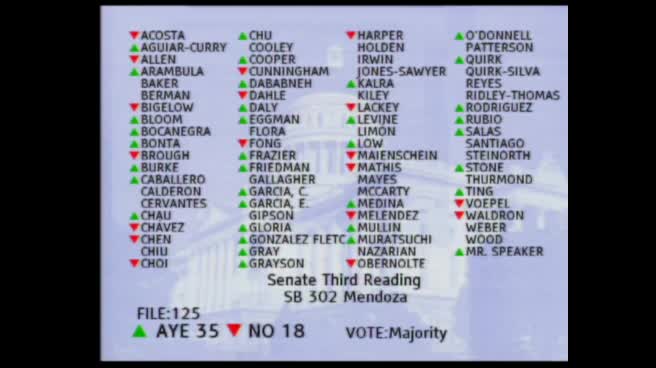 7MIN
Assembly Floor
 45SEC
Assembly Floor
 2MIN
Assembly Standing Committee on Appropriations
 6MIN
Assembly Standing Committee on Public Safety
 7MIN
Senate Floor
 48MIN
Senate Standing Committee on Appropriations
Bill Author