SB 318: California State University: personal services contracts.
- Session Year: 2017-2018
- House: Senate
- Latest Version Date: 2017-09-18
Existing law, the State Civil Service Act, establishes standards for the use of personal services contracts by state agencies. The act provides that personal services contracting is permissible to achieve cost savings when certain conditions are met, including, but not limited to, that the contracting agency demonstrates that the proposed contract will result in actual overall cost savings to the state and that the contract will not cause the displacement of civil service employees. The act also authorizes state agencies to enter into personal services contracts for functions exempted from civil service. The California Constitution excludes the officers and employees of the California State University from the state civil service.
Existing law authorizes the Trustees of the California State University to enter into agreements with any public or private agency, person, or institution for the furnishing of services, facilities, goods, supplies, or equipment, among others, and requires the trustees to prescribe policies and procedures for the acquisition of those services, facilities, materials, goods, supplies, or equipment.
This bill would establish standards for the use of personal services contracts by the trustees similar to those in the State Civil Service Act for services that are currently or customarily performed by employees of the university.
(a)The purpose of this section is to establish standards for the use of personal services contracts.
(b)If the trustees enter into a new contract, or renew or extend an existing contract, for services that are currently or customarily performed by the universitys employees, all of the following requirements shall apply:
(1)The trustees shall clearly demonstrate that the proposed contract will result in actual overall cost savings to the California State University, consistent with all of the following:
(A)In comparing costs, the trustees shall include the universitys additional cost of providing the same service as proposed by a contractor. These additional costs shall include the salaries and benefits of additional staff that would be needed and the cost of additional space, equipment, and materials needed to perform the function.
(B)In comparing costs, the trustees shall not include the universitys indirect overhead costs unless these costs can be attributed solely to the function in question and would not exist if that function was not performed by university employees. Indirect overhead costs means the pro rata share of existing administrative salaries and benefits, rent, equipment costs, utilities, and materials.
(C)In comparing costs, the trustees shall include in the cost of a contractor providing a service any continuing university costs that would be directly associated with the contracted function. These continuing costs shall include, but not be limited to, those for inspection, supervision, and monitoring.
(2)Proposals to contract out work shall not be approved solely on the basis that savings will result from lower contractor pay rates or benefits. Proposals to contract out work shall be eligible for approval if the contractors wages are at the industrys level and do not significantly undercut university pay rates.
(3)The contract does not cause the displacement of university employees. The term displacement includes layoff, demotion, involuntary transfer to a new class, involuntary transfer to a new location requiring a change of residence, and time base reductions. Displacement does not include changes in shifts or days off, nor does it include reassignment to other positions within the same class and general location.
(4)The contract does not adversely affect the universitys nondiscrimination standards.
(5)The savings shall be large enough to ensure that they will not be eliminated by private sector and university cost fluctuations that could normally be expected during the contracting period.
(6)The amount of savings clearly justify the size and duration of the contracting agreement.
(7)The contract is awarded through a publicized, competitive bidding process.
(8)The contract includes specific provisions pertaining to the qualifications of the staff that will perform the work under the contract, as well as assurance that the contractors hiring practices meet applicable nondiscrimination standards.
(9)The potential for future economic risk to the university from potential contractor rate increases is minimal.
(10)The contract is with a firm. A firm means a corporation, partnership, nonprofit organization, or sole proprietorship.
(11)The potential economic advantage of contracting is not outweighed by the publics interest in having a particular function performed directly by the university.
(c)The trustees may also enter into personal services contracts when any of the following conditions can be met:
(1)The contract is for a new university function and the Legislature has specifically mandated or authorized the performance of the work by independent contractors.
(2)The services contracted are not available within the university, cannot be performed satisfactorily by university employees, or are of a highly specialized or technical nature that the necessary expert knowledge, experience, and ability are not available from the universitys employees.
(3)The services are incidental to a contract for the purchase or lease of real or personal property. Contracts under this criterion, known as service agreements, shall include, but not be limited to, agreements to service or maintain office equipment or computers that are leased or rented.
(4)The legislative, administrative, or legal goals and purposes cannot be accomplished through the utilization of university employees because of the need to protect against a conflict of interest or to ensure independent and unbiased findings in cases where there is a clear need for a different, outside perspective. These contracts shall include, but not be limited to, obtaining expert witnesses in litigation.
(5)Due to an emergency, a contract is necessary for the immediate preservation of the public health, welfare, or safety.
(6)The contractor will provide equipment, materials, facilities, or support services that could not feasibly be provided by the university in the location where the services are to be performed.
(7)The contractor will conduct training courses for which appropriately qualified university instructors are not available. Permanent instructor positions in academies or similar settings shall be filled through the process for hiring university employees.
(8)The services are of an urgent, temporary, or occasional nature that the delay incumbent in their implementation through the process for hiring university employees would frustrate their very purpose.
(9)The contract is for construction, alteration, demolition, installation, repair, or maintenance work that is subject to Chapter 1 (commencing with Section 1720) of Part 7 of Division 2 of the Labor Code.
(a)The purpose of this section is to establish standards for the use of personal services contracts.
(b)If the trustees enter into a new contract, or renew or extend an existing contract, for services that are currently or customarily performed by the universitys employees, all of the following requirements shall apply:
(1)The trustees shall clearly demonstrate that the proposed contract will result in actual overall cost savings to the California State University, consistent with all of the following:
(A)In comparing costs, the trustees shall include the universitys additional cost of providing the same service as proposed by a contractor. These additional costs shall include the salaries and benefits of additional staff that would be needed and the cost of additional space, equipment, and materials needed to perform the function.
(B)In comparing costs, the trustees shall not include the universitys indirect overhead costs unless these costs can be attributed solely to the function in question and would not exist if that function was not performed by university employees. Indirect overhead costs means the pro rata share of existing administrative salaries and benefits, rent, equipment costs, utilities, and materials.
(C)In comparing costs, the trustees shall include in the cost of a contractor providing a service any continuing university costs that would be directly associated with the contracted function. These continuing costs shall include, but not be limited to, those for inspection, supervision, and monitoring.
(2)Proposals to contract out work shall not be approved solely on the basis that savings will result from lower contractor pay rates or benefits. Proposals to contract out work shall be eligible for approval if the contractors wages are at the industrys level and do not significantly undercut university pay rates.
(3)The contract does not cause the displacement of university employees. The term displacement includes layoff, demotion, involuntary transfer to a new class, involuntary transfer to a new location requiring a change of residence, and time base reductions. Displacement does not include changes in shifts or days off, nor does it include reassignment to other positions within the same class and general location.
(4)The contract does not adversely affect the universitys nondiscrimination standards.
(5)The savings shall be large enough to ensure that they will not be eliminated by private sector and university cost fluctuations that could normally be expected during the contracting period.
(6)The amount of savings clearly justify the size and duration of the contracting agreement.
(7)The contract is awarded through a publicized, competitive bidding process.
(8)The contract includes specific provisions pertaining to the qualifications of the staff that will perform the work under the contract, as well as assurance that the contractors hiring practices meet applicable nondiscrimination standards.
(9)The potential for future economic risk to the university from potential contractor rate increases is minimal.
(10)The contract is with a firm. A firm means a corporation, partnership, nonprofit organization, or sole proprietorship.
(11)The potential economic advantage of contracting is not outweighed by the publics interest in having a particular function performed directly by the university.
(c)The trustees may also enter into personal services contracts when any of the following conditions can be met:
(1)The contract is for a new university function and the Legislature has specifically mandated or authorized the performance of the work by independent contractors.
(2)The services contracted are not available within the university, cannot be performed satisfactorily by university employees, or are of a highly specialized or technical nature that the necessary expert knowledge, experience, and ability are not available from the universitys employees.
(3)The services are incidental to a contract for the purchase or lease of real or personal property. Contracts under this criterion, known as service agreements, shall include, but not be limited to, agreements to service or maintain office equipment or computers that are leased or rented.
(4)The legislative, administrative, or legal goals and purposes cannot be accomplished through the utilization of university employees because of the need to protect against a conflict of interest or to ensure independent and unbiased findings in cases where there is a clear need for a different, outside perspective. These contracts shall include, but not be limited to, obtaining expert witnesses in litigation.
(5)Due to an emergency, a contract is necessary for the immediate preservation of the public health, welfare, or safety.
(6)The contractor will provide equipment, materials, facilities, or support services that could not feasibly be provided by the university in the location where the services are to be performed.
(7)The contractor will conduct training courses for which appropriately qualified university instructors are not available. Permanent instructor positions in academies or similar settings shall be filled through the process for hiring university employees.
(8)The services are of an urgent, temporary, or occasional nature that the delay incumbent in their implementation through the process for hiring university employees would frustrate their very purpose.
(a)The purpose of this section is to establish standards for the use of personal services contracts.
(b)If the trustees enter into a new contract, or renew or extend an existing contract, for services that are currently or customarily performed by the universitys employees, all of the following requirements shall apply:
(1)The trustees clearly demonstrate that the proposed contract will result in actual overall cost savings to the California State University, consistent with the following:
(A)In comparing costs, the trustees shall include the universitys additional cost of providing the same service as proposed by a contractor. These additional costs shall include the salaries and benefits of additional staff that would be needed and the cost of additional space, equipment, and materials needed to perform the function.
(B)In comparing costs, the trustees shall not include the universitys indirect overhead costs unless these costs can be attributed solely to the function in question and would not exist if that function was not performed by university employees. Indirect overhead costs means the pro rata share of existing administrative salaries and benefits, rent, equipment costs, utilities, and materials.
(C)In comparing costs, the trustees shall include in the cost of a contractor providing a service any continuing university costs that would be directly associated with the contracted function. These continuing costs shall include, but not be limited to, those for inspection, supervision, and monitoring.
(2)Proposals to contract out work shall not be approved solely on the basis that savings will result from lower contractor pay rates or benefits. Proposals to contract out work shall be eligible for approval if the contractors wages are at the industrys level and do not significantly undercut university pay rates.
(3)The contract does not cause the displacement of university employees. The term displacement includes layoff, demotion, involuntary transfer to a new class, involuntary transfer to a new location requiring a change of residence, and time base reductions. Displacement does not include changes in shifts or days off, nor does it include reassignment to other positions within the same class and general location.
(4)The contract does not adversely affect the universitys nondiscrimination standards.
(5)The savings shall be large enough to ensure that they will not be eliminated by private sector and university cost fluctuations that could normally be expected during the contracting period.
(6)The amount of savings clearly justify the size and duration of the contracting agreement.
(7)The contract is awarded through a publicized, competitive bidding process.
(8)The contract includes specific provisions pertaining to the qualifications of the staff that will perform the work under the contract, as well as assurance that the contractors hiring practices meet applicable nondiscrimination standards.
(9)The potential for future economic risk to the university from potential contractor rate increases is minimal.
(10)The contract is with a firm. A firm means a corporation, partnership, nonprofit organization, or sole proprietorship.
(11)The potential economic advantage of contracting is not outweighed by the publics interest in having a particular function performed directly by the university.
(c)The trustees may also enter into personal services contracts when any of the following conditions can be met:
(1)The contract is for a new university function and the Legislature has specifically mandated or authorized the performance of the work by independent contractors.
(2)The services contracted are not available within the university, cannot be performed satisfactorily by university employees, or are of a highly specialized or technical nature that the necessary expert knowledge, experience, and ability are not available from the universitys employees.
(3)The services are incidental to a contract for the purchase or lease of real or personal property. Contracts under this criterion, known as service agreements, shall include, but not be limited to, agreements to service or maintain office equipment or computers that are leased or rented.
(4)The legislative, administrative, or legal goals and purposes cannot be accomplished through the utilization of university employees because of the need to protect against a conflict of interest or to ensure independent and unbiased findings in cases where there is a clear need for a different, outside perspective. These contracts shall include, but not be limited to, obtaining expert witnesses in litigation.
(5)Due to an emergency, a contract is necessary for the immediate preservation of the public health, welfare, or safety.
(6)The contractor will provide equipment, materials, facilities, or support services that could not feasibly be provided by the university in the location where the services are to be performed.
(7)The contractor will conduct training courses for which appropriately qualified university instructors are not available. Permanent instructor positions in academies or similar settings shall be filled through the process for hiring university employees.
(8)The services are of an urgent, temporary, or occasional nature that the delay incumbent in their implementation through the process for hiring university employees would frustrate their very purpose.
|
Date
|
Status
|
|---|---|
| Mar 3, 2018 | Last day to consider Governor’s veto pursuant to Joint Rule 58.5. |
| Oct 12, 2017 | In Senate. Consideration of Governor's veto pending. |
| Oct 12, 2017 | Vetoed by the Governor. |
| Sep 20, 2017 | Enrolled and presented to the Governor at 4 p.m. |
| Sep 14, 2017 | Assembly amendments concurred in. (Ayes 26. Noes 11.) Ordered to engrossing and enrolling. |
| Sep 14, 2017 | In Senate. Concurrence in Assembly amendments pending. |
| Sep 13, 2017 | Read third time. Passed. Ordered to the Senate. |
| Sep 6, 2017 | Read second time. Ordered to third reading. |
| Sep 5, 2017 | Read second time and amended. Ordered to second reading. |
| Sep 1, 2017 | From committee: Do pass as amended. (Ayes 11. Noes 5.) (September 1). |
| Jul 19, 2017 | July 19 set for first hearing. Placed on APPR. suspense file. |
| Jul 12, 2017 | From committee: Do pass and re-refer to Com. on APPR. (Ayes 8. Noes 4.) (July 11). Re-referred to Com. on APPR. |
| Jun 15, 2017 | Referred to Com. on HIGHER ED. |
| Jun 1, 2017 | In Assembly. Read first time. Held at Desk. |
| Jun 1, 2017 | Read third time. Passed. (Ayes 25. Noes 12. Page 1391.) Ordered to the Assembly. |
| May 26, 2017 | Read second time and amended. Ordered to third reading. |
| May 25, 2017 | From committee: Do pass as amended. (Ayes 5. Noes 2. Page 1182.) (May 25). |
| May 19, 2017 | Set for hearing May 25. |
| Apr 24, 2017 | April 24 hearing: Placed on APPR. suspense file. |
| Apr 13, 2017 | Set for hearing April 24. |
| Apr 5, 2017 | From committee: Do pass and re-refer to Com. on APPR. (Ayes 4. Noes 2. Page 620.) (April 5). Re-referred to Com. on APPR. |
| Mar 21, 2017 | Set for hearing April 5. |
| Feb 23, 2017 | Referred to Com. on ED. |
| Feb 14, 2017 | From printer. May be acted upon on or after March 16. |
| Feb 13, 2017 | Introduced. Read first time. To Com. on RLS. for assignment. To print. |
|
Date
|
Description
|
Location
|
Votes
|
|
|---|---|---|---|---|
| Sep 14, 2017 | Unfinished Business SB318 Portantino et al. Concurrence | Senate Floor |
Passed |
|
| Sep 13, 2017 | SB 318 Portantino Senate Third Reading By BOCANEGRA | Assembly Floor |
Passed |
|
| Sep 1, 2017 | Do pass as amended. | Assembly Standing Committee on Appropriations |
Passed |
|
| Jul 11, 2017 | Do pass and be re-referred to the Committee on [Appropriations] | Assembly Standing Committee on Higher Education |
Passed |
|
| Jun 1, 2017 | Senate 3rd Reading SB318 Portantino et al. | Senate Floor |
Passed |
|
| May 25, 2017 | Do pass as amended | Senate Standing Committee on Appropriations |
Passed |
|
| Apr 24, 2017 | Placed on suspense file | Senate Standing Committee on Appropriations |
Passed |
|
| Apr 5, 2017 | Do pass, but first be re-referred to the Committee on [Appropriations] | Senate Standing Committee on Education |
Passed |
This list shows positions taken on this bill by organizations on the date displayed, which is linked to the original source.
Positions by individuals are not included.
|
Organization
|
Position
|
Date
|
|---|---|---|
| American Federation of State, County and Municipal Employees | ** Support | Jan 2, 2018 |
| California Faculty Associaiton | * Support | Jul 11, 2017 |
| California State University | ** Against | Jan 2, 2018 |
| California State University Employees Union | ** Support | Jan 2, 2018 |
| CSU Employees Union Legislative Committee | * Support | Apr 5, 2017 |
| Service Employees International Union | ** Support | Jan 2, 2018 |
| University Professional and Technical Employees | ** Support | Jan 2, 2018 |
Office of Senate Floor Analyses (916) 651-1520 Fax: (916) 327-4478 | SB |
VETO
Bill No: SB 318
:
SENATE EDUCATION COMMITTEE: 4-2, 4/5/17
AYES: Galgiani, Leyva, Mendoza, Pan
NOES: Wilk, Vidak
NO VOTE RECORDED: Allen
SENATE APPROPRIATIONS COMMITTEE: 5-2, 5/25/17
AYES: Lara, Beall, Bradford, Hill, Wiener
NOES: Bates, Nielsen
SENATE FLOOR: 25-12, 6/1/17
AYES: Atkins, Beall, Bradford, De León, Dodd, Galgiani, Hernandez, Hertzberg, Hill, Hueso, Jackson, Lara, Leyva, McGuire, Mendoza, Mitchell, Monning, Newman, Pan, Portantino, Roth, Skinner, Stern, Wieckowski, Wiener
NOES: Anderson, Bates, Fuller, Gaines, Glazer, Moorlach, Morrell, Nguyen, Nielsen, Stone, Vidak, Wilk
NO VOTE RECORDED: Allen, Berryhill, Cannella
SENATE FLOOR: 26-11, 9/14/17
AYES: Allen, Atkins, Beall, Bradford, De León, Dodd, Galgiani, Hernandez, Hertzberg, Hill, Hueso, Jackson, Lara, Leyva, McGuire, Mendoza, Mitchell, Monning, Newman, Pan, Portantino, Roth, Skinner, Stern, Wieckowski, Wiener
NOES: Anderson, Bates, Fuller, Gaines, Glazer, Moorlach, Morrell, Nielsen, Stone, Vidak, Wilk
NO VOTE RECORDED: Berryhill, Cannella, Nguyen
ASSEMBLY FLOOR: 48-24, 9/13/17 - See last page for vote
SOURCE: California State University Employees Union
Service Employees International Union
DIGEST:
This bill establishes standards for the use of personal services contracts by the California State University (CSU).
Existing law:
- Authorizes the CSU Trustees to enter into agreements with any public or private agency, officer, person, or institution, corporation, association, or foundation for the performance of acts or the furnishing of services, facilities, materials, goods, supplies, or equipment by or for the Trustees or for the joint performance of an act or function or the joint furnishing of services and facilities by the Trustees and the other party to the agreement. Specifies that the Trustees shall prescribe policies and procedures for the acquisition of services, facilities, materials, goods, supplies, or equipment; and, said policies shall include competitive bids or proposals, as specified.
- Provides standards for the use of personal service contracts by state agencies with specific criteria for contracting outside state service. The criteria includes demonstration of cost savings, definition of costs, and requirements that work is not contracted out solely on the basis of lower pay rates or benefits, and justification of savings based on the size and duration of the contract.
- Establishes the State Civil Service Act and establishes the State Personnel Board, a five-member body appointed by the Governor and approved by the Senate, to enforce and administer civil service statutes. The California Constitution establishes several exemptions from the civil service, including officers and employees of the University of California and the CSU.
This bill:
- Specifies that the purpose of this bill is to establish standards for the use of personal services contracts.
- Provides that if the CSU Trustees enter into a new contract, or renew or extend an existing contract, for services that are currently or customarily performed by the CSU’s employees, the following requirements shall apply:
- The Trustees clearly demonstrate that the proposed contract will result in actual overall savings to the state, consistent with specific elements in comparing costs, including:
- The University’s additional cost of providing the same service as proposed by a contractor, as specified.
- Exclusion of the University’s indirect overhead costs unless these costs can be attributed solely to the function in question and would not exist if that function was not performed by University employees.
- Proposals to contract out shall not be approved solely on the basis that savings will result from lower contractor pay rates or benefits. Provides that proposals to contract out work shall be eligible for approval if the contractor’s wages are at the industry’s level and do not significantly undercut University pay rates.
- The contract does not cause the displacement of University employees, as specified.
- The contract does not adversely affect the University’s nondiscrimination standards.
- The savings shall be large enough to ensure that they will not be eliminated by private sector and university cost fluctuations that could normally be expected during the contracting period.
- The amount of savings clearly justify the size and duration of the contracting agreement.
- The contract is awarded through a publicized, competitive bidding process.
- The contract includes specific provisions pertaining to the qualifications of the staff that will perform the work under the contract, as well as assurance that the contractor’s hiring practices meet applicable nondiscrimination standards.
- The potential for future economic risk to the University from potential contractor rate increases is minimal.
- The contract is with a firm, defined as a corporation, partnership, nonprofit organization, or sole proprietorship.
- The potential economic advantage of contracting is not outweighed by the public’s interest in having a particular function performed directly by the University.
- The Trustees clearly demonstrate that the proposed contract will result in actual overall savings to the state, consistent with specific elements in comparing costs, including:
- Permits personal services contracts when any of the following conditions can be met:
- The contract is for a new university function and the Legislature has specifically mandated or authorized the performance of the work by independent contractors.
- The services contracted are not available within the University, cannot be performed satisfactorily by University employees, or are of a highly specialized or technical nature that the necessary expert knowledge, experience, and ability are not available from the University’s employees.
- The services are incidental to a contract for the purchase or lease of real or personal property, as specified.
- The legislative, administrative, or legal goals and purposes cannot be accomplished through the utilization of University employees because of the need to protect against a conflict of interest or to ensure independent and unbiased findings in cases where there is a clear need for a different, outside perspective, including obtaining expert witnesses in litigation.
- Due to an emergency, a contract is necessary for the immediate preservation of the public health, welfare, or safety.
- The contractor will provide equipment, materials, facilities, or support services that could not feasibly be provided by the University in the location where the services are to be performed.
- The contractor will conduct training courses for which appropriately qualified university instructors are not available.
- The services are of an urgent, temporary, or occasional nature, as specified.
- The contract is for construction, alteration, demolition, installation, repair, or maintenance work that is subject to the Labor Code.
Comments
- Personal services contracts. A personal services contract is any contract, requisition, purchase order, etc. (except public works contracts) under which labor or personal services is a significant, separately identifiable element. The business or person performing these contractual services must be an independent contractor that does not have status as an employee of the state. A cost-savings based personal services contract is a personal services contract proposed to achieve cost savings and subject to the provisions of existing law.
- Current CSU practice. According to the CSU, in 2012-13 it had over 7,000 personal services contracts valued at a cost of over $500 million for various services within the University. These contracts are for services that include animal boarding, agricultural chemicals, archaeologists, portable toilet suppliers, demolition contractors, stonemasons, furniture suppliers, fire protection providers, pest and vermin control, hazardous waste disposal providers, and more. The CSU contends that, per the requirements of Higher Education Employer-Employee Relations Act (HEERA), the University meets and confers with unions to negotiate the various provisions in the collective bargaining agreements. Under HEERA, terms and conditions of employment, such as wages, hours and working conditions are considered to be within the mandatory scope of bargaining or scope of representation. HEERA was passed to promote “harmonious and cooperative labor relations between the public institutions of higher education and their employees.”
- Collective bargaining. Provisions regarding contracting out are an element of both the California State University Employees Union - CSUEU (Article 3) and State Employees Trades Council - SETC (Article 4) collective bargaining agreements. The CSUEU agreement authorizes contracting out provided that it does not displace bargaining unit employees, and defines displacement to include layoff, demotion, involuntary transfer to a new classification, or to a new satellite campus location, or a location requiring a change of residence, and involuntary time base reductions. The CSU is required to notify the Union when contracting out is to be on a long-term basis and the Union is authorized to request to meet and discuss the impacts of long-term contracting out work. Prior to meeting, the CSU is required to provide the CSUEU all existing relevant information, including request for proposals, copies of bids received, and any cost analysis used to evaluate the need for contracting out.
The SETC agreement, prior to contracting out, requires a campus to consider the availability of SETC employees to perform the work, whether they have the special skills and licensure necessary, whether the work can be completed within time constraints applicable to the project, the availability of required materials and/or equipment, and the cost involved in performing the work in-house versus contracting out. Notification of the Chief Campus Steward is required prior to the start of any such contracted work.
Further, the CSU notes that it “is in the midst of negotiations with the CSU Employees Union, and the union has requested that this issue be an element of current negotiations (Article 3: Management Rights), seriously undermining the current collective bargaining process.”
- Civil Service exemption. This bill is modeled on State Civil Service Act language used to govern personal services contracting within the state. Provisions of the California Constitution specifically exclude officers and employees of the CSU from State Civil Service, and the Legislature has granted the CSU other exemptions from civil service provisions, including:
- Exclusion from Public Contract Code provisions regarding the acquisition of goods and services.
- Authority to promulgate regulations without having to utilize the procedures outlined in the Administrative Procedures Act, thereby exempting CSU from Office of Administrative Law review.
FISCAL EFFECT: Appropriation: Fiscal Com.: Local:
According to the Assembly Appropriations Committee, CSU indicates that this bill will result in increased costs of up to $6.9 million in total General Fund costs. Approximately 6,292 contracts will be affected. CSU will have one-time costs of around $100,000 to establish the new process, including establishing new policy followed by training of procurement personnel throughout the system.
California State University Employees Union (co-source)
Service Employees International Union (co-source)
American Federation of State, County and Municipal Employees
University Professional and Technical Employees
OPPOSITION: (Verified 10/17/17)
California State University
ARGUMENTS IN SUPPORT: According to the author’s office, “existing statute does not require the CSU to abide by the same standards of accountability that apply to state agencies when it enters into personal service contracts. In turn, on several occasions, the CSU has contracted out for services without either clearly expressing justification or proving fiscal savings, or has entered into contracts with financially unstable contractors that discontinue business, all of which prove losses to the taxpayer.” Further, the author contends that “Notable instances of wasteful spending and shortsighted contracts prompted the need for this legislation.” The intent of this bill is to provide CSU employees the same contracting out protections that apply to state workers.
ARGUMENTS IN OPPOSITION: The CSU has indicated previously that provisions identical to those included in this bill places it into its own version of state civil service contracting-out laws and restricts the Trustees’ authority to manage the system. “Current law already allows for a contracting-out process at the CSU and protections for our employees through our labor contracts. These changes would subject the system to contrary statutes, reduce our ability to leverage limited resources in cost-effective ways, and result in increased administrative costs without any benefit to students.”
GOVERNOR'S VETO MESSAGE:
I am returning Senate Bill 318 without my signature.
While I agree it is important for the California State University (CSU) to make prudent contracting decisions, CSU's union contracts already address the issue of outsourcing in the collective bargaining process.
As such, I don't see the need at this point to further rigidify this process.
I would, however, urge both the Trustees and the Chancellor's office to make every effort to ensure that CSU's contracts are well-justified, well-executed and perform as anticipated.
ASSEMBLY FLOOR: 48-24, 9/13/17
AYES: Aguiar-Curry, Arambula, Berman, Bocanegra, Bonta, Burke, Caballero, Calderon, Cervantes, Chau, Chiu, Chu, Cooper, Dababneh, Eggman, Frazier, Friedman, Cristina Garcia, Eduardo Garcia, Gipson, Gloria, Gonzalez Fletcher, Gray, Holden, Irwin, Jones-Sawyer, Kalra, Limón, Low, McCarty, Medina, Mullin, Muratsuchi, O'Donnell, Quirk, Quirk-Silva, Reyes, Rodriguez, Rubio, Salas, Santiago, Mark Stone, Thurmond, Ting, Voepel, Weber, Wood, Rendon
NOES: Acosta, Travis Allen, Baker, Bigelow, Brough, Chávez, Chen, Choi, Cunningham, Dahle, Fong, Gallagher, Harper, Kiley, Lackey, Levine, Maienschein, Mathis, Mayes, Melendez, Obernolte, Patterson, Steinorth, Waldron
NO VOTE RECORDED: Bloom, Cooley, Daly, Flora, Grayson, Nazarian, Ridley-Thomas
1/2/18 10:09:50
**** END ****
Office of Senate Floor Analyses (916) 651-1520 Fax: (916) 327-4478 | SB |
UNFINISHED BUSINESS
Bill No: SB 318
:
SENATE EDUCATION COMMITTEE: 4-2, 4/5/17
AYES: Galgiani, Leyva, Mendoza, Pan
NOES: Wilk, Vidak
NO VOTE RECORDED: Allen
SENATE APPROPRIATIONS COMMITTEE: 5-2, 5/25/17
AYES: Lara, Beall, Bradford, Hill, Wiener
NOES: Bates, Nielsen
SENATE FLOOR: 25-12, 6/1/17
AYES: Atkins, Beall, Bradford, De León, Dodd, Galgiani, Hernandez, Hertzberg, Hill, Hueso, Jackson, Lara, Leyva, McGuire, Mendoza, Mitchell, Monning, Newman, Pan, Portantino, Roth, Skinner, Stern, Wieckowski, Wiener
NOES: Anderson, Bates, Fuller, Gaines, Glazer, Moorlach, Morrell, Nguyen, Nielsen, Stone, Vidak, Wilk
NO VOTE RECORDED: Allen, Berryhill, Cannella
ASSEMBLY FLOOR: 48-24, 9/13/17 - See last page for vote
SOURCE: California State University Employees Union
Service Employees International Union
DIGEST:
This bill establishes standards for the use of personal services contracts by the California State University (CSU).
Assembly Amendments
specify that the Trustees of the CSU may enter into personal services contracts when the contract is for construction, alteration, demolition, installation, repair, or maintenance work that is subject to the Labor Code.
Existing law:
- Authorizes the CSU Trustees to enter into agreements with any public or private agency, officer, person, or institution, corporation, association, or foundation for the performance of acts or the furnishing of services, facilities, materials, goods, supplies, or equipment by or for the Trustees or for the joint performance of an act or function or the joint furnishing of services and facilities by the Trustees and the other party to the agreement. Specifies that the Trustees shall prescribe policies and procedures for the acquisition of services, facilities, materials, goods, supplies, or equipment; and, said policies shall include competitive bids or proposals, as specified.
- Provides standards for the use of personal service contracts by state agencies with specific criteria for contracting outside state service. The criteria includes demonstration of cost savings, definition of costs, and requirements that work is not contracted out solely on the basis of lower pay rates or benefits, and justification of savings based on the size and duration of the contract.
- Establishes the State Civil Service Act and establishes the State Personnel Board, a five-member body appointed by the Governor and approved by the Senate, to enforce and administer civil service statutes. The California Constitution establishes several exemptions from the civil service, including officers and employees of the University of California and the CSU.
This bill:
- Specifies that the purpose of this bill is to establish standards for the use of personal services contracts.
- Provides that if the CSU Trustees enter into a new contract, or renew or extend an existing contract, for services that are currently or customarily performed by the CSU’s employees, the following requirements shall apply:
- The Trustees clearly demonstrate that the proposed contract will result in actual overall savings to the state, consistent with specific elements in comparing costs, including:
- The University’s additional cost of providing the same service as proposed by a contractor, as specified.
- Exclusion of the University’s indirect overhead costs unless these costs can be attributed solely to the function in question and would not exist if that function was not performed by University employees.
- Proposals to contract out shall not be approved solely on the basis that savings will result from lower contractor pay rates or benefits. Provides that proposals to contract out work shall be eligible for approval if the contractor’s wages are at the industry’s level and do not significantly undercut University pay rates.
- The contract does not cause the displacement of University employees, as specified.
- The contract does not adversely affect the University’s nondiscrimination standards.
- The savings shall be large enough to ensure that they will not be eliminated by private sector and university cost fluctuations that could normally be expected during the contracting period.
- The amount of savings clearly justify the size and duration of the contracting agreement.
- The contract is awarded through a publicized, competitive bidding process.
- The contract includes specific provisions pertaining to the qualifications of the staff that will perform the work under the contract, as well as assurance that the contractor’s hiring practices meet applicable nondiscrimination standards.
- The potential for future economic risk to the University from potential contractor rate increases is minimal.
- The contract is with a firm, defined as a corporation, partnership, nonprofit organization, or sole proprietorship.
- The potential economic advantage of contracting is not outweighed by the public’s interest in having a particular function performed directly by the University.
- The Trustees clearly demonstrate that the proposed contract will result in actual overall savings to the state, consistent with specific elements in comparing costs, including:
- Permits personal services contracts when any of the following conditions can be met:
- The contract is for a new university function and the Legislature has specifically mandated or authorized the performance of the work by independent contractors.
- The services contracted are not available within the University, cannot be performed satisfactorily by University employees, or are of a highly specialized or technical nature that the necessary expert knowledge, experience, and ability are not available from the University’s employees.
- The services are incidental to a contract for the purchase or lease of real or personal property, as specified.
- The legislative, administrative, or legal goals and purposes cannot be accomplished through the utilization of University employees because of the need to protect against a conflict of interest or to ensure independent and unbiased findings in cases where there is a clear need for a different, outside perspective, including obtaining expert witnesses in litigation.
- Due to an emergency, a contract is necessary for the immediate preservation of the public health, welfare, or safety.
- The contractor will provide equipment, materials, facilities, or support services that could not feasibly be provided by the University in the location where the services are to be performed.
- The contractor will conduct training courses for which appropriately qualified university instructors are not available.
- The services are of an urgent, temporary, or occasional nature, as specified.
- The contract is for construction, alteration, demolition, installation, repair, or maintenance work that is subject to the Labor Code.
Comments
- Personal services contracts. A personal services contract is any contract, requisition, purchase order, etc. (except public works contracts) under which labor or personal services is a significant, separately identifiable element. The business or person performing these contractual services must be an independent contractor that does not have status as an employee of the state. A cost-savings based personal services contract is a personal services contract proposed to achieve cost savings and subject to the provisions of existing law.
- Current CSU practice. According to the CSU, in 2012-13 it had over 7,000 personal services contracts valued at a cost of over $500 million for various services within the University. These contracts are for services that include animal boarding, agricultural chemicals, archaeologists, portable toilet suppliers, demolition contractors, stonemasons, furniture suppliers, fire protection providers, pest and vermin control, hazardous waste disposal providers, and more. The CSU contends that, per the requirements of Higher Education Employer-Employee Relations Act (HEERA), the University meets and confers with unions to negotiate the various provisions in the collective bargaining agreements. Under HEERA, terms and conditions of employment, such as wages, hours and working conditions are considered to be within the mandatory scope of bargaining or scope of representation. HEERA was passed to promote “harmonious and cooperative labor relations between the public institutions of higher education and their employees.”
- Collective bargaining. Provisions regarding contracting out are an element of both the California State University Employees Union - CSUEU (Article 3) and State Employees Trades Council - SETC (Article 4) collective bargaining agreements. The CSUEU agreement authorizes contracting out provided that it does not displace bargaining unit employees, and defines displacement to include layoff, demotion, involuntary transfer to a new classification, or to a new satellite campus location, or a location requiring a change of residence, and involuntary time base reductions. The CSU is required to notify the Union when contracting out is to be on a long-term basis and the Union is authorized to request to meet and discuss the impacts of long-term contracting out work. Prior to meeting, the CSU is required to provide the CSUEU all existing relevant information, including request for proposals, copies of bids received, and any cost analysis used to evaluate the need for contracting out.
The SETC agreement, prior to contracting out, requires a campus to consider the availability of SETC employees to perform the work, whether they have the special skills and licensure necessary, whether the work can be completed within time constraints applicable to the project, the availability of required materials and/or equipment, and the cost involved in performing the work in-house versus contracting out. Notification of the Chief Campus Steward is required prior to the start of any such contracted work.
Further, the CSU notes that it “is in the midst of negotiations with the CSU Employees Union, and the union has requested that this issue be an element of current negotiations (Article 3: Management Rights), seriously undermining the current collective bargaining process.”
- Civil Service exemption. This bill is modeled on State Civil Service Act language used to govern personal services contracting within the state. Provisions of the California Constitution specifically exclude officers and employees of the CSU from State Civil Service, and the Legislature has granted the CSU other exemptions from civil service provisions, including:
- Exclusion from Public Contract Code provisions regarding the acquisition of goods and services.
- Authority to promulgate regulations without having to utilize the procedures outlined in the Administrative Procedures Act, thereby exempting CSU from Office of Administrative Law review.
FISCAL EFFECT: Appropriation: Fiscal Com.: Local:
According to the Assembly Appropriations Committee, CSU indicates that this bill will result in increased costs of up to $6.9 million in total General Fund costs. Approximately 6,292 contracts will be affected. CSU will have one-time costs of around $100,000 to establish the new process, including establishing new policy followed by training of procurement personnel throughout the system.
California State University Employees Union (co-source)
Service Employees International Union (co-source)
American Federation of State, County and Municipal Employees
University Professional and Technical Employees
OPPOSITION: (Verified 9/13/17)
California State University
ARGUMENTS IN SUPPORT: According to the author’s office, “existing statute does not require the CSU to abide by the same standards of accountability that apply to state agencies when it enters into personal service contracts. In turn, on several occasions, the CSU has contracted out for services without either clearly expressing justification or proving fiscal savings, or has entered into contracts with financially unstable contractors that discontinue business, all of which prove losses to the taxpayer.” Further, the author contends that “Notable instances of wasteful spending and shortsighted contracts prompted the need for this legislation.” The intent of this bill is to provide CSU employees the same contracting out protections that apply to state workers.
ARGUMENTS IN OPPOSITION: The CSU has indicated previously that provisions identical to those included in this bill places it into its own version of state civil service contracting-out laws and restricts the Trustees’ authority to manage the system. “Current law already allows for a contracting-out process at the CSU and protections for our employees through our labor contracts. These changes would subject the system to contrary statutes, reduce our ability to leverage limited resources in cost-effective ways, and result in increased administrative costs without any benefit to students.”
ASSEMBLY FLOOR: 48-24, 9/13/17
AYES: Aguiar-Curry, Arambula, Berman, Bocanegra, Bonta, Burke, Caballero, Calderon, Cervantes, Chau, Chiu, Chu, Cooper, Dababneh, Eggman, Frazier, Friedman, Cristina Garcia, Eduardo Garcia, Gipson, Gloria, Gonzalez Fletcher, Gray, Holden, Irwin, Jones-Sawyer, Kalra, Limón, Low, McCarty, Medina, Mullin, Muratsuchi, O'Donnell, Quirk, Quirk-Silva, Reyes, Rodriguez, Rubio, Salas, Santiago, Mark Stone, Thurmond, Ting, Voepel, Weber, Wood, Rendon
NOES: Acosta, Travis Allen, Baker, Bigelow, Brough, Chávez, Chen, Choi, Cunningham, Dahle, Fong, Gallagher, Harper, Kiley, Lackey, Levine, Maienschein, Mathis, Mayes, Melendez, Obernolte, Patterson, Steinorth, Waldron
NO VOTE RECORDED: Bloom, Cooley, Daly, Flora, Grayson, Nazarian, Ridley-Thomas
9/14/17 10:02:49
**** END ****
SENATE THIRD READING
STR Bill Id:
Author:(Portantino)
As Amended Ver:
Majority vote
SENATE VOTE: 25-12
Committee | Votes | Ayes | Noes |
Higher Education | 8-4 | Medina, Arambula, Bloom, Irwin, Low, Quirk-Silva, Santiago, Weber | Baker, Chávez, Choi, Kiley |
Appropriations | 11-5 | Gonzalez Fletcher, Bloom, Bocanegra, Bonta, Calderon, Chau, Eggman, Friedman, Eduardo Garcia, Jones-Sawyer, Reyes | Bigelow, Brough, Fong, Gallagher, Obernolte |
SUMMARY: Establishes standards for the use of personal services contracts by the California State University (CSU) Trustees. Specifically, this bill:
- Specifies that the purpose of this section is to establish standards for the use of personal services contracts.
- Provides that if the CSU Trustees enter into a new contract, or renew or extend an existing contract, for services that are currently or customarily performed by the CSU's employees, the following requirements shall apply:
- The Trustees clearly demonstrate that the proposed contract will result in actual overall savings to the state, consistent with specific elements in comparing costs, including:
- The university's additional cost of providing the same service as proposed by a contractor, as specified; and,
- Exclusion of the university's indirect overhead costs unless these costs can be attributed solely to the function in question and would not exist if that function was not performed by university employees.
- Proposals to contract out shall not be approved solely on the basis that savings will result from lower contractor pay rates or benefits. Provides that proposals to contract out work shall be eligible for approval if the contractor's wages are at the industry's level and does not significantly undercut university pay rates;
- The contract does not cause the displacement of university employees, as specified;
- The contract does not adversely affect the university’s nondiscrimination standards;
- The savings shall be large enough to ensure that they will not be eliminated by private sector and university cost fluctuations that could normally be expected during the contracting period;
- The amount of savings clearly justifies the size and duration of the contracting agreement;
- The contract is awarded through a publicized, competitive bidding process;
- The contract includes specific provisions pertaining to the qualifications of the staff that will perform the work under the contract, as well as assurance that the contractor's hiring practices meet applicable nondiscrimination standards;
- The potential for future economic risk to the university from potential contractor rate increases is minimal;
- The contract is with a firm, defined as a corporation, partnership, nonprofit organization, or sole proprietorship; and,
- The potential economic advantage of contracting is not outweighed by the public's interest in having a particular function performed directly by the university.
- Permits personal services contracts when any of the following conditions can be met:
- The contract is for a new university function and the Legislature has specifically mandated or authorized the performance of the work by independent contractors;
- The services contracted are not available within the university, cannot be performed satisfactorily by university employees, or are of a highly specialized or technical nature that the necessary expert knowledge, experience, and ability are not available from the university's employees;
- The services are incidental to a contract for the purchase or lease of real or personal property, as specified;
- The legislative, administrative, or legal goals and purposes cannot be accomplished through the utilization of university employees because of the need to protect against a conflict of interest or to ensure independent and unbiased findings in cases where there is a clear need for a different, outside perspective, including obtaining expert witnesses in litigation;
- Due to an emergency, a contract is necessary for the immediate preservation of the public health, welfare, or safety;
- The contractor will provide equipment, materials, facilities, or support services that could not feasibly be provided by the university in the location where the services are to be performed;
- The contractor will conduct training courses for which appropriately qualified university instructors are not available;
- The services are of an urgent, temporary, or occasional nature, as specified; and,
- The contract is for construction, alteration, demolition, installation, repair, or maintenance that is subject to Chapter 1 (commencing with Section 1720) of Part 7 of Division 2 of the Labor Code.
EXISTING LAW:
- Authorizes the CSU Trustees to enter into agreements with any public or private agency, officer, person, or institution, corporation, association, or foundation for the performance of acts or the furnishing of services, facilities, materials, goods, supplies, or equipment by or for the Trustees or for the joint performance of an act or function or the joint furnishing of services and facilities by the Trustees and the other party to the agreement. Specifies that the Trustees shall prescribe policies and procedures for the acquisition of services, facilities, materials, goods, supplies, or equipment; and, said policies shall include competitive bids or proposals, as specified. (Education Code Section 89036)
- Provides standards for the use of personal service contracts by state agencies with specific criteria for contracting outside state service. The criteria includes demonstration of cost savings, definition of costs, and requirements that work is not contracted out solely on the basis of lower pay rates or benefits, and justification of savings based on the size and duration of the contract. (Government Code Section 19130)
- Establishes the State Civil Service Act and establishes the State Personnel Board, a five member body appointed by the Governor and approved by the Senate, to enforce and administer civil service statutes. The Constitution establishes several exemptions from the civil service, including officers and employees of the University of California and the California State University. (California Constitution Article 7)
FISCAL EFFECT: According to the Assembly Committee on Appropriations, CSU indicates that this bill will result in increased costs of up to $6.9 million in total General Fund costs. Approximately 6,292 contracts will be affected. CSU will have one-time costs of around $100,000 to establish the new process, including establishing new policy followed by training of procurement personnel throughout the system.
COMMENTS: Need for the measure. According to the author, "…existing statute does not require CSU to abide by the same standards of accountability that apply to state agencies when it enters into personal service contracts. In turn, on several occasions, the CSU has contracted out for services without either clearly expressing justification or proving fiscal savings, or has entered into contracts with financially unstable contractors that discontinue business, all of which prove losses to the taxpayer. This bill seeks to align the CSU's practice of contracting out with those required by other state agencies."
Personal services contract. A personal services contract is any contract, requisition, purchase order, etc. (except public works contracts) under which labor or personal services is a significant, separately identifiable element. The business or person performing these contractual services must be an independent contractor that does not have status as an employee of the State.
A cost-savings based personal services contract is a personal services contract proposed to achieve cost savings and subject to the provisions of existing law.
Current CSU practice. According to the CSU, in 2012-13 it had over 7,000 personal services contracts valued at a cost of over $500 million for various services within the University. These contracts are for services that include animal boarding, agricultural chemicals, archaeologists, portable toilet suppliers, demolition contractors, stonemasons, furniture suppliers, fire protection providers, pest and vermin control, hazardous waste disposal providers, and more. The CSU contends that, per the requirements of Higher Education Employer-Employee Relations Act (HEERA), the University meets and confers with unions to negotiate the various provisions in the collective bargaining agreements. Under HEERA, terms and conditions of employment, such as wages, hours and working conditions are considered to be within the mandatory scope of bargaining or scope of representation. HEERA was passed to promote "harmonious and cooperative labor relations between the public institutions of higher education and their employees."
Collective bargaining. Provisions regarding contracting out are addressed in Article 3 of the California State University Employees Union (CSUEU) and Article 4 of the State Employees Trades Council (SETC) collective bargaining agreements. The CSUEU agreement authorizes contracting out provided that it does not displace bargaining unit employees, and defines displacement to include layoff, demotion, involuntary transfer to a new classification, or to a new satellite campus location, or a location requiring a change of residence, and involuntary time base reductions. The CSU is required to notify the Union when contracting out is to be on a long-term basis and the Union is authorized to request to meet and confer on the impacts of long-term contracting out work. Prior to meeting, the CSU is required to provide CSUEU all existing relevant information, including requests for proposals, copies of bids received, and any cost analysis used to evaluate the need for contracting out.
The SETC agreement, prior to contracting out, requires a campus to consider the availability of SETC employees to perform the work, whether they have the special skills and licensure necessary, whether the work can be completed within time constraints applicable to the project, the availability of required materials and/or equipment, and the cost involved in performing the work in-house versus contracting out. Notification of the Chief Campus Steward is required prior to the start of any such contracted work.
CSU notes that it "is in the midst of negotiations with the CSU Employees Union, and the union has requested that this issue be an element of current negotiations (Article 3: Management Rights), seriously undermining the current collective bargaining process."
Civil Service exemption. This bill is modeled on State Civil Service Act language used to govern personal services contracting within the state. Provisions of the California Constitution specifically exclude officers and employees of the CSU from State Civil Service, and the Legislature has granted the CSU other exemptions from civil service provisions, including:
- Exclusion from Public Contract Code provisions regarding the acquisition of goods and services.
- Authority to promulgate regulations without having to utilize the procedures outlined in the Administrative Procedures Act, thereby exempting CSU from Office of Administrative Law review.
Arguments in support. According to the author's office, "existing statute does not require the CSU to abide by the same standards of accountability that apply to state agencies when it enters into personal service contracts. In turn, on several occasions, the CSU has contracted out for services without either clearly expressing justification or proving fiscal savings, or has entered into contracts with financially unstable contractors that discontinue business, all of which prove losses to the taxpayer." Further, the author contends that "Notable instances of wasteful spending and shortsighted contracts prompted the need for this legislation." The intent of this bill is to provide CSU employees the same contracting out protections that apply to state workers.
Arguments in opposition. The CSU has indicated previously that provisions identical to those included in this bill places it into its own version of state civil service contracting-out laws and restricts the Trustees' authority to manage the system. "Current law already allows for a contracting-out process at the CSU and protections for our employees through our labor contracts. These changes would subject the system to contrary statutes, reduce our ability to leverage limited resources in cost-effective ways, and result in increased administrative costs without any benefit to students."
Previous legislation. AB 2183 (Gatto) of 2016, which failed to receive enough votes for passage out of the Senate Education Committee, was nearly identical to this bill.
SB 376 (Lara) of 2015, would have modified the requirements for qualifying as a lowest responsible bidder or best value awardee for contracts for specified services at the University of California (UC). This measure was vetoed by the Governor.
SB 669 (Pan) of 2015, which never had a vote in the Senate Education Committee, is very similar in nature to this measure.
SB 943 (Beall) of 2014, which failed to receive enough votes for passage out of the Senate Education Committee, was similar to this bill; and, SB 943 assigned the State Personnel Board oversight of CSU contracting practices.
AB 2225 (Lowenthal) of 2002, which was held in the Senate Education Committee, proposed similar personal services contracting standards for the CSU.
Analysis Prepared by: Kevin J. Powers / HIGHER ED. / (916) 319-3960 FN: 0001672
Date of Hearing: July 19, 2017
ASSEMBLY COMMITTEE ON APPROPRIATIONS
Lorena Gonzalez Fletcher, Chair
SBPCA Bill Id:SB 318
Author:(Portantino) – As Amended Ver:May 26, 2017
Policy Committee: | Higher Education | Vote: | 8-4 |
Urgency: No State Mandated Local Program: No Reimbursable: No
SUMMARY:
This bill establishes standards for the use of personal services contracts by the California State University (CSU), similar to those followed by other state agencies. Specifically, this bill:
- Requires and specifies 11 conditions that must be met in order for any personal services contract to be permissible, including standards to ensure that:
- The contract is awarded through a publicized, competitive bidding process.
- It demonstrates that the proposed contract will result in actual overall savings to the state.
- The contract does not cause the displacement of university employees.
- The contract is awarded through a publicized, competitive bidding process.
- Permits personal services contracts when any of nine conditions are met, including:
- Services contracted are not available within the university, cannot be performed satisfactorily by university employees, or are of a highly specialized or technical nature.
- The legislative, administrative, or legal goals and purposes cannot be accomplished through the utilization of university employees because of the need to protect against a conflict of interest or to ensure independent and unbiased findings
- Services are of an urgent, temporary, or occasional nature.
- Services contracted are not available within the university, cannot be performed satisfactorily by university employees, or are of a highly specialized or technical nature.
FISCAL EFFECT:
CSU indicates that this bill will result in increased costs of up to $6.9 million in total General Fund costs. Approximately 6,292 contracts will be affected. CSU will have one-time costs of around $100,000 to establish the new process, including establishing new policy followed by training of procurement personnel throughout the system.
COMMENTS:
- Background. Existing law requires state agencies to follow standards of personal service contracts including demonstration of cost savings, definition of costs, and requirements that work is not contracted out solely on the basis of lower pay rates or benefits, and justification of savings based on the size and duration of the contract. State law establishes several exemptions from the civil service, including officers and employees of the University of California (UC) and CSU. CSU Trustees may enter into agreements with any public or private agency, officer, person, or institution, corporation, association, or foundation for the performance of acts or the furnishing of services, facilities, materials, goods, supplies, or equipment by or for the Trustees. The Trustees are authorized to prescribe policies and procedures for the acquisition of services, facilities, materials, goods, supplies, or equipment through competitive bids or proposals.
Currently, the CSU has 6,292 personal services contracts for various services within the University valued at over $500 million. These contracts are for services that include animal boarding, agricultural chemicals, archaeologists, portable toilet suppliers, demolition contractors, stonemasons, furniture suppliers, fire protection providers, pest and vermin control, hazardous waste disposal providers, and more. The CSU contends that per the requirements of Higher Education Employer-Employee Relations Act (HEERA), the University meets and confers with unions to negotiate the various provisions in the collective bargaining agreements.
- Purpose. According to the author, “…existing statute does not require CSU to abide by the same standards of accountability that apply to state agencies when it enters into personal service contracts. In turn, on several occasions, the CSU has contracted out for services without either clearly expressing justification or proving fiscal savings, or has entered into contracts with financially unstable contractors that discontinue business, all of which prove losses to the taxpayer. This bill seeks to align the CSU's practice of contracting out with those required by other state agencies.”
- Prior Legislation. AB 2183 (Gatto), of the 2015-16 Legislative Session, was nearly identical to this bill. The bill failed in the Senate Education Committee.
SB 376 (Lara), of the 2015-16 Legislative Session, would have modified the requirements for qualifying as a lowest responsible bidder or best value awardee for contracts for specified services at UC. This measure was vetoed by Governor Brown who stated, “Without a doubt, these are all serious matters to consider, and they reflect the difficulty in balancing things we commonly value, such as increasing the wages of low-income workers and keeping operational costs down… I'm not prepared to embrace the provisions of this bill.”
Analysis Prepared by: Daisy Gonzales / APPR. / (916) 319-2081
Date of Hearing: July 11, 2017
ASSEMBLY COMMITTEE ON HIGHER EDUCATION
Jose Medina, Chair
SBPCA Bill Id:SB 318
Author:(Portantino) – As Amended Ver:May 26, 2017
SENATE VOTE: 25-12
SUBJECT: California State University: personal services contracts
SUMMARY: Establishes standards for the use of personal services contracts by the California State University (CSU) Trustees. Specifically, this bill:
- Specifies that the purpose of this section is to establish standards for the use of personal services contracts.
- Provides that if the CSU Trustees enter into a new contract, or renew or extend an existing contract, for services that are currently or customarily performed by the CSU’s employees, the following requirements shall apply:
- The Trustees clearly demonstrate that the proposed contract will result in actual overall savings to the state, consistent with specific elements in comparing costs, including:
- The university’s additional cost of providing the same service as proposed by a contractor, as specified; and,
- Exclusion of the university’s indirect overhead costs unless these costs can be attributed solely to the function in question and would not exist if that function was not performed by university employees.
- Proposals to contract out shall not be approved solely on the basis that savings will result from lower contractor pay rates or benefits. Provides that proposals to contract out work shall be eligible for approval if the contractor’s wages are at the industry’s level and does not significantly undercut university pay rates;
- The contract does not cause the displacement of university employees, as specified;
- The contract does not adversely affect the university’s nondiscrimination standards;
- The savings shall be large enough to ensure that they will not be eliminated by private sector and university cost fluctuations that could normally be expected during the contracting period;
- The amount of savings clearly justifies the size and duration of the contracting agreement;
- The contract is awarded through a publicized, competitive bidding process;
- The contract includes specific provisions pertaining to the qualifications of the staff that will perform the work under the contract, as well as assurance that the contractor’s hiring practices meet applicable nondiscrimination standards;
- The potential for future economic risk to the university from potential contractor rate increases is minimal;
- The contract is with a firm, defined as a corporation, partnership, nonprofit organization, or sole proprietorship; and,
- The potential economic advantage of contracting is not outweighed by the public’s interest in having a particular function performed directly by the university.
- Permits personal services contracts when any of the following conditions can be met:
- The contract is for a new university function and the Legislature has specifically mandated or authorized the performance of the work by independent contractors;
- The services contracted are not available within the university, cannot be performed satisfactorily by university employees, or are of a highly specialized or technical nature that the necessary expert knowledge, experience, and ability are not available from the university’s employees;
- The services are incidental to a contract for the purchase or lease of real or personal property, as specified;
- The legislative, administrative, or legal goals and purposes cannot be accomplished through the utilization of university employees because of the need to protect against a conflict of interest or to ensure independent and unbiased findings in cases where there is a clear need for a different, outside perspective, including obtaining expert witnesses in litigation;
- Due to an emergency, a contract is necessary for the immediate preservation of the public health, welfare, or safety;
- The contractor will provide equipment, materials, facilities, or support services that could not feasibly be provided by the university in the location where the services are to be performed;
- The contractor will conduct training courses for which appropriately qualified university instructors are not available; and,
- The services are of an urgent, temporary, or occasional nature, as specified.
EXISTING LAW:
- Authorizes the CSU Trustees to enter into agreements with any public or private agency, officer, person, or institution, corporation, association, or foundation for the performance of acts or the furnishing of services, facilities, materials, goods, supplies, or equipment by or for the Trustees or for the joint performance of an act or function or the joint furnishing of services and facilities by the Trustees and the other party to the agreement. Specifies that the Trustees shall prescribe policies and procedures for the acquisition of services, facilities, materials, goods, supplies, or equipment; and, said policies shall include competitive bids or proposals, as specified. (Education Code Section 89036)
- Provides standards for the use of personal service contracts by state agencies with specific criteria for contracting outside state service. The criteria includes demonstration of cost savings, definition of costs, and requirements that work is not contracted out solely on the basis of lower pay rates or benefits, and justification of savings based on the size and duration of the contract. (Government Code Section 19130)
- Establishes the State Civil Service Act and establishes the State Personnel Board, a 5 member body appointed by the Governor and approved by the Senate, to enforce and administer civil service statutes. The Constitution establishes several exemptions from the civil service, including officers and employees of the University of California and the California State University. (Article 7 of the California Constitution)
FISCAL EFFECT: According to the Senate Appropriations Committee, CSU indicates that the bill’s restrictions on its ability to contract out for services will result in up to $6.981 million in total General Fund costs. There would also be one-time costs of approximately $100,000 General Fund for CSU to establish and implement the new process.
COMMENTS: Need for the measure. According to the author, “…existing statute does not require CSU to abide by the same standards of accountability that apply to state agencies when it enters into personal service contracts. In turn, on several occasions, the CSU has contracted out for services without either clearly expressing justification or proving fiscal savings, or has entered into contracts with financially unstable contractors that discontinue business, all of which prove losses to the taxpayer. This bill seeks to align the CSU's practice of contracting out with those required by other state agencies.”
Personal services contract. A personal services contract is any contract, requisition, purchase order, etc. (except public works contracts) under which labor or personal services is a significant, separately identifiable element. The business or person performing these contractual services must be an independent contractor that does not have status as an employee of the State.
A cost-savings based personal services contract is a personal services contract proposed to achieve cost savings and subject to the provisions of existing law.
Current CSU practice. According to the CSU, in 2012-13 it had over 7,000 personal services contracts valued at a cost of over $500 million for various services within the University. These contracts are for services that include animal boarding, agricultural chemicals, archaeologists, portable toilet suppliers, demolition contractors, stonemasons, furniture suppliers, fire protection providers, pest and vermin control, hazardous waste disposal providers, and more. The CSU contends that, per the requirements of Higher Education Employer-Employee Relations Act (HEERA), the University meets and confers with unions to negotiate the various provisions in the collective bargaining agreements. Under HEERA, terms and conditions of employment, such as wages, hours and working conditions are considered to be within the mandatory scope of bargaining or scope of representation. HEERA was passed to promote “harmonious and cooperative labor relations between the public institutions of higher education and their employees.”
Collective bargaining. Provisions regarding contracting out are addressed in Article 3 of the California State University Employees Union (CSUEU) and Article 4 of the State Employees Trades Council (SETC) collective bargaining agreements. The CSUEU agreement authorizes contracting out provided that it does not displace bargaining unit employees, and defines displacement to include layoff, demotion, involuntary transfer to a new classification, or to a new satellite campus location, or a location requiring a change of residence, and involuntary time base reductions. The CSU is required to notify the Union when contracting out is to be on a long-term basis and the Union is authorized to request to meet and confer on the impacts of long-term contracting out work. Prior to meeting, the CSU is required to provide CSUEU all existing relevant information, including requests for proposals, copies of bids received, and any cost analysis used to evaluate the need for contracting out.
The SETC agreement, prior to contracting out, requires a campus to consider the availability of SETC employees to perform the work, whether they have the special skills and licensure necessary, whether the work can be completed within time constraints applicable to the project, the availability of required materials and/or equipment, and the cost involved in performing the work in-house versus contracting out. Notification of the Chief Campus Steward is required prior to the start of any such contracted work.
CSU notes that it “is in the midst of negotiations with the CSU Employees Union, and the union has requested that this issue be an element of current negotiations (Article 3: Management Rights), seriously undermining the current collective bargaining process.”
Civil Service exemption. This bill is modeled on State Civil Service Act language used to govern personal services contracting within the state. Provisions of the California Constitution specifically exclude officers and employees of the CSU from State Civil Service, and the Legislature has granted the CSU other exemptions from civil service provisions, including:
- Exclusion from Public Contract Code provisions regarding the acquisition of goods and services.
- Authority to promulgate regulations without having to utilize the procedures outlined in the Administrative Procedures Act, thereby exempting CSU from Office of Administrative Law review.
Arguments in support. According to the author’s office, “existing statute does not require the CSU to abide by the same standards of accountability that apply to state agencies when it enters into personal service contracts. In turn, on several occasions, the CSU has contracted out for services without either clearly expressing justification or proving fiscal savings, or has entered into contracts with financially unstable contractors that discontinue business, all of which prove losses to the taxpayer.” Further, the author contends that “Notable instances of wasteful spending and shortsighted contracts prompted the need for this legislation.” The intent of this bill is to provide CSU employees the same contracting out protections that apply to state workers.
Arguments in opposition. The CSU has indicated previously that provisions identical to those included in this bill places it into its own version of state civil service contracting-out laws and restricts the Trustees’ authority to manage the system. “Current law already allows for a contracting-out process at the CSU and protections for our employees through our labor contracts. These changes would subject the system to contrary statutes, reduce our ability to leverage limited resources in cost-effective ways, and result in increased administrative costs without any benefit to students.”
Previous legislation. AB 2183 (Gatto) of 2016, which failed to receive enough votes for passage out of the Senate Education Committee, was nearly identical to this bill.
SB 376 (Lara) of 2015, would have modified the requirements for qualifying as a lowest responsible bidder or best value awardee for contracts for specified services at the University of California (UC). This measure was vetoed by the Governor.
SB 669 (Pan) of 2015, which never had a vote in the Senate Education Committee, is very similar in nature to this measure.
SB 943 (Beall) of 2014, which failed to receive enough votes for passage out of the Senate Education Committee, was similar to this bill; and, SB 943 assigned the State Personnel Board oversight of CSU contracting practices.
AB 2225 (Lowenthal) of 2002, which was held in the Senate Education Committee, proposed similar personal services contracting standards for the CSU.
REGISTERED SUPPORT / OPPOSITION:
Support
AFSCME
California State University Employees Union
SEIU California
Opposition
California State University
Analysis Prepared by: Kevin Powers / HIGHER ED. / (916) 319-3960
Office of Senate Floor Analyses (916) 651-1520 Fax: (916) 327-4478 | SB |
THIRD READING
Bill No: SB 318
Amended: 5/26/17
SENATE EDUCATION COMMITTEE: 4-2, 4/5/17
AYES: Galgiani, Leyva, Mendoza, Pan
NOES: Wilk, Vidak
NO VOTE RECORDED: Allen
SENATE APPROPRIATIONS COMMITTEE: 5-2, 5/25/17
AYES: Lara, Beall, Bradford, Hill, Wiener
NOES: Bates, Nielsen
SOURCE: California State University Employees Union
Service Employees International Union
DIGEST:
This bill establishes standards for the use of personal services contracts by the California State University (CSU).
Existing law:
- Authorizes the CSU Trustees to enter into agreements with any public or private agency, officer, person, or institution, corporation, association, or foundation for the performance of acts or the furnishing of services, facilities, materials, goods, supplies, or equipment by or for the Trustees or for the joint performance of an act or function or the joint furnishing of services and facilities by the Trustees and the other party to the agreement. Specifies that the Trustees shall prescribe policies and procedures for the acquisition of services, facilities, materials, goods, supplies, or equipment; and, said policies shall include competitive bids or proposals, as specified.
- Provides standards for the use of personal service contracts by state agencies with specific criteria for contracting outside state service. The criteria includes demonstration of cost savings, definition of costs, and requirements that work is not contracted out solely on the basis of lower pay rates or benefits, and justification of savings based on the size and duration of the contract.
- Establishes the State Civil Service Act and establishes the State Personnel Board, a five-member body appointed by the Governor and approved by the Senate, to enforce and administer civil service statutes. The California Constitution establishes several exemptions from the civil service, including officers and employees of the University of California and the CSU.
This bill:
- Specifies that the purpose of this section is to establish standards for the use of personal services contracts.
- Provides that if the CSU Trustees enter into a new contract, or renew or extend an existing contract, for services that are currently or customarily performed by the CSU’s employees, the following requirements shall apply:
- The Trustees clearly demonstrate that the proposed contract will result in actual overall savings to the state, consistent with specific elements in comparing costs, including:
- The university’s additional cost of providing the same service as proposed by a contractor, as specified.
- Exclusion of the university’s indirect overhead costs unless these costs can be attributed solely to the function in question and would not exist if that function was not performed by university employees.
- Proposals to contract out shall not be approved solely on the basis that savings will result from lower contractor pay rates or benefits. Provides that proposals to contract out work shall be eligible for approval if the contractor’s wages are at the industry’s level and do not significantly undercut university pay rates.
- The contract does not cause the displacement of university employees, as specified.
- The contract does not adversely affect the university’s nondiscrimination standards.
- The savings shall be large enough to ensure that they will not be eliminated by private sector and university cost fluctuations that could normally be expected during the contracting period.
- The amount of savings clearly justify the size and duration of the contracting agreement.
- The contract is awarded through a publicized, competitive bidding process.
- The contract includes specific provisions pertaining to the qualifications of the staff that will perform the work under the contract, as well as assurance that the contractor’s hiring practices meet applicable nondiscrimination standards.
- The potential for future economic risk to the university from potential contractor rate increases is minimal.
- The contract is with a firm, defined as a corporation, partnership, nonprofit organization, or sole proprietorship.
- The potential economic advantage of contracting is not outweighed by the public’s interest in having a particular function performed directly by the university.
- The Trustees clearly demonstrate that the proposed contract will result in actual overall savings to the state, consistent with specific elements in comparing costs, including:
- Permits personal services contracts when any of the following conditions can be met:
- The contract is for a new university function and the Legislature has specifically mandated or authorized the performance of the work by independent contractors.
- The services contracted are not available within the university, cannot be performed satisfactorily by university employees, or are of a highly specialized or technical nature that the necessary expert knowledge, experience, and ability are not available from the university’s employees.
- The services are incidental to a contract for the purchase or lease of real or personal property, as specified.
- The legislative, administrative, or legal goals and purposes cannot be accomplished through the utilization of university employees because of the need to protect against a conflict of interest or to ensure independent and unbiased findings in cases where there is a clear need for a different, outside perspective, including obtaining expert witnesses in litigation.
- Due to an emergency, a contract is necessary for the immediate preservation of the public health, welfare, or safety.
- The contractor will provide equipment, materials, facilities, or support services that could not feasibly be provided by the university in the location where the services are to be performed.
- The contractor will conduct training courses for which appropriately qualified university instructors are not available.
- The services are of an urgent, temporary, or occasional nature, as specified.
Comments
- Personal services contracts. A personal services contract is any contract, requisition, purchase order, etc. (except public works contracts) under which labor or personal services is a significant, separately identifiable element. The business or person performing these contractual services must be an independent contractor that does not have status as an employee of the state. A cost-savings based personal services contract is a personal services contract proposed to achieve cost savings and subject to the provisions of existing law.
- Current CSU practice. According to the CSU, in 2012-13 it had over 7,000 personal services contracts valued at a cost of over $500 million for various services within the University. These contracts are for services that include animal boarding, agricultural chemicals, archaeologists, portable toilet suppliers, demolition contractors, stonemasons, furniture suppliers, fire protection providers, pest and vermin control, hazardous waste disposal providers, and more. The CSU contends that, per the requirements of Higher Education Employer-Employee Relations Act (HEERA), the University meets and confers with unions to negotiate the various provisions in the collective bargaining agreements. Under HEERA, terms and conditions of employment, such as wages, hours and working conditions are considered to be within the mandatory scope of bargaining or scope of representation. HEERA was passed to promote “harmonious and cooperative labor relations between the public institutions of higher education and their employees.”
- Collective bargaining. Provisions regarding contracting out are an element of both the California State University Employees Union - CSUEU (Article 3) and State Employees Trades Council - SETC (Article 4) collective bargaining agreements. The CSUEU agreement authorizes contracting out provided that it does not displace bargaining unit employees, and defines displacement to include layoff, demotion, involuntary transfer to a new classification, or to a new satellite campus location, or a location requiring a change of residence, and involuntary time base reductions. The CSU is required to notify the Union when contracting out is to be on a long-term basis and the Union is authorized to request to meet and discuss the impacts of long-term contracting out work. Prior to meeting, the CSU is required to provide the CSUEU all existing relevant information, including request for proposals, copies of bids received, and any cost analysis used to evaluate the need for contracting out.
The SETC agreement, prior to contracting out, requires a campus to consider the availability of SETC employees to perform the work, whether they have the special skills and licensure necessary, whether the work can be completed within time constraints applicable to the project, the availability of required materials and/or equipment, and the cost involved in performing the work in-house versus contracting out. Notification of the Chief Campus Steward is required prior to the start of any such contracted work.
Further, the CSU notes that it “is in the midst of negotiations with the CSU Employees Union, and the union has requested that this issue be an element of current negotiations (Article 3: Management Rights), seriously undermining the current collective bargaining process.”
- Civil Service exemption. This bill is modeled on State Civil Service Act language used to govern personal services contracting within the state. Provisions of the California Constitution specifically exclude officers and employees of the CSU from State Civil Service, and the Legislature has granted the CSU other exemptions from civil service provisions, including:
- Exclusion from Public Contract Code provisions regarding the acquisition of goods and services.
- Authority to promulgate regulations without having to utilize the procedures outlined in the Administrative Procedures Act, thereby exempting CSU from Office of Administrative Law review.
FISCAL EFFECT: Appropriation: Fiscal Com.: Local:
According to the Senate Appropriations Committee, CSU indicates that the bill’s restrictions on its ability to contract out for services will result in up to $6.981 million in total General Fund costs. There would also be one-time costs of approximately $100,000 General Fund for CSU to establish and implement the new process.
California State University Employees Union (co-source)
Service Employees International Union (co-source)
American Federation of State, County and Municipal Employees
OPPOSITION: (Verified 5/25/17)
California State University
ARGUMENTS IN SUPPORT: According to the author’s office, “existing statute does not require the CSU to abide by the same standards of accountability that apply to state agencies when it enters into personal service contracts. In turn, on several occasions, the CSU has contracted out for services without either clearly expressing justification or proving fiscal savings, or has entered into contracts with financially unstable contractors that discontinue business, all of which prove losses to the taxpayer.” Further, the author contends that “Notable instances of wasteful spending and shortsighted contracts prompted the need for this legislation.” The intent of this bill is to provide CSU employees the same contracting out protections that apply to state workers.
ARGUMENTS IN OPPOSITION: The CSU has indicated previously that provisions identical to those included in this bill places it into its own version of state civil service contracting-out laws and restricts the Trustees’ authority to manage the system. “Current law already allows for a contracting-out process at the CSU and protections for our employees through our labor contracts. These changes would subject the system to contrary statutes, reduce our ability to leverage limited resources in cost-effective ways, and result in increased administrative costs without any benefit to students.”
5/27/17 18:52:02
SENATE COMMITTEE ON APPROPRIATIONS
Senator Ricardo Lara, Chair
2017 - 2018 Regular Session
SB 318 (Portantino) - California State University: personal services contracts
Version: February 13, 2017 | Policy Vote: ED. 4 - 2 |
Urgency: No | Mandate: No |
Hearing Date: May 25, 2017 | Consultant: Lenin Del Castillo |
*********** ANALYSIS ADDENDUM – SUSPENSE FILE ***********
The following information is revised to reflect amendments
adopted by the committee on May 25, 2017
Bill Summary:
This bill establishes various standards for the use of personal services contracts by the California State University (CSU). These standards include specific requirements that shall apply when CSU enters into a new contract or renews or extends an existing contract, and also specifies the conditions that must be met in order to permit a personal services contract.
Fiscal Impact:
CSU indicates that the bill’s restrictions on its ability to contract out for services will result in up to $6.981 million in total General Fund costs. There would also be one-time costs of approximately $100,000 General Fund for CSU to establish and implement the new process.
Author Amendments:
Add coauthors and make other technical, non-substantive changes.
-- END --
SENATE COMMITTEE ON
Senator Ricardo Lara, Chair
2017 - 2018 Regular Session
SB 318 (Portantino) - California State University: personal services contracts
Version: | Policy Vote: |
Urgency: | Mandate: |
Hearing Date: | Consultant: |
This bill meets the criteria for referral to the Suspense File.
Bill Summary:
This bill establishes various standards for the use of personal services contracts by the California State University (CSU). These standards include specific requirements that shall apply when CSU enters into a new contract or renews or extends an existing contract, and also specifies the conditions that must be met in order to permit a personal services contract.
Fiscal Impact:
CSU indicates that the bill’s restrictions on its ability to contract out for services will result in up to $6.981 million in total General Fund costs. There would also be one-time costs of approximately $100,000 General Fund for CSU to establish and implement the new process.
Background:
Existing law authorizes the CSU Trustees to enter into agreements with any public or private agency, officer, person, or institution, corporation, association, or foundation for the performance of acts or the furnishing of services, facilities, materials, goods, supplies, or equipment by or for the Trustees or for the joint performance of an act or function or the joint furnishing of services and facilities by the Trustees and the other party to the agreement. It specifies that the Trustees shall prescribe policies and procedures for the acquisition of services, facilities, materials, goods, supplies, or equipment; and, said policies shall include competitive bids or proposals, as specified.
Existing law also provides standards for the use of personal service contracts by state agencies with specific criteria for contracting outside state service. The criteria includes demonstration of cost savings, definition of costs, and requirements that work is not contracted out solely on the basis of lower pay rates or benefits, and justification of savings based on the size and duration of the contract. Further, existing law establishes the State Civil Service Act and the State Personnel Board, a 5 member body appointed by the Governor and approved by the Senate, to enforce and administer civil service statutes. However, the Constitution establishes several exemptions from civil service, including officers and employees of the University of California and the CSU.
Proposed Law:
This bill provides that if the CSU Trustees enter into a new contract, or renew or extend an existing contract, for services that are currently or customarily performed by the CSU’s employees, the following requirements shall apply:
- The Trustees clearly demonstrate that the proposed contract will result in actual overall savings to the state, consistent with specific elements in comparing costs, including the university’s additional cost of providing the same service as proposed by a contractor, as specified, and exclusion of the university’s indirect overhead costs unless these costs can be attributed solely to the function in question and would not exist if that function was not performed by university employees.
- Proposals to contract out shall not be approved solely on the basis that savings will result from lower contractor pay rates or benefits. Provides that proposals to contract out work shall be eligible for approval if the contractor’s wages are at the industry’s level and do not significantly undercut university pay rates.
- The contract does not cause the displacement of university employees, as specified.
- The contract does not adversely affect the university’s nondiscrimination standards.
- The savings shall be large enough to ensure that they will not be eliminated by private sector and university cost fluctuations that could normally be expected during the contracting period.
- The amount of savings clearly justify the size and duration of the contracting agreement.
- The contract is awarded through a publicized, competitive bidding process.
- The contract includes specific provisions pertaining to the qualifications of the staff that will perform the work under the contract, as well as assurance that the contractor’s hiring practices meet applicable nondiscrimination standards.
- The potential for future economic risk to the university from potential contractor rate increases is minimal.
- The contract is with a firm, defined as a corporation, partnership, nonprofit organization, or sole proprietorship.
- The potential economic advantage of contracting is not outweighed by the public’s interest in having a particular function performed directly by the university.
This bill permits personal services contracts when any of the following conditions can be met:
- The contract is for a new university function and the Legislature has specifically mandated or authorized the performance of the work by independent contractors.
- The services contracted are not available within the university, cannot be performed satisfactorily by university employees, or are of a highly specialized or technical nature that the necessary expert knowledge, experience, and ability are not available from the university’s employees.
- The services are incidental to a contract for the purchase or lease of real or personal property, as specified.
- The legislative, administrative, or legal goals and purposes cannot be accomplished through the utilization of university employees because of the need to protect against a conflict of interest or to ensure independent and unbiased findings in cases where there is a clear need for a different, outside perspective, including obtaining expert witnesses in litigation.
- Due to an emergency, a contract is necessary for the immediate preservation of the public health, welfare, or safety.
- The contractor will provide equipment, materials, facilities, or support services that could not feasibly be provided by the university in the location where the services are to be performed.
- The contractor will conduct training courses for which appropriately qualified university instructors are not available.
- The services are of an urgent, temporary, or occasional nature, as specified.
Related Legislation:
AB 2183 (Gatto, 2016) was identical to this bill and proposed to establish various standards for the use of personal services contracts by the CSU. AB 2183 failed passage in the Senate Education Committee.
SB 376 (Lara, 2015) would have modified the requirements for qualifying as a lowest responsible bidder or best value awardee for contracts for specified services at the University of California. This measure was vetoed by the Governor
SB 669 (Pan, 2015) was substantively similar to this bill and proposed to establish standards for the use of personal services contracts by the California State University (CSU). SB 669 was scheduled to be heard in the Senate Education Committee on April 22, 2015, but canceled at the author’s request.
SB 943 (Beall, 2014) was also substantively similar to this bill. In addition it assigned the State Personnel Board oversight of CSU contracting practices. SB 943 failed passage in the Senate Education Committee.
Staff Comments:
According to the CSU, in 2012-13 it had over 7,000 personal services contracts valued at a cost of over $500 million for various services within the University. These contracts are for services that include animal boarding, agricultural chemicals, archaeologists, portable toilet suppliers, demolition contractors, stonemasons, furniture suppliers, fire protection providers, pest and vermin control, hazardous waste disposal providers, and more. CSU indicates that the bill’s restrictions on its ability to contract out for services will result in up to $6.981 million in total General Fund costs. This estimate assumes that 5 percent of affected contracts will result in Public Employment Relations Board (PERB) charges with a total annual cost of $3.7 million for CSU to resolve these PERB charges and support the hearings and appeal process. If only one percent of affected contracts result in PERB charges, the total cost for CSU would be approximately $4.021 million.
CSU would also likely incur one-time and ongoing costs of around $100,000 to implement the new process, including the establishment of the new policy followed by training of procurement personnel throughout the system.
-- END --
SENATE COMMITTEE ON EDUCATION
Senator Benjamin Allen, Chair
2017 - 2018 Regular
Bill No: SB 318 Hearing Date: April 5, 2017
Author: | |||
Version: | February 13, 2017 | ||
Urgency: | No | Fiscal: | Yes |
Consultant: | Ian Johnson | ||
Subject: California State University: personal services contracts
SUMMARY
This bill establishes standards for the use of personal services contracts by the California State University (CSU).
BACKGROUND
Existing law:
- Authorizes the CSU Trustees to enter into agreements with any public or private agency, officer, person, or institution, corporation, association, or foundation for the performance of acts or the furnishing of services, facilities, materials, goods, supplies, or equipment by or for the Trustees or for the joint performance of an act or function or the joint furnishing of services and facilities by the Trustees and the other party to the agreement. Specifies that the Trustees shall prescribe policies and procedures for the acquisition of services, facilities, materials, goods, supplies, or equipment; and, said policies shall include competitive bids or proposals, as specified. (Education Code § 89036)
- Provides standards for the use of personal service contracts by state agencies with specific criteria for contracting outside state service. The criteria includes demonstration of cost savings, definition of costs, and requirements that work is not contracted out solely on the basis of lower pay rates or benefits, and justification of savings based on the size and duration of the contract. (Government Code § 19130)
- Establishes the State Civil Service Act and establishes the State Personnel Board, a 5 member body appointed by the Governor and approved by the Senate, to enforce and administer civil service statutes. The Constitution establishes several exemptions from the civil service, including officers and employees of the University of California and the California State University. (Article 7 of the California Constitution)
ANALYSIS
This bill:
- Specifies that the purpose of this section is to establish standards for the use of personal services contracts.
- Provides that if the California State University (CSU) Trustees enter into a new contract, or renew or extend an existing contract, for services that are currently or customarily performed by the CSU’s employees, the following requirements shall apply:
- The Trustees clearly demonstrate that the proposed contract will result in actual overall savings to the state, consistent with specific elements in comparing costs, including:
- The university’s additional cost of providing the same service as proposed by a contractor, as specified.
- Exclusion of the university’s indirect overhead costs unless these costs can be attributed solely to the function in question and would not exist if that function was not performed by university employees.
- Proposals to contract out shall not be approved solely on the basis that savings will result from lower contractor pay rates or benefits. Provides that proposals to contract out work shall be eligible for approval if the contractor’s wages are at the industry’s level and do not significantly undercut university pay rates.
- The contract does not cause the displacement of university employees, as specified.
- The contract does not adversely affect the university’s nondiscrimination standards.
- The savings shall be large enough to ensure that they will not be eliminated by private sector and university cost fluctuations that could normally be expected during the contracting period.
- The amount of savings clearly justify the size and duration of the contracting agreement.
- The contract is awarded through a publicized, competitive bidding process.
- The contract includes specific provisions pertaining to the qualifications of the staff that will perform the work under the contract, as well as assurance that the contractor’s hiring practices meet applicable nondiscrimination standards.
- The potential for future economic risk to the university from potential contractor rate increases is minimal.
- The contract is with a firm, defined as a corporation, partnership, nonprofit organization, or sole proprietorship.
- The potential economic advantage of contracting is not outweighed by the public’s interest in having a particular function performed directly by the university.
- Permits personal services contracts when any of the following conditions can be met:
- The contract is for a new university function and the Legislature has specifically mandated or authorized the performance of the work by independent contractors.
- The services contracted are not available within the university, cannot be performed satisfactorily by university employees, or are of a highly specialized or technical nature that the necessary expert knowledge, experience, and ability are not available from the university’s employees.
- The services are incidental to a contract for the purchase or lease of real or personal property, as specified.
- The legislative, administrative, or legal goals and purposes cannot be accomplished through the utilization of university employees because of the need to protect against a conflict of interest or to ensure independent and unbiased findings in cases where there is a clear need for a different, outside perspective, including obtaining expert witnesses in litigation.
- Due to an emergency, a contract is necessary for the immediate preservation of the public health, welfare, or safety.
- The contractor will provide equipment, materials, facilities, or support services that could not feasibly be provided by the university in the location where the services are to be performed.
- The contractor will conduct training courses for which appropriately qualified university instructors are not available.
- The services are of an urgent, temporary, or occasional nature, as specified.
STAFF COMMENTS
- Need for the bill. According to the author’s office, “existing statute does not require the California State University (CSU) to abide by the same standards of accountability that apply to state agencies when it enters into personal service contracts. In turn, on several occasions, the CSU has contracted out for services without either clearly expressing justification or proving fiscal savings, or has entered into contracts with financially unstable contractors that discontinue business, all of which prove losses to the taxpayer.” Further, the author contends that "Notable instances of wasteful spending and shortsighted contracts prompted the need for this legislation." The intent of this bill is to provide CSU employees the same contracting out protections that apply to state workers.
- Personal services contract. A personal services contract is any contract, requisition, purchase order, etc. (except public works contracts) under which labor or personal services is a significant, separately identifiable element. The business or person performing these contractual services must be an independent contractor that does not have status as an employee of the State.
A cost-savings based personal services contract is a personal services contract proposed to achieve cost savings and subject to the provisions of existing law.
- Current CSU practice. According to the California State University (CSU), in 2012-13 it had over 7,000 personal services contracts valued at a cost of over $500 million for various services within the University. These contracts are for services that include animal boarding, agricultural chemicals, archaeologists, portable toilet suppliers, demolition contractors, stonemasons, furniture suppliers, fire protection providers, pest and vermin control, hazardous waste disposal providers, and more. The CSU contends that, per the requirements of Higher Education Employer-Employee Relations Act (HEERA), the University meets and confers with unions to negotiate the various provisions in the collective bargaining agreements. Under HEERA, terms and conditions of employment, such as wages, hours and working conditions are considered to be within the mandatory scope of bargaining or scope of representation. HEERA was passed to promote “harmonious and cooperative labor relations between the public institutions of higher education and their employees.”
- Collective Bargaining. Provisions regarding contracting out are an element of both the California State University Employees Union - CSUEU (Article 3) and State Employees Trades Council - SETC (Article 4) collective bargaining agreements. The CSUEU agreement authorizes contracting out provided that it does not displace bargaining unit employees, and defines displacement to include layoff, demotion, involuntary transfer to a new classification, or to a new satellite campus location, or a location requiring a change of residence, and involuntary time base reductions. The CSU is required to notify the Union when contracting out is to be on a long-term basis and the Union is authorized to request to meet and discuss the impacts of long-term contracting out work. Prior to meeting, the CSU is required to provide the CSUEU all existing relevant information, including request for proposals, copies of bids received, and any cost analysis used to evaluate the need for contracting out.
The SETC agreement, prior to contracting out, requires a campus to consider the availability of SETC employees to perform the work, whether they have the special skills and licensure necessary, whether the work can be completed within time constraints applicable to the project, the availability of required materials and/or equipment, and the cost involved in performing the work in-house versus contracting out. Notification of the Chief Campus Steward is required prior to the start of any such contracted work.
Further, the CSU notes that it “is in the midst of negotiations with the California State University Employees Union, and the union has requested that this issue be an element of current negotiations (Article 3: Management Rights), seriously undermining the current collective bargaining process.”
Given that these contracting out provisions already exist through collective bargaining, and the CSU is currently in the midst of negotiations, the Committee may wish to consider whether this bill is necessary.
- Civil Service exemption. This bill is modeled on State Civil Service Act language used to govern personal services contracting within the state. Provisions of the California Constitution specifically exclude officers and employees of the California State University (CSU) from State Civil Service, and the Legislature has granted the CSU other exemptions from civil service provisions, including:
- Exclusion from Public Contract Code provisions regarding the acquisition of goods and services.
- Authority to promulgate regulations without having to utilize the procedures outlined in the Administrative Procedures Act, thereby exempting CSU from Office of Administrative Law review.
Therefore, the Committee may wish to consider whether the CSU’s current contracting out practices rise to a level of concern that warrants the CSU being subject to civil service-like provisions.
- Arguments in opposition. The CSU has indicated previously that provisions identical to those included in this bill places it into its own version of state civil service contracting-out laws and restricts the Trustees’ authority to manage the system. “Current law already allows for a contracting-out process at the CSU and protections for our employees through our labor contracts. These changes would subject the system to contrary statutes, reduce our ability to leverage limited resources in cost-effective ways, and result in increased administrative costs without any benefit to students.”
- Purview of the Trustees? The provisions of this bill are substantively similar to the requirements outlined for state agencies under the Civil Service Act. However, unlike state agencies, statute extends the authority to administer the CSU and to adopt rules and regulations consistent with the laws of the state, to the CSU Trustees, a body appointed by the Governor and confirmed by the Senate.
If the Committee believes there is a need for greater clarity around the use of personal services contracts at the CSU, staff recommends that the bill be amended to: 1) authorize the Trustees to enter into personal services contracts; 2) require the Trustees to establish standards and conditions for their use by January 1, 2019, while specifying that the standards and conditions included in the bill shall be considered by the Trustees; and 3) require the Trustees to submit a report on the standards and conditions established to the relevant policy and budget committees of the Legislature, the Legislative Analyst’s Office, the Governor, and the Department of Finance no later than June 30, 2019.
- Fiscal impact. According to previous analyses of similar bills, CSU would likely incur one-time and ongoing costs of around $100,000 to establish and implement the new process, including establishing new policy followed by training of procurement personnel throughout the system.
- Related and prior legislation.
AB 2183 (Gatto, 2016) was identical to this bill. The bill was heard by this Committee on June 22, 2016 and failed passage.
SB 376 (Lara, 2015) would have modified the requirements for qualifying as a lowest responsible bidder or best value awardee for contracts for specified services at the University of California (UC). This measure was vetoed by the Governor with the following message:
Senate Bill 376 seeks to bring wage and benefit parity to the University of California's contracted workers in specific job categories, such as custodial, clerical and food services, and other services associated with the University's medical enterprises. The bill touches several issues - from contracting out service industry work that could be performed by employees, to the pay and working conditions of contracted workers, to the need for more vigorous oversight of contract employers.
Without a doubt, these are all serious matters to consider, and they reflect the difficulty in balancing things we commonly value, such as increasing the wages of low-income workers and keeping operational costs down. It's worth noting that the University of California recently responded to criticisms of its wage and contracting practices with a plan to incrementally increase its minimum wage for both employees and contract workers, and a pledge to better oversee contracts generally.
The effort to provide increased compensation to those who work for UC - either directly or on a contract basis - is well-intentioned, but I'm not prepared to embrace the provisions of this bill.
I would caution the University, however, to provide a transparent accounting of its contracts and clearly demonstrate how the interests of all its lower paid workers are being protected.
SB 669 (Pan, 2015) was substantively similar to this bill and proposed to establish standards for the use of personal services contracts by the CSU. SB 669 was scheduled to be heard in this Committee on April 22, 2015, but canceled at the author’s request.
SB 943 (Beall, 2014) was also substantively similar to this bill. In addition it assigned the State Personnel Board oversight of California State University (CSU) contracting practices. SB 943 was heard by this Committee on April 30, 2014 and failed passage by a vote of 2-2.
AB 2225 (Lowenthal, 2002) proposed similar personal services contracting standards for the CSU. AB 2225 was heard by this Committee in June 2002, and was held without recommendation.
SUPPORT
American Federation of State, County, and Municipal Employees
California State University Employees Union (co-sponsor)
Service Employees International Union (co-sponsor)
OPPOSITION
California State University
-- END --
Discussed in Hearing
 2MIN
Senate Floor
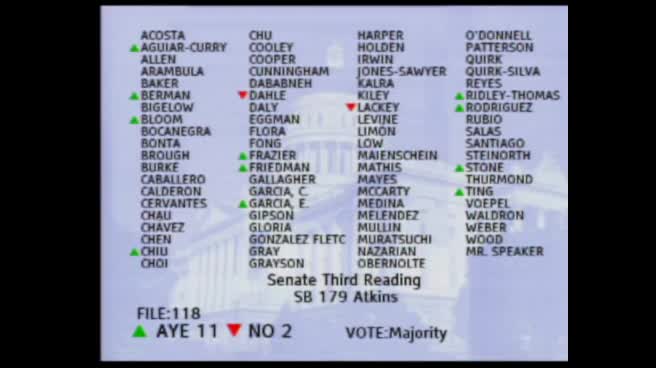 6MIN
Assembly Floor
 1H
Assembly Standing Committee on Appropriations
 5MIN
Assembly Standing Committee on Higher Education
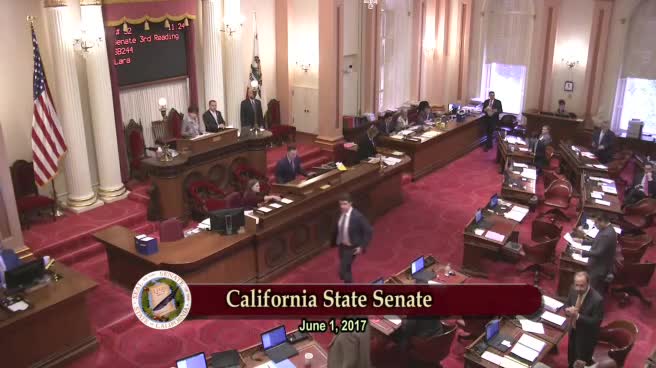 4MIN
Senate Floor
 48MIN
Senate Standing Committee on Appropriations
 45SEC
Senate Standing Committee on Appropriations
 15MIN
Senate Standing Committee on Education
Bill Author