SB 345: Law enforcement agencies: public records.
- Session Year: 2017-2018
- House: Senate
- Latest Version Date: 2017-09-18
Existing law establishes within the Department of Justice the Commission on Peace Officer Standards and Training and requires the commission to adopt rules establishing minimum standards regarding the recruitment and training of peace officers.
Existing law, the California Public Records Act, generally requires each state and local agency to make its public records available for inspection by a member of the public, unless the public record is specifically exempted from disclosure. The act further requires every state and local agency to duplicate disclosable public records, either on paper or in an electronic format, if so requested by a member of the public and he or she has paid certain costs of the duplication. The act specifically requires the California Environmental Protection Agency and certain entities within that agency to post its final enforcement orders on its Internet Web sites, if the final enforcement order is a public record that is not exempt from disclosure.
This bill would, commencing January 1, 2019, require the Department of Alcoholic Beverage Control, the Department of the California Highway Patrol, the Department of Corrections and Rehabilitation, the Department of Fish and Wildlife, the Department of Justice, the Commission on Peace Officer Standards and Training, and each local law enforcement agency to conspicuously post on their Internet Web sites all current standards, policies, practices, operating procedures, and education and training materials that would otherwise be available to the public if a request was made pursuant to the California Public Records Act. By imposing this requirement on local law enforcement agencies, the bill would impose a state-mandated local program.
The California Constitution requires the state to reimburse local agencies and school districts for certain costs mandated by the state. Statutory provisions establish procedures for making that reimbursement.
This bill would provide that, if the Commission on State Mandates determines that the bill contains costs mandated by the state, reimbursement for those costs shall be made pursuant to the statutory provisions noted above.
Existing law establishes within the Department of Justice the Commission on Peace Officer Standards and Training and requires the commission to adopt rules establishing minimum standards regarding the recruitment and training of peace officers.
Existing law, the California Public Records Act, generally requires each state and local agency to make its public records available for inspection by a member of the public, unless the public record is specifically exempted from disclosure. The act further requires every state and local agency to duplicate disclosable public records, either on paper or in an electronic format, if so requested by a member of the public and he or she has paid certain costs of the duplication. The act specifically requires the California Environmental Protection Agency and certain entities within that agency to post its final enforcement orders on its Internet Web sites, if the final enforcement order is a public record that is not exempt from disclosure.
This bill would, commencing January 1, 2019, require the Department of Alcoholic Beverage Control, the Department of the California Highway Patrol, the Department of Corrections and Rehabilitation, the Department of Fish and Wildlife, the Department of Justice, the Commission on Peace Officer Standards and Training, and each local law enforcement agency to conspicuously post on their Internet Web sites all current standards, policies, practices, operating procedures, and education and training materials, to the extent not prohibited by materials that would otherwise be available to the public if a request was made pursuant to the California Public Records Act. By imposing this requirement on local law enforcement agencies, the bill would impose a state-mandated local program.
The California Constitution requires the state to reimburse local agencies and school districts for certain costs mandated by the state. Statutory provisions establish procedures for making that reimbursement.
This bill would provide that, if the Commission on State Mandates determines that the bill contains costs mandated by the state, reimbursement for those costs shall be made pursuant to the statutory provisions noted above.
Existing law establishes within the Department of Justice the Commission on Peace Officer Standards and Training and requires the commission to adopt rules establishing minimum standards regarding the recruitment and training of peace officers.
Existing law, the California Public Records Act, generally requires each state and local agency to make its public records available for inspection by a member of the public, unless the public record is specifically exempted from disclosure. The act further requires every state and local agency to duplicate disclosable public records, either on paper or in an electronic format, if so requested by a member of the public and he or she has paid certain costs of the duplication. The act specifically requires the California Environmental Protection Agency and certain entities within that agency to post its final enforcement orders on its Internet Web sites, if the final enforcement order is a public record that is not exempt from disclosure.
This bill would, commencing January 1, 2019, require the Department of Alcoholic Beverage Control, the Department of the California Highway Patrol, the Department of Corrections and Rehabilitation, the Department of Fish and Wildlife, the Department of Justice, the Commission on Peace Officer Standards and Training, and each local law enforcement agency to conspicuously post on their Internet Web sites all current standards, policies, practices, operating procedures, and education and training materials, to the extent required not prohibited by the California Public Records Act. By imposing this requirement on local law enforcement agencies, the bill would impose a state-mandated local program.
The California Constitution requires the state to reimburse local agencies and school districts for certain costs mandated by the state. Statutory provisions establish procedures for making that reimbursement.
This bill would provide that, if the Commission on State Mandates determines that the bill contains costs mandated by the state, reimbursement for those costs shall be made pursuant to the statutory provisions noted above.
Existing law establishes within the Department of Justice the Commission on Peace Officer Standards and Training and requires the commission to adopt rules establishing minimum standards regarding the recruitment and training of peace officers.
Existing law, the California Public Records Act, generally requires each state and local agency to make its public records available for inspection by a member of the public, unless the public record is specifically exempted from disclosure. The act further requires every state and local agency to duplicate disclosable public records, either on paper or in an electronic format, if so requested by a member of the public and he or she has paid certain costs of the duplication. The act specifically requires the California Environmental Protection Agency and certain entities within that agency to post its final enforcement orders on its Internet Web sites, if the final enforcement order is a public record that is not exempt from disclosure.
This bill would, commencing January 1, 2019, require the Department of Alcoholic Beverage Control, the Department of the California Highway Patrol, the Department of Corrections and Rehabilitation, the Department of Fish and Wildlife, the Department of Justice, including the Commission on Peace Officer Standards and Training, and each local law enforcement agency to conspicuously post on their Internet Web sites all of their current agency regulations that are not specifically exempted from disclosure pursuant to current standards, policies, practices, operating procedures, and education and training materials, to the extent required by the California Public Records Act, and would require any changes to the regulations to be posted on the Internet Web site within 90 days after the changes become effective. The bill would define regulation for purposes of these provisions to mean material used to develop and implement programs to increase the effectiveness of law enforcement by peace officers and to provide ongoing education and training for peace officers, and includes, but is not limited to, standards, policies, practices, and education and training materials and manuals. Act. By imposing this requirement on local law enforcement agencies, this the bill would impose a state-mandated local program.
The California Constitution requires the state to reimburse local agencies and school districts for certain costs mandated by the state. Statutory provisions establish procedures for making that reimbursement.
This bill would provide that, if the Commission on State Mandates determines that the bill contains costs mandated by the state, reimbursement for those costs shall be made pursuant to the statutory provisions noted above.
Existing law establishes within the Department of Justice the Commission on Peace Officer Standards and Training and requires the commission to adopt rules establishing minimum standards regarding the recruitment and training of peace officers.
Existing law, the California Public Records Act, generally requires each state and local agency to make its public records available for inspection by a member of the public, unless the public record is specifically exempted from disclosure. The act further requires every state and local agency to duplicate disclosable public records, either on paper or in an electronic format, if so requested by a member of the public and he or she has paid certain costs of the duplication. The act specifically requires the California Environmental Protection Agency and certain entities within that agency to post its final enforcement orders on its Internet Web sites, if the final enforcement order is a public record that is not exempt from disclosure.
This bill would, commencing January 1, 2019, require the Department of Alcoholic Beverage Control, the Department of the California Highway Patrol, the Department of Corrections and Rehabilitation, the Department of Fish and Wildlife, the Department of Justice, including the Commission on Peace Officer Standards and Training, and each local law enforcement agency to conspicuously post on their Internet Web sites all of their current agency regulations that are not specifically exempted from disclosure pursuant to the California Public Records Act, and would require any changes to the regulations to be posted on the Internet Web site within 90 days after the changes become effective. The bill would define regulation for purposes of these provisions to mean material used to develop and implement programs to increase the effectiveness of law enforcement by peace officers and to provide ongoing education and training for peace officers, and includes, but is not limited to, standards, policies, practices, and education and training materials and manuals. By imposing this requirement on local law enforcement agencies, this bill would impose a state-mandated local program.
The California Constitution requires the state to reimburse local agencies and school districts for certain costs mandated by the state. Statutory provisions establish procedures for making that reimbursement.
This bill would provide that, if the Commission on State Mandates determines that the bill contains costs mandated by the state, reimbursement for those costs shall be made pursuant to the statutory provisions noted above.
(1)The California Public Records Act generally requires every state and local agency to make its public records available for inspection by a member of the public, unless the public record is specifically exempted from disclosure. The act further requires every state and local agency to duplicate discloseable public records, either on paper or in an electronic format, if so requested by a member of the public and he or she has paid certain costs of the duplication. The act specifically requires the California Environmental Protection Agency and certain entities within that agency to post its final enforcement orders on its Internet Web sites, if the final enforcement order is a public record that is not exempt from disclosure.This bill would require, on and after July 1, 2018, each state and local law enforcement agency to post on its Internet Web site, in a text searchable format, all of its manuals and policies not exempt from disclosure pursuant to the act.(2)The California Constitution requires local agencies, for the purpose of ensuring public access to the meetings of public bodies and the writings of public officials and agencies, to comply with a statutory enactment that amends or enacts laws relating to public records or open meetings and contains findings demonstrating that the enactment furthers the constitutional requirements relating to this purpose.This bill would make legislative findings to that effect.(3)The California Constitution requires the state to reimburse local agencies and school districts for certain costs mandated by the state. Statutory provisions establish procedures for making that reimbursement.This bill would provide that no reimbursement is required by this act for a specified reason.(1)The California Public Records Act generally requires every state and local agency to make its public records available for inspection by a member of the public, unless the public record is specifically exempted from disclosure. The act further requires every state and local agency to duplicate discloseable public records, either on paper or in an electronic format, if so requested by a member of the public and he or she has paid certain costs of the duplication. The act specifically requires the California Environmental Protection Agency and certain entities within that agency to post its final enforcement orders on its Internet Web sites, if the final enforcement order is a public record that is not exempt from disclosure.
This bill would require, on and after July 1, 2018, each state and local law enforcement agency to post on its Internet Web site, in a text searchable format, all of its manuals and policies not exempt from disclosure pursuant to the act.
(2)The California Constitution requires local agencies, for the purpose of ensuring public access to the meetings of public bodies and the writings of public officials and agencies, to comply with a statutory enactment that amends or enacts laws relating to public records or open meetings and contains findings demonstrating that the enactment furthers the constitutional requirements relating to this purpose.
This bill would make legislative findings to that effect.
(3)The California Constitution requires the state to reimburse local agencies and school districts for certain costs mandated by the state. Statutory provisions establish procedures for making that reimbursement.
This bill would provide that no reimbursement is required by this act for a specified reason.
The Legislature finds and declares all of the following:
(a)Law enforcement agencies, including the Commission on Peace Officer Standards and Training and local law enforcement agencies, establish standards of physical, mental, and moral fitness for peace officers, develop and implement programs to increase the effectiveness of law enforcement by peace officers, and provide ongoing education and training for peace officers.
(b)Law enforcement agencies have numerous sets of regulations, including, but not limited to, educational materials, manuals, policies, practices, and procedures, that guide employees in their duties. Regulations should be based on best policing policies and practices, current legal standards, and community safety needs.
(c)Currently, across California and the country, many local law enforcement agencies conspicuously post their training, policies, practices, and operating procedures on their Internet Web sites.
(d)Making regulations of law enforcement agencies easily accessible to the public helps educate the public about law enforcement policies, practices, and procedures, increases communication and community trust, and enhances transparency, while saving costs and labor associated with responding to individual requests for this information.
SEC. 2.Title 4.7 (commencing with Section 13650) is added to Part 4 of the Penal Code, to read:4.7.Law Enforcement Agency Regulations13650.Commencing January 1, 2019, the Department of Alcoholic Beverage Control, the Department of the California Highway Patrol, the Department of Corrections and Rehabilitation, the Department of Fish and Wildlife, the Department of Justice, the Commission on Peace Officer Standards and Training, and each local law enforcement agency shall conspicuously post on their Internet Web sites all current standards, policies, practices, operating procedures, and education and training materials that would otherwise be available to the public if a request was made pursuant to the California Public Records Act (Chapter 3.5 (commencing with Section 6250) of Division 7 of Title 1 of the Government Code).
SEC. 3.If the Commission on State Mandates determines that this act contains costs mandated by the state, reimbursement to local agencies and school districts for those costs shall be made pursuant to Part 7 (commencing with Section 17500) of Division 4 of Title 2 of the Government Code.
The Legislature finds and declares all of the following:
(a)Law enforcement agencies, including the Commission on Peace Officer Standards and Training and local law enforcement agencies, establish standards of physical, mental, and moral fitness for peace officers, develop and implement programs to increase the effectiveness of law enforcement by peace officers, and provide ongoing education and training for peace officers.
(b)Law enforcement agencies have numerous sets of regulations, including, but not limited to, educational materials, manuals, policies, practices, and procedures, that guide employees in their duties. Regulations should be based on best policing policies and practices, current legal standards, and community safety needs.
(c)Currently, across California and the country, many local law enforcement agencies conspicuously post their training, policies, practices, and operating procedures on their Internet Web sites.
(d)Making regulations of law enforcement agencies easily accessible to the public helps educate the public about law enforcement policies, practices, and procedures, increases communication and community trust, and enhances transparency, while saving costs and labor associated with responding to individual requests for this information.
SEC. 2.Title 4.7 (commencing with Section 13650) is added to Part 4 of the Penal Code, to read:4.7.Law Enforcement Agency Regulations13650.Commencing January 1, 2019, the Department of Alcoholic Beverage Control, the Department of the California Highway Patrol, the Department of Corrections and Rehabilitation, the Department of Fish and Wildlife, the Department of Justice, the Commission on Peace Officer Standards and Training, and each local law enforcement agency shall, to the fullest extent not prohibited by the California Public Records Act (Chapter 3.5 (commencing with Section 6250) of Division 7 of Title 1 of the Government Code), shall conspicuously post on their Internet Web sites all current standards, policies, practices, operating procedures, and education and training materials. materials that would otherwise be available to the public if a request was made pursuant to the California Public Records Act (Chapter 3.5 (commencing with Section 6250) of Division 7 of Title 1 of the Government Code).
SEC. 3.If the Commission on State Mandates determines that this act contains costs mandated by the state, reimbursement to local agencies and school districts for those costs shall be made pursuant to Part 7 (commencing with Section 17500) of Division 4 of Title 2 of the Government Code.
The Legislature finds and declares all of the following:
(a)Law enforcement agencies, including the Commission on Peace Officer Standards and Training and local law enforcement agencies, establish standards of physical, mental, and moral fitness for peace officers, develop and implement programs to increase the effectiveness of law enforcement by peace officers, and provide ongoing education and training for peace officers.
(b)Law enforcement agencies have numerous sets of regulations, including, but not limited to, educational materials, manuals, policies, practices, and procedures, that guide employees in their duties. Regulations should be based on best policing policies and practices, current legal standards, and community safety needs.
(c)Currently, across California and the country, many local law enforcement agencies conspicuously post their training, policies, practices, and operating procedures on their Internet Web sites.
(d)Making regulations of law enforcement agencies easily accessible to the public helps educate the public about law enforcement policies, practices, and procedures, increases communication and community trust, and enhances transparency, while saving costs and labor associated with responding to individual requests for this information.
SEC. 2.Title 4.7 (commencing with Section 13650) is added to Part 4 of the Penal Code, to read:4.7.Law Enforcement Agency Regulations13650.Commencing January 1, 2019, the Department of Alcoholic Beverage Control, the Department of the California Highway Patrol, the Department of Corrections and Rehabilitation, the Department of Fish and Wildlife, the Department of Justice, the Commission on Peace Officer Standards and Training, and each local law enforcement agency shall, to the fullest extent required not prohibited by the California Public Records Act (Chapter 3.5 (commencing with Section 6250) of Division 7 of Title 1 of the Government Code), conspicuously post on their Internet Web sites, in a searchable manner, sites all current standards, policies, practices, operating procedures, and education and training materials.
SEC. 3.If the Commission on State Mandates determines that this act contains costs mandated by the state, reimbursement to local agencies and school districts for those costs shall be made pursuant to Part 7 (commencing with Section 17500) of Division 4 of Title 2 of the Government Code.
The Legislature finds and declares all of the following:
(a)Law enforcement agencies, including the Commission on Peace Officer Standards and Training and local law enforcement agencies, establish standards of physical, mental, and moral fitness for peace officers, develop and implement programs to increase the effectiveness of law enforcement by peace officers, and provide ongoing education and training for peace officers.
(b)Law enforcement agencies have numerous sets of regulations, including, but not limited to, educational materials, manuals, policies, practices, and procedures, that guide employees in their duties. Regulations should be based on best policing policies and practices, current legal standards, and community safety needs.
(c)Currently, across California and the country, many local law enforcement agencies conspicuously post their training, policies, practices, and operating procedures on their Internet Web sites.
(d)Making regulations of law enforcement agencies easily accessible to the public helps educate the public about law enforcement policies, practices, and procedures, increases communication and community trust, and enhances transparency, while saving costs and labor associated with responding to individual requests for this information.
SEC. 2.Title 4.7 (commencing with Section 13650) is added to Part 4 of the Penal Code, to read:4.7.Law Enforcement Agency Regulations13650.(a)Commencing January 1, 2019, the Department of Alcoholic Beverage Control, the Department of the California Highway Patrol, the Department of Corrections and Rehabilitation, the Department of Fish and Wildlife, the Department of Justice, including the Commission on Peace Officer Standards and Training, and each local law enforcement agency shall conspicuously post on their Internet Web site all of their current agency regulations that are not specifically exempt from disclosure pursuant to shall, to the fullest extent required by the California Public Records Act (Chapter 3.5 (commencing with Section 6250) of Division 7 of Title 1 of the Government Code). Code), conspicuously post on their Internet Web sites, in a searchable manner, all current standards, policies, practices, operating procedures, and education and training materials.
(b)Any changes to the regulations shall be posted on the Internet Web sites within 90 days after the changes become effective.(c)For purposes of this title, regulation means material used to develop and implement programs to increase the effectiveness of law enforcement by peace officers and to provide ongoing education and training for peace officers, and includes, but is not limited to, standards, policies, practices, operating procedures, education and training materials and manuals, agency general orders, employee disciplinary protocols, use of force guidelines and procedures, body camera policies, agency bulletins, and any other directives or rules of conduct.SEC. 3.If the Commission on State Mandates determines that this act contains costs mandated by the state, reimbursement to local agencies and school districts for those costs shall be made pursuant to Part 7 (commencing with Section 17500) of Division 4 of Title 2 of the Government Code.
The Legislature finds and declares all of the following:
(a)Law enforcement agencies, including the Commission on Peace Officer Standards and Training and local law enforcement agencies, establish standards of physical, mental, and moral fitness for peace officers, develop and implement programs to increase the effectiveness of law enforcement by peace officers, and provide ongoing education and training for peace officers.
(b)Law enforcement agencies have numerous sets of regulations, including, but not limited to, educational materials, manuals, policies, practices, and procedures, that guide employees in their duties. Regulations should be based on best policing policies and practices, current legal standards, and community safety needs.
(c)Currently, across California and the country, many local law enforcement agencies conspicuously post their training, policies, practices, and operating procedures on their Internet Web sites.
(d)Making regulations of law enforcement agencies easily accessible to the public helps educate the public about law enforcement policies, practices, and procedures, increases communication and community trust, and enhances transparency, while saving costs and labor associated with responding to individual requests for this information.
SEC. 2.Title 4.7 (commencing with Section 13650) is added to Part 4 of the Penal Code, to read:4.7.Law Enforcement Agency Regulations13650.(a)Commencing January 1, 2019, the Department of Alcoholic Beverage Control, the Department of the California Highway Patrol, the Department of Corrections and Rehabilitation, the Department of Fish and Wildlife, the Department of Justice, including the Commission on Peace Officer Standards and Training, and each local law enforcement agency shall conspicuously post on their Internet Web site all of their current agency regulations that are not specifically exempt from disclosure pursuant to the California Public Records Act (Chapter 3.5 (commencing with Section 6250) of Division 7 of Title 1 of the Government Code).
(b)Any changes to the regulations shall be posted on the Internet Web sites within 90 days after the changes become effective.
(c)For purposes of this title, regulation means material used to develop and implement programs to increase the effectiveness of law enforcement by peace officers and to provide ongoing education and training for peace officers, and includes, but is not limited to, standards, policies, practices, operating procedures, education and training materials and manuals, agency general orders, employee disciplinary protocols, use of force guidelines and procedures, body camera policies, agency bulletins, and any other directives or rules of conduct.
SEC. 3.If the Commission on State Mandates determines that this act contains costs mandated by the state, reimbursement to local agencies and school districts for those costs shall be made pursuant to Part 7 (commencing with Section 17500) of Division 4 of Title 2 of the Government Code.
SECTION 1.Section 6256 is added to the Government Code, to read:6256.On and after July 1, 2018, each state and local law enforcement agency shall post on its Internet Web site, in a text searchable format, all of its manuals and policies that are not exempt from disclosure pursuant to this chapter.SEC. 2.The Legislature finds and declares that Section 1 of this act, which adds Section 6256 to the Government Code, furthers, within the meaning of paragraph (7) of subdivision (b) of Section 3 of Article I of the California Constitution, the purposes of that constitutional section as it relates to the right of public access to the meetings of local public bodies or the writings of local public officials and local agencies. Pursuant to paragraph (7) of subdivision (b) of Section 3 of Article I of the California Constitution, the Legislature makes the following findings:By requiring each local law enforcement agency to proactively disclose its manuals and policies on its Internet Web site, this act creates greater efficiency in public record disclosures and increases public access to public records, and thereby furthers the purposes of paragraph (7) of subdivision (b) of Section 3 of Article I of the California Constitution.SEC. 3.No reimbursement is required by this act pursuant to Section 6 of Article XIII B of the California Constitution because the only costs that may be incurred by a local agency or school district under this act would result from a legislative mandate that is within the scope of paragraph (7) of subdivision (b) of Section 3 of Article I of the California Constitution.On and after July 1, 2018, each state and local law enforcement agency shall post on its Internet Web site, in a text searchable format, all of its manuals and policies that are not exempt from disclosure pursuant to this chapter.
SEC. 2.The Legislature finds and declares that Section 1 of this act, which adds Section 6256 to the Government Code, furthers, within the meaning of paragraph (7) of subdivision (b) of Section 3 of Article I of the California Constitution, the purposes of that constitutional section as it relates to the right of public access to the meetings of local public bodies or the writings of local public officials and local agencies. Pursuant to paragraph (7) of subdivision (b) of Section 3 of Article I of the California Constitution, the Legislature makes the following findings:
By requiring each local law enforcement agency to proactively disclose its manuals and policies on its Internet Web site, this act creates greater efficiency in public record disclosures and increases public access to public records, and thereby furthers the purposes of paragraph (7) of subdivision (b) of Section 3 of Article I of the California Constitution.
SEC. 3.No reimbursement is required by this act pursuant to Section 6 of Article XIII B of the California Constitution because the only costs that may be incurred by a local agency or school district under this act would result from a legislative mandate that is within the scope of paragraph (7) of subdivision (b) of Section 3 of Article I of the California Constitution.
|
Date
|
Status
|
|---|---|
| Mar 3, 2018 | Last day to consider Governor’s veto pursuant to Joint Rule 58.5. |
| Oct 14, 2017 | In Senate. Consideration of Governor's veto pending. |
| Oct 14, 2017 | Vetoed by the Governor. |
| Sep 20, 2017 | Enrolled and presented to the Governor at 4 p.m. |
| Sep 14, 2017 | Assembly amendments concurred in. (Ayes 26. Noes 14.) Ordered to engrossing and enrolling. |
| Sep 14, 2017 | In Senate. Concurrence in Assembly amendments pending. |
| Sep 13, 2017 | Read third time. Passed. Ordered to the Senate. |
| Sep 6, 2017 | Read second time. Ordered to third reading. |
| Sep 5, 2017 | Read second time and amended. Ordered to second reading. |
| Sep 1, 2017 | From committee: Do pass as amended. (Ayes 11. Noes 5.) (September 1). |
| Aug 23, 2017 | August 23 set for first hearing. Placed on suspense file. |
| Jul 12, 2017 | From committee: Do pass and re-refer to Com. on APPR. (Ayes 5. Noes 1.) (July 11). Re-referred to Com. on APPR. |
| Jun 27, 2017 | June 27 set for first hearing canceled at the request of author. |
| Jun 12, 2017 | Referred to Com. on PUB. S. |
| Jun 1, 2017 | In Assembly. Read first time. Held at Desk. |
| May 31, 2017 | Read third time. Passed. (Ayes 23. Noes 15. Page 1350.) Ordered to the Assembly. |
| May 26, 2017 | Read second time and amended. Ordered to third reading. |
| May 25, 2017 | From committee: Do pass as amended. (Ayes 5. Noes 2. Page 1182.) (May 25). |
| May 19, 2017 | Set for hearing May 25. |
| May 15, 2017 | May 15 hearing: Placed on APPR. suspense file. |
| May 4, 2017 | Set for hearing May 15. |
| May 2, 2017 | Read second time and amended. Re-referred to Com. on APPR. |
| May 1, 2017 | From committee: Do pass as amended and re-refer to Com. on APPR. (Ayes 5. Noes 2. Page 855.) (April 25). |
| Apr 13, 2017 | Set for hearing April 25. |
| Apr 5, 2017 | Re-referred to Com. on PUB. S. |
| Apr 3, 2017 | Withdrawn from committee. |
| Mar 30, 2017 | From committee with author's amendments. Read second time and amended. Re-referred to Com. on JUD. |
| Feb 23, 2017 | Referred to Com. on JUD. |
| Feb 15, 2017 | From printer. May be acted upon on or after March 17. |
| Feb 14, 2017 | Introduced. Read first time. To Com. on RLS. for assignment. To print. |
|
Date
|
Description
|
Location
|
Votes
|
|
|---|---|---|---|---|
| Sep 14, 2017 | Unfinished Business SB345 Bradford Concurrence | Senate Floor |
Passed |
|
| Sep 13, 2017 | SB 345 Bradford Senate Third Reading By JONES-SAWYER | Assembly Floor |
Passed |
|
| Sep 1, 2017 | Do pass as amended. | Assembly Standing Committee on Appropriations |
Passed |
|
| Jul 11, 2017 | Do pass and be re-referred to the Committee on [Appropriations] | Assembly Standing Committee on Public Safety |
Passed |
|
| May 31, 2017 | Senate 3rd Reading SB345 Bradford | Senate Floor |
Passed |
|
| May 25, 2017 | Do pass as amended | Senate Standing Committee on Appropriations |
Passed |
|
| May 15, 2017 | Placed on suspense file | Senate Standing Committee on Appropriations |
Passed |
|
| Apr 25, 2017 | Do pass as amended, but first amend, and re-refer to the Committee on [Appropriations] | Senate Standing Committee on Public Safety |
Passed |
This list shows positions taken on this bill by organizations on the date displayed, which is linked to the original source.
Positions by individuals are not included.
|
Organization
|
Position
|
Date
|
|---|---|---|
| ACLU | * Support | Jul 11, 2017 |
| Association for Los Angeles County Deputy Sheriffs | ** Support | Jan 2, 2018 |
| Association of Deputy District Attorneys | ** Support | Jan 2, 2018 |
| California Association Of Code Enforcement Officers | ** Support | Jan 2, 2018 |
| California Attorneys For Criminal Justice | ** Support | Jan 2, 2018 |
| California College And University Police Chiefs Association | ** Support | Jan 2, 2018 |
| California Narcotics Officers Association | ** Support | Jan 2, 2018 |
| California Public Defenders Association | ** Support | Jan 2, 2018 |
| California State Sheriffs' Association | ** Against | Jan 2, 2018 |
| Electronic Frontier Foundation | ** Support | Jan 2, 2018 |
| Los Angeles County Professional Peace Officers Association | ** Support | Jan 2, 2018 |
| Los Angeles Police Protective League | ** Support | Jan 2, 2018 |
| Prepared By: Mary Kennedy | ** Against | May 27, 2017 |
| PUB. S. | ** Against | May 27, 2017 |
| PURPOSE | ** Against | Apr 24, 2017 |
Office of Senate Floor Analyses (916) 651-1520 Fax: (916) 327-4478 | SB |
VETO
Bill No: SB 345
:
SENATE PUBLIC SAFETY COMMITTEE: 5-2, 4/25/17
AYES: Skinner, Bradford, Jackson, Mitchell, Wiener
NOES: Anderson, Stone
SENATE APPROPRIATIONS COMMITTEE: 5-2, 5/25/17
AYES: Lara, Beall, Bradford, Hill, Wiener
NOES: Bates, Nielsen
SENATE FLOOR: 23-15, 5/31/17
AYES: Allen, Atkins, Beall, Bradford, De León, Dodd, Hernandez, Hertzberg, Hill, Hueso, Jackson, Lara, Leyva, McGuire, Mendoza, Mitchell, Monning, Newman, Pan, Portantino, Skinner, Wieckowski, Wiener
NOES: Anderson, Bates, Berryhill, Cannella, Fuller, Gaines, Galgiani, Glazer, Moorlach, Morrell, Nguyen, Nielsen, Stone, Vidak, Wilk
NO VOTE RECORDED: Roth, Stern
SENATE FLOOR: 26-14, 9/14/17
AYES: Allen, Atkins, Beall, Bradford, De León, Dodd, Galgiani, Hernandez, Hertzberg, Hill, Hueso, Jackson, Lara, Leyva, McGuire, Mendoza, Mitchell, Monning, Newman, Pan, Portantino, Roth, Skinner, Stern, Wieckowski, Wiener
NOES: Anderson, Bates, Berryhill, Cannella, Fuller, Gaines, Glazer, Moorlach, Morrell, Nguyen, Nielsen, Stone, Vidak, Wilk
ASSEMBLY FLOOR: 47-29, 9/13/17 - See last page for vote
SOURCE: California Public Defenders Association
DIGEST:
This bill requires specified law enforcement agencies conspicuously post on their Web sites all current standards, policies, practices, operating procedures, education and training materials that would otherwise be available if a request was made under the California Public Records Act (CPRA).
Existing law:
- Declares, under the California Constitution, the people’s right to transparency in government. (“The people have the right of access to information concerning the conduct of the people’s business, and therefore, the meetings of public bodies and the writings of public officials and agencies shall be open to public scrutiny....”) (Cal. Const., Art. I, Sec. 3.)
- Provides, generally, under the CPRA, that access to information concerning the conduct of the people’s business is a fundamental and necessary right of every person in this state. (Gov. Code, § 6250 et. seq.)
- Provides that public records are open to inspection at all times during the office hours of the state or local agency and every person has a right to inspect any public record, except as provided. Any reasonably segregable portion of a record shall be available for inspection by any person requesting the record after deletion of the portions that are exempted by law. (Gov. Code, § 6253.)
- Provides that there are 30 general categories of documents or information that are exempt from disclosure, essentially due to the character of the information, and unless it is shown that the public’s interest in disclosure outweighs the public’s interest in non-disclosure of the information, the exempt information may be withheld by the public agency with custody of the information. (Gov. Code, § 6254 et seq.)
- Does not require, under the CPRA, disclosure of investigations conducted by the office of the Attorney General and the Department of Justice (DOJ), the Office of Emergency Services and any state or local police agency, or any investigatory or security files compiled by any other state or local police agency, or any investigatory or security files compiled by any other state or local agency for correctional, law enforcement, or licensing purposes. (Gov. Code, § 6254, subd. (f).)
- Requires that any reasonably segregable portion of a record shall be available for inspection by any person requesting the record after deletion of the proportions that are exempted by law. (Gov. Code, § 6253, su8bd. (a).)
- Provides that for records not subject to an exemption, may be withheld if the agency demonstrates that on the facts of the particular case the public interest served by not disclosing the record clearly outweighs the public interest served by disclosure of the record. (Government Code § 6255.)
This bill requires that, commencing January 1, 2019, the Department of Alcoholic Beverage Control (ABC), the Department of the California Highway Patrol (CHP), the Department of Corrections and Rehabilitation (CDCR), the Department of Fish and Wildlife (DFW), DOJ, the Commission on Peace Officer Standards and Training (POST), and each local law enforcement agency shall conspicuously post on their Web sites all current standards, policies, practices, operating procedures, education and training materials that would otherwise be available if a request was made under CPRA, as specified.
Background
On December 18, 2014, amid protests in Ferguson, Missouri, where a grand jury declined to criminally charge police officer Darren Wilson in the fatal shooting of Michael Brown, President Barack Obama signed an Executive Order establishing the Task Force on 21st Century Policing. “The mission of the task force was to examine how to foster strong, collaborative relationships between local law enforcement and the communities they protect and to make recommendations to the President on how policing practices can promote effective crime reduction while building public trust. The president selected members of the task force based on their ability to contribute to its mission because of their relevant perspective, experience, or subject matter expertise in policing, law enforcement and community relations, civil rights, and civil liberties.” (U.S. Department of Justice's Office of Community Oriented Policing Service, Interim Report of the President's Task Force on 21st Century Policing (Mar. 2015), at 1.) In addressing the issue of transparency, the task force recommended that law enforcement agencies make all department policies available for public review. (Id. at 11.) This bill implements this recommendation by requiring law enforcement agencies to post a variety of department policies on-line. The California Public Defenders Association, who is the sponsor of this bill, explains:
SB 345 will enhance the transparency of each law enforcement agency, assist in educating the public about law enforcement department policies and procedures, and allow statewide and local law enforcement agencies to promote best policies and greater accountability in law enforcement, thereby enhancing police-community relations consistent with President Obama's Task Force on 21st Century Policing.
SB 345 codifies and clarifies existing state law. On March 2, 2017, in a unanimous decision, the California Supreme Court emphasized the breadth and depth of the California Public Records Act ["CPRA"] in City of San Jose v. Sup. Court (Smith) (S218066) [broad reading of CPRA includes private emails of public officials.] The Court highlighted CPRA's strong presumption that all public records are open for inspection and copying, except those categories of records specifically designated as “exempt” from disclosure. (Gov't Code sections 6253(b), 6254):
Given the strong public policy of the people's right to information concerning the people's business (Gov. Code,§ 6250), and the constitutional mandate to construe statutes limiting the right of access narrowly (Cal. Const., art. I,§ 3, subd. (b)(2)), 'all public records are subject to disclosure unless the Legislature has expressly provided to the contrary.' [Smith, supra, at p. 5, citing Sierra Club v. Superior Court (2013) 57 Cal.4th 157, 166, emphasis in original.]
SB 345 sets a uniform standard in statewide and local CPRA compliance. Although existing law provides that members of the public may use the CPRA to request department training, policies and procedures, there are currently wide gaps in compliance with such requests. Moreover, community groups and individuals have voiced frustration that these orders are not all currently available online. Unless these state and local trainings and regulations are publicly available online, individual state and local law enforcement agencies will continue to spend considerable staffing and time responding to requests for access to police regulations already covered under CPRA. [Footnotes omitted.]
FISCAL EFFECT: Appropriation: Fiscal Com.: Local:
According to the Assembly Appropriations Committee:
- The following four state agencies have identified costs to develop, build, and test a public searchable database and include it on the Web site. However, to the extent these agencies are currently responding to individual CPRA request within existing resources, there will some minor savings:
- CDCR. Approximately $600,000 (General Fund (GF)) for implementation costs and annual ongoing costs of approximately $100,000.
- CHP. Approximately $500,000 (Motor Vehicle Account) for personnel and programming costs and there will be additional ongoing personnel costs associated with updating and redacting the information as well.
- ABC. One-time implementation costs of approximately $300,000 (Alcoholic Beverage Control Fund), and annual ongoing costs of approximately $100,000.
- DFW. Annual ongoing costs of approximately $200,000 (GF).
- DOJ. First year cost of $55,000 (GF) in 2017-18, second year cost of $90,000, and ongoing annual costs of approximately $50,000.
- Minor absorbable costs to POST since they currently post all their information on their Internet Web site.
- Unknown, but significant state reimbursable state-mandated cost to local law enforcement agencies to comply with the provisions of this bill. The additional costs may be offset by savings to those agencies that are currently providing some information as result of CPRA requests.
California Public Defenders Association (source)
Association for Los Angeles County Deputy Sheriffs
Association of Deputy District Attorneys
California Association of Code Enforcement Officers
California Attorneys for Criminal Justice
California College and University Police Chiefs Association
California Narcotics officers Association
Electronic Frontier Foundation
Los Angeles County Probation Officers Union AFSCME Local 685
Los Angeles County Professional Peace Officers Association
Los Angeles Police Protective League
OPPOSITION: (Verified 10/23/17)
California State Sheriffs’ Association
GOVERNOR'S VETO MESSAGE:
I am returning Senate Bill 345 without my signature.
This bill requires law enforcement agencies, including certain state agencies, to post on their websites all current standards, policies, practices, operating procedures, education and training materials that would otherwise be available if a request was made under the California Public Records Act.
This bill is too broad in scope and vaguely drafted. I appreciate the author's desire for additional transparency of police practices and local law enforcement procedures, but I believe this goal can be accomplished with a more targeted and precise approach.
ASSEMBLY FLOOR: 47-29, 9/13/17
AYES: Aguiar-Curry, Arambula, Berman, Bloom, Bocanegra, Bonta, Burke, Caballero, Calderon, Chau, Chiu, Chu, Dababneh, Daly, Eggman, Friedman, Cristina Garcia, Eduardo Garcia, Gipson, Gloria, Gonzalez Fletcher, Gray, Holden, Irwin, Jones-Sawyer, Kalra, Levine, Limón, Low, McCarty, Medina, Mullin, Muratsuchi, O'Donnell, Quirk, Quirk-Silva, Reyes, Ridley-Thomas, Rodriguez, Salas, Santiago, Mark Stone, Thurmond, Ting, Weber, Wood, Rendon
NOES: Acosta, Travis Allen, Baker, Bigelow, Brough, Cervantes, Chávez, Chen, Choi, Cooley, Cunningham, Dahle, Flora, Fong, Gallagher, Grayson, Harper, Kiley, Lackey, Maienschein, Mathis, Mayes, Melendez, Obernolte, Patterson, Rubio, Steinorth, Voepel, Waldron
NO VOTE RECORDED: Cooper, Frazier, Nazarian
Prepared by: Gabriel Caswell / PUB. S. /
1/2/18 10:09:51
**** END ****
Office of Senate Floor Analyses (916) 651-1520 Fax: (916) 327-4478 | SB |
UNFINISHED BUSINESS
Bill No: SB 345
:
SENATE PUBLIC SAFETY COMMITTEE: 5-2, 4/25/17
AYES: Skinner, Bradford, Jackson, Mitchell, Wiener
NOES: Anderson, Stone
SENATE APPROPRIATIONS COMMITTEE: 5-2, 5/25/17
AYES: Lara, Beall, Bradford, Hill, Wiener
NOES: Bates, Nielsen
SENATE FLOOR: 23-15, 5/31/17
AYES: Allen, Atkins, Beall, Bradford, De León, Dodd, Hernandez, Hertzberg, Hill, Hueso, Jackson, Lara, Leyva, McGuire, Mendoza, Mitchell, Monning, Newman, Pan, Portantino, Skinner, Wieckowski, Wiener
NOES: Anderson, Bates, Berryhill, Cannella, Fuller, Gaines, Galgiani, Glazer, Moorlach, Morrell, Nguyen, Nielsen, Stone, Vidak, Wilk
NO VOTE RECORDED: Roth, Stern
ASSEMBLY FLOOR: 47-29, 9/13/17 - See last page for vote
SOURCE: California Public Defenders Association
DIGEST:
This bill requires specified law enforcement agencies conspicuously post on their Web sites all current standards, policies, practices, operating procedures, education and training materials that would otherwise be available if a request was made under the California Public Records Act (CPRA).
Assembly Amendments
clarify that the materials to be posted are materials that would otherwise be made available to the public if a request was made pursuant to CPRA.
Existing law:
- Declares, under the California Constitution, the people’s right to transparency in government. (“The people have the right of access to information concerning the conduct of the people’s business, and therefore, the meetings of public bodies and the writings of public officials and agencies shall be open to public scrutiny....”) (Cal. Const., Art. I, Sec. 3.)
- Provides, generally, under the CPRA, that access to information concerning the conduct of the people’s business is a fundamental and necessary right of every person in this state. (Gov. Code, § 6250 et. seq.)
- Provides that public records are open to inspection at all times during the office hours of the state or local agency and every person has a right to inspect any public record, except as provided. Any reasonably segregable portion of a record shall be available for inspection by any person requesting the record after deletion of the portions that are exempted by law. (Gov. Code, § 6253.)
- Provides that there are 30 general categories of documents or information that are exempt from disclosure, essentially due to the character of the information, and unless it is shown that the public’s interest in disclosure outweighs the public’s interest in non-disclosure of the information, the exempt information may be withheld by the public agency with custody of the information. (Gov. Code, § 6254 et seq.)
- Does not require, under the CPRA, disclosure of investigations conducted by the office of the Attorney General and the Department of Justice (DOJ), the Office of Emergency Services and any state or local police agency, or any investigatory or security files compiled by any other state or local police agency, or any investigatory or security files compiled by any other state or local agency for correctional, law enforcement, or licensing purposes. (Gov. Code, § 6254, subd. (f).)
- Requires that any reasonably segregable portion of a record shall be available for inspection by any person requesting the record after deletion of the proportions that are exempted by law. (Gov. Code, § 6253, su8bd. (a).)
- Provides that for records not subject to an exemption, may be withheld if the agency demonstrates that on the facts of the particular case the public interest served by not disclosing the record clearly outweighs the public interest served by disclosure of the record. (Government Code § 6255.)
This bill requires that, commencing January 1, 2019, the Department of Alcoholic Beverage Control (ABC), the Department of the California Highway Patrol (CHP), the Department of Corrections and Rehabilitation (CDCR), the Department of Fish and Wildlife (DFW), DOJ, the Commission on Peace Officer Standards and Training (POST), and each local law enforcement agency shall conspicuously post on their Web sites all current standards, policies, practices, operating procedures, education and training materials that would otherwise be available if a request was made under CPRA, as specified.
Background
On December 18, 2014, amid protests in Ferguson, Missouri, where a grand jury declined to criminally charge police officer Darren Wilson in the fatal shooting of Michael Brown, President Barack Obama signed an Executive Order establishing the Task Force on 21st Century Policing. “The mission of the task force was to examine how to foster strong, collaborative relationships between local law enforcement and the communities they protect and to make recommendations to the President on how policing practices can promote effective crime reduction while building public trust. The president selected members of the task force based on their ability to contribute to its mission because of their relevant perspective, experience, or subject matter expertise in policing, law enforcement and community relations, civil rights, and civil liberties.” (U.S. Department of Justice's Office of Community Oriented Policing Service, Interim Report of the President's Task Force on 21st Century Policing (Mar. 2015), at 1.) In addressing the issue of transparency, the task force recommended that law enforcement agencies make all department policies available for public review. (Id. at 11.) This bill implements this recommendation by requiring law enforcement agencies to post a variety of department policies on-line. The California Public Defenders Association, who is the sponsor of this bill, explains:
SB 345 will enhance the transparency of each law enforcement agency, assist in educating the public about law enforcement department policies and procedures, and allow statewide and local law enforcement agencies to promote best policies and greater accountability in law enforcement, thereby enhancing police-community relations consistent with President Obama's Task Force on 21st Century Policing.
SB 345 codifies and clarifies existing state law. On March 2, 2017, in a unanimous decision, the California Supreme Court emphasized the breadth and depth of the California Public Records Act ["CPRA"] in City of San Jose v. Sup. Court (Smith) (S218066) [broad reading of CPRA includes private emails of public officials.] The Court highlighted CPRA's strong presumption that all public records are open for inspection and copying, except those categories of records specifically designated as “exempt” from disclosure. (Gov't Code sections 6253(b), 6254):
Given the strong public policy of the people's right to information concerning the people's business (Gov. Code,§ 6250), and the constitutional mandate to construe statutes limiting the right of access narrowly (Cal. Const., art. I,§ 3, subd. (b)(2)), 'all public records are subject to disclosure unless the Legislature has expressly provided to the contrary.' [Smith, supra, at p. 5, citing Sierra Club v. Superior Court (2013) 57 Cal.4th 157, 166, emphasis in original.]
SB 345 sets a uniform standard in statewide and local CPRA compliance. Although existing law provides that members of the public may use the CPRA to request department training, policies and procedures, there are currently wide gaps in compliance with such requests. Moreover, community groups and individuals have voiced frustration that these orders are not all currently available online. Unless these state and local trainings and regulations are publicly available online, individual state and local law enforcement agencies will continue to spend considerable staffing and time responding to requests for access to police regulations already covered under CPRA. [Footnotes omitted.]
FISCAL EFFECT: Appropriation: Fiscal Com.: Local:
According to the Assembly Appropriations Committee:
- The following four state agencies have identified costs to develop, build, and test a public searchable database and include it on the website. However, to the extent these agencies are currently responding to individual CPRA request within existing resources, there will some minor savings:
- CDCR. Approximately $600,000 (General Fund (GF)) for implementation costs and annual ongoing costs of approximately $100,000.
- CHP. Approximately $500,000 (Motor Vehicle Account) for personnel and programming costs and there will be additional ongoing personnel costs associated with updating and redacting the information as well.
- ABC. One-time implementation costs of approximately $300,000 (Alcoholic Beverage Control Fund), and annual ongoing costs of approximately $100,000.
- DFW. Annual ongoing costs of approximately $200,000 (GF).
- DOJ. First year cost of $55,000 (GF) in 2017-18, second year cost of $90,000, and ongoing annual costs of approximately $50,000.
- Minor absorbable costs to POST since they currently post all their information on their Internet Web site.
- Unknown, but significant state reimbursable state-mandated cost to local law enforcement agencies to comply with the provisions of this bill. The additional costs may be offset by savings to those agencies that are currently providing some information as result of CPRA requests.
California Public Defenders Association (source)
Association for Los Angeles County Deputy Sheriffs
Association of Deputy District Attorneys
California Association of Code Enforcement Officers
California Attorneys for Criminal Justice
California College and University Police Chiefs Association
California Narcotics officers Association
Electronic Frontier Foundation
Los Angeles County Probation Officers Union AFSCME Local 685
Los Angeles County Professional Peace Officers Association
Los Angeles Police Protective League
OPPOSITION: (Verified 9/13/17)
California State Sheriffs’ Association
ASSEMBLY FLOOR: 47-29, 9/13/17
AYES: Aguiar-Curry, Arambula, Berman, Bloom, Bocanegra, Bonta, Burke, Caballero, Calderon, Chau, Chiu, Chu, Dababneh, Daly, Eggman, Friedman, Cristina Garcia, Eduardo Garcia, Gipson, Gloria, Gonzalez Fletcher, Gray, Holden, Irwin, Jones-Sawyer, Kalra, Levine, Limón, Low, McCarty, Medina, Mullin, Muratsuchi, O'Donnell, Quirk, Quirk-Silva, Reyes, Ridley-Thomas, Rodriguez, Salas, Santiago, Mark Stone, Thurmond, Ting, Weber, Wood, Rendon
NOES: Acosta, Travis Allen, Baker, Bigelow, Brough, Cervantes, Chávez, Chen, Choi, Cooley, Cunningham, Dahle, Flora, Fong, Gallagher, Grayson, Harper, Kiley, Lackey, Maienschein, Mathis, Mayes, Melendez, Obernolte, Patterson, Rubio, Steinorth, Voepel, Waldron
NO VOTE RECORDED: Cooper, Frazier, Nazarian
9/14/17 10:07:56
**** END ****
SENATE THIRD READING
STR Bill Id:
Author:(Bradford)
As Amended Ver:May 26, 2017
Majority vote
SENATE VOTE: 23-15
Committee | Votes | Ayes | Noes |
Public Safety | 5-1 | Jones-Sawyer, Gonzalez Fletcher, Quirk, Rubio, Santiago | Lackey |
Appropriations | 11-5 | Gonzalez Fletcher, Bloom, Bocanegra, Bonta, Calderon, Chau, Eggman, Friedman, Eduardo Garcia, Jones-Sawyer, Reyes | Bigelow, Brough, Fong, Gallagher, Obernolte |
SUMMARY: Requires that, commencing January 1, 2019, the Department of Alcoholic Beverage Control (ABC), the Department of the California Highway Patrol (CHP), the Department of Corrections and Rehabilitation (CDCR), the Department of Fish and Wildlife (DFW), the Department of Justice (DOJ), the Commission on Peace Officer Standards and Training (POST), and each local law enforcement agency shall conspicuously post on their Internet Web sites all current standards, policies, practices, operating procedures, education and training materials that would otherwise be available if a request was made under the California Public Records Act, as specified.
EXISTING LAW:
- Declares, under the California Constitution, the people's right to transparency in government. ("The people have the right of access to information concerning the conduct of the people's business, and therefore, the meetings of public bodies and the writings of public officials and agencies shall be open to public scrutiny....")
- Provides, generally, under the California Public Records Act (CPRA), that access to information concerning the conduct of the people's business is a fundamental and necessary right of every person in this state.
- Provides that public records are open to inspection at all times during the office hours of the state or local agency and every person has a right to inspect any public record, except as provided. Any reasonably segregable portion of a record shall be available for inspection by any person requesting the record after deletion of the portions that are exempted by law.
- Provides that there are 30 general categories of documents or information that are exempt from disclosure, essentially due to the character of the information, and unless it is shown that the public's interest in disclosure outweighs the public's interest in non-disclosure of the information, the exempt information may be withheld by the public agency with custody of the information.
- Does not require, under the CPRA, disclosure of investigations conducted by the office of the Attorney General and the Department of Justice, the Office of Emergency Services and any state or local police agency, or any investigatory or security files compiled by any other state or local police agency, or any investigatory or security files compiled by any other state or local agency for correctional, law enforcement, or licensing purposes.
- Requires that any reasonably segregable portion of a record shall be available for inspection by any person requesting the record after deletion of the proportions that are exempted by law.
- Provides that for records not subject to an exemption, may be withheld if the agency demonstrates that on the facts of the particular case the public interest served by not disclosing the record clearly outweighs the public interest served by disclosure of the record.
FISCAL EFFECT: According to the Assembly Appropriations Committee:
- The following four state agencies have identified costs to develop, build, and test a public searchable database and include it on the website. However, to the extent these agencies are currently responding to individual CPRA request within existing resources, there will some minor savings:
- CDCR. Approximately $600,000 (General Fund (GF)) for implementation costs and annual ongoing costs of approximately $100,000.
- CHP. Approximately $500,000 (Motor Vehicle Account) for personnel and programming costs and there will be additional ongoing personnel costs associated with updating and redacting the information as well.
- ABC. One-time implementation costs of approximately $300,000 (Alcoholic Beverage Control Fund), and annual ongoing costs of approximately $100,000.
- DFW. Annual ongoing costs of approximately $200,000 (GF).
- DOJ. First year cost of $55,000 (GF) in 2017-18, second year cost of $90,000, and ongoing annual costs of approximately $50,000.
- Minor absorbable costs to POST since they currently post all their information on their Internet Web site.
- Unknown, but significant state reimbursable state-mandated cost to local law enforcement agencies to comply with the provisions of this bill. The additional costs may be offset by savings to those agencies that are currently providing some information as result of CPRA requests.
COMMENTS: According to the author, "Although existing law provides that members of the public may use the California Public Records Act ('CPRA') to request an opportunity to inspect police department training, policies and procedures, there are currently wide gaps in compliance. Moreover, community groups and individuals have voiced frustration that these orders are not all currently available online. Unless these state and local regulations are publicly available online, individual state and local law enforcement agencies must spend considerable staffing and time to respond to requests for access to police regulations, which are already covered under CPRA.
"This legislation is, essentially, low hanging fruit. It covers no more and no less than what is already covered by CPRA while (1) improving access and transparency in policing in the State of California, (2) saving law enforcement agencies valuable time and staffing, and (3) enhancing police-community relations consistent with Pres. Obama's Task Force on 21st Century Policing."
Analysis Prepared by: Gregory Pagan / PUB. S. / (916) 319-3744 FN: 0001655
Date of Hearing: August 23, 2017
ASSEMBLY COMMITTEE ON APPROPRIATIONS
Lorena Gonzalez Fletcher, Chair
SBPCA Bill Id:SB 345
Author:(Bradford) – As Amended Ver:May 26, 2017
Policy Committee: | Public Safety | Vote: | 5 - 1 |
|
| ||
|
|
Urgency: No State Mandated Local Program: Yes Reimbursable: Yes
SUMMARY:
This bill requires, commencing January 1, 2019, the Department of Alcoholic Beverage Control (ABC), the Department of the California Highway Patrol (CHP), the Department of Corrections and Rehabilitation (CDCR), the Department of Fish and Wildlife (DFW), the Department of Justice (DOJ), the Commission on Peace Officer Standards and Training (POST), and each local law enforcement agency to, to the extent not prohibited by the California Public Records Act (CPRA), to post on their Internet Web site, in a searchable manner, all current standards, policies, practices, operating procedures, education and training materials.
FISCAL EFFECT:
- The following four state agencies have identified costs to develop, build, and test a public searchable database and include it on the website. However, to the extent these agencies are currently responding to individual CPRA request within existing resources, there will some minor savings:
- CDCR. Approximately $600,000 (GF) for implementation costs and annual ongoing cost of approximately $100,000.
- CHP. Approximately $500,000 (Motor Vehicle Account) for personnel and programming costs and there will be additional ongoing personnel costs associated with updating and redacting the information as well.
- ABC. One-time implementation costs of approximately $300,000 (Alcoholic Beverage Control Fund), and annual ongoing costs of approximately $100,000.
- DFW. Annual ongoing costs of approximately $200,000 (GF).
- DOJ. First year cost of $55,000 (GF) in 2017-18, second year cost of $90,000, and ongoing annual costs of approximately $50,000.
- Minor absorbable costs to POST since they currently post all their information on their Internet Web site.
- Unknown, but significant state reimbursable state-mandated cost to local law enforcement agencies to comply with the provisions of this bill. The additional costs may be offset by savings to those agencies that are currently providing some information as result of CPRA requests.
COMMENTS:
- Background. Under CPRA, public records are open to inspection at all times during the office hours of the state or local agency and every person has a right to inspect any public record, except as provided. Any reasonably segregable portion of a record shall be available for inspection by any person requesting the record after deletion of the portions that are exempted by law. However, there are 30 general categories of documents or information that are exempt from disclosure, essentially due to the character of the information, and unless it is shown that the public’s interest in disclosure outweighs the public’s interest in non-disclosure of the information. The exempt information may be withheld by the public agency with custody of the information. Also under current law, records not subject to an exemption may be withheld if the agency demonstrates that on the facts of the particular case the public interest served by not disclosing the record clearly outweighs the public interest served by disclosure of the record.
- Purpose. The author indicates that while the CPRA is available to the public to inspect police department training, policies and procedures, there are currently wide gaps in compliance. Also, law enforcement agencies spend considerable resources to comply with CPRA requests. The author states, “Unless these state and local regulations are publicly available online, individual state and local law enforcement agencies must spend considerable staffing and time to respond to requests for access to police regulations, which are already covered under CPRA.”
- Support. In support, the California Public Defenders Association, who is the sponsor of this legislation, explains, "SB 345 codifies and clarifies existing state law. On March 2, 2017, in a unanimous decision, the California Supreme Court emphasized the breadth and depth of the California Public Records Act ["CPRA"] in City of San Jose v. Sup. Court (Smith) (S218066) [broad reading of CPRA includes private emails of public officials.] The Court highlighted CPRA's strong presumption that all public records are open for inspection and copying, except those categories of records specifically designated as “exempt” from disclosure."
- Opposition. California State Sheriffs' Association, states, “this bill casts a wide net and could require the public disclosure of potentially sensitive information. Based on the provisions of the bill, documents that detail tactical procedures, investigative techniques, and specific training methods could be required to be made public …SB 345 potentially jeopardizes operational and investigative security of sensitive information that should not be accessible by the public.”
Analysis Prepared by: Pedro Reyes / APPR. / (916) 319-2081
Date of Hearing: July 11, 2017
Chief Counsel: Gregory Pagan
ASSEMBLY COMMITTEE ON PUBLIC SAFETY
Reginald Byron Jones-Sawyer, Sr., Chair
SBPCA Bill Id:SB 345
Author:(Bradford) – As Amended Ver:May 26, 2017
SUMMARY: Requires that, commencing January 1, 2019, the Department of Alcoholic Beverage Control (ABC), the Department of the California Highway Patrol (CHP, the Department of Corrections and Rehabilitation (CDCR), the Department of Fish and Wildlife (DFW), the Department of Justice (DOJ), the Commission on Peace Officer Standards and Training (POST), and each local law enforcement agency to, to the extent not prohibited by the California Public Records Act (CPRA), conspicuously post on their Internet Web site, in a searchable manner, all current standards, policies, practices, operating procedures, education and training materials.
EXISTING LAW:
- Declares, under the California Constitution, the people’s right to transparency in government. (“The people have the right of access to information concerning the conduct of the people’s business, and therefore, the meetings of public bodies and the writings of public officials and agencies shall be open to public scrutiny....”) (Cal. Const., Art. I, Sec. 3.)
- Provides, generally, under the CPRA, that access to information concerning the conduct of the people’s business is a fundamental and necessary right of every person in this state. (Gov. Code, § 6250 et. seq.)
- Provides that public records are open to inspection at all times during the office hours of the state or local agency and every person has a right to inspect any public record, except as provided. Any reasonably segregable portion of a record shall be available for inspection by any person requesting the record after deletion of the portions that are exempted by law. (Gov. Code, § 6253.)
- Provides that there are 30 general categories of documents or information that are exempt from disclosure, essentially due to the character of the information, and unless it is shown that the public’s interest in disclosure outweighs the public’s interest in non-disclosure of the information, the exempt information may be withheld by the public agency with custody of the information. (Gov. Code, § 6254 et seq.)
- Does not require, under the CPRA, disclosure of investigations conducted by the office of the Attorney General and the Department of Justice, the Office of Emergency Services and any state or local police agency, or any investigatory or security files compiled by any other state or local police agency, or any investigatory or security files compiled by any other state or local agency for correctional, law enforcement, or licensing purposes. (Gov. Code, § 6254, subd. (f).)
- Requires that any reasonably segregable portion of a record shall be available for inspection by any person requesting the record after deletion of the proportions that are exempted by law. (Gov. Code, § 6253, su8bd. (a).)
- Provides that for records not subject to an exemption, may be withheld if the agency demonstrates that on the facts of the particular case the public interest served by not disclosing the record clearly outweighs the public interest served by disclosure of the record. (Government Code § 6255.)
FISCAL EFFECT: Unknown
COMMENTS:
- Author's Statement: According to the author, "Although existing law provides that members of the public may use the California Public Records Act (‘CPRA’) to request an opportunity to inspect police department training, policies and procedures, there are currently wide gaps in compliance. Moreover, community groups and individuals have voiced frustration that these orders are not all currently available online. Unless these state and local regulations are publicly available online, individual state and local law enforcement agencies must spend considerable staffing and time to respond to requests for access to police regulations, which are already covered under CPRA.
“This legislation is, essentially, low hanging fruit. It covers no more and no less than what is already covered by CPRA while (1) improving access and transparency in policing in the State of California, (2) saving law enforcement agencies valuable time and staffing, and (3) enhancing police-community relations consistent with Pres. Obama's Task Force on 21st Century Policing.
- Background: On December 18, 2014, amid protests in Ferguson, Missouri, where a grand jury declined to criminally charge police officer Darren Wilson in the fatal shooting of Michael Brown, President Barack Obama signed an Executive Order establishing the Task Force on 21st Century Policing. “The mission of the task force was to examine how to foster strong, collaborative relationships between local law enforcement and the communities they protect and to make recommendations to the President on how policing practices can promote effective crime reduction while building public trust. The president selected members of the task force based on their ability to contribute to its mission because of their relevant perspective, experience, or subject matter expertise in policing, law enforcement and community relations, civil rights, and civil liberties.” (U.S. Department of Justice's Office of Community Oriented Policing Service, Interim Report of the President's Task Force on 21st Century Policing (Mar. 2015), at 1.) In addressing the issue of transparency, the task force recommended that law enforcement agencies make all department policies available for public review. (Id. at 11.) This legislation implements this recommendation by requiring law enforcement agencies to post a variety of department policies on-line. The California Public Defenders Association, who is the sponsor of this legislation, explains:
SB 345 will enhance the transparency of each law enforcement agency, assist in educating the public about law enforcement department policies and procedures, and allow statewide and local law enforcement agencies to promote best policies and greater accountability in law enforcement, thereby enhancing police-community relations consistent with President Obama's Task Force on 21st Century Policing.
SB 345 codifies and clarifies existing state law. On March 2, 2017, in a unanimous decision, the California Supreme Court emphasized the breadth and depth of the California Public Records Act ["CPRA"] in City of San Jose v. Sup. Court (Smith) (S218066) [broad reading of CPRA includes private emails of public officials.] The Court highlighted CPRA's strong presumption that all public records are open for inspection and copying, except those categories of records specifically designated as “exempt” from disclosure. (Gov't Code sections 6253(b), 6254):
Given the strong public policy of the people's right to information concerning the people's business (Gov. Code,§ 6250), and the constitutional mandate to construe statutes limiting the right of access narrowly (Cal. Const., art. I,§ 3, subd. (b)(2)), 'all public records are subject to disclosure unless the Legislature has expressly provided to the contrary.' [Smith, supra, at p. 5, citing Sierra Club v. Superior Court (2013) 57 Cal.4th 157, 166, emphasis in original.]
SB 345 sets a uniform standard in statewide and local CPRA compliance. Although existing law provides that members of the public may use the CPRA to request department training, policies and procedures, there are currently wide gaps in compliance with such requests. Moreover, community groups and individuals have voiced frustration that these orders are not all currently available online. Unless these state and local trainings and regulations are publicly available online, individual state and local law enforcement agencies will continue to spend considerable staffing and time responding to requests for access to police regulations already covered under CPRA. [Footnotes omitted.]
- Argument in Support: According to the, California Attorneys for Criminal Justice, "At a time when there has been much scrutiny from the public with law enforcement not following proper procedures during investigations and arrests, it is imperative that there be as much transparency as possible. SB 345 is a common sense measure that ensure the public has immediate access to information regarding law enforcement training, rules and regulations.
“Current law requires the California Department of Justice Police Officer Standards and Training Committee (POST) to set forth policies and procedures for all peace officers. It also requires state and local law enforcement policies be made available per the California Public Records Act. However, the information still needs to go through the request process. This leads to unnecessary delays and frustration when the requests are not answered in a timely manner, especially during police misconduct investigations.” - Argument in Opposition: According to the California State Sheriffs' Association, "While we understand the desire for transparency, this bill casts a wide net and could require the public disclosure of potentially sensitive information. Based on the provisions of the bill, documents that detail tactical procedures, investigative techniques, and specific training methods could be required to be made public.
"Many law enforcement standards and policies are already publicly available, but SB 345 potentially jeopardizes operational and investigative security of sensitive information that should not be accessible by the public. To the extent any of the items contemplated by the bill are already public records, SB 345 represents an additional, unfunded mandate to provide an alternative method of access. For these reasons, CSSA must respectfully oppose SB 345.”
REGISTERED SUPPORT / OPPOSITION:
Support
California Public Defenders Association
California Attorneys for Criminal Justice
Association for Los Angeles County Deputy Sheriffs
Association of Deputy District Attorneys
California Association of Code Enforcement Officers
California College and University Police Chiefs Association
California Narcotics officers Association
Los Angeles County Probation Officers Union AFSCME Local 685
Los Angeles County Professional Peace Officers Association
Los Angeles Police Protective League
Electronic Frontier Foundation
Opposition
California State Sheriffs' Association
Analysis Prepared by: Gregory Pagan / PUB. S. / (916) 319-3744
Office of Senate Floor Analyses (916) 651-1520 Fax: (916) 327-4478 | SB |
THIRD READING
Bill No: SB 345
:
SENATE PUBLIC SAFETY COMMITTEE: 5-2, 4/25/17
AYES: Skinner, Bradford, Jackson, Mitchell, Wiener
NOES: Anderson, Stone
SENATE APPROPRIATIONS COMMITTEE: 5-2, 5/25/17
AYES: Lara, Beall, Bradford, Hill, Wiener
NOES: Bates, Nielsen
SOURCE: California Public Defenders Association
DIGEST:
This bill requires a number of law enforcement agencies to post policies and procedures on their websites, as specified.
Existing law:
- Declares, under the California Constitution, the people’s right to transparency in government. (“The people have the right of access to information concerning the conduct of the people’s business, and therefore, the meetings of public bodies and the writings of public officials and agencies shall be open to public scrutiny....”) (Cal. Const., Art. I, Sec. 3.)
- Provides, generally, under the California Public Records Act (CPRA), that access to information concerning the conduct of the people’s business is a fundamental and necessary right of every person in this state. (Government Code § 6250 et. seq.)
- Provides that public records are open to inspection at all times during the office hours of the state or local agency and every person has a right to inspect any public record, except as provided. Any reasonably segregable portion of a record shall be available for inspection by any person requesting the record after deletion of the portions that are exempted by law. (Government Code § 6253)
- Provides that there are 30 general categories of documents or information that are exempt from disclosure, essentially due to the character of the information, and unless it is shown that the public’s interest in disclosure outweighs the public’s interest in non-disclosure of the information, the exempt information may be withheld by the public agency with custody of the information. (Government Code § 6254 et seq.)
- Does not require, under the CPRA, disclosure of investigations conducted by the office of the Attorney General and the Department of Justice, the Office of Emergency Services and any state or local police agency, or any investigatory or security files compiled by any other state or local police agency, or any investigatory or security files compiled by any other state or local agency for correctional, law enforcement, or licensing purposes. (Government Code § 6254(f).)
- Requires that any reasonably segregable portion of a record shall be available for inspection by any person requesting the record after deletion of the proportions that are exempted by law. (Government Code § 6253(a).)
- Provides that for records not subject to an exemption, may be withheld if the agency demonstrates that on the facts of the particular case the public interest served by not disclosing the record clearly outweighs the public interest served by disclosure of the record. (Government Code § 6255.)
This bill requires that, commencing January 1, 2019, the Department of Alcoholic Beverage Control, the Department of the California Highway Patrol, the Department of Corrections and Rehabilitation, the Department of Fish and Wildlife, the Department of Justice, the Commission on Peace Officer Standards and Training, and each local law enforcement agency to, to the fullest extent required by the CPRA (Chapter 3.5 (commencing with Section 6250) of Division 7 of Title 1 of the Government Code), conspicuously post on their Internet Web site all current standards, policies, practices, operating procedures, education and training materials.
Comments
According to the author:
Although existing law provides that members of the public may use CPRA to request an opportunity to inspect police department training, policies and procedures, there are currently wide gaps in compliance. Moreover, community groups and individuals have voiced frustration that these orders are not all currently available online. Unless these state and local regulations are publicly available online, individual state and local law enforcement agencies must spend considerable staffing and time to respond to requests for access to police regulations, which are already covered under CPRA.
This legislation is, essentially, low hanging fruit. It covers no more and no less than what is already covered by CPRA while (1) improving transparency in policing in the State of California, (2) saving law enforcement agencies valuable time and staffing, and (3) enhancing police-community relations consistent with Pres. Obama's Task Force on 21st Century Policing.
FISCAL EFFECT: Appropriation: Fiscal Com.: Local:
According to the Senate Appropriations Committee:
- Department of Corrections and Rehabilitations: One-time workload costs of $600,000 (General Fund) to hire new temporary personnel to review tens of thousands of documents for appropriateness to post, collaborate with legal counsel, scan suitable materials, and post online. Ongoing workload costs of $117,000 to retain one personnel to continue reviewing and posting new and updated materials.
- California Highway Patrol: One-time workload costs of $486,000 (Motor Vehicle Account, State Transportation Fund) in personnel costs to review all possibly-relevant policies, practices, procedures, and materials for suitability to post online and programming costs to develop, build, and test a publicly-searchable database.
- Department of Fish and Wildlife: One-time workload and equipment costs of $208,000 (General Fund) to hire one new personnel starting during the latter half of the fiscal year and purchase new equipment and ongoing personnel costs of $207,000 (General Fund).
- Department of Justice: Significant workload costs over $100,000 (General Fund) to hire new personnel to review material for suitability and post in a searchable manner.
- Commission on Peace Officer Standards and Training: Minor and absorbable costs as most of the materials subject to this bill are posted on its Web site.
- Local law enforcement: Unknown, potentially significant costs (local funds/General Fund) to any one given law enforcement agency to post, or contract to post, specified material on its Web site in a searchable manner. Local costs to comply with this bill would be subject to reimbursement by the state to the extent that the Commission on State Mandates determines that this bill imposes a state-mandated local program. To the extent that agencies currently post all of the required materials on their Web site, they would need to be made searchable if not already. Other agencies would incur minor costs. Considering there are over 500 local law enforcement agencies across the state, costs to implement this bill could reach into the millions of dollars in the aggregate.
California Public Defenders Association (source)
American Civil Liberties Union
Electronic Frontier Foundation
OPPOSITION: (Verified 5/26/17)
California State Sheriffs’ Association
Prepared by: Mary Kennedy / PUB. S. /
5/27/17 17:05:28
**** END ****
SENATE COMMITTEE ON
Senator Ricardo Lara, Chair
2017 - 2018 Regular Session
SB 345 (Bradford) - Law enforcement agencies: public records
Version: | Policy Vote: |
Urgency: | Mandate: |
Hearing Date: | Consultant: |
*********** ANALYSIS ADDENDUM – SUSPENSE FILE ***********
The following information is revised to reflect amendments
adopted by the committee on May 25, 2017
Bill Summary:
SB 345 would require specified state and all local law enforcement agencies to post all standards, policies, practices, operating procedures, and education and training materials on their websites.
Fiscal Impact:
- Department of Corrections and Rehabilitations: One-time workload costs of $600,000 (General Fund) to hire new temporary personnel to review tens of thousands of documents for appropriateness to post, collaborate with legal counsel, scan suitable materials, and post online. Ongoing workload costs of $117,000 to retain one personnel to continue reviewing and posting new and updated materials.
- California Highway Patrol: One-time workload costs of $486,000 (Motor Vehicle Account, State Transportation Fund) in personnel costs to review all possibly-relevant policies, practices, procedures, and materials for suitability to post online and programming costs to develop, build, and test a publicly-searchable database.
- Department of Fish and Wildlife: One-time workload and equipment costs of $208,000 (General Fund) to hire one new personnel starting during the latter half of the fiscal year and purchase new equipment and ongoing personnel costs of $207,000 (General Fund).
- Department of Justice: Significant workload costs over $100,000 (General Fund) to hire new personnel to review material for suitability and post in a searchable manner.
- Commission on Peace Officer Standards and Training: Minor and absorbable costs as most of the materials subject to this bill are posted on its website.
- Local law enforcement: Unknown, potentially significant costs (local funds/General Fund) to any one given law enforcement agency to post, or contract to post, specified material on its website in a searchable manner. Local costs to comply with this measure would be subject to reimbursement by the state to the extent that the Commission on State Mandates determines that this bill imposes a state-mandated local program. To the extent that agencies currently post all of the required materials on their website, they would need to be made searchable if not already. Other agencies would incur minor costs. Considering there are over 500 local law enforcement agencies across the state, costs to implement this measure could reach into the millions of dollars in the aggregate.
Committee Amendments:
Delete the requirement that the information must be posted in a searchable manner. Make clarifying changes.
-- END --
SENATE COMMITTEE ON
Senator Ricardo Lara, Chair
2017 - 2018 Regular Session
SB 345 (Bradford) - Law enforcement agencies: public records
Version: | Policy Vote: |
Urgency: | Mandate: |
Hearing Date: | Consultant: |
This bill meets the criteria for referral to the Suspense File.
Bill Summary:
SB 345 would require specified state and all local law enforcement agencies to post all standards, policies, practices, operating procedures, and education and training materials on their websites in a searchable manner.
Fiscal Impact:
- Department of Corrections and Rehabilitations: One-time workload costs of $600,000 (General Fund) to hire new temporary personnel to review tens of thousands of documents for appropriateness to post, collaborate with legal counsel, scan suitable materials, and post online. Ongoing workload costs of $117,000 to retain one personnel to continue reviewing and posting new and updated materials.
- California Highway Patrol: One-time workload costs of $486,000 (Motor Vehicle Account, State Transportation Fund) in personnel costs to review all possibly-relevant policies, practices, procedures, and materials for suitability to post online and programming costs to develop, build, and test a publicly-searchable database.
- Department of Fish and Wildlife: One-time workload and equipment costs of $208,000 (General Fund) to hire one new personnel starting during the latter half of the fiscal year and purchase new equipment and ongoing personnel costs of $207,000 (General Fund).
- Department of Justice: Significant workload costs over $100,000 (General Fund) to hire new personnel to review material for suitability and post in a searchable manner.
- Commission on Peace Officer Standards and Training: Minor and absorbable costs as most of the materials subject to this bill are posted on its website.
- Local law enforcement: Unknown, potentially significant costs (local funds/General Fund) to any one given law enforcement agency to post, or contract to post, specified material on its website in a searchable manner. Local costs to comply with this measure would be subject to reimbursement by the state to the extent that the Commission on State Mandates determines that this bill imposes a state-mandated local program. To the extent that agencies currently post all of the required materials on their website, they would need to be made searchable if not already. Other agencies would incur minor costs. Considering there are over 500 local law enforcement agencies across the state, costs to implement this measure could reach into the millions of dollars in the aggregate.
Background:
The California Constitution declares the people’s right to transparency in government. Additionally, the California Public Records Act generally provides that access to information concerning the conduct of the people’s business is a fundamental and necessary right of every person in this state. Specifically, it provides that public records are open to inspection at all times during the office hours of the state or local agency and every person has a right to inspect any public record, except as provided. Furthermore, any reasonably segregable portion of a record is to be available for inspection by any person requesting the record after deletion of the portions that are exempted by law.
There are 30 general categories of documents or information that are exempt from disclosure, essentially due to the character of the information. Unless it is shown that the public’s interest in disclosure outweighs the public’s interest in non-disclosure of the information, the public agency may withhold the exempt information in its custody from disclosure. Additionally, the California Public Records Act does not require disclosure of investigations conducted by the office of the Attorney General and the Department of Justice, the Office of Emergency Services and any state or local police agency, or any investigatory or security files compiled by any other state or local police agency, or any investigatory or security files compiled by any other state or local agency for correctional, law enforcement, or licensing purposes.
Proposed Law:
This bill would require, starting January 1, 2019, the Department of Alcoholic Beverage Control, the Department of the California Highway Patrol, the Department of Corrections and Rehabilitation, the Department of Fish and Wildlife, the Department of Justice, the Commission on Peace Officer Standards and Training, and each local law enforcement agency, to the fullest extent required by the California Public Records Act, to conspicuously post on their websites, in a searchable manner, all current standards, policies, practices, operating procedures, and education and training materials
Related Legislation:
SB 653 (Moorlach, 2017) would require the tax collector to provide notice on the tax collector’s regularly-maintained website of any notice required to be published in a newspaper of general circulation, as specified. SB 653 is pending in this Committee.
Staff Comments:
This bill would require law enforcement agencies to post certain policies and materials on their websites “to the fullest extent required by the California Public Records Act.” While the Act does require certain information in the custody of state and local governmental entities to be disclosed to the public if requested, the Act does not specifically require that information be posted on websites. Consequently, a law enforcement agency may be in technical compliance with this measure by not posting any material on its website as no such requirement is mandated by the California Public Records Act. The author may wish to clarify that this measure is requiring the posting of material that is disclosable pursuant to the California Public Records Act, to the fullest extent possible, if that is the intention of the bill.
-- END --
SENATE COMMITTEE ON PUBLIC SAFETY
Senator Nancy Skinner, Chair
2017 - 2018 Regular
Bill No: SB 345 Hearing Date: April 25, 2017
Author: | Bradford | ||
Version: | March 30, 2017 As Proposed to be Amended | ||
Urgency: | No | Fiscal: | Yes |
Consultant: | JRD | ||
Subject: Law Enforcement Agencies: Regulations
HISTORY
Source: California Public Defenders Association
Prior Legislation: None
Support: Electronic Frontier Foundation
Opposition: California State Sheriffs’ Association
PURPOSE
The purpose of this legislation is to require a number of law enforcement agencies to post policies and procedures on their websites, as specified.
Existing law, the California Constitution, declares the people’s right to transparency in government. (“The people have the right of access to information concerning the conduct of the people’s business, and therefore, the meetings of public bodies and the writings of public officials and agencies shall be open to public scrutiny....”) (Cal. Const., art. I, Sec. 3.)
Under existing law the California Public Records Act generally provides that access to information concerning the conduct of the people’s business is a fundamental and necessary right of every person in this state. (Government Code § 6250 et. seq.)
Existing law provides that public records are open to inspection at all times during the office hours of the state or local agency and every person has a right to inspect any public record, except as provided. Any reasonably segregable portion of a record shall be available for inspection by any person requesting the record after deletion of the portions that are exempted by law. (Government Code § 6253)
Under existing law there are 30 general categories of documents or information that are exempt from disclosure, essentially due to the character of the information, and unless it is shown that the public’s interest in disclosure outweighs the public’s interest in non-disclosure of the information, the exempt information may be withheld by the public agency with custody of the information. (Government Code § 6254 et seq.)
Under existing law California Public Records Act does not require disclosure of investigations conducted by the office of the Attorney General and the Department of Justice, the Office of Emergency Services and any state or local police agency, or any investigatory or security files compiled by any other state or local police agency, or any investigatory or security files compiled by any other state or local agency for correctional, law enforcement, or licensing purposes. (Government Code § 6254(f).)
Existing law requires that any reasonably segregable portion of a record shall be available for inspection by any person requesting the record after deletion of the proportions that are exempted by law. (Government Code § 6253(a).)
Existing law, for records not subject to an exemption, may be withheld if the agency demonstrates that on the facts of the particular case the public interest served by not disclosing the record clearly outweighs the public interest served by disclosure of the record. (Government Code § 6255.)
This bill requires that, commencing January 1, 2019, the Department of Alcoholic Beverage Control, the Department of the California Highway Patrol, the Department of Corrections and Rehabilitation, the Department of Fish and Wildlife, the Department of Justice, the Commission on Peace Officer Standards and Training, and each local law enforcement agency to, to the fullest extent required by the California Public Records Act (Chapter 3.5 (commencing with Section 6250) of Division 7 of Title 1 of the Government Code), conspicuously post on their Internet Web site, in a searchable manner, all current standards, policies, practices, operating procedures, education and training materials.
COMMENTS
- Need for This Legislation
According to the author:
Although existing law provides that members of the public may use CPRA to request an opportunity to inspect police department training, policies and procedures, there are currently wide gaps in compliance. Moreover, community groups and individuals have voiced frustration that these orders are not all currently available online. Unless these state and local regulations are publicly available online, individual state and local law enforcement agencies must spend considerable staffing and time to respond to requests for access to police regulations, which are already covered under CPRA.
This legislation is, essentially, low hanging fruit. It covers no more and no less than what is already covered by CPRA while (1) improving transparency in policing in the State of California, (2) saving law enforcement agencies valuable time and staffing, and (3) enhancing police-community relations consistent with Pres. Obama's Task Force on 21st Century Policing.
- Effect of this Legislation
On December 18, 2014, amid protests in Ferguson, Missouri, where a grand jury declined to criminally charge police officer Darren Wilson in the fatal shooting of Michael Brown, President Barack Obama signed an Executive Order establishing the Task Force on 21st Century Policing. “The mission of the task force was to examine how to foster strong, collaborative relationships between local law enforcement and the communities they protect and to make recommendations to the President on how policing practices can promote effective crime reduction while building public trust. The president selected members of the task force based on their ability to contribute to its mission because of their relevant perspective, experience, or subject matter expertise in policing, law enforcement and community relations, civil rights, and civil liberties.” (U.S. Department of Justice's Office of Community Oriented Policing Service, Interim Report of the President's Task Force on 21st Century Policing (Mar. 2015), at 1.) In addressing the issue of transparency, the task force recommended that law enforcement agencies make all department policies available for public review. (Id. at 11.) This legislation implements this recommendation by requiring law enforcement agencies to post a variety of department policies on-line. The California Public Defenders Association, who is the sponsor of this legislation, explains:
SB 345 will enhance the transparency of each law enforcement agency, assist in educating the public about law enforcement department policies and procedures, and allow statewide and local law enforcement agencies to promote best policies and greater accountability in law enforcement, thereby enhancing police-community relations consistent with President Obama's Task Force on 21st Century Policing.
SB 345 codifies and clarifies existing state law. On March 2, 2017, in a unanimous decision, the California Supreme Court emphasized the breadth and depth of the California Public Records Act ["CPRA"] in City of San Jose v. Sup. Court (Smith) (S218066) [broad reading of CPRA includes private emails of public officials.] The Court highlighted CPRA's strong presumption that all public records are open for inspection and copying, except those categories of records specifically designated as “exempt” from disclosure. (Gov't Code sections 6253(b), 6254):
Given the strong public policy of the people's right to information concerning the people's business (Gov. Code,§ 6250), and the constitutional mandate to construe statutes limiting the right of access narrowly (Cal. Const., art. I,§ 3, subd. (b)(2)), 'all public records are subject to disclosure unless the Legislature has expressly provided to the contrary.' [Smith, supra, at p. 5, citing Sierra Club v. Superior Court (2013) 57 Cal.4th 157, 166, emphasis in original.]
SB 345 sets a uniform standard in statewide and local CPRA compliance. Although existing law provides that members of the public may use the CPRA to request department training, policies and procedures, there are currently wide gaps in compliance with such requests. Moreover, community groups and individuals have voiced frustration that these orders are not all currently available online. Unless these state and local trainings and regulations are publicly available online, individual state and local law enforcement agencies will continue to spend considerable staffing and time responding to requests for access to police regulations already covered under CPRA. [Footnotes omitted.]
3. Author’s Amendments
Penal Code Section 13650 of this legislation will be amended to read:
Commencing January 1, 2019, the Department of Alcoholic Beverage Control, the Department of the California Highway Patrol, the Department of Corrections and Rehabilitation, the Department of Fish and Wildlife, the Department of Justice, the Commission on Peace Officer Standards and Training, and each local law enforcement agency shall, to the fullest extent required by the California Public Records Act (Chapter 3.5 (commencing with Section 6250) of Division 7 of Title 1 of the Government Code), conspicuously post on their Internet Web site, in a searchable manner, all current standards, policies, practices, operating procedures, education and training materials.
4. Argument in Opposition
The California Sheriffs’ Association states:
While we understand your desire for transparency, this bill casts a wide net and could require the public disclosure of potentially sensitive information. Based on the provisions of the bill, documents that detail tactical procedures, investigative techniques, and specific training methods could be required to be made public.
Many law enforcement standards and policies are already publicly available, but SB 345 potentially jeopardizes operational and investigative security of sensitive information that should not be accessible by the public. To the extent any of the items contemplated by the bill are already public records, SB 345 represents an additional, unfunded mandate to provide an alternative method of access. For these reasons, CSSA must respectfully oppose SB 345.
-- END –
Discussed in Hearing
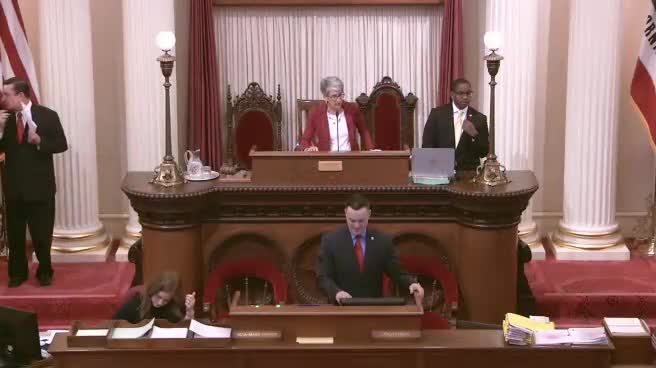 2MIN
Senate Floor
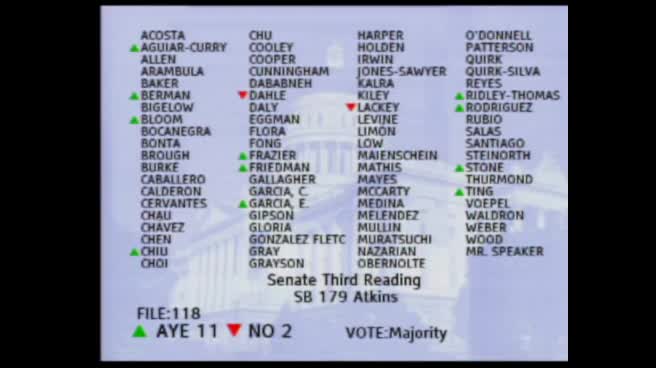 1MIN
Assembly Floor
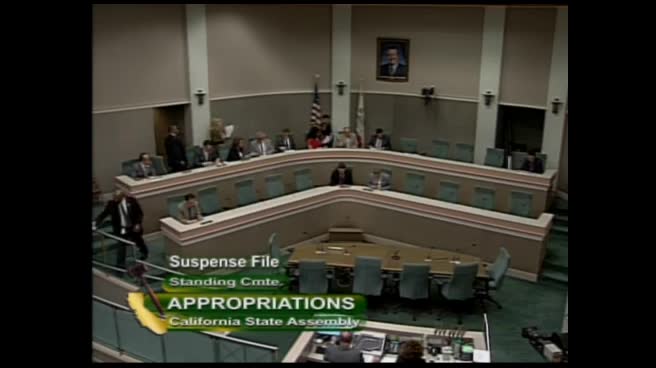 1H
Assembly Standing Committee on Appropriations
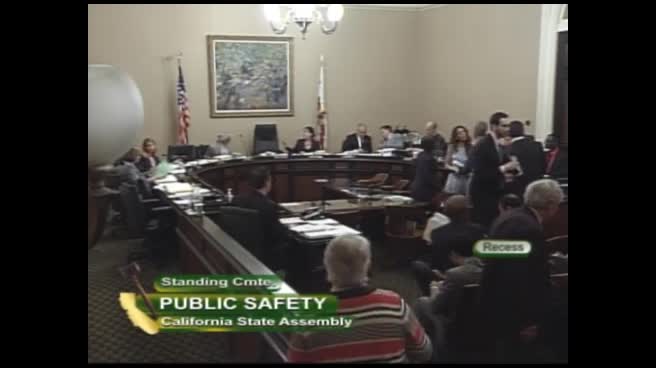 6MIN
Assembly Standing Committee on Public Safety
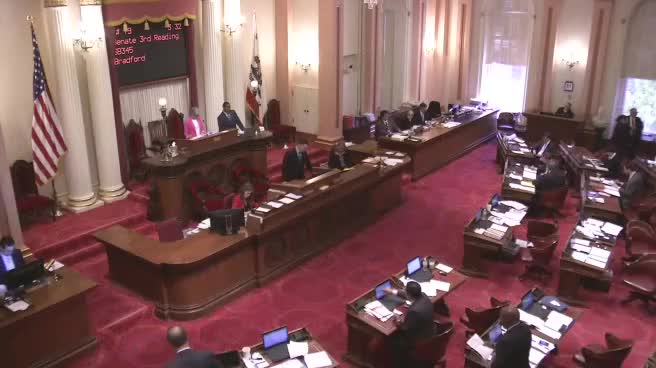 2MIN
Senate Floor
 48MIN
Senate Standing Committee on Appropriations
 1MIN
Senate Standing Committee on Appropriations
 10MIN
Senate Standing Committee on Public Safety
Bill Author

Bill Co-Author(s):