SB 360: Public social services: prosecution for overpayment or overissuance of benefits.
- Session Year: 2017-2018
- House: Senate
- Latest Version Date: 2017-09-30
Existing federal law provides for allocation of federal funds through the federal Temporary Assistance for Needy Families (TANF) block grant program to eligible states. Existing law provides for the California Work Opportunity and Responsibility to Kids (CalWORKs) program, under which, through a combination of state and county funds and federal funds received through the TANF program, each county provides cash assistance and other benefits to qualified low-income families. Existing federal law provides for the Supplemental Nutrition Assistance Program (SNAP), known in California as CalFresh, under which supplemental nutrition assistance benefits allocated to the state by the federal government are distributed to eligible individuals by each county. Existing federal law requires a state to establish an income and eligibility verification system for specified programs, including the CalWORKs and CalFresh programs, under which the information of a program applicant or recipient is matched with various databases.
Existing law establishes criminal penalties for violation of certain provisions relating to, among other offenses, willfully and knowingly, with the intent to deceive, by means of a false statement or representation, or by failing to disclose a material fact, or by impersonation or other fraudulent device, obtaining or retaining aid through designated public social services.
This bill would prohibit a person from being subject to criminal prosecution, as specified, for an overpayment or overissuance of benefits, obtained under the CalWORKs program or the CalFresh program, for any month in which the county human services agency was in receipt of any Income and Eligibility Verification System (IEVS) data match information indicating any potential for an overpayment or an overissuance and for which the county human services agency has not provided to the person a timely and adequate notice of action for the collection of the overpayment or the overissuance. The bill would provide that the county human services agency be deemed to be in receipt of the information following 45 days, or the combined total of 45 days and an authorized delay, as specified, from the date of the county human services agencys possession of that information. The bill would also make technical, nonsubstantive changes to the above provisions.
Existing federal law provides for allocation of federal funds through the federal Temporary Assistance for Needy Families (TANF) block grant program to eligible states. Existing law provides for the California Work Opportunity and Responsibility to Kids (CalWORKs) program, under which, through a combination of state and county funds and federal funds received through the TANF program, each county provides cash assistance and other benefits to qualified low-income families. Existing federal law provides for the Supplemental Nutrition Assistance Program (SNAP), known in California as CalFresh, under which supplemental nutrition assistance benefits allocated to the state by the federal government are distributed to eligible individuals by each county. Existing federal law requires a state to establish an income and eligibility verification system for specified programs, including the CalWORKs and CalFresh programs, under which the information of a program applicant or recipient is matched with various databases.
Existing law establishes criminal penalties for violation of certain provisions relating to, among other offenses, willfully and knowingly, with the intent to deceive, by means of a false statement or representation, or by failing to disclose a material fact, or by impersonation or other fraudulent device, obtaining or retaining aid through designated public social services.
This bill would prohibit a person from being subject to criminal prosecution, as specified, for an overpayment or overissuance of benefits, obtained under the CalWORKs program or the CalFresh program, for any month in which the county human services agency was in receipt of any Income and Eligibility Verification System (IEVS) data match information indicating any potential for an overpayment or an overissuance and for which the county human services agency has not provided to the person a timely and adequate notice of action for the collection of the overpayment or the overissuance. The bill would provide that the county human services agency be deemed to be in receipt of the information following 45 days, or the combined total of 45 days and an authorized delay, as specified, from the date of the countys county human services agencys possession of that information. The bill would also make technical, nonsubstantive changes to the above provisions.
Existing federal law provides for allocation of federal funds through the federal Temporary Assistance for Needy Families (TANF) block grant program to eligible states. Existing law provides for the California Work Opportunity and Responsibility to Kids (CalWORKs) program, under which, through a combination of state and county funds and federal funds received through the TANF program, each county provides cash assistance and other benefits to qualified low-income families. Existing federal law provides for the Supplemental Nutrition Assistance Program (SNAP), known in California as CalFresh, under which supplemental nutrition assistance benefits allocated to the state by the federal government are distributed to eligible individuals by each county.
Existing law establishes criminal penalties for violation of certain provisions relating to, among other offenses, willfully and knowingly, with the intent to deceive, by means of a false statement or representation, or by failing to disclose a material fact, or by impersonation or other fraudulent device, obtaining or retaining aid through designated public social services.
This bill would prohibit a person from being subject to criminal prosecution, as specified, for an overpayment or overissuance of benefits, obtained under the CalWORKs program or the CalFresh program, for any month in which the county was in receipt of any information indicating any potential for an overpayment or an overissuance and for which the county has not provided to the person a timely and adequate notice of action for the collection of the overpayment or the overissuance. The bill would provide that the county be deemed to be in receipt of the information following 45 days days, or the combined total of 45 days and an authorized delay, as specified, from the date of the countys possession of that information. The bill would also make technical, nonsubstantive changes to the above provisions.
Existing federal law provides for allocation of federal funds through the federal Temporary Assistance for Needy Families (TANF) block grant program to eligible states. Existing law provides for the California Work Opportunity and Responsibility to Kids (CalWORKs) program, under which, through a combination of state and county funds and federal funds received through the TANF program, each county provides cash assistance and other benefits to qualified low-income families. Existing federal law provides for the Supplemental Nutrition Assistance Program (SNAP), known in California as CalFresh, under which supplemental nutrition assistance benefits allocated to the state by the federal government are distributed to eligible individuals by each county.
Existing law establishes criminal penalties for violation of certain provisions relating to, among other offenses, willfully and knowingly, with the intent to deceive, by means of a false statement or representation, or by failing to disclose a material fact, or by impersonation or other fraudulent device, obtaining or retaining aid through designated public social services.
This bill would prohibit a person from being subject to criminal prosecution, as specified, for an overpayment or overissuance of benefits, obtained under the CalWORKs program or the CalFresh program, for any month in which the county was in receipt of any information indicating any potential for an overpayment or an overissuance and has not provided notice of the overpayment or the overissuance to the person. to the person a timely and adequate notice of action for the collection of the overpayment or the overissuance. The bill would provide that the county be deemed to be in receipt of the information following 45 days from the date of the countys possession of that information. The bill would also make technical, nonsubstantive changes to the above provisions.
Existing federal law provides for allocation of federal funds through the federal Temporary Assistance for Needy Families (TANF) block grant program to eligible states. Existing law provides for the California Work Opportunity and Responsibility to Kids (CalWORKs) program, under which, through a combination of state and county funds and federal funds received through the TANF program, each county provides cash assistance and other benefits to qualified low-income families. Existing federal law provides for the Supplemental Nutrition Assistance Program (SNAP), known in California as CalFresh, under which supplemental nutrition assistance benefits allocated to the state by the federal government are distributed to eligible individuals by each county.
Existing law establishes criminal penalties for violation of certain provisions relating to, among other offenses, willfully and knowingly, with the intent to deceive, by means of a false statement or representation, or by failing to disclose a material fact, or by impersonation or other fraudulent device, obtaining or retaining aid through designated public social services.
This bill would prohibit a person from being subject to criminal prosecution, as specified, for an overpayment or overissuance of benefits, obtained under the above-described designated public social services, CalWORKs program or the CalFresh program, for any month in which the county was in receipt of any information indicating the any potential for an overpayment or an overissuance before the county provided the overpayment or the overissuance. and has not provided notice of the overpayment or the overissuance to the person. The bill would also make technical, nonsubstantive changes to the above provisions.
Existing law establishes various social services programs that provide cash assistance and medical, food, and other benefits to qualified low-income families and individuals, including the California Work Opportunity and Responsibility to Kids (CalWORKs), Medi-Cal, and CalFresh programs.
Existing law establishes criminal penalties for violation of certain provisions relating to, among other offenses, willfully and knowingly, with the intent to deceive, by means of a false statement or representation, or by failing to disclose a material fact, or by impersonation or other fraudulent device, obtaining or retaining aid through designated public social services.
This bill would prohibit a person from being subject to criminal prosecution, as specified, for an overpayment or overissuance of benefits, obtained under the above-described designated public social services, for any month in which the county was in receipt of information indicating the potential for an overpayment or an overissuance before the county provided the overpayment or the overissuance.
(a)Any person who, willfully and knowingly, with the intent to deceive, makes a false statement or representation or knowingly fails to disclose a material fact in order to obtain aid under the provisions of this division or who, knowing he or she is not entitled thereto, attempts to obtain aid or to continue to receive aid to which he or she is not entitled, or to receive a larger amount than that to which he or she is legally entitled, is guilty of a misdemeanor, punishable by imprisonment in a county jail for a period of not more than six months, by a fine of not more than five hundred dollars ($500), or by both imprisonment and fine.
(b)Any person who knowingly makes more than one application for aid under the provisions of this division with the intent of establishing multiple entitlements for any person for the same period or who makes an application for that aid for a fictitious or nonexistent person or by claiming a false identity for any person is guilty of a felony, punishable by imprisonment pursuant to subdivision (h) of Section 1170 of the Penal Code for a period of 16 months, two years, or three years, by a fine of not more than five thousand dollars ($5,000), or by both that imprisonment and fine; or by imprisonment in a county jail for a period of not more than one year, or by a fine of not more than one thousand dollars ($1,000), or by both imprisonment and fine.
(c)Whenever any person has, willfully and knowingly, with the intent to deceive, by means of false statement or representation, or by failing to disclose a material fact, or by impersonation or other fraudulent device, obtained or retained aid under the provisions of this division for himself or herself or for a child not in fact entitled thereto, the person obtaining this aid shall be punished as follows:
(1)If the total amount of the aid obtained or retained is nine hundred fifty dollars ($950) or less, by imprisonment in a county jail for a period of not more than six months, by a fine of not more than five hundred dollars ($500), or by both imprisonment and fine.
(2)If the total amount of the aid obtained or retained is more than nine hundred fifty dollars ($950), by imprisonment pursuant to subdivision (h) of Section 1170 of the Penal Code for a period of 16 months, two years, or three years, by a fine of not more than five thousand dollars ($5,000), or by both that imprisonment and fine; or by imprisonment in a county jail for a period of not more than one year, by a fine of not more than one thousand dollars ($1,000), or by both imprisonment and fine.
(d)Any person who knowingly uses, transfers, acquires, or possesses blank authorizations to participate in the federal Supplemental Nutrition Assistance Program in any manner not authorized by Chapter 10 (commencing with Section 18900) of Part 6 with the intent to defraud is guilty of a felony, punishable by imprisonment pursuant to subdivision (h) of Section 1170 of the Penal Code for a period of 16 months, two years, or three years, by a fine of not more than five thousand dollars ($5,000), or by both that imprisonment and fine.
(e)Any person who counterfeits or alters or knowingly uses, transfers, acquires, or possesses counterfeited or altered authorizations to participate in the federal Supplemental Nutrition Assistance Program or to receive CalFresh benefits or electronically transferred benefits in any manner not authorized by the former federal Food Stamp Act of 1964 (Public Law 88-525 and all amendments thereto) or the federal Food and Nutrition Act of 2008 (7 U.S.C. Sec. 2011 et seq.) or the federal regulations pursuant to the act is guilty of forgery.
(f)Any person who fraudulently appropriates CalFresh benefits, electronically transferred benefits, or authorizations to participate in the federal Supplemental Nutrition Assistance Program with which he or she has been entrusted pursuant to his or her duties as a public employee is guilty of embezzlement of public funds.
(g)Any person who knowingly uses, transfers, sells, purchases, or possesses CalFresh benefits, electronically transferred benefits, or authorizations to participate in the federal Supplemental Nutrition Assistance Program in any manner not authorized by Chapter 10 (commencing with Section 18900) of Part 6, or by the former federal Food Stamp Act of 1977 (Public Law 95-113 and all amendments thereto) or the federal Food and Nutrition Act of 2008 (7 U.S.C. Sec. 2011 et seq.) (1) is guilty of a misdemeanor if the face value of the benefits or the authorizations to participate is nine hundred fifty dollars ($950) or less, and shall be punished by imprisonment in a county jail for a period of not more than six months, by a fine of not more than five hundred dollars ($500), or by both imprisonment and fine, or (2) is guilty of a felony if the face value of the CalFresh benefits or the authorizations to participate exceeds nine hundred fifty dollars ($950), and shall be punished by imprisonment pursuant to subdivision (h) of Section 1170 of the Penal Code for a period of 16 months, two years, or three years, by a fine of not more than five thousand dollars ($5,000), or by both that imprisonment and fine, or by imprisonment in a county jail for a period of not more than one year, or by a fine of not more than one thousand dollars ($1,000), or by both imprisonment and fine.
(h)(1)If the violation of subdivision (f) or (g) is committed by means of an electronic transfer of benefits, in addition and consecutive to the penalties for the violation, or attempted violation, of those subdivisions, the court shall impose the following punishment:
(A)If the electronic transfer of benefits exceeds fifty thousand dollars ($50,000), an additional term pursuant to subdivision (h) of Section 1170 of the Penal Code of one year.
(B)If the electronic transfer of benefits exceeds one hundred fifty thousand dollars ($150,000), an additional term pursuant to subdivision (h) of Section 1170 of the Penal Code of two years.
(C)If the electronic transfer of benefits exceeds one million dollars ($1,000,000), an additional term pursuant to subdivision (h) of Section 1170 of the Penal Code of three years.
(D)If the electronic transfer of benefits exceeds two million five hundred thousand dollars ($2,500,000), an additional term pursuant to subdivision (h) of Section 1170 of the Penal Code of four years.
(2)In any accusatory pleading involving multiple charges of violations of subdivision (f) or (g), or both, committed by means of an electronic transfer of benefits, the additional terms provided in paragraph (1) may be imposed if the aggregate losses to the victims from all violations exceed the amounts specified in this paragraph and arise from a common scheme or plan.
(i)A person who is punished by an additional term of imprisonment under another law for a violation of subdivision (f) or (g) shall not receive an additional term of imprisonment under subdivision (h).
(j)(1)A person shall not be subject to criminal prosecution, under this section or under any other law, for an overpayment or overissuance of benefits, obtained under the California Work Opportunity and Responsibility to Kids (CalWORKs) program (Chapter 2 (commencing with Section 11200) of Part 3) or the CalFresh program (Chapter 10 (commencing with Section 18900) of Part 6), for any month in which the county human services agency was in receipt of any Income and Eligibility Verification System (IEVS) data match information indicating any potential for an overpayment or an overissuance and for which the county human services agency has not provided to the person a timely and adequate notice of action for the collection of the overpayment or the overissuance.
(2)(A)For purposes of paragraph (1), the county human services agency shall be deemed to be in receipt of IEVS data match information indicating any potential for an overpayment or an overissuance following 45 days from the date of the county human services agencys possession of that information.
(B)Notwithstanding subparagraph (A), if the county human services agency does not complete the required actions for an IEVS data match for a CalFresh or CalWORKs applicant or recipient within 45 days of receipt of information pursuant to Section 272.8 of Title 7 of, or Section 205.56 of Title 45 of, the Code of Federal Regulations, or their successors, but is authorized to exceed the 45-day period due to exceptions provided under those regulations or under any other federal law, the county human services agency shall be deemed, for purposes of paragraph (1), to be in receipt of IEVS data match information indicating any potential for an overpayment or an overissuance following the combined total of 45 days and the authorized delay from the date of the county human services agencys possession of that information.
(a)Any person who, willfully and knowingly, with the intent to deceive, makes a false statement or representation or knowingly fails to disclose a material fact in order to obtain aid under the provisions of this division or who, knowing he or she is not entitled thereto, attempts to obtain aid or to continue to receive aid to which he or she is not entitled, or to receive a larger amount than that to which he or she is legally entitled, is guilty of a misdemeanor, punishable by imprisonment in a county jail for a period of not more than six months, by a fine of not more than five hundred dollars ($500), or by both imprisonment and fine.
(b)Any person who knowingly makes more than one application for aid under the provisions of this division with the intent of establishing multiple entitlements for any person for the same period or who makes an application for that aid for a fictitious or nonexistent person or by claiming a false identity for any person is guilty of a felony, punishable by imprisonment pursuant to subdivision (h) of Section 1170 of the Penal Code for a period of 16 months, two years, or three years, by a fine of not more than five thousand dollars ($5,000), or by both that imprisonment and fine; or by imprisonment in a county jail for a period of not more than one year, or by a fine of not more than one thousand dollars ($1,000), or by both imprisonment and fine.
(c)Whenever any person has, willfully and knowingly, with the intent to deceive, by means of false statement or representation, or by failing to disclose a material fact, or by impersonation or other fraudulent device, obtained or retained aid under the provisions of this division for himself or herself or for a child not in fact entitled thereto, the person obtaining this aid shall be punished as follows:
(1)If the total amount of the aid obtained or retained is nine hundred fifty dollars ($950) or less, by imprisonment in a county jail for a period of not more than six months, by a fine of not more than five hundred dollars ($500), or by both imprisonment and fine.
(2)If the total amount of the aid obtained or retained is more than nine hundred fifty dollars ($950), by imprisonment pursuant to subdivision (h) of Section 1170 of the Penal Code for a period of 16 months, two years, or three years, by a fine of not more than five thousand dollars ($5,000), or by both that imprisonment and fine; or by imprisonment in a county jail for a period of not more than one year, by a fine of not more than one thousand dollars ($1,000), or by both imprisonment and fine.
(d)Any person who knowingly uses, transfers, acquires, or possesses blank authorizations to participate in the federal Supplemental Nutrition Assistance Program in any manner not authorized by Chapter 10 (commencing with Section 18900) of Part 6 with the intent to defraud is guilty of a felony, punishable by imprisonment pursuant to subdivision (h) of Section 1170 of the Penal Code for a period of 16 months, two years, or three years, by a fine of not more than five thousand dollars ($5,000), or by both that imprisonment and fine.
(e)Any person who counterfeits or alters or knowingly uses, transfers, acquires, or possesses counterfeited or altered authorizations to participate in the federal Supplemental Nutrition Assistance Program or to receive CalFresh benefits or electronically transferred benefits in any manner not authorized by the former federal Food Stamp Act of 1964 (Public Law 88-525 and all amendments thereto) or the federal Food and Nutrition Act of 2008 (7 U.S.C. Sec. 2011 et seq.) or the federal regulations pursuant to the act is guilty of forgery.
(f)Any person who fraudulently appropriates CalFresh benefits, electronically transferred benefits, or authorizations to participate in the federal Supplemental Nutrition Assistance Program with which he or she has been entrusted pursuant to his or her duties as a public employee is guilty of embezzlement of public funds.
(g)Any person who knowingly uses, transfers, sells, purchases, or possesses CalFresh benefits, electronically transferred benefits, or authorizations to participate in the federal Supplemental Nutrition Assistance Program in any manner not authorized by Chapter 10 (commencing with Section 18900) of Part 6, or by the former federal Food Stamp Act of 1977 (Public Law 95-113 and all amendments thereto) or the federal Food and Nutrition Act of 2008 (7 U.S.C. Sec. 2011 et seq.) (1) is guilty of a misdemeanor if the face value of the benefits or the authorizations to participate is nine hundred fifty dollars ($950) or less, and shall be punished by imprisonment in a county jail for a period of not more than six months, by a fine of not more than five hundred dollars ($500), or by both imprisonment and fine, or (2) is guilty of a felony if the face value of the CalFresh benefits or the authorizations to participate exceeds nine hundred fifty dollars ($950), and shall be punished by imprisonment pursuant to subdivision (h) of Section 1170 of the Penal Code for a period of 16 months, two years, or three years, by a fine of not more than five thousand dollars ($5,000), or by both that imprisonment and fine, or by imprisonment in a county jail for a period of not more than one year, or by a fine of not more than one thousand dollars ($1,000), or by both imprisonment and fine.
(h)(1)If the violation of subdivision (f) or (g) is committed by means of an electronic transfer of benefits, in addition and consecutive to the penalties for the violation, or attempted violation, of those subdivisions, the court shall impose the following punishment:
(A)If the electronic transfer of benefits exceeds fifty thousand dollars ($50,000), an additional term pursuant to subdivision (h) of Section 1170 of the Penal Code of one year.
(B)If the electronic transfer of benefits exceeds one hundred fifty thousand dollars ($150,000), an additional term pursuant to subdivision (h) of Section 1170 of the Penal Code of two years.
(C)If the electronic transfer of benefits exceeds one million dollars ($1,000,000), an additional term pursuant to subdivision (h) of Section 1170 of the Penal Code of three years.
(D)If the electronic transfer of benefits exceeds two million five hundred thousand dollars ($2,500,000), an additional term pursuant to subdivision (h) of Section 1170 of the Penal Code of four years.
(2)In any accusatory pleading involving multiple charges of violations of subdivision (f) or (g), or both, committed by means of an electronic transfer of benefits, the additional terms provided in paragraph (1) may be imposed if the aggregate losses to the victims from all violations exceed the amounts specified in this paragraph and arise from a common scheme or plan.
(i)A person who is punished by an additional term of imprisonment under another law for a violation of subdivision (f) or (g) shall not receive an additional term of imprisonment under subdivision (h).
(j)(1)A person shall not be subject to criminal prosecution, under this section or under any other law, for an overpayment or overissuance of benefits, obtained under the California Work Opportunity and Responsibility to Kids (CalWORKs) program (Chapter 2 (commencing with Section 11200) of Part 3) or the CalFresh program (Chapter 10 (commencing with Section 18900) of Part 6), for any month in which the county human services agency was in receipt of any Income and Eligibility Verification System (IEVS) data match information indicating any potential for an overpayment or an overissuance and for which the county human services agency has not provided to the person a timely and adequate notice of action for the collection of the overpayment or the overissuance.
(2)(A)For purposes of paragraph (1), the county human services agency shall be deemed to be in receipt of IEVS data match information indicating any potential for an overpayment or an overissuance following 45 days from the date of the countys county human services agencys possession of that information.
(B)Notwithstanding subparagraph (A), if the county human services agency does not complete the required actions for income and eligibility verification an IEVS data match for a CalFresh or CalWORKs applicant or recipient within 45 days of receipt of information pursuant to Section 272.8 of Title 7 of, or Section 205.56 of Title 45 of, the Code of Federal Regulations, or their successors, but is authorized to exceed the 45-day period due to exceptions provided under those regulations or under any other federal law, the county human services agency shall be deemed, for purposes of paragraph (1), to be in receipt of IEVS data match information indicating any potential for an overpayment or an overissuance following the combined total of 45 days and the authorized delay from the date of the countys county human services agencys possession of that information.
(a)Any person who, willfully and knowingly, with the intent to deceive, makes a false statement or representation or knowingly fails to disclose a material fact in order to obtain aid under the provisions of this division or who, knowing he or she is not entitled thereto, attempts to obtain aid or to continue to receive aid to which he or she is not entitled, or to receive a larger amount than that to which he or she is legally entitled, is guilty of a misdemeanor, punishable by imprisonment in a county jail for a period of not more than six months, by a fine of not more than five hundred dollars ($500), or by both imprisonment and fine.
(b)Any person who knowingly makes more than one application for aid under the provisions of this division with the intent of establishing multiple entitlements for any person for the same period or who makes an application for that aid for a fictitious or nonexistent person or by claiming a false identity for any person is guilty of a felony, punishable by imprisonment pursuant to subdivision (h) of Section 1170 of the Penal Code for a period of 16 months, two years, or three years, by a fine of not more than five thousand dollars ($5,000), or by both that imprisonment and fine; or by imprisonment in a county jail for a period of not more than one year, or by a fine of not more than one thousand dollars ($1,000), or by both imprisonment and fine.
(c)Whenever any person has, willfully and knowingly, with the intent to deceive, by means of false statement or representation, or by failing to disclose a material fact, or by impersonation or other fraudulent device, obtained or retained aid under the provisions of this division for himself or herself or for a child not in fact entitled thereto, the person obtaining this aid shall be punished as follows:
(1)If the total amount of the aid obtained or retained is nine hundred fifty dollars ($950) or less, by imprisonment in a county jail for a period of not more than six months, by a fine of not more than five hundred dollars ($500), or by both imprisonment and fine.
(2)If the total amount of the aid obtained or retained is more than nine hundred fifty dollars ($950), by imprisonment pursuant to subdivision (h) of Section 1170 of the Penal Code for a period of 16 months, two years, or three years, by a fine of not more than five thousand dollars ($5,000), or by both that imprisonment and fine; or by imprisonment in a county jail for a period of not more than one year, by a fine of not more than one thousand dollars ($1,000), or by both imprisonment and fine.
(d)Any person who knowingly uses, transfers, acquires, or possesses blank authorizations to participate in the federal Supplemental Nutrition Assistance Program in any manner not authorized by Chapter 10 (commencing with Section 18900) of Part 6 with the intent to defraud is guilty of a felony, punishable by imprisonment pursuant to subdivision (h) of Section 1170 of the Penal Code for a period of 16 months, two years, or three years, by a fine of not more than five thousand dollars ($5,000), or by both that imprisonment and fine.
(e)Any person who counterfeits or alters or knowingly uses, transfers, acquires, or possesses counterfeited or altered authorizations to participate in the federal Supplemental Nutrition Assistance Program or to receive CalFresh benefits or electronically transferred benefits in any manner not authorized by the former federal Food Stamp Act of 1964 (Public Law 88-525 and all amendments thereto) or the federal Food and Nutrition Act of 2008 (7 U.S.C. Sec. 2011 et seq.) or the federal regulations pursuant to the act is guilty of forgery.
(f)Any person who fraudulently appropriates CalFresh benefits, electronically transferred benefits, or authorizations to participate in the federal Supplemental Nutrition Assistance Program with which he or she has been entrusted pursuant to his or her duties as a public employee is guilty of embezzlement of public funds.
(g)Any person who knowingly uses, transfers, sells, purchases, or possesses CalFresh benefits, electronically transferred benefits, or authorizations to participate in the federal Supplemental Nutrition Assistance Program in any manner not authorized by Chapter 10 (commencing with Section 18900) of Part 6, or by the former federal Food Stamp Act of 1977 (Public Law 95-113 and all amendments thereto) or the federal Food and Nutrition Act of 2008 (7 U.S.C. Sec. 2011 et seq.) (1) is guilty of a misdemeanor if the face value of the benefits or the authorizations to participate is nine hundred fifty dollars ($950) or less, and shall be punished by imprisonment in a county jail for a period of not more than six months, by a fine of not more than five hundred dollars ($500), or by both imprisonment and fine, or (2) is guilty of a felony if the face value of the CalFresh benefits or the authorizations to participate exceeds nine hundred fifty dollars ($950), and shall be punished by imprisonment pursuant to subdivision (h) of Section 1170 of the Penal Code for a period of 16 months, two years, or three years, by a fine of not more than five thousand dollars ($5,000), or by both that imprisonment and fine, or by imprisonment in a county jail for a period of not more than one year, or by a fine of not more than one thousand dollars ($1,000), or by both imprisonment and fine.
(h)(1)If the violation of subdivision (f) or (g) is committed by means of an electronic transfer of benefits, in addition and consecutive to the penalties for the violation, or attempted violation, of those subdivisions, the court shall impose the following punishment:
(A)If the electronic transfer of benefits exceeds fifty thousand dollars ($50,000), an additional term pursuant to subdivision (h) of Section 1170 of the Penal Code of one year.
(B)If the electronic transfer of benefits exceeds one hundred fifty thousand dollars ($150,000), an additional term pursuant to subdivision (h) of Section 1170 of the Penal Code of two years.
(C)If the electronic transfer of benefits exceeds one million dollars ($1,000,000), an additional term pursuant to subdivision (h) of Section 1170 of the Penal Code of three years.
(D)If the electronic transfer of benefits exceeds two million five hundred thousand dollars ($2,500,000), an additional term pursuant to subdivision (h) of Section 1170 of the Penal Code of four years.
(2)In any accusatory pleading involving multiple charges of violations of subdivision (f) or (g), or both, committed by means of an electronic transfer of benefits, the additional terms provided in paragraph (1) may be imposed if the aggregate losses to the victims from all violations exceed the amounts specified in this paragraph and arise from a common scheme or plan.
(i)A person who is punished by an additional term of imprisonment under another law for a violation of subdivision (f) or (g) shall not receive an additional term of imprisonment under subdivision (h).
(j)(1)A person shall not be subject to criminal prosecution, under this section or under any other law, for an overpayment or overissuance of benefits, obtained under the California Work Opportunity and Responsibility to Kids (CalWORKs) program (Chapter 2 (commencing with Section 11200) of Part 3) or the CalFresh program (Chapter 10 (commencing with Section 18900) of Part 6), for any month in which the county was in receipt of any information indicating any potential for an overpayment or an overissuance and for which the county has not provided to the person a timely and adequate notice of action for the collection of the overpayment or the overissuance.
(2)(A)For purposes of paragraph (1), the county shall be deemed to be in receipt of information indicating any potential for an overpayment or an overissuance following 45 days from the date of the countys possession of that information.
(B)Notwithstanding subparagraph (A), if the county does not complete the required actions for income and eligibility verification for a CalFresh or CalWORKs applicant or recipient within 45 days of receipt of information pursuant to Section 272.8 of Title 7 of, or Section 205.56 of Title 45 of, the Code of Federal Regulations, or their successors, but is authorized to exceed the 45-day period due to exceptions provided under those regulations or under any other federal law, the county shall be deemed, for purposes of paragraph (1), to be in receipt of information indicating any potential for an overpayment or an overissuance following the combined total of 45 days and the authorized delay from the date of the countys possession of that information.
(a)Any person who, willfully and knowingly, with the intent to deceive, makes a false statement or representation or knowingly fails to disclose a material fact in order to obtain aid under the provisions of this division or who, knowing he or she is not entitled thereto, attempts to obtain aid or to continue to receive aid to which he or she is not entitled, or to receive a larger amount than that to which he or she is legally entitled, is guilty of a misdemeanor, punishable by imprisonment in a county jail for a period of not more than six months, by a fine of not more than five hundred dollars ($500), or by both imprisonment and fine.
(b)Any person who knowingly makes more than one application for aid under the provisions of this division with the intent of establishing multiple entitlements for any person for the same period or who makes an application for that aid for a fictitious or nonexistent person or by claiming a false identity for any person is guilty of a felony, punishable by imprisonment pursuant to subdivision (h) of Section 1170 of the Penal Code for a period of 16 months, two years, or three years, by a fine of not more than five thousand dollars ($5,000), or by both that imprisonment and fine; or by imprisonment in a county jail for a period of not more than one year, or by a fine of not more than one thousand dollars ($1,000), or by both imprisonment and fine.
(c)Whenever any person has, willfully and knowingly, with the intent to deceive, by means of false statement or representation, or by failing to disclose a material fact, or by impersonation or other fraudulent device, obtained or retained aid under the provisions of this division for himself or herself or for a child not in fact entitled thereto, the person obtaining this aid shall be punished as follows:
(1)If the total amount of the aid obtained or retained is nine hundred fifty dollars ($950) or less, by imprisonment in a county jail for a period of not more than six months, by a fine of not more than five hundred dollars ($500), or by both imprisonment and fine.
(2)If the total amount of the aid obtained or retained is more than nine hundred fifty dollars ($950), by imprisonment pursuant to subdivision (h) of Section 1170 of the Penal Code for a period of 16 months, two years, or three years, by a fine of not more than five thousand dollars ($5,000), or by both that imprisonment and fine; or by imprisonment in a county jail for a period of not more than one year, by a fine of not more than one thousand dollars ($1,000), or by both imprisonment and fine.
(d)Any person who knowingly uses, transfers, acquires, or possesses blank authorizations to participate in the federal Supplemental Nutrition Assistance Program in any manner not authorized by Chapter 10 (commencing with Section 18900) of Part 6 with the intent to defraud is guilty of a felony, punishable by imprisonment pursuant to subdivision (h) of Section 1170 of the Penal Code for a period of 16 months, two years, or three years, by a fine of not more than five thousand dollars ($5,000), or by both that imprisonment and fine.
(e)Any person who counterfeits or alters or knowingly uses, transfers, acquires, or possesses counterfeited or altered authorizations to participate in the federal Supplemental Nutrition Assistance Program or to receive CalFresh benefits or electronically transferred benefits in any manner not authorized by the former federal Food Stamp Act of 1964 (Public Law 88-525 and all amendments thereto) or the federal Food and Nutrition Act of 2008 (7 U.S.C. Sec. 2011 et seq.) or the federal regulations pursuant to the act is guilty of forgery.
(f)Any person who fraudulently appropriates CalFresh benefits, electronically transferred benefits, or authorizations to participate in the federal Supplemental Nutrition Assistance Program with which he or she has been entrusted pursuant to his or her duties as a public employee is guilty of embezzlement of public funds.
(g)Any person who knowingly uses, transfers, sells, purchases, or possesses CalFresh benefits, electronically transferred benefits, or authorizations to participate in the federal Supplemental Nutrition Assistance Program in any manner not authorized by Chapter 10 (commencing with Section 18900) of Part 6, or by the former federal Food Stamp Act of 1977 (Public Law 95-113 and all amendments thereto) or the federal Food and Nutrition Act of 2008 (7 U.S.C. Sec. 2011 et seq.) (1) is guilty of a misdemeanor if the face value of the benefits or the authorizations to participate is nine hundred fifty dollars ($950) or less, and shall be punished by imprisonment in a county jail for a period of not more than six months, by a fine of not more than five hundred dollars ($500), or by both imprisonment and fine, or (2) is guilty of a felony if the face value of the CalFresh benefits or the authorizations to participate exceeds nine hundred fifty dollars ($950), and shall be punished by imprisonment pursuant to subdivision (h) of Section 1170 of the Penal Code for a period of 16 months, two years, or three years, by a fine of not more than five thousand dollars ($5,000), or by both that imprisonment and fine, or by imprisonment in a county jail for a period of not more than one year, or by a fine of not more than one thousand dollars ($1,000), or by both imprisonment and fine.
(h)(1)If the violation of subdivision (f) or (g) is committed by means of an electronic transfer of benefits, in addition and consecutive to the penalties for the violation, or attempted violation, of those subdivisions, the court shall impose the following punishment:
(A)If the electronic transfer of benefits exceeds fifty thousand dollars ($50,000), an additional term pursuant to subdivision (h) of Section 1170 of the Penal Code of one year.
(B)If the electronic transfer of benefits exceeds one hundred fifty thousand dollars ($150,000), an additional term pursuant to subdivision (h) of Section 1170 of the Penal Code of two years.
(C)If the electronic transfer of benefits exceeds one million dollars ($1,000,000), an additional term pursuant to subdivision (h) of Section 1170 of the Penal Code of three years.
(D)If the electronic transfer of benefits exceeds two million five hundred thousand dollars ($2,500,000), an additional term pursuant to subdivision (h) of Section 1170 of the Penal Code of four years.
(2)In any accusatory pleading involving multiple charges of violations of subdivision (f) or (g), or both, committed by means of an electronic transfer of benefits, the additional terms provided in paragraph (1) may be imposed if the aggregate losses to the victims from all violations exceed the amounts specified in this paragraph and arise from a common scheme or plan.
(i)A person who is punished by an additional term of imprisonment under another law for a violation of subdivision (f) or (g) shall not receive an additional term of imprisonment under subdivision (h).
(j)(1)A person shall not be subject to criminal prosecution, under this section or under any other law, for an overpayment or overissuance of benefits, obtained under the California Work Opportunity and Responsibility to Kids (CalWORKs) program (Chapter 2 (commencing with Section 11200) of Part 3) or the CalFresh program (Chapter 10 (commencing with Section 18900) of Part 6), for any month in which the county was in receipt of any information indicating any potential for an overpayment or an overissuance and has not provided notice of the overpayment or the overissuance to the person. to the person a timely and adequate notice of action for the collection of the overpayment or the overissuance.
(2)For purposes of paragraph (1), the county shall be deemed to be in receipt of information indicating any potential for an overpayment or an overissuance following 45 days from the date of the countys possession of that information.
(a)Any person who, willfully and knowingly, with the intent to deceive, makes a false statement or representation or knowingly fails to disclose a material fact in order to obtain aid under the provisions of this division or who, knowing he or she is not entitled thereto, attempts to obtain aid or to continue to receive aid to which he or she is not entitled, or to receive a larger amount than that to which he or she is legally entitled, is guilty of a misdemeanor, punishable by imprisonment in the a county jail for a period of not more than six months, by a fine of not more than five hundred dollars ($500), or by both imprisonment and fine.
(b)Any person who knowingly makes more than one application for aid under the provisions of this division with the intent of establishing multiple entitlements for any person for the same period or who makes an application for that aid for a fictitious or nonexistent person or by claiming a false identity for any person is guilty of a felony, punishable by imprisonment pursuant to subdivision (h) of Section 1170 of the Penal Code for a period of 16 months, two years, or three years, by a fine of not more than five thousand dollars ($5,000), or by both that imprisonment and fine; or by imprisonment in the a county jail for a period of not more than one year, or by a fine of not more than one thousand dollars ($1,000), or by both imprisonment and fine.
(c)Whenever any person has, willfully and knowingly, with the intent to deceive, by means of false statement or representation, or by failing to disclose a material fact, or by impersonation or other fraudulent device, obtained or retained aid under the provisions of this division for himself or herself or for a child not in fact entitled thereto, the person obtaining this aid shall be punished as follows:
(1)If the total amount of the aid obtained or retained is nine hundred fifty dollars ($950) or less, by imprisonment in the a county jail for a period of not more than six months, by a fine of not more than five hundred dollars ($500), or by both imprisonment and fine.
(2)If the total amount of the aid obtained or retained is more than nine hundred fifty dollars ($950), by imprisonment pursuant to subdivision (h) of Section 1170 of the Penal Code for a period of 16 months, two years, or three years, by a fine of not more than five thousand dollars ($5,000), or by both that imprisonment and fine; or by imprisonment in the a county jail for a period of not more than one year, by a fine of not more than one thousand dollars ($1,000), or by both imprisonment and fine.
(d)Any person who knowingly uses, transfers, acquires, or possesses blank authorizations to participate in the federal Supplemental Nutrition Assistance Program in any manner not authorized by Chapter 10 (commencing with Section 18900) of Part 6 with the intent to defraud is guilty of a felony, punishable by imprisonment pursuant to subdivision (h) of Section 1170 of the Penal Code for a period of 16 months, two years, or three years, by a fine of not more than five thousand dollars ($5,000), or by both that imprisonment and fine.
(e)Any person who counterfeits or alters or knowingly uses, transfers, acquires, or possesses counterfeited or altered authorizations to participate in the federal Supplemental Nutrition Assistance Program or to receive CalFresh benefits or electronically transferred benefits in any manner not authorized by the former federal Food Stamp Act of 1964 (Public Law 88-525 and all amendments thereto) or the federal Food and Nutrition Act of 2008 (7 U.S.C. Sec. 2011 et seq.) or the federal regulations pursuant to the act is guilty of forgery.
(f)Any person who fraudulently appropriates CalFresh benefits, electronically transferred benefits, or authorizations to participate in the federal Supplemental Nutrition Assistance Program with which he or she has been entrusted pursuant to his or her duties as a public employee is guilty of embezzlement of public funds.
(g)Any person who knowingly uses, transfers, sells, purchases, or possesses CalFresh benefits, electronically transferred benefits, or authorizations to participate in the federal Supplemental Nutrition Assistance Program in any manner not authorized by Chapter 10 (commencing with Section 18900), 18900) of Part 6, or by the former federal Food Stamp Act of 1977 (Public Law 95-113 and all amendments thereto) or the federal Food and Nutrition Act of 2008 (7 U.S.C. Sec. 2011 et seq.) (1) is guilty of a misdemeanor if the face value of the food stamp benefits or the authorizations to participate is nine hundred fifty dollars ($950) or less, and shall be punished by imprisonment in the a county jail for a period of not more than six months, by a fine of not more than five hundred dollars ($500), or by both imprisonment and fine, or (2) is guilty of a felony if the face value of the CalFresh benefits or the authorizations to participate exceeds nine hundred fifty dollars ($950), and shall be punished by imprisonment pursuant to subdivision (h) of Section 1170 of the Penal Code for a period of 16 months, two years, or three years, by a fine of not more than five thousand dollars ($5,000), or by both that imprisonment and fine, or by imprisonment in the a county jail for a period of not more than one year, or by a fine of not more than one thousand dollars ($1,000), or by both imprisonment and fine.
(h)(1)If the violation of subdivision (f) or (g) is committed by means of an electronic transfer of benefits, in addition and consecutive to the penalties for the violation, or attempted violation, of those subdivisions, the court shall impose the following punishment:
(A)If the electronic transfer of benefits exceeds fifty thousand dollars ($50,000), an additional term pursuant to subdivision (h) of Section 1170 of the Penal Code of one year.
(B)If the electronic transfer of benefits exceeds one hundred fifty thousand dollars ($150,000), an additional term pursuant to subdivision (h) of Section 1170 of the Penal Code of two years.
(C)If the electronic transfer of benefits exceeds one million dollars ($1,000,000), an additional term pursuant to subdivision (h) of Section 1170 of the Penal Code of three years.
(D)If the electronic transfer of benefits exceeds two million five hundred thousand dollars ($2,500,000), an additional term pursuant to subdivision (h) of Section 1170 of the Penal Code of four years.
(2)In any accusatory pleading involving multiple charges of violations of subdivision (f) or (g), or both, committed by means of an electronic transfer of benefits, the additional terms provided in paragraph (1) may be imposed if the aggregate losses to the victims from all violations exceed the amounts specified in this paragraph and arise from a common scheme or plan.
(i)A person who is punished by an additional term of imprisonment under another provision of law for a violation of subdivision (f) or (g) shall not receive an additional term of imprisonment under subdivision (h).
(j)A person shall not be subject to criminal prosecution, under this section or under any other law, for an overpayment or overissuance of benefits, obtained under the provisions of this division, the California Work Opportunity and Responsibility to Kids (CalWORKs) program (Chapter 2 (commencing with Section 11200) of Part 3) or the CalFresh program (Chapter 10 (commencing with Section 18900) of Part 6), for any month in which the county was in receipt of any information indicating the any potential for an overpayment or an overissuance before the county provided the overpayment or the overissuance. and has not provided notice of the overpayment or the overissuance to the person.
(a)Any person who, willfully and knowingly, with the intent to deceive, makes a false statement or representation or knowingly fails to disclose a material fact in order to obtain aid under the provisions of this division or who, knowing he or she is not entitled thereto, attempts to obtain aid or to continue to receive aid to which he or she is not entitled, or to receive a larger amount than that to which he or she is legally entitled, is guilty of a misdemeanor, punishable by imprisonment in the county jail for a period of not more than six months, by a fine of not more than five hundred dollars ($500), or by both imprisonment and fine.
(b)Any person who knowingly makes more than one application for aid under the provisions of this division with the intent of establishing multiple entitlements for any person for the same period or who makes an application for that aid for a fictitious or nonexistent person or by claiming a false identity for any person is guilty of a felony, punishable by imprisonment pursuant to subdivision (h) of Section 1170 of the Penal Code for a period of 16 months, two years, or three years, by a fine of not more than five thousand dollars ($5,000), or by both that imprisonment and fine; or by imprisonment in the county jail for a period of not more than one year, or by a fine of not more than one thousand dollars ($1,000), or by both imprisonment and fine.
(c)Whenever any person has, willfully and knowingly, with the intent to deceive, by means of false statement or representation, or by failing to disclose a material fact, or by impersonation or other fraudulent device, obtained or retained aid under the provisions of this division for himself or herself or for a child not in fact entitled thereto, the person obtaining this aid shall be punished as follows:
(1)If the total amount of the aid obtained or retained is nine hundred fifty dollars ($950) or less, by imprisonment in the county jail for a period of not more than six months, by a fine of not more than five hundred dollars ($500), or by both imprisonment and fine.
(2)If the total amount of the aid obtained or retained is more than nine hundred fifty dollars ($950), by imprisonment pursuant to subdivision (h) of Section 1170 of the Penal Code for a period of 16 months, two years, or three years, by a fine of not more than five thousand dollars ($5,000), or by both that imprisonment and fine; or by imprisonment in the county jail for a period of not more than one year, by a fine of not more than one thousand dollars ($1,000), or by both imprisonment and fine.
(d)Any person who knowingly uses, transfers, acquires, or possesses blank authorizations to participate in the federal Supplemental Nutrition Assistance Program in any manner not authorized by Chapter 10 (commencing with Section 18900) of Part 6 with the intent to defraud is guilty of a felony, punishable by imprisonment pursuant to subdivision (h) of Section 1170 of the Penal Code for a period of 16 months, two years, or three years, by a fine of not more than five thousand dollars ($5,000), or by both that imprisonment and fine.
(e)Any person who counterfeits or alters or knowingly uses, transfers, acquires, or possesses counterfeited or altered authorizations to participate in the federal Supplemental Nutrition Assistance Program or to receive CalFresh benefits or electronically transferred benefits in any manner not authorized by the federal Food Stamp Act of 1964 (Public Law 88-525 and all amendments thereto) or the federal Food and Nutrition Act of 2008 (7 U.S.C. Sec. 2011 et seq.) or the federal regulations pursuant to the act is guilty of forgery.
(f)Any person who fraudulently appropriates CalFresh benefits, electronically transferred benefits, or authorizations to participate in the federal Supplemental Nutrition Assistance Program with which he or she has been entrusted pursuant to his or her duties as a public employee is guilty of embezzlement of public funds.
(g)Any person who knowingly uses, transfers, sells, purchases, or possesses CalFresh benefits, electronically transferred benefits, or authorizations to participate in the federal Supplemental Nutrition Assistance Program in any manner not authorized by Chapter 10 (commencing with Section 18900), of Part 6, or by the federal Food Stamp Act of 1977 (Public Law 95-113 and all amendments thereto) or the Food and Nutrition Act of 2008 (7 U.S.C. Sec. 2011 et seq.) (1) is guilty of a misdemeanor if the face value of the food stamp benefits or the authorizations to participate is nine hundred fifty dollars ($950) or less, and shall be punished by imprisonment in the county jail for a period of not more than six months, by a fine of not more than five hundred dollars ($500), or by both imprisonment and fine, or (2) is guilty of a felony if the face value of the CalFresh benefits or the authorizations to participate exceeds nine hundred fifty dollars ($950), and shall be punished by imprisonment pursuant to subdivision (h) of Section 1170 of the Penal Code for a period of 16 months, two years, or three years, by a fine of not more than five thousand dollars ($5,000), or by both that imprisonment and fine, or by imprisonment in the county jail for a period of not more than one year, or by a fine of not more than one thousand dollars ($1,000), or by both imprisonment and fine.
(h)(1)If the violation of subdivision (f) or (g) is committed by means of an electronic transfer of benefits, in addition and consecutive to the penalties for the violation, or attempted violation, of those subdivisions, the court shall impose the following punishment:
(A)If the electronic transfer of benefits exceeds fifty thousand dollars ($50,000), an additional term pursuant to subdivision (h) of Section 1170 of the Penal Code of one year.
(B)If the electronic transfer of benefits exceeds one hundred fifty thousand dollars ($150,000), an additional term pursuant to subdivision (h) of Section 1170 of the Penal Code of two years.
(C)If the electronic transfer of benefits exceeds one million dollars ($1,000,000), an additional term pursuant to subdivision (h) of Section 1170 of the Penal Code of three years.
(D)If the electronic transfer of benefits exceeds two million five hundred thousand dollars ($2,500,000), an additional term pursuant to subdivision (h) of Section 1170 of the Penal Code of four years.
(2)In any accusatory pleading involving multiple charges of violations of subdivision (f) or (g), or both, committed by means of an electronic transfer of benefits, the additional terms provided in paragraph (1) may be imposed if the aggregate losses to the victims from all violations exceed the amounts specified in this paragraph and arise from a common scheme or plan.
(i)A person who is punished by an additional term of imprisonment under another provision of law for a violation of subdivision (f) or (g) shall not receive an additional term of imprisonment under subdivision (h).
(j)A person shall not be subject to criminal prosecution, under this section or under any other law, for an overpayment or overissuance of benefits, obtained under the provisions of this division, for any month in which the county was in receipt of information indicating the potential for an overpayment or an overissuance before the county provided the overpayment or the overissuance.
|
Date
|
Status
|
|---|---|
| Sep 30, 2017 | Chaptered by Secretary of State. Chapter 390, Statutes of 2017. |
| Sep 30, 2017 | Approved by the Governor. |
| Sep 11, 2017 | Enrolled and presented to the Governor at 4 p.m. |
| Sep 5, 2017 | Assembly amendments concurred in. (Ayes 40. Noes 0.) Ordered to engrossing and enrolling. |
| Sep 1, 2017 | Ordered to special consent calendar. |
| Aug 31, 2017 | In Senate. Concurrence in Assembly amendments pending. |
| Aug 31, 2017 | Read third time. Passed. Ordered to the Senate. |
| Aug 24, 2017 | Read second time. Ordered to consent calendar. |
| Aug 23, 2017 | From committee: Do pass. Ordered to consent calendar. (Ayes 15. Noes 0.) (August 23). |
| Jul 12, 2017 | From committee: Do pass and re-refer to Com. on APPR. (Ayes 7. Noes 0.) (July 11). Re-referred to Com. on APPR. |
| Jul 5, 2017 | From committee with author's amendments. Read second time and amended. Re-referred to Com. on HUM. S. |
| Jun 27, 2017 | June 27 set for first hearing canceled at the request of author. |
| Jun 13, 2017 | June 13 hearing postponed by committee. |
| Jun 5, 2017 | From committee with author's amendments. Read second time and amended. Re-referred to Com. on HUM. S. |
| May 22, 2017 | Referred to Com. on HUM. S. |
| May 1, 2017 | In Assembly. Read first time. Held at Desk. |
| May 1, 2017 | Read third time. Passed. (Ayes 37. Noes 0. Page 904.) Ordered to the Assembly. |
| Apr 25, 2017 | Read second time. Ordered to third reading. |
| Apr 24, 2017 | From committee: Be ordered to second reading pursuant to Senate Rule 28.8. |
| Apr 17, 2017 | From committee with author's amendments. Read second time and amended. Re-referred to Com. on APPR. |
| Apr 13, 2017 | Set for hearing April 24. |
| Apr 13, 2017 | April 17 hearing postponed by committee. |
| Apr 5, 2017 | Set for hearing April 17. |
| Mar 28, 2017 | From committee: Do pass and re-refer to Com. on APPR. (Ayes 4. Noes 0.) (March 28). Re-referred to Com. on APPR. |
| Mar 21, 2017 | From committee with author's amendments. Read second time and amended. Re-referred to Com. on HUMAN S. |
| Mar 1, 2017 | Set for hearing March 28. |
| Feb 23, 2017 | Referred to Com. on HUMAN S. |
| Feb 15, 2017 | From printer. May be acted upon on or after March 17. |
| Feb 14, 2017 | Introduced. Read first time. To Com. on RLS. for assignment. To print. |
|
Date
|
Description
|
Location
|
Votes
|
|
|---|---|---|---|---|
| Sep 5, 2017 | Special Consent SB360 | Senate Floor |
Passed |
|
| Aug 31, 2017 | SB 360 Skinner Consent Calendar Second Day Regular Session | Assembly Floor |
Passed |
|
| Aug 23, 2017 | Do pass. To Consent Calendar. | Assembly Standing Committee on Appropriations |
Passed |
|
| Jul 11, 2017 | Do pass and be re-referred to the Committee on [Appropriations] | Assembly Standing Committee on Human Services |
Passed |
|
| May 1, 2017 | Senate 3rd Reading SB360 Skinner | Senate Floor |
Passed |
|
| Mar 28, 2017 | Do pass, but first be re-referred to the Committee on [Appropriations] | Senate Standing Committee on Human Services |
Passed |
This list shows positions taken on this bill by organizations on the date displayed, which is linked to the original source.
Positions by individuals are not included.
|
Organization
|
Position
|
Date
|
|---|---|---|
| American Federation of State, County and Municipal Employees | ** Support | Aug 31, 2017 |
| Association of California Regional Center Agencies | * Support | Jul 11, 2017 |
| California Catholic Conference | ** Support | Aug 31, 2017 |
| California Food Policy Advocates | ** Support | Aug 31, 2017 |
| Coalition of California Welfare Rights Organizations, Inc. | ** Support | Aug 31, 2017 |
| Legal Services of Northern California | * Support | Jul 11, 2017 |
| National Association Of Social Workers, California Chapter | * Support | Jul 11, 2017 |
| western center on law and poverty | * Support | Jul 11, 2017 |
Office of Senate Floor Analyses (916) 651-1520 Fax: (916) 327-4478 | SB |
UNFINISHED BUSINESS
Bill No: SB 360
:
SENATE HUMAN SERVICES COMMITTEE: 4-0, 3/28/17
AYES: Wiener, Glazer, Newman, Nguyen
NO VOTE RECORDED: Berryhill
SENATE APPROPRIATIONS COMMITTEE: Senate Rule 28.8
SENATE FLOOR: 37-0, 5/1/17
AYES: Allen, Anderson, Atkins, Bates, Beall, Bradford, Cannella, De León, Dodd, Fuller, Gaines, Galgiani, Glazer, Hernandez, Hertzberg, Hill, Hueso, Jackson, Lara, McGuire, Mendoza, Mitchell, Monning, Moorlach, Morrell, Newman, Nguyen, Nielsen, Pan, Portantino, Skinner, Stern, Stone, Vidak, Wieckowski, Wiener, Wilk
NO VOTE RECORDED: Berryhill, Leyva, Roth
ASSEMBLY FLOOR: 73-0, 8/31/17 (Consent) - See last page for vote
SOURCE: Coalition of California Welfare Rights Organizations, Inc.
DIGEST: This bill exempts an individual from criminal prosecution for overpayment or overissuance of California Work Opportunity and Responsibility to Kids (CalWORKs) or CalFresh benefits for any month in which the county human services agency was in receipt of Income and Eligibility Verification (IEVS) data match information indicating such overpayment or overissuance but had not provided timely and adequate notice to the individual.
Assembly Amendments clarify the point in time when a county human services agency is deemed to be in receipt of IEVS information.
ANALYSIS:
Existing law:
- Establishes under federal law the Supplemental Nutrition Assistance Program (SNAP) within the US Department of Agriculture to promote the general welfare and to safeguard the health and wellbeing of the nation’s population by raising the levels of nutrition among low-income households. It establishes SNAP eligibility requirements, including income that is at or below 130 percent of the federal poverty level and is determined to be a substantial limiting factor in permitting a recipient to obtain a more nutritious diet.
- Establishes in California statute the CalFresh program to administer the provisions of federal SNAP benefits to low-income families and individuals meeting specified criteria.
- Establishes the federal Temporary Assistance for Needy Families (TANF) program, which permits states to implement the program under a state plan.
- Establishes in state law the CalWORKs program to provide cash assistance and other social services for low-income families through the federal TANF program. Under CalWORKs, each county provides assistance through a combination of state, county and federal TANF funds.
- Establishes criminal penalties for violation of certain provisions relating to, among other offenses, willfully and knowingly, with the intent to deceive, by means of a false statement or representation, or by failing to disclose a material fact, or by impersonation or other fraudulent device, obtaining or retaining aid through the CalWORKs, CalFresh or Medi-Cal programs.
- Establishes a process for recovering CalFresh overissuances caused by intentional program violation, fraud, or inadvertent household error.
This bill:
- Stipulates that a person shall not be subject to criminal prosecution for an overpayment of CalWORKs benefits or overissuance of CalFresh benefits, as specified, for any month in which the county human services agency:
- Was in receipt of any IEVS data match information indicating a potential for overpayment or overissuance; and
- Has not provided a timely and adequate notice of action for the collection of the overpayment or overissuance.
- Specifies, for purposes of this bill, that a county human services agency shall be deemed to be in receipt of IEVS data match information indicating any potential for an overpayment or overissuance following 45 days, or 45 days plus any authorized delay, as specified, from the date of the county human services agency’s possession of that information.
Background
According to the author, failure in the welfare system to process information in a timely manner can lead to overpayments and trouble for single and low-income parents. This bill makes sure that if a parent receives a welfare overpayment – and the county knew about it or should have known about it – the county can’t use this to take a parent to court, per the author. This bill provides that any overpayment of any month that the county knew or should have known of its existence cannot be used for prosecution purposes, but the county can still collect the overpayment, the author states.
Poverty
According to the official poverty measure, nearly six million (15.3 percent) Californians lived in poverty in 2015. According to the supplemental poverty measure, a more refined measure that takes into account cost of food, clothing and shelter and utilities and other factors, eight million (20.6 percent) Californians lived in poverty in 2015.
In California, there are a number of programs designed to serve the needs of low-income people. This bill addresses two such programs: CalWORKs and CalFresh. CalFresh provides food benefits to approximately 4.3 million people within about two million households. CalWORKs provides cash benefits and employment related services to almost 500,000 families.
CalWORKs
The CalWORKs program provides monthly income assistance and employment-related services aimed at moving children out of poverty and helping families meet basic needs. CalWORKs components include education, employment, and training programs. The CalWORKs program is funded with a mix of federal TANF money, state, and county funds. The California Department of Social Services (CDSS) is the designated state agency responsible for program supervision at the state level. The counties are responsible for administering the caseloads at the local level.
In order to be eligible for CalWORKs, families must meet income and asset tests of no more than $2,250 in savings ($3,250 where the assistance unit includes at least one member who is disabled or aged 60 or older), excluding education and retirement plans plus one car worth $9,500 or less or that was received as a gift or family transfer or donation. In addition, children must be deprived of parental support and care due to the incapacity, death or absence of a parent or unemployment of the principal wage-earner. Persons fleeing to avoid prosecution, custody or confinement after conviction of a felony are not eligible for CalWORKs.
The average monthly cash grant for a family of three on CalWORKs (one parent and two children) in Fiscal Year 2016-17 is estimated at $514, and the maximum monthly grant amount for a family of three, if the family has no other income and lives in a high-cost county, is $714. According to recent data from CDSS, around 485,850 families rely on CalWORKs. Nearly 60 percent of cases include children under six years old.
CalFresh
CalFresh provides qualified low-income households with EBT [electronic benefit transfer] cards which are used to purchase food and seeds or plants that grow food for human consumption. CalFresh is California’s version of the federal SNAP program. It is administered by CDSS at the state level. California’s 58 counties are responsible for administering the program at the local level. CalFresh benefits are 100% federally funded and national eligibility standards and benefit levels are established by the federal government.
To participate in CalFresh, households must meet certain income-eligibility standards. Generally, households must have gross income below 130% of the federal poverty level (FPL), which is $26,208 for a family of three, and net income (after certain deductions) at or below 100% FPL, which is $20,160 for a family of three. A household with an elderly person or a person who is receiving certain types of disability payments only has to meet the net income test.
CalFresh benefit levels are based on the household size and income after certain deductions. The average monthly CalFresh benefit in FY 2016-17 is projected at $293 per household and $140 per person.
Overissuances and Overpayments
CalFresh and CalWORKs benefit recipients are required to notify the county welfare office when their income levels change. Counties can receive information about potential overpayments or overissuances from a variety of sources. The IEVS is an automated program that pulls data from a variety of sources, such as employment departments and the Internal Revenue Service, which produces reports that county welfare offices use to verify current and ongoing eligibility for benefits. IEVS is a federally mandated system that matches the applicant’s or recipient’s name and Social Security number with various databases.
If a county welfare office receives information from IEVS, or any other source, that indicates a recipient’s eligibility may have changed due to an increase in income, the county is required to notify the recipient and request a response from the recipient. Benefits may be terminated or reduced based on verified IEVS reports, but not before the recipient is provided notice and opportunity to respond.
There are systems in place to collect overisusances or overpayments of CalFresh and CalWORK benefits, including reduction of benefits over a period of time until total overpayment is collected. In extreme cases of overpayment that constitute fraud, the recipient could face criminal prosecution. By law, benefit recipients who willfully and knowingly, with the intent to deceive, by means of a false statement or representation, or by failing to disclose a material fact, or by impersonation or other fraudulent device, obtain or retain aid through the CalFresh or CalWORKs programs are subject to criminal penalties.
According to CDSS, there were 1,105 criminal cases filed alleging fraud in the CalWORKs program in Fiscal Year 2015-16 and 745 criminal cases were filed alleging fraud in the CalFresh Program, the same year.
Related/Prior Legislation
SB 1023 (Budget and Fiscal Review Committee, Chapter 43, Statutes of 2012) provided the statutory changes necessary to implement the Public Safety Realignment portions of the 2012 Budget Act.
FISCAL EFFECT: Appropriation: No Fiscal Com.: Yes Local: No
According to the Assembly Appropriations Committee, this bill will have negligible state fiscal impact because it exempts individuals from criminal prosecution. However there are potential savings to the local criminal justice system. The bill does not, however, interfere with a county's ability to recover an overpayment or overissuance.
Coalition of California Welfare Rights Organizations, Inc. (source)
American Federation of State, County and Municipal Employees
California Catholic Conference
California Food Policy Advocates
OPPOSITION: (Verified 8/31/17)
None received
ASSEMBLY FLOOR: 73-0, 8/31/17
AYES: Acosta, Aguiar-Curry, Travis Allen, Arambula, Baker, Berman, Bigelow, Bocanegra, Bonta, Brough, Caballero, Calderon, Cervantes, Chau, Chávez, Chen, Chiu, Choi, Chu, Cooley, Cooper, Cunningham, Dababneh, Dahle, Daly, Eggman, Flora, Fong, Frazier, Friedman, Gallagher, Gipson, Gloria, Gonzalez Fletcher, Gray, Grayson, Harper, Holden, Irwin, Jones-Sawyer, Kalra, Kiley, Lackey, Levine, Limón, Low, Maienschein, Mathis, Mayes, McCarty, Medina, Melendez, Mullin, Muratsuchi, Nazarian, Obernolte, O'Donnell, Patterson, Quirk, Reyes, Rodriguez, Rubio, Salas, Santiago, Steinorth, Mark Stone, Thurmond, Ting, Voepel, Waldron, Weber, Wood, Rendon
NO VOTE RECORDED: Bloom, Burke, Cristina Garcia, Eduardo Garcia, Quirk-Silva, Ridley-Thomas
8/31/17 18:23:25
**** END ****
Date of Hearing: August 23, 2017
ASSEMBLY COMMITTEE ON APPROPRIATIONS
Lorena Gonzalez Fletcher, Chair
SBPCA Bill Id:SB 360
Author:(Skinner) – As Amended Ver:July 5, 2017
Policy Committee: | Human Services | Vote: | 7 - 0 |
Urgency: No State Mandated Local Program: No Reimbursable: No
SUMMARY:
This bill exempts an individual from criminal prosecution for overpayment or overissuance of California Work Opportunity and Responsibility to Kids (CalWORKs) or CalFresh benefits for any month in which the county human services agency was in receipt of Income and Eligibility Verification (IEVS) data match information indicating such overpayment or overissuance but had not provided timely and adequate notice to the individual.
For purposes of this bill, a county human services agency is deemed to be in receipt of IEVS data match information indicating any potential for an overpayment or overissuance following 45 days, or 45 days plus any authorized delay, as specified, from the date of the county human services agency’s possession of that information.
FISCAL EFFECT:
Negligible state fiscal impact. Because this bill exempts individuals from criminal prosecution, there are potential savings to the local criminal justice system. The bill does not, however, interfere with a county's ability to recover an overpayment or overissuance.
COMMENTS:
- Purpose. According to the author, “Failure in the welfare system can lead to overpayments and trouble for single-parents. [This bill] makes sure that if a parent receives a welfare overpayment – and the county knew about it or should have known about it – the county can’t use this to take a parent to court. [This bill] simply provides that any overpayment of any month that the county knew or should have known cannot be used for prosecution purposes, but the county can still collect the overpayment.”
- Background. Existing law prohibits recipients of certain public benefits, including CalWORKs and CalFresh, from knowingly trying to acquire benefits with the intent to deceive by giving false or incomplete information, submitting duplicate applications for aid, or using, transferring, selling, purchasing, or possessing CalFresh benefits for which they are not authorized. Current law also establishes penalties for these actions, including, in severe cases, felony charges.
Recipients of CalWORKs and CalFresh must report household income on a semi-annual or annual basis. Additionally, they must report any time their household income exceeds set “income reporting thresholds.” Counties also receive information regarding changes in household income and potentially unreported income through a variety of sources, including IEVS. This computerized information system performs data matches against several different agency databases, including those maintained by the Internal Revenue Service, Employment Development Department, and Franchise Tax Board. When a county receives information via IEVS that indicates a potential overpayment or overissuance of benefits to a recipient, that recipient may have his or her benefits reduced or terminated. However, the county must first provide notification to, and request response from, a recipient prior to taking these actions. Depending upon the nature and amount of overpayment or overissuance in question, a recipient found to have knowingly participated in certain acts leading to overpayment or overissuance of benefits may be subject to criminal charges up to and including a felony.
The Department of Social Services reports that, in Fiscal Year 2015-16, there were a total of 2,817 CalWORKS overpayments/CalFresh overissuances referred for prosecution (1,605 for CalWORKs/CalFresh households and 1,212 for Non-Assistance CalFresh households). There were 1,419 convictions for overpayments/overissuances in that same year: 833 for CalWORKs households (742 also involved CalFresh overissuances) and 586 for Non-Assistance CalFresh households.
This bill prohibits a county from prosecuting parents for overpayments caused by the welfare system, but does not interfere with a county's ability to recover the overpayments.
Analysis Prepared by: Jennifer Swenson / APPR. / (916) 319-2081
Date of Hearing: July 11, 2017
ASSEMBLY COMMITTEE ON HUMAN SERVICES
Blanca Rubio, Chair
SBPCA Bill Id:SB 360
Author:(Skinner) – As Amended Ver:July 5, 2017
SENATE VOTE: 37-0
SUBJECT: Public social services: prosecution for overpayment or overissuance of benefits
SUMMARY: Exempts an individual from criminal prosecution for overpayment or overissuance of California Work Opportunity and Responsibility to Kids (CalWORKs) or CalFresh benefits for any month in which the county human services agency was in receipt of Income and Eligibility Verification (IEVS) data match information indicating such overpayment or overissuance but had not provided timely and adequate notice to the individual.
Specifically, this bill:
- Stipulates that a person shall not be subject to criminal prosecution for an overpayment of CalWORKs benefits or overissuance of CalFresh benefits, as specified, for any month in which the county human services agency:
- Was in receipt of any IEVS data match information indicating a potential for overpayment or overissuance; and
- Has not provided a timely and adequate notice of action for the collection of the overpayment or overissuance.
- Specifies, for purposes of this bill, that a county human services agency shall be deemed to be in receipt of IEVS data match information indicating any potential for an overpayment or overissuance following 45 days, or 45 days plus any authorized delay, as specified, from the date of the county human services agency’s possession of that information.
- Makes technical changes.
EXISTING LAW:
- Establishes under federal law the Temporary Assistance for Needy Families (TANF) program to provide aid and welfare-to-work services to eligible families and, in California, provides that TANF funds for welfare-to-work services are administered through the CalWORKs program. (42 U.S.C. 601 et seq., WIC 11200 et seq.)
- Establishes income, asset, and real property limits used to determine eligibility for the CalWORKs program, including net income below the Maximum Aid Payment (MAP), based on family size and county of residence. (WIC 11150 to 11160, 11450 et seq.)
- Establishes a 48-month lifetime limit on CalWORKs benefits for eligible adults, including a period beyond the “24 month clock” during which a recipient must meet federal work requirements in order to retain eligibility. (WIC 11454, 11322.85)
- Requires all individuals 16 years of age or older, unless they are otherwise exempt, to participate in welfare-to-work activities as a condition of eligibility for CalWORKs. (WIC 11320.3, 11322.6)
- Establishes the number of weekly hours of welfare-to-work participation necessary to remain eligible for aid, including requirements for an unemployed parent in a two-parent assistance unit, as specified. (WIC 11322.8)
- Defines disability-based unearned income, within the CalWORKs program, as state disability insurance benefits, private disability insurance benefits, temporary workers’ compensation benefits, social security disability benefits, and any veteran’s disability compensation. (WIC 11451.5)
- Defines earned income as gross income received as wages, salary, employer-provided sick leave benefits, commissions, or profits from activities such as a business enterprise or farming in which the recipient is engaged as a self-employed individual or as an employee. (WIC 11451.5)
- Establishes under federal law the Supplemental Nutrition Assistance Program (SNAP) pursuant to the Food Stamp Act of 1964 and establishes, in California statute, the CalFresh program to administer the provision of federal SNAP benefits to families and individuals meeting certain criteria, as specified. (WIC 18900 et seq.)
- Establishes the Electronic Benefits Transfer (EBT) Act, and defines the EBT system as the program designed to provide benefits to those eligible to receive public assistance benefits such as CalWORKs and CalFresh. (WIC 10065 et seq.)
- Stipulates criminal penalties for individuals who, among other things, make false statements or engage in impersonation in order to obtain CalWORKs, CalFresh, or Medi-Cal aid or submit duplicate applications for such aid, as specified. (WIC 10980)
FISCAL EFFECT: Unknown.
COMMENTS:
CalWORKs: The CalWORKs program provides monthly income assistance and employment-related services aimed at moving children out of poverty and helping families meet basic needs. Federal funding for CalWORKs comes from the TANF block grant. The average 2016-17 monthly CalWORKs cash grant is $533.67 per household, and the maximum monthly grant amount for a family of three, if the family has no other income and lives in a high-cost county, is currently $714, yielding an amount of $8,568 per year. The current federal poverty threshold for a family of three is $20,420 per year. According to recent data from the Department of Social Services (DSS), over 508,000 families rely on CalWORKs, including close to one million children.
Welfare-to-work activities within the CalWORKs program include public or private sector subsidized or unsubsidized employment; on-the-job training; community service; secondary school, adult basic education and vocational education and training when the education is needed for the recipient to become employed; specific mental health, substance abuse, or domestic violence services if they are necessary to obtain or retain employment; and a number of other activities necessary to assist a recipient in obtaining unsubsidized employment.
Unless they are exempt, single parent adults with a child under the age of 6 must participate for 20 hours per week in welfare-to-work activities, single parent adults with no children under 6 years old must participate for at least 30 hours per week in welfare-to-work activities, and the minimum participation requirement for two-parent families is 35 hours per week. After receiving aid for up to a maximum of 24 months, adults without an exemption must meet federal work requirements, with more restrictive employment settings and allowable employment activities. If a CalWORKs recipient who is not exempt from participation does not meet his or her welfare-to-work requirements, the recipient is sanctioned for noncompliance, and that recipient’s portion of the family’s grant is subtracted from the amount provided to the family to meet basic needs.
CalFresh: CalFresh benefits are funded entirely by the federal government through the Supplemental Nutrition Assistance Program (SNAP), and the United States Department of Agriculture (USDA) sets specific eligibility requirements for SNAP programs across the United States, including a gross and net income test, work requirements, and other documentation requirements. The maximum allowable gross income is 200% of the Federal Poverty Level (FPL). Households with elderly or disabled members are not subject to gross income criteria but must have a net monthly income at or below 100% of the FPL. Other households must meet both gross and net monthly income tests. CalFresh is administered locally by county human services agencies, and the federal, state, and county governments share in the cost of administration of the program.
Benefits are made available on a monthly basis for food purchase through an ATM-like electronic benefits transfer (EBT) card. However, unlike other types of benefits that may be accessed through an EBT card, CalFresh benefits cannot be withdrawn in cash at point-of-sale terminals or at ATM machines. CalFresh benefits can only be used to purchase food items to be prepared and consumed at home, as well as seeds and plants that can be grown at home and produce food. The average monthly benefit for a CalFresh recipient is $149.05 per month, or $4.96 per person per day.
Overpayments and overissuances: State law (Welfare and Institutions Code Section 10980) prohibits recipients of certain public benefits, including CalWORKs and CalFresh, from knowingly trying to acquire (or also, with CalFresh benefits, sell) benefits with the intent to deceive by, among other things: giving false or incomplete information, submitting duplicate applications for aid, or using, transferring, selling, purchasing, or possessing CalFresh benefits for which they are not authorized. WIC Section 10980 also establishes penalties associated with these actions; in some instances, if the total amount of aid obtained or retained or the amount of food stamps used, transferred, sold, purchased or possessed in an unauthorized fashion exceeds a value of $950, the individual found guilty of committing such an action could face felony charges.
Recipients of CalWORKs and CalFresh must report household income on a semi-annual or annual basis. Additionally, they must report anytime their household income exceeds set “income reporting thresholds.” Counties also receive information regarding changes in household income and potentially unreported income through a variety of sources, including IEVS. This computerized information system performs data matches against several different agency databases, including those maintained by the Internal Revenue Service, Employment Development Department, and Franchise Tax Board. When a county receives information via IEVS that indicates a potential overpayment or overissuance of benefits to a recipient, that recipient faces the possibility of having his or her benefits reduced or terminated. However, the county must first provide notification to, and request response from, a recipient prior to taking these actions. As noted above, depending upon the nature and amount of overpayment or overissuance in question, a recipient found to have knowingly participated in certain acts leading to overpayment or overissuance of benefits may be subject to criminal charges up to and including a felony.
DSS reports that, in Fiscal Year 2015-16, there were a total of 2,817 CalWORKS overpayments/CalFresh overissuances referred for prosecution (1,605 were for CalWORKs/CalFresh households and 1,212 were for Non-Assistance CalFresh households [CalFresh households that do not receive CalWORKs]). There were 1,419 convictions for overpayments/overissuances in that same year: 833 for CalWORKs households (742 also involved CalFresh overissuances) and 586 for Non-Assistance CalFresh households.
Need for this bill: According to the author, “Failure in the welfare system can lead to overpayments and trouble for single-parents. [This bill] makes sure that if a parent receives a welfare overpayment – and the county knew about it or should have known about it – the county can’t use this to take a parent to court. [This bill] simply provides that any overpayment of any month that the county knew or should have known cannot be used for prosecution purposes, but the county can still collect the overpayment.”
REGISTERED SUPPORT / OPPOSITION:
Support
Coalition of California Welfare Rights Organizations, Inc. (Sponsor)
American Federation of State, County and Municipal Employees
National Association of Social Workers, CA Chapter (NASW-CA)
California Catholic Conference
California Food Policy Advocates
Opposition
None on file.
Analysis Prepared by: Daphne Hunt / HUM. S. / (916) 319-2089
Office of Senate Floor Analyses (916) 651-1520 Fax: (916) 327-4478 | SB |
THIRD READING
Bill No: SB 360
:
SENATE HUMAN SERVICES COMMITTEE: 4-0, 3/28/17
AYES: Wiener, Glazer, Newman, Nguyen
NO VOTE RECORDED: Berryhill
SENATE APPROPRIATIONS COMMITTEE: Senate Rule 28.8
SOURCE: Coalition of California Welfare Rights Organizations
DIGEST: This bill prohibits a person from being subject to criminal prosecution, as specified, for an overpayment or overissuance of CalFresh or California Work Opportunity and Responsibility to Kids (CalWORKs) benefits if the county is in receipt of any information indicating any potential for an overpayment or overissuance but the county has not notified the benefit recipient of the overpayment or overissuance.
Existing law:
- Establishes under federal law the Supplemental Nutrition Assistance Program (SNAP) within the US Department of Agriculture to promote the general welfare and to safeguard the health and wellbeing of the nation’s population by raising the levels of nutrition among low-income households. It establishes SNAP eligibility requirements, including income that is at or below 130 percent of the federal poverty level and is determined to be a substantial limiting factor in permitting a recipient to obtain a more nutritious diet. (7 CFR 271.1; 7 CFR 273.9)
- Establishes in California statute the CalFresh program to administer the provisions of federal SNAP benefits to low-income families and individuals meeting specified criteria. (WIC 18900 et seq.)
- Establishes the federal Temporary Assistance for Needy Families (TANF) program, which permits states to implement the program under a state plan. (42 USC § 601 et seq.)
- Establishes in state law the CalWORKs program to provide cash assistance and other social services for low-income families through the federal TANF program. Under CalWORKs, each county provides assistance through a combination of state, county and federal TANF funds. (WIC 10530)
- Establishes criminal penalties for violation of certain provisions relating to, among other offenses, willfully and knowingly, with the intent to deceive, by means of a false statement or representation, or by failing to disclose a material fact, or by impersonation or other fraudulent device, obtaining or retaining aid through the CalWORKs, CalFresh or Medi-Cal programs. (WIC 10980, et seq.)
- Establishes a process for recovering CalFresh overissuances caused by intentional program violation, fraud, or inadvertent household error. (WIC 18927)
- Requires in regulation county welfare departments to complete an Income and Eligibility Verification System (IEVS) match follow-up within 45 days of the date the state agency completes the match. Also allows that action may be delayed beyond the 45-day time frame on no more than 20 percent of case matches. (MPP 20-006.421 and 20-006.424)
- Requires in regulation county welfare departments to verify the IEVS information by notifying the recipient in writing of the information received and requesting that the recipient respond within 10 days. (MPP 20-006.543)
- Requires in regulation that the county take all reasonable steps necessary to promptly correct and collect any CalWORKs overpayments that are known to the county including recovery of overpayments due to either applicant/ recipient or county administrative errors, as defined. (MPP 44-350.16)
- Requires in regulation the county to initiate a CalFresh collection action by providing the household or the sponsor of an alien household an initial notice of action to begin collection action and requesting repayment. (MPP 63-801.43)
This bill:
- Prohibits a person from being subject to criminal prosecution, as specified, for an overpayment or overissuance of benefits, obtained under the CalWORKs program or the CalFresh program, for any month in which the county was in receipt of any information indicating any potential for an overpayment or an overissuance and has not provided to the person a timely and adequate notice of action for the collection of the overpayment or the overissuance. This bill provides the county to be deemed to be in receipt of the information following 45 days from the date of the county’s possession of that information.
- Makes other technical changes.
Background
According to the author, failure in the welfare system to process information in a timely manner can lead to overpayments and trouble for single and low-income parents. This bill makes sure that if a parent receives a welfare overpayment – and the county knew about it or should have known about it – the county can’t use this to take a parent to court, per the author. This bill provides that any overpayment of any month that the county knew or should have known of its existence cannot be used for prosecution purposes, but the county can still collect the overpayment, the author states.
Poverty
According to the official poverty measure, nearly six million (15.3 percent) Californians lived in poverty in 2015. According to the supplemental poverty measure, a more refined measure that takes into account cost of food, clothing and shelter and utilities and other factors, eight million (20.6 percent) Californians lived in poverty in 2015.
In California, there are a number of programs designed to serve the needs of low-income people. This bill addresses three such programs: CalWORKs, CalFresh and Medi-Cal. CalFresh provides food benefits to approximately 4.3 million people within about two million households. CalWORKs provides cash benefits and employment related services to almost 500,000 families and there are over 13 million people enrolled in Medi-Cal.
CalWORKs
The CalWORKs program provides monthly income assistance and employment-related services aimed at moving children out of poverty and helping families meet basic needs. CalWORKs components include education, employment, and training programs. The CalWORKs program is funded with a mix of federal TANF money, state, and county funds. The California Department of Social Services (CDSS) is the designated state agency responsible for program supervision at the state level. The counties are responsible for administering the caseloads at the local level.
In order to be eligible for CalWORKs, families must meet income and asset tests of no more than $2,250 in savings ($3,250 where the assistance unit includes at least one member who is disabled or aged 60 or older), excluding education and retirement plans plus one car worth $9,500 or less or that was received as a gift or family transfer or donation. In addition, children must be deprived of parental support and care due to the incapacity, death or absence of a parent or unemployment of the principal wage-earner. Persons fleeing to avoid prosecution, custody or confinement after conviction of a felony are not eligible for CalWORKs.
The average monthly cash grant for a family of three on CalWORKs (one parent and two children) in Fiscal Year 2016-17 is estimated at $514, and the maximum monthly grant amount for a family of three, if the family has no other income and lives in a high-cost county, is $714. According to recent data from CDSS, around 485,850 families rely on CalWORKs. Nearly 60 percent of cases include children under six years old.
CalFresh
CalFresh provides qualified low-income households with EBT [electronic benefit transfer] cards which are used to purchase food and seeds or plants that grow food for human consumption. CalFresh is California’s version of the federal SNAP program. It is administered by CDSS at the state level. California’s 58 counties are responsible for administering the program at the local level. CalFresh benefits are 100% federally funded and national eligibility standards and benefit levels are established by the federal government.
To participate in CalFresh, households must meet certain income-eligibility standards. Generally, households must have gross income below 130% of the federal poverty level (FPL), which is $26,208 for a family of three, and net income (after certain deductions) at or below 100% FPL, which is $20,160 for a family of three. A household with an elderly person or a person who is receiving certain types of disability payments only has to meet the net income test.
CalFresh benefit levels are based on the household size and income after certain deductions. The average monthly CalFresh benefit in FY 2016-17 is projected at $293 per household and $140 per person.
Overissuances and Overpayments
CalFresh and CalWORKs benefit recipients are required to notify the county welfare office when their income levels change. Counties can receive information about potential overpayments or overissuances from a variety of sources. The IEVS is an automated program that pulls data from a variety of sources, such as employment departments and the Internal Revenue Service, which produces reports that county welfare offices use to verify current and ongoing eligibility for benefits. IEVS is a federally mandated system that matches the applicant’s or recipient’s name and Social Security number with various databases.
If a county welfare office receives information from IEVS, or any other source, that indicates a recipient’s eligibility may have changed due to an increase in income, the county is required to notify the recipient and request a response from the recipient. Benefits may be terminated or reduced based on verified IEVS reports, but not before the recipient is provided notice and opportunity to respond.
There are systems in place to collect overisusances or overpayments of CalFresh and CalWORK benefits, including reduction of benefits over a period of time until total overpayment is collected. In extreme cases of overpayment that constitute fraud, the recipient could face criminal prosecution. By law, benefit recipients who willfully and knowingly, with the intent to deceive, by means of a false statement or representation, or by failing to disclose a material fact, or by impersonation or other fraudulent device, obtain or retain aid through the CalFresh or CalWORKs programs are subject to criminal penalties.
According to CDSS, there were 1,105 criminal cases filed alleging fraud in the CalWORKs program in Fiscal Year 2015-16 and 745 criminal cases were filed alleging fraud in the CalFresh Program, the same year.
Related/Prior Legislation
SB 1023 (Budget and Fiscal Review Committee, Chapter 43, Statutes of 2012) provided the statutory changes necessary to implement the Public Safety Realignment portions of the 2012 Budget Act.
FISCAL EFFECT: Appropriation: No Fiscal Com.: Yes Local: No
Coalition of California Welfare Rights Organizations (source)
American Federation of State, County and Municipal Employees
California Catholic Conference
California Food Policy Advocates
OPPOSITION: (Verified 4/24/17)
None received
Prepared by: Taryn Smith / HUMAN S. /
4/28/17 13:04:06
**** END ****
SENATE COMMITTEE ON HUMAN SERVICES
Senator Wiener, Chair
2017 - 2018 Regular
Bill No: SB 360
Author: | Skinner | ||
Version: | March 21, 2017 | Hearing Date: | March 28, 2017 |
Urgency: | No | Fiscal: | Yes |
Consultant: | Taryn Smith | ||
Subject: Public social services: prosecution for overpayment or overissuance of benefits
SUMMARY
This bill would prohibit a person from being subject to criminal prosecution, as specified, for an overpayment or overissuance of CalFresh or California Work Opportunity and Responsibility to Kids (CalWORKs) benefits if the county is in receipt of any information indicating any potential for an overpayment or overissuance but the county has not notified the benefit recipient of the overpayment or overissuance.
ABSTRACT
Existing law:
- Establishes under federal law the Supplemental Nutrition Assistance Program (SNAP) within the US Department of Agriculture (USDA) to promote the general welfare and to safeguard the health and wellbeing of the nation’s population by raising the levels of nutrition among low-income households. It establishes SNAP eligibility requirements, including income that is at or below 130 percent of the federal poverty level and is determined to be a substantial limiting factor in permitting a recipient to obtain a more nutritious diet (7 CFR 271.1; 7 CFR 273.9)
- Establishes in California statute the CalFresh program to administer the provisions of federal SNAP benefits to low-income families and individuals meeting specified criteria. (WIC 18900 et seq.)
- Establishes the federal Temporary Assistance for Needy Families (TANF) program, which permits states to implement the program under a state plan. (42 USC § 601 et seq.)
- Establishes in state law the California Work Opportunity and Responsibility to Kids (CalWORKs) program to provide cash assistance and other social services for low-income families through the federal Temporary Assistance for Needy Families (TANF) program. Under CalWORKs, each county provides assistance through a combination of state, county and federal TANF funds. (WIC 10530)
- Establishes criminal penalties for violation of certain provisions relating to, among other offenses, willfully and knowingly, with the intent to deceive, by means of a false statement or representation, or by failing to disclose a material fact, or by impersonation or other fraudulent device, obtaining or retaining aid through the CalWORKs, CalFresh or Medi-Cal programs. (WIC 10980, et seq.)
- Establishes a process for recovering CalFresh overissuances caused by intentional program violation, fraud, or inadvertent household error. (WIC 18927)
- Requires in regulation county welfare departments to complete an Income and Eligibility Verification System (IEVS) match follow-up within 45 days of the date the state agency completes the match. Also allows that action may be delayed beyond the 45-day time frame on no more than 20 percent of case matches. (MPP 20-006.421 and 20-006.424)
- Requires in regulation county welfare departments to verify the IEVS information by notifying the recipient in writing of the information received and requesting that the recipient respond within 10 days. (MPP 20-006.543)
- Requires in regulation that the county to take all reasonable steps necessary to promptly correct and collect any CalWORKs overpayments that are known to the county including recovery of overpayments due to either applicant/recipient or county administrative errors, as defined. (MPP 44-350.16)
- Requires in regulation the county to initiate a CalFresh collection action by providing the household or the sponsor of an alien household an initial notice of action to begin collection action and requesting repayment. (MPP 63-801.43)
This bill:
- Prohibits a person from being subject to criminal prosecution, as specified, for an overpayment or overissuance of CalFresh or CalWORKs benefits for any month in which the county was in receipt of any information indicating any potential for an overpayment or overissuance and has not provided notice of the overpayment or overissuance to the person.
- Makes other technical changes.
FISCAL IMPACT
This bill has not yet been analyzed by a fiscal committee.
BACKGROUND AND DISCUSSION
Purpose of the bill:
According to the author, failure in the welfare system to process information in a timely manner can lead to overpayments and trouble for single and low-income parents. SB 360 makes sure that if a parent receives a welfare overpayment – and the county knew about it or should have known about it – the county can’t use this to take a parent to court, per the author. SB 360 provides that any overpayment of any month that the county knew or should have known of its existence cannot be used for prosecution purposes, but the county can still collect the overpayment, the author states.
Poverty
According to the official poverty measure, nearly 6 million (15.3 percent) Californians lived in poverty in 2015.[1] According to the supplemental poverty measure, a more refined measure that takes into account cost of food, clothing and shelter and utilities and other factors, 8 million (20.6 percent) Californians lived in poverty in 2015.[2]
In California, there are a number of programs designed to serve the needs low-income people. This bill addresses three such programs: CalWORKs, CalFresh and Medi-Cal. CalFresh provides food benefits to approximately 4.3 million people within about 2 million households. CalWORKs provides cash benefits and employment related services to almost 500,000 families and there are over 13 million people enrolled in Medi-Cal.
CalWORKs
The CalWORKs program provides monthly income assistance and employment-related services aimed at moving children out of poverty and helping families meet basic needs. CalWORKs components include education, employment and training programs. The CalWORKs program is funded with a mix of federal TANF money, state, and county funds. CDSS is the designated state agency responsible for program supervision at the state level. The counties are responsible for administering the caseloads at the local level.
In order to be eligible for CalWORKs, families must meet income and asset tests of no more than $2,250 in savings ($3,250 where the assistance unit includes at least one member who is disabled or aged 60 or older), excluding education and retirement plans plus one car worth $9,500 or less or that was received as a gift or family transfer or donation. In addition, children must be deprived of parental support and care due to the incapacity, death or absence of a parent or unemployment of the principal wage-earner. Persons fleeing to avoid prosecution, custody or confinement after conviction of a felony are not eligible for CalWORKs.
The average monthly cash grant for a family of three on CalWORKs (one parent and two children) in Fiscal Year 2016-17 is estimated at $514, and the maximum monthly grant amount for a family of three, if the family has no other income and lives in a high-cost county, is $714. According to recent data from DSS, around 485,850 families rely on CalWORKs. Nearly 60 percent of cases include children under 6 years old.
CalFresh
CalFresh provides qualified low-income households with EBT cards which are used to purchase food and seeds or plants that grow food for human consumption. CalFresh is California’s version of the federal SNAP program. It is administered by CDSS at the state level. California’s 58 counties are responsible for administering the program at the local level. CalFresh benefits are 100% federally funded and national eligibility standards and benefit levels are established by the federal government.
To participate in CalFresh, households must meet certain income-eligibility standards. Generally, households must have gross income below 130% of the federal poverty level (FPL), which is $26,208 for a family of three, and net income (after certain deductions) at or below 100% FPL, which is $20,160 for a family of three. A household with an elderly person or a person who is receiving certain types of disability payments only has to meet the net income test.
CalFresh benefit levels are based on the household size and income after certain deductions. The average monthly CalFresh benefit in FY 2016-17 is projected at $293 per household and $140 per person.
Overissuances and Overpayments
CalFresh and CalWORKs benefit recipients are required to notify the county welfare office when their income levels change. Counties can receive information about potential overpayments or overissuances from a variety of sources. The Income and Eligibility Verification System (IEVS) is an automated program that pulls data from a variety of sources, such as employment departments and the Internal Revenue Service, which produces reports that county welfare offices use to verify current and ongoing eligibility for benefits. IEVS is a federally mandated system that matches the applicant’s or recipient’s name and Social Security Number with various databases.
If a county welfare office receives information from IEVS, or any other source, that indicates a recipient’s eligibility may have changed due to an increase in income, the county is required to notify the recipient and request a response from the recipient. Benefits may be terminated or reduced based on verified IEVS reports, but not before the recipient is provided notice and opportunity to respond.
There are systems in place to collect overisusances or overpayments of CalFresh and CalWORK benefits, including reduction of benefits over a period of time until total overpayment is collected. In extreme cases of overpayment that constitute fraud, the recipient could face criminal prosecution. By law, benefit recipients who willfully and knowingly, with the intent to deceive, by means of a false statement or representation, or by failing to disclose a material fact, or by impersonation or other fraudulent device, obtain or retain aid through the CalFresh or CalWORKs programs are subject to criminal penalties.
According to CDSS, there were 1,105 criminal cases filed alleging fraud in the CalWORKs program in Fiscal Year 2015-16 and 745 criminal cases were filed alleging fraud in the CalFresh Program, the same year.
Related legislation:
SB 1023 (Budget and Fiscal Review Committee, Chapter 43, Statutes of 2012) provided the statutory changes necessary to implement the Public Safety Realignment portions of the 2012 Budget Act.
COMMENTS
The author’s office may want to consider amending the bill to clarify the point in time when the notice of overpayment or overissuance is to be provided to benefit recipients.
POSITIONS
Support:
California Food Policy Advocates
The America Federation of State, County and Municipal Employees
Oppose:
None.
-- END –
Discussed in Hearing
View Older Hearings
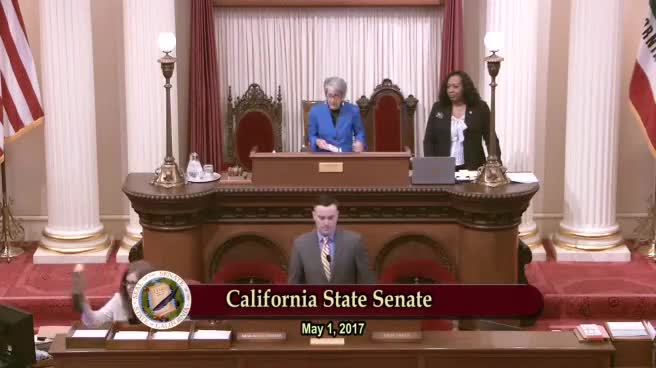
Bill Author

Bill Co-Author(s):