SB 370: Energy: solar storms.
- Session Year: 2017-2018
- House: Senate
- Latest Version Date: 2017-09-08
Existing law provides for the establishment of an Independent System Operator (ISO) as a nonprofit public benefit corporation. Existing law requires the ISO, in order to ensure the reliability of electric service and the health and safety of the public, to manage the transmission grid and related energy markets in a manner that is consistent with specified goals, including making the most efficient use of available energy resources and maximizing availability of existing electric generation resources necessary to meet the needs of the states electricity consumers. Existing law requires the ISO to, among other things, consult and coordinate with appropriate state and local agencies to ensure that it operates in furtherance of state law regarding consumer and environmental protection.
This bill would declare the intent of the Legislature to enact legislation that will protect California ratepayers, businesses, and infrastructure from a catastrophe such as the Carrington Storm and would make various findings and declarations relating to the Carrington storm, solar storms, and energy.
(1)Existing law requires the State Energy Resources Conservation and Development Commission (Energy Commission) to develop and implement a comprehensive program to achieve greater energy savings in existing residential and nonresidential building stock. Existing law requires the Public Utilities Commission (PUC) to investigate the ability of electrical corporations and gas corporations to provide various energy efficiency financing options to their customers for the purposes of implementing the program developed by the Energy Commission. Existing law requires the PUC, by September 1, 2016, to authorize electrical corporations and gas corporations to provide financial incentives, rebates, technical assistance, and support to their customers to increase the energy efficiency of existing buildings, as specified. This bill would require the PUC to authorize electrical corporations and gas corporations to also provide those services to their customers to increase the energy efficiency of existing processes, systems, and equipment. The bill would require the PUC, on or before September 1, 2018, to authorize electrical corporations and gas corporations to also provide those services to their customers to increase the energy efficiency of industrial and agricultural facilities, systems, and equipment, as specified.(2)Decisions of the PUC require electrical and gas corporations to estimate the energy savings derived from energy efficiency projects and submit those estimates to the PUC for review and approval. The PUCs review and approval process is known as ex ante review.This bill would prohibit the PUC from reviewing the energy savings of specified energy efficiency projects for which the PUC has authorized electrical corporations or gas corporations to provide financial incentives, rebates, technical assistance, or support, except as provided.(1)Existing law requires the State Energy Resources Conservation and Development Commission (Energy Commission) to develop and implement a comprehensive program to achieve greater energy savings in existing residential and nonresidential building stock. Existing law requires the Public Utilities Commission (PUC) to investigate the ability of electrical corporations and gas corporations to provide various energy efficiency financing options to their customers for the purposes of implementing the program developed by the Energy Commission. Existing law requires the PUC, by September 1, 2016, to authorize electrical corporations and gas corporations to provide financial incentives, rebates, technical assistance, and support to their customers to increase the energy efficiency of existing buildings, as specified.
This bill would require the PUC to authorize electrical corporations and gas corporations to also provide those services to their customers to increase the energy efficiency of existing processes, systems, and equipment. The bill would require the PUC, on or before September 1, 2018, to authorize electrical corporations and gas corporations to also provide those services to their customers to increase the energy efficiency of industrial and agricultural facilities, systems, and equipment, as specified.
(2)Decisions of the PUC require electrical and gas corporations to estimate the energy savings derived from energy efficiency projects and submit those estimates to the PUC for review and approval. The PUCs review and approval process is known as ex ante review.
This bill would prohibit the PUC from reviewing the energy savings of an specified energy efficiency project projects for which the PUC has authorized electrical corporations or gas corporations to provide financial incentives, rebates, technical assistance, or support. support, except as provided.
(1)Existing law requires the State Energy Resources Conservation and Development Commission (Energy Commission) to develop and implement a comprehensive program to achieve greater energy savings in existing residential and nonresidential building stock. Existing law requires the Public Utilities Commission (PUC) to investigate the ability of electrical corporations and gas corporations to provide various energy efficiency financing options to their customers for the purposes of implementing the program developed by the Energy Commission. Existing law requires the PUC, by September 1, 2016, to authorize electrical corporations and gas corporations to provide financial incentives, rebates, technical assistance, and support to their customers to increase the energy efficiency of existing buildings, as specified.
This bill would require the PUC to authorize electrical corporations and gas corporations to also provide those services to their customers to increase the energy efficiency of industrial facilities and agricultural equipment. existing processes, systems, and equipment. The bill would require the PUC, on or before September 1, 2018, to authorize electrical corporations and gas corporations to also provide those services to their customers to increase the energy efficiency of industrial and agricultural facilities, systems, and equipment, as specified.
(2)Decisions of the PUC require electrical and gas corporations to estimate the energy savings derived from energy efficiency projects and submit those estimates to the PUC for review and approval. The PUCs review and approval process is known as ex ante review.
This bill would prohibit the PUC from reviewing the energy savings of an energy efficiency project for which the PUC has authorized electrical corporations or gas corporations to provide financial incentives, rebates, technical assistance, or support.
Existing law requires the State Energy Resources Conservation and Development Commission (Energy Commission) to develop and implement a comprehensive program to achieve greater energy savings in existing residential and nonresidential building stock. Existing law requires the Public Utilities Commission (PUC) to investigate the ability of electrical corporations and gas corporations to provide various energy efficiency financing options to their customers for the purposes of implementing the program developed by the Energy Commission. Existing law requires the PUC, by September 1, 2016, to authorize electrical corporations and gas corporations to provide financial incentives, rebates, technical assistance, and support to their customers to increase the energy efficiency of existing buildings, as specified.
This bill would require the PUC to authorize electrical corporations and gas corporations to also provide those services to their customers to increase the energy efficiency of industrial facilities and agricultural equipment.
The Legislature finds and declares all of the following:
(a)It is the fundamental role of government to ensure public safety and protect public investments. Modern and effective governance anticipates and defends against natural and man-made threats, including earthquakes, terrorist attacks, floods, and cybersecurity.
(b)Years ago, a large burst of energy from the sun called the Carrington Storm struck Earth, destroying telegraph systems across Europe and North America. Telegraph operators received electric shocks and telegraph pylons sparked and failed.
(c)Because society in the late 19th century did not depend on electricity, economic consequences were small.
(d)However, the solar weather that caused these effects was not a one-off. The sun emits the same kind of energy bursts, known as coronal mass ejections or CMEs, every day. Just like regular weather, this solar weather is usually mild. But roughly once every 150 years, a very strong CME from the sun, like the Carrington Storm, strikes Earth.
(e)Today, Californian society depends on a continual supply of electricity for virtually all of its most basic functions: the delivery of food and water, internet and cellular communications, the provision of basic government services, and more. If a Carrington-level storm were to strike California today, as one very nearly did in the summer of 2012, the damage would be catastrophic.
(f)Water would stop running, food would stop arriving at the supermarket, telephone lines and traffic lights would fail, and the blackout could last months. Businesses would shut down and cities like Los Angeles would run out of food in a matter of days.
(g)The impact of a Carrington-level storm would be much worse than the largest hurricane or earthquake because hurricanes are localized, transitory, and only damage surface infrastructure which can be rapidly repaired. By contrast, solar storms threaten to permanently incapacitate vital parts of the electrical grid, replacements for which would take months to arrive.
(h)The congressional Commission to Assess the Threat to the United States from Electromagnetic Pulse Attack, which studies the effects of a sustained nationwide blackout, predicted that this loss of electrical power could lead to millions of deaths. Additionally, the National Academy of Sciences predicted a nationwide economic cost of two trillion dollars would result from a Carrington-level storm.
(i)Experts agree that this threat is a matter of when, not if. The National Aeronautics and Space Administration predicts approximately a one-in-eight chance of a Carrington-level storm striking Earth within the next decade. The cost of doing nothing in the face of this looming threat would be colossal. Thankfully, solving this problem is technologically and financially feasible.
(j)Yet over the past 10 years, gridlock and partisanship in Washington have stalled national action on this issue. And while Washington repeatedly fails to protect the American people from this threat, the inevitable next solar storm draws ever closer.
(k)Washingtons inability to act has shifted responsibility to the states. Some states, such as Maine and Virginia, have taken up this mantle and acted to harden their electrical grids against the solar threat. California has the opportunity to do the same, and in doing so, to lead the country and the world yet again in adopting prudent and sensible solutions to create a better society for our residents.
(l)Californias innovation and technology leads the world. It is time the state take common sense precautions to protect its people, its business community, and the very fabric of its advanced electrical society from potential disaster.
SEC. 2.It is the intent of the Legislature to enact legislation that would protect California ratepayers, businesses, and infrastructure from a catastrophe such as the Carrington Storm.
All matter omitted in this version of the bill appears in the bill as amended in the Senate, May 2, 2017. (JR11)(a)The commission shall conduct electricity and natural gas forecasting and assessment activities to meet the requirements of paragraph (1) of subdivision (a) of Section 25302, including, but not limited to, all of the following:
(1)Assessment of trends in electricity and natural gas supply and demand, and the outlook for wholesale and retail prices for commodity electricity and natural gas under current market structures and expected market conditions.
(2)Forecasts of statewide and regional electricity and natural gas demand including annual, seasonal, and peak demand, and the factors leading to projected demand growth, including, but not limited to, projected population growth, urban development, industrial expansion and energy intensity of industries, energy demand for different building types, energy efficiency, and other factors influencing demand for electricity. With respect to long-range forecasts of the demand for natural gas, the report shall include an evaluation of average conditions, as well as best and worst case scenarios, and an evaluation of the impact of the increasing use of renewable resources on natural gas demand.
(3)Evaluation of the adequacy of electricity and natural gas supplies to meet forecasted demand growth. Assessment of the availability, reliability, and efficiency of the electricity and natural gas infrastructure and systems, including, but not limited to, natural gas production capability both in and out of state, natural gas interstate and intrastate pipeline capacity, storage and use, and western regional and California electricity and transmission system capacity and use.
(4)Evaluation of potential impacts of electricity and natural gas supply, demand, and infrastructure and resource additions on the electricity and natural gas systems, public health and safety, the economy, resources, and the environment.
(5)Evaluation of the potential impacts of electricity and natural gas load management efforts, including end-user response to market price signals, as a means to ensure reliable operation of electricity and natural gas systems.
(6)Evaluation of whether electricity and natural gas markets are adequately meeting public interest objectives including the provision of all of the following: economic benefits; competitive, low-cost reliable services; customer information and protection; and environmentally sensitive electricity and natural gas supplies. This evaluation may consider the extent to which California is an element within western energy markets, the existence of appropriate incentives for market participants to provide supplies and for consumers to respond to energy prices, appropriate identification of responsibilities of various market participants, and an assessment of long-term versus short-term market performance. To the extent this evaluation identifies market shortcomings, the commission shall propose market structure changes to improve performance.
(7)Identification of impending or potential problems or uncertainties in the electricity and natural gas markets, potential options and solutions, and recommendations.
(8)(A)Compilation and assessment of existing scientific studies that have been performed by persons or entities with expertise and qualifications in the subject of the studies to determine the potential vulnerability to a major disruption due to aging or a major seismic event of large baseload generation facilities, of 1,700 megawatts or greater.
(B)The assessment specified in subparagraph (A) shall include an analysis of the impact of a major disruption on system reliability, public safety, and the economy.
(C)The commission may work with other public entities and public agencies, including, but not limited to, the California Independent System Operator, the Public Utilities Commission, the Department of Conservation, and the Seismic Safety Commission as necessary, to gather and analyze the information required by this paragraph.
(D)Upon completion and publication of the initial review of the information required pursuant to this paragraph, the commission shall perform subsequent updates as new data or new understanding of potential seismic hazards emerge.
(b)Commencing November 1, 2003, and every two years thereafter, to be included in the integrated energy policy report prepared pursuant to Section 25302, the commission shall assess the current status of the following:
(1)The environmental performance of the electric generation facilities of the state, to include all of the following:
(A)Generation facility efficiency.
(B)Air emission control technologies in use in operating plants.
(C)The extent to which recent resource additions have, and expected resource additions are likely to, displace or reduce the operation of existing facilities, including the environmental consequences of these changes.
(2)The geographic distribution of statewide environmental, efficiency, and socioeconomic benefits and drawbacks of existing generation facilities, including, but not limited to, the impacts on natural resources including wildlife habitat, air quality, and water resources, and the relationship to demographic factors. The assessment shall describe the socioeconomic and demographic factors that existed when the facilities were constructed and the current status of these factors. In addition, the report shall include how expected or recent resource additions could change the assessment through displaced or reduced operation of existing facilities.
(c)In the absence of a long-term nuclear waste storage facility, the commission shall assess the potential state and local costs and impacts associated with accumulating waste at Californias nuclear powerplants. The commission shall further assess other key policy and planning issues that will affect the future role of nuclear powerplants in the state. The commissions assessment shall be adopted on or before November 1, 2008, and included in the 2008 energy policy review adopted pursuant to subdivision (d) of Section 25302.
(d)The commission, in consultation with the Public Utilities Commission, shall make all reasonable adjustments to its energy demand forecasts conducted pursuant to Sections 25301 and 25302 to account for its findings of market conditions and existing baselines, and, in making those adjustments, may consider the results from subdivisions (b) (c) and (d) (e) of Section 381.2 of the Public Utilities Code.
SECTION 1.SEC. 2.Section 381.2 of the Public Utilities Code is amended to read:381.2.(a)The It is the intent of the Legislature that the commission, in implementing this section, set and publish rules, interpretations, and assumptions within a reasonable time, transparently, and in advance of their application.
(b)The commission shall investigate the ability of electrical corporations and gas corporations to provide various energy efficiency financing options to their customers for the purposes of implementing the program developed pursuant to Section 25943 of the Public Resources Code.
(b)(c)Recognizing the already underway 2015 commission work to adopt efficiency potential and goals, the Energy Commission work on its 2015 energy demand forecast, and the need to determine how to incorporate meter-based performance into determinations of goals, portfolio cost-effectiveness, and authorized budgets, the commission, in a separate or existing proceeding, shall, by September 1, 2016, authorize electrical corporations or gas corporations to provide financial incentives, rebates, technical assistance, and support to their customers to increase the energy efficiency of existing buildings, facilities, processes, systems, and equipment based on all estimated energy savings and energy usage reductions, taking into consideration the overall reduction in normalized metered energy consumption as a measure of energy savings. Those programs shall include, but are not limited to, energy usage reductions resulting from the adoption of a measure or installation of equipment required for modifications to existing buildings to bring them into conformity with, or exceed, the requirements of Title 24 of the California Code of Regulations, as well as operational, behavioral, and retrocommissioning activities reasonably expected to produce multiyear savings. Electrical corporations and gas corporations shall be permitted to recover in rates the reasonable costs of these programs. The commission shall authorize an electrical corporation and gas corporation to count all energy savings achieved through the authorized programs created by this subdivision subdivision, unless determined otherwise, toward overall energy efficiency goals or targets established by the commission. The commission may adjust the energy efficiency goals or targets of an electrical corporation and gas corporation to reflect this change in savings estimation consistent with this subdivision and subdivision (d). (e).
(c)(d)Effective January 1, 2016, electrical corporations and gas corporations are authorized to implement the provisions of subdivision (b) (c) for high-opportunity projects or programs. The commission shall provide expedited authorization of high opportunity projects and programs to apply the savings baseline provisions in subdivision (b). (c).
(d)(e)In furtherance of subdivision (b), (c), the commission, in consultation with the Energy Commission, shall consider all of the following:
(1)The results of any interagency baseline assessment.
(2)Any available results from investor-owned utility baseline pilot studies ordered in D.14-10-046.
(3)Information necessary to ensure consistency with the energy forecast and planning functions of the Energy Commission and the Independent System Operator.
(e)(f)The commission may direct electrical corporations and gas corporations to make filings that are necessary to ensure coordination with the energy forecast and planning functions of the Energy Commission and the Independent System Operator.
(f)(g)The commission shall prioritize energy efficiency activities consistent with Sections 454.55 and 454.56.
(g)(h)(1)(A)On or before September 1, 2018, the commission shall authorize electrical corporations or gas corporations to provide financial incentives, rebates, technical assistance, and support to their customers to increase the energy efficiency of industrial and agricultural facilities, systems, and equipment based on reductions in normalized metered energy consumption using a protocol such as the International Performance Measurement and Verification Protocol (IPMVP) or a simplified methodology for small-scale projects. as described in subdivision (c).
(B)For purposes of this section, normalized metered energy consumption means the difference between historical metered energy consumption and metered energy consumption after the implementation of the energy efficiency measure or behavioral change, adjusted for changes in weather or operating conditions. In determining the baseline, existing historical energy consumption data shall be used for buildings, systems, or equipment. If no historical baseline data is available, current building codes shall be applied to establish the baseline.(C)Industry standard practice shall only apply on new load projects for which neither historical energy consumption data nor a building code is applicable.(D)Submetering shall be considered an acceptable source of energy consumption data.(E)Reasonable assurance criteria shall be used to verify calculation methods.(2)The commission shall authorize an electrical corporation, gas corporation, or program administrator to count all energy savings achieved through the authorized programs created by this subdivision toward overall energy efficiency goals or targets established by the commission. as specified in subdivision (c).
(3)The commission may adjust the energy efficiency goals or targets of an electrical corporation and gas corporation to reflect this change in savings estimation consistent with this subdivision and subdivision (d). section.
(h)(i)(1)The commission shall not review the energy savings of an energy efficiency project included in the Custom Measure and Project Archive (CMPA) for which the commission has authorized an electrical corporations corporation or a gas corporations corporation to provide financial incentives, rebates, technical assistance, or support pursuant to this section. section, except as provided in paragraph (2).
(2)The commission may review the energy savings of an energy efficiency project included in the CMPA only if all of the following apply:
(A)The project is selected for review within 21 days of being posted on the CMPA.
(B)An administrative law judge makes a finding that it is likely that the project is inconsistent with published program guidelines. This finding shall itemize likely inconsistencies.
(C)The review of the project does not exceed 60 days from the time of the administrative law judges finding in subparagraph (B).
(D)The review of the project concludes with a published finding of fact of the projects consistency or inconsistency with the commissions published program rules in effect at the time the commission authorized the electrical corporation or gas corporation to provide financial incentives, rebates, technical assistance, or support pursuant to this section. This finding of fact shall itemize any inconsistencies identified by the commission.
(i)(j)Nothing in this section shall be construed to limit the commissions existing authority to review the programs authorized by this section or adjust energy efficiency goals or targets. prospectively adjust program rules consistent with this section. A program adjustment made by the commission shall apply only prospectively to future programs.
(a)The commission shall investigate the ability of electrical corporations and gas corporations to provide various energy efficiency financing options to their customers for the purposes of implementing the program developed pursuant to Section 25943 of the Public Resources Code.
(b)Recognizing the already underway 2015 commission work to adopt efficiency potential and goals, the Energy Commission work on its 2015 energy demand forecast, and the need to determine how to incorporate meter-based performance into determinations of goals, portfolio cost-effectiveness, and authorized budgets, the commission, in a separate or existing proceeding, shall, by September 1, 2016, authorize electrical corporations or gas corporations to provide financial incentives, rebates, technical assistance, and support to their customers to increase the energy efficiency of existing buildings, industrial facilities, and agricultural equipment facilities, processes, systems, and equipment based on all estimated energy savings and energy usage reductions, taking into consideration the overall reduction in normalized metered energy consumption as a measure of energy savings. Those programs shall include, but are not limited to, energy usage reductions resulting from the adoption of a measure or installation of equipment required for modifications to existing buildings to bring them into conformity with, or exceed, the requirements of Title 24 of the California Code of Regulations, as well as operational, behavioral, and retrocommissioning activities reasonably expected to produce multiyear savings. Electrical corporations and gas corporations shall be permitted to recover in rates the reasonable costs of these programs. The commission shall authorize an electrical corporation and gas corporation to count all energy savings achieved through the authorized programs created by this subdivision, unless determined otherwise, subdivision toward overall energy efficiency goals or targets established by the commission. The commission may adjust the energy efficiency goals or targets of an electrical corporation and gas corporation to reflect this change in savings estimation consistent with this subdivision and subdivision (d).
(c)Effective January 1, 2016, electrical corporations and gas corporations are authorized to implement the provisions of subdivision (b) for high-opportunity projects or programs. The commission shall provide expedited authorization of high opportunity projects and programs to apply the savings baseline provisions in subdivision (b).
(d)In furtherance of subdivision (b), the commission, in consultation with the Energy Commission, shall consider all of the following:
(1)The results of any interagency baseline assessment.
(2)Any available results from investor-owned utility baseline pilot studies ordered in D.14-10-046.
(3)Information necessary to ensure consistency with the energy forecast and planning functions of the Energy Commission and the Independent System Operator.
(e)The commission may direct electrical corporations and gas corporations to make filings that are necessary to ensure coordination with the energy forecast and planning functions of the Energy Commission and the Independent System Operator.
(f)The commission shall prioritize energy efficiency activities consistent with Sections 454.55 and 454.56.
(g)(1)(A)On or before September 1, 2018, the commission shall authorize electrical corporations or gas corporations to provide financial incentives, rebates, technical assistance, and support to their customers to increase the energy efficiency of industrial and agricultural facilities, systems, and equipment based on reductions in normalized metered energy consumption using a protocol such as the International Performance Measurement and Verification Protocol (IPMVP) or a simplified methodology for small-scale projects.
(B)For purposes of this section, normalized metered energy consumption means the difference between historical metered energy consumption and metered energy consumption after the implementation of the energy efficiency measure or behavioral change, adjusted for changes in weather or operating conditions. In determining the baseline, existing historical energy consumption data shall be used for buildings, systems, or equipment. If no historical baseline data is available, current building codes shall be applied to establish the baseline.
(C)Industry standard practice shall only apply on new load projects for which neither historical energy consumption data nor a building code is applicable.
(D)Submetering shall be considered an acceptable source of energy consumption data.
(E)Reasonable assurance criteria shall be used to verify calculation methods.
(2)The commission shall authorize an electrical corporation, gas corporation, or program administrator to count all energy savings achieved through the authorized programs created by this subdivision toward overall energy efficiency goals or targets established by the commission.
(3)The commission may adjust the energy efficiency goals or targets of an electrical corporation and gas corporation to reflect this change in savings estimation consistent with this subdivision and subdivision (d).
(h)The commission shall not review the energy savings of an energy efficiency project for which the commission has authorized electrical corporations or gas corporations to provide financial incentives, rebates, technical assistance, or support pursuant to this section.
(i)Nothing in this section shall be construed to limit the commissions existing authority to review the programs authorized by this section or adjust energy efficiency goals or targets. A program adjustment made by the commission shall apply only prospectively to future programs.
(a)The commission shall investigate the ability of electrical corporations and gas corporations to provide various energy efficiency financing options to their customers for the purposes of implementing the program developed pursuant to Section 25943 of the Public Resources Code.
(b)Recognizing the already underway 2015 commission work to adopt efficiency potential and goals, the Energy Commission work on its 2015 energy demand forecast, and the need to determine how to incorporate meter-based performance into determinations of goals, portfolio cost-effectiveness, and authorized budgets, the commission, in a separate or existing proceeding, shall, by September 1, 2016, authorize electrical corporations or gas corporations to provide financial incentives, rebates, technical assistance, and support to their customers to increase the energy efficiency of existing buildings buildings, industrial facilities, and agricultural equipment based on all estimated energy savings and energy usage reductions, taking into consideration the overall reduction in normalized metered energy consumption as a measure of energy savings. Those programs shall include include, but are not limited to, energy usage reductions resulting from the adoption of a measure or installation of equipment required for modifications to existing buildings to bring them into conformity with, or exceed, the requirements of Title 24 of the California Code of Regulations, as well as operational, behavioral, and retrocommissioning activities reasonably expected to produce multiyear savings. Electrical corporations and gas corporations shall be permitted to recover in rates the reasonable costs of these programs. The commission shall authorize an electrical corporation and gas corporation to count all energy savings achieved through the authorized programs created by this subdivision, unless determined otherwise, toward overall energy efficiency goals or targets established by the commission. The commission may adjust the energy efficiency goals or targets of an electrical corporation and gas corporation to reflect this change in savings estimation consistent with this subdivision and subdivision (d).
(c)Effective January 1, 2016, electrical corporations and gas corporations are authorized to implement the provisions of subdivision (b) for high opportunity projects or programs. The commission shall provide expedited authorization of high opportunity projects and programs to apply the savings baseline provisions in subdivision (b).
(d)In furtherance of subdivision (b), the commission, in consultation with the Energy Commission, shall consider all of the following:
(1)The results of any interagency baseline assessment.
(2)Any available results from investor-owned utility baseline pilot studies ordered in D.14-10-046.
(3)Information necessary to ensure consistency with the energy forecast and planning functions of the Energy Commission and the Independent System Operator.
(e)The commission may direct electrical corporations and gas corporations to make filings that are necessary to ensure coordination with the energy forecast and planning functions of the Energy Commission and the Independent System Operator.
(f)The commission shall prioritize energy efficiency activities consistent with Sections 454.55 and 454.56.
|
Date
|
Status
|
|---|---|
| Feb 1, 2018 | Returned to Secretary of Senate pursuant to Joint Rule 56. |
| Sep 8, 2017 | From committee with author's amendments. Read second time and amended. Re-referred to Com. on APPR. |
| May 25, 2017 | May 25 hearing: Held in committee and under submission. |
| May 19, 2017 | Set for hearing May 25. |
| May 15, 2017 | May 15 hearing: Placed on APPR. suspense file. |
| May 4, 2017 | Set for hearing May 15. |
| May 2, 2017 | Read second time and amended. Re-referred to Com. on APPR. |
| May 1, 2017 | From committee: Do pass as amended and re-refer to Com. on APPR. (Ayes 10. Noes 0. Page 806.) (April 24). |
| Apr 18, 2017 | Set for hearing April 24. |
| Apr 17, 2017 | April 18 hearing postponed by committee. |
| Mar 30, 2017 | Set for hearing April 18. |
| Mar 29, 2017 | April 4 hearing postponed by committee. |
| Mar 27, 2017 | From committee with author's amendments. Read second time and amended. Re-referred to Com. on E., U. & C. |
| Mar 10, 2017 | Set for hearing April 4. |
| Mar 9, 2017 | March 21 hearing postponed by committee. |
| Mar 9, 2017 | Set for hearing March 21. |
| Feb 23, 2017 | Referred to Com. on E., U. & C. |
| Feb 15, 2017 | From printer. May be acted upon on or after March 17. |
| Feb 14, 2017 | Introduced. Read first time. To Com. on RLS. for assignment. To print. |
|
Date
|
Description
|
Location
|
Votes
|
|
|---|---|---|---|---|
| May 15, 2017 | Placed on suspense file | Senate Standing Committee on Appropriations |
Passed |
|
| Apr 24, 2017 | Do pass as amended, but first amend, and re-refer to the Committee on [Appropriations] | Senate Standing Committee on Energy, Utilities and Communications |
Passed |
This list shows positions taken on this bill by organizations on the date displayed, which is linked to the original source.
Positions by individuals are not included.
|
Organization
|
Position
|
Date
|
|---|---|---|
| California Energy Efficiency Industry Council | ** Support | Apr 21, 2017 |
| California Engery Efficiency Industry Council | * Support | May 15, 2017 |
| California Farm Bureau Federation | ** Support | Apr 21, 2017 |
| California League of Food Processors | ** Support | Apr 21, 2017 |
| Natural Resources Defence Council | * Support | May 15, 2017 |
| Natural Resources Defense Council | ** Support | Apr 21, 2017 |
| Southern California Edison | ** Support | Apr 21, 2017 |
SENATE COMMITTEE ON APPROPRIATIONS
Senator Ricardo Lara, Chair
2017 - 2018 Regular Session
SB 370 (Hertzberg) - Energy efficiency
Version: May 2, 2017 | Policy Vote: E., U., & C. 10 - 0 |
Urgency: No | Mandate: No |
Hearing Date: May 15, 2017 | Consultant: Narisha Bonakdar |
This bill meets the criteria for referral to the Suspense File.
Bill Summary:
SB 370 modifies the existing energy efficiency programs, in which investor-owned utilities (IOUs) encourage energy efficiency upgrades to existing buildings, to newly include facilities, processes, systems and equipment. This bill also prescribes how IOUs are to measure the energy savings resulting from such energy efficiency upgrades and prohibits the California Public Utilities CPUC (CPUC) from reviewing energy savings from such upgrades, except under certain conditions.
Fiscal Impact:
- Unknown, significant fiscal impact (Utilities Reimbursement Account), potentially in the low millions to the CPUC. (See staff comments)
- Cost pressures, potentially in the millions, resulting from newly-eligible projects competing for energy efficiency funds.
Background:
Ratepayers Pay For Energy Efficiency Upgrades. Statute requires both electrical and gas IOUs to meet unmet resource needs with all available energy efficiency and demand reduction that is cost-effective, reliable and feasible. To achieve these targets, the IOUs (and, in some cases, community choice aggregators) administer energy efficiency programs with ratepayer funds approved by the CPUC. Currently funded at about $1 billion per year, the programs include a portfolio of financial incentives, loans, and rebates for installing energy efficient appliances, lighting, windows, HVAC systems, whole-house retrofits, and sector-specific efforts.
According to existing CPUC rules, each IOU claims credit for energy savings from the portfolio of energy efficiency measures in its energy efficiency program. The CPUC evaluates the claimed energy savings and, after adjustment, authorizes financial rewards for the IOU.
The CPUC sets the baseline at a level meant to avoid “free ridership” (credit for energy savings that would have occurred absent the IOUs’ energy efficiency programs). Until recently, the CPUC, assuming that measures to bring an existing building into compliance with the CEC’s energy efficiency standards would have occurred absent the programs incentive did not allow an IOU to claim credit for energy savings that resulted from these upgrades. However, in 2015, AB 802 (Williams, Chapter 590), among other things, directed the CPUC to authorize an IOU to provide incentives for the cost of energy efficiency programs based on all estimated energy savings, including energy savings from bringing existing buildings into compliance with mandatory energy efficiency codes for existing.
The CPUC has recently implemented AB 802 and justifies the change as follows. The cost to bring many older buildings to code is cost prohibitive; therefore, allowing IOU’s to use energy efficiency incentives to bring existing building to code could accelerate implementation of these upgrades or because the incentives pay for upgrades that would not otherwise happen. The CPUC, however, does not apply the same rationale to the facilities, processes, systems and equipment of industrial and agricultural sectors believing that they have a business rationale to increase the efficiency of their facilities to match standard industry practice. As such, the CPUC contends the appropriate measure of baseline for such projects is should be the energy efficiency of the project compared to standard industry practice.
The impetus for the bill. The sponsor of the bill contends that the CPUC’s process for determining the baseline for agricultural and industrial customer projects is “ambiguous and opaque”. They further argue that the CPUC’s project-specific review of agricultural and industrial projects to determine whether anticipated energy savings would have occurred results in uncertainty, stranded assets, and a reluctance to undertake projects. This bill intends to address these issues by requiring the CPUC to establish programmatic requirements and guidelines that send the appropriate signals to the program administrators and customers considering energy efficiency upgrades. It also provides for a shorter timeline for review, and presumably of fewer projects, if an administrative law judge (ALJ) makes a finding of inconsistency with the guidelines, and only allows for the additional review in this case.
Proposed Law:
This bill:
- States legislative intent that the CPUC, set and publish rules, interpretations, and assumptions within a reasonable time, transparently, and in advance of their application.
- Requires the CPUC, on or before September 1, 2018, to authorize electrical corporations or gas corporations to provide financial incentives, rebates, technical assistance, and support to their customers to increase the energy efficiency of industrial and agricultural facilities, systems, and equipment based on reductions in normalized metered energy consumption, as prescribed.
- Requires the CPUC to authorize an electrical corporation, gas corporation, or program administrator to count all energy savings achieved through the authorized programs created by this subdivision toward overall energy efficiency goals or targets, as prescribed.
- Authorizes the CPUC to adjust the energy efficiency goals or targets of an electrical corporation and gas corporation to reflect this change in savings estimation.
- Prohibits the CPUC from reviewing the energy savings of an energy efficiency project included in the Custom Measure and Project Archive (CMPA) for which the CPUC has authorized an electrical corporation or a gas corporation to provide financial incentives, rebates, technical assistance, or support pursuant to this bill, unless the project is selected for review within 21 days of being posted on the CMPA and an ALJ finds that the project is likely inconsistent with published program guidelines. The finding must itemize likely inconsistencies
- Requires the project review to be completed within 60 days after the ALJ’s finding, and to include a published finding of fact of the project’s consistency or inconsistency with the CPUC’s published program rules in effect at the time the CPUC authorized the electrical corporation or gas corporation to provide financial incentives, rebates, technical assistance, or support.
- States that nothing in this section limits the CPUC’s existing authority to prospectively adjust program rules consistent with this section.
Related Legislation:
AB 802 (Williams, Chapter 590, Statutes of 2015) required the CPUC to authorize electrical corporations or gas corporations to provide incentives and assistance for measures to conform a building to CEC’s energy efficiency standards for existing buildings and to allow IOUs to recover in rates the reasonable costs of those incentives and assistance.
Staff Comments:
CPUC costs. The CPUC estimates that this bill will cost approximately $3.8 million to implement the bill. This estimate includes the following:
- A Public Utilities Regulatory Analyst V to coordinate the development of the rules, review submitted custom project documentation for compliance, provide analytical support to ALJs in developing rulings, and coordinate with program administrators on correcting project inconsistencies.
- Senior Utilities Engineer (Specialist) to review submitted project documentation to determine compliance, analyze normalized metered energy consumption data to determine energy efficiency impacts, provide analytical support to ALJs in developing rulings, and coordinate with program administrators on correcting project inconsistencies.
- A Public Utilities Regulatory Analyst III to coordinate the development of the rules, and to support senior staff and ALJs.
- Two ALJs to coordinate with Energy Division on energy efficiency project reviews and to develop and issue rulings on individual custom projects, as required.
- Consultant Services to analyze and disaggregate normalized metered energy consumption data to estimate and evaluate energy efficiency savings and provide energy data analysis and support to Commission staff and the Joint Agency Steering Committee in developing the single forecast set demand forecast.
Staff notes that certain costs are likely necessary to implement the bill, such as revisions to existing program rules. However, other costs related to the review of impacted projects will depend upon the number of project applications subject to this bill, and the number of those that must undergo additional review. It is unclear how many projects this represents, how much of the CPUC’s current workload will no longer be necessary as a result of this bill, and which tasks or services would otherwise be required absent the bill (albeit for different purposes).
Required Programs Changes May Result in Millions of Dollars in Cost Pressures. This bill seeks to expand the universe of energy efficiency projects eligible to receive IOU energy efficiency incentives based on existing conditions. This bill’s expansion would newly include agricultural and industrial facilities, processes, systems, and equipment, and would prescribe the ways in which the CPUC could determine baseline energy use for an agricultural or industrial customer who undertook and IOU-funded energy efficiency project.
Regarding expansion, the author and sponsor contend achievement of the state’s ambitious energy efficiency goals requires inclusion of all energy users in the IOU’s energy efficiency programs. The sponsor notes that the industrial and agricultural sectors represent significant—sometimes the single largest—energy use categories in a given IOU’s service territory. For this reason, they conclude, it is appropriate to clarify that industrial and agricultural customers are eligible for IOU energy efficiency incentives.
This has both fiscal and policy implications. Staff defers to the relevant policy committees to determine the appropriateness of this expansion, but notes cost pressures, potentially in the millions, to provide incentives for newly-eligible projects. Significantly more applicants may be vying for the same limited funding source, resulting in either fewer projects currently eligible for incentives actually receiving them or the need to increase the amount of incentives offered to meet increased demand.
-- END --
SENATE COMMITTEE ON ENERGY, UTILITIES AND COMMUNICATIONS
Senator Ben Hueso, Chair
2017 - 2018 Regular
Bill No: SB 370 Hearing Date: 4/24/2017
Author: | Hertzberg | ||
Version: | 3/27/2017 As Amended | ||
Urgency: | No | Fiscal: | Yes |
Consultant: | Jay Dickenson | ||
SUBJECT: Energy efficiency
DIGEST: This bill modifies the existing energy efficiency programs, by which investor-owned utilities (IOUs) encourage energy efficiency upgrades to existing buildings, to newly include facilities, processes, systems and equipment. This bill also prescribes how IOUs are to measure the energy savings resulting from such energy efficiency upgrades and prohibits the California Public Utilities Commission (CPUC) from reviewing energy savings from such upgrades.
ANALYSIS:
Existing law:
- Requires the California Energy Commission (CEC) to develop and implement a comprehensive program to achieve greater energy savings in California’s existing residential and nonresidential building stock. (Public Resources Code §25943)
Establishes a charge on electricity and natural gas consumption to fund cost-effective energy efficiency and conservation activities. (Public Utilities Code §§381 and 890)
- Requires electrical corporation procurement plans to first meet unmet resource needs through all available energy efficiency, and demand reduction resources that are cost effective, reliable, and feasible. (Public Utilities Code §§454.5 (b)(9)(C))
Requires the CPUC to identify all potentially achievable cost-effective electricity and natural gas efficiency savings and to establish energy efficiency procurement targets and ratepayer-funded programs for IOUs. Requires a gas corporation to first meet its unmet resource needs through all available natural gas efficiency and demand reduction resources that are cost effective, reliable, and feasible. (Public Utilities Code §§454.55 and 454.56.)
- Requires the CPUC, by September 1, 2016, to authorize an IOU to provide incentives for the cost of energy efficiency programs based on all estimated energy savings, including energy savings from bringing existing buildings into compliance with mandatory energy efficiency codes for existing buildings issued by the CEC, and authorizes an IOU to recover the costs in rates. Directs the CPUC to allow an IOU to take into consideration the overall reduction in normalized metered energy consumption as a measure of energy savings of the IOU’s energy efficiency program. States that the CPUC may adjust the energy efficiency procurement targets to reflect energy efficiency savings achieved in meeting or exceeding mandatory energy efficiency codes for existing buildings. (Public Utilities Code §381.2)
This bill:
- Requires the CPUC, on or before September 1, 2018, to authorize IOUs to provide incentives, assistance and support to their customers to increase the energy efficiency of buildings, facilities, processes, systems, and equipment based on normalized metered energy consumption using a protocol or a simplified methodology for small-scale projects.
- Defines “normalized metered energy consumption,” for purposes of the IOU’s energy efficiency incentive programs, to mean the difference between historical metered energy consumption and metered energy consumption after the implementation of the energy efficiency measure or behavioral change, adjusted for changes in weather or operating conditions.
- Specifies the way baseline energy use shall be determined for an energy efficiency project, as follows:
- Use existing historical energy consumption data unless no such historical data exists, in which case, use current building codes to establish baseline.
- If neither historical energy consumption data nor current building codes exist, use industry standard practice to establish baseline.
- Explicitly affirms the authority of the CPUC to adjust the energy efficiency goals or targets of an electrical corporation and gas corporation to reflect this change in savings estimation.
- Prohibits the CPUC from reviewing the energy savings of an energy efficiency project for which the CPUC has authorized IOUs to provide financial incentives, rebates, technical assistance, or support.
Background
Ratepayers Pay For Energy Efficiency Upgrades. The “loading order” guides the state’s energy policies and decisions according to the following order of priority: (1) decreasing energy demand by increasing energy efficiency; (2) responding to energy demand by reducing energy usage during peak hours; (3) meeting new energy generation needs with renewable resources; and (4) meeting new energy generation needs with clean fossil-fueled generation. This policy has been adopted by the energy agencies – the CEC and CPUC – and its principles guide all energy programs.
Consistent with the loading order, statute requires both electrical and gas IOUs to meet unmet resource needs with all available energy efficiency and demand reduction that is cost-effective, reliable and feasible. The CPUC uses these criteria to establish energy efficiency targets for the IOUs. To achieve these targets, the IOUs (and, in some cases, community choice aggregators) administer energy efficiency programs with ratepayer funds approved by the CPUC. Currently funded at about $1 billion per year, the programs include a portfolio of financial incentives, loans, and rebates for installing energy efficient appliances, lighting, windows, HVAC systems, whole-house retrofits, and sector-specific efforts.
According to existing CPUC rules, each IOU claims credit for energy savings from the portfolio of energy efficiency measures in its energy efficiency program. The CPUC evaluates the claimed energy savings and, after adjustment, authorizes financial rewards for the IOU.
Traditionally, the CPUC has measured claimed savings against a baseline, which the CPUC generally defines as being comprised of three factors: (1) “naturally occurring savings,” (2) standard industry practice and (3) the CEC’s Title 24 energy efficiency standards for existing buildings. The CPUC sets the baseline at a level meant to avoid “free ridership,” that is, credit for energy savings that would have occurred absent the IOUs’ energy efficiency programs.
Until recently, the CPUC had assumed that measures to bring an existing building into compliance with CEC’s energy efficiency standards would have occurred absent the IOUs’ energy efficiency programs. The CPUC, therefore, did not allow an IOU to claim credit for energy savings that resulted from an upgrade to bring an existing building into compliance with CEC’s energy efficiency standards.
In 2015, the Legislature passed AB 802 (Williams, Chapter 590), which made substantial changes to the IOU’s energy efficiency programs. The bill, among other things, directs the CPUC to authorize an IOU to provide incentives for the cost of energy efficiency programs based on all estimated energy savings, including energy savings from bringing existing buildings into compliance with mandatory energy efficiency codes for existing. Significantly, the bill requires the CPUC to take into consideration the overall reduction in normalized metered energy consumption as a measure of energy savings.
The CPUC has recently implemented AB 802. The CPUC describes the rationale behind the policy change made by AB 802 as follows. For many older buildings, the cost to bring buildings to code is cost prohibitive; therefore, allowing IOU’s to use energy efficiency incentives for projects that bring existing building to code could accelerate the pace of energy efficiency upgrades because it would pay for upgrades that would not otherwise happen, at least not in the near term. The appropriate measure of the effect of such energy efficiency projects—a deviation from baseline—is metered energy consumption before the project compared to metered energy consumption after the project.
According to the CPUC, the same rationale does not apply to the facilities, processes, systems and equipment of industrial and agricultural sectors. This is because, the CPUC reasons, these aspects of these profit-driven sectors have a business rationale to increase the efficiency of their facilities, processes, systems and equipment; therefore, an industrial or agricultural operation will eventually upgrade its facilities, processes, systems and equipment to match standard industry practice. The appropriate measure of baseline for such projects is not metered energy consumption before and after the project, according to the CPUC. Rather, it is the energy efficiency of the project compared to standard industry practice.
Bill Changes IOU Energy Efficiency Incentive Programs In Two Ways. This bill seeks to expand the universe of energy efficiency projects eligible to receive IOU energy efficiency incentives based on existing conditions. This bill’s expansion would newly include agricultural and industrial facilities, processes, systems and equipment. Second, this bill would prescribe the ways in which the CPUC could determine baseline energy use for an agricultural or industrial customer who undertook and IOU-funded energy efficiency project.
Regarding expansion, the author and sponsor contend achievement of the state’s ambitious energy efficiency goals requires inclusion of all energy users in the IOU’s energy efficiency programs. The sponsor notes that the industrial and agricultural sectors represent significant—sometimes the single largest—energy use categories in a given IOU’s service territory. For this reason, they conclude, it is appropriate to clarify that industrial and agricultural customers are eligible for IOU energy efficiency incentives.
Regarding prescription of baseline determination, the sponsor complains of a CPUC process that is, in the sponsor’s view, “ambiguous and opaque.” To address these perceived problems, this bill defines “normalized metered energy consumption” to mean the difference between historical metered energy consumption and metered energy consumption after the implementation of the energy efficiency measure or behavioral change, adjusted for changes in weather or operating conditions. This bill then directs the CPUC to determine baseline for industrial and agricultural customers according to three ranked measures: (a) existing historical energy consumption; (b) current building codes, if (a) does not exist; and (c) standard industry practice if neither (a) nor (b) is available or applicable. In this way, this bill makes industry standard practice—CPUC’s current method for determining baseline for agricultural industrial customers—the agency’s last resort.
This bill goes a step further to address the sponsor’s complaints. Specifically, it prohibits the CPUC from reviewing the energy savings of an energy efficiency project for which the CPUC has authorized an IOU to provide incentives. And it requires the CPUC to allow an IOU to count all energy savings achieved by such projects—calculated in keeping with this bill—towards the IOU’s energy efficiency goals as established by the CPUC. The sponsor describes these changes as designed to provide certainty to entities considering, or who have begun, an energy efficiency project. As the sponsor describes it, currently, the CPUC engages in project-specific review of agricultural and industrial customer projects in order to determine whether anticipated energy savings would have occurred. The result, the sponsor continues, is uncertainty, stranded assets and a reluctance to undertake projects. Better, the sponsor contends, for the CPUC to establish programmatic requirements and guidelines that send the appropriate signals to the program administrators and customers considering and energy efficiency upgrade.
All Aboard! This bill seems to invite free ridership. The IOU energy efficiency programs are to incentivize behavior that would not occur absent the incentive. The programs are not to pay for behavior that would have otherwise occurred. Determining which behavior would have occurred absent an IOU incentive is no easy task, and the CPUC does not always get it right. Nonetheless, it is important that there be some effort by entity to determine whether an IOU energy efficiency payment incentivizes a change in behavior. CPUC seems the most appropriate entity to make this determination. In contrast, this bill requires the CPUC to authorize an IOU to provide an incentive for any energy efficiency upgrade that happens to coincide with a change in energy consumption, regardless of whether the incentive likely brought about the upgrade.
For example, imagine an industrial facility with a 40-year-old heavy-duty press. The press may be near the end of it useful life, and the industrial facility pays the cost to operate the outdated technology. Therefore, the facility manager may, for rational business reasons, decide to replace the press. The new press likely will operate much more efficiently than the old press. This is because of technological improvements that have occurred over the decades since the facility installed its original press. Nonetheless, under this bill, the CPUC would need to approve an IOU incentive payment to the industrial customer for replacement of the press, and would require the payment be based upon improvements to energy consumption baseline, that is, the difference between historical metered energy consumption and metered energy consumption after installation of the new press, adjusted for changes in weather or operating conditions. And the IOU making the payment would receive credit for the purported energy savings. To make matters worse, this bill expressly prohibits the CPUC from reviewing the purported energy savings from such a project. This makes no sense.
Nonetheless, the author’s and sponsors desire for certainty and predictability do make sense. To better achieve these goals while reducing the likelihood of free-ridership, the author and committee may wish to amend this bill set the expectation that the CPUC generally focus its efforts on program administration while still providing the CPUC the ability to engage in project-specific review when needed. Amendments to achieve these goals follow. Text added by this bill in print is shown in italics. Text added by these proposed amendments is shown as underlined.
Text of proposed amendments:
SECTION 1.
Section 381.2 of the Public Utilities Code is amended to read:
381.2.
(a) It is the intent of the Legislature that the commission, in implementing this section, set and publish rules, interpretations and assumptions within a reasonable time, transparently and in advance of their application.
(ba) The commission shall investigate the ability of electrical corporations and gas corporations to provide various energy efficiency financing options to their customers for the purposes of implementing the program developed pursuant to Section 25943 of the Public Resources Code.
(cb) Recognizing the already underway 2015 commission work to adopt efficiency potential and goals, the Energy Commission work on its 2015 energy demand forecast, and the need to determine how to incorporate meter-based performance into determinations of goals, portfolio cost-effectiveness, and authorized budgets, the commission, in a separate or existing proceeding, shall, by September 1, 2016, authorize electrical corporations or gas corporations to provide financial incentives, rebates, technical assistance, and support to their customers to increase the energy efficiency of existing buildings buildings, facilities, processes, systems, and equipment based on all estimated energy savings and energy usage reductions, taking into consideration the overall reduction in normalized metered energy consumption as a measure of energy savings. Those programs shall include include, but are not limited to, energy usage reductions resulting from the adoption of a measure or installation of equipment required for modifications to existing buildings to bring them into conformity with, or exceed, the requirements of Title 24 of the California Code of Regulations, as well as operational, behavioral, and retrocommissioning activities reasonably expected to produce multiyear savings. Electrical corporations and gas corporations shall be permitted to recover in rates the reasonable costs of these programs. The commission shall authorize an electrical corporation and gas corporation to count all energy savings achieved through the authorized programs created by this subdivision, unless determined otherwise, subdivision toward overall energy efficiency goals or targets established by the commission. The commission may adjust the energy efficiency goals or targets of an electrical corporation and gas corporation to reflect this change in savings estimation consistent with this subdivision and subdivision (ed).
(dc) Effective January 1, 2016, electrical corporations and gas corporations are authorized to implement the provisions of subdivision (bc) for high opportunity high-opportunity projects or programs. The commission shall provide expedited authorization of high opportunity projects and programs to apply the savings baseline provisions in subdivision (bc).
(ed) In furtherance of subdivision (bc), the commission, in consultation with the Energy Commission, shall consider all of the following:
(1) The results of any interagency baseline assessment.
(2) Any available results from investor-owned utility baseline pilot studies ordered in D.14-10-046.
(3) Information necessary to ensure consistency with the energy forecast and planning functions of the Energy Commission and the Independent System Operator.
(fe) The commission may direct electrical corporations and gas corporations to make filings that are necessary to ensure coordination with the energy forecast and planning functions of the Energy Commission and the Independent System Operator.
(gf) The commission shall prioritize energy efficiency activities consistent with Sections 454.55 and 454.56.
(hg) (1) (A) On or before September 1, 2018, the commission shall authorize electrical corporations or gas corporations to provide financial incentives, rebates, technical assistance, and support to their customers to increase the energy efficiency of industrial and agricultural facilities, systems, and equipment based on reductions in normalized metered energy consumption as described in subdivision (c). using a protocol such as the International Performance Measurement and Verification Protocol (IPMVP) or a simplified methodology for small-scale projects.
(B) For purposes of this section, “normalized metered energy consumption” means the difference between historical metered energy consumption and metered energy consumption after the implementation of the energy efficiency measure or behavioral change, adjusted for changes in weather or operating conditions. In determining the baseline, existing historical energy consumption data shall be used for buildings, systems, or equipment. If no historical baseline data is available, current building codes shall be applied to establish the baseline.
(C) Industry standard practice shall only apply on new load projects for which neither historical energy consumption data nor a building code is applicable.
(D) Submetering shall be considered an acceptable source of energy consumption data.
(E) Reasonable assurance criteria shall be used to verify calculation methods.
(2) The commission shall authorize an electrical corporation, gas corporation, or program administrator to count all energy savings achieved through the authorized programs created by this subdivision toward overall energy efficiency goals or targets established by the commission pursuant to subdivision (c).
(3) The commission may adjust the energy efficiency goals or targets of an electrical corporation and gas corporation to reflect this change in savings estimation consistent with this subdivision and subdivision (d) section.
(ih) The commission shall not review the energy savings of an energy efficiency project included in the “Custom Measure Project Archive (CMPA)” for which the commission has authorized an electrical corporations or a gas corporations to provide financial incentives, rebates, technical assistance, or support pursuant to this section, except as follows:
- A project must be selected for review within 21 days of being posted on the CMPA.
- An administrative law judge makes a finding that it is likely that the project is inconsistent with published program guidelines. The finding shall itemize the likely inconsistencies.
- The project review shall not exceed 60 days from the time of the administrative law judge’s finding described in (1).
- The project review described in (1) shall conclude with a published finding of fact of the project’s consistency, or inconsistency, with the commission’s published program rules in effect at the time the commission authorized the electrical corporation or the gas corporation to provide financial incentives, rebates, technical assistance or support pursuant to this section.
- The finding of fact described in (4) shall itemize inconsistencies, if any, the commission identifies between the project and the commission’s published program rules in effect at the time the commission authorized electrical corporation or gas corporation to provide financial incentives, rebates, technical assistance or support pursuant to this section.
(i) Nothing in this section shall be construed to limit the commission’s existing authority to prospectively adjust program rules consistent with this section review the programs authorized by this section or adjust energy efficiency goals or targets. A program adjustment made by the commission shall apply only prospectively to future programs.
Prior/Related Legislation
AB 802 (Williams, Chapter 590, Statutes of 2015) required the CPUC to authorize electrical corporations or gas corporations to provide incentives and assistance for measures to conform a building to CEC’s energy efficiency standards for existing buildings and to allow IOUs to recover in rates the reasonable costs of those incentives and assistance.
FISCAL EFFECT: Appropriation: No Fiscal Com.: Yes Local: No
SUPPORT:
California Energy Efficiency Industry Council (Source)
California Farm Bureau Federation
California League of Food Processors
Natural Resources Defense Council
Southern California Edison
OPPOSITION:
None received
ARGUMENTS IN SUPPORT: According to the author:
AB 802 (Williams, 2015) established eligibility for energy efficiency projects for existing buildings in order to maximize potential energy savings. Unfortunately, the process for industrial and agricultural buildings is ambiguous and opaque. Currently the CPUC requires a study of “Industrial Standard Practice” to measure savings, through a non- publicly vetted study, dissimilar to building codes. With varying industrial businesses and agricultural productions in California, it is not as explicit in the outset of a project what it means to have achieved energy efficiency. The lack of transparency from CPUC through this project analysis further discourages applicants and leaves significant energy savings stranded.
Achieving our state’s pioneering energy goals necessitates that we include all users. This includes the industrial facilities and agricultural equipment where we can capture the most energy savings and lead to reduced greenhouse gas emissions. For example, industrial customers comprise 28 percent of total Southern California Edison’s nonresidential customer energy usage. Industrial gas savings account for approximately 29 percent of Southern California Gas Company’s entire portfolio from 2013-2015, not including savings from mining or agriculture. In Pacific Gas & Electric’s territory, manufacturing contributes 50 percent of the electric load and 65 percent of the gas load.
This bill would clarify the eligibility of industrial facilities and agricultural equipment to participate in energy efficiency programs and help achieve California’s efficiency goals. SB 370 would limit CPUC review to a program rather than on a project by project basis.
-- END --
Discussed in Hearing
 48MIN
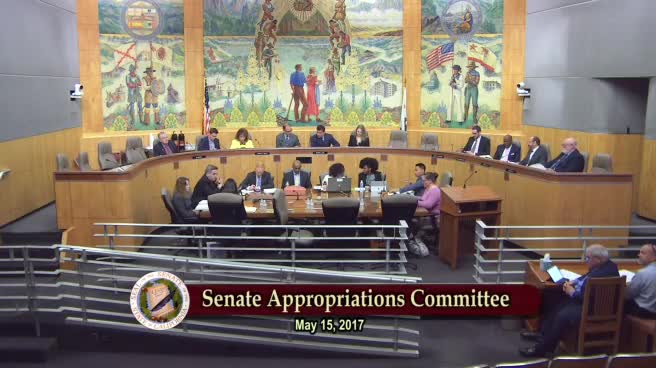
Senate Standing Committee on Appropriations
 30SEC
Senate Standing Committee on Appropriations
Bill Author




