SB 390: Local control and accountability plans: annual goals: state priorities: model school library standards.
- Session Year: 2017-2018
- House: Senate
- Latest Version Date: 2017-09-15
Existing law requires the governing board of each school district and each county board of education to adopt a local control and accountability plan using a template adopted by the State Board of Education. Existing law requires the local control and accountability plan to include a description of the annual goals to be achieved for each of certain state priorities, which include implementation of the academic content and performance standards adopted by the state board, as specified, and the specific actions that will be taken to achieve the annual goals.
This bill would add to the enumerated state priorities specified consideration of the Model School Library Standards for California Public Schools. By imposing additional duties upon school districts and county boards of education, this bill would impose a state-mandated local program.
The California Constitution requires the state to reimburse local agencies and school districts for certain costs mandated by the state. Statutory provisions establish procedures for making that reimbursement.
This bill would provide that, if the Commission on State Mandates determines that the bill contains costs mandated by the state, reimbursement for those costs shall be made pursuant to the statutory provisions noted above.
Existing law requires the governing board of each school district and each county board of education to adopt a local control and accountability plan using a template adopted by the State Board of Education. Existing law requires the local control and accountability plan to include a description of the annual goals to be achieved for each of certain state priorities, which include implementation of the academic content and performance standards adopted by the state board, as specified, and the specific actions that will be taken to achieve the annual goals.
This bill would add to the enumerated state priorities implementation specified consideration of the Model School Library Standards for California Public Schools adopted by the state board. Schools. By imposing additional duties upon school districts and county boards of education, this bill would impose a state-mandated local program.
The California Constitution requires the state to reimburse local agencies and school districts for certain costs mandated by the state. Statutory provisions establish procedures for making that reimbursement.
This bill would provide that, if the Commission on State Mandates determines that the bill contains costs mandated by the state, reimbursement for those costs shall be made pursuant to the statutory provisions noted above.
Existing law requires the governing board of each school district and each county board of education to adopt a local control and accountability plan using a template adopted by the State Board of Education. Existing law requires the local control and accountability plan to include a description of the annual goals to be achieved for each of certain state priorities, which include implementation of the academic content and performance standards adopted by the state board, as specified, and the specific actions that will be taken to achieve the annual goals.
This bill would add to the enumerated state priorities implementation of the Model School Library Standards for California Public Schools adopted by the state board. By imposing additional duties upon school districts and county boards of education, this bill would impose a state-mandated local program.
The California Constitution requires the state to reimburse local agencies and school districts for certain costs mandated by the state. Statutory provisions establish procedures for making that reimbursement.
This bill would provide that, if the Commission on State Mandates determines that the bill contains costs mandated by the state, reimbursement for those costs shall be made pursuant to the statutory provisions noted above.
(1)Under existing law, county superintendents of schools are authorized to enter into agreements with county librarians to take over all existing contracts for supplementary books and other material adopted for the course of study between the school districts or community colleges and the county librarian entered into pursuant to specified statutes governing the relationships between county and city libraries and school districts for school library services.This bill would require each county superintendent of schools to employ a teacher librarian who holds a valid credential issued by the Commission on Teacher Credentialing. The bill would require the teacher librarian to provide library services for schools and programs operated by the county office of education, to work directly with the school districts within the county in order to provide library services, and to assist the county superintendent of schools in providing oversight with respect to local control and accountability plans. Because the bill would impose new duties on county superintendents of schools, it would constitute a state-mandated local program.(2)The California Constitution requires the state to reimburse local agencies and school districts for certain costs mandated by the state. Statutory provisions establish procedures for making that reimbursement.This bill would provide that, if the Commission on State Mandates determines that the bill contains costs mandated by the state, reimbursement for those costs shall be made pursuant to the statutory provisions noted above.(1)Under existing law, county superintendents of schools are authorized to enter into agreements with county librarians to take over all existing contracts for supplementary books and other material adopted for the course of study between the school districts or community colleges and the county librarian entered into pursuant to specified statutes governing the relationships between county and city libraries and school districts for school library services.
This bill would require each county superintendent of schools to employ a teacher librarian who holds a valid credential issued by the Commission on Teacher Credentialing. The bill would require the teacher librarian to provide library services for schools and programs operated by the county office of education, to work directly with the school districts within the county in order to provide library services, and to assist the county superintendent of schools in providing oversight with respect to local control and accountability plans. Because the bill would impose new duties on county superintendents of schools, it would constitute a state-mandated local program.
(2)The California Constitution requires the state to reimburse local agencies and school districts for certain costs mandated by the state. Statutory provisions establish procedures for making that reimbursement.
This bill would provide that, if the Commission on State Mandates determines that the bill contains costs mandated by the state, reimbursement for those costs shall be made pursuant to the statutory provisions noted above.
(a)On or before July 1, 2014, the governing board of each school district shall adopt a local control and accountability plan using a template adopted by the state board.
(b)A local control and accountability plan adopted by the governing board of a school district shall be effective for a period of three years, and shall be updated on or before July 1 of each year.
(c)A local control and accountability plan adopted by the governing board of a school district shall include, for the school district and each school within the school district, both of the following:
(1)A description of the annual goals, for all pupils and each subgroup of pupils identified pursuant to Section 52052, to be achieved for each of the state priorities identified in subdivision (d) and for any additional local priorities identified by the governing board of the school district. For purposes of this article, a subgroup of pupils identified pursuant to Section 52052 shall be a numerically significant pupil subgroup as specified in paragraphs (2) and (3) of subdivision (a) of Section 52052.
(2)A description of the specific actions the school district will take during each year of the local control and accountability plan to achieve the goals identified in paragraph (1), including the enumeration of any specific actions necessary for that year to correct any deficiencies in regard to the state priorities listed in paragraph (1) of subdivision (d). The specific actions shall not supersede the provisions of existing local collective bargaining agreements within the jurisdiction of the school district.
(d)All of the following are state priorities:
(1)The degree to which the teachers of the school district are appropriately assigned in accordance with Section 44258.9, and fully credentialed in the subject areas, and, for the pupils they are teaching, every pupil in the school district has sufficient access to the standards-aligned instructional materials as determined pursuant to Section 60119, and school facilities are maintained in good repair, as defined in subdivision (d) of Section 17002.
(2)Implementation of the academic content and performance standards adopted by the state board, including how the programs and services will enable English learners to access the common core academic content standards adopted pursuant to Section 60605.8 and the English language development standards adopted pursuant to former Section 60811.3, as that section read on June 30, 2013, or former Section 60811.4, as that section read on June 30, 2016, for purposes of gaining academic content knowledge and English language proficiency.
(3)Parental involvement, including efforts the school district makes to seek parent input in making decisions for the school district and each individual schoolsite, and including how the school district will promote parental participation in programs for unduplicated pupils and individuals with exceptional needs.
(4)Pupil achievement, as measured by all of the following, as applicable:
(A)Statewide assessments administered pursuant to Article 4 (commencing with Section 60640) of Chapter 5 of Part 33 or any subsequent assessment, as certified by the state board.
(B)The Academic Performance Index, as described in Section 52052.
(C)The percentage of pupils who have successfully completed courses that satisfy the requirements for entrance to the University of California and the California State University, or career technical education sequences or programs of study that align with state board-approved career technical education standards and frameworks, including, but not limited to, those described in subdivision (a) of Section 52302, subdivision (a) of Section 52372.5, or paragraph (2) of subdivision (e) of Section 54692.
(D)The percentage of English learner pupils who make progress toward English proficiency as measured by the California English Language Development Test or any subsequent assessment of English proficiency, as certified by the state board.
(E)The English learner reclassification rate.
(F)The percentage of pupils who have passed an advanced placement examination with a score of 3 or higher.
(G)The percentage of pupils who participate in, and demonstrate college preparedness pursuant to, the Early Assessment Program, as described in Chapter 6 (commencing with Section 99300) of Part 65 of Division 14 of Title 3, or any subsequent assessment of college preparedness.
(5)Pupil engagement, as measured by all of the following, as applicable:
(A)School attendance rates.
(B)Chronic absenteeism rates.
(C)Middle school dropout rates, as described in paragraph (3) of subdivision (a) of Section 52052.1.
(D)High school dropout rates.
(E)High school graduation rates.
(6)School climate, as measured by all of the following, as applicable:
(A)Pupil suspension rates.
(B)Pupil expulsion rates.
(C)Other local measures, including surveys of pupils, parents, and teachers on the sense of safety and school connectedness.
(7)The extent to which pupils have access to, and are enrolled in, a broad course of study that includes all of the subject areas described in Section 51210 and subdivisions (a) to (i), inclusive, of Section 51220, as applicable, including the programs and services developed and provided to unduplicated pupils and individuals with exceptional needs, and the programs and services that are provided to benefit these pupils as a result of the funding received pursuant to Section 42238.02, as implemented by Section 42238.03.
(8)Pupil outcomes, if available, in the subject areas described in Section 51210 and subdivisions (a) to (i), inclusive, of Section 51220, as applicable.
(9)Consideration of the Model School Library Standards for California Public Schools, including how libraries and certificated teacher librarians can help improve the critical thinking, research skills, and digital citizenship of pupils.
(e)For purposes of the descriptions required by subdivision (c), the governing board of a school district may consider qualitative information, including, but not limited to, findings that result from school quality reviews conducted pursuant to subparagraph (J) of paragraph (4) of subdivision (a) of Section 52052 or any other reviews.
(f)To the extent practicable, data reported in a local control and accountability plan shall be reported in a manner consistent with how information is reported on a school accountability report card.
(g)The governing board of a school district shall consult with teachers, principals, administrators, other school personnel, local bargaining units of the school district, parents, and pupils in developing a local control and accountability plan.
(h)A school district may identify local priorities, goals in regard to the local priorities, and the method for measuring the school districts progress toward achieving those goals.
SEC. 2.Section 52066 of the Education Code is amended to read:52066.(a)On or before July 1, 2014, each county superintendent of schools shall develop, and present to the county board of education for adoption, a local control and accountability plan using a template adopted by the state board.
(b)A local control and accountability plan adopted by a county board of education shall be effective for a period of three years, and shall be updated on or before July 1 of each year.
(c)A local control and accountability plan adopted by a county board of education shall include, for each school or program operated by the county superintendent of schools, both of the following:
(1)A description of the annual goals, for all pupils and each subgroup of pupils identified pursuant to Section 52052, to be achieved for each of the state priorities identified in subdivision (d), as applicable to the pupils served, and for any additional local priorities identified by the county board of education.
(2)A description of the specific actions the county superintendent of schools will take during each year of the local control and accountability plan to achieve the goals identified in paragraph (1), including the enumeration of any specific actions necessary for that year to correct any deficiencies in regard to the state priorities listed in paragraph (1) of subdivision (d). The specific actions shall not supersede the provisions of existing local collective bargaining agreements within the jurisdiction of the county superintendent of schools.
(d)All of the following are state priorities:
(1)The degree to which the teachers in the schools or programs operated by the county superintendent of schools are appropriately assigned in accordance with Section 44258.9 and fully credentialed in the subject areas, and, for the pupils they are teaching, every pupil in the schools or programs operated by the county superintendent of schools has sufficient access to the standards-aligned instructional materials as determined pursuant to Section 60119, and school facilities are maintained in good repair as specified in subdivision (d) of Section 17002.
(2)Implementation of the academic content and performance standards adopted by the state board, including how the programs and services will enable English learners to access the common core academic content standards adopted pursuant to Section 60605.8 and the English language development standards adopted pursuant to former Section 60811.3, as that section read on June 30, 2013, or former Section 60811.4, as that section read on June 30, 2016, for purposes of gaining academic content knowledge and English language proficiency.
(3)Parental involvement, including efforts the county superintendent of schools makes to seek parent input in making decisions for each individual schoolsite and program operated by a county superintendent of schools, and including how the county superintendent of schools will promote parental participation in programs for unduplicated pupils and individuals with exceptional needs.
(4)Pupil achievement, as measured by all of the following, as applicable:
(A)Statewide assessments administered pursuant to Article 4 (commencing with Section 60640) of Chapter 5 of Part 33 or any subsequent assessment, as certified by the state board.
(B)The Academic Performance Index, as described in Section 52052.
(C)The percentage of pupils who have successfully completed courses that satisfy the requirements for entrance to the University of California and the California State University, or career technical education sequences or programs of study that align with state board-approved career technical education standards and frameworks, including, but not limited to, those described in subdivision (a) of Section 52302, subdivision (a) of Section 52372.5, or paragraph (2) of subdivision (e) of Section 54692.
(D)The percentage of English learner pupils who make progress toward English proficiency as measured by the California English Language Development Test or any subsequent assessment of English proficiency, as certified by the state board.
(E)The English learner reclassification rate.
(F)The percentage of pupils who have passed an advanced placement examination with a score of 3 or higher.
(G)The percentage of pupils who participate in, and demonstrate college preparedness pursuant to, the Early Assessment Program, as described in Chapter 6 (commencing with Section 99300) of Part 65 of Division 14 of Title 3, or any subsequent assessment of college preparedness.
(5)Pupil engagement, as measured by all of the following, as applicable:
(A)School attendance rates.
(B)Chronic absenteeism rates.
(C)Middle school dropout rates, as described in paragraph (3) of subdivision (a) of Section 52052.1.
(D)High school dropout rates.
(E)High school graduation rates.
(6)School climate, as measured by all of the following, as applicable:
(A)Pupil suspension rates.
(B)Pupil expulsion rates.
(C)Other local measures, including surveys of pupils, parents, and teachers on the sense of safety and school connectedness.
(7)The extent to which pupils have access to, and are enrolled in, a broad course of study that includes all of the subject areas described in Section 51210 and subdivisions (a) to (i), inclusive, of Section 51220, as applicable, including the programs and services developed and provided to unduplicated pupils and individuals with exceptional needs, and the program and services that are provided to benefit these pupils as a result of the funding received pursuant to Section 42238.02, as implemented by Section 42238.03.
(8)Pupil outcomes, if available, in the subject areas described in Section 51210 and subdivisions (a) to (i), inclusive, of Section 51220, as applicable.
(9)How the county superintendent of schools will coordinate instruction of expelled pupils pursuant to Section 48926.
(10)How the county superintendent of schools will coordinate services for foster children, including, but not limited to, all of the following:
(A)Working with the county child welfare agency to minimize changes in school placement.
(B)Providing education-related information to the county child welfare agency to assist the county child welfare agency in the delivery of services to foster children, including, but not limited to, educational status and progress information that is required to be included in court reports.
(C)Responding to requests from the juvenile court for information and working with the juvenile court to ensure the delivery and coordination of necessary educational services.
(D)Establishing a mechanism for the efficient expeditious transfer of health and education records and the health and education passport.
(11)Consideration of the Model School Library Standards for California Public Schools, including how libraries and certificated teacher librarians can help improve the critical thinking, research skills, and digital citizenship of pupils.
(e)For purposes of the descriptions required by subdivision (c), a county board of education may consider qualitative information, including, but not limited to, findings that result from school quality reviews conducted pursuant to subparagraph (J) of paragraph (4) of subdivision (a) of Section 52052 or any other reviews.
(f)To the extent practicable, data reported in a local control and accountability plan shall be reported in a manner consistent with how information is reported on a school accountability report card.
(g)The county superintendent of schools shall consult with teachers, principals, administrators, other school personnel, local bargaining units of the county office of education, parents, and pupils in developing a local control and accountability plan.
(h)A county board of education may identify local priorities, goals in regard to the local priorities, and the method for measuring the county office of educations progress toward achieving those goals.
(i)(1)Beginning with the 201819 fiscal year and in each fiscal year thereafter, a county superintendent of schools shall prepare a summary of how the county superintendent of schools plans to support school districts and schools within the county in implementing the provisions of this article and present the summary to the county board of education at the same public meeting required under paragraph (2) of subdivision (b) of Section 52068. The summary shall include, but is not necessarily limited to, all of the following:
(A)One or more goals for each of the following:
(i)Completing the review of local control and accountability plans submitted by school districts pursuant to Section 52070.
(ii)Providing technical assistance to school districts pursuant to subdivisions (a) and (b) of Section 52071.
(iii)Providing any other support to school districts and schools within the county in implementing the provisions of this article.
(B)One or more metrics to assess progress toward each goal identified in subparagraph (A).
(C)Specific actions and related expenditures to achieve each goal identified in subparagraph (A). The specific actions shall not supersede the provisions of existing local collective bargaining agreements within the jurisdiction of the county superintendent of schools.
(2)The summary required by paragraph (1) shall identify steps that the county superintendent of schools plans to take to collaborate with the California Collaborative for Educational Excellence, the department, and other county superintendents of schools to support school districts and schools within the county in implementing the provisions of this article.
(3)This subdivision shall not apply to a county superintendent of schools with jurisdiction over a single school district.
SEC. 3.If the Commission on State Mandates determines that this act contains costs mandated by the state, reimbursement to local agencies and school districts for those costs shall be made pursuant to Part 7 (commencing with Section 17500) of Division 4 of Title 2 of the Government Code.
(a)On or before July 1, 2014, the governing board of each school district shall adopt a local control and accountability plan using a template adopted by the state board.
(b)A local control and accountability plan adopted by the governing board of a school district shall be effective for a period of three years, and shall be updated on or before July 1 of each year.
(c)A local control and accountability plan adopted by the governing board of a school district shall include, for the school district and each school within the school district, both of the following:
(1)A description of the annual goals, for all pupils and each subgroup of pupils identified pursuant to Section 52052, to be achieved for each of the state priorities identified in subdivision (d) and for any additional local priorities identified by the governing board of the school district. For purposes of this article, a subgroup of pupils identified pursuant to Section 52052 shall be a numerically significant pupil subgroup as specified in paragraphs (2) and (3) of subdivision (a) of Section 52052.
(2)A description of the specific actions the school district will take during each year of the local control and accountability plan to achieve the goals identified in paragraph (1), including the enumeration of any specific actions necessary for that year to correct any deficiencies in regard to the state priorities listed in paragraph (1) of subdivision (d). The specific actions shall not supersede the provisions of existing local collective bargaining agreements within the jurisdiction of the school district.
(d)All of the following are state priorities:
(1)The degree to which the teachers of the school district are appropriately assigned in accordance with Section 44258.9, and fully credentialed in the subject areas, and, for the pupils they are teaching, every pupil in the school district has sufficient access to the standards-aligned instructional materials as determined pursuant to Section 60119, and school facilities are maintained in good repair, as defined in subdivision (d) of Section 17002.
(2)Implementation of the academic content and performance standards and the Model School Library Standards for California Public Schools adopted by the state board, including how the programs and services will enable English learners to access the common core academic content standards adopted pursuant to Section 60605.8 and the English language development standards adopted pursuant to former Section 60811.3, as that section read on June 30, 2013, or former Section 60811.4, as that section read on June 30, 2016, for purposes of gaining academic content knowledge and English language proficiency.
(3)Parental involvement, including efforts the school district makes to seek parent input in making decisions for the school district and each individual schoolsite, and including how the school district will promote parental participation in programs for unduplicated pupils and individuals with exceptional needs.
(4)Pupil achievement, as measured by all of the following, as applicable:
(A)Statewide assessments administered pursuant to Article 4 (commencing with Section 60640) of Chapter 5 of Part 33 or any subsequent assessment, as certified by the state board.
(B)The Academic Performance Index, as described in Section 52052.
(C)The percentage of pupils who have successfully completed courses that satisfy the requirements for entrance to the University of California and the California State University, or career technical education sequences or programs of study that align with state board-approved career technical education standards and frameworks, including, but not limited to, those described in subdivision (a) of Section 52302, subdivision (a) of Section 52372.5, or paragraph (2) of subdivision (e) of Section 54692.
(D)The percentage of English learner pupils who make progress toward English proficiency as measured by the California English Language Development Test or any subsequent assessment of English proficiency, as certified by the state board.
(E)The English learner reclassification rate.
(F)The percentage of pupils who have passed an advanced placement examination with a score of 3 or higher.
(G)The percentage of pupils who participate in, and demonstrate college preparedness pursuant to, the Early Assessment Program, as described in Chapter 6 (commencing with Section 99300) of Part 65 of Division 14 of Title 3, or any subsequent assessment of college preparedness.
(5)Pupil engagement, as measured by all of the following, as applicable:
(A)School attendance rates.
(B)Chronic absenteeism rates.
(C)Middle school dropout rates, as described in paragraph (3) of subdivision (a) of Section 52052.1.
(D)High school dropout rates.
(E)High school graduation rates.
(6)School climate, as measured by all of the following, as applicable:
(A)Pupil suspension rates.
(B)Pupil expulsion rates.
(C)Other local measures, including surveys of pupils, parents, and teachers on the sense of safety and school connectedness.
(7)The extent to which pupils have access to, and are enrolled in, a broad course of study that includes all of the subject areas described in Section 51210 and subdivisions (a) to (i), inclusive, of Section 51220, as applicable, including the programs and services developed and provided to unduplicated pupils and individuals with exceptional needs, and the programs and services that are provided to benefit these pupils as a result of the funding received pursuant to Section 42238.02, as implemented by Section 42238.03.
(8)Pupil outcomes, if available, in the subject areas described in Section 51210 and subdivisions (a) to (i), inclusive, of Section 51220, as applicable.
(9)Consideration of the Model School Library Standards for California Public Schools, including how libraries and certificated teacher librarians can help improve the critical thinking, research skills, and digital citizenship of pupils.
(e)For purposes of the descriptions required by subdivision (c), the governing board of a school district may consider qualitative information, including, but not limited to, findings that result from school quality reviews conducted pursuant to subparagraph (J) of paragraph (4) of subdivision (a) of Section 52052 or any other reviews.
(f)To the extent practicable, data reported in a local control and accountability plan shall be reported in a manner consistent with how information is reported on a school accountability report card.
(g)The governing board of a school district shall consult with teachers, principals, administrators, other school personnel, local bargaining units of the school district, parents, and pupils in developing a local control and accountability plan.
(h)A school district may identify local priorities, goals in regard to the local priorities, and the method for measuring the school districts progress toward achieving those goals.
SEC. 2.Section 52066 of the Education Code is amended to read:52066.(a)On or before July 1, 2014, each county superintendent of schools shall develop, and present to the county board of education for adoption, a local control and accountability plan using a template adopted by the state board.(b)A local control and accountability plan adopted by a county board of education shall be effective for a period of three years, and shall be updated on or before July 1 of each year.(c)A local control and accountability plan adopted by a county board of education shall include, for each school or program operated by the county superintendent of schools, both of the following:(1)A description of the annual goals, for all pupils and each subgroup of pupils identified pursuant to Section 52052, to be achieved for each of the state priorities identified in subdivision (d), as applicable to the pupils served, and for any additional local priorities identified by the county board of education.(2)A description of the specific actions the county superintendent of schools will take during each year of the local control and accountability plan to achieve the goals identified in paragraph (1), including the enumeration of any specific actions necessary for that year to correct any deficiencies in regard to the state priorities listed in paragraph (1) of subdivision (d). The specific actions shall not supersede the provisions of existing local collective bargaining agreements within the jurisdiction of the county superintendent of schools.(d)All of the following are state priorities:(1)The degree to which the teachers in the schools or programs operated by the county superintendent of schools are appropriately assigned in accordance with Section 44258.9 and fully credentialed in the subject areas, and, for the pupils they are teaching, every pupil in the schools or programs operated by the county superintendent of schools has sufficient access to the standards-aligned instructional materials as determined pursuant to Section 60119, and school facilities are maintained in good repair as specified in subdivision (d) of Section 17002.(2)Implementation of the academic content and performance standards and the Model School Library Standards for California Public Schools adopted by the state board, including how the programs and services will enable English learners to access the common core academic content standards adopted pursuant to Section 60605.8 and the English language development standards adopted pursuant to Section 60811.3 for purposes of gaining academic content knowledge and English language proficiency.(3)Parental involvement, including efforts the county superintendent of schools makes to seek parent input in making decisions for each individual schoolsite and program operated by a county superintendent of schools, and including how the county superintendent of schools will promote parental participation in programs for unduplicated pupils and individuals with exceptional needs.(4)Pupil achievement, as measured by all of the following, as applicable:(A)Statewide assessments administered pursuant to Article 4 (commencing with Section 60640) of Chapter 5 of Part 33 or any subsequent assessment, as certified by the state board.(B)The Academic Performance Index, as described in Section 52052.(C)The percentage of pupils who have successfully completed courses that satisfy the requirements for entrance to the University of California and the California State University, or career technical education sequences or programs of study that align with state board-approved career technical education standards and frameworks, including, but not limited to, those described in subdivision (a) of Section 52302, subdivision (a) of Section 52372.5, or paragraph (2) of subdivision (e) of Section 54692.(D)The percentage of English learner pupils who make progress toward English proficiency as measured by the California English Language Development Test or any subsequent assessment of English proficiency, as certified by the state board.(E)The English learner reclassification rate.(F)The percentage of pupils who have passed an advanced placement examination with a score of 3 or higher.(G)The percentage of pupils who participate in, and demonstrate college preparedness pursuant to, the Early Assessment Program, as described in Chapter 6 (commencing with Section 99300) of Part 65 of Division 14 of Title 3, or any subsequent assessment of college preparedness.(5)Pupil engagement, as measured by all of the following, as applicable:(A)School attendance rates.(B)Chronic absenteeism rates.(C)Middle school dropout rates, as described in paragraph (3) of subdivision (a) of Section 52052.1.(D)High school dropout rates.(E)High school graduation rates.(6)School climate, as measured by all of the following, as applicable:(A)Pupil suspension rates.(B)Pupil expulsion rates.(C)Other local measures, including surveys of pupils, parents, and teachers on the sense of safety and school connectedness.(7)The extent to which pupils have access to, and are enrolled in, a broad course of study that includes all of the subject areas described in Section 51210 and subdivisions (a) to (i), inclusive, of Section 51220, as applicable, including the programs and services developed and provided to unduplicated pupils and individuals with exceptional needs, and the program and services that are provided to benefit these pupils as a result of the funding received pursuant to Section 42238.02, as implemented by Section 42238.03.(8)Pupil outcomes, if available, in the subject areas described in Section 51210 and subdivisions (a) to (i), inclusive, of Section 51220, as applicable.(9)How the county superintendent of schools will coordinate instruction of expelled pupils pursuant to Section 48926.(10)How the county superintendent of schools will coordinate services for foster children, including, but not limited to, all of the following:(A)Working with the county child welfare agency to minimize changes in school placement.(B)Providing education-related information to the county child welfare agency to assist the county child welfare agency in the delivery of services to foster children, including, but not limited to, educational status and progress information that is required to be included in court reports.(C)Responding to requests from the juvenile court for information and working with the juvenile court to ensure the delivery and coordination of necessary educational services.(D)Establishing a mechanism for the efficient expeditious transfer of health and education records and the health and education passport.(e)For purposes of the descriptions required by subdivision (c), a county board of education may consider qualitative information, including, but not limited to, findings that result from school quality reviews conducted pursuant to subparagraph (J) of paragraph (4) of subdivision (a) of Section 52052 or any other reviews.(f)To the extent practicable, data reported in a local control and accountability plan shall be reported in a manner consistent with how information is reported on a school accountability report card.(g)The county superintendent of schools shall consult with teachers, principals, administrators, other school personnel, local bargaining units of the county office of education, parents, and pupils in developing a local control and accountability plan.(h)A county board of education may identify local priorities, goals in regard to the local priorities, and the method for measuring the county office of educations progress toward achieving those goals.SEC. 2.Section 52066 of the Education Code is amended to read:52066.(a)On or before July 1, 2014, each county superintendent of schools shall develop, and present to the county board of education for adoption, a local control and accountability plan using a template adopted by the state board.
(b)A local control and accountability plan adopted by a county board of education shall be effective for a period of three years, and shall be updated on or before July 1 of each year.
(c)A local control and accountability plan adopted by a county board of education shall include, for each school or program operated by the county superintendent of schools, both of the following:
(1)A description of the annual goals, for all pupils and each subgroup of pupils identified pursuant to Section 52052, to be achieved for each of the state priorities identified in subdivision (d), as applicable to the pupils served, and for any additional local priorities identified by the county board of education.
(2)A description of the specific actions the county superintendent of schools will take during each year of the local control and accountability plan to achieve the goals identified in paragraph (1), including the enumeration of any specific actions necessary for that year to correct any deficiencies in regard to the state priorities listed in paragraph (1) of subdivision (d). The specific actions shall not supersede the provisions of existing local collective bargaining agreements within the jurisdiction of the county superintendent of schools.
(d)All of the following are state priorities:
(1)The degree to which the teachers in the schools or programs operated by the county superintendent of schools are appropriately assigned in accordance with Section 44258.9 and fully credentialed in the subject areas, and, for the pupils they are teaching, every pupil in the schools or programs operated by the county superintendent of schools has sufficient access to the standards-aligned instructional materials as determined pursuant to Section 60119, and school facilities are maintained in good repair as specified in subdivision (d) of Section 17002.
(2)Implementation of the academic content and performance standards adopted by the state board, including how the programs and services will enable English learners to access the common core academic content standards adopted pursuant to Section 60605.8 and the English language development standards adopted pursuant to former Section 60811.3 60811.3, as that section read on June 30, 2013, or former Section 60811.4, as that section read on June 30, 2016, for purposes of gaining academic content knowledge and English language proficiency.
(3)Parental involvement, including efforts the county superintendent of schools makes to seek parent input in making decisions for each individual schoolsite and program operated by a county superintendent of schools, and including how the county superintendent of schools will promote parental participation in programs for unduplicated pupils and individuals with exceptional needs.
(4)Pupil achievement, as measured by all of the following, as applicable:
(A)Statewide assessments administered pursuant to Article 4 (commencing with Section 60640) of Chapter 5 of Part 33 or any subsequent assessment, as certified by the state board.
(B)The Academic Performance Index, as described in Section 52052.
(C)The percentage of pupils who have successfully completed courses that satisfy the requirements for entrance to the University of California and the California State University, or career technical education sequences or programs of study that align with state board-approved career technical education standards and frameworks, including, but not limited to, those described in subdivision (a) of Section 52302, subdivision (a) of Section 52372.5, or paragraph (2) of subdivision (e) of Section 54692.
(D)The percentage of English learner pupils who make progress toward English proficiency as measured by the California English Language Development Test or any subsequent assessment of English proficiency, as certified by the state board.
(E)The English learner reclassification rate.
(F)The percentage of pupils who have passed an advanced placement examination with a score of 3 or higher.
(G)The percentage of pupils who participate in, and demonstrate college preparedness pursuant to, the Early Assessment Program, as described in Chapter 6 (commencing with Section 99300) of Part 65 of Division 14 of Title 3, or any subsequent assessment of college preparedness.
(5)Pupil engagement, as measured by all of the following, as applicable:
(A)School attendance rates.
(B)Chronic absenteeism rates.
(C)Middle school dropout rates, as described in paragraph (3) of subdivision (a) of Section 52052.1.
(D)High school dropout rates.
(E)High school graduation rates.
(6)School climate, as measured by all of the following, as applicable:
(A)Pupil suspension rates.
(B)Pupil expulsion rates.
(C)Other local measures, including surveys of pupils, parents, and teachers on the sense of safety and school connectedness.
(7)The extent to which pupils have access to, and are enrolled in, a broad course of study that includes all of the subject areas described in Section 51210 and subdivisions (a) to (i), inclusive, of Section 51220, as applicable, including the programs and services developed and provided to unduplicated pupils and individuals with exceptional needs, and the program and services that are provided to benefit these pupils as a result of the funding received pursuant to Section 42238.02, as implemented by Section 42238.03.
(8)Pupil outcomes, if available, in the subject areas described in Section 51210 and subdivisions (a) to (i), inclusive, of Section 51220, as applicable.
(9)How the county superintendent of schools will coordinate instruction of expelled pupils pursuant to Section 48926.
(10)How the county superintendent of schools will coordinate services for foster children, including, but not limited to, all of the following:
(A)Working with the county child welfare agency to minimize changes in school placement.
(B)Providing education-related information to the county child welfare agency to assist the county child welfare agency in the delivery of services to foster children, including, but not limited to, educational status and progress information that is required to be included in court reports.
(C)Responding to requests from the juvenile court for information and working with the juvenile court to ensure the delivery and coordination of necessary educational services.
(D)Establishing a mechanism for the efficient expeditious transfer of health and education records and the health and education passport.
(11)Consideration of the Model School Library Standards for California Public Schools, including how libraries and certificated teacher librarians can help improve the critical thinking, research skills, and digital citizenship of pupils.
(e)For purposes of the descriptions required by subdivision (c), a county board of education may consider qualitative information, including, but not limited to, findings that result from school quality reviews conducted pursuant to subparagraph (J) of paragraph (4) of subdivision (a) of Section 52052 or any other reviews.
(f)To the extent practicable, data reported in a local control and accountability plan shall be reported in a manner consistent with how information is reported on a school accountability report card.
(g)The county superintendent of schools shall consult with teachers, principals, administrators, other school personnel, local bargaining units of the county office of education, parents, and pupils in developing a local control and accountability plan.
(h)A county board of education may identify local priorities, goals in regard to the local priorities, and the method for measuring the county office of educations progress toward achieving those goals.
(i)(1)Beginning with the 201819 fiscal year and in each fiscal year thereafter, a county superintendent of schools shall prepare a summary of how the county superintendent of schools plans to support school districts and schools within the county in implementing the provisions of this article and present the summary to the county board of education at the same public meeting required under paragraph (2) of subdivision (b) of Section 52068. The summary shall include, but is not necessarily limited to, all of the following:
(A)One or more goals for each of the following:
(i)Completing the review of local control and accountability plans submitted by school districts pursuant to Section 52070.
(ii)Providing technical assistance to school districts pursuant to subdivisions (a) and (b) of Section 52071.
(iii)Providing any other support to school districts and schools within the county in implementing the provisions of this article.
(B)One or more metrics to assess progress toward each goal identified in subparagraph (A).
(C)Specific actions and related expenditures to achieve each goal identified in subparagraph (A). The specific actions shall not supersede the provisions of existing local collective bargaining agreements within the jurisdiction of the county superintendent of schools.
(2)The summary required by paragraph (1) shall identify steps that the county superintendent of schools plans to take to collaborate with the California Collaborative for Educational Excellence, the department, and other county superintendents of schools to support school districts and schools within the county in implementing the provisions of this article.
(3)This subdivision shall not apply to a county superintendent of schools with jurisdiction over a single school district.
SEC. 3.If the Commission on State Mandates determines that this act contains costs mandated by the state, reimbursement to local agencies and school districts for those costs shall be made pursuant to Part 7 (commencing with Section 17500) of Division 4 of Title 2 of the Government Code.
(a)On or before July 1, 2014, the governing board of each school district shall adopt a local control and accountability plan using a template adopted by the state board.
(b)A local control and accountability plan adopted by the governing board of a school district shall be effective for a period of three years, and shall be updated on or before July 1 of each year.
(c)A local control and accountability plan adopted by the governing board of a school district shall include, for the school district and each school within the school district, both of the following:
(1)A description of the annual goals, for all pupils and each subgroup of pupils identified pursuant to Section 52052, to be achieved for each of the state priorities identified in subdivision (d) and for any additional local priorities identified by the governing board of the school district. For purposes of this article, a subgroup of pupils identified pursuant to Section 52052 shall be a numerically significant pupil subgroup as specified in paragraphs (2) and (3) of subdivision (a) of Section 52052.
(2)A description of the specific actions the school district will take during each year of the local control and accountability plan to achieve the goals identified in paragraph (1), including the enumeration of any specific actions necessary for that year to correct any deficiencies in regard to the state priorities listed in paragraph (1) of subdivision (d). The specific actions shall not supersede the provisions of existing local collective bargaining agreements within the jurisdiction of the school district.
(d)All of the following are state priorities:
(1)The degree to which the teachers of the school district are appropriately assigned in accordance with Section 44258.9, and fully credentialed in the subject areas, and, for the pupils they are teaching, every pupil in the school district has sufficient access to the standards-aligned instructional materials as determined pursuant to Section 60119, and school facilities are maintained in good repair, as defined in subdivision (d) of Section 17002.
(2)Implementation of the academic content and performance standards and the Model School Library Standards for California Public Schools adopted by the state board, including how the programs and services will enable English learners to access the common core academic content standards adopted pursuant to Section 60605.8 and the English language development standards adopted pursuant to former Section 60811.3, as that section read on June 30, 2013, or Section 60811.4, for purposes of gaining academic content knowledge and English language proficiency.
(3)Parental involvement, including efforts the school district makes to seek parent input in making decisions for the school district and each individual schoolsite, and including how the school district will promote parental participation in programs for unduplicated pupils and individuals with exceptional needs.
(4)Pupil achievement, as measured by all of the following, as applicable:
(A)Statewide assessments administered pursuant to Article 4 (commencing with Section 60640) of Chapter 5 of Part 33 or any subsequent assessment, as certified by the state board.
(B)The Academic Performance Index, as described in Section 52052.
(C)The percentage of pupils who have successfully completed courses that satisfy the requirements for entrance to the University of California and the California State University, or career technical education sequences or programs of study that align with state board-approved career technical education standards and frameworks, including, but not limited to, those described in subdivision (a) of Section 52302, subdivision (a) of Section 52372.5, or paragraph (2) of subdivision (e) of Section 54692.
(D)The percentage of English learner pupils who make progress toward English proficiency as measured by the California English Language Development Test or any subsequent assessment of English proficiency, as certified by the state board.
(E)The English learner reclassification rate.
(F)The percentage of pupils who have passed an advanced placement examination with a score of 3 or higher.
(G)The percentage of pupils who participate in, and demonstrate college preparedness pursuant to, the Early Assessment Program, as described in Chapter 6 (commencing with Section 99300) of Part 65 of Division 14 of Title 3, or any subsequent assessment of college preparedness.
(5)Pupil engagement, as measured by all of the following, as applicable:
(A)School attendance rates.
(B)Chronic absenteeism rates.
(C)Middle school dropout rates, as described in paragraph (3) of subdivision (a) of Section 52052.1.
(D)High school dropout rates.
(E)High school graduation rates.
(6)School climate, as measured by all of the following, as applicable:
(A)Pupil suspension rates.
(B)Pupil expulsion rates.
(C)Other local measures, including surveys of pupils, parents, and teachers on the sense of safety and school connectedness.
(7)The extent to which pupils have access to, and are enrolled in, a broad course of study that includes all of the subject areas described in Section 51210 and subdivisions (a) to (i), inclusive, of Section 51220, as applicable, including the programs and services developed and provided to unduplicated pupils and individuals with exceptional needs, and the programs and services that are provided to benefit these pupils as a result of the funding received pursuant to Section 42238.02, as implemented by Section 42238.03.
(8)Pupil outcomes, if available, in the subject areas described in Section 51210 and subdivisions (a) to (i), inclusive, of Section 51220, as applicable.
(e)For purposes of the descriptions required by subdivision (c), the governing board of a school district may consider qualitative information, including, but not limited to, findings that result from school quality reviews conducted pursuant to subparagraph (J) of paragraph (4) of subdivision (a) of Section 52052 or any other reviews.
(f)To the extent practicable, data reported in a local control and accountability plan shall be reported in a manner consistent with how information is reported on a school accountability report card.
(g)The governing board of a school district shall consult with teachers, principals, administrators, other school personnel, local bargaining units of the school district, parents, and pupils in developing a local control and accountability plan.
(h)A school district may identify local priorities, goals in regard to the local priorities, and the method for measuring the school districts progress toward achieving those goals.
SEC. 2.Section 52066 of the Education Code is amended to read:52066.(a)On or before July 1, 2014, each county superintendent of schools shall develop, and present to the county board of education for adoption, a local control and accountability plan using a template adopted by the state board.
(b)A local control and accountability plan adopted by a county board of education shall be effective for a period of three years, and shall be updated on or before July 1 of each year.
(c)A local control and accountability plan adopted by a county board of education shall include, for each school or program operated by the county superintendent of schools, both of the following:
(1)A description of the annual goals, for all pupils and each subgroup of pupils identified pursuant to Section 52052, to be achieved for each of the state priorities identified in subdivision (d), as applicable to the pupils served, and for any additional local priorities identified by the county board of education.
(2)A description of the specific actions the county superintendent of schools will take during each year of the local control and accountability plan to achieve the goals identified in paragraph (1), including the enumeration of any specific actions necessary for that year to correct any deficiencies in regard to the state priorities listed in paragraph (1) of subdivision (d). The specific actions shall not supersede the provisions of existing local collective bargaining agreements within the jurisdiction of the county superintendent of schools.
(d)All of the following are state priorities:
(1)The degree to which the teachers in the schools or programs operated by the county superintendent of schools are appropriately assigned in accordance with Section 44258.9 and fully credentialed in the subject areas, and, for the pupils they are teaching, every pupil in the schools or programs operated by the county superintendent of schools has sufficient access to the standards-aligned instructional materials as determined pursuant to Section 60119, and school facilities are maintained in good repair as specified in subdivision (d) of Section 17002.
(2)Implementation of the academic content and performance standards and the Model School Library Standards for California Public Schools adopted by the state board, including how the programs and services will enable English learners to access the common core academic content standards adopted pursuant to Section 60605.8 and the English language development standards adopted pursuant to Section 60811.3 for purposes of gaining academic content knowledge and English language proficiency.
(3)Parental involvement, including efforts the county superintendent of schools makes to seek parent input in making decisions for each individual schoolsite and program operated by a county superintendent of schools, and including how the county superintendent of schools will promote parental participation in programs for unduplicated pupils and individuals with exceptional needs.
(4)Pupil achievement, as measured by all of the following, as applicable:
(A)Statewide assessments administered pursuant to Article 4 (commencing with Section 60640) of Chapter 5 of Part 33 or any subsequent assessment, as certified by the state board.
(B)The Academic Performance Index, as described in Section 52052.
(C)The percentage of pupils who have successfully completed courses that satisfy the requirements for entrance to the University of California and the California State University, or career technical education sequences or programs of study that align with state board-approved career technical education standards and frameworks, including, but not limited to, those described in subdivision (a) of Section 52302, subdivision (a) of Section 52372.5, or paragraph (2) of subdivision (e) of Section 54692.
(D)The percentage of English learner pupils who make progress toward English proficiency as measured by the California English Language Development Test or any subsequent assessment of English proficiency, as certified by the state board.
(E)The English learner reclassification rate.
(F)The percentage of pupils who have passed an advanced placement examination with a score of 3 or higher.
(G)The percentage of pupils who participate in, and demonstrate college preparedness pursuant to, the Early Assessment Program, as described in Chapter 6 (commencing with Section 99300) of Part 65 of Division 14 of Title 3, or any subsequent assessment of college preparedness.
(5)Pupil engagement, as measured by all of the following, as applicable:
(A)School attendance rates.
(B)Chronic absenteeism rates.
(C)Middle school dropout rates, as described in paragraph (3) of subdivision (a) of Section 52052.1.
(D)High school dropout rates.
(E)High school graduation rates.
(6)School climate, as measured by all of the following, as applicable:
(A)Pupil suspension rates.
(B)Pupil expulsion rates.
(C)Other local measures, including surveys of pupils, parents, and teachers on the sense of safety and school connectedness.
(7)The extent to which pupils have access to, and are enrolled in, a broad course of study that includes all of the subject areas described in Section 51210 and subdivisions (a) to (i), inclusive, of Section 51220, as applicable, including the programs and services developed and provided to unduplicated pupils and individuals with exceptional needs, and the program and services that are provided to benefit these pupils as a result of the funding received pursuant to Section 42238.02, as implemented by Section 42238.03.
(8)Pupil outcomes, if available, in the subject areas described in Section 51210 and subdivisions (a) to (i), inclusive, of Section 51220, as applicable.
(9)How the county superintendent of schools will coordinate instruction of expelled pupils pursuant to Section 48926.
(10)How the county superintendent of schools will coordinate services for foster children, including, but not limited to, all of the following:
(A)Working with the county child welfare agency to minimize changes in school placement.
(B)Providing education-related information to the county child welfare agency to assist the county child welfare agency in the delivery of services to foster children, including, but not limited to, educational status and progress information that is required to be included in court reports.
(C)Responding to requests from the juvenile court for information and working with the juvenile court to ensure the delivery and coordination of necessary educational services.
(D)Establishing a mechanism for the efficient expeditious transfer of health and education records and the health and education passport.
(e)For purposes of the descriptions required by subdivision (c), a county board of education may consider qualitative information, including, but not limited to, findings that result from school quality reviews conducted pursuant to subparagraph (J) of paragraph (4) of subdivision (a) of Section 52052 or any other reviews.
(f)To the extent practicable, data reported in a local control and accountability plan shall be reported in a manner consistent with how information is reported on a school accountability report card.
(g)The county superintendent of schools shall consult with teachers, principals, administrators, other school personnel, local bargaining units of the county office of education, parents, and pupils in developing a local control and accountability plan.
(h)A county board of education may identify local priorities, goals in regard to the local priorities, and the method for measuring the county office of educations progress toward achieving those goals.
SEC. 3.If the Commission on State Mandates determines that this act contains costs mandated by the state, reimbursement to local agencies and school districts for those costs shall be made pursuant to Part 7 (commencing with Section 17500) of Division 4 of Title 2 of the Government Code.
SECTION 1.Section 1770 of the Education Code is amended to read:1770.(a)The county superintendent of schools may, with the approval of the county board of supervisors and the county board of education, agree with the county librarian to take over all existing contracts for supplementary books and other material adopted for the course of study between the school districts or community college districts and the county librarian entered into pursuant to Article 4 (commencing with Section 18130) of Chapter 2 of Part 11. Thereafter, the county superintendent of schools shall generally perform the library services for the school districts or community college districts that were previously performed by the county library.(b)After the above agreement has been entered into, the governing board of any district that had not yet joined the county library may enter into an agreement with the county superintendent of schools for the performance of school library services upon the terms and conditions fixed in the contracts or agreements.(c)Each county superintendent of schools shall employ a teacher librarian who holds a valid credential issued by the Commission on Teacher Credentialing. The teacher librarian shall provide library services for schools and programs operated by the county office of education, and shall work directly with the school districts within the county in order to provide library services. The teacher librarian shall also assist the county superintendent of schools with his or her responsibilities to provide oversight with respect to local control and accountability plans pursuant to Section 52070.(d)Whenever the county superintendent of schools performs school library services for any district, the provisions of Article 4 (commencing with Section 18130) of Chapter 2 of Part 11, so far as applicable, shall control. The county superintendent of schools shall employ a librarian holding a valid credential authorizing services as a librarian issued by the state board or the Commission on Teacher Credentialing. He or she shall also employ the assistants that may be necessary to carry on this service. The cost of the salaries of the librarian and assistants, and the other necessary expenses of maintenance of the library, including necessary supplies, equipment, and books, may be paid from the county school service fund.SEC. 2.If the Commission on State Mandates determines that this act contains costs mandated by the state, reimbursement to local agencies and school districts for those costs shall be made pursuant to Part 7 (commencing with Section 17500) of Division 4 of Title 2 of the Government Code.(a)The county superintendent of schools may, with the approval of the county board of supervisors and the county board of education, agree with the county librarian to take over all existing contracts for supplementary books and other material adopted for the course of study between the school districts or community college districts and the county librarian entered into pursuant to the provisions of Sections 18130 to 18139, inclusive. Thereafter Article 4 (commencing with Section 18130) of Chapter 2 of Part 11. Thereafter, the county superintendent of schools shall generally perform such the library services for the school districts or community college districts as were theretofore that were previously performed by the county library.
(b)After the above agreement has been entered into, the governing board of any district which that had not yet joined the county library may enter into an agreement with the county superintendent of schools for the performance of school library services upon such the terms and conditions as are fixed in the contracts or agreements.
(c)Each county superintendent of schools shall employ a teacher librarian who holds a valid credential issued by the Commission on Teacher Credentialing. The teacher librarian shall provide library services for schools and programs operated by the county office of education, and shall work directly with the school districts within the county in order to provide library services. The teacher librarian shall also assist the county superintendent of schools with his or her responsibilities to provide oversight with respect to local control and accountability plans pursuant to Section 52070.
(c)(d)Whenever the county superintendent of schools performs school library services for any district, the provisions of Sections 18130 to 18139, inclusive, Article 4 (commencing with Section 18130) of Chapter 2 of Part 11, so far as applicable, shall control. The county superintendent of schools shall employ a librarian holding a valid credential authorizing services as a librarian issued by the State Board of Education or state board or the Commission for Teacher Preparation and Licensing. on Teacher Credentialing. He or she shall also employ such the assistants as that may be necessary to carry on this service. The cost of the salaries of such the librarian and assistants, and the other necessary expenses of maintenance of the library, including necessary supplies, equipment, and books, may be paid from the county school service fund.
SEC. 2.If the Commission on State Mandates determines that this act contains costs mandated by the state, reimbursement to local agencies and school districts for those costs shall be made pursuant to Part 7 (commencing with Section 17500) of Division 4 of Title 2 of the Government Code.
|
Date
|
Status
|
|---|---|
| Mar 3, 2018 | Last day to consider Governor’s veto pursuant to Joint Rule 58.5. |
| Oct 14, 2017 | In Senate. Consideration of Governor's veto pending. |
| Oct 14, 2017 | Vetoed by the Governor. |
| Sep 19, 2017 | Enrolled and presented to the Governor at 4 p.m. |
| Sep 13, 2017 | Assembly amendments concurred in. (Ayes 34. Noes 6.) Ordered to engrossing and enrolling. |
| Sep 13, 2017 | In Senate. Concurrence in Assembly amendments pending. |
| Sep 12, 2017 | Read third time. Passed. Ordered to the Senate. |
| Sep 7, 2017 | Read third time and amended. |
| Sep 5, 2017 | Read second time. Ordered to third reading. |
| Sep 1, 2017 | From committee: Do pass. (Ayes 11. Noes 5.) (September 1). |
| Jun 28, 2017 | June 28 set for first hearing. Placed on suspense file. |
| Jun 22, 2017 | From committee: Do pass and re-refer to Com. on APPR. (Ayes 5. Noes 2.) (June 21). Re-referred to Com. on APPR. |
| Jun 8, 2017 | Referred to Com. on ED. |
| May 31, 2017 | In Assembly. Read first time. Held at Desk. |
| May 30, 2017 | Read third time. Passed. (Ayes 35. Noes 4. Page 1270.) Ordered to the Assembly. |
| May 26, 2017 | Read second time. Ordered to third reading. |
| May 25, 2017 | From committee: Do pass. (Ayes 7. Noes 0. Page 1183.) (May 25). |
| May 19, 2017 | Set for hearing May 25. |
| May 1, 2017 | May 1 hearing: Placed on APPR. suspense file. |
| Apr 21, 2017 | Set for hearing May 1. |
| Apr 20, 2017 | From committee: Do pass and re-refer to Com. on APPR. (Ayes 7. Noes 0. Page 782.) (April 19). Re-referred to Com. on APPR. |
| Apr 5, 2017 | From committee with author's amendments. Read second time and amended. Re-referred to Com. on ED. |
| Mar 28, 2017 | Set for hearing April 19. |
| Mar 14, 2017 | March 22 set for first hearing canceled at the request of author. |
| Mar 7, 2017 | Set for hearing March 22. |
| Feb 23, 2017 | Referred to Com. on ED. |
| Feb 15, 2017 | From printer. May be acted upon on or after March 17. |
| Feb 14, 2017 | Introduced. Read first time. To Com. on RLS. for assignment. To print. |
|
Date
|
Description
|
Location
|
Votes
|
|
|---|---|---|---|---|
| Sep 13, 2017 | Unfinished Business SB390 Mendoza Concurrence | Senate Floor |
Passed |
|
| Sep 12, 2017 | SB 390 Mendoza Senate Third Reading By O'DONNELL | Assembly Floor |
Passed |
|
| Sep 1, 2017 | Do pass. | Assembly Standing Committee on Appropriations |
Passed |
|
| Jun 21, 2017 | Do pass and be re-referred to the Committee on [Appropriations] | Assembly Standing Committee on Education |
Passed |
|
| May 30, 2017 | Senate 3rd Reading SB390 Mendoza | Senate Floor |
Passed |
|
| May 25, 2017 | Do pass | Senate Standing Committee on Appropriations |
Passed |
|
| May 1, 2017 | Placed on suspense file | Senate Standing Committee on Appropriations |
Passed |
|
| Apr 19, 2017 | Do pass, but first be re-referred to the Committee on [Appropriations] | Senate Standing Committee on Education |
Passed |
This list shows positions taken on this bill by organizations on the date displayed, which is linked to the original source.
Positions by individuals are not included.
|
Organization
|
Position
|
Date
|
|---|---|---|
| Association Of California School Administrators | ** Against | Jun 19, 2017 |
| California Federation Of Teachers | ** Support | Jan 2, 2018 |
| California School Library Association | ** Support | Jan 2, 2018 |
| California State Library | ** Support | Jun 19, 2017 |
| California State PTA | * Support | Jun 21, 2017 |
| California Teachers Association | ** Support | Jan 2, 2018 |
| Common Sense Kids Action | ** Support | Jun 19, 2017 |
| Long Beach Unified School District | ** Support | Jan 2, 2018 |
Office of Senate Floor Analyses (916) 651-1520 Fax: (916) 327-4478 | SB |
VETO
Bill No: SB 390
:
SENATE EDUCATION COMMITTEE: 7-0, 4/19/17
AYES: Allen, Wilk, Galgiani, Leyva, Mendoza, Pan, Vidak
SENATE APPROPRIATIONS COMMITTEE: 7-0, 5/25/17
AYES: Lara, Bates, Beall, Bradford, Hill, Nielsen, Wiener
SENATE FLOOR: 35-4, 5/30/17
AYES: Allen, Atkins, Bates, Beall, Berryhill, Bradford, Cannella, De León, Dodd, Fuller, Gaines, Galgiani, Glazer, Hernandez, Hertzberg, Hill, Jackson, Lara, Leyva, McGuire, Mendoza, Mitchell, Monning, Newman, Nguyen, Nielsen, Pan, Portantino, Roth, Skinner, Stern, Vidak, Wieckowski, Wiener, Wilk
NOES: Anderson, Moorlach, Morrell, Stone
NO VOTE RECORDED: Hueso
SENATE FLOOR: 34-6, 9/13/17
AYES: Allen, Atkins, Bates, Beall, Berryhill, Bradford, Cannella, De León, Dodd, Galgiani, Glazer, Hernandez, Hertzberg, Hill, Hueso, Jackson, Lara, Leyva, McGuire, Mendoza, Mitchell, Monning, Newman, Nguyen, Nielsen, Pan, Portantino, Roth, Skinner, Stern, Vidak, Wieckowski, Wiener, Wilk
NOES: Anderson, Fuller, Gaines, Moorlach, Morrell, Stone
ASSEMBLY FLOOR: 56-23, 9/12/17 - See last page for vote
SOURCE: California School Library Association
California Teachers Association
DIGEST:
This bill adds consideration of the Model School Library Standards for California Public Schools, including how libraries and certificated teacher librarians can help improve the critical thinking, research skills, and digital citizenship of pupils, to the state priority areas that local educational agencies (LEAs) are required to address in their Local Control and Accountability Plans (LCAPs).
ANALYSIS: Existing law requires LEAs to adopt and annually revise LCAPs, establishing annual goals and identifying specific actions, in the following eight state priority areas:
- The degree to which the teachers of the school district are appropriately assigned and fully credentialed in the subject areas, and, for the pupils they are teaching, every pupil in the school district has sufficient access to the standards-aligned instructional materials, and school facilities are maintained in good repair.
- Implementation of the academic content and performance standards adopted by the state board, including how the programs and services will enable English learners to access the common core academic content standards and the English language development standards, for purposes of gaining academic content knowledge and English language proficiency.
- Parental involvement, including efforts the school district makes to seek parent input in making decisions for the school district and each individual school site, and including how the school district will promote parental participation in programs for unduplicated pupils and individuals with exceptional needs.
- Pupil achievement, as measured by specified metrics at the state level.
- Pupil engagement, as measured by specified metrics at the state level.
- School climate, as measured by specified metrics at the state level and as developed locally.
- The extent to which pupils have access to, and are enrolled in, a broad course of study, including the programs and services developed and provided to unduplicated pupils and individuals with exceptional needs, and the programs and services that are provided to benefit these pupils as a result of the funding received under the Local Control Funding Formula.
- Pupil outcomes, as measured by specified metrics at the state level.
This bill adds consideration of the Model School Library Standards for California Public Schools, including how libraries and certificated teacher librarians can help improve the critical thinking, research skills, and digital citizenship of pupils, to the state priority areas above.
Comments
- Need for the bill. According to the author’s office, “…because of the scarcity of credentialed teacher-librarians, there is inadequate knowledge at the school site and district levels to appropriately integrate the model school library standards into the 8 state priorities. SB 390 is a beginning in the effort to address this shortage. The bill will assist districts in preparing for these content requirements by adding in a number of important standards that are not now a requirement of EC Section 52060 including the Model School Library Standards which provide direct references to academic research as well as the development of digital citizenship programs and policies. The proposed changes to the code could be accurately described as clarifying existing law in response to widespread confusion over the scope of the second priority in EC 52060.”
This bill is in response to a recent audit performed by the California State Auditor related to school library services, in which the Auditor General recommends that: (a) the minimum level and type of library services that schools must provide be defined, and (b) schools use the model standards adopted by the State Board of Education (SBE) to assess the needs of their school library programs.
- School districts are required to provide library services generally. State law requires school districts to provide library services, but it does not prescribe them, so districts provide varying levels of service. For example, some school districts only provide students and teachers with library materials, while other school districts also provide instruction on information literacy and research skills. School districts can provide library services in several ways—employing teacher librarians (certified librarians who also have training in teaching), contracting with county offices of education that employ teacher librarians, contracting with public libraries, or using classified staff to provide only certain types of library services.
- State Auditor report on library services. At the request of the Joint Legislative Audit Committee, the California State Auditor released its 2016 report, “School Library Services: Vague State Laws and a Lack of Monitoring Allow School Districts to Provide a Minimal Level of Library Services”, which included the following key findings:
- Because the law does not define the level of service and model standards are not mandatory, schools in the counties visited (Sacramento, San Bernardino, and Tulare) provide varying levels of library services to their students and teachers.
- State and county agencies perform limited oversight of school library services, with 111 individuals over a five-year period identified as assigned to teacher librarian positions but lacking the required credential. Further, the California Department of Education (CDE) does not collect data beyond an annual survey to assess school district library services.
- The number of teacher librarians employed statewide is much lower than the number the model standards recommend—the state averaged one teacher librarian for every 7,400 students in 2014-15, compared to the recommended one teacher librarian for every 785 students.
The report also included the following recommendations:
- The Legislature should define the minimum level of library services that schools must provide and authorize state and county agencies to ensure that classified staff members do not perform duties requiring certification.
- School districts should strengthen their library programs by using the model standards to assess and address their needs when developing their annual funding plan.
- County offices of education should provide guidance to their school districts about library services and data on library services to CDE annually.
- The Commission on Teacher Credentialing should work with CDE to strengthen its monitoring of staff misassignments by annually comparing data collected by both agencies.
- The CDE should redesign its annual library survey to better assess school libraries statewide and work with SBE to raise awareness of the model standards.
- The Model School Library Standards for California Public Schools. SBE adopted the school library standards in September 2010 under the authority of California Education Code, which requires SBE to “adopt standards, rules and regulations for school library services.” The school library standards include two different types of standards:
- “School Library Standards for Students” that delineate what students should know and be able to do at each grade level or grade span to enable students to succeed in school, higher education, and the workforce.
- “School Library Program Standards” that describe base-level staffing, resources and infrastructure, including technology, required for school library programs to be effective and help students to meet the school library standards.
- Are the school library standards already included within the state priority areas? While not codified in statute, the school library standards are included within the broader reference to implementation of the academic content standards for state priority two. Further, the revised LCAP template instructions for 2017-18 define priority area two, implementation of the academic content and performance standards, to include the Model School Library Standards.
Given that the school library standards are already part of the broader definition of state priority area two, and the school library standards are referenced in the template, it is unclear whether this bill is necessary or if school districts are already required to consider the school library standards, along with each of the other academic content and performance standards, when developing their LCAPs.
- More revisions to the school accountability system? The LCAP template has been revised every year since it was adopted by SBE for use in 2014-15, in response to concerns that the document is too long, too compliance-oriented, and difficult for parents and other members of the public to understand. For 2017-18, the template includes an executive summary, simplified instructions, and clearer formatting. Further, SBE launched the California School Dashboard in March 2017, with LEAs evaluating their strengths and weaknesses based on their test scores, graduation rates, and other measures of student success. LEAs will complete their LCAPs based on their Dashboard reports for the first time in 2017-18, with student outcomes informing their goals and specific actions to be taken.
Each year that components of the state’s school accountability system change or are added, personnel from LEAs seek guidance and professional development to make sure their local accountability and engagement processes respond accordingly. Given the evolving nature of the LCAP template and the California School Dashboard already, it may not be appropriate to make further revisions to the LCAP statutes to encourage use of the school library standards. Further, this bill may set a precedent to codify any or all of the other ten content standards currently listed in the LCAP template instructions.
FISCAL EFFECT: Appropriation: Fiscal Com.: Local:
According to the Assembly Appropriations Committee, significant Proposition 98 General Fund cost pressures for LEAs to prioritize Model School Library Standards. LEAs are required to use a SBE adopted template in developing their LCAPs. The existing template currently allows LEA’s to report on the implementation of multiple state standards, including the California Model Library standards, Common Core Standards for English Language Arts, Mathematics and Career Technical Education. Adding the Model School Library Standards as a separate state priority creates a statutory mandate. By requiring LEAs to prioritize this standard, LEAs will see increasing cost pressures that will result in a reimbursable state mandate. For example, implementing the teacher librarian ratios (one full-time per 785 students), would be in the hundreds of millions of dollars in Proposition 98 General Fund per year.
California School Library Association (co-source)
California Teachers Association (co-source)
California Federation of Teachers
Long Beach Unified School District
OPPOSITION: (Verified 10/25/17)
None received
GOVERNOR'S VETO MESSAGE:
I am returning Senate Bill 390 without my signature.
This bill adds the implementation of the Model School Library Standards as a new state priority area under the local control funding formula that county offices of education and school districts must address in their local control accountability plans.
I believe this bill is unnecessary. The Model School Library Standards are already considered in these plans under priority two of the local control accountability plan.
ASSEMBLY FLOOR: 56-23, 9/12/17
AYES: Aguiar-Curry, Arambula, Berman, Bloom, Bocanegra, Bonta, Burke, Caballero, Calderon, Cervantes, Chau, Chiu, Choi, Chu, Cooley, Cooper, Dababneh, Daly, Eggman, Frazier, Friedman, Cristina Garcia, Eduardo Garcia, Gipson, Gloria, Gonzalez Fletcher, Gray, Grayson, Holden, Irwin, Jones-Sawyer, Kalra, Levine, Limón, Low, Maienschein, McCarty, Medina, Mullin, Muratsuchi, Nazarian, O'Donnell, Quirk, Quirk-Silva, Reyes, Ridley-Thomas, Rodriguez, Rubio, Salas, Santiago, Mark Stone, Thurmond, Ting, Weber, Wood, Rendon
NOES: Acosta, Travis Allen, Baker, Bigelow, Brough, Chávez, Chen, Cunningham, Dahle, Flora, Fong, Gallagher, Harper, Kiley, Lackey, Mathis, Mayes, Melendez, Obernolte, Patterson, Steinorth, Voepel, Waldron
1/2/18 10:09:53
**** END ****
Office of Senate Floor Analyses (916) 651-1520 Fax: (916) 327-4478 | SB |
UNFINISHED BUSINESS
Bill No: SB 390
:
SENATE EDUCATION COMMITTEE: 7-0, 4/19/17
AYES: Allen, Wilk, Galgiani, Leyva, Mendoza, Pan, Vidak
SENATE APPROPRIATIONS COMMITTEE: 7-0, 5/25/17
AYES: Lara, Bates, Beall, Bradford, Hill, Nielsen, Wiener
SENATE FLOOR: 35-4, 5/30/17
AYES: Allen, Atkins, Bates, Beall, Berryhill, Bradford, Cannella, De León, Dodd, Fuller, Gaines, Galgiani, Glazer, Hernandez, Hertzberg, Hill, Jackson, Lara, Leyva, McGuire, Mendoza, Mitchell, Monning, Newman, Nguyen, Nielsen, Pan, Portantino, Roth, Skinner, Stern, Vidak, Wieckowski, Wiener, Wilk
NOES: Anderson, Moorlach, Morrell, Stone
NO VOTE RECORDED: Hueso
ASSEMBLY FLOOR: 56-23, 9/12/17 - See last page for vote
SOURCE: California School Library Association
California Teachers Association
DIGEST:
This bill adds consideration of the Model School Library Standards for California Public Schools, including how libraries and certificated teacher librarians can help improve the critical thinking, research skills, and digital citizenship of pupils, to the state priority areas that local educational agencies (LEAs) are required to address in their Local Control and Accountability Plans (LCAPs).
Assembly Amendments
add consideration of the Model School Library Standards for California Public Schools as a new state priority. The previous versions of this bill added the library standards to an existing state priority area.
ANALYSIS: Existing law requires LEAs to adopt and annually revise LCAPs, establishing annual goals and identifying specific actions, in the following eight state priority areas:
- The degree to which the teachers of the school district are appropriately assigned and fully credentialed in the subject areas, and, for the pupils they are teaching, every pupil in the school district has sufficient access to the standards-aligned instructional materials, and school facilities are maintained in good repair.
- Implementation of the academic content and performance standards adopted by the state board, including how the programs and services will enable English learners to access the common core academic content standards and the English language development standards, for purposes of gaining academic content knowledge and English language proficiency.
- Parental involvement, including efforts the school district makes to seek parent input in making decisions for the school district and each individual school site, and including how the school district will promote parental participation in programs for unduplicated pupils and individuals with exceptional needs.
- Pupil achievement, as measured by specified metrics at the state level.
- Pupil engagement, as measured by specified metrics at the state level.
- School climate, as measured by specified metrics at the state level and as developed locally.
- The extent to which pupils have access to, and are enrolled in, a broad course of study, including the programs and services developed and provided to unduplicated pupils and individuals with exceptional needs, and the programs and services that are provided to benefit these pupils as a result of the funding received under the Local Control Funding Formula.
- Pupil outcomes, as measured by specified metrics at the state level.
This bill adds consideration of the Model School Library Standards for California Public Schools, including how libraries and certificated teacher librarians can help improve the critical thinking, research skills, and digital citizenship of pupils, to the state priority areas above.
Comments
- Need for the bill. According to the author’s office, “…because of the scarcity of credentialed teacher-librarians, there is inadequate knowledge at the school site and district levels to appropriately integrate the model school library standards into the 8 state priorities. SB 390 is a beginning in the effort to address this shortage. The bill will assist districts in preparing for these content requirements by adding in a number of important standards that are not now a requirement of EC Section 52060 including the Model School Library Standards which provide direct references to academic research as well as the development of digital citizenship programs and policies. The proposed changes to the code could be accurately described as clarifying existing law in response to widespread confusion over the scope of the second priority in EC 52060.”
This bill is in response to a recent audit performed by the California State Auditor related to school library services, in which the Auditor General recommends that: (a) the minimum level and type of library services that schools must provide be defined, and (b) schools use the model standards adopted by the State Board of Education (SBE) to assess the needs of their school library programs.
- School districts are required to provide library services generally. State law requires school districts to provide library services, but it does not prescribe them, so districts provide varying levels of service. For example, some school districts only provide students and teachers with library materials, while other school districts also provide instruction on information literacy and research skills. School districts can provide library services in several ways—employing teacher librarians (certified librarians who also have training in teaching), contracting with county offices of education that employ teacher librarians, contracting with public libraries, or using classified staff to provide only certain types of library services.
- State Auditor report on library services. At the request of the Joint Legislative Audit Committee, the California State Auditor released its 2016 report, “School Library Services: Vague State Laws and a Lack of Monitoring Allow School Districts to Provide a Minimal Level of Library Services”, which included the following key findings:
- Because the law does not define the level of service and model standards are not mandatory, schools in the counties visited (Sacramento, San Bernardino, and Tulare) provide varying levels of library services to their students and teachers.
- State and county agencies perform limited oversight of school library services, with 111 individuals over a five-year period identified as assigned to teacher librarian positions but lacking the required credential. Further, the California Department of Education (CDE) does not collect data beyond an annual survey to assess school district library services.
- The number of teacher librarians employed statewide is much lower than the number the model standards recommend—the state averaged one teacher librarian for every 7,400 students in 2014-15, compared to the recommended one teacher librarian for every 785 students.
The report also included the following recommendations:
- The Legislature should define the minimum level of library services that schools must provide and authorize state and county agencies to ensure that classified staff members do not perform duties requiring certification.
- School districts should strengthen their library programs by using the model standards to assess and address their needs when developing their annual funding plan.
- County offices of education should provide guidance to their school districts about library services and data on library services to CDE annually.
- The Commission on Teacher Credentialing should work with CDE to strengthen its monitoring of staff misassignments by annually comparing data collected by both agencies.
- The CDE should redesign its annual library survey to better assess school libraries statewide and work with SBE to raise awareness of the model standards.
- The Model School Library Standards for California Public Schools. SBE adopted the school library standards in September 2010 under the authority of California Education Code, which requires SBE to “adopt standards, rules and regulations for school library services.” The school library standards include two different types of standards:
- “School Library Standards for Students” that delineate what students should know and be able to do at each grade level or grade span to enable students to succeed in school, higher education, and the workforce.
- “School Library Program Standards” that describe base-level staffing, resources and infrastructure, including technology, required for school library programs to be effective and help students to meet the school library standards.
- Are the school library standards already included within the state priority areas? While not codified in statute, the school library standards are included within the broader reference to implementation of the academic content standards for state priority two. Further, the revised LCAP template instructions for 2017-18 define priority area two, implementation of the academic content and performance standards, to include the Model School Library Standards.
Given that the school library standards are already part of the broader definition of state priority area two, and the school library standards are referenced in the template, it is unclear whether this bill is necessary or if school districts are already required to consider the school library standards, along with each of the other academic content and performance standards, when developing their LCAPs.
- More revisions to the school accountability system? The LCAP template has been revised every year since it was adopted by SBE for use in 2014-15, in response to concerns that the document is too long, too compliance-oriented, and difficult for parents and other members of the public to understand. For 2017-18, the template includes an executive summary, simplified instructions, and clearer formatting. Further, SBE launched the California School Dashboard in March 2017, with LEAs evaluating their strengths and weaknesses based on their test scores, graduation rates, and other measures of student success. LEAs will complete their LCAPs based on their Dashboard reports for the first time in 2017-18, with student outcomes informing their goals and specific actions to be taken.
Each year that components of the state’s school accountability system change or are added, personnel from LEAs seek guidance and professional development to make sure their local accountability and engagement processes respond accordingly. Given the evolving nature of the LCAP template and the California School Dashboard already, it may not be appropriate to make further revisions to the LCAP statutes to encourage use of the school library standards. Further, this bill may set a precedent to codify any or all of the other ten content standards currently listed in the LCAP template instructions.
FISCAL EFFECT: Appropriation: Fiscal Com.: Local:
According to the Assembly Appropriations Committee, significant Proposition 98 General Fund cost pressures for LEAs to prioritize Model School Library Standards. LEAs are required to use a SBE adopted template in developing their LCAPs. The existing template currently allows LEA’s to report on the implementation of multiple state standards, including the California Model Library standards, Common Core Standards for English Language Arts, Mathematics and Career Technical Education. Adding the Model School Library Standards as a separate state priority creates a statutory mandate. By requiring LEAs to prioritize this standard, LEAs will see increasing cost pressures that will result in a reimbursable state mandate. For example, implementing the teacher librarian ratios (one full-time per 785 students), would be in the hundreds of millions of dollars in Proposition 98 General Fund per year.
California School Library Association (co-source)
California Teachers Association (co-source)
California Federation of Teachers
Long Beach Unified School District
OPPOSITION: (Verified 9/12/17)
None received
ASSEMBLY FLOOR: 56-23, 9/12/17
AYES: Aguiar-Curry, Arambula, Berman, Bloom, Bocanegra, Bonta, Burke, Caballero, Calderon, Cervantes, Chau, Chiu, Choi, Chu, Cooley, Cooper, Dababneh, Daly, Eggman, Frazier, Friedman, Cristina Garcia, Eduardo Garcia, Gipson, Gloria, Gonzalez Fletcher, Gray, Grayson, Holden, Irwin, Jones-Sawyer, Kalra, Levine, Limón, Low, Maienschein, McCarty, Medina, Mullin, Muratsuchi, Nazarian, O'Donnell, Quirk, Quirk-Silva, Reyes, Ridley-Thomas, Rodriguez, Rubio, Salas, Santiago, Mark Stone, Thurmond, Ting, Weber, Wood, Rendon
NOES: Acosta, Travis Allen, Baker, Bigelow, Brough, Chávez, Chen, Cunningham, Dahle, Flora, Fong, Gallagher, Harper, Kiley, Lackey, Mathis, Mayes, Melendez, Obernolte, Patterson, Steinorth, Voepel, Waldron
9/13/17 10:19:28
**** END ****
SENATE THIRD READING
STR Bill Id:SB 390
Author:(Mendoza)
As Amended Ver:September 7, 2017
Majority vote
SENATE VOTE: 35-4
Committee | Votes | Ayes | Noes |
Education | 5-2 | O'Donnell, Gloria, McCarty, Thurmond, Weber | Chávez, Kiley |
Appropriations | 11-5 | Gonzalez Fletcher, Bloom, Bocanegra, Bonta, Calderon, Chau, Eggman, Friedman, Eduardo Garcia, Jones-Sawyer, Reyes | Bigelow, Brough, Fong, Gallagher, Obernolte |
SUMMARY: Adds consideration of the Model School Library Standards for California Public Schools, including how libraries and certificated teacher librarians can help improve the critical thinking, research skills, and digital citizenship of pupils, to the list of state priorities that must be addressed by Local Control and Accountability Plans (LCAPs).
EXISTING LAW:
- Requires each school district and county office of education (COE) to adopt and annually update an LCAP, using a template adopted by the State Board of Education (SBE).
- Requires the LCAP to address the following eight state priorities:
- Requirements related to the Williams v. State of California settlement agreement related to fully credentialed teachers, instructional materials, and school facilities;
- Implementation of academic and performance standards adopted by the SBE, including how the programs and services will enable English learners to access the common core academic content standards;
- Parental involvement;
- Pupil achievement, as measured by statewide assessments;
- Pupil engagement, as measured by attendance, dropout and graduation rates, and expulsions/suspensions;
- School climate, as measured by suspension rates, expulsion rates, and other local measures, such as surveys;
- The extent to which pupils have access to and are enrolled in a broad course of study; and
- Pupil outcomes, if available, for non-state-assessed courses of study.
- Requires charter schools to:
- Include in their petitions a statement of annual goals to be achieved in each of the eight state LCAP priorities; and
- Annually update those goals using the State Board-adopted LCAP template.
FISCAL EFFECT: Unknown
COMMENTS:
Purpose of the bill. School districts and county offices of education are required to adopt and annually update LCAPs, which are intended to involve local stakeholders in setting outcome goals and objectives, establishing budget priorities, and monitoring progress. LCAPs are required to address eight state priorities, one of which is the implementation of academic and performance standards adopted by the SBE, including how the programs and services will enable English learners to access the common core academic content standards. This bill modifies this priority by adding consideration of the Model School Library Standards for California Public Schools.
Library standards are included in the LCAP template. Local education agencies are required to use a SBE-adopted template in developing their LCAPs. The current template already includes the implementation of the California model library standards within the second state priority. By making this a statutory requirement, this bill would prohibit the SBE from revising the template to remove this requirement.
Background on library standards. The current K-12 library standards were adopted by the SBE in 2010 and are contained in a document entitled, Model School Library Standards for California Public Schools: Kindergarten through Grade Twelve. The standards were adopted on the basis of more than 60 studies showing that "students in schools with good school libraries learn more, get better grades, and score higher on standardized tests than their peers in schools without libraries." The document actually describes two separate, but related sets of standards. The first set contains outcome standards that describe, at each grade level, the skills that students should acquire in accessing, processing, evaluating, and using information. The second set of standards describes "minimum expectations for a school library to meet so that students will be able to achieve California's School Library Standards for Students." These are input standards that address facilities and services as opposed to the output standards that address the skills that students should acquire.
Impact on Charter Schools. This bill amends provisions of existing law that describe the LCAP requirement for school districts and COEs. Charter schools are required to address the same eight state priorities in their initial petitions and in their annual LCAPs using the same SBE-adopted template as school districts and COEs. Therefore, while this bill does not directly change provisions related to charter schools, they would still be subject to the new requirement added by this bill, because they are required to address the same priorities as districts and COEs.
Reason for the bill. According to the author's office, there is a shortage of credentialed teacher librarians, and, although California's curriculum content standards require students to acquire research skills, "there is little expectation that classroom teachers will actually teach these skills." And, "because of the scarcity of credentialed teacher librarians, there is inadequate knowledge at the school site or district levels to appropriately integrate the model school library standard into the eight state priorities." According to the California Department of Education, in 2014-15 there were 859 teacher librarians in California, or one for every 7,187 students. In 200-2001 there were 1,387 teacher librarians, or one for every 4,306 students. (Note: teacher librarians are credentialed teachers who have an additional credential in library media services.)
Analysis Prepared by: Rick Pratt / ED. / (916) 319-2087 FN: 0001937
SENATE THIRD READING
STR Bill Id:SB 390
Author:(Mendoza)
As Amended Ver:April 5, 2017
Majority vote
SENATE VOTE: 35-4
Committee | Votes | Ayes | Noes |
Education | 5-2 | O'Donnell, Gloria, McCarty, Thurmond, Weber | Chávez, Kiley |
Appropriations | 11-5 | Gonzalez Fletcher, Bloom, Bocanegra, Bonta, Calderon, Chau, Eggman, Friedman, Eduardo Garcia, Jones-Sawyer, Reyes | Bigelow, Brough, Fong, Gallagher, Obernolte |
SUMMARY: Adds implementation of the Model School Library Standards for California Public Schools to the list of state priorities that must be addressed by Local Control and Accountability Plans (LCAPs).
EXISTING LAW:
- Requires each school district and county office of education (COE) to adopt and annually update an LCAP, using a template adopted by the State Board of Education (SBE).
- Requires the LCAP to address the following eight state priorities:
- Requirements related to the Williams v. State of California settlement agreement related to fully credentialed teachers, instructional materials, and school facilities;
- Implementation of academic and performance standards adopted by the SBE, including how the programs and services will enable English learners to access the common core academic content standards;
- Parental involvement;
- Pupil achievement, as measured by statewide assessments;
- Pupil engagement, as measured by attendance, dropout and graduation rates, and expulsions/suspensions;
- School climate, as measured by suspension rates, expulsion rates, and other local measures, such as surveys;
- The extent to which pupils have access to and are enrolled in a broad course of study; and
- Pupil outcomes, if available, for non-state-assessed courses of study.
- Requires charter schools to:
- Include in their petitions a statement of annual goals to be achieved in each of the eight state LCAP priorities; and
- Annually update those goals using the State Board-adopted LCAP template.
FISCAL EFFECT: According to the Assembly Appropriations Committee: "Significant Proposition 98 General Fund reimbursable cost pressures for local educational agencies (LEAs) to prioritize Model School Library Standards. LEAs are required to use a State Board of Education (SBE) adopted template in developing their LCAPs. The existing template currently allows LEA's to report on the implementation of multiple state standards, including the California Model Library standards. By requiring LEAs to prioritize this standard, LEAs will see increasing cost pressures that will result in a reimbursable state mandate. For example, implementing the teacher librarian ratios (one full-time per 785 students), would be in the hundreds of millions of dollars in Proposition 98 General Fund per year."
COMMENTS:
Purpose of the bill. School districts and county offices of education are required to adopt and annually update LCAPs, which are intended to involve local stakeholders in setting outcome goals and objectives, establishing budget priorities, and monitoring progress. LCAPs are required to address eight state priorities, one of which is the implementation of academic and performance standards adopted by the SBE, including how the programs and services will enable English learners to access the common core academic content standards. This bill modifies this priority by adding implementation of the Model School Library Standards for California Public Schools.
Library standards are included in the LCAP template. Local education agencies are required to use a SBE-adopted template in developing their LCAPs. The current template already includes the implementation of the California model library standards within the second state priority. By making this a statutory requirement, this bill would prohibit the SBE from revising the template to remove this requirement.
Background on library standards. The current K-12 library standards were adopted by the SBE in 2010 and are contained in a document entitled, Model School Library Standards for California Public Schools: Kindergarten through Grade Twelve. The standards were adopted on the basis of more than 60 studies showing that "students in schools with good school libraries learn more, get better grades, and score higher on standardized tests than their peers in schools without libraries." The document actually describes two separate, but related sets of standards. The first set contains outcome standards that describe, at each grade level, the skills that students should acquire in accessing, processing, evaluating, and using information. The second set of standards describes "minimum expectations for a school library to meet so that students will be able to achieve California's School Library Standards for Students." These are input standards that address facilities and services as opposed to the output standards that address the skills that students should acquire.
Impact on Charter Schools. This bill amends provisions of existing law that describe the LCAP requirement for school districts and COEs. Charter schools are required to address the same eight state priorities in their initial petitions and in their annual LCAPs using the same SBE-adopted template as school districts and COEs. Therefore, while this bill does not directly change provisions related to charter schools, they would still be subject to the new requirement added by this bill, because they are required to address the same eight priorities as districts and COEs.
Reason for the bill. According to the author's office, there is a shortage of credentialed teacher librarians, and, although California's curriculum content standards require students to acquire research skills, "there is little expectation that classroom teachers will actually teach these skills." And, "because of the scarcity of credentialed teacher librarians, there is inadequate knowledge at the school site or district levels to appropriately integrate the model school library standard into the eight state priorities." According to the California Department of Education, in 2014-15 there were 859 teacher librarians in California, or one for every 7,187 students. In 200-2001 there were 1,387 teacher librarians, or one for every 4,306 students. (Note: teacher librarians are credentialed teachers who have an additional credential in library media services.)
Analysis Prepared by: Rick Pratt / ED. / (916) 319-2087 FN: 0001684
Date of Hearing: June 28, 2017
ASSEMBLY COMMITTEE ON APPROPRIATIONS
Lorena Gonzalez Fletcher, Chair
SBPCA Bill Id:SB 390
Author:(Mendoza) – As Amended Ver:April 5, 2017
Policy Committee: | Education | Vote: | 5 - 2 |
Urgency: No State Mandated Local Program: Yes Reimbursable: Yes
SUMMARY:
This bill adds the implementation of the Model School Library Standards for California Public Schools to the list of state priorities that must be addressed by Local Control and Accountability Plans (LCAPs).
FISCAL EFFECT:
Significant Proposition 98 General Fund cost pressures for local educational agencies (LEAs) to prioritize Model School Library Standards. LEAs are required to use a State Board of Education (SBE) adopted template in developing their LCAPs. The existing template currently allows LEA’s to report on the implementation of multiple state standards, including the California Model Library standards, Common Core Standards for English Language Arts, Mathematics and Career Technical Education. Adding the Model School Library Standards as a separate state priority creates a statutory mandate. By requiring LEAs to prioritize this standard, LEAs will see increasing cost pressures that will result in a reimbursable state mandate. For example, implementing the teacher librarian ratios (one full-time per 785 students), would be in the hundreds of millions of dollars in Proposition 98 General Fund per year.
COMMENTS:
- Background. The Local Control Funding Formula (LCFF) is hallmark legislation that changed how LEAs in the state are funded, how they are measured for results, and the services and supports they receive to ensure that all students can succeed to their greatest potential. The LCAP is a tool for local educational agencies to set local goals, plan actions, and leverage resources to meet those goals to improve student outcomes. School districts and county offices of education are required to adopt and annually update LCAPs, which must involve local stakeholders in setting local educational goals and objectives, establishing budget priorities, and monitoring progress.
LCAPs are required to address eight state priorities: (1) requirements related to the Williams v. State of California settlement agreement, (2) implementation of academic and performance standards adopted by the SBE, including Model Library Standards for California Public Schools, (3) parental involvement, (4) pupil achievement, as measured by statewide assessments, (5) pupil engagement, as measured by attendance, dropout and graduation rates, and expulsions/suspensions, (6) school climate, as measured by suspension rates, expulsion rates, and other local measures, such as surveys, (7) the extent to which pupils have access to and are enrolled in a broad course of study; and (8) pupil outcomes, if available, for non-state-assessed courses of study. This bill modifies the eight state priorities by adding the implementation of the Model School Library Standards for California Public Schools.
- Purpose. According to the author's office, there is a shortage of credentialed teacher librarians, and, although California's curriculum content standards require students to acquire research skills, "there is little expectation that classroom teachers will actually teach these skills." And, "because of the scarcity of credentialed teacher librarians, there is inadequate knowledge at the school site or district levels to appropriately integrate the model school library standard into the 8 state priorities."
Analysis Prepared by: Daisy Gonzales / APPR. / (916) 319-2081
Date of Hearing: June 21, 2017
ASSEMBLY COMMITTEE ON EDUCATION
Patrick O'Donnell, Chair
SBPCA Bill Id:SB 390
Author:(Mendoza) – As Amended Ver:April 5, 2017
SENATE VOTE: 35-4
SUBJECT: Local control and accountability plans: annual goals: state priorities: model school library standards
SUMMARY: Adds implementation of the Model School Library Standards for California Public Schools to the list of state priorities that must be addressed by Local Control and Accountability Plans (LCAPs).
EXISTING LAW:
- Requires each school district and county office of education (COE) to adopt and annually update an LCAP, using a template adopted by the State Board of Education (SBE).
- Requires the LCAP to address the following eight state priorities:
- Requirements related to the Williams v. State of California settlement agreement related to fully credentialed teachers, instructional materials, and school facilities;
- Implementation of academic and performance standards adopted by the SBE, including how the programs and services will enable English learners to access the common core academic content standards;
- Parental involvement;
- Pupil achievement, as measured by statewide assessments;
- Pupil engagement, as measured by attendance, dropout and graduation rates, and expulsions/suspensions;
- School climate, as measured by suspension rates, expulsion rates, and other local measures, such as surveys;
- The extent to which pupils have access to and are enrolled in a broad course of study; and
- Pupil outcomes, if available, for non-state-assessed courses of study.
- Requires charter schools to:
- Include in their petitions a statement of annual goals to be achieved in each of the eight state LCAP priorities; and
- Annually update those goals using the State Board-adopted LCAP template.
FISCAL EFFECT: According to the Senate Appropriations Committee: "Potentially significant Proposition 98 General Fund cost pressure for local educational agencies (LEAs) to implement Model School Library Standards."
COMMENTS:
Purpose of the bill. School districts and county offices of education are required to adopt and annually update LCAPs, which are intended to involve local stakeholders in setting outcome goals and objectives, establishing budget priorities, and monitoring progress. LCAPs are required to address eight state priorities, one of which is the implementation of academic and performance standards adopted by the SBE, including how the programs and services will enable English learners to access the common core academic content standards. This bill modifies this priority by adding implementation of the Model School Library Standards for California Public Schools.
Library standards are included in the LCAP template. Local education agencies are required to use a SBE-adopted template in developing their LCAPs. The current template already includes the implementation of the California model library standards within the second state priority. By making this a statutory requirement, this bill would prohibit the SBE from revising the template to remove this requirement.
Background on library standards. The current K-12 library standards were adopted by the SBE in 2010 and are contained in a document entitled, Model School Library Standards for California Public Schools: Kindergarten through Grade Twelve. The standards were adopted on the basis of more than 60 studies showing that "students in schools with good school libraries learn more, get better grades, and score higher on standardized tests than their peers in schools without libraries." The document actually describes two separate, but related sets of standards. The first set contains outcome standards that describe, at each grade level, the skills that students should acquire in accessing, processing, evaluating, and using information. The second set of standards describes "minimum expectations for a school library to meet so that students will be able to achieve California's School Library Standards for Students." These are input standards that address facilities and services as opposed to the output standards that address the skills that students should acquire.
Impact on Charter Schools. This bill amends provisions of existing law that describe the LCAP requirement for school districts and COEs. Charter schools are required to address the same eight state priorities in their initial petitions and in their annual LCAPs using the same SBE-adopted template as school districts and COEs. Therefore, while this bill does not directly change provisions related to charter schools, they would still be subject to the new requirement added by this bill, because they are required to address the same eight priorities as districts and COEs.
Reason for the bill. According to the author's office, there is a shortage of credentialed teacher librarians, and, although California's curriculum content standards require students to acquire research skills, "there is little expectation that classroom teachers will actually teach these skills." And, "because of the scarcity of credentialed teacher librarians, there is inadequate knowledge at the school site or district levels to appropriately integrate the model school library standard into the 8 state priorities." According to the California Department of Education, in 2014-15 there were 859 teacher librarians in California, or one for every 7,187 students. In 200-2001 there were 1,387 teacher librarians, or one for every 4,306 students. (Note: teacher librarians are credentialed teachers who have an additional credential in library media services.)
Arguments in support. Supporters point out that, while existing law requires schools to provide library services, it does not clearly define them. As a result the levels of services schools provide—and that students receive—varies from district to district. They argue that this bill will provide a blueprint for districts to follow in designing and providing library services programs. In addition, supporters cite a 2016 Stanford University report, Evaluating Information: The Cornerstone of Civic Online Reasoning, which found that many of today's high school and college students are not able to judge the credibility of information or utilize the core research skills required by the Common Core standards.
Arguments in opposition. Opponents argue that this bill adds an unnecessary reporting requirement to the LCAP and adds to a document that is already too lengthy. In addition, opponents argue that the provisions of this bill are inconsistent with the general approach of the LCAP by being too specific. Specifically, "Priority 2 on the implementation of the state content standards does not delineate each and every type of standard because there is an understanding in the field that they need to discuss the implementation of the close to a dozen adopted academic state standards."
REGISTERED SUPPORT / OPPOSITION:
Support
California Federation of Teachers
California School Library Association
California State Library
California State PTA
California Teachers Association
Common Sense Kids Action
Long Beach Unified School District
Opposition
Association of California School Administrators
Analysis Prepared by: Rick Pratt / ED. / (916) 319-2087
Office of Senate Floor Analyses (916) 651-1520 Fax: (916) 327-4478 | SB |
THIRD READING
Bill No: SB 390
:
SENATE EDUCATION COMMITTEE: 7-0, 4/19/17
AYES: Allen, Wilk, Galgiani, Leyva, Mendoza, Pan, Vidak
SENATE APPROPRIATIONS COMMITTEE: 7-0, 5/25/17
AYES: Lara, Bates, Beall, Bradford, Hill, Nielsen, Wiener
SOURCE: California School Library Association
California Teachers Association
DIGEST:
This bill adds implementation of the Model School Library Standards for California Public Schools to the state priority areas that local educational agencies are required to address in their Local Control and Accountability Plans (LCAPs).
ANALYSIS: Existing law requires local educational agencies to adopt and annually revise LCAPs, establishing annual goals and identifying specific actions, in the following eight state priority areas:
- The degree to which the teachers of the school district are appropriately assigned and fully credentialed in the subject areas, and, for the pupils they are teaching, every pupil in the school district has sufficient access to the standards-aligned instructional materials, and school facilities are maintained in good repair.
- Implementation of the academic content and performance standards adopted by the state board, including how the programs and services will enable English learners to access the common core academic content standards and the English language development standards, for purposes of gaining academic content knowledge and English language proficiency.
- Parental involvement, including efforts the school district makes to seek parent input in making decisions for the school district and each individual school site, and including how the school district will promote parental participation in programs for unduplicated pupils and individuals with exceptional needs.
- Pupil achievement, as measured by specified metrics at the state level.
- Pupil engagement, as measured by specified metrics at the state level.
- School climate, as measured by specified metrics at the state level and as developed locally.
- The extent to which pupils have access to, and are enrolled in, a broad course of study, including the programs and services developed and provided to unduplicated pupils and individuals with exceptional needs, and the programs and services that are provided to benefit these pupils as a result of the funding received under the Local Control Funding Formula.
- Pupil outcomes, as measured by specified metrics at the state level.
This bill adds implementation of the Model School Library Standards for California Public Schools to state priority area two above, implementation of the academic content and performance standards.
Comments
- Need for the bill. According to the author’s office, “…because of the scarcity of credentialed teacher-librarians, there is inadequate knowledge at the school site and district levels to appropriately integrate the model school library standards into the 8 state priorities. SB 390 is a beginning in the effort to address this shortage. The bill will assist districts in preparing for these content requirements by adding in a number of important standards that are not now a requirement of EC Section 52060 including the Model School Library Standards which provide direct references to academic research as well as the development of digital citizenship programs and policies. The proposed changes to the code could be accurately described as clarifying existing law in response to widespread confusion over the scope of the second priority in EC 52060.”
This bill is in response to a recent audit performed by the California State Auditor related to school library services, in which the Auditor General recommends that: (1) the minimum level and type of library services that schools must provide be defined, and (2) schools use the model standards adopted by the State Board of Education to assess the needs of their school library programs.
- School districts are required to provide library services generally. State law requires school districts to provide library services, but it does not prescribe them, so districts provide varying levels of service. For example, some school districts only provide students and teachers with library materials, while other school districts also provide instruction on information literacy and research skills. School districts can provide library services in several ways—employing teacher librarians (certified librarians who also have training in teaching), contracting with county offices of education that employ teacher librarians, contracting with public libraries, or using classified staff to provide only certain types of library services.
- State Auditor report on library services. At the request of the Joint Legislative Audit Committee, the California State Auditor released its 2016 report, “School Library Services: Vague State Laws and a Lack of Monitoring Allow School Districts to Provide a Minimal Level of Library Services”, which included the following key findings:
- Because the law does not define the level of service and model standards are not mandatory, schools in the counties visited (Sacramento, San Bernardino, and Tulare) provide varying levels of library services to their students and teachers.
- State and county agencies perform limited oversight of school library services, with 111 individuals over a five-year period identified as assigned to teacher librarian positions but lacking the required credential. Further, the California Department of Education (CDE) does not collect data beyond an annual survey to assess school district library services.
- The number of teacher librarians employed statewide is much lower than the number the model standards recommend—the state averaged one teacher librarian for every 7,400 students in 2014-15, compared to the recommended one teacher librarian for every 785 students.
The report also included the following recommendations:
- The Legislature should define the minimum level of library services that schools must provide and authorize state and county agencies to ensure that classified staff members do not perform duties requiring certification.
- School districts should strengthen their library programs by using the model standards to assess and address their needs when developing their annual funding plan.
- County offices of education should provide guidance to their school districts about library services and data on library services to CDE annually.
- The Commission on Teacher Credentialing should work with CDE to strengthen its monitoring of staff misassignments by annually comparing data collected by both agencies.
- The CDE should redesign its annual library survey to better assess school libraries statewide and work with the State Board of Education to raise awareness of the model standards.
- The Model School Library Standards for California Public Schools. The State Board of Education adopted the school library standards in September 2010 under the authority of California Education Code, which requires the Board to “adopt standards, rules and regulations for school library services.” The school library standards include two different types of standards:
- “School Library Standards for Students” that delineate what students should know and be able to do at each grade level or grade span to enable students to succeed in school, higher education, and the workforce.
- “School Library Program Standards” that describe base-level staffing, resources and infrastructure, including technology, required for school library programs to be effective and help students to meet the school library standards.
- Are the school library standards already included within the state priority areas? While not codified in statute, the school library standards are included within the broader reference to implementation of the academic content standards for state priority two. Further, the revised LCAP template instructions for 2017-18 define priority area two, implementation of the academic content and performance standards, to include the Model School Library Standards.
Given that the school library standards are already part of the broader definition of state priority area two, and the school library standards are referenced in the template, it is unclear whether this bill is necessary or if school districts are already required to consider the school library standards, along with each of the other academic content and performance standards, when developing their LCAPs.
- More revisions to the school accountability system? The LCAP template has been revised every year since it was adopted by the State Board of Education for use in 2014-15, in response to concerns that the document is too long, too compliance-oriented, and difficult for parents and other members of the public to understand. For 2017-18, the template includes an executive summary, simplified instructions, and clearer formatting. Further, the State Board of Education launched the California School Dashboard in March 2017, with local educational agencies evaluating their strengths and weaknesses based on their test scores, graduation rates, and other measures of student success. Local educational agencies will complete their LCAPs based on their Dashboard reports for the first time in 2017-18, with student outcomes informing their goals and specific actions to be taken.
Each year that components of the state’s school accountability system change or are added, personnel from local educational agencies seek guidance and professional development to make sure their local accountability and engagement processes respond accordingly. Given the evolving nature of the LCAP template and the California School Dashboard already, it may not be appropriate to make further revisions to the LCAP statutes to encourage use of the school library standards. Further, this bill may set a precedent to codify any or all of the other ten content standards currently listed in the LCAP template instructions.
FISCAL EFFECT: Appropriation: Fiscal Com.: Local:
According to the Senate Appropriations Committee, “Potentially significant Proposition 98 General Fund cost pressure for local educational agencies (LEAs) to implement Model School Library Standards.”
California School Library Association (co-source)
California Teachers Association (co-source)
California Federation of Teachers
Long Beach Unified School District
OPPOSITION: (Verified 5/25/17)
None received
5/27/17 16:23:24
**** END ****
SENATE COMMITTEE ON APPROPRIATIONS
Senator Ricardo Lara, Chair
2017 - 2018 Regular Session
SB 390 (Mendoza) - Local control and accountability plans: annual goals: state priorities: model school library standards
Version: April 5, 2017 | Policy Vote: ED. 7 - 0 |
Urgency: No | Mandate: Yes |
Hearing Date: May 1, 2017 | Consultant: Lenin Del Castillo |
This bill meets the criteria for referral to the Suspense File.
Bill Summary:
This bill adds implementation of the Model School Library Standards for California Public Schools to the state priority areas that local educational agencies are required to address in their Local Control and Accountability Plans (LCAPs).
Fiscal Impact:
Potentially significant Proposition 98 General Fund cost pressure for local educational agencies (LEAs) to implement Model School Library Standards.
Background:
Existing law requires LEAs to adopt and annually revise LCAPs, establishing annual goals and identifying specific actions, in the following eight state priority areas:
- The degree to which the teachers of the school district are appropriately assigned and fully credentialed in the subject areas, and, for the pupils they are teaching, every pupil in the school district has sufficient access to the standards-aligned instructional materials, and school facilities are maintained in good repair.
- Implementation of the academic content and performance standards adopted by the state board, including how the programs and services will enable English learners to access the common core academic content standards and the English language development standards, for purposes of gaining academic content knowledge and English language proficiency.
- Parental involvement, including efforts the school district makes to seek parent input in making decisions for the school district and each individual school site, and including how the school district will promote parental participation in programs for unduplicated pupils and individuals with exceptional needs.
- Pupil achievement, as measured by specified metrics at the state level.
- Pupil engagement, as measured by specified metrics at the state level.
- School climate, as measured by specified metrics at the state level and as developed locally.
- The extent to which pupils have access to, and are enrolled in, a broad course of study, including the programs and services developed and provided to unduplicated pupils and individuals with exceptional needs, and the programs and services that are provided to benefit these pupils as a result of the funding received under the Local Control Funding Formula.
- Pupil outcomes, as measured by specified metrics at the state level.
Proposed Law:
This bill adds implementation of the Model School Library Standards to state priority area two regarding the implementation of academic content and performance standards.
Related Legislation:
AB 385 (Chu) encourages school districts to highlight K-6 instruction and course offerings in visual and performing arts in their local control and accountability plans. This measure is currently pending before the Assembly Appropriations Committee
AB 2443 (Baker, 2016) would have added the number of practicing school psychologists working on school climate issues to the indicators used to assess school climate for purposes of local control and accountability plans. The measure was held in the Assembly Appropriations Committee.
AB 1226 (Chavez, 2015) would have expanded the state priorities under the local control and accountability plans to include the degree to which the certificated instructional personnel of the school district are offered opportunities for professional development and growth. The measure was held in the Assembly Appropriations Committee.
Staff Comments:
Currently, the revised Local Control and Accountability Plan (LCAP) template instructions for 2017-18 define priority area two (implementation of the academic content and performance standards) to include, among other things, Common Core State Standards for English Language Arts and mathematics, career technical education, and Model School Library Standards. Presumably, school districts may already be considering the implementation of Model School Library Standards as part of the existing LCAP process so the bill is not likely to result in additional costs relative to that process. However, by expanding state priority area two in statute to include these standards, this bill could result in significant Proposition 98 General Fund cost pressure. This assumes that school districts would be compelled to implement those standards, such as the prescribed teacher librarian ratios (one full time per 785 students). Statewide cost pressure for this standard alone would be in the hundreds of millions in Proposition 98 General Fund per year.
-- END --
SENATE COMMITTEE ON EDUCATION
Senator Benjamin Allen, Chair
2017 - 2018 Regular
Bill No: SB 390 Hearing Date: April 19, 2017
Author: | Mendoza | ||
Version: | April 5, 2017 | ||
Urgency: | No | Fiscal: | Yes |
Consultant: | Ian Johnson | ||
Subject: Local control and accountability plans: annual goals: state priorities: model school library standards
SUMMARY
This bill adds implementation of the Model School Library Standards for California Public Schools to the state priority areas that local educational agencies are required to address in their Local Control and Accountability Plans (LCAPs).
BACKGROUND
Existing law requires local educational agencies to adopt and annually revise LCAPs, establishing annual goals and identifying specific actions, in the following eight state priority areas:
- The degree to which the teachers of the school district are appropriately assigned and fully credentialed in the subject areas, and, for the pupils they are teaching, every pupil in the school district has sufficient access to the standards-aligned instructional materials, and school facilities are maintained in good repair.
- Implementation of the academic content and performance standards adopted by the state board, including how the programs and services will enable English learners to access the common core academic content standards and the English language development standards, for purposes of gaining academic content knowledge and English language proficiency.
- Parental involvement, including efforts the school district makes to seek parent input in making decisions for the school district and each individual school site, and including how the school district will promote parental participation in programs for unduplicated pupils and individuals with exceptional needs.
- Pupil achievement, as measured by specified metrics at the state level.
- Pupil engagement, as measured by specified metrics at the state level.
- School climate, as measured by specified metrics at the state level and as developed locally.
- The extent to which pupils have access to, and are enrolled in, a broad course of study, including the programs and services developed and provided to unduplicated pupils and individuals with exceptional needs, and the programs and services that are provided to benefit these pupils as a result of the funding received under the Local Control Funding Formula.
- Pupil outcomes, as measured by specified metrics at the state level.
Existing law requires school district governing boards to provide library services for the pupils and teachers of the district, either by establishing and maintaining school libraries or by contractual arrangement with another public agency.
ANALYSIS
This bill adds implementation of the Model School Library Standards for California Public Schools to state priority area two above, implementation of the academic content and performance standards.
STAFF COMMENTS
- Need for the bill. According to the author’s office, “…because of the scarcity of credentialed teacher-librarians, there is inadequate knowledge at the school site and district levels to appropriately integrate the model school library standards into the 8 state priorities. SB 390 is a beginning in the effort to address this shortage. The bill will assist districts in preparing for these content requirements by adding in a number of important standards that are not now a requirement of EC Section 52060 including the Model School Library Standards which provide direct references to academic research as well as the development of digital citizenship programs and policies. The proposed changes to the code could be accurately described as clarifying existing law in response to widespread confusion over the scope of the second priority in EC 52060.”
This bill is in response to a recent audit performed by the California State Auditor related to school library services, in which the Auditor General recommends that: (1) the minimum level and type of library services that schools must provide be defined, and (2) schools use the model standards adopted by the State Board of Education to assess the needs of their school library programs.
- School districts are required to provide library services generally. State law requires school districts to provide library services, but it does not prescribe them, so districts provide varying levels of service. For example, some school districts only provide students and teachers with library materials, while other school districts also provide instruction on information literacy and research skills. School districts can provide library services in several ways—employing teacher librarians (certified librarians who also have training in teaching), contracting with county offices of education that employ teacher librarians, contracting with public libraries, or using classified staff to provide only certain types of library services.
- State Auditor report on library services. At the request of the Joint Legislative Audit Committee, the California State Auditor released its 2016 report, “School Library Services: Vague State Laws and a Lack of Monitoring Allow School Districts to Provide a Minimal Level of Library Services”, which included the following key findings:
- Because the law does not define the level of service and model standards are not mandatory, schools in the counties visited (Sacramento, San Bernardino, and Tulare) provide varying levels of library services to their students and teachers.
- State and county agencies perform limited oversight of school library services, with 111 individuals over a five-year period identified as assigned to teacher librarian positions but lacking the required credential. Further, the California Department of Education (CDE) does not collect data beyond an annual survey to assess school district library services.
- The number of teacher librarians employed statewide is much lower than the number the model standards recommend—the state averaged one teacher librarian for every 7,400 students in 2014-15, compared to the recommended one teacher librarian for every 785 students.
The report also included the following key recommendations:
- The Legislature should define the minimum level of library services that schools must provide and authorize state and county agencies to ensure that classified staff members do not perform duties requiring certification.
- School districts should strengthen their library programs by using the model standards to assess and address their needs when developing their annual funding plan.
- County offices of education should provide guidance to their school districts about library services and data on library services to CDE annually.
- The Commission on Teacher Credentialing should work with CDE to strengthen its monitoring of staff misassignments by annually comparing data collected by both agencies.
- The CDE should redesign its annual library survey to better assess school libraries statewide and work with the State Board of Education to raise awareness of the model standards.
- The Model School Library Standards for California Public Schools. The State Board of Education adopted the school library standards in September 2010 under the authority of California Education Code, which requires the Board to “adopt standards, rules and regulations for school library services.” The school library standards include two different types of standards:
- “School Library Standards for Students” that delineate what students should know and be able to do at each grade level or grade span to enable students to succeed in school, higher education, and the workforce.
- “School Library Program Standards” that describe base-level staffing, resources and infrastructure, including technology, required for school library programs to be effective and help students to meet the school library standards.
The school library standards are meant to recognize that school libraries have evolved from simply providing print materials to offering rich selections of print, media, and digital resources, with the standards organized around the following concepts: (1) students access information, (2) students evaluate information, (3) students use information, and (4) students integrate information literacy skills into all areas of learning. The standards are not stand-alone, taught in isolation. Rather, the standards are meant to be taught collaboratively by the classroom teacher and the teacher librarian in the context of the curriculum.
- School districts must establish goals and actions for the state priorities. As part of their adoption of an annual local control and accountability plan, school district governing boards must include, for the school district and each school within the district, a description of: (1) the annual goals to be achieved for each of the state priorities, and (2) the specific actions to be taken during each year of the plan to achieve the goals established. School districts have the discretion to establish what their goals and specific actions will be, and which state priority areas those goals and actions will address. School districts are not required to have eight different goals—a standalone goal for each state priority. Rather, most school districts identify goals and actions that address several of the state priority areas simultaneously. For example, reducing truancy and chronic absence through the improvement of data collection and tracking at a school district could apply to any or all of state priorities three through six (parental involvement, pupil achievement, pupil engagement, and school climate).
- Are the school library standards already included within the state priority areas? While not codified in statute, the school library standards are included within the broader reference to implementation of the academic content standards for state priority two. Further, the revised Local Control and Accountability Plan (LCAP) template instructions for 2017-18 define priority area two, implementation of the academic content and performance standards, to include the following:
- Common Core State Standards (CCSS) for English Language Arts
- CCSS for Mathematics
- English Language Development (ELD)
- Career Technical Education
- Health Education Content Standards
- History-Social Science
- Model School Library Standards
- Physical Education Model Content Standards
- Next Generation Science Standards
- Visual and Performing Arts
- World Language; and
- How the programs and services will enable English learners to access the Common Core State Standards (CCSS) and the English language development (ELD) standards for purposes of gaining academic content knowledge and English language proficiency.
Given that the school library standards are already part of the broader definition of state priority area two, and the school library standards are referenced in the template, the Committee may wish to consider whether this bill is necessary or if school districts are already required to consider the school library standards, along with each of the other academic content and performance standards, when developing their Local Control and Accountability Plans (LCAPs).
- More revisions to the school accountability system? The LCAP template has been revised every year since it was adopted by the State Board of Education for use in 2014-15, in response to concerns that the document is too long, too compliance-oriented, and difficult for parents and other members of the public to understand. For 2017-18, the template includes an executive summary, simplified instructions, and clearer formatting. Further, the State Board of Education launched the California School Dashboard in March 2017, with local educational agencies evaluating their strengths and weaknesses based on their test scores, graduation rates, and other measures of student success. Local educational agencies will complete their LCAPs based on their Dashboard reports for the first time in 2017-18, with student outcomes informing their goals and specific actions to be taken.
Each year that components of the state’s school accountability system change or are added, personnel from local educational agencies seek guidance and professional development to make sure their local accountability and engagement processes respond accordingly. Given the evolving nature of the LCAP template and the California School Dashboard already, the Committee may wish to consider whether it is appropriate to make further revisions to the LCAP statutes to encourage use of the school library standards. Further, the Committee should consider whether this bill will set a precedent to codify any or all of the other ten content standards currently listed in the LCAP template instructions.
- Related Legislation.
AB 385 (Chu) encourages school districts to highlight K-6 instruction and course offerings in visual and performing arts in their local control and accountability plans. This measure is currently pending before the Assembly Appropriations Committee.
- Prior Legislation.
AB 2443 (Baker, 2016) would have added the number of practicing school psychologists working on school climate issues to the indicators used to assess school climate for purposes of local control and accountability plans. The measure was held in the Assembly Appropriations Committee.
AB 1226 (Chavez, 2015) would have expanded the state priorities under the local control and accountability plans to include the degree to which the certificated instructional personnel of the school district are offered opportunities for professional development and growth. The measure was held in the Assembly Appropriations Committee.
SUPPORT
California Federation of Teachers
California School Library Association (co-sponsor)
California Teachers Association (co-sponsor)
Long Beach Unified School District
OPPOSITION
None received
-- END --
Discussed in Hearing
 1MIN
Senate Floor
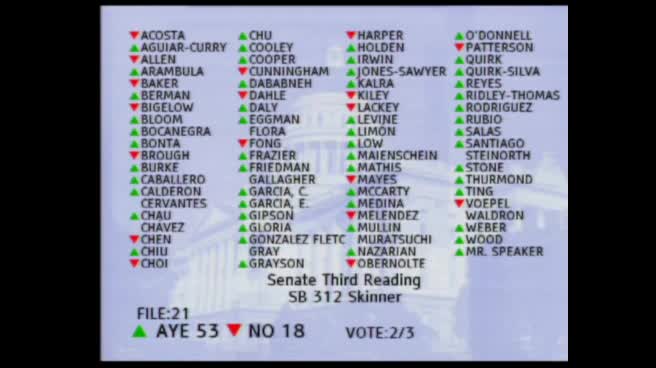 2MIN
Assembly Floor
 2MIN
Assembly Floor
 1H
Assembly Standing Committee on Appropriations
 8MIN
Assembly Standing Committee on Education
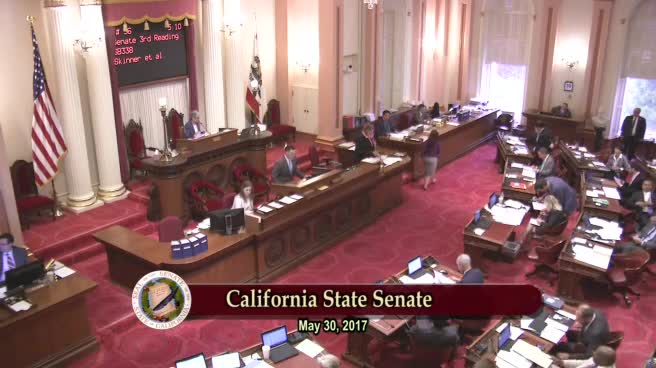 2MIN
Senate Floor
 48MIN
Senate Standing Committee on Appropriations
 13MIN
Senate Standing Committee on Education
Bill Author
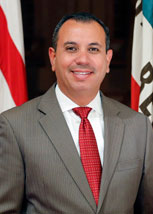
Bill Co-Author(s):