SB 405: Outdoor advertising displays: exemptions: City of Artesia.
- Session Year: 2017-2018
- House: Senate
- Latest Version Date: 2017-05-03
The Outdoor Advertising Act provides for the regulation by the Department of Transportation of advertising displays, as defined, within view of public highways. The act exempts from certain of its provisions advertising displays that advertise the business conducted, services rendered, or goods produced or sold upon the property on which the display is placed, as specified. Existing law exempts from the act advertising displays located in specific geographic areas in the City of Los Angeles if those displays meet specified conditions and requirements, as specified.
This bill would exempt from the act advertising displays located in specific geographic areas in the City of Artesia if those displays meet specified conditions and requirements, including the adoption of, and compliance authorization by, or accordance with, an ordinance by the City of Artesia, as specified. The bill would impose certain conditions if an advertising display authorized by this bill is a message center display. The bill would require the department to ensure that if the advertising display is lighted or a message center that it does not constitute a hazard to traffic. The bill would require the department, before the advertising display may be placed, to determine determine, or to request the Federal Highway Administration to determine determine, that the display will not cause a reduction in federal aid funds or otherwise be inconsistent with any federal law, regulation, or agreement between the state and a federal agency or department.
The bill would make the City of Artesia primarily responsible for ensuring that a display remains in conformance with the ordinance and the bills requirements, and would require the city to indemnify and hold the department harmless if the city fails to do so.
This bill would make legislative findings and declarations as to the necessity of a special statute for the City of Artesia.
The Outdoor Advertising Act provides for the regulation by the Department of Transportation of advertising displays, as defined, within view of public highways. The act exempts from certain of its provisions certain advertising displays. displays that advertise the business conducted, services rendered, or goods produced or sold upon the property on which the display is placed, as specified. Existing law exempts from the act advertising displays located in specific geographic areas in the City of Los Angeles if those displays meet specified conditions and requirements, as specified.
This bill would make nonsubstantive changes to these provisions. exempt from the act advertising displays located in specific geographic areas in the City of Artesia if those displays meet specified conditions and requirements, including the adoption of, and compliance with, an ordinance by the City of Artesia, as specified. The bill would impose certain conditions if an advertising display authorized by this bill is a message center display. The bill would require the department, before the advertising display may be placed, to determine or to request the Federal Highway Administration to determine that the display will not cause a reduction in federal aid funds or otherwise be inconsistent with any federal law, regulation, or agreement between the state and a federal agency or department.
The bill would make the City of Artesia primarily responsible for ensuring that a display remains in conformance with the ordinance and the bills requirements, and would require the city to indemnify and hold the department harmless if the city fails to do so.
This bill would make legislative findings and declarations as to the necessity of a special statute for the City of Artesia.
The Outdoor Advertising Act provides for the regulation by the Department of Transportation of advertising displays, as defined, within view of public highways. The act exempts from its provisions certain advertising displays.
This bill would make nonsubstantive changes to these provisions.
(a)With the exception of Article 4 (commencing with Section 5300) and Sections 5400 to 5404, inclusive, this chapter does not apply to any advertising display located in the geographic area in the City of Artesia adjacent to the eastbound lanes of State Highway Route 91 and on the northernmost end of Roseton Avenue at the end of the cul-de-sac, or to any advertising display located in the geographic area in the City of Artesia adjacent to the westbound lanes of, and westbound entrance onto, State Highway Route 91 and approximately midway between Pioneer Boulevard and Jersey Avenue, if all of the following conditions are met:
(1)The advertising display is authorized by, or in accordance with, an ordinance, including, but not limited to, a specific plan or sign district, adopted by the City of Artesia that regulates advertising displays by identifying the specific displays or establishing regulations that include, at a minimum, all of the following:
(A)Number of signs and total signage area allowed.
(B)Maximum individual signage area.
(C)Minimum sign separation.
(D)Illumination restrictions and regulations, including signage refresh rate, scrolling, and brightness.
(E)Illuminated sign hours of operation.
(2)The owner of the advertising display has submitted to the department a copy of the ordinance adopted by the City of Artesia authorizing the advertising display and identification of the provisions of the ordinance required under paragraph (1) and the department has certified that the ordinance meets the minimum requirements contained in paragraph (1).
(3)The advertising display will not advertise products, goods, or services related to tobacco, firearms, or sexually explicit material.
(4)The advertising display will only advertise products, goods, services, or businesses that are made, sold, or located in the City of Artesia.
(4)(5)(A) Except as otherwise provided in subparagraph (B), there shall be at least 500 feet between any two advertising displays located on the same side of the freeway unless the advertising displays are separated by buildings or other obstructions in a manner that only one of the advertising displays is visible from any given location on the freeway. For purposes of determining compliance with the spacing requirement, the distance between advertising displays shall be measured along the nearest edge of pavement between points directly opposite the advertising displays along each side of the freeway.
(B)The spacing requirement in subparagraph (A) does not apply to an advertising display that advertises only the business conducted, services rendered, or goods produced and sold upon on the property upon on which the advertising display is located and that, accordingly, is not subject to the requirements of this chapter.
(C)When counting the number of advertising displays and measuring the distance between them for purposes of subparagraph (A), the advertising displays described in subparagraph (B) shall be excluded from the count, and no measurements shall be made relative to the excluded advertising displays for purposes of subparagraph (A).
(5)(6)This chapter does not limit the City of Artesia from adopting ordinances prohibiting or further restricting the size, number, or type of advertising displays permitted by this section.
(7)The department shall ensure that an advertising display established pursuant to this section that is lighted or a message center does not constitute a hazard to traffic.
(6)(8)If the advertising display is a message center, the owner of the display shall do one of the following:
(A)Make the message center display available on a space-available basis for use by the department or the Department of the California Highway Patrol for public service messages, including Emergency Alert System (Amber Alert) messages disseminated pursuant to Section 8594 of the Government Code, and messages containing, among other things, reports of commute times, drunk driving awareness messages, reports of accidents of a serious nature, and emergency disaster communications.
(B)Make a message center display not subject to this section that is under the control of the owner of the advertising display available on a space-available basis for public service messages in a location acceptable to the department and the Department of the California Highway Patrol.
(C)Provide funding to the department for the installation of a message center display to accommodate those public service messages, which may include funding as part of mitigation in connection with the approval of development of the property on which the message center display is located by the City of Artesia.
(b)(1)Before the advertising display authorized pursuant to subdivision (a) may be placed, the department shall determine that the display will not cause a reduction in federal aid funds or otherwise be inconsistent with any federal law, regulation, or agreement between the state and a federal agency or department.
(2)If the department is unable to make the determination required pursuant to paragraph (1), the department shall request the Federal Highway Administration (FHWA) of the United States Department of Transportation to make the determination. Upon receipt of a determination by the FHWA that makes the finding described in paragraph (1), the advertising display may be placed.
(c)The City of Artesia shall have primary responsibility for ensuring that a display authorized pursuant to subdivision (a) remains in conformance with all provisions of the ordinance and of this section. If the City of Artesia fails to ensure that the display remains in conformance with all provisions of the ordinance and of this section after 30 days of receipt of a written notice from the department, the City of Artesia shall hold the department harmless and indemnify the department for all costs incurred by the department to ensure compliance with the ordinance and this section or to defend actions challenging the adoption of the ordinance allowing the displays.
SEC. 2.The Legislature finds and declares that a special statute is necessary and that a general statute cannot be made applicable within the meaning of Section 16 of Article IV of the California Constitution because of the unique circumstances concerning the locations of the advertising displays, or proposed advertising displays, set forth in this act and the need for advertising in those locations, and that an exemption from some of the provisions of the Outdoor Advertising Act is necessary for those displays.
(a)With the exception of Article 4 (commencing with Section 5300) and Sections 5400 to 5404, inclusive, this chapter does not apply to any advertising display located in the geographic area in the City of Artesia adjacent to the eastbound lanes of State Highway Route 91 and on the northernmost end of Roseton Avenue at the end of the cul-de-sac, or to any advertising display located in the geographic area in the City of Artesia adjacent to the westbound lanes of, and westbound entrance onto, State Highway Route 91 and approximately midway between Pioneer Boulevard and Jersey Avenue, if all of the following conditions are met:
(1)The advertising display is authorized by, or in accordance with, an ordinance, including, but not limited to, a specific plan or sign district, adopted by the City of Artesia that regulates advertising displays by identifying the specific displays or establishing regulations that include, at a minimum, all of the following:
(A)Number of signs and total signage area allowed.
(B)Maximum individual signage area.
(C)Minimum sign separation.
(D)Illumination restrictions and regulations, including signage refresh rate, scrolling, and brightness.
(E)Illuminated sign hours of operation.
(2)The owner of the advertising display has submitted to the department a copy of the ordinance adopted by the City of Artesia authorizing the advertising display and identification of the provisions of the ordinance required under paragraph (1) and the department has certified that the ordinance meets the minimum requirements contained in paragraph (1).
(3)The advertising display will not advertise products, goods, or services related to tobacco, firearms, or sexually explicit material.
(4)(A) Except as otherwise provided in subparagraph (B), there shall be at least 500 feet between any two advertising displays located on the same side of the freeway unless the advertising displays are separated by buildings or other obstructions in a manner that only one of the advertising displays is visible from any given location on the freeway. For purposes of determining compliance with the spacing requirement, the distance between advertising displays shall be measured along the nearest edge of pavement between points directly opposite the advertising displays along each side of the freeway.
(B)The spacing requirement in subparagraph (A) does not apply to an advertising display that advertises only the business conducted, services rendered, or goods produced and sold upon the property upon which the advertising display is located and that, accordingly, is not subject to the requirements of this chapter.
(C)When counting the number of advertising displays and measuring the distance between them for purposes of subparagraph (A), the advertising displays described in subparagraph (B) shall be excluded from the count, and no measurements shall be made relative to the excluded advertising displays for purposes of subparagraph (A).
(5)This chapter does not limit the City of Artesia from adopting ordinances prohibiting or further restricting the size, number, or type of advertising displays permitted by this section.
(6)If the advertising display is a message center, the owner of the display shall do one of the following:
(A)Make the message center display available on a space-available basis for use by the department or the Department of the California Highway Patrol for public service messages, including Emergency Alert System (Amber Alert) messages disseminated pursuant to Section 8594 of the Government Code, and messages containing, among other things, reports of commute times, drunk driving awareness messages, reports of accidents of a serious nature, and emergency disaster communications.
(B)Make a message center display not subject to this section that is under the control of the owner of the advertising display available on a space-available basis for public service messages in a location acceptable to the department and the Department of the California Highway Patrol.
(C)Provide funding to the department for the installation of a message center display to accommodate those public service messages, which may include funding as part of mitigation in connection with the approval of development of the property on which the message center display is located by the City of Artesia.
(b)(1)Before the advertising display authorized pursuant to subdivision (a) may be placed, the department shall determine that the display will not cause a reduction in federal aid funds or otherwise be inconsistent with any federal law, regulation, or agreement between the state and a federal agency or department.
(2)If the department is unable to make the determination required pursuant to paragraph (1), the department shall request the Federal Highway Administration (FHWA) of the United States Department of Transportation to make the determination. Upon receipt of a determination by the FHWA that makes the finding described in paragraph (1), the advertising display may be placed.
(c)The City of Artesia shall have primary responsibility for ensuring that a display authorized pursuant to subdivision (a) remains in conformance with all provisions of the ordinance and of this section. If the City of Artesia fails to ensure that the display remains in conformance with all provisions of the ordinance and of this section after 30 days of receipt of a written notice from the department, the City of Artesia shall hold the department harmless and indemnify the department for all costs incurred by the department to ensure compliance with the ordinance and this section or to defend actions challenging the adoption of the ordinance allowing the displays.
SEC. 2.The Legislature finds and declares that a special statute is necessary and that a general statute cannot be made applicable within the meaning of Section 16 of Article IV of the California Constitution because of the unique circumstances concerning the locations of the advertising displays, or proposed advertising displays, set forth in this act and the need for advertising in those locations, and that an exemption from some of the provisions of the Outdoor Advertising Act is necessary for those displays.
SECTION 1.Section 5272 of the Business and Professions Code is amended to read:5272.(a)With the exception of Article 4 (commencing with Section 5300) and Sections 5400 to 5404, inclusive, this chapter does not apply to any advertising display used exclusively for any of the following purposes:(1)To advertise the sale, lease, or exchange of real property on which the advertising display is placed.(2)To advertise directions to, and the sale, lease, or exchange of, real property for which the advertising display is placed, except that this exemption does not apply to advertising displays visible from a highway and subject to the Highway Beautification Act of 1965 (23 U.S.C. Sec. 131).(3)To designate the name of the owner or occupant of the premises or to identify the premises.(4)To advertise the business conducted, services rendered, or goods produced or sold on the property on which the advertising display is placed if the display is on the same side of the highway and within 1,000 feet of the point on the property or within 1,000 feet of the entrance to the site at which the business is conducted, services are rendered, or goods are produced or sold.(b)With the exception of Article 4 (commencing with Section 5300) and Sections 5400 to 5404, inclusive, this chapter does not apply to any advertising display used exclusively either to advertise products, goods, or services sold by persons on the premises of an arena on a regular basis, or to advertise products, goods, or services marketed or promoted on the premises of an arena pursuant to a sponsorship marketing plan, if all of the following conditions are met:(1)The arena is capable of providing a venue for professional sports on a permanent basis.(2)The arena has a capacity of 15,000 or more seats.(3)The advertising display is either of the following:(A)Located on the premises of the arena.(B)Has been authorized as of January 1, 2019, by, or in accordance with, a local ordinance, including, but not limited to, a specific plan or sign district adopted in connection with the approval of the arena by the city, county, or city and county, bears the name or logo of the arena, and is visible when approaching offramps from the interstate, primary, or state highways used to access the premises of the arena. No arena shall be permitted more than two advertising displays allowed under this subparagraph.(c)(1)Any advertising display erected pursuant to subdivision (b) and located on the premises of the arena shall be lawful only if authorized by, or in accordance with, an ordinance, including, but not limited to, a specific plan or sign district, adopted by the city, county, or city and county, that regulates advertising displays on the premises of the arena by identifying the specific displays or establishing regulations that include, at a minimum, all of the following:(A)Number of signs and total signage area allowed.(B)Maximum individual signage area.(C)Minimum sign separation.(D)Illumination restrictions and regulations, including signage refresh rate, scrolling, and brightness.(E)Illuminated sign hours of operation.(2)Authorization of advertising displays under subdivision (b) is subject to the owner of the advertising display submitting to the department a copy of the ordinance adopted by the city, county, or city and county in which the arena is located authorizing the advertising display and, for signs located on the premises of the arena, identification of the provisions of the ordinance required under paragraph (1). The department shall certify that the proposed ordinance meets the minimum requirements contained in paragraph (1).(3)An advertising display authorized pursuant to subdivision (b) shall not advertise products, goods, or services related to tobacco, firearms, or sexually explicit material.(4)This chapter does not limit a local government from adopting ordinances prohibiting or further restricting the size, number, or type of advertising displays permitted by this section.(d)As used in this section, the premises of an arena means either of the following:(1)A venue for indoor or outdoor sports, concerts, or other events.(2)Any development project or district encompassing the venue, adjacent to it, or separated from it only by public or private rights-of-way, the boundaries of which have been set by the city, county, or city and county in which the arena is located. The development project or district must be contiguous and may not extend more than 1,000 feet beyond the arena structure or any structure physically connected to the arena structure.(e)As used in this section, sponsorship marketing plan means an agreement between the property owner, facility owner, facility operator, or occupant of the premises of an arena and a sponsor pursuant to which the sponsor is allowed to include its logo, slogan, or advertising on advertising displays and that meets both of the following conditions:(1)The sponsorship marketing plan is for a period of not less than one year.(2)The sponsorship marketing plan grants the sponsor the opportunity to display its logo, slogan, or advertising in the interior of structures on the premises of an arena, or conduct promotions, public relations, or marketing activities on the premises of an arena.(f)Authorization of an advertising display under subdivision (b) that is a message center display is subject to the owner of the display complying with one of the following conditions:(1)Making a message center display within the premises of the arena available on a space-available basis for use by the department or the Department of the California Highway Patrol for public service messages, including Emergency Alert System (Amber Alert) messages disseminated pursuant to Section 8594 of the Government Code, and messages containing, among other things, reports of commute times, drunk driving awareness messages, reports of accidents of a serious nature, and emergency disaster communications.(2)Making a message center display not subject to this section that is under the control of the owner of the advertising display available on a space-available basis for public service messages in a location acceptable to the department and the Department of the California Highway Patrol.(3)Providing funding to the department for the installation of a message center display to accommodate those public service messages, which may include funding as part of mitigation in connection with the approval of the arena by the city, county, or city and county.(g)If an advertising display authorized under subdivision (b) is subject to a notice from the United States Department of Transportation, the Federal Highway Administration, or any other applicable federal agency to the state that the operation of that display will result in the reduction of federal aid highway funds provided in Section 131 of Title 23 of the United States Code, authorization of the display under subdivision (b) shall cease and the display owner shall remove all advertising copy from the display within 60 days after the state notifies the display owner of the receipt of the federal notice. Failure to remove the advertising copy pursuant to this subdivision shall result in a civil fine, imposed by the California Department of Transportation, of ten thousand dollars ($10,000) per day until the advertising copy is removed. The department shall not assume any liability in connection with cessation of operation or removal of an advertising display or advertising copy pursuant to this subdivision.(h)The city, county, or city and county adopting the ordinance authorizing the displays erected pursuant to this section shall have primary responsibility for ensuring that the displays remain in conformance with all provisions of the ordinance and of this section. If the city, county, or city and county fails to ensure that the displays remain in conformance with all provisions of the ordinance and of this section after 30 days of receipt of a written notice from the department, the city, county, or city and county shall hold the department harmless and indemnify the department for all costs incurred by the department to ensure compliance with the ordinance and this section or to defend actions challenging the adoption of the ordinance allowing the displays.(i)An advertising display lawfully erected on or before December 31, 2013, in conformity with subdivision (e) of this section as it read on that date, shall remain authorized, subject to the terms of that subdivision.(a)With the exception of Article 4 (commencing with Section 5300) and Sections 5400 to 5404, inclusive, this chapter does not apply to any advertising display used exclusively for any of the following purposes:
(1)To advertise the sale, lease, or exchange of real property upon on which the advertising display is placed.
(2)To advertise directions to, and the sale, lease, or exchange of, real property for which the advertising display is placed; provided, placed, except that the exemption of this paragraph exemption does not apply to advertising displays visible from a highway and subject to the Highway Beautification Act of 1965 (23 U.S.C. Sec. 131).
(3)To designate the name of the owner or occupant of the premises or to identify the premises.
(4)To advertise the business conducted, services rendered, or goods produced or sold upon on the property on which the advertising display is placed if the display is on the same side of the highway and within 1,000 feet of the point on the property or within 1,000 feet of the entrance to the site at which the business is conducted, services are rendered, or goods are produced or sold.
(b)With the exception of Article 4 (commencing with Section 5300) and Sections 5400 to 5404, inclusive, this chapter does not apply to any advertising display used exclusively either to advertise products, goods, or services sold by persons on the premises of an arena on a regular basis, or to advertise any products, goods, or services marketed or promoted on the premises of an arena pursuant to a sponsorship marketing plan, if all of the following conditions are met:
(1)The arena is capable of providing a venue for professional sports on a permanent basis.
(2)The arena has a capacity of 15,000 or more seats.
(3)The advertising display is either of the following:
(A)Located on the premises of the arena.
(B)Has been authorized as of January 1, 2019, by, or in accordance with, a local ordinance, including, but not limited to, a specific plan or sign district adopted in connection with the approval of the arena by the city, county, or city and county, bears the name or logo of the arena, and is visible when approaching offramps from the interstate, primary, or state highways used to access the premises of the arena. No arena shall be permitted more than two advertising displays allowed under this subparagraph.
(c)(1)Any advertising display erected pursuant to subdivision (b) and located on the premises of the arena shall be lawful only if authorized by, or in accordance with, an ordinance, including, but not limited to, a specific plan or sign district, adopted by the city, county, or city and county, that regulates advertising displays on the premises of the arena by identifying the specific displays or establishing regulations that include, at a minimum, all of the following:
(A)Number of signs and total signage area allowed.
(B)Maximum individual signage area.
(C)Minimum sign separation.
(D)Illumination restrictions and regulations, including signage refresh rate, scrolling, and brightness.
(E)Illuminated sign hours of operation.
(2)Authorization of advertising displays under subdivision (b) is subject to the owner of the advertising display submitting to the department a copy of the ordinance adopted by the city, county, or city and county in which the arena is located authorizing the advertising display and, for signs located on the premises of the arena, identification of the provisions of the ordinance required under paragraph (1). The department shall certify that the proposed ordinance meets the minimum requirements contained in paragraph (1).
(3)An advertising display authorized pursuant to subdivision (b) shall not advertise products, goods, or services related to tobacco, firearms, or sexually explicit material.
(4)This chapter does not limit a local government from adopting ordinances prohibiting or further restricting the size, number, or type of advertising displays permitted by this section.
(d)As used in this section, the premises of an arena means either of the following:
(1)A venue for indoor or outdoor sports, concerts, or other events.
(2)Any development project or district encompassing the venue, adjacent to it, or separated from it only by public or private rights-of-way, the boundaries of which have been set by the city, county, or city and county in which the arena is located. The development project or district must be contiguous and may not extend more than 1,000 feet beyond the arena structure or any structure physically connected to the arena structure.
(e)As used in this section, sponsorship marketing plan means an agreement between the property owner, facility owner, facility operator, or occupant of the premises of an arena and a sponsor pursuant to which the sponsor is allowed to include its logo, slogan, or advertising on advertising displays and that meets both of the following conditions:
(1)The sponsorship marketing plan is for a period of not less than one year.
(2)The sponsorship marketing plan grants the sponsor the opportunity to display its logo, slogan, or advertising in the interior of structures on the premises of an arena, or conduct promotions, public relations, or marketing activities on the premises of an arena.
(f)Authorization of an advertising display under subdivision (b) that is a message center display is subject to the owner of the display complying with one of the following conditions:
(1)Making a message center display within the premises of the arena available on a space-available basis for use by the department or the Department of the California Highway Patrol for public service messages, including Emergency Alert System (Amber Alert) messages disseminated pursuant to Section 8594 of the Government Code, and messages containing, among other things, reports of commute times, drunk driving awareness messages, reports of accidents of a serious nature, and emergency disaster communications.
(2)Making a message center display not subject to this section that is under the control of the owner of the advertising display available on a space-available basis for public service messages in a location acceptable to the department and the Department of the California Highway Patrol.
(3)Providing funding to the department for the installation of a message center display to accommodate those public service messages, which may include funding as part of mitigation in connection with the approval of the arena by the city, county, or city and county.
(g)If an advertising display authorized under subdivision (b) is subject to a notice from the United States Department of Transportation, the Federal Highway Administration, or any other applicable federal agency to the state that the operation of that display will result in the reduction of federal aid highway funds provided in Section 131 of Title 23 of the United States Code, authorization of the display under subdivision (b) shall cease and the display owner shall remove all advertising copy from the display within 60 days after the state notifies the display owner of the receipt of the federal notice. Failure to remove the advertising copy pursuant to this subdivision shall result in a civil fine, imposed by the California Department of Transportation, of ten thousand dollars ($10,000) per day until the advertising copy is removed. The department shall not assume any liability in connection with cessation of operation or removal of an advertising display or advertising copy pursuant to this subdivision.
(h)The city, county, or city and county adopting the ordinance authorizing the displays erected pursuant to this section shall have primary responsibility for ensuring that the displays remain in conformance with all provisions of the ordinance and of this section. If the city, county, or city and county fails to ensure that the displays remain in conformance with all provisions of the ordinance and of this section after 30 days of receipt of a written notice from the department, the city, county, or city and county shall hold the department harmless and indemnify the department for all costs incurred by the department to ensure compliance with the ordinance and this section or to defend actions challenging the adoption of the ordinance allowing the displays.
(i)An advertising display lawfully erected on or before December 31, 2013, in conformity with subdivision (e) of this section as it read on that date, shall remain authorized, subject to the terms of that subdivision.
|
Date
|
Status
|
|---|---|
| Jul 5, 2017 | July 5 set for first hearing canceled at the request of author. |
| Jun 1, 2017 | Referred to Com. on G.O. |
| May 23, 2017 | In Assembly. Read first time. Held at Desk. |
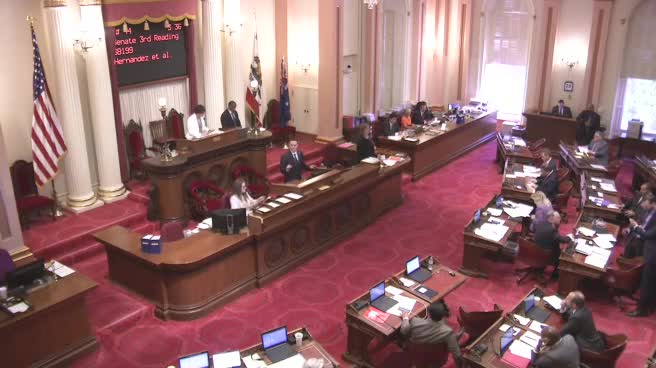
| May 22, 2017 | Read third time. Passed. (Ayes 22. Noes 9. Page 1134.) Ordered to the Assembly. |
| May 16, 2017 | Read second time. Ordered to third reading. |
| May 15, 2017 | From committee: Be ordered to second reading pursuant to Senate Rule 28.8. |
| May 5, 2017 | Set for hearing May 15. |
| May 3, 2017 | Read second time and amended. Re-referred to Com. on APPR. |
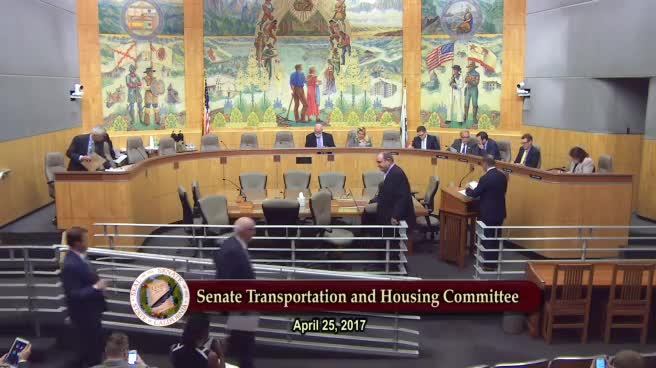
| May 2, 2017 | From committee: Do pass as amended and re-refer to Com. on APPR. (Ayes 8. Noes 2. Page 857.) (April 25). |
| Apr 19, 2017 | Set for hearing April 25. |
| Apr 5, 2017 | Re-referred to Com. on T. & H. |
| Mar 28, 2017 | From committee with author's amendments. Read second time and amended. Re-referred to Com. on RLS. |
| Feb 23, 2017 | Referred to Com. on RLS. |
| Feb 16, 2017 | From printer. May be acted upon on or after March 18. |
| Feb 15, 2017 | Introduced. Read first time. To Com. on RLS. for assignment. To print. |
|
Date
|
Description
|
Location
|
Votes
|
|
|---|---|---|---|---|
| May 22, 2017 | Senate 3rd Reading SB405 Mendoza | Senate Floor |
Passed |
|
| Apr 25, 2017 | Do pass as amended, but first amend, and re-refer to the Committee on [Appropriations] | Senate Standing Committee on Transportation and Housing |
Passed |
This list shows positions taken on this bill by organizations on the date displayed, which is linked to the original source.
Positions by individuals are not included.
|
Organization
|
Position
|
Date
|
|---|---|---|
| AFSCME District Council 36 | ** Support | Jul 3, 2017 |
| BULLETIN DISPLAYS, LLC | ** Against | Jul 3, 2017 |
| California State Council Of Laborers | ** Against | Jul 3, 2017 |
| California State Outdoor Advertising Association | ** Against | Jul 3, 2017 |
| California Teamsters Public Affairs Council | ** Against | Jul 3, 2017 |
| City of Artesia | ** Support | Jul 3, 2017 |
| clear channel outdoor | ** Against | Jul 3, 2017 |
| Finance Policy Coaltion | * Against | Apr 25, 2017 |
| Firearms Policy Coalition | ** Against | May 17, 2017 |
| General Outdoor Advertising | ** Against | Jul 3, 2017 |
| lamar advertising company | ** Against | Jul 3, 2017 |
| OUTFRONT Media | ** Against | Jul 3, 2017 |
| State Building and Construction Trades Council | ** Against | Jul 3, 2017 |
| stott outdoor advertising | ** Against | Jul 3, 2017 |
Date of Hearing: July 5, 2017
ASSEMBLY COMMITTEE ON GOVERNMENTAL ORGANIZATION
Adam Gray, Chair
SBPCA Bill Id:SB 405
Author:(Mendoza) – As Amended Ver:May 3, 2017
SENATE VOTE: 22-9
SUBJECT: Outdoor advertising displays: exemptions: City of Artesia
SUMMARY: This bill creates an exemption from specified provisions of the Outdoor Advertising Act (OAA) for new advertising displays within the City of Artesia located adjacent to SR 91. Specifically, this bill:
- Creates an exemption from the permitting and certain other restrictions contained in the OAA for two new advertising displays within the City of Artesia located adjacent to SR 91 at the end of Roseton Avenue and near Pioneer Boulevard.
- Requires the City of Artesia to develop an ordinance to provide for all of the following:
- Maximum number of signs and total signage allowed
- Maximum individual signage area
- Minimum sign separation
- Illumination restrictions
- Illuminated sign hours of operation
- Prohibits the advertising display from advertising products, goods, or services related to tobacco, firearms, or sexually explicit material.
- Limits the advertising display to products, goods, services, or businesses that are made, sold, or located in the City of Artesia.
- Requires Caltrans to ensure that an advertising display established pursuant to this bill, that is lighted or a message center (a digital billboard that refreshes not more frequently than ever four seconds), does not constitute a hazard to traffic.
- Requires that if the display is a message center, the owner must make the display available for public service messages.
- Requires Caltrans to determine that the display will not cause a reduction in federal highway funds before the advertising display may be placed. Should Caltrans be unable to make such a determination, the bill requires a determination be made by the Federal Highway Administration (FHA) prior to sign being placed
EXISTING LAW:
1) Establishes the OAA, which regulates the placement of advertising displays adjacent to and within specified distances of highways that are part of the national system of interstate, defense highways, and federal-aid highways.
2) Prohibits any advertising display from being placed or maintained on property adjacent to a section of a freeway that has been landscaped if the advertising display is designed to be viewed primarily by persons traveling on the main-traveled way of the landscaped freeway.
3) Provides for limited exemptions to the prohibition on advertising along system and landscaped freeways, including exemptions for signs advertising the property’s sale or lease, signs designating the premises or its owner, and signs advertising goods or services manufactured or produced on the property itself.
4) Provides that the OAA generally does not apply to on premise advertising displays, which include those advertising the sale of the property upon which it is placed or that advertise the business conducted, services rendered, or goods produced or sold on the property. Local governments regulate on premise displays, except for certain safety requirements.
5) Allows a single advertising structure exemption for each of several cities, including an exemption for advertising on street furniture in San Francisco, several billboards situated on the grounds of the Oakland-Alameda County Coliseum complex, and structures within the Mid-City Recovery Redevelopment Project Area within Los Angeles.
6) Requires the Department of Transportation (Caltrans) to assess penalties for a violation of the OAA, as specified. If an advertising display is placed or maintained in a location that does not conform to the relevant statutes or local ordinances, and is not removed within thirty days of written notice from the department or the city or the county with land use jurisdiction over the property upon which the advertising display is located, a penalty of $10,000 plus $100 for each day the advertising display is placed or maintained after the department sends written notice shall be assessed and the gross revenues received by the violator shall be disgorged. Caltrans may also request recovery of its legal costs.
- Provides, by contractual agreement, for Caltrans to administer the federal Outdoor Advertising Control (OAC) program, which has restrictions similar to California’s OAA program, including maximum sign size, sign spacing, location, illumination, and content. If the state fails to properly administer the federal program, the state shall lose 10% of its federal highway funding.
FISCAL EFFECT: Unknown
COMMENTS:
Purpose of the bill: According to the author, “SB 405 will provide an exemption from existing outdoor advertising provisions that will allow the City of Artesia to utilize outdoor advertising displays for revenue generating purposes to promote businesses located within the area.”
Signs in Question: This bill provides exemptions from the OAA for two proposed advertising displays which have not been erected in the City of Artesia. Their precise location will be located adjacent to SR 91, one on each side of the highway within one-quarter of a mile of each other, near the Pioneer Boulevard underpass. This is a heavily travelled 12-lane freeway (6 lanes in each direction) with peak traffic of over 24,000 vehicles per hour. It is important to note, Caltrans has done a preliminary investigation of the proposed location of the displays and stated the only exemption necessary would be for a “Landscape Freeway” (see discussion below).
Shifting Responsibility: This bill exempts the signs in question from the entire OAA while allowing the City of Artesia to develop its own billboard regulations, while the state retains the responsibility for enforcing the specific provisions of the federal OAC program. This gives Artesia some flexibility, though that flexibility is constrained by the federal OAC that restricts billboard spacing, location, size, illumination, and content.
Outdoor Advertising Act: The state OAA regulates the placement of advertising displays (billboards) and signs along interstate or primary highways, landscaped freeways and similar specified highways. The OAA, along with related federal provisions, is intended, among other things, to promote highway beautification and provide a consistent framework for the regulation of advertising displays along freeways and highways. The OAA sets standards for the advertising structures, including their size, identification and location, and requires compliance with permit application procedures and conditions administered by Caltrans.
In order for an outdoor advertising display application to be considered for a permit adjacent to an Interstate or primary highway the following criterion laid out by the OAA and/or regulations adopted by Caltrans must be met:
- Display Location:
- Must be outside the right of way of any highway.
- Must be outside of any stream, or drainage channel.
- There must be an existing business activity within 1000 feet of proposed display location on either side of the highway.
- Location of property where display is to be placed must be zoned industrial or commercial.
- Must have current property owner consent, in writing, to place the display at desired location.
- Must have written permission (building permit) from the local government having jurisdiction where the display is to be located.
- Location may not be adjacent to a landscaped freeway. **
- Location may not be adjacent to a scenic highway.
- If adjacent to a bonus segment of an Interstate freeway, copy, size, and spacing is more restrictive.
- Actual Display:
- Must be 500 feet from any other permitted display on same side of any highway that is a freeway.
- Must be 300 feet from any other permitted display on same side of any primary highway that is not a freeway in an unincorporated area.
- Must be 100 feet from any other permitted display on same side of any primary highway that is not a freeway and is within the limits of an incorporated city.
- Must be 500 feet from an interchange; intersection at grade or safety roadside rest if the highway is a freeway and the location is outside the limits of an incorporated city and outside the limits of an urban area.
- An electronic changeable message center display must meet the above spacing requirements and be 1000 feet from another electronic message center display.
- Maximum height for the advertising display area is, 25 feet in height and 60 feet in length, not to exceed an overall maximum of 1200 square feet.
**The proposed locations for the displays in question are adjacent to a “Landscaped Freeway”
Federal Highway Beautification Act of 1965: The Highway Beautification Act (HBA) was created to protect the public investment, promote the safety and recreational value of public travel, and to preserve the natural beauty of highways in the nation.
The HBA specifies that states have the responsibility to enforce provisions regarding the placement and maintenance of outdoor advertising signs, displays and devices along the Interstate and National Highway System. In 1968 Caltrans entered into a contractual agreement with the Federal Highway Administration (FHA) to implement and enforce the federal OAC program. Many of the OAA provisions are similar to those contained in federal law, originally established in 1965 through the HBA.
The penalty for failure to enforce federal law is severe: 10% of federal highway funds with the potential to apply the penalty retroactively. Presently, California receives $3.5 billion from the federal government, and stands to lose up to $350 million. SB 405 does contain a provision attempting to mitigate the risk of losing federal funds by stipulating the displays may only be placed as long as they do not result in the reduction of federal aid highway funds.
Landscaped Freeways: A Classified Landscaped Freeway is a section of freeway with planting that meets the criteria of Caltrans’ Outdoor Advertising Regulations (Sec. 2500-2513). It is used in the control and regulation of Outdoor Advertising Displays. A stretch of freeway designated landscaped is grounds for permit denial for an advertising display location. However, an administrative process exists within Caltrans to declassify a freeway as non-landscape, thus permitting a display if all other permit requirements are met. It is important to note that the FHA generally leaves the classification of Landscaped Freeways up to the state, meaning declassifying or exempting stretches of landscaped freeway to place advertisements will not result in potential loss of federal highway funds.
The displays in question have not gone through the permit or declassification process outlined above. However, to be fair, Caltrans has preemptively alerted the sign owner and City of Artesia that the stretch of freeway in question does not meet the requirements to declassify as non-landscaped, hence, there is no point for the proposed signs to go through the permit and declassification process. This leaves an exemption in statute as the only remedy for the city and the sign owner.
Support: According to AFSCME District Council 36, “We represent a significant portion of the employees employed by the City of Artesia. The City has been diligent in their efforts to care for the interests of their employees in spite of suffering disproportionately from the economic downturn and the end of redevelopment agencies. This is a city that has been creative and resilient in coming up with solutions to maintain basic services to the residents. The electronic sign proposed in SB 405 (Mendoza) will provide much needed revenue for services as well as advertising for Artesia business community and public service messages for health and safety.”
Opposition: According to the California State Outdoor Advertising Association (CSOAA), the Teamsters Public Affairs Council, California State Council of Laborers and various outdoor advertising companies, “SB 405 would allow the City of Artesia to take jurisdiction of outdoor advertising along an Interstate Freeway in violation of State law, Federal Law and the State’s Compact with the Federal Government on Outdoor Advertising Control. Even though the City has not even applied for a permit under existing law, it seeks to carve out a section of its City from State and Federal outdoor advertising control…The regulatory structure that governs our member businesses is complex, and must consider federal, state and local considerations. We are concerned that this proposal creates an uneven playing field for those outdoor companies that have worked with federal, state and local authorities to maintain lawfully permitted displays.”
Policy Considerations: As noted the above, Caltrans has expressed the only thing preventing the proposed location of the displays from getting a state permit is the fact that it has been designated a “Landscaped Freeway” and is not eligible to be declassified. This bill exempts the proposed displays from the entire OAA and allows the City of Artesia to develop its own billboard regulations. The committee and author may wish to consider narrowing the bill to just exempt the displays from the landscaped freeway provision of the OAA, while maintaining the jurisdiction Caltrans and subjecting the displays to the rest of the OAA.
Suggested Amendments:
Narrow the exemption for the displays in question to only include Article 8 on “Landscaped Freeways” (Sections 5440-5443.5) of the Business and Professions Code.
Add language stating the displays in question will be subject to all other provisions of the OAA.
Prior/ Related Legislation: SB 744 (Hueso), 2017- 2018 Legislative Session. Creates an exemption to the OAA for several existing billboards in the County of Imperial provided the advertising displays are approved by either Caltrans or the FHA. (Pending in the Assembly G.O. Committee).
SB 459 (Portantino), 2017- 2018 Legislative Session. Creates an exemption to the OAA for two existing billboards in the City of Upland provided the advertising displays are approved by either Caltrans or the FHA. (Held in the Senate Transportation and Housing Committee).
AB 1373 (Santiago), Chapter 853, Statutes of 2016. Created an exemption to the OAA in downtown Los Angeles provided the advertising displays are approved by either Caltrans or the FHA.
SB 1199 (Hall), Chapter 869, Statutes of 2016. Created an exemption to the OAA for two billboards in the City of Inglewood, provided that such billboards do not result in a reduction of federal funding.
SB 684 (Hill), Chapter 544, Statutes of 2013. Permitted existing advertising displays that advertised businesses and activities within the boundary limits of an RDA project to remain and be considered “on-premise displays” until January 1, 2023. The city or county could then apply to Caltrans for an extension, showing “good cause” beginning on January 1, 2022.
SB 31 (Padilla), Chapter 542, Statutes of 2013. Recasts the arena advertising exception to exempt from the OAA specified advertising displays authorized before January 1, 2019 by local ordinance, at a venue with a capacity of 15,000 seats or more that is capable of providing a permanent venue for professional sports.
SB 694 (Correa), Chapter 545, Statutes of 2013. Exempts from the Outdoor Advertising Act (OAA) advertising displays at current or future high-speed rail stations.
SB 402 (Vargas), 2011-2012 Legislative Session. Would have created an exemption to the OAA for several existing billboards in the County of Imperial. (Held in Senate Rules).
AB 1570 (Salas), 2009-2010 Legislative Session. Would have created an exemption to the OAA for several existing billboards in the County of Imperial. (Gut and amended in Senate).
AB 2339 (Solorio), Chapter 493, Statutes of 2008. This bill expanded the definition of an "on premise" display to include those displays advertising products, goods, or services sold on the premises of an arena of at least 5,000 seats and is located on public land, provided certain conditions were met.
AB 1499 (Benoit) of 2005-2006 Legislative Session. Would have created an exemption to the Act, to permit the City of Riverside to erect an outdoor advertising display along Highway 91 to promote economic activity for the Riverside Plaza. (Vetoed by Governor)
AB 801 (Jones) of 2005-2006 Legislative Session. Would have created an exemption from the Outdoor Advertising Act for one sign in the County of Sacramento. (Vetoed by Governor)
AB 2441 (Klehs) of 2005-2006 Legislative Session. Would have authorized an advertising display in the redevelopment zone of the City of San Leandro subject to specified conditions. (Vetoed by Governor)
AB 1518 (J. Horton) of 2005-2006 Legislative Session. Would have exempted, from the prohibition against placing advertising displays adjacent to landscaped freeways, any billboard located on property owned by the Lennox School District, subject to certain conditions. (Died pending Concurrence in Assembly)
AB 762 (Nunez), Chapter 725, Statutes of 2003. Creates an exemption to the OAA by allowing the National Latino Arts Council to place an advertisement on the roof of a not-for-profit educational academy.
SB 1480 (Speier), Chapter 972, Statutes of 2002, requires the applicant for a state billboard permit to have the written consent of the city or county with land use jurisdiction as well as the owner of the property site for the billboard
SB 190 (Perata) Chapter 54, Statutes of 2001. Exempted a certain development of highway advertising in Oakland from existing laws protecting landscaped highways permitted the City of Artesia to erect an advertising display alongside a landscaped highway. Permitted the City of Artesia to lease one billboard space adjacent to the 91 Freeway on city property.
REGISTERED SUPPORT / OPPOSITION:
Support
City of Artesia (sponsor)
AFSCME District Council 36
Opposition
Bulletin Displays, LLC
California State Council of Laborers
California State Outdoor Advertising Association
California Teamsters Public Affairs Council
Clear Channel Outdoor
General Outdoor Advertising
Lamar Advertising Company
Outfront Media
State Building and Construction Trades Council
Stott Outdoor Advertising
Analysis Prepared by: Kenton Stanhope / G.O. / (916) 319-2531
Office of Senate Floor Analyses (916) 651-1520 Fax: (916) 327-4478 | SB |
THIRD READING
Bill No: SB 405
:
SENATE TRANS. & HOUSING COMMITTEE: 8-2, 4/25/17
AYES: Beall, Cannella, Allen, McGuire, Mendoza, Morrell, Skinner, Wiener
NOES: Bates, Gaines
NO VOTE RECORDED: Atkins, Roth, Wieckowski
SENATE APPROPRIATIONS COMMITTEE: Senate Rule 28.8
This bill creates an exemption from specified provisions of the Outdoor Advertising Act (OAA) for new advertising displays within the City of Artesia located adjacent to SR 91.
Existing law:
- Establishes the OAA, which regulates the placement of advertising displays adjacent to and within specified distances of highways that are part of the national system of interstate, defense highways, and federal-aid highways.
- Prohibits any advertising display from being placed or maintained on property adjacent to a section of a freeway that has been landscaped if the advertising display is designed to be viewed primarily by persons traveling on the main-traveled way of the landscaped freeway.
- Provides for limited exemptions to the prohibition on advertising along system and landscaped freeways, including exemptions for signs advertising the property’s sale or lease, signs designating the premises or its owner, and signs advertising goods or services manufactured or produced on the property itself.
- Provides that the OAA generally does not apply to on premise advertising displays, which include those advertising the sale of the property upon which it is placed or that advertise the business conducted, services rendered, or goods produced or sold on the property. Local governments regulate on premise displays, except for certain safety requirements.
- Allows a single advertising structure exemption for each of several cities, including an exemption for advertising on street furniture in San Francisco, several billboards situated on the grounds of the Oakland-Alameda County Coliseum complex, and structures within the Mid-City Recovery Redevelopment Project Area within Los Angeles.
- Requires the Department of Transportation (Caltrans) to assess penalties for a violation of the OAA, as specified. If an advertising display is placed or maintained in a location that does not conform to the relevant statutes or local ordinances, and is not removed within 30 days of written notice from the department or the city or the county with land use jurisdiction over the property upon which the advertising display is located, a penalty of $10,000 plus $100 for each day the advertising display is placed or maintained after the department sends written notice shall be assessed and the gross revenues received by the violator shall be disgorged. Caltrans may also request recovery of its legal costs.
- Provides, by contractual agreement, for Caltrans to administer the federal Outdoor Advertising Control (OAC) program, which has restrictions similar to California’s OAA program, including maximum sign size, sign spacing, location, illumination, and content. If the state fails to properly administer the federal program, the state shall lose 10% of its federal highway funding.
This bill:
- Creates an exemption from the permitting and certain other restrictions contained in the OAA for two new advertising displays within the City of Artesia located adjacent to SR 91 at the end of Roseton Avenue and near Pioneer Boulevard.
- Requires the City of Artesia to develop an ordinance to provide for all of the following:
- Maximum number of signs and total signage allowed
- Maximum individual signage area
- Minimum sign separation
- Illumination restrictions
- Illuminated sign hours of operation
- Prohibits the advertising display from advertising products, goods, or services related to tobacco, firearms, or sexually explicit material.
- Limits the advertising display to products, goods, services, or businesses that are made, sold, or located in the City of Artesia.
- Requires Caltrans to ensure that an advertising display established pursuant to this bill, that is lighted or a message center (a digital billboard that refreshes not more frequently than ever four seconds), does not constitute a hazard to traffic.
- Requires that if the display is a message center, the owner must make the display available for public service messages.
Comments
- Purpose. According to the author, the purpose of this bill is to allow the City of Artesia to raise revenue through the construction and operation of two digital advertising displays that will promote businesses within the area.
- Where? These two advertising displays are proposed to be located adjacent to SR 91 in the City of Artesia, one on each side of the highway within one-quarter of a mile of each other, near the Pioneer Boulevard underpass. This is a heavily travelled 12-lane freeway (six lanes in each direction) with peak traffic of over 24,000 vehicles per hour.
- Creating a conflict. This bill creates a conflict between the desire of the City of Artesia to raise funds and the responsibility of the state to ensure driver safety through the administration of state law and the federal OAC program. From the perspective of the city, billboard revenue will be maximized with more signs that attract the attention of drivers. From the perspective of the state, catchier signs distract drivers; will lead to more accidents and injury, particularly along a heavily traveled freeway with numerous merges, onramps and off-ramps. These concerns are heightened with electronic displays and message centers, which are advertising displays that can change as often as every four seconds. These displays can distract drivers in ways in which traditional billboards do not through the use of light by adjusting brightness, contrast, color and content.[1] For those reasons, this bill includes a provision requiring Caltrans to review and approve any electronic displays or message centers to ensure they do not present a safety hazard for drivers.
- Caltrans enforcement. State law contains numerous billboard restrictions intended to prevent compromising driver safety and cluttering the freeway. These include restrictions on the sign size, location, and proximity to similar signs, lighting and content. Many of these provisions are similar to those contained in federal law, originally established in 1965 through the Lady Bird Johnson Highway Beautification Act. In 1968 Caltrans entered into a contractual agreement with the Federal Highway Administration (FHA) to implement and enforce the federal OAC program. The penalty for failure to enforce federal law is severe: 10 percent of federal highway funds with the potential to apply the penalty retroactively. To assure against any loss of federal funds, the Senate Transportation and Housing Committee last year required AB 1373 (Santiago) to contain specific language requiring preapproval of the advertising displays by Caltrans or the FHA. This bill contains similar language.
- Local control, state responsibility. This bill allows the City of Artesia to develop its own billboard regulations, while the state retains the responsibility for enforcing the specific provisions of the federal OAC program. This gives the City of Artesia some flexibility, though that flexibility is constrained by the federal OAC that restricts billboard spacing, location, size, illumination, and content. This bill provides for the City of Artesia to hold Caltrans harmless if the city fails to enforce compliance with the legislation.
- Opposition. Opponents are concerned that this bill carves out a special exemption from established state policy. If granted, many more similar requests for exemption are inevitable. Last year the Legislature passed two such exemptions.
Related/Prior Legislation
AB 1373 (Santiago, Chapter 853, Statutes of 2016) creates an exception to the OAA in downtown Los Angeles provided the advertising displays are approved by either Caltrans or the FHA.
SB 1199 (Hall, Chapter 869, Statutes of 2016) creates an exception to the OAA for two billboards in the City of Inglewood, provided that such billboards do not result in a reduction of federal funding.
SB 459 (Portantino, 2017) creates an exception to the OAA for two existing billboards in the City of Upland provided the advertising displays are approved by either Caltrans or the FHA. The bill is pending in the Senate Transportation and Housing Committee.
SB 744 (Hueso, 2017) creates an exception to the OAA for several existing billboards in the County of Imperial provided the advertising displays are approved by either Caltrans or the FHA. The bill is pending on the Senate Floor.
FISCAL EFFECT: Appropriation: Fiscal Com.: Local:
City of Artesia
OPPOSITION: (Verified 5/17/17)
California State Outdoor Advertising Association
Firearms Policy Coalition
ARGUMENTS IN SUPPORT: The City of Artesia states that the revenue generated from the billboards established under this bill will be essential to the continuation and expansion of critical city services.
ARGUMENTS IN OPPOSITION: The California State Outdoor Advertising Association states that individual exemptions from the OAA, such as the one granted by this bill, undermine existing law and disadvantage those that have abided by the statute.
5/17/17 16:47:52
**** END ****
Effects of Outdoor Advertising Displays on Driver Safety, Preliminary Investigation by Caltrans Division of Research and Innovation; October 11, 2012. ↑
SENATE COMMITTEE ON TRANSPORTATION AND HOUSING
Senator Jim Beall, Chair
2017 - 2018 Regular
Bill No: SB 405 Hearing Date: 4/25/2017
Author: | Mendoza | ||
Version: | 3/28/2017 | ||
Urgency: | No | Fiscal: | Yes |
Consultant: | Randy Chinn | ||
SUBJECT: Outdoor advertising displays: exemptions: City of Artesia.
DIGEST: This bill creates an exemption from specified provisions of the Outdoor Advertising Act (OAA) for new advertising displays within the City of Artesia located adjacent to SR 91.
ANALYSIS:
Existing law:
- Establishes the OAA, which regulates the placement of advertising displays adjacent to and within specified distances of highways that are part of the national system of interstate, defense highways, and federal-aid highways.
- Prohibits any advertising display from being placed or maintained on property adjacent to a section of a freeway that has been landscaped if the advertising display is designed to be viewed primarily by persons traveling on the main-traveled way of the landscaped freeway.
- Provides for limited exemptions to the prohibition on advertising along system and landscaped freeways, including exemptions for signs advertising the property’s sale or lease, signs designating the premises or its owner, and signs advertising goods or services manufactured or produced on the property itself.
- Provides that the OAA generally does not apply to on premise advertising displays, which include those advertising the sale of the property upon which it is placed or that advertise the business conducted, services rendered, or goods produced or sold on the property. Local governments regulate on premise displays, except for certain safety requirements.
- Allows a single advertising structure exemption for each of several cities, including an exemption for advertising on street furniture in San Francisco, several billboards situated on the grounds of the Oakland-Alameda County Coliseum complex, and structures within the Mid-City Recovery Redevelopment Project Area within Los Angeles.
- Requires the Department of Transportation (Caltrans) to assess penalties for a violation of the OAA, as specified. If an advertising display is placed or maintained in a location that does not conform to the relevant statutes or local ordinances, and is not removed within thirty days of written notice from the department or the city or the county with land use jurisdiction over the property upon which the advertising display is located, a penalty of $10,000 plus $100 for each day the advertising display is placed or maintained after the department sends written notice shall be assessed and the gross revenues received by the violator shall be disgorged. Caltrans may also request recovery of its legal costs.
- Provides, by contractual agreement, for Caltrans to administer the federal Outdoor Advertising Control (OAC) program, which has restrictions similar to California’s OAA program, including maximum sign size, sign spacing, location, illumination, and content. If the state fails to properly administer the federal program, the state shall lose 10% of its federal highway funding.
This bill creates an exemption from the permitting and certain other restrictions contained in the OAA for two new advertising displays within the City of Artesia located adjacent to SR 91 at the end of Roseton Avenue and near Pioneer Boulevard.
- Requires the City of Artesia to develop an ordinance to provide for all of the following:
- Maximum number of signs and total signage allowed
- Maximum individual signage area
- Minimum sign separation
- Illumination restrictions
- Illuminated sign hours of operation
- Prohibits the advertising display from advertising products, goods, or services related to tobacco, firearms, or sexually explicit material.
If the display is a message center, which is a digital billboard that refreshes not more frequently than every four seconds, the owner shall make such display available for public service messages.
COMMENTS:
- Purpose. According to the author, the purpose of this bill is to allow the City of Artesia to raise revenue through the construction and operation of two digital advertising displays that will promote businesses within the area.
- Where? These two advertising displays are proposed to be located adjacent to SR 91 in the City of Artesia, one on each side of the highway within one-quarter of a mile of each other, near the Pioneer Boulevard underpass. This is a heavily travelled 12-lane freeway (6 lanes in each direction) with peak traffic of over 24,000 vehicles per hour.
- Creating a conflict. This bill creates a conflict between the desire of the City of Artesia to raise funds and the responsibility of the state to ensure driver safety through the administration of state law and the federal OAC program. From the perspective of the city, billboard revenue will be maximized with more signs that attract the attention of drivers. From the perspective of the state, catchier signs distract drivers; will lead to more accidents and injury, particularly along a heavily traveled freeway with numerous merges, onramps and off-ramps. These concerns are heightened with electronic displays and message centers, which are advertising displays that can change as often as every four seconds. These displays can distract drivers in ways in which traditional billboards do not through the use of light by adjusting brightness, contrast, color and content.[1] The author and committee may wish to consider adding a provision requiring Caltrans to review and approve any electronic displays or message centers to ensure they do not present a safety hazard for drivers.
- Caltrans enforcement. State law contains numerous billboard restrictions intended to prevent compromising driver safety and cluttering the freeway. These include restrictions on the sign size, location, and proximity to similar signs, lighting and content. Many of these provisions are similar to those contained in federal law, originally established in 1965 through the Lady Bird Johnson Highway Beautification Act. In 1968 Caltrans entered into a contractual agreement with the Federal Highway Administration (FHA) to implement and enforce the federal OAC program. The penalty for failure to enforce federal law is severe: 10 percent of federal highway funds with the potential to apply the penalty retroactively. To assure against any loss of federal funds, the Committee last year required AB 1373 (Santiago) to contain specific language requiring preapproval of the advertising displays by Caltrans or the FHA. This bill contains similar language.
- Local control, state responsibility. This bill allows Artesia to develop its own billboard regulations, while the state retains the responsibility for enforcing the specific provisions of the federal OAC program. This gives Artesia some flexibility, though that flexibility is constrained by the federal OAC that restricts billboard spacing, location, size, illumination, and content. The bill provides for Artesia to hold Caltrans harmless if the city fails to enforce compliance with the legislation.
- Promoting locally, not globally. The stated purpose of the bill is to host off-site advertising to promote business located within the City of Artesia. The author and committee may wish to amend the bill so that these billboards do not advertise products and services unrelated to the local community.
- Opposition. Opponents are concerned that this bill carves out a special exemption from established state policy. If granted, many more similar requests for exemption are inevitable. Last year the Legislature passed two such exemptions.
- Similar Measures. The committee will consider three bills to establish exemptions from the Outdoor Advertising Act. This bill creates an exemption for new advertising displays. SB 744 (Hueso) and SB 459 (Portantino) create an exemption for a set of existing displays.
- Waiving committee policy. This committee has a policy not to hear bills which create specific exemptions from the Outdoor Advertising Act. The committee will need to waive its policy to hear this bill.
Related Legislation:
AB 1373 (Santiago, Chapter 853 of 2016) — creates an exception to the OAA in downtown Los Angeles provided the advertising displays are approved by either Caltrans or the FHA.
SB 1199 (Hall: Chapter 869 of 2016) – creates an exception to the OAA for two billboards in the City of Inglewood, provided that such billboards do not result in a reduction of federal funding.
SB 459 (Portantino, 2017) — creates an exception to the OAA for two existing billboards in the City of Upland provided the advertising displays are approved by either Caltrans or the FHA. This bill is pending in the Senate Transportation and Housing Committee.
SB 744 (Hueso, 2017) — creates an exception to the OAA for several existing billboards in the County of Imperial provided the advertising displays are approved by either Caltrans or the FHA. This bill is pending in the Senate Transportation and Housing Committee.
FISCAL EFFECT: Appropriation: Fiscal Com.: Local:
POSITIONS: (Communicated to the committee before noon on Wednesday,
April 19, 2017.)
SUPPORT:
City of Artesia
OPPOSITION:
California State Outdoor Advertising Association
-- END --
Effects of Outdoor Advertising Displays on Driver Safety, Preliminary Investigation by Caltrans Division of Research and Innovation; October 11, 2012. ↑
Discussed in Hearing
 7MIN
Senate Floor
 33MIN
Senate Standing Committee on Transportation and Housing
Bill Author

Bill Co-Author(s):