SB 406: Vehicles: high-occupancy vehicle lanes: exceptions.
- Session Year: 2017-2018
- House: Senate
- Latest Version Date: 2017-09-30
Existing law authorizes the Department of Transportation and local authorities to designate certain highway lanes for the exclusive or preferential use of high-occupancy vehicles (HOVs), requires the department or local authorities to place signage advising motorists of the rules governing the use of those lanes, and prohibits the use of those lanes by motorists other than in conformity with the posted rules. Existing law provides a limited exemption allowing motorcycles, mass transit vehicles, and paratransit vehicles to use HOV lanes.
This bill would provide an exemption to allow for blood transport vehicles, as defined, to use HOV lanes, regardless of the number of occupants. The bill would require certain conditions be met for the new exemption to be operative, including requiring the Director of Transportation to determine that the exemption would not result in a loss of federal funds or conflict with federal law, as specified, and requiring the director to post that determination on the Department of Transportations Internet Web site.
Existing law authorizes the Department of Transportation and local authorities to designate certain highway lanes for the exclusive or preferential use of high-occupancy vehicles (HOVs), requires the department or local authorities to place signage advising motorists of the rules governing the use of those lanes, and prohibits the use of those lanes by motorists other than in conformity with the posted rules. Existing law provides a limited exemption allowing motorcycles, mass transit vehicles, and paratransit vehicles to use HOV lanes.
This bill would provide an exemption to allow for blood transport vehicles, as defined, to use HOV lanes, regardless of the number of occupants.
Existing federal law authorizes a state to allow the use of lanes designated for high-occupancy vehicles (HOVs) by specified vehicles that are not HOVs. Existing state law authorizes the Department of Transportation to designate certain lanes for the exclusive use of HOVs, which lanes may also be used by certain low-emission, hybrid, or alternative fuel vehicles not carrying the requisite number of passengers otherwise required for the use of an HOV lane, if the vehicle displays a valid identifier issued by the Department of Motor Vehicles (DMV). A violation of provisions relating to HOV lane use by vehicles, including operating or owning a vehicle displaying a decal, label, or other identifier that was not issued to that vehicle, is a crime.This bill would similarly authorize a blood transport vehicle, as defined, that is transporting blood between collection points and hospitals or storage centers to use HOV lanes, by requiring the department to make available for issuance a distinctive decal, label, or other identifier that clearly distinguishes a blood transport vehicle from other vehicles for purposes of use in those lanes, and would make conforming changes. The bill would require payment of fees for the initial issuance and renewal of a decal, label, or other identifier, as specified. By expanding the scope of existing crimes relating to HOV lane use, the bill would impose a state-mandated local program.The California Constitution requires the state to reimburse local agencies and school districts for certain costs mandated by the state. Statutory provisions establish procedures for making that reimbursement.This bill would provide that no reimbursement is required by this act for a specified reason.Existing federal law authorizes a state to allow the use of lanes designated for high-occupancy vehicles (HOVs) by specified vehicles that are not HOVs. Existing state law authorizes the Department of Transportation to designate certain lanes for the exclusive use of HOVs, which lanes may also be used by certain low-emission, hybrid, or alternative fuel vehicles not carrying the requisite number of passengers otherwise required for the use of an HOV lane, if the vehicle displays a valid identifier issued by the Department of Motor Vehicles (DMV). A violation of provisions relating to HOV lane use by vehicles, including operating or owning a vehicle displaying a decal, label, or other identifier that was not issued to that vehicle, is a crime.
This bill would similarly authorize a blood transport vehicle vehicle, as defined, that is transporting blood between collection points and hospitals or storage centers to use HOV lanes, by requiring the department to make available for issuance a distinctive decal, label, or other identifier that clearly distinguishes a blood transport vehicle from other vehicles for purposes of use in those lanes, and would make conforming changes. The bill would require payment of fees for the initial issuance and renewal of a decal, label, or other identifier, as specified. By expanding the scope of existing crimes relating to HOV lane use, the bill would impose a state-mandated local program.
The California Constitution requires the state to reimburse local agencies and school districts for certain costs mandated by the state. Statutory provisions establish procedures for making that reimbursement.
This bill would provide that no reimbursement is required by this act for a specified reason.
Existing federal law authorizes a state to allow the use of lanes designated for high-occupancy vehicles (HOVs) by specified vehicles that are not HOVs. Existing state law authorizes the Department of Transportation to designate certain lanes for the exclusive use of HOVs, which lanes may also be used by certain low-emission, hybrid, or alternative fuel vehicles not carrying the requisite number of passengers otherwise required for the use of an HOV lane, if the vehicle displays a valid identifier issued by the Department of Motor Vehicles (DMV). A violation of provisions relating to HOV lane use by vehicles, including operating or owning a vehicle displaying a decal, label, or other identifier that was not issued to that vehicle, is a crime.
This bill would make a technical, nonsubstantive change to those provisions. similarly authorize a blood transport vehicle that is transporting blood between collection points and hospitals or storage centers to use HOV lanes, by requiring the department to make available for issuance a distinctive decal, label, or other identifier that clearly distinguishes a blood transport vehicle from other vehicles for purposes of use in those lanes, and would make conforming changes. The bill would require payment of fees for the initial issuance and renewal of a decal, label, or other identifier, as specified. By expanding the scope of existing crimes relating to HOV lane use, the bill would impose a state-mandated local program.
The California Constitution requires the state to reimburse local agencies and school districts for certain costs mandated by the state. Statutory provisions establish procedures for making that reimbursement.
This bill would provide that no reimbursement is required by this act for a specified reason.
Existing federal law authorizes a state to allow the use of lanes designated for high-occupancy vehicles (HOVs) by specified vehicles that are not HOVs. Existing state law authorizes the Department of Transportation to designate certain lanes for the exclusive use of HOVs, which lanes may also be used by certain low-emission, hybrid, or alternative fuel vehicles not carrying the requisite number of passengers otherwise required for the use of an HOV lane, if the vehicle displays a valid identifier issued by the Department of Motor Vehicles (DMV).
This bill would make a technical, nonsubstantive change to those provisions.
Nothing in this act shall exempt a blood transport vehicle from paying a toll or other charge on a vehicular crossing, toll highway, or high-occupancy toll (HOT) lane.
SEC. 2.Section 21655.5 of the Vehicle Code is amended to read:21655.5.(a)The Department of Transportation and local authorities, with respect to highways under their respective jurisdictions, may authorize or permit exclusive or preferential use of highway lanes for high-occupancy vehicles. Prior to establishing the lanes, competent engineering estimates shall be made of the effect of the lanes on safety, congestion, and highway capacity.
(b)The Department of Transportation and local authorities, with respect to highways under their respective jurisdictions, shall place and maintain, or cause to be placed and maintained, signs and other official traffic control devices to designate the exclusive or preferential lanes, to advise motorists of the applicable vehicle occupancy levels, and, except where ramp metering and bypass lanes are regulated with the activation of traffic signals, to advise motorists of the hours of high-occupancy vehicle usage. A person shall not drive a vehicle upon those lanes except in conformity with the instructions imparted by the official traffic control devices. A motorcycle, a mass transit vehicle, a blood transport vehicle that is clearly and identifiably marked as such on all sides of the vehicle, or a paratransit vehicle that is clearly and identifiably marked on all sides of the vehicle with the name of the paratransit provider may be operated upon those exclusive or preferential use lanes unless specifically prohibited by a traffic control device.
(c)When responding to an existing emergency or breakdown in which a mass transit vehicle is blocking an exclusive or preferential use lane, a clearly marked mass transit vehicle, mass transit supervisors vehicle, or mass transit maintenance vehicle that is responding to the emergency or breakdown may be operated in the segment of the exclusive or preferential use lane being blocked by the mass transit vehicle, regardless of the number of persons in the vehicle responding to the emergency or breakdown, if both vehicles are owned or operated by the same agency, and that agency provides public mass transit services.
(d)For purposes of this section, the following definitions apply:
(1)Blood transport vehicle means a vehicle owned and operated by the American Red Cross or a blood bank that is transporting blood between collection points and hospitals or storage centers.
(2)Mass transit vehicle means a transit bus regularly used to transport paying passengers in mass transit service.
(3)Paratransit vehicle as defined in Section 462.
(e)It is the intent of the Legislature, in amending this section, to stimulate and encourage the development of ways and means of relieving traffic congestion on California highways and, at the same time, to encourage individual citizens to pool their vehicular resources and thereby conserve fuel and lessen emission of air pollutants.
(f)The provisions of this section regarding mass transit vehicles and paratransit vehicles shall only apply if the Director of Transportation determines that the application will not subject the state to a reduction in the amount of federal aid for highways.
(g)The authority for a blood transport vehicle to use exclusive or preferential lanes in accordance with subdivision (b) shall only be operative under either of the following circumstances:
(1)The Director of Transportation determines that the use of those lanes by those vehicles will not cause a reduction of federal aid funds for highways or otherwise be inconsistent with federal law or regulations, or with any agreement between the state and a federal agency or department, and the director posts that determination on the Department of Transportations Internet Web site.
(2)The Federal Highway Administration of the United States Department of Transportation, upon the request of the director, makes that determination and the director posts the determination on the Department of Transportations Internet Web site.
Nothing in this act shall exempt a blood transport vehicle from paying a toll or other charge on a vehicular crossing, toll highway, or high-occupancy toll (HOT) lane.
SECTION 1.SEC. 2.Section 21655.5 of the Vehicle Code is amended to read:21655.5.(a)The Department of Transportation and local authorities, with respect to highways under their respective jurisdictions, may authorize or permit exclusive or preferential use of highway lanes for high-occupancy vehicles. Prior to establishing the lanes, competent engineering estimates shall be made of the effect of the lanes on safety, congestion, and highway capacity.
(b)The Department of Transportation and local authorities, with respect to highways under their respective jurisdictions, shall place and maintain, or cause to be placed and maintained, signs and other official traffic control devices to designate the exclusive or preferential lanes, to advise motorists of the applicable vehicle occupancy levels, and, except where ramp metering and bypass lanes are regulated with the activation of traffic signals, to advise motorists of the hours of high-occupancy vehicle usage. A person shall not drive a vehicle upon those lanes except in conformity with the instructions imparted by the official traffic control devices. A motorcycle, a mass transit vehicle, a blood transport vehicle that is clearly and identifiably marked as such on all sides of the vehicle, or a paratransit vehicle that is clearly and identifiably marked on all sides of the vehicle with the name of the paratransit provider may be operated upon those exclusive or preferential use lanes unless specifically prohibited by a traffic control device.
(c)When responding to an existing emergency or breakdown in which a mass transit vehicle is blocking an exclusive or preferential use lane, a clearly marked mass transit vehicle, mass transit supervisors vehicle, or mass transit maintenance vehicle that is responding to the emergency or breakdown may be operated in the segment of the exclusive or preferential use lane being blocked by the mass transit vehicle, regardless of the number of persons in the vehicle responding to the emergency or breakdown, if both vehicles are owned or operated by the same agency, and that agency provides public mass transit services.
(d)For purposes of this section, the following definitions apply:
(1)Blood transport vehicle means a vehicle owned and operated by the American Red Cross or a blood bank that is transporting blood between collection points and hospitals or storage centers.
(2)Mass transit vehicle means a transit bus regularly used to transport paying passengers in mass transit service.
(3)Paratransit vehicle as defined in Section 462.
(e)It is the intent of the Legislature, in amending this section, to stimulate and encourage the development of ways and means of relieving traffic congestion on California highways and, at the same time, to encourage individual citizens to pool their vehicular resources and thereby conserve fuel and lessen emission of air pollutants.
(f)The provisions of this section regarding blood transport vehicles, mass transit vehicles, mass transit vehicles and paratransit vehicles shall only apply if the Director of Transportation determines that the application will not subject the state to a reduction in the amount of federal aid for highways.
(g)The authority for a blood transport vehicle to use exclusive or preferential lanes in accordance with subdivision (b) shall only be operative under either of the following circumstances:
(1)The Director of Transportation determines that the use of those lanes by those vehicles will not cause a reduction of federal aid funds for highways or otherwise be inconsistent with federal law or regulations, or with any agreement between the state and a federal agency or department, and the director posts that determination on the Department of Transportations Internet Web site.
(2)The Federal Highway Administration of the United States Department of Transportation, upon the request of the director, makes that determination and the director posts the determination on the Department of Transportations Internet Web site.
(a)The Department of Transportation and local authorities, with respect to highways under their respective jurisdictions, may authorize or permit exclusive or preferential use of highway lanes for high-occupancy vehicles. Prior to establishing the lanes, competent engineering estimates shall be made of the effect of the lanes on safety, congestion, and highway capacity.
(b)The Department of Transportation and local authorities, with respect to highways under their respective jurisdictions, shall place and maintain, or cause to be placed and maintained, signs and other official traffic control devices to designate the exclusive or preferential lanes, to advise motorists of the applicable vehicle occupancy levels, and, except where ramp metering and bypass lanes are regulated with the activation of traffic signals, to advise motorists of the hours of high-occupancy vehicle usage. No A person shall not drive a vehicle upon those lanes except in conformity with the instructions imparted by the official traffic control devices. A motorcycle, a mass transit vehicle, a blood transport vehicle that is clearly and identifiably marked on all sides of the vehicle, or a paratransit vehicle that is clearly and identifiably marked on all sides of the vehicle with the name of the paratransit provider may be operated upon those exclusive or preferential use lanes unless specifically prohibited by a traffic control device.
(c)When responding to an existing emergency or breakdown in which a mass transit vehicle is blocking an exclusive or preferential use lane, a clearly marked mass transit vehicle, mass transit supervisors vehicle, or mass transit maintenance vehicle that is responding to the emergency or breakdown may be operated in the segment of the exclusive or preferential use lane being blocked by the mass transit vehicle, regardless of the number of persons in the vehicle responding to the emergency or breakdown, if both vehicles are owned or operated by the same agency, and that agency provides public mass transit services.
(d)For purposes of this section, a paratransit vehicle is defined in Section 462.(d)For purposes of this section, the following definitions apply:
(1)Blood transport vehicle means a vehicle operated by the American Red Cross or a blood bank that is transporting blood between collection points and hospitals or storage centers.
(e)For purposes of this section, a mass(2)Mass transit vehicle means a transit bus regularly used to transport paying passengers in mass transit service.
(3)Paratransit vehicle as defined in Section 462.
(f)(e)It is the intent of the Legislature, in amending this section, to stimulate and encourage the development of ways and means of relieving traffic congestion on California highways and, at the same time, to encourage individual citizens to pool their vehicular resources and thereby conserve fuel and lessen emission of air pollutants.
(g)(f)The provisions of this section regarding blood transport vehicles, mass transit vehicles vehicles, and paratransit vehicles shall only apply if the Director of Transportation determines that the application will not subject the state to a reduction in the amount of federal aid for highways.
SECTION 1.Section 5205.6 is added to the Vehicle Code, to read:5205.6.(a)(1)For purposes of implementing Section 21655.9, the department shall make available for issuance, for a fee determined by the department to be sufficient to reimburse the department for the actual costs incurred pursuant to this section, a distinctive decal, label, or other identifier that clearly distinguishes a blood transport vehicle from other vehicles. For purposes of this section, blood transport vehicle means a vehicle that is clearly and identifiably marked on all sides of the vehicle with the name of the Red Cross or blood bank, that transports blood between collection points and hospitals or storage centers.(2)The department shall also provide for the annual renewal of a decal, label, or other identifier issued pursuant to paragraph (1), including a renewal fee that shall be paid pursuant to procedures established by the department.(b)The department shall include a summary of the provisions of this section on each motor vehicle registration renewal notice, or on a separate insert, if space is available and the summary can be included without incurring additional printing or postage costs.(c)For purposes of subdivision (a), the Department of the California Highway Patrol and the department, in consultation with the Department of Transportation, shall design and specify the placement of the decal, label, or other identifier on the vehicle. Each decal, label, or other identifier issued for a vehicle shall display a unique number, which shall be printed on, or affixed to, the vehicle registration.(d)Notwithstanding Section 21655.9, a vehicle described in subdivision (a) that displays a decal, label, or identifier issued pursuant to this section shall be granted a toll-free or reduced-rate passage in high-occupancy toll lanes as described in Section 149.7 of the Streets and Highways Code unless prohibited by federal law. The toll-free or reduced-rate passage in high-occupancy toll lanes is authorized only during the transportation of blood as described in subdivision (a).(e)If the Director of Transportation determines that federal law does not authorize the state to allow a vehicle that is identified by a distinctive decal, label, or other identifier as a blood transport vehicle as described in subdivision (a) to use highway lanes or highway access ramps for high-occupancy vehicles regardless of vehicle occupancy, the Director of Transportation shall submit a notice of that determination to the Secretary of State.SEC. 2.Section 21655.9 of the Vehicle Code is amended to read:21655.9.(a)(1)If the Department of Transportation or a local authority authorizes or permits exclusive or preferential use of highway lanes or highway access ramps for high-occupancy vehicles pursuant to Section 21655.5, the use of those lanes or ramps shall also be extended to vehicles that are issued distinctive decals, labels, or other identifiers pursuant to Section 5205.5 or 5205.6 regardless of vehicle occupancy or ownership.(2)A local authority during periods of peak congestion shall suspend for a lane the access privileges extended pursuant to paragraph (1) for those vehicles issued distinctive decals, labels, or other identifiers pursuant to Section 5205.5, if a periodic review of lane performance by that local authority discloses both of the following factors regarding the lane:(A)The lane, or a portion of the lane, exceeds a level of service C, as described in subdivision (b) of Section 65089 of the Government Code.(B)The operation or projected operation of vehicles in the lane, or a portion of the lane, will significantly increase congestion.(b)A person shall not drive a vehicle described in subdivision (a) of Section 5205.5 or 5205.6 with a single occupant upon a high-occupancy vehicle lane pursuant to this section unless the decal, label, or other identifier issued pursuant to Section 5205.5 or 5205.6 is properly displayed on the vehicle, and the vehicle registration described in Section 5205.5 or 5205.6 is with the vehicle.(c)A person shall not operate or own a vehicle displaying a decal, label, or other identifier, as described in Section 5205.5 or 5205.6, if that decal, label, or identifier was not issued for that vehicle pursuant to Section 5205.5 or 5205.6. A violation of this subdivision is a misdemeanor.(d)If the provisions in Section 5205.5 or 5205.6 authorizing the department to issue decals, labels, or other identifiers to hybrid and alternative fuel vehicles are repealed, vehicles displaying those decals, labels, or other identifiers shall not access high-occupancy vehicle lanes without meeting the occupancy requirements otherwise applicable to those lanes.(e)(1)With respect to a vehicle described in paragraph (3) of subdivision (a) of Section 5205.5, this section shall become inoperative on January 1, 2019, or the date the federal authorization pursuant to Section 166 of Title 23 of the United States Code expires, or the date the Secretary of State receives the notice described in subdivision (i) of Section 5205.5, whichever occurs first.(2)With respect to a vehicle described in paragraph (1) or paragraph (2) of subdivision (a) of Section 5205.5, this section shall become inoperative on January 1, 2019.(f)(1)The Department of Transportation shall prepare and submit a report to the Legislature on or before December 1, 2017, on the degradation status of high-occupancy vehicle lanes on the state highway system.(2)The requirement that a report be submitted pursuant to paragraph (1) shall be inoperative on December 1, 2021, pursuant to Section 10231.5 of the Government Code.(3)A report submitted pursuant to paragraph (1) shall be submitted in compliance with Section 9795 of the Government Code.SEC. 3.No reimbursement is required by this act pursuant to Section 6 of Article XIIIB of the California Constitution because the only costs that may be incurred by a local agency or school district will be incurred because this act creates a new crime or infraction, eliminates a crime or infraction, or changes the penalty for a crime or infraction, within the meaning of Section 17556 of the Government Code, or changes the definition of a crime within the meaning of Section 6 of Article XIIIB of the California Constitution.(a)(1)For purposes of implementing Section 21655.9, the department shall make available for issuance, for a fee determined by the department to be sufficient to reimburse the department for the actual costs incurred pursuant to this section, a distinctive decal, label, or other identifier that clearly distinguishes a blood transport vehicle from other vehicles. For purposes of this section, blood transport vehicle means a vehicle that is clearly and identifiably marked on all sides of the vehicle with the name of the Red Cross or blood bank, that transports blood between collection points and hospitals or storage centers.
(2)The department shall also provide for the annual renewal of a decal, label, or other identifier issued pursuant to paragraph (1), including a renewal fee that shall be paid pursuant to procedures established by the department.
(b)The department shall include a summary of the provisions of this section on each motor vehicle registration renewal notice, or on a separate insert, if space is available and the summary can be included without incurring additional printing or postage costs.
(c)For purposes of subdivision (a), the Department of the California Highway Patrol and the department, in consultation with the Department of Transportation, shall design and specify the placement of the decal, label, or other identifier on the vehicle. Each decal, label, or other identifier issued for a vehicle shall display a unique number, which shall be printed on, or affixed to, the vehicle registration.
(d)Notwithstanding Section 21655.9, a vehicle described in subdivision (a) that displays a decal, label, or identifier issued pursuant to this section shall be granted a toll-free or reduced-rate passage in high-occupancy toll lanes as described in Section 149.7 of the Streets and Highways Code unless prohibited by federal law. The toll-free or reduced-rate passage in high-occupancy toll lanes is authorized only during the transportation of blood as described in subdivision (a).
(e)If the Director of Transportation determines that federal law does not authorize the state to allow a vehicle that is identified by a distinctive decal, label, or other identifier as a blood transport vehicle as described in subdivision (a) to use highway lanes or highway access ramps for high-occupancy vehicles regardless of vehicle occupancy, the Director of Transportation shall submit a notice of that determination to the Secretary of State.
SEC. 2.Section 21655.9 of the Vehicle Code is amended to read:21655.9.(a)(1)If the Department of Transportation or a local authority authorizes or permits exclusive or preferential use of highway lanes or highway access ramps for high-occupancy vehicles pursuant to Section 21655.5, the use of those lanes or ramps shall also be extended to vehicles that are issued distinctive decals, labels, or other identifiers pursuant to Section 5205.5 or 5205.6 regardless of vehicle occupancy or ownership.
(2)A local authority during periods of peak congestion shall suspend for a lane the access privileges extended pursuant to paragraph (1) for those vehicles issued distinctive decals, labels, or other identifiers pursuant to Section 5205.5, if a periodic review of lane performance by that local authority discloses both of the following factors regarding the lane:
(A)The lane, or a portion of the lane, exceeds a level of service C, as described in subdivision (b) of Section 65089 of the Government Code.
(B)The operation or projected operation of vehicles in the lane, or a portion of the lane, will significantly increase congestion.
(b)A person shall not drive a vehicle described in subdivision (a) of Section 5205.5 or 5205.6 with a single occupant upon a high-occupancy vehicle lane pursuant to this section unless the decal, label, or other identifier issued pursuant to Section 5205.5 or 5205.6 is properly displayed on the vehicle, and the vehicle registration described in Section 5205.5 or 5205.6 is with the vehicle.
(c)A person shall not operate or own a vehicle displaying a decal, label, or other identifier, as described in Section 5205.5 or 5205.6, if that decal, label, or identifier was not issued for that vehicle pursuant to Section 5205.5 or 5205.6. A violation of this subdivision is a misdemeanor.
(d)If the provisions in Section 5205.5 or 5205.6 authorizing the department to issue decals, labels, or other identifiers to hybrid and alternative fuel vehicles are repealed, vehicles displaying those decals, labels, or other identifiers shall not access high-occupancy vehicle lanes without meeting the occupancy requirements otherwise applicable to those lanes.
(e)(1)With respect to a vehicle described in paragraph (3) of subdivision (a) of Section 5205.5, this section shall become inoperative on January 1, 2019, or the date the federal authorization pursuant to Section 166 of Title 23 of the United States Code expires, or the date the Secretary of State receives the notice described in subdivision (i) of Section 5205.5, whichever occurs first.
(2)With respect to a vehicle described in paragraph (1) or paragraph (2) of subdivision (a) of Section 5205.5, this section shall become inoperative on January 1, 2019.
(f)(1)The Department of Transportation shall prepare and submit a report to the Legislature on or before December 1, 2017, on the degradation status of high-occupancy vehicle lanes on the state highway system.
(2)The requirement that a report be submitted pursuant to paragraph (1) shall be inoperative on December 1, 2021, pursuant to Section 10231.5 of the Government Code.
(3)A report submitted pursuant to paragraph (1) shall be submitted in compliance with Section 9795 of the Government Code.
SEC. 3.No reimbursement is required by this act pursuant to Section 6 of Article XIIIB of the California Constitution because the only costs that may be incurred by a local agency or school district will be incurred because this act creates a new crime or infraction, eliminates a crime or infraction, or changes the penalty for a crime or infraction, within the meaning of Section 17556 of the Government Code, or changes the definition of a crime within the meaning of Section 6 of Article XIIIB of the California Constitution.
(a)(1)For purposes of implementing Section 21655.9, the department shall make available for issuance, for a fee determined by the department to be sufficient to reimburse the department for the actual costs incurred pursuant to this section, a distinctive decal, label, or other identifier that clearly distinguishes a blood transport vehicle from other vehicles. For purposes of this section, blood transport vehicle means a vehicle that transports blood between collection points and hospitals or storage centers.
(2)The department shall also provide for the annual renewal of a decal, label, or other identifier issued pursuant to paragraph (1), including a renewal fee that shall be paid pursuant to procedures established by the department.
(b)The department shall include a summary of the provisions of this section on each motor vehicle registration renewal notice, or on a separate insert, if space is available and the summary can be included without incurring additional printing or postage costs.
(c)For purposes of subdivision (a), the Department of the California Highway Patrol and the department, in consultation with the Department of Transportation, shall design and specify the placement of the decal, label, or other identifier on the vehicle. Each decal, label, or other identifier issued for a vehicle shall display a unique number, which shall be printed on, or affixed to, the vehicle registration.
(d)Notwithstanding Section 21655.9, a vehicle described in subdivision (a) that displays a decal, label, or identifier issued pursuant to this section shall be granted a toll-free or reduced-rate passage in high-occupancy toll lanes as described in Section 149.7 of the Streets and Highways Code unless prohibited by federal law.
(e)If the Director of Transportation determines that federal law does not authorize the state to allow a vehicle that is identified by a distinctive decal, label, or other identifier as a blood transport vehicle as described in subdivision (a) to use highway lanes or highway access ramps for high-occupancy vehicles regardless of vehicle occupancy, the Director of Transportation shall submit a notice of that determination to the Secretary of State.
SEC. 2.Section 21655.9 of the Vehicle Code is amended to read:21655.9.(a)(1)If the Department of Transportation or a local authority authorizes or permits exclusive or preferential use of highway lanes or highway access ramps for high-occupancy vehicles pursuant to Section 21655.5, the use of those lanes or ramps shall also be extended to vehicles that are issued distinctive decals, labels, or other identifiers pursuant to Section 5205.5 or 5205.6 regardless of vehicle occupancy or ownership.
(2)A local authority during periods of peak congestion shall suspend for a lane the access privileges extended pursuant to paragraph (1) for those vehicles issued distinctive decals, labels, or other identifiers pursuant to Section 5205.5, if a periodic review of lane performance by that local authority discloses both of the following factors regarding the lane:
(A)The lane, or a portion of the lane, exceeds a level of service C, as described in subdivision (b) of Section 65089 of the Government Code.
(B)The operation or projected operation of vehicles in the lane, or a portion of the lane, will significantly increase congestion.
(b)A person shall not drive a vehicle described in subdivision (a) of Section 5205.5 or 5205.6 with a single occupant upon a high-occupancy vehicle lane pursuant to this section unless the decal, label, or other identifier issued pursuant to Section 5205.5 or 5205.6 is properly displayed on the vehicle, and the vehicle registration described in Section 5205.5 or 5205.6 is with the vehicle.
(c)A person shall not operate or own a vehicle displaying a decal, label, or other identifier, as described in Section 5205.5, 5205.5 or 5205.6, if that decal, label, or identifier was not issued for that vehicle pursuant to Section 5205.5. 5205.5 or 5205.6. A violation of this subdivision is a misdemeanor.
(d)If the provisions in Section 5205.5 or 5205.6 authorizing the department to issue decals, labels, or other identifiers to hybrid and alternative fuel vehicles are repealed, vehicles displaying those decals, labels, or other identifiers shall not access high-occupancy vehicle lanes without meeting the occupancy requirements otherwise applicable to those lanes.
(e)(1)With respect to a vehicle described in paragraph (3) of subdivision (a) of Section 5205.5, this section shall become inoperative on January 1, 2019, or the date the federal authorization pursuant to Section 166 of Title 23 of the United States Code expires, or the date the Secretary of State receives the notice described in subdivision (i) of Section 5205.5, whichever occurs first.
(2)With respect to a vehicle described in paragraph (1) or paragraph (2) of subdivision (a) of Section 5205.5, this section shall become inoperative on January 1, 2019.
(f)(1)The Department of Transportation shall prepare and submit a report to the Legislature on or before December 1, 2017, on the degradation status of high-occupancy vehicle lanes on the state highway system.
(2)The requirement that a report be submitted pursuant to paragraph (1) shall be inoperative on December 1, 2021, pursuant to Section 10231.5 of the Government Code.
(3)A report submitted pursuant to paragraph (1) shall be submitted in compliance with Section 9795 of the Government Code.
SEC. 3.No reimbursement is required by this act pursuant to Section 6 of Article XIIIB of the California Constitution because the only costs that may be incurred by a local agency or school district will be incurred because this act creates a new crime or infraction, eliminates a crime or infraction, or changes the penalty for a crime or infraction, within the meaning of Section 17556 of the Government Code, or changes the definition of a crime within the meaning of Section 6 of Article XIIIB of the California Constitution.
SECTION 1.Section 5205.5 of the Vehicle Code is amended to read:5205.5.(a)For purposes of implementing Section 21655.9, the department shall make available for issuance, for a fee determined by the department to be sufficient to reimburse the department for the actual costs incurred pursuant to this section, distinctive decals, labels, and other identifiers that clearly distinguish the following vehicles from other vehicles:(1)A vehicle that meets Californias super ultra-low emission vehicle (SULEV) standard for exhaust emissions and the federal inherently low-emission vehicle (ILEV) evaporative emission standard, as defined in Part 88 (commencing with Section 88.101-94) of Title 40 of the Code of Federal Regulations.(2)A vehicle that was produced during the 2004 model year or earlier and meets Californias ultra-low emission vehicle (ULEV) standard for exhaust emissions and the federal ILEV standard.(3)A vehicle that meets Californias enhanced advanced technology partial zero-emission vehicle (enhanced AT PZEV) standard or transitional zero-emission vehicle (TZEV) standard.(b)The department shall include a summary of the provisions of this section on each motor vehicle registration renewal notice, or on a separate insert, if space is available and the summary can be included without incurring additional printing or postage costs.(c)The Department of Transportation shall remove individual high-occupancy vehicle lanes, or portions of those lanes, during periods of peak congestion from the access provisions provided in subdivision (a), following a finding by the Department of Transportation as follows:(1)The lane, or portion thereof, exceeds a level of service C, as discussed in subdivision (b) of Section 65089 of the Government Code.(2)The operation or projected operation of the vehicles described in subdivision (a) in these lanes, or portions thereof, will significantly increase congestion.(3)The finding shall also demonstrate the infeasibility of alleviating the congestion by other means, including, but not limited to, reducing the use of the lane by noneligible vehicles or further increasing vehicle occupancy.(d)The State Air Resources Board shall publish and maintain a listing of all vehicles eligible for participation in the programs described in this section. The board shall provide that listing to the department.(e)(1)For purposes of subdivision (a), the Department of the California Highway Patrol and the department, in consultation with the Department of Transportation, shall design and specify the placement of the decal, label, or other identifier on the vehicle. Each decal, label, or other identifier issued for a vehicle shall display a unique number, which shall be printed on, or affixed to, the vehicle registration.(2)Decals, labels, or other identifiers designed pursuant to this subdivision for a vehicle described in paragraph (3) of subdivision (a) shall be distinguishable from the decals, labels, or other identifiers that are designed for vehicles described in paragraphs (1) and (2) of subdivision (a).(f)(1)Except as provided in paragraph (2), for purposes of paragraph (3) of subdivision (a), the department shall issue distinctive decals, labels, or other identifiers that clearly distinguish a vehicle specified in paragraph (3) of subdivision (a).(2)The department may issue a decal, label, or other identifier for a vehicle that satisfies all of the following conditions:(A)The vehicle is of a type identified in paragraph (3) of subdivision (a).(B)The owner of the vehicle is the owner of a vehicle for which a decal, label, or other identifier described in paragraph (1) was previously issued and that vehicle for which the decal, label, or other identifier was previously issued is determined by the department, on the basis of satisfactory proof submitted by the owner to the department, to be a nonrepairable vehicle or a total loss salvage vehicle.(C)The owner of the vehicle applied for a decal, label, or other identifier pursuant to this paragraph within six months of the date on which the vehicle for which a decal, label, or other identifier was previously issued is declared to be a nonrepairable vehicle or a total loss salvage vehicle.(g)If the Metropolitan Transportation Commission, serving as the Bay Area Toll Authority, grants toll-free and reduced-rate passage on toll bridges under its jurisdiction to a vehicle pursuant to Section 30102.5 of the Streets and Highways Code, it shall also grant the same toll-free and reduced-rate passage to a vehicle displaying an identifier issued by the department pursuant to paragraph (1) or (2) of subdivision (a).(h)(1)Notwithstanding Section 21655.9, and except as provided in paragraph (2), a vehicle described in subdivision (a) that displays a decal, label, or identifier issued pursuant to this section shall be granted a toll-free or reduced-rate passage in high-occupancy toll lanes as described in Section 149.7 of the Streets and Highways Code unless prohibited by federal law.(2)(A)Paragraph (1) does not apply to the imposition of a toll imposed for passage on a toll road or toll highway, that is not a high-occupancy toll lane as described in Section 149.7 of the Streets and Highways Code.(B)On or before March 1, 2014, paragraph (1) does not apply to the imposition of a toll imposed for passage in lanes designated for tolls pursuant to the federally supported value pricing and transit development demonstration program operated pursuant to Section 149.9 of the Streets and Highways Code for State Highway Route 10 or 110.(C)Paragraph (1) does not apply to the imposition of a toll charged for crossing a state-owned bridge.(i)If the Director of Transportation determines that federal law does not authorize the state to allow vehicles that are identified by distinctive decals, labels, or other identifiers on vehicles described in subdivision (a) to use highway lanes or highway access ramps for high-occupancy vehicles regardless of vehicle occupancy, the Director of Transportation shall submit a notice of that determination to the Secretary of State.(j)(1)With respect to a vehicle described in paragraph (3) of subdivision (a), this section shall become inoperative on January 1, 2019, or the date the federal authorization pursuant to Section 166 of Title 23 of the United States Code expires, or the date the Secretary of State receives the notice described in subdivision (i), whichever occurs first.(2)With respect to a vehicle described in paragraph (1) or paragraph (2) of subdivision (a), this section shall become inoperative on January 1, 2019.(a)For purposes of implementing Section 21655.9, the department shall make available for issuance, for a fee determined by the department to be sufficient to reimburse the department for the actual costs incurred pursuant to this section, distinctive decals, labels, and other identifiers that clearly distinguish the following vehicles from other vehicles:
(1)A vehicle that meets Californias super ultra-low emission vehicle (SULEV) standard for exhaust emissions and the federal inherently low-emission vehicle (ILEV) evaporative emission standard, as defined in Part 88 (commencing with Section 88.101-94) of Title 40 of the Code of Federal Regulations.
(2)A vehicle that was produced during the 2004 model year or earlier and meets Californias ultra-low emission vehicle (ULEV) standard for exhaust emissions and the federal ILEV standard.
(3)A vehicle that meets Californias enhanced advanced technology partial zero-emission vehicle (enhanced AT PZEV) standard or transitional zero-emission vehicle (TZEV) standard.
(b)The department shall include a summary of the provisions of this section on each motor vehicle registration renewal notice, or on a separate insert, if space is available and the summary can be included without incurring additional printing or postage costs.
(c)The Department of Transportation shall remove individual HOV high-occupancy vehicle lanes, or portions of those lanes, during periods of peak congestion from the access provisions provided in subdivision (a), following a finding by the Department of Transportation as follows:
(1)The lane, or portion thereof, exceeds a level of service C, as discussed in subdivision (b) of Section 65089 of the Government Code.
(2)The operation or projected operation of the vehicles described in subdivision (a) in these lanes, or portions thereof, will significantly increase congestion.
(3)The finding shall also demonstrate the infeasibility of alleviating the congestion by other means, including, but not limited to, reducing the use of the lane by noneligible vehicles or further increasing vehicle occupancy.
(d)The State Air Resources Board shall publish and maintain a listing of all vehicles eligible for participation in the programs described in this section. The board shall provide that listing to the department.
(e)(1)For purposes of subdivision (a), the Department of the California Highway Patrol and the department, in consultation with the Department of Transportation, shall design and specify the placement of the decal, label, or other identifier on the vehicle. Each decal, label, or other identifier issued for a vehicle shall display a unique number, which shall be printed on, or affixed to, the vehicle registration.
(2)Decals, labels, or other identifiers designed pursuant to this subdivision for a vehicle described in paragraph (3) of subdivision (a) shall be distinguishable from the decals, labels, or other identifiers that are designed for vehicles described in paragraphs (1) and (2) of subdivision (a).
(f)(1)Except as provided in paragraph (2), for purposes of paragraph (3) of subdivision (a), the department shall issue distinctive decals, labels, or other identifiers that clearly distinguish a vehicle specified in paragraph (3) of subdivision (a).
(2)The department may issue a decal, label, or other identifier for a vehicle that satisfies all of the following conditions:
(A)The vehicle is of a type identified in paragraph (3) of subdivision (a).
(B)The owner of the vehicle is the owner of a vehicle for which a decal, label, or other identifier described in paragraph (1) was previously issued and that vehicle for which the decal, label, or other identifier was previously issued is determined by the department, on the basis of satisfactory proof submitted by the owner to the department, to be a nonrepairable vehicle or a total loss salvage vehicle.
(C)The owner of the vehicle applied for a decal, label, or other identifier pursuant to this paragraph within six months of the date on which the vehicle for which a decal, label, or other identifier was previously issued is declared to be a nonrepairable vehicle or a total loss salvage vehicle.
(g)If the Metropolitan Transportation Commission, serving as the Bay Area Toll Authority, grants toll-free and reduced-rate passage on toll bridges under its jurisdiction to a vehicle pursuant to Section 30102.5 of the Streets and Highways Code, it shall also grant the same toll-free and reduced-rate passage to a vehicle displaying an identifier issued by the department pursuant to paragraph (1) or (2) of subdivision (a).
(h)(1)Notwithstanding Section 21655.9, and except as provided in paragraph (2), a vehicle described in subdivision (a) that displays a decal, label, or identifier issued pursuant to this section shall be granted a toll-free or reduced-rate passage in high-occupancy toll lanes as described in Section 149.7 of the Streets and Highways Code unless prohibited by federal law.
(2)(A)Paragraph (1) does not apply to the imposition of a toll imposed for passage on a toll road or toll highway, that is not a high-occupancy toll lane as described in Section 149.7 of the Streets and Highways Code.
(B)On or before March 1, 2014, paragraph (1) does not apply to the imposition of a toll imposed for passage in lanes designated for tolls pursuant to the federally supported value pricing and transit development demonstration program operated pursuant to Section 149.9 of the Streets and Highways Code for State Highway Route 10 or 110.
(C)Paragraph (1) does not apply to the imposition of a toll charged for crossing a state-owned bridge.
(i)If the Director of Transportation determines that federal law does not authorize the state to allow vehicles that are identified by distinctive decals, labels, or other identifiers on vehicles described in subdivision (a) to use highway lanes or highway access ramps for high-occupancy vehicles regardless of vehicle occupancy, the Director of Transportation shall submit a notice of that determination to the Secretary of State.
(j)(1)With respect to a vehicle described in paragraph (3) of subdivision (a), this section shall become inoperative on January 1, 2019, or the date the federal authorization pursuant to Section 166 of Title 23 of the United States Code expires, or the date the Secretary of State receives the notice described in subdivision (i), whichever occurs first.
(2)With respect to a vehicle described in paragraph (1) or paragraph (2) of subdivision (a), this section shall become inoperative on January 1, 2019.
|
Date
|
Status
|
|---|---|
| Sep 30, 2017 | Chaptered by Secretary of State. Chapter 392, Statutes of 2017. |
| Sep 30, 2017 | Approved by the Governor. |
| Sep 11, 2017 | Enrolled and presented to the Governor at 4 p.m. |
| Sep 5, 2017 | Assembly amendments concurred in. (Ayes 39. Noes 0.) Ordered to engrossing and enrolling. |
| Aug 31, 2017 | In Senate. Concurrence in Assembly amendments pending. |
| Aug 31, 2017 | Read third time. Passed. Ordered to the Senate. |
| Aug 24, 2017 | Read third time and amended. |
| Jun 28, 2017 | Read second time. Ordered to third reading. |
| Jun 27, 2017 | From committee: Do pass. (Ayes 14. Noes 0.) (June 26). |
| Jun 12, 2017 | Referred to Com. on TRANS. |
| Jun 1, 2017 | In Assembly. Read first time. Held at Desk. |
| May 31, 2017 | Read third time. Passed. (Ayes 38. Noes 2. Page 1352.) Ordered to the Assembly. |
| May 26, 2017 | Read second time and amended. Ordered to third reading. |
| May 25, 2017 | From committee: Do pass as amended. (Ayes 6. Noes 1. Page 1184.) (May 25). |
| May 19, 2017 | Set for hearing May 25. |
| May 15, 2017 | May 15 hearing: Placed on APPR. suspense file. |
| May 4, 2017 | Set for hearing May 15. |
| Apr 27, 2017 | Read second time and amended. Re-referred to Com. on APPR. |
| Apr 26, 2017 | From committee: Do pass as amended and re-refer to Com. on APPR. (Ayes 12. Noes 1. Page 857.) (April 25). |
| Apr 4, 2017 | Set for hearing April 25. |
| Mar 29, 2017 | Re-referred to Com. on T. & H. |
| Mar 23, 2017 | From committee with author's amendments. Read second time and amended. Re-referred to Com. on RLS. |
| Feb 23, 2017 | Referred to Com. on RLS. |
| Feb 16, 2017 | From printer. May be acted upon on or after March 18. |
| Feb 15, 2017 | Introduced. Read first time. To Com. on RLS. for assignment. To print. |
|
Date
|
Description
|
Location
|
Votes
|
|
|---|---|---|---|---|
| Sep 5, 2017 | Unfinished Business SB406 Leyva Concurrence | Senate Floor |
Passed |
|
| Aug 31, 2017 | SB 406 Leyva Senate Third Reading By RODRIGUEZ | Assembly Floor |
Passed |
|
| Jun 26, 2017 | Do pass. | Assembly Standing Committee on Transportation |
Passed |
|
| May 31, 2017 | Senate 3rd Reading SB406 Leyva | Senate Floor |
Passed |
|
| May 25, 2017 | Do pass as amended | Senate Standing Committee on Appropriations |
Passed |
|
| May 15, 2017 | Placed on suspense file | Senate Standing Committee on Appropriations |
Passed |
|
| Apr 25, 2017 | Do pass as amended, but first amend, and re-refer to the Committee on [Appropriations] | Senate Standing Committee on Transportation and Housing |
Passed |
This list shows positions taken on this bill by organizations on the date displayed, which is linked to the original source.
Positions by individuals are not included.
|
Organization
|
Position
|
Date
|
|---|---|---|
| American Red Cross | ** Support | Aug 31, 2017 |
| Blood Centers Of California | ** Support | Aug 31, 2017 |
| Blood Centers of the Pacific | ** Support | Aug 31, 2017 |
| Blood Source | ** Support | Aug 31, 2017 |
| Houchin Community Blood Bank | ** Support | Jun 23, 2017 |
| lifestream | ** Support | Jun 23, 2017 |
| san francisco marin medical society | ** Support | Aug 31, 2017 |
| United Blood Services | ** Support | Aug 31, 2017 |
Office of Senate Floor Analyses (916) 651-1520 Fax: (916) 327-4478 | SB |
UNFINISHED BUSINESS
Bill No: SB 406
:
SENATE TRANS. & HOUSING COMMITTEE: 12-1, 4/25/17
AYES: Beall, Cannella, Allen, Atkins, Gaines, McGuire, Mendoza, Morrell, Roth, Skinner, Wieckowski, Wiener
NOES: Bates
SENATE APPROPRIATIONS COMMITTEE: 6-1, 5/25/17
AYES: Lara, Beall, Bradford, Hill, Nielsen, Wiener
NOES: Bates
SENATE FLOOR: 38-2, 5/31/17
AYES: Allen, Atkins, Beall, Berryhill, Bradford, Cannella, De León, Dodd, Fuller, Gaines, Galgiani, Glazer, Hernandez, Hertzberg, Hill, Hueso, Jackson, Lara, Leyva, McGuire, Mendoza, Mitchell, Monning, Moorlach, Morrell, Newman, Nguyen, Nielsen, Pan, Portantino, Roth, Skinner, Stern, Stone, Vidak, Wieckowski, Wiener, Wilk
NOES: Anderson, Bates
ASSEMBLY FLOOR: 75-1, 8/31/17 - See last page for vote
DIGEST:
This bill allows blood transport vehicles to use high-occupancy vehicle (HOV) lanes, regardless of occupancy.
Assembly Amendments
clarify that this bill does not exempt blood transport vehicles from paying tolls; clarify that it only applies to vehicles owned and operated by the American Red Cross or a blood bank; and make implementation of this bill contingent upon a specified determination by the state Department of Transportation (Caltrans) and Federal Highway Administration (FHWA).
Existing law:
HOV lanes
- Provides that an HOV lane, also known as a carpool lane, aims to promote and encourage ridesharing, thereby alleviating traffic congestion and improving air quality. Depending on the particular HOV lane, a vehicle must have a minimum of either two or three occupants in order to access the lane.
- Authorizes, pursuant to federal law, states to allow certain low-emission vehicles with a single occupant to use HOV lanes. If the vehicles cause a degradation of HOV lane operations, the state must limit or discontinue clean-air vehicle use of the lanes. Federal law deems that an HOV lane is degraded if vehicles operating in the lane fail to maintain a minimum average operating speed (generally 45 mph) during 90% of the time over a consecutive 180-day period during morning or evening weekday peak-hour periods. Pursuant to federal law, state law authorizes the state Department of Transportation (Caltrans), if it is able to attribute unacceptable congestion levels to clean vehicles, to ban them from HOV lanes.
HOV lane exemption for Clean Air Vehicles
- Exempts certain clean, alternative-fuel vehicles from HOV lane occupancy requirements, so that a single-occupant vehicle may use an HOV lane if it displays a Clean Air Vehicle sticker. White stickers enable zero-emission vehicles (ZEVs) – 100% battery electric and hydrogen fuel cell, liquefied petroleum gas, and compressed natural gas – to access HOV lanes with a single occupant. Green stickers enable other “clean” vehicles – typically plug-in hybrids – to access HOV lanes regardless of occupancy. To obtain a green or white sticker, an individual must complete an application through DMV and pay a fee of $22. Both programs will expire on January 1, 2019. As of April 18, the DMV had issued 137,265 white stickers and 112,669 green stickers.
Other HOV lane exemptions
- Permits a motorcycle, mass transit vehicle, or paratransit vehicle that is clearly and identifiably marked on all sides of the vehicle with the name of the paratransit provider, to operate in an HOV lane unless specifically prohibited by a traffic control device. Mass transit supervisors’ and maintenance vehicles may also access an HOV lane if used in response to an emergency or breakdown of a mass transit vehicle. Finally, authorized emergency vehicles may use HOV lanes if responding to an emergency.
This bill:
- Allows blood transport vehicles to use HOV lanes, regardless of occupancy.
- Explicitly provides that blood transport vehicles are not exempt from paying tolls.
- Defines “blood transport vehicle” as a vehicle owned and operated by the Red Cross or a blood bank that is clearly and identifiably marked on all sides of the vehicle and is in the process of transporting blood between collection points and hospitals or storage centers.
- Provides that if Caltrans determines that federal law does not authorize the state to implement this bill, the Caltrans director shall submit a notice of that determination to the Secretary of State.
- Makes blood transport vehicle use of HOV lanes contingent upon a Caltrans and Federal Highway Administration determination that such action will not put the state at risk of losing federal funds for highways or violate any federal laws or regulations.
Comments
- Purpose. The author states that blood transport vehicles transport blood between collection points and hospitals or storage centers. In some instances, a “STAT” order from a hospital requires a blood product to arrive within 60 minutes or less. Similarly, an “ASAP” order must arrive within a specified amount of time, ranging from 90 minutes to three hours. Regions with high traffic can prevent blood transport vehicles from making timely and lifesaving deliveries. In critical cases, blood transport vehicles have had to request law enforcement assistance to ensure timely delivery. This bill will help blood transport vehicles deliver their blood product in a timely manner.
- Current status of HOV lanes. According to Caltrans’ most recent HOV lane degradation report, submitted to the Federal Highway Administration in December 2016, approximately 62% of HOV lanes in California were degraded during the first half of 2015 and 67% during the second half of the year. Caltrans identifies key causes of HOV lane congestion as recurrent congestion on the state highway system; vehicles from HOV lanes merging into general-purpose lanes at the end of the HOV lane; “weaving conflicts” from drivers who attempt to enter or exit HOV lanes; and traffic disruptions due to severe weather or traffic incidents, both in and adjacent to HOV lanes. Caltrans states that it is not considering prohibitions on clean vehicles in HOV lanes.
- How many vehicles would this bill add to HOV lanes? According to the American Red Cross, the sponsor of this bill, there are 185 Red Cross vehicles in California; in addition, the Blood Centers of California have four vans in Northern California and four vans in Southern California. In order to address concerns raised about possible congestion in HOV lanes due to the many volunteers use their own cars to transport blood, this bill was amended in the Assembly to apply only to vehicles owned and operated by the Red Cross or a blood bank.
- How serious is the problem? According to the sponsor, there are approximately 30 to 50 blood drives held throughout the state each day. For each, the blood must be transported from the blood drive location to a storage bank. Plasma must be frozen within eight hours; if a blood drive runs from 8am to noon, it would need to be processed and frozen within a few hours, which could be difficult if delivery is hampered by traffic congestion. In addition, blood must be transported from labs to hospitals, often on a rush basis. The two main labs are located in Pomona and Oakland, both of which are in heavy traffic congestion areas. A patient could potentially lose his or her life if the blood is not delivered on time.
Related/Prior Legislation
AB 697 (Fong, 2017) exempts privately owned emergency ambulances from tolls under conditions similar to exemptions already granted for authorized emergency vehicles (e.g., when responding to or returning from an urgent or emergency call, engaging in an urgent or emergency response, or engaging in a fire station coverage assignment directly related to an emergency response). The bill is pending hearing on the Senate Floor.
AB 497 (Block, 2009) would have allowed physicians, when traveling in response to an emergency call, to access HOV lanes, regardless of occupancy. The bill failed passage in the Senate Transportation and Housing Committee.
AB 670 (B. Berryhill, 2009) would have permitted a veteran or active duty member of the United States Armed Forces to use HOV lanes, regardless of occupancy. The bill failed passage in the Assembly Transportation Committee.
AB 254 (Jeffries, Chapter 425, Statutes of 2009) exempted authorized emergency vehicles from requirements to pay tolls.
FISCAL EFFECT: Appropriation: Fiscal Com.: Yes Local: No
According to the Senate Appropriations Committee, minor and absorbable California Highway Patrol enforcement costs. (Motor Vehicle Account)
SUPPORT: (Verified 8/31/17)
American Red Cross (source)
Blood Centers of California
Blood Centers of the Pacific
Blood Source
San Francisco Marin Medical Society
United Blood Services
OPPOSITION: (Verified 8/31/17)
None received
ARGUMENTS IN SUPPORT: The American Red Cross, sponsor of this bill, states that this bill would enable the Red Cross to more quickly respond to STAT requests from hospitals, as well as to transport blood to processing and storage facilities in a timely manner.
ASSEMBLY FLOOR: 75-1, 8/31/17
Ayes: Acosta, Aguiar-Curry, Travis Allen, Arambula, Baker, Berman, Bigelow, Bloom, Bocanegra, Bonta, Brough, Burke, Caballero, Calderon, Cervantes, Chau, Chávez, Chen, Chiu, Choi, Chu, Cooley, Cooper, Cunningham, Dababneh, Dahle, Daly, Eggman, Flora, Fong, Frazier, Friedman, Gallagher, Cristina Garcia, Eduardo Garcia, Gipson, Gloria, Gonzalez Fletcher, Grayson, Harper, Holden, Irwin, Jones-Sawyer, Kalra, Kiley, Lackey, Levine, Limón, Low, Maienschein, Mathis, Mayes, McCarty, Medina, Melendez, Mullin, Muratsuchi, Nazarian, Obernolte, O'Donnell, Patterson, Quirk, Reyes, Rodriguez, Rubio, Salas, Santiago, Steinorth, Mark Stone, Thurmond, Ting, Voepel, Waldron, Weber, Rendon
Noes: Gray
No Vote Recorded: Quirk-Silva, Ridley-Thomas, Wood
8/31/17 19:03:25
SENATE THIRD READING
STR Bill Id:SB 406
Author:(Leyva)
As Amended Ver:August 24, 2017
Majority vote
SENATE VOTE: 38-2
Committee | Votes | Ayes | Noes |
Transportation | 14-0 | Frazier, Fong, Aguiar-Curry, Baker, Berman, Bocanegra, Chu, Daly, Friedman, Harper, Mathis, Medina, Nazarian, O'Donnell |
SUMMARY: Authorizes blood transport vehicles, that are clearly marked on all sides of the vehicle, to use high-occupancy vehicle (HOV) lanes, regardless of occupancy level; conditions implementation of these provisions upon the California Department of Transportation (Caltrans) making a determination that application of this bill will not subject California to a reduction in federal transportation funds.
EXISTING LAW:
- Authorizes Caltrans and local authorities, with respect to highways under the respective jurisdictions, to permit preferential use of highway lanes for HOVs, under specific conditions.
- Permits motorcycles, certain low- and zero-emission vehicles, buses, bus maintenance vehicle (when responding to an existing emergency or breakdown) or paratransit vehicles to use HOV lanes, regardless of occupancy level.
FISCAL EFFECT: None. This bill is keyed non-fiscal by the Legislative Counsel.
COMMENTS: The author introduced this bill to ensure blood deliveries occur in a timely manner and lives are not lost to traffic delays. The American Red Cross (ARC), which is sponsoring this bill, notes that it holds over 50 blood drives every day across California and needs to ensure the blood it collects is quickly transported. However, because their delivery vans are typically occupied by only one individual, HOV lanes are not available to them. Consequently, traffic congestion in general purpose lanes and on surface streets may delay blood transport. Furthermore, blood banks, also writing in support of the measure, argue that if a hospital places a STAT order - meaning they need blood within an hour - traffic conditions can greatly hinder the driver's ability to deliver the blood within the hour. By authorizing access to HOV lanes for blood transport vehicles, this bill will increase the likelihood that blood will be transported or delivered more quickly.
According to the Federal Highway Administration (FHWA), "The primary purpose of an HOV lane is to increase the total number of people moved through a congested corridor by offering two kinds of incentives: a savings in travel time and a reliable and predictable travel time. Because HOV lanes carry vehicles with a higher number of occupants, they may move significantly more people during congested periods, even when the number of vehicles that use the HOV lane is lower than on the adjoining general purpose lanes." Federal legislation, the Clean Air Act Amendments of 1990 and the Intermodal Surface Transportation Efficiency Act of 1991, specifically encourages states to consider, and implement, if feasible, HOV lanes in areas experiencing air quality or traffic congestion problems. In fact, HOV lanes have been used as a viable alternative and, in most cases is the only alternative, that meets the federal air quality conformity standards for capacity-increasing projects in metropolitan areas. There are roughly 1,500 miles of HOV lanes in California with an additional 1,000 miles either programmed or planned.
Assembly Transportation Committee comments and concerns:
- Despite previous legislative proposals, access to HOV lanes for single-occupant drivers is generally restricted to vehicles that have two or more occupants, except in cases where access by single-occupant vehicle furthers one or both of the two primary goals of the HOV lane system - i.e., congestion relief and air quality improvements. Reasons for restricting access to the lanes by other categories of vehicles, despite laudable goals, have included limited HOV lane capacity and non-compliance with federal law.
Regarding the issue of limited capacity in the lanes (which causes operation of the lanes to degrade), Caltrans has been wrestling with strategies to improve HOV lane performance, at the direction of the FHWA, for a number of years. In December 2016, Caltrans submitted to FHWA an action plan to remedy the HOV lane degradation. That plan called for, among other strategies, increased enforcement, improved incident management response times, improved vehicle detection, and improved motorist compliance. FHWA responded to Caltrans' proposed action plan, indicating that the plan did not adequately provide "proactive or tangible strategies to affect immediate mitigation for bringing the facilities into compliance or at least leading towards that goal." As a result, Caltrans will be considering other options to improve HOV lane performance, such as raising vehicle occupancy levels.
The author suggests that this bill will have not have a significant impact on operation of HOV lanes because there are only about 200 blood transport vehicles in operation currently.
- This bill will likely set an unfortunate precedent whereby other, equally worthy groups will likely seek similar exemptions for HOV access. To illustrate, previous attempts to grant access to HOV lanes include AB 497 (Block) of 2009, that would have allowed physicians to use HOV lanes regardless of occupancy when traveling in response to an emergency call and AB 670 (Bill Berryhill) of 2009, would have permitted a veteran or active duty member of the United States Armed Forces to use HOV lanes, regardless of occupancy.
Analysis Prepared by: Janet Dawson / TRANS. / (916) 319-2093 FN: 0001314
SENATE THIRD READING
STR Bill Id:SB 406
Author:(Leyva)
As Amended Ver:May 26, 2017
Majority vote
SENATE VOTE: 38-2
Committee | Votes | Ayes | Noes |
Transportation | 14-0 | Frazier, Fong, Aguiar-Curry, Baker, Berman, Bocanegra, Chu, Daly, Friedman, Harper, Mathis, Medina, Nazarian, O'Donnell |
|
SUMMARY: Authorizes blood transport vehicles, that are clearly marked on all sides of the vehicle, to use high-occupancy vehicle (HOV) lanes, regardless of occupancy level; conditions implementation of these provisions upon the California Department of Transportation (Caltrans) making a determination that application of this bill will not subject California to a reduction in federal transportation funds.
EXISTING LAW:
- Authorizes Caltrans and local authorities, with respect to highways under the respective jurisdictions, to permit preferential use of highway lanes for HOVs, under specific conditions.
- Permits motorcycles, certain low- and zero-emission vehicles, buses, bus maintenance vehicle (when responding to an existing emergency or breakdown) or paratransit vehicles to use HOV lanes, regardless of occupancy level.
FISCAL EFFECT: None. This bill is keyed non-fiscal by the Legislative Counsel.
COMMENTS: The author introduced this bill to ensure blood deliveries occur in a timely manner and lives are not lost to traffic delays. The American Red Cross (ARC), which is sponsoring this bill, notes that it holds over 50 blood drives every day across California and needs to ensure the blood it collects is quickly transported. However, because their delivery vans are typically occupied by only one individual, HOV lanes are not available to them. Consequently, traffic congestion in general purpose lanes and on surface streets may delay blood transport. Furthermore, blood banks, also writing in support of the measure, argue that if a hospital places a STAT order - meaning they need blood within an hour - traffic conditions can greatly hinder the driver's ability to deliver the blood within the hour. By authorizing access to HOV lanes for blood transport vehicles, this bill will increase the likelihood that blood will be transported or delivered more quickly.
At least one other state, Washington, is similarly considering allowing blood transport vehicles in HOV lanes. State legislation passed this year requires the Washington Department of Transportation (WDOT) to consider the benefits of allowing vehicles that deliver or collect blood, tissue, or blood components for a blood-collecting or distributing establishment that is registered with the Washington State Department of Health to use HOV lanes.
According to the Federal Highway Administration (FHWA), "The primary purpose of an HOV lane is to increase the total number of people moved through a congested corridor by offering two kinds of incentives: a savings in travel time and a reliable and predictable travel time. Because HOV lanes carry vehicles with a higher number of occupants, they may move significantly more people during congested periods, even when the number of vehicles that use the HOV lane is lower than on the adjoining general purpose lanes." Federal legislation, the Clean Air Act Amendments of 1990 and the Intermodal Surface Transportation Efficiency Act of 1991, specifically encourages states to consider, and implement, if feasible, HOV lanes in areas experiencing air quality or traffic congestion problems. In fact, HOV lanes have been used as a viable alternative and, in most cases is the only alternative, that meets the federal air quality conformity standards for capacity-increasing projects in metropolitan areas. There are roughly 1,500 miles of HOV lanes in California with an additional 1,000 miles either programmed or planned.
Committee comments:
- Despite previous legislative proposals, access to HOV lanes for single-occupant drivers is generally restricted to vehicles that have two or more occupants, except in cases where access by single-occupant vehicle furthers one or both of the two primary goals of the HOV lane system - i.e., congestion relief and air quality improvements. Reasons for restricting access to the lanes by other categories of vehicles, despite laudable goals, have included limited HOV lane capacity and non-compliance with federal law.
Regarding the issue of limited capacity in the lanes (which causes operation of the lanes to degrade), Caltrans has been wrestling with strategies to improve HOV lane performance, at the direction of the FHWA, for a number of years. In December 2016, Caltrans submitted to FHWA an action plan to remedy the HOV lane degradation. That plan called for, among other strategies, increased enforcement, improved incident management response times, improved vehicle detection, and improved motorist compliance. FHWA responded to Caltrans' proposed action plan, indicating that the plan did not adequately provide "proactive or tangible strategies to affect immediate mitigation for bringing the facilities into compliance or at least leading towards that goal." As a result, Caltrans will be considering other options to improve HOV lane performance, such as raising vehicle occupancy levels.
The author suggests that this bill will have not have a significant impact on operation of HOV lanes because there are only about 200 blood transport vehicles in operation currently.
- Under existing federal law, FHWA may be able to withhold 10% of transportation funds (which amount to about $350 million annually) for failure to comply with laws that govern federal-aid highways. FHWA may find that this bill does not comply with federal law in two areas: 1) because it would allow vehicles that are not authorized under federal law to access HOV lanes; and 2) because adding blood transport vehicles will add to California's existing HOV degradation problem (albeit slightly).
This bill protects against the loss of federal transportation funding, however, by conditioning implementation of the bill on a determination by Caltrans that there will not be a reduction in federal transportation funds.
Analysis Prepared by: Janet Dawson / TRANS. / (916) 319-2093 FN: 0001041
Date of Hearing: June 26, 2017
ASSEMBLY COMMITTEE ON TRANSPORTATION
Jim Frazier, Chair
SBPCA Bill Id:SB 406
Author:(Leyva) – As Amended Ver:May 26, 2017
SENATE VOTE: 38-2
SUBJECT: Vehicles: high-occupancy vehicle lanes: exceptions
SUMMARY: Authorizes blood transport vehicles, that are clearly marked on all sides of the vehicle, to use high-occupancy vehicle (HOV) lanes, regardless of occupancy level; conditions implementation of these provisions upon the California Department of Transportation (Caltrans) making a determination that application of this bill will not subject California to a reduction in federal transportation funds.
EXISTING LAW:
- Authorizes Caltrans and local authorities, with respect to highways under the respective jurisdictions, to permit preferential use of highway lanes for HOVs, under specific conditions.
- Permits motorcycles, certain low- and zero-emission vehicles, buses, bus maintenance vehicle (when responding to an existing emergency or breakdown) or paratransit vehicles to use HOV lanes, regardless of occupancy level.
FISCAL EFFECT: None. This bill is keyed non-fiscal by the Legislative Counsel.
COMMENTS: The author introduced this bill to ensure blood deliveries occur in a timely manner and lives are not lost to traffic delays. The American Red Cross (ARC), which is sponsoring this bill, notes that it holds over 50 blood drives every day across California and needs to ensure the blood it collects is quickly transported. However, because their delivery vans are typically occupied by only one individual, HOV lanes are not available to them. Consequently, traffic congestion in general purpose lanes and on surface streets may delay blood transport. Furthermore, blood banks, also writing in support of the measure, argue that if a hospital places a STAT order - meaning they need blood within an hour - traffic conditions can greatly hinder the driver's ability to deliver the blood within the hour. By authorizing access to HOV lanes for blood transport vehicles, this bill will increase the likelihood that blood will be transported or delivered more quickly.
At least one other state, Washington, is similarly considering allowing blood transport vehicles in HOV lanes. State legislation passed this year requires the Washington Department of Transportation (WDOT) to consider the benefits of allowing vehicles that deliver or collect blood, tissue, or blood components for a blood-collecting or distributing establishment that is registered with the Washington State Department of Health to use HOV lanes.
According to the Federal Highway Administration (FHWA), "The primary purpose of an HOV lane is to increase the total number of people moved through a congested corridor by offering two kinds of incentives: a savings in travel time and a reliable and predictable travel time. Because HOV lanes carry vehicles with a higher number of occupants, they may move significantly more people during congested periods, even when the number of vehicles that use the HOV lane is lower than on the adjoining general purpose lanes." Federal legislation, the Clean Air Act Amendments of 1990 and the Intermodal Surface Transportation Efficiency Act of 1991, specifically encourages states to consider, and implement, if feasible, HOV lanes in areas experiencing air quality or traffic congestion problems. In fact, HOV lanes have been used as a viable alternative and, in most cases is the only alternative, that meets the federal air quality conformity standards for capacity-increasing projects in metropolitan areas. There are roughly 1,500 miles of HOV lanes in California with an additional 1,000 miles either programmed or planned.
Committee comments:
- Despite previous legislative proposals, access to HOV lanes for single-occupant drivers is generally restricted to vehicles that have two or more occupants, except in cases where access by single-occupant vehicle furthers one or both of the two primary goals of the HOV lane system - i.e., congestion relief and air quality improvements. Reasons for restricting access to the lanes by other categories of vehicles, despite laudable goals, have included limited HOV lane capacity and non-compliance with federal law.
Regarding the issue of limited capacity in the lanes (which causes operation of the lanes to degrade), Caltrans has been wrestling with strategies to improve HOV lane performance, at the direction of the FHWA, for a number of years. In December 2016, Caltrans submitted to FHWA an action plan to remedy the HOV lane degradation. That plan called for, among other strategies, increased enforcement, improved incident management response times, improved vehicle detection, and improved motorist compliance. FHWA responded to Caltrans' proposed action plan, indicating that the plan did not adequately provide "proactive or tangible strategies to affect immediate mitigation for bringing the facilities into compliance or at least leading towards that goal." As a result, Caltrans will be considering other options to improve HOV lane performance, such as raising vehicle occupancy levels.
The author suggests that this bill will have not have a significant impact on operation of HOV lanes because there are only about 200 blood transport vehicles in operation currently.
- Under existing federal law, FHWA may be able to withhold 10% of transportation funds (which amount to about $350 million annually) for failure to comply with laws that govern federal-aid highways. FHWA may find that this bill does not comply with federal law in two areas: 1) because it would allow vehicles that are not authorized under federal law to access HOV lanes; and 2) because adding blood transport vehicles will add to California's existing HOV degradation problem (albeit slightly).
This bill protects against the loss of federal transportation funding, however, by conditioning implementation of the bill on a determination by Caltrans that there will not be a reduction in federal transportation funds.
Committee concern: This bill will likely set an unfortunate precedent whereby other, equally worthy groups will likely seek similar exemptions for HOV access. To illustrate, previous attempts to grant access to HOV lanes include AB 497 (Block) of 2009 that would have allowed physicians to use HOV lanes regardless of occupancy when traveling in response to an emergency call and AB 670 (B. Berryhill) of 2009 would have permitted a veteran or active duty member of the United States Armed Forces to use HOV lanes, regardless of occupancy.
Related legislation: AB 544 (Bloom) reconstitutes the clean air vehicle HOV lane access program. AB 544 is awaiting a hearing by the Senate Transportation and Housing Committee.
AB 697 (Fong) exempts privately owned emergency ambulances from requirements to pay tolls. AB 697 is set to be heard by the Senate Transportation and Housing Committee on June 27, 2017.
Previous legislation: AB 497 (Block) of 2009 would have allowed physicians, when traveling in response to an emergency call, to access HOV lanes, regardless of occupancy. AB 497 failed passage in the Senate Transportation and Housing Committee.
AB 670 (B. Berryhill) of 2009 would have permitted a veteran or active duty member of the United States Armed Forces to use HOV lanes, regardless of occupancy. AB 670 failed passage in the Assembly Transportation Committee.
REGISTERED SUPPORT / OPPOSITION:
Support
American Red Cross (Sponsor)
Blood Centers of California
Blood Centers of the Pacific
BloodSource
Houchin Community Blood Bank
LifeStream
San Francisco Marin Medical Society
United Blood Services
Opposition
None on file
Analysis Prepared by: Janet Dawson / TRANS. / (916) 319-2093
Office of Senate Floor Analyses (916) 651-1520 Fax: (916) 327-4478 | SB |
THIRD READING
Bill No: SB 406
: 5/26/17
SENATE TRANS. & HOUSING COMMITTEE: 12-1, 4/25/17
AYES: Beall, Cannella, Allen, Atkins, Gaines, McGuire, Mendoza, Morrell, Roth, Skinner, Wieckowski, Wiener
NOES: Bates
SENATE APPROPRIATIONS COMMITTEE: 6-1, 5/25/17
AYES: Lara, Beall, Bradford, Hill, Nielsen, Wiener
NOES: Bates
DIGEST:
This bill allows blood transport vehicles to use high-occupancy vehicle (HOV) lanes, regardless of occupancy.
Existing law:
HOV lanes
- Provides that an HOV lane, also known as a carpool lane, aims to promote and encourage ridesharing, thereby alleviating traffic congestion and improving air quality. Depending on the particular HOV lane, a vehicle must have a minimum of either two or three occupants in order to access the lane.
- Authorizes, pursuant to federal law, states to allow certain low-emission vehicles with a single occupant to use HOV lanes. If the vehicles cause a degradation of HOV lane operations, the state must limit or discontinue clean-air vehicle use of the lanes. Federal law deems that an HOV lane is degraded if vehicles operating in the lane fail to maintain a minimum average operating speed (generally 45 mph) during 90% of the time over a consecutive 180-day period during morning or evening weekday peak-hour periods. Pursuant to federal law, state law authorizes the state Department of Transportation (Caltrans), if it is able to attribute unacceptable congestion levels to clean vehicles, to ban them from HOV lanes.
HOV lane exemption for Clean Air Vehicles
- Exempts certain clean, alternative-fuel vehicles from HOV lane occupancy requirements, so that a single-occupant vehicle may use an HOV lane if it displays a Clean Air Vehicle sticker. White stickers enable zero-emission vehicles (ZEVs) – 100% battery electric and hydrogen fuel cell, liquefied petroleum gas, and compressed natural gas – to access HOV lanes with a single occupant. Green stickers enable other “clean” vehicles – typically plug-in hybrids – to access HOV lanes regardless of occupancy. To obtain a green or white sticker, an individual must complete an application through DMV and pay a fee of $22. Both programs will expire on January 1, 2019. As of April 18, the DMV had issued 137,265 white stickers and 112,669 green stickers.
Other HOV lane exemptions
- Permits a motorcycle, mass transit vehicle, or paratransit vehicle that is clearly and identifiably marked on all sides of the vehicle with the name of the paratransit provider, to operate in an HOV lane unless specifically prohibited by a traffic control device. Mass transit supervisors’ and maintenance vehicles may also access an HOV lane if used in response to an emergency or breakdown of a mass transit vehicle. Finally, authorized emergency vehicles may use HOV lanes if responding to an emergency.
This bill:
- Allows blood transport vehicles to use HOV lanes, regardless of occupancy.
- Defines “blood transport vehicle” as a vehicle operated by the Red Cross or a blood bank that is clearly and identifiably marked on all sides of the vehicle and is in the process of transporting blood between collection points and hospitals or storage centers.
- Provides that if Caltrans determines that federal law does not authorize the state to implement this bill, the Caltrans director shall submit a notice of that determination to the Secretary of State.
Comments
- Purpose. The author states that blood transport vehicles transport blood between collection points and hospitals or storage centers. In some instances, a “STAT” order from a hospital requires a blood product to arrive within 60 minutes or less. Similarly, an “ASAP” order must arrive within a specified amount of time, ranging from 90 minutes to three hours. Regions with high traffic can prevent blood transport vehicles from making timely and lifesaving deliveries. In critical cases, blood transport vehicles have had to request law enforcement assistance to ensure timely delivery. This bill will help blood transport vehicles deliver their blood product in a timely manner.
- Current status of HOV lanes. According to Caltrans’ most recent HOV lane degradation report, submitted to the Federal Highway Administration in December 2016, approximately 62% of HOV lanes in California were degraded during the first half of 2015 and 67% during the second half of the year. Caltrans identifies key causes of HOV lane congestion as recurrent congestion on the state highway system; vehicles from HOV lanes merging into general-purpose lanes at the end of the HOV lane; “weaving conflicts” from drivers who attempt to enter or exit HOV lanes; and traffic disruptions due to severe weather or traffic incidents, both in and adjacent to HOV lanes. Caltrans states that it is not considering prohibitions on clean vehicles in HOV lanes.
- How many vehicles would this bill add to HOV lanes? According to the American Red Cross, the sponsor of this bill, there are 185 Red Cross vehicles in California; in addition, the Blood Centers of California have four vans in Northern California and four vans in Southern California.
- How serious is the problem? According to the sponsor, there are approximately 30 to 50 blood drives held throughout the state each day. For each, the blood must be transported from the blood drive location to a storage bank. Plasma must be frozen within eight hours; if a blood drive runs from 8am to noon, it would need to be processed and frozen within a few hours, which could be difficult if delivery is hampered by traffic congestion. In addition, blood must be transported from labs to hospitals, often on a rush basis. The two main labs are located in Pomona and Oakland, both of which are in heavy traffic congestion areas. A patient could potentially lose his or her life if the blood is not delivered on time.
Related/Prior Legislation
AB 697 (Fong, 2017) exempts privately owned emergency ambulances from tolls under conditions similar to exemptions already granted for authorized emergency vehicles (e.g., when responding to or returning from an urgent or emergency call, engaging in an urgent or emergency response, or engaging in a fire station coverage assignment directly related to an emergency response). The bill is pending hearing in the Senate Transportation and Housing Committee.
AB 497 (Block, 2009) would have allowed physicians, when traveling in response to an emergency call, to access HOV lanes, regardless of occupancy. The bill failed passage in the Senate Transportation and Housing Committee.
AB 670 (B. Berryhill, 2009) would have permitted a veteran or active duty member of the United States Armed Forces to use HOV lanes, regardless of occupancy. The bill failed passage in the Assembly Transportation Committee.
AB 254 (Jeffries, Chapter 425, Statutes of 2009) exempted authorized emergency vehicles from requirements to pay tolls.
FISCAL EFFECT: Appropriation: Fiscal Com.: No Local: No
According to the Senate Appropriations Committee, minor and absorbable California Highway Patrol enforcement costs. (Motor Vehicle Account)
American Red Cross (source)
Blood Centers of California
Blood Centers of the Pacific
Blood Source
San Francisco Marin Medical Society
United Blood Services
OPPOSITION: (Verified 5/25/17)
None received
ARGUMENTS IN SUPPORT: The American Red Cross, sponsor of this bill, states that this bill would enable the Red Cross to more quickly respond to STAT
requests from hospitals, as well as to transport blood to processing and storage facilities in a timely manner.
5/27/17 18:06:06
**** END ****
SENATE COMMITTEE ON
Senator Ricardo Lara, Chair
2017 - 2018 Regular Session
SB 406 (Leyva) - Vehicles: high-occupancy vehicle lanes: exceptions
Version: | Policy Vote: |
Urgency: | Mandate: |
Hearing Date: | Consultant: |
Bill Summary:
SB 406 would authorize specified blood transport vehicles to operate in high-occupancy vehicle (HOV) lanes, regardless of occupancy requirements, and require the Department of Motor Vehicles (DMV) to issue a distinctive decal identifying those vehicles that must be renewed annually.
*********** ANALYSIS ADDENDUM – SUSPENSE FILE ***********
The following information is revised to reflect amendments
adopted by the committee on May 25, 2017
Fiscal Impact:
- Minor and absorbable California Highway Patrol (CHP) enforcement costs. (Motor Vehicle Account)
Author Amendments:
- Delete the current provisions of the bill that require DMV to design and issue a distinctive decal that clearly distinguishes a blood transport vehicle from other vehicles, and authorizes those vehicles to operate in HOV lanes, as specified.
- Authorize a blood transport vehicle that is clearly and identifiably marked on all sides of the vehicle to operate in HOV lanes, unless specifically prohibited by a traffic control device.
- Define a “blood transport vehicle” as a vehicle operated by the American Red Cross or a blood bank that is transporting blood between collection points and hospitals or storage centers.
-- END --
SENATE COMMITTEE ON
Senator Ricardo Lara, Chair
2017 - 2018 Regular Session
SB 406 (Leyva) - Vehicles: high-occupancy vehicle lanes: exceptions
Version: | Policy Vote: |
Urgency: | Mandate: |
Hearing Date: | Consultant: |
This bill meets the criteria for referral to the Suspense File.
Bill Summary:
SB 406 would authorize specified blood transport vehicles to operate in high-occupancy vehicle (HOV) lanes, regardless of occupancy requirements, and require the Department of Motor Vehicles (DMV) to issue a distinctive decal identifying those vehicles that must be renewed annually.
Fiscal Impact:
- DMV would incur one-time implementation costs of approximately $220,000 to develop a new database to track the issuance of decals, provide for annual renewal, and remittance. There would be additional one-time implementation costs to promulgate regulations, develop forms, and design new decals. (Motor Vehicle Account)
- Unknown ongoing DMV administrative costs for processing applications and renewals, and issuing decals, fully recoverable by decal fees paid by applicants. (Motor Vehicle Account)
- Minor and absorbable costs to the California Highway Patrol (CHP) to assist with decal design and ongoing enforcement (Motor Vehicle Account). Annual renewal of the decals could complicate enforcement efforts (see staff comments).
Background:
Existing federal law authorizes states to allow certain low-emission vehicles with a single occupant to use high-occupancy vehicle (HOV) lanes until September 30, 2019, and allows states to allow certain alternative fuel vehicles and new qualified plug-in electric drive motor vehicles to use those lanes until September 30, 2025. If the vehicles cause a degradation of HOV lane operations, the state must limit or discontinue clean air vehicle use of the lanes. Existing law authorizes Caltrans to ban clean air vehicles from HOV lanes if unacceptable congestion levels can be attributed to those vehicles.
Existing law exempts certain clean air and alternative fuel vehicles from HOV lane occupancy requirements until January 1, 2019 if it displays a specified decal issued by DMV and the applicant pays a $22 fee. The “white sticker program” authorizes pure battery electric vehicles, dedicated compressed natural gas or liquid petroleum gas vehicles, and hydrogen fuel cell vehicles to access HOV lanes, regardless of occupancy. The “green sticker program” authorizes plug-in hybrid vehicles to access HOV lanes, regardless of occupancy. DMV indicates that 137,265 white decals and 112,669 green decals had been issued as of April of this year.
Existing law also permits a motorcycle, mass transit vehicle, or paratransit vehicle that is clearly and identifiably marked on all sides of the vehicle with the name of the paratransit provider, to operate in an HOV lane unless specifically prohibited by a traffic control device. Mass transit supervisors’ and maintenance vehicles may also access an HOV lane if used in response to an emergency or breakdown of a mass transit vehicle. Finally, authorized emergency vehicles may use HOV lanes if responding to an emergency.
Existing law generally provides vehicles with Clean Air Vehicle stickers the same reduced-rate or free toll privileges given to carpools. State law also exempts authorized emergency vehicles from tolls, provided the vehicle is responding to or returning from an urgent or emergency response, or engaging in a fire station coverage assignment directly related to an emergency response.
Proposed Law:
SB 406 would authorize specified blood transport vehicles to operate in HOV lanes, regardless of occupancy requirements. Specifically, this bill would:
- Define a “blood transport vehicle” as a vehicle that is clearly and identifiably marked on all sides of the vehicle with the name of the Red Cross or blood bank, and transports blood between collection points and hospitals or storage centers.
- Require DMV to make a distinctive decal, label, or other identifier available for issuance to clearly distinguish a blood transport vehicle from other vehicles, as specified.
- Require DMV to charge a fee for issuance and annual renewal of the decal, in an amount sufficient to reimburse the department for actual costs to implement and administer the program.
- Require DMV to include specified information about this decal program on every vehicle registration renewal notice, or on a separate insert, to the extent it can be accomplished without increasing printing and postage costs.
- Require CHP and DMV, in consultation with the Department of Transportation (Caltrans), to design and specify the placement of the sticker on the blood transport vehicle, and require each decal and the corresponding vehicle registration to display a unique number.
- Authorize free or reduced tolls for blood transport vehicles displaying a decal in high-occupancy toll lanes while transporting blood.
- Require Caltrans to submit a specified notice to the Secretary of State if it determines that federal law does not authorize blood transport vehicles to access HOV lanes.
Related Legislation:
AB 544 (Bloom), which is currently pending in the Assembly Appropriations Committee, would establish a new white and green sticker program upon expiration of the existing Clean Air Vehicle sticker program, with decals that expire approximately every four years, as specified.
Staff Comments:
This bill is intended to ensure the expeditious delivery of blood and plasma from donation centers to receiving and storage facilities, and to facilitate quick response times for deliveries to hospitals, which sometimes must occur within 60 minutes of a request. Transportation can be hindered in congested areas, which can result in requests for law enforcement assistance to ensure timely delivery.
The bill does not specify the amount of the fee for issuance and renewal of blood transport vehicle decals, but requires the fee to be established at a level sufficient to cover DMV’s administrative costs. DMV indicates that the procedures for producing and issuing these decals would be similar to those required for issuance of Clean Air Vehicle stickers, and the $22 fee for the current program would likely be sufficient to cover ongoing costs of the new program. Staff notes, however, that DMV would incur implementation costs of over $220,000 before collecting any fees, primarily for programming to allow for annual renewals.
Staff notes that the rolling expiration dates of this decal program as a result of annual renewals will complicate enforcement efforts. CHP would need to verify eligibility for HOV access by running a plate rather than simple visual verification that a vehicle has a decal to ensure a decal is not expired. It is also unclear how CHP would determine that a vehicle is in the act of transporting blood and has authorized access to a high-occupancy toll lane.
-- END --
SENATE COMMITTEE ON TRANSPORTATION AND HOUSING
Senator Jim Beall, Chair
2017 - 2018 Regular
Bill No: Hearing Date: 4/25/2017
Author: | Leyva | ||
Version: | 3/23/2017 | ||
Urgency: | No | Fiscal: | Yes |
Consultant: | Erin Riches | ||
SUBJECT: .
DIGEST: This bill allows blood transport vehicles to use high-occupancy vehicle (HOV) lanes, regardless of occupancy.
ANALYSIS:
HOV lanes
Existing law provides that an HOV lane, also known as a carpool lane, aims to promote and encourage ridesharing, thereby alleviating traffic congestion and improving air quality. Depending on the particular HOV lane, a vehicle must have a minimum of either two or three occupants in order to access the lane.
Existing federal law authorizes states to allow certain low-emission vehicles with a single occupant to use HOV lanes. If the vehicles cause a degradation of HOV lane operations, the state must limit or discontinue clean-air vehicle use of the lanes. Federal law deems that an HOV lane is degraded if vehicles operating in the lane fail to maintain a minimum average operating speed (generally 45 mph) during 90% of the time over a consecutive 180-day period during morning or evening weekday peak-hour periods. Pursuant to federal law, state law authorizes the state Department of Transportation (Caltrans), if it is able to attribute unacceptable congestion levels to clean vehicles, to ban them from HOV lanes.
HOV lane exemption for Clean Air Vehicles
Existing state law exempts certain clean, alternative-fuel vehicles from HOV lane occupancy requirements, so that a single-occupant vehicle may use an HOV lane if it displays a Clean Air Vehicle sticker. White stickers enable zero-emission vehicles (ZEVs) – 100% battery electric and hydrogen fuel cell, liquefied petroleum gas, and compressed natural gas – to access HOV lanes with a single occupant. Green stickers enable other “clean” vehicles – typically plug-in hybrids – to access HOV lanes regardless of occupancy. To obtain a green or white sticker, an individual must complete an application through DMV and pay a fee of $22. Both programs will expire on January 1, 2019. As of April 18th, the DMV had issued 137,265 white stickers and 112,669 green stickers.
Other HOV lane exemptions
Existing state law permits a motorcycle, mass transit vehicle, or paratransit vehicle that is clearly and identifiably marked on all sides of the vehicle with the name of the paratransit provider, to operate in an HOV lane unless specifically prohibited by a traffic control device. Mass transit supervisors’ and maintenance vehicles may also access an HOV lane if used in response to an emergency or breakdown of a mass transit vehicle. Finally, authorized emergency vehicles may use HOV lanes if responding to an emergency.
Toll exemptions
Existing state law generally provides vehicles with Clean Air Vehicle stickers the same reduced-rate or free toll privileges given to carpools. State law also exempts authorized emergency vehicles from tolls, provided the vehicle is responding to or returning from an urgent or emergency response, or engaging in a fire station coverage assignment directly related to an emergency response.
This bill:
- Requires the state Department of Motor Vehicles (DMV) to make available a unique decal, label, or other identifier (e.g., sticker) to identify a blood transport vehicle as eligible to access HOV lanes regardless of vehicle occupancy. Requires the DMV to provide for annual renewal and allows the DMV to charge a fee and renewal fee to cover its costs.
- Defines a “blood transport vehicle” as a vehicle that transports blood between collection points and hospitals or storage centers.
- Requires the DMV to include a summary of the provisions of this bill on each motor vehicle registration renewal notice, or on a separate insert if feasible without increasing printing and postage costs.
- Requires the California Highway Patrol (CHP) and the DMV, in consultation with Caltrans, to design and specify the placement of the sticker on the blood transport vehicle. Requires each sticker to display a unique number, which shall be printed on or affixed to the vehicle registration.
- Provides that a blood transport vehicle issued a sticker pursuant to this bill shall be granted a toll-free or reduced-rate passage in high-occupancy toll (HOT) lanes unless prohibited by federal law.
- Provides that if the state Department of Transportation (Caltrans) determines that federal law does not authorize the state to implement this bill, the Caltrans director shall submit a notice of that determination to the Secretary of State.
COMMENTS:
- Purpose. The author states that blood transport vehicles transport blood between collection points and hospitals or storage centers. In some instances, a “STAT” order from a hospital requires a blood product to arrive within 60 minutes or less. Similarly, an “ASAP” order must arrive within a specified amount of time, ranging from 90 minutes to three hours. Regions with high traffic can prevent blood transport vehicles from making timely and lifesaving deliveries. In critical cases, blood transport vehicles have had to request law enforcement assistance to ensure timely delivery. This bill will help blood transport vehicles deliver their blood product in a timely manner.
- Current status of HOV lanes. According to Caltrans’ most recent HOV lane degradation report, submitted to the Federal Highway Administration in December 2016, approximately 62% of HOV lanes in California were degraded during the first half of 2015 and 67% during the second half of the year. Caltrans identifies key causes of HOV lane congestion as recurrent congestion on the state highway system; vehicles from HOV lanes merging into general-purpose lanes at the end of the HOV lane; “weaving conflicts” from drivers who attempt to enter or exit HOV lanes; and traffic disruptions due to severe weather or traffic incidents, both in and adjacent to HOV lanes. Caltrans states that it is not considering prohibitions on clean vehicles in HOV lanes.
- How many vehicles would this bill add to HOV lanes? According to the American Red Cross, the sponsor of this bill, there are 185 Red Cross vehicles in California; in addition, the Blood Centers of California have four vans in Northern California and four vans in Southern California, though they do contract with other companies. The sponsor also indicates, however, that because these organizations are staffed largely by volunteers, blood is often transported in a personal vehicle. To help address concerns about adding a significant number of vehicles to HOV lanes, the author will accept an amendment providing that a vehicle issued a sticker under this bill may only use an HOV lane during a blood delivery.
- How big a problem is this? According to the sponsor, there are approximately 30 to 50 blood drives held throughout the state each day. For each, the blood must be transported from the blood drive location to a storage bank. Plasma must be frozen within eight hours; if a blood drive runs from 8am to noon, it would need to be processed and frozen within a few hours, which could be difficult if delivery is hampered by traffic congestion. In addition, blood must be transported from labs to hospitals, often on a rush basis. The two main labs are located in Pomona and Oakland, both of which are in heavy traffic congestion areas. A patient could potentially lose his or her life if the blood is not delivered on time.
- No sunset. The Clean Air Vehicle Program, which allows green and white-stickered vehicles to drive in HOV lanes with a single occupant, will sunset on January 1, 2019. This bill does not include a sunset date.
- No tolls. This bill includes a provision granting the same toll-free or reduced-rate passage to blood transport vehicles that currently exists for carpools and Clean Air Vehicles. Existing law also exempts emergency vehicles from tolls, but only when responding to or returning from an emergency. Moving forward, the author may wish to consider amending this bill to exempt blood transport vehicles from tolls only in emergency situations, in line with existing statute regarding emergency vehicles.
Related Legislation:
AB 697 (Fong, 2015) — exempts privately owned emergency ambulances from requirements to pay tolls, under conditions similar to exemptions already granted for authorized emergency vehicles (e.g., when responding to or returning from an urgent or emergency call, engaging in an urgent or emergency response, or engaging in a fire station coverage assignment directly related to an emergency response). This bill is in the Assembly Appropriations Committee.
AB 497 (Block, 2009) — would have allowed physicians, when traveling in response to an emergency call, to access HOV lanes, regardless of occupancy. This bill failed passage in the Senate Transportation and Housing Committee.
AB 670 (B. Berryhill, 2009) — would have permitted a veteran or active duty member of the United States Armed Forces to use HOV lanes, regardless of occupancy. This bill failed passage in the Assembly Transportation Committee.
AB 254 (Jeffries, Chapter 425, Statutes of 2009) — exempted authorized emergency vehicles from requirements to pay tolls.
FISCAL EFFECT: Appropriation: No Fiscal Com.: Yes Local: Yes
POSITIONS: (Communicated to the committee before noon on Wednesday,
April 19, 2017.)
SUPPORT:
American Red Cross (sponsor)
Blood Centers of California
Blood Centers of the Pacific
Blood Source
United Blood Services
OPPOSITION:
None received.
-- END --
Discussed in Hearing
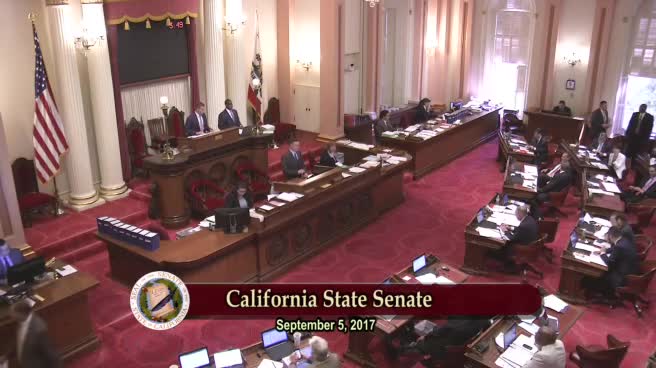 2MIN
Senate Floor
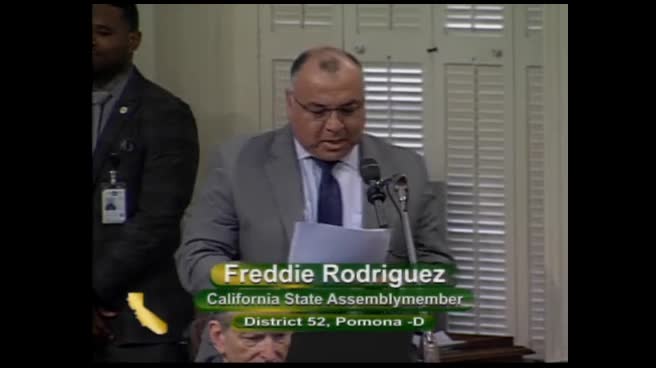 1MIN
Assembly Floor
 1MIN
Assembly Floor
 7MIN
Assembly Standing Committee on Transportation
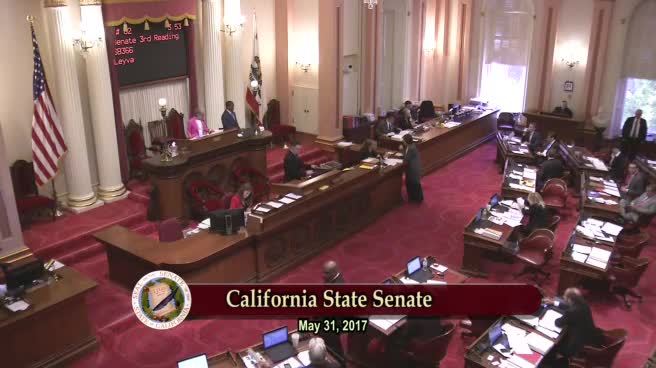 2MIN
Senate Floor
 48MIN
Senate Standing Committee on Appropriations
 8MIN
Senate Standing Committee on Transportation and Housing
Bill Author

Bill Co-Author(s):