SB 409: Veterans’ homes: services: complex mental and behavioral health needs.
- Session Year: 2017-2018
- House: Senate
- Latest Version Date: 2017-07-20
Existing law provides for the establishment and operation of veterans homes at various sites, and provides for an administrator of each home, as specified. Existing law establishes the duties of the Department of Veterans Affairs with regard to the establishment and regulation of veterans homes.
This bill would require the Department of Veterans Affairs to conduct a survey to assess the ability of veterans homes to assist veterans with complex mental and behavioral health needs, and develop a plan to accommodate that population, as prescribed. The bill would require the department to submit the plan and any recommendations for future legislation necessary to achieve its objectives to the Legislature by January 1, 2019.
Existing law provides for the establishment and operation of veterans homes at various sites, and provides for an administrator of each home, as specified. Existing law establishes the duties of the Department of Veterans Affairs with regard to the establishment and regulation of veterans homes.This bill would, on or before January 1, 2019, require the Department of Veterans Affairs to develop a plan to accommodate more veterans suffering from complex mental and behavioral health needs as resident members of the state veterans homes which operate within the Veterans Home of California System.Existing law provides for the establishment and operation of veterans homes at various sites, and provides for an administrator of each home, as specified. Existing law establishes the duties of the Department of Veterans Affairs with regard to the establishment and regulation of veterans homes.
This bill would, on or before January 1, 2019, require the Department of Veterans Affairs to develop a plan to accommodate more residents veterans suffering from complex mental and behavioral health needs into veterans homes, and to send a report to the Legislature detailing that plan. as resident members of the state veterans homes which operate within the Veterans Home of California System.
Existing law provides for the establishment and operation of veterans homes at various sites, and provides for an administrator of each home, as specified. Existing law establishes the duties of the Department of Veterans Affairs with regard to the establishment and regulation of veterans homes.
This bill would, on or before January 1, 2019, require the Department of Veterans Affairs to develop a plan to accommodate more residents suffering from complex mental and behavioral health needs into veterans homes, and to send a report to the Legislature detailing that plan.
(a)The department shall conduct a survey to assess the ability of veterans homes to assist veterans with complex mental and behavioral health needs, and develop a plan to accommodate that population. The plan shall address factors including, but not limited to, all of the following:
(1)The need for increased staff, including specialized staff, to provide appropriate care and services, and to ensure the safety of both the veterans with complex mental and behavioral health needs and other residents.
(2)An evaluation of the required staffing ratios at each level of care.
(3)The ability of each veterans home to accommodate veterans with complex mental and behavioral health needs, considering staffing and other budgeting resources, and the objective of minimizing disruption to the existing structure and operation of the veterans home system. The department may elect to dedicate specific beds or units in one or more veterans homes for the complex mental and behavioral health needs population.
(b)On or before January 1, 2019, the department shall submit to the Legislature the plan developed pursuant to subdivision (a) and any recommendations for future legislation necessary to achieve the plans objectives. The plan shall be submitted in compliance with Section 9795 of the Government Code.
SECTION 1.(a)The Department of Veterans Affairs shall, on or before January 1, 2019, develop a plan to accommodate more veterans suffering from complex mental and behavioral health needs as resident members of the state veterans homes which operate within the Veterans Home of California system.(b)On or before January 1, 2019, the department shall send a report to the Legislature detailing the plan developed pursuant to subdivision (a). This report shall be submitted in compliance with Section 9795 of the Government Code.(a)The Department of Veterans Affairs shall, on or before January 1, 2019, develop a plan to accommodate more residents veterans suffering from complex mental and behavioral health needs into homes for veterans. as resident members of the state veterans homes which operate within the Veterans Home of California system.
(b)On or before January 1, 2019, the department shall send a report to the Legislature detailing the plan developed pursuant to subdivision (a). This report shall be submitted in compliance with Section 9795 of the Government Code.
(a)The Department of Veterans Affairs shall, on or before January 1, 2019, develop a plan to accommodate more residents suffering from complex mental and behavioral health needs into homes for veterans.
(b)On or before January 1, 2019, the department shall send a report to the Legislature detailing the plan developed pursuant to subdivision (a). This report shall be submitted in compliance with Section 9795 of the Government Code.
|
Date
|
Status
|
|---|---|
| Sep 1, 2017 | September 1 hearing: Held in committee and under submission. |
| Aug 23, 2017 | August 23 set for first hearing. Placed on suspense file. |
| Jul 20, 2017 | Read second time and amended. Re-referred to Com. on APPR. |
| Jul 19, 2017 | From committee: Do pass as amended and re-refer to Com. on APPR. (Ayes 9. Noes 0.) (July 11). |
| Jun 12, 2017 | Referred to Com. on V.A. |
| Jun 1, 2017 | In Assembly. Read first time. Held at Desk. |
| May 31, 2017 | Read third time. Passed. (Ayes 40. Noes 0. Page 1356.) Ordered to the Assembly. |
| May 26, 2017 | Ordered to special consent calendar. |
| May 26, 2017 | Read second time. Ordered to third reading. |
| May 25, 2017 | From committee: Do pass. (Ayes 7. Noes 0. Page 1184.) (May 25). |
| May 19, 2017 | Set for hearing May 25. |
| Apr 17, 2017 | April 17 hearing: Placed on APPR. suspense file. |
| Apr 5, 2017 | Set for hearing April 17. |
| Apr 3, 2017 | From committee with author's amendments. Read second time and amended. Re-referred to Com. on APPR. |
| Mar 29, 2017 | From committee: Do pass and re-refer to Com. on APPR. (Ayes 7. Noes 0. Page 540.) (March 28). Re-referred to Com. on APPR. |
| Mar 2, 2017 | Set for hearing March 28. |
| Feb 23, 2017 | Referred to Com. on V.A. |
| Feb 16, 2017 | From printer. May be acted upon on or after March 18. |
| Feb 15, 2017 | Introduced. Read first time. To Com. on RLS. for assignment. To print. |
|
Date
|
Description
|
Location
|
Votes
|
|
|---|---|---|---|---|
| Jul 11, 2017 | Do pass as amended and be re-referred to the Committee on [Appropriations] | Assembly Standing Committee on Veterans Affairs |
Passed |
|
| May 31, 2017 | Special Consent Calendar # SB409 | Senate Floor |
Passed |
|
| May 25, 2017 | Do pass | Senate Standing Committee on Appropriations |
Passed |
|
| Apr 17, 2017 | Placed on suspense file | Senate Standing Committee on Appropriations |
Passed |
|
| Mar 28, 2017 | Do pass, but first be re-referred to the Committee on [Appropriations] | Senate Standing Committee on Veterans Affairs |
Passed |
This list shows positions taken on this bill by organizations on the date displayed, which is linked to the original source.
Positions by individuals are not included.
|
Organization
|
Position
|
Date
|
|---|---|---|
| American G.I. Forum of California | ** Support | Jul 10, 2017 |
| American Legion-Department of California | ** Support | Jul 10, 2017 |
| American Red Cross | * Support | Jul 11, 2017 |
| American Veterans | * Support | Jul 11, 2017 |
| California Access Coalition | ** Support | Jul 10, 2017 |
| California Association Of County Veterans Service Officers | ** Support | Jul 10, 2017 |
| California Association Of Psychiatric Technicians | * Support | Jul 11, 2017 |
| California Association of Veteran Service Agencies | ** Support | Jul 10, 2017 |
| California Council Of Community Behavioral Health Agencies | ** Support | Jul 10, 2017 |
| California Medical Association | ** Support | Jul 10, 2017 |
| California State Commanders Veterans Council | * Indeterminate | Jul 11, 2017 |
| County Behavioral Health Directors Association of California | ** Support | Jul 10, 2017 |
| Depression And Bipolar Support Alliance | ** Support | Jul 10, 2017 |
| Orange County Board of Supervisors | ** Support | Jul 10, 2017 |
| State Council on Developmental Disabilities | ** Support | Jul 10, 2017 |
| Vietnam Veterans of America-California State Council | ** Support | Jul 10, 2017 |
Date of Hearing: August 23, 2017
ASSEMBLY COMMITTEE ON APPROPRIATIONS
Lorena Gonzalez Fletcher, Chair
SBPCA Bill Id:SB 409
Author:(Nguyen) – As Amended Ver:July 20, 2017
Policy Committee: | Veterans Affairs | Vote: | 9 - 0 |
|
| ||
|
|
Urgency: No State Mandated Local Program: No Reimbursable: No
SUMMARY:
This bill requires the Department of Veterans Affairs (CalVet) to conduct a survey to assess the ability of veterans' homes to assist veterans with complex mental and behavioral health needs. Specifically, this bill:
- Requires CalVet to conduct a survey to assess the ability of veterans' homes to assist veterans with complex mental and behavioral health needs and to develop a plan to accommodate that population.
- States that the plan must address factors including, but not limited to: a) the need for increased staff, including specialized staff, b) an evaluation of required staffing ratios, and c) the ability of each veterans’ home to accommodate veterans with complex mental and behavioral health needs, considering staffing and other budgeting resources, and the objective of minimizing disruption to the existing structure and operation of the veterans’ home system.
- Requires CalVet, by January 1, 2019, to submit the plan to the Legislature along with any recommendations for future legislation to achieve the plan's objectives.
FISCAL EFFECT:
Onetime costs to CalVet of approximately $200,000 to $300,000 (GF) to develop and conduct a survey, develop a plan, and a report and recommendations to the Legislature.
COMMENTS:
- Purpose. According to testimony contained in the March 2017 Little Hoover Commission report, A New Approach to California’s Veterans Homes, "Despite recent efforts to create behavioral and mental health programs for the veterans homes, California’s homes remain unprepared to care for large populations of veterans with complex mental and behavioral health challenges… Behavioral health, addiction issues, post-traumatic stress disorder, traumatic brain injuries, women’s health issues and homelessness are diagnoses/issues which we have little training, staffing or programs to support.”
This bill seeks to identify and develop a plan to address these concerns.
- Background. CalVet operates eight veterans' homes throughout the State. These homes provide rehabilitative, residential, and medical care and services to the state's aged or disabled veterans (and eligible veteran spouses). The homes range in size from 60 residents on a 20 acre site to over 1,000 residents on 500 acres. At full capacity, the homes can house and care for approximately 3,000 veterans. As of April 2017, approximately 2,200 members resided in the homes.
According to the LAO, in July 2016, about 80% of veterans' home residents were over the age of 65 and 34% over the age of 85. By comparison, more than half of California’s veteran population is over age 60 and 15% are over age 80. Additionally, about 20% of California’s veterans receive disability compensation, which may suggest a potential need for future long-term care.
The LAO reports that veterans returning from deployment are more likely to have a mental or behavioral health diagnosis than the general public. The veterans homes are equipped to provide basic mental health services, but do not have the capacity to fulfill the demand for complex mental and behavioral health services. Certain staffing and specialized care ratios are required for these residents, and according to the LAO, limited staffing resources for residents with significant mental and behavioral health challenges can result, and has resulted, in veterans being denied admission to, or discharged from, a veterans' home.
- Related Legislation. The July 20 amendments deleted the contents of the bill (which was related to the current topic) and instead inserted the contents of AB 1361 (E. Garcia), which passed out of this Committee in May. AB 1361 was subsequently amended to address municipal water districts.
AB 296 (Cervantes) requires CalVet to establish a Task Force on California Women Veterans Health Care to study the health care needs of women veterans in the state and submit a report to the Legislature by January 1, 2021. This bill is pending in the Senate Committee on Appropriations.
AB 1618 (Cervantes) establishes, within CalVet, a certification process and a competitive grant program for California veteran service providers (VSPs) to provide supportive services to veterans including health and mental health services, among others. This bill is pending in the Senate Committee on Appropriations.
AB 1365 (Reyes) requires CalVet to submit an annual planning and financial report to the Legislature detailing amount of state funds budgeted to and the amount of revenue collected from the homes, the remaining amount of expected revenue, the costs of care per resident, current maintenance costs of the homes, and projected maintenance costs for the homes. This bill is pending in the Senate Committee on Appropriations.
Analysis Prepared by: Jennifer Swenson / APPR. / (916) 319-2081
Date of Hearing: July 11, 2017
ASSEMBLY COMMITTEE ON VETERANS AFFAIRS
Jacqui Irwin, Chair
SBPCA Bill Id:SB 409
Author:(Nguyen) – As Amended Ver:April 3, 2017
SENATE VOTE: 40-0
SUBJECT: Veterans homes: residents with complex mental and behavioral health needs
SUMMARY: Requires the California Department of Veterans Affairs (CalVet), on or before January 1, 2019, to develop a plan to accommodate more residents suffering from complex mental and behavioral health needs into state veterans homes. This bill also requires the department to send the Legislature a corresponding report.
EXISTING LAW:
- Provides for the Veterans Home of California (VHC), an eight-campus system of regional state veterans homes managed by CalVet’s Veterans Homes Division.
- Provides eligibility criteria and prioritization for membership at a VHC home.
- Provides a legal framework authorizing CalVet to deliver varying levels of health and medical care for member veterans residing in VHC homes.
FISCAL EFFECT: Unknown at this time, however the Senate Appropriations Committee determined:
- Minor costs to CalVet to develop a plan to submit to the Legislature (Veterans Home Fund)
- Unknown cost pressure, likely ranging from the hundreds of thousands to millions of dollars, to implement any recommendations developed in the plan to accommodate an increasing number of veterans with complex mental and behavioral health needs in the veterans homes. (Veterans Home Fund)
COMMENTS: According to the Author:
In January 2017, the Legislative Analyst’s Office (LAO) found that the state’s veteran’s homes have limited capacity to assist veterans with complex mental and behavioral needs. Veterans who suffer from such needs often require more services. Because of staffing and specialized care ratio requirements and limited resources available, some veteran’s homes have had to deny admission or discharge these veterans.
For example, data from the Yountville and Redding veterans homes show that in 2015-16, 30 applicants were denied admission and 32 residents were discharged (10 involuntarily) due to behavioral health-related concerns about staffing and care disruption.
Consequently, veterans most in need of mental and behavioral health services stemming from their sacrifices and service to the state and country are unable to receive the care they need.
This bill’s concept also finds support in a recent in-depth report by the Little Hoover Commission, “A New Approach to California’s Veterans Homes.” (REPORT #237, MARCH 2017), hereinafter the “Report.”.
CalVet leaders told the Commission that the homes are scrambling to respond to and prepare for vastly different health care needs among the current and future veteran cohorts. Among current residents, the rates of Alzheimer’s disease and other forms of dementia are on the rise, as is the need for skilled nursing care and memory care, CalVet Deputy Secretary Coby Petersen told Commissioners in March 2016.57 In addition, CalVet leadership explained, Vietnam-era veterans are applying to the homes later in life, but with a higher number of medical diagnoses and prescriptions than what the homes long-term care facilities used to see. Many come with long-undiagnosed and untreated physical and psychological challenges, exacerbated by self-treatment in the form of drugs and alcohol. Despite recent efforts to create behavioral and mental health programs for the veterans homes, California’s homes remain unprepared to care for large populations of veterans with complex mental and behavioral health challenges. “The needs of the Vietnam-era and younger veterans are not being met by our current structure,” the Yountville home administrator told Commissioners in March 2016. “Behavioral health, addiction issues, post-traumatic stress disorder, traumatic brain injuries, women’s health issues and homelessness are diagnoses/ issues which we have little training, staffing or programs to support.”
It is clear that CalVet is already aware of the changing demographics but has only just been able to get the system up and running at near full capacity after overcoming several major challenges and making great strides to improve quality of care at the Homes. Furthermore, it was only recently that CalVet had at its helm a medical professional with the depth of experience of the current Secretary. This bill will support and ensure that CalVet will undertake the critical task of looking ahead to make sure that it is ready to evolve the Home system to meet the current needs of veterans, but those they will have 5-10 years from now.
“California’s veterans home beds come at a cost, both in terms of the high price tag of health care, as well as the opportunity cost of not investing elsewhere.” (Little Hoover Report 237)
This policy area is neither zero sum nor a game, however as a practical matter there are finite state resources available to support California’s veterans. In terms of the Homes physical infrastructure, there are far fewer beds available in the Veteran Home system, currently approximately 2700, than are needed, regardless of the level of care considered.
There are certain intersections of care level and disability rating that come at less net state cost, but they narrow the spectrum of care levels available in the Homes. Demand for all levels of care is so high that the entire system could be devoted to any single level of care and it would fall short of meeting demand. Moreover, these care decisions are not made in a vacuum but they occur in the context of the budget, the needs of the approximately 1.7 million veterans who live in California, and the span of supportive services from federal, local, and non-profit sectors.
The Little Hoover Report summarizes this situation well:
The state’s eight veterans homes are expensive to operate and consume the lion’s share of General Funds allocated to CalVet each year. In fiscal year 2017-18, California budgeted $306 million for the homes to fill approximately 2,610 beds. This translates to a staggering $117,241 per bed. Yet the Commission found the math is more nuanced and complicated, as described in detail later in this report. In large part, the figure is not accurate because it does not account for revenue the state collects from individual residents, insurers and federal programs such as the U.S. Department of Veterans Affairs and the Centers for Medicaid and Medicare to offset the cost of the veterans homes. In 2017-18, revenue collections are likely to cover 39 percent of the total cost, leaving California taxpayers to pay approximately $71,000 a year per bed. The Commission also found that policy choices significantly drive the costs.
It is not clear whether all of the Homes were conceived of and built according to the end-vision of a statewide system, be it their placement, level of care, or otherwise. However, CalVet has made great strides in bringing the Homes into a system. Going forward, the Little Hoover Report recommends various courses of action, but one theme throughout is that we must have more conscious, proactive decision-making with regard to the Homes, in short, more planning.
Policy Recommendation:
The author may wish to consider refining the language in the bill so that the resulting report is what she intends and takes into account other CalVet planning requirements and initiatives:
- Include a statement of Legislative intent to guide CalVet in creating the report. The language in the bill was taken from the section of the Little Hoover report which could reasonably be read to conclude that the Homes, even at full-capacity, cannot meet the needs of even a significant portion of California’s veterans who need long term care. Furthermore, to paraphrase the report, although not dollar for dollar, there is a correlation; higher-cost choices for the operation of the Homes correlate with less available funding for other state veteran programs.
- Given those constraints, the Legislative intent might be that CalVet present alternative evolutions of the Homes system, evaluate their relative merits, select one as the preferred alternative, and seek input from the Legislature about the preferred selection.
- Include context: Since the Homes funding does not occur in a vacuum, generally describe the landscape of the other needs and priorities of veterans in California (housing, employment, higher education, veteran treatment courts, etc.). Give some evaluation of the relative priorities and urgency of these items.
- Clarify the author’s intent: Is the intention that veterans with complex behavioral and mental health needs be prioritized for admission to the Homes over other veterans (for example those who have complex physical health care needs), and
- Refine what the final product should contain, for example, analysis of alternatives, recommendations for Legislative action, cost estimates of varying policy decisions?
REGISTERED SUPPORT / OPPOSITION:
Support
American G.I. Forum of California
American Legion-Department of California
American Red Cross
AMVETS-Department of California
California Access Coalition
California Association of County Veterans Service Officers
California Association of Psychiatric Technicians
California Association of Veteran Service Agencies
California Council of Community Behavioral Health Agencies
California Medical Association
California State Commanders Veterans Council
County Behavioral Health Directors Association of California (CBHDA)
Depression and Bipolar Support Alliance
Military Officers Association of America, California Council of Chapters
Orange County Board of Supervisors
State Council on Developmental Disabilities
Vietnam Veterans of America-California State Council
Opposition
None on File.
Analysis Prepared by: John Spangler / V.A. / (916) 319-3550
Office of Senate Floor Analyses (916) 651-1520 Fax: (916) 327-4478 | SB |
THIRD READING
Bill No: SB 409
:
SENATE VETERANS AFFAIRS COMMITTEE: 7-0, 3/28/17
AYES: Newman, Nielsen, Dodd, Hueso, Nguyen, Roth, Wilk
SENATE APPROPRIATIONS COMMITTEE: 7-0, 5/25/17
AYES: Lara, Bates, Beall, Bradford, Hill, Nielsen, Wiener
DIGEST:
This bill requires the California Department of Veterans Affairs (CalVet), on or before January 1, 2019, to develop a plan to accommodate more residents suffering from complex mental and behavioral health needs into state veterans homes. This bill also requires CalVet to send to the Legislature a corresponding report regarding the plan.
Existing law:
- Provides for the Veterans Home of California (VHC), an eight-campus system of state veterans homes managed by CalVet’s Veterans Homes Division.
- Provides eligibility criteria and prioritization for membership at a VHC home.
- Provides a legal framework authorizing CalVet to deliver varying levels of health and medical care for member veterans residing in VHC homes.
This bill:
- Requires CalVet, on or before January 1, 2019, to develop a plan to accommodate more residents suffering from complex mental and behavioral health needs into state veterans homes.
- Requires CalVet to send to the Legislature a corresponding report regarding the plan.
Background
State veterans homes. The Veterans Homes Division provides rehabilitative, residential medical care and services in a homelike environment for aged and disabled veterans (and eligible veteran spouses) residing in the State's eight veterans homes, which are located in Barstow, Chula Vista, Fresno, Lancaster. Redding, Ventura, West Los Angeles, and Yountville. As of mid-March 2017, more than 2,200 members in total resided in the homes.
The eight campuses offer different combinations of the following levels of care that generate increasing levels of cost:
- Independent living/domiciliary care: Barstow, Chula Vista, Yountville.
- Residential care/assisted living: All homes except Barstow.
- Intermediate care: Barstow, Yountville.
- Skilled nursing care: Barstow, Chula Vista, Fresno, Redding, West LA, Yountville.
- Memory care (within skilled nursing facilities): Fresno, Redding, West LA, Yountville.
- Outpatient clinic: All homes.
Behavioral and mental health needs. The Legislative Analyst’s Office (LAO) recently reported research indicating a high prevalence of mental and behavioral health diagnoses among veterans community and also that California’s veterans homes have limited capacity to serve veterans with complex mental and behavioral health needs. The LAO stated:
Research shows that although most veterans return from deployment without mental or behavioral health conditions, veterans are relatively more likely to have a mental or behavioral health diagnosis than the general population. Mental and behavioral health conditions among veterans are often—but not exclusively—linked to PTSD. Some veterans may have a hard time maintaining relationships, housing, and/or employment due to mental and behavioral health conditions. The prevalence of PTSD among veterans has been studied by several research groups. A 2008 RAND Corporation survey estimated that 14 percent of post–September 11, 2001 veterans who had returned from Iraq or Afghanistan had PTSD at the time of the survey. The National Vietnam Veterans Readjustment Study estimates the lifetime prevalence of PTSD of Vietnam–era veterans to be 31 percent for men and 27 percent for women. These estimated rates of PTSD among veterans are substantially higher than the estimate of the lifetime prevalence of PTSD among the total national population, which is roughly 7 percent.” (From LAO Report, “Understanding the Veterans Services Landscape in California,” 1/1717)
The prevalence of mental and behavioral health conditions among veterans is also demonstrated by the comparatively high veteran suicide rate. National–level data show that veterans make up about seven percent of the U.S. population but about 18 percent of suicides nationwide. The U.S. Department of Veterans Affairs estimated that in 2014, veterans were 21 percent more likely to die from suicide than their civilian adult peer groups.
The LAO also stated:
While basic mental health services are available through the homes, they do not currently have the capacity to take in many residents with complex mental and behavioral health needs. State and federal laws and regulations require the homes to maintain certain staffing and specialized care ratios. These requirements prevent the veterans homes from admitting or retaining residents who need more services and support than staff can provide.
Our interviews with the homes’ administrators and staff indicated that residents with mental and behavioral health conditions require more staffing resources—ranging from time spent with nursing assistants to social workers and psychiatrists—than residents without such conditions. Limited staffing resources for residents with significant mental and behavioral health challenges can result in veterans being denied admission to or discharged from a veterans home. Data from the Yountville and Redding homes show that in 2015–16, 30 applicants were denied admission and 32 residents were discharged (10 involuntarily) due to behavioral health–related concerns about staffing and care disruption.
On March 21, 2017, before a joint hearing of the Senate and Assembly Committees on Veterans Affairs, CalVet Secretary Vito Imbasciani affirmed that the near-future demographics of state veterans homes is likely to start reflecting a growing population of newer residents, who are younger veterans challenged by the mental and behavioral health complications, including early-onset dementia, resulting from post-traumatic stress injuries and traumatic brain injuries, the two signature wounds of the contemporary conflicts in Iraq and Afghanistan.
FISCAL EFFECT: Appropriation: Fiscal Com.: Local:
According to the Senate Appropriations Committee:
- Minor costs to CalVet to develop a plan to submit to the Legislature (Veterans Home Fund)
- Unknown cost pressure, likely ranging from the hundreds of thousands to millions of dollars, to implement any recommendations developed in the plan to accommodate an increasing number of veterans with complex mental and behavioral health needs in the veterans homes. (Veterans Home Fund)
American G.I. Forum of California
American Legion-Department of California
American Red Cross
AMVETS-Department of California
California Access Coalition
California Association of County Veterans Service Officers
California Association of Psychiatric Technicians
California Association of Veteran Service Agencies
California Medical Association
California State Commanders Veterans Council
Military Officers Association of America, California Council of Chapters
State Council on Developmental Disabilities
Vietnam Veterans of America-California State Council
OPPOSITION: (Verified 5/26/17)
None received
5/27/17 18:17:11
**** END ****
SENATE COMMITTEE ON APPROPRIATIONS
Senator Ricardo Lara, Chair
2017 - 2018 Regular Session
SB 409 (Nguyen) - Veterans homes: residents with complex mental and behavioral health needs
Version: April 3, 2017 | Policy Vote: V.A. 7 - 0 |
Urgency: No | Mandate: No |
Hearing Date: April 17, 2017 | Consultant: Debra Cooper |
This bill meets the criteria for referral to the Suspense File.
Bill Summary:
SB 409 would require, by January 1, 2019, the California Department of Veterans Affairs (CalVet) to develop and report to the Legislature a plan to accommodate more veterans suffering from complex mental and behavioral health needs into state veterans homes.
Fiscal Impact:
- Minor costs to CalVet to develop a plan to submit to the Legislature (Veterans Home Fund)
- Unknown cost pressure, likely ranging from the hundreds of thousands to millions of dollars, to implement any recommendations developed in the plan to accommodate an increasing number of veterans with complex mental and behavioral health needs in the veterans homes. (Veterans Home Fund)
Background:
CalVet operates eight veterans homes throughout the State. These homes provide rehabilitative, residential, and medical care and services to the state's aged or disabled veterans (and eligible veteran spouses). The homes range in size from 60 residents on a 20 acre site to over 1,000 residents on 500 acres. At full capacity, the homes can house and care for approximately 3,000 veterans. As of April 2017, approximately 2,200 members reside in the homes.
The eight veterans homes campuses offer different combinations of levels of care, including:
Independent living/domiciliary care (Barstow, Chula Vista, Yountville):
This level of care is for residents able to perform activities of daily living with, at most, minimal assistance. Non-nursing employees provide limited supervision. Residents have access to all of the home's services, activities, and medical care. Individuals can transfer to higher levels of care as needed. Independent living is also referred to as domiciliary by CalVet and the USDVA.
Residential care/assisted living (All homes except Barstow):
Residential Care Facilities for the Elderly (RCFE) is available for residents who require minimal assistance and supervision with some activities of daily living. RCFE services may include care by licensed nurses.
Intermediate care (Barstow, Yountville):
This level is for residents who often require licensed nursing assistance with medications and treatments, and generally require unlicensed nursing assistance with several daily living activities.
Skilled nursing care (Barstow, Chula Vista, Fresno, Redding, West LA, Yountville):
This level provides 24-hour services of licensed nurses and certified nursing assistants, and is more comprehensive than intermediate care. Skilled nursing residents have greater access to rehabilitation therapies, nursing care, pharmacy management, structured activities and clinical dietary services.
Memory care (Fresno, Redding, West LA and Yountville):
Memory care programs within skilled nursing facilities.
Outpatient clinic (All):
In addition to the above levels of care, each home provides an outpatient clinic to serve its members. The clinics provide comprehensive multidisciplinary assessments as well as ongoing primary care. The clinics address the veteran's routine care needs and also will arrange visits with outside medical specialists as necessary.
Funding for the annual operating expenses of the veterans homes comes from the State's General Fund, and any reimbursements CalVet receives are then remitted back to the General Fund. These reimbursements come from five sources:
- Medicare, a federally funded program which pays hospital inpatient and outpatient care, and some skilled nursing care;
- Medi-Cal, funded by the federal and state governments, which pays skilled nursing facility daily rates and various health care costs;
- Member fees paid by residents in accordance with their income and level of care;
- "Aid and Attendance," which are federal payments for veterans who need personal care assistance; and
- The U.S. Department of Veterans Affairs (USDVA), which pays a per diem rate for each veteran in the homes.
Residents pay a members fee that is calculated based on their annual income and service related disability status. In September 2016, veterans homes residents, on average, paid about $1,000 in monthly member fees.
According to the LAO, in July 2016, about 80% of veterans home residents were over the age of 65 and 34% over the age of 85. By comparison, more than half of California’s veteran population is over age 60 and 15% are over age 80. Additionally, about 20% of California’s veterans receive disability compensation, which may suggest a potential need for future long-term care.
The LAO reports that veterans returning from deployment are more likely to have a mental or behavioral health diagnosis than the general public. The veterans homes are equipped to provide basic mental health services, but do not have the capacity to fulfill the demand for complex mental and behavioral health services. Certain staffing and specialized care ratios are required for these residents, and according to the LAO, limited staffing resources for residents with significant mental and behavioral health challenges can result and has resulted in veterans being denied admission to or discharged from a veterans home.
Proposed Law:
This bill would require CalVet to develop a plan by January 1, 2019, to accommodate more veterans suffering from complex mental and behavioral health needs as residents of the state veterans homes that operate within the Veterans Home of California system. Additionally, his bill would require CalVet to send a report detailing the plan to the Legislature by January 1, 2019.
Related Legislation:
AB 1365 (Reyes, 2017) would require CalVet to submit an annual planning and financial report to the Legislature detailing amount of state funds budgeted to and the amount of revenue collected from the homes, the remaining amount of expected revenue, the costs of care per resident, current maintenance costs of the homes, and projected maintenance costs for the homes. This bill is pending in the Assembly Appropriations Committee.
AB 1361 (E. Garcia, 2017) would require CalVet to conduct a survey to assess the ability of veterans' homes to assist veterans with complex mental and behavioral health needs, develop a plan to accommodate that population, and submit that plan and any recommendations for future legislation necessary to achieve its objectives to the Legislature. This bill is pending in the Assembly Committee on Veterans Affairs.
SB 1440 (Wolk, Chapter 659, Statutes of 2014) requires nonveteran spouses to pay the same fees and charges as paid by the veteran members of veterans homes.
AB 614 (Chávez, Chapter 642, Statutes of 2014) provides that a veteran member of the home who is in intermediate care or skilled nursing care would not be subject to charges and fees if he or she meets specified criteria for disability status and payments by the federal Department of Veterans Affairs.
Staff Comments:
Staff notes that while the development of the plan may be absorbable, the cost pressure to implement any recommendations generated from the plan will likely be significant. The LAO reports that in 2015-16, data from the Yountville and Redding homes show that “30 applicants were denied admission and 32 residents were discharged (10 involuntarily) due to behavioral health-related concerns about staffing and care disruption.” Residents with complex mental and behavioral health conditions require more staffing resources than residents without such conditions. The additional beds and/or skilled nursing staff that would be necessary would result in significant costs to the state – the extent of which could range depending on the actual capacity required to address the needs of an aging veteran population and a veteran population with complex mental and behavioral health conditions.
-- END --
SENATE COMMITTEE ON
Senator Josh Newman, Chair
2017 - 2018 Regular
Bill No: Hearing Date: 3/28/17
Author: | Nguyen | ||
Version: |
| ||
Urgency: | Fiscal: | ||
Consultant: | |||
Subject:
DESCRIPTION
Summary:
Requires the California Department of Veterans Affairs (CalVet), on or before January 1, 2019, to develop a plan to accommodate more residents suffering from complex mental and behavioral health needs into state veterans homes. Also requires the department to send to the Legislature a corresponding report regarding the plan.
Existing law:
- Provides for the Veterans Home of California (VHC), an eight-campus system of regional state veterans homes managed by CalVet’s Veterans Homes Division.
- Provides eligibility criteria and prioritization for membership at a VHC home.
- Provides a legal framework authorizing CalVet to deliver varying levels of health and medical care for member veterans residing in VHC homes.
This bill:
Requires CalVet, on or before January 1, 2019, to develop a plan to accommodate more residents suffering from complex mental and behavioral health needs into state veterans homes. Also requires the department to send to the Legislature a corresponding report regarding the plan.
BACKGROUND
State Veterans Homes. The Veterans Homes Division provides rehabilitative, residential medical care and services in a homelike environment for aged and disabled veterans (and eligible veteran spouses) residing in the State's eight veterans homes, which are located in Barstow, Chula Vista, Fresno, Lancaster. Redding, Ventura, West Los Angeles, and Yountville. As of mid-March 2017, more than 2,200 members in total resided in the homes.
Many of the homes were built in the last 10 years and the state’s laws and regulations governing the homes are not standardized. Also, some policies and procedures are outdated and need to be updated to reflect the level of care provided at the homes.
Levels of Care. The eight campuses offer different combinations of the following levels of care that generate increasing levels of cost:
- Independent living/domiciliary care (Barstow, Chula Vista, Yountville):
This level of care is for residents able to perform activities of daily living with, at most, minimal assistance. Non-nursing employees provide limited supervision. Residents have access to all of the Home's services, activities, and medical care. Individuals can transfer to higher levels of care as needed. Independent living is also referred to as Domiciliary by CalVet and the USDVA.
- Residential care/assisted living (All homes except Barstow):
Residential Care Facilities for the Elderly (RCFE) are available for residents who require minimal assistance and supervision with some activities of daily living. RCFE services may include care by licensed nurses. In the future, memory care programs may be established within the RCFEs.
- Intermediate care (Barstow, Yountville):
This level is for residents who often require licensed nursing assistance with medications and treatments, and generally require unlicensed nursing assistance with several daily living activities.
- Skilled nursing care (Barstow, Chula Vista, Fresno, Redding, West LA, Yountville)
This level of care provides 24-hour services of licensed nurses and certified nursing assistants, and is more comprehensive than intermediate care. Skilled nursing residents have greater access to rehabilitation therapies, nursing care, pharmacy management, structured activities and clinical dietary services.
- Memory care:
The Fresno, Redding, West LA and Yountville homes provide memory care programs within their skilled nursing facilities.
- Outpatient clinic:
In addition to the above levels of care, each home provides an outpatient clinic to serve its members. The clinics provide comprehensive multidisciplinary assessments as well as ongoing primary care. The clinics address the veteran's routine care needs and also will arrange visits with outside medical specialists as necessary.
The Legislative Analyst’s Office (LAO) recently reported research indicating a high prevalence of mental and behavioral health diagnoses among members of the veterans community and also that California’s veterans homes have limited capacity to serve veterans with complex mental and behavioral health needs.[1] The LAO stated:
Research shows that although most veterans return from deployment without mental or behavioral health conditions, veterans are relatively more likely to have a mental or behavioral health diagnosis than the general population. Mental and behavioral health conditions among veterans are often—but not exclusively—linked to PTSD. Some veterans may have a hard time maintaining relationships, housing, and/or employment due to mental and behavioral health conditions. The prevalence of PTSD among veterans has been studied by several research groups. A 2008 survey by the RAND Corporation estimates that about 14 percent of post–September 11, 2001 veterans who had returned from Iraq or Afghanistan had PTSD at the time of the survey. The National Vietnam Veterans Readjustment Study estimates the lifetime prevalence of PTSD of Vietnam–era veterans to be 31 percent for men and 27 percent for women. These estimated rates of PTSD among veterans are substantially higher than the estimate of the lifetime prevalence of PTSD among the total national population, which is roughly 7 percent.
The prevalence of mental and behavioral health conditions among veterans is also demonstrated by the comparatively high veteran suicide rate. National–level data show that veterans make up about 7 percent of the U.S. population but about 18 percent of suicides nationwide. The USDVA estimated that in 2014, veterans were 21 percent more likely to die from suicide than their civilian adult peer groups.
The prevalence of mental and behavioral health conditions among veterans is also demonstrated by the comparatively high veteran suicide rate. National–level data show that veterans make up about 7 percent of the U.S. population but about 18 percent of suicides nationwide. The USDVA estimated that in 2014, veterans were 21 percent more likely to die from suicide than their civilian adult peer groups.
The LAO also determined:
While basic mental health services are available through the homes, they do not currently have the capacity to take in many residents with complex mental and behavioral health needs. State and federal laws and regulations require the homes to maintain certain staffing and specialized care ratios. These requirements prevent the veterans homes from admitting or retaining residents who need more services and support than staff can provide.
Our interviews with the homes’ administrators and staff indicated that residents with mental and behavioral health conditions require more staffing resources—ranging from time spent with nursing assistants to social workers and psychiatrists—than residents without such conditions. Limited staffing resources for residents with significant mental and behavioral health challenges can result in veterans being denied admission to or discharged from a veterans home. Data from the Yountville and Redding homes show that in 2015–16, 30 applicants were denied admission and 32 residents were discharged (10 involuntarily) due to behavioral health–related concerns about staffing and care disruption.
On March 21, 2017, before a joint hearing of the Senate and Assembly Committees on Veterans Affairs, CalVet Secretary Vito Imbasciani affirmed that the near-future demographics of state veterans homes is likely to start reflecting a growing population of newer residents, who are younger veterans challenged by the mental and behavioral health complications, including early-onset dementia, resulting from post-traumatic stress injuries and traumatic brain injuries, the two signature wounds of the contemporary conflicts in Iraq and Afghanistan.
COMMENT
Committee Comments:
- This forward-looking bill responds to an LAO recommendation by anticipating likely future changes in the demographics and care needs of the membership of the VHC veterans homes.
- Possible Amendments: The committee members might consider with the author whether this bill should be amended to provide more specific statutory guidance to CalVet in designing the study. For example, should the plan be required to include cost estimates of various proposed approaches? Should the plan separately consider service-connected conditions and non-service-connected conditions so that cost comparisons and eligibility prioritizations can be considered with greater specificity?
POSITIONS
Sponsor: Author.
Support:
American Red Cross
California Access Coalition
California Association of Psychiatric Technicians
California Association of Veteran Service Agencies
California Medical Association
State Council on Developmental Disabilities
Oppose: None on file.
-- END --
LAO Report, “Understanding the Veterans Services Landscape in California,” January 17, 2017, pg. 16. ↑
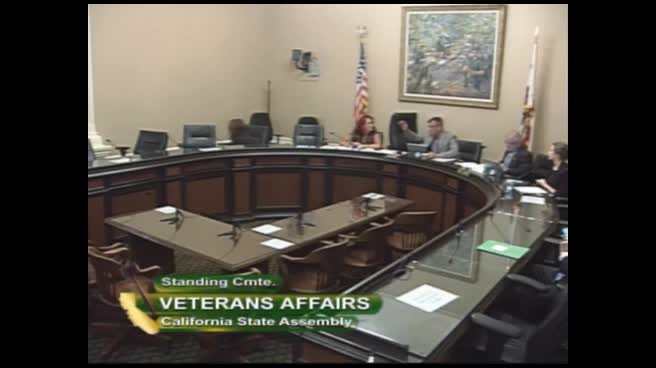
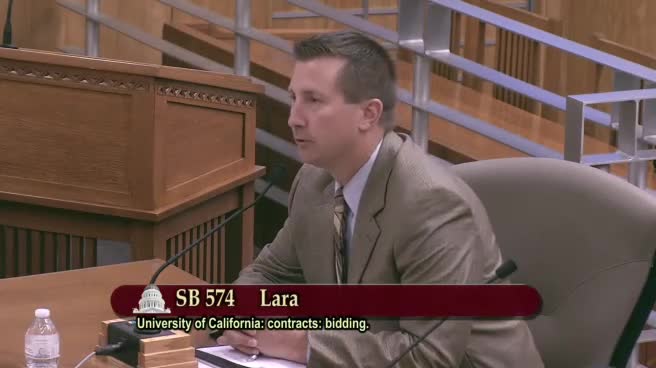
Discussed in Hearing
 4MIN
Assembly Standing Committee on Veterans Affairs
 48MIN
Senate Standing Committee on Appropriations
 1MIN
Senate Standing Committee on Appropriations
Bill Author

Bill Co-Author(s):