SB 435: Williamson Act: payments to local governments.
- Session Year: 2017-2018
- House: Senate
- Latest Version Date: 2017-05-02
The Williamson Act, also known as the California Land Conservation Act of 1965, authorizes a city or county to enter into contracts with owners of land devoted to agricultural use, whereby the owners agree to continue using the property for that purpose, and the city or county agrees to value the land accordingly for purposes of property taxation. Existing law sets forth procedures for reimbursing cities and counties for property tax revenues not received as a result of these contracts and continuously appropriates General Fund moneys for that purpose. Existing law requires the Secretary of the Natural Resources Agency to direct the Controller to make annual payments out of these moneys to an eligible city, county, or city and county for each acre of land that is within its regulatory jurisdiction and assessed under specified provisions of the Revenue and Taxation Code. The amount of payment is $5 per acre of prime agricultural land and $1 per acre of all other land devoted to open-space uses of statewide significance, as defined, or, in counties which have adopted farmland security zones, as provided, $8 per acre of land that is within, or within 3 miles of the sphere of influence of, each incorporated city.
This bill would reduce the amount per acre paid to a city, county, or city and county under these provisions to $2.50 for prime agricultural land, $0.50 for all other land devoted to open-space uses of statewide significance, and, for counties that have adopted farmland security zones, $4 for land that is within, or within 3 miles of the sphere of influence of, each incorporated city. This bill, commencing July 1, 2017, would require the Secretary of the Natural Resources Agency to direct the Controller to pay an additional subvention of funds to a county, city, or city and county that meets specified criteria upon determination by the Strategic Growth Council that the county, city, or city and county has adopted measures to protect and conserve resource lands and farmland that further the implementation of the applicable regional sustainable communities strategy, as provided. The bill would provide that the amount of the additional subventions would be $2.50 for prime agricultural land, $0.50 for all other land devoted to open-space uses of statewide significance, and $4 for land enrolled in a farmland security zone that is within, or within 3 miles of the sphere of influence of, each incorporated city.
Existing law, for the 200809 fiscal year and each fiscal year thereafter, requires the Controller to reduce the amount paid to a city, county, or city and county by 10%.
This bill would delete that requirement. The bill would also require a county, city, or city and county, in order to be eligible to receive subvention payments from the Controller, to adopt procedures to accept new contract applications and to consider proposed rescission of contracts for parcels eligible for a solar-use easement pursuant to specified law.
Existing law prohibits an increase or reduction in the amount paid to a city or county which was paid in the prior fiscal year, beginning with the 197778 fiscal year, as provided, in excess of an amount which is equal to the property tax derived from a levy at the rate of $0.03 per hundred dollars of assessed value for the fiscal year, except as affected by an increase or a reduction in the acreage assessed under specified provisions of the Revenue and Taxation Code.
This bill would repeal this prohibition.
By increasing the amount of continuously appropriated general fund moneys authorized to be used for subvention payments, this bill would make an appropriation.
(a)The Secretary of the Natural Resources Agency shall direct the Controller to pay annually out of the funds appropriated by Section 16140, to each eligible county, city, or city and county, the following amounts for each acre of land within its regulatory jurisdiction that is assessed pursuant to Section 423, 423.3, 423.4, or 423.5, or Section 426 if it was previously assessed under Section 423.4, of the Revenue and Taxation Code:
(1)Two dollars and fifty cents ($2.50) for prime agricultural land, as defined in Section 51201.
(2)Fifty cents ($0.50) for all land, other than prime agricultural land, which is devoted to open-space uses of statewide significance, as defined in Section 16143.
(b)The amount per acre in paragraph (1) of subdivision (a) may be increased by the Secretary of the Natural Resources Agency to a figure which would offset any savings due to a more restrictive determination by the secretary as to what land is devoted to open-space use of statewide significance.
(c)The amount per acre in subdivision (a) shall only be paid for 10 years from the date that the land was first assessed pursuant to Section 426 of the Revenue and Taxation Code, if it was previously assessed under Section 423.4 of that code.
(d)In order to be eligible for subvention payments from the Controller, a county, city, or city and county shall adopt procedures to accept new contract applications and to consider proposed rescission of contracts for parcels eligible for a solar-use easement pursuant to Section 51255.1 and Chapter 6.9 (commencing with Section 51191) of Part 1 of Division 1 of Title 5.
(e)Effective January 1, 2011, if the payment pursuant to this section for the previous fiscal year is less than one-half of the participating countys actual foregone general fund property tax revenue, the county may make a determination to implement subdivision (b) of Section 51244 and Section 51244.3. The implementation of these sections shall be suspended for any subsequent fiscal year in which the payment for the previous fiscal year exceeds one-half of the foregone general fund property tax revenue.
For purposes of this subdivision, a countys actual foregone property tax revenue shall be based on the countys respective share of the general property tax dollars as reflected in the most recent annual report issued by the State Board of Equalization or 20 percent, whichever is higher.
SEC. 2.Section 16142.1 of the Government Code is amended to read:16142.1.(a)In lieu of the payments made pursuant to Section 16142, in a county that has adopted farmland security zones pursuant to Section 51296, the Secretary of the Natural Resources Agency shall direct the Controller to pay annually out of the funds appropriated by Section 16140, to each eligible county, city, or city and county, the following amount for each acre of land within its regulatory jurisdiction that is assessed pursuant to Section 423.4 or 426 of the Revenue and Taxation Code, if it was previously assessed under Section 423.4 of the Revenue and Taxation Code:
Four dollars ($4) for land that is within, or within three miles of the boundaries of the sphere of influence of, each incorporated city.
(b)The amount per acre in subdivision (a) shall only be paid for 10 years from the date that the land was first assessed pursuant to Section 426 of the Revenue and Taxation Code, if it was previously assessed under Section 423.4 of that code. The appropriation authorized by this subdivision shall not exceed one hundred thousand dollars ($100,000) per year until 2005.
(c)Effective January 1, 2011, if the payment pursuant to this section for the previous fiscal year is less than one-half of the participating countys actual foregone general fund property tax revenue, the county may make a determination to implement subdivision (b) of Section 51244 and Section 51244.3. The implementation of these sections shall be suspended for any subsequent fiscal year in which the payment for the previous fiscal year exceeds one-half of the foregone general fund property tax revenue.
For purposes of this subdivision, a countys actual foregone property tax revenue shall be based on the countys respective share of the general property tax dollars as reflected in the most recent annual report issued by the State Board of Equalization or 20 percent, whichever is higher.
SEC. 3.Section 16142.5 of the Government Code is repealed.SEC. 4.Section 16142.5 is added to the Government Code, to read:16142.5.(a)In addition to the subvention rates established in Sections 16142 and 16142.1, commencing July 1, 2017, the Secretary of the Natural Resources shall direct the Controller to pay annually out of the funds appropriated by Section 16140 to each eligible county, city, or city and county that meets the requirements of subdivisions (b) and (c) the following amounts for each acre of land within its regulatory jurisdiction that is assessed pursuant to Sections 423, 423.3, 423.4, and 423.5 of the Revenue and Taxation Code:
(1)For a city, county, or city and county that receives an in lieu payment under Section 16142.1, four dollars ($4) for land enrolled in a farmland security zone contract that is within, or within three miles of the boundaries of the sphere of influence of, each incorporated city.
(2)For a city, county, or city and county that receives a payment under Section 16142, two dollars and fifty cents ($2.50) for prime agricultural land, as defined in Section 51201.
(3)For a city, county, or city and county that receives a payment under Section 16142, fifty cents ($0.50) for all land, other than prime agricultural land, that is devoted to open-space use of statewide significance, as defined in Section 16143.
(b)In order to be eligible for additional subvention payments pursuant to this section, a county, city, or city and county shall submit an application to the Secretary of the Natural Resources Agency demonstrating that it meets all of the following criteria:
(1)The county, city, or city and county submits a geospatial map and tabular inventory of its agricultural land, open space, and watershed land resources, using commonly accepted definitions, including those of the Williamson Act (Chapter 7 (commencing with Section 51200) of Division 7 of Title 5), the Farmland Mapping and Monitoring Program within the Department of Conservation, the Land Capability Classification System of the United States Department of Agriculture, and the Storie Index. The map and inventory shall be submitted electronically to the secretary and shall contain a description and analysis demonstrating the countys, citys, or city and countys measures to protect and conserve resource lands and farmland, as defined in subdivisions (a) and (b) of Section 65080.1, 65080.01, and further the implementation of the regional sustainable communities strategy developed pursuant to Section 65080. The county, city, or city and county may adopt the maps of the Farmland Mapping and Monitoring Program for its jurisdiction for purposes of complying with this paragraph.
(2)(A)The county, city, or city and county has adopted an acreage threshold above which the conversion of agricultural land to nonagricultural uses is deemed to have a significant effect on the environment for purposes of the California Environmental Quality Act (Division 13 (commencing with Section 21000) of the Public Resources Code). The acreage threshold may be expressed in a specific number of acres for the county, city, or city and county or a specific number of acres for different types of agricultural land within the county, city, or city and county.
(B)In developing an acreage threshold, the county, city, or city and county shall comply with the guidelines established in Section 21083 of the Public Resources Code, including Section 15064.7 of Title 14 of the California Code of Regulations, as that section read on January 1, 2017.
(C)This paragraph shall not be construed to exempt any project from the requirement of a cumulative impact analysis or any other requirement of the California Environmental Quality Act (Division 13 (commencing with Section 21000) of the Public Resources Code) that is otherwise applicable to the project, or from any guidelines adopted pursuant to Section 21083 of the Public Resources Code.
(3)The county, city, or city and county has adopted a mitigation ordinance requiring the use of specified mitigation measures applicable to projects resulting in the conversion of agricultural land to address both the project and cumulative impacts of the conversion. The mitigation ordinance may require the grant of voluntary agricultural conservation easements, other long-term contractual agreements, or in lieu fees to mitigate the conversion of agricultural land.
(4)The county, city, or city and county certifies that it has adopted a general plan that contains all of the required elements under the Planning and Zoning Law (Title 7 (commencing with Section 65000)) and also meets the consistency requirements set forth by that law.
(5)The county, city, or city and county submits a summary explanation of the relevant local agency formation commissions policies and procedures on agricultural, open space, and watershed land issues with respect to state law.
(6)The county, city, or city and county submits a summary explanation of how its general plan addresses agricultural land use, land conservation, open-space use, and related issues, including a summary of goals, objectives, policies, and implementation steps that support the general plan.
(7)The county, city, or city and county submits a summary explanation of its policies and procedures for addressing environmental impacts, pursuant to the California Environmental Quality Act (Division 13 (commencing with Section 21000) of the Public Resources Code), on the productivity and inventory of agricultural and open-space land resources.
(8)The county, city, or city and county has implemented, or is prepared to accept applications for, farmland security zones pursuant to Article 7 (commencing with Section 51296) of Chapter 7 of Part 1 of Division 1 of Title 5 and rescissions of contracts for parcels eligible for a solar-use easement pursuant to Section 51255.1 and Chapter 6.9 (commencing with Section 51191) of Part 1 of Division 1 of Title 5.
(9)The county, city, or city and county provides documentation that it has implemented, or initiated implementation of, the following agricultural viability strategies, which are specifically intended to be integrated with contracts entered into pursuant to the Williamson Act (Chapter 7 (commencing with Section 51200) of Division 7 of Title 5) to conserve agricultural and open-space land:
(A)An adopted agricultural general plan element that sets forth the goals, objectives, policies, and programs that support the protection and enhancement of that countys agricultural and related open-space land resources and is consistent with the other elements of the countys, citys, or city and countys general plan.
(B)A right to farm ordinance with an effective implementation program, including real estate disclosure.
(C)Zoning for agricultural uses that bases minimum acreage on the agricultural production capabilities of the land.
(D)A specific plan or plans for the protection of significant agricultural areas of the county.
(E)Strategies for the economic enhancement of agricultural enterprises, including water policies, marketing opportunities, and public education.
(F)Performance consistent with standards, policies, and procedures adopted by the relevant local agency formation commission that demonstrate a local commitment to the protection and conservation of agricultural, open space, and watershed lands.
(G)The systematic use of intergovernmental agreements, including, but not limited to, agreements with resource conservation districts, for the purpose of protecting and enhancing agricultural, open space, and watershed lands.
(H)Land use and zoning programs that serve to insulate urban periphery agricultural lands from nuisance impacts of nonagricultural development.
(c)The Secretary of the Natural Resource shall submit a completed application from a county, city, or city and county, including all documentation and analysis as required by subdivision (b), to the Strategic Growth Council. After reviewing the application, the council shall determine whether the countys, citys, or city and countys measures to protect and conserve resource lands and farmland, as defined in subdivisions (a) and (b) of Section 65080.1, 65080.01, further the implementation of the regional sustainable communities strategy developed pursuant to Section 65080.
(d)A county, city, or city and county may request that the Strategic Growth Council reconsider a denial of its application for additional subvention of funds pursuant to this section. If the county, city, or city and county requests reconsideration, the council may either send the application back to the county, city, or city and county for additional supporting information prior to further reconsideration of the application or uphold the application denial.
(e)A county, city, or city and county that receives an additional subvention of funds under this section shall resubmit documentation every five years to demonstrate its continued qualifications to receive its additional subvention of funds. A county, city, or city and county shall also submit timely documentation to support the receipt of additional subventions of funds under this section if a significant change in its agricultural and open space land conservation program occurs. The Department of Conservation may conduct performance audits as necessary to ensure that a participating county, city, or city and county continues to meet the criteria for receipt of subventions of funds under this section.
(a)The Secretary of the Natural Resources Agency shall direct the Controller to pay annually out of the funds appropriated by Section 16140, to each eligible county, city, or city and county, the following amounts for each acre of land within its regulatory jurisdiction that is assessed pursuant to Section 423, 423.3, 423.4, or 423.5, or Section 426 if it was previously assessed under Section 423.4, of the Revenue and Taxation Code:
(1)Five dollars ($5) Two dollars and fifty cents ($2.50) for prime agricultural land, as defined in Section 51201.
(2)One dollar ($1) Fifty cents ($0.50) for all land, other than prime agricultural land, which is devoted to open-space uses of statewide significance, as defined in Section 16143.
(b)The amount per acre in paragraph (1) of subdivision (a) may be increased by the Secretary of the Natural Resources Agency to a figure which would offset any savings due to a more restrictive determination by the secretary as to what land is devoted to open-space use of statewide significance.
(c)The amount per acre in subdivision (a) shall only be paid for 10 years from the date that the land was first assessed pursuant to Section 426 of the Revenue and Taxation Code, if it was previously assessed under Section 423.4 of that code.
(d)Notwithstanding any other provision of law, for the 200809 fiscal year and each fiscal year thereafter, the Controller shall reduce, by 10 percent, any payment made pursuant to this section.(d)In order to be eligible for subvention payments from the Controller, a county, city, or city and county shall adopt procedures to accept new contract applications and to consider proposed rescission of contracts for parcels eligible for a solar-use easement pursuant to Section 51255.1 and Chapter 6.9 (commencing with Section 51191) of Part 1 of Division 1 of Title 5.
(e)Effective January 1, 2011, if the payment pursuant to this section for the previous fiscal year is less than one-half of the participating countys actual foregone general fund property tax revenue, the county may make a determination to implement subdivision (b) of Section 51244 and Section 51244.3. The implementation of these sections shall be suspended for any subsequent fiscal year in which the payment for the previous fiscal year exceeds one-half of the foregone general fund property tax revenue.
For purposes of this subdivision, a countys actual foregone property tax revenue shall be based on the countys respective share of the general property tax dollars as reflected in the most recent annual report issued by the State Board of Equalization or 20 percent, whichever is higher.
SEC. 2.Section 16142.1 of the Government Code is amended to read:16142.1.(a)In lieu of the payments made pursuant to Section 16142, in a county that has adopted farmland security zones pursuant to Section 51296, the Secretary of the Natural Resources Agency shall direct the Controller to pay annually out of the funds appropriated by Section 16140, to each eligible county, city, or city and county, the following amount for each acre of land within its regulatory jurisdiction that is assessed pursuant to Section 423.4 or 426 of the Revenue and Taxation Code, if it was previously assessed under Section 423.4 of that code: the Revenue and Taxation Code:
Eight dollars ($8)
Four dollars ($4) for land that is within, or within three miles of the boundaries of the sphere of influence of, each incorporated city.
(b)The amount per acre in subdivision (a) shall only be paid for 10 years from the date that the land was first assessed pursuant to Section 426 of the Revenue and Taxation Code, if it was previously assessed under Section 423.4 of that code. The appropriation authorized by this subdivision shall not exceed one hundred thousand dollars ($100,000) per year until 2005.
(c)Notwithstanding any other provision of law, for the 200809 fiscal year and each fiscal year thereafter, the Controller shall reduce, by 10 percent, any payments made pursuant to this section.(d)(c)Effective January 1, 2011, if the payment pursuant to this section for the previous fiscal year is less than one-half of the participating countys actual foregone general fund property tax revenue, the county may make a determination to implement subdivision (b) of Section 51244 and Section 51244.3. The implementation of these sections shall be suspended for any subsequent fiscal year in which the payment for the previous fiscal year exceeds one-half of the foregone general fund property tax revenue.
For purposes of this subdivision, a countys actual foregone property tax revenue shall be based on the countys respective share of the general property tax dollars as reflected in the most recent annual report issued by the State Board of Equalization or 20 percent, whichever is higher.
SEC. 3.Section 16142.5 of the Government Code is repealed.16142.5.(a)For the fiscal year 197778, no payment to a city or county shall increase or reduce the amount which would have been paid to the city or county under the provisions of Section 16142 as it existed on March 1, 1976, as applied to land assessed pursuant to Section 423 or 423.5 of the Revenue and Taxation Code for the fiscal year 197778, in excess of an amount which is equal to the property tax derived from a levy at the rate of three cents ($0.03) per hundred dollars of assessed value.(b)For fiscal years subsequent to the 197778 fiscal year, no payment to a city or county shall increase or reduce the amount which was paid in the prior fiscal year in excess of an amount which is equal to the property tax derived from a levy at the rate of three cents ($0.03) per hundred dollars of assessed value for the fiscal year, except as affected by an increase or a reduction in the acreage assessed under Section 423, 423.3, or 423.5 of the Revenue and Taxation Code.SEC. 4.Section 16142.5 is added to the Government Code, to read:16142.5.(a)In addition to the subvention rates established in Sections 16142 and 16142.1, commencing July 1, 2017, the Secretary of the Natural Resources shall direct the Controller to pay annually out of the funds appropriated by Section 16140 to each eligible county, city, or city and county that meets the requirements of subdivisions (b) and (c) the following amounts for each acre of land within its regulatory jurisdiction that is assessed pursuant to Sections 423, 423.3, 423.4, and 423.5 of the Revenue and Taxation Code:
(1)For a city, county, or city and county that receives an in lieu payment under Section 16142.1, four dollars ($4) for land enrolled in a farmland security zone contract that is within, or within three miles of the boundaries of the sphere of influence of, each incorporated city.
(2)For a city, county, or city and county that receives a payment under Section 16142, two dollars and fifty cents ($2.50) for prime agricultural land, as defined in Section 51201.
(3)For a city, county, or city and county that receives a payment under Section 16142, fifty cents ($0.50) for all land, other than prime agricultural land, that is devoted to open-space use of statewide significance, as defined in Section 16143.
(b)In order to be eligible for additional subvention payments pursuant to this section, a county, city, or city and county shall submit an application to the Secretary of the Natural Resources Agency demonstrating that it meets all of the following criteria:
(1)The county, city, or city and county submits a geospatial map and tabular inventory of its agricultural land, open space, and watershed land resources, using commonly accepted definitions, including those of the Williamson Act (Chapter 7 (commencing with Section 51200) of Division 7 of Title 5), the Farmland Mapping and Monitoring Program within the Department of Conservation, the Land Capability Classification System of the United States Department of Agriculture, and the Storie Index. The map and inventory shall be submitted electronically to the secretary and shall contain a description and analysis demonstrating the countys, citys, or city and countys measures to protect and conserve resource lands and farmland, as defined in subdivisions (a) and (b) of Section 65080.1, and further the implementation of the regional sustainable communities strategy developed pursuant to Section 65080. The county, city, or city and county may adopt the maps of the Farmland Mapping and Monitoring Program for its jurisdiction for purposes of complying with this paragraph.
(2)(A)The county, city, or city and county has adopted an acreage threshold above which the conversion of agricultural land to nonagricultural uses is deemed to have a significant effect on the environment for purposes of the California Environmental Quality Act (Division 13 (commencing with Section 21000) of the Public Resources Code). The acreage threshold may be expressed in a specific number of acres for the county, city, or city and county or a specific number of acres for different types of agricultural land within the county, city, or city and county.
(B)In developing an acreage threshold, the county, city, or city and county shall comply with the guidelines established in Section 21083 of the Public Resources Code, including Section 15064.7 of Title 14 of the California Code of Regulations, as that section read on January 1, 2017.
(C)This paragraph shall not be construed to exempt any project from the requirement of a cumulative impact analysis or any other requirement of the California Environmental Quality Act (Division 13 (commencing with Section 21000) of the Public Resources Code) that is otherwise applicable to the project, or from any guidelines adopted pursuant to Section 21083 of the Public Resources Code.
(3)The county, city, or city and county has adopted a mitigation ordinance requiring the use of specified mitigation measures applicable to projects resulting in the conversion of agricultural land to address both the project and cumulative impacts of the conversion. The mitigation ordinance may require the grant of voluntary agricultural conservation easements, other long-term contractual agreements, or in lieu fees to mitigate the conversion of agricultural land.
(4)The county, city, or city and county certifies that it has adopted a general plan that contains all of the required elements under the Planning and Zoning Law (Title 7 (commencing with Section 65000)) and also meets the consistency requirements set forth by that law.
(5)The county, city, or city and county submits a summary explanation of the relevant local agency formation commissions policies and procedures on agricultural, open space, and watershed land issues with respect to state law.
(6)The county, city, or city and county submits a summary explanation of how its general plan addresses agricultural land use, land conservation, open-space use, and related issues, including a summary of goals, objectives, policies, and implementation steps that support the general plan.
(7)The county, city, or city and county submits a summary explanation of its policies and procedures for addressing environmental impacts, pursuant to the California Environmental Quality Act (Division 13 (commencing with Section 21000) of the Public Resources Code), on the productivity and inventory of agricultural and open-space land resources.
(8)The county, city, or city and county has implemented, or is prepared to accept applications for, farmland security zones pursuant to Article 7 (commencing with Section 51296) of Chapter 7 of Part 1 of Division 1 of Title 5 and rescissions of contracts for parcels eligible for a solar-use easement pursuant to Section 51255.1 and Chapter 6.9 (commencing with Section 51191) of Part 1 of Division 1 of Title 5.
(9)The county, city, or city and county provides documentation that it has implemented, or initiated implementation of, the following agricultural viability strategies, which are specifically intended to be integrated with contracts entered into pursuant to the Williamson Act (Chapter 7 (commencing with Section 51200) of Division 7 of Title 5) to conserve agricultural and open-space land:
(A)An adopted agricultural general plan element that sets forth the goals, objectives, policies, and programs that support the protection and enhancement of that countys agricultural and related open-space land resources and is consistent with the other elements of the countys, citys, or city and countys general plan.
(B)A right to farm ordinance with an effective implementation program, including real estate disclosure.
(C)Zoning for agricultural uses that bases minimum acreage on the agricultural production capabilities of the land.
(D)A specific plan or plans for the protection of significant agricultural areas of the county.
(E)Strategies for the economic enhancement of agricultural enterprises, including water policies, marketing opportunities, and public education.
(F)Performance consistent with standards, policies, and procedures adopted by the relevant local agency formation commission that demonstrate a local commitment to the protection and conservation of agricultural, open space, and watershed lands.
(G)The systematic use of intergovernmental agreements, including, but not limited to, agreements with resource conservation districts, for the purpose of protecting and enhancing agricultural, open space, and watershed lands.
(H)Land use and zoning programs that serve to insulate urban periphery agricultural lands from nuisance impacts of nonagricultural development.
(c)The Secretary of the Natural Resource shall submit a completed application from a county, city, or city and county, including all documentation and analysis as required by subdivision (b), to the Strategic Growth Council. After reviewing the application, the council shall determine whether the countys, citys, or city and countys measures to protect and conserve resource lands and farmland, as defined in subdivisions (a) and (b) of Section 65080.1, further the implementation of the regional sustainable communities strategy developed pursuant to Section 65080.
(d)A county, city, or city and county may request that the Strategic Growth Council reconsider a denial of its application for additional subvention of funds pursuant to this section. If the county, city, or city and county requests reconsideration, the council may either send the application back to the county, city, or city and county for additional supporting information prior to further reconsideration of the application or uphold the application denial.
(e)A county, city, or city and county that receives an additional subvention of funds under this section shall resubmit documentation every five years to demonstrate its continued qualifications to receive its additional subvention of funds. A county, city, or city and county shall also submit timely documentation to support the receipt of additional subventions of funds under this section if a significant change in its agricultural and open space land conservation program occurs. The Department of Conservation may conduct performance audits as necessary to ensure that a participating county, city, or city and county continues to meet the criteria for receipt of subventions of funds under this section.
|
Date
|
Status
|
|---|---|
| Feb 1, 2018 | Returned to Secretary of Senate pursuant to Joint Rule 56. |
| May 25, 2017 | May 25 hearing: Held in committee and under submission. |
| May 23, 2017 | Set for hearing May 25. |
| May 22, 2017 | May 22 hearing: Placed on APPR. suspense file. |
| May 16, 2017 | Set for hearing May 22. |
| May 11, 2017 | May 15 hearing postponed by committee. |
| May 4, 2017 | Set for hearing May 15. |
| May 2, 2017 | Read second time and amended. Re-referred to Com. on APPR. |
| May 1, 2017 | From committee: Do pass as amended and re-refer to Com. on APPR. (Ayes 7. Noes 0. Page 884.) (April 26). |
| Apr 7, 2017 | Set for hearing April 26. |
| Apr 4, 2017 | April 19 hearing postponed by committee. |
| Mar 21, 2017 | Set for hearing April 19. |
| Feb 23, 2017 | Referred to Com. on GOV. & F. |
| Feb 16, 2017 | From printer. May be acted upon on or after March 18. |
| Feb 15, 2017 | Introduced. Read first time. To Com. on RLS. for assignment. To print. |
|
Date
|
Description
|
Location
|
Votes
|
|
|---|---|---|---|---|
| May 22, 2017 | Placed on suspense file | Senate Standing Committee on Appropriations |
Passed |
|
| Apr 26, 2017 | Do pass as amended, but first amend, and re-refer to the Committee on [Appropriations] | Senate Standing Committee on Governance and Finance |
Passed |
This list shows positions taken on this bill by organizations on the date displayed, which is linked to the original source.
Positions by individuals are not included.
|
Organization
|
Position
|
Date
|
|---|---|---|
| American Farmland Trust | * Support | Apr 26, 2017 |
| Boards of Supervisors of Santa Clara County | * Support | Apr 26, 2017 |
| California Cattleman's Association | * Support | Apr 26, 2017 |
| California Farm Bureau Federation | * Support | Apr 26, 2017 |
| Wine Institute | * Support | Apr 26, 2017 |
SENATE COMMITTEE ON APPROPRIATIONS
Senator Ricardo Lara, Chair
2017 - 2018 Regular Session
SB 435 (Dodd) - Williamson Act: payments to local governments
Version: May 2, 2017 | Policy Vote: GOV. & F. 7 - 0 |
Urgency: No | Mandate: No |
Hearing Date: May 22, 2017 | Consultant: Mark McKenzie |
This bill meets the criteria for referral to the Suspense File.
Bill Summary:
SB 435 would reinstate a modified subvention program that provides payments to cities and counties that have agricultural land under Williamson Act and Farmland Security Zone contracts.
Fiscal Impact:
- Ongoing General Fund subvention payments, in the range of $21.4 million to $42.8 million annually, depending on how many cities and counties apply for increased payments in exchange for demonstrating enhanced agricultural land conservation efforts. (General Fund)
- Department of Conservation (DOC) costs of approximately $214,000 in the first year, and $192,000 ongoing, for 2 PY of staff to administer the modified program. (Soil Conservation Fund)
- Estimated Strategic Growth Council administrative costs in the range of $50,000 to $100,000 to review applications and determine whether local agency proposals support the regional sustainable communities strategies. (Greenhouse Gas Reduction Fund)
Background:
Existing law, the California Land Conservation Act of 1965 (Williamson Act), authorizes landowners to sign ten-year contracts with counties, agreeing to restrict a property’s use to agriculture, open space, or compatible uses. In 1998, the Legislature created an option of establishing a Farmland Security Zone which offers landowners a greater property tax reduction for a minimum 20 year contract. In return for the agreement to keep the land out of development, the landowner benefits from reduced property tax assessments based on the property’s use rather than its market value.
Williamson Act and Farmland Security Zone contracts renew automatically each year, unless the contract is ended through nonrenewal, cancellation, or termination. Under nonrenewal, either the landowner or the county may provide notice to not renew the contract. When the term of the contract runs out after nine years or 19 years, the property is reassessed at its market value and land restrictions end. County officials can cancel a Williamson Act contract at a landowner’s request if the board of supervisors finds that cancellation is consistent with the Act’s purpose or in the public interest. A contract ends immediately upon cancellation and payment of cancellation fees by the landowner to the state in an amount equal to 12.5% of the property’s unrestricted value (25% in the case of a Farmland Security Zone).
A contract can be rescinded when a board of supervisors cancels a Williamson Act contract and the landowner simultaneously enters into an agricultural conservation easement on other land of an equal or greater value. Existing law also allows for a rescission, upon mutual agreement of the landowner and local agency, if the land is marginally productive or physically impaired and the landowner enters into a solar-use easement. This type of rescission requires a payment of a fee of 10% of the fair market value of the land, half of which goes to the county and half of which goes to the state General Fund. The DOC, in consultation with the Department of Food and Agriculture, must review and approve all solar-use easements.
Historically, the state made subvention payments to counties in order to make up for a portion of the resulting losses in local property tax revenue from Williamson Act and Farmland Security Zone contracts, and other enforceable open space restriction programs. Existing law requires the Secretary of Natural Resources to direct the Controller to pay counties, out of funds continuously appropriated from the General Fund, at the following annual rates for enforceably restricted land:
- Five dollars per acre for prime agricultural land that is subject to open space easement, Williamson Act or Farmland Security Zone contract, or timber production easement.
- One dollar per acre for other land devoted to open-space uses of statewide significance.
- Eight dollars per acre for land under a Farmland Security Zone contract and is within three miles of the boundaries of the sphere of influence of an incorporated city.
In total, about 15.4 million acres of land in 52 counties are protected under these types of enforceable restrictions, mostly under Williamson Act contracts. Subvention payments made through the State Budget totaled about $35 million to $40 million each year from 1994 to 2008. Due to extreme General Fund shortfalls during the recession, subvention payments were eliminated in the 2009-10 fiscal year.
Proposed Law:
SB 435 would reinstate a modified subvention program that provides payments to cities and counties that have agricultural land under Williamson Act and Farmland Security Zone contracts. Specifically, SB 435 repeals statutory provisions restricting subvention payments but re-enacts the annual payment rates at half of the statutory rate as follows:
- $2.50 per acre for enforceably restricted prime agricultural land.
- $0.50 per acre for other land devoted to open-space uses of statewide significance.
- $4,00 per acre for land under a Farmland Security Zone land that is within three miles of the boundaries of the sphere of influence of an incorporated city.
To be eligible for subvention payments, a local government must adopt procedures to accept new contract applications and consider any proposed solar-use easement rescissions. The bill provides additional subvention payments of equal amounts, out of funds continuously appropriated to the State Controller, if a city or county submits an application to the Secretary of Natural Resources that includes:
- A map and inventory, submitted electronically, of agricultural land, open space, and watershed land resources within its jurisdiction.
- A description and analysis of the city or county’s measures to protect and conserve resource lands and farmland and to further the implementation of the applicable regional sustainable communities strategy, as specified.
- A summary of the relevant local agency formation commission’s policies and procedures regarding agricultural, open space, and watershed land issues.
- A summary and explanation of how the city or county’s general plan addresses agricultural land use, land conservation, open space use, and related issues.
- A summary and explanation of the city or county’s policies and procedures for addressing environmental impacts on the productivity and inventory of agricultural land and open space resources under the California Environmental Quality Act (CEQA).
The application must also demonstrate that the city or county has:
- Developed a threshold for agricultural land conversion to non-agricultural uses for the purposes of determining significant impacts under CEQA, including specific acreage thresholds and in compliance with CEQA guidelines developed by the Office of Planning and Research.
- Adopted an ordinance that requires specific mitigation measures to apply to projects that involve conversion of agricultural land, such as granting of agricultural conservation easements or other contractual agreements.
- Adopted a general plan that contains all the required elements and is internally consistent.
- Implemented, or is prepared to accept applications for, Farmland Security Zones and rescissions of contracts for parcels eligible for a solar-use easement.
Finally, the application must document the agricultural viability strategies implemented by the city or county, including all of the following:
- An adopted agricultural general plan element that sets forth the goals, objectives, policies, and programs that support the protection and enhancement of that county’s agricultural and related open-space land resources and is internally consistent.
- A right to farm ordinance with an effective implementation program, including real estate disclosure.
- Zoning for agricultural uses that bases minimum acreage on the agricultural production capabilities of the land.
- A specific plan or plans for the protection of significant agricultural areas of the county.
- Strategies for the economic enhancement of agricultural enterprises, including water policies, marketing opportunities, and public education.
- Performance consistent with standards, policies, and procedures adopted by the relevant local agency formation commission that demonstrate a local commitment to the protection and conservation of agricultural, open space, and watershed lands.
- The systematic use of intergovernmental agreements, including, but not limited to, agreements with resource conservation districts, for the purpose of protecting and enhancing agricultural, open space, and watershed lands.
- Land use and zoning programs that serve to insulate urban periphery agricultural lands from nuisance impacts of nonagricultural development.
The bill also requires the Secretary of Natural Resources to submit all city and county completed applications to the Strategic Growth Council for review and determining whether the measures proposed support the regional sustainable communities strategy. If an application is denied, the local agency can request reconsideration, and the Strategic Growth Council may request additional supporting documentation or uphold the denial, as specified. Any city or county that receives these additional subvention funds must resubmit its application every five years to continue to receive subvention payments. Lastly, SB 435 also allows DOC to audit cities and counties to ensure compliance.
Staff Comments:
This bill would result in initial subvention payments of approximately $21.4 million. This amount could eventually rise to $42.8 million, depending on how many cities and counties apply for the additional funds and comply with the enhanced planning and conservation requirements, and how much additional land is placed under a contract. DOC estimates that no more than 25% of cities and counties would gain eligibility for increased subventions over the next decade, which would result in annual costs in the range of $21.4 and d$26.8 million annually over that period, assuming enrollment remains unchanged.
Staff notes that this bill authorizes the payment of subventions to cities and counties out of funds continuously appropriated from the General Fund to the Controller. This would constitute a General Fund appropriation, which is subject to a 2/3 vote in the Legislature.
-- END --
SENATE COMMITTEE ON GOVERNANCE AND FINANCE
Senator Mike McGuire, Chair
2017 - 2018 Regular
Bill No: | SB 435 | Hearing Date: | 4/26/17 |
Author: | Dodd | Tax Levy: | No |
Version: | 2/15/17 | Fiscal: | Yes |
Consultant: | Favorini-Csorba | ||
Williamson Act: payments to local governments
Reestablishes subvention payments to local governments for enforceably restricted land, with some modifications.
Background
The California Land Conservation Act of 1965, also known as the Williamson Act, is a program administered by the California Department of Conservation (DOC) to conserve agricultural and open space land. The Williamson Act allows private property owners to sign voluntary contracts with counties and cities that restrict their land to agriculture, open space, and compatible uses for the next 10 years. Williamson Act contracts automatically renew each year, so that the term is always 10 years in the future. In return for these voluntary contracts, county assessors lower the value of Williamson Act contracted lands to reflect the value of their use as agriculture, or open space instead of their market value under Proposition 13. In 1998, the Legislature created an option of establishing a Farmland Security Zone which offers landowners a greater property tax reduction for a minimum 20 year contract. The Revenue and Taxation Code sets out valuation procedures for land under Williamson Act and Farmland Security Zone contracts, as well as for other lands whose use is enforceably restricted in various ways, including scenic restrictions, open space easements, restrictions for timber cultivation, and wildlife habitat contracts.
A landowner who wants to develop land restricted by a Williamson Act contract has three options: nonrenewal, cancellation, and recission. The normal way to end a Williamson Act contract is for either the landowner or local officials to give "notice of nonrenewal," which stops the automatic annual renewals and allows the contract to run down over the next 10 years (20 years for Farmland Security Zones).
Alternatively, local officials can cancel a contract at the request of the landowner. To do so, local officials must make findings that cancellation is in the public interest and that cancellation is consistent with the purposes of the Williamson Act. In addition, the landowner must pay a cancellation fee that is equal to 12.5% of the “cancellation valuation” of the property (25% in the case of Farmland Security Zones). Typically, the county assessor determines the cancellation valuation, which is set at the property's unrestricted market value. However, a landowner and DOC can separately agree on a cancellation valuation for the land, which takes the place of the value identified by the county assessor. Local officials may approve or deny a cancellation once the cancellation value is determined.
Rescission occurs when the county supervisors cancel a Williamson Act contract, but the landowner simultaneously puts an agricultural conservation easement or open space easement on other land of equal or greater value. In addition, state law allows a property owner and a city or county to mutually agree to rescind the Williamson Act or Farmland Security Zone contract on marginally productive or physically impaired land to enter a solar-use easement contract (SB 618, Wolk, 2011). Such a rescission requires a payment of a recission fee of 10% of the fair market value of the land, half of which goes to the county and half of which goes to the state General Fund. The DOC, in consultation with the Department of Food and Agriculture, must review and approve all solar-use easements.
Land may also be designated as “devoted to open-space uses of statewide significance” if it: (1) could be developed as prime agricultural land; or (2) is open-space land which constitutes a resource whose preservation is of more than local importance for ecological, economic, educational, or other purposes. The Secretary of the Resources Agency is the final judge of whether the land is in fact devoted to open-space use of statewide significance.
Historically, the state made subvention payments to counties in order to make up for a portion of the resulting losses in local property tax revenue from Williamson Act and Farmland Security Zone contracts, and other enforceable open space restriction programs. Specifically, state law requires the Secretary of Natural Resources to direct the Controller to pay counties, out of continuously appropriated funds, at the following annual rates for enforceably restricted land:
- Five dollars per acre for prime agricultural land that is subject to open space easement, Williamson Act or Farmland Security Zone contract, or timber production easement.
- One dollar per acre for other land devoted to open-space uses of statewide significance.
- Eight dollars per acre for land under a Farmland Security Zone contract and is within three miles of the boundaries of the sphere of influence of an incorporated city.
In total, about 15.4 million acres of land in 52 counties are protected under these types of enforceable restrictions, mostly under Williamson Act contracts. Subvention payments totaled about $35 million to $40 million each year from 1994 to 2008. However, the state stopped making subvention payments in Fiscal Year 2009-10 in response to budgetary pressures.
When farmers, ranchers, conservation groups, and local officials asked the Legislature to come up with a temporary program to replace the lost state subventions, legislators allowed county officials to increase the assessed values of Williamson Act contracted land and divert half of the resulting property tax revenues (AB 1265, Nielsen, 2011 and SB 1353, Nielsen, 2014). At one time or another, 11 counties have made use of this program. Other counties have stopped signing new contracts but are still looking for a replacement for lost property tax revenue.
Proposed Law
Senate Bill 435 reestablishes subvention payments to local governments for enforceably restricted land, with some modifications. Specifically, SB 435 repeals statutory provisions restricting subvention payments but halves the annual payment rates for enforceably restricted land to $2.50 per acre for enforceably restricted prime agricultural land, $0.50 per acre for land devoted to open-space uses of statewide significance, and $4.00 per acre for Farmland Security Zone land within three miles of the boundaries of the sphere of influence of an incorporated city. To be eligible for subvention payments, a local government must adopt procedures to accept new contract applications and consider any proposed solar-use easement recissions.
SB 435 provides further subvention payments of equal amounts, out of funds continuously appropriated to the State Controller, if a city or county submits an application to the Secretary of Natural Resources that includes:
- A map and inventory, submitted electronically, of agricultural land, open space, and watershed land resources within its jurisdiction;
- A description and analysis of the city or county’s measures to protect and conserve resource lands and farmland and to further the implementation of the applicable regional sustainable communities strategy under SB 375 (Steinberg, 2008);
- A summary of the relevant local agency formation commission’s policies and procedures regarding agricultural, open space, and watershed land issues;
- A summary and explanation of how the city or county’s general plan addresses agricultural land use, land conservation, open space use, and related issues; and
- A summary and explanation of the city or county’s policies and procedures for addressing environmental impacts on the productivity and inventory of agricultural land and open space resources under the California Environmental Quality Act (CEQA).
The application must also demonstrate that the city or county has:
- Developed a threshold for agricultural land conversion to non-agricultural uses for the purposes of determining significant impacts under CEQA, including specific acreage thresholds and in compliance with CEQA guidelines developed by the Office of Planning and Research;
- Adopted an ordinance that requires specific mitigation measures to apply to projects that involve conversion of agricultural land, such as granting of agricultural conservation easements or other contractual agreements;
- Adopted a general plan that contains all the required elements and is internally consistent; and
- Implemented, or is prepared to accept applications for, Farmland Security Zones and rescissions of contracts for parcels eligible for a solar-use easement.
Finally, the application must document the agricultural viability strategies implemented by the city or county, including all of the following:
- An adopted agricultural general plan element that sets forth the goals, objectives, policies, and programs that support the protection and enhancement of that county’s agricultural and related open-space land resources and is internally consistent;
- A right to farm ordinance with an effective implementation program, including real estate disclosure;
- Zoning for agricultural uses that bases minimum acreage on the agricultural production capabilities of the land;
- A specific plan or plans for the protection of significant agricultural areas of the county;
- Strategies for the economic enhancement of agricultural enterprises, including water policies, marketing opportunities, and public education;
- Performance consistent with standards, policies, and procedures adopted by the relevant local agency formation commission that demonstrate a local commitment to the protection and conservation of agricultural, open space, and watershed lands;
- The systematic use of intergovernmental agreements, including, but not limited to, agreements with resource conservation districts, for the purpose of protecting and enhancing agricultural, open space, and watershed lands; and
- Land use and zoning programs that serve to insulate urban periphery agricultural lands from nuisance impacts of nonagricultural development.
The Secretary of Natural Resources must submit all applications to the Strategic Growth Council, which reviews the application to determine whether the measures proposed support the regional sustainable communities strategy. If the Strategic Growth Council denies an application, the city or county can ask them to reconsider. Any city or county that receives these additional funds must resubmit its application every five years to continue to receive these payments. SB 435 also allows DOC to audit cities and counties to ensure that they are complying with the program.
Makes other technical changes.
State Revenue Impact
No estimate.
Comments
1. Purpose of the bill. Agricultural counties are still reeling from the loss of subvention payments in 2009-10. These payments are small on the scale of the state budget but make a big difference in rural counties with smaller tax bases. If counties can’t afford the property tax breaks that landowners enjoy, they’ll nonrenew the contracts and let them wind down over the next nine (or 18) years. That’ll end the decades-long effort which affects about half of California’s farmland. SB 435 ensures the future viability of the Williamson Act by resuming subvention payments to local governments that meet certain state goals. Local governments get funding to cover their costs; the state gets more progress on SB 375’s sustainable communities strategies and other local planning efforts. Landowners will continue to benefit from preferential tax valuations, and the public interest will be served by keeping farms and ranches undeveloped and in open space. SB 435 is a modest investment to preserve California’s agricultural heritage and open space for generations to come.
2. Is it needed? Contrary to expectations, the end of subvention payments has not lead to a dramatic drop in land protected by enforceable restrictions such as the Williamson Act. The latest report on Williamson Act contracts produced by DOC shows that protected agricultural land is near historical averages, and may in fact be near an all-time high if the amount of protected land in a few counties that do not submit data to DOC has remained stable. And some counties that previously stopped entering into new contracts have resumed their Williamson Act programs. SB 435 diverts precious state General Fund resources to restore subvention payments to counties, even though the loss of those payments has not had a major impact on participation in the program. There may be higher and better needs for these funds, such as for schools, health care, prisons, or other natural resources programs.
3. State influence. Some see subvention payments as a way for the state to ensure that the land protected by Williamson Act contracts meets the goals of the Act. But this influence may be undue. Local governments are in the best position to tell what lands are at greatest risk of development, what land uses are compatible with agriculture in their communities, and how open space and agriculture fits in with the vision of the community. Restoring subvention payments as proposed in SB 435 could provide a basis for the state to substitute its judgment for local knowledge.
4. Technical amendment. On. p. 6 line 26 and p. 9, line 8, SB 435 cross-references Section 65080.1 for the definitions of resource lands and farmlands. However, that section doesn’t contain those definitions; 65080.01 does. The Committee may wish to consider amending SB 435 to correct this cross-reference.
Support and Opposition
(4/21/17)
Support: California Farm Bureau Federation; County of Santa Clara.
Opposition: None received.
-- END --
Discussed in Hearing
 48MIN
Senate Standing Committee on Appropriations
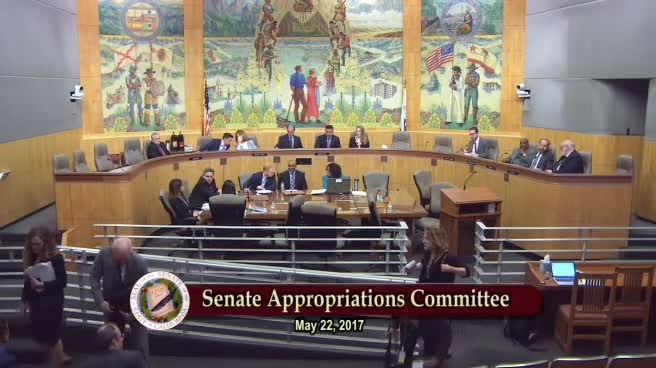 1MIN
Senate Standing Committee on Appropriations
 8MIN
Senate Standing Committee on Governance and Finance
Bill Author

Bill Co-Author(s):