SB 443: Pharmacy: emergency medical services automated drug delivery system.
- Session Year: 2017-2018
- House: Senate
- Latest Version Date: 2017-10-10
Existing law, the Pharmacy Law, provides for the licensing and regulation of the practice of pharmacy by the California State Board of Pharmacy, which is within the Department of Consumer Affairs, and makes any violation of the Pharmacy Law punishable as a crime. Existing law authorizes a pharmacy to furnish a dangerous drug or a dangerous device to a licensed health care facility for storage in a secured emergency pharmaceutical supplies container maintained within the facility or to an approved service provider within an emergency medical services system for storage in a secured emergency pharmaceutical supplies container if certain policies and procedures are met.
This bill would authorize a pharmacy or licensed wholesaler that is also an emergency medical services provider agency to restock dangerous drugs or dangerous devices into an emergency medical services automated drug delivery system, as defined, that is licensed by the board if specified conditions are met, including that the emergency medical services provider agency obtain a license from the board to operate the system, and requires dangerous drugs and dangerous devices stored or maintained in an emergency medical services automated drug delivery system to be used for the sole purpose of restocking a secured emergency pharmaceutical supplies container. The bill would provide that only a medical director, a pharmacist, or a licensed designated paramedic is authorized to restock an emergency medical services automated drug delivery system. The bill would provide that a violation of these provisions constitutes unprofessional conduct and would authorize the board to take action against the license of the fire department. By expanding the scope of an existing crime, this bill would impose a state-mandated local program.
The bill would authorize the board to issue a designated paramedic license to a paramedic in this state if he or she meets certain criteria and pays an application and license fee, as specified.
The California Constitution requires the state to reimburse local agencies and school districts for certain costs mandated by the state. Statutory provisions establish procedures for making that reimbursement.
This bill would provide that no reimbursement is required by this act for a specified reason.
Existing law, the Pharmacy Law, provides for the licensing and regulation of the practice of pharmacy by the California State Board of Pharmacy, which is within in the Department of Consumer Affairs, and makes any violation of the Pharmacy Law punishable as a crime. Existing law authorizes a pharmacy to furnish a dangerous drug or a dangerous device to a licensed health care facility for storage in a secured emergency pharmaceutical supplies container maintained within the facility or to an approved service provider within an emergency medical services system for storage in a secured emergency pharmaceutical supplies container if certain policies and procedures are met.
This bill would authorize a pharmacy or licensed wholesaler that is also an emergency medical services provider agency to restock dangerous drugs or dangerous devices into an emergency medical services automated drug delivery system, as defined, that is licensed by the board if specified conditions are met, including that the emergency medical services provider agency obtain a license from the board to operate the system, and requires dangerous drugs and dangerous devices stored or maintained in an emergency medical services automated drug delivery system to be used for the sole purpose of restocking a secured emergency pharmaceutical supplies container. The bill would provide that only a medical director, a pharmacist, or a licensed designated paramedic is authorized to restock an emergency medical services automated drug delivery system. The bill would provide that a violation of these provisions constitutes unprofessional conduct and would authorize the board to take action against the license of the fire department. By expanding the scope of an existing crime, this bill would impose a state-mandated local program.
The bill would authorize the board to issue a designated paramedic license to a paramedic in this state if he or she meets certain criteria and pays an application and license fee, as specified.
The California Constitution requires the state to reimburse local agencies and school districts for certain costs mandated by the state. Statutory provisions establish procedures for making that reimbursement.
This bill would provide that no reimbursement is required by this act for a specified reason.
Existing law, the Pharmacy Law, provides for the licensing and regulation of the practice of pharmacy by the California State Board of Pharmacy, which is within in the Department of Consumer Affairs, and makes any violation of the Pharmacy Law punishable as a crime. Existing law authorizes a pharmacy to furnish a dangerous drug or a dangerous device to licensed health care facility for storage in a secured emergency pharmaceutical supplies container maintained within the facility or to an approved service provider within an emergency medical services system for storage in a secured emergency pharmaceutical supplies container if certain policies and procedures are met.
This bill would authorize a pharmacy or licensed wholesaler that is also an emergency medical services provider agency to furnish restock dangerous drugs or dangerous devices into an emergency medical services automated drug delivery system, as defined, located within a county operated fire department that is licensed by the board if specified conditions are met, including that the county fire department emergency medical services provider agency obtain a license from the board to operate the system, and requires dangerous drugs and dangerous devices stored or maintained in an emergency medical services automated drug delivery system to be used for the sole purpose of restocking a secured emergency pharmaceutical supplies container. The bill would provide that only a medical director, a pharmacist, or a licensed designated paramedic is authorized to restock an emergency medical services automated drug delivery system. The bill would provide that a violation of these provisions constitutes unprofessional conduct and would authorize the board to take action against the license of the fire department. By expanding the scope of an existing crime, this bill would impose a state-mandated local program.
The bill would authorize the board to issue a designated paramedic license to a paramedic in this state if he or she meets certain criteria and pays an application and license fee, as specified.
The California Constitution requires the state to reimburse local agencies and school districts for certain costs mandated by the state. Statutory provisions establish procedures for making that reimbursement.
This bill would provide that no reimbursement is required by this act for a specified reason.
Existing law, the Pharmacy Law, provides for the licensing and regulation of the practice of pharmacy by the California State Board of Pharmacy, which is within in the Department of Consumer Affairs, and makes any violation of the Pharmacy Law punishable as a crime. Existing law authorizes a pharmacy to furnish a dangerous drug or a dangerous device to licensed health care facility for storage in a secured emergency pharmaceutical supplies container maintained within the facility or to an approved service provider within an emergency medical services system for storage in a secured emergency pharmaceutical supplies container if certain policies and procedures are met.
This bill would authorize a pharmacy or wholesaler to furnish dangerous drugs or dangerous devices into an emergency medical services automated drug delivery system, as defined, located within a county operated fire department if specified conditions are met, including that the county fire department obtain a license from the board to operate the system, and requires dangerous drugs and dangerous devices stored or maintained in an emergency medical services automated drug delivery system to be used for the sole purpose of restocking a secured emergency pharmaceutical supplies container. The bill would provide that a violation of these provisions constitutes unprofessional conduct and would authorize the board to take action against the license of the fire department. By expanding the scope of an existing crime, this bill would impose a state-mandated local program.
The California Constitution requires the state to reimburse local agencies and school districts for certain costs mandated by the state. Statutory provisions establish procedures for making that reimbursement.
This bill would provide that no reimbursement is required by this act for a specified reason.
An emergency medical services automated drug delivery system or EMSADDS means an automated drug delivery system that stores and distributes drugs for the sole purpose of restocking a secured emergency pharmaceutical supplies container that is used by an emergency medical services agency to provide emergency medical services.
SEC. 2.Section 4119 of the Business and Professions Code is amended to read:4119.(a)Notwithstanding any other law, a pharmacy may furnish a dangerous drug or dangerous device to a licensed health care facility for storage in a secured emergency pharmaceutical supplies container maintained within the facility in accordance with facility regulations of the State Department of Public Health set forth in Title 22 of the California Code of Regulations and the requirements set forth in Section 1261.5 of the Health and Safety Code. These emergency supplies shall be approved by the facilitys patient care policy committee or pharmaceutical service committee and shall be readily available to each nursing station. Section 1261.5 of the Health and Safety Code limits the number of oral dosage form or suppository form drugs in these emergency supplies to 48.
(b)Notwithstanding any other law, a pharmacy may furnish a dangerous drug or a dangerous device to an approved service provider within an emergency medical services system for storage in a secured emergency pharmaceutical supplies container, in accordance with the policies and procedures of the local emergency medical services agency, if all of the following are met:
(1)The dangerous drug or dangerous device is furnished exclusively for use in conjunction with services provided in an ambulance, or other approved emergency medical services service provider, that provides prehospital emergency medical services.
(2)The requested dangerous drug or dangerous device is within the licensed or certified emergency medical technicians scope of practice as established by the Emergency Medical Services Authority and set forth in Title 22 of the California Code of Regulations.
(3)The approved service provider within an emergency medical services system provides a written request that specifies the name and quantity of dangerous drugs or dangerous devices.
(4)The approved emergency medical services provider administers dangerous drugs and dangerous devices in accordance with the policies and procedures of the local emergency medical services agency.
(5)The approved emergency medical services provider documents, stores, and restocks dangerous drugs and dangerous devices in accordance with the policies and procedures of the local emergency medical services agency.
Records of each request by, and dangerous drugs or dangerous devices furnished to, an approved service provider within an emergency medical services system, shall be maintained by both the approved service provider and the dispensing pharmacy for a period of at least three years.
The furnishing of controlled substances to an approved emergency medical services provider shall be in accordance with the California Uniform Controlled Substances Act (Division 10 (commencing with Section 11000) of the Health and Safety Code).
SEC. 3.Section 4119.01 is added to the Business and Professions Code, immediately following Section 4119, to read:4119.01.(a)Notwithstanding any other law, a pharmacy, or a licensed wholesaler that is also an emergency medical services provider agency, may restock dangerous drugs or dangerous devices into an emergency medical services automated drug delivery system (EMSADDS) that is licensed by the board under this section. Dangerous drugs and dangerous devices stored or maintained in an EMSADDS shall be used for the sole purpose of restocking a secured emergency pharmaceutical supplies container as authorized in subdivision (b) of Section 4119. The EMSADDS may be used only if all of the following conditions are met:
(1)The emergency medical services provider agency obtains a license from the board to operate the EMSADDS. As a requirement for licensure, the EMSADDS shall be located on the premises of a fire department headquarters, a fire station, or at an emergency medical services provider agencys location. A separate license shall be required for each location.
(A)As part of its license application, the emergency medical services provider agency shall provide: the address where the EMSADDS will be located; the name of the medical director responsible for overseeing the emergency medical services provider agency; the name of any designated pharmacist or licensed designated paramedic who is responsible for performing the duties as required under this section; the policies and procedures detailing the provisions under which the EMSADDS will operate; and the name and license number of the pharmacy or emergency medical services provider agency wholesaler that will furnish the dangerous drugs and dangerous devices through the EMSADDS.
(B)The application and initial license fee to operate EMSADDS shall be one hundred dollars ($100) per machine. The license shall be renewed annually. The license fee may not be transferred to a different location if the EMSADDS is moved. The penalty fee for failure to renew an EMSADDS license shall be thirty-five dollars ($35).
(C)The application and renewal fee for a licensed wholesaler that is also an emergency medical services provider agency shall be seven hundred eighty dollars ($780).
(2)Each EMSADDS shall collect, control, and maintain all transaction information necessary to accurately track the movement of drugs into and out of the system for purposes of security, accuracy, and accountability.
(3)The medical director and designated pharmacist, or the medical director and the licensed designated paramedic, shall develop, adopt, and maintain policies and procedures detailing the provisions under which the EMSADDS will operate. At a minimum, the policies and procedures shall address (A) inventory controls, (B) training, (C) storage and security of the dangerous drugs and dangerous devices, and (D) safeguards to limit access to the EMSADDS to authorized staff only.
(4)The licensed EMSADDS operator shall limit access to the EMSADDS only to employees of the operator who are licensed by the state and as authorized in this section.
(A)An EMSADDS may only be restocked by the medical director, a pharmacist, or a licensed designated paramedic, each of whom may possess and transport dangerous drugs or dangerous devices for that purpose. The transport of dangerous drugs or dangerous devices for restocking into an EMSADDS shall be done in a secured manner to prevent theft or unauthorized access, and shall be done under conditions appropriate to meet storage and handling requirements of the dangerous drugs or dangerous devices. While the dangerous drugs or dangerous devices may be transported, representatives shall not store a dangerous drug or dangerous device at an unlicensed location.
(B)Only a medical director, a pharmacist, or a paramedic may remove dangerous drugs or dangerous devices from an EMSADDS to fill a secured emergency pharmaceutical supplies container. This access shall be observed by a second person who is also a paramedic, a pharmacist, or a medical director. Both the individual who removes dangerous drugs or dangerous devices from the EMSADDS and the observer shall record their participation in the removal of the dangerous drugs or dangerous devices via their signatures or use of biometric identifiers. The restocking of the secured emergency pharmaceutical supplies container from the EMSADDS shall occur at the licensed location of the EMSADDS.
(C)A medical director, a pharmacist, or a licensed designated paramedic may remove outdated dangerous drugs or dangerous devices from an EMSADDS. Any outdated dangerous drugs or dangerous devices shall be provided to a licensed reverse distributor for destruction.
(5)Every EMSADDS operator shall perform monthly inventory and inventory reconciliation functions. The medical director, designated pharmacist, or licensed designated paramedic shall perform a reconciliation and prepare a written report based on written policies and procedures developed to maintain the security and quality of the dangerous drugs and dangerous devices. The written inventory reconciliation report shall include all of the following:
(A)A physical count of all quantities of dangerous drugs and dangerous devices stored in the EMSADDS.
(B)A review of all dangerous drugs and dangerous devices added into and removed from each EMSADDS since the last monthly inventory.
(C)A comparison of subparagraphs (A) and (B), and identification of any variances.
(D)A review of all individuals who accessed the EMSADDS since the last inventory and identification of unauthorized individuals accessing the EMSADDS or suspicious activity.
(E)Identification of possible causes of shortages and overages.
(6)The medical director and designated pharmacist, or medical director and licensed designated paramedic, shall be jointly responsible for monthly review of the inventory reconciliation report, the training, storage, and security of dangerous drugs and dangerous devices, and the restocking of the EMSADDS. Any inventory losses from an EMSADDS shall be reported to the board within seven days from identification of the loss.
(7)In order for an individual to perform the functions of a licensed designated paramedic described in this section, that individual shall be licensed by the board pursuant to Section 4202.5. A paramedic who only restocks a secured emergency pharmaceutical supplies container from an EMSADDS need not be licensed with the board.
(8)A record of each access to the EMSADDS, as well as all records used to compile an inventory reconciliation report, shall be maintained at the operators location for at least three years in a readily retrievable form. The records shall include the identity of every individual who accessed the system or witnessed such access; the date of each access; and the drug, dosage, form, strength, and quantity of dangerous drugs or dangerous devices added or removed.
(b)A violation of any of the provisions of this section shall constitute unprofessional conduct and provides the board the authority to take action against the EMSADDS operators license.
SEC. 4.Section 4202.5 is added to the Business and Professions Code, to read:4202.5.(a)The board may issue a designated paramedic license to an individual if he or she holds a license as a paramedic in this state and meets the criteria of this section.
(b)The board shall conduct a criminal background check of the applicant to determine if the applicant has committed acts that would constitute grounds for denial of licensure, pursuant to this chapter or Chapter 2 (commencing with Section 480) of Division 1.5.
(c)The board may suspend or revoke a license issued pursuant to this section on any ground specified in Section 4301.
(d)A license issued under this section is dependent on the validity of the holders paramedic license and shall be automatically suspended if the individuals paramedic license is expired, revoked, or otherwise invalidated by the issuing authority.
(e)The fee for application and issuance of an initial license as a designated paramedic shall be one hundred forty dollars ($140) for a two-year license. The biennial renewal shall be one hundred forty dollars ($140). The penalty fee for failure to renew an authorized paramedic license shall be sixty-five dollars ($65).
SEC. 5.No reimbursement is required by this act pursuant to Section 6 of Article XIIIB of the California Constitution because the only costs that may be incurred by a local agency or school district will be incurred because this act creates a new crime or infraction, eliminates a crime or infraction, or changes the penalty for a crime or infraction, within the meaning of Section 17556 of the Government Code, or changes the definition of a crime within the meaning of Section 6 of Article XIIIB of the California Constitution.
An emergency medical services automated drug delivery system or EMSADDS means an automated drug delivery system that stores and distributes drugs for the sole purpose of restocking a secured emergency pharmaceutical supplies container that is used by an emergency medical services agency to provide emergency medical services.
SEC. 2.Section 4119 of the Business and Professions Code is amended to read:4119.(a)Notwithstanding any other law, a pharmacy may furnish a dangerous drug or dangerous device to a licensed health care facility for storage in a secured emergency pharmaceutical supplies container maintained within the facility in accordance with facility regulations of the State Department of Public Health set forth in Title 22 of the California Code of Regulations and the requirements set forth in Section 1261.5 of the Health and Safety Code. These emergency supplies shall be approved by the facilitys patient care policy committee or pharmaceutical service committee and shall be readily available to each nursing station. Section 1261.5 of the Health and Safety Code limits the number of oral dosage form or suppository form drugs in these emergency supplies to 48.
(b)Notwithstanding any other law, a pharmacy may furnish a dangerous drug or a dangerous device to an approved service provider within an emergency medical services system for storage in a secured emergency pharmaceutical supplies container, in accordance with the policies and procedures of the local emergency medical services agency, if all of the following are met:
(1)The dangerous drug or dangerous device is furnished exclusively for use in conjunction with services provided in an ambulance, or other approved emergency medical services service provider, that provides prehospital emergency medical services.
(2)The requested dangerous drug or dangerous device is within the licensed or certified emergency medical technicians scope of practice as established by the Emergency Medical Services Authority and set forth in Title 22 of the California Code of Regulations.
(3)The approved service provider within an emergency medical services system provides a written request that specifies the name and quantity of dangerous drugs or dangerous devices.
(4)The approved emergency medical services provider administers dangerous drugs and dangerous devices in accordance with the policies and procedures of the local emergency medical services agency.
(5)The approved emergency medical services provider documents, stores, and restocks dangerous drugs and dangerous devices in accordance with the policies and procedures of the local emergency medical services agency.
Records of each request by, and dangerous drugs or dangerous devices furnished to, an approved service provider within an emergency medical services system, shall be maintained by both the approved service provider and the dispensing pharmacy for a period of at least three years.
The furnishing of controlled substances to an approved emergency medical services provider shall be in accordance with the California Uniform Controlled Substances Act (Division 10 (commencing with Section 11000) of the Health and Safety Code).
SEC. 3.Section 4119.01 is added to the Business and Professions Code, immediately following Section 4119, to read:4119.01.(a)Notwithstanding any other law, a pharmacy, or a licensed wholesaler that is also an emergency medical services provider agency, may restock dangerous drugs or dangerous devices into an emergency medical services automated drug delivery system (EMSADDS) that is licensed by the board under this section. Dangerous drugs and dangerous devices stored or maintained in an EMSADDS shall be used for the sole purpose of restocking a secured emergency pharmaceutical supplies container as authorized in subdivision (b) of Section 4119. The EMSADDS may be used only if all of the following conditions are met:
(1)The emergency medical services provider agency obtains a license from the board to operate the EMSADDS. As a requirement for licensure, the EMSADDS shall be located on the premises of a fire department headquarters, a fire station, or at an emergency medical services provider agencys location. A separate license shall be required for each location.
(A)As part of its license application, the emergency medical services provider agency shall provide: the address where the EMSADDS will be located; the name of the medical director responsible for overseeing the emergency medical services provider agency; the name of any designated pharmacist or licensed designated paramedic who is responsible for performing the duties as required under this section; the policies and procedures detailing the provisions under which the EMSADDS will operate; and the name and license number of the pharmacy or emergency medical services provider agency wholesaler that will furnish the dangerous drugs and dangerous devices through the EMSADDS.
(B)The application and initial license fee to operate a nongovernmental EMSADDS shall be one hundred dollars ($100) per machine. The license shall be renewed annually. The license fee may not be transferred to a different location if the EMSADDS is moved. The penalty fee for failure to renew an EMSADDS license shall be thirty-five dollars ($35).
(C)The application and renewal fee for a licensed wholesaler that is also an emergency medical services provider agency shall be seven hundred eighty dollars ($780).
(2)Each EMSADDS shall collect, control, and maintain all transaction information necessary to accurately track the movement of drugs into and out of the system for purposes of security, accuracy, and accountability.
(3)The medical director and designated pharmacist, or the medical director and the licensed designated paramedic, shall develop, adopt, and maintain policies and procedures detailing the provisions under which the EMSADDS will operate. At a minimum, the policies and procedures shall address (A) inventory controls, (B) training, (C) storage and security of the dangerous drugs and dangerous devices, and (D) safeguards to limit access to the EMSADDS to authorized staff only.
(4)The licensed EMSADDS operator shall limit access to the EMSADDS only to employees of the operator who are licensed by the state and as authorized in this section.
(A)An EMSADDS may only be restocked by the medical director, a pharmacist, or a licensed designated paramedic, each of whom may possess and transport dangerous drugs or dangerous devices for that purpose. The transport of dangerous drugs or dangerous devices for restocking into an EMSADDS shall be done in a secured manner to prevent theft or unauthorized access, and shall be done under conditions appropriate to meet storage and handling requirements of the dangerous drugs or dangerous devices. While the dangerous drugs or dangerous devices may be transported, representatives shall not store a dangerous drug or dangerous device at an unlicensed location.
(B)Only a medical director, a pharmacist, or a paramedic may remove dangerous drugs or dangerous devices from an EMSADDS to fill a secured emergency pharmaceutical supplies container. This access shall be observed by a second person who is also a paramedic, a pharmacist, or a medical director. Both the individual who removes dangerous drugs or dangerous devices from the EMSADDS and the observer shall record their participation in the removal of the dangerous drugs or dangerous devices via their signatures or use of biometric identifiers. The restocking of the secured emergency pharmaceutical supplies container from the EMSADDS shall occur at the licensed location of the EMSADDS.
(C)A medical director, a pharmacist, or a licensed designated paramedic may remove outdated dangerous drugs or dangerous devices from an EMSADDS. Any outdated dangerous drugs or dangerous devices shall be provided to a licensed reverse distributor for destruction.
(5)Every EMSADDS operator shall perform monthly inventory and inventory reconciliation functions. The medical director, designated pharmacist, or licensed designated paramedic shall perform a reconciliation and prepare a written report based on written policies and procedures developed to maintain the security and quality of the dangerous drugs and dangerous devices. The written inventory reconciliation report shall include all of the following:
(A)A physical count of all quantities of dangerous drugs and dangerous devices stored in the EMSADDS.
(B)A review of all dangerous drugs and dangerous devices added into and removed from each EMSADDS since the last monthly inventory.
(C)A comparison of subparagraphs (A) and (B), and identification of any variances.
(D)A review of all individuals who accessed the EMSADDS since the last inventory and identification of unauthorized individuals accessing the EMSADDS or suspicious activity.
(E)Identification of possible causes of shortages and overages.
(6)The medical director and designated pharmacist, or medical director and licensed designated paramedic, shall be jointly responsible for monthly review of the inventory reconciliation report, the training, storage, and security of dangerous drugs and dangerous devices, and the restocking of the EMSADDS. Any inventory losses from an EMSADDS shall be reported to the board within seven days from identification of the loss.
(7)In order for an individual to perform the functions of a licensed designated paramedic described in this section, that individual shall be licensed by the board pursuant to Section 4202.5. A paramedic who only restocks a secured emergency pharmaceutical supplies container from an EMSADDS need not be licensed with the board.
(8)A record of each access to the EMSADDS, as well as all records used to compile an inventory reconciliation report, shall be maintained at the operators location for at least three years in a readily retrievable form. The records shall include the identity of every individual who accessed the system or witnessed such access; the date of each access; and the drug, dosage, form, strength, and quantity of dangerous drugs or dangerous devices added or removed.
(b)A violation of any of the provisions of this section shall constitute unprofessional conduct and provides the board the authority to take action against the EMSADDS operators license.
SEC. 4.Section 4202.5 is added to the Business and Professions Code, to read:4202.5.(a)The board may issue a designated paramedic license to an individual if he or she holds a license as a paramedic in this state and meets the criteria of this section.
(b)The board shall conduct a criminal background check of the applicant to determine if the applicant has committed acts that would constitute grounds for denial of licensure, pursuant to this chapter or Chapter 2 (commencing with Section 480) of Division 1.5.
(c)The board may suspend or revoke a license issued pursuant to this section on any ground specified in Section 4301.
(d)A license issued under this section is dependent on the validity of the holders paramedic license and shall be automatically suspended if the individuals paramedic license is expired, revoked, or otherwise invalidated by the issuing authority.
(e)The fee for application and issuance of an initial license as a designated paramedic shall be one hundred forty dollars ($140) for a two-year license. The biennial renewal shall be one hundred forty dollars ($140). The penalty fee for failure to renew an authorized paramedic license shall be sixty-five dollars ($65).
SEC. 5.No reimbursement is required by this act pursuant to Section 6 of Article XIIIB of the California Constitution because the only costs that may be incurred by a local agency or school district will be incurred because this act creates a new crime or infraction, eliminates a crime or infraction, or changes the penalty for a crime or infraction, within the meaning of Section 17556 of the Government Code, or changes the definition of a crime within the meaning of Section 6 of Article XIIIB of the California Constitution.
An emergency medical services automated drug delivery system or EMSADDS means an automated drug delivery system that stores and distributes drugs for the sole purpose of restocking a secured emergency pharmaceutical supplies container that is used by an emergency medical services agency to provide emergency medical services.
SECTION 1.SEC. 2.Section 4119 of the Business and Professions Code is amended to read:4119.(a)Notwithstanding any other law, a pharmacy may furnish a dangerous drug or dangerous device to a licensed health care facility for storage in a secured emergency pharmaceutical supplies container maintained within the facility in accordance with facility regulations of the State Department of Public Health set forth in Title 22 of the California Code of Regulations and the requirements set forth in Section 1261.5 of the Health and Safety Code. These emergency supplies shall be approved by the facilitys patient care policy committee or pharmaceutical service committee and shall be readily available to each nursing station. Section 1261.5 of the Health and Safety Code limits the number of oral dosage form or suppository form drugs in these emergency supplies to 48.
(b)Notwithstanding any other law, a pharmacy may furnish a dangerous drug or a dangerous device to an approved service provider within an emergency medical services system for storage in a secured emergency pharmaceutical supplies container, in accordance with the policies and procedures of the local emergency medical services agency, if all of the following are met:
(1)The dangerous drug or dangerous device is furnished exclusively for use in conjunction with services provided in an ambulance, or other approved emergency medical services service provider, that provides prehospital emergency medical services.
(2)The requested dangerous drug or dangerous device is within the licensed or certified emergency medical technicians scope of practice as established by the Emergency Medical Services Authority and set forth in Title 22 of the California Code of Regulations.
(3)The approved service provider within an emergency medical services system provides a written request that specifies the name and quantity of dangerous drugs or dangerous devices.
(4)The approved emergency medical services provider administers dangerous drugs and dangerous devices in accordance with the policies and procedures of the local emergency medical services agency.
(5)The approved emergency medical services provider documents, stores, and restocks dangerous drugs and dangerous devices in accordance with the policies and procedures of the local emergency medical services agency.
Records of each request by, and dangerous drugs or dangerous devices furnished to, an approved service provider within an emergency medical services system, shall be maintained by both the approved service provider and the dispensing pharmacy for a period of at least three years.
The furnishing of controlled substances to an approved emergency medical services provider shall be in accordance with the California Uniform Controlled Substances Act (Division 10 (commencing with Section 11000) of the Health and Safety Code).
(c)(1)Notwithstanding any other law, a pharmacy orwholesaler may furnish dangerous drugs or dangerous devices into an emergency medical services automated drug delivery system (EMSADDS) located within a county operated fire department. Dangerous drugs and dangerous devices stored or maintained in an EMSADDS shall be used for the sole purpose of restocking a secured emergency pharmaceutical supplies container as authorized in subdivision (b). The EMSADDS may be used only if all of the following conditions are met:(A)The county fire department obtains a license from the board to operate the EMSADDS on the premise of a fire station. A separate license shall be required for each location. As part of its license application, the county shall provide the address of the fire station, the name of the county medical director responsible for overseeing the emergency medical services system, the name of the designated pharmacist, the policies and procedures detailing the provisions under which the EMSADDS will operate, and the name and license number of the pharmacy or wholesaler that will furnish the dangerous drugs and dangerous devices.(B)Each EMSADDS shall collect, control, and maintain all transaction information necessary to accurately track the movement of drugs into and out of the system for purposes of security, accuracy, and accountability.(C)The county medical director and designated pharmacist shall develop, adopt, and maintain policies and procedures detailing the provisions under which the EMSADDS will operate. At a minimum, the policies and procedures shall address (i) inventory controls, (ii) training, (iii) storage and security of the dangerous drugs and dangerous devices, and (iv) safeguards to limit access to the EMSADDS to only authorized staff.(D)A pharmacist shall stock and inventory the dangerous drugs and dangerous devices in EMSADDS.(E)The designated pharmacist shall review, on a monthly basis, the operation of the EMSADDS for compliance with inventory controls specified in the policies and procedures.(F)The county medical director and designated pharmacist shall be jointly responsible for monthly review of the county fire departments training, storage, and security of dangerous drugs and dangerous devices and the restocking procedures, including, but not limited to, a review of the use of EMSADDS records to verify that only authorized staff, as provided for in this section, access and remove dangerous drugs and dangerous devices from the EMSADDS.(G)The county fire department shall limit access to the EMSADDS to only employees of the county that are licensed by the state as paramedics or pharmacists or to the fire departments medical director.(H)A record of each access to the EMSADDS shall be maintained for at least three years in a readily retrievable form. The records shall include the identity of the licensed paramedic or pharmacist or the fire departments medical director who accessed the system as well as the drug, dosage, form, and quantity removed.(2)A violation of any of the provisions of this subdivision shall constitute unprofessional conduct and provides the board the authority to take action against the county fire departments license for the EMSADDS.SEC. 2.Section 4034.5 is added to the Business and Professions Code, to read:4034.5.An emergency medical services automated drug delivery system or EMSADDS means an automated drug delivery system that stores and distributes drugs for the sole purpose of restocking a secured emergency pharmaceutical supplies container that is used by an emergency medical services agency to provide emergency medical services.SEC. 3.Section 4119.01 is added to the Business and Professions Code, immediately following Section 4119, to read:4119.01.(a)Notwithstanding any other law, a pharmacy, or a licensed wholesaler that is also an emergency medical services provider agency, may restock dangerous drugs or dangerous devices into an emergency medical services automated drug delivery system (EMSADDS) that is licensed by the board under this section. Dangerous drugs and dangerous devices stored or maintained in an EMSADDS shall be used for the sole purpose of restocking a secured emergency pharmaceutical supplies container as authorized in subdivision (b) of Section 4119. The EMSADDS may be used only if all of the following conditions are met:
(1)The emergency medical services provider agency obtains a license from the board to operate the EMSADDS. As a requirement for licensure, the EMSADDS shall be located on the premises of a fire department headquarters, a fire station, or at an emergency medical services provider agencys location. A separate license shall be required for each location.
(A)As part of its license application, the emergency medical services provider agency shall provide: the address where the EMSADDS will be located; the name of the medical director responsible for overseeing the emergency medical services provider agency; the name of any designated pharmacist or licensed designated paramedic who is responsible for performing the duties as required under this section; the policies and procedures detailing the provisions under which the EMSADDS will operate; and the name and license number of the pharmacy or emergency medical services provider agency wholesaler that will furnish the dangerous drugs and dangerous devices through the EMSADDS.
(B)The application and initial license fee to operate a nongovernmental EMSADDS shall be one hundred dollars ($100) per machine. The license shall be renewed annually. The license fee may not be transferred to a different location if the EMSADDS is moved. The penalty fee for failure to renew an EMSADDS license shall be thirty-five dollars ($35).
(2)Each EMSADDS shall collect, control, and maintain all transaction information necessary to accurately track the movement of drugs into and out of the system for purposes of security, accuracy, and accountability.
(3)The medical director and designated pharmacist, or the medical director and the licensed designated paramedic, shall develop, adopt, and maintain policies and procedures detailing the provisions under which the EMSADDS will operate. At a minimum, the policies and procedures shall address (A) inventory controls, (B) training, (C) storage and security of the dangerous drugs and dangerous devices, and (D) safeguards to limit access to the EMSADDS to authorized staff only.
(4)The licensed EMSADDS operator shall limit access to the EMSADDS only to employees of the operator who are licensed by the state and as authorized in this section.
(A)An EMSADDS may only be restocked by the medical director, a pharmacist, or a licensed designated paramedic, each of whom may possess and transport dangerous drugs or dangerous devices for that purpose. The transport of dangerous drugs or dangerous devices for restocking into an EMSADDS shall be done in a secured manner to prevent theft or unauthorized access, and shall be done under conditions appropriate to meet storage and handling requirements of the dangerous drugs or dangerous devices. While the dangerous drugs or dangerous devices may be transported, representatives shall not store a dangerous drug or dangerous device at an unlicensed location.
(B)Only a medical director, a pharmacist, or a paramedic may remove dangerous drugs or dangerous devices from an EMSADDS to fill a secured emergency pharmaceutical supplies container. This access shall be observed by a second person who is also a paramedic, a pharmacist, or a medical director. Both the individual who removes dangerous drugs or dangerous devices from the EMSADDS and the observer shall record their participation in the removal of the dangerous drugs or dangerous devices via their signatures or use of biometric identifiers. The restocking of the secured emergency pharmaceutical supplies container from the EMSADDS shall occur at the licensed location of the EMSADDS.
(C)A medical director, a pharmacist, or a licensed designated paramedic may remove outdated dangerous drugs or dangerous devices from an EMSADDS. Any outdated dangerous drugs or dangerous devices shall be provided to a licensed reverse distributor for destruction.
(5)Every EMSADDS operator shall perform monthly inventory and inventory reconciliation functions. The medical director, designated pharmacist, or licensed designated paramedic shall perform a reconciliation and prepare a written report based on written policies and procedures developed to maintain the security and quality of the dangerous drugs and dangerous devices. The written inventory reconciliation report shall include all of the following:
(A)A physical count of all quantities of dangerous drugs and dangerous devices stored in the EMSADDS.
(B)A review of all dangerous drugs and dangerous devices added into and removed from each EMSADDS since the last monthly inventory.
(C)A comparison of subparagraphs (A) and (B), and identification of any variances.
(D)A review of all individuals who accessed the EMSADDS since the last inventory and identification of unauthorized individuals accessing the EMSADDS or suspicious activity.
(E)Identification of possible causes of shortages and overages.
(6)The medical director and designated pharmacist, or medical director and licensed designated paramedic, shall be jointly responsible for monthly review of the inventory reconciliation report, the training, storage, and security of dangerous drugs and dangerous devices, and the restocking of the EMSADDS. Any inventory losses from an EMSADDS shall be reported to the board within seven days from identification of the loss.
(7)In order for an individual to perform the functions of a licensed designated paramedic described in this section, that individual shall be licensed by the board pursuant to Section 4202.5. A paramedic who only restocks a secured emergency pharmaceutical supplies container from an EMSADDS need not be licensed with the board.
(8)A record of each access to the EMSADDS, as well as all records used to compile an inventory reconciliation report, shall be maintained at the operators location for at least three years in a readily retrievable form. The records shall include the identity of every individual who accessed the system or witnessed such access; the date of each access; and the drug, dosage, form, strength, and quantity of dangerous drugs or dangerous devices added or removed.
(b)A violation of any of the provisions of this section shall constitute unprofessional conduct and provides the board the authority to take action against the EMSADDS operators license.
SEC. 4.Section 4202.5 is added to the Business and Professions Code, to read:4202.5.(a)The board may issue a designated paramedic license to an individual if he or she holds a license as a paramedic in this state and meets the criteria of this section.
(b)The board shall conduct a criminal background check of the applicant to determine if the applicant has committed acts that would constitute grounds for denial of licensure, pursuant to this chapter or Chapter 2 (commencing with Section 480) of Division 1.5.
(c)The board may suspend or revoke a license issued pursuant to this section on any ground specified in Section 4301.
(d)A license issued under this section is dependent on the validity of the holders paramedic license and shall be automatically suspended if the individuals paramedic license is expired, revoked, or otherwise invalidated by the issuing authority.
(e)The fee for application and issuance of an initial license as a designated paramedic shall be one hundred forty dollars ($140) for a two-year license. The biennial renewal shall be one hundred forty dollars ($140). The penalty fee for failure to renew an authorized paramedic license shall be sixty-five dollars ($65).
SEC. 3.SEC. 5.No reimbursement is required by this act pursuant to Section 6 of Article XIIIB of the California Constitution because the only costs that may be incurred by a local agency or school district will be incurred because this act creates a new crime or infraction, eliminates a crime or infraction, or changes the penalty for a crime or infraction, within the meaning of Section 17556 of the Government Code, or changes the definition of a crime within the meaning of Section 6 of Article XIIIB of the California Constitution.
(a)Notwithstanding any other provision of law, a pharmacy may furnish a dangerous drug or dangerous device to a licensed health care facility for storage in a secured emergency pharmaceutical supplies container maintained within the facility in accordance with facility regulations of the State Department of Public Health set forth in Title 22 of the California Code of Regulations and the requirements set forth in Section 1261.5 of the Health and Safety Code. These emergency supplies shall be approved by the facilitys patient care policy committee or pharmaceutical service committee and shall be readily available to each nursing station. Section 1261.5 of the Health and Safety Code limits the number of oral dosage form or suppository form drugs in these emergency supplies to 24 48.
(b)Notwithstanding any other provision of law, a pharmacy may furnish a dangerous drug or a dangerous device to an approved service provider within an emergency medical services system for storage in a secured emergency pharmaceutical supplies container, in accordance with the policies and procedures of the local emergency medical services agency, if all of the following are met:
(1)The dangerous drug or dangerous device is furnished exclusively for use in conjunction with services provided in an ambulance, or other approved emergency medical services service provider, that provides prehospital emergency medical services.
(2)The requested dangerous drug or dangerous device is within the licensed or certified emergency medical technicians scope of practice as established by the Emergency Medical Services Authority and set forth in Title 22 of the California Code of Regulations.
(3)The approved service provider within an emergency medical services system provides a written request that specifies the name and quantity of dangerous drugs or dangerous devices.
(4)The approved emergency medical services provider administers dangerous drugs and dangerous devices in accordance with the policies and procedures of the local emergency medical services agency.
(5)The approved emergency medical services provider documents, stores, and restocks dangerous drugs and dangerous devices in accordance with the policies and procedures of the local emergency medical services agency.
Records of each request by, and dangerous drugs or dangerous devices furnished to, an approved service provider within an emergency medical services system, shall be maintained by both the approved service provider and the dispensing pharmacy for a period of at least three years.
The furnishing of controlled substances to an approved emergency medical services provider shall be in accordance with the California Uniform Controlled Substances Act. Act (Division 10 (commencing with Section 11000) of the Health and Safety Code).
(c)(1)Notwithstanding any other law, a pharmacy or wholesaler may furnish dangerous drugs or dangerous devices into an emergency medical services automated drug delivery system (EMSADDS) located within a county operated fire department. Dangerous drugs and dangerous devices stored or maintained in an EMSADDS shall be used for the sole purpose of restocking a secured emergency pharmaceutical supplies container as authorized in subdivision (b). The EMSADDS may be used only if all of the following conditions are met:
(A)The county fire department obtains a license from the board to operate the EMSADDS on the premise of a fire station. A separate license shall be required for each location. As part of its license application, the county shall provide the address of the fire station, the name of the county medical director responsible for overseeing the emergency medical services system, the name of the designated pharmacist, the policies and procedures detailing the provisions under which the EMSADDS will operate, and the name and license number of the pharmacy or wholesaler that will furnish the dangerous drugs and dangerous devices.
(B)Each EMSADDS shall collect, control, and maintain all transaction information necessary to accurately track the movement of drugs into and out of the system for purposes of security, accuracy, and accountability.
(C)The county medical director and designated pharmacist shall develop, adopt, and maintain policies and procedures detailing the provisions under which the EMSADDS will operate. At a minimum, the policies and procedures shall address (i) inventory controls, (ii) training, (iii) storage and security of the dangerous drugs and dangerous devices, and (iv) safeguards to limit access to the EMSADDS to only authorized staff.
(D)A pharmacist shall stock and inventory the dangerous drugs and dangerous devices in EMSADDS.
(E)The designated pharmacist shall review, on a monthly basis, the operation of the EMSADDS for compliance with inventory controls specified in the policies and procedures.
(F)The county medical director and designated pharmacist shall be jointly responsible for monthly review of the county fire departments training, storage, and security of dangerous drugs and dangerous devices and the restocking procedures, including, but not limited to, a review of the use of EMSADDS records to verify that only authorized staff, as provided for in this section, access and remove dangerous drugs and dangerous devices from the EMSADDS.
(G)The county fire department shall limit access to the EMSADDS to only employees of the county that are licensed by the state as paramedics or pharmacists or to the fire departments medical director.
(H)A record of each access to the EMSADDS shall be maintained for at least three years in a readily retrievable form. The records shall include the identity of the licensed paramedic or pharmacist or the fire departments medical director who accessed the system as well as the drug, dosage, form, and quantity removed.
(2)A violation of any of the provisions of this subdivision shall constitute unprofessional conduct and provides the board the authority to take action against the county fire departments license for the EMSADDS.
SEC. 2.Section 4034.5 is added to the Business and Professions Code, to read:4034.5.An emergency medical services automated drug delivery system or EMSADDS means an automated drug delivery system that stores and distributes drugs for the sole purpose of restocking a secured emergency pharmaceutical supplies container that is used by an emergency medical services agency to provide emergency medical services.
SEC. 3.No reimbursement is required by this act pursuant to Section 6 of Article XIIIB of the California Constitution because the only costs that may be incurred by a local agency or school district will be incurred because this act creates a new crime or infraction, eliminates a crime or infraction, or changes the penalty for a crime or infraction, within the meaning of Section 17556 of the Government Code, or changes the definition of a crime within the meaning of Section 6 of Article XIIIB of the California Constitution.
|
Date
|
Status
|
|---|---|
| Oct 10, 2017 | Chaptered by Secretary of State. Chapter 647, Statutes of 2017. |
| Oct 10, 2017 | Approved by the Governor. |
| Sep 21, 2017 | Enrolled and presented to the Governor at 5:30 p.m. |
| Sep 14, 2017 | Assembly amendments concurred in. (Ayes 39. Noes 1.) Ordered to engrossing and enrolling. |
| Sep 14, 2017 | In Senate. Concurrence in Assembly amendments pending. |
| Sep 13, 2017 | Read third time. Passed. Ordered to the Senate. |
| Sep 6, 2017 | Read second time. Ordered to third reading. |
| Sep 5, 2017 | Read second time and amended. Ordered to second reading. |
| Sep 1, 2017 | From committee: Do pass as amended. (Ayes 15. Noes 0.) (September 1). |
| Aug 23, 2017 | August 23 set for second hearing. Placed on suspense file. |
| Jul 20, 2017 | From committee with author's amendments. Read second time and amended. Re-referred to Com. on APPR. |
| Jul 19, 2017 | July 19 set for first hearing canceled at the request of author. |
| Jul 11, 2017 | From committee: Do pass and re-refer to Com. on APPR. (Ayes 16. Noes 0.) (July 11). Re-referred to Com. on APPR. |
| Jun 1, 2017 | Referred to Com. on B. & P. |
| May 16, 2017 | In Assembly. Read first time. Held at Desk. |
| May 15, 2017 | Read third time. Passed. (Ayes 39. Noes 0. Page 1064.) Ordered to the Assembly. |
| May 2, 2017 | Read second time. Ordered to third reading. |
| May 1, 2017 | From committee: Do pass. (Ayes 7. Noes 0. Page 913.) (May 1). |
| Apr 21, 2017 | Set for hearing May 1. |
| Apr 18, 2017 | From committee: Do pass and re-refer to Com. on APPR. (Ayes 9. Noes 0. Page 726.) (April 17). Re-referred to Com. on APPR. |
| Mar 28, 2017 | Set for hearing April 17. |
| Mar 27, 2017 | April 3 set for first hearing canceled at the request of author. |
| Mar 21, 2017 | Set for hearing April 3. |
| Feb 23, 2017 | Referred to Com. on B., P. & E.D. |
| Feb 16, 2017 | From printer. May be acted upon on or after March 18. |
| Feb 15, 2017 | Introduced. Read first time. To Com. on RLS. for assignment. To print. |
|
Date
|
Description
|
Location
|
Votes
|
|
|---|---|---|---|---|
| Sep 14, 2017 | Unfinished Business SB443 Hernandez et al. Concurrence | Senate Floor |
Passed |
|
| Sep 13, 2017 | SB 443 Hernandez Senate Third Reading By CHIU | Assembly Floor |
Passed |
|
| Sep 1, 2017 | Do pass as amended. | Assembly Standing Committee on Appropriations |
Passed |
|
| Jul 11, 2017 | Do pass and be re-referred to the Committee on [Appropriations] | Assembly Standing Committee on Business and Professions |
Passed |
|
| May 15, 2017 | Senate 3rd Reading SB443 Hernandez et al. | Senate Floor |
Passed |
|
| May 1, 2017 | Do pass | Senate Standing Committee on Appropriations |
Passed |
|
| Apr 17, 2017 | Do pass, but first be re-referred to the Committee on [Appropriations] | Senate Standing Committee on Business, Professions and Economic Development |
Passed |
This list shows positions taken on this bill by organizations on the date displayed, which is linked to the original source.
Positions by individuals are not included.
|
Organization
|
Position
|
Date
|
|---|---|---|
| Board of Pharmacy | ** Support | Sep 14, 2017 |
| California Board of Pharmacy | ** Support | May 3, 2017 |
| California Hospital Association | ** Support | May 3, 2017 |
| California Pharmacists Association | ** Support | Sep 14, 2017 |
| California Professional Firefighters | ** Support | Sep 14, 2017 |
| Department Of Finance | ** Against | Sep 14, 2017 |
| Los Angeles County Fire Department | ** Support | May 3, 2017 |
Office of Senate Floor Analyses (916) 651-1520 Fax: (916) 327-4478 | SB |
UNFINISHED BUSINESS
Bill No: SB 443
:
SENATE BUS., PROF. & ECON. DEV. COMMITTEE: 9-0, 4/17/17
AYES: Hill, Bates, Dodd, Galgiani, Glazer, Hernandez, Newman, Pan, Wilk
SENATE APPROPRIATIONS COMMITTEE: 7-0, 5/1/17
AYES: Lara, Bates, Beall, Bradford, Hill, Nielsen, Wiener
SENATE FLOOR: 39-0, 5/15/17
AYES: Allen, Anderson, Atkins, Bates, Beall, Berryhill, Bradford, Cannella, De León, Dodd, Fuller, Gaines, Galgiani, Glazer, Hernandez, Hertzberg, Hill, Hueso, Jackson, Lara, Leyva, McGuire, Mendoza, Mitchell, Monning, Moorlach, Morrell, Newman, Nguyen, Nielsen, Pan, Portantino, Roth, Skinner, Stern, Stone, Wieckowski, Wiener, Wilk
NO VOTE RECORDED: Vidak
ASSEMBLY FLOOR: 77-0, 9/13/17 - See last page for vote
SOURCE: California Board of Pharmacy
DIGEST:
This bill allows a pharmacy or wholesaler that is an emergency medical services (EMS) provider agency to restock drugs to an EMS automated drug delivery system (EMSADDS) located within an EMS provider agency, subject to specified conditions.
Assembly Amendments
expand the provisions of the bill beyond a county fire department; remove chaptering conflicts with SB 752 (Stone); and revise and recast provisions of the bill but kept the intent of establishing conditions for emergency medical restocking of EMSADDS in-tact.
ANALYSIS:
Existing law:
- Establishes the Board of Pharmacy (BOP) to administer and regulate the Pharmacy Law. (Business and Professions Code (BPC) § 4001)
- Prohibits any person from conducting a pharmacy in the State of California unless he or she has obtained a license from the BOP. (BPC § 4110 (a))
- Defines an “automated drug delivery system” (ADDS) as a mechanical system controlled remotely by a pharmacist that performs operations or activities, other than compounding or administration, relative to the storage, dispensing, or distribution of prepackaged dangerous drugs or dangerous devices. An ADDS shall collect, control, and maintain all transaction information to accurately track the movement of drugs into and out of the system for security, accuracy, and accountability. (BPC § 4186 (h))
- Authorizes a pharmacy to furnish a dangerous drug or dangerous device to a licensed health care facility for storage in a secured, emergency pharmaceutical supplies container maintained within the facility in accordance with facility regulations, as specified. These emergency supplies shall be approved by the facility’s patient care policy committee or pharmaceutical service committee and shall be readily available to each nursing station. The number of oral dosage form or suppository form drugs in these emergency supplies shall be limited to 24. (BPC § 4119)
- Authorizes a pharmacy to furnish a dangerous drug or a dangerous device to an approved service provider within an EMS system for storage in a secured emergency pharmaceutical supplies container, in accordance with the policies and procedures of the local EMS agency, under the following conditions: (BPC § 4119)
- The dangerous drug or dangerous device is furnished exclusively for use in conjunction with services provided in an ambulance, or other approved EMS system service provider, that provides prehospital EMS.
- The requested dangerous drug or dangerous device is within the licensed or certified emergency medical technician’s scope of practice, as specified.
- The approved service provider within an EMS system provides a written request that specifies the name and quantity of dangerous drugs or dangerous devices.
- The approved EMS provider administers dangerous drugs and dangerous devices in accordance with the policies and procedures of the local EMS agency.
- The approved EMS provider documents, stores, and restocks dangerous drugs and dangerous devices in accordance with the policies and procedures of the local EMS agency.
- Requires that records of each request by, and dangerous drugs or dangerous devices furnished to, an approved service provider within an EMS system, be maintained by both the approved service provider and the dispensing pharmacy for a period of at least three years. (BPC § 4119)
- Requires that furnishing controlled substances to an approved EMS provider be in accordance with the California Uniform Controlled Substances Act. (BPC § 4119)
- Authorizes an intern pharmacist under the direct supervision and control of a pharmacist to stock, replenish, and inspect the emergency pharmaceutical supplies container and the emergency medical system supplies of specified health care facilities. (BPC § 4119.6)
This bill:
- Authorizes a pharmacy or wholesaler that is an EMS provider agency to restock drugs to an EMSADDS located within an EMS provider agency, subject to specified conditions, including:
- The EMS provider agency obtains a license from the BOP to operate the EMSADDS on the premise of a fire station, and a separate license is obtained for each EMSADDS, and a provider agency pays a license fee of $100 per licensed machine.
- Specifications regarding inventory controls, access, record-keeping, and the development, maintenance, and adoption of procedures and protocols.
- An EMSADDS may only be restocked by a medical director, pharmacist, or licensed designated paramedic.
- Authorizes the BOP to issue a designated paramedic license, for purposes of restocking an EMSADDS, if the paramedic meets designated criteria.
Background
Many health care settings increasingly rely on automated drug delivery systems, which are mechanical systems controlled remotely by a pharmacist that store and dispense prepackaged drugs. Hospitals, skilled nursing facilities and clinics are some of the practice settings where such machines are currently in use. These machines enable such settings to have access to limited pharmacy services without bearing the cost and responsibility of housing an entire pharmacy.
Legislation is necessary to allow the installation and operation of these machines outside of currently authorized health care settings.
Comments
According to the author, “The restocking of the emergency pharmaceutical supplies container used on emergency transport vehicles and rescue trucks operated by fire departments can be a challenge, especially for large county systems, where fire departments are spread across a large geographic area. The ability for fire departments to use automated drug dispensing machines would greatly facilitate the restocking process. These machines are already in use in health facilities, such as skilled nursing facilities where there is not an on-site pharmacy. However, because fire departments are not a licensed health facility, this bill is necessary to allow for the use of these machines in this type of setting.”
FISCAL EFFECT: Appropriation: Fiscal Com.: Local:
According to the Assembly Appropriations Committee, this bill will result in costs of approximately $150,000 in 2018-19 and annual ongoing costs of $135,000 for BOP to license EMS providers that wish to make use of the authority to use an EMSADDS as well as one-time information technology costs of $50,000 for the BOP to create a new license type and prepare enforcement codes. The analysis also notes that as government entities are exempt from license fees, BOP would not collect sufficient license revenue to offset all costs. Anticipated revenues are approximately $40,000 in 2018-19 and $20,000 ongoing from licensure fees from EMSADDS systems at EMS provider agencies, and paramedic licensure fees.
Board of Pharmacy (source)
California Pharmacists Association
California Professional Firefighters
Los Angeles County Fire Departments Emergency Medical Services Bureau
OPPOSITION: (Verified 9/13/17)
ASSEMBLY FLOOR: 77-0, 9/13/17
AYES: Acosta, Aguiar-Curry, Travis Allen, Arambula, Baker, Berman, Bigelow, Bloom, Bocanegra, Bonta, Brough, Burke, Caballero, Calderon, Cervantes, Chau, Chávez, Chen, Chiu, Choi, Chu, Cooley, Cooper, Cunningham, Dababneh, Dahle, Daly, Eggman, Flora, Fong, Frazier, Friedman, Gallagher, Cristina Garcia, Eduardo Garcia, Gipson, Gloria, Gonzalez Fletcher, Gray, Grayson, Holden, Irwin, Jones-Sawyer, Kalra, Kiley, Lackey, Levine, Limón, Low, Maienschein, Mathis, Mayes, McCarty, Medina, Melendez, Mullin, Muratsuchi, Obernolte, O'Donnell, Patterson, Quirk, Quirk-Silva, Reyes, Ridley-Thomas, Rodriguez, Rubio, Salas, Santiago, Steinorth, Mark Stone, Thurmond, Ting, Voepel, Waldron, Weber, Wood, Rendon
NO VOTE RECORDED: Harper, Nazarian
9/14/17 10:07:58
**** END ****
SENATE THIRD READING
STR Bill Id:SB 443
Author:(Hernandez)
As Amended Ver:September 5, 2017
Majority vote
SENATE VOTE: 39-0
Committee | Votes | Ayes | Noes |
Business & Professions | 16-0 | Low, Brough, Arambula, Baker, Bloom, Chiu, Cunningham, Dahle, Eggman, Gipson, Grayson, Holden, Irwin, Mullin, Steinorth, Ting | |
Appropriations | 15-0 | Gonzalez Fletcher, Bigelow, Bloom, Bocanegra, Bonta, Calderon, Chau, Eggman, Fong, Friedman, Gallagher, Eduardo Garcia, Jones-Sawyer, Obernolte, Reyes |
|
SUMMARY: Authorizes a pharmacy to provide an alternative program, as specified, to utilize an automated drug delivery system (ADDS) and obtain a license from the Board of Pharmacy (Board) to operate the ADDS, implement written policies and procedures for safely storing drugs, and require the use of a two way audio and visual link for patient consultations.
Specifically this bill:
- Specifies that a pharmacy or wholesaler may furnish dangerous drugs or dangerous devices into an emergency medical services automated drug delivery system (EMSADDS) located within a county operated fire department.
- States that dangerous drugs and dangerous devices stored or maintained in an EMSADDS shall be used for the sole purpose of restocking a secured emergency pharmaceutical supplies container as specified.
- Permits the EMSADDS to be used only if all of the following conditions are met:
- The county fire department obtains a license from the Board to operate the EMSADDS on the premise of a fire station.
- Each EMSADDS shall collect, control, and maintain all transaction information necessary to accurately track the movement of drugs into and out of the system for purposes of security, accuracy, and accountability.
- The county medical director and designated pharmacist shall develop, adopt, and maintain policies and procedures detailing the provisions under which the EMSADDS will operate. Sets minimum standards for these provisions.
- A pharmacist shall stock and inventory the dangerous drugs and dangerous devices in an EMSADDS.
- The designated pharmacist shall review, on a monthly basis, the operation of the EMSADDS for compliance with inventory controls specified in the policies and procedures.
- The county medical director and designated pharmacist shall be jointly responsible for monthly review of the county fire department's training, storage, and security of dangerous drugs and dangerous devices and the restocking procedures.
- The county fire department shall limit access to the EMSADDS to only paramedics, pharmacists, or to the fire department's medical director.
- A record of each access to the EMSADDS shall be maintained for at least three years in a readily retrievable form.
- Indicates that a violation of any of the provisions of this subdivision shall constitute unprofessional conduct and provides the board the authority to take action against the county fire department's license for the EMSADDS.
- Defines an "emergency medical services automated drug delivery system"
- Establishes that the application and renewal fee for a licensed wholesaler that is also an EMS provider shall be $780.
FISCAL EFFECT: According to the Assembly Committee on Appropriations, this measure will result in:
- Costs of approximately $150,000 in 2018-19 and annual ongoing costs of $135,000 for the Board of Pharmacy to license EMS providers that wish to make use of the authority to use an EMSADDS (Pharmacy Board Contingent Fund).
- One-time information technology costs of $50,000 for the Board of Pharmacy to create a new license type and prepare enforcement codes (Pharmacy Board Contingent Fund).
- As government entities are exempt from license fees, the board would not collect sufficient license revenue to offset all costs. Anticipated revenues are approximately $40,000 in 2018-19 and $20,000 ongoing from licensure fees from EMSADDS systems at EMS provider agencies, and paramedic licensure fees (Pharmacy Board Contingent Fund).
COMMENTS:
Purpose. This bill is sponsored by the Board of Pharmacy. According to the author, "The restocking of the emergency pharmaceutical supplies container used on emergency transport vehicles and rescue trucks operated by fire departments can be a challenge, especially for large county systems, where fire departments are spread across a large geographic area. The ability for fire departments to use automated drug dispensing machines would greatly facilitate the restocking process. These machines are already in use in health facilities, such as skilled nursing facilities where there is not an on-site pharmacy. However, because fire departments are not a licensed health facility, this bill is necessary to allow for the use of these machines in this type of setting."
Background.
ADDS. An ADDS is a mechanical system controlled remotely by a pharmacist that performs operations or activities relative to the storage, dispensing, or distribution of prepackaged dangerous drugs or devices. Any clinic licensed by the Board may have an ADDS on its premises. The law requires that there be specific written policies and procedures to ensure safety, accuracy, accountability, security, patient confidentiality, and maintenances of the quality, potency and purity of drugs located at the clinic.
This measure permits fire departments to use an emergency medical services ADDS to store prescription drugs at fire stations and utilize these machines to restock ambulances and rescue trucks.
Analysis Prepared by: Jimmy Fremgen / B. & P. / (916) 319-3301 FN: 0001725
Date of Hearing: August 23, 2017
ASSEMBLY COMMITTEE ON APPROPRIATIONS
Lorena Gonzalez Fletcher, Chair
SBPCA Bill Id:SB 443
Author:(Hernandez) – As Amended Ver:July 20, 2017
Policy Committee: | Business and Professions | Vote: | 16 - 0 |
Urgency: No State Mandated Local Program: Yes Reimbursable: No
SUMMARY:
This bill allows a pharmacy or wholesaler that is an emergency medical services (EMS) provider agency to restock drugs to an EMS automated drug delivery system (EMSADDS) located within an EMS provider agency, subject to specified conditions, including:
- The EMS provider agency obtains a license from the Board of Pharmacy to operate the EMSADDS on the premise of a fire station, and a separate license is obtained for each EMSADDS, and a provider agency pays a license fee of $100 per licensed machine.
- Specifications regarding inventory controls, access, record-keeping, and the development, maintenance, and adoption of procedures and protocols.
- An EMSADDS may only be restocked by a medical director, pharmacist, or licensed designated paramedic.
This bill also allows the Board of Pharmacy to issue a designated paramedic license, for purposes of restocking a EMSADDS, if the paramedic meets designated criteria.
FISCAL EFFECT:
- Costs of approximately $150,000 in 2018-19 and annual ongoing costs of $135,000 for the Board of Pharmacy to license EMS providers that wish to make use of the authority to use an EMSADDS (Pharmacy Board Contingent Fund).
- One-time information technology costs of $50,000 for the Board of Pharmacy to create a new license type and prepare enforcement codes (Pharmacy Board Contingent Fund).
- As government entities are exempt from license fees, the board would not collect sufficient license revenue to offset all costs. Anticipated revenues are approximately $40,000 in 2018-19 and $20,000 ongoing from licensure fees from EMSADDS systems at EMS provider agencies, and paramedic licensure fees (Pharmacy Board Contingent Fund).
COMMENTS:
- Purpose. This bill is sponsored by the Board of Pharmacy in order to allow the restocking of emergency pharmaceutical supplies containers used on emergency transport vehicles and rescue trucks. It would allow an EMS provider, most of which are county fire departments, to use an automated drug delivery system to restock dangerous drugs. It is supported by pharmacists, firefighters, and an EMS agency, and has no opposition.
- Background. Under current law, pharmacists can use automated drug delivery systems to provide pharmacy services at a remote locations, subject to certain conditions. Pharmacists are also authorized to furnish dangerous drugs and devices to EMS personnel, provided that the drugs and devices are stored in a secured container and specified conditions are met. Under current practice, emergency medical service providers typically restock dangerous drugs at hospitals or dedicate specific personnel to restocking those drugs and devices.
Analysis Prepared by: Lisa Murawski / APPR. / (916) 319-2081
Date of Hearing: July 11, 2017
ASSEMBLY COMMITTEE ON BUSINESS AND PROFESSIONS
Evan Low, Chair
SBPCA Bill Id:SB 443
Author:(Hernandez) – As Introduced Ver:February 15, 2017
SENATE VOTE: 39-0
SUBJECT: Pharmacy: emergency medical services automated drug delivery system
SUMMARY: Authorizes a pharmacy to provide an alternative program, as specified, to utilize an automated drug delivery system (ADDS) and obtain a license from the Board of Pharmacy (Board) to operate the ADDS, implement written policies and procedures for safely storing drugs, and require the use of a two way audio and visual link for patient consultations.
EXISTING LAW:
- Establishes the Board of Pharmacy to administer and regulate the Pharmacy Law. (BPC § 4001)
- Defines an ADDS as a mechanical system controlled remotely by a pharmacist that performs operations or activities, other than compounding or administration, relative to the storage, dispensing, or distribution of prepackaged dangerous drugs or dangerous devices. An ADDS shall collect, control, and maintain all transaction information to accurately track the movement of drugs into and out of the system for security, accuracy, and accountability.
(BPC § 4186 (h); Health and Safety Code § 1261.6) - Permits an ADDS to be located in specified clinics licensed by the Board. Requires a clinic with an ADDS to develop and implement written policies and procedures to ensure safety, accuracy, accountability, security, patient confidentiality, and maintenance of the quality, potency, and purity of drugs. (BPC § 4186 (a))
- Requires a pharmacy that owns or provides dangerous drugs dispensed through an ADDS to notify the Board in writing with the location of each ADDS within 30 days of installation, and on an annual basis as part of the pharmacy’s license renewal.
(BPC § 4105.5 (b)) - Authorizes a pharmacy to use an ADDS if:
- Use of the ADDS is consistent with legal requirements.
- The pharmacy’s policies and procedures related to the ADDS include appropriate security measures and monitoring of the inventory to prevent theft and diversion.
- The pharmacy reports drug losses from the ADDS to the Board as required by law.
- The pharmacy license is unexpired and not subject to disciplinary conditions. (BPC § 4105.5(c)
- Authorizes the Board to prohibit a pharmacy from using an ADDS if the Board determines that the pharmacy is not complying with existing law. If such a determination is made, the Board shall provide the pharmacy with written notice including the basis for the determination. The pharmacy may request an office conference to appeal the Board’s decision within 30 days of receipt of the written notice. The executive officer or designee may affirm or overturn the prohibition as a result of the office conference. (BPC § 4105.5 (d))
- Authorizes a pharmacy to provide pharmacy services to specified health facilities licensed by the Board through the use of an ADDS that need not be located at the same location as the pharmacy. The following conditions apply:
- Drugs stored in an ADDS shall be part of the inventory of the pharmacy providing pharmacy services to that facility, and drugs dispensed from the pharmacy system shall be considered to have been dispensed by that pharmacy.
- The pharmacy shall maintain records of the acquisition and disposition of dangerous drugs and dangerous devices stored in the ADDS separate from other pharmacy records.
- The pharmacy shall own and operate the ADDS.
- The pharmacy shall provide training regarding the operation and use of the ADDS to both pharmacy and health facility personnel using the system.
- The pharmacy shall operate the ADDS in compliance with specified law delineating processes and procedures to ensure safety and security of the ADDS.
- The operation of the ADDS shall be under the supervision of a licensed pharmacist, who need not be physically present at the site of the ADDS and may supervise the system electronically. (BPC § 4119.1)
THIS BILL:
- Specifies that a pharmacy or wholesaler may furnish dangerous drugs or dangerous devices into an emergency medical services automated drug delivery system (EMSADDS) located within a county operated fire department.
- States that dangerous drugs and dangerous devices stored or maintained in an EMSADDS shall be used for the sole purpose of restocking a secured emergency pharmaceutical supplies container as specified.
- Permits the EMSADDS to be used only if all of the following conditions are met:
- The county fire department obtains a license from the Board to operate the EMSADDS on the premise of a fire station. A separate license shall be required for each location. As part of its license application, the county shall provide the address of the fire station, the name of the county medical director responsible for overseeing the emergency medical services system, the name of the designated pharmacist, the policies and procedures detailing the provisions under which the EMSADDS will operate, and the name and license number of the pharmacy or wholesaler that will furnish the dangerous drugs and dangerous devices.
- Each EMSADDS shall collect, control, and maintain all transaction information necessary to accurately track the movement of drugs into and out of the system for purposes of security, accuracy, and accountability.
- The county medical director and designated pharmacist shall develop, adopt, and maintain policies and procedures detailing the provisions under which the EMSADDS will operate. At a minimum, the policies and procedures shall address (i) inventory controls, (ii) training, (iii) storage and security of the dangerous drugs and dangerous devices, and (iv) safeguards to limit access to the EMSADDS to only authorized staff.
- A pharmacist shall stock and inventory the dangerous drugs and dangerous devices in an EMSADDS.
- The designated pharmacist shall review, on a monthly basis, the operation of the EMSADDS for compliance with inventory controls specified in the policies and procedures.
- The county medical director and designated pharmacist shall be jointly responsible for monthly review of the county fire department’s training, storage, and security of dangerous drugs and dangerous devices and the restocking procedures, including, but not limited to, a review of the use of EMSADDS records to verify that only authorized staff, as provided for in this section, access and remove dangerous drugs and dangerous devices from the EMSADDS.
- The county fire department shall limit access to the EMSADDS to only employees of the county that are licensed by the state as paramedics or pharmacists or to the fire department’s medical director.
- A record of each access to the EMSADDS shall be maintained for at least three years in a readily retrievable form. The records shall include the identity of the licensed paramedic or pharmacist or the fire department’s medical director who accessed the system as well as the drug, dosage, form, and quantity removed.
- Indicates that a violation of any of the provisions of this subdivision shall constitute unprofessional conduct and provides the board the authority to take action against the county fire department’s license for the EMSADDS.
- Defines an “emergency medical services automated drug delivery system” or “EMSADDS” as an automated drug delivery system that stores and distributes drugs for the sole purpose of restocking a secured emergency pharmaceutical supplies container that is used by an emergency medical services agency to provide emergency medical services.
FISCAL EFFECT: According to the May 1, 2017 Senate Committee on Appropriations analysis, this measure will result in one-time costs of $52,000 and ongoing costs of $50,000 per year for the Board to license county fire departments that wish to make use of the authority to use an ADDS. The Board does not charge license fees to public agencies, so the costs of the bill would be paid for from the Board’s other licensing fee revenues. In addition, one-time costs of $50,000 for the Board to upgrade their information technology systems to issue the new licenses are anticipated.
COMMENTS:
Purpose. This bill is sponsored by the Board of Pharmacy. According to the author, “The restocking of the emergency pharmaceutical supplies container used on emergency transport vehicles and rescue trucks operated by fire departments can be a challenge, especially for large county systems, where fire departments are spread across a large geographic area. The ability for fire departments to use automated drug dispensing machines would greatly facilitate the restocking process. These machines are already in use in health facilities, such as skilled nursing facilities where there is not an on-site pharmacy. However, because fire departments are not a licensed health facility, this bill is necessary to allow for the use of these machines in this type of setting.”
Background. Board Regulation of Clinics Dispensing Wholesale Drugs. According to the Pharmacy Practice Act (BPC § 4180) the following types of clinics may purchase drugs at wholesale for administration or dispensing under the direction of a physician and surgeon:
- Licensed nonprofit community clinic or free clinic
- Primary care clinic owned by a county
- Clinic operated by a federally recognized Indian tribe or tribal organization
- Clinic operated by a primary care community of free clinic, operated on a separate premises from a licensed clinic and that is open no more than 20 hours per week
- Student health center clinic operated by a public institution of higher education
- Nonprofit multispecialty clinic
ADDS. An ADDS is a mechanical system controlled remotely by a pharmacist that performs operations or activities relative to the storage, dispensing, or distribution of prepackaged dangerous drugs or devices. Any clinic licensed by the Board may have an ADDS on its premises. The law requires that there be specific written policies and procedures to ensure safety, accuracy, accountability, security, patient confidentiality, and maintenances of the quality, potency and purity of drugs located at the clinic.
This measure permits fire departments to use an emergency medical services ADDS to store prescription drugs at fire stations and utilize these machines to restock ambulances and rescue trucks.
Prior Related Legislation. SB 1193 (Hill) Chapter 484, Statutes of 2016, required a pharmacy using an ADDS to register use of the ADDS with the Board, including the address at which the ADDS is being used.
AB 2184 (Plescia) Chapter 342, Statutes of 2004, permitted the expanded use of ADDS in skilled nursing facilities and intermediate Care Facilities.
AB 2373 (Aghazarian) Chapter 775, Statutes of 2006, expanded the use of ADDS in nursing facilities and makes other changes related to the stocking of ADDS. Exempted drugs dispensed from an ADDS machine from existing law labeling requirements if the drugs are in blister pack cards.
Current Related Legislation. SB 528 (Stone) of the current Legislative Session establishes an alternative program to authorize a pharmacy to provide pharmacy services to clinics that qualify as covered entities that are eligible for discount drug programs under federal law through the use of an ADDS.
REGISTERED SUPPORT:
Board of Pharmacy (sponsor)
California Pharmacists Association
California Professional Firefighters
Los Angeles County Fire Departments Emergency Medical Services Bureau
REGISTERED OPPOSITION:
None on file.
Analysis Prepared by: Le Ondra Clark Harvey, Ph.D. / B. & P. / (916) 319-3301
Office of Senate Floor Analyses (916) 651-1520 Fax: (916) 327-4478 | SB |
THIRD READING
Bill No: SB 443
:
SENATE BUS., PROF. & ECON. DEV. COMMITTEE: 9-0, 4/17/17
AYES: Hill, Bates, Dodd, Galgiani, Glazer, Hernandez, Newman, Pan, Wilk
SENATE APPROPRIATIONS COMMITTEE: 7-0, 5/1/17
AYES: Lara, Bates, Beall, Bradford, Hill, Nielsen, Wiener
SOURCE: California Board of Pharmacy
This bill authorizes use of an emergency medical services automated drug delivery system within a county fire department.
Existing law:
- Establishes the Board of Pharmacy (BOP) to administer and regulate the Pharmacy Law. (Business and Professions Code (BPC) § 4001)
- Prohibits any person from conducting a pharmacy in the State of California unless he or she has obtained a license from the BOP. (BPC § 4110 (a))
- Defines an “automated drug delivery system” as a mechanical system controlled remotely by a pharmacist that performs operations or activities, other than compounding or administration, relative to the storage, dispensing, or distribution of prepackaged dangerous drugs or dangerous devices. An automated drug delivery system shall collect, control, and maintain all transaction information to accurately track the movement of drugs into and out of the system for security, accuracy, and accountability. (BPC § 4186 (h))
- Authorizes a pharmacy to furnish a dangerous drug or dangerous device to a licensed health care facility for storage in a secured emergency pharmaceutical supplies container maintained within the facility in accordance with facility regulations, as specified. These emergency supplies shall be approved by the facility’s patient care policy committee or pharmaceutical service committee and shall be readily available to each nursing station. The number of oral dosage form or suppository form drugs in these emergency supplies shall be limited to 24. (BPC § 4119)
- Limits the number of oral dosage form or suppository form drugs provided by a pharmacy to a specified health facility for storage in a secured emergency supplies container to 48. The State Department of Public Health may limit the number of doses of each drug available to not more than 16 doses of any separate drug dosage form in each emergency supply. (Health and Safety Code (HSC) § 1261.5 (a))
- States that no more than four of the 48 oral or suppository form drugs secured for storage in the emergency supplies container can be psychotherapeutic drugs, except that a program may be granted flexibility upon request, as specified. (HSC § 1261.5 (b))
- Authorizes a pharmacy to furnish a dangerous drug or a dangerous device to an approved service provider within an emergency medical services (EMS) system for storage in a secured emergency pharmaceutical supplies container, in accordance with the policies and procedures of the local EMS agency, under the following conditions: (BPC § 4119)
- The dangerous drug or dangerous device is furnished exclusively for use in conjunction with services provided in an ambulance, or other approved EMS system service provider, that provides prehospital EMS.
- The requested dangerous drug or dangerous device is within the licensed or certified emergency medical technician’s scope of practice, as specified.
- The approved service provider within an EMS system provides a written request that specifies the name and quantity of dangerous drugs or dangerous devices.
- The approved EMS provider administers dangerous drugs and dangerous devices in accordance with the policies and procedures of the local EMS agency.
- The approved EMS provider documents, stores, and restocks dangerous drugs and dangerous devices in accordance with the policies and procedures of the local EMS agency.
- Requires that records of each request by, and dangerous drugs or dangerous devices furnished to, an approved service provider within an EMS system, be maintained by both the approved service provider and the dispensing pharmacy for a period of at least three years. (BPC § 4119)
- Requires that furnishing controlled substances to an approved EMS provider be in accordance with the California Uniform Controlled Substances Act. (BPC § 4119)
- Authorizes an intern pharmacist under the direct supervision and control of a pharmacist to stock, replenish, and inspect the emergency pharmaceutical supplies container and the emergency medical system supplies of specified health care facilities. (BPC § 4119.6)
This bill:
- Increases the allowable number of oral dosage form or suppository form drugs furnished to a licensed health care facility for storage in a secured emergency pharmaceutical supplies container from 24 to 48 to conform with current regulations.
- Defines an “emergency medical services automated drug delivery system” (EMSADDS) as an automated drug delivery system that stores and distributes drugs for the sole purpose of restocking a secured emergency pharmaceutical supplies container that is used by an emergency medical services agency to provide emergency medical services.
- Authorizes a pharmacy or wholesaler to furnish dangerous drugs or dangerous devices into an EMSADDS located within a county operated fire department. Dangerous drugs and dangerous devices stored or maintained in an EMSADDS shall be used for the sole purpose of restocking a secured emergency pharmaceutical supplies container. The EMSADDS may be used only if all of the following conditions are met:
- The county fire department obtains a license from the BOP to operate the EMSADDS on the premise of a fire station. A separate license shall be required for each location. As part of its license application, the county shall provide the address of the fire station, the name of the county medical director responsible for overseeing the emergency medical services system, the name of the designated pharmacist, the policies and procedures detailing the provisions under which the EMSADDS will operate, and the name and license number of the pharmacy or wholesaler that will furnish the dangerous drugs and dangerous devices.
- Each EMSADDS shall collect, control, and maintain all transaction information necessary to accurately track the movement of drugs into and out of the system for purposes of security, accuracy, and accountability.
- The county medical director and designated pharmacist shall develop, adopt, and maintain policies and procedures detailing the provisions under which the EMSADDS will operate. At a minimum, the policies and procedures shall address inventory controls, training, storage and security of the dangerous drugs and dangerous devices, and safeguards to limit access to the EMSADDS to only authorized staff.
- A pharmacist shall stock and inventory the dangerous drugs and dangerous devices in EMSADDS.
- The designated pharmacist shall review, on a monthly basis, the operation of the EMSADDS for compliance with inventory controls specified in the policies and procedures.
- The county medical director and designated pharmacist shall be jointly responsible for monthly review of the county fire department’s training, storage, and security of dangerous drugs and dangerous devices and the restocking procedures, including, but not limited to, a review of the use of EMSADDS records to verify that only authorized staff, as provided for in this section, access and remove dangerous drugs and dangerous devices from the EMSADDS.
- The county fire department shall limit access to the EMSADDS to only employees of the county that are licensed by the state as paramedics or pharmacists or to the fire department’s medical director.
- A record of each access to the EMSADDS shall be maintained for at least three years in a readily retrievable form. The records shall include the identity of the licensed paramedic or pharmacist or the fire department’s medical director who accessed the system as well as the drug, dosage, form, and quantity removed.
- States that a violation of this bill shall constitute unprofessional conduct, and the BOP may take action against the county fire department’s license for the EMSADDS.
Background
Many health care settings increasingly rely on automated drug delivery systems, which are mechanical systems controlled remotely by a pharmacist that store and dispense prepackaged drugs. Hospitals, skilled nursing facilities and clinics are some of the practice settings where such machines are currently in use. These machines enable such settings to have access to limited pharmacy services without bearing the cost and responsibility of housing an entire pharmacy.
This bill will allow a county fire department to have an EMSADDS, which will be stocked with drugs necessary for their emergency pharmaceutical supplies containers, which are housed on their emergency transport vehicles. Currently in Los Angeles County, two fire captains drive to the various locations to restock the emergency pharmaceutical supplies container, and ambulances are restocked by hospitals when patients are dropped off. This would make restocking centralized and much more convenient.
Legislation is necessary to allow the installation and operation of these machines outside of currently authorized health care settings. It is unclear why this bill is limited only to county-owned fire departments, however.
FISCAL EFFECT: Appropriation: Fiscal Com.: Local:
According to the Senate Appropriations Committee:
- One-time costs of $52,000 and ongoing costs of $50,000 per year for the BOP to license county fire departments that wish to make use of the authority to use an automated drug delivery system (Pharmacy Board Contingent Fund). Note that the BOP does not charge license fees to public agencies, so the costs of the bill would be paid for from the BOP’s other licensing fee revenues.
- One-time costs of $50,000 for the BOP to upgrade their information technology systems to issue the new licenses (Pharmacy Board Contingent Fund).
California Board of Pharmacy (source)
California Hospital Association
California Pharmacists Association
Los Angeles County Fire Department
None received
ARGUMENTS IN SUPPORT: The Board of Pharmacy takes the position that the use of automated drug delivery machines to securely store and permit authorized access to medications for replenishment of used supplies is warranted and wise public policy, and would be a benefit to interested emergency medical service providers.
The California Hospital Association writes, “The county-operated patient emergency transport vehicle pharmaceutical supply process is presently cumbersome, time consuming, and prone to errors. The use of the automated drug dispensing system could enhance the operation of drug storage and administration. This bill would allow for the installation and operation of the automated drug dispensing unit outside of a specified health care setting.”
5/3/17 15:02:30
**** END ****
SENATE COMMITTEE ON
Senator Ricardo Lara, Chair
2017 - 2018 Regular Session
SB 443 (Hernandez) - Pharmacy: emergency medical services automated drug delivery system
Version: | Policy Vote: |
Urgency: | Mandate: |
Hearing Date: | Consultant: |
This bill does not meet the criteria for referral to the Suspense File.
Bill Summary:
SB 443 would authorize a county fire department to use an automated drug delivery system to restock dangerous drugs.
Fiscal Impact:
- One-time costs of $52,000 and ongoing costs of $50,000 per year for the Board of Pharmacy to license county fire departments that wish to make use of the authority to use an automated drug delivery system (Pharmacy Board Contingent Fund). Note that the Board of Pharmacy does not charge license fees to public agencies, so the costs of the bill would be paid for from the Board’s other licensing fee revenues.
- One-time costs of $50,000 for the Board of Pharmacy to upgrade their information technology systems to issue the new licenses (Pharmacy Board Contingent Fund).
Background:
Under current law, the Board of Pharmacy licenses pharmacists and pharmacies in the state. Under current law, pharmacists can use automated drug delivery systems to provide pharmacy services at a remote location. Using these systems, a licensed pharmacist can dispense dangerous drugs in specified quantities to licensed health care professionals without being physically present. Current law imposes certain requirements on pharmacists that use such systems.
Under current law pharmacists are authorized to furnish dangerous drugs and devises to emergency medical service personnel, provided that the dangerous drugs and devices are stored in a secured container and specified conditions are met.
Under current practice, emergency medical service providers typically restock dangerous drugs at hospitals or dedicate specific personnel to restocking those drugs and devices.
Proposed Law:
SB 443 would authorize a county fire department to use an automated drug delivery system to restock dangerous drugs.
Specific provisions of the bill would:
- Increase the allowable number of oral dosage form or suppository form drugs furnished to a licensed health care facility for storage in a secured emergency container from 24 to 48;
- Authorize a pharmacy or wholesaler to furnish dangerous drugs or dangerous devices into an emergency medical services automated drug delivery system located within a county fire department;
- Require the dangerous drugs and devices to be used solely for restocking a secured emergency pharmaceutical supplies container;
- Require a participating county fire department to be licensed by the Board of Pharmacy;
- Place additional requirements on a participating fire department, such as requiring certain information tracking, requiring a pharmacist to stock and inventory the dangerous drugs, and impose other requirements on participating county fire departments.
Related Legislation:
SB 663 (Stone) would authorize an automated drug delivery system for use in certain clinics. That bill will be heard in this committee.
Staff Comments:
As noted above, under current law the Board of Pharmacy does not charge licensing fees on public agencies. Under this bill, county fire departments would not pay a licensing fee. In theory, it is appropriate for licensees to pay for the costs of issuing licenses by a regulatory agency. In the case of this bill, however, the number of county fire departments that elect to participate in the program may not be very large. If that is the case, requiring fees to cover the full cost of the program could result in very large fees being charged to participating county fire departments.
The only costs that may be incurred by a local agency relate to crimes and infractions. Under the California Constitution, such costs are not reimbursable by the state.
-- END --
SENATE COMMITTEE ON
BUSINESS, PROFESSIONS AND ECONOMIC DEVELOPMENT
Senator Jerry Hill, Chair
2017 - 2018 Regular
Bill No: Hearing Date: April 17, 2017
Author: | |||
Version: | February 15, 2017 | ||
Urgency: | No | Fiscal: | Yes |
Consultant: | Sarah Huchel | ||
Subject:
SUMMARY:
Authorizes use of an emergency medical services automated drug delivery system within a county fire department.
Existing law:
- Establishes the Board of Pharmacy (BOP) to administer and regulate the Pharmacy Law. (Business and Professions Code (BPC) § 4001)
- Prohibits any person from conducting a pharmacy in the State of California unless he or she has obtained a license from the board. (BPC § 4110 (a))
- Defines an “automated drug delivery system” as a mechanical system controlled remotely by a pharmacist that performs operations or activities, other than compounding or administration, relative to the storage, dispensing, or distribution of prepackaged dangerous drugs or dangerous devices. An automated drug delivery system shall collect, control, and maintain all transaction information to accurately track the movement of drugs into and out of the system for security, accuracy, and accountability. (BPC § 4186 (h))
- Authorizes a pharmacy to furnish a dangerous drug or dangerous device to a licensed health care facility for storage in a secured emergency pharmaceutical supplies container maintained within the facility in accordance with facility regulations, as specified. These emergency supplies shall be approved by the facility’s patient care policy committee or pharmaceutical service committee and shall be readily available to each nursing station. The number of oral dosage form or suppository form drugs in these emergency supplies shall be limited to 24.
(BPC § 4119) - Limits the number of oral dosage form or suppository form drugs provided by a pharmacy to a specified health facility for storage in a secured emergency supplies container to 48. The State Department of Public Health may limit the number of doses of each drug available to not more than 16 doses of any separate drug dosage form in each emergency supply. (Health and Safety Code (HSC) § 1261.5 (a))
- States that no more than four of the 48 oral or suppository form drugs secured for storage in the emergency supplies container can be psychotherapeutic drugs, except that a program may be granted flexibility upon request, as specified.
(HSC § 1261.5 (b)) - Authorizes a pharmacy to furnish a dangerous drug or a dangerous device to an approved service provider within an emergency medical services (EMS) system for storage in a secured emergency pharmaceutical supplies container, in accordance with the policies and procedures of the local EMS agency, under the following conditions.
- The dangerous drug or dangerous device is furnished exclusively for use in conjunction with services provided in an ambulance, or other approved EMS system service provider, that provides prehospital EMS.
- The requested dangerous drug or dangerous device is within the licensed or certified emergency medical technician’s scope of practice, as specified.
- The approved service provider within an EMS system provides a written request that specifies the name and quantity of dangerous drugs or dangerous devices.
- The approved EMS provider administers dangerous drugs and dangerous devices in accordance with the policies and procedures of the local EMS agency.
- The approved EMS provider documents, stores, and restocks dangerous drugs and dangerous devices in accordance with the policies and procedures of the local EMS agency. (BPC § 4119)
- Requires that records of each request by, and dangerous drugs or dangerous devices furnished to, an approved service provider within an EMS system, be maintained by both the approved service provider and the dispensing pharmacy for a period of at least three years. (BPC § 4119)
- Requires that furnishing controlled substances to an approved EMS provider be in accordance with the California Uniform Controlled Substances Act. (BPC § 4119)
- Authorizes an intern pharmacist under the direct supervision and control of a pharmacist to stock, replenish, and inspect the emergency pharmaceutical supplies container and the emergency medical system supplies of specified health care facilities. (BPC § 4119.6)
This bill:
- Increases the allowable number of oral dosage form or suppository form drugs furnished to a licensed health care facility for storage in a secured emergency pharmaceutical supplies container from 24 to 48, to conform with current regulations.
- Defines an “emergency medical services automated drug delivery system” (EMSADDS) as an automated drug delivery system that stores and distributes drugs for the sole purpose of restocking a secured emergency pharmaceutical supplies container that is used by an emergency medical services agency to provide emergency medical services.
- Authorizes a pharmacy or wholesaler to furnish dangerous drugs or dangerous devices into an EMSADDS located within a county operated fire department. Dangerous drugs and dangerous devices stored or maintained in an EMSADDS shall be used for the sole purpose of restocking a secured emergency pharmaceutical supplies container. The EMSADDS may be used only if all of the following conditions are met:
- The county fire department obtains a license from the BOP to operate the EMSADDS on the premise of a fire station. A separate license shall be required for each location. As part of its license application, the county shall provide the address of the fire station, the name of the county medical director responsible for overseeing the emergency medical services system, the name of the designated pharmacist, the policies and procedures detailing the provisions under which the EMSADDS will operate, and the name and license number of the pharmacy or wholesaler that will furnish the dangerous drugs and dangerous devices.
- Each EMSADDS shall collect, control, and maintain all transaction information necessary to accurately track the movement of drugs into and out of the system for purposes of security, accuracy, and accountability.
- The county medical director and designated pharmacist shall develop, adopt, and maintain policies and procedures detailing the provisions under which the EMSADDS will operate. At a minimum, the policies and procedures shall address inventory controls, training, storage and security of the dangerous drugs and dangerous devices, and safeguards to limit access to the EMSADDS to only authorized staff.
- A pharmacist shall stock and inventory the dangerous drugs and dangerous devices in EMSADDS.
- The designated pharmacist shall review, on a monthly basis, the operation of the EMSADDS for compliance with inventory controls specified in the policies and procedures.
- The county medical director and designated pharmacist shall be jointly responsible for monthly review of the county fire department’s training, storage, and security of dangerous drugs and dangerous devices and the restocking procedures, including, but not limited to, a review of the use of EMSADDS records to verify that only authorized staff, as provided for in this section, access and remove dangerous drugs and dangerous devices from the EMSADDS.
- The county fire department shall limit access to the EMSADDS to only employees of the county that are licensed by the state as paramedics or pharmacists or to the fire department’s medical director.
- A record of each access to the EMSADDS shall be maintained for at least three years in a readily retrievable form. The records shall include the identity of the licensed paramedic or pharmacist or the fire department’s medical director who accessed the system as well as the drug, dosage, form, and quantity removed.
- States that a violation of this bill shall constitute unprofessional conduct, and the BOP may take action against the county fire department’s license for the EMSADDS.
FISCAL EFFECT:
Unknown. This bill is keyed “fiscal” by the Legislative Counsel.
COMMENTS:
- Purpose. This bill is sponsored by the California Board of Pharmacy. According to the Author’s office, “The restocking of the emergency pharmaceutical supplies container on county-operated patient emergency transport vehicles could be enhanced and facilitated by providing fire departments with the ability to restock these supplies when convenient for them from a machine located in specific county fire department stations, where the county’s fire department owns the medications.
“For several years, the board has been working with one large county’s fire department on how that entity could establish these machines in certain fire stations. Legislation is necessary to allow the installation and operation of these machines outside specific health care settings. Enactment of the provisions would simplify as well as expand the process under which the county’s fire department can restock its ambulances.”
- Background. Many health care settings increasingly rely on automated drug delivery systems, which are mechanical systems controlled remotely by a pharmacist that store and dispense prepackaged drugs. Hospitals, skilled nursing facilities and clinics are some of the practice settings where such machines are currently in use. These machines enable such settings to have access to limited pharmacy services without bearing the cost and responsibility of housing an entire pharmacy.
This bill will allow a county fire department to have an EMSADDS, which will be stocked with drugs necessary for their emergency pharmaceutical supplies containers, which are housed on their emergency transport vehicles. Currently in Los Angeles County, two fire captains drive to the various locations to restock the emergency pharmaceutical supplies container, and ambulances are restocked by hospitals when patients are dropped off. This would make restocking centralized and much more convenient.
Legislation is necessary to allow the installation and operation of these machines outside of currently authorized health care settings. It is unclear why this bill is limited only to county-owned fire departments, however.
- Related Legislation. SB 663 (Stone) would authorize an automated drug delivery system for use in 340B Drug Price Program clinics by licensed pharmacies. (Status: This bill is pending in the Senate Business, Professions and Economic Development Committee.)
- Arguments in Support. The Board of Pharmacy takes the position that the use of automated drug delivery machines to securely store and permit authorized access to medications for replenishment of used supplies is warranted and wise public policy, and would be a benefit to interested emergency medical service providers.
The California Hospital Association writes, “The county-operated patient emergency transport vehicle pharmaceutical supply process is presently cumbersome, time consuming, and prone to errors. The use of the automated drug dispensing system could enhance the operation of drug storage and administration. This bill would allow for the installation and operation of the automated drug dispensing unit outside of a specified health care setting.”
SUPPORT AND OPPOSITION:
Support:
California Board of Pharmacy (Sponsor)
California Hospital Association
Los Angeles County Fire Department
Opposition:
None on file as of April 11, 2017
-- END --
Discussed in Hearing
 2MIN
Senate Floor
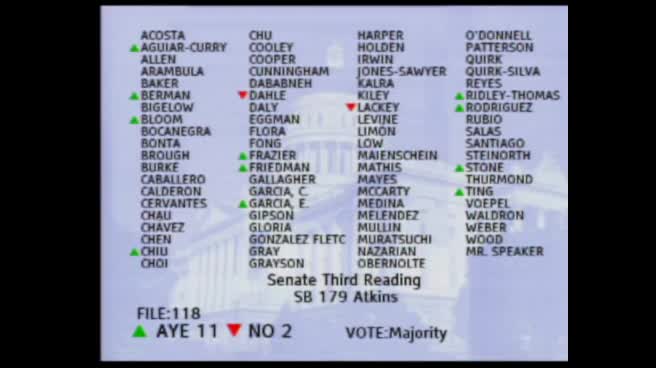 1MIN
Assembly Floor
 1H
Assembly Standing Committee on Appropriations
 2MIN
Assembly Standing Committee on Business and Professions
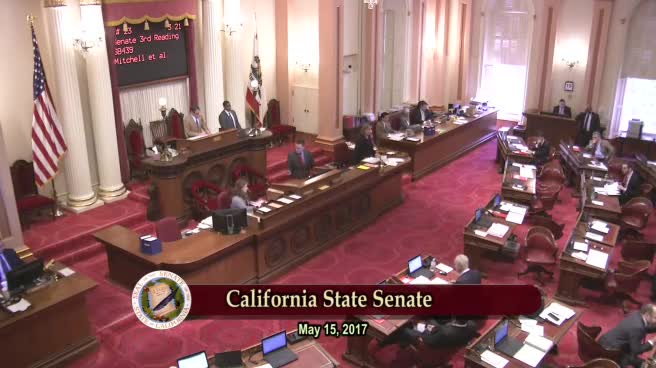 1MIN
Senate Floor
 1MIN
Senate Standing Committee on Appropriations
 6MIN
Senate Standing Committee on Business, Professions and Economic Development
Bill Author

Bill Co-Author(s):