SB 458: Beverage container recycling: pilot projects.
- Session Year: 2017-2018
- House: Senate
- Latest Version Date: 2017-10-10
Existing law, the California Beverage Container Recycling and Litter Reduction Act, requires that every beverage container sold or offered for sale in this state have a minimum refund value. A beverage distributor is required to pay a redemption payment to the Department of Resources Recycling and Recovery for every beverage container sold or offered for sale in the state to a dealer, and the department is required to deposit those amounts in the California Beverage Container Recycling Fund. The money in the fund is continuously appropriated to the department to, among other things, pay handling fees to certified recycling centers. The act requires processors to pay refund values, administrative costs, and processing payments to certified recycling centers, dropoff or collection programs, and curbside programs.
The act requires the department to annually designate convenience zones, as defined, statewide and requires at least one certified recycling center or location within every convenience zone that accepts all types of empty beverage containers and pays the refund value, if any, at one location, and that is open for business 30 hours per week.
This bill would, until January 1, 2020, authorize up to 5 limited-term recycling pilot projects, subject to department approval, that are designed to improve redemption opportunities in unserved convenience zones. The bill would subject the pilot projects to certain requirements, including, among others, that the pilot project is served by a pilot project recycler meeting certain requirements. The bill would require dealers within the jurisdiction of a pilot project to post certain information relating to pilot project locations, as specified, and a department-established toll-free number for information relating to beverage container recycling opportunities. The bill would authorize the department to issue a probationary certificate of operation to a pilot project recycler, to be valid for no more than 3 years, and would make that pilot project recycler eligible to apply for handling fees from the department and to receive refund values, administrative costs, and processing payments from processors. By authorizing the use of moneys in a continuously appropriated fund for a new purpose, this bill would make an appropriation. The bill would require dealers in a convenience zone served by a pilot project to comply with general act requirements if a pilot project ceases to operate or if the pilot projects certification is revoked.
This bill would declare that it is to take effect immediately as an urgency statute.
Existing law, the California Beverage Container Recycling and Litter Reduction Act, requires that every beverage container sold or offered for sale in this state have a minimum refund value. A beverage distributor is required to pay a redemption payment to the Department of Resources Recycling and Recovery for every beverage container sold or offered for sale in the state to a dealer, and the department is required to deposit those amounts in the California Beverage Container Recycling Fund. The money in the fund is continuously appropriated to the department to, among other things, pay handling fees to certified recycling centers. The act requires processors to pay refund values, administrative costs, and processing payments to certified recycling centers, dropoff or collection programs, and curbside programs.
The act requires the department to annually designate convenience zones, as defined, statewide and requires at least one certified recycling center or location within every convenience zone that accepts all types of empty beverage containers and pays the refund value, if any, at one location, and that is open for business 30 hours per week.
This bill would, until July January 1, 2020, authorize up to 5 limited-term recycling pilot projects, subject to department approval, that are designed to improve redemption opportunities in unserved convenience zones. The bill would subject the pilot projects to certain requirements, including, among others, that the pilot project is served by a pilot project recycler meeting certain requirements. The bill would require dealers within the jurisdiction of a pilot project to post certain information relating to pilot project locations, as specified, and a department-established toll-free number for information relating to beverage container recycling opportunities. The bill would authorize the department to issue a probationary certificate of operation to a pilot project recycler, to be valid for no more than 3 years, and would make that pilot project recycler eligible to apply for handling fees from the department and to receive refund values, administrative costs, and processing payments from processors. By authorizing the use of moneys in a continuously appropriated fund for a new purpose, this bill would make an appropriation. The bill would require dealers in a convenience zone served by a pilot project to comply with general act requirements if a pilot project ceases to operate or if the pilot projects certification is revoked.
This bill would declare that it is to take effect immediately as an urgency statute.
Existing law, the California Beverage Container Recycling and Litter Reduction Act, requires that every beverage container sold or offered for sale in this state have a minimum refund value. A beverage distributor is required to pay a redemption payment to the Department of Resources Recycling and Recovery for every beverage container sold or offered for sale in the state to a dealer, and the department is required to deposit those amounts in the California Beverage Container Recycling Fund. The money in the fund is continuously appropriated to the department to, among other things, pay handling fees to certified recycling centers. The act requires processors to pay refund values, administrative costs, and processing payments to certified recycling centers, dropoff or collection programs, and curbside programs.
Existing law, the California Beverage Container Recycling and Litter Reduction Act,The act requires a distributor to pay a redemption payment for every beverage container sold or offered for sale in the state. The act requires the Department of Resources Recycling and Recovery the department to annually designate convenience zones, as defined, statewide and requires at least one certified recycling center or location within every convenience zone that accepts all types of empty beverage containers and pays the refund value, if any, at one location, and that is open for business 30 hours per week. The act authorizes the department to certify one operator that meets specified qualifications to establish the Pacific Beach Mobile Recycling Program, incorporating all convenience zones in the Pacific Beach area of San Diego County, as defined. Existing law specifies requirements for the recycling center operator and the dealers within the program area.
This bill would authorize the department to certify one or more operators to establish the San Francisco Mobile Recycling Program that incorporates all convenience zones in the City and County of San Francisco and would impose similar program requirements. The bill would authorize the department to change the number of recycling center locations required by the program, as specified, as long as convenient recycling opportunities are still available under the program. The bill would provide that, for purposes of the program, a recycling center may include an uncertified automated payment beverage container system. The bill would require the department to consider ways to certify additional types of automated payment beverage container systems for purposes of this program.The act requires dealers within a convenience zone where no recycling location has been established to submit an affidavit to the department stating that the dealer has met specified standards for redemption, including, among others, that the dealer is redeeming all empty beverage container types at all open cash registers or at one designated location on the dealers premises during all hours that the dealer is open for business. If the dealer does not submit that affidavit, existing law requires the dealer to pay $100 per day to the department, for deposit in the California Beverage Container Recycling Fund, until a recycling location is established or until the dealer meets the specified standards for redemption.This bill would appropriate some of the moneys paid into the fund by dealers located in the City and County of San Francisco that have not submitted the above-described affidavit, if the department determines that the cost of operating the program exceeds the income generated by the program plus a reasonable return for the recycling center operator or operators. The amount of the appropriation would be equal to the difference between the cost of operating the program and the income generated by the program plus a reasonable return for the recycling center operator or operators. The bill would appropriate those moneys to the department for payments to the recycling center operator or operators to support the continued operation of the program.This bill would make legislative findings and declarations as to the necessity of a special statute for the City and County of San Francisco.This bill would, until July 1, 2020, authorize up to 5 limited-term recycling pilot projects, subject to department approval, that are designed to improve redemption opportunities in unserved convenience zones. The bill would subject the pilot projects to certain requirements, including, among others, that the pilot project is served by a pilot project recycler meeting certain requirements. The bill would authorize the department to issue a probationary certificate of operation to a pilot project recycler, to be valid for no more than 3 years, and would make that pilot project recycler eligible to apply for handling fees from the department and to receive refund values, administrative costs, and processing payments from processors. By authorizing the use of moneys in a continuously appropriated fund for a new purpose, this bill would make an appropriation.
This bill would declare that it is to take effect immediately as an urgency statute.
Existing law, the California Beverage Container Recycling and Litter Reduction Act, requires a distributor to pay a redemption payment for every beverage container sold or offered for sale in the state. The act requires the Department of Resources Recycling and Recovery to annually designate convenience zones, as defined, statewide and requires at least one certified recycling center or location within every convenience zone that accepts all types of empty beverage containers and pays the refund value, if any, at one location, and that is open for business 30 hours per week. The act authorizes the department to certify one operator that meets specified qualifications to establish the Pacific Beach Mobile Recycling Program, incorporating all convenience zones in the Pacific Beach area of San Diego County, as defined. Existing law specifies requirements for the recycling center operator and the dealers within the program area.
This bill would authorize the department to certify one operator or more operators to establish the San Francisco Mobile Recycling Program that incorporates all convenience zones in the City and County of San Francisco and would impose similar program requirements. The bill would authorize the department to change the number of recycling center locations required by the program, as specified, as long as convenient recycling opportunities are still available under the program. The bill would provide that, for purposes of the program, a recycling center may include an uncertified automated payment beverage container system. The bill would require the department to consider ways to certify additional types of automated payment beverage container systems for purposes of this program.
The act requires dealers within a convenience zone where no recycling location has been established to submit an affidavit to the department stating that the dealer has met specified standards for redemption, including, among others, that the dealer is redeeming all empty beverage container types at all open cash registers or at one designated location on the dealers premises during all hours that the dealer is open for business. If the dealer does not submit that affidavit, existing law requires the dealer to pay $100 per day to the department, for deposit in the California Beverage Container Recycling Fund, until a recycling location is established or until the dealer meets the specified standards for redemption.
This bill would appropriate some of the moneys paid into the fund by dealers located in the City and County of San Francisco that have not submitted the above-described affidavit, if the department determines that the cost of operating the program exceeds the income generated by the program plus a reasonable return for the recycling center operator or operators. The amount of the appropriation would be equal to the difference between the cost of operating the program and the income generated by the program plus a reasonable return for the recycling center operator or operators. The bill would appropriate those moneys to the department for payments to the recycling center operator or operators to support the continued operation of the program.
This bill would make legislative findings and declarations as to the necessity of a special statute for the City and County of San Francisco.
This bill would declare that it is to take effect immediately as an urgency statute.
Existing law, the California Beverage Container Recycling and Litter Reduction Act, requires a distributor to pay a redemption payment for every beverage container sold or offered for sale in the state. The act requires the Department of Resources Recycling and Recovery to annually designate convenience zones, as defined, statewide and requires at least one certified recycling center or location within every convenience zone that accepts all types of empty beverage containers and pays the refund value, if any, at one location, and that is open for business 30 hours per week. The act authorizes the department to certify one operator that meets specified qualifications to establish the Pacific Beach Mobile Recycling Program, incorporating all convenience zones in the Pacific Beach area of San Diego County, as defined. Existing law specifies requirements for the recycling center operator and the dealers within the program area.
This bill would authorize the department to certify one operator to establish the San Francisco Mobile Recycling Program that incorporates all convenience zones in the City and County of San Francisco and would impose similar program requirements.
This bill would make legislative findings and declarations as to the necessity of a special statute for the City and County of San Francisco.
This bill would declare that it is to take effect immediately as an urgency statute.
(a)Pilot project recycler means a recycling location established pursuant to Section 14571.9.
(b)This section shall remain in effect only until January 1, 2022, and as of that date is repealed, unless a later enacted statute that is enacted before January 1, 2022, deletes or extends that date.
SEC. 2.Section 14571.9 is added to the Public Resources Code, to read:14571.9.(a)Until January 1, 2020, the department may approve up to five recycling pilot projects that meet the requirements of this section.
(1)The pilot projects, which shall be submitted by applicant jurisdictions, shall be designed to improve redemption opportunities in unserved convenience zones. It is the intent of the Legislature to create new, convenient recycling opportunities to improve consumer redemption of eligible beverage containers and increase recycling rates in jurisdictions served by pilot projects.
(2)Unless otherwise specified in or authorized by the department pursuant to this section, an operator of a pilot project shall be subject to all requirements imposed on recycling centers as specified in this division and any implementing regulations.
(3)If a pilot project ends before January 1, 2020, the department may consider additional pilot project proposals, but not more than five pilot projects may operate at the same time.
(b)Notwithstanding Sections 14570, 14571, and 14571.6, a convenience zone that falls within the area of a pilot project approved by the department under this section shall be deemed served while the pilot project is operational.
(1)(A)Every dealer within the jurisdiction of a pilot project shall post a clear and conspicuous sign of at least 10 inches by 15 inches at each public entrance to the dealers place of business that specifies the name of the pilot project location nearest to the dealer, as provided by the department, the days and hours of operation of the pilot project location, and the toll-free telephone number established by the department pursuant to subparagraph (B). This information shall be kept accurate and up to date.
(B)The department shall establish a toll-free number for the purpose of disseminating information regarding beverage container recycling opportunities.
(2)If a pilot project ceases operation or the pilot projects certification has been revoked by the department, a dealer in the convenience zone served by the pilot project shall comply with Sections 14570, 14571, and 14571.6. The department shall inform all dealers within a convenience zone of any change in status of a pilot project serving that convenience zone within 10 days.
(c)No later than 90 days after the effective date of this section, the department shall hold at least one public workshop with interested stakeholders to solicit feedback on the pilot project program described in this section, including feedback on the factors that may be considered in the approval of a pilot project.
(d)The requirements for a pilot project shall include, but not be limited to, all of the following:
(1)A pilot project shall serve one of the following:
(A)At least three unserved convenience zones.
(B)One or more convenience zones impacting a total of at least 30 dealers in unserved convenience zones.
(C)A rural region.
(2)A pilot project shall be in a jurisdiction that, as of the effective date of this section, meets at least one of the following conditions:
(A)Had at least six unserved convenience zones.
(B)Had 75 percent of the convenience zones in the jurisdiction unserved.
(C)Is located in a rural region.
(3)A pilot project shall not establish a location for redeeming a beverage container for its refund value that is outside of a convenience zone.
(4)A convenience zone in the pilot project shall be served by only one pilot project recycler.
(5)A pilot project shall be served only by a pilot project recycler that meets all of the following requirements:
(A)The pilot project recycler shall be cumulatively open for a minimum of 30 hours per week.
(B)The pilot project recycler shall be open a minimum of one day per week for at least eight hours.
(C)The pilot project recycler shall be open at least five hours per week during periods other than from Monday through Friday from 9 a.m. to 5 p.m.
(D)The pilot project recycler shall accept and pay the refund value for all eligible beverage container types.
(E)The operator of the pilot project recycler shall notify the department in writing 10 days before any change of the location where redeemed empty beverage containers are stored.
(F)The pilot project recycler shall only redeem eligible empty beverage container material purchased from consumers for recycling, and shall not accept material from any other certified or noncertified person or entity, including, but not limited to, recycling centers, dropoff or collection programs, curbside programs, and processors.
(G)A pilot project operator shall keep separate transaction records for each location within the pilot project, and in the case of mobile collection programs, separate transaction records for each location served by the mobile unit.
(6)No processor shall issue an authorization to cancel pursuant to subdivision (b) of Section 2110 of Title 14 of the California Code of Regulations to a pilot project recycler.
(7)Additional requirements as deemed necessary by the department.
(e)A pilot project established pursuant to this section may provide stationary dropoff locations or mobile collection programs.
(f)A jurisdiction that opts to be served by a pilot project shall submit its pilot project proposal to the department for approval. The proposal shall include all of the following elements:
(1)A map of the pilot project area, including intended locations for pilot project recyclers.
(2)A list of proposed operators of pilot project recyclers.
(3)Contact information for the jurisdiction.
(4)Planned dates of operation.
(5)A description of how the pilot project will meet the requirements of this section.
(6)Additional elements as determined by the department.
(g)The department may issue probationary certificates of operation to pilot project recyclers participating in an approved pilot project. A certificate issued under this section shall be valid, and shall specify that the certificate is valid, for a period of not more than three years or until the end of the pilot project, whichever comes first. Notwithstanding certification requirements imposed by this division or implementing regulations, the following application review timelines shall apply to pilot projects:
(1)The department shall notify each applicant and the appropriate pilot project contact within 30 calendar days of receipt of the proposal, or receipt of additional information if the proposal was initially deemed incomplete, that the proposal for certification is either complete and accepted for further review or incomplete and the reasons for incompleteness.
(2)Upon determining that a proposal is complete, the department shall notify the applicant and appropriate pilot project contact in writing within 30 calendar days that the application is either approved with probationary status or denied and the reasons for denial.
(h)In approving pilot projects, the department shall consider all of the following factors:
(1)The number of unserved convenience zones that will be served by the pilot project.
(2)The total number of hours per week the pilot project recycler will operate.
(3)The total number of locations that will be served under the pilot project.
(4)Whether the jurisdiction has actively prevented the siting or operation of a certified recycling center at a supermarket site.
(5)The geographic distribution of jurisdictions proposing a pilot project.
(6)Potential impacts to existing certified recycling centers.
(7)Additional factors deemed relevant by the department.
(i)(1)The department may revoke the approval of a pilot project or the associated probationary certification of a pilot project recycler participating in the pilot project, or both, at any time if the jurisdiction or operator of the pilot project recycler fails to meet the conditions outlined in the departments approval of the application or violates this division or a regulation adopted pursuant to this division, except as to violations of the division or regulations that are inconsistent with the operation of an approved pilot project. If the department revokes a probationary certification of a pilot project recycler, the department may require the jurisdiction or operator of the pilot project to take the steps necessary to ensure that the pilot project achieves its goals consistent with the approved pilot project application.
(2)If the approval of a pilot project is revoked, the review process described in Section 14571.7 shall apply to each convenience zone that was a part of the pilot project.
(j)A pilot project recycler that has been certified by the department on a probationary basis pursuant to an approved pilot project shall be eligible to apply for handling fees pursuant to Section 14585 and to receive from certified processors the amounts specified in subdivision (a) of Section 14573.5 for refund values, administrative costs, and processing payments. For purposes of handling fee eligibility, a pilot project recycler may be located anywhere within a convenience zone.
(k)The department may adopt emergency regulations for the purpose of implementing this section. Any emergency regulations, if adopted, shall be adopted in accordance with Chapter 3.5 (commencing with Section 11340) of Part 1 of Division 3 of Title 2 of the Government Code, and for the purposes of that chapter, including Section 11349.6 of the Government Code, the adoption of these regulations is an emergency and shall be considered by the Office of Administrative Law as necessary for the immediate preservation of the public peace, health and safety, and general welfare. Any emergency regulations adopted pursuant to this section shall be filed with, but not be repealed by, the Office of Administrative Law and shall remain in effect until amended or repealed by the department or January 1, 2022, whichever comes first.
(l)This section shall remain in effect only until January 1, 2022, and as of that date is repealed, unless a later enacted statute that is enacted before January 1, 2022, deletes or extends that date.
SEC. 3.This act is an urgency statute necessary for the immediate preservation of the public peace, health, or safety within the meaning of Article IV of the California Constitution and shall go into immediate effect. The facts constituting the necessity are:
In order to address the recent closures of recycling centers throughout the state, and to ensure that convenient recycling opportunities are available as soon as possible, it is necessary that this act take effect immediately.
(a)Pilot project recycler means a recycling location established pursuant to Section 14571.9.
(b)This section shall remain in effect only until January 1, 2022, and as of that date is repealed, unless a later enacted statute that is enacted before January 1, 2022, deletes or extends that date.
SEC. 2.Section 14571.9 is added to the Public Resources Code, to read:14571.9.(a)Until January 1, 2020, the department may approve up to five recycling pilot projects that meet the requirements of this section.
(1)The pilot projects, which shall be submitted by applicant jurisdictions, shall be designed to improve redemption opportunities in unserved convenience zones. It is the intent of the Legislature to create new, convenient recycling opportunities to improve consumer redemption of eligible beverage containers and increase recycling rates in jurisdictions served by pilot projects.
(2)Unless otherwise specified in or authorized by the department pursuant to this section, an operator of a pilot project shall be subject to all requirements imposed on recycling centers as specified in this division and any implementing regulations.
(3)If a pilot project ends before January 1, 2020, the department may consider additional pilot project proposals, but not more than five pilot projects may operate at the same time.
(b)Notwithstanding Sections 14570, 14571, and 14571.6, a convenience zone that falls within the area of a pilot project approved by the department under this section shall be deemed served while the pilot project is operational.
(1)(A)Every dealer within the jurisdiction of a pilot project shall post a clear and conspicuous sign of at least 10 inches by 15 inches at each public entrance to the dealers place of business that specifies the name of the pilot project location nearest to the dealer, as provided by the department, the days and hours of operation of the pilot project location, and the toll-free telephone number established by the department pursuant to subparagraph (B). This information shall be kept accurate and up to date.
(B)The department shall establish a toll-free number for the purpose of disseminating information regarding beverage container recycling opportunities.
(2)If a pilot project ceases operation or the pilot projects certification has been revoked by the department, a dealer in the convenience zone served by the pilot project shall comply with Sections 14570, 14571, and 14571.6. The department shall inform all dealers within a convenience zone of any change in status of a pilot project serving that convenience zone within seven 10 days.
(c)No later than 90 days after the effective date of this section, the department shall hold at least one public workshop with interested stakeholders to solicit feedback on the pilot project program described in this section, including feedback on the factors that may be considered in the approval of a pilot project.
(d)The requirements for a pilot project shall include, but not be limited to, all of the following:
(1)A pilot project shall serve one of the following:
(A)At least three unserved convenience zones.
(B)One or more convenience zones impacting a total of at least 30 dealers in unserved convenience zones.
(C)A rural region.
(2)A pilot project shall be in a jurisdiction that, as of the effective date of this section, meets at least one of the following conditions:
(A)Had at least six unserved convenience zones.
(B)Had 75 percent of the convenience zones in the jurisdiction unserved.
(C)Is located in a rural region.
(3)A pilot project shall not establish a location for redeeming a beverage container for its refund value that is outside of a convenience zone.
(4)A convenience zone in the pilot project shall be served by only one pilot project recycler.
(5)A pilot project shall be served only by a pilot project recycler that meets all of the following requirements:
(A)The pilot project recycler shall be cumulatively open for a minimum of 30 hours per week.
(B)The pilot project recycler shall be open a minimum of one day per week for at least eight hours.
(C)The pilot project recycler shall be open at least five hours per week during periods other than from Monday through Friday from 9 a.m. to 5 p.m.
(D)The pilot project recycler shall accept and pay the refund value for all eligible beverage container types.
(E)The operator of the pilot project recycler shall notify the department in writing 10 days before any change of the location where redeemed empty beverage containers are stored.
(F)The pilot project recycler shall only redeem eligible empty beverage container material purchased from consumers for recycling, and shall not accept material from any other certified or noncertified person or entity, including, but not limited to, recycling centers, dropoff or collection programs, curbside programs, and processors.
(G)A pilot project operator shall keep separate transaction records for each location within the pilot project, and in the case of mobile collection programs, separate transaction records for each location served by the mobile unit.
(6)No processor shall issue an authorization to cancel pursuant to subdivision (b) of Section 2110 of Title 14 of the California Code of Regulations to a pilot project recycler.
(7)Additional requirements as deemed necessary by the department.
(e)A pilot project established pursuant to this section may provide stationary dropoff locations or mobile collection programs.
(f)A jurisdiction that opts to be served by a pilot project shall submit its pilot project proposal to the department for approval. The proposal shall include all of the following elements:
(1)A map of the pilot project area, including potential intended locations for pilot project recyclers.
(2)A list of proposed operators of pilot project recyclers.
(3)Contact information for the jurisdiction.
(4)Planned dates of operation.
(5)A description of how the pilot project will meet the requirements of this section.
(6)Additional elements as determined by the department.
(g)The department may issue probationary certificates of operation to pilot project recyclers participating in an approved pilot project. A certificate issued under this section shall be valid, and shall specify that the certificate is valid, for a period of not more than three years or until the end of the pilot project, whichever comes first. Notwithstanding certification requirements imposed by this division or implementing regulations, the following application review timelines shall apply to pilot projects:
(1)The department shall notify each applicant and the appropriate pilot project contact within 30 calendar days of receipt of the proposal, or receipt of additional information if the proposal was initially deemed incomplete, that the proposal for certification is either complete and accepted for further review or incomplete and the reasons for incompleteness.
(2)Upon determining that a proposal is complete, the department shall notify the applicant and appropriate pilot project contact in writing within 30 calendar days that the application is either approved with probationary status or denied and the reasons for denial.
(h)In selecting approving pilot projects, the department shall consider all of the following factors:
(1)The number of unserved convenience zones that will be served by the pilot project.
(2)The total number of hours per week the pilot project recycler will operate.
(3)The total number of locations that will be served under the pilot project.
(4)Whether the jurisdiction has actively prevented the siting or operation of a certified recycling center at a supermarket site.
(5)Completeness of the application.(6)(5)The geographic distribution of jurisdictions proposing a pilot project.
(7)(6)Potential impacts to existing certified recycling centers.
(8)(7)Additional factors deemed relevant by the department.
(i)(1)The department may revoke the approval of a pilot project or the associated probationary certification of a pilot project recycler participating in the pilot project, or both, at any time if the jurisdiction or operator of the pilot project recycler fails to meet the conditions outlined in the departments approval of the project application or violates this division or a regulation adopted pursuant to this division. division, except as to violations of the division or regulations that are inconsistent with the operation of an approved pilot project. If the department revokes a probationary certification of a pilot project recycler, the department may require the jurisdiction or operator of the pilot project to take the steps necessary to ensure that the pilot project achieves its goals consistent with the approved pilot project application.
(2)If the approval of a pilot project is revoked, the review process described in Section 14571.7 shall apply to each convenience zone that was a part of the pilot project.
(j)A pilot project recycler that has been certified by the department on a probationary basis pursuant to an approved pilot project shall be eligible to apply for handling fees pursuant to Section 14585 and to receive from certified processors the amounts specified in subdivision (a) of Section 14573.5 for refund values, administrative costs, and processing payments. For purposes of handling fee eligibility, a pilot project recycler may be located anywhere within a convenience zone.
(k)The department may adopt emergency regulations for the purpose of implementing this section. Any emergency regulations, if adopted, shall be adopted in accordance with Chapter 3.5 (commencing with Section 11340) of Part 1 of Division 3 of Title 2 of the Government Code, and for the purposes of that chapter, including Section 11349.6 of the Government Code, the adoption of these regulations is an emergency and shall be considered by the Office of Administrative Law as necessary for the immediate preservation of the public peace, health and safety, and general welfare. Any emergency regulations adopted pursuant to this section shall be filed with, but not be repealed by, the Office of Administrative Law and shall remain in effect until amended or repealed by the department or January 1, 2022, whichever comes first.
(l)This section shall remain in effect only until January 1, 2022, and as of that date is repealed, unless a later enacted statute that is enacted before January 1, 2022, deletes or extends that date.
SEC. 3.This act is an urgency statute necessary for the immediate preservation of the public peace, health, or safety within the meaning of Article IV of the California Constitution and shall go into immediate effect. The facts constituting the necessity are:
In order to address the recent closures of recycling centers throughout the state, and to ensure that convenient recycling opportunities are available as soon as possible, it is necessary that this act take effect immediately.
(a)Pilot project recycler means a recycling location established pursuant to Section 14571.9.
(b)This section shall remain in effect only until January 1, 2022, and as of that date is repealed, unless a later enacted statute that is enacted before January 1, 2022, deletes or extends that date.
SECTION 1.SEC. 2.Section 14571.9 is added to the Public Resources Code, to read:14571.9.(a)On or before July Until January 1, 2020, the department may approve up to five recycling pilot projects that meet the requirements of this section. The
(1)The pilot projects, which shall be submitted by applicant jurisdictions, shall be designed to improve redemption opportunities in unserved convenience zones. It is the intent of the Legislature to create new, convenient recycling opportunities to improve consumer redemption of eligible beverage containers and increase recycling rates in jurisdictions served by pilot projects.
(2)Unless otherwise specified in or authorized by the department pursuant to this section, an operator of a pilot project shall be subject to all requirements imposed on recycling centers as specified in this division and any implementing regulations.
(3)If a pilot project ends before January 1, 2020, the department may consider additional pilot project proposals, but not more than five pilot projects may operate at the same time.
(b)Notwithstanding Sections 14570, 14571, and 14571.6, a convenience zone that falls within the area of a pilot project approved by the department under this section shall be deemed served while the pilot project is operational.
(1)(A)Every dealer within the jurisdiction of a pilot project shall post a clear and conspicuous sign of at least 10 inches by 15 inches at each public entrance to the dealers place of business that specifies the name of the pilot project location nearest to the dealer, as provided by the department, the days and hours of operation of the pilot project location, and the toll-free telephone number established by the department pursuant to subparagraph (B). This information shall be kept accurate and up to date.
(B)The department shall establish a toll-free number for the purpose of disseminating information regarding beverage container recycling opportunities.
(2)If a pilot project ceases operation or the pilot projects certification has been revoked by the department, a dealer in the convenience zone served by the pilot project shall comply with Sections 14570, 14571, and 14571.6. The department shall inform all dealers within a convenience zone of any change in status of a pilot project serving that convenience zone within seven days.
(c)No later than 90 days after the effective date of this section, the department shall hold at least one public workshop with interested stakeholders to solicit feedback on the pilot project program described in this section, including feedback on the process and factors that may be considered in the approval process of a pilot project.
(d)The requirements for a pilot project shall include, but not be limited to, all of the following:
(1)A pilot project shall serve one of the following:
(A)At least three unserved convenience zones.
(B)One or more convenience zones impacting a total of at least 30 dealers in unserved convenience zones.
(C)A rural region.
(2)A pilot project shall be in a jurisdiction that, as of the effective date of this section, had meets at least one of the following conditions:
(A)Had at least six unserved convenience zones, had zones.
(B)Had 75 percent of the convenience zones in the jurisdiction unserved, or is unserved.
(C)Is located in a rural region.
(3)A pilot project shall not establish a location for redeeming a beverage container for its refund value that is outside of a convenience zone.
(4)A convenience zone in the pilot project shall be served by only one pilot project recycler.
(5)A pilot project shall be served only by a pilot project recycler that meets all of the following requirements:
(A)The pilot project recycler shall be cumulatively open for a minimum of 30 hours per week.
(B)The pilot project recycler shall be open a minimum of one day per week for at least eight hours.
(C)The pilot project recycler shall be open at least five hours per week during periods other than from Monday through Friday from 9 a.m. to 5 p.m.
(D)The pilot project recycler shall accept and pay the refund value for all eligible beverage container types during hours of operation. types.
(E)The operator of the pilot project recycler shall notify the department within in writing 10 days of before any change of the location where redeemed empty beverage containers are stored.
(F)The pilot project recycler shall only redeem eligible empty beverage container material purchased from consumers for recycling, and shall not accept material from any other certified or noncertified person or entity, including, but not limited to, recycling centers, dropoff or collection programs, curbside programs, and processors.
(G)A pilot project operator shall keep separate transaction records for each location within the pilot project, and in the case of mobile collection programs, separate transaction records for each location served by the mobile unit.
(6)No processor shall issue an authorization to cancel pursuant to subdivision (b) of Section 2110 of Title 14 of the California Code of Regulations to a pilot project recycler.
(7)Additional requirements as deemed necessary by the department.
(e)A pilot project established pursuant to this section may provide stationary dropoff locations or mobile collection programs.
(e)(f)A jurisdiction that wishes to operate opts to be served by a pilot project shall submit its pilot project proposal to the department for approval. The proposal shall include all of the following elements:
(1)A map of the pilot project area, including potential locations for pilot project recyclers.
(2)A list of proposed operators of pilot project recyclers.
(3)Contact information for the jurisdiction.
(4)Planned dates of operation.
(5)A description of how the pilot project will meet the requirements of this section.
(6)Additional elements as determined by the department.
(f)(g)The department may issue probationary certificates of operation to pilot project recyclers participating in an approved pilot project. A certificate issued under this section shall be valid, and shall specify that the certificate is valid, for a period of not more than three years or until the end of the pilot project, whichever comes first. Notwithstanding certification requirements imposed by this division or implementing regulations, the following application review timelines shall apply to pilot projects:
(1)The department shall notify each applicant and the appropriate pilot project contact within 30 calendar days of receipt of the proposal, or receipt of additional information if the proposal was initially deemed incomplete, that the proposal for certification is either complete and accepted for further review or incomplete and the reasons for incompleteness.
(2)Upon determining that a proposal is complete, the department shall notify the applicant and appropriate pilot project contact in writing within 30 calendar days that the application is either approved with probationary status or denied and the reasons for denial.
(g)(h)In selecting pilot projects, the department shall consider all of the following factors:
(1)The number of unserved convenience zones that will be served by the pilot project.
(2)The total number of hours per week the pilot project recycler will operate.
(3)The total number of locations that will be served under the pilot project.
(4)Whether the jurisdiction has actively prevented the siting or operation of a certified recycling center at a supermarket site.
(5)Completeness of the application.
(6)The geographic distribution of jurisdictions proposing a pilot project.
(7)Potential impacts to existing certified recycling centers.
(8)Additional factors deemed relevant by the department.
(h)(i)(1)The department may revoke the approval of a pilot project or the associated probationary certification of a pilot project recycler participating in the pilot project, or both, at any time if the jurisdiction or operator of the pilot project recycler fails to meet the conditions outlined in the departments approval of the project or violates this division or a regulation adopted pursuant to this division.
(2)If the approval of a pilot project is revoked, the review process described in Section 14571.7 shall apply to each convenience zone that was a part of the pilot project.
(i)(j)A pilot project recycler that has been certified by the department on a probationary basis pursuant to an approved pilot project shall be eligible to apply for handling fees pursuant to Section 14585 and to receive from certified processors the amounts specified in subdivision (a) of Section 14573.5 for refund values, administrative costs, and processing payments. For purposes of handling fee eligibility, a pilot project recycler may be located anywhere within a convenience zone.
(k)The department may adopt emergency regulations for the purpose of implementing this section. Any emergency regulations, if adopted, shall be adopted in accordance with Chapter 3.5 (commencing with Section 11340) of Part 1 of Division 3 of Title 2 of the Government Code, and for the purposes of that chapter, including Section 11349.6 of the Government Code, the adoption of these regulations is an emergency and shall be considered by the Office of Administrative Law as necessary for the immediate preservation of the public peace, health and safety, and general welfare. Any emergency regulations adopted pursuant to this section shall be filed with, but not be repealed by, the Office of Administrative Law and shall remain in effect until amended or repealed by the department or January 1, 2022, whichever comes first.
(l)This section shall remain in effect only until January 1, 2022, and as of that date is repealed, unless a later enacted statute that is enacted before January 1, 2022, deletes or extends that date.
SEC. 2.SEC. 3.This act is an urgency statute necessary for the immediate preservation of the public peace, health, or safety within the meaning of Article IV of the California Constitution and shall go into immediate effect. The facts constituting the necessity are:
In order to address the recent closures of recycling centers throughout the state, and to ensure that convenient recycling opportunities are available as soon as possible, it is necessary that this act take effect immediately.
(a)On or before July 1, 2020, the department may approve up to five recycling pilot projects that meet the requirements of this section. The pilot projects, which shall be submitted by applicant jurisdictions, shall be designed to improve redemption opportunities in unserved convenience zones.
(b)Notwithstanding Sections 14570, 14571, and 14571.6, a convenience zone that falls within the area of a pilot project approved by the department under this section shall be deemed served while the pilot project is operational.
(c)No later than 90 days after the effective date of this section, the department shall hold at least one public workshop with interested stakeholders to solicit feedback on the pilot project program described in this section, including feedback on the process and factors that may be considered in the approval process of a pilot project.
(d)The requirements for a pilot project shall include, but not be limited to, all of the following:
(1)A pilot project shall serve one of the following:
(A)At least three unserved convenience zones.
(B)One or more convenience zones impacting a total of at least 30 dealers in unserved convenience zones.
(C)A rural region.
(2)A pilot project shall be in a jurisdiction that, as of the effective date of this section, had at least six unserved convenience zones, had 75 percent of the convenience zones in the jurisdiction unserved, or is located in a rural region.
(3)A pilot project shall not establish a location for redeeming a beverage container for its refund value that is outside of a convenience zone.
(4)A convenience zone in the pilot project shall be served by only one pilot project recycler.
(5)A pilot project shall be served only by a pilot project recycler that meets all of the following requirements:
(A)The pilot project recycler shall be cumulatively open for a minimum of 30 hours per week.
(B)The pilot project recycler shall be open a minimum of one day per week for at least eight hours.
(C)The pilot project recycler shall be open at least five hours per week during periods other than from Monday through Friday from 9 a.m. to 5 p.m.
(D)The pilot project recycler shall accept and pay the refund value for all eligible beverage container types during hours of operation.
(E)The operator of the pilot project recycler shall notify the department within 10 days of any change of the location where redeemed empty beverage containers are stored.
(F)The pilot project recycler shall only redeem eligible empty beverage container material purchased from consumers for recycling, and shall not accept material from any certified or noncertified person or entity, including, but not limited to, recycling centers, collection programs, and processors.
(6)No processor shall issue an authorization to cancel pursuant to subdivision (b) of Section 2110 of Title 14 of the California Code of Regulations to a pilot project recycler.
(7)Additional requirements as deemed necessary by the department.
(e)A jurisdiction that wishes to operate a pilot project shall submit its pilot project proposal to the department for approval. The proposal shall include all of the following elements:
(1)A map of the pilot project area, including potential locations for pilot project recyclers.
(2)A list of proposed operators of pilot project recyclers.
(3)Contact information for the jurisdiction.
(4)Planned dates of operation.
(5)A description of how the pilot project will meet the requirements of this section.
(6)Additional elements as determined by the department.
(f)The department may issue probationary certificates of operation to pilot project recyclers participating in an approved pilot project. A certificate issued under this section shall be valid, and shall specify that the certificate is valid, for a period of not more than three years or until the end of the pilot project, whichever comes first.
(g)In selecting pilot projects, the department shall consider all of the following factors:
(1)The number of unserved convenience zones that will be served by the pilot project.
(2)The total number of hours per week the pilot project recycler will operate.
(3)The total number of locations that will be served under the pilot project.
(4)Whether the jurisdiction has actively prevented the siting or operation of a certified recycling center at a supermarket site.
(5)Completeness of the application.
(6)The geographic distribution of jurisdictions proposing a pilot project.
(7)Potential impacts to existing certified recycling centers.
(8)Additional factors deemed relevant by the department.
(h)(1)The department may revoke the approval of a pilot project or the associated probationary certification of a pilot project recycler participating in the pilot project, or both, at any time if the jurisdiction or operator of the pilot project recycler fails to meet the conditions outlined in the departments approval of the project or violates this division or a regulation adopted pursuant to this division.
(2)If the approval of a pilot project is revoked, the review process described in Section 14571.7 shall apply to each convenience zone that was a part of the pilot project.
(i)A pilot project recycler that has been certified by the department on a probationary basis pursuant to an approved pilot project shall be eligible to apply for handling fees pursuant to Section 14585 and to receive from certified processors the amounts specified in subdivision (a) of Section 14573.5 for refund values, administrative costs, and processing payments. For purposes of handling fee eligibility, a pilot project recycler may be located anywhere within a convenience zone.
SEC. 3.SEC. 2.This act is an urgency statute necessary for the immediate preservation of the public peace, health, or safety within the meaning of Article IV of the California Constitution and shall go into immediate effect. The facts constituting the necessity are:
In order to address the recent closures of recycling centers throughout the state, and to ensure that convenient recycling opportunities are available in the City and County of San Francisco, as soon as possible, it is necessary that this act take effect immediately.
(a)The department shall certify one operator or more operators to establish the San Francisco Mobile Recycling Program that incorporates all convenience zones in the City and County of San Francisco.
(b)Notwithstanding Sections 14570 and 14571, all convenience zones within the City and County of San Francisco shall be considered served if both of the following conditions are met:
(1)(A)The recycling center operator meets or operators meet all of the following conditions:
(A)(i)The center is or centers are open for business at least once each week at a total number of locations equal to the number of convenience zones in the City and County of San Francisco, as determined by the department annually.
(B)The(ii)Each center is open for business at least eight six hours per day at each location.
(C)The(iii)Each center agrees to accept, and pay the refund value for, all eligible beverage container types.
(D)(iv)(I)The center is or centers are certified by the department for operation in the a total number of locations equal to the number of convenience zones in the City and County of San Francisco, as determined by the department annually.
(II)For purposes of this clause, a center may include an uncertified automated payment beverage container system that is approved by the recycling center operator or operators. The department shall consider ways to certify additional types of automated payment beverage container systems that are not currently certified.
(B)The department may change the number of locations required by clauses (i) and (iv) to a number that does not equal the number of convenience zones in the City and County of San Francisco as long as convenient recycling opportunities are still available under the program.
(2)All dealers within the City and County of San Francisco post and maintain a clear and conspicuous sign of at least 10 inches by 15 inches at each public entrance to the dealers place of business, indicating the location, hours, and day of operation for each recycling location within the City and County of San Francisco.
(c)(1)A recycling center operator approved by the department that meets the conditions prescribed in subdivision (b) shall be designated a certified recycling center and shall be eligible to apply for handling fees pursuant to Section 14585 and to receive from processors the amounts specified in subdivision (a) of Section 14573.5 for refund values, administrative costs, and processing payments.
(2)The operator of an uncertified automated payment beverage container system participating in the program pursuant to subclause (II) of clause (iv) of subparagraph (A) of paragraph (1) of subdivision (b) shall be eligible for payments pursuant to paragraph (1), but the system shall only be certified as specified by the department.
(d)If the department determines that the cost of operating the program exceeds the income generated by the program plus a reasonable return for the recycling center operator or operators, the amount equal to the difference between the cost of operating the program and the income generated by the program plus a reasonable return for the recycling center operator or operators is hereby appropriated from the moneys paid into the fund pursuant to subdivision (b) of Section 14571.6 by dealers located in the City and County of San Francisco, to the department for payments to the recycling center operator or operators to support the continued operation of the program. These payments shall be in addition to any refund values, administrative costs, or processing payments received pursuant to subdivision (a) of Section 14573.5.
SEC. 2.The Legislature finds and declares that a special statute is necessary and that a general statute cannot be made applicable within the meaning of Section 16 of Article IV of the California Constitution because of the City and County of San Franciscos unique urban setting and leading its commitment to setting the global standard for source reduction, reuse, recycling, and composting programs to reduce disposal and to reuse waste materials. conserve resources.
SEC. 3.This act is an urgency statute necessary for the immediate preservation of the public peace, health, or safety within the meaning of Article IV of the California Constitution and shall go into immediate effect. The facts constituting the necessity are:
In order to ensure that convenient recycling opportunities are available in the City and County of San Francisco, it is necessary that this act take effect immediately.
(a)The department shall certify one operator to establish the San Francisco Mobile Recycling Program that incorporates all convenience zones in the City and County of San Francisco.
(b)Notwithstanding Sections 14570 and 14571, all convenience zones within the City and County of San Francisco shall be considered served if both of the following conditions are met:
(1)The recycling center operator meets all of the following conditions:
(A)The center is open for business at least once each week at a number of locations equal to the number of convenience zones in the City and County of San Francisco, as determined by the department annually.
(B)The center is open for business at least eight hours per day at each location.
(C)The center agrees to accept, and pay the refund value for, all eligible beverage container types.
(D)The center is certified by the department for operation in the number of locations equal to the number of convenience zones in the City and County of San Francisco, as determined by the department annually.
(2)All dealers within the City and County of San Francisco post and maintain a clear and conspicuous sign of at least 10 inches by 15 inches at each public entrance to the dealers place of business, indicating the location, hours, and day of operation for each recycling location within the City and County of San Francisco.
(c)A recycling center operator approved by the department that meets the conditions prescribed in subdivision (b) shall be designated a certified recycling center and shall be eligible to apply for handling fees pursuant to Section 14585 and to receive from processors the amounts specified in subdivision (a) of Section 14573.5 for refund values, administrative costs, and processing payments.
SEC. 2.The Legislature finds and declares that a special statute is necessary and that a general statute cannot be made applicable within the meaning of Section 16 of Article IV of the California Constitution because of San Franciscos unique urban setting and leading source reduction, recycling, and composting programs to reduce disposal and to reuse waste materials.
SEC. 3.This act is an urgency statute necessary for the immediate preservation of the public peace, health, or safety within the meaning of Article IV of the California Constitution and shall go into immediate effect. The facts constituting the necessity are:
In order to ensure that convenient recycling opportunities are available in the City and County of San Francisco, it is necessary that this act take effect immediately.
|
Date
|
Status
|
|---|---|
| Oct 10, 2017 | Chaptered by Secretary of State. Chapter 648, Statutes of 2017. |
| Oct 10, 2017 | Approved by the Governor. |
| Sep 21, 2017 | Enrolled and presented to the Governor at 5:30 p.m. |
| Sep 14, 2017 | Assembly amendments concurred in. (Ayes 39. Noes 0.) Ordered to engrossing and enrolling. |
| Sep 14, 2017 | In Senate. Concurrence in Assembly amendments pending. |
| Sep 13, 2017 | Read third time. Urgency clause adopted. Passed. Ordered to the Senate. |
| Sep 8, 2017 | Read third time and amended. |
| Sep 6, 2017 | Read second time. Ordered to third reading. |
| Sep 5, 2017 | Read second time and amended. Ordered to second reading. |
| Sep 1, 2017 | From committee: Do pass as amended. (Ayes 15. Noes 0.) (September 1). |
| Sep 1, 2017 | Joint Rule 62(a) suspended. |
| Aug 30, 2017 | August 30 set for first hearing. Placed on APPR. suspense file. |
| Aug 28, 2017 | Joint Rule 62(a) suspended. |
| Aug 28, 2017 | From committee: Do pass and re-refer to Com. on APPR. (Ayes 8. Noes 0.) (August 28). Re-referred to Com. on APPR. |
| Jul 20, 2017 | Referred to Com. on NAT. RES. |
| Jul 13, 2017 | In Assembly. Read first time. Held at Desk. |
| Jul 13, 2017 | Read third time. Urgency clause adopted. Passed. (Ayes 39. Noes 0.) Ordered to the Assembly. |
| Jul 11, 2017 | Read second time. Ordered to third reading. |
| Jul 10, 2017 | From committee: Do pass. (Ayes 7. Noes 0.) (July 10). |
| Jul 3, 2017 | Set for hearing July 10. |
| Jun 22, 2017 | Read second time and amended. Re-referred to Com. on APPR. |
| Jun 21, 2017 | From committee: Do pass as amended and re-refer to Com. on APPR. with recommendation: To consent calendar. (Ayes 6. Noes 0. Page 1663.) (June 21). |
| Jun 8, 2017 | Set for hearing June 21. |
| Mar 29, 2017 | March 29 hearing: Testimony taken. Hearing postponed by committee. |
| Mar 20, 2017 | From committee with author's amendments. Read second time and amended. Re-referred to Com. on EQ. |
| Mar 9, 2017 | Set for hearing March 29. |
| Mar 2, 2017 | Referred to Com. on EQ. |
| Feb 17, 2017 | From printer. May be acted upon on or after March 19. |
| Feb 16, 2017 | Introduced. Read first time. To Com. on RLS. for assignment. To print. |
|
Date
|
Description
|
Location
|
Votes
|
|
|---|---|---|---|---|
| Sep 14, 2017 | Unfinished Business SB458 Wiener Urgency Clause Concurrence | Senate Floor |
Passed |
|
| Sep 13, 2017 | SB 458 Wiener Third Reading Urgency By FRIEDMAN | Assembly Floor |
Passed |
|
| Sep 1, 2017 | Do pass as amended. | Assembly Standing Committee on Appropriations |
Passed |
|
| Aug 28, 2017 | Do pass and be re-referred to the Committee on [Appropriations] | Assembly Standing Committee on Natural Resources |
Passed |
|
| Jul 13, 2017 | Senate 3rd Reading SB458 Wiener Urgency Clause | Senate Floor |
Passed |
|
| Jul 10, 2017 | Do pass | Senate Standing Committee on Appropriations |
Passed |
|
| Jun 21, 2017 | Do pass as amended, but first amend, and re-refer to the Committee on [Appropriations] with the recommendation: To Consent Calendar | Senate Standing Committee on Environmental Quality |
Passed |
This list shows positions taken on this bill by organizations on the date displayed, which is linked to the original source.
Positions by individuals are not included.
|
Organization
|
Position
|
Date
|
|---|---|---|
| Arab American Grocers Association | ** Support | Sep 14, 2017 |
| Bi-Rite Markets | ** Support | Jun 19, 2017 |
| Cal Mart | ** Support | Jun 19, 2017 |
| california association of conservation corps | ** Support | Sep 14, 2017 |
| California Grocers Association | ** Support | Sep 14, 2017 |
| Californians Against Waste | ** Support | Sep 14, 2017 |
| Canyon Market | ** Support | Jun 19, 2017 |
| Castro Merchants | ** Support | Sep 14, 2017 |
| City and County of San Francisco | ** Support | Sep 14, 2017 |
| City of San Francisco | * Support | Aug 28, 2017 |
| County of San Francisco | ** Support | Jun 19, 2017 |
| Department of Environment | * Support | Mar 29, 2017 |
| Geary Wine & Spirits | ** Support | Jun 19, 2017 |
| George Market | ** Support | Jun 19, 2017 |
| Golden Natural | ** Support | Jun 19, 2017 |
| Marina Super Inc. | ** Support | Jun 19, 2017 |
| Rural County Representatives of California | ** Support | Sep 14, 2017 |
| San Francisco Conservation Corps | ** Support | Jun 19, 2017 |
| San Francisco Council of District Merchants Associations | ** Support | Sep 14, 2017 |
| San Francisco Department of the Environment | * Support | Mar 29, 2017 |
| San Francisco Mayor Edwin M. Lee | ** Support | Jun 19, 2017 |
| Small Business California | ** Support | Sep 14, 2017 |
| small business network of san francisco | ** Support | Sep 14, 2017 |
| small business network, san francisco | ** Support | Jun 19, 2017 |
| sun maxim's | ** Support | Jun 19, 2017 |
| Ted's Market | * Support | Mar 29, 2017 |
| ted's market & deli | ** Support | Jun 19, 2017 |
| that's it liquors | ** Support | Jun 19, 2017 |
| The Good Life Grocery on Potrero Hill | ** Support | Jun 19, 2017 |
Office of Senate Floor Analyses (916) 651-1520 Fax: (916) 327-4478 | SB |
UNFINISHED BUSINESS
Bill No: SB 458
:
SENATE ENVIRONMENTAL QUALITY COMMITTEE: 6-0, 6/21/17
AYES: Wieckowski, Stone, Hill, Lara, Skinner, Stern
NO VOTE RECORDED: Gaines
SENATE APPROPRIATIONS COMMITTEE: 7-0, 7/10/17
AYES: Lara, Bates, Beall, Bradford, Hill, Nielsen, Wiener
SENATE FLOOR: 39-0, 7/13/17
AYES: Allen, Anderson, Atkins, Bates, Beall, Berryhill, Bradford, Cannella, De León, Dodd, Fuller, Gaines, Galgiani, Glazer, Hernandez, Hertzberg, Hill, Hueso, Jackson, Lara, Leyva, McGuire, Mendoza, Mitchell, Monning, Moorlach, Morrell, Newman, Nguyen, Pan, Portantino, Roth, Skinner, Stern, Stone, Vidak, Wieckowski, Wiener, Wilk
NO VOTE RECORDED: Nielsen
ASSEMBLY FLOOR: 77-0, 9/13/17 - See last page for vote
DIGEST:
This bill authorizes the California Department of Resources Recycling and Recovery (CalRecycle) to approve, on or before July 1, 2020, up to five recycling pilot projects designed to improve redemption opportunities in unserved convenience zones if specified conditions are met.
Assembly Amendments (1) define “pilot project recycler” as specified; (2) require dealers within the jurisdiction of a pilot project to post certain information relating to pilot project locations, as specified; (3) require dealers in a convenience zone served by a pilot project to comply with general act requirements if a pilot project ceases to operate or if the pilot project’s certification is revoked; and (4) sunset the provisions of this bill on January 1, 2022.
ANALYSIS: Existing law, under the California Beverage Container Recycling and Litter Reduction Act:
- Requires beverage containers, as defined, sold in-state to have a California redemption value (CRV) of five cents for containers that hold fewer than 24 ounces and 10 cents for containers that hold 24 ounces or more, and requires distributors to pay a redemption payment to CalRecycle for every beverage container sold in the state. These funds are continuously appropriated to CalRecycle for the payment of refund values and processing fees. (Public Resources Code (PRC) §14500 et seq.).
- Defines “convenience zone” as either the area within one-half mile radius of a supermarket or the area designated by CalRecycle in a rural region that meets specified criteria pursuant to PRC §14571.5. (PRC §14509.4).
- Defines “dealer” as a retail establishment which offers the sale of beverages in beverage containers to consumers, e.g. a supermarket. However, any lodging, eating, or drinking establishment, or soft drink vending machine operator who engages in the sale of beverages in beverage containers to consumers are not deemed a dealer for purposes of the Bottle Bill. (PRC §14510).
- Defines “recycling center” as an operation which is certified by CalRecycle and which accepts from consumers, and pays or provides the refund value for empty beverage containers intended to be recycled. (PRC §14520).
- Defines “recycling location” as a place, mobile unit, reverse vending machine, or other device where a certified recycling center accepts one or more types of empty beverage containers from consumers, and pays or provides refund value for one or more types of empty beverage containers. (PRC §14520.5)
- Requires CalRecycle to annually designate all convenience zones. (PRC §14571.1).
- Requires, in a convenience zone where a recycling location does not exist and until one has been established in that zone, all dealers in the zone to either: a) redeem empty beverage containers; or, b) pay CalRecycle an in-lieu fee of $100/day until a recycling location is established. (PRC §14571.6).
- Authorizes CalRecycle to grant an exemption for a convenience zone based on specified conditions, such as: whether the zone is within a curbside service area which collects CRV containers at least twice a month, whether there is a sufficient number of recycling centers in the area, and whether the volume collected by the last recycler in the zone was below 60,000 containers in the past 12 months. (PRC §14571.8).
- Establishes the Pacific Beach Mobile Recycling Program, which incorporates all convenience zones in the Pacific Beach area of San Diego County, and includes specified requirements for the recycling center operator and dealers in Pacific Beach. (PRC §14571.4).
This bill:
- Authorizes CalRecycle, on or before January 1, 2020, to approve up to five pilot projects that improve beverage container redemption opportunities in unserved convenience zones.
- Requires CalRecycle to hold at least one public workshop within 90 days of the effective date of the bill to solicit feedback on the pilot project program.
- Specifies that the requirements of the pilot project program include, but are not limited to, the following:
- A pilot project serve one of the following:
- At least three unserved convenience zones;
- One or more convenience zones impacting a total of at least 30 dealers located in unserved convenience zones; or,
- A rural region.
- A pilot project shall be located in a jurisdiction that, on the effective date of the bill, had at least six unserved convenience zones, had 75% of the convenience zones in the jurisdiction unserved, or is located in a rural region.
- Require that pilot projects meet specified requirements.
- Additional requirements as determined by CalRecycle.
- A pilot project serve one of the following:
- Clarifies that stationary dropoff locations and mobile collection programs are eligible.
- Requires a jurisdiction that wishes to operate a pilot project to submit its proposal to CalRecycle that include specified requirements.
- Authorizes CalRecycle to issue probationary certificates of operation to pilot project operators to be valid for three years or until the end of the pilot project program.
- Requires CalRecycle to consider a number of specified factors when approving proposals.
- Authorizes CalRecycle to revoke a pilot project's certification if at any time the pilot project fails to meet the conditions established by this bill or by CalRecycle.
- Specifies that pilot project recyclers are eligible to receive handling fees.
- Authorizes CalRecycle to adopt emergency regulations to implement the program.
- Sunsets the bill's provisions on January 1, 2022.
- Declares that this bill is an urgency measure.
Background
Previous pilot program: Pacific Beach. According to CalRecycle, AB 3752 (Alpert, Chapter 620, Statutes of 1994) established the Pacific Beach Mobile Recycling Program (PBMRP) for the Pacific Beach area of San Diego County. Pacific Beach is a beachfront community with dense development and few open spaces that could accommodate a recycling center.
PBMRP started operating in August, 1995 and authorized five convenience zones be served by a combination of mobile and standard recycling centers and operated through 2011. After decertification in 2011, a new recycling center operator attempted to serve two of the five zones in Pacific Beach. The operator was decertified in one zone in 2013 and the second zone in 2014.
Since 2014, CalRecycle has not received applications for certification under PBMRP and the five zones in Pacific Beach remain unserved.
CalRecycle notes that during the pilot, recycling center operators were constrained and pressured to close due to homeless and nuisance complaints. Initially, dealers were cooperative and the mobile operator could find a site in a supermarket or pharmacy parking lot. As the program progressed, property owners became less cooperative and sought eviction.
CalRecycle states that the primary reason that PBMRP is not working is that eventually there were no local recycling center operators willing to operate in accordance with the program. The only feasible operator from outside of the area was rePlanet, which was not interested. In addition, the Pacific Beach pilot program failed because of the following: eventually some property owners became resistant to supporting recycling centers, even if for one day per week; sustained, strong community resistance to any recycling center due to perceived nuisance; and with strong opposition, there were no feasible locations for recycling centers to operate in Pacific Beach.
Currently, the five zones in Pacific Beach remain unserved and 19 dealers are either responsible for in-store redemption or paying the in-lieu fee of $100/day to not take back empty beverage containers in-store.
Comments
Purpose of Bill. According to the author:
“In light of recent and widespread recycling center closures across San Francisco, Senate Bill 458 authorizes a pilot “mobile recycling” program which would relieve small grocery and convenience stores of the burden of having to redeem recycling for cash. The authorization would apply to San Francisco only.
“Over 93% of San Francisco lies more than one half-mile from a recycling center, the highest percentage of any major city in the state. This means that 579 corner stores and small supermarkets lacking a recycling center within their half-mile convenience zone must redeem large volumes cans and bottles for cash, regardless of capacity or cleanliness, or be subject to in-lieu fees totaling nearly $40,000 per year location.
“SB 458 would allow the San Francisco Department of the Environment to pursue a pilot mobile recycling program. Forms of mobile recycling include temporary locations and “reverse vending machines.” Under these proposed revisions, San Francisco mobile recycling sites will qualify as full recycling centers for purposes of modifying existing convenience zones and relieving businesses of their redemption obligations.”
FISCAL EFFECT: Appropriation: Fiscal Com.: Local:
According to the Assembly Appropriations Committee, this bill has costs of approximately $250,000 annually to CalRecycle for staffing.
SUPPORT: (Verified 9/11/17)
Arab American Grocers Association
California Association of Conservation Corps
California Grocers Association
Californians Against Waste
Castro Merchants
City and County of San Francisco
Rural County Representatives of California
San Francisco Council of District Merchants Associations
Small Business California
Small Business Network of San Francisco
OPPOSITION: (Verified 9/11/17)
None received
ASSEMBLY FLOOR: 77-0, 9/13/17
AYES: Acosta, Aguiar-Curry, Travis Allen, Arambula, Baker, Berman, Bigelow, Bloom, Bocanegra, Bonta, Brough, Burke, Caballero, Calderon, Cervantes, Chau, Chávez, Chen, Chiu, Choi, Cooley, Cooper, Cunningham, Dababneh, Dahle, Daly, Eggman, Flora, Fong, Frazier, Friedman, Gallagher, Cristina Garcia, Eduardo Garcia, Gipson, Gloria, Gonzalez Fletcher, Gray, Grayson, Harper, Holden, Irwin, Jones-Sawyer, Kalra, Kiley, Lackey, Levine, Limón, Low, Maienschein, Mathis, Mayes, McCarty, Medina, Melendez, Mullin, Muratsuchi, Obernolte, O'Donnell, Patterson, Quirk, Quirk-Silva, Reyes, Ridley-Thomas, Rodriguez, Rubio, Salas, Santiago, Steinorth, Mark Stone, Thurmond, Ting, Voepel, Waldron, Weber, Wood, Rendon
NO VOTE RECORDED: Chu, Nazarian
9/14/17 10:07:59
SENATE THIRD READING
STR Bill Id:SB 458
Author:(Wiener)
As Amended Ver:September 8, 2017
2/3 vote. Urgency
SENATE VOTE: 39-0
Committee | Votes | Ayes | Noes |
Natural Resources | 8-0 | Cristina Garcia, Acosta, Chau, Eggman, Flora, Limón, McCarty, Mark Stone | |
Appropriations | 15-0 | Gonzalez Fletcher, Bigelow, Bloom, Bocanegra, Bonta, Brough, Calderon, Chau, Eggman, Fong, Friedman, Gallagher, Eduardo Garcia, Jones-Sawyer, Reyes |
SUMMARY: Authorizes the Department of Resources Recycling and Recovery (CalRecycle) to approve up to five pilot projects designed to improve beverage container recycling opportunities in local areas that are unserved by existing recycling centers. Specifically, this bill:
- On or before January 1, 2020, authorizes CalRecycle to approve up to five pilot projects that improve beverage container redemption opportunities in unserved convenience zones.
- Requires CalRecycle to hold at least one public workshop within 90 days of the effective date of the bill to solicit feedback on the pilot project program.
- Specifies that the requirements of the pilot project program include, but are not limited to, the following:
- A pilot project serve one of the following:
- At least three unserved convenience zones;
- One or more convenience zones impacting a total of at least 30 dealers located in unserved convenience zones; or,
- A rural region.
- A pilot project shall be located in a jurisdiction that, on the effective date of the bill, had at least six unserved convenience zones, had 75% of the convenience zones in the jurisdiction unserved, or is located in a rural region.
- Require that pilot projects meet specified requirements.
- Additional requirements as determined by CalRecycle.
- A pilot project serve one of the following:
- Clarifies that stationary dropoff locations and mobile collection programs are eligible.
- Requires a jurisdiction that wishes to operate a pilot project to submit its proposal to CalRecycle that include specified requirements.
- Authorizes CalRecycle to issue probationary certificates of operation to pilot project operators to be valid for three years or until the end of the pilot project program.
- Requires CalRecycle to consider a number of specified factors when approving proposals.
- Authorizes CalRecycle to revoke a pilot project's certification if at any time the pilot project fails to meet the conditions established by this bill or by CalRecycle.
- Specifies that pilot project recyclers are eligible to receive handling fees.
- Authorizes CalRecycle to adopt emergency regulations to implement the program.
- Sunsets the bill's provisions on January 1, 2022.
- Declares that this bill is an urgency measure.
FISCAL EFFECT: According to the Assembly Appropriations Committee, this bill has costs of approximately $250,000 annually to CalRecycle for staffing.
COMMENTS: The Bottle Bill was created to establish a financial incentive for recycling and to decrease the beverage container component of the solid waste stream by making recycling more convenient for consumers. The CRV is the centerpiece of the Bottle Bill. Retailers collect a small deposit, the CRV, on each beverage container purchased. The dealer retains a small percentage of the deposit for administration and remits the remainder to the distributor, who also retains a small portion for administration before remitting the balance to CalRecycle. When consumers return their empty beverage containers to a recycler (or donate them to a curbside or other program), the deposit is paid back as a refund.
A "convenience zone" is typically the half-mile radius surrounding a supermarket that: 1) is identified in the Progressive Grocer Marketing Guidebook; 2) has gross annual sales of $2 million or more; and, 3) is considered a "full-line" store that sells a line of dry groceries, canned goods, or non-food items and perishable items. In some instances, such as certain rural areas, a convenience zone may be larger than a half mile. Convenience zones are intended to provide consumers opportunities to redeem containers near where beverages are purchased.
Recycling centers are privately owned and operated by individuals, for-profit, and nonprofit organizations. They are certified by CalRecycle and must adhere to standards to help provide the public the service they need (e.g., operate at least 30 hours per week and have signage indicating prices paid for beverage containers).
Overlapping convenience zones are common in commercial zoning areas. If a recycler is on-site at one convenience zone where one or more convenience zones overlap, each of these zones are served by this recycler. Accordingly, it is not necessary for each convenience zone to support its own recycling center.
A convenience zone may not be required to have a recycling center within its boundaries if certain conditions related to access to redemption centers is met. For example, a convenience zone may be deemed "exempt" if the next closest recycling center is within a reasonable distance, if consumers in area predominantly use the curbside program for recycling, or if recycling centers in the area fail to meet a sufficient volume for economic viability.
This bill creates a new approach to developing pilot projects. This bill was prompted by recent and widespread recycling center closures across San Francisco. Over 93% of San Francisco lies more than one half-mile from a recycling center, the highest percentage of any major city in the state. This means that 579 corner stores and small supermarkets lacking a recycling center within their half-mile convenience zone must redeem large volumes of cans and bottles for cash, regardless of capacity or cleanliness, or be subject to in-lieu fees totaling nearly $40,000 per year location. The previous version of this bill was limited to San Francisco. The closures have occurred statewide, including in rural areas. The current version of this bill expands eligibility statewide.
This bill would allow new recycling options in California that have shown success in other states, including mobile collection centers, reverse vending machines, and beverage container drop off programs, which allow consumers to drop off a bag of beverage containers and redeem their deposit electronically.
Analysis Prepared by: Elizabeth MacMillan / NAT. RES. / (916) 319-2092 FN: 0002088
SENATE THIRD READING
STR Bill Id:SB 458
Author:(Wiener)
As Amended Ver:September 5, 2017
2/3 vote. Urgency
SENATE VOTE: 39-0
Committee | Votes | Ayes | Noes |
Natural Resources | 8-0 | Cristina Garcia, Acosta, Chau, Eggman, Flora, Limón, McCarty, Mark Stone | |
Appropriations | 15-0 | Gonzalez Fletcher, Bigelow, Bloom, Bocanegra, Bonta, Brough, Calderon, Chau, Eggman, Fong, Friedman, Gallagher, Eduardo Garcia, Jones-Sawyer, Reyes |
|
SUMMARY: Authorizes the Department of Resources Recycling and Recovery (CalRecycle) to approve up to five pilot projects designed to improve beverage container recycling opportunities in local areas that are unserved by existing recycling centers. Specifically, this bill:
- On or before January 1, 2020, authorizes CalRecycle to approve up to five pilot projects that improve beverage container redemption opportunities in unserved convenience zones.
- Requires CalRecycle to hold at least one public workshop within 90 days of the effective date of the bill to solicit feedback on the pilot project program.
- Specifies that the requirements of the pilot project program include, but are not limited to, the following:
- A pilot project serve one of the following:
- At least three unserved convenience zones;
- One or more convenience zones impacting a total of at least 30 dealers located in unserved convenience zones; or,
- A rural region.
- A pilot project shall be located in a jurisdiction that, on the effective date of the bill, had at least six unserved convenience zones, had 75% of the convenience zones in the jurisdiction unserved, or is located in a rural region.
- Require that pilot projects meet specified requirements.
- Additional requirements as determined by CalRecycle.
- A pilot project serve one of the following:
- Clarifies that stationary dropoff locations and mobile collection programs are eligible.
- Requires a jurisdiction that wishes to operate a pilot project to submit its proposal to CalRecycle that include specified requirements.
- Authorizes CalRecycle to issue probationary certificates of operation to pilot project operators to be valid for three years or until the end of the pilot project program.
- Requires CalRecycle to consider a number of specified factors when approving proposals.
- Authorizes CalRecycle to revoke a pilot project's certification if at any time the pilot project fails to meet the conditions established by this bill or by CalRecycle.
- Specifies that pilot project recyclers are eligible to receive handling fees.
- Authorizes CalRecycle to adopt emergency regulations to implement the program.
- Sunsets the bill's provisions on January 1, 2022.
- Declares that this bill is an urgency measure.
FISCAL EFFECT: According to the Assembly Appropriations Committee, increased annual CalRecycle administrative costs of approximately $250,000 (Beverage Container Recycling Fund)
COMMENTS: The Bottle Bill was created to establish a financial incentive for recycling and to decrease the beverage container component of the solid waste stream by making recycling more convenient for consumers. The CRV is the centerpiece of the Bottle Bill. Retailers collect a small deposit, the CRV, on each beverage container purchased. The dealer retains a small percentage of the deposit for administration and remits the remainder to the distributor, who also retains a small portion for administration before remitting the balance to CalRecycle. When consumers return their empty beverage containers to a recycler (or donate them to a curbside or other program), the deposit is paid back as a refund.
A "convenience zone" is typically the half-mile radius surrounding a supermarket that: a) is identified in the Progressive Grocer Marketing Guidebook; b) has gross annual sales of $2 million or more; and, c) is considered a "full-line" store that sells a line of dry groceries, canned goods, or non-food items and perishable items. In some instances, such as certain rural areas, a convenience zone may be larger than a half mile. Convenience zones are intended to provide consumers opportunities to redeem containers near where beverages are purchased.
Recycling centers are privately owned and operated by individuals, for-profit, and nonprofit organizations. They are certified by CalRecycle and must adhere to standards to help provide the public the service they need (e.g., operate at least 30 hours per week and have signage indicating prices paid for beverage containers).
Overlapping convenience zones are common in commercial zoning areas. If a recycler is on-site at one convenience zone where one or more convenience zones overlap, each of these zones are served by this recycler. Accordingly, it is not necessary for each convenience zone to support its own recycling center.
A convenience zone may not be required to have a recycling center within its boundaries if certain conditions related to access to redemption centers is met. For example, a convenience zone may be deemed "exempt" if the next closest recycling center is within a reasonable distance, if consumers in area predominantly use the curbside program for recycling, or if recycling centers in the area fail to meet a sufficient volume for economic viability.
This bill creates a new approach to developing pilot projects. This bill was prompted by recent and widespread recycling center closures across San Francisco. Over 93% of San Francisco lies more than one half-mile from a recycling center, the highest percentage of any major city in the state. This means that 579 corner stores and small supermarkets lacking a recycling center within their half-mile convenience zone must redeem large volumes of cans and bottles for cash, regardless of capacity or cleanliness, or be subject to in-lieu fees totaling nearly $40,000 per year location. The previous version of this bill was limited to San Francisco. The closures have occurred statewide, including in rural areas. The current version of this bill expands eligibility statewide.
This bill would allow new recycling options in California that have shown success in other states, including mobile collection centers, reverse vending machines, and beverage container drop off programs, which allow consumers to drop off a bag of beverage containers and redeem their deposit electronically.
Analysis Prepared by: Elizabeth MacMillan / NAT. RES. /(916) 319-2092 FN: 0001701
Date of Hearing: August 30, 2017
ASSEMBLY COMMITTEE ON APPROPRIATIONS
Lorena Gonzalez Fletcher, Chair
SBPCA Bill Id:SB 458
Author:(Wiener) – As Amended Ver:June 22, 2017
Policy Committee: | Natural Resources | Vote: | 8-0 |
|
| ||
|
|
Urgency: Yes State Mandated Local Program: No Reimbursable: No
SUMMARY:
This urgency bill authorizes CalRecycle, on or before January 1, 2020, to approve up to five pilot projects designed to improve beverage container recycling opportunities in local areas that are unserved by existing recycling centers. Specifically, this bill:
- Requires CalRecycle to hold at least one public workshop within 90 days of the effective date of the bill to solicit feedback on the pilot project program.
- Requires a jurisdiction that wishes to operate a pilot project to submit its proposal to CalRecycle that include specified requirements.
- Authorizes CalRecycle to issue probationary certificates of operation to pilot project operators to be valid for three years or until the end of the pilot project program.
- Authorizes CalRecycle to revoke a pilot project's certification if at any time the pilot project fails to meet the conditions established by this bill or by CalRecycle.
- Specifies that pilot project recyclers are eligible to receive handling fees.
FISCAL EFFECT:
Increased annual CalRecycle administrative costs of approximately $250,000 (Beverage Container Recycling Fund)
COMMENTS:
- Purpose. According to the Legislative Analyst's Office, over one-fifth of all recycling centers in the state have closed since January 2016. According to the author, “While 61% of California is now considered "unserved" by a nearby recycling center, certain jurisdictions, such as Fresno, San Francisco, and many rural areas have been hit especially hard. In the wake of the mass closures, supermarkets and corner stores are forced to process increasingly unmanageable volumes of recycling material.” This bill is designed to improve redemption opportunities in unserved areas.
- Background. The Bottle Bill was created to establish a financial incentive for recycling and to decrease the beverage container component of the solid waste stream by making recycling more convenient for consumers. The California redemption value (CRV) is the centerpiece of the Bottle Bill. Retailers collect a small deposit, the CRV, on each beverage container purchased. The dealer retains a small percentage of the deposit for administration and remits the remainder to the distributor, who also retains a small portion for administration before remitting the balance to CalRecycle. When consumers return their empty beverage containers to a recycler (or donate them to a curbside or other program), the deposit is paid back as a refund.
Recycling centers are privately owned and operated by individuals, for-profit, and nonprofit organizations. They are certified by CalRecycle and must adhere to specified standards to help provide the public the service they need (e.g., operate at least 30 hours per week and have signage indicating prices paid for beverage containers).
A “convenience zone” is typically the half-mile radius surrounding a supermarket that: a) is identified in the Progressive Grocer Marketing Guidebook; b) has gross annual sales of $2 million or more; and, c) is considered a “full-line” store that sells a line of dry groceries, canned goods, or non-food items and perishable items. In some instances, such as rural areas, a convenience zone may be larger than a half mile. Convenience zones are intended to provide consumers opportunities to redeem containers near where beverages are purchased.
Overlapping convenience zones are common in commercial zoning areas. If a recycler is on-site at one convenience zone where one or more convenience zones overlap, each of these zones are served by this recycler. Accordingly, it is not necessary for each convenience zone to support its own recycling center.
A convenience zone may not be required to have a recycling center within its boundaries if certain conditions related to access to redemption centers are met. For example, a convenience zone may be deemed "exempt" if the next closest recycling center is within a reasonable distance, if consumers in the area predominantly use the curbside program for recycling, or if recycling centers in the area fail to meet a sufficient volume for economic viability
- Pacific Beach Pilot Program. AB 3752 (Alpert), Chapter 620, Statutes of 1994, established the Pacific Beach Mobile Recycling Program in five convenience zones in San Diego County. By 2014, all recyclers serving the five convenience zones were decertified. To date, CalRecycle has not received any new applications for certification.
CalRecycle indicates the program likely failed because of sustained, strong community resistance to recycling centers that prevented the citing of recycling centers. Nuisance complaints forced many operators to close and eventually discouraged property owners from participating. Currently, the 5 zones in Pacific Beach remain unserved and 19 dealers are either responsible for in-store redemption or paying the in-lieu fee.
- Related Legislation. SB 168 (Wieckowski) would have established the Beverage Container Recycling Act of 2017 and created an industry-run bottle and can recycling program by January 1, 2021, to replace the current Bottle Bill. This bill contained mobile recycling center provisions but failed on the Senate floor.
- Author’s Amendments. The author has proposed significant amendments which were unable to be adopted by the Natural Resources Committee due to time limitations. The Committee may wish to consider the following amendments while the bill is on suspense. The amendments:
- Specify that the operator of a pilot project comply with all requirements and operational standards for recycling centers.
- Authorize CalRecycle to approve additional pilot projects if one or more cease operations before the end of the pilot project program, so long as there are no more than five pilot projects operating concurrently.
- Specify that if a pilot project ceases operation or CalRecycle revokes certification, CalRecycle shall notify the affected dealers within seven days.
- Require every dealer served by a pilot project to display appropriate signage, as specified.
- Authorize alternative payment mechanisms.
- Require pilot project operators to maintain separate records for each location.
- Specify that stationary drop off locations and mobile collection programs are eligible for the pilot project program.
- Require CalRecycle to notify each applicant and appropriate pilot project contact within 30 calendar days of receipt of the proposal regarding the completeness of the proposal.
- Upon determining that a proposal is complete, require CalRecycle to notify the applicant and appropriate pilot project contact in writing within 30 days that the proposal is approved or denied. If denied, the reason for the denial.
- Sunset the bill's provisions on January 1, 2022.
- Authorize CalRecycle to adopt emergency regulations if necessary to implement the bill.
- Make additional related technical and clarifying changes.
Analysis Prepared by: Jennifer Galehouse / APPR. / (916) 319-2081
Date of Hearing: August 28, 2017
ASSEMBLY COMMITTEE ON NATURAL RESOURCES
Cristina Garcia, Chair
SBPCA Bill Id:SB 458
Author:(Wiener) – As Amended Ver:June 22, 2017
SENATE VOTE: 39-0
SUBJECT: Beverage container recycling: pilot projects
SUMMARY: Authorizes the Department of Resources Recycling and Recovery (CalRecycle) to approve up to five pilot projects designed to improve beverage container recycling opportunities in local areas that are unserved by existing recycling centers.
EXISTING LAW, under the California Beverage Container Recycling and Litter Reduction Act (Bottle Bill):
- Requires beverage containers, as defined, sold in-state to have a California redemption value (CRV) of 5 cents for containers that hold fewer than 24 ounces and 10 cents for containers that hold 24 ounces or more, and requires distributors to pay a redemption payment to CalRecycle for every beverage container sold in the state. These funds are continuously appropriated to CalRecycle for the payment of refund values and processing fees.
- Defines “convenience zone” as either the area within one-half mile radius of a supermarket or the area designated by CalRecycle in a rural region that meets specified criteria.
- Defines “dealer” as a retail establishment that offers the sale of beverages in beverage containers to consumers. However, any lodging, eating, or drinking establishment, or soft drink vending machine operator who engages in the sale of beverages in beverage containers to consumers are not deemed a dealer for purposes of the Bottle Bill.
- Defines “recycling center” as an operation which is certified by CalRecycle and that accepts from consumers, and pays or provides the refund value for empty beverage containers intended to be recycled.
- Defines “recycling location” as a place, mobile unit, reverse vending machine, or other device where a certified recycling center accepts one or more types of empty beverage containers from consumers, and pays or provides refund value for one or more types of empty beverage containers.
- Requires CalRecycle to annually designate all convenience zones.
- In a convenience zone where a recycling location does not exist and until one has been established in that zone, requires all dealers in the zone to either: a) redeem empty beverage containers; or, b) pay CalRecycle an in-lieu fee of $100/day until a recycling location is established.
- Authorizes CalRecycle to grant an exemption for a convenience zone based on specified conditions, such as whether the zone is within a curbside service area which collects CRV containers at least twice a month, whether there is a sufficient number of recycling centers in the area, and whether the volume collected by the last recycler in the zone was below 60,000 containers in the past 12 months.
- Establishes the Pacific Beach Mobile Recycling Program, which incorporates all convenience zones in the Pacific Beach area of San Diego County, and includes specified requirements for the recycling center operator and dealers in Pacific Beach.
THIS BILL:
- On or before January 1, 2020, authorizes CalRecycle to approve up to five pilot projects that improve beverage container redemption opportunities in unserved convenience zones.
- Requires CalRecycle to hold at least one public workshop within 90 days of the effective date of the bill to solicit feedback on the pilot project program.
- Specifies that the requirements of the pilot project program include, but are not limited to, the following:
- A pilot project serve one of the following:
- At least three unserved convenience zones;
- One or more convenience zones impacting a total of at least 30 dealers located in unserved convenience zones; or,
- A rural region.
- A pilot project shall be located in a jurisdiction that, on the effective date of the bill, had at least six unserved convenience zones, had 75% of the convenience zones in the jurisdiction unserved, or is located in a rural region.
- Require that pilot projects meet specified requirements.
- Additional requirements as determined by CalRecycle.
- A pilot project serve one of the following:
- Requires a jurisdiction that wishes to operate a pilot project to submit its proposal to CalRecycle that include specified requirements.
- Authorizes CalRecycle to issue probationary certificates of operation to pilot project operators to be valid for three years or until the end of the pilot project program.
- Requires CalRecycle to consider the following when selecting pilot projects:
- The number of unserved convenience zones served;
- The total number of hours per week the pilot project will operate;
- The total number of locations that will be served by the pilot project;
- Whether the jurisdiction has actively prevented the siting or operation of certified recycling centers;
- Completeness of the application;
- The geographic distribution of jurisdictions proposing a pilot project;
- Potential impacts to existing certified recycling centers; and,
- Additional factors deemed relevant by CalRecycle.
- Authorizes CalRecycle to revoke a pilot project's certification if at any time the pilot project fails to meet the conditions established by this bill or by CalRecycle.
- Specifies that pilot project recyclers are eligible to receive handling fees.
- Declares that this bill is an urgency measure.
FISCAL EFFECT: According to the Senate Appropriations Committee, this bill has costs of approximately $250,000 annually to CalRecycle for staffing.
COMMENTS:
- Author's statement:
Over the past decade, California has seen a wave of recycling center closures due to falling scrap metal prices and rising real estate values, among other factors. According to the Legislative Analyst's Office, over one-fifth of all recycling centers in the state have closed since January 2016 alone. While 61% of California is now considered "unserved" by a nearby recycling center, certain jurisdictions, such as Fresno, San Francisco, and many rural areas have been hit especially hard. In the wake of the mass closures, supermarkets and corner stores are forced to process increasingly unmanageable volumes of recycling material.
In order to address the burdens placed on small businesses, local government agencies, such as the San Francisco Department of the Environment, have explored the possibility of mobile recycling in recent years. They have found themselves unable to act on any proposals, however, as such programs are prohibited under state law.
- Background. The Bottle Bill was created to establish a financial incentive for recycling and to decrease the beverage container component of the solid waste stream by making recycling more convenient for consumers. The CRV is the centerpiece of the Bottle Bill. Retailers collect a small deposit, the CRV, on each beverage container purchased. The dealer retains a small percentage of the deposit for administration and remits the remainder to the distributor, who also retains a small portion for administration before remitting the balance to CalRecycle. When consumers return their empty beverage containers to a recycler (or donate them to a curbside or other program), the deposit is paid back as a refund.
A “convenience zone” is typically the half-mile radius surrounding a supermarket that: a) is identified in the Progressive Grocer Marketing Guidebook; b) has gross annual sales of $2 million or more; and, c) is considered a “full-line” store that sells a line of dry groceries, canned goods, or non-food items and perishable items. In some instances, such as certain rural areas, a convenience zone may be larger than a half mile. Convenience zones are intended to provide consumers opportunities to redeem containers near where beverages are purchased.
Recycling centers are privately owned and operated by individuals, for-profit, and nonprofit organizations. They are certified by CalRecycle and must adhere to standards to help provide the public the service they need (e.g., operate at least 30 hours per week and have signage indicating prices paid for beverage containers).
Overlapping convenience zones are common in commercial zoning areas. If a recycler is on-site at one convenience zone where one or more convenience zones overlap, each of these zones are served by this recycler. Accordingly, it is not necessary for each convenience zone to support its own recycling center.
A convenience zone may not be required to have a recycling center within its boundaries if certain conditions related to access to redemption centers is met. For example, a convenience zone may be deemed "exempt" if the next closest recycling center is within a reasonable distance, if consumers in area predominantly use the curbside program for recycling, or if recycling centers in the area fail to meet a sufficient volume for economic viability.
- Pacific Beach pilot program. AB 3752 (Alpert, Chapter 620, Statutes of 1994) established the Pacific Beach Mobile Recycling Program in five convenience zones in San Diego County. By 2014, all recyclers serving the five convenience zones were decertified. To date, CalRecycle has not received any new applications for certification.
CalRecycle notes that the program likely failed because of sustained, strong community resistance to recycling centers that prevented the citing of recycling centers. Nuisance complaints forced many operators to close and eventually discouraged property owners from participating. Currently, the 5 zones in Pacific Beach remain unserved and 19 dealers are either responsible for in-store redemption or paying the in-lieu fee.
- New solutions to an old problem. While the previous pilot program was unsuccessful, SB 458 creates a new approach to developing pilot projects. This bill was prompted by recent and widespread recycling center closures across San Francisco. Over 93% of San Francisco lies more than one half-mile from a recycling center, the highest percentage of any major city in the state. This means that 579 corner stores and small supermarkets lacking a recycling center within their half-mile convenience zone must redeem large volumes of cans and bottles for cash, regardless of capacity or cleanliness, or be subject to in-lieu fees totaling nearly $40,000 per year location. The previous version of this bill was limited to San Francisco. The closures have occurred statewide, including in rural areas. The current version of this bill expands eligibility statewide.
This bill would allow new recycling options in California that have shown success in other states, including mobile collection centers, reverse vending machines, and beverage container drop off programs, which allow consumers to drop off a bag of beverage containers and redeem their deposit electronically.
- Suggested amendments. The author has proposed amendments to the bill that incorporate changes requested by CalRecycle and the San Francisco Department of the Environment. In order to meet legislative deadlines, the amendments will be adopted in the Assembly Appropriations Committee. The amendments:
- Specify that the operator of a pilot project comply with all requirements and operational standards for recycling centers.
- Authorize CalRecycle to approve additional pilot projects if one or more cease operations before the end of the pilot project program, so long as there are no more than five pilot projects operating concurrently.
- Specify that if a pilot project ceases operation or CalRecycle revokes certification, CalRecycle shall notify the affected dealers within seven days.
- Require every dealer served by a pilot project to display appropriate signage, as specified.
- Authorize alternative payment mechanisms.
- Require pilot project operators to maintain separate records for each location.
- Specify that stationary drop off locations and mobile collection programs are eligible for the pilot project program.
- Establish the following timelines:
- Require CalRecycle to notify each applicant and appropriate pilot project contact within 30 calendar days of receipt of the proposal regarding the completeness of the proposal.
- Upon determining that a proposal is complete, require CalRecycle to notify the applicant and appropriate pilot project contact in writing within 30 days that the proposal is approved or denied. If denied, the reason for the denial.
- Sunset the bill's provisions on January 1, 2022.
- Authorize CalRecycle to adopt emergency regulations if necessary to implement the bill.
- Make related technical and clarifying changes.
REGISTERED SUPPORT / OPPOSITION:
Support
Rural County Representatives of California
Opposition
None on file
Analysis Prepared by: Elizabeth MacMillan / NAT. RES. /
Office of Senate Floor Analyses (916) 651-1520 Fax: (916) 327-4478 | SB |
THIRD READING
Bill No: SB 458
:
SENATE ENVIRONMENTAL QUALITY COMMITTEE: 6-0, 6/21/17
AYES: Wieckowski, Stone, Hill, Lara, Skinner, Stern
NO VOTE RECORDED: Gaines
SENATE APPROPRIATIONS COMMITTEE: 7-0, 7/10/17
AYES: Lara, Bates, Beall, Bradford, Hill, Nielsen, Wiener
DIGEST:
This bill authorizes the California Department of Resources Recycling and Recovery (CalRecycle) to, on or before July 1, 2020, approve up to five recycling pilot projects designed to improve redemption opportunities in unserved convenience zones if specified conditions are met.
ANALYSIS: Existing law, under the California Beverage Container Recycling and Litter Reduction Act:
- Requires beverage containers, as defined, sold in-state to have a California redemption value (CRV) of five cents for containers that hold fewer than 24 ounces and 10 cents for containers that hold 24 ounces or more, and requires distributors to pay a redemption payment to CalRecycle for every beverage container sold in the state. These funds are continuously appropriated to CalRecycle for the payment of refund values and processing fees. (Public Resources Code (PRC) §14500 et seq.).
- Defines “convenience zone” as either the area within one-half mile radius of a supermarket or the area designated by CalRecycle in a rural region that meets specified criteria pursuant to PRC Section 14571.5. (PRC §14509.4).
- Defines “dealer” as a retail establishment which offers the sale of beverages in beverage containers to consumers, e.g. a supermarket. However, any lodging, eating, or drinking establishment, or soft drink vending machine operator who engages in the sale of beverages in beverage containers to consumers are not deemed a dealer for purposes of the Bottle Bill. (PRC §14510).
- Defines “recycling center” as an operation which is certified by CalRecycle and which accepts from consumers, and pays or provides the refund value for empty beverage containers intended to be recycled. (PRC §14520).
- Defines “recycling location” as a place, mobile unit, reverse vending machine, or other device where a certified recycling center accepts one or more types of empty beverage containers from consumers, and pays or provides refund value for one or more types of empty beverage containers. (PRC §14520.5)
- Requires CalRecycle to annually designate all convenience zones. (PRC §14571.1).
- Requires, in a convenience zone where a recycling location does not exist and until one has been established in that zone, all dealers in the zone to either: a) redeem empty beverage containers; or, b) pay CalRecycle an in-lieu fee of $100/day until a recycling location is established. (PRC §14571.6).
- Authorizes CalRecycle to grant an exemption for a convenience zone based on specified conditions, such as: whether the zone is within a curbside service area which collects CRV containers at least twice a month, whether there is a sufficient number of recycling centers in the area, and whether the volume collected by the last recycler in the zone was below 60,000 containers in the past 12 months. (PRC §14571.8).
- Establishes the Pacific Beach Mobile Recycling Program, which incorporates all convenience zones in the Pacific Beach area of San Diego County, and includes specified requirements for the recycling center operator and dealers in Pacific Beach. (PRC §14571.4).
This bill:
- Authorizes CalRecycle to approve up to five pilot programs on or before July 1, 2020, for the purpose of improving redemption opportunities in unserved convenience zones.
- Provides that a convenience zone located in the area of a pilot project is deemed served while the pilot project is operational.
- Requires, within 90 days after the effective date of this bill, CalRecycle to hold at least one public workshop with stakeholders to solicit feedback on the pilot project program, including feedback on the process and factors that may be considered in the approval process of a pilot project.
- Requires a pilot project to include specified criteria.
- Requires, when submitting a proposal to establish a pilot project to CalRecycle, a jurisdiction to include specified information in its proposal.
- Authorizes CalRecycle to issue probationary certificates of operation to pilot project recyclers participating in an approved pilot project and specifies that the certificate will be valid for a period of no more than three years or until the end of the pilot project, whichever comes first.
- Requires, when selecting pilot projects, CalRecycle to consider specified factors.
- Authorizes CalRecycle to revoke the approval of a pilot project and/or the associated probationary certification of a pilot project recycler participating in the pilot project at any time if the jurisdiction or operator of the pilot project recycler fails to meet the conditions outlined in CalRecycle’s approval of the project or violates provisions of the division pertaining to beverage container recycling. If the approval of the pilot project is revoked, requires CalRecycle to engage in a review process described in PRC Section 14571.7 for each convenience zone that was a part of the pilot project.
- Authorizes a pilot project recycler that has been certified by CalRecycle on a probationary basis pursuant to a pilot program to be eligible to apply for handling fees and receive from certified processors refund values, administrative costs, and processing payments. For handling fee eligibility, authorizes the recycler to be located anywhere within a convenience zone.
Background
- Recycling convenience zones. According to CalRecycle, a convenience zone is typically a half-mile radius within the center point originating at a supermarket that: a) Is identified in the Progressive Grocer Marketing Guidebook; b) Has gross annual sales of $2 million or more; and, c) Is considered a “full-line” store that sells a line of dry groceries, canned goods, or non-food items and perishable items.
In some instances, a convenience zone may be larger than a half mile. For example, an interested person may petition CalRecycle for a three-mile convenience zone to be created in a rural region when there are at least two dealers within three miles of a singular recycling center, and where the dealers are a mile or less apart and have an aggregate sales volume of at least $2 million gross annual sales. Convenience zones are intended to provide consumers opportunities to redeem containers near where beverages are purchased.
Recycling centers are privately owned and operated by individuals, profit, and nonprofit organizations. They are certified by CalRecycle and must adhere to standards to help provide the public the service they need, e.g. operating at least 30 hours per week and signs depicting prices paid for beverage containers.
Overlapping convenience zones are common in commercial zoning areas throughout the state. If a recycler is on-site at one convenience zone where one or more convenience zones overlap, each of these zones are served by this recycler. Accordingly, it is not necessary in such cases for each convenience zone to support its own recycling center.
A convenience zone may be exempt from the requirement to have a recycling center within its boundaries if one or more conditions are met, including: Ease of access to redemption center by consumers, reasonable distance to next closest recycling center, consumers in area predominantly use curbside program for recycling, and recycling centers in the area fail to meet a sufficient volume for economic viability.
- Previous pilot program: Pacific Beach. According to CalRecycle, AB 3752 (Alpert, Chapter 620, Statutes of 1994) established the Pacific Beach Mobile Recycling Program (PBMRP) for the Pacific Beach area of San Diego County. Pacific Beach is a beachfront community with dense development and few open spaces that could accommodate a recycling center.
PBMRP started operating in August, 1995 and authorized five convenience zones be served by a combination of mobile and standard recycling centers and operated through 2011. After decertification in 2011, a new recycling center operator attempted to serve two of the five zones in Pacific Beach. The operator was decertified in one zone in 2013 and the second zone in 2014.
Since 2014, CalRecycle has not received applications for certification under PBMRP and the five zones in Pacific Beach remain unserved.
CalRecycle notes that during the pilot, recycling center operators were constrained and pressured to close due to homeless and nuisance complaints. Initially, dealers were cooperative and the mobile operator could find a site in a supermarket or pharmacy parking lot. As the program progressed, property owners became less cooperative and sought eviction.
CalRecycle states that the primary reason that PBMRP is not working is that eventually there were no local recycling center operators willing to operate in accordance with the program. The only feasible operator from outside of the area was rePlanet, which was not interested. In addition, the Pacific Beach pilot program failed because of the following: eventually some property owners became resistant to supporting recycling centers, even if for one day per week; sustained, strong community resistance to any recycling center due to perceived nuisance; and with strong opposition, there were no feasible locations for recycling centers to operate in Pacific Beach.
Currently, the five zones in Pacific Beach remain unserved and 19 dealers are either responsible for in-store redemption or paying the in-lieu fee of $100/day to not take back empty beverage containers in-store.
Comments
- Purpose of bill. According to the author:
In light of recent and widespread recycling center closures across San Francisco, Senate Bill 458 authorizes a pilot “mobile recycling” program which would relieve small grocery and convenience stores of the burden of having to redeem recycling for cash. The authorization would apply to San Francisco only.
Over 93% of San Francisco lies more than one half-mile from a recycling center, the highest percentage of any major city in the state. This means that 579 corner stores and small supermarkets lacking a recycling center within their half-mile convenience zone must redeem large volumes cans and bottles for cash, regardless of capacity or cleanliness, or be subject to in-lieu fees totaling nearly $40,000 per year location.
SB 458 would allow the San Francisco Department of the Environment to pursue a pilot mobile recycling program. Forms of mobile recycling include temporary locations and “reverse vending machines.” Under these proposed revisions, San Francisco mobile recycling sites will qualify as full recycling centers for purposes of modifying existing convenience zones and relieving businesses of their redemption obligations.
- Recent recycling center closures statewide. In June 2016, CalRecycle sent out 1,074 letters notifying stores that they were in unserved convenience zones. Of the 1,074 letters, 416 of them were unserved zone dealers prior to January 1, 2016; 478 recipients were around the rePlanet closures in early 2016.
One reason for recycling center closures may be attributed to subsidies allocated to recycling centers. According to the Legislative Analyst’s Office, the state subsidizes recycling by making “processing payments” to recyclers and processors. Processing payments are intended to cover the difference between a container’s scrap value (the worth of a physical asset’s components when the asset itself is deemed no longer usable) and the cost of recycling it (including a reasonable rate of return). Both the costs of recycling and the scrap value of beverage containers can fluctuate significantly based on changing market prices. As a result, processing payments vary over time. Some contend that they have failed to keep up with real time pricing and includes a minimum three-month gap – this gap results in recycling centers receiving insufficient state payments to make up for the income they may lose from the decline in scrap value.
rePlanet runs the largest recycling network in California. On January 31, 2016, the company announced that it closed 191 of its 350 recycling centers and laid off 278 of its 800 employees throughout the state. In an announcement on February 1, 2016, rePlanet stated, “Following the most recent reduction in State fees on January 1, 2016 and after enduring twelve months of unprecedented declines in commodities pricing of aluminum and PET plastic, coupled with the mandated rise in operating costs as a result of minimum wage increases and required health and workers compensation insurance, the Company has concluded that operation of these recycling centers is no longer sustainable.”
FISCAL EFFECT: Appropriation: Fiscal Com.: Local:
According to the Senate Appropriations Committee, there is approximately $250,000 annually to CalRecycle for staffing costs.
Arab American Grocers Association
California Association of Conservation Corps
California Grocers Association
Californians Against Waste
Castro Merchants
City and County of San Francisco
Rural County Representatives of California
San Francisco Council of District Merchants Associations
Small Business California
Small Business Network of San Francisco
OPPOSITION: (Verified 7/10/17)
None received
7/12/17 9:07:08
**** END ****
SENATE COMMITTEE ON APPROPRIATIONS
Senator Ricardo Lara, Chair
2017 - 2018 Regular Session
SB 458 (Wiener) - Beverage container recycling: pilot projects
Version: June 22, 2017 | Policy Vote: E.Q. 6 - 0 |
Urgency: Yes | Mandate: No |
Hearing Date: July 10, 2017 | Consultant: Narisha Bonakdar |
This bill meets the criteria for referral to the Suspense File.
Bill Summary:
SB 458 authorizes the California Department of Resources Recycling and Recovery (CalRecycle) to, on or before July 1, 2020, approve up to five recycling pilot projects (pilots) designed to improve redemption opportunities in unserved convenience zones if specified conditions are met.
Fiscal Impact:
Approximately $250,000 annually to CalRecycle for staffing costs.
Background:
Existing law establishes the California Beverage Container Recycling and Litter Reduction Act (Bottle Bill) to create a financial incentive for recycling and to decrease the beverage container component of the solid waste stream by making recycling more convenient for consumers.
California Redemption Value. The California Redemption Value (CRV) is the centerpiece of the Bottle Bill. Retailers collect a small deposit, the CRV, on each beverage container purchased. The dealer retains a small percentage of the deposit for administration and remits the remainder to the distributor, who also retains a small portion for administration before remitting the balance to CalRecycle. When consumers return their empty beverage containers to a recycler (or donate them to a curbside or other program), the deposit is paid back as a refund.
Recycling convenience zones. A “convenience zone” is typically the half-mile radius surrounding a supermarket that: a) is identified in the Progressive Grocer Marketing Guidebook; b) has gross annual sales of $2 million or more; and, c) is considered a “full-line” store that sells a line of dry groceries, canned goods, or non-food items and perishable items. In some instances, such as certain rural areas, a convenience zone may be larger than a half mile. Convenience zones are intended to provide consumers opportunities to redeem containers near where beverages are purchased.
Recycling centers are privately owned and operated by individuals, for-profit, and nonprofit organizations. They are certified by CalRecycle and must adhere to standards to help provide the public the service they need (e.g., operate at least 30 hours per week and have signage indicating prices paid for beverage containers).
Overlapping convenience zones are common in commercial zoning areas. If a recycler is on-site at one convenience zone where one or more convenience zones overlap, each of these zones are served by this recycler. Accordingly, it is not necessary for each convenience zone to support its own recycling center.
A convenience zone may not be required to have a recycling center within its boundaries if certain conditions related to access to redemption centers is met. For example, if the next closest recycling center is within a reasonable distance, consumers in area predominantly use the curbside program for recycling, or recycling centers in the area fail to meet a sufficient volume for economic viability.
Pacific Beach pilot program. AB 3752 (Alpert, Chapter 620, Statutes of 1994) established the Pacific Beach Mobile Recycling Program in five convenience zones in San Diego County. By 2014, all recyclers serving the five convenience zones were decertified. To date, CalRecycle has not received any applications for certification.
CalRecycle notes that the program likely failed because of sustained, strong community resistance to recycling centers that prevented the citing of recycling centers. Nuisance complaints forced many operators to close and eventually discouraged property owners from participating. Currently, the five zones in Pacific Beach remain unserved and 19 dealers are either responsible for in-store redemption or paying the in-lieu fee.
Proposed Law: This bill:
- Requires CalRecycle to hold at least one public workshop within 90 days after the bill is enacted.
- Authorizes CalRecycle, on or before July 1, 2020, to approve up to five recycling pilot projects (pilots) designed to improve redemption opportunities in unserved convenience zones if the following conditions are met:
- Serves at least three unserved convenience zones, one or more convenience zones impacting a total of at least 30 dealers in unserved convenience zones, or a rural region.
- Is in a jurisdiction that, as of the effective date of this section, had at least six unserved convenience zones, had 75 percent of the convenience zones in the jurisdiction unserved, or is located in a rural region.
- Prohibits a pilot from establishing a location for redeeming a beverage container for its refund value that is outside of a convenience zone.
- Prohibits a pilot project from being served by more than one pilot project recycler, and requires recyclers to be open for at least 30 hours per week, be open for a minimum of one day per week for at least eight hours, and be open at least five hours per week during periods other than from Monday through Friday from 9 a.m. to 5 p.m.
- Requires the recycler to accept and pay the refund value for all eligible beverage container types during hours of operation.
- Requires the operator of the pilot project recycler (recycler) to notify CalRecycle within 10 days of any storage location changes.
- Prohibits a recycler from accepting material from any certified or noncertified person or entity, including, but not limited to, recycling centers, collection programs, and processors.
- Prohibits a processor from issuing an authorization to cancel a pilot project recycler.
- Requires interested jurisdictions to submit a proposal to CalRecycle that includes (1) a map of the pilot project area, (2) a list of proposed operators of pilot project recyclers, (3) the jurisdiction’s contact information, (4) planned dates of operation, (5) a description of how the pilot will meet statutory requirements, and (6) additional elements required by CalRecycle.
- Authorizes CalRecycle to issue probationary certificates of operation to recyclers participating in a pilot that are valid up to three years
- Requires CalRecycle to consider, among other things, the following when evaluating pilot proposals: (1) the number of unserved convenience zones the pilot serves; (2) hours of operation per week; (3) the number of locations served by the pilot; (4) whether the jurisdiction has actively prevented the siting or operation of a certified recycling center at a supermarket site; (5) completeness of the application; (6) the geographic distribution of jurisdictions pilot proposals; (7) potential impacts to existing certified recycling centers; and (8) any additional factors deemed relevant by the department.
- Authorizes CalRecycle to revoke a pilot’s approval or the associated probationary certification of any recycler participating in the pilot, or both, at any time if the jurisdiction or recycler fails to meet the conditions outlined in the pilot approval or violates the bill’s provisions or implementing regulations.
- Specifies the review process that applies to each convenience zone that was a part of the pilot project, when a pilot’s approval is revoked.
- States that a recycler that has been certified by CalRecycle on a probationary basis is eligible to apply for handling fees and to receive from certified processors the amounts specified in statute for refund values, administrative costs, and processing payments. For purposes of handling fee eligibility, a pilot project recycler may be located anywhere within a convenience zone.
- States that a convenience zone located within an approved pilot area is considered served.
Related Legislation: SB 168 (Wieckowski, 2017) establishes the Beverage Container Recycling Act of 2017 and creates an industry-run bottle and can recycling program by January 1, 2021, to replace the current Bottle Bill, which the bill revises and sunsets January 1, 2021.
-- END --
SENATE COMMITTEE ON ENVIRONMENTAL QUALITY
Senator Wieckowski, Chair
2017 - 2018 Regular
Bill No: SB 458
Author: | Wiener | ||
Version: | 3/20/2017 | Hearing Date: | 6/21/2017 |
Urgency: | Yes | Fiscal: | Yes |
Consultant: | Joanne Roy | ||
SUBJECT: Beverage container recycling: San Francisco Mobile Recycling Program.
ANALYSIS:
Existing law, under the California Beverage Container Recycling and Litter Reduction Act (Act):
- Requires beverage containers, as defined, sold in-state to have a California redemption value (CRV) of 5 cents for containers that hold fewer than 24 ounces and 10 cents for containers that hold 24 ounces or more, and requires distributors to pay a redemption payment to the Department of Resources Recycling and Recovery (CalRecycle) for every beverage container sold in the state. These funds are continuously appropriated to CalRecycle for the payment of refund values and processing fees. (Public Resources Code (PRC) §14500 et seq.).
- Defines “convenience zone” as either the area within one-half mile radius of a supermarket or the area designated by CalRecycle in a rural region that meets specified criteria pursuant to PRC §14571.5. (PRC §14509.4).
- Defines “dealer” as a retail establishment which offers the sale of beverages in beverage containers to consumers, e.g. a supermarket. However, any lodging, eating, or drinking establishment, or soft drink vending machine operator who engages in the sale of beverages in beverage containers to consumers are not deemed a dealer for purposes of the Bottle Bill. (PRC §14510).
- Defines “recycling center” as an operation which is certified by CalRecycle and which accepts from consumers, and pays or provides the refund value for empty beverage containers intended to be recycled. (PRC §14520).
- Defines “recycling location” as a place, mobile unit, reverse vending machine, or other device where a certified recycling center accepts one or more types of empty beverage containers from consumers, and pays or provides refund value for one or more types of empty beverage containers. (PRC §14520.5)
- Requires CalRecycle to annually designate all convenience zones. (PRC §14571.1).
- In a convenience zone where a recycling location does not exist and until one has been established in that zone, requires all dealers in the zone to either: a) redeem empty beverage containers; or, b) pay CalRecycle an in-lieu fee of $100/day until a recycling location is established. (PRC §14571.6).
- Authorizes CalRecycle to grant an exemption for a convenience zone based on specified conditions, such as: whether the zone is within a curbside service area which collects CRV containers at least twice a month, whether there is a sufficient number of recycling centers in the area, and whether the volume collected by the last recycler in the zone was below 60,000 containers in the past 12 months. (PRC §14571.8).
- Establishes the Pacific Beach Mobile Recycling Program, which incorporates all convenience zones in the Pacific Beach area of San Diego County, and includes specified requirements for the recycling center operator and dealers in Pacific Beach. (PRC §14571.4).
This bill:
- Authorizes CalRecycle to certify one or more operator to establish the San Francisco Mobile Recycling Program that incorporates all convenience zones in the City and County of San Francisco.
- Provides that all convenience zones in San Francisco will be deemed served if specified conditions are met.
- Provides an appropriation of some of the moneys paid into the California Beverage Container Recycling Fund by dealers in San Francisco if CalRecycle determines that the cost of operating the program exceeds the income generated by the program plus a reasonable return for recycling center operators in order to support the continued operation of the program.
- Declares this bill an urgency measure.
Background
- Background on the Bottle Bill program. The Bottle Bill was established by AB 2020 (Margolin, Chapter 1290, Statutes of 1986). The purpose of the program is to be a self-funded program that encourages consumers to recycle beverage containers to prevent littering. The program accomplishes this goal by requiring consumers to pay a deposit for each eligible container purchased. Then the program guarantees consumers repayment of that deposit, the California Redemption Value (CRV), for each eligible container returned to a certified recycler. Statute includes two main goals for the program: (1) reducing litter; and, (2) achieving a recycling rate of 80% for eligible containers.
Over the years, various concerns about the program have been raised such as the structural deficit, the effectiveness of some supplemental programs supported by the program, fraud, and whether some offsets support the goals of the program.
Currently, the Administration is collaborating with stakeholders on a comprehensive reform of the Bottle Bill program that is intended to align with the state’s climate change goals and the state’s 75% solid waste reduction, recycling, and composting goal, as well as be fiscally sustainable. CalRecycle has proposed a policy framework for modernizing the program based on the following principles: a) Improving recycling and remanufacturing; b) Sharing responsibility; and, c) Enhancing adaptability and sustainability. - Recycling convenience zones. According to CalRecycle, a convenience zone is typically a half-mile radius within the center point originating at a supermarket that: a) Is identified in the Progressive Grocer Marketing Guidebook; b) Has gross annual sales of $2 million or more; and, c) Is considered a “full-line” store that sells a line of dry groceries, canned goods, or non-food items and perishable items.
In some instances, a convenience zone may be larger than a half mile. For example, an interested person may petition CalRecycle for a three-mile convenience zone to be created in a rural region when there are at least two dealers within three miles of a singular recycling center, and where the dealers are a mile or less apart and have an aggregate sales volume of at least $2 million gross annual sales. Convenience zones are intended to provide consumers opportunities to redeem containers near where beverages are purchased.
Recycling centers are privately owned and operated by individuals, profit, and nonprofit organizations. They are certified by CalRecycle and must adhere to standards to help provide the public the service they need, e.g. operating at least 30 hours per week and signs depicting prices paid for beverage containers.
Overlapping convenience zones are common in commercial zoning areas throughout the state. If a recycler is on-site at one convenience zone where one or more convenience zones overlap, each of these zones are served by this recycler. Accordingly, it is not necessary in such cases for each convenience zone to support its own recycling center.
A convenience zone may be exempt from the requirement to have a recycling center within its boundaries if one or more conditions are met, including: Ease of access to redemption center by consumers, reasonable distance to next closest recycling center, consumers in area predominantly use curbside program for recycling, and recycling centers in the area fail to meet a sufficient volume for economic viability.
- Previous pilot program: Pacific Beach. According to CalRecycle, AB 3752 (Alpert, Chapter 620, Statutes of 1994) established the Pacific Beach Mobile Recycling Program (PBMRP) for the Pacific Beach area of San Diego County. Pacific Beach is a beachfront community with dense development and few open spaces that could accommodate a recycling center.
PBMRP started operating in August, 1995 and authorized five convenience zones be served by a combination of mobile and standard recycling centers and operated through 2011. After decertification in 2011, a new recycling center operator attempted to serve two of the five zones in Pacific Beach. The operator was decertified in one zone in 2013 and the second zone in 2014.
Since 2014, CalRecycle has not received applications for certification under PBMRP and the five zones in Pacific Beach remain unserved.
CalRecycle notes that during the pilot, recycling center operators were constrained and pressured to close due to homeless and nuisance complaints. Initially, dealers were cooperative and the mobile operator could find a site in a supermarket or pharmacy parking lot. As the program progressed, property owners became less cooperative and sought eviction.
CalRecycle states that the primary reason that PBMRP is not working is that eventually there were no local recycling center operators willing to operate in accordance with the program. The only feasible operator from outside of the area was rePlanet, which was not interested. In addition, the Pacific Beach pilot program failed because of the following: eventually some property owners became resistant to supporting recycling centers, even if for one day per week; sustained, strong community resistance to any recycling center due to perceived nuisance; and with strong opposition, there were no feasible locations for recycling centers to operate in Pacific Beach.
Currently, the five zones in Pacific Beach remain unserved and 19 dealers are either responsible for in-store redemption or paying the in-lieu fee of $100/day to not take back empty beverage containers in-store.
Comments
- Purpose of Bill. According to the author:
In light of recent and widespread recycling center closures across San Francisco, Senate Bill 458 authorizes a pilot “mobile recycling” program which would relieve small grocery and convenience stores of the burden of having to redeem recycling for cash. The authorization would apply to San Francisco only.
Over 93% of San Francisco lies more than one half-mile from a recycling center, the highest percentage of any major city in the state. This means that 579 corner stores and small supermarkets lacking a recycling center within their half-mile convenience zone must redeem large volumes cans and bottles for cash, regardless of capacity or cleanliness, or be subject to in-lieu fees totaling nearly $40,000 per year location.
SB 458 would allow the San Francisco Department of the Environment to pursue a pilot mobile recycling program. Forms of mobile recycling include temporary locations and “reverse vending machines.” Under these proposed revisions, San Francisco mobile recycling sites will qualify as full recycling centers for purposes of modifying existing convenience zones and relieving businesses of their redemption obligations.
- Is San Francisco unique in the need to fix unserved convenience zones? CalRecycle has provided the following data on convenience zone status for the City & County of San Francisco:

As shown above, over 90% of San Francisco is in unserved convenience zones. According to the CalRecycle website, eight recycling centers are located in San Francisco.
Statewide, according to the CalRecycle website, 1,625 convenience zones are served, 928 are unserved, 1,216 are exempt, and 149 have a “hold” status (new instance or recycling center in zone recently closed).
Although San Francisco has very few served convenience zones, it is not alone in this conundrum. A significant number of convenience zones are unserved throughout the state. Although a pilot program pursuant to this bill may help provide opportunities for people to redeem their CRV in San Francisco, this problem is much more pervasive than one city and county.
- Recent recycling center closures statewide. In June 2016, CalRecycle sent out 1,074 letters notifying stores that they were in unserved convenience zones. Of the 1,074 letters, 416 of them were unserved zone dealers prior to January 1, 2016; 478 recipients were around the rePlanet closures in early 2016.
One reason for recycling center closures may be attributed to subsidies allocated to recycling centers. According to the Legislative Analyst’s Office, the state subsidizes recycling by making “processing payments” to recyclers and processors. Processing payments are intended to cover the difference between a container’s scrap value (the worth of a physical asset’s components when the asset itself is deemed no longer usable) and the cost of recycling it (including a reasonable rate of return). Both the costs of recycling and the scrap value of beverage containers can fluctuate significantly based on changing market prices. As a result, processing payments vary over time. Some contend that they have failed to keep up with real time pricing and includes a minimum three-month gap – this gap results in recycling centers receiving insufficient state payments to make up for the income they may lose from the decline in scrap value.
rePlanet runs the largest recycling network in California. On January 31, 2016, the company announced that it closed 191 of its 350 recycling centers and laid off 278 of its 800 employees throughout the state. In an announcement on February 1, 2016, rePlanet stated, “Following the most recent reduction in State fees on January 1, 2016 and after enduring twelve months of unprecedented declines in commodities pricing of aluminum and PET plastic, coupled with the mandated rise in operating costs as a result of minimum wage increases and required health and workers compensation insurance, the Company has concluded that operation of these recycling centers is no longer sustainable.” - A solution for one city and county or a statewide solution? As noted above, hundreds of recycling centers have closed throughout the state resulting in unserved convenience zones. However, this bill only benefits San Francisco. Unserved convenience zones are a problem beyond this one city and county, and for reasons that may not be the same as San Francisco.
In order to provide CalRecycle the opportunity to best evaluate and learn from a variety of situations and factors that may address issues facing unserved convenience zones, the Committee may wish to amend SB 458 by striking the contents of this bill (except the urgency clause) and replacing with provisions to require CalRecycle to approve up to five beverage container recycling pilot projects, as follows:- Authorize CalRecycle to approve up to five pilot programs on or before July 1, 2020, for the purpose of improving redemption opportunities in unserved convenience zones.
- Provide that a convenience zone located in the area of a pilot project is deemed served while the pilot project is operational.
- Within 90 days after the effective date of this bill, require CalRecycle to hold at least one public workshop with stakeholders to solicit feedback on the pilot project program, including feedback on the process and factors that may be considered in the approval process of a pilot project.
- Require a pilot project to include, at a minimum, the following:
- Service of at least three unserved convenience zones, one or more convenience zones impacting a total of at least 30 dealers in unserved convenience zones, or serve a rural region.
- A jurisdiction that, as of the effective date of this bill, had at least six unserved convenience zones, had 75% of the convenience zones in the jurisdiction unserved, or is located in a rural region.
- No establishment of a redemption location outside of a convenience zone.
- A convenience zone is served by only one recycling center.
- In addition to other pilot project recycler requirements as may be determined by the department, the pilot project shall be served only by a pilot project recycler that meets all of the following requirements:
- Cumulatively open for a minimum of 30 hours per week.
- Open a minimum of one day per week for at least eight hours.
- Open at least five hours per week during a period other than from Monday through Friday from 9am to 5pm.
- Accept and pay the refund value for all eligible beverage container types during hours of operation.
- Only redeem eligible beverage container material purchased from consumers for recycling, and not accept material from any certified or noncertified person or entity, including, but not limited to, recycling centers, collection programs, and processors.
- Agree to notify CalRecycle within 10 days of any change of the location where redeemed empty beverage containers are stored.
- Cumulatively open for a minimum of 30 hours per week.
- Prohibition of a processor from issuing an authorization to cancel pursuant to subdivision (b) of Section 2110 of Title 14 of the California Code of Regulations to a pilot project recycler.
- Additional factors deemed relevant by CalRecycle.
- Service of at least three unserved convenience zones, one or more convenience zones impacting a total of at least 30 dealers in unserved convenience zones, or serve a rural region.
- When submitting a proposal to establish a pilot project to CalRecycle, require a jurisdiction to include in its proposal, at a minimum, the following:
- A map of the pilot project area, including potential locations for recycling centers.
- Contact information for the jurisdiction.
- A list of proposed recycling center operators.
- Planned dates of operation.
- A description of how the pilot project will meet requirements.
- Additional factors deemed relevant by CalRecycle.
- A map of the pilot project area, including potential locations for recycling centers.
- Authorize CalRecycle to issue probationary certificates of operation to pilot project recyclers participating in an approved pilot project and specify that the certificate will be valid for a period of no more than 3 years or until the end of the pilot project, whichever comes first.
- When selecting pilot projects, require CalRecycle to consider, at a minimum, the following:
- Number of unserved convenience zones that will be served by the pilot project.
- Total number of hours per week the pilot project recycler will operate.
- Total number of locations that will be served under the pilot project.
- Geographic distribution of jurisdictions proposing a pilot project.
- Potential impacts to existing certified recycling centers.
- Whether the jurisdiction has actively prevented the siting or operation of a certified recycling center at a supermarket site.
- Completeness of the proposed pilot project’s application.
- Additional factors deemed relevant by CalRecycle.
- Number of unserved convenience zones that will be served by the pilot project.
- Authorize CalRecycle to revoke the approval of a pilot project and/or the associated probationary certification of a pilot project recycler participating in the pilot project at any time if the jurisdiction or operator of the pilot project recycler fails to meet the conditions outlined in CalRecycle’s approval of the project or violates provisions of the division pertaining to beverage container recycling. If the approval of the pilot project is revoked, require CalRecycle to engage in a review process described in Public Resources Code §14571.7 for each convenience zone that was a part of the pilot project.
- Authorize a pilot project recycler that has been certified by CalRecycle on a probationary basis pursuant to a pilot program to be eligible to apply for handling fees and receive from certified processors refund values, administrative costs, and processing payments. For handling fee eligibility, authorize the recycler to be located anywhere within a convenience zone.
- Authorize CalRecycle to approve up to five pilot programs on or before July 1, 2020, for the purpose of improving redemption opportunities in unserved convenience zones.
SOURCE:
Author
SUPPORT:
Arab American Grocers Association
Bi-Rite Markets
Cal Mart
California Association of Local Conservation Corps
California Grocers Association
Californians Against Waste
Canyon Market
Castro Merchants
City of San Francisco
County of San Francisco
Geary Wine & Spirits
George Market
Golden Natural
Marina Super Inc.
San Francisco Conservation Corps
San Francisco Council of District Merchants Associations
San Francisco Mayor Edwin M. Lee
Small Business California
Small Business Network, San Francisco
Sun Maxim’s
Ted’s Market & Deli
That’s It Liquors
The Good Life Grocery on Potrero Hill
OPPOSITION:
None received
-- END --
SENATE COMMITTEE ON ENVIRONMENTAL QUALITY
Senator Wieckowski, Chair
2017 - 2018 Regular
Bill No: SB 458
Author: | Wiener | ||
Version: | 3/20/2017 | Hearing Date: | 3/29/2017 |
Urgency: | Yes | Fiscal: | Yes |
Consultant: | Joanne Roy | ||
SUBJECT: Beverage container recycling: San Francisco Mobile Recycling Program.
ANALYSIS:
Existing law, under the California Beverage Container Recycling and Litter Reduction Act (Act):
- Requires beverage containers, as defined, sold in-state to have a California redemption value (CRV) of 5 cents for containers that hold fewer than 24 ounces and 10 cents for containers that hold 24 ounces or more, and requires distributors to pay a redemption payment to the Department of Resources Recycling and Recovery (CalRecycle) for every beverage container sold in the state. These funds are continuously appropriated to CalRecycle for the payment of refund values and processing fees. (Public Resources Code (PRC) §14500 et seq.).
- Defines “convenience zone” as either the area within one-half mile radius of a supermarket or the area designated by CalRecycle in a rural region that meets specified criteria pursuant to PRC §14571.5. (PRC §14509.4).
- Defines “dealer” as a retail establishment which offers the sale of beverages in beverage containers to consumers, e.g. a supermarket. However, any lodging, eating, or drinking establishment, or soft drink vending machine operator who engages in the sale of beverages in beverage containers to consumers are not deemed a dealer for purposes of the Bottle Bill. (PRC §14510).
- Defines “recycling center” as an operation which is certified by CalRecycle and which accepts from consumers, and pays or provides the refund value for empty beverage containers intended to be recycled. (PRC §14520).
- Defines “recycling location” as a place, mobile unit, reverse vending machine, or other device where a certified recycling center accepts one or more types of empty beverage containers from consumers, and pays or provides refund value for one or more types of empty beverage containers. (PRC §14520.5)
- Requires CalRecycle to annually designate all convenience zones. (PRC §14571.1).
- In a convenience zone where a recycling location does not exist and until one has been established in that zone, requires all dealers in the zone to either: a) redeem empty beverage containers; or, b) pay CalRecycle an in-lieu fee of $100/day until a recycling location is established. (PRC §14571.6).
- Authorizes CalRecycle to grant an exemption for a convenience zone based on specified conditions, such as: whether the zone is within a curbside service area which collects CRV containers at least twice a month, whether there is a sufficient number of recycling centers in the area, and whether the volume collected by the last recycler in the zone was below 60,000 containers in the past 12 months. (PRC §14571.8).
- Establishes the Pacific Beach Mobile Recycling Program, which incorporates all convenience zones in the Pacific Beach area of San Diego County, and includes specified requirements for the recycling center operator and dealers in Pacific Beach. (PRC §14571.4).
This bill:
- Authorizes CalRecycle to certify one or more operator to establish the San Francisco Mobile Recycling Program that incorporates all convenience zones in the City and County of San Francisco.
- Provides that all convenience zones in San Francisco will be deemed served if specified conditions are met.
- Provides an appropriation of some of the moneys paid into the California Beverage Container Recycling Fund by dealers in San Francisco if CalRecycle determines that the cost of operating the program exceeds the income generated by the program plus a reasonable return for recycling center operators in order to support the continued operation of the program.
- Declares this bill an urgency measure.
Background
- Background on the Bottle Bill program. The Bottle Bill was established by AB 2020 (Margolin, Chapter 1290, Statutes of 1986). The purpose of the program is to be a self-funded program that encourages consumers to recycle beverage containers to prevent littering. The program accomplishes this goal by requiring consumers to pay a deposit for each eligible container purchased. Then the program guarantees consumers repayment of that deposit, the California Redemption Value (CRV), for each eligible container returned to a certified recycler. Statute includes two main goals for the program: (1) reducing litter; and, (2) achieving a recycling rate of 80% for eligible containers.
Over the years, various concerns about the program have been raised such as the structural deficit, the effectiveness of some supplemental programs supported by the program, fraud, and whether some offsets support the goals of the program.
Currently, the Administration is collaborating with stakeholders on a comprehensive reform of the Bottle Bill program that is intended to align with the state’s climate change goals and the state’s 75% solid waste reduction, recycling, and composting goal, as well as be fiscally sustainable. CalRecycle has proposed a policy framework for modernizing the program based on the following principles: a) Improving recycling and remanufacturing; b) Sharing responsibility; and, c) Enhancing adaptability and sustainability. - Recycling convenience zones. According to CalRecycle, a convenience zone is typically a half-mile radius within the center point originating at a supermarket that: a) Is identified in the Progressive Grocer Marketing Guidebook; b) Has gross annual sales of $2 million or more; and, c) Is considered a “full-line” store that sells a line of dry groceries, canned goods, or non-food items and perishable items.
In some instances, a convenience zone may be larger than a half mile. For example, an interested person may petition CalRecycle for a three-mile convenience zone to be created in a rural region when there are at least two dealers within three miles of a singular recycling center, and where the dealers are a mile or less apart and have an aggregate sales volume of at least $2 million gross annual sales. Convenience zones are intended to provide consumers opportunities to redeem containers near where beverages are purchased.
Recycling centers are privately owned and operated by individuals, profit, and nonprofit organizations. They are certified by CalRecycle and must adhere to standards to help provide the public the service they need, e.g. operating at least 30 hours per week and signs depicting prices paid for beverage containers.
Overlapping convenience zones are common in commercial zoning areas throughout the state. If a recycler is on-site at one convenience zone where one or more convenience zones overlap, each of these zones are served by this recycler. Accordingly, it is not necessary in such cases for each convenience zone to support its own recycling center.
A convenience zone may be exempt from the requirement to have a recycling center within its boundaries if one or more conditions are met, including: Ease of access to redemption center by consumers, reasonable distance to next closest recycling center, consumers in area predominantly use curbside program for recycling, and recycling centers in the area fail to meet a sufficient volume for economic viability.
- Previous pilot program: Pacific Beach. According to CalRecycle, AB 3752 (Alpert, Chapter 620, Statutes of 1994) established the Pacific Beach Mobile Recycling Program (PBMRP) for the Pacific Beach area of San Diego County. Pacific Beach is a beachfront community with dense development and few open spaces that could accommodate a recycling center.
PBMRP started operating in August, 1995 and authorized five convenience zones be served by a combination of mobile and standard recycling centers and operated through 2011. After decertification in 2011, a new recycling center operator attempted to serve two of the five zones in Pacific Beach. The operator was decertified in one zone in 2013 and the second zone in 2014.
Since 2014, CalRecycle has not received applications for certification under PBMRP and the five zones in Pacific Beach remain unserved.
CalRecycle notes that during the pilot, recycling center operators were constrained and pressured to close due to homeless and nuisance complaints. Initially, dealers were cooperative and the mobile operator could find a site in a supermarket or pharmacy parking lot. As the program progressed, property owners became less cooperative and sought eviction.
CalRecycle states that the primary reason that PBMRP is not working is that eventually there were no local recycling center operators willing to operate in accordance with the program. The only feasible operator from outside of the area was rePlanet, which was not interested. In addition, the Pacific Beach pilot program failed because of the following: eventually some property owners became resistant to supporting recycling centers, even if for one day per week; sustained, strong community resistance to any recycling center due to perceived nuisance; and with strong opposition, there were no feasible locations for recycling centers to operate in Pacific Beach.
Currently, the five zones in Pacific Beach remain unserved and 19 dealers are either responsible for in-store redemption or paying the in-lieu fee of $100/day to not take back empty beverage containers in-store.
Comments
- Purpose of Bill. According to the author:
In light of recent and widespread recycling center closures across San Francisco, Senate Bill 458 authorizes a pilot “mobile recycling” program which would relieve small grocery and convenience stores of the burden of having to redeem recycling for cash. The authorization would apply to San Francisco only.
Over 93% of San Francisco lies more than one half-mile from a recycling center, the highest percentage of any major city in the state. This means that 579 corner stores and small supermarkets lacking a recycling center within their half-mile convenience zone must redeem large volumes cans and bottles for cash, regardless of capacity or cleanliness, or be subject to in-lieu fees totaling nearly $40,000 per year location.
SB 458 would allow the San Francisco Department of the Environment to pursue a pilot mobile recycling program. Forms of mobile recycling include temporary locations and “reverse vending machines.” Under these proposed revisions, San Francisco mobile recycling sites will qualify as full recycling centers for purposes of modifying existing convenience zones and relieving businesses of their redemption obligations.
- Is San Francisco unique in the need to fix unserved convenience zones? CalRecycle has provided the following data on convenience zone status for the City & County of San Francisco:
As shown above, over 90% of San Francisco is in unserved convenience zones. According to the CalRecycle website, eight recycling centers are located in SanFrancisco.
Statewide, according to the CalRecycle website, 1,625 convenience zones are served, 928 are unserved, 1,216 are exempt, and 149 have a “hold” status (new instance or recycling center in zone recently closed).
Although San Francisco has very few served convenience zones, it is not alone in this conundrum. A significant number of convenience zones are unserved throughout the state. Although a pilot program pursuant to this bill may help provide opportunities for people to redeem their CRV in San Francisco, this problem is much more pervasive than one city and county.
- Recent recycling center closures statewide. In June 2016, CalRecycle sent out 1,074 letters notifying stores that they were in unserved convenience zones. Of the 1,074 letters, 416 of them were unserved zone dealers prior to January 1, 2016; 478 recipients were around the rePlanet closures in early 2016.
One reason for recycling center closures may be attributed to subsidies allocated to recycling centers. According to the Legislative Analyst’s Office, the state subsidizes recycling by making “processing payments” to recyclers and processors. Processing payments are intended to cover the difference between a container’s scrap value (the worth of a physical asset’s components when the asset itself is deemed no longer usable) and the cost of recycling it (including a reasonable rate of return). Both the costs of recycling and the scrap value of beverage containers can fluctuate significantly based on changing market prices. As a result, processing payments vary over time. Some contend that they have failed to keep up with real time pricing and includes a minimum three-month gap – this gap results in recycling centers receiving insufficient state payments to make up for the income they may lose from the decline in scrap value.
rePlanet runs the largest recycling network in California. On January 31, 2016, the company announced that it closed 191 of its 350 recycling centers and laid off 278 of its 800 employees throughout the state. In an announcement on February 1, 2016, rePlanet stated, “Following the most recent reduction in State fees on January 1 2016 and after enduring twelve months of unprecedented declines in commodities pricing of aluminum and PET plastic, coupled with the mandated rise in operating costs as a result of minimum wage increases and required health and workers compensation insurance, the Company has concluded that operation of these recycling centers is no longer sustainable.” - Does this bill take away focus from current comprehensive Bottle Bill reform efforts? There have been several efforts over the years to revamp the Bottle Bill program. Currently, the Administration is working on comprehensively reforming the program with stakeholders at the table. It appears that most, if not all, stakeholders have concerns about the program and how it impacts their interests.
This bill focuses on relieving unserved convenience zone issues facing the City and County of San Francisco. Although this bill makes a laudable effort to provide San Francisco residents with the opportunity to redeem their CRV for empty beverage containers, could the bill compromise efforts occurring now to reform the entire program? For example, could it unintentionally encourage other stakeholders to introduce their own bills for pilot programs in order to protect their interests rather than work together on a comprehensive plan?
The Committee may wish to consider whether it is prudent to allow for a pilot program to accommodate the City and County of San Francisco while discussions are happening among all stakeholders, including San Francisco, for comprehensive reform of the Bottle Bill program.
Related/Prior Legislation
SB 60 (Glazer and McGuire) provides a temporary exemption from the requirement that each convenience zone be served by at least one certified recycling center that meets specified criteria. This bill was held in the Senate Environmental Quality Committee on February 15, 2017.
SB 168 (Wieckowski) serves as a placeholder for overall restructuring of the Bottle Bill program and will be heard in the Senate Environmental Quality Committee at a later date.
SOURCE:
Author
SUPPORT:
Arab American Grocers Association
Bi-Rite Markets
Cal Mart
California Association of Local Conservation Corps
California Grocers Association
Canyon Market
Castro Merchants
Geary Wine & Spirits
George Market
Golden Natural
Marina Super Inc.
San Francisco Conservation Corps
San Francisco Council of District Merchants Associations
San Francisco Mayor Edwin M. Lee
Small Business California
Sun Maxim’s
Ted’s Market & Deli
That’s It Liquors
The Good Life Grocery on Potrero Hill
OPPOSITION:
None received
-- END --
Discussed in Hearing
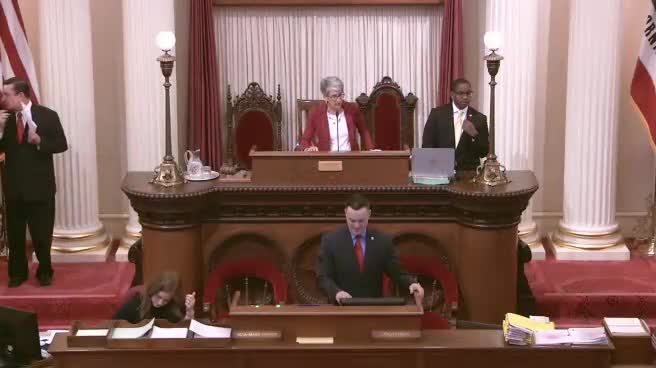 1MIN
Senate Floor
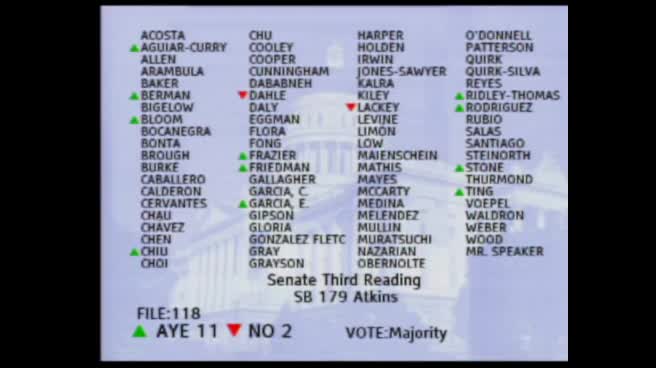 1MIN
Assembly Floor
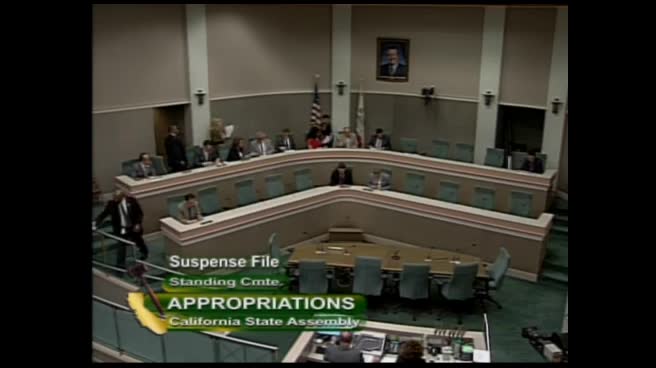 1H
Assembly Standing Committee on Appropriations
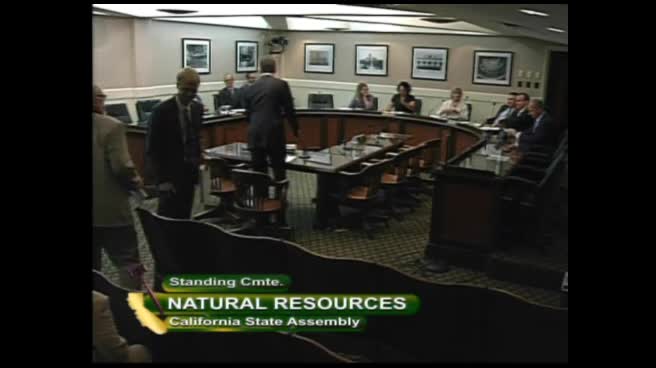 7MIN
Assembly Standing Committee on Natural Resources
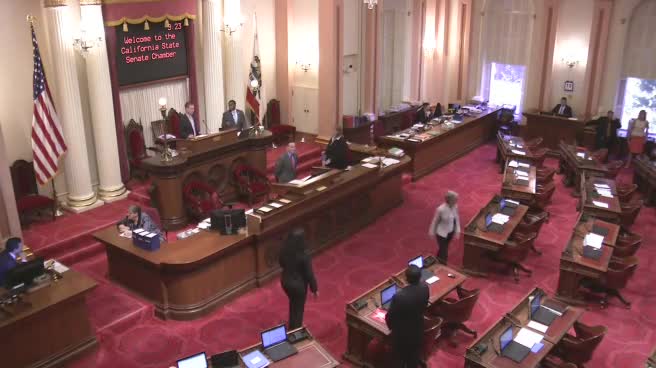 3MIN
Senate Floor
 8MIN
Senate Standing Committee on Appropriations
 26MIN
Senate Standing Committee on Environmental Quality
Bill Author

Bill Co-Author(s):