SB 484: Deposition reporting services: unlawful business practices.
- Session Year: 2017-2018
- House: Senate
- Latest Version Date: 2017-04-06
Existing law provides for the certification and regulation of shorthand reporters by the Court Reporters Board of California and authorizes it to revoke or suspend a certificate for specified acts of misconduct. Existing law authorizes any party to obtain discovery in civil actions by taking the oral deposition of any person, including any party to the action. Existing law requires that a deposition be conducted under the supervision of an officer who is authorized to administer an oath and subjects the deposition officer or entity providing the services of the deposition officer to certain restrictions.
This bill would provide that it is unlawful for a person or entity that employs one or more who is employed by or who independently contracts with an entity that arranges for deposition officers for the purpose of transcribing to report or transcribe deposition testimony to give, pursuant to any agreement or understanding, oral or otherwise, any referral fee, kickback, bribe, rebate, or thing of value to an attorney or law firm, or to an employee or independent contractor of an attorney or law firm, as compensation or inducement in connection with the services to be provided by the deposition officer, as specified. offer, pursuant to any agreement or understanding, oral or otherwise, any gift, incentive, reward, or anything of value to any person or entity, as defined, associated with a proceeding being reported or transcribed. The bill would also provide that a violation of this provision is punishable by a civil fine not to exceed $20,000 $5,000 for each violation, and would authorize the Court Reporters Board of California, or the Attorney General, a district attorney, or a city attorney to bring a civil action for a violation of this provision.
Existing law provides for the certification and regulation of shorthand reporters by the Court Reporters Board of California and authorizes it to revoke or suspend a certificate for specified acts of misconduct. Existing law authorizes any party to obtain discovery in civil actions by taking the oral deposition of any person, including any party to the action. Existing law requires that a deposition be conducted under the supervision of an officer who is authorized to administer an oath and subjects the deposition officer or entity providing the services of the deposition officer to certain restrictions.
This bill would provide that it is unlawful for a person or entity that employs one or more deposition officers for the purpose of transcribing deposition testimony to give, pursuant to any agreement or understanding, oral or otherwise, any referral fee, kickback, bribe, rebate, or thing of value to an attorney or law firm, or to an employee or independent contractor of an attorney or law firm, as compensation or inducement in connection with the services to be provided by the deposition officer, as specified. The bill would also provide that a violation of this provision is a misdemeanor punishable by a civil fine not to exceed five thousand dollars ($5,000) $20,000 for each violation, and would authorize any district attorney or other prosecuting attorney to enforce this provision. By creating a new crime, the bill would impose a state-mandated local program. the Court Reporters Board of California, or the Attorney General, a district attorney, or a city attorney to bring a civil action for a violation of this provision.
The California Constitution requires the state to reimburse local agencies and school districts for certain costs mandated by the state. Statutory provisions establish procedures for making that reimbursement.
This bill would provide that no reimbursement is required by this act for a specified reason.
Existing law authorizes any party to obtain discovery in civil actions by taking the oral deposition of any person, including any party to the action. Existing law requires that a deposition be conducted under the supervision of an officer who is authorized to administer an oath and subjects the deposition officer or entity providing the services of the deposition officer to certain restrictions.
This bill would provide that it is unlawful for a person or entity that employs one or more deposition officers for the purpose of transcribing deposition testimony to give, pursuant to any agreement or understanding, oral or otherwise, any referral fee, kickback, bribe, rebate, or thing of value to an attorney or law firm, or to an employee or independent contractor of an attorney or law firm, as compensation or inducement in connection with the services to be provided by the deposition officer, as specified. The bill would also provide that a violation of this provision is a misdemeanor punishable by a fine not to exceed five thousand dollars ($5,000) for each violation, and would authorize any district attorney or other prosecuting attorney to enforce this provision. By creating a new crime, the bill would impose a state-mandated local program.
The California Constitution requires the state to reimburse local agencies and school districts for certain costs mandated by the state. Statutory provisions establish procedures for making that reimbursement.
This bill would provide that no reimbursement is required by this act for a specified reason.
(a)It is unlawful for a person or who is employed by or who independently contracts with an entity that employs one or more arranges for deposition officers for the purpose of transcribing to report or transcribe deposition testimony pursuant to subdivision (b) of Section 2025.330 to give, pursuant to any agreement or understanding, oral or otherwise, any referral fee, kickback, bribe, rebate, or thing of value to an attorney or law firm, or to an employee or independent contractor of an attorney or law firm, as compensation or inducement in connection with any services to be provided by the deposition officer. offer, pursuant to any agreement or understanding, oral or otherwise, any gift, incentive, reward, or anything of value to any person or entity associated with a proceeding being reported or transcribed. For purposes of this section, the term person or entity includes an attorney or family members of an attorney; an employee of an attorney or family members of the employee; a law firm in its capacity as a business or corporate entity; and any clients, witnesses, insurers, underwriters, or any agents or representatives of the law firm.
(b)This section does not make unlawful any business practice related to the reporting and transcription of testimony pursuant to subdivision (b) of Section 2025.330 that is otherwise in compliance with the law, including the provision of volume discounts, the provision of meals and refreshments at a proceeding being reported, or the provision of items that do not exceed one hundred dollars ($100) in the aggregate for any combination of items given per calendar year pursuant to Section 2475 of Title 16 of the California Code of Regulations.
(c)A person or entity that violates this section shall be liable for a civil fine not to exceed twenty five thousand dollars ($20,000) ($5,000) per violation.
(d)The Court Reporters Board of California, as described in subdivision (h) of Section 8008 of the Business and Professions Code, or the Attorney General, a district attorney, or a city attorney may bring a civil action for a violation of this section, including an action for injunctive relief and any other appropriate relief, and shall be entitled as a prevailing party to recover reasonable attorneys fees.
The board has the following powers and duties:
(a)To adopt a seal.
(b)By affirmative vote of at least three members of the board, to suspend, revoke, or impose any other disciplinary action against a certificate for any cause specified in this chapter.
(c)To charge and collect all fees as provided for in this chapter.
(d)To require the renewal of all certificates.
(e)To issue subpoenas, to administer oaths, and to take testimony concerning any matter within the jurisdiction of the board.
(f)To investigate the actions of any licensee, upon receipt of a verified complaint in writing from any person, for alleged acts or omissions constituting grounds for disciplinary action under the chapter.
(g)To administer the Transcript Reimbursement Fund described in Section 8030.2.
(h)To bring a civil action for a violation of Section 2025.325 of the Code of Civil Procedure.
SECTION 1.SEC. 2.Section 2025.325 is added to the Code of Civil Procedure, to read:2025.325.(a)It is unlawful for a person or entity that employs one or more deposition officers for the purpose of transcribing deposition testimony pursuant to subdivision (b) of Section 2025.330 to give, pursuant to any agreement or understanding, oral or otherwise, any referral fee, kickback, bribe, rebate, or thing of value to an attorney or law firm, or to an employee or independent contractor of an attorney or law firm, as compensation or inducement in connection with any services to be provided by the deposition officer.
(b)This section does not make unlawful any business practice related to the transcription of testimony pursuant to subdivision (b) of Section 2025.330 that is otherwise in compliance with the law, including the provision of volume discounts, the provision of meals and refreshments at a proceeding being reported, or the provision of items that do not exceed one hundred dollars ($100) in the aggregate for any combination of items given per calendar year pursuant to Section 2475 of Title 16 of the California Code of Regulations.
(c)A violation of this section is a misdemeanor punishable by a fine not to exceed five thousand dollars ($5,000) for each violation. Proceedings to enforce this section may be brought by any district attorney or other prosecuting attorney.(c)A person or entity that violates this section shall be liable for a civil fine not to exceed twenty thousand dollars ($20,000) per violation.
(d)The Court Reporters Board of California, as described in subdivision (h) of Section 8008 of the Business and Professions Code, or the Attorney General, a district attorney, or a city attorney may bring a civil action for a violation of this section, including an action for injunctive relief and any other appropriate relief, and shall be entitled as a prevailing party to recover reasonable attorneys fees.
SEC. 2.No reimbursement is required by this act pursuant to Section 6 of Article XIIIB of the California Constitution because the only costs that may be incurred by a local agency or school district will be incurred because this act creates a new crime or infraction, eliminates a crime or infraction, or changes the penalty for a crime or infraction, within the meaning of Section 17556 of the Government Code, or changes the definition of a crime within the meaning of Section 6 of Article XIIIB of the California Constitution.
(a)It is unlawful for a person or entity that employs one or more deposition officers for the purpose of transcribing deposition testimony pursuant to subdivision (b) of Section 2025.330 to give, pursuant to any agreement or understanding, oral or otherwise, any referral fee, kickback, bribe, rebate, or thing of value to an attorney or law firm, or to an employee or independent contractor of an attorney or law firm, as compensation or inducement in connection with any services to be provided by the deposition officer.
(b)This section does not make unlawful any business practice related to the transcription of testimony pursuant to subdivision (b) of Section 2025.330 that is otherwise in compliance with the law, including the provision of meals and refreshments at a proceeding being reported, or the provision of items that do not exceed one hundred dollars ($100) in the aggregate for any combination of items given per calendar year pursuant to Section 2475 of Title 16 of the California Code of Regulations.
(c)A violation of this section is a misdemeanor punishable by a fine not to exceed five thousand dollars ($5,000) for each violation. Proceedings to enforce this section may be brought by any district attorney or other prosecuting attorney.
SEC. 2.No reimbursement is required by this act pursuant to Section 6 of Article XIIIB of the California Constitution because the only costs that may be incurred by a local agency or school district will be incurred because this act creates a new crime or infraction, eliminates a crime or infraction, or changes the penalty for a crime or infraction, within the meaning of Section 17556 of the Government Code, or changes the definition of a crime within the meaning of Section 6 of Article XIIIB of the California Constitution.
|
Date
|
Status
|
|---|---|
| Jun 12, 2017 | June 20 set for first hearing canceled at the request of author. |
| May 22, 2017 | Referred to Com. on JUD. |
| Apr 24, 2017 | In Assembly. Read first time. Held at Desk. |
| Apr 24, 2017 | Read third time. Passed. (Ayes 25. Noes 13. Page 803.) Ordered to the Assembly. |
| Apr 20, 2017 | Read second time. Ordered to third reading. |
| Apr 19, 2017 | From committee: Do pass. (Ayes 5. Noes 2. Page 746.) (April 18). |
| Apr 6, 2017 | From committee with author's amendments. Read second time and amended. Re-referred to Com. on JUD. |
| Mar 30, 2017 | Set for hearing April 18. |
| Mar 29, 2017 | April 4 set for first hearing canceled at the request of author. |
| Mar 23, 2017 | From committee with author's amendments. Read second time and amended. Re-referred to Com. on JUD. |
| Mar 21, 2017 | Set for hearing April 4. |
| Mar 2, 2017 | Referred to Com. on JUD. |
| Feb 17, 2017 | From printer. May be acted upon on or after March 19. |
| Feb 16, 2017 | Introduced. Read first time. To Com. on RLS. for assignment. To print. |
|
Date
|
Description
|
Location
|
Votes
|
|
|---|---|---|---|---|
| Apr 24, 2017 | Senate 3rd Reading SB484 Roth | Senate Floor |
Passed |
|
| Apr 18, 2017 | Do pass | Senate Standing Committee on Judiciary |
Passed |
This list shows positions taken on this bill by organizations on the date displayed, which is linked to the original source.
Positions by individuals are not included.
|
Organization
|
Position
|
Date
|
|---|---|---|
| Barkley Court Reporters, Inc. | ** Support | Apr 21, 2017 |
| Bars, Inc. | ** Support | Apr 21, 2017 |
| Bay Area Reporting Solutions, Inc. | ** Support | Apr 21, 2017 |
| Bay Area Trial Reporters; Bay City Reporting | ** Support | Apr 21, 2017 |
| Bayside Reporting Company | ** Support | Apr 21, 2017 |
| California Official Court Reporters Association | ** Support | Apr 21, 2017 |
| Carol Nygard & Associates, Inc. | ** Support | Apr 21, 2017 |
| Centext Legal Services | ** Support | Apr 21, 2017 |
| Chase Deposition Services | ** Support | Apr 21, 2017 |
| Deposition Reporters Association Of California | ** Support | Apr 21, 2017 |
| Esquire Deposition Services, LLC | ** Against | Apr 21, 2017 |
| Freeman Reporting | ** Support | Apr 21, 2017 |
| Grossman Reporting | ** Support | Apr 21, 2017 |
| Holly Moose & Associates | ** Support | Apr 21, 2017 |
| Kaplanek Reporting and Videoconferencing | ** Support | Apr 21, 2017 |
| Kj & Associates | ** Support | Apr 21, 2017 |
| Linda Ryan Reporting | ** Support | Apr 21, 2017 |
| Magna Legal Services | ** Against | Apr 21, 2017 |
| Mb Reporting, Inc. | ** Support | Apr 21, 2017 |
| Nine individuals | ** Support | Apr 21, 2017 |
| Pantera Court Reporters | ** Support | Apr 21, 2017 |
| Parrish Reporting | ** Support | Apr 21, 2017 |
| Pulone Reportng Services | ** Support | Apr 21, 2017 |
| Scanlan Stone Reporters | ** Support | Apr 21, 2017 |
| Simpson Deposition Services | ** Support | Apr 21, 2017 |
| Tri-County Reporters | ** Support | Apr 21, 2017 |
| U.S. Legal Support, Inc. | ** Against | Apr 21, 2017 |
| Valerie Rasmussen Court Reporting | ** Support | Apr 21, 2017 |
| Veritext Corporation | ** Against | Apr 21, 2017 |
| Walter Reporting, Inc. | ** Support | Apr 21, 2017 |
Office of Senate Floor Analyses (916) 651-1520 Fax: (916) 327-4478 | SB |
THIRD READING
Bill No: SB 484
:
SENATE JUDICIARY COMMITTEE: 5-2, 4/18/17
AYES: Jackson, Hertzberg, Monning, Stern, Wieckowski
NOES: Moorlach, Anderson
SOURCE: Deposition Reporters Association of California
DIGEST: This bill makes it unlawful for a person who is employed by or who independently contracts with an entity that arranges for deposition officers to give or receive any gift, incentive, reward, or anything of value as inducement or compensation in connection with the provision of services by a deposition officer. Although these practices are already prohibited under California regulatory law for covered persons and entities, this bill empowers the Attorney General, a district attorney, or a city attorney to enforce this professional standard of conduct against all specified persons engaging in this conduct.
Existing law:
- Requires, generally, that a deposition be conducted under the supervision of an officer who is authorized to administer an oath and is subject to a number of restrictions and requirements. (Code Civ. Proc. Sec. 2025.320.)
- Provides that violation of the above provisions by any person may result in a civil penalty of up to $5,000 imposed by a court of competent jurisdiction. (Code Civ. Proc. Sec. 2025.320(f).)
- Defines the practice of shorthand reporting as the making, by means of written symbols or abbreviations in shorthand or machine shorthand writing, of a verbatim record of any oral court proceeding, deposition, court ordered hearing or arbitration, or proceeding before any grand jury, referee, or court commissioner and the accurate transcription thereof. (Bus. & Prof. Code Sec. 8017.)
- Establishes the California Court Reporters Board (CRB) with the authority and responsibility to investigate the actions of any licensee; charge and collect authorized fees; and issue administrative citations and fines for violations of rules and regulations adopted by the board. (Bus. & Prof. Code Sec. 8000 et seq.; see Bus. & Prof. Code Secs. 8007(a), (c), 8008(c), 8000(f), 8027.5, & 8031.)
- Prohibits any person from engaging in the practice of shorthand reporting, as defined, unless that person is the holder of a certificate in full force and effect issued by the CRB. (Bus. & Prof. Code Sec. 8016.)
- Provides for the suspension, revocation, or denial of shorthand reporting certificates, or other disciplinary action against reporters by the CRB, based on various grounds, including unprofessional conduct, or violation of the rules and regulations pertaining to certified shorthand reporters, when committed in the practice of shorthand reporting. (Bus. & Prof. Code Sec. 8025.)
- Defines, under the Moscone-Knox Professional Corporation Act, a professional corporation as a corporation that is engaged in rendering professional services in a single profession, pursuant to a certificate of registration issued by the agency regulating the profession. However, a professional corporation or foreign professional corporation rendering professional services by persons duly licensed by the boards in charge of those services, including the CRB, shall not be required to obtain a certificate of registration in order to use those professional services. (Corp. Code Sec. 13401(a),(b); see also Bus. & Prof. Code Sec. 8040.)
- Defines a “foreign corporation” as a corporation organized under the laws of another state that is engaged in a profession of a type for which there is authorization in the Business and Professions Code for the professional services by a foreign professional corporation. (Corp. Code Sec. 13401(c), (d).)
- Prohibits a shorthand reporting corporation from doing or failing to do any act the doing of which or the failure to do which would constitute unprofessional conduct under any statute, rule or regulation now or hereafter in effect which pertains to shorthand reporters or shorthand reporting. Existing law provides that in conducting its practice it shall observe and be bound by such statutes, rules and regulations to the same extent as a person holding a license under this chapter. (Bus. & Prof. Code Sec. 8046.)
- Provides that it shall constitute unprofessional conduct and a violation of this chapter for any person licensed under this chapter to violate, attempt to violate, directly or indirectly, or assist in or abet the violation of, or conspire to violate any provision or term of this article, the Moscone-Knox Professional Corporation Act, or any regulations duly adopted under those laws. (Bus. & Prof. Code Sec. 8042.)
- Provides that every person under CRB jurisdiction who holds a license or certificate, or temporary license or certificate, or business that renders professional services, namely shorthand reporting services, within the meaning of the Moscone-Knox Professional Corporation Act, shall comply with professional standards of practice including the following: other than the receipt of compensation for reporting services, neither directly or indirectly give nor receive any gift, incentive, reward, or anything of value to or from any person or entity associated with a proceeding being reported. Such persons or entities shall include, but are not limited to, attorneys or an attorney’s family members, employees of attorneys or an employee’s family members, law firms as single entities, clients, witnesses, insurers, underwriters, or any agents or representatives thereof. Exceptions to the foregoing restriction shall be as follows: (a) giving or receiving items that do not exceed $100 (in the aggregate for any combination of items given and/or received) per calendar year to or from those aforementioned persons; or (b) providing services without charge for which the certified shorthand reporter reasonably expects to be reimbursed from the Transcript Reimbursement Fund, or otherwise for an “indigent person” as specified. (16 C.C.R. Sec. 2475(b)(6)-(8).)
This bill:
- Provides that it is unlawful for a person who is employed by or who independently contracts with an entity that arranges for deposition officers to report or transcribe deposition testimony to offer, pursuant to any agreement or understanding, oral or otherwise, any gift, incentive, reward, or anything of value to any person or entity. The term “person or entity” includes an attorney or family members of an attorney; an employee of an attorney or family members of the employee; a law firm in its capacity as a business or corporate entity; and any clients, witnesses, insurers, underwriters, or any agents or representatives of the law firm. Certain exclusions apply, including the provision of volume discounts, the provision of meals and refreshments at a proceeding being reported, and the provision of items that do not exceed $100 in the aggregate as provided in Section 2475 of Title 16 of the California Code of Regulations.
- Subjects violators to a civil fine not to exceed $5,000 per violation.
- Authorizes the Attorney General, a district attorney, or a city attorney to bring a civil action against violators seeking injunctive relief, attorneys’ fees, and other relief as appropriate.
Background
Court reporters, also known as “shorthand reporters,” not only transcribe courtroom proceedings, but also serve as judicial officers overseeing a deposition. The CRB is charged with certifying and regulating these shorthand reporters. The report of the official reporter is prima facie evidence of the testimony and proceedings. Therefore, the impartiality of these officers of the court must be maintained. Given this critical role, existing law provides for the suspension, revocation, or denial of shorthand reporting certificates, or other disciplinary action against reporters, based on various grounds, including fraud, misrepresentation, unprofessional conduct, or violation of the rules and regulations pertaining to certified shorthand reporters.
California regulations require that every person under the jurisdiction of the CRB who holds a license or certificate, or business that renders professional services, namely shorthand reporting services, within the meaning of the Moscone-Knox Professional Corporation Act, complies with certain professional standards of practice, including neither directly nor indirectly giving or receiving any gift, incentive, reward, or anything of value to or from any person or entity associated with a proceeding being reported, other than the receipt of compensation for reporting services, except where the items that do not exceed $100 (in the aggregate) per calendar year or where the reporter reasonably expects to be reimbursed from the Transcript Reimbursement Fund for services provided free of charge or otherwise provided the services for an “indigent person” as specified.
This bill provides that it is unlawful for a person who is employed by or who independently contracts with an entity that arranges for deposition officers for the purpose of transcribing deposition testimony to offer, pursuant to any agreement or understanding, oral or otherwise, any gift, incentive, reward, or anything of value to any person or entity associated with a proceeding being reported or transcribed. “Person or entity” is defined to include an attorney or family members of an attorney; an employee of an attorney or family members of the employee; a law firm in its capacity as a business or corporate entity; and any clients, witnesses, insurers, underwriters, or any agents or representatives of the law firm. This bill subjects violators to a civil fine not to exceed $5,000 per violation. This bill authorizes the Attorney General, a district attorney, or a city attorney to bring a civil action for a violation of its provisions, including an action for injunctive relief and any other appropriate relief, and attorneys’ fees.
Comments
According to the author:
Increasingly, large corporations that are in the business of arranging deposition reporting services are offering quid pro quo inducements such as valuable trips, gift cards and electronics to employees of law firms to persuade them to choose these companies for deposition services critical to the administration of justice.
Such kickbacks distort the market for these vital services away from the factors important to parties (price and quality) and, instead, reward who can provide the best items to those who have no stake in the quality or price of the product.
[This bill] prohibits individuals or entities employing or contracting with deposition reporters from offering or providing … anything of value to a potential customer as compensation or inducement to purchase deposition services.
Empowering authorities to enforce professional standards of conduct
As a matter of public policy, the transcription function performed by court reporters (also known as shorthand reporters), including deposition reporters, in relation to the administration of justice, is critically important. Under California law, the report of the official reporter, or the official reporter pro tempore, of any court, duly appointed and sworn, when transcribed and certified as being a correct transcript of the testimony and proceedings in the case, serves as prima facie evidence of the testimony and proceedings. (Code Civ. Proc. Sec. 273(a).) Given the crucial role played by these reporters, upholding strict standards of conduct is vital to the integrity of the justice system. The CRB can suspend or revoke a certificate or take other disciplinary action against a reporter for engaging in "unprofessional conduct," which includes acts contrary to professional standards concerning confidentiality; impartiality; execution and certification of transcripts; and any provision of law substantially related to the duties of a certified shorthand reporter.
The impetus behind this bill is the practice of companies incentivizing law firms to use their deposition reporting services with certain inducements. Law firm employees are given these things of value in exchange for funneling any deposition-service needs to the company. The practices targeted by this bill are in violation of the professional standards of conduct established under California law and are in fact largely drawn from Section 2475 of Title 16 of the California Code of Regulations. This bill declares these practices unlawful for all persons and provides a litigation mechanism for authorities to enforce these standards when needed.
Enforcement loopholes
According to the proponents, there are foreign corporations that have been operating in California and rendering professional court reporting services by employing or contracting with California-licensed court reporters. In other words, the corporation and its owners are not themselves licensed or certified under California law, thus, creating a situation where the licensee must adhere to California laws regulating court reporting services while the corporate owners or operators seemingly do not. The author points to an example from 2012 of a California Superior Court decision in Court Reporters Board of California v. U.S. Legal Support, Inc., involving a suit brought by the CRB against U.S. Legal (USL) for violating Business and Professions Code Section 8046. There, CRB issued a citation to the defendant assessing a fine of $2,500 on the defendant, which the defendant then refused to pay based on an argument that CRB lacked jurisdiction to issue the citation to USL. (Id.) The court found the CRB had no jurisdiction to issue such a citation and ruled in favor of the defendant. (Id. at 5-6.)
This bill essentially closes the gap by directly declaring that persons who are employed by or who independently contract with an entity that arranges for deposition officers to report or transcribe deposition testimony are prohibited from offering any gift, incentive, reward, or anything of value as compensation or inducement in connection with any services to be provided by the deposition officer. The result is that the specified authorities can now bring civil actions against these persons and entities for practices that are deemed unprofessional conduct, and seek fines of up to $5,000 for each violation.
Targets of this bill
This bill makes the specified conduct unlawful for “a person who is employed by or who independently contracts with an entity that arranges for deposition officers to report or transcribe deposition testimony.” Presumably, if a fine or other civil action was taken against a person working for an out-of-state corporation, the corporation itself could be held liable under the respondeat superior doctrine. However, although the impetus for this bill was largely the conduct of these out-of-state corporations, the language would also subject California-licensed shorthand reporters and entities to the penalties under this bill, as well. Because they are already within the jurisdiction of the CRB and must already comply with the attendant regulations this bill is modeled after, California-licensed reporters and entities could face civil lawsuits brought by prosecutorial agencies and concomitant sanction from the CRB for giving any gifts, incentives, rewards, or anything of value in connection with a proceeding being reported.
Related/Prior Legislation
AB 1631 (Salas, 2017) expands the definition of a shorthand reporting service corporation and prohibits such corporations from providing cash or cash equivalents for marketing purposes, as enforced by the Attorney General.
AB 1660 (Kalra, 2017) establishes a list of requirements that must be met for an individual or entity to be permitted to engage in the business of providing or arranging for court reporters for the transcription of court proceedings. It subjects those individuals and entities qualifying as registered court reporter providers to the existing laws and regulations governing the conduct of certified shorthand reporters.
FISCAL EFFECT: Appropriation: Fiscal Com.: Local:
Deposition Reporters Association of California (source)
Barkley Court Reporters, Inc.
Bars, Inc.
Bay Area Reporting Solutions, Inc.
Bay Area Trial Reporters; Bay City Reporting
Bayside Reporting Company
California Official Court Reporters Association
Carol Nygard & Associates, Inc.
Centext Legal Services
Chase Deposition Services
Freeman Reporting
Grossman Reporting
Holly Moose & Associates
Kaplanek Reporting and Videoconferencing
Kj & Associates
Linda Ryan Reporting
Mb Reporting, Inc.
Pantera Court Reporters
Parrish Reporting
Pulone Reportng Services
Scanlan Stone Reporters
Simpson Deposition Services
Tri-County Reporters
Valerie Rasmussen Court Reporting
Walter Reporting, Inc.
Nine individuals
OPPOSITION: (Verified 4/20/17)
Esquire Deposition Services, LLC
Magna Legal Services
U.S. Legal Support, Inc.
Veritext Corporation
ARGUMENTS IN SUPPORT: The sponsor of this bill, the Deposition Reporters Association of California, states this bill is “a long-overdue measure specifically addressing the most unsavory and market-distorting practice in the freelance court reporting industry.”
ARGUMENTS IN OPPOSITION: A coalition of deposition services firms writes that they do not support a ban on reasonable and customary marketing expenses, though it would not oppose a formulation of “reasonable and customary” that addressed specific perceived excesses as long as the concept of normal commercial marketing was retained.
4/21/17 12:50:42
Senator Hannah-Beth Jackson, Chair
2017-2018 Regular Session
Bill No: SB 484 (Author:Roth)
Version: April 6, 2017
Hearing Date: April 18, 2017
Fiscal: No
Urgency: No
Consultant: CK
SUBJECT
Deposition reporting services: unlawful business practices
DESCRIPTION
This bill would make it unlawful for a person who is employed by or who independently contracts with an entity that arranges for deposition officers to give or receive any gift, incentive, reward, or anything of value as inducement or compensation in connection with the provision of services by a deposition officer. Although these practices are already prohibited under California regulatory law for covered persons and entities, this bill would empower the Attorney General, a district attorney, or a city attorney to enforce this professional standard of conduct against all specified persons engaging in this conduct.
BACKGROUND
Court reporters, also known as “shorthand reporters,” not only transcribe courtroom proceedings, but also serve as judicial officers overseeing a deposition. The Court Reporters Board of California (CRB) is charged with certifying and regulating these shorthand reporters. The report of the official reporter is prima facie evidence of the testimony and proceedings. Therefore, the impartiality of these officers of the court must be maintained. Given this critical role, existing law provides for the suspension, revocation, or denial of shorthand reporting certificates, or other disciplinary action against reporters, based on various grounds, including fraud, misrepresentation, unprofessional conduct, or violation of the rules and regulations pertaining to certified shorthand reporters.
California regulations require that every person under the jurisdiction of the CRB who holds a license or certificate, or business that renders professional services, namely shorthand reporting services, within the meaning of the Moscone-Knox Professional Corporation Act, complies with certain professional standards of practice. These include, for example: (1) not entering into, arranging, or participating in a relationship that compromises the impartiality of the certified shorthand reporter, including, but not limited to, a relationship in which compensation for reporting services is based upon the outcome of the proceeding; and (2) neither directly nor indirectly giving or receiving any gift, incentive, reward, or anything of value to or from any person or entity associated with a proceeding being reported, other than the receipt of compensation for reporting services, except where the items that do not exceed $100 (in the aggregate for any combination of items given and/or received) per calendar year or where the certified shorthand reporter reasonably expects to be reimbursed from the Transcript Reimbursement Fund[1] for services provided free of charge or otherwise provided the services for an “indigent person” as specified.
There is evidence that companies providing or arranging for deposition officer services are engaging in conduct that would violate the professional standards discussed above, namely the exchange of items of value in connection with the provision of deposition officer services. Although these practices are in direct violation of the above laws and regulations, some out-of-state court-reporting firms have successfully challenged the CRB’s authority to enforce these standards of conduct against them.
This bill would provide that it is unlawful for a person who is employed by or who independently contracts with an entity that arranges for deposition officers for the purpose of transcribing deposition testimony to offer, pursuant to any agreement or understanding, oral or otherwise, any gift, incentive, reward, or anything of value to any person or entity associated with a proceeding being reported or transcribed. “Person or entity” is defined to include an attorney or family members of an attorney; an employee of an attorney or family members of the employee; a law firm in its capacity as a business or corporate entity; and any clients, witnesses, insurers, underwriters, or any agents or representatives of the law firm. The bill would subject violators to a civil fine not to exceed $5,000 per violation. The bill would authorize the Attorney General, a district attorney, or a city attorney to bring a civil action for a violation of its provisions, including an action for injunctive relief and any other appropriate relief, and attorneys’ fees.
CHANGES TO EXISTING LAW
Existing law generally requires that a deposition be conducted under the supervision of an officer who is authorized to administer an oath and is subject to all of the following requirements, among others:
- the officer must not be financially interested in the action and shall not be a relative or employee of any attorney of the parties, or of any of the parties;
- services and products offered or provided by the deposition officer or the entity providing the services of the deposition officer to any party or to any party’s attorney or third party who is financing all or part of the action must be offered to all parties or their attorneys attending the deposition, at the same time; and
- the deposition officer or the entity providing the services of the deposition officer must not do either of the following: (1) provide to any party or any party’s attorney or third party who is financing all or part of the action any service or product consisting of the deposition officer’s notations or comments regarding the demeanor of any witness, attorney, or party present at the deposition; or (2) collect any personal identifying information about the witness as a service or product to be provided to any party or third party who is financing all or part of the action.
(Code Civ. Proc. Sec. 2025.320.)
Existing law provides that violation of the above provisions by any person may result in a civil penalty of up to $5,000 imposed by a court of competent jurisdiction. (Code Civ. Proc. Sec. 2025.320(f).)
Existing law defines the practice of shorthand reporting as the making, by means of written symbols or abbreviations in shorthand or machine shorthand writing, of a verbatim record of any oral court proceeding, deposition, court ordered hearing or arbitration, or proceeding before any grand jury, referee, or court commissioner and the accurate transcription thereof. Nothing in this section shall require the use of a certified shorthand reporter when not otherwise required by law. (Bus. & Prof. Code Sec. 8017.)
Existing law establishes the California Court Reporters Board (CRB) with, among other things, the authority and responsibility to determine the qualifications of persons applying for certification as a shorthand reporter; make rules for the examination of applicants and the issuing of certificates of qualification in professional shorthand reporting; investigate the actions of any licensee, upon receipt of a verified complaint in writing from any person, for alleged acts or omissions constituting grounds for disciplinary action, as specified; charge and collect authorized fees; and issue administrative citations and assess fines for the violation of any rules and regulations adopted by the board. (Bus. & Prof. Code Sec. 8000 et seq.; see Bus. & Prof. Code Secs. 8007(a), (c), 8008(c), 8000(f), 8027.5, & 8031.)
Existing law provides that the protection of the public shall be the highest priority for the CRB in exercising its licensing, regulatory, and disciplinary functions. (Bus. & Prof. Code Sec. 8005.1.)
Existing law prohibits any person from engaging in the practice of shorthand reporting, as defined, unless that person is the holder of a certificate in full force and effect issued by the CRB. (Bus. & Prof. Code Sec. 8016.)
Existing law provides for the suspension, revocation, or denial of shorthand reporting certificates, or other disciplinary action against reporters by the CRB, based on various grounds, including fraud, misrepresentation, unprofessional conduct, or violation of the rules and regulations pertaining to certified shorthand reporters, when committed in the practice of shorthand reporting. (Bus. & Prof. Code Sec. 8025.)
Existing law provides that a violation of any provision of the chapter on shorthand reporters is a misdemeanor and also makes any person who directly or indirectly assists in or abets the violation of, or conspires to aid or abet in the violation of, any provision of this chapter, guilty of a misdemeanor. (Bus. & Prof. Code Sec. 8019.)
Existing law, the Moscone-Knox Professional Corporation Act, defines a professional corporation as a corporation that is engaged in rendering professional services (defined as any type of professional services that may be lawfully rendered only pursuant to a license, certification, or registration authorized by the Business and Professions Code, the Chiropractic Act, or the Osteopathic Act) in a single profession, pursuant to a certificate of registration issued by the governmental agency regulating the profession. However, a professional corporation or foreign professional corporation, as defined, rendering professional services by persons duly licensed by the boards in charge of those services, including the CRB, shall not be required to obtain a certificate of registration in order to use those professional services. (Corp. Code Sec. 13401(a),(b); see also Bus. & Prof. Code Sec. 8040.)
Existing law defines a “foreign corporation” as a corporation organized under the laws of another state that is engaged in a profession of a type for which there is authorization in the Business and Professions Code for the professional services by a foreign professional corporation. (Corp. Code Sec. 13401(c), (d).)
Existing law prohibits a shorthand reporting corporation from doing or failing to do any act the doing of which or the failure to do which would constitute unprofessional conduct under any statute, rule or regulation now or hereafter in effect which pertains to shorthand reporters or shorthand reporting. Existing law provides that in conducting its practice it shall observe and be bound by such statutes, rules and regulations to the same extent as a person holding a license under this chapter. (Bus. & Prof. Code Sec. 8046.)
Existing law provides that it shall constitute unprofessional conduct and a violation of this chapter for any person licensed under this chapter to violate, attempt to violate, directly or indirectly, or assist in or abet the violation of, or conspire to violate any provision or term of this article, the Moscone-Knox Professional Corporation Act, or any regulations duly adopted under those laws. (Bus. & Prof. Code Sec. 8042.)
Existing regulations provide that every person under the jurisdiction of the Board who holds a license or certificate, or temporary license or certificate, or business that renders professional services, namely shorthand reporting services, within the meaning of the Moscone-Knox Professional Corporation Act, shall comply with the following professional standards of practice, among others:
- act without bias toward, or prejudice against, any parties and/or their attorneys;
- not enter into, arrange, or participate in a relationship that compromises the impartiality of the certified shorthand reporter, including, but not limited to, a relationship in which compensation for reporting services is based upon the outcome of the proceeding; and
- other than the receipt of compensation for reporting services, neither directly or indirectly give nor receive any gift, incentive, reward, or anything of value to or from any person or entity associated with a proceeding being reported. Such persons or entities shall include, but are not limited to, attorneys or an attorney’s family members, employees of attorneys or an employee’s family members, law firms as single entities, clients, witnesses, insurers, underwriters, or any agents or representatives thereof. Exceptions to the foregoing restriction shall be as follows: (A) giving or receiving items that do not exceed $100 (in the aggregate for any combination of items given and/or received) per calendar year to or from those aforementioned persons; or (B) providing services without charge for which the certified shorthand reporter reasonably expects to be reimbursed from the Transcript Reimbursement Fund, or otherwise for an “indigent person” as specified.
(16 C.C.R. Sec. 2475(b)(6)-(8).)
This bill would provide that it is unlawful for a person who is employed by or who independently contracts with an entity that arranges for deposition officers to report or transcribe deposition testimony to offer, pursuant to any agreement or understanding, oral or otherwise, any gift, incentive, reward, or anything of value to any person or entity. The term “person or entity” includes an attorney or family members of an attorney; an employee of an attorney or family members of the employee; a law firm in its capacity as a business or corporate entity; and any clients, witnesses, insurers, underwriters, or any agents or representatives of the law firm. Certain exclusions apply, including the provision of volume discounts, the provision of meals and refreshments at a proceeding being reported, and the provision of items that do not exceed 100 dollars ($100) in the aggregate as provided in Section 2475 of Title 16 of the California Code of Regulations.
This bill would subject violators to a civil fine not to exceed $5,000 per violation.
This bill would authorize the Attorney General, a district attorney, or a city attorney to bring a civil action against violators seeking injunctive relief, attorneys’ fees, and other relief as appropriate.
COMMENT
1. Stated need for the bill
According to the author:
Increasingly, large corporations that are in the business of arranging deposition reporting services are offering quid pro quo inducements such as valuable trips, gift cards and electronics to employees of law firms to persuade them to choose these companies for deposition services critical to the administration of justice.
Such kickbacks distort the market for these vital services away from the factors important to parties (price and quality) and, instead, reward who can provide the best items to those who have no stake in the quality or price of the product.
[This bill] prohibits individuals or entities employing or contracting with deposition reporters from offering or providing … anything of value to a potential customer as compensation or inducement to purchase deposition services.
The sponsor of this bill, the Deposition Reporters Association of California (DRA), states this bill is “a long-overdue measure specifically addressing the most unsavory and market-distorting practice in the freelance court reporting industry.”
2. Empowering authorities to enforce professional standards of conduct
As a matter of public policy, the transcription function performed by court reporters (also known as shorthand reporters), including deposition reporters, in relation to the administration of justice, is critically important. Under California law, the report of the official reporter, or the official reporter pro tempore, of any court, duly appointed and sworn, when transcribed and certified as being a correct transcript of the testimony and proceedings in the case, serves as prima facie evidence of the testimony and proceedings. (Code Civ. Proc. Sec. 273(a).) Moreover, accurate and professionally produced transcripts are vital for the administration of justice in many respects. For example, they serve to impeach a witness (by demonstrating prior inconsistent statements under oath, such as statements made in a deposition) and are necessary to prosecute a person for perjury who is alleged to have lied while providing testimony under oath.
Given the crucial role played by these reporters, upholding strict standards of conduct is vital to the integrity of the justice system. The CRB can suspend or revoke a certificate or take other disciplinary action against a reporter for engaging in "unprofessional conduct," which includes acts contrary to professional standards concerning confidentiality; impartiality; execution and certification of transcripts; and any provision of law substantially related to the duties of a certified shorthand reporter.
The impetus behind this bill is the practice of companies incentivizing law firms to use their deposition reporting services with certain inducements. Law firm employees are given these things of value in exchange for funneling any deposition-service needs to the company. The concern on the part of the author is that “such kickbacks distort the market for these vital services.” DRA asserts that these incentives distort the “market for freelance deposition court reporting services from one where the market works to reward quality, service, and price to one that rewards who offers the best bottle of wine, theater tickets, or time share location.”
The practices targeted by this bill are in violation of the professional standards of conduct established under California law and are in fact largely drawn from Section 2475 of Title 16 of the California Code of Regulations. This bill would declare these practices unlawful for all persons and provide a litigation mechanism for authorities to enforce these standards when needed.
3. Enforcement loopholes
According to the proponents, there are foreign corporations that have been operating in California and rendering professional court reporting services by employing or contracting with California-licensed court reporters. In other words, the corporation and its owners are not themselves licensed or certified under California law, thus, creating a situation where the licensee must adhere to California laws regulating court reporting services while the corporate owners or operators seemingly do not. However, when the CRB has sought to issue citations and fines against such foreign corporations that do not adhere to California statutes and regulations regarding professional conduct (such as rules prohibiting gift giving or incentives in exchange for business), they have been told by the courts that they do not have authority to impose citations and fines over unlicensed corporations.
The author points to an example from 2012 of a California Superior Court decision in Court Reporters Board of California v. U.S. Legal Support, Inc., involving a suit brought by the CRB against U.S. Legal (USL) for violating Business and Professions Code Section 8046 (which: (1) prohibits a shorthand reporting corporation from doing or failing to do any act, the doing of which or the failure to do, would constitute unprofessional conduct under any statute, rule or regulation now or hereafter in effect which pertains to shorthand reporters or shorthand reporting; and (2) requires that in conducting its practice it shall observe and be bound by such statutes, rules and regulations to the same extent as a person holding a license under the chapter on shorthand reporting) in conjunction with a California Code of Regulations professional standard of practice provision that generally prohibits (other than the receipt of compensation for reporting services) giving or receiving any gift, incentive, reward, or anything of value to or from any person or entity associated with a proceeding being reported. (Santa Clara Superior Court, Case No. 1-11-CV 197817, May 25. 2012, p.3) There, CRB issued a citation to the defendant assessing a fine of $2,500 on the defendant, which the defendant then refused to pay based on an argument that CRB lacked jurisdiction to issue the citation to USL. (Id.)
In its suit, CRB argued that the defendant was a foreign corporation as defined under the Moscone-Knox Professional Corporations Act and hence a “shorthand reporting corporation” as otherwise defined under the Business and Professions Code and subject to the anti-gift-giving regulation. The court wrote that:
The problem with this argument is foundational. [The Moscone-Knox Professional Corporations Act provision, Section 13401(c)] defines a foreign professional corporation as a corporation “organized under the laws of a state . . . other than this State that is engaged in a profession of a type for which there is authorization in the Business and Professions Code for the performance of professional services by a foreign professional corporation.” It is undisputed that Defendant is organized under the laws of the State of Texas, but it is also clear that there is no express authorization in the Business and Professions Code for the performance of court reporting services by a foreign professional corporation.
(Id. at 4-5.)
Finding that the CRB “is a creature of statute, limited in its reach to certain enumerated powers and duties” and “[n]o plausible reading of the Corporations Code and the Business and Professions Code gives the Board authority to issue citations to foreign corporations like Defendant (that do not meet the statutory definition of “foreign professional corporation” [because they do not actually hold a license or certificate]) for violating the Board’s anti-gift-giving regulation, the court ruled in favor of the defendant. (Id. at 5-6.)
This bill would essentially close the gap by directly declaring that persons who are employed by or who independently contract with an entity that arranges for deposition officers to report or transcribe deposition testimony are prohibited from offering any gift, incentive, reward, or anything of value as compensation or inducement in connection with any services to be provided by the deposition officer. The result is that the Attorney General, a district attorney, or a city attorney could now bring civil actions against these persons and entities for practices that are deemed unprofessional conduct, and seek fines of up to $5,000 for each violation.
4. Targets of this bill
This bill makes the specified conduct unlawful for “a person who is employed by or who independently contracts with an entity that arranges for deposition officers to report or transcribe deposition testimony.” Presumably, if a fine or other civil action was taken against a person working for an out-of-state corporation, the corporation itself could be held liable under the respondeat superior doctrine. However, although the impetus for this bill was largely the conduct of these out-of-state corporations, the language would also subject California-licensed shorthand reporters and entities to the penalties under this bill, as well. Because they are already within the jurisdiction of the CRB and must already comply with the attendant regulations this bill is modeled after, California-licensed reporters and entities could face civil lawsuits brought by prosecutorial agencies and concomitant sanction from the CRB for giving any gifts, incentives, rewards, or anything of value in connection with a proceeding being reported. The sponsor of this bill argues that this is intentional and that violations of all laws provide the possibility that a reporter or entity could face some form of civil penalties in addition to disciplinary action being taken by the CRB.
Support: Barkley Court Reporters, Inc.; Bars, Inc.; Bay Area Reporting Solutions, Inc.; Bay Area Trial Reporters; Bay City Reporting; Bayside Reporting Company; California Official Court Reporters Association; Carol Nygard & Associates, Inc.; Centext Legal Services; Chase Deposition Services; Freeman Reporting; Grossman Reporting; Holly Moose & Associates; Kaplanek Reporting and Videoconferencing; Kj & Associates; Linda Ryan Reporting; Mb Reporting, Inc.; Pantera Court Reporters; Parrish Reporting; Pulone Reportng Services; Scanlan Stone Reporters; Simpson Deposition Services; Tri-County Reporters; Valerie Rasmussen Court Reporting; Walter Reporting, Inc.; nine individuals
Opposition: Esquire Deposition Services, LLC (oppose unless amended); Magna Legal Services (oppose unless amended); U.S. Legal Support, Inc. (oppose unless amended); Veritext Corporation (oppose unless amended)
HISTORY
Source: Deposition Reporters Association of California
Related Pending Legislation:
AB 1631 (Salas, 2017) would expand the definition of a shorthand reporting service corporation and prohibit such corporations from providing cash or cash equivalents for marketing purposes. The provisions of the bill would be enforced by the Attorney General.
AB 1660 (Kalra, 2017) would establish a list of requirements that must be met for an individual or entity to be permitted to engage in the business of providing or arranging for court reporters for the transcription of court proceedings. It would subject those individuals and entities qualifying as registered court reporter providers to the existing laws and regulations governing the conduct of certified shorthand reporters.
Prior Legislation:
Bill No: AB 1197 (Author:Bonilla, Ch. 346, Stats. 2015) added additional statements that are required in a deposition notice, including a disclosure of the existence of a contract between the noticing party and a deposition officer or the entity providing the services of the deposition officer and a statement disclosing whether a party directed their attorney to use a particular deposition officer.
SB 270 (Mendoza, 2015) would have enabled the CRB to seek injunctive relief or issue citations, fines, and other penalties against entities or persons that engage in the provision of certified shorthand reporter services for violations of Code of Civil Procedure Section 2025.010 et seq., Corporations Code Section 13400 et seq., Business and Professions Code Section 8000 et seq., or Section 2475 of Title 16 of the California Code of Regulations. Although broader, SB 270 is similar to this bill in providing a mechanism for the CRB to enforce professional standards of conduct. An early version of SB 270, which authorized the CRB to bring a civil action among other elements, passed through the Senate Judiciary Committee on a 5-1 vote. The bill died in the Assembly Business and Professions Committee.
**************
The Transcript Reimbursement Fund is a statutorily-created fund that enables the provision of shorthand reporting services to low-income litigants in civil cases, who are unable to otherwise afford those services. ↑
Discussed in Hearing
View Older Hearings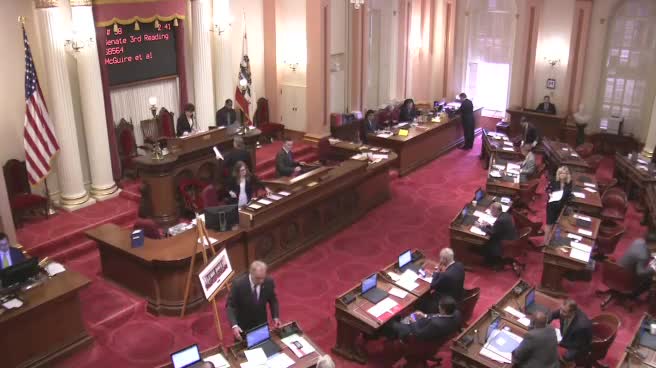
Bill Author

Bill Co-Author(s):