SB 504: Synthetic food dyes.
- Session Year: 2017-2018
- House: Senate
- Latest Version Date: 2017-04-18
Existing federal law, the Federal Food, Drug, and Cosmetic Act, regulates, among other things, the quality and packaging of foods introduced or delivered for introduction into interstate commerce. Existing state law, the Sherman Food, Drug, and Cosmetic Law, regulates potentially hazardous foods and establishes parameters for studying and monitoring chemicals in processed foods.
This bill would direct the Office of Environmental Health Hazard Assessment to review scientific literature, as specified, on the risks to children who consume synthetic food dyes, if any, and issue a report that answers specified questions no later than July 1, 2019.
Existing federal law, the Federal Food, Drug, and Cosmetic Act, regulates, among other things, the quality and packaging of foods introduced or delivered for introduction into interstate commerce and generally prohibits the misbranding of food. Existing federal law, the Nutrition Labeling and Education Act of 1990, governs state and local labeling requirements, including those that characterize the relationship of any nutrient specified in the labeling of food to a disease or health-related condition. Existing state law, the Sherman Food, Drug, and Cosmetic Law, generally regulates the labeling of food. Violation of these provisions is a crime.This bill would establish the Protecting Californians from Synthetic Food Dyes Act, which would make it a crime for a person to manufacture, package, sell, offer to sell, distribute, or import for sale or distribution within the State of California food that contains synthetic dyes without a prescribed label, either on the package or on the shelf or bin where the food is displayed for bulk foods. The bill would require prescribed language to be included on the menu or menu board of a restaurant when a dish includes synthetic food dyes. By creating a new crime, this bill would impose a state-mandated local program.The California Constitution requires the state to reimburse local agencies and school districts for certain costs mandated by the state. Statutory provisions establish procedures for making that reimbursement.This bill would provide that no reimbursement is required by this act for a specified reason.Existing federal law, the Federal Food, Drug, and Cosmetic Act, regulates, among other things, the quality and packaging of foods introduced or delivered for introduction into interstate commerce and generally prohibits the misbranding of food. Existing federal law, the Nutrition Labeling and Education Act of 1990, governs state and local labeling requirements, including those that characterize the relationship of any nutrient specified in the labeling of food to a disease or health-related condition. Existing state law, the Sherman Food, Drug, and Cosmetic Law, generally regulates the labeling of food. Violation of these provisions is a crime.
This bill would establish the Protecting Californians from Synthetic Food Dyes Act, which would make it a crime for a person to manufacture, package, sell, offer to sell, distribute, or import for sale or distribution within the State of California food that contains synthetic dyes without a prescribed label, either on the package or on the shelf or bin where the food is displayed for bulk foods. The bill would require prescribed language to be included on the menu or menu board of a restaurant when a dish includes synthetic food dyes. By creating a new crime, this bill would impose a state-mandated local program.
The California Constitution requires the state to reimburse local agencies and school districts for certain costs mandated by the state. Statutory provisions establish procedures for making that reimbursement.
This bill would provide that no reimbursement is required by this act for a specified reason.
(a)On or before December 1, 2018, the Office of Environmental Health Hazard Assessment shall review existing, published, peer-reviewed scientific literature on the risks, if any, to children who consume synthetic food dyes. On or before July 1, 2019, the Office of Environmental Health Hazard Assessment shall issue a report that addresses the following questions:
(1)Do synthetic dyes adversely affect some childrens behavior?
(2)If yes, what risk management options are available to the Legislature, if any?
(b)The Office of Environmental Health Hazard Assessment may request assistance from the Childrens Environmental Health Program, the California Research Bureau, the Senate Office of Research, or the California State Auditor.
SECTION 1.The Legislature finds and declares all of the following:(a)Synthetic food dyes are not necessary in foods and provide no nutritional or health benefit.(b)Synthetic food dyes trigger hyperactivity and other behavioral problems in some children with Attention Deficit/Hyperactivity Disorder (ADHD) or other behavioral disorders, and may also trigger these behaviors in other children without those disorders.(c)The removal of food dyes from the diet reduces symptoms in affected children.(d)The exposure to, and consumption of, synthetic food dyes is increasing, with per capita production of artificial colorings approved for use in food having increased more than five-fold since 1955.(e)A meal, or even an individual serving, can contain upwards of 26 mg of dyes, a dose used in many studies and found to trigger adverse behaviors.(f)The formulation and advertising of processed foods have used dyes to attract children to notice, request, and consume these products, and that has resulted in increased consumption of synthetic food dyes in recent decades.(g)An estimated 38,600 children in California may be adversely affected by synthetic food dyes.(h)The costs associated with the hyperactivity triggered by food dyes in California children with ADHD could be as high as $560 million to $820 million annually.(i)The behavioral effects of synthetic dyes on children may impair their academic success and interfere with the ability of their classmates to learn.(j)Foods containing synthetic food dyes are heavily marketed to children, with one study finding that more than 90 percent of child-oriented candies, fruit-flavored snacks, and drink mixes contained dyes.(k)Warning labels improve consumers understanding of health harms associated with some food ingredients and may reduce the likelihood of consumers purchasing products with those harmful ingredients.(l)Because synthetic food dyes are used in a variety of foods, and because dyed foods are heavily marketed to children, better labeling and restrictions on the sale and distribution of those products are necessary.(m)It is in the public interest for Californias Legislature to enact legislation that mandates warning labels and a stepwise ban on food containing synthetic food dyes. The benefits to Californians from enacting such legislation would be significant in societal and economic terms.(n)The State Department of Public Health has the authority to prescribe conditions under which a color additive may be used in California whether or not those conditions are identical to regulations under the Federal Food, Drug, and Cosmetic Act.(o)The Food and Drug Branch of the State Department of Public Health must protect and improve the health of all California residents by ensuring that food is safe. In connection with its duty to protect and promote the health of Californians, the State Department of Public Health routinely makes decisions about whether and how products may be sold and marketed in the state. SEC. 2.Article 8.5 (commencing with Section 110961) is added to Chapter 5 of Part 5 of Division 104 of the Health and Safety Code, to read:8.5.Synthetic Food Dyes110961.This article shall be known, and may be cited, as the Protecting Californians from Synthetic Food Dyes Act.110961.1.For purposes of this article, the following definitions shall apply:(a)Food shall have the same meaning as in Section 109935.(b)Label shall have the same meaning as in Section 109955.(c)Labeling shall have the same definition as in Section 109960.(d)Principal display panel shall have the same definition as in Section 110015.110961.2.(a)It is unlawful for a person to manufacture, package, sell, offer to sell, distribute, or import for sale or distribution within the State of California food that contains synthetic dyes without one of the following labels:(1)WARNING: Dyes in this food may trigger hyperactivity and other behavioral problems in some children.(2)WARNING: Childrens behavior might be impaired by the dyes in this food.(3)WARNING: This food contains synthetic dyes that may affect childrens behavior.(4)WARNING: The synthetic dyes in this food might affect your childs behavior.(5)WARNING: Synthetic dyes may trigger hyperactivity.(6)WARNING: Synthetic dyes may trigger behavioral problems.(7)WARNING: Some children may be negatively affected by synthetic food dyes.(b)The label required pursuant to subdivision (a) shall be located on the principal display panel and shall be prominently placed so as to render it likely to be read and understood by an ordinary individual under customary conditions of purchase and use.(c)The text of the label required pursuant to subdivision (a) shall be black on a white background or white on a black background, in a manner that contrasts, by typography, layout, or color, with all other printed material on the package. The text shall not be crowded with artwork or other labeling and shall be set off on a box by use of hairlines. (d)Unpackaged, bulk food that requires a label pursuant to subdivision (a) shall be labeled on the shelf or bin where the food is displayed for retail sale.(e)A restaurant selling foods with synthetic dyes shall indicate on the menus and menu boards which items contain synthetic dyes and shall place the language required in subdivision (a) on their menus and menu boards. The language shall appear on the same page as the menu item containing synthetic dyes and shall be of the same size and font as the menu item text. (f)This section does not apply to an alcoholic beverage, as defined in Section 23004 of the Business and Professions Code, or a medical food, as defined in Section 109971.110961.3.(a)A food that violates the requirements in Section 110961.2 or a rule or regulation promulgated pursuant to that section is subject to seizure in accordance with Section 111880. (b)A retailer or manufacturer that violates Section 110961.2 or a rule or regulation promulgated pursuant to that section is subject to the penalties prescribed in Section 111825.110961.4.If any provision of this article or of the regulations promulgated under this article, or the application of any provision to a person or circumstance is held to be invalid, the remainder of this article, including rules and regulations promulgated pursuant to it, and the application of those provisions to any other person or circumstance shall not be affected and shall continue to be enforced to the fullest extent possible.SEC. 3.No reimbursement is required by this act pursuant to Section 6 of Article XIIIB of the California Constitution because the only costs that may be incurred by a local agency or school district will be incurred because this act creates a new crime or infraction, eliminates a crime or infraction, or changes the penalty for a crime or infraction, within the meaning of Section 17556 of the Government Code, or changes the definition of a crime within the meaning of Section 6 of Article XIIIB of the California Constitution.The Legislature finds and declares all of the following:
(a)Synthetic food dyes are not necessary in foods and provide no nutritional or health benefit.
(b)Synthetic food dyes trigger hyperactivity and other behavioral problems in some children with Attention Deficit/Hyperactivity Disorder (ADHD) or other behavioral disorders, and may also trigger these behaviors in other children without those disorders.
(c)The removal of food dyes from the diet reduces symptoms in affected children.
(d)The exposure to, and consumption of, synthetic food dyes is increasing, with per capita production of artificial colorings approved for use in food having increased more than five-fold since 1955.
(e)A meal, or even an individual serving, can contain upwards of 26 mg of dyes, a dose used in many studies and found to trigger adverse behaviors.
(f)The formulation and advertising of processed foods have used dyes to attract children to notice, request, and consume these products, and that has resulted in increased consumption of synthetic food dyes in recent decades.
(g)An estimated 38,600 children in California may be adversely affected by synthetic food dyes.
(h)The costs associated with the hyperactivity triggered by food dyes in California children with ADHD could be as high as $560 million to $820 million annually.
(i)The behavioral effects of synthetic dyes on children may impair their academic success and interfere with the ability of their classmates to learn.
(j)Foods containing synthetic food dyes are heavily marketed to children, with one study finding that more than 90 percent of child-oriented candies, fruit-flavored snacks, and drink mixes contained dyes.
(k)Warning labels improve consumers understanding of health harms associated with some food ingredients and may reduce the likelihood of consumers purchasing products with those harmful ingredients.
(l)Because synthetic food dyes are used in a variety of foods, and because dyed foods are heavily marketed to children, better labeling and restrictions on the sale and distribution of those products are necessary.
(m)It is in the public interest for Californias Legislature to enact legislation that mandates warning labels and a stepwise ban on food containing synthetic food dyes. The benefits to Californians from enacting such legislation would be significant in societal and economic terms.
(n)The State Department of Public Health has the authority to prescribe conditions under which a color additive may be used in California whether or not those conditions are identical to regulations under the Federal Food, Drug, and Cosmetic Act.
(o)The Food and Drug Branch of the State Department of Public Health must protect and improve the health of all California residents by ensuring that food is safe. In connection with its duty to protect and promote the health of Californians, the State Department of Public Health routinely makes decisions about whether and how products may be sold and marketed in the state.
SEC. 2.Article 8.5 (commencing with Section 110961) is added to Chapter 5 of Part 5 of Division 104 of the Health and Safety Code, to read:8.5.Synthetic Food Dyes110961.This article shall be known, and may be cited, as the Protecting Californians from Synthetic Food Dyes Act.
110961.1.For purposes of this article, the following definitions shall apply:
(a)Food shall have the same meaning as in Section 109935.
(b)Label shall have the same meaning as in Section 109955.
(c)Labeling shall have the same definition as in Section 109960.
(d)Principal display panel shall have the same definition as in Section 110015.
110961.2.(a)It is unlawful for a person to manufacture, package, sell, offer to sell, distribute, or import for sale or distribution within the State of California food that contains synthetic dyes without one of the following labels:
(1)WARNING: Dyes in this food may trigger hyperactivity and other behavioral problems in some children.
(2)WARNING: Childrens behavior might be impaired by the dyes in this food.
(3)WARNING: This food contains synthetic dyes that may affect childrens behavior.
(4)WARNING: The synthetic dyes in this food might affect your childs behavior.
(5)WARNING: Synthetic dyes may trigger hyperactivity.
(6)WARNING: Synthetic dyes may trigger behavioral problems.
(7)WARNING: Some children may be negatively affected by synthetic food dyes.
(b)The label required pursuant to subdivision (a) shall be located on the principal display panel and shall be prominently placed so as to render it likely to be read and understood by an ordinary individual under customary conditions of purchase and use.
(c)The text of the label required pursuant to subdivision (a) shall be black on a white background or white on a black background, in a manner that contrasts, by typography, layout, or color, with all other printed material on the package. The text shall not be crowded with artwork or other labeling and shall be set off on a box by use of hairlines.
(d)Unpackaged, bulk food that requires a label pursuant to subdivision (a) shall be labeled on the shelf or bin where the food is displayed for retail sale.
(e)A restaurant selling foods with synthetic dyes shall indicate on the menus and menu boards which items contain synthetic dyes and shall place the language required in subdivision (a) on their menus and menu boards. The language shall appear on the same page as the menu item containing synthetic dyes and shall be of the same size and font as the menu item text.
(f)This section does not apply to an alcoholic beverage, as defined in Section 23004 of the Business and Professions Code, or a medical food, as defined in Section 109971.
110961.3.(a)A food that violates the requirements in Section 110961.2 or a rule or regulation promulgated pursuant to that section is subject to seizure in accordance with Section 111880.
(b)A retailer or manufacturer that violates Section 110961.2 or a rule or regulation promulgated pursuant to that section is subject to the penalties prescribed in Section 111825.
110961.4.If any provision of this article or of the regulations promulgated under this article, or the application of any provision to a person or circumstance is held to be invalid, the remainder of this article, including rules and regulations promulgated pursuant to it, and the application of those provisions to any other person or circumstance shall not be affected and shall continue to be enforced to the fullest extent possible.
SEC. 3.No reimbursement is required by this act pursuant to Section 6 of Article XIIIB of the California Constitution because the only costs that may be incurred by a local agency or school district will be incurred because this act creates a new crime or infraction, eliminates a crime or infraction, or changes the penalty for a crime or infraction, within the meaning of Section 17556 of the Government Code, or changes the definition of a crime within the meaning of Section 6 of Article XIIIB of the California Constitution.
|
Date
|
Status
|
|---|---|
| Feb 1, 2018 | Returned to Secretary of Senate pursuant to Joint Rule 56. |
| May 25, 2017 | May 25 hearing: Held in committee and under submission. |
| May 19, 2017 | Set for hearing May 25. |
| May 15, 2017 | May 15 hearing: Placed on APPR. suspense file. |
| May 4, 2017 | Set for hearing May 15. |
| Apr 27, 2017 | From committee: Do pass and re-refer to Com. on APPR. (Ayes 7. Noes 2. Page 886.) (April 26). Re-referred to Com. on APPR. |
| Apr 18, 2017 | From committee with author's amendments. Read second time and amended. Re-referred to Com. on HEALTH. |
| Apr 4, 2017 | Set for hearing April 26. |
| Mar 2, 2017 | Referred to Com. on HEALTH. |
| Feb 17, 2017 | From printer. May be acted upon on or after March 19. |
| Feb 16, 2017 | Introduced. Read first time. To Com. on RLS. for assignment. To print. |
|
Date
|
Description
|
Location
|
Votes
|
|
|---|---|---|---|---|
| May 15, 2017 | Placed on suspense file | Senate Standing Committee on Appropriations |
Passed |
|
| Apr 26, 2017 | Do pass, but first be re-referred to the Committee on [Appropriations] | Senate Standing Committee on Health |
Passed |
This list shows positions taken on this bill by organizations on the date displayed, which is linked to the original source.
Positions by individuals are not included.
|
Organization
|
Position
|
Date
|
|---|---|---|
| American Beverage Association | ** Against | Apr 24, 2017 |
| American Chemistry Council | ** Against | Apr 24, 2017 |
| Association for Comprehensive Neuro Therapy | ** Support | Apr 24, 2017 |
| Berkeley Media Studies Group | ** Support | Apr 24, 2017 |
| CalAsian Chamber of Commerce | ** Against | Apr 24, 2017 |
| California Chamber Of Commerce | ** Against | Apr 24, 2017 |
| California Grocers Association | ** Against | Apr 24, 2017 |
| California League of Food Processors | ** Against | Apr 24, 2017 |
| California Manufacturers & Technology | ** Against | Apr 24, 2017 |
| California Restaurant Association | ** Against | Apr 24, 2017 |
| California Retailers Association | ** Against | Apr 24, 2017 |
| Center For Environmental Health | ** Support | Apr 24, 2017 |
| Center For Food Safety | ** Support | Apr 24, 2017 |
| Center for Science in the Public Interest | * Support | Apr 26, 2017 |
| Children's Advocacy Institute | * Support | Apr 26, 2017 |
| Civil Justice Association Of California | ** Against | Apr 24, 2017 |
| Consumer Federation of America | ** Support | Apr 24, 2017 |
| Consumer Healthcare Products Association | ** Against | Apr 24, 2017 |
| Consumers Union | ** Support | Apr 24, 2017 |
| Council for Responsible Nutrition Dairy Institute of California | ** Against | Apr 24, 2017 |
| Environmental Defense Fund | ** Support | Apr 24, 2017 |
| Environmental Working Group | * Support | Apr 26, 2017 |
| Feingold Association of the United States | ** Support | Apr 24, 2017 |
| Grocery Manufacturers Association | ** Against | Apr 24, 2017 |
| International Association of Color Manufacturers | ** Against | Apr 24, 2017 |
| More than 1,000 individuals | ** Support | Apr 24, 2017 |
| National Federation Of Independent Business | ** Against | Apr 24, 2017 |
| Natural Resources Defense Council | ** Support | Apr 24, 2017 |
| Opposition to the prior version: | ** Against | Apr 24, 2017 |
| Orange County Food Access Coalition | ** Support | Apr 24, 2017 |
| Prevention Institute | ** Support | Apr 24, 2017 |
| Public Health Institute | ** Support | Apr 24, 2017 |
| Real Food for Real Kids | ** Support | Apr 24, 2017 |
| Real Food for Real Kids, Montgomery | ** Support | Apr 24, 2017 |
| School Food Focus | ** Support | Apr 24, 2017 |
| VALLEY INDUSTRY AND COMMERCE ASSOCIATION | ** Against | Apr 24, 2017 |
SENATE COMMITTEE ON APPROPRIATIONS
Senator Ricardo Lara, Chair
2017 - 2018 Regular Session
SB 504 (Wieckowski) - Synthetic food dyes
Version: April 18, 2017 | Policy Vote: HEALTH 7 - 2 |
Urgency: No | Mandate: No |
Hearing Date: May 15, 2017 | Consultant: Brendan McCarthy |
This bill meets the criteria for referral to the Suspense File.
Bill Summary:
SB 504 would require the Office of Environmental Health Hazard Assessment to review the existing scientific literature and prepare a report on the potential risks to children who consume synthetic food dyes.
Fiscal Impact:
- One-time costs of $425,000 over two years for additional staff at the Office of Environmental Health Hazard Assessment to review the existing scientific literature and issue a report on the risks to children and risk management options available to the Legislature (General Fund).
- Unknown potential costs to the Children’s Environmental Health Program, the California Research Bureau, the Senate Office of Research, and/or the California State Auditor (various funds). The bill authorizes the Office to request assistance from any of those organizations. Whether any of those organizations would participate in the implementation of the bill, and at what level of effort, is unknown.
Background:
Under current law, the Office of Environmental Health Hazard Assessment is the lead state agency for assessing the hazards posed by environmental contaminants. The Office focuses on assessing risks and does not perform a regulatory role.
Under current federal law, color additives must be approved by the federal Food and Drug Administration if they are to be used in foods, drugs, or cosmetics. In order to be approved by the Food and Drug Administration, there must be convincing evidence that establishes with reasonable certainty that no harm will result from the intended use of the color additive. Currently, there are seven color additive approved for general use in foods, drugs, and cosmetics, with two additional color additives approved for specific uses.
Proposed Law:
SB 504 would require the Office of Environmental Health Hazard Assessment to review the existing scientific literature and prepare a report on the potential risks to children who consumer synthetic food dyes.
The bill would require the Office to address whether synthetic dies adversely affect some children’s behavior. If so, the Office must address what risk management options are available to the Legislature.
The bill would authorize the Office to request assistance form the Children’s Environmental Health Program, the California Research Bureau, the Senate Office of Research, or the California State Auditor.
Staff Comments:
There is a long history of scientific studies indicating that there may be adverse impacts on children’s behavior and health due to the consumption of synthetic food dyes. To date, regulators in the United States and the European Union have not found sufficient evidence to revoke authority to use previously authorized food dyes. However, the European Union does require warning labels on products containing certain food dyes.
-- END --
SENATE COMMITTEE ON HEALTH
Senator Ed Hernandez, O.D., Chair
BILL NO: SB 504
AUTHOR: | Wieckowski | ||
VERSION: | April 18, 2017 | ||
HEARING DATE: | April 26, 2017 | ||
CONSULTANT: | Vince Marchand | ||
SUBJECT: Synthetic Food Dyes
SUMMARY:
Requires the Office of Environmental Health Hazard Assessment to review existing scientific literature on the risks, if any, to children who consume synthetic food dyes, and to issue a report by July 1, 2019, on whether synthetic dyes adversely affect some children’s behavior, and if so, what risk management options are available to the Legislature.
Existing law:
- Enacts the Sherman Food, Drug and Cosmetic Law, enforced by the Department of Public Health (DPH), which provides broad authority for DPH to enforce food safety requirements, including that food is not adulterated, misbranded, or falsely advertised. Food labeling requirements generally adopt federal food labeling laws as the state requirement, including nutrition labeling and allergen labeling, but DPH is permitted, by regulation, to adopt additional food labeling regulations.
- Establishes the Office of Environmental Health Hazard Assessment (OEHHA), and permits OEHHA to perform specified activities relating to assessment of human health risks of chemicals, including studies, demonstrations of innovative methods, and dissemination of information, and permits OEHHA to either perform the activities directly or enter into contracts for the performance of the activities.
- Establishes the Safer Consumer Products Program (Green Chemistry Program) to decrease California's exposure to toxic substances by identifying and prioritizing chemicals of concern and evaluating safer alternatives to toxic chemicals through a science-based approach.
- Establishes the Children’s Environmental Health Center within the California Environmental Protection Agency to serve as chief advisor to the Secretary for Environmental Protection and to the Governor on matters relating to environmental health and environmental protection as each of those matters relates to children.
This bill:
- Requires OEHHA, by December 1, 2018, to review existing, published, peer-reviewed scientific literature on the risks, if any, to children who consume synthetic food dyes.
- Requires OEHHA, by July 1, 2019, to issue a report that addresses whether synthetic dyes adversely affect some children’s behavior, and if yes, what risk management options are available to the Legislature, if any.
- Permits OEHHA to request assistance from the Children’s Environmental Health Program, the California Research Bureau, the Senate Office of Research, or the California State Auditor.
FISCAL EFFECT:
This bill has not been analyzed by a fiscal committee.
COMMENTS:
- Author’s statement. According to the author, with consumer pressure, restaurants and companies like Whole Foods and Trader Joe’s have taken steps to ensure their food and drink offerings are free from synthetic dyes and have chosen to naturally color and flavor their food. However, not every family has the means to shop at Whole Foods. Low income families and communities of color often cut purchasing healthy foods from their budget when they are experiencing financial difficulties and often travel five miles or more to reach the nearest chain supermarket. Lack of access to fresh and healthy food in California is an economic justice issue. Low income neighborhoods have fewer fruit and vegetable markets, and natural food stores In many “food desert” communities across the state, the only places to buy food are convenience stores and fast food restaurants that sell fatty, sugary, processed foods and beverages containing synthetic dyes where they are abundant and affordable. These artificial ingredients lack nutritional value and are used as cheap replacements for healthful ingredients. Multiple scientific studies have concluded that eliminating food dyes or adopting a broader elimination diet produces behavioral and academic improvements for some children. Most parents are unaware of dyes’ possible effects and are unable to identify dyes in their children’s diet as a cause of their children’s behavioral problems. Parents regard their child’s behavior as “acting out” and not because the synthetic or “artificial” coloring in pickles, salad dressing, fruit flavor snacks, drink mixes, or marshmallows are to blame. This bill will improve public health for children and families instructing OEHHA to review existing, published, peer reviewed scientific literature on the risks to children who consume synthetic food dyes and flavoring. Accessing healthy, nutritious, affordable, high-quality food is a challenge for many Californians—particularly those living in low-income neighborhoods, communities of color, and rural areas. All families in California, regardless of socioeconomic status should have access to healthy foods that are nutritious, fresh, affordable and dye free.
- Federal regulation of food dyes. Color additives, defined in federal regulations as any dye, pigment, or other substances that imparts color to a food, drug, cosmetic or to the human body, are required to be approved by the federal Food and Drug Administration (FDA) before they may be used in products marketed in the United States. According to the FDA, a color additive is not to be listed unless data establish that the proposed use of the color additive is safe, and an additive is only “safe” if there is “convincing evidence that establishes with reasonable certainty that no harm will result from the intended use of the color additive.” There are currently seven “food, drug, and cosmetic” (FD&C) color additives that have been certified for general use in foods: FD&C Blue No. 1, FD&C Blue No. 2, FD&C Green No. 3, FD&C Red No. 3, FD&C Red No. 40, FD&C Yellow No. 5, and FD&C Yellow No. 6. In addition, there are two other dyes that are approved for specific uses: Orange B is approved only for use in casings or surfaces of frankfurters and sausages, and Citrus Red No. 2 is only approved to color the rind of oranges that are not used for processing. Food labels are required to include the name of any color additive that is used in that food product.
- History of the food dye controversy. According to a 2012 article in the journal Neurotherapeutics, entitled “Artificial Food Colors and Attention-Deficit/Hyperactivity Symptoms: Conclusions to Dye For,” the initial specific hypothesis that food allergies or hypersensitivities lead to behavior and learning problems was presented by Dr. Benjamin Feingold in 1973. At the time, Dr. Feingold was Chief Emeritus for the Department of Allergy at Kaiser Permanente. Dr. Feingold believed that patients were often sensitive to foods containing natural salicylates, artificial food colorings, and flavors, and he devised a diet free of these substances, which came to be known as the “Kaiser Permanente diet.” This hypothesis was controversial and generally criticized in the medical field. After several studies, the National Institutes of Health held a conference on defined diets and hyperactivity in 1982 and concluded that, while a controlled diet may have benefits in the treatment of childhood hyperactivity, further studies were needed. In 1983, a meta-analysis of 23 studies concluded that the overall effect of defined diets on hyperactivity was too small to be important and did not support the Kaiser Permanente diet as a treatment for hyperactivity.
In 2007, food dyes again came under scrutiny following publication of a study conducted by the University of Southampton, commission by the United Kingdom Food Standards Agency (FSA), and published in The Lancet. The Southampton study evaluated whether six color additives, as well as the preservative sodium benzoate, when consumed in a beverage, cause hyperactivity in children. Of the six color additives in this study, only three are approved for use in the United States by the FDA: FD&C Red No. 40, FD&C Yellow No. 5, and FD&C Yellow No. 6. The Southampton study found an effect on hyperactivity in preschool age children, and a smaller effect on 8-9 year-olds in the higher-dosage portion of the study. Whether or not the child was previously associated with hyperactivity made no difference in the result, suggesting that to the extent there is a harmful effect of food coloring, it is to all children, not just those who are diagnosed with hyperactivity. Following this study, the United Kingdom’s Committee on Toxicity, which advises the FSA, concluded that the study provides supporting evidence of a possible link between the test mixtures and hyperactivity in children, but that because of study limitations, results could not be extrapolated to the general population, and further testing was recommended. The European Food Safety Authority (EFSA) also assessed the Southampton study, concluding that it provided only limited evidence of a small effect on the activity and attention of some children. The EFSA also noted that because mixtures were tested, rather than individual ingredients, the observed effects could not be attributed to any individual additive. In 2009, the EFSA re-evaluated the safety of the six color additives used in the Southampton study, and concluded that the available scientific evidence does not substantiate a link between the color additives and behavioral effects. However, based on the Southampton study, the United Kingdom began requesting manufacturers to avoid these additives in favor of natural food colors. In 2010, the European Union began requiring warning labels on foods that contain any of the color additives tested in the Southampton study. - Petition by the Center for Science in the Public Interest. In 2008, the Center for Science in the Public Interest (CSPI), which is a co-sponsor of this bill, petitioned the FDA to ban eight of the nine certified color additives approved for use in foods (the petition excluded Citrus Red No. 2, as it is only used on the rinds of oranges not used for processing, so is not ingested by consumers). CSPI contended that these color additives cause hyperactivity and behavior problems in some children, and referenced a number of studies, including the Southampton study and a 2004 meta-analysis of 21 double-blind studies on artificial colors and children’s behavior. CSPI also requested that until it makes a final decision on CSPI’s request to ban the additives, that the FDA require warning labels on foods containing these color additives stating that they cause hyperactivity and behavioral problems in some children. In response to this petition, the FDA’s Center for Food Safety and Applied Nutrition convened its Food Advisory Committee (FDA Committee) in 2011 to consider the subject of children’s consumption of food dyes and its possible association with hyperactivity. The FDA Committee conducted a review of the literature, including the studies cited by CSPI. Based on this review, the FDA Committee concluded that a causal relationship between exposure to color additives and hyperactivity in the general population had not been established. However, the FDA Committee stated that for certain susceptible children with Attention Deficit/Hyperactivity Disorder and other problem behaviors, the data suggests that their condition may be exacerbated by exposure to a number of substances in food, including, but not limited to, synthetic color additives. According to the FDA Committee, findings from relevant clinical trials indicate that the effects on their behavior appear to be due to a unique intolerance to these substances and not to any inherent neurotoxic properties. The FDA Committee recommended additional safety studies be conducted, and voted against additional labeling requirements for foods containing color additives.
- Background on OEHHA. OEHHA is one of five state departments within the California Environmental Protection Agency, and is the lead state agency for the assessment of health risks posed by environmental contaminants. OEHHA’s mission is to protect human health and the environment through scientific evaluation of risks posed by hazardous substances. OEHHA was created by Governor’s Reorganization Plan 1 in 1991, which among other things transferred the environmental components of the Health Hazard Assessment Division of the then-Department of Health Services. In general, OEHHA focuses on “risk assessment,” while “risk management” (regulation) is handled by other departments. OEHHA implements the Safe Drinking Water and Toxic Enforcement Act of 1986 (known as Proposition 65), and compiles the state’s list of substances that cause cancer or reproductive harm. Additionally, OEHHA develops health-protective exposure levels for contaminants in air, water, and soil as guidance for regulatory agencies and the public.
- Related legislation. SB 300 (Monning) would establish the Sugar-Sweetened Beverages Health Warning Act, to be administered by DPH, and requires a safety warning on all sealed sugar-sweetened beverage containers, as specified. Requires the warning label to be posted in a place that is easily visible at the point-of-purchase of an establishment where a beverage container is not filled by the consumer. SB 300 is pending in Senate Health Committee.
- Prior legislation. SB 203 (Monning, of 2015) and SB 1000 (Monning of 2014) were substantially similar to SB 300 in related legislation. SB 203 failed passage in the Senate Health Committee, and SB 1000 failed passage in the Assembly Health Committee.
SB 1381 (Evans, of 2014), would have enacted “The California Right to Know Genetically Engineered Food Act” to require the labeling of all genetically engineered foods sold within California. SB 1381 failed passage on the Senate Floor. - Support. This bill is co-sponsored by CSPI and the Children’s Advocacy Institute (sponsors). The sponsors state that synthetic dyes are widely used, especially in children’s foods, but that unfortunately, dyes trigger adverse behavioral reactions, such as hyperactivity, in some children. According to the sponsors, many double-blind clinical trials tested the effects of 26-30 milligrams of mixtures of dyes on children and found that that quantity was sufficient to trigger hyperactivity and other adverse behaviors. According to the sponsors, as an example, one serving of Little Debbie Swiss Rolls has 32 milligrams of dyes. The Environmental Working Group (EWG) also supports this bill, stating that synthetic dyes are widely used, especially in children’s foods. EWG states that OEHHA is the right agency to conduct this assessment, as it is widely regarded as a leading scientific organization for evaluating risks to human health. Physicians for Social Responsibility, San Francisco Bay Area Chapter, states in support that parents, often unaware of the evolving science linking synthetic food dyes and adverse behavior, may not realize that many foods contain dyes.
- Opposition. This bill is opposed by a coalition which includes the American Chemistry Council, the California League of Food Processors, the Grocery Manufacturers Association, and the International Association of Color Manufacturers (opposition coalition). The opposition coalition states that the proposed study is not a good use of limited OEHHA resources, as the issue has been extensively studied and commented on by numerous expert bodies, including the FDA and the EFSA. The opposition coalition states that the premise for the proposed study is the Southampton study, and asserts that the conclusions of that study were not corroborated further, and global regulatory bodies have concluded that the Southampton study does not provide adequate evidence that there are any safety issues with any of the colors that are manufactured and used by their member companies. According to the opposition coalition, this bill is simply an attempt to turn the thinnest correlation into causation where none exists. The opposition coalition argues that no additional risk management is needed by California as any potential risks associated with ingesting synthetic colors are already managed by federally mandated listing of all synthetic colors by name on food labels. According to the opposition coalition, any consumers who may be potentially sensitive to or want to avoid synthetic colors for any reason can easily determine what colors are present in marketed products to make an informed purchase.
Note: The coalition opposing this bill included numerous additional organizations when writing in opposition to the prior version of this bill, which required food products with synthetic food dyes to have a label warning against adverse effects on behavior in children. Other than the organizations identified above which stated that they agreed with a new letter specific to the amended bill, committee staff was unable to confirm whether the other members of the coalition remained opposed to the amended bill. Those companies are listed below as opposed to the prior version.
SUPPORT AND OPPOSITION:
Support: Center for Science in the Public Interest (co-sponsor)
Children’s Advocacy Institute (co-sponsor)
Association for Comprehensive Neuro Therapy
Berkeley Media Studies Group
Center for Environmental Health
Center for Food Safety
Consumer Federation of America
Consumers Union
Environmental Defense Fund
Environmental Working Group
Feingold Association of the United States
Natural Resources Defense Council
Orange County Food Access Coalition
Physicians for Social Responsibility San Francisco Bay Area Chapter
Prevention Institute
Public Health Institute
Real Food for Real Kids
Real Food for Real Kids, Montgomery
School Food Focus
More than 1,000 individuals
Oppose: American Chemistry Council
California League of Food Processors
Grocery Manufacturers Association
International Association of Color Manufacturers
Opposition to the prior version:
American Beverage Association
CalAsian Chamber of Commerce
California Chamber of Commerce
California Grocers Association
California Manufacturers & Technology
California Restaurant Association
California Retailers Association
Civil Justice Association of California
Consumer Healthcare Products Association
Council for Responsible Nutrition
Dairy Institute of California
National Federation of Independent Business
Valley Industry and Commerce Association
-- END --
Discussed in Hearing
 48MIN
Senate Standing Committee on Appropriations
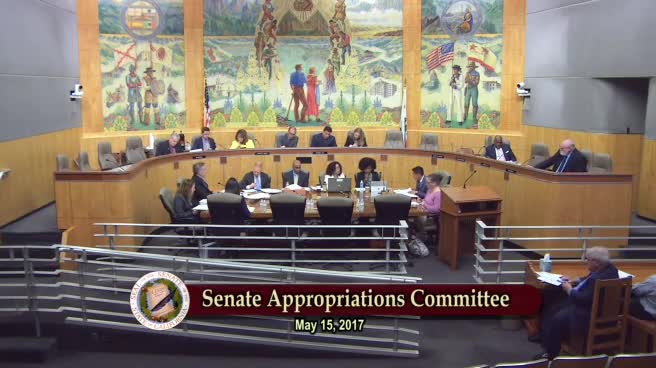 59SEC
Senate Standing Committee on Appropriations
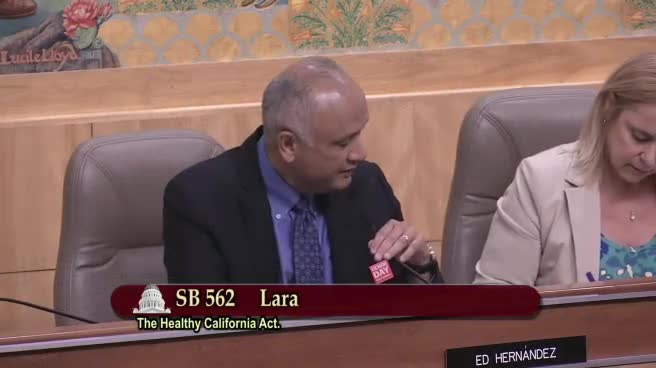 10MIN
Senate Standing Committee on Health
Bill Author
Bill Co-Author(s):