SB 535: Claims against the state: appropriation.
- Session Year: 2017-2018
- House: Senate
- Latest Version Date: 2017-05-26
Existing law requires the Attorney General, when there is not a sufficient appropriation for the payment of certain claims, settlements, or judgments, to report the claims, settlements, and judgments to the chairperson of either the Senate Committee on Appropriations or the Assembly Committee on Appropriations, who is then required to cause introduction of legislation appropriating necessary funds for payment.
This bill would appropriate $32,022,611.07 from the General Fund to the Attorney General to pay specific judgments.
This bill would declare that it is to take effect immediately as an urgency statute.
Existing law requires the Attorney General, when there is not a sufficient appropriation for the payment of certain claims, settlements, or judgments, to report the claims, settlements, and judgments to the chairperson of either the Senate Committee on Appropriations or the Assembly Committee on Appropriations, who is then required to cause introduction of legislation appropriating necessary funds for payment.
This bill would state that it appropriates an unspecified amount appropriate $32,022,611.07 from the General Fund to the Attorney General to pay an undesignated judgment. specific judgments.
This bill would declare that it is to take effect immediately as an urgency statute.
Existing law requires the Attorney General, when there is not a sufficient appropriation for the payment of certain claims, settlements, or judgments, to report the claims, settlements, and judgments to the chairperson of either the Senate Committee on Appropriations or the Assembly Committee on Appropriations, who is then required to cause introduction of legislation appropriating necessary funds for payment.
This bill would state that it appropriates an unspecified amount from the General Fund to the Attorney General to pay an undesignated judgment.
This bill would declare that it is to take effect immediately as an urgency statute.
(a)The sum of thirty-two million twenty-two thousand six hundred eleven dollars and seven cents ($32,022,611.07) is hereby appropriated from the General Fund to the Attorney General to be allocated in accordance with the following schedule:
(1)The sum of five hundred twenty-two thousand six hundred eleven dollars and seven cents ($522,611.07) to pay the settlement in John Doe, et al. v. Kamala D. Harris, et al. (9th Cir. Nov. 18, 2014, No 5. 13-15263, 13-15267) and John Doe et al. v. Kamala D. Harris, et al. ((N.D. Cal. Jan. 11, 2013) 2013 WL 144048).
(2)The sum of thirty-one million five hundred thousand dollars ($31,500,000) to pay the judgment in Mercury Insurance Company, et al. v. Dave Jones, in His Official Capacity as the Insurance Commissioner of the State of California (Super. Ct. Orange County, Feb. 9, 2015 No. 30-2015-00770552).
(b)Any funds appropriated in excess of the amounts actually required for the payment of this judgment shall revert to the General Fund on June 30 of the fiscal year in which the final payment is made.
SEC. 2.This act is an urgency statute necessary for the immediate preservation of the public peace, health, or safety within the meaning of Article IV of the Constitution and shall go into immediate effect. The facts constituting the necessity are:
In order to pay judgment and settlement claims against the state and end hardship to claimants as quickly as possible, it is necessary for this act to take effect immediately.
(a)The sum of ____ ($____) thirty-two million twenty-two thousand six hundred eleven dollars and seven cents ($32,022,611.07) is hereby appropriated from the General Fund to the Attorney General to pay for the judgment in the case of ____. to be allocated in accordance with the following schedule:
(1)The sum of five hundred twenty-two thousand six hundred eleven dollars and seven cents ($522,611.07) to pay the settlement in John Doe, et al. v. Kamala D. Harris, et al. (9th Cir. Nov. 18, 2014, No 5. 13-15263, 13-15267) and John Doe et al. v. Kamala D. Harris, et al. ((N.D. Cal. Jan. 11, 2013) 2013 WL 144048).
(2)The sum of thirty-one million five hundred thousand dollars ($31,500,000) to pay the judgment in Mercury Insurance Company, et al. v. Dave Jones, in His Official Capacity as the Insurance Commissioner of the State of California (Super. Ct. Orange County, Feb. 9, 2015 No. 30-2015-00770552).
Any(b)Any funds appropriated in excess of the amounts actually required for the payment of this judgment shall revert to the General Fund on June 30 of the fiscal year in which the final payment is made.
SEC. 2.This act is an urgency statute necessary for the immediate preservation of the public peace, health, or safety within the meaning of Article IV of the Constitution and shall go into immediate effect. The facts constituting the necessity are:
In order to pay judgment and settlement claims against the state and end hardship to claimants as quickly as possible, it is necessary for this act to take effect immediately.
The sum of ____ ($____) is hereby appropriated from the General Fund to the Attorney General to pay for the judgment in the case of ____.
Any funds appropriated in excess of the amounts actually required for the payment of this judgment shall revert to the General Fund on June 30 of the fiscal year in which the final payment is made.
SEC. 2.This act is an urgency statute necessary for the immediate preservation of the public peace, health, or safety within the meaning of Article IV of the Constitution and shall go into immediate effect. The facts constituting the necessity are:
In order to pay judgment and settlement claims against the state and end hardship to claimants as quickly as possible, it is necessary for this act to take effect immediately.
|
Date
|
Status
|
|---|---|
| May 26, 2017 | Chaptered by Secretary of State. Chapter 11, Statutes of 2017. |
| May 26, 2017 | Approved by the Governor. |
| May 25, 2017 | Enrolled and presented to the Governor at 12 p.m. |
| May 22, 2017 | In Senate. Ordered to engrossing and enrolling. |
| May 22, 2017 | Read third time. Urgency clause adopted. Passed. (Ayes 76. Noes 1. Page 1662.) Ordered to the Senate. |
| May 18, 2017 | Read second time. Ordered to third reading. |
| May 17, 2017 | From committee: Do pass. (Ayes 17. Noes 0.) (May 17). |
| May 8, 2017 | Referred to Com. on APPR. |
| Apr 24, 2017 | In Assembly. Read first time. Held at Desk. |
| Apr 24, 2017 | Read third time. Urgency clause adopted. Passed. (Ayes 30. Noes 6. Page 801.) Ordered to the Assembly. |
| Apr 18, 2017 | Read second time. Ordered to third reading. |
| Apr 17, 2017 | From committee: Do pass. (Ayes 7. Noes 0. Page 708.) (April 17). |
| Apr 5, 2017 | Set for hearing April 17. |
| Mar 30, 2017 | From committee with author's amendments. Read second time and amended. Re-referred to Com. on APPR. |
| Mar 2, 2017 | Referred to Com. on APPR. |
| Feb 17, 2017 | From printer. May be acted upon on or after March 19. |
| Feb 16, 2017 | Introduced. Read first time. To Com. on RLS. for assignment. To print. |
|
Date
|
Description
|
Location
|
Votes
|
|
|---|---|---|---|---|
| May 22, 2017 | SB 535 Lara Third Reading Urgency By GONZALEZ FLETCHER | Assembly Floor |
Passed |
|
| May 17, 2017 | Do pass. | Assembly Standing Committee on Appropriations |
Passed |
|
| Apr 24, 2017 | Senate 3rd Reading SB535 Lara Urgency Clause | Senate Floor |
Passed |
|
| Apr 17, 2017 | Do pass | Senate Standing Committee on Appropriations |
Passed |
This list shows positions taken on this bill by organizations on the date displayed, which is linked to the original source.
Positions by individuals are not included.
SENATE THIRD READING
STR Bill Id:SB 535
Author:(Lara)
As Amended Ver:March 30, 2017
2/3 vote. Urgency
SENATE VOTE: 30-6
Committee | Votes | Ayes | Noes |
Appropriations | 17-0 | Gonzalez Fletcher, Bigelow, Bloom, Levine, Bonta, Brough, Calderon, Quirk, Eggman, Fong, Thurmond, Gallagher, Eduardo Garcia, Gray, Muratsuchi, Obernolte, Reyes |
SUMMARY: This bill, an urgency measure, appropriates $32,022,611.07 from the General Fund to the Department of Justice (DOJ) for the payment of two specified claims against the state. Any funds appropriated in excess of the amounts required for payment of the claims would revert to the General Fund.
FISCAL EFFECT:
- One-time General Fund (GF) appropriation of $31.5 million in 2016-17 to DOJ to pay the judgment in Mercury Insurance Company, et al. v. Dave Jones, in his official capacity as Insurance Commissioner.
- One-time GF appropriation of $522,611.07 in 2016-17 to pay the settlement in John Doe, et al. v. Kamala D. Harris, et al.
COMMENTS:
- Background. This bill is one of the bills carried by the Chairs of the Appropriations Committees each year to provide appropriation authority for legal settlements approved by DOJ and the Department of Finance (DOF). These settlements were entered into lawfully by the state upon advice of counsel (DOJ). They are binding state obligations.
- Purpose. This bill is necessary to pay the following judgment and settlement:
Mercury Insurance Company, et al. v. Dave Jones, in his official capacity as Insurance Commissioner. (Super. Ct. Orange County, Feb. 9, 2015 No. 30-2015-00770552) $31.5 million judgment, payable from the General Fund.
On January 7, 2015, following lengthy administrative proceedings, the California Insurance Commissioner (Commissioner) issued an order imposing a civil penalty against Mercury Insurance Company in the amount of $27,593,550. In the order, the Commissioner found that Mercury had charged its customers premiums for auto insurance that had not been approved by the Commissioner, as required by Proposition 103 of 1989. Specifically, the Commissioner found that Mercury used brokers acting as de facto agents, and that those agents charged brokers' fees that qualify as agent fees which should have been reported as premiums in rate applications. The adopted decision required Mercury to pay a civil penalty.
On February 9, 2015, Mercury filed suit in the Orange County Superior Court, arguing that it had been deprived due process in the administrative proceedings, that the brokers' fees were not premiums requiring the Commissioner's approval, that the Commissioner was barred by the doctrines of estoppel and laches, and that the Commissioner had abused his discretion in imposing the penalty. The superior court did not stay the Commissioner's order and Mercury paid the penalty on March 30, 2015.
On August 12, 2016, the Superior Court found in favor of Mercury. On November 23, 2016, the Superior Court issued a judgment and a writ of administrative mandate, both of which ordered the Commissioner to return all sums paid in penalties by Mercury, plus statutory interest calculated from March 30, 2015.
The total General Fund appropriation of $31.5 million is comprised of the original penalty amount of $27,593,550, pre-judgment interest accrued from March 30, 2015 to November 17, 2016 in the amount of $3,169,856.31, and post-judgment interest that will accrue from May 16, 2017 to November 1, 2017 in the amount of $735,576. The majority of the post-judgment interest will revert to the General Fund, assuming this measure is approved by the Legislature and signed by the Governor before the end of the current 2016-17 fiscal year.
The California Insurance Commissioner intends to file a notice of appeal of the superior court's decision, and therefore the judgment noted above is not final. Since the appeals process could take two or more years to complete, the Commissioner has determined, and the DOF agrees, that it would be in the state's best interest to return the penalty and pay interest accrued to date in order to avoid the possibility that the state could be obligated to pay significant additional interest if the appeal is not successful.
John Doe, e al. v. Kamala D. Harris, et al. [N.D. Cal. Jan. 11, 2013) 2013 WL 144048, and 9th Cir. Nov. 18, 2014, No 5. 13-15263, 13-15267] $522,611.07 settlement, payable from the General Fund.
In 2012, the voters approved Proposition 35, the Californians Against Sexual Exploitation (CASE) Act, which, among its provisions, expanded the definition and penalties for human trafficking, and imposed supplemental reporting obligations for registered sex offenders by requiring offenders to provide "[a] list of any and all Internet service providers used by the person," and a statement signed by the registrant that he or she acknowledges the requirement to register and update the specified Internet-related information. The Act also requires registered sex offenders to send written notice to law enforcement within 24 hours of adding or changing an Internet identifier or an account with an Internet service provider.
On the day the CASE Act took effect, a class of registered sex offenders represented by the American Civil Liberties Union (ACLU) filed suit, asserting that the CASE Act violates their First Amendment rights to freedom of speech and association and that the statutory provisions are void for vagueness in violation of the Fourteenth Amendment. The district court granted a motion for preliminary injunction, and the Ninth Circuit Court of Appeals affirmed the decision and remanded the case back to the district court for further proceedings. Specifically, in Doe v. Harris (2014), the appellate court concurred with the district court that the CASE Act unnecessarily chills protected speech in at least three ways: 1) it does not make clear what sex offenders are required to report; 2) it provides insufficient safeguards preventing the public release of the information sex offenders do report; and 3) the 24-hour reporting requirement is onerous and overbroad.
On October 26, 2015, the district court deferred entry of final judgment to allow Intervenors to pursue legislation to amend the law in a way that would resolve the matter without further proceedings. SB 448 (Hueso), Chapter 772, Statutes of 2016, significantly narrowed the scope of the challenged Internet registration requirements. Most significantly, SB 448 amended the law to require registration only for people convicted after January 1, 2017 of a limited number of specified offenses who used the Internet as part of their crimes. The parties agreed that those changes moot the litigation.
The parties began meeting and conferring regarding costs and attorneys' fees after SB 448 was signed, and settled on an agreement that requires the Attorney General to pay the ACLU $522,611.07 in costs and fees. The settlement shields DOJ from motion practice and any obligation to pay interest. The district court entered an order directing DOJ to pay that amount by June 30, 2017.
Analysis Prepared by: Pedro Reyes / APPR. / (916) 319-2081 FN: 0000443
Date of Hearing: May 17, 2017
ASSEMBLY COMMITTEE ON APPROPRIATIONS
Lorena Gonzalez Fletcher, Chair
SBPCA Bill Id:SB 535
Author:(Lara) – As Amended Ver:March 30, 2017
Policy Committee: | N/A | Vote: | N/A |
|
|
Urgency: Yes State Mandated Local Program: No Reimbursable: No
SUMMARY:
This bill, an urgency measure, appropriates $32,022,611.07 from the General Fund to the Department of Justice (DOJ) for the payment of two specified claims against the state. Any funds appropriated in excess of the amounts required for payment of the claims would revert to the General Fund.
FISCAL EFFECT:
- One-time GF appropriation of $31.5 million in 2016-17 to DOJ to pay the judgment in Mercury Insurance Company, et al. v. Dave Jones, in his official capacity as Insurance Commissioner.
- One-time GF appropriation of $522,611.07 in 2016-17 to pay the settlement in John Doe, et al. v. Kamala D. Harris, et al.
COMMENTS:
- Background. This bill is one of the bills carried by the Chairs of the Appropriations Committees each year to provide appropriation authority for legal settlements approved by DOJ and the Department of Finance (DOF). These settlements were entered into lawfully by the state upon advice of counsel (DOJ). They are binding state obligations.
- Purpose. This bill is necessary to pay the following judgment and settlement:
Mercury Insurance Company, et al. v. Dave Jones, in his official capacity as Insurance Commissioner. (Super. Ct. Orange County, Feb. 9, 2015 No. 30-2015-00770552) $31.5 million judgment, payable from the General Fund.
On January 7, 2015, following lengthy administrative proceedings, the California Insurance Commissioner (Commissioner) issued an order imposing a civil penalty against Mercury Insurance Company in the amount of $27,593,550. In the order, the Commissioner found that Mercury had charged its customers premiums for auto insurance that had not been approved by the Commissioner, as required by Proposition 103 of 1989. Specifically, the Commissioner found that Mercury used brokers acting as de facto agents, and that those agents charged brokers’ fees that qualify as agent fees which should have been reported as premiums in rate applications. The adopted decision required Mercury to pay a civil penalty.
On February 9, 2015, Mercury filed suit in the Orange County Superior Court, arguing that it had been deprived due process in the administrative proceedings, that the brokers’ fees were not premiums requiring the Commissioner’s approval, that the Commissioner was barred by the doctrines of estoppel and laches, and that the Commissioner had abused his discretion in imposing the penalty. The superior court did not stay the Commissioner’s order and Mercury paid the penalty on March 30, 2015.
On August 12, 2016, the Superior Court found in favor of Mercury. On November 23, 2016, the Superior Court issued a judgment and a writ of administrative mandate, both of which ordered the Commissioner to return all sums paid in penalties by Mercury, plus statutory interest calculated from March 30, 2015.
The total General Fund appropriation of $31.5 million is comprised of the original penalty amount of $27,593,550, pre-judgment interest accrued from March 30, 2015 to November 17, 2016 in the amount of $3,169,856.31, and post-judgment interest that will accrue from May 16, 2017 to November 1, 2017 in the amount of $735,576. The majority of the post-judgment interest will revert to the General Fund, assuming this measure is approved by the Legislature and signed by the Governor before the end of the current 2016-17 fiscal year.
The California Insurance Commissioner intends to file a notice of appeal of the superior court’s decision, and therefore the judgment noted above is not final. Since the appeals process could take two or more years to complete, the Commissioner has determined, and the DOF agrees, that it would be in the state’s best interest to return the penalty and pay interest accrued to date in order to avoid the possibility that the state could be obligated to pay significant additional interest if the appeal is not successful.
John Doe, e al. v. Kamala D. Harris, et al. [N.D. Cal. Jan. 11, 2013) 2013 WL 144048, and 9th Cir. Nov. 18, 2014, No 5. 13-15263, 13-15267] $522,611.07 settlement, payable from the General Fund.
In 2012, the voters approved Proposition 35, the Californians Against Sexual Exploitation (CASE) Act, which, among its provisions, expanded the definition and penalties for human trafficking, and imposed supplemental reporting obligations for registered sex offenders by requiring offenders to provide “[a] list of any and all Internet service providers used by the person,” and a statement signed by the registrant that he or she acknowledges the requirement to register and update the specified Internet-related information. The Act also requires registered sex offenders to send written notice to law enforcement within 24 hours of adding or changing an Internet identifier or an account with an Internet service provider.
On the day the CASE Act took effect, a class of registered sex offenders represented by the American Civil Liberties Union (ACLU) filed suit, asserting that the CASE Act violates their First Amendment rights to freedom of speech and association and that the statutory provisions are void for vagueness in violation of the Fourteenth Amendment. The district court granted a motion for preliminary injunction, and the Ninth Circuit Court of Appeals affirmed the decision and remanded the case back to the district court for further proceedings. Specifically, in Doe v. Harris (2014), the appellate court concurred with the district court that the CASE Act unnecessarily chills protected speech in at least three ways: (1) it does not make clear what sex offenders are required to report; (2) it provides insufficient safeguards preventing the public release of the information sex offenders do report; and (3) the 24-hour reporting requirement is onerous and overbroad.
On October 26, 2015, the district court deferred entry of final judgment to allow Intervenors to pursue legislation to amend the law in a way that would resolve the matter without further proceedings. SB 448 (Hueso), Chapter 772, Statutes of 2015-16, significantly narrowed the scope of the challenged Internet registration requirements. Most significantly, SB 448 amended the law to require registration only for people convicted after January 1, 2017 of a limited number of specified offenses who used the Internet as part of their crimes. The parties agreed that those changes moot the litigation.
The parties began meeting and conferring regarding costs and attorneys’ fees after SB 448 was signed, and settled on an agreement that requires the Attorney General to pay the ACLU $522,611.07 in costs and fees. The settlement shields DOJ from motion practice and any obligation to pay interest. The district court entered an order directing DOJ to pay that amount by June 30, 2017.
Analysis Prepared by: Pedro Reyes / APPR. / (916) 319-2081
Office of Senate Floor Analyses (916) 651-1520 Fax: (916) 327-4478 | SB |
THIRD READING
Bill No: SB 535
:
SENATE APPROPRIATIONS COMMITTEE: 7-0, 4/17/17
AYES: Lara, Bates, Beall, Bradford, Hill, Nielsen, Wiener
DIGEST: This bill, an urgency measure, appropriates $32,022,611.07 from the General Fund to the Department of Justice (DOJ) for the payment of two specified claims against the state. Any funds appropriated in excess of the amounts required for payment of the claims would revert to the General Fund.
ANALYSIS: This bill is one of several annual bills carried by the chairs of the Appropriations Committees to provide appropriation authority for legal settlements approved by DOJ and the Department of Finance (DOF). These settlements were entered into lawfully by the state upon advice of counsel (DOJ). They are binding state obligations.
This bill appropriates General Fund revenues to DOJ to pay the following judgment and settlement:
Mercury Insurance Company, et al. v. Dave Jones, in his official capacity as Insurance Commissioner (Super. Ct. Orange County, Feb. 9, 2015 No. 30-2015-00770552) $31.5 million judgment, payable from the General Fund. On January 7, 2015, following lengthy administrative proceedings, the California Insurance Commissioner (Commissioner) issued an order imposing a civil penalty against Mercury Insurance Company in the amount of $27,593,550. In the order, the Commissioner found that Mercury had charged its customers premiums for auto insurance that had not been approved by the Commissioner, as required by Proposition 103 of 1989. Specifically, the Commissioner found that Mercury used brokers acting as de facto agents, and that those agents charged brokers’ fees that qualify as agent fees which should have been reported as premiums in rate applications. The adopted decision required Mercury to pay a civil penalty of $27,593,550.
On February 9, 2015, Mercury filed suit in the Orange County Superior Court, arguing that it had been deprived due process in the administrative proceedings, that the brokers’ fees were not premiums requiring the Commissioner approval, that the Commissioner was barred by the doctrines of estoppel and laches, and that the Commissioner had abused his discretion in imposing the penalty. The superior court did not stay the Commissioner order and Mercury paid the penalty on March 30, 2015.
On August 12, 2016, the superior court held that the fees in question were not premiums and did not require approval by the Commissioner, that the Commissioner was barred by the doctrine of laches, and that the Commissioner had abused his discretion in imposing the penalties. On November 23, 2016, the superior court issued a judgment and a writ of administrative mandate, both of which ordered the Commissioner to return all sums paid in penalties by Mercury, plus statutory interest calculated from March 30, 2015.
The total General Fund appropriation of $31.5 million is comprised of the original penalty amount of $27,593,550, pre-judgment interest accrued from March 30, 2015 to November 17, 2016 in the amount of $3,169,856.31, and post-judgment interest that will accrue from May 16, 2017 to November 1, 2017 in the amount of $735,576. Staff notes that the majority of the post-judgment interest will revert to the General Fund, assuming this measure is approved by the Legislature and signed by the Governor before the end of the current 2016-17 fiscal year.
John Doe, et al. v. Kamala D. Harris, et al. ((N.D. Cal. Jan. 11, 2013) 2013 WL 144048, and 9th Cir. Nov. 18, 2014, No 5. 13-15263, 13-15267) $522,611.07 settlement, payable from the General Fund. In 2012, the voters approved Proposition 35, the Californians Against Sexual Exploitation (CASE) Act, which, among its provisions, expanded the definition and penalties for human trafficking, and imposed supplemental reporting obligations for registered sex offenders by requiring offenders to provide “[a] list of any and all Internet identifiers established or used by the person,” “[a] list of any and all Internet service providers used by the person,” and a statement signed by the registrant that he or she acknowledges the requirement to register and update the specified Internet-related information. The Act also requires registered sex offenders to send written notice to law enforcement within 24 hours of adding or changing an Internet identifier or an account with an Internet service provider.
On the day the CASE Act took effect, a class of registered sex offenders represented by the American Civil Liberties Union (ACLU) filed suit, asserting that the CASE Act violates their First Amendment rights to freedom of speech and association and that the statutory provisions are void for vagueness in violation of the Fourteenth Amendment. The district court granted a motion for preliminary injunction, and the Ninth Circuit Court of Appeals affirmed the decision and remanded the case back to the district court for further proceedings. Specifically, in Doe v. Harris (2014), the appellate court concurred with the district court that the CASE Act unnecessarily chills protected speech in at least three ways: (1) it does not make clear what sex offenders are required to report; (2) it provides insufficient safeguards preventing the public release of the information sex offenders do report; and (3) the 24-hour reporting requirement is onerous and overbroad.
On October 26, 2015, the district court deferred entry of final judgment to allow Intervenors to pursue legislation to amend the law in a way that would resolve the matter without further proceedings. The Governor signed SB 448 (Hueso, Chapter 772, Statutes of 2016) into law on September 28, 2016, which significantly narrowed the scope of the challenged Internet registration requirements. Most significantly, SB 448 amended the law to require registration only for people convicted after January 1, 2017 of a limited number of specified offenses who used the Internet as part of their crimes. The parties agreed that those changes moot the litigation.
The parties began meeting and conferring regarding costs and attorneys’ fees after SB 448 was signed, and settled on an agreement that requires the Attorney General to pay the ACLU $522,611.07 in costs and fees. The settlement shields DOJ from motion practice and any obligation to pay interest. The district court entered an order directing DOJ to pay that amount by June 30, 2017.
FISCAL EFFECT: Appropriation: Fiscal Com.: Local:
According to the Senate Appropriations Committee:
- One-time General Fund appropriation of $31.5 million in 2016-17 to DOJ to pay the judgment in Mercury Insurance Company, et al. v. Dave Jones, in his official capacity as Insurance Commissioner.
- One-time General Fund appropriation of $522,611.07 in 2016-17 to pay the settlement in John Doe, et al. v. Kamala D. Harris, et al.
None received
OPPOSITION: (Verified 4/18/17)
None received
4/19/17 14:48:01
**** END ****
SENATE COMMITTEE ON APPROPRIATIONS
Senator Ricardo Lara, Chair
2017 - 2018 Regular Session
SB 535 (Lara) - Claims against the state: appropriation
Version: March 30, 2017 | Policy Vote: |
Urgency: Yes | Mandate: No |
Hearing Date: April 17, 2017 | Consultant: Mark McKenzie |
This bill does not meet the criteria for referral to the Suspense File. Pursuant to the committee’s rules, the Suspense File rule does not apply to the provisions of this bill as judgments and settlement are considered valid obligations of the state. Additionally, judgments and settlements may have time sensitivity.
Bill Summary:
SB 535, an urgency measure, would appropriate $32,022,611.07 from the General Fund to the Department of Justice (DOJ) for the payment of two specified claims against the state. Any funds appropriated in excess of the amounts required for payment of the claims would revert to the General Fund.
Fiscal Impact:
- One-time General Fund appropriation of $31.5 million in 2016-17 to DOJ to pay the judgment in Mercury Insurance Company, et al. v. Dave Jones, in his official capacity as Insurance Commissioner.
- One-time General Fund appropriation of $522,611.07 in 2016-17 to pay the settlement in John Doe, e al. v. Kamala D. Harris, et al.
Background:
This bill is one of several annual bills carried by the chairs of the Appropriations Committees to provide appropriation authority for legal settlements approved by DOJ and the Department of Finance (DOF). These settlements were entered into lawfully by the state upon advice of counsel (DOJ). They are binding state obligations.
Proposed Law:
This bill would appropriate General Fund revenues to DOJ to pay the following judgment and settlement:
- Mercury Insurance Company, et al. v. Dave Jones, in his official capacity as Insurance Commissioner
(Super. Ct. Orange County, Feb. 9, 2015 No. 30-2015-00770552)
$31.5 million judgment, payable from the General Fund.
On January 7, 2015, following lengthy administrative proceedings, the California Insurance Commissioner (Commissioner) issued an order imposing a civil penalty against Mercury Insurance Company in the amount of $27,593,550. In the order, the Commissioner found that Mercury had charged its customers premiums for auto insurance that had not been approved by the Commissioner, as required by Proposition 103 of 1989. Specifically, the Commissioner found that Mercury used brokers acting as de facto agents, and that those agents charged brokers’ fees that qualify as agent fees which should have been reported as premiums in rate applications. The adopted decision required Mercury to pay a civil penalty of $27,593,550.
On February 9, 2015, Mercury filed suit in the Orange County Superior Court, arguing that it had been deprived due process in the administrative proceedings, that the brokers’ fees were not premiums requiring the Commissioner approval, that the Commissioner was barred by the doctrines of estoppel and laches, and that the Commissioner had abused his discretion in imposing the penalty. The superior court did not stay the Commissioner order and Mercury paid the penalty on March 30, 2015.
On August 12, 2016, the superior court held that the fees in question were not premiums and did not require approval by the Commissioner, that the Commissioner was barred by the doctrine of laches, and that the Commissioner had abused his discretion in imposing the penalties. On November 23, 2016, the superior court issued a judgment and a writ of administrative mandate, both of which ordered the Commissioner to return all sums paid in penalties by Mercury, plus statutory interest calculated from March 30, 2015.
The total General Fund appropriation of $31.5 million is comprised of the original penalty amount of $27,593,550, pre-judgment interest accrued from March 30, 2015 to November 17, 2016 in the amount of $3,169,856.31, and post-judgment interest that will accrue from May 16, 2017 to November 1, 2017 in the amount of $735,576. Staff notes that the majority of the post-judgment interest will revert to the General Fund, assuming this measure is approved by the Legislature and signed by the Governor before the end of the current 2016-17 fiscal year.
- John Doe, e al. v. Kamala D. Harris, et al.
((N.D. Cal. Jan. 11, 2013) 2013 WL 144048, and 9th Cir. Nov. 18, 2014, No 5. 13-15263, 13-15267)
$522,611.07 settlement, payable from the General Fund.
In 2012, the voters approved Proposition 35, the Californians Against Sexual Exploitation (CASE) Act, which, among its provisions, expanded the definition and penalties for human trafficking, and imposed supplemental reporting obligations for registered sex offenders by requiring offenders to provide “[a] list of any and all Internet identifiers established or used by the person,” “[a] list of any and all Internet service providers used by the person,” and a statement signed by the registrant that he or she acknowledges the requirement to register and update the specified Internet-related information. The Act also requires registered sex offenders to send written notice to law enforcement within 24 hours of adding or changing an Internet identifier or an account with an Internet service provider.
On the day the CASE Act took effect, a class of registered sex offenders represented by the American Civil Liberties Union (ACLU) filed suit, asserting that the CASE Act violates their First Amendment rights to freedom of speech and association and that the statutory provisions are void for vagueness in violation of the Fourteenth Amendment. The district court granted a motion for preliminary injunction, and the Ninth Circuit Court of Appeals affirmed the decision and remanded the case back to the district court for further proceedings. Specifically, in Doe v. Harris (2014), the appellate court concurred with the district court that the CASE Act unnecessarily chills protected speech in at least three ways: (1) it does not make clear what sex offenders are required to report; (2) it provides insufficient safeguards preventing the public release of the information sex offenders do report; and (3) the 24-hour reporting requirement is onerous and overbroad.
On October 26, 2015, the district court deferred entry of final judgment to allow Intervenors to pursue legislation to amend the law in a way that would resolve the matter without further proceedings. The Governor signed SB 448 (Hueso), Chap. 772/2016, into law on September 28, 2016, which significantly narrowed the scope of the challenged Internet registration requirements. Most significantly, SB 448 amended the law to require registration only for people convicted after January 1, 2017 of a limited number of specified offenses who used the Internet as part of their crimes. The parties agreed that those changes moot the litigation.
The parties began meeting and conferring regarding costs and attorneys’ fees after SB 448 was signed, and settled on an agreement that requires the Attorney General to pay the ACLU $522,611.07 in costs and fees. The settlement shields DOJ from motion practice and any obligation to pay interest. The district court entered an order directing DOJ to pay that amount by June 30, 2017.
Related Legislation:
SB 448 (Hueso), Chap. 772/2016, amended Internet identifiers disclosure requirements for registered sex offenders enacted by Proposition 35. Specifically, SB 448 requires a person convicted of a felony on or after January 1, 2017, for which the person must register as a sex offender, to register his or her Internet identifiers, as defined, to law enforcement if the person used the Internet to identify a victim, or to commit human trafficking or child pornography offenses. The bill also authorizes law enforcement to use the information to investigate a sex crime, kidnapping or human trafficking, as specified.
SB 1187 (Lara), Chap. 281/2016, appropriated $36.6 million from the General Fund to DOJ for the payment of two legal settlements.
AB 1693 (Gonzalez), Chap. 46/2016, appropriated $10.55 million from the General Fund to DOJ for the payment of a judgment and a settlement in two lawsuits against the state.
SB 302 (Lara), Chap. 5/2015, appropriated approximately $24.1 million from the General Fund, and $141,250 from the Athletic Commission Fund, to specified departments for the payment of four settlements.
Staff Comments:
The California Insurance Commissioner intends to file a notice of appeal of the superior court’s decision, and therefore the judgment noted above is not final. Since the appeals process could take two or more years to complete, the Commissioner has determined, and the Department of Finance agrees, that it would be in the state’s best interest to return the penalty and pay interest accrued to date in order to avoid the possibility that the state could be obligated to pay significant additional interest if the appeal is not successful.
-- END --
Discussed in Hearing
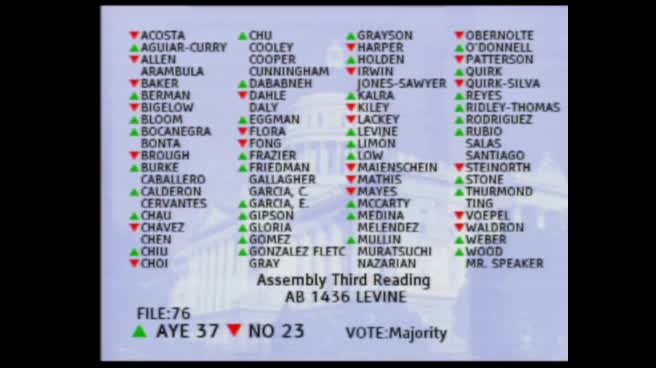 1MIN
Assembly Floor
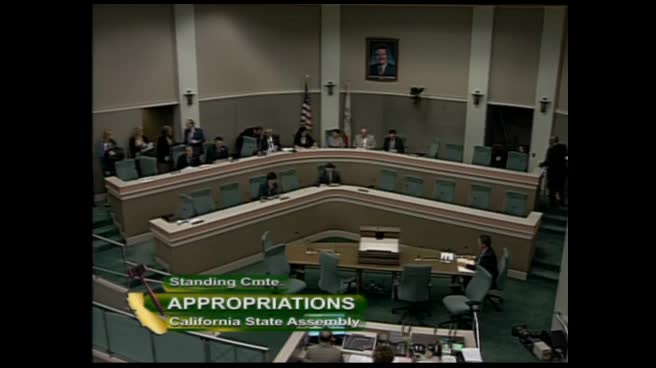 1MIN
Assembly Standing Committee on Appropriations
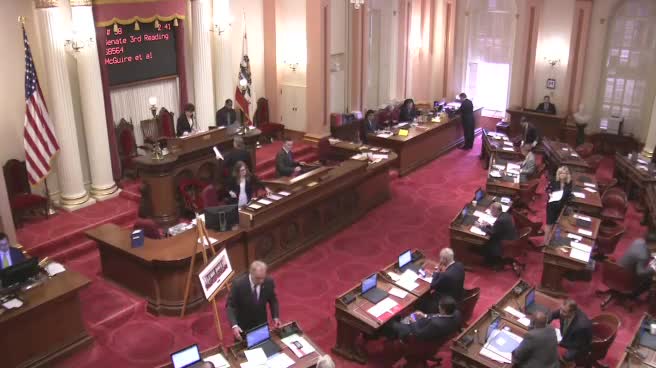 2MIN
Senate Floor
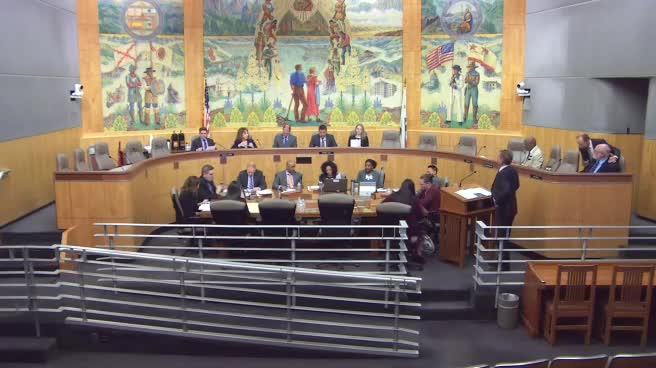 2MIN
Senate Standing Committee on Appropriations
Bill Author

Bill Co-Author(s):