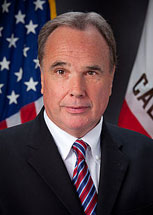
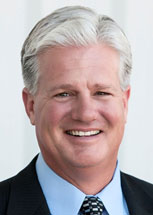
SB 590: School finance: school districts: annual budgets: reserve balance.
- Session Year: 2017-2018
- House: Senate
- Latest Version Date: 2017-04-17
In a fiscal year immediately after a fiscal year in which a transfer is made into the Public School System Stabilization Account, existing law prohibits a school districts adopted or revised budget from containing a combined assigned or unassigned ending fund balance that is in excess of either 2 or 3 times the minimum recommended reserve for economic uncertainties adopted by the State Board of Education, depending on the school districts units of average daily attendance. Existing law authorizes the county superintendent of schools to waive the prohibition, pursuant to specified conditions, for up to 2 consecutive fiscal years within a 3-year period if the school district provides documentation indicating that extraordinary fiscal circumstances substantiate the need for the balance.
This bill would repeal those provisions.
|
Date
|
Status
|
|---|---|
| Feb 1, 2018 | Returned to Secretary of Senate pursuant to Joint Rule 56. |
| Apr 19, 2017 | April 19 set for first hearing canceled at the request of author. |
| Apr 26, 2017 | April 26 set for second hearing. Failed passage in committee. (Ayes 2. Noes 2. Page 848.) Reconsideration granted. |
| Apr 17, 2017 | From committee with author's amendments. Read second time and amended. Re-referred to Com. on ED. |
| Apr 13, 2017 | Set for hearing April 26. |
| Apr 13, 2017 | April 19 set for first hearing canceled at the request of author. |
| Mar 30, 2017 | From committee with author's amendments. Read second time and amended. Re-referred to Com. on ED. |
| Mar 24, 2017 | Set for hearing April 19. |
| Mar 2, 2017 | Referred to Com. on ED. |
| Feb 21, 2017 | From printer. May be acted upon on or after March 23. |
| Feb 17, 2017 | Introduced. Read first time. To Com. on RLS. for assignment. To print. |
|
Date
|
Description
|
Location
|
Votes
|
|
|---|---|---|---|---|
| Apr 26, 2017 | [Second] hearing set for [04-26-2017]: Failed passage in Committee. Reconsideration granted | Senate Standing Committee on Education |
Passed |
|
| Apr 26, 2017 | Do pass, but first be re-referred to the Committee on [Rules] | Senate Standing Committee on Education |
Failed |
This list shows positions taken on this bill by organizations on the date displayed, which is linked to the original source.
Positions by individuals are not included.
|
Organization
|
Position
|
Date
|
|---|---|---|
| Alvord Unified School District | ** Support | Apr 25, 2017 |
| Association Of California School Administrators | * Support | Apr 26, 2017 |
| Banning Unified School District | ** Support | Apr 25, 2017 |
| Beaumont Unified School District | ** Support | Apr 25, 2017 |
| CA Teachers Association | * Against | Apr 26, 2017 |
| California Association Of School Business Officials | * Support | Apr 26, 2017 |
| California Association Of Suburban School Districts | ** Support | Apr 25, 2017 |
| California County Superintendents Educational Services Association | ** Support | Apr 25, 2017 |
| California Federation Of Teachers | * Against | Apr 26, 2017 |
| California School Boards Association | * Support | Apr 26, 2017 |
| California School Employees Association | * Against | Apr 26, 2017 |
| California Taxpayers Association | ** Support | Apr 25, 2017 |
| Children Now | ** Support | Apr 25, 2017 |
| Coachella Valley Unified School District | ** Support | Apr 25, 2017 |
| Corona-Norco Unified School District | ** Support | Apr 25, 2017 |
| Desert Center Unified School District | ** Support | Apr 25, 2017 |
| Hemet Unified School District | ** Support | Apr 25, 2017 |
| Jurupa Unified School District | ** Support | Apr 25, 2017 |
| Kings Canyon Unified School District | ** Support | Apr 25, 2017 |
| Menifee Union School District | ** Support | Apr 25, 2017 |
| Moreno Valley Unified School District | ** Support | Apr 25, 2017 |
| Murrieta Valley Unified School District | ** Support | Apr 25, 2017 |
| Nuview Union School District | ** Support | Apr 25, 2017 |
| Office of the Riverside County Superintendent of Schools | * Support | Apr 26, 2017 |
| Orange County Department Of Education | * Support | Apr 26, 2017 |
| Palm Springs Unified School District | ** Support | Apr 25, 2017 |
| Palo Verde Unified School District | ** Support | Apr 25, 2017 |
| Perris Elementary School District | ** Support | Apr 25, 2017 |
| Perris Union High School District | ** Support | Apr 25, 2017 |
| Riverside Unified School District | ** Support | Apr 25, 2017 |
| Romoland School District | ** Support | Apr 25, 2017 |
| San Jacinto Unified School District | ** Support | Apr 25, 2017 |
| San Luis Obispo County Office Of Education | * Support | Apr 26, 2017 |
| Schools For Sound Finance | * Support | Apr 26, 2017 |
| Temecula Valley Unified School District | ** Support | Apr 25, 2017 |
| Val Verde Unified School District | ** Support | Apr 25, 2017 |
SENATE COMMITTEE ON EDUCATION
Senator Benjamin Allen, Chair
2017 - 2018 Regular
Bill No: SB 590 Hearing Date: April 26, 2017
Author: | Moorlach | ||
Version: | April 17, 2017 | ||
Urgency: | No | Fiscal: | No |
Consultant: | Ian Johnson | ||
Subject: School finance: school districts: annual budgets: reserve balance
SUMMARY
This bill repeals the current maximum reserve level school districts are allowed to maintain in any year following a deposit being made into the School System Stabilization Account.
BACKGROUND
Existing law places a cap on school district reserves in years following a deposit in the Public School System Stabilization Account, established by Proposition 2 (2014). Additionally, districts are required to disclose certain information about their reserves each year. Specifically, in a fiscal year immediately after a fiscal year in which a transfer is made to the Public School System Stabilization Account, a school district budget that is adopted or revised may not have a combined assigned or unassigned ending fund balance that is in excess of the following:
- For school districts with fewer than 400,000 units of average daily attendance (ADA), the sum of the school district’s applicable minimum recommended reserve for economic uncertainties adopted by the State Board of Education (SBE), as specified, multiplied by two.
- For school districts with more than 400,000 units of ADA, the sum of the school district’s applicable minimum recommended reserve for economic uncertainties adopted by the SBE, as specified, multiplied by three.
Existing law authorizes a county superintendent of schools to grant a school district under its jurisdiction an exemption from the cap for up to two consecutive fiscal years within a three-year period if the school district provides documentation indicating that extraordinary fiscal circumstances, including, but not limited to, multi-year infrastructure or technology projects, substantiate the need for a combined assigned or unassigned ending fund balance that is in excess of the minimum recommended reserve for economic uncertainties. As a condition of receiving an exemption, a school district shall do all of the following:
- Provide a statement that substantiates the need for an assigned and unassigned ending fund balance that is in excess of the minimum recommended reserve for economic uncertainties.
- Identify the funding amounts in the budget adopted by the school district that are associated with the extraordinary fiscal circumstances.
- Provide documentation that no other fiscal resources are available to fund the extraordinary fiscal circumstances. (Education Code § 42127.01)
ANALYSIS
This bill repeals the current maximum reserve level school districts are allowed to maintain in any year following a deposit being made into the School System Stabilization Account.
STAFF COMMENTS
- Need for the bill. According to the author’s office, “The reserve cap, which originated in the 2014 State Budget, requires school districts to spend down their reserves (assigned and unassigned) to specified levels whenever the state makes a contribution of any amount to a new state-level reserve account. By greatly restricting a district’s ability to save, this cap on reserve funds is harmful to schools and as a result, harmful to California’s youth.
Governor Brown has been vocal regarding the likelihood of another recession and the importance of sustaining reserves and “rainy day funds” to prepare. The reserve cap took away school districts’ ability to do so, putting facility maintenance, technology upgrades, teacher jobs and more at risk.
In 2015, the Legislative Analyst Office (LAO) issued a report on the reserve cap. The LAO recommended that the legislature repeal the cap, stating “less stability in academic programs, increased fiscal distress, and higher borrowing costs all are notable risks associated with lower levels of reserves.” Additionally, the LAO found that many district reserves were declining on their own without the cap since the high levels “were driven in large part by a series of anomalous state and federal actions during the past recession.”
The cap on reserve funds is dangerous to our educational system and unnecessary. The legislature would do well to heed the LAO’s recommendation and repeal the cap in its entirety.”
- When will the reserve cap requirement be triggered? The reserve cap requirement is triggered once the state makes a deposit into the Public School System Stabilization Account, which only occurs when certain conditions are met. Among these conditions, Test 1 must be the applicable Proposition 98 test level and the state must have paid off all maintenance factor created before 2014-15. According to multi-year forecasts published as part of the 2017-18 Governor’s Budget, no Test 1 operative years are projected through 2020-21, making a state deposit very unlikely in the near term.
- Exemptions for school districts already in law? To the extent that school districts are concerned about the potential impact the cap would have on their ability to maintain adequate reserve levels and save for future and unanticipated expenditures, existing law provides two types of exemptions for school districts. First, school districts can change the way in which they treat their reserves, increasing the amount of their committed reserves and decreasing the amount of assigned and/or unassigned reserves. Reserves become committed for a specific purpose upon a vote of the district governing board. Second, a county superintendent of schools is authorized to grant a school district under its jurisdiction an exemption if a school district is able to provide documentation that demonstrates extraordinary fiscal circumstances.
- LAO’s assessment and recommendations. The Legislative Analyst Office (LAO) released a report, “Analysis of School District Reserves” in January 2015. In the report, the LAO provided its assessment and recommendations on the reserve caps. Specifically, the LAO indicated, “to the extent districts begin shifting monies to avoid the caps, we are concerned that local budgeting practices could become more confusing. To the extent districts begin spending down their reserves, we are concerned that they would incur a number of risks.” The risks include difficulty for school districts to maintain programs in tight fiscal times, difficulty addressing unexpected costs, greater fiscal distress, and higher borrowing costs. The LAO also indicated concern that the caps become operative following any deposit into the state school reserve, even if the size of that deposit is smaller than the triggered reduction in local reserves. To avoid all of these risks, the LAO has recommended the Legislature repeal the reserve caps.
- Related Legislation.
SB 751 (Hill and Glazer) increases the cap on school district reserves in years following a deposit into the Public School System Stabilization Account, exempts small and basic aid school districts from the reserve cap requirement, and specifies that only unassigned general fund and a portion of special reserve fund ending balances are counted for purposes of the reserve cap requirement. The measure is pending before the Senate Appropriations Committee.
AB 235 (O’Donnell) changes the conditions under which the cap on local school district reserves would be imposed and exempts basic aid districts and small districts from the cap. The measure is pending before the Assembly Appropriations Committee.
- Prior Legislation.
AB 1048 (Baker, 2015) proposed to repeal the statutory cap on the amount of fiscal reserves that a school district would be allowed to maintain under specified conditions. The measure was held in Assembly Education Committee.
AB 1318 (Gray, 2015) proposed to modify the calculation of the statutory cap on fiscal reserves. The measure was held in Assembly Education Committee.
SB 799 (Hill, 2015) would have modified various provisions in existing law related to school district budget ending reserves. The measure was held in Assembly Education Committee.
SUPPORT
Alvord Unified School District
Association of California School Administrators
Banning Unified School District
Beaumont Unified School District
California Association of School Business Officials
California Association of Suburban School Districts
California County Superintendents Educational Services Association
California School Boards Association
California Taxpayers Association
Children Now
Coachella Valley Unified School District
Corona-Norco Unified School District
Desert Center Unified School District
Hemet Unified School District
Jurupa Unified School District
Kings Canyon Unified School District
Lake Elsinore Unified School District
Menifee Union School District
Moreno Valley Unified School District
Murrieta Valley Unified School District
Nuview Union School District
Palm Springs Unified School District
Palo Verde Unified School District
Perris Elementary School District
Perris Union High School District
Riverside County Superintendent of Schools
Riverside Unified School District
Romoland School District
San Jacinto Unified School District
Schools for Sound Finance
Temecula Valley Unified School District
Val Verde Unified School District
OPPOSITION
California Federation of Teachers
California School Employees Association
California Teachers Association
-- END --
Bill Author

Bill Co-Author(s):