SB 596: Civics education: Student Empowerment Commission.
- Session Year: 2017-2018
- House: Senate
- Latest Version Date: 2017-09-20
Existing law establishes various educational programs and activities for pupils, including programs and activities relating to civics education.
This bill would establish the Student Empowerment Commission program, under which a public school, including a charter school, and a private school may choose to participate in the program and each year elect a pupil in grade 9, 10, or 11 to participate in regional and statewide conferences and to prepare proposals addressing legislative solutions to public policy issues, as specified. The bill would require the Superintendent of Public Instruction, in consultation with the Secretary of State, to solicit proposals and select one or more qualified nonprofit organizations to assist in the administration of the program. The bill would require the Secretary of State to divide the state into 12 regions and would require the program administrators to conduct regional conferences and a statewide conference for participating pupils each year and to set forth procedures for the preparation, discussion, and vetting of issues at the conferences.
Existing law establishes various educational programs and activities for pupils, including programs and activities relating to civics education.
This bill would establish the Student Empowerment Commission program, under which public and private schools a public school, including a charter school, and a private school may choose to participate in the program and each year elect a pupil in grade 9, 10, or 11 to participate in regional and statewide conferences and to prepare proposals addressing legislative solutions to public policy issues, as specified. The bill would require the Superintendent of Public Instruction, in consultation with the Secretary of State, to solicit proposals and select one or more qualified nonprofit organizations to assist in the administration of the program. The bill would require the Secretary of State to divide the state into 12 regions and would require the program administrators to conduct regional conferences and a statewide conference each year and to set forth procedures for the preparation, discussion, and vetting of issues at the conferences.
Existing law establishes various educational programs and activities for pupils, including programs and activities relating to civics education.
This bill would establish the Student Empowerment Commission program, under which public and private schools may choose to participate in the program and each year elect a pupil in grade 9, 10, or 11 to participate in regional and statewide conferences and to prepare proposals addressing legislative solutions to public policy issues, as specified. The bill would require the Superintendent of Public Instruction, in consultation with the Secretary of State, to solicit proposals and select one or more qualified nonprofit organizations to assist in the administration of the program. The bill would require the Secretary of State to divide the state into 12 regions and would require the program administrators to conduct regional conferences and a statewide conference each year and to set forth procedures for the preparation, discussion, and vetting of issues at the conferences.
Existing law establishes various educational programs and activities for pupils, including programs and activities relating to civics education.
This bill would establish the Student Empowerment Commission program, under which public and private schools may choose to participate in the program and elect a pupil in grade 9, 10, or 11 to participate in regional and statewide conferences and to prepare proposals addressing legislative solutions to public policy issues, as specified. The bill would require the Superintendent of Public Instruction, in consultation with the Secretary of State, to solicit proposals and select one or more qualified nonprofit organizations to assist in the administration of the program. The bill would require the Secretary of State to divide the state into 12 regions and would require the program administrators to conduct regional conferences and a statewide conference each year and to set forth procedures for the preparation, discussion, and vetting of issues at the conferences.
Existing law requires the Governor to appoint a student member to the State Board of Education with the advice and consent of 2/3 of the Senate, and establishes a process in that regard.This bill would authorize a school to hold an election where the student body may vote to nominate a student or students to be considered for appointment as a student member of the state board in accordance with procedures determined by the school administrators. The bill would also make technical changes to those provisions.Existing law requires the Governor to appoint a student member to the State Board of Education with the advice and consent of 2/3 of the Senate, and establishes a process in that regard.
This bill would authorize a school to hold an election where the student body may vote to nominate a student or students to be considered for appointment as a student member of the state board in accordance with procedures determined by the school administrators. The bill would also make technical changes to those provisions.
Existing law declares the intent of the Legislature that county elections officials, in order to promote and encourage voter registrations, enlist the support and cooperation of interested citizens and organizations in such a way as to reach most effectively every resident of the county.
Existing law, the Student Voter Registration Act of 2003, requires the Secretary of State to annually provide every high school, community college, and California State University and University of California with voter registration forms. The act also requires the Secretary of State to annually submit to the Legislature a report on its student voter registration efforts.
This bill would make findings and declarations relating to the importance of increasing low youth and millenial voter turnout. The bill would declare the intent of the Legislature to enact legislation that develops a comprehensive policy that would civically empower the next generation of citizens in California.
(a)The Legislature finds and declares all of the following:
(1)The fastest growing voting demographic in California and nationwide is made up of millennials, youths 18 to 34 years of age.
(2)Millennials are consistently and dramatically underrepresented in every election type in California, with the greatest disparities among 18 to 24 year olds.
(3)A persons first vote matters most, as demonstrated by the correlation between young peoples early experiences with voting and future rates of voting participation.
(4)Increased youth and millennial voter turnout is a key step to increasing future turnout for California and the nation as a whole.
(5)Without significant action to remove barriers to building the habits of the next generation of citizens, youth voter turnout disparities will persist, resulting in continued stagnancy in overall civic engagement and voter turnout rates.
(6)The California Task Force on K-12 Civic Learning analyzed the central role the K-12 public education system has in developing the next generation of citizens and addressed all of the following:
(A)The correlation between income levels and access to high-quality civic learning.
(B)The absence of civic engagement technology from curriculum and instruction.
(C)The overemphasis on memorization over participatory skills and experiential learning about the power of democracy.
(b)The intent of the Legislature in enacting this act is to empower and engage pupils statewide in the democratic process and to provide pupil insight and feedback on public policy issues to state and local government.
SEC. 2.Article 3.5 (commencing with Section 48960) is added to Chapter 6 of Part 27 of Division 4 of Title 2 of the Education Code, to read:3.5.Student Empowerment Commission48960.For purposes of this article, the following terms have the following meanings:
(a)Program means the Student Empowerment Commission program established pursuant to this article.
(b)Administrators means one or more nonprofit organizations selected by the Superintendent pursuant to Section 48961.
48961.(a)The Superintendent, in consultation with the Secretary of State, shall solicit proposals and select one or more nonprofit organizations to assist in administering the program. Preference shall be given to nonprofit organizations working collaboratively and in partnership with other nonprofit organizations that present multiorganizational proposals. A nonprofit organization shall satisfy both of the following criteria to be eligible for selection:
(1)The nonprofit organization shall be registered as a nonprofit public benefit corporation under Section 501(c)(3) of the United States Internal Revenue Code.
(2)The nonprofit organization presents documentation of sufficient private resources to fund the costs required to administer the program.
(b)The duties of the administrators shall include, but are not limited to, organizing and conducting annual regional conferences and a statewide conference.
48962.(a)To participate in the program, a public school, including a charter school, or a private school may conduct an election of the student governing body to determine whether the school will participate in the program. If a majority of the student governing body votes to participate in the program, an election of the student body shall be held each school year to nominate one regional delegate.
(b)To qualify as a candidate for regional delegate, a pupil shall meet both of the following requirements:
(1)The pupil shall be enrolled in the school in grades 9, 10, or 11.
(2)The pupil agrees to faithfully and diligently represent all pupils at the school.
(c)The term of a regional delegate participating in the program shall begin upon nomination and shall terminate two years later or upon the pupils graduation, whichever occurs first.
(d)The Secretary of State, in consultation with the Superintendent, shall annually recommend the date or dates on which elections to opt into the program and to nominate regional delegates shall be held. In making these recommendations, the Secretary of State shall take into consideration the dates of regularly scheduled student body elections as well as programs to encourage pupil civic engagement, including, but not limited to, high school voter education weeks pursuant to Article 7 (commencing with Section 49040).
(e)Participation in the program by a school is subject to approval by the school administration.
48963.(a)The Secretary of State shall divide the states counties, or segments thereof, into 12 geographic regions, which shall be designated as region 1 to region 12, inclusive. The regions shall be designed to be relatively equal in population.
(b)The administrators, in consultation with the Superintendent, shall organize and conduct a conference in each of the 12 regions each year, to be attended by each pupil nominated by their school in the region in which the school is located.
(c)Regional conferences shall be conducted in the spring and shall be scheduled to give participating schools and regional delegates sufficient notice of important dates and responsibilities. The Superintendent, in consultation with the Secretary of State, shall annually determine the date of the regional conferences.
(d)Each regional conference shall be attended by pupils from each participating school in the region that elected a pupil as a regional delegate.
(e)Regional delegates attending the regional conference shall prepare proposals addressing legislative solutions to public policy issues identified by regional delegates at their own schools.
(f)The administrators shall set forth procedures for the preparation, discussion, and vetting of issues at the regional conference that include peer-to-peer facilitation and consensus-based decisionmaking.
(g)At the conclusion of each regional conference, the regional delegates shall do both of the following:
(1)Adopt by a majority vote of the regional delegates attending the regional conference an official proposal or proposals for the region to be identified as the official proposal or proposals of the region.
(2)Select from among the regional delegates attending the regional conference a Student Empowerment Commission, consisting of five student commissioners from each of the 12 regions, who shall represent the regions at the statewide conference.
(h)Regional delegates are encouraged to present their proposals to local governmental agencies and to take action to implement their proposals in their communities.
48964.(a)The administrators, in consultation with the Superintendent, shall organize and conduct a statewide conference in Sacramento each year, to be attended by the Student Empowerment Commission.
(b)The statewide conference shall be conducted in the fall and shall be scheduled on a date determined by the Superintendent in consultation with the administrators.
(c)The administrators shall set forth procedures for the preparation, discussion, and vetting of issues at the statewide conference that include peer-to-peer facilitation and consensus-based decisionmaking.
(d)At the conclusion of the statewide conference, recommendations and proposals developed and adopted by the Student Empowerment Commission, in accordance with rules promulgated by the Student Empowerment Commission, shall be presented to the appropriate committees of the Legislature before the deadline for bills to be introduced in the Legislature. The Legislature is encouraged to provide the Student Empowerment Commission with opportunities to formally present their recommendations and proposals to the appropriate legislative committees.
(a)The Legislature finds and declares all of the following:
(1)The fastest growing voting demographic in California and nationwide is made up of millennials, youths 18 to 34 years of age.
(2)Millennials are consistently and dramatically underrepresented in every election type in California, with the greatest disparities among 18 to 24 year olds.
(3)A persons first vote matters most, as demonstrated by the correlation between young peoples early experiences with voting and future rates of voting participation.
(4)Increased youth and millennial voter turnout is a key step to increasing future turnout for California and the nation as a whole.
(5)Without significant action to remove barriers to building the habits of the next generation of citizens, youth voter turnout disparities will persist, resulting in continued stagnancy in overall civic engagement and voter turnout rates.
(6)The California Task Force on K-12 Civic Learning analyzed the central role the K-12 public education system has in developing the next generation of citizens and addressed all of the following:
(A)The correlation between income levels and access to high-quality civic learning.
(B)The absence of civic engagement technology from curriculum and instruction.
(C)The overemphasis on memorization over participatory skills and experiential learning about the power of democracy.
(b)The intent of the Legislature in enacting this act is to empower and engage pupils statewide in the democratic process and to provide pupil insight and feedback on public policy issues to state and local government.
SEC. 2.Article 3.5 (commencing with Section 48960) is added to Chapter 6 of Part 27 of Division 4 of Title 2 of the Education Code, to read:3.5.Student Empowerment Commission48960.For purposes of this article, the following terms have the following meanings:
(a)Program means the Student Empowerment Commission program established pursuant to this article.
(b)Administrators means one or more nonprofit organizations selected by the Superintendent pursuant to Section 48961.
48961.(a)The Superintendent, in consultation with the Secretary of State, shall solicit proposals and select one or more nonprofit organizations to assist in administering the program. Preference shall be given to nonprofit organizations working collaboratively and in partnership with other nonprofit organizations that present multiorganizational proposals. A nonprofit organization shall satisfy both of the following criteria to be eligible for selection:
(1)The nonprofit organization shall be registered as a nonprofit public benefit corporation under Section 501(c)(3) of the United States Internal Revenue Code.
(2)The nonprofit organization presents documentation of sufficient private resources to fund a portion of the costs required to administer the program.
(b)The duties of the administrators shall include, but are not limited to, organizing and conducting annual regional conferences and a statewide conference.
48962.(a)To participate in the program, a public or private school may conduct an election of the student governing body to determine whether the school will participate in the program. If a majority of the student governing body votes to participate in the program, an election of the student body shall be held each school year to nominate one regional delegate.
(b)To qualify as a candidate for regional delegate, a pupil shall meet both of the following requirements:
(1)The pupil shall be enrolled in the school in grades 9, 10, or 11.
(2)The pupil agrees to faithfully and diligently represent all pupils at the school.
(c)The term of a regional delegate participating in the program shall begin upon nomination and shall terminate two years later or upon the pupils graduation, whichever occurs first.
(d)The Secretary of State, in consultation with the Superintendent, shall annually recommend the date or dates on which elections to opt into the program and to nominate regional delegates shall be held. In making these recommendations, the Secretary of State shall take into consideration the dates of regularly scheduled student body elections as well as programs to encourage pupil civic engagement, including, but not limited to, high school voter education weeks pursuant to Article 7 (commencing with Section 49040).
(e)Participation in the program by a school is subject to approval by the school administration.
48963.(a)The Secretary of State shall divide the states counties, or segments thereof, into 12 geographic regions, which shall be designated as region 1 to region 12, inclusive. The regions shall be designed to be relatively equal in population.
(b)The administrators, in consultation with the Superintendent, shall organize and conduct a conference in each of the 12 regions each year, to be attended by each pupil nominated by their school in the region in which the school is located.
(c)Regional conferences shall be conducted in the spring and shall be scheduled to give participating schools and regional delegates sufficient notice of important dates and responsibilities. The Superintendent, in consultation with the Secretary of State, shall annually determine the date of the regional conferences.
(d)Each regional conference shall be attended by pupils from each participating school in the region that elected a pupil as a regional delegate.
(e)Regional delegates attending the regional conference shall prepare proposals addressing legislative solutions to public policy issues identified by regional delegates at their own schools.
(f)The administrators shall set forth procedures for the preparation, discussion, and vetting of issues at the regional conference that include peer-to-peer facilitation and consensus-based decisionmaking.
(g)At the conclusion of each regional conference, the regional delegates shall do both of the following:
(1)Adopt by a majority vote of the regional delegates attending the regional conference an official proposal or proposals for the region to be identified as the official proposal or proposals of the region.
(2)Select from among the regional delegates attending the regional conference a Student Empowerment Commission, consisting of five student commissioners from each of the 12 regions, who shall represent the regions at the statewide conference.
(h)Regional delegates are encouraged to present their proposals to local governmental agencies and to take action to implement their proposals in their communities.
48964.(a)The administrators, in consultation with the Superintendent, shall organize and conduct a statewide conference in Sacramento each year, to be attended by the Student Empowerment Commission.
(b)The statewide conference shall be conducted in the fall and shall be scheduled on a date determined by the Superintendent in consultation with the administrators.
(c)The administrators shall set forth procedures for the preparation, discussion, and vetting of issues at the statewide conference that include peer-to-peer facilitation and consensus-based decisionmaking.
(d)At the conclusion of the statewide conference, recommendations and proposals developed and adopted by the Student Empowerment Commission, in accordance with rules promulgated by the Student Empowerment Commission, shall be presented to the appropriate committees of the Legislature before the deadline for bills to be introduced in the Legislature. The Legislature is encouraged to provide the Student Empowerment Commission with opportunities to formally present their recommendations and proposals to the appropriate legislative committees.
(a)The Legislature finds and declares all of the following:
(1)The fastest growing voting demographic in California and nationwide is made up of millennials, youths 18 to 34 years of age.
(2)Millennials are consistently and dramatically underrepresented in every election type in California, with the greatest disparities among 18 to 24 year olds.
(3)A persons first vote matters most, as demonstrated by the correlation between young peoples early experiences with voting and future rates of voting participation.
(4)Increased youth and millennial voter turnout is a key step to increasing future turnout for California and the nation as a whole.
(5)Without significant action to remove barriers to building the habits of the next generation of citizens, youth voter turnout disparities will persist, resulting in continued stagnancy in overall civic engagement and voter turnout rates.
(6)The California Task Force on K-12 Civic Learning analyzed the central role the K-12 public education system has in developing the next generation of citizens and addressed all of the following:
(A)The correlation between income levels and access to high-quality civic learning.
(B)The absence of civic engagement technology from curriculum and instruction.
(C)The overemphasis on memorization over participatory skills and experiential learning about the power of democracy.
(b)The intent of the Legislature in enacting this act is to empower and engage pupils statewide in the democratic process and to provide pupil insight and feedback on public policy issues to state and local government.
SEC. 2.Article 3.5 (commencing with Section 48960) is added to Chapter 6 of Part 27 of Division 4 of Title 2 of the Education Code, to read:3.5.Student Empowerment Commission48960.For purposes of this article, the following terms have the following meanings:
(a)Program means the Student Empowerment Commission program established pursuant to this article.
(b)Administrators means one or more nonprofit organizations selected by the Superintendent pursuant to Section 48961.
48961.(a)The Superintendent, in consultation with the Secretary of State, shall solicit proposals and select one or more nonprofit organizations to assist in administering the program. Preference shall be given to nonprofit organizations working collaboratively and in partnership with other nonprofit organizations that present multiorganizational proposals. A nonprofit organization shall satisfy both of the following criteria to be eligible for selection:
(1)The nonprofit organization shall be registered as a nonprofit public benefit corporation under Section 501(c)(3) of the United States Internal Revenue Code.
(2)The nonprofit organization presents documentation of sufficient resources to fund a portion of the costs required to administer the program.
(b)The duties of the administrators shall include, but are not limited to, organizing and conducting annual regional conferences and a statewide conference.
48962.(a)To participate in the program, a public or private school may conduct an election of the student governing body to determine whether the school will participate in the program. If a majority of the student governing body votes to participate in the program, an election of the student body shall be held each school year to nominate a one regional delegate.
(b)To qualify as a candidate for regional delegate, a pupil shall meet both of the following requirements:
(1)The pupil shall be enrolled in the school in grades 9, 10, or 11.
(2)The pupil agrees to faithfully and diligently represent all pupils at the school.
(c)The term of a regional delegate participating in the program shall begin upon nomination and shall terminate two years later or upon the pupils graduation, whichever occurs first.
(d)The Secretary of State, in consultation with the Superintendent, shall annually recommend the date or dates on which elections to opt into the program and to nominate regional delegates shall be held. In making these recommendations, the Secretary of State shall take into consideration the dates of regularly scheduled student body elections as well as programs to encourage pupil civic engagement, including, but not limited to, high school voter education weeks pursuant to Article 7 (commencing with Section 49040).
(e)Participation in the program by a school is subject to approval by the school administration.
48963.(a)The Secretary of State shall divide the states counties, or segments thereof, into 12 geographic regions, which shall be designated as region 1 to region 12, inclusive. The regions shall be designed to be relatively equal in population.
(b)The administrators, in consultation with the Superintendent, shall organize and conduct a conference in each of the 12 regions each year, to be attended by each pupil nominated by their school in the region in which the school is located.
(c)Regional conferences shall be conducted in the spring and shall be scheduled to give participating schools and regional delegates sufficient notice of important dates and responsibilities. The Superintendent, in consultation with the Secretary of State, shall annually determine the date of the regional conferences.
(d)Each regional conference shall be attended by pupils from each participating school in the region that elected a pupil as a regional delegate.
(e)Regional delegates attending the regional conference shall prepare proposals addressing legislative solutions to public policy issues identified by regional delegates at their own schools.
(f)The administrators shall set forth procedures for the preparation, discussion, and vetting of issues at the regional conference that include peer-to-peer facilitation and consensus-based decisionmaking.
(g)At the conclusion of each regional conference, the regional delegates shall do both of the following:
(1)Adopt by a majority vote of the regional delegates attending the regional conference an official proposal or proposals for the region to be identified as the official proposal or proposals of the region.
(2)Select from among the regional delegates attending the regional conference a Student Empowerment Commission, consisting of five student commissioners and two alternate student commissioners from each of the 12 regions, who shall represent the regions at the statewide conference.
(h)Regional delegates are encouraged to present their proposals to local governmental agencies and to take action to implement their proposals in their communities.
48964.(a)The administrators, in consultation with the Superintendent, shall organize and conduct a statewide conference in Sacramento each year, to be attended by the Student Empowerment Commission.
(b)The statewide conference shall be conducted in the fall and shall be scheduled on a date determined by the Superintendent in consultation with the administrators.
(c)The administrators shall set forth procedures for the preparation, discussion, and vetting of issues at the statewide conference that include peer-to-peer facilitation and consensus-based decisionmaking.
(d)At the conclusion of the statewide conference, recommendations and proposals developed and adopted by the Student Empowerment Commission, in accordance with rules promulgated by the Student Empowerment Commission, shall be presented to the appropriate committees of the Legislature before the deadline for bills to be introduced in the Legislature. The Legislature is encouraged to provide the Student Empowerment Commission with opportunities to formally present their recommendations and proposals to the appropriate legislative committees.
(a)The Legislature finds and declares all of the following:
(a)(1)The fastest growing voting demographic in California and nationwide is made up of millennials, youths 18 to 34 years of age.
(b)(2)Millennials are consistently and dramatically underrepresented in every election type in California, with the greatest disparities among 18 to 24 year olds.
(c)(3)A persons first vote matters most, as demonstrated by the correlation between young peoples early experiences with voting and future rates of voting participation.
(d)(4)Increased youth and millennial voter turnout is a key step to increasing future turnout for California and the nation as a whole.
(e)(5)Without significant action to remove barriers to building the habits of the next generation of citizens, youth voter turnout disparities will persist, resulting in continued stagnancy in overall civic engagement and voter turnout rates.
(f)(6)The California Task Force on K-12 Civic Learning analyzed the central role the K-12 public education system has in developing the next generation of citizens and addressed all of the following:
(A)The correlation between income levels and access to high-quality civic learning.
(B)The absence of civic engagement technology from curriculum and instruction.
(C)The overemphasis on memorization over participatory skills and experiential learning about the power of democracy.
(b)The intent of the Legislature in enacting this act is to empower and engage pupils statewide in the democratic process and to provide pupil insight and feedback on public policy issues to state and local government.
SEC. 2.Section 33000.5 of the Education Code is amended to read:33000.5.(a)Notwithstanding Sections 33000 and 33001, the Governor shall also appoint a student member to the state board with the advice and consent of two-thirds of the Senate.(b)The term of office of the student member is one year, and shall begin on August 1. An individual may serve only one term as a student member.(c)Notwithstanding Section 1020 of the Government Code, the student member shall be, at the time the members one-year term commences, a student enrolled in good standing in grade 12 in a public high school. The student member shall be selected from three students recommended by the state board pursuant to subdivision (d). The student member shall be a voting member with the full rights and duties of the other 10 members of the state board.(d)The process for selecting the student member shall be as follows:(1)The state board shall notify every school district governing board, district superintendent, high school principal, high school student activities director, and student body president by September 15 of each year that applications are being accepted for the student members position.(2)Subject to authorization by the school administration, a school may, but is not required to, hold an election where the student body may vote to nominate a student or students to be considered for appointment as a student member of the state board in accordance with procedures to be determined by the school administrators.(3)Applications for the student members position shall be submitted to the state board no later than October 31 of each year.(4)A screening committee of the state board shall select 12 semifinalists for the student members position.(5)The school district governing board student members shall select six candidates from the 12 semifinalists.(6)The state board shall, by December 31 of each year, select three finalists for the Governors consideration and shall rank the finalists according to its preference.(e)Nothing in this section shall be construed to require the governing board of a school district that maintains a high school to grant voting rights to a student member serving on the school district governing board.SEC. 2.Article 3.5 (commencing with Section 48960) is added to Chapter 6 of Part 27 of Division 4 of Title 2 of the Education Code, to read:3.5.Student Empowerment Commission48960.For purposes of this article, the following terms have the following meanings:
(a)Program means the Student Empowerment Commission program established pursuant to this article.
(b)Administrators means one or more nonprofit organizations selected by the Superintendent pursuant to Section 48961.
48961.(a)The Superintendent, in consultation with the Secretary of State, shall solicit proposals and select one or more nonprofit organizations to assist in administering the program. Preference shall be given to nonprofit organizations working collaboratively and in partnership with other nonprofit organizations that present multiorganizational proposals. A nonprofit organization shall satisfy both of the following criteria to be eligible for selection:
(1)The nonprofit organization shall be registered as a nonprofit public benefit corporation under Section 501(c)(3) of the United States Internal Revenue Code.
(2)The nonprofit organization presents documentation of sufficient resources to fund a portion of the costs required to administer the program.
(b)The duties of the administrators shall include, but are not limited to, organizing and conducting annual regional conferences and a statewide conference.
48962.(a)To participate in the program, a public or private school may conduct an election of the student governing body to determine whether the school will participate in the program. If a majority of the student governing body votes to participate in the program, an election of the student body shall be held to nominate a regional delegate.
(b)To qualify as a candidate for regional delegate, a pupil shall meet both of the following requirements:
(1)The pupil shall be enrolled in the school in grades 9, 10, or 11.
(2)The pupil agrees to faithfully and diligently represent all pupils at the school.
(c)The term of a regional delegate participating in the program shall begin upon nomination and shall terminate two years later or upon the pupils graduation, whichever occurs first.
(d)The Secretary of State, in consultation with the Superintendent, shall annually recommend the date or dates on which elections to opt into the program and to nominate regional delegates shall be held. In making these recommendations, the Secretary of State shall take into consideration the dates of regularly scheduled student body elections as well as programs to encourage pupil civic engagement, including, but not limited to, high school voter education weeks pursuant to Article 7 (commencing with Section 49040).
(e)Participation in the program by a school is subject to approval by the school administration.
48963.(a)The Secretary of State shall divide the states counties, or segments thereof, into 12 geographic regions, which shall be designated as region 1 to region 12, inclusive. The regions shall be designed to be relatively equal in population.
(b)The administrators, in consultation with the Superintendent, shall organize and conduct a conference in each of the 12 regions each year, to be attended by each pupil nominated by their school in the region in which the school is located.
(c)Regional conferences shall be conducted in the spring and shall be scheduled to give participating schools and regional delegates sufficient notice of important dates and responsibilities. The Superintendent, in consultation with the Secretary of State, shall annually determine the date of the regional conferences.
(d)Each regional conference shall be attended by pupils from each participating school in the region that elected a pupil as a regional delegate.
(e)Regional delegates attending the regional conference shall prepare proposals addressing legislative solutions to public policy issues identified by regional delegates at their own schools.
(f)The administrators shall set forth procedures for the preparation, discussion, and vetting of issues at the regional conference that include peer-to-peer facilitation and consensus-based decisionmaking.
(g)At the conclusion of each regional conference, the regional delegates shall do both of the following:
(1)Adopt by a majority vote of the regional delegates attending the regional conference an official proposal or proposals for the region to be identified as the official proposal or proposals of the region.
(2)Select from among the regional delegates attending the regional conference a Student Empowerment Commission, consisting of five student commissioners and two alternate student commissioners from each of the 12 regions, who shall represent the regions at the statewide conference.
(h)Regional delegates are encouraged to present their proposals to local governmental agencies and to take action to implement their proposals in their communities.
48964.(a)The administrators, in consultation with the Superintendent, shall organize and conduct a statewide conference in Sacramento each year, to be attended by the Student Empowerment Commission.
(b)The statewide conference shall be conducted in the fall and shall be scheduled on a date determined by the Superintendent in consultation with the administrators.
(c)The administrators shall set forth procedures for the preparation, discussion, and vetting of issues at the statewide conference that include peer-to-peer facilitation and consensus-based decisionmaking.
(d)At the conclusion of the statewide conference, recommendations and proposals developed and adopted by the Student Empowerment Commission, in accordance with rules promulgated by the Student Empowerment Commission, shall be presented to the appropriate committees of the Legislature before the deadline for bills to be introduced in the Legislature. The Legislature is encouraged to provide the Student Empowerment Commission with opportunities to formally present their recommendations and proposals to the appropriate legislative committees.
The Legislature finds and declares all of the following:
(a)The fastest growing voting demographic in California and nationwide is made up of millennials, youths aged 18 to 34. 34 years of age.
(b)Millennials are consistently and dramatically underrepresented in every election type in California, with the greatest disparities among 18 to 24 year olds.
(c)A persons first vote matters most, as demonstrated by the correlation between young peoples early experiences with voting and future rates of voting participation.
(d)Increased youth and millennial voter turnout is a key step to increasing future turnout for California and the nation as a whole.
(e)Without significant action to remove barriers to building the habits of the next generation of citizens, youth voter turnout disparities will persist, resulting in continued stagnancy in overall civic engagement and voter turnout rates.
(f)The California Task Force on K-12 Civic Learning analyzed the central role the K-12 public education system has in developing the next generation of citizens and addressed all of the following:
(A)The correlation between income levels and access to high-quality civic learning.
(B)The absence of civic engagement technology from curriculum and instruction.
(C)The overemphasis on memorization over participatory skills and experiential learning about the power of democracy.
SEC. 2.It is the intent of the Legislature to enact legislation that develops a comprehensive policy that civically empowers the next generation of citizens in California and considers all of the following:(a)The best available data, including but not limited to, analyses from governmental organizations, educators and researchers, civic engagement organizations, and direct input from millennials and youth not yet eligible to vote, as well as related youth leadership organizations.(b)The efficacy of establishing a process to allow California high school students to vote for peer representation in a statewide organization designed for students to directly participate in state government.(c)Recommendations from the California Task Force on K-12 Civic Learning.(d)The potential for third-party civic innovation technology to interface with core government functions to inform and inspire the next generation of citizens who obtain, process, and disseminate information differently, and seek to civically engage in different but potentially more powerful ways than their predecessors. SEC. 2.Section 33000.5 of the Education Code is amended to read:33000.5.(a)Notwithstanding Sections 33000 and 33001, the Governor shall also appoint a student member to the State Board of Education, state board with the advice and consent of two-thirds of the Senate.
(b)Notwithstanding subdivisions (c) and (d) the incumbent student member on January 1, 1984, shall be eligible for appointment by the Governor subject to the advice and consent of two-thirds of the Senate.(c)(b)The term of office of the student member is one year, and shall begin on August 1. An individual may serve only one term as a student member.
(d)(c)Notwithstanding Section 1020 of the Government Code, the student member shall be, at the time the members one-year term commences, a student enrolled in good standing in grade 12 in a public high school. The student member shall be selected from three students recommended by the State Board of Education state board pursuant to subdivision (e). (d). The student member shall be a voting member with the full rights and duties of the other 10 members of the state board.
(e)(d)The process for selecting the student member shall be as follows:
(1)The State Board of Education state board shall notify every school district governing board, district superintendent, high school principal, high school student activities director, and student body president by September 15 of each year that applications are being accepted for the student members position.
(2)Subject to authorization by the school administration, a school may, but is not required to, hold an election where the student body may vote to nominate a student or students to be considered for appointment as a student member of the state board in accordance with procedures to be determined by the school administrators.
(2)(3)Applications for the student members position shall be submitted to the State Board of Education state board no later than October 31 of each year.
(3)(4)A screening committee of the State Board of Education state board shall select 12 semifinalists for the student members position.
(4)(5)The school district governing board student members shall select six candidates from the 12 semifinalists.
(5)(6)The State Board of Education state board shall, by December 31 of each year, select three finalists for the Governors consideration and shall rank the finalists according to their its preference.
(f)(e)Nothing in this section shall be construed to require the governing board of a school district which that maintains a high school to grant voting rights to a student member serving on the school district governing board.
The Legislature finds and declares all of the following:
(a)The fastest growing voting demographic in California and nationwide is made up of millennials, youths aged 18 to 34.
(b)Millennials are consistently and dramatically underrepresented in every election type in California, with the greatest disparities among 18 to 24 year olds.
(c)A persons first vote matters most, as demonstrated by the correlation between young peoples early experiences with voting and future rates of voting participation.
(d)Increased youth and millennial voter turnout is a key step to increasing future turnout for California and the nation as a whole.
(e)Without significant action to remove barriers to building the habits of the next generation of citizens, youth voter turnout disparities will persist, resulting in continued stagnancy in overall civic engagement and voter turnout rates.
(f)The California Task Force on K-12 Civic Learning analyzed the central role the K-12 public education system has in developing the next generation citizens and addressed all of the following:
(A)The correlation between income levels and access to high-quality civic learning.
(B)The absence of civic engagement technology from curriculum and instruction.
(C)The overemphasis on memorization over participatory skills and experiential learning about the power of democracy.
SEC. 2.It is the intent of the Legislature to enact legislation that develops a comprehensive policy that civically empowers the next generation of citizens in California and considers all of the following:
(a)The best available data, including but not limited to, analyses from governmental organizations, educators and researchers, civic engagement organizations, and direct input from millennials and youth not yet eligible to vote, as well as related youth leadership organizations.
(b)The efficacy of establishing a process to allow California high school students to vote for peer representation in a statewide organization designed for students to directly participate in state government.
(c)Recommendations from the California Task Force on K-12 Civic Learning.
(d)The potential for third-party civic innovation technology to interface with core government functions to inform and inspire the next generation of citizens who obtain, process, and disseminate information differently, and seek to civically engage in different but potentially more powerful ways than their predecessors.
|
Date
|
Status
|
|---|---|
| Mar 3, 2018 | Last day to consider Governor’s veto pursuant to Joint Rule 58.5. |
| Sep 28, 2017 | In Senate. Consideration of Governor's veto pending. |
| Sep 28, 2017 | Vetoed by the Governor. |
| Sep 22, 2017 | Enrolled and presented to the Governor at 3 p.m. |
| Sep 15, 2017 | Assembly amendments concurred in. (Ayes 27. Noes 11.) Ordered to engrossing and enrolling. |
| Sep 15, 2017 | From committee: That the Assembly amendments be concurred in. (Ayes 5. Noes 2.) |
| Sep 15, 2017 | From committee: Be re-referred to Com. on ED. pursuant to Senate Rule 29.10(d). (Ayes 4. Noes 0.) Re-referred to Com. on ED. |
| Sep 15, 2017 | Re-referred to Com. on RLS. pursuant to Senate Rule 29.10(d). |
| Sep 15, 2017 | Read third time. Passed. Ordered to the Senate. |
| Sep 15, 2017 | In Senate. Concurrence in Assembly amendments pending. |
| Sep 8, 2017 | Read third time and amended. |
| Sep 6, 2017 | Read second time. Ordered to third reading. |
| Sep 5, 2017 | Read second time and amended. Ordered to second reading. |
| Sep 1, 2017 | From committee: Do pass as amended. (Ayes 12. Noes 4.) (September 1). |
| Aug 23, 2017 | August 23 set for first hearing. Placed on suspense file. |
| Jul 20, 2017 | From committee with author's amendments. Read second time and amended. Re-referred to Com. on APPR. |
| Jul 13, 2017 | From committee: Do pass and re-refer to Com. on APPR. (Ayes 7. Noes 0.) (July 12). Re-referred to Com. on APPR. |
| Jul 3, 2017 | From committee with author's amendments. Read second time and amended. Re-referred to Com. on ED. |
| Jun 21, 2017 | June 21 set for first hearing canceled at the request of author. |
| May 26, 2017 | Referred to Com. on ED. |
| May 4, 2017 | In Assembly. Read first time. Held at Desk. |
| May 4, 2017 | Read third time. Passed. (Ayes 38. Noes 0. Page 959.) Ordered to the Assembly. |
| Apr 27, 2017 | Read second time. Ordered to consent calendar. |
| Apr 26, 2017 | From committee: Do pass. Ordered to consent calendar. (Ayes 7. Noes 0. Page 848.) (April 26). |
| Apr 7, 2017 | Set for hearing April 26. |
| Apr 5, 2017 | Re-referred to Com. on ED. |
| Mar 30, 2017 | From committee with author's amendments. Read second time and amended. Re-referred to Com. on RLS. |
| Mar 2, 2017 | Referred to Com. on RLS. |
| Feb 21, 2017 | From printer. May be acted upon on or after March 23. |
| Feb 17, 2017 | Introduced. Read first time. To Com. on RLS. for assignment. To print. |
|
Date
|
Description
|
Location
|
Votes
|
|
|---|---|---|---|---|
| Sep 15, 2017 | Unfinished Business SB596 Stern et al. Concurrence | Senate Floor |
Passed |
|
| Sep 15, 2017 | SB 596 Stern Senate Third Reading By WEBER | Assembly Floor |
Passed |
|
| Sep 15, 2017 | That the Assembly amendments be concurred in | Senate Standing Committee on Education |
Passed |
|
| Sep 1, 2017 | Do pass as amended. | Assembly Standing Committee on Appropriations |
Passed |
|
| Jul 12, 2017 | Do pass and be re-referred to the Committee on [Appropriations] | Assembly Standing Committee on Education |
Passed |
|
| May 4, 2017 | Consent Calendar 2nd SB596 Stern | Senate Floor |
Passed |
|
| Apr 26, 2017 | Do pass and be ordered to the Consent Calendar | Senate Standing Committee on Education |
Passed |
This list shows positions taken on this bill by organizations on the date displayed, which is linked to the original source.
Positions by individuals are not included.
|
Organization
|
Position
|
Date
|
|---|---|---|
| An individual | ** Support | Jul 10, 2017 |
| An individual | ** Support | Jul 10, 2017 |
| California Association of Student Councils | ** Support | Jan 2, 2018 |
| California Center For Civic Participation | ** Support | Jan 2, 2018 |
| California Latino Leadership Institute | ** Support | Jan 2, 2018 |
| Generation Citizen | ** Support | Jan 2, 2018 |
| National Youth Rights Association | ** Support | Jan 2, 2018 |
| Pat Brown Institute For Public Affairs | ** Support | Jan 2, 2018 |
| State Superintendent of Public Instruction | ** Support | Jan 2, 2018 |
Office of Senate Floor Analyses (916) 651-1520 Fax: (916) 327-4478 | SB |
VETO
Bill No: SB 596
:
PRIOR SENATE VOTES NOT RELEVANT
SENATE EDUCATION COMMITTEE: 5-2, 9/15/17 (Pursuant to Senate Rule 29.10)
AYES: Allen, Galgiani, Leyva, Mendoza, Pan
NOES: Wilk, Vidak
SENATE FLOOR: 27-11, 9/15/17
AYES: Allen, Atkins, Beall, Bradford, De León, Dodd, Galgiani, Glazer, Hernandez, Hertzberg, Hill, Hueso, Jackson, Lara, Leyva, McGuire, Mendoza, Mitchell, Monning, Newman, Pan, Portantino, Roth, Skinner, Stern, Wieckowski, Wiener
NOES: Anderson, Bates, Cannella, Fuller, Moorlach, Morrell, Nguyen, Nielsen, Stone, Vidak, Wilk
NO VOTE RECORDED: Berryhill, Gaines
ASSEMBLY FLOOR: 61-16, 9/15/17 - See last page for vote
DIGEST:
This bill establishes the Student Empowerment Commission to be administered by the Superintendent of Public Instruction (SPI), the Secretary of State (SOS) and one or more non-profit organizations, for the purpose of organizing and conducting annual regional conferences and a statewide conference of students.
ANALYSIS: Existing law establishes various educational programs and activities for pupils, including programs and activities relating to civics education.
This bill:
Administration
- Requires the SPI, in consultation with the SOS, to solicit proposals and select one or more non-profit organizations to assist in administering the program. This bill requires preference to be given to non-profit organizations working collaboratively and in partnership with other non-profit organizations that present multi-organizational proposals.
- Requires a non-profit organization to satisfy both of the following criteria to be eligible for selection:
- Be registered as a non-profit public benefit corporation (501(c)(3)).
- Present documentation of sufficient private resources to fund the costs required to administer the program.
- Requires the duties of the administrators to include but not be limited to organizing and conducting annual regional conferences and a statewide conference.
Participation and Selection of Delegates
- Authorizes a public or private school, including a charter school, in order to participate in the program, to conduct an election of the student governing body to determine whether the school will participate in the program. This bill requires, if a majority of the student governing body votes to participate, an election of the student body to be held each school year to nominate one regional delegate.
- Provides that participation in the program by a school is subject to approval by the school administration.
- Requires a student to meet both of the following requirements to qualify as a candidate for regional delegate:
- Be enrolled in the school in grades 9, 10, or 11.
- Agree to faithfully and diligently represent all students at the school.
- Provides that the term of a regional delegate is to begin upon nomination and terminate two years later or upon the student’s graduation, whichever occurs first.
Election of Delegates
- Requires the SOS, in consultation with the SPI, to annually recommend the date or dates on which elections to opt into the program and to nominate regional delegates are to be held. This bill requires the SOS to take into consideration the dates of regularly scheduled student body elections as well as programs to encourage student civic engagement, including but not limited to high school voter education weeks.
Regional Conferences
- Requires the SOS to divide the state’s counties, or segments thereof, into 12 geographic regions, designed to be relatively equal in population.
- Requires the administrators, in consultation with the SPI, to organize and conduct a conference in each of the 12 regions each year, to be attended by each student nominated by their school in the region in which the school is located.
- Requires regional delegates attending the regional conference to prepare proposals addressing legislative solutions to public policy issue identified by regional delegates at their own schools. This bill encourages regional delegates to present their proposals to local governmental agencies and to take action to implement their proposals in their communities.
- Requires each regional conference to be attended by students from each participating school in the region that elected a student as a regional delegate.
- Requires regional conferences to be conducted in the spring and be scheduled to give participating schools and regional delegates sufficient notice of important dates and responsibilities. This bill requires the SPI, in consultation with the SOS, to annually determine the date of the regional conferences.
Student Empowerment Commission
- Requires the regional delegates to do both of the following at the conclusion of each regional conference:
- Adopt by a majority vote of the regional delegates attending the regional conference an official proposal or proposals for the region to be identified as the official proposal or proposals of the region.
- Select from among the regional delegates attending the regional conference a Student Empowerment Commission, consisting of five student commissioners from each of the 12 regions, who are to represent the regions at the statewide conference.
Statewide Conference
- Requires the administrators, in consultation with the SPI, to organize and conduct a statewide conference in Sacramento each year, to be attended by the Student Empowerment Commission.
- Requires the statewide conference to be conducted in the fall and be scheduled on a date determined by the SPI in consultation with the administrators.
- Requires, at the conclusion of the statewide conference, recommendations and proposals developed and adopted by the Student Empowerment Commission (in accordance with rules promulgated by the Commission) to be presented to the appropriate committees of the Legislature before the deadline for bills to be introduced in the Legislature. This bill encourages the Legislature to provide the Commission with opportunities to formally present their recommendations and proposals to the appropriate legislative committees.
Miscellaneous
- Requires the administrators to establish procedures for the preparation, discussion, and vetting of issues at the regional and statewide conferences that include peer-to-peer facilitation and consensus-based decision making.
- Provides the following definitions:
- “Program” means the Student Empowerment Commission.
- “Administrators” means one or more non-profit organizations selected by the SPI.
- States the intent of the Legislature to empower and engage students statewide in the democratic process and to provide student insight and feedback on public policy issues to state and local government.
- States findings and declarations related to increasing youth and millennial voter turnout.
Comments
- Different from Association of Student Councils. The California Association of Student Councils (CASC) provide leadership development for students and their advisors through peer training. CASC programs foster self-esteem and civic engagement, and provide an avenue for the expression on student views and empowers young people. The CASC structure includes 12 regions, a state council, an executive director, and a board of directors. This bill establishes a program that differs from CASC as follows:
- Students who participate in CASC are not elected by their peers.
- This bill enables all students to have a voice (vote to participate in program and vote for regional representation).
- The Student Advisory Board on Legislation in Education (a component of CASC) is related only to education, not other policy areas.
- This program established by this bill closely links the work of the regional conferences with state level policy proposals and establishes a defined process to present the proposals to the Legislature.
- This program established by this bill engages the SPI and the SOS.
- California Task Force on K-12 Civic Learning. California Supreme Court Chief Justice Tani G. Cantil-Sakauye and SPI Tom Torlakson formed the California Task Force on K-12 Civic Learning in 2013 to chart the course for civic learning in California. The Task Force made several recommendations in their August 2014 report, such as to include civic learning in state assessment and accountability systems for students, schools and districts, and improve professional learning experiences for teachers and administrators, and provide access to existing professional learning experiences in civics to help them implement civic learning in schools.
The Power of Democracy Steering Committee, which was formed to guide and support the work of the Task Force and other civic learning initiatives, is under the leadership of the Chief Justice and include the SPI’s principal advisor, representatives from all three levels of the California courts, state and local education organizations, and the State Bar and local bar associations. The Power of Democracy Steering Committee will work to see that recommendations of the Task Force are implemented. (http://www.cde.ca.gov/eo/in/documents/cltffinalreport.pdf)
- The Six Proven Practices in Civic Learning. According to the Education Commission of the States and the National Center for Learning and Civic Engagement, considerable research found that six core activities, known as the Six Proven Practices in Civic Learning, directly improve the quality and effectiveness of civic learning in schools. The Six Proven Practices are:
- Classroom instruction in government, history, geography, law, democracy and economics, striking a balance between teaching important facts and documents, such as the U.S. Constitution and the Bill of Rights, and demonstrating their relevance to today’s society.
- Discussion of current events and controversial issues, including their relevance to young people’s lives.
- Service learning experiences that are directly linked to curriculum and instruction and that give students a chance to apply what they are learning through informed civic action.
- Extracurricular activities that give students opportunities to get involved in their schools, communities and local government and to work together toward common goals.
- Other civic engagement and education efforts. California’s new History–Social Science Framework, adopted by the State Board of Education in July, 2016, addresses civic engagement throughout the document. The Civic Learning Award for public schools, co-sponsored by the SPI and California’s Chief Justice, is designed to celebrate successful efforts to engage students in civic learning and to identify successful models that can be replicated in other schools. In February 2013, the SPI, Chief Justice, and a committee of civic leaders organized the Civic Learning California Summit: Making Democracy Work to examine successes and barriers to increasing civic literacy in California.
FISCAL EFFECT: Appropriation: Fiscal Com.: Local:
According to the Assembly Appropriations Committee:
- To fully implement this bill, the non-profit selected as an administrator will require at least $2 million in private funds. The CASC, which was similar to this Commission and was funded by private dollars, also received Proposition 98 dollars between 2008-09 and 2012-13. This bill requires the Commission to be funded entirely by private funds.
- Approximately $118,000 one-time and $113,000 ongoing to the SOS to support the duties and operations relating to Commission membership and their operations.
- Approximately $7,000 on-going to the California Department of Education to consult with the non-profit administrator.
- Unknown costs to public and private schools to participate in the program. While this bill intends for the administrator of the program to absorb some of the costs, the cost-sharing is not specified.
State Superintendent of Public Instruction
California Association of Student Councils
California Center for Civic Participation
California Latino Leadership Institute
Generation Citizen
National Youth Rights Association
Pat Brown Institute for Public Affairs
OPPOSITION: (Verified 9/11/17)
None received
GOVERNOR'S VETO MESSAGE:
I am returning Senate Bill 596 without my signature.
This bill would create a Student Empowerment Commission with a regional delegate structure to elect students to attend conferences, which would provide policy recommendations to the Legislature.
I believe this bill is unnecessary. The California Association of Student Councils already provides students an opportunity to attend an annual conference and present policy recommendations to both the Legislature and the Board of Education.
ASSEMBLY FLOOR: 61-16, 9/15/17
AYES: Aguiar-Curry, Arambula, Baker, Berman, Bloom, Bocanegra, Bonta, Burke, Caballero, Calderon, Cervantes, Chau, Chávez, Chiu, Chu, Cooley, Cooper, Dababneh, Daly, Eggman, Frazier, Friedman, Cristina Garcia, Eduardo Garcia, Gipson, Gloria, Gonzalez Fletcher, Gray, Grayson, Holden, Irwin, Jones-Sawyer, Kalra, Kiley, Lackey, Levine, Limón, Low, Maienschein, McCarty, Medina, Mullin, Muratsuchi, Nazarian, Obernolte, O'Donnell, Quirk, Quirk-Silva, Reyes, Ridley-Thomas, Rodriguez, Rubio, Salas, Santiago, Steinorth, Mark Stone, Thurmond, Ting, Weber, Wood, Rendon
NOES: Travis Allen, Bigelow, Brough, Chen, Choi, Cunningham, Dahle, Flora, Fong, Gallagher, Harper, Mathis, Melendez, Patterson, Voepel, Waldron
NO VOTE RECORDED: Acosta, Mayes
1/2/18 9:43:19
**** END ****
SENATE COMMITTEE ON EDUCATION
Senator Benjamin Allen, Chair
2017 - 2018 Regular
Bill No: Hearing Date: September 15, 2017
Author: | Stern | ||
Version: |
| ||
Urgency: | Fiscal: | ||
Consultant: | |||
Subject:
NOTE: This bill was amended in the Assembly to replace its contents and this is the first time the bill is being heard by this Committee in its current form.
SUMMARY
This bill establishes the Student Empowerment Commission to be administered by the Superintendent of Public Instruction (SPI), the Secretary of State and one or more non-profit organizations, for the purpose of organizing and conducting annual regional conferences and a statewide conference of students.
BACKGROUND
The California Association of Student Councils (CASC) was formed in 1946 by the California Department of Education and the Association of California School Administrators. CASC is a student-run organization focusing on youth leadership. CASC serves student councils and their advisors. Through peer-to-peer leadership training and conferences, CASC provides students and advisors the opportunity to develop leadership skills, network with other students and advisors, and become empowered. The Student Advisory Board on Legislation in Education (SABLE), a component of CASC, was established to propose legislation to the Senate and Assembly Education Committees. SABLE provides an annual presentation to these committees.
ANALYSIS
This bill establishes the Student Empowerment Commission to be administered by the SPI, the Secretary of State and one or more non-profit organizations, for the purpose of organizing and conducting annual regional conferences and a statewide conference of students. Specifically, this bill:
Administration
- Requires the SPI, in consultation with the Secretary of State, to solicit proposals and select one or more non-profit organizations to assist in administering the program. This bill requires preference to be given to non-profit organizations
working collaboratively and in partnership with other non-profit organizations that present multi-organizational proposals. - Requires a non-profit organization to satisfy both of the following criteria to be eligible for selection:
- Be registered as a non-profit public benefit corporation (501(c)(3)).
- Present documentation of sufficient private resources to fund the costs required to administer the program.
- Be registered as a non-profit public benefit corporation (501(c)(3)).
- Requires the duties of the administrators to include but not be limited to organizing and conducting annual regional conferences and a statewide conference.
Participation and selection of delegates
- Authorizes a public or private school, including a charter school, in order to participate in the program, to conduct an election of the student governing body to determine whether the school will participate in the program. This bill requires, if a majority of the student governing body votes to participate, an election of the student body to be held each school year to nominate one regional delegate.
- Provides that participation in the program by a school is subject to approval by the school administration.
- Requires a student to meet both of the following requirements to qualify as a candidate for regional delegate:
- Be enrolled in the school in grades 9, 10, or 11.
- Agree to faithfully and diligently represent all students at the school.
- Be enrolled in the school in grades 9, 10, or 11.
- Provides that the term of a regional delegate is to begin upon nomination and terminate two years later or upon the student’s graduation, whichever occurs first.
Election of delegates
- Requires the Secretary of State, in consultation with the Superintendent of Public Instruction (SPI), to annually recommend the date or dates on which elections to opt into the program and to nominate regional delegates are to be held. This bill requires the Secretary of State to take into consideration the dates of regularly scheduled student body elections as well as programs to encourage student civic engagement, including but not limited to high school voter education weeks.
Regional conferences
- Requires the Secretary of State to divide the state’s counties, or segments thereof, into 12 geographic regions, designed to be relatively equal in population.
- Requires the administrators, in consultation with the SPI, to organize and conduct a conference in each of the 12 regions each year, to be attended by each student nominated by their school in the region in which the school is located.
- Requires regional delegates attending the regional conference to prepare proposals addressing legislative solutions to public policy issue identified by regional delegates at their own schools. This bill encourages regional delegates to present their proposals to local governmental agencies and to take action to implement their proposals in their communities.
- Requires each regional conference to be attended by students from each participating school in the region that elected a student as a regional delegate.
- Requires regional conferences to be conducted in the spring and be scheduled to give participating schools and regional delegates sufficient notice of important dates and responsibilities. This bill requires the Superintendent of Public Instruction (SPI), in consultation with the Secretary of State, to annually determine the date of the regional conferences.
Student Empowerment Commission
- This bill requires the regional delegates to do both of the following at the conclusion of each regional conference:
- Adopt by a majority vote of the regional delegates attending the regional conference an official proposal or proposals for the region to be identified as the official proposal or proposals of the region.
- Select from among the regional delegates attending the regional conference a Student Empowerment Commission, consisting of five student commissioners from each of the 12 regions, who are to represent the regions at the statewide conference.
- Adopt by a majority vote of the regional delegates attending the regional conference an official proposal or proposals for the region to be identified as the official proposal or proposals of the region.
Statewide conference
- Requires the administrators, in consultation with the SPI, to organize and conduct a statewide conference in Sacramento each year, to be attended by the Student Empowerment Commission.
- Requires the statewide conference to be conducted in the fall and be scheduled on a date determined by the SPI in consultation with the administrators.
- Requires, at the conclusion of the statewide conference, recommendations and proposals developed and adopted by the Student Empowerment Commission (in accordance with rules promulgated by the Commission) to be presented to the appropriate committees of the Legislature before the deadline for bills to be introduced in the Legislature. This bill encourages the Legislature to provide the Commission with opportunities to formally present their recommendations and proposals to the appropriate legislative committees.
Miscellaneous
- Requires the administrators to establish procedures for the preparation, discussion, and vetting of issues at the regional and statewide conferences that include peer-to-peer facilitation and consensus-based decision making.
- Provides the following definitions:
- “Program” means the Student Empowerment Commission.
- “Administrators” means one or more non-profit organizations selected b the Superintendent of Public Instruction.
- “Program” means the Student Empowerment Commission.
- States the intent of the Legislature to empower and engage students statewide in the democratic process and to provide student insight and feedback on public policy issues to state and local government.
- States findings and declarations related to increasing youth and millennial voter turnout.
STAFF COMMENTS
- Need for the bill. According to the author, “Civic engagement and voter turnout by individuals between the ages of 18-34 continues to be unacceptably low in California. It is imperative that we develop new programs and policies to civically empower the next generation of citizens so they feel engaged and invested in our democratic process – both locally and statewide. Traditional approaches to address this problem are worthy but not enough. SB 596 will create a mechanism through which California high school students have a direct voice on public policy issues – opportunities to cast meaningful votes before they are eligible to participate in regular elections – with the hope to build a habit of civic engagement.”
- Different from Association of Student Councils. The California Association of Student Councils (CASC) provides leadership development for students and their advisors through peer training. CASC programs foster self-esteem and civic engagement, and provide an avenue for the expression on student views and empowers young people. The CASC structure includes twelve regions, a state council, an executive director, and a board of directors. This bill establishes a program that differs from CASC as follows:
- Students who participate in CASC are not elected by their peers.
- This bill enables all students to have a voice (vote to participate in program and vote for regional representation).
- The Student Advisory Board on Legislation in Education (a component of CASC) is related only to education, not other policy areas.
- This program established by this bill closely links the work of the regional conferences with state level policy proposals and establishes a defined process to present the proposals to the Legislature.
- This program established by this bill engages the Superintendent of Public Instruction (SPI) and the Secretary of State.
- Students who participate in CASC are not elected by their peers.
- California Task Force on K-12 Civic Learning. California Supreme Court Chief Justice Tani G. Cantil-Sakauye and SPI Tom Torlakson formed the California Task Force on K-12 Civic Learning in 2013 to chart the course for civic learning in California. The Task Force made several recommendations in their August 2014 report, such as to include civic learning in state assessment and accountability systems for students, schools and districts, and improve professional learning experiences for teachers and administrators, and provide access to existing professional learning experiences in civics to help them implement civic learning in schools.
The Power of Democracy Steering Committee, which was formed to guide and support the work of the Task Force and other civic learning initiatives, is under the leadership of the Chief Justice and include the SPI’s principal advisor, representatives from all three levels of the California courts, state and local education organizations, and the State Bar and local bar associations. The Power of Democracy Steering Committee will work to see that recommendations of the Task Force are implemented. http://www.cde.ca.gov/eo/in/documents/cltffinalreport.pdf
- The Six Proven Practices in Civic Learning. According to the Education Commission of the States and the National Center for Learning and Civic Engagement, considerable research found that six core activities, known as the Six Proven Practices in Civic Learning, directly improve the quality and effectiveness of civic learning in schools. The Six Proven Practices are:
- Classroom instruction in government, history, geography, law, democracy and economics, striking a balance between teaching important facts and documents, such as the U.S. Constitution and the Bill of Rights, and demonstrating their relevance to today’s society.
- Discussion of current events and controversial issues, including their relevance to young people’s lives.
- Service learning experiences that are directly linked to curriculum and instruction and that give students a chance to apply what they are learning through informed civic action.
- Extracurricular activities that give students opportunities to get involved in their schools, communities and local government and to work together toward common goals.
- Classroom instruction in government, history, geography, law, democracy and economics, striking a balance between teaching important facts and documents, such as the U.S. Constitution and the Bill of Rights, and demonstrating their relevance to today’s society.
- Other civic engagement and education efforts. California’s new History–Social Science Framework, adopted by the State Board of Education in July, 2016, addresses civic engagement throughout the document. The Civic Learning Award for public schools, co-sponsored by the Superintendent of Public Instruction (SPI) and California’s Chief Justice, is designed to celebrate successful efforts to engage students in civic learning and to identify successful models that can be replicated in other schools. In February 2013, the SPI, Chief Justice, and a committee of civic leaders organized the Civic Learning California Summit: Making Democracy Work to examine successes and barriers to increasing civic literacy in California.
- Fiscal impact. According to the Assembly Appropriations Committee, this bill would impose the following costs:
- To fully implement this bill, the non-profit selected as an administrator will require at least $2 million in private funds. The California Association of Student Councils (CASC), which was similar to this Commission and was funded by private dollars, also received Proposition 98 dollars between 2008-09 and 2012-13. This bill requires the Commission to be funded entirely by private funds.
- Approximately $118,000 one-time and $113,000 ongoing to the Secretary of State to support the duties and operations relating to Commission membership and their operations.
- Approximately $7,000 on-going to the California Department of Education to consult with the non-profit administrator.
- Unknown costs to public and private schools to participate in the program. While the bill intends for the administrator of the program to absorb some of the costs, the cost-sharing is not specified.
- Related legislation. AB 24 (Eggman) establishes a State Seal of Civic Engagement, to be affixed to the diploma of qualifying high school graduates, based on a demonstration of excellence in civics education and participation. AB 24 passed the Legislature and is awaiting action by the Governor.
AB 261 (Thurmond) deletes the authority for a school district governing board to include a student as a non-voting member of the district governing board, and instead provides that a student member of the governing board is to have preferential voting rights. AB 261 passed the Legislature and is awaiting action by the Governor.
SB 468 (Leyva) modifies the existing requirement that school district governing boards provide the student board member with materials presented to the board members to specify that the student members are to receive all open meeting materials at the same time the materials are presented to the board members, and requires governing boards to invite the student member to staff briefings provided to board members or provide a separate briefing within the same timeframe as the briefing of board members. SB 468 passed the Legislature and is awaiting action by the Governor.
SUPPORT
California Association of Student Councils
California Center for Civic Participation
California Latino Leadership Institute
Generation Citizen
National Youth Rights Association
Pat Brown Institute for Public Affairs
State Superintendent of Public Instruction
OPPOSITION
None received
-- END --
Office of Senate Floor Analyses (916) 651-1520 Fax: (916) 327-4478 | SB |
UNFINISHED BUSINESS
Bill No: SB 596
:
PRIOR SENATE VOTES NOT RELEVANT
SENATE EDUCATION COMMITTEE: 5-2, 9/15/17 (Pursuant to Senate Rule 29.10)
AYES: Allen, Galgiani, Leyva, Mendoza, Pan
NOES: Wilk, Vidak
ASSEMBLY FLOOR: 52-11, 9/15/17
(ROLL CALL NOT AVAILABLE)
DIGEST:
This bill establishes the Student Empowerment Commission to be administered by the Superintendent of Public Instruction (SPI), the Secretary of State (SOS) and one or more non-profit organizations, for the purpose of organizing and conducting annual regional conferences and a statewide conference of students.
Assembly Amendments
delete the prior contents of the bill and insert the current contents.
ANALYSIS: Existing law establishes various educational programs and activities for pupils, including programs and activities relating to civics education.
This bill:
Administration
- Requires the SPI, in consultation with the SOS, to solicit proposals and select one or more non-profit organizations to assist in administering the program. This bill requires preference to be given to non-profit organizations working collaboratively and in partnership with other non-profit organizations that present multi-organizational proposals.
- Requires a non-profit organization to satisfy both of the following criteria to be eligible for selection:
- Be registered as a non-profit public benefit corporation (501(c)(3)).
- Present documentation of sufficient private resources to fund the costs required to administer the program.
- Requires the duties of the administrators to include but not be limited to organizing and conducting annual regional conferences and a statewide conference.
Participation and Selection of Delegates
- Authorizes a public or private school, including a charter school, in order to participate in the program, to conduct an election of the student governing body to determine whether the school will participate in the program. This bill requires, if a majority of the student governing body votes to participate, an election of the student body to be held each school year to nominate one regional delegate.
- Provides that participation in the program by a school is subject to approval by the school administration.
- Requires a student to meet both of the following requirements to qualify as a candidate for regional delegate:
- Be enrolled in the school in grades 9, 10, or 11.
- Agree to faithfully and diligently represent all students at the school.
- Provides that the term of a regional delegate is to begin upon nomination and terminate two years later or upon the student’s graduation, whichever occurs first.
Election of Delegates
- Requires the SOS, in consultation with the SPI, to annually recommend the date or dates on which elections to opt into the program and to nominate regional delegates are to be held. This bill requires the Secretary of State to take into consideration the dates of regularly scheduled student body elections as well as programs to encourage student civic engagement, including but not limited to high school voter education weeks.
Regional Conferences
- Requires the SOS to divide the state’s counties, or segments thereof, into 12 geographic regions, designed to be relatively equal in population.
- Requires the administrators, in consultation with the SPI, to organize and conduct a conference in each of the 12 regions each year, to be attended by each student nominated by their school in the region in which the school is located.
- Requires regional delegates attending the regional conference to prepare proposals addressing legislative solutions to public policy issue identified by regional delegates at their own schools. This bill encourages regional delegates to present their proposals to local governmental agencies and to take action to implement their proposals in their communities.
- Requires each regional conference to be attended by students from each participating school in the region that elected a student as a regional delegate.
- Requires regional conferences to be conducted in the spring and be scheduled to give participating schools and regional delegates sufficient notice of important dates and responsibilities. This bill requires the SPI, in consultation with the Secretary of State, to annually determine the date of the regional conferences.
Student Empowerment Commission
- Requires the regional delegates to do both of the following at the conclusion of each regional conference:
- Adopt by a majority vote of the regional delegates attending the regional conference an official proposal or proposals for the region to be identified as the official proposal or proposals of the region.
- Select from among the regional delegates attending the regional conference a Student Empowerment Commission, consisting of five student commissioners from each of the 12 regions, who are to represent the regions at the statewide conference.
Statewide Conference
- Requires the administrators, in consultation with the SPI, to organize and conduct a statewide conference in Sacramento each year, to be attended by the Student Empowerment Commission.
- Requires the statewide conference to be conducted in the fall and be scheduled on a date determined by the SPI in consultation with the administrators.
- Requires, at the conclusion of the statewide conference, recommendations and proposals developed and adopted by the Student Empowerment Commission (in accordance with rules promulgated by the Commission) to be presented to the appropriate committees of the Legislature before the deadline for bills to be introduced in the Legislature. This bill encourages the Legislature to provide the Commission with opportunities to formally present their recommendations and proposals to the appropriate legislative committees.
Miscellaneous
- Requires the administrators to establish procedures for the preparation, discussion, and vetting of issues at the regional and statewide conferences that include peer-to-peer facilitation and consensus-based decision making.
- Provides the following definitions:
- “Program” means the Student Empowerment Commission.
- “Administrators” means one or more non-profit organizations selected by the SPI.
- States the intent of the Legislature to empower and engage students statewide in the democratic process and to provide student insight and feedback on public policy issues to state and local government.
- States findings and declarations related to increasing youth and millennial voter turnout.
Comments
- Different from Association of Student Councils. The California Association of Student Councils (CASC) provide leadership development for students and their advisors through peer training. CASC programs foster self-esteem and civic engagement, and provide an avenue for the expression on student views and empowers young people. The CASC structure includes twelve regions, a state council, an executive director, and a board of directors. This bill establishes a program that differs from CASC as follows:
- Students who participate in CASC are not elected by their peers.
- This bill enables all students to have a voice (vote to participate in program and vote for regional representation).
- The Student Advisory Board on Legislation in Education (a component of CASC) is related only to education, not other policy areas.
- This program established by this bill closely links the work of the regional conferences with state level policy proposals and establishes a defined process to present the proposals to the Legislature.
- This program established by this bill engages the SPI and the SOS.
- California Task Force on K-12 Civic Learning. California Supreme Court Chief Justice Tani G. Cantil-Sakauye and SPI Tom Torlakson formed the California Task Force on K-12 Civic Learning in 2013 to chart the course for civic learning in California. The Task Force made several recommendations in their August 2014 report, such as to include civic learning in state assessment and accountability systems for students, schools and districts, and improve professional learning experiences for teachers and administrators, and provide access to existing professional learning experiences in civics to help them implement civic learning in schools.
The Power of Democracy Steering Committee, which was formed to guide and support the work of the Task Force and other civic learning initiatives, is under the leadership of the Chief Justice and include the SPI’s principal advisor, representatives from all three levels of the California courts, state and local education organizations, and the State Bar and local bar associations. The Power of Democracy Steering Committee will work to see that recommendations of the Task Force are implemented. [http://www.cde.ca.gov/eo/in/documents/cltffinalreport.pdf]
- The Six Proven Practices in Civic Learning. According to the Education Commission of the States and the National Center for Learning and Civic Engagement, considerable research found that six core activities, known as the Six Proven Practices in Civic Learning, directly improve the quality and effectiveness of civic learning in schools. The Six Proven Practices are:
- Classroom instruction in government, history, geography, law, democracy and economics, striking a balance between teaching important facts and documents, such as the U.S. Constitution and the Bill of Rights, and demonstrating their relevance to today’s society.
- Discussion of current events and controversial issues, including their relevance to young people’s lives.
- Service learning experiences that are directly linked to curriculum and instruction and that give students a chance to apply what they are learning through informed civic action.
- Extracurricular activities that give students opportunities to get involved in their schools, communities and local government and to work together toward common goals.
- Other civic engagement and education efforts. California’s new History–Social Science Framework, adopted by the State Board of Education in July, 2016, addresses civic engagement throughout the document. The Civic Learning Award for public schools, co-sponsored by the SPI and California’s Chief Justice, is designed to celebrate successful efforts to engage students in civic learning and to identify successful models that can be replicated in other schools. In February 2013, the SPI, Chief Justice, and a committee of civic leaders organized the Civic Learning California Summit: Making Democracy Work to examine successes and barriers to increasing civic literacy in California.
FISCAL EFFECT: Appropriation: Fiscal Com.: Local:
According to the Assembly Appropriations Committee:
- To fully implement this bill, the non-profit selected as an administrator will require at least $2 million in private funds. The CASC, which was similar to this Commission and was funded by private dollars, also received Proposition 98 dollars between 2008-09 and 2012-13. This bill requires the Commission to be funded entirely by private funds.
- Approximately $118,000 one-time and $113,000 ongoing to the Secretary of State to support the duties and operations relating to Commission membership and their operations.
- Approximately $7,000 on-going to the California Department of Education to consult with the non-profit administrator.
- Unknown costs to public and private schools to participate in the program. While this bill intends for the administrator of the program to absorb some of the costs, the cost-sharing is not specified.
State Superintendent of Public Instruction
California Association of Student Councils
California Center for Civic Participation
California Latino Leadership Institute
Generation Citizen
National Youth Rights Association
Pat Brown Institute for Public Affairs
OPPOSITION: (Verified 9/11/17)
None received
9/15/17 20:06:38
**** END ****
SENATE THIRD READING
STR Bill Id:SB 596
Author:(Stern)
As Amended Ver:September 8, 2017
Majority vote
SENATE VOTE: 38-0
Committee | Votes | Ayes | Noes |
Education | 7-0 | O'Donnell, Chávez, Gloria, Kiley, McCarty, Thurmond, Weber | |
Appropriations | 12-4 | Gonzalez Fletcher, Bloom, Bocanegra, Bonta, Calderon, Chau, Eggman, Friedman, Eduardo Garcia, Jones-Sawyer, Obernolte, Reyes | Bigelow, Brough, Fong, Gallagher |
SUMMARY: Establishes the Student Empowerment Commission, subject to the availability of sufficient private funding, to provide opportunities for high school pupils, including pupils enrolled in charter schools, to engage in local and state policy-making. Specifically, this bill:
- Makes findings and declarations regarding the importance of increasing voter turnout among millennials.
- Expresses the intent of the Legislature to empower and engage pupils statewide in the democratic process and to provide pupil insight and feedback on public policy issues to state and local government.
- Requires the Superintendent of Public Instruction (SPI), in consultation with the Secretary of State (SOS), to solicit proposals and select one or more nonprofit organizations to assist in administering the Student Empowerment Commission (Commission).
- Requires preference to be given to nonprofit organizations working collaboratively and in partnership with other nonprofit organizations that present multi-organizational proposals.
- Requires the nonprofit organization to meet both of the following criteria:
- It shall be registered as a nonprofit public benefit corporation under Section 501(c)(3) of the United States Internal Revenue Code; and
- It shall present documentation of sufficient resources to fund a portion of the costs required to administer the program.
- Provides that the duties of the nonprofit organizations administering the Commission shall include, but not limited to, organizing and conducting annual regional conferences and a statewide conference.
- Requires, as a condition of participating in the program, a public or private school to conduct an election of the student governing body to determine whether the school will participate in the program. If a majority of the student governing body votes to participate in the program, an election of the student body shall be held to nominate a regional delegate.
- Specifies that participation in the program by a school is subject to approval by the school administration.
- Provides that, to qualify as a candidate for regional delegate, a pupil shall meet both of the following requirements:
- The pupil shall be enrolled in the school in grade 9, 10, or 11; and
- The pupil agrees to faithfully and diligently represent all pupils at the school.
- Provides that term of a regional delegate participating in the program shall begin upon nomination and shall terminate two years later or upon the pupil's graduation, whichever occurs first.
- Requires the SOS, in consultation with the SPI, to annually recommend the date or dates on which elections to opt into the program and to nominate regional delegates shall be held. In making these recommendations, the SOS shall take into consideration the dates of regularly scheduled student body elections as well as programs to encourage pupil civic engagement, including, but not limited to, high school voter education weeks.
- Requires the SOS to divide the state's counties, or segments thereof, into 12 geographic regions, which shall be designated as regions 1 to region 12, inclusive. The regions shall be designed to be relatively equal in population.
- Requires the administrators, in consultation with the SPI, to organize and conduct a conference in each of the 12 regions, to be attended by each pupil nominated by their school in the region in which the school is located.
- Requires the SPI, in consultation with the SOS, to annually determine the date of the regional conferences, which shall be conducted in the spring and shall be scheduled to give participating schools and regional delegates sufficient notice of important dates and responsibilities.
- Provides that each regional conference shall be attended by pupils from each participating school in the region that elected a pupil as a regional delegate.
- Requires regional delegates attending the regional conference to prepare proposals addressing legislative solutions to public policy issues identified by regional delegates at their own schools.
- Requires the administrators to set forth procedures for the preparation, discussion, and vetting of issues at the regional conference that includes peer-to-peer facilitation and consensus-based decision making.
- Requires, at the conclusion of each regional conference, the regional delegates to do the following:
- Adopt by a majority vote of the regional delegates attending the regional conference an official proposal or proposals for the region to be identified as the official proposal or proposals of the region; and
- Select five student commissioners and two alternate student commissioners from among the regional delegates attending the regional conference who shall represent the region at the statewide conference.
- States that regional delegates are encouraged to present their proposals to local governmental agencies and to take action to implement their proposals in their communities.
- Requires the administrators, in consultation with the SPI, to organize and conduct a statewide conference in Sacramento, to be attended by the five student commissioners and 2 alternate student commissioners from each of the 12 regions.
- Requires the statewide conference to be conducted in the fall and be scheduled on a date determined by the SPI in consultation with the administrators.
- Requires the administrators to set forth procedures for the preparation, discussion, and vetting of issues at the conference that includes peer-to-peer facilitation and consensus-based decision making.
- Requires that, at the conclusion of the statewide conference, recommendations and proposals developed and adopted by the student commissioners, in accordance with rules promulgated by the student commissioners, and shall be presented to the appropriate committees of the Legislature prior to the deadline for bills to be introduced in the Legislature.
- Encourages the Legislature to provide the commission with opportunities to formally present their recommendations and proposals to the appropriate legislative committees.
- Defines "program" to mean the Student Empowerment Commission program.
- Defines "administrators" to mean one or more nonprofit organizations selected to administer the program.
FISCAL EFFECT: According to the Assembly Appropriations Committee:
- To fully implement this bill, the nonprofit selected as an administrator will require at least $2 million in private funds. The California Association of Student Councils (CASC), which was similar to this Commission and was funded by private dollars, also received Proposition 98 dollars between 2008-09 and 2012-13. This bill requires the commission to be funded entirely by private funds.
- Approximately $118,000 one-time and $113,000 ongoing to the SOS, to support the SOS duties and operations relating to Commission membership and their operations.
- Approximately $7,000 on-going to the California Department of Education (CDE) to consult with the nonprofit administrator.
- Unknown costs to public and private schools to participate in the program. While the bill intends for the administrator of the program to absorb some of the costs, the cost-sharing is not specified.
COMMENTS: This bill creates the Student Empowerment Commission to engage high school pupils in the democratic process and to provide pupil insight and feedback on public policy issues in state and local government. The Commission would be administered by one or more nonprofit organizations that would be selected by the SPI in consultation with the SOS.
Structure of the Commission. The Commission would consist of 12 regions across the state, which must be relatively equal in population. Although the bill does not specify this, the author's intent is that the regions be equal in general population, as opposed to pupil population. Each region would hold an annual conference attended by delegates from each participating school. Any public or private school with pupils enrolled in grade 9, 10, or 11 would be eligible to participate, subject to approval by the school administration and a decision by the student governing body to participate. The student body of each participating school would elect a regional delegate from among pupils enrolled in grade 9, 10, or 11 in the schools. Delegate terms shall be for two year or upon the delegate's graduation, whichever comes first. Each region shall elect five commissioners and two alternative commissioners to attend an annual statewide meeting in Sacramento.
The roles of the delegates and commissioners. The bill requires the regional delegates to attend their regional meeting and to prepare proposals addressing legislative solutions to public policy issues identified by regional delegates at their own schools. Regional delegates shall also (1) adopt by a majority vote an official proposal or proposals for the region to be identified as the official proposal or proposals of the region; and (2) select five student commissioners and two alternate student commissioners from among the regional delegates attending the regional conference who shall represent the region at the statewide conference. Regional delegates are encouraged to present their proposals to local governmental agencies and to take action to implement their proposals in their communities.
Commissioners and delegates would meet in the fall once a year in Sacramento to develop, discuss, and adopt policy recommendations and proposals to be presented to the appropriate committees of the Legislature before the deadline for the introduction of bills. The bill provides that the commissioners and alternates shall represent the regions at the annual conference, but does not distinguish the difference, if any, between the between the duties and voting rights of commissioners vs. alternates.
The role of the SPI. The bill requires the SPI, in consultation with the SOS, to solicit and select one or more nonprofit organizations to assist in administering the program. The SPI is required to give preference to nonprofit organizations working collaboratively and in partnership with other nonprofit organizations that present multi-organizational proposals. The bill also requires the SPI to determine the date of the regional conferences in consultation with the SOS and determine the date of the statewide conference in consultation with the administrators.
The role of the SOS. The bill requires the SOS to consult with the SPI in soliciting proposals and selecting one or more nonprofit organizations to assist administering the Commission. The SOS would also be required, in consultation with the SPI, to annually recommend the date or dates on which elections to opt into the program and to nominate regional delegates shall be held. In addition, the bill requires the SOS to divide the state into the 12 geographic regions.
The role of the administrators. The administrators are the nonprofit organizations that would administer the program. The bill requires the administrators, in consultation with the SPI, to do the following:
- Organize and conduct the 12 regional conferences;
- Set forth the procedures for the preparation, discussion, and vetting of issues to be discussed; and
- Organize and conduct the annual statewide conference.
Purpose of the bill. According to the author's office, "Various reports and actual election results bear out the fact that youth and millennials are not actively engaged enough in the democratic process—whether local or statewide. Traditional, school-based approaches to address this problem are worthy but not enough." The purpose of this bill is to "create a mechanism through which California high school students have a direct voice on public policy issues, opportunities to case meaningful votes before they are eligible to participate in regular elections, with the hope to build a habit of civic engagement.
Analysis Prepared by: Rick Pratt / ED. / (916) 319-2087 FN: 0002063
SENATE THIRD READING
STR Bill Id:SB 596
Author:(Stern)
As Amended Ver:September 5, 2017
Majority vote
SENATE VOTE: 38-0
Committee | Votes | Ayes | Noes |
Education | 7-0 | O'Donnell, Chávez, Gloria, Kiley, McCarty, Thurmond, Weber | |
Appropriations | 12-4 | Gonzalez Fletcher, Bloom, Bocanegra, Bonta, Calderon, Chau, Eggman, Friedman, Eduardo Garcia, Jones-Sawyer, Obernolte, Reyes | Bigelow, Brough, Fong, Gallagher |
SUMMARY: Establishes the Student Empowerment Commission, subject to the availability of sufficient private funding, to provide opportunities for high school pupils to engage in local and state policy-making. Specifically, this bill:
- Makes findings and declarations regarding the importance of increasing voter turnout among millennials.
- Expresses the intent of the Legislature to empower and engage pupils statewide in the democratic process and to provide pupil insight and feedback on public policy issues to state and local government.
- Requires the Superintendent of Public Instruction (SPI), in consultation with the Secretary of State (SOS), to solicit proposals and select one or more nonprofit organizations to assist in administering the Student Empowerment Commission (Commission).
- Requires preference to be given to nonprofit organizations working collaboratively and in partnership with other nonprofit organizations that present multi-organizational proposals.
- Requires the nonprofit organization to meet both of the following criteria:
- It shall be registered as a nonprofit public benefit corporation under Section 501(c)(3) of the United States Internal Revenue Code; and
- It shall present documentation of sufficient resources to fund a portion of the costs required to administer the program.
- Provides that the duties of the nonprofit organizations administering the Commission shall include, but not limited to, organizing and conducting annual regional conferences and a statewide conference.
- Requires, as a condition of participating in the program, a public or private school to conduct an election of the student governing body to determine whether the school will participate in the program. If a majority of the student governing body votes to participate in the program, an election of the student body shall be held to nominate a regional delegate.
- Specifies that participation in the program by a school is subject to approval by the school administration.
- Provides that, to qualify as a candidate for regional delegate, a pupil shall meet both of the following requirements:
- The pupil shall be enrolled in the school in grade 9, 10, or 11; and
- The pupil agrees to faithfully and diligently represent all pupils at the school.
- Provides that term of a regional delegate participating in the program shall begin upon nomination and shall terminate two years later or upon the pupil's graduation, whichever occurs first.
- Requires the SOS, in consultation with the SPI, to annually recommend the date or dates on which elections to opt into the program and to nominate regional delegates shall be held. In making these recommendations, the SOS shall take into consideration the dates of regularly scheduled student body elections as well as programs to encourage pupil civic engagement, including, but not limited to, high school voter education weeks.
- Requires the SOS to divide the state's counties, or segments thereof, into 12 geographic regions, which shall be designated as regions 1 to region 12, inclusive. The regions shall be designed to be relatively equal in population.
- Requires the administrators, in consultation with the SPI, to organize and conduct a conference in each of the 12 regions, to be attended by each pupil nominated by their school in the region in which the school is located.
- Requires the SPI, in consultation with the SOS, to annually determine the date of the regional conferences, which shall be conducted in the spring and shall be scheduled to give participating schools and regional delegates sufficient notice of important dates and responsibilities.
- Provides that each regional conference shall be attended by pupils from each participating school in the region that elected a pupil as a regional delegate.
- Requires regional delegates attending the regional conference to prepare proposals addressing legislative solutions to public policy issues identified by regional delegates at their own schools.
- Requires the administrators to set forth procedures for the preparation, discussion, and vetting of issues at the regional conference that includes peer-to-peer facilitation and consensus-based decision making.
- Requires, at the conclusion of each regional conference, the regional delegates to do the following:
- Adopt by a majority vote of the regional delegates attending the regional conference an official proposal or proposals for the region to be identified as the official proposal or proposals of the region; and
- Select five student commissioners and two alternate student commissioners from among the regional delegates attending the regional conference who shall represent the region at the statewide conference.
- States that regional delegates are encouraged to present their proposals to local governmental agencies and to take action to implement their proposals in their communities.
- Requires the administrators, in consultation with the SPI, to organize and conduct a statewide conference in Sacramento, to be attended by the five student commissioners and two alternate student commissioners from each of the 12 regions.
- Requires the statewide conference to be conducted in the fall and be scheduled on a date determined by the SPI in consultation with the administrators.
- Requires the administrators to set forth procedures for the preparation, discussion, and vetting of issues at the conference that includes peer-to-peer facilitation and consensus-based decision making.
- Requires that, at the conclusion of the statewide conference, recommendations and proposals developed and adopted by the student commissioners, in accordance with rules promulgated by the student commissioners, and shall be presented to the appropriate committees of the Legislature prior to the deadline for bills to be introduced in the Legislature.
- Encourages the Legislature to provide the commission with opportunities to formally present their recommendations and proposals to the appropriate legislative committees.
- Defines "program" to mean the Student Empowerment Commission program.
- Defines "administrators" to mean one or more nonprofit organizations selected to administer the program.
FISCAL EFFECT: According to the Assembly Appropriations Committee:
- To fully implement this bill, the nonprofit selected as an administrator will require at least $2 million in private funds. The California Association of Student Councils (CASC), which was similar to this Commission and was funded by private dollars, also received Proposition 98 dollars between 2008-09 and 2012-13. This bill requires the commission to be funded entirely by private funds.
- Approximately $118,000 one-time and $113,000 ongoing to the SOS, to support the SOS duties and operations relating to Commission membership and their operations.
- Approximately $7,000 on-going to the California Department of Education (CDE) to consult with the nonprofit administrator.
- Unknown costs to public and private schools to participate in the program. While the bill intends for the administrator of the program to absorb some of the costs, the cost-sharing is not specified.
COMMENTS: This bill creates the Student Empowerment Commission to engage high school pupils in the democratic process and to provide pupil insight and feedback on public policy issues in state and local government. The Commission would be administered by one or more nonprofit organizations that would be selected by the SPI in consultation with the SOS.
Structure of the Commission. The Commission would consist of 12 regions across the state, which must be relatively equal in population. Although the bill does not specify this, the author's intent is that the regions be equal in general population, as opposed to pupil population. Each region would hold an annual conference attended by delegates from each participating school. Any public or private school with pupils enrolled in grade 9, 10, or 11 would be eligible to participate, subject to approval by the school administration and a decision by the student governing body to participate. The student body of each participating school would elect a regional delegate from among pupils enrolled in grade 9, 10, or 11 in the schools. Delegate terms shall be for two year or upon the delegate's graduation, whichever comes first. Each region shall elect five commissioners and two alternative commissioners to attend an annual statewide meeting in Sacramento.
The roles of the delegates and commissioners. The bill requires the regional delegates to attend their regional meeting and to prepare proposals addressing legislative solutions to public policy issues identified by regional delegates at their own schools. Regional delegates shall also 1) adopt by a majority vote an official proposal or proposals for the region to be identified as the official proposal or proposals of the region; and 2) select five student commissioners and two alternate student commissioners from among the regional delegates attending the regional conference who shall represent the region at the statewide conference. Regional delegates are encouraged to present their proposals to local governmental agencies and to take action to implement their proposals in their communities.
Commissioners and delegates would meet in the fall once a year in Sacramento to develop, discuss, and adopt policy recommendations and proposals to be presented to the appropriate committees of the Legislature before the deadline for the introduction of bills. The bill provides that the commissioners and alternates shall represent the regions at the annual conference, but does not distinguish the difference, if any, between the between the duties and voting rights of commissioners vs. alternates.
The role of the SPI. The bill requires the SPI, in consultation with the SOS, to solicit and select one or more nonprofit organizations to assist in administering the program. The SPI is required to give preference to nonprofit organizations working collaboratively and in partnership with other nonprofit organizations that present multi-organizational proposals. The bill also requires the SPI to determine the date of the regional conferences in consultation with the SOS and determine the date of the statewide conference in consultation with the administrators.
The role of the SOS. The bill requires the SOS to consult with the SPI in soliciting proposals and selecting one or more nonprofit organizations to assist administering the Commission. The SOS would also be required, in consultation with the SPI, to annually recommend the date or dates on which elections to opt into the program and to nominate regional delegates shall be held. In addition, the bill requires the SOS to divide the state into the 12 geographic regions.
The role of the administrators. The administrators are the nonprofit organizations that would administer the program. The bill requires the administrators, in consultation with the SPI, to do the following:
- Organize and conduct the 12 regional conferences;
- Set forth the procedures for the preparation, discussion, and vetting of issues to be discussed; and
- Organize and conduct the annual statewide conference.
Purpose of the bill. According to the author's office, "Various reports and actual election results bear out the fact that youth and millennials are not actively engaged enough in the democratic process—whether local or statewide. Traditional, school-based approaches to address this problem are worthy but not enough." The purpose of this bill is to "create a mechanism through which California high school students have a direct voice on public policy issues, opportunities to case meaningful votes before they are eligible to participate in regular elections, with the hope to build a habit of civic engagement.
Analysis Prepared by: Rick Pratt / ED. / (916) 319-2087 FN: 0001712
Date of Hearing: August 23, 2017
ASSEMBLY COMMITTEE ON APPROPRIATIONS
Lorena Gonzalez Fletcher, Chair
SBPCA Bill Id:SB 596
Author:(Stern) – As Amended Ver:July 20, 2017
Policy Committee: | Education | Vote: | 7 - 0 |
|
| ||
|
|
Urgency: No State Mandated Local Program: No Reimbursable: No
SUMMARY:
This bill establishes a Student Empowerment Commission (Commission) for 9th through 11th grade pupils to engage in local and state public policy. Specifically, this bill:
- Requires the Superintendent of Public Instruction (SPI), in consultation with the Secretary of State (SOS), to solicit proposals and select one or more nonprofit organizations to assist in administering Commission.
- Requires the SOS, in consultation with the SPI, to annually recommend the date or dates on which elections will be held.
- Requires the SOS to divide the state’s counties, or segments thereof, into 12 geographic regions.
- Requires the administrators, in consultation with the SPI, to organize and conduct a conference in each of the 12 regions.
- Requires the SPI, in consultation with the SOS, to annually determine the date of the regional conferences.
- Requires the administrators, in consultation with the SPI, to organize and conduct a statewide conference in Sacramento.
- Requires the student commissioners to present recommendations to the Legislature prior to the deadline for bills to be introduced.
FISCAL EFFECT:
- To fully implement this bill, the nonprofit selected as an administrator will require at least $2 million in private funds to administer the Commission. The California Association of Student Councils (CASC) which was similar to this Commission and was funded by private dollars also received $33,000 Proposition 98 on-going between 2008-09 and 2012-13. CASC also requested $150,000 Proposition 98 on-going, to conduct outreach to low income youth, but the additional funding was denied. Assuming the state funds the Commission at the same level as CASC, there could be Proposition 98 costs between $33,000 and $183,000.
- Approximately $118,000 one-time and $113,000 ongoing to the SOS, to support the SOS duties and operations relating to Commission membership and their operations. The SOS estimates the need for two additional staff to conduct this workload.
- Approximately $7,000 on-going to the California Department of Education (CDE) to consult with the nonprofit administrator. The CDE estimates travel costs to be absorbable as the conferences are local.
- Unknown costs to public and private schools to participate in the program. While the bill intends for the administrator of the program to absorb some of the costs, the cost-sharing is not specified. Participating schools will have to absorb costs to conduct an election of the student governing body to determine participation in the Commission, hold an additional election to nominate a regional delegate and travel costs for participants to travel to regional conferences and the annual statewide conference. Schools could use local control funding formula dollars by making participation in the Commission a local priority.
COMMENTS:
- Background. The proposed Commission shares similarities with the California Association of Student Councils (CASC). CASC is a statewide organization of elementary, middle and high school student council members that received state funding until the 2012-13 budget year. Effective 2013–14, funding for the CASC was included into the local control funding formula.
CASC still operates and receives local funds. Like the proposed Commission, CASC is divided into 12 regions. Each region typically has a president, vice president, and a region cabinet. Active regions with a regional cabinet have meetings and conferences within their area and their State Council members meeting once a year in Sacramento to develop legislative proposals and present them to the Legislature.
However, while CASC is a student-led organization that functions without Education Code guidance or constraints, the Commission would be a state-led organization governed by statutory provisions. It is not known whether the Commission would exist in addition to or instead of CASC. The author's office indicates it has worked with CASC to develop this bill and that CASC may seek to be selected as one of the nonprofit organizations to administer the program.
- Purpose. According to the author's office, "Various reports and actual election results bear out the fact that youth and millennials are not actively engaged enough in the democratic process—whether local or statewide… [this bill will] create a mechanism through which California high school students have a direct voice on public policy issues, opportunities to case meaningful votes before they are eligible to participate in regular elections, with the hope to build a habit of civic engagement.”
Analysis Prepared by: Daisy Gonzales / APPR. / (916) 319-2081
Date of Hearing: July 12, 2017
ASSEMBLY COMMITTEE ON EDUCATION
Patrick O'Donnell, Chair
SBPCA Bill Id:SB 596
Author:(Stern) – As Amended Ver:July 3, 2017
SENATE VOTE: Senate vote not relevant to current version of the bill
SUBJECT: Civics education: Student Empowerment Commission
SUMMARY: Establishes the Student Empowerment Commission to provide opportunities for high school pupils to engage in local and state policy-making. Specifically, this bill:
- Makes findings and declarations regarding the importance of increasing voter turnout among millennials.
- Expresses the intent of the Legislature to empower and engage pupils statewide in the democratic process and to provide pupil insight and feedback on public policy issues to state and local government.
- Requires the Superintendent of Public Instruction (SPI), in consultation with the Secretary of State (SOS), to solicit proposals and select one or more nonprofit organizations to assist in administering the Student Empowerment Commission (Commission).
- Requires preference to be given to nonprofit organizations working collaboratively and in partnership with other nonprofit organizations that present multi-organizational proposals.
- Requires the nonprofit organization to meet both of the following criteria:
- It shall be registered as a nonprofit public benefit corporation under Section 501(c)(3) of the United States Internal Revenue Code; and
- It shall present documentation of sufficient resources to fund a portion of the costs required to administer the program.
- Provides that the duties of the nonprofit organizations administering the Commission shall include, but not limited to, organizing and conducting annual regional conferences and a statewide conference.
- Requires, as a condition of participating in the program, a public or private school to conduct an election of the student governing body to determine whether the school will participate in the program. If a majority of the student governing body votes to participate in the program, an election of the student body shall be held to nominate a regional delegate.
- Specifies that participation in the program by a school is subject to approval by the school administration.
- Provides that, to qualify as a candidate for regional delegate, a pupil shall meet both of the following requirements:
- The pupil shall be enrolled in the school in grade 9, 10, or 11; and
- The pupil agrees to faithfully and diligently represent all pupils at the school.
- Provides that term of a regional delegate participating in the program shall begin upon nomination and shall terminate two years later or upon the pupil’s graduation, whichever occurs first.
- Requires the SOS, in consultation with the SPI, to annually recommend the date or dates on which elections to opt into the program and to nominate regional delegates shall be held. In making these recommendations, the SOS shall take into consideration the dates of regularly scheduled student body elections as well as programs to encourage pupil civic engagement, including, but not limited to, high school voter education weeks.
- Requires the SOS to divide the state’s counties, or segments thereof, into 12 geographic regions, which shall be designated as regions 1 to region 12, inclusive. The regions shall be designed to be relatively equal in population.
- Requires the administrators, in consultation with the SPI, to organize and conduct a conference in each of the 12 regions, to be attended by each pupil nominated by their school in the region in which the school is located.
- Requires the SPI, in consultation with the SOS, to annually determine the date of the regional conferences, which shall be conducted in the spring and shall be scheduled to give participating schools and regional delegates sufficient notice of important dates and responsibilities.
- Provides that each regional conference shall be attended by pupils from each participating school in the region that elected a pupil as a regional delegate.
- Requires regional delegates attending the regional conference to prepare proposals addressing legislative solutions to public policy issues identified by regional delegates at their own schools.
- Requires the administrators to set forth procedures for the preparation, discussion, and vetting of issues at the regional conference that includes peer-to-peer facilitation and consensus-based decision making.
- Requires, at the conclusion of each regional conference, the regional delegates to do the following:
- Adopt by a majority vote of the regional delegates attending the regional conference an official proposal or proposals for the region to be identified as the official proposal or proposals of the region; and
- Select five student commissioners and two alternate student commissioners from among the regional delegates attending the regional conference who shall represent the region at the statewide conference.
- States that regional delegates are encouraged to present their proposals to local governmental agencies and to take action to implement their proposals in their communities.
- Requires the administrators, in consultation with the SPI, to organize and conduct a statewide conference in Sacramento, to be attended by the five student commissioners and 2 alternate student commissioners from each of the 12 regions.
- Requires the statewide conference to be conducted in the fall and be scheduled on a date determined by the SPI in consultation with the administrators.
- Requires the administrators to set forth procedures for the preparation, discussion, and vetting of issues at the conference that includes peer-to-peer facilitation and consensus-based decision making.
- Requires that, at the conclusion of the statewide conference, recommendations and proposals developed and adopted by the student commissioners, in accordance with rules promulgated by the student commissioners, and shall be presented to the appropriate committees of the Legislature prior to the deadline for bills to be introduced in the Legislature.
- Encourages the Legislature to provide the commission with opportunities to formally present their recommendations and proposals to the appropriate legislative committees.
- Defines "program" to mean the Student Empowerment Commission program.
- Defines "administrators" to mean one or more nonprofit organizations selected to administer the program.
FISCAL EFFECT: Unknown (the prior version of this bill was keyed non-fiscal by Legislative Counsel)
COMMENTS: This bill creates the Student Empowerment Commission to engage high school pupils in the democratic process and to provide pupil insight and feedback on public policy issues in state and local government. The Commission would be administered by one or more nonprofit organizations that would be selected by the SPI in consultation with the SOS.
Structure of the Commission. The Commission would consist of 12 regions across the state, which must be relatively equal in population. Although the bill does not specify this, the author's intent is that the regions be equal in general population, as opposed to pupil population. Each region would hold an annual conference attended by delegates from each participating school. Any public or private school with pupils enrolled in grade 9, 10, or 11 would be eligible to participate, subject to approval by the school administration and a decision by the student governing body to participate. The student body of each participating school would elect a regional delegate from among pupils enrolled in grade 9, 10, or 11 in the schools. Delegate terms shall be for two year or upon the delegate's graduation, whichever comes first. Each region shall elect five commissioners and two alternative commissioners to attend an annual statewide meeting in Sacramento.
The roles of the delegates and commissioners. The bill requires the regional delegates to attend their regional meeting and to prepare proposals addressing legislative solutions to public policy issues identified by regional delegates at their own schools. Regional delegates shall also (1) adopt by a majority vote an official proposal or proposals for the region to be identified as the official proposal or proposals of the region; and (2) select five student commissioners and two alternate student commissioners from among the regional delegates attending the regional conference who shall represent the region at the statewide conference. Regional delegates are encouraged to present their proposals to local governmental agencies and to take action to implement their proposals in their communities.
Commissioners and delegates would meet in the fall once a year in Sacramento to develop, discuss, and adopt policy recommendations and proposals to be presented to the appropriate committees of the Legislature before the deadline for the introduction of bills. The bill provides that the commissioners and alternates shall represent the regions at the annual conference, but does not distinguish the difference, if any, between the between the duties and voting rights of commissioners vs. alternates.
The role of the SPI. The bill requires the SPI, in consultation with the SOS, to solicit and select one or more nonprofit organizations to assist in administering the program. The SPI is required to give preference to nonprofit organizations working collaboratively and in partnership with other nonprofit organizations that present multi-organizational proposals. The bill also requires the SPI to determine the date of the regional conferences in consultation with the SOS and determine the date of the statewide conference in consultation with the administrators.
The role of the SOS. The bill requires the SOS to consult with the SPI in soliciting proposals and selecting one or more nonprofit organizations to assist administering the Commission. The SOS would also be required, in consultation with the SPI, to annually recommend the date or dates on which elections to opt into the program and to nominate regional delegates shall be held. In addition, the bill requires the SOS to divide the state into the 12 geographic regions.
The role of the administrators. The administrators are the nonprofit organizations that would administer the program. The bill requires the administrators, in consultation with the SPI, to do the following:
- Organize and conduct the 12 regional conferences;
- Set forth the procedures for the preparation, discussion, and vetting of issues to be discussed; and
- Organize and conduct the annual statewide conference.
Similarities between the Commission and the California Association of Student Councils (CASC). CASC is a statewide organization of student council members. According to its website, its mission is to "provide leadership development for elementary, middle and high school students and their advisors in California and across the world through peer training. Our programs emphasize authenticity, ethics and collaborative decision-making and enhance learning outside of the classroom by fostering self-esteem and civic engagement. CASC advocates for youth, provides an avenue for the expression on student views and empowers young people."
Like the proposed Commission, CASC is divided into 12 regions. Each region typically has a president, vice president, and a region cabinet. The president and vice president are elected to their positions by schools in the region. Regional presidents are official members of the CASC State Council. Active regions with a regional cabinet have meetings and conferences within their area.
The State Council meets once a year in Sacramento to develop legislative proposals and present them to the Legislature. The proposals are presented to the Assembly and Senate Education committees during information hearings that are held for this purpose.
Differences between the Commission and CASC. While CASC focuses on education policy, the bill provides that the Commission may address a broader range of policy issues. It should be noted, however, that CASC's focus on education issues is self-determined; there is no prohibition against CASC engaging on issues outside of education if it so desires.
In addition, whereas CASC is a student-led organization that functions without Education Code guidance or constraints, the Commission would be a state-led organization governed by statutory provisions. In CASC, the procedures for the preparation, discussion, and vetting of issues at the regional and statewide meetings are determined by student leaders themselves. In the Commission they would be determined on behalf of the students by the SPI and administrators pursuant to statutory requirements.
It is not known whether the Commission would exist in addition to or instead of CASC. The author's office indicates it has worked with CASC to develop this bill and that CASC may seek to be selected as one of the nonprofit organizations to administer the program. However, there is no assurance that CASC would be selected. The committee may wish to consider the need to have two nearly identical organizations for student engagement or the value of replacing an existing student-led organization with a new state-led organization.
Purpose of the bill. According to the author's office, "Various reports and actual election results bear out the fact that youth and millennials are not actively engaged enough in the democratic process—whether local or statewide. Traditional, school-based approaches to address this problem are worthy but not enough." The purpose of this bill is to "create a mechanism through which California high school students have a direct voice on public policy issues, opportunities to case meaningful votes before they are eligible to participate in regular elections, with the hope to build a habit of civic engagement.
REGISTERED SUPPORT / OPPOSITION:
Support
California Association of Student Councils
An individual
Opposition
None received
Analysis Prepared by: Rick Pratt / ED. / (916) 319-2087
Office of Senate Floor Analyses (916) 651-1520 Fax: (916) 327-4478 | SB |
CONSENT
Bill No: SB 596
:
SENATE EDUCATION COMMITTEE: 7-0, 4/26/17
AYES: Allen, Wilk, Galgiani, Leyva, Mendoza, Pan, Vidak
This bill authorizes a high school to hold an election where the student body may vote to nominate a student or students to be considered for appointment as a student member of the State Board of Education (SBE).
Existing law:
- Requires the Governor to appoint a student member to the SBE, with the advice and consent of two-thirds of the Senate.
- Provides that the term of office of the student member is one year, and is to begin on August 1. Existing law prohibits an individual from serving more than one term as a student member.
- Requires the student member to be, at the time the member’s one-year term begins, a student enrolled in good standing in grade 12 in a public high school.
- Provides that the student member shall be a voting member with the full rights and duties of the other 10 members of the SBE.
- Requires the student member to be selected from three students recommended by the SBE, and requires the process for selecting the student member to be as follows:
- The SBE is required to notify every school district governing board, district superintendent, high school principal, high school student activities director, and student body president by September 15 of each year that applications are being accepted for the student member’s position.
- Applications for the student member’s position must be submitted to the SBE by October 31 of each year.
- A screening committee of the SBE is to select 12 semifinalists for the student member’s position.
- The school district governing board student members select six candidates from the 12 semifinalists.
- The SBE is required to notify every school district governing board, district superintendent, high school principal, high school student activities director, and student body president by September 15 of each year that applications are being accepted for the student member’s position.
- Provides that the SBE, by December 31 of each year, must select three finalists for the Governor’s consideration and rank the finalists according to their preference. (Education Code § 33000.5)
This bill:
- Authorizes a high school, subject to authorization by the school administration, to hold an election where the student body may vote to nominate a student or students to be considered for appointment as a student member of the SBE in accordance with procedures to be determined by the school administrators.
- States legislative findings and declarations relative to increased youth and millennial voter turnout being a key step to increasing future turnout for California and the nation as a whole, the need to build the habits of the next generation of citizens, and findings of the California Task Force on K-12 Civic Learning.
Comments
- Need for the bill. According to the author, “Various reports, statistics and actual election results bear out the fact youth and millennials are not actively engaged or participating in the democratic process – whether locally or statewide. Multiple educational, legislative, and organizational attempts continue to be made to address the current state of apathy among age eligible youth and millennial voters. It is imperative that the development of a comprehensive policy to civically empower the next generation of citizens be developed to address this issue. Without significant action to remove barriers to building the habits of the next generation of citizens, youth voter turnout disparities will persist, resulting in continued stagnancy in overall civic engagement and voter turnout rates.”
- California Task Force on K-12 Civic Learning. California Supreme Court Chief Justice Tani G. Cantil-Sakauye and Superintendent of Public Instruction (SPI) Tom Torlakson formed the California Task Force on K-12 Civic Learning in 2013 to chart the course for civic learning in California. The Task Force made several recommendations in their August 2014 report, such as to include civic learning in state assessment and accountability systems for students, schools and districts, and improve professional learning experiences for teachers and administrators, and provide access to existing professional learning experiences in civics to help them implement civic learning in schools.
The Power of Democracy Steering Committee, which was formed to guide and support the work of the Task Force and other civic learning initiatives, is under the leadership of the Chief Justice and include the State SPI’s principal advisor, representatives from all three levels of the California courts, state and local education organizations, and the State Bar and local bar associations. The Power of Democracy Steering Committee will work to see that recommendations of the Task Force are implemented. [http://www.cde.ca.gov/eo/in/documents/cltffinalreport.pdf]
- The Six Proven Practices in Civic Learning. According to the Education Commission of the States and the National Center for Learning and Civic Engagement, considerable research found that six core activities, known as the Six Proven Practices in Civic Learning, directly improve the quality and effectiveness of civic learning in schools. The Six Proven Practices are:
- Classroom instruction in government, history, geography, law, democracy and economics, striking a balance between teaching important facts and documents, such as the U.S. Constitution and the Bill of Rights, and demonstrating their relevance to today’s society.
- Discussion of current events and controversial issues, including their relevance to young people’s lives.
- Service learning experiences that are directly linked to curriculum and instruction and that give students a chance to apply what they are learning through informed civic action.
- Extracurricular activities that give students opportunities to get involved in their schools, communities and local government and to work together toward common goals.
- Classroom instruction in government, history, geography, law, democracy and economics, striking a balance between teaching important facts and documents, such as the U.S. Constitution and the Bill of Rights, and demonstrating their relevance to today’s society.
- Other civic engagement and education efforts. California’s new History–Social Science Framework, adopted by the SBE in July, 2016, addresses civic engagement throughout the document. The Civic Learning Award for public schools, co-sponsored by the SPI and California’s Chief Justice, is designed to celebrate successful efforts to engage students in civic learning and to identify successful models that can be replicated in other schools. In February 2013, the SPI, Chief Justice, and a committee of civic leaders organized the Civic Learning California Summit: Making Democracy Work to examine successes and barriers to increasing civic literacy in California.
FISCAL EFFECT: Appropriation: Fiscal Com.: Local:
None received
OPPOSITION: (Verified 4/27/17)
4/28/17 12:14:24
SENATE COMMITTEE ON EDUCATION
Senator Benjamin Allen, Chair
2017 - 2018 Regular
Bill No: SB 596 Hearing Date: April 26, 2017
Author: | |||
Version: | March 30, 2017 | ||
Urgency: | No | Fiscal: | No |
Consultant: | Lynn Lorber | ||
Subject: State Board of Education: student member: school elections
SUMMARY
This bill authorizes a high school to hold an election where the student body may vote to nominate a student or students to be considered for appointment as a student member of the State Board of Education (SBE).
BACKGROUND
Existing law:
- Requires the Governor to appoint a student member to the SBE, with the advice and consent of two-thirds of the Senate.
- Provides that the term of office of the student member is one year, and is to begin on August 1. Existing law prohibits an individual from serving more than one term as a student member.
- Requires the student member to be, at the time the member’s one-year term begins, a student enrolled in good standing in grade 12 in a public high school.
- Provides that the student member shall be a voting member with the full rights and duties of the other 10 members of the board.
- Requires the student member to be selected from three students recommended by the SBE, and requires the process for selecting the student member to be as follows:
- The SBE is required to notify every school district governing board, district superintendent, high school principal, high school student activities director, and student body president by September 15 of each year that applications are being accepted for the student member’s position.
- Applications for the student member’s position must be submitted to the SBE by October 31 of each year.
- A screening committee of the SBE is to select 12 semifinalists for the student member’s position.
- The school district governing board student members select six candidates from the 12 semifinalists.
- The State Board of Education (SBE), by December 31 of each year, must select three finalists for the Governor’s consideration and rank the finalists according to their preference. (Education Code § 33000.5)
- The SBE is required to notify every school district governing board, district superintendent, high school principal, high school student activities director, and student body president by September 15 of each year that applications are being accepted for the student member’s position.
ANALYSIS
This bill:
- Authorizes a high school, subject to authorization by the school administration, to hold an election where the student body may vote to nominate a student or students to be considered for appointment as a student member of the SBE in accordance with procedures to be determined by the school administrators.
- States legislative findings and declarations relative to increased youth and millennial voter turnout being a key step to increasing future turnout for California and the nation as a whole, the need to build the habits of the next generation of citizens, and findings of the California Task Force on K-12 Civic Learning.
STAFF COMMENTS
- Need for the bill. According to the author, “Various reports, statistics and actual election results bear out the fact youth and millennials are not actively engaged or participating in the democratic process – whether locally or statewide. Multiple educational, legislative, and organizational attempts continue to be made to address the current state of apathy among age eligible youth and millennial voters. It is imperative that the development of a comprehensive policy to civically empower the next generation of citizens be developed to address this issue. Without significant action to remove barriers to building the habits of the next generation of citizens, youth voter turnout disparities will persist, resulting in continued stagnancy in overall civic engagement and voter turnout rates.”
- California Task Force on K-12 Civic Learning. California Supreme Court Chief Justice Tani G. Cantil-Sakauye and Superintendent of Public Instruction Tom Torlakson formed the California Task Force on K-12 Civic Learning in 2013 to chart the course for civic learning in California. The Task Force made several recommendations in their August 2014 report, such as to include civic learning in state assessment and accountability systems for students, schools and districts, and improve professional learning experiences for teachers and administrators, and provide access to existing professional learning experiences in civics to help them implement civic learning in schools.
The Power of Democracy Steering Committee, which was formed to guide and support the work of the Task Force and other civic learning initiatives, is under the leadership of the Chief Justice and include the State Superintendent of Public Instruction’s principal advisor, representatives from all three levels of the California courts, state and local education organizations, and the State Bar and local bar associations. The Power of Democracy Steering Committee will work to see that recommendations of the Task Force are implemented. http://www.cde.ca.gov/eo/in/documents/cltffinalreport.pdf
- The Six Proven Practices in Civic Learning. According to the Education Commission of the States and the National Center for Learning and Civic Engagement, considerable research found that six core activities, known as the Six Proven Practices in Civic Learning, directly improve the quality and effectiveness of civic learning in schools. The Six Proven Practices are:
- Classroom instruction in government, history, geography, law, democracy and economics, striking a balance between teaching important facts and documents, such as the U.S. Constitution and the Bill of Rights, and demonstrating their relevance to today’s society.
- Discussion of current events and controversial issues, including their relevance to young people’s lives.
- Service learning experiences that are directly linked to curriculum and instruction and that give students a chance to apply what they are learning through informed civic action.
- Extracurricular activities that give students opportunities to get involved in their schools, communities and local government and to work together toward common goals.
- Classroom instruction in government, history, geography, law, democracy and economics, striking a balance between teaching important facts and documents, such as the U.S. Constitution and the Bill of Rights, and demonstrating their relevance to today’s society.
- Other civic engagement and education efforts. California’s new History–Social Science Framework, adopted by the State Board of Education in July, 2016, addresses civic engagement throughout the document. The Civic Learning Award for public schools, co-sponsored by the Superintendent of Public Instruction (SPI) and California’s Chief Justice, is designed to celebrate successful efforts to engage students in civic learning and to identify successful models that can be replicated in other schools. In February 2013, the SPI, Chief Justice, and a committee of civic leaders organized the Civic Learning California Summit: Making Democracy Work to examine successes and barriers to increasing civic literacy in California.
- Related legislation. AB 24 (Eggman) establishes a State Seal of Civic Engagement, to be affixed to the diploma of qualifying high school graduates, based on a demonstration of excellence in civics education and participation. AB 24 is pending on the Assembly Floor.
AB 261 (Thurmond) deletes the authority for a school district governing board to include a student as a non-voting member of the district governing board, and instead provides that a student member of the governing board is to have preferential voting rights. AB 261 is pending in the Assembly Appropriations Committee.
SB 468 (Leyva) modifies the existing requirement that school district governing boards provide the student board member with materials presented to the board members to specify that the student members are to receive the materials at the same time the materials are presented to the board members, and requires governing boards to invite the student member to staff briefings provided to board members. SB 468 is scheduled to be heard by this Committee on April 26.
SUPPORT
None received
OPPOSITION
None received
-- END --
Discussed in Hearing
 8MIN
Senate Standing Committee on Education
 3MIN
Assembly Floor
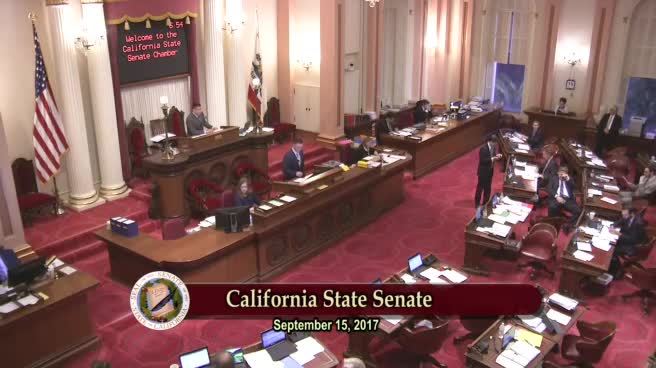 3MIN
Senate Floor
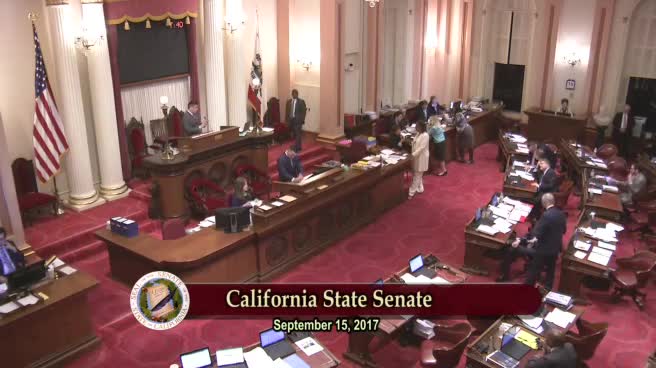 2MIN
Senate Floor
 1H
Assembly Standing Committee on Appropriations
 5MIN
Assembly Standing Committee on Education
Bill Author

Bill Co-Author(s):
