SB 598: Public utilities: gas and electric service disconnections.
- Session Year: 2017-2018
- House: Senate
- Latest Version Date: 2017-09-28
Under existing law, the Public Utilities Commission has regulatory authority over public utilities, including electrical corporations and gas corporations, and can establish its own procedures, subject to statutory limitations or directions and constitutional requirements of due process. Existing law requires the commission to designate a baseline quantity of electricity and gas necessary for a significant portion of the reasonable energy needs of the average residential customer, and to establish a higher energy allowance above the baseline for residential customers dependent on life-support equipment. Existing law requires certain notice be given before an electrical or gas corporation may terminate residential service for nonpayment of a delinquent account and prohibits termination of service for nonpayment in certain circumstances.
This bill would require the commission to develop policies, rules, or regulations with a goal of reducing, by January 1, 2024, the statewide level of gas and electric service disconnections for nonpayment by residential customers, as specified. The bill would require the commission in each gas and electrical corporation general rate case to, among other things, conduct an assessment of and properly identify the impact of any proposed increase in rates on disconnections for nonpayment. The bill would require the commission to include in an annual report to the Legislature information on residential and household gas and electric service disconnections, disaggregated by certain customer categories.
This bill would require the commission to adopt residential utility disconnections for nonpayment as a metric and incorporate the metric into each gas and electrical corporation general rate case. The bill would prohibit a gas or electrical corporation from disconnecting service for nonpayment by a residential customer dependent on life-support equipment who is unable to pay for service, who is willing to enter into an amortization agreement, as provided, and who satisfies certain other conditions. The bill would authorize the commission to identify strategies for reasonable cost recovery by a gas or electrical corporation for costs incurred in providing gas or electric service to customers whom the gas or electrical corporation was unable to disconnect due to compliance with that prohibition.
Under existing law, a violation of any provision of the Public Utilities Act or of any of the rules or orders issued under the act is a crime.
Because the provisions of this bill are within the act and require action by the commission to implement its requirements, a violation of these provisions would impose a state-mandated local program by creating a new crime.
The California Constitution requires the state to reimburse local agencies and school districts for certain costs mandated by the state. Statutory provisions establish procedures for making that reimbursement.
This bill would provide that no reimbursement is required by this act for a specified reason.
Under existing law, the Public Utilities Commission has regulatory authority over public utilities, including electrical corporations and gas corporations, and can establish its own procedures, subject to statutory limitations or directions and constitutional requirements of due process. Existing law requires the commission to designate a baseline quantity of electricity and gas necessary for a significant portion of the reasonable energy needs of the average residential customer, and to establish a higher energy allowance above the baseline for residential customers dependent on life-support equipment. Existing law requires certain notice be given before an electrical or gas corporation may terminate residential service for nonpayment of a delinquent account and prohibits termination of service for nonpayment in certain circumstances.
This bill would require the commission to develop policies, rules, or regulations with a goal of reducing, by January 1, 2024, the statewide level of gas and electric service disconnections for nonpayment by residential customers, as specified. The bill would require the commission in each gas and electrical corporation general rate case to, among other things, conduct an assessment of and properly identify the impact of any proposed increase in rates on disconnections for nonpayment. The bill would require the commission to include in a an annual report to the Legislature information on residential and household gas and electric service disconnections, disaggregated by certain customer categories.
This bill would require the commission to adopt residential utility disconnections for nonpayment as a metric and incorporate the metric into each gas and electrical corporation general rate case. The bill would require a gas or electrical corporation to incorporate the metric adopted by the commission in all of its reports to the commission that measure or address service reliability, public safety, and affordability. The bill would prohibit a gas or electrical corporation from disconnecting service for nonpayment by a residential customer dependent on life-support equipment who is unable to pay for service, who is willing to enter into an amortization agreement, as provided, and who satisfies certain other conditions. The bill would authorize the commission to identify strategies for reasonable cost recovery by a gas or electrical corporation for costs incurred in providing gas or electric service to customers whom the gas or electrical corporation was unable to disconnect due to compliance with that prohibition.
Under existing law, a violation of any provision of the Public Utilities Act or of any of the rules or orders issued under the act is a crime.
Because the provisions of this bill are within the act and require action by the commission to implement its requirements, a violation of these provisions would impose a state-mandated local program by creating a new crime.
The California Constitution requires the state to reimburse local agencies and school districts for certain costs mandated by the state. Statutory provisions establish procedures for making that reimbursement.
This bill would provide that no reimbursement is required by this act for a specified reason.
Under existing law, the Public Utilities Commission has regulatory authority over public utilities, including electrical corporations and gas corporations, and can establish its own procedures, subject to statutory limitations or directions and constitutional requirements of due process. Existing law requires the commission to designate a baseline quantity of electricity and gas necessary for a significant portion of the reasonable energy needs of the average residential customer, and to establish a higher energy allowance above the baseline for residential customers dependent on life-support equipment. Existing law requires certain notice be given before an electrical or gas corporation may terminate residential service for nonpayment of a delinquent account and prohibits termination of service for nonpayment in certain circumstances.
This bill would require the commission to develop policies, rules, or regulations with a goal of reducing, by January 1, 2024, the levels statewide level of gas and electric service disconnections for nonpayment by residential customers to the levels reported by each gas and electrical corporation in 2010, customers, as specified. The bill would require the commission in each gas and electrical corporation general rate case to, among other things, conduct an assessment of and properly identify the impact of any proposed increase in rates on disconnections for nonpayment. The bill would require the commission to include in a report to the Legislature information on residential and household gas and electric service disconnections, disaggregated by certain customer categories.
This bill would require the commission to adopt residential utility disconnections for nonpayment as a metric and incorporate the metric into each gas and electrical corporation general rate case. The bill would require a gas or electrical corporation to incorporate the metric adopted by the commission in all of its reports to the commission that measure or address service reliability, public safety, and affordability. The bill would prohibit a gas or electrical corporation from disconnecting service for nonpayment by a residential customer dependent on life-support equipment who is unable to pay for service, who is willing to enter into an amortization agreement, and who satisfies certain other conditions. The bill would authorize the commission to identify strategies for reasonable cost recovery by a gas or electrical corporation for costs incurred in providing gas or electric service to customers whom the gas or electrical corporation was unable to disconnect due to compliance with that prohibition.
Under existing law, a violation of any provision of the Public Utilities Act or of any of the rules or orders issued under the act is a crime.
Because the provisions of this bill are within the act and require action by the commission to implement its requirements, a violation of these provisions would impose a state-mandated local program by creating a new crime.
The California Constitution requires the state to reimburse local agencies and school districts for certain costs mandated by the state. Statutory provisions establish procedures for making that reimbursement.
This bill would provide that no reimbursement is required by this act for a specified reason.
Under existing law, the Public Utilities Commission has regulatory authority over public utilities, including electrical corporations and gas corporations, and can establish its own procedures, subject to statutory limitations or directions and constitutional requirements of due process. Existing law requires the commission to designate a baseline quantity of electricity and gas necessary for a significant portion of the reasonable energy needs of the average residential customer, and to establish a higher energy allowance above the baseline for residential customers dependent on life-support equipment. Existing law requires certain notice be given before an electrical or gas corporation may terminate residential service for nonpayment of a delinquent account and prohibits termination of service for nonpayment in certain circumstances.
This bill would require the commission to develop policies, rules, or regulations designed to reduce, with a goal of reducing, by January 1, 2024, the levels of gas and electric service disconnections for nonpayment by residential customers to the levels reported by each gas and electrical corporation in 2010, as specified. This The bill would require the commission to prioritize provision of universal gas and electric service to every residential household by, in each gas and electrical corporation general rate case to, among other actions, assessing things, conduct an assessment of and properly identify the impact of a any proposed increase in a utility revenue requirement or rates on disconnections for nonpayment. The bill would require the commission to include in a report to the Legislature information on residential and household gas and electric service disconnections, disaggregated by certain customer categories.
This bill would require the commission to adopt residential utility disconnections for nonpayment as a metric and incorporate the metric into certain commission proceedings. each gas and electrical corporation general rate case. The bill would require a gas or electrical corporation to incorporate the metric adopted by the commission in all of its reports to the commission that measure or address service reliability, public safety, and affordability. The bill would prohibit a gas or electrical corporation from disconnecting service for nonpayment by a residential customer dependent on life-support equipment who is unable to pay for service, who is willing to enter into an amortization agreement, and who satisfies certain other conditions. The bill would authorize the commission to identify strategies for reasonable cost recovery by a gas or electrical corporation for costs incurred in providing gas or electric service to customers whom the gas or electrical corporation was unable to disconnect due to compliance with that prohibition.
Under existing law, a violation of any provision of the Public Utilities Act or of any of the rules or orders issued under the act is a crime.
Because the provisions of this bill are within the act and require action by the commission to implement its requirements, a violation of these provisions would impose a state-mandated local program by creating a new crime.
The California Constitution requires the state to reimburse local agencies and school districts for certain costs mandated by the state. Statutory provisions establish procedures for making that reimbursement.
This bill would provide that no reimbursement is required by this act for a specified reason.
Under existing law, the Public Utilities Commission has regulatory authority over public utilities, including electrical corporations and gas corporations, and can establish its own procedures, subject to statutory limitations or directions and constitutional requirements of due process. Existing law requires the commission to designate a baseline quantity of electricity and gas necessary for a significant portion of the reasonable energy needs of the average residential customer, and to establish a higher energy allowance above the baseline for residential customers dependent on life-support equipment. Existing law requires certain notice be given before an electrical or gas corporation may terminate residential service for nonpayment of a delinquent account and prohibits termination of service for nonpayment in certain circumstances.
This bill would require the commission to develop policies, rules, or regulations designed to reduce reduce, by January 1, 2024, the levels of gas and electric service disconnections for nonpayment by residential customers by 50% by 2021, to the levels reported by each gas and electrical corporation in 2010, as specified. This bill would require the commission to prioritize provision of universal gas and electric service to every residential household by, among other actions, assessing the impact of a proposed increase in a utility revenue requirement or rates on disconnections for nonpayment. The bill would require the commission to include in a report to the Legislature information on residential and household gas and electric service disconnections, disaggregated by certain customer categories.
This bill would require the commission to adopt residential utility disconnections for nonpayment as a metric and incorporate the metric into certain commission proceedings. The bill would require a gas or electrical corporation to incorporate the metric adopted by the commission in all of its reports to the commission that measure or address service reliability, public safety, and affordability. The bill would prohibit a gas or electrical corporation from disconnecting service for nonpayment by a residential customer dependent on life-support equipment who satisfies certain conditions. The bill would authorize the commission to identify strategies for reasonable cost recovery by a gas or electrical corporation for costs incurred in providing gas or electric service to customers whom the gas or electrical corporation was unable to disconnect due to compliance with that prohibition.
Under existing law, a violation of any provision of the Public Utilities Act or of any of the rules or orders issued under the act is a crime.
Because the provisions of this bill are within the act and require action by the commission to implement its requirements, a violation of these provisions would impose a state-mandated local program by creating a new crime.
The California Constitution requires the state to reimburse local agencies and school districts for certain costs mandated by the state. Statutory provisions establish procedures for making that reimbursement.
This bill would provide that no reimbursement is required by this act for a specified reason.
Under existing law, the Public Utilities Commission has regulatory authority over public utilities, including electrical corporations and gas corporations, and can establish its own procedures, subject to statutory limitations or directions and constitutional requirements of due process. Existing law requires the commission to designate a baseline quantity of electricity and gas necessary for a significant portion of the reasonable energy needs of the average residential customer, and to establish a higher energy allowance above the baseline for residential customers dependent on life-support equipment. Existing law requires certain notice be given before an electrical or gas corporation may terminate residential service for nonpayment of a delinquent account and prohibits termination of service for nonpayment in certain circumstances.
This bill would require the commission to develop policies, rules, or regulations to reduce gas and electric service disconnections for nonpayment by residential customers by 50% by 2021, as specified. This bill would require the commission to prioritize provision of universal gas and electric service to every residential household by, among other actions, assessing the impact of a proposed increase in a utility revenue requirement or rates on disconnections for nonpayment. The bill would require the commission to include in a report to the Legislature information on residential and household gas and electric service disconnections, disaggregated by certain customer categories.
This bill would require the commission to adopt residential utility disconnections for nonpayment as a metric and incorporate the metric into certain commission proceedings. The bill would require a gas or electrical corporation to incorporate the metric adopted by the commission in all of its reports to the commission that measure or address service reliability, public safety, and affordability. The bill would prohibit a gas or electrical corporation from disconnecting service for nonpayment by a residential customer dependent on life-support equipment who satisfies certain conditions.
Under existing law, a violation of any provision of the Public Utilities Act or of any of the rules or orders issued under the act is a crime.
Because the provisions of this bill are within the act and require action by the commission to implement its requirements, a violation of these provisions would impose a state-mandated local program by creating a new crime.
The California Constitution requires the state to reimburse local agencies and school districts for certain costs mandated by the state. Statutory provisions establish procedures for making that reimbursement.
This bill would provide that no reimbursement is required by this act for a specified reason.
The Legislature finds and declares the following:
(a)Residential disconnections for nonpayment by major gas and electrical corporations rose significantly from 547,000 in 2010 to 816,000 in 2015.
(b)Gas and electric service shutoffs threaten the health of two million people annually with significant impact on infants, children, the elderly, low-income families, communities of color, people for whom English is a second language, physically disabled persons, and persons with life-threatening medical conditions.
(c)The loss of basic gas or electric service causes tremendous hardship and undue stress, including increased health risks to vulnerable populations, as well as overreliance on emergency services and underutilization of preventive programs.
SEC. 2.Section 718 is added to the Public Utilities Code, to read:718.(a)The commission shall develop policies, rules, or regulations with a goal of reducing, by January 1, 2024, the statewide level of gas and electric service disconnections for nonpayment by residential customers, including policies, rules, or regulations specific to the four gas and electrical corporations that have the greatest number of customers. The commission shall convene stakeholders, including, but not limited to, public health officials, consumer advocates, and organizations representing low-income communities, to assist with the development of the policies, rules, or regulations.
(b)(1)In each gas and electrical corporation general rate case, the commission shall do both of the following:
(A)Designate the impact of any proposed increase in rates on disconnections for nonpayment as an issue in the scope of the proceeding.
(B)Conduct an assessment of and properly identify the impact of any proposed increase in rates on disconnections for nonpayment, which shall be included in the record of the proceeding.
(2)The commission shall adopt residential utility disconnections for nonpayment as a metric and incorporate the metric into each gas and electrical corporation general rate case.
SEC. 3.Section 779.3 is added to the Public Utilities Code, to read:779.3.(a)A gas or electrical corporation shall not disconnect service for nonpayment by a residential customer receiving a medical baseline allowance pursuant to subdivision (c) of Section 739 who is financially unable to pay for service within the normal payment period, who is willing to enter into an amortization agreement with the corporation pursuant to subdivision (e) of Section 779 with respect to all charges that the customer is unable to pay, and who meets any of the following criteria:
(1)The customer or a member of the customers household is under hospice care at home.
(2)The customer or a member of the customers household depends upon life-support equipment, as defined in paragraph (2) of subdivision (c) of Section 739.
(3)The customer or a member of the customers household has a life-threatening condition or illness, and a licensed physician, person licensed pursuant to the Osteopathic Initiative Act, or nurse practitioner certifies that gas or electric service is medically necessary to sustain the life of the person or prevent deterioration of the persons medical condition.
(b)The commission may identify strategies for reasonable cost recovery by a gas or electrical corporation for costs incurred in providing gas or electric service to customers whom the gas or electrical corporation was unable to disconnect due to compliance with this section.
(c)A gas or electrical corporation may institute a verification process to implement this section.
SEC. 4.Section 910.5 is added to the Public Utilities Code, to read:910.5.(a)The commission shall submit a report by April 1 of each year to the Legislature on residential and household gas and electric service disconnections that includes the following information for each community choice aggregator and each of the four electrical and gas corporations that have the greatest number of customers:
(1)For the most recent five years, the total annual number of residential disconnections for nonpayment, reconnections following disconnection for nonpayment, and disconnections for nonpayment that did not result in a reconnection within 30 days.
(2)For the most recent five years, the total annual number of households disconnected for nonpayment, households reconnected following disconnection for nonpayment, and households not reconnected within 30 days of being disconnected for nonpayment. A household disconnected more than once in a calendar year shall be counted only once for purposes of this reporting requirement.
(b)The commission shall disaggregate the information specified in subdivision (a) to provide that information for each of the following populations:
(1)Customers enrolled in the California Alternate Rates for Energy or CARE program.
(2)Customers enrolled in a Family Electric Rate Assistance program.
(3)Customers receiving a medical baseline allowance.
(4)Customers both enrolled in the CARE program and receiving a medical baseline allowance.
(5)Customers receiving assistance or a benefit under the federal Low-Income Home Energy Assistance Program (LIHEAP) (42 U.S.C. Sec. 8621 et seq.).
(6)Customers of a community choice aggregator who, after disconnection, are reconnected to service provided by an electrical corporation.
(c)For each of the customer categories listed in subdivision (b), the commission shall further disaggregate the information for individual customers as follows:
(1)Disconnected one time.
(2)Disconnected two times.
(3)Disconnected three or more times.
(4)Reconnected one time.
(5)Reconnected two times.
(6)Reconnected three or more times.
(d)For a corporation included in the report pursuant to subdivision (a) that provides both gas and electric service to customers, the commission shall provide the information separately.
SEC. 5.No reimbursement is required by this act pursuant to Section 6 of Article XIIIB of the California Constitution because the only costs that may be incurred by a local agency or school district will be incurred because this act creates a new crime or infraction, eliminates a crime or infraction, or changes the penalty for a crime or infraction, within the meaning of Section 17556 of the Government Code, or changes the definition of a crime within the meaning of Section 6 of Article XIIIB of the California Constitution.
The Legislature finds and declares the following:
(a)Residential disconnections for nonpayment by major gas and electrical corporations rose significantly from 547,000 in 2010 to 816,000 in 2015.
(b)Gas and electric service shutoffs threaten the health of two million people annually with significant impact on infants, children, the elderly, low-income families, communities of color, people for whom English is a second language, physically disabled persons, and persons with life-threatening medical conditions.
(c)The loss of basic gas or electric service causes tremendous hardship and undue stress, including increased health risks to vulnerable populations, as well as overreliance on emergency services and underutilization of preventive programs.
SEC. 2.Section 718 is added to the Public Utilities Code, to read:718.(a)The commission shall develop policies, rules, or regulations with a goal of reducing, by January 1, 2024, the statewide level of gas and electric service disconnections for nonpayment by residential customers, including policies, rules, or regulations specific to the four gas and electrical corporations that have the greatest number of customers. The commission shall convene stakeholders, including, but not limited to, public health officials, consumer advocates, and organizations representing low-income communities, to assist with the development of the policies, rules, or regulations.
(b)(1)In each gas and electrical corporation general rate case, the commission shall do both of the following:
(A)Designate the impact of any proposed increase in rates on disconnections for nonpayment as an issue in the scope of the proceeding.
(B)Conduct an assessment of and properly identify the impact of any proposed increase in rates on disconnections for nonpayment, which shall be included in the record of the proceeding.
(2)The commission shall adopt residential utility disconnections for nonpayment as a metric and incorporate the metric into each gas and electrical corporation general rate case.
SEC. 3.Section 779.3 is added to the Public Utilities Code, to read:779.3.(a)A gas or electrical corporation shall not disconnect service for nonpayment by a residential customer receiving a medical baseline allowance pursuant to subdivision (c) of Section 739 who is financially unable to pay for service within the normal payment period, who is willing to enter into an amortization agreement with the corporation in accordance with subdivision (b) pursuant to subdivision (e) of Section 779 with respect to all charges that the customer is unable to pay, and who meets any of the following criteria:
(1)The customer or a member of the customers household is under hospice care at home.
(2)The customer or a member of the customers household depends upon life-support equipment, as defined in paragraph (2) of subdivision (c) of Section 739.
(3)The customer or a member of the customers household has a life-threatening condition or illness, and a licensed physician, person licensed pursuant to the Osteopathic Initiative Act, or nurse practitioner certifies in writing that gas or electric service is medically necessary to sustain the life of the person or prevent deterioration of the persons medical condition.
(b)(1)Upon request of a customer that meets the criteria listed in subdivision (a), a gas or electrical corporation shall permit the customer to amortize the unpaid balance of any bill the customer asserts to be beyond the means of the customer to pay within the normal period of payment, with an amortization period of up to 12 months. (2)A gas or electrical corporation may grant an amortization period of more than 12 months to a customer that meets the criteria listed in subdivision (a) who is enrolled in the California Alternate Rates for Energy program in light of the customers circumstances. A gas or electrical corporation shall not deny the request of a customer that meets the criteria listed in subdivision (a) who is enrolled in the California Alternate Rates for Energy program to amortize an unpaid balance due to the customers payment history, including, but not limited to, prior delinquencies in making payments pursuant to an amortization agreement entered into pursuant to this subdivision. (c)(b)The commission may identify strategies for reasonable cost recovery by a gas or electrical corporation for costs incurred in providing gas or electric service to customers whom the gas or electrical corporation was unable to disconnect due to compliance with this section.
(d)(c)A gas or electrical corporation may institute a verification process to implement this section.
SEC. 4.Section 910.5 is added to the Public Utilities Code, to read:910.5.(a)The commission shall submit a report by April 1 of each year to the Legislature on residential and household gas and electric service disconnections that includes the following information for each community choice aggregator and each of the four electrical and gas corporations that have the greatest number of customers:
(1)For the most recent five years, the total annual number of residential disconnections for nonpayment, reconnections following disconnection for nonpayment, and disconnections for nonpayment that did not result in a reconnection within 30 days.
(2)For the most recent five years, the total annual number of households disconnected for nonpayment, households reconnected following disconnection for nonpayment, and households not reconnected within 30 days of being disconnected for nonpayment. A household disconnected more than once in a calendar year shall be counted only once for purposes of this reporting requirement.
(b)The commission shall disaggregate the information specified in subdivision (a) to provide that information for each of the following populations:
(1)Customers enrolled in the California Alternate Rates for Energy or CARE program.
(2)Customers enrolled in a Family Electric Rate Assistance program.
(3)Customers receiving a medical baseline allowance.
(4)Customers both enrolled in the CARE program and receiving a medical baseline allowance.
(5)Customers receiving assistance or a benefit under the federal Low-Income Home Energy Assistance Program (LIHEAP) (42 U.S.C. Sec. 8621 et seq.).
(6)Customers of a community choice aggregator who, after disconnection, are reconnected to service provided by an electrical corporation.
(c)For each of the customer categories listed in subdivision (b), the commission shall further disaggregate the information for individual customers as follows:
(1)Disconnected one time.
(2)Disconnected two times.
(3)Disconnected three or more times.
(4)Reconnected one time.
(5)Reconnected two times.
(6)Reconnected three or more times.
(d)For a corporation included in the report pursuant to subdivision (a) that provides both gas and electric service to customers, the commission shall provide the information separately.
SEC. 5.No reimbursement is required by this act pursuant to Section 6 of Article XIIIB of the California Constitution because the only costs that may be incurred by a local agency or school district will be incurred because this act creates a new crime or infraction, eliminates a crime or infraction, or changes the penalty for a crime or infraction, within the meaning of Section 17556 of the Government Code, or changes the definition of a crime within the meaning of Section 6 of Article XIIIB of the California Constitution.
The Legislature finds and declares the following:
(a)Residential disconnections for nonpayment by major gas and electrical corporations rose significantly from 547,000 in 2010 to 816,000 in 2015.
(b)Gas and electric service shutoffs threaten the health of two million people annually with significant impact on infants, children, the elderly, low-income families, communities of color, people for whom English is a second language, physically disabled persons, and persons with life-threatening medical conditions.
(c)The loss of basic gas or electric service causes tremendous hardship and undue stress, including increased health risks to vulnerable populations, as well as overreliance on emergency services and underutilization of preventive programs.
SEC. 2.Section 718 is added to the Public Utilities Code, to read:718.(a)A gas or electrical corporation shall incorporate the metric the commission adopts pursuant to paragraph (2) of subdivision (b) in all of its reports to the commission that measure or address service reliability, public safety, and affordability.718.(a)The commission shall develop policies, rules, or regulations with a goal of reducing, by January 1, 2024, the statewide level of gas and electric service disconnections for nonpayment by residential customers, including policies, rules, or regulations specific to the four gas and electrical corporations that have the greatest number of customers. The commission shall convene stakeholders, including, but not limited to, public health officials, consumer advocates, and organizations representing low-income communities, to assist with the development of the policies, rules, or regulations.
(b)(1)In each gas and electrical corporation general rate case, the commission shall do all both of the following:
(A)Designate the impact of any proposed increase in rates on disconnections for nonpayment as an issue in the scope of the proceeding.
(B)Conduct an assessment of and properly identify the impact of any proposed increase in rates on disconnections for nonpayment, which shall be included in the record of the proceeding.
(2)The commission shall adopt residential utility disconnections for nonpayment as a metric and incorporate the metric into each gas and electrical corporation general rate case.
(c)The commission shall develop policies, rules, or regulations with a goal of reducing, by January 1, 2024, the statewide level of gas and electric service disconnections for nonpayment by residential customers, including policies, rules, or regulations specific to the four gas and electrical corporations that have the greatest number of customers. The commission shall convene stakeholders, including, but not limited to, public health officials, consumer advocates, and organizations representing low-income communities, to assist with the development of the policies, rules, or regulations.SEC. 3.Section 779.3 is added to the Public Utilities Code, to read:779.3.(a)A gas or electrical corporation shall not disconnect service for nonpayment by a residential customer receiving a medical baseline allowance pursuant to subdivision (c) of Section 739 who is financially unable to pay for service within the normal payment period, who is willing to enter into, before delinquency, into an amortization agreement with the corporation pursuant to in accordance with subdivision (e) of Section 779 (b) with respect to all charges that the customer is unable to pay, and who meets any of the following criteria:
(1)The customer or a member of the customers household is under hospice care at home.
(2)The customer or a member of the customers household depends upon life-support equipment, as defined in paragraph (2) of subdivision (c) of Section 739.
(3)The customer or a member of the customers household has a life-threatening condition or illness, and a licensed physician, person licensed pursuant to the Osteopathic Initiative Act, or nurse practitioner certifies in writing that gas or electric service is medically necessary to sustain the life of the person or prevent deterioration of the persons medical condition.
(b)(1)Upon request of a customer that meets the criteria listed in subdivision (a), a gas or electrical corporation shall permit the customer to amortize the unpaid balance of any bill the customer asserts to be beyond the means of the customer to pay within the normal period of payment, with an amortization period of up to 12 months.
(2)A gas or electrical corporation may grant an amortization period of more than 12 months to a customer that meets the criteria listed in subdivision (a) who is enrolled in the California Alternate Rates for Energy program in light of the customers circumstances. A gas or electrical corporation shall not deny the request of a customer that meets the criteria listed in subdivision (a) who is enrolled in the California Alternate Rates for Energy program to amortize an unpaid balance due to the customers payment history, including, but not limited to, prior delinquencies in making payments pursuant to an amortization agreement entered into pursuant to this subdivision.
(b)(c)The commission may identify strategies for reasonable cost recovery by a gas or electrical corporation for costs incurred in providing gas or electric service to customers whom the gas or electrical corporation was unable to disconnect due to compliance with this section.
(c)(d)A gas or electrical corporation may institute a verification process to implement this section.
SEC. 4.Section 910.5 is added to the Public Utilities Code, to read:910.5.(a)The commission shall submit a report by April 1 of each year to the Legislature on residential and household gas and electric service disconnections that includes the following information for each community choice aggregator and each of the four electrical and gas corporations that have the greatest number of customers:
(1)For the most recent five years, the total annual number of residential disconnections for nonpayment, reconnections following disconnection for nonpayment, and disconnections for nonpayment that did not result in a reconnection within 30 days.
(2)For the most recent five years, the total annual number of households disconnected for nonpayment, households reconnected following disconnection for nonpayment, and households not reconnected within 30 days of being disconnected for nonpayment. A household disconnected more than once in a calendar year shall be counted only once for purposes of this reporting requirement.
(b)The commission shall disaggregate the information specified in subdivision (a) to provide that information for each of the following populations:
(1)Customers enrolled in the California Alternate Rates for Energy or CARE program.
(2)Customers enrolled in a Family Electric Rate Assistance program.
(3)Customers receiving a medical baseline allowance.
(4)Customers both enrolled in the CARE program and receiving a medical baseline allowance.
(5)Customers receiving assistance or a benefit under the federal Low-Income Home Energy Assistance Program (LIHEAP) (42 U.S.C. Sec. 8621 et seq.).
(6)Customers of a community choice aggregator who, after disconnection, are reconnected to service provided by an electrical corporation.
(c)For each of the customer categories listed in subdivision (b), the commission shall further disaggregate the information for individual customers as follows:
(1)Disconnected one time.
(2)Disconnected two times.
(3)Disconnected three or more times.
(4)Reconnected one time.
(5)Reconnected two times.
(6)Reconnected three or more times.
(d)For a corporation included in the report pursuant to subdivision (a) that provides both gas and electric service to customers, the commission shall provide the information separately.
SEC. 5.No reimbursement is required by this act pursuant to Section 6 of Article XIIIB of the California Constitution because the only costs that may be incurred by a local agency or school district will be incurred because this act creates a new crime or infraction, eliminates a crime or infraction, or changes the penalty for a crime or infraction, within the meaning of Section 17556 of the Government Code, or changes the definition of a crime within the meaning of Section 6 of Article XIIIB of the California Constitution.
The Legislature finds and declares the following:
(a)Residential disconnections for nonpayment by major gas and electrical corporations rose significantly from 547,000 in 2010 to 816,000 in 2015.
(b)Gas and electric service shutoffs threaten the health of two million people annually with significant impact on infants, children, the elderly, low-income families, communities of color, people for whom English is a second language, physically disabled persons, and persons with life-threatening medical conditions.
(c)The loss of basic gas or electric service causes tremendous hardship and undue stress, including increased health risks to vulnerable populations, as well as overreliance on emergency services and underutilization of preventive programs.
SEC. 2.Section 718 is added to the Public Utilities Code, to read:718.(a)A gas or electrical corporation shall incorporate the metric the commission adopts pursuant to paragraph (2) of subdivision (b) in all of its reports to the commission that measure or address service reliability, public safety, and affordability.
(b)(1)In each gas and electrical corporation general rate case, the commission shall do all of the following:
(A)Designate the impact of any proposed increase in rates on disconnections for nonpayment as an issue in the scope of the proceeding.
(B)Conduct an assessment of and properly identify the impact of any proposed increase in rates on disconnections for nonpayment, which shall be included in the record of the proceeding.
(2)The commission shall adopt residential utility disconnections for nonpayment as a metric and incorporate the metric into each gas and electrical corporation general rate case.
(c)The commission shall develop policies, rules, or regulations with a goal of reducing, by January 1, 2024, the levels statewide level of gas and electric service disconnections for nonpayment by residential customers to the levels reported by each gas and electrical corporation in 2010, customers, including policies, rules, or regulations specific to the four gas and electrical corporations that have the greatest number of customers. The commission shall convene stakeholders, including, but not limited to, public health officials, consumer advocates, and organizations representing low-income communities, to assist with the development of the policies, rules, or regulations.
SEC. 3.Section 779.3 is added to the Public Utilities Code, to read:779.3.(a)A gas or electrical corporation shall not disconnect service for nonpayment by a residential customer receiving a medical baseline allowance pursuant to subdivision (c) of Section 739 who is financially unable to pay for service within the normal payment period, who is willing to enter into, before delinquency, an amortization agreement with the corporation pursuant to subdivision (e) of Section 779 with respect to all charges that the customer is unable to pay, and who meets any of the following criteria:
(1)The customer or a member of the customers household is under hospice care at home.
(2)The customer or a member of the customers household depends upon life-support equipment, as defined in paragraph (2) of subdivision (c) of Section 739.
(3)The customer or a member of the customers household has a life-threatening condition or illness, and a licensed physician, person licensed pursuant to the Osteopathic Initiative Act, or nurse practitioner certifies in writing that gas or electric service is medically necessary to sustain the life of the person or prevent deterioration of the persons medical condition.
(b)The commission may identify strategies for reasonable cost recovery by a gas or electrical corporation for costs incurred in providing gas or electric service to customers whom the gas or electrical corporation was unable to disconnect due to compliance with this section.
(c)A gas or electrical corporation may institute a verification process to implement this section.
SEC. 4.Section 910.5 is added to the Public Utilities Code, to read:910.5.(a)The commission shall submit a report to the Legislature on residential and household gas and electric service disconnections that includes the following information for each community choice aggregator and each of the four electrical and gas corporations that have the greatest number of customers:
(1)For the most recent five years, the total annual number of residential disconnections for nonpayment, reconnections following disconnection for nonpayment, and disconnections for nonpayment that did not result in a reconnection within 30 days.
(2)For the most recent five years, the total annual number of households disconnected for nonpayment, households reconnected following disconnection for nonpayment, and households not reconnected within 30 days of being disconnected for nonpayment. A household disconnected more than once in a calendar year shall be counted only once for purposes of this reporting requirement.
(b)The commission shall disaggregate the information specified in subdivision (a) to provide that information for each of the following populations:
(1)Customers enrolled in the California Alternate Rates for Energy or CARE program.
(2)Customers enrolled in a Family Electric Rate Assistance program.
(3)Customers receiving a medical baseline allowance.
(4)Customers both enrolled in the CARE program and receiving a medical baseline allowance.
(5)Customers receiving assistance or a benefit under the federal Low-Income Home Energy Assistance Program (LIHEAP) (42 U.S.C. Sec. 8621 et seq.).
(6)Customers of a community choice aggregator who, after disconnection, are reconnected to service provided by an electrical corporation.
(c)For each of the customer categories listed in subdivision (b), the commission shall further disaggregate the information for individual customers as follows:
(1)Disconnected one time.
(2)Disconnected two times.
(3)Disconnected three or more times.
(4)Reconnected one time.
(5)Reconnected two times.
(6)Reconnected three or more times.
(d)For a corporation included in the report pursuant to subdivision (a) that provides both gas and electric service to customers, the commission shall provide the information separately.
SEC. 5.No reimbursement is required by this act pursuant to Section 6 of Article XIIIB of the California Constitution because the only costs that may be incurred by a local agency or school district will be incurred because this act creates a new crime or infraction, eliminates a crime or infraction, or changes the penalty for a crime or infraction, within the meaning of Section 17556 of the Government Code, or changes the definition of a crime within the meaning of Section 6 of Article XIIIB of the California Constitution.
The Legislature finds and declares the following:
(a)For more than 40 years, California has recognized that light and heat are basic human rights.(b)(a)Residential disconnections for nonpayment by major gas and electrical corporations rose significantly from 547,000 in 2010 to 816,000 in 2015.
(c)(b)Gas and electric service shutoffs threaten the health of two million people annually with significant impact on infants, children, the elderly, low-income families, communities of color, people for whom English is a second language, physically disabled persons, and persons with life-threatening medical conditions.
(d)(c)The loss of basic gas or electric service causes tremendous hardship and undue stress, including increased health risks to vulnerable populations, as well as overreliance on emergency services and underutilization of preventive programs.
SEC. 2.Section 718 is added to the Public Utilities Code, to read:718.(a)The commission shall prioritize provision of universal gas and electric service to every residential household by doing both of the following:(1)In a commission proceeding that may result in an increase in a utility revenue requirement or rates,718.(a)A gas or electrical corporation shall incorporate the metric the commission adopts pursuant to paragraph (2) of subdivision (b) in all of its reports to the commission that measure or address service reliability, public safety, and affordability.
(b)(1)In each gas and electrical corporation general rate case, the commission shall do all of the following:
(A)Designate the impact of the any proposed increase in rates on disconnections for nonpayment as an issue in the scope of the proceeding.
(B)Conduct an assessment of and properly identify the impact of the any proposed increase in rates on disconnections for nonpayment, which shall be included in the record of the proceeding.
(C)Make a finding of fact regarding the impact on disconnections for nonpayment of any revenue requirement or rate increase authorized by the commission.(2)Adopt The commission shall adopt residential utility disconnections for nonpayment as a metric and incorporate the metric into commission proceedings that measure or address service reliability, public safety, and affordability. each gas and electrical corporation general rate case.
(b)A gas or electrical corporation shall incorporate the metric the commission adopts pursuant to paragraph (2) of subdivision (a) in all of its reports to the commission that measure or address service reliability, public safety, and affordability.(c)The commission shall develop policies, rules, or regulations designed to reduce, with a goal of reducing, by January 1, 2024, the levels of gas and electric service disconnections for nonpayment by residential customers to the levels reported by each gas and electrical corporation in 2010, including policies, rules, or regulations specific to the four gas and electrical corporations that have the greatest number of customers. The commission shall convene stakeholders, including, but not limited to, public health officials, consumer advocates, and organizations representing low-income communities, to assist with the development of the policies, rules, or regulations.
SEC. 3.Section 779.3 is added to the Public Utilities Code, to read:779.3.(a)A gas or electrical corporation shall not disconnect service for nonpayment by a residential customer receiving a medical baseline allowance pursuant to subdivision (c) of Section 739 who is financially unable to pay for service within the normal payment period, who is willing to enter into, before delinquency, an amortization agreement with the corporation pursuant to subdivision (e) of Section 779 with respect to all charges that the customer is unable to pay, and who meets any of the following criteria:
(a)(1)The customer or a member of the customers household is under hospice care at home.
(b)(2)The customer or a member of the customers household depends upon life-support equipment, as defined in paragraph (2) of subdivision (c) of Section 739.
(c)(3)The customer or a member of the customers household has a life-threatening condition or illness, and a licensed physician, person licensed pursuant to the Osteopathic Initiative Act, or nurse practitioner certifies in writing that gas or electric service is medically necessary to sustain the life of the person or prevent deterioration of the persons medical condition.
(d)(b)The commission may identify strategies for reasonable cost recovery by a gas or electrical corporation for costs incurred in providing gas or electric service to customers whom the gas or electrical corporation was unable to disconnect due to compliance with this section.
(e)(c)A gas or electrical corporation may institute a verification process to implement this section.
SEC. 4.Section 910.5 is added to the Public Utilities Code, to read:910.5.(a)The commission shall prioritize provision of universal gas and electric service to every residential household by submitting submit a report to the Legislature on residential and household gas and electric service disconnections that includes the following information for each community choice aggregator and each of the four electrical and gas corporations that have the greatest number of customers:
(1)For the most recent five years, the total annual number of residential disconnections for nonpayment, reconnections following disconnection for nonpayment, and disconnections for nonpayment that did not result in a reconnection within 30 days.
(2)For the most recent five years, the total annual number of households disconnected for nonpayment, households reconnected following disconnection for nonpayment, and households not reconnected within 30 days of being disconnected for nonpayment. A household disconnected more than once in a calendar year shall be counted only once for purposes of this reporting requirement.
(b)The commission shall disaggregate the information specified in subdivision (a) to provide that information for each of the following populations:
(1)Customers enrolled in the California Alternate Rates for Energy or CARE program.
(2)Customers enrolled in a Family Electric Rate Assistance program.
(3)Customers receiving a medical baseline allowance.
(4)Customers both enrolled in the CARE program and receiving a medical baseline allowance.
(5)Customers receiving assistance or a benefit under the federal Low-Income Home Energy Assistance Program (LIHEAP) (42 U.S.C. Sec. 8621 et seq.).
(6)Customers of a community choice aggregator who, after disconnection, are reconnected to service provided by an electrical corporation.
(c)For each of the customer categories listed in subdivision (b), the commission shall further disaggregate the information for individual customers as follows:
(1)Disconnected one time.
(2)Disconnected two times.
(3)Disconnected three or more times.
(4)Reconnected one time.
(5)Reconnected two times.
(6)Reconnected three or more times.
(d)For a corporation included in the report pursuant to subdivision (a) that provides both gas and electric service to customers, the commission shall provide the information separately.
SEC. 5.No reimbursement is required by this act pursuant to Section 6 of Article XIIIB of the California Constitution because the only costs that may be incurred by a local agency or school district will be incurred because this act creates a new crime or infraction, eliminates a crime or infraction, or changes the penalty for a crime or infraction, within the meaning of Section 17556 of the Government Code, or changes the definition of a crime within the meaning of Section 6 of Article XIIIB of the California Constitution.
The Legislature finds and declares the following:
(a)For more than 40 years, California has recognized that light and heat are basic human rights.
(b)Residential disconnections for nonpayment by major gas and electrical corporations rose significantly from 547,000 in 2010 to 816,000 in 2015.
(c)Gas and electric service shutoffs threaten the health of 2 two million people annually with significant impact on infants, children, the elderly, low-income families, communities of color, people for whom English is a second language, physically disabled persons, and persons with life-threatening medical conditions.
(d)The loss of basic gas or electric service causes tremendous hardship and undue stress, including increased health risks to vulnerable populations, as well as over-reliance overreliance on emergency services and underutilization of preventive programs.
SEC. 2.Section 718 is added to the Public Utilities Code, to read:718.(a)The commission shall prioritize provision of universal gas and electric service to every residential household by doing both of the following:
(1)In a commission proceeding that may result in an increase in a utility revenue requirement or rates, the commission shall do all of the following:
(A)Designate the impact of the proposed increase on disconnections for nonpayment as an issue in the scope of the proceeding.
(B)Conduct an assessment of and properly identify the impact of the proposed increase on disconnections for nonpayment, which shall be included in the record of the proceeding.
(C)Make a finding of fact regarding the impact on disconnections for nonpayment of any revenue requirement or rate increase authorized by the commission.
(2)Adopt residential utility disconnections for nonpayment as a metric and incorporate the metric into commission proceedings that measure or address service reliability, public safety, and affordability.
(b)A gas or electrical corporation shall incorporate the metric the commission adopts pursuant to paragraph (2) of subdivision (a) in all of its reports to the commission that measure or address service reliability, public safety, and affordability.
(c)The commission shall develop policies, rules, or regulations designed to reduce reduce, by January 1, 2024, the levels of gas and electric service disconnections for nonpayment by residential customers by 50 percent by 2021, to the levels reported by each gas and electrical corporation in 2010, including policies, rules, or regulations specific to the four gas and electrical corporations that have the greatest number of customers. The commission shall convene stakeholders, including, but not limited to, public health officials, consumer advocates, and organizations representing low-income communities, to assist with the development of the policies, rules, or regulations.
SEC. 3.Section 779.3 is added to the Public Utilities Code, to read:779.3.A gas or electrical corporation shall not disconnect service for nonpayment by a residential customer receiving a medical baseline allowance pursuant to subdivision (c) of Section 739 who meets any of the following criteria:
(a)The customer or a member of the customers household is under hospice care at home.
(b)The customer or a member of the customers household depends upon life-support equipment, as defined in paragraph (2) of subdivision (c) of Section 739.
(c)The customer or a member of the customers household has a life-threatening condition or illness, and a licensed physician, person licensed pursuant to the Osteopathic Initiative Act, or nurse practitioner certifies in writing that gas or electric service is medically necessary to sustain the life of the person or prevent deterioration of the persons medical condition.
(d)The commission may identify strategies for reasonable cost recovery by a gas or electrical corporation for costs incurred in providing gas or electric service to customers whom the gas or electrical corporation was unable to disconnect due to compliance with this section.
(e)A gas or electrical corporation may institute a verification process to implement this section.
SEC. 4.Section 910.5 is added to the Public Utilities Code, to read:910.5.(a)The commission shall prioritize provision of universal gas and electric service to every residential household by submitting a report to the Legislature on residential and household gas and electric service disconnections that includes the following information for each of the four electrical and gas corporations that have the greatest number of customers:
(1)For the most recent five years, the total annual number of residential disconnections for nonpayment, reconnections following disconnection for nonpayment, and disconnections for nonpayment that did not result in a reconnection within 30 days.
(2)For the most recent five years, the total annual number of households disconnected for nonpayment, households reconnected following disconnection for nonpayment, and households not reconnected within 30 days of being disconnected for nonpayment. A household disconnected more than once in a calendar year shall be counted only once for purposes of this reporting requirement.
(b)The commission shall disaggregate the information specified in subdivision (a) to provide that information for each of the following populations:
(1)Customers enrolled in the California Alternate Rates for Energy or CARE program.
(2)Customers enrolled in a Family Electric Rate Assistance program.
(3)Customers receiving a medical baseline allowance.
(4)Customers both enrolled in the CARE program and receiving a medical baseline allowance.
(5)Customers receiving assistance or a benefit under the federal Low-Income Home Energy Assistance Program (LIHEAP) (42 U.S.C. Sec. 8621 et seq.).
(c)For each of the customer categories listed in subdivision (b), the commission shall further disaggregate the information for individual customers as follows:
(1)Disconnected one time.
(2)Disconnected two times.
(3)Disconnected three or more times.
(4)Reconnected one time.
(5)Reconnected two times.
(6)Reconnected three or more times.
(d)For a corporation included in the report pursuant to subdivision (a) that provides both gas and electric service to customers, the commission shall provide the information separately.
SEC. 5.No reimbursement is required by this act pursuant to Section 6 of Article XIIIB of the California Constitution because the only costs that may be incurred by a local agency or school district will be incurred because this act creates a new crime or infraction, eliminates a crime or infraction, or changes the penalty for a crime or infraction, within the meaning of Section 17556 of the Government Code, or changes the definition of a crime within the meaning of Section 6 of Article XIIIB of the California Constitution.
The Legislature finds and declares the following:
(a)For more than 40 years, California has recognized that light and heat are basic human rights.
(b)Residential disconnections for nonpayment by major gas and electrical corporations rose significantly from 547,000 in 2010 to 816,000 in 2015.
(c)Gas and electric service shutoffs threaten the health of 2 million people annually with significant impact on infants, children, the elderly, low-income families, communities of color, people for whom English is a second language, physically disabled persons, and persons with life-threatening medical conditions.
(d)The loss of basic gas or electric service causes tremendous hardship and undue stress, including increased health risks to vulnerable populations, as well as over-reliance on emergency services and underutilization of preventive programs.
SEC. 2.Section 718 is added to the Public Utilities Code, to read:718.(a)The commission shall prioritize provision of universal gas and electric service to every residential household by doing both of the following:
(1)In a commission proceeding that may result in an increase in a utility revenue requirement or rates, the commission shall do all of the following:
(A)Designate the impact of the proposed increase on disconnections for nonpayment as an issue in the scope of the proceeding.
(B)Conduct an assessment of and properly identify the impact of the proposed increase on disconnections for nonpayment, which shall be included in the record of the proceeding.
(C)Make a finding of fact regarding the impact on disconnections for nonpayment of any revenue requirement or rate increase authorized by the commission.
(2)Adopt residential utility disconnections for nonpayment as a metric and incorporate the metric into commission proceedings that measure or address service reliability, public safety, and affordability.
(b)A gas or electrical corporation shall incorporate the metric the commission adopts pursuant to paragraph (2) of subdivision (a) in all of its reports to the commission that measure or address service reliability, public safety, and affordability.
(c)The commission shall develop policies, rules, or regulations to reduce gas and electric service disconnections for nonpayment by residential customers by 50 percent by 2021, including policies, rules, or regulations specific to the four gas and electrical corporations that have the greatest number of customers. The commission shall convene stakeholders, including, but not limited to, public health officials, consumer advocates, and organizations representing low-income communities, to assist with development of the policies, rules, or regulations.
SEC. 3.Section 779.3 is added to the Public Utilities Code, to read:779.3.A gas or electrical corporation shall not disconnect service for nonpayment by a residential customer receiving a medical baseline allowance pursuant to subdivision (c) of Section 739 who meets any of the following criteria:
(a)The customer or a member of the customers household is under hospice care at home.
(b)The customer or a member of the customers household depends upon life-support equipment, as defined in paragraph (2) of subdivision (c) of Section 739.
(c)The customer or a member of the customers household has a life-threatening condition or illness, and a licensed physician, person licensed pursuant to the Osteopathic Initiative Act, or nurse practitioner certifies in writing that gas or electric service is medically necessary to sustain the life of the person or prevent deterioration of the persons medical condition.
SEC. 4.Section 910.5 is added to the Public Utilities Code, to read:910.5.(a)The commission shall prioritize provision of universal gas and electric service to every residential household by submitting a report to the Legislature on residential and household gas and electric service disconnections that includes the following information for each of the four electrical and gas corporations that have the greatest number of customers:
(1)For the most recent five years, the total annual number of residential disconnections for nonpayment, reconnections following disconnection for nonpayment, and disconnections for nonpayment that did not result in a reconnection within 30 days.
(2)For the most recent five years, the total annual number of households disconnected for nonpayment, households reconnected following disconnection for nonpayment, and households not reconnected within 30 days of being disconnected for nonpayment. A household disconnected more than once in a calendar year shall be counted only once for purposes of this reporting requirement.
(b)The commission shall disaggregate the information specified in subdivision (a) to provide that information for each of the following populations:
(1)Customers enrolled in the California Alternate Rates for Energy or CARE program.
(2)Customers enrolled in a Family Electric Rate Assistance program.
(3)Customers receiving a medical baseline allowance.
(4)Customers both enrolled in the CARE program and receiving a medical baseline allowance.
(c)For each of the customer categories listed in subdivision (b), the commission shall further disaggregate the information for individual customers as follows:
(1)Disconnected one time.
(2)Disconnected two times.
(3)Disconnected three or more times.
(4)Reconnected one time.
(5)Reconnected two times.
(6)Reconnected three or more times.
(d)For a corporation included in the report pursuant to subdivision (a) that provides both gas and electric service to customers, the commission shall provide the information separately.
SEC. 5.No reimbursement is required by this act pursuant to Section 6 of Article XIIIB of the California Constitution because the only costs that may be incurred by a local agency or school district will be incurred because this act creates a new crime or infraction, eliminates a crime or infraction, or changes the penalty for a crime or infraction, within the meaning of Section 17556 of the Government Code, or changes the definition of a crime within the meaning of Section 6 of Article XIIIB of the California Constitution.
|
Date
|
Status
|
|---|---|
| Sep 28, 2017 | Chaptered by Secretary of State. Chapter 362, Statutes of 2017. |
| Sep 28, 2017 | Approved by the Governor. |
| Sep 22, 2017 | Enrolled and presented to the Governor at 3 p.m. |
| Sep 16, 2017 | Assembly amendments concurred in. (Ayes 38. Noes 0.) Ordered to engrossing and enrolling. |
| Sep 15, 2017 | In Senate. Concurrence in Assembly amendments pending. |
| Sep 15, 2017 | Read third time. Passed. Ordered to the Senate. |
| Sep 13, 2017 | Read second time. Ordered to third reading. |
| Sep 12, 2017 | Assembly Rule 96 suspended. |
| Sep 11, 2017 | From committee with author's amendments. Read second time and amended. Re-referred to Com. on U. & E. |
| Sep 11, 2017 | September 11 hearing postponed by committee. |
| Sep 8, 2017 | Re-referred to Com. on U. & E. pursuant to Assembly Rule 77.2. |
| Sep 8, 2017 | Ordered to third reading. |
| Sep 6, 2017 | Read second time. Ordered to third reading. |
| Sep 5, 2017 | Read second time and amended. Ordered to second reading. |
| Sep 1, 2017 | From committee: Do pass as amended. (Ayes 11. Noes 0.) (September 1). |
| Aug 23, 2017 | August 23 set for first hearing. Placed on suspense file. |
| Jul 19, 2017 | Read second time and amended. Re-referred to Com. on APPR. |
| Jul 18, 2017 | From committee: Do pass as amended and re-refer to Com. on APPR. (Ayes 10. Noes 0.) (July 12). |
| Jul 5, 2017 | From committee with author's amendments. Read second time and amended. Re-referred to Com. on U. & E. |
| Jun 12, 2017 | Referred to Com. on U. & E. |
| Jun 1, 2017 | In Assembly. Read first time. Held at Desk. |
| May 31, 2017 | Read third time. Passed. (Ayes 40. Noes 0. Page 1357.) Ordered to the Assembly. |
| May 26, 2017 | Ordered to special consent calendar. |
| May 26, 2017 | Read second time. Ordered to third reading. |
| May 25, 2017 | From committee: Do pass. (Ayes 7. Noes 0. Page 1188.) (May 25). |
| May 19, 2017 | Set for hearing May 25. |
| Apr 17, 2017 | April 17 hearing: Placed on APPR. suspense file. |
| Apr 6, 2017 | Set for hearing April 17. |
| Apr 5, 2017 | From committee: Do pass and re-refer to Com. on APPR. (Ayes 11. Noes 0. Page 621.) (April 4). Re-referred to Com. on APPR. |
| Mar 9, 2017 | Set for hearing April 4. |
| Mar 2, 2017 | Referred to Com. on E., U. & C. |
| Feb 21, 2017 | From printer. May be acted upon on or after March 23. |
| Feb 17, 2017 | Introduced. Read first time. To Com. on RLS. for assignment. To print. |
|
Date
|
Description
|
Location
|
Votes
|
|
|---|---|---|---|---|
| Sep 16, 2017 | Unfinished Business SB598 Hueso Concurrence | Senate Floor |
Passed |
|
| Sep 15, 2017 | SB 598 Hueso Senate Third Reading By ARAMBULA | Assembly Floor |
Passed |
|
| Sep 1, 2017 | Do pass as amended. | Assembly Standing Committee on Appropriations |
Passed |
|
| Jul 12, 2017 | Do pass as amended and be re-referred to the Committee on [Appropriations] | Assembly Standing Committee on Utilities and Energy |
Passed |
|
| May 31, 2017 | Special Consent Calendar # SB598 | Senate Floor |
Passed |
|
| May 25, 2017 | Do pass | Senate Standing Committee on Appropriations |
Passed |
|
| Apr 17, 2017 | Placed on suspense file | Senate Standing Committee on Appropriations |
Passed |
|
| Apr 4, 2017 | Do pass, but first be re-referred to the Committee on [Appropriations] | Senate Standing Committee on Energy, Utilities and Communications |
Passed |
This list shows positions taken on this bill by organizations on the date displayed, which is linked to the original source.
Positions by individuals are not included.
|
Organization
|
Position
|
Date
|
|---|---|---|
| 1 individual | ** Against | Jul 11, 2017 |
| Alameda County Board of Supervisors | ** Support | Sep 15, 2017 |
| American Legion, Department Of California | * Support | Apr 4, 2017 |
| Bet Tzedek Legal Services | ** Support | Sep 15, 2017 |
| California Low-Income Consumer Coalition | ** Support | Sep 15, 2017 |
| California Pan-Ethnic Health Network | ** Support | Jul 11, 2017 |
| Center for Accessible Technology | ** Support | Sep 15, 2017 |
| Central Coast Energy Services | ** Support | Sep 15, 2017 |
| Centro La Familia Advocacy Services | ** Support | Sep 15, 2017 |
| Centro Legal de la Raza | ** Support | Sep 15, 2017 |
| City and County of San Francisco | ** Support | Jul 11, 2017 |
| City Heights Community Development Corporation | ** Support | Sep 15, 2017 |
| Community Legal Services in East Palo Alto | ** Support | Jul 11, 2017 |
| Consumer Federation Of California | ** Support | Sep 15, 2017 |
| County Of Alameda | ** Support | Jul 11, 2017 |
| East Bay Community Law Center | ** Support | Sep 15, 2017 |
| Fathers & Families of San Joaquin | ** Support | Sep 15, 2017 |
| Help Kids Around the World | ** Support | Sep 15, 2017 |
| Housing Long Beach | ** Support | Sep 15, 2017 |
| Integral Community Solutions Institute | ** Support | Sep 15, 2017 |
| Khmer Girls in Action | ** Support | Jul 11, 2017 |
| latinos in action | ** Support | Jul 11, 2017 |
| Latinos in Action California | ** Support | Sep 15, 2017 |
| Law Foundation of Silicon Valley | ** Support | Sep 15, 2017 |
| Long Beach Residents Empowered | ** Support | Sep 15, 2017 |
| Long Beach Time Exchange | ** Support | Sep 15, 2017 |
| lutheran social services of southern california | ** Support | Jul 11, 2017 |
| Natural Resources Defense Council | ** Support | Jul 11, 2017 |
| Norway Organization Project | * Support | Apr 4, 2017 |
| Office of Ratepayer Advocates | ** Support | Sep 15, 2017 |
| Public Law Center | ** Support | Sep 15, 2017 |
| San Diego Housing Federation | ** Support | Jul 11, 2017 |
| The Greenlining Institute | ** Support | Jul 11, 2017 |
| the insight center for community economic development | ** Support | Jul 11, 2017 |
| The Utility Reform Network | ** Support | Sep 15, 2017 |
| Urban Habitat | ** Support | Sep 15, 2017 |
Office of Senate Floor Analyses (916) 651-1520 Fax: (916) 327-4478 | SB |
THIRD READING
Bill No: SB 598
:
SENATE ENERGY, U. & C. COMMITTEE: 11-0, 4/4/17
AYES: Hueso, Morrell, Bradford, Cannella, Hertzberg, Hill, McGuire, Skinner, Stern, Vidak, Wiener
SENATE APPROPRIATIONS COMMITTEE: 7-0, 5/25/17
AYES: Lara, Bates, Beall, Bradford, Hill, Nielsen, Wiener
SENATE FLOOR: 40-0, 5/31/17 (Consent)
AYES: Allen, Anderson, Atkins, Bates, Beall, Berryhill, Bradford, Cannella, De León, Dodd, Fuller, Gaines, Galgiani, Glazer, Hernandez, Hertzberg, Hill, Hueso, Jackson, Lara, Leyva, McGuire, Mendoza, Mitchell, Monning, Moorlach, Morrell, Newman, Nguyen, Nielsen, Pan, Portantino, Roth, Skinner, Stern, Stone, Vidak, Wieckowski, Wiener, Wilk
ASSEMBLY FLOOR: 44-13, 9/15/17
(ROLL CALL NOT AVAILABLE)
SUBJECT: Public utilities: gas and electric service disconnections
SOURCE: The Utility Reform Network
DIGEST:
This bill requires the California Public Utilities Commission (CPUC) to adopt rules, policies and regulations with the goal of reducing the statewide level of gas and electric utility service disconnections for nonpayment by residential customers and extends special considerations to residential customers who have specified medical conditions or who have a member of the household with those conditions.
Assembly Amendments remove the explicit goal of reducing disconnections by 50 percent by 2021; narrow the designation of a rate increase impact exclusively to the general rate case of a utility; for customers with life-threatening medical conditions, limit the prohibition of disconnection of service for nonpayment on those customers who are financially unable to pay for service within the normal payment period and who are willing to enter into an amortization agreement; require data on disconnections related to customers of community choice aggregators; and make other changes.
Existing law:
- Requires that only an electrical corporation or publicly owned electric utility that provides physical service to the affected customer has the authority to physically disconnect or reconnect a customer from the transmission or distribution grid. (Public Utilities Code §394.4(b))
- Requires that physical disconnection by electrical corporations subject to the CPUC’s jurisdiction occur only in accordance with protocols established by the CPUC. (Public Utilities Code §394.4(b))
- Requires the CPUC to establish a standard limited allowance in addition to the baseline quantity and higher energy allocation of gas and electricity for residential customers dependent on life-support equipment and patients being treated for a life-threatening illness or who have a compromised immune system, if a licensed physician and surgeon or a person licensed pursuant to the Osteopathic Initiative Act certifies in writing to the ability that the additional heating or cooling allowance is medically necessary to sustain life or prevent deterioration of the person’s medical condition. (Public Utilities Code §739 (2)(c))
- Establishes the California Alternate Rates for Energy (CARE) program for assistance to low-income electric and gas customers with annual household incomes that are no greater than 200 percent of the federal poverty guideline levels to ensure low-income ratepayers are not jeopardized or overburdened by monthly energy expenditures. Requires the CARE discount for electrical corporations with 100,000 or more customer accounts in California is not less than 30 percent or more than 35 percent of the revenues that would have been produced for the same billed usage by non-CARE customers and requires the entire discount to be provided in the form of a reduction in the overall bill for the eligible CARE customer. (Public Utilities Code §§382 and 739.1)
- Requires the CPUC, in order to protect customers from unwarranted disconnection of necessary electric and gas services, to require all electrical and gas utilities through which CARE program rates are available to conduct several actions to increase penetration of the CARE program, including:
- Offer individual payment arrangements that allow customers to pay amounts due over a reasonable period of time, not to exceed 12 months.
- Prohibit disconnection of customers that have made, and are in compliance with, payment arrangements offered by an electric or gas utility or for amounts due in which the utility receives a commitment pledge, letter of intent, purchase order, or other notification that a provider of energy assistance is forwarding payment sufficient to prevent disconnection.
- Advise residential customers about enrollment in the levelizing payment program in conjunction with completion of payment arrangements. (Public Utilities Code §739.4)
- Prohibits an electrical and gas corporation from terminating residential service for nonpayment of a delinquent account unless the corporation first gives notice of the delinquency and impending termination and prohibits an electrical and gas corporation from terminating residential service for nonpayment of a delinquent account: during an investigation of a customer dispute or complaint; when a customer has been granted an extension of the period for payment of a bill; and when a licensed physician or surgeon certifies that to do so will be life threatening to the customer and the customer is financially unable to pay for the service within the normal payment period and is willing to enter into an amortization agreement with the corporation. (Public Utilities Code §779)
- Requires every electrical and gas corporation to allow every residential customer at least 19 days from the date of mailing its bill for services, postage prepaid, for payment of the charges demanded. Prohibits a corporation from terminating service for nonpayment of a delinquent account unless the corporation first gives notice of the delinquency and impending termination, at least 10 days prior to the proposed termination, by means of a notice mailed, postage prepaid, to the customer to whom the service is billed, not earlier than 19 days from the date of mailing the corporation’s bill for service, and the 10-day period shall not commence until five days after the mailing of the notice. (Public Utilities Code §779.1)
- Requires every corporation to make a reasonable attempt to contact an adult person residing at the premises of the customer by telephone or personal contact at least 24 hours prior to any termination of service, except when not possible, the corporation shall give a notice of termination of service at least 48 hours prior to termination. (Public Utilities Code §779.1)
- Requires electrical and gas corporations when deciding whether to require a new residential applicant to deposit a sum of money with the corporation prior to establishing an account and furnishing service to be based solely upon the credit worthiness of the applicant. (Public Utilities Code §779.5)
- Prohibits electrical and gas corporations from terminating service due to delinquency in payment of its charges on any Saturday, Sunday, legal holiday, or at any time during which the business offices of the corporation are not open to the public. (Public Utilities Code §780)
- Provides that an electrical or gas corporation is not precluded from using customer aggregate electrical or gas consumption data for analysis, reporting, or program management if all information has been removed regarding the individual identity of a customer or as required or permitted under state or federal law or by an order of the CPUC. (Public Utilities Code §8380 (e))
This bill:
- Requires the CPUC to open a proceeding to investigate rising service disconnections of electrical and gas service for residential customers and to develop rules, policies and regulations with a goal of reducing those disconnections.
- Requires the CPUC to address residential utility disconnections for nonpayment in general rate cases and consider the impact of the proposed rates on service disconnections.
- Expands special payment considerations for customers with medical conditions to customers who are under hospice care at home, depend upon life-support equipment, or who have a life-threatening condition or illness and rely on electric or gas service to sustain life or prevent deterioration of their condition, or who have a member of their household with any of those medical conditions.
- Requires the CPUC to submit a report to the Legislature on residential and household gas and electric service disconnections that includes specified information for each community choice aggregator and each of the four largest electrical and gas corporations.
Background
Utility disconnections on the rise. The number of utility disconnections due to nonpayment has increased in recent years among the four largest utilities–Pacific Gas & Electric (PG&E), San Diego Gas & Electric (SDG&E), Southern California Edison (SCE), and Southern California Gas Company (SoCal Gas). The CPUC has noted “an upward trend in shutoffs among all [four] utilities… The low point of disconnections was at the end of the great recession in Q4 of 2009… Disconnection rates were stable from 2009-2012, and have been rising since that time.”[Electric and Gas Utility Customer Disconnections. Memo by CPUC Policy & Planning Division, Q3 2016]. According to the CPUC, these increases are not fully accounted for by the increase in customers over that timeframe.
Utility process for disconnecting service. The process of disconnecting service is governed by existing statutory minimum timeline requirements, the practices that were adopted in Rulemaking 10-02-005, and reflected in Tariff Rule 11 for electric utilities and Rule 9 for gas utilities. In general, the rules require a utility to mail a 15-day written notice to the customer for disconnection of non-payment. The second step requires a 48-hour written notice mailed to the customer, including an in-person visit for customers on life support or other life-threatening medical condition. Lastly, the utility makes an outbound call on the day of the scheduled disconnection, but before disconnecting service, in order to offer a payment plan option. [Overview of Bill Protections and Disconnection of Service to Residential Gas & Electric Customers. Presentation by Ed Randolph, CPUC Energy Division Manager. CPUC Business Meeting, March 2, 2017]
Typical Utility Bill Process [Ibid. p.5. Re-created based on chart in CPUC presentation] | |
Calendar Days | |
0 |
|
+21 | Bill due date |
+27-33 | If bill has not been paid, and meets collection criteria, a collection process will start |
Work days | |
0 | 15-day notice is issued on subsequent bill |
10 work days after 15-day notice | 48-hour notice is issued |
4 work days after 48-hour notice | Outbound Phone Call – an attempt to contact customer prior to issuing a disconnect |
4 work days after phone call | Disconnection Issued – an order to disconnect the service is issued |
Utility bill assistance. There are several programs that provide eligible utility ratepayers with bill assistance: The CARE program provides discounted rates to low-income ratepayers, up to 35 percent reduction in rates. For families whose household income slightly exceeds the CARE program eligibility, the Family Energy Rate Assistance program provides discounts on electric rates. In addition to these rate assistance programs, utilities provide ratepayers payment plan options that can spread the costs of their bills over a limited time period, generally three months to twelve months, depending on the utility and circumstances. Additionally, there are assistance programs to help reduce energy costs through weatherization improvements and appliance rebates. The Low Income Home Energy Assistance Program also provides one-time assistance funds for ratepayers facing a utility disconnection.
Medical baseline. Per statute, utilities are required to provide additional baseline allowance of gas or electric service for customers facing life-threatening conditions or on life support. All utilities currently administer medical baseline, and, as such, have existing processes for identifying these customers, including requiring physicians and other medical personal to certify as to the medical condition. Customers on medical baseline are also provided the opportunity to amortize their bill payments, for a period up to twelve months, in order to avoid disconnection of service. This bill will provide customers with life-threatening medical conditions, protection against disconnection of service for nonpayment if they are financially unable to pay for service within the normal payment period and who are willing to enter into an amortization agreement
Costs to customer to reconnect service. Most utility disconnections are reconnected within 24 hours. However, in addition to this bill amount, customers often have to pay for additional fees, including reconnection fees and deposit requirements. Reconnection fees can range from a high of $30 to as low as $1.50 for some CARE customers. Deposits are generally twice the average monthly bill.
Costs to society. The loss of utility service poses risks and hazards to public safety. In today’s day and age, the loss of essential gas or electric service can be life-threatening. Therefore, every effort must be made to prevent disconnection of service while ensuring all other ratepayers are not unfairly burdened. The introduction of smart meters provides electric utilities the opportunity to disconnect service remotely. As a result, the majority of disconnections are handled remotely, except for gas customers. Due to safety issues surrounding disconnecting gas service, these disconnections usually require a utility to deploy a representative to disconnect (and to reconnect) the service.
FISCAL EFFECT: Appropriation: Fiscal Com.: Local:
According to the Assembly Committee on Appropriations:
Increased ongoing annual CPUC costs of approximately $290,000 (Utilities Reimbursement Account) for an administrative law judge and other staffing to: 1) determine policy on how to reduce disconnections to below 2010 levels by 2024 and how to incorporate the metric of residential disconnections for non-payment into general rate cases; 2) produce reports to the Legislature; and 3) approve utility proposals on methods of cost recovery and verification for new prohibition on disconnection for non-payment.
The Utility Reform Network (source)
Alameda County Board of Supervisors
Bet Tzedek Legal Services
California Low-Income Consumer Coalition
Center for Accessible Technology
Central Coast Energy Services
Centro La Familia Advocacy Services
Centro Legal de la Raza
City Heights Community Development Corporation
Consumer Federation of California
East Bay Community Law Center
Fathers & Families of San Joaquin
Help Kids Around the World
Housing Long Beach
Integral Community Solutions Institute
Latinos in Action California
Law Foundation of Silicon Valley
Long Beach Residents Empowered
Long Beach Time Exchange
Office of Ratepayer Advocates
Public Law Center
Urban Habitat
OPPOSITION: (Verified 9/14/17)
None received
ARGUMENTS IN SUPPORT: According to TURN, the source of this bill, SB 598 ensures greater accountability and monitoring of utility customer service disconnections. This bill requires the CPUC to consider the impact of proposed rate increases on the utility disconnection rate during a utility’s general rate case and will provide better protections for low-income residents dealing with a life-threatening medical condition who require gas or electric service.
9/15/17 19:12:00
**** END ****
SENATE THIRD READING
STR Bill Id:SB 598
Author:(Hueso)
As Amended Ver:September 11, 2017
Majority vote
SENATE VOTE: 40-0
Committee | Votes | Ayes | Noes |
Utilities | 10-0 | Holden, Burke, Rodriguez, Cristina Garcia, Eduardo Garcia, Muratsuchi, Quirk, Reyes, Santiago, Ting | |
Appropriations | 11-0 | Gonzalez Fletcher, Bloom, Bocanegra, Bonta, Calderon, Chau, Eggman, Friedman, Eduardo Garcia, Jones-Sawyer, Reyes |
SUMMARY: This bill requires the California Public Utilities Commission (CPUC) to adopt rules, policies and regulations with the goal of reducing the statewide level of gas and electric service disconnections for nonpayment by residential customers and extends special considerations to residential customers who have specified medical conditions or who have a member of the household with those conditions. Specifically, this bill:
- Requires the CPUC to open a proceeding to investigate rising service disconnections of electrical and gas service for residential customers and to develop rules, policies and regulations with a goal of reducing those disconnections;
- Requires that the CPUC address residential utility disconnections for nonpayment in general rate cases and consider the impact of the proposed rates on service disconnections;
- Expands special payment considerations for customers with medical conditions to customers who are under hospice care at home, depend upon life-support equipment, or who have a life-threatening condition or illness and rely on electric or gas service to sustain life or prevent deterioration of their condition, or who have a member of their household with any of those medical conditions; and
- Requires the CPUC to submit a report to the Legislature on residential and household gas and electric service disconnections that includes specified information for each community choice aggregator and each of the four largest electrical and gas corporations.
FISCAL EFFECT: According to the Assembly Appropriations Committee analysis, increased ongoing annual CPUC costs of approximately $290,000 (Utilities Reimbursement Account) for an administrative law judge and other staffing to: 1) determine policy on how to reduce disconnections and how to incorporate the metric of residential disconnections for non-payment into general rate cases; 2) produce reports to the Legislature; and 3) approve utility proposals on methods of cost recovery and verification for new prohibition on disconnection for non-payment.
COMMENTS:
Disconnects – The IOUs have seen year-over-over increases in the percentage of customers disconnected from service during and since the recession even though the state and the nation's economies continue to improve at least at the macro level. The increase is not what one would logically expect with the growing economy where we would expect to see the disconnect rates decline from that which occurred during the recession.
The increases are troubling – The Utility Reform Network reports that the volume of annual residential disconnections for nonpayment of electric and gas utility service has risen by 67% in five years, from 547,000 in 2010 to 816,000 in 2015. However there is no pre-recession data against which these numbers can be compared. It is therefore not clear whether the increase in disconnects coming out of the recession is returning to pre-recession levels and related to the lapse of the relaxed disconnect policies, or whether some other factors such as the installation of smart meters or growing financial hardships for customers is the cause.
Very little analysis appears to have been done to determine why disconnections have increased. There are no reports that the utilities are not following applicable law and rules on customer disconnection. The committee has not received any reports that the IOUs are not following required billing and notice practices for customers in arrears and facing disconnection. The increased rate of disconnects cannot be explained by an increase in the number of customers served.
Prior Efforts to Reduce Disconnections – In 2010, as Californians were still recovering from the economic recession, the CPUC initiated a proceeding with utilities and stakeholders to adopt practices to reduce the number of gas and electric service disconnections (Rulemaking 10-02-005). The proceeding had two phases which spread over two years and resulted in changes to some utility practices in order to prevent utility disconnections, including a requirement that utilities send customer service representatives to visit with customers on life support or other life-threatening medical conditions prior to disconnecting service for nonpayment, specified the format and color of notices to customers, suspended or lowered security deposits required to reestablish service, and lengthened the repayment period for arrearages.
Going Forward – This bill will require the CPUC to evaluate disconnection policies and the post-recession increase in service disconnects and to establish policies intended to reduce disconnections.
The IOUs would be prohibited from disconnecting the service of customers with specified medical conditions who are under hospice care at home, depend upon life-support equipment, or who have a life-threatening condition or illness and rely on electric or gas service to sustain life or prevent deterioration of their condition, or who have a member of their household with any of those medical conditions if those customers agree to a repayment plan
On an ongoing basis, the CPUC would be required to evaluate the impact of rate increases in general rate cases on service disconnections and report to the Legislature on the numbers and factors surrounding service disconnection on an ongoing basis.
Analysis Prepared by: Kellie Smith / U. & E. / (916) 319-2083 FN: 0002326
SENATE THIRD READING
STR Bill Id:SB 598
Author:(Hueso)
As Amended Ver:September 5, 2017
Majority vote
SENATE VOTE: 40-0
Committee | Votes | Ayes | Noes |
Utilities | 10-0 | Holden, Burke, Rodriguez, Cristina Garcia, Eduardo Garcia, Muratsuchi, Quirk, Reyes, Santiago, Ting | |
Appropriations | 11-0 | Gonzalez Fletcher, Bloom, Bocanegra, Bonta, Calderon, Chau, Eggman, Friedman, Eduardo Garcia, Jones-Sawyer, Reyes |
SUMMARY: This bill requires the California Public Utilities Commission (CPUC) to adopt rules, policies and regulations with the goal of reducing the statewide level of gas and electric service disconnections for nonpayment by residential customers and extends special considerations to residential customers who have specified medical conditions or who have a member of the household with those conditions. Specifically, this bill:
- Requires the CPUC to open a proceeding to investigate rising service disconnections of electrical and gas service for residential customers and to develop rules, policies and regulations with a goal of reducing those disconnections;
- Requires that the CPUC address residential utility disconnections for nonpayment in general rate cases and consider the impact of the proposed rates on service disconnections;
- Expands special payment considerations for customers with medical conditions to customers who are under hospice care at home, depend upon life-support equipment, or who have a life-threatening condition or illness and rely on electric or gas service to sustain life or prevent deterioration of their condition, or who have a member of their household with any of those medical conditions; and
- Requires the CPUC to submit a report to the Legislature on residential and household gas and electric service disconnections that includes specified information for each community choice aggregator and each of the four largest electrical and gas corporations.
FISCAL EFFECT: According to the Assembly Appropriations Committee, increased ongoing annual CPUC costs of approximately $290,000 (Utilities Reimbursement Account) for an administrative law judge and other staffing to: 1) determine policy on how to reduce disconnections and how to incorporate the metric of residential disconnections for non-payment into general rate cases; 2) produce reports to the Legislature; and 3) approve utility proposals on methods of cost recovery and verification for new prohibition on disconnection for non-payment.
COMMENTS:
Disconnects – The investor-owned utilities (IOUs) have seen year-over-over increases in the percentage of customers disconnected from service during and since the recession even though the state and the nation's economies continue to improve at least at the macro level. The increase is not what one would logically expect with the growing economy where we would expect to see the disconnect rates decline from that which occurred during the recession.
The increases are troubling. The Utility Reform Network reports that the volume of annual residential disconnections for nonpayment of electric and gas utility service has risen by 67% in five years, from 547,000 in 2010 to 816,000 in 2015. However there is no pre-recession data against which these numbers can be compared. It is therefore not clear whether the increase in disconnects coming out of the recession is returning to pre-recession levels and related to the lapse of the relaxed disconnect policies, or whether some other factors such as the installation of smart meters or growing financial hardships for customers is the cause.
Very little analysis appears to have been done to determine why disconnections have increased. There are no reports that the utilities are not following applicable law and rules on customer disconnection. The committee has not received any reports that the IOUs are not following required billing and notice practices for customers in arrears and facing disconnection. The increased rate of disconnects cannot be explained by an increase in the number of customers served.
Prior Efforts to Reduce Disconnections – In 2010, as Californians were still recovering from the economic recession, the CPUC initiated a proceeding with utilities and stakeholders to adopt practices to reduce the number of gas and electric service disconnections (Rulemaking 10-02-005). The proceeding had two phases which spread over two years and resulted in changes to some utility practices in order to prevent utility disconnections, including a requirement that utilities send customer service representatives to visit with customers on life support or other life-threatening medical conditions prior to disconnecting service for nonpayment, specified the format and color of notices to customers, suspended or lowered security deposits required to reestablish service, and lengthened the repayment period for arrearages.
Going Forward – The bill will require the CPUC to evaluate disconnection policies and the post-recession increase in service disconnects and to establish policies intended to reduce disconnections. Current billing accommodations for customers with specified medical conditions would also be extended to customers who are under hospice care at home, depend upon life-support equipment, or who have a life-threatening condition or illness and rely on electric or gas service to sustain life or prevent deterioration of their condition, or who have a member of their household with any of those medical conditions. On an ongoing basis, the CPUC would be required to evaluate the impact of rate increases in general rate cases on service disconnections and report to the Legislature on the numbers and factors surrounding service disconnection on an ongoing basis.
Analysis Prepared by: Kellie Smith / U. & E. / (916) 319-2083 FN: 0001941
Date of Hearing: August 23, 2017
ASSEMBLY COMMITTEE ON APPROPRIATIONS
Lorena Gonzalez Fletcher, Chair
SBPCA Bill Id:SB 598
Author:(Hueso) – As Amended Ver:July 19, 2017
Policy Committee: | Utilities and Energy | Vote: | 10 - 0 |
|
| ||
|
|
Urgency: No State Mandated Local Program: Yes Reimbursable: No
SUMMARY:
This bill requires the California Public Utilities Commission (PUC) to adopt rules, policies and regulations with the goal of reducing, by January 1, 2024, the disconnections of utility service for nonpayment to 2010 levels. Additionally, this bill:
- Requires the PUC to submit a report to the Legislature on residential and household gas and electric service disconnections at each of the four largest investor owned utilities and all community choice aggregators.
- Requires the PUC to adopt residential utility disconnections for nonpayment as a metric and incorporate the metric into a utility’s general rate case (GRC).
- Prohibits a gas or electrical corporation from disconnecting service for nonpayment by a residential customer dependent on life-support equipment who satisfies certain conditions.
FISCAL EFFECT:
Increased ongoing annual PUC costs of approximately $290,000 (Utilities Reimbursement Account) for an administrative law judge and other staffing to: 1) determine policy on how to reduce disconnections to below 2010 levels by 2024 and how to incorporate the metric of residential disconnections for non-payment into general rate cases; 2) produce reports to the Legislature; and 3) approve utility proposals on methods of cost recovery and verification for new prohibition on disconnection for non-payment.
COMMENTS:
- Purpose. According to the author, “While utility disconnections significantly impact ratepayers, information on the rate of disconnections is not currently provided by a utility to the PUC when a rate change is considered. This information is vital to understanding how rates currently impact utility customers, including the rate of disconnections for nonpayment, and how an increase will make it more difficult for customers to keep their gas or electric service on. Without taking steps to make the disconnection rate more transparent, the CPUC continues to consider and approve utility rate increases that lack a complete understanding of the impact on customers who already struggle to keep the power on.”
- Background. The sponsor of this bill, The Utility Reform Network (TURN), reports that the volume of annual residential disconnections for nonpayment of electric and gas utility service has risen by 67% in five years, from 547,000 in 2010 to 816,000 in 2015.
However, even the highest disconnection rates are still less than 1%.
The process of disconnecting service is governed by existing statutory minimum timeline requirements, the practices that were adopted in Rulemaking 10-02-005, and reflected in Tariff Rule 11 for electric utilities and Rule 9 for gas utilities. In general, the rules require a utility to mail a 15-day written notice to the customer for disconnection of non-payment. The second step requires a 48-hour written notice mailed to the customer, including an in-person visit for customers on life support or other life-threatening medical condition. Lastly, the utility makes an outbound call on the day of the scheduled disconnection, but before disconnecting service, in order to offer a payment plan option.
Analysis Prepared by: Jennifer Galehouse / APPR. / (916) 319-2081
Office of Senate Floor Analyses (916) 651-1520 Fax: (916) 327-4478 | SB |
THIRD READING
Bill No: SB 598
:
SENATE ENERGY, U. & C. COMMITTEE: 11-0, 4/4/17
AYES: Hueso, Morrell, Bradford, Cannella, Hertzberg, Hill, McGuire, Skinner, Stern, Vidak, Wiener
SENATE APPROPRIATIONS COMMITTEE: 7-0, 5/25/17
AYES: Lara, Bates, Beall, Bradford, Hill, Nielsen, Wiener
SOURCE: The Utility Reform Network
DIGEST:
This bill requires the California Public Utilities Commission (CPUC) to adopt rules, policies and regulations to reduce disconnections of utility service for nonpayment and prohibits disconnections of residents with life-threatening medical conditions that require utility service. This bill also establishes a goal of reducing disconnection of utility service due to nonpayment by fifty percent by 2021.
Existing law:
- Requires that only an electrical corporation or publicly owned electric utility that provides physical service to the affected customer has the authority to physically disconnect or reconnect a customer from the transmission or distribution grid. (Public Utilities Code §394.4(b))
- Requires that physical disconnection by electrical corporations subject to the CPUC’s jurisdiction occur only in accordance with protocols established by the CPUC. (Public Utilities Code §394.4(b))
- Requires the CPUC to establish a standard limited allowance in addition to the baseline quantity and higher energy allocation of gas and electricity for residential customers dependent on life-support equipment and patients being treated for a life-threatening illness or who have a compromised immune system, if a licensed physician and surgeon or a person licensed pursuant to the Osteopathic Initiative Act certifies in writing to the ability that the additional heating or cooling allowance is medically necessary to sustain life or prevent deterioration of the person’s medical condition. (Public Utilities Code §739 (2)(c))
- Establishes the California Alternate Rates for Energy (CARE) program for assistance to low-income electric and gas customers with annual household incomes that are no greater than 200 percent of the federal poverty guideline levels to ensure low-income ratepayers are not jeopardized or overburdened by monthly energy expenditures. Requires the CARE discount for electrical corporations with 100,000 or more customer accounts in California is not less than 30 percent or more than 35 percent of the revenues that would have been produced for the same billed usage by non-CARE customers and requires the entire discount to be provided in the form of a reduction in the overall bill for the eligible CARE customer. (Public Utilities Code §§382 and 739.1)
- Requires the CPUC, in order to protect customers from unwarranted disconnection of necessary electric and gas services, to require all electrical and gas utilities through which CARE program rates are available to conduct several actions to increase penetration of the CARE program, including:
- Offer individual payment arrangements that allow customers to pay amounts due over a reasonable period of time, not to exceed 12 months.
- Prohibit disconnection of customers that have made, and are in compliance with, payment arrangements offered by an electric or gas utility or for amounts due in which the utility receives a commitment pledge, letter of intent, purchase order, or other notification that a provider of energy assistance is forwarding payment sufficient to prevent disconnection.
- Advise residential customers about enrollment in the levelizing payment program in conjunction with completion of payment arrangements. (Public Utilities Code §739.4)
- Prohibits an electrical and gas corporation from terminating residential service for nonpayment of a delinquent account unless the corporation first gives notice of the delinquency and impending termination and prohibits an electrical and gas corporation from terminating residential service for nonpayment of a delinquent account: during an investigation of a customer dispute or complaint; when a customer has been granted an extension of the period for payment of a bill; and when a licensed physician or surgeon certifies that to do so will be life threatening to the customer and the customer is financially unable to pay for the service within the normal payment period and is willing to enter into an amortization agreement with the corporation. (Public Utilities Code §779)
- Requires every electrical and gas corporation to allow every residential customer at least 19 days from the date of mailing its bill for services, postage prepaid, for payment of the charges demanded. Prohibits a corporation from terminating service for nonpayment of a delinquent account unless the corporation first gives notice of the delinquency and impending termination, at least 10 days prior to the proposed termination, by means of a notice mailed, postage prepaid, to the customer to whom the service is billed, not earlier than 19 days from the date of mailing the corporation’s bill for service, and the 10-day period shall not commence until five days after the mailing of the notice. (Public Utilities Code §779.1)
- Requires every corporation to make a reasonable attempt to contact an adult person residing at the premises of the customer by telephone or personal contact at least 24 hours prior to any termination of service, except when not possible, the corporation shall give a notice of termination of service at least 48 hours prior to termination. (Public Utilities Code §779.1)
- Requires electrical and gas corporations when deciding whether to require a new residential applicant to deposit a sum of money with the corporation prior to establishing an account and furnishing service to be based solely upon the credit worthiness of the applicant. (Public Utilities Code §779.5)
- Prohibits electrical and gas corporations from terminating service due to delinquency in payment of its charges on any Saturday, Sunday, legal holiday, or at any time during which the business offices of the corporation are not open to the public. (Public Utilities Code §780)
- Provides that an electrical or gas corporation is not precluded from using customer aggregate electrical or gas consumption data for analysis, reporting, or program management if all information has been removed regarding the individual identity of a customer or as required or permitted under state or federal law or by an order of the CPUC. (Public Utilities Code §8380 (e))
This bill:
- Makes findings and declarations regarding the need for essential gas and electrical utility service and notes an increase in disconnections of utility service due to nonpayment, among others.
- Requires the CPUC to prioritize provision of universal gas and electric service to every residential household by requiring specified actions, including requiring specified information related to disconnections in proceedings that may result in an increase in utility revenue requirement or rates.
- Requires the CPUC to develop policies, rules, or regulations to reduce gas and electric service disconnections for nonpayment by residential customers by 50 percent by 2021, including policies, rules or regulations specific to the four gas and electrical corporations that have the greatest number of customers.
- Prohibits a gas or electrical corporation from disconnecting service due to nonpayment for a residential customer receiving a medical baseline allowance who has a member of the household in hospice care at home, depends on life-support equipment, or has a life-threatening condition or illness that a licensed physician or other specified medical personnel, certifies in writing that gas or electric service is medically necessary to sustain the life of the person or prevent deterioration of the person’s medical condition.
- Requires the CPUC to submit a report to the Legislature that includes specified information on residential and household gas and electric service disconnections for each of the four electrical and gas corporations that have the greatest number of customers.
Background
Utility Disconnections on the Rise. The number of utility disconnections due to nonpayment has increased in recent years among the four largest utilities–Pacific Gas & Electric (PG&E), San Diego Gas & Electric (SDG&E), Southern California Edison (SCE), and Southern California Gas Company (SoCal Gas). The CPUC has noted “an upward trend in shutoffs among all [four] utilities… The low point of disconnections was at the end of the great recession in Q4 of 2009… Disconnection rates were stable from 2009-2012, and have been rising since that time.”[Electric and Gas Utility Customer Disconnections. Memo by CPUC Policy & Planning Division, Q3 2016]. According to the CPUC, these increases are not fully accounted for by the increase in customers over that timeframe.
Utility Process for Disconnecting Service. The process of disconnecting service is governed by existing statutory minimum timeline requirements, the practices that were adopted in Rulemaking 10-02-005, and reflected in Tariff Rule 11 for electric utilities and Rule 9 for gas utilities. In general, the rules require a utility to mail a 15-day written notice to the customer for disconnection of non-payment. The second step requires a 48-hour written notice mailed to the customer, including an in-person visit for customers on life support or other life-threatening medical condition. Lastly, the utility makes an outbound call on the day of the scheduled disconnection, but before disconnecting service, in order to offer a payment plan option. [Overview of Bill Protections and Disconnection of Service to Residential Gas & Electric Customers. Presentation by Ed Randolph, CPUC Energy Division Manager. CPUC Business Meeting, March 2, 2017]
Typical Utility Bill Process [Ibid. p.5. Re-created based on chart in CPUC presentation] | |
Calendar Days | |
0 |
|
+21 | Bill due date |
+27-33 | If bill has not been paid, and meets collection criteria, a collection process will start |
Work days | |
0 | 15-day notice is issued on subsequent bill |
10 work days after 15-day notice | 48-hour notice is issued |
4 work days after 48-hour notice | Outbound Phone Call – an attempt to contact customer prior to issuing a disconnect |
4 work days after phone call | Disconnection Issued – an order to disconnect the service is issued |
Utility Bill Assistance. There are several programs that provide eligible utility ratepayers with bill assistance: The CARE program provides discounted rates to low-income ratepayers, up to 35 percent reduction in rates. For families whose household income slightly exceeds the CARE program eligibility, the Family Energy Rate Assistance program provides discounts on electric rates. In addition to these rate assistance programs, utilities provide ratepayers payment plan options that can spread the costs of their bills over a limited time period, generally three months to twelve months, depending on the utility and circumstances. Additionally, there are assistance programs to help reduce energy costs through weatherization improvements and appliance rebates. The Low Income Home Energy Assistance Program also provides one-time assistance funds for ratepayers facing a utility disconnection.
Medical Baseline. Per statute, utilities are required to provide additional baseline allowance of gas or electric service for customers facing life-threatening conditions or on life support. All utilities currently administer medical baseline, and, as such, have existing processes for identifying these customers, including requiring physicians and other medical personal to certify as to the medical condition. Customers on medical baseline are also provided the opportunity to amortize their bill payments, for a period up to twelve months, in order to avoid disconnection of service. This bill proposes to prohibit disconnection of service to these customers which could result in minor limited costs shifted to all other ratepayers. As an example, based on 2016 numbers, one utility disconnected as few as five customers on medical baseline in one month and as many as 164 in another month.
Costs to Customer to Reconnect Service. Most utility disconnections are reconnected within 24 hours. However, in addition to the bill amount, customers often have to pay for additional fees, including reconnection fees and deposit requirements. Reconnection fees can range from a high of $30 to as low as $1.50 for some CARE customers. Deposits are generally twice the average monthly bill.
Costs to Society. The loss of utility service poses risks and hazards to public safety. In today’s day and age, the loss of essential gas or electric service can be life-threatening. Therefore, every effort must be made to prevent disconnection of service while ensuring all other ratepayers are not unfairly burdened. The introduction of smart meters provides electric utilities the opportunity to disconnect service remotely. As a result, the majority of disconnections are handled remotely, except for gas customers. Due to safety issues surrounding disconnecting gas service, these disconnections usually require a utility to deploy a representative to disconnect (and to reconnect) the service.
Fifty Percent by 2021? As noted by both author and sponsor, the bill’s proposed goal to reduce disconnections by 50 percent by 2021 is an effort to engage all parties, including utilities and the CPUC, on identifying an aspirational and achievable goal. Should this bill move forward, the author and sponsors have expressed a commitment and willingness to adjust the proposed goal based on input from other stakeholders.
FISCAL EFFECT: Appropriation: Fiscal Com.: Local:
According to the Senate Appropriations Committee, approximately $391,000 annually (Public Utilities Commission Reimbursement Account) to the CPUC for staff necessary to develop policies, rules, or regulations to reduce gas and electric disconnections by 50 percent by 2021; to assess the impact on disconnections for every potential rate or revenue requirement increase, as well as use disconnections as a metric for certain proceedings; and to create the required report.
The Utility Reform Network (source)
Bet Tzedek Legal Services
Center for Accessible Technology
Centro La Familia Advocacy Services
City Heights Community Development Corporation
Consumer Federation of California
East Bay Community Law Center
Fathers & Families of San Joaquin
Help Kids Around the World
Housing Long Beach
Integral Community Solutions Institute
Latinos in Action California
Law Foundation of Silicon Valley
Long Beach Residents Empowered
Long Beach Time Exchange
Office of Ratepayer Advocates
Public Law Center
Urban Habitat
OPPOSITION: (Verified 5/26/17)
None received
ARGUMENTS IN SUPPORT: According to TURN, the sponsor of this bill, SB 598 ensures greater accountability and monitoring of utility customer service disconnections. This bill requires the CPUC to consider the impact of proposed rate increases on the utility disconnection rate. This bill directs the CPUC to prioritize universal utility service for every residential household and prohibit disconnections for nonpayment from customers receiving financial assistance for life-threatening medical conditions.
5/27/17 17:21:34
**** END ****
SENATE COMMITTEE ON APPROPRIATIONS
Senator Ricardo Lara, Chair
2017 - 2018 Regular Session
SB 598 (Hueso) - Public utilities: gas and electric service disconnections
Version: February 17, 2017 | Policy Vote: E., U., & C. 11 - 0 |
Urgency: No | Mandate: Yes |
Hearing Date: April 17, 2017 | Consultant: Narisha Bonakdar |
This bill meets the criteria for referral to the Suspense File.
Bill Summary:
SB 598 requires the California Public Utilities Commission (CPUC) to adopt rules, policies, and goals to reduce disconnections of utility service for nonpayment and prohibits disconnections of residents on life support.
Fiscal Impact:
Approximately $391,000 annually (Public Utilities Commission Reimbursement Account) to the CPUC for staff necessary to develop policies, rules, or regulations to reduce gas and electric disconnections by 50% by 2021; to assess the impact on disconnections for every potential rate or revenue requirement increase, as well as use disconnections as a metric for certain proceedings; and to create the required report.
Background: Existing law:
- Prohibits the disconnection of electricity or gas by anyone other than an electrical corporation or publicly owned electric utility that provides physical service to the affected customer, and requires that disconnection occur only in accordance with protocols established by the CPUC.
- Requires the CPUC to establish a standard limited allowance in addition to the baseline quantity and higher energy allocation of gas and electricity for residential customers dependent on life-support equipment and patients being treated for a life-threatening illness or who have a compromised immune system, if specified conditions are met.
- Establishes the California Alternate Rates for Energy (CARE) program that provides a 30 to 35 percent discount on electric or gas bills to households with household incomes under 200 percent of the federal poverty guideline levels.
- Requires all electrical and gas utilities through which CARE program rates are available to conduct several actions to increase penetration of the CARE program. These include payment arrangements and service guarantees for customers that are in compliance with payment arrangements.
- Prohibits an electrical and gas corporation from terminating residential service for nonpayment of a delinquent account unless the corporation first gives notice of the delinquency and impending termination, and prohibits an electrical and gas corporation from terminating residential service for nonpayment of a delinquent account if specified conditions are met.
- Specifies timelines for, requirements, and prohibitions related to service disconnection.
Utility Disconnections. The number of utility disconnections due to nonpayment has increased in recent years among the four largest utilities–Pacific Gas & Electric (PG&E), San Diego Gas & Electric (SDG&E), Southern California Edison (SCE), and Southern California Gas Company (SoCal Gas). According to the CPUC, these increases are not fully accounted for by the increase in customers over that timeframe. In fact, the CPUC has noted “an upward trend in shutoffs among all [four] utilities… The low point of disconnections was at the end of the great recession in Q4 of 2009… Disconnection rates were stable from 2009-2012, and have been rising since that time.”
In 2010, as Californians were still recovering from the economic recession, the CPUC initiated a proceeding with utilities and stakeholders to adopt practices to reduce the number of gas and electric service. The proceeding had two phases which spread over two years and resulted in changes to some utility practices in order to prevent utility disconnections, including a requirement that utilities send customer service representatives to visit with customers on life support or other life-threatening medical condition prior to disconnecting service for nonpayment, specified the format and color of notices to customers, and other changes. Yet, as noted above, the changes to the practices have not prevented an increase in disconnections due to nonpayment.
Proposed Law:
This bill:
- Makes findings and declarations regarding the provision of and right to gas and electricity.
- Requires the CPUC to prioritize the provision of universal gas and electric service to every residential household by requiring specified actions.
- Requires the CPUC in a proceeding that may result in an increase in a utility revenue requirement or rates to (a) designate the impact of the proposed increase on disconnections for nonpayment within the scope of the proceeding, (b) include in the record an assessment and identification of the impact of the proposed increase on disconnections for nonpayment, and (c) make a finding of fact regarding the impact on disconnections for nonpayment of any revenue requirement or rate increase authorized by the CPUC
- Requires the CPUC to adopt residential utility disconnections for nonpayment as a metric and incorporate the metric into CPUC proceedings that measure or address service reliability, public safety, and affordability and requires gas and electric corporations and for the electric and gas corporations to incorporate the metric in its reports to the CPUC that measure or address service reliability, public safety, and affordability.
- Requires the CPUC to develop policies, rules, or regulations to reduce gas and electric service disconnections for nonpayment by residential customers by 50 percent by 2021, including policies, rules, or regulations specific to the four gas and electrical corporations that have the greatest number of customers.
- Requires the CPUC to convene stakeholders, including, but not limited to, public health officials, consumer advocates, and organizations representing low-income communities, to assist with development of the policies, rules or regulations.
- Prohibits a gas or electrical corporation from disconnecting service due to nonpayment for a residential customer receiving a medical baseline allowance who has a member of the household in hospice care at home, depends on life-support equipment, or has a life-threatening condition or illness that a licensed physician or other specified medical personnel, certifies in writing that gas or electric service is medically necessary to sustain the life of the person or prevent deterioration of the person’s medical condition.
- Requires the CPUC to submit a report to the Legislature that includes specified information on residential and household gas and electric service disconnections that includes information for each of the four electrical and gas corporations that have the greatest number of customers, with information separately reported for a corporation that provides both gas and electric service to customers.
Staff Comments:
- According to the CPUC, implementation of this bill will require two Public Utilities Regulatory Analyst III positions to staff a disconnection rulemaking; produce reports to the Legislature; and act as ombudsman(s) on all rate or revenue requirement increase proceedings to assess impact on disconnections. An Administrative Law Judge will also be required to administer a disconnection rulemaking and any associated applications or settlements to establish policies, rules, or regulations to reduce disconnections by 2021; determine how to incorporate the metric of residential disconnections for non-payment into certain proceedings; and potentially adjudicate disputes between customers and the utility for new prohibition on disconnection for non-payment.
-- END --
SENATE COMMITTEE ON ENERGY, UTILITIES AND COMMUNICATIONS
Senator Ben Hueso, Chair
2017 - 2018 Regular
Bill No: SB 598 Hearing Date: 4/4/2017
Author: | Hueso | ||
Version: | 2/17/2017 As Introduced | ||
Urgency: | No | Fiscal: | Yes |
Consultant: | Nidia Bautista | ||
SUBJECT: Public utilities: gas and electric service disconnections
DIGEST: This bill requires the California Public Utilities Commission (CPUC) to adopt rules, policies and goals to reduce disconnections of utility service for nonpayment and prohibits disconnections of residents on life support.
ANALYSIS:
Existing law:
- Requires that only an electrical corporation or publicly owned electric utility that provides physical service to the affected customer has the authority to physically disconnect or reconnect a customer from the transmission or distribution grid. (Public Utilities Code §394.4(b))
- Requires that physical disconnection by electrical corporations subject to the CPUC’s jurisdiction occur only in accordance with protocols established by the CPUC. (Public Utilities Code §394.4(b))
- Requires the CPUC to establish a standard limited allowance in addition to the baseline quantity and higher energy allocation of gas and electricity for residential customers dependent on life-support equipment and patients being treated for a life-threatening illness or who have a compromised immune system, if a licensed physician and surgeon or a person licensed pursuant to the Osteopathic Initiative Act certifies in writing to the ability that the additional heating or cooling allowance is medically necessary to sustain life or prevent deterioration of the person’s medical condition. (Public Utilities Code §739 (2)(c))
- Establishes the California Alternate Rates for Energy (CARE) program for assistance to low-income electric and gas customers with annual household incomes that are no greater than 200 percent of the federal poverty guideline levels to ensure low-income ratepayers are not jeopardized or overburdened by monthly energy expenditures. Requires the CARE discount for electrical corporations with 100,000 or more customer accounts in California is not less than 30 percent or more than 35 percent of the revenues that would have been produced for the same billed usage by non-CARE customers and requires the entire discount to be provided in the form of a reduction in the overall bill for the eligible CARE customer. (Public Utilities Code §§382 and 739.1)
- Requires the CPUC, in order to protect customers from unwarranted disconnection of necessary electric and gas services, to require all electrical and gas utilities through which CARE program rates are available to conduct several actions to increase penetration of the CARE program, including:
- Offer individual payment arrangements that allow customers to pay amounts due over a reasonable period of time, not to exceed 12 months.
- Prohibit disconnection of customers that have made, and are in compliance with, payment arrangements offered by an electric or gas utility or for amounts due in which the utility receives a commitment pledge, letter of intent, purchase order, or other notification that a provider of energy assistance is forwarding payment sufficient to prevent disconnection.
- Advise residential customers about enrollment in the levelizing payment program in conjunction with completion of payment arrangements. (Public Utilities Code §739.4)
- Prohibits an electrical and gas corporation from terminating residential service for nonpayment of a delinquent account unless the corporation first gives notice of the delinquency and impending termination and prohibits an electrical and gas corporation from terminating residential service for nonpayment of a delinquent account:
- during an investigation of a customer dispute or complaint;
- when a customer has been granted an extension of the period for payment of a bill; and
- when a licensed physician or surgeon certifies that to do so will be life threatening to the customer and the customer is financially unable to pay for the service within the normal payment period and is willing to enter into an amortization agreement with the corporation. (Public Utilities Code §779)
- Requires every electrical and gas corporation to allow every residential customer at least 19 days from the date of mailing its bill for services, postage prepaid, for payment of the charges demanded. Prohibits a corporation from terminating service for nonpayment of a delinquent account unless the corporation first gives notice of the delinquency and impending termination, at least 10 days prior to the proposed termination, by means of a notice mailed, postage prepaid, to the customer to whom the service is billed, not earlier than 19 days from the date of mailing the corporation’s bill for service, and the 10-day period shall not commence until five days after the mailing of the notice. (Public Utilities Code §779.1)
- Requires every corporation to make a reasonable attempt to contact an adult person residing at the premises of the customer by telephone or personal contact at least 24 hours prior to any termination of service, except when not possible, the corporation shall give a notice of termination of service at least 48 hours prior to termination. (Public Utilities Code §779.1)
- Requires electrical and gas corporations when deciding whether to require a new residential applicant to deposit a sum of money with the corporation prior to establishing an account and furnishing service to be based solely upon the credit worthiness of the applicant. (Public Utilities Code §779.5)
- Prohibits electrical and gas corporations from terminating service due to delinquency in payment of its charges on any Saturday, Sunday, legal holiday, or at any time during which the business offices of the corporation are not open to the public. (Public Utilities Code §780)
- Provides that an electrical or gas corporation is not precluded from using customer aggregate electrical or gas consumption data for analysis, reporting, or program management if all information has been removed regarding the individual identity of a customer or as required or permitted under state or federal law or by an order of the CPUC. (Public Utilities Code §8380 (e))
This bill:
- Finds and declares that for more than 40 years, California has recognized that light and heat are basic human rights, residential disconnections for nonpayment by major gas and electrical corporations rose significantly from the year 2010 to the year 2015. Finds and declares that the loss of basic gas and electric service causes tremendous hardship and undue stress, including increased health risks to vulnerable populations, as well as over-reliance on emergency services and underutilization of preventive programs.
- Requires the CPUC to prioritize provision of universal gas and electric service to every residential household by requiring specified actions.
- Requires the CPUC in a proceeding that may result in an increase in a utility revenue requirement or rates to (a) designate the impact of the proposed increase on disconnections for nonpayment within the scope of the proceeding, (b) include in the record an assessment and identification of the impact of the proposed increase on disconnections for nonpayment, and (c) make a finding of fact regarding the impact on disconnections for nonpayment of any revenue requirement or rate increase authorized by the CPUC
- Requires the CPUC to adopt residential utility disconnections for nonpayment as a metric and incorporate the metric into CPUC proceedings that measure or address service reliability, public safety, and affordability and requires gas and electric corporations and for the electric and gas corporations to incorporate the metric in its reports to the CPUC that measure or address service reliability, public safety, and affordability.
- Requires the CPUC to develop policies, rules, or regulations to reduce gas and electric service disconnections for nonpayment by residential customers by 50 percent by 2021, including policies, rules or regulations specific to the four gas and electrical corporations that have the greatest number of customers.
- Requires the CPUC to convene stakeholders, including, but not limited to, public health officials, consumer advocates, and organizations representing low-income communities, to assist with development of the policies, rules or regulations.
- Prohibits a gas or electrical corporation from disconnecting service due to nonpayment for a residential customer receiving a medical baseline allowance who has a member of the household in hospice care at home, depends on life-support equipment, or has a life-threatening condition or illness that a licensed physician or other specified medical personnel, certifies in writing that gas or electric service is medically necessary to sustain the life of the person or prevent deterioration of the person’s medical condition.
- Requires the CPUC to submit a report to the Legislature that includes specified information on residential and household gas and electric service disconnections that includes information for each of the four electrical and gas corporations that have the greatest number of customers, with information separately reported for a corporation that provides both gas and electric service to customers.
Background
Utility Disconnections on the Rise. The number of utility disconnections due to nonpayment has increased in recent years among the four largest utilities–Pacific Gas & Electric (PG&E), San Diego Gas & Electric (SDG&E), Southern California Edison (SCE), and Southern California Gas Company (SoCal Gas). According to the CPUC, these increases are not fully accounted for by the increase in customers over that timeframe. In fact, the CPUC has noted “an upward trend in shutoffs among all [four] utilities… The low point of disconnections was at the end of the great recession in Q4 of 2009… Disconnection rates were stable from 2009-2012, and have been rising since that time.”[1]
Efforts to Reduce Disconnections. In 2010, as Californians were still recovering from the economic recession, the CPUC initiated a proceeding with utilities and stakeholders to adopt practices to reduce the number of gas and electric service disconnections (Rulemaking 10-02-005). The proceeding had two phases which spread over two years and resulted in changes to some utility practices in order to prevent utility disconnections, including a requirement that utilities send customer service representatives to visit with customers on life support or other life-threatening medical condition prior to disconnecting service for nonpayment, specified the format and color of notices to customers, and other changes. Yet, as noted above, the changes to the practices have not prevented an increase in disconnections due to nonpayment.
Utility Process for Disconnecting Service. The process of disconnecting service is governed by existing statutory minimum timeline requirements, the practices that were adopted in Rulemaking 10-02-005, and reflected in Tariff Rule 11 for electric utilities and Rule 9 for gas utilities. In general, the rules require a utility to mail a 15-day written notice to the customer for disconnection of non-payment. The second step requires a 48-hour written notice mailed to the customer, including an in-person visit for customers on life support or other life-threatening medical condition. Lastly, the utility makes an outbound call on the day of the scheduled disconnection, but before disconnecting service, in order to offer a payment plan option.[2]
Typical Utility Process[3] | |
Calendar Days | |
0 |
|
+21 | Bill due date |
+27-33 | If bill has not been paid, and meets collection criteria, a collection process will start |
Work days | |
0 | 15-day notice is issued on subsequent bill |
10 work days after 15-day notice | 48-hour notice is issued |
4 work days after 48-hour notice | Outbound Phone Call – an attempt to contact customer prior to issuing a disconnect |
4 work days after phone call | Disconnection Issued – an order to disconnect the service is issued |
Utility Bill Assistance. There are several programs that provide eligible ratepayers with bill assistance. The CARE program provides discounted rates to low-income ratepayers, up to 35 percent reduction in rates. For families whose household income slightly exceeds the CARE program eligibility, the Family Energy Rate Assistance (FERA) program provides discounts on electric rates. In addition to these rate assistance programs, utilities provide ratepayers payment plan options that can spread the costs of their bills over a limited time period, generally three months to twelve months, depending on the utility and circumstances.
Additionally, there are assistance programs to help reduce energy costs through weatherization improvements, these programs are available through third party providers administering utility funds and also through the Community Services Department (CSD) administered program which is funded from federal dollars from the Low Income Home Energy Assistance Program (LIHEAP). LIHEAP also provides one-time assistance funds for ratepayers facing a utility disconnection. The utilities also administer one-time bill assistance funding programs of their own. However, President Trump has proposed to eliminate funding for the LIHEAP program in the current proposed federal budget. If adopted, it’s very likely there will be a further increase in disconnection of utility service throughout the country, including California.
Customer Complaints. Residents facing disconnections can also submit a complaint through the CPUC. During the complaint resolution process, the customer’s service can not be disconnected.
Medical Baseline. Per statute, utilities are required to provide additional baseline allowance of gas or electric service for customers facing life-threatening conditions or on life support. All utilities currently administer medical baseline, and, as such, have existing processes for identifying these customers, including requiring physicians and other medical personal to certify as to the medical condition. Customers on medical baseline are also provided the opportunity to amortize their bill payments, for a period up to twelve months, in order to avoid disconnection of service. This bill proposes to prohibit disconnection of service to these customers. In speaking with the utilities, they all acknowledge some limited costs, relative to all ratepayers, of prohibiting these disconnections. As an example, based on 2016 numbers, a utility disconnected as few as five customers on medical baseline in one month and as many as 164 in another month. The author has expressed a commitment to further refine the processes that would lead to a disconnection of a customer on medical baseline, in order to ensure the bills for these customers are paid and service is maintained, but other ratepayers are not overly burdened.
Costs to Customer to Reconnect Service. Most utility disconnections are reconnected within 24 hours. However, in addition to the bill amount, customers often have to pay for additional fees, including reconnection fees and deposit requirements. Reconnection fees can range from a high of $30 to as low as $1.50 for some CARE customers. Deposits are generally twice the average monthly bill.
Costs to society. The loss of utility service poses risks and hazards to public safety. In today’s day and age, the loss of essential gas or electric service can be life-threatening. Therefore, every effort must be made to prevent disconnection of service while ensuring all other ratepayers are not unfairly burdened. The introduction of smart meters allows electric utilities to disconnect service remotely. In fact, today the majority of disconnections are handled remotely. The exception is for gas customers, due to the safety issues surrounding disconnecting gas service, these disconnections usually require a utility to deploy a representative to disconnect (and to reconnect) the service. As such, a gas only utilities cost to connect and reconnect service is often higher and therefore gas utilities may be more reluctant to disconnect service. Considering that two of the largest utilities are dual-fuel, both gas and electric, this bill appropriately requests separating disconnection reporting about each service.
Fifty Percent by 2021? As noted by both author and sponsors, the bill’s proposed goal to reduce disconnections by 50 percent by 2021 is an effort to engage all parties, including utilities and the CPUC on identifying an aspirational and achievable goal. Should this bill move forward, the author and sponsors have expressed a commitment and willingness to further refine the goal as dialogue with stakeholders evolves during the legislative process.
FISCAL EFFECT: Appropriation: No Fiscal Com.: Yes Local: Yes
SUPPORT:
The Utility Reform Network (Source)
Bet Tzedek Legal Services
Center for Accessible Technology
Centro La Familia Advocacy Services
City Heights Community Development Corporation
Consumer Federation of California
East Bay Community Law Center
Fathers & Families of San Joaquin
Help Kids Around the World
Housing Long Beach
Integral Community Solutions Institute
Latinos in Action California
Law Foundation of Silicon Valley
Long Beach Residents Empowered
Long Beach Time Exchange
Office of Ratepayer Advocates
Public Law Center
Urban Habitat
OPPOSITION:
None received.
ARGUMENTS IN SUPPORT: According to TURN, the sponsor of this bill, SB 598 would ensure greater accountability and monitoring of utility customer service disconnections. This bill would require the CPUC to consider the impact of proposed rate increases on the utility disconnection rate. This bill directs the CPUC to prioritize universal utility service for every residential household and prohibit disconnections for nonpayment from customers receiving financial assistance for life-threatening medical conditions.
-- END --
Electric and Gas Utility Customer Disconnections. Memo by CPUC Policy & Planning Division, Q3 2016. http://www.cpuc.ca.gov/uploadedFiles/CPUC_Public_Website/Content/About_Us/Organization/Divisions/Policy_and_Planning/PPD_Work_Products_(2014_forward)(1)/Disconnection_Report_2016_Q3.pdf ↑
Overview of Bill Protections and Disconnection of Service to Residential Gas & Electric Customers. Presentation by Ed Randolph, CPUC Energy Division Manager. CPUC Business Meeting, March 2, 2017. ↑
Ibid. p.5. Recreated based on chart in CPUC presentation. ↑
Discussed in Hearing
 2MIN
Assembly Floor
 47SEC
Senate Floor
 1H
Assembly Standing Committee on Appropriations
 10MIN
Assembly Standing Committee on Utilities and Energy
 48MIN
Senate Standing Committee on Appropriations
 30SEC
Senate Standing Committee on Appropriations
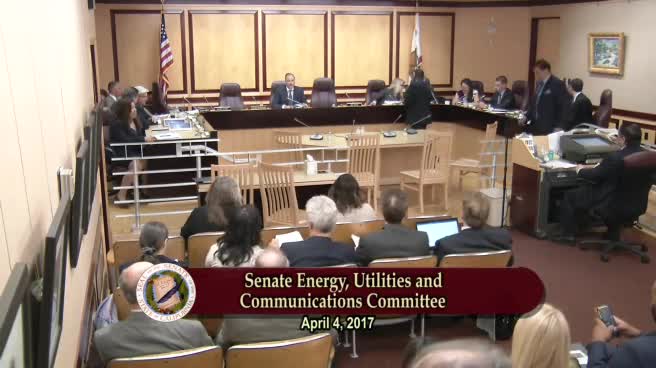 10MIN
Senate Standing Committee on Energy, Utilities and Communications
Bill Author

Bill Co-Author(s):