SB 61: Personal income taxes: voluntary contributions: Emergency Food for Families Voluntary Tax Contribution Fund.
- Session Year: 2017-2018
- House: Senate
- Latest Version Date: 2017-10-12
Existing law authorizes individuals to contribute amounts in excess of their personal income tax liability for the support of specified funds, including the Emergency Food Assistance Program Fund. Existing law also has general administrative provisions applicable to voluntary contributions. Existing law provides for any new or extended voluntary contribution fund, to include the words voluntary tax contribution in the name of the fund, require the administering agency to include specified information about the fund on its Internet Web site, continuously appropriate from the fund the contributions made to the administering agency, and set a minimum contribution amount for the continuation of any voluntary tax contribution on the tax return form and include a generally applicable repeal date for a voluntary tax contribution. Existing law requires that the Emergency Food Assistance Program Fund equal or exceed a minimum contribution amount, which initially was $250,000 and which was required to be and has been adjusted for inflation.
This bill would change the name of the Emergency Food Assistance Program Fund to the Emergency Food for Families Voluntary Tax Contribution Fund, would provide that the required calendar year minimum contribution amount for the fund to continue appearing on the return is an unadjusted $250,000, and would extend the provisions that apply to that voluntary contribution fund to January 1, 2026. The bill would make a continuous appropriation from the Emergency Food for Families Voluntary Tax Contribution Fund to the Franchise Tax Board and the Controller for reimbursement of all costs incurred in the administration of these provisions and to the State Department of Social Services for allocation to the Emergency Food Assistance Program. The bill would also make additional changes to conform to the provisions described above.
Existing law authorizes individuals to contribute amounts in excess of their personal income tax liability for the support of specified funds, including the Emergency Food Assistance Program Fund. Existing law also has general administrative provisions applicable to voluntary contributions. Existing law provides for any new or extended voluntary contribution fund, to include the words voluntary tax contribution in the name of the fund, require the administering agency to include specified information about the fund on its Internet Web site, continuously appropriate from the fund the contributions made to the administering agency, and set a minimum contribution amount for the continuation of any voluntary tax contribution on the tax return form and include a generally applicable repeal date for a voluntary tax contribution. Existing law requires that the Emergency Food Assistance Program Fund equal or exceed a minimum contribution amount, which initially was $250,000 and which was required to be and has been adjusted for inflation.
This bill would change the name of the Emergency Food Assistance Program Fund to the Emergency Food for Families Voluntary Tax Contribution Fund, would provide that the required calendar year minimum contribution amount for the fund to continue appearing on the return is an unadjusted $250,000, and would extend the provisions that apply to that voluntary contribution fund to January 1, 2026. The bill would make a continuous appropriation from the Emergency Food for Families Voluntary Tax Contribution Fund to the Franchise Tax Board and the Controller for reimbursement of all costs incurred in the administration of these provisions and to the State Department of Social Services for allocation to the Emergency Food Assistance Program. The bill would also make additional changes to conform to the provisions described above.
Existing law authorizes individuals to contribute amounts in excess of their personal income tax liability for the support of specified funds. funds, including the Emergency Food Assistance Program Fund. Existing law also has general administrative provisions applicable to voluntary contributions. Existing law provides for any new or extended voluntary contribution that takes effect on or after January 2, 2017, to include the words voluntary tax contribution in the name of the fund, to require the administering agency, as defined, agency to include specified information about the fund on its Internet Web site, to continuously appropriate from the fund the contributions made to the administering agency, and to set a minimum contribution amount for the continuation of any voluntary tax contribution on the tax return form and include a generally applicable repeal date for a voluntary tax contribution. Existing law requires that the Emergency Food Assistance Program Fund equal or exceed a minimum contribution amount, which initially was $250,000 and which was required to be and has been adjusted for inflation.
This bill would change the name of the Emergency Food Assistance Program Fund to the Emergency Food for Families Voluntary Tax Contribution Fund Fund, would provide that the required calendar year minimum contribution amount for the fund to continue appearing on the return is an unadjusted $250,000, and would extend the provisions that apply to that voluntary contribution fund until January 1, 2026. This The bill would make a continuous appropriation from the Emergency Food for Families Voluntary Tax Contribution Fund to the Franchise Tax Board and the Controller for reimbursement of all costs incurred in the administration of these provisions and to the State Department of Social Services for allocation to the Emergency Food Assistance Program. This The bill would also make additional changes to conform to the general provisions described above.
Existing law authorizes taxpayers individuals to contribute amounts in excess of their personal income tax liability for the support of specified funds. Existing law also has general administrative provisions applicable to voluntary contributions. Existing law requires provides for any new or extended voluntary contribution that takes effect on or after January 2, 2017, to include the words voluntary tax contribution in the name of the fund, to require the administering agency, as defined, to include specified information about the fund on its Internet Web site, to continuously appropriate from the fund the contributions made to the administering agency, and to set a minimum contribution amount for the continuation of any voluntary tax contribution on the tax return form and a generally applicable repeal date for a voluntary tax contribution.
This bill would change the name of the Emergency Food Assistance Program Fund to the Emergency Food for Families Voluntary Tax Contribution Fund and would extend the provisions that apply to that voluntary contribution fund until January 1, 2026. This bill would make a continuous appropriation from the Emergency Food for Families Voluntary Tax Contribution Fund to the Franchise Tax Board and the Controller for reimbursement of all costs incurred in the administration of these provisions and to the State Department of Social Services for allocation to the CalFood Program. Emergency Food Assistance Program. This bill would also make conforming additional changes to conform to the requirements of the general provisions described above.
Existing law authorizes taxpayers to contribute amounts in excess of their personal income tax liability for the support of specified funds. Existing law also has general administrative provisions applicable to voluntary contributions. Existing law requires any new or extended voluntary contribution that takes effect on or after January 2, 2017, to include the words voluntary tax contribution in the name of the fund, to require the administering agency, as defined, to include specified information about the fund on its Internet Web site, to continuously appropriate from the fund the contributions made to the administering agency, and to set a minimum contribution amount for the continuation of any voluntary tax contribution on the tax return form and a generally applicable repeal date for a voluntary tax contribution.
This bill would change the name of the Emergency Food Assistance Program Fund to the Emergency Food for Families Voluntary Tax Contribution Fund and would extend the provisions that apply to that voluntary contribution fund until January 1, 2026. This bill would make a continuous appropriation from the Emergency Food for Families Voluntary Tax Contribution Fund to the Franchise Tax Board and the Controller for reimbursement of all costs incurred in the administration of these provisions and to the State Department of Social Services for allocation to the CalFood Program. This bill would also make conforming changes to the requirements of the general provisions described above.
(a)An individual may designate on the tax return that a contribution in excess of the tax liability, if any, be made to the Emergency Food for Families Voluntary Tax Contribution Fund, which is established by Section 18852. That designation is to be used as a voluntary checkoff on the tax return.
(b)The contributions shall be in full dollar amounts and may be made individually by each signatory on a joint return.
(c)A designation shall be made for any taxable year on the original return for that taxable year and once made is irrevocable. If payments and credits reported on the return, together with any other credits associated with the taxpayers account do not exceed the taxpayers liability, the return shall be treated as though no designation has been made.
(d)The Franchise Tax Board shall revise the form of the return to include a space labeled the Emergency Food for Families Voluntary Tax Contribution Fund to allow for the designation permitted. The form shall also include in the instructions information that the contribution may be in the amount of one dollar ($1) or more and that the contribution shall be used for the Emergency Food Assistance Program.
(e)A deduction shall be allowed under Article 6 (commencing with Section 17201) of Chapter 3 of Part 10 for any contribution made pursuant to subdivision (a).
SEC. 3.Section 18852 of the Revenue and Taxation Code is amended to read:18852.There is in the State Treasury the Emergency Food for Families Voluntary Tax Contribution Fund to receive contributions made pursuant to Section 18851. The Franchise Tax Board shall notify the Controller of both the amount of money paid by taxpayers in excess of their tax liability and the amount of refund money that taxpayers have designated pursuant to Section 18851 to be transferred to the Emergency Food for Families Voluntary Tax Contribution Fund. The Controller shall transfer from the Personal Income Tax Fund to the Emergency Food for Families Voluntary Tax Contribution Fund an amount not in excess of the sum of the amounts designated by individuals pursuant to Section 18851 for payment into that fund.
SEC. 4.Section 18853 of the Revenue and Taxation Code is amended to read:18853.(a)Notwithstanding Section 13340 of the Government Code, all money transferred to the Emergency Food for Families Voluntary Tax Contribution Fund shall be continuously appropriated and allocated as follows:
(1)To the Franchise Tax Board and the Controller for reimbursement of all costs incurred by the Franchise Tax Board and the Controller in connection with their duties under this article.
(2)To the State Department of Social Services for allocation to the Emergency Food Assistance Program. Funds shall be allocated for direct services provided by the Emergency Food Assistance Program and may not be used for the departments administrative costs.
(b)The State Department of Social Services shall report on its Internet Web site the process for awarding money, the amount of money spent on administration, and an itemization of how program funds were awarded, including, but not limited to, information regarding recipients of funds.
SEC. 5.Section 18855 of the Revenue and Taxation Code is amended to read:18855.(a)Except as otherwise provided in subdivision (b), this article shall remain in effect only until January 1, 2026, and as of December 1 of that year is repealed, unless a later enacted statute, that is enacted before January 1, 2026, deletes or extends that date.
(b)(1)By September 1, 2006, and by September 1 of each subsequent calendar year that the Emergency Food for Families Voluntary Tax Contribution Fund appears on a tax return, the Franchise Tax Board shall determine whether the amount of contributions estimated to be received during the calendar year will equal or exceed the minimum contribution amount for the calendar year as described in paragraph (3). The Franchise Tax Board shall estimate the amount of contributions to be received by using the actual amounts received and an estimate of the contributions that will be received by the end of that calendar year.
(2)If the Franchise Tax Board determines that the amount of contributions estimated to be received during a calendar year will not at least equal the minimum contribution amount for the calendar year, this article shall be inoperative with respect to taxable years beginning on or after January 1 of that calendar year, and shall be repealed on December 1 of that year.
(3)For purposes of this section, the minimum contribution amount for a calendar year means two hundred fifty thousand dollars ($250,000).
(c)Notwithstanding the repeal of this article, any contribution amounts designated pursuant to this article prior to its repeal shall continue to be transferred and disbursed in accordance with this article as in effect immediately prior to that repeal.
SEC. 6.Section 18995 of the Welfare and Institutions Code is amended to read:18995.(a)On and after January 1, 2017, the State Emergency Food Assistance Program (SEFAP), administered by the State Department of Social Services, shall be renamed as the CalFood Program. The CalFood Program shall provide food and funding for the provision of emergency food to food banks established pursuant to the federal Emergency Food Assistance Program (7 C.F.R. Parts 250 and 251) whose ongoing primary function is to facilitate the distribution of food to low-income households.
(b)(1)The CalFood Account is hereby established in the Emergency Food for Families Voluntary Tax Contribution Fund established pursuant to Section 18852 of the Revenue and Taxation Code, and may receive federal funds and voluntary donations or contributions.
(2)Notwithstanding Section 18853 of the Revenue and Taxation Code, the following shall apply:
(A)All moneys received by the CalFood Account shall, upon appropriation by the Legislature, be allocated to the State Department of Social Services for allocation to the CalFood Program and, with the exception of those contributions made pursuant to Section 18851 of the Revenue and Taxation Code and funds received through Parts 250 and 251 of Title 7 of the Code of Federal Regulations, shall be used for the purchase, storage, and transportation of food grown or produced in California. Storage and transportation expenditures shall not exceed 10 percent of the CalFood Program funds annual budget.
(B)Notwithstanding subparagraph (A), funds received by the CalFood Account shall, upon appropriation by the Legislature, be allocated to the State Department of Social Services for allocation to the CalFood Program as described in subparagraph (A), and shall, in part, be used to pay for the departments administrative costs associated with the administration of the CalFood Program.
(c)(1)The Public Higher Education Pantry Assistance Program Account is hereby established in the Emergency Food for Families Voluntary Tax Contribution Fund established pursuant to Section 18852 of the Revenue and Taxation Code.
(2)Notwithstanding Section 18853 of the Revenue and Taxation Code, funds in the Public Higher Education Pantry Assistance Program Account shall, upon appropriation by the Legislature, be allocated to the State Department of Social Services for allocation to food banks established pursuant to Parts 250 and 251 of Title 7 of the Code of Federal Regulations that meet both of the following criteria:
(A)The primary function of the food bank is the distribution of food to low-income households.
(B)The food bank has identified specific costs associated with supporting on-campus pantry and hunger relief efforts serving low-income students.
CORRECTIONS: TextPage 5.(a)An individual may designate on the tax return that a contribution in excess of the tax liability, if any, be made to the Emergency Food for Families Voluntary Tax Contribution Fund, which is established by Section 18852. That designation is to be used as a voluntary checkoff on the tax return.
(b)The contributions shall be in full dollar amounts and may be made individually by each signatory on a joint return.
(c)A designation shall be made for any taxable year on the original return for that taxable year and once made is irrevocable. If payments and credits reported on the return, together with any other credits associated with the taxpayers account do not exceed the taxpayers liability, the return shall be treated as though no designation has been made.
(d)The Franchise Tax Board shall revise the form of the return to include a space labeled the Emergency Food for Families Voluntary Tax Contribution Fund to allow for the designation permitted. The form shall also include in the instructions information that the contribution may be in the amount of one dollar ($1) or more and that the contribution shall be used for the Emergency Food Assistance Program.
(e)A deduction shall be allowed under Article 6 (commencing with Section 17201) of Chapter 3 of Part 10 for any contribution made pursuant to subdivision (a).
SEC. 3.Section 18852 of the Revenue and Taxation Code is amended to read:18852.There is in the State Treasury the Emergency Food for Families Voluntary Tax Contribution Fund to receive contributions made pursuant to Section 18851. The Franchise Tax Board shall notify the Controller of both the amount of money paid by taxpayers in excess of their tax liability and the amount of refund money that taxpayers have designated pursuant to Section 18851 to be transferred to the Emergency Food for Families Voluntary Tax Contribution Fund. The Controller shall transfer from the Personal Income Tax Fund to the Emergency Food for Families Voluntary Tax Contribution Fund an amount not in excess of the sum of the amounts designated by individuals pursuant to Section 18851 for payment into that fund.
SEC. 4.Section 18853 of the Revenue and Taxation Code is amended to read:18853.(a)Notwithstanding Section 13340 of the Government Code, all money transferred to the Emergency Food for Families Voluntary Tax Contribution Fund shall be continuously appropriated and allocated as follows:
(1)To the Franchise Tax Board and the Controller for reimbursement of all costs incurred by the Franchise Tax Board and the Controller in connection with their duties under this article.
(2)To the State Department of Social Services for allocation to the Emergency Food Assistance Program. Funds shall be allocated for direct services provided by the Emergency Food Assistance Program and may not be used for the departments administrative costs.
(b)The State Department of Social Services shall report on its Internet Web site the process for awarding money, the amount of money spent on administration, and an itemization of how program funds were awarded, including, but not limited to, information regarding recipients of funds.
SEC. 5.Section 18855 of the Revenue and Taxation Code is amended to read:18855.(a)Except as otherwise provided in subdivision (b), this article shall remain in effect only until January 1, 2026, and as of December 1 of that year is repealed, unless a later enacted statute, that is enacted before January 1, 2026, deletes or extends that date.
(b)(1)By September 1, 2006, and by September 1 of each subsequent calendar year that the Emergency Food for Families Voluntary Tax Contribution Fund appears on a tax return, the Franchise Tax Board shall determine whether the amount of contributions estimated to be received during the calendar year will equal or exceed the minimum contribution amount for the calendar year as described in paragraph (3). The Franchise Tax Board shall estimate the amount of contributions to be received by using the actual amounts received and an estimate of the contributions that will be received by the end of that calendar year.
(2)If the Franchise Tax Board determines that the amount of contributions estimated to be received during a calendar year will not at least equal the minimum contribution amount for the calendar year, this article shall be inoperative with respect to taxable years beginning on or after January 1 of that calendar year, and shall be repealed on December 1 of that year.
(3)For purposes of this section, the minimum contribution amount for a calendar year means two hundred fifty thousand dollars ($250,000).
(c)Notwithstanding the repeal of this article, any contribution amounts designated pursuant to this article prior to its repeal shall continue to be transferred and disbursed in accordance with this article as in effect immediately prior to that repeal.
SEC. 6.Section 18995 of the Welfare and Institutions Code is amended to read:18995.(a)On and after January 1, 2017, the State Emergency Food Assistance Program (SEFAP), administered by the State Department of Social Services, shall be renamed as the CalFood Program. The CalFood Program shall provide food and funding for the provision of emergency food to food banks established pursuant to the federal Emergency Food Assistance Program (7 C.F.R. Parts 250 and 251) whose ongoing primary function is to facilitate the distribution of food to low-income households.
(b)(1)The CalFood Account is hereby established in the Emergency Food for Families Voluntary Tax Contribution Fund established pursuant to Section 18852 of the Revenue and Taxation Code, and may receive federal funds and voluntary donations or contributions.
(2)Notwithstanding Section 18853 of the Revenue and Taxation Code, the following shall apply:
(A)All moneys received by the CalFood Account shall, upon appropriation by the Legislature, be allocated to the State Department of Social Services for allocation to the CalFood Program and, with the exception of those contributions made pursuant to Section 18851 of the Revenue and Taxation Code and funds received through Parts 250 and 251 of Title 7 of the Code of Federal Regulations, shall be used for the purchase, storage, and transportation of food grown or produced in California. Storage and transportation expenditures shall not exceed 10 percent of the CalFood Program funds annual budget.
(B)Notwithstanding subparagraph (A), funds received by the CalFood Account shall, upon appropriation by the Legislature, be allocated to the State Department of Social Services for allocation to the CalFood Program as described in subparagraph (A), and shall, in part, be used to pay for the departments administrative costs associated with the administration of the CalFood Program.
(c)(1)The Public Higher Education Pantry Assistance Program Account is hereby established in the Emergency Food for Families Voluntary Tax Contribution Fund established pursuant to Section 18852 of the Revenue and Taxation Code.
(2)Notwithstanding Section 18853 of the Revenue and Taxation Code, funds in the Public Higher Education Pantry Assistance Program Account shall, upon appropriation by the Legislature, be allocated to the State Department of Social Services for allocation to food banks established pursuant to Parts 250 and 251 of Title 7 of the Code of Federal Regulations that meet both of the following criteria:
(A)The primary function of the food bank is the distribution of food to low-income households.
(B)The food bank has identified specific costs associated with supporting on-campus pantry and hunger relief efforts serving low-income students.
CORRECTIONS: TextPage 5.(a)An individual may designate on the tax return that a contribution in excess of the tax liability, if any, be made to the Emergency Food for Families Voluntary Tax Contribution Fund, which is established by Section 18852. That designation is to be used as a voluntary checkoff on the tax return.
(b)The contributions shall be in full dollar amounts and may be made individually by each signatory on a joint return.
(c)A designation shall be made for any taxable year on the initial original return for that taxable year and once made is irrevocable. If payments and credits reported on the return, together with any other credits associated with the taxpayers account do not exceed the taxpayers liability, the return shall be treated as though no designation has been made.
(d)The Franchise Tax Board shall revise the form of the return to include a space labeled the Emergency Food for Families Voluntary Tax Contribution Fund to allow for the designation permitted. The form shall also include in the instructions information that the contribution may be in the amount of one dollar ($1) or more and that the contribution shall be used for the Emergency Food Assistance Program.
(e)A deduction shall be allowed under Article 6 (commencing with Section 17201) of Chapter 3 of Part 10 for any contribution made pursuant to subdivision (a).
SEC. 3.Section 18852 of the Revenue and Taxation Code is amended to read:18852.There is in the State Treasury the Emergency Food for Families Voluntary Tax Contribution Fund to receive contributions made pursuant to Section 18851. The Franchise Tax Board shall notify the Controller of both the amount of money paid by taxpayers in excess of their tax liability and the amount of refund money that taxpayers have designated pursuant to Section 18851 to be transferred to the Emergency Food for Families Voluntary Tax Contribution Fund. The Controller shall transfer from the Personal Income Tax Fund to the Emergency Food for Families Voluntary Tax Contribution Fund an amount not in excess of the sum of the amounts designated by individuals pursuant to Section 18851 for payment into that fund.
SEC. 4.Section 18853 of the Revenue and Taxation Code is amended to read:18853.All (a)Notwithstanding Section 13340 of the Government Code, all money transferred to the Emergency Food for Families Voluntary Tax Contribution Fund shall be continuously appropriated and allocated as follows:
(a)(1)To the Franchise Tax Board and the Controller for reimbursement of all costs incurred by the Franchise Tax Board and the Controller in connection with their duties under this article.
(b)(1)(2)To the State Department of Social Services for allocation to the Emergency Food Assistance Program. Funds shall be allocated for direct services provided by the Emergency Food Assistance Program and may not be used for the departments administrative costs.
(2)(b)The State Department of Social Services shall report on its Internet Web site the process for awarding money, the amount of money spent on administration, and an itemization of how program funds were awarded, including, but not limited to, information regarding recipients of funds.
SEC. 5.Section 18854 of the Revenue and Taxation Code is amended to read:18854.It is the intent of the Legislature that this article create an additional funding source for the Emergency Food Assistance Program and shall be used to supplement, not supplant, other funding sources for this program.SEC. 6.SEC. 5.Section 18855 of the Revenue and Taxation Code is amended to read:18855.(a)Except as otherwise provided in subdivision (b), this article shall remain in effect only until January 1, 2026, and as of December 1 of that year is repealed, unless a later enacted statute, that is enacted before January 1, 2026, deletes or extends that date.
(b)(1)By September 1, 2006, and by September 1 of each subsequent calendar year that the Emergency Food for Families Voluntary Tax Contribution Fund appears on a tax return, the Franchise Tax Board shall do all of the following:
(A)Determine the minimum contribution amount required to be received during the next calendar year for the fund to appear on the tax return for the taxable year that includes that next calendar year.(B)Provide written notification to the State Department of Social Services of the amount determined in subparagraph (A).(C)Determine determine whether the amount of contributions estimated to be received during the calendar year will equal or exceed the minimum contribution amount determined by the Franchise Tax Board for the calendar year pursuant to subparagraph (A). for the calendar year as described in paragraph (3). The Franchise Tax Board shall estimate the amount of contributions to be received by using the actual amounts received and an estimate of the contributions that will be received by the end of that calendar year.
(2)If the Franchise Tax Board determines that the amount of contributions estimated to be received during a calendar year will not at least equal the minimum contribution amount for the calendar year, this article shall be inoperative with respect to taxable years beginning on or after January 1 of that calendar year, and shall be repealed on December 1 of that year.
(3)For purposes of this section, the minimum contribution amount for a calendar year means two hundred fifty thousand dollars ($250,000) for the 1999 calendar year or the minimum contribution amount as adjusted pursuant to subdivision (c). ($250,000).
(c)For each calendar year, beginning with calendar year 2000, the Franchise Tax Board shall adjust, on or before September 1 of that calendar year, the contribution amount specified in subdivision (b) as follows:(1)The minimum contribution amount for the calendar year shall be an amount equal to the product of the minimum contribution amount for the prior calendar year multiplied by the inflation factor adjustment as specified in paragraph (2) of subdivision (h) of Section 17041, rounded off to the nearest dollar.(2)The inflation factor adjustment used for the calendar year shall be based on the figures for the percentage change in the California Consumer Price Index received on or before August 1 of the calendar year pursuant to paragraph (1) of subdivision (h) of Section 17041.(d)(c)Notwithstanding the repeal of this article, any contribution amounts designated pursuant to this article prior to its repeal shall continue to be transferred and disbursed in accordance with this article as in effect immediately prior to that repeal.
SEC. 7.SEC. 6.Section 18995 of the Welfare and Institutions Code is amended to read:18995.(a)On and after January 1, 2017, the State Emergency Food Assistance Program (SEFAP), administered by the State Department of Social Services, shall be renamed as the CalFood Program. The CalFood Program shall provide food and funding for the provision of emergency food to food banks established pursuant to the federal Emergency Food Assistance Program (7 C.F.R. Parts 250 and 251) whose ongoing primary function is to facilitate the distribution of food to low-income households.
(b)(1)The CalFood Account is hereby established in the Emergency Food for Families Voluntary Tax Contribution Fund established pursuant to Section 18852 of the Revenue and Taxation Code, and may receive federal funds and voluntary donations or contributions.
(2)Notwithstanding Section 18853 of the Revenue and Taxation Code, the following shall apply:
(A)All moneys received by the CalFood Account shall, upon appropriation by the Legislature, be allocated to the State Department of Social Services for allocation to the CalFood Program and, with the exception of those contributions made pursuant to Section 18851 of the Revenue and Taxation Code and funds received through Parts 250 and 251 of Title 7 of the Code of Federal Regulations, shall be used for the purchase, storage, and transportation of food grown or produced in California. Storage and transportation expenditures shall not exceed 10 percent of the CalFood Program funds annual budget.
(B)Notwithstanding subparagraph (A), funds received by the CalFood Account shall, upon appropriation by the Legislature, be allocated to the State Department of Social Services for allocation to the CalFood Program as described in subparagraph (A), and shall, in part, be used to pay for the departments administrative costs associated with the administration of the CalFood Program.
(c)(1)The Public Higher Education Pantry Assistance Program Account is hereby established in the Emergency Food for Families Voluntary Tax Contribution Fund established pursuant to Section 18852 of the Revenue and Taxation Code.
(2)Notwithstanding Section 18853 of the Revenue and Taxation Code, funds in the Public Higher Education Pantry Assistance Program Account shall, upon appropriation by the Legislature, be allocated to the State Department of Social Services for allocation to food banks established pursuant to Parts 250 and 251 of Title 7 of the Code of Federal Regulations that meet both of the following criteria:
(A)The primary function of the food bank is the distribution of food to low-income households.
(B)The food bank has identified specific costs associated with supporting on-campus pantry and hunger relief efforts serving low-income students.
(a)An individual may designate on the tax return that a contribution in excess of the tax liability, if any, be made to the Emergency Food for Families Voluntary Tax Contribution Fund, which is established by Section 18852. That designation is to be used as a voluntary checkoff on the tax return.
(b)The contributions shall be in full dollar amounts and may be made individually by each signatory on a joint return.
(c)A designation shall be made for any taxable year on the initial return for that taxable year and once made is irrevocable. If payments and credits reported on the return, together with any other credits associated with the taxpayers account do not exceed the taxpayers liability, the return shall be treated as though no designation has been made.
(d)The Franchise Tax Board shall revise the form of the return to include a space labeled the Emergency Food for Families Voluntary Tax Contribution Fund to allow for the designation permitted. The form shall also include in the instructions information that the contribution may be in the amount of one dollar ($1) or more and that the contribution shall be used for the CalFood Emergency Food Assistance Program.
(e)A deduction shall be allowed under Article 6 (commencing with Section 17201) of Chapter 3 of Part 10 for any contribution made pursuant to subdivision (a).
SEC. 3.Section 18852 of the Revenue and Taxation Code is amended to read:18852.There is in the State Treasury the Emergency Food for Families Voluntary Tax Contribution Fund to receive contributions made pursuant to Section 18851. The Franchise Tax Board shall notify the Controller of both the amount of money paid by taxpayers in excess of their tax liability and the amount of refund money that taxpayers have designated pursuant to Section 18851 to be transferred to the Emergency Food for Families Voluntary Tax Contribution Fund. The Controller shall transfer from the Personal Income Tax Fund to the Emergency Food for Families Voluntary Tax Contribution Fund an amount not in excess of the sum of the amounts designated by individuals pursuant to Section 18851 for payment into that fund.
SEC. 4.Section 18853 of the Revenue and Taxation Code is amended to read:18853.All money transferred to the Emergency Food for Families Voluntary Tax Contribution Fund shall be continuously appropriated as follows:
(a)To the Franchise Tax Board and the Controller for reimbursement of all costs incurred by the Franchise Tax Board and the Controller in connection with their duties under this article.
(b)(1)To the State Department of Social Services for allocation to the CalFood Emergency Food Assistance Program. Funds shall be allocated for direct services provided by the CalFood Emergency Food Assistance Program and may not be used for the departments administrative costs.
(2)The State Department of Social Services shall report on its Internet Web site the process for awarding money, the amount of money spent on administration, and an itemization of how program funds were awarded, including, but not limited to, information regarding recipients of funds.
SEC. 5.Section 18854 of the Revenue and Taxation Code is amended to read:18854.It is the intent of the Legislature that this article create an additional funding source for the CalFood Emergency Food Assistance Program and shall be used to supplement, not supplant, other funding sources for this program.
SEC. 6.Section 18855 of the Revenue and Taxation Code is amended to read:18855.(a)Except as otherwise provided in subdivision (b), this article shall remain in effect only until January 1, 2026, and as of December 1 of that year is repealed, unless a later enacted statute, that is enacted before January 1, 2026, deletes or extends that date.
(b)(1)By September 1, 2006, and by September 1 of each subsequent calendar year that the Emergency Food for Families Voluntary Tax Contribution Fund appears on a tax return, the Franchise Tax Board shall do all of the following:
(A)Determine the minimum contribution amount required to be received during the next calendar year for the fund to appear on the tax return for the taxable year that includes that next calendar year.
(B)Provide written notification to the State Department of Social Services of the amount determined in subparagraph (A).
(C)Determine whether the amount of contributions estimated to be received during the calendar year will equal or exceed the minimum contribution amount determined by the Franchise Tax Board for the calendar year pursuant to subparagraph (A). The Franchise Tax Board shall estimate the amount of contributions to be received by using the actual amounts received and an estimate of the contributions that will be received by the end of that calendar year.
(2)If the Franchise Tax Board determines that the amount of contributions estimated to be received during a calendar year will not at least equal the minimum contribution amount for the calendar year, this article shall be inoperative with respect to taxable years beginning on or after January 1 of that calendar year, and shall be repealed on December 1 of that year.
(3)For purposes of this section, the minimum contribution amount for a calendar year means two hundred fifty thousand dollars ($250,000) for the 1999 calendar year or the minimum contribution amount as adjusted pursuant to subdivision (c).
(c)For each calendar year, beginning with calendar year 2000, the Franchise Tax Board shall adjust, on or before September 1 of that calendar year, the contribution amount specified in subdivision (b) as follows:
(1)The minimum contribution amount for the calendar year shall be an amount equal to the product of the minimum contribution amount for the prior calendar year multiplied by the inflation factor adjustment as specified in paragraph (2) of subdivision (h) of Section 17041, rounded off to the nearest dollar.
(2)The inflation factor adjustment used for the calendar year shall be based on the figures for the percentage change in the California Consumer Price Index received on or before August 1 of the calendar year pursuant to paragraph (1) of subdivision (h) of Section 17041.
(d)Notwithstanding the repeal of this article, any contribution amounts designated pursuant to this article prior to its repeal shall continue to be transferred and disbursed in accordance with this article as in effect immediately prior to that repeal.
SEC. 7.Section 18995 of the Welfare and Institutions Code is amended to read:18995.(a)On and after January 1, 2017, the State Emergency Food Assistance Program (SEFAP), administered by the State Department of Social Services, shall be renamed as the CalFood Program. The CalFood Program shall provide food and funding for the provision of emergency food to food banks established pursuant to the federal Emergency Food Assistance Program (7 C.F.R. Parts 250 and 251) whose ongoing primary function is to facilitate the distribution of food to low-income households.(b)The CalFood Account is hereby established in the Emergency Food for Families Voluntary Tax Contribution Fund established pursuant to Section 18852 of the Revenue and Taxation Code, and may receive federal funds and voluntary donations or contributions.(c)Notwithstanding Section 18853 of the Revenue and Taxation Code, the following shall apply:(1)All moneys received by the CalFood Account shall, upon appropriation by the Legislature, be allocated to the State Department of Social Services for allocation to the CalFood Program and, with the exception of those contributions made pursuant to Section 18851 of the Revenue and Taxation Code and funds received through Parts 250 and 251 of Title 7 of the Code of Federal Regulations, shall be used for the purchase, storage, and transportation of food grown or produced in California. Storage and transportation expenditures shall not exceed 10 percent of the CalFood Program funds annual budget.(2)Notwithstanding paragraph (1), funds received by the CalFood Account shall, upon appropriation by the Legislature, be allocated to the State Department of Social Services for allocation to the CalFood Program as described in paragraph (1), and shall, in part, be used to pay for the departments administrative costs associated with the administration of the CalFood Program.SEC. 7.Section 18995 of the Welfare and Institutions Code is amended to read:18995.(a)On and after January 1, 2017, the State Emergency Food Assistance Program (SEFAP), administered by the State Department of Social Services, shall be renamed as the CalFood Program. The CalFood Program shall provide food and funding for the provision of emergency food to food banks established pursuant to the federal Emergency Food Assistance Program (7 C.F.R. Parts 250 and 251) whose ongoing primary function is to facilitate the distribution of food to low-income households.
(b)(1)The CalFood Account is hereby established in the Emergency Food Assistance Program for Families Voluntary Tax Contribution Fund established pursuant to Section 18852 of the Revenue and Taxation Code, and may receive federal funds and voluntary donations or contributions.
(2)Notwithstanding Section 18853 of the Revenue and Taxation Code, the following shall apply:
(A)All moneys received by the CalFood Account shall, upon appropriation by the Legislature, be allocated to the State Department of Social Services for allocation to the CalFood Program and, with the exception of those contributions made pursuant to Section 18851 of the Revenue and Taxation Code and funds received through Parts 250 and 251 of Title 7 of the Code of Federal Regulations, shall be used for the purchase, storage, and transportation of food grown or produced in California. Storage and transportation expenditures shall not exceed 10 percent of the CalFood Program funds annual budget.
(B)Notwithstanding subparagraph (A), funds received by the CalFood Account shall, upon appropriation by the Legislature, be allocated to the State Department of Social Services for allocation to the CalFood Program as described in subparagraph (A), and shall, in part, be used to pay for the departments administrative costs associated with the administration of the CalFood Program.
(c)(1)The Public Higher Education Pantry Assistance Program Account is hereby established in the Emergency Food Assistance Program for Families Voluntary Tax Contribution Fund established pursuant to Section 18852 of the Revenue and Taxation Code.
(2)Notwithstanding Section 18853 of the Revenue and Taxation Code, funds in the Public Higher Education Pantry Assistance Program Account shall, upon appropriation by the Legislature, be allocated to the State Department of Social Services for allocation to food banks established pursuant to Parts 250 and 251 of Title 7 of the Code of Federal Regulations that meet both of the following criteria:
(A)The primary function of the food bank is the distribution of food to low-income households.
(B)The food bank has identified specific costs associated with supporting on-campus pantry and hunger relief efforts serving low-income students.
(a)An individual may designate on the tax return that a contribution in excess of the tax liability, if any, be made to the Emergency Food for Families Voluntary Tax Contribution Fund, which is established by Section 18852. That designation is to be used as a voluntary checkoff on the tax return.
(b)The contributions shall be in full dollar amounts and may be made individually by each signatory on a joint return.
(c)A designation shall be made for any taxable year on the initial return for that taxable year and once made is irrevocable. If payments and credits reported on the return, together with any other credits associated with the taxpayers account do not exceed the taxpayers liability, the return shall be treated as though no designation has been made.
(d)The Franchise Tax Board shall revise the form of the return to include a space labeled the Emergency Food for Families Voluntary Tax Contribution Fund to allow for the designation permitted. The form shall also include in the instructions information that the contribution may be in the amount of one dollar ($1) or more and that the contribution shall be used for the Emergency Food Assistance CalFood Program.
(e)A deduction shall be allowed under Article 6 (commencing with Section 17201) of Chapter 3 of Part 10 for any contribution made pursuant to subdivision (a).
SEC. 3.Section 18852 of the Revenue and Taxation Code is amended to read:18852.There is in the State Treasury the Emergency Food Assistance Program for Families Voluntary Tax Contribution Fund to receive contributions made pursuant to Section 18851. The Franchise Tax Board shall notify the Controller of both the amount of money paid by taxpayers in excess of their tax liability and the amount of refund money that taxpayers have designated pursuant to Section 18851 to be transferred to the Emergency Food Assistance Program for Families Voluntary Tax Contribution Fund. The Controller shall transfer from the Personal Income Tax Fund to the Emergency Food Assistance Program for Families Voluntary Tax Contribution Fund an amount not in excess of the sum of the amounts designated by individuals pursuant to Section 18851 for payment into that fund.
SEC. 4.Section 18853 of the Revenue and Taxation Code is amended to read:18853.All money transferred to the Emergency Food Assistance Program Fund, upon appropriation by the Legislature, for Families Voluntary Tax Contribution Fund shall be allocated continuously appropriated as follows:
(a)To the Franchise Tax Board and the Controller for reimbursement of all costs incurred by the Franchise Tax Board and the Controller in connection with their duties under this article.
(b)(1)To the State Department of Social Services for allocation to the Emergency Food Assistance CalFood Program. Funds shall be allocated for direct services provided by the Emergency Food Assistance CalFood Program and may not be used for the departments administrative costs.
(2)The State Department of Social Services shall report on its Internet Web site the process for awarding money, the amount of money spent on administration, and an itemization of how program funds were awarded, including, but not limited to, information regarding recipients of funds.
SEC. 5.Section 18854 of the Revenue and Taxation Code is amended to read:18854.It is the intent of the Legislature that this article create an additional funding source for the Emergency Food Assistance CalFood Program and shall be used to supplement, not supplant, other funding sources for this program.
SEC. 6.Section 18855 of the Revenue and Taxation Code is amended to read:18855.(a)Except as otherwise provided in subdivision (b), this article shall remain in effect only until January 1, 2019, 2026, and as of December 1 of that year is repealed, unless a later enacted statute, that is enacted before January 1, 2019, 2026, deletes or extends that date.
(b)(1)By September 1, 2006, and by September 1 of each subsequent calendar year that the Emergency Food for Families Voluntary Tax Contribution Fund appears on a tax return, the Franchise Tax Board shall do all of the following:
(A)Determine the minimum contribution amount required to be received during the next calendar year for the fund to appear on the tax return for the taxable year that includes that next calendar year.
(B)Provide written notification to the State Department of Social Services of the amount determined in subparagraph (A).
(C)Determine whether the amount of contributions estimated to be received during the calendar year will equal or exceed the minimum contribution amount determined by the Franchise Tax Board for the calendar year pursuant to subparagraph (A). The Franchise Tax Board shall estimate the amount of contributions to be received by using the actual amounts received and an estimate of the contributions that will be received by the end of that calendar year.
(2)If the Franchise Tax Board determines that the amount of contributions estimated to be received during a calendar year will not at least equal the minimum contribution amount for the calendar year, this article shall be inoperative with respect to taxable years beginning on or after January 1 of that calendar year, and shall be repealed on December 1 of that year.
(3)For purposes of this section, the minimum contribution amount for a calendar year means two hundred fifty thousand dollars ($250,000) for the 1999 calendar year or the minimum contribution amount as adjusted pursuant to subdivision (c).
(c)For each calendar year, beginning with calendar year 2000, the Franchise Tax Board shall adjust, on or before September 1 of that calendar year, the contribution amount specified in subdivision (b) as follows:
(1)The minimum contribution amount for the calendar year shall be an amount equal to the product of the minimum contribution amount for the prior calendar year multiplied by the inflation factor adjustment as specified in paragraph (2) of subdivision (h) of Section 17041, rounded off to the nearest dollar.
(2)The inflation factor adjustment used for the calendar year shall be based on the figures for the percentage change in the California Consumer Price Index received on or before August 1 of the calendar year pursuant to paragraph (1) of subdivision (h) of Section 17041.
(d)Notwithstanding the repeal of this article, any contribution amounts designated pursuant to this article prior to its repeal shall continue to be transferred and disbursed in accordance with this article as in effect immediately prior to that repeal.
SEC. 7.Section 18995 of the Welfare and Institutions Code is amended to read:18995.(a)On and after January 1, 2017, the State Emergency Food Assistance Program (SEFAP), administered by the State Department of Social Services, shall be renamed as the CalFood Program. The CalFood Program shall provide food and funding for the provision of emergency food to food banks established pursuant to the federal Emergency Food Assistance Program (7 C.F.R. Parts 250 and 251) whose ongoing primary function is to facilitate the distribution of food to low-income households.
(b)The CalFood Account is hereby established in the Emergency Food Assistance Program for Families Voluntary Tax Contribution Fund established pursuant to Section 18852 of the Revenue and Taxation Code, and may receive federal funds and voluntary donations or contributions.
(c)Notwithstanding Section 18853 of the Revenue and Taxation Code, the following shall apply:
(1)All moneys received by the CalFood Account shall, upon appropriation by the Legislature, be allocated to the State Department of Social Services for allocation to the CalFood Program and, with the exception of those contributions made pursuant to Section 18851 of the Revenue and Taxation Code and funds received through Parts 250 and 251 of Title 7 of the Code of Federal Regulations, shall be used for the purchase, storage, and transportation of food grown or produced in California. Storage and transportation expenditures shall not exceed 10 percent of the CalFood Program funds annual budget.
(2)Notwithstanding paragraph (1), funds received by the CalFood Account shall, upon appropriation by the Legislature, be allocated to the State Department of Social Services for allocation to the CalFood Program as described in paragraph (1), and shall, in part, be used to pay for the departments administrative costs associated with the administration of the CalFood Program.
|
Date
|
Status
|
|---|---|
| Oct 12, 2017 | Chaptered by Secretary of State. Chapter 723, Statutes of 2017. |
| Oct 12, 2017 | Approved by the Governor. |
| Sep 8, 2017 | Enrolled and presented to the Governor at 3 p.m. |
| Aug 31, 2017 | Assembly amendments concurred in. (Ayes 37. Noes 0.) Ordered to engrossing and enrolling. |
| Aug 29, 2017 | Ordered to special consent calendar. |
| Aug 24, 2017 | In Senate. Concurrence in Assembly amendments pending. |
| Aug 24, 2017 | Read third time. Passed. Ordered to the Senate. |
| Jul 20, 2017 | Read second time. Ordered to consent calendar. |
| Jul 19, 2017 | From committee: Do pass. Ordered to consent calendar. (Ayes 16. Noes 0.) (July 19). |
| Jun 28, 2017 | Read second time and amended. Re-referred to Com. on APPR. |
| Jun 27, 2017 | From committee: Do pass as amended and re-refer to Com. on APPR. (Ayes 9. Noes 0.) (June 19). |
| Jun 12, 2017 | From committee with author's amendments. Read second time and amended. Re-referred to Com. on REV. & TAX. |
| May 18, 2017 | Referred to Com. on REV. & TAX. |
| Apr 6, 2017 | In Assembly. Read first time. Held at Desk. |
| Apr 6, 2017 | Read third time. Passed. (Ayes 39. Noes 0. Page 641.) Ordered to the Assembly. |
| Apr 4, 2017 | Read second time. Ordered to third reading. |
| Apr 3, 2017 | From committee: Do pass. (Ayes 7. Noes 0. Page 584.) (April 3). |
| Mar 24, 2017 | Set for hearing April 3. |
| Mar 22, 2017 | From committee: Do pass and re-refer to Com. on APPR. (Ayes 7. Noes 0. Page 444.) (March 22). Re-referred to Com. on APPR. |
| Mar 7, 2017 | Set for hearing March 22. |
| Feb 2, 2017 | Re-referred to Com. on GOV. & F. |
| Jan 30, 2017 | Withdrawn from committee. |
| Jan 12, 2017 | Referred to Coms. on HUMAN S. and GOV. & F. |
| Jan 4, 2017 | Read first time. |
| Dec 22, 2016 | From printer. May be acted upon on or after January 21. |
| Dec 21, 2016 | Introduced. To Com. on RLS. for assignment. To print. |
|
Date
|
Description
|
Location
|
Votes
|
|
|---|---|---|---|---|
| Aug 31, 2017 | Special Consent Calendar # SB61 | Senate Floor |
Passed |
|
| Aug 24, 2017 | SB 61 Hertzberg Consent Calendar Second Day Regular Session | Assembly Floor |
Passed |
|
| Jul 19, 2017 | Do pass. To Consent Calendar. | Assembly Standing Committee on Appropriations |
Passed |
|
| Jun 19, 2017 | Do pass as amended and be re-referred to the Committee on [Appropriations] | Assembly Standing Committee on Revenue and Taxation |
Passed |
|
| Apr 6, 2017 | Senate 3rd Reading SB61 Hertzberg | Senate Floor |
Passed |
|
| Apr 3, 2017 | Do pass | Senate Standing Committee on Appropriations |
Passed |
|
| Mar 22, 2017 | Do pass, but first be re-referred to the Committee on [Appropriations] | Senate Standing Committee on Governance and Finance |
Passed |
This list shows positions taken on this bill by organizations on the date displayed, which is linked to the original source.
Positions by individuals are not included.
|
Organization
|
Position
|
Date
|
|---|---|---|
| Alameda County Community Food Bank | ** Support | Aug 25, 2017 |
| American Academy of Pediatrics | ** Support | Aug 25, 2017 |
| California Alternative Payment Program Association | ** Support | Aug 25, 2017 |
| California Association Of Food Banks | ** Support | Aug 25, 2017 |
| California Food Policy Advocates | * Support | Apr 3, 2017 |
| Community Action Agency of Butte County, Inc. | ** Support | Aug 25, 2017 |
| Emergency Food Bank Stockton | ** Support | Jun 19, 2017 |
| Feeding San Diego | ** Support | Jun 19, 2017 |
| Food Bank Coalition of San Luis Obispo County | ** Support | Aug 25, 2017 |
| Food Bank of Contra Costa and Solano | ** Support | Aug 25, 2017 |
| Imperial Valley Food Bank | ** Support | Aug 25, 2017 |
| Los Angeles Regional Food Bank | ** Support | Aug 25, 2017 |
| OC Food Bank | ** Support | Jun 19, 2017 |
| Redwood Empire Food Bank | ** Support | Aug 25, 2017 |
| Sacramento Food Bank & Family Services | ** Support | Aug 25, 2017 |
| San Diego Food Bank | ** Support | Jun 19, 2017 |
| San Joaquin | ** Support | Jun 19, 2017 |
| Second Harvest Food Bank of Orange County | ** Support | Jun 19, 2017 |
| second harvest food bank of santa cruz county | ** Support | Jun 19, 2017 |
| SF-Marin Food Bank | ** Support | Aug 25, 2017 |
| Yolo Food Bank | ** Support | Jun 19, 2017 |
Office of Senate Floor Analyses (916) 651-1520 Fax: (916) 327-4478 | SB |
UNFINISHED BUSINESS
Bill No: SB 61
:
SENATE GOVERNANCE & FIN. COMMITTEE: 7-0, 3/22/17
AYES: McGuire, Nguyen, Beall, Hernandez, Hertzberg, Lara, Moorlach
SENATE APPROPRIATIONS COMMITTEE: 7-0, 4/3/17
AYES: Lara, Bates, Beall, Bradford, Hill, Nielsen, Wiener
SENATE FLOOR: 39-0, 4/6/17
AYES: Allen, Anderson, Atkins, Bates, Beall, Bradford, Cannella, De León, Dodd, Fuller, Gaines, Galgiani, Glazer, Hernandez, Hertzberg, Hill, Hueso, Jackson, Lara, Leyva, McGuire, Mendoza, Mitchell, Monning, Moorlach, Morrell, Newman, Nguyen, Nielsen, Pan, Portantino, Roth, Skinner, Stern, Stone, Vidak, Wieckowski, Wiener, Wilk
NO VOTE RECORDED: Berryhill
ASSEMBLY FLOOR: 76-0, 8/24/17 (Consent) - See last page for vote
DIGEST:
This bill renames the existing Emergency Food Assistance Program Fund on the state personal income tax return the Emergency Food for Families Voluntary Tax Contribution Fund, extends the sunset date of the Fund to January 1, 2026, and makes other operational changes to the Fund.
Assembly Amendments establish the minimum annual contribution amount for the fund to remain on the income tax return at $250,000, not adjusted for inflation.
ANALYSIS: Existing law allows taxpayers to contribute money to voluntary contribution funds (VCFs) by checking a box on their state income tax returns. Contributions made through VCFs are made from taxpayers’ own resources and not from their tax liability. There are currently 20 check-offs listed on the tax return form.
This bill renames the existing Emergency Food Assistance Program Fund on the state personal income tax return the Emergency Food for Families Voluntary Tax Contribution Fund, extends the sunset date of the fund by seven years, from January 1, 2019 to January 1, 2026, requires that all money transferred to the fund be continuously appropriated to the Franchise Tax Board and the State Controller for reimbursement of administrative costs, with the remaining money transferred to the Department of Social Services for direct services, and establishes the minimum annual contribution for the fund to remain on the tax form at $250,000.
FISCAL EFFECT: Appropriation: Fiscal Com.: Local:
According to the Assembly Appropriations Committee, minor ongoing General Fund revenue losses of up to $20,000 per year resulting from itemized taxpayer deductions, beginning in 2020-21.
Alameda County Community Food Bank
American Academy of Pediatrics
California Alternative Payment Program Association
California Association of Food Banks
Community Action Agency of Butte County, Inc.
Food Bank Coalition of San Luis Obispo County
Food Bank of Contra Costa and Solano
Imperial Valley Food Bank
Los Angeles Regional Food Bank
Redwood Empire Food Bank
Sacramento Food Bank & Family Services
San Francisco Board of Supervisors, Food Security Task Force
Second Harvest Food Bank of Santa Clara and San Mateo Counties
SF-Marin Food Bank
OPPOSITION: (Verified 8/24/17)
None received
ASSEMBLY FLOOR: 76-0, 8/24/17
AYES: Acosta, Arambula, Baker, Berman, Bigelow, Bloom, Bocanegra, Bonta, Brough, Burke, Caballero, Calderon, Cervantes, Chau, Chávez, Chen, Chiu, Choi, Chu, Cooley, Cooper, Cunningham, Dababneh, Dahle, Daly, Eggman, Flora, Fong, Frazier, Friedman, Gallagher, Cristina Garcia, Eduardo Garcia, Gipson, Gloria, Gonzalez Fletcher, Gray, Grayson, Harper, Holden, Irwin, Jones-Sawyer, Kalra, Kiley, Lackey, Levine, Limón, Low, Maienschein, Mathis, Mayes, Medina, Melendez, Mullin, Muratsuchi, Nazarian, Obernolte, O'Donnell, Patterson, Quirk, Quirk-Silva, Reyes, Ridley-Thomas, Rodriguez, Rubio, Salas, Santiago, Steinorth, Mark Stone, Thurmond, Ting, Voepel, Waldron, Weber, Wood, Rendon
NO VOTE RECORDED: Aguiar-Curry, Travis Allen, McCarty
8/25/17 10:55:00
**** END ****
Date of Hearing: July 19, 2017
ASSEMBLY COMMITTEE ON APPROPRIATIONS
Lorena Gonzalez Fletcher, Chair
SBPCA Bill Id:SB 61
Author:(Hertzberg) – As Amended Ver:June 28, 2017
Policy Committee: | Revenue and Taxation | Vote: | 9 - 0 |
Urgency: No State Mandated Local Program: No Reimbursable: No
SUMMARY:
This bill renames the Emergency Food for Families Fund on the state personal income tax return to the Emergency Food for Families Voluntary Tax Contribution Fund (VCF) and makes programmatic changes to the VCF. Specifically, this bill:
- Requires that all money transferred to the VCF be continuously appropriated to the Franchise Tax Board (FTB) and the State Controller for reimbursement of administrative costs, and that remaining money be transferred to the Department of Social Services (DSS) for direct services.
- Requires DSS to report on how funds were allocated and repeals the VCF on January 1, 2026, or if annual contribution amounts are less than $250,000.
FISCAL EFFECT:
- Minor ongoing GF revenue losses of up to $20,000 per year resulting from itemized taxpayer deductions beginning in 2020-21.
- Modest administrative costs for the FTB, State Controller, and DSS for administering the VCF.
COMMENTS:
- Purpose. According to the author, SB 61 will extend an important funding stream for California’s food banks. Supporters note that the current VCF has raised more than $5 million since its inception.
- Recent changes to VCF policy. The proliferation of VCFs and the lack of consistency around their design and implementation resulted in SB 1476 (Senate Committee on Government and Finance), Chapter 597, Statutes of 2016, which established various administrative guidelines for all future or renewed VCFs. SB 1476 set a minimum contribution amount of $250,000 (not adjusted for inflation), lengthened the current five-year sunset to seven years, provided for the continuous appropriation of funds, and required that specified information be made public. SB 61 complies with SB 1476’s new VCF guidelines.
- Related legislation. AB 280 (Low), which establishes the Rape Kit Back Log Voluntary Tax Contribution Fund, AB 846 (Cooley), which establishes the California YMCA Youth and Government Voluntary Tax Contribution Fund, and AB 519 (Levine), which establishes the California Senior Citizen Advocacy Fund, are pending on the Senate floor. Moreover, SB 440 (Hertzberg), which extends the California Breast Cancer Research Fund and the California Cancer Research Fund, is being heard today and SB 503 (Newman), which extends the Keep Arts in Schools Fund, is pending a hearing in this committee.
Analysis Prepared by: Luke Reidenbach / APPR. / (916) 319-2081
Date of Hearing: June 19, 2017
ASSEMBLY COMMITTEE ON REVENUE AND TAXATION
Sebastian Ridley-Thomas, Chair
SBPCA Bill Id:SB 61
Author:(Hertzberg) – As Amended Ver:June 12, 2017
Majority vote. Fiscal committee.
SENATE VOTE: 39-0
SUBJECT: Personal income taxes: voluntary contributions: Emergency Food for Families Voluntary Tax Contribution Fund
SUMMARY: Renames the existing Emergency Food for Families Fund (EFFF) on the state personal income tax (PIT) return the Emergency Food for Families Voluntary Tax Contribution Fund (Fund), extends the sunset date of the Fund to January 1, 2026, and makes other operational changes to the Fund. Specifically, this bill:
- Adds the words "Voluntary Tax Contribution" to the name of the existing EFFF (contributions to which support the federal Emergency Food Assistance Program (EFAP)).
- Renames the EFAP Fund in the State Treasury (which receives contributions to the existing EFFF) the Emergency Food for Families Voluntary Tax Contribution Fund.
- Requires all money transferred to the Fund to be continuously appropriated (instead of allocated upon appropriation of the Legislature), as specified.
- Requires the State Department of Social Services (DSS) to report on its Internet Web site the process for awarding money from the Fund, the amount of money spent on administration, and an itemization of how funds were awarded, including, but not limited to, information regarding recipients of funds.
- Extends the sunset date of the Fund to January 1, 2026 (from January 1, 2019).
EXISTING LAW:
- Allows taxpayers to designate on their state PIT returns a contribution to any of the 19 voluntary contribution funds (VCFs) on the 2016 PIT return, including the EFFF.
- Establishes the EFFF, with all money transferred to the EFAP Fund allocated, upon appropriation by the Legislature, as follows:
- To the Franchise Tax Board (FTB) and State Controller for reimbursement of all costs incurred in connection with administering the VCF; and,
- To the DSS for allocation to the EFAP, with the intent to supplement other funding sources for this existing federal program. Funds must be allocated for direct services provided by the EFAP and may not be used for the DSS's administrative costs.
- Provides the following requirements for new or extended VCFs that take effect on or after January 2, 2017:
- Requires the words "voluntary tax contribution" to be included as part of the name of the fund.
- Requires the administering agency's Internet Web site to report the process for awarding money, the amount of money spent on administration, and an itemization of how program funds were awarded by the agency, including information regarding recipients of funds.
- Provides, unless otherwise specified, for each VCF's automatic sunset on January 1 of the seventh calendar year following the VCF's first appearance on the PIT return.
- Requires each VCF to meet a minimum contribution threshold of $250,000 in the second calendar year and each subsequent year to remain on the PIT return.
- Requires contributions made to each VCF to be continuously appropriated to the administering agency to be spent, as specified.
- Provides a specific sunset date for each VCF, except for the California Seniors Special Fund and the State Parks Protection Fund. The EFFF has a sunset date of January 1, 2019.
- Provides that the minimum annual contribution amounts required to remain in effect do not apply to the California Seniors Special Fund, the California Firefighters' Memorial Fund, and the California Peace Officer Memorial Foundation Fund. The EFFF must meet a minimum contribution threshold of $250,000 indexed for inflation to remain on the PIT return.
FISCAL EFFECT: The FTB estimates General Fund revenue losses of approximately $20,000 annually from the existing EFFF, so extending its sunset date would not result in additional General Fund revenue losses until fiscal year 2020-21.
COMMENTS:
- The author has provided the following statement in support of this bill:
SB 61 continues a significant funding stream for California's food banks, which play a vital role in feeding the hungry and supporting struggling families across the state. At no cost to the General Fund, these donations are the only reliable state funding for California food banks.
- Supporters of this bill state that the existing EFFF is "one of the most long-standing and well-funded individual Voluntary Contribution Funds" and has raised "more than $5 million since its inception." Such revenue is "the only consistent source of state support for our emergency food network" and helps "food banks to purchase expensive but vital California produce, protein, and other items that support a healthy population and prevent costly use of public services."
- Committee Staff Comments:
- VCF Background – EFFF: The EFFF initially appeared on the state PIT return in 1998 and its sunset date has been extended several times. As such, its minimum contribution requirement for 2017 to stay on the PIT return is $380,718. The EFFF received total annual contributions of $460,883 in 2015 and total annual contributions of $501,959 in 2016. Contributions made to the EFFF are first allocated to the FTB and State Controller for reimbursement of all costs incurred in connection with administering the VCF. Second, funds are allocated to the DSS to supplement the existing federal EFAP program it administers for the United States Department of Agriculture. The purpose of the federal program is to help supplement the diets of low-income individuals, including elderly individuals, by providing them with emergency food and nutrition assistance at no cost (generally through food banks). Funds allocated to the DSS must then be allocated for direct services provided by the EFAP and may not be used for the DSS's administrative costs.
- New VCF Requirements: On December 9, 2015, the Senate Governance and Finance Committee held an oversight hearing, "California's Tax Check-off Program: Room for Improvement?" The hearing reviewed the status of California's VCFs and found a framework was needed to improve the current VCF system. The Committee found that donated funds could take years to reach the intended recipient, or, worse yet, the money would end up in state coffers. The Legislature created California's VCF system in 1982 with a noble intention – to make it easier for Californians to donate to charitable causes. To date, VCFs have raised over $100 million for various charitable causes, including social services, public health, and environmental protection.
SB 1476 (Senate Committee on Governance and Finance), Chapter 597, Statutes of 2016, established best practices and reforms needed to ensure that taxpayers' voluntary contributions are being put toward charitable purposes in a transparent and timely fashion. SB 1476 required the words "voluntary tax contribution" to be included in the name of the any new fund, required that specified information be made public on the administering agency's Internet Web site, lengthened the current five-year sunset to seven years, set a minimum contribution amount of $250,000 (not adjusted for inflation), and provided for the continuous appropriation of funds.
This bill, which modifies an existing VCF, follows most of the best practices established by SB 1476. The words "voluntary tax contribution" are added to the renamed Fund, the DSS is required to make specified information available online regarding allocation of money from the Fund, and language is added providing for continuous appropriation from the Fund. However, by extending the sunset date to January 1, 2026, this bill contains an effective extension of the Fund for eight years instead of seven years since the EFFF is not currently scheduled to sunset until January 1, 2019. This bill also leaves the existing minimum contribution requirements for the EFFF in place instead of establishing a lower static threshold of $250,000. The Committee may wish to consider whether this bill should be updated according to the reforms set forth by SB 1476.
- So Many Causes, So Little Space: There are countless worthy causes that would benefit from the inclusion of a VCF on the state's PIT return. At the same time, space on the PIT return is limited. Thus, it could be argued that the current system for adding or extending VCFs on the form is subjective and essentially rewards organizations that can convince the Legislature to promote their fund on the form. Additionally, expanding the list of qualifying VCFs may have the unintended consequence of reducing the individual contributions that existing VCFs receive since they have to compete against a broader group of worthy causes. This could make it more difficult for existing VCFs to meet the $250,000 minimum requirement and cause them to fall off the tax return.
- Technical Amendments:
- On Page 2, Line 18, strike "initial" and insert "original".
- On Page 3, Line 29, insert "Notwithstanding Section 13340 of the Government Code, all" and strike "All".
- On Page 3, Line 31, insert "and allocated" after "appropriated".
- Related Legislation:
- AB 280 (Low) establishes the Rape Kit Back Log Voluntary Tax Contribution Fund. AB 280 is pending hearing by the Senate Committee on Governance and Finance.
- AB 846 (Cooley) establishes the California YMCA Youth and Government Voluntary Tax Contribution Fund. AB 846 is pending hearing by the Senate Committee on Appropriations.
- AB 519 (Levine) establishes the California Senior Citizen Advocacy Fund. AB 519 is pending hearing by the Senate Committee on Governance and Finance.
- AB 1031 (Waldron) establishes the Native California Wildlife Rehabilitation Voluntary Tax Contribution Fund. AB 1031 is pending hearing by the Senate Committee on Natural Resources and Water.
- SB 440 (Hertzberg) extends the sunset dates of the California Breast Cancer Research Fund and the California Cancer Research Fund, adds the words "voluntary tax contribution" to the name of each respective fund, and makes other operative changes. SB 440 is scheduled to be heard by this Committee today.
- SB 503 (Newman) extends the sunset date of the Keep Arts in Schools Fund, adds the words "voluntary tax contribution" to the name of the fund, and makes other operative changes. SB 503 is pending hearing by the Committee on Arts, Entertainment, Sports, Tourism, and Internet Media.
REGISTERED SUPPORT / OPPOSITION:
Support
Alameda County Community Food Bank
California Alternative Payment Program Association
Emergency Food Bank Stockton/San Joaquin
Feeding San Diego
Food Bank Coalition of San Luis Obispo County
Food for People, the Food Bank for Humboldt County
Imperial Valley Food Bank
OC Food Bank
Sacramento Food Bank & Family Services
San Diego Food Bank
Second Harvest Food Bank of Orange County
Second Harvest Food Bank of Santa Cruz County
SF-Marin Food Bank
Yolo Food Bank
Opposition
None on file
Analysis Prepared by: Irene Ho / REV. & TAX. / (916) 319-2098
Office of Senate Floor Analyses (916) 651-1520 Fax: (916) 327-4478 | SB |
THIRD READING
Bill No: SB 61
:
SENATE GOVERNANCE & FIN. COMMITTEE: 7-0, 3/22/17
AYES: McGuire, Nguyen, Beall, Hernandez, Hertzberg, Lara, Moorlach
SENATE APPROPRIATIONS COMMITTEE: 7-0, 4/3/17
AYES: Lara, Bates, Beall, Bradford, Hill, Nielsen, Wiener
DIGEST: This bill extends the sunset date of the Emergency Food Assistance Program Voluntary Contribution Fund to January 1, 2026, and renames it the Emergency Food for Families Voluntary Contribution Fund.
Existing law:
- Allows taxpayers to contribute money to voluntary contribution funds (VCFs) by checking a box on their state income tax returns. California law requires contributions made through so-called “check-offs” to be made from taxpayers’ own resources and not from their tax liability, as is possible on federal tax returns.
- Allows contribution amounts to be claimed as charitable contributions on taxpayers’ tax returns in the subsequent year.
- Requires that each VCF is individually added to the tax return by legislation. With a few exceptions, VCFs remain on the return until they are repealed by a sunset date or fail to generate a minimum contribution amount. In general, the minimum contribution amounts are adjusted annually for inflation. For most VCFs, the minimum contribution amount is $250,000, beginning in the fund’s second year. The following check-offs do not have a minimum contribution requirement:
- California Firefighters’ Memorial Foundation Fund,
- California Peace Officer Memorial Foundation Fund, and
- California Seniors Special Fund.
- Establishes the CalFood program, administered by the Department of Social Services (DSS), to provide food and funding for the provision of emergency food to food banks.
- Creates the Emergency Food Assistance Program VCF to supplement CalFood program funding. The VCF has met the minimum contribution amounts for each year it’s been on the tax form, but will sunset on January 1, 2019.
This bill:
- Renames the Emergency Food Assistance Program VCF to the Emergency Food for Families Voluntary Tax Contribution Fund, and extends it until January 1, 2026.
- Provides that moneys donated by taxpayers are continuously appropriated to its specified purposes, instead of appropriated by the Legislature.
- Requires DSS to report on its Web site regarding the process of awarding funds, the amount of funds spent on administration, and an itemization of how program funds were awarded.
FISCAL EFFECT: Appropriation: Fiscal Com.: Local:
According to the Senate Appropriations Committee:
- The Franchise Tax Board (FTB) estimates that, beginning in 2020-21, this bill would result in an annual revenue loss of $20,000 (General Fund).
- The State Controller’s Office and FTB and would be reimbursed for related administrative costs.
Alameda County Community Food Bank
American Academy of Pediatrics
California Alternative Payment Program Association
California Association of Food Banks
Community Action Agency of Butte County, Inc.
Food Bank Coalition of San Luis Obispo County
Food Bank of Contra Costa and Solano
Imperial Valley Food Bank
Los Angeles Regional Food Bank
Redwood Empire Food Bank
Sacramento Food Bank & Family Services
San Francisco Board of Supervisors, Food Security Task Force
Second harvest Food Bank of Santa Clara and San Mateo Counties
SF-Marin Food Bank
None received
ARGUMENTS IN SUPPORT: According to the author, “1 in 8 Californians currently struggle with food insecurity meaning that they do not know where their next meal will come from. The California Association of Food Banks (CAFB) provides food to feeding programs and food pantries in schools, churches, and community and senior centers, which in turn distribute it directly to families in need. Adults who are food insecure have poorer health, and are at increased risk of depression and poor mental health, as well as chronic diseases such as diabetes and hypertension. Women who are food insecure are more likely to be overweight or obese, and food insecurity among children has been linked to negative academic outcomes. In efforts to combat food insecurity among Californians, it is essential to continue The Emergency Food for Families Voluntary Contribution Fund to support the functions of the California Association of Food Banks (CAFB) whose mission is to end hunger in California. With this in mind, I introduced SB 61 to continue a significant funding stream for California’s food banks, which play a vital role in feeding the hungry and supporting struggling families across the state. At no cost to the General Fund, these donations are the only reliable state funding for California food banks.”
4/5/17 14:49:09
SENATE COMMITTEE ON
Senator Ricardo Lara, Chair
2017 - 2018 Regular Session
SB 61 (Hertzberg) - Personal income taxes: voluntary contributions: Emergency Food Assistance Fund
Version: | Policy Vote: |
Urgency: | Mandate: |
Hearing Date: | Consultant: |
This bill does not meet the criteria for referral to the Suspense File.
Bill Summary:
SB 61 would (1) rename the Emergency Food Assistance Program Fund as the Emergency Food for Families Voluntary Tax Contribution Fund, and (2) extend the repeal date of the renamed Fund to January 1, 2026.
Fiscal Impact:
- The Franchise Tax Board (FTB) estimates that, beginning in 2020-21, this bill would result in an annual revenue loss of $20,000 (General Fund).
- The State Controller’s Office (SCO) and FTB and would be reimbursed for related administrative costs.
Background:
Current law allows taxpayers to contribute money to one or more of 20 voluntary contribution funds (VCF) during the process of filing their state income tax return. These contributions are made from taxpayers' own resources, not from their tax liability, as is the case with federal tax returns. Check-off amounts are deductible as charitable contributions on taxpayers' returns during the subsequent tax year. With some exceptions, each VCF (1) has a sunset date, and (2) is required to meet a minimum contribution amount of $250,000, adjusted annually for inflation.
When a taxpayer contributes to a VCF, FTB deposits the total of all contributions, less an administrative fee, into the fund created as part of its legislative authorization. For some VCFs, taxpayers’ contributions are allocated to a state agency for use in a state-administered grant program. Other VCFs’ authorizing statutes direct administrative agencies to allocate donations to a private organization, such as the American Red Cross. Still other VCFs require SCO to send the funds directly to private organizations, such as the California Fire Foundation, without passing through an administrative agency. Like FTB, SCO, and administrative agencies may deduct administration fees from the amount of donations each VCF receives.
In 2016, SB 1476 (Committee on Governance and Finance) established general provisions for all VCFs established or extended after January 2, 2017. Specifically, the bill: (1) set a minimum contribution amount of $250,000 beginning the second calendar year after the fund’s first appearance on the income tax return, with no inflation adjustment in subsequent years, (2) increased the current standard five-year sunset to seven years, (3) required administering agencies to post online the process for awarding money, the amount of money spent on administration, and an itemization of how program funds were awarded, including, but not limited to, information regarding recipients of funds, (4) provided that funds shall be continuously appropriated to the administering agency to be spent as prescribed in the bill that enacts the voluntary contribution, and (5) required “voluntary tax contribution” in the name of the fund.
The Emergency Food Assistance Program (EFAP) Fund tax check-off first appeared on the 1998 tax return. Its sunset has been extended several times, and is currently set for January 1, 2019. The tax check-off funds are used to supplement the existing EFAP program, which is administered by the Department of Social Services (DSS) to provide United States Department of Agriculture (USDA) commodities, as well as surplus fresh foods donated by farmers and businesses, to local food banks for distribution to the working poor, low-income, unemployed, and homeless persons.
Proposed Law:
This bill would (1) rename the EFAP Fund as the Emergency Food for Families Voluntary Tax Contribution Fund and (2) extend the sunset date for the renamed Fund from January 1, 2019, to January 1, 2026.
Additionally, the bill provides that all money transferred to the Fund be allocated as follows: (1) To FTB and the State Controller for reimbursement of administration costs, and (2) to DSS for allocation to the CalFood Program (see next paragraph). Funds must be allocated for direct services provided by the CalFood Program and may not be used for DSS administrative costs.
Finally, the bill would require DSS to report online (1) the process for awarding money, (2) the amount of money spent on administration, and (3) an itemization of how program funds were awarded. The bill would also rename the “State Emergency Food Assistance Program” to the “CalFood Program,” and establish the CalFood Account in the Emergency Food for Families Voluntary Contribution Fund.
Related Legislation:
- SB 1476 (Committee on Governance and Finance, Chapter 597, Statutes of 2016) added general requirements applicable to VCFs added or extended on or after January 2, 2017.
- SB 116 (Liu, Chapter 222, Statutes of 2013) extended the repeal date of the Emergency Food for Families Fund from December 1, 2014, to December 1, 2019.
Staff Comments:
FTB notes that California taxpayers contributed $502,000 to the EFAF Fund in 2016, and approximately 56 percent of taxpayers who contributed itemized their deductions. Assuming an average tax rate of six percent, FTB estimates the annual revenue loss would be $20,000.
Contributions related to the extension of the fund will be in made 2020 when the 2019 return is filed. The deduction for such contributions would be claimed on the 2020 return filed by April 15, 2021; consequently, revenue impact from the bill would not begin until 2020-21.
FTB data indicate that in 2012, 89,335 out of 15 million taxpayers contributed a total of $4.8 million via tax check-offs. The tax check-off program typically collects $4-5 million in annual contributions for all 20 VCFs.
-- END --
SENATE COMMITTEE ON GOVERNANCE AND FINANCE
Senator Mike McGuire, Chair
2017 - 2018 Regular
Bill No: | SB 61 | Hearing Date: | 3/22/17 |
Author: | Hertzberg | Tax Levy: | No |
Version: | 12/21/16 | Fiscal: | Yes |
Consultant: | Bouaziz | ||
Personal income taxes: voluntary contributions: Emergency Food Assistance Fund
Extends the sunset date of the Emergency Food for Families Voluntary Contribution Fund to January 1, 2026.
Background
Existing state law allows taxpayers to contribute money to voluntary contribution funds (VCFs), by checking a box on their state income tax returns. California law requires contributions made through VCFs, or tax check-offs, to be made from taxpayers’ own resources and not from their tax liability, as is possible on federal tax returns. Check-off amounts may be claimed as charitable contributions on taxpayers’ tax returns in the subsequent year.
Each VCF is individually added to the tax return by legislation. With a few exceptions, VCFs remain on the return until they are repealed by a sunset date or fail to generate a minimum contribution amount. In general, the minimum contribution amount is $250,000, beginning in the fund’s second year, and is adjusted yearly for inflation thereafter. The following check-offs do not have a minimum contribution requirement:
- California Firefighters’ Memorial Foundation Fund,
- California Peace Officer Memorial Foundation Fund, and
- California Seniors Special Fund.
When a taxpayer contributes to VCFs, the Franchise Tax Board (FTB) deposits the total of all contributions, less an administrative fee, into the fund created as part of the VCF’s legislative authorization. For some VCFs, taxpayers’ contributions are allocated to a state agency for use in a state administered grant program. Other VCFs’ authorizing statutes direct administrative agencies to allocate donations to a private organization. For example, the Office of Emergency Services passes VCF funds to the American Red Cross. Other funds require the State Controller to send the funds directly to private organizations without passing through an administrative agency, such as the California Fire Foundation. The Controller and administrative agencies may deduct administrations fees from the amount of donations each VCF receives.
Last year, SB 1476 (Committee on Governance and Finance) established general provisions for all VCFs established or extended after January 2, 2017. Specifically, the bill:
- Set a minimum contribution amount of $250,000 beginning the second calendar year after the first appearance of the fund on the income tax return and eliminates the inflation adjustment in subsequent years.
- Lengthened the current standard five year sunset to seven years.
- Required the administering agency to post online the process for awarding money, the amount of money spent on administration, and an itemization of how program funds were awarded by the agency, including, but not limited to, information regarding recipients of funds,
- Provided that funds shall be continuously appropriated to the administering agency to be spent as prescribed in the bill that enacts the voluntary contribution,
- Required “voluntary tax contribution” in the name of the fund.
There are currently 20 check-offs listed on the tax return form. The tax check-off program typically collects $4-5 million in annual contributions for all VCFs.
Proposed Law
Senate Bill 61 changes the name of the “Emergency Food Assistance Program” to the “Emergency Food for Families Voluntary Contribution Fund” (Fund), and extends the sunset date to January 1, 2026. The bill requires the Fund to meet a minimum contribution threshold of $250,000.
Additionally, the bill provides that all money transferred to the Fund be allocated as follows:
- To FTB and the State Controller for reimbursement of all costs incurred in administering the VCF,
- To the State Department of Social Services (DSS) for allocation to the CalFood Program. Funds must be allocated for direct services provided by the CalFood Program and may not be used for the department’s administrative costs.
SB 61 requires the DSS to report online the process for awarding money, the amount of money spent on administration, and an itemization of how program funds were awarded. The bill also renames the “State Emergency Food Assistance Program” to the “CalFood Program,” and establishes the CalFood Account in the Emergency Food for Families Voluntary Contribution Fund.
State Revenue Impact
FTB estimates annual revenue losses of roughly $8,000 for every $250,000 contributed to the Fund by taxpayers who itemize.
Comments
1. Purpose of the bill. According to the author, “1 in 8 Californians currently struggle with food insecurity meaning that they do not know where their next meal will come from. The California Association of Food Banks (CAFB) provides food to feeding programs and food pantries in schools, churches, and community and senior centers, which in turn distribute it directly to families in need. Adults who are food insecure have poorer health, and are at increased risk of depression and poor mental health, as well as chronic diseases such as diabetes and hypertension. Women who are food insecure are more likely to be overweight or obese, and food insecurity among children has been linked to negative academic outcomes. In efforts to combat food insecurity among Californians, it is essential to continue The Emergency Food for Families Voluntary Contribution Fund to support the functions of the California Association of Food Banks (CAFB) whose mission is to end hunger in California. With this in mind, I introduced SB 61 to continue a significant funding stream for California’s food banks, which play a vital role in feeding the hungry and supporting struggling families across the state. At no cost to the General Fund, these donations are the only reliable state funding for California food banks.”
2. SB 1476. In December of 2015, this Committee held an oversight hearing which identified best practices and reforms needed to ensure that taxpayers’ voluntary contributions are being put toward charitable purposes in a transparent and timely fashion.
For tax check-offs enacted prior to January 2, 2017, the tax check-off process starts with the Legislature enacting legislation. Next, a taxpayer contributes to an established tax check-off on the income tax form. The donation is collected by FTB and distributed to the State Controller by June 15th each year. Contributions made after June are not distributed to the State Controller’s Office until the following year. The State Controller then distributes the funds according to the enacting statute, which generally requires an appropriation by the Legislature. Next, the administering agency generally must submit a budget change proposal (BCP) to the Department of Finance. Once the Department of Finance approves the BCP, the appropriation is placed into a bill to be approved by the Legislature. After the Governor signs that bill, only then can the Controller transfer the donation to the administering agency. This process can take years.
When a tax check-off is repealed, or fails to meet the minimum contribution limit, the check-off fund is removed from the income tax form. After four years of inactivity the tax check-off fund is abolished, and unused funds revert to the General Fund at the direction of the Department of Finance. Before the Department of Finance abolishes a tax check-off fund, the Department sends a letter to the Joint Legislative Budget Committee informing the Committee of all funds slated to be abolished. At that time, the Joint Legislative Budget Committee has the opportunity to object to the check-off fund’s abolishment. The letter from the Department of Finance does not specify the type of fund being abolished; the letter only lists names of funds. Thus, it is unclear from the face of the letter if an abolished fund is a privately-funded taxpayer check-off fund or a government fund.
After the passage of SB 1476 (Committee on Governance and Finance, 2016), all check-offs enacted in 2017, going into effect in 2018 will ensure timely use of tax check-off funds by eliminating the current requirement of “appropriation by the Legislature” of funds. Elimination of requiring an appropriation by the Legislature for each tax check-off will result in funds arriving to the administering agency at least a year earlier than under the current process. The bill also protects tax check-off funds from reverting to the General Fund by requiring tax check-off funds to include “voluntary contribution fund” in their names so that the Legislature, Department of Finance, and the Joint Legislative Budget Committee are aware when a tax check-off fund is slated for abolishment and reversion to the General Fund. Lastly, the bill includes reporting requirements by the administering agency. This serves as a safeguard against eliminating the appropriation by the Legislature requirement. Instead of the intended use of the funds only being available to the Department of Finance in a BCP, the use of the funds will be online available to everyone. The bill also extended the standard sunset from 5 to 7 years and permanently set the annual minimum contribution amount to $250,000 beginning the second calendar year after the first appearance of the fund on the income tax return.
SB 61 conforms to the general provisions for all VCFs set forth in SB 1476 (Committee on Governance and Finance, 2016).
3. Not all the same. While SB 1476 established general provisions for all tax check-offs, currently there are a small number of tax check-offs that either do not have a sunset or are not subject to a minimum contribution amount. This bill did not seek to impose all provisions on all tax check-offs, but instead serve as a framework of best practices for tax check-offs. Current and future tax check-offs that have unique circumstances may continue to craft legislation exempting them from some of the general provisions enacted in SB 1476.
4. Is there a better way? The current tax check-off program generates a relatively small share of statewide contributions to charitable causes. In 2008, Californians donated more than $17 billion to charities. However, less than 1% of Californians use the tax check-off program to make donations to charitable organizations. FTB reports that in 2012, 89,335 out of 15 million taxpayers contributed a total of $4.8 million. In 2014, SB 1207 (Wolk) attempted to address this issue and help grow charitable giving by establishing the California Voluntary Contribution Program to promote charitable giving and collect donations. This would have allowed many more charities to participate in the program, would have screened potential participants before adding them onto the form, and eliminated the need for each organization to go through the Legislative process. Under SB 1207, charities would instead apply to the office of California Volunteers for placement on the income tax form. However, SB 1207 (Wolk) was held on suspense in Assembly Appropriations.
5. Bills, bills, bills. Currently, tax check-offs must be added by the Legislature. In 2008, 11 VCFs appeared on the personal income tax return. Today, the return contains 20. With legislation introduced every year to add new VCFs, there is little reason to expect this number to stop growing. It is estimated that FTB can only handle 7 or 8 more check-offs before FTB has to create a separate tax schedule.
6. Let’s be clear. SB 61 authorizes a continuous appropriation for moneys received by the Emergency Food for Families Voluntary Tax Contribution Fund, but requires an appropriation by the Legislature for moneys received by the CalFood Account. It is unclear why they do not both provide for a continuous appropriation or an appropriation by the Legislature. The Committee may wish to consider amending the bill to provide the same appropriation method for both the Fund and the CalFood Account.
Support and Opposition
(3/16/17)
Support: Alameda County Community Food Bank; American Academy of Pediatrics; California Alternative Payment Program Association; California Association of Food Banks; Community Action Agency of Butte County, Inc.; Food Bank Coalition of San Luis Obispo County; Food Bank of Contra Costa and Solano; Imperial Valley Food Bank; Los Angeles Regional Food Bank; Redwood Empire Food Bank; Sacramento Food Bank & Family Services; San Francisco Board of Supervisors, Food Security task Force; Second harvest Food Bank of Santa Clara and San Mateo Counties; SF-Marin Food Bank.
Opposition: None received.
-- END --
Discussed in Hearing
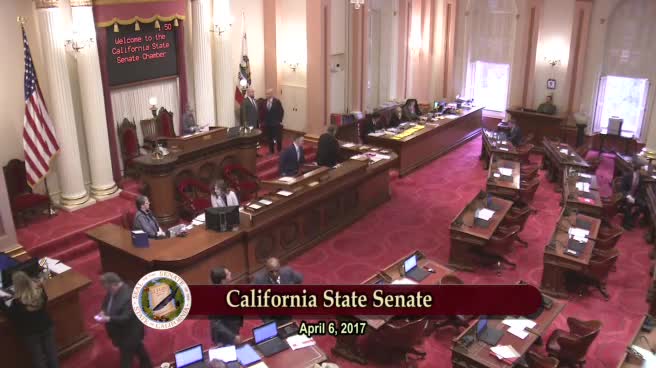 3MIN
Senate Floor
 4MIN
Senate Standing Committee on Appropriations
 6MIN