SB 618: Load-serving entities: integrated resource plans.
- Session Year: 2017-2018
- House: Senate
- Latest Version Date: 2017-10-02
Under existing law, the Public Utilities Commission has regulatory authority over public utilities, including electrical corporations. Existing law requires the commission to adopt a process for each load-serving entity, defined as including electrical corporations, electric service providers, and community choice aggregators, to file an integrated resource plan and a schedule for periodic updates to the plan to ensure that load-serving entities accomplish specified objectives. Existing law requires each load-serving entity to prepare and file an integrated resource plan consistent with those objectives on a time schedule directed by the commission and subject to commission review.
This bill would require that the integrated resource plan filed by a load-serving entity contribute to a diverse and balanced portfolio of resources needed to ensure a reliable electricity supply that provides optimal integration of renewable energy resources in a cost-effective manner, meets specified emissions reduction targets for greenhouse gases, and prevents cost shifting among load-serving entities.
Under existing law, a violation of the Public Utilities Act or any order, decision, rule, direction, demand, or requirement of the commission is a crime.
Because the provisions of this bill would be a part of the act and because a violation of an order or decision of the commission implementing its requirements would be a crime, the bill would impose a state-mandated local program by creating a new crime.
The California Constitution requires the state to reimburse local agencies and school districts for certain costs mandated by the state. Statutory provisions establish procedures for making that reimbursement.
This bill would provide that no reimbursement is required by this act for a specified reason.
Under existing law, the Public Utilities Commission has regulatory authority over public utilities, including electrical corporations. Existing law requires the commission to adopt a process for each load-serving entity, defined as including electrical corporations, electric service providers, and community choice aggregators, to file an integrated resource plan and a schedule for periodic updates to the plan to ensure that load-serving entities accomplish specified objectives. Existing law requires each load-serving entity to prepare and file an integrated resource plan consistent with those objectives on a time schedule directed by the commission and subject to commission review.
This bill would require that the integrated resource plan filed by a load-serving entity contribute to a diverse and balanced portfolio of resources needed to ensure a reliable electricity supply that provides optimal integration of renewable energy resources in a cost-effective manner and manner, meets specified emissions limits reduction targets for greenhouse gases in proportion to each load-serving entitys load share so that there is no gases, and prevents cost shifting among load-serving entities.
Under existing law, a violation of the Public Utilities Act or any order, decision, rule, direction, demand, or requirement of the commission is a crime.
Because the provisions of this bill would be a part of the act and because a violation of an order or decision of the commission implementing its requirements would be a crime, the bill would impose a state-mandated local program by creating a new crime.
The California Constitution requires the state to reimburse local agencies and school districts for certain costs mandated by the state. Statutory provisions establish procedures for making that reimbursement.
This bill would provide that no reimbursement is required by this act for a specified reason.
Under existing law, the Public Utilities Commission has regulatory authority over public utilities, including electrical corporations. Existing law requires the commission to adopt a process for each load-serving entity, defined as including electrical corporations, electric service providers, and community choice aggregators, to file an integrated resource plan and a schedule for periodic updates to the plan to ensure that load-serving entities accomplish specified objectives. Existing law requires each load-serving entity to prepare and file an integrated resource plan consistent with those objectives on a time schedule directed by the commission and subject to commission review.
This bill would require that the integrated resource plan filed by a load-serving entity be reviewed and approved by the commission. The bill would require that the plans of all load-serving entities contribute to a diverse and balanced portfolio of resources needed to ensure a reliable electricity supply that provides optimal integration of renewable energy in a cost-effective manner and meets the specified emissions limits for greenhouse gases in proportion to each load-serving entitys load share so that there is no cost shifting among load-serving entities.
Under existing law, a violation of the Public Utilities Act or any order, decision, rule, direction, demand, or requirement of the commission is a crime.
Because the provisions of this bill would be a part of the act and because a violation of an order or decision of the commission implementing its requirements would be a crime, the bill would impose a state-mandated local program by creating a new crime.
The California Constitution requires the state to reimburse local agencies and school districts for certain costs mandated by the state. Statutory provisions establish procedures for making that reimbursement.
This bill would provide that no reimbursement is required by this act for a specified reason.
Under existing law, the Public Utilities Commission has regulatory authority over public utilities, including electrical corporations. Existing law requires the commission to adopt a process for each load-serving entity, defined as including electrical corporations, electric service providers, and community choice aggregators, to file an integrated resource plan and a schedule for periodic updates to the plan to ensure that load-serving entities accomplish specified objectives. Existing law requires each load-serving entity to prepare and file an integrated resource plan consistent with those objectives on a time schedule directed by the commission and subject to commission review.
This bill would require that the integrated resource plan filed by a load-serving entity be reviewed and approved by the commission. The bill would require that the plans of all load-serving entities contribute to a diverse and balanced portfolio of resources needed to ensure a reliable electricity supply that provides optimal integration of renewable energy in a cost-effective manner and meets the specified emissions limits for greenhouse gases in proportion to each load-serving entitys load share so that there is no cost shifting among load-serving entities. The bill would declare that these revisions are declaratory of existing law.
Under existing law, a violation of the Public Utilities Act or any order, decision, rule, direction, demand, or requirement of the commission is a crime.
Because the provisions of this bill would be a part of the act and because a violation of an order or decision of the commission implementing its requirements would be a crime, the bill would impose a state-mandated local program by creating a new crime.
The California Constitution requires the state to reimburse local agencies and school districts for certain costs mandated by the state. Statutory provisions establish procedures for making that reimbursement.
This bill would provide that no reimbursement is required by this act for a specified reason.
In addition to the requirements of Section 454.52, the integrated resource plan of each load-serving entity shall contribute to a diverse and balanced portfolio of resources needed to ensure a reliable electricity supply that provides optimal integration of renewable energy resources in a cost-effective manner, meets the emissions reduction targets for greenhouse gases described in subparagraph (A) of paragraph (1) of subdivision (a) of Section 454.52, and prevents cost shifting among load-serving entities.
SEC. 2.No reimbursement is required by this act pursuant to Section 6 of Article XIIIB of the California Constitution because the only costs that may be incurred by a local agency or school district will be incurred because this act creates a new crime or infraction, eliminates a crime or infraction, or changes the penalty for a crime or infraction, within the meaning of Section 17556 of the Government Code, or changes the definition of a crime within the meaning of Section 6 of Article XIIIB of the California Constitution.
SECTION 1.Section 454.52 of the Public Utilities Code is amended to read:454.52.(a)(1)Commencing in 2017, and to be updated regularly thereafter, the commission shall adopt a process for each load-serving entity, as defined in Section 380, to file an integrated resource plan, and a schedule for periodic updates to the plan, to ensure that load-serving entities do the following:(A)Meet the greenhouse gas emissions reduction targets established by the State Air Resources Board, in coordination with the commission and the Energy Commission, for the electricity sector and each load-serving entity that reflect the electricity sectors percentage in achieving the economywide greenhouse gas emissions reductions of 40 percent from 1990 levels by 2030.(B)Procure at least 50 percent eligible renewable energy resources by December 31, 2030, consistent with Article 16 (commencing with Section 399.11) of Chapter 2.3.(C)Enable each electrical corporation to fulfill its obligation to serve its customers at just and reasonable rates.(D)Minimize impacts on ratepayers bills.(E)Ensure system and local reliability.(F)Strengthen the diversity, sustainability, and resilience of the bulk transmission and distribution systems, and local communities.(G)Enhance distribution systems and demand-side energy management.(H)Minimize localized air pollutants and other greenhouse gas emissions, with early priority on disadvantaged communities identified pursuant to Section 39711 of the Health and Safety Code.(2)(A)The commission may authorize all source procurement for electrical corporations that includes various resource types including demand-side resources, supply side resources, and resources that may be either demand-side resources or supply side resources, taking into account the differing electrical corporations geographic service areas, to ensure that each load-serving entity meets the goals set forth in paragraph (1).(B)The commission may approve procurement of resource types that will reduce overall greenhouse gas emissions from the electricity sector and meet the other goals specified in paragraph (1), but due to the nature of the technology or fuel source may not compete favorably in price against other resources over the time period of the integrated resource plan.(b)(1)Each load-serving entity shall prepare and file an integrated resource plan consistent with paragraph (2) of subdivision (a) on a time schedule directed by the commission and subject to commission review.(2)Each electrical corporations plan shall follow the provisions of Section 454.5.(3)The plan of a community choice aggregator shall be submitted to its governing board for approval and provided to the commission for certification, consistent with paragraph (5) of subdivision (a) of Section 366.2, and shall achieve the following:(A)Economic, reliability, environmental, security, and other benefits and performance characteristics that are consistent with the goals set forth in paragraph (1) of subdivision (a).(B)A diversified procurement portfolio consisting of both short-term and long-term electricity and electricity-related and demand reduction products.(C)The resource adequacy requirements established pursuant to Section 380.(4)The plan of an electric service provider shall achieve the goals set forth in paragraph (1) of subdivision (a) through a diversified portfolio consisting of both short-term and long-term electricity, electricity-related, and demand reduction products.(5)The plan of each load-serving entity shall contribute to a diverse and balanced portfolio of resources needed to ensure a reliable electricity supply that provides optimal integration of renewable energy resources in a cost-effective manner, meets the emissions reduction targets for greenhouse gases described in subparagraph (A) of paragraph (1) of subdivision (a), and prevents cost shifting among load-serving entities.(c)To the extent that additional procurement is authorized for the electrical corporation in the integrated resource plan or the procurement process authorized pursuant to Section 454.5, the commission shall ensure that the costs are allocated in a fair and equitable manner to all customers consistent with 454.51, that there is no cost-shifting among customers of load-serving entities, and that community choice aggregators may self-provide renewable integration resources consistent with Section 454.51.(d)In order to eliminate redundancy and increase efficiency, the process adopted pursuant to subdivision (a) shall incorporate, and not duplicate, any other planning processes of the commission.SEC. 2.No reimbursement is required by this act pursuant to Section 6 of Article XIIIB of the California Constitution because the only costs that may be incurred by a local agency or school district will be incurred because this act creates a new crime or infraction, eliminates a crime or infraction, or changes the penalty for a crime or infraction, within the meaning of Section 17556 of the Government Code, or changes the definition of a crime within the meaning of Section 6 of Article XIIIB of the California Constitution.(a)(1)Commencing in 2017, and to be updated regularly thereafter, the commission shall adopt a process for each load-serving entity, as defined in Section 380, to file an integrated resource plan, and a schedule for periodic updates to the plan, to ensure that load-serving entities do the following:
(A)Meet the greenhouse gas emissions reduction targets established by the State Air Resources Board, in coordination with the commission and the Energy Commission, for the electricity sector and each load-serving entity that reflect the electricity sectors percentage in achieving the economywide greenhouse gas emissions reductions of 40 percent from 1990 levels by 2030.
(B)Procure at least 50 percent eligible renewable energy resources by December 31, 2030, consistent with Article 16 (commencing with Section 399.11) of Chapter 2.3.
(C)Enable each electrical corporation to fulfill its obligation to serve its customers at just and reasonable rates.
(D)Minimize impacts on ratepayers bills.
(E)Ensure system and local reliability.
(F)Strengthen the diversity, sustainability, and resilience of the bulk transmission and distribution systems, and local communities.
(G)Enhance distribution systems and demand-side energy management.
(H)Minimize localized air pollutants and other greenhouse gas emissions, with early priority on disadvantaged communities identified pursuant to Section 39711 of the Health and Safety Code.
(2)(A)The commission may authorize all source procurement for electrical corporations that includes various resource types including demand-side resources, supply side resources, and resources that may be either demand-side resources or supply side resources, taking into account the differing electrical corporations geographic service areas, to ensure that each load-serving entity meets the goals set forth in paragraph (1).
(B)The commission may approve procurement of resource types that will reduce overall greenhouse gas emissions from the electricity sector and meet the other goals specified in paragraph (1), but due to the nature of the technology or fuel source may not compete favorably in price against other resources over the time period of the integrated resource plan.
(b)(1)Each load-serving entity shall prepare and file an integrated resource plan consistent with paragraph (2) of subdivision (a) on a time schedule directed by the commission and subject to commission review.
(2)Each electrical corporations plan shall follow the provisions of Section 454.5.
(3)The plan of a community choice aggregator shall be submitted to its governing board for approval and provided to the commission for certification, consistent with paragraph (5) of subdivision (a) of Section 366.2, and shall achieve the following:
(A)Economic, reliability, environmental, security, and other benefits and performance characteristics that are consistent with the goals set forth in paragraph (1) of subdivision (a).
(B)A diversified procurement portfolio consisting of both short-term and long-term electricity and electricity-related and demand reduction products.
(C)The resource adequacy requirements established pursuant to Section 380.
(4)The plan of an electric service provider shall achieve the goals set forth in paragraph (1) of subdivision (a) through a diversified portfolio consisting of both short-term and long-term electricity, electricity-related, and demand reduction products.
(5)The plans of all plan of each load-serving entities entity shall contribute to a diverse and balanced portfolio of resources needed to ensure a reliable electricity supply that provides optimal integration of renewable energy resources in a cost-effective manner and manner, meets the emissions limits reduction targets for greenhouse gases described in subdivision (a) of Section 454.51 in proportion to each load-serving entitys load share so that there is no subparagraph (A) of paragraph (1) of subdivision (a), and prevents cost shifting among load-serving entities.
(c)To the extent that additional procurement is authorized for the electrical corporation in the integrated resource plan or the procurement process authorized pursuant to Section 454.5, the commission shall ensure that the costs are allocated in a fair and equitable manner to all customers consistent with 454.51, that there is no cost-shifting among customers of load-serving entities, and that community choice aggregators may self-provide renewable integration resources consistent with Section 454.51.
(d)In order to eliminate redundancy and increase efficiency, the process adopted pursuant to subdivision (a) shall incorporate, and not duplicate, any other planning processes of the commission.
SEC. 2.No reimbursement is required by this act pursuant to Section 6 of Article XIIIB of the California Constitution because the only costs that may be incurred by a local agency or school district will be incurred because this act creates a new crime or infraction, eliminates a crime or infraction, or changes the penalty for a crime or infraction, within the meaning of Section 17556 of the Government Code, or changes the definition of a crime within the meaning of Section 6 of Article XIIIB of the California Constitution.
(a)(1)Commencing in 2017, and to be updated regularly thereafter, the commission shall adopt a process for each load-serving entity, as defined in Section 380, to file an integrated resource plan, and a schedule for periodic updates to the plan, to ensure that load-serving entities do the following:
(A)Meet the greenhouse gas emissions reduction targets established by the State Air Resources Board, in coordination with the commission and the Energy Commission, for the electricity sector and each load-serving entity that reflect the electricity sectors percentage in achieving the economywide greenhouse gas emissions reductions of 40 percent from 1990 levels by 2030.
(B)Procure at least 50 percent eligible renewable energy resources by December 31, 2030, consistent with Article 16 (commencing with Section 399.11) of Chapter 2.3.
(C)Enable each electrical corporation to fulfill its obligation to serve its customers at just and reasonable rates.
(D)Minimize impacts on ratepayers bills.
(E)Ensure system and local reliability.
(F)Strengthen the diversity, sustainability, and resilience of the bulk transmission and distribution systems, and local communities.
(G)Enhance distribution systems and demand-side energy management.
(H)Minimize localized air pollutants and other greenhouse gas emissions, with early priority on disadvantaged communities identified pursuant to Section 39711 of the Health and Safety Code.
(2)(A)The commission may authorize all source procurement for electrical corporations that includes various resource types including demand-side resources, supply side resources, and resources that may be either demand-side resources or supply side resources, taking into account the differing electrical corporations geographic service areas, to ensure that each load-serving entity meets the goals set forth in paragraph (1).
(B)The commission may approve procurement of resource types that will reduce overall greenhouse gas emissions from the electricity sector and meet the other goals specified in paragraph (1), but due to the nature of the technology or fuel source may not compete favorably in price against other resources over the time period of the integrated resource plan.
(b)(1)Each load-serving entity shall prepare and file an integrated resource plan consistent with paragraph (2) of subdivision (a) on a time schedule directed by the commission and subject to commission review and approval. review.
(2)Each electrical corporations plan shall follow the provisions of Section 454.5.
(3)The plan of a community choice aggregator shall be submitted to its governing board for approval and provided to the commission for certification and approval, certification, consistent with paragraph (5) of subdivision (a) of Section 366.2, and shall achieve the following:
(A)Economic, reliability, environmental, security, and other benefits and performance characteristics that are consistent with the goals set forth in paragraph (1) of subdivision (a).
(B)A diversified procurement portfolio consisting of both short-term and long-term electricity and electricity-related and demand reduction products.
(C)The resource adequacy requirements established pursuant to Section 380.
(4)The plan of an electric service provider shall achieve the goals set forth in paragraph (1) of subdivision (a) through a diversified portfolio consisting of both short-term and long-term electricity, electricity-related, and demand reduction products.
(5)The plans of all load-serving entities shall contribute to a diverse and balanced portfolio of resources needed to ensure a reliable electricity supply that provides optimal integration of renewable energy in a cost-effective manner and meets the emissions limits for greenhouse gases described in subdivision (a) of Section 454.51 in proportion to each load-serving entitys load share so that there is no cost shifting among load-serving entities.
(c)To the extent that additional procurement is authorized for the electrical corporation in the integrated resource plan or the procurement process authorized pursuant to Section 454.5, the commission shall ensure that the costs are allocated in a fair and equitable manner to all customers consistent with 454.51, that there is no cost-shifting among customers of load-serving entities, and that community choice aggregators may self-provide renewable integration resources consistent with Section 454.51.
(d)In order to eliminate redundancy and increase efficiency, the process adopted pursuant to subdivision (a) shall incorporate, and not duplicate, any other planning processes of the commission.
SEC. 2.No reimbursement is required by this act pursuant to Section 6 of Article XIIIB of the California Constitution because the only costs that may be incurred by a local agency or school district will be incurred because this act creates a new crime or infraction, eliminates a crime or infraction, or changes the penalty for a crime or infraction, within the meaning of Section 17556 of the Government Code, or changes the definition of a crime within the meaning of Section 6 of Article XIIIB of the California Constitution.
(a)(1)Commencing in 2017, and to be updated regularly thereafter, the commission shall adopt a process for each load-serving entity, as defined in Section 380, to file an integrated resource plan, and a schedule for periodic updates to the plan, to ensure that load-serving entities do the following:
(A)Meet the greenhouse gas emissions reduction targets established by the State Air Resources Board, in coordination with the commission and the Energy Commission, for the electricity sector and each load-serving entity that reflect the electricity sectors percentage in achieving the economywide greenhouse gas emissions reductions of 40 percent from 1990 levels by 2030.
(B)Procure at least 50 percent eligible renewable energy resources by December 31, 2030, consistent with Article 16 (commencing with Section 399.11) of Chapter 2.3.
(C)Enable each electrical corporation to fulfill its obligation to serve its customers at just and reasonable rates.
(D)Minimize impacts on ratepayers bills.
(E)Ensure system and local reliability.
(F)Strengthen the diversity, sustainability, and resilience of the bulk transmission and distribution systems, and local communities.
(G)Enhance distribution systems and demand-side energy management.
(H)Minimize localized air pollutants and other greenhouse gas emissions, with early priority on disadvantaged communities identified pursuant to Section 39711 of the Health and Safety Code.
(2)(A)The commission may authorize all source procurement for electrical corporations that includes various resource types including demand-side resources, supply side resources, and resources that may be either demand-side resources or supply side resources, taking into account the differing electrical corporations geographic service areas, to ensure that each load-serving entity meets the goals set forth in paragraph (1).
(B)The commission may approve procurement of resource types that will reduce overall greenhouse gas emissions from the electricity sector and meet the other goals specified in paragraph (1), but due to the nature of the technology or fuel source may not compete favorably in price against other resources over the time period of the integrated resource plan.
(b)(1)Each load-serving entity shall prepare and file an integrated resource plan consistent with paragraph (2) of subdivision (a) on a time schedule directed by the commission and subject to commission review and approval.
(2)Each electrical corporations plan shall follow the provisions of Section 454.5.
(3)The plan of a community choice aggregator shall be submitted to its governing board for approval and provided to the commission for certification and approval, consistent with paragraph (5) of subdivision (a) of Section 366.2, and shall achieve the following:
(A)Economic, reliability, environmental, security, and other benefits and performance characteristics that are consistent with the goals set forth in paragraph (1) of subdivision (a).
(B)A diversified procurement portfolio consisting of both short-term and long-term electricity and electricity-related and demand reduction products.
(C)The resource adequacy requirements established pursuant to Section 380.
(4)The plan of an electric service provider shall achieve the goals set forth in paragraph (1) of subdivision (a) through a diversified portfolio consisting of both short-term and long-term electricity, electricity-related, and demand reduction products.
(5)The plans of all load-serving entities shall contribute to a diverse and balanced portfolio of resources needed to ensure a reliable electricity supply that provides optimal integration of renewable energy in a cost-effective manner and meets the emissions limits for greenhouse gases described in subdivision (a) of Section 454.51 in proportion to each load-serving entitys load share so that there is no cost shifting among load-serving entities.
(c)To the extent that additional procurement is authorized for the electrical corporation in the integrated resource plan or the procurement process authorized pursuant to Section 454.5, the commission shall ensure that the costs are allocated in a fair and equitable manner to all customers consistent with 454.51, that there is no cost-shifting among customers of load-serving entities, and that community choice aggregators may self-provide renewable integration resources consistent with Section 454.51.
(d)In order to eliminate redundancy and increase efficiency, the process adopted pursuant to subdivision (a) shall incorporate, and not duplicate, any other planning processes of the commission.
SEC. 2.The amendment of Section 454.52 of the Public Utilities Code made by this act does not constitute a change in, but is declaratory of, existing law.SEC. 3.SEC. 2.No reimbursement is required by this act pursuant to Section 6 of Article XIIIB of the California Constitution because the only costs that may be incurred by a local agency or school district will be incurred because this act creates a new crime or infraction, eliminates a crime or infraction, or changes the penalty for a crime or infraction, within the meaning of Section 17556 of the Government Code, or changes the definition of a crime within the meaning of Section 6 of Article XIIIB of the California Constitution.
(a)(1)Commencing in 2017, and to be updated regularly thereafter, the commission shall adopt a process for each load-serving entity, as defined in Section 380, to file an integrated resource plan, and a schedule for periodic updates to the plan, to ensure that load-serving entities do the following:
(A)Meet the greenhouse gas emissions reduction targets established by the State Air Resources Board, in coordination with the commission and the Energy Commission, for the electricity sector and each load-serving entity that reflect the electricity sectors percentage in achieving the economywide greenhouse gas emissions reductions of 40 percent from 1990 levels by 2030.
(B)Procure at least 50 percent eligible renewable energy resources by December 31, 2030, consistent with Article 16 (commencing with Section 399.11) of Chapter 2.3.
(C)Enable each electrical corporation to fulfill its obligation to serve its customers at just and reasonable rates.
(D)Minimize impacts on ratepayers bills.
(E)Ensure system and local reliability.
(F)Strengthen the diversity, sustainability, and resilience of the bulk transmission and distribution systems, and local communities.
(G)Enhance distribution systems and demand-side energy management.
(H)Minimize localized air pollutants and other greenhouse gas emissions, with early priority on disadvantaged communities identified pursuant to Section 39711 of the Health and Safety Code.
(2)(A)The commission may authorize all source procurement for electrical corporations that includes various resource types including demand-side resources, supply side resources, and resources that may be either demand-side resources or supply side resources, taking into account the differing electrical corporations geographic service areas, to ensure that each load-serving entity meets the goals set forth in paragraph (1).
(B)The commission may approve procurement of resource types that will reduce overall greenhouse gas emissions from the electricity sector and meet the other goals specified in paragraph (1), but due to the nature of the technology or fuel source may not compete favorably in price against other resources over the time period of the integrated resource plan.
(b)(1)Each load-serving entity shall prepare and file an integrated resource plan consistent with paragraph (2) of subdivision (a) on a time schedule directed by the commission and subject to commission review. review and approval.
(2)Each electrical corporations plan shall follow the provisions of Section 454.5.
(3)The plan of a community choice aggregator shall be submitted to its governing board for approval and provided to the commission for certification, certification and approval, consistent with paragraph (5) of subdivision (a) of Section 366.2, and shall achieve the following:
(A)Economic, reliability, environmental, security, and other benefits and performance characteristics that are consistent with the goals set forth in paragraph (1) of subdivision (a).
(B)A diversified procurement portfolio consisting of both short-term and long-term electricity and electricity-related and demand reduction products.
(C)The resource adequacy requirements established pursuant to Section 380.
(4)The plan of an electric service provider shall achieve the goals set forth in paragraph (1) of subdivision (a) through a diversified portfolio consisting of both short-term and long-term electricity, electricity-related, and demand reduction products.
(5)The plans of all load-serving entities shall contribute to a diverse and balanced portfolio of resources needed to ensure a reliable electricity supply that provides optimal integration of renewable energy in a cost-effective manner and meets the emissions limits for greenhouse gases described in subdivision (a) of Section 454.51 in proportion to each load-serving entitys load share so that there is no cost shifting among load-serving entities.
(c)To the extent that additional procurement is authorized for the electrical corporation in the integrated resource plan or the procurement process authorized pursuant to Section 454.5, the commission shall ensure that the costs are allocated in a fair and equitable manner to all customers consistent with 454.51, that there is no cost-shifting among customers of load-serving entities, and that community choice aggregators may self-provide renewable integration resources consistent with Section 454.51.
(d)In order to eliminate redundancy and increase efficiency, the process adopted pursuant to subdivision (a) shall incorporate, and not duplicate, any other planning processes of the commission.
SEC. 2.The amendment of Section 454.52 of the Public Utilities Code made by this act does not constitute a change in, but is declaratory of, existing law.
SEC. 3.No reimbursement is required by this act pursuant to Section 6 of Article XIIIB of the California Constitution because the only costs that may be incurred by a local agency or school district will be incurred because this act creates a new crime or infraction, eliminates a crime or infraction, or changes the penalty for a crime or infraction, within the meaning of Section 17556 of the Government Code, or changes the definition of a crime within the meaning of Section 6 of Article XIIIB of the California Constitution.
|
Date
|
Status
|
|---|---|
| Oct 2, 2017 | Chaptered by Secretary of State. Chapter 431, Statutes of 2017. |
| Oct 2, 2017 | Approved by the Governor. |
| Sep 21, 2017 | Enrolled and presented to the Governor at 5:30 p.m. |
| Sep 14, 2017 | Assembly amendments concurred in. (Ayes 39. Noes 0.) Ordered to engrossing and enrolling. |
| Sep 12, 2017 | Ordered to special consent calendar. |
| Sep 8, 2017 | In Senate. Concurrence in Assembly amendments pending. |
| Sep 7, 2017 | Read third time. Passed. Ordered to the Senate. |
| Aug 31, 2017 | Read third time and amended. |
| Aug 28, 2017 | From consent calendar on motion of Assembly Member Calderon. |
| Aug 24, 2017 | Read second time. Ordered to consent calendar. |
| Aug 23, 2017 | From committee: Do pass. Ordered to consent calendar. (Ayes 15. Noes 0.) (August 23). |
| Jul 18, 2017 | Read second time and amended. Re-referred to Com. on APPR. |
| Jul 17, 2017 | From committee: Do pass as amended and re-refer to Com. on APPR. (Ayes 10. Noes 0.) (July 10). |
| Jun 21, 2017 | From committee: Do pass and re-refer to Com. on NAT. RES. (Ayes 11. Noes 0.) (June 21). Re-referred to Com. on NAT. RES. |
| Jun 5, 2017 | Referred to Coms. on U. & E. and NAT. RES. |
| May 23, 2017 | In Assembly. Read first time. Held at Desk. |
| May 22, 2017 | Read third time. Passed. (Ayes 37. Noes 0. Page 1136.) Ordered to the Assembly. |
| May 16, 2017 | Read second time. Ordered to third reading. |
| May 15, 2017 | From committee: Be ordered to second reading pursuant to Senate Rule 28.8. |
| May 9, 2017 | From committee with author's amendments. Read second time and amended. Re-referred to Com. on APPR. |
| May 4, 2017 | Set for hearing May 15. |
| May 3, 2017 | May 8 hearing postponed by committee. |
| May 1, 2017 | Set for hearing May 8. |
| Apr 24, 2017 | Read second time and amended. Re-referred to Com. on APPR. |
| Apr 20, 2017 | From committee: Do pass as amended and re-refer to Com. on APPR. (Ayes 7. Noes 0. Page 784.) (April 19). |
| Apr 18, 2017 | From committee: Do pass and re-refer to Com. on EQ. (Ayes 11. Noes 0. Page 728.) (April 18). Re-referred to Com. on EQ. |
| Apr 13, 2017 | Set for hearing April 18. |
| Apr 6, 2017 | Set for hearing April 19 in EQ. pending receipt. |
| Apr 5, 2017 | April 4 set for first hearing canceled at the request of author. |
| Mar 9, 2017 | Set for hearing April 4. |
| Mar 2, 2017 | Referred to Coms. on E., U. & C. and EQ. |
| Feb 21, 2017 | From printer. May be acted upon on or after March 23. |
| Feb 17, 2017 | Introduced. Read first time. To Com. on RLS. for assignment. To print. |
|
Date
|
Description
|
Location
|
Votes
|
|
|---|---|---|---|---|
| Sep 14, 2017 | Special Consent Calendar SB618 | Senate Floor |
Passed |
|
| Sep 7, 2017 | SB 618 Bradford Senate Third Reading By GARCIA, E. | Assembly Floor |
Passed |
|
| Aug 23, 2017 | Do pass. To Consent Calendar. | Assembly Standing Committee on Appropriations |
Passed |
|
| Jul 10, 2017 | Do pass as amended and be re-referred to the Committee on [Appropriations] | Assembly Standing Committee on Natural Resources |
Passed |
|
| Jun 21, 2017 | Do pass and be re-referred to the Committee on [Natural Resources] | Assembly Standing Committee on Utilities and Energy |
Passed |
|
| May 22, 2017 | Senate 3rd Reading SB618 Bradford | Senate Floor |
Passed |
|
| Apr 19, 2017 | Do pass as amended, but first amend, and re-refer to the Committee on [Appropriations] | Senate Standing Committee on Environmental Quality |
Passed |
|
| Apr 18, 2017 | Do pass, but first be re-referred to the Committee on [Environmental Quality] | Senate Standing Committee on Energy, Utilities and Communications |
Passed |
This list shows positions taken on this bill by organizations on the date displayed, which is linked to the original source.
Positions by individuals are not included.
|
Organization
|
Position
|
Date
|
|---|---|---|
| 350 Bay Area | ** Against | Sep 11, 2017 |
| California Alliance for Community Energy | ** Against | Sep 11, 2017 |
| California Community Choice Association | ** Against | Apr 17, 2017 |
| California State Association Of Counties | ** Against | Sep 11, 2017 |
| California State Association Of Electrical Workers | ** Support | Sep 11, 2017 |
| California State Pipe Trades Council | ** Support | Sep 11, 2017 |
| California Wind Energy Association | ** Support | Sep 11, 2017 |
| Californians for Energy Choice | ** Against | Sep 11, 2017 |
| CCA | * Neutral | Apr 19, 2017 |
| Center for Climate Protection | ** Against | Sep 11, 2017 |
| City and County of San Francisco | ** Against | May 22, 2017 |
| City of Cotati | ** Against | May 22, 2017 |
| City Of Del Mar | ** Against | May 22, 2017 |
| City of Piedmont | ** Against | May 22, 2017 |
| City of Rohnert Park | ** Against | May 22, 2017 |
| City of Solana Beach | ** Against | May 22, 2017 |
| City of Vista | ** Against | Jul 7, 2017 |
| Coalition of California Utility Employees | ** Support | Sep 11, 2017 |
| Community Environmental Council | ** Against | May 22, 2017 |
| County of Napa | * Against | Apr 19, 2017 |
| County of Santa Clara | ** Against | Sep 11, 2017 |
| Dynamic Grid Council | ** Against | Sep 11, 2017 |
| East Bay Clean Power Alliance | * Indeterminate | Apr 18, 2017 |
| East Bay Community Energy Authority | ** Against | Sep 11, 2017 |
| First Unitarian Universalist Church of San Diego | ** Against | Sep 11, 2017 |
| Food & Water Watch | ** Against | Sep 11, 2017 |
| Independent Energy Producers Association | ** Support | Sep 11, 2017 |
| League Of California Cities | * For If Amend | Apr 19, 2017 |
| Local Clean Energy Alliance | * Against | Apr 18, 2017 |
| Los Angeles County Board of Supervisors | * Against | Apr 19, 2017 |
| mayors' & councilmembers' association of sonoma county | ** Against | Sep 11, 2017 |
| Mce Clean Energy | ** Against | Apr 13, 2017 |
| MCE East | * Neutral | Apr 18, 2017 |
| Monterey Bay Regional Climate Action Compact | ** Against | Sep 11, 2017 |
| Napa County Board Of Supervisors, District 1 | ** Against | Sep 11, 2017 |
| Peninsula Clean Energy | * Neutral | Apr 18, 2017 |
| Pricewaterhousecoopers LLP | * Against | Apr 18, 2017 |
| Resilient Neighborhoods | ** Against | Sep 11, 2017 |
| Rooted in Resilience | * Against | Apr 18, 2017 |
| Safe Energy Now! North County | ** Against | Sep 11, 2017 |
| San Diego 350 | * Against | Apr 18, 2017 |
| San Mateo County Board of Supervisors | ** Against | Sep 11, 2017 |
| Seawave Battery | ** Against | Sep 11, 2017 |
| Several individuals | ** Against | Sep 11, 2017 |
| Silicon Valley Clean Energy | * Neutral | Apr 18, 2017 |
| Sonoma County Regional Climate Protection Authority | ** Against | Sep 11, 2017 |
| Sonoma County Water Agency | ** Against | Sep 11, 2017 |
| South Bay 350 Climate Action Group | ** Against | Sep 11, 2017 |
| South Bay Clean Power Working Group | ** Against | Sep 11, 2017 |
| Sustainable Marin | ** Against | Sep 11, 2017 |
| Sustainable San Rafael | ** Against | Sep 11, 2017 |
| The Utility Reform Network | ** Support | Sep 11, 2017 |
| Town of Windsor | ** Against | Sep 11, 2017 |
| Valley Clean Energy Alliance | * Neutral | Apr 18, 2017 |
| Western States Council Of Sheet Metal Workers | ** Support | Sep 11, 2017 |
Office of Senate Floor Analyses (916) 651-1520 Fax: (916) 327-4478 | SB |
UNFINISHED BUSINESS
Bill No: SB 618
:
SENATE ENERGY, U. & C. COMMITTEE: 11-0, 4/18/17
AYES: Hueso, Morrell, Bradford, Cannella, Hertzberg, Hill, McGuire, Skinner, Stern, Vidak, Wiener
SENATE ENVIRONMENTAL QUALITY COMMITTEE: 7-0, 4/19/17
AYES: Wieckowski, Stone, Bates, Hill, Lara, Skinner, Stern
SENATE APPROPRIATIONS COMMITTEE: Senate Rule 28.8
SENATE FLOOR: 37-0, 5/22/17
AYES: Allen, Atkins, Bates, Beall, Berryhill, Bradford, Cannella, De León, Dodd, Gaines, Galgiani, Glazer, Hernandez, Hertzberg, Hill, Hueso, Jackson, Lara, Leyva, McGuire, Mendoza, Mitchell, Monning, Moorlach, Morrell, Newman, Nguyen, Nielsen, Portantino, Roth, Skinner, Stern, Stone, Vidak, Wieckowski, Wiener, Wilk
NO VOTE RECORDED: Anderson, Fuller, Pan
ASSEMBLY FLOOR: 75-0, 9/7/17 - See last page for vote
DIGEST:
This bill requires, explicitly, the integrated resource plans (IRPs) of all load-serving entities – investor-owned utilities (IOUs), electric service providers (ESPs), and community choice aggregators (CCAs) – to contribute to a diverse and balanced portfolio of resources needed to ensure a reliable electricity supply, meet certain environmental goals, and so that there is no cost shifting among load-serving entities.
Assembly Amendments
move the contents of this bill from Public Utilities Code Section 454.52, which exists in current law, to Section 454.54, which this bill creates. The author indicates the move is meant to avoid conflict with other bills currently before the Legislature that also affect Section 454.52. This bill is otherwise unchanged in language or in effect.
Existing law:
- Defines “load-serving entity” to mean an electrical corporation (also known as an IOU), ESP or CCA. Requires the California Public Utilities Commission (CPUC), in consultation with the California Independent System Operator (CAISO), to establish resource adequacy requirements for all load-serving entities. (Public Utilities Code §380)
- Authorizes customers of an IOU to aggregate their electric loads as members of their local community with CCAs. Designates a CCA as solely responsible for all generation procurement activities on behalf of the CCA’s customers, except where other generation procurement arrangements are expressly authorized by statute. (Public Utilities Code §366.2)
- Requires every electric utility to procure 50 percent of its retail sales of electricity from renewable energy by 2030. This is known as the Renewable Portfolio Standard (RPS). (Public Utilities Code §399.11 et seq.)
- Requires each IOU to file with the CPUC a proposed electricity procurement plan, and requires the CPUC to review and accept, modify or reject each IOU’s proposed electricity procurement plan. (Public Utilities Code §454.5)
- Requires the CPUC to adopt a process for each load-serving entity to file an IRP to ensure they each meet the greenhouse gas (GHG) emissions reduction targets for the electricity sector; procure at least 50 percent eligible renewable energy resources by December 31, 2030; ensure local and system reliability; and meet other goals and obligations. (Public Resources Code §454.52)
- Requires each load-serving entity to submit an IRP to the CPUC for review. (Public Resources Code §454.52)
- Requires the governing board of a local publicly owned electric utility adopt an IRP and a process for updating the plan at least once every five years. (Public Resources Code §9621)
- Requires the IRP of a local publicly owned utility be submitted to the California Energy Commission (CEC) and the CEC to review the IRP and determine if there are inconsistencies with statutory requirements. (Public Resources Code §9622)
This bill states, explicitly, that the IRPs of all load-serving entities shall contribute to a diverse and balanced portfolio of resources needed to ensure a reliable electricity supply that provides optimal integration of renewable energy in a cost-effective manner and meets the emissions limits for GHG described in subdivision (a) of Section 454.51 in proportion to each load-serving entity’s load share so that there is no cost shifting among load-serving entities.
Background
Load-serving Entities: IOUs, ESPs and CCAs. Several types of entities provide electricity service in California. Municipal utilities, such as the Los Angeles Department of Water and Power, provide electricity service within defined territories under the governance of locally elected officials. Several other types of entities, referred to in statute as load-serving entities, also provide electric service. California’s load-serving entities include:
- IOUs: privately owned electrical corporations, such as Southern California Edison, that provide monopoly services in distinct, defined geographic territories.
- ESPs: provide electricity to end-use customers who choose the services of the ESP instead of the incumbent IOU. An ESP uses the transmission and distribution infrastructure of the IOU to deliver electricity to the customer.
- CCAs: entities, such as Marin Clean Energy, by which local governments choose to buy or generate electricity on behalf of local residents while using the incumbent IOU’s transmission and distribution infrastructure. An individual customer within the territory of a CCA automatically receives electric service from the CCA when the customer’s local government elects to join the CCA; however, the customer retains the option to return to the service of the incumbent IOU.
The CPUC has regulated IOUs for decades. However, the CPUC’s experience, and the state’s, regulating CCAs is much more limited. In 2002, statute first allowed the formation of CCAs. It was not until nearly a decade later that the first CCA—Marin Clean Energy—came into existence. Today, there are only a handful of CCAs operating in the state. However, CCAs have been proposed, or are being contemplated, that might cover substantial portions of the service territories of the state’s three largest IOUs.
In 2015, the Legislature passed SB 350 (De León, Chapter 547). The bill established new renewable energy procurement requirements. As modified by SB 350, statute requires the CPUC to establish a process for each load-serving entity—meaning an IOU, ESP, or CCA—to file with the CPUC a regularly updated IRP that ensures the load-serving entities will meet certain goals, including GHG reductions and procurement of at least 50 percent of renewable resources by the year 2030. The CPUC is currently developing the IRP process applicable to load-serving entities.
Statute makes a general IRP requirement of all load-serving entities, regardless of load-serving entity type. Specifically, the law requires each load-serving entity to prepare and file an IRP with the CPUC, subject to CPUC review.
In addition, statute makes numerous other requirements, direct and indirect, of load-serving entities. For example, statute authorizes the CPUC, in consultation with CAISO, to establish resource adequacy requirements applicable to all load-serving entities. This bill restates in the code section that establishes the requirements of IRPs many of the obligations of all load-serving entities found elsewhere in statute.
Comments
Purpose. According to the author, “SB 618 makes sure load-serving entities contribute to a diverse and balanced portfolio of electricity resources to ensure a reliable electricity supply and provides optimal integration of renewable energy in a cost-effective manner while meeting greenhouse gases emissions limits without shifting costs from one entity’s customers to another.”
Opposition? According to the Senate Energy, Utilities and Communications Committee staff, when this bill was heard in policy committee, a number of entities opposed this bill. Most of those organizations—most notably, those representing CCAs—formally removed their opposition to this bill, following amendments to this bill. However, some of those entities have not contacted the policy committee to update their position on current version of this bill. It is unclear whether these entities remain opposed to this bill. This is because many of these opponents’ arguments addressed content that is no longer in this bill, yet, in policy committee, their representatives expressed opposition not to the concept of the proposed amendments, but to this bill as some type of “Trojan horse,” whatever that means.
Related/Prior Legislation
SB 350 (De León, Chapter 547, Statutes of 2015), among other things, increased the RPS and directed the CPUC to develop a process by which load-serving entities submit IRPs to the CPUC for review or for certification.
AB 117 (Migden, Chapter 838, Statutes of 2002) allowed cities and counties to aggregate their electric loads and provide service directly to their residents through formation of CCAs.
FISCAL EFFECT: Appropriation: Fiscal Com.: Local:
According to the Assembly Appropriations Committee, this bill has a “negligible” fiscal effect.
California State Association of Electrical Workers
California State Pipe Trades Council
California Wind Energy Association
Coalition of California Utility Employees
Independent Energy Producers Association
The Utility Reform Network
Western States Council of Sheet Metal Workers
350 Bay Area
California Alliance for Community Energy
California State Association of Counties
Californians for Energy Choice
Center for Climate Protection
Cities of Cotati, Del Mar, Piedmont, Rohnert Park, and Solana Beach
Climate Justice Team of the First Unitarian Universalist Church of San Diego Community Environmental Council
County of Santa Clara
Dynamic Grid Council
East Bay Community Energy Authority
First Unitarian Universalist Church of San Diego
Food & Water Watch
Mayors’ & Councilmembers’ Association of Sonoma County
Monterey Bay Regional Climate Action Compact
Napa County Board of Supervisors, District 1
Resilient Neighborhoods
Safe Energy Now! North County
San Mateo County Board of Supervisors
SeaWave Battery
Sonoma County Regional Climate Protection Authority
Sonoma County Water Agency
South Bay 350 Climate Action Group
South Bay Clean Power Working Group
Sustainable Marin
Sustainable San Rafael
Town of Windsor
Several individuals
ASSEMBLY FLOOR: 75-0, 9/7/17
AYES: Acosta, Aguiar-Curry, Travis Allen, Arambula, Baker, Berman, Bigelow, Bloom, Bocanegra, Brough, Burke, Caballero, Calderon, Cervantes, Chau, Chávez, Chiu, Choi, Chu, Cooley, Cooper, Cunningham, Dababneh, Dahle, Daly, Eggman, Flora, Fong, Frazier, Friedman, Gallagher, Cristina Garcia, Eduardo Garcia, Gipson, Gloria, Gonzalez Fletcher, Gray, Grayson, Harper, Holden, Irwin, Jones-Sawyer, Kalra, Kiley, Lackey, Levine, Limón, Low, Maienschein, Mathis, Mayes, Medina, Melendez, Mullin, Muratsuchi, Nazarian, Obernolte, O'Donnell, Patterson, Quirk, Quirk-Silva, Reyes, Ridley-Thomas, Rodriguez, Rubio, Salas, Santiago, Steinorth, Mark Stone, Thurmond, Ting, Voepel, Weber, Wood, Rendon
NO VOTE RECORDED: Bonta, Chen, McCarty, Waldron
9/11/17 10:47:08
SENATE THIRD READING
STR Bill Id:SB 618
Author:(Bradford)
As Amended Ver:August 31, 2017
Majority vote
SENATE VOTE: 37-0
Committee | Votes | Ayes | Noes |
Utilities | 11-0 | Holden, Patterson, Burke, Dahle, Eggman, Fong, Muratsuchi, Quirk, Reyes, Santiago, Ting |
|
Natural Resources | 10-0 | Cristina Garcia, Acosta, Travis Allen, Chau, Eggman, Flora, Limón, McCarty, Muratsuchi, Mark Stone |
|
Appropriations | 15-0 | Gonzalez Fletcher, Bigelow, Bocanegra, Bonta, Brough, Calderon, Chau, Eggman, Fong, Friedman, Gallagher, Gray, Jones-Sawyer, Obernolte, Reyes |
|
SUMMARY: Restates current law that all load-serving entities (LSEs) must have integrated resource plans (IRPs) that contribute to a diverse and balanced portfolio of resources needed to ensure a reliable electricity supply that provides optimal integration of renewable energy in a cost-effective manner, meets statewide greenhouse gas (GHG) reduction targets, and prevents cost shifting among LSEs.
COMMENTS:
- Purpose. According to the author, "SB 618 makes sure load serving entities contribute to a diverse and balanced portfolio of electricity resources to ensure a reliable electricity supply and provides optimal integration of renewable energy in a cost-effective manner while meeting greenhouse gas emissions limits without shifting costs from one entity’s customers to another."
- Background. LSEs are any electrical corporations, electrical service providers or community choice aggregators. SB 350 (De León), Chapter 547, Statutes of 2015, requires LSEs to develop IRPs for the California Public Utilities Commission (CPUC) by 2017. The IRPs are designed to provide a comprehensive plan for electricity procurement in order to meet the goal of achieving a 40% reduction in GHG emissions below 1990 levels by 2030. This bill restates current law that already applies to the current CPUC IRP efforts.
- Recent Amendments. Create a new code section to address chaptering issues associated with AB 759 (Dahle), Chapter 140, Statutes of 2017.
Analysis Prepared by: Laura McWilliams / U. & E. /(916) 319-2083 FN: 0001535
SENATE THIRD READING
STR Bill Id:
Author:(Bradford)
As Amended Ver:
Majority vote
SENATE VOTE: 37-0
Committee | Votes | Ayes | Noes |
Utilities | 11-0 | Holden, Patterson, Burke, Dahle, Eggman, Fong, Muratsuchi, Quirk, Reyes, Santiago, Ting | |
Natural Resources | 10-0 | Cristina Garcia, Acosta, Travis Allen, Chau, Eggman, Flora, Limón, McCarty, Muratsuchi, Mark Stone | |
Appropriations | 15-0 | Gonzalez Fletcher, Bigelow, Bocanegra, Bonta, Brough, Calderon, Chau, Eggman, Fong, Friedman, Gallagher, Gray, Jones-Sawyer, Obernolte, Reyes |
SUMMARY: Restates current law that all load-serving entities (LSEs) must have integrated resource plans (IRPs) that contribute to a diverse and balanced portfolio of resources needed to ensure a reliable electricity supply that provides optimal integration of renewable energy in a cost-effective manner, meets statewide greenhouse gas (GHG) reduction targets, and prevents cost shifting among LSEs.
COMMENTS:
- Purpose. According to the author, "SB 618 makes sure load serving entities contribute to a diverse and balanced portfolio of electricity resources to ensure a reliable electricity supply and provides optimal integration of renewable energy in a cost-effective manner while meeting greenhouse gas emissions limits without shifting costs from one entity’s customers to another."
- Background. LSEs are any electrical corporations, electrical service providers or community choice aggregators. SB 350 (De León), Chapter 547, Statutes of 2015, requires LSEs to develop IRPs for the California Public Utilities Commission (CPUC) by 2017. The IRPs are designed to provide a comprehensive plan for electricity procurement in order to meet the goal of achieving a 40% reduction in GHG emissions below 1990 levels by 2030. This bill restates current law that already applies to the current CPUC IRP efforts.
- Recent Amendments. Add double-jointing language to address chaptering issues associated with AB 759 (Dahle), Chapter 140, Statutes of 2017.
Analysis Prepared by: Laura McWilliams / U. & E. / (916) 319-2083 FN: 0001531
Date of Hearing: August 23, 2017
ASSEMBLY COMMITTEE ON APPROPRIATIONS
Lorena Gonzalez Fletcher, Chair
SBPCA Bill Id:SB 618
Author:(Bradford) – As Amended Ver:July 18, 2017
Policy Committee: | Utilities and Energy | Vote: | 11 - 0 |
Natural Resources | 10 - 0 | ||
|
|
Urgency: No State Mandated Local Program: Yes Reimbursable: No
SUMMARY:
This bill requires the integrated resource plans (IRPs) of all load-serving entities (LSEs) to contribute to a diverse and balanced portfolio of resources needed to ensure a reliable electricity supply that provides optimal integration of renewable energy resources in a cost-effective manner, meets statewide greenhouse gas (GHG) reduction targets, and prevents cost shifting among LSEs.
FISCAL EFFECT:
Negligible fiscal impact.
COMMENTS:
- Purpose. According to the author, “SB 618 makes sure load serving entities contribute to a diverse and balanced portfolio of electricity resources to ensure a reliable electricity supply and provides optimal integration of renewable energy in a cost-effective manner while meeting greenhouse gas emissions limits without shifting costs from one entity’s customers to another.”
- Background. LSEs are any electrical corporations, electrical service providers or community choice aggregators. SB 350 (De León), Chapter 737, Statutes of 2015, requires electrical entities to develop IRPs for California Public Utilities Commission (PUC) or California Energy Commission (CEC) review or certification. The IRPs are designed to provide a comprehensive plan for electricity procurement in order to meet the goal of achieving a 40% reduction in GHG emissions below 1990 levels by 2030. LSEs are required to submit IRPs to the PUC by 2017. Public-owned utilities (POUs) with annual loads of over 700 GWh are required to submit IRPs to the CEC by 2019. Small POUs are exempt from the IRP requirement. This bill applies to LSEs only.
Analysis Prepared by: Jennifer Galehouse / APPR. / (916) 319-2081
Date of Hearing: July 10, 2017
ASSEMBLY COMMITTEE ON NATURAL RESOURCES
Cristina Garcia, Chair
SBPCA Bill Id:SB 618
Author:(Bradford) – As Amended Ver:May 9, 2017
SENATE VOTE: 37-0
SUBJECT: Load-serving entities: integrated resource plans
SUMMARY: Requires the integrated resource plans (IRPs) of all load-serving entities (LSEs) to contribute to a diverse and balanced portfolio of resources needed to ensure a reliable electricity supply that provides optimal integration of renewable energy in a cost-effective manner and meets statewide greenhouse gas (GHG) emissions limits in proportion to each LSE's load share so that there is no cost shifting among LSEs.
EXISTING LAW:
- Requires the Public Utilities Commission (PUC) to identify a diverse and balanced portfolio of resources needed to ensure a reliable electricity supply that provides optimal integration of renewable energy in a cost-effective manner. Requires the portfolio to rely upon zero carbon-emitting resources to the maximum extent reasonable and be designed to achieve any statewide GHG emissions limit established pursuant to the California Global Warming Solutions Act of 2006 or any successor legislation.
- Requires the PUC to adopt a process for LSEs, including investor-owned utilities (IOUs), energy service providers (ESPs), and community choice aggregators (CCAs), to file an IRP to:
- Meet the GHG emissions reduction targets established by the Air Resources Board (ARB) for the electricity sector and each LSE that reflect the electricity sector’s percentage in achieving economy-wide greenhouse gas emissions reductions of 40% from 1990 levels by 2030;
- Procure at least 50% eligible renewable energy resources by December 31, 2030, consistent with the RPS;
- Enable each IOU to fulfill its obligation to serve its customers at just and reasonable rates;
- Minimize impacts on ratepayers’ bills;
- Ensure system and local reliability;
- Strengthen the diversity, sustainability, and resilience of the bulk transmission and distribution systems, and local communities;
- Enhance distribution systems and demand-side energy management; and
- Minimize localized air pollutants and other GHG emissions.
- Requires publicly-owned utilities (POUs) to adopt IRPs according to similar standards, subject to review by the California Energy Commission (CEC).
THIS BILL requires the IRPs of all LSEs to contribute to a diverse and balanced portfolio of resources needed to ensure a reliable electricity supply that provides optimal integration of renewable energy in a cost-effective manner and meets statewide GHG emissions limits in proportion to each LSE's load share so that there is no cost shifting among LSEs.
FISCAL EFFECT: According to the Senate Appropriations Committee, pursuant to Senate Rule 28.8, negligible state costs.
COMMENTS:
This bill clarifies that the "diverse and balanced portfolio" requirement, which is currently expressed as a broad requirement on the PUC, applies to each LSE's IRP. In addition, the bill requires that statewide GHG emissions limits are met in proportion to each LSE's load share so that there is no cost shifting among LSEs.
The latter provision appears intended to prescribe a particular methodology for allocating the total electric sector GHG emission reduction target to specific LSEs. The justification for prescribing this "in proportion to load" methodology is unclear and the matter is currently being examined by the PUC and CEC in their IRP proceedings.
ARB has defined the electric sector’s share of the state’s 2030 GHG emission reduction target in the 2017 Climate Change Scoping Plan Update (Scoping Plan), but the Scoping Plan does not address how or whether the electric sector’s share of the statewide emission reduction target should be used as a planning target in the IRP process.
Once the broad electric sector target is identified, the PUC and CEC will need to determine how to divide the responsibility for reducing GHG emissions in their respective IRP proceedings. The PUC and CEC would then develop more refined methods to set LSE‐specific and POU-specific targets separately in their individual IRP proceedings.
Among the options under consideration for allocating GHG emissions limits to each LSE are (1) using ARB's existing methodology for allocating allowances to LSEs in the cap and trade regulation, (2) dividing based on load served in 2016, and (3) developing a new "bottom up" methodology for apportioning emission reductions.
Because the methodology for determining GHG emission reduction targets for individual LSEs is the subject of an ongoing proceeding, the author and the committee may wish to consider amending the bill so that it doesn't prescribe the "in proportion to load" methodology and make additional clarifications as follows (on page 4, lines 3-9):
(5) The plans of all each load-serving entities entity shall contribute to a diverse and balanced portfolio of resources needed to ensure a reliable electricity supply that provides optimal integration of renewable energy in a cost-effective manner and, meets the greenhouse gas emissions limits for greenhouse gases reduction targets described in subparagraph (A) of paragraph (1) of subdivision (a) of Section 454.51 in proportion to each load-serving entity’s load share so that there is no , and prevents cost shifting among load-serving entities.
REGISTERED SUPPORT / OPPOSITION:
Support
California Wind Energy Association
The Utility Reform Network
Opposition
350 Bay Area
City of Vista
Analysis Prepared by: Lawrence Lingbloom / NAT. RES. /
Date of Hearing: June 21, 2017
ASSEMBLY COMMITTEE ON UTILITIES AND ENERGY
Chris Holden, Chair
SBPCA Bill Id:SB 618
Author:(Bradford) – As Amended Ver:May 9, 2017
SENATE VOTE: 37-0
SUBJECT: Load-serving entities: integrated resource plans
SUMMARY: Restates current law that all load-serving entities (LSEs) must have integrated resource plans (IRPs) that contribute to a diverse and balanced portfolio of resources needed to ensure a reliable electricity supply that provides optimal integration of renewable energy in a cost-effective manner. Additionally mandates that each LSE has emissions limits for greenhouse gases (GHGs) in proportion to its load share.
EXISTING LAW:
- Requires the California Public Utilities Commission (CPUC) to adopt a process for each LSE to file an IRP, ensuring LSEs meet state GHG emission reduction targets and procure at least 50 percent renewable energy resources by December 31, 2030. (Public Utilities Code §454.52)
- Requires the California Air Resources Board (CARB), in coordination with the CPUC and the California Energy Commission (CEC), to set GHG emission reduction targets for the electricity sector and each LSE. (Public Utilities Code §454.52)
- Defines “load serving entity” as any electrical corporation, electrical service provider (ESP), or community choice aggregator (CCA). (Public Utilities Code §380, §8340)
- Requires the CPUC to identify a diverse and balanced portfolio of resources to ensure a reliable electricity supply while balancing optimal renewable energy integration with cost-effectiveness, and to direct investor-owned utilities (IOUs) to include, as part of procurement planning, a strategy for procuring best-fit and least-cost resources to satisfy their portfolio needs. (Public Utilities Code §454.51)
- Requires each publicly-owned utility (POU) with an annual electrical demand above 700 gigawatt hours (GWh), as determined on a three-year average beginning on January 1, 2013, to adopt and regularly update an IRP, to be reviewed by the CEC. (Public Utilities Code §9621-9622)
- Requires the CPUC, in consultation with the California Independent System Operator (CAISO), to establish resource adequacy requirements for all LSEs. (Public Utilities Code §380)
FISCAL EFFECT: This bill is keyed fiscal and will be referred to the Assembly Committee on Appropriations for its review. This bill passed out of Senate Appropriations under Senate Rule 28.8 due to a determination that this measure has minimum impact to state costs or revenues.
BACKGROUND:
What are load-serving entities (LSEs)? California’s electricity is served by a diverse array of electricity providers. Within that array exists a myriad of terms for a myriad of different entities: LSEs, electrical cooperatives, electrical corporations, CCAs, POUs, IOUs, ESPs, direct access providers, and so on. Most of these terms are defined in statute,[1] where currently LSEs are an umbrella term encapsulating any “electrical corporation, electrical service provider, or community choice aggregator.”[2]
Integrated Resource Plans (IRPs). SB 350 (De León), Chapter 737, Statutes of 2015, required electrical entities to develop IRPs for CPUC or CEC review or certification. The IRPs are intended to provide a comprehensive plan for electricity procurement in order to meet the goal of achieving a 40 percent reduction in GHG emissions below 1990 levels by 2030. LSEs submit IRPs to the CPUC by 2017. POUs with annual loads of over 700 GWh submit IRPs to the CEC by 2019. Small POUs are exempt from the IRP requirement.
The IRP process seeks to identify the best mix of supply- and demand-side resources to reduce GHG emissions and ensure reliability while meeting the state’s other policy goals. Ideally, this “integrated” approach to resource planning will help California transition away from its history of resource-specific siloed procurement mandates. Prior to SB 350, IOUs submitted long-term procurement plans (LTPPs) to the CPUC, which evaluated the need for new resources to meet system and local area reliability needs. The CPUC established up-front standards for the LTPPs, pursuant to AB 57 (Wright, Chapter 835, Statutes of 2002), and directed IOUs to procure best-fit and least-cost resources.
The GHG emissions reductions sought from SB 350 results in the CPUC, CEC, CAISO, and CARB coordinating resource decisions across all LSEs, and across the various resource programs already in effect.[3] In establishing the IRPs, SB 350 seeks comprehensive plans that ensure LSEs:[4]
- Meet the GHG emissions reduction targets established by CARB for the electricity sector and that reflect the electricity sector’s percentage in achieving the economy-wide GHG emissions reductions of 40 percent from 1990 levels by 2030;
- Procure at least 50 percent eligible renewable energy resources by 2030;
- Double the energy efficiency savings in electricity and natural gas of retail customers through energy efficiency and conservation by 2030;
- Enhance transportation electrification efforts;
- Enable each electrical corporation to fulfill its obligations to serve its customers at just and reasonable rates, including minimizing impacts on ratepayers’ bills;
- Ensure system and local reliability;
- Strengthen diversity, sustainability, and resilience of the bulk transmission and distribution systems and local communities;
- Enhance distribution system and demand-side energy management; and
- Minimize localized air pollutants and other GHG emissions, with early priority on disadvantaged communities.
COMMENTS:
- Author’s Statement. According to the author’s office, “SB 618 makes sure load serving entities contribute to a diverse and balanced portfolio of electricity resources to ensure a reliable electricity supply and provides optimal integration of renewable energy in a cost-effective manner while meeting greenhouse gas emissions limits without shifting costs from one entity’s customers to another.”
- Duplicative Statements. A portion of this bill mirrors current law directing the CPUC via the IRP to identify a diverse and balanced portfolio across the entire electric sector.[5] This restatement applies the requirements of the entire electric grid to each LSE’s IRP. The necessity of restating the requirements of the IRP in a separate section is not apparent.
- Is the Whole Greater than the Sum of its Parts? While a portion of this bill restates current law, another portion supersedes a current rulemaking at the CPUC.[6] Currently, CARB is working with the CPUC and the CEC to determine the GHG emissions limits for the electric sector and each LSE. This bill, however, would mandate that each LSE’s GHG emissions limits be “in proportion to each load-serving entity’s load share,” prejudging the outcome for GHG targets currently being decided in a joint agency process. Only last month did the CPUC request formal comment on the IRP staff proposal,[7] wherein the allocation of LSE-specific GHG emissions targets remained a lingering question. In the CPUC staff white paper discussing the current GHG emissions targets,[8] the CPUC outlined four potential options that the CPUC, working with CARB and the CEC, could pursue in implementing the IRP GHG planning targets.
- Set specific, absolute (mass-based) targets for each LSE. This option is what is being mandated under this bill. It requires the CPUC to divide up the entire electric sector’s emissions target among the various LSEs, based on load projections or historical profiles. These LSE-specific targets would need to be adjusted frequently, as load shifting among LSEs is recently commonplace. In other words, load quickly changes for an IOU if a CCA is formed within its territory. Moreover, this approach takes the system-wide IRP approach and reduces it to the entity-level. It disregards the possibility that for some LSEs having more gas-fired generation or energy storage in their portfolio might be prudent given their location or reliability needs. This methodology would constrain such system-wide thinking.
- Use an emission-intensity based target for each LSE. This option is similar in kind to option (a), in that the same entity-specific constraints apply. But rather than compare the total quantity of GHG emissions being emitted per entity, this approach compares the amount of emissions to energy use. In other words, this approach further granularizes the IRP by tagging each megawatt of energy produced with an allowable amount of GHG emissions. This is a similar approach to the carbon intensity used in the low carbon fuel standard. Unlike option (a), this approach obviates the need for the CPUC to reexamine targets due to load shifting.
- Allow LSEs the flexibility to demonstrate that their IRPs are compatible with the electricity sector target, as reflected in the 40 percent by 2030 Plan. This approach does not assign LSE-specific GHG targets at the beginning of the IRP. Rather, the CPUC would review all LSE IRP proposals, and adjust the plans so that the collection of plans meets the sector-level target. This approach is likewise unaffected by load shifting, but does create complexity for the CPUC in determining IRP compliance as each LSEs could tailor their IRPs uniquely.
- Calculate a proxy price of carbon necessary to achieve the electricity sector-level target. This approach, like option (c), views GHG targets as sector-wide, and does not require reexamination due to shifting load. Rather, this approach sets a price for carbon that the LSEs would be required to use in planning to determine the most reliable, least-cost resources. By tagging a price to the emissions inherent in energy production, this approach seeks to embed the “true” cost of reaching GHG abatement into the IRP. In effect, this approach would increase the net price of emitters relative to greener technology.
While the CPUC is still considering and requesting comment on these options, its most recent staff proposal has suggested option (d) as the best methodology for meeting LSE-specific GHG targets.[9] The author states it is his intent to prevent cost-shifting by ensuring that each LSE assumes its proportional share of GHG reductions across the electricity sector. However, this is not the only option to address GHG emissions while also preventing cost-shifting. As outlined by the CPUC staff, there exists a variety of options that should be thoroughly vetted to address both overall GHG emissions reductions and costs. This complicated issue is being fleshed out by the CPUC in its current rulemaking.
- Opposition? The opposition to this bill suggests this legislation targets CCA IRPs, and in particular CPUC authority over CCA IRPs. While initial versions of this bill did contain changes to the IRP statute that were specific to CCAs, the current version of this bill proposes changes to the planning of all LSE IRPs, not CPUC decision making authority.
- Prior Legislation. SB 350 (De León, Chapter 547, Statutes of 2015), among other things, increased the Renewable Portfolio Standard and directed the CPUC to develop a process by which LSEs submit IRPs to the CPUC for review or for certification.
- Double Referral. This bill is double referred; upon passage in this Committee, this bill will be referred to the Assembly Committee on Natural Resources.
REGISTERED SUPPORT / OPPOSITION:
Support
California Wind Energy Association
Opposition
350 Bay Area
City of Vista
Analysis Prepared by: Laura McWilliams / U. & E. /
Chapter 1, Part 1, Division 1 of PUC ↑
PUC §§380, 8340 ↑
For example energy efficiency, demand response, renewable portfolio standard (RPS), and storage ↑
CPUC R. 16-02-007 ↑
PUC §454.51 ↑
CPUC Proceeding R. 16-02-007 ↑
Fitch, Julie A. Administrative Law Judge’s Ruling Seeking Comment on Staff Proposal on Process for Integrated Resource Planning; CPUC R. 16-02-007; May 16, 2017. ↑
CPUC staff.; Implementing GHG Planning Targets in the Integrated Resource Planning (IRP) Process; http://www.cpuc.ca.gov/WorkArea/DownloadAsset.aspx?id=6442451662 ↑
Pg. 30; Proposal for Implementing Integrated Resource Planning at the CPUC; CPUC Energy Division Staff Proposal; May 17, 2017; http://www.cpuc.ca.gov/WorkArea/DownloadAsset.aspx?id=6442453456 ↑
Office of Senate Floor Analyses (916) 651-1520 Fax: (916) 327-4478 | SB |
THIRD READING
Bill No: SB 618
:
SENATE ENERGY, U. & C. COMMITTEE: 11-0, 4/18/17
AYES: Hueso, Morrell, Bradford, Cannella, Hertzberg, Hill, McGuire, Skinner, Stern, Vidak, Wiener
SENATE ENVIRONMENTAL QUALITY COMMITTEE: 7-0, 4/19/17
AYES: Wieckowski, Stone, Bates, Hill, Lara, Skinner, Stern
SENATE APPROPRIATIONS COMMITTEE: Senate Rule 28.8
DIGEST:
This bill requires, explicitly, the integrated resource plans (IRPs) of all load-serving entities – investor-owned utilities (IOUs), electric service providers (ESPs), and community choice aggregators (CCAs) – to contribute to a diverse and balanced portfolio of resources needed to ensure a reliable electricity supply, meet certain environmental goals, and so that there is no cost shifting among load-serving entities.
Existing law:
- Defines “load-serving entity” to mean an electrical corporation (also known as an IOU), ESP or CCA. Requires the California Public Utilities Commission (CPUC), in consultation with the California Independent System Operator (CAISO), to establish resource adequacy requirements for all load-serving entities. (Public Utilities Code §380)
- Authorizes customers of an IOU to aggregate their electric loads as members of their local community with CCAs. Designates a CCA as solely responsible for all generation procurement activities on behalf of the CCA’s customers, except where other generation procurement arrangements are expressly authorized by statute. (Public Utilities Code §366.2)
- Requires every electric utility to procure 50 percent of its retail sales of electricity from renewable energy by 2030. This is known as the Renewable Portfolio Standard (RPS). (Public Utilities Code §399.11 et seq.)
- Requires each IOU to file with the CPUC a proposed electricity procurement plan, and requires the CPUC to review and accept, modify or reject each IOU’s proposed electricity procurement plan. (Public Utilities Code §454.5)
- Requires the CPUC to adopt a process for each load-serving entity to file an IRP to ensure they each meet the greenhouse gas (GHG) emissions reduction targets for the electricity sector; procure at least 50 percent eligible renewable energy resources by December 31, 2030; ensure local and system reliability; and meet other goals and obligations. (Public Resources Code §454.52)
- Requires each load-serving entity to submit an IRP to the CPUC for review. (Public Resources Code §454.52)
- Requires the governing board of a local publicly owned electric utility adopt an IRP and a process for updating the plan at least once every five years. (Public Resources Code §9621)
- Requires the IRP of a local publicly owned utility be submitted to the California Energy Commission (CEC) and the CEC to review the IRP and determine if there are inconsistencies with statutory requirements. (Public Resources Code §9622)
This bill states, explicitly, that the IRPs of all load-serving entities shall contribute to a diverse and balanced portfolio of resources needed to ensure a reliable electricity supply that provides optimal integration of renewable energy in a cost-effective manner and meets the emissions limits for GHG described in subdivision (a) of Section 454.51 in proportion to each load-serving entity’s load share so that there is no cost shifting among load-serving entities.
Background
Load-serving Entities: IOUs, ESPs and CCAs. Several types of entities provide electricity service in California. Municipal utilities, such as the Los Angeles Department of Water and Power, provide electricity service within defined territories under the governance of locally elected officials. Several other types of entities, referred to in statute as load-serving entities, also provide electric service. California’s load-serving entities include:
- IOUs: privately owned electrical corporations, such as Southern California Edison, that provide monopoly services in distinct, defined geographic territories.
- ESPs: provide electricity to end-use customers who choose the services of the ESP instead of the incumbent IOU. An ESP uses the transmission and distribution infrastructure of the IOU to deliver electricity to the customer.
- CCAs: entities, such as Marin Clean Energy, by which local governments choose to buy or generate electricity on behalf of local residents while using the incumbent IOU’s transmission and distribution infrastructure. An individual customer within the territory of a CCA automatically receives electric service from the CCA when the customer’s local government elects to join the CCA; however, the customer retains the option to return to the service of the incumbent IOU.
The CPUC has regulated IOUs for decades. However, the CPUC’s experience, and the state’s, regulating CCAs is much more limited. In 2002, statute first allowed the formation of CCAs. It was not until nearly a decade later that the first CCA—Marin Clean Energy—came into existence. Today, there are only a handful of CCAs operating in the state. However, CCAs have been proposed, or are being contemplated, that might cover substantial portions of the service territories of the state’s three largest IOUs.
In 2015, the Legislature passed SB 350 (De León, Chapter 547). The bill established new renewable energy procurement requirements. As modified by SB 350, statute requires the CPUC to establish a process for each load-serving entity—meaning an IOU, ESP, or CCA—to file with the CPUC a regularly updated IRP that ensures the load-serving entities will meet certain goals, including GHG reductions and procurement of at least 50 percent of renewable resources by the year 2030. The CPUC is currently developing the IRP process applicable to load-serving entities.
Statute makes a general IRP requirement of all load-serving entities, regardless of load-serving entity type. Specifically, the law requires each load-serving entity to prepare and file an IRP with the CPUC, subject to CPUC review.
In addition, statute makes numerous other requirements, direct and indirect, of load-serving entities. For example, statute authorizes the CPUC, in consultation with CAISO, to establish resource adequacy requirements applicable to all load-serving entities. This bill restates in the code section that establishes the requirements of IRPs many of the obligations of all load-serving entities found elsewhere in statute.
Related/Prior Legislation
SB 350 (De León, Chapter 547, Statutes of 2015), among other things, increased the RPS and directed the CPUC to develop a process by which load-serving entities submit IRPs to the CPUC for review or for certification.
AB 117 (Migden, Chapter 838, Statutes of 2002) allowed cities and counties to aggregate their electric loads and provide service directly to their residents through formation of CCAs.
FISCAL EFFECT: Appropriation: Fiscal Com.: Local:
California State Association of Electrical Workers
California State Pipe Trades Council
California Wind Energy Association
Coalition of California Utility Employees
The Utility Reform Network
Western States Council of Sheet Metal Workers
OPPOSITION: (Verified 5/19/17)
350 Bay Area
California Alliance for Community Energy
California State Association of Counties
Californians for Energy Choice
Center for Climate Protection
City and County of San Francisco
City of Cotati
City of Del Mar
City of Piedmont
City of Rohnert Park
City of Solana Beach
Community Environmental Council
County of Santa Clara
Dynamic Grid Council
East Bay Community Energy Authority
First Unitarian Universalist Church of San Diego
Food & Water Watch
Mayors’ & Councilmembers’ Association of Sonoma County
Monterey Bay Regional Climate Action Compact
Napa County Board of Supervisors, District 1
Resilient Neighborhoods
Safe Energy Now! North County
San Mateo County Board of Supervisors
SeaWave Battery
Sonoma County Regional Climate Protection Authority
Sonoma County Water Agency
South Bay 350 Climate Action Group
South Bay Clean Power Working Group
Sustainable Marin
Sustainable San Rafael
Town of Windsor
Several individuals
ARGUMENTS IN SUPPORT: According to the author, “SB 618 makes sure load-serving entities contribute to a diverse and balanced portfolio of electricity resources to ensure a reliable electricity supply and provides optimal integration of renewable energy in a cost-effective manner while meeting greenhouse gases emissions limits without shifting costs from one entity’s customers to another.”
ARGUMENTS IN OPPOSITION: According to the Senate Energy, Utilities and Communications Committee staff, when this bill was heard in policy committee, a number of entities opposed this bill. Most of those organizations—most notably, those representing CCAs—formally removed their opposition to this bill, following amendments to this bill. However, some of those entities have not contacted the policy committee to update their position on current version of this bill. It is unclear whether these entities remain opposed to this bill. This is because many of these opponents’ arguments addressed content that is no longer in this bill, yet, in policy committee, their representatives expressed opposition not to the concept of the proposed amendments, but to this bill as some type of “Trojan horse,” whatever that means.
5/22/17 10:16:04
**** END ****
SENATE COMMITTEE ON ENVIRONMENTAL QUALITY
Senator Wieckowski, Chair
2017 - 2018 Regular
Bill No: SB 618
Author: | Bradford | ||
Version: | 2/17/2017 | Hearing Date: | 4/19/2017 |
Urgency: | No | Fiscal: | Yes |
Consultant: | David Ernest García | ||
SUBJECT: Load-serving entities: integrated resource plans
ANALYSIS:
Existing law:
- Authorizes customers of an electrical corporation to aggregate their electric loads as members of a Community Choice Aggregator CCAs. (Public Utilities Code (PUC) §366.2)
- Defines “load-serving entity” to mean an electrical corporation, electric service provider or CCA. (PUC §380)
- Requires the California Public Utilities Commission (CPUC), in consultation with the California Independent System Operator (CAISO), to establish resource adequacy requirements for all load-serving entities. (PUC §380)
- Establishes the Renewable Portfolio Standard (RPS), which requires electric utilities to procure 50% of their retail sales of electricity from renewable energy by 2030. (PUC §399.11 et seq.)
- Requires each electrical corporation to file with the CPUC a proposed electricity procurement plan, and requires the CPUC to review and accept, modify or reject each Investor Owned Utility’s (IOU) proposed electricity procurement plan. (PUC §454.5)
- Requires the CPUC to adopt a process for each load-serving entity to file an integrated resources plan (IRP) to ensure they each meet the greenhouse gas (GHG) emissions reduction targets for the electricity sector; procure at least 50% eligible renewable energy resources by December 31, 2030; and meet other goals and obligations. (PUC §454.52)
- Requires the CPUC to adopt a process for each load-serving entity to file an IRP to ensure they each meet the greenhouse gas (GHG) emissions reduction targets for the electricity sector; procure at least 50% eligible renewable energy resources by December 31, 2030; and meet other goals and obligations. (PUC §454.52)
- Requires each load-serving entity to submit an IRP to the CPUC for review.
- In the case of an electrical service provider, requires the IRP follow the provisions of PUC §454.5.
- In the case of a CCA, requires the IRP be submitted to the CPUC for certification that the IRP achieves the following:
- Economic, reliability, environmental, security, and other benefits and performance characteristics specified in statute.
- A diversified procurement portfolio consisting of both short-term and long-term electricity and electricity-related and demand reduction products.
- The resource adequacy requirements established pursuant to Section 380. (PUC §454.52)
- Economic, reliability, environmental, security, and other benefits and performance characteristics specified in statute.
- In the case of an electrical service provider, requires the IRP follow the provisions of PUC §454.5.
- Requires the governing board of a local publicly owned electric utility adopt an IRP and a process for updating the plan at least once every five years. (Public Resources Code (PRC) §9621)
- Requires the IRP of a local publicly owned utility be submitted to the California Energy Resources Conservation and Development Commission (CEC) and the CEC to review the IRP and determine if there are inconsistencies with statutory requirements. (PRC §9622)
This bill:
- Beyond the current requirement for the CPUC to review and certify IRPs for load-serving entities and CCAs, respectively, requires CPUC to approve all IRPs submitted to the CPUC.
- Affirms that the IRPs of all load-serving entities shall contribute to a diverse and balanced portfolio of resources needed to ensure a reliable electricity supply that provides optimal integration of renewable energy in a cost-effective manner and meets the emissions limits for greenhouse gases described in subdivision (a) of PUC §454.51 in proportion to each load-serving entity’s load share so that there is no cost shifting among load-serving entities.
- States that the change to statute made by the bill does not constitute a change in, but is declaratory of, existing law.
Background
- Load-Serving Entities.
Several types of entities provide electricity service in California. Municipal utilities, such as the Los Angeles Department of Water and Power, provide electricity service within defined territories under the governance of locally elected officials. Several other types of entities, referred to in statute as load-serving entities, also provide electric service. California’s load-serving entities include:- Investor-owned utilities (IOUs) are privately owned electrical corporations, such as Southern California Edison, that provide monopoly services in distinct, defined geographic territories.
- Electric service providers (ESPs) provide electricity to end-use customers who choose the services of the ESP instead of the incumbent IOU. An ESP uses the transmission and distribution infrastructure of the IOU to deliver electricity to the customer.
- Community Choice Aggregators (CCAs) are programs, such as Marin Clean Energy, by which local governments choose to buy or generate electricity on behalf of local residents while using the incumbent IOU’s transmission and distribution infrastructure. An individual customer within the territory of the CCA automatically receives electric service from a CCA when the customer’s local government elects to join the CCA; however, the customer retains the option to return to the service of the incumbent IOU.
- Investor-owned utilities (IOUs) are privately owned electrical corporations, such as Southern California Edison, that provide monopoly services in distinct, defined geographic territories.
The California Constitution established the CPUC to regulate the rates and service of natural monopolies, such as the IOUs. It has done so for decades. However, the CPUC’s experience, and the state’s, regulating CCAs is much more limited.
- Integrated Resource Plan (IRP).
Statute requires the CPUC to establish a process for each load-serving entity—meaning an IOU, ESP, or CCA—to file with the CPUC a regularly updated IRP that ensures the load-serving entities will meet certain goals, including greenhouse gas reductions and procurement of at least 50% of renewable resources by the year 2030. The CPUC is currently developing the IRP process applicable to load-serving entities.
Statute requires each load-serving entity to prepare and file an IRP with the CPUC, subject to CPUC review.
Differing from other load serving entities, statute requires a CCA’s IRP (1) be submitted to the CCA’s governing board for approval and (2) provided to the CPUC for “certification.” - CPUC Authority over IRPs.
Statute provides explicit authority to the CPUC over specified activities of the CCAs, but the CPUC has interpreted this statutory direction as limited. In Decision 05-12-041, pp. 4-5, the CPUC found that it has no authority to approve or reject a CCA’s IRP or to decertify a CCA. Rather, the CPUC understands its authority as limited to assuring that the CCA’s plans and program elements are consistent with utility tariffs and with CPUC rules designed to protect consumers.
Comments
- Purpose of Bill.
According to the author, “SB 618 is codifying that which the Legislature voted on when it approved SB 350 and clarifying existing law to ensure that this issue is not a subject of continual debate.
“Existing law states specifically that the CPUC is to identify a diverse and balanced portfolio of resources needed to ensure a reliable electricity supply that provides optimal integration of renewable energy and, specifically to CCA’s, permit CCAs to submit proposals for satisfying their portion of the renewable integration need identified by the CPUC and that the CPUC shall approve CCA proposals.
“In addition, when SB 350 was amended to include a requirement that all load serving entities, including CCAs, prepare Integrated Resource Plans it did not direct CCA’s to do their IRPs without oversight. While the IRP language was not deliberated in either the Senate or Assembly Policy Committees it was clear that when the Assembly voted on SB 350 it understood that ‘The CPUC may need to ensure that all of the IRPs that are prepared pursuant to this new statute are done consistently and in coordination with POUs to ensure that the results of the effort are usable.’” - Problematic Language.
Section 2 of SB 618 claims that all of the changes made in Section 1 of the bill do not constitute a change in, but are declaratory of, existing law.
If so, then SB 618 would be unnecessary.
As noted in the background, CPUC has interpreted its statutory authority to approve CCA’s IRPs in the most conservative fashion possible. This bill directly contends that the Legislature, in passing SB 350 (de León and Leno, Chapter 547, Statutes of 2015) intended the CPUC to have the authority to approve all IRPs and that the changes made in this bill are declaratory of existing law.
Regarding IOUs and ESPs, existing statute clearly and explicitly requires the CPUC to approve the procurement decisions, which includes IRPs. Explicitly restating this authority in statute, as SB 618 proposes, is clearly consistent with existing law and SB 350.
Regarding CCAs, however, statute only directs the CPUC to certify IRPs. Unlike IOUs and ESPs, statute directs CCAs to submit their IRP’s to their governing board for approval. If it was the intent of the Legislature that the CPUC have the same level of control over CCA’s IRPs, the Legislature could have done a better job of making that clear. Policy committee analyses of SB 350 seem to indicate that may have been some people’s interpretation of the intent, but agencies are required to interpret the law within the four corners of the statute.
Given the CPUC’s interpretation of its authority and current practice, it would simply not be true that the changes made to PUC §454.52 by Section 1 of SB 618 are declaratory of existing law. Furthermore, the policy question of whether the CPUC should have approval authority over CCA’s IRPs is completely unrelated to that claim.
Therefore, an amendment is needed to remove Section 2 of the bill.
At the time of the publication of this analysis, the Senate Energy, Utilities and Communications Committee had indicated that it also wanted this amendment. Due to the constraints of legislative deadlines and the fact that this analysis is recommending the same amendment, the Senate Energy, Utilities and Communications Committee agreed to allow the author to take this amendment in the Senate Environmental Quality Committee. - CPUC Approval of CCA’s IRPs.
Given that the CPUC has decided it does not have the authority to approve CCA’s IRPs, this bill poses the question: should the CPUC be given that authority?
Unsurprisingly, CCAs argue the answer to that question is no. They believe, despite not being overseen by the CEC, because they are local governments and they are more like Publicly Owned Utilities.
Given that CCAs form within the service area of IOUs, which must get their IRPs approved by the CPUC, a question of fairness arises. Why should the CCAs be the only load-serving entities allowed to operate without state oversight?
Related/Prior Legislation
SB 350 (de León and Leno, Chapter 547, Statutes of 2015), among other things, increased the Renewable Portfolio Standard and directed the CPUC to develop a process by which load-serving entities submit IRPs to the CPUC for review or for certification.
AB 117 (Migden, Chapter 838, Statutes of 2002) allowed cities and counties to aggregate their electric loads and provide service directly to their residents through formation of CCAs.
DOUBLE REFERRAL:
This measure is set to be heard in Senate Energy, Utilities and Communications Committee on April 18, 2017.
SOURCE:
Author
SUPPORT:
None received
OPPOSITION:
California Community Choice Association
-- END --
SENATE COMMITTEE ON ENERGY, UTILITIES AND COMMUNICATIONS
Senator Ben Hueso, Chair
2017 - 2018 Regular
Bill No: Hearing Date: 4/18/2017
Author: | |||
Version: | As Introduced | ||
Urgency: | Fiscal: | ||
Consultant: | |||
SUBJECT:
DIGEST: This bill explicitly requires the California Public Utilities Commission (CPUC) to approve integrated resources plans (IRPs) submitted by all “load-serving entities.” This differs from current law, which explicitly requires only that the CPUC “review” the IRPs of all load-serving entities and “certify” the IRPs of community choice aggregators (CCAs).
ANALYSIS:
Existing law:
- Authorizes customers of an electrical corporation to aggregate their electric loads as members of their local community with CCAs. (Public Utilities Code §366.2)
- Defines “load-serving entity” to mean an electrical corporation, electric service provider or CCA. (Public Utilities Code §380(k))
- Requires the CPUC, in consultation with the California Independent System Operator (CAISO), to establish resource adequacy requirements for all load-serving entities. (Public Utilities Code §380)
- Requires electric utilities to procure 50 percent of their retail sales of electricity from renewable energy by 2030. This is known as the Renewable Portfolio Standard (RPS). (Public Utilities Code §399.11 et seq.)
- Requires each electrical corporation to file with the CPUC a proposed electricity procurement plan, and requires the CPUC to review and accept, modify or reject each investor-owned utility (IOU’s) proposed electricity procurement plan. (Public Utilities Code §454.5)
- Requires the CPUC to adopt a process for each load-serving entity to file an IRP to ensure they each meet the greenhouse gas (GHG) emissions reduction targets for the electricity sector; procure at least 50 percent eligible renewable energy resources by December 31, 2030; and meet other goals and obligations. (Public Resources Code §454.52)
- Requires each load-serving entity to submit an IRP to the CPUC for review.
- In the case of an electric service provider (ESP), requires the IRP follow the provisions of Section 454.5.
- In the case of a CCA, requires the IRP be submitted to the CPUC for certification that the IRP achieves the following:
- Economic, reliability, environmental, security, and other benefits and performance characteristics specified in statute.
- A diversified procurement portfolio consisting of both short-term and long-term electricity and electricity-related and demand reduction products.
- The resource adequacy requirements established pursuant to Section 380.
(Public Resources Code §454.52)
- Requires the governing board of a local publicly owned electric utility adopt an IRP and a process for updating the plan at least once every five years. (Public Resources Code §9621)
- Requires the IRP of a local publicly owned utility be submitted to the California Energy Commission (CEC) and the CEC to review the IRP and determine if there are inconsistencies with statutory requirements. (Public Resources Code §9622)
This bill:
- Modifies existing statute so that the IRP of a load-serving entity be subject to review and approval by the CPUC. Existing statute requires that such an IRP be subject to CPUC review.
- Modifies existing statute so that the IRP of a CCA must be provided to the CPUC for certification and approval. Existing statute requires that such an IRP be provided to the CPUC for certification.
- Affirms that the IRPs of all load-serving entities shall contribute to a diverse and balanced portfolio of resources needed to ensure a reliable electricity supply that provides optimal integration of renewable energy in a cost-effective manner and meets the emissions limits for GHG described in subdivision (a) of Section 454.51 in proportion to each load-serving entity’s load share so that there is no cost shifting among load-serving entities.
- States that the change to statute made by this bill does not constitute a change in, but is declaratory of, existing law.
Background
Load-serving Entities: IOUs, ESPs and CCAs. Several types of entities provide electricity service in California. Municipal utilities, such as the Los Angeles Department of Water and Power, provide electricity service within defined territories under the governance of locally elected officials. Several other types of entities, referred to in statute as load-serving entities, also provide electric service. California’s load-serving entities include:
- Investor-owned utilities (IOUs): privately owned electrical corporations, such as Southern California Edison, that provide monopoly services in distinct, defined geographic territories.
- Electric service providers (ESPs) provide electricity to end-use customers who choose the services of the ESP instead of the incumbent IOU. An ESP uses the transmission and distribution infrastructure of the IOU to deliver electricity to the customer.
- Community Choice Aggregators (CCAs) are programs, such as Marin Clean Energy, by which local governments choose to buy or generate electricity on behalf of local residents while using the incumbent IOU’s transmission and distribution infrastructure. An individual customer within the territory of the CCA automatically receives electric service from a CCA when the customer’s local government elects to join the CCA; however, the customer retains the option to return to the service of the incumbent IOU.
The California constitution established the CPUC to regulate the rates and service of natural monopolies, such as the IOUs. It has done so for decades. However, the CPUC’s experience, and the state’s, regulating CCAs is much more limited.
Enter CCAs. In 2002, statute first allowed the formation of CCAs. It was not until nearly a decade later that the first CCA—Marin Clean Energy—came into existence. Today, there are only a handful of CCAs operating in the state. However, CCAs have been proposed, or are being contemplated, that might cover substantial portions of the service territories of the state’s three largest IOUs.
Statute provides explicit authority to the CPUC over specified activities of the CCAs. For example, statute directs a newly forming CCA to develop an implementation plan, to be submitted to the CPUC, that details specified information, including ratesetting and a description of the third parties that will provide electricity to the CCA. Statute requires the CPUC to certify that it has received the implementation plan and to provide the CCA with its findings regarding any cost recovery that must be paid by customers of the CCA to prevent a shifting of costs.
The CPUC has interpreted this statutory direction as limiting its authority over CCAs. Specifically, the CPUC had found that it has no authority to approve or reject a CCA’s implementation plan or to decertify a CCA. Rather, the CPUC understands its authority as limited to assuring that the CCA’s plans and program elements are consistent with utility tariffs and with CPUC rules designed to protect consumers. Similarly, the CPUC interprets statute as not providing it direction to regulate a CCA’s programs “except to the extent that its program elements may affect utility operations and the rates and services to other customers” and that statute “does not require the CPUC to set CCA rates or regulate the quality of its services.[1]”
Much Ado About Something? In 2015, the Legislature passed SB 350 (De León, Chapter 547). The bill established new renewable energy procurement requirements. As modified by SB 350, statute requires the CPUC to establish a process for each load-serving entity—meaning an IOU, ESP, or CCA—to file with the CPUC a regularly updated IRP that ensures the load-serving entities will meet certain goals, including greenhouse gas reductions and procurement of at least 50 percent of renewable resources by the year 2030. The CPUC is currently developing the IRP process applicable to load-serving entities.
Statute makes a general IRP requirement of all load-serving entities, regardless of load-serving entity type. Specifically, the law requires each load-serving entity to prepare and file an IRP with the CPUC, subject to CPUC review. However, statute provides additional direction to the ESPs and, relevant to the bill under consideration, CCAs, as described in the following paragraph.
Statute requires a CCA’s IRP (1) be submitted to the CCA’s governing board for approval and (2) provided to the CPUC for “certification.” Notably, statute requires the CPUC’s certification of the IRP be consistent with paragraph (5) of subdivision (a) of Section 366.2 of the Public Utilities Code. This is the same code section that requires the CPUC to certify a new CCA’s implementation plan and that the CPUC has determined limits it authority over CCAs, as described above. To reemphasize, the CPUC has determined in past proceedings that (1) it has no authority to approve or reject a CCA’s implementation plan or to decertify a CCA, and (2) its authority over a CCA is limited to assuring that the CCA’s plans and program elements are consistent with utility tariffs and with CPUC rules designed to protect consumers.
SB 618 would modify the section of statute governing IRPs in several ways. First, it would add one word, “approve,” to the general statutory requirement that each load-serving entity file and IRP with the CPUC, as follows:
Each load-serving entity shall prepare and file an integrated resource plan consistent with paragraph (2) of subdivision (a) on a time schedule directed by the commission and subject to commission review. review and approval.
Similarly, SB 618 would add the word “approve” to the statutory requirements specific to CCAs’ IRPs:
(3) The plan of a community choice aggregator shall be submitted to its governing board for approval and provided to the commission for certification, certification and approval, consistent with paragraph (5) of subdivision (a) of Section 366.2.
SB 618 goes on to state that the changes shown above do not constitute a change in existing law; rather, the changes are declaratory of existing law. As regards IOUs and ESPs, this may be the case. Existing statute clearly and explicitly requires the CPUC to approve the procurement decisions of IOUs.[2] An IOU’s IRP describes the IOU’s procurement plans. The CPUC has implicit, indirect authority to approve an IOU’s IRP. Therefore, explicitly stating this authority in statute, as SB 618 proposes, is uncontroversial. Doing so is consistent with existing law.
Similarly, statute requires an ESP’s IRP to follow the requirements of statute that give the CPUC authority to approve the procurement decisions of IOUs.[3] Therefore, explicitly stating the authority of the CPUC to approve an ESP’s IRP presents no issues. Doing so is consistent with existing law.
However, it is not clear that the CPUC has statutory authority to approve the IRP of a CCA. As described above, statute authorizes the CPUC to “certify” the implementation plan of a CCA. As described above, the CPUC has interpreted the authority given to it by certification to be limited.
The CPUC, nonetheless, indicates that it interprets statute as authorizing it to approve the IRP of a CCA. In the words of CPUC staff:
The law already requires the CPUC to approve IRP plans for both IOUs and for CCAs…The CPUC’s obligation to approve the CCA’s IRPs is found in 454.52(b)(3) that requires the CPUC to certify the CCA’s IRPs. “Certify” is an act that goes beyond “review” and requires a formal act of the Commission to determine that it complies with the requirements of the statute and the process established via 454.51(a).
It is disingenuous to contend, as SB 618 does, that “certification” clearly means “certification and approval.” Maybe “certification” entails approval, maybe it does not. The former is open to various interpretations; the latter less so. Therefore, the committee may wish to delete the language in this bill, found in Section 2, that says: The amendment of Section 454.52 of the Public Utilities Code made by this act does not constitute a change in, but is declaratory of, existing law. Should the committee choose to delete this language, the action in itself should not be understood as an affirmation by the Legislature that existing statute provides the CPUC no authority to approve the IRP of a CCA.
Deleting Section 2 of this bill does not answer the main questions SB 618 poses to the committee. Did the Legislature, in passing SB 350, intend to give the CPUC the authority to approve a CCA’s IRP? Even more relevant, should the Legislature give the CPUC the authority to approve a CCA’s IRP?
The CCAs liken themselves to local governments. This is because it is local governments that choose to form CCAs. The CCAs describe themselves as “governed and operated by boards consisting entirely of local elected officials who are directly accountable to their ratepayers/voters.” As the CCAs tell it, state regulators are needed to ensure the IOUs act in the public interest, because, as private, for-profit entities, the IOUs are motived by private interest. According to the CCA’s, SB 350 recognized that CCAs are motived by the public interest as that interest is defined by state laws and understood by local elected officials. That is why, the CCA contend, SB 350 required only that the CPUC certify that the CCAs’ IRPs satisfy state law, but not that it approve them.
Consistent with this view, representatives of CCAs have publicly expressed the view that statute does not give the CPUC the authority to approve CCA IRPs. For example, in a letter written by directors of the state’s CCAs to the CPUC’s Energy Division, dated March 15, 2017, the CCAs contend the CPUC’s IRP process should “accommodate the different types of load-serving entities,” and that SB 350 “explicitly recognizes the primary role of CCA governing boards in approving the CCAs’ respective IRP, and describes the Commission’s role in certifying the approved IRPs.” This view is in marked contrast to that expressed by the staff of the CPUC: the law already authorizes the CPUC to approve IRP plans for CCAs.
The CPUC, in collaboration with the CEC, is developing its process for IRP submission. No load-serving entity has yet submitted an IRP under this process, not for CPUC review, nor for CPUC certification. Clearly, the CCAs and the CPUC interpret the authority of the CPUC differently, at least as it relates to IRPs. The practical effect of this disagreement, if any, will become clear over time. The CPUC will adopt an IRP process. CCAs will submit IRPs to the CPUC. The CPUC will “certify” the IRPs of the CCAs according to its understanding of the meaning of certification. It may be that, in practice, the CPUC’s act of certification may harmonize with the CCAs conception of certification.
Or, it may not. Should that be the case, the Legislature can take action to clarify the meaning of “certification,” should it need to, at that time.
Double Referral. Should this bill be approved by this committee, it will be re-referred to the Senate Committee on Environmental Quality for its consideration.
Prior/Related Legislation
SB 350 (De León, Chapter 547, Statutes of 2015), among other things, increased the Renewable Portfolio Standard and directed the CPUC to develop a process by which load-serving entities submit IRPs to the CPUC for review or for certification.
AB 117 (Migden, Chapter 838, Statutes of 2002) allowed cities and counties to aggregate their electric loads and provide service directly to their residents through formation of CCAs.
FISCAL EFFECT: Appropriation: Fiscal Com.: Local:
SUPPORT:
California State Association of Electrical Workers
California State Pipe Trades Council
California Wind Energy Association
Coalition of California Utility Employees
Independent Energy Producers
The Utility Reform Network
Western States Council of Sheet Metal Workers
OPPOSITION:
350 Bay Area
California Alliance for Community Energy
California Community Choice Association
California State Association of Counties
Californians for Energy Choice
Center for Climate Protection
City and County of San Francisco
City of Cotati
City of Piedmont
City of Rohnert Park
Community Environmental Council
Los Angeles County Board of Supervisors
League of California Cities
Mayors’ & Councilmembers’ Association of Sonoma County
MCE Clean Energy
Monterey Bay Regional Climate Action Compact
Napa County Board of Supervisors, District 1
San Mateo County Board of Supervisors
Sonoma County Regional Climate Protection Authority
Sonoma County Water Agency
South Bay 350 Climate Action Group
South Bay Clean Power Working Group
Town of Windsor
Several Individuals
ARGUMENTS IN SUPPORT: According to the author:
SB 618 is codifying that which the Legislature voted on when it approved SB 350 and clarifying existing law to ensure that this issue is not a subject of continual debate.
Existing law states specifically that the CPUC is to identify a diverse and balanced portfolio of resources needed to ensure a reliable electricity supply that provides optimal integration of renewable energy and, specifically to CCA’s, permit CCAs to submit proposals for satisfying their portion of the renewable integration need identified by the CPUC and that the CPUC shall approve CCA proposals.
In addition, when SB 350 was amended to include a requirement that all load-serving entities, including CCAs, prepare IRPs it did not direct CCA’s to do their IRPs without oversight. While the IRP language was not deliberated in either the Senate or Assembly Policy Committees it was clear that when the Assembly voted on SB 350 it understood that “The CPUC may need to ensure that all of the IRPs that are prepared pursuant to this new statute are done consistently and in coordination with publicly owned utilities to ensure that the results of the effort are usable.” (excerpt from Assembly Floor Analysis, September 10, 2015).
ARGUMENTS IN OPPOSITION: Representatives of CCAs contend that, given CCAs are locally governed electricity providers without profit motive, SB 350 did not require CPUC approval of CCA IRPs. Rather, CCAs are required to submit these plans to the CPUC for certification. This ensures that CCAs meet the requirements of state law. Thus, like the CEC in the case of publicly owned utilities, the CPUC is already charged with ensuring that CCAs meet their statutory obligations.
SB 618 vests the CPUC with authority to approve or disapprove a CCA's IRP beyond assuring compliance with the requirements of state law. This unduly interferes with the ability of CCAs to locally control electricity procurement, subject to state mandates applicable to all load serving entities.
Finally, SB 350 became effective law on January 1, 2015, only 14 months ago. The CPUC is still in the process of implementing the CCA IRP process as directed in SB 350 and approved by the Senate. Thus, nothing has occurred since the passage of SB 350 that would warrant a change to the CCA IRP process established in 513 350. The Legislature should allow the CCA IRP process it created in SB 350 to operate before determining whether changes are needed.
-- END --
SENATE COMMITTEE ON ENERGY, UTILITIES AND COMMUNICATIONS
Senator Ben Hueso, Chair
2017 - 2018 Regular
Bill No: SB 618 Hearing Date: 4/4/2017
Author: | Bradford | ||
Version: | 2/17/2017 As Introduced | ||
Urgency: | No | Fiscal: | Yes |
Consultant: | Jay Dickenson | ||
SUBJECT: Load-serving entities: integrated resource plans
DIGEST: This bill explicitly requires the California Public Utilities Commission (CPUC) to approve integrated resources plans (IRPs) submitted by all “load-serving entities.” This differs from current law, which explicitly requires only that the CPUC “review” the IRPs of all load-serving entities and “certify” the IRPs of community choice aggregators (CCAs).
ANALYSIS:
Existing law:
- Authorizes customers of an electrical corporation to aggregate their electric loads as members of their local community with CCAs. (Public Utilities Code §366.2)
- Defines “load-serving entity” to mean an electrical corporation, electric service provider or CCA. (Public Utilities Code §380(k))
- Requires the CPUC, in consultation with the California Independent System Operator (CAISO), to establish resource adequacy requirements for all load-serving entities. (Public Utilities Code §380)
- Requires electric utilities to procure 50 percent of their retail sales of electricity from renewable energy by 2030. This is known as the Renewable Portfolio Standard (RPS). (Public Utilities Code §399.11 et seq.)
- Requires each electrical corporation to file with the CPUC a proposed electricity procurement plan, and requires the CPUC to review and accept, modify or reject each IOU’s proposed electricity procurement plan. (Public Utilities Code §454.5)
- Requires the CPUC to adopt a process for each load-serving entity to file an IRP to ensure they each meet the greenhouse gas (GHG) emissions reduction targets for the electricity sector; procure at least 50 percent eligible renewable energy resources by December 31, 2030; and meet other goals and obligations. (Public Resources Code §454.52)
- Requires each load-serving entity to submit an IRP to the CPUC for review.
- In the case of an electrical service provider, requires the IRP follow the provisions of Section 454.5.
- In the case of a CCA, requires the IRP be submitted to the CPUC for certification that the IRP achieves the following:
- Economic, reliability, environmental, security, and other benefits and performance characteristics specified in statute.
- A diversified procurement portfolio consisting of both short-term and long-term electricity and electricity-related and demand reduction products.
- The resource adequacy requirements established pursuant to Section 380.
(Public Resources Code §454.52)
- Requires the governing board of a local publicly owned electric utility adopt an IRP and a process for updating the plan at least once every five years. (Public Resources Code §9621)
- Requires the IRP of a local publicly owned utility be submitted to the California Energy Commission (CEC) and the CEC to review the IRP and determine if there are inconsistencies with statutory requirements. (Public Resources Code §9622)
This bill:
- Modifies existing statute so that the IRP of a load-serving entity be subject to review and approval by the CPUC. Existing statute requires that such an IRP be subject to CPUC review.
- Modifies existing statute so that the IRP of a CCA must be provided to the CPUC for certification and approval. Existing statute requires that such an IRP be provided to the CPUC for certification.
- Affirms that the IRPs of all load-serving entities shall contribute to a diverse and balanced portfolio of resources needed to ensure a reliable electricity supply that provides optimal integration of renewable energy in a cost-effective manner and meets the emissions limits for greenhouse gases described in subdivision (a) of Section 454.51 in proportion to each load-serving entity’s load share so that there is no cost shifting among load-serving entities.
- States that the change to statute made by the bill does not constitute a change in, but is declaratory of, existing law.
Background
Load-serving Entities: IOUs, ESPs and CCAs. Several types of entities provide electricity service in California. Municipal utilities, such as the Los Angeles Department of Water and Power, provide electricity service within defined territories under the governance of locally elected officials. Several other types of entities, referred to in statute as load-serving entities, also provide electric service. California’s load-serving entities include:
- Investor-owned utilities (IOUs): privately owned electrical corporations, such as Southern California Edison, that provide monopoly services in distinct, defined geographic territories.
- Electric service providers (ESPs) provide electricity to end-use customers who choose the services of the ESP instead of the incumbent IOU. An ESP uses the transmission and distribution infrastructure of the IOU to deliver electricity to the customer.
- Community Choice Aggregators (CCAs) are programs, such as Marin Clean Energy, by which local governments choose to buy or generate electricity on behalf of local residents while using the incumbent IOU’s transmission and distribution infrastructure. An individual customer within the territory of the CCA automatically receives electric service from a CCA when the customer’s local government elects to join the CCA; however, the customer retains the option to return to the service of the incumbent IOU.
The California constitution established the CPUC to regulate the rates and service of natural monopolies, such as the IOUs. It has done so for decades. However, the CPUC’s experience, and the state’s, regulating CCAs is much more limited.
Enter CCAs. In 2002, statute first allowed the formation of CCAs. It was not until nearly a decade later that the first CCA—Marin Clean Energy—came into existence. Today, there are only a handful of CCAs operating in the state. However, CCAs have been proposed, or are being contemplated, that might cover substantial portions of the service territories of the state’s three largest IOUs.
Statute provides explicit authority to the CPUC over specified activities of the CCAs. For example, statute directs a newly forming CCA to develop an implementation plan, to be submitted to the CPUC, that details specified information, including ratesetting and a description of the third parties that will provide electricity to the CCA. Statute requires the CPUC to certify that it has received the implementation plan and to provide the CCA with its findings regarding any cost recovery that must be paid by customers of the CCA to prevent a shifting of costs.
The CPUC has interpreted this statutory direction as limiting its authority over CCAs. Specifically, the CPUC had found that it has no authority to approve or reject a CCA’s implementation plan or to decertify a CCA. Rather, the CPUC understands its authority as limited to assuring that the CCA’s plans and program elements are consistent with utility tariffs and with CPUC rules designed to protect consumers. Similarly, the CPUC interprets statute as not providing it direction to regulate a CCA’s programs “except to the extent that its program elements may affect utility operations and the rates and services to other customers” and that statute “does not require the CPUC to set CCA rates or regulate the quality of its services.[1]”
Much Ado About Something? In 2015, the Legislature passed SB 350 (De León, Chapter 547). The bill established new renewable energy procurement requirements. As modified by SB 350, statute requires the CPUC to establish a process for each load-serving entity—meaning an IOU, ESP, or CCA—to file with the CPUC a regularly updated IRP that ensures the load-serving entities will meet certain goals, including greenhouse gas reductions and procurement of at least 50 percent of renewable resources by the year 2030. The CPUC is currently developing the IRP process applicable to load-serving entities.
Statute makes a general IRP requirement of all load-serving entities, regardless of load-serving entity type. Specifically, the law requires each load-serving entity to prepare and file an IRP with the CPUC, subject to CPUC review. However, statute provides additional direction to the ESPs and, relevant to the bill under consideration, CCAs, as described in the following paragraph.
Statute requires a CCA’s IRP (1) be submitted to the CCA’s governing board for approval and (2) provided to the CPUC for “certification.” Notably, statute requires the CPUC’s certification of the IRP be consistent with paragraph (5) of subdivision (a) of Section 366.2 of the Public Utilities Code. This is the same code section that requires the CPUC to certify a new CCA’s implementation plan and that the CPUC has determined limits it authority over CCAs, as described above. To reemphasize, the CPUC has determined in past proceedings that (1) it has no authority to approve or reject a CCA’s implementation plan or to decertify a CCA, and (2) its authority over a CCA is limited to assuring that the CCA’s plans and program elements are consistent with utility tariffs and with CPUC rules designed to protect consumers.
SB 618 would modify the section of statute governing IRPs in several ways. First, it would add one word, “approve,” to the general statutory requirement that each load-serving entity file and IRP with the CPUC, as follows:
Each load-serving entity shall prepare and file an integrated resource plan consistent with paragraph (2) of subdivision (a) on a time schedule directed by the commission and subject to commission review. review and approval.
Similarly, SB 618 would add the word “approve” to the statutory requirements specific to CCAs’ IRPs:
(3) The plan of a community choice aggregator shall be submitted to its governing board for approval and provided to the commission for certification, certification and approval, consistent with paragraph (5) of subdivision (a) of Section 366.2.
SB 618 goes on to state that the changes shown above do not constitute a change in existing law; rather, the changes are declaratory of existing law. As regards IOUs and ESPs, this may be the case. Existing statute clearly and explicitly requires the CPUC to approve the procurement decisions of IOUs.[2] An IOU’s IRP describes the IOU’s procurement plans. The CPUC has implicit, indirect authority to approve an IOU’s IRP. Therefore, explicitly stating this authority in statute, as SB 618 proposes, is uncontroversial. Doing so is consistent with existing law.
Similarly, statute requires an ESP’s IRP to follow the requirements of statute that give the CPUC authority to approve the procurement decisions of IOUs.[3] Therefore, explicitly stating the authority of the CPUC to approve an ESP’s IRP presents no issues. Doing so is consistent with existing law.
However, it is not clear that the CPUC has statutory authority to approve the IRP of a CCA. As described above, statute authorizes the CPUC to “certify” the implementation plan of a CCA. As described above, the CPUC has interpreted the authority given to it by certification to be limited.
The CPUC, nonetheless, indicates that it interprets statute as authorizing it to approve the IRP of a CCA. In the words of CPUC staff:
The law already requires the CPUC to approve IRP plans for both IOUs and for CCAs…The CPUC’s obligation to approve the CCA’s IRPs is found in 454.52(b)(3) that requires the CPUC to certify the CCA’s IRPs. “Certify” is an act that goes beyond “review” and requires a formal act of the Commission to determine that it complies with the requirements of the statute and the process established via 454.51(a).
It is disingenuous to contend, as SB 618 does, that “certification” clearly means “certification and approval.” Maybe “certification” entails approval, maybe it does not. The former is open to various interpretations; the latter less so. Therefore, the committee may wish to delete the language in the bill, found in Section 2, that says: The amendment of Section 454.52 of the Public Utilities Code made by this act does not constitute a change in, but is declaratory of, existing law.
However, deleting this language does not answer the main questions SB 618 poses to the committee. Did the Legislature, in passing SB 350, intend to give the CPUC the authority to approve a CCA’s IRP? Even more relevant, should the Legislature give the CPUC the authority to approve a CCA’s IRP?
The CCAs liken themselves to local governments. This is because it is local governments that choose to form CCAs. The CCAs describe themselves as “governed and operated by boards consisting entirely of local elected officials who are directly accountable to their ratepayers/voters.” As the CCAs tell it, state regulators are needed to ensure the IOUs act in the public interest, because, as private, for-profit entities, the IOUs are motived by private interest. According to the CCA’s, SB 350 recognized that CCAs are motived by the public interest as that interest is defined by state laws and understood by local elected officials. That is why, the CCA contend, SB 350 required only that the CPUC certify that the CCAs’ IRPs satisfy state law, but not that it approve them.
Consistent with this view, representatives of CCAs have publicly expressed the view that statute does not give the CPUC the authority to approve CCA IRPs. For example, in a letter written by directors of the state’s CCAs to the CPUC’s Energy Division, dated March 15, 2017, the CCAs contend the CPUC’s IRP process should “accommodate the different types of LSEs,” and that SB 350 “explicitly recognizes the primary role of CCA governing boards in approving the CCAs’ respective IRP, and describes the Commission’s role in certifying the approved IRPs.” This view is in marked contrast to that expressed by the staff of the CPUC: the law already authorizes the CPUC to approve IRP plans for CCAs.
The CPUC, in collaboration with the CEC, is developing its process for IRP submission. No LSE has yet submitted an IRP under this process, not for CPUC review, nor for CPUC certification. Clearly, the CCAs and the CPUC interpret the authority of the CPUC differently, at least as it relates to IRPs. The practical effect of this disagreement, if any, will become clear over time. The CPUC will adopt an IRP process. CCAs will submit IRPs to the CPUC. The CPUC will “certify” the IRPs of the CCAs according to its understanding of the meaning of certification. It may be that, in practice, the CPUC’s act of certification may harmonize with the CCAs conception of certification.
Or, it may not. Should that be the case, the Legislature can take action to clarify the meaning of “certification,” should it need to, at that time.
Double Referral. Should this bill be approved by this committee, it will be re-referred to the Senate Committee on Environmental Quality for its consideration.
Prior/Related Legislation
SB 350 (De León, Chapter 547, Statutes of 2015), among other things, increased the Renewable Portfolio Standard and directed the CPUC to develop a process by which LSEs submit IRPs to the CPUC for review or for certification.
AB 117 (Migden, Chapter 838, Statutes of 2002) allowed cities and counties to aggregate their electric loads and provide service directly to their residents through formation of CCAs.
FISCAL EFFECT: Appropriation: No Fiscal Com.: Yes Local: Yes
SUPPORT:
California State Association of Electrical Workers
California State Pipe Trades Council
California Wind Energy Association
Coalition of California Utility Employees
The Utility Reform Network
Western States Council of Sheet Metal Workers
OPPOSITION:
350 Bay Area
California Alliance for Community Energy
California Community Choice Association
Center for Climate Protection
City and County of San Francisco
City of Cotati
League of California Cities
Mayors’ & Councilmembers’ Association of Sonoma County
MCE Clean Energy
Napa County Board of Supervisors, District 1
Town of Windsor
ARGUMENTS IN SUPPORT: According to the author:
SB 618 is codifying that which the Legislature voted on when it approved SB 350 and clarifying existing law to ensure that this issue is not a subject of continual debate.
Existing law states specifically that the CPUC is to identify a diverse and balanced portfolio of resources needed to ensure a reliable electricity supply that provides optimal integration of renewable energy and, specifically to CCA’s, permit CCAs to submit proposals for satisfying their portion of the renewable integration need identified by the CPUC and that the CPUC shall approve CCA proposals.
In addition, when SB 350 was amended to include a requirement that all load-serving entities, including CCAs, prepare IRPs it did not direct CCA’s to do their IRPs without oversight. While the IRP language was not deliberated in either the Senate or Assembly Policy Committees it was clear that when the Assembly voted on SB 350 it understood that “The CPUC may need to ensure that all of the IRPs that are prepared pursuant to this new statute are done consistently and in coordination with publicly owned utilities to ensure that the results of the effort are usable.” (excerpt from Assembly Floor Analysis, September 10, 2015).
ARGUMENTS IN OPPOSITION: Representatives of CCAs contend that, given CCAs are locally governed electricity providers without profit motive, SB 350 did not require CPUC approval of CCA IRPs. Rather, CCAs are required to submit these plans to the CPUC for certification. This ensures that CCAs meet the requirements of state law. Thus, like the CEC in the case of publicly owned utilities, the CPUC is already charged with ensuring that CCAs meet their statutory obligations.
SB 618 vests the CPUC with authority to approve or disapprove a CCA's IRP beyond assuring compliance with the requirements of state law. This unduly interferes with the ability of CCAs to locally control electricity procurement, subject to state mandates applicable to all load serving entities.
Finally, SB 350 became effective law on January 1, 2015, only 14 months ago. The CPUC is still in the process of implementing the CCA IRP process as directed in SB 350 and approved by the Senate. Thus, nothing has occurred since the passage of SB 350 that would warrant a change to the CCA IRP process established in 513 350. The Legislature should allow the CCA IRP process it created in SB 350 to operate before determining whether changes are needed.
-- END --
Discussed in Hearing
 1MIN
Assembly Floor
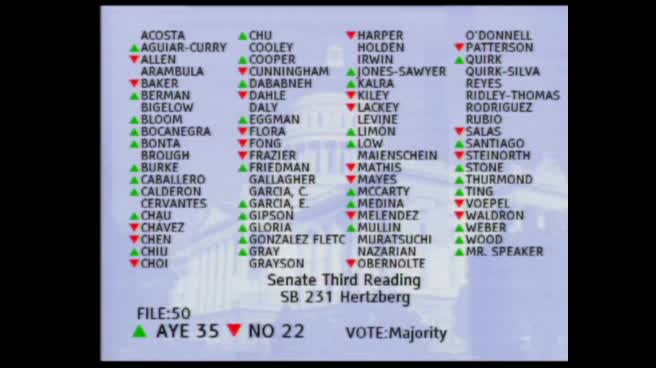 49SEC
Assembly Floor
 5MIN
Assembly Standing Committee on Natural Resources
 9MIN
Assembly Standing Committee on Utilities and Energy
 4MIN
Senate Floor
 15MIN
Senate Standing Committee on Environmental Quality
 28MIN
Senate Standing Committee on Energy, Utilities and Communications
Bill Author

Bill Co-Author(s):