SB 673: Pet Lover’s specialized license plates.
- Session Year: 2017-2018
- House: Senate
- Latest Version Date: 2017-10-14
Existing law establishes a specialized license plate program and requires the Department of Motor Vehicles (DMV) to issue specialized license plates on behalf of a sponsoring state agency that meets certain requirements. Existing law requires that the DMV charge specified additional fees for the issuance, renewal, or transfer of specialized license plates, and requires the DMV to deposit the fees, less the DMVs costs, into the Specialized License Plate Fund. Existing law requires that moneys in the fund be allocated, upon appropriation by the Legislature, to each sponsoring agency in proportion to the amount that is attributable to the agencys specialized license plate program. Existing law requires the sponsoring state agency to use these moneys to fund projects and programs that promote the state agencys official policy, mission, or work.
Existing law requires the DMV to deposit fees for the issuance, renewal, or transfer of the Pet Lovers specialized license plates, less the DMVs costs, into the Pet Lovers Fund in the Specialized License Plate Fund, for the deposit of revenue derived from these specialized license plates. Existing law requires that these funds be allocated, upon appropriation by the Legislature, to the Veterinary Medical Board for disbursement by a nonprofit organization selected by the board to fund grants to providers of no-cost or low-cost animal sterilization services. Existing law requires the board to determine eligibility requirements for the grants, establish the grant application process, and develop program specifics. Existing law authorizes the board to contract with an entity, including a nonprofit organization, to provide advice, consultation, and administrative services for purposes of implementing and administering the grant program. Existing law requires the board to provide oversight for the disbursal of grant funds under the grant program.
This bill would revise and recast those provisions by, among other things, substituting the Department of Food and Agriculture for the Veterinary Medical Board for those purposes. The bill would require the department to allocate the grant funds, as specified, to eligible veterinary facilities, as defined, that offer low-cost or no-cost animal sterilization services. The bill would authorize the department to contract with an eligible nonprofit organization, as defined, to perform marketing and promotional activities. The bill would also require the department to administer and oversee the grant program, and would require the department to collaborate with an eligible nonprofit organization to provide advice and consultation for the purposes of developing and implementing the program.
Existing law establishes a specialized license plate program and requires the Department of Motor Vehicles (DMV) to issue specialized license plates on behalf of a sponsoring state agency that meets certain requirements. Existing law requires that the DMV charge specified additional fees for the issuance, renewal, or transfer of specialized license plates, and requires the DMV to deposit the fees, less the DMVs costs, into the Specialized License Plate Fund. Existing law requires that moneys in the fund be allocated, upon appropriation by the Legislature, to each sponsoring agency in proportion to the amount that is attributable to the agencys specialized license plate program. Existing law requires the sponsoring state agency to use these moneys to fund projects and programs that promote the state agencys official policy, mission, or work.
Existing law requires the DMV to deposit fees for the issuance, renewal, or transfer of the Pet Lovers specialized license plates, less the DMVs costs, into the Pet Lovers Fund in the Specialized License Plate Fund, for the deposit of revenue derived from these specialized license plates. Existing law requires that these funds be allocated, upon appropriation by the Legislature, to the Veterinary Medical Board for disbursement by a nonprofit organization selected by the board to fund grants to providers of no-cost or low-cost animal sterilization services. Existing law requires the board to determine eligibility requirements for the grants, establish the grant application process, and develop program specifics. Existing law authorizes the board to contract with an entity, including a nonprofit organization, to provide advice, consultation, and administrative services for purposes of implementing and administering the grant program. Existing law requires the board to provide oversight for the disbursal of grant funds under the grant program.
This bill would substitute revise and recast those provisions by, among other things, substituting the Department of Food and Agriculture in place of the for the Veterinary Medical Board for those purposes. The bill would authorize rather than require the Department of Food and Agriculture to allocate funds to a nonprofit organization it selects for disbursal to qualifying spay and neuter facilities for the purpose of funding grants to providers of no-cost or low-cost animal sterilization services. The bill would require the department to allocate the grant funds, as specified, to eligible veterinary facilities, as defined, that offer low-cost or no-cost animal sterilization services. The bill would authorize the department to contract with an eligible nonprofit organization, as defined, to perform marketing and promotional activities. The bill would also require the department to administer and oversee the grant program, and would require the department to collaborate with an eligible nonprofit organization to provide advice and consultation for the purposes of developing and implementing the program.
Existing law establishes a specialized license plate program and requires the Department of Motor Vehicles (DMV) to issue specialized license plates on behalf of a sponsoring state agency that meets certain requirements. Existing law requires that the DMV charge specified additional fees for the issuance, renewal, or transfer of specialized license plates, and requires the DMV to deposit the fees, less the DMVs costs, into the Specialized License Plate Fund. Existing law requires that moneys in the fund be allocated, upon appropriation by the Legislature, to each sponsoring agency in proportion to the amount that is attributable to the agencys specialized license plate program. Existing law authorizes requires the sponsoring state agency to use these moneys to fund projects and programs that promote the state agencys official policy, mission, or work. Existing
Existing law requires the DMV to deposit fees for the issuance, renewal, or transfer of the Pet Lovers specialized license plates, less the DMVs costs, into the Pet Lovers Fund in the Specialized License Plate Fund, for the deposit of revenue derived from these specialized license plates. Existing law requires that these funds be allocated, upon appropriation by the Legislature, to the Veterinary Medical Board for disbursement by a nonprofit organization selected by the board to fund grants to providers of no-cost or low-cost animal sterilization services. Existing law requires the board to determine eligibility requirements for the grants, establish the grant application process, and develop program specifics. Existing law authorizes the board to contract with an entity, including a nonprofit organization, to provide advice, consultation, and administrative services for purposes of implementing and administering the grant program. Existing law requires the board to provide oversight for the disbursal of grant funds under the grant program.
This bill would substitute the Department of Food and Agriculture in place of the Veterinary Medical Board for those purposes. The bill would authorize rather than require the department Department of Food and Agriculture to allocate funds to a nonprofit organization it selects for disbursal to qualifying spay and neuter facilities for the purpose of funding grants to providers of no-cost or low-cost animal sterilization services.
Existing law establishes a specialized license plate program and requires the Department of Motor Vehicles (DMV) to issue specialized license plates on behalf of a sponsoring state agency that meets certain requirements. Existing law requires that the DMV charge specified additional fees for the issuance, renewal, or transfer of specialized license plates, and requires the DMV to deposit the fees, less the DMVs costs, into the Specialized License Plate Fund. Existing law requires that moneys in the fund be allocated, upon appropriation by the Legislature, to each sponsoring agency in proportion to the amount that is attributable to the agencys specialized license plate program. Existing law authorizes the sponsoring state agency to use these moneys to fund projects and programs that promote the state agencys official policy, mission, or work. Existing law requires the DMV to deposit fees for the issuance, renewal, or transfer of the Pet Lovers specialized license plates, less the DMVs costs, into the Pet Lovers Fund in the Specialized License Plate Fund, for the deposit of revenue derived from these specialized license plates. Existing law requires that these funds be allocated, upon appropriation by the Legislature, to the Veterinary Medical Board for disbursement by a nonprofit organization selected by the board to fund grants to providers of no-cost or low-cost animal sterilization services. Existing law requires the board to determine eligibility requirements for the grants, establish the grant application process, and develop program specifics. Existing law authorizes the board to contract with an entity, including a nonprofit organization, to provide advice, consultation, and administrative services for purposes of implementing and administering the grant program. Existing law requires the board to provide oversight for the disbursal of grant funds under the grant program.
This bill would substitute the Department of Food and Agriculture in place of the Veterinary Medical Board for those purposes. The bill would authorize rather than require the department to allocate funds to a nonprofit organization it selects for disbursal to qualifying spay and neuter facilities for the purpose of funding grants to providers of no-cost or low-cost animal sterilization services.
The Legislature finds and declares all of the following:
(a)The Pet Lovers specialized license plate, sponsored by the California Spay and Neuter License Plate Fund, Inc., and the Veterinary Medical Board, has been in existence since 2013.
(b)Due to various administrative issues, funds deposited into the Pet Lovers Fund have yet to be expended for the plates original intent to fund providers of no-cost or low-cost animal sterilization services.
(c)The sponsors have pursued several measures to rectify this issue and as such, seek to transfer authority to administer the Pet Lovers specialized license plate program and the Pet Lovers Fund from the Veterinary Medical Board to the Department of Food and Agriculture.
(d)It is therefore the intent of the Legislature that the Department of Food and Agriculture work with the previous administering partners, the Veterinary Medical Board and the California Spay and Neuter License Plate Fund, Inc., to achieve the stated goal of the Pet Lovers specialized license plate program.
SEC. 2.Section 5168 of the Vehicle Code is amended to read:5168.(a)The fees specified in Section 5157 shall be imposed for the issuance, renewal, or transfer of the Pet Lovers specialized license plates. Notwithstanding subdivision (c) of Section 5157, after deducting its administrative costs, the department shall deposit the revenue derived from the additional fees into the Pet Lovers Fund, which is hereby established in the Specialized License Plate Fund.
(b)Upon appropriation by the Legislature, the moneys in the Pet Lovers Fund shall be allocated to the Department of Food and Agriculture. There shall not be an allocation to the Department of Food and Agriculture pursuant to subdivision (c) of Section 5157.
(c)The Department of Food and Agriculture shall allocate those grant funds to eligible veterinary facilities that offer low-cost or no-cost animal sterilization services.
(1)In administering the grants, the Department of Food and Agriculture may prioritize both of the following:
(A)Eligible veterinary facilities located in or serving underserved communities or those that can demonstrate financial need.
(B)Eligible veterinary facilities that have previously provided or currently provide low-cost or no-cost animal sterilization services.
(2)For the purposes of this subdivision, eligible veterinary facilities mean those facilities that are all of the following:
(A)Registered and in good standing with the Veterinary Medical Board, pursuant to Section 4853 of the Business and Professions Code.
(B)Overseen by a responsible licensee manager licensed and in good standing with the Veterinary Medical Board, pursuant to Chapter 11 (commencing with Section 4800) of Division 2 of the Business and Professions Code.
(C)(i)Operated by a city, county, city and county, an animal care or control agency, or a nonprofit meeting the requirements of Section 501(c)(3) of the federal Internal Revenue Code that is registered and in good standing with the Secretary of State.
(ii)A city, county, or city and county animal control agency or nonprofit shelter holding a municipal contract that offers spay and neuter services for dogs and cats owned by individual members of the public is required to be current on its yearly rabies reporting requirements to the State Department of Public Health, Veterinary Public Health Section.
(d)Annual administrative costs for the program shall not exceed 25 percent of the funds collected from the issuance of the Pet Lovers license plates, and may include funds for marketing and other promotional activities associated with encouraging application for, or renewal of, Pet Lovers license plates and collaboration expenses. The Department of Food and Agriculture may contract with an eligible nonprofit organization to perform the marketing and promotional activities authorized.
(1)The eligible nonprofit organization selected by the Department of Food and Agriculture pursuant to this subdivision shall not use more than 5 percent of the moneys received pursuant to this section for administrative costs.
(2)For the purposes of this subdivision, eligible nonprofit organization means a nonprofit entity that is all of the following:
(A)Qualifies for tax exempt status under Section 501(c)(3) of the federal Internal Revenue Code and subdivision (d) of Section 23701 of the Revenue and Taxation Code.
(B)Registered and in good standing with the Secretary of State.
(C)Chaptered and headquartered in this state.
(D)Has demonstrated experience in advertising, marketing, and promoting specialized license plates in existence prior to 2016 pursuant to this article.
(e)The Department of Food and Agriculture shall determine eligibility requirements for the grants, establish the grant application process, and develop program specifics. The Department of Food and Agriculture shall collaborate with an eligible nonprofit organization, as defined in paragraph (2) of subdivision (d), to provide advice and consultation for the purposes of developing and implementing the grant program. The Department of Food and Agriculture shall administer and oversee the grant program.
The Legislature finds and declares all of the following:
(a)The Pet Lovers specialized license plate, sponsored by the California Spay and Neuter License Plate Fund, Inc., and the Veterinary Medical Board, has been in existence since 2013.
(b)Due to various administrative issues, funds deposited into the Pet Lovers Fund have yet to be expended for the plates original intent to fund providers of no-cost or low-cost animal sterilization services.
(c)The sponsors have pursued several measures to rectify this issue and as such, seek to transfer authority to administer the Pet Lovers specialized license plate program and the Pet Lovers Fund from the Veterinary Medical Board to the Department of Food and Agriculture.
(d)It is therefore the intent of the Legislature that the Department of Food and Agriculture work with the previous administering partners, the Veterinary Medical Board and the California Spay and Neuter License Plate Fund, Inc., to achieve the stated goal of the Pet Lovers specialized license plate program.
SEC. 2.Section 5168 of the Vehicle Code is amended to read:5168.(a)The fees specified in Section 5157 shall be imposed for the issuance, renewal, or transfer of the Pet Lovers specialized license plates. Notwithstanding subdivision (c) of Section 5157, after deducting its administrative costs, the department shall deposit the revenue derived from the additional fees into the Pet Lovers Fund, which is hereby established in the Specialized License Plate Fund.
(b)Upon appropriation by the Legislature, the moneys in the Pet Lovers Fund shall be allocated to the Department of Food and Agriculture. There shall not be an allocation to the Department of Food and Agriculture pursuant to subdivision (c) of Section 5157.
(c)The Department of Food and Agriculture shall allocate those grant funds to eligible veterinary facilities that offer low-cost or no-cost animal sterilization services.
(1)In administering the grants, the department Department of Food and Agriculture may prioritize both of the following:
(A)Eligible veterinary facilities located in or serving underserved communities or those that can demonstrate financial need.
(B)Eligible veterinary facilities that have previously provided or currently provide low-cost or no-cost animal sterilization services.
(2)For the purposes of this subdivision, eligible veterinary facilities mean those facilities that are any all of the following:
(A)Registered and in good standing with the Veterinary Medical Board, pursuant to Section 4853 of the Business and Professions Code.
(B)Overseen by a responsible licensee manager licensed and in good standing with the Veterinary Medical Board, pursuant to Chapter 11 (commencing with Section 4800) of Division 2 of the Business and Professions Code.
(C)(i)Operated by a city, county, city and county, an animal care or control agency, or a nonprofit meeting the requirements of Section 501(c)(3) of the federal Internal Revenue Code that is registered and in good standing with the Secretary of State.
(ii)A city, county, or city and county animal control agency or nonprofit shelter holding a municipal contract that offers spay and neuter services for dogs and cats owned by individual members of the public is required to be current on their its yearly rabies reporting requirements to the State Department of Public Health, Veterinary Public Health Section.
(d)Annual administrative costs for the program shall not exceed 25 percent of the funds collected from the issuance of the Pet Lovers license plates, and may include funds for marketing and other promotional activities associated with encouraging application for, or renewal of, Pet Lovers license plates and collaboration expenses. The Department of Food and Agriculture may contract with an eligible nonprofit organization to perform the marketing and promotional activities authorized.
(1)The eligible nonprofit organization selected by the Department of Food and Agriculture pursuant to this subdivision shall not use more than 5 percent of the moneys received pursuant to this section for administrative costs.
(2)For the purposes of this subdivision, eligible nonprofit organization means a nonprofit entity that is all of the following:
(A)Qualifies for tax exempt status under Section 501(c)(3) of the federal Internal Revenue Code and subdivision (d) of Section 23701 of the Revenue and Taxation Code.
(B)Registered and in good standing with the Secretary of State.
(C)Chaptered and headquartered in this state.
(D)Has demonstrated experience in advertising, marketing, and promoting specialized license plates in existence prior to 2016 pursuant to this article.
(e)The Department of Food and Agriculture shall determine eligibility requirements for the grants, establish the grant application process, and develop program specifics. The Department of Food and Agriculture shall collaborate with an eligible nonprofit organization, as defined in paragraph (2) of subdivision (d), to provide advice and consultation for the purposes of developing and implementing the grant program. The Department of Food and Agriculture shall administer and oversee the grant program.
The Legislature finds and declares all of the following:
(a)The Pet Lovers specialized license plate, sponsored by the California Spay and Neuter License Plate Fund, Inc., and the Veterinary Medical Board, has been in existence since 2013.
(b)Due to various administrative issues, funds deposited into the Pet Lovers Fund have yet to be expended for the plates original intent to fund providers of no-cost or low-cost animal sterilization services.
(c)The sponsors have pursued several measures to rectify this issue and as such, seek to transfer authority to administer the Pet Lovers specialized license plate program and the Pet Lovers Fund from the Veterinary Medical Board to the Department of Food and Agriculture.
(d)It is therefore the intent of the Legislature that the Department of Food and Agriculture work with the previous administering partners, the Veterinary Medical Board and the California Spay and Neuter License Plate Fund, Inc., to achieve the stated goal of the Pet Lovers specialized license plate program.
SEC. 2.Section 5168 of the Vehicle Code is amended to read:5168.(a)The fees specified in Section 5157 shall be imposed for the issuance, renewal, or transfer of the Pet Lovers specialized license plates. Notwithstanding subdivision (c) of Section 5157, after deducting its administrative costs, the department shall deposit the revenue derived from the additional fees into the Pet Lovers Fund, which is hereby established in the Specialized License Plate Fund.
(b)Upon appropriation by the Legislature, the moneys in the Pet Lovers Fund shall be allocated to the Department of Food and Agriculture. There shall not be an allocation to the Department of Food and Agriculture pursuant to subdivision (c) of Section 5157.
(c)The Department of Food and Agriculture shall allocate those grant funds to eligible veterinary facilities that offer low-cost or no-cost animal sterilization services.
(1)In administering the grants, the department may prioritize both of the following:
(A)Eligible veterinary facilities located in or serving underserved communities or those that can demonstrate financial need.
(B)Eligible veterinary facilities that have previously provided or currently provide low-cost or no-cost animal sterilization services.
(2)For the purposes of this subdivision, eligible veterinary facilities mean those facilities that are any of the following:
(A)Registered and in good standing with the Veterinary Medical Board, pursuant to Section 4853 of the Business and Professions Code.
(B)Overseen by a responsible licensee manager licensed and in good standing with the Veterinary Medical Board, pursuant to Chapter 11 (commencing with Section 4800) of Division 2 of the Business and Professions Code.
(C)(i)Operated by a city, county, city and county, an animal care or control agency, or a nonprofit meeting the requirements of Section 501(c)(3) of the federal Internal Revenue Code that is registered and in good standing with the Secretary of State.
(ii)A city, county, or city and county animal control agency or nonprofit shelter holding a municipal contract that offers spay and neuter services for dogs and cats owned by individual members of the public is required to be current on their yearly rabies reporting requirements to the State Department of Public Health, Veterinary Public Health Section.
(d)Annual administrative costs for the program shall not exceed 25 percent of the funds collected from the issuance of the Pet Lovers license plates, and may include funds for marketing and other promotional activities associated with encouraging application for for, or renewal of of, Pet Lovers license plates and collaboration expenses. The Department of Food and Agriculture may contract with an eligible nonprofit organization to perform the marketing and promotional activities authorized.
(1)The eligible nonprofit organization selected by the Department of Food and Agriculture pursuant to this subdivision shall not use more than 5 percent of the moneys received pursuant to this section for administrative costs.
(2)For the purposes of this subdivision, eligible nonprofit organization means a nonprofit entity that is all of the following:
(A)Qualifies for tax exempt status under Section 501(c)(3) of the federal Internal Revenue Code and subdivision (d) of Section 23701 of the Revenue and Taxation Code.
(B)Registered and in good standing with the Secretary of State.
(C)Chaptered and headquartered in this state.
(D)Has demonstrated experience advertising, marketing, and promoting specialized license plates in existence prior to 2016 pursuant to Section 5060. this article.
(e)The Department of Food and Agriculture shall determine eligibility requirements for the grants, establish the grant application process, and develop program specifics. The Department of Food and Agriculture shall collaborate with an eligible nonprofit organization, as defined in paragraph (2) of subdivision (d), to provide advice and consultation for the purposes of developing and implementing the grant program. The Department of Food and Agriculture shall administer and oversee the grant program.
The Legislature finds and declares all of the following:
(a)The Pet Lovers specialized license plate, sponsored by the California Spay and Neuter License Plate Fund, Inc., and the Veterinary Medical Board, has been in existence since 2013.
(b)Due to various administrative issues, funds deposited into the Pet Lovers Fund have yet to be expended for the plates original intent to fund providers of no-cost or low-cost animal sterilization services.
(c)The sponsors have pursued several measures to rectify this issue and as such, seek to transfer authority to administer the Pet Lovers specialized license plate program and the Pet Lovers Fund from the Veterinary Medical Board to the Department of Food and Agriculture.
(d)It is therefore the intent of the Legislature that the Department of Food and Agriculture work with the previous administering partners, the Veterinary Medical Board and the California Spay and Neuter License Plate Fund, Inc., to achieve the stated goal of the Pet Lovers specialized license plate program.
SECTION 1.SEC. 2.Section 5168 of the Vehicle Code is amended to read:5168.(a)The fees specified in Section 5157 shall be imposed for the issuance, renewal, or transfer of the Pet Lovers specialized license plates. Notwithstanding subdivision (c) of Section 5157, after deducting its administrative costs, the department shall deposit the revenue derived from the additional fees into the Pet Lovers Fund, which is hereby established in the Specialized License Plate Fund.
(b)Upon appropriation by the Legislature, the moneys in the Pet Lovers Fund shall be allocated to the Department of Food and Agriculture. There shall not be an allocation to the Department of Food and Agriculture pursuant to subdivision (c) of Section 5157. The Department of Food and Agriculture may allocate those funds to a nonprofit organization it selects for disbursal to qualifying spay and neuter facilities for the sole and exclusive purpose of funding grants to providers of no-cost or low-cost animal sterilization services.
(c)The Department of Food and Agriculture shall allocate those grant funds to eligible veterinary facilities that offer low-cost or no-cost animal sterilization services.
(1)In administering grants, the department may prioritize both of the following:
(A)Eligible veterinary facilities located in or serving underserved communities or those that can demonstrate financial need.
(B)Eligible veterinary facilities that have previously provided or currently provide low-cost or no-cost animal sterilization services.
(2)For the purposes of this subdivision, eligible veterinary facilities mean those facilities that are any of the following:
(A)Registered and in good standing with the Veterinary Medical Board, pursuant to Section 4853 of the Business and Professions Code.
(B)Overseen by a responsible licensee manager licensed and in good standing with the Veterinary Medical Board, pursuant to Chapter 11 (commencing with Section 4800) of Division 2 of the Business and Professions Code.
(C)(i)Operated by a city, county, city and county, an animal care or control agency, or a nonprofit meeting the requirements of Section 501(c)(3) of the federal Internal Revenue Code that is registered and in good standing with the Secretary of State.
(ii)A city, county, or city and county animal control agency or nonprofit shelter holding a municipal contract that offers spay and neuter services for dogs and cats owned by individual members of the public is required to be current on their yearly rabies reporting requirements to the State Department of Public Health, Veterinary Public Health Section.
(c)(d)Annual administrative costs for the program shall not exceed 25 percent of the funds collected from the issuance of the Pet Lovers license plates, and may include funds for marketing and other promotional activities associated with encouraging application for or renewal of Pet Lovers license plates. plates and collaboration expenses. The Department of Food and Agriculture may contract with an eligible nonprofit organization to perform the marketing and promotional activities authorized.
(d)(1)The eligible nonprofit organization selected by the Department of Food and Agriculture pursuant to this subdivision shall not use more than 5 percent of the moneys received pursuant to this section for administrative costs.
(2)For the purposes of this subdivision, eligible nonprofit organization means a nonprofit entity that is all of the following:
(A)Qualifies for tax exempt status under Section 501(c)(3) of the federal Internal Revenue Code and subdivision (d) of Section 23701 of the Revenue and Taxation Code.
(B)Registered and in good standing with the Secretary of State.
(C)Chaptered and headquartered in this state.
(D)Has demonstrated experience advertising, marketing, and promoting specialized license plates in existence prior to 2016 pursuant to Section 5060.
(e)The Department of Food and Agriculture shall determine eligibility requirements for the grants, establish the grant application process, and develop program specifics. The Department of Food and Agriculture may contract with an entity, including a nonprofit organization, to provide advice, consultation, and administrative services for purposes of implementing and administering the grant program. The Department of Food and Agriculture shall provide oversight for the disbursal of grant funds under the grant program. The Department of Food and Agriculture shall collaborate with an eligible nonprofit organization, as defined in paragraph (2) of subdivision (d), to provide advice and consultation for the purposes of developing and implementing the grant program. The Department of Food and Agriculture shall administer and oversee the grant program.
(a)The fees specified in Section 5157 shall be imposed for the issuance, renewal, or transfer of the Pet Lovers specialized license plates. Notwithstanding subdivision (c) of Section 5157, after deducting its administrative costs, the department shall deposit the revenue derived from the additional fees into the Pet Lovers Fund, which is hereby established in the Specialized License Plate Fund.
(b)Upon appropriation by the Legislature, the moneys in the Pet Lovers Fund shall be allocated to the Department of Food and Agriculture. There shall not be an allocation to the department Department of Food and Agriculture pursuant to subdivision (c) of Section 5157. The department Department of Food and Agriculture may allocate those funds to a nonprofit organization it selects for disbursal to qualifying spay and neuter facilities for the sole and exclusive purpose of funding grants to providers of no-cost or low-cost animal sterilization services.
(c)Annual administrative costs for the program shall not exceed 25 percent of the funds collected from the issuance of the Pet Lovers license plates, and may include marketing and other promotional activities associated with encouraging application for or renewal of Pet Lovers license plates.
(d)The nonprofit organization selected by the department Department of Food and Agriculture shall not use more than 5 percent of the moneys received pursuant to this section for administrative costs.
(e)The department Department of Food and Agriculture shall determine eligibility requirements for the grants, establish the grant application process, and develop program specifics. The department Department of Food and Agriculture may contract with an entity, including a nonprofit organization, to provide advice, consultation, and administrative services for purposes of implementing and administering the grant program. The department Department of Food and Agriculture shall provide oversight for the disbursal of grant funds under the grant program.
(a)The fees specified in Section 5157 shall be imposed for the issuance, renewal, or transfer of the Pet Lovers specialized license plates. Notwithstanding subdivision (c) of Section 5157, after deducting its administrative costs, the department shall deposit the revenue derived from the additional fees into the Pet Lovers Fund, which is hereby established in the Specialized License Plate Fund.
(b)Upon appropriation by the Legislature, the moneys in the Pet Lovers Fund shall be allocated to the Veterinary Medical Board. Department of Food and Agriculture. There shall not be an allocation to the board department pursuant to subdivision (c) of Section 5157. The board department shall may allocate those funds to a nonprofit organization it selects for disbursal to qualifying spay and neuter facilities for the sole and exclusive purpose of funding grants to providers of no-cost or low-cost animal sterilization services.
(c)Annual administrative costs for the program shall not exceed 25 percent of the funds collected from the issuance of the Pet Lovers license plates, and may include marketing and other promotional activities associated with encouraging application for or renewal of Pet Lovers license plates.
(d)The nonprofit organization selected by the board department shall not use more than 5 percent of the moneys received pursuant to this section for administrative costs.
(e)The board department shall determine eligibility requirements for the grants, establish the grant application process, and develop program specifics. The board department may contract with an entity, including a nonprofit organization, to provide advice, consultation, and administrative services for purposes of implementing and administering the grant program. The board department shall provide oversight for the disbursal of grant funds under the grant program.
|
Date
|
Status
|
|---|---|
| Oct 14, 2017 | Chaptered by Secretary of State. Chapter 813, Statutes of 2017. |
| Oct 14, 2017 | Approved by the Governor. |
| Sep 21, 2017 | Enrolled and presented to the Governor at 5:30 p.m. |
| Sep 14, 2017 | Assembly amendments concurred in. (Ayes 39. Noes 0.) Ordered to engrossing and enrolling. |
| Sep 12, 2017 | Ordered to special consent calendar. |
| Sep 11, 2017 | In Senate. Concurrence in Assembly amendments pending. |
| Sep 11, 2017 | Read third time. Passed. Ordered to the Senate. |
| Sep 7, 2017 | Read third time and amended. |
| Sep 1, 2017 | From consent calendar on motion of Assembly Member Calderon. |
| Aug 31, 2017 | Read second time. Ordered to consent calendar. |
| Aug 30, 2017 | From committee: Do pass. Ordered to consent calendar. (Ayes 15. Noes 0.) (August 30). |
| Aug 24, 2017 | From committee with author's amendments. Read second time and amended. Re-referred to Com. on APPR. |
| Aug 23, 2017 | August 23 hearing postponed by committee. |
| Aug 21, 2017 | From committee with author's amendments. Read second time and amended. Re-referred to Com. on APPR. |
| Jul 11, 2017 | From committee: Do pass and re-refer to Com. on APPR. (Ayes 14. Noes 0.) (July 10). Re-referred to Com. on APPR. |
| Jun 26, 2017 | June 26 set for first hearing canceled at the request of author. |
| Jun 21, 2017 | June 26 set for first hearing canceled at the request of author. |
| Jun 12, 2017 | Referred to Com. on TRANS. |
| May 31, 2017 | In Assembly. Read first time. Held at Desk. |
| May 30, 2017 | Read third time. Passed. (Ayes 40. Noes 0. Page 1257.) Ordered to the Assembly. |
| May 22, 2017 | Read second time and amended. Ordered to third reading. |
| May 18, 2017 | From committee: Do pass as amended. (Ayes 7. Noes 0. Page 1081.) (May 15). |
| May 4, 2017 | Set for hearing May 15. |
| May 3, 2017 | May 8 hearing postponed by committee. |
| May 1, 2017 | Set for hearing May 8. |
| Apr 26, 2017 | From committee: Do pass and re-refer to Com. on APPR. with recommendation: To consent calendar. (Ayes 13. Noes 0. Page 858.) (April 25). Re-referred to Com. on APPR. |
| Apr 7, 2017 | Set for hearing April 25. |
| Apr 6, 2017 | April 18 set for first hearing canceled at the request of author. |
| Apr 4, 2017 | Set for hearing April 18. |
| Mar 9, 2017 | Referred to Com. on T. & H. |
| Feb 21, 2017 | From printer. May be acted upon on or after March 23. |
| Feb 17, 2017 | Introduced. Read first time. To Com. on RLS. for assignment. To print. |
|
Date
|
Description
|
Location
|
Votes
|
|
|---|---|---|---|---|
| Sep 14, 2017 | Special Consent Calendar SB673 | Senate Floor |
Passed |
|
| Sep 11, 2017 | SB 673 Newman Senate Third Reading By O'DONNELL | Assembly Floor |
Passed |
|
| Aug 30, 2017 | Do pass. To Consent Calendar. | Assembly Standing Committee on Appropriations |
Passed |
|
| Jul 10, 2017 | Do pass and be re-referred to the Committee on [Appropriations] | Assembly Standing Committee on Transportation |
Passed |
|
| May 30, 2017 | Senate 3rd Reading SB673 Newman | Senate Floor |
Passed |
|
| May 15, 2017 | Do pass as amended | Senate Standing Committee on Appropriations |
Passed |
|
| Apr 25, 2017 | Do pass as amended, but first amend, and re-refer to the Committee on [Appropriations] with the recommendation: To Consent Calendar | Senate Standing Committee on Transportation and Housing |
Passed |
|
| Apr 25, 2017 | Do pass, but first be re-referred to the Committee on [Appropriations] with the recommendation: To Consent Calendar | Senate Standing Committee on Transportation and Housing |
Passed |
This list shows positions taken on this bill by organizations on the date displayed, which is linked to the original source.
Positions by individuals are not included.
|
Organization
|
Position
|
Date
|
|---|---|---|
| California Humane Association | * Support | May 15, 2017 |
| puppyspot | ** Support | Jul 7, 2017 |
| Social Compassion In Legislation | ** Support | Sep 11, 2017 |
| state human association of california | ** Support | Jul 7, 2017 |
Office of Senate Floor Analyses (916) 651-1520 Fax: (916) 327-4478 | SB |
UNFINISHED BUSINESS
Bill No: SB 673
:
SENATE TRANS. & HOUSING COMMITTEE: 13-0, 4/25/17
AYES: Beall, Cannella, Allen, Atkins, Bates, Gaines, McGuire, Mendoza, Morrell, Roth, Skinner, Wieckowski, Wiener
SENATE APPROPRIATIONS COMMITTEE: 7-0, 5/15/17
AYES: Lara, Bates, Beall, Bradford, Hill, Nielsen, Wiener
SENATE FLOOR: 40-0, 5/30/17
AYES: Allen, Anderson, Atkins, Bates, Beall, Berryhill, Bradford, Cannella, De León, Dodd, Fuller, Gaines, Galgiani, Glazer, Hernandez, Hertzberg, Hill, Hueso, Jackson, Lara, Leyva, McGuire, Mendoza, Mitchell, Monning, Moorlach, Morrell, Newman, Nguyen, Nielsen, Pan, Portantino, Roth, Skinner, Stern, Stone, Vidak, Wieckowski, Wiener, Wilk
ASSEMBLY FLOOR: 77-0, 9/11/17 - See last page for vote
DIGEST:
This bill allocates the revenue raised from the sale of the Pet Lover’s license plate to the Department of Food and Agriculture (CDFA) upon appropriation. CDFA shall establish a grant program to eligible veterinary facilities that offer low-cost or no-cost animal sterilization services.
Assembly Amendments
add specificity to the grant program and authorize a marketing program for encouraging more participation in the Pet Lover’s license plate program.
Existing law:
- Provides for a specialized license plate program, under which the Department of Motor Vehicles (DMV) may issue new special-interest license plates. A minimum of 7,500 applications and accompanying fees are required before the DMV will issue the plate.
- Allocates the revenue from the Pet Lover’s license plate to the Veterinary Medical Board (VMB) for a grant program to qualifying spay and neuter facilities.
This bill:
- Replaces the VMB with CDFA.
- Authorizes the grant program to prioritize veterinary facilities located in underserved communities or that have previously provided low- or no-cost sterilization services.
- Authorizes a marketing program to promote application and renewal of Pet Lover’s license plates, at a cost not to exceed 25% of the funds collected from that license plate program, and allows CDFA to contract with an eligible nonprofit organization with specified qualifications to perform the marketing.
Comments
- Purpose. According to the author, the over $800,000 in revenues raised from the sale of the Pet Lover’s license plate has not been spent on its intended purpose, which is to provide no- or low-cost animal sterilization services. This bill authorizes CDFA to administer the program and to delegate their disbursal authority through a non-profit organization to qualified spay and neuter facilities.
- Third time’s the charm? The initial attempts to use the VMB to disburse the Pet Lover’s funding were first thwarted by concerns over the VMBs authority to utilize qualified non-profits to help disburse the funds. Legislation was passed in 2015 to clarify that VMB had that authority. In its January 2016 board meeting the VMB attempted to select a qualified non-profit but was advised that the nonprofit would need to be chosen through a competitive bid process. At its April 2016 board meeting, some members of the VMB noted potential conflict of interest issues had been raised regarding VMBs selection of the non-profit. The VMB directed its Executive Officer to seek to transfer the Pet Lover’s license plate program to CDFA, which this bill does.
- Finding a good home. CDFA may well be the most appropriate state agency to administer these funds as it currently runs a similar program. The Prevention of Animal Homelessness and Cruelty Fund is a tax check-off created in 2015 which is administered by CDFA to support spay and neuter activities.
FISCAL EFFECT: Appropriation: Fiscal Com.: Local:
According to the Assembly Appropriations Committee:
- Costs to CDFA of $70,000 (special funds supported by fees paid by specialized license plate applicants) for a 50 percent time staff person to administer the program.
- Potential costs to CDFA of $55,000 (special funds supported by fees paid by specialized license plate applicants) for discretionary marketing and promotional activities, depending on the availability of funds.
- Savings to VBM of $150,000 annually (special funds supported by fees paid by specialized license plate applicants) from funds appropriated for the administration of the Pet Lover’s license plate program. Of this amount, $42,000 is allocated to DMV for advertising the license plate program.
Social Compassion in Legislation
OPPOSITION: (Verified 9/11/17)
ASSEMBLY FLOOR: 77-0, 9/11/17 AYES: Acosta, Aguiar-Curry, Travis Allen, Arambula, Baker, Berman, Bigelow, Bloom, Bocanegra, Bonta, Burke, Caballero, Calderon, Cervantes, Chau, Chávez, Chen, Chiu, Choi, Chu, Cooley, Cooper, Cunningham, Dababneh, Dahle, Daly, Eggman, Flora, Fong, Frazier, Friedman, Gallagher, Cristina Garcia, Eduardo Garcia, Gipson, Gonzalez Fletcher, Gray, Grayson, Harper, Holden, Irwin, Jones-Sawyer, Kalra, Kiley, Lackey, Levine, Limón, Low, Maienschein, Mathis, Mayes, McCarty, Medina, Melendez, Mullin, Muratsuchi, Nazarian, Obernolte, O'Donnell, Patterson, Quirk, Quirk-Silva, Reyes, Ridley-Thomas, Rodriguez, Rubio, Salas, Santiago, Steinorth, Mark Stone, Thurmond, Ting, Voepel, Waldron, Weber, Wood, Rendon NO VOTE RECORDED: Brough, Gloria
9/11/17 20:28:46
**** END ****
SENATE THIRD READING
STR Bill Id:SB 673
Author:(Newman)
As Amended Ver:September 7 2017
Majority vote
SENATE VOTE: 40-0
Committee | Votes | Ayes | Noes |
Transportation | 14-0 | Frazier, Fong, Aguiar-Curry, Baker, Berman, Bocanegra, Chu, Daly, Friedman, Harper, Mathis, Medina, Nazarian, O'Donnell |
|
Appropriations | 15-0 | Gonzalez Fletcher, Bigelow, Bloom, Bocanegra, Bonta, Calderon, Chau, Eggman, Fong, Friedman, Gallagher, Gray, Jones-Sawyer, Obernolte, Reyes |
|
SUMMARY: Transfers administration of the Pet Lover's specialized license plate program from the Veterinary Medical Board (VMB) to the California Department of Food and Agriculture (CDFA). Specifically, this bill:
- States findings and declarations detailing the history of the license plate and the reasons for the bill.
- Transfers administration of the license plate from VMB to CDFA.
- Requires CDFA to allocate funds generated by the specialized license plate program to eligible veterinary facilities, as defined, that offer low-cost or no-cost animal sterilization services.
- Authorizes the California Food and Drug Administration (CFDA), in allocating funds, to prioritize eligible facilities located in or serving underserved communities; and facilities that have previously or currently provide low-cost or no-cost animal sterilization services.
- Authorizes CDFA to contract with a non-profit organization, as defined, to perform marketing and promotional activities.
- Requires CDFA to collaborate with a non-profit, as defined, to provide advice and consultation for the development and implementation of the program.
FISCAL EFFECT: According to the Assembly Appropriations Committee:
- Costs to CDFA of $70,000 (special funds supported by fees paid by specialized license plate applicants) for a 50% time staff person to administer the program.
- Potential costs to CDFA of $55,000 (special funds supported by fees paid by specialized license plate applicants) for discretionary marketing and promotional activities, depending on the availability of funds.
- Savings to VMB of $150,000 annually (special funds supported by fees paid by specialized license plate applicants) from funds appropriated for the administration of the Pet Lover's license plate program. Of this amount, $42,000 is allocated to the Department of Motor Vehicles (DMV) for advertising the license plate program.
COMMENTS: Prior to 2007, any new specialty license plate required specific legislative authorization. That practice was held to be unconstitutional by the federal courts, as the Legislature approved some plates and rejected others, without using any standardized or objective criteria for those decisions. In response to the court decision, AB 84 (Leslie), Chapter 454, Statutes of 2006, established the current specialized license plate program to provide a forum for government speech that promotes California's state policies. AB 84 excluded private organizations from seeking specialized license plates as a forum for private speech, and thus addressed the court's objection. The current specialized license plate program permits a state agency to initiate the development and sponsorship of a specialized plate, thus no additional legislation is required to authorize the creation of a new plate.
Plates created under the current program and the revenue they generate must publicize or promote a state agency, or the official policy, mission, or work of a state agency. Furthermore, the process requires that at least 7,500 paid applications must be received by the state agency prior to notifying DMV. This 7,500-application threshold was previously put into statute in an attempt to ensure that DMV's startup costs would be fully covered by the portion of the registration fee surcharge that is directed to DMV and to avoid a proliferation of different types of plates, which can be troublesome from a law enforcement perspective.
Under the authority granted by AB 84, VMB administratively sponsored the Pet Lover's specialized license plate program, with the plate going into production in 2013 and the revenue generated by the program used to fund low- and no-cost animal sterilization services. Because VMB lacked sufficient staff to administer the plate program itself, it sought assistance from a non-profit organization to provide general administrative support, such as marketing the plate, providing recommendations for grant criteria, and accepting and reviewing grant applications. In 2015, the Governor signed AB 192 (Allen), Chapter 497, Statutes of 2015, which established an expenditure framework for the Pet Lover's specialized license plate program and required VMB to contract with a non-profit for those administrative processes.
According to DMV, there are currently 7,630 registered Pet Lover's license plates, and approximately $986,000 has been deposited into the Pet Lover's Fund from the revenues generated by the plate since 2013. To date, no money has been allocated for grants related to animal sterilization purposes. When attempting to contract with a non-profit organization to administer the grant program pursuant to AB 192, VMB was advised of the potential for conflicts of interest arising from board members potentially benefiting from the grant funds as providers of animal sterilization services. VMB then directed its staff to seek to transfer administration of the Pet Lover's specialized license plate program to CDFA. This bill would require that transfer. CDFA currently sponsors its own California Agriculture specialized license plate program, and also administers a grant program for funding services including animal shelters and animal sterilization using revenue generated by a voluntary tax deduction. Due to the similar nature of the grant recipients under both programs, it is likely CDFA would be able to appropriately administer the Pet Lover's grants as well, although this bill also authorizes the department to allocate the funds to a non-profit for the purpose of marketing and promotional activities, and requires CDFA to collaborate with a non-profit to provide advice and consultation on development and implementation of the program.
According to the author, this bill "will allow funds to be distributed in accordance with their intended purpose of supplementing low-cost spay and neuter programs throughout the state, and with proper oversight, thereby reducing the number of strays on our streets and animals euthanized in our shelters."
Committee concerns: This bill authorizes the California Food and Drug Administration (CFDA) to contract with a non-profit for marketing and promotional activities, and requires CDFA to collaborate with a non-profit for advice and consultation in developing and implementing the program. Current law allows up to 25% of the funds collected to be used for administration costs as well as marketing and promotion activities. The bill adds collaboration activities. Additionally, the selected non-profit may use up to 5% of the funds for administrative costs. It is unclear why a non-profit "middleman" would still be necessary with administrative responsibility of the license plate program transferred to CDFA. Arguments in favor of requiring VMB to contract with a non-profit to provide administrative support under AB 192 were premised on the fact that VMB lacked the staff resources to implement a grant program. While it may have been necessary to augment VMB's ability to establish grant parameters and oversee the grant program, according to the author, CDFA already has an existing framework in place to administer and distribute competitive grants. Because this bill preserves the authorization for a selected non-profit to use 5% of the grant moneys for administrative costs, and allows CDFA to contract with a non-profit for the marketing and promotional activities, this could result in up to 25-30% of the nearly $1 million generated by the Pet Lover's license plate going to non-profit costs and marketing activities, instead of to funding no- or low-cost animal sterilization services.
Please see the policy committee analysis for full discussion of this bill.
Analysis Prepared by: Justin Behrens & Melissa White / TRANS. / (916) 319-2093 FN: 0001950
SENATE THIRD READING
STR Bill Id:SB 673
Author:(Newman)
As Amended Ver:August 24, 2017
Majority vote
SENATE VOTE: 40-0
Committee | Votes | Ayes | Noes |
Transportation | 14-0 | Frazier, Fong, Aguiar-Curry, Baker, Berman, Bocanegra, Chu, Daly, Friedman, Harper, Mathis, Medina, Nazarian, O'Donnell | |
Appropriations | 15-0 | Gonzalez Fletcher, Bigelow, Bloom, Bocanegra, Bonta, Calderon, Chau, Eggman, Fong, Friedman, Gallagher, Gray, Jones-Sawyer, Obernolte, Reyes |
|
SUMMARY: Transfers administration of the Pet Lover's specialized license plate program from the Veterinary Medical Board (VMB) to the California Department of Food and Agriculture (CDFA). Specifically, this bill:
- States findings and declarations detailing the history of the license plate and the reasons for the bill.
- Transfers administration of the license plate from VMB to CDFA.
- Requires CDFA to allocate funds generated by the specialized license plate program to eligible veterinary facilities, as defined, that offer low-cost or no-cost animal sterilization services.
- Authorizes the California Food and Drug Administration (CFDA), in allocating funds, to prioritize eligible facilities located in or serving underserved communities; and facilities that have previously or currently provide low-cost or no-cost animal sterilization services.
- Authorizes CDFA to contract with a non-profit organization, as defined, to perform marketing and promotional activities.
- Requires CDFA to collaborate with a non-profit, as defined, to provide advice and consultation for the development and implementation of the program.
FISCAL EFFECT: According to the Assembly Appropriations Committee:
- Costs to CDFA of $70,000 (special funds supported by fees paid by specialized license plate applicants) for a 50% time staff person to administer the program.
- Potential costs to CDFA of $55,000 (special funds supported by fees paid by specialized license plate applicants) for discretionary marketing and promotional activities, depending on the availability of funds.
- Savings to VBM of $150,000 annually (special funds supported by fees paid by specialized license plate applicants) from funds appropriated for the administration of the Pet Lover's license plate program. Of this amount, $42,000 is allocated to the Department of Motor Vehicles (DMV) for advertising the license plate program.
COMMENTS: Prior to 2007, any new specialty license plate required specific legislative authorization. That practice was held to be unconstitutional by the federal courts, as the Legislature approved some plates and rejected others, without using any standardized or objective criteria for those decisions. In response to the court decision, AB 84 (Leslie), Chapter 454, Statutes of 2006, established the current specialized license plate program to provide a forum for government speech that promotes California's state policies. AB 84 excluded private organizations from seeking specialized license plates as a forum for private speech, and thus addressed the court's objection. The current specialized license plate program permits a state agency to initiate the development and sponsorship of a specialized plate, thus no additional legislation is required to authorize the creation of a new plate.
Plates created under the current program and the revenue they generate must publicize or promote a state agency, or the official policy, mission, or work of a state agency. Furthermore, the process requires that at least 7,500 paid applications must be received by the state agency prior to notifying DMV. This 7,500-application threshold was previously put into statute in an attempt to ensure that DMV's startup costs would be fully covered by the portion of the registration fee surcharge that is directed to DMV and to avoid a proliferation of different types of plates, which can be troublesome from a law enforcement perspective.
Under the authority granted by AB 84, VMB administratively sponsored the Pet Lover's specialized license plate program, with the plate going into production in 2013 and the revenue generated by the program used to fund low- and no-cost animal sterilization services. Because VMB lacked sufficient staff to administer the plate program itself, it sought assistance from a non-profit organization to provide general administrative support, such as marketing the plate, providing recommendations for grant criteria, and accepting and reviewing grant applications. In 2015, the Governor signed AB 192 (Allen), Chapter 497, Statutes of 2015, which established an expenditure framework for the Pet Lover's specialized license plate program and required VMB to contract with a non-profit for those administrative processes.
According to DMV, there are currently 7,630 registered Pet Lover's license plates, and approximately $986,000 has been deposited into the Pet Lover's Fund from the revenues generated by the plate since 2013. To date, no money has been allocated for grants related to animal sterilization purposes. When attempting to contract with a non-profit organization to administer the grant program pursuant to AB 192, VMB was advised of the potential for conflicts of interest arising from board members potentially benefiting from the grant funds as providers of animal sterilization services. VMB then directed its staff to seek to transfer administration of the Pet Lover's specialized license plate program to CDFA. This bill would require that transfer. CDFA currently sponsors its own California Agriculture specialized license plate program, and also administers a grant program for funding services including animal shelters and animal sterilization using revenue generated by a voluntary tax deduction. Due to the similar nature of the grant recipients under both programs, it is likely CDFA would be able to appropriately administer the Pet Lover's grants as well, although this bill also authorizes the department to allocate the funds to a non-profit for the purpose of marketing and promotional activities, and requires CDFA to collaborate with a non-profit to provide advice and consultation on development and implementation of the program.
According to the author, this bill "will allow funds to be distributed in accordance with their intended purpose of supplementing low-cost spay and neuter programs throughout the state, and with proper oversight, thereby reducing the number of strays on our streets and animals euthanized in our shelters."
Committee concerns: This bill authorizes the California Food and Drug Administration (CFDA) to contract with a non-profit for marketing and promotional activities, and requires CDFA to collaborate with a non-profit for advice and consultation in developing and implementing the program. Current law allows up to 25% of the funds collected to be used for administration costs as well as marketing and promotion activities. The bill adds collaboration activities. Additionally, the selected non-profit may use up to 5% of the funds for administrative costs. It is unclear why a non-profit "middleman" would still be necessary with administrative responsibility of the license plate program transferred to CDFA. Arguments in favor of requiring VMB to contract with a non-profit to provide administrative support under AB 192 were premised on the fact that VMB lacked the staff resources to implement a grant program. While it may have been necessary to augment VMB's ability to establish grant parameters and oversee the grant program, according to the author, CDFA already has an existing framework in place to administer and distribute competitive grants. Because this bill preserves the authorization for a selected non-profit to use 5% of the grant moneys for administrative costs, and allows CDFA to contract with a non-profit for the marketing and promotional activities, this could result in up to 25-30% of the nearly $1 million generated by the Pet Lover's license plate going to non-profit costs and marketing activities, instead of to funding no- or low-cost animal sterilization services.
Please see the policy committee analysis for full discussion of this bill.
Analysis Prepared by: Justin Behrens & Melissa White / TRANS. / (916) 319-2093 FN: 0001625
Date of Hearing: August 30, 2017
ASSEMBLY COMMITTEE ON APPROPRIATIONS
Lorena Gonzalez Fletcher, Chair
SBPCA Bill Id:SB 673
Author:(Newman) – As Amended Ver:August 24, 2017
Policy Committee: | Transportation | Vote: | 14 - 0 |
|
| ||
|
|
Urgency: No State Mandated Local Program: No Reimbursable: No
SUMMARY:
This bill transfers administration of the Pet Lover’s specialized license plate program from the Veterinary Medical Board (VMB) to the California Department of Food and Agriculture (CDFA), and authorizes CDFA to allocate funds generated by the specialized license plate program to a non-profit organization to administer the grant program funded by license plate revenues.
FISCAL EFFECT:
- Costs to CDFA of $70,000 (special funds supported by fees paid by specialized license plate applicants) for a fifty percent time staff person to administer the program.
- Potential costs to CDFA of $55,000 (special funds supported by fees paid by specialized license plate applicants) for discretionary marketing and promotional activities, depending on the availability of funds.
- Savings to VBM of $150,000 annually (special funds supported by fees paid by specialized license plate applicants) from funds appropriated for the administration of the Pet Lover’s license plate program. Of this amount, $42,000 is allocated to the Department of Motor Vehicles (DMV) for advertising the license plate program.
COMMENTS:
- Background. Under the authority granted by AB 84 (Leslie), Chapter 454, Statutes of 2006, VMB administratively sponsored the Pet Lover’s specialized license plate program, with the plate going into production in 2013 and the revenue generated by the program used to fund low- and no-cost animal sterilization services. Because VMB lacked sufficient staff to administer the plate program itself, it sought assistance from a non-profit organization to provide general administrative support, such as marketing the plate, providing recommendations for grant criteria, and accepting and reviewing grant applications. In 2015, the Governor signed AB 192 (Allen), Chapter 497, Statutes of 2015, which established an expenditure framework for the Pet Lover’s specialized license plate program and required VMB to contract with a non-profit organization for those administrative processes.
- Purpose. According to DMV, there are currently 7,630 registered Pet Lover’s license plates, and approximately $986,000 has been deposited into the Pet Lover’s Fund from the revenues generated by the plate since 2013. However, to date, no money has been allocated for grants related to animal sterilization purposes. This is because when attempting to contract with a non-profit organization to administer the grant program pursuant to AB 192, VMB was advised of the potential for conflicts of interest arising from board members potentially benefiting from the grant funds as providers of animal sterilization services. As a result, VMB directed its staff to seek to transfer administration of the Pet Lover’s specialized license plate program to CDFA. This bill provides for that transfer.
- Related Legislation. SB 309 (Jackson), currently on this committee’s Suspense File, requires the Department of Health Care Services to sponsor a reproductive freedom license plate program.
Analysis Prepared by: Jessica Peters / APPR. / (916) 319-2081
Date of Hearing: July 10, 2017
ASSEMBLY COMMITTEE ON TRANSPORTATION
Jim Frazier, Chair
SBPCA Bill Id:SB 673
Author:(Newman) – As Amended Ver:May 22, 2017
SENATE VOTE: 40-0
SUBJECT: Pet Lover’s specialized license plates
SUMMARY: Transfers administration of the Pet Lover’s specialized license plate program from the Veterinary Medical Board (VMB) to the California Department of Food and Agriculture (CDFA), and authorizes, instead of requires, CDFA to allocate funds generated by the specialized license plate program to a non-profit organization to administer the grant program funded by license plate revenues.
EXISTING LAW:
- Allows any state agency to apply to the Department of Motor Vehicles (DMV) to sponsor a specialized license plate program.
- Requires DMV to issue specialized license plates for that program if the agency complies with all statutory requirements.
- Requires funds accruing to a sponsoring state agency from the sale of specialized license plates to be expended exclusively for projects and programs that promote that agency's official policy, mission, or work.
- Prohibits a state agency that receives funds from the additional fees collected from the sale of specialized plates from expending more than 25% of those funds on administrative costs, marketing, or other promotional activities annually.
- Requires existing fees for specialized license plates to be imposed for the issuance, renewal, or transfer of the Pet Lover’s specialized license plates, and provides that revenue derived from those fees be deposited into the Pet Lover’s Fund, after DMV deducts its administrative costs.
- Requires moneys in the Pet Lover’s Fund to be allocated to the Veterinary Medical Board (VMB), upon appropriation by the Legislature, and requires VMB to allocate those funds to a non-profit organization it selects to fund grants for no-cost or low-cost animal sterilization services.
- Prohibits the non-profit organization selected by VMB from using more than 5% of the moneys generated by the specialized license plate for administrative costs.
- Requires VMB to determine eligibility requirements for the grants, establish the grant application process, and develop program specifics.
- Authorizes VMB to contract with an entity, including a non-profit organization, to provide advice, consultation, and administrative services for purposes of implementing and administering the grant program.
- Requires VMB to provide oversight for the disbursal of grant funds under the grant program.
- Creates a voluntary deduction on an individual’s tax return for the Prevention of Animal Homelessness and Cruelty Fund, with moneys transferred to that fund to be allocated to CDFA for purposes including grants for qualifying animal control agencies or shelters to support spay and neuter services by those entities to prevent and eliminate cat and dog homelessness, as specified.
FISCAL EFFECT: Unknown
COMMENTS: Prior to 2007, any new specialty license plate required specific legislative authorization. That practice was held to be unconstitutional by the federal courts, as the Legislature approved some plates and rejected others, without using any standardized or objective criteria for those decisions. In response to the court decision, AB 84 (Leslie), Chapter 454, Statutes of 2006, established the current specialized license plate program to provide a forum for government speech that promotes California's state policies. AB 84 excluded private organizations from seeking specialized license plates as a forum for private speech, and thus addressed the court's objection. The current specialized license plate program permits a state agency to initiate the development and sponsorship of a specialized plate, thus no additional legislation is required to authorize the creation of a new plate.
Plates created under the current program and the revenue they generate must publicize or promote a state agency, or the official policy, mission, or work of a state agency. Furthermore, the process requires that at least 7,500 paid applications must be received by the state agency prior to notifying DMV. This 7,500-application threshold was previously put into statute in an attempt to ensure that DMV's startup costs would be fully covered by the portion of the registration fee surcharge that is directed to DMV and to avoid a proliferation of different types of plates, which can be troublesome from a law enforcement perspective.
Under the authority granted by AB 84, VMB administratively sponsored the Pet Lover’s specialized license plate program, with the plate going into production in 2013 and the revenue generated by the program used to fund low- and no-cost animal sterilization services. Because VMB lacked sufficient staff to administer the plate program itself, it sought assistance from a non-profit organization to provide general administrative support, such as marketing the plate, providing recommendations for grant criteria, and accepting and reviewing grant applications. In 2015, the Governor signed AB 192 (Allen), Chapter 497, Statutes of 2015, which established an expenditure framework for the Pet Lover’s specialized license plate program and required VMB to contract with a non-profit for those administrative processes.
According to DMV, there are currently 7,630 registered Pet Lover’s license plates, and approximately $986,000 has been deposited into the Pet Lover’s Fund from the revenues generated by the plate since 2013. To date, no money has been allocated for grants related to animal sterilization purposes. When attempting to contract with a non-profit organization to administer the grant program pursuant to AB 192, VMB was advised of the potential for conflicts of interest arising from board members potentially benefiting from the grant funds as providers of animal sterilization services. VMB then directed its staff to seek to transfer administration of the Pet Lover’s specialized license plate program to CDFA. This bill would require that transfer. CDFA currently sponsors its own California Agriculture specialized license plate program, and also administers a grant program for funding services including animal shelters and animal sterilization using revenue generated by a voluntary tax deduction. Due to the similar nature of the grant recipients under both programs, it is likely CDFA would be able to appropriately administer the Pet Lover’s grants as well, although this bill also authorizes the department to allocate the funds to a non-profit for the purpose of disbursing grants, which was previously required of VMB under AB 192.
According to the author, this bill “will allow funds to be distributed in accordance with their intended purpose of supplementing low-cost spay and neuter programs throughout the state, and with proper oversight, thereby reducing the number of strays on our streets and animals euthanized in our shelters.”
Committee concerns: This bill retains the option of allocating funds generated by the Pet Lover’s license plate to a non-profit, although that non-profit would be selected by CDFA under this bill, instead of by VMB as under existing law. It is unclear why a non-profit “middleman” would still be necessary with administrative responsibility of the license plate program transferred to CDFA. Arguments in favor of requiring VMB to contract with a non-profit to provide administrative support under AB 192 were premised on the fact that VMB lacked the staff resources to implement a grant program. While it may have been necessary to augment VMB’s ability to establish grant parameters and oversee the grant program, according to the author, CDFA already has an existing framework in place to administer and distribute competitive grants. Because this bill preserves the authorization for a selected non-profit to use 5% of the grant moneys for administrative costs, allowing CDFA to contract with a non-profit could result in up to 5% of the nearly $1 million generated by the Pet Lover’s license plate (almost $50,000) going to non-profit costs, instead of to funding no- or low-cost animal sterilization services.
Related legislation: AB 1251 (Allen) would require the State Coastal Conservancy to apply to DMV to sponsor an Endless Summer specialized license program to raise money for a coastal conservancy awareness program. AB 1251 was set to be heard by this committee but the hearing was cancelled at the request of the author.
SB 309 (Jackson) would require the State Department of Health Care Services to apply to DMV to sponsor a reproductive freedom license plate program. SB 309 passed out of this committee on June 26, 2017, with an 11-3 vote.
Previous legislation: AB 192 (Allen), Chapter 497, Statutes of 2015, established requirements for of the expenditure of funds generated by the Pet Lover’s specialized license plate program by VMB.
AB 485 (Williams), Chapter 557, Statutes of 2015, authorized the addition of the Prevention of Animal Homelessness and Cruelty Fund checkoff to the personal income tax return with revenues funding specified animal homelessness prevention grants administered by CDFA.
SB 1323 (Lieu), Chapter 375, Statutes of 2014, made a one-time appropriation of all funds generated by the Pet Lover’s specialized license plate program to VMB for the purpose of funding grants to providers of no-cost or low-cost animal sterilization services.
REGISTERED SUPPORT / OPPOSITION:
Support
PuppySpot
Social Compassion in Legislation
State Human Association of California
Opposition
None on file
Analysis Prepared by: Justin Behrens / TRANS. / (916) 319-2093
Office of Senate Floor Analyses (916) 651-1520 Fax: (916) 327-4478 | SB |
THIRD READING
Bill No: SB 673
Amended:
SENATE TRANS. & HOUSING COMMITTEE: 13-0, 4/25/17
AYES: Beall, Cannella, Allen, Atkins, Bates, Gaines, McGuire, Mendoza, Morrell, Roth, Skinner, Wieckowski, Wiener
SENATE APPROPRIATIONS COMMITTEE: 7-0, 5/15/17
AYES: Lara, Bates, Beall, Bradford, Hill, Nielsen, Wiener
DIGEST:
This bill allocates the revenue raised from the sale of the Pet Lover’s license plate to the Department of Food and Agriculture (CDFA). CDFA is authorized to allocate those funds to a nonprofit organization for disbursal to qualifying spay and neuter facilities for the purpose of funding grants to providers of no- and low-cost animal sterilization purposes.
Existing law:
- Provides for a specialized license plate program, under which the Department of Motor Vehicles (DMV) may issue new special-interest license plates. A minimum of 7,500 applications and accompanying fees are required before the DMV will issue the plate.
- Allocates the revenue from the Pet Lover’s license plate to the Veterinary Medical Board (VMB) for disbursal to qualifying spay and neuter facilities.
This bill replaces the VMB with CDFA.
Comments
- Purpose. According to the author, the over $800,000 in revenues raised from the sale of the Pet Lover’s License Plate has not been spent on its intended purpose, which is to provide no- or low-cost animal sterilization services. This bill authorizes CDFA to administer the program and to delegate their disbursal authority through a non-profit organization to qualified spay and neuter facilities.
- Third time’s the charm? The initial attempts to use the VMB to disburse the Pet Lover’s funding were first thwarted by concerns over the VMBs authority to utilize qualified non-profits to help disburse the funds. Legislation was passed in 2015 to clarify that VMB had that authority. In its January 2016 board meeting the VMB attempted to select a qualified non-profit but was advised that the nonprofit would need to be chosen through a competitive bid process. At its April 2016 board meeting, some members of the VMB noted potential conflict of interest issues had been raised regarding VMBs selection of the non-profit. The VMB directed its Executive Officer to seek to transfer the Pet Lover’s license plate program to CDFA, which this bill does.
- Finding a good home. CDFA may well be the most appropriate state agency to administer these funds as it currently runs a similar program. The Prevention of Animal Homelessness and Cruelty Fund is a tax check-off created in 2015 which is administered by CDFA to support spay and neuter activities. As this bill progresses the author may wish to consider linking this funding to CDFA’s existing program, which should reduce administrative costs and put the funding to good use more quickly.
FISCAL EFFECT: Appropriation: Fiscal Com.: Local:
According to the Senate Appropriations Committee:
- One-time CDFA costs of approximately $50,000 to establish a new grant program, and ongoing CDFA costs of approximately $70,000 annually ($30,000 in staff time and $40,000 in promotional expenses, respectively). (Pet Lover’s Fund / Specialized License Plate Fund)
- Permanent transfer of expenditure authority from the VMB to CDFA, in the low hundreds of thousands annually, beginning in 2018-19 (Pet Lover’s Fund / Specialized License Plate Fund). Actual amounts would depend upon future legislative appropriations through the annual budget. Appropriations Committee staff notes that the Pet Lover’s Fund currently contains over $800,000 in available funds, and over $300,000 in Pet Lover’s license plate revenue is deposited annually into the fund.
Social Compassion in Legislation
OPPOSITION: (Verified 5/22/17)
None received
5/25/17 9:50:22
**** END ****
SENATE COMMITTEE ON APPROPRIATIONS
Senator Ricardo Lara, Chair
2017 - 2018 Regular Session
SB 673 (Newman) - Pet Lover’s specialized license plates
Version: February 17, 2017 | Policy Vote: T. & H. 13 - 0 |
Urgency: No | Mandate: No |
Hearing Date: May 15, 2017 | Consultant: Mark McKenzie |
This bill does not meet the criteria for referral to the Suspense File.
Bill Summary:
SB 673 would transfer responsibilities to establish and administer a specified grant program for funding free and low cost spay and neuter programs from the Veterinary Medical Board (VMB) to the California Department of Food and Agriculture (CDFA). The grant program is funded by revenues derived from the existing Pet Lover’s specialized license plate program.
Fiscal Impact:
- One-time CDFA costs of approximately $50,000 to establish a new grant program, and ongoing CDFA costs of approximately $70,000 annually ($30,000 in staff time and $40,000 in promotional expenses, respectively). (Pet Lover’s Fund / Specialized License Plate Fund)
- Permanent transfer of expenditure authority from the VMB to CDFA, in the low hundreds of thousands annually, beginning in 2018-19 (Pet Lover’s Fund / Specialized License Plate Fund). Actual amounts would depend upon future legislative appropriations through the annual budget. Staff notes that the Pet Lover’s Fund currently contains over $800,000 in available funds, and over $300,000 in Pet Lover’s license plate revenue is deposited annually into the fund.
Background:
Existing law authorizes any state agency to sponsor a special interest license plate and apply to the Department of Motor Vehicles (DMV) to establish a new license plate program, after collecting at least 7,500 applications and accompanying fees and submitting them to DMV. The applications must be collected within one year, with an option to extend that timeframe by an additional year under specified conditions. The new specialized license plate must have a design or contain a message that publicizes or promotes a state agency, or the official policy, mission, or work of the agency.
In addition to the regular fees for an original or renewal registration, existing law requires payment of additional fees for the issuance, renewal, or transfer of the specialized license plate, as specified. Once a specialized license plate program has been implemented, all additional fee revenues associated with the plate, after subtracting DMV administrative costs, are deposited into the Specialized License Plate Fund, and made available to the sponsoring agency upon appropriation by the Legislature for projects and programs that promote the agency’s official policy, mission, or work. A sponsoring agency may not spend more than 25 percent of its license plate fee revenues for associated administrative, marketing, and promotional costs.
The Veterinary Medical Board administratively sponsored a specialized license plate to ensure that there is a permanent source of funding for free and low-cost spay and neuter programs, with the goal of reducing the number of animals that end up in shelters. VMB collected and submitted sufficient applications and fees to DMV in 2013, and DMV began issuing Pet Lover’s specialized license plates in September of 2013. DMV indicates that there are currently 7,630 registered Pet Lover’s plates, and approximately $986,000 has been deposited into the Pet Lover’s Fund since the program’s inception.
Following the establishment of the program, AB 192 (T. Allen), Chap. 497/2015, was enacted, requiring the VMB to determine grant eligibility and application processes, and to provide oversight over grant distribution, but allow for contracting with a qualified non-profit for general administrative support. That bill also specified that moneys derived from the Pet Lover’s plate would be allocated to the VMB, upon appropriation by the Legislature, and required the VMB to allocate those funds to a nonprofit it selects for disbursal to qualifying spay and neuter facilities. AB 192 allowed the nonprofit entity to use up to five percent of funds for its administrative purposes, which must be included as a part of the overall 25 percent limit for administrative costs.
The VMB received a direct legislative appropriation of all available funds derived from the Pet Lover’s plates in 2014 (approximately $164,000), and a permanent budget augmentation of $150,000 annually, beginning in 2015-16, to fund a program for distributing grant funds to qualifying spay and neuter facilities. That program has not been successfully implemented to date (see staff comments).
Proposed Law:
SB 673 would transfer responsibility for establishing and administering a grant program for funding grants to providers of free or low cost animal sterilization services from the VMB to CDFA. Specifically, this bill would substitute CDFA in place of the VMB as the recipient of Pet Lover’s license plate revenues, and the entity responsible for establishing the parameters of the grant program and providing oversight. The bill would also authorize CDFA, rather than require the VMB, to allocate the funds to a nonprofit organization for disbursing funding to grant recipients.
Related Legislation:
AB 192 (Allen), Chap. 497/2015, required revenues derived from the Pet Lover’s specialized license plates to be allocated to the VMB, upon appropriation by the Legislature, for disbursement by a nonprofit organization selected by the VMB to fund grants to providers of no-cost or low-cost animal sterilization services.
SB 1323 (Lieu), Chap. 375/2014, made a one-time appropriation of any moneys in the Specialized License Plate Fund derived from Pet Lover’s specialized license plates as of the bill’s operative date to the VMB for the purpose of funding grants to providers of no-cost or low-cost animal sterilization services.
AB 610 (Solorio), Chap. 9/ 2012, provided VMB an additional 12-month period to meet the 7,500 application threshold necessary to establish a specialized license plate.
Staff Comments:
Although DMV began issuing Pet Lover’s plates in late 2013, the VMB has experienced difficulties establishing and implementing the program; the VMB has not begun receiving applications or disbursed any grant funds to date. The initial implementing regulations were rejected by the Office of Administrative Law, and concerns were raised about the VMB’s authority to use of a nonprofit organization to disburse grant funds. AB 192 (Allen, 2015) clarified that point, and required the VMB to allocate funds to a nonprofit organization it selects. In 2016, the VMB attempted to select a qualified nonprofit organization, but it was advised that the entity must be chosen through a competitive bidding process, pursuant to Government Code provisions that establish standards for the use of personal services contracts. In addition, concerns were raised about conflicts of interest since some board members may benefit from the grant funds as providers of spay and neuter services. The VMB ultimately directed its Executive Officer to seek to transfer the Pet Lover’s license plate program to CDFA.
Staff notes that the Pet Lover’s Fund within the Specialized License Plate Fund, currently has a balance of over $800,000, and DMV collects over $300,000 in Pet Lover’s plate fees each year. The VMB received permanent expenditure authority of $150,000 annually through a 2015-16 Budget Change Proposal. Staff assumes that the technical transfer of expenditure authority would occur through the budget process.
Recommended Amendments:
The bill uses the term “department” to refer to both the Department of Motor Vehicles (in subdivision a) and the California Department of Food and Agriculture (in subdivisions b, d, and e). The bill should be amended to clarify the responsibilities of each entity.
-- END --
SENATE COMMITTEE ON TRANSPORTATION AND HOUSING
Senator Jim Beall, Chair
2017 - 2018 Regular
Bill No: Hearing Date: 4/25/2017
Author: | Newman | ||
Version: | 2/17/2017 | ||
Urgency: | No | Fiscal: | Yes |
Consultant: | Randy Chinn | ||
SUBJECT: .
DIGEST: This bill allocates the revenue raised from the sale of the Pet Lover’s license plate to the Department of Food and Agriculture (Department). The Department is authorized to allocate those funds to a nonprofit organization for disbursal to qualifying spay and neuter facilities for the purpose of funding grants to providers of no- and low-cost animal sterilization purposes.
ANALYSIS:
Existing law:
- Provides for a specialized license plate program, under which the Department of Motor Vehicles (DMV) may issue new special-interest license plates. A minimum of 7,500 applications and accompanying fees are required before the DMV will issue the plate.
- Allocates the revenue from the Pet Lover’s license plate to the Veterinary Medical Board (VMB) for disbursal to qualifying spay and neuter facilities.
This bill replaces the VMB with the Department of Food and Agriculture.
COMMENTS:
- Purpose. According to the author, the over $800,000 in revenues raised from the sale of the Pet Lover’s License Plate has not been spent on its intended purpose, which is to provide no- or low-cost animal sterilization services. This bill authorizes the Department to administer the program and to delegate their disbursal authority through a non-profit organization to qualified spay and neuter facilities.
- Third Time’s the Charm? The initial attempts to use the VMB to disburse the Pet Lover’s funding were first thwarted by concerns over the VMBs authority to utilize qualified non-profits to help disburse the funds. Legislation was passed in 2015 to clarify that VMB had that authority. In its January 2016 board meeting the VMB attempted to select a qualified non-profit but was advised that the nonprofit would need to be chosen through a competitive bid process. At its April 2016 board meeting, some members of the VMB noted potential conflict of interest issues had been raised regarding VMBs selection of the non-profit. The board directed its Executive Officer to seek to transfer the Pet Lover’s license plate program to the Department, which this bill does.
- Finding a Good Home. The Department may well be the most appropriate state agency to administer these funds as it currently runs a similar program. The Prevention of Animal Homelessness and Cruelty Fund is a tax check-off created in 2015 which is administered by the Department to support spay and neuter activities. As this bill progresses the author may wish to consider linking this funding to the Department’s existing program, which should reduce administrative costs and put the funding to good use more quickly.
Related Legislation:
AB 192 (Allen, Chapter 497 of 2015) — Authorized the VMB to utilize a non-profit to administer the Pet Lover’s license plate funding.
AB 485 (Williams, Chapter 557 of 2015) — Authorized the Prevention of Animal Homelessness and Cruelty Fund tax check-off to the personal income tax return.
FISCAL EFFECT: Appropriation: No Fiscal Com.: Yes Local: No
POSITIONS: (Communicated to the committee before noon on Wednesday,
April 19, 2017.)
SUPPORT:
Social Compassion in Legislation
OPPOSITION:
None received.
END
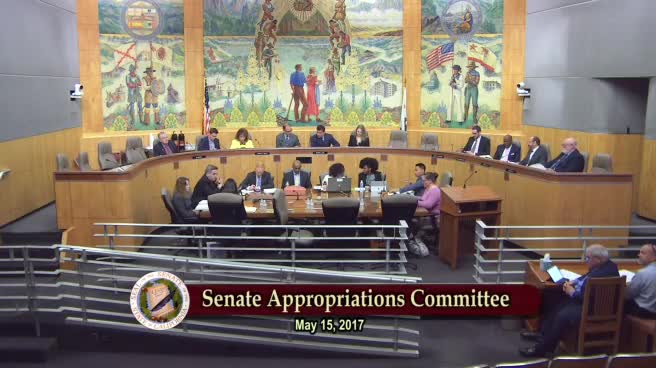
Bill Author

Bill Co-Author(s):