SB 68: Public postsecondary education: exemption from nonresident tuition.
- Session Year: 2017-2018
- House: Senate
- Latest Version Date: 2017-10-05
(1)Existing law exempts a student, other than a nonimmigrant alien, as defined, from paying nonresident tuition at the California State University and the California Community Colleges if the student meets certain requirements, including high school attendance in California for 3 or more years or attainment of credits earned in California from a California high school equivalent to 3 or more years of full-time high school coursework and a total of 3 or more years of attendance at California elementary and secondary schools.
This bill would instead exempt a student, other than a nonimmigrant alien, from nonresident tuition at the California State University and the California Community Colleges if the student has a total of 3 or more years of attendance, or attainment of equivalent credits earned while in California, California high schools, California adult schools, campuses of the California Community Colleges, or a combination of those schools, as specified, or the student completes 3 or more years of full-time high school coursework, and a total of 3 or more years of attendance in California elementary schools, California secondary schools, or a combination of California elementary and secondary schools. The bill would also require that the student graduate from a California high school or attain the equivalent, attain an associate degree from a campus of the California Community Colleges, or fulfill minimum transfer requirements established for the University of California or the California State University for students transferring from campuses of the California Community Colleges.
The bill would request the Regents of the University of California to enact exemptions from requirements to pay nonresident tuition for its students that are equivalent to those applicable to students of the California Community Colleges and the California State University pursuant to this bill.
Because the bill would impose new duties on community college districts with respect to determining eligibility for exemptions from paying nonresident tuition, the bill would constitute a state-mandated local program.
(2)The California Constitution requires the state to reimburse local agencies and school districts for certain costs mandated by the state. Statutory provisions establish procedures for making that reimbursement.
This bill would provide that, if the Commission on State Mandates determines that the bill contains costs mandated by the state, reimbursement for those costs shall be made pursuant to the statutory provisions noted above.
(3)This bill would incorporate additional changes to Section 68130.5 of the Education Code proposed by SB 244 to be operative only if this bill and SB 244 are enacted and this bill is enacted last.
(1)Existing law exempts a student, other than a nonimmigrant alien, as defined, from paying nonresident tuition at the California State University and the California Community Colleges if the student meets certain requirements, including high school attendance in California for 3 or more years or attainment of credits earned in California from a California high school equivalent to 3 or more years of full-time high school coursework and a total of 3 or more years of attendance at California elementary and secondary schools.
This bill would instead exempt a student, other than a nonimmigrant alien, from nonresident tuition at the California State University and the California Community Colleges if the student has a total of 3 or more years of attendance, or attainment of equivalent credits earned while in California, at California elementary schools, California secondary high schools, California adult schools, campuses of the California Community Colleges, or a combination of those schools, as specified, and or the student completes 3 or more years of full-time high school coursework, and a total of 3 or more years of attendance in California elementary schools, California secondary schools, or a combination of California elementary and secondary schools. The bill would also require that the student graduates graduate from a California high school or attains attain the equivalent, attains attain an associate degree from a campus of the California Community Colleges, or fulfills fulfill minimum transfer requirements established for the University of California or the California State University for students transferring from campuses of the California Community Colleges.
The bill would request the Regents of the University of California to enact exemptions from requirements to pay nonresident tuition for its students that are equivalent to those applicable to students of the California Community Colleges and the California State University pursuant to this bill.
Because the bill would impose new duties on community college districts with respect to determining eligibility for exemptions from paying nonresident tuition, the bill would constitute a state-mandated local program.
(2)The California Constitution requires the state to reimburse local agencies and school districts for certain costs mandated by the state. Statutory provisions establish procedures for making that reimbursement.
This bill would provide that, if the Commission on State Mandates determines that the bill contains costs mandated by the state, reimbursement for those costs shall be made pursuant to the statutory provisions noted above.
(1)Existing law exempts a student, other than a nonimmigrant alien, as defined, from paying nonresident tuition at the California State University and the California Community Colleges if the student meets certain requirements, including high school attendance in California for 3 or more years or attainment of credits earned in California from a California high school equivalent to 3 or more years of full-time high school coursework and a total of 3 or more years of attendance at California elementary and secondary schools.
This bill would instead exempt a student, other than a nonimmigrant alien, from nonresident tuition at the California State University and the California Community Colleges if the student has a total of 3 or more years of attendance, or attainment in California of equivalent credits, credits earned while in California, at California elementary schools, California secondary schools, California adult schools, campuses of the California Community Colleges, or a combination of those schools, as specified, and the student graduates from a California high school or attains the equivalent, attains an associate degree from a campus of the California Community Colleges, or fulfills minimum transfer requirements established for the University of California or the California State University for students transferring from campuses of the California Community Colleges.
The bill would request the Regents of the University of California to enact exemptions from requirements to pay nonresident tuition for its students that are equivalent to those applicable to students of the California Community Colleges and the California State University pursuant to this bill.
Because the bill would impose new duties on community college districts with respect to determining eligibility for exemptions from paying nonresident tuition, the bill would constitute a state-mandated local program.
(2)The California Constitution requires the state to reimburse local agencies and school districts for certain costs mandated by the state. Statutory provisions establish procedures for making that reimbursement.
This bill would provide that, if the Commission on State Mandates determines that the bill contains costs mandated by the state, reimbursement for those costs shall be made pursuant to the statutory provisions noted above.
(1)Existing law exempts a student, other than a nonimmigrant alien, as defined, from paying nonresident tuition at the California State University and the California Community Colleges if the student meets certain requirements, including high school attendance in California for 3 or more years or attainment of credits earned in California from a California high school equivalent to 3 or more years of full-time high school coursework and a total of 3 or more years of attendance at California elementary and secondary schools.
This bill would instead exempt a student, other than a nonimmigrant alien, from nonresident tuition at the California State University and the California Community Colleges if the student has a total of 3 or more years of attendance or credits attendance, or attainment in California of equivalent credits, at California elementary schools, California secondary schools, California adult schools, campuses of the California Community Colleges, or a combination of those schools, as specified, and the student graduates from a California high school or attains the equivalent, attains an associate degree from a campus of the California Community Colleges, or fulfills minimum transfer requirements established for the University of California or the California State University for students transferring from campuses of the California Community Colleges.
The bill would request the Regents of the University of California to enact exemptions from requirements to pay nonresident tuition for its students that are equivalent to those applicable to students of the California Community Colleges and the California State University pursuant to this bill.
Because the bill would impose new duties on community college districts with respect to determining eligibility for exemptions from paying nonresident tuition, the bill would constitute a state-mandated local program.
(2)The California Constitution requires the state to reimburse local agencies and school districts for certain costs mandated by the state. Statutory provisions establish procedures for making that reimbursement.
This bill would provide that, if the Commission on State Mandates determines that the bill contains costs mandated by the state, reimbursement for those costs shall be made pursuant to the statutory provisions noted above.
(1)Existing law exempts a student, other than a nonimmigrant alien, as defined, from paying nonresident tuition at the California State University and the California Community Colleges if the student meets certain requirements, including high school attendance in California for 3 or more years or attainment of credits earned in California from a California high school equivalent to 3 or more years of full-time high school coursework and a total of 3 or more years of attendance at California elementary and secondary schools.
This bill would instead exempt a student, other than a nonimmigrant alien, from nonresident tuition at the California State University and the California Community Colleges if the student has a total of 3 or more years of attendance or credits at California elementary schools, California secondary schools, California adult schools, campuses of the California Community Colleges, or a combination of those schools, as specified, and the student graduates from a California high school or attains the equivalent, attains an associate degree from a campus of the California Community Colleges, or fulfills minimum transfer requirements established for the University of California or the California State University for students transferring from campuses of the California Community Colleges.
The bill would request the Regents of the University of California to enact exemptions from requirements to pay nonresident tuition for its students that are equivalent to those applicable to students of the California Community Colleges and the California State University pursuant to this bill.
Because the bill would impose new duties on community college districts with respect to determining eligibility for exemptions from paying nonresident tuition, the bill would constitute a state-mandated local program.
(2)The California Constitution requires the state to reimburse local agencies and school districts for certain costs mandated by the state. Statutory provisions establish procedures for making that reimbursement.
This bill would provide that, if the Commission on State Mandates determines that the bill contains costs mandated by the state, reimbursement for those costs shall be made pursuant to the statutory provisions noted above.
(1)Existing law exempts a student, other than a nonimmigrant alien, as defined, from paying nonresident tuition at the California State University and the California Community Colleges if the student meets certain requirements, including high school attendance in California for 3 or more years or attainment of credits earned in California from a California high school equivalent to 3 or more years of full-time high school coursework and a total of 3 or more years of attendance at California elementary and secondary schools.
This bill would instead exempt a student, other than a nonimmigrant alien, from nonresident tuition at the California State University and the California Community Colleges if the student has a total of 3 or more years of attendance at California elementary schools, California secondary schools, campuses of the California Community Colleges, or a combination of those schools, as specified, and the student graduates from a California high school or attains the equivalent, attains an associate degree from a campus of the California Community Colleges, or fulfills minimum transfer requirements established for the University of California or the California State University for students transferring from campuses of the California Community Colleges.
The bill would request the Regents of the University of California to enact exemptions from requirements to pay nonresident tuition for its students that are equivalent to those applicable to students of the California Community Colleges and the California State University pursuant to this bill.
Because the bill would impose new duties on community college districts with respect to determining eligibility for exemptions from paying nonresident tuition, the bill would constitute a state-mandated local program.
(2)The California Constitution requires the state to reimburse local agencies and school districts for certain costs mandated by the state. Statutory provisions establish procedures for making that reimbursement.
This bill would provide that, if the Commission on State Mandates determines that the bill contains costs mandated by the state, reimbursement for those costs shall be made pursuant to the statutory provisions noted above.
Notwithstanding any other law:
(a)A student, other than a nonimmigrant alien within the meaning of paragraph (15) of subsection (a) of Section 1101 of Title 8 of the United States Code, shall be exempt from paying nonresident tuition at the California State University and the California Community Colleges if the student meets all of the following requirements:
(1)Satisfaction of the requirements of either subparagraph (A) or subparagraph (B):
(A)A total attendance of, or attainment of credits earned while in California equivalent to, three or more years of full-time attendance or attainment of credits at any of the following:
(i)California high schools.
(ii)California high schools established by the State Board of Education.
(iii)California adult schools established by any of the following entities:
(I)A county office of education.
(II)A unified school district or high school district.
(III)The Department of Corrections and Rehabilitation.
(iv)Campuses of the California Community Colleges.
(v)A combination of those schools set forth in clauses (i) to (iv), inclusive.
(B)Three or more years of full-time high school coursework, and a total of three or more years of attendance in California elementary schools, California secondary schools, or a combination of California elementary and secondary schools.
(C)(i)Full-time attendance at a campus of the California Community Colleges counted towards the requirements of this paragraph shall comprise either a minimum of 12 units of credit per semester or quarter equivalent per year or a minimum of 420 class hours per year or semester or quarter equivalent per year in noncredit courses authorized pursuant to Section 84757. Attendance in credit courses at a campus of the California Community Colleges counted towards the requirements of this paragraph shall not exceed a total attendance of two years of full-time attendance.
(ii)Full-time attendance at a California adult school counted towards the requirements of this paragraph shall be a minimum of 420 class hours of attendance for each school year in classes or courses authorized pursuant to Section 41976 or Sections 2053 to 2054.2, inclusive, of the Penal Code.
(2)Satisfaction of any of the following:
(A)Graduation from a California high school or attainment of the equivalent thereof.
(B)Attainment of an associate degree from a campus of the California Community Colleges.
(C)Fulfillment of the minimum transfer requirements established for the University of California or the California State University for students transferring from a campus of the California Community Colleges.
(3)Registration as an entering student at, or current enrollment at, an accredited institution of higher education in California not earlier than the fall semester or quarter of the 200102 academic year.
(4)In the case of a person without lawful immigration status, the filing of an affidavit with the institution of higher education stating that the student has filed an application to legalize his or her immigration status, or will file an application as soon as he or she is eligible to do so.
(b)A student who is exempt from nonresident tuition under this section may be reported by a community college district as a full-time equivalent student for apportionment purposes.
(c)The Board of Governors of the California Community Colleges and the Trustees of the California State University shall prescribe rules and regulations for the implementation of this section.
(d)Student information obtained in the implementation of this section is confidential.
SEC. 1.5.Section 68130.5 of the Education Code, as amended by Section 1 of Chapter 675 of the Statutes of 2014, is amended to read:68130.5.Notwithstanding any other law:
(a)A student, other than a nonimmigrant alien within the meaning of paragraph (15) of subsection (a) of Section 1101 of Title 8 of the United States Code, shall be exempt from paying nonresident tuition at the California State University and the California Community Colleges if the student meets all of the following requirements:
(1)Satisfaction of the requirements of either subparagraph (A) or subparagraph (B):
(A)A total attendance of, or attainment of credits earned while in California equivalent to, three or more years of full-time attendance or attainment of credits at any of the following:
(i)California high schools.
(ii)California high schools established by the State Board of Education.
(iii)California adult schools established by any of the following entities:
(I)A county office of education.
(II)A unified school district or high school district.
(III)The Department of Corrections and Rehabilitation.
(iv)Campuses of the California Community Colleges.
(v)A combination of those schools set forth in clauses (i) to (iv), inclusive.
(B)Three or more years of full-time high school coursework, and a total of three or more years of attendance in California elementary schools, California secondary schools, or a combination of California elementary and secondary schools.
(C)(i)Full-time attendance at a campus of the California Community Colleges counted towards the requirements of this paragraph shall comprise either a minimum of 12 units of credit per semester or quarter equivalent per year or a minimum of 420 class hours per year or semester or quarter equivalent per year in noncredit courses authorized pursuant to Section 84757. Attendance in credit courses at a campus of the California Community Colleges counted towards the requirements of this paragraph shall not exceed a total attendance of two years of full-time attendance.
(ii)Full-time attendance at a California adult school counted towards the requirements of this paragraph shall be a minimum of 420 class hours of attendance for each school year in classes or courses authorized pursuant to Section 41976 or Sections 2053 to 2054.2, inclusive, of the Penal Code.
(2)Satisfaction of any of the following:
(A)Graduation from a California high school or attainment of the equivalent thereof.
(B)Attainment of an associate degree from a campus of the California Community Colleges.
(C)Fulfillment of the minimum transfer requirements established for the University of California or the California State University for students transferring from a campus of the California Community Colleges.
(3)Registration as an entering student at, or current enrollment at, an accredited institution of higher education in California not earlier than the fall semester or quarter of the 200102 academic year.
(4)In the case of a person without lawful immigration status, the filing of an affidavit with the institution of higher education stating that the student has filed an application to legalize his or her immigration status, or will file an application as soon as he or she is eligible to do so.
(b)A student who is exempt from nonresident tuition under this section may be reported by a community college district as a full-time equivalent student for apportionment purposes.
(c)The Board of Governors of the California Community Colleges and the Trustees of the California State University shall prescribe rules and regulations for the implementation of this section.
(d)Notwithstanding Chapter 3.5 (commencing with Section 6250) of Division 7 of Title 1 of the Government Code, information obtained in the implementation of this section is confidential, shall be used only to administer tuition payments pursuant to this section, shall not be open to the public for inspection, and shall not be disclosed without the written consent of the student, except as necessary to administer this section, or as otherwise required by California law or a state or federal court order. This subdivision does not prohibit the disclosure of aggregate data if it is disclosed in a manner that would prevent it from being used to determine the identities of the persons upon whom the data is based.
SEC. 2.The Regents of the University of California are requested to enact exemptions from requirements to pay nonresident tuition for its students that are equivalent to those applicable to students of the California Community Colleges and the California State University pursuant to Section 68130.5 of the Education Code, as amended pursuant to this act.
SEC. 3.If the Commission on State Mandates determines that this act contains costs mandated by the state, reimbursement to local agencies and school districts for those costs shall be made pursuant to Part 7 (commencing with Section 17500) of Division 4 of Title 2 of the Government Code.
SEC. 4.Section 1.5 of this bill incorporates amendments to Section 68130.5 of the Education Code proposed by both this bill and Senate Bill 244. That section shall only become operative if (1) both bills are enacted and become effective on or before January 1, 2018, (2) each bill amends Section 68130.5 of the Education Code, and (3) this bill is enacted after Senate Bill 244, in which case Section 1 of this bill shall not become operative.
Notwithstanding any other law:
(a)A student, other than a nonimmigrant alien within the meaning of paragraph (15) of subsection (a) of Section 1101 of Title 8 of the United States Code, shall be exempt from paying nonresident tuition at the California State University and the California Community Colleges if the student meets all of the following requirements:
(1)Satisfaction of the requirements of either subparagraph (A) or subparagraph (B):
(A)A total attendance of, or attainment of credits earned while in California equivalent to, three or more years of full-time attendance or attainment of credits at any of the following:
(i)California high schools.
(ii)California high schools established by the State Board of Education.
(iii)California adult schools established by any of the following entities:
(I)A county office of education.
(II)A unified school district or high school district.
(III)The Department of Corrections and Rehabilitation.
(iv)Campuses of the California Community Colleges.
(v)A combination of those schools set forth in clauses (i) to (iv), inclusive.
(B)Three or more years of full-time high school coursework, and a total of three or more years of attendance in California elementary schools, California secondary schools, or a combination of California elementary and secondary schools.
(C)(i)Full-time attendance at a campus of the California Community Colleges counted towards the requirements of this paragraph shall comprise either a minimum of 12 units of credit per semester or quarter equivalent per year or a minimum of 420 class hours per year or semester or quarter equivalent per year in noncredit courses authorized pursuant to Section 84757. Attendance in credit courses at a campus of the California Community Colleges counted towards the requirements of this paragraph shall not exceed a total attendance of two years of full-time attendance.
(ii)Full-time attendance at a California adult school counted towards the requirements of this paragraph shall be a minimum of 420 class hours of attendance for each school year in classes or courses authorized pursuant to Section 41976 or Sections 2053 to 2054.2, inclusive, of the Penal Code.
(2)Satisfaction of any of the following:
(A)Graduation from a California high school or attainment of the equivalent thereof.
(B)Attainment of an associate degree from a campus of the California Community Colleges.
(C)Fulfillment of the minimum transfer requirements established for the University of California or the California State University for students transferring from a campus of the California Community Colleges.
(3)Registration as an entering student at, or current enrollment at, an accredited institution of higher education in California not earlier than the fall semester or quarter of the 200102 academic year.
(4)In the case of a person without lawful immigration status, the filing of an affidavit with the institution of higher education stating that the student has filed an application to legalize his or her immigration status, or will file an application as soon as he or she is eligible to do so.
(b)A student who is exempt from nonresident tuition under this section may be reported by a community college district as a full-time equivalent student for apportionment purposes.
(c)The Board of Governors of the California Community Colleges and the Trustees of the California State University shall prescribe rules and regulations for the implementation of this section.
(d)Student information obtained in the implementation of this section is confidential.
SEC. 1.5.Section 68130.5 of the Education Code, as amended by Section 1 of Chapter 675 of the Statutes of 2014, is amended to read:68130.5.Notwithstanding any other law:
(a)A student, other than a nonimmigrant alien within the meaning of paragraph (15) of subsection (a) of Section 1101 of Title 8 of the United States Code, who meets all of the following requirements shall be exempt from paying nonresident tuition at the California State University and the California Community Colleges: Colleges if the student meets all of the following requirements:
(1)Satisfaction of either of the following: the requirements of either subparagraph (A) or subparagraph (B):
(A)High school attendance in California for three or more years.(B)Attainment(A)A total attendance of, or attainment of credits earned while in California from a California high school equivalent to equivalent to, three or more years of full-time high school coursework and a total of three or more years of attendance in California elementary schools, California secondary schools, or a combination of those schools. attendance or attainment of credits at any of the following:
(i)California high schools.
(ii)California high schools established by the State Board of Education.
(iii)California adult schools established by any of the following entities:
(I)A county office of education.
(II)A unified school district or high school district.
(III)The Department of Corrections and Rehabilitation.
(iv)Campuses of the California Community Colleges.
(v)A combination of those schools set forth in clauses (i) to (iv), inclusive.
(B)Three or more years of full-time high school coursework, and a total of three or more years of attendance in California elementary schools, California secondary schools, or a combination of California elementary and secondary schools.
(C)(i)Full-time attendance at a campus of the California Community Colleges counted towards the requirements of this paragraph shall comprise either a minimum of 12 units of credit per semester or quarter equivalent per year or a minimum of 420 class hours per year or semester or quarter equivalent per year in noncredit courses authorized pursuant to Section 84757. Attendance in credit courses at a campus of the California Community Colleges counted towards the requirements of this paragraph shall not exceed a total attendance of two years of full-time attendance.
(ii)Full-time attendance at a California adult school counted towards the requirements of this paragraph shall be a minimum of 420 class hours of attendance for each school year in classes or courses authorized pursuant to Section 41976 or Sections 2053 to 2054.2, inclusive, of the Penal Code.
(2)Satisfaction of any of the following:
(2)(A)Graduation from a California high school or attainment of the equivalent thereof.
(B)Attainment of an associate degree from a campus of the California Community Colleges.
(C)Fulfillment of the minimum transfer requirements established for the University of California or the California State University for students transferring from a campus of the California Community Colleges.
(3)Registration as an entering student at, or current enrollment at, an accredited institution of higher education in California not earlier than the fall semester or quarter of the 200102 academic year.
(4)In the case of a person without lawful immigration status, the filing of an affidavit with the institution of higher education stating that the student has filed an application to legalize his or her immigration status, or will file an application as soon as he or she is eligible to do so.
(b)A student who is exempt from nonresident tuition under this section may be reported by a community college district as a full-time equivalent student for apportionment purposes.
(c)The Board of Governors of the California Community Colleges and the Trustees of the California State University shall prescribe rules and regulations for the implementation of this section.
(d)Student Notwithstanding Chapter 3.5 (commencing with Section 6250) of Division 7 of Title 1 of the Government Code, information obtained in the implementation of this section is confidential. confidential, shall be used only to administer tuition payments pursuant to this section, shall not be open to the public for inspection, and shall not be disclosed without the written consent of the student, except as necessary to administer this section, or as otherwise required by California law or a state or federal court order. This subdivision does not prohibit the disclosure of aggregate data if it is disclosed in a manner that would prevent it from being used to determine the identities of the persons upon whom the data is based.
SEC. 2.The Regents of the University of California are requested to enact exemptions from requirements to pay nonresident tuition for its students that are equivalent to those applicable to students of the California Community Colleges and the California State University pursuant to Section 68130.5 of the Education Code, as amended pursuant to this act.
SEC. 3.If the Commission on State Mandates determines that this act contains costs mandated by the state, reimbursement to local agencies and school districts for those costs shall be made pursuant to Part 7 (commencing with Section 17500) of Division 4 of Title 2 of the Government Code.
SEC. 4.Section 1.5 of this bill incorporates amendments to Section 68130.5 of the Education Code proposed by both this bill and Senate Bill 244. That section shall only become operative if (1) both bills are enacted and become effective on or before January 1, 2018, (2) each bill amends Section 68130.5 of the Education Code, and (3) this bill is enacted after Senate Bill 244, in which case Section 1 of this bill shall not become operative.
Notwithstanding any other law:
(a)A student, other than a nonimmigrant alien within the meaning of paragraph (15) of subsection (a) of Section 1101 of Title 8 of the United States Code, shall be exempt from paying nonresident tuition at the California State University and the California Community Colleges if the student meets all of the following requirements:
(1)(A)A Satisfaction of the requirements of either subparagraph (A) or subparagraph (B):
(A)A total attendance of, or attainment of credits earned while in California equivalent to, three or more years of full-time attendance or attainment of credits at any of the following:
(i)California elementary schools.(ii)(i)California secondary high schools.
(iii)(ii)California high schools established by the State Board of Education.
(iv)(iii)California adult schools established by any of the following entities:
(I)A county office of education.
(II)A unified school district or high school district.
(III)The Department of Corrections and Rehabilitation.
(v)(iv)Campuses of the California Community Colleges.
(vi)(v)A combination of those schools set forth in clauses (i) to (v), (iv), inclusive.
(B)Three or more years of full-time high school coursework, and a total of three or more years of attendance in California elementary schools, California secondary schools, or a combination of California elementary and secondary schools.
(B)(C)(i)Full-time attendance or credits at a campus of the California Community Colleges counted towards the requirements of this paragraph shall comprise either a minimum of 12 units of credit per semester or quarter equivalent per year or a minimum of 210 420 class hours per year or semester or quarter equivalent per year in noncredit courses authorized pursuant to Section 84757. Attendance in credit courses at a campus of the California Community Colleges counted towards the requirements of this paragraph shall not exceed a total attendance of, or attainment of credits equivalent to, of two years of full-time attendance or attainment of credits. attendance.
(ii)Full-time attendance at a California adult school counted towards the requirements of this paragraph shall be a minimum of 210 420 class hours of attendance for each school term year in classes or courses authorized pursuant to Section 41976 or Sections 2053 to 2054.2, inclusive, of the Penal Code.
(2)Satisfaction of any of the following:
(A)Graduation from a California high school or attainment of the equivalent thereof.
(B)Attainment of an associate degree from a campus of the California Community Colleges.
(C)Fulfillment of the minimum transfer requirements established for the University of California or the California State University for students transferring from a campus of the California Community Colleges.
(3)Registration as an entering student at, or current enrollment at, an accredited institution of higher education in California not earlier than the fall semester or quarter of the 200102 academic year.
(4)In the case of a person without lawful immigration status, the filing of an affidavit with the institution of higher education stating that the student has filed an application to legalize his or her immigration status, or will file an application as soon as he or she is eligible to do so.
(b)A student who is exempt from nonresident tuition under this section may be reported by a community college district as a full-time equivalent student for apportionment purposes.
(c)The Board of Governors of the California Community Colleges and the Trustees of the California State University shall prescribe rules and regulations for the implementation of this section.
(d)Student information obtained in the implementation of this section is confidential.
SEC. 2.The Regents of the University of California are requested to enact exemptions from requirements to pay nonresident tuition for its students that are equivalent to those applicable to students of the California Community Colleges and the California State University pursuant to Section 68130.5 of the Education Code, as amended pursuant to this act.
SEC. 3.If the Commission on State Mandates determines that this act contains costs mandated by the state, reimbursement to local agencies and school districts for those costs shall be made pursuant to Part 7 (commencing with Section 17500) of Division 4 of Title 2 of the Government Code.
Notwithstanding any other law:
(a)A student, other than a nonimmigrant alien within the meaning of paragraph (15) of subsection (a) of Section 1101 of Title 8 of the United States Code, shall be exempt from paying nonresident tuition at the California State University and the California Community Colleges if the student meets all of the following requirements:
(1)(A)A total attendance of, or attainment in California of credits of credits earned while in California equivalent to, three or more years of full-time attendance or attainment of credits at any of the following:
(i)California elementary schools.
(ii)California secondary schools.
(iii)California schools established by the State Board of Education.
(iv)California adult schools established by any of the following entities:
(I)A county office of education.
(II)A unified school district or high school district.
(III)The Department of Corrections and Rehabilitation.
(v)Campuses of the California Community Colleges.
(vi)A combination of those schools set forth in clauses (i) to (v), inclusive.
(B)(i)Full-time attendance or credits at a campus of the California Community Colleges counted towards the requirements of this paragraph shall comprise either a minimum of 12 units of credit per semester or quarter equivalent per year or a minimum of 210 class hours per semester or quarter equivalent per year in noncredit courses authorized pursuant to Section 84757. Attendance in credit courses at a campus of the California Community Colleges counted towards the requirements of this paragraph shall not exceed a total attendance of, or attainment of credits equivalent to, two years of full-time attendance or attainment of credits.
(ii)Full-time attendance at a California adult school counted towards the requirements of this paragraph shall be a minimum of 210 class hours of attendance for each school term in classes or courses authorized pursuant to Section 41976 or Sections 2053 to 2054.2, inclusive, of the Penal Code.
(2)Satisfaction of any of the following:
(A)Graduation from a California high school or attainment of the equivalent thereof.
(B)Attainment of an associate degree from a campus of the California Community Colleges.
(C)Fulfillment of the minimum transfer requirements established for the University of California or the California State University for students transferring from a campus of the California Community Colleges.
(3)Registration as an entering student at, or current enrollment at, an accredited institution of higher education in California not earlier than the fall semester or quarter of the 200102 academic year.
(4)In the case of a person without lawful immigration status, the filing of an affidavit with the institution of higher education stating that the student has filed an application to legalize his or her immigration status, or will file an application as soon as he or she is eligible to do so.
(b)A student who is exempt from nonresident tuition under this section may be reported by a community college district as a full-time equivalent student for apportionment purposes.
(c)The Board of Governors of the California Community Colleges and the Trustees of the California State University shall prescribe rules and regulations for the implementation of this section.
(d)Student information obtained in the implementation of this section is confidential.
SEC. 2.The Regents of the University of California are requested to enact exemptions from requirements to pay nonresident tuition for its students that are equivalent to those applicable to students of the California Community Colleges and the California State University pursuant to Section 68130.5 of the Education Code, as amended pursuant to this act.
SEC. 3.If the Commission on State Mandates determines that this act contains costs mandated by the state, reimbursement to local agencies and school districts for those costs shall be made pursuant to Part 7 (commencing with Section 17500) of Division 4 of Title 2 of the Government Code.
Notwithstanding any other law:
(a)A student, other than a nonimmigrant alien within the meaning of paragraph (15) of subsection (a) of Section 1101 of Title 8 of the United States Code, shall be exempt from paying nonresident tuition at the California State University and the California Community Colleges if the student meets all of the following requirements:
(1)(A)A total attendance or credits equivalent to attendance of, or attainment in California of credits equivalent to, three or more years of full-time attendance or attainment of credits at any of the following:
(i)California elementary schools.
(ii)California secondary schools.
(iii)California schools established by the State Board of Education.
(iv)California adult schools established by any of the following entities:
(I)A county office of education.
(II)A unified school district or high school district.
(III)The Department of Corrections and Rehabilitation.
(v)Campuses of the California Community Colleges.
(vi)A combination of those schools set forth in clauses (i) to (v), inclusive.
(B)(i)Full-time attendance or credits at a campus of the California Community Colleges counted towards the requirements of this paragraph shall comprise either a minimum of 12 units of credit per semester or quarter equivalent per year or a minimum of 210 class hours per semester or quarter equivalent per year in noncredit courses authorized pursuant to Section 84757. Attendance at a campus of the California Community Colleges counted towards the requirements of this paragraph shall not exceed attendance or credits equivalent to two years a total attendance of, or attainment of credits equivalent to, two years of full-time attendance or attainment of credits.
(ii)Full-time attendance at a California adult school counted towards the requirements of this paragraph shall be a minimum of 210 class hours of attendance for each school term in classes or courses authorized pursuant to Section 41976 or Sections 2053 to 2054.2, inclusive, of the Penal Code.
(2)Satisfaction of any of the following:
(A)Graduation from a California high school or attainment of the equivalent thereof.
(B)Attainment of an associate degree from a campus of the California Community Colleges.
(C)Fulfillment of the minimum transfer requirements established for the University of California or the California State University for students transferring from a campus of the California Community Colleges.
(3)Registration as an entering student at, or current enrollment at, an accredited institution of higher education in California not earlier than the fall semester or quarter of the 200102 academic year.
(4)In the case of a person without lawful immigration status, the filing of an affidavit with the institution of higher education stating that the student has filed an application to legalize his or her immigration status, or will file an application as soon as he or she is eligible to do so.
(b)A student who is exempt from nonresident tuition under this section may be reported by a community college district as a full-time equivalent student for apportionment purposes.
(c)The Board of Governors of the California Community Colleges and the Trustees of the California State University shall prescribe rules and regulations for the implementation of this section.
(d)Student information obtained in the implementation of this section is confidential.
SEC. 2.The Regents of the University of California are requested to enact exemptions from requirements to pay nonresident tuition for its students that are equivalent to those applicable to students of the California Community Colleges and the California State University pursuant to Section 68130.5 of the Education Code, as amended pursuant to this act.
SEC. 3.If the Commission on State Mandates determines that this act contains costs mandated by the state, reimbursement to local agencies and school districts for those costs shall be made pursuant to Part 7 (commencing with Section 17500) of Division 4 of Title 2 of the Government Code.
Notwithstanding any other law:
(a)A student, other than a nonimmigrant alien within the meaning of paragraph (15) of subsection (a) of Section 1101 of Title 8 of the United States Code, who meets all of the following requirements shall be exempt from paying nonresident tuition at the California State University and the California Community Colleges: Colleges if the student meets all of the following requirements:
(1)(A)A total of three or more years of attendance in California or credits equivalent to three or more years of full-time attendance or credits at any of the following:
(i)California elementary schools, California schools.
(ii)California secondary schools, campuses schools.
(iii)California schools established by the State Board of Education.
(iv)California adult schools established by any of the following entities:
(I)A county office of education.
(II)A unified school district or high school district.
(III)The Department of Corrections and Rehabilitation.
(v)Campuses of the California Community Colleges, or a Colleges.
(vi)A combination of those schools, of which attendance at a campus of the California Community Colleges shall be full time and shall not exceed two years of the time counted towards satisfaction of the requirements of this paragraph. schools set forth in clauses (i) to (v), inclusive.
(B)(i)Full-time attendance or credits at a campus of the California Community Colleges counted towards the requirements of this paragraph shall comprise either a minimum of 12 units of credit per semester or quarter equivalent per year or a minimum of 210 class hours per semester or quarter equivalent per year in noncredit courses authorized pursuant to Section 84757. Attendance at a campus of the California Community Colleges counted towards the requirements of this paragraph shall not exceed attendance or credits equivalent to two years full-time attendance or credits.
(ii)Full-time attendance at a California adult school counted towards the requirements of this paragraph shall be a minimum of 210 class hours of attendance for each school term in classes or courses authorized pursuant to Section 41976 or Sections 2053 to 2054.2, inclusive, of the Penal Code.
(2)Satisfaction of any of the following:
(A)Graduation from a California high school or attainment of the equivalent thereof.
(B)Attainment of an associate degree from a campus of the California Community Colleges.
(C)Fulfillment of the minimum transfer requirements established for the University of California or the California State University for students transferring from a campus of the California Community Colleges.
(3)Registration as an entering student at, or current enrollment at, an accredited institution of higher education in California not earlier than the fall semester or quarter of the 200102 academic year.
(4)In the case of a person without lawful immigration status, the filing of an affidavit with the institution of higher education stating that the student has filed an application to legalize his or her immigration status, or will file an application as soon as he or she is eligible to do so.
(b)A student who is exempt from nonresident tuition under this section may be reported by a community college district as a full-time equivalent student for apportionment purposes.
(c)The Board of Governors of the California Community Colleges and the Trustees of the California State University shall prescribe rules and regulations for the implementation of this section.
(d)Student information obtained in the implementation of this section is confidential.
SEC. 2.The Regents of the University of California are requested to enact exemptions from requirements to pay nonresident tuition for its students that are equivalent to those applicable to students of the California Community Colleges and the California State University pursuant to Section 68130.5 of the Education Code, as amended pursuant to this act.
SEC. 3.If the Commission on State Mandates determines that this act contains costs mandated by the state, reimbursement to local agencies and school districts for those costs shall be made pursuant to Part 7 (commencing with Section 17500) of Division 4 of Title 2 of the Government Code.
Notwithstanding any other law:
(a)A student, other than a nonimmigrant alien within the meaning of paragraph (15) of subsection (a) of Section 1101 of Title 8 of the United States Code, who meets all of the following requirements shall be exempt from paying nonresident tuition at the California State University and the California Community Colleges:
(1)Satisfaction of either of the following:(A)High school attendance in California for three or more years.(B)Attainment of credits earned in California from a California high school equivalent to three or more years of full-time high school coursework and a(1)A total of three or more years of attendance in California elementary schools, California secondary schools, campuses of the California Community Colleges, or a combination of those schools. schools, of which attendance at a campus of the California Community Colleges shall be full time and shall not exceed two years of the time counted towards satisfaction of the requirements of this paragraph.
(2)Satisfaction of any of the following:
(2)(A)Graduation from a California high school or attainment of the equivalent thereof.
(B)Attainment of an associate degree from a campus of the California Community Colleges.
(C)Fulfillment of the minimum transfer requirements established for the University of California or the California State University for students transferring from a campus of the California Community Colleges.
(3)Registration as an entering student at, or current enrollment at, an accredited institution of higher education in California not earlier than the fall semester or quarter of the 200102 academic year.
(4)In the case of a person without lawful immigration status, the filing of an affidavit with the institution of higher education stating that the student has filed an application to legalize his or her immigration status, or will file an application as soon as he or she is eligible to do so.
(b)A student who is exempt from nonresident tuition under this section may be reported by a community college district as a full-time equivalent student for apportionment purposes.
(c)The Board of Governors of the California Community Colleges and the Trustees of the California State University shall prescribe rules and regulations for the implementation of this section.
(d)Student information obtained in the implementation of this section is confidential.
SEC. 2.The Regents of the University of California are requested to enact exemptions from requirements to pay nonresident tuition for its students that are equivalent to those applicable to students of the California Community Colleges and the California State University pursuant to Section 68130.5 of the Education Code, as amended pursuant to this act.
SEC. 3.If the Commission on State Mandates determines that this act contains costs mandated by the state, reimbursement to local agencies and school districts for those costs shall be made pursuant to Part 7 (commencing with Section 17500) of Division 4 of Title 2 of the Government Code.
|
Date
|
Status
|
|---|---|
| Oct 5, 2017 | Chaptered by Secretary of State. Chapter 496, Statutes of 2017. |
| Oct 5, 2017 | Approved by the Governor. |
| Sep 20, 2017 | Enrolled and presented to the Governor at 4 p.m. |
| Sep 14, 2017 | Assembly amendments concurred in. (Ayes 29. Noes 10.) Ordered to engrossing and enrolling. |
| Sep 14, 2017 | In Senate. Concurrence in Assembly amendments pending. |
| Sep 13, 2017 | Read third time. Passed. Ordered to the Senate. |
| Sep 8, 2017 | Ordered to third reading. |
| Sep 6, 2017 | Read second time. Ordered to third reading. |
| Sep 5, 2017 | Read second time and amended. Ordered to second reading. |
| Sep 1, 2017 | From committee: Do pass as amended. (Ayes 11. Noes 5.) (September 1). |
| Jul 19, 2017 | July 19 set for first hearing. Placed on APPR. suspense file. |
| Jul 12, 2017 | From committee: Do pass and re-refer to Com. on APPR. (Ayes 10. Noes 2.) (July 11). Re-referred to Com. on APPR. |
| Jun 15, 2017 | Referred to Com. on HIGHER ED. |
| Jun 1, 2017 | In Assembly. Read first time. Held at Desk. |
| Jun 1, 2017 | Read third time. Passed. (Ayes 31. Noes 9. Page 1386.) Ordered to the Assembly. |
| May 26, 2017 | Read second time and amended. Ordered to third reading. |
| May 25, 2017 | From committee: Do pass as amended. (Ayes 5. Noes 2. Page 1177.) (May 25). |
| May 19, 2017 | Set for hearing May 25. |
| Apr 17, 2017 | April 17 hearing: Placed on APPR. suspense file. |
| Apr 5, 2017 | Set for hearing April 17. |
| Mar 29, 2017 | Read second time and amended. Re-referred to Com. on APPR. |
| Mar 28, 2017 | From committee: Do pass as amended and re-refer to Com. on APPR. (Ayes 6. Noes 0. Page 443.) (March 22). |
| Mar 13, 2017 | From committee with author's amendments. Read second time and amended. Re-referred to Com. on ED. |
| Mar 7, 2017 | Set for hearing March 22. |
| Mar 6, 2017 | March 15 set for first hearing canceled at the request of author. |
| Feb 23, 2017 | Set for hearing March 15. |
| Jan 19, 2017 | Referred to Com. on ED. |
| Jan 6, 2017 | From printer. May be acted upon on or after February 5. |
| Jan 5, 2017 | Introduced. Read first time. To Com. on RLS. for assignment. To print. |
|
Date
|
Description
|
Location
|
Votes
|
|
|---|---|---|---|---|
| Sep 14, 2017 | Unfinished Business SB68 Lara et al. Concurrence | Senate Floor |
Passed |
|
| Sep 13, 2017 | SB 68 Lara Senate Third Reading By BOCANEGRA | Assembly Floor |
Passed |
|
| Sep 1, 2017 | Do pass as amended. | Assembly Standing Committee on Appropriations |
Passed |
|
| Jul 11, 2017 | Do pass and be re-referred to the Committee on [Appropriations] | Assembly Standing Committee on Higher Education |
Passed |
|
| Jun 1, 2017 | Senate 3rd Reading SB68 Lara | Senate Floor |
Passed |
|
| May 25, 2017 | Do pass as amended | Senate Standing Committee on Appropriations |
Passed |
|
| Apr 17, 2017 | Placed on suspense file | Senate Standing Committee on Appropriations |
Passed |
|
| Mar 22, 2017 | Do pass as amended, but first amend, and re-refer to the Committee on [Appropriations] | Senate Standing Committee on Education |
Passed |
This list shows positions taken on this bill by organizations on the date displayed, which is linked to the original source.
Positions by individuals are not included.
|
Organization
|
Position
|
Date
|
|---|---|---|
| Alliance for Boys and Men of Color | ** Support | Sep 14, 2017 |
| American Civil Liberties Union | ** Support | Sep 14, 2017 |
| Asian Americans Advancing Justice-California | ** Support | Jul 10, 2017 |
| California Adult Education Administrators Association | ** Support | Sep 14, 2017 |
| California Association For Bilingual Education | ** Support | Jul 10, 2017 |
| California Catholic Conference | ** Support | Sep 14, 2017 |
| California Charter Schools Association | ** Support | Sep 14, 2017 |
| California Community College Chancellor's Office | * Support | Jul 11, 2017 |
| California Council For Adult Education | ** Support | Sep 14, 2017 |
| California Dream Network | ** Support | Sep 14, 2017 |
| California Faculty Association | ** Support | Jul 10, 2017 |
| California Federation Of Teachers | ** Support | Sep 14, 2017 |
| California Immigrant Policy Center | ** Support | Jul 10, 2017 |
| California Pan-Ethnic Health Network | ** Support | Sep 14, 2017 |
| California State Student Association | ** Support | Sep 14, 2017 |
| California State University | ** Support | Jul 10, 2017 |
| California Student Aid Commission | * Indeterminate | Jul 11, 2017 |
| California Teachers Association | ** Support | Jul 10, 2017 |
| CaliforniaHealth+ Advocates | ** Support | Jul 10, 2017 |
| Californians Together | ** Support | Jul 10, 2017 |
| Coalition for Humane Immigrant Rights | ** Support | Sep 14, 2017 |
| Community College League of California | ** Support | Sep 14, 2017 |
| Faculty Association Of California Community Colleges | ** Support | Sep 14, 2017 |
| Foothill-DeAnza Community College District | ** Support | Sep 14, 2017 |
| Hispanas Organized for Political Equality | ** Support | Jul 10, 2017 |
| Hispanic Association Of Colleges And Universities | ** Support | Sep 14, 2017 |
| Los Angeles Community College District | ** Support | Sep 14, 2017 |
| Los Rios Community College District | ** Support | Sep 14, 2017 |
| Mt. San Antonio College | ** Support | Jul 10, 2017 |
| National Association Of Social Workers, California Chapter | ** Support | Jul 10, 2017 |
| North Orange Community College District | ** Support | Jul 10, 2017 |
| Public Advocates | ** Support | Jul 10, 2017 |
| San Diego Community College District | ** Support | Sep 14, 2017 |
| San Diego Continuing Education | ** Support | Jul 10, 2017 |
| San Jose-Evergreen Community College District | ** Support | Jul 10, 2017 |
| The Education Trust-West | ** Support | Sep 14, 2017 |
| University of California | ** Support | Sep 14, 2017 |
| Western Association for College Admission Counseling | ** Support | Jul 10, 2017 |
Office of Senate Floor Analyses (916) 651-1520 Fax: (916) 327-4478 | SB |
UNFINISHED BUSINESS
Bill No: SB 68
Amended: 9/8/17
SENATE EDUCATION COMMITTEE: 6-0, 3/22/17
AYES: Allen, Galgiani, Leyva, Mendoza, Pan, Vidak
NO VOTE RECORDED: Wilk
SENATE APPROPRIATIONS COMMITTEE: 5-2, 5/25/17
AYES: Lara, Beall, Bradford, Hill, Wiener
NOES: Bates, Nielsen
SENATE FLOOR: 31-9, 6/1/17
AYES: Allen, Atkins, Beall, Bradford, Cannella, De León, Dodd, Galgiani, Glazer, Hernandez, Hertzberg, Hill, Hueso, Jackson, Lara, Leyva, McGuire, Mendoza, Mitchell, Monning, Newman, Nguyen, Pan, Portantino, Roth, Skinner, Stern, Vidak, Wieckowski, Wiener, Wilk
NOES: Anderson, Bates, Berryhill, Fuller, Gaines, Moorlach, Morrell, Nielsen, Stone
ASSEMBLY FLOOR: 54-19, 9/13/17 - See last page for vote
DIGEST:
This bill expands eligibility for the exemption from paying nonresident tuition at California’s public postsecondary institutions established under the provisions of AB 540 (Firebaugh, Chapter 814, Statutes of 2001) to students who have completed three or more years of attendance or earned credits equivalent to three or more years of full-time credits at an elementary school, secondary school, adult school and/or California Community College (CCC).
Assembly Amendments
narrow criteria by removing attendance or credits earned at an elementary school and credits earned at a CCC from counting toward eligibility for the exemption from paying nonresident tuition at California’s public postsecondary institutions. The amendments also make technical, nonsubstantive changes, resolve chaptering issues with SB 244 (Lara), and add Assemblymember Bocanegra as a coauthor.
Existing law:
- Exempts, as established by AB 540 (Firebaugh, Chapter 814, Statutes of 2001) and AB 2000 (Gomez, Chapter 675, Statutes of 2014), specified California nonresidents from paying nonresident tuition at the University of California (UC), California State University (CSU), and the CCC if they meet all of the following:
- Satisfaction of either of the following:
- High school attendance in California for three or more years.
- Attainment of credits earned in California for three or more years high school equivalent to three or more years of full-time high school coursework and a total of three or more years of attendance in California elementary schools, California secondary schools or a combination of those schools.
- Graduated from a California high school or attained an equivalent degree.
- Registered or attended an accredited California higher education institution not before fall of the 2001-02 academic year.
- Filed an affidavit, if an alien without lawful immigration status, stating that the student has filed an application to legalize their immigration status or will file such an application as soon as they are eligible to so do. (Education Code (EC) § 68130.5)
- Satisfaction of either of the following:
- Provides that, beginning January 1, 2013, AB 540 students are eligible to apply for, and participate in, any student financial aid program administered by the State of California to the full extent permitted by federal law. The California Student Aid Commission is required to establish procedures and forms that enable AB 540 students to apply for, and participate in, all student financial aid programs administered by the State of California to the full extent permitted by federal law. Current law prohibits AB 540 students from being eligible for Competitive Cal Grant A and B Awards unless specified conditions are met. (EC § 69508.5)
- Provides that a student attending the CSU, CCC, or UC who is exempt from paying nonresident tuition under the provisions of AB 540 is eligible to receive a scholarship derived from non-state funds received, for the purpose of scholarships, by the segment at which he or she is a student. (EC § 66021.7)
- Requires the Trustees of the CSU and the Board of Governors (BOG) of the CCC, and request the UC Regents, to establish procedures and forms that enable AB 540 students to apply for, and participate in, all student aid programs administered by these segments to the full extent permitted by federal law. (EC § 66021.6)
- Establishes the California DREAM Loan Program intended to provide low interest loans to Dream Act students who are accessing the Cal Grant program and attending UC and CSU. (EC § 70030-70039)
This bill:
- Expands and modifies eligibility for the exemption from paying nonresident tuition at California’s public postsecondary institutions established under Education Code Section 69508.5 if the student meets all of the following requirements:
- Satisfaction of requirements listed below in i) and ii):
- Has a total attendance of, or attainment of credits earned while in California equivalent to, three or more years of full-time attendance or attainment of credits at any of the following:
- California high schools.
- California high schools established by the State Board of Education.
- California adult schools established by a county office of education, unified school district or high school district and the Department of Corrections and Rehabilitation.
- Any campus of the CCC.
- A combination of schools listed above in i).
- Satisfaction of any of three or more years of full-time high school coursework, and a total of three or more years of attendance in California's elementary schools, California secondary schools, or a combination of California elementary and secondary schools (current law; this bill recasts this provision).
- Has a total attendance of, or attainment of credits earned while in California equivalent to, three or more years of full-time attendance or attainment of credits at any of the following:
- Satisfaction of any of the following:
- California high school or attainment of an equivalent degree (existing law).
- Attainment of an associate degree from a campus of the CCC.
- Fulfillment of the minimum transfer requirements established by the UC or the CSU for students transferring from a campus of the CCC.
- Satisfaction of requirements listed below in i) and ii):
- Requires that attendance in credit courses at a CCC counted towards the three or more year requirement cannot exceed a total attendance of two years of full-time attendance.
- Requires that full-time attendance at a CCC counted towards the three or more year requirement comprise either a minimum of 12 units of credit per semester or quarter equivalent per year or a minimum of 420 class hours per year or semester or quarter equivalent per year in noncredit courses, which include in part, basic skills, English as a second language and citizenship courses among other courses.
- Requires that full-time attendance at a California adult school counted towards the three or more year requirement to be a minimum of 420 class hours of attendance for each school year in class or courses authorized under existing law.
- Includes double-jointing language to avoid chaptering issues with SB 244 (Lara).
Comments
- Need for the bill. Students who meet the requirements to qualify for the exemption from nonresident tuition are commonly referred to as “AB 540 students.” The author notes AB 540 greatly improved the ability of undocumented students to access higher education, but too often students narrowly miss qualifying under the existing criteria. Existing law requires, among other things, a student to attend a minimum of three years at a California high school, elementary school or secondary school and graduate from a California high school or attain an equivalent degree. According to the author, many undocumented students for a variety of reasons often cannot complete high school in time to qualify under AB 540 and may take a path through adult school and community college to access higher education.
This bill expands resident tuition to students who completed the requisite number of credits while in California at a high school, adult school or year’s attendance at a CCC, thereby expanding eligibility to students that are likely to be older than traditional students.
- Eligibility by attainment of credits. In 2014, AB 2000 (Gomez) established an alternative pathway for AB 540 students by expanding eligibility to students who attended elementary and/or secondary schools in California for three or more years and attained academic credits from California high schools equivalent to three or more years of full-time coursework. The intent of the bill was to ensure that high school students who participate in accelerated learning programs (e.g., through concurrent community college enrollment to obtain high school credits) and graduate early can benefit from the provisions of AB 540.
This bill provides for a specified number of credit-hours equivalent to three or more years of full-time credits to be earned while in California at high school or adult school.
- Eligibility by years of attendance. This bill also seeks to make older youth eligible for resident tuition at CSU, and UC by allowing two years of attendance at a CCC count towards a portion of the three year accumulation requirement, as an alternative to time spent at a high school. The remaining year must be satisfied by attendance at a high school or adult school. This bill also provides for an individual to become eligible through full-time attendance at a California adult school for a minimum of three-years.
- Other eligibility criteria. This bill provides for the attainment of an associate’s degree or fulfillment of specified transfer requirements, as an alternative to the existing high school graduation requirement. A student who has satisfied either the attendance requirement by attainment of credits or by years of attendance must additionally meet the graduation, degree or transfer requirement to be eligible for the exemption. This provides greater flexibility to students who have not graduated from high school but have followed a less traditional path to reach their academic goals through community college attendance.
FISCAL EFFECT: Appropriation: Fiscal Com.: Local:
According to the Assembly Appropriations Committee:
- Unknown state costs, but potentially in the hundreds of thousands of dollars, to increase the number of students eligible for CalGrants and BOG fee waivers. The exact costs of this bill are unknown because the segments do not track students in a way that would identify how students will benefit from the bill’s provisions.
These newly eligible students would have to meet all related requirements including the age requirement for the CalGrant Transfer Entitlement Program (must be under the age of 28), which makes the number of eligible students potentially smaller. Any additional costs would likely result from the need for state financial aid programs such as the BOG waiver and CalGrants. For example, if this bill results in 20 students enrolled in the UC and they receive CalGrant awards for $12,240 each, that would result in additional state costs of $244,800 General Fund. For CSU, the cost for 20 additional students receiving CalGrant awards at $5,472 each would be $109,440 General Fund. For the CCC, to the extent that 50 additional students would be eligible and assuming the state portion of the marginal enrollment cost of $5,145 per student, the total Proposition 98 General Fund cost would be $257,250. The fiscal impact will vary depending on the number of students that actually meet and utilize this bill’s provisions.
- Unknown, but likely minor loss of tuition at the public postsecondary institutions to the extent that the students who are newly eligible for in-state tuition would have otherwise attended and paid out-of-state tuition.
Alliance for Boys and Men of Color
American Civil Liberties Union
California Adult Education Administrators Association
California Catholic Conference
California Charter Schools Association
California Council for Adult Education
California Dream Network
California Federation of Teachers
California Pan-Ethnic Health Network
California State Student Association
Coalition for Humane Immigrant Rights
Community College League of California
Faculty Association of California Community Colleges
Foothill-DeAnza Community College District
Hispanic Association of Colleges and Universities
Los Angeles Community College District
Los Rios Community College District
San Diego Community College District
The Education Trust-West
University of California
OPPOSITION: (Verified 9/13/17)
None received
ASSEMBLY FLOOR: 54-19, 9/13/17
AYES: Aguiar-Curry, Arambula, Berman, Bloom, Bocanegra, Bonta, Burke, Caballero, Calderon, Cervantes, Chau, Chávez, Chiu, Chu, Cooley, Cooper, Dababneh, Daly, Eggman, Frazier, Friedman, Cristina Garcia, Eduardo Garcia, Gipson, Gloria, Gonzalez Fletcher, Gray, Grayson, Holden, Irwin, Jones-Sawyer, Kalra, Levine, Limón, Low, McCarty, Medina, Mullin, Muratsuchi, O'Donnell, Quirk, Quirk-Silva, Reyes, Ridley-Thomas, Rodriguez, Rubio, Salas, Santiago, Mark Stone, Thurmond, Ting, Weber, Wood, Rendon
NOES: Travis Allen, Baker, Bigelow, Brough, Chen, Choi, Cunningham, Dahle, Fong, Gallagher, Harper, Kiley, Lackey, Mathis, Mayes, Melendez, Obernolte, Voepel, Waldron
NO VOTE RECORDED: Acosta, Flora, Maienschein, Nazarian, Patterson, Steinorth
9/14/17 10:02:44
**** END ****
SENATE THIRD READING
STR Bill Id:SB 68
Author:(Lara)
As Amended Ver:September 8, 2017
Majority vote
SENATE VOTE: 31-9
Committee | Votes | Ayes | Noes |
Higher Education | 10-2 | Medina, Arambula, Bloom, Chávez, Irwin, Levine, Low, Quirk-Silva, Santiago, Weber | Baker, Kiley |
Appropriations | 11-5 | Gonzalez Fletcher, Bloom, Bocanegra, Bonta, Calderon, Chau, Eggman, Friedman, Eduardo Garcia, Jones-Sawyer, Reyes | Bigelow, Brough, Fong, Gallagher, Obernolte |
SUMMARY: Expands eligibility for the exemption from paying nonresident tuition at California's public postsecondary institutions established under existing law, to students who have completed three or more years of full-time high school coursework, and a total of three or more years of attendance in California elementary schools, California secondary schools, or a combination of California elementary and secondary schools; and, requires that the students graduate from a California high school or attain the equivalent, attain an associate degree from a campus of the California Community College (CCC), or fulfill minimum transfer requirements established for the University of California (UC) or the California State University (CSU) for students transferring from CCC campuses. Specifically, this bill:
- Expands and modifies eligibility for the exemption from paying nonresident tuition at California's public postsecondary institutions established under Education Code (EC) Section 69508.5 if the student meets all of the following requirements:
- Has a total attendance of, or attainment of credits earned while in California equivalent to, three or more years of full-time attendance or attainment of credits at any of the following:
- California high schools;
- California high schools established by the State Board of Education;
- California adult schools established by a county office of education, unified school district or high school district, or the California Department of Corrections and Rehabilitation;
- Any campus of the CCCs; and,
- A combination of schools listed above in (i) to (iv) inclusive.
- Satisfaction of any of three or more years of full-time high school coursework, and a total of three or more years of attendance in California's elementary schools, California secondary schools, or a combination of California elementary and secondary schools.
- Has a total attendance of, or attainment of credits earned while in California equivalent to, three or more years of full-time attendance or attainment of credits at any of the following:
- Requires that full-time attendance or credits at a CCC counted towards the three or more year requirement comprise either a minimum of 12 units of credit per semester or quarter equivalent per year or a minimum of 420 class hours per semester or quarter equivalent in noncredit courses, which, in part are courses in basic skills, English as a second language, and citizenship courses.
- Requires that attendance in credit courses at a CCC counted towards the three or more year requirement cannot exceed a total attendance of two years of full-time attendance.
- Requires that full-time attendance at a California adult school be a minimum of 420 class hours of attendance for each school year in classes or courses authorized under existing law.
- Requests the UC Regents to enact exemptions from requirements to pay nonresident tuition for its students that are equivalent to those applicable CCC and CSU students.
- Addresses potential chaptering out issues with SB 244 (Lara) of 2017.
EXISTING LAW:
- Requires the CSU Trustees and the CCC Board of Governors, and requests the UC Regents to, establish procedures and forms that enable AB 540 students to apply for, and participate in, all student aid programs administered by said segments to the full extent permitted by federal law (EC Section 66021.6).
- Provides that a student attending the CSU, CCC, or UC who is exempt from paying nonresident tuition under the provisions of AB 540 is eligible to receive a scholarship derived from non-state funds received, for the purpose of scholarships, by the segment at which he/she is a student (EC Section 66021.7).
- Exempts, as established by AB 540 (Firebaugh), Chapter 814, Statutes of 2001, and AB 2000 (Gomez), Chapter 675, Statutes of 2014, specified California nonresidents from paying nonresident tuition at the UC, CSU, and CCC if they meet all of the following:
- Satisfaction of either of the following:
- High school attendance in California for three or more years; and,
- Attainment of credits earned in California from a California high school equivalent to three or more years of full-time high school coursework and a total of three or more years of attendance in California elementary schools, California secondary schools, or a combination of those schools.
- Graduation from a California high school or attainment of the equivalent thereof;
- Registration as an entering student at, or current enrollment at, an accredited institution of higher education in California not earlier than the fall semester or quarter of the 2001–02 academic year; and,
- In the case of a person without lawful immigration status, the filing of an affidavit with the institution of higher education stating that the student has filed an application to legalize his or her immigration status, or will file an application as soon as he or she is eligible to do so (EC 68130.5).
- Satisfaction of either of the following:
- Provides that, beginning January 1, 2013, AB 540 students are eligible to apply for, and participate in, any student financial aid program administered by the State of California to the full extent permitted by federal law. The California Student Aid Commission is required to establish procedures and forms that enable AB 540 students to apply for, and participate in, all student financial aid programs administered by the State of California to the full extent permitted by federal law. Current law prohibits AB 540 students from being eligible for Competitive Cal Grant A and B awards unless specified conditions are met (EC Section 69508.5).
- Establishes the California DREAM Loan Program intended to provide low interest loans to Dream Act students who are accessing the Cal Grant program and attending a UC or CSU campus (EC Section 70030, et seq.).
FISCAL EFFECT: According to the Assembly Appropriations Committee:
- Unknown state costs, but potentially in the hundreds of thousands of dollars, to increase the number of students eligible for Cal Grants and Board of Governors (BOG) fee waivers. The exact costs of this bill are unknown because the segments do not track students in a way that would identify how students will benefit from the bill's provisions. Any additional costs would likely result from the need for state financial aid programs such as the BOG fee waiver and Cal Grants.
- Unknown, but likely minor loss of tuition at the public postsecondary institutions to the extent that the students who are newly eligible for in-state tuition would have otherwise attended and paid out-of-state tuition.
COMMENTS: Background. As mentioned in the "existing law" section of this analysis, AB 540 (Firebaugh), Chapter 814, Statutes of 2001, greatly improved the ability of undocumented students to access higher education, but due to what is seen as rather prescriptive qualifications, many students narrowly miss qualifying for the benefits that are associated with being an "AB 540 student".
Purpose of this measure. According to the author, "Many undocumented students, for a variety of reasons, often cannot complete high school in time to qualify under AB 540 and may take a path through adult school and community college to access higher education."
The author contends that this bill will modernize AB 540, thus enabling more students to pursue their higher education dreams, regardless of their immigration status.
This measure expands the AB 540 eligibility criteria for the exemption from paying nonresident tuition at California's public postsecondary institutions, in part, to include students who have two years of full-time enrollment at a CCC, up to three years of full-time enrollment at an adult school, and would allow the completion of an associate's degree or satisfaction of the minimum requirements to transfer to the UC or CSU, in lieu of a high school diploma.
Prior legislation. AB 2000 (Gomez), Chapter 675, Statutes of 2014, in part, expanded the eligibility for the exemption from paying nonresident tuition at California's public postsecondary institutions established under the provisions of AB 540 (Firebaugh), Chapter 814, Statutes of 2001, to students who have attained credits equivalent to three or more years of full-time high school coursework, and with a total of three or more years of attendance in California elementary schools, California secondary schools, or a combination thereof.
SB 141 (Correa), Chapter 576, Statutes of 2013, in part, required CCC districts and the CSU, and requested the UC to, exempt from non-resident tuition charges, under specified circumstances, a United States citizen who moved abroad as a result of his/her parent's deportation.
SB 150 (Lara), Chapter 575, Statutes of 2013, in part, authorized a CCC district to exempt pupils attending community colleges as special part-time students from paying non-resident tuition as a means of extending in-state tuition benefits to high school students who would ultimately be eligible for AB 540 benefits upon graduation.
AB 1899 (Mitchell), Chapter 509, Statute of 2012, in part, granted students who are noncitizen victims of trafficking, domestic violence and other serious crimes (T and U visa students) the same exemption from nonresident tuition and eligibility to apply for and participate in state and institutional financial aid programs as is extended to AB 540 students.
AB 130 (Cedillo), Chapter 93, Statutes of 2011, in part, authorized AB 540 students to be eligible for campus scholarships derived from non-state funds.
AB 131 (Cedillo), Chapter 604, Statutes of 2011, in part, established the California Dream Act, which expanded eligibility for state administered financial aid benefits to AB 540 students.
Analysis Prepared by: Jeanice Warden / HIGHER ED. / (916) 319-3960 FN: 0002138
SENATE THIRD READING
STR Bill Id:
Author:(Lara)
As Amended Ver:September 5, 2017
Majority vote
SENATE VOTE: 31-9
Committee | Votes | Ayes | Noes |
Higher Education | 10-2 | Medina, Arambula, Bloom, Chávez, Irwin, Levine, Low, Quirk-Silva, Santiago, Weber | Baker, Kiley |
Appropriations | 11-5 | Gonzalez Fletcher, Bloom, Bocanegra, Bonta, Calderon, Chau, Eggman, Friedman, Eduardo Garcia, Jones-Sawyer, Reyes | Bigelow, Brough, Fong, Gallagher, Obernolte |
SUMMARY: Expands eligibility for the exemption from paying nonresident tuition at California’s public postsecondary institutions established under existing law, to students who have completed three or more years of full-time high school coursework, and a total of three or more years of attendance in California elementary schools, California secondary schools, or a combination of California elementary and secondary schools; and, requires that the students graduate from a California high school or attain the equivalent, attain an associate degree from a campus of the California Community College (CCC), or fulfill minimum transfer requirements established for the University of California (UC) or the California State University (CSU) for students transferring from CCC campuses. Specifically, this bill:
- Expands and modifies eligibility for the exemption from paying nonresident tuition at California’s public postsecondary institutions established under Education Code (EC) Section 69508.5 if the student meets all of the following requirements:
- Has a total attendance of, or attainment of credits earned while in California equivalent to, three or more years of full-time attendance or attainment of credits at any of the following:
- California high schools;
- California high schools established by the State Board of Education;
- California adult schools established by a county office of education, unified school district or high school district, or the California Department of Corrections and Rehabilitation;
- Any campus of the CCCs; and,
- A combination of schools listed above in (i) to (iv) inclusive.
- Satisfaction of any of three or more years of full-time high school coursework, and a total of three or more years of attendance in California's elementary schools, California secondary schools, or a combination of California elementary and secondary schools.
- Has a total attendance of, or attainment of credits earned while in California equivalent to, three or more years of full-time attendance or attainment of credits at any of the following:
- Requires that full-time attendance or credits at a CCC counted towards the three or more year requirement comprise either a minimum of 12 units of credit per semester or quarter equivalent per year or a minimum of 420 class hours per semester or quarter equivalent in noncredit courses, which, in part are courses in basic skills, English as a second language, and citizenship courses.
- Requires that attendance in credit courses at a CCC counted towards the three or more year requirement cannot exceed a total attendance of two years of full-time attendance.
- Requires that full-time attendance at a California adult school be a minimum of 420 class hours of attendance for each school year in classes or courses authorized under existing law.
- Requests the UC Regents to enact exemptions from requirements to pay nonresident tuition for its students that are equivalent to those applicable CCC and CSU students.
EXISTING LAW:
- Requires the CSU Trustees and the CCC Board of Governors, and requests the UC Regents to, establish procedures and forms that enable AB 540 students to apply for, and participate in, all student aid programs administered by said segments to the full extent permitted by federal law (EC Section 66021.6).
- Provides that a student attending the CSU, CCC, or UC who is exempt from paying nonresident tuition under the provisions of AB 540 is eligible to receive a scholarship derived from non-state funds received, for the purpose of scholarships, by the segment at which he/she is a student (EC Section 66021.7).
- Exempts, as established by AB 540 (Firebaugh), Chapter 814, Statutes of 2001, and AB 2000 (Gomez), Chapter 675, Statutes of 2014, specified California nonresidents from paying nonresident tuition at the UC, CSU, and CCC if they meet all of the following:
- Satisfaction of either of the following:
- High school attendance in California for three or more years; and,
- Attainment of credits earned in California from a California high school equivalent to three or more years of full-time high school coursework and a total of three or more years of attendance in California elementary schools, California secondary schools, or a combination of those schools.
- Graduation from a California high school or attainment of the equivalent thereof;
- Registration as an entering student at, or current enrollment at, an accredited institution of higher education in California not earlier than the fall semester or quarter of the 2001–02 academic year; and,
- In the case of a person without lawful immigration status, the filing of an affidavit with the institution of higher education stating that the student has filed an application to legalize his or her immigration status, or will file an application as soon as he or she is eligible to do so (EC 68130.5).
- Satisfaction of either of the following:
- Provides that, beginning January 1, 2013, AB 540 students are eligible to apply for, and participate in, any student financial aid program administered by the State of California to the full extent permitted by federal law. The California Student Aid Commission is required to establish procedures and forms that enable AB 540 students to apply for, and participate in, all student financial aid programs administered by the State of California to the full extent permitted by federal law. Current law prohibits AB 540 students from being eligible for Competitive Cal Grant A and B awards unless specified conditions are met (EC Section 69508.5).
- Establishes the California DREAM Loan Program intended to provide low interest loans to Dream Act students who are accessing the Cal Grant program and attending a UC or CSU campus (EC Section 70030, et seq.).
FISCAL EFFECT: According to the Assembly Appropriations Committee:
- Unknown state costs, but potentially in the hundreds of thousands of dollars, to increase the number of students eligible for Cal Grants and Board of Governors (BOG) fee waivers. The exact costs of this bill are unknown because the segments do not track students in a way that would identify how students will benefit from the bill's provisions. Any additional costs would likely result from the need for state financial aid programs such as the BOG fee waiver and Cal Grants.
- Unknown, but likely minor loss of tuition at the public postsecondary institutions to the extent that the students who are newly eligible for in-state tuition would have otherwise attended and paid out-of-state tuition.
COMMENTS: Background. As mentioned in the "existing law" section of this analysis, AB 540 (Firebaugh), Chapter 814, Statutes of 2001, greatly improved the ability of undocumented students to access higher education, but due to what is seen as rather prescriptive qualifications, many students narrowly miss qualifying for the benefits that are associated with being an "AB 540 student".
Purpose of this measure. According to the author, "Many undocumented students, for a variety of reasons, often cannot complete high school in time to qualify under AB 540 and may take a path through adult school and community college to access higher education."
The author contends that this bill will modernize AB 540, thus enabling more students to pursue their higher education dreams, regardless of their immigration status.
This measure expands the AB 540 eligibility criteria for the exemption from paying nonresident tuition at California's public postsecondary institutions, in part, to include students who have two years of full-time enrollment at a CCC, up to three years of full-time enrollment at an adult school, and would allow the completion of an associate's degree or satisfaction of the minimum requirements to transfer to the UC or CSU, in lieu of a high school diploma.
Prior legislation. AB 2000 (Gomez), Chapter 675, Statutes of 2014, in part, expanded the eligibility for the exemption from paying nonresident tuition at California's public postsecondary institutions established under the provisions of AB 540 (Firebaugh), Chapter 814, Statutes of 2001, to students who have attained credits equivalent to three or more years of full-time high school coursework, and with a total of three or more years of attendance in California elementary schools, California secondary schools, or a combination thereof.
SB 141 (Correa), Chapter 576, Statutes of 2013, in part, required CCC districts and the CSU, and requested the UC to, exempt from non-resident tuition charges, under specified circumstances, a United States citizen who moved abroad as a result of his/her parent's deportation.
SB 150 (Lara), Chapter 575, Statutes of 2013, in part, authorized a CCC district to exempt pupils attending community colleges as special part-time students from paying non-resident tuition as a means of extending in-state tuition benefits to high school students who would ultimately be eligible for AB 540 benefits upon graduation.
AB 1899 (Mitchell), Chapter 509, Statute of 2012, in part, granted students who are noncitizen victims of trafficking, domestic violence and other serious crimes (T and U visa students) the same exemption from nonresident tuition and eligibility to apply for and participate in state and institutional financial aid programs as is extended to AB 540 students.
AB 130 (Cedillo), Chapter 93, Statutes of 2011, in part, authorized AB 540 students to be eligible for campus scholarships derived from non-state funds.
AB 131 (Cedillo), Chapter 604, Statutes of 2011, in part, established the California Dream Act, which expanded eligibility for state administered financial aid benefits to AB 540 students.
Analysis Prepared by: Jeanice Warden / HIGHER ED. / (916) 319-3960 FN: 0001707
Date of Hearing: July 19, 2017
ASSEMBLY COMMITTEE ON APPROPRIATIONS
Lorena Gonzalez Fletcher, Chair
SBPCA Bill Id:SB 68
Author:(Lara) – As Amended Ver:May 26, 2017
Policy Committee: | Higher Education | Vote: | 10-2 |
|
| ||
|
|
Urgency: No State Mandated Local Program: Yes Reimbursable: Yes
SUMMARY:
This bill expands eligibility for the exemption from paying nonresident tuition at the California State University (CSU) campuses and California Community College (CCC) for students who have completed three or more years of attendance, or earned credits equivalent to three or more years of full-time credits, at an elementary school, secondary school, adult school and/or CCC). Specifically, this bill:
- Expands and modifies eligibility for the exemption from paying nonresident tuition if the student meets all of the following requirements:
- Has a total attendance of, or attainment of credits earned while in California equivalent to, three or more years of full-time attendance or attainment of credits at any of the following: California elementary schools; California secondary schools; California schools established by the State Board of Education; California adult schools established by a county office of education, unified school district or high school district, or the California Department of Corrections and Rehabilitation; any campus of the 113 CCCs; and, a combination of schools listed above, and
- Satisfies of any of the following: graduation from a California high school or attainment of the equivalent thereof (this is existing law); attainment of an associate degree from a CCC; and, fulfillment of the minimum transfer requirements established by the University of California (UC) or the California State University (CSU) for students transferring from a CCC.
FISCAL EFFECT:
- Unknown state costs, but potentially in the hundreds of thousands of dollars, to increase the number of students eligible for Cal Grants and Board of Governors (BOG) fee waivers. The exact costs of this bill are unknown because the segments do not track students in a way that would identify how students will benefit from the bill’s provisions.
These newly eligible students would have to meet all related requirements including the age requirement for the CalGrant Transfer Entitlement Program (must be under the age of 28), which makes the number of eligible students potentially smaller. Any additional costs would likely result from the need for state financial aid programs such as the BOG waiver and CalGrants. For example, if this bill results in 20 students enrolled in the UC and they receive CalGrant awards for $12,240 each, that would result in additional state costs of $244,800 General Fund. For CSU, the cost for 20 additional students receiving CalGrant awards at $5,472 each would be $109,440 General Fund. For the CCC, to the extent that 50 additional students would be eligible and assuming the state portion of the marginal enrollment cost of $5,145 per student, the total Proposition 98 General Fund cost would be $257,250. The fiscal impact will vary depending on the number of students that actually meet and utilize the bill’s provisions.
- Unknown, but likely minor loss of tuition at the public postsecondary institutions to the extent that the students who are newly eligible for in-state tuition would have otherwise attended and paid out-of-state tuition.
COMMENTS:
- Background. State law requires the CSU Trustees and the CCC Board of Governors, and requests the UC Regents to, establish procedures and forms that enable AB 540 students to apply for, and participate in, all student aid programs administered by said segments to the full extent permitted by federal law.
As established by AB 540 (Firebaugh), Chapter 814, Statutes of 2001, and AB 2000 (Gomez), Chapter 675, Statutes of 2014, state law exempts California nonresidents from paying nonresident tuition at the UC, CSU, and CCC if they meet all of the following:
- Satisfaction of either of the following: High school attendance in California for three or more years; and, attainment of credits earned in California from a California high school equivalent to three or more years of full-time high school coursework and a total of three or more years of attendance in California elementary schools, California secondary schools, or a combination of those schools.
- Graduation from a California high school or attainment of the equivalent thereof;
- Registration as an entering student at, or current enrollment at, an accredited institution of higher education in California not earlier than the fall semester or quarter of the 2001–02 academic year; and,
- In the case of a person without lawful immigration status, the filing of an affidavit with the institution of higher education stating that the student has filed an application to legalize his or her immigration status, or will file an application as soon as he or she is eligible to do so.
- Purpose. According to the author, "Many undocumented students, for a variety of reasons, often cannot complete high school in time to qualify under AB 540 and may take a path through adult school and community college to access higher education." The author contends that this bill will modernize AB 540, by allowing students who have two years of full-time enrollment at a CCC, up to three years of full-time enrollment at an adult school, and or an associate's degree or satisfaction of the minimum requirements to transfer to the UC or CSU, in lieu of a high school diploma, to be exempt from paying nonresident tuition at California's public postsecondary institutions and enabling more students to pursue their higher education dreams, regardless of their immigration status.
- Prior legislation. AB 2000 (Gomez), Chapter 675, Statutes of 2014, expanded the eligibility for the exemption from paying nonresident tuition at California’s public postsecondary institutions established under the provisions of AB 540 (Firebaugh), Chapter 814, Statutes of 2001, to students who have attained credits equivalent to three or more years of full-time high school coursework, and with a total of three or more years of attendance in California elementary schools, California secondary schools, or a combination thereof.
SB 141 (Correa), Chapter 576, Statutes of 2013, required the CUS and CCC districts, and requested the UC to exempt from non-resident tuition charges, under specified circumstances, a United States citizen who moved abroad as a result of his/her parent's deportation.
SB 150 (Lara), Chapter 575, Statutes of 2013, authorized a CCC district to exempt pupils attending community colleges as special part-time students from paying non-resident tuition as a means of extending in-state tuition benefits to high school students who would ultimately be eligible for AB 540 benefits upon graduation.
AB 130 (Cedillo), Chapter 93, Statutes of 2011, authorized AB 540 students to be eligible for campus scholarships derived from non-state funds.
AB 131 (Cedillo), Chapter 604, Statutes of 2011, established the California Dream Act, which expanded eligibility for state administered financial aid benefits to AB 540 students.
Analysis Prepared by: Daisy Gonzales / APPR. / (916) 319-2081
Date of Hearing: July 11, 2017
ASSEMBLY COMMITTEE ON HIGHER EDUCATION
Jose Medina, Chair
SBPCA Bill Id:SB 68
Author:(Lara) – As Amended Ver:May 26, 2017
SENATE VOTE: 31-9
SUBJECT: Public postsecondary education: exemption from nonresident tuition.
SUMMARY: Expands eligibility for the exemption from paying nonresident tuition at California’s public postsecondary institutions established under existing law, to students who have completed three or more years of attendance or earned credits equivalent to three or more years of full-time credits at an elementary school, secondary school, adult school and/or California Community College (CCC). Specifically, this bill:
- Expands and modifies eligibility for the exemption from paying nonresident tuition at California’s public postsecondary institutions established under Education Code (EC) Section 69508.5 if the student meets all of the following requirements:
- Has a total attendance of, or attainment of credits earned while in California equivalent to, three or more years of full-time attendance or attainment of credits at any of the following:
- California elementary schools;
- California secondary schools;
- California schools established by the State Board of Education;
- California adult schools established by a county office of education, unified school district or high school district, or the California Department of Corrections and Rehabilitation;
- Any campus of the 113 CCCs; and,
- A combination of schools listed above in (i) to (v) inclusive.
- Satisfaction of any of the following:
- Graduation from a California high school or attainment of the equivalent thereof (note - this is existing law);
- Attainment of an associate degree from a CCC; and,
- Fulfillment of the minimum transfer requirements established by the University of California (UC) or the California State University (CSU) for students transferring from a CCC.
- Has a total attendance of, or attainment of credits earned while in California equivalent to, three or more years of full-time attendance or attainment of credits at any of the following:
- Requires that full-time attendance or credits at a CCC counted towards the three or more year requirement comprise either a minimum of 12 units of credit per semester or quarter equivalent per year or a minimum of 210 class hours per semester or quarter equivalent in noncredit courses, which, in part are courses in basic skills, English as a second language, and citizenship courses.
- Requires that attendance in credit courses at a CCC counted towards the three or more year requirement cannot exceed a total attendance of, or attainment of credits equivalent to, two years of full-time attendance or attainment of credits.
- Requires that full-time attendance at a California adult school be a minimum of 210 class hours of attendance for each school term or course authorized under existing law.
- Requests the UC Regents to enact exemptions from requirements to pay nonresident tuition for its students that are equivalent to those applicable CCC and CSU students.
EXISTING LAW:
- Requires the CSU Trustees and the CCC Board of Governors, and requests the UC Regents to, establish procedures and forms that enable AB 540 students to apply for, and participate in, all student aid programs administered by said segments to the full extent permitted by federal law (EC Section 66021.6).
- Provides that a student attending the CSU, CCC, or UC who is exempt from paying nonresident tuition under the provisions of AB 540 is eligible to receive a scholarship derived from non-state funds received, for the purpose of scholarships, by the segment at which he/she is a student (EC Section 66021.7).
- Exempts, as established by AB 540 (Firebaugh), Chapter 814, Statutes of 2001, and AB 2000 (Gomez), Chapter 675, Statutes of 2014, specified California nonresidents from paying nonresident tuition at the UC, CSU, and CCC if they meet all of the following:
- Satisfaction of either of the following:
- High school attendance in California for three or more years; and,
- Attainment of credits earned in California from a California high school equivalent to three or more years of full-time high school coursework and a total of three or more years of attendance in California elementary schools, California secondary schools, or a combination of those schools.
- Graduation from a California high school or attainment of the equivalent thereof;
- Registration as an entering student at, or current enrollment at, an accredited institution of higher education in California not earlier than the fall semester or quarter of the 2001–02 academic year; and,
- In the case of a person without lawful immigration status, the filing of an affidavit with the institution of higher education stating that the student has filed an application to legalize his or her immigration status, or will file an application as soon as he or she is eligible to do so (EC 68130.5).
- Satisfaction of either of the following:
- Provides that, beginning January 1, 2013, AB 540 students are eligible to apply for, and participate in, any student financial aid program administered by the State of California to the full extent permitted by federal law. The California Student Aid Commission is required to establish procedures and forms that enable AB 540 students to apply for, and participate in, all student financial aid programs administered by the State of California to the full extent permitted by federal law. Current law prohibits AB 540 students from being eligible for Competitive Cal Grant A and B awards unless specified conditions are met (EC Section 69508.5).
- Establishes the California DREAM Loan Program intended to provide low interest loans to Dream Act students who are accessing the Cal Grant program and attending a UC or CSU campus (EC Section 70030, et seq.).
FISCAL EFFECT: According to the Senate Appropriations Committee:
- Unknown state costs, potentially in the low to mid hundreds of thousands of dollars, to increase the number of students eligible for Cal Grants and Board of Governors (BOG) fee waivers.
- Unknown, but likely minor loss of tuition at the public postsecondary institutions to the extent that the students who are newly eligible for in-state tuition would have otherwise attended and paid out-of-state tuition.
COMMENTS: Background. As mentioned in the "existing law" section of this analysis, AB 540 (Firebaugh), Chapter 814, Statutes of 2001, greatly improved the ability of undocumented students to access higher education, but due to what is seen as rather prescriptive qualifications, many students narrowly miss qualifying for the benefits that are associated with being an "AB 540 student".
Purpose of this measure. According to the author, "Many undocumented students, for a variety of reasons, often cannot complete high school in time to qualify under AB 540 and may take a path through adult school and community college to access higher education."
The author contends that this bill will modernize AB 540, thus enabling more students to pursue their higher education dreams, regardless of their immigration status.
This measure expands the AB 540 eligibility criteria for the exemption from paying nonresident tuition at California's public postsecondary institutions, in part, to include students who have two years of full-time enrollment at a CCC, up to three years of full-time enrollment at an adult school, and would allow the completion of an associate's degree or satisfaction of the minimum requirements to transfer to the UC or CSU, in lieu of a high school diploma.
Prior legislation. AB 2000 (Gomez), Chapter 675, Statutes of 2014, in part, expanded the eligibility for the exemption from paying nonresident tuition at California’s public postsecondary institutions established under the provisions of AB 540 (Firebaugh), Chapter 814, Statutes of 2001, to students who have attained credits equivalent to three or more years of full-time high school coursework, and with a total of three or more years of attendance in California elementary schools, California secondary schools, or a combination thereof.
SB 141 (Correa), Chapter 576, Statutes of 2013, in part, required the CUS and CCC districts, and requested the UC to, exempt from non-resident tuition charges, under specified circumstances, a United States citizen who moved abroad as a result of his/her parent's deportation.
SB 150 (Lara), Chapter 575, Statutes of 2013, in part, authorized a CCC district to exempt pupils attending community colleges as special part-time students from paying non-resident tuition as a means of extending in-state tuition benefits to high school students who would ultimately be eligible for AB 540 benefits upon graduation.
AB 1899 (Mitchell), Chapter 509, Statute of 2012, in part, granted students who are noncitizen victims of trafficking, domestic violence and other serious crimes (T and U visa students) the same exemption from nonresident tuition and eligibility to apply for and participate in state and institutional financial aid programs as is extended to AB 540 students.
AB 130 (Cedillo), Chapter 93, Statutes of 2011, in part, authorized AB 540 students to be eligible for campus scholarships derived from non-state funds.
AB 131 (Cedillo), Chapter 604, Statutes of 2011, in part, established the California Dream Act, which expanded eligibility for state administered financial aid benefits to AB 540 students.
REGISTERED SUPPORT / OPPOSITION:
Support
Alliance for Boys and Men of Color
American Civil Liberties Union of California
Asian Americans Advancing Justice-California
California Adult Education Administrators Association
California Association for Bilingual Education
California Catholic Conference
California Charter Schools Association
California Community Colleges Chancellor's Office
California Council for Adult Education
California Dream Network
California Faculty Association
California Federation of Teachers
CaliforniaHealth+ Advocates
California Immigrant Policy Center
California Pan-Ethnic Health Network
California State Student Association
California State University
California Student Aid Commission
California Teachers Association
Californians Together
Coalition for Humane Immigrant Rights
Community College League of California
Education Trust-West
Faculty Association of California Community Colleges
Foothill-DeAnza Community College District
Hispanas Organized for Political Equality
Hispanic Association of Colleges and Universities
Los Angeles Community College District
Los Rios Community College District
Mt. San Antonio College
National Association of Social Workers, California Chapter
North Orange Community College District
Public Advocates
San Diego Community College District
San Diego Continuing Education
San Jose-Evergreen Community College District
University of California
Western Association for College Admission Counseling
Opposition
None on file
Analysis Prepared by: Jeanice Warden / HIGHER ED. / (916) 319-3960
Office of Senate Floor Analyses (916) 651-1520 Fax: (916) 327-4478 | SB |
THIRD READING
Bill No: SB 68
:
SENATE EDUCATION COMMITTEE: 6-0, 3/22/17
AYES: Allen, Galgiani, Leyva, Mendoza, Pan, Vidak
NO VOTE RECORDED: Wilk
SENATE APPROPRIATIONS COMMITTEE: 5-2, 5/25/17
AYES: Lara, Beall, Bradford, Hill, Wiener
NOES: Bates, Nielsen
DIGEST:
This bill expands eligibility for the exemption from paying nonresident tuition at California’s public postsecondary institutions established under the provisions of AB 540 (Firebaugh, Chapter 814, Statutes of 2001) to students who have completed three or more years of attendance or earned credits equivalent to three or more years of full-time credits at an elementary school, secondary school, adult school and/or California Community College.
Existing law:
- Exempts, as established by AB 540 (Firebaugh, Chapter 814, Statutes of 2001) and AB 2000 (Gomez, Chapter 675, Statutes of 2014), specified California nonresidents from paying nonresident tuition at the University of California (UC), California State University (CSU), and the California Community Colleges (CCC) if they meet all of the following:
- Satisfaction of either of the following:
- High school attendance in California for three or more years.
- Attainment of credits earned in California for three or more years high school equivalent to three or more years of full-time high school coursework and a total of three or more years of attendance in California elementary schools, California secondary schools or a combination of those schools.
- Graduated from a California high school or attained an equivalent degree.
- Registered or attended an accredited California higher education institution not before fall of the 2001-02 academic year.
- Filed an affidavit, if an alien without lawful immigration status, stating that the student has filed an application to legalize their immigration status or will file such an application as soon as they are eligible to so do. (Education Code (EC) § 68130.5)
- Satisfaction of either of the following:
- Provides that, beginning January 1, 2013, AB 540 students are eligible to apply for, and participate in, any student financial aid program administered by the State of California to the full extent permitted by federal law. The California Student Aid Commission is required to establish procedures and forms that enable AB 540 students to apply for, and participate in, all student financial aid programs administered by the State of California to the full extent permitted by federal law. Current law prohibits AB 540 students from being eligible for Competitive Cal Grant A and B Awards unless specified conditions are met. (EC § 69508.5)
- Provides that a student attending the CSU, CCC, or UC who is exempt from paying nonresident tuition under the provisions of AB 540 is eligible to receive a scholarship derived from non-state funds received, for the purpose of scholarships, by the segment at which he or she is a student. (EC § 66021.7)
- Requires the Trustees of the CSU and the Board of Governors of the CCC, and request the UC Regents, to establish procedures and forms that enable AB 540 students to apply for, and participate in, all student aid programs administered by these segments to the full extent permitted by federal law. (EC § 66021.6)
- Establishes the California DREAM Loan Program intended to provide low interest loans to Dream Act students who are accessing the Cal Grant program and attending UC and CSU. (EC § 70030-70039)
This bill:
- Expands and modifies eligibility for the exemption from paying nonresident tuition at California’s public postsecondary institutions established under Education Code 69508.5 if the student meets all of the following requirements:
- Has a total attendance of, or attainment of credits earned while in California equivalent to, three or more years of full-time attendance or attainment of credits at any of the following:
- California elementary schools.
- California secondary schools.
- California schools established by the State Board of Education.
- California adult schools established by a county office of education, unified school district or high school district, the Department of Corrections and Rehabilitation.
- Campuses of the CCCs.
- A combination of schools listed in i)- v) inclusive. Attendance in credit courses at a CCC counted towards the three or more year requirement cannot exceed a total attendance of, or attainment of credits equivalent to, two years of full-time attendance or attainment of credits.
- Satisfaction of any of the following:
- California high school or attainment of an equivalent degree (existing law).
- Attainment of an associate degree from a campus of the CCC.
- Fulfillment of the minimum transfer requirements established by the University of California (UC) or the California State University (CSU) for students transferring from a campus of the CCC.
- Has a total attendance of, or attainment of credits earned while in California equivalent to, three or more years of full-time attendance or attainment of credits at any of the following:
- Defines full-time attendance or credits at a CCC to be either a:
- Minimum of 12 units per semester or quarter equivalent per year.
- Minimum of 210 class hours per semester or quarter per year in non-credit courses of which includes basic skills, English as a second language and citizenship courses among other courses authorized under existing law.
- Defines full-time attendance at a California adult school to be a minimum of 210 class hours of attendance for each school term in class or courses authorized under existing law.
Comments
- Need for the bill. Students who meet the requirements to qualify for the exemption from nonresident tuition are commonly referred to as “AB 540 students.” The author notes AB 540 (Firebaugh, Chapter 814, Statutes of 2001) greatly improved the ability of undocumented students to access higher education, but too often students narrowly miss qualifying under the existing criteria. Existing law requires, among other things, a student to attend a minimum of three years at a California high school, elementary school or secondary school and graduate from a California high school or attain an equivalent degree. According to the author, many undocumented students for a variety of reasons often cannot complete high school in time to qualify under AB 540 (Firebaugh, Chapter 814, Statutes of 2001) and may take a path through adult school and community college to access higher education.
This bill expands resident tuition to students who completed the requisite number of credits while in California at a California elementary school, secondary school, adult school and/or community college, thereby expanding eligibility to students that are likely to be older than traditional students. Additionally, the adult school provisions of this bill likely create an opportunity for adults to benefit from paying non-resident tuition.
- Eligibility by attainment of credits. In 2014, AB 2000 (Gomez) established an alternative pathway for AB 540 students by expanding eligibility to students who attended elementary and/or secondary schools in California for three or more years and attained academic credits from California high schools equivalent to three or more years of full-time coursework. The intent of the bill was to ensure that high school students who participate in accelerated learning programs (e.g., through concurrent community college enrollment to obtain high school credits) and graduate early can benefit from the provisions of AB 540.
Under this bill, a student who has satisfied the attendance requirement by attainment of credits would no longer be required to demonstrate that they have actually resided in California for three or more years. Rather it provides for a specified number of credit-hours equivalent to three or more years of full-time credits to be earned at an expanded list of schools including, adult school and/or community college.
- Eligibility by years of attendance. This bill also seeks to make older AB 540 youth eligible for resident tuition at CSU, and UC by allowing two years of attendance at a CCC to count towards a portion of the three year accumulation requirement, as an alternative to time spent at a high school. The remaining year of attendance must be satisfied through K-12 school attendance.
- Other eligibility criteria. This bill provides for attainment of an associate’s degree or fulfillment of specified transfer requirements, as an alternative to the existing high school graduation requirement. A student who has satisfied either the attendance requirement by attainment of credits or by years of attendance must additionally meet the graduation, degree or transfer requirement to be eligible for the exemption. This provides greater flexibility to students who have not graduated from high school but have followed a less traditional path to reach their academic goals through attending community college.
- Cal Grant eligibility. Existing law establishes the California Dream Act, which authorizes AB 540 student to be eligible for state administered financial aid benefits. This bill increases the pool of students eligible for the Cal Grant program, namely the Cal Grant transfer entitlement award.
FISCAL EFFECT: Appropriation: Fiscal Com.: Local:
According to the Senate Appropriations Committee:
- Unknown state costs, potentially in the low to mid hundreds of thousands of dollars, to increase the number of students eligible for Cal Grants and Board of Governors fee waivers.
- Unknown but likely minor loss of tuition at the public postsecondary institutions to the extent that the students who are newly eligible for in-state tuition would have otherwise attended and paid out-of-state tuition.
American Civil Liberties Union
California Adult Education Administrators Association
California Catholic Conference
California Charter Schools Association
California Council for Adult Education
California Dream Network
California Federation of Teachers
California State Student Association
Coalition for Humane Immigrant Rights
Community College League of California
Faculty Association of California Community Colleges
Hispanic Association of Colleges and Universities
OPPOSITION: (Verified 5/25/17)
5/27/17 18:36:04
**** END ****
SENATE COMMITTEE ON APPROPRIATIONS
Senator Ricardo Lara, Chair
2017 - 2018 Regular Session
SB 68 (Lara) - Public postsecondary education: exemption from nonresident tuition
Version: March 29, 2017 | Policy Vote: ED. 6 - 0 |
Urgency: No | Mandate: Yes |
Hearing Date: May 25, 2017 | Consultant: Lenin Del Castillo |
*********** ANALYSIS ADDENDUM – SUSPENSE FILE ***********
The following information is revised to reflect amendments
adopted by the committee on May 25, 2017
Bill Summary:
This bill expands eligibility for the exemption from paying nonresident tuition at California’s public postsecondary institutions established under the provisions AB 540 (Firebaugh, Chapter 814, Statutes of 2001) to students who have completed three or more years of attendance or earned credits equivalent to three or more years of full-time credits at an elementary school, secondary school, adult school and/or California Community College.
Fiscal Impact:
- Unknown state costs, potentially in the low to mid hundreds of thousands of dollars, to increase the number of students eligible for Cal Grants and Board of Governors (BOG) fee waivers.
- Unknown but likely minor loss of tuition at the public postsecondary institutions to the extent that the students who are newly eligible for in-state tuition would have otherwise attended and paid out-of-state tuition.
Author Amendments:
Clarify that course credits for purposes of this measure are those that are earned while in California.
-- END --
SENATE COMMITTEE ON
Senator Ricardo Lara, Chair
2017 - 2018 Regular Session
SB 68 (Lara) - Public postsecondary education: exemption from nonresident tuition
Version: | Policy Vote: |
Urgency: | Mandate: |
Hearing Date: | Consultant: |
This bill meets the criteria for referral to the Suspense File.
Bill Summary:
This bill expands eligibility for the exemption from paying nonresident tuition at California’s public postsecondary institutions established under the provisions AB 540 (Firebaugh, Chapter 814, Statutes of 2001) to students who have completed three or more years of attendance or earned credits equivalent to three or more years of full-time credits at an elementary school, secondary school, adult school and/or California Community College.
Fiscal Impact:
- Unknown but potentially low to mid hundreds of thousands in state costs to increase the number of students who could be eligible for CalGrants and Board of Governors (BOG) fee waivers.
- Unknown but likely minor loss of tuition at the California’s public postsecondary institutions to the extent that the students who are newly eligible for in-state tuition would have otherwise attended and paid out-of-state tuition.
Background:
Established by AB 540, (Firebaugh, Chapter 814, Statutes of 2001) and AB 2000 (Gomez, Chapter 675, Statutes of 2014) current law exempts specified California nonresidents from paying nonresident tuition at the University of California (UC), California State University (CSU), and the California Community Colleges (CCC) if they meet all of the following:
- Satisfaction of either of the following:
- High school attendance in California for three or more years.
- Attainment of credits earned in California for three or more years high school equivalent to three or more years of full-time high school coursework and a total of three or more years of attendance in California elementary schools, California secondary schools or a combination of those schools.
- Graduated from a California high school or attained an equivalent degree.
- Registered or attended an accredited California higher education institution not before fall of the 2001-02 academic year.
- Filed an affidavit, if an alien without lawful immigration status, stating that the student has filed an application to legalize their immigration status or will file such an application as soon as they are eligible to so do. (Education Code (EC) § 68130.5)
Students who meet the requirements to qualify for the exemption from nonresident tuition are commonly referred to as AB 540 students.
Current law provides that, beginning January 1, 2013, AB 540 students are eligible to apply for, and participate in, any student financial aid program administered by the State of California to the full extent permitted by federal law. The California Student Aid Commission is required to establish procedures and forms that enable AB 540 students to apply for, and participate in, all student financial aid programs administered by the State of California to the full extent permitted by federal law. Current law prohibits AB 540 students from being eligible for Competitive Cal Grant A and B Awards unless specified conditions are met. (EC § 69508.5)
Current law also provides that a student attending the California State University (CSU), the California Community College (CCC), or the University of California (UC) who is exempt from paying nonresident tuition under the provisions of AB 540 is eligible to receive a scholarship derived from non-state funds received, for the purpose of scholarships, by the segment at which he or she is a student. (EC § 66021.7)
Proposed Law:
This bill modifies the provisions of AB 540 to exempt California nonresidents from paying nonresident tuition at the UC, CSU and CCC by no longer requiring them to demonstrate that they have actually resided in California for three or more years, provided the students have satisfied the attendance requirement by attainment of credits. Rather, the bill provides for a specified number of credits equivalent to three or more years of full-time credits to be earned at an expanded list of schools including adult schools and community colleges. This bill also limits credits earned at a community college to two-years of full-time credits, thereby ensuring that at least one year of full-time credits is earned at a K-12 school.
This bill also seeks to make older AB 540 youth eligible for resident tuition at UC and CSU by allowing two years of attendance at a CCC to count towards a portion of the three year accumulation requirement as an alternative to time spent at a high school. The remaining year of attendance must be satisfied through K-12 school attendance.
This bill provides for attainment of an associate’s degree or fulfillment of specified transfer requirements as an alternative to the existing high school graduation requirement. A student who has satisfied either the attendance requirement by attainment of credits or by years of attendance must additionally meet the graduation, degree or transfer requirement to be eligible for the exemption. This provides greater flexibility to students who have not graduated from high school but have followed a less traditional path to reach their academic goals through attending community college.
Related Legislation:
AB 2000 (Gomez, Chapter 675, Statutes of 2014) expands eligibility for the exemption from paying nonresident tuition at California’s public postsecondary institutions established under the provisions of AB 540 (Firebaugh, Chapter 814, Statutes of 2001) to students who have attained credits equivalent to three or more years of full-time high school coursework, and with a total of three or more years of attendance in California elementary schools, California secondary schools, or a combination thereof.
SB 141 (Correa, Chapter 576, Statutes of 2013) required the California State University and California Community College districts, and requested the University of California, to exempt from non-resident tuition charges, under specified circumstances, a United States citizen who moved abroad as a result of his/her parent's deportation.
SB 150 (Lara, Chapter 575, Statutes of 2013) authorized a community college district to exempt pupils attending community colleges as special part-time students from paying non-resident tuition as a means of extending in-state tuition benefits to high school students who would ultimately be eligible for AB 540 benefits upon graduation.
AB 1899 (Mitchell, Chapter 509, Statute of 2012) grants students who are noncitizen victims of trafficking, domestic violence and other serious crimes (T and U visa students) the same exemption from non-resident tuition and eligibility to apply for and participate in state and institutional financial aid programs as that extended to AB 540 students.
Staff Comments:
The costs of this bill are unknown because the segments do not track students in a way that would identify how many would benefit from the bill’s provisions. It is likely that the number of students who meet the prescribed criteria is relatively small, particularly for UC and CSU. These students would be newly eligible for a reduced tuition rate at each of the segments and also be able to apply for the BOG fee waiver, CalGrant awards, and institutional aid. This assumes they are accepted and meet all related requirements, e.g. the age requirement for the CalGrant Transfer Entitlement Program (must be under the age of 28), making the number of eligible students potentially smaller. The primary state expenses will likely come from the state financial aid programs such as the BOG waiver and CalGrants. For example, if 20 such students enrolled in the UC and received CalGrant awards for $12,240 each, that would result in additional state costs of $244,800 General Fund. For CSU, the cost for 20 additional students receiving CalGrant awards at $5,472 each would be $109,440 General Fund. For the community colleges, to the extent that 50 additional students would be eligible and assuming the state portion of the marginal enrollment cost of $5,145 per student, the total Proposition 98 General Fund cost would be $257,250. But the fiscal impact will vary depending on the number of students that actually utilize the bill’s provisions.
The potential loss of out-of-state tuition from these students is likely minor at the UC and CSU since they are most likely not able to pay CSU and UC out-of-state tuition. Most students that currently fall into this category are likely to either enroll in CCCs where even out-of-state tuition is relatively affordable, or to forego college altogether because of the expense and lack of access to financial aid.
-- END --
SENATE COMMITTEE ON EDUCATION
Senator Benjamin Allen, Chair
2017 - 2018 Regular
Bill No: SB 68 Hearing Date: March 22, 2017
Author: | Lara | ||
Version: | March 13, 2017 | ||
Urgency: | No | Fiscal: | Yes |
Consultant: | Olgalilia Ramirez | ||
Subject: Public postsecondary education: exemption from nonresident tuition
SUMMARY
This bill expands eligibility for the exemption from paying nonresident tuition at California’s public postsecondary institutions established by AB 540 (Firebaugh, Chapter 814, Statutes of 2001) to students who completed three or more years of attendance or earned credits equivalent to three or more years of full-time credits at an elementary school, secondary school, adult school and/or California Community College and additionally meet other outlined eligibility requirements.
BACKGROUND
Existing law:
- Established by AB 540, (Firebaugh, Chapter 814, Statutes of 2001) and AB 2000 (Gomez, Chapter 675, Statutes of 2014) exempts specified California nonresidents from paying nonresident tuition at the University of California (UC), California State University (CSU), and the California Community Colleges (CCC) if they meet all of the following:
- Satisfaction of either of the following:
- High school attendance in California for three or more years.
- Attainment of credits earned in California for three or more years high school equivalent to three or more years of full-time high school coursework and a total of three or more years of attendance in California elementary schools, California secondary schools or a combination of those schools.
- Graduated from a California high school or attained an equivalent degree.
- Registered or attended an accredited California higher education institution not before fall of the 2001-02 academic year.
- Filed an affidavit, if an alien without lawful immigration status, stating that the student has filed an application to legalize their immigration status or will file such an application as soon as they are eligible to so do. (Education Code (EC) § 68130.5)
- Satisfaction of either of the following:
- Provides that, beginning January 1, 2013, AB 540 students are eligible to apply for, and participate in, any student financial aid program administered by the State of California to the full extent permitted by federal law. The California Student Aid Commission is required to establish procedures and forms that enable AB 540 students to apply for, and participate in, all student financial aid programs administered by the State of California to the full extent permitted by federal law. Current law prohibits AB 540 students from being eligible for Competitive Cal Grant A and B Awards unless specified conditions are met.
- (EC § 69508.5)
- Provides that a student attending the California State University (CSU), the California Community College (CCC), or the University of California (UC) who is exempt from paying nonresident tuition under the provisions of AB 540 is eligible to receive a scholarship derived from non-state funds received, for the purpose of scholarships, by the segment at which he or she is a student. (EC § 66021.7)
- Requires the Trustees of the CSU and the Board of Governors of the CCC, and request the UC Regents, to establish procedures and forms that enable AB 540 students to apply for, and participate in, all student aid programs administered by these segments to the full extent permitted by federal law. (EC § 66021.6)
- Establishes the California DREAM Loan Program intended to provide low interest loans to Dream Act students who are accessing the Cal Grant program and attending UC and CSU. (EC § 70030-70039)
ANALYSIS
This bill:
- Expands and modifies eligibility for the exemption from paying nonresident tuition at California’s public postsecondary institutions established under Education Code 69508.5 if the student meets all of the following requirements:
- Has a total of three or more years of full-time attendance or has attained
credits equivalent to three or more years of full-time credits at any of the following:
- California elementary schools.
- California secondary schools.
- California schools established by the State Board of Education.
- California adult schools established by a county office of education,
unified school district or high school district, the Department of Corrections and Rehabilitation.
- Campuses of the CCCs.
- A combination of schools listed in i - v inclusive. Attendance at a
California Community College (CCC) counted towards the three or more year requirement cannot exceed attendance or credits equivalent to two years full-time attendance or credits.
- Satisfaction of any of the following:
- California high school or attainment of an equivalent degree (existing law).
- Attainment of an associate degree from a campus of the CCC.
- Fulfillment of the minimum transfer requirements established by the University of California (UC) or the California State University (CSU) for students transferring from a campus of the CCC.
- Satisfaction of any of the following:
- Defines full-time attendance or credits at a CCC to be either a:
- Minimum of 12 units per semester or quarter equivalent per year.
- Minimum of 210 class hours per semester or quarter per year in non-
credit courses of which includes basic skills, English as a second language and citizenship courses among other courses authorized under existing law.
- Defines full-time attendance at a California adult school to be a minimum of 210 class hours of attendance for each school term in class or courses authorized under existing law.
STAFF COMMENTS
- Need for the bill. Students who meet the requirements to qualify for the exemption from nonresident tuition are commonly referred to as “AB 540 students.” The author notes AB 540 (Firebaugh, Chapter 814, Statutes of 2001) greatly improved the ability of undocumented students to access higher education, but too often students narrowly miss qualifying under the existing criteria. Existing law requires, among other things, a student to attend a minimum of three years at a California high school, elementary school or secondary school and graduate from a California high school or attain an equivalent degree. According to the author, many undocumented students for a variety of reasons often cannot complete high school in time to qualify under AB 540 (Firebaugh, Chapter 814, Statutes of 2001) and may take a path through adult school and community college to access higher education.
This bill expands resident tuition to students who completed three or more years of attendance or credits at a California elementary school, secondary school, adult school and/or community college, thereby expanding eligibility to students that are likely to be older than traditional students. Additionally, the adult school provisions of this bill likely create an opportunity for adults to benefit from paying non-resident tuition.
- Eligibility by attainment of credits. In 2014, AB 2000 (Gomez) established an alternative pathway for AB 540 students by expanding eligibility to students who attended elementary and/or secondary schools in California for three or more years and attained academic credits from California high schools equivalent to three or more years of full-time coursework. The intent of the bill was to ensure that high school students who participate in accelerated learning programs (e.g., through concurrent community college enrollment to obtain high school credits) and graduate early can benefit from the provisions of AB 540.
Under this bill a student who has satisfied the attendance requirement by attainment of credits would no longer be required to demonstrate that they have actually resided in California for three or more years. Rather it provides for a specified number of credit-hours equivalent to three or more years of full-time credits to be earned at an expanded list of schools including, adult school and/or community college. This bill limits credits earned at a community college to two-years of full-time credits, thereby ensuring that at least one year of full-time credits is earned at a K-12 school.
Staff recommends the bill be amended to clarify that the attainment of credits shall be earned in California, thereby ensuring the student resided in California for at least the length of time to earn the specified amount of credits (i.e. attainment of credits equivalent to three or more years of full-time credits).
- Eligibility by years of attendance. This bill also seeks to make older AB 540 youth eligible for resident tuition at California State University, and University of California by allowing two years of attendance at a California Community College to count towards a portion of the three year accumulation requirement, as an alternative to time spent at a high school. The remaining year of attendance must be satisfied through K-12 school attendance.
- Other eligibility criteria. This bill provides for attainment of an associate’s degree or fulfillment of specified transfer requirements, as an alternative to the existing high school graduation requirement. A student who has satisfied either the attendance requirement by attainment of credits or by years of attendance must additionally meet the graduation, degree or transfer requirement to be eligible for the exemption. This provides greater flexibility to students who have not graduated from high school but have followed a less traditional path to reach their academic goals through attending community college.
- Cal Grant eligibility. Existing law establishes the California Dream Act, which authorizes AB 540 student to be eligible for state administered financial aid benefits. This bill would increase the pool of students eligible for the Cal Grant program, namely the Cal Grant transfer entitlement award.
- Prior legislation.
AB 2000 (Gomez, Chapter 675, Statutes of 2014) expands eligibility for the exemption from paying nonresident tuition at California’s public postsecondary institutions established under the provisions of AB 540 (Firebaugh, Chapter 814, Statutes of 2001) to students who have attained credits equivalent to three or more years of full-time high school coursework, and with a total of three or more years of attendance in California elementary schools, California secondary schools, or a combination thereof.
SB 141 (Correa, Chapter 576, Statutes of 2013) required the California State University and California Community College districts, and requested the University of California, to exempt from non-resident tuition charges, under specified circumstances, a United States citizen who moved abroad as a result of his/her parent's deportation.
SB 150 (Lara, Chapter 575, Statutes of 2013) authorized a community college district to exempt pupils attending community colleges as special part-time students from paying non-resident tuition as a means of extending in-state tuition benefits to high school students who would ultimately be eligible for AB 540 benefits upon graduation.
AB 1899 (Mitchell, Chapter 509, Statute of 2012) grants students who are noncitizen victims of trafficking, domestic violence and other serious crimes (T and U visa students) the same exemption from non-resident tuition and eligibility to apply for and participate in state and institutional financial aid programs as that extended to AB 540 students.
AB 130 (Cedillo, Chapter 93, Statutes of 2011,) authorized AB 540 students to be eligible for campus scholarships derived from non-state funds.
AB 131 (Cedillo, Chapter 604, Statutes of 2011,) established the California Dream Act, which expanded eligibility for state administered financial aid benefits to AB 540 students.
SUPPORT
American Civil Liberties Union (ACLU)
California Adult Education Administrators Association (CAEAA)
California Catholic Conference
California Charter Schools Association (CCSA)
California Council for Adult Education (CCAE)
California Dream Network
California Federation of Teachers (CFT)
California State Student Association (CSSA)
Coalition for Humane Immigrant Rights (CHIRLA)
Community College League of California
Faculty Association of California Community Colleges (FACC)
Hispanic Association of Colleges and Universities (HACU)
OPPOSITION
None received.
-- END --
Discussed in Hearing
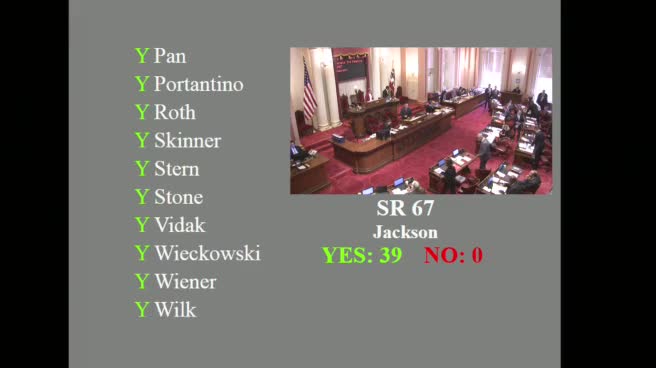 2MIN
Senate Floor
 1MIN
Assembly Floor
 44SEC
Assembly Floor
 1H
Assembly Standing Committee on Appropriations
 12MIN
Assembly Standing Committee on Higher Education
 2MIN
Senate Floor
 48MIN
Senate Standing Committee on Appropriations
 49SEC
Senate Standing Committee on Appropriations
Bill Author

Bill Co-Author(s):