SB 690: State Bar of California: disclosures.
- Session Year: 2017-2018
- House: Senate
- Latest Version Date: 2017-10-02
The State Bar Act provides for the licensure and regulation of attorneys by the State Bar of California, a public corporation governed by a board of trustees, and provides that the State Bar is subject to the Bagley-Keene Open Meeting Act and the California Public Records Act, as specified. That act requires an applicant for admission to the State Bar to, among other things, take and pass the California bar examination. That act prohibits the State Bar from disclosing any identifying information submitted by an applicant for admission and provides that all such information is confidential.
This bill would authorize the disclosure of specified information, subject to state and federal laws protecting education records, submitted by an applicant to the State Bar for admission and license to practice, including the names of applicants who have passed any examination administered by the State Bar. The authorization would apply commencing January 1, 2016. The bill would also prohibit the State Bar from disclosing, and would provide for the confidentiality of, any information received from an educational or testing entity collected by the State Bar for the purposes of conducting a specified study, except for aggregate, summary, or statistical data that does not identify any person and does not provide substantial risk of identification of any person.
Existing constitutional provisions require that a statute that limits the right of access to the meetings of public bodies or the writings of public officials and agencies be adopted with findings demonstrating the interest protected by the limitation and the need for protecting that interest.
This bill would make legislative findings to that effect.
This bill would declare that it is to take effect immediately as an urgency statute.
The State Bar Act provides for the licensure and regulation of attorneys by the State Bar of California, a public corporation governed by a board of trustees, and provides that the State Bar is subject to the Bagley-Keene Open Meeting Act and the California Public Records Act, as specified. That act requires an applicant for admission to the State Bar to, among other things, take and pass the California bar examination. That act prohibits the State Bar from disclosing any identifying information submitted by an applicant for admission and provides that all such information is confidential.
This bill would authorize the disclosure of specified information information, subject to state and federal laws protecting education records, submitted by an applicant to the State Bar for admission and license to practice, including the names of applicants who have passed any examination administered by the State Bar. The authorization would apply commencing January 1, 2016. The bill would also prohibit the State Bar from disclosing, and would provide for the confidentiality of, any information received from an educational or testing entity collected by the State Bar for the purposes of conducting a specified study. study, except for aggregate, summary, or statistical data that does not identify any person and does not provide substantial risk of identification of any person.
Existing constitutional provisions require that a statute that limits the right of access to the meetings of public bodies or the writings of public officials and agencies be adopted with findings demonstrating the interest protected by the limitation and the need for protecting that interest.
This bill would make legislative findings to that effect.
This bill would declare that it is to take effect immediately as an urgency statute.
The State Bar Act provides for the licensure and regulation of attorneys by the State Bar of California, a public corporation governed by a board of trustees, and provides that the State Bar is subject to the Bagley-Keene Open Meeting Act and the California Public Records Act, as specified. That act requires an applicant for admission to the State Bar to, among other things, take and pass the California bar examination. That act prohibits the State Bar from disclosing any identifying information submitted by an applicant for admission and provides that all such information is confidential.
This bill would authorize the disclosure of specified information submitted by an applicant to the State Bar for admission and license to practice, including the names of applicants who have passed any examination administered by the State Bar. The authorization would apply commencing January 1, 2016. The bill would also prohibit the State Bar from disclosing, and would provide for the confidentiality of, any information received from an educational or testing entity collected by the State Bar for the purposes of conducting a specified study.
Existing constitutional provisions require that a statute that limits the right of access to the meetings of public bodies or the writings of public officials and agencies be adopted with findings demonstrating the interest protected by the limitation and the need for protecting that interest.
This bill would make legislative findings to that effect.
This bill would declare that it is to take effect immediately as an urgency statute.
The State Bar Act provides for the licensure and regulation of attorneys by the State Bar of California, a public corporation governed by a board of trustees, and provides that the State Bar is subject to the Bagley-Keene Open Meeting Act and the California Public Records Act, as specified. That act requires an applicant for admission to the State Bar to, among other things, take and pass the California bar examination. That act prohibits the State Bar from disclosing any identifying information submitted by an applicant for admission and provides that all such information is confidential.
This bill would revise that provision to prohibit disclosure of, and provide for the confidentiality of, any information submitted by an applicant to the State Bar for admission and all State Bar admission records, information received from an educational or testing entity that is collected by the State Bar for certain purposes, or any statistical or other derivative information created by the State Bar using that information if the statistical or derivative information contains details that may be used to identify applicants. The bill would also authorize the disclosure of specified information, information submitted by an applicant to the State Bar for admission and license to practice, including the names of applicants who have passed any examination administered by the State Bar. The bills provisions authorization would apply commencing January 1, 2016.
This bill would declare that it is to take effect immediately as an urgency statute.
The State Bar Act provides for the licensure and regulation of attorneys by the State Bar of California, a public corporation governed by a board of trustees, and provides that the State Bar is subject to the Bagley-Keene Open Meeting Act and the California Public Records Act, as specified. That act requires an applicant for admission to the State Bar to, among other things, take and pass the California bar examination. That act prohibits the State Bar from disclosing any identifying information submitted by an applicant for admission and provides that all such information is confidential.
This bill would revise that provision to prohibit disclosure of, and provide for the confidentiality of, any information submitted by an applicant to the State Bar for admission and all State Bar admission records, information received from an educational or testing entity that is collected by the State Bar for certain purposes, or any statistical or other derivative information created by the State Bar using that information if the statistical or derivative information contains details that may be used to identify applicants. The bill would also authorize the disclosure of specified information submitted by an applicant to the State Bar for admission and license to practice, information, including the names of applicants who have passed any examination administered by the State Bar. The authorization The bills provisions would apply commencing January 1, 2016.
This bill would declare that it is to take effect immediately as an urgency statute.
The State Bar Act provides for the licensure and regulation of attorneys by the State Bar of California, a public corporation governed by a board of trustees, and provides that the State Bar is subject to the Bagley-Keene Open Meeting Act and the California Public Records Act, as specified. That act requires an applicant for admission to the State Bar to, among other things, take and pass the California bar examination. That act prohibits the State Bar from disclosing any identifying information submitted by an applicant for admission and provides that all such information is confidential.
This bill would authorize the disclosure of specified information submitted by an applicant to the State Bar for admission and license to practice, including the names of applicants who have passed any examination administered by the State Bar. The authorization would apply commencing January 1, 2016.
This bill would declare that it is to take effect immediately as an urgency statute.
(a)Notwithstanding any other law, any identifying information submitted by an applicant to the State Bar for admission and a license to practice law and all State Bar admission records, including, but not limited to, bar examination scores, law school grade point average (GPA), undergraduate GPA, Law School Admission Test scores, race or ethnicity, and any information contained within the State Bar Admissions database or any file or other data created by the State Bar with information submitted by the applicant that may identify an individual applicant, other than information described in subdivision (b), shall be confidential and shall not be disclosed pursuant to any state law, including, but not limited to, the California Public Records Act (Chapter 3.5 (commencing with Section 6250) of Division 7 of Title 1 of the Government Code).
(b)Subject to existing state and federal laws protecting education records, subdivision (a) does not prohibit the disclosure of any of the following:
(1)The names of applicants who have passed any examination administered, given, or prescribed by the Committee of Bar Examiners.
(2)Information that is provided at the request of an applicant to another jurisdiction where the applicant is seeking admission to the practice of law.
(3)Information provided to a law school that is necessary for the purpose of the law schools compliance with accreditation or regulatory requirements. Beginning with the release of results from the July 2018 bar examination, the information provided to a law school shall also include the bar examination results of the law schools graduates allocated to the law school and the scores of any graduate allocated to the law school who did not pass the bar examination and who consents to the release of his or her scores to the law school. Consent of a law school graduate to the release of his or her scores may be obtained by a check-off on the graduates application to take the bar examination. For purposes of this paragraph, scores means the same scores reported to a graduate who did not successfully pass the bar examination.
(4)Information provided to the National Conference of Bar Examiners or a successor nonprofit organization in connection to the State Bars administration of any examination.
(5)This subdivision shall apply retroactively to January 1, 2016.
(c)Disclosure of any of the information in paragraphs (2) to (4), inclusive, of subdivision (b) shall not constitute a waiver under Section 6254.5 of the Government Code of the exemption from disclosure provided for in subdivision (a) of this section.
(d)(1)Notwithstanding any other law except existing state and federal laws protecting education records, any information received from an educational or testing entity that is collected by the State Bar for the purpose of conducting a Law School Bar Exam Performance Study as the State Bar has been directed to do by the California Supreme Court by letter dated February 28, 2017, other than aggregate, summary, or statistical data that does not identify any person and does not provide substantial risk of identification of any person, shall be confidential and shall not be disclosed pursuant to any state law, including, but not limited to, the California Public Records Act (Chapter 3.5 (commencing with Section 6250) of Division 7 of Title 1 of the Government Code).
(2)Nothing in this subdivision is intended to impact any litigation pending on the effective date of the measure that added this subdivision.
SEC. 2.The Legislature finds and declares that Section 1 of this act, which amends Section 6060.25 of the Business and Professions Code, imposes a limitation on the publics right of access to the meetings of public bodies or the writings of public officials and agencies within the meaning of Section 3 of Article I of the California Constitution. Pursuant to that constitutional provision, the Legislature makes the following findings to demonstrate the interest protected by this limitation and the need for protecting that interest:
This act appropriately balances the publics right of access to information collected by the State Bar for the purpose of conducting a Law School Bar Exam Performance Study with the need to protect the privacy and confidentiality of that information.
SEC. 3.This act is an urgency statute necessary for the immediate preservation of the public peace, health, or safety within the meaning of Article IV of the California Constitution and shall go into immediate effect. The facts constituting the necessity are:
In order for the State Bar to fulfill its licensing and regulatory duties relating to admission to practice, it is necessary that this act take effect immediately.
(a)Notwithstanding any other law, any identifying information submitted by an applicant to the State Bar for admission and a license to practice law and all State Bar admission records, including, but not limited to, bar examination scores, law school grade point average (GPA), undergraduate GPA, Law School Admission Test scores, race or ethnicity, and any information contained within the State Bar Admissions database or any file or other data created by the State Bar with information submitted by the applicant that may identify an individual applicant, other than information described in subdivision (b), shall be confidential and shall not be disclosed pursuant to any state law, including, but not limited to, the California Public Records Act (Chapter 3.5 (commencing with Section 6250) of Division 7 of Title 1 of the Government Code).
(b)Subdivision Subject to existing state and federal laws protecting education records, subdivision (a) does not prohibit the disclosure of any of the following:
(1)The names of applicants who have passed any examination administered, given, or prescribed by the Committee of Bar Examiners.
(2)Information that is provided at the request of an applicant to another jurisdiction where the applicant is seeking admission to the practice of law.
(3)Information provided to a law school that is necessary for the purpose of the law schools compliance with accreditation or regulatory requirements. Beginning with the release of results from the July 2018 bar examination, the information provided to a law school shall also include the bar examination results of the law schools graduates allocated to the law school and the scores of any graduate allocated to the law school who did not pass the bar examination and who consents to the release of his or her scores to the law school. Consent of a law school graduate to the release of his or her scores may be obtained by a check-off on the graduates application to take the bar examination. For purposes of this paragraph, scores means the same scores reported to a graduate who did not successfully pass the bar examination.
(4)Information provided to the National Conference of Bar Examiners or a successor nonprofit organization in connection to the State Bars administration of any examination.
(5)This subdivision shall apply retroactively to January 1, 2016.
(c)Disclosure of any of the information in paragraphs (2) to (4), inclusive, of subdivision (b) shall not constitute a waiver under Section 6254.5 of the Government Code of the exemption from disclosure provided for in subdivision (a) of this section.
(d)(1)Notwithstanding any other law, law except existing state and federal laws protecting education records, any information received from an educational or testing entity that is collected by the State Bar for the purpose of conducting a Law School Bar Exam Performance Study as the State Bar has been directed to do by the California Supreme Court by letter dated February 28, 2017, other than aggregate, summary, or statistical data that does not identify any person and does not provide substantial risk of identification of any person, shall be confidential and shall not be disclosed pursuant to any state law, including, but not limited to, the California Public Records Act (Chapter 3.5 (commencing with Section 6250) of Division 7 of Title 1 of the Government Code).
(2)Nothing in this subdivision is intended to impact any litigation pending on the effective date of the measure that added this subdivision.
SEC. 2.The Legislature finds and declares that Section 1 of this act, which amends Section 6060.25 of the Business and Professions Code, imposes a limitation on the publics right of access to the meetings of public bodies or the writings of public officials and agencies within the meaning of Section 3 of Article I of the California Constitution. Pursuant to that constitutional provision, the Legislature makes the following findings to demonstrate the interest protected by this limitation and the need for protecting that interest:
This act appropriately balances the publics right of access to information collected by the State Bar for the purpose of conducting a Law School Bar Exam Performance Study with the need to protect the privacy and confidentiality of that information.
SEC. 3.This act is an urgency statute necessary for the immediate preservation of the public peace, health, or safety within the meaning of Article IV of the California Constitution and shall go into immediate effect. The facts constituting the necessity are:
In order for the State Bar to fulfill its licensing and regulatory duties relating to admission to practice, it is necessary that this act take effect immediately.
(a)Notwithstanding any other law, any identifying information submitted by an applicant to the State Bar for admission and a license to practice law and all State Bar admission records, including, but not limited to, bar examination scores, law school grade point average (GPA), undergraduate GPA, Law School Admission Test scores, race or ethnicity, and any information contained within the State Bar Admissions database or any file or other data created by the State Bar with information submitted by the applicant that may identify an individual applicant, other than information described in subdivision (b), shall be confidential and shall not be disclosed pursuant to any state law, including, but not limited to, the California Public Records Act (Chapter 3.5 (commencing with Section 6250) of Division 7 of Title 1 of the Government Code).
(b)This section Subdivision (a) does not prohibit the disclosure of any of the following:
(1)The names of applicants who have passed any examination administered, given, or prescribed by the Committee of Bar Examiners.
(2)Information that is provided at the request of an applicant to another jurisdiction where the applicant is seeking admission to the practice of law.
(3)Information provided to a law school that is necessary for the purpose of the law schools compliance with accreditation or regulatory requirements.
(4)Information provided to the National Conference of Bar Examiners or a successor nonprofit organization in connection to the State Bars administration of any examination.
(5)This subdivision shall apply retroactively to January 1, 2016.
(c)Disclosure of any of the information in paragraphs (2) to (4), inclusive, of subdivision (b) shall not constitute a waiver under Section 6254.5 of the Government Code of the exemption from disclosure provided for in subdivision (a) of this section.
(d)Notwithstanding any other law, any information received from an educational or testing entity that is collected by the State Bar for the purpose of conducting a Law School Bar Exam Performance Study as the State Bar has been directed to do by the California Supreme Court by letter dated February 28, 2017, shall be confidential and shall not be disclosed pursuant to any state law, including, but not limited to, the California Public Records Act (Chapter 3.5 (commencing with Section 6250) of Division 7 of Title 1 of the Government Code).
SEC. 2.The Legislature finds and declares that Section 1 of this act, which amends Section 6060.25 of the Business and Professions Code, imposes a limitation on the publics right of access to the meetings of public bodies or the writings of public officials and agencies within the meaning of Section 3 of Article I of the California Constitution. Pursuant to that constitutional provision, the Legislature makes the following findings to demonstrate the interest protected by this limitation and the need for protecting that interest:
This act appropriately balances the publics right of access to information collected by the State Bar for the purpose of conducting a Law School Bar Exam Performance Study with the need to protect the privacy and confidentiality of that information.
SEC. 2.SEC. 3.This act is an urgency statute necessary for the immediate preservation of the public peace, health, or safety within the meaning of Article IV of the California Constitution and shall go into immediate effect. The facts constituting the necessity are:
In order for the State Bar to fulfill its licensing and regulatory duties relating to admission to practice, it is necessary that this act take effect immediately.
(a)Notwithstanding any other law, the following shall be confidential and shall not be disclosed pursuant to any state law, including, but not limited to, the California Public Records Act (Chapter 3.5 (commencing with Section 6250) of Division 7 of Title 1 of the Government Code):
(1)Any law, any identifying information submitted by an applicant to the State Bar for admission and a license to practice law and all State Bar admission records, including, but not limited to, bar examination scores, law school grade point average (GPA), undergraduate GPA, Law School Admission Test scores, and race or ethnicity. ethnicity, and any information contained within the State Bar Admissions database or any file or other data created by the State Bar with information submitted by the applicant that may identify an individual applicant, other than information described in subdivision (b), shall be confidential and shall not be disclosed pursuant to any state law, including, but not limited to, the California Public Records Act (Chapter 3.5 (commencing with Section 6250) of Division 7 of Title 1 of the Government Code).
(2)Any information received from an educational or testing entity that is collected by the State Bar for the purpose of research or statistical activities in connection with any State Bar examination.(3)Any statistical or other derivative information created by the State Bar using the information subject to paragraph (1) or (2) above if the statistical or other derivative information contains details that may be used to identify applicants.(b)This section does not prohibit the disclosure of any of the following:
(1)The names of applicants who have passed any examination administered, given, or prescribed by the Committee of Bar Examiners.
(2)Information that is provided at the request of an applicant to another jurisdiction where the applicant is seeking admission to the practice of law.
(3)Information provided to a law school that is necessary for the purpose of the law schools compliance with accreditation or regulatory requirements.
(4)Information provided to other agencies, persons, jurisdictions, law schools, and others in connection with the investigation that is conducted to determine the good moral character required by subdivision (b) of Section 6060 of this code.(5)(4)Information provided to the National Conference of Bar Examiners or a successor nonprofit organization in connection to the State Bars administration of any examination.
(6)Information about an individual applicant disclosed pursuant to the express written permission of that individual applicant, except that under this provision the bar examination scores of passing applicants only may be disclosed to other jurisdictions.(7)Reports or publications prepared by or for the State Bar of California if the information contained in the report or publication may not be used to identify an individual applicant.(5)This subdivision shall apply retroactively to January 1, 2016.
(c)Disclosure of any of the information in paragraphs (2) to (4), inclusive, of subdivision (b) shall not constitute a waiver of the exemption from disclosure under Section 6254.5 of the Government Code. Code of the exemption from disclosure provided for in subdivision (a) of this section.
(d)This section shall apply retroactively to January 1, 2016.SEC. 2.This act is an urgency statute necessary for the immediate preservation of the public peace, health, or safety within the meaning of Article IV of the California Constitution and shall go into immediate effect. The facts constituting the necessity are:
In order for the State Bar to fulfill its licensing and regulatory duties relating to admission to practice, it is necessary that this act take effect immediately.
(a)Notwithstanding any other law, any identifying the following shall be confidential and shall not be disclosed pursuant to any state law, including, but not limited to, the California Public Records Act (Chapter 3.5 (commencing with Section 6250) of Division 7 of Title 1 of the Government Code):
(1)Any information submitted by an applicant to the State Bar for admission and a license to practice law and all State Bar admission records, including, but not limited to, bar examination scores, law school grade point average (GPA), undergraduate GPA, Law School Admission Test scores, and race or ethnicity, and any ethnicity.
(2)Any information received from an educational or testing entity that is collected by the State Bar for the purpose of research or statistical activities in connection with any State Bar examination.
(3)Any statistical or other derivative information contained within the State Bar Admissions database or any file or other data created by the State Bar with information submitted by the applicant that may identify an individual applicant, other than information described in subdivision (b), shall be confidential and shall not be disclosed pursuant to any state law, including, but not limited to, the California Public Records Act (Chapter 3.5 (commencing with Section 6250) of Division 7 of Title 1 of the Government Code). using the information subject to paragraph (1) or (2) above if the statistical or other derivative information contains details that may be used to identify applicants.
(b)This section does not prohibit the disclosure of any of the following:
(1)The names of applicants who have passed any examination administered, given, or prescribed by the Committee of Bar Examiners.
(2)Information that is provided at the request of an applicant to another jurisdiction where the applicant is seeking admission to the practice of law.
(3)Information provided to a law school that is necessary for the purpose of the law schools compliance with accreditation or regulatory requirements.
(4)Information provided to other agencies, persons, jurisdictions, law schools, and others in connection with the investigation that is conducted to determine the good moral character required by subdivision (b) of Section 6060 of this code.
(4)(5)Information provided to the National Conference of Bar Examiners or a successor nonprofit organization in connection to the State Bars administration of any examination.
(5)This subdivision shall apply retroactively to January 1, 2016.(6)Information about an individual applicant disclosed pursuant to the express written permission of that individual applicant, except that under this provision the bar examination scores of passing applicants only may be disclosed to other jurisdictions.
(7)Reports or publications prepared by or for the State Bar of California if the information contained in the report or publication may not be used to identify an individual applicant.
(c)Disclosure of any of the information in paragraphs (2) to (4), inclusive, of subdivision (b) shall not constitute a waiver of the exemption from disclosure under Section 6254.5 of the Government Code of the exemption from disclosure provided for in subdivision (a) of this section. Code.
(d)This section shall apply retroactively to January 1, 2016.
SEC. 2.This act is an urgency statute necessary for the immediate preservation of the public peace, health, or safety within the meaning of Article IV of the California Constitution and shall go into immediate effect. The facts constituting the necessity are:
In order for the State Bar to fulfill its licensing and regulatory duties relating to admission to practice, it is necessary that this act take effect immediately.
(a)Notwithstanding any other law, any identifying information submitted by an applicant to the State Bar for admission and a license to practice law and all State Bar admission records, including, but not limited to, bar examination scores, law school grade point average (GPA), undergraduate GPA, Law School Admission Test scores, race or ethnicity, and any information contained within the State Bar Admissions database or any file or other data created by the State Bar with information submitted by the applicant that may identify an individual applicant, other than information described in subdivision (b), shall be confidential and shall not be disclosed pursuant to any state law, including, but not limited to, the California Public Records Act (Chapter 3.5 (commencing with Section 6250) of Division 7 of Title 1 of the Government Code).
(b)This section does not prohibit the disclosure of any of the following:
(1)The names of applicants who have passed any examination administered, given, or prescribed by the Committee of Bar Examiners.
(2)Information that is provided at the request of an applicant to another jurisdiction where the applicant is seeking admission to the practice of law.
(3)Information provided to a law school that is necessary for the purpose of the law schools compliance with accreditation or regulatory requirements.
(4)Information provided to the National Conference of Bar Examiners or a successor nonprofit organization in connection to the State Bars administration of any examination.
(5)This subdivision shall apply retroactively to January 1, 2016.
(c)Disclosure of any of the information in paragraphs (2) to (4), inclusive, of subdivision (b) shall not constitute a waiver under Section 6254.5 of the Government Code of the exemption from disclosure provided for in subdivision (a) of this section.
SEC. 2.This act is an urgency statute necessary for the immediate preservation of the public peace, health, or safety within the meaning of Article IV of the California Constitution and shall go into immediate effect. The facts constituting the necessity are:
In order for the State Bar to fulfill its licensing and regulatory duties relating to admission to practice, it is necessary that this act take effect immediately.
|
Date
|
Status
|
|---|---|
| Oct 2, 2017 | Chaptered by Secretary of State. Chapter 433, Statutes of 2017. |
| Oct 2, 2017 | Approved by the Governor. |
| Sep 12, 2017 | Enrolled and presented to the Governor at 3 p.m. |
| Sep 7, 2017 | Assembly amendments concurred in. (Ayes 39. Noes 0.) Ordered to engrossing and enrolling. |
| Sep 1, 2017 | In Senate. Concurrence in Assembly amendments pending. |
| Sep 1, 2017 | Read third time. Urgency clause adopted. Passed. Ordered to the Senate. |
| Aug 21, 2017 | Read second time. Ordered to third reading. |
| Jul 20, 2017 | Read second time and amended. Ordered to second reading. |
| Jul 19, 2017 | From committee: Do pass as amended. (Ayes 11. Noes 0.) (July 18). |
| Jun 12, 2017 | Referred to Com. on JUD. |
| May 31, 2017 | In Assembly. Read first time. Held at Desk. |
| May 30, 2017 | Read third time. Urgency clause adopted. Passed. (Ayes 40. Noes 0. Page 1252.) Ordered to the Assembly. |
| May 17, 2017 | Read second time. Ordered to third reading. |
| May 16, 2017 | Read third time and amended. |
| May 4, 2017 | Published May 3 at 9 p.m. |
| May 3, 2017 | Read third time and amended. |
| Apr 17, 2017 | From consent calendar on motion of Senator Jackson. |
| Apr 6, 2017 | Read second time. Ordered to consent calendar. |
| Apr 5, 2017 | From committee: Do pass. Ordered to consent calendar. (Ayes 6. Noes 0. Page 626.) (April 4). |
| Mar 27, 2017 | From committee with author's amendments. Read second time and amended. Re-referred to Com. on JUD. |
| Mar 21, 2017 | Set for hearing April 4. |
| Mar 9, 2017 | Referred to Com. on JUD. |
| Feb 21, 2017 | From printer. May be acted upon on or after March 23. |
| Feb 17, 2017 | Introduced. Read first time. To Com. on RLS. for assignment. To print. |
|
Date
|
Description
|
Location
|
Votes
|
|
|---|---|---|---|---|
| Sep 7, 2017 | Unfinished Business SB690 Jackson Urgency Clause Concurrence | Senate Floor |
Passed |
|
| Sep 1, 2017 | SB 690 Jackson Third Reading Urgency By STONE | Assembly Floor |
Passed |
|
| Jul 18, 2017 | Do pass as amended. | Assembly Standing Committee on Judiciary |
Passed |
|
| May 30, 2017 | Senate 3rd Reading SB690 Jackson Urgency Clause | Senate Floor |
Passed |
|
| Apr 4, 2017 | Do pass and be ordered to the Consent Calendar | Senate Standing Committee on Judiciary |
Passed |
This list shows positions taken on this bill by organizations on the date displayed, which is linked to the original source.
Positions by individuals are not included.
|
Organization
|
Position
|
Date
|
|---|---|---|
| california association of scholars | ** Against | Sep 6, 2017 |
| california western school of law, san diego | ** Support | Jul 17, 2017 |
| chapman university, fowler school of law | ** Support | Jul 17, 2017 |
| Dean of Student Life | ** Support | Sep 6, 2017 |
| First Amendment Coalition | ** Against | Jul 17, 2017 |
| Five individuals | ** Against | Jul 17, 2017 |
| golden gate university school of law | ** Support | Jul 17, 2017 |
| judge quentin kopp | ** Against | Sep 6, 2017 |
| Loyola Law School | ** Support | Jul 17, 2017 |
| pepperdine university school of law | ** Support | Jul 17, 2017 |
| Santa Clara Law | ** Support | Jul 17, 2017 |
| southern california institute of law | ** Against | Sep 6, 2017 |
| Southwestern Law School | ** Support | Jul 17, 2017 |
| stanford university, school of law | ** Support | Jul 17, 2017 |
| Thomas Jefferson School of Law | ** Support | Jul 17, 2017 |
| university of california, berkeley, school of law | ** Support | Jul 17, 2017 |
| university of california, hastings, college of law | ** Support | Jul 17, 2017 |
| university of california, irvine, school of law | ** Support | Jul 17, 2017 |
| university of california, los angeles, school of law | ** Support | Jul 17, 2017 |
| university of la verne, college of law | ** Support | Jul 17, 2017 |
| university of pacific, mcgeorge school of law | ** Support | Jul 17, 2017 |
| university of san diego, school of law | ** Support | Jul 17, 2017 |
| university of san francisco, school of law | ** Support | Jul 17, 2017 |
| university of southern california, gould school of law | ** Support | Jul 17, 2017 |
| western state college of law | ** Support | Jul 17, 2017 |
| whittier law school | ** Support | Jul 17, 2017 |
Office of Senate Floor Analyses (916) 651-1520 Fax: (916) 327-4478 | SB |
UNFINISHED BUSINESS
Bill No: SB 690
:
SENATE JUDICIARY COMMITTEE: 6-0, 4/4/17
AYES: Jackson, Moorlach, Hertzberg, Monning, Stern, Wieckowski
NO VOTE RECORDED: Anderson
SENATE FLOOR: 40-0, 5/30/17
AYES: Allen, Anderson, Atkins, Bates, Beall, Berryhill, Bradford, Cannella, De León, Dodd, Fuller, Gaines, Galgiani, Glazer, Hernandez, Hertzberg, Hill, Hueso, Jackson, Lara, Leyva, McGuire, Mendoza, Mitchell, Monning, Moorlach, Morrell, Newman, Nguyen, Nielsen, Pan, Portantino, Roth, Skinner, Stern, Stone, Vidak, Wieckowski, Wiener, Wilk
ASSEMBLY FLOOR: 77-0, 9/1/17 - See last page for vote
DIGEST:
This bill allows the State Bar of California (State Bar) to disclose information it is currently prohibited from disclosing and that law schools need in order to comply with regulatory and accreditation requirements. This bill remedies unintended consequences that resulted from subjecting records of the State Bar to the California Public Records Act (CPRA). This bill provides that any information received from an educational or testing entity that is collected by the State Bar for the purpose of conducting the Law School Bar Exam Performance Study shall be confidential and shall not be disclosed pursuant to any state law, except that aggregate, summary, or statistical data that does not identify any person and does not provide substantial risk of identification of any person may be disclosed, as specified.
Assembly Amendments
- make clarifying changes including that the disclosure of information authorized by this bill is subject to state and federal laws protecting education records. Assembly amendments clarify that specified aggregate, summary, or statistical data with respect to a specific Law School Bar Exam Performance Study may be shared by the State Bar so long as the data does not identify any person and does not provide substantial risk of identification of any person. Assembly amendments also require that beginning with the release of results from the July 2018 bar examination, the information provided to a law school shall also include the bar examination results of the law school’s graduates and the scores of any graduate who did not pass the bar examination as long as the graduate consents to the release of their score to the law school.
ANALYSIS:
Existing law:
- Declares, under the California Constitution, the people’s right to transparency in government. (“The people have the right of access to information concerning the conduct of the people’s business, and therefore, the meetings of public bodies and the writings of public officials and agencies shall be open to public scrutiny....”)
- Governs, under the CPRA, the public disclosure of information collected and maintained by public agencies. Generally, all public records are accessible to the public upon request, unless the record requested is exempt from public disclosure. There are 30 general categories of documents or information that are exempt from disclosure, essentially due to the character of the information, and unless it is shown that the public’s interest in disclosure outweighs the public’s interest in non-disclosure of the information, the exempt information may be withheld by the public agency with custody of the information.
- Defines state agency, for the purposes of the CPRA, to include every state officer, department, division, bureau, board, and commission or other state body or agency, except for the Legislature and the Judiciary.
- Subjects the State Bar to the CPRA and provides that all public records and writings of the State Bar are subject to the CPRA with exceptions, as specified.
- Provides that all investigations or proceedings conducted by the State Bar concerning the moral character of an applicant shall be confidential and shall not be disclosed pursuant to any state law, including the CPRA, unless the applicant, in writing, waives the confidentiality.
- Provides that the following shall be confidential and shall not be disclosed pursuant to any state law, including, but not limited to the CPRA:
- State Bar discipline investigation records in the investigation of an attorney or of the conduct of the business of a law corporation, except as specified;
- fee arbitration settlement discussions and offers of settlement; and
- any information provided to or obtained by the Attorney Diversion and Assistance Program or any subcommittee or agent thereof.
- Does not require, under the CPRA, the disclosure of test questions, scoring keys, and other examination data used to administer a licensing examination.
- Provides that the following shall be confidential and shall not be disclosed by the State Bar pursuant to any state law, including, but not limited to the CPRA:
- any identifying information submitted by an applicant to the State Bar for admission and a license to practice law;
- all State Bar admission records, including, but not limited to, bar examination scores, law school grade point average, undergraduate grade point average, Law School Admission Test scores, race or ethnicity;
- any information contained within the State Bar Admissions database; and
- any file or other data created by the State Bar with information submitted by the applicant that may identify any individual applicant.
This bill:
- Provides that subject to existing state and federal laws protecting education records, the State Bar is not prohibited from disclosing any of the following:
- the names of applicants who have passed any examination administered, given, or prescribed by the Committee of Bar Examiners;
- information that is provided at the request of an applicant to another jurisdiction where the applicant is seeking admission to the practice of law;
- information provided to a law school that is necessary for the purpose of the law school’s compliance with accreditation or regulatory requirements; and
- information provided to the National Conference of Bar Examiners or a successor nonprofit organization in connection to the State Bar’s administration of any examination.
- Provides that if the State Bar discloses the above information, it shall not constitute a waiver of the exemption from disclosure under the CPRA and that these provisions apply retroactively to January 1, 2016.
- Provides that notwithstanding any other law, any information received from an educational or testing entity that is collected by the State Bar for the purpose of conducting a Law School Bar Exam Performance Study as the State Bar has been directed to do by the California Supreme Court by letter dated February 28, 2017, shall be confidential and shall not be disclosed pursuant to any state law, including, but not limited to, the CPRA. However, aggregate, summary, or statistical data that does not identify any person and does not provide substantial risk of identification of any person may be disclosed.
- Provides that disclosure of information authorized by this bill is subject to state and federal laws protecting education records.
- Provides that beginning with the release of results from the July 2018 bar examination, the information provided by the State Bar to a law school shall also include the bar examination results of the law school’s graduates and the scores of any graduate who did not pass the bar examination as long as the graduate consents to the release of their score to the law school.
- Goes into effect immediately as an urgency statute.
Background
The State Bar is a public corporation. An attorney who wishes to practice law in California generally must be admitted and licensed in this state and must be a member of the State Bar. (Cal. Const., Art. VI, Sec. 9.) The State Bar Act requires an applicant for admission to the State Bar to, among other things, take and pass the California bar examination and show that they are of good moral character. Applicants are required to submit a variety of information to the State Bar during the application process. Additionally, the State Bar receives information about applicants, including moral character information, during the application process.
When the State Bar Act was amended through SB 387 (Jackson, Chapter 537, Statutes of 2015), the State Bar became subject to the Bagley-Keene Open Meeting Act and the CPRA. Because the State Bar holds personal information about applicants, SB 387 included provisions designed to protect the personal information of applicants from public disclosure. The State Bar became subject to the CPRA on January 1, 2016, and unintended consequences arose.
The statutory provisions that were designed to protect the confidentiality of applicants had the effect of stopping the State Bar from releasing information about applicants that the State Bar had historically released. For example, the State Bar ceased publishing the names of those who passed the bar exam and can no longer send information to other jurisdictions where the applicant is seeking admission. This bill allows the State Bar to disclose the names of applicants who have passed an examination administered or prescribed by the State Bar. The bill allows the State Bar to, at the request of an applicant, disclose information to another jurisdiction where the applicant is seeking admission to the practice of law. Additionally, this bill allows the State Bar to disclose information to a law school that is necessary for the purpose of the law school’s compliance with accreditation or regulatory requirements. The bill also allows the State Bar to share information with the National Conference of Bar Examiners in connection to the State Bar’s administration of an examination.
In a letter to the author, the Deans and Assistant Deans of all but one of the American Bar Association (ABA) accredited California law schools noted that the State Bar ceased releasing information to law schools that the law schools need to comply with their accreditation and regulatory requirements. For example, law schools are required to report and certify bar exam pass data for accreditation purposes, and are required to post their Bar pass rates online for regulatory purposes. According to the Deans and Assistant Deans, law schools are “unable to fulfill these important requirements without reviewing the information previously provided to law schools by the State Bar.” To remedy this problem, this bill allows the State Bar to disclose information to law schools that is necessary for the purpose of the law school’s compliance with accreditation or regulatory requirements. The provisions of the bill are retroactive to January 1, 2016, to permit law schools to receive data from the February 2016, July 2016, and February 2017 examinations.
In response to recent concerns regarding the low bar exam pass rate, the California Supreme Court directed the State Bar to study and analyze a number of issues related to the bar exam. The Supreme Court directed the State Bar to submit recommendations for any changes to the bar exam by December 1, 2017. In order to conduct a comprehensive analysis of the bar exam, the State Bar will need to review information they obtain from testing entities and information held by law schools regarding their law students. Law schools are not willing to share student information with the State Bar unless they receive statutory assurance that the information will not be disclosed through the CPRA.
Accordingly, this bill provides that any information received from an educational or testing entity that is collected by the State Bar for the purpose of conducting a Law School Bar Exam Performance Study as the State Bar has been directed to do by the California Supreme Court by letter dated February 28, 2017, shall be confidential and shall not be disclosed pursuant to any state law, including, but not limited to, the CPRA.
Comments
The author writes:
Historically the California Public Records Act (CPRA) did not apply to the State Bar. On January 1, 2016, the State Bar became subject to the CPRA through legislation. The legislation included provisions designed to protect information about applicants from disclosure by the State Bar. Unfortunately, the State Bar has interpreted these provisions as prohibiting them from sharing information with law schools that law schools need to comply with their accreditation and regulatory requirements. This was an unintended consequence of that bill. The law school deans from all but one ABA approved law school requested a bill to correct and clarify this issue. As the Chair of the Senate Committee on Judiciary, I am authoring this urgency legislation to enable law schools to receive this important information and to again allow the State Bar to disclose information they have historically disclosed, including the names of applicants who have passed the bar exam. This bill also contains provisions that will aid the State Bar in receiving the information they need in order to conduct a thorough study and review of the bar exam to determine why the pass rate was so low in recent bar exams and what can be done about it.
The CPRA applies to the State Bar
The State of California simultaneously grants the public a right to access records collected and maintained by public agencies, and an individual’s constitutional right to privacy. In circumstances where these two principles are in conflict, the Legislature has approved limited exceptions, seeking to strike an appropriate balance. There are 30 general categories of documents or information that are exempt from disclosure, essentially due to the character of the information, and unless it is shown that the public’s interest in disclosure outweighs the public’s interest in non-disclosure of the information, the exempt information may be withheld by the public agency with custody of the information. (Gov. Code Sec. 6254 et seq.) For example, while employee records fall within the scope of the CPRA and are therefore subject to disclosure, in order to protect the individual employee’s right to privacy, existing law provides that the home addresses and private telephone numbers of employees “shall not be deemed to be public records and shall not be open to public inspection[.]”(Gov. Code Sec. 6254.3.)
When the State Bar became subject to the CPRA, the Legislature also broadly prohibited the State Bar from disclosing information about applicants for admission. Historically, however, the State Bar released the names of applicants who passed the bar exam. This practice ceased because of the legislation. The State Bar also ceased releasing information for other purposes crucial to applicant admission in California and outside of California. This bill again allows the State Bar to disclose this information.
Additional protections to applicant information to facilitate State Bar’s study of the bar exam pass rate
The California Supreme Court recently directed the State Bar to conduct a thorough and expedited study of the bar exam pass rate. The Supreme Court writes:
[G]iven the significant impact of the pass rate on law school graduates, the issue calls for a thorough and expedited study. The court is informed that the State Bar has begun investigating the potential causes of the declining California bar pass rates and is reviewing the bar exam and its grading system. The court agrees such an investigation is critically important, and directs the State Bar to ensure the investigation includes: (1) identification and exploration of all issues affecting California bar pass rates; (2) a meaningful analysis of the current pass rate and information sufficient to determine whether protection of potential clients and the public is served by maintaining the current cut score; and (3) participation of experts and stakeholders in the process, including psychometricians, law student representatives and law school faculty or deans.
[ . . . ]
The State Bar’s report and recommendations should be submitted to the court as soon as practicable, and in no event later than December 1, 2017.
According to the State Bar and law schools, additional protections of applicant information are needed to encourage law schools to share information with the State Bar for the study of the pass rate. Records obtained by the State Bar are subject to disclosure under the CPRA. Law schools are not willing to share information about their students unless they are assured the information will be protected from disclosure. This bill, therefore, prohibits the State Bar from disclosing any information received from an educational or testing entity that is collected by the State Bar for the purpose of conducting the bar examination performance study the State Bar was directed to conduct pursuant to a February 28, 2017 letter by the California Supreme Court, as specified.
FISCAL EFFECT: Appropriation: Fiscal Com.: Local:
SUPPORT: (Verified 9/6/17)
California Western School of Law, San Diego Dean and VP/Dean of Student Life
Chapman University, Fowler School of Law Dean and Associate Dean for Student Affairs and Administration
Golden Gate University School of Law Dean and Associate Dean for Law Student Support
Loyola Law School Dean and Associate Dean for Student Affairs
Pepperdine University School of Law Dean and Dean of Students
Santa Clara Law Dean and Senior Assistant Dean, Student Services
Stanford University, School of Law Dean and Associate Dean of Student Affairs
Southwestern Law School Dean and Dean of Students and Diversity Affairs
Thomas Jefferson School of Law Dean and Assistant Dean for Student Affairs
University of La Verne, College of Law Dean and Assistant Dean, Center for Academic & Bar Readiness
University of Pacific, McGeorge School of Law Dean and Assistant Dean for Student Affairs
University of San Diego, School of Law Dean and Assistant Dean for Law Student Affairs
University of San Francisco, School of Law Dean and Assistant Dean for Academic Services
University of Southern California, Gould School of Law Dean and Associate Dean and Dean of Students
Western State College of Law Dean and Associate Dean for Academic Affairs
Whittier Law School Dean and Associate Dean for Student and Alumni Engagement
OPPOSITION: (Verified 9/1/17)
California Association of Scholars
Judge Quentin Kopp
Southern California Institute of Law
ASSEMBLY FLOOR: 77-0, 9/1/17
AYES: Acosta, Aguiar-Curry, Travis Allen, Arambula, Baker, Berman, Bigelow, Bloom, Bocanegra, Bonta, Brough, Burke, Caballero, Calderon, Cervantes, Chau, Chávez, Chen, Chiu, Choi, Chu, Cooley, Cooper, Cunningham, Dababneh, Dahle, Daly, Eggman, Flora, Fong, Frazier, Friedman, Gallagher, Cristina Garcia, Eduardo Garcia, Gipson, Gloria, Gonzalez Fletcher, Grayson, Harper, Holden, Irwin, Jones-Sawyer, Kalra, Kiley, Lackey, Levine, Limón, Low, Maienschein, Mathis, Mayes, McCarty, Medina, Melendez, Mullin, Muratsuchi, Nazarian, Obernolte, O'Donnell, Patterson, Quirk, Reyes, Ridley-Thomas, Rodriguez, Rubio, Salas, Santiago, Steinorth, Mark Stone, Thurmond, Ting, Voepel, Waldron, Weber, Wood, Rendon
NO VOTE RECORDED: Gray, Quirk-Silva
9/6/17 12:03:56
**** END ****
SENATE THIRD READING
STR Bill Id:SB 690
Author:(Jackson)
As Amended Ver:July 20, 2017
2/3 vote. Urgency
SENATE VOTE: 40-0
Committee | Votes | Ayes | Noes |
Judiciary | 11-0 | Mark Stone, Cunningham, Chau, Chiu, Cristina Garcia, Holden, Kalra, Kiley, Maienschein, Reyes, Ting |
|
SUMMARY: Allows the limited release of certain information regarding the State Bar exam, but specifically exempts from disclosure information received by the State Bar in connection with a study on the Bar exam, as provided. Specifically, this bill:
- Provides that, subject to existing state and federal law protecting education records, subdivision, the State Bar is not prohibited from disclosing any of the following:
- The names of applicants who have passed any examination administered, given, or prescribed by the Committee of Bar Examiners;
- Information that is provided at the request of an applicant to another jurisdiction where the applicant is seeking admission to the practice of law;
- Information provided to a law school that is necessary for the purpose of the law school's compliance with accreditation or regulatory requirements, including beginning with the release of results from the July 2018 bar examination, the bar examination results of the law school's graduates and the scores of any graduate who did not pass the bar examination and who consents to the release of his or her scores to the law school, as provided; and
- Information provided to the National Conference of Bar Examiners or a successor nonprofit organization in connection to the State Bar's administration of any examination.
- Provides that if the State Bar discloses the information in 1), such disclosure will not constitute a waiver of the exemption from disclosure under the California Public Records Act (PRA), and that these provisions apply retroactively to January 1, 2016.
- Provides that notwithstanding any other law except existing state and federal law protecting education records, any information received from an educational or testing entity that is collected by the State Bar for the purpose of conducting a Law School Bar Exam Performance Study as the State Bar has been directed to do by the California Supreme Court by letter dated February 28, 2017, other than aggregate, summary, or statistical data that does not identify any person and does not provide substantial risk of identification of any person, shall be confidential and shall not be disclosed pursuant to any state law, including, but not limited to, the PRA. Provides that nothing in this provision is intended to impact any litigation pending on the effective date of this bill.
- Goes into effect immediately as urgency legislation.
EXISTING LAW:
- Declares, under the California Constitution, the people's right to transparency in government. Provides that the people have the right of access to information concerning the conduct of the people's business, and therefore, the meetings of public bodies and the writings of public officials and agencies shall be open to public scrutiny. (California Constitution, Article I, Section 3.)
- Governs, under the PRA, the public disclosure of information collected and maintained by public agencies. Generally, all public records are accessible to the public upon request, unless the record requested is exempt from disclosure. (Government Code Section 6250 et seq. Unless stated otherwise, all further statutory references are to that code.)
- Defines state agency, for the purposes of the PRA, to include every state officer, department, division, bureau, board, and commission or other state body or agency, except for the Legislature and the Judiciary. (Section 6252.)
- Subjects the State Bar to the PRA, with specified exceptions. (Sections 6001, 6026.11, 6060.25.)
- Provides that any identifying information submitted by an applicant to the State Bar for admission and a license to practice law and all State Bar admission records, including, but not limited to, bar examination scores, law school grade point average (GPA), undergraduate GPA, Law School Admission Test scores, race or ethnicity, and any information contained within the State Bar Admissions database or any file or other data created by the State Bar with information submitted by the applicant that may identify an individual applicant, shall be confidential and shall not be disclosed pursuant to any state law, including, but not limited to, the PRA. (Section 6060.25.)
FISCAL EFFECT: None
COMMENTS: Anyone who wants to practice law in California must be admitted and licensed in this state and must be a member of the State Bar. The State Bar requires an applicant for admission to the State Bar to, among other things, take and pass the California bar examination and demonstrate that she is of good moral character. Applicants are required to submit a variety of information to the State Bar during the application process. Beginning in 2016, the Bar was made subject to the PRA, but identifying information on law school applicants was specifically exempted from disclosure. (SB 387 (Jackson), Chapter 537, Statutes 2015) This bill expands access to certain information made confidential by that bill, such as the names of those who have passed the Bar exam and information law schools need to maintain their accreditation with the American Bar Association, but then, with certain exceptions, limits access to information provided to the Bar by a school or a testing entity for purposes of conducting a review of the Bar exam.
In order to help ensure the integrity, transparency, and accountability of the State Bar, SB 387 (Jackson), required the State Bar to comply with both the PRA and the Bagley-Keene Open Meeting Act, with certain exceptions to protect individual privacy. In particular, SB 387 provided that identifying information submitted by applicants to the State Bar for admission to practice law and State Bar admissions records are confidential and not subject to disclosure under the PRA. However, that exception created unintended consequences. The statutory provisions, designed to protect the confidentiality of applicants, had the effect of stopping the Bar from releasing information about applicants that the Bar historically released to the public. This created havoc for law schools that need to track whether their students have successfully passed a bar exam for American Bar Association (ABA) certification, and for members who want some of their information from the Bar forwarded to regulators in other states.
To address the unintended consequence of SB 387, this bill allows the State Bar to disclose the names of applicants who have passed an examination administered or prescribed by the State Bar. The bill also allows the State Bar, at the request of an applicant, to disclose information to another jurisdiction where the applicant is seeking to be licensed to practice law. Additionally, to ensure that law schools can remain in compliance with, in particular, ABA accreditation requirements, this bill allows disclosure of information provided to a law school that is necessary for the law school's compliance with accreditation or regulatory requirements, including the scores of students who did not pass the Bar exam, provided the students consent.
While expanding access to information, this bill also would broadly make any information received from an educational or testing entity that is collected by the State Bar for the purpose of conducting its ongoing Law School Bar Exam Performance Study confidential, and would prevent such information from being disclosed pursuant to any state law, including, but not limited to, the PRA. While much of the information that will be provided for the study is likely already confidential today, this bill as originally drafted expanded confidentiality to cover all information that is submitted, even if the information would otherwise be open to the public. As amended, this bill requires the release of aggregate, summary, or statistical data that does not identify any person and does not provide substantial risk of identification of any person. Moreover, to ensure that this bill does not impact any ongoing litigation, this bill specifically states that it is intended to impact any litigation pending on the effective date of this bill.
Analysis Prepared by: Leora Gershenzon / JUD. / (916) 319-2334 FN: 0001302
Date of Hearing: July 18, 2017
ASSEMBLY COMMITTEE ON JUDICIARY
Mark Stone, Chair
SBPCA Bill Id:SB 690
Author:(Jackson) – As Amended Ver:May 16, 2017
SENATE VOTE: 40-0
SUBJECT: State Bar: ADDITIONAL disclosures, BUT increased confidentiality
KEY ISSUES:
- SHOULD THE PUBLIC, AND LAW SCHOOLS, ONCE AGAIN HAVE ACCESS TO THE NAMES OF APPLICANTS TO THE STATE BAR WHO PASS THE BAR EXAM AND SHOULD LAW SCHOOLS HAVE ACCESS TO DATA NEEDED FOR THEIR ACCREDITATION? SHOULD LAW SCHOOLS ALSO HAVE ACCESS, WITH THEIR STUDENTS' CONSENT, TO THE DETAILED SCORES OF THEIR STUDENTS WHO DO NOT PASS THE EXAM IN ORDER TO REFINE THEIR CURRICULUM AND HELP OTHER STUDENTS PASS THE BAR EXAM?
- SHOULD ANYTHING PROVIDED TO THE STATE BAR FROM A SCHOOL OR A TESTING ENTITY AS PART OF THE BAR'S STUDY OF THE BAR EXAM BE MADE CONFIDENTIAL AND NOT SUBJECT TO THE PUBLIC RECORDS ACT, EVEN THOUGH SUCH BLANKET ACTION IS LIKELY TO HAVE A SIGNIFICANT IMPACT ON AN ONGOING CASE?
- INSTEAD SHOULD AGGREGATE, NON-IDENTIFYING INFORMATION, THAT IS AVAILABLE TODAY, NOT BE MADE CONFIDENTIAL SIMPLY BECAUSE IT IS PROVIDED TO THE BAR AS PART OF THE BAR EXAM STUDY?
SYNOPSIS
Anyone who wants to practice law in California must be a member of the State Bar. The Bar requires an applicant for admission to the State Bar to, among other things, take and pass the California bar examination and demonstrate that she is of good moral character. Beginning in 2016, the Bar was made subject to the California Public Records Act, but identifying information on law school applicants was specifically exempted from disclosure. (SB 387 (Jackson), Chap. 537, Stats. 2015.) This bill expands access to certain information made confidential by that bill, such as the names of those who have passed the Bar exam and information law schools need to maintain their accreditation with the American Bar Association, but then, without exception, limits access to any information provided to the Bar by a school or a testing entity for purposes of conducting a review of the Bar exam.
Under current law, any identifying information submitted by an applicant to the State Bar for admission to practice law and all State Bar admission records, including, but not limited to, bar examination scores, law school GPAs, undergraduate GPAs, Law School Admission Test scores, race or ethnicity, and any information contained within the State Bar Admissions database or any file or other data created by the State Bar with information submitted by the applicant that may identify an individual applicant, is confidential and may not be disclosed pursuant to any state law. Thus, while most of this information is confidential, any information that does not identify an applicant is specifically not confidential. However, this bill would make confidential any information submitted as part of the exam study with no exception for non-identifying information. And since it is likely that the law schools will submit most if not all data regarding, among other things, law school GPA, undergraduate GPA, LSAT scores, this bill would effectively undermine the non-identifying exception in existing law and make non-identifying information, that today is accessible to the public, inaccessible.
The documents likely to be made confidential under this bill have been the subject of years' long and still ongoing litigation. That case has been up to the California Supreme Court, back down to the trial court, and is once again at the appellate court. This Committee has historically refused to legislate on, or interfere with, issues subject to pending litigation. Regardless of the underlying issues raised by the case, this Committee has always considered it an undesirable outcome to create the precedent that wealthy or politically connected litigants can expect to come to the Legislature for a change in law whenever they think they may lose their ongoing court case. In order not to impact an ongoing case and to ensure access to non-identifying information that is available today, this analysis suggests, among other amendments, possible amendments to allow limited access to information submitted to the State Bar as part of the Bar’s study of the bar exam, provided that the information is aggregate, summary or statistical data and does not identify any person or provide a substantial risk of identification of any person.
This bill is supported by nearly every American Bar Association-accredited law school in the state. It is opposed by the California Association of Scholars, the First Amendment Coalition (unless amended), former Senator Quentin Kopp, one school, some law school graduates who believe that student privacy should be prioritized over public access to the names of individuals who pass the Bar exam, and many individuals who allege that information about the bar exam should be available to researchers.
SUMMARY: Allows the limited release of certain information regarding the State Bar exam, but specifically exempts from disclosure any information received by the State Bar in connection with a study on the Bar exam. Specifically, this bill:
- Provides that the State Bar is not prohibited from disclosing any of the following:
- The names of applicants who have passed any examination administered, given, or prescribed by the Committee of Bar Examiners;
- Information that is provided at the request of an applicant to another jurisdiction where the applicant is seeking admission to the practice of law;
- Information provided to a law school that is necessary for the purpose of the law school’s compliance with accreditation or regulatory requirements; and
- Information provided to the National Conference of Bar Examiners or a successor nonprofit organization in connection to the State Bar’s administration of any examination;
- Provides that if (a) the State Bar discloses the information in 1), such disclosure will not constitute a waiver of the exemption from disclosure under the California Public Records Act (PRA), (b) and that these provisions apply retroactively to January 1, 2016.
- Provides that notwithstanding any other law, any information received from an educational or testing entity that is collected by the State Bar for the purpose of conducting a Law School Bar Exam Performance Study as the State Bar has been directed to do by the California Supreme Court by letter dated February 28, 2017, shall be confidential and shall not be disclosed pursuant to any state law, including, but not limited to, the PRA.
- Goes into effect immediately as urgency legislation.
EXISTING LAW:
- Declares, under the California Constitution, the people’s right to transparency in government. Provides that the people have the right of access to information concerning the conduct of the people’s business, and therefore, the meetings of public bodies and the writings of public officials and agencies shall be open to public scrutiny. (Cal. Const., Art. I, Sec. 3.)
- Governs, under the PRA, the public disclosure of information collected and maintained by public agencies. Generally, all public records are accessible to the public upon request, unless the record requested is exempt from disclosure. (Gov. Code Sec. 6250 et seq. Unless stated otherwise, all further statutory references are to that code.)
- Defines state agency, for the purposes of the PRA, to include every state officer, department, division, bureau, board, and commission or other state body or agency, except for the Legislature and the Judiciary. (Section 6252.)
- Subjects the State Bar to the PRA, with specified exceptions. (Sections 6001, 6026.11, 6060.25.)
- Provides that any identifying information submitted by an applicant to the State Bar for admission and a license to practice law and all State Bar admission records, including, but not limited to, bar examination scores, law school grade point average (GPA), undergraduate GPA, Law School Admission Test scores, race or ethnicity, and any information contained within the State Bar Admissions database or any file or other data created by the State Bar with information submitted by the applicant that may identify an individual applicant, shall be confidential and shall not be disclosed pursuant to any state law, including, but not limited to, the PRA. (Section 6060.25.)
FISCAL EFFECT: As currently in print this bill is keyed non-fiscal.
COMMENTS: Anyone who wants to practice law in California must be admitted and licensed in this state and must be a member of the State Bar. The State Bar requires an applicant for admission to the State Bar to, among other things, take and pass the California bar examination and demonstrate that she is of good moral character. Applicants are required to submit a variety of information to the State Bar during the application process. Additionally, the State Bar receives information about applicants, including moral character information, during the application process. Beginning in 2016, the Bar was made subject to the PRA, but identifying information on law school applicants was specifically exempted from disclosure. (SB 387 (Jackson), Chap. 537, Stats. 2015.) This bill expands access to certain information made confidential by that bill, such as the names of those who have passed the Bar exam and information law schools need to maintain their accreditation with the American Bar Association, but then, without exception, limits access to any information provided to the Bar by a school or a testing entity for purposes of conducting a review of the Bar exam.
In support of the bill, the author writes:
Historically the California Public Records Act (CPRA) did not apply to the State Bar. On January 1, 2016, the State Bar became subject to the CPRA through legislation. The legislation included provisions designed to protect information about applicants from disclosure by the State Bar. Unfortunately, the State Bar has interpreted these provisions as prohibiting them from sharing information with law schools that law schools need to comply with their accreditation and regulatory requirements. This was an unintended consequence of that bill. The law school deans from all but one ABA approved law school requested a bill to correct and clarify this issue. As the Chair of the Senate Committee on Judiciary, I am authoring this urgency legislation to enable law schools to receive this important information and to again allow the State Bar to disclose information they have historically disclosed, including the names of applicants who have passed the bar exam. This bill also contains provisions that will aid the State Bar in receiving the information they need in order to conduct a thorough study and review of the bar exam to determine why the pass rate was so low in a recent bar exam and what can be done about it.
The Bar, Because of its Judicial Branch Location, Had Historically Been Exempted From, Important Consumer Protection, Transparency and Openness Laws, Including the Public Records Act: Unlike other state licensing agencies that operate under the executive branch of government, the Bar is located within the judicial branch. The Legislature has broadly supported transparency and stated, in the PRA, that “access to information concerning the conduct of the people's business is a fundamental and necessary right of every person in this state.” (Government Code Section 6250.) However, because the Bar is housed within the judicial branch, it had historically not been subject to some of the state’s important consumer protection and openness laws that seek to ensure the integrity, transparency, and accountability of state government operations, such as the PRA and the Bagley-Keene Open Meetings Act. (But see SB 163 (Evans), Chap. 417, Stats. 2011, which made the Bar essentially subject to the terms of the Bagley-Keene Opening Meetings Law.)
However, the California Supreme Court determined that the Bar was still subject to the common law right of access to public records, which allows access to public records “in which there is a legitimate public interest, if that interest is not outweighed by other interests.” (Sander v. State Bar (2013) 58 Cal.4th 300, 323 [Court found that the Bar must provide access to its admissions database as long as applicants’ privacy can be protected].) However, the common law right of access is much more limited than under the PRA and thus the Bar historically had had much less public oversight than other regulatory and licensing agencies located in the Executive Branch.
In 2015, the Legislature Required Greater Transparency and Accountability for the State Bar, But Limited Access to Some Bar Applicant Information: In order to help ensure the integrity, transparency, and accountability of the State Bar, SB 387 (Jackson), Chap. 537, Stats. 2015, required the State Bar to comply with both the PRA and the Bagley-Keene Open Meeting Act, with certain exceptions to protect individual privacy. In particular, SB 387 provided that identifying information submitted by applicants to the State Bar for admission to practice law and State Bar admissions records are confidential and not subject to disclosure under the PRA. This helps protect the legitimate privacy expectations of State Bar applicants. In particular, that bill provided that any identifying information submitted by an applicant to the State Bar for admission and a license to practice law and all State Bar admission records, including, but not limited to, bar examination scores, law school GPA, undergraduate GPA, Law School Admission Test scores, race or ethnicity, and any information contained within the State Bar Admissions database or any file or other data created by the State Bar with information submitted by the applicant that may identify an individual applicant, is confidential and may not be disclosed pursuant to any state law, including the PRA.
However, that exception to the PRA created unintended consequences. The statutory provisions, designed to protect the confidentiality of applicants, had the effect of stopping the Bar from releasing information about applicants that the Bar historically released to the public. For example, the Bar ceased publishing the names of those who passed the bar exam and stopped sending information to other jurisdictions where an applicant may be seeking admission. This created havoc for law schools that need to track whether their students have successfully passed a bar exam for ABA certification, and for members who want some of their information from the Bar forwarded to regulators in other states.
This Bill Expands Access to Certain Information Made Confidential by SB 387: To address the unintended consequence of SB 387, this bill allows the State Bar to disclose the names of applicants who have passed an examination administered or prescribed by the State Bar. The bill also allows the State Bar, at the request of an applicant, to disclose information to another jurisdiction where the applicant is seeking to be licensed to practice law. To ensure that law schools can remain in compliance with, in particular, American Bar Association (ABA) accreditation requirements, this bill allows disclosure of information provided to a law school that is necessary for the law school’s compliance with accreditation or regulatory requirements. The bill specifically provides that if the Bar provides any of the information allowed in this bill’s expanded access to certain records, it does not constitute a waiver of the exemption to disclosure under the PRA. The bill also, by its own terms, makes this subdivision retroactively applicable to January 1, 2016, when SB 387 first became effective and the PRA first applied to the Bar.
In a letter to the chairs of this Committee and the Senate Judiciary Committee, deans and assistant deans from 20 of the ABA accredited California law schools (all but one of the ABA-accredited schools in California) write that the State Bar ceased releasing information to law schools that the schools need to comply with their accreditation and regulatory requirements. For example, law schools are required to report and certify bar exam pass data for accreditation purposes, and are required to post their Bar pass rates online for regulatory purposes. According to these deans, law schools are “unable to fulfill these important requirements without reviewing the information previously provided to law schools by the State Bar.” To remedy this problem, this bill allows the State Bar to disclose information to law schools that is necessary for the purpose of the law school’s compliance with accreditation or regulatory requirements. The provisions of the bill are retroactive to January 1, 2016, to permit law schools to receive data from all Bar exams since that time to meet their regulatory and accreditation requirements.
In support of this bill, the law schools write:
[I]t is crucial that the California ABA law schools have access to the Bar exam pass list data in order to perform our mandated reporting duties completely and efficiently, and also to provide us with the data that can inform our curriculum construction. We request prospective relief, but also retrospective relief that will cover both the February 2016 and July 2016 exam administration. It is imperative that SB 690 be enacted as soon as practicable so that we can best serve the law students of the State of California.
By contrast, the dean of the Sothern California Institute of Law, a law school accredited by the California Bar, but not the ABA, along with several law school graduates, oppose the public release of the names of successful Bar exam takers and other information necessary for law school's compliance with accreditation or regulatory requirements as a violation of personal privacy rights. They believe that the release of this personal information that SB 690 would permit will harm students, particularly minority and low-income students who may not have the same ability to enroll in expensive and time-intensive bar review courses as other applicants.
The Bar Exam Passage Rate in California Has Declined Precipitously and the Bar is Now Studying the Exam and the Pass Rate: This Committee held an informational hearing earlier this year on the declining Bar exam passage rate in California. Entitled “Declining Passage Rates on the California Bar Exam: Possible Explanations and Impacts,” the report prepared by Committee staff found:
Notorious for being difficult, California’s bar examination (bar exam) has one of the lowest bar passage rates in the country. Administered twice a year—in July and February—and currently given over three consecutive days, the bar exam includes six essays, two performance tests, and 200 multiple-choice questions. Between 2007-2013, the California bar passage rate for first time takers in California was 77.5%. In comparison, the national bar passage rate for first-time takers was 83.3%.
But there has been a decline—a somewhat precipitous one, both in California and nationally—in the bar exam passage rate. Between 2014-2017, the average California bar passage rate fell to 66.7%. Nationally, the passage rate on exams given by other states in 2015 fell to 75%.
Although the decline is happening nationwide, the dramatic decline in California has caused alarm—particularly among graduating and prospective law students, law school deans, the State Bar, the California Supreme Court, and consumers of legal services. (Footnotes omitted.)
Since then, the passage rate has dropped still further, with only 34.5 percent of those taking the February 2017 bar exam successfully passing the exam, and the rate only rises to 39 percent for first-time takers, and 45 percent for first-time takers from ABA accredited law schools. While the passage rate for the February bar exam is generally significantly lower than the July exam, this year’s passage rate raises substantial questions about what the purpose of California's bar exam is. The exam should be a test of minimal competence for those entering the legal profession, but may, perhaps inadvertently, have become an artificial barrier to the practice of law that could implicate antitrust concerns.
California’s low passage rate on the bar exam – both historically and even more so today – is the result, at least in part, of its “cut score” or passing score, which was last set in 1986 and is higher than all states other than Delaware. At this Committee’s informational hearing on the bar exam, Elizabeth Rindskopf Parker, the Bar’s Executive Director, stated that “there is no good answer” for why California’s cut score is so high. Law school deans have argued that the cut score needs to be lowered immediately, while members of the Bar’s Committee on Bar Examiners have argued that the reduction in bar passage is the result of fewer people applying to laws school, which in turn has resulted in the reduction of undergraduate GPAs and LSAT scores for current law students and recent graduates, apparently making them less likely to pass the Bar.
Since then, the Supreme Court has directed the Bar to study, apparently for the first time in over 30 years, the passing score of the bar exam. Specifically, the Supreme Court ordered the Bar to do the following: (1) identify and explore all issues affecting California Bar Exam pass rates; (2) analyze and determine whether protection of potential clients and the public is served by maintaining the current pass line; and (3) include broad participation of subject -matter experts, stakeholders, law schools, and technical experts in the studies. The Bar is to submit its findings and recommendations to the Supreme Court by December 1, 2017. The study is being undertaken by the Bar’s Bar Exam Study Working Group, comprised of a representative from the Supreme Court and two representatives each from the Bar's Board and from the Bar’s Committee on Bar Examiners. The Bar has divided the work into four separate studies and hired outside consultants to help with each study.
The study is consistent with a revised rule that the Supreme Court issued last month, which, among other things, requires that the Supreme Court set the passing score of the bar exam and provides that the Committee of Bar of Examiner’s responsibility for determining the bar exam’s format, scope, topics, content, questions, and grading process, is subject to review and approval by the Supreme Court. The revised rule also directs the Bar to conduct an analysis of the bar exam at least every seven years, or whenever directed to do so by the Supreme Court.
Despite the Urgent Problem of Plummeting Bar Passage Rates, This Bill Limits the Disclosure of Information to Law Schools That Could Help Them Assist Students Who Do Not Pass the Bar Examination: While there likely are many reasons and certainly are many theories for the recent sharp and concerning decline in passage rates on the bar examination, there is no doubt that law schools have a strong interest in helping current students and recent graduates pass the bar examination. Not only does the bar exam passage rate of a law school impact its ability to obtain (and maintain) ABA accreditation, it also impacts a school’s ability to attract qualified applicants and its graduates' ability to obtain legal employment. As a school’s bar passage rate declines, highly qualified students are less likely to attend the school, leading to the school accepting students who are less qualified, potentially causing lower bar passage rates in the future, and resulting in a perpetual downward cycle.
Information about an unsuccessful bar examinee’s scores on the bar examination is undoubtedly helpful to the test taker: helping him or her to understand strengths and weaknesses in test taking skills and subject mastery. For this very reason, the Bar now provides to unsuccessful bar exam takers information about multiple choice scores by subject area with the number of answers that were correct and incorrect; the scores for each essay; and the score on the performance test. Such information would also be extremely helpful to law schools, allowing them to not only help individual graduates, but also to assess strengths and weaknesses in their curriculum and test preparation and make adjustments for the benefit of future graduates. As in print, this bill would only specifically authorize the disclosure to a law school of “information provided to a law school that is necessary for the purpose of the law school’s compliance with accreditation or regulatory requirements,” which would not include test results, even with the consent of law school graduates.
This Committee may want to discuss with the author adding an amendment providing law schools with detailed test results for their graduates who do not pass the bar exam and who consent to the disclosure. These test results, like education records in general, would remain strictly confidential even after disclosure to the school.
This Bill Broadly Makes Information Received by the Bar for its Bar Exam Study Confidential, including Information That Had Specifically Been Made Public in SB 387: While expanding access to information, this bill also would broadly make any information received from an educational or testing entity that is collected by the State Bar for the purpose of conducting its ongoing Law School Bar Exam Performance Study confidential, and would prevent such information from being disclosed pursuant to any state law, including, but not limited to, the PRA. While much of the information that will be provided for the study is likely already confidential today, this bill expands confidentiality to cover all information that is submitted, even if the information would otherwise be open to the public.
Under current law, any identifying information submitted by an applicant to the State Bar for admission and a license to practice law and all State Bar admission records, including, but not limited to, bar examination scores, law school GPA, undergraduate GPA, Law School Admission Test scores, race or ethnicity, and any information contained within the State Bar Admissions database or any file or other data created by the State Bar with information submitted by the applicant that may identify an individual applicant, is confidential and may not be disclosed pursuant to any state law. Thus, while most of the information is confidential, any information that does not identify an applicant is specifically not confidential. This bill would make all information submitted as part of the exam study confidential with no exception for non-identifying information. And since it is likely that the law schools will submit data regarding, among other things, law school GPA, undergraduate GPA, LSAT scores, this bill would effectively undermine the non-identifying exception in existing law and make non-identifying information, that is accessible to the public under current law, inaccessible.
Whenever the Legislature limits access to public records, it must make findings that demonstrate the interest protected by the limitation and the need for that protection. This bill states that it “appropriately balances the public’s right of access to information collected by the State Bar for the purpose of conducting a Law School Bar Exam Performance Study with the need to protect the privacy and confidentiality of that information.” However, this explanation does not make clear why non-identifying information needs to be protected from public access.
Not Only Would This Bill Limit Access to Non-Identifying Information to Which Public Access is Allowed Today, it Would Also Impact Ongoing Litigation: In 2006, UCLA law professor Richard Sander sought access to various data from the State Bar for his research on racial disparities in bar passage rates. His hypothesis is that race-based preferences in law school admissions (prohibited in public law schools since the passage of Proposition 209 in 1996) result in a mismatch between certain law students’ qualifications and the level of instruction at the law school, which in turn can result in, among other things, a lower passage rate on the bar exam. When the Bar refused to provide him with data to test his hypothesis, he and the First Amendment Coalition sued the Bar. The case went all the way up to the California Supreme Court, which found, prior to the application of the PRA to the Bar, that the Bar is subject to the common law right of access to public records, which allows access to public records “in which there is a legitimate public interest, if that interest is not outweighed by other interests.” (Sander v. State Bar (2013) 58 Cal.4th 300, 323.) The Court found that the public’s interest in the State Bar’s admission database is of public interest – because it would contribute to the public’s understanding of Bar admissions activities – and thus accessible under the common law right of access unless there is a countervailing consideration against access which substantially outweighs the public interest in disclosure. The Court concluded that de-identified information from the database, which would protect the confidentiality of individual applicants in the database, could be provided without unduly risking the “re-identification” of individuals in the admissions database. The case was remanded to the trial court to determine what, if anything, could actually be released under that standard.
Since then the parties have litigated over whether SB 387’s limitation on access to identifying information in the admissions database effectively ended the case (it did not) and what information can be provided. This case is ongoing today, currently at the appellate court.
Without considering the merits of Professor Sander’s disturbing and illogical hypothesis, this Committee has historically refused to legislate on issues subject to pending litigation. Regardless of the underlying issues raised by the case and the merits of those issues, this Committee has considered it inappropriate to create a precedent allowing wealthy or politically connected litigants to come to the Legislature asking for or expecting a change in the law whenever they think they are at risk of losing their ongoing cases in court. The Legislature can always weigh in after the final resolution of a case if the case’s decision is inconsistent with the Legislature’s intended policy. However, for the Legislature to weigh in when a case is ongoing gives some litigants an appeal in their particular case which is beyond the courts.
Although not on record supporting this bill, the Bar – the defendant in the Sander case – is a proponent of it. On the other side, this Committee has received letters of concerns from the plaintiffs in this case – both Professor Sander and the First Amendment Coalition. Professor Sander writes:
The Legislature has already – through the Bar’s manipulation – created in 6060.25 a measure that makes public access to the bar’s data more difficult. The Bar is now making an even more energetic effort to seal off public access to the data it collects to study bar admissions. It is attempting to make an end run around the Supreme Court’s 2013 ruling – even as the Supreme Court has directed it to resuscitate its Admissions Database and pursue new research on low bar admission rates. While the language of SB 690 is ambiguous as to its effect on data the Bar has collected in the past, it is a safe bet that if the Legislature passes SB 690 in its current form, the Bar will again immediately move to dismiss our suit (currently before the California Court of Appeal) and reject out of hand all future efforts of outside researchers to use the Bar’s data.
The Bar does, of course, have a legitimate interest in protecting the privacy of bar-takers – both the First Amendment Coalition and I have never contended otherwise. Strong and sufficient protections of these privacy interests already exist under state law. Moreover, SB 690 can itself clearly draw the line between legitimate protections of privacy and illegitimate restrictions on transparency and research with two minor amendments.
Subsection (d) of the bill should include the qualifier “individually identifying” before the word “information.”
A new subsection (b)(5) should be added to subsection (b): “Information that does not directly identify applicants, and that does not present a substantial risk of re-identification of applicants.”
The First Amendment Coalition opposes the bill unless amended to ensure that non-identifying information remains publically available and that the State Bar is not provided "another opportunity to attempt to keep the Admissions Database secret irrespective of privacy interests -- a goal that is not in the interest of the public, as recognized by the Supreme Court both in the Sander decision and in its recent order requiring the State Bar to undertake a study of factors influencing bar performance."
Two members of the United States Commission on Civil Rights also write to express their concern that SB 690 would "overrule" the Sander decision and that researchers should be able to have access to Bar data to better study his hypothesis. Adds the California Association of Scholars: "SB 690 is [the Bar's] second attempt (the first was SB 387 in 2015) to achieve through legislation what they have failed to achieve through extensive litigation. California courts have ruled in favor of transparency: the Legislature should not jump in to reverse their valid and reasonable decision."
Committee staff believes Professor Sander's requested amendment in (b)(5) may help strengthen the plaintiffs’ case and is thus inappropriate to add during ongoing litigation. However, subdivision (d), as now written, would have an even bigger impact on the litigation and could well cause an immediate end to the case, assuming law schools provided all of their records to the study, thus making all of those records confidential, even if they do not allow for the identification of any applicant. Thus, in order not to affect an ongoing case and to ensure access to non-identifying information, this Committee may want to discuss with the author, allowing limited access to information submitted as part of the Bar’s study of the bar exam, provided the information is aggregate, summary or statistical data that does not identify any person and does not provide substantial risk of identification of any person, and clarifying that this bill is not intended to impact any ongoing litigation.
Proposed Amendments: As discussed above, this analysis suggests amendments to ensure that not all information provided to the Bar as part of its review of the bar exam, that would otherwise be public, is made confidential, help applicants and schools be more successful in passing the bar exam, and help ensure the proper operation of this bill. The proposed amendments, which are set out in the mock-up, are as follows:
- Clarify that new access to bar records is subject to existing state and federal law protecting the privacy of education records. (6060.25(b))
- Specifically allow law schools to receive the detailed Bar exam scores of their students who do not pass the exam and who consent. (6060.25(b)(3))
- Ensure that non-identifying information on bar exam applicants that is available today is not made confidential simply because it is submitted by a school or testing entity for purposes of the Bar's ongoing study of the bar exam by allowing access to aggregate, summary or statistical data that does not identify any person and does not provide substantial risk of identification of any person, and clarify that this provision is not intended to impact ongoing legislation. (6060.25(d))
- Add chaptering out amendments with SB 36 (Jackson), the Bar dues bill
REGISTERED SUPPORT / OPPOSITION:
Support
California Western School of Law, San Diego
Chapman University, Fowler School of Law
Golden Gate University School of Law
Loyola Law School
Pepperdine University School of Law
Santa Clara Law
Stanford University, School of Law
Southwestern Law School
Thomas Jefferson School of Law
University of California, Berkeley, School of Law
University of California, Hastings, College of Law
University of California, Irvine, School of Law
University of California, Los Angeles, School of Law
University of La Verne, College of Law
University of Pacific, McGeorge School of Law
University of San Diego, School of Law
University of San Francisco, School of Law
University of Southern California, Gould School of Law
Western State College of Law
Whittier Law School
Opposition
California Association of Scholars
First Amendment Coalition (unless amended)
Judge Quentin Kopp
Southern California Institute of Law
Five individuals
Analysis Prepared by:
Office of Senate Floor Analyses (916) 651-1520 Fax: (916) 327-4478 | SB |
THIRD READING
Bill No: SB 690
Amended: 5/16/17
SENATE JUDICIARY COMMITTEE: 6-0, 4/4/17
AYES: Jackson, Moorlach, Hertzberg, Monning, Stern, Wieckowski
NO VOTE RECORDED: Anderson
DIGEST:
This bill allows the State Bar of California (State Bar) to disclose information it is currently prohibited from disclosing and that law schools need in order to comply with regulatory and accreditation requirements. This bill remedies unintended consequences that resulted from subjecting records of the State Bar to the California Public Records Act (CPRA). This bill provides that any information received from an educational or testing entity that is collected by the State Bar for the purpose of conducting the study shall be confidential and shall not be disclosed pursuant to any state law.
Senate Floor Amendments of 5/16/17 protect information that the State Bar collects from educational or testing entities for the purpose of conducting the law school bar examination performance study directed by the California Supreme Court.
Senate Floor Amendments of 5/3/17 return the bill to its “as introduced” form.
Existing law:
- Declares, under the California Constitution, the people’s right to transparency in government. (“The people have the right of access to information concerning the conduct of the people’s business, and therefore, the meetings of public bodies and the writings of public officials and agencies shall be open to public scrutiny....”)
- Governs, under the CPRA, the public disclosure of information collected and maintained by public agencies. Generally, all public records are accessible to the public upon request, unless the record requested is exempt from public disclosure. There are 30 general categories of documents or information that are exempt from disclosure, essentially due to the character of the information, and unless it is shown that the public’s interest in disclosure outweighs the public’s interest in non-disclosure of the information, the exempt information may be withheld by the public agency with custody of the information.
- Defines state agency, for the purposes of the CPRA, to include every state officer, department, division, bureau, board, and commission or other state body or agency, except for the Legislature and the Judiciary.
- Subjects the State Bar to the CPRA and provides that all public records and writings of the State Bar are subject to the CPRA with exceptions, as specified.
- Provides that all investigations or proceedings conducted by the State Bar concerning the moral character of an applicant shall be confidential and shall not be disclosed pursuant to any state law, including the CPRA, unless the applicant, in writing, waives the confidentiality.
- Provides that the following shall be confidential and shall not be disclosed pursuant to any state law, including, but not limited to the CPRA:
- State Bar discipline investigation records in the investigation of an attorney or of the conduct of the business of a law corporation, except as specified;
- fee arbitration settlement discussions and offers of settlement; and
- any information provided to or obtained by the Attorney Diversion and Assistance Program or any subcommittee or agent thereof.
- Does not require, under the CPRA, the disclosure of test questions, scoring keys, and other examination data used to administer a licensing examination.
- Provides that the following shall be confidential and shall not be disclosed by the State Bar pursuant to any state law, including, but not limited to the CPRA:
- any identifying information submitted by an applicant to the State Bar for admission and a license to practice law;
- all State Bar admission records, including, but not limited to, bar examination scores, law school grade point average, undergraduate grade point average, Law School Admission Test scores, race or ethnicity;
- any information contained within the State Bar Admissions database; and
- any file or other data created by the State Bar with information submitted by the applicant that may identify any individual applicant.
This bill:
- Provides that the State Bar is not prohibited from disclosing any of the following:
- the names of applicants who have passed any examination administered, given, or prescribed by the Committee of Bar Examiners;
- information that is provided at the request of an applicant to another jurisdiction where the applicant is seeking admission to the practice of law;
- information provided to a law school that is necessary for the purpose of the law school’s compliance with accreditation or regulatory requirements; and
- information provided to the National Conference of Bar Examiners or a successor nonprofit organization in connection to the State Bar’s administration of any examination;
- Provides that if the State Bar discloses the above information, it shall not constitute a waiver of the exemption from disclosure under the CPRA and that these provisions apply retroactively to January 1, 2016.
- Provides that notwithstanding any other law, any information received from an educational or testing entity that is collected by the State Bar for the purpose of conducting a Law School Bar Exam Performance Study as the State Bar has been directed to do by the California Supreme Court by letter dated February 28, 2017, shall be confidential and shall not be disclosed pursuant to any state law, including, but not limited to, the CPRA.
- Goes into effect immediately as an urgency statute.
Background
The State Bar is a public corporation. An attorney who wishes to practice law in California generally must be admitted and licensed in this state and must be a member of the State Bar. (Cal. Const., Art. VI, Sec. 9.) The State Bar Act requires an applicant for admission to the State Bar to, among other things, take and pass the California bar examination and show that they are of good moral character. Applicants are required to submit a variety of information to the State Bar during the application process. Additionally, the State Bar receives information about applicants, including moral character information, during the application process.
When the State Bar Act was amended through SB 387 (Jackson, Chapter 537, Statutes of 2015), the State Bar became subject to the Bagley-Keene Open Meeting Act and the CPRA. Because the State Bar holds personal information about applicants, SB 387 included provisions designed to protect the personal information of applicants from public disclosure. The State Bar became subject to the CPRA on January 1, 2016, and unintended consequences arose as a result of the legislation.
The statutory provisions that were designed to protect the confidentiality of applicants had the effect of stopping the State Bar from releasing information about applicants that the State Bar had historically released. For example, the State Bar ceased publishing the names of those who passed the bar exam and can no longer send information to other jurisdictions where the applicant is seeking admission. This bill allows the State Bar to disclose the names of applicants who have passed an examination administered or prescribed by the State Bar. The bill allows the State Bar to, at the request of an applicant, disclose information to another jurisdiction where the applicant is seeking admission to the practice of law. Additionally, this bill allows the State Bar to disclose information to a law school that is necessary for the purpose of the law school’s compliance with accreditation or regulatory requirements. The bill also allows the State Bar to share information with the National Conference of Bar Examiners in connection to the State Bar’s administration of an examination.
In a letter to the author, the Deans and Assistant Deans of all but one of the American Bar Association (ABA) accredited California law schools noted that the State Bar ceased releasing information to law schools that the law schools need to comply with their accreditation and regulatory requirements. For example, law schools are required to report and certify bar exam pass data for accreditation purposes, and are required to post their Bar pass rates online for regulatory purposes. According to the Deans and Assistant Deans, law schools are “unable to fulfill these important requirements without reviewing the information previously provided to law schools by the State Bar.” To remedy this problem, this bill allows the State Bar to disclose information to law schools that is necessary for the purpose of the law school’s compliance with accreditation or regulatory requirements. The provisions of the bill are retroactive to January 1, 2016, to permit law schools to receive data from the February 2016, July 2016, and February 2017 examinations.
In response to recent concerns regarding the low bar exam pass rate, the California Supreme Court directed the State Bar to study and analyze a number of issues related to the bar exam. The Supreme Court directed the State Bar to submit recommendations for any changes to the bar exam by December 1, 2017. In order to conduct a comprehensive analysis of the bar exam, the State Bar will need to review information they obtain from testing entities and information held by law schools regarding their law students. Law schools are not willing to share student information with the State Bar unless they receive statutory assurance that the information will not be disclosed through the CPRA.
Accordingly, this bill provides that any information received from an educational or testing entity that is collected by the State Bar for the purpose of conducting a Law School Bar Exam Performance Study as the State Bar has been directed to do by the California Supreme Court by letter dated February 28, 2017, shall be confidential and shall not be disclosed pursuant to any state law, including, but not limited to, the CPRA.
Comments
The author writes:
Historically the California Public Records Act (CPRA) did not apply to the State Bar. On January 1, 2016, the State Bar became subject to the CPRA through legislation. The legislation included provisions designed to protect information about applicants from disclosure by the State Bar. Unfortunately, the State Bar has interpreted these provisions as prohibiting them from sharing information with law schools that law schools need to comply with their accreditation and regulatory requirements. This was an unintended consequence of that bill. The law school deans from all but one ABA approved law school requested a bill to correct and clarify this issue. As the Chair of the Senate Committee on Judiciary, I am authoring this urgency legislation to enable law schools to receive this important information and to again allow the State Bar to disclose information they have historically disclosed, including the names of applicants who have passed the bar exam. This bill also contains provisions that will aid the State Bar in receiving the information they need in order to conduct a thorough study and review of the bar exam to determine why the pass rate was so low in recent bar exams and what can be done about it.
The CPRA applies to the State Bar
The State of California simultaneously grants the public a right to access records collected and maintained by public agencies, and an individual’s constitutional right to privacy. In circumstances where these two principles are in conflict, the Legislature has approved limited exceptions, seeking to strike an appropriate balance. There are 30 general categories of documents or information that are exempt from disclosure, essentially due to the character of the information, and unless it is shown that the public’s interest in disclosure outweighs the public’s interest in non-disclosure of the information, the exempt information may be withheld by the public agency with custody of the information. (Gov. Code Sec. 6254 et seq.) For example, while employee records fall within the scope of the CPRA and are therefore subject to disclosure, in order to protect the individual employee’s right to privacy, existing law provides that the home addresses and private telephone numbers of employees “shall not be deemed to be public records and shall not be open to public inspection[.]”(Gov. Code Sec. 6254.3.)
When the State Bar became subject to the CPRA, the Legislature also broadly prohibited the State Bar from disclosing information about applicants for admission. Historically, however, the State Bar released the names of applicants who passed the bar exam. This practice ceased because of the legislation. The State Bar also ceased releasing information for other purposes crucial to applicant admission in California and outside of California. This bill again allows the State Bar to disclose this information.
Additional protections to applicant information to facilitate State Bar’s study of the bar exam pass rate
The California Supreme Court recently directed the State Bar to conduct a thorough and expedited study of the bar exam pass rate. The Supreme Court writes:
[G]iven the significant impact of the pass rate on law school graduates, the issue calls for a thorough and expedited study. The court is informed that the State Bar has begun investigating the potential causes of the declining California bar pass rates and is reviewing the bar exam and its grading system. The court agrees such an investigation is critically important, and directs the State Bar to ensure the investigation includes: (1) identification and exploration of all issues affecting California bar pass rates; (2) a meaningful analysis of the current pass rate and information sufficient to determine whether protection of potential clients and the public is served by maintaining the current cut score; and (3) participation of experts and stakeholders in the process, including psychometricians, law student representatives and law school faculty or deans.
[ . . . ]
The State Bar’s report and recommendations should be submitted to the court as soon as practicable, and in no event later than December 1, 2017.
According to the State Bar and law schools, additional protections of applicant information are needed to encourage law schools to share information with the State Bar for the study of the pass rate. Records obtained by the State Bar are subject to disclosure under the CPRA. Law schools are not willing to share information about their students unless they are assured the information will be protected from disclosure. This bill, therefore, prohibits the State Bar from disclosing any information received from an educational or testing entity that is collected by the State Bar for the purpose of conducting the bar examination performance study the State Bar was directed to conduct pursuant to a February 28, 2017 letter by the California Supreme Court.
FISCAL EFFECT: Appropriation: Fiscal Com.: Local:
SUPPORT: (Verified 5/16/17)
California Western School of Law, San Diego Dean and VP/Dean of Student Life
Chapman University, Fowler School of Law Dean and Associate Dean for Student Affairs and Administration
Golden Gate University School of Law Dean and Associate Dean for Law Student Support
Loyola Law School Dean and Associate Dean for Student Affairs
Pepperdine University School of Law Dean and Dean of Students
Santa Clara Law Dean and Senior Assistant Dean, Student Services
Stanford University, School of Law Dean and Associate Dean of Student Affairs
Southwestern Law School Dean and Dean of Students and Diversity Affairs
Thomas Jefferson School of Law Dean and Assistant Dean for Student Affairs
University of California, Berkeley, School of Law Interim Dean and Dean of Students
University of California, Hastings, College of Law Acting Chancellor & Dean and Assistant Dean of Student Services
University of California, Irvine, School of Law Dean and Assistant Dean for Student Services
University of California, Los Angeles, School of Law Dean and Assistant Dean for Student Services and Academic Affairs
University of La Verne, College of Law Dean and Assistant Dean, Center for Academic & Bar Readiness
University of Pacific, McGeorge School of Law Dean and Assistant Dean for Student Affairs
University of San Diego, School of Law Dean and Assistant Dean for Law Student Affairs
University of San Francisco, School of Law Dean and Assistant Dean for Academic Services
University of Southern California, Gould School of Law Dean and Associate Dean and Dean of Students
Western State College of Law Dean and Associate Dean for Academic Affairs
Whittier Law School Dean and Associate Dean for Student and Alumni Engagement
OPPOSITION: (Verified 5/16/17)
None received
Prepared by: Margie Estrada / JUD. / (916) 651-4113
5/17/17 16:00:14
**** END ****
Office of Senate Floor Analyses (916) 651-1520 Fax: (916) 327-4478 | SB 690 |
THIRD READING
Bill No: SB 690
Amended: 5/3/17
SENATE JUDICIARY COMMITTEE: 6-0, 4/4/17
AYES: Jackson, Moorlach, Hertzberg, Monning, Stern, Wieckowski
NO VOTE RECORDED: Anderson
SUBJECT: State Bar: disclosures
DIGEST: This bill allows the State Bar of California to disclose information it is currently prohibited from disclosing and that law schools need in order to comply with regulatory and accreditation requirements. This bill remedies unintended consequences that resulted from subjecting records of the State Bar to the California Public Records Act.
Senate Floor Amendments of 5/3/17 return the bill to its “as introduced” form.
Existing law:
- Declares, under the California Constitution, the people’s right to transparency in government. (“The people have the right of access to information concerning the conduct of the people’s business, and therefore, the meetings of public bodies and the writings of public officials and agencies shall be open to public scrutiny....”)
- Governs, under the California Public Records Act (CPRA), the public disclosure of information collected and maintained by public agencies. Generally, all public records are accessible to the public upon request, unless the record requested is exempt from public disclosure. There are 30 general categories of documents or information that are exempt from disclosure, essentially due to the character of the information, and unless it is shown that the public’s interest in disclosure outweighs the public’s interest in non-disclosure of the information, the exempt information may be withheld by the public agency with custody of the information.
- Defines state agency, for the purposes of the CPRA, to include every state officer, department, division, bureau, board, and commission or other state body or agency, except for the Legislature and the Judiciary.
- Subjects the State Bar to the CPRA and provides that all public records and writings of the State Bar are subject to the CPRA with exceptions, as specified.
- Provides that all investigations or proceedings conducted by the State Bar concerning the moral character of an applicant shall be confidential and shall not be disclosed pursuant to any state law, including the CPRA, unless the applicant, in writing, waives the confidentiality.
- Provides that the following shall be confidential and shall not be disclosed pursuant to any state law, including, but not limited to the CPRA:
- State Bar discipline investigation records in the investigation of an attorney or of the conduct of the business of a law corporation, except as specified;
- fee arbitration settlement discussions and offers of settlement; and
- any information provided to or obtained by the Attorney Diversion and Assistance Program or any subcommittee or agent thereof.
- Does not require, under the CPRA, the disclosure of test questions, scoring keys, and other examination data used to administer a licensing examination.
- Provides that the following shall be confidential and shall not be disclosed by the State Bar pursuant to any state law, including, but not limited to the CPRA:
- any identifying information submitted by an applicant to the State Bar for admission and a license to practice law;
- all State Bar admission records, including, but not limited to, bar examination scores, law school grade point average, undergraduate grade point average, Law School Admission Test scores, race or ethnicity;
- any information contained within the State Bar Admissions database; and
- any file or other data created by the State Bar with information submitted by the applicant that may identify any individual applicant.
This bill:
- Provides that the State Bar is not prohibited from disclosing any of the following:
- the names of applicants who have passed any examination administered, given, or prescribed by the Committee of Bar Examiners;
- information that is provided at the request of an applicant to another jurisdiction where the applicant is seeking admission to the practice of law;
- information provided to a law school that is necessary for the purpose of the law school’s compliance with accreditation or regulatory requirements; and
- information provided to the National Conference of Bar Examiners or a successor nonprofit organization in connection to the State Bar’s administration of any examination;
- Provides that if the State Bar discloses the above information, it shall not constitute a waiver of the exemption from disclosure under the CPRA.
- Goes into effect immediately as an urgency statute and provides that the provisions of this bill apply retroactively to January 1, 2016.
Background
The State Bar of California (State Bar) is a public corporation. An attorney who wishes to practice law in California generally must be admitted and licensed in this state and must be a member of the State Bar. (Cal. Const., art. VI, Sec. 9.) The State Bar Act requires an applicant for admission to the State Bar to, among other things, take and pass the California bar examination and show that they are of good moral character. Applicants are required to submit a variety of information to the State Bar during the application process. Additionally, the State Bar receives information about applicants, including moral character information, during the application process.
When the State Bar Act was amended through SB 387 (Jackson, Chapter 537, Statutes of 2015), the State Bar became subject to the Bagley-Keene Open Meeting Act and the CPRA. Because the State Bar holds personal information about applicants, SB 387 included provisions designed to protect the personal information of applicants from public disclosure. The State Bar became subject to the CPRA on January 1, 2016, and unintended consequences arose as a result of the legislation.
The statutory provisions that were designed to protect the confidentiality of applicants had the effect of stopping the State Bar from releasing information about applicants that the State Bar had historically released. For example, the State Bar ceased publishing the names of those who passed the bar exam and can no longer send information to other jurisdictions where the applicant is seeking admission. This bill allows the State Bar to disclose the names of applicants who have passed an examination administered or prescribed by the State Bar. The bill also allows the State Bar to, at the request of an applicant, disclose information to another jurisdiction where the applicant is seeking admission to the practice of law. Additionally, this bill allows the State Bar to disclose information to a law school that is necessary for the purpose of the law school’s compliance with accreditation or regulatory requirements, and allows the State bar to provide information to the National Conference of Bar Examiners or a successor nonprofit organization in connection to the State Bar’s administration of any examination.
In a letter to the author, the Deans and Assistant Deans of all but one of the American Bar Association (ABA) accredited California law schools noted that the State Bar ceased releasing information to law schools that the law schools need to comply with their accreditation and regulatory requirements. For example, law schools are required to report and certify bar exam pass data for accreditation purposes, and are required to post their Bar pass rates online for regulatory purposes. According to the Deans and Assistant Deans, law schools are “unable to fulfill these important requirements without reviewing the information previously provided to law schools by the State Bar.” To remedy this problem, this bill allows the State Bar to disclose information to law schools that is necessary for the purpose of the law school’s compliance with accreditation or regulatory requirements. The provisions of the bill are retroactive to January 1, 2016, to permit law schools to receive data from both the February 2016 and July 2016 examinations to meet their regulatory and accreditation requirements.
Comments
The author writes:
Historically the California Public Records Act (CPRA) did not apply to the State Bar. On January 1, 2016, the State Bar became subject to the CPRA through legislation. The legislation included provisions designed to protect information about applicants from disclosure by the State Bar. Unfortunately, the State Bar has interpreted these provisions as prohibiting them from sharing information with law schools that law schools need to comply with their accreditation and regulatory requirements. This was an unintended consequence of that bill. The law school deans from all but one ABA approved law school requested a bill to correct and clarify this issue. As the Chair of the Senate Committee on Judiciary, I am authoring this urgency legislation to enable law schools to receive this important information and to again allow the State Bar to disclose information they have historically disclosed, including the names of applicants who have passed the bar exam.
The CPRA applies to the State Bar
The State of California simultaneously grants the public a right to access records collected and maintained by public agencies, and an individual’s constitutional right to privacy. In circumstances where these two principles are in conflict, the Legislature has approved limited exceptions, seeking to strike an appropriate balance. There are 30 general categories of documents or information that are exempt from disclosure, essentially due to the character of the information, and unless it is shown that the public’s interest in disclosure outweighs the public’s interest in non-disclosure of the information, the exempt information may be withheld by the public agency with custody of the information. (Gov. Code Sec. 6254 et seq.) For example, while employee records fall within the scope of the CPRA and are therefore subject to disclosure, in order to protect the individual employee’s right to privacy, existing law provides that the home addresses and private telephone numbers of employees “shall not be deemed to be public records and shall not be open to public inspection[.]”(Gov. Code Sec. 6254.3.)
When the State Bar became subject to the CPRA, the Legislature also broadly prohibited the State Bar from disclosing information about applicants for admission. Historically, however, the State Bar released the names of applicants who passed the bar exam. This practice ceased because of the legislation. The State Bar also ceased releasing information for other purposes crucial to applicant admission in California and outside of California. This bill again allows the State Bar to disclose this information.
FISCAL EFFECT: Appropriation: Fiscal Com.: Local:
California Western School of Law, San Diego Dean and VP/Dean of Student Life
Chapman University, Fowler School of Law Dean and Associate Dean for Student Affairs and Administration
Golden Gate University School of Law Dean and Associate Dean for Law Student Support
Loyola Law School Dean and Associate Dean for Student Affairs
Pepperdine University School of Law Dean and Dean of Students
Santa Clara Law Dean and Senior Assistant Dean, Student Services
Stanford University, School of Law Dean and Associate Dean of Student Affairs
Southwestern Law School Dean and Dean of Students and Diversity Affairs
Thomas Jefferson School of Law Dean and Assistant Dean for Student Affairs
University of California, Berkeley, School of Law Interim Dean and Dean of Students
University of California, Hastings, College of Law Acting Chancellor & Dean and Assistant Dean of Student Services
University of California, Irvine, School of Law Dean and Assistant Dean for Student Services
University of California, Los Angeles, School of Law Dean and Assistant Dean for Student Services and Academic Affairs
University of La Verne, College of Law Dean and Assistant Dean, Center for Academic & Bar Readiness
University of Pacific, McGeorge School of Law Dean and Assistant Dean for Student Affairs
University of San Diego, School of Law Dean and Assistant Dean for Law Student Affairs
University of San Francisco, School of Law Dean and Assistant Dean for Academic Services
University of Southern California, Gould School of Law Dean and Associate Dean and Dean of Students
Western State College of Law Dean and Associate Dean for Academic Affairs
Whittier Law School Dean and Associate Dean for Student and Alumni Engagement
None received
Prepared by: Margie Estrada / JUD. /
5/5/17 13:56:36
**** END ****
Office of Senate Floor Analyses (916) 651-1520 Fax: (916) 327-4478 | SB 690 |
THIRD READING
Bill No: SB 690
Amended: 3/27/17
SENATE JUDICIARY COMMITTEE: 6-0, 4/4/17
AYES: Jackson, Moorlach, Hertzberg, Monning, Stern, Wieckowski
NO VOTE RECORDED: Anderson
SUBJECT: State Bar: disclosures
DIGEST: This bill allows the State Bar of California to disclose information it is currently prohibited from disclosing and that law schools need in order to comply with regulatory and accreditation requirements. This bill also further protects information about applicants to the State Bar from being disclosed to the public by the State Bar. This bill remedies unintended consequences that resulted from subjecting records of the State Bar to the California Public Records Act.
Existing law:
- Declares, under the California Constitution, the people’s right to transparency in government. (“The people have the right of access to information concerning the conduct of the people’s business, and therefore, the meetings of public bodies and the writings of public officials and agencies shall be open to public scrutiny....”)
- Governs, under the California Public Records Act (CPRA), the public disclosure of information collected and maintained by public agencies. Generally, all public records are accessible to the public upon request, unless the record requested is exempt from public disclosure. There are 30 general categories of documents or information that are exempt from disclosure, essentially due to the character of the information, and unless it is shown that the public’s interest in disclosure outweighs the public’s interest in non-disclosure of the information, the exempt information may be withheld by the public agency with custody of the information.
- Defines state agency, for the purposes of the CPRA, to include every state officer, department, division, bureau, board, and commission or other state body or agency, except for the Legislature and the Judiciary.
- Subjects the State Bar to the CPRA and provides that all public records and writings of the State Bar are subject to the CPRA with exceptions, as specified.
- Provides that all investigations or proceedings conducted by the State Bar concerning the moral character of an applicant shall be confidential and shall not be disclosed pursuant to any state law, including the CPRA, unless the applicant, in writing, waives the confidentiality.
- Provides that the following shall be confidential and shall not be disclosed pursuant to any state law, including, but not limited to the CPRA:
- State Bar discipline investigation records in the investigation of an attorney or of the conduct of the business of a law corporation, except as specified;
- fee arbitration settlement discussions and offers of settlement; and
- any information provided to or obtained by the Attorney Diversion and Assistance Program or any subcommittee or agent thereof.
- Does not require, under the CPRA, the disclosure of test questions, scoring keys, and other examination data used to administer a licensing examination.
- Provides that the following shall be confidential and shall not be disclosed by the State Bar pursuant to any state law, including, but not limited to the CPRA:
- any identifying information submitted by an applicant to the State Bar for admission and a license to practice law;
- all State Bar admission records, including, but not limited to, bar examination scores, law school grade point average, undergraduate grade point average, Law School Admission Test scores, race or ethnicity;
- any information contained within the State Bar Admissions database; and
- any file or other data created by the State Bar with information submitted by the applicant that may identify any individual applicant.
This bill:
- Revises Business and Professions Code Section 6060.25 to instead provide that, notwithstanding any other law, the following shall be confidential and shall not be disclosed pursuant to any law, including the CPRA, by the State Bar:
- any information submitted by an applicant to the State Bar for admission and a license to practice law;
- all State Bar admission records, including, but not limited to, bar examination scores, law school grade point average, undergraduate grade point average, Law School Admission Test scores, and race or ethnicity;
- any information received from an educational or testing entity that is collected by the State Bar for the purpose of research or statistical activities in connection with any State Bar examination; and
- any statistical or other derivative information created by the State Bar using the above information if the statistical or other derivative information contains details that may be used to identify applicants.
- Provides that the State Bar is not prohibited from disclosing any of the following:
- the names of applicants who have passed any examination administered, given, or prescribed by the Committee of Bar Examiners;
- information that is provided at the request of an applicant to another jurisdiction where the applicant is seeking admission to the practice of law;
- information provided to a law school that is necessary for the purpose of the law school’s compliance with accreditation or regulatory requirements;
- information provided to other agencies, persons, jurisdictions, law schools, and others in connection with the investigation that is conducted to determine the good moral character of the applicant;
- information provided to the National Conference of Bar Examiners or a successor nonprofit organization in connection to the State Bar’s administration of any examination;
- information about an individual applicant disclosed pursuant to the express written permission of that individual applicant, except that under this provision the bar examination scores of passing applicants only may be disclosed to other jurisdictions; and
- reports or publications prepared by or for the State Bar if the information contained in the report or publication may not be used to identify an individual applicant.
- Provides that if the State Bar discloses the above information, it shall not constitute a waiver of the exemption from disclosure under the CPRA.
- Goes into effect immediately as an urgency statute and provides that the provisions of this bill apply retroactively to January 1, 2016.
Background
The State Bar of California (State Bar) is a public corporation. An attorney who wishes to practice law in California generally must be admitted and licensed in this state and must be a member of the State Bar. (Cal. Const., art. VI, Sec. 9.) The State Bar Act requires an applicant for admission to the State Bar to, among other things, take and pass the California bar examination and show that they are of good moral character. Applicants are required to submit a variety of information to the State Bar during the application process. Additionally, the State Bar receives information about applicants, including moral character information, during the application process.
When the State Bar Act was amended through SB 387 (Jackson, Chapter 537, Statutes of 2015), the State Bar became subject to the Bagley-Keene Open Meeting Act and the CPRA. Because the State Bar holds personal information about applicants, SB 387 included provisions designed to protect the personal information of applicants from public disclosure. The State Bar became subject to the CPRA on January 1, 2016, and unintended consequences arose as a result of the legislation.
The statutory provisions that were designed to protect the confidentiality of applicants had the effect of stopping the State Bar from releasing information about applicants that the State Bar had historically released. For example, the State Bar ceased publishing the names of those who passed the bar exam and can no longer send information to other jurisdictions where the applicant is seeking admission. This bill allows the State Bar to disclose the names of applicants who have passed an examination administered or prescribed by the State Bar. The bill also allows the State Bar to, at the request of an applicant, disclose information to another jurisdiction where the applicant is seeking admission to the practice of law. Additionally, this bill allows the State Bar to disclose information in the investigation of an applicant’s good moral character and to disclose individual applicant information pursuant to the express written permission of that individual applicant.
In a letter to the author, the Deans and Assistant Deans of all but one of the American Bar Association (ABA) accredited California law schools noted that the State Bar ceased releasing information to law schools that the law schools need to comply with their accreditation and regulatory requirements. For example, law schools are required to report and certify bar exam pass data for accreditation purposes, and are required to post their Bar pass rates online for regulatory purposes. According to the Deans and Assistant Deans, law schools are “unable to fulfill these important requirements without reviewing the information previously provided to law schools by the State Bar.” To remedy this problem, this bill allows the State Bar to disclose information to law schools that is necessary for the purpose of the law school’s compliance with accreditation or regulatory requirements. The provisions of the bill are retroactive to January 1, 2016, to permit law schools to receive data from both the February 2016 and July 2016 examinations to meet their regulatory and accreditation requirements.
In response to recent concerns regarding the low bar exam pass rate, the California Supreme Court directed the State Bar to study and analyze a number of issues related to the bar exam. The Supreme Court directed the State Bar to submit recommendations for any changes to the bar exam by December 1, 2017. In order to conduct a comprehensive analysis of the bar exam, the State Bar will need to review information they obtain from testing entities and information held by law schools. Law schools will be more willing to share applicant information with the State Bar if they get statutory assurance that the information will not be disclosed through the CPRA.
Accordingly, this bill prohibits the State Bar from disclosing any information received from an educational or testing entity that is collected by the State Bar for the purpose of research or statistical activities in connection with any State Bar examination. The bill also prohibits the disclosure of any statistical or other derivative information created by the State Bar using this information or any other applicant information or admission records if the statistical or other derivative information contains details that may be used to identify applicants.
Comments
The author writes:
Historically the California Public Records Act (CPRA) did not apply to the State Bar. On January 1, 2016, the State Bar became subject to the CPRA through legislation. The legislation included provisions designed to protect information about applicants from disclosure by the State Bar. Unfortunately, the State Bar has interpreted these provisions as prohibiting them from sharing information with law schools that law schools need to comply with their accreditation and regulatory requirements. This was an unintended consequence of that bill. The law school deans from all but one ABA approved law school requested a bill to correct and clarify this issue. As the Chair of the Senate Committee on Judiciary, I am authoring this urgency legislation to enable law schools to receive this important information and to again allow the State Bar to disclose information they have historically disclosed, including the names of applicants who have passed the bar exam. This bill also contains provisions that will aid the State Bar in receiving the information they need in order to conduct a thorough study and review of the bar exam to determine why the pass rate was so low in a recent bar exam and what can be done about it.
The CPRA applies to the State Bar
The State of California simultaneously grants the public a right to access records collected and maintained by public agencies, and an individual’s constitutional right to privacy. In circumstances where these two principles are in conflict, the Legislature has approved limited exceptions, seeking to strike an appropriate balance. There are 30 general categories of documents or information that are exempt from disclosure, essentially due to the character of the information, and unless it is shown that the public’s interest in disclosure outweighs the public’s interest in non-disclosure of the information, the exempt information may be withheld by the public agency with custody of the information. (Gov. Code Sec. 6254 et seq.) For example, while employee records fall within the scope of the CPRA and are therefore subject to disclosure, in order to protect the individual employee’s right to privacy, existing law provides that the home addresses and private telephone numbers of employees “shall not be deemed to be public records and shall not be open to public inspection[.]”(Gov. Code Sec. 6254.3.)
When the State Bar became subject to the CPRA, the Legislature also broadly prohibited the State Bar from disclosing information about applicants for admission. Historically, however, the State Bar released the names of applicants who passed the bar exam. This practice ceased because of the legislation. The State Bar also ceased releasing information for other purposes crucial to applicant admission in California and outside of California. This bill again allows the State Bar to disclose this information.
Additional protections to applicant information to facilitate State Bar’s study of the bar exam pass rate
The State Supreme Court recently directed the State Bar to conduct a thorough and expedited study of the bar exam pass rate. The Supreme Court writes:
[G]iven the significant impact of the pass rate on law school graduates, the issue calls for a thorough and expedited study. The court is informed that the State Bar has begun investigating the potential causes of the declining California bar pass rates and is reviewing the bar exam and its grading system. The court agrees such an investigation is critically important, and directs the State Bar to ensure the investigation includes: (1) identification and exploration of all issues affecting California bar pass rates; (2) a meaningful analysis of the current pass rate and information sufficient to determine whether protection of potential clients and the public is served by maintaining the current cut score; and (3) participation of experts and stakeholders in the process, including psychometricians, law student representatives and law school faculty or deans.
[ . . . ]
The State Bar’s report and recommendations should be submitted to the court as soon as practicable, and in no event later than December 1, 2017.
According to the State Bar, additional protections of applicant information are needed to encourage law schools to share information with the State Bar for the study of the pass rate. Records obtained by the State Bar are subject to disclosure under the CPRA. Law schools will arguably be more willing to share information about their students if they are assured the information will be protected from disclosure. This bill, therefore, prohibits the State Bar from disclosing any information received from an educational or testing entity that is collected by the State Bar for the purpose of research or statistical activities in connection with any State Bar examination; and any statistical or other derivative information created by the State Bar using this information or any other applicant information or admission records if the statistical or other derivative information contains details that may be used to identify applicants. The legislation also makes clear that reports or publications prepared by or for the State Bar may be disclosed if the information contained in them may not be used to identify an individual applicant.
FISCAL EFFECT: Appropriation: Fiscal Com.: Local:
California Western School of Law, San Diego Dean and VP/Dean of Student Life
Chapman University, Fowler School of Law Dean and Associate Dean for Student Affairs and Administration
Golden Gate University School of Law Dean and Associate Dean for Law Student Support
Loyola Law School Dean and Associate Dean for Student Affairs
Pepperdine University School of Law Dean and Dean of Students
Santa Clara Law Dean and Senior Assistant Dean, Student Services
Stanford University, School of Law Dean and Associate Dean of Student Affairs
Southwestern Law School Dean and Dean of Students and Diversity Affairs
Thomas Jefferson School of Law Dean and Assistant Dean for Student Affairs
University of California, Berkeley, School of Law Interim Dean and Dean of Students
University of California, Hastings, College of Law Acting Chancellor & Dean and Assistant Dean of Student Services
University of California, Irvine, School of Law Dean and Assistant Dean for Student Services
University of California, Los Angeles, School of Law Dean and Assistant Dean for Student Services and Academic Affairs
University of La Verne, College of Law Dean and Assistant Dean, Center for Academic & Bar Readiness
University of Pacific, McGeorge School of Law Dean and Assistant Dean for Student Affairs
University of San Diego, School of Law Dean and Assistant Dean for Law Student Affairs
University of San Francisco, School of Law Dean and Assistant Dean for Academic Services
University of Southern California, Gould School of Law Dean and Associate Dean and Dean of Students
Western State College of Law Dean and Associate Dean for Academic Affairs
Whittier Law School Dean and Associate Dean for Student and Alumni Engagement
None received
Prepared by: Margie Estrada / JUD. /
4/19/17 10:15:00
**** END ****
Senator Hannah-Beth Jackson, Chair
2017-2018 Regular Session
Bill No: SB 690 (Author:Jackson)
Version: March 27, 2017
Hearing Date: April 4, 2017
Fiscal: No
Urgency: Yes
Consultant: MEC
SUBJECT
State Bar: disclosures
DESCRIPTION
This bill would allow the State Bar of California to disclose information it is currently prohibited from disclosing and that law schools need in order to comply with regulatory and accreditation requirements. The bill would also further protect information about applicants to the State Bar from being disclosed to the public by the State Bar. This bill seeks to remedy unintended consequences that resulted from subjecting records of the State Bar to the California Public Records Act.
BACKGROUND
The State Bar of California (State Bar) is a public corporation. An attorney who wishes to practice law in California generally must be admitted and licensed in this state and must be a member of the State Bar. (Cal. Const., art. VI, Sec. 9.) The State Bar Act requires an applicant for admission to the State Bar to, among other things, take and pass the California bar examination and show that they are of good moral character. Applicants are required to submit a variety of information to the State Bar during the application process. Additionally, the State Bar receives information about applicants, including moral character information, during the application process.
When the State Bar Act was amended through Senate Bill 387 (Jackson, Ch. 537, Stats. 2015), the State Bar became subject to the Bagley-Keene Open Meeting Act and the California Public Records Act (CPRA). Because the State Bar holds personal information about applicants, SB 387 included provisions designed to protect the personal information of applicants from public disclosure. The State Bar became subject to the CPRA on January 1, 2016, and unintended consequences arose as a result of the legislation.
The statutory provisions that were designed to protect the confidentiality of applicants had the effect of stopping the State Bar from releasing information about applicants that the State Bar had historically released. For example, the State Bar ceased publishing the names of those who passed the bar exam and can no longer send information to other jurisdictions where the applicant is seeking admission. This bill would allow the State Bar to disclose the names of applicants who have passed an examination administered or prescribed by the State Bar. The bill would also allow the State Bar to, at the request of an applicant, disclose information to another jurisdiction where the applicant is seeking admission to the practice of law. Additionally, this bill would allow the State Bar to disclose information in the investigation of an applicant’s good moral character and to disclose individual applicant information pursuant to the express written permission of that individual applicant.
In a letter to the author, the Deans and Assistant Deans of all but one of the American Bar Association (ABA) accredited California law schools noted that the State Bar ceased releasing information to law schools that the law schools need to comply with their accreditation and regulatory requirements. For example, law schools are required to report and certify bar exam pass data for accreditation purposes, and are required to post their Bar pass rates online for regulatory purposes. According to the Deans and Assistant Deans, law schools are “unable to fulfill these important requirements without reviewing the information previously provided to law schools by the State Bar.” To remedy this problem, this bill would allow the State Bar to disclose information to law schools that is necessary for the purpose of the law school’s compliance with accreditation or regulatory requirements. The provisions of the bill are retroactive to January 1, 2016, to permit law schools to receive data from both the February 2016 and July 2016 examinations to meet their regulatory and accreditation requirements.
In response to recent concerns regarding the low bar exam pass rate, the California Supreme Court directed the State Bar to study and analyze a number of issues related to the bar exam. The Supreme Court directed the State Bar to submit recommendations for any changes to the bar exam by December 1, 2017. In order to conduct a comprehensive analysis of the bar exam, the State Bar will need to review information they obtain from testing entities and information held by law schools. Law schools will be more willing to share applicant information with the State Bar if they get statutory assurance that the information will not be disclosed through the CPRA.
Accordingly, this bill would prohibit the State Bar from disclosing any information received from an educational or testing entity that is collected by the State Bar for the purpose of research or statistical activities in connection with any State Bar examination. The bill would also prohibit the disclosure of any statistical or other derivative information created by the State Bar using this information or any other applicant information or admission records if the statistical or other derivative information contains details that may be used to identify applicants.
CHANGES TO EXISTING LAW
Existing law, the California Constitution, declares the people’s right to transparency in government. (“The people have the right of access to information concerning the conduct of the people’s business, and therefore, the meetings of public bodies and the writings of public officials and agencies shall be open to public scrutiny....”) (Cal. Const., art. I, Sec. 3.)
Existing law, the California Public Records Act (CPRA), governs the public disclosure of information collected and maintained by public agencies. (Gov. Code Sec. 6250 et seq.) Generally, all public records are accessible to the public upon request, unless the record requested is exempt from public disclosure. (Gov. Code Sec. 6253.) There are 30 general categories of documents or information that are exempt from disclosure, essentially due to the character of the information, and unless it is shown that the public’s interest in disclosure outweighs the public’s interest in non-disclosure of the information, the exempt information may be withheld by the public agency with custody of the information. (Gov. Code Sec. 6254 et seq.)
Existing law defines state agency, for the purposes of the CPRA, to include every state officer, department, division, bureau, board, and commission or other state body or agency, except for the Legislature and the Judiciary. (Gov. Code Sec. 6252.)
Existing law subjects the State Bar to the CPRA and provides that all public records and writings of the State Bar are subject to the CPRA with exceptions, as specified. (Bus. & Prof. Code Secs. 6001(g), 6026.11, 6060.25, 6086.1(b), 6168, 6200(h), 6232(d), 6234, and Gov. Code Sec. 6252(f).)
Existing law provides that all investigations or proceedings conducted by the State Bar concerning the moral character of an applicant shall be confidential and shall not be disclosed pursuant to any state law, including the CPRA, unless the applicant, in writing, waives the confidentiality. (Bus. & Prof. Code Sec. 6060.2.)
Existing law provides that the following shall be confidential and shall not be disclosed pursuant to any state law, including, but not limited to the CPRA:
- State Bar discipline investigation records in the investigation of an attorney or of the conduct of the business of a law corporation, except as specified (Bus. & Prof. Code Sec. 6086.1(b) and 6168);
- fee arbitration settlement discussions and offers of settlement (Bus. & Prof. Code Sec. 6200(h)); and
- any information provided to or obtained by the Attorney Diversion and Assistance Program or any subcommittee or agent thereof. (Bus. & Prof. Code Sec. 6232(d) and 6234(a)).
Existing law, the CPRA, does not require the disclosure of test questions, scoring keys, and other examination data used to administer a licensing examination. (Gov. Code 6254 (g).)
Existing law provides that the following shall be confidential and shall not be disclosed by the State Bar pursuant to any state law, including, but not limited to the CPRA:
- any identifying information submitted by an applicant to the State Bar for admission and a license to practice law;
- all State Bar admission records, including, but not limited to, bar examination scores, law school grade point average, undergraduate grade point average, Law School Admission Test scores, race or ethnicity;
- any information contained within the State Bar Admissions database; and
- any file or other data created by the State Bar with information submitted by the applicant that may identify any individual applicant. (Bus. & Prof. Code Sec. 6060.25.)
This bill would revise Business and Professions Code Section 6060.25 to instead provide that, notwithstanding any other law, the following shall be confidential and shall not be disclosed pursuant to any law, including the CPRA, by the State Bar:
- any information submitted by an applicant to the State Bar for admission and a license to practice law;
- all State Bar admission records, including, but not limited to, bar examination scores, law school grade point average, undergraduate grade point average, Law School Admission Test scores, and race or ethnicity;
- any information received from an educational or testing entity that is collected by the State Bar for the purpose of research or statistical activities in connection with any State Bar examination; and
- any statistical or other derivative information created by the State Bar using the above information if the statistical or other derivative information contains details that may be used to identify applicants.
This bill would also provide that the State Bar is not prohibited from disclosing any of the following:
- the names of applicants who have passed any examination administered, given, or prescribed by the Committee of Bar Examiners;
- information that is provided at the request of an applicant to another jurisdiction where the applicant is seeking admission to the practice of law;
- information provided to a law school that is necessary for the purpose of the law school’s compliance with accreditation or regulatory requirements;
- information provided to other agencies, persons, jurisdictions, law schools, and others in connection with the investigation that is conducted to determine the good moral character of the applicant;
- information provided to the National Conference of Bar Examiners or a successor nonprofit organization in connection to the State Bar’s administration of any examination;
- information about an individual applicant disclosed pursuant to the express written permission of that individual applicant, except that under this provision the bar examination scores of passing applicants only may be disclosed to other jurisdictions; and
- reports or publications prepared by or for the State Bar if the information contained in the report or publication may not be used to identify an individual applicant.
This bill would provide that if the State Bar discloses the above information, it shall not constitute a waiver of the exemption from disclosure under the California Public Records Act.
This bill would go into effect immediately as an urgency statute and provides that the provisions of the bill apply retroactively to January 1, 2016.
COMMENT
1. Stated need for this bill
According to the author:
Historically the California Public Records Act (CPRA) did not apply to the State Bar. On January 1, 2016, the State Bar became subject to the CPRA through legislation. The legislation included provisions designed to protect information about applicants from disclosure by the State Bar. Unfortunately, the State Bar has interpreted these provisions as prohibiting them from sharing information with law schools that law schools need to comply with their accreditation and regulatory requirements. This was an unintended consequence of that bill. The law school deans from all but one ABA approved law school requested a bill to correct and clarify this issue. As the Chair of the Senate Committee on Judiciary, I am authoring this urgency legislation to enable law schools to receive this important information and to again allow the State Bar to disclose information they have historically disclosed, including the names of applicants who have passed the bar exam. This bill also contains provisions that will aid the State Bar in receiving the information they need in order to conduct a thorough study and review of the bar exam to determine why the pass rate was so low in a recent bar exam and what can be done about it.
In support of this bill, all but one of the American Bar Association accredited law schools in California write:
[I]t is crucial that the California ABA law schools have access to the Bar exam pass list data in order to perform our mandated reporting duties completely and efficiently, and also to provide us with the data that can inform our curriculum construction. We request prospective relief, but also retrospective relief that will cover both the February 2016 and July 2016 exam administration. It is imperative that SB 690 be enacted as soon as practicable so that we can best serve the law students of the State of California.
The ABA accredited law schools in California have not been able to provide the following information required for ABA accreditation: the number of graduates in a given year who did not take the bar in any jurisdiction in that year; the number of graduates from prior years who took the bar for the first time in a given year in any jurisdiction; and the total number of graduates who took the bar for the first time in any jurisdiction in a given year. This bill would allow the State Bar to provide information to a law school that is necessary for the purpose of the law school’s compliance with accreditation or regulatory requirements.
2. The California Public Records Act applies to the State Bar
The State of California simultaneously grants the public a right to access records collected and maintained by public agencies, and an individual’s constitutional right to privacy. In circumstances where these two principles are in conflict, the Legislature has approved limited exceptions, seeking to strike an appropriate balance. There are 30 general categories of documents or information that are exempt from disclosure, essentially due to the character of the information, and unless it is shown that the public’s interest in disclosure outweighs the public’s interest in non-disclosure of the information, the exempt information may be withheld by the public agency with custody of the information. (Gov. Code Sec. 6254 et seq.) For example, while employee records fall within the scope of the California Public Records Act (CPRA) and are therefore subject to disclosure, in order to protect the individual employee’s right to privacy, existing law provides that the home addresses and private telephone numbers of employees “shall not be deemed to be public records and shall not be open to public inspection[.]”(Gov. Code Sec. 6254.3.)
When the State Bar became subject to the CPRA, the Legislature also broadly prohibited the State Bar from disclosing information about applicants for admission. Historically, however, the State Bar released the names of applicants who passed the bar exam. This practice ceased because of the legislation. The State Bar also ceased releasing information for other purposes crucial to applicant admission in California and outside of California. This bill would again allow the State Bar to disclose this information.
3. Additional protections to applicant information to facilitate State Bar’s study of the
bar exam pass rate
The State Supreme Court recently directed the State Bar to conduct a thorough and expedited study of the bar exam pass rate. The Supreme Court writes:
[G]iven the significant impact of the pass rate on law school graduates, the issue calls for a thorough and expedited study. The court is informed that the State Bar has begun investigating the potential causes of the declining California bar pass rates and is reviewing the bar exam and its grading system. The court agrees such an investigation is critically important, and directs the State Bar to ensure the investigation includes: (1) identification and exploration of all issues affecting California bar pass rates; (2) a meaningful analysis of the current pass rate and information sufficient to determine whether protection of potential clients and the public is served by maintaining the current cut score; and (3) participation of experts and stakeholders in the process, including psychometricians, law student representatives and law school faculty or deans.
[ . . . ]
The State Bar’s report and recommendations should be submitted to the court as soon as practicable, and in no event later than December 1, 2017.
According to the State Bar, additional protections of applicant information are needed to encourage law schools to share information with the State Bar for the study of the pass rate. Records obtained by the State Bar are subject to disclosure under the CPRA. Law schools will arguably be more willing to share information about their students if they are assured the information will be protected from disclosure. This bill, therefore, would prohibit the State Bar from disclosing any information received from an educational or testing entity that is collected by the State Bar for the purpose of research or statistical activities in connection with any State Bar examination; and any statistical or other derivative information created by the State Bar using this information or any other applicant information or admission records if the statistical or other derivative information contains details that may be used to identify applicants. The legislation also makes clear that reports or publications prepared by or for the State Bar may be disclosed if the information contained in them may not be used to identify an individual applicant.
Support: California Western School of Law, San Diego Dean and VP/Dean of Student Life; Chapman University, Fowler School of Law Dean and Associate Dean for Student Affairs and Administration; Golden Gate University School of Law Dean and Associate Dean for Law Student Support; Loyola Law School Dean and Associate Dean for Student Affairs; Pepperdine University School of Law Dean and Dean of Students; Santa Clara Law Dean and Senior Assistant Dean, Student Services; Stanford University, School of Law Dean and Associate Dean of Student Affairs; Southwestern Law School Dean and Dean of Students and Diversity Affairs; Thomas Jefferson School of Law Dean and Assistant Dean for Student Affairs; University of California, Berkeley, School of Law Interim Dean and Dean of Students; University of California, Hastings, College of Law Acting Chancellor & Dean and Assistant Dean of Student Services; University of California, Irvine, School of Law Dean and Assistant Dean for Student Services; University of California, Los Angeles, School of Law Dean and Assistant Dean for Student Services and Academic Affairs; University of La Verne, College of Law Dean and Assistant Dean, Center for Academic & Bar Readiness; University of Pacific, McGeorge School of Law Dean and Assistant Dean for Student Affairs; University of San Diego, School of Law Dean and Assistant Dean for Law Student Affairs; University of San Francisco, School of Law Dean and Assistant Dean for Academic Services; University of Southern California, Gould School of Law Dean and Associate Dean and Dean of Students; Western State College of Law Dean and Associate Dean for Academic Affairs; Whittier Law School Dean and Associate Dean for Student and Alumni Engagement
Opposition: None Known
HISTORY
Source: Author
Related Pending Legislation: SB 36 (Jackson, 2017), the annual State Bar dues bill, is currently in the Senate Judiciary Committee.
Prior Legislation:
SB 846 (Anderson, 2016) and AB 2878 (Assembly Committee on Judiciary, 2016) contained provisions that would have allowed the State Bar to disclose the following information:
- the names of applicants who have passed any examination administered, given, or prescribed by the Committee of Bar Examiners;
- information that is provided at the request of an applicant to another jurisdiction where the applicant is seeking admission to the practice of law;
- information provided to a law school that is necessary for the purpose of the law school’s compliance with accreditation or regulatory requirements; and
- information provided to the National Conference of Bar Examiners or a successor nonprofit organization in connection to the State Bar’s administration of any examination.
**************
Discussed in Hearing
 4MIN
Senate Floor
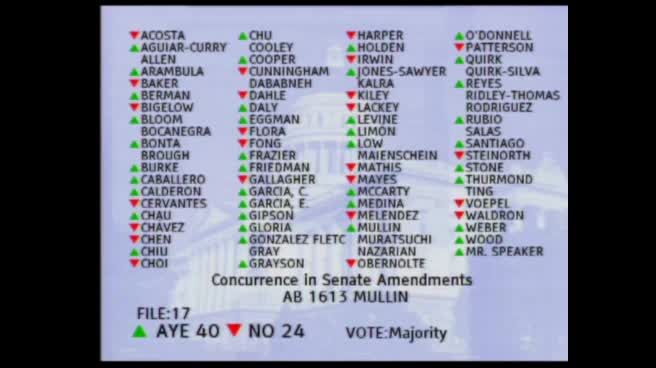 2MIN
Assembly Floor
 13MIN
Assembly Standing Committee on Judiciary
 3MIN
Senate Floor
Bill Author

Bill Co-Author(s):