SB 692: Transmission: transmission and wheeling access charges.
- Session Year: 2017-2018
- House: Senate
- Latest Version Date: 2018-06-13
Existing law vests the Public Utilities Commission (PUC) with jurisdiction over the delivery of electrical services. Existing law provides for the establishment of an Independent System Operator (ISO) as a nonprofit public benefit corporation and requires the ISO to make certain filings with the Federal Energy Regulatory Commission (FERC) and to seek authority from FERC as needed to give the ISO the ability to secure generating and transmission resources necessary to guarantee achievement of planning and operating reserve criteria no less stringent than those established by the Western Electricity Coordinating Council and the North American Electric Reliability Council.
This bill would require the ISO to undertake a stakeholder initiative to consider modification of the billing determinants to which the operator applies the transmission and wheeling access charges, as specified. The bill would require the ISO, by June 30, 2018, to submit to FERC proposed modifications of the billing determinants for approval. The bill would require the ISO to fully implement any modification approved by FERC within one year of the date of approval.This bill would establish a state policy that load serving entities, including local publicly owned electric utilities, should receive direct financial benefit or indirect benefit for their ratepayers for the value of distributed generation resources in avoiding transmission costs. The bill would authorize the PUC, jointly with ISO and in consultation with relevant stakeholders, to convene a stakeholder process to develop modifications of tariffs governing transmission access charges, wheeling access charges, or retail rate structures as necessary to implement that policy and to ensure the tariffs conform to specified conditions. If the stakeholder process is undertaken, the bill would require the completion of the process by July 1, 2020. The bill would require public agencies or corporations with jurisdiction over the modifications to approve those modifications by October 31, 2020. For elements of the modifications that require approval by FERC, the bill would require the submission of those elements to FERC by January 1, 2021, and would require the commission and load serving entities, including local publicly owned electric utilities, with jurisdiction over those elements of the modifications to implement them within one year of the date of approval by FERC. Because the bill would impose additional duties on local publicly owned electric utilities, this bill would impose a state-mandated local program. If no modifications are approved by October 31, 2020, the bill would require each electrical corporation that recovers transmission charges from the customers of more than one load serving entity to modify its rules and tariffs to accomplish certain objectives regarding transmission charges. The bill would require the submission of those modifications to FERC by January 1, 2021.
Under existing law, a violation of the Public Utilities Act or any order, decision, rule, direction, demand, or requirement of the PUC is a crime.
Because the above provisions amend the Public Utilities Act, and the commission would be required to issue an order, decision, rule, direction, demand, or requirement to implement those provisions, a violation of any of which would be a crime, this bill would impose a state-mandated local program.
The California Constitution requires the state to reimburse local agencies and school districts for certain costs mandated by the state. Statutory provisions establish procedures for making that reimbursement.
This bill would provide that no reimbursement is required by this act for specified reasons.
Existing law vests the Public Utilities Commission (PUC) with jurisdiction over the delivery of electrical services. Existing law provides for the establishment of an Independent System Operator (ISO) as a nonprofit public benefit corporation and requires the ISO to make certain filings with the Federal Energy Regulatory Commission (FERC) and to seek authority from FERC as needed to give the ISO the ability to secure generating and transmission resources necessary to guarantee achievement of planning and operating reserve criteria no less stringent than those established by the Western Electricity Coordinating Council and the North American Electric Reliability Council.
This bill would require the ISO to undertake a stakeholder initiative to consider modification of the billing determinants to which the operator applies the transmission and wheeling access charge, charges, as specified. The bill would require the ISO, by June 30, 2018, to submit to FERC proposed modifications of the billing determinants for approval. The bill would require the ISO to fully implement any modification approved by FERC within one year of the date of approval.
Existing law vests the Public Utilities Commission (PUC) with jurisdiction over the delivery of electrical services. Existing law provides for the establishment of an Independent System Operator (ISO) as a nonprofit public benefit corporation and requires the ISO to make certain filings with the Federal Energy Regulatory Commission (FERC) and to seek authority from FERC as needed to give the ISO the ability to secure generating and transmission resources necessary to guarantee achievement of planning and operating reserve criteria no less stringent than those established by the Western Electricity Coordinating Council and the North American Electric Reliability Council.
This bill would require the ISO to undertake a stakeholder initiative to consider modification of the billing determinants to which the operator applies the transmission access charge, as specified. The bill would require the ISO, by June 30, 2018, to submit to FERC proposed modifications of the billing determinants for approval. The bill would require the ISO to fully implement any modification approved by FERC within one year of the date of approval.
(1)Existing law vests the Public Utilities Commission (PUC) with jurisdiction over the delivery of electrical services. Existing law provides for the establishment of an Independent System Operator (ISO) as a nonprofit public benefit corporation and requires the ISO to make certain filings with the Federal Energy Regulatory Commission (FERC) and to seek authority from FERC as needed to give the ISO the ability to secure generating and transmission resources necessary to guarantee achievement of planning and operating reserve criteria no less stringent than those established by the Western Electricity Coordinating Council and the North American Electric Reliability Council. This bill would require the ISO to adopt transmission energy downflow, as specified, as the billing determinant for the transmission access charge throughout its service territory. The bill would require the ISO to apply the transmission energy downflow for all voltage categories of transmission facilities. The bill would require the ISO to continue to use the volumetric per kilowatthour basis in determining the transmission energy downflow until stakeholders receive notice and are provided with an opportunity to comment on alternatives. The bill would require the PUC to review the process by which an electrical corporation passes through transmission access charges to ratepayers to ensure that the process achieves certain goals.(2)The Public Utilities Act requires the PUC to adopt a least-cost, best-fit methodology for determining the integration cost of certain renewable energy resources. This bill would require the PUC to revise the least-cost, best-fit methodology and other procurement practices of electrical corporations to reflect the ratepayer impact of the changes to the transmission access charges required by this measure.Under existing law, a violation of the Public Utilities Act or any order, decision, rule, direction, demand, or requirement of the commission is a crime. Because the provisions of this bill would be a part of the act and because a violation of an order or decision of the commission implementing its requirements would be a crime, the bill would impose a state-mandated local program by creating a new crime. (3)The California Constitution requires the state to reimburse local agencies and school districts for certain costs mandated by the state. Statutory provisions establish procedures for making that reimbursement.This bill would provide that no reimbursement is required by this act for a specified reason.(1)Existing law vests the Public Utilities Commission (PUC) with jurisdiction over the delivery of electrical services. Existing law provides for the establishment of an Independent System Operator (ISO) as a nonprofit public benefit corporation and requires the ISO to make certain filings with the Federal Energy Regulatory Commission (FERC) and to seek authority from FERC as needed to give the ISO the ability to secure generating and transmission resources necessary to guarantee achievement of planning and operating reserve criteria no less stringent than those established by the Western Electricity Coordinating Council and the North American Electric Reliability Council.
This bill would require the ISO to adopt transmission energy downflow, as specified, as the billing determinant for the transmission access charge throughout its service territory. The bill would require the ISO to apply the transmission energy downflow billing determinant for all voltage categories of transmission facilities. The bill would require the ISO to continue to use the volumetric per kilowatthour basis in determining the transmission energy downflow billing determinant until stakeholders receive notice and are provided with an opportunity to comment on alternatives. The bill would require the PUC to review the process by which an electrical corporation passes through transmission access charges to ratepayers to ensure that the process achieves certain goals.
(2)The Public Utilities Act requires the PUC to adopt a least-cost, best-fit methodology for determining the integration cost of certain renewable energy resources.
This bill would require the PUC to revise the least-cost, best-fit methodology and other procurement practices of electrical corporations to reflect the ratepayer impact of the changes to the transmission access charges required by this measure.
Under existing law, a violation of the Public Utilities Act or any order, decision, rule, direction, demand, or requirement of the commission is a crime.
Because the provisions of this bill would be a part of the act and because a violation of an order or decision of the commission implementing its requirements would be a crime, the bill would impose a state-mandated local program by creating a new crime.
(3)The California Constitution requires the state to reimburse local agencies and school districts for certain costs mandated by the state. Statutory provisions establish procedures for making that reimbursement.
This bill would provide that no reimbursement is required by this act for a specified reason.
(1)Existing law vests the Public Utilities Commission (PUC) with jurisdiction over the delivery of electrical services. Existing law provides for the establishment of an Independent System Operator (ISO) as a nonprofit public benefit corporation and requires the ISO to make certain filings with the Federal Energy Regulatory Commission (FERC) and to seek authority from FERC as needed to give the ISO the ability to secure generating and transmission resources necessary to guarantee achievement of planning and operating reserve criteria no less stringent than those established by the Western Electricity Coordinating Council and the North American Electric Reliability Council.
This bill would require the ISO to adopt transmission energy downflow, as specified, as the billing determinant for the transmission access charge throughout its service territory. The bill would require the ISO to apply the transmission energy downflow billing determinant for all voltage categories of transmission facilities. The bill would require the ISO to continue to use the volumetric per kilowatthour basis in determining the transmission energy downflow billing determinant until stakeholders receive notice and are provided with an opportunity to comment on alternatives. The bill would require the PUC to review the process by which an electrical corporation passes through transmission access charges to ratepayers to ensure that the process achieves certain goals.
(2)The Public Utilities Act requires the PUC to adopt a least-cost, best-fit methodology for determining the integration cost of certain renewable energy resources.
This bill would require the PUC to revise the least-cost, best-fit methodology and other procurement practices of electrical corporations to reflect the ratepayer impact of the changes to the transmission access charges required by this measure.
Under existing law, a violation of the Public Utilities Act or any order, decision, rule, direction, demand, or requirement of the commission is a crime.
Because the provisions of this bill would be a part of the act and because a violation of an order or decision of the commission implementing its requirements would be a crime, the bill would impose a state-mandated local program by creating a new crime.
(3)The California Constitution requires the state to reimburse local agencies and school districts for certain costs mandated by the state. Statutory provisions establish procedures for making that reimbursement.
This bill would provide that no reimbursement is required by this act for a specified reason.
The Legislature finds and declares all of the following:
(a)California has long had a policy interest in promoting renewable energy and climate mitigation. Given distributed generations significant environmental, economic, and energy resilience benefits to Californias communities, and its potential to address historic inequities, distributed generation should be a significant part of Californias long-term energy and climate change strategy.
(b)Distributed generation provides unique value to energy consumers by generating clean energy in close proximity to customer need, thereby increasing the energy resilience of communities, freeing up capacity on the transmission grid, and decreasing the need for additional transmission infrastructure.
(c)Distributed generation provides unique value to Californias communities by providing local jobs in distributed energy resources installation and maintenance.
(d)Distributed generation can also alleviate the serious environmental justice challenges facing the state by displacing polluting fossil fuel generation such as natural gas peaker plants and diesel generation, which are disproportionately sited in environmentally disadvantaged communities.
(e)Limited transparency as to the costs of delivery for energy, particularly the transmission costs, hampers the ability of customers and load serving entities procuring energy for those customers to make informed decisions that account for social, environmental, economic, and other costs of energy, including both generation and delivery costs.
(f)The Federal Energy Regulatory Commission requires that transmission costs be recovered from those who benefit from use of the transmission system in ways that do not distort energy markets.
(g)Californias transmission costs have grown sharply in recent decades and are projected to continue growing as electric vehicles and building electrification expand as part of Californias efforts to reduce its contribution to climate change.
(h)The California Independent System Operator cited the deployment of distributed generation as a driving factor in saving California ratepayers billions of dollars in transmission costs, yet the load serving entities responsible for procuring distributed generation have not historically received appropriate credit for their contributions to reducing the growth of transmission costs for California ratepayers.
(i)The wholesale distributed generation sector of the renewable energy industry remains underdeveloped in California, which hampers Californias overall efforts to address climate change and foster beneficial community development.
(j)Californias governance of transmission charges is fragmented among various utilities, the Public Utility Commission, and the Independent System Operator, which hampers Californias ability to craft a coherent and functioning transmission cost recovery system. Thus, California needs an integrated and streamlined process to develop a coherent mechanism that incorporates all necessary tariffs and rates throughout the state.
(k)In many areas of California, nonparticipating municipal utilities have accounted for the contribution of distributed generation to avoiding energy delivery costs for many years, which has facilitated their efforts to mitigate their impacts on the transmission grid.
(l)In other areas, especially in the territories of participating transmission owning electrical corporations, distributed generation connected in front of the customer meter remains the only technology that mitigates the strain on the transmission system and slows the demand for a new transmission investment that does not reduce transmission charges for customers, unlike energy efficiency, generation on the customer side of the customer meter, or demand response.
SEC. 2.Section 350 is added to the Public Utilities Code, to read:350.(a)For purposes of this section, the following definitions apply:
(1)Avoided transmission cost means all future transmission-related expenditures that would otherwise be incurred but for the role of distributed generation and storage, including both specific costs of avoided projects and generalized costs not incurred resulting from reduced use of the transmission system.
(2)Distributed generation means renewable energy generation interconnected on the utility side of any customer meter on the distribution system used to serve a local load.
(3)Load serving entity has the same definition as in Section 380, except that it includes a local publicly owned electric utility.
(4)Local load means energy consumption by customers located within the same distribution area below a single transmission-distribution substation.
(5)Tariff means a schedule of rates or charges of a business, public utility, or transmission operator.
(6)Use, in reference to the transmission system, means the contemporaneous use of the transmission system to deliver energy from generation that requires the transmission system to form an electrical connection to the customer served.
(b)It is the policy of the State of California that:
(1)Load serving entities should receive either direct financial benefit or indirect benefit for their ratepayers for any distributed generation that meets the local load in order to recognize the value of those resources in avoiding transmission costs. The value of avoided transmission costs shall reflect both historic and prospective investments in distributed resources that have mitigated or will mitigate the impacts on the transmission system and relieve the need for transmission investments to the benefit of all California ratepayers.
(2)Regulatory agencies, quasi-regulatory bodies, local agencies, districts, and corporations with jurisdiction or responsibility over transmission and delivery charges should exercise their authorities to provide for a mechanism for load serving entities to receive compensation to reflect the value of avoided transmission costs.
(c)(1)The commission, jointly with the Independent System Operator, and through consultation with all relevant stakeholders, may convene a stakeholder process for the purpose of developing modifications of the tariffs governing transmission access charges, wheeling access charges, or retail rate structures, as necessary to implement the policies specified in subdivision (b). These modifications may include any set of changes to any set of tariffs that is appropriate to implement those policies and conform to the standards set forth in this subdivision.
(2)The modifications of the tariffs developed pursuant to paragraph (1) shall ensure all of the following:
(A)The formulas for cost recovery reflect a combination of all of the following:
(i)Historic factors, drivers, or justifications for a transmission investment at the time the transmission investment is planned or approved.
(ii)Contemporaneous use of the transmission system.
(iii)Incentives to mitigate drivers of future transmission investment.
(B)Transmission system charges are predominantly assessed on use of transmission system capacity based on the amount of energy delivered across the transmission system.
(C)Supplying electrical load with distribution-connected generation or other distribution system technologies within the same substation area that offsets the contemporaneous use of transmission system capacity results in financial credits to the load serving entities responsible for the deployment of the resources or to their customers.
(D)The basis for applying access charges to each distribution utility, community choice aggregation program, local publicly owned electric utility, and electric service provider is consistent in a manner that fully compensates each of those entities for the distributed generation within the entitys distribution grid, unless the commission and Independent System Operator each makes a finding, based on substantial evidence, that differential bases are in the best interest of all California end-use electricity customers and further the achievement of Californias environmental goals, including the California Renewables Portfolio Standard Program (Article 16 (commencing with Section 399.11)) and the California Global Warming Solutions Act of 2006 (Division 25.5 (commencing with Section 38500) of the Health and Safety Code).
(E)Transmission charges recognize the value provided by distributed energy resources including, but not limited to, the economic, environmental, and system resiliency benefits of distributed resources, and the potential to reduce the use of existing transmission infrastructure and the need for future transmission infrastructure and capacity.
(3)Any rate structure for allocating transmission costs shall be based upon factual findings supported by a preponderance of evidence, and the analytical path from evidence to finding shall be readily discernible. Evidence for these purposes shall not include argument, speculation, unsubstantiated opinion or narrative, or evidence that is clearly erroneous or inaccurate.
(4)(A)If the stakeholder process is undertaken pursuant to this subdivision, the final set of modifications to implement the policies specified in subdivision (b) shall be completed by July 1, 2020.
(B)Each commission, board, corporation, or agency with authority over modifications in the final set shall approve modifications to those tariffs or rules under its jurisdiction by October 31, 2020.
(C)Once approved, any element of the final set of modifications requiring approval by the Federal Energy Regulatory Commission shall be submitted by the relevant commission, board, corporation, or agency, by January 1, 2021, to the Federal Energy Regulatory Commission for approval.
(D)Within one year of the date of approval by the Federal Energy Regulatory Commission of submitted elements of the final set of modifications, the Independent System Operator, the commission, each electrical corporation, and any other load serving entity with jurisdiction over elements of the set of modifications shall fully implement all modifications to the tariffs and rules identified and approved to meet the policies specified in paragraph (b).
(d)(1)If no final set of modifications meeting the standards in paragraph (2) of subdivision (c) has been approved by October 31, 2020, each of the electrical corporations that recovers transmission charges from the customers of more than one load serving entity shall modify its rules and tariffs to accomplish the following:
(A)The customers of each load serving entity shall make up separate retail rate classes from the customers of any other load serving entity for the purposes of assessing transmission fees and cost allocation, for both transmission charges from the Independent System Operator and for the electrical corporations own transmission revenue requirements.
(B)Transmission charges shall be billed to customers clearly and understandably as a separate component from any other component of delivery or generation charges on customer bills.
(C)All customer transmission charges and components of those charges shall be reduced by the proportion of energy provided by that customers load serving entity as distributed generation serving a local load.
(D)Each electrical corporation recovering transmission charges from customers of more than one load serving entity shall recover a customers transmission charges reduced by the proportion of energy generated by distributed generation serving the local load of that customers load serving entity.
(2)The modifications and any attendant implementing rules required shall be submitted to Federal Energy Regulatory Commission no later than January 1, 2021.
SEC. 3.No reimbursement is required by this act pursuant to Section 6 of Article XIIIB of the California Constitution because a local agency or school district has the authority to levy service charges, fees, or assessments sufficient to pay for the program or level of service mandated by this act or because costs that may be incurred by a local agency or school district will be incurred because this act creates a new crime or infraction, eliminates a crime or infraction, or changes the penalty for a crime or infraction, within the meaning of Section 17556 of the Government Code, or changes the definition of a crime within the meaning of Section 6 of Article XIIIB of the California Constitution.
SECTION 1.(a)The Legislature finds and declares all of the following:(1)California has long had a policy interest in promoting renewable energy and climate mitigation. Given its significant environmental, economic, and resilience benefits, distributed generation can and should be a significant part of Californias long-term energy strategy.(2)Distributed generation provides unique value to energy consumers by generating clean energy in close proximity to customer need, thereby increasing the resilience of communities, freeing up capacity on the transmission grid, and decreasing the need for additional transmission infrastructure.(3)Energy consumers are provided limited transparency into the costs for delivery of their energy, particularly the transmission costs.(b)It is the intent of the Legislature that the Independent System Operator consider, via a stakeholder initiative, modification of the billing determinants to which the operator applies the transmission and wheeling access charges and submit any proposed modification to the Federal Energy Regulatory Commission by July 1, 2018.SEC. 2.Section 350 is added to the Public Utilities Code, to read:350.(a)The Independent System Operator shall undertake a stakeholder initiative to consider modification of the billing determinants to which the operator applies the transmission and wheeling access charges and shall make consistent the basis for applying these access charges to each distribution utility, community choice aggregation program, local publicly owned electric utility, and electric services provider in a manner that fully compensates each of those entities for the distributed generation within the entitys distribution grid, unless the Independent System Operator makes a finding, based on substantial evidence, that differential bases are in the best interest of all California end-use electricity customers and further the achievement of Californias environmental goals, including the California Renewables Portfolio Standard Program (Article 16 (commencing with Section 399.11)) and the California Global Warming Solutions Act of 2006 (Division 25.5 (commencing with Section 38500) of the Health and Safety Code).(b)In undertaking the stakeholder initiative described in subdivision (a), the Independent System Operator shall consider all of the following:(1)The value provided by distributed energy resources to the Independent System Operators balancing area, including, but not limited to, the potential to reduce the use of existing transmission infrastructure and the need for future transmission infrastructure and capacity and to further the states goals, including the requirements of the California Renewables Portfolio Standard Program and the California Global Warming Solutions Act of 2006.(2)The value and equity of metering and assessing the transmission and wheeling access charges at interfaces of the transmission system and distribution systems.(3)The value of continuing to assess transmission access charges on a volumetric basis.(c)No later than June 30, 2018, the Independent System Operator shall submit to the Federal Energy Regulatory Commission for approval proposed modifications of the billing determinants to which the Independent System Operator applies the transmission and wheeling access charges.(d)Within one year of the date of approval by the Federal Energy Regulatory Commission, the Independent System Operator shall fully implement any modifications of the billing determinants to which the Independent System Operator applies the transmission and wheeling access charges.(a)The Legislature finds and declares all of the following:
(1)California has long had a policy interest in promoting renewable energy and climate mitigation. Given its significant environmental, economic, and resilience benefits, distributed generation can and should be a significant part of Californias long-term energy strategy.
(2)Distributed generation provides unique value to energy consumers by generating clean energy in close proximity to customer need, thereby increasing the resilience of communities, freeing up capacity on the transmission grid, and decreasing the need for additional transmission infrastructure.
(3)Energy consumers are provided limited transparency into the costs for delivery of their energy, particularly the transmission costs.
(b)It is the intent of the Legislature that the Independent System Operator consider, via a stakeholder initiative, modification of the billing determinant determinants to which the operator applies the transmission and wheeling access charge charges and submit any proposed modification to the Federal Energy Regulatory Commission by July 1, 2018.
SEC. 2.Section 350 is added to the Public Utilities Code, to read:350.(a)On or after January 1, 2018, the The Independent System Operator shall undertake a stakeholder initiative to consider modification of the billing determinants to which the operator applies the transmission and wheeling access charge charges and shall make consistent the basis for applying transmission cost allocation these access charges to each distribution utilities and all load serving entities utility, community choice aggregation program, local publicly owned electric utility, and electric services provider in a manner that fully compensates utilities and all load serving each of those entities for local the distributed generation within their distribution grids, the entitys distribution grid, unless the Independent System Operator makes a finding finding, based on substantial evidence, that differential bases are in the best interest of all California end-use electricity customers and further the achievement of Californias environmental goals, including the California Renewables Portfolio Standard Program (Article 16 (commencing with Section 399.11)) and the California Global Warming Solutions Act of 2006 (Division 25.5 (commencing with Section 38500) of the Health and Safety Code).
(b)In undertaking the stakeholder initiative described in subdivision (a), the Independent System Operator shall consider all of the following:
(1)The value provided by distributed energy resources to the Independent System Operators balancing area, including, but not limited to, the potential to reduce the use of existing transmission infrastructure and the need for future transmission infrastructure and capacity and to further the states goals, including the requirements of the California Renewables Portfolio Standard Program and the California Global Warming Solutions Act of 2006.
(2)The value and equity of metering and assessing the transmission and wheeling access charge charges at interfaces of the transmission system and distribution systems.
(3)The value of continuing to assess transmission access charges on a volumetric basis.
(c)No later than June 30, 2018, the Independent System Operator shall submit to the Federal Energy Regulatory Commission for approval proposed modifications of the billing determinant determinants to which the Independent System Operator applies the transmission and wheeling access charge. charges.
(d)Within one year of the date of approval by the Federal Energy Regulatory Commission, the Independent System Operator shall fully implement any modifications of the billing determinant determinants to which the Independent System Operator applies the transmission and wheeling access charge. charges.
(a)The Legislature finds and declares all of the following:
(1)California has long had a policy interest in promoting renewable energy and climate mitigation. Given its significant environmental, economic, and resilience benefits, distributed generation can and should be a significant part of Californias long-term energy strategy.
(2)Distributed generation provides unique value to energy consumers by generating clean energy in close proximity to customer need, thereby increasing the resilience of communities, freeing up capacity on the transmission grid, and decreasing the need for additional transmission infrastructure.
(3)Energy consumers are provided limited transparency into the costs for delivery of their energy, particularly the transmission costs.
(b)It is the intent of the Legislature that the Independent System Operator consider, via a stakeholder initiative, modification of the billing determinant to which the operator applies the transmission access charge and submit any proposed modification to the Federal Energy Regulatory Commission by July 1, 2018.
SEC. 2.Section 350 is added to the Public Utilities Code, to read:350.(a)On or after January 1, 2018, the Independent System Operator shall undertake a stakeholder initiative to consider modification of the billing determinants to which the operator applies the transmission access charge and shall make consistent the basis for applying transmission cost allocation to distribution utilities and all load serving entities in a manner that fully compensates utilities and all load serving entities for local generation within their distribution grids, unless the Independent System Operator makes a finding that differential bases are in the best interest of all California end-use electricity customers and further the achievement of Californias environmental goals, including the California Renewables Portfolio Standard Program (Article 16 (commencing with Section 399.11)) and the California Global Warming Solutions Act of 2006 (Division 25.5 (commencing with Section 38500) of the Health and Safety Code).
(b)In undertaking the stakeholder initiative described in subdivision (a), the Independent System Operator shall consider all of the following:
(1)The value provided by distributed energy resources to the Independent System Operators balancing area, including, but not limited to, the potential to reduce the use of existing transmission infrastructure and the need for future transmission infrastructure and capacity and to further the states goals, including the requirements of the California Renewables Portfolio Standard Program and the California Global Warming Solutions Act of 2006.
(2)The value and equity of metering and assessing the transmission access charge at interfaces of the transmission system and distribution systems.
(3)The value of continuing to assess transmission access charges on a volumetric basis.
(c)No later than June 30, 2018, the Independent System Operator shall submit to the Federal Energy Regulatory Commission for approval proposed modifications of the billing determinant to which the Independent System Operator applies the transmission access charge.
(d)Within one year of the date of approval by the Federal Energy Regulatory Commission, the Independent System Operator shall fully implement any modifications of the billing determinant to which the Independent System Operator applies the transmission access charge.
All matter omitted in this version of the bill appears in the bill as amended in the Senate, March 23, 2017. (JR11)This act shall be known, and may be cited, as the Leveling the Playing Field for Distributed Generation Act of 2017.
SEC. 2.The Legislature finds and declares all of the following:
(a)California has long had a policy interest in promoting renewable energy and climate mitgation. Given its significant environmental, economic, and resilience benefits, distributed generation can and should be a significant part of California Californias long-term energy strategy.
(b)Distributed generation provides unique value to energy consumers by generating clean energy in close proximity to customer need, thereby increasing the resilience of communities, freeing up capacity on the transmission grid, and decreasing the need for additional transmission infrastructure.
(c)Energy consumers are provided limited transparency into the costs for delivery of their energy, particularly the transmission costs.
(d)Transmission access charges distort the market for distributed generation when applied to energy that is not delivered through the transmission grid by increasing the customers cost of energy from distributed generation and hindering the development of distributed generation.
(e)Removing transmission access charges on energy from distributed generation would eliminate this market distortion, increase consistency, transparency, and fairness in transmission cost allocation based on cost causation, correct the market signals for distributed generation, and optimize development and economic dispatch of generation based on the cost of generation plus an accurately measured cost of transmission delivery.
(f)Addressing the existing market distortion in this way will avoid delay, leverage the straightforward and simple calculations for existing transmission access rates, and allow for future refinement of the transmission access billing determinant to include the time and rate of delivery of energy and services at each metered transmission interface, as appropriate.
(g)There is a need for urgency in resolving this issue because of a planned regional expansion of the Independent System Operator pursuant to Sections 359 and 359.5, 359.5 of the Public Utilities Code, and so far, the Independent System Operator has refused to remedy not remedied the transmission access charge market distortion.
SEC. 3.Section 352.8 is added to the Public Utilities Code, to read:352.8.(a)For purposes of this section and Section 354, the following definitions apply:
(1)Distributed generation means an energy generation that interconnects connects directly with the distribution grid from the customer end. grid.
(2)Distribution grid means lines for the distribution of electricity that are controlled by an electrical corporation.
(3)High-voltage transmission facilities means transmission facilities operating above 200 kilovolts.
(4)Low-voltage transmission facilities means transmission facilities operating between 69 kilovolts and 200 kilovolts.
(5)Transmission access charge means the charge per kilowatthour levied by the Independent System Operator on the distribution of electricity through the transmission grid.
(6)Transmission energy downflow means the volumetric measurement of electricity in kilowatthours delivered from a defined transmission category interface to a subordinate transmission category within the Independent System Operator transmission system. Except as provided in subdivision (c), volumetric measurement shall constitute the billing determinant for the transmission access charge, but this billing determinant volumetric basis may be modified to take into consideration other factors, including the time and rate of delivery of energy and services at each metered transmission interface.
(7)Transmission grid means lines for the transmission of electricity that are controlled by the Independent System Operator.
(b)After notice and opportunity to comment, the Independent System Operator shall do both of the following:
(1)Except as provided in subdivision (c), adopt the transmission energy downflow as the billing determinant for the transmission access charge throughout the service territory of the Independent System Operator.
(2)Apply the transmission energy downflow billing determinant for all voltages categories of transmission facilities.
(A)Transmission access charges for low-voltage transmission facilities controlled by the Independent System Operator shall be assessed on transmission energy downflow at the low voltage to distribution interfaces.
(B)Transmission access charges for high-voltage transmission facilities controlled by the Independent System Operator shall be assessed on transmission energy downflow at the high-voltage to low-voltage interfaces.
(c)Until notice to, and opportunity to comment by, relevant stakeholders has have been provided regarding alternative measures, the Independent System Operator shall continue to use the volumetric per kilowatthour basis for determining the transmission energy downflow determinant. downflow.
(d)If the Independent System Operator expands its service territory beyond the state, the Independent System Operator shall, after notice and opportunity to comment, establish a new super-high-voltage category of transmission facilities for new facilities operating at or above 300 kilovolts and for intertie between subregions that are currently separate balancing authority areas. Costs for super-high-voltage transmission facilities shall be assigned to subregions in proportion to each subregions share of super-high-voltage to high-voltage transmission energy downflow.
(e)The Independent System Operator shall coordinate with the commission in implementing this section.
SEC. 4.Section 354 is added to the Public Utilities Code, to read:354.(a)Except as otherwise provided, the definitions set forth in Section 352.8 shall apply.
(b)The commission shall review the process by which an electrical corporation passes through the transmission access charges to ratepayers to ensure that both of the following are met:
(1)The process retains the same basis and structure of transmission access charges established pursuant to Section 352.8 in allocating transmission costs to ratepayers.
(2)The process increases the transparency of the transmission access charges and other transmission-related fees to ratepayers.
(c)The commission shall revise the methodology adopted pursuant to clause (vi) of subparagraph (A) of paragraph (4) of subdivision (a) of Section 399.13 and other procurement practices that are affected by transmission access charges to reflect the ratepayer impacts of the changes to the transmission access charges required pursuant to this section and Section 352.8.
(d)The commission shall coordinate with the Independent System Operator in the implementation of this section.
SEC. 5.Section 399.13 of the Public Utilities Code is amended to read:399.13.(a)(1)The commission shall direct each electrical corporation to annually prepare a renewable energy procurement plan that includes the elements listed in paragraph (5), to satisfy the electrical corporations obligations under the renewables portfolio standard. To the extent feasible, this procurement plan shall be proposed, reviewed, and adopted by the commission as part of, and pursuant to, a general procurement plan process. The commission shall require each electrical corporation to review and update its renewable energy procurement plan as it determines to be necessary. The commission shall require all other retail sellers to prepare and submit renewable energy procurement plans that address the requirements identified in paragraph (5).
(2)Every electrical corporation that owns electrical transmission facilities shall annually prepare, as part of the Federal Energy Regulatory Commission Order 890 process, and submit to the commission, a report identifying any electrical transmission facility, upgrade, or enhancement that is reasonably necessary to achieve the renewables portfolio standard procurement requirements of this article. Each report shall look forward at least five years and, to ensure that adequate investments are made in a timely manner, shall include a preliminary schedule when an application for a certificate of public convenience and necessity will be made, pursuant to Chapter 5 (commencing with Section 1001), for any electrical transmission facility identified as being reasonably necessary to achieve the renewable energy resources procurement requirements of this article. Each electrical corporation that owns electrical transmission facilities shall ensure that project-specific interconnection studies are completed in a timely manner.
(3)The commission shall direct each retail seller to prepare and submit an annual compliance report that includes all of the following:
(A)The current status and progress made during the prior year toward procurement of eligible renewable energy resources as a percentage of retail sales, including, if applicable, the status of any necessary siting and permitting approvals from federal, state, and local agencies for those eligible renewable energy resources procured by the retail seller, and the current status of compliance with the portfolio content requirements of subdivision (c) of Section 399.16, including procurement of eligible renewable energy resources located outside the state and within the WECC and unbundled renewable energy credits.
(B)If the retail seller is an electrical corporation, the current status and progress made during the prior year toward construction of, and upgrades to, transmission and distribution facilities and other electrical system components it owns to interconnect eligible renewable energy resources and to supply the electricity generated by those resources to load, including the status of planning, siting, and permitting transmission facilities by federal, state, and local agencies.
(C)Recommendations to remove impediments to making progress toward achieving the renewable energy resources procurement requirements established pursuant to this article.
(4)The commission shall adopt, by rulemaking, all of the following:
(A)A process that provides criteria for the rank ordering and selection of least-cost and best-fit eligible renewable energy resources to comply with the California Renewables Portfolio Standard Program obligations on a total cost and best-fit basis. This process shall take into account all of the following:
(i)Estimates of indirect costs associated with needed transmission investments.
(ii)The cost impact of procuring the eligible renewable energy resources on the electrical corporations electricity portfolio.
(iii)The viability of the project to construct and reliably operate the eligible renewable energy resource, including the developers experience, the feasibility of the technology used to generate electricity, and the risk that the facility will not be built, or that construction will be delayed, with the result that electricity will not be supplied as required by the contract.
(iv)Workforce recruitment, training, and retention efforts, including the employment growth associated with the construction and operation of eligible renewable energy resources and goals for recruitment and training of women, minorities, and disabled veterans.
(v)(I)Estimates of electrical corporation expenses resulting from integrating and operating eligible renewable energy resources, including, but not limited to, any additional wholesale energy and capacity costs associated with integrating each eligible renewable resource.
(II)No later than December 31, 2015, the commission shall approve a methodology for determining the integration costs described in subclause (I).
(vi)Estimates of the applicable transmission access charges for renewable energy resources, as determined by a methodology approved by the commission by June 30, 2018.
(vii)Consideration of any statewide greenhouse gas emissions limit established pursuant to the California Global Warming Solutions Act of 2006 (Division 25.5 (commencing with Section 38500) of the Health and Safety Code).
(viii)Consideration of capacity and system reliability of the eligible renewable energy resource to ensure grid reliability.
(B)Rules permitting retail sellers to accumulate, beginning January 1, 2011, excess procurement in one compliance period to be applied to any subsequent compliance period. The rules shall apply equally to all retail sellers. In determining the quantity of excess procurement for the applicable compliance period, the commission shall retain the rules adopted by the commission and in effect as of January 1, 2015, for the compliance period specified in subparagraphs (A) to (C), inclusive, of paragraph (1) of subdivision (b) of Section 399.15. For any subsequent compliance period, the rules shall allow the following:
(i)For electricity products meeting the portfolio content requirements of paragraph (1) of subdivision (b) of Section 399.16, contracts of any duration may count as excess procurement.
(ii)Electricity products meeting the portfolio content requirements of paragraph (2) or (3) of subdivision (b) of Section 399.16 shall not be counted as excess procurement. Contracts of any duration for electricity products meeting the portfolio content requirements of paragraph (2) or (3) of subdivision (b) of Section 399.16 that are credited towards a compliance period shall not be deducted from a retail sellers procurement for purposes of calculating excess procurement.
(iii)If a retail seller notifies the commission that it will comply with the provisions of subdivision (b) for the compliance period beginning January 1, 2017, the provisions of clauses (i) and (ii) shall take effect for that retail seller for that compliance period.
(C)Standard terms and conditions to be used by all electrical corporations in contracting for eligible renewable energy resources, including performance requirements for renewable generators. A contract for the purchase of electricity generated by an eligible renewable energy resource, at a minimum, shall include the renewable energy credits associated with all electricity generation specified under the contract. The standard terms and conditions shall include the requirement that, no later than six months after the commissions approval of an electricity purchase agreement entered into pursuant to this article, the following information about the agreement shall be disclosed by the commission: party names, resource type, project location, and project capacity.
(D)An appropriate minimum margin of procurement above the minimum procurement level necessary to comply with the renewables portfolio standard to mitigate the risk that renewable projects planned or under contract are delayed or canceled. This paragraph does not preclude an electrical corporation from voluntarily proposing a margin of procurement above the appropriate minimum margin established by the commission.
(5)Consistent with the goal of increasing Californias reliance on eligible renewable energy resources, the renewable energy procurement plan shall include all of the following:
(A)An assessment of annual or multiyear portfolio supplies and demand to determine the optimal mix of eligible renewable energy resources with deliverability characteristics that may include peaking, dispatchable, baseload, firm, and as-available capacity.
(B)Potential compliance delays related to the conditions described in paragraph (5) of subdivision (b) of Section 399.15.
(C)A bid solicitation setting forth the need for eligible renewable energy resources of each deliverability characteristic, required online dates, and locational preferences, if any.
(D)A status update on the development schedule of all eligible renewable energy resources currently under contract.
(E)Consideration of mechanisms for price adjustments associated with the costs of key components for eligible renewable energy resource projects with online dates more than 24 months after the date of contract execution.
(F)An assessment of the risk that an eligible renewable energy resource will not be built, or that construction will be delayed, with the result that electricity will not be delivered as required by the contract.
(6)In soliciting and procuring eligible renewable energy resources, each electrical corporation shall offer contracts of no less than 10 years duration, unless the commission approves of a contract of shorter duration.
(7)(A)In soliciting and procuring eligible renewable energy resources for California-based projects, each electrical corporation shall give preference to renewable energy projects that provide environmental and economic benefits to communities afflicted with poverty or high unemployment, or that suffer from high emission levels of toxic air contaminants, criteria air pollutants, and greenhouse gases.
(B)Subparagraph (A) applies to all procurement of eligible renewable energy resources for California-based projects, whether the procurement occur through all-source requests for offers, eligible renewable resources only requests for offers, or other procurement mechanisms. This subparagraph is declaratory of existing law.
(8)In soliciting and procuring eligible renewable energy resources, each retail seller shall consider the best-fit attributes of resource types that ensure a balanced resource mix to maintain the reliability of the electrical grid.
(b)A retail seller may enter into a combination of long- and short-term contracts for electricity and associated renewable energy credits. Beginning January 1, 2021, at least 65 percent of the procurement a retail seller counts toward the renewables portfolio standard requirement of each compliance period shall be from its contracts of 10 years or more in duration or in its ownership or ownership agreements for eligible renewable energy resources.
(c)The commission shall review and accept, modify, or reject each electrical corporations renewable energy resource procurement plan prior to the commencement of renewable energy procurement pursuant to this article by an electrical corporation. The commission shall assess adherence to the approved renewable energy resource procurement plans in determining compliance with the obligations of this article.
(d)Unless previously preapproved by the commission, an electrical corporation shall submit a contract for the generation of an eligible renewable energy resource to the commission for review and approval consistent with an approved renewable energy resource procurement plan. If the commission determines that the bid prices are elevated due to a lack of effective competition among the bidders, the commission shall direct the electrical corporation to renegotiate the contracts or conduct a new solicitation.
(e)If an electrical corporation fails to comply with a commission order adopting a renewable energy resource procurement plan, the commission shall exercise its authority to require compliance.
(f)(1)The commission may authorize a procurement entity to enter into contracts on behalf of customers of a retail seller for electricity products from eligible renewable energy resources to satisfy the retail sellers renewables portfolio standard procurement requirements. The commission shall not require any person or corporation to act as a procurement entity or require any party to purchase eligible renewable energy resources from a procurement entity.
(2)Subject to review and approval by the commission, the procurement entity shall be permitted to recover reasonable administrative and procurement costs through the retail rates of end-use customers that are served by the procurement entity and are directly benefiting from the procurement of eligible renewable energy resources.
(g)Procurement and administrative costs associated with contracts entered into by an electrical corporation for eligible renewable energy resources pursuant to this article and approved by the commission are reasonable and prudent and shall be recoverable in rates.
(h)Construction, alteration, demolition, installation, and repair work on an eligible renewable energy resource that receives production incentives pursuant to Section 25742 of the Public Resources Code, including work performed to qualify, receive, or maintain production incentives, are public works for the purposes of Chapter 1 (commencing with Section 1720) of Part 7 of Division 2 of the Labor Code.
SEC. 6.Section 9600 of the Public Utilities Code is amended to read:9600.(a)It is the intent of the Legislature that Californias local publicly owned electric utilities and electric corporations should commit control of their transmission facilities to the Independent System Operator as described in Chapter 2.3 (commencing with Section 330) of Part 1 of Division 1. These utilities should jointly advocate to the Federal Energy Regulatory Commission a pricing methodology for the Independent System Operator that results in an equitable return on capital investment in transmission facilities for all Independent System Operator participants and is based on the following principles:
(1)Utility specific access charge rates as proposed in Docket No. EC96-19-000 as finally approved by the Federal Energy Regulatory Commission reflecting the costs of that utilitys transmission facilities shall go into effect on the first day of the Independent System Operator operation. The utility specific rates shall honor all of the terms and conditions of existing transmission service contracts and shall recognize any wheeling revenues of existing transmission service arrangements to the transmission owner.
(2)(A)No later than two years after the initial operation of the Independent System Operator, the Independent System Operator shall recommend for adoption by the Federal Energy Regulatory Commission a rate methodology determined by a decision of the Independent System Operator governing board, provided that the decision shall be based on principles approved by the governing board including, but not limited to, an equitable balance of costs and benefits, and shall define the transmission facility costs, if any, which shall be rolled in to the transmission service rate and spread equally among all Independent System Operator transmission users, and those transmission facility costs, if any, which should be specifically assigned to a specific utilitys service area.
(B)If there is no governing board decision, the rate methodology shall be determined following a decision by the alternative dispute resolution method set forth in the Independent System Operator bylaws.
(C)If no alternative dispute resolution decision is rendered, then a default rate methodology shall be a uniform regional transmission access charge and a utility specific local transmission access charge, provided that the default rate methodology shall be recommended for implementation upon termination of the cost recovery plan set forth in Section 368 or no later than two years after the initial operation of the Independent System Operator, whichever is later. For purposes of this paragraph, regional transmission facilities are defined to be transmission facilities operating at or above 230 kilovolts plus an appropriate percentage of transmission facilities operating below 230 kilovolts; all other transmission facilities shall be considered local. The appropriate percentage of transmission facilities described above shall be consistent with the guidelines in Federal Energy Regulatory Commission Order No. 888 and any exception approved by that commission.
(D)The Independent System Operator shall establish and assign transmission access charges for the delivery of energy from the transmission system based on the metered transmission energy downflow, as defined in Section 352.8.
(3)If the rate methodology implemented as a result of a decision by the Independent System Operator governing board or resulting from the independent system operator alternative dispute resolution process results in rates different than those in effect prior to the decision for any transmission facility owner, the amount of any differences between the new rates and the prior rates shall be recorded in a tracking account to be recovered from customers and paid to the appropriate transmission owners by the transmission facility owner after termination of the cost recovery plan set forth in Section 368. The recovery and payments shall be based on an amortization period not to exceed three years in the case of the electrical corporations or five years in the case of the local publicly owned electric utilities.
(4)The costs of transmission facilities placed in service after the date of initial implementation of the Independent System Operator shall be recovered using the rate methodology in effect at the time the facilities go into operation.
(5)The electrical corporations and the local publicly owned electric utilities shall jointly develop language for implementation proposals to the Federal Energy Regulatory Commission based on these principles.
(6)Nothing in this section shall compel any party to violate restrictions applicable to facilities financed with tax-exempt bonds or contractual restrictions and covenants regarding use of transmission facilities existing as of December 20, 1995.
(b)Following a final Federal Energy Regulatory Commission decision approving the Independent System Operator, no California electrical corporation or local publicly owned electric utility shall be authorized to collect any competition transition charge authorized pursuant to this division and Chapter 2.3 (commencing with Section 330) of Part 1 of Division 1 unless it commits control of its transmission facilities to the Independent System Operator.
SEC. 7.No reimbursement is required by this act pursuant to Section 6 of Article XIIIB of the California Constitution because the only costs that may be incurred by a local agency or school district will be incurred because this act creates a new crime or infraction, eliminates a crime or infraction, or changes the penalty for a crime or infraction, within the meaning of Section 17556 of the Government Code, or changes the definition of a crime within the meaning of Section 6 of Article XIIIB of the California Constitution.
This act shall be known, and may be cited, as the Leveling the Playing Field for Distributed Generation Act of 2017.
SEC. 2.The Legislature finds and declares all of the following:
(a)California has long had a policy interest in promoting renewable energy and climate mitgation. Given its significant environmental, economic, and resilience benefits, distributed generation can and should be a significant part of California long-term energy strategy.
(b)Distributed generation provides unique value to energy consumers by generating clean energy in close proximity to customer need, thereby increasing the resilience of communities, freeing up capacity on the transmission grid, and decreasing the need for additional transmission infrastructure.
(c)Energy consumers are provided limited transparency into the costs for delivery of their energy, particularly the transmission costs.
(d)Transmission access charges distort the market for distributed generation when applied to energy that is not delivered through the transmission grid by increasing the customers cost of energy from distributed generation and hindering the development of distributed generation.
(e)Removing transmission access charges on energy from distributed generation would eliminate this market distortion, increase consistency, transparency, and fairness in transmission cost allocation based on cost causation, correct the market signals for distributed generation, and optimize development and economic dispatch of generation based on the cost of generation plus an accurately measured cost of transmission delivery.
(f)Addressing the existing market distortion in this way will avoid delay, leverage the straightforward and simple calculations for existing transmission access rates, and allow for future refinement of the transmission access billing determinant to include the time and rate of delivery of energy and services at each metered transmission interface, as appropriate.
(g)There is a need for urgency in resolving this issue because of a planned regional expansion of the Independent System Operator pursuant to Sections 359 and 359.5, and so far, the Independent System Operator has refused to remedy the transmission access charge market distortion.
SEC. 3.Section 352.8 is added to the Public Utilities Code, to read:352.8.(a)For purposes of this section and Section 354, the following definitions apply:
(1)Distributed generation means an energy generation that interconnects with the distribution grid from the customer end.
(2)Distribution grid means lines for the distribution of electricity that are controlled by an electrical corporation.
(3)High-voltage transmission facilities means transmission facilities operating above 200 kilovolts.
(4)Low-voltage transmission facilities means transmission facilities operating between 69 kilovolts and 200 kilovolts.
(5)Transmission access charge means the charge per kilowatthour levied by the Independent System Operator on the distribution of electricity through the transmission grid.
(6)Transmission energy downflow means the volumetric measurement of electricity in kilowatthours delivered from a defined transmission category interface to a subordinate transmission category within the Independent System Operator transmission system. Except as provided in subdivision (c), volumetric measurement shall constitute the billing determinant for the transmission access charge, but this billing determinant may be modified to take into consideration other factors, including the time and rate of delivery of energy and services at each metered transmission interface.
(7)Transmission grid means lines for the transmission of electricity that are controlled by the Independent System Operator.
(b)After notice and opportunity to comment, the Independent System Operator shall do both of the following:
(1)Except as provided in subdivision (c), adopt the transmission energy downflow as the billing determinant for the transmission access charge throughout the service territory of the Independent System Operator.
(2)Apply the transmission energy downflow billing determinant for all voltages categories of transmission facilities.
(A)Transmission access charges for low-voltage transmission facilities controlled by the Independent System Operator shall be assessed on transmission energy downflow at the low voltage to distribution interfaces.
(B)Transmission access charges for high-voltage transmission facilities controlled by the Independent System Operator shall be assessed on transmission energy downflow at the high-voltage to low-voltage interfaces.
(c)Until notice to, and opportunity to comment by, relevant stakeholders has been provided regarding alternative measures, the Independent System Operator shall continue to use the volumetric per kilowatthour basis for determining the transmission energy downflow determinant.
(d)If the Independent System Operator expands its service territory beyond the state, the Independent System Operator shall, after notice and opportunity to comment, establish a new super-high-voltage category of transmission facilities for new facilities operating at or above 300 kilovolts and for intertie between subregions that are currently separate balancing authority areas. Costs for super-high-voltage transmission facilities shall be assigned to subregions in proportion to each subregions share of super-high-voltage to high-voltage transmission energy downflow.
(e)The Independent System Operator shall coordinate with the commission in implementing this section.
SEC. 4.Section 354 is added to the Public Utilities Code, to read:354.(a)Except as otherwise provided, the definitions set forth in Section 352.8 shall apply.
(b)The commission shall review the process by which an electrical corporation passes through the transmission access charges to ratepayers to ensure that both of the following are met:
(1)The process retains the same basis and structure of transmission access charges established pursuant to Section 352.8 in allocating transmission costs to ratepayers.
(2)The process increases the transparency of the transmission access charges and other transmission-related fees to ratepayers.
(c)The commission shall revise the methodology adopted pursuant to clause (vi) of subparagraph (A) of paragraph (4) of subdivision (a) of Section 399.13 and other procurement practices that are affected by transmission access charges to reflect the ratepayer impacts of the changes to the transmission access charges required pursuant to this section and Section 352.8.
(d)The commission shall coordinate with the Independent System Operator in the implementation of this section.
SEC. 5.Section 399.13 of the Public Utilities Code is amended to read:399.13.(a)(1)The commission shall direct each electrical corporation to annually prepare a renewable energy procurement plan that includes the matter elements listed in paragraph (5), to satisfy its the electrical corporations obligations under the renewables portfolio standard. To the extent feasible, this procurement plan shall be proposed, reviewed, and adopted by the commission as part of, and pursuant to, a general procurement plan process. The commission shall require each electrical corporation to review and update its renewable energy procurement plan as it determines to be necessary. The commission shall require all other retail sellers to prepare and submit renewable energy procurement plans that address the requirements identified in paragraph (5).
(2)Every electrical corporation that owns electrical transmission facilities shall annually prepare, as part of the Federal Energy Regulatory Commission Order 890 process, and submit to the commission, a report identifying any electrical transmission facility, upgrade, or enhancement that is reasonably necessary to achieve the renewables portfolio standard procurement requirements of this article. Each report shall look forward at least five years and, to ensure that adequate investments are made in a timely manner, shall include a preliminary schedule when an application for a certificate of public convenience and necessity will be made, pursuant to Chapter 5 (commencing with Section 1001), for any electrical transmission facility identified as being reasonably necessary to achieve the renewable energy resources procurement requirements of this article. Each electrical corporation that owns electrical transmission facilities shall ensure that project-specific interconnection studies are completed in a timely manner.
(3)The commission shall direct each retail seller to prepare and submit an annual compliance report that includes all of the following:
(A)The current status and progress made during the prior year toward procurement of eligible renewable energy resources as a percentage of retail sales, including, if applicable, the status of any necessary siting and permitting approvals from federal, state, and local agencies for those eligible renewable energy resources procured by the retail seller, and the current status of compliance with the portfolio content requirements of subdivision (c) of Section 399.16, including procurement of eligible renewable energy resources located outside the state and within the WECC and unbundled renewable energy credits.
(B)If the retail seller is an electrical corporation, the current status and progress made during the prior year toward construction of, and upgrades to, transmission and distribution facilities and other electrical system components it owns to interconnect eligible renewable energy resources and to supply the electricity generated by those resources to load, including the status of planning, siting, and permitting transmission facilities by federal, state, and local agencies.
(C)Recommendations to remove impediments to making progress toward achieving the renewable energy resources procurement requirements established pursuant to this article.
(4)The commission shall adopt, by rulemaking, all of the following:
(A)A process that provides criteria for the rank ordering and selection of least-cost and best-fit eligible renewable energy resources to comply with the California Renewables Portfolio Standard Program obligations on a total cost and best-fit basis. This process shall take into account all of the following:
(i)Estimates of indirect costs associated with needed transmission investments.
(ii)The cost impact of procuring the eligible renewable energy resources on the electrical corporations electricity portfolio.
(iii)The viability of the project to construct and reliably operate the eligible renewable energy resource, including the developers experience, the feasibility of the technology used to generate electricity, and the risk that the facility will not be built, or that construction will be delayed, with the result that electricity will not be supplied as required by the contract.
(iv)Workforce recruitment, training, and retention efforts, including the employment growth associated with the construction and operation of eligible renewable energy resources and goals for recruitment and training of women, minorities, and disabled veterans.
(v)(I)Estimates of electrical corporation expenses resulting from integrating and operating eligible renewable energy resources, including, but not limited to, any additional wholesale energy and capacity costs associated with integrating each eligible renewable resource.
(II)No later than December 31, 2015, the commission shall approve a methodology for determining the integration costs described in subclause (I).
(vi)Estimates of the applicable transmission access charges for renewable energy resources, as determined by a methodology approved by the commission by June 30, 2018.
(vi)(vii)Consideration of any statewide greenhouse gas emissions limit established pursuant to the California Global Warming Solutions Act of 2006 (Division 25.5 (commencing with Section 38500) of the Health and Safety Code).
(vii)(viii)Consideration of capacity and system reliability of the eligible renewable energy resource to ensure grid reliability.
(B)Rules permitting retail sellers to accumulate, beginning January 1, 2011, excess procurement in one compliance period to be applied to any subsequent compliance period. The rules shall apply equally to all retail sellers. In determining the quantity of excess procurement for the applicable compliance period, the commission shall retain the rules adopted by the commission and in effect as of January 1, 2015, for the compliance period specified in subparagraphs (A) to (C), inclusive, of paragraph (1) of subdivision (b) of Section 399.15. For any subsequent compliance period, the rules shall allow the following:
(i)For electricity products meeting the portfolio content requirements of paragraph (1) of subdivision (b) of Section 399.16, contracts of any duration may count as excess procurement.
(ii)Electricity products meeting the portfolio content requirements of paragraph (2) or (3) of subdivision (b) of Section 399.16 shall not be counted as excess procurement. Contracts of any duration for electricity products meeting the portfolio content requirements of paragraph (2) or (3) of subdivision (b) of Section 399.16 that are credited towards a compliance period shall not be deducted from a retail sellers procurement for purposes of calculating excess procurement.
(iii)If a retail seller notifies the commission that it will comply with the provisions of subdivision (b) for the compliance period beginning January 1, 2017, the provisions of clauses (i) and (ii) shall take effect for that retail seller for that compliance period.
(C)Standard terms and conditions to be used by all electrical corporations in contracting for eligible renewable energy resources, including performance requirements for renewable generators. A contract for the purchase of electricity generated by an eligible renewable energy resource, at a minimum, shall include the renewable energy credits associated with all electricity generation specified under the contract. The standard terms and conditions shall include the requirement that, no later than six months after the commissions approval of an electricity purchase agreement entered into pursuant to this article, the following information about the agreement shall be disclosed by the commission: party names, resource type, project location, and project capacity.
(D)An appropriate minimum margin of procurement above the minimum procurement level necessary to comply with the renewables portfolio standard to mitigate the risk that renewable projects planned or under contract are delayed or canceled. This paragraph does not preclude an electrical corporation from voluntarily proposing a margin of procurement above the appropriate minimum margin established by the commission.
(5)Consistent with the goal of increasing Californias reliance on eligible renewable energy resources, the renewable energy procurement plan shall include all of the following:
(A)An assessment of annual or multiyear portfolio supplies and demand to determine the optimal mix of eligible renewable energy resources with deliverability characteristics that may include peaking, dispatchable, baseload, firm, and as-available capacity.
(B)Potential compliance delays related to the conditions described in paragraph (5) of subdivision (b) of Section 399.15.
(C)A bid solicitation setting forth the need for eligible renewable energy resources of each deliverability characteristic, required online dates, and locational preferences, if any.
(D)A status update on the development schedule of all eligible renewable energy resources currently under contract.
(E)Consideration of mechanisms for price adjustments associated with the costs of key components for eligible renewable energy resource projects with online dates more than 24 months after the date of contract execution.
(F)An assessment of the risk that an eligible renewable energy resource will not be built, or that construction will be delayed, with the result that electricity will not be delivered as required by the contract.
(6)In soliciting and procuring eligible renewable energy resources, each electrical corporation shall offer contracts of no less than 10 years duration, unless the commission approves of a contract of shorter duration.
(7)(A)In soliciting and procuring eligible renewable energy resources for California-based projects, each electrical corporation shall give preference to renewable energy projects that provide environmental and economic benefits to communities afflicted with poverty or high unemployment, or that suffer from high emission levels of toxic air contaminants, criteria air pollutants, and greenhouse gases.
(B)Subparagraph (A) applies to all procurement of eligible renewable energy resources for California-based projects, whether the procurement occur through all-source requests for offers, eligible renewable resources only requests for offers, or other procurement mechanisms. This subparagraph is declaratory of existing law.
(8)In soliciting and procuring eligible renewable energy resources, each retail seller shall consider the best-fit attributes of resource types that ensure a balanced resource mix to maintain the reliability of the electrical grid.
(b)A retail seller may enter into a combination of long- and short-term contracts for electricity and associated renewable energy credits. Beginning January 1, 2021, at least 65 percent of the procurement a retail seller counts toward the renewables portfolio standard requirement of each compliance period shall be from its contracts of 10 years or more in duration or in its ownership or ownership agreements for eligible renewable energy resources.
(c)The commission shall review and accept, modify, or reject each electrical corporations renewable energy resource procurement plan prior to the commencement of renewable energy procurement pursuant to this article by an electrical corporation. The commission shall assess adherence to the approved renewable energy resource procurement plans in determining compliance with the obligations of this article.
(d)Unless previously preapproved by the commission, an electrical corporation shall submit a contract for the generation of an eligible renewable energy resource to the commission for review and approval consistent with an approved renewable energy resource procurement plan. If the commission determines that the bid prices are elevated due to a lack of effective competition among the bidders, the commission shall direct the electrical corporation to renegotiate the contracts or conduct a new solicitation.
(e)If an electrical corporation fails to comply with a commission order adopting a renewable energy resource procurement plan, the commission shall exercise its authority to require compliance.
(f)(1)The commission may authorize a procurement entity to enter into contracts on behalf of customers of a retail seller for electricity products from eligible renewable energy resources to satisfy the retail sellers renewables portfolio standard procurement requirements. The commission shall not require any person or corporation to act as a procurement entity or require any party to purchase eligible renewable energy resources from a procurement entity.
(2)Subject to review and approval by the commission, the procurement entity shall be permitted to recover reasonable administrative and procurement costs through the retail rates of end-use customers that are served by the procurement entity and are directly benefiting from the procurement of eligible renewable energy resources.
(g)Procurement and administrative costs associated with contracts entered into by an electrical corporation for eligible renewable energy resources pursuant to this article and approved by the commission are reasonable and prudent and shall be recoverable in rates.
(h)Construction, alteration, demolition, installation, and repair work on an eligible renewable energy resource that receives production incentives pursuant to Section 25742 of the Public Resources Code, including work performed to qualify, receive, or maintain production incentives, are public works for the purposes of Chapter 1 (commencing with Section 1720) of Part 7 of Division 2 of the Labor Code.
SEC. 6.Section 9600 of the Public Utilities Code is amended to read:9600.(a)It is the intent of the Legislature that Californias local publicly owned electric utilities and electric corporations should commit control of their transmission facilities to the Independent System Operator as described in Chapter 2.3 (commencing with Section 330) of Part 1 of Division 1. These utilities should jointly advocate to the Federal Energy Regulatory Commission a pricing methodology for the Independent System Operator that results in an equitable return on capital investment in transmission facilities for all Independent System Operator participants and is based on the following principles:
(1)Utility specific access charge rates as proposed in Docket No. EC96-19-000 as finally approved by the Federal Energy Regulatory Commission reflecting the costs of that utilitys transmission facilities shall go into effect on the first day of the Independent System Operator operation. The utility specific rates shall honor all of the terms and conditions of existing transmission service contracts and shall recognize any wheeling revenues of existing transmission service arrangements to the transmission owner.
(2)(A)No later than two years after the initial operation of the Independent System Operator, the Independent System Operator shall recommend for adoption by the Federal Energy Regulatory Commission a rate methodology determined by a decision of the Independent System Operator governing board, provided that the decision shall be based on principles approved by the governing board including, but not limited to, an equitable balance of costs and benefits, and shall define the transmission facility costs, if any, which shall be rolled in to the transmission service rate and spread equally among all Independent System Operator transmission users, and those transmission facility costs, if any, which should be specifically assigned to a specific utilitys service area.
(B)If there is no governing board decision, the rate methodology shall be determined following a decision by the alternative dispute resolution method set forth in the Independent System Operator bylaws.
(C)If no alternative dispute resolution decision is rendered, then a default rate methodology shall be a uniform regional transmission access charge and a utility specific local transmission access charge, provided that the default rate methodology shall be recommended for implementation upon termination of the cost recovery plan set forth in Section 368 or no later than two years after the initial operation of the Independent System Operator, whichever is later. For purposes of this paragraph, regional transmission facilities are defined to be transmission facilities operating at or above 230 kilovolts plus an appropriate percentage of transmission facilities operating below 230 kilovolts; all other transmission facilities shall be considered local. The appropriate percentage of transmission facilities described above shall be consistent with the guidelines in Federal Energy Regulatory Commission Order No. 888 and any exception approved by that commission.
(D)The Independent System Operator shall establish and assign transmission access charges for the delivery of energy from the transmission system based on the metered transmission energy downflow, as defined in Section 352.8.
(3)If the rate methodology implemented as a result of a decision by the Independent System Operator governing board or resulting from the independent system operator alternative dispute resolution process results in rates different than those in effect prior to the decision for any transmission facility owner, the amount of any differences between the new rates and the prior rates shall be recorded in a tracking account to be recovered from customers and paid to the appropriate transmission owners by the transmission facility owner after termination of the cost recovery plan set forth in Section 368. The recovery and payments shall be based on an amortization period not to exceed three years in the case of the electrical corporations or five years in the case of the local publicly owned electric utilities.
(4)The costs of transmission facilities placed in service after the date of initial implementation of the Independent System Operator shall be recovered using the rate methodology in effect at the time the facilities go into operation.
(5)The electrical corporations and the local publicly owned electric utilities shall jointly develop language for implementation proposals to the Federal Energy Regulatory Commission based on these principles.
(6)Nothing in this section shall compel any party to violate restrictions applicable to facilities financed with tax-exempt bonds or contractual restrictions and covenants regarding use of transmission facilities existing as of December 20, 1995.
(b)Following a final Federal Energy Regulatory Commission decision approving the Independent System Operator, no California electrical corporation or local publicly owned electric utility shall be authorized to collect any competition transition charge authorized pursuant to this division and Chapter 2.3 (commencing with Section 330) of Part 1 of Division 1 unless it commits control of its transmission facilities to the Independent System Operator.
SEC. 7.No reimbursement is required by this act pursuant to Section 6 of Article XIIIB of the California Constitution because the only costs that may be incurred by a local agency or school district will be incurred because this act creates a new crime or infraction, eliminates a crime or infraction, or changes the penalty for a crime or infraction, within the meaning of Section 17556 of the Government Code, or changes the definition of a crime within the meaning of Section 6 of Article XIIIB of the California Constitution.
|
Date
|
Status
|
|---|---|
| Jun 27, 2018 | June 27 set for second hearing canceled at the request of author. |
| Jun 13, 2018 | From committee with author's amendments. Read second time and amended. Re-referred to Com. on U. & E. |
| Jul 12, 2017 | July 12 hearing postponed by committee. |
| Jun 5, 2017 | From committee with author's amendments. Read second time and amended. Re-referred to Com. on U. & E. |
| May 26, 2017 | Referred to Com. on U. & E. |
| May 4, 2017 | In Assembly. Read first time. Held at Desk. |
| May 4, 2017 | Read third time. Passed. (Ayes 25. Noes 13. Page 951.) Ordered to the Assembly. |
| Apr 25, 2017 | Read second time. Ordered to third reading. |
| Apr 24, 2017 | Withdrawn from committee. |
| Apr 21, 2017 | Set for hearing May 1. |
| Apr 18, 2017 | Read second time and amended. Re-referred to Com. on APPR. |
| Apr 17, 2017 | From committee: Do pass as amended and re-refer to Com. on APPR. (Ayes 8. Noes 2. Page 622.) (April 4). |
| Mar 23, 2017 | From committee with author's amendments. Read second time and amended. Re-referred to Com. on E., U. & C. |
| Mar 10, 2017 | Set for hearing April 4. |
| Mar 9, 2017 | Referred to Com. on E., U. & C. |
| Feb 21, 2017 | From printer. May be acted upon on or after March 23. |
| Feb 17, 2017 | Introduced. Read first time. To Com. on RLS. for assignment. To print. |
|
Date
|
Description
|
Location
|
Votes
|
|
|---|---|---|---|---|
| May 4, 2017 | Senate 3rd Reading SB692 Allen et al. | Senate Floor |
Passed |
|
| Apr 4, 2017 | Do pass as amended, but first amend, and re-refer to the Committee on [Appropriations] | Senate Standing Committee on Energy, Utilities and Communications |
Passed |
This list shows positions taken on this bill by organizations on the date displayed, which is linked to the original source.
Positions by individuals are not included.
|
Organization
|
Position
|
Date
|
|---|---|---|
| 3fficient | ** Support | May 1, 2017 |
| 605 CLEANING SERVICE CO, LP | * Against Unless Amend | Apr 4, 2017 |
| Appraccel | ** Support | May 1, 2017 |
| BBL Solar Design | ** Support | May 1, 2017 |
| Berkeley Climate Action Coalition | ** Support | May 1, 2017 |
| California Alliance for Community Energy | ** Support | May 1, 2017 |
| California Consumers Alliance | ** Support | May 1, 2017 |
| California Environmental Justice Alliance | ** Support | May 1, 2017 |
| California Native Plant Society | ** Support | May 1, 2017 |
| California Solar Energy Industries Association | ** Support | May 1, 2017 |
| California State Association Of Electrical Workers | ** Against | May 1, 2017 |
| Californians for Energy Choice | ** Support | May 1, 2017 |
| Carbon Free Mountain View | ** Support | May 1, 2017 |
| Carbon Free Palo Alto | ** Support | May 1, 2017 |
| Center For Biological Diversity | ** Support | May 1, 2017 |
| Civic Solar | ** Support | May 1, 2017 |
| Clean Coalition | ** Support | May 1, 2017 |
| Coalition of California Utility Employees | ** Against | May 1, 2017 |
| Commercial Solar Design | ** Support | May 1, 2017 |
| Community Choice Partners | ** Support | May 1, 2017 |
| Community Environmental Council | ** Support | May 1, 2017 |
| Community Renewables Solutions | ** Support | May 1, 2017 |
| Contra Costa Clean Energy Alliance | * Support | Apr 4, 2017 |
| Crossborder Energy | ** Support | May 1, 2017 |
| CRYSTAL RUN HEALTHCARE | * Support | Apr 4, 2017 |
| Dr. Dan Kammen, Professor of Energy | ** Support | May 1, 2017 |
| Dynamic Grid Council | ** Support | May 1, 2017 |
| Earthwise Energy | ** Support | May 1, 2017 |
| East Bay Clean Power Alliance | ** Support | May 1, 2017 |
| East Bay Shared Solar Collaborative | * Support | Apr 4, 2017 |
| Electric MotorWerks | ** Support | May 1, 2017 |
| Energy + Policy Institute | ** Support | May 1, 2017 |
| Enphase | ** Support | May 1, 2017 |
| Environment California | ** Support | May 1, 2017 |
| Environmental Defense Fund | ** Support | May 1, 2017 |
| First Unitarian Universalist Church of San Diego | ** Support | May 1, 2017 |
| Food & Water Watch | ** Support | May 1, 2017 |
| Fossil Free California | * Support | Apr 4, 2017 |
| Foundation Wind Power | ** Support | May 1, 2017 |
| Green Lynx | ** Support | May 1, 2017 |
| ImMODO Energy | ** Support | May 1, 2017 |
| Independent Energy Producers Association | ** Against | May 1, 2017 |
| Institute for Local Self-Reliance | ** Support | May 1, 2017 |
| JKB ENERGY | ** Support | May 1, 2017 |
| JTN Energy | ** Support | May 1, 2017 |
| LEAN Energy | ** Support | May 1, 2017 |
| Local Clean Energy Alliance of the Bay Area | ** Support | May 1, 2017 |
| Local Power Inc. | ** Support | May 1, 2017 |
| McCalmont Engineering | ** Support | May 1, 2017 |
| Menlo Spark | ** Support | May 1, 2017 |
| Microgrid Media | ** Support | May 1, 2017 |
| Microgrid Resources Coalition | ** Support | May 1, 2017 |
| Mirasol Development | ** Support | May 1, 2017 |
| Nectar Solar | ** Support | May 1, 2017 |
| Nutter Consulting | ** Support | May 1, 2017 |
| Pacific Environment | ** Support | May 1, 2017 |
| Pacific Gas And Electric Company | ** Against | May 1, 2017 |
| Pacificorp | ** Against | May 1, 2017 |
| Panel the Planet | ** Support | May 1, 2017 |
| Photon Power | ** Support | May 1, 2017 |
| Powers Engineering | ** Support | May 1, 2017 |
| Preserve Wild Santee | ** Support | May 1, 2017 |
| Pricewaterhousecoopers LLP | * Support | Apr 4, 2017 |
| Pristine Sun | ** Support | May 1, 2017 |
| Promise Energy | ** Support | May 1, 2017 |
| Proposed Amendments: | ** Against | Mar 30, 2017 |
| Rcolte Energy | ** Support | May 1, 2017 |
| recolte energy | ** Support | May 1, 2017 |
| REP Energy | ** Support | May 1, 2017 |
| Rooted in Resilience | * Support | Apr 4, 2017 |
| San Diego 350 | * Support | Apr 4, 2017 |
| San Diego Electric District | ** Support | May 1, 2017 |
| San Diego Gas and Electric | ** Against | Mar 30, 2017 |
| Section 1 | ** Against | Mar 30, 2017 |
| Sierra Club of California | ** Support | May 1, 2017 |
| Simply Solar | ** Support | May 1, 2017 |
| SkyCentrics | ** Support | May 1, 2017 |
| SLO Clean Energy | ** Support | May 1, 2017 |
| SolAgra | ** Support | May 1, 2017 |
| Solar Electric Solutions | ** Support | May 1, 2017 |
| Solar Engineering Consultants | ** Support | May 1, 2017 |
| Solar Land Partners | ** Support | May 1, 2017 |
| SolarCity | ** Support | May 1, 2017 |
| Soltage | ** Support | May 1, 2017 |
| Southern California Edison | ** Against | May 1, 2017 |
| Sunrun | ** Support | May 1, 2017 |
| Sustainable Silicon Valley | ** Support | May 1, 2017 |
| Sustainable, FPC | ** Support | May 1, 2017 |
| TeMix | ** Support | May 1, 2017 |
| Tesla | * Support | Apr 4, 2017 |
| The Energy Coalition | ** Support | May 1, 2017 |
| The Offset Project | ** Support | May 1, 2017 |
| UCLA Luskin Center for Innovation | ** Support | May 1, 2017 |
| Voltaic LLC | ** Support | May 1, 2017 |
| Vote Solar | ** Support | May 1, 2017 |
| Yaskawa Solectria Solar | ** Support | May 1, 2017 |
Office of Senate Floor Analyses (916) 651-1520 Fax: (916) 327-4478 | SB |
THIRD READING
Bill No: SB 692
:
SENATE ENERGY, U. & C. COMMITTEE: 8-2, 4/4/17
AYES: Hueso, Bradford, Hertzberg, Hill, McGuire, Skinner, Stern, Wiener
NOES: Cannella, Vidak
NO VOTE RECORDED: Morrell
DIGEST: This bill requires the California Independent System Operator (CAISO) to consider modification of the basis by which it applies the transmission access charge (TAC).
ANALYSIS: Existing federal law assigns to the Federal Energy Regulatory Commission (FERC) exclusive authority to regulate the transmission and wholesale sales of electricity in interstate commerce and responsibility for protection of the reliability of the high voltage interstate transmission system through mandatory reliability standards. State law establishes CAISO, comprised of five board members appointed by the governor and subject to Senate confirmation, and requires it to manage the transmission grid and related energy markets and make the most efficient use of available energy resources including energy, capacity, ancillary services, and demand bid into markets administered by the CAISO. While CAISO is a creation of state law, its authority to regulate transmission and wholesale sales of electricity is delegated to it by FERC. Rates and terms of service of electrical public utilities are regulated by the California Public Utilities Commission (CPUC), not CAISO.
This bill requires the CAISO to consider modification of the basis by which it applies the TAC.
Background
CAISO’s operations allow an electricity transmission owner to turn control of its transmission assets over to CAISO. CAISO then schedules delivery of electricity using transmission infrastructure under its control to maintain a continuous balance between demand for electricity and supply of electricity. Transmission owners (generally, electric utilities, both municipal and investor owned) who turn control of their transmission assets over to CAISO are known as “participating transmission owners,” or “PTOs.”
PTOs are compensated for the costs of owning, operating and maintaining the transmission assets they place under CAISO’s operational control. The total amount of these costs is known as the “total revenue requirement” or “TRR.” The mechanism for collecting TRR is called the “transmission access charge” or “TAC.”
The CAISO has established its FERC-approved TAC as a volumetric charge on electricity. Accordingly, CAISO applies TAC to each megawatt hour (MWh) of (1) internal electrical load and (2) exports, where internal load is the total metered electricity used by the end-user to whom the meter corresponds. CAISO refers to this application of the TAC rate to volumetric energy flows as the TAC “billing determinant.”
It is useful to think of the electrical system as having two components, transmission and distribution. Generally, transmission lines are wires that carry relatively higher voltages of electricity across long distances. Distribution lines, generally, are wires that carry relatively lower voltages of electricity within local areas. The two components interface with one another, typically via substations that “step up” electricity to a higher voltage or “step down” electricity to a lower voltage.
Similarly, electrical generation facilities can be thought of in two ways. Centralized electrical generation facilities are located far from end users, in which case the electricity they produce is transported over the transmission system, transferred to a distribution system and, finally, to the end user. In contrast distributed generation (DG) is connected directly to a distribution system. For this reason, DG can deliver electricity to an end user located on the same distribution system without using the transmission system.
CAISO’s existing TAC billing determinant results in application of the TAC to all electricity used by an end user, as well as all exports of electricity. This is because the TAC is applied to electricity measured at the end-use customer meter, regardless of the location of the source of the electricity.
Proponents of SB 692 seek to revise the method by which CAISO applies the TAC. More specifically, bill proponents would like CAISO to apply the TAC only to electricity that is transmitted over the electricity transmission system. The effect would be to exempt electricity generated by DG resources from the TAC, unless that electricity is exported to the transmission system. The current version of the bill requires CAISO to undertake a public initiative to consider such a revision.
Bill proponents justify this change in a number of ways, but the essence of their argument is fairly simple. They contend the costs of owning, operating and maintaining the transmission system should be paid only by those entities that use the transmission system; electricity generated and used within a distribution system does not use the transmission system; therefore, an end-user who receives electricity from a generation source located on the same distribution system as the end-user should not pay the TAC for that electricity.
The CAISO indicates it intends to address the TAC. On March 27, 2017, CAISO wrote a letter to the author of SB 692, in which CAISO affirmed its recognition of “the need to reconsider the TAC structure to better align it with California’s policy objectives and the changing composition of the electric system” and that CAISO “will reexamine the TAC structure this year through a stakeholder initiative.”
Related/Prior Legislation
SB 350 (De León, Chapter 547, Statutes of 2015) declared it the intent of the Legislature to provide for the transformation of CAISO into a regional organization to promote the development of regional electricity transmission markets in the western states and to improve the access of consumers served by CAISO to those markets, and that the transformation should only occur where it is in the best interests of California and its ratepayers.
FISCAL EFFECT: Appropriation: Fiscal Com.: Local:
Clean Coalition (source)
3fficient
Appraccel
Berkeley Climate Action Coalition
BBL Solar Design
California Alliance for Community Energy
California Consumers Alliance
California Environmental Justice Alliance
California Native Plant Society
California Solar Energy Industries Association
Californians for Energy Choice
Carbon Free Mountain View
Carbon Free Palo Alto
Center for Biological Diversity
Civic Solar
Commercial Solar Design
Community Choice Partners
Community Environmental Council
Community Renewables Solutions
Crossborder Energy
Dr. Dan Kammen, Professor of Energy
Dynamic Grid Council
Earthwise Energy
East Bay Clean Power Alliance
Electric MotorWerks
Energy + Policy Institute
Enphase
Environment California
Environmental Defense Fund
First Unitarian Universalist Church of San Diego
Food & Water Watch
Foundation Wind Power
Green Lynx
ImMODO Energy
Institute for Local Self-Reliance
JKB Energy
JTN Energy
Local Clean Energy Alliance of the Bay Area
LEAN Energy
Local Power Inc.
McCalmont Engineering
Menlo Spark
Microgrid Media
Microgrid Resources Coalition
Mirasol Development
Nectar Solar
Nutter Consulting
Pacific Environment
Panel the Planet
Photon Power
Powers Engineering
Preserve Wild Santee
Pristine Sun
Promise Energy
Récolte Energy
REP Energy
San Diego Electric District
Sierra Club of California
Simply Solar
SkyCentrics
SLO Clean Energy
SolAgra
SolarCity
Solar Electric Solutions
Solar Engineering Consultants
Solar Land Partners
Soltage
SunRun
Sustainable, FPC
Sustainable Silicon Valley
TeMix
The Energy Coalition
The Offset Project
UCLA Luskin Center for Innovation
Voltaic LLC
Vote Solar
Yaskawa Solectria Solar
California State Association of Electrical Workers
Coalition of California Utility Employees
Independent Energy Producers Association
Pacific Gas and Electric Company
PacifiCorp
Southern California Edison
ARGUMENTS IN SUPPORT: According to the author:
The CAISO operates the electricity transmission grid and assesses TACs as usage fees to pay for the transmission system. In much of California, TACs are unfairly in much of California, TACs are unfairly applied to energy from DG resources, which are located close to homes and businesses and therefore do not use the transmission grid to deliver energy. DG resources, which are primarily local renewables, actually reduce California’s transmission costs by decreasing the need for new transmission infrastructure. Because of the misapplied TAC charge, DG projects effectively subsidize less clean energy sources. This subsidy inflates the demand for new transmission facilities, which mean ratepayers pay for much more transmission infrastructure than they need.
The modification this bill requires CAISO to consider would align transmission costs with usage, correct the market signals for DG, and result in the deployment of more distributed generation, saving California ratepayers billions of dollars in avoided transmission charges over the next 20 years.
ARGUMENTS IN OPPOSITION: Opponents argue that this bill fails to recognize that customers that receive energy from DG nonetheless benefit from the transmission grid; that this bill would shift costs from one group of customers to others; and that the bill prejudges the outcome of the CAISO initiative.
5/1/17 14:05:57
**** END ****
SENATE COMMITTEE ON ENERGY, UTILITIES AND COMMUNICATIONS
Senator Ben Hueso, Chair
2017 - 2018 Regular
Bill No: SB 692 Hearing Date: 4/4/2017
Author: | Allen | ||
Version: | 3/23/2017 As Amended | ||
Urgency: | No | Fiscal: | Yes |
Consultant: | Jay Dickenson | ||
SUBJECT: Transmission: access charge
DIGEST: This bill requires the California Independent System Operator (CAISO) to assign the transmission access charge (TAC) for delivery of energy from the electricity transmission system based upon the volume of electricity that comes from the transmission grid. This differs from current practice, wherein CAISO assigns the TAC to each end-use customer’s metered energy usage, regardless of whether that energy travelled across the transmission grid.
ANALYSIS:
Existing law:
- Assigns to the Federal Energy Regulatory Commission (FERC) exclusive authority to regulate the transmission and wholesale sales of electricity in interstate commerce and responsibility for protection of the reliability of the high voltage interstate transmission system through mandatory reliability standards. (United States Code, Title 16, Chapter 12)
- Establishes the CAISO, comprised of five board members appointed by the governor and subject to Senate confirmation, and requires it to manage the transmission grid and related energy markets and make the most efficient use of available energy resources including energy, capacity, ancillary services, and demand bid into markets administered by the CAISO. (Public Utilities Code §345.5)
- Authorizes the California Public Utilities Commission (CPUC) to regulate the rates and service of public utilities, including electrical utilities. (Article 12 of the California Constitution, Public Utilities Code §§216(a), 221, 222, 227, and 228)
This bill:
- Requires CAISO to establish and assign TAC charges based on the metered “transmission energy downflow.”
- Defines “transmission energy downflow” as the volumetric measurement of electricity delivered from one transmission category interface to a subordinate transmission category.
- Directs CAISO to alter the method by which it determines and applies the TAC, as follows:
- Requires CAISO to use the “transmission energy downflow” as the billing determinant for the TAC throughout CAISO’s service territory.
- Requires CAISO to apply the transmission energy downflow billing determinant to for all voltage categories of transmission facilities.
- Authorizes modification of the volumetric per-kilowatt basis for determination of transmission energy downflow, once opportunity for comment by relevant stakeholders has been provided.
- Requires CAISO, it expand its service territory beyond California, to establish a “super-high-voltage” category of transmission facilities and to assign costs for such transmission facilities to subregions in proportion to each subregion’s share of energy downflow form super-high-voltage to high-voltage transmission.
- Requires the CPUC to ensure the process by which electrical investor-owned utilities (IOUs) pass through TAC to ratepayers is consistent with the requirements of this bill, outlined above, and increases transparency to ratepayers.
- Requires the CPUC to revise procurement practices to be consistent with the requirements of this bill, outlined above, and to coordinate with CAISO.
Background
CAISO’s TAC Covers the Costs of the Electricity Grid. The CAISO describes itself as responsible for managing the flow of electricity across the high-voltage, long-distance power lines that make up 80 percent of California’s electric grid, as well as a small part of Nevada’s grid. Though created by California statute, CAISO receives much of its authority from and is regulated by FERC.
CAISO’s operations allow a transmission owner to turn control of its transmission assets over to CAISO. CAISO then schedules delivery of electricity using transmission infrastructure under its control to maintain a continuous balance between demand for electricity and supply of electricity. Transmission owners (generally, electric utilities, both municipal and investor owned) who turn control of their transmission assets over to CAISO are known as “participating transmission owners,” or “PTOs.”
PTOs are compensated for the costs of owning, operating and maintaining the transmission assets that they have placed under CAISO’s operational control. The total amount of these costs is known as the “total revenue requirement” or “TRR.” The mechanism for collecting TRR is called the “transmission access charge” or “TAC.”
TRR and TAC are subject to FERC approval, as is the allocation of the TAC to PTO ratepayers. Because the CPUC approves the rates charged by IOUs, it reviews and approves each IOU’s proposed recovery of TAC from the IOU ratepayers; however, because the TAC is approved by FERC, CPUC describes its review and approval as “expedited.”
Billing Determinant is the Issue. The CAISO has established its FERC-approved TAC as a volumetric charge on electricity. Accordingly, the TAC is applied to each megawatt hour (MWh) of (1) internal electrical load and (2) exports, where internal load is the total metered electricity used by the end-user to whom the meter corresponds. CAISO refers to this application of the TAC rate to volumetric energy flows as the TAC “billing determinant.”
It is useful to think of the electrical system as having two components, transmission and distribution. Generally, transmission lines are wires that carry relatively higher voltages of electricity across long distances. Distribution lines, generally, are wires that carry relatively lower voltages of electricity within local areas. The two components interface with one another, typically via substations that “step up” electricity to a higher voltage or “step down” electricity to a lower voltage. In the context of the CAISO, transmission facilities generally refer to higher-voltage, networked (non-radial) electrical wires and associated facilities that are under CAISO’s operational control. Distribution facilities are generally lower-voltage facilities operated by the IOUs and publicly owned utilities in their service areas to deliver electric service to end-use customers.
Similarly, electrical generation facilities can be thought of in two ways. Centralized electrical generation facilities are located far from end users, in which case the electricity they produce is transported over the transmission system, transferred to a distribution system and, finally, to the end user. In contrast distributed generation (DG) is connected to a distribution system. For this reason, DG can deliver electricity to an end user located on the same distribution system without using the transmission system.
CAISO’s existing TAC billing determinant results in application of the TAC to all electricity used by an end user, as well as all exports of electricity.[1] This is because the TAC is applied to electricity measured at the end-use customer meter, regardless of the location of the source of the electricity.
Bill Instead Seeks to Assess the TAC on Electricity Pulled from the Grid. SB 692 seeks to revise the method by which CAISO applies the TAC. In concept, the bill would apply the TAC only to electricity that is transmitted over the electricity transmission system. The effect would be to exempt electricity generated by DG resources from the TAC, unless that electricity is exported to the transmission system.
Bill proponents justify this change in a number of ways, but the essence of their argument is fairly simple. They contend the costs of owning, operating and maintaining the transmission system should be paid only by those entities that use the transmission system; electricity generated and used within a distribution system does not use the transmission system; therefore, an end-user who receives electricity from a generation source located on the same distribution system as the end-user should not pay the TAC for that electricity.
There is merit to the proponent’s argument. Essentially, it is the familiar argument of beneficiary pays, that is, an entity that benefits from use of a system should pay the costs imposed by the entity through use of the system. In this sense, the proponents’ argument is one of basic fairness.
Proponents further contend that exempting DG from the TAC leads to several other benefits. First, the proponents argue that a change in application of the TAC undoes a distortion in current pricing of DG. This is because, according to proponents, the CPUC considers the cost of the TAC when comparing the “least cost, best fit” of competing electricity generation resources. Freeing DG from the cost of transmission—as represented by the TAC—allows an accurate valuation of DG. The result should be greater procurement of DG resources than would otherwise occur. Such a result would be in keeping with state goals, proponents note.
Proponents further argue that an increase in DG benefits all users of CAISO’s system. This is because DG can reduce demand on the electric system, thereby freeing up capacity on CAISO’s transmission lines and reducing the need for costly peak generation. As the proponents describe it, DG displaces the need for distant, centralized electricity generation, thereby avoiding costs associated with constructing new generation facilities and the transmission infrastructure that supports it. Such cost savings, proponents assert, will benefit all ratepayers through a reduction in the PTOs’ future TRR, compared to what it would otherwise be.
Proposal is Very Technical; CAISO Already Working on it. Whatever the merits of the proponents’ arguments (and there are many), reality is complex. For instance, CAISO, which has not taken a position on the bill, and opponents of the bill note that end-users of electricity produced and sent across a distribution system nonetheless benefit from existence of the transmission system through, for example, frequency regulation and backup power. In addition, many opponents of the bill note that distributed generation of electricity does not always reduce peak load; therefore an increase in DG brought about by this bill would not necessarily reduce the need for new centralized generation resources or associated transmission upgrades.
CAISO and others also note the technical and regulatory complexity of determining the TAC. CAISO, for example, contends that some provisions of the bill do not accurately describe the physical attributes of CAISO’s system; therefore, says CAISO, some provisions may be “challenging, if not impossible, to implement.” Similarly, CAISO and opponents contend that the bill has potential to shift cost from one group of customers to other groups of customers or among PTOs if, for example, one PTO has more DG on its system than another. Again, proponents highlight this as a benefit of the bill because, in their view, determining TAC billing as the bill proposes would remove a market distortion. Nonetheless, the fact underscores the interconnected nature of CAISO regulation and the many regulatory bodies, regulated entities and energy users that might be affected by a change in the TAC billing determination.
The CAISO indicates it intends to address the TAC. On March 27th, CAISO wrote a letter to the author of SB 692, in which CAISO affirmed its recognition of “the need to reconsider the TAC structure to better align it with California’s policy objectives and the changing composition of the electric system” and that CAISO “will reexamine the TAC structure this year through a stakeholder initiative.”
Bill proponents are none too impressed. Their skepticism is understandable. They note that CAISO has begun—and broken off—several initiatives on the TAC in recent years. Proponents express the view that CAISO has already determined it will not revise the TAC despite CAISO’s recent assurances.
In any case, it seems unwise to regulate the particulars of a highly technical subject like the TAC, especially since the TAC is intertwined with several other regulatory structures, including that of FERC, which, ultimately must approve of CAISO’s TAC. To ensure CAISO does, indeed, undertake and initiative this year to reconsider TAC, and that it do so according to the Legislature’s policy preferences, the author and committee may wish to delete the bill’s prescriptions in their entirety and, instead, provide direction to CAISO. The proposed amendments are shown at the close of this analysis.
Prior/Related Legislation
SB 350 (De León, Chapter 547, Statutes of 2015) declared it the intent of the Legislature to provide for the transformation of CAISO into a regional organization to promote the development of regional electricity transmission markets in the western states and to improve the access of consumers served by CAISO to those markets, and that the transformation should only occur where it is in the best interests of California and its ratepayers.
FISCAL EFFECT: Appropriation: No Fiscal Com.: Yes Local: Yes
SUPPORT:
Clean Coalition (Source)
SolarCity
OPPOSITION:
Coalition of California Utility Employees
Pacific Gas and Electric Company
PacifiCorp
San Diego Gas and Electric
State Association of Electrical Workers
ARGUMENTS IN SUPPORT: According to the author:
The CAISO operates the electricity transmission grid and assesses TACs as usage fees to pay for the transmission system. In much of California, TACs are unfairly applied to energy from DG resources, which are located close to homes and businesses and therefore do not use the transmission grid to deliver energy. DG resources, which are primarily local renewables, actually reduce California’s transmission costs by decreasing the need for new transmission infrastructure. Because of the misapplied TAC charge, DG projects effectively subsidize less clean energy sources. This subsidy inflates the demand for new transmission facilities, which mean ratepayers pay for much more transmission infrastructure than they need.
SB 692 will direct CAISO to use the TAC methodology currently in place for municipal utilities throughout its entire service territory. This will ensure the energy is only subject to TAC when it is delivered via the transmission grid. This will align transmission costs with usage, correct the market signals for DG, and result in the deployment of more distributed generation, saving California ratepayers billions of dollars in avoided transmission charges over the next 20 years. In addition, ratepayers would benefit from the significant environmental, economic, and resilience benefits that DG provide.
ARGUMENTS IN OPPOSITION: Opponents argue that this bill fails to recognize that customers that receive energy from DG nonetheless benefit from the transmission grid; that this bill would shift costs from one group of customers to others; and that highly technical, contentious issues that affect many parties are better addressed via stakeholder processes such as that the CAISO has committed to conducting this year.
PROPOSED AMENDMENTS:
Section 1
The Legislature finds and declares all of the following:
(a) California has long had a policy interest in promoting renewable energy and climate mitigation. Given its significant environmental, economic, and resilience benefits, distributed generation can and should be a significant part of California’s long-term energy strategy.
(b) Distributed generation provides unique value to energy consumers by generating clean energy in close proximity to customer need, thereby increasing the resilience of communities and potentially freeing up capacity on the transmission grid and decreasing the need for additional transmission infrastructure.
(c) Energy consumers are provided limited transparency into the costs for delivery of their energy, particularly the transmission costs.
(d) It is the intent of the legislature that the Independent System Operator consider, via a stakeholder initiative, modification of the billing determinant to which the operator applies the transmission access charge and submit any proposed modifications to the Federal Energy Regulatory Commission by July 1 of 2018.
Section 2 is added to the Public Utilities Code to read:
(a) By July 1, 2017, the Independent Systems Operator shall undertake a stakeholder initiative to consider modification of the billing determinants to which the operator applies the transmission access charges and shall make consistent the basis for applying transmission cost allocation to distribution utilities and all load serving entities in a manner that fully compensates utilities and all load serving entities for local generation (within the distribution grid) , unless CAISO makes a finding that differential bases are in the best interest of all California end-use electricity customers and further achievement of California’s environmental goals, including the renewable portfolio standard and GHG reductions.
(b) In undertaking the stakeholder initiative described in (a), the system operator shall consider the following:
(1) The value provided by distributed energy resources to the system operator’s balancing area, including but not limited to the potential to reduce the use of existing transmission infrastructure and the need for future transmission infrastructure and capacity, and to further the state’s goals, including the requirements of the Renewable Portfolio Standard and achievement of greenhouse gas reductions.
(2) The value and equity of metering and assessing the transmission access charge at interfaces of the transmission system and distribution systems.
(3) The value of continuing to assess transmission access charges on a volumetric basis.
(c) The system operator shall submit to FERC proposed modifications of the billing determinant to which the operator applies the transmission access charge by no later than June 30, 2018.
(d) The system operator shall fully implement any modifications of the billing determinant to which the operator applies the transmission access charge that are approved by the Federal Energy Regulatory Commission within one year of the date of the approval.
-- END --
Some on-site generation located on the customer side of the meter and that offsets electricity use measured by that same meter is not subject to the TAC. ↑
Discussed in Hearing
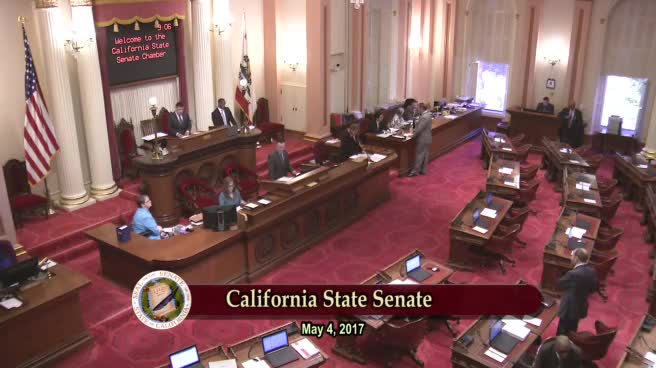 3MIN
Senate Floor
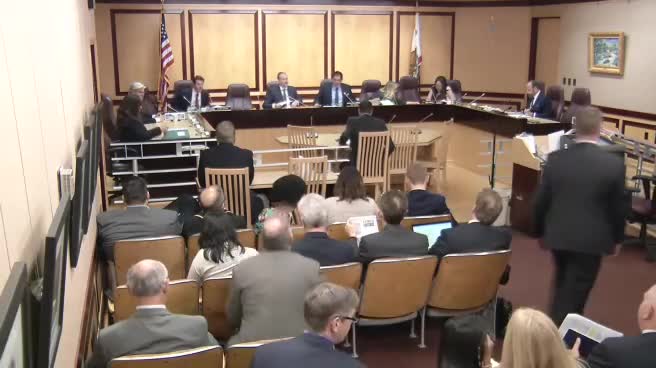 21MIN
Senate Standing Committee on Energy, Utilities and Communications
Bill Author


