SB 720: Environmental education: environmental principles and concepts.
- Session Year: 2017-2018
- House: Senate
- Latest Version Date: 2018-09-13
(1)Existing law establishes a system of public elementary and secondary education in this state. Under this system, local educational agencies throughout the state provide instruction to pupils in kindergarten and grades 1 to 12, inclusive.
This bill would express the findings and declarations of the Legislature that the states environmental principles and concepts have been approved by specified authorities and have been embedded in specified curriculum frameworks adopted by the State Board of Education. The bill would also express the intent of the Legislature that the Superintendent of Public Instruction use the resources at his or her disposal to provide leadership to further specified goals of environmental literacy.
(2)Existing law establishes courses of study for pupils in grades 1 to 6, inclusive, and also establishes courses of study for pupils in grades 7 to 12, inclusive.
This bill would express the encouragement of the Legislature for the governing boards of school districts to take specified actions with regard to promoting instruction in environmental literacy for pupils with respect to the respective courses of study for grades 1 to 6, inclusive, and for grades 7 to 12, inclusive.
(3)Existing law requires the Office of Education and the Environment in the Department of Resources Recycling and Recovery, in cooperation with the State Department of Education and the State Board of Education, to develop and implement a unified education strategy on the environment for elementary and secondary schools in the state and, in cooperation with specified state entities, to develop educational principles for the environment for elementary and secondary school pupils. Existing law provides that the principles may be updated every 4 years beginning July 1, 2008. Existing law requires the State Department of Education and the State Board of Education, in cooperation with the Department of Resources Recycling and Recovery, to develop and implement to the extent feasible, a teacher training and implementation plan, to guide the implementation of the unified education strategy, as specified.
This bill would instead require these state entities to develop environmental principles and concepts for elementary and secondary school pupils. The bill would instead provide that the environmental principles and concepts may be updated every 4 years beginning July 1, 2008, by the office, in cooperation with the Superintendent of Public Instruction, the State Board of Education, the California Environmental Protection Agency, and the Natural Resources Agency, pursuant to a specified process. The bill would also add concepts relating to climate change and make technical and conforming changes to these environmental principles and concepts.
(1)Existing law establishes a system of public elementary and secondary education in this state. Under this system, local educational agencies throughout the state provide instruction to pupils in kindergarten and grades 1 to 12, inclusive.
This bill would express the findings and declarations of the Legislature that the states Environmental Principles and Concepts environmental principles and concepts have been approved by specified authorities and have been embedded in specified curriculum frameworks adopted by the State Board of Education. The bill would also express the intent of the Legislature that the Superintendent of Public Instruction use the resources at his or her disposal to provide leadership to further specified goals of environmental literacy.
(2)Existing law establishes courses of study for pupils in grades 1 to 6, inclusive, and also establishes courses of study for pupils in grades 7 to 12, inclusive.
This bill would express the encouragement of the Legislature for the governing boards of school districts to take specified actions with regard to promoting instruction in environmental literacy for pupils with respect to the respective courses of study for grades 1 to 6, inclusive, and for grades 7 to 12, inclusive.
(3)Existing law requires the Office of Education and the Environment in the Department of Resources Recycling and Recovery, in cooperation with the State Department of Education and the State Board of Education, to develop and implement a unified education strategy on the environment for elementary and secondary schools in the state and, in cooperation with specified state entities, to develop educational principles for the environment for elementary and secondary school pupils. Existing law provides that the principles may be updated every 4 years beginning July 1, 2008. Existing law requires the State Department of Education and the State Board of Education, in cooperation with the Department of Resources Recycling and Recovery, to develop and implement to the extent feasible, a teacher training and implementation plan, to guide the implementation of the unified education strategy, as specified.
This bill would instead require these state entities to develop environmental principles and concepts for elementary and secondary school pupils. The bill would instead provide that the environmental principles and concepts may be updated every 4 years beginning July 1, 2008, by the office, in cooperation with the Superintendent of Public Instruction, the State Board of Education, the California Environmental Protection Agency, and the Natural Resources Agency, pursuant to a specified process. The bill would also add concepts relating to climate change, change and make technical and conforming changes, changes to these environmental principles and concepts.
(1)Existing law establishes a system of public elementary and secondary education in this state. Under this system, local educational agencies throughout the state provide instruction to pupils in kindergarten and grades 1 to 12, inclusive.
This bill would express the findings and declarations of the Legislature that the states Environmental Principles and Concepts have been approved by specified authorities and have been embedded in specified curriculum frameworks adopted by the State Board of Education. The bill would also express the intent of the Legislature that the Superintendent of Public Instruction use the resources at his or her disposal to provide leadership to further specified goals of environmental literacy.
(2)Existing law establishes courses of study for pupils in grades 1 to 6, inclusive, and also establishes courses of study for pupils in grades 7 to 12, inclusive.
This bill would express the encouragement of the Legislature for the governing boards of school districts to take specified actions with regard to promoting instruction in environmental literacy for pupils with respect to the respective courses of study for grades 1 to 6, inclusive, and for grades 7 to 12, inclusive.
(3)Existing law requires the Office of Education and the Environment in the Department of Resources Recycling and Recovery, in cooperation with the State Department of Education and the State Board of Education, to develop and implement a unified education strategy on the environment for elementary and secondary schools in the state and, in cooperation with specified state entities, to develop educational principles for the environment for elementary and secondary school pupils. Existing law provides that the principles may be updated every 4 years beginning July 1, 2008. Existing law requires the State Department of Education and the State Board of Education, in cooperation with the Department of Resources Recycling and Recovery, to develop and implement to the extent feasible, a teacher training and implementation plan, to guide the implementation of the unified education strategy, as specified.
This bill would instead provide that the environmental principles and concepts may be updated every 4 years beginning July 1, 2018, 2008, by the office, in cooperation with the Superintendent of Public Instruction, the State Board of Education, the California Environmental Protection Agency, and the Natural Resources Agency, pursuant to a specified process. The bill would also add concepts relating to climate change, and make technical and conforming changes, to these education principles for the environment. environmental principles and concepts.
(1)Existing law establishes a system of public elementary and secondary education in this state. Under this system, local educational agencies throughout the state provide instruction to pupils in kindergarten and grades 1 to 12, inclusive.
This bill would express the findings and declarations of the Legislature that the states Environmental Principles and Concepts have been approved by specified authorities and have been embedded in specified curriculum frameworks adopted by the State Board of Education. The bill would also express the intent of the Legislature that the Superintendent of Public Instruction use the resources at his or her disposal to provide leadership to further specified goals of environmental literacy and environmental justice. literacy.
(2)Existing law establishes courses of study for pupils in grades 1 to 6, inclusive, and also establishes courses of study for pupils in grades 7 to 12, inclusive.
This bill would express the encouragement of the Legislature for the governing boards of school districts to take specified actions with regard to promoting instruction in environmental literacy for pupils with respect to the respective courses of study for grades 1 to 6, inclusive, and for grades 7 to 12, inclusive.
(3)Existing law requires the Office of Education and the Environment in the Department of Resources Recycling and Recovery, in cooperation with the State Department of Education and the State Board of Education, to develop and implement a unified education strategy on the environment for elementary and secondary schools in the state and, in cooperation with specified state entities, to develop educational principles for the environment for elementary and secondary school pupils. Existing law requires the State Department of Education and the State Board of Education, in cooperation with the Department of Resources Recycling and Recovery, to develop and implement to the extent feasible, a teacher training and implementation plan, to guide the implementation of the unified education strategy, as specified.
This bill would provide that the education principles for the environment environmental principles and concepts may be updated or amended by the State Board of Education, every 4 years beginning July 1, 2018, by the office, in cooperation with the Superintendent of Public Instruction, the State Board of Education, the California Environmental Protection Agency, the Department of Resources Recycling and Recovery, and the Natural Resources Agency, pursuant to a specified process. The bill would also add concepts relating to climate change change, and make technical and conforming changes, to these education principles for the environment.
(1)Existing law establishes a system of public elementary and secondary education in this state. Under this system, local educational agencies throughout the state provide instruction to pupils in kindergarten and grades 1 to 12, inclusive.
This bill would express the findings and declarations of the Legislature that the states Environmental Principles and Concepts have been approved by specified authorities and have been embedded in specified curriculum frameworks adopted by the State Board of Education. The bill would also express the intent of the Legislature that the Superintendent of Public Instruction use the resources at his or her disposal to provide leadership to further specified goals of environmental literacy and environmental justice.
(2)Existing law establishes courses of study for pupils in grades 1 to 6, inclusive, and also establishes courses of study for pupils in grades 7 to 12, inclusive.
This bill would express the encouragement of the Legislature for the governing boards of school districts to take specified actions with regard to promoting instruction in environmental literacy for pupils with respect to the respective courses of study for grades 1 to 6, inclusive, and for grades 7 to 12, inclusive.
(3)Existing law requires the Office of Education and the Environment in the Department of Resources Recycling and Recovery, in cooperation with the State Department of Education and the State Board of Education, to develop and implement a unified education strategy on the environment for elementary and secondary schools in the state and, in cooperation with specified state entities, to develop educational principles for the environment for elementary and secondary school pupils. Existing law requires the State Department of Education and the State Board of Education, in cooperation with the Department of Resources Recycling and Recovery, to develop and implement to the extent feasible, a teacher training and implementation plan, to guide the implementation of the unified education strategy, as specified.
This bill would provide that the education principles for the environment may be updated or amended by the State Board of Education, in cooperation with the Superintendent of Public Instruction, the California Environmental Protection Agency, the Department of Resources Recycling and Recovery, and the Natural Resources Agency, pursuant to a specified process. The bill would also add concepts relating to climate change to these education principles for the environment.
Existing law requires, on or before July 1, 2014, each governing board of a school district and county board of education to adopt a local control and accountability plan using a state template adopted by the State Board of Education. Existing law requires, on or before October 1, 2016, the state board to adopt evaluation rubrics for specified purposes. Pursuant to this requirement, the state board adopted evaluation rubrics in September of 2016 and created the California School Dashboard, which is a graphically presented, publicly accessible interface that displays school performance data based on the evaluation rubrics.This bill would replace references to evaluation rubrics in the code with references to evaluation rubrics, as displayed on the California School Dashboard, and would make conforming changes.Existing law requires, on or before July 1, 2014, each governing board of a school district and county board of education to adopt a local control and accountability plan using a state template adopted by the State Board of Education. Existing law requires, on or before October 1, 2016, the state board to adopt evaluation rubrics for specified purposes. Pursuant to this requirement, the state board adopted evaluation rubrics in September of 2016 and created the California School Dashboard, which is a graphically presented, publicly accessible interface that displays school performance data based on the evaluation rubrics.
This bill would replace references to evaluation rubrics in the code with the references to evaluation rubrics, as displayed on the California School Dashboard Dashboard, and would make conforming changes.
Existing law requires, on or before July 1, 2014, each governing board of a school district and county board of education to adopt a local control and accountability plan using a state template adopted by the State Board of Education. Existing law requires, on or before October 1, 2016, the state board to adopt evaluation rubrics for specified purposes. Pursuant to this requirement, the state board adopted evaluation rubrics in September of 2016 and created the California School Dashboard, which is a graphically presented, publicly accessible interface that displays school performance data based on the evaluation rubrics.
This bill would replace references to evaluation rubrics in the code with the California School Dashboard and would make conforming changes.
Existing law prescribes the tort liability of public entities, as defined, and establishes a process for making claims in this regard. Existing law specifically immunizes a public entity in connection with certain public property, including for an injury caused by a natural condition of unimproved property. Existing law deems a beach to be in a natural and unimproved condition despite the presence or absence of safety services such as lifeguards and beach cleanup services. Existing law immunizes a public entity from liability to a person participating in a hazardous recreational activity, as defined.The bill would immunize a public entity and its employees for any damage or injury to a person or property as a result of a fire or the remnants of a fire that arises from the use of a fire pit, fire ring, fire circle, or barbecue grill, located in an area designated for that use, at a park, beach, or recreational area, owned or controlled by the entity.Existing law prescribes the tort liability of public entities, as defined, and establishes a process for making claims in this regard. Existing law specifically immunizes a public entity in connection with certain public property, including for an injury caused by a natural condition of unimproved property. Existing law deems a beach to be in a natural and unimproved condition despite the presence or absence of safety services such as lifeguards and beach cleanup services. Existing law immunizes a public entity from liability to a person participating in a hazardous recreational activity, as defined.
The bill would immunize a public entity and its employees for any damage or injury to a person or property as a result of a fire or the remnants of a fire that arises from the use of a fire pit, fire ring, fire circle, or barbecue grill, located in an area designated for that use, at a park, beach, or recreational area, owned or controlled by the entity.
(a)The Legislature finds and declares all of the following:
(1)Pursuant to Chapter 665 of the Statutes of 2003 and Chapter 581 of the Statutes of 2005, California has created a set of environmental principles and concepts that have been approved by the Secretary for Environmental Protection and the California Integrated Waste Management Board (now called the Department of Resources Recycling and Recovery (CalRecycle)) in consultation with the Superintendent of Public Instruction and the State Board of Education (state board) and adopted in 2004 by the state board.
(2)These environmental principles and concepts have been embedded in the curriculum frameworks adopted by the state board both for science and for history-social science, as well as the publishers criteria for both subjects. Further, the state boards guidelines require that the environmental principles and concepts be embedded in the development of the 2018 Health Education Framework.
(3)These environmental principles and concepts have served as the basis for a state board-approved model curriculum that has been widely in use in schools across California.
(4)The environmental principles and concepts identified pursuant to paragraph (1) are, therefore, fundamental to the definition of environmental literacy in California and should be deemed to be the official environmental principles and concepts for public education in California and may only be updated or amended as set forth in Section 71301 of the Public Resources Code.
(b)It is the intent of the Legislature that the Superintendent of Public Instruction use the resources at his or her disposal to provide leadership to further the goals of environmental literacy that include, but are not necessarily limited to, all of the following activities:
(1)Assist in providing professional development to educators in environmental literacy, in the integration of environmental literacy with other state-adopted standards and curriculum frameworks, and in the development and implementation of curriculum and learning experiences inside and outside of the classroom that promote environmental literacy.
(2)Assist in building and supporting partnerships, and regional and statewide networks of public and private agencies and organizations, including, but not limited to, the California Regional Environmental Education Community, county offices of education, school districts, and private partners, such as not-for-profit organizations, and community-based education providers that support the advancement of environmental literacy in California.
(3)Ensure that environmental literacy curriculum and learning experiences are made available on an equitable basis to all pupils and that the environmental literacy curriculum and learning experiences reflect the linguistic, ethnic, and socioeconomic diversity of California.
(4)Encourage and support the incorporation of the environmental principles and concepts into the credential requirements for both teachers and school administrators.
(5)Encourage the continuation of the incorporation of the environmental principles and concepts, where appropriate, in the development of statewide assessments of cognitive and noncognitive pupil achievement established by the state board.
(6)Assist in the incorporation of environmental principles and concepts into curriculum and instruction for career and technical education.
(7)Engage with other executive branch agencies and departments, including, but not necessarily limited to, CalRecycles Office of Education and the Environment, for the purpose of obtaining technical assistance, as needed, and to ensure that the activities set forth in this section are based on the most current scientific and technical knowledge.
SEC. 2.(a)The Legislature finds and declares all of the following:
(1)Environmental literacy is an important element of the Next Generation Science Standards adopted by the State Board of Education (state board) as well as K12 instruction that integrates Californias adopted environmental principles and concepts, within both the science and the history-social science curriculum frameworks adopted by the state board.
(2)A Blueprint for Environmental Literacy produced by the Superintendent of Public Instruction, through an Environmental Literacy Task Force in 2015, set forth the critical guiding principles of: (A) ensuring equity and access, (B) building sustainable and scalable delivery systems, (C) cultivating collaboration among stakeholders, (D) ensuring commitment to quality programs, (E) addressing cultural relevance, and (F) providing a variety of learning experiences necessary to achieve environmental literacy. The Blueprint for Environmental Literacy also identified an array of strategies to achieve Californias environmental literacy goals.
(3)Environmental literacy constitutes an important curriculum content area, and also provides problem solving skills and hands-on, real-world learning experiences that have been demonstrated through educational research to enhance pupils achievement across many subject areas, promoting understanding and engagement in learning.
(4)Developing an environmentally literate population will enhance our ability to develop and implement solutions to our environmental literacy and environmental justice challenges, and will provide a critical foundation of skills and knowledge to help pupils compete in a growing job market where science, mathematics, engineering, technology, and language arts proficiency are highly sought after.
(5)California has a rich array of scientists, community-based organizations, and informal education providers whose deep expertise in science, history-social science, public health, social and environmental justice, and other environmental content should be harnessed to support expanded environmental literacy instruction in our public schools.
(6)There are wide disparities across the state in access to environment-based learning experiences.
(b)The Legislature, therefore, encourages the governing boards of school districts to do all of the following with respect to the course of study in grades 1 to 6, inclusive:
(1)Embed environmental literacy in local control and accountability plans, including, but not necessarily limited to, embedding environmental literacy elements in local priorities and goals adopted pursuant to subdivision (h) of Section 52060 of, or subdivision (h) of Section 52066 of, the Education Code.
(2)Provide professional development for educators in environmental literacy, in the integration of environmental principles and concepts and other environmental content with state-adopted standards and curriculum frameworks, and in the development and implementation of curriculum and activities inside and outside of the classroom that promote environmental literacy.
(3)Build partnerships with other local educational agencies and with community-based organizations, informal education providers with expertise in science, history-social science, public health, social and environmental justice, and other environmental content providers in all aspects of environmental literacy programs.
(4)Ensure that environmental literacy curriculum and learning experiences are made available on an equitable basis to all pupils and that the environmental literacy curriculum and learning experiences reflect the linguistic, ethnic, and socioeconomic diversity of California.
SEC. 3.(a)The Legislature finds and declares all of the following:
(1)Environmental literacy is an important element of the Next Generation Science Standards adopted by the State Board of Education (state board) as well as K12 instruction that integrates Californias adopted environmental principles and concepts, within both the science and the history-social science curriculum frameworks adopted by the state board.
(2)A Blueprint for Environmental Literacy produced by the Superintendent of Public Instruction, through an Environmental Literacy Task Force in 2015, set forth the critical guiding principles of: (A) ensuring equity and access, (B) building sustainable and scalable delivery systems, (C) cultivating collaboration among stakeholders, (D) ensuring commitment to quality programs, (E) addressing cultural relevance, and (F) providing a variety of learning experiences necessary to achieve environmental literacy. The Blueprint for Environmental Literacy also identified an array of strategies to achieve Californias environmental literacy goals.
(3)Environmental literacy constitutes an important curriculum content area, and also provides problem solving skills and hands-on, real-world learning experiences that have been demonstrated through educational research to enhance pupils achievement across many subject areas, promoting understanding and engagement in learning.
(4)Developing an environmentally literate population will enhance our ability to develop and implement solutions to our environmental literacy and environmental justice challenges, and will provide a critical foundation of skills and knowledge to help pupils compete in a growing job market where science, mathematics, engineering, technology, and language arts proficiency are highly sought after.
(5)California has a rich array of scientists, community-based organizations, and informal education providers whose deep expertise in science, history-social science, public health, social and environmental justice, and other environmental content should be harnessed to support expanded environmental literacy instruction in our public schools.
(6)There are wide disparities across the state in access to environment-based learning experiences.
(b)The Legislature, therefore, encourages the governing boards of school districts to do all of the following with respect to the course of study in grades 7 to 12, inclusive:
(1)Embed environmental literacy in local control and accountability plans, including, but not necessarily limited to, embedding environmental literacy elements in local priorities and goals adopted pursuant to subdivision (h) of Section 52060 of, or subdivision (h) of Section 52066 of, the Education Code.
(2)Provide professional development for educators in environmental literacy, in the integration of environmental principles and concepts and other environmental content with state-adopted standards and curriculum frameworks, and in the development and implementation of curriculum and activities inside and outside of the classroom that promote environmental literacy, and in linking environmental literacy content and principles to career pathways and to career technical education curriculum and activities.
(3)Build partnerships with other local educational agencies and with community-based organizations, informal education providers with expertise in science, history-social science, public health, social and environmental justice, and other environmental content providers in all aspects of environmental literacy programs.
(4)Ensure that environmental literacy curriculum and learning experiences are made available on an equitable basis to all pupils and that the environmental literacy curriculum and learning experiences reflect the linguistic, ethnic, and socioeconomic diversity of California.
SEC. 4.Section 51227.3 is added to the Education Code, to read:51227.3.(a)The Instructional Quality Commission shall ensure that the environmental principles and concepts developed pursuant to Section 71301 of the Public Resources Code are integrated into the content standards and curriculum frameworks in the subjects of English language arts, science, history-social science, health, and, to the extent practicable, mathematics whenever those standards and frameworks are revised.
(b)The environmental principles and concepts shall be incorporated, as the state board determines to be appropriate, in the criteria developed for textbook adoption required pursuant to Section 60200 or 60400.
SEC. 5.Section 71301 of the Public Resources Code is amended to read:71301.(a)As part of the unified education strategy specified in subdivision (c) of Section 71300, the office, in cooperation with the Secretary for Environmental Protection, the Natural Resources Agency, the State Department of Education, and the State Board of Education, shall develop environmental principles and concepts for elementary and secondary school pupils.
(b)(1)The environmental principles and concepts may be updated every four years beginning July 1, 2008, by the office, in cooperation with the Superintendent of Public Instruction, the State Board of Education, the California Environmental Protection Agency, and the Natural Resources Agency, pursuant to the process set forth in paragraphs (2) and (3).
(2)When updating or amending the environmental principles and concepts, the office shall ensure that the environmental principles and concepts are based on current scientific and technical knowledge, and shall solicit and coordinate input from the State Board of Education, the Superintendent of Public Instruction, and other executive branch agencies and departments, nongovernmental science and education consultants and organizations with the relevant scientific and technical knowledge, and currently employed, credentialed, public school classroom teachers with experience in education related to the environment. A majority of the individuals consulted to review proposed updates or amendments to the environmental principles and concepts shall be credentialed, current public school elementary or secondary classroom teachers with experience in education related to the environment.
(3)When updating the environmental principles and concepts, the office shall hold a minimum of two public meetings in order for the public to provide input on the modifications. The public meetings required by this subdivision shall be held pursuant to the Bagley-Keene Open Meeting Act (Article 9 (commencing with Section 11120) of Chapter 1 of Part 1 of Division 3 of Title 2 of the Government Code).
(c)The environmental principles and concepts shall be aligned to the academic content standards adopted by the State Board of Education in the subjects of English language arts, science, history-social science, health, and, to the extent practicable, mathematics, and shall not conflict with any academic content standards. The environmental principles and concepts shall be used to do all of the following:
(1)To direct state agencies that include environmental education components for elementary and secondary education in regulatory decisions or enforcement actions.
(2)To align state agency environmental education programs and materials that are developed for elementary and secondary education.
(3)For provision, by the office, of technical assistance to state agencies involved in the integration of the environmental principles and concepts in programs they operate, and in the integration of the environmental principles and concepts into state curriculum standards, frameworks, and instructional materials pursuant to Section 51227.3 of the Education Code.
(d)The environmental principles and concepts shall include, but not be limited to, concepts relating to the following topics:
(1)Air.
(2)Climate change.
(3)Energy.
(4)Environmental justice.
(5)Environmental sustainability.
(6)Fish and wildlife resources.
(7)Forestry.
(8)Integrated pest management.
(9)Oceans.
(10)Pollution prevention.
(11)Public health and the environment.
(12)Resource conservation, waste reduction, and recycling.
(13)Toxics and hazardous waste.
(14)Water.
(a)The Legislature finds and declares all of the following:
(1)Pursuant to Chapter 665 of the Statutes of 2003 and Chapter 581 of the Statutes of 2005, California has created a set of Environmental Principles and Concepts environmental principles and concepts that have been approved by the Secretary of the California for Environmental Protection Agency and the California Integrated Waste Management Board (now called the Department of Resources Recycling and Recovery (CalRecycle)) in consultation with the Superintendent and the state board, of Public Instruction and the State Board of Education (state board) and adopted in 2004 by the state board.
(2)These Environmental Principles and Concepts environmental principles and concepts have been embedded in the curriculum frameworks adopted by the state board both for science and for history-social science, as well as the publishers criteria for both subjects. Further, the state boards guidelines require that the Environmental Principles and Concepts environmental principles and concepts be embedded in the development of the 2018 Health Education Framework.
(3)These Environmental Principles and Concepts environmental principles and concepts have served as the basis for a state board-approved model curriculum that has been widely in use in schools across California.
(4)The Environmental Principles and Concepts environmental principles and concepts identified pursuant to paragraph (1) are, therefore, fundamental to the definition of environmental literacy in California and should be deemed to be the official Environmental Principles and Concepts environmental principles and concepts for public education in California and may only be updated or amended as set forth in Section 71301 of the Public Resources Code.
(b)It is the intent of the Legislature that the Superintendent of Public Instruction use the resources at his or her disposal to provide leadership to further the goals of environmental literacy that include, but are not necessarily limited to, all of the following activities:
(1)Assist in providing professional development to educators in environmental literacy, in the integration of environmental literacy with other state-adopted standards and curriculum frameworks, and in the development and implementation of curriculum and learning experiences inside and outside of the classroom that promote environmental literacy.
(2)Assist in building and supporting partnerships, and regional and statewide networks of public and private agencies and organizations, including, but not limited to, the California Regional Environmental Education Community, county offices of education, school districts, and private partners, such as not-for-profit organizations, and community-based education providers that support the advancement of environmental literacy in California.
(3)Ensure that environmental literacy curriculum and learning experiences are made available on an equitable basis to all pupils and that the environmental literacy curriculum and learning experiences reflect the linguistic, ethnic, and socioeconomic diversity of California.
(4)Encourage and support the incorporation of the Environmental Principles and Concepts environmental principles and concepts into the credential requirements for both teachers and school administrators.
(5)Encourage the continuation of the incorporation of the Environmental Principles and Concepts, environmental principles and concepts, where appropriate, in the development of statewide assessments of cognitive and noncognitive pupil achievement established by the state board.
(6)Assist in the incorporation of Environmental Principles and Concepts environmental principles and concepts into curriculum and instruction for career and technical education.
(7)Engage with other executive branch agencies and departments, including, but not necessarily limited to, CalRecycles Office of Education and the Environment, for the purpose of obtaining technical assistance, as needed, and to ensure that the activities set forth in this section are based on the most current scientific and technical knowledge.
SEC. 2.(a)The Legislature finds and declares all of the following:
(1)Environmental literacy is an important element of the Next Generation Science Standards adopted by the state board State Board of Education (state board) as well as K12 instruction that integrates Californias adopted Environmental Principles and Concepts, environmental principles and concepts, within both the science and the history-social science curriculum frameworks adopted by the state board.
(2)A Blueprint for Environmental Literacy produced by the Superintendent, Superintendent of Public Instruction, through an Environmental Literacy Task Force in 2015, set forth the critical guiding principles of: (A) ensuring equity and access, (B) building sustainable and scalable delivery systems, (C) cultivating collaboration among stakeholders, (D) ensuring commitment to quality programs, (E) addressing cultural relevance, and (F) providing a variety of learning experiences necessary to achieve environmental literacy. The Blueprint for Environmental Literacy also identified an array of strategies to achieve Californias environmental literacy goals.
(3)Environmental literacy constitutes an important curriculum content area, and also provides problem-solving problem solving skills and hands-on, real-world learning experiences that have been demonstrated through educational research to enhance pupils achievement across many subject areas, promoting understanding and engagement in learning.
(4)Developing an environmentally literate population will enhance our ability to develop and implement solutions to our environmental literacy and environmental justice challenges, and will provide a critical foundation of skills and knowledge to help pupils compete in a growing job market where science, mathematics, engineering, technology, and language arts proficiency are highly sought after.
(5)California has a rich array of scientists, community-based organizations, and informal education providers whose deep expertise in science, history-social science, public health, social and environmental justice, and other environmental content should be harnessed to support expanded environmental literacy instruction in our public schools.
(6)There are wide disparities across the state in access to environment-based learning experiences.
(b)The Legislature, therefore, encourages the governing boards of school districts to do all of the following with respect to the course of study in grades 1 to 6, inclusive:
(1)Embed environmental literacy in local control and accountability plans, including, but not necessarily limited to, embedding environmental literacy elements in local priorities and goals adopted pursuant to subdivision (h) of Section 52060 of, or subdivision (h) of Section 52066 of, the Education Code.
(2)Provide professional development for educators in environmental literacy, in the integration of Environmental Principles and Concepts environmental principles and concepts and other environmental content with state-adopted standards and curriculum frameworks, and in the development and implementation of curriculum and activities inside and outside of the classroom that promote environmental literacy.
(3)Build partnerships with other local educational agencies and with community-based organizations, and informal education providers with expertise in science, history-social science, public health, social and environmental justice, and other environmental content providers in all aspects of environmental literacy programs.
(4)Ensure that environmental literacy curriculum and learning experiences are made available on an equitable basis to all pupils and that the environmental literacy curriculum and learning experiences reflect the linguistic, ethnic, and socioeconomic diversity of California.
SEC. 3.(a)The Legislature finds and declares all of the following:
(1)Environmental literacy is an important element of the Next Generation Science Standards adopted by the state board State Board of Education (state board) as well as K12 instruction that integrates Californias adopted Environmental Principles and Concepts, environmental principles and concepts, within both the science and the history-social science curriculum frameworks adopted by the state board.
(2)A Blueprint for Environmental Literacy produced by the Superintendent, Superintendent of Public Instruction, through an Environmental Literacy Task Force in 2015, set forth the critical guiding principles of: (A) ensuring equity and access, (B) building sustainable and scalable delivery systems, (C) cultivating collaboration among stakeholders, (D) ensuring commitment to quality programs, (E) addressing cultural relevance, and (F) providing a variety of learning experiences necessary to achieve environmental literacy. The Blueprint for Environmental Literacy also identified an array of strategies to achieve Californias environmental literacy goals.
(3)Environmental literacy constitutes an important curriculum content area, and also provides problem-solving problem solving skills and hands-on, real-world learning experiences that have been demonstrated through educational research to enhance pupils achievement across many subject areas, promoting understanding and engagement in learning.
(4)Developing an environmentally literate population will enhance our ability to develop and implement solutions to our environmental literacy and environmental justice challenges, and will provide a critical foundation of skills and knowledge to help pupils compete in a growing job market where science, mathematics, engineering, technology, and language arts proficiency are highly sought after.
(5)California has a rich array of scientists, community-based organizations, and informal education providers whose deep expertise in science, history-social science, public health, social and environmental justice, and other environmental content should be harnessed to support expanded environmental literacy instruction in our public schools.
(6)There are wide disparities across the state in access to environment-based learning experiences.
(b)The Legislature, therefore, encourages the governing boards of school districts to do all of the following with respect to the course of study in grades 7 to 12, inclusive:
(1)Embed environmental literacy in local control and accountability plans, including, but not necessarily limited to, embedding environmental literacy elements in local priorities and goals adopted pursuant to subdivision (h) of Section 52060 of, or subdivision (h) of Section 52066 of, the Education Code.
(2)Provide professional development for educators in environmental literacy, in the integration of Environmental Principles and Concepts environmental principles and concepts and other environmental content with state-adopted standards and curriculum frameworks, and in the development and implementation of curriculum and activities inside and outside of the classroom that promote environmental literacy, and in linking environmental literacy content and principles to career pathways and to career technical education curriculum and activities.
(3)Build partnerships with other local educational agencies and with community-based organizations, and informal education providers with expertise in science, history-social science, public health, social and environmental justice, and other environmental content providers in all aspects of environmental literacy programs.
(4)Ensure that environmental literacy curriculum and learning experiences are made available on an equitable basis to all pupils and that the environmental literacy curriculum and learning experiences reflect the linguistic, ethnic, and socioeconomic diversity of California.
SEC. 4.Section 51227.3 is added to the Education Code, to read:51227.3.(a)The Instructional Quality Commission shall ensure that the environmental principles and concepts developed pursuant to Section 71301 of the Public Resources Code are integrated into the content standards and curriculum frameworks in the subjects of English language arts, science, history-social science, health, and, to the extent practicable, mathematics, mathematics whenever those standards and frameworks are revised.
(b)The environmental principles and concepts shall be incorporated, as the state board determines to be appropriate, in the criteria developed for textbook adoption required pursuant to Section 60200 or 60400.
SEC. 5.Section 71301 of the Public Resources Code is amended to read:71301.(a)As part of the unified education strategy specified in subdivision (c) of Section 71300, the office, in cooperation with the Secretary for Environmental Protection, the Natural Resources Agency, the State Department of Education, and the State Board of Education, shall develop environmental principles and concepts for elementary and secondary school pupils.
(b)(1)The environmental principles and concepts may be updated every four years beginning July 1, 2008, by the office, in cooperation with the Superintendent of Public Instruction, the State Board of Education, CalEPA, the California Environmental Protection Agency, and the Natural Resources Agency, pursuant to the process set forth in paragraphs (2) and (3).
(2)When updating or amending the environmental principles and concepts, the office shall ensure that the environmental principles and concepts are based on current scientific and technical knowledge, and shall solicit and coordinate input from the State Board of Education, the Superintendent of Public Instruction, and other executive branch agencies and departments, nongovernmental science and education consultants and organizations with the relevant scientific and technical knowledge, and currently employed, credentialed, public school classroom teachers with experience in education related to the environment. A majority of the individuals consulted to review proposed updates or amendments to the environmental principles and concepts shall be credentialed, current public school elementary or secondary classroom teachers with experience in education related to the environment.
(3)When updating the environmental principles and concepts, the office shall hold a minimum of two public meetings in order for the public to provide input on the modifications. The public meetings required by this subdivision shall be held pursuant to the Bagley-Keene Open Meeting Act (Article 9 (commencing with Section 11120) of Chapter 1 of Part 1 of Division 3 of Title 2 of the Government Code).
(c)The environmental principles and concepts shall be aligned to the academic content standards adopted by the State Board of Education in the subjects of English language arts, science, history-social science, health, and, to the extent practicable, mathematics, and shall not duplicate nor conflict with any academic content standards. The environmental principles and concepts shall be used to do all of the following:
(1)To direct state agencies that include environmental education components for elementary and secondary education in regulatory decisions or enforcement actions.
(2)To align state agency environmental education programs and materials that are developed for elementary and secondary education.
(3)For provision, by the office, of technical assistance to state agencies involved in the integration of the environmental principles and concepts in programs they operate, and in the integration of the environmental principles and concepts into state curriculum standards, frameworks, and instructional materials pursuant to Section 51227.3 of the Education Code.
(d)The environmental principles and concepts shall include, but not be limited to, concepts relating to the following topics:
(1)Air.
(2)Climate change.
(3)Energy.
(4)Environmental justice.
(5)Environmental sustainability.
(6)Fish and wildlife resources.
(7)Forestry.
(8)Integrated pest management.
(9)Oceans.
(10)Pollution prevention.
(11)Public health and the environment.
(12)Resource conservation, waste reduction, and recycling.
(13)Toxics and hazardous waste.
(14)Water.
REVISIONS: HeadingLine 2.(a)The Legislature finds and declares all of the following:
(1)Pursuant to Chapter 665 of the Statutes of 2003 and Chapter 581 of the Statutes of 2005, California has created a set of Environmental Principles and Concepts that have been approved by the Secretary of the California Environmental Protection Agency and the California Integrated Waste Management Board (now called the Department of Resources Recycling and Recovery (CalRecycle)) in consultation with the Superintendent and the state board, and adopted in 2004 by the state board.
(2)These Environmental Principles and Concepts have been embedded in the curriculum frameworks adopted by the state board both for science and for history-social science, as well as the publishers criteria for both subjects. Further, the state boards guidelines require that the Environmental Principles and Concepts be embedded in the development of the 2018 Health Framework.
(3)These Environmental Principles and Concepts have served as the basis for a state board-approved model curriculum that has been widely in use in schools across California.
(4)The Environmental Principles and Concepts identified pursuant to paragraph (1) are, therefore, fundamental to the definition of environmental literacy in California and should be deemed to be the official Environmental Principles and Concepts for public education in California and may only be updated or amended as set forth in Section 71301 of the Public Resources Code.
(b)It is the intent of the Legislature that the Superintendent of Public Instruction use the resources at his or her disposal to provide leadership to further the goals of environmental literacy that include, but are not necessarily limited to, all of the following activities:
(1)Assist in providing professional development to educators in environmental literacy, in the integration of environmental literacy with other state-adopted standards and curriculum frameworks, and in the development and implementation of curriculum and learning experiences inside and outside of the classroom that promote environmental literacy.
(2)Assist in building and supporting partnerships, and regional and statewide networks of public and private agencies and organizations, including, but not limited to, the California Regional Environmental Education Community, county offices of education, school districts, and private partners, such as not-for-profit organizations, and community-based education providers that support the advancement of environmental literacy in California.
(3)Ensure that environmental literacy curriculum and learning experiences are made available on an equitable basis to all pupils and that the environmental literacy curriculum and learning experiences reflect the linguistic, ethnic, and socioeconomic diversity of California.
(4)Encourage and support the incorporation of the Environmental Principles and Concepts into the credential requirements for both teachers and administrators.
(5)Encourage the continuation of the incorporation of the Environmental Principles and Concepts, where appropriate, in the development of statewide assessments of cognitive and noncognitive pupil achievement established by the state board.
(6)Assist in the incorporation of Environmental Principles and Concepts into curriculum and instruction for career and technical education.
(7)Engage with other executive branch agencies and departments, including, but not necessarily limited to, CalRecycles Office of Education and the Environment, for the purpose of obtaining technical assistance, as needed, and to ensure that the activities set forth in this section are based on the most current scientific and technical knowledge.
SEC. 2.(a)The Legislature finds and declares all of the following:
(1)Environmental literacy is an important element of the Next Generation Science Standards adopted by the state board as well as K12 instruction that integrates Californias adopted Environmental Principles and Concepts, within both the science and the history-social science curriculum frameworks adopted by the state board.
(2)A Blueprint for Environmental Literacy produced by the Superintendent, through an Environmental Literacy Task Force in 2015, set forth the critical guiding principles of: (A) ensuring equity and access, (B) building sustainable and scalable delivery systems, (C) cultivating collaboration among stakeholders, (D) ensuring commitment to quality programs, (E) addressing cultural relevance, and (F) providing a variety of learning experiences necessary to achieve environmental literacy. The Blueprint for Environmental Literacy also identified an array of strategies to achieve Californias environmental literacy goals.
(3)Environmental literacy constitutes an important curriculum content area, and also provides problem-solving skills and hands-on, real-world learning experiences that have been demonstrated through educational research to enhance pupils achievement across many subject areas, promoting understanding and engagement in learning.
(4)Developing an environmentally literate population will enhance our ability to develop and implement solutions to our environmental literacy and environmental justice challenges, and will provide a critical foundation of skills and knowledge to help pupils compete in a growing job market where science, mathematics, engineering, technology, and language arts proficiency are highly sought after.
(5)California has a rich array of scientists, community-based organizations, and informal education providers whose deep expertise in science, history-social science, public health, social and environmental justice, and other environmental content should be harnessed to support expanded environmental literacy instruction in our public schools.
(6)There are wide disparities across the state in access to environment-based learning experiences.
(b)The Legislature, therefore, encourages the governing boards of school districts to do all of the following with respect to the course of study in grades 1 to 6, inclusive:
(1)Embed environmental literacy in local control and accountability plans, including, but not necessarily limited to, embedding environmental literacy elements in local priorities and goals adopted pursuant to subdivision (h) of Section 52060 of, or subdivision (h) of Section 52066 of, the Education Code.
(2)Provide professional development for educators in environmental literacy, in the integration of Environmental Principles and Concepts and other environmental content with state-adopted standards and curriculum frameworks, and in the development and implementation of curriculum and activities inside and outside of the classroom that promote environmental literacy.
(3)Build partnerships with other local educational agencies and with community-based organizations, and informal education providers with expertise in science, history-social science, public health, social and environmental justice, and other environmental content providers in all aspects of environmental literacy programs.
(4)Ensure that environmental literacy curriculum and learning experiences are made available on an equitable basis to all pupils and that the environmental literacy curriculum and learning experiences reflect the linguistic, ethnic, and socioeconomic diversity of California.
SEC. 3.(a)The Legislature finds and declares all of the following:
(1)Environmental literacy is an important element of the Next Generation Science Standards adopted by the state board as well as K12 instruction that integrates Californias adopted Environmental Principles and Concepts, within both the science and the history-social science curriculum frameworks adopted by the state board.
(2)A Blueprint for Environmental Literacy produced by the Superintendent, through an Environmental Literacy Task Force in 2015, set forth the critical guiding principles of: (A) ensuring equity and access, (B) building sustainable and scalable delivery systems, (C) cultivating collaboration among stakeholders, (D) ensuring commitment to quality programs, (E) addressing cultural relevance, and (F) providing a variety of learning experiences necessary to achieve environmental literacy. The Blueprint for Environmental Literacy also identified an array of strategies to achieve Californias environmental literacy goals.
(3)Environmental literacy constitutes an important curriculum content area, and also provides problem-solving skills and hands-on, real-world learning experiences that have been demonstrated through educational research to enhance pupils achievement across many subject areas, promoting understanding and engagement in learning.
(4)Developing an environmentally literate population will enhance our ability to develop and implement solutions to our environmental literacy and environmental justice challenges, and will provide a critical foundation of skills and knowledge to help pupils compete in a growing job market where science, mathematics, engineering, technology, and language arts proficiency are highly sought after.
(5)California has a rich array of scientists, community-based organizations, and informal education providers whose deep expertise in science, history-social science, public health, social and environmental justice, and other environmental content should be harnessed to support expanded environmental literacy instruction in our public schools.
(6)There are wide disparities across the state in access to environment-based learning experiences.
(b)The Legislature, therefore, encourages the governing boards of school districts to do all of the following with respect to the course of study in grades 7 to 12, inclusive:
(1)Embed environmental literacy in local control and accountability plans, including, but not necessarily limited to, embedding environmental literacy elements in local priorities and goals adopted pursuant to subdivision (h) of Section 52060 of, or subdivision (h) of Section 52066 of, the Education Code.
(2)Provide professional development for educators in environmental literacy, in the integration of Environmental Principles and Concepts and other environmental content with state-adopted standards and curriculum frameworks, and in the development and implementation of curriculum and activities inside and outside of the classroom that promote environmental literacy, and in linking environmental literacy content and principles to career pathways and to career technical education curriculum and activities.
(3)Build partnerships with other local educational agencies and with community-based organizations, and informal education providers with expertise in science, history-social science, public health, social and environmental justice, and other environmental content providers in all aspects of environmental literacy programs.
(4)Ensure that environmental literacy curriculum and learning experiences are made available on an equitable basis to all pupils and that the environmental literacy curriculum and learning experiences reflect the linguistic, ethnic, and socioeconomic diversity of California.
SEC. 4.Section 51227.3 is added to the Education Code, to read:51227.3.(a)The Instructional Quality Commission shall ensure that the environmental principles and concepts developed pursuant to Section 71301 of the Public Resources Code are integrated into the content standards and curriculum frameworks in the subjects of English language arts, science, history-social science, health, and, to the extent practicable, mathematics, whenever those standards and frameworks are revised.
(b)The principles shall be incorporated, as the state board determines to be appropriate, in the criteria developed for textbook adoption required pursuant to Section 60200 or 60400.
SEC. 5.Section 71301 of the Public Resources Code is amended to read:71301.(a)As part of the unified education strategy specified in subdivision (c) of Section 71300, the office, in cooperation with the Secretary for Environmental Protection, the Natural Resources Agency, the State Department of Education, and the State Board of Education, shall develop environmental principles and concepts for elementary and secondary school pupils.
(b)(1)The environmental principles and concepts may be updated every four years beginning July 1, 2008, by the office, in cooperation with the Superintendent of Public Instruction, CalEPA, the State Board of Education, CalEPA, and the Natural Resources Agency, pursuant to the process set forth in paragraphs (2) and (3).
(2)When updating or amending the environmental principles and concepts, the office shall ensure that the principles are based on current scientific and technical knowledge, and shall solicit and coordinate input from the State Board of Education, the Superintendent of Public Instruction, and other executive branch agencies and departments, nongovernmental science and education consultants and organizations with the relevant scientific and technical knowledge, and currently employed, credentialed, public school classroom teachers with experience in education related to the environment. A majority of the individuals consulted to review proposed updates or amendments to the environmental principles and concepts shall be credentialed, current public school elementary or secondary classroom teachers with experience in education related to the environment.
(3)When updating the environmental principles and concepts, the office shall hold a minimum of two public meetings in order for the public to provide input on the modifications. The public meetings required by this subdivision shall be held pursuant to the Bagley-Keene Open Meeting Act (Article 9 (commencing with Section 11120) of Chapter 1 of Part 1 of Division 3 of Title 2 of the Government Code).
(c)The environmental principles and concepts shall be aligned to the academic content standards adopted by the State Board of Education in the subjects of English language arts, science, history-social science, health, and, to the extent practicable, mathematics. mathematics, and shall not duplicate nor conflict with any academic content standards. The environmental principles and concepts shall be used to do all of the following:
(1)To direct state agencies that include environmental education components for elementary and secondary education in regulatory decisions or enforcement actions.
(2)To align state agency environmental education programs and materials that are developed for elementary and secondary education.
(3)For provision, by the office, of technical assistance to state agencies involved in the integration of the environmental principles and concepts in programs they operate, and in the integration of the principles into state curriculum standards, frameworks, and instructional materials pursuant to Section 51227.3 of the Education Code.
(d)The environmental principles and concepts shall include, but not be limited to, concepts relating to the following topics:
(1)Air.
(2)Climate change.
(3)Energy.
(4)Environmental justice.
(5)Environmental sustainability.
(6)Fish and wildlife resources.
(7)Forestry.
(8)Integrated pest management.
(9)Oceans.
(10)Pollution prevention.
(11)Public health and the environment.
(12)Resource conservation, waste reduction, and recycling.
(13)Toxics and hazardous waste.
(14)Water.
(e)The education principles for the environment shall be aligned to the applicable academic content standards adopted by the State Board of Education and shall not duplicate or conflict with any academic content standards.(a)The Legislature finds and declares all of the following:
(1)Pursuant to Chapter 665 of the Statutes of 2003 and Chapter 581 of the Statutes of 2005, California has created a set of Environmental Principles and Concepts that have been approved by the Secretary of the California Environmental Protection Agency and the California Integrated Waste Management Board (now called the Department of Resources Recycling and Recovery (CalRecycle)) in consultation with the Superintendent and the state board, and adopted in 2004 by the state board.
(2)These Environmental Principles and Concepts have been embedded in the curriculum frameworks adopted by the state board both for science and for history-social science, as well as the publishers criteria for both subjects. Further, the state boards guidelines require that the Environmental Principles and Concepts be embedded in the development of the 2018 Health Framework.
(3)These Environmental Principles and Concepts have served as the basis for a state board-approved model curriculum that has been widely in use in schools across California.
(4)The Environmental Principles and Concepts identified pursuant to paragraph (1) are, therefore, fundamental to the definition of environmental literacy in California and should be deemed to be the official Environmental Principles and Concepts for public education in California and may only be updated or amended as set forth in Section 71301 of the Public Resources Code.
(b)It is the intent of the Legislature that the Superintendent of Public Instruction use the resources at his or her disposal to provide leadership to further the goals of environmental literacy that include, but are not necessarily limited to, all of the following activities:
(1)Assist in providing professional development to educators in environmental literacy, in the integration of environmental literacy with other state-adopted standards and curriculum frameworks, and in the development and implementation of curriculum and learning experiences inside and outside of the classroom that promote environmental literacy.
(2)Assist in building and supporting partnerships, and regional and statewide networks of public and private agencies and organizations, including, but not limited to, the California Regional Environmental Education Community, county offices of education, school districts, and private partners, such as not-for-profit organizations, and community-based education providers that support the advancement of environmental literacy in California.
(3)Ensure that environmental literacy curriculum and learning experiences are made available on an equitable basis to all pupils and that the environmental literacy curriculum and learning experiences reflect the linguistic, ethnic, and socioeconomic diversity of California.
(4)Encourage and support the incorporation of the Environmental Principles and Concepts into the credential requirements for both teachers and administrators.
(5)Encourage the continuation of the incorporation of the Environmental Principles and Concepts, where appropriate, in the development of statewide assessments of cognitive and noncognitive pupil achievement established by the state board.
(6)Assist in the incorporation of Environmental Principles and Concepts into curriculum and instruction for career and technical education.
(7)Engage with other executive branch agencies and departments, including, but not necessarily limited to, CalRecycles Office of Education and the Environment, for the purpose of obtaining technical assistance, as needed, and to ensure that the activities set forth in this section are based on the most current scientific and technical knowledge.
SEC. 2.(a)The Legislature finds and declares all of the following:
(1)Environmental literacy is an important element of the Next Generation Science Standards adopted by the state board as well as K12 instruction that integrates Californias adopted Environmental Principles and Concepts, within both the science and the history-social science curriculum frameworks adopted by the state board.
(2)A Blueprint for Environmental Literacy produced by the Superintendent, through an Environmental Literacy Task Force in 2015, set forth the critical guiding principles of: (A) ensuring equity and access, (B) building sustainable and scalable delivery systems, (C) cultivating collaboration among stakeholders, (D) ensuring commitment to quality programs, (E) addressing cultural relevance, and (F) providing a variety of learning experiences necessary to achieve environmental literacy. The Blueprint for Environmental Literacy also identified an array of strategies to achieve Californias environmental literacy goals.
(3)Environmental literacy constitutes an important curriculum content area, and also provides problem-solving skills and hands-on, real-world learning experiences that have been demonstrated through educational research to enhance pupils achievement across many subject areas, promoting understanding and engagement in learning.
(4)Developing an environmentally literate population will enhance our ability to develop and implement solutions to our environmental literacy and environmental justice challenges, and will provide a critical foundation of skills and knowledge to help pupils compete in a growing job market where science, mathematics, engineering, technology, and language arts proficiency are highly sought after.
(5)California has a rich array of scientists, community-based organizations, and informal education providers whose deep expertise in science, history-social science, public health, social and environmental justice, and other environmental content should be harnessed to support expanded environmental literacy instruction in our public schools.
(6)There are wide disparities across the state in access to environment-based learning experiences.
(b)The Legislature, therefore, encourages the governing boards of school districts to do all of the following with respect to the course of study in grades 1 to 6, inclusive:
(1)Embed environmental literacy in local control and accountability plans, including, but not necessarily limited to, embedding environmental literacy elements in local priorities and goals adopted pursuant to subdivision (h) of Section 52060 of, or subdivision (h) of Section 52066 of, the Education Code.
(2)Provide professional development for educators in environmental literacy, in the integration of Environmental Principles and Concepts and other environmental content with state-adopted standards and curriculum frameworks, and in the development and implementation of curriculum and activities inside and outside of the classroom that promote environmental literacy.
(3)Build partnerships with other local educational agencies and with community-based organizations, and informal education providers with expertise in science, history-social science, public health, social and environmental justice, and other environmental content providers in all aspects of environmental literacy programs.
(4)Ensure that environmental literacy curriculum and learning experiences are made available on an equitable basis to all pupils and that the environmental literacy curriculum and learning experiences reflect the linguistic, ethnic, and socioeconomic diversity of California.
SEC. 3.(a)The Legislature finds and declares all of the following:
(1)Environmental literacy is an important element of the Next Generation Science Standards adopted by the state board as well as K12 instruction that integrates Californias adopted Environmental Principles and Concepts, within both the science and the history-social science curriculum frameworks adopted by the state board.
(2)A Blueprint for Environmental Literacy produced by the Superintendent, through an Environmental Literacy Task Force in 2015, set forth the critical guiding principles of: (A) ensuring equity and access, (B) building sustainable and scalable delivery systems, (C) cultivating collaboration among stakeholders, (D) ensuring commitment to quality programs, (E) addressing cultural relevance, and (F) providing a variety of learning experiences necessary to achieve environmental literacy. The Blueprint for Environmental Literacy also identified an array of strategies to achieve Californias environmental literacy goals.
(3)Environmental literacy constitutes an important curriculum content area, and also provides problem-solving skills and hands-on, real-world learning experiences that have been demonstrated through educational research to enhance pupils achievement across many subject areas, promoting understanding and engagement in learning.
(4)Developing an environmentally literate population will enhance our ability to develop and implement solutions to our environmental literacy and environmental justice challenges, and will provide a critical foundation of skills and knowledge to help pupils compete in a growing job market where science, mathematics, engineering, technology, and language arts proficiency are highly sought after.
(5)California has a rich array of scientists, community-based organizations, and informal education providers whose deep expertise in science, history-social science, public health, social and environmental justice, and other environmental content should be harnessed to support expanded environmental literacy instruction in our public schools.
(6)There are wide disparities across the state in access to environment-based learning experiences.
(b)The Legislature, therefore, encourages the governing boards of school districts to do all of the following with respect to the course of study in grades 7 to 12, inclusive:
(1)Embed environmental literacy in local control and accountability plans, including, but not necessarily limited to, embedding environmental literacy elements in local priorities and goals adopted pursuant to subdivision (h) of Section 52060 of, or subdivision (h) of Section 52066 of, the Education Code.
(2)Provide professional development for educators in environmental literacy, in the integration of Environmental Principles and Concepts and other environmental content with state-adopted standards and curriculum frameworks, and in the development and implementation of curriculum and activities inside and outside of the classroom that promote environmental literacy, and in linking environmental literacy content and principles to career pathways and to career technical education curriculum and activities.
(3)Build partnerships with other local educational agencies and with community-based organizations, and informal education providers with expertise in science, history-social science, public health, social and environmental justice, and other environmental content providers in all aspects of environmental literacy programs.
(4)Ensure that environmental literacy curriculum and learning experiences are made available on an equitable basis to all pupils and that the environmental literacy curriculum and learning experiences reflect the linguistic, ethnic, and socioeconomic diversity of California.
SEC. 4.Section 51227.3 is added to the Education Code, to read:51227.3.(a)The Instructional Quality Commission shall ensure that the environmental principles and concepts developed pursuant to Section 71301 of the Public Resources Code are integrated into the content standards and curriculum frameworks in the subjects of English language arts, science, history-social science, health, and, to the extent practicable, mathematics, whenever those standards and frameworks are revised.
(b)The principles shall be incorporated, as the state board determines to be appropriate, in the criteria developed for textbook adoption required pursuant to Section 60200 or 60400.
SECTION 1.Article 1.5 (commencing with Section 8710) is added to Chapter 4 of Part 6 of Division 1 of Title 1 of the Education Code, to read:1.5.Californias Environmental Principles and Concepts8710.(a)The Legislature finds and declares that, pursuant to Chapter 665 of the Statutes of 2003 and Chapter 581 of the Statutes of 2005, California has created a set of Environmental Principles and Concepts that have been approved by the Secretary of the California Environmental Protection Agency and the California Integrated Waste Management Board (now called The California Department of Resources Recycling and Recovery (CalRecycle)) in consultation with the Superintendent and the state board, and adopted in 2004 by the state board.(b)The Legislature further finds and declares that these Environmental Principles and Concepts have been embedded in the curriculum frameworks adopted by the state board both for science and for history-social science, as well as the publishers criteria for both subjects. Further, the state boards guidelines require that the Environmental Principles and Concepts be embedded in the development of the 2018 Health Framework.(c)The Legislature further finds and declares that these Environmental Principles and Concepts have served as the basis for a state board-approved model curriculum that has been widely in use in schools across California.(d)The Legislature, therefore, finds and declares that the Environmental Principles and Concepts identified pursuant to subdivision (a) are fundamental to the definition of environmental literacy in California and should be deemed to be the official Environmental Principles and Concepts for public education in California and may only be updated or amended as set forth in Section 71301 of the Public Resources Code.8711.It is the intent of the Legislature that the Superintendent use the resources at his or her disposal to provide leadership to further the goals of environmental literacy and environmental justice that includes, but is not necessarily limited to, all of the following activities:(a)Assist in providing professional development to educators in environmental literacy, in the integration of environmental literacy with other state-adopted standards and curriculum frameworks, and in the development and implementation of curriculum and learning experiences inside and outside of the classroom that promote environmental literacy.(b)Assist in building and supporting partnerships, and regional and statewide networks of public and private agencies and organizations, including, but not limited to, the California Regional Environmental Education Community, county offices of education, school districts, and private partners, such as not-for-profit organizations, and community-based education providers that support the advancement of environmental literacy in California.(c)Ensure that environmental literacy curriculum and learning experiences are made available on an equitable basis to all pupils and that the environmental literacy curriculum and learning experiences reflect the linguistic, ethnic, and socioeconomic diversity of California.(d)Encourage and support the incorporation of the Environmental Principles and Concepts into the credential requirements for both teachers and administrators.(e)Encourage the incorporation of Environmental Principles and Concepts in the development of statewide assessments of cognitive and noncognitive pupil achievement established by the state board.(f)Assist in the incorporation of Environmental Principles and Concepts into curriculum and instruction for career and technical education.(g)Engage with other executive branch agencies and departments, including, but not necessarily limited to, CalRecycles Office of Education and the Environment, for the purpose of obtaining technical assistance, as needed, and to ensure that the activities set forth in this section are based on the most current scientific and technical knowledge.SEC. 2.Section 51211.3 is added to the Education Code, to read:51211.3.(a)The Legislature finds and declares all of the following:(1)Environmental literacy is an important element of the Next Generation Science Standards adopted by the state board as well as K12 instruction that integrates Californias adopted Environmental Principles and Concepts, within both the science and the history-social science curriculum frameworks adopted by the state board.(2)A Blueprint for Environmental Literacy produced by the Superintendent, through an Environmental Literacy Task Force in 2015, set forth the critical guiding principles of: (A) ensuring equity and access,(B) building sustainable and scalable delivery systems, (C) cultivating collaboration among stakeholders, (D) ensuring commitment to quality programs, (E) addressing cultural relevance, and (F) providing a variety of learning experiences necessary to achieve environmental literacy. The Blueprint for Environmental Literacy also identified an array of strategies to achieve Californias environmental literacy goals.(3)Environmental literacy constitutes an important curriculum content area, and also provides problem-solving skills and hands-on, real-world learning experiences that have been demonstrated through educational research to enhance pupils achievement across many subject areas, promoting understanding and engagement in learning.(4)Developing an environmentally literate population will enhance our ability to develop and implement solutions to our environmental literacy and environmental justice challenges, and will provide a critical foundation of skills and knowledge to help pupils compete in a growing job market where science, mathematics, engineering, technology, and language arts proficiency are highly sought after.(5)California has a rich array of scientists, community-based organizations, and nonformal education providers whose deep expertise in science, history-social science, public health, social and environmental justice, and other environmental content should be harnessed to support expanded environmental literacy instruction in our public schools.(6)There are wide disparities across the state in access to environment-based learning experiences.(b)The Legislature, therefore, encourages the governing boards of school districts to do all of the following with respect to the course of study in grades 1 to 6, inclusive:(1)Embed environmental literacy in local control and accountability plans, including, but not necessarily limited to, embedding environmental literacy elements in local priorities and goals adopted pursuant to subdivision (h) of Section 52060 or subdivision (h) of Section 52066.(2)Provide professional development for educators in environmental literacy, in the integration of Environmental Principles and Concepts and other environmental content with state-adopted standards and curriculum frameworks, and in the development and implementation of curriculum and activities inside and outside of the classroom that promote environmental literacy.(3)Build partnerships with other local educational agencies and with community-based organizations, and nonformal education providers with expertise in science, history-social science, public health, social and environmental justice, and other environmental content providers in all aspects of environmental literacy programs.(4)Ensure that environmental literacy curriculum and learning experiences are made available on an equitable basis to all pupils and that the environmental literacy curriculum and learning experiences reflect the linguistic, ethnic, and socioeconomic diversity of California.SEC. 3.Section 51221.6 is added to the Education Code, to read:51221.6.(a)The Legislature finds and declares all of the following:(1)Environmental literacy is an important element of the Next Generation Science Standards adopted by the state board as well as K12 instruction that integrates Californias adopted Environmental Principles and Concepts, within both the science and the history-social science curriculum frameworks adopted by the state board.(2)A Blueprint for Environmental Literacy produced by the Superintendent, through an Environmental Literacy Task Force in 2015, set forth the critical guiding principles of: (A) ensuring equity and access, (B) building sustainable and scalable delivery systems, (C) cultivating collaboration among stakeholders, (D) ensuring commitment to quality programs, (E) addressing cultural relevance, and (F) providing a variety of learning experiences necessary to achieve environmental literacy. The Blueprint for Environmental Literacy also identified an array of strategies to achieve Californias environmental literacy goals.(3)Environmental literacy constitutes an important curriculum content area, and also provides problem-solving skills and hands-on, real-world learning experiences that have been demonstrated through educational research to enhance pupils achievement across many subject areas, promoting understanding and engagement in learning.(4)Developing an environmentally literate population will enhance our ability to develop and implement solutions to our environmental literacy and environmental justice challenges, and will provide a critical foundation of skills and knowledge to help pupils compete in a growing job market where science, mathematics, engineering, technology, and language arts proficiency are highly sought after.(5)California has a rich array of scientists, community-based organizations, and nonformal education providers whose deep expertise in science, history-social science, public health, social and environmental justice, and other environmental content should be harnessed to support expanded environmental literacy instruction in our public schools.(6)There are wide disparities across the state in access to environment-based learning experiences.(b)The Legislature, therefore, encourages the governing boards of school districts to do all of the following with respect to the course of study in grades 7 to 12, inclusive:(1)Embed environmental literacy in local control and accountability plans, including, but not necessarily limited to, embedding environmental literacy elements in local priorities and goals adopted pursuant to subdivision (h) of Section 52060 or subdivision (h) of Section 52066.(2)Provide professional development for educators in environmental literacy, in the integration of Environmental Principles and Concepts and other environmental content with state-adopted standards and curriculum frameworks, and in the development and implementation of curriculum and activities inside and outside of the classroom that promote environmental literacy, and in linking environmental literacy content and principles to career pathways and to career technical education curriculum and activities.(3)Build partnerships with other local educational agencies and with community-based organizations, and nonformal education providers with expertise in science, history-social science, public health, social and environmental justice, and other environmental content providers in all aspects of environmental literacy programs.(4)Ensure that environmental literacy curriculum and learning experiences are made available on an equitable basis to all pupils and that the environmental literacy curriculum and learning experiences reflect the linguistic, ethnic, and socioeconomic diversity of California.SEC. 4.SEC. 5.Section 71301 of the Public Resources Code is amended to read:71301.(a)As part of the unified education strategy specified in subdivision (c) of Section 71300, the office, in cooperation with the Secretary for Environmental Protection, the Natural Resources Agency, the State Department of Education, and the State Board of Education, shall develop education principles for the environment environmental principles and concepts for elementary and secondary school pupils.
(b)(1)The education principles for the environment environmental principles and concepts may be updated or amended by the State Board of Education, every four years beginning July 1, 2008, by the office, in cooperation with the Superintendent of Public Instruction, CalEPA, CalRecycle, the State Board of Education, CalEPA, and the Natural Resources Agency, pursuant to a the process set forth in Section 60605.11 of the Education Code. paragraphs (2) and (3).
(2)In When updating or amending the education principles for the environment, the State Board of Education shall rely upon the expertise of the agencies and departments of state government designated by the Governor to en sure environmental principles and concepts, the office shall ensure that the principles are based on the most current scientific and technical knowledge. The office shall play a coordinating role between knowledge, and shall solicit and coordinate input from the State Board of Education, the Superintendent of Public Instruction, and other executive branch agencies and departments, and nongovernmental science and education consultants and organizations with the relevant scientific and technical knowledge. knowledge, and currently employed, credentialed, public school classroom teachers with experience in education related to the environment.
(3)The State Board of Education shall review the education principles for the environment for updating or amending pursuant to this subdivision whenever the curriculum standards and frameworks within which the principles are embedded are being revised pursuant to the Education Code.(3)When updating the environmental principles and concepts, the office shall hold a minimum of two public meetings in order for the public to provide input on the modifications. The public meetings required by this subdivision shall be held pursuant to the Bagley-Keene Open Meeting Act (Article 9 (commencing with Section 11120) of Chapter 1 of Part 1 of Division 3 of Title 2 of the Government Code).
(c)The education principles for the environment environmental principles and concepts shall be aligned to the academic content standards adopted by the State Board of Education pursuant to Section 60605 of the Education Code. The education principles for the environment in the subjects of English language arts, science, history-social science, health, and, to the extent practicable, mathematics. The environmental principles and concepts shall be used to do all of the following:
(1)To direct state agencies that include environmental education components for elementary and secondary education in regulatory decisions or enforcement actions. The office shall be available to provide technical support to state agencies involved in the integration of the education principles for the environment for purposes of these regulatory decisions or enforcement actions.
(2)To align state agency environmental education programs and materials that are developed for elementary and secondary education.
(3)For provision, by the office, of technical assistance to state agencies involved in the integration of the environmental principles and concepts in programs they operate, and in the integration of the principles into state curriculum standards, frameworks, and instructional materials pursuant to Section 51227.3 of the Education Code.
(d)The education principles for the environment environmental principles and concepts shall include, but not necessarily be limited to, concepts relating to the following topics:
(1)Climate change.(2)Environmental sustainability.(3)Water.(4)Air.(5)Energy.(6)Forestry.(1)Air.
(2)Climate change.
(3)Energy.
(4)Environmental justice.
(5)Environmental sustainability.
(7)(6)Fish and wildlife resources.
(8)Oceans.(9)Toxics and hazardous waste.(10)Integrated waste management.(11)Integrated pest management.(12)Public health and the environment.(13)Pollution prevention.(14)Resource conservation and recycling.(15)Environmental justice.(7)Forestry.
(8)Integrated pest management.
(9)Oceans.
(10)Pollution prevention.
(11)Public health and the environment.
(12)Resource conservation, waste reduction, and recycling.
(13)Toxics and hazardous waste.
(14)Water.
(e)The education principles for the environment shall be aligned to the applicable academic content standards adopted by the State Board of Education and shall not duplicate or conflict with any academic content standards.
(f)(1) The education principles for the environment shall be incorporated, as the State Board of Education determines to be appropriate, in criteria developed for textbook adoption required pursuant to Section 60200 or 60400 of the Education Code in science, mathematics, English/language arts, and history-social sciences.(2)If the State Board of Education determines that the education principles for the environment are not appropriate for inclusion in the textbook adoption criteria cited in paragraph (1), the State Board of Education shall collaborate with the office to make the changes necessary to ensure that the principles are included in the textbook adoption criteria in science, mathematics, English/language arts, and history-social sciences.(g)If the content standards required pursuant to Section 60605 of the Education Code are revised, the education principles for the environment shall be appropriately considered for inclusion into part of the revised academic content standards.(a)The Legislature finds and declares that, pursuant to Chapter 665 of the Statutes of 2003 and Chapter 581 of the Statutes of 2005, California has created a set of Environmental Principles and Concepts that have been approved by the Secretary of the California Environmental Protection Agency and the California Integrated Waste Management Board (now called The California Department of Resources Recycling and Recovery (CalRecycle)) in consultation with the Superintendent and the state board, and adopted in 2004 by the state board.
(b)The Legislature further finds and declares that these Environmental Principles and Concepts have been embedded in the curriculum frameworks adopted by the state board both for science and for history-social science, as well as the publishers criteria for both subjects. Further, the state boards guidelines require that the Environmental Principles and Concepts be embedded in the development of the 2018 Health Framework.
(c)The Legislature further finds and declares that these Environmental Principles and Concepts have served as the basis for a state board-approved model curriculum that has been widely in use in schools across California.
(d)The Legislature, therefore, finds and declares that the Environmental Principles and Concepts identified pursuant to subdivision (a) are fundamental to the definition of environmental literacy in California and should be deemed to be the official Environmental Principles and Concepts for public education in California and may only be updated or amended as set forth in Section 71301 of the Public Resources Code.
8711.It is the intent of the Legislature that the Superintendent use the resources at his or her disposal to provide leadership to further the goals of environmental literacy and environmental justice that includes, but is not necessarily limited to, all of the following activities:
(a)Assist in providing professional development to educators in environmental literacy, in the integration of environmental literacy with other state-adopted standards and curriculum frameworks, and in the development and implementation of curriculum and learning experiences inside and outside of the classroom that promote environmental literacy.
(b)Assist in building and supporting partnerships, and regional and statewide networks of public and private agencies and organizations, including, but not limited to, the California Regional Environmental Education Community, county offices of education, school districts, and private partners, such as not-for-profit organizations, and community-based education providers that support the advancement of environmental literacy in California.
(c)Ensure that environmental literacy curriculum and learning experiences are made available on an equitable basis to all pupils and that the environmental literacy curriculum and learning experiences reflect the linguistic, ethnic, and socioeconomic diversity of California.
(d)Encourage and support the incorporation of the Environmental Principles and Concepts into the credential requirements for both teachers and administrators.
(e)Encourage the incorporation of Environmental Principles and Concepts in the development of statewide assessments of cognitive and noncognitive pupil achievement established by the state board.
(f)Assist in the incorporation of Environmental Principles and Concepts into curriculum and instruction for career and technical education.
(g)Engage with other executive branch agencies and departments, including, but not necessarily limited to, CalRecycles Office of Education and the Environment, for the purpose of obtaining technical assistance, as needed, and to ensure that the activities set forth in this section are based on the most current scientific and technical knowledge.
SEC. 2.Section 51211.3 is added to the Education Code, to read:51211.3.(a)The Legislature finds and declares all of the following:
(1)Environmental literacy is an important element of the Next Generation Science Standards adopted by the state board as well as K12 instruction that integrates Californias adopted Environmental Principles and Concepts, within both the science and the history-social science curriculum frameworks adopted by the state board.
(2)A Blueprint for Environmental Literacy produced by the Superintendent, through an Environmental Literacy Task Force in 2015, set forth the critical guiding principles of: (A) ensuring equity and access,(B) building sustainable and scalable delivery systems, (C) cultivating collaboration among stakeholders, (D) ensuring commitment to quality programs, (E) addressing cultural relevance, and (F) providing a variety of learning experiences necessary to achieve environmental literacy. The Blueprint for Environmental Literacy also identified an array of strategies to achieve Californias environmental literacy goals.
(3)Environmental literacy constitutes an important curriculum content area, and also provides problem-solving skills and hands-on, real-world learning experiences that have been demonstrated through educational research to enhance pupils achievement across many subject areas, promoting understanding and engagement in learning.
(4)Developing an environmentally literate population will enhance our ability to develop and implement solutions to our environmental literacy and environmental justice challenges, and will provide a critical foundation of skills and knowledge to help pupils compete in a growing job market where science, mathematics, engineering, technology, and language arts proficiency are highly sought after.
(5)California has a rich array of scientists, community-based organizations, and nonformal education providers whose deep expertise in science, history-social science, public health, social and environmental justice, and other environmental content should be harnessed to support expanded environmental literacy instruction in our public schools.
(6)There are wide disparities across the state in access to environment-based learning experiences.
(b)The Legislature, therefore, encourages the governing boards of school districts to do all of the following with respect to the course of study in grades 1 to 6, inclusive:
(1)Embed environmental literacy in local control and accountability plans, including, but not necessarily limited to, embedding environmental literacy elements in local priorities and goals adopted pursuant to subdivision (h) of Section 52060 or subdivision (h) of Section 52066.
(2)Provide professional development for educators in environmental literacy, in the integration of Environmental Principles and Concepts and other environmental content with state-adopted standards and curriculum frameworks, and in the development and implementation of curriculum and activities inside and outside of the classroom that promote environmental literacy.
(3)Build partnerships with other local educational agencies and with community-based organizations, and nonformal education providers with expertise in science, history-social science, public health, social and environmental justice, and other environmental content providers in all aspects of environmental literacy programs.
(4)Ensure that environmental literacy curriculum and learning experiences are made available on an equitable basis to all pupils and that the environmental literacy curriculum and learning experiences reflect the linguistic, ethnic, and socioeconomic diversity of California.
SEC. 3.Section 51221.6 is added to the Education Code, to read:51221.6.(a)The Legislature finds and declares all of the following:
(1)Environmental literacy is an important element of the Next Generation Science Standards adopted by the state board as well as K12 instruction that integrates Californias adopted Environmental Principles and Concepts, within both the science and the history-social science curriculum frameworks adopted by the state board.
(2)A Blueprint for Environmental Literacy produced by the Superintendent, through an Environmental Literacy Task Force in 2015, set forth the critical guiding principles of: (A) ensuring equity and access, (B) building sustainable and scalable delivery systems, (C) cultivating collaboration among stakeholders, (D) ensuring commitment to quality programs, (E) addressing cultural relevance, and (F) providing a variety of learning experiences necessary to achieve environmental literacy. The Blueprint for Environmental Literacy also identified an array of strategies to achieve Californias environmental literacy goals.
(3)Environmental literacy constitutes an important curriculum content area, and also provides problem-solving skills and hands-on, real-world learning experiences that have been demonstrated through educational research to enhance pupils achievement across many subject areas, promoting understanding and engagement in learning.
(4)Developing an environmentally literate population will enhance our ability to develop and implement solutions to our environmental literacy and environmental justice challenges, and will provide a critical foundation of skills and knowledge to help pupils compete in a growing job market where science, mathematics, engineering, technology, and language arts proficiency are highly sought after.
(5)California has a rich array of scientists, community-based organizations, and nonformal education providers whose deep expertise in science, history-social science, public health, social and environmental justice, and other environmental content should be harnessed to support expanded environmental literacy instruction in our public schools.
(6)There are wide disparities across the state in access to environment-based learning experiences.
(b)The Legislature, therefore, encourages the governing boards of school districts to do all of the following with respect to the course of study in grades 7 to 12, inclusive:
(1)Embed environmental literacy in local control and accountability plans, including, but not necessarily limited to, embedding environmental literacy elements in local priorities and goals adopted pursuant to subdivision (h) of Section 52060 or subdivision (h) of Section 52066.
(2)Provide professional development for educators in environmental literacy, in the integration of Environmental Principles and Concepts and other environmental content with state-adopted standards and curriculum frameworks, and in the development and implementation of curriculum and activities inside and outside of the classroom that promote environmental literacy, and in linking environmental literacy content and principles to career pathways and to career technical education curriculum and activities.
(3)Build partnerships with other local educational agencies and with community-based organizations, and nonformal education providers with expertise in science, history-social science, public health, social and environmental justice, and other environmental content providers in all aspects of environmental literacy programs.
(4)Ensure that environmental literacy curriculum and learning experiences are made available on an equitable basis to all pupils and that the environmental literacy curriculum and learning experiences reflect the linguistic, ethnic, and socioeconomic diversity of California.
SEC. 4.Section 71301 of the Public Resources Code is amended to read:71301.(a)As part of the unified education strategy specified in subdivision (c) of Section 71300, the office, in cooperation with the Secretary for Environmental Protection, the Natural Resources Agency, the State Department of Education, and the State Board of Education, shall develop education principles for the environment for elementary and secondary school pupils. The
(b)(1)The education principles for the environment may be updated every four years beginning July 1, 2008. The or amended by the State Board of Education, in cooperation with the Superintendent of Public Instruction, CalEPA, CalRecycle, and the Natural Resources Agency, pursuant to a process set forth in Section 60605.11 of the Education Code.
(2)In updating or amending the education principles for the environment, the State Board of Education shall rely upon the expertise of the agencies and departments of state government designated by the Governor to en sure that the principles are based on the most current scientific and technical knowledge. The office shall play a coordinating role between the State Board of Education, the Superintendent of Public Instruction, and other executive branch agencies and departments, and nongovernmental science and education consultants and organizations with the relevant scientific and technical knowledge.
(3)The State Board of Education shall review the education principles for the environment for updating or amending pursuant to this subdivision whenever the curriculum standards and frameworks within which the principles are embedded are being revised pursuant to the Education Code.
(c)The education principles for the environment shall be aligned to the academic content standards adopted by the State Board of Education pursuant to Section 60605 of the Education Code. The education principles for the environment shall be used to do all of the following:
(1)To direct state agencies that include environmental education components for elementary and secondary education in regulatory decisions or enforcement actions. The office shall be available to provide technical support to state agencies involved in the integration of the education principles for the environment for purposes of these regulatory decisions or enforcement actions.
(2)To align state agency environmental education programs and materials that are developed for elementary and secondary education.
(b)(d)The education principles for the environment shall include, but not necessarily be limited to, concepts relating to the following topics:
(1)Climate change.
(1)(2)Environmental sustainability.
(2)(3)Water.
(3)(4)Air.
(4)(5)Energy.
(5)(6)Forestry.
(6)(7)Fish and wildlife resources.
(7)(8)Oceans.
(8)(9)Toxics and hazardous waste.
(9)(10)Integrated waste management.
(10)(11)Integrated pest management.
(11)(12)Public health and the environment.
(12)(13)Pollution prevention.
(13)(14)Resource conservation and recycling.
(14)(15)Environmental justice.
(c)(e)The education principles for the environment shall be aligned to the applicable academic content standards adopted by the State Board of Education and shall not duplicate or conflict with any academic content standards.
(d)(f)(1) The education principles for the environment shall be incorporated, as the State Board of Education determines to be appropriate, in criteria developed for textbook adoption required pursuant to Section 60200 or 60400 of the Education Code in science, mathematics, English/language arts, and history/social history-social sciences.
(2)If the State Board of Education determines that the education principles for the environment are not appropriate for inclusion in the textbook adoption criteria cited in paragraph (1), the State Board of Education shall collaborate with the office to make the changes necessary to ensure that the principles are included in the textbook adoption criteria in science, mathematics, English/language arts, and history/social history-social sciences.
(e)(g)If the content standards required pursuant to Section 60605 of the Education Code are revised, the education principles for the environment shall be appropriately considered for inclusion into part of the revised academic content standards.
SECTION 1.Section 47607.3 of the Education Code is amended to read:47607.3.(a)If a charter school fails to improve outcomes for three or more pupil subgroups identified pursuant to Section 52052, or, if the charter school has less than three pupil subgroups, all of the charter schools pupil subgroups, in regard to one or more state or school priority identified in the charter pursuant to subparagraph (A) of paragraph (5) of subdivision (b) of Section 47605 or subparagraph (A) of paragraph (5) of subdivision (b) of Section 47605.6, in three out of four consecutive school years, all of the following shall apply:(1)Using an evaluation rubric, as displayed on the California School Dashboard, adopted by the state board pursuant to Section 52064.5, the chartering authority shall provide technical assistance to the charter school.(2)At the request of the chartering authority, the California Collaborative for Educational Excellence may, after consulting with the Superintendent, and with the approval of the state board, provide advice and assistance to the charter school pursuant to Section 52074.(b)A chartering authority shall consider for revocation any charter school to which the California Collaborative for Educational Excellence has provided advice and assistance pursuant to subdivision (a) and about which it has made either of the following findings, which shall be submitted to the chartering authority:(1)That the charter school has failed, or is unable, to implement the recommendations of the California Collaborative for Educational Excellence.(2)That the inadequate performance of the charter school, based upon an evaluation rubric, as displayed on the California School Dashboard, adopted pursuant to Section 52064.5, is either so persistent or so acute as to require revocation of the charter.(c)The chartering authority shall consider increases in pupil academic achievement for all pupil subgroups served by the charter school as the most important factor in determining whether to revoke the charter.(d)A chartering authority shall comply with the hearing process described in subdivision (e) of Section 47607 in revoking a charter. A charter school may not appeal a revocation of a charter made pursuant to this section.SEC. 2.Section 52064 of the Education Code is amended to read:52064.(a)On or before March 31, 2014, the state board shall adopt templates for the following purposes:(1)For use by school districts to meet the requirements of Sections 52060 to 52063, inclusive.(2)For use by county superintendents of schools to meet the requirements of Sections 52066 to 52069, inclusive.(3)For use by charter schools to meet the requirements of Section 47606.5.(b)The templates developed by the state board shall allow a school district, county superintendent of schools, or charter school to complete a single local control and accountability plan to meet the requirements of this article and the requirements of the federal No Child Left Behind Act of 2001 related to local educational agency plans pursuant to Section 1112 of Subpart 1 of Part A of Title I of Public Law 107-110. The state board shall also take steps to minimize duplication of effort at the local level to the greatest extent possible. The template shall include guidance for school districts, county superintendents of schools, and charter schools to report both of the following:(1)A listing and description of expenditures for the 201415 fiscal year, and each fiscal year thereafter, implementing the specific actions included in the local control and accountability plan.(2)A listing and description of expenditures for the 201415 fiscal year, and each fiscal year thereafter, that will serve the pupils to whom one or more of the definitions in Section 42238.01 apply and pupils redesignated as fluent English proficient.(c)If possible, the templates identified in paragraph (2) of subdivision (a) for use by county superintendents of schools shall allow a county superintendent of schools to develop a single local control and accountability plan that would also satisfy the requirements of Section 48926.(d)The state board shall adopt the template pursuant to the requirements of the Administrative Procedure Act (Chapter 3.5 (commencing with Section 11340) of Part 1 of Division 3 of Title 2 of the Government Code). The state board may adopt emergency regulations for purposes of implementing this section. The adoption of emergency regulations shall be deemed an emergency and necessary for the immediate preservation of the public peace, health, safety, or general welfare.(e)Notwithstanding subdivision (d), the state board may adopt or revise the template in accordance with the requirements of the Bagley-Keene Open Meeting Act (Article 9 (commencing with Section 11120) of Chapter 1 of Part 1 of Division 3 of Title 2 of the Government Code). When adopting the template pursuant to the requirements of the Bagley-Keene Open Meeting Act, the state board shall present the template at a regular meeting and may only take action to adopt the template at a subsequent regular meeting. This subdivision shall become inoperative on December 31, 2018.(f)Revisions to a template shall be approved by the state board by January 31 before the fiscal year during which the template is to be used by a school district, county superintendent of schools, or charter school.(g)The adoption of a template or an evaluation rubric, as displayed on the California School Dashboard, by the state board shall not create a requirement for a governing board of a school district, a county board of education, or a governing body of a charter school to submit a local control and accountability plan to the state board, unless otherwise required by federal law. The Superintendent shall not require a local control and accountability plan to be submitted by a governing board of a school district or the governing body of a charter school to the state board. The state board may adopt a template or an evaluation rubric, as displayed on the California School Dashboard, that would authorize a school district or a charter school to submit to the state board only the sections of the local control and accountability plan required by federal law.SEC. 3.Section 52064.5 of the Education Code is amended to read:52064.5.(a)On or before October 1, 2016, the state board shall adopt evaluation rubrics, as displayed on the California School Dashboard, for all of the following purposes:(1)To assist a school district, county office of education, or charter school in evaluating its strengths, weaknesses, and areas that require improvement.(2)To assist a county superintendent of schools in identifying school districts and charter schools in need of technical assistance pursuant to Section 52071 or 47607.3, as applicable, and the specific priorities upon which the technical assistance should be focused.(3)To assist the Superintendent in identifying school districts for which intervention pursuant to Section 52072 is warranted.(b)The evaluation rubrics, as displayed on the California School Dashboard, shall reflect a holistic, multidimensional assessment of school district and individual schoolsite performance, and shall include all of the state priorities described in subdivision (d) of Section 52060.(c)As part of an evaluation rubric, as displayed on the California School Dashboard, the state board shall adopt standards for school district and individual schoolsite performance and expectations for improvement in regard to each of the state priorities described in subdivision (d) of Section 52060.SEC. 4.Section 52071 of the Education Code is amended to read:52071.(a)If a county superintendent of schools does not approve a local control and accountability plan or annual update to the local control and accountability plan approved by a governing board of a school district, or if the governing board of a school district requests technical assistance, the county superintendent of schools shall provide technical assistance, including, among other things, any of the following:(1)Identification of the school districts strengths and weaknesses in regard to the state priorities described in subdivision (d) of Section 52060, communicated in writing to the school district. This identification shall include a review of effective, evidence-based programs that apply to the school districts goals.(2)Assignment of an academic expert or team of academic experts to assist the school district in identifying and implementing effective programs that are designed to improve the outcomes for all pupil subgroups identified pursuant to Section 52052. The county superintendent of schools may also solicit another school district within the county to act as a partner to the school district in need of technical assistance.(3)Request that the California Collaborative for Educational Excellence provide advice and assistance to the school district.(b)Using an evaluation rubric, as displayed on the California School Dashboard, adopted by the state board pursuant to Section 52064.5, the county superintendent of schools shall provide the technical assistance described in subdivision (a) to any school district that fails to improve pupil achievement across more than one state priority described in subdivision (d) of Section 52060 for one or more pupil subgroups identified pursuant to Section 52052.(c)Technical assistance provided pursuant to this section at the request of a school district shall be paid for by the school district requesting the assistance.SEC. 5.Section 52071.5 of the Education Code is amended to read:52071.5.(a)If the Superintendent does not approve a local control and accountability plan or annual update to the local control and accountability plan approved by a county board of education, or if the county board of education requests technical assistance, the Superintendent shall provide technical assistance, including, among other things, any of the following:(1)Identification of the county board of educations strengths and weaknesses in regard to the state priorities described in subdivision (d) of Section 52066, communicated in writing to the county board of education. This identification shall include a review of effective, evidence-based programs that apply to the boards goals.(2)Assignment of an academic expert or team of academic experts, or request the California Collaborative for Educational Excellence established pursuant to Section 52074, to assist the county board of education in identifying and implementing effective programs that are designed to improve the outcomes for all pupil subgroups identified pursuant to Section 52052. The Superintendent may also solicit another county office of education to act as a partner to the county office of education in need of technical assistance.(b)Using an evaluation rubric, as displayed on the California School Dashboard, adopted by the state board pursuant to Section 52064.5, the Superintendent shall provide the technical assistance described in subdivision (a) to any county office of education that fails to improve pupil achievement in regard to more than one state priority described in subdivision (d) of Section 52066 for one or more pupil subgroups identified pursuant to Section 52052.(c)Technical assistance provided pursuant to this section at the request of a county board of education shall be paid for by the county board of education receiving assistance.SEC. 6.Section 52072 of the Education Code is amended to read:52072.(a)The Superintendent may, with the approval of the state board, identify school districts in need of intervention.(b)The Superintendent shall only intervene in a school district that meets both of the following criteria:(1)The school district did not improve the outcomes for three or more pupil subgroups identified pursuant to Section 52052 or, if the school district has less than three pupil subgroups, all of the school districts pupil subgroups, in regard to more than one state or local priority in three out of four consecutive school years.(2)The California Collaborative for Educational Excellence has provided advice and assistance to the school district pursuant to Section 52071 and submits either of the following findings to the Superintendent:(A)That the school district has failed, or is unable, to implement the recommendations of the California Collaborative for Educational Excellence.(B)That the inadequate performance of the school district, based upon an evaluation rubric, as displayed on the California School Dashboard, adopted pursuant to Section 52064.5, is either so persistent or acute as to require intervention by the Superintendent.(c)For school districts identified pursuant to subdivision (a), the Superintendent may, with the approval of the state board, do one or more of the following:(1)Make changes to a local control and accountability plan adopted by the governing board of the school district.(2)Develop and impose a budget revision, in conjunction with revisions to the local control and accountability plan, that the Superintendent determines would allow the school district to improve the outcomes for all pupil subgroups identified pursuant to Section 52052 in regard to state and local priorities.(3)Stay or rescind an action, if that action is not required by a local collective bargaining agreement, that would prevent the school district from improving outcomes for all pupil subgroups identified pursuant to Section 52052 in regard to state or local priorities.(4)Appoint an academic trustee to exercise the powers and authority specified in this section on his or her behalf.(d)The Superintendent shall notify the county superintendent of schools, the county board of education, the superintendent of the school district, and the governing board of the school district of any action by the state board to direct him or her to exercise any of the powers and authorities specified in this section.SEC. 7.Section 52072.5 of the Education Code is amended to read:52072.5.(a)The Superintendent may, with the approval of the state board, identify county offices of education in need of intervention.(b)The Superintendent shall only intervene in a county office of education that meets both of the following criteria:(1)The county office of education did not improve the outcomes for three or more pupil subgroups identified pursuant to Section 52052 or, if the county office of education has less than three pupil subgroups, all of the county office of educations pupil subgroups, in regard to more than one state or local priority in three out of four consecutive school years.(2)The California Collaborative for Educational Excellence has provided advice and assistance to the county office of education pursuant to Section 52071.5 and submits either of the following findings to the Superintendent:(A)That the county office of education has failed, or is unable, to implement the recommendations of the California Collaborative for Educational Excellence.(B)That the inadequate performance of the county office of education, based upon an evaluation rubric, as displayed on the California School Dashboard, adopted pursuant to Section 52064.5, is either so persistent or acute as to require intervention by the Superintendent.(c)For county offices of education identified pursuant to subdivision (a), the Superintendent may, with the approval of the state board, do one or more of the following:(1)Make changes to a local control and accountability plan adopted by the county board of education.(2)Develop and impose a budget revision, in conjunction with revisions to the local control and accountability plan, that the Superintendent determines would allow the county office of education to improve the outcomes for all pupil subgroups identified pursuant to Section 52052 in regard to state and local priorities.(3)Stay or rescind an action, if that action is not required by a local collective bargaining agreement, that would prevent the county office of education from improving outcomes for all pupil subgroups identified pursuant to Section 52052 in regard to state or local priorities.(4)Appoint an academic trustee to exercise the powers and authority specified in this section on his or her behalf.(d)The Superintendent shall notify the county board of education and the county superintendent of schools, in writing, of any action by the state board to direct him or her to exercise any of the powers and authorities specified in this section.(a)If a charter school fails to improve outcomes for three or more pupil subgroups identified pursuant to Section 52052, or, if the charter school has less than three pupil subgroups, all of the charter schools pupil subgroups, in regard to one or more state or school priority identified in the charter pursuant to subparagraph (A) of paragraph (5) of subdivision (b) of Section 47605 or subparagraph (A) of paragraph (5) of subdivision (b) of Section 47605.6, in three out of four consecutive school years, all of the following shall apply:
(1)Using the California School Dashboard an evaluation rubric, as displayed on the California School Dashboard, adopted by the state board pursuant to Section 52064.5, the chartering authority shall provide technical assistance to the charter school.
(2)At the request of the chartering authority, the California Collaborative for Educational Excellence may, after consulting with the Superintendent, and with the approval of the state board, provide advice and assistance to the charter school pursuant to Section 52074.
(b)A chartering authority shall consider for revocation any charter school to which the California Collaborative for Educational Excellence has provided advice and assistance pursuant to subdivision (a) and about which it has made either of the following findings, which shall be submitted to the chartering authority:
(1)That the charter school has failed, or is unable, to implement the recommendations of the California Collaborative for Educational Excellence.
(2)That the inadequate performance of the charter school, based upon the California School Dashboard an evaluation rubric, as displayed on the California School Dashboard, adopted pursuant to Section 52064.5, is either so persistent or so acute as to require revocation of the charter.
(c)The chartering authority shall consider increases in pupil academic achievement for all pupil subgroups served by the charter school as the most important factor in determining whether to revoke the charter.
(d)A chartering authority shall comply with the hearing process described in subdivision (e) of Section 47607 in revoking a charter. A charter school may not appeal a revocation of a charter made pursuant to this section.
SEC. 2.Section 52064 of the Education Code is amended to read:52064.(a)On or before March 31, 2014, the state board shall adopt templates for the following purposes:
(1)For use by school districts to meet the requirements of Sections 52060 to 52063, inclusive.
(2)For use by county superintendents of schools to meet the requirements of Sections 52066 to 52069, inclusive.
(3)For use by charter schools to meet the requirements of Section 47606.5.
(b)The templates developed by the state board shall allow a school district, county superintendent of schools, or charter school to complete a single local control and accountability plan to meet the requirements of this article and the requirements of the federal No Child Left Behind Act of 2001 related to local educational agency plans pursuant to Section 1112 of Subpart 1 of Part A of Title I of Public Law 107-110. The state board shall also take steps to minimize duplication of effort at the local level to the greatest extent possible. The template shall include guidance for school districts, county superintendents of schools, and charter schools to report both of the following:
(1)A listing and description of expenditures for the 201415 fiscal year, and each fiscal year thereafter, implementing the specific actions included in the local control and accountability plan.
(2)A listing and description of expenditures for the 201415 fiscal year, and each fiscal year thereafter, that will serve the pupils to whom one or more of the definitions in Section 42238.01 apply and pupils redesignated as fluent English proficient.
(c)If possible, the templates identified in paragraph (2) of subdivision (a) for use by county superintendents of schools shall allow a county superintendent of schools to develop a single local control and accountability plan that would also satisfy the requirements of Section 48926.
(d)The state board shall adopt the template pursuant to the requirements of the Administrative Procedure Act (Chapter 3.5 (commencing with Section 11340) of Part 1 of Division 3 of Title 2 of the Government Code). The state board may adopt emergency regulations for purposes of implementing this section. The adoption of emergency regulations shall be deemed an emergency and necessary for the immediate preservation of the public peace, health, safety, or general welfare.
(e)Notwithstanding subdivision (d), the state board may adopt or revise the template in accordance with the requirements of the Bagley-Keene Open Meeting Act (Article 9 (commencing with Section 11120) of Chapter 1 of Part 1 of Division 3 of Title 2 of the Government Code). When adopting the template pursuant to the requirements of the Bagley-Keene Open Meeting Act, the state board shall present the template at a regular meeting and may only take action to adopt the template at a subsequent regular meeting. This subdivision shall become inoperative on December 31, 2018.
(f)Revisions to a template shall be approved by the state board by January 31 before the fiscal year during which the template is to be used by a school district, county superintendent of schools, or charter school.
(g)The adoption of a template or the California School Dashboard an evaluation rubric, as displayed on the California School Dashboard, by the state board shall not create a requirement for a governing board of a school district, a county board of education, or a governing body of a charter school to submit a local control and accountability plan to the state board, unless otherwise required by federal law. The Superintendent shall not require a local control and accountability plan to be submitted by a governing board of a school district or the governing body of a charter school to the state board. The state board may adopt a template or the California School Dashboard an evaluation rubric, as displayed on the California School Dashboard, that would authorize a school district or a charter school to submit to the state board only the sections of the local control and accountability plan required by federal law.
SEC. 3.Section 52064.5 of the Education Code is amended to read:52064.5.(a)On or before October 1, 2016, the state board shall adopt the California School Dashboard evaluation rubrics, as displayed on the California School Dashboard, for all of the following purposes:
(1)To assist a school district, county office of education, or charter school in evaluating its strengths, weaknesses, and areas that require improvement.
(2)To assist a county superintendent of schools in identifying school districts and charter schools in need of technical assistance pursuant to Section 52071 or 47607.3, as applicable, and the specific priorities upon which the technical assistance should be focused.
(3)To assist the Superintendent in identifying school districts for which intervention pursuant to Section 52072 is warranted.
(b)The California School Dashboard evaluation rubrics, as displayed on the California School Dashboard, shall reflect a holistic, multidimensional assessment of school district and individual schoolsite performance performance, and shall include all of the state priorities described in subdivision (d) of Section 52060.
(c)As part of an evaluation rubric, as displayed on the California School Dashboard, the state board shall adopt standards for school district and individual schoolsite performance and expectations for improvement in regard to each of the state priorities described in subdivision (d) of Section 52060.
SEC. 4.Section 52071 of the Education Code is amended to read:52071.(a)If a county superintendent of schools does not approve a local control and accountability plan or annual update to the local control and accountability plan approved by a governing board of a school district, or if the governing board of a school district requests technical assistance, the county superintendent of schools shall provide technical assistance, including, among other things, any of the following:
(1)Identification of the school districts strengths and weaknesses in regard to the state priorities described in subdivision (d) of Section 52060, communicated in writing to the school district. This identification shall include a review of effective, evidence-based programs that apply to the school districts goals.
(2)Assignment of an academic expert or team of academic experts to assist the school district in identifying and implementing effective programs that are designed to improve the outcomes for all pupil subgroups identified pursuant to Section 52052. The county superintendent of schools may also solicit another school district within the county to act as a partner to the school district in need of technical assistance.
(3)Request that the California Collaborative for Educational Excellence provide advice and assistance to the school district.
(b)Using the California School Dashboard an evaluation rubric, as displayed on the California School Dashboard, adopted by the state board pursuant to Section 52064.5, the county superintendent of schools shall provide the technical assistance described in subdivision (a) to any school district that fails to improve pupil achievement across more than one state priority described in subdivision (d) of Section 52060 for one or more pupil subgroups identified pursuant to Section 52052.
(c)Technical assistance provided pursuant to this section at the request of a school district shall be paid for by the school district requesting the assistance.
SEC. 5.Section 52071.5 of the Education Code is amended to read:52071.5.(a)If the Superintendent does not approve a local control and accountability plan or annual update to the local control and accountability plan approved by a county board of education, or if the county board of education requests technical assistance, the Superintendent shall provide technical assistance, including, among other things, any of the following:
(1)Identification of the county board of educations strengths and weaknesses in regard to the state priorities described in subdivision (d) of Section 52066, communicated in writing to the county board of education. This identification shall include a review of effective, evidence-based programs that apply to the boards goals.
(2)Assignment of an academic expert or team of academic experts, or request the California Collaborative for Educational Excellence established pursuant to Section 52074, to assist the county board of education in identifying and implementing effective programs that are designed to improve the outcomes for all pupil subgroups identified pursuant to Section 52052. The Superintendent may also solicit another county office of education to act as a partner to the county office of education in need of technical assistance.
(b)Using the California School Dashboard an evaluation rubric, as displayed on the California School Dashboard, adopted by the state board pursuant to Section 52064.5, the Superintendent shall provide the technical assistance described in subdivision (a) to any county office of education that fails to improve pupil achievement in regard to more than one state priority described in subdivision (d) of Section 52066 for one or more pupil subgroups identified pursuant to Section 52052.
(c)Technical assistance provided pursuant to this section at the request of a county board of education shall be paid for by the county board of education receiving assistance.
SEC. 6.Section 52072 of the Education Code is amended to read:52072.(a)The Superintendent may, with the approval of the state board, identify school districts in need of intervention.
(b)The Superintendent shall only intervene in a school district that meets both of the following criteria:
(1)The school district did not improve the outcomes for three or more pupil subgroups identified pursuant to Section 52052 or, if the school district has less than three pupil subgroups, all of the school districts pupil subgroups, in regard to more than one state or local priority in three out of four consecutive school years.
(2)The California Collaborative for Educational Excellence has provided advice and assistance to the school district pursuant to Section 52071 and submits either of the following findings to the Superintendent:
(A)That the school district has failed, or is unable, to implement the recommendations of the California Collaborative for Educational Excellence.
(B)That the inadequate performance of the school district, based upon the California School Dashboard an evaluation rubric, as displayed on the California School Dashboard, adopted pursuant to Section 52064.5, is either so persistent or acute as to require intervention by the Superintendent.
(c)For school districts identified pursuant to subdivision (a), the Superintendent may, with the approval of the state board, do one or more of the following:
(1)Make changes to a local control and accountability plan adopted by the governing board of the school district.
(2)Develop and impose a budget revision, in conjunction with revisions to the local control and accountability plan, that the Superintendent determines would allow the school district to improve the outcomes for all pupil subgroups identified pursuant to Section 52052 in regard to state and local priorities.
(3)Stay or rescind an action, if that action is not required by a local collective bargaining agreement, that would prevent the school district from improving outcomes for all pupil subgroups identified pursuant to Section 52052 in regard to state or local priorities.
(4)Appoint an academic trustee to exercise the powers and authority specified in this section on his or her behalf.
(d)The Superintendent shall notify the county superintendent of schools, the county board of education, the superintendent of the school district, and the governing board of the school district of any action by the state board to direct him or her to exercise any of the powers and authorities specified in this section.
SEC. 7.Section 52072.5 of the Education Code is amended to read:52072.5.(a)The Superintendent may, with the approval of the state board, identify county offices of education in need of intervention.
(b)The Superintendent shall only intervene in a county office of education that meets both of the following criteria:
(1)The county office of education did not improve the outcomes for three or more pupil subgroups identified pursuant to Section 52052 or, if the county office of education has less than three pupil subgroups, all of the county office of educations pupil subgroups, in regard to more than one state or local priority in three out of four consecutive school years.
(2)The California Collaborative for Educational Excellence has provided advice and assistance to the county office of education pursuant to Section 52071.5 and submits either of the following findings to the Superintendent:
(A)That the county office of education has failed, or is unable, to implement the recommendations of the California Collaborative for Educational Excellence.
(B)That the inadequate performance of the county office of education, based upon the California School Dashboard an evaluation rubric, as displayed on the California School Dashboard, adopted pursuant to Section 52064.5, is either so persistent or acute as to require intervention by the Superintendent.
(c)For county offices of education identified pursuant to subdivision (a), the Superintendent may, with the approval of the state board, do one or more of the following:
(1)Make changes to a local control and accountability plan adopted by the county board of education.
(2)Develop and impose a budget revision, in conjunction with revisions to the local control and accountability plan, that the Superintendent determines would allow the county office of education to improve the outcomes for all pupil subgroups identified pursuant to Section 52052 in regard to state and local priorities.
(3)Stay or rescind an action, if that action is not required by a local collective bargaining agreement, that would prevent the county office of education from improving outcomes for all pupil subgroups identified pursuant to Section 52052 in regard to state or local priorities.
(4)Appoint an academic trustee to exercise the powers and authority specified in this section on his or her behalf.
(d)The Superintendent shall notify the county board of education and the county superintendent of schools, in writing, of any action by the state board to direct him or her to exercise any of the powers and authorities specified in this section.
(a)If a charter school fails to improve outcomes for three or more pupil subgroups identified pursuant to Section 52052, or, if the charter school has less than three pupil subgroups, all of the charter schools pupil subgroups, in regard to one or more state or school priority identified in the charter pursuant to subparagraph (A) of paragraph (5) of subdivision (b) of Section 47605 or subparagraph (A) of paragraph (5) of subdivision (b) of Section 47605.6, in three out of four consecutive school years, all of the following shall apply:
(1)Using an evaluation rubric the California School Dashboard adopted by the state board pursuant to Section 52064.5, the chartering authority shall provide technical assistance to the charter school.
(2)At the request of the chartering authority, the California Collaborative for Educational Excellence may, after consulting with the Superintendent, and with the approval of the state board, provide advice and assistance to the charter school pursuant to Section 52074.
(b)A chartering authority shall consider for revocation any charter school to which the California Collaborative for Educational Excellence has provided advice and assistance pursuant to subdivision (a) and about which it has made either of the following findings, which shall be submitted to the chartering authority:
(1)That the charter school has failed, or is unable, to implement the recommendations of the California Collaborative for Educational Excellence.
(2)That the inadequate performance of the charter school, based upon an evaluation rubric the California School Dashboard adopted pursuant to Section 52064.5, is either so persistent or so acute as to require revocation of the charter.
(c)The chartering authority shall consider increases in pupil academic achievement for all pupil subgroups served by the charter school as the most important factor in determining whether to revoke the charter.
(d)A chartering authority shall comply with the hearing process described in subdivision (e) of Section 47607 in revoking a charter. A charter school may not appeal a revocation of a charter made pursuant to this section.
SEC. 2.Section 52064 of the Education Code is amended to read:52064.(a)On or before March 31, 2014, the state board shall adopt templates for the following purposes:
(1)For use by school districts to meet the requirements of Sections 52060 to 52063, inclusive.
(2)For use by county superintendents of schools to meet the requirements of Sections 52066 to 52069, inclusive.
(3)For use by charter schools to meet the requirements of Section 47606.5.
(b)The templates developed by the state board shall allow a school district, county superintendent of schools, or charter school to complete a single local control and accountability plan to meet the requirements of this article and the requirements of the federal No Child Left Behind Act of 2001 related to local educational agency plans pursuant to Section 1112 of Subpart 1 of Part A of Title I of Public Law 107-110. The state board shall also take steps to minimize duplication of effort at the local level to the greatest extent possible. The template shall include guidance for school districts, county superintendents of schools, and charter schools to report both of the following:
(1)A listing and description of expenditures for the 201415 fiscal year, and each fiscal year thereafter, implementing the specific actions included in the local control and accountability plan.
(2)A listing and description of expenditures for the 201415 fiscal year, and each fiscal year thereafter, that will serve the pupils to whom one or more of the definitions in Section 42238.01 apply and pupils redesignated as fluent English proficient.
(c)If possible, the templates identified in paragraph (2) of subdivision (a) for use by county superintendents of schools shall allow a county superintendent of schools to develop a single local control and accountability plan that would also satisfy the requirements of Section 48926.
(d)The state board shall adopt the template pursuant to the requirements of the Administrative Procedure Act (Chapter 3.5 (commencing with Section 11340) of Part 1 of Division 3 of Title 2 of the Government Code). The state board may adopt emergency regulations for purposes of implementing this section. The adoption of emergency regulations shall be deemed an emergency and necessary for the immediate preservation of the public peace, health, safety, or general welfare.
(e)Notwithstanding subdivision (d), the state board may adopt or revise the template in accordance with the requirements of the Bagley-Keene Open Meeting Act (Article 9 (commencing with Section 11120) of Chapter 1 of Part 1 of Division 3 of Title 2 of the Government Code). When adopting the template pursuant to the requirements of the Bagley-Keene Open Meeting Act, the state board shall present the template at a regular meeting and may only take action to adopt the template at a subsequent regular meeting. This subdivision shall become inoperative on December 31, 2018.
(f)Revisions to a template shall be approved by the state board by January 31 before the fiscal year during which the template is to be used by a school district, county superintendent of schools, or charter school.
(g)The adoption of a template or evaluation rubric the California School Dashboard by the state board shall not create a requirement for a governing board of a school district, a county board of education, or a governing body of a charter school to submit a local control and accountability plan to the state board, unless otherwise required by federal law. The Superintendent shall not require a local control and accountability plan to be submitted by a governing board of a school district or the governing body of a charter school to the state board. The state board may adopt a template or evaluation rubric the California School Dashboard that would authorize a school district or a charter school to submit to the state board only the sections of the local control and accountability plan required by federal law.
SEC. 3.Section 52064.5 of the Education Code is amended to read:52064.5.(a)On or before October 1, 2016, the state board shall adopt evaluation rubrics the California School Dashboard for all of the following purposes:
(1)To assist a school district, county office of education, or charter school in evaluating its strengths, weaknesses, and areas that require improvement.
(2)To assist a county superintendent of schools in identifying school districts and charter schools in need of technical assistance pursuant to Section 52071 or 47607.3, as applicable, and the specific priorities upon which the technical assistance should be focused.
(3)To assist the Superintendent in identifying school districts for which intervention pursuant to Section 52072 is warranted.
(b)The evaluation rubrics California School Dashboard shall reflect a holistic, multidimensional assessment of school district and individual schoolsite performance and shall include all of the state priorities described in subdivision (d) of Section 52060.
(c)As part of the evaluation rubrics, California School Dashboard, the state board shall adopt standards for school district and individual schoolsite performance and expectations for improvement in regard to each of the state priorities described in subdivision (d) of Section 52060.
SEC. 4.Section 52071 of the Education Code is amended to read:52071.(a)If a county superintendent of schools does not approve a local control and accountability plan or annual update to the local control and accountability plan approved by a governing board of a school district, or if the governing board of a school district requests technical assistance, the county superintendent of schools shall provide technical assistance, including, among other things, any of the following:
(1)Identification of the school districts strengths and weaknesses in regard to the state priorities described in subdivision (d) of Section 52060, communicated in writing to the school district. This identification shall include a review of effective, evidence-based programs that apply to the school districts goals.
(2)Assignment of an academic expert or team of academic experts to assist the school district in identifying and implementing effective programs that are designed to improve the outcomes for all pupil subgroups identified pursuant to Section 52052. The county superintendent of schools may also solicit another school district within the county to act as a partner to the school district in need of technical assistance.
(3)Request that the California Collaborative for Educational Excellence provide advice and assistance to the school district.
(b)Using an evaluation rubric the California School Dashboard adopted by the state board pursuant to Section 52064.5, the county superintendent of schools shall provide the technical assistance described in subdivision (a) to any school district that fails to improve pupil achievement across more than one state priority described in subdivision (d) of Section 52060 for one or more pupil subgroups identified pursuant to Section 52052.
(c)Technical assistance provided pursuant to this section at the request of a school district shall be paid for by the school district requesting the assistance.
SEC. 5.Section 52071.5 of the Education Code is amended to read:52071.5.(a)If the Superintendent does not approve a local control and accountability plan or annual update to the local control and accountability plan approved by a county board of education, or if the county board of education requests technical assistance, the Superintendent shall provide technical assistance, including, among other things, any of the following:
(1)Identification of the county board of educations strengths and weaknesses in regard to the state priorities described in subdivision (d) of Section 52066, communicated in writing to the county board of education. This identification shall include a review of effective, evidence-based programs that apply to the boards goals.
(2)Assignment of an academic expert or team of academic experts, or request the California Collaborative for Educational Excellence established pursuant to Section 52074, to assist the county board of education in identifying and implementing effective programs that are designed to improve the outcomes for all pupil subgroups identified pursuant to Section 52052. The Superintendent may also solicit another county office of education to act as a partner to the county office of education in need of technical assistance.
(b)Using an evaluation rubric the California School Dashboard adopted by the state board pursuant to Section 52064.5, the Superintendent shall provide the technical assistance described in subdivision (a) to any county office of education that fails to improve pupil achievement in regard to more than one state priority described in subdivision (d) of Section 52066 for one or more pupil subgroups identified pursuant to Section 52052.
(c)Technical assistance provided pursuant to this section at the request of a county board of education shall be paid for by the county board of education receiving assistance.
SEC. 6.Section 52072 of the Education Code is amended to read:52072.(a)The Superintendent may, with the approval of the state board, identify school districts in need of intervention.
(b)The Superintendent shall only intervene in a school district that meets both of the following criteria:
(1)The school district did not improve the outcomes for three or more pupil subgroups identified pursuant to Section 52052 or, if the school district has less than three pupil subgroups, all of the school districts pupil subgroups, in regard to more than one state or local priority in three out of four consecutive school years.
(2)The California Collaborative for Educational Excellence has provided advice and assistance to the school district pursuant to Section 52071 and submits either of the following findings to the Superintendent:
(A)That the school district has failed, or is unable, to implement the recommendations of the California Collaborative for Educational Excellence.
(B)That the inadequate performance of the school district, based upon an evaluation rubric the California School Dashboard adopted pursuant to Section 52064.5, is either so persistent or acute as to require intervention by the Superintendent.
(c)For school districts identified pursuant to subdivision (a), the Superintendent may, with the approval of the state board, do one or more of the following:
(1)Make changes to a local control and accountability plan adopted by the governing board of the school district.
(2)Develop and impose a budget revision, in conjunction with revisions to the local control and accountability plan, that the Superintendent determines would allow the school district to improve the outcomes for all pupil subgroups identified pursuant to Section 52052 in regard to state and local priorities.
(3)Stay or rescind an action, if that action is not required by a local collective bargaining agreement, that would prevent the school district from improving outcomes for all pupil subgroups identified pursuant to Section 52052 in regard to state or local priorities.
(4)Appoint an academic trustee to exercise the powers and authority specified in this section on his or her behalf.
(d)The Superintendent shall notify the county superintendent of schools, the county board of education, the superintendent of the school district, and the governing board of the school district of any action by the state board to direct him or her to exercise any of the powers and authorities specified in this section.
SEC. 7.Section 52072.5 of the Education Code is amended to read:52072.5.(a)The Superintendent may, with the approval of the state board, identify county offices of education in need of intervention.
(b)The Superintendent shall only intervene in a county office of education that meets both of the following criteria:
(1)The county office of education did not improve the outcomes for three or more pupil subgroups identified pursuant to Section 52052 or, if the county office of education has less than three pupil subgroups, all of the county office of educations pupil subgroups, in regard to more than one state or local priority in three out of four consecutive school years.
(2)The California Collaborative for Educational Excellence has provided advice and assistance to the county office of education pursuant to Section 52071.5 and submits either of the following findings to the Superintendent:
(A)That the county office of education has failed, or is unable, to implement the recommendations of the California Collaborative for Educational Excellence.
(B)That the inadequate performance of the county office of education, based upon an evaluation rubric the California School Dashboard adopted pursuant to Section 52064.5, is either so persistent or acute as to require intervention by the Superintendent.
(c)For county offices of education identified pursuant to subdivision (a), the Superintendent may, with the approval of the state board, do one or more of the following:
(1)Make changes to a local control and accountability plan adopted by the county board of education.
(2)Develop and impose a budget revision, in conjunction with revisions to the local control and accountability plan, that the Superintendent determines would allow the county office of education to improve the outcomes for all pupil subgroups identified pursuant to Section 52052 in regard to state and local priorities.
(3)Stay or rescind an action, if that action is not required by a local collective bargaining agreement, that would prevent the county office of education from improving outcomes for all pupil subgroups identified pursuant to Section 52052 in regard to state or local priorities.
(4)Appoint an academic trustee to exercise the powers and authority specified in this section on his or her behalf.
(d)The Superintendent shall notify the county board of education and the county superintendent of schools, in writing, of any action by the state board to direct him or her to exercise any of the powers and authorities specified in this section.
SECTION 1.Section 831.9 is added to the Government Code, to read:831.9.A public entity and its employees shall not be liable for any damage or injury to a person or property as a result of a fire or the remnants of a fire, including, but not limited to, embers and ash, that arises from the use of a fire pit, fire ring, fire circle, or barbecue grill, located in an area designated for that use, at a park, beach, or recreational area, owned or controlled by the public entity.A public entity and its employees shall not be liable for any damage or injury to a person or property as a result of a fire or the remnants of a fire, including, but not limited to, embers and ash, that arises from the use of a fire pit, fire ring, fire circle, or barbecue grill, located in an area designated for that use, at a park, beach, or recreational area, owned or controlled by the public entity.
|
Date
|
Status
|
|---|---|
| Sep 13, 2018 | Chaptered by Secretary of State. Chapter 374, Statutes of 2018. |
| Sep 13, 2018 | Approved by the Governor. |
| Sep 6, 2018 | Enrolled and presented to the Governor at 4 p.m. |
| Aug 31, 2018 | Assembly amendments concurred in. (Ayes 39. Noes 0.) Ordered to engrossing and enrolling. |
| Aug 31, 2018 | From committee: That the Assembly amendments be concurred in. (Ayes 7. Noes 0.) |
| Aug 31, 2018 | From committee: Be re-referred to Com. on ED. pursuant to Senate Rule 29.10(d) . (Ayes 5. Noes 0.) Re-referred to Com. on ED. |
| Aug 31, 2018 | Re-referred to Com. on RLS. pursuant to Senate Rule 29.10(d). |
| Aug 30, 2018 | In Senate. Concurrence in Assembly amendments pending. |
| Aug 30, 2018 | Read third time. Passed. Ordered to the Senate. |
| Aug 16, 2018 | Read second time. Ordered to third reading. |
| Aug 15, 2018 | From committee: Do pass. (Ayes 12. Noes 1.) (August 15). |
| Aug 6, 2018 | From committee with author's amendments. Read second time and amended. Re-referred to Com. on APPR. |
| Jul 5, 2018 | Read second time and amended. Re-referred to Com. on APPR. |
| Jul 3, 2018 | From committee: Do pass as amended and re-refer to Com. on APPR. (Ayes 6. Noes 0.) (June 27). |
| Jun 20, 2018 | Read second time and amended. Re-referred to Com. on ED. |
| Jun 19, 2018 | From committee: Do pass as amended and re-refer to Com. on ED. (Ayes 9. Noes 0.) (June 18). |
| Jun 7, 2018 | Re-referred to Coms. on NAT. RES. and ED. pursuant to Assembly Rule 96. |
| Jun 6, 2018 | From committee with author's amendments. Read second time and amended. Re-referred to Com. on ED. |
| Apr 23, 2018 | Referred to Com. on ED. |
| Jan 30, 2018 | In Assembly. Read first time. Held at Desk. |
| Jan 29, 2018 | Read third time. Passed. (Ayes 39. Noes 0.) Ordered to the Assembly. |
| Jan 11, 2018 | Read second time and amended. Ordered to consent calendar. |
| Jan 10, 2018 | From committee: Do pass as amended. Ordered to consent calendar. (Ayes 6. Noes 0.) (January 10). |
| Jan 5, 2018 | Set for hearing January 10. |
| Jan 3, 2018 | Re-referred to Com. on ED. |
| Jan 3, 2018 | Withdrawn from committee. |
| Jan 3, 2018 | From committee with author's amendments. Read second time and amended. Re-referred to Com. on JUD. |
| Mar 9, 2017 | Referred to Com. on JUD. |
| Feb 21, 2017 | From printer. May be acted upon on or after March 23. |
| Feb 17, 2017 | Introduced. Read first time. To Com. on RLS. for assignment. To print. |
|
Date
|
Description
|
Location
|
Votes
|
|
|---|---|---|---|---|
| Aug 31, 2018 | Unfinished Business SB720 Allen et al. Concurrence | Senate Floor |
Passed |
|
| Aug 31, 2018 | That the Assembly amendments be concurred in | Senate Standing Committee on Education |
Passed |
|
| Aug 30, 2018 | SB 720 Allen Senate Third Reading By THURMOND | Assembly Floor |
Passed |
|
| Aug 15, 2018 | Do pass. | Assembly Standing Committee on Appropriations |
Passed |
|
| Jun 27, 2018 | Do pass as amended and be re-referred to the Committee on [Appropriations] | Assembly Standing Committee on Education |
Passed |
|
| Jun 18, 2018 | Do pass as amended and be re-referred to the Committee on [Education] | Assembly Standing Committee on Natural Resources |
Passed |
|
| Jan 29, 2018 | Consent Calendar SB720 | Senate Floor |
Passed |
|
| Jan 10, 2018 | Do pass as amended, and be ordered to the Consent Calendar | Senate Standing Committee on Education |
Passed |
This list shows positions taken on this bill by organizations on the date displayed, which is linked to the original source.
Positions by individuals are not included.
|
Organization
|
Position
|
Date
|
|---|---|---|
| 2 individual | ** Support | Jun 15, 2018 |
| 5 Gyres Institute | ** Support | Aug 31, 2018 |
| 7th Generation Advisors | ** Support | Aug 31, 2018 |
| Aaron Reed and Associates | * Support | Aug 15, 2018 |
| Adventure Risk Challenge | ** Support | Aug 31, 2018 |
| Alameda Unified School District | ** Support | Aug 31, 2018 |
| Alliance for Climate Education | ** Support | Aug 31, 2018 |
| AltaSea | ** Support | Jun 15, 2018 |
| altasea at the port of los angeles | ** Support | Aug 31, 2018 |
| Association For Environmental And Outdoor Education | ** Support | Aug 31, 2018 |
| Association Of Zoos And Aquariums | ** Support | Aug 31, 2018 |
| Azul | ** Support | Aug 31, 2018 |
| Biomimicry | ** Support | Aug 31, 2018 |
| Biomimicry Institute | ** Support | Jun 15, 2018 |
| Bioneers | ** Support | Aug 31, 2018 |
| California Academy Of Sciences | ** Support | Aug 31, 2018 |
| California Association Of Zoos And Aquariums | ** Support | Aug 31, 2018 |
| California County Superintendents Educational Services Association | ** Support | Aug 31, 2018 |
| California League Of Conservation Voters | ** Support | Aug 31, 2018 |
| California Native Plant Society | ** Support | Aug 31, 2018 |
| California Science Teachers Association | ** Support | Aug 31, 2018 |
| California State Parks Foundation | ** Support | Jun 15, 2018 |
| Californians Against Waste | ** Support | Aug 31, 2018 |
| Center for Oceanic Awareness, Research, and Education | ** Support | Aug 31, 2018 |
| ChangeScale | ** Support | Aug 31, 2018 |
| Children & Nature Network | ** Support | Aug 31, 2018 |
| Children And Nature Network | ** Support | Jun 15, 2018 |
| Clean Water Action | ** Support | Aug 31, 2018 |
| CleanTech San Diego | ** Support | Aug 31, 2018 |
| Climate Cents | ** Support | Aug 31, 2018 |
| Common Sense Kids Action | ** Support | Aug 31, 2018 |
| Conservation Corps of Long Beach | ** Support | Aug 31, 2018 |
| Cupertino Educational Endowment Foundation | ** Support | Aug 31, 2018 |
| David Brower Center | ** Support | Aug 31, 2018 |
| Earth Day Network | ** Support | Aug 31, 2018 |
| Education Outside | ** Support | Aug 31, 2018 |
| Environment California | ** Support | Aug 31, 2018 |
| Environmental Charter Schools | ** Support | Aug 31, 2018 |
| Environmental Working Group | ** Support | Aug 31, 2018 |
| Exploratorium | ** Support | Aug 31, 2018 |
| First Republic | ** Support | Aug 31, 2018 |
| First Republic Bank | ** Support | Jun 15, 2018 |
| Friends Of The La River | ** Support | Aug 31, 2018 |
| Golden Gate National parks Conservancy | ** Support | Aug 31, 2018 |
| Grades Of Green | ** Support | Aug 31, 2018 |
| Green Schoolyards America | ** Support | Aug 31, 2018 |
| Greenpeace | ** Support | Aug 31, 2018 |
| Heal The Bay | ** Support | Aug 31, 2018 |
| Inside The Outdoors Foundation | ** Support | Aug 31, 2018 |
| Interpretplants Studies | ** Support | Aug 31, 2018 |
| Latino Outdoors | ** Support | Aug 31, 2018 |
| Literacy For Environmental Justice | ** Support | Aug 31, 2018 |
| Literacy For Justice | ** Support | Jun 25, 2018 |
| Marin Science Institute | ** Support | Jun 15, 2018 |
| Marine Science Institute | ** Support | Aug 31, 2018 |
| Monterey Bay Aquarium | ** Support | Aug 31, 2018 |
| Natural Resources Defense Council | ** Support | Aug 31, 2018 |
| NatureBridge | ** Support | Aug 31, 2018 |
| North American Association for Environmental Education | ** Support | Aug 31, 2018 |
| Oak Park Unified School District | ** Support | Aug 31, 2018 |
| Occidental Arts & Ecology Center | ** Support | Aug 31, 2018 |
| Outdoor Afro | ** Support | Aug 31, 2018 |
| Outward Bound | ** Support | Aug 31, 2018 |
| Pathfinder Ranch | ** Support | Aug 31, 2018 |
| Plastic Pollution Coalition | ** Support | Aug 31, 2018 |
| RIALTO UNIFIED SCHOOL DISTRICT | ** Support | Aug 31, 2018 |
| San Francisco Botanical Garden | ** Support | Aug 31, 2018 |
| San Francisco Botanical Garden Society | ** Support | Jun 15, 2018 |
| San Francisco Unified School District Science Department | ** Support | Aug 31, 2018 |
| San Francisco Zoo | ** Support | Aug 31, 2018 |
| San Francisco Zoo And Gardens | ** Support | Jun 15, 2018 |
| San Joaquin County Office Of Education | ** Support | Aug 31, 2018 |
| San Mateo County Office Of Education | ** Support | Aug 31, 2018 |
| Santa Cruz County Office Of Education | ** Support | Aug 31, 2018 |
| Several individuals | ** Support | Aug 31, 2018 |
| Sfusd Science Department | ** Support | Jun 15, 2018 |
| State Board Of Education Member Bruce Holaday | ** Support | Jun 15, 2018 |
| State Education And Environment Roundtable | ** Support | Aug 31, 2018 |
| Surfrider Foundation | ** Support | Aug 31, 2018 |
| Ten Strands | * Support | Aug 31, 2018 |
| The Trust For Public Land | ** Support | Jun 25, 2018 |
| Treepeople | ** Support | Aug 31, 2018 |
| Trust for Public Land | ** Support | Aug 31, 2018 |
| Two individuals | ** Support | Jun 25, 2018 |
| UPSTREAM | ** Support | Aug 31, 2018 |
| West Contra Costa Public Education Fund | ** Support | Aug 31, 2018 |
| Wishtoyo Chumash Foundation | ** Support | Aug 31, 2018 |
| YMCA of San Francisco | ** Support | Jun 15, 2018 |
| Ymca San Francisco | ** Support | Aug 31, 2018 |
| Youth Outside | ** Support | Aug 31, 2018 |
| Zero Waste USA | ** Support | Aug 31, 2018 |
SENATE COMMITTEE ON EDUCATION
Senator Benjamin Allen, Chair
2017 - 2018 Regular
Bill No: SB 720 Hearing Date: August 31, 2018
Author: | Allen | ||
Version: | August 6, 2018 | ||
Urgency: | No | Fiscal: | Yes |
Consultant: | Brandon Darnell | ||
Subject: Environmental education: environmental principles and concepts
NOTE: This bill was amended in the Assembly to replace its contents and this is the first time the bill is being heard by this Committee in its current form.
SUMMARY
This bill revises provisions relating to the education principles for the environment by, among other things, (1) renaming them the environmental principles and concepts; (2) revising the process for, and entities involved in, updating the environmental principles and concepts; and (3) requiring the Instructional Quality Commission to ensure that the environmental principles and concepts are integrated into content standards and curriculum frameworks whenever those standards and frameworks are revised.
BACKGROUND
Existing law:
1) Establishes the Office of Education and the Environment (OEE) in the California Department of Resources Recycling and Recovery (CalRecycle) and requires the OEE to implement a statewide environmental education program. (Public Resources Code § 71300)
2) Requires the OEE, under the direction of CalRecycle and in cooperation with the California Department of Education (CDE) and the State Board of Education (SBE), to develop and implement a unified education strategy of the environment for elementary and secondary schools that does all of the following:
a) Coordinate instructional resources and strategies for providing active pupil participation in onsite conservation efforts.
b) Promote service-learning opportunities between schools and local communities.
c) Assess the impact of the unified education strategy on the achievement and resource conservation of participating pupils. (PRC § 71300)
3) Requires the CDE and SBE, in cooperation with CalRecycle, to develop and implement, to the extent feasible, a teacher training and implementation plan that guides the phased implementation of the unified education strategy in elementary, middle, and high school programs, for the education of pupils, faculty, and administrators on the importance of integrating environmental concepts and programs in schools. (PRC § 71300)
4) Requires the Office of Education and Environment (OEE) to coordinate with other agencies and groups with expertise in education and the environment to implement the statewide educational program. (PRC § 71300)
5) Requires the OEE, as part of the unified education strategy, to develop education principles for the environment for elementary and secondary school pupils, in cooperation with the Secretary for Environmental Protection, the Natural Resources Agency, the California Department of Education, and the State Board of Education. (PRC § 71301)
6) Authorizes the principles to be updated every four years, starting in 2008.
(PRC § 71301)
7) Requires the principles to be aligned to the academic content standards adopted by the SBE for English language arts, mathematics, history-social science, and science. (PRC § 71301)
8) Requires the education principles be used to do both of the following:
a) To direct state agencies that include environmental education components for elementary and secondary education in regulatory decisions or enforcement actions.
b) To align state agency environmental education programs and materials that are developed for elementary and secondary education.
(PRC § 71301)
9) Requires the education principles for the environment include, but not be limited to, concepts relating to the following topics:
a) Environmental sustainability.
b) Water.
c) Air.
d) Energy.
e) Forestry.
f) Fish and wildlife resources.
g) Oceans.
h) Toxics and hazardous waste.
i) Integrated waste management.
j) Integrated pest management.
k) Public health and the environment.
l) Pollution prevention.
m) Resource conservation and recycling.
n) Environmental justice. (PRC § 71301)
10) Requires the principles to be aligned to the applicable academic content standards adopted by the State Board of Education (SBE) and to not duplicate or conflict with any academic content standards. (PRC § 71301)
11) Requires the principles to be incorporated, as the SBE determines to be appropriate, into criteria developed for textbook adoption in science, mathematics, English/language arts, and history-social sciences. (PRC § 71301)
12) Requires, if the SBE determines that the principles are not appropriate for inclusion in textbook adoption criteria, the SBE to collaborate with the Office to modify the principles as needed to ensure that they are included in the textbook adoption criteria in science, mathematics, English/language arts, and history-social sciences. (PRC § 71301)
13) Requires the principles to be considered for inclusion in the academic content standards if the standards in science, mathematics, English/language arts, or history-social sciences are revised. (PRC § 71301)
14) Requires the Office of Education and the Environment, in cooperation with the Secretary for Environmental Protection, the Natural Resources Agency, the California Department of Education, and the SBE, to use the education principles for the environment to develop a model environmental curriculum that incorporates the education principles for the environment and is aligned with applicable SBE- adopted academic content standards in science, mathematics, English/language arts, and history/social sciences, to the extent that any of those content areas are addressed in the model curriculum. (PRC § 71302)
ANALYSIS
This bill revises provisions relating to the education principles for the environment by, among other things, (1) renaming them the environmental principles and concepts; (2) revising the process for, and entities involved in, updating the environmental principles and concepts; and (3) requiring the Instructional Quality Commission (IQC) to ensure that the environmental principles and concepts are integrated into content standards and curriculum frameworks whenever those standards and frameworks are revised. Specifically, this bill:
1) Requires the IQC to ensure that the environmental principles and concepts are integrated into the content standards and curriculum frameworks in the subjects of English language arts, science, history-social science, health, and, to the extent practicable, mathematics whenever those standards and frameworks are revised.
2) Retains the requirement for the environmental principles and concepts to be incorporated, as the State Board of Education (SBE) determines to be appropriate, into the criteria developed for textbook adoption, but deletes the requirement that the SBE, if it determines that they are not appropriate for inclusion in the textbook adoption, collaborate with the Office of Education and the Environment (OEE) to make the changes necessary to ensure that they are included in the textbook adoption criteria in science, mathematics, English/language arts, and history/social sciences.
3) Renames the “education principles for the environment” as the “environmental principles and concepts.”
4) Combine the topics of “integrated waste management” and “resource conservation and recycling” into “resource conservation, waste reduction, and recycling.”
5) Authorizes the OEE, in cooperation with the Superintendent of Public Instruction (SPI), the SBE, the California Environmental Protection Agency, and the Natural Resources Agency, to update the environmental principles and concepts every four years (as measured from July 1, 2008).
6) Requires the OEE, when updating or amending the environmental principles and concepts, to do all of the following:
a) Ensure that the environmental principles and concepts are based on current scientific and technical knowledge.
b) Solicit and coordinate input from the SBE, the SPI, and other executive branch agencies and departments, nongovernmental science and education consultants and organizations with the relevant scientific and technical knowledge, and currently employed, credentialed, public school classroom teachers with experience in education related to the environment.
c) Hold a minimum of two public meetings in order for the public to provide input on the modifications. The public meetings required by this subdivision shall be held pursuant to the Bagley-Keene Open Meeting Act.
7) Requires a majority of the individuals consulted to review proposed updates or amendments to the environmental principles and concepts to be credentialed, current public school elementary or secondary classroom teachers with experience in education related to the environment.
8) Requires environmental principles and concepts to be aligned to the academic content standards adopted by the SBE in the subjects of English language arts, science, history-social science, health, and, to the extent practicable, mathematics, and prohibits them from conflicting with any academic content standards.
9) States Legislative findings and declarations relating to the importance of the environmental principles and concepts and environment literacy.
10) States the intent of the Legislature that the Superintendent of Public Instruction (SPI) use the resources at his or her disposal to provide leadership to further the goals of environmental literacy, as specified.
11) Encourages the governing boards of school districts to do all of the following with respect to the course of study in grades 1 to 6, inclusive, and in grades 7 to 12, inclusive:
a) Embed environmental literacy in local control and accountability plans, including, but not necessarily limited to, embedding environmental literacy elements in local priorities and goals.
b) Provide professional development for educators in environmental literacy, in the integration of environmental principles and concepts and other environmental content with state-adopted standards and curriculum frameworks, and in the development and implementation of curriculum and activities inside and outside of the classroom that promote environmental literacy.
c) Build partnerships with other local educational agencies and with community-based organizations, informal education providers with expertise in science, history-social science, public health, social and environmental justice, and other environmental content providers in all aspects of environmental literacy programs.
d) Ensure that environmental literacy curriculum and learning experiences are made available on an equitable basis to all pupils and that the environmental literacy curriculum and learning experiences reflect the linguistic, ethnic, and socioeconomic diversity of California.
12) Further encourages the governing boards of school districts to do all of the following with respect to the course of study in grades 7 to 12, inclusive, to also provide professional development for educators in linking environmental literacy content and principles to career pathways and to career technical education curriculum and activities.
STAFF COMMENTS
- Need for the bill. According to the author, “SB 720 takes a step-wise approach to ensuring that the environmental principles and concepts are being integrated into future planning for the school districts. The bill seeks to strengthen access to environmental literacy and encourage partnerships with other educational agencies and community-based and nonprofit organizations. Research has shown that garden-based learning and environmental service-learning fosters critical thinking and collective problem-solving skills, addressing students' need for experiences that prepare them for higher education, the workplace, and civic engagement. The bill also directs the SPI to use available resources to further the goals of environmental literacy and justice. Lastly, the bill ensures that the appropriate scientific and educational agencies cooperate to update or amend the environmental principles. The bill encourages cooperation between the State Board of Education (SBE), SPI, CalEPA, CalRecycle, and the Natural Resources Agency to ensure that the environmental principles and concepts are based on the most current scientific and technical knowledge. SB 720 reinforces the state's commitment to environmental education and ensures continuity during administration changes.”
- The Environmental Principles and Concepts. According to CalRecycle, “The environmental principles and concepts examine the interactions and interdependence of human societies and natural systems. They are the foundation of the environmental content taught in the Education and the Environment Initiative (EEI) Curriculum. As the concepts are mastered, environmental literacy is developed in California’s students. In the EEI Curriculum, students’ knowledge of the environmental principles and concepts builds and spirals through their educational years, leading to deeper and more complex understanding as the student advances. To further ensure that all California students become environmentally literate, the law requires the California Department of Education to only approve new K-12 Science and History/Social Science textbooks that incorporate and address the environmental principles and concepts. This is remarkable.”
3) The EEI Curriculum. According to OEE, The EEI Curriculum integrates California's existing Science and History/Social Science academic content standards and the Environmental Principles & Concepts. These two elements combined are the basis for EEI's custom Learning Objectives. Developed by the EEI Planning team, the Learning Objectives define the essential knowledge and skills needed to teach each academic content standard through the context of an environmental principle and concept. The result is that when the Learning Objectives are taught, the academic content standard has also been taught to a breadth and depth for student mastery.
Each set of custom Learning Objectives is specific to the academic standard(s) taught in the corresponding EEI Curriculum unit and are presented sequentially, beginning with knowledge and comprehension, and where appropriate, moving toward application, analysis, synthesis, and ultimately, evaluation. These Learning Objectives ultimately guided the content that writing teams delivered, and ensured students are provided with opportunities to master the content standards while building environmental literacy. This tri-integrated design presents the environmental content knowledge in the environmental principles and concepts as an integral part of standards-based instruction, not as a time-consuming "add-on," or supplemental curriculum.
4) California Environmental Literacy Task Force. In 2014, the Superintendent of Public Instruction assembled the California Environmental Literacy Task Force (ELTF) to create a blueprint for achieving environmental literacy for all California students. The Blueprint, entitled A Blueprint for Environmental Literacy: Educating Every Student In, About, and For the Environment, was published in 2015. The Blueprint highlights the need for expanded environmental literacy education by referencing a recent survey of 520 California school principals. This survey showed that 13 percent of schools have integrated environmental education into their curricula, and 77 percent spend less than $5,000 on field trips, professional development, and curricular materials for environmental education. In addition, the Blueprint states, "A false perception persists from the No Child Left Behind accountability era that environmental and outdoor programs are non-academic and not connected to the core curriculum. Research shows, however, that in schools where environmental content is integrated as a primary part of instruction, student achievement has improved."
To improve environmental literacy among California’s students, the Blueprint identified the following six strategies:
a) Systematically integrate environmental literacy concepts into statewide educational priorities.
b) Strengthen collaboration across the state between key stakeholders.
c) Leverage the Superintendent's influence and create a public awareness campaign to build broad support for the importance of environmental literacy, and encourage and support increased allocation of state and locally controlled funding to environmental literacy programs.
d) Implement changes to relevant state law and policy and ensure that relevant existing laws are funded and effectively implemented.
e) Create an Environmental Literacy Steering Committee (ELSC) to oversee the implementation of the recommendations of the Blueprint.
f) Develop a coherent strategy for funding environmental literacy across the state.
In 2016, Superintendent of Public Instruction appointed the ELSC to create an implementation plan for environmental literacy. The ELSC is comprised of 30 educational leaders and nonprofit stakeholders, and includes representatives from the California Department of Education, CalRecycle, University of California, and the state Board of Education.
5) Environmental literacy has been voluntarily integrated into science, history-social science, and health. As noted in the Assembly Education Committee’s analysis, although the EP&Cs and environmental topics have been incorporated into standards and frameworks for several subjects, this has occurred on a voluntary basis. Specifically, the SBE incorporated the environmental principles and concepts into the Health Education Framework, and environmental literacy concepts have been integrated into the history-social science standards and throughout California’s Next Generation Science Standards.
HEALTH: In April 2018, the California Department of Education released on its website a draft of the Health Education Framework. The introduction to the framework lists the educational principles and concepts and describes their integration into the framework as follows:
“Educating students about environmental health, from both a personal and community health perspective, is a strand in the standards that continues from kindergarten through high school where students are expected to learn, among other issues, about the impacts of air and water pollution on health. These topics tie directly to California’s educational principles and concepts, adopted by the State Board of Education (SBE) in 2004. The educational principles and concepts are an important piece of the curricular expectations for all California students that teachers can incorporate through their many connections with the health education standards, specifically by focusing instruction on the personal and community effects of environmental issues.”
SCIENCE: In 2013, the SBE adopted the California Next Generation Science Standards (NGSS) as the state’s content standards in science, with some modifications of the national model. In contrast to California’s previous science standards, NGSS shifts focus from having students memorize scientific information to teaching students how to think critically about core scientific ideas, how to connect key concepts across disciplines, and how to implement processes used by practicing scientists. The NGSS details performance expectations for grades K-12 and includes a focus on key aspects of environmental literacy. The Blueprint provides the following examples:
- Kindergarten: Communicate solutions that will reduce the impact of humans on the land, water, air, and/or other living things in the local environment.
- Grade 5: Obtain and combine information about ways individual communities use science ideas to protect Earth’s resources and environment.
- Middle School: Apply scientific principles to design a method for monitoring and minimizing human impact on the environment.
- High School: Create a computational simulation to illustrate the relationships among the management of natural resources, the sustainability of human populations, and biodiversity.
HISTORY-SOCIAL SCIENCE: The history-social science standards also address environmental topics, although the standards were last revised in 1998. The Blueprint provides the following examples of environmental topics within the history-social science standards:
- Grade 4: Analyze the effects of the Gold Rush on settlements, daily life, politics, and the physical environment.
- Grade 6: Discuss the climatic changes and human modifications of the physical environment that gave rise to the domestication of plants and animals and new sources of clothing and shelter.
- Grade 11: Discuss the diverse environmental regions of North America, their relationship to local economies, and the origins and prospects of environmental problems in those regions.
6) State educational frameworks, but not standards, are developed on a standardized timeline. During the standards movement in the 1990s, when the state began adopting content standards in a number of subject areas, no process was established in state law to allow for regular revisions to these standards. As a result, revision of content standards must currently be initiated by legislative action. In contrast, curriculum frameworks—which are built upon, and provide guidance on how to implement, those standards—are updated on an eight-year cycle. This bill requires the EP&Cs to be incorporated into revisions of the standards and frameworks; however, the EP&Cs, as well as subsequent changes to the EP&Cs, will not be reflected in the standards unless legislative action requires revision of the standards.
SUPPORT
5 Gyres Institute
7th Generation Advisors
Adventure Risk Challenge
Alameda Unified School District
Alliance for Climate Education
AltaSea at the Port of Los Angeles
Association for Environmental and Outdoor Education
Association of Zoos and Aquariums
Azul
Biomimicry
Bioneers
California Academy of Sciences
California Association of Zoos and Aquariums
California County Superintendents Educational Services Association
California League of Conservation Voters
California Native Plant Society
California Science Teachers Association
Californians Against Waste
Center for Oceanic Awareness, Research, and Education
ChangeScale
Children & Nature Network
Cleantech San Diego
Clean Water Action
Climate Cents
Common Sense Kids Action
Conservation Corps of Long Beach
Cupertino Educational Endowment Foundation
David Brower Center
Earth Day Network
Education Outside
Environmental Charter Schools
Environmental Working Group
Environment California
Exploratorium
First Republic
Friends of the LA River
Golden Gate National Parks Conservancy
Grades of Green
Greenpeace
Green Schoolyards America
Heal the Bay
Inside the Outdoors Foundation
InterpretPlants Studies
Latino Outdoors
Literacy for Environmental Justice
Marine Science Institute
Monterey Bay Aquarium
Natural Resources Defense Council
NatureBridge
North American Association for Environmental Education
Oak Park Unified School District
Occidental Arts & Ecology Center
Outdoor Afro
Outward Bound
Pathfinder Ranch
Plastic Pollution Coalition
Rialto Unified School District
San Francisco Botanical Garden
San Francisco Unified School District Science Department
San Francisco Zoo
San Joaquin County Office of Education
San Mateo County Office of Education
Santa Cruz County Office of Education
State Education and Environment Roundtable
Surfrider Foundation
Ten Strands
TreePeople
Trust for Public Land
Upstream
West Contra Costa Public Education Fund
Wishtoyo Chumash Foundation
YMCA San Francisco
Youth Outside
Zero Waste USA
Several individuals
OPPOSITION
None received
-- END --
Office of Senate Floor Analyses (916) 651-1520 Fax: (916) 327-4478 | SB |
UNFINISHED BUSINESS
Bill No: SB 720
:
PRIOR SENATE VOTES NOT RELEVANT
SENATE EDUCATION COMMITTEE: 7-0, 8/31/18 (Pursuant to Senate Rule 29.10)
AYES: Allen, Wilk, Galgiani, Leyva, McGuire, Pan, Vidak
ASSEMBLY FLOOR: 69-7, 8/30/18 - See last page for vote
SUBJECT: Environmental education: environmental principles and concepts
DIGEST:
This bill revises provisions relating to the education principles for the environment by, among other things, (1) renaming them the environmental principles and concepts; (2) revising the process for, and entities involved in, updating the environmental principles and concepts; and (3) requiring the Instructional Quality Commission (IQC) to ensure that the environmental principles and concepts are integrated into content standards and curriculum frameworks whenever those standards and frameworks are revised.
Assembly Amendments
gut and amend the bill into its current form.
Existing law:
1) Establishes the Office of Education and the Environment (OEE) in the California Department of Resources Recycling and Recovery (CalRecycle) and requires the OEE to implement a statewide environmental education program. (Public Resources Code § 71300)
2) Requires the OEE, under the direction of CalRecycle and in cooperation with the California Department of Education (CDE) and the State Board of Education (SBE), to develop and implement a unified education strategy of the environment for elementary and secondary schools that does all of the following:
a) Coordinate instructional resources and strategies for providing active pupil participation in onsite conservation efforts.
b) Promote service-learning opportunities between schools and local communities.
c) Assess the impact of the unified education strategy on the achievement and resource conservation of participating pupils. (PRC § 71300)
3) Requires the CDE and SBE, in cooperation with CalRecycle, to develop and implement, to the extent feasible, a teacher training and implementation plan that guides the phased implementation of the unified education strategy in elementary, middle, and high school programs, for the education of pupils, faculty, and administrators on the importance of integrating environmental concepts and programs in schools. (PRC § 71300)
4) Requires the OEE to coordinate with other agencies and groups with expertise in education and the environment to implement the statewide educational program. (PRC § 71300)
5) Requires the OEE, as part of the unified education strategy, to develop education principles for the environment for elementary and secondary school pupils, in cooperation with the Secretary for Environmental Protection, the Natural Resources Agency, the CDE, and the SBE. (PRC § 71301)
6) Authorizes the principles to be updated every four years, starting in 2008. (PRC § 71301)
7) Requires the principles to be aligned to the academic content standards adopted by the SBE for English language arts, mathematics, history-social science, and science. (PRC § 71301)
8) Requires the education principles be used to do both of the following:
a) To direct state agencies that include environmental education components for elementary and secondary education in regulatory decisions or enforcement actions.
b) To align state agency environmental education programs and materials that are developed for elementary and secondary education. (PRC § 71301)
9) Requires the education principles for the environment include, but not be limited to, concepts relating to the following topics: environmental sustainability, water, air, energy, forestry, fish and wildlife resources, oceans, toxics and hazardous waste, integrated waste management, integrated pest management, public health and the environment, pollution prevention, resource conservation and recycling, and environmental justice. (PRC § 71301)
10) Requires the principles to be aligned to the applicable academic content standards adopted by the SBE and to not duplicate or conflict with any academic content standards. (PRC § 71301)
11) Requires the principles to be incorporated, as the SBE determines to be appropriate, into criteria developed for textbook adoption in science, mathematics, English/language arts, and history-social sciences. (PRC § 71301)
12) Requires, if the SBE determines that the principles are not appropriate for inclusion in textbook adoption criteria, the SBE to collaborate with the Office to modify the principles as needed to ensure that they are included in the textbook adoption criteria in science, mathematics, English/language arts, and history-social sciences. (PRC § 71301)
13) Requires the principles to be considered for inclusion in the academic content standards if the standards in science, mathematics, English/language arts, or history-social sciences are revised. (PRC § 71301)
14) Requires the OEE, in cooperation with the Secretary for Environmental Protection, the Natural Resources Agency, the CDE, and the SBE, to use the education principles for the environment to develop a model environmental curriculum that incorporates the education principles for the environment and is aligned with applicable SBE-adopted academic content standards in science, mathematics, English/language arts, and history/social sciences, to the extent that any of those content areas are addressed in the model curriculum. (PRC § 71302)
This bill revises provisions relating to the education principles for the environment by, among other things, (1) renaming them the environmental principles and concepts; (2) revising the process for, and entities involved in, updating the environmental principles and concepts; and (3) requiring the IQC to ensure that the environmental principles and concepts are integrated into content standards and curriculum frameworks whenever those standards and frameworks are revised. Specifically, this bill:
1) Requires the IQC to ensure that the environmental principles and concepts are integrated into the content standards and curriculum frameworks in the subjects of English language arts, science, history-social science, health, and, to the extent practicable, mathematics whenever those standards and frameworks are revised.
2) Retains the requirement for the environmental principles and concepts to be incorporated, as the SBE determines to be appropriate, into the criteria developed for textbook adoption, but deletes the requirement that the SBE, if it determines that they are not appropriate for inclusion in the textbook adoption, collaborate with the OEE to make the changes necessary to ensure that they are included in the textbook adoption criteria in science, mathematics, English/language arts, and history/social sciences.
3) Renames the “education principles for the environment” as the “environmental principles and concepts.”
4) Combines the topics of “integrated waste management” and “resource conservation and recycling” into “resource conservation, waste reduction, and recycling.”
5) Authorizes the OEE, in cooperation with the Superintendent of Public Instruction (SPI), the SBE, the California Environmental Protection Agency, and the Natural Resources Agency, to update the environmental principles and concepts every four years (as measured from July 1, 2008).
6) Requires the OEE, when updating or amending the environmental principles and concepts, to do all of the following:
a) Ensure that the environmental principles and concepts are based on current scientific and technical knowledge.
b) Solicit and coordinate input from the SBE, the SPI, and other executive branch agencies and departments, nongovernmental science and education consultants and organizations with the relevant scientific and technical knowledge, and currently employed, credentialed, public school classroom teachers with experience in education related to the environment.
c) Hold a minimum of two public meetings in order for the public to provide input on the modifications. The public meetings required by this subdivision shall be held pursuant to the Bagley-Keene Open Meeting Act.
7) Requires a majority of the individuals consulted to review proposed updates or amendments to the environmental principles and concepts to be credentialed, current public school elementary or secondary classroom teachers with experience in education related to the environment.
8) Requires environmental principles and concepts to be aligned to the academic content standards adopted by the SBE in the subjects of English language arts, science, history-social science, health, and, to the extent practicable, mathematics, and prohibits them from conflicting with any academic content standards.
9) States legislative findings and declarations relating to the importance of the environmental principles and concepts and environment literacy.
10) States the intent of the Legislature that the SPI use the resources at his or her disposal to provide leadership to further the goals of environmental literacy, as specified.
11) Encourages the governing boards of school districts to do all of the following with respect to the course of study in grades 1 to 6, inclusive, and in grades 7 to 12, inclusive:
a) Embed environmental literacy in local control and accountability plans, including, but not necessarily limited to, embedding environmental literacy elements in local priorities and goals.
b) Provide professional development for educators in environmental literacy, in the integration of environmental principles and concepts and other environmental content with state-adopted standards and curriculum frameworks, and in the development and implementation of curriculum and activities inside and outside of the classroom that promote environmental literacy.
c) Build partnerships with other local educational agencies and with community-based organizations, informal education providers with expertise in science, history-social science, public health, social and environmental justice, and other environmental content providers in all aspects of environmental literacy programs.
d) Ensure that environmental literacy curriculum and learning experiences are made available on an equitable basis to all pupils and that the environmental literacy curriculum and learning experiences reflect the linguistic, ethnic, and socioeconomic diversity of California.
12) Encourages, further, the governing boards of school districts to do all of the following with respect to the course of study in grades 7 to 12, inclusive, to also provide professional development for educators in linking environmental literacy content and principles to career pathways and to career technical education curriculum and activities.
Comments
- Need for the bill. According to the author, “SB 720 takes a step-wise approach to ensuring that the environmental principles and concepts are being integrated into future planning for the school districts. The bill seeks to strengthen access to environmental literacy and encourage partnerships with other educational agencies and community-based and nonprofit organizations. Research has shown that garden-based learning and environmental service-learning fosters critical thinking and collective problem-solving skills, addressing students' need for experiences that prepare them for higher education, the workplace, and civic engagement. The bill also directs the SPI to use available resources to further the goals of environmental literacy and justice. Lastly, the bill ensures that the appropriate scientific and educational agencies cooperate to update or amend the environmental principles. The bill encourages cooperation between the State Board of Education (SBE), SPI, CalEPA, CalRecycle, and the Natural Resources Agency to ensure that the environmental principles and concepts are based on the most current scientific and technical knowledge. SB 720 reinforces the state's commitment to environmental education and ensures continuity during administration changes.”
- The Environmental Principles and Concepts. According to CalRecycle, “The environmental principles and concepts examine the interactions and interdependence of human societies and natural systems. They are the foundation of the environmental content taught in the Education and the Environment Initiative (EEI) Curriculum. As the concepts are mastered, environmental literacy is developed in California’s students. In the EEI Curriculum, students’ knowledge of the environmental principles and concepts builds and spirals through their educational years, leading to deeper and more complex understanding as the student advances.”
3) State educational frameworks, but not standards, are developed on a standardized timeline. Revision of content standards must currently be initiated by legislative action. In contrast, curriculum frameworks—which are built upon, and provide guidance on how to implement, those standards—are updated on an eight-year cycle. This bill requires the environmental principles and concepts to be incorporated into revisions of the standards and frameworks; however, the environmental principles and concepts, as well as subsequent changes to the environmental principles and concepts, will not be reflected in the standards unless legislative action requires revision of the standards.
FISCAL EFFECT: Appropriation: Fiscal Com.: Local:
According to the Assembly Appropriations Committee, CDE costs are minor and absorbable within existing resources, and CalRecyle costs are absorbable within existing resources.
Ten Strands (source)
5 Gyres Institute
7th Generation Advisors
Adventure Risk Challenge
Alameda Unified School District
Alliance for Climate Education
AltaSea at the Port of Los Angeles
Association for Environmental and Outdoor Education
Association of Zoos and Aquariums
Azul
Biomimicry
Bioneers
California Academy of Sciences
California Association of Zoos and Aquariums
California County Superintendents Educational Services Association
California League of Conservation Voters
California Native Plant Society
California Science Teachers Association
Californians Against Waste
Center for Oceanic Awareness, Research, and Education
ChangeScale
Children & Nature Network
Cleantech San Diego
Clean Water Action
Climate Cents
Common Sense Kids Action
Conservation Corps of Long Beach
Cupertino Educational Endowment Foundation
David Brower Center
Earth Day Network
Education Outside
Environmental Charter Schools
Environmental Working Group
Environment California
Exploratorium
First Republic
Friends of the LA River
Golden Gate National Parks Conservancy
Grades of Green
Greenpeace
Green Schoolyards America
Heal the Bay
Inside the Outdoors Foundation
InterpretPlants Studies
Latino Outdoors
Literacy for Environmental Justice
Marine Science Institute
Monterey Bay Aquarium
Natural Resources Defense Council
NatureBridge
North American Association for Environmental Education
Oak Park Unified School District
Occidental Arts & Ecology Center
Outdoor Afro
Outward Bound
Pathfinder Ranch
Plastic Pollution Coalition
Rialto Unified School District
San Francisco Botanical Garden
San Francisco Unified School District Science Department
San Francisco Zoo
San Joaquin County Office of Education
San Mateo County Office of Education
Santa Cruz County Office of Education
State Education and Environment Roundtable
Surfrider Foundation
TreePeople
Trust for Public Land
Upstream
West Contra Costa Public Education Fund
Wishtoyo Chumash Foundation
YMCA San Francisco
Youth Outside
Zero Waste USA
Several individuals
OPPOSITION: (Verified 8/29/18)
None received
ASSEMBLY FLOOR: 69-7, 8/30/18
AYES: Acosta, Aguiar-Curry, Arambula, Baker, Berman, Bloom, Bonta, Burke, Caballero, Calderon, Carrillo, Cervantes, Chau, Chávez, Chen, Chiu, Choi, Chu, Cooley, Cooper, Cunningham, Daly, Eggman, Flora, Frazier, Friedman, Gabriel, Gallagher, Cristina Garcia, Eduardo Garcia, Gipson, Gloria, Gonzalez Fletcher, Gray, Grayson, Holden, Irwin, Jones-Sawyer, Kalra, Kamlager-Dove, Lackey, Levine, Limón, Low, Maienschein, Mathis, McCarty, Medina, Mullin, Muratsuchi, Nazarian, O'Donnell, Quirk, Quirk-Silva, Reyes, Rivas, Rodriguez, Rubio, Salas, Santiago, Steinorth, Mark Stone, Thurmond, Ting, Voepel, Waldron, Weber, Wood, Rendon
NOES: Travis Allen, Bigelow, Brough, Dahle, Harper, Melendez, Obernolte
NO VOTE RECORDED: Fong, Kiley, Mayes, Patterson
8/31/18 14:07:18
**** END ****
SENATE THIRD READING
STR Bill Id:SB 720
Author:(Allen)
As Amended Ver:August 6, 2018
Majority vote
SENATE VOTE: 39-0
Committee | Votes | Ayes | Noes |
Natural Resources | 9-0 | Muratsuchi, Acosta, Chau, Eggman, Flora, Limón, McCarty, Mark Stone, Reyes | |
Education | 6-0 | O'Donnell, Kalra, McCarty, Steinorth, Thurmond, Weber | |
Appropriations | 12-1 | Gonzalez Fletcher, Bloom, Bonta, Calderon, Carrillo, Chau, Eggman, Friedman, Eduardo Garcia, Nazarian, Quirk, Reyes | Brough |
SUMMARY: This bill makes various revisions regarding the Office of Education and the Environment (Office) at the Department of Resources Recycling and Recovery (CalRecycle) and the development of environmental principles and concepts (EPCs). Specifically, this bill:
- Requires the Instructional Quality Commission to ensure the EPCs developed by the Office are integrated into the content standards and curriculum frameworks for English language arts, science, history-social science, health, and, to the extent practicable, mathematics, whenever the standards and frameworks are revised.
- Specifies, when updating or amending the EPCs, the Office shall ensure the updates and amendments are based on current scientific and technical knowledge and are developed in consultation with specified individuals, state agencies and organizations. Requires the majority of individuals consulted to review proposed changes to the EPCs to be credentialed public school classroom teachers.
- Requires the Office to hold a minimum of two public meetings, subject to the Bagley-Keene Open Meeting Act, when updating the EPCs.
- Requires the EPCs to align with the academic content standards adopted by the State Board of Education in the subjects of English language arts, science, history-social science, health, and to the extent practicable, mathematics. Specifies that the EPCs do not conflict with academic content standards.
- Requires the Office to provide technical assistance to state agencies involved in the integration of the EPCs into state curriculum standards, frameworks, and instruction materials.
- Updates and revises the list of environmental topics the EPCs must include, but are not limited to, as specified.
- Makes various legislative findings.
FISCAL EFFECT: According to the Assembly Appropriations Committee:
- California Department of Education (CDE) costs are minor and absorbable within existing resources.
- CalRecyle costs are absorbable within existing resources.
COMMENTS: The Office was established within California Integrated Waste Management Board (CIWMB) established by AB 1548 (Pavley), Chapter 665, Statutes of 2003, to create and administer the Education and Environment Initiative (EEI). At that time, the CIWMB was leading state efforts on environmental education. In 2010, the CIWMB was eliminated and replaced by CalRecycle, which has continued to provide state leadership on environmental education efforts.
EEI includes the statewide environmental principles and concepts and a K-12 model curriculum aligned to the environmental principles and concepts and California's academic content standards, to be incorporated into future textbook criteria.
The Instructional Quality Commission is responsible for overseeing the development of the curriculum frameworks and the evaluation criteria for instructional materials (such as textbooks). It then recommends them to the State Board of Education for adoption. This includes curricula and instructional materials in various subjects, including English-language arts, mathematics, science, and history-social science. The EEI's current EPCs are included in many of its curriculum frameworks and criteria for instructional materials.
The Office conducts significant outreach through the EEI website, an active EEI Twitter feed, and a blog. It also provides EEI Curriculum training at sites throughout the state and via webinars.
Analysis Prepared by: Elizabeth MacMillan / NAT. RES. / (916) 319-2092 FN: 0004073
Date of Hearing: August 15, 2018
ASSEMBLY COMMITTEE ON APPROPRIATIONS
Lorena Gonzalez Fletcher, Chair
SBPCA Bill Id:SB 720
Author:(Allen) – As Amended Ver:August 6, 2018
Policy Committee: | Natural Resources | Vote: | 9 - 0 |
Education | 6 - 0 | ||
|
|
Urgency: No State Mandated Local Program: No Reimbursable: No
SUMMARY:
This bill makes various revisions regarding the Office of Education and the Environment (Office) at CalRecycle and the development of environmental principles and concepts. Specifically, this bill:
- Requires the Instructional Quality Commission to ensure the environmental principles and concepts developed by the Office are integrated into the content standards and curriculum frameworks for English language arts, science, history-social science and, to the extent practicable, mathematics, whenever the standards and frameworks are revised.
- Requires the environmental principles and concepts to be incorporated into the criteria developed for textbook adoption, as specified, as the state board of education determines is appropriate.
- Specifies, when updating or amending the environmental principles and concepts, the office shall ensures the updates and amendments are based on current scientific and technical knowledge and are developed in consultation with specified individuals, state agencies and organizations. Requires the majority of consulting individuals to be credentialed public school classroom teachers.
- Requires the office to hold a minimum of two public meetings, subject to the Bagley-Keene Open Meeting Act, when updating the environmental principles and concepts.
- Requires the environmental principles and concepts to align with the academic content standards adopted by the state board of education in the subjects of English language arts, science, history-social science, health, and to the extent practicable, mathematics.
- Requires the Office to provide technical assistance to state agencies involved in the integration of the environmental principles and concepts into state curriculum standards, frameworks, and instruction materials.
- Updates and revises the list of environmental topics the environmental principles and concepts must include, but are not limited to, as specified.
- Makes various legislative findings.
FISCAL EFFECT:
- California Department of Education (CDE) costs are minor and absorbable within existing resources.
- CalRecyle costs are absorbable within existing resources.
COMMENTS:
- Purpose. According to the author, “This bill takes a step-wise approach to ensuring that the environmental principles and concepts are being integrated into future planning for the school districts.”
- The Office. The Office was established within California Integrated Waste Management Board (CIWMB) established by AB 1548 (Pavley), Chapter 665, Statutes of 2003, to create and administer the Education and Environment Initiative (EEI). At that time, the CIWMB was leading state efforts on environmental education. In 2010, the CIWMB was eliminated and replaced by CalRecycle, which has continued to provide state leadership on environmental education efforts.
EEI includes the statewide environmental principles and concepts and a K-12 model curriculum aligned to the environmental principles and concepts and California's academic content standards, to be incorporated into future textbook criteria. - Public School Curriculum Frameworks and Instructional Materials. The Instructional Quality Commission is responsible for overseeing the development of the curriculum frameworks and the evaluation criteria for instructional materials (such as textbooks). It then recommends them to the State Board of Education, which is within the CDE, for state adoption. This includes curricula and instructional materials in various subjects, including English-language arts, mathematics, science, and history-social science. The CDE indicates the EEI’s current environmental principles and concepts are included in many of its curriculum frameworks and criteria for instructional materials.
Analysis Prepared by: Natasha Collins and Jennifer Galehouse / APPR. / (916) 319-2081
Date of Hearing: June 27, 2018
ASSEMBLY COMMITTEE ON EDUCATION
Patrick O'Donnell, Chair
SBPCA Bill Id:SB 720
Author:(Allen) – As Amended Ver:June 20, 2018
[Note: This bill was doubled referred to the Assembly Natural Resources Committee and was heard by that Committee as it relates to issues under its jurisdiction.]
SENATE VOTE: 39-0
SUBJECT: Environmental education: environmental principles and concepts
SUMMARY: Requires the Office of Education and the Environment (OEE) to ensure that updates to the education principles and concepts for the environment (EP&Cs) involve input from several entities, including credentialed teachers, members of the public, and several state agencies; requires the OEE to provide technical assistance to state agencies on integrating the principles into programs, as well as state curriculum standards, frameworks, and instructional materials; requires the Instructional Quality Commission (IQC) to ensure that the principles are integrated into standards and frameworks that are undergoing revision, in several subject areas. Specifically, this bill:
- Specifies that the process for updating the EP&Cs includes cooperation between the OEE and the Superintendent of Public Instruction (SPI), the State Board of Education (SBE), the California Environmental Protection Agency (CalEPA), and the California Natural Resources Agency.
- Requires the OEE to ensure that the EP&Cs are based on current scientific and technical knowledge, and to solicit and coordinate input from the SBE, SPI, and other executive branch agencies and departments, nongovernmental science and education consultants and organizations with the relevant scientific and technical knowledge, and currently employed, credentialed public school classroom teachers with experience in education related to the environment.
- Requires the OEE to hold a minimum of two public meetings, in accordance with the Bagley-Keene Open Meeting Act, when updating the EP&Cs.
- Requires the EP&Cs to be aligned to the academic content standards adopted by the SBE in the subject of health, in addition to English language arts, science, history-social science, and mathematics.
- Requires the OEE to provide technical assistance to state agencies involved in the integration of the EP&Cs in the programs they operate, and in the integration of the principles into state curriculum standards, frameworks, and instructional materials.
- Requires the EP&Cs to include climate change and waste reduction, and repeals the requirement that the EP&Cs include integrated waste management.
- Requires the IQC to ensure that the EP&Cs are integrated into the content standards and curriculum frameworks in the subjects of English language arts, science, history-social science, health, and, to the extent practicable, mathematics, whenever those standards and frameworks are revised.
- Repeals the following provisions from the Public Resources Code:
- The requirement that the SBE collaborate with the OEE to modify the EP&Cs to make them appropriate for inclusion in the textbook adoption criteria in science, mathematics, English language arts, and history-social sciences, if the SBE determines that this is necessary.
- The requirement that, if the content standards in mathematics, history/social science, or science are revised, the EP&Cs be considered for inclusion into part of the revised academic content standards.
- Adds numerous findings and legislative declarations relating to environmental education, including:
- The EP&Cs are fundamental to the definition of environmental literacy in California and should be deemed to be the official EP&Cs for public education in California and may only be updated or amended as authorized by the bill.
- The intent of the Legislature is that the SPI use the resources at his or her disposal to provide leadership to further the goals of environmental literacy and environmental justice, as specified.
- Declares that the Legislature encourages the governing boards of school districts to do all of the following with respect to the course of study for grades 7 to 12:
- Embed environmental literacy into Local Control and Accountability Plans (LCAPs);
- Provide professional development for educators in environmental literacy, in the integration of the EP&Cs and other environmental content with state-adopted standards and curriculum frameworks, in the development and implementation of curriculum and activities inside and outside the classroom that promote environmental literacy, and in linking environmental literacy content and principles to career pathways;
- Build partnerships with other local educational agencies, community-based organizations, and "nonformal" education providers with expertise in science, history-social science, public health, social and environmental justice, and other environmental content providers in all aspects of environmental literacy programs; and,
- Ensure that environmental literacy curriculum and learning experiences are made available on an equitable basis to all pupils and that the environmental literacy curriculum and learning experiences reflect the linguistic, ethnic, and socioeconomic diversity of California.
EXISTING LAW:
- Establishes the OEE in the California Department of Resources Recycling and Recovery (CalRecycle) and requires the OEE to implement a statewide environmental education program (Public Resources Code (PRC) 71300).
- Requires the OEE, under the direction of CalRecycle and in cooperation with the California Department of Education (CDE) and the SBE, to develop and implement a unified education strategy of the environment for elementary and secondary schools that does all of the following (PRC 71300):
- Coordinate instructional resources and strategies for providing active pupil participation in onsite conservation efforts.
- Promote service-learning opportunities between schools and local communities.
- Assess the impact of the unified education strategy on the achievement and resource conservation of participating pupils.
- Requires the CDE and SBE, in cooperation with CalRecycle, to develop and implement, to the extent feasible, a teacher training and implementation plan that guides the phased implementation of the unified education strategy in elementary, middle, and high school programs, for the education of pupils, faculty, and administrators on the importance of integrating environmental concepts and programs in schools (PRC 71300).
- Authorizes the OEE to hold public meetings to receive and respond to comments from affected state agencies, stakeholders, and the public regarding the development of resources and materials for the statewide educational program (PRC 71300).
- Requires the OEE to coordinate with other agencies and groups with expertise in education and the environment to implement the statewide educational program (PRC 71300).
- Requires, as part of the unified education strategy, the OEE to develop education principles for the environment for elementary and secondary school pupils, in cooperation with the Secretary for Environmental Protection, the Natural Resources Agency, the CDE, and the SBE (PRC 71301).
- Authorizes the principles to be updated every four years, starting in 2008 (PRC 71301).
- Requires the principles to be aligned to the academic content standards adopted by the SBE for English language arts, mathematics, history-social science, and science (PRC 71301).
- Requires the education principles be used to do all of the following (PRC 71301):
- To direct state agencies that include environmental education components for elementary and secondary education in regulatory decisions or enforcement actions (PRC 71301).
- To align state agency environmental education programs and materials that are developed for elementary and secondary education (PRC 71301).
- Requires the education principles for the environment include, but not be limited to, concepts relating to the following topics (PRC 71301):
- Environmental sustainability
- Water
- Air
- Energy
- Forestry
- Fish and wildlife resources
- Oceans
- Toxics and hazardous waste
- Integrated waste management
- Integrated pest management
- Public health and the environment
- Pollution prevention
- Resource conservation and recycling
- Environmental justice
- Requires the principles to be aligned to the applicable academic content standards adopted by the SBE and to not duplicate or conflict with any academic content standards (PRC 71301).
- Requires the principles to be incorporated, as the SBE determines to be appropriate, into criteria developed for textbook adoption in science, mathematics, English/language arts, and history-social sciences (PRC 71301).
- Requires, if the SBE determines that the principles are not appropriate for inclusion in textbook adoption criteria, the SBE to collaborate with the Office to modify the principles as needed to ensure that they are included in the textbook adoption criteria in science, mathematics, English/language arts, and history-social sciences (PRC 71301).
- Requires the principles to be considered for inclusion in the academic content standards if the standards in science, mathematics, English/language arts, or history-social sciences are revised (PRC 71301).
FISCAL EFFECT: Unknown
COMMENTS:
Need for the bill. The author’s office states, “SB 720 takes a step-wise approach to ensuring that the EP&Cs are being integrated into future planning for the school districts. The bill seeks to strengthen access to environmental literacy and encourage partnerships with other educational agencies and community-based and nonprofit organizations. Research has shown that garden-based learning and environmental service-learning fosters critical thinking and collective problem-solving skills, addressing students' need for experiences that prepare them for higher education, the workplace, and civic engagement. The bill also directs the SPI to use available resources to further the goals of environmental literacy and justice. Lastly, the bill ensures that the appropriate scientific and educational agencies cooperate to update or amend the environmental principles. The bill encourages cooperation between the SBE, SPI, CalEPA, CalRecycle, and the Natural Resources Agency to ensure that the EP&Cs are based on the most current scientific and technical knowledge. SB 720 reinforces the state's commitment to environmental education and ensures continuity during administration changes.”
Environmental literacy as a state priority. Several state actions over the past two decades have focused on developing environmental literacy among California’s K-12 students. In 2003, passage of AB 1548 (Pavley), Chapter 665 initiated the Education and the Environment Initiative (EEI) by creating the Office of Education and the Environment within the state agency now known as CalRecycle. The bill also tasked the OEE with developing the state’s EP&Cs; required the EP&Cs to be integrated throughout a newly created environment-based K-12 model curriculum; and required the EP&Cs to be integrated into criteria for textbook adoption in science, mathematics, English/language arts, and history-social sciences. The EP&Cs are listed in a table on the following page.
The EP&Cs guide the model curriculum that was developed by the OEE in collaboration with the CDE, the California Natural Resources Agency, and several non-state organizations, including Heal the Bay, the National Geographic Society, and the State Education and Environment Roundtable. In developing the EEI Curriculum, the OEE solicited input from state agencies, education organizations, business groups, universities, and environmental organizations. In addition, the OEE distributed an "Educator Needs Assessment" to 10,000 teachers and held numerous focus group meetings and discussion sessions. In 2010, the SBE unanimously approved the EEI curriculum, including the EP&Cs, for use throughout the state.
The OEE shares its educational resources—including the model curriculum and teacher guides to facilitate implementation of the curriculum—by conducting significant outreach through the EEI website, an active EEI Twitter feed, and a blog. It also provides EEI Curriculum training at sites throughout the state and via webinars.
A second environmental literacy initiative began in 2014, when SPI Torlakson assembled the California Environmental Literacy Task Force (ELTF) to create a blueprint for achieving environmental literacy for all California students. The Blueprint, entitled A Blueprint for Environmental Literacy: Educating Every Student In, About, and For the Environment, was published in 2015. The Blueprint highlights the need for expanded environmental literacy education by referencing a recent survey of 520 California school principals. This survey showed that 13 percent of schools have integrated environmental education into their curricula, and 77 percent spend less than $5,000 on field trips, professional development, and curricular materials for environmental education. In addition, the Blueprint states, "A false perception persists from
Principle 1. People Depend on Natural Systems Concept A. The goods produced by natural systems are essential to human life and to the functioning of our economies and cultures. |
Principle 2. People Influence Natural Systems |
Principle 3. Natural Systems Change in Ways that People Benefit from and can Influence |
Principle 4. There are No Permanent or Impermeable Boundaries that Prevent Matter from Flowing Between Systems
|
Principle 5. Decisions Affecting Resources and Natural Systems are Complex and Involve Many Factors |
the No Child Left Behind accountability era that environmental and outdoor programs are non-academic and not connected to the core curriculum. Research shows, however, that in schools where environmental content is integrated as a primary part of instruction, student achievement has improved."
To improve environmental literacy among California’s students, the Blueprint identified the following six strategies:
- Systematically integrate environmental literacy concepts into statewide educational priorities
- Strengthen collaboration across the state between key stakeholders
- Leverage the Superintendent's influence and create a public awareness campaign to build broad support for the importance of environmental literacy, and encourage and support increased allocation of state and locally controlled funding to environmental literacy programs
- Implement changes to relevant state law and policy and ensure that relevant existing laws are funded and effectively implemented
- Create an Environmental Literacy Steering Committee (ELSC) to oversee the implementation of the recommendations of the Blueprint
- Develop a coherent strategy for funding environmental literacy across the state
In 2016, Superintendent Torlakson appointed the ELSC to create an implementation plan for environmental literacy. The ELSC is comprised of 30 educational leaders and nonprofit stakeholders, and includes representatives from CDE, CalRecycle, University of California, and the SBE.
Environmental literacy has been integrated into science, history-social science, and health. The intent of AB 1548 (Pavley), Chapter 665, Statutes of 2003, which established the OEE and initiated creation of the EP&Cs, was to improve environmental literacy among California’s K-12 students by integrating the EP&Cs into the curriculum for English language arts, science, math, and history-social science. To accomplish this, AB 1548 required the EP&Cs to be incorporated into textbook adoption criteria and considered for inclusion in the standards.
This bill supports the original intent of AB 1548 and improves alignment throughout the curriculum development process by requiring that the EP&Cs be included not only in textbook adoption criteria, but in academic content standards and frameworks as well. Although the EP&Cs and environmental topics have been incorporated into standards and frameworks for several subjects, this has occurred on a voluntary basis. Specifically, the SBE incorporated the EP&Cs into the Health Education Framework, and environmental literacy concepts have been integrated into the history-social science standards and throughout California’s Next Generation Science Standards (NGSS; see below).
- Health: In 2008, the IQC began the process of revising the Health Education Framework to reflect current health education statutes, as well as the state’s health content standards, adopted by the SBE in 2008. However, AB 4 X2 (Evans) Chapter 2, Statutes of 2009 halted all work on instructional materials adoptions and framework revisions until the 2013-14 school year, a response to the state’s fiscal emergency. The suspension was later extended until the 2015-16 school year by SB 70 (Committee on Budget), Chapter 7, Statutes of 2011. The health curriculum framework revision has since been reinitiated, and final adoption by the SBE is scheduled for May 2019. In April 2018, the CDE released on its website a draft of the Health Education Framework. The introduction to the framework lists the EP&Cs and describes their integration into the framework as follows:
“Educating students about environmental health, from both a personal and community health perspective, is a strand in the standards that continues from kindergarten through high school where students are expected to learn, among other issues, about the impacts of air and water pollution on health. These topics tie directly to California’s EP&Cs, adopted by the SBE in 2004. The EP&Cs are an important piece of the curricular expectations for all California students that teachers can incorporate through their many connections with the health education standards, specifically by focusing instruction on the personal and community effects of environmental issues.”
- Science: In 2013, the SBE adopted the California NGSS as the state’s content standards in science, with some modifications of the national model. In contrast to California’s previous science standards, NGSS shifts focus from having students memorize scientific information to teaching students how to think critically about core scientific ideas, how to connect key concepts across disciplines, and how to implement processes used by practicing scientists. The NGSS details performance expectations for grades K-12 and includes a focus on key aspects of environmental literacy. The Blueprint provides the following examples:
- Kindergarten: Communicate solutions that will reduce the impact of humans on the land, water, air, and/or other living things in the local environment.
- Grade 5: Obtain and combine information about ways individual communities use science ideas to protect Earth’s resources and environment.
- Middle School: Apply scientific principles to design a method for monitoring and minimizing human impact on the environment.
- High School: Create a computational simulation to illustrate the relationships among the management of natural resources, the sustainability of human populations, and biodiversity.
- History-social science: The history-social science standards also address environmental topics, although the standards were last revised in 1998. The Blueprint provides the following examples of environmental topics within the history-social science standards:
- Grade 4: Analyze the effects of the Gold Rush on settlements, daily life, politics, and the physical environment.
- Grade 6: Discuss the climatic changes and human modifications of the physical environment that gave rise to the domestication of plants and animals and new sources of clothing and shelter.
- Grade 11: Discuss the diverse environmental regions of North America, their relationship to local economies, and the origins and prospects of environmental problems in those regions.
State educational frameworks, but not standards, are developed on a standardized timeline. During the standards movement in the 1990s, when the state began adopting content standards in a number of subject areas, no process was established in state law to allow for regular revisions to these standards. As a result, revision of content standards must currently be initiated by legislative action. In contrast, curriculum frameworks—which are built upon, and provide guidance on how to implement, those standards—are updated on an eight-year cycle.
This bill requires the EP&Cs to be incorporated into revisions of the standards and frameworks; however, the EP&Cs, as well as subsequent changes to the EP&Cs, will not be reflected in the standards unless legislative action requires revision of the standards.
Recommended amendments. This bill requires the EP&Cs to be reviewed for updates every four years with input from a variety of stakeholders, including several state agencies, teachers, and consultants with relevant scientific expertise. In addition, this bill requires the EP&Cs to be integrated throughout the curriculum across multiple subject areas, and to be aligned with, and not duplicative of, existing academic content standards.
Teachers will be responsible for delivering this content in the classroom. In addition, they have a working knowledge of the academic standards, as well as the scope and sequence of instructional content through the grade levels. Thus, the committee may wish to consider the value of ensuring that teachers provide significant contributions to the EP&C updating process. Staff recommends amending the bill to require that the majority of individuals consulted to review proposed changes to the EP&Cs to be currently employed, credentialed public school classroom teachers with experience in education related to the environment. In addition, staff recommends a technical amendment to clarify the text of the bill.
REGISTERED SUPPORT / OPPOSITION:
Support
Ten Strands (sponsor)
5 Gyres
7th Generation Advisors
Alameda Unified School District
Alliance for Climate Education
Association of Zoos and Aquariums
Azul
Bioneers
California Academy of Sciences
California Association of Zoos and Aquariums
California League of Conservation Voters
California Native Plant Society
California Science Teachers Association
Californians Against Waste
ChangeScale
Cleantech San Diego
Clean Water Action
Climate Cents
Common Sense Kids Action
Conservation Corps of Long Beach
Education Outside
Environmental Charter Schools
Environmental Working Group
Exploratorium
Friends of the LA River
Greenpeace
Golden Gate National Parks Conservancy
Heal the Bay
Inside the Outdoors Foundation
Latino Outdoors
Literacy for Justice
Natural Resources Defense Council
NatureBridge
Outdoor Afro
Plastic Pollution Coalition
San Joaquin County Office of Education
San Francisco Unified School District Science Department
Surfrider Foundation
The Center for Oceanic Awareness, Research, and Education
The Trust for Public Land
TreePeople
Upstream
West Contra Costa Public Education Fund
Wishtoyo Chumash Foundation
Youth Outside
Zero Waste USA
Two individuals
Opposition
None received
Analysis Prepared by: Naomi Ondrasek / ED. / (916) 319-2087
Date of Hearing: June 18, 2018
ASSEMBLY COMMITTEE ON NATURAL RESOURCES
Al Muratsuchi, Acting Chair
SBPCA Bill Id:SB 720
Author:(Allen) – As Amended Ver:June 6, 2018
SENATE VOTE: Not relevant
SUBJECT: Environmental education: California’s Environmental Principles and Concepts
SUMMARY: Transfers the authority to update and revise the education principles for the environment from the Office of Environmental Education (Office) to the State Board of Education (Board) and requires that the principles be reviewed by the Board whenever the curriculum standards and frameworks are revised. Makes a number of related changes.
EXISTING LAW:
- Establishes the Office within the Department of Resources Recycling and Recovery (CalRecycle), which is tasked with implementing the statewide environmental education program.
- Requires the Office, in cooperation with the California Department of Education (CDE), to develop and implement a unified education strategy on the environment for elementary and secondary schools.
- As part of the strategy, requires the Office, in cooperation with the California Environmental Protection Agency (CalEPA), the Natural Resources Agency (NRA), CDE, and the Board, to develop education principles for the environment for elementary and secondary school pupils. Requires the principles to be updated every four years.
- Specifies that the principles be used to direct state agencies that include environmental education components for elementary and secondary education in regulatory decisions or enforcement actions and align state agency environmental education programs and materials that are developed for elementary and secondary education.
- The education principles for the environment shall include, but are not limited to:
- Environmental sustainability;
- Water;
- Air;
- Energy;
- Forestry;
- Fish and wildlife resources;
- Oceans;
- Toxics and hazardous waste;
- Integrated waste management;
- Integrated pest management;
- Public health and the environment;
- Pollution prevention;
- Resource conservation and recycling; and,
- Environmental justice.
- Requires the principles to be incorporated, as determined to be appropriate by the Board, into the criteria developed for textbook adoption, as specified. If the Board determines that the principles are not appropriate to be incorporated, requires the Board to collaborate with the Office to make necessary changes.
- Requires that the principles be appropriately considered for including in to the academic content standards if the standards are revised.
THIS BILL:
- Adds numerous findings and legislative declarations relating to environmental education, including:
- Education environmental principles and concepts (EPCs) are fundamental to the definition of environmental literacy in California and should be deemed to be the official EPCs for public education in California and may only be updated or amended as authorized by the bill;
- The intent of the Legislature is that the Superintendent use the resources at his or her disposal to provide leadership to further the goals of environmental literacy and environmental justice, as specified;
- Declares that the Legislature encourages the governing boards of school districts to do all of the following with respect to the course of study for grades 7 to 12:
- Embed environmental literacy in local control accountability plans, as specified;
- Provide professional development for educators in environmental literacy, in the integration of the EPCs and other environmental content with state-adopted standards and curriculum frameworks, in the development and implementation of curriculum and activities inside and outside the classroom that promote environmental literacy, and in linking environmental literacy content and principles to career pathways;
- Build partnerships with other local educational agencies, community-based organizations, and "nonformal" education providers with expertise in science, history-social science, public health, social and environmental justice, and other environmental content providers in all aspects of environmental literacy programs; and,
- Ensure that environmental literacy curriculum and learning experiences are made available on an equitable basis to all pupils and that the environmental literacy curriculum and learning experiences reflect the linguistic, ethnic, and socioeconomic diversity of California.
- Repeals the requirement that the environmental principles be updated every four year and instead authorizes the Board to update or amend the principles, in cooperation with the Superintendent, CalEPA, CalRecycle, and the NRA, pursuant to the process specified for the Board in Education Code Section 60605.11, which applies to the adoption of modifications to the common core academic content standards for mathematics.
- Requires the Board to rely on the expertise of the state agencies and department designated by the Governor to ensure that the principles are based on the most current scientific and technical knowledge.
- Requires the Office to coordinate between the Board, the Superintendent, other executive branch agencies and departments, and nongovernmental science and education consultants and organizations with relevant scientific and technical knowledge.
- Requires the Board to review the principles for updating or amending whenever curriculum standards and frameworks within which the principles are embedded are being revised.
- Requires the Office to be available to provide technical support to state agencies involved in the integration of the principles for purposes of regulatory decisions or enforcement actions.
- Adds climate change to the list of topics included in the principles.
FISCAL EFFECT: Unknown
COMMENTS:
- Author's statement:
California's Environmental Principles and Concepts for environmental education are codified in Public Resources Code 71301, but are not in the Education Code. SB 720 embeds these concepts and principles into the Education Code and encourages school district governing boards to place environmental literacy elements into the local control and accountability plans. This bill takes a step-wise approach to ensure that the environmental principles are being integrated into future planning for the school districts. The bill seeks to strengthen access to environmental literacy and encourage partnerships with other educational agencies and community-based and nonprofit organizations. Research has shown that garden-based learning and environmental service-learning fosters critical thinking and collective problem-solving skills, addressing students' need for experiences that prepare them for higher education, the workplace, and civic engagement. The bill also directs the Superintendent of Public Instruction to use available resources to further the goals of environmental literacy and justice. Lastly, the bill ensures that the appropriate scientific and educational agencies cooperate to update or amend the environmental principles. The bill encourages cooperation between the State Board of Education, Superintendent of Public Instruction, CalEPA, CalRecycle, and the Natural Resources Agency to ensure that the education principles are based on the most current scientific and technical knowledge. SB 720 reinforces the state's commitment to environmental education and ensures continuity during administration changes.
- The Office. The Office was established within California Integrated Waste Management Board (CIWMB) in 2003 by AB 1548 (Pavley), Chapter 665 to create and administer the Education and Environment Initiative (EEI). At that time, the CIWMB was leading state efforts on environmental education. In 2010, the CIWMB was eliminated and replaced by CalRecycle, which has continued to provide state leadership on environmental education efforts.
EEI includes the statewide environmental principles and concepts (EPCs) and a K-12 model curriculum (EEI Curriculum) aligned to the EPCs and California's academic content standards, to be incorporated into future textbook criteria. The EPCs are:- Principle 1 - People Depend on Natural Systems: The continuation and health of individual human lives and of human communities and societies depend on the health of the natural systems that provide essential goods and ecosystem services.
- Concept A. The goods produced by natural systems are essential to human life and to the functioning of our economies and cultures.
- Concept B. The ecosystem services provided by natural systems are essential to human life and to the functioning of our economies and cultures.
- Concept C. The quality, quantity, and reliability of the goods and ecosystem services provided by natural systems are directly affected by the health of those systems.
- Principle 2 - People Influence Natural Systems: The long-term functioning and health of terrestrial, freshwater, coastal, and marine ecosystems are influenced by their relationships with human societies.
- Concept A. Direct and indirect changes to natural systems due to the growth of human populations and their consumption rates influence the geographic extent, composition, biological diversity, and viability of natural systems.
- Concept B. Methods used to extract, harvest, transport, and consume natural resources influence the geographic extent, composition, biological diversity, and viability of natural systems.
- Concept C. The expansion and operation of human communities influences the geographic extent, composition, biological diversity, and viability of natural systems.
- Concept D. The legal, economic, and political systems that govern the use and management of natural systems directly influence the geographic extent, composition, biological diversity, and viability of natural systems.
- Principle 3 - Natural Systems Change in Ways that People Benefit From and Can Influence: Natural systems proceed through cycles that humans depend upon, benefit from, and can alter.
- Concept A. Natural systems proceed through cycles and processes that are required for their functioning.
- Concept B. Human practices depend upon and benefit from the cycles and processes that operate within natural systems.
- Concept C. Human practices can alter the cycles and processes that operate within natural systems.
- Principle 4 - There are no Permanent or Impermeable Boundaries that Prevent Matter from Flowing Between Systems: The exchange of matter between natural systems and human societies affects the long-term functioning of both.
- Concept A. The effects of human activities on natural systems are directly related to the quantities of resources consumed and to the quantity and characteristics of the resulting byproducts.
- Concept B. The byproducts of human activity are not readily prevented from entering natural systems and may be beneficial, neutral, or detrimental in their effect.
- Concept C. The capacity of natural systems to adjust to human-caused alterations depends on the nature of the system as well as the scope, scale, and duration of the activity and the nature of its byproducts.
- Principle 5 - Decisions Affecting Resources and Natural Systems are Complex and Involve Many Factors: Decisions affecting resources and natural systems are based on a wide range of considerations and decision-making processes.
- Concept A. There is a spectrum of what is considered in making decisions about resources and natural systems and how those factors influence decisions.
- Concept B. The process of making decisions about resources and natural systems, and how the assessment of social, economic, political, and environmental factors has changed over time.
- Principle 1 - People Depend on Natural Systems: The continuation and health of individual human lives and of human communities and societies depend on the health of the natural systems that provide essential goods and ecosystem services.
These EPCs guide the model curriculum developed by the Office, in collaboration with CDE, NRA, and non-state organizations, including Heal the Bay, the National Geographic Society, and the State Education and Environment Roundtable. After adopting the EPCs, the Office focused its efforts on creating the EEI Curriculum to provide K-12 teachers, schools, and districts with standards-based curricular materials. In developing the EEI Curriculum, the Office solicited input from state agencies, education organizations, business groups, universities, and environmental organizations. Additionally, an "Educator Needs Assessment" was sent to 10,000 teachers and the Office held numerous focus group meetings and discussion sessions. The EEI Curriculum was approved by the Board in 2010 and is available for free to California educators.
The Office conducts significant outreach through the EEI website, an active EEI Twitter feed, and a blog. It also provides EEI Curriculum training at sites throughout the state and via webinars. Upcoming trainings include three trainings in June in Los Angeles, Sonoma, and Fresno; two trainings in July in Elk Grove and San Francisco; and, four trainings in August in San Francisco, Chico, and Porter Ranch. Interested educators can also request a training at their school tailored to their needs.
- A Blueprint for Environmental Literacy. In 2014, Superintendent Torlakson created the California Environmental Literacy Task Force (ELTF) to create a blueprint for achieving environmental literacy for all California students. ELTF was co-chaired by Elizabeth Babcock of the California Academy of Sciences and Craig Strang of the Lawrence Hall of Science, who worked with a team of 47 formal and informal educators, CDE staff, and other stakeholders. In 2015, CDE published A Blueprint for Environmental Literacy: Educating Every Student In, About, and For the Environment. The Blueprint identifies six strategies to achieve environmental literacy for all California students: a) Systematically integrate environmental literacy concepts into statewide education al priorities; b) Strengthen collaboration across the state between key stakeholders; c) Leverage the Superintendent's influence and create a public awareness campaign to build broad support for the importance of environmental literacy, and encourage and support increased allocation of state and locally controlled funding to environmental literacy programs; d) Implement changes to relevant state law and policy and ensure that relevant existing laws are funded and effectively implemented; e) Create an Environmental Literacy Steering Committee (ELSC) to oversee the implementation of the recommendations of the Blueprint; and, f) Develop a coherent strategy for funding environmental literacy across the state.
The following year, Superintendent Torlakson appointed the ELSC to create an implementation plan for environmental literacy. The ELSC is comprised of 30 educational leaders and nonprofit stakeholders, and includes representatives from CDE, CalRecycle, University of California, and the Board.
The Blueprint demonstrates the need for additional actions within the education community to expand environmental literacy in schools. A recent survey of 520 California school principals found that only 13% of schools have integrated environmental education into their curricula, and 77% spend less than $5,000 on field trips, professional development, and curricular materials for environmental education. Less than 10% of California students in grades 4-6 attend California's Residential Outdoor Science Schools, which provide outdoor experiences for California students.
According to the Blueprint, "A false perception persists from the No Child Left Behind accountability era that environmental and outdoor programs are non-academic and not connected to the core curriculum. Research shows, however, that in schools where environmental content is integrated as a primary part of instruction, student achievement has improved."
- Suggested amendments. This bill is intended to ensure ongoing cooperation and coordination among the state's environmental education programs. The committee may wish to amend the bill to make a number of organizational and clarifying amendments to ensure it accomplishes this goal and make related technical amendments:
- Replace "education principles for the environment" with "environmental principles and concepts" to make statute consistent with the state's programs.
- Maintain the Office's authority to update the EPCs every four years, in consultation with the Board and after soliciting input from public school classroom teachers. Require the Office to hold a minimum of two public meetings, as specified.
- Clarify that the EPCs shall be aligned to the academic content standards for English language arts, science, history-social science, health, and, to the extent practicable, mathematics.
- Require the Office to provide technical assistance to state agencies involved in the integration of the EPCs into state curriculum standards, frameworks, and instruction materials.
- Combine and update the EPC for integrated waste management and recycling.
- Move provisions requiring the integration of the EPCs into the content standards, curriculum frameworks, and textbooks to the Education Code.
- Make the findings uncodified and make related technical amendments.
- Double referral. This bill is also referred to the Assembly Education Committee, which will evaluate the bill's impacts on education policy.
REGISTERED SUPPORT / OPPOSITION:
Support
5 Gyres
7th Generation Advisors
Adventure Risk Challenge
Alliance for Climate Education
AltaSea
Association of Zoos and Aquariums
Azul
Biomimicry Institute
Bioneers
California Association for Environmental and Outdoor Education
California Association of Zoos and Aquariums
California County Superintendents Educational Services Association
California League of Conservation Voters
California Native Plant Society
California State Parks Foundation
Californians Against Waste
Children and Nature Network
Clean Water Action
Cleantech San Diego
Climate Cents
COARE
David Brower Center
Earth Day Network
Environment California
Environmental Working Group
First Republic Bank
Friends of the LA River
Grades of Green
Green Schoolyards America
Greenpeace
Heal the Bay
Latino Outdoors
Marin Science Institute
Monterey Bay Aquarium
North American Association for Environmental Education
Occidental Arts and Ecology Center
Outward Bound California
Pathfinder Ranch
Plastic Pollution Coalition
Rialto Unified School District
San Francisco Botanical Garden Society
San Francisco Zoo and Gardens
San Mateo County Office of Education
SFUSD Science Department
State Board of Education Member Bruce Holaday
Surfrider Foundation
Ten Strands
TreePeople
Trust for Public Land
Upstream
YMCA of San Francisco
Youth Outside
Zero Waste USA
2 individual
Opposition
None on file
Analysis Prepared by: Elizabeth MacMillan / NAT. RES. /
Office of Senate Floor Analyses (916) 651-1520 Fax: (916) 327-4478 | SB |
CONSENT
Bill No: SB 720
:
SENATE EDUCATION COMMITTEE: 6-0, 1/10/18
AYES: Allen, Wilk, Galgiani, Leyva, Pan, Vidak
NO VOTE RECORDED: Mendoza
DIGEST:
This bill replaces references to “evaluation rubrics” with references to “evaluation rubrics, as displayed on the California School Dashboard,” in provisions relating to school accountability.
Existing law:
- Requires the State Board of Education (SBE) to adopt evaluation rubrics, by October 1, 2016, for all of the following purposes:
- To assist a school district, county office of education or charter school in evaluating its strengths, weaknesses, and areas that require improvement.
- To assist a county superintendent of schools in identifying school districts and charter schools in need of technical assistance, and the specific priorities upon which the technical assistance should be focused.
- To assist the Superintendent of Public Instruction (SPI) in identifying school districts for which intervention is warranted. (EC § 52064.5)
- Requires the evaluation rubrics to reflect a holistic, multidimensional assessment of school districts and individual schoolsite performance and include all of the state priorities. Existing law requires, as part of the evaluation rubrics, the SBE to adopt standards for school district and individual schoolsite performance and expectations for improvement in regard to each of the state priorities. (EC § 52064.5)
- Requires local educational agencies to adopt and annually revise local control and accountability plans, establishing annual goals and identifying specific actions for all pupils and specific subgroups of pupils, in the eight state priority areas. (EC § 47605, 47606.5, 52060, 52066)
- Requires the county superintendent of schools or the SPI to provide technical assistance using the evaluation rubrics to any school district or county office of education, respectively, that fails to improve pupil achievement across more than one state priority for one or more pupil subgroups. (EC § 52071, 52071.5)
- Requires a chartering authority to provide technical assistance using the evaluation rubrics to any charter school that fails to improve pupil achievement across more than one state priority for three or more pupil subgroups, or all of its pupil subgroups if it has fewer than three, in three out of four consecutive school years. (EC § 47606.5)
- Authorizes the SPI to identify school districts and county offices of education in need of intervention if certain conditions are met, including if the California Collaborative for Education Excellence has provided advice and assistance and submits findings to the SPI that the inadequate performance of the school district or county office of education, based on the evaluation rubrics, is either so persistent or acute as to require intervention by the SPI. (EC § 52072, 52072.5)
This bill replaces references to “evaluation rubrics” with references to “evaluation rubrics, as displayed on the California School Dashboard,” in provisions relating to school accountability.
Comments
1) The California School Dashboard. The California School Dashboard (Dashboard) is a medium for public displaying data from the evaluation rubrics. According to the SBE, “The SBE approved the creation of a web-based system that will allow local educational agency (LEA) and school staff, parents/guardians and other stakeholders to review performance data on the new accountability tool and upload additional local information, including the information needed to measure and report progress on the local performance indicators… Parents/guardians, educators and the public can use the Dashboard to see how districts and schools are meeting the needs of California’s diverse student population. The Dashboard includes a series of easy-to-use reports, including a top-level summary report for LEAs and schools, called the Equity Report, that shows performance in all local control funding formula priority areas and identifies the instances where any student group is in the two lowest performance levels for the state indicators (currently Red or Orange).” The Dashboard officially launched in December 2017.
2) The evaluation rubrics continue to exist. The Dashboard is separate and apart from the evaluation rubrics themselves, and the associated indicators and cut scores. For example, the SBE has adopted the following state indicators: academic, chronic absenteeism, college and career readiness, English learner progress, graduation rate, and suspension rate. According to the SBE, “In May 2016, the SBE approved the design for the Dashboard that included the establishment of a unique set of cut scores for each indicator, using distributions based on LEA-level data, which includes charter schools, and applying the LEA cut scores to all schools, where appropriate.” These cut scores translate into color-coded designations. Just recently, in November 2017, the SBE adjusted the cut scores for the academic indicator.
FISCAL EFFECT: Appropriation: Fiscal Com.: Local:
None received
OPPOSITION: (Verified 1/10/18)
None received
1/11/18 14:35:05
SENATE COMMITTEE ON EDUCATION
Senator Benjamin Allen, Chair
2017 - 2018 Regular
Bill No: SB 720 Hearing Date: January 10, 2018
Author: | |||
Version: | January 3, 2018 | ||
Urgency: | No | Fiscal: | No |
Consultant: | Brandon Darnell | ||
Subject: School accountability: the California School Dashboard.
SUMMARY
This bill, in provisions relating to school accountability, changes references to “evaluation rubrics” to “the California School Dashboard.”
BACKGROUND
Existing law:
- Requires the State Board of Education (SBE) to adopt evaluation rubrics, by October 1, 2016, for all of the following purposes:
- To assist a school district, county office of education or charter school in evaluating its strengths, weaknesses, and areas that require improvement.
- To assist a county superintendent of schools in identifying school districts and charter schools in need of technical assistance, and the specific priorities upon which the technical assistance should be focused.
- To assist the Superintendent of Public Instruction (SPI) in identifying school districts for which intervention is warranted. (EC § 52064.5)
- To assist a school district, county office of education or charter school in evaluating its strengths, weaknesses, and areas that require improvement.
- Requires the evaluation rubrics to reflect a holistic, multidimensional assessment of school districts and individual schoolsite performance and include all of the state priorities. Existing law requires, as part of the evaluation rubrics, the SBE to adopt standards for school district and individual schoolsite performance and expectations for improvement in regard to each of the state priorities.
(EC § 52064.5) - Requires local educational agencies to adopt and annually revise local control and accountability plans, establishing annual goals and identifying specific actions for all pupils and specific subgroups of pupils, in the eight state priority areas. (EC § 47605, 47606.5, 52060, 52066)
- Requires the county superintendent of schools or the SPI to provide technical assistance using the evaluation rubrics to any school district or county office of education, respectively, that fails to improve pupil achievement across more than one state priority for one or more pupil subgroups. (EC § 52071, 52071.5)
- Requires a chartering authority to provide technical assistance using the evaluation rubrics to any charter school that fails to improve pupil achievement across more than one state priority for three or more pupil subgroups, or all of its pupil subgroups if it has fewer than three, in three out of four consecutive school years. (EC § 47606.5)
- Authorizes the Superintendent of Public Instruction (SPI) to identify school districts and county offices of education in need of intervention if certain conditions are met, including if the California Collaborative for Education Excellence has provided advice and assistance and submits findings to the SPI that the inadequate performance of the school district or county office of education, based on the evaluation rubrics, is either so persistent or acute as to require intervention by the SPI. (EC § 52072, 52072.5)
ANALYSIS
This bill, in provisions relating to school accountability, changes references to “evaluation rubrics” to “the California School Dashboard.”
STAFF COMMENTS
1) The California School Dashboard. The California School Dashboard (Dashboard) is a medium for public displaying data from the evaluation rubrics. According to the State Board of Education (SBE), “The SBE approved the creation of a web-based system that will allow local educational agency (LEA) and school staff, parents/guardians and other stakeholders to review performance data on the new accountability tool and upload additional local information, including the information needed to measure and report progress on the local performance indicators… Parents/guardians, educators and the public can use the Dashboard to see how districts and schools are meeting the needs of California’s diverse student population. The Dashboard includes a series of easy-to-use reports, including a top-level summary report for LEAs and schools, called the Equity Report, that shows performance in all local control funding formula priority areas and identifies the instances where any student group is in the two lowest performance levels for the state indicators (currently Red or Orange).” The Dashboard officially launched in December 2017.
2) The evaluation rubrics continue to exist. The Dashboard is separate and apart from the evaluation rubrics themselves, and the associated indicators and cut scores. For example, the SBE has adopted the following state indicators: academic, chronic absenteeism, college and career readiness, English learner progress, graduation rate, and suspension rate. According to the SBE, “In May 2016, the SBE approved the design for the Dashboard that included the establishment of a unique set of cut scores for each indicator, using distributions based on LEA-level data, which includes charter schools, and applying the LEA cut scores to all schools, where appropriate.” These cut scores translate into color-coded designations. Just recently, in November 2017, the SBE adjusted the cut scores for the academic indicator. Accordingly, staff recommends that the bill be amended to retain all references to the evaluation rubrics and instead add the following language at the end of the evaluation rubric reference: “as displayed on the California School Dashboard.”
SUPPORT
None received
OPPOSITION
None received
-- END --
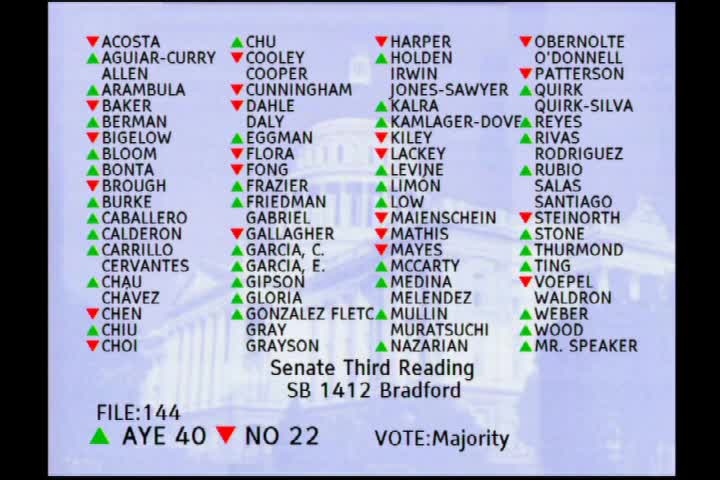
Bill Author

Bill Co-Author(s):
