SB 722: Mobilehomes: principal residences: rent control.
- Session Year: 2017-2018
- House: Senate
- Latest Version Date: 2018-01-03
Existing law regulates the terms and conditions of mobilehome park residencies. Existing law exempts certain mobilehome park rental agreements from any ordinance, rule, regulation, or initiative measure that establishes a maximum amount that the landlord may charge a tenant for rent, commonly referred to as rent control. Existing law specifically exempts from rent control a mobilehome space that is not the principal residence of the homeowner and that the homeowner has not rented to another party. Existing law deems a mobilehome to be the principal residence of a homeowner unless a review of state or county records demonstrates that the homeowner is receiving a homeowners exemption for another property or mobilehome in this state or unless review of public records reasonably demonstrates that the principal residence is out of state.
This bill would make a mobilehome rental agreement entered into on and after January 1, 2018, exempt from rent control if management determines that the homeowner executing the rental agreement is the owner of another home, condominium, duplex, or other residence and management also determines that the homeowner is not excepted pursuant to specified criteria. The bill would except homeowners from the application of these provisions if management determines that the mobilehome is the homeowners sole residence, the homeowner sublets the mobilehome because of medical hardship, the mobilehome is transferred at death, or the mobilehome is actively held out for sale, as specified. The bill would require that the status of the mobilehome as a sole residence be determined in light of the totality of the circumstances and would specify a nonexclusive list of potential evidence in this regard.The bill would prescribe notice requirements for management to apply if the terms of tenancies are to be modified after being found exempt from rent control. After a determination that a tenancy is exempt because it is not the homeowners sole residence, the bill would authorize a homeowner to provide management an affidavit, signed under penalty of perjury, that he or she intends to occupy the mobilehome as his or her sole residence, and upon provision of the affidavit, rent control would resume, provided that management would be authorized to adjust the base rental rate for purposes of rent control, as specified. By expanding the definition of the crime of perjury, this bill would impose a state-mandated local program. The bill would specify also that certain provisions are not to be construed to authorize a homeowner to change the homeowners exemption status of any other property or mobilehome owned by the homeowner.(2)The California Constitution requires the state to reimburse local agencies and school districts for certain costs mandated by the state. Statutory provisions establish procedures for making that reimbursement.This bill would provide that no reimbursement is required by this act for a specified reason.This bill, for a mobilehome rental agreement entered into on and after January 1, 2018, would require that a valid homeowners exemption be filed on a mobilehome for it to be considered a principal residence or domicile of the homeowner and to be subject to rent control. If a review of records indicates that a mobilehome fails to meet this requirement, the bill would require management to notify the homeowner, in writing, of any proposed changes and to provide the homeowner with a copy of the documents upon which management relied before modifying the rent or other terms of tenancy. The bill would grant the homeowner 90 days from the date these materials are mailed to review and respond to the notice and would prohibit management from modifying the rent or terms of tenancy prior to the expiration of the 90-day period or, if the homeowner provides information within that period, prior to responding, in writing, to the information provided by the homeowner. The bill would prohibit management from modifying the rent or terms of tenancy if the homeowner provides documentation that reasonably establishes that the information relied upon by management is incorrect or that the homeowner is not the same person identified in the documents. The bill would authorize management to file an inquiry with the local county assessor requesting a determination whether the mobilehome meets the legal standards of principal residence or domicile of the homeowner. If the local county assessor or an assessment appeals board determines that the mobilehome owner unlawfully designated his or her mobilehome as a principal residence, the bill would authorize park management to bill the homeowner retroactively for the difference between the amount charged and what would have been the prevailing market rent.
Existing
(1)Existing law regulates the terms and conditions of mobilehome park residencies. Existing law exempts certain mobilehome park rental agreements from any ordinance, rule, regulation, or initiative measure that establishes a maximum amount that the landlord may charge a tenant for rent, commonly referred to as rent control. Existing law specifically exempts from rent control a mobilehome space that is not the principal residence of the homeowner and that the homeowner has not rented to another party. Existing law deems a mobilehome to be the principal residence of a homeowner unless a review of state or county records demonstrates that the homeowner is receiving a homeowners exemption for another property or mobilehome in this state or unless review of public records reasonably demonstrates that the principal residence is out of state.
This bill would eliminate, from the exemption to rent control on mobilehome spaces that are not the principal residence of the homeowner, as described above, the qualification that the homeowner shall not have rented the space to another party. The bill would establish a new exception to a mobilehome being deemed the principal residence of the homeowner, which would be based on relevant evidence to the contrary, as specified. make a mobilehome rental agreement entered into on and after January 1, 2018, exempt from rent control if management determines that the homeowner executing the rental agreement is the owner of another home, condominium, duplex, or other residence and management also determines that the homeowner is not excepted pursuant to specified criteria. The bill would except homeowners from the application of these provisions if management determines that the mobilehome is the homeowners sole residence, the homeowner sublets the mobilehome because of medical hardship, the mobilehome is transferred at death, or the mobilehome is actively held out for sale, as specified. The bill would require that the status of the mobilehome as a sole residence be determined in light of the totality of the circumstances and would specify a nonexclusive list of potential evidence in this regard.
The bill would prescribe notice requirements for management to apply if the terms of tenancies are to be modified after being found exempt from rent control. After a determination that a tenancy is exempt because it is not the homeowners sole residence, the bill would authorize a homeowner to provide management an affidavit, signed under penalty of perjury, that he or she intends to occupy the mobilehome as his or her sole residence, and upon provision of the affidavit, rent control would resume, provided that management would be authorized to adjust the base rental rate for purposes of rent control, as specified. By expanding the definition of the crime of perjury, this bill would impose a state-mandated local program. The bill would specify also that various certain provisions are not to be construed to authorize a homeowner to change the homeowners exemption status of any other property or mobilehome owned by the homeowner.
(2)The California Constitution requires the state to reimburse local agencies and school districts for certain costs mandated by the state. Statutory provisions establish procedures for making that reimbursement.
This bill would provide that no reimbursement is required by this act for a specified reason.
Existing law regulates the terms and conditions of mobilehome park residencies. Existing law exempts certain mobilehome park rental agreements from any ordinance, rule, regulation, or initiative measure that establishes a maximum amount that the landlord may charge a tenant for rent, commonly referred to as rent control. Existing law specifically exempts from rent control a mobilehome space that is not the principal residence of the homeowner and that the homeowner has not rented to another party. Existing law deems a mobilehome to be the principal residence of a homeowner unless a review of state or county records demonstrates that the homeowner is receiving a homeowners exemption for another property or mobilehome in this state or unless review of public records reasonably demonstrates that the principal residence is out of state.
This bill would eliminate, from the exemption to rent control on mobilehome spaces that are not the principal residence of the homeowner, as described above, the qualification that the homeowner shall not have rented the space to another party. The bill would establish a new exception to a mobilehome being deemed the principal residence of the homeowner, which would be based on relevant evidence to the contrary, as specified. The bill would specify that various provisions are not to be construed to authorize a homeowner to change the homeowners exemption status of any other property or mobilehome owned by the homeowner.
(a)Notwithstanding Section 798.17, if a mobilehome space within a mobilehome park is not the principal residence of the homeowner and the homeowner has not rented the mobilehome to another party, it shall be exempt from any ordinance, rule, regulation, or initiative measure adopted by any city, county, or city and county, which establishes a maximum amount that the landlord may charge a tenant for rent.
(b)Nothing in this section is intended to require any homeowner to disclose information concerning his or her personal finances. Nothing in this section shall be construed to authorize management to gain access to any records which would otherwise be confidential or privileged.
(c)For purposes of this section, a mobilehome shall be deemed to be the principal residence of the homeowner, unless a review of state or county records demonstrates that the homeowner is receiving a homeowners exemption for another property or mobilehome in this state, or unless a review of public records reasonably demonstrates that the principal residence of the homeowner is out of state.
(d)Before modifying the rent or other terms of tenancy as a result of a review of records, as described in subdivision (c), the management shall notify the homeowner, in writing, of the proposed changes and provide the homeowner with a copy of the documents upon which management relied.
(e)The homeowner shall have 90 days from the date the notice described in subdivision (d) is mailed to review and respond to the notice. Management may not modify the rent or other terms of tenancy prior to the expiration of the 90-day period or prior to responding, in writing, to information provided by the homeowner. Management may not modify the rent or other terms of tenancy if the homeowner provides documentation reasonably establishing that the information provided by management is incorrect or that the homeowner is not the same person identified in the documents. However, nothing in this section shall be construed to authorize the homeowner to change the homeowners exemption status of the other property or mobilehome owned by the homeowner.
(f)This section does not apply under any of the following conditions:
(1)The homeowner is unable to rent or lease the mobilehome because the owner or management of the mobilehome park in which the mobilehome is located does not permit, or the rental agreement limits or prohibits, the assignment of the mobilehome or the subletting of the park space.
(2)The mobilehome is being actively held available for sale by the homeowner, or pursuant to a listing agreement with a real estate broker licensed pursuant to Chapter 3 (commencing with Section 10130) of Part 1 of Division 4 of the Business and Professions Code, or a mobilehome dealer, as defined in Section 18002.6 of the Health and Safety Code. A homeowner, real estate broker, or mobilehome dealer attempting to sell a mobilehome shall actively market and advertise the mobilehome for sale in good faith to bona fide purchasers for value in order to remain exempt pursuant to this subdivision.
(3)The legal owner has taken possession or ownership, or both, of the mobilehome from a registered owner through either a surrender of ownership interest by the registered owner or a foreclosure proceeding.
SEC. 2.Section 798.21.5 is added to the Civil Code, to read:798.21.5.(a)Notwithstanding Sections 798.17 and 798.21, a rental agreement entered into on and after January 1, 2018, shall be subject to the requirements of this section. A rental agreement subject to the requirements of this section shall be exempt from any ordinance, rule, regulation, or initiative measure adopted by a city, county, or city and county that establishes a maximum amount that the landlord may charge a tenant for rent, if both of the following conditions exist:(1)The homeowner executing the rental agreement is the owner of another home, condominium, duplex, or other residence.(2)The management determines that the homeowner executing the rental agreement is not excepted pursuant to subdivision (c).(b)If a rental agreement is exempt from any ordinance, rule, regulation, or initiative measure adopted by a city, county, or city and county that establishes a maximum amount that the landlord may charge a tenant for rent under subdivision (a), the management may modify the rent or other terms of the tenancy. Management shall provide the homeowner with written notice at least 90 days in advance of the effective date of the proposed modification. The notice shall include copies of the evidence upon which the determination made pursuant to subdivision (a) is based. A homeowner shall have 30 days from the date the notice is mailed to review and dispute the managements findings. Communications disputing managements findings shall be in writing.(c)A homeowner shall be excepted for purposes of paragraph (2) of subdivision (a) if one or more of the following apply: (1)The mobilehome is the sole residence of the homeowner. For purposes of this paragraph, a homeowner includes a person who has a full-time tenancy in a mobilehome park under a rental agreement, a senior who is a full-time resident of a mobilehome owned by a child of the senior, and a child with a disability who is a full-time resident of a mobilehome owned by a parent or guardian of the child. Whether a mobilehome is the sole residence of the homeowner shall be determined by management in light of the totality of the circumstances. Evidence of residence may include, but is not limited to, the following:(A)The homeowner rents, leases, occupies, or has a present ownership interest in another place of residence. An ownership interest in a place of residence solely and exclusively occupied by the homeowners child or parent and his or her immediate family shall not serve as evidence that the mobilehome is not the sole residence of the homeowner.(B)Another place of residence appears as a matter of public record or in other evidence obtained by management.(C)Monthly statements are mailed to, or payments are made from, a place of residence other than the tenancy at issue.(D)The homeowner is regularly absent from the mobilehome for extended periods of time, other than for military service, hospitalization, vacation, family or friend emergency care, or other reasonable temporary or seasonal periods of absence, such as travel necessitated by employment or education.(E)The mobilehome is used primarily for vacationing, storage, or business.(F)The mobilehome has been subleased, or possession of the mobilehome has been transferred, without managements approval, as provided in Sections 798.74 and 798.75.(G)A review of state or county records demonstrates that the homeowner is receiving a homeowners exemption for another property or mobilehome.(2)The homeowner subleases his or her home or space as a result of a medical hardship pursuant to Section 798.23.5.(3)Ownership of the mobilehome is transferred, upon the death of the homeowner, to an heir, joint tenant, or personal representative consistent with Section 798.78.(4)The mobilehome is being actively held available for sale by the homeowner, or pursuant to a listing agreement with a real estate broker licensed pursuant to Chapter 3 (commencing with Section 10130) of Part 1 of Division 4 of the Business and Professions Code, or a mobilehome dealer, as defined in Section 18002.6 of the Health and Safety Code. A homeowner, real estate broker, or mobilehome dealer attempting to sell a mobilehome shall actively market and advertise the mobilehome for sale in good faith to bona fide purchasers for value in order to remain excepted pursuant to this paragraph. This paragraph shall apply as long as the mobilehome remains vacant and unoccupied. If the mobilehome is occupied, the exception provided by this paragraph shall apply only for a reasonable time sufficient to provide for sale of the mobilehome, which shall not exceed 120 days after the date of service of the notice described in subdivision (b).(d)After a determination that a tenancy is exempt under subdivision (a) because it is not the sole residence of the homeowner, a homeowner may provide management an affidavit, signed under penalty of perjury, that he or she intends to occupy the mobilehome as his or her sole residence. Upon provision of the affidavit, the application of an ordinance, rule, regulation, or initiative measure that establishes a maximum amount that the landlord may charge a tenant for rent shall resume, provided that the most recent rental rate charged to the homeowner after it was found to be exempt shall be the base rental rate. (e)This section shall not be construed to authorize management to gain access to any record that would otherwise be confidential or privileged.SEC. 3.No reimbursement is required by this act pursuant to Section 6 of Article XIIIB of the California Constitution because the only costs that may be incurred by a local agency or school district will be incurred because this act creates a new crime or infraction, eliminates a crime or infraction, or changes the penalty for a crime or infraction, within the meaning of Section 17556 of the Government Code, or changes the definition of a crime within the meaning of Section 6 of Article XIIIB of the California Constitution.SEC. 2.Section 798.21.5 is added to the Civil Code, to read:798.21.5.(a)Notwithstanding Sections 798.17 and 798.21, a rental agreement entered into on and after January 1, 2019, shall be subject to this section. In order for a mobilehome to be considered a principal residence or domicile of the homeowner, a valid homeowners exemption shall be filed on the mobilehome. If a mobilehome within a mobilehome park is not the principal residence or domicile of the homeowner, a rental agreement for that mobilehome shall be exempt from any ordinance, rule, regulation, or initiative measure adopted by a city, county, or city and county that establishes a maximum amount that the landlord may charge a tenant for rent.
(b)If, based on a review of records, a mobilehome fails to meet the requirements of subdivision (a), before modifying the rent or other terms of tenancy, the management shall notify the homeowner, in writing, by mail of any proposed changes and provide the homeowner with a copy of the documents upon which management relied.
(c)The homeowner shall have 90 days from the date the notice described in subdivision (b) is mailed to review and respond to the notice. Management shall not modify the rent or other terms of tenancy prior to the expiration of the 90-day period or, if the homeowner provides information within that period, prior to responding, in writing, to the information provided by the homeowner. Management shall not modify the rent or other terms of tenancy as authorized in this section if the homeowner provides documentation reasonably establishing that the information relied upon by management is incorrect or that the homeowner is not the same person identified in the documents. In a dispute between park management and the homeowner regarding whether the mobilehome is occupied as the principal residence or domicile of the homeowner, management may file an inquiry with the local county assessor requesting a determination that the mobilehome meets the legal standards of principal residence or domicile of the homeowner.
(d)If the local county assessor or an assessment appeals board determines that the mobilehome owner was unlawfully designating his or her mobilehome as his or her principal residence, the park management may bill the homeowner retroactively for the difference between the amount charged and what would have been the prevailing market rent.
(a)Notwithstanding Section 798.17, if a mobilehome space within a mobilehome park is not the principal residence of the homeowner and the homeowner has not rented the mobilehome to another party, it shall be exempt from any ordinance, rule, regulation, or initiative measure adopted by any city, county, or city and county, which establishes a maximum amount that the landlord may charge a tenant for rent.
(b)Nothing in this section is intended to require any homeowner to disclose information concerning his or her personal finances. Nothing in this section shall be construed to authorize management to gain access to any records which would otherwise be confidential or privileged.
(c)For purposes of this section, a mobilehome shall be deemed to be the principal residence of the homeowner, unless a review of state or county records demonstrates that the homeowner is receiving a homeowners exemption for another property or mobilehome in this state, or unless a review of public records reasonably demonstrates that the principal residence of the homeowner is out of state.
(d)Before modifying the rent or other terms of tenancy as a result of a review of records, as described in subdivision (c), the management shall notify the homeowner, in writing, of the proposed changes and provide the homeowner with a copy of the documents upon which management relied.
(e)The homeowner shall have 90 days from the date the notice described in subdivision (d) is mailed to review and respond to the notice. Management may not modify the rent or other terms of tenancy prior to the expiration of the 90-day period or prior to responding, in writing, to information provided by the homeowner. Management may not modify the rent or other terms of tenancy if the homeowner provides documentation reasonably establishing that the information provided by management is incorrect or that the homeowner is not the same person identified in the documents. However, nothing in this subdivision section shall be construed to authorize the homeowner to change the homeowners exemption status of the other property or mobilehome owned by the homeowner.
(f)This section does not apply under any of the following conditions:
(1)The homeowner is unable to rent or lease the mobilehome because the owner or management of the mobilehome park in which the mobilehome is located does not permit, or the rental agreement limits or prohibits, the assignment of the mobilehome or the subletting of the park space.
(2)The mobilehome is being actively held available for sale by the homeowner, or pursuant to a listing agreement with a real estate broker licensed pursuant to Chapter 3 (commencing with Section 10130) of Part 1 of Division 4 of the Business and Professions Code, or a mobilehome dealer, as defined in Section 18002.6 of the Health and Safety Code. A homeowner, real estate broker, or mobilehome dealer attempting to sell a mobilehome shall actively market and advertise the mobilehome for sale in good faith to bona fide purchasers for value in order to remain exempt pursuant to this subdivision.
(3)The legal owner has taken possession or ownership, or both, of the mobilehome from a registered owner through either a surrender of ownership interest by the registered owner or a foreclosure proceeding.
SEC. 2.Section 798.21.5 is added to the Civil Code, to read:798.21.5.(a)Notwithstanding Sections 798.17 and 798.21, a rental agreement entered into on and after January 1, 2018, shall be subject to the requirements of this section. A rental agreement subject to the requirements of this section shall be exempt from any ordinance, rule, regulation, or initiative measure adopted by a city, county, or city and county that establishes a maximum amount that the landlord may charge a tenant for rent, if both of the following conditions exist:
(1)The homeowner executing the rental agreement is the owner of another home, condominium, duplex, or other residence.
(2)The management determines that the homeowner executing the rental agreement is not excepted pursuant to subdivision (c).
(b)If a rental agreement is exempt from any ordinance, rule, regulation, or initiative measure adopted by a city, county, or city and county that establishes a maximum amount that the landlord may charge a tenant for rent under subdivision (a), the management may modify the rent or other terms of the tenancy. Management shall provide the homeowner with written notice at least 90 days in advance of the effective date of the proposed modification. The notice shall include copies of the evidence upon which the determination made pursuant to subdivision (a) is based. A homeowner shall have 30 days from the date the notice is mailed to review and dispute the managements findings. Communications disputing managements findings shall be in writing.
(c)A homeowner shall be excepted for purposes of paragraph (2) of subdivision (a) if one or more of the following apply:
(1)The mobilehome is the sole residence of the homeowner. For purposes of this paragraph, a homeowner includes a person who has a full-time tenancy in a mobilehome park under a rental agreement, a senior who is a full-time resident of a mobilehome owned by a child of the senior, and a child with a disability who is a full-time resident of a mobilehome owned by a parent or guardian of the child. Whether a mobilehome is the sole residence of the homeowner shall be determined by management in light of the totality of the circumstances. Evidence of residence may include, but is not limited to, the following:
(A)The homeowner rents, leases, occupies, or has a present ownership interest in another place of residence. An ownership interest in a place of residence solely and exclusively occupied by the homeowners child or parent and his or her immediate family shall not serve as evidence that the mobilehome is not the sole residence of the homeowner.
(B)Another place of residence appears as a matter of public record or in other evidence obtained by management.
(C)Monthly statements are mailed to, or payments are made from, a place of residence other than the tenancy at issue.
(D)The homeowner is regularly absent from the mobilehome for extended periods of time, other than for military service, hospitalization, vacation, family or friend emergency care, or other reasonable temporary or seasonal periods of absence, such as travel necessitated by employment or education.
(E)The mobilehome is used primarily for vacationing, storage, or business.
(F)The mobilehome has been subleased, or possession of the mobilehome has been transferred, without managements approval, as provided in Sections 798.74 and 798.75.
(G)A review of state or county records demonstrates that the homeowner is receiving a homeowners exemption for another property or mobilehome.
(2)The homeowner subleases his or her home or space as a result of a medical hardship pursuant to Section 798.23.5.
(3)Ownership of the mobilehome is transferred, upon the death of the homeowner, to an heir, joint tenant, or personal representative consistent with Section 798.78.
(4)The mobilehome is being actively held available for sale by the homeowner, or pursuant to a listing agreement with a real estate broker licensed pursuant to Chapter 3 (commencing with Section 10130) of Part 1 of Division 4 of the Business and Professions Code, or a mobilehome dealer, as defined in Section 18002.6 of the Health and Safety Code. A homeowner, real estate broker, or mobilehome dealer attempting to sell a mobilehome shall actively market and advertise the mobilehome for sale in good faith to bona fide purchasers for value in order to remain excepted pursuant to this paragraph. This paragraph shall apply as long as the mobilehome remains vacant and unoccupied. If the mobilehome is occupied, the exception provided by this paragraph shall apply only for a reasonable time sufficient to provide for sale of the mobilehome, which shall not exceed 120 days after the date of service of the notice described in subdivision (b).
(d)After a determination that a tenancy is exempt under subdivision (a) because it is not the sole residence of the homeowner, a homeowner may provide management an affidavit, signed under penalty of perjury, that he or she intends to occupy the mobilehome as his or her sole residence. Upon provision of the affidavit, the application of an ordinance, rule, regulation, or initiative measure that establishes a maximum amount that the landlord may charge a tenant for rent shall resume, provided that the most recent rental rate charged to the homeowner after it was found to be exempt shall be the base rental rate.
(e)This section shall not be construed to authorize management to gain access to any record that would otherwise be confidential or privileged.
SEC. 3.No reimbursement is required by this act pursuant to Section 6 of Article XIIIB of the California Constitution because the only costs that may be incurred by a local agency or school district will be incurred because this act creates a new crime or infraction, eliminates a crime or infraction, or changes the penalty for a crime or infraction, within the meaning of Section 17556 of the Government Code, or changes the definition of a crime within the meaning of Section 6 of Article XIIIB of the California Constitution.
(a)Notwithstanding Section 798.17, if a mobilehome space within a mobilehome park is not the principal residence of the homeowner and the homeowner has not rented the mobilehome to another party, homeowner, it shall be exempt from any ordinance, rule, regulation, or initiative measure adopted by any city, county, or city and county, which establishes a maximum amount that the landlord may charge a tenant for rent.
(b)Nothing in this section is intended to require any homeowner to disclose information concerning his or her personal finances. Nothing in this section shall be construed to authorize management to gain access to any records which would otherwise be confidential or privileged.
(c)For purposes of this section, a mobilehome shall be deemed to be the principal residence of the homeowner, unless a review any of the following is true:
(1)A review of state or county records demonstrates that the homeowner is receiving a homeowners exemption for another property or mobilehome in this state, or unless a state.
(2)A review of public records reasonably demonstrates that the principal residence of the homeowner is out of state.
(3)Relevant evidence establishes that the mobilehome is not the principal residence of the homeowner, including, but not limited to, any of the following:
(A)Claiming a homeowner exemption on another property or abandoning or releasing a homeowner exemption on another property without a change in circumstances disqualifying the exemption on the other property.
(B)Financing a property other than the mobilehome as an owner-occupied dwelling.
(C)Sending mail to, or forwarding it from, an address other than the mobilehome.
(D)Registering a vehicle at an address other than the mobilehome.
(E)Registering to vote at an address other than the mobilehome.
(F)A California drivers license that uses an address other than the mobilehome.
(G)A bank account that uses an address other than the mobilehome.
(H)Irregular, seasonal, holiday, or weekend occupancy of mobilehome.
(I)Location of place of employment, office, or business.
(J)Subleasing of mobilehome.
(d)Before modifying the rent or other terms of tenancy as a result of a review of records, as described in subdivision (c), the management shall notify the homeowner, in writing, of the proposed changes and provide the homeowner with a copy of the documents upon which management relied.
(e)The homeowner shall have 90 days from the date the notice described in subdivision (d) is mailed to review and respond to the notice. Management may not modify the rent or other terms of tenancy prior to the expiration of the 90-day period or prior to responding, in writing, to information provided by the homeowner. Management may not modify the rent or other terms of tenancy if the homeowner provides documentation reasonably establishing that the information provided by management is incorrect or that the homeowner is not the same person identified in the documents. However, nothing in this subdivision shall be construed to authorize the homeowner to change the homeowners exemption status of the other property or mobilehome owned by the homeowner.
(f)This section does not apply under any of the following conditions:
(1)The homeowner is unable to rent or lease the mobilehome because the owner or management of the mobilehome park in which the mobilehome is located does not permit, or the rental agreement limits or prohibits, the assignment of the mobilehome or the subletting of the park space.
(2)The mobilehome is being actively held available for sale by the homeowner, or pursuant to a listing agreement with a real estate broker licensed pursuant to Chapter 3 (commencing with Section 10130) of Part 1 of Division 4 of the Business and Professions Code, or a mobilehome dealer, as defined in Section 18002.6 of the Health and Safety Code. A homeowner, real estate broker, or mobilehome dealer attempting to sell a mobilehome shall actively market and advertise the mobilehome for sale in good faith to bona fide purchasers for value in order to remain exempt pursuant to this subdivision.
(3)The legal owner has taken possession or ownership, or both, of the mobilehome from a registered owner through either a surrender of ownership interest by the registered owner or a foreclosure proceeding.
(g)Nothing in this section shall be construed to authorize a homeowner to change the homeowners exemption status of any other property or mobilehome owned by the homeowner.
|
Date
|
Status
|
|---|---|
| Feb 1, 2018 | Returned to Secretary of Senate pursuant to Joint Rule 56. |
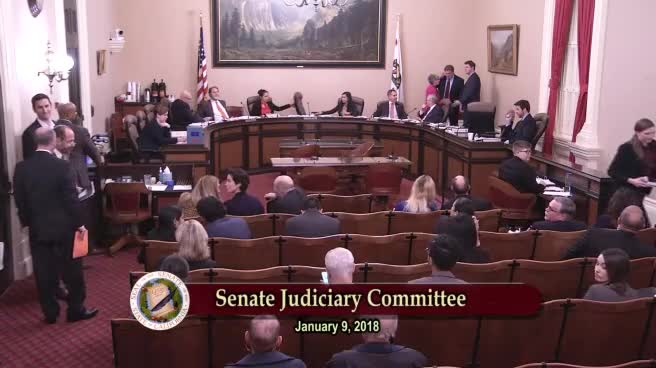
| Jan 10, 2018 | January 9 set for second hearing. Failed passage in committee. (Ayes 2. Noes 1.) Reconsideration granted. |
| Jan 3, 2018 | From committee with author's amendments. Read second time and amended. Re-referred to Com. on JUD. |
| Dec 21, 2017 | Set for hearing January 9. |
| Apr 26, 2017 | April 25 set for first hearing canceled at the request of author. |
| Apr 18, 2017 | From committee with author's amendments. Read second time and amended. Re-referred to Com. on JUD. |
| Apr 18, 2017 | Set for hearing April 25. |
| Apr 17, 2017 | May 9 hearing postponed by committee. |
| Apr 13, 2017 | Set for hearing May 9. |
| Mar 9, 2017 | Referred to Com. on JUD. |
| Feb 21, 2017 | From printer. May be acted upon on or after March 23. |
| Feb 17, 2017 | Introduced. Read first time. To Com. on RLS. for assignment. To print. |
|
Date
|
Description
|
Location
|
Votes
|
|
|---|---|---|---|---|
| Jan 9, 2018 | [Second] hearing set for [01-09-2018]: Failed passage in Committee. Reconsideration granted | Senate Standing Committee on Judiciary |
Passed |
|
| Jan 9, 2018 | Do pass | Senate Standing Committee on Judiciary |
Passed |
This list shows positions taken on this bill by organizations on the date displayed, which is linked to the original source.
Positions by individuals are not included.
|
Organization
|
Position
|
Date
|
|---|---|---|
| california mobilehome parkowner's alliance | * Support | Jan 9, 2018 |
| Golden State Mobile Home Owners League | * Against | Jan 9, 2018 |
| Western Manufactured Housing Communities Association | * Support | Jan 9, 2018 |
Senator Hannah-Beth Jackson, Chair
2017-2018 Regular Session
Bill No: SB 722 (Author:Moorlach)
Version: January 3, 2018
Hearing Date: January 9, 2018
Fiscal: No
Urgency: No
Consultant: TSG
SUBJECT
Mobilehomes: principal residences: rent control
DESCRIPTION
This bill would alter the evidentiary requirements and procedures that determine whether or not state law exempts a mobilehome from any otherwise applicable local rent control ordinance. Among other changes, the bill would lift local limits on a mobilehome park’s power to set the rent on all mobilehomes for which the owner does not claim a homeowner’s property tax exemption, subject only to 90 days’ notice and an opportunity to respond. The bill’s provisions would apply prospectively to all mobilehome leases entered into on or after January 1, 2019.
BACKGROUND
Enacted in 1978, the Mobilehome Residency Law (MRL) governs the relationship between park owners or managers and the residents of the more than 4,800 mobilehome parks and manufactured housing communities in California. In most of those parks, residents own their home but lease the land on which their home is installed. Although they have historically been called “mobilehomes,” in practice it is extremely difficult and costly to move a mobilehome once it has been installed in a park. As a result, mobilehome owners have little practical ability to pick up and leave if the park owners raise rents, decrease services, or engage in abuses.
Recognizing this imbalance in bargaining power, over 100 jurisdictions in California have enacted some form of rent control applicable to mobilehome parks. Those rent control ordinances are a proper exercise of the local government’s police power if their provisions are “reasonably calculated to eliminate excessive rents and at the same time provide landlords with a just and reasonable return on their property.” (Birkenfeld v. Berkeley (1976) 17 Cal.3d 129, 165.) Although mobilehome parks are not subject to the Costa-Hawkins Rental Housing Act (which restricts the use of rent control in other residential properties), the MRL itself imposes limitations on the application of rent control to mobilehome parks. Under the current form of the MRL, a mobilehome is generally exempt from rent control if: (1) the lease agreement is greater than 12 months, or, (2) if the mobilehome is not the owner’s principal residence and it is not being rented to another party. (Civ. Code Secs 798.17 and 798.21(a).) This bill focuses on the procedure and evidence required for a mobilehome park to invoke the latter of these two exemptions to rent control.
For purposes of determining whether a mobilehome is exempt from rent control, existing law deems a mobilehome to be its owner’s principal residence by default. That conclusion may be overcome, however, if the mobilehome park determines, through a review of public records, that the homeowner’s principal residence is in fact in another state or that the homeowner claims a California homeowner’s tax exemption on another property. (Civ. Code 798.21(c).) Whether or not the mobilehome owner claims a homeowner’s property tax exemption on another property is relevant because such a tax exemption may only be claimed once and must be claimed on the taxpayer’s principal residence. (Cal. Const., art. XIII, Sec. 3; Rev. & Tax Code Sec. 218.)
Although this existing evidentiary structure for determining “principal residence” for mobilehome rent control purposes is simple, binary, and subject to easy verification through public records, park owners criticize it because of a loophole it contains. Since the current evidentiary standard for principal residence is based on whether the mobilehome owner takes a homeowner’s tax exemption on another property or not, mobilehome owners can reap the benefits of rent control without using their mobilehome as a principal residence and without renting it to someone else: they simply forgo taking the homeowner’s tax exemption on their true principal residence. In effect, the mobilehome owner pays more in property tax and less in rent. If the savings from keeping a mobilehome under rent control outweigh the savings from taking the tax exemption, then there is a financial incentive to use this loophole. The exact number of mobilehomes to which this situation actually applies is unclear, but the sponsors of the bill assert that it is significant.
From the park owners’ point of view, the phenomenon deprives them of market rate rents and the associated profits to which they feel entitled. From an affordable housing standpoint, the loophole also arguably runs counter to the purpose of rent control by protecting those who can afford to own multiple homes.
Unsurprisingly, therefore, mobilehome park owners have introduced repeated legislative initiatives designed to narrow or close this perceived loophole. (See Prior Legislation, below.) This bill is the latest iteration of these attempts. The version in print would invert how homeowner’s tax exemptions are used as evidence of what is a mobilehome owner’s principal residence for rent control purposes. Rather than exempting from rent control any mobilehome whose owner claims a homeowner’s tax exemption on a different property, this bill would, in effect, apply local rent control protections only when the mobilehome owner claims a homeowner’s tax exemption on the mobilehome itself.
This would have the effect of preventing people who own multiple properties from reaping the benefits of rent control unless they use the mobilehome as their principal residence. In other words, it would close the loophole in the existing law that allows some mobilehome owners to benefit from rent control on a mobilehome that is not their principal residence. For the reasons detailed in the Comments below, however, in the process of closing the loophole, the bill in print would also likely eliminate rent control for some other mobilehome owners who do use the mobilehome as their principal residence and for whom the rent control protections are intended. Thus, this bill presents the policy question of whether it is worth risking the loss of rent control protections for a potentially significant number of mobilehome park residents for whom rent control is intended in order take away rent control protections from some others for whom it is not intended.
CHANGES TO EXISTING LAW
Existing law permits local governments to restrict the amount by which residential rents may be increased, including the rent charged by a mobilehome park for occupancy by a mobilehome unit. (Birkenfeld v. Berkeley (1976) 17 Cal.3d 129, 165.)
Existing law exempts mobilehomes from rent control laws, if the mobilehome is not the principal residence of the homeowner and the homeowner has not rented the mobilehome to another party. (Civ. Code Sec. 798.21(a).)
Existing law deems a mobilehome to be its owner’s principal residence unless a review of public records demonstrates that the homeowner receives a homeowner’s tax exemption on another property in California or a review of public records reasonably demonstrates that the principal residence of the homeowner is out of state. (Civ. Code 798.21(c).)
Existing law requires park management to give the homeowner 90 days’ notice before modifying the rent for a mobilehome based on a determination that the mobilehome is exempt from rent control. The homeowner has the 90 days to dispute the park’s finding.
This bill would, for all rental agreements entered into on or after January 1, 2019, require that the owner of a mobilehome take out a valid homeowner’s exemption in order for the mobilehome to be considered the owner’s “principal residence” for purposes of rent control.
This bill would make local rent control laws inapplicable to any mobilehome that is not its owner’s primary residence, thus eliminating rent control for owners who rent their mobilehomes to tenants.
This bill would require a park owner to notify a mobilehome owner in writing of any proposed changes before modifying the rent or other terms of the tenancy. The park owner would also have to provide the mobilehome owner with a copy of the documents that the management relied upon in reaching the conclusion that the mobilehome is exempt from rent control protections.
This bill would prohibit the mobilehome park owner from modifying the rent or other terms of tenancy until 90 days after giving notice or after responding in writing to any reply from the mobilehome owner to the notice, whichever is earlier.
This bill would prohibit mobilehome park owners from carrying out the noticed change in rent or terms of tenancy if the mobilehome owner provides documentation reasonably establishing that the information relied upon by the management is incorrect or that the homeowner is not the same person identified in the documents.
This bill would permit the mobilehome park owner, in the event of a dispute over the issue, to file an inquiry with the local county tax assessor seeking a determination as to whether or not the mobilehome meets the legal standard of principal residence or domicile of the homeowner.
This bill would permit a mobilehome park owner to charge a mobilehome owner retroactively for the difference in rental rates if the local county tax assessor concludes that the mobilehome owner was improperly designating the mobilehome as the owner’s principal residence.
COMMENT
1. Stated need for the bill
According to the author:
Local rent controls are intended to preserve a source of affordable housing and prevent large rent increases for residents who have a home in the community and cannot easily “pick-up and move.” Since rent control is not “means tested,” a large number of residents take advantage of these low government-ensured rates in order to enjoy a second home. The current statute has a loophole that needs to be closed in order to ensure that rent control benefits the people it was intended for—resident homeowners—not vacationers.
The only current legal measure to judge principal residence is “if the homeowner is receiving a homeowner’s exemption on another property.” Residents and sellers of these manufactured homes have learned that if a homeowner does not take this exemption on their principal residence (worth $70 annually on state taxes) the statute deems the manufactured home as their principal residence.
Every unit that goes to a second homeowner is one fewer housing unit for someone’s principal residence, which is why local jurisdictions across the state have pursued similar policies for apartment rentals.
In support of the bill, Western Manufactured Housing Communities Association writes:
Mobilehome owners are taking advantage of the legal requirement for park owners to identify another residence of the homeowner, outside the mobilehome park, where a “homeowners exemption” has been taken on the county property tax rolls. The problem with current law is if the homeowner has multiple homes, but does not take an “exemption” on any home, the park owner is left with not being able to enforce the intent of Civil Code Section 798.21, exempting second residences in mobilehome parks from rent control…
WMA does not believe that anyone who owns two homes should benefit from local rent control simply so they can enjoy a cheaper vacation home… Affordable housing is in short supply throughout the state. SB 722 will help increase affordable housing by clarifying that rent control should be for homeowners who truly need it, not reward those individuals who simply have found a way around the intent of the existing law.
In further support of the bill, the California Mobilehome Parkowners Alliance writes:
SB 722 recognizes that a person who can afford to own a second home should not enjoy the protections of rent control. Rent control advocates have consistently argued that rent control is needed to protect low and moderate income individuals from rising rents that they may not be able to afford. People who can afford multiple residences, including vacation homes, clearly do not meet the criteria of low or even moderate income individuals.
2. Expressed concerns about the bill
In opposition to the bill, the Golden State Manufactured Home Owners’ League writes:
At a time when California is facing a housing crisis and looking for expedited ways to develop more affordable housing, any legislation that proposes to eliminate affordable housing is bad public policy...
The non-principal residence exception from rent control has been a contested topic for years. And, this bill, like previous attempts, is about park owners wanting to raise rent on the largest group of Californians who have purchased and maintained the largest classification of unsubsidized, affordable housing in our state.
…[A]s with previous attempts, this bill is overbroad… and opens the door for abuse and overreaching by unscrupulous park owners.
The negative effects and collateral damage would be far more reaching than the very limited number of alleged vacation homes the bill claims to target. A park owner would give a notice of rent increase… and it would then be up to the resident to prove otherwise. The burden of proof should not be shifted in such a manner.
After years of unsuccessful state preemption of local rent stabilization ordinances, park owners qualified Proposition 199 for the state ballot in 1996. That measure was defeated by 60.8% of California voters.
The sponsor of the bill responds that:
One, SB 722 does not eliminate affordable housing. In fact, if government-mandated cheap rent is not made available for someone seeking to be a second homeowner, the property might be less attractive to them freeing up the space for someone who does indeed qualify for rent control.
Second, SB 722 does not make a policy change. The current law already specifies that rent control is not intended for someone with another principal residence. This bill merely provides resources necessary to properly enforce the current law.
3. Possible negative and unintended consequences of closing the loophole
There are arguably sound policy reasons to close the loophole that allows mobilehome owners with multiple properties to nonetheless reap the benefits of rent control. The purpose of rent control is to make it more affordable for people to live in their homes, not to make ownership of a second property more affordable. At least theoretically, making it more affordable to own a mobilehome as a second property could decrease the availability of mobilehomes as a source of affordable housing.
On the other hand, unless closing the loophole is done with surgical precision, some of the mobilehome owners that rent control is designed to protect could lose it. Relatedly, without strong safeguards to prevent unscrupulous mobilehome park owners from abusing the process to raise rents improperly, the collateral damage from closing the loophole could outweigh any benefits. These two potential policy concerns are addressed here in turn.
- Elimination of rent control for residents who may need it
First, the bill in print requires mobilehome owners to claim a homeowner’s property tax exemption on the mobilehome in order to gain the protection of any applicable rent control ordinance. While property taxes do apply to many mobilehomes, other mobilehomes are only subject to paying annual registration fees to the Housing and Community Development Department in lieu of paying property taxes. It is not clear that mobilehome owners who pay the registration fee in lieu of property taxes can even qualify for a homeowner’s property tax exemption. Under the terms of the bill in print, such mobilehome owners would lose the protections of rent control even if the mobilehome is, in fact, their principal residence or even their sole residence. This presumably unintended consequence of the bill is at odds with the purpose of rent control protections and could potentially cause a significant number of mobilehome owners to lose their homes.
Second, the bill in print appears to eliminate rent control protection for mobilehome owners who rent out their mobilehomes to others. Under existing law, local rent control ordinances only apply to mobilehomes that are the principal residence of the owner or mobilehomes that the owner has rented to another party. (Civ. Code Sec. 798.21(a). Emphasis added.) The bill in print would exempt mobilehomes from local rent control ordinances unless the mobilehome owner claims it as the owner’s principal residence. A mobilehome owner who rents the mobilehome to others will not be able to make such a claim. In this way, the bill in print removes rent control protections for a whole category of people whose situation has nothing to do with the possibility of rent-controlled vacation mobilehomes. If the policy concern is that existing law potentially permits mobilehome owners to pay for the space under their mobilehomes at a rent controlled rate while renting out the mobilehome itself for an amount not limited by rent control, that issue could perhaps be better addressed directly, through, for example, a bill extending any local rent control limitations on the space to the mobilehome itself as well.
- Lack of procedural safeguards
By relying on a simple, binary, and easily accessible public record as the evidentiary basis for determining whether or not a mobilehome is its owner’s principal residence, the bill in print arguably represents a significant improvement over the prior versions. Procedurally, however, the bill in print still vests nearly all of the power to make determinations in the hands of mobilehome park owners. Park owners are not supposed to modify rents if the mobilehome owner provides documentation “reasonably establishing that the information relied upon by management is incorrect or that the homeowner is not the same person identified in the documents,” but what qualifies as “reasonable” is left entirely to the discretion of the park owner.
While, arguably, the majority of park owners would treat this discretion with equanimity, the temptation to abuse it would be strong, since park owners have a large financial interest in the outcome. Under the current version of this bill, and in the absence of some independent, administrative mechanism for enforcement of the MRL, such as that proposed by AB 1269 (Stone, 2017), mobilehome owners confronted with unscrupulous park owners would still face a discouraging set of options: (a) acquiesce and pay the higher rent; (b) refuse to pay the higher rent and risk eviction through a summary proceeding; (c) pay the higher rent for now and take the time and resources to sue the park management affirmatively for a judgment overturning the park’s determination.
The latest version of this bill does include an option for turning disputes over the validity of a homeowner’s tax exemption to a neutral third party. Specifically, the bill provides that if the park owner and the mobilehome owner cannot agree whether a mobilehome owner’s tax exemption is properly claimed, then the park owner may file an inquiry with the local county tax assessor seeking a determination. Whether or not to utilize this mechanism is entirely up to the park owner, however, meaning that the safeguard against abuse of park owner discretion is itself left to the discretion of the park owner.
Given that the loss of rent control protections has such potentially dire consequences for the mobilehome owner (eviction through summary proceeding, loss of a significant asset, possible homelessness), sound policy arguably requires a more robust set of procedural safeguards.
4. Application to all future rental agreements
The terms of the bill would apply to all rental agreements entered into on or after January 1, 2019. In that technical sense, the bill is prospective and only applies going forward. Rental agreements regularly expire and must be renewed, however. It does not appear accurate, therefore, to assert that “[c]urrent homeowners are not impacted by SB 722,”or that the bill “only applies to people who purchase a home starting in 2019” as the California Mobilehome Parkowners Alliance does in its letter in support of the bill.
On the contrary, through the regular expiration of existing rental agreements and the consequent need to enter into new ones, the terms of the bill would come to apply to nearly all mobilehome owners within about year, regardless of the date the mobilehome was purchased. Only those who recently signed a multi-year rental agreement would not be affected in the short term, and even they would be swept up eventually. The date of purchase of the mobilehome is not mentioned in the bill and would therefore not make any difference to the applicability of the bill. Thus, for instance, a current homeowner who bought the mobilehome in 1985 but whose existing rental agreement expires on January 15, 2019, would become subject to the bill upon entering into a new rental agreement the next day.
Support: California Mobilehome Parkowners Alliance
Opposition: Golden State Manufactured Home Owners’ League
HISTORY
Source: Western Manufactured Home Communities Association
Related Pending Legislation: None known
Prior Legislation:
AB 317 (Calderon, Chapter 337, Statutes of 2012) required that mobilehome leases include a notice regarding exemptions from local rent control ordinances.
AB 481 (Ma, 2009) was very similar to AB 285, below. AB 481 died in the Assembly Housing and Community Development Committee.
AB 285 (Garcia, 2007) would have broadened the evidentiary basis on which a mobilehome park could assert that a mobilehome is not the principal residence of the owner and therefore not covered by rent control. AB 285 would also have eliminated the provisions keeping a mobilehome under rent control when the owner leases the mobilehome to someone else. AB 285 died in the Assembly Housing and Community Development Committee.
AB 1173 (Haynes, Chapter 132, Statutes of 2003) added an exception to the default rule that a mobilehome shall be deemed the homeowner’s principal residence. Under AB 1173, if a review of public records reasonably demonstrates that the homeowner’s principal residence is actually out-of-state, the mobilehome is exempt from any otherwise applicable rent control ordinance.
SB 1181 (Haynes, Chapter 392, Statutes of 1996) added Civil Code Section 798.21 exempting mobilehomes from rent control ordinances if they are not the principal residence of the homeowner and the homeowner has not rented the mobilehome to another party.
**************
Senator Hannah-Beth Jackson, Chair
2017-2018 Regular Session
Bill No: SB 722 (Author:Moorlach)
Version: April 18, 2017
Hearing Date: April 25, 2017
Fiscal: Yes
Urgency: No
Consultant: TSG
SUBJECT
Mobilehomes: principal residences: exceptions
DESCRIPTION
Under current law, any rent control in a mobilehome park applies only to mobilehomes that are the primary residence of the occupant. A mobilehome is presumed to be the primary residence of the occupant. However, this presumption can be overcome by a showing through a review of public records that the occupant actually lives out of state most of the time or receives a homeowner’s exemption for another property or mobilehome in California. This bill would establish a different method for determining whether a homeowner or resident qualifies for rent control protections based on whether or not the mobile home is the homeowner’s sole residence. The bill’s provisions would only impact mobilehome leases entered into on or after on January 1, 2018.
BACKGROUND
Enacted in 1978, the Mobilehome Residency Law (MRL) governs the relationship between park owners or managers and the residents of the 4,800+ mobilehome parks and manufactured housing communities in California. In most of those parks, residents own their home but lease the land on which their home is installed. Although they have historically been called “mobilehomes,” it is very difficult to actually move a mobilehome once it has been installed in a park.
To protect mobilehome park residents from rent increases on the property underlying their home, over 100 jurisdictions in California have enacted some form of rent control. Those rent control ordinances are a proper exercise of the local government’s police power if their provisions are “reasonably calculated to eliminate excessive rents and at the same time provide landlords with a just and reasonable return on their property.” (Birkenfeld v. Berkeley (1976) 17 Cal.3d 129, 165.) Although mobilehome parks are not subject to the Costa-Hawkins Rental Housing Act (which restricts the use of rent control in other residential properties), the MRL does limit the application of rent control in certain circumstances, including if the lease agreement is greater than 12 months, or if the mobilehome is not the owner’s principal residence and is not being rented to another party. By default, a mobilehome is deemed to be the homeowner’s principal residence, but that may be overcome if the park can show that the homeowner claims a California homeowner’s tax exemption on another property or, through a review of public records, the park can show that the homeowner’s principal residence is in fact in another state.
For all mobilehome leases signed starting January 1, 2018, this bill would permit mobilehome parks, at their sole determination, to determine that a mobilehome is not its owner’s sole residence, and that it is not therefore subject to rent control, using any relevant evidence.
CHANGES TO EXISTING LAW
Existing law permits local governments to restrict the amount by which residential rents may be increased, including the rent charged by a mobilehome park for occupancy by a mobilehome unit. (Birkenfeld v. Berkeley (1976) 17 Cal.3d 129, 165.)
Existing law exempts mobilehomes from rent control laws, if the mobilehome is not the principal residence of the homeowner and the homeowner has not rented the mobilehome to another party. (Civ. Code Sec. 798.21(a).)
Existing law deems a mobilehome to be its owner’s principal residence unless a review of public records demonstrates that the homeowner receives a homeowner’s tax exemption on another property in California or a review of public records reasonably demonstrates that the principal residence of the homeowner is out of state. (Civ. Code 798.21(c).)
Existing law requires park management to give the homeowner 90 days’ notice before modifying the rent for a mobilehome based on a determination that the mobilehome is exempt from rent control. The homeowner has the 90 days to dispute the park’s finding.
This bill would, commencing with all mobilehome leases entered into after January 2, 2018, exempt a mobilehome from rent control if the homeowner owns another residence and the park management determines that none of the following exceptions apply:
- the mobilehome is the sole residence of the homeowner, a full time tenant, a senior parent of the homeowner, or a disabled child of the homeowner;
- the homeowner subleases his or her mobile home as the result of a medical hardship;
- ownership of the mobilehome is transferred, upon death of the homeowner to an heir, joint tenant, or personal representative;
- the mobilehome is being actively held available for sale, subject to a reasonable time limit.
This bill would leave it to park management to determine whether or not a mobilehome is the sole residence of the homeowner in light of the totality of the circumstances, with examples, but no limitation on what evidence park management may rely on to reach its conclusion.
This bill would require park management to provide the homeowner with 90 days’ notice before modifying the rent based on its determination that a mobilehome is exempt from rent control. The homeowner would have 30 days to dispute management’s findings.
This bill would permit the homeowner, after a park’s determination that a mobilehome is not its owner’s principal residence, to bring a mobilehome back under rent control by submitting an affidavit under penalty of perjury stating that the homeowner intends to occupy the mobilehome as his or her principal residence. However, any intervening rent increases will be applicable.
COMMENT
1. Stated need for the bill
According to the author:
Local rent controls are intended to preserve a source of affordable housing and prevent large rent increases for residents who have a home in the community and cannot easily “pick-up and move.” Since rent control is not “means tested,” a large number of residents take advantage of these low government-ensured rates in order to enjoy a second home. The current statute has a loophole that needs to be closed in order to ensure that rent control benefits the people it was intended for—resident homeowners—not vacationers.
The only current legal measure to judge principal residence is “if the homeowner is receiving a homeowner’s exemption on another property.” Residents and sellers of these manufactured homes have learned that if a homeowner does not take this exemption on their principal residence (worth $70 annually on state taxes) the statute deems the manufactured home as their principal residence.
Every unit that goes to a second homeowner is one fewer housing unit for someone’s principal residence, which is why local jurisdictions across the state have pursued similar policies for apartment rentals.
In support, Western Manufactured Housing Communities Association writes:
Affordable housing is in short supply throughout the state. SB 722 will help increase affordable housing by clarifying that rent control should be for homeowners who truly need it, not reward those individuals who simply have found a way around the intent of the existing law.
2. Expressed concerns about the bill
In opposition to the bill, the Golden State Manufactured Home Owners’ League writes:
At a time when California is facing a housing crisis and looking for expedited ways to develop more affordable housing, any legislation that proposes to eliminate affordable housing is bad public policy...
The non-principal residence exception from rent control has been a contested topic for years. And, this bill, like previous attempts, is about park owners wanting to raise rent on the largest group of Californians who have purchased and maintained the largest classification of unsubsidized, affordable housing in our state.
…[A]s with previous attempts, this bill is overbroad and subjective. The bill replaces the current objective standard (i.e. the tax exemption) with subjective criteria, and opens the door for abuse and overreaching by unscrupulous park owners.
The negative effects and collateral damage would be far more reaching than the very limited number of alleged vacation homes the bill claims to target. A park owner would give a notice of rent increase, based upon the subjective factors, and it would then be up to the resident to prove otherwise. The burden of proof should not be shifted in such a manner.
After years of unsuccessful state preemption of local rent stabilization ordinances, park owners qualified Proposition 199 for the state ballot in 1996. That measure was defeated by 60.8% of California voters.
The sponsor of the bill responds that:
One, SB 722 does not eliminate affordable housing. In fact, if government-mandated cheap rent is not made available for someone seeking to be a second homeowner, the property might be less attractive to them freeing up the space for someone who does indeed qualify for rent control.
Second, SB 722 does not make a policy change. The current law already specifies that rent control is not intended for someone with another principal residence. This bill merely provides resources necessary to properly enforce the current law.
3. Complicating the evidentiary basis for determining “principal residence”
Under existing law and under this bill, a mobile home park acts as both judge and jury in determining whether or not a mobilehome is subject to rent control. Park management does have to give the mobilehome owner 90 days’ written notice of its determination, give copies of the documents on which it relied to the homeowner, and provide the homeowner with an opportunity to respond. Unless the park management voluntarily agrees that the homeowner is in the right, however, it may simply proceed to raise the rent on the mobilehome owner. The mobilehome owner is then faced with three choices: (a) acquiesce and pay the higher rent; (b) refuse to pay the higher rent and risk eviction through a summary proceeding; (c) pay the higher rent for now and take the time and resources to sue the park management affirmatively for a judgment overturning the park’s determination.
Moreover, it is critical to understand that the park management is not a disinterested party as it evaluates the evidence and comes to its determination. Since making the determination that a mobilehome is not its owner’s principal or sole residence will exempt the mobilehome from rent control and allow the park to charge greater rent, the park arguably has a strong financial incentive to reach that conclusion.
Such an arguably uneven state of legal affairs may be tolerable where the evidence at issue is so simple and clearcut that it is difficult, if not impossible, to dispute. Whether or not someone claims a homeowner’s tax exemption on another property is such evidence. It is binary: the homeowner either does or does not. It is also an easily verifiable public record. Such exemptions are generally recorded with the county tax assessor and often available for review online. Thus, no matter how strongly a park may wish to raise the rent on a mobilehome owner, the presence or absence of the homeowner’s exemption will govern. As for mobilehome owner’s whose actual principal residence is outside of California and therefore may not be covered by a homeowner’s tax exemption, existing law already permits parks to rely on other public record evidence as a basis for making that finding.
By contrast, the evidentiary regime that this bill proposes is wide open and highly subjective. A park that wanted to raise the rent on a mobilehome owner has seven listed categories of evidence on which the park could base a determination that the mobilehome is not its owner’s sole residence. Arguably, several of these categories are of limited reliability. For example, under the terms of the bill, a park could claim that a mobilehome is not its owner’s sole residence if the mobilehome is used primarily for business. What of someone who works from home? On a contract basis? Gives out business cards with the mobilehome as the physical address? Similarly, a park can also declare that a mobilehome is not subject to rent control if “monthly statements are mailed to, or payments are made from, a place of residence other than the tenancy at issue.” What happens when a homeowner has a Social Security payee, as many elderly individuals do, who is responsible for taking care of the homeowner’s bills, for instance?
Of further concern, the listed categories of evidence on which the park may rely is not exhaustive. Rather, the evidence on which the park may base its decision includes, but is not limited to, everything listed in the bill. Essentially, a park could base its determination on anything. Where the park has a financial interest in the outcome, such unbridled evidentiary discretion invites abuse. It might also lead to a great deal more litigation, as mobilehome owners are forced to go to court (or their local rent board if they have it) to get a neutral determination as to whether or not their mobilehome is truly their sole residence and thus overturn a sizeable rent increase.
This bill’s amended provision allowing homeowners to regain rent control coverage after the park has found their mobilehome exempt does not solve this problem. While a homeowner would be able to overcome the park’s determination through the filing of an affidavit under penalty of perjury, under the terms of the bill, the applicable base rental rate would be market rate. In other words, the homeowner could regain rent control coverage, but only after a significant rent increase back to market rate.
4. Alternative avenues to closing the vacation mobilehome loophole
Though, for the reasons set forth above, the regime proposed by this bill arguably is not the right solution, the underlying issue is real, if hard to quantify. It is impossible to say how many people do this, but because the current evidentiary standard for principal residence is based on whether the mobilehome owner takes a homeowner’s tax exemption on another property or not, there is a way for mobilehome owners to reap the benefits of rent control without using their mobilehome as a primary residence and without renting it to someone else: they simply forgo taking the homeowner’s tax exemption on their true principal residence. In effect, the mobilehome owner pays more in property tax and less in rent. If the savings from keeping their mobilehome under rent control outweigh the savings from taking the tax exemption, then there is both a loophole and the financial incentive to use it.
From the park owners’ point of view, this deprives them of market rate rents and associated profits to which they feel entitled. From an affordable housing standpoint, the loophole also arguably runs counter to the purpose of rent control by protecting those who can afford multiple homes. And, by making it cheaper to maintain a second home that the owner does not occupy most of the time, the loophole may to some degree decrease the overall volume of rent-controlled mobilehome housing stock available to those who need an affordable place to live full time.
Arguably, therefore, closing the loophole makes sound policy sense. In doing so, however, the author may wish to consider alternatives that: (1) rely on simple, clearcut evidentiary standards; (2) surgically attack the problem without broad risk of collateral damage to the residents for whom rent control is intended; and (3) place the authority to determine whether a mobilehome is covered by rent control in impartial hands.
Support: Western Manufactured Housing Communities Association
Opposition: Golden State Manufactured Home Owners’ League
HISTORY
Source: Western Manufactured Home Communities Association
Related Pending Legislation: None known
Prior Legislation:
AB 317 (Calderon, Chapter 337, Statutes of 2012) required that mobilehome leases include a notice regarding exemptions from local rent control ordinances.
AB 481 (Ma, 2009) was very similar to AB 285, below. AB 481 died in the Assembly Housing and Community Development Committee.
AB 285 (Garcia, 2007) would have broadened the evidentiary basis on which a mobilehome park could assert that a mobilehome is not the principal residence of the owner and therefore not covered by rent control. AB 285 would also have eliminated the provisions keeping a mobilehome under rent control when the owner leases the mobilehome to someone else. AB 285 died in the Assembly Housing and Community Development Committee.
AB 1173 (Haynes, Chapter 132, Statutes of 2003) added an exception to the default rule that a mobilehome shall be deemed the homeowner’s principal residence. Under AB 1173, if a review of public records reasonably demonstrates that the homeowner’s principal residence is actually out-of-state, the mobilehome is exempt from any otherwise applicable rent control ordinance.
SB 1181 (Haynes, Chapter 392, Statutes of 1996) added Civil Code Section 798.21 exempting mobilehomes from rent control ordinances if they are not the principal residence of the homeowner and the homeowner has not rented the mobilehome to another party.
**************
Bill Author

Bill Co-Author(s):