SB 776: Corrections: veterans’ benefits.
- Session Year: 2017-2018
- House: Senate
- Latest Version Date: 2017-10-08
Existing law establishes the Department of Corrections and Rehabilitation, and charges it with certain duties and powers, including, among others, the operation of state prisons. Existing law establishes the Department of Veterans Affairs, which is responsible for administering various programs and services for the benefit of veterans.
This bill would require the Department of Veterans Affairs to provide one employee for every 5 state prisons, who is trained and accredited by the department, to assist incarcerated veterans in applying for and receiving any federal or other veterans benefits for which they or their families may be eligible. The bill would require the Department of Corrections and Rehabilitation to give the Department of Veterans Affairs employees access to the hardware, software, and those computer networks as are reasonably necessary to perform their duties while at the prison, while taking all necessary safety precautions. The bill would also require the Department of Veterans Affairs and the Department of Corrections and Rehabilitation to cooperate and collaborate to ensure that the Department of Veterans Affairs employees have the greatest access and effectiveness practicable, while taking all necessary safety precautions, in order to assist veterans incarcerated within the state prisons.
Existing law establishes the Department of Corrections and Rehabilitation, and charges it with certain duties and powers, including, among others, the operation of state prisons. Existing law establishes the Department of Veterans Affairs, which is responsible for administering various programs and services for the benefit of veterans.
This bill would require the Department of Corrections and Rehabilitation to provide one employee, other than a correctional officer or other custodial employee, Veterans Affairs to provide one employee for every 5 state prisons, who is trained and accredited by the Department of Veterans Affairs department, to assist incarcerated veterans in applying for and receiving any federal or other veterans benefits for which they or their families may be eligible. The bill would require the department employee to have the hardware, software, and access to those computer networks as are reasonably necessary to perform their duties and to input all claims into various federal and state processing systems. Department of Corrections and Rehabilitation to give the Department of Veterans Affairs employees access to the hardware, software, and those computer networks as are reasonably necessary to perform their duties while at the prison, while taking all necessary safety precautions. The bill would also require the Department of Veterans Affairs and the Department of Corrections and Rehabilitation to cooperate and collaborate to ensure that the Department of Veterans Affairs employees have the greatest access and effectiveness practicable, while taking all necessary safety precautions, in order to assist veterans incarcerated within the state prisons.
Existing law establishes the Department of Corrections and Rehabilitation, and charges it with certain duties and powers, including, among others, the operation of state prisons.
This bill would require the Department of Corrections and Rehabilitation to provide one employee, other than a correctional officer or other custodial employee, for every 5 state prisons, who is trained and accredited by the Department of Veterans Affairs to assist incarcerated veterans in applying for and receiving any federal or other veterans benefits for which they or their families may be eligible. The bill would require the department employee to forward any claims he or she develops for federal veterans benefits for an incarcerated veteran to the local county veterans service office for quality control review and for inputting the have the hardware, software, and access to those computer networks as are reasonably necessary to perform their duties and to input all claims into various federal and state processing systems.
Existing law establishes the Department of Corrections and Rehabilitation, and charges it with certain duties and powers, including, among others, the operation of state prisons.
This bill would require the Department of Corrections and Rehabilitation to provide one employee, other than a correctional officer or other custodial employee, for every 5 state prisons, who is trained and accredited by the Department of Veterans Affairs to assist incarcerated veterans in applying for and receiving any federal veterans veterans benefits for which they may be eligible. The bill would require the department employee to forward any claims he or she develops for federal veterans benefits for an incarcerated veteran to the local county veterans service office for quality control review and for inputting the claims into various federal and state processing systems.
Existing law establishes the Department of Corrections and Rehabilitation, and charges it with certain duties and powers, including, among others, the operation of state prisons.
This bill would require the Department of Corrections and Rehabilitation to provide at each state prison an one employee, other than a correctional officer or other custodial employee, for every 5 state prisons, who is trained and accredited by the Department of Veterans Affairs to assist incarcerated veterans in applying for and receiving any federal veterans benefits for which they may be eligible.
Existing law establishes the Department of Corrections and Rehabilitation, and charges it with certain duties and powers, including, among others, the operation of state prisons.
This bill would require the Department of Corrections and Rehabilitation to provide at each state prison, prison an employee, other than a correctional officer officer or other custodial employee, who is trained and accredited by the Department of Veterans Affairs to assist incarcerated veterans in applying for and receiving any federal veterans benefits for which they may be eligible.
Existing law establishes the Department of Corrections and Rehabilitation, and charges it with certain duties and powers, including, among others, the operation of state prisons.
This bill would require the Department of Corrections and Rehabilitation to provide at each state prison, a correctional officer who is trained and accredited by the Department of Veterans Affairs to assist incarcerated veterans in applying for and receiving any federal veterans benefits for which they may be eligible.
(a)The department shall provide one employee, trained and accredited by the department, for every five state prisons to assist incarcerated veterans in applying for and receiving any federal or other veterans benefits for which the veterans or their families may be eligible.
(b)The department shall cooperate and collaborate with the Department of Corrections and Rehabilitation to ensure that department employees have the greatest access and effectiveness practicable, while taking all necessary safety precautions, in order to assist veterans incarcerated within the state prisons.
SEC. 2.Section 2066 is added to the Penal Code, to read:2066.(a)Pursuant to Section 715 of the Military and Veterans Code, the Department of Veterans Affairs shall provide one employee, trained and accredited by the Department of Veterans Affairs, for every five state prisons to assist incarcerated veterans in applying for and receiving any federal or other veterans benefits for which they or their families may be eligible.
(b)The department shall give a Department of Veterans Affairs employee described in subdivision (a) access to the hardware, software, and those computer networks as are reasonably necessary to perform his or her duties while at the prison, while taking all necessary safety precautions.
(c)The department shall cooperate and collaborate with the Department of Veterans Affairs to ensure that a Department of Veterans Affairs employee described in subdivision (a) has the greatest access and effectiveness practicable, while taking all necessary safety precautions, in order to assist veterans incarcerated within the state prisons.
(a)The department shall provide one employee, trained and accredited by the department, for every five state prisons to assist incarcerated veterans in applying for and receiving any federal or other veterans benefits for which the veterans or their families may be eligible.
(b)The department shall cooperate and collaborate with the Department of Corrections and Rehabilitation to ensure that department employees have the greatest access and effectiveness practicable, while taking all necessary safety precautions, in order to assist veterans incarcerated within the state prisons.
SECTION 1.SEC. 2.Section 2066 is added to the Penal Code, to read:2066.(a)The department Pursuant to Section 715 of the Military and Veterans Code, the Department of Veterans Affairs shall provide one employee, other than a correctional officer or other custodial employee, employee, trained and accredited by the Department of Veterans Affairs, for every five state prisons, who is trained and accredited by the Department of Veterans Affairs and who shall prisons to assist incarcerated veterans in applying for and receiving any federal or other veterans benefits for which they or their families may be eligible.
(b)The department employee described in subdivision (a) shall have the hardware, software, and access to those computer networks as are reasonably necessary to perform his or her duties.(c)The department employee described in subdivision (a) shall input all claims into the VetPro software system used by the Department of Veterans Affairs and local county veterans service offices, or any replacement software system that is intended to perform the same function.(b)The department shall give a Department of Veterans Affairs employee described in subdivision (a) access to the hardware, software, and those computer networks as are reasonably necessary to perform his or her duties while at the prison, while taking all necessary safety precautions.
(c)The department shall cooperate and collaborate with the Department of Veterans Affairs to ensure that a Department of Veterans Affairs employee described in subdivision (a) has the greatest access and effectiveness practicable, while taking all necessary safety precautions, in order to assist veterans incarcerated within the state prisons.
(a)The department shall provide one employee, other than a correctional officer or other custodial employee, for every five state prisons, who is trained and accredited by the Department of Veterans Affairs and who shall assist incarcerated veterans in applying for and receiving any federal or other veterans benefits for which they or their families may be eligible.
(b)The department employee shall forward any claim he or she develops for federal veterans benefits for an incarcerated veteran to the local county veterans service office for the following actions:(1)Quality control review.(2)Inputting the claim into the federal claims processing system.(b)The department employee described in subdivision (a) shall have the hardware, software, and access to those computer networks as are reasonably necessary to perform his or her duties.
(3)Inputting the claim(c)The department employee described in subdivision (a) shall input all claims into the VetPro software system used by the Department of Veterans Affairs and local county veterans service offices, or any replacement software system that is intended to perform the same function.
(a)The department shall provide one employee, other than a correctional officer or other custodial employee, for every five state prisons, who is trained and accredited by the Department of Veterans Affairs and who shall assist incarcerated veterans in applying for and receiving any federal veterans veterans benefits for which they may be eligible.
(b)The department employee shall forward any claim he or she develops for federal veterans benefits for an incarcerated veteran to the local county veterans service office for the following actions:
(1)Quality control review.
(2)Inputting the claim into the federal claims processing system.
(3)Inputting the claim into the VetPro software system used by the Department of Veterans Affairs and local county veterans service offices, or any replacement software system that is intended to perform the same function.
The department shall provide at each state prison an one employee, other than a correctional officer or other custodial employee, for every five state prisons, who is trained and accredited by the Department of Veterans Affairs and who shall assist incarcerated veterans in applying for and receiving any federal veterans benefits for which they may be eligible.
The department shall provide at each state prison, prison an employee, other than a correctional officer officer or other custodial employee, who is trained and accredited by the Department of Veterans Affairs who shall assist incarcerated veterans in applying for and receiving any federal veterans benefits for which they may be eligible.
The department shall provide at each state prison, a correctional officer who is trained and accredited by the Department of Veterans Affairs who shall assist incarcerated veterans in applying for and receiving any federal veterans benefits for which they may be eligible.
|
Date
|
Status
|
|---|---|
| Oct 8, 2017 | Chaptered by Secretary of State. Chapter 599, Statutes of 2017. |
| Oct 8, 2017 | Approved by the Governor. |
| Sep 21, 2017 | Enrolled and presented to the Governor at 5:30 p.m. |
| Sep 14, 2017 | Assembly amendments concurred in. (Ayes 39. Noes 0.) Ordered to engrossing and enrolling. |
| Sep 14, 2017 | In Senate. Concurrence in Assembly amendments pending. |
| Sep 13, 2017 | Read third time. Passed. Ordered to the Senate. |
| Sep 6, 2017 | Read second time. Ordered to third reading. |
| Sep 5, 2017 | Read second time and amended. Ordered to second reading. |
| Sep 1, 2017 | From committee: Do pass as amended. (Ayes 11. Noes 0.) (September 1). |
| Aug 23, 2017 | August 23 set for first hearing. Placed on suspense file. |
| Jul 12, 2017 | From committee: Do pass and re-refer to Com. on APPR. (Ayes 7. Noes 0.) (July 11). Re-referred to Com. on APPR. |
| Jul 5, 2017 | Read second time and amended. Re-referred to Com. on PUB. S. |
| Jul 3, 2017 | From committee: Do pass as amended and re-refer to Com. on PUB. S. (Ayes 7. Noes 0.) (June 27). |
| Jun 22, 2017 | From committee with author's amendments. Read second time and amended. Re-referred to Com. on V.A. |
| Jun 15, 2017 | Referred to Coms. on V.A. and PUB. S. |
| Jun 1, 2017 | In Assembly. Read first time. Held at Desk. |
| May 31, 2017 | Read third time. Passed. (Ayes 39. Noes 0. Page 1335.) Ordered to the Assembly. |
| May 26, 2017 | Read second time and amended. Ordered to third reading. |
| May 25, 2017 | From committee: Do pass as amended. (Ayes 7. Noes 0. Page 1190.) (May 25). |
| May 19, 2017 | Set for hearing May 25. |
| May 15, 2017 | May 15 hearing: Placed on APPR. suspense file. |
| May 4, 2017 | Set for hearing May 15. |
| May 3, 2017 | May 8 hearing postponed by committee. |
| May 2, 2017 | Set for hearing May 8. |
| Apr 26, 2017 | From committee: Do pass and re-refer to Com. on APPR. (Ayes 6. Noes 0. Page 831.) (April 25). Re-referred to Com. on APPR. |
| Apr 18, 2017 | Set for hearing April 25. |
| Apr 4, 2017 | From committee: Do pass and re-refer to Com. on V.A. with recommendation: To consent calendar. (Ayes 6. Noes 0. Page 599.) (April 4). Re-referred to Com. on V.A. |
| Mar 28, 2017 | Set for hearing April 4. |
| Mar 27, 2017 | From committee with author's amendments. Read second time and amended. Re-referred to Com. on PUB. S. |
| Mar 20, 2017 | March 28 hearing postponed by committee. |
| Mar 15, 2017 | Set for hearing March 28. |
| Mar 9, 2017 | Referred to Coms. on PUB. S. and V.A. |
| Feb 21, 2017 | From printer. May be acted upon on or after March 23. |
| Feb 17, 2017 | Introduced. Read first time. To Com. on RLS. for assignment. To print. |
|
Date
|
Description
|
Location
|
Votes
|
|
|---|---|---|---|---|
| Sep 14, 2017 | Unfinished Business SB776 Newman et al. Concurrence | Senate Floor |
Passed |
|
| Sep 13, 2017 | SB 776 Newman Senate Third Reading By IRWIN | Assembly Floor |
Passed |
|
| Sep 1, 2017 | Do pass as amended. | Assembly Standing Committee on Appropriations |
Passed |
|
| Jul 11, 2017 | Do pass and be re-referred to the Committee on [Appropriations] | Assembly Standing Committee on Public Safety |
Passed |
|
| Jun 27, 2017 | Do pass as amended and be re-referred to the Committee on [Public Safety] | Assembly Standing Committee on Veterans Affairs |
Passed |
|
| May 31, 2017 | Senate 3rd Reading SB776 Newman | Senate Floor |
Passed |
|
| May 25, 2017 | Do pass as amended | Senate Standing Committee on Appropriations |
Passed |
|
| May 15, 2017 | Placed on suspense file | Senate Standing Committee on Appropriations |
Passed |
|
| Apr 25, 2017 | Do pass, but first be re-referred to the Committee on [Appropriations] | Senate Standing Committee on Veterans Affairs |
Passed |
|
| Apr 4, 2017 | Do pass, but first be re-referred to the Committee on [Veterans Affairs] with the recommendation: To Consent Calendar | Senate Standing Committee on Public Safety |
Passed |
This list shows positions taken on this bill by organizations on the date displayed, which is linked to the original source.
Positions by individuals are not included.
|
Organization
|
Position
|
Date
|
|---|---|---|
| American Civil Liberties Union of California | ** Support | Sep 14, 2017 |
| American G.I. Forum of California | ** Support | Sep 14, 2017 |
| American Legion-Department of California | ** Support | Sep 14, 2017 |
| AMVETS-Department of California | ** Support | Sep 14, 2017 |
| California Association Of County Veterans Service Officers | ** Support | Sep 14, 2017 |
| California Attorneys For Criminal Justice | ** Support | Sep 14, 2017 |
| California Correctional Peace Officers Association | ** Support | Sep 14, 2017 |
| California Council of Chapters | ** Support | May 27, 2017 |
| California Public Defenders Association | ** Support | Sep 14, 2017 |
| California State Commanders Veterans Council | ** Support | Sep 14, 2017 |
| Military Officers Association of America | ** Support | May 27, 2017 |
| military officers associaton | * Support | Jun 27, 2017 |
| Vietnam Veterans of America-California State Council | ** Support | Sep 14, 2017 |
SENATE THIRD READING
STR Bill Id:SB 776
Author:(Newman)
As Amended Ver:September 5, 2017
Majority vote
SENATE VOTE: 39-0
Committee | Votes | Ayes | Noes |
Veterans Affairs | 7-0 | Irwin, Chávez, Daly, Gloria, Quirk-Silva, Salas, Voepel | |
Public Safety | 7-0 | Jones-Sawyer, Lackey, Flora, Gonzalez Fletcher, Quirk, Rubio, Santiago | |
Appropriations | 11-0 | Gonzalez Fletcher, Bloom, Bocanegra, Bonta, Calderon, Chau, Eggman, Friedman, Eduardo Garcia, Jones-Sawyer, Reyes |
|
SUMMARY: Requires the Department of Veterans Affairs (CalVet) to assign one employee for every five state prisons, who is trained and accredited by CalVet to assist incarcerated veterans in applying for and receiving any federal veterans benefits for which they or their families may be eligible. The bill also requires the Department of Corrections and Rehabilitation (CDCR) to grant the CalVet employees access to the hardware, software, and access to computer networks reasonably necessary to perform their duties while at the prison, while taking all necessary safety precautions. The bill further requires CalVet and CDCR to cooperate and collaborate to ensure that the designated CalVet employees have the greatest access and effectiveness practicable, while taking all necessary safety precautions, in order to assist veterans incarcerated within state prisons.
EXISTING LAW:
- Requires CDCR to develop guidance policies relative to the release of veterans who are inmates. The policies shall be developed with the intent to assist veterans who are inmates in pursuing claims for federal veterans' benefits, or in establishing rights to any other privilege, preference, care, or compensation provided under federal or state law because of honorable service in the military. In developing the policies, the CDCR may coordinate with CalVet and the county veterans service officer or veterans service organizations. (Military & Veterans Code Section 1840; Penal Code Section 2695.)
- Requires that at each facility that is under the jurisdiction of CDCR, a veterans service organization may volunteer to serve as a veterans service advocate. (Penal Code Section 2695.1.)
- States that the advocate must be authorized to develop a veterans economic recidivism prevention plan for each inmate who is a veteran during the 180-day period preceding the inmate's release date. And, that the veterans economic recidivism prevention plan for each inmate who is a veteran shall include, but not be limited to, the following:
- Facilitating access of the inmate to county veterans service officers, CalVet and United States Department of Veterans Affairs officers and personnel, so that the inmate may pursue claims for federal veterans' benefits or any other privilege, preference, care, or compensation provided under federal or state law because of the inmate's service in the military; and
- Developing a plan for how the inmate will access earned veterans' benefits that he or she may be eligible for upon the inmate's release. (Penal Code Section 2695.2, subdivision (a) and (b).)
- Requires that CDCR provide a copy of the veterans economic recidivism prevention plan shall be provided to the inmate prior to the inmate's release. (Penal Code Section 2695.2 (d).)
- Requires the advocate to coordinate with the United States Department of Veterans Affairs in order to provide each inmate who is a veteran with access to earned veterans' benefits. (Penal Code Section 2695.3.)
- Requires the advocate to coordinate with the CalVet and the county veterans service officer in the county in which the facility is located for advice, assistance, and training, and to evaluate the effectiveness of the veterans economic recidivism prevention plan. (Penal Code Section 2695.4.)
- Authorizes each county board of supervisors to appoint a county veterans service officer to perform specified veterans-related services, including assisting veterans in pursuing claims for federal or state veterans' benefits. (Military and Veterans Code Section 972.)
FISCAL EFFECT: According to the Assembly Committee on Appropriations:
- Ongoing costs of approximately $868,000 (General Fund (GF)) to CalVet in salaries and benefits to hire seven analysts to assist incarcerated veterans. Additional moderate personnel costs associated with training the employees and for accreditation.
- Unknown, significant costs to CDCR associated with software, hardware, and other technology necessary for CalVet personnel to perform their duties under this bill.
- One-time costs of $25,000 (GF) to CalVet for training and equipment.
Analysis Prepared by: Christian Burkin / V.A. / (916) 319-3550 FN: 0001874
Office of Senate Floor Analyses (916) 651-1520 Fax: (916) 327-4478 | SB 776 |
UNFINISHED BUSINESS
Bill No: SB 776
Amended: 9/5/17
SENATE PUBLIC SAFETY COMMITTEE: 6-0, 4/4/17
AYES: Skinner, Bradford, Jackson, Mitchell, Stone, Wiener
NO VOTE RECORDED: Anderson
SENATE VETERANS AFFAIRS COMMITTEE: 6-0, 4/25/17
AYES: Newman, Nielsen, Dodd, Hueso, Roth, Wilk
NO VOTE RECORDED: Nguyen
SENATE APPROPRIATIONS COMMITTEE: 7-0, 5/25/17
AYES: Lara, Bates, Beall, Bradford, Hill, Nielsen, Wiener
SENATE FLOOR: 39-0, 5/31/17
AYES: Allen, Anderson, Atkins, Bates, Beall, Berryhill, Bradford, Cannella, De León, Dodd, Fuller, Gaines, Galgiani, Glazer, Hernandez, Hertzberg, Hill, Hueso, Jackson, Lara, Leyva, McGuire, Mendoza, Mitchell, Monning, Morrell, Newman, Nguyen, Nielsen, Pan, Portantino, Roth, Skinner, Stern, Stone, Vidak, Wieckowski, Wiener, Wilk
NO VOTE RECORDED: Moorlach
ASSEMBLY FLOOR: 73-1, 9/13/17 - See last page for vote
SUBJECT: Corrections: veterans’ benefits
SOURCE: California State Commanders Veterans Council
DIGEST:
This bill requires the Department of Veterans Affairs (CalVet) to assign employees to state prisons to assist incarcerated veterans in applying for and receiving federal benefits for which they may be eligible.
Assembly Amendments
make a number of clarifications as to the details of the bill, including the following:
- Clarify that the person stationed at the state prisons shall be a CalVet employee, who is trained and accredited by CalVet to assist incarcerated veterans in applying for and receiving federal veterans benefits.
- Specify one CalVet employee for every five state prisons.
- Require the Department of Corrections and Rehabilitation (CDCR) to grant the CalVet employees limited access to computer systems as necessary for the performance of their duties.
- Specify accessibility of CalVet employees, while taking specified safety precautions.
Existing law:
- Requires CDCR to develop guidance policies relative to the release of veterans who are inmates. The policies shall be developed with the intent to assist veterans who are inmates in pursuing claims for federal veterans’ benefits, or in establishing rights to any other privilege, preference, care, or compensation provided under federal or state law because of honorable service in the military. In developing the policies, the CDCR may coordinate with CalVet and the county veterans service officer (CVSO) or veterans service organizations. (Mil. & Vet. Code § 1840; Pen. Code, § 2695.)
- Requires that at each facility that is under the jurisdiction of CDCR, a veterans service organization may volunteer to serve as a veterans service advocate. (Pen. Code, § 2695.1.)
- States that the advocate must be authorized to develop a veterans economic recidivism prevention plan for each inmate who is a veteran during the 180-day period preceding the inmate’s release date. And, that the veterans economic recidivism prevention plan for each inmate who is a veteran shall include, but not be limited to, the following:
- Facilitating access of the inmate to CVSOs, CalVet and United States Department of Veterans Affairs (USDVA) officers and personnel, so that the inmate may pursue claims for federal veterans’ benefits or any other privilege, preference, care, or compensation provided under federal or state law because of the inmate’s service in the military; and
- Developing a plan for how the inmate will access earned veterans’ benefits that he or she may be eligible for upon the inmate’s release. (Pen. Codec § 2695.2, subd. (a) and (b).)
- Requires that CDCR provide a copy of the veterans economic recidivism prevention plan shall be provided to the inmate prior to the inmate’s release. (Pen. Code, § 2695.2 (d).)
- Requires the advocate to coordinate with USDVA in order to provide each inmate who is a veteran with access to earned veterans’ benefits. (Pen. Code, § 2695.3.)
- Requires the advocate to coordinate with the CalVet and the CVSO in the county in which the facility is located for advice, assistance, and training, and to evaluate the effectiveness of the veterans economic recidivism prevention plan. (Pen. Code, § 2695.4.)
- Authorizes each county board of supervisors to appoint a CVSO to perform specified veterans-related services, including assisting veterans in pursuing claims for federal or state veterans’ benefits. (Mil. and Vet. Code, § 972.)
This bill:
- Requires CalVet to assign one employee for every five state prisons, who is trained and accredited by CalVet to assist incarcerated veterans in applying for and receiving any federal veterans benefits for which they or their families may be eligible.
- Requires CDCR to grant the CalVet employees access to the hardware, software, and access to computer networks reasonably necessary to perform their duties while at the prison, while taking all necessary safety precautions.
- Requires CalVet and CDCR to cooperate and collaborate to ensure that the designated CalVet employees have the greatest access and effectiveness practicable, while taking all necessary safety precautions, in order to assist veterans incarcerated within state prisons.
Background
According to CDCR, California’s total in-custody population is approximately 128,000 inmates, which includes approximately 6,800 incarcerated veterans (5.3%).
A large number of incarcerated veterans are fully eligible for a wide range of benefits as a result of their service prior to their incarceration. The California Association of County Veterans Service Officers (CACVSO) is an organization of professional veterans advocates. In California, the CVSO plays a role in the veteran’s advocacy system and is often the initial contact in the community for veterans’ services. AB 2263 (Bradford, Chapter 652, Statutes of 2014) authorized a veterans service organization to volunteer to serve as a veterans service advocate at each facility that is under the jurisdiction of CDCR. However, in many counties where state prisons are located, CVSOs are overworked in serving the many and varied needs of their local veteran populations and consequently may have difficulty servicing the incarcerated veteran population in a timely manner.
Veterans benefits include:
- Tax-free monetary disability compensation and direct health care to qualified veterans with service-connected conditions;
- Tax-free veterans monetary pension to low-income veterans (and survivors/dependents) who meet certain age, disability, and net worth/income criteria, and who had at least 90 days of active service with at least one of those days during a designated wartime period; and
- Direct health care to low-income veterans with catastrophic health conditions.
In general, federal law mandates significant reductions in USDVA benefits available during the period of the veteran’s incarceration.
Veteran Administration (VA) disability compensation payments are reduced if a Veteran is convicted of a felony and imprisoned for more than 60 days. Veterans rated 20 percent or more are limited to the 10 percent disability rate. For a veteran whose disability rating is 10 percent, the payment is reduced by one-half. Once a veteran is released from prison, compensation payments may be reinstated based upon the severity of the service connected disability(ies) at that time. Payments are not reduced for recipients participating in work release programs, residing in halfway houses (also known as "residential re-entry centers"), or under community control. The amount of any increased compensation awarded to an incarcerated veteran that results from other than a statutory rate increase may be subject to reduction due to incarceration.
Veterans in receipt of VA pension will have payments terminated effective the 61st day after imprisonment in a federal, state, or local penal institution for conviction of a felony or misdemeanor. Payments may be resumed upon release from prison if the veteran meets VA eligibility requirements. Failure to notify VA of a veteran's incarceration could result in the loss of all financial benefits until the overpayment is recovered.
Comments
Veterans frequently suffer from problems that can increase the likelihood of recidivism. An article appearing in Science Daily on March 13, 2007, discussed a study conducted by the University of California-San Francisco and the San Francisco Veterans Affairs Medical Center finding that approximately one-third of veterans returning from Iraq received one or more mental health or psychosocial diagnoses. (See Mental Illness Appears Common among Veterans Returning from Iraq and Afghanistan, Science Daily (Mar. 13, 2007).) Another study reported in the New England Journal of Medicine in 2004 stated that the rate of post-traumatic stress syndrome (PTSD) among Iraq and Afghanistan veterans increased in a linear manner with increased exposure to combat. (Hoge, Combat Duty in Iraq and Afghanistan, Mental Health Problems, and Barriers to Care (2004) 351 N. Engl. J. Med. 13-22.)
Studies also indicate that PTSD may drive or exacerbate drug and alcohol abuse by veterans. (Stress & Substance Abuse: A Special Report, National Institute on Drug Abuse (Sept. 12, 2005).) In a Bureau of Justice study, 35% to 45% of incarcerated veterans reported symptoms of mental health disorders in the previous 12 months, including mania, psychotic disorders, and major depressive episodes. (Noonan & Mumola, U.S. Dep’t of Justice, Veterans in State and Federal Prison, 2004 (2007).) Three-quarters of veterans in state prisons reported past drug use and one-quarter reported being on drugs at the time of the offense for which they were incarcerated. (Id. at p. 5.)
Veterans appear to be disproportionately represented in the prison population. Veterans make up 10% of state prisoners. (Noonan & Mumola, supra, at p. 1.) By 2004, veterans of the current conflicts in Iraq and Afghanistan already comprised 4% of the veterans in state and federal prisons. (Id.)
The goal of this bill is to reduce recidivism among veterans by providing incarcerated veterans with assistance in planning and pursuing claims for federal veterans’ benefits.
FISCAL EFFECT: Appropriation: No Fiscal Com.: Yes Local: No
According to the Assembly Appropriations Committee:
- Ongoing costs of approximately $700,000 (General Fund (GF)) to CalVet in salaries and benefits to hire seven analysts to assist incarcerated veterans. Additional moderate personnel costs associated with training the employees and for accreditation.
- Unknown, significant costs to CDCR associated with software, hardware, and other technology necessary for CalVet personnel to perform their duties under this bill.
- Ongoing costs of $324,000 (GF) to CalVet in salaries and benefits to hire three analysts, one for each department district office, to oversee and monitor the claims filed by incarcerated veterans and monitor the work of the certified persons.
- One-time costs of $17,000 (GF) to CalVet for training and equipment.
California State Commanders Veterans Council (source)
American Civil Liberties Union of California
American G.I. Forum of California
American Legion-Department of California
AMVETS-Department of California
California Association of County Veterans Service Officers
California Attorneys for Criminal Justice
California Correctional Peace Officers Association
California Public Defenders Association
California State Commanders Veterans Council
Military Officers Association of America, California Council of Chapters
Vietnam Veterans of America-California State Council
OPPOSITION: (Verified 9/13/17)
None received
ASSEMBLY FLOOR: 73-1, 9/13/17
AYES: Acosta, Aguiar-Curry, Travis Allen, Arambula, Baker, Berman, Bigelow, Bloom, Bocanegra, Bonta, Burke, Caballero, Calderon, Cervantes, Chau, Chávez, Chen, Chiu, Choi, Chu, Cooley, Cooper, Cunningham, Dababneh, Dahle, Daly, Eggman, Flora, Fong, Frazier, Friedman, Cristina Garcia, Eduardo Garcia, Gipson, Gloria, Gonzalez Fletcher, Gray, Grayson, Holden, Irwin, Jones-Sawyer, Kalra, Kiley, Lackey, Levine, Limón, Low, Maienschein, Mathis, McCarty, Medina, Melendez, Mullin, Muratsuchi, Nazarian, O'Donnell, Quirk, Quirk-Silva, Reyes, Ridley-Thomas, Rodriguez, Rubio, Salas, Santiago, Steinorth, Mark Stone, Thurmond, Ting, Voepel, Waldron, Weber, Wood, Rendon
NOES: Brough
NO VOTE RECORDED: Gallagher, Harper, Mayes, Obernolte, Patterson
Prepared by: Gabriel Caswell / PUB. S. /
9/14/17 10:06:24
**** END ****
Date of Hearing: August 23, 2017
ASSEMBLY COMMITTEE ON APPROPRIATIONS
Lorena Gonzalez Fletcher, Chair
SBPCA Bill Id:SB 776
Author:(Newman) – As Amended Ver:July 5, 2017
Policy Committee: | Veterans Affairs | Vote: | 7 - 0 |
Public Safety | 7 - 0 | ||
|
|
Urgency: No State Mandated Local Program: No Reimbursable: No
SUMMARY:
This bill requires the Department of Corrections and Rehabilitation (CDCR) to have one employee, other than a correctional officer or other custodial employee, for every five state prisons, who is trained and accredited by the Department of Veterans Affairs (CalVet) to assist incarcerated veterans in applying for and receiving any federal veterans benefits for which they or their families may be eligible. The bill further requires the CDCR employee to have the hardware, software, and access to computer networks reasonably necessary to perform their duties and to input claims into the VetPro system (or any successor system) used by CalVet and local county service offices.
FISCAL EFFECT:
- Ongoing costs of $850,000 (GF) to CDCR in salaries and benefits to hire seven non-correctional and non-custodial analysts for each institution to assist incarcerated veterans, and one system-wide manager. Additional moderate personnel costs associated with training the employees and for accreditation.
- Unknown, significant costs to CDCR associated with software, hardware, and other technology needed to utilize VetPro.
- Ongoing costs of $324,000 (GF) to CalVet in salaries and benefits to hire 3 analysts, one for each department district office, to oversee and monitor the claims filed by incarcerated veterans and monitor the work of the certified persons.
- One-time costs of $17,000 (GF) to CalVet for training and equipment.
COMMENTS:
- Purpose. According to the author, "SB 776 would require CDCR to provide one non-custodial employee – for every five state prisons – who is trained and accredited by CalVet to assist incarcerated veterans in applying for and receiving any federal veterans’ benefits for which they may be eligible. This will provide in-house support for incarcerated veterans, both those with long sentences and those approaching release, and their families. It will also increase coordination with and provide support for County Veterans Service Officers (CVSOs), who remain underfunded despite modest increases in recent years. It will augment the efforts of veterans service organizations.”
- Background. Existing law federal law limits the veterans benefits a veteran may receive while incarcerated for a felony; however, it provides a 60-day grace period in which the veteran still may receive full benefits. A veteran inmate is entitled to full benefits while participating in a work-release program or is residing in a halfway house and his or her dependent is allowed to receive an apportionment of the benefits to which the incarcerated veteran would have been entitled.
Existing state law requires restoration of withheld benefits if a conviction is overturned on appeal and authorizes each county board of supervisors to appoint a CVSO to perform specified veterans-related services, including assisting veterans in pursuing claims for federal or state veterans’ benefits. Additionally, CDCR is required to develop guidance policies (with the intent to assist veterans who are inmates in pursuing claims for federal veterans’ benefits, or in establishing rights to any other privilege, preference, care, or compensation provided under federal or state law because of honorable service in the military) relative to the release of veterans who are inmates. A veterans service organization may volunteer to serve as a veterans service advocate at each facility under CDCR jurisdiction.
According to CDCR, California’s total in-custody population is approximately 128,000 inmates, which includes approximately 6,800 incarcerated veterans (5.3%).
- Prior Legislation. AB 2263 (Bradford), Chapter 652, Statutes of 2014, authorized a veterans service organization to volunteer to serve as a veterans service advocate at each facility that is under the jurisdiction of CDCR.
SB 1227 (Hancock), Chapter 658, Statutes of 2013, created a diversion program for veterans who commit misdemeanors who are suffering from sexual trauma, traumatic brain injury, post-traumatic stress disorder, substance abuse, or mental health problems as a result of his or her military service.
AB 2371 (Butler), Chapter 403, Statutes of 2012, provides restorative relief to a veteran defendant who acquires a criminal record due to a mental disorder stemming from military service.
AB 674 (Salas), Chapter 347, Statutes of 2010, allows a court to order a defendant who suffers from sexual trauma, traumatic brain injury, PTSD, substance abuse, or mental health problems as a result of military service into a treatment program or veteran's court for a period not to exceed that which the defendant would have served in state prison or jail.
Analysis Prepared by: Jennifer Swenson / APPR. / (916) 319-2081
Date of Hearing: July 11, 2017
Counsel: David Billingsley
ASSEMBLY COMMITTEE ON PUBLIC SAFETY
Reginald Byron Jones-Sawyer, Sr., Chair
SBPCA Bill Id:SB 776
Author:(Newman) – As Amended Ver:July 5, 2017
SUMMARY: Requires the Department of Corrections and Rehabilitation (CDCR) to have one employee, for every five state prisons, who is trained by the Department of Veterans Affairs (CalVet) to assist incarcerated veterans in applying for and receiving any federal veterans benefits for which they may be eligible. Specifically, this bill:
- Requires CDCR to provide one employee, other than a correctional officer or other custodial employee, for every five state prisons, who is trained and accredited by the Department of Veterans Affairs and who shall assist incarcerated veterans in applying for and receiving any federal veterans’ benefits for which they may be eligible.
- Requires the employees to forward any claim he or she develops for federal veterans’ benefits for an incarcerated veteran to the local county veterans service office for the following actions:
- Quality control review;
- Inputting the claim into the federal claims processing system; and
- Inputting the claim into the VetPro software system used by the Department of Veterans Affairs and local county veterans service offices, or any replacement software system that is intended to perform the same function.
- Quality control review;
EXISTING LAW:
- Requires CDCR to develop guidance policies relative to the release of veterans who are inmates. The policies shall be developed with the intent to assist veterans who are inmates in pursuing claims for federal veterans’ benefits, or in establishing rights to any other privilege, preference, care, or compensation provided under federal or state law because of honorable service in the military. In developing the policies, the CDCR may coordinate with CalVet and the county veterans service officer or veterans service organizations. (Mil. & Vet. Code § 1840; Pen. Code, § 2695.)
- Requires that at each facility that is under the jurisdiction of CDCR, a veterans service organization may volunteer to serve as a veterans service advocate. (Pen. Code, § 2695.1.)
- States that the advocate must be authorized to develop a veterans economic recidivism prevention plan for each inmate who is a veteran during the 180-day period preceding the inmate’s release date. And, that the veterans economic recidivism prevention plan for each inmate who is a veteran shall include, but not be limited to, the following:
- Facilitating access of the inmate to county veterans service officers, CalVet and United States Department of Veterans Affairs officers and personnel, so that the inmate may pursue claims for federal veterans’ benefits or any other privilege, preference, care, or compensation provided under federal or state law because of the inmate’s service in the military; and
- Developing a plan for how the inmate will access earned veterans’ benefits that he or she may be eligible for upon the inmate’s release. (Pen. Codec § 2695.2, subd. (a) and (b).)
- Requires that CDCR provide a copy of the veterans economic recidivism prevention plan shall be provided to the inmate prior to the inmate’s release. (Pen. Code, § 2695.2 (d).)
- Requires the advocate to coordinate with the United States Department of Veterans Affairs in order to provide each inmate who is a veteran with access to earned veterans’ benefits. (Pen. Code, § 2695.3.)
- Requires the advocate to coordinate with the CalVet and the county veterans service officer in the county in which the facility is located for advice, assistance, and training, and to evaluate the effectiveness of the veterans economic recidivism prevention plan. (Pen. Code, § 2695.4.)
- Authorizes each county board of supervisors to appoint a county veterans service officer to perform specified veterans-related services, including assisting veterans in pursuing claims for federal or state veterans’ benefits. (Mil. and Vet. Code, § 972.)
FISCAL EFFECT: Unknown
COMMENTS:
- Author's Statement: According to the author, "SB 776 would require CDCR to provide one non-custodial employee – for every five state prisons – who is trained and accredited by CalVet to assist incarcerated veterans in applying for and receiving any federal veterans’ benefits for which they may be eligible. This will provide in-house support for incarcerated veterans, both those with long sentences and those approaching release, and their families. It will also increase coordination with and provide support for CVSOs, who remain underfunded despite modest increases in recent years. It will augment the efforts of VSOs.”
- Background: According to CDCR, California’s total in-custody population is approximately 128,000 inmates, which includes approximately 6,800 incarcerated veterans (5.3%).
A large number of incarcerated veterans are fully eligible for a wide range of benefits as a result of their service prior to their incarceration. The California Association of County Veterans Service Officers (CACVSO) is an organization of professional veterans advocates. In California, The County Veterans Service Officer (CVSO) plays a role in the veteran’s advocacy system and is often the initial contact in the community for veterans’ services. AB 2263 (Bradford), Chapter 652, Statutes of 2014, authorized a veterans service organization to volunteer to serve as a veterans service advocate at each facility that is under the jurisdiction of CDCR. However, in many counties where state prisons are located, CVSOs are overworked in serving the many and varied needs of their local veteran populations and consequently may have difficulty servicing the incarcerated veteran population in a timely manner.
Veterans benefits include:- Tax-free monetary disability compensation and direct health care to qualified veterans with service-connected conditions;
- Tax-free veterans monetary pension to low-income veterans (and survivors/dependents) who meet certain age, disability, and net worth/income criteria, and who had at least 90 days of active service with at least one of those days during a designated wartime period; and
- Direct health care to low-income veterans with catastrophic health conditions.
- Tax-free monetary disability compensation and direct health care to qualified veterans with service-connected conditions;
In general, federal law mandates significant reductions in USDVA benefits available during the period of the veteran’s incarceration.
VA disability compensation payments are reduced if a Veteran is convicted of a felony and imprisoned for more than 60 days. Veterans rated 20 percent or more are limited to the 10 percent disability rate. For a Veteran whose disability rating is 10 percent, the payment is reduced by one-half. Once a Veteran is released from prison, compensation payments may be reinstated based upon the severity of the service connected disability(ies) at that time. Payments are not reduced for recipients participating in work release programs, residing in halfway houses (also known as "residential re-entry centers"), or under community control. The amount of any increased compensation awarded to an incarcerated Veteran that results from other than a statutory rate increase may be subject to reduction due to incarceration.
Veterans in receipt of VA pension will have payments terminated effective the 61st day after imprisonment in a Federal, State, or local penal institution for conviction of a felony or misdemeanor. Payments may be resumed upon release from prison if the Veteran meets VA eligibility requirements. Failure to notify VA of a Veteran's incarceration could result in the loss of all financial benefits until the overpayment is recovered. (http://www.benefits.va.gov/persona/veteran-incarcerated.asp)
- Veterans Frequently Suffer From Problems That Can Increase the Likelihood of Recidivism: An article appearing in Science Daily on March 13, 2007, discussed a study conducted by the University of California-San Francisco and the San Francisco Veterans Affairs Medical Center finding that approximately one-third of veterans returning from Iraq received one or more mental health or psychosocial diagnoses. (See Mental Illness Appears Common among Veterans Returning from Iraq and Afghanistan, Science Daily (Mar. 13, 2007).) Another study reported in the New England Journal of Medicine in 2004 stated that the rate of post-traumatic stress syndrome (PTSD) among Iraq and Afghanistan veterans increased in a linear manner with increased exposure to combat. (Hoge, Combat Duty in Iraq and Afghanistan, Mental Health Problems, and Barriers to Care (2004) 351 N. Engl. J. Med. 13-22.)
Studies also indicate that PTSD may drive or exacerbate drug and alcohol abuse by veterans. (Stress & Substance Abuse: A Special Report, National Institute on Drug Abuse (Sept. 12, 2005).) In a Bureau of Justice study, 35% to 45% of incarcerated veterans reported symptoms of mental health disorders in the previous 12 months, including mania, psychotic disorders, and major depressive episodes. (Noonan & Mumola, U.S. Dep’t of Justice, Veterans in State and Federal Prison, 2004 (2007).) Three-quarters of veterans in state prisons reported past drug use and one-quarter reported being on drugs at the time of the offense for which they were incarcerated. (Id. at p. 5.)
Veterans appear to be disproportionately represented in the prison population. Veterans make up 10% of state prisoners. (Noonan & Mumola, supra, at p. 1.) By 2004, veterans of the current conflicts in Iraq and Afghanistan already comprised 4% of the veterans in state and federal prisons. (Id.)
The goal of this legislation is to reduce recidivism among veterans by providing incarcerated veterans with assistance in planning and pursuing claims for federal veterans’ benefits.
- Argument in Support: According to the California Public Defenders Association,
“This bill required the Department of Corrections and Rehabilitation (CDCR) to provide, at each state prison, a correctional officer who is trained and accredited by the Department of Veterans Affairs to assist incarcerated veterans in applying for and receiving any federal veterans benefits for which they may be eligible.
“Under this bill, Veterans will be helped immensely in their ability to reintegrate back into society. CDCR will be enabled to better fulfill its rehabilitation mission; and both prisoners and the public alike can see this. The People of our State will be benefited by being safer when these assisted Veterans are released. And, because federal benefits are involved, the cost to the state is essentially negligible.” - Related Legislation:
- SB 725 (Jackson), would specify that a trial court can grant military pretrial diversion on a misdemeanor charge of driving under the influence of alcohol and/or drugs (DUI). SB 725 is awaiting a vote on the Assembly Floor.
- SB 339 (Roth), would require the Judicial Council to report to the Legislature on a study of veteran’s treatment courts. SB 339 is set for hearing in this committee on July 11, 2017.
- SB 725 (Jackson), would specify that a trial court can grant military pretrial diversion on a misdemeanor charge of driving under the influence of alcohol and/or drugs (DUI). SB 725 is awaiting a vote on the Assembly Floor.
- Prior Legislation:
- AB 2263 (Bradford), Chapter 652, Statutes of 2014, authorized a veterans service organization to volunteer to serve as a veterans service advocate at each facility that is under the jurisdiction of CDCR.
- SB 1227 (Hancock), Chapter 658, Statutes of 2013, created a diversion program for veterans who commit misdemeanors who are suffering from sexual trauma, traumatic brain injury, post-traumatic stress disorder, substance abuse, or mental health problems as a result of his or her military service.
- AB 2371 (Butler), Chapter 403, Statutes of 2012, provides restorative relief to a veteran defendant who acquires a criminal record due to a mental disorder stemming from military service.
- AB 674 (Salas), Chapter 347, Statutes of 2010, allows a court to order a defendant who suffers from sexual trauma, traumatic brain injury, PTSD, substance abuse, or mental health problems as a result of military service into a treatment program or veteran's court for a period not to exceed that which the defendant would have served in state prison or jail.
- AB 2263 (Bradford), Chapter 652, Statutes of 2014, authorized a veterans service organization to volunteer to serve as a veterans service advocate at each facility that is under the jurisdiction of CDCR.
REGISTERED SUPPORT / OPPOSITION:
Support
American Civil Liberties Union of California
American G.I. Forum of California
American Legion-Department of California
AMVETS-Department of California
California Association of County Veterans Service Officers
California Attorneys for Criminal Justice
California Correctional Peace Officers Association
California Public Defenders Association
California State Commanders Veterans Council
Military Officers Association of America, California Council of Chapters
Vietnam Veterans of America-California State Council
Opposition
None
Analysis Prepared by: David Billingsley / PUB. S. / (916) 319-3744
Date of Hearing: June 27, 2017
ASSEMBLY COMMITTEE ON VETERANS AFFAIRS
Jacqui Irwin, Chair
SBPCA Bill Id:SB 776
Author:(Newman) – As Amended Ver:May 26, 2017
SENATE VOTE: 39-0
SUBJECT: Corrections: veterans benefits
SUMMARY:
- Requires the Department of Corrections and Rehabilitation (CDCR) to provide one employee, other than a correctional officer or other custodial employee, for every 5 state prisons, who is trained and accredited by the Department of Veterans Affairs (CalVet) to assist incarcerated veterans in applying for and receiving any federal veterans’ benefits for which they may be eligible.
- Requires the department employee to forward any claims he or she develops for federal veterans’ benefits for an incarcerated veteran to the local county veterans service office for any of the following actions:
- Quality control review.
- Inputting the claim into the federal claims processing system.
- Inputting the claim into the VetPro software system used by the Department of Veterans Affairs and local county veterans service offices, or any replacement software system that is intended to perform the same function.
EXISTING LAW: Establishes the Department of Corrections and Rehabilitation, and charges it with certain duties and powers, including, among others, the operation of state prisons.
FISCAL EFFECT: According to Senate Appropriations:
CDCR: Ongoing costs of $720,000 (General Fund) to CDCR in salaries and benefits to hire seven non-correctional and non-custodial analysts for each institution to assist incarcerated veterans. Additional moderate personnel costs associated with training the employees and for accreditation.
CalVet: Ongoing costs of $324,000 (General Fund) to CalVet in salaries and benefits to hire three analysts, one for each department district office, to oversee and monitor the claims filed by incarcerated veterans and monitor the work of the certified persons. Initial one-time costs of $17,000 (General Fund) for new equipment.
COMMENTS:
According to CDCR, California’s total in-custody population is approximately 128,000 inmates, which includes approximately 6,800 incarcerated veterans (5.3%).
According to the author:
Access to veterans’ benefits, including low-income pensions, Veterans Administration (VA) health care, and disability compensation, can serve as vital support resources to incarcerated veterans upon their transition out of state custody as they undertake efforts toward reintegration into general society. Currently, County Veteran Service Officers (CVSOs) are the most important resources in assisting veterans in accessing the federal and state veteran benefits for which they may be eligible. Despite frequent assumptions to the contrary, a large number of incarcerated veterans are fully eligible for a wide range of benefits as a result of their service prior to their incarceration. Unfortunately, in many counties where state prisons are located, CVSOs are overworked in serving the many and varied needs of their local veteran populations and consequently may have difficulty servicing the incarcerated veteran population in a timely manner.
At CDCR’s Correctional Training Facility in Soledad, two incarcerated veterans have operated a functioning veteran services Office for more than a decade. Supervised and supported by a correctional officer, they have helped more than 1,000 other incarcerated veterans access a wide range of VA benefits. These two Soledad inmates have worked closely and with good effect with the accredited CVSOs at the nearby Monterey County Office of Military and Veterans Affairs.
Unfortunately, programs like this do not exist at other institutions and there is an inherent risk to operating a program where inmates are collecting and maintaining the personal information, such as names, social security numbers, and family member information, of other inmates. While this has not been an issue so far, this information should, as a matter of policy, be properly collected and maintained by a trained and accredited CDCR employee.
SB 776 would require CDCR to provide one non-custodial employee – for every five state prisons – who is trained and accredited by CalVet to assist incarcerated veterans in applying for and receiving any federal veterans’ benefits for which they may be eligible. This will provide in-house support for incarcerated veterans, both those with long sentences and those approaching release, and their families. It will also increase coordination with and provide support for CVSOs, who remain underfunded despite modest increases in recent years.
This bill was recently amended. The amendments, instead of having the new CDCR staff file the claim, provide that he or she shall act as intermediary, forwarding the claim to the local CVSO and acting as a conduit for the back and forth interaction between inmate and CVSO. CVSOs shall also quality check the CDCR staff claims.
Policy Questions:
This is an area of veterans outreach which has been pursued with less success than the Legislature and the veterans community have desired, and there have been various legislative attempts over time to achieve improvement with only modest success. This bill is an important policy step, it finally mandates that incarcerated veterans be served and supported by staff mandated to do the work. That said:
- Who should do this work, CVSOs, CalVet staff, or CDCR staff?
- If CDCR staff will do the work and be responsible for the veterans’ claims, should they not be able to act similarly to veteran representatives in a CVSO office? The bill as recently amended seems to indicate that CDCR staff will neither be able to file claims on their own nor be equipped with the necessary access to resources, computer systems, etc. (For example, it is not clear that the CDCR staff will be able to order a veterans service records or DD214 independently.) They will gather information, compile it into some kind of electronic or hard copy format, then send it off to the CVSO who will then transcribe it into the appropriate systems. If in turn the CVSO believes additional information is required from the veteran, the process is reversed. Is that what is intended?
REGISTERED SUPPORT / OPPOSITION:
Support
American Civil Liberties Union of California
American G.I. Forum of California
American Legion Department of California
AMVETS Department of California
California Association of County Veterans Service Officers
California Attorneys for Criminal Justice
California Correctional Peace Officers Association
California State Commanders Veterans Council
Military Officers Association of America, California Council of Chapters
Vietnam Veterans of America- California State Council
Opposition
None on File.
Analysis Prepared by: John Spangler/Jenny Callison / V.A. / (916) 319-3550
Office of Senate Floor Analyses (916) 651-1520 Fax: (916) 327-4478 | SB |
THIRD READING
Bill No: SB 776
:
SENATE PUBLIC SAFETY COMMITTEE: 6-0, 4/4/17
AYES: Skinner, Bradford, Jackson, Mitchell, Stone, Wiener
NO VOTE RECORDED: Anderson
SENATE VETERANS AFFAIRS COMMITTEE: 6-0, 4/25/17
AYES: Newman, Nielsen, Dodd, Hueso, Roth, Wilk
NO VOTE RECORDED: Nguyen
SENATE APPROPRIATIONS COMMITTEE: 7-0, 5/25/17
AYES: Lara, Bates, Beall, Bradford, Hill, Nielsen, Wiener
SUBJECT: Corrections: veterans benefits
SOURCE: California State Commanders Veterans Council
DIGEST:
This bill requires the Department of Corrections and Rehabilitation (CDCR) to have an employee, for every five state prisons, other than a correctional officer or custodial employee, who is trained and accredited by the Department of Veterans Affairs (CalVet) to assist incarcerated veterans in applying for and receiving any federal veterans benefits for which they may be eligible.
Existing law:
- Requires CDCR to develop guidance policies relative to the release of veterans who are inmates. The policies shall be developed with the intent to assist veterans who are inmates in pursuing claims for federal veterans’ benefits, or in establishing rights to any other privilege, preference, care, or compensation provided under federal or state law because of honorable service in the military. In developing the policies, the CDCR may coordinate with CalVet and the county veterans service officer or veterans service organizations. (Military and Veterans Code § 1840; Penal Code § 2695.)
- Requires that at each facility that is under the jurisdiction of CDCR, a veterans service organization may volunteer to serve as a veterans service advocate. (Penal Code § 2695.1.)
- States that the advocate must be authorized to develop a veterans economic recidivism prevention plan for each inmate who is a veteran during the 180-day period preceding the inmate’s release date. And, that the veterans economic recidivism prevention plan for each inmate who is a veteran shall include, but not be limited to, the following:
- Facilitating access of the inmate to county veterans service officers, CalVet and United States Department of Veterans Affairs officers and personnel, so that the inmate may pursue claims for federal veterans’ benefits or any other privilege, preference, care, or compensation provided under federal or state law because of the inmate’s service in the military.
- Developing a plan for how the inmate will access earned veterans’ benefits that he or she may be eligible for upon the inmate’s release. (Penal Code § 2695.2 (a) and (b).)
- Requires that CDCR provide a copy of the veterans economic recidivism prevention plan shall be provided to the inmate prior to the inmate’s release. (Penal Code § 2695.2 (d).)
- Requires the advocate to coordinate with the United States Department of Veterans Affairs in order to provide each inmate who is a veteran with access to earned veterans’ benefits. (Penal Code § 2695.3.)
- Requires the advocate to coordinate with the CalVet and the county veterans service officer in the county in which the facility is located for advice, assistance, and training, and to evaluate the effectiveness of the veterans economic recidivism prevention plan. (Penal Code § 2695.4.)
- Authorizes each county board of supervisors to appoint a county veterans service officer to perform specified veterans-related services, including assisting veterans in pursuing claims for federal or state veterans’ benefits. (Military and Veterans Code § 972.)
This bill requires CDCR to provide, for every five state prisons, an employee, other than a correctional officer or other custodial employee, who is trained and accredited by CalVet who shall assist incarcerated veterans in applying for and receiving any federal veterans benefits for which they may be eligible.
FISCAL EFFECT: Appropriation: Fiscal Com.: Local:
According to the Senate Appropriations Committee:
- CDCR: Ongoing costs of $720,000 (General Fund) to CDCR in salaries and benefits to hire seven non-correctional and non-custodial analysts for each institution to assist incarcerated veterans. Additional moderate personnel costs associated with training the employees and for accreditation.
- CalVet: Ongoing costs of $324,000 (General Fund) to CalVet in salaries and benefits to hire three analysts, one for each department district office, to oversee and monitor the claims filed by incarcerated veterans and monitor the work of the certified persons. Initial one-time costs of $17,000 (General Fund) for new equipment.
California State Commanders Veterans Council (source)
American Civil Liberties Union of California
American G.I. Forum of California
American Legion – Department of California
AMVETS – Department of California
California Association of County Veterans Service Officers
California Attorneys for Criminal Justice
California Correctional Peace Officers Association
California Council of Chapters
California Public Defenders Association
Military Officers Association of America
Vietnam Veterans of America – California State Council
OPPOSITION: (Verified 5/26/17)
None received
5/27/17 18:54:34
**** END ****
SENATE COMMITTEE ON
Senator Ricardo Lara, Chair
2017 - 2018 Regular Session
SB 776 (Newman) - Corrections: veterans benefits
Version: | Policy Vote: |
Urgency: | Mandate: |
Hearing Date: | Consultant: |
*********** ANALYSIS ADDENDUM – SUSPENSE FILE ***********
The following information is revised to reflect amendments
adopted by the committee on May 25, 2017
Bill Summary:
SB 776 would require the Department of Corrections and Rehabilitation (CDCR) to have an employee for every five state prisons, other than a correctional officer or custodial employee, who is trained and accredited by the Department of Veterans Affairs (CalVet) to assist incarcerated veterans in applying for and receiving any federal veterans benefits for which they may be eligible.
Fiscal Impact:
- CDCR: Ongoing costs of $720,000 (General Fund) to CDCR in salaries and benefits to hire seven non-correctional and non-custodial analysts for each institution to assist incarcerated veterans. Additional moderate personnel costs associated with training the employees and for accreditation.
- CalVet: Ongoing costs of $324,000 (General Fund) to CalVet in salaries and benefits to hire three analysts, one for each department district office, to oversee and monitor the claims filed by incarcerated veterans and monitor the work of the certified persons. Initial one-time costs of $17,000 (General Fund) for new equipment.
Committee Amendments:
Reduce the number of employees to assist incarcerated veterans from one for each state prison to one for every five prisons.
-- END --
SENATE COMMITTEE ON
Senator Ricardo Lara, Chair
2017 - 2018 Regular Session
SB 776 (Newman) - Corrections: veterans benefits
Version: | Policy Vote: |
Urgency: | Mandate: |
Hearing Date: | Consultant: |
This bill meets the criteria for referral to the Suspense File.
Bill Summary:
SB 776 would require the Department of Corrections and Rehabilitation (CDCR) to have an employee at each state prison, other than a correctional officer or custodial employee, who is trained and accredited by the Department of Veterans Affairs (CalVet) to assist incarcerated veterans in applying for and receiving any federal veterans benefits for which they may be eligible.
Fiscal Impact:
- CDCR: Ongoing costs of $3.6 million (General Fund) to CDCR in salaries and benefits to hire 35 non-correctional and non-custodial analysts for each institution to assist incarcerated veterans. Additional moderate personnel costs associated with training the employees and for accreditation.
- CalVet: Ongoing costs of $324,000 (General Fund) to CalVet in salaries and benefits to hire 3 analysts, one for each department district office, to oversee and monitor the claims filed by incarcerated veterans and monitor the work of the certified persons. Initial one-time costs of $17,000 (General Fund) for new equipment.
Background:
Existing law federal law limits the veterans benefits a veteran may receive while incarcerated for a felony, except provides a 60-day grace period in which the veteran still may receive full benefits. A veteran inmate, however, is entitled to full benefits while participating in a work-release program or is residing in a halfway house and his or her dependent is allowed to receive an apportionment of the benefits to which the incarcerated veteran would have been entitled.
Existing state law requires restoration of withheld benefits if a conviction is overturned on appeal and authorizes each county board of supervisors to appoint a county veterans service officer (CVSO) to perform specified veterans-related services, including assisting veterans in pursuing claims for federal or state veterans’ benefits. Additionally, CDCR is required to develop guidance policies (with the intent to assist veterans who are inmates in pursuing claims for federal veterans’ benefits, or in establishing rights to any other privilege, preference, care, or compensation provided under federal or state law because of honorable service in the military) relative to the release of veterans who are inmates. A veterans service organization may volunteer to serve as a veterans service advocate at each facility under CDCR jurisdiction.
Proposed Law:
This bill would require CDCR to provide at each state prison an employee, other than a correctional officer or other custodial employee, who is trained and accredited by the Department of Veterans Affairs to assist incarcerated veterans in applying for and receiving any federal veterans benefits for which they may be eligible.
Staff comment: In a Bureau of Justice study, 35% to 45% of incarcerated veterans reported symptoms of mental health disorders in the previous 12 months, including mania, psychotic disorders, and major depressive episodes. Three-quarters of veterans in state prisons reported past drug use and one-quarter reported being on drugs at the time of the offense for which they were incarcerated. Veterans appear to be disproportionately represented in the prison population, as they make up 10% of state prisoners. By 2004, veterans of the current conflicts in Iraq and Afghanistan comprised 4% of the veterans in state and federal prisons.
-- END --
SENATE COMMITTEE ON
Senator Josh Newman, Chair
2017 - 2018 Regular
Bill No: Hearing Date: 4/25/17
Author: | Newman | ||
Version: | Amended | ||
Urgency: | Fiscal: | ||
Consultant: | |||
Subject:
DESCRIPTION
Summary:
This bill requires the California Department of Corrections and Rehabilitation (CDCR) to provide at each state prison, an employee, other than a correctional officer or other custodial employee, who is trained and accredited by the California Department of Veterans Affairs (CalVet) to assist incarcerated veterans in applying for and receiving any federal veterans benefits for which they may be eligible.
Existing law:
Federal law:
- Limits the veterans benefits a veteran may receive while incarcerated for a felony, except provides a 60-day grace period where the veteran may still receive full benefits. Withholding of benefits begins on the 61st day of incarceration.
- States that an incarcerated veteran is entitled to full benefits while participating in a work-release program or is residing in a halfway house.
- Allows the dependents of an incarcerated felon to receive an apportionment of the benefits to which the incarcerated veteran would have been entitled, unless the dependent is incarcerated for a felony.
- Prohibits compensation on behalf of a veteran for time spent as a “fugitive felon.”
- Defines a “fugitive felon” as a person, who is a fugitive by reason of:
- Avoiding prosecution, or custody or confinement after conviction, for an offense, or an attempt to commit an offense, which is a felony under the laws of the place from which the person flees; or
- Violating a condition of probation or parole imposed for commission of a felony under Federal or State law.
State law:
- Requires restoration of withheld benefits if a conviction is overturned on appeal.
- Authorizes each county board of supervisors to appoint a county veterans service officer (CVSO) to perform specified veterans-related services, including assisting veterans in pursuing claims for federal or state veterans’ benefits.
- Contains a number of provisions aimed at assisting California veterans, such as farm and home loan assistance, business enterprise opportunities, and educational assistance.
- Requires CDCR to develop guidance policies relative to the release of veterans who are inmates. The policies shall be developed with the intent to assist veterans who are inmates in pursuing claims for federal veterans’ benefits, or in establishing rights to any other privilege, preference, care, or compensation provided under federal or state law because of honorable service in the military. In developing the policies, the department may coordinate with CalVet, the CVSO, or veterans service organizations (VSO).
- Requires that at each facility under the jurisdiction of CDCR, a VSO may volunteer to serve as a veterans service advocate.
- States that the advocate must be authorized to develop a veterans economic recidivism prevention plan for each inmate who is a veteran during the 180-day period preceding the inmate’s release date. And, that the veterans economic recidivism prevention plan for each inmate who is a veteran shall include, but not be limited to, the following:
- Facilitating access of the inmate to CVSOs, CalVet, and the United States Department of Veterans Affairs (USDVA), so that the inmate may pursue claims for federal veterans’ benefits or any other privilege, preference, care, or compensation provided under federal or state law because of the inmate’s service in the military.
- Developing a plan for how the inmate will access earned veterans’ benefits that he or she may be eligible for upon the inmate’s release.
- Requires that, to assist with the development and execution of the veterans economic recidivism prevention plan, CDCR do both of the following:
- Facilitate access by the advocate to each inmate who is a veteran.
- Access by the advocate is subject to those department screening and clearance guidelines and training requirements that are imposed on other visitors and volunteers.
- Access by the advocate must be allowed to the extent it does not pose a threat to the security or safety of the facility, or to inmates and staff.
- Provide the advocate with access to existing resources, including, but not limited to, computer and Internet access, that would assist the advocate in implementing the veterans economic recidivism prevention plan, to the extent it does not pose a threat to the security or safety of the facility, or to inmates and staff.
- Facilitate access by the advocate to each inmate who is a veteran.
- Requires that CDCR provide a copy of the veterans economic recidivism prevention plan shall be provided to the inmate prior to the inmate’s release.
- Requires the advocate to coordinate with the USDVA in order to provide each inmate who is a veteran with access to earned veterans’ benefits.
- Requires the advocate to coordinate with the CalVet and the CVSO in the county in which the facility is located for advice, assistance, and training, and to evaluate the effectiveness of the veterans economic recidivism prevention plan.
This bill:
Requires CDCR to provide at each state prison, an employee, other than a correctional officer or other custodial employee, who is trained and accredited by CalVet to assist incarcerated veterans in applying for and receiving any federal veterans benefits for which they may be eligible.
BACKGROUND
Incarcerated Veterans. According to CDCR, California’s total in-custody population is approximately 128,000 inmates, which includes approximately 6,800 incarcerated veterans (5.3%).
In May 2016, the Senate Veterans Affairs Committee conducted an oversight hearing on incarcerated veterans. A wide variety of witnesses testified that access to veterans’ benefits, including low-income pensions, USDVA health care, and disability compensation, can serve as vital support resources to incarcerated veterans upon their transition out of state custody as they undertake efforts toward reintegration into general society. Currently, CVSOs are the most important resources in assisting veterans in accessing the federal and state veteran benefits for which they may be eligible. Despite frequent assumptions to the contrary, a large number of incarcerated veterans are fully eligible for a wide range of benefits as a result of their service prior to their incarceration. Unfortunately, in many counties where state prisons are located, CVSOs are overworked in serving the many and varied needs of their local veteran populations and consequently may have difficulty servicing the incarcerated veteran population in a timely manner.
Federal Veterans Benefits. USDVA provides monetary compensation and direct health care to qualified veterans.
Veterans may qualify for a tax-free veterans pension if they meet certain age, disability, and net worth/income criteria, and who had at least 90 days of active service with at least one of those days during a designated wartime period.
In addition, veterans with service-connected benefits may be eligible for the following:
- Health care: USDVA’s Veterans Health Administration (VHA) operates the nation’s largest integrated health care system with over 1,700 sites of care, serving 8.76 million veterans each year. California veterans are served by the numerous hospitals and clinics owned, operated, and administered by the VHA.
- Disability compensation: USDVA’s Veterans Benefits Administration provides disability compensation as a tax-free monetary benefit to veterans rated with disabilities incurred or aggravated during active military service. Compensation may also be paid for post-service disabilities that are considered related or secondary to disabilities occurring in service and for disabilities presumed to be related to circumstances of military service, even though they may arise after service. The degrees of disability specified are also designed to compensate for considerable loss of working time from exacerbations or illnesses. USDVA rates disability along a continuum of 0%-to-100% in 10% increments, depending upon the level of disability determined.
In general, federal law mandates significant reductions in federal USDVA benefits available during the period of the veteran’s incarceration.
USDVA disability compensation payments are reduced if a veteran is convicted of a felony and imprisoned for more than 60 days. Veterans rated 20% or more are limited to the 1% disability rate. For a veteran whose disability rating is 10%, the payment is reduced by one-half. Once a veteran is released from prison, compensation payments may be reinstated based upon the severity of service connected disabilities at that time. Payments are not reduced for recipients participating in work release programs, residing in halfway houses (also known as "residential re-entry centers"), or under community control. The amount of any increased compensation awarded to an incarcerated veteran that results from other than a statutory rate increase may be subject to reduction due to incarceration. A veteran released from incarceration may reactivate the full compensation benefit by submitting a completed VA Form 21-4193 to the VA. This form may be submitted up to thirty days prior to release to help expedite reactivation
Veterans in receipt of USDVA pensions will have their payments terminated effective the 61st day after imprisonment in a federal, state, or local penal institution for conviction of a felony or misdemeanor. Payments may be resumed upon release from prison if the veteran meets USDVA eligibility requirements. Failure to notify USDVA of a veteran's incarceration could result in the loss of all financial benefits until the overpayment is recovered.
COMMENT
Author Comments:
“In 2014 the Legislature enacted AB 2263 which authorizes a VSO – such as the American Legion, Veterans of Foreign Wars, Disabled American Veterans, Vietnam Veterans of America, etc. – to volunteer to serve as a veterans service advocate at each facility under CDCR’s jurisdiction to assist veteran inmates with securing specified benefits upon their release.
“AB 2263 was a very helpful step forward, but its implementation still leaves the needs of most incarcerated veterans unmet. This is because:
- AB 2263 did not require the veterans service advocates to be trained and accredited to represent veterans with the federal USDVA.
- Although not required to be, some of the VSO advocates are accredited, but they are overloaded with outside duties and lack the bandwidth to address inmate needs. This is the same sort of funding and manpower problem the CVSOs face in being unable in many counties to help incarcerated veterans.
- Existing law does not standardize the type and degree of access an advocate should have and some prisons facilitate well while others do not.
“At CDCR’s Correctional Training Facility in Soledad, two incarcerated veterans have operated a functioning veteran services Office for more than a decade. Supervised and supported by a correctional officer, they have helped more than 1,000 other incarcerated veterans access a wide range of USDVA benefits. These two Soledad inmates have worked closely and with good effect with the accredited CVSOs at the nearby Monterey County Office of Military and Veterans Affairs.
“Unfortunately, programs like this do not exist at other institutions and there is an inherent risk to operating a program where inmates are collecting and maintaining the personal information, such as names, social security numbers, and family member information, of other inmates. While this has not been an issue so far, this information should, as a matter of policy, be properly collected and maintained by a trained and accredited full-time CDCR employee.”
Committee Comments:
This bill was approved 6-0 by the Senate Public Safety Committee.
POSITIONS
Sponsor: California State Commanders Veterans Council
Support: American Civil Liberties Union; American G.I. Forum of California; American Legion – Department of California; AMVETS – Department of California; California Association of County Veterans Service Officers; California Attorneys for Criminal Justice; California Correctional Peace Officers Association; California Public Defenders Association; Military Officers Association of America, California Council of Chapters; Vietnam Veterans of American – California State Council
Oppose: None received.
-- END --
SENATE COMMITTEE ON PUBLIC SAFETY
Senator Nancy Skinner, Chair
2017 - 2018 Regular
Bill No: SB 776 Hearing Date: April 4, 2017
Author: | Newman | ||
Version: | March 27, 2017 | ||
Urgency: | No | Fiscal: | Yes |
Consultant: | JRD | ||
Subject: Corrections: Veterans Benefits
HISTORY
Source: California State Commanders Veterans Council
Prior Legislation: AB 2263 (Bradford) -- Chapter 881, Statutes of 2016
Support: American Civil Liberties Union of California; California Attorneys for Criminal Justice; California Public Defenders Association
Opposition: None known
PURPOSE
The purpose of this legislation is to require the California Department of Corrections and Rehabilitation (CDCR) to have an employee at each state prison, other than a correctional officer or custodial employee, who is trained and accredited by the Department of Veterans Affairs to assist incarcerated veterans in applying for and receiving any federal veterans benefits for which they may be eligible.
Existing federal law limits the veterans’ benefits a veteran may receive while he or she is incarcerated for a felony, except provides a 60-day grace period where the incarcerated veteran may still receive full benefits. The withholding of benefits begins on the 61st day of incarceration. (38 U.S.C.S. § 5313(a)(1); 38 C.F.R. § 3.666(a).)
Existing federal law states that an incarcerated veteran is entitled to full benefits while he or she is participating in a work-release program or is residing in a halfway house. (38 U.S.C.S. § 5313(a)(2).)
Existing federal law allows the dependents of an incarcerated felon to receive an apportionment of the benefits to which the incarcerated veteran would have been entitled, unless the dependent is incarcerated for a felony. (38 U.S.C.S. § 5313(b).)
Existing federal law prohibits compensation on behalf of a veteran for any period during which he or she is a “fugitive felon.” (38 U.S.C.S. § 5313B; 38 C.F.R. § 3.666(n).)
Existing federal law defines a “fugitive felon” as a person who is a fugitive by reason of:
- Avoiding prosecution, or custody or confinement after conviction, for an offense, or an attempt to commit an offense, which is a felony under the laws of the place from which the person flees; or
- Violating a condition of probation or parole imposed for commission of a felony under Federal or State law. (38 U.S.C.S. § 5313B(b).)
- Avoiding prosecution, or custody or confinement after conviction, for an offense, or an attempt to commit an offense, which is a felony under the laws of the place from which the person flees; or
Existing state law requires restoration of withheld benefits if a conviction is overturned on appeal. (38 C.F.R. § 3.666(m).)
Existing state law authorizes each county board of supervisors to appoint a county veterans service officer to perform specified veterans-related services, including assisting veterans in pursuing claims for federal or state veterans’ benefits. (Military and Veterans Code § 972.)
Existing state law contains a number of provisions aimed at assisting California veterans, such as farm and home loan assistance (Military and Veterans Code §§ 987.50 et seq.), business enterprise opportunities (Military and Veterans Code §§ 999 to 999.13), and educational assistance (Military and Veterans Code §§ 981 et seq.).
Existing state law requires CDCR to develop guidance policies relative to the release of veterans who are inmates. The policies shall be developed with the intent to assist veterans who are inmates in pursuing claims for federal veterans’ benefits, or in establishing rights to any other privilege, preference, care, or compensation provided under federal or state law because of honorable service in the military. In developing the policies, the department may coordinate with the Department of Veterans Affairs and the county veterans service officer or veterans service organizations. (Military and Veterans Code § 1840; Penal Code § 2695.)
Existing state law requires that at each facility that is under the jurisdiction of CDCR, a veterans service organization may volunteer to serve as a veterans service advocate. (Penal Code § 2695.1.)
Existing law states that the advocate must be authorized to develop a veterans economic recidivism prevention plan for each inmate who is a veteran during the 180-day period preceding the inmate’s release date. And, that the veterans economic recidivism prevention plan for each inmate who is a veteran shall include, but not be limited to, the following:
- Facilitating access of the inmate to county veterans service officers, California Department of Veterans Affairs and United States Department of Veterans Affairs officers and personnel, so that the inmate may pursue claims for federal veterans’ benefits or any other privilege, preference, care, or compensation provided under federal or state law because of the inmate’s service in the military.
- Developing a plan for how the inmate will access earned veterans’ benefits that he or she may be eligible for upon the inmate’s release.
(Penal Code § 2695.2 (a) and (b).)
Existing law requires that, to assist with the development and execution of the veterans economic recidivism prevention plan, CDCR do both of the following:
- Facilitate access by the advocate to each inmate who is a veteran.
- Access by the advocate is subject to those department screening and clearance guidelines and training requirements that are imposed on other visitors and volunteers.
- Access by the advocate must be allowed to the extent it does not pose a threat to the security or safety of the facility, or to inmates and staff.
- Provide the advocate with access to existing resources, including, but not limited to, computer and Internet access, that would assist the advocate in implementing the veterans economic recidivism prevention plan, to the extent it does not pose a threat to the security or safety of the facility, or to inmates and staff.
(Penal Code § 2695.2 (c).)
Existing law requires that CDCR provide a copy of the veterans economic recidivism prevention plan shall be provided to the inmate prior to the inmate’s release. (Penal Code § 2695.2 (d).)
Existing law requires the advocate to coordinate with the United States Department of Veterans Affairs in order to provide each inmate who is a veteran with access to earned veterans’ benefits. (Penal Code § 2695.3.)
Existing law requires the advocate to coordinate with the California Department of Veterans Affairs and the county veterans service officer in the county in which the facility is located for advice, assistance, and training, and to evaluate the effectiveness of the veterans economic recidivism prevention plan. (Penal Code § 2695.4.)
This bill requires CDCR to provide at each state prison, an employee, other than a correctional officer, who is trained and accredited by the Department of Veterans Affairs to assist incarcerated veterans in applying for and receiving any federal veterans benefits for which they may be eligible.
COMMENTS
1. Need for This Bill
According to the author:
According to the California Department of Corrections and Rehabilitation (CDCR), California’s total in-custody population is approximately 128,000 inmates, which includes approximately 6,800 incarcerated veterans (5.3%).
Access to veterans’ benefits, including low-income pensions, Veterans Administration (VA) health care, and disability compensation, can serve as vital support resources to incarcerated veterans upon their transition out of state custody as they undertake efforts toward reintegration into general society. Currently, County Veteran Service Officers (CVSOs) are the most important resources in assisting veterans in accessing the federal and state veteran benefits for which they may be eligible. Despite frequent assumptions to the contrary, a large number of incarcerated veterans are fully eligible for a wide range of benefits as a result of their service prior to their incarceration. Unfortunately, in many counties where state prisons are located, CVSOs are overworked in serving the many and varied needs of their local veteran populations and consequently may have difficulty servicing the incarcerated veteran population in a timely manner.
At CDCR’s Correctional Training Facility in Soledad, two incarcerated veterans have operated a functioning veteran services Office for more than a decade. Supervised and supported by a correctional officer, they have helped more than 1,000 other incarcerated veterans access a wide range of VA benefits. These two Soledad inmates have worked closely and with good effect with the accredited CVSOs at the nearby Monterey County Office of Military and Veterans Affairs.
Unfortunately, programs like this do not exist at other institutions and there is an inherent risk to operating a program where inmates are collecting and maintaining the personal information, such as names, social security numbers, and family member information, of other inmates. While this has not been an issue so far, this information should, as a matter of policy, be properly collected and maintained by a trained and accredited correctional officer.
In 2014 the Legislature enacted AB 2263 which authorizes a veterans service organization (VSO) – such as the American Legion, Veterans of Foreign Wars, Disabled American Veterans, Vietnam Veterans of America, etc. – to volunteer to serve as a veterans service advocate at each facility under CDCR’s jurisdiction to assist veteran inmates with securing specified benefits upon their release.
AB 2263 was a very helpful step forward but left most needs of incarcerated veterans unmet. This is because AB 2263 was inadequate as follows:
- The bill did not require the veterans service advocates to be trained and accredited to represent veterans with the federal VA.
- Although not required to be, some of the VSO advocates are accredited, but they are overloaded with outside duties and lack the bandwidth to address inmate needs. This is the same sort of funding and manpower problem the county veterans service officers face in being unable in many counties to help incarcerated veterans.
- The bill did not standardize the type and degree of access an advocate should have and some prisons facilitate well while others do not.
The experience of the inmate-run veterans office at CTF Soledad shows how successful an inside-the-prison advocacy and claims operation can be; however, that model is not reliable for replication system wide and the need exists in every correctional facility.
SOLUTION: SB 776 would require CDCR to provide, at each state prison, a correctional officer who is trained and accredited by the CA Department of Veterans Affairs (CalVet) to assist incarcerated veterans in applying for and receiving any federal veterans’ benefits for which they may be eligible. This will provide an in-house support for incarcerated veterans, both those with long sentences and those approaching release, and their families. It will also increase coordination with and provide support for CVSOs, who remain underfunded despite modest increases in recent years.
2. Effect of Legislation
An article appearing in Science Daily on March 13, 2007, discussed a study conducted by the University of California-San Francisco and the San Francisco Veterans Affairs Medical Center finding that approximately one-third of veterans returning from Iraq received one or more mental health or psychosocial diagnoses. (See Mental Illness Appears Common among Veterans Returning from Iraq and Afghanistan, Science Daily (Mar. 13, 2007).) Another study reported in the New England Journal of Medicine in 2004 stated that the rate of post-traumatic stress syndrome (PTSD) among Iraq and Afghanistan veterans increased in a linear manner with increased exposure to combat. (Hoge, Combat Duty in Iraq and Afghanistan, Mental Health Problems, and Barriers to Care (2004) 351 N. Engl. J. Med. 13-22.)
Studies also indicate that PTSD may drive or exacerbate drug and alcohol abuse by veterans. (Stress & Substance Abuse: A Special Report, National Institute on Drug Abuse (Sept. 12, 2005).) In a Bureau of Justice study, 35% to 45% of incarcerated veterans reported symptoms of mental health disorders in the previous 12 months, including mania, psychotic disorders, and major depressive episodes. (Noonan & Mumola, U.S. Dep’t of Justice, Veterans in State and Federal Prison, 2004 (2007).) Three-quarters of veterans in state prisons reported past drug use and one-quarter reported being on drugs at the time of the offense for which they were incarcerated. (Id. at p. 5.)
Veterans appear to be disproportionately represented in the prison population. Veterans make up 10% of state prisoners. (Noonan & Mumola, supra, at p. 1.) By 2004, veterans of the current conflicts in Iraq and Afghanistan already comprised 4% of the veterans in state and federal prisons. (Id.)
The goal of this legislation is to reduce recidivism among veterans by providing incarcerated veterans with assistance in planning and pursuing claims for federal veterans’ benefits.
-- END –
Discussed in Hearing
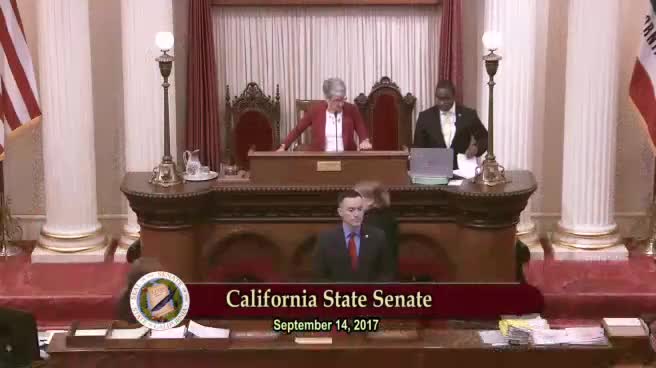 4MIN
Senate Floor
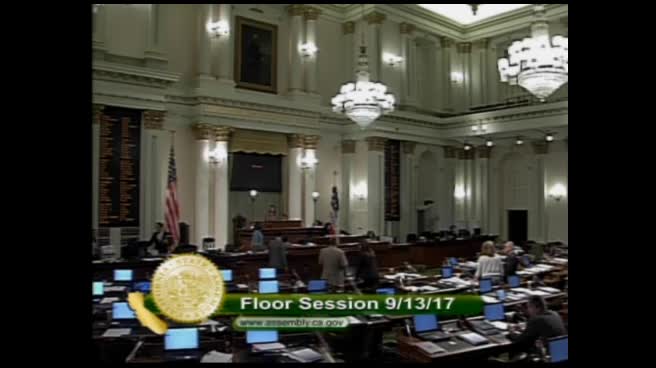 15MIN
Assembly Floor
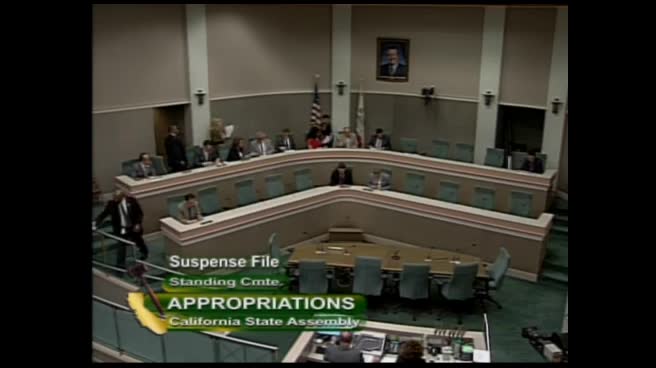 1H
Assembly Standing Committee on Appropriations
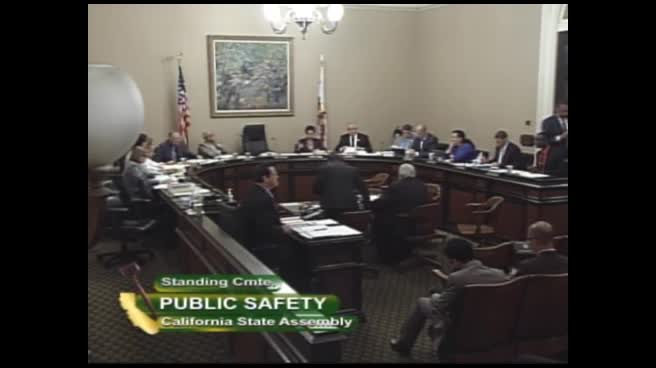 6MIN
Assembly Standing Committee on Public Safety
 9MIN
Assembly Standing Committee on Veterans Affairs
 42SEC
Senate Floor
 48MIN
Senate Standing Committee on Appropriations
Bill Author

Bill Co-Author(s):
