SB 78: After school programs: grant amounts.
- Session Year: 2017-2018
- House: Senate
- Latest Version Date: 2017-05-26
Existing law, the After School Education and Safety Program Act of 2002, enacted by initiative statute, establishes the After School Education and Safety Program to serve pupils in kindergarten and grades 1 to 9, inclusive, at participating public elementary, middle, junior high, and charter schools. The act provides that each school establishing a program pursuant to the act is eligible to receive a renewable 3-year grant for before or after school programs, as provided, and a grant for operating a program beyond 180 regular schooldays or during summer, weekend, intersession, or vacation periods, as provided, and specifies the maximum grant amount and related amounts for each of these grants. The act provides a formula for determining an amount to be continuously appropriated from the General Fund to the State Department of Education for the purposes of the program.
This bill, for the 201718 fiscal year, and for each fiscal year thereafter, would continuously appropriate an additional $99,135,000 to the State Department of Education for the purposes of the program. The bill, commencing with the increases to the minimum wage implemented during the 201819 fiscal year, and each fiscal year thereafter, would would, when calculating the total amount to be appropriated for a fiscal year, require the Department of Finance to annually adjust the total program funding amount for each minimum wage increase using a specified calculation. The bill would require the State Department of Education to adjust the maximum grant amounts and related amounts in accordance with the amount provided for the program for the 201718 fiscal year. The bill, commencing with the 201819 fiscal year, and each fiscal year thereafter, would require the State Department of Education to adjust those amounts by the amounts necessary to properly allocate funding increases made to the total program funding amount by the bill. The bill also would provide that funds appropriated by the bill would be applied toward the minimum funding requirements for school districts and community college districts imposed by Section 8 of Article XVI of the California Constitution.
Existing law, the After School Education and Safety Program Act of 2002, enacted by initiative statute, establishes the After School Education and Safety Program to serve pupils in kindergarten and grades 1 to 9, inclusive, at participating public elementary, middle, junior high, and charter schools. The act provides that each school establishing a program pursuant to the act is eligible to receive a renewable 3-year grant for before or after school programs, as provided, and a grant for operating a program beyond 180 regular schooldays or during summer, weekend, intersession, or vacation periods, as provided, and specifies the maximum grant amount and related amounts for each of these grants. The act provides a formula for determining an amount to be continuously appropriated from the General Fund to the State Department of Education for the purposes of the program.
This bill, for the 201718 fiscal year, and for each fiscal year thereafter, would continuously appropriate an additional $99,135,000 to the State Department of Education for the purposes of the program. The bill, commencing with the increases to the minimum wage implemented during the 201819 fiscal year, and each fiscal year thereafter, would require the Department of Finance to annually adjust the total program funding amount for each minimum wage increase using a specified calculation. The bill would require the State Department of Education to adjust the maximum grant amounts and related amounts in accordance with the amount provided for the program for the 201718 fiscal year. The bill, commencing with the 201819 fiscal year, and each fiscal year thereafter, would require the State Department of Education to adjust those amounts by the amounts necessary to properly allocate funding increases made to the total program funding amount by the bill. The bill also would provide that funds appropriated by the bill would be applied toward the minimum funding requirements for school districts and community college districts imposed by Section 8 of Article XVI of the California Constitution.
Existing law, the After School Education and Safety Program Act of 2002, enacted by initiative statute, establishes the After School Education and Safety Program to serve pupils in kindergarten and grades 1 to 9, inclusive, at participating public elementary, middle, junior high, and charter schools. The act provides that each school establishing a program pursuant to the act is eligible to receive a renewable 3-year grant for before or after school programs, as provided, and a grant for operating a program beyond 180 regular schooldays or during summer, weekend, intersession, or vacation periods, as provided, and specifies the maximum grant amount and related amounts for each of these grants. The act provides a formula for determining an amount to be continuously appropriated from the General Fund to the State Department of Education for the purposes of the program.
For the 201718 fiscal year, and for each fiscal year thereafter, this billThis bill, for the 201718 fiscal year, and for each fiscal year thereafter, would continuously appropriate an additional $99,305,000 $99,135,000 to the State Department of Education for the purposes of the program. The bill would, commencing with the increases to the minimum wage implemented during the 201819 fiscal year, and each fiscal year thereafter, bill, commencing with the increases to the minimum wage implemented during the 201819 fiscal year, and each fiscal year thereafter, would require the Department of Finance to annually adjust the total program funding amount for each minimum wage increase using a specified calculation. The bill would require the State Department of Education to adjust the maximum grant amounts and related amounts in accordance with the amount provided for the program for the 201718 fiscal year. The bill would, commencing with the 201819 fiscal year, and each fiscal year thereafter, bill, commencing with the 201819 fiscal year, and each fiscal year thereafter, would require the State Department of Education to adjust those amounts by the amounts necessary to properly allocate funding increases made to the total program funding amount by the bill. The bill also would provide that funds appropriated by the bill would be applied toward the minimum funding requirements for school districts and community college districts imposed by Section 8 of Article XVI of the California Constitution.
Existing law, the After School Education and Safety Program Act of 2002, enacted by initiative statute, establishes the After School Education and Safety Program to serve pupils in kindergarten and grades 1 to 9, inclusive, at participating public elementary, middle, junior high, and charter schools. The act provides that each school establishing a program pursuant to the act is eligible to receive a renewable 3-year grant for before or after school programs, as provided, and a grant for operating a program beyond 180 regular schooldays or during summer, weekend, intersession, or vacation periods, as provided, and specifies the maximum grant amount and related amounts for each of these grants. The act provides a formula for determining an amount to be continuously appropriated from the General Fund to the State Department of Education for purposes of the program.
For the 201718 fiscal year, and for each fiscal year thereafter, this bill would continuously appropriate an additional $99,305,000 to the State Department of Education for purposes of the program. The bill would, commencing with the increases to the minimum wage implemented during the 201819 fiscal year, and each fiscal year thereafter, require the Department of Finance to annually adjust the total program funding amount for each minimum wage increase using a specified calculation. The bill would require the State Department of Education to adjust the maximum grant amounts and related amounts in accordance with the amount provided for the program for the 201718 fiscal year. The bill would, commencing with the 201819 fiscal year, and each fiscal year thereafter, require the State Department of Education to adjust those amounts by the amounts necessary to properly allocate funding increases made to the total program funding amount by the bill. The bill also would provide that funds appropriated by the bill would be applied toward the minimum funding requirements for school districts and community college districts imposed by Section 8 of Article XVI of the California Constitution.
(a)The Legislature finds and declares all of the following:
(1)The After School Education and Safety Program (ASES) serves more than 400,000 low-income pupils in over 4,000 high-quality elementary and middle school programs statewide.
(2)After school programs are essential to closing the achievement and opportunity gaps for underserved pupils.
(3)ASES programs receive a daily rate of $7.50 per pupil for three or more hours each day of academic and enrichment activities, a rate that experts say is woefully inadequate to run a high-quality program.
(4)The daily rate has not been changed since 2006, despite a decade of substantial increases to the costs of operating these programs.
(5)The most significant program cost increases were the three statutory minimum wage increases: the first on July 1, 2014, the second on January 1, 2016, and the third on January 1, 2017.
(6)Costs will continue to increase as statutory minimum wage increases take effect.
(7)As costs significantly outpace funding, ASES programs have been stretched to the breaking point.
(8)The ASES daily rate must be increased by 50 cents for each one dollar increase to the minimum wage. Based on the minimum wage in effect as of January 1, 2018, this formula requires a 20 percent 20-percent increase in the daily rate, from $7.50 to $9.00.
(b)It is therefore the intent of the Legislature to augment the ASES budget in an amount sufficient to match the increased costs of the current minimum wage.
(c)It is further the intent of the Legislature to ensure the continuation and stability of high-quality ASES programs by adopting a statute that requires the Department of Finance to provide a cost-of-living adjustment to ASES programs in each year that there is an increase to the minimum wage.
SEC. 2.Section 8483.73 is added to the Education Code, to read:8483.73.(a)(1)For the 201718 fiscal year, and for each fiscal year thereafter, ninety-nine million one hundred thirty-five thousand dollars ($99,135,000) is hereby continuously appropriated from the General Fund to the department for the purposes of the program established pursuant to this article.(2)8483.73.(a)Commencing with the increases to the minimum wage implemented during the 201819 fiscal year, and each fiscal year thereafter, when calculating the total amount to be appropriated for a fiscal year, the Department of Finance shall adjust the total program funding amount of six hundred forty-nine million one hundred thirty-five thousand dollars ($649,135,000) by adding an amount necessary to fund an increase in the daily per-pupil rate of 50 percent of each increase to the minimum wage pursuant to Section 1182.12 of the Labor Code.
(b)The department shall adjust the dollar amounts specified in Sections 8482.55, 8483.7, 8483.75, and 8483.76 in accordance with the amount provided for the program for the 201718 fiscal year. Commencing with the 201819 fiscal year, and each fiscal year thereafter, the department shall adjust the dollar amounts specified in Sections 8482.55, 8483.7, 8483.75, and 8483.76 by those amounts necessary to properly allocate funding increases pursuant to paragraph (2) of subdivision (a).
(c)For the purposes of making the computations required by Section 8 of Article XVI of the California Constitution, the appropriations made by subdivision (a) shall be deemed to be General Fund revenues appropriated for school districts, as defined in subdivision (c) of Section 41202, for the fiscal year in which they were appropriated, and included within the total allocations to school districts and community college districts from General Fund proceeds of taxes appropriated pursuant to Article XIIIB, as defined in subdivision (e) of Section 41202, for the fiscal year in which they were appropriated.(a)The Legislature finds and declares all of the following:
(1)The After School Education and Safety Program (ASES) serves more than 400,000 low-income pupils in over 4,000 high-quality elementary and middle school programs statewide.
(2)After school programs are essential to closing the achievement and opportunity gaps for underserved pupils.
(3)ASES programs receive a daily rate of $7.50 per pupil for three or more hours each day of academic and enrichment activities, a rate that experts say is woefully inadequate to run a high-quality program.
(4)The daily rate has not been changed since 2006, despite a decade of substantial increases to the costs of operating these programs.
(5)The most significant program cost increases were the three statutory minimum wage increases: the first on July 1, 2014, the second on January 1, 2016, and the third on January 1, 2017.
(6)Costs will continue to increase as statutory minimum wage increases take effect.
(7)As costs significantly outpace funding, ASES programs have been stretched to the breaking point.
(8)The ASES daily rate must be increased by 50 cents for each one dollar increase to the minimum wage. Based on the minimum wage in effect as of January 1, 2018, this formula requires a 20 percent increase in the daily rate, from $7.50 to $9.00.
(b)It is therefore the intent of the Legislature to augment the ASES budget in an amount sufficient to match the increased costs of the current minimum wage.
(c)It is further the intent of the Legislature to ensure the continuation and stability of high-quality ASES programs by adopting a statute that requires the Department of Finance to provide a cost-of-living adjustment to ASES programs in each year that there is an increase to the minimum wage.
SEC. 2.Section 8483.73 is added to the Education Code, to read:8483.73.(a)(1)For the 201718 fiscal year, and for each fiscal year thereafter, ninety-nine million one hundred thirty-five thousand dollars ($99,135,000) is hereby continuously appropriated from the General Fund to the department for the purposes of the program established pursuant to this article.
(2)Commencing with the increases to the minimum wage implemented during the 201819 fiscal year, and each fiscal year thereafter, the Department of Finance shall adjust the total program funding amount of six hundred fifty-four forty-nine million one hundred thirty-five thousand dollars ($654,135,000) ($649,135,000) by adding an amount necessary to fund an increase in the daily per-pupil rate of 50 percent of each increase to the minimum wage pursuant to Section 1182.12 of the Labor Code.
(b)The department shall adjust the dollar amounts specified in Sections 8482.55, 8483.7, 8483.75, and 8483.76 in accordance with the amount provided for the program for the 201718 fiscal year. Commencing with the 201819 fiscal year, and each fiscal year thereafter, the department shall adjust the dollar amounts specified in Sections 8482.55, 8483.7, 8483.75, and 8483.76 by those amounts necessary to properly allocate funding increases pursuant to paragraph (2) of subdivision (a).
(c)For the purposes of making the computations required by Section 8 of Article XVI of the California Constitution, the appropriations made by subdivision (a) shall be deemed to be General Fund revenues appropriated for school districts, as defined in subdivision (c) of Section 41202, for the fiscal year in which they were appropriated, and included within the total allocations to school districts and community college districts from General Fund proceeds of taxes appropriated pursuant to Article XIIIB, as defined in subdivision (e) of Section 41202, for the fiscal year in which they were appropriated.
(a)The Legislature finds and declares all of the following:
(1)The After School Education and Safety Program (ASES) serves more than 400,000 low-income pupils in over 4,000 high-quality elementary and middle school programs statewide.
(2)After school programs are essential to closing the achievement and opportunity gaps for underserved pupils.
(3)ASES programs receive a daily rate of $7.50 per pupil for three or more hours each day of academic and enrichment activities, a rate that experts say is woefully inadequate to run a high-quality program.
(4)The daily rate has not been changed since 2006, despite a decade of substantial increases to the costs of operating these programs.
(5)The most significant program cost increases were the three statutory minimum wage increases, increases: the first on July 1, 2014, the second on January 1, 2016, and the third on January 1, 2017.
(6)Costs will continue to increase as statutory minimum wage increases take effect.
(7)As costs significantly outpace funding, ASES programs have been stretched to the breaking point.
(8)The ASES daily rate must be increased by fifty 50 cents for each one dollar increase to the minimum wage. Based on the minimum wage in effect as of January 1, 2018, this formula requires a 20 percent increase in the daily rate, from $7.50 to $9.00.
(b)It is therefore the intent of the Legislature to augment the ASES budget in an amount sufficient to match the increased costs of the current minimum wage.
(c)It is further the intent of the Legislature to ensure the continuation and stability of high-quality ASES programs by adopting a statute that requires the Department of Finance to provide a cost-of-living adjustment to ASES programs in each year that there is an increase to the minimum wage.
SEC. 2.Section 8483.73 is added to the Education Code, to read:8483.73.(a)(1)For the 201718 fiscal year, and for each fiscal year thereafter, ninety-nine million three hundred five thousand dollars ($99,305,000) ninety-nine million one hundred thirty-five thousand dollars ($99,135,000) is hereby continuously appropriated from the General Fund to the department for the purposes of the program established pursuant to this article.
(2)Commencing with the increases to the minimum wage implemented during the 201819 fiscal year, and each fiscal year thereafter, the Department of Finance shall adjust the total program funding amount of six hundred fifty-four million three hundred five thousand dollars ($654,305,000) six hundred fifty-four million one hundred thirty-five thousand dollars ($654,135,000) by adding an amount necessary to fund an increase in the daily per-pupil rate of 50 percent of each increase to the minimum wage pursuant to Section 1182.12 of the Labor Code.
(b)The department shall adjust the dollar amounts specified in Sections 8482.55, 8483.7, 8483.75, and 8483.76 in accordance with the amount provided for the program for the 201718 fiscal year. Commencing with the 201819 fiscal year, and each fiscal year thereafter, the department shall adjust the dollar amounts specified in Sections 8482.55, 8483.7, 8483.75, and 8483.76 by those amounts necessary to properly allocate funding increases pursuant to paragraph (2) of subdivision (a).
(c)For the purposes of making the computations required by Section 8 of Article XVI of the California Constitution, the appropriations made by subdivision (a) shall be deemed to be General Fund revenues appropriated for school districts, as defined in subdivision (c) of Section 41202, for the fiscal year in which they were appropriated, and included within the total allocations to school districts and community college districts from General Fund proceeds of taxes appropriated pursuant to Article XIIIB, as defined in subdivision (e) of Section 41202, for the fiscal year in which they were appropriated.
(a)The Legislature finds and declares all of the following:
(1)The After School Education and Safety Program (ASES) serves more than 400,000 low-income pupils in over 4,000 high-quality elementary and middle school programs statewide.
(2)After school programs are essential to closing the achievement and opportunity gaps for underserved pupils.
(3)ASES programs receive a daily rate of $7.50 per pupil for three or more hours each day of academic and enrichment activities, a rate that experts say is woefully inadequate to run a high-quality program.
(4)The daily rate has not been changed since 2006, despite a decade of substantial increases to the costs of operating these programs.
(5)The most significant program cost increases were the three statutory minimum wage increases, the first on July 1, 2014, the second on January 1, 2016, and the third on January 1, 2017.
(6)Costs will continue to increase as statutory minimum wage increases take effect.
(7)As costs significantly outpace funding, ASES programs have been stretched to the breaking point.
(8)The ASES daily rate must be increased by fifty cents for each one dollar increase to the minimum wage. Based on the minimum wage in effect as of January 1, 2018, this formula requires a 20 percent increase in the daily rate, from $7.50 to $9.00.
(b)It is therefore the intent of the Legislature to augment the ASES budget in an amount sufficient to match the increased costs of the current minimum wage.
(c)It is further the intent of the Legislature to ensure the continuation and stability of high-quality ASES programs by adopting a statute that requires the Department of Finance to provide a cost-of-living adjustment to ASES programs in each year that there is an increase to the minimum wage.
SEC. 2.Section 8483.73 is added to the Education Code, to read:8483.73.(a)(1)For the 201718 fiscal year, and for each fiscal year thereafter, ninety-nine million three hundred five thousand dollars ($99,305,000) is hereby continuously appropriated from the General Fund to the department for purposes of the program established pursuant to this article.
(2)Commencing with the increases to the minimum wage implemented during the 201819 fiscal year, and each fiscal year thereafter, the Department of Finance shall adjust the total program funding amount of six hundred fifty-four million three hundred five thousand dollars ($654,305,000) by adding an amount necessary to fund an increase in the daily per-pupil rate of 50 percent of each increase to the minimum wage pursuant to Section 1182.12 of the Labor Code.
(b)The department shall adjust the dollar amounts specified in Sections 8482.55, 8483.7, 8483.75, and 8483.76 in accordance with the amount provided for the program for the 201718 fiscal year. Commencing with the 201819 fiscal year, and each fiscal year thereafter, the department shall adjust the dollar amounts specified in Sections 8482.55, 8483.7, 8483.75, and 8483.76 by those amounts necessary to properly allocate funding increases pursuant to paragraph (2) of subdivision (a).
(c)For purposes of making the computations required by Section 8 of Article XVI of the California Constitution, the appropriations made by subdivision (a) shall be deemed to be General Fund revenues appropriated for school districts, as defined in subdivision (c) of Section 41202, for the fiscal year in which they were appropriated, and included within the total allocations to school districts and community college districts from General Fund proceeds of taxes appropriated pursuant to Article XIIIB, as defined in subdivision (e) of Section 41202, for the fiscal year in which they were appropriated.
|
Date
|
Status
|
|---|---|
| Jul 12, 2017 | July 12 set for first hearing canceled at the request of author. |
| Jun 12, 2017 | Referred to Com. on ED. |
| Jun 1, 2017 | In Assembly. Read first time. Held at Desk. |
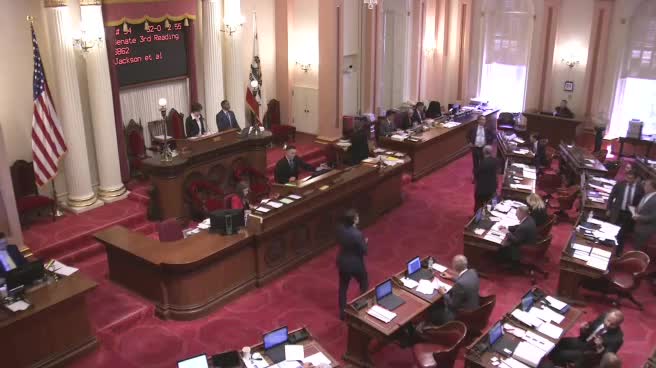
| May 31, 2017 | Read third time. Passed. (Ayes 32. Noes 5. Page 1319.) Ordered to the Assembly. |
| May 26, 2017 | Read second time and amended. Ordered to third reading. |
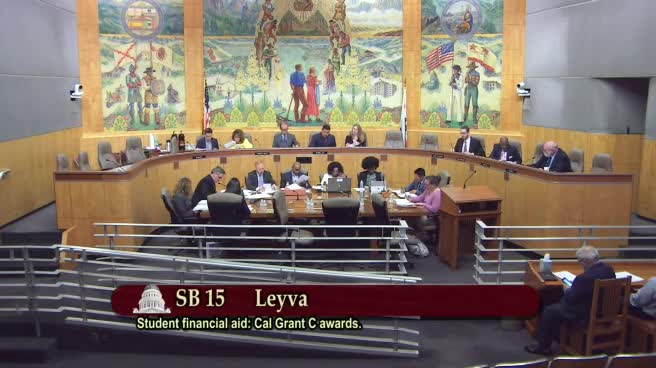
| May 25, 2017 | From committee: Do pass as amended. (Ayes 5. Noes 2. Page 1177.) (May 25). |
| May 19, 2017 | Set for hearing May 25. |
| May 15, 2017 | May 15 hearing: Placed on APPR. suspense file. |
| May 4, 2017 | Set for hearing May 15. |
| May 3, 2017 | May 8 hearing postponed by committee. |
| May 1, 2017 | Set for hearing May 8. |
| Apr 25, 2017 | Read second time and amended. Re-referred to Com. on APPR. |
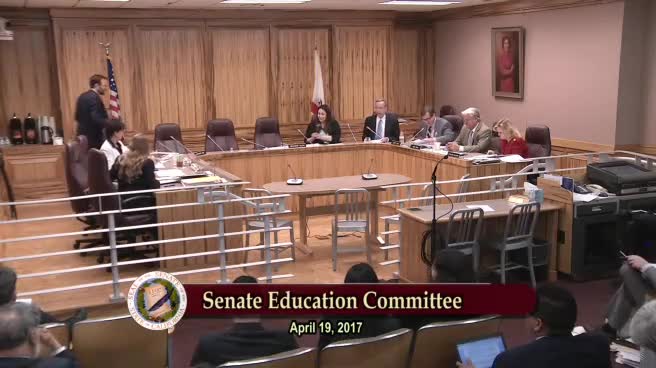
| Apr 24, 2017 | From committee: Do pass as amended and re-refer to Com. on APPR. (Ayes 7. Noes 0. Page 782.) (April 19). |
| Apr 4, 2017 | From committee with author's amendments. Read second time and amended. Re-referred to Com. on ED. |
| Mar 24, 2017 | Set for hearing April 19. |
| Feb 24, 2017 | March 8 set for first hearing canceled at the request of author. |
| Feb 23, 2017 | Set for hearing March 8. |
| Jan 19, 2017 | Referred to Com. on ED. |
| Jan 12, 2017 | From printer. May be acted upon on or after February 11. |
| Jan 11, 2017 | Introduced. Read first time. To Com. on RLS. for assignment. To print. |
|
Date
|
Description
|
Location
|
Votes
|
|
|---|---|---|---|---|
| May 31, 2017 | Senate 3rd Reading SB78 Leyva et al. | Senate Floor |
Passed |
|
| May 25, 2017 | Do pass as amended | Senate Standing Committee on Appropriations |
Passed |
|
| May 15, 2017 | Placed on suspense file | Senate Standing Committee on Appropriations |
Passed |
|
| Apr 19, 2017 | Do pass as amended, but first amend, and re-refer to the Committee on [Appropriations] | Senate Standing Committee on Education |
Passed |
This list shows positions taken on this bill by organizations on the date displayed, which is linked to the original source.
Positions by individuals are not included.
|
Organization
|
Position
|
Date
|
|---|---|---|
| Academy of Alameda Middle School | ** Support | May 30, 2017 |
| After-School All-Stars, Los Angeles | ** Support | May 30, 2017 |
| Azusa Unified School District | ** Support | May 30, 2017 |
| Boys & Girls Club of Lake Tahoe | ** Support | May 30, 2017 |
| Boys & Girls Clubs of Garden Grove | ** Support | May 30, 2017 |
| Boys & Girls Clubs of Kern County | ** Support | May 30, 2017 |
| Boys & Girls Clubs of North County | ** Support | May 30, 2017 |
| Boys & Girls Clubs of Oceanside | ** Support | May 30, 2017 |
| Boys & Girls Clubs of San Marcos | ** Support | May 30, 2017 |
| Boys & Girls Clubs of Simi Valley | ** Support | May 30, 2017 |
| Boys & Girls Clubs of the Peninsula | ** Support | May 30, 2017 |
| california after school advocacy alliance | ** Support | May 30, 2017 |
| California Alliance of Boys & Girls Clubs | ** Support | May 30, 2017 |
| California Alternative Payment Program Association | ** Support | May 30, 2017 |
| California Food Policy Advocates | ** Support | May 30, 2017 |
| California School-Age Consortium | ** Support | May 30, 2017 |
| California State PTA | ** Support | May 30, 2017 |
| California Teachers Association | ** Against | May 30, 2017 |
| California Teaching Fellows Foundation | ** Support | May 30, 2017 |
| Child Care Alliance Los Angeles | ** Support | May 30, 2017 |
| Child Care Resource Center | ** Support | May 30, 2017 |
| Children Now | ** Support | May 30, 2017 |
| Children'S Defense Fund | ** Support | May 30, 2017 |
| Children's Initiative | ** Support | May 30, 2017 |
| City of Downey | ** Support | May 30, 2017 |
| City Of Los Angeles | ** Support | May 30, 2017 |
| city of paramount | ** Support | May 30, 2017 |
| City Of Sacramento | ** Support | May 30, 2017 |
| DFS Group L.P. | ** Support | May 30, 2017 |
| EduCare Foundation | ** Support | May 30, 2017 |
| Extended Child Care of Sonoma County | ** Support | May 30, 2017 |
| Family YMCA of the Desert | ** Support | May 30, 2017 |
| Fight Crime: Invest in Kids | ** Support | May 30, 2017 |
| Gilroy Unified School District | ** Support | May 30, 2017 |
| Julian Union School District | ** Support | May 30, 2017 |
| KinderCare Education | ** Support | May 30, 2017 |
| LA's BEST After School Enrichment Program | ** Support | May 30, 2017 |
| League Of California Cities | ** Support | May 30, 2017 |
| Lennox Enrichment Afterschool Program , Lennox School District | ** Support | May 30, 2017 |
| Los Angeles County Office Of Education | ** Support | May 30, 2017 |
| Los Angeles Unified School District | ** Support | May 30, 2017 |
| Mission Readiness - Military Leaders for Kids | * Support | Apr 19, 2017 |
| monrovia unified school district's village extended school program | ** Support | May 30, 2017 |
| Moreno Valley Unified School District | ** Support | May 30, 2017 |
| Napa County Office Of Education | ** Support | May 30, 2017 |
| Nigel Lythgoe Productions | ** Support | May 30, 2017 |
| Numerous individuals | ** Support | May 30, 2017 |
| Oceanside Unified School District | ** Support | May 30, 2017 |
| Pali Waves Basketball | ** Support | May 30, 2017 |
| Paramount Unified School District | ** Support | May 30, 2017 |
| Partnership for Children & Youth | ** Support | May 30, 2017 |
| Pomona Unified School District | ** Support | May 30, 2017 |
| Public Profit | ** Support | May 30, 2017 |
| Sacramento City Unified School District | ** Support | May 30, 2017 |
| Sacramento, County Of | * Support | Apr 19, 2017 |
| San Luis Obispo County YMCA | ** Support | May 30, 2017 |
| San Mateo County Office Of Education | ** Support | May 30, 2017 |
| San Ysidro School District | ** Support | May 30, 2017 |
| Santa Barbara County Education Office | ** Support | May 30, 2017 |
| Santa Barbara Unified School District | ** Support | May 30, 2017 |
| Schools on Wheels, Inc. | ** Support | May 30, 2017 |
| THINK Together | ** Support | May 30, 2017 |
| United Way of Greater Los Angeles | ** Support | May 30, 2017 |
| Ventura County Office of Education | ** Support | May 30, 2017 |
| Warner Bros. Records | ** Support | May 30, 2017 |
| Willits Kids Club | ** Support | May 30, 2017 |
| YMCA of Greater Whittier | ** Support | May 30, 2017 |
| YMCA of San Diego County | ** Support | May 30, 2017 |
| YMCA of San Francisco | ** Support | May 30, 2017 |
| YMCA of Silicon Valley | ** Support | May 30, 2017 |
| Youth Alliance | ** Support | May 30, 2017 |
| Youth Policy Institute | ** Support | May 30, 2017 |
Office of Senate Floor Analyses (916) 651-1520 Fax: (916) 327-4478 | SB |
THIRD READING
Bill No: SB 78
:
SENATE EDUCATION COMMITTEE: 7-0, 4/19/17
AYES: Allen, Wilk, Galgiani, Leyva, Mendoza, Pan, Vidak
SENATE APPROPRIATIONS COMMITTEE: 5-2, 5/25/17
AYES: Lara, Beall, Bradford, Hill, Wiener
NOES: Bates, Nielsen
SOURCE: California After School Advocacy Alliance
DIGEST:
This bill requires the Department of Finance (DOF) to adjust the total After School Education and Safety (ASES) program funding level to reflect an increase in the daily per-pupil rate of 50 percent of each increase to the minimum wage implemented during the 2018-19 fiscal year and every fiscal year thereafter.
Existing law:
1) Establishes the ASES program, passed by voters as Proposition 49 in 2002, which provides $550 million annually for before and after school programs for K-9 students. Priority for funding is granted to schools where at least 50 percent of the students are eligible for free or reduced price meals. ASES programs receive direct grants, where attendance is projected and grants are funded up-front, in three one-year increments. (Education Code § 8482, 8482.4, and § 8482.5)
2) Sets the maximum total direct grant awarded annually for an after school program as $112,500 for each regular school year for elementary schools and $150,000 for middle or junior high schools (based on a formula of $7.50 per student per day of attendance, at a maximum of $37.50 per student per week). (EC § 8482.55 and § 8483.7)
3) Sets maximum total grant awarded annually for a before school program as $37,500 for each regular school year for elementary schools and $49,000 for middle or junior high schools (based on a formula of $5 per student per day of attendance, at a maximum of $25 per student per week). (EC § 8483.75)
4) Provides for a summer grant to operate the program in excess of 180 days or during any combination of summer, intersession, or vacation for a maximum of the lesser of:
- $7.50 per student per day; or,
- 30 percent of the total grant amount awarded to the school per school year; or,
- $33,750 for elementary schools and $45,000 for middle or junior high schools. (EC § 8483.7 and § 8483.76)
5) Appropriates, continuously, $550 million from the General Fund to the California Department of Education (CDE) for the ASES program. (EC § 8483.5)
6) Sets the minimum wage for all industries, on and after January 1, 2016, at $10 per hour. (Labor Code § 1182.12)
7) Sets the minimum wage for employers who employ 26 or more employees at $11 per hour for the 2017 calendar year and commencing January 1, 2018, raises the minimum wage for these employers by $1 per hour per year for five years, to $15 per hour as of January 1, 2022. (LC § 1182.12)
8) Sets the minimum wage for employers who employ 25 or fewer employees at $10.50 per hour for the 2018 calendar year, raises the minimum wage for these employers $11 for 2019 calendar year, and commencing January 1, 2020, raises the minimum wage for these employers by $1 per hour per year for four years, to $15 per hour as of January 1, 2023. (LC § 1182.12)
9) Authorizes the Governor, if certain conditions are met, to temporarily suspend the scheduled minimum wage increases for one year, but no more than two times. (LC § 1182.12)
This bill:
1) Requires the DOF, when calculating the total amount to be appropriated for a fiscal year, to adjust the total ASES program funding level to reflect an increase in the daily per-pupil rate of 50 percent of each increase to the minimum wage implemented during the 2018-19 fiscal year and every fiscal year thereafter.
2) Requires the CDE to adjust the total direct grant amounts and the daily pupil rate in accordance with the total amount provided for the ASES program that fiscal year.
- Need for the bill. According to the author, “Funding for California’s After School Education and Safety (ASES) programs average daily attendance rates have not been increased since 2006 while minimum wage increased and state mandated sick leave have caused operating costs to rise. If there is no increase in funding, 29% of after school programs may have to close their doors completely within the next two years, which could potentially displace as many as 120,000 students. These programs provide students with academic and enrichment activities, offer necessary and affordable child care options for working families and keep children safely off the streets. They also provide a wide variety of benefits to participating students including: improved school attendance, English fluency, academic success, crime prevention, and social-emotional skill development.”
- Family fees. Current law does not require ASES programs to charge family fees or to conduct individual eligibility determinations based on need or income. It appears that ASES programs have the ability to charge family fees; however, it is unlikely that many programs charge fees, or reap significant fees, as ASES programs serve schools where a minimum of 50 percent of the students are eligible for free- or reduced-price meals, and funding priority is given to programs serving the highest percentages of students who are eligible for free and reduced-price meals.
- Governor’s authority to suspend minimum wage increases. Existing law authorizes the Governor to temporarily suspend scheduled minimum wage increases if certain conditions are met. It appears that the required adjustments to the total ASES program funding by the DOF would not be triggered in a fiscal year in which the scheduled minimum wage increase is suspended by the Governor.
Related/Prior Legislation
SB 645 (Hancock, 2016) would have authorized an ASES Program to suspend operation for up to five days in a fiscal year beginning January 1, 2016. SB 645 was held on the Suspense File in the Assembly Committee on Appropriations.
AB 1426 (Cooper, 2016), an urgency measure, would have increased the per-student daily and weekly rates for the ASES program, and eliminated the requirement for the after school component of the program to operate at least until 6 p.m. on regular schooldays. AB 1426 was held on the Suspense File in the Senate Committee on Appropriations.
AB 2663 (Cooper, 2016) would have continuously appropriated $73.3 million for the ASES beginning with the 2016-17 fiscal year and adjusted the appropriation annually thereafter based on the California Consumer Price Index. AB 2663 was held on the Suspense File in the Assembly Committee on Appropriations.
SB 1221 (Hancock, Chapter 370, Statutes of 2014) modified eligibility, types of grants, the amount of grants, and outcome measures of the ASES, the 21st Century Community Learning Centers, and the 21st Century After School Safety and Enrichment for Teens programs.
SB 429 (DeSaulnier, Chapter 626, Statutes of 2011) authorized an ASES program provider to use supplemental grant funds to operate a six-hour program and established other parameters for programs operating summer, intersession or vacation programs, including by authorizing a program to be conducted at an offsite location or at an alternate schoolsite and authorizing a supplemental grantee to open eligibility to every pupil attending a school in the district with priority for pupils enrolled in the school that receive a grant.
FISCAL EFFECT: Appropriation: No Fiscal Com.: Local:
According to the Senate Appropriations Committee, future year Proposition 98 General Fund costs, likely in the millions of dollars, for the minimum wage increase.
California After School Advocacy Alliance (source)
Academy of Alameda Middle School
After-School All-Stars, Los Angeles
Azusa Unified School District
Boys & Girls Clubs of El Dorado County Western Slope
Boys & Girls Clubs of Garden Grove
Boys & Girls Clubs of Kern County
Boys & Girls Club of Lake Tahoe
Boys & Girls Clubs of Oceanside
Boys & Girls Clubs of North County
Boys & Girls Clubs of San Marcos
Boys & Girls Clubs of Simi Valley
Boys & Girls Clubs of the Peninsula
California Alliance of Boys & Girls Clubs
California Alternative Payment Program Association
California Association for Health, Physical Education, Recreation and Dance
California Food Policy Advocates
California School-Age Consortium
California State PTA
California Teaching Fellows Foundation
Child Care Alliance Los Angeles
Child Care Resource Center
Children Now
Children’s Defense Fund
Children’s Initiative
City of Downey
City of Los Angeles
City of Paramount
City of Sacramento
DFS Group L.P.
EduCare Foundation
El Dorado County Early Care and Education Planning Council
Extended Child Care of Sonoma County
Family YMCA of the Desert
Fight Crime: Invest in Kids
Gilroy Unified School District
Julian Union School District
KinderCare Education
LA’s Best After School Enrichment Program
League of California Cities
Lennox Enrichment Afterschool Program (Lennox LEAP), Lennox School District
Los Angeles County Office of Education
Los Angeles Unified School District
Monrovia Unified School District’s Village Extended School Program
Moreno Valley Unified School District
Napa County Office of Education
Nigel Lythgoe Productions
Oceanside Unified School District
Pali Waves Basketball
Paramount Unified School District
Partnership for Children & Youth
Pomona Unified School District
Public Profit
Sacramento City Unified School District
San Luis Obispo County YMCA
San Mateo County Office of Education
San Ysidro School District
Santa Barbara County Education Office
Santa Barbara Unified School District
Schools on Wheels, Inc.
The Learning Connection (TLC) Program, Pomona Unified School District
Think Together
United Way of Greater Los Angeles
Ventura County Office of Education
Warner Bros. Records
Willits Kids Club
YMCA of Greater Whittier
YMCA of San Diego County
YMCA of San Francisco
YMCA of Silicon Valley
Youth Alliance
Youth Policy Institute
Numerous individuals
OPPOSITION: (Verified 5/25/17)
California Teachers Association
5/30/17 17:41:05
**** END ****
SENATE COMMITTEE ON
Senator Ricardo Lara, Chair
2017 - 2018 Regular Session
SB 78 (Leyva) - After school programs: grant amounts
Version: | Policy Vote: |
Urgency: | Mandate: |
Hearing Date: | Consultant: |
*********** ANALYSIS ADDENDUM – SUSPENSE FILE ***********
The following information is revised to reflect amendments
adopted by the committee on May 25, 2017
Bill Summary:
This bill requires the Department of Finance to adjust the total After School Education and Safety (ASES) program funding level to reflect an increase in the daily per-pupil rate of 50 percent of each increase to the minimum wage implemented during the 2018–19 fiscal year, and every fiscal year thereafter.
Fiscal Impact:
Future year Proposition 98 General Fund costs, likely in the millions of dollars, for the minimum wage increase.
Committee Amendments:
Remove the bill’s continuous appropriation of $99,135,000 for the ASES program and make other conforming changes.
-- END --
SENATE COMMITTEE ON
Senator Ricardo Lara, Chair
2017 - 2018 Regular Session
SB 78 (Leyva) - After school programs: grant amounts
Version: | Policy Vote: |
Urgency: | Mandate: |
Hearing Date: | Consultant: |
This bill meets the criteria for referral to the Suspense File.
Bill Summary:
This bill continuously appropriates an additional $99,135,000 for the After School Education and Safety (ASES) program beginning in the 2017-18 fiscal year, and also requires the Department of Finance to adjust the total program funding level to reflect an increase in the daily per-pupil rate of 50 percent of each increase to the minimum wage implemented during the 2018–19 fiscal year, and every fiscal year thereafter.
Fiscal Impact:
- Proposition 98 General Fund costs of $99.1 million starting in 2017-18. The state currently provides a continuous appropriation of $550 million per year for before and after school programs, pursuant to Proposition 49 of 2002.
- Unknown but significant future year Proposition 98 General Fund costs, likely in the millions, for the minimum wage increase.
Background:
Existing law establishes the ASES program, passed by voters as Proposition 49 in 2002, which provides $550 million annually for before and after school programs for K-9 students. Priority for funding is granted to schools where at least 50 percent of the students are eligible for free or reduced price meals. ASES programs receive direct grants, where attendance is projected and grants are funded up-front, in three one-year increments.
Existing law also sets the maximum total direct grant awarded annually for an after school program as $112,500 for each regular school year for elementary schools and $150,000 for middle or junior high schools (based on a formula of $7.50 per student per day of attendance, at a maximum of $37.50 per student per week) and sets the maximum total grant awarded annually for a before school program as $37,500 for each regular school year for elementary schools and $49,000 for middle or junior high schools (based on a formula of $5 per student per day of attendance, at a maximum of $25 per student per week).
Further, existing law provides for a summer grant to operate the program in excess of 180 days or during any combination of summer, intersession, or vacation for a maximum of the lesser of:
- $7.50 per student per day; or,
- 30 percent of the total grant amount awarded to the school per school year; or,
- $33,750 for elementary schools and $45,000 for middle or junior high schools.
Proposed Law:
This bill appropriates to the ASES program an additional $99,135,000 in the 2017-18 fiscal year and each fiscal year thereafter, and commencing with the increases to the minimum wage implemented during the 2018–19 fiscal year, and every year thereafter, requires the Department of Finance to adjust the total ASES program funding amount of $649,135,000 by adding an amount necessary to fund an increase in the daily pupil rate of 50 percent of each increase to the minimum wage.
The bill also requires California Department of Education (CDE) to adjust the total direct grant amounts and the daily pupil rate in accordance with the total amount provided for the ASES program that fiscal year.
Related Legislation:
SB 645 (Hancock, 2016) would have authorized an ASES Program to suspend operation for up to five days in a fiscal year beginning January 1, 2016. SB 645 was held on the Suspense File in the Assembly Committee on Appropriations.
AB 1426 (Cooper, 2016) would have increased the per-student daily and weekly rates for the ASES program, and eliminated the requirement for the after school component of the program to operate at least until 6 p.m. on regular schooldays. AB 1426 was held on the Suspense File in the Senate Committee on Appropriations.
AB 2663 (Cooper, 2016) would have continuously appropriated $73.3 million for the ASES beginning with the 2016-17 fiscal year and adjusted the appropriation annually thereafter based on the California Consumer Price Index. AB 2663 was held on the Suspense File in the Assembly Committee on Appropriations.
Staff Comments:
Funding for the ASES program has remained constant since 2002. Statute requires an ongoing continuous appropriation of $550 million from the General Fund to the CDE for the program. This bill proposes to increase that amount by $99,135,000 in the 2017-18 fiscal year and every fiscal year thereafter, and to provide an annual cost adjustment, commencing in the 2018-19 fiscal year, sufficient to fund an increase in the daily pupil rate of 50 percent of each increase to the minimum wage. The cost to fund the minimum wage increase is unknown, but likely in the millions.
-- END --
SENATE COMMITTEE ON EDUCATION
Senator Benjamin Allen, Chair
2017 - 2018 Regular
Bill No: SB 78 Hearing Date: April 19, 2017
Author: | Leyva | ||
Version: | April 4, 2017 | ||
Urgency: | No | Fiscal: | Yes |
Consultant: | Brandon Darnell | ||
Subject: After school programs: grant amounts
SUMMARY
This bill appropriates to the After School Education and Safety (ASES) program an additional $99,135,000 in the 2017-18 fiscal year and each fiscal year thereafter, and commencing with the increases to the minimum wage implemented during the 2018–19 fiscal year, and every fiscal year thereafter, requires the Department of Finance (DOF) to adjust the total ASES program funding amount of $654,135,000 by adding an amount necessary to fund an increase in the daily pupil rate of 50 percent of each increase to the minimum wage.
BACKGROUND
Existing law:
1) Establishes the ASES program, passed by voters as Proposition 49 in 2002, which provides $550 million annually for before and after school programs for K-9 students. Priority for funding is granted to schools where at least 50 percent of the students are eligible for free or reduced price meals. ASES programs receive direct grants, where attendance is projected and grants are funded up-front, in three one-year increments. (Education Code § 8482, 8482.4, and § 8482.5)
2) Sets the maximum total direct grant awarded annually for an after school program as $112,500 for each regular school year for elementary schools and $150,000 for middle or junior high schools (based on a formula of $7.50 per student per day of attendance, at a maximum of $37.50 per student per week).
(EC § 8482.55 and § 8483.7)
3) Sets maximum total grant awarded annually for a before school program as $37,500 for each regular school year for elementary schools and $49,000 for middle or junior high schools (based on a formula of $5 per student per day of attendance, at a maximum of $25 per student per week). (EC § 8483.75)
4) Provides for a summer grant to operate the program in excess of 180 days or during any combination of summer, intersession, or vacation for a maximum of the lesser of:
A) $7.50 per student per day; or,
B) 30 percent of the total grant amount awarded to the school per school year; or,
C) $33,750 for elementary schools and $45,000 for middle or junior high schools. (EC § 8483.7 and § 8483.76)
5) Continuously appropriates $550 million from the General Fund to the California Department of Education (CDE) for the After School Education and Safety (ASES) program. (EC § 8483.5)
6) Sets the minimum wage for all industries, on and after January 1, 2016, at $10 per hour. (Labor Code § 1182.12)
7) Sets the minimum wage for employers who employ 26 or more employees at $11 per hour for the 2017 calendar year and commencing January 1, 2018, raises the minimum wage for these employers by $1 per hour per year for five years, to $15 per hour as of January 1, 2022. (LC § 1182.12)
8) Sets the minimum wage for employers who employ 25 or fewer employees at $10.50 per hour for the 2018 calendar year, raises the minimum wage for these employers $11 for 2019 calendar year, and commencing January 1, 2020, raises the minimum wage for these employers by $1 per hour per year for four years, to $15 per hour as of January 1, 2023. (LC § 1182.12)
9) Authorizes the Governor, if certain conditions are met, to temporarily suspend the scheduled minimum wage increases for one year, but no more than two times.
(LC § 1182.12)
10) Requires employers to provide at least one hour of paid sick time for every 30 hours worked, or a minimum of three days per year. (Labor Code § 246)
ANALYSIS
This bill appropriates to the ASES program an additional $99,135,000 in the 2017-18 fiscal year and each fiscal year thereafter, and commencing with the increases to the minimum wage implemented during the 2018–19 fiscal year, and every year thereafter, requires the Department of Finance (DOF) to adjust the total ASES program funding amount of $654,135,000 by adding an amount necessary to fund an increase in the daily pupil rate of 50 percent of each increase to the minimum wage. Specifically, this bill:
- For the 2017–18 fiscal year, and for each fiscal year thereafter, continuously appropriates $99,135,000 from the General Fund to the CDE for the ASES program.
- Commencing with the increases to the minimum wage implemented during the 2018–19 fiscal year, and each fiscal year thereafter, requires the DOF to adjust the total ASES program funding amount of $654,135,000 by adding an amount necessary to fund an increase in the daily per-pupil rate of 50 percent of each increase to the minimum wage.
- Requires California Department of Education (CDE) to adjust the total direct grant amounts and the daily pupil rate in accordance with the total amount provided for the After School Education and Safety (ASES) program that fiscal year.
- Requires the additional funds appropriated by the bill for ASES program to count toward the Proposition 98 guarantee.
STAFF COMMENTS
- Need for the bill. According to the author, “Funding for California’s After School Education and Safety (ASES) programs average daily attendance rates have not been increased since 2006 while minimum wage increased and state mandated sick leave have caused operating costs to rise. If there is no increase in funding, 29% of after school programs may have to close their doors completely within the next two years, which could potentially displace as many as 120,000 students. These programs provide students with academic and enrichment activities, offer necessary and affordable child care options for working families and keep children safely off the streets. They also provide a wide variety of benefits to participating students including: improved school attendance, English fluency, academic success, crime prevention, and social-emotional skill development.”
- Family fees. Current law does not require ASES programs to charge family fees or to conduct individual eligibility determinations based on need or income. It appears that ASES programs have the ability to charge family fees; however, it is unlikely that many programs charge fees, or reap significant fees, as ASES programs serve schools where a minimum of 50 percent of the students are eligible for free- or reduced-price meals, and funding priority is given to programs serving the highest percentages of students who are eligible for free and reduced-price meals.
- Budget issue. The Education Code requires the continuous appropriation of $550 million from the General Fund to the CDE for the ASES program. This bill proposes to increase that appropriation by just over $99 million in the 2017-18 fiscal year and every fiscal year thereafter, and to provide an annual cost adjustment, commencing in the 2018-19 fiscal year, sufficient to fund an increase in the daily pupil rate of 50% of each increase to the minimum wage. The Governor’s proposed 2017-18 Budget does not provide an increased appropriation for the ASES program. The Senate Budget Subcommittee on Education may wish to consider this funding proposal through the annual budget process.
Is it appropriate for this Committee to pass a bill that makes a significant appropriation of Proposition 98 funds? Passing this bill would signal this Committee’s desire to provide funds to ASES programs that are sufficient to mitigate the increases in the minimum wage. The decision of whether to provide additional funds will ultimately be made in the Budget Act. However, according to the author, “after school programs are cost effective and provide a return of $2 to $9 for every $1 invested by the state.”
Staff recommends a technical amendment to change the total amount of funding for the ASES program referenced in the bill to $649,135,000, not $654,135,000.
- Governor’s authority to suspend minimum wage increases. Existing law authorizes the Governor to temporarily suspend scheduled minimum wage increases if certain conditions are met. It appears to staff that the required adjustments to the total ASES program funding by the Department of Finance (DOF) would not be triggered in a fiscal year in which the scheduled minimum wage increase is suspended by the Governor. The author may wish to clarify the bill’s intent on this point.
- Previous legislation. SB 645 (Hancock, 2016) would have authorized an After School Education and Safety (ASES) Program to suspend operation for up to five days in a fiscal year beginning January 1, 2016. SB 645 was held on the Suspense File in the Assembly Committee on Appropriations.
AB 1426 (Cooper, 2016), an urgency measure, would have increased the per-student daily and weekly rates for the ASES program, and eliminated the requirement for the after school component of the program to operate at least until 6 p.m. on regular schooldays. AB 1426 was held on the Suspense File in the Senate Committee on Appropriations.
AB 2663 (Cooper, 2016) would have continuously appropriated $73.3 million for the ASES beginning with the 2016-17 fiscal year and adjusted the appropriation annually thereafter based on the California Consumer Price Index. AB 2663 was held on the Suspense File in the Assembly Committee on Appropriations.
SB 1221 (Hancock, Ch. 370, Stats. 2014) modified eligibility, types of grants, the amount of grants, and outcome measures of the ASES, the 21st Century Community Learning Centers, and the 21st Century After School Safety and Enrichment for Teens programs.
SB 429 (DeSaulnier, Ch. 626, Stats. 2011), authorized an ASES program provider to use supplemental grant funds to operate a six-hour program and establishes other parameters for programs operating summer, intersession or vacation programs, including by authorizing a program to be conducted at an offsite location or at an alternate schoolsite and authorizing a supplemental grantee to open eligibility to every pupil attending a school in the district with priority for pupils enrolled in the school that receive a grant.
SUPPORT
Academy of Alameda Middle School
After-School All-Stars, Los Angeles
Azusa Unified School District
Boys & Girls Clubs of El Dorado County Western Slope
Boys & Girls Clubs of Garden Grove
Boys & Girls Clubs of Kern County
Boys & Girls Club of Lake Tahoe
Boys & Girls Clubs of Oceanside
Boys & Girls Clubs of North County
Boys & Girls Clubs of San Marcos
Boys & Girls Clubs of Simi Valley
Boys & Girls Clubs of the Peninsula
California Alliance of Boys & Girls Clubs
California Alternative Payment Program Association (CAPPA)
California Association for Health, Physical Education, Recreation and Dance
California Food Policy Advocates
California School-Age Consortium (CalSAC)
California State PTA
California Teaching Fellows Foundation
Child Care Alliance Los Angeles
Child Care Resource Center
Children Now
Children’s Defense Fund
Children’s Initiative
City of Downey
City of Los Angeles
DFS Group L.P.
EduCare Foundation
El Dorado County Early Care and Education Planning Council
Extended Child Care of Sonoma County
Family YMCA of the Desert
Fight Crime: Invest in Kids
Gilroy Unified School District
Julian Union School District
KinderCare Education
LA’s Best After School Enrichment Program
League of California Cities
Lennox Enrichment Afterschool Program (Lennox LEAP), Lennox School District
Los Angeles County Office of Education
Los Angeles Unified School District
Monrovia Unified School District’s Village Extended School Program
Moreno Valley Unified School District
Napa County Office of Education
Nigel Lythgoe Productions
Oceanside Unified School District
Pali Waves Basketball
Paramount Unified School District
Partnership for Children & Youth
Pomona Unified School District
Public Profit
Sacramento City Unified School District
San Luis Obispo County YMCA
San Mateo County Office of Education
San Ysidro School District
Santa Barbara County Education Office
Santa Barbara Unified School District
Schools on Wheels, Inc.
The Learning Connection (TLC) Program, Pomona Unified School District
Think Together
United Way of Greater Los Angeles
Ventura County Office of Education
Warner Bros. Records
Willits Kids Club
YMCA of Greater Whittier
YMCA of San Diego County
YMCA of San Francisco
YMCA of Silicon Valley
Youth Alliance
Youth Policy Institute
Numerous individuals
OPPOSITION
California Teachers Association
-- END --
Discussed in Hearing
 4MIN
Senate Floor
 48MIN
Senate Standing Committee on Appropriations
 1MIN
Senate Standing Committee on Appropriations
 16MIN
Senate Standing Committee on Education
Bill Author