SB 783: Public employee pension funds: divestment proposals: review.
- Session Year: 2017-2018
- House: Senate
- Latest Version Date: 2018-06-14
The California Constitution grants the retirement board of a public employee retirement system plenary authority and fiduciary responsibility for investment of moneys and administration of the retirement fund and system. The California Constitution qualifies this grant of powers by reserving to the Legislature the authority to prohibit investments if it is in the public interest and the prohibition satisfies standards of fiduciary care and loyalty required of a retirement board. Existing law prohibits the boards of administration of the Public Employees Retirement System and State Teachers Retirement System from making investments in certain countries and in thermal coal companies, as specified, subject to the boards plenary authority and fiduciary responsibility for investment of moneys and administration of their respective systems.
This bill would create the Commission on Pension Investment, Divestment, and Engagement in the Controllers office and prescribe its composition. request the University of California to establish the Pension Divestment Review Program to assess divestment proposals. The bill would require the commission program to assess, upon the request of specified parties, a divestment proposal and to prepare a written analysis with relevant data on the effects of the proposal on employee pension funds and public policy, as prescribed. The bill would define a divestment proposal as a bill or constitutional amendment, introduced or amended in the Legislature, that would require the Public Employees Retirement Fund or the Teachers Retirement Fund to divest assets or restrict the fund from investing based on specific criteria or by reference to an external benchmark. The bill would require the commission program to use the services of a certified actuary or other person with relevant knowledge and expertise to determine the financial impact of a proposal proposal, as specified, and would authorize the commission to collaborate with the University of California in this process, as specified. experts in the public pension fund investment profession.
The bill would authorize the chairperson Chairperson of the Assembly Committee on Public Employees, Retirement, and Social Security, the chairperson Chairperson of the Senate Committee on Public Employment and Retirement, the Speaker of the Assembly, or the President pro Tempore of the Senate to request assessment of a divestment proposal and would require the requesting party to forward the proposal to the commission. program. Not later than 60 days after receiving a request, the bill would require the commission program to provide its analysis to the appropriate policy and fiscal committees of the Legislature. The bill would require the commissions programs analysis to be made publicly available. The bill would create the Divestment Proposal Research Fund, Pension Divestment Review Program the moneys in which, upon appropriation by the Legislature, would be available to support the work of the commission. program. The bill would appropriate $2,000,000 from the General Fund for support of the commission program for the 201819 fiscal year. The bill would require the commission program to submit a report to the Governor and the Legislature on or before January 1, 2020, regarding the implementation of these provisions.
The California Constitution grants the retirement board of a public employee retirement system plenary authority and fiduciary responsibility for investment of moneys and administration of the retirement fund and system. The California Constitution qualifies this grant of powers by reserving to the Legislature the authority to prohibit investments if it is in the public interest and the prohibition satisfies standards of fiduciary care and loyalty required of a retirement board. Existing law prohibits the boards of administration of the Public Employees Retirement System and State Teachers Retirement System from making investments in certain countries and in thermal coal companies, as specified, subject to the boards plenary authority and fiduciary responsibility for investment of moneys and administration of their respective systems.
This bill would create the Commission on Pension Investment, Divestment, and Engagement in the Controllers office and prescribe its composition. The bill would require the commission to assess, upon the request of specified parties, a divestment proposal and to prepare a written analysis with relevant data on the effects of the proposal on employee pension funds and public policy, as prescribed. The bill would define a divestment proposal as a bill or constitutional amendment, introduced or amended in the Legislature, that would require the Public Employees Retirement Fund or the Teachers Retirement Fund to divest assets or restrict the fund from investing based on specific criteria or by reference to an external benchmark. The bill would require the commission to use the services of a certified actuary or other person with relevant knowledge and expertise to determine the financial impact of a proposal and would authorize the commission to collaborate with the University of California in this process, as specified.
The bill would authorize the chairperson of the Assembly Committee on Public Employees, Retirement, and Social Security, the chairperson of the Senate Committee on Public Employment and Retirement, the Speaker of the Assembly, or the President pro Tempore of the Senate to request assessment of a divestment proposal and would require the requesting party to forward the proposal to the commission. Not later than 60 days after receiving a request, the bill would require the commission to provide its analysis to the appropriate policy and fiscal committees of the Legislature. The bill would require the commissions analysis to be made publicly available. The bill would create the Divestment Proposal Research Fund, the moneys in which, upon appropriation by the Legislature, would be available to support the work of the commission. The bill would appropriate $2,000,000 from the General Fund for support of the commission for the 201819 fiscal year. The bill would require the commission to submit a report to the Governor and the Legislature on or before January 1, 2020, regarding the implementation of these provisions.
Existing law authorizes the Department of Human Resources to adopt or amend regulations to implement employee benefits for those state officers and employees excluded from, or not otherwise subject to, the Ralph C. Dills Act. Existing law authorizes the Department of Human Resources to provide for vacation, sick leave, annual leave, and bereavement leave benefits, including the lump-sum payment of any amount of accumulated leave, with respect to excluded employees, nonelected officers, and executive branch employees who are not members of the civil service. Existing law prescribes the rates at which different types of leave accrue.This bill would authorize an employee designated as supervisory, confidential, excluded, or managerial to elect to be paid at his or her regular rate of pay for up to 80 hours of unused leave credit, as defined, upon a determination by the Department of Human Resources to offer an annual buy-back of this credit. The bill would require the department to determine the date of eligibility and conditions of buy-back and the period during which an application for buy-back will be accepted.Existing law authorizes the Department of Human Resources to adopt or amend regulations to implement employee benefits for those state officers and employees excluded from, or not otherwise subject to, the Ralph C. Dills Act. Existing law authorizes the Department of Human Resources to provide for vacation, sick leave, annual leave, and bereavement leave benefits, including the lump-sum payment of any amount of accumulated leave, with respect to excluded employees, nonelected officers, and executive branch employees who are not members of the civil service. Existing law prescribes the rates at which different types of leave accrue.
This bill would authorize an employee designated as supervisory, confidential, excluded, or managerial to elect to be paid at his or her regular rate of pay for up to 80 hours of unused leave credit, as defined, upon a determination by the Department of Human Resources to offer an annual buy-back of this credit. The bill would require the department to determine the date of eligibility and conditions of buy-back and the period during which an application for buy-back will be accepted.
The intent of the Legislature in enacting this act is all of the following:
(a)To promote the stability and security of public employee pension funds while addressing the publics interest in ensuring that public funds do not support enterprises that fund or underwrite activities inimical to the health and welfare of Californians or to the principles of liberal democracy that form the core of Californias societal values.
(b)To provide a logical process in determining how best to balance the Legislatures constitutional right in extraordinary circumstances to reasonably restrict certain investments made by public employee pension funds with the constitutional mandate that public pension boards, acting as fiduciaries to their plan members and beneficiaries, maintain exclusive and plenary authority to invest pension plan assets.
(c)To establish a dispassionate, analytical method using clear criteria for evaluating each legislative proposal to divest or restrict pension fund investments for the proposals effectiveness, both in terms of cost and in achieving the proposals intended policy objective, in order that the Governor and the Legislature receive current, accurate data and information when considering the proposal.
(d)That the Commission on Pension Investment, Divestment, and Engagement established Pension Divestment Review Program authorized by this act create a written analysis, including supporting expert data, of the policy efficacy and cost-effectiveness of each legislative proposal for the divestment or restriction of pension fund investments that shall be available to the public.
SEC. 2.The Legislature finds and declares the following:
(a)An ever increasing number of proposals seek to require or pressure public employee pension funds to divest from or restrict specified investments.
(b)While motivated by important public policy purposes, divestment proposals are often in conflict with the fundamental public policy purpose of a public employee pension fund, which is to maximize returns to fund investments in order to ensure that moneys are available to pay the deferred compensation earned by public employees over the course of their service to California and, thereby, reduce the overall cost to the taxpayer of providing the employees vested rights to a secure pension.
(c)Divestment proposals can often result in increased costs and reduced returns to a public employee pension fund that then cause increases in employer contribution rates, possible increases in employee contribution rates, and possible pressure to increase employee compensation.
(d)Divestment proposals may not effectively achieve their intended policy goals when investments are liquid and assets are traded on global markets. If one investor divests from an asset, another may simply purchase those assets, perhaps at a discount, and with no expectation that the asset or investment modifies the offending activity that prompted the divestment initiative.
(e)Divestment proposals are a costly and often ineffective method of conveying Californias concerns about public policy. In contrast, pension fund engagement strategies by which pension fund trustees or their representatives exercise the funds ownership qualities over its investments and conduct meetings with asset managers, including executive managers and boards of public corporations and private companies, are effective tools to influence policy while remaining consistent with the fiduciary duties inherent in administering a public employee pension fund. reduce economic and political risk to the fund.
(f)In When determining the appropriate balance between exercising the Legislatures constitutional authority to restrict certain pension fund investments and a public employee pension boards constitutional authority to invest pension assets, the Legislature may opt to give greater weight may be given to targeted, well-crafted divestment proposals when public employee pension funds are substantially overfunded. However, when the funds face significant unfunded actuarial liabilities, the Legislature should give greater weight must be given to maximizing investment return. return in order to ensure the public policy purpose of funding public employee retirement benefits.
(g)Therefore, a pension divestment proposal should only be adopted considered if:
(1)The proposals policy objective is a critical priority of the Legislature and the Governor.
(2)Other alternatives for achieving the policy goals of the proposal, such as engagement strategies or regulatory action, have failed.
(3)The Legislature and the Governor are fully aware of the costs of imposing the divestment proposal.
(4)The proposal does not cause the public employee pension board trustees to violate their fiduciary duties.
SEC. 3.Section 7514.8 is added to the Government Code, to read:7514.8.(a)For the purpose of this section:
(1)Commission means the Commission on Pension Investment, Divestment, and Engagement.(2)(1)Divestment proposal means a bill or constitutional amendment, introduced or amended in the Legislature, that would require a public employee pension fund to divest assets or restrict the fund from investing based on specific criteria or by reference to an external benchmark.
(3)(2)Public employee pension fund means the Public Employees Retirement Fund described in Section 20062 of this code or the Teachers Retirement Fund described in Section 22167 of the Education Code.
(3)The Pension Divestment Review Program or program means a program established by the University of California, at the request of the Legislature, to assess divestment proposals.
(b)There is hereby created in the Controllers office the Commission on Pension Investment, Divestment, and Engagement. The commission shall be composed of the following commissioners:(1)An investment portfolio manager. The manager shall be chosen, in even numbered years, by the chief investment officer of the Public Employees Retirement System and, in odd numbered years, by the chief investment officer of the State Teachers Retirement System.(2)The Director of Finance.(3)The Legislative Analyst.(4)An actuary chosen by the California Actuarial Advisory Panel created pursuant to Section 7507.2.(5)A person chosen by the chairperson of the Assembly Committee on Public Employees, Retirement, and Social Security and the chairperson of the Senate Committee on Public Employment and Retirement.(b)The Legislature hereby requests the University of California to establish the Pension Divestment Review Program to assess divestment proposals. If the University of California establishes the program, the program shall comply with this section.
(c)In response to a request made pursuant When requested by the Legislature pursuant to subdivision (e), the commission shall program shall assess any a divestment proposal and prepare a written analysis with relevant data on the following with respect to that proposal:
(1)Public The following employee pension fund effects, including, but not limited to, all of the following: effects:
(A)The effect on the expected return on investment to the funds portfolio, including the probability of ongoing gains or losses resulting from the divestment mandate or investment prohibition.
(B)The impact on the funded status of the pension fund.
(C)The consequence to employer and employee contribution rates.
(D)The administrative costs on the pension system to analyze, report, and implement the divestment proposal.
(E)Whether the divestment proposal would have de minimis impact on the funds portfolio.
(F)Whether the divestment proposal would, taken cumulatively with other divestment proposals, have significant impact on the funds portfolio.
(2)Public The following policy effects, including, but not limited to, all of the following: effects:
(A)The probability that the divestment proposal will achieve its goal as described in the proposal and as advocated by its proponents in letters of support or testimony before legislative committees.
(B)The priority established by the Legislature or the Governor for implementing the divestment proposal.
(C)Whether other forms of policy measures have been attempted to achieve the policy goals as defined in the proposal and as advocated by its proponents in letters of support or testimony before legislative committees and the results of these other measures.
(D)The ability of other investors to undermine the divestment proposal by supplanting the public employee pension funds divestment or curtailment of investment.
(E)The probability that, if successfully implemented, the divestment proposal would garner substantial support from a significant number of other large institutional investors, as measured by their decisions to also divest.
(F)The size and substance of the support of, or opposition to, the divestment proposal by members and beneficiaries of the public employee retirement fund.
(d)In assessing and preparing a written analysis of the financial impact of a divestment proposal, the commission shall use program shall do all of the following:
(1)Use the services of a certified actuary or other person with relevant knowledge and expertise to determine the financial impact. Additionally, the commission may collaborate impact, as recommended by the California Actuarial Advisory Panel.
(2)Collaborate with the University of California, to the extent the University of California is willing to undertake such collaboration, to make use of the experts in the public pension fund investment profession.
(3)Use the universitys resources that specialize in providing objective financial and policy analysis of complicated legislative mandates to the Legislature, including the California Health Benefit Review Program. policy and economic issues.
(e)A request to the commission program to assess a divestment proposal may be made by the chairperson Chairperson of the Assembly Committee on Public Employees, Retirement, and Social Security, the chairperson of the Senate Committee on Public Employment and Retirement, the Speaker of the Assembly, or the President pro Tempore of the Senate. The requesting party shall forward the proposal to the commission. program.
(f)Not later than 60 days after receiving a request, the commission program shall provide its analysis to the appropriate policy and fiscal committees of the Legislature. The commissions programs analysis shall be made publicly available.
(g)The Divestment Proposal Research Pension Divestment Review Program Fund is hereby established in the State Treasury. The moneys in the fund, upon appropriation by the Legislature, shall be available to support the commission program in implementing this section.
(h)There is hereby appropriated from the General Fund two million dollars ($2,000,000) to the Divestment Proposal Research Pension Divestment Review Program Fund for the 201819 fiscal year for the purposes of this section. It is the intent of the Legislature that future appropriations for purposes of this section shall be part of the annual Budget Act.
(i)(1)The commission program shall submit a report to the Governor and the Legislature on or before January 1, 2020, regarding the implementation of this section.
(2)The report required by this subdivision shall be provided in conformance with Section 9795.
(j)Nothing in this section, nor in any assessment or analysis by the commission, program, shall require a pension fund to take any action that unless the respective pension funds board finds inconsistent that the action is consistent with its fiduciary responsibilities, as described in Section 17 of Article XVI of the California Constitution.
The intent of the Legislature in enacting this act is all of the following:
(a)To promote the stability and security of public employee pension funds while addressing the publics interest in ensuring that public funds do not support enterprises that fund or underwrite activities inimical to the health and welfare of Californians or to the principles of liberal democracy that form the core of Californias societal values.
(b)To provide a logical process in determining how best to balance the Legislatures constitutional right in extraordinary circumstances to reasonably restrict certain investments made by public employee pension funds with the constitutional mandate that public pension boards, acting as fiduciaries to their plan members and beneficiaries, maintain exclusive and plenary authority to invest pension plan assets.
(c)To establish a dispassionate, analytical method using clear criteria for evaluating each legislative proposal to divest or restrict pension fund investments for the proposals effectiveness, both in terms of cost and in achieving the proposals intended policy objective, in order that the Governor and the Legislature receive current, accurate data and information when considering the proposal.
(d)That the Commission on Pension Investment, Divestment, and Engagement established by this act create a written analysis, including supporting expert data, of the policy efficacy and cost-effectiveness of each legislative proposal for the divestment or restriction of pension fund investments that shall be available to the public.
SEC. 2.The Legislature finds and declares the following:
(a)An ever increasing number of proposals seek to require or pressure public employee pension funds to divest from or restrict specified investments.
(b)While motivated by important public policy purposes, divestment proposals are often in conflict with the fundamental public policy purpose of a public employee pension fund, which is to maximize returns to fund investments in order to ensure that moneys are available to pay the deferred compensation earned by public employees over the course of their service to California and, thereby, reduce the overall cost to the taxpayer of providing the employees vested rights to a secure pension.
(c)Divestment proposals can often result in increased costs and reduced returns to a public employee pension fund that then cause increases in employer contribution rates, possible increases in employee contribution rates, and possible pressure to increase employee compensation.
(d)Divestment proposals may not effectively achieve their intended policy goals when investments are liquid and assets are traded on global markets. If one investor divests from an asset, another may simply purchase those assets, perhaps at a discount, and with no expectation that the asset or investment modifies the offending activity that prompted the divestment initiative.
(e)Divestment proposals are a costly and often ineffective method of conveying Californias concerns about public policy. In contrast, pension fund engagement strategies by which pension fund trustees or their representatives exercise the funds ownership qualities over its investments and conduct meetings with asset managers, including executive managers and boards of public corporations and private companies, are effective tools to influence policy while remaining consistent with the fiduciary duties inherent in administering a public employee pension fund.
(f)In determining the appropriate balance between exercising the Legislatures constitutional authority to restrict certain pension fund investments and a public employee pension boards constitutional authority to invest pension assets, greater weight may be given to targeted, well-crafted divestment proposals when public employee pension funds are substantially overfunded. However, when the funds face significant unfunded actuarial liabilities, greater weight must be given to maximizing investment return.
(g)Therefore, a divestment proposal should only be adopted if:
(1)The proposals policy objective is a critical priority of the Legislature and the Governor.
(2)Other alternatives for achieving the policy goals of the proposal, such as engagement strategies or regulatory action, have failed.
(3)The Legislature and the Governor are fully aware of the costs of imposing the divestment proposal.
(4)The proposal does not cause the public employee pension board trustees to violate their fiduciary duties.
SEC. 3.Section 7514.8 is added to the Government Code, to read:7514.8.(a)For the purpose of this section:
(1)Commission means the Commission on Pension Investment, Divestment, and Engagement.
(2)Divestment proposal means a bill or constitutional amendment, introduced or amended in the Legislature, that would require a public employee pension fund to divest assets or restrict the fund from investing based on specific criteria or by reference to an external benchmark.
(3)Public employee pension fund means the Public Employees Retirement Fund described in Section 20062 of this code or the Teachers Retirement Fund described in Section 22167 of the Education Code.
(b)There is hereby created in the Controllers office the Commission on Pension Investment, Divestment, and Engagement. The commission shall be composed of the following commissioners:
(1)An investment portfolio manager. The manager shall be chosen, in even numbered years, by the chief investment officer of the Public Employees Retirement System and, in odd numbered years, by the chief investment officer of the State Teachers Retirement System.
(2)The Director of Finance.
(3)The Legislative Analyst.
(4)An actuary chosen by the California Actuarial Advisory Panel created pursuant to Section 7507.2.
(5)A person chosen by the chairperson of the Assembly Committee on Public Employees, Retirement, and Social Security and the chairperson of the Senate Committee on Public Employment and Retirement.
(c)In response to a request made pursuant to subdivision (e), the commission shall assess any divestment proposal and prepare a written analysis with relevant data on the following with respect to that proposal:
(1)Public employee pension fund effects, including, but not limited to, all of the following:
(A)The effect on the expected return on investment to the funds portfolio, including the probability of ongoing gains or losses resulting from the divestment mandate or investment prohibition.
(B)The impact on the funded status of the pension fund.
(C)The consequence to employer and employee contribution rates.
(D)The administrative costs on the pension system to analyze, report, and implement the divestment proposal.
(E)Whether the divestment proposal would have de minimis impact on the funds portfolio.
(F)Whether the divestment proposal would, taken cumulatively with other divestment proposals, have significant impact on the funds portfolio.
(2)Public policy effects, including, but not limited to, all of the following:
(A)The probability that the divestment proposal will achieve its goal as described in the proposal and as advocated by its proponents in letters of support or testimony before legislative committees.
(B)The priority established by the Legislature or the Governor for implementing the divestment proposal.
(C)Whether other forms of policy measures have been attempted to achieve the policy goals as defined in the proposal and as advocated by its proponents in letters of support or testimony before legislative committees and the results of these other measures.
(D)The ability of other investors to undermine the divestment proposal by supplanting the public employee pension funds divestment or curtailment of investment.
(E)The probability that, if successfully implemented, the divestment proposal would garner substantial support from a significant number of other large institutional investors, as measured by their decisions to also divest.
(F)The size and substance of the support of, or opposition to, the divestment proposal by members and beneficiaries of the public employee retirement fund.
(d)In assessing and preparing a written analysis of the financial impact of a divestment proposal, the commission shall use the services of a certified actuary or other person with relevant knowledge and expertise to determine the financial impact. Additionally, the commission may collaborate with the University of California, to the extent the University of California is willing to undertake such collaboration, to make use of the universitys resources that specialize in providing objective financial and policy analysis of complicated legislative mandates to the Legislature, including the California Health Benefit Review Program.
(e)A request to the commission to assess a divestment proposal may be made by the chairperson of the Assembly Committee on Public Employees, Retirement, and Social Security, the chairperson of the Senate Committee on Public Employment and Retirement, the Speaker of the Assembly, or the President pro Tempore of the Senate. The requesting party shall forward the proposal to the commission.
(f)Not later than 60 days after receiving a request, the commission shall provide its analysis to the appropriate policy and fiscal committees of the Legislature. The commissions analysis shall be made publicly available.
(g)The Divestment Proposal Research Fund is hereby established in the State Treasury. The moneys in the fund, upon appropriation by the Legislature, shall be available to support the commission in implementing this section.
(h)There is hereby appropriated from the General Fund two million dollars ($2,000,000) to the Divestment Proposal Research Fund for the 201819 fiscal year for the purposes of this section. It is the intent of the Legislature that future appropriations for purposes of this section shall be part of the annual Budget Act.
(i)(1)The commission shall submit a report to the Governor and the Legislature on or before January 1, 2020, regarding the implementation of this section.
(2)The report required by this subdivision shall be provided in conformance with Section 9795.
(j)Nothing in this section, nor in any assessment or analysis by the commission, shall require a pension fund to take any action that the respective pension funds board finds inconsistent with its fiduciary responsibilities, as described in Section 17 of Article XVI of the California Constitution.
SECTION 1.Section 19849.17 is added to the Government Code, to read:19849.17.(a)Annually the department may make a determination that a buy-back of unused leave credit will be offered for an applicable period.(b)After a determination to buy back unused leave credit pursuant to subdivision (a), an employee may elect to be paid at his or her regular rate of pay for up to 80 hours of unused leave credit. (c)The department shall determine the date of eligibility and conditions of buy-back and the period during which an application for buy-back will be accepted. (d)For purposes of this section, leave credit means vacation leave, annual leave, personal leave, personal holiday, holiday credit, or a combination of them.(e)This section applies to the following employees:(1)An employee designated as supervisory, confidential, or excluded pursuant to subdivision (c), (f), or (g) of Section 3513.(2)An employee defined as managerial pursuant to subdivision (e) of Section 3513 and as designated to Section 18801.1.(a)Annually the department may make a determination that a buy-back of unused leave credit will be offered for an applicable period.
(b)After a determination to buy back unused leave credit pursuant to subdivision (a), an employee may elect to be paid at his or her regular rate of pay for up to 80 hours of unused leave credit.
(c)The department shall determine the date of eligibility and conditions of buy-back and the period during which an application for buy-back will be accepted.
(d)For purposes of this section, leave credit means vacation leave, annual leave, personal leave, personal holiday, holiday credit, or a combination of them.
(e)This section applies to the following employees:
(1)An employee designated as supervisory, condidential, or excluded pursuant to sudivision (c), (f,) or (g) of Section 3513.
(2)An employee defined as managerial pursuant to subdivision (e) of Section 3513 and as designated to Section 18801.1.
|
Date
|
Status
|
|---|---|
| Aug 16, 2018 | August 16 hearing: Held in committee and under submission. |
| Aug 8, 2018 | August 8 set for first hearing. Placed on suspense file. |
| Jun 20, 2018 | From committee: Do pass and re-refer to Com. on APPR. (Ayes 5. Noes 0.) (June 20). Re-referred to Com. on APPR. |
| Jun 14, 2018 | From committee with author's amendments. Read second time and amended. Re-referred to Com. on P.E., R., & S.S. |
| May 17, 2018 | From committee with author's amendments. Read second time and amended. Re-referred to Com. on P.E., R., & S.S. |
| May 17, 2018 | June 6 hearing postponed by committee. |
| Apr 19, 2018 | Referred to Com. on P.E., R., & S.S. |
| Jan 23, 2018 | In Assembly. Read first time. Held at Desk. |
| Jan 22, 2018 | Read third time. Passed. (Ayes 38. Noes 0.) Ordered to the Assembly. |
| Jan 17, 2018 | Read second time. Ordered to third reading. |
| Jan 16, 2018 | From committee: Be ordered to second reading pursuant to Senate Rule 28.8. |
| Jan 10, 2018 | Set for hearing January 16. |
| Jan 9, 2018 | From committee: Do pass and re-refer to Com. on APPR. (Ayes 5. Noes 0.) (January 8). Re-referred to Com. on APPR. |
| Jan 4, 2018 | Set for hearing January 8. |
| Jan 3, 2018 | Re-referred to Com. on P.E. & R. |
| Mar 9, 2017 | Referred to Com. on RLS. |
| Feb 21, 2017 | From printer. May be acted upon on or after March 23. |
| Feb 17, 2017 | Introduced. Read first time. To Com. on RLS. for assignment. To print. |
|
Date
|
Description
|
Location
|
Votes
|
|
|---|---|---|---|---|
| Jun 20, 2018 | Do pass and be re-referred to the Committee on [Appropriations] | Assembly Standing Committee on Public Employees, Retirement, and Social Security |
Passed |
|
| Jan 22, 2018 | Senate 3rd Reading SB783 Pan | Senate Floor |
Passed |
|
| Jan 8, 2018 | Do pass, but first be re-referred to the Committee on [Appropriations] | Senate Standing Committee on Public Employment and Retirement |
Passed |
This list shows positions taken on this bill by organizations on the date displayed, which is linked to the original source.
Positions by individuals are not included.
|
Organization
|
Position
|
Date
|
|---|---|---|
| Association Of California School Administrators | * Support | Jun 20, 2018 |
| Association Of California State Supervisors | * Support | Jan 8, 2018 |
| California Retired Teachers Association | ** Support | Jun 19, 2018 |
| California State Association Of Counties | ** Support | Jun 19, 2018 |
| California State Controller | ** Against | Jun 19, 2018 |
| California State Retirees | * Support | Jun 20, 2018 |
| California Teachers Association | * Support | Jun 20, 2018 |
Date of Hearing: August 8, 2018
ASSEMBLY COMMITTEE ON APPROPRIATIONS
Lorena Gonzalez Fletcher, Chair
SBPCA Bill Id:SB 783
Author:(Pan) – As Amended Ver:June 14, 2018
Policy Committee: | Public Employees, Retirement, and Social Security | Vote: | 5 - 0 |
|
| ||
|
|
Urgency: No State Mandated Local Program: No Reimbursable: No
SUMMARY:
This bill requests the University of California (UC) to establish the Pension Divestment Review Program (PDRP) to assess proposals that require a public employee pension fund to divest assets, or restrict the fund from investing, based on specific criteria or by reference to an external benchmark. This bill appropriates $2 million General Fund (GF) into the PDRP Fund for the 2018-19 fiscal year for the purposes of implementing and supporting the PDRP.
FISCAL EFFECT:
Initial GF costs of $2 million in 2018-19 to implement and support the PDRP, and unknown future costs to fund future analyses of divestment proposals. Future costs will depend on the number of divestment proposals that the Legislature requests PDRP analyze.
COMMENTS:
- Purpose. According to the author, SB 783 creates a new process to assess legislative proposals for state public pension funds to divest assets or otherwise restrict or prohibit pension fund investments. The author notes that divestment proposals, while motivated by important public policy purposes, are often in conflict with a public employee pension fund’s purpose to maximize returns. The author argues that SB 783 will establish a process to help the Legislature and the governor make decisions about divestment proposals.
- Impact of divestment on CalPERS portfolio. A 2015 analysis by Wilshire Associates found that previous divestment efforts have collectively reduced the present value of the CalPERS portfolio by a range of $3.8 to $8.3 billion. Divestment targets that were included in this study were South African securities, tobacco-related securities, California Iran and Sudan Act lists, and firearm-related companies. The largest driver of this portfolio value reduction was the divestment from tobacco, which Wilshire Associates found to have reduced the CalPERS portfolio by an estimated $2 to $3 billion.
- California Health Benefits Review Program (CHBRP). AB 783 creates an external review process similar to the review of legislative proposals regarding health benefits and services. Specifically, the CHBRP reviews proposals prior to being heard by the Assembly or Senate Health Committees. The CHBRP was established in 2002 at the University of California as a result of AB 1996 (Thompson), Chapter 95, Statutes of 2002.
- Divestment proposals. In recent years, a number of proposals requesting or requiring CalPERS and CalSTRS to divest or modify investment strategies have been introduced. They include:
- In the 2017-18 Legislative Session, SJR 24 (Jackson), which asks CalPERS to engage with companies that produce or sell firearms to determine a reasonable method for those companies to withdraw from the production and sale of firearms or to produce a plan to divest from those companies, is pending in the Assembly Committee on Public Employees, Retirement, and Social Security (Assembly policy committee). SB 459 (Portantino), which requires CalPERS and CalSTRS to divest from retailers or wholesalers of banned weapons if certain engagement efforts are unsuccessful, is pending in Assembly policy committee. AB 946 (Ting), which required CalPERS and CalSTRS to divest from companies that contracts or subcontracts to build, maintain, or provide material for President Trump’s Border Wall, died in Assembly policy committee. AB 1597 (Nazarian), which prohibits CalPERS and CalSTRS from investing in any investment vehicle issued by, owned, controlled, or managed by the government of Turkey, is pending in the Senate Appropriations Committee.
- In the 2015-16 Legislative Session, AB 1410 (Nazarian), which would have prohibited CalPERS and CalSTRS from investing public employee retirement funds in specified investments issued by, owned, controlled, or managed by the government of Turkey, was held on this committee’s Suspense File. AB 1551 (Allen), which would have prohibited public retirement funds from making investments or renewing existing investments in business firms or financial institutions that engage in business practices in furtherance of the boycott of Israel, died in the Assembly. AB 2283 (Calderon), which would have required CalPERS and CalSTRS to evaluate their investments in securitized home rental properties and ensure certain requirements were met prior to investing in securitized home rental properties, died in Assembly policy committee. SB 185 (De Leon), Chapter 605, Statutes of 2016, prohibits CalPERS and CalSTRS from investing public employee retirement funds in thermal coal companies, as specified, among other provisions.
Analysis Prepared by: Luke Reidenbach / APPR. / (916) 319-2081
Date of Hearing: June 20, 2018
ASSEMBLY COMMITTEE ON PUBLIC EMPLOYEES, RETIREMENT, AND SOCIAL SECURITY
Freddie Rodriguez, Chair
SBPCA Bill Id:SB 783
Author:(Pan) – As Amended Ver:June 14, 2018
SENATE VOTE: 38-0
SUBJECT: Public employee pension funds: divestment proposals: review
SUMMARY: Requests the University of California to establish the Pension Divestment Review Program (PDRP) to provide expert, independent, and dispassionate review of legislative proposals affecting the investment earnings of public employee pension funds towards balancing the constitutional authority granted to the legislature and public employee pension funds. Specifically, this bill:
1) States legislative intent as the following:
a) To promote stability and security of public employee pension funds while addressing the public’s interest in ensuring that public funds do not support enterprises that fund or underwrite activities inimical to the health and welfare of Californians or to the principles of liberal democracy that for the core of California’s societal values.
b) To provide a logical process in determining how best to balance the Legislature’s constitutional right in extraordinary circumstances to reasonably restrict certain investments made by public employee pension funds with the constitutional mandate that public pension boards, acting as fiduciaries to their plan members and beneficiaries, maintain exclusive and plenary authority to invest pension plan assets.
c) To establish a dispassionate, analytical method using clear criteria for evaluating each legislative proposal to divest or restrict pension fund investments for the proposal’s effectiveness, both in terms of cost and in achieving the proposal’s intended policy objective, in order that the Governor and the Legislature receive current, accurate data and information when considering the proposal.
d) That the PDRP authorized by this bill create a written analysis, including supporting expert data, of policy efficacy and cost-effectiveness of each legislative proposal for the divestment or restriction of pension fund investments that shall be available to the public.
2) States legislative findings and declarations relating to the following:
a) An increasing number of proposals that seek to require or pressure public employee pension funds to divest from, or restrict specified investments;
b) The conflict presented by such public policy proposals and the constitutional mandate of public employee pension funds to prudently invest to ensure that moneys are available to pay benefits earned by public employees;
c) The effects of such proposals that result in increased costs to public employee pension funds, employers, and employees; reduced investment returns to pension funds; the possibility that such proposals might not effectively achieve the intended policy objective when investments are liquid and assets are traded on global markets, and supplanting investment by other investors that might not expect a change in the offending activity which prompted the divestment proposal.
d) The costs and increased lack of effectiveness of such proposals when conveying California’s concerns about public policy when compared to pension fund engagement strategies that can exercise ownership qualities over its investments to reduce economic and political risk to the fund.
e) In balancing the Legislature’s constitutional authority to restrict certain pension fund investments with the constitutional authority of the pension funds to invest pension assets, the Legislature may opt to give greater weight to targeted, well-crafted divestment proposals depending on the funded status of the public employee pension fund. However, when the funds face unfunded actuarial liabilities, the Legislature should give greater weight to maximizing investment return to ensure the public policy purposes of funding public employee retirement benefits.
f) That divestment proposals should only be considered if:
i) The proposal’s policy objective is a critical priority of the legislature and the Governor;
ii) Other alternatives for achieving the policy goals of the proposal, such as engagement strategies or regulatory action, have failed;
iii) The Legislature and Governor are fully aware of the costs of imposing the divestment proposal; and,
iv) The proposal does not cause the public employee pension board trustees to violate their fiduciary duties.
3) For these purposes, defines the following terms:
a) “Divestment proposals” means a bill or constitutional amendment, introduced or amended in the Legislature, that would require a public employee pension fund to divest assets or restrict the fund from investing based on specific criteria or by reference to an external benchmark.
b) “Public employee pension fund” to mean CalPERS or CalSTRS.
c) “The PRDP” or “program” to mean a program established by the University of California (UC) at the request of the Legislature, to assess divestment proposals.
4) Requests the UC to establish the PDRP to assess divestment proposals, and if the UC does establish the program, requires the UC to comply with the provisions of this measure.
5) Provides that when requested by the Legislature, as specified, the program must assess a divestment proposal and prepare a written analysis of the proposal, with relevant data on the following public employee pension fund effects:
i) The effect of the expected return on investment to the fund’s portfolio, including the probability of ongoing gains or losses resulting from the divestment mandate or investment prohibition.
ii) The impact on the funded status of the pension fund.
iii) The consequence to employer and employee contributions rates.
iv) The administrative costs on the pension system to analyze, report, and implement the divestment proposal.
v) Whether the divestment proposal would have a de minimus impact on the fund’s portfolio.
vi) Whether the divestment proposal would, taken cumulatively with other divestment proposals, have significant impact on the fund’s portfolio.
vii) The following policy effects:
a) The probability that the divestment proposal will achieve its goal as described in the proposal and as advocated by its proponents in letter of support or testimony before legislative committees.
b) The priority established by the Legislature or the Governor for implementing the divestment proposal.
c) Whether other forms of policy measures have been attempted to achieve the policy goals as defined in the proposal and as advocated by its proponents in letters of support or testimony before legislative committees and the results of these other measures.
d) The ability of other investors to undermine the divestment proposal by supplanting the public employee pension fund’s divestment or curtailment of investment.
e) The probability that, if successfully implemented, the divestment proposal would garner substantial support from a significant number of other large institutional investors, as measured by their decisions to also divest.
f) The size and substance of the support of, or opposition to, the divestment proposal by members and beneficiaries of the public employee retirement fund.
6) Requires the PDRP to use the services of a certified actuary or other person with relevant knowledge and expertise to determine financial impact, as recommended by the California Actuarial Advisory Panel.
7) Requires the PDRP to collaborate with experts in the public pension fund investment profession, and to use the UC’s resources that specialize in providing objective financial and policy analysis of complicated policy and economic issues.
8) Authorizes the Chairperson of the Assembly Committee on Public Employees, Retirement, and Social Security, the Chairperson of the Senate Committee on Public Employment, the Speaker of the Assembly, or the President pro Tempore of the Senate to submit requests to the PDRP to assess a divestment proposal. Once a request for review has been made, the requesting party must forward the proposal to the PDRP for review.
9) Provides that, after receiving a request, the PDRP has up to 60 days for review and must provide its analysis to the appropriate policy and fiscal committees of the Legislature, and the PDRP’s analysis must be made available to the public.
10) Establishes the PDRP in the State Treasury. Upon appropriation by the Legislature, moneys in the fund must be available to support the PDRP in implementing and carrying its duties pursuant to this measure.
11) Appropriates $2 million from the State General Fund to the DPRF for the 2018-19 fiscal year for these purposes, and states legislative intent that future appropriations be part of the Annual Budget Act.
12) Requires the PDRP to submit a report to the Governor and Legislature on or before January 1, 2020 regarding implementation this measure.
13) Establishes that nothing in this Act, nor in any assessment or analysis by the PDRP, shall require a pension fund to take any action unless the respective pension fund’s board finds that this measure is inconsistent with its constitutional fiduciary responsibilities.
EXISTING LAW:
Provides, pursuant to Section 17 of Article XVI of the California Constitution that:
1) The boards of California’s public retirement systems have “plenary authority and fiduciary responsibility for [the] investment of monies and administration of the system.”
2) “The members of the retirement board of a public pension or retirement system shall discharge their duties with respect to the system solely in the interest of, and for the exclusive purposes of providing benefits to, participants and their beneficiaries, minimizing employer contributions thereto, and defraying reasonable expenses of administrating the system…[and] the board shall diversify the investments of the system so as to minimize the risk of loss and to maximize the rate of return unless under the circumstances it is clearly prudent to do so.”
3) The Legislature retains its authority to, by statute, “continue to prohibit certain investments by a retirement board where it is in the public interest to do so, and provided that the prohibition satisfies the standards of fiduciary care and loyalty required of a retirement board pursuant to this section.”
4) Established, pursuant to Chapter 795, Statutes of 2002 (Assembly Bill 1996, Thompson), a review process that requires certain legislative proposals regarding health to undergo a special 60 day review by the California Health Benefits Review Program (CHBRP) prior to the proposals being heard by the Assembly or Senate Health Committees, among other provisions.
The program was reauthorized by the passage of Senate Bill 1704 (Chapter 684, Statutes of 2006), Assembly Bill 1540 (Chapter 298, Statutes of 2009), Senate Bill 1465 (Chapter 442, Statutes of 2014), and then reauthorized through Senate Bill 125 (Chapter 9, Statutes of 2015). CHBRP’s sunset was extended to December 31, 2020 by Assembly Bill 114 (Chapter 38, Statutes of 2017).
FISCAL EFFECT: Unknown. This bill has been flagged as fiscal by Legislative Counsel.
COMMENTS: According to the author, “SB 783 creates an objective, analytical process to assess legislative proposals for state public pension funds to divest assets or otherwise restrict or prohibit pension fund investments similar to the existing California Health Benefits Review Program (CHBRP).”
The author further states that “[t]here are an ever increasing number of legislative proposals that seek to require or pressure state public employee pension funds to divest from or restrict specified investments. While motivated by important public policy purposes and with sincere and passionate support, divestment proposals are often in conflict with the fundamental public policy purpose of a public employee pension fund, which is to maximize returns to fund investments in order to ensure that monies are available to pay the deferred compensation earned by public employees over the course of their service to California and thereby, reduce the overall cost to the taxpayer of providing the employees’ vested rights to a secure pension. As more divestment proposals are put forward, it becomes increasingly difficult to make substantive distinctions between meritorious proposals that have a minor impact on the funds and other proposals that have substantial impacts. This bill would help establish a process that would ensure that all divestment proposals were objectively analyzed so that the Legislature and the Governor receive accurate information upon which to base their decisions about the proposals.”
1) An External Process for Review – Not a New Concept
This measure proposes a new, supplemental process of review specific to legislative proposals which seek or require divestment, or to restrict investments by CalPERS and CalSTRS that are within the policy jurisdiction of this Committee, and the Senate Committee on Public Employment and Retirement.
While this is a new proposal for these purposes, the external review of proposed legislation by an independent and dispassionate body is not a new concept. Indeed, the Legislative Analyst’s Office has provided fiscal and policy advice to the Legislature for 75 years. In addition, as stated under existing law, certain legislative proposals affecting health benefit programs within the jurisdiction of the respective Committees on Health of the Assembly and Senate utilize a similar process of review for those proposals.
2) Balancing Legislative and Pension Fund Priorities
Pursuant to the California Constitution, the Legislature retains authority to prohibit certain investments by a retirement board where it is in the public interest to do so, provided that the prohibition satisfies the standards of fiduciary care required of a retirement board.
This measure does not, nor is it intended to, cede the Legislature’s constitutional authority regarding the investments of public employee pension funds. While it proposes to implement a method of review to determine the efficacy and financial effects of a legislative proposal that requires divestment, or restricts investment by CalPERS and CalSTRS, the proposal remains subject to legislative approval and consideration by the Governor and does not grant authority to the PDRP to determine or opine whether the Legislature or Governor should approve or deny such proposals.
a) Legislative Priorities
Historically, legislation that seeks or requires divestment are intended to effect change from offending activity inimical to California’s values in extraordinary circumstances. However, when compared to years prior as discussed infra, since 2011, the number and frequency of legislative proposals introduced that affect CalPERS’ and CalSTRS’ investments have significantly increased. The information detailed further below excludes the independent decisions of the respective systems to divest or restrict investment, as well as communications from Members of Congress requesting such action.
Numerous legislative proposals affecting the investments of CalPERS and CalSTRS have been heard by this committee, enacted by the Legislature, and signed by the Governor. Many of those well-intentioned proposals include statements that are declarative of existing law consistent with the need to balance legislative authority and the fiduciary duties of the systems. However, custom and practice consistently have demonstrated through statements in the findings, declarations, or intent of those measures, the ultimate desire by the Legislature and need for CalPERS and CalSTRS, to divest or restrict investments.
b) Pension Fund Priorities
The California Constitution vests “sole and exclusive” fiduciary responsibility over the assets of a public pension or retirement system with its board. Moreover, the retirement board must discharge its duties with respect to the system “solely in the interests of, and for the exclusive purposes to, participants and their beneficiaries.” In addition, the pension funds must “diversify the investments of the system so as to minimize the risk of loss and to maximize the rate of return unless under the circumstances it is clearly prudent to do so…,” [and] “that this takes precedence over any other duty.”
Legislation that requires divestment or restricts investment have, in part, contributed to the current funded status of the systems due to lost opportunities to maximize investment returns in addition to other costs directly associated with divesting or restricting investments.
This measure is intended to strike a balance between legislative and pension fund authority and priorities towards a further understanding of whether the proposed policy will actually achieve its objective, and the financial impact that such policies will have on the systems, and others who participate in the funds.
3) Fiduciary Responsibility and Prudent Investment Standard
When considering divestment as a tool of public policy to effect change, though well-meaning, the systems are bound by legal duties and standards, as previously discussed.
The combined assets of CalPERS’ and CalSTRS’ investment holdings total over one-half of one trillion dollars and have increasingly become attractive to use as tool of leverage – which may run afoul of the fiduciary responsibilities of the board and the specific purposes for which the systems exist.
When investing funds, the California Constitution requires that the boards discharge their duties with respect to the system “with the care, skill, prudence, and diligence under the circumstances then prevailing that a prudent person acting in a like capacity and familiar with these matters would use in the conduct of an enterprise of a like character and with like aims.” This is known as the prudent investor standard.
4) The Current Funded Status of CaPERS and CalSTRS
As of this writing, the current funded status of CalPERS’ is approximately 71 percent, and CalSTRS currently is 62.6 percent.
Although a portion of this funded status can be attributed to both systems lowering their discount rate (i.e., the assumed rate of return on investments), the impact of the funded status of each system also can be directly attributed to the negative impacts of public policy proposals that require divestment or restrict investments.
Though serving various well-intentioned purposes, legislation that requires divestment or places restrictions on investment have a negative impact on the funded status of each system. Given the current funded status of each system and the possibility of a significant market correction in the future related to investment market performance, legislative proposals that require divestment or result in restrictions of investment should thoroughly and cautiously be reviewed to determine the financial impact not only to the systems, but also the potential downstream effects of those impacts, and the likelihood of whether the proposed policy would achieve its objective.
5) Downstream Effects of Pension Fund Divestment or Restrictions on Investments
Legislation that requires divestment or places restrictions on investments could be expected to contribute to an increased burden on employees and employers through increased contribution rates, i.e., the rate at which an employer contributes money on employees’ behalf.
Every investment dollar that is lost as a result of legislation that requires divestment or those that restrict investments must be made up by an increase in employer and employee contributions, unless the returns on other investments can offset the lost opportunity. When participating employers have to contribute more to CalPERS or CalSTRS for their employees, their budgets are negatively affected which could lead to reductions in services, positions and employees. Flexibility related to investment options coupled with successful investing helps to ease cost pressure that will be borne by the systems, and ultimately, participating employers, members of the systems, and taxpayers.
Because of the potential to maximize returns associated with investments, divestment by CalPERS or CalSTRS from a particular business or industry, or restrictions on investment inevitably results in what is a common practice in the investment market – another investor that will fill the ‘gap’ and that potentially could reap the benefits of a return on an investment that CalPERS or CalSTRS otherwise would have gained. Consequently, this becomes a loss for the systems without another source of identified monies to backfill that loss, and without adding value that would effect change in offending behavior.
6) Joint Informational Hearing on the Subject of Pension Fund Investment and Divestment
On January 10, 2018, this committee and the Senate Public Employment and Retirement Committee held a joint informational hearing titled “How California’s Public Pension Funds Support California Values While Fulfilling Their Fiduciary Obligations.”
During the hearing, the committees heard from CalPERS, CalSTRS, numerous stakeholders of the systems, and external fund managers on the subject of investment and divestment, among other items related to the contributions and effects of the systems’ on the state, national, and global economies, and their individual impacts in the investment market.
a) Divestment vs. Active Engagement: Prudent Strategy
During the hearing, the committee consistently was informed by each of the presenters and those providing public testimony, that divestment is not as effective in achieving the desired change from offending activity when compared to active engagement. Moreover, if it is to be used, it should only be used as tool of absolute and last resort. The committee also was informed that in addition to lost earnings opportunities resulting from divestment, additional costs are borne by the systems related to fees paid to “unwind” investments (i.e., sell holdings); the time that it might take to find a buyer of those holdings at the then-prevailing or desirable price; the lack of earnings on divested funds during the period of time in which those funds are not invested; and, additional fees paid to reinvest those funds. These additional costs can amount to millions of dollars per divestment action.
CalPERS and CalSTRS each can be most effective to achieve the desired outcome through a thoughtful and targeted strategy of engagement, and increasingly effective when engagement activities are in partnership with other institutional investors that share common goals.
7) Comments by Supporters
Generally, supporters state that CalPERS has a fiduciary obligation and given that funding is extremely complex, the frequency of legislative divestment proposals is increasing the potential to result in lasting financial harm to the security of the public employee pension systems, as well as result in increased costs that will be borne by employers and employees. Public employers and employees participating in the systems have a vested interest in divestment actions since they can reduce returns, and create greater costs. When considering the wide-reaching impacts of these proposals, it is crucial that the proposals receive objective, detailed analysis as proposed by this measure.
8) Comments by Opponents
While the State Controller expresses opposition regarding a prior version of this bill relating to the placement of what was formally a commission to be established in the Office of the State Controller, the measure was amended and removed that provision. Nevertheless, the State Controller states in opposition that, “…spending additional resources to create a [body] that will simply replicate the work of the state’s pension board staff is not a productive endeavor. Rather, improved communications with the pension boards should provide the same information [to be sought by this bill], and in a quicker and more cost-effective fashion.”
9) Related/Prior Legislation
Highlighted below, and not an exhaustive list, are legislative proposals related to divestment or restrictions on investment that have been introduced, held, enacted by the Legislature, or signed into law. Those enacted and signed into law, currently under consideration by the Legislature, or introduced in the future will have unknown financial effects on the funded status of the systems, public employers, present and future retirees, the state budget, and taxpayers.
2018: Senate Joint Resolution 24 (Jackson) calls upon CalPERS to engage with companies with which it is invested that produce or sell firearms to determine a reasonable method for those companies to withdraw from the production and sale of firearms or to produce a plan to divest from those companies. This bill was amended in the Senate Public Employment and Retirement Committee to remove provisions related to divestment, and is currently pending in the Assembly Committee on Rules for Referral to a Policy Committee.
Senate Bill 459 (Portantino) requires CalPERS and CalSTRS to adopt an investment policy for retailers or wholesalers of banned weapons; engage those sellers; exercise proxy votes if engagement is unsuccessful; and, divest from those companies if engagement and the exercise of proxy votes are unsuccessful. This bill is currently pending in the Assembly Public Employees, Retirement, and Social Security Committee.
2017: AB 1597 (Nazarian) would prohibit CalPERS and CalSTRS from investing in any investment vehicle issued by, owned, controlled, or managed by the government of Turkey. This bill is currently pending in the Senate Public Employment and Retirement Committee.
SB 30 (Lara) would prohibit the state from awarding or renewing a contract with a person who is providing or has provided goods or services to the federal government for the construction of a federally funded wall, fence, or other barrier along California's southern border. This bill is currently pending in the Assembly Accountability and Administrative Review Committee.
2016: AB 1410 (Nazarian) would have prohibited CalPERS and CalSTRS from investing public employee retirement funds in specified investments issued by, owned, controlled, or managed by the government of Turkey. This bill was held in the Assembly Appropriations Committee.
AB 1551 (Allen) would have required public retirement funds, on or after January 1, 2017, to make no additional investments or renew existing investments in business firms or financial institutions that engage in business practices in furtherance of the boycott of Israel, among other provisions. This bill was held in the Assembly.
AB 2283 (Calderon) would have required CalPERS and CalSTRS to evaluate their investments in securitized home rental properties and ensure certain requirements were met, as specified, prior to investing or reinvesting in securitized home rental properties, among other provisions. This bill was held in the Assembly Public Employee, Retirement and Social Security Committee.
AB 2650 (Nazarian) would have prohibited CalPERS and CalSTRS from investing public employee retirement funds in specified investments issued by, owned, controlled, or managed by the government of Turkey. This bill was held in the Assembly Appropriations Committee.
2015: Chapter 605 (SB 185, De Leon) prohibits CalPERS and CalSTRS from investing public employee retirement funds in thermal coal companies, as specified, and among other provisions.
2013: Chapter 83, Statutes of 2013 (SJR 1, Wolk) urged the President and the Congress of the United States to pursue a comprehensive federal approach to reduce and prevent gun violence, and urged the President to take steps to ensure all states and applicable federal agencies reported all necessary records to the National Instant Criminal Background Check System.
AB 761 (Dickinson) would have prohibited CalPERS and CalSTRS from investing in companies that manufacture firearms or ammunition for a recipient other than the U.S. military, subject to a process specified in the bill and consistent with previous divestment legislation, but subject to the board's fiduciary duties. This bill was held in the Assembly Appropriations Committee.
SR 18 (Leno) encouraged CalPERS and CalSTRS, whenever feasible and consistent with their fiduciary responsibilities, to cease making direct investments in Russia and to encourage companies in which employee retirement funds are invested and that are doing business in Russia not to take actions that promote or otherwise enable human rights violations in Russia. This resolution was adopted.
2011: Chapter 411 (AB 1151, Feuer) amended the California Public Divest from Iran Act to, among other things, clarify that the boards of CalPERS and CalSTRS must divest pension funds, unless to do so would breach a fiduciary duty, among other provisions.
SB 903 (Anderson) would have amended the California Public Divest from Iran Act to clarify the criteria and process that the boards of CalPERS and CalSTRS must use to invest in Iran. This bill was held in the Senate Appropriations Committee
2010: AB 2337 (Ammiano) would have prohibited CalPERS and CalSTRS from participating in predatory real estate investment practices related to rent-regulated housing that results in excessive rent increases, the displacement of tenants, or conversion of rent-regulated housing to market rate units. This bill was held in Senate Public Employment and Retirement Committee
2007: Chapter 671 (AB 221, Anderson) prohibits CalPERS and CalSTRS from investing in companies that have specified energy or defense-related operations in Iran.
2006: Chapter 442 (AB 2941, Koretz) prohibits CalPERS and CalSTRS from investing public employee retirement funds in a company with business operations in the Sudan, as specified.
2005: Chapter 9 (SB 424, Poochigian) established April 24 of each year as the “California Day of Remembrance of the Armenian Genocide” and the period beginning on the Sunday before that day through the following Sunday as the days of remembrance of the Armenian Genocide.
Chapter 22 (SJR 2, Speier) designated April 24, 2005, as the “California Day of Remembrance for the Armenian Genocide of 1915-1923” and also memorialized the United States Congress to act likewise to commemorate the Armenian Genocide.
2000: AB 107 (Knox), would have prohibited new or additional investments in tobacco companies by CalPERS and CalSTRS on and after January 1, 2001, and would have required divestment from existing investments by July 1, 2002. This bill was held in the Assembly with concurrence pending.
1992: Chapter 1351 (AB 2251, Margolin) prohibits state trust fund and state money investments in business firms or financial institutions that engage in discriminatory business practices after January 1, 1994 relating to the Arab League’s economic boycott of Israel.
1986 Chapter 1254 (AB 134, Waters) prohibits the use of state trust funds or state monies to make additional or new investments, or renew existing investments in firms doing business with or in South Africa as of January 1, 1987.
REGISTERED SUPPORT / OPPOSITION:
Support
California Retired Teachers Association
California State Association of Counties
California Teachers Association
Opposition
California State Controller
Analysis Prepared by: Michael Bolden / P.E.,R., & S.S. / (916) 319-3957
Office of Senate Floor Analyses (916) 651-1520 Fax: (916) 327-4478 | SB |
THIRD READING
Bill No: SB 783
:
SENATE PUBLIC EMP. & RET. COMMITTEE: 5-0, 1/8/18
AYES: Pan, Morrell, Leyva, Moorlach, Portantino
SENATE APPROPRIATIONS COMMITTEE: Senate Rule 28.8
DIGEST:
This bill codifies existing regulations that authorize the state departments to provide a leave buy-back program of up to 80 hours for supervisory, confidential, excluded, or managerial employees upon a determination by the California Department of Human Resources (CalHR) to offer an annual buy-back of this credit.
ANALYSIS:
Existing law:
- Authorizes the CalHR to adopt or amend regulations to implement employee benefits for those state officers and employees excluded from, or not otherwise subject to, the Ralph C. Dills Act.
- Authorizes CalHR to provide for vacation, sick leave, annual leave, and bereavement leave benefits, including the lump-sum payment of any amount of accumulated leave, with respect to excluded employees, nonelected officers, and executive branch employees who are not members of the civil service.
- Prescribes the rates at which different types of leave accrue.
Existing CalHR regulations:
- Allows departments to offer the leave buy-back program of up to 80 hours if CalHR makes a determination to offer an annual leave buy-back program.
- Allows, as amended in 2016-17, all supervisors to participate for up to 80 hours of leave buy-back. Previously, they were capped at up to 40 hours while managers could receive up to 80 hours.
This bill:
- Codifies existing regulations that were amended in 2016-17 and through statutory authorization will ensure that the program is available in future administrations.
- Allows CalHR to make a determination annually that a buy-back of unused leave credit will be offered for an applicable period.
- Allows an employee to elect to be paid at his or her regular rate of pay for up to 80 hours of unused leave credit after CalHR has made a determination to buy back unused leave credit pursuant to the provisions of this bill.
- Requires CalHR to determine the date of eligibility and conditions of buy-back and the period during which an application for buy-back will be accepted.
- Defines, for purposes of this bill’s provisions, that “leave credit” means vacation leave, annual leave, personal leave, personal holiday, holiday credit, or a combination of them.
- Provides that the leave buyback program authorized by this bill applies to the following employees:
- An employee designated as supervisory, confidential, or excluded pursuant to subdivision (c), (f,) or (g) of Section 3513.
- An employee defined as managerial pursuant to subdivision (e) of Section 3513 and as designated to Section 18801.1.
Background
This bill will codify current regulations that were amended in 2016-17 to increase allowable paid leave buy-back hours to 80 for all excluded employees. Under prior buy-back regulations, managers were allowed 80 hours and non-managers (supervisors, confidential, and other excluded employees) were only allowed 40 hours of unused leave available for buy-back. CalHR adopted regulations in 2016-17 to extend the authorization for leave buy back to 80 for both state supervisors and managers, removing the discrepancy in the number of hours.
According to a March 2013 report by the Legislative Analysts' Office (LAO), the state's liability to pay employee leave balances totaled $3.9 billion as of June 2013. The LAO concluded that “the state's large balance of unfunded leave liabilities can pose fiscal stress on departments, reduce budget transparency, strain management-employee relations, and negatively affect public trust in state employee management.”
The LAO recommended that the Legislature act to reduce leave balance liabilities by “instituting a leave buy-back program” because “it reduces the employer's outstanding long-term liabilities.”
This bill will help keep focus on addressing the long-term liability of state employee leave and continue to encourage that the state’s leave liability be reduced through a consistent program of buy-back authorizations.
Related/Prior Legislation
AB 2735 (Assembly Committee on Public Employees, Retirement, and Social Security, 2015) died in Senate Public Employment and Retirement Committee.
FISCAL EFFECT: Appropriation: Fiscal Com.: Local:
SUPPORT: (Verified 1/17/18)
None received
OPPOSITION: (Verified 1/17/18)
None received
ARGUMENTS IN SUPPORT: Although CalHR has adopted regulations to authorize the leave buy back for all supervisory employees, the authority to offer 80 hours to all supervisory employee was only added in 2016-2017. According to the author, adopting statutory, not just regulatory, authority for the leave buyback program and including all supervisors will help reduce the state’s large unfunded leave balances.
1/17/18 13:21:23
**** END ****
SENATE COMMITTEE ON
PUBLIC EMPLOYMENT AND RETIREMENT
Dr. Richard Pan, Chair
2017 - 2018 Regular
Bill No: SB 783 Hearing Date: 1/8/18
Author: | Pan | ||
Version: | 2/17/17 as introduced | ||
Urgency: | No | Fiscal: | Yes |
Consultant: | Glenn Miles | ||
Subject: State employment: unused leave buy-back
SOURCE: Author
DIGEST: This bill would codify existing regulations that authorize the state departments to provide a leave buy-back program of up to 80 hours for supervisory, confidential, excluded, or managerial employees upon a determination by the California Department of Human Resources (CalHR) to offer an annual buy-back of this credit.
ANALYSIS:
Existing law:
- Authorizes the CalHR to adopt or amend regulations to implement employee benefits for those state officers and employees excluded from, or not otherwise subject to, the Ralph C. Dills Act.
- Authorizes CalHR to provide for vacation, sick leave, annual leave, and bereavement leave benefits, including the lump-sum payment of any amount of accumulated leave, with respect to excluded employees, nonelected officers, and executive branch employees who are not members of the civil service.
- Prescribes the rates at which different types of leave accrue.
Existing CalHR regulations:
- Allow departments to offer the leave buy-back program of up to 80 hours if CalHR makes a determination to offer an annual leave buy-back program.
- Were amended in 2016-17 to include all supervisors to participate for up to 80 hours of leave buy-back. Previously, they were capped at up to 40 hours while managers could receive up to 80 hours.
This bill:
- Codifies existing regulations that were amended in 2016-17 and through statutory authorization will ensure that the program is available in future administrations.
- Allows CalHR to make a determination annually that a buy-back of unused leave credit will be offered for an applicable period.
- Allows an employee to elect to be paid at his or her regular rate of pay for up to 80 hours of unused leave credit after CalHR has made a determination to buy back unused leave credit pursuant to the provisions of this bill.
- Requires CalHR to determine the date of eligibility and conditions of buy-back and the period during which an application for buy-back will be accepted.
- Defines, for purposes of this bill’s provisions, that “leave credit” means vacation leave, annual leave, personal leave, personal holiday, holiday credit, or a combination of them.
- Provides that the leave buyback program authorized by this bill would apply to the following employees:
- An employee designated as supervisory, confidential, or excluded pursuant to subdivision (c), (f,) or (g) of Section 3513.
- An employee defined as managerial pursuant to subdivision (e) of Section 3513 and as designated to Section 18801.1.
Background
This bill will codify current regulations that were amended in 2016-17 to increase allowable paid leave buy-back hours to 80 for all excluded employees. Under prior buy-back regulations, managers were allowed 80 hours and non-managers (supervisors, confidential, and other excluded employees) were only allowed 40 hours of unused leave available for buy-back. CalHR adopted regulations in 2016-17 to extend the authorization for leave buy back to 80 for both state supervisors and managers, removing the discrepancy in the number of hours.
According to a March 2013 report by the Legislative Analysts' Office (LAO), the state's liability to pay employee leave balances totaled $3.9 billion as of June 2013. The LAO concluded that 'the state's large balance of unfunded leave liabilities can pose fiscal stress on departments, reduce budget transparency, strain management-employee relations, and negatively affect public trust in state employee management.'
The LAO recommended that the Legislature act to reduce leave balance liabilities by 'instituting a leave buy-back program' because 'it reduces the employer's outstanding long-term liabilities.'"
This bill will help keep focus on addressing the long-term liability of state employee leave and continue to encourage that the state’s leave liability be reduced through a consistent program of buy-back authorizations.
Related/Prior Legislation
AB 2735 (Assembly Committee on Public Employees, Retirement, and Social Security, 2015) died in Senate Public Employment and Retirement Committee.
FISCAL EFFECT: Appropriation: No Fiscal Com.: Yes Local: No
OPPOSITION:
None received
ARGUMENTS IN SUPPORT: Although CalHR has adopted regulations to authorize the leave buy back for all supervisory employees, the authority to offer 80 hours to all supervisory employee was only added in 2016-2017. According to the author, adopting statutory, not just regulatory, authority for the leave buyback program and including all supervisors will help reduce the state’s large unfunded leave balances.
Discussed in Hearing
 1H
Assembly Standing Committee on Appropriations
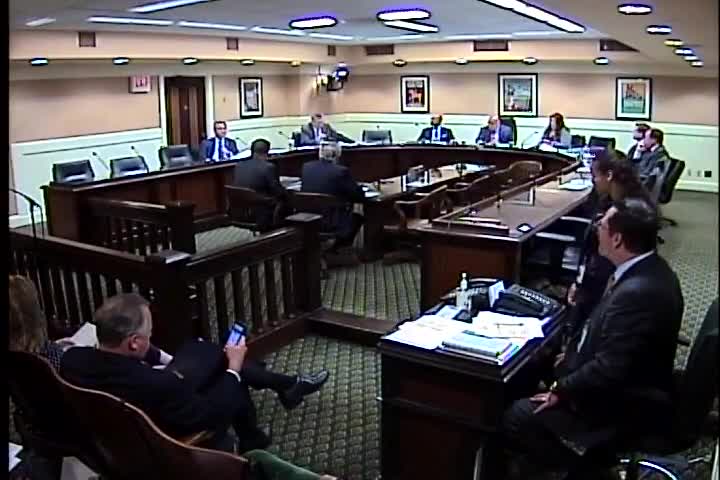 10MIN
Assembly Standing Committee on Public Employees, Retirement, and Social Security
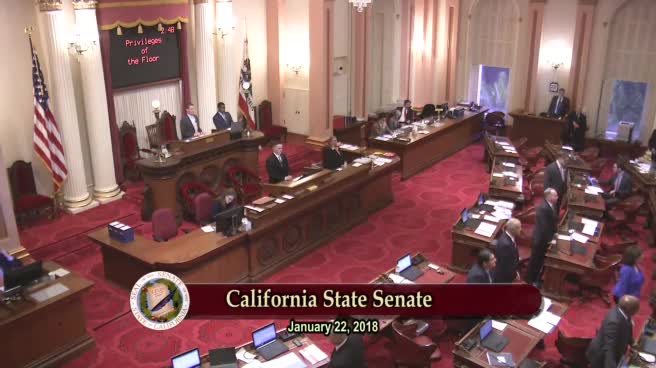 1MIN
Senate Floor
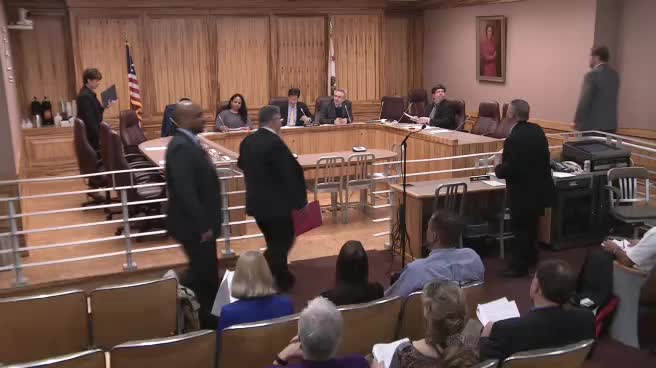 6MIN
Senate Standing Committee on Public Employment and Retirement
Bill Author

Bill Co-Author(s):