SB 801: Aliso Canyon natural gas storage facility: electrical grid data: electricity demand reduction and response: energy storage solutions.
- Session Year: 2017-2018
- House: Senate
- Latest Version Date: 2017-10-14
(1)Under existing law, the Public Utilities Commission has regulatory authority over public utilities, including electrical corporations, while local publicly owned electric utilities are under the direction of their governing boards. Existing law, enacted during the energy crisis of 200001, requires a local publicly owned electric utility to review at the earliest practicable date its rates, tariffs, and rules to identify barriers to and determine the appropriate balance of costs and benefits of distributed energy resources in order to facilitate the installation of distributed energy resources in the interest of its customer-owners and the state, and to hold at least one noticed public meeting to solicit public comment on the review and any recommended changes.
This bill would require a local publicly owned electric utility that provides electric service to 250,000 or more customers within the Los Angeles Basin to make publicly available, upon request of any person, electrical grid data necessary or useful to enable distributed energy resource providers to target solutions that support reliability in the area where electrical reliability has been impacted as a result of reductions in gas storage capacity and gas deliverability resulting from the well failure at the Aliso Canyon natural gas storage facility.
(2)Existing law requires each local publicly owned electric utility, in procuring energy to serve the load of its retail end-use customers, to first acquire all available energy efficiency and demand reduction resources that are cost effective, reliable, and feasible. The California Renewables Portfolio Standard Program requires each local publicly owned electric utility to procure a minimum quantity of electricity products from eligible renewable energy resources, as defined, to achieve the procurement requirements established by the program.
To the extent doing so is cost effective, this bill would require a local publicly owned electric utility providing electric service to more than 250,000 customers within the Los Angeles Basin to maximize the use of demand response, renewable energy resources, and energy efficiency to reduce demand in the area where electrical reliability has been impacted as a result of reductions in gas storage capacity and gas deliverability resulting from the well failure at the Aliso Canyon natural gas storage facility.
(3)Existing law requires the Public Utilities Commission to determine appropriate targets for each load-serving entity to procure viable and cost-effective energy storage systems to be achieved by December 31, 2020. Existing law requires the governing board of each local publicly owned electric utility to determine appropriate targets for the utility to procure viable and cost-effective energy storage systems to be achieved by December 31, 2020.
Existing law requires the Public Utilities Commission, in consultation with the State Air Resources Board and the State Energy Resources Conservation and Development Commission, to direct the states 3 largest electrical corporations to file applications for programs and investments to accelerate widespread deployment of distributed energy storage systems, as defined. Existing law authorizes the Public Utilities Commission to approve, or modify and approve, programs and investments in distributed energy storage systems, up to a maximum capacity of 500 megawatts in aggregate, as provided.
This bill would require the Los Angeles Department of Water and Power, in coordination with the city council of the City of Los Angeles, by June 1, 2018, to determine the cost-effectiveness and feasability of deploying a minimum aggregate total of 100 megawatts of cost-effective energy storage solutions and, if it determines that doing so is cost effective and feasible, to consider deploying those cost-effective energy storage solutions after June 1, 2018. The bill would require an electrical corporation serving the Los Angeles Basin, by June 1, 2018, to the extent doing so is cost effective and feasible and necessary to meet the reliability requirements of the electrical system in the Los Angeles Basin, to deploy a minimum aggregate total of 20 megawatts of cost-effective energy storage solutions and would authorize the electrical corporation to count these cost-effective energy storage solutions towards the capacity requirement for purposes of the distributed energy storage requirements described above.
(4)The Public Utilities Act provides for the assessment of criminal fines and civil penalties for violation of the act or an order, decision, rule, direction, demand, or requirement of the commission. Existing law requires that fines and penalties imposed by the Public Utilities Commission pursuant to the Public Utilities Act be paid to the General Fund.
Notwithstanding this requirement, this bill would require certain moneys collected by the Public Utilities Commission from a gas corporation serving the Los Angeles Basin pursuant to an administrative enforcement or legal proceeding relating to the well failure at the Aliso Canyon natural gas storage facility to be deposited in the Aliso Canyon Recovery Account, which the bill would create. The bill would authorize moneys in the Aliso Canyon Recovery Account to be allocated, upon appropriation by the Legislature, for purposes of mitigating impacts on local air quality, public health, and ratepayers resulting from the well failure at Aliso Canyon.
(5)Existing law creates the Gas Storage Facility Leak Mitigation Account and requires the commission to deposit moneys from penalties assessed against a gas corporation in regards to a natural gas storage facility leak into the account. Existing law specifies purposes for these moneys, including purposes solely applicable to moneys from penalties assessed for the Aliso Canyon gas leak.
This bill would repeal the provisions establishing the account and the provisions concerning the expenditure of moneys deposited in the account.
(6)The bill would state the intent of the Legislature that the Public Utilities Commission and specified public utilities shall take immediate actions to support rapid compliance with the bills provisions, and would state the intent of the Legislature that local governments strongly consider taking immediate actions for these purposes.
(7)Under existing law, a violation of the Public Utilities Act or any order, decision, rule, direction, demand, or requirement of the Public Utilities Commission is a crime.
Because certain of the provisions of this bill would be a part of the act and because a violation of an order or decision of the Public Utilities Commission implementing its requirements by an electrical corporation would be a crime, this bill would impose a state-mandated local program by creating a new crime.
Because the bill would impose additional duties upon local publicly owned electric utilities in the Los Angeles Basin, this bill would impose a state-mandated local program.
The California Constitution requires the state to reimburse local agencies and school districts for certain costs mandated by the state. Statutory provisions establish procedures for making that reimbursement.
This bill would provide that no reimbursement is required by this act for specified reasons.
(8)This bill would make legislative findings and declarations as to the necessity of a special statute for the Los Angeles Basin.
(1)Under existing law, the Public Utilities Commission has regulatory authority over public utilities, including electrical corporations, while local publicly owned electric utilities are under the direction of their governing boards. Existing law, enacted during the energy crisis of 200001, requires a local publicly owned electric utility to review at the earliest practicable date its rates, tariffs, and rules to identify barriers to and determine the appropriate balance of costs and benefits of distributed energy resources in order to facilitate the installation of distributed energy resources in the interest of its customer-owners and the state, and to hold at least one noticed public meeting to solicit public comment on the review and any recommended changes.
This bill would require a local publicly owned electric utility that provides electric service to 250,000 or more customers within the Los Angeles Basin to make publicly available, upon request of any person, electrical grid data necessary or useful to enable distributed energy resource providers to target solutions that support reliability in the area where electrical reliability has been impacted as a result of reductions in gas storage capacity and gas deliverability resulting from the well failure at the Aliso Canyon natural gas storage facility.
(2)Existing law requires each local publicly owned electric utility, in procuring energy to serve the load of its retail end-use customers, to first acquire all available energy efficiency and demand reduction resources that are cost effective, reliable, and feasible. The California Renewables Portfolio Standard Program requires each local publicly owned electric utility to procure a minimum quantity of electricity products from eligible renewable energy resources, as defined, to achieve the procurement requirements established by the program.
To the extent doing so is cost effective, this bill would require a local publicly owned electric utility providing electric service to more than 250,000 customers within the Los Angeles Basin to maximize the use of demand response, renewable energy resources, and energy efficiency to reduce demand in the area where electrical reliability has been impacted as a result of reductions in gas storage capacity and gas deliverability resulting from the well failure at the Aliso Canyon natural gas storage facility.
(3)Existing law requires the Public Utilities Commission to determine appropriate targets for each load-serving entity to procure viable and cost-effective energy storage systems to be achieved by December 31, 2020. Existing law requires the governing board of each local publicly owned electric utility to determine appropriate targets for the utility to procure viable and cost-effective energy storage systems to be achieved by December 31, 2020.
Existing law requires the Public Utilities Commission, in consultation with the State Air Resources Board and the State Energy Resources Conservation and Development Commission, to direct the states 3 largest electrical corporations to file applications for programs and investments to accelerate widespread deployment of distributed energy storage systems, as defined. Existing law authorizes the Public Utilities Commission to approve, or modify and approve, programs and investments in distributed energy storage systems, up to a maximum capacity of 500 megawatts in aggregate, as provided.
This bill would require the Los Angeles Department of Water and Power, in coordination with the city council of the City of Los Angeles, by June 1, 2018, to determine the cost-effectiveness and feasability of deploying a minimum aggregate total of 100 megawatts of cost-effective energy storage solutions and, if it determines that doing so is cost effective and feasible, to consider deploying those cost-effective energy storage solutions after June 1, 2018. The bill would require an electrical corporation serving the Los Angeles Basin, by June 1, 2018, to the extent doing so is cost effective and feasible and necessary to meet the reliability requirements of the electrical system in the Los Angeles Basin, to deploy a minimum aggregate total of 20 megawatts of cost-effective energy storage solutions and would authorize the electrical corporation to count these cost-effective energy storage solutions towards the capacity requirement for purposes of the distributed energy storage requirements described above.
(4)The Public Utilities Act provides for the assessment of criminal fines and civil penalties for violation of the act or an order, decision, rule, direction, demand, or requirement of the commission. Existing law requires that fines and penalties imposed by the Public Utilities Commission pursuant to the Public Utilities Act be paid to the General Fund.
Notwithstanding this requirement, this bill would require certain moneys collected by the Public Utilities Commission, another state agency, or the Attorney General Commission from a gas corporation serving the Los Angeles Basin pursuant to an administrative enforcement or legal proceeding relating to the well failure at the Aliso Canyon natural gas storage facility to be deposited in the Aliso Canyon Recovery Account, which the bill would create. The bill would authorize moneys in the Aliso Canyon Recovery Account to be allocated, upon appropriation by the Legislature, for purposes of mitigating impacts on local air quality, public health, and ratepayers resulting from the well failure at Aliso Canyon.
(5)Existing law creates the Gas Storage Facility Leak Mitigation Account and requires the commission to deposit moneys from penalties assessed against a gas corporation in regards to a natural gas storage facility leak into the account. Existing law specifies purposes for these moneys, including purposes solely applicable to moneys from penalties assessed for the Aliso Canyon gas leak.
This bill would repeal the provisions establishing the account and the provisions concerning the expenditure of moneys deposited in the account.
(6)The bill would state the intent of the Legislature that the Public Utilities Commission and specified public utilities shall take immediate actions to support rapid compliance with the bills provisions, and would state the intent of the Legislature that local governments strongly consider taking immediate actions for these purposes.
(7)Under existing law, a violation of the Public Utilities Act or any order, decision, rule, direction, demand, or requirement of the Public Utilities Commission is a crime.
Because certain of the provisions of this bill would be a part of the act and because a violation of an order or decision of the Public Utilities Commission implementing its requirements by an electrical corporation would be a crime, this bill would impose a state-mandated local program by creating a new crime.
Because the bill would impose additional duties upon local publicly owned electric utilities in the Los Angeles Basin, this bill would impose a state-mandated local program.
The California Constitution requires the state to reimburse local agencies and school districts for certain costs mandated by the state. Statutory provisions establish procedures for making that reimbursement.
This bill would provide that no reimbursement is required by this act for specified reasons.
(8)This bill would make legislative findings and declarations as to the necessity of a special statute for the Los Angeles Basin.
(1)Under existing law, the Public Utilities Commission has regulatory authority over public utilities, including electrical corporations, while local publicly owned electric utilities are under the direction of their governing boards. Existing law, enacted during the energy crisis of 200001, requires a local publicly owned electric utility to review at the earliest practicable date its rates, tariffs, and rules to identify barriers to and determine the appropriate balance of costs and benefits of distributed energy resources in order to facilitate the installation of distributed energy resources in the interest of its customer-owners and the state, and to hold at least one noticed public meeting to solicit public comment on the review and any recommended changes.
This bill would require a local publicly owned electric utility that provides electric service to 250,000 or more customers within the Los Angeles Basin to make publicly available, upon request of any person, electrical grid data necessary or useful to enable distributed energy resource providers to target solutions that support reliability in the area where electrical reliability has been impacted as a result of reductions in gas storage capacity and gas deliverability resulting from the well failure at the Aliso Canyon natural gas storage facility.
(2)Existing law requires each local publicly owned electric utility, in procuring energy to serve the load of its retail end-use customers, to first acquire all available energy efficiency and demand reduction resources that are cost effective, reliable, and feasible. The California Renewables Portfolio Standard Program requires each local publicly owned electric utility to procure a minimum quantity of electricity products from eligible renewable energy resources, as defined, to achieve the procurement requirements established by the program.
To the extent doing so is cost effective, this bill would require a local publicly owned electric utility providing electric service to more than 250,000 customers within the Los Angeles Basin to maximize the use of demand response, renewable energy resources, and energy efficiency to reduce demand in the area where electrical reliability has been impacted as a result of reductions in gas storage capacity and gas deliverability resulting from the well failure at the Aliso Canyon natural gas storage facility.
(3)Existing law requires the Public Utilities Commission to determine appropriate targets for each load-serving entity to procure viable and cost-effective energy storage systems to be achieved by December 31, 2020. Existing law requires the governing board of each local publicly owned electric utility to determine appropriate targets for the utility to procure viable and cost-effective energy storage systems to be achieved by December 31, 2020.
Existing law requires the Public Utilities Commission, in consultation with the State Air Resources Board and the State Energy Resources Conservation and Development Commission, to direct the states 3 largest electrical corporations to file applications for programs and investments to accelerate widespread deployment of distributed energy storage systems, as defined. Existing law authorizes the Public Utilities Commission to approve, or modify and approve, programs and investments in distributed energy storage systems, up to a maximum capacity of 500 megawatts in aggregate, as provided.
This bill would require the Los Angeles Department of Water and Power, in coordination with the city council of the City of Los Angeles, by June 1, 2018, to determine the cost-effectiveness and feasability of deploying a minimum aggregate total of 100 megawatts of cost-effective energy storage solutions and, if it determines that doing so is cost effective and feasible, to deploy consider deploying those cost-effective energy storage solutions after June 1, 2018. The bill would require an electrical corporation serving the Los Angeles Basin, by June 1, 2018, to the extent doing so is cost effective and feasible and necessary to meet the reliability requirements of the electrical system in the Los Angeles Basin, to deploy a minimum aggregate total of 20 megawatts of cost-effective energy storage solutions and would authorize the electrical corporation to count these cost-effective energy storage solutions towards the capacity requirement for purposes of the distributed energy storage requirements described above.
(4)The Public Utilities Act provides for the assessment of criminal fines and civil penalties for violation of the act or an order, decision, rule, direction, demand, or requirement of the commission. Existing law requires that fines and penalties imposed by the Public Utilities Commission pursuant to the Public Utilities Act be paid to the General Fund.
Notwithstanding this requirement, this bill would require certain moneys collected by the Public Utilities Commission, another state agency, or the Attorney General from a gas corporation serving the Los Angeles Basin pursuant to an administrative enforcement or legal proceeding relating to the well failure at the Aliso Canyon natural gas storage facility to be deposited in the Aliso Canyon Recovery Account, which the bill would create. The bill would authorize moneys in the Aliso Canyon Recovery Account to be allocated, upon appropriation by the Legislature, for purposes of mitigating impacts on local air quality, public health, and ratepayers resulting from the well failure at Aliso Canyon.
(5)Existing law creates the Gas Storage Facility Leak Mitigation Account and requires the commission to deposit moneys from penalties assessed against a gas corporation in regards to a natural gas storage facility leak into the account. Existing law specifies purposes for these moneys, including purposes solely applicable to moneys from penalties assessed for the Aliso Canyon gas leak.
This bill would repeal the provisions establishing the account and the provisions concerning the expenditure of moneys deposited in the account.
(6)The bill would state the intent of the Legislature that the Public Utilities Commission and specified public utilities shall take immediate actions to support rapid compliance with the bills provisions, and would state the intent of the Legislature that local governments strongly consider taking immediate actions for these purposes.
(7)Under existing law, a violation of the Public Utilities Act or any order, decision, rule, direction, demand, or requirement of the Public Utilities Commission is a crime.
Because certain of the provisions of this bill would be a part of the act and because a violation of an order or decision of the Public Utilities Commission implementing its requirements by an electrical corporation would be a crime, this bill would impose a state-mandated local program by creating a new crime.
Because the bill would impose additional duties upon local publicly owned electric utilities in the Los Angeles Basin, this bill would impose a state-mandated local program.
The California Constitution requires the state to reimburse local agencies and school districts for certain costs mandated by the state. Statutory provisions establish procedures for making that reimbursement.
This bill would provide that no reimbursement is required by this act for specified reasons.
(8)This bill would make legislative findings and declarations as to the necessity of a special statute for the Los Angeles Basin.
(1)Under existing law, the Public Utilities Commission has regulatory authority over public utilities, including electrical corporations, while local publicly owned electric utilities are under the direction of their governing boards. Pursuant to a statute requiring it to adopt initiatives to reduce demand for electricity and reduce load during peak demand periods, including differential incentives for renewable or super clean distributed generation resources, the commission adopted decisions establishing a self-generation incentive program. Existing law, enacted during the energy crisis of 200001, requires a local publicly owned electric utility to review at the earliest practicable date its rates, tariffs, and rules to identify barriers to and determine the appropriate balance of costs and benefits of distributed energy resources in order to facilitate the installation of distributed energy resources in the interest of its customer-owners and the state, and to hold at least one noticed public meeting to solicit public comment on the review and any recommended changes.
This bill would require a local publicly owned electric utility that provides electric service to 250,000 or more customers within the Los Angeles Basin to make publicly available, upon request of any person, electrical grid data necessary or useful to enable distributed energy resource providers to target solutions that support reliability in the area where electrical reliability has been impacted as a result of reductions in gas storage capacity and gas deliverability resulting from the well failure at the Aliso Canyon natural gas storage facility. The bill would require, to
(2)Existing law requires each local publicly owned electric utility, in procuring energy to serve the load of its retail end-use customers, to first acquire all available energy efficiency and demand reduction resources that are cost effective, reliable, and feasible. The California Renewables Portfolio Standard Program requires each local publicly owned electric utility to procure a minimum quantity of electricity products from eligible renewable energy resources, as defined, to achieve the procurement requirements established by the program.
To the extent doing so is cost effective, this bill would require a local publicly owned electric utility providing electric service to more than 250,000 customers within the Los Angeles Basin to maximize the use of demand response, renewable energy resources, and energy efficiency to reduce demand in the area where electrical reliability has been impacted as a result of reductions in gas storage capacity and gas deliverability resulting from the well failure at the Aliso Canyon natural gas storage facility.
(2)(3)Existing law requires the commission Public Utilities Commission to determine appropriate targets for each load-serving entity to procure viable and cost-effective energy storage systems to be achieved by December 31, 2020. Existing law requires the governing board of each local publicly owned electric utility to determine appropriate targets for the utility to procure viable and cost-effective energy storage systems to be achieved by December 31, 2020.
Existing law requires the Public Utilities Commission, in consultation with the State Air Resources Board and the State Energy Resources Conservation and Development Commission, to direct the states 3 largest electrical corporations to file applications for programs and investments to accelerate widespread deployment of distributed energy storage systems, as defined. Existing law authorizes the Public Utilities Commission to approve, or modify and approve, programs and investments in distributed energy storage systems, up to a maximum capacity of 500 megawatts in aggregate, as provided.
This bill would require the Los Angeles Department of Water and Power, in coordination with the city council of the City of Los Angeles, by June 1, 2018, to determine the cost-effectiveness and feasability of deploying a minimum aggregate total of 100 megawatts of cost-effective energy storage solutions and, if it determines that doing so is cost effective and feasible, to deploy those cost-effective energy storage solutions. solutions after June 1, 2018. The bill would require an electrical corporation serving the Los Angeles Basin, by June 1, 2018, to the extent doing so is cost effective and feasible and necessary to meet the reliability requirements of the electrical system in the Los Angeles Basin, to deploy a minimum aggregate total of 20 megawatts of cost-effective energy storage solutions and would authorize the electrical corporation to count these cost-effective energy storage solutions towards the capacity requirement for purposes of the distributed energy storage requirements described above. The
(4)The Public Utilities Act provides for the assessment of criminal fines and civil penalties for violation of the act or an order, decision, rule, direction, demand, or requirement of the commission. Existing law requires that fines and penalties imposed by the Public Utilities Commission pursuant to the Public Utilities Act be paid to the General Fund.
Notwithstanding this requirement, this bill would require certain moneys collected by the commission or other state agency Public Utilities Commission, another state agency, or the Attorney General from a gas corporation serving the Los Angeles Basin pursuant to a an administrative enforcement or legal proceeding relating to the well failure at the Aliso Canyon natural gas storage facility to be deposited in the ____ Aliso Canyon Recovery Account, which the bill would create. The bill would authorize moneys in the ____ Aliso Canyon Recovery Account to be allocated, upon appropriation by the Legislature, for purposes of mitigating impacts on local air quality quality, public health, and ratepayers resulting from the well failure at Aliso Canyon. The
(5)Existing law creates the Gas Storage Facility Leak Mitigation Account and requires the commission to deposit moneys from penalties assessed against a gas corporation in regards to a natural gas storage facility leak into the account. Existing law specifies purposes for these moneys, including purposes solely applicable to moneys from penalties assessed for the Aliso Canyon gas leak.
This bill would repeal the provisions establishing the account and the provisions concerning the expenditure of moneys deposited in the account.
(6)The bill would state the intent of the Legislature that the commission Public Utilities Commission and specified public utilities shall take immediate actions to support rapid compliance with these the bills provisions, and would state the intent of the Legislature that local governments strongly consider taking immediate actions for this purpose. these purposes.
Under(7)Under existing law, a violation of the Public Utilities Act or any order, decision, rule, direction, demand, or requirement of the commission Public Utilities Commission is a crime.
Because certain of the provisions of this bill would be a part of the act and because a violation of an order or decision of the commission Public Utilities Commission implementing its requirements by an electrical corporation would be a crime, this bill would impose a state-mandated local program by creating a new crime.
Because the bill would impose additional duties upon local publicly owned electric utilities in the Los Angeles Basin, this bill would impose a state-mandated local program.
The California Constitution requires the state to reimburse local agencies and school districts for certain costs mandated by the state. Statutory provisions establish procedures for making that reimbursement.
This bill would provide that no reimbursement is required by this act for specified reasons.
(3)(8)This bill would make legislative findings and declarations as to the necessity of a special statute for the Los Angeles Basin.
(1)Under existing law, the Public Utilities Commission has regulatory authority over public utilities, including electrical corporations, while local publicly owned electric utilities are under the direction of their governing boards. Pursuant to a statute requiring it to adopt initiatives to reduce demand for electricity and reduce load during peak demand periods, including differential incentives for renewable or super clean distributed generation resources, the commission adopted decisions establishing a self-generation incentive program.
This bill would require an electrical corporation or a local publicly owned electric utility that provides electric service to 30,000 250,000 or more customers within the Los Angeles Basin to make publicly available, upon request of any person, electrical grid data necessary or useful to enable distributed energy resource providers to target solutions that support reliability in the area where electrical reliability has been impacted as a result of reductions in gas storage capacity and gas deliverability resulting from the well failure at the Aliso Canyon natural gas storage facility. The bill would require a gas corporation that provides gas service to 30,000 or more customers within the Los Angeles Basin to make publicly available, upon request of any person, information necessary or useful to enable distributed energy resource providers to target solutions that support reliability in the area where electrical reliability has been impacted as a result of reductions in gas storage capacity and gas deliverability resulting from the well failure at the Aliso Canyon natural gas storage facility. The bill would require, to the extent doing so is cost effective, an electrical corporation providing electric service within the Los Angeles Basin and a local publicly owned electric utility providing electric service to more than 250,000 customers within the Los Angeles Basin to maximize their the use of demand response, renewable energy resources, and energy efficiency, and technically feasible technologies efficiency to reduce demand in the area where electrical reliability has been impacted as a result of reductions in gas storage capacity and gas deliverability resulting from the well failure at the Aliso Canyon natural gas storage facility.
(2)Existing law requires the commission to determine appropriate targets for each load-serving entity to procure viable and cost-effective energy storage systems to be achieved by December 31, 2020. Existing law requires the governing board of each local publicly owned electric utility to determine appropriate targets for the utility to procure viable and cost-effective energy storage systems to be achieved by December 31, 2020.
Existing law requires the Public Utilities Commission, in consultation with the State Air Resources Board and the State Energy Resources Conservation and Development Commission, to direct the states 3 largest electrical corporations to file applications for programs and investments to accelerate widespread deployment of distributed energy storage systems, as defined. Existing law authorizes the Public Utilities Commission to approve, or modify and approve, programs and investments in distributed energy storage systems, up to a maximum capacity of 500 megawatts in aggregate, as provided.
This bill would require the Los Angeles Department of Water and Power, in coordination with the city council of the City of Los Angeles, by June 1, 2018, to determine the cost-effectiveness and feasability of deploying a minimum aggregate total of 100 megawatts of cost-effective energy storage solutions and, if it determines that doing so is cost effective and feasible, to deploy those cost-effective energy storage solutions. The bill would require an electrical corporation serving the Los Angeles Basin, by June 1, 2018, to the extent doing so is cost effective and feasible, feasible and necessary to meet the reliability requirements of the electrical system in the Los Angeles Basin, to deploy a minimum aggregate total of 20 megawatts of cost-effective energy storage solutions. solutions and would authorize the electrical corporation to count these cost-effective energy storage solutions towards the capacity requirement for purposes of the distributed energy storage requirements described above. The bill would require certain moneys collected by the commission or other state agency from a gas corporation serving the Los Angeles Basin pursuant to a proceeding relating to the well failure at the Aliso Canyon natural gas storage facility to be deposited in the ____ Account, which the bill would create. The bill would authorize moneys in the ____ Account to be allocated, upon appropriation by the Legislature, for purposes of mitigating impacts on local air quality and ratepayers resulting from the well failure at Aliso Canyon. The bill would require state the intent of the Legislature that the commission and specified public utilities to shall take immediate actions to support rapid compliance with these provisions, and would state the intent of the Legislature that local governments strongly consider taking immediate actions for this purpose.
Under existing law, a violation of the Public Utilities Act or any order, decision, rule, direction, demand, or requirement of the commission is a crime.
Because certain of the provisions of this bill would be a part of the act and because a violation of an order or decision of the commission implementing its requirements by an electrical corporation would be a crime, this bill would impose a state-mandated local program by creating a new crime.
Because the bill would impose additional duties upon local publicly owned electric utilities in the Los Angeles Basin, this bill would impose a state-mandated local program.
The California Constitution requires the state to reimburse local agencies and school districts for certain costs mandated by the state. Statutory provisions establish procedures for making that reimbursement.
This bill would provide that no reimbursement is required by this act for specified reasons.
(3)This bill would make legislative findings and declarations as to the necessity of a special statute for the Los Angeles Basin.
(1)Under existing law, the Public Utilities Commission has regulatory authority over public utilities, including electrical corporations, while local publicly owned electric utilities are under the direction of their governing boards. Pursuant to a statute requiring it to adopt initiatives to reduce demand for electricity and reduce load during peak demand periods, including differential incentives for renewable or super clean distributed generation resources, the commission adopted decisions establishing a self-generation incentive program.
This bill would require an electrical corporation or local publicly owned electric utility that provides electric service to 30,000 or more customers within the Los Angeles Basin to make publicly available, upon request of any person, electrical grid data necessary or useful to enable distributed energy resource providers to target solutions that support reliability in the area where electrical reliability has been impacted as a result of reductions in gas storage capacity and gas deliverability resulting from the well failure at the Aliso Canyon natural gas storage facility. The bill would require a gas corporation that provides gas service to 30,000 or more customers within the Los Angeles Basin to make publicly available, upon request of any person, information necessary or useful to enable distributed energy resource providers to target solutions that support reliability in the area where electrical reliability has been impacted as a result of reductions in gas storage capacity and gas deliverability resulting from the well failure at the Aliso Canyon natural gas storage facility. The bill would require, to the extent doing so is cost effective, an electrical corporation providing electric service within the Los Angeles Basin and a local publicly owned electric utility providing electric service to more than 250,000 customers within the Los Angeles Basin to maximize their use of demand response, renewable energy resources, energy efficiency, and technically feasible technologies to reduce demand in the area where electrical reliability has been impacted as a result of reductions in gas storage capacity and gas deliverability resulting from the well failure at the Aliso Canyon natural gas storage facility.
(2)Existing law requires the commission to determine appropriate targets for each load-serving entity to procure viable and cost-effective energy storage systems to be achieved by December 31, 2020. Existing law requires the governing board of each local publicly owned electric utility to determine appropriate targets for the utility to procure viable and cost-effective energy storage systems to be achieved by December 31, 2020.
This bill would require the Los Angeles Department of Water and Power to deploy Power, in coordination with the city council of the City of Los Angeles, by June 1, 2018, to determine the cost-effectiveness and feasability of deploying a minimum aggregate total of 100 megawatts of cost-effective energy storage solutions and and, if it determines that doing so is cost effective and feasible, to deploy those cost-effective energy storage solutions. The bill would require an electrical corporation serving the Los Angeles Basin Basin, by June 1, 2018, to the extent doing so is cost effective and feasible, to deploy a minimum aggregate total of 20 megawatts of cost-effective energy storage solutions in addition to the procurement targets to be achieved by December 31, 2020, pursuant to existing law. solutions. The bill would authorize all require certain moneys collected as fines or penalties by the commission or other state agency from a gas corporation serving the Los Angeles Basin pursuant to a proceeding relating to the well failure at the Aliso Canyon natural gas storage facility to be allocated by that agency to reduce the impact on ratepayers of the energy storage solutions required by these provisions. deposited in the ____ Account, which the bill would create. The bill would authorize moneys in the ____ Account to be allocated, upon appropriation by the Legislature, for purposes of mitigating impacts on local air quality and ratepayers resulting from the well failure at Aliso Canyon. The bill would require the commission and specified public utilities to take immediate actions to support rapid compliance with these provisions, and would state the intent of the Legislature that local governments strongly consider taking immediate actions for this purpose.
Under existing law, a violation of the Public Utilities Act or any order, decision, rule, direction, demand, or requirement of the commission is a crime.
Because certain of the provisions of this bill would be a part of the act and because a violation of an order or decision of the commission implementing its requirements by an electrical corporation would be a crime, this bill would impose a state-mandated local program by creating a new crime.
Because the bill would impose additional duties upon local publicly owned electric utilities in the Los Angeles Basin, this bill would impose a state-mandated local program.
The California Constitution requires the state to reimburse local agencies and school districts for certain costs mandated by the state. Statutory provisions establish procedures for making that reimbursement.
This bill would provide that no reimbursement is required by this act for specified reasons.
(3)This bill would make legislative findings and declarations as to the necessity of a special statute for the Los Angeles Basin.
(4)This bill would declare that it is to take effect immediately as an urgency statute.(1)Under existing law, the Public Utilities Commission has regulatory authority over public utilities, including electrical corporations, while local publicly owned electric utilities are under the direction of their governing boards. Pursuant to a statute requiring it to adopt initiatives to reduce demand for electricity and reduce load during peak demand periods, including differential incentives for renewable or super clean distributed generation resources, the commission adopted decisions establishing a self-generation incentive program.
This bill would require an electrical corporation or local publicly owned electric utility that provides electric service to 30,000 or more customers within the Los Angeles Basin to make publicly available, upon request of any person, electrical grid data necessary or useful to enable distributed energy resource providers to target solutions that support reliability in the area where electrical reliability has been impacted as a result of reductions in gas storage capacity and gas deliverability resulting from the well failure at the Aliso Canyon natural gas storage facility. The bill would require a gas corporation that provides gas service to 30,000 or more customers within the Los Angeles Basin to make publicly available, upon request of any person, information necessary or useful to enable distributed energy resource providers to target solutions that support reliability in the area where electrical reliability has been impacted as a result of reductions in gas storage capacity and gas deliverability resulting from the well failure at the Aliso Canyon natural gas storage facility. The bill would require require, to the extent doing so is cost effective, an electrical corporation providing electric service within the Los Angeles Basin and a local publicly owned electric utility providing electric service to more than 250,000 customers within the Los Angeles Basin to maximize their use of demand response, renewable energy resources, energy efficiency, and technically feasible technologies to reduce demand in the area where electrical reliability has been impacted as a result of reductions in gas storage capacity and gas deliverability resulting from the well failure at the Aliso Canyon natural gas storage facility.
(2)Existing law requires the commission to determine appropriate targets for each load-serving entity to procure viable and cost-effective energy storage systems to be achieved by December 31, 2020. Existing law requires the governing board of each local publicly owned electric utility to determine appropriate targets for the utility to procure viable and cost-effective energy storage systems to be achieved by December 31, 2020.
This bill would require the Los Angeles Department of Water and Power to deploy a minimum aggregate total of 100 megawatts of cost-effective energy storage solutions and require an electrical corporation serving the Los Angeles Basin to deploy a minimum aggregate total of 20 megawatts of cost-effective energy storage solutions in addition to the procurement targets to be achieved by December 31, 2020, pursuant to existing law. The bill would authorize all moneys collected as fines or penalties by the commission or other state agency from a gas corporation serving the Los Angeles Basin pursuant to a proceeding relating to the well failure at the Aliso Canyon natural gas storage facility to be allocated by that agency to reduce the impact on ratepayers of the energy storage solutions required by these provisions. The bill would require the commission and specified public utilities to take immediate actions to support rapid compliance with these provisions, and would state the intent of the Legislature that local governments strongly consider taking immediate actions for this purpose.
Under existing law, a violation of the Public Utilities Act or any order, decision, rule, direction, demand, or requirement of the commission is a crime.
Because certain of the provisions of this bill would be a part of the act and because a violation of an order or decision of the commission implementing its requirements by an electrical corporation would be a crime, this bill would impose a state-mandated local program by creating a new crime.
Because the bill would impose additional duties upon local publicly owned electric utilities in the Los Angeles Basin, this bill would impose a state-mandated local program.
The California Constitution requires the state to reimburse local agencies and school districts for certain costs mandated by the state. Statutory provisions establish procedures for making that reimbursement.
This bill would provide that no reimbursement is required by this act for specified reasons.
(3)This bill would make legislative findings and declarations as to the necessity of a special statute for the Los Angeles Basin.
(4)This bill would declare that it is to take effect immediately as an urgency statute.
(1)Under existing law, the Public Utilities Commission has regulatory authority over public utilities, including electrical corporations, while local publicly owned electric utilities are under the direction of their governing boards. Pursuant to a statute requiring it to adopt initiatives to reduce demand for electricity and reduce load during peak demand periods, including differential incentives for renewable or super clean distributed generation resources, the commission adopted decisions establishing a self-generation incentive program.
This bill would require, until January 1, 2020, would require an electrical corporation or local publicly owned electric utility that provides electric service to 30,000 or more customers within the Los Angeles Basin to make publicly available, upon request of any person, electrical grid data necessary or useful to enable distributed energy resource providers to target solutions that support reliability in the area where electrical reliability has been impacted as a result of reductions in gas storage capacity and gas deliverability resulting from the well failure at the Aliso Canyon natural gas storage facility. The bill would require, until January 1, 2020, require a gas corporation that provides gas service to 30,000 or more customers within the Los Angeles Basin to make publicly available, upon request of any person, information necessary or useful to enable distributed energy resource providers to target solutions that support reliability in the area where electrical reliability has been impacted as a result of reductions in gas storage capacity and gas deliverability resulting from the well failure at the Aliso Canyon natural gas storage facility. The bill would require an electrical corporation providing electric service within the Los Angeles Basin and a local publicly owned electric utility providing electric service to more than 250,000 customers within the Los Angeles Basin to maximize their use of demand response, renewable energy resources, energy efficiency, and technically feasible technologies to reduce demand in the area where electrical reliability has been impacted as a result of reductions in gas storage capacity and gas deliverability resulting from the well failure at the Aliso Canyon natural gas storage facility.
(2)Existing law requires the commission to determine appropriate targets for each load-serving entity to procure viable and cost-effective energy storage systems to be achieved by December 31, 2020. Existing law requires the governing board of each local publicly owned electric utility to determine appropriate targets for the utility to procure viable and cost-effective energy storage systems to be achieved by December 31, 2020.
This bill would require the Los Angeles Department of Water and Power to deploy a minimum aggregate total of 100 megawatts of cost-effective energy storage solutions and require an electrical corporation serving the Los Angeles Basin to deploy a minimum aggregate total of 20 megawatts of cost-effective energy storage solutions in addition to the procurement targets to be achieved by December 31, 2020, pursuant to existing law. The bill would authorize all moneys collected as fines or penalties by the commission or other state agency from a gas corporation serving the Los Angeles Basin pursuant to a proceeding relating to the well failure at the Aliso Canyon natural gas storage facility to be allocated by that agency to reduce the impact on ratepayers of the energy storage solutions required by these provisions. The bill would require the commission and specified public utilities to take immediate actions to support rapid compliance with these provisions, and would state the intent of the Legislature that local governments strongly consider taking immediate actions for this purpose.
Under existing law, a violation of the Public Utilities Act or any order, decision, rule, direction, demand, or requirement of the commission is a crime.
Because certain of the provisions of this bill would be a part of the act and because a violation of an order or decision of the commission implementing its requirements by an electrical corporation would be a crime, this bill would impose a state-mandated local program by creating a new crime.
Because the bill would impose additional duties upon local publicly owned electric utilities in the Los Angeles Basin, this bill would impose a state-mandated local program.
The California Constitution requires the state to reimburse local agencies and school districts for certain costs mandated by the state. Statutory provisions establish procedures for making that reimbursement.
This bill would provide that no reimbursement is required by this act for specified reasons.
(3)This bill would make legislative findings and declarations as to the necessity of a special statute for the Los Angeles Basin.
(4)This bill would declare that it is to take effect immediately as an urgency statute.
(1)Under existing law, the Public Utilities Commission has regulatory authority over public utilities, including electrical corporations, while local publicly owned electric utilities are under the direction of their governing board. boards. Pursuant to a statute requiring it to adopt initiatives to reduce demand for electricity and reduce load during peak demand periods, including differential incentives for renewable or super clean distributed generation resources, the commission adopted decisions establishing a self-generation incentive program.
This bill would require require, until January 1, 2020, an electrical corporation or local publicly owned electric utility that provides electric service to 30,000 or more customers within the Los Angeles Basin to provide the commission, upon request, with that make publicly available, upon request of any person, electrical grid data that the commission determines to be necessary or useful to enable distributed energy resource providers to target solutions that support reliability in the area where electrical reliability has been impacted as a result of reductions in gas storage capacity and gas deliverability resulting from the well failure at the Aliso Canyon natural gas storage facility. The bill would require require, until January 1, 2020, a gas corporation that provides gas service to 30,000 or more customers within the Los Angeles Basin to provide to the commission, upon request, with that information that the commission determines to be make publicly available, upon request of any person, information necessary or useful to enable distributed energy resource providers to target solutions that support reliability in the area where electrical reliability has been impacted as a result of reductions in gas storage capacity and gas deliverability resulting from the well failure at the Aliso Canyon natural gas storage facility. The bill would require an electrical corporation providing electric service within the Los Angeles Basin and a local publicly owned electric utility providing electric service to more than 250,000 customers within the Los Angeles Basin to maximize their use of demand response, renewable energy resources, energy efficiency, and technically feasible technologies to reduce demand in the area where electrical reliability has been impacted as a result of reductions in gas storage capacity and gas deliverability resulting from the well failure at the Aliso Canyon natural gas storage facility.
(2)Existing law requires the commission to determine appropriate targets for each load-serving entity to procure viable and cost-effective energy storage systems to be achieved by December 31, 2020. Existing law requires the governing board of each local publicly owned electric utility to determine appropriate targets for the utility to procure viable and cost-effective energy storage systems to be achieved by December 31, 2020.
This bill would require the Los Angeles Department of Water and Power to deploy a minimum aggregate total of 100 megawatts of cost-effective energy storage system capacity solutions and require an electrical corporation serving the Los Angeles Basin to deploy a minimum aggregate total of 20 megawatts of cost-effective energy storage system capacity in the Los Angeles Basin solutions in addition to the procurement targets to be achieved by December 31, 2020, pursuant to existing law. The bill would authorize all moneys collected as fines or penalties by the commission or other state agency from a gas corporation serving the Los Angeles Basin pursuant to a proceeding relating to the well failure at the Aliso Canyon natural gas storage facility to be allocated by that agency to reduce the impact on ratepayers of the energy storage solutions required by these provisions. The bill would require the commission and specified public utilities to take immediate actions to support rapid compliance with these provisions, and would state the intent of the Legislature that local governments strongly consider taking immediate actions for this purpose.
Under existing law, a violation of the Public Utilities Act or any order, decision, rule, direction, demand, or requirement of the commission is a crime.
Because certain of the provisions of this bill would be a part of the act and because a violation of an order or decision of the commission implementing its requirements by an electrical corporation would be a crime, this bill would impose a state-mandated local program by creating a new crime.
Because the bill would impose additional duties upon local publicly owned electric utilities in the Los Angeles Basin, this bill would impose a state-mandated local program.
The California Constitution requires the state to reimburse local agencies and school districts for certain costs mandated by the state. Statutory provisions establish procedures for making that reimbursement.
This bill would provide that no reimbursement is required by this act for specified reasons.
(3)This bill would make legislative findings and declarations as to the necessity of a special statute for the Los Angeles Basin.
(4)This bill would declare that it is to take effect immediately as an urgency statute.
(1)Under existing law, the Public Utilities Commission has regulatory authority over public utilities, including electrical corporations, while local publicly owned electric utilities are under the direction of their governing board. Pursuant to a statute requiring it to adopt initiatives to reduce demand for electricity and reduce load during peak demand periods, including differential incentives for renewable or super clean distributed generation resources, the commission adopted decisions establishing a self-generation incentive program.
This bill would require an electrical corporation or local publicly owned electric utility that provides electric service to 30,000 or more customers within the Los Angeles Basin to provide the commission, upon request, with that electrical grid data that the commission determines to be necessary or useful to enable distributed energy resource providers to target solutions that support reliability in the area where electrical reliability has been impacted as a result of reductions in gas storage capacity and gas deliverability resulting from the well failure at the Aliso Canyon natural gas storage facility. The bill would require a gas corporation that provides gas service to 30,000 or more customers within the Los Angeles Basin to provide to the commission, upon request, with that information that the commission determines to be necessary or useful to enable distributed energy resource providers to target solutions that support reliability in the area where electrical reliability has been impacted as a result of reductions in gas storage capacity and gas deliverability resulting from the well failure at the Aliso Canyon natural gas storage facility. The bill would require an electrical corporation providing electric service within the Los Angeles Basin and a local publicly owned electric utility providing electric service to more than 250,000 customers within the Los Angeles Basin to maximize their use of demand response, renewable energy resources, energy efficiency, and technically feasible technologies to reduce demand in the area where electrical reliability has been impacted as a result of reductions in gas storage capacity and gas deliverability resulting from the well failure at the Aliso Canyon natural gas storage facility.
(2)Existing law requires the commission to determine appropriate targets for each load-serving entity to procure viable and cost-effective energy storage systems to be achieved by December 31, 2020. Existing law requires the governing board of each local publicly owned electric utility to determine appropriate targets for the utility to procure viable and cost-effective energy storage systems to be achieved by December 31, 2020.
This bill would require the Los Angeles Department of Water and Power to deploy a minimum aggregate total of 100 megawatts of cost-effective energy storage system capacity and require an electrical corporation serving the Los Angeles Basin to deploy a minimum aggregate total of 20 megawatts of cost-effective energy storage system capacity in the Los Angeles Basin in addition to the procurement targets to be achieved by December 31, 2020, pursuant to existing law.
Under existing law, a violation of the Public Utilities Act or any order, decision, rule, direction, demand, or requirement of the commission is a crime.
Because certain of the provisions of this bill would be a part of the act and because a violation of an order or decision of the commission implementing its requirements by an electrical corporation would be a crime, this bill would impose a state-mandated local program by creating a new crime.
Because the bill would impose additional duties upon local publicly owned electric utilities in the Los Angeles Basin, this bill would impose a state-mandated local program.
The California Constitution requires the state to reimburse local agencies and school districts for certain costs mandated by the state. Statutory provisions establish procedures for making that reimbursement.
This bill would provide that no reimbursement is required by this act for specified reasons.
(3)This bill would make legislative findings and declarations as to the necessity of a special statute for the Los Angeles Basin.
(4)This bill would declare that it is to take effect immediately as an urgency statute.
Under existing law, the Public Utilities Commission has regulatory authority over public utilities, including water corporations. Existing law authorizes the commission to fix just and reasonable rates and charges. The Monterey Peninsula Water Supply Securitization Act authorizes the commission to issue financing orders to facilitate the recovery, financing, or refinancing of water supply costs, defined to mean reasonable and necessary costs incurred or expected to be incurred by a qualifying water utility, defined as a certain public utility engaged in the delivery of water to customers on the Monterey Peninsula, undertaking water supply activities, as specified.This bill would make a nonsubstantive change to the provision authorizing the commission to issue financing orders.Under existing law, the Public Utilities Commission has regulatory authority over public utilities, including water corporations. Existing law authorizes the commission to fix just and reasonable rates and charges. The Monterey Peninsula Water Supply Securitization Act authorizes the commission to issue financing orders to facilitate the recovery, financing, or refinancing of water supply costs, defined to mean reasonable and necessary costs incurred or expected to be incurred by a qualifying water utility, defined as a certain public utility engaged in the delivery of water to customers on the Monterey Peninsula, undertaking water supply activities, as specified.
This bill would make a nonsubstantive change to the provision authorizing the commission to issue financing orders.
(a)A penalty assessed against a gas corporation pursuant to this part in regards to a natural gas storage facility leak shall at least equal the amount necessary to reduce the impact on the climate from greenhouse gases by an amount equivalent to the impact on the climate from the greenhouse gases emitted by the leak from the natural gas storage facility, as determined by the State Air Resources Board. In determining the amount necessary to fully offset the impact on the climate from the gases emitted by the leak, the commission shall consider the extent to which the gas corporation has mitigated, or is in the process of mitigating, the impact on the climate from greenhouse gas emissions resulting from the leak.
(b)This section shall not affect or be interpreted to affect the authority of the State Air Resources Board to adopt rules and regulations to reduce greenhouse gas emissions at natural gas storage facilities or to require mitigation of natural gas leaks from those facilities.
SEC. 2.Section 2104.7 is added to the Public Utilities Code, to read:2104.7.(a)Notwithstanding Section 2104, all moneys collected pursuant to any settlements, unless restricted by a court for another purpose, abatement orders, fines, or penalties by the commission from a gas corporation serving the Los Angeles Basin pursuant to an administrative enforcement or legal proceeding relating to the well failure at the Aliso Canyon natural gas storage facility first reported to the commission in October 2015 shall be deposited in the Aliso Canyon Recovery Account, which is hereby created in the State Treasury. Moneys in the account may be allocated, upon appropriation by the Legislature, for purposes of mitigating impacts on local air quality, public health, and ratepayers resulting from the well failure at Aliso Canyon, including evaluation of any negative effects on public health and enhancing the cost-effectiveness and feasibility of implementing Sections 380.6 and 2836.7.
(b)For purposes of this section, Los Angeles Basin means the area identified as the Aliso Canyon Delivery Area on page 11 of the Aliso Canyon Risk Assessment Technical Report, dated April 5, 2016.
SEC. 3.Section 2836.7 is added to the Public Utilities Code, to read:2836.7.By June 1, 2018, all of the following shall occur:
(a)(1)The Los Angeles Department of Water and Power shall, in coordination with the city council of the City of Los Angeles, if it chooses to participate, determine the cost-effectiveness and feasibility of deploying, on an expedited basis, a minimum aggregate total of 100 megawatts of cost-effective energy storage solutions to help address the Los Angeles Basins electrical system operational limitations resulting from reduced gas deliverability from the Aliso Canyon natural gas storage facility.
(2)If the Los Angeles Department of Water and Power determines pursuant to paragraph (1) that deploying the cost-effective energy storage solutions, as described in paragraph (1), is cost effective and feasible, it shall consider deploying those cost-effective energy storage solutions after June 1, 2018.
(b)The commission shall, to the extent that doing so is cost effective and feasible and necessary to meet the reliability requirements of the electrical system in the Los Angeles Basin, direct an electrical corporation serving the Los Angeles Basin to deploy, pursuant to a competitive solicitation, a minimum aggregate total of 20 megawatts of cost-effective energy storage solutions to help address the Los Angeles Basins electrical system operational limitations resulting from reduced gas deliverability from the Aliso Canyon natural gas storage facility. An electrical corporation may count any cost-effective energy storage solution that it deploys pursuant to this subdivision towards the capacity requirement established pursuant to Section 2838.2 if the cost-effective storage solution that it deploys is a distributed energy storage system, as defined in subdivision (a) of Section 2838.2.
(c)(1)It is the intent of the Legislature that the commission and all public utilities having jurisdiction affected by this section or by actions taken pursuant to this section shall take immediate actions to support rapid compliance with this section, including by allowing or developing fast-tracked permitting, interconnection studies, and interconnection processes, and through rule waivers or adjustments where appropriate to support rapid or more rapid site acquisition for energy storage project developments and customer acquisition of energy storage solutions. This paragraph is not intended to in any way modify the obligations of the commission or a public utility under the California Environmental Quality Act (Division 13 (commencing with Section 21000) of the Public Resources Code).
(2)It is the intent of the Legislature that local governments having jurisdiction affected by this section or by actions taken pursuant to this section strongly consider taking immediate actions to support rapid compliance with this section, including by allowing or developing fast-tracked permitting, waiving or adjusting procedural requirements, to support rapid or more rapid site acquisition for energy storage project developments and customer acquisition of energy storage solutions. This paragraph is not intended to in any way modify the obligations of a local government under the California Environmental Quality Act (Division 13 (commencing with Section 21000) of the Public Resources Code).
(d)For purposes of this section, the following terms have the following meanings:
(1)Cost-effective energy storage solution means any grid-connected energy storage facility developed on or after the effective date of this section of any type or technology, including transmission-connected, distribution-connected, and behind-the-meter sited or located resources, that will mitigate the limitation on gas storage capacity and gas deliverability resulting from the well failure at the Aliso Canyon natural gas storage facility. Cost-effective energy storage solutions shall be designed to be capable of providing a four-hour duration resource adequacy service, which may include energy delivery for the full four hours at a rated output, and shall be capable of delivering electricity to the source of demand and required to accept and execute reasonable remote or centralized dispatch commands.
(2)To deploy means to procure a cost-effective energy storage solution on or after the effective date of this section that may be a third-party-owned solution, or a solution procured pursuant to a power-purchase agreement or rebate program, or pursuant to any other third-party ownership structure, as allowed by applicable rules governing electric service and procurement, sited or located where the project will mitigate the limitation on gas storage capacity and gas deliverability resulting from the well failure at the Aliso Canyon natural gas storage facility.
(3)Los Angeles Basin means the area identified as the Aliso Canyon Delivery Area on page 11 of the Aliso Canyon Risk Assessment Technical Report, dated April 5, 2016.
SEC. 4.Section 9616 is added to the Public Utilities Code, to read:9616.(a)To the extent that doing so is cost effective, a local publicly owned electric utility providing electric service to 250,000 or more customers within the Los Angeles Basin shall maximize the use of demand response, renewable energy resources, and energy efficiency to reduce demand in the area where electrical reliability has been impacted as a result of reductions in gas storage capacity and gas deliverability resulting from the well failure at the Aliso Canyon natural gas storage facility first reported to the commission in October 2015.
(b)For purposes of this section, Los Angeles Basin means the area identified as the Aliso Canyon Delivery Area on page 11 of the Aliso Canyon Risk Assessment Technical Report, dated April 5, 2016.
SEC. 5.Section 9618 is added to the Public Utilities Code, to read:9618.(a)(1)Except as provided in paragraph (2), a local publicly owned electric utility that provides electric service to 250,000 or more customers within the Los Angeles Basin shall make publicly available, upon request of any person, electrical grid data necessary or useful to enable distributed energy resource providers to target solutions that support reliability in the area where electrical reliability has been impacted as a result of reductions in gas storage capacity and gas deliverability resulting from the well failure at the Aliso Canyon natural gas storage facility first reported to the commission in October 2015.
(2)A local publicly owned electric utility shall not make data available pursuant to paragraph (1) that is prohibited from being disclosed pursuant to state or federal law.
(3)The data made available pursuant to this subdivision shall be available pursuant to the California Public Records Act (Chapter 3.5 (commencing with Section 6250) of Division 7 of Title 1 of the Government Code), commencing within 60 days of the effective date of this section.
(b)For purposes of this section, Los Angeles Basin means the area identified as the Aliso Canyon Delivery Area on page 11 of the Aliso Canyon Risk Assessment Technical Report, dated April 5, 2016.
SEC. 6.The Legislature finds and declares that a special statute is necessary and that a general statute cannot be made applicable within the meaning of Section 16 of Article IV of the California Constitution because of the unique circumstances surrounding natural gas storage and electrical reliability in the Los Angeles Basin.
SEC. 7.No reimbursement is required by this act pursuant to Section 6 of Article XIIIB of the California Constitution because a local agency or school district has the authority to levy service charges, fees, or assessments sufficient to pay for the program or level of service mandated by this act or because costs that may be incurred by a local agency or school district will be incurred because this act creates a new crime or infraction, eliminates a crime or infraction, or changes the penalty for a crime or infraction, within the meaning of Section 17556 of the Government Code, or changes the definition of a crime within the meaning of Section 6 of Article XIIIB of the California Constitution.
(a)A penalty assessed against a gas corporation pursuant to this part in regards to a natural gas storage facility leak shall at least equal the amount necessary to reduce the impact on the climate from greenhouse gases by an amount equivalent to the impact on the climate from the greenhouse gases emitted by the leak from the natural gas storage facility, as determined by the State Air Resources Board. In determining the amount necessary to fully offset the impact on the climate from the gases emitted by the leak, the commission shall consider the extent to which the gas corporation has mitigated, or is in the process of mitigating, the impact on the climate from greenhouse gas emissions resulting from the leak, provided that the mitigation is consistent with subdivision (c), as determined by the State Air Resources Board. leak.
(b)This section shall not affect or be interpreted to affect the authority of the State Air Resources Board to adopt rules and regulations to reduce greenhouse gas emissions at natural gas storage facilities or to require mitigation of natural gas leaks from those facilities.
SEC. 2.Section 2104.7 is added to the Public Utilities Code, to read:2104.7.(a)Notwithstanding Section 2104, all moneys collected pursuant to any settlements, unless restricted by a court for another purpose, abatement orders, fines, or penalties by the commission, another state agency, or the Attorney General commission from a gas corporation serving the Los Angeles Basin pursuant to an administrative enforcement or legal proceeding relating to the well failure at the Aliso Canyon natural gas storage facility first reported to the commission in October 2015 shall be deposited in the Aliso Canyon Recovery Account, which is hereby created in the State Treasury. Moneys in the account may be allocated, upon appropriation by the Legislature, for purposes of mitigating impacts on local air quality, public health, and ratepayers resulting from the well failure at Aliso Canyon, including evaluation of any negative effects on public health and enhancing the cost-effectiveness and feasibility of implementing Sections 380.6 and 2836.7.
(b)For purposes of this section, Los Angeles Basin means the area identified as the Aliso Canyon Delivery Area on page 11 of the Aliso Canyon Risk Assessment Technical Report, dated April 5, 2016.
SEC. 3.Section 2836.7 is added to the Public Utilities Code, to read:2836.7.By June 1, 2018, all of the following shall occur:
(a)(1)The Los Angeles Department of Water and Power shall, in coordination with the city council of the City of Los Angeles, if it chooses to participate, determine the cost-effectiveness and feasability of deploying, on an expedited basis, a minimum aggregate total of 100 megawatts of cost-effective energy storage solutions to help address the Los Angeles Basins electrical system operational limitations resulting from reduced gas deliverability from the Aliso Canyon natural gas storage facility.
(2)If the Los Angeles Department of Water and Power determines pursuant to paragraph (1) that deploying the cost-effective energy storage solutions, as described in paragraph (1), is cost effective and feasible, it shall consider deploying those cost-effective energy storage solutions after June 1, 2018.
(b)The commission shall, to the extent that doing so is cost effective and feasible and necessary to meet the reliability requirements of the electrical system in the Los Angeles Basin, direct an electrical corporation serving the Los Angeles Basin to deploy deploy, pursuant to a competitive solicitation, a minimum aggregate total of 20 megawatts of cost-effective energy storage solutions to help address the Los Angeles Basins electrical system operational limitations resulting from reduced gas deliverability from the Aliso Canyon natural gas storage facility. An electrical corporation may count any cost-effective energy storage solution that it deploys pursuant to this subdivision towards the capacity requirement established pursuant to Section 2838.2 if the cost-effective storage solution that it deploys is a distributed energy storage system, as defined in subdivision (a) of Section 2838.2.
(c)(1)It is the intent of the Legislature that the commission and all public utilities having jurisdiction affected by this section or by actions taken pursuant to this section shall take immediate actions to support rapid compliance with this section, including by allowing or developing fast-tracked permitting, interconnection studies, and interconnection processes, and through rule waivers or adjustments where appropriate to support rapid or more rapid site acquisition for energy storage project developments and customer acquisition of energy storage solutions. This paragraph is not intended to in any way modify the obligations of the commission or a public utility under the California Environmental Quality Act (Division 13 (commencing with Section 21000) of the Public Resources Code).
(2)It is the intent of the Legislature that local governments having jurisdiction affected by this section or by actions taken pursuant to this section strongly consider taking immediate actions to support rapid compliance with this section, including by allowing or developing fast-tracked permitting, waiving or adjusting procedural requirements, to support rapid or more rapid site acquisition for energy storage project developments and customer acquisition of energy storage solutions. This paragraph is not intended to in any way modify the obligations of a local government under the California Environmental Quality Act (Division 13 (commencing with Section 21000) of the Public Resources Code).
(d)For purposes of this section, the following terms have the following meanings:
(1)Cost-effective energy storage solution means any grid-connected energy storage facility developed on or after the effective date of this section of any type or technology, including transmission-connected, distribution-connected, and behind-the-meter sited or located resources, that will mitigate the limitation on gas storage capacity and gas deliverability resulting from the well failure at the Aliso Canyon natural gas storage facility. Cost-effective energy storage solutions shall be designed to be capable of providing a four-hour duration resource adequacy service, which may include energy delivery for the full four hours at a rated output, and shall be capable of delivering electricity to the source of demand and required to accept and execute reasonable remote or centralized dispatch commands.
(2)To deploy means to procure a cost-effective energy storage solution on or after the effective date of this section that may be a third-party-owned solution, or a solution procured pursuant to a power-purchase agreement or rebate program, or pursuant to any other third-party ownership structure, as allowed by applicable rules governing electric service and procurement, sited or located where the project will mitigate the limitation on gas storage capacity and gas deliverability resulting from the well failure at the Aliso Canyon natural gas storage facility.
(3)Los Angeles Basin means the area identified as the Aliso Canyon Delivery Area on page 11 of the Aliso Canyon Risk Assessment Technical Report, dated April 5, 2016.
SEC. 4.Section 9616 is added to the Public Utilities Code, to read:9616.(a)To the extent that doing so is cost effective, a local publicly owned electric utility providing electric service to 250,000 or more customers within the Los Angeles Basin shall maximize the use of demand response, renewable energy resources, and energy efficiency to reduce demand in the area where electrical reliability has been impacted as a result of reductions in gas storage capacity and gas deliverability resulting from the well failure at the Aliso Canyon natural gas storage facility first reported to the commission in October 2015.
(b)For purposes of this section, Los Angeles Basin means the area identified as the Aliso Canyon Delivery Area on page 11 of the Aliso Canyon Risk Assessment Technical Report, dated April 5, 2016.
SEC. 5.Section 9618 is added to the Public Utilities Code, to read:9618.(a)(1)Except as provided in paragraph (2), a local publicly owned electric utility that provides electric service to 250,000 or more customers within the Los Angeles Basin shall make publicly available, upon request of any person, electrical grid data necessary or useful to enable distributed energy resource providers to target solutions that support reliability in the area where electrical reliability has been impacted as a result of reductions in gas storage capacity and gas deliverability resulting from the well failure at the Aliso Canyon natural gas storage facility first reported to the commission in October 2015.
(2)A local publicly owned electric utility shall not make data available pursuant to paragraph (1) that is prohibited from being disclosed pursuant to state or federal law.
(3)The data made available pursuant to this subdivision shall be available pursuant to the California Public Records Act (Chapter 3.5 (commencing with Section 6250) of Division 7 of Title 1 of the Government Code), commencing within 60 days of the effective date of this section.
(b)For purposes of this section, Los Angeles Basin means the area identified as the Aliso Canyon Delivery Area on page 11 of the Aliso Canyon Risk Assessment Technical Report, dated April 5, 2016.
SEC. 6.The Legislature finds and declares that a special statute is necessary and that a general statute cannot be made applicable within the meaning of Section 16 of Article IV of the California Constitution because of the unique circumstances surrounding natural gas storage and electrical reliability in the Los Angeles Basin.
SEC. 7.No reimbursement is required by this act pursuant to Section 6 of Article XIIIB of the California Constitution because a local agency or school district has the authority to levy service charges, fees, or assessments sufficient to pay for the program or level of service mandated by this act or because costs that may be incurred by a local agency or school district will be incurred because this act creates a new crime or infraction, eliminates a crime or infraction, or changes the penalty for a crime or infraction, within the meaning of Section 17556 of the Government Code, or changes the definition of a crime within the meaning of Section 6 of Article XIIIB of the California Constitution.
(a)A penalty assessed against a gas corporation pursuant to this part in regards to a natural gas storage facility leak shall at least equal the amount necessary to reduce the impact on the climate from greenhouse gases by an amount equivalent to the impact on the climate from the greenhouse gases emitted by the leak from the natural gas storage facility, as determined by the State Air Resources Board. In determining the amount necessary to fully offset the impact on the climate from the gases emitted by the leak, the commission shall consider the extent to which the gas corporation has mitigated, or is in the process of mitigating, the impact on the climate from greenhouse gas emissions resulting from the leak, provided that the mitigation is consistent with subdivision (c), as determined by the State Air Resources Board.
(b)This section shall not affect or be interpreted to affect the authority of the State Air Resources Board to adopt rules and regulations to reduce greenhouse gas emissions at natural gas storage facilities or to require mitigation of natural gas leaks from those facilities.
SEC. 2.Section 2104.7 is added to the Public Utilities Code, to read:2104.7.(a)Notwithstanding Section 2104, all moneys collected pursuant to any settlements, unless restricted for another purpose, abatement orders, fines, or penalties by the commission, another state agency, or the Attorney General from a gas corporation serving the Los Angeles Basin pursuant to an administrative enforcement or legal proceeding relating to the well failure at the Aliso Canyon natural gas storage facility first reported to the commission in October 2015 shall be deposited in the Aliso Canyon Recovery Account, which is hereby created in the State Treasury. Moneys in the account may be allocated, upon appropriation by the Legislature, for purposes of mitigating impacts on local air quality, public health, and ratepayers resulting from the well failure at Aliso Canyon, including evaluation of any negative effects on public health and enhancing the cost-effectiveness and feasibility of implementing Sections 380.6 and 2836.7.
(b)For purposes of this section, Los Angeles Basin means the area identified as the Aliso Canyon Delivery Area on page 11 of the Aliso Canyon Risk Assessment Technical Report, dated April 5, 2016.
SEC. 3.Section 2836.7 is added to the Public Utilities Code, to read:2836.7.By June 1, 2018, all of the following shall occur:
(a)(1)The Los Angeles Department of Water and Power shall, in coordination with the city council of the City of Los Angeles, if it chooses to participate, determine the cost-effectiveness and feasability of deploying, on an expedited basis, a minimum aggregate total of 100 megawatts of cost-effective energy storage solutions to help address the Los Angeles Basins electrical system operational limitations resulting from reduced gas deliverability from the Aliso Canyon natural gas storage facility.
(2)If the Los Angeles Department of Water and Power determines pursuant to paragraph (1) that deploying the cost-effective energy storage solutions, as described in paragraph (1), is cost effective and feasible, it shall deploy consider deploying those cost-effective energy storage solutions after June 1, 2018.
(b)The commission shall, to the extent that doing so is cost effective and feasible and necessary to meet the reliability requirements of the electrical system in the Los Angeles Basin, direct an electrical corporation serving the Los Angeles Basin to deploy, pursuant to a competitive solicitation, deploy a minimum aggregate total of 20 megawatts of cost-effective energy storage solutions to help address the Los Angeles Basins electrical system operational limitations resulting from reduced gas deliverability from the Aliso Canyon natural gas storage facility. An electrical corporation may count any cost-effective energy storage solution that it deploys pursuant to this subdivision towards the capacity requirement established pursuant to Section 2838.2 if the cost-effective storage solution that it deploys is a distributed energy storage system, as defined in subdivision (a) of Section 2838.2.
(c)(1)It is the intent of the Legislature that the commission and all public utilities having jurisdiction affected by this section or by actions taken pursuant to this section shall take immediate actions to support rapid compliance with this section, including by allowing or developing fast-tracked permitting, interconnection studies, and interconnection processes, and through rule waivers or adjustments where appropriate to support rapid or more rapid site acquisition for energy storage project developments and customer acquisition of energy storage solutions. This paragraph is not intended to in any way modify the obligations of the commission or a public utility under the California Environmental Quality Act (Division 13 (commencing with Section 21000) of the Public Resources Code).
(2)It is the intent of the Legislature that local governments having jurisdiction affected by this section or by actions taken pursuant to this section strongly consider taking immediate actions to support rapid compliance with this section, including by allowing or developing fast-tracked permitting, waiving or adjusting procedural requirements, to support rapid or more rapid site acquisition for energy storage project developments and customer acquisition of energy storage solutions. This paragraph is not intended to in any way modify the obligations of a local government under the California Environmental Quality Act (Division 13 (commencing with Section 21000) of the Public Resources Code).
(d)For purposes of this section, the following terms have the following meanings:
(1)Cost-effective energy storage solution means any grid-connected energy storage facility developed on or after the effective date of this section of any type or technology, including transmission-connected, distribution-connected, and behind-the-meter sited or located resources, that will mitigate the limitation on gas storage capacity and gas deliverability resulting from the well failure at the Aliso Canyon natural gas storage facility. Cost-effective energy storage solutions shall be designed to be capable of providing a four-hour duration resource adequacy service, which may include energy delivery for the full four hours at a rated output, and shall be capable of delivering electricity to the source of demand and required to accept and execute reasonable remote or centralized dispatch commands.
(2)To deploy means to procure a cost-effective energy storage solution on or after the effective date of this section that may be a third-party-owned solution, or a solution procured pursuant to a power-purchase agreement or rebate program, or pursuant to any other third-party ownership structure, as allowed by applicable rules governing electric service and procurement, sited or located where the project will mitigate the limitation on gas storage capacity and gas deliverability resulting from the well failure at the Aliso Canyon natural gas storage facility.
(3)Los Angeles Basin means the area identified as the Aliso Canyon Delivery Area on page 11 of the Aliso Canyon Risk Assessment Technical Report, dated April 5, 2016.
SEC. 4.Section 9616 is added to the Public Utilities Code, to read:9616.(a)To the extent that doing so is cost effective, a local publicly owned electric utility providing electric service to 250,000 or more customers within the Los Angeles Basin shall maximize the use of demand response, renewable energy resources, and energy efficiency to reduce demand in the area where electrical reliability has been impacted as a result of reductions in gas storage capacity and gas deliverability resulting from the well failure at the Aliso Canyon natural gas storage facility first reported to the commission in October 2015.
(b)For purposes of this section, Los Angeles Basin means the area identified as the Aliso Canyon Delivery Area on page 11 of the Aliso Canyon Risk Assessment Technical Report, dated April 5, 2016.
SEC. 5.Section 9618 is added to the Public Utilities Code, to read:9618.(a)(1)Except as provided in paragraph (2), a local publicly owned electric utility that provides electric service to 250,000 or more customers within the Los Angeles Basin shall make publicly available, upon request of any person, electrical grid data necessary or useful to enable distributed energy resource providers to target solutions that support reliability in the area where electrical reliability has been impacted as a result of reductions in gas storage capacity and gas deliverability resulting from the well failure at the Aliso Canyon natural gas storage facility first reported to the commission in October 2015.
(2)A local publicly owned electric utility shall not make data available pursuant to paragraph (1) that is prohibited from being disclosed pursuant to state or federal law.
(3)The data made available pursuant to this subdivision shall be available pursuant to the California Public Records Act (Chapter 3.5 (commencing with Section 6250) of Division 7 of Title 1 of the Government Code), commencing within 60 days of the effective date of this section.
(b)For purposes of this section, Los Angeles Basin means the area identified as the Aliso Canyon Delivery Area on page 11 of the Aliso Canyon Risk Assessment Technical Report, dated April 5, 2016.
SEC. 6.The Legislature finds and declares that a special statute is necessary and that a general statute cannot be made applicable within the meaning of Section 16 of Article IV of the California Constitution because of the unique circumstances surrounding natural gas storage and electrical reliability in the Los Angeles Basin.
SEC. 7.No reimbursement is required by this act pursuant to Section 6 of Article XIIIB of the California Constitution because a local agency or school district has the authority to levy service charges, fees, or assessments sufficient to pay for the program or level of service mandated by this act or because costs that may be incurred by a local agency or school district will be incurred because this act creates a new crime or infraction, eliminates a crime or infraction, or changes the penalty for a crime or infraction, within the meaning of Section 17556 of the Government Code, or changes the definition of a crime within the meaning of Section 6 of Article XIIIB of the California Constitution.
(a)A penalty assessed against a gas corporation pursuant to this part in regards to a natural gas storage facility leak shall at least equal the amount necessary to reduce the impact on the climate from greenhouse gases by an amount equivalent to the impact on the climate from the greenhouse gases emitted by the leak from the natural gas storage facility, as determined by the State Air Resources Board. In determining the amount necessary to fully offset the impact on the climate from the gases emitted by the leak, the commission shall consider the extent to which the gas corporation has mitigated, or is in the process of mitigating, the impact on the climate from greenhouse gas emissions resulting from the leak, provided that the mitigation is consistent with subdivision (c), as determined by the State Air Resources Board.
(b)The commission shall deposit any penalties assessed against a gas corporation pursuant to this part in regards to a natural gas storage facility leak into the Gas Storage Facility Leak Mitigation Account, which is hereby established in the State Treasury.(c)Moneys in the account shall be expended, upon appropriation by the Legislature, subject to all of the following conditions:(1)Moneys shall be expended solely for direct emissions reductions in furtherance of the achievement of the greenhouse gas emissions limit established pursuant to Section 38550 of the Health and Safety Code and, if sufficient moneys remain after mitigating the impact on the climate from the gas corporations emissions, as specified in subdivision (a), to reimburse state and local response costs. Moneys shall not be used for the purchase of allowances or offsets otherwise authorized pursuant to the California Global Warming Solutions Act of 2006 (Division 25.5 (commencing with Section 38500) of the Health and Safety Code).(2)Moneys shall be expended in a manner to be determined by the commission, in consultation with the State Air Resources Board, to achieve a reduction in greenhouse gases that will fully offset the impact on the climate from those gases emitted by that leak.(3)Moneys shall be expended consistent with Section 39713 of the Health and Safety Code.(4)(A)Consistent with the State Air Resources Boards Aliso Canyon Climate Impacts Mitigation Program, moneys in the fund resulting from penalties assessed for the Aliso Canyon gas leak shall be expended to do all the following:(i)Generate significant and quantifiable reductions in methane emissions within the agriculture and waste sectors.(ii)Promote a more sustainable energy infrastructure by promoting energy efficiency and decreasing reliance on fossil fuels.(iii)Detect and address emissions from methane hot spots not presently targeted under federal, state, or local laws.(iv)Where feasible, yield cobenefits in communities directly affected by the leak and in disadvantaged communities.(B)Priority shall be given to projects in nearby communities harmed by the leak and other communities directly affected by methane emissions, disadvantaged communities, and communities within the Aliso Canyon service area.(d)(b)This section shall not affect or be interpreted to affect the authority of the State Air Resources Board to adopt rules and regulations to reduce greenhouse gas emissions at natural gas storage facilities or to require mitigation of natural gas leaks from those facilities.
SEC. 3.SEC. 2.Section 2104.7 is added to the Public Utilities Code, to read:2104.7.(a)Notwithstanding Section 2104, all moneys collected pursuant to any settlements, unless restricted for another purpose, abatement orders, fines, or penalties by the commission or commission, another state agency agency, or the Attorney General from a gas corporation serving the Los Angeles Basin pursuant to a an administrative enforcement or legal proceeding relating to the well failure at the Aliso Canyon natural gas storage facility first reported to the commission in October 2015 shall be deposited in the ____ Aliso Canyon Recovery Account, which is hereby created in the State Treasury. Moneys in the account may be allocated, upon appropriation by the Legislature, for purposes of mitigating impacts on local air quality quality, public health, and ratepayers resulting from the well failure at Aliso Canyon, including evaluation of any negative effects on public health and enhancing the cost-effectiveness and feasibility of implementing Sections 380.6 and 2836.7.
(b)For purposes of this section, Los Angeles Basin means the area identified as the Aliso Canyon Delivery Area on page 11 of the Aliso Canyon Risk Assessment Technical Report, dated April 4, 5, 2016.
SEC. 4.SEC. 3.Section 2836.7 is added to the Public Utilities Code, to read:2836.7.By June 1, 2018, all of the following shall occur:
(a)(1)The Los Angeles Department of Water and Power shall, in coordination with the city council of the City of Los Angeles, if it chooses to participate, determine the cost-effectiveness and feasability of deploying, on an expedited basis, a minimum aggregate total of 100 megawatts of cost-effective energy storage solutions to help address the Los Angeles Basins electrical system operational limitations resulting from reduced gas deliverability from the Aliso Canyon natural gas storage facility.
(2)If the Los Angeles Department of Water and Power determines pursuant to paragraph (1) that deploying the cost-effective energy storage solutions, as described in paragraph (1), is cost effective and feasible, it shall deploy those cost-effective energy storage solutions. solutions after June 1, 2018.
(b)The commission shall, to the extent that doing so is cost effective and feasible and necessary to meet the reliability requirements of the electrical system in the Los Angeles Basin, direct an electrical corporation serving the Los Angeles Basin to deploy, pursuant to a competitive solicitation, a minimum aggregate total of 20 megawatts of cost-effective energy storage solutions to help address the Los Angeles Basins electrical system operational limitations resulting from reduced gas deliverability from the Aliso Canyon natural gas storage facility. An electrical corporation may count any cost-effective energy storage solution that it deploys pursuant to this subdivision towards the capacity requirement established pursuant to Section 2838.2 if the cost-effective storage solution that it deploys is a distributed energy storage system, as defined in subdivision (a) of Section 2838.2.
(c)(1)It is the intent of the Legislature that the commission and all public utilities having jurisdiction affected by this section or by actions taken pursuant to this section shall take immediate actions to support rapid compliance with this section, including by allowing or developing fast-tracked permitting, interconnection studies, and interconnection processes, and through rule waivers or adjustments where appropriate to support rapid or more rapid site acquisition for energy storage project developments and customer acquisition of energy storage solutions. This paragraph is not intended to in any way modify the obligations of the commission or a public utility under the California Environmental Quality Act (Division 13 (commencing with Section 21000) of the Public Resources Code).
(2)It is the intent of the Legislature that local governments having jurisdiction affected by this section or by actions taken pursuant to this section strongly consider taking immediate actions to support rapid compliance with this section, including by allowing or developing fast-tracked permitting, waiving or adjusting procedural requirements, to support rapid or more rapid site acquisition for energy storage project developments and customer acquisition of energy storage solutions. This paragraph is not intended to in any way modify the obligations of a local government under the California Environmental Quality Act (Division 13 (commencing with Section 21000) of the Public Resources Code).
(d)For purposes of this section, the following terms have the following meanings:
(1)Cost-effective energy storage solution means any grid-connected energy storage facility developed on or after the effective date of this section of any type or technology, including transmission-connected, distribution-connected, and behind-the-meter sited or located resources, that will mitigate the limitation on gas storage capacity and gas deliverability resulting from the well failure at the Aliso Canyon natural gas storage facility. Cost-effective energy storage solutions shall be designed to be capable of providing a four-hour duration resource adequacy service, which may include energy delivery for the full four hours at a rated output, and shall be capable of delivering electricity to the source of demand and required to accept and execute reasonable remote or centralized dispatch commands.
(2)To deploy means to procure a cost-effective energy storage solution on or after the effective date of this section that may be a third-party-owned solution, or a solution procured pursuant to a power-purchase agreement or rebate program, or pursuant to any other third-party ownership structure, as allowed by applicable rules governing electric service and procurement, sited or located where the project will mitigate the limitation on gas storage capacity and gas deliverability resulting from the well failure at the Aliso Canyon natural gas storage facility.
(3)Los Angeles Basin means the area identified as the Aliso Canyon Delivery Area on page 11 of the Aliso Canyon Risk Assessment Technical Report, dated April 4, 5, 2016.
SEC. 4.Section 9616 is added to the Public Utilities Code, to read:9616.(a)To the extent that doing so is cost effective, a local publicly owned electric utility providing electric service to 250,000 or more customers within the Los Angeles Basin shall maximize the use of demand response, renewable energy resources, and energy efficiency to reduce demand in the area where electrical reliability has been impacted as a result of reductions in gas storage capacity and gas deliverability resulting from the well failure at the Aliso Canyon natural gas storage facility first reported to the commission in October 2015.
(b)For purposes of this section, Los Angeles Basin means the area identified as the Aliso Canyon Delivery Area on page 11 of the Aliso Canyon Risk Assessment Technical Report, dated April 5, 2016.
SEC. 5.Section 9618 is added to the Public Utilities Code, to read:9618.(a)(1)Except as provided in paragraph (2), a local publicly owned electric utility that provides electric service to 250,000 or more customers within the Los Angeles Basin shall make publicly available, upon request of any person, electrical grid data necessary or useful to enable distributed energy resource providers to target solutions that support reliability in the area where electrical reliability has been impacted as a result of reductions in gas storage capacity and gas deliverability resulting from the well failure at the Aliso Canyon natural gas storage facility first reported to the commission in October 2015.
(2)A local publicly owned electric utility shall not make data available pursuant to paragraph (1) that is prohibited from being disclosed pursuant to state or federal law.
(3)The data made available pursuant to this subdivision shall be available pursuant to the California Public Records Act (Chapter 3.5 (commencing with Section 6250) of Division 7 of Title 1 of the Government Code), commencing within 60 days of the effective date of this section.
(b)For purposes of this section, Los Angeles Basin means the area identified as the Aliso Canyon Delivery Area on page 11 of the Aliso Canyon Risk Assessment Technical Report, dated April 5, 2016.
SEC. 5.SEC. 6.The Legislature finds and declares that a special statute is necessary and that a general statute cannot be made applicable within the meaning of Section 16 of Article IV of the California Constitution because of the unique circumstances surrounding natural gas storage and electrical reliability in the Los Angeles Basin.
SEC. 6.SEC. 7.No reimbursement is required by this act pursuant to Section 6 of Article XIIIB of the California Constitution because a local agency or school district has the authority to levy service charges, fees, or assessments sufficient to pay for the program or level of service mandated by this act or because costs that may be incurred by a local agency or school district will be incurred because this act creates a new crime or infraction, eliminates a crime or infraction, or changes the penalty for a crime or infraction, within the meaning of Section 17556 of the Government Code, or changes the definition of a crime within the meaning of Section 6 of Article XIIIB of the California Constitution.
(a)(1) Except as provided in paragraph (2), an electrical corporation or a local publicly owned electric utility that provides electric service to 30,000 250,000 or more customers within the Los Angeles Basin shall make publicly available, upon request of any person, electrical grid data necessary or useful to enable distributed energy resource providers to target solutions that support reliability in the area where electrical reliability has been impacted as a result of reductions in gas storage capacity and gas deliverability resulting from the well failure at the Aliso Canyon natural gas storage facility first reported to the commission in October 2015.
(2)An electrical corporation or A local publicly owned electric utility shall not make data available pursuant to paragraph (1) that is prohibited from being disclosed pursuant to state or federal law.
(3)The data made available pursuant to this subdivision shall be available upon request, commencing within 60 days of the effective date of this section.
(b)(1)Except as provided in paragraph (2), a gas corporation that provides gas service to 30,000 or more customers within the Los Angeles Basin shall make publicly available, upon request of any person, information necessary or useful to enable distributed energy resource providers to target solutions that support reliability in the area where electrical reliability has been impacted as a result of reductions in gas storage capacity and gas deliverability resulting from the well failure at the Aliso Canyon natural gas storage facility first reported to the commission in October 2015.(2)A gas corporation shall not make information available pursuant to paragraph (1) that is prohibited from being disclosed under state or federal law.(3)The information made available pursuant to this subdivision shall be available upon request, commencing within 60 days of the effective date of this section.(c)(b)For purposes of this section, Los Angeles Basin means the area identified as the Aliso Canyon Delivery Area on page 11 of the Aliso Canyon Risk Assessment Technical Report, dated April 5, 4, 2016.
SEC. 2.Section 380.6 is added to the Public Utilities Code, to read:380.6.(a)The commission shall require an electrical corporation providing electric service within the Los Angeles Basin, to the extent that doing so is cost effective, to maximize the use of demand response, renewable energy resources, energy efficiency, and technically feasible technologies to reduce demand in the area where electrical reliability has been impacted as a result of reductions in gas storage capacity and gas deliverability resulting from the well failure at the Aliso Canyon natural gas storage facility first reported to the commission in October 2015.(b)380.6.(a)A local publicly owned electric utility providing electric service to more than 250,000 customers within the Los Angeles Basin shall, to the extent that doing so is cost effective, maximize the use of demand response, renewable energy resources, and energy efficiency, and technically feasible technologies efficiency to reduce demand in the area where electrical reliability has been impacted as a result of reductions in gas storage capacity and gas deliverability resulting from the well failure at the Aliso Canyon natural gas storage facility first reported to the commission in October 2015.
(c)(b)For purposes of this section, Los Angeles Basin means the area identified as the Aliso Canyon Delivery Area on page 11 of the Aliso Canyon Risk Assessment Technical Report, dated April 5, 4, 2016.
SEC. 3.Section 2104.7 is added to the Public Utilities Code, to read:2104.7.(a)Notwithstanding Section 2104, all moneys collected pursuant to any settlements, unless restricted for another purpose, abatement orders, fines, or penalties by the commission or another state agency from a gas corporation serving the Los Angeles Basin pursuant to a proceeding relating to the well failure at the Aliso Canyon natural gas storage facility first reported to the commission in October 2015 shall be deposited in the ____ Account, which is hereby created in the State Treasury. Moneys in the account may be allocated, upon appropriation by the Legislature, for purposes of mitigating impacts on local air quality and ratepayers resulting from the well failure at Aliso Canyon, including enhancing the cost-effectiveness and feasibility of implementing Sections 380.6 and 2836.7.
(b)For purposes of this section, Los Angeles Basin means the area identified as the Aliso Canyon Delivery Area on page 11 of the Aliso Canyon Risk Assessment Technical Report, dated April 5, 4, 2016.
SEC. 4.Section 2836.7 is added to the Public Utilities Code, to read:2836.7.By June 1, 2018, all of the following shall occur:
(a)(1)The Los Angeles Department of Water and Power shall, in coordination with the city council of the City of Los Angeles, if it chooses to participate, determine the cost-effectiveness and feasability of deploying, on an expedited basis, a minimum aggregate total of 100 megawatts of cost-effective energy storage solutions to help address the Los Angeles Basins electrical system operational limitations resulting from reduced gas deliverability from the Aliso Canyon natural gas storage facility.
(2)If the Los Angeles Department of Water and Power determines pursuant to paragraph (1) that deploying the cost-effective energy storage solutions, as described in paragraph (1), is cost effective and feasible, it shall deploy those cost-effective energy storage solutions.
(b)The commission shall, to the extent that doing so is cost effective and feasible, feasible and necessary to meet the reliability requirements of the electrical system in the Los Angeles Basin, direct an electrical corporation serving the Los Angeles Basin to deploy, pursuant to an all-source a competitive solicitation, a minimum aggregate total of 20 megawatts of cost-effective energy storage solutions to help address the Los Angeles Basins electrical system operational limitations resulting from reduced gas deliverability from the Aliso Canyon natural gas storage facility. An electrical corporation may count any cost-effective energy storage solution that it deploys pursuant to this subdivision towards the capacity requirement established pursuant to Section 2838.2 if the cost-effective storage solution that it deploys is a distributed energy storage system, as defined in subdivision (a) of Section 2838.2.
(c)(1)The It is the intent of the Legislature that the commission and all public utilities having jurisdiction affected by this section or by actions taken pursuant to this section shall take immediate actions to support rapid compliance with this section, including by allowing or developing fast-tracked permitting, interconnection studies, and interconnection processes, and through rule waivers or adjustments where appropriate to support rapid or more rapid site acquisition for energy storage project developments and customer acquisition of energy storage solutions. This paragraph is not intended to in any way modify the obligations of the commission or a public utility under the California Environmental Quality Act (Division 13 (commencing with Section 21000) of the Public Resources Code).
(2)It is the intent of the Legislature that local governments having jurisdiction affected by this section or by actions taken pursuant to this section strongly consider taking immediate actions to support rapid compliance with this section, including by allowing or developing fast-tracked permitting, waiving or adjusting procedural requirements, to support rapid or more rapid site acquisition for energy storage project developments and customer acquisition of energy storage solutions. This paragraph is not intended to in any way modify the obligations of a local government under the California Environmental Quality Act (Division 13 (commencing with Section 21000) of the Public Resources Code).
(d)For purposes of this section, the following terms have the following meanings:
(1)Cost-effective energy storage solution means any grid-connected energy storage facility developed on or after the effective date of this section of any type or technology, including transmission-connected, distribution-connected, and behind-the-meter sited or located resources, that will mitigate the limitation on gas storage capacity and gas deliverability resulting from the well failure at the Aliso Canyon natural gas storage facility. Cost-effective energy storage solutions shall be designed to be capable of providing a four-hour duration resource adequacy service, which may include energy delivery for the full four hours at a rated output, and shall be capable of delivering electricity to the source of demand and required to accept and execute reasonable remote or centralized dispatch commands.
(2)To deploy means to procure a cost-effective energy storage solution on or after the effective date of this section that may be a third-party-owned solution, or a solution procured pursuant to a power-purchase agreement or rebate program, or pursuant to any other third-party ownership structure, as allowed by applicable rules governing electric service and procurement, sited or located where the project will mitigate the limitation on gas storage capacity and gas deliverability resulting from the well failure at the Aliso Canyon natural gas storage facility.
(3)Los Angeles Basin means the area identified as the Aliso Canyon Delivery Area on page 11 of the Aliso Canyon Risk Assessment Technical Report, dated April 5, 4, 2016.
SEC. 5.The Legislature finds and declares that a special statute is necessary and that a general statute cannot be made applicable within the meaning of Section 16 of Article IV of the California Constitution because of the unique circumstances surrounding natural gas storage and electrical reliability in the Los Angeles Basin.
SEC. 6.No reimbursement is required by this act pursuant to Section 6 of Article XIIIB of the California Constitution because a local agency or school district has the authority to levy service charges, fees, or assessments sufficient to pay for the program or level of service mandated by this act or because costs that may be incurred by a local agency or school district will be incurred because this act creates a new crime or infraction, eliminates a crime or infraction, or changes the penalty for a crime or infraction, within the meaning of Section 17556 of the Government Code, or changes the definition of a crime within the meaning of Section 6 of Article XIIIB of the California Constitution.
(a)(1) Except as provided in paragraph (2), an electrical corporation or local publicly owned electric utility that provides electric service to 30,000 or more customers within the Los Angeles Basin shall make publicly available, upon request of any person, electrical grid data necessary or useful to enable distributed energy resource providers to target solutions that support reliability in the area where electrical reliability has been impacted as a result of reductions in gas storage capacity and gas deliverability resulting from the well failure at the Aliso Canyon natural gas storage facility first reported to the commission in October 2015.
(2)An electrical corporation or local publicly owned electric utility shall not make data available pursuant to paragraph (1) that is prohibited from being disclosed pursuant to state or federal law.
(3)The data required to be made available pursuant to this subdivision shall be available upon request, commencing within 60 days of the effective date of this section.
(b)(1)Except as provided in paragraph (2), a gas corporation that provides gas service to 30,000 or more customers within the Los Angeles Basin shall make publicly available, upon request of any person, information necessary or useful to enable distributed energy resource providers to target solutions that support reliability in the area where electrical reliability has been impacted as a result of reductions in gas storage capacity and gas deliverability resulting from the well failure at the Aliso Canyon natural gas storage facility first reported to the commission in October 2015.
(2)A gas corporation shall not make information available pursuant to paragraph (1) that is prohibited from being disclosed pursuant to under state or federal law.
(3)The information required to be made available pursuant to this subdivision shall be available upon request, commencing within 60 days of the effective date of this section.
(c)For purposes of this section, Los Angeles Basin means the area identified as the Aliso Canyon Delivery Area on page 11 of the Aliso Canyon Risk Assessment Technical Report, dated April 5, 2016.
SEC. 2.Section 380.6 is added to the Public Utilities Code, to read:380.6.(a)The commission shall require an electrical corporation providing electric service within the Los Angeles Basin, to the extent that doing so is cost effective, to maximize the use of demand response, renewable energy resources, energy efficiency, and technically feasible technologies to reduce demand in the area where electrical reliability has been impacted as a result of reductions in gas storage capacity and gas deliverability resulting from the well failure at the Aliso Canyon natural gas storage facility first reported to the commission in October 2015.
(b)A local publicly owned electric utility providing electric service to more than 250,000 customers within the Los Angeles Basin shall, to the extent that doing so is cost effective, maximize the use of demand response, renewable energy resources, energy efficiency, and technically feasible technologies to reduce demand in the area where electrical reliability has been impacted as a result of reductions in gas storage capacity and gas deliverability resulting from the well failure at the Aliso Canyon natural gas storage facility first reported to the commission in October 2015.
(c)For purposes of this section, Los Angeles Basin means the area identified as the Aliso Canyon Delivery Area on page 11 of the Aliso Canyon Risk Assessment Technical Report, dated April 5, 2016.
SEC. 3.Section 2104.7 is added to the Public Utilities Code, to read:2104.7.(a)Notwithstanding Section 2104, all moneys collected pursuant to any settlements, unless restricted for another purpose, abatement orders, fines, or penalties by the commission or another state agency from a gas corporation serving the Los Angeles Basin pursuant to a proceeding relating to the well failure at the Aliso Canyon natural gas storage facility first reported to the commission in October 2015 shall be deposited in the ____ Account, which is hereby created in the State Treasury. Moneys in the account may be allocated, upon appropriation by the Legislature, for purposes of mitigating impacts on local air quality and ratepayers resulting from the well failure at Aliso Canyon, including enhancing the cost-effectiveness and feasibility of implementing Sections 380.6 and 2836.7.
(b)For purposes of this section, Los Angeles Basin means the area identified as the Aliso Canyon Delivery Area on page 11 of the Aliso Canyon Risk Assessment Technical Report, dated April 5, 2016.
SEC. 3.SEC. 4.Section 2836.7 is added to the Public Utilities Code, to read:2836.7.In addition to energy storage systems to satisfy the requirements of Section 2836, by December 31, 2017, By June 1, 2018, all of the following shall occur:
(a)(1)The Los Angeles Department of Water and Power shall, pursuant to an all-source competitive solicitation administered by the Southern California Public Power Authority, deploy shall, in coordination with the city council of the City of Los Angeles, if it chooses to participate, determine the cost-effectiveness and feasability of deploying, on an expedited basis, a minimum aggregate total of 100 megawatts of cost-effective energy storage solutions to help address the Los Angeles Basins electrical system operational limitations resulting from reduced gas deliverability from the Aliso Canyon natural gas storage facility. These cost-effective energy storage solutions shall be operated in support of electric system operations. In deploying cost-effective energy storage solutions, the Southern California Public Power Authority shall issue a request for proposals no later than 30 days after the effective date of this section and shall close the bidding period within 30 days after the issuance of the request for proposals, and the Los Angeles Department of Water and Power shall enter into contracts within 60 days after the closing of the bidding period.
(2)If the Los Angeles Department of Water and Power determines pursuant to paragraph (1) that deploying the cost-effective energy storage solutions, as described in paragraph (1), is cost effective and feasible, it shall deploy those cost-effective energy storage solutions.
(b)The commission shall shall, to the extent that doing so is cost effective and feasible, direct an electrical corporation serving the Los Angeles Basin to deploy, pursuant to an all-source competitive solicitation, a minimum aggregate total of 20 megawatts of cost-effective energy storage solutions to help address the Los Angeles Basins electrical system operational limitations resulting from reduced gas deliverability from the Aliso Canyon natural gas storage facility. These cost-effective energy storage solutions shall be operated in support of electric system operations. In deploying cost-effective energy storage solutions, an electrical corporation subject to this section shall issue a request for proposals no later than 30 days after the effective date of this section, shall close the bidding period within 30 days after the issuance of the request for proposals, and shall enter into contracts within 60 days after the closing of the bidding period.
(c)All moneys collected as fines or penalties by the commission or another state agency from a gas corporation serving the Los Angeles Basin pursuant to a proceeding relating to the well failure at the Aliso Canyon natural gas storage facility first reported to the commission in October 2015 may be allocated by that agency to reduce the impact on ratepayers of the energy storage solutions pursuant to subdivisions (a) and (b).(d)(c)(1)The commission and all public utilities having jurisdiction affected by this section or by actions taken pursuant to this section shall take immediate actions to support rapid compliance with this section, including by allowing or developing fast-tracked permitting, interconnection studies, and interconnection processes, and through rule waivers or adjustments where appropriate to support rapid or more rapid site acquisition for energy storage project developments and customer acquisition of energy storage solutions.
(2)It is the intent of the Legislature that local governments having jurisdiction affected by this section or by actions taken pursuant to this section strongly consider taking immediate actions to support rapid compliance with this section, including by allowing or developing fast-tracked permitting, and waiving or adjusting procedural requirements, to support rapid or more rapid site acquisition for energy storage project developments and customer acquisition of energy storage solutions.
(e)(d)For purposes of this section, the following terms have the following meanings:
(1)Cost-effective energy storage solution means any grid-connected energy storage facility developed on or after the effective date of this section of any type or technology, including transmission-connected, distribution-connected, and behind-the-meter sited or located resources, that will mitigate the limitation on gas storage capacity and gas deliverability resulting from the well failure at the Aliso Canyon natural gas storage facility. Cost-effective energy storage solutions shall be designed to be capable of providing a four-hour duration resource adequacy service, which may include energy delivery for the full four hours at a rated output, and shall be capable of delivering electricity to the source of demand and required to accept and execute reasonable remote or centralized dispatch commands.
(2)To deploy means to procure a cost-effective energy storage solution on or after the effective date of this section that may be a third-party-owned solution, or a solution procured pursuant to a power-purchase agreement or rebate program, or pursuant to any other third-party ownership structure, as allowed by applicable rules governing electric service and procurement, sited or located where the project will mitigate the limitation on gas storage capacity and gas deliverability resulting from the well failure at the Aliso Canyon natural gas storage facility.
(3)Los Angeles Basin means the area identified as the Aliso Canyon Delivery Area on page 11 of the Aliso Canyon Risk Assessment Technical Report, dated April 5, 2016.
SEC. 4.SEC. 5.The Legislature finds and declares that a special statute is necessary and that a general statute cannot be made applicable within the meaning of Section 16 of Article IV of the California Constitution because of the unique circumstances surrounding natural gas storage and electrical reliability in the Los Angeles Basin.
SEC. 5.SEC. 6.No reimbursement is required by this act pursuant to Section 6 of Article XIIIB of the California Constitution because a local agency or school district has the authority to levy service charges, fees, or assessments sufficient to pay for the program or level of service mandated by this act or because costs that may be incurred by a local agency or school district will be incurred because this act creates a new crime or infraction, eliminates a crime or infraction, or changes the penalty for a crime or infraction, within the meaning of Section 17556 of the Government Code, or changes the definition of a crime within the meaning of Section 6 of Article XIIIB of the California Constitution.
SEC. 6.This act is an urgency statute necessary for the immediate preservation of the public peace, health, or safety within the meaning of Article IV of the California Constitution and shall go into immediate effect. The facts constituting the necessity are:In order to mitigate, at the earliest possible time, harm from the gas leak at the Aliso Canyon natural gas storage facility, and to meet the immediate energy needs of the region, it is necessary that this act take effect immediately.(a)(1) Except as provided in paragraph (2), an electrical corporation or local publicly owned electric utility that provides electric service to 30,000 or more customers within the Los Angeles Basin shall make publicly available, upon request of any person, electrical grid data necessary or useful to enable distributed energy resource providers to target solutions that support reliability in the area where electrical reliability has been impacted as a result of reductions in gas storage capacity and gas deliverability resulting from the well failure at the Aliso Canyon natural gas storage facility first reported to the commission in October 2015.
(2)An electrical corporation shall not make data available pursuant to paragraph (1) that is prohibited from being disclosed pursuant to state law.
(3)The data required to be made available pursuant to this subdivision shall be available upon request, commencing within 60 days of the effective date of this section.
(b)(1)Except as provided in paragraph (2), a gas corporation that provides gas service to 30,000 or more customers within the Los Angeles Basin shall make publicly available, upon request of any person, information necessary or useful to enable distributed energy resource providers to target solutions that support reliability in the area where electrical reliability has been impacted as a result of reductions in gas storage capacity and gas deliverability resulting from the well failure at the Aliso Canyon natural gas storage facility first reported to the commission in October 2015.
(2)A gas corporation shall not make information available pursuant to paragraph (1) that is prohibited from being disclosed pursuant to state law.
(3)The information required to be made available pursuant to this subdivision shall be available upon request, commencing within 60 days of the effective date of this section.
(c)For purposes of this section, Los Angeles Basin means the area identified as the Aliso Canyon Delivery Area on page 11 of the Aliso Canyon Risk Assessment Technical Report, dated April 5, 2016.
SEC. 2.Section 380.6 is added to the Public Utilities Code, to read:380.6.(a)The commission shall require an electrical corporation providing electric service within the Los Angeles Basin Basin, to the extent that doing so is cost effective, to maximize the use of demand response, renewable energy resources, energy efficiency, and technically feasible technologies to reduce demand in the area where electrical reliability has been impacted as a result of reductions in gas storage capacity and gas deliverability resulting from the well failure at the Aliso Canyon natural gas storage facility first reported to the commission in October 2015.
(b)A local publicly owned electric utility providing electric service to more than 250,000 customers within the Los Angeles Basin shall shall, to the extent that doing so is cost effective, maximize the use of demand response, renewable energy resources, energy efficiency, and technically feasible technologies to reduce demand in the area where electrical reliability has been impacted as a result of reductions in gas storage capacity and gas deliverability resulting from the well failure at the Aliso Canyon natural gas storage facility first reported to the commission in October 2015.
(c)For purposes of this section, Los Angeles Basin means the area identified as the Aliso Canyon Delivery Area on page 11 of the Aliso Canyon Risk Assessment Technical Report, dated April 5, 2016.
SEC. 3.Section 2836.7 is added to the Public Utilities Code, to read:2836.7.In addition to energy storage systems to satisfy the requirements of Section 2836, by December 31, 2017, all of the following shall occur:
(a)The Los Angeles Department of Water and Power shall, pursuant to an all-source competitive solicitation administered by the Southern California Public Power Authority, deploy a minimum aggregate total of 100 megawatts of cost-effective energy storage solutions to help address the Los Angeles Basins electrical system operational limitations resulting from reduced gas deliverability from the Aliso Canyon natural gas storage facility. These cost-effective energy storage solutions shall be operated in support of electric system operations. In deploying cost-effective energy storage solutions, the Southern California Public Power Authority shall issue a request for proposals no later than 30 days after the effective date of this section and shall close the bidding period within 30 days after the issuance of the request for proposals, and the Los Angeles Department of Water and Power shall enter into contracts within 60 days after the closing of the bidding period.
(b)The commission shall direct an electrical corporation serving the Los Angeles Basin to deploy, pursuant to an all-source competitive solicitation, a minimum aggregate total of 20 megawatts of cost-effective energy storage solutions to help address the Los Angeles Basins electrical system operational limitations resulting from reduced gas deliverability from the Aliso Canyon natural gas storage facility. These cost-effective energy storage solutions shall be operated in support of electric system operations. In deploying cost-effective energy storage solutions, an electrical corporation subject to this section shall issue a request for proposals no later than 30 days after the effective date of this section, shall close the bidding period within 30 days after the issuance of the request for proposals, and shall enter into contracts within 60 days after the closing of the bidding period.
(c)All moneys collected as fines or penalties by the commission or another state agency from a gas corporation serving the Los Angeles Basin pursuant to a proceeding relating to the well failure at the Aliso Canyon natural gas storage facility first reported to the commission in October 2015 may be allocated by that agency to reduce the impact on ratepayers of the energy storage solutions pursuant to subdivisions (a) and (b).
(d)(1)The commission and all public utilities having jurisdiction affected by this section or by actions taken pursuant to this section shall take immediate actions to support rapid compliance with this section, including by allowing or developing fast-tracked permitting, interconnection studies, and interconnection processes, and through rule waivers or adjustments where appropriate to support rapid or more rapid site acquisition for energy storage project developments and customer acquisition of energy storage solutions.
(2)It is the intent of the Legislature that local governments having jurisdiction affected by this section or by actions taken pursuant to this section strongly consider taking immediate actions to support rapid compliance with this section, including by allowing or developing fast-tracked permitting, and waiving or adjusting procedural requirements, to support rapid or more rapid site acquisition for energy storage project developments and customer acquisition of energy storage solutions.
(e)For purposes of this section, the following terms have the following meanings:
(1)Cost-effective energy storage solutions solution means any grid-connected energy storage facility developed on or after the effective date of this section of any type or technology, including transmission-connected, distribution-connected, and behind-the-meter sited or located resources, that will mitigate the limitation on gas storage capacity and gas deliverability resulting from the well failure at the Aliso Canyon natural gas storage facility. Cost-effective energy storage solutions shall be designed to be capable of providing a four-hour duration resource adequacy service, which may include energy delivery for the full four hours at a rated output, and shall be capable of delivering electricity to the source of demand and required to accept and execute reasonable remote or centralized dispatch commands.
(2)To deploy means to procure a cost-effective energy storage solution on or after the effective date of this section that may be a third-party-owned solution, or a solution procured pursuant to a power-purchase agreement or rebate program, or pursuant to any other third-party ownership structure, sited or located where the project will mitigate the limitation on gas storage capacity and gas deliverability resulting from the well failure at the Aliso Canyon natural gas storage facility.
(3)Los Angeles Basin means the area identified as the Aliso Canyon Delivery Area on page 11 of the Aliso Canyon Risk Assessment Technical Report, dated April 5, 2016.
SEC. 4.The Legislature finds and declares that a special statute is necessary and that a general statute cannot be made applicable within the meaning of Section 16 of Article IV of the California Constitution because of the unique circumstances surrounding natural gas storage and electrical reliability in the Los Angeles Basin.
SEC. 5.No reimbursement is required by this act pursuant to Section 6 of Article XIIIB of the California Constitution because a local agency or school district has the authority to levy service charges, fees, or assessments sufficient to pay for the program or level of service mandated by this act or because costs that may be incurred by a local agency or school district will be incurred because this act creates a new crime or infraction, eliminates a crime or infraction, or changes the penalty for a crime or infraction, within the meaning of Section 17556 of the Government Code, or changes the definition of a crime within the meaning of Section 6 of Article XIIIB of the California Constitution.
SEC. 6.This act is an urgency statute necessary for the immediate preservation of the public peace, health, or safety within the meaning of Article IV of the California Constitution and shall go into immediate effect. The facts constituting the necessity are:
In order to mitigate, at the earliest possible time, harm from the gas leak at the Aliso Canyon natural gas storage facility, and to meet the immediate energy needs of the region, it is necessary that this act take effect immediately.
(a)(1) Except as provided in paragraph (2), an electrical corporation or local publicly owned electric utility that provides electric service to 30,000 or more customers within the Los Angeles Basin shall make publicly available, upon request of any person, electrical grid data necessary or useful to enable distributed energy resource providers to target solutions that support reliability in the area where electrical reliability has been impacted as a result of reductions in gas storage capacity and gas deliverability resulting from the well failure at the Aliso Canyon natural gas storage facility first reported to the commission in October 2015.
(2)An electrical corporation shall not make data available pursuant to paragraph (1) that is prohibited from being disclosed pursuant to state law.
(3)The data required to be made available pursuant to this subdivision shall be available upon request, commencing within 60 days of the effective date of this section and until January 1, 2020. section.
(b)(1)Except as provided in paragraph (2), a gas corporation that provides gas service to 30,000 or more customers within the Los Angeles Basin shall make publicly available, upon request of any person, information necessary or useful to enable distributed energy resource providers to target solutions that support reliability in the area where electrical reliability has been impacted as a result of reductions in gas storage capacity and gas deliverability resulting from the well failure at the Aliso Canyon natural gas storage facility first reported to the commission in October 2015.
(2)A gas corporation shall not make information available pursuant to paragraph (1) that is prohibited from being disclosed pursuant to state law.
(3)The information required to be made available pursuant to this subdivision shall be available upon request, commencing within 60 days of the effective date of this section and until January 1, 2020. section.
SEC. 2.Section 380.6 is added to the Public Utilities Code, to read:380.6.(a)The commission shall require an electrical corporation providing electric service within the Los Angeles Basin to maximize the use of demand response, renewable energy resources, energy efficiency, and technically feasible technologies to reduce demand in the area where electrical reliability has been impacted as a result of reductions in gas storage capacity and gas deliverability resulting from the well failure at the Aliso Canyon natural gas storage facility first reported to the commission in October 2015.
(b)A local publicly owned electric utility providing electric service to more than 250,000 customers within the Los Angeles Basin shall maximize the use of demand response, renewable energy resources, energy efficiency, and technically feasible technologies to reduce demand in the area where electrical reliability has been impacted as a result of reductions in gas storage capacity and gas deliverability resulting from the well failure at the Aliso Canyon natural gas storage facility first reported to the commission in October 2015.
SEC. 3.Section 2836.7 is added to the Public Utilities Code, to read:2836.7.In addition to energy storage systems to satisfy the requirements of Section 2836, by December 31, 2017, all of the following shall occur:
(a)The Los Angeles Department of Water and Power shall, pursuant to an all-source competitive solicitation administered by the Southern California Public Power Authority, deploy a minimum aggregate total of 100 megawatts of cost-effective energy storage solutions to help address the Los Angeles Basins electrical system operational limitations resulting from reduced gas deliverability from the Aliso Canyon natural gas storage facility. These cost-effective energy storage solutions shall be operated in support of electric system operations. In deploying cost-effective energy storage solutions, the Southern California Public Power Authority shall issue a request for proposals no later than 30 days after the effective date of this section and shall close the bidding period within 30 days after the issuance of the request for proposals, and the Los Angeles Department of Water and Power shall enter into contracts within 60 days after the closing of the bidding period.
(b)The commission shall direct an electrical corporation serving the Los Angeles Basin to deploy, pursuant to an all-source competitive solicitation, a minimum aggregate total of 20 megawatts of cost-effective energy storage solutions to help address the Los Angeles Basins electrical system operational limitations resulting from reduced gas deliverability from the Aliso Canyon natural gas storage facility. These cost-effective energy storage solutions shall be operated in support of electric system operations. In deploying cost-effective energy storage solutions, an electrical corporation subject to this section shall issue a request for proposals no later than 30 days after the effective date of this section, shall close the bidding period within 30 days after the issuance of the request for proposals, and shall enter into contracts within 60 days after the closing of the bidding period.
(c)All moneys collected as fines or penalties by the commission or another state agency from a gas corporation serving the Los Angeles Basin pursuant to a proceeding relating to the well failure at the Aliso Canyon natural gas storage facility first reported to the commission in October 2015 may be allocated by that agency to reduce the impact on ratepayers of the energy storage solutions pursuant to subdivisions (a) and (b).
(d)(1)The commission and all public utilities having jurisdiction affected by this section or by actions taken pursuant to this section shall take immediate actions to support rapid compliance with this section, including by allowing or developing fast-tracked permitting, interconnection studies, and interconnection processes, and through rule waivers or adjustments where appropriate to support rapid or more rapid site acquisition for energy storage project developments and customer acquisition of energy storage solutions.
(2)It is the intent of the Legislature that local governments having jurisdiction affected by this section or by actions taken pursuant to this section strongly consider taking immediate actions to support rapid compliance with this section, including by allowing or developing fast-tracked permitting, and waiving or adjusting procedural requirements, to support rapid or more rapid site acquisition for energy storage project developments and customer acquisition of energy storage solutions.
(e)For purposes of this section, the following terms have the following meanings:
(1)Cost-effective energy storage solutions means any grid-connected energy storage facility developed on or after the effective date of this section of any type or technology, including transmission-connected, distribution-connected, and behind-the-meter sited or located resources, that will mitigate the limitation on gas storage capacity and gas deliverability resulting from the well failure at the Aliso Canyon natural gas storage facility. Cost-effective energy storage solutions shall be designed to be capable of providing a four-hour duration resource adequacy service, which may include energy delivery for the full four hours at a rated output, and shall be capable of delivering electricity over the grid to the source of demand and required to accept and execute reasonable remote or centralized dispatch commands.
(2)To deploy means to procure a cost-effective energy storage solution on or after the effective date of this section that may be a third-party-owned solution, or a solution procured pursuant to a power-purchase agreement or rebate program, or pursuant to any other third-party ownership structure, sited or located where the project will mitigate the limitation on gas storage capacity and gas deliverability resulting from the well failure at the Aliso Canyon natural gas storage facility.
SEC. 4.The Legislature finds and declares that a special statute is necessary and that a general statute cannot be made applicable within the meaning of Section 16 of Article IV of the California Constitution because of the unique circumstances surrounding natural gas storage and electrical reliability in the Los Angeles Basin.
SEC. 5.No reimbursement is required by this act pursuant to Section 6 of Article XIIIB of the California Constitution because a local agency or school district has the authority to levy service charges, fees, or assessments sufficient to pay for the program or level of service mandated by this act or because costs that may be incurred by a local agency or school district will be incurred because this act creates a new crime or infraction, eliminates a crime or infraction, or changes the penalty for a crime or infraction, within the meaning of Section 17556 of the Government Code, or changes the definition of a crime within the meaning of Section 6 of Article XIIIB of the California Constitution.
SEC. 6.This act is an urgency statute necessary for the immediate preservation of the public peace, health, or safety within the meaning of Article IV of the California Constitution and shall go into immediate effect. The facts constituting the necessity are:
In order to mitigate, at the earliest possible time, harm from the gas leak at the Aliso Canyon natural gas storage facility, and to meet the immediate energy needs of the region, it is necessary that this act take effect immediately.
(a)An (1) Except as provided in paragraph (2), an electrical corporation or local publicly owned electric utility that provides electric service to 30,000 or more customers within the Los Angeles Basin shall, upon request by the commission, provide the commission with that shall make publicly available, upon request of any person, electrical grid data that the commission determines to be necessary or useful to enable distributed energy resource providers to target solutions that support reliability in the area where electrical reliability has been impacted as a result of reductions in gas storage capacity and gas deliverability resulting from the well failure at the Aliso Canyon natural gas storage facility first reported to the commission in October 2015.
(2)An electrical corporation shall not make data available pursuant to paragraph (1) that is prohibited from being disclosed pursuant to state law.
(3)The data required to be made available pursuant to this subdivision shall be available upon request, commencing within 60 days of the effective date of this section and until January 1, 2020.
(b)A (1)Except as provided in paragraph (2), a gas corporation that provides gas service to 30,000 or more customers within the Los Angeles Basin shall, upon request by the commission, provide the commission with that information that the commission determines to be shall make publicly available, upon request of any person, information necessary or useful to enable distributed energy resource providers to target solutions that support reliability in the area where electrical reliability has been impacted as a result of reductions in gas storage capacity and gas deliverability resulting from the well failure at the Aliso Canyon natural gas storage facility first reported to the commission in October 2015.
(2)A gas corporation shall not make information available pursuant to paragraph (1) that is prohibited from being disclosed pursuant to state law.
(3)The information required to be made available pursuant to this subdivision shall be available upon request, commencing within 60 days of the effective date of this section and until January 1, 2020.
SEC. 2.Section 380.6 is added to the Public Utilities Code, to read:380.6.(a)The commission shall require an electrical corporation providing electric service within the Los Angeles Basin to maximize the use of demand response, renewable energy resources, energy efficiency, and technically feasible technologies to reduce demand in the area where electrical reliability has been impacted as a result of reductions in gas storage capacity and gas deliverability resulting from the well failure at the Aliso Canyon natural gas storage facility first reported to the commission in October 2015.
(b)A local publicly owned electric utility providing electric service to more than 250,000 customers within the Los Angeles Basin shall maximize the use of demand response, renewable energy resources, energy efficiency, and technically feasible technologies to reduce demand in the area where electrical reliability has been impacted as a result of reductions in gas storage capacity and gas deliverability resulting from the well failure at the Aliso Canyon natural gas storage facility first reported to the commission in October 2015.
SEC. 3.Section 2836.7 is added to the Public Utilities Code, to read:2836.7.In addition to energy storage systems to satisfy the requirements of Section 2836, by December 31, 2017, both all of the following shall occur:
(a)The Los Angeles Department of Water and Power shall shall, pursuant to an all-source competitive solicitation administered by the Southern California Public Power Authority, deploy a minimum aggregate total of 100 megawatts of cost-effective energy storage system capacity in the Los Angeles Basin. solutions to help address the Los Angeles Basins electrical system operational limitations resulting from reduced gas deliverability from the Aliso Canyon natural gas storage facility. These cost-effective energy storage solutions shall be operated in support of electric system operations. In deploying cost-effective energy storage solutions, the Southern California Public Power Authority shall issue a request for proposals no later than 30 days after the effective date of this section and shall close the bidding period within 30 days after the issuance of the request for proposals, and the Los Angeles Department of Water and Power shall enter into contracts within 60 days after the closing of the bidding period.
(b)The commission shall direct an electrical corporation serving the Los Angeles Basin to deploy deploy, pursuant to an all-source competitive solicitation, a minimum aggregate total of 20 megawatts of cost-effective energy storage system capacity in the Los Angeles Basin. solutions to help address the Los Angeles Basins electrical system operational limitations resulting from reduced gas deliverability from the Aliso Canyon natural gas storage facility. These cost-effective energy storage solutions shall be operated in support of electric system operations. In deploying cost-effective energy storage solutions, an electrical corporation subject to this section shall issue a request for proposals no later than 30 days after the effective date of this section, shall close the bidding period within 30 days after the issuance of the request for proposals, and shall enter into contracts within 60 days after the closing of the bidding period.
(c)All moneys collected as fines or penalties by the commission or another state agency from a gas corporation serving the Los Angeles Basin pursuant to a proceeding relating to the well failure at the Aliso Canyon natural gas storage facility first reported to the commission in October 2015 may be allocated by that agency to reduce the impact on ratepayers of the energy storage solutions pursuant to subdivisions (a) and (b).
(d)(1)The commission and all public utilities having jurisdiction affected by this section or by actions taken pursuant to this section shall take immediate actions to support rapid compliance with this section, including by allowing or developing fast-tracked permitting, interconnection studies, and interconnection processes, and through rule waivers or adjustments where appropriate to support rapid or more rapid site acquisition for energy storage project developments and customer acquisition of energy storage solutions.
(2)It is the intent of the Legislature that local governments having jurisdiction affected by this section or by actions taken pursuant to this section strongly consider taking immediate actions to support rapid compliance with this section, including by allowing or developing fast-tracked permitting, and waiving or adjusting procedural requirements, to support rapid or more rapid site acquisition for energy storage project developments and customer acquisition of energy storage solutions.
(e)For purposes of this section, the following terms have the following meanings:
(1)Cost-effective energy storage solutions means any grid-connected energy storage facility developed on or after the effective date of this section of any type or technology, including transmission-connected, distribution-connected, and behind-the-meter sited or located resources, that will mitigate the limitation on gas storage capacity and gas deliverability resulting from the well failure at the Aliso Canyon natural gas storage facility. Cost-effective energy storage solutions shall be designed to be capable of providing a four-hour duration resource adequacy service, which may include energy delivery for the full four hours at a rated output, and shall be capable of delivering electricity over the grid to the source of demand and required to accept and execute reasonable remote or centralized dispatch commands.
(2)To deploy means to procure a cost-effective energy storage solution on or after the effective date of this section that may be a third-party-owned solution, or a solution procured pursuant to a power-purchase agreement or rebate program, or pursuant to any other third-party ownership structure, sited or located where the project will mitigate the limitation on gas storage capacity and gas deliverability resulting from the well failure at the Aliso Canyon natural gas storage facility.
SEC. 4.The Legislature finds and declares that a special statute is necessary and that a general statute cannot be made applicable within the meaning of Section 16 of Article IV of the California Constitution because of the unique circumstances surrounding natural gas storage and electrical reliability in the Los Angeles Basin.
SEC. 5.No reimbursement is required by this act pursuant to Section 6 of Article XIIIB of the California Constitution because a local agency or school district has the authority to levy service charges, fees, or assessments sufficient to pay for the program or level of service mandated by this act or because costs that may be incurred by a local agency or school district will be incurred because this act creates a new crime or infraction, eliminates a crime or infraction, or changes the penalty for a crime or infraction, within the meaning of Section 17556 of the Government Code, or changes the definition of a crime within the meaning of Section 6 of Article XIIIB of the California Constitution.
SEC. 6.This act is an urgency statute necessary for the immediate preservation of the public peace, health, or safety within the meaning of Article IV of the California Constitution and shall go into immediate effect. The facts constituting the necessity are:
In order to mitigate, at the earliest possible time, harm from the gas leak at the Aliso Canyon natural gas storage facility, and to meet the immediate energy needs of the region, it is necessary that this act take effect immediately.
(a)An electrical corporation or local publicly owned electric utility that provides electric service to 30,000 or more customers within the Los Angeles Basin shall, upon request by the commission, provide the commission with that electrical grid data that the commission determines to be necessary or useful to enable distributed energy resource providers to target solutions that support reliability in the area where electrical reliability has been impacted as a result of reductions in gas storage capacity and gas deliverability resulting from the well failure at the Aliso Canyon natural gas storage facility first reported to the commission in October 2015.
(b)A gas corporation that provides gas service to 30,000 or more customers within the Los Angeles Basin shall, upon request by the commission, provide the commission with that information that the commission determines to be necessary or useful to enable distributed energy resource providers to target solutions that support reliability in the area where electrical reliability has been impacted as a result of reductions in gas storage capacity and gas deliverability resulting from the well failure at the Aliso Canyon natural gas storage facility first reported to the commission in October 2015.
SEC. 2.Section 380.6 is added to the Public Utilities Code, to read:380.6.(a)The commission shall require an electrical corporation providing electric service within the Los Angeles Basin to maximize the use of demand response, renewable energy resources, energy efficiency, and technically feasible technologies to reduce demand in the area where electrical reliability has been impacted as a result of reductions in gas storage capacity and gas deliverability resulting from the well failure at the Aliso Canyon natural gas storage facility first reported to the commission in October 2015.
(b)A local publicly owned electric utility providing electric service to more than 250,000 customers within the Los Angeles Basin shall maximize the use of demand response, renewable energy resources, energy efficiency, and technically feasible technologies to reduce demand in the area where electrical reliability has been impacted as a result of reductions in gas storage capacity and gas deliverability resulting from the well failure at the Aliso Canyon natural gas storage facility first reported to the commission in October 2015.
SEC. 3.Section 2836.7 is added to the Public Utilities Code, to read:2836.7.In addition to energy storage systems to satisfy the requirements of Section 2836, by December 31, 2017, both of the following shall occur:
(a)The Los Angeles Department of Water and Power shall deploy a minimum aggregate total of 100 megawatts of cost-effective energy storage system capacity in the Los Angeles Basin.
(b)The commission shall direct an electrical corporation serving the Los Angeles Basin to deploy a minimum aggregate total of 20 megawatts of cost-effective energy storage system capacity in the Los Angeles Basin.
SEC. 4.The Legislature finds and declares that a special statute is necessary and that a general statute cannot be made applicable within the meaning of Section 16 of Article IV of the California Constitution because of the unique circumstances surrounding natural gas storage and electrical reliability in the Los Angeles Basin.
SEC. 5.No reimbursement is required by this act pursuant to Section 6 of Article XIIIB of the California Constitution because a local agency or school district has the authority to levy service charges, fees, or assessments sufficient to pay for the program or level of service mandated by this act or because costs that may be incurred by a local agency or school district will be incurred because this act creates a new crime or infraction, eliminates a crime or infraction, or changes the penalty for a crime or infraction, within the meaning of Section 17556 of the Government Code, or changes the definition of a crime within the meaning of Section 6 of Article XIIIB of the California Constitution.
SEC. 6.This act is an urgency statute necessary for the immediate preservation of the public peace, health, or safety within the meaning of Article IV of the California Constitution and shall go into immediate effect. The facts constituting the necessity are:
In order to mitigate, at the earliest possible time, harm from the gas leak at the Aliso Canyon natural gas storage facility, and to meet the immediate energy needs of the region, it is necessary that this act take effect immediately.
All matter omitted in this version of the bill appears in the bill as introduced in the Senate, February 17, 2017. (JR11)(a)(1)The commission may issue financing orders in accordance with this article to facilitate the recovery, financing, or refinancing of water supply costs. A financing order may be adopted only upon the application of the qualifying water utility and shall become effective in accordance with its terms.
(2)Commencing January 1, 2015, the The qualifying water utility may apply to the commission for a determination that no more than 50 percent of the qualifying water utilitys water supply costs may be recovered through water supply charges, which would be water supply property under this article. The commission shall not approve an increase in a financing order that exceeds a total amount of 5 percent of the water supply costs.
(3)A public financing entity that proposes to issue water rate relief bonds pursuant to Article 8 of Chapter 3 of Part 5 of the Monterey Peninsula Water Management District Law, as added by Chapter 527 of the Statutes of 1977, or Section 6537 of the Government Code, shall provide information as requested by the commission in connection with the application and proceeding.
(4)In its application the qualifying water utility shall specify how customers may benefit from reduced rates on a present value basis through the issuance of water rate relief bonds as compared to the use of traditional utility financing mechanisms. If a public financing entity proposes to issue water rate relief bonds, it shall provide evidence to the commission that the issuance of water rate relief bonds by the public financing entity, due to the availability of a federal or state income tax exemption, will provide savings to water customers on the Monterey Peninsula.
(5)The commission shall establish procedures for the expeditious processing of financing order applications, including the approval or disapproval of the qualifying water utilitys application, within 180 days of the application submission.
(b)The commission shall authorize the imposition and collection of water supply charges in one or more financing orders if the commission determines, as part of its findings in connection with the financing order, that each imposition and collection of the water supply charges, and the issuance of water rate relief bonds payable from those charges, would reduce the rates on a present value basis that customers within the qualifying water utilitys service territory would pay as compared to the use of traditional utility financing mechanisms, which shall be calculated using the qualifying water utilitys corporate debt and equity in the ratio approved by the commission at the time of the issuance of the financing order. The commissions determination shall consider all customer payments including rates, surcharges, taxes, water supply charges, and any other payments made by customers for water supply activities.
(c)The commission shall establish in a financing order an effective mechanism that ensures recovery of water supply costs and financing costs through nonbypassable water supply charges. Water supply charges shall be imposed only on existing and future customers of the qualifying water utilitys service territory, and those customers shall be required to pay those charges until the water rate relief bonds and all financing costs are paid in full by the financing entity, at which time those charges shall be terminated. Water supply charges shall be irrevocable, notwithstanding any true-up adjustment pursuant to subdivision (g).
(d)A financing order may specify how amounts collected from a customer shall be allocated between water supply charges and other charges of the qualifying water utility, consistent with Section 779.2.
(e)(1)Notwithstanding Section 455.5 or 1708, or any other provision of law, and except as otherwise provided in subdivision (g), water supply property that has been made the basis for the issuance of water rate relief bonds, the financing order, and the water supply charges shall be irrevocable. The commission shall not, either by rescinding, altering, or amending the financing order or otherwise, revalue or revise for ratemaking purposes the water supply costs or the financing costs, determine that the water supply charges are unjust or unreasonable, or in any way reduce or impair the value of water supply property either directly or indirectly by taking water supply charges into account when setting other rates for the qualifying water utility. The amount of revenues arising shall not be subject to reduction, impairment, postponement, or termination.
(2)The State of California does hereby pledge and agree with the qualifying water utility, owners of water supply property, the financing entities, and owners of water rate relief bonds that the state shall neither limit nor alter, except as otherwise provided with respect to true-up adjustment of water supply charges pursuant to subdivision (g), the water supply charges, water supply property, financing orders, or any rights under a financing order until the water rate relief bonds, together with the interest on the bonds, and all related financing costs are fully paid and discharged, or, in the alternative, have been refinanced through an additional issue of water rate relief bonds, provided nothing contained in this section shall preclude the limitation or alteration if and when adequate provision shall be made by law for the protection of the qualifying water utility, financing entities, and owners. The financing entity is authorized to include this pledge and undertaking for the state in the water rate relief bonds.
(f)(1)Neither financing orders nor water rate relief bonds issued under this article shall constitute a debt or liability of the state or of any political subdivision of the state except a public financing entity, nor shall they constitute a pledge of the full faith and credit of the state or any of its political subdivisions, but are payable solely from the funds provided therefor under this article and shall be consistent with Sections 1 and 18 of Article XVI of the California Constitution. This subdivision shall not preclude bond guarantees or enhancements pursuant to this article or pursuant to Article 8 of Chapter 3 of Part 5 of the Monterey Peninsula Water Management District Law, as added by Chapter 527 of the Statutes of 1977, or Section 6537 of the Government Code. A water rate relief bond shall contain on the face of the bond a statement to the following effect: Neither the full faith and credit nor the taxing power of the State of California is pledged to the payment of the principal of, or interest on, this bond.
(2)The issuance of water rate relief bonds under this article shall not directly, indirectly, or contingently obligate the state or any political subdivision of the state to levy or to pledge any form of taxation therefor or to make any appropriation for their payment. Nothing in this paragraph shall prevent or be construed to prevent a public financing entity from pledging water supply property, or payments made on water rate relief bonds, together with any reserves or overcollateralization amounts approved in a financing order, to the payment of the water rate relief bonds.
(g)Any water supply charge authorized by a financing order shall appear on customer bills as a stand-alone, line-item surcharge. The commission shall, in any financing order, provide for a periodic true-up adjustment to water supply charges, which shall be made at least annually and may be made more frequently. The qualifying water utility shall file an advice letter with the commission to implement any true-up adjustment.
(h)Water supply charges are water supply property when, and to the extent that, a financing order authorizing the water supply charges has become effective in accordance with this article, and the water supply property shall thereafter continuously exist as property for all purposes with all of the rights and privileges of this article for the period and to the extent provided in the financing order, but in any event until the water rate relief bonds, including all principal, premium, if any, and interest with respect to the bonds and all other financing costs are paid in full. A financing order may provide that the creation of water supply property shall be simultaneous with the sale of the water supply property to a transferee or assignee as provided in the application and the pledge of the water supply property to secure water rate relief bonds.
(i)Any surplus water supply charges in excess of the necessary amounts to pay the principal premium, if any, and interest on the water rate relief bonds and all other financing costs shall be credited to customers through the adjustment mechanism described in subdivision (g) or used to prepay or defease water rate relief bonds, so long as this would not result in a recharacterization of the tax, accounting, and other intended characteristics of the financing, including, but not limited to, the following:
(1)Avoiding the recognition of debt on the qualifying water utilitys balance sheet for financial accounting and regulatory purposes.
(2)Treating the water rate relief bonds as debt of the qualifying water utility or its affiliates for federal income tax purposes.
(3)Treating the transfer of the water supply property by the qualifying water utility as a true sale for bankruptcy purposes.
(4)Avoiding any adverse impact of the financing on the qualifying water utilitys credit rating.
(j)The commission shall, pursuant to its authority in Section 739.8, implement a program to exclude low-income water ratepayers participating in commission-approved, low-income rate assistance programs from the payment of any water supply charge imposed pursuant to this section, if it determines that the exclusion from the charge will have no significant impact on the ability of the financing entity to finance the water supply activity. The commission may also allow the adjustment of the amount of the charge, as necessary, to cover any costs associated with implementation of the exclusion.
|
Date
|
Status
|
|---|---|
| Oct 14, 2017 | Chaptered by Secretary of State. Chapter 814, Statutes of 2017. |
| Oct 14, 2017 | Approved by the Governor. |
| Sep 19, 2017 | Enrolled and presented to the Governor at 4 p.m. |
| Sep 13, 2017 | Assembly amendments concurred in. (Ayes 29. Noes 11.) Ordered to engrossing and enrolling. |
| Sep 13, 2017 | In Senate. Concurrence in Assembly amendments pending. |
| Sep 12, 2017 | Read third time. Passed. Ordered to the Senate. |
| Sep 8, 2017 | Read third time and amended. |
| Sep 6, 2017 | Read second time. Ordered to third reading. |
| Sep 5, 2017 | Read second time and amended. Ordered to second reading. |
| Sep 1, 2017 | From committee: Do pass as amended. (Ayes 10. Noes 0.) (August 30). |
| Aug 28, 2017 | From committee with author's amendments. Read second time and amended. Re-referred to Com. on APPR. |
| Jul 19, 2017 | Read second time and amended. Re-referred to Com. on APPR. |
| Jul 18, 2017 | From committee: Do pass as amended and re-refer to Com. on APPR. (Ayes 15. Noes 0.) (July 12). |
| Jul 5, 2017 | From committee with author's amendments. Read second time and amended. Re-referred to Com. on U. & E. |
| Jun 15, 2017 | Referred to Com. on U. & E. |
| Jun 1, 2017 | In Assembly. Read first time. Held at Desk. |
| Jun 1, 2017 | Read third time. Urgency clause adopted. Passed. (Ayes 28. Noes 11. Page 1399.) Ordered to the Assembly. |
| May 16, 2017 | Read second time. Ordered to third reading. |
| May 15, 2017 | From committee: Be ordered to second reading pursuant to Senate Rule 28.8. |
| May 4, 2017 | Set for hearing May 15. |
| May 2, 2017 | Read second time and amended. Re-referred to Com. on APPR. |
| May 1, 2017 | From committee: Do pass as amended and re-refer to Com. on APPR. (Ayes 9. Noes 1. Page 807.) (April 24). |
| Apr 17, 2017 | From committee with author's amendments. Read second time and amended. Re-referred to Com. on E., U. & C. |
| Apr 7, 2017 | Set for hearing April 24. |
| Apr 6, 2017 | From committee with author's amendments. Read second time and amended. Re-referred to Com. on E., U. & C. |
| Apr 5, 2017 | Re-referred to Com. on E., U. & C. |
| Mar 29, 2017 | From committee with author's amendments. Read second time and amended. Re-referred to Com. on RLS. |
| Mar 9, 2017 | Referred to Com. on RLS. |
| Feb 21, 2017 | From printer. May be acted upon on or after March 23. |
| Feb 17, 2017 | Introduced. Read first time. To Com. on RLS. for assignment. To print. |
|
Date
|
Description
|
Location
|
Votes
|
|
|---|---|---|---|---|
| Sep 13, 2017 | Unfinished Business SB801 Stern Concurrence | Senate Floor |
Passed |
|
| Sep 12, 2017 | SB 801 Stern Senate Third Reading By DABABNEH | Assembly Floor |
Passed |
|
| Aug 30, 2017 | Do pass as amended. | Assembly Standing Committee on Appropriations |
Passed |
|
| Jul 12, 2017 | Do pass as amended and be re-referred to the Committee on [Appropriations] | Assembly Standing Committee on Utilities and Energy |
Passed |
|
| Jun 1, 2017 | Senate 3rd Reading SB801 Stern Urgency Clause | Senate Floor |
Passed |
|
| Apr 24, 2017 | Do pass as amended, but first amend, and re-refer to the Committee on [Appropriations] | Senate Standing Committee on Energy, Utilities and Communications |
Passed |
This list shows positions taken on this bill by organizations on the date displayed, which is linked to the original source.
Positions by individuals are not included.
|
Organization
|
Position
|
Date
|
|---|---|---|
| 8MINUTENERGY Renewables | ** Support | Sep 13, 2017 |
| Advanced Market Grid Solutions | * Support | Jul 12, 2017 |
| Advanced Micrograde Solutions | * Support | Apr 24, 2017 |
| Advanced Microgrid Solutions, Inc. | ** Support | Sep 13, 2017 |
| altagas services, inc. | ** Support | Sep 13, 2017 |
| CA State University Northridge | * Support | Jul 12, 2017 |
| California Center For Sustainable Energy | * Support | Jul 12, 2017 |
| California Efficiency and Demand Managed Council | * Support | Apr 24, 2017 |
| California Energy Storage Alliance | ** Support | Sep 13, 2017 |
| California Environmental Justice Alliance | ** Support | Sep 13, 2017 |
| California Solar Energy Industries Association | ** Support | Sep 13, 2017 |
| California State Association Of Electrical Workers | ** Against | Jul 11, 2017 |
| City of Los Angeles - Mayor Eric Garcetti | * Neutral | Aug 30, 2017 |
| Clean Power Campaign | * Support | Jul 12, 2017 |
| Coalition of California Utility Employees | ** Against | Jul 11, 2017 |
| Green Charge Networks | ** Support | Sep 13, 2017 |
| IBEW Local 11 | ** Against | Jul 11, 2017 |
| ibew local 18 | ** Against | Jul 11, 2017 |
| Institute for Sustainability at Season | * Support | Apr 24, 2017 |
| OutBack Power | ** Support | Sep 13, 2017 |
| Porter Ranch Neighborhood Council | * Support | Jul 12, 2017 |
| Sierra Club California | ** Support | Sep 13, 2017 |
| Smart Start Of California | * Support | Apr 24, 2017 |
| Southern California Public Power Authority | * Indeterminate | Apr 24, 2017 |
| Sun First Energy | * Support | Jul 12, 2017 |
| Sunburge Energy | * Support | Apr 24, 2017 |
| Sunrun Inc. | ** Support | Jul 11, 2017 |
| sunverge energy inc | ** Support | Jul 11, 2017 |
| Technet | * Support | Apr 24, 2017 |
| Tesla | ** Support | Sep 13, 2017 |
Office of Senate Floor Analyses (916) 651-1520 Fax: (916) 327-4478 | SB |
UNFINISHED BUSINESS
Bill No: SB 801
:
SENATE ENERGY, U. & C. COMMITTEE: 9-1, 4/24/17
AYES: Hueso, Bradford, Cannella, Hertzberg, Hill, McGuire, Skinner, Stern, Wiener
NOES: Vidak
NO VOTE RECORDED: Morrell
SENATE APPROPRIATIONS COMMITTEE: Senate Rule 28.8
SENATE FLOOR: 28-11, 6/1/17
AYES: Allen, Atkins, Beall, Bradford, Cannella, De León, Dodd, Galgiani, Glazer, Hernandez, Hertzberg, Hill, Jackson, Lara, Leyva, McGuire, Mendoza, Mitchell, Monning, Newman, Pan, Portantino, Roth, Skinner, Stern, Wieckowski, Wiener, Wilk
NOES: Anderson, Bates, Berryhill, Fuller, Gaines, Moorlach, Morrell, Nguyen, Nielsen, Stone, Vidak
NO VOTE RECORDED: Hueso
ASSEMBLY FLOOR: 68-1, 9/12/17 - See last page for vote
DIGEST:
This bill makes several requirements of energy utilities serving ratepayers in the Los Angeles (LA) Basin to support energy reliability where it has been affected by reductions in storage gas capacity and gas deliverability resulting for the 2015 leak at the Aliso Canyon storage facility, operated by Southern California Gas Company (SoCal Gas).
Assembly Amendments
:
- Strike this bill’s mandate that require investor-owned utilities (IOUs) in the LA Basin and several publicly owned utilities (POUs) in the basin to make publicly available electrical grids data and apply that requirement only the Los Angeles Department of Water and Power (LADWP).
- Strike this bill’s requirement that the CPUC require an electrical IOU in the LA Basin maximize the use of demand response, renewable energy resources, energy efficiency and technically feasible technologies to reduce demand in the area where electrical reliability has been affected by reductions in gas storage capacity and gas deliverability resulting from the well failure at the Aliso Canyon storage facility in 2015.
- Delete this bill’s requirement that LADWP deploy a minimum aggregate total 100 megawatts of cost-effective energy storage solutions, so that LADWP must now coordinate with the City of Los Angeles to determine the cost-effectiveness and feasibility of deploying such energy storage solutions and consider doing so if it determines such deployment to be cost-effective and feasible.
- Delete provisions of existing law that direct penalties against a gas corporation for a leak at a natural gas storage facility to the Gas Storage Facility Leak Mitigation Account for specified uses and instead directs such penalties, along with settlements, fines and other monies to the Aliso Canyon Recovery Account, to be used upon appropriation for mitigation of effects on local air quality, public health and ratepayers resulting from the well failure at Aliso Canyon.
Existing law:
- Authorizes the California Public Utilities Commission (CPUC) to regulate the rates and service of public utilities, including gas utilities. (Article 12 of the California Constitution, Public Utilities Code §§216(a), 221, 222, 227, and 228)
- Prohibits SoCal Gas from injecting gas into Aliso Canyon until (a) a comprehensive review of the facility is complete, as specified in statute, (b) the supervisor of the Department of Conservation’s Division of Oil, Gas and Geothermal Resources (DOGGR) determines well integrity is ensured, risks of failure identified and addressed, and damage to life, health, property and natural resources, among other factors, is prevented, and (c), the Executive Director of the CPUC has concurred, in writing, with the DOGGR supervisor. Prior to completion of the comprehensive safety review, limits production of gas from Aliso Canyon to those wells that have completed testing and remediation. (Public Utilities Code §3217)
- Requires the CPUC, by July 1, 2017, to open a proceeding to determine the feasibility of minimizing or eliminating use of Aliso Canyon. (Public Utilities Code §714)
- Requires the CPUC to determine appropriate targets, if any, for load servicing entities (LSEs) to procure energy storage systems. Requires LSEs to meet any targets adopted by the CPUC by 2015 and 2020. Requires POUs to set their own targets for the procurement of energy storage and then meet those targets by 2016 and 2021. (Public Utilities Code §2835 et seq.)
- Requires IOUs to file applications with the CPUC for programs and investments to accelerate the widespread deployment of distributed energy storage systems. (Public Utilities Code §2838.2)
- Directs the California Energy Commission (CEC) and the CPUC, where feasible, to authorize procurement of resources to provide grid reliability services that minimize reliance on system power and fossil fuel resources and, where feasible, cost effective, and consistent with other state policy objectives, increase the use of large- and small-scale energy storage. (Public Utilities Code §400)
- Requires utilities to provide energy consumption data for “covered buildings” to the building owners upon request, and requires the CEC to establish a building energy use benchmarking and public disclosure program for certain buildings. Defines covered buildings as (a) any building with no residential utility accounts or (b) any building with five or more active utility accounts, residential or nonresidential. (Public Resources Code §25402.10)
This bill:
- Directs a publicly-owned utility that provides electric service to over 250,000 customers in the LA Basin (LADWP, in effect), by March 1, 2018, to make electrical grid data available through the public records act, that is necessary or useful to enable distributed energy resource providers to target solutions to support reliability in the LA Basin.
- Requires LADWP, to the extent doing so is cost-effective, to maximize the use of demand response, renewable energy resources, and energy efficiency to reduce demand in the area where electricity reliability has been impacted as a result of reductions in gas storage capacity and gas deliverability resulting from the well failure at the Aliso Canyon natural gas storage facility.
- Requires LADWP, in consultation with the city council of the City of Los Angeles (if the council chooses to participate), by June 1, 2018, to determine the cost-effectiveness and feasibility of deploying a minimum of aggregate total of 100 megawatts of cost-effective energy storage solutions, and then consider that deployment, as specified.
- Requires Southern California Edison (SCE), by June 1, 2018, to deploy a minimum aggregate total of 20 megawatts of cost-effective energy storage solutions, to the extent doing so is cost-effective, feasible and necessary to meet the energy reliability requirements of the electrical system in the LA Basin. Authorizes SCE to count this deployment within the distributed energy storage cap and requires that the procurement be done through a competitive solicitation.
- Defines LA Basin as the region mapped in the Aliso Canyon Risk Assessment Technical Report dated April 5, 2016.
- Redirects any fines or penalties levied on SoCalGas from the State's General Fund to the Aliso Canyon Recovery Account created in the State Treasury to be used upon appropriation for mitigation of effects on local air quality, public health and ratepayers resulting from the well failure at Aliso Canyon.
- Repeals the Gas Storage Mitigation Account and its expenditure provisions.
Background
The Aliso Canyon Natural Gas Storage Facility is a depleted petroleum reservoir. SoCal Gas has stored natural gas in the facility since the 1970s. The facility has the capacity to hold 86 billion cubic feet of gas, making it one of the largest natural gas storage facilities in the country.
In October 2015, SoCal Gas workers detected gas leaking from one of Aliso Canyon’s wells. Despite its efforts, SoCal Gas could not stop the well from leaking. Finally, on February 18, 2016, DOGGR declared the leaking well permanently sealed.
Soon after the leak, the Legislature passed SB 380 (Pavley, Chapter 14, Statutes of 2016). The legislation put into law the prohibition on injection of gas into Aliso Canyon. The legislation also conditioned future injection upon (a) completion of a comprehensive safety review of Aliso Canyon’s gas storage wells and (b) determination by the DOGGR supervisor that well integrity has been ensured and risks identified and addressed. In addition to the comprehensive safety review, SB 380 requires CPUC to open, by July 1, 2017, a proceeding to determine the feasibility of minimizing or eliminating use of Aliso Canyon while maintaining energy and electric reliability for the region.
Recently, SoCal Gas requested state regulators allow it to renew injections at Aliso Canyon. The request is being considered by DOGGR and the CPUC.
This bill mandates three strategies to mitigate against threats to electrical reliability caused by reductions in gas storage capacity and gas deliverability resulting, directly and indirectly, from the 2015 Aliso Canyon well failure. Those three strategies are (a) data sharing, (b) demand reduction and (c) electricity storage. The bill also limits use of monies from penalties and fines related to the well leak at Aliso Canyon to mitigation of effects on local air quality, public health and ratepayers resulting from the well failure at Aliso Canyon, provided the Legislature appropriates the funds for those purposes.
Related/Prior Legislation
SB 57 (Stern, 2017) prohibits SoCal Gas from injecting natural gas into the Aliso Canyon natural gas storage facility until a root-cause analysis of the leak from the facility is complete and newly authorizes the governor to nonetheless order injections only to avoid or respond to an emergency.
SB 356 (Skinner, 2017) requires broad sharing of energy-related data.
SB 700 (Wiener, 2017) establishes a statewide system of rebate programs to subsidize the cost of installation of customer-sited energy storage.
AB 1293 (Irwin, 2017) mandates the release of data and analyses supporting proposed investments in the electric grid by electric utilities in machine readable format.
SB 380 (Pavley, Chapter 14, Statutes of 2016) established Aliso Canyon natural gas storage facility-specific law governing testing criteria, requirements to be met prior to re-starting injections at the facility, and required a CPUC proceeding to examine the feasibility of shutting down or minimizing the use of the facility due to the 2015 gas leak.
SB 888 (Allen, Chapter 536, Statutes of 2016) directed how penalty funds assessed for the Aliso Canyon gas leak be expended, and required climate change impacts from gas storage facility leaks be fully offset.
FISCAL EFFECT: Appropriation: Fiscal Com.: Local:
According to the Assembly Appropriations Committee, this bill will result in negligible state costs.
8minutenergy Renewables
Advanced Microgrid Solutions, Inc.
AltaGas Services, Inc.
California Energy Storage Alliance
California Environmental Justice Alliance
California Solar Energy Industries Association
Green Charge Networks
OutBack Power
Sierra Club California
Tesla
OPPOSITION: (Verified 9/12/17)
None received
ARGUMENTS IN SUPPORT: According to the author:
In 2016, in response to the Aliso Canyon gas blowout in Porter Ranch, the CPUC expedited the approval and construction of about 100 MW of clean energy storage projects in SCE and San Diego Gas & Electric territories to address reliability concerns due to the moratorium on injections into the Aliso Canyon Natural Gas Storage Facility. These projects were completed in record time and under budget.
However, POUs in the area have not yet adopted the same aggressive approach to clean energy storage and other safe reliability solutions in response to Aliso Canyon.
SB 801 would double down on existing efforts by increasing storage procurement and other clean reliability resources in the reliability area hit hardest by the Aliso Canyon blowout, with a special focus on helping local municipal utilities like LADWP offset any ratepayer expenses with fees, fines or other costs levied on SoCal Gas and Sempra related to the blowout.
ASSEMBLY FLOOR: 68-1, 9/12/17
AYES: Acosta, Aguiar-Curry, Travis Allen, Arambula, Baker, Bloom, Bocanegra, Bonta, Burke, Caballero, Calderon, Cervantes, Chau, Chávez, Chen, Chiu, Chu, Cooley, Cooper, Cunningham, Dababneh, Dahle, Daly, Flora, Fong, Friedman, Cristina Garcia, Eduardo Garcia, Gipson, Gloria, Gonzalez Fletcher, Gray, Grayson, Holden, Irwin, Jones-Sawyer, Kalra, Lackey, Levine, Limón, Low, Maienschein, Mathis, McCarty, Medina, Melendez, Mullin, Muratsuchi, Nazarian, O'Donnell, Patterson, Quirk, Quirk-Silva, Reyes, Ridley-Thomas, Rodriguez, Rubio, Salas, Santiago, Steinorth, Mark Stone, Thurmond, Ting, Voepel, Waldron, Weber, Wood, Rendon
NOES: Brough
NO VOTE RECORDED: Berman, Bigelow, Choi, Eggman, Frazier, Gallagher, Harper, Kiley, Mayes, Obernolte
9/13/17 11:12:23
**** END ****
SENATE THIRD READING
STR Bill Id:SB 801
Author:(Stern)
As Amended Ver:September 8, 2017
Majority vote
SENATE VOTE: 28-11
Committee | Votes | Ayes | Noes |
Utilities | 15-0 | Holden, Patterson, Burke, Chávez, Chen, Dahle, Rodriguez, Fong, Cristina Garcia, Eduardo Garcia, Muratsuchi, Quirk, Reyes, Santiago, Ting |
|
Appropriations | 10-0 | Gonzalez Fletcher, Bloom, Bocanegra, Bonta, Calderon, Chau, Eggman, Friedman, Jones-Sawyer, Reyes |
|
SUMMARY: This bill responds to the 2015 well failure at the Aliso Canyon natural gas storage facility by directing the resource deployment and other actions of electrical utilities in the Los Angeles Basin (LA Basin) and requires any funds from fines, penalties or settlements to be deposited in the Aliso Canyon Recovery Account. Specifically, this bill:
- Directs the Los Angeles Department of Water and Power (LADWP) – described as publicly-owned-utility that provides electric service to over 250,000 customers in the Los Angeles Basin – by March 1, 2018, to make electrical grid data available through the public records act, that is necessary or useful to enable distributed energy resource (DER) providers to target solutions to support reliability in the LA Basin.
- Requires LADWP, to the extent doing so is cost-effective, to maximize the use of demand response, renewable energy resources, and energy efficiency to reduce demand in the area where electricity reliability has been impacted as a result of reductions in gas storage capacity and gas deliverability resulting from the well failure at the Aliso Canyon natural gas storage facility.
- Requires LADWP, in consultation with the city council of the City of Los Angeles (if the council chooses to participate), by June 1, 2018, to determine the cost-effectiveness and feasibility of deploying a minimum of aggregate total of 100 megawatts (MWs) of cost-effective energy storage solutions, and then consider that deployment, as specified.
- Requires Southern California Edison (SCE), by June 1, 2018, to deploy a minimum aggregate total of 20 MWs, of cost-effective, energy storage solutions, to the extent doing so is cost-effective, feasible and necessary to meet the energy reliability requirements of the electrical system in the Los Angeles Basin. Authorizes SCE to count this deployment within the distributed energy storage cap and requires that the procurement be done through a competitive solicitation.
- Defines LA Basin by that region mapped in the Aliso Canyon Risk Assessment Technical Report dated April 5, 2016 which is roughly bound by the Angeles National Forest to the east, the San Fernando Valley to the north, Malibu to the northwest, the Pacific Ocean, Newport Beach and highway 55 to the south, and highway 71 to the southeast.
- Redirects any fines or penalties levied on SoCalGas from the State's General Fund to the Aliso Canyon Recovery Account created in the State Treasury.
- Repeals the Gas Storage Mitigation Account and its expenditure provisions.
FISCAL EFFECT: According to the Assembly Appropriations Committee, this bill will result in negligible state costs.
COMMENTS:
Aliso Canyon – The Aliso Canyon Natural Gas Storage Facility is a depleted petroleum reservoir owned and operated by SoCal Gas since the 1970s. The facility has the capacity to hold 86 billion cubic feet (Bcf) of gas, making it one of the largest natural gas storage facilities in the country. One-hundred fifteen surface wells puncture the reservoir, potentially allowing injection and production of gas. The facility was once remote. Today, it abuts Porter Ranch, a residential neighborhood that is home to thousands of individuals and families.
A major gas leak was discovered at Aliso Canyon natural gas storage facility on October 23, 2015. On January 6, 2016, the Governor ordered SoCalGas to maximize withdrawals from Aliso Canyon to reduce the pressure in the facility. The CPUC subsequently required SoCalGas to leave 15 Bcf of working gas in the facility that could be withdrawn in an emergency. In 2016 the Legislature prohibited the reinjection of gas into the facility until a comprehensive safety review was completed. SoCalGas uses gas storage to meet peak daily and seasonal gas demand and to hedge against price volatility in natural gas commodity markets.
Aliso Canyon is an integral part of the SoCalGas system and is essential for meeting demand in the LA Basin. In addition to ensuring a reliable supply of natural gas for space heating, hot water, cooking, and other essential uses, Aliso Canyon storage has contributed to the gas supply needed for gas-fired electric generators to serve SCE and LADWP customers in the LA Basin during summer hot days when electric demand increases to meet cooling needs that are met by electric air conditioning.
The reduced availability of Aliso Canyon has threatened gas and electric reliability in Southern California. In response, the CPUC enacted a series of policies to increase reliability by reducing demand for natural gas. Aliso Canyon has resumed limited operations this summer but it may be difficult for SoCalGas to provide the gas needed to meet electric generation demand, in particular, and therefore it is possible that electric generation in the Los Angeles Basin relying on gas from Aliso Canyon could be curtailed on days of high peak demand for electricity.
Author's Purpose – In 2016, in response to the Aliso Canyon gas blowout in Porter Ranch, the CPUC expedited the approval and construction of about 100 megawatts of clean energy storage projects in SCE and San Diego Gas & Electric territories to address reliability concerns due to the moratorium on injections into the Aliso Canyon Natural Gas Storage Facility. However, the author opines that the publicly owned LADWP has not yet adopted the same aggressive approach to clean energy storage and other safe reliability solutions in response to Aliso Canyon. This bill would enhance existing efforts by calling on the utility to maximize energy storage and other distributed energy resources in the reliability area hit hardest by the Aliso Canyon depletion.
Analysis Prepared by: Kellie Smith / U. & E. / (916) 319-2083 FN: 0002131
SENATE THIRD READING
STR Bill Id:SB 801
Author:(Stern)
As Amended Ver:September 5, 2017
Majority vote
SENATE VOTE: 28-11
Committee | Votes | Ayes | Noes |
Utilities | 15-0 | Holden, Patterson, Burke, Chávez, Chen, Dahle, Rodriguez, Fong, Cristina Garcia, Eduardo Garcia, Muratsuchi, Quirk, Reyes, Santiago, Ting | |
Appropriations | 10-0 | Gonzalez Fletcher, Bloom, Bocanegra, Bonta, Calderon, Chau, Eggman, Friedman, Jones-Sawyer, Reyes |
SUMMARY: This bill responds to the 2015 well failure at the Aliso Canyon natural gas storage facility by directing the resource deployment and other actions of electrical utilities in the Los Angeles Basin (LA Basin) and requires any funds from fines, penalties or settlements to be deposited in the Aliso Canyon Recovery Account. Specifically, this bill:
- Directs the Los Angeles Department of Water and Power (LADWP) – described as publicly-owned-utility that provides electric service to over 250,000 customers in the Los Angeles Basin – by March 1, 2018, to make electrical grid data available through the public records act, that is necessary or useful to enable distributed energy resource (DER) providers to target solutions to support reliability in the LA Basin.
- Requires LADWP, to the extent doing so is cost-effective, to maximize the use of demand response, renewable energy resources, and energy efficiency to reduce demand in the area where electricity reliability has been impacted as a result of reductions in gas storage capacity and gas deliverability resulting from the well failure at the Aliso Canyon natural gas storage facility.
- Requires LADWP, in consultation with the city council of the City of Los Angeles (if the council chooses to participate), by June 1, 2018, to determine the cost-effectiveness and feasibility of deploying a minimum of aggregate total of 100 megawatts (MWs) of cost-effective energy storage solutions, and then consider that deployment, as specified.
- Requires Southern California Edison (SCE), by June 1, 2018, to deploy a minimum aggregate total of 20 MWs, of cost-effective, energy storage solutions, to the extent doing so is cost-effective, feasible and necessary to meet the energy reliability requirements of the electrical system in the Los Angeles Basin. Authorizes SCE to count this deployment within the distributed energy storage cap.
- Defines LA Basin by that region mapped in the Aliso Canyon Risk Assessment Technical Report dated April 5, 2016 which is roughly bound by the Angeles National Forest to the east, the San Fernando Valley to the north, Malibu to the northwest, the Pacific Ocean, Newport Beach and highway 55 to the south, and highway 71 to the southeast.
- Repeals the Gas Storage Mitigation Account and its expenditure provisions.
FISCAL EFFECT: According to the Assembly Appropriations Committee, this bill will result in negligible state costs.
COMMENTS:
Aliso Canyon – The Aliso Canyon Natural Gas Storage Facility is a depleted petroleum reservoir owned and operated by SoCal Gas since the 1970s. The facility has the capacity to hold 86 billion cubic feet (Bcf) of gas, making it one of the largest natural gas storage facilities in the country. One-hundred fifteen surface wells puncture the reservoir, potentially allowing injection and production of gas. The facility was once remote. Today, it abuts Porter Ranch, a residential neighborhood that is home to thousands of individuals and families.
A major gas leak was discovered at Aliso Canyon natural gas storage facility on October 23, 2015. On January 6, 2016, the Governor ordered SoCalGas to maximize withdrawals from Aliso Canyon to reduce the pressure in the facility. The CPUC subsequently required SoCalGas to leave 15 Bcf of working gas in the facility that could be withdrawn in an emergency. In 2016 the Legislature prohibited the reinjection of gas into the facility until a comprehensive safety review was completed. SoCalGas uses gas storage to meet peak daily and seasonal gas demand and to hedge against price volatility in natural gas commodity markets.
Aliso Canyon is an integral part of the SoCalGas system and is essential for meeting demand in the LA Basin. In addition to ensuring a reliable supply of natural gas for space heating, hot water, cooking, and other essential uses, Aliso Canyon storage has contributed to the gas supply needed for gas-fired electric generators to serve SCE and LADWP customers in the LA Basin during summer hot days when electric demand increases to meet cooling needs that are met by electric air conditioning.
The reduced availability of Aliso Canyon has threatened gas and electric reliability in Southern California. In response, the CPUC enacted a series of policies to increase reliability by reducing demand for natural gas. Aliso Canyon has resumed limited operations this summer but it may be difficult for SoCalGas to provide the gas needed to meet electric generation demand, in particular, and therefore it is possible that electric generation in the Los Angeles Basin relying on gas from Aliso Canyon could be curtailed on days of high peak demand for electricity.
Author’s Purpose – In 2016, in response to the Aliso Canyon gas blowout in Porter Ranch, the CPUC expedited the approval and construction of about 100 megawatts of clean energy storage projects in SCE and San Diego Gas & Electric territories to address reliability concerns due to the moratorium on injections into the Aliso Canyon Natural Gas Storage Facility. However, the author opines that the publicly owned LADWP has not yet adopted the same aggressive approach to clean energy storage and other safe reliability solutions in response to Aliso Canyon. This bill would enhance existing efforts by calling on the utility to maximize energy storage and other distributed energy resources in the reliability area hit hardest by the Aliso Canyon depletion.
Analysis Prepared by: Kellie Smith / U. & E. / (916) 319-2083 FN: 0001946
Date of Hearing: August 30, 2017
ASSEMBLY COMMITTEE ON APPROPRIATIONS
Lorena Gonzalez Fletcher, Chair
SBPCA Bill Id:SB 801
Author:(Stern) – As Amended Ver:August 28, 2017
Policy Committee: | Utilities and Energy | Vote: | 15 - 0 |
|
| ||
|
|
Urgency: No State Mandated Local Program: Yes Reimbursable: No
SUMMARY:
This bill responds to the 2015 well failure at the Aliso Canyon natural gas storage facility by directing the resource deployment and other actions of the electrical and gas utilities in the Los Angeles Basin (LA Basin) and requires any funds from fines, penalties or settlements to be deposited in the Aliso Canyon Recovery Account. Specifically, this bill:
- Directs the Los Angeles Department of Water and Power (LADWP) - described as publicly-owned-utility that provides electric service to over 250,000 customers in the Los Angeles Basin, by March 1, 2018, to make electrical grid data available through the public records act, that is necessary or useful to enable distributed energy resource (DER) providers to target solutions to support reliability in the LA Basin.
- Requires LADWP, to the extent doing so is cost-effective, to maximize the use of demand response, renewable energy resources, energy efficiency, to reduce demand in the area where electricity reliability has been impacted as a result of reductions in gas storage capacity and gas deliverability resulting from the well failure at the Aliso Canyon natural gas storage facility.
- Requires the LADWP, in consultation with the city council of the City of Los Angeles (if the council choose to participate), by June 1, 2018, to determine the cost-effectiveness and feasibility of deploying a minimum of aggregate total of 100 megawatts (MWs) of cost-effective energy storage solutions, as specified.
- Requires Southern California Edison (SCE), by June 1, 2018, to deploy a minimum aggregate total of 20 MWs, of cost-effective, energy storage solutions, to the extent doing so is cost-effect, feasible and necessary to meet the energy reliability requirements of the electrical system in the Los Angeles Basin. Authorizes SCE to count this deployment within the distributed energy storage cap.
- Defines LA Basin by that region mapped in the Aliso Canyon Risk Assessment Technical Report dated April 5, 2016 which is roughly bound by the Angeles National Forest to the east, the San Fernando Valley to the north, Malibu to the northwest, the Pacific Ocean, Newport Beach and highway 55 to the south, and highway 71 to the southeast.
- Repeals the Gas Storage Mitigation Account and its expenditure provisions.
FISCAL EFFECT:
Negligible state costs.
COMMENTS:
- Purpose. According to the author, “In 2016, in response to the Aliso Canyon gas blowout in Porter Ranch, the PUC expedited the approval and construction of about 100 megawatts of clean energy storage projects in Southern California Edison and San Diego Gas & Electric territories to address reliability concerns due to the moratorium on injections into the Aliso Canyon Natural Gas Storage Facility. These projects were completed in record time and under budget. However, publicly owned utilities in the area have not yet adopted the same aggressive approach to clean energy storage and other safe reliability solutions in response to Aliso Canyon."
"SB 801 would double down on existing efforts by maximizing energy storage and other clean reliability resources in the reliability area hit hardest by the Aliso Canyon blowout, with a special focus on helping local municipal utilities like LADWP offset any ratepayer expenses with fees, fines, settlements or other costs levied on Southern California Gas Company and Sempra related to the blowout.”
- Background. The Aliso Canyon Natural Gas Storage Facility is a depleted petroleum reservoir owned and operated by SoCal Gas since the 1970s. The facility has the capacity to hold 86 billion cubic feet (Bcf) of gas, making it one of the largest natural gas storage facilities in the country. One-hundred fifteen surface wells puncture the reservoir, potentially allowing injection and production of gas. The facility was once remote. Today, it abuts Porter Ranch, a residential neighborhood that is home to thousands of individuals and families.
A major gas leak was discovered at Aliso Canyon natural gas storage facility on October 23, 2015. On January 6, 2016, the Governor ordered SoCal Gas to maximize withdrawals from Aliso Canyon to reduce the pressure in the facility. The PUC subsequently required SoCal Gas to leave 15 billion cubic feet of working gas in the facility that could be withdrawn in an emergency. In 2016 the Legislature prohibited the reinjection of gas into the facility until a comprehensive safety review was completed. SoCal Gas uses gas storage to meet peak daily and seasonal gas demand and to hedge against price volatility in natural gas commodity markets.
Aliso Canyon is an integral part of the SoCal Gas system and is essential for meeting demand in the LA Basin. In addition to ensuring a reliable supply of natural gas for space heating, hot water, cooking, and other essential uses, Aliso Canyon storage has contributed to the gas supply needed for gas-fired electric generators to serve SCE and LADWP customers in the LA Basin.
Analysis Prepared by: Jennifer Galehouse / APPR. / (916) 319-2081
Date of Hearing: July 12, 2017
ASSEMBLY COMMITTEE ON UTILITIES AND ENERGY
Chris Holden, Chair
SBPCA Bill Id:SB 801
Author:(Stern) – As Amended Ver:July 5, 2017
SENATE VOTE: 28-11
SUBJECT: Aliso Canyon natural gas storage facility: electrical grid data: electricity demand reduction and response: energy storage solutions
SUMMARY: This bill responds to the 2015 well failure at the Aliso Canyon natural gas storage facility by directing the resource deployment and other actions of the electrical and gas utilities in the Los Angeles Basin (LA Basin) and mandates that any funds from fines, penalties or settlements be directed to a separate account in the State Treasury. Specifically, this bill:
- Directs Southern California Edison (SCE), and the cities of Anaheim, Burbank, Glendale and Pasadena and the Los Angeles Department of Water and Power (collectively, the large POUs), by March 1, 2018, to make electrical grid data available, that is necessary or useful to enable distributed energy resource (DER) providers to target solutions to support reliability in the LA Basin.
- Directs Southern California Gas Corporation (SoCalGas), by March 1, 2018, to make information publicly available that is necessary or useful to enable (DER) providers to target solutions that support reliability in the LA Basin.
- Requires the California Public Utilities Commission (CPUC) to require SCE, and for the Los Angeles Department of Water and Power (LADWP), to maximize the use of demand response, renewable energy resources, energy efficiency, and technically feasible technologies to reduce demand in the LA Basin to the extent cost-effective.
- Requires the LADWP to procure 100 megawatts (MWs), and SCE to procure 20 MWs, of cost-effective and feasible energy storage by June 1, 2018 to help address electrical system operational limitations as a result of reduced gas deliverability from Aliso Canyon.
- Requires the CPUC and the large POUs to take immediate action, including rule waivers where appropriate, to support rapid compliance with this bill’s energy storage mandates.
- Expresses legislative intent that local governments siting resources in their jurisdiction deployed as a result of the requirements of this bill take immediate actions to support rapid compliance including fast-tracked permitting, interconnection studies, and processes, and rule waivers or adjustments for site acquisition for energy storage.
- Defines LA Basin by that region mapped in the Aliso Canyon Risk Assessment Technical Report dated April 5, 2016 which is roughly bound by the Angeles National Forest to the east, the San Fernando Valley to the north, Malibu to the northwest, the Pacific Ocean, Newport Beach and highway 55 to the south, and highway 71 to the southeast.
EXISTING LAW:
- Requires the CPUC to determine appropriate targets for each load-serving entity to procure viable and cost-effective energy storage systems to be achieved by December 31, 2015, and December 31, 2020, reevaluate the determinations made pursuant to this subdivision not less than once every three years, and ensure that the energy storage system procurement targets and policies that are established are technologically viable and cost effective. (Public Utilities Code §§ 2836, 2836.2)
- Requires POUs to determine appropriate targets, if any, for the utility to procure viable and cost-effective energy storage systems to be achieved by December 31, 2016, and December 31, 2020. (Public Utilities Code § 2836)
- Requires the CPUC to direct the IOUs file applications for programs and investments to accelerate widespread deployment of distributed energy storage systems for a total capacity not to exceed 500 megawatts. (Public Utilities Code § 2838.2)
- Requires electrical corporations to file applications with the CPUC for programs and investments to accelerate the widespread deployment of distributed energy storage systems. (Public Utilities Code § 2838.2)
- Directs the California Energy Commission (CEC) and the CPUC, where feasible, to authorize procurement of resources to provide grid reliability services that minimize reliance on system power and fossil fuel resources and, where feasible, cost effective, and consistent with other state policy objectives, increase the use of large- and small-scale energy storage. (Public Utilities Code § 400)
- Declares that any public utility that violates or fails to comply with any part or provision of any order, decision, decree, rule, direction, demand, or requirement of the CPUC is subject to a penalty between $500 and $50,000 for each offense. (Public Utilities Code § 2107)
- Directs all fines and penalties recovered by the CPUC in any action, together with the costs thereof, to the State General Fund. (Public Utilities Code § 2104)
- Prohibits SoCal Gas from injecting gas into Aliso Canyon until (a) a comprehensive review of the facility is complete, as specified in statute, (b) the supervisor of Department of Conservation’s Division of Oil, Gas and Geothermal Resources (DOGGR) determines well integrity is ensured, risks of failure identified and addressed, and damage to life, health, property and natural resources, among other factors, is prevented, and (c), the Executive Director of the CPUC has concurred, in writing, with the DOGGR supervisor. Prior to completion of the comprehensive safety review, limits production of gas from Aliso Canyon to those wells that have completed testing and remediation. (Public Utilities Code § 3217)
- Requires the CPUC, by July 1, 2017, to open a proceeding to determine the feasibility of minimizing or eliminating use of Aliso Canyon. (Public Utilities Code § 714)
FISCAL EFFECT: This bill is keyed fiscal and will be referred to the Assembly Committee on Appropriations for its review. This bill passed out of Senate Appropriations under Senate Rule 28.8 due to a determination that this measure has minimum impact to state costs or revenues.
BACKGROUND:
Closure of Alison Canyon – The Aliso Canyon Natural Gas Storage Facility is a depleted petroleum reservoir owned and operated by SoCal Gas since the 1970s. The facility has the capacity to hold 86 billion cubic feet (Bcf) of gas, making it one of the largest natural gas storage facilities in the country. One-hundred fifteen surface wells puncture the reservoir, potentially allowing injection and production of gas. The facility was once remote. Today, it abuts Porter Ranch, a residential neighborhood that is home to thousands of individuals and families.
A major gas leak was discovered at Aliso Canyon natural gas storage facility on October 23, 2015. On January 6, 2016, the Governor ordered SoCalGas to maximize withdrawals from Aliso Canyon to reduce the pressure in the facility. The CPUC subsequently required SoCalGas to leave 15 billion cubic feet of working gas in the facility that could be withdrawn in an emergency. In 2016 the Legislature prohibited the reinjection of gas into the facility until a comprehensive safety review was completed. SoCalGas uses gas storage to meet peak daily and seasonal gas demand and to hedge against price volatility in natural gas commodity markets.
Aliso Canyon is an integral part of the SoCalGas system and is essential for meeting demand in the LA Basin. In addition to ensuring a reliable supply of natural gas for space heating, hot water, cooking, and other essential uses, Aliso Canyon storage has contributed to the gas supply needed for gas-fired electric generators to serve SCE and LADWP customers in the LA Basin during summer hot days when electric demand increases to meet cooling needs that are met by electric air conditioning.
The reduced availability of Aliso Canyon has threatened gas and electric reliability in Southern California. In response, the CPUC enacted a series of policies to increase reliability by reducing demand for natural gas. It is uncertain if or when Aliso Canyon will resume normal operations. For these reasons, as was the case in 2016, it may be difficult for SoCalGas to provide the gas needed to meet electric generation demand, in particular, and therefore it is possible that electric generation in the Los Angeles Basin relying on gas from Aliso Canyon could be curtailed on days of high peak demand for electricity.
Reliability – In his declaration of a state of emergency, the Governor directed the CPUC and the CEC, in coordination with the Independent System Operator (ISO), to take all actions necessary to ensure the continued reliability of natural gas and electricity supplies in the coming months during the moratorium on gas injections into the Aliso Canyon storage facility.
The agencies along with LADWP have continually assessed reliability of energy supplies issues since the well failure and issued regular reports to address the reliability of gas and electric service in the LA Basin. In response the CPUC has ordered several actions in 2016 and 2017 including:
- Establishing more specific gas allocation among electric generators in advance of curtailment;
- Expanding gas and electric efficiency (EE) programs targeted at low-income customers;
- Expanding electric demand response (DR) programs;
- Reprioritize existing EE towards projects to impact usage;
- Reprioritize solar thermal program spending for summer projects and add/accelerate solar PV programs by end 2017;
- Develop and deploy gas DR program; and
- Flex Alert advertising focused on customers in the Los Angeles area which continues the targeted marketing, education, and engagement campaign developed in 2016.
The ISO also expects previously planned improvements of transmission projects to come on line in 2017 and 2018 that will strengthen Southern California energy reliability and permit the electrical system to adjust more readily to changing conditions.
COMMENTS:
- Author’s Statement. In 2016, in response to the Aliso Canyon gas blowout in Porter Ranch, the CPUC expedited the approval and construction of about 100 megawatts of clean energy storage projects in Southern California Edison and San Diego Gas & Electric territories to address reliability concerns due to the moratorium on injections into the Aliso Canyon Natural Gas Storage Facility. These projects were completed in record time and under budget. However, publicly owned utilities in the area have not yet adopted the same aggressive approach to clean energy storage and other safe reliability solutions in response to Aliso Canyon.
SB 801 would double down on existing efforts by maximizing energy storage and other clean reliability resources in the reliability area hit hardest by the Aliso Canyon blowout, with a special focus on helping local municipal utilities like LADWP offset any ratepayer expenses with fees, fines, settlements or other costs levied on Southern California Gas Company and Sempra related to the blowout.
- Mandated Release of Electric Utility Data. The market has a tremendous interest in accessing the smart meter data of the state’s utilities as well as grid operations and system planning data, to further advance the use of DERs in the electricity marketplace. The goal is to develop new programs and services to reduce customer costs and meet the desire of tech savvy and environmentally conscious customers. This quest for data has created tension between the utilities which argue broadly that data must be protected to ensure customer privacy and grid and cyber-security. At the other end of the debate are private market actors and researchers that clamor for access to more data to facilitate market deployment of myriad energy technologies and extensive research in the changing delivery and consumption of electricity.
This bill broadly mandates the release of data by SCE and the five largest POUs in the LA Basin to facilitate deployment of resources by DER providers. SCE already provides “hosting capacity” tools for DER providers as mandated by the CPUC. One of the primary tools is the Distribution Energy Resources Integration Map[1] which specifically provides capacity data on the SCE website for these providers and the general public. Further policy development for IOUs continues in the CPUC’s Distribution Resource Planning proceeding (R.14-08-013) where issues of data access are being balanced against security, customer privacy, and market needs. Consequently the need to mandate SCE to provide these data does not appear necessary and could be contrary to policies under development by the CPUC. To the degree that broader data access is needed, those issues are being investigated and balanced against grid security, utility web security, and customer privacy in the DRP proceeding. The committee may wish to consider striking the mandated data disclosure requirements of SCE.
However, the committee is not aware of any mandates for the disclosure of POU data nor is it apparent that the POUs make these data accessible except to some limited extent through public records act requests. The broader impact and concern however appears to be on LADWP and managing these data requests is no small task for smaller utilities. The committee may wish to consider striking the mandates on the five other POUs specified in this bill and limit the data disclosure requirement to the LADWP. - Mandated Resource Deployment. This bill broadly calls for the CPUC and SCE to take the steps necessary to maximize the use of “energy efficiency, demand response, renewable resources, and technically feasible technologies” to reduce demand in the area. The CPUC continues to grow DER programs which include EE and DR in many different programs. Specifically since the Aliso Canyon well failure, it has separately tracked, and reported on deployment of the resources in the LA Basin and expedited procurement of those resources. Efforts are reflected in the CPUC’s Aliso Canyon Demand-Side Resource Impact Report (May 2017 Update).[2] There is also concern that the broad call for maximizing “technically feasible technologies” would include fossil fuel resources therefore contributing to the emissions of greenhouse gas (GHG) and other criteria pollutants. Also noteworthy is that the most recent assessment of needs in the LA Basin released by the joint agencies[3] does not indicate a need to further enhance these efforts at this time. Consequently, the committee may wish to consider striking this procurement mandate on SCE.
However, the committee has no information on the efforts of other POUs in the region to address reliability needs. The committee may wish to retain this requirement but eliminate the phrase “technically feasible technologies” to ensure that emissions are not increased.
This bill additionally mandates SCE to procure 20 MWs of cost-effective and feasible storage. According to the CPUC: “between SCE and SDG&E, a total of 190.9 MWs of storage is already on-line, 98.5 MW of which was brought online on an accelerated schedule in response to the Aliso leak. Under the California Energy Storage program, SCE has an obligation to procure a total of 580 MWs by 2020, and SDG&E has an obligation to procure a total of 165 MWs by 2020.” The CPUC has demonstrated that it can take steps to deploy resources on an urgent basis if need is determined. Moreover, additional obligations of SCE under the California Energy Storage program dwarf the 20 MWs of procurement required by this bill. The committee may wish to consider striking this requirement. - Redirection of Fines, Penalties & Settlements. For SoCalGas, the author is including broad language which would redirect any fines or penalties levied on SoCalGas, by any agency, anywhere, to a state account. The impact of this section is far-reaching and unknown since it proposes to scoop up revenues from myriad and unknown enforcement actions by state and local agencies and potentially litigation. However, the new section falls in the CPUC fining and penalty codes. Over the years the policy and fiscal committees have expressed concern about redirecting fines before they are levied and sometimes even after they are levied. Those penalties have long been required to be deposited to the State’s General Fund to maintain regulator neutrality and thwart potential bias in the assessment of the penalties. That is, if the penalties are deposited in the General Fund, there is no incentive to charge penalties based on enhancing utility or agency programs and priorities.
SoCalGas reports that some claims have been resolved including administrative actions, which resulted in penalties and cost reimbursement from Southern California Air Quality Management District. The utility reports it is aware of the following litigation and regulator review which the committee thinks could fall under the requirements of this section:
- More than 250 cases pending against SoCalGas and/or Sempra relating to the Aliso Canyon incident in a coordinated civil action in the Los Angeles County Superior Court, many of which seek civil penalties in the form of punitive and/or exemplary damages;
- The County of Los Angeles filed a civil action that seeks, among other things, civil penalties for violation of B&P Code 17200, for allegedly causing a public nuisance, along with punitive and/or exemplary damages;
- A civil case filed jointly by the State Attorney General’s Office, the California Air Resources Board, and the City of Los Angeles seeks, among other things, penalties for: violation of H&S Code 25510 for allegedly failing to immediately report a release of hazardous materials; violation of B&P Code 17200, by violating other code provisions; and allegedly causing a public nuisance; and
- Cal/OSHA initiated an administrative proceeding and investigation related to the Aliso Canyon Gas Leak and issued $60,800 in citations to SoCalGas for alleged regulatory violations. SoCalGas has objected to these citations and the administrative proceeding remains pending.
It should be noted that 2016 legislation now requires that any fines or penalties levied by the CPUC to be equal to at a minimum, the cost of addressing the increase of GHG emissions as a result of the Aliso Canyon leaks.
- Fast Tracking Compliance. This bill broadly calls, in two sections, for the affected utilities and local governments to “take immediate actions to support rapid compliance” which would affect siting, permitting, studies and other related administration actions for implementation. This language is broad and may have unintended consequences in application. The committee may wish to consider amendments that express legislative intent for expediency and also make clear that this is not intended to include actions required by the California Environmental Quality Act.
- Technical amendments. At page 4, line 38; page 5, line 24; page 6, line 4; page 8, line 21, strike “April 5, 2016” and insert “April 4, 2016.”
- Related Legislation.
SB 57 (Stern) Prohibits SoCal Gas from injecting natural gas into the Aliso Canyon natural gas storage facility until a root-cause analysis of the leak from the facility is complete and newly authorizes the Governor to nonetheless order injections only to avoid or respond to an emergency. Status: Senate Third Reading
SB 356 (Skinner) Among its provisions requires electric corporations to make capacity, distribution infrastructure, and pricing data for electricity available electronically to the public, in a consistent, machine-readable format, with clearly labeled variables, on utility websites. Status: Pending hearing in the Assembly Appropriations Committee.
AB 1293 (Irwin) Requires IOUs and POUs to make data available related to proposed investments in the electrical grid in a digital, machine-readable format. Status: Held in the Assembly Appropriations Committee.
- Prior Legislation.
SB 380 (Pavley, Chapter 14, Statutes of 2016) established Aliso Canyon natural gas storage facility-specific law governing testing criteria, requirements to be met prior to re-starting injections at the facility and required a CPUC proceeding to examine the feasibility of shutting down or minimizing the use of the facility due to the 2015 gas leak.
SB 888 (Allen, Chapter 536, Statutes of 2016) Requires that any penalties assessed to a gas corporation by the CPUC for leaks from a gas storage facility be at least equivalent to the amount necessary to mitigate the GHG Emissions impact associated with the leak and deposited into the Gas Storage Facility Leak Mitigation Account in the State Treasury.
REGISTERED SUPPORT / OPPOSITION:
Support
Advanced Microgrid Solutions, Inc.
California Energy Storage Alliance
California Environmental Justice Alliance
California Solar Energy Industries Association
Green Charge Networks
Sierra Club California
Sunrun Inc.
Sunverge Energy Inc
Tesla, Inc.
Opposition
California State Association of Electrical Workers
Coalition of California Utility Employees
IBEW Local 11
IBEW Local 18
Analysis Prepared by: Kellie Smith / U. & E. /
User Guide: https://www.sce.com/wps/wcm/connect/7ad254f6-e63f-4725-a109-73cf94e4e53f/DERiM_User_Guide_Final_AA.pdf?MOD=AJPERES; Mapping tool: http://www.arcgis.com/home/webmap/viewer.html?webmap=e62dfa24128b4329bfc8b27c4526f6b7 ↑
http://www.cpuc.ca.gov/uploadedfiles/cpuc_public_website/content/news_room/news_and_updates/alisodsm_impactsreport20170510.pdf ↑
See CEC website for documents related to “Joint Agency Workshop on Energy Reliability in Southern California,” May 22, 2017 at http://www.energy.ca.gov/2017_energypolicy/documents/2017-05-22_workshop/2017-05-22_documents.php. ↑
Office of Senate Floor Analyses (916) 651-1520 Fax: (916) 327-4478 | SB |
THIRD READING
Bill No: SB 801
:
SENATE ENERGY, U. & C. COMMITTEE: 9-1, 4/24/17
AYES: Hueso, Bradford, Cannella, Hertzberg, Hill, McGuire, Skinner, Stern, Wiener
NOES: Vidak
NO VOTE RECORDED: Morrell
SENATE APPROPRIATIONS COMMITTEE: Senate Rule 28.8
DIGEST:
This bill makes several requirements of energy utilities serving ratepayers in the Los Angeles (LA) Basin to support energy reliability where it has been affected by reductions in storage gas capacity and gas deliverability resulting for the 2015 leak at the Aliso Canyon storage facility, operated by Southern California Gas Company (SoCal Gas).
Existing law:
- Authorizes the California Public Utilities Commission (CPUC) to regulate the rates and service of public utilities, including gas utilities. (Article 12 of the California Constitution, Public Utilities Code §§216(a), 221, 222, 227, and 228)
- Prohibits SoCal Gas from injecting gas into Aliso Canyon until (a) a comprehensive review of the facility is complete, as specified in statute, (b) the supervisor of the Department of Conservation’s Division of Oil, Gas and Geothermal Resources (DOGGR) determines well integrity is ensured, risks of failure identified and addressed, and damage to life, health, property and natural resources, among other factors, is prevented, and (c), the Executive Director of the CPUC has concurred, in writing, with the DOGGR supervisor. Prior to completion of the comprehensive safety review, limits production of gas from Aliso Canyon to those wells that have completed testing and remediation. (Public Utilities Code §3217)
- Requires the CPUC, by July 1, 2017, to open a proceeding to determine the feasibility of minimizing or eliminating use of Aliso Canyon. (Public Utilities Code §714)
- Requires the CPUC to determine appropriate targets, if any, for load servicing entities (LSEs) to procure energy storage systems. Requires LSEs to meet any targets adopted by the CPUC by 2015 and 2020. Requires publicly owned utilities (POUs) to set their own targets for the procurement of energy storage and then meet those targets by 2016 and 2021. (Public Utilities Code §2835 et seq.)
- Requires investor-owned utilities (IOUs) to file applications with the CPUC for programs and investments to accelerate the widespread deployment of distributed energy storage systems. (Public Utilities Code §2838.2)
- Directs the California Energy Commission (CEC) and the CPUC, where feasible, to authorize procurement of resources to provide grid reliability services that minimize reliance on system power and fossil fuel resources and, where feasible, cost effective, and consistent with other state policy objectives, increase the use of large- and small-scale energy storage. (Public Utilities Code §400)
- Requires utilities to provide energy consumption data for “covered buildings” to the building owners upon request, and requires the CEC to establish a building energy use benchmarking and public disclosure program for certain buildings. Defines covered buildings as (a) any building with no residential utility accounts or (b) any building with five or more active utility accounts, residential or nonresidential. (Public Resources Code §25402.10)
This bill:
- Requires any Southern California Edison (SCE), SoCal Gas and any POU that provides electric or gas service to 30,000 or more customers within the LA Basin to make publicly available, upon request, data that is necessary or useful to enable distributed energy resource providers to target solutions that support reliability in the area where electrical reliability has been effected by reductions in gas storage capacity and gas deliverability resulting from the well failure at the Aliso Canyon storage facility in 2015, unless public disclosure of the date is prohibited by state law.
- Requires the CPUC to direct SCE, and the Los Angeles Department of Water and Power (LADWP), to the extent that doing so is cost effective, to “maximize” the use of demand response, renewable energy resources, energy efficiency and technically feasible technologies to reduce demand in the area where electrical reliability has been affected by reductions in gas storage capacity and gas deliverability resulting from the well failure at the Aliso Canyon storage facility in 2015.
- Requires the LADWP to deploy 100 megawatts (MW) of “cost-effective energy storage solutions” to help address the LA Basin’s electrical system operational limitations resulting from reduced gas deliverability from the Aliso Canyon natural gas storage facility.
- Requires the CPUC to direct SCE to deploy 20 MW of “cost-effective energy storage solutions” to help address the LA Basin’s electrical system operational limitations resulting from reduced gas deliverability from the Aliso Canyon natural gas storage facility.
- Defines “cost-effective energy storage solution” as any grid-connected energy storage facility developed following this bill takes effect that will mitigate the limitation on gas storage capacity and gas deliverability resulting from the 2015 leak at the Aliso Canyon storage facility and that has certain performance characteristics.
- Authorizes the CPUC or any other state agency to allocate any money’s collected as fines or penalties by the agency from SoCal Gas for the leak at the Aliso Canyon storage facility to reducing the effect on ratepayers of the storage procurement requirements of this bill.
- Requires the CPUC and SCE to take immediate action, including rule waivers where appropriate, to support rapid compliance with this bill’s energy storage mandate and encourages affected local governments to do so.
Background
The Aliso Canyon Natural Gas Storage Facility is a depleted petroleum reservoir. SoCal Gas has stored natural gas in the facility since the 1970s. The facility has the capacity to hold 86 billion cubic feet of gas, making it one of the largest natural gas storage facilities in the country.
In October 2015, SoCal Gas workers detected gas leaking from one of Aliso Canyon’s wells. Despite its efforts, SoCal Gas could not stop the well from leaking. Finally, on February 18, 2016, DOGGR declared the leaking well permanently sealed.
Soon after the leak, the Legislature passed SB 380 (Pavley, Chapter 14, Statutes of 2016). The legislation put into law the prohibition on injection of gas into Aliso Canyon. The legislation also conditioned future injection upon (a) completion of a comprehensive safety review of Aliso Canyon’s gas storage wells and (b) determination by the DOGGR supervisor that well integrity has been ensured and risks identified and addressed. In addition to the comprehensive safety review, SB 380 requires CPUC to open, by July 1, 2017, a proceeding to determine the feasibility of minimizing or eliminating use of Aliso Canyon while maintaining energy and electric reliability for the region.
Recently, SoCal Gas requested state regulators allow it to renew injections at Aliso Canyon. The request is being considered by DOGGR and the CPUC.
This bill mandates three strategies to mitigate against threats to electrical reliability caused by reductions in gas storage capacity and gas deliverability resulting, directly and indirectly, from the 2015 Aliso Canyon well failure. Those three strategies are (a) data sharing, (b) demand reduction and (c) electricity storage. More specifically, this bill requires:
- Electric utilities serving 30,000 or more customers in the LA Basin to make publicly available, upon request, electrical grid data “necessary or useful” to enable distributed energy resource providers to target solutions that support reliability in the area where electrical reliability is threatened by reductions in gas storage or gas deliverability resulting from the Aliso Canyon well failure. Following this bill’s hearing in policy committee, the author amended this bill to clearly define the area included in the “LA Basin.”
- SCE and LADWP each to maximize use of demand response, renewable energy resources, energy efficiency, and technically feasible technologies in order to reduce demand in the area where electric reliability has been “impacted” by reductions in gas storage capacity or gas deliverability resulting from the Aliso Canyon well failure. Following this bill’s hearing in policy committee, the author amended this bill to limit the obligation to maximize the use of demand response to the extent doing so is cost-effective.
- SCE and LADWP to deploy an additional 20 MW and 100 MW, respectively, of “cost-effective energy storage solutions” to help address electrical system operational limitations resulting from loss of Aliso Canyon storage capacity and gas supply.
Related/Prior Legislation
SB 57 (Stern, 2017) prohibits SoCal Gas from injecting natural gas into the Aliso Canyon natural gas storage facility until a root-cause analysis of the leak from the facility is complete and newly authorizes the governor to nonetheless order injections only to avoid or respond to an emergency. The bill passed the Senate Committee on Energy, Utilities and Communications on a vote of 9-1 and is pending consideration in Senate Committee on Appropriations.
SB 356 (Skinner, 2017) requires broad sharing of energy-related data. The bill passed the Senate Committee on Energy, Utilities and Communications on a vote of 7-2 and is pending consideration in Senate Committee on Appropriations.
SB 700 (Wiener, 2017) establishes a statewide system of rebate programs to subsidize the cost of installation of customer-sited energy storage. The bill passed the Senate Committee on Energy, Utilities and Communications on a vote of 7-2 and is pending consideration in Senate Committee on Appropriations.
AB 1293 (Irwin, 2017) mandates the release of data and analyses supporting proposed investments in the electric grid by electric utilities in machine readable format. The bill passed the Assembly Committee on Utilities and Energy on a vote of 10-0 and is pending consideration by Assembly Committee on Appropriations.
SB 380 (Pavley, Chapter 14, Statutes of 2016) established Aliso Canyon natural gas storage facility-specific law governing testing criteria, requirements to be met prior to re-starting injections at the facility, and required a CPUC proceeding to examine the feasibility of shutting down or minimizing the use of the facility due to the 2015 gas leak.
SB 888 (Allen, Chapter 536, Statutes of 2016) directed how penalty funds assessed for the Aliso Canyon gas leak be expended, and required climate change impacts from gas storage facility leaks be fully offset.
AB 2868 (Gatto, Chapter 681, Statutes of 2016) required IOUs to file applications with the CPUC for programs and investments to accelerate widespread deployment of distributed energy storage systems.
AB 33 (Quirk, Chapter 680, Statutes of 2015) obligated the CPUC, in consultation with the CEC, to evaluate and analyze the potential for all types of long-duration bulk energy storage resources to help integrate renewables into the electric grid.
AB 2514 (Skinner, Chapter 469, Statutes of 2010) required the CPUC to determine appropriate targets, if any, for LSEs to procure energy storage systems. The bill required LSEs to meet any targets adopted by the CPUC by 2015 and 2020. The bill required POUs to set their own targets for the procurement of energy storage and then meet those targets by 2016 and 2021.
FISCAL EFFECT: Appropriation: Fiscal Com.: Local:
8minutenergy Renewables
Advanced Microgrid Solutions, Inc.
AltaGas Services, Inc.
California Energy Storage Alliance
California Solar Energy Industries Association
Green Charge Networks
OutBack Power
Tesla
OPPOSITION: (Verified 5/16/17)
None received
ARGUMENTS IN SUPPORT: According to the author:
In 2016, in response to the Aliso Canyon gas blowout in Porter Ranch, the CPUC expedited the approval and construction of about 100 MW of clean energy storage projects in SCE and San Diego Gas & Electric territories to address reliability concerns due to the moratorium on injections into the Aliso Canyon Natural Gas Storage Facility. These projects were completed in record time and under budget.
However, POUs in the area have not yet adopted the same aggressive approach to clean energy storage and other safe reliability solutions in response to Aliso Canyon.
SB 801 would double down on existing efforts by increasing storage procurement and other clean reliability resources in the reliability area hit hardest by the Aliso Canyon blowout, with a special focus on helping local municipal utilities like LADWP offset any ratepayer expenses with fees, fines or other costs levied on SoCal Gas and Sempra related to the blowout.
5/19/17 9:55:12
**** END ****
SENATE COMMITTEE ON ENERGY, UTILITIES AND COMMUNICATIONS
Senator Ben Hueso, Chair
2017 - 2018 Regular
Bill No: Hearing Date: 4/24/2017
Author: | |||
Version: | As Amended | ||
Urgency: | Fiscal: | ||
Consultant: | |||
SUBJECT:
DIGEST: This bill makes several requirements of energy utilities serving ratepayers in the Los Angeles (LA) Basin to support energy reliability where it has been affected by reductions in storage gas capacity and gas deliverability resulting for the 2015 leak at the Aliso Canyon storage facility, operated by Southern California Gas Company (SoCal Gas).
ANALYSIS:
Existing law:
- Authorizes the California Public Utilities Commission (CPUC) to regulate the rates and service of public utilities, including gas utilities. (Article 12 of the California Constitution, Public Utilities Code §§216(a), 221, 222, 227, and 228)
- Prohibits SoCal Gas from injecting gas into Aliso Canyon until (a) a comprehensive review of the facility is complete, as specified in statute, (b) the supervisor of DOC’s Division of Oil, Gas and Geothermal Resources (DOGGR) determines well integrity is ensured, risks of failure identified and addressed, and damage to life, health, property and natural resources, among other factors, is prevented, and (c), the Executive Director of the CPUC has concurred, in writing, with the DOGGR supervisor. Prior to completion of the comprehensive safety review, limits production of gas from Aliso Canyon to those wells that have completed testing and remediation. (Public Utilities Code §3217)
- Requires the CPUC, by July 1, 2017, to open a proceeding to determine the feasibility of minimizing or eliminating use of Aliso Canyon. (Public Utilities Code §714)
- Requires the CPUC to determine appropriate targets, if any, for load servicing entities (LSEs) to procure energy storage systems. Requires LSEs to meet any targets adopted by the CPUC by 2015 and 2020. Requires publicly owned utilities (POUs) to set their own targets for the procurement of energy storage and then meet those targets by 2016 and 2021. (Public Utilities Code §2835 et seq.)
- Requires investor-owned utilities (IOUs) to file applications with the CPUC for programs and investments to accelerate the widespread deployment of distributed energy storage systems. (Public Utilities Code §2838.2)
- Directs the California Energy Commission (CEC) and the CPUC, where feasible, to authorize procurement of resources to provide grid reliability services that minimize reliance on system power and fossil fuel resources and, where feasible, cost effective, and consistent with other state policy objectives, increase the use of large- and small-scale energy storage. (Public Utilities Code §400)
- Requires utilities to provide energy consumption data for “covered buildings” to the building owners upon request, and requires the CEC to establish a building energy use benchmarking and public disclosure program for certain buildings. Defines covered buildings as (a) any building with no residential utility accounts or (b) any building with five or more active utility accounts, residential or nonresidential. (Public Resources Code §25402.10)
This bill:
- Requires any Southern California Edison (SCE), SoCal Gas and any POU that provides electric or gas service to 30,000 or more customers within the LA Basin to make publicly available, upon request, data that is necessary or useful to enable distributed energy resource providers to target solutions that support reliability in the area where electrical reliability has been effected by reductions in gas storage capacity and gas deliverability resulting from the well failure at the Aliso Canyon storage facility in 2015, unless public disclosure of the date is prohibited by state law.
- Requires the CPUC to direct SCE to, and Los Angeles Department of Water and Power (LADWP) to, “maximize” the use of demand response, renewable energy resources, energy efficiency and technically feasible technologies to reduce demand in the area where electrical reliability has been affected by reductions in gas storage capacity and gas deliverability resulting from the well failure at the Aliso Canyon storage facility in 2015.
- Requires the LADWP to deploy 100 megawatts (MW) of “cost-effective energy storage solutions” to help address the LA Basin’s electrical system operational limitations resulting from reduced gas deliverability from the Aliso Canyon natural gas storage facility.
- Requires the CPUC to direct SCE to deploy 20 MW of “cost-effective energy storage solutions” to help address the LA Basin’s electrical system operational limitations resulting from reduced gas deliverability from the Aliso Canyon natural gas storage facility.
- Defines “cost-effective energy storage solution” as any grid-connected energy storage facility developed following this bill takes effect that will mitigate the limitation on gas storage capacity and gas deliverability resulting from the 2015 leak at the Aliso Canyon storage facility and that has certain performance characteristics.
- Authorizes the CPUC or any other state agency to allocate any money’s collected as fines or penalties by the agency from SoCal Gas for the leak at the Aliso Canyon storage facility to reducing the effect on ratepayers of the storage procurement requirements of this bill.
- Requires the CPUC and SCE take immediate action, including rule waivers where appropriate, to support rapid compliance with this bill’s energy storage mandate and encourages affected local governments to do so.
Background
The Aliso Canyon Natural Gas Storage Facility is a depleted petroleum reservoir. SoCal Gas has stored natural gas in the facility since the 1970s. The facility has the capacity to hold 86 billion cubic feet (Bcf) of gas, making it one of the largest natural gas storage facilities in the country. One-hundred fifteen surface wells puncture the reservoir, potentially allowing injection and production of gas. The facility was once remote. Today, it abuts Porter Ranch, a residential neighborhood that is home to thousands of individuals and families.
In October 2015, SoCal Gas workers detected gas leaking from one of Aliso Canyon’s wells. Despite its efforts, SoCal Gas could not stop the well from leaking. Residents complained of foul smells, nausea, nosebleeds, rashes and oily black deposits on cars and other surfaces. The county Department of Health ordered thousands of residents to relocate. Schools were closed.
For weeks, the well leaked unabated. Governor Brown proclaimed the leak at Aliso Canyon an emergency. The proclamation, among other things, prohibited SoCal Gas from injecting gas into Aliso Canyon.
Finally, on February 18, 2016, DOGGR declared the leaking well permanently sealed. The Air Resources Board announced that, in end, the leak from SS 25 had released about 100 thousand metric tons of methane into the atmosphere. The leak had increased California’s annual emission of methane by 20 percent.
Soon after the leak, the Legislature passed SB 380 (Pavley, Chapter 14, Statutes of 2016). The legislation put into law the prohibition on injection of gas into Aliso Canyon. The legislation also conditioned future injection upon (a) completion of a comprehensive safety review of Aliso Canyon’s gas storage wells and (b) determination by the DOGGR supervisor that well integrity has been ensured and risks identified and addressed. In addition to the comprehensive safety review, SB 380 requires CPUC to open, by July 1, 2017, a proceeding to determine the feasibility of minimizing or eliminating use of Aliso Canyon while maintaining energy and electric reliability for the region.
Recently, SoCal Gas requested state regulators allow it to renew injections at Aliso Canyon. The request is being considered by DOGGR and the CPUC.
This bill mandates three strategies to mitigate against threats to electrical reliability caused by reductions in gas storage capacity and gas deliverability resulting, directly and indirectly, from the 2015 the Aliso Canyon well failure. Those three strategies are (a) data sharing, (b) demand reduction and (c) electricity storage.
Data Sharing. This bill requires electric utilities serving 30,000 or more customers in the LA Basin to make publicly available, upon request, electrical grid data “necessary or useful” to enable distributed energy resource providers to target solutions that support reliability in the area where electrical reliability is threatened by reductions in gas storage or gas deliverability resulting from the Aliso Canyon well failure. This bill conditions this requirement, so that an electric utility shall not make data available that state law prohibits from being disclosed. This analysis understands state law to include restrictions formally adopted by the CPUC as they apply to IOUs and other entities subject to CPUC jurisdiction.
This requirement is reasonable. So reasonable, in fact, that it is not clear why the bill limits its requirement on data sharing to the LA Basin alone. Why should an electric utility not share data that is necessary or useful, presuming state law (or federal law, which, of course, supersedes state law) does not prohibit such sharing? (Reasonable or not, SCE has warned of potentially exhorbinant costs of compliance.)
However, there are a few issues with the current version of this bill, the first of which is determination of which data is necessary or useful. In the case of SCE (the only IOU to which this bill’s data-sharing provisions pertain), the CPUC can provide direction to SCE regarding which data are either necessary or useful or both and the release of which would not violate state law, including CPUC requirements.
Determination of which data are necessary or useful or both is less straight-forward in the case of the POUs subject to this bill’s data-sharing requirements. First, it is not clear which POUs are subject to the requirements. This is because this bill defines neither “LA Basin” nor “customer.” According to the Southern California Public Power Authority (SCPPA), this bill may apply to only LADWP; or, it may apply to LADWP, Anaheim, Burbank, Glendale and Pasadena. It is clear from the language of the bill and materials provided by the author that the intent is that the data sharing support reliability in the area in which the Aliso Canyon well failure puts reliability at risk. Therefore, the author and committee may wish to define the LA Basin, for purposes of this section and of this bill’s other sections, as the area defined as the “Aliso Canyon Delivery Area” on page 11 of the Aliso Canyon Risk Assessment Technical Report, dated April 5, 2016.
Second, there is no state agency that oversees the operations of the POUs. Because this bill provides no direction on this point, this analysis assumes that each POU would determine itself which data are necessary or useful and for which sharing is not prohibited by state law.
Demand Reduction and Electricity Storage. In addition to data sharing, this bill requires SCE and LADWP each to “maximize” use of demand response, renewable energy resources, energy efficiency, and technically feasible technologies in order to reduce demand in the area where electric reliability has been “impacted” by reductions in gas storage capacity or gas deliverability resulting from the Aliso Canyon well failure. It is unclear how the CPUC, in the case of SCE, or LADWP would put this requirement into effect. This is because it is not obvious how either entity would limit procurement of resources the use of which the utility is meant to “maximize.” Nor is it clear if the requirement obligates either utility to procure additional resources of the types listed in this section of this bill. The author and committee may wish to amend this bill to modify the requirement, as follows, to match existing LADWP and application of the state’s loading order:
380.6.
(a) The commission shall require an electrical corporation providing electric service within the Los Angeles Basin to maximize the use of demand response, renewable energy resources, energy efficiency, and technically feasible technologies to reduce demand in the area where electrical reliability has been impacted as a result of reductions in gas storage capacity and gas deliverability resulting from the well failure at the Aliso Canyon natural gas storage facility first reported to the commission in October 2015, to the extent doing so is cost-effective.
(b) A local publicly owned electric utility providing electric service to more than 250,000 customers within the Los Angeles Basin shall maximize the use of demand response, renewable energy resources, energy efficiency, and technically feasible technologies to reduce demand in the area where electrical reliability has been impacted as a result of reductions in gas storage capacity and gas deliverability resulting from the well failure at the Aliso Canyon natural gas storage facility first reported to the commission in October 2015, to the extent doing so is cost-effective.
This bill also requires SCE and LADWP to deploy an additional 20 MW and 100 MW, respectively, of “cost-effective energy storage solutions” to help address electrical system operational limitations resulting from loss of Aliso Canyon storage capacity and gas supply. While this bill uses the term “cost-effective” to describe the energy storage systems, it seems this term will have no limiting effect on the obligation of each utility to procure storage. This is because this bill defines “cost-effective energy storage solutions” to mean any grid-connected energy storage facility developed following this bill takes effect that will mitigate the limitation on gas storage capacity and gas deliverability resulting from the 2015 leak at the Aliso Canyon storage facility and that has certain performance characteristics. It is unclear who is to determine whether a storage facility developed pursuant to this bill will mitigate the limitation on gas storage capacity and gas deliverability resulting from the 2015 leak at the Aliso Canyon or whether such a determination—whoever should make it—would limit the storage procurement obligation.
The CPUC, CEC, California Independent System Operator (CAISO) and LADWP collectively identified and required a number of measures in response to risks to reliability associated with the Aliso Canyon well failure.[1] Setting aside the prudent use of Aliso Canyon, the recommended measures included tariff changes, including tighter has balancing rules; operational coordination among utilities and regulators; and actions to reduce demand for natural gas and electricity. Included in the measures was deployment of over 90 MW of electricity storage. The agencies described the measures as intended to “reduce, but not eliminate, the risk and impact of electricity service interruptions” associated with reductions in gas storage capacity or gas deliverability resulting from the Aliso Canyon well failure. The agencies noted that the measures “are not cost free.”
Recently, the CPUC evaluated the effectiveness of the various demand-side management measures the agencies recommended, including the rapid deployment of energy storage. The CPUC and other agencies are considering whether to recommend or require additional measures to further mitigate against risks to reliability stemming from unavailability of Aliso Canyon gas.
In any case, the CPUC, CEC and CAISO each confirmed that additional energy storage in the LA Basin has the potential to mitigate reliability risks associated with the well failure at Aliso Canyon. In addition, both SCE and LADWP confirm their respective intention to deploy additional energy storage in the LADWP. For example, LADWP indicates its plan to deploy 174 MW of storage in the LA Basin over the next five years. This bill does not conflict with those stated intentions.
The author intends this bill to not only result in deployment of energy storage in the LA Basin; he also intends it to expedite such energy storage deployment. To that end, the bill prescribes a procurement mechanism—all-source competitive solicitation and, in the case of LADWP, administered by the Southern California Public Power Agency (SCPPA)—and timeframes within which SCE and LADWP must issue request for proposals and enter into contracts. Informal input from the affected parties indicates that these process and timeframe requirements may inappropriately or counter-productively constrain procurement. However, it is difficult for this analysis to recommend alternatives, given the lack of suggestions provided by CPUC, LADWP and SCE.
Prior/Related Legislation
SB 380 (Pavley, Chapter 14, Statutes of 2016) established Aliso Canyon natural gas storage facility-specific law governing testing criteria, requirements to be met prior to re-starting injections at the facility and required a CPUC proceeding to examine the feasibility of shutting down or minimizing the use of the facility due to the 2015 gas leak.
SB 888 (Allen, Chapter 536, Statutes of 2016) directed how penalty funds assessed for the Aliso Canyon gas leak be expended, and required climate change impacts from gas storage facility leaks be fully offset.
AB 2868 (Gatto, Chapter 681, Statutes of 2016) required IOUs to file applications with the CPUC for programs and investments to accelerate widespread deployment of distributed energy storage systems.
AB 33 (Quirk, Chapter 680, Statutes of 2015) obligated the CPUC, in consultation with the CEC, to evaluate and analyze the potential for all types of long-duration bulk energy storage resources to help integrate renewables into the electric grid.
AB 2514 (Skinner, Chapter 469, Statutes of 2010) required the CPUC to determine appropriate targets, if any, for LSEs to procure energy storage systems. The bill required LSEs to meet any targets adopted by the CPUC by 2015 and 2020. The bill required POUs to set their own targets for the procurement of energy storage and then meet those targets by 2016 and 2021.
SB 57 (Stern, 2017) prohibits SoCal Gas from injecting natural gas into the Aliso Canyon natural gas storage facility until a root-cause analysis of the leak from the facility is complete and newly authorizes the governor to nonetheless order injections only to avoid or respond to an emergency. The bill passed this committee 9-1 and is pending consideration in Senate Committee on Appropriations.
SB 356 (Skinner, 2017) requires broad sharing of energy-related data. The bill is pending consideration before this committee.
SB 700 (Wiener, 2017) establishes a statewide system of rebate programs to subsidize the cost of installation of customer-sited energy storage. The bill is pending consideration by this committee.
AB 1293 (Irwin) mandates the release of data and analyses supporting proposed investments in the electric grid by electric utilities in machine readable format. The bill passes the Assembly Committee on Utilities and Energy on a vote of 10-0 and is pending consideration by Assembly Appropriations.
FISCAL EFFECT: Appropriation: Fiscal Com.: Local:
SUPPORT:
8minutenergy Renewables
Advanced Microgrid Solutions, Inc.
California Energy Storage Alliance
California Solar Energy Industries Association
Green Charge Networks
OutBack Power
Tesla
OPPOSITION:
None received
ARGUMENTS IN SUPPORT: According to the author:
In 2016, in response to the Aliso Canyon gas blowout in Porter Ranch, the CPUC expedited the approval and construction of about 100 MW of clean energy storage projects in SCE and San Diego Gas & Electric territories to address reliability concerns due to the moratorium on injections into the Aliso Canyon Natural Gas Storage Facility. These projects were completed in record time and under budget.
However, POUs in the area have not yet adopted the same aggressive approach to clean energy storage and other safe reliability solutions in response to Aliso Canyon.
SB 801 would double down on existing efforts by increasing storage procurement and other clean reliability resources in the reliability area hit hardest by the Aliso Canyon blowout, with a special focus on helping local municipal utilities like LADWP offset any ratepayer expenses with fees, fines or other costs levied on SoCal Gas and Sempra related to the blowout.
-- END --
See Aliso Canyon Action Plan to Preserve Gas and Electric Reliability for the Los Angeles Basin. ↑
Discussed in Hearing
 2MIN
Senate Floor
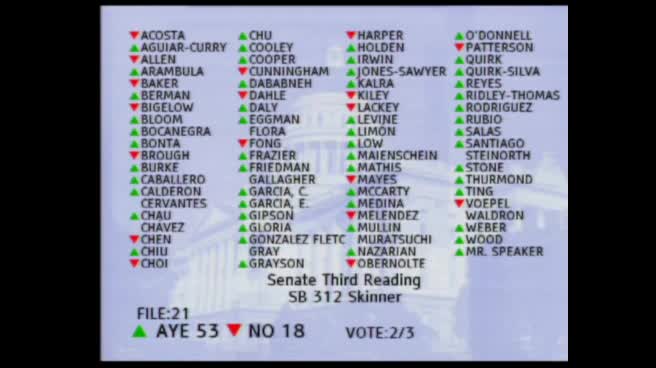 1MIN
Assembly Floor
 48SEC
Assembly Floor
 2MIN
Assembly Standing Committee on Appropriations
 21MIN
Assembly Standing Committee on Utilities and Energy
 2MIN
Senate Floor
 13MIN
Senate Standing Committee on Energy, Utilities and Communications
Bill Author

Bill Co-Author(s):