SB 807: Personal income taxes: credit: exclusion: Teacher Recruitment and Retention Act of 2017.
- Session Year: 2017-2018
- House: Senate
- Latest Version Date: 2017-05-03
The Personal Income Tax Law allows various credits against the taxes imposed by that law.
This bill, for taxable years beginning on or after January 1, 2017, and before January 1, 2027, would allow a credit under the Personal Income Tax Law in an amount equal to 50% of the costs paid or incurred by a qualified taxpayer, as defined to include specified teachers, to earn a clear teaching credential, as specified.
The Personal Income Tax Law, in conformity with federal income tax law, generally defines gross income as income from whatever source derived, except as specifically excluded, and provides various exclusions from gross income.
This bill would provide an exclusion from gross income for 50% of qualified income received on or after January 1, 2017, and before January 1, 2027, by an eligible teacher, as defined, for specified educational work.
This bill would state the intent of the Legislature to enact legislation with respect to calculations for minimum amounts of funding for school districts and community colleges.
This bill would take effect immediately as a tax levy.
The Personal Income Tax Law allows various credits against the taxes imposed by that law.
This bill, for taxable years beginning on or after January 1, 2017, and before January 1, 2027, would allow a credit under the Personal Income Tax Law in an amount equal to the costs paid or incurred by a qualified taxpayer, as defined to include specified teachers, to earn a clear credential, as specified.
The Personal Income Tax Law, in conformity with federal income tax law, generally defines gross income as income from whatever source derived, except as specifically excluded, and provides various exclusions from gross income.
This bill would provide an exclusion from gross income for qualified income received on or after January 1, 2017, and before January 1, 2027, by an eligible teacher, as defined, for specified educational work.
This bill would take effect immediately as a tax levy.
(a)This act shall be known and may be cited as the Teacher Recruitment and Retention Act of 2017.
(b)Pursuant to subdivision (a) of Section 41 of the Revenue and Taxation Code, the Legislature finds and declares all of the following:
(1)Research demonstrates the most important in-school factor affecting pupil achievement is the classroom teacher. Pupils with effective teachers are more likely to earn higher salaries, attend college, and save more for retirement and are less likely to be teenage parents.
(2)Over 30 percent of new teachers in California leave the profession in the first five years. According to the California State Teachers Retirement System, teachers leave the profession at a rate six times greater than other public employees, and 50 percent faster than first responders.
(3)The shortage of teachers in California is reaching critical levels in a number of teaching disciplines and geographic areas of the state and is projected to get worse with the oncoming wave of baby boomer retirements.
(4)Aspiring teachers in California often report the path for completing requirements for a preliminary credential, induction, and clearing a credential is uneven and costly. Some teachers face unexpected mandatory paycheck deductions and program closures for training required to clear a credential and legally teach in California, making it unnecessarily difficult to remain in teaching.
(5)Teacher shortages affect turnover within and across districts; and, on average, high teacher turnover rates have a negative impact on pupil achievement, and the effect is more pronounced in high-minority, high-poverty schools.
(6)The Teacher Recruitment and Retention Act of 2017 structurally addresses the current and growing shortage of teachers in schools and districts across the state by addressing challenges of entering the field of teaching, supporting novice teachers, and incentivizing effective teachers to remain in the classroom, recognizing the significance of their contribution to the children and the people of the State of California.
SEC. 2.Section 17053 is added to the Revenue and Taxation Code, to read:17053.(a)For each taxable year beginning on or after January 1, 2017, and before January 1, 2027, there shall be allowed to a qualified taxpayer a credit against the net tax, as defined in Section 17039, that is imposed on qualified income in an amount equal to 50 percent of the qualified costs paid or incurred during the taxable year to earn a clear teaching credential.
(b)For purposes of this section:
(1)Clear teaching credential means a credential that signifies that all education, experience, and program requirements have been met to teach in a California public school beyond five years, including a general education clear credential or an education specialist instruction clear credential authorized pursuant to Article 4 (commencing with Section 44250) of Chapter 2 of Part 25 of Division 3 of Title 2 of the Education Code.
(2)Educational assessment vendor means a vendor approved by the Commission on Teacher Credentialing to administer assessments developed or approved by the commission, including the National Board for Professional Teaching Standards.
(3)Local education agency means a public school employer who charges a fee for participation in a required program of beginning teacher induction or a Commission on Teacher Credentialing approved sponsor of a program of beginning teacher induction.
(1)(4)Qualified costs include those means unreimbursed costs paid or incurred by the qualified taxpayer to a local education agency, regionally accredited institution of higher education, or educational assessment vendor for any of the following:
(A)Participation in a program of beginning teacher support assessment.(A)Program enrollment fees directly related to the completion of a second-tier teaching credential in a program approved by the Commission on Teacher Credentialing to earn a clear teaching credential pursuant to Article 4 (commencing with Section 44250) of Chapter 2 of Part 25 of Division 3 of Title 2 of the Education Code, including general education and education specialist induction programs.
(B)Tuition Program enrollment fees for a masters degree leading to a clear teaching credential. credential to the extent an approved induction program is verified as unavailable by the qualified taxpayers employer, and the program is approved by the Commission on Teacher Credentialing.
(C)Certification Fees for certification assessments, including performance assessments. assessments required by the Commission on Teacher Credentialing, to complete requirements of programs described in subparagraph (A) or (B).
(D)Tuition for years four and five in an integrated program of professional preparation, as described in Section 44259.1 of the Education Code.
(2)Qualified income means any income received by the qualified taxpayer from a teaching position in which at least 50 percent of the work time is spent instructing pupils.(3)(5)Qualified taxpayer means a taxpayer an individual who is a teacher of record in a kindergarten through grade 12 regionally accredited California school. school prior to their sixth school year of employment as a teacher of record. A taxpayer does not need to have a clear teaching credential or a full-time position as a teacher of record to be a qualified taxpayer for purposes of the credit allowed by this section.
(6)Regionally accredited institution of higher education means a college or university that has been approved by the Commission on Teacher Credentialing to provide a program of beginning teacher induction.
(7)Teacher of record means a teacher who has been assigned the responsibility for specified pupils learning in a grade, subject, or course as reflected on the schools official record of attendance.
(c)In the case where the credit allowed by this section exceeds the net tax, the excess may be carried over to reduce the net tax in the following year, and succeeding four years if necessary, until the credit is exhausted.
(d)(1)The Franchise Tax Board may issue any regulations necessary or appropriate to implement the purposes of this section and may, in its discretion, consult with the Commission on Teacher Credentialing and the State Board of Education. The Commission on Teacher Credentialing and the State Board of Education shall not issue any regulations with regard to this section without consultation with the Franchise Tax Board. section.
(2)Chapter 3.5 (commencing with Section 11340) of Part 1 of Division 3 of Title 2 of the Government Code shall not apply to any standard, criterion, rule, notice, guideline, or procedure established or issued by the Franchise Tax Board pursuant to this section.
(e)This section shall remain in effect only until December 1, 2027, and as of that date is repealed.
SEC. 3.Section 17153 is added to the Revenue and Taxation Code, to read:17153.(a)Gross income does not include 50 percent of any qualified income received on or after January 1, 2017, and before January 1, 2027, by an eligible teacher.
(b)For purposes of this section:
(1)Eligible teacher is a taxpayer an individual who meets all of the following requirements:
(A)Is a teacher of record in a California qualified high-poverty public school teaching any of the grades kindergarten through 12th grade, and grades 1 to 12, inclusive.
(B)Holds a California clear teaching credential. credential, including a general education or education specialist instruction clear teaching credential.
(C)For the first year in which the The exclusion allowed by this section applies, is in at least commences in the sixth school year, as described by Section 37200 of the Education Code, as in which the eligible teacher is a teacher of record in a California school. school, and for the next four consecutive school years teaching at a qualified high-poverty public school in California.
(2)(A)Qualified high-poverty public school means a public school in California that enrolls pupils in kindergarten or in any of grades 1 to 12, inclusive, and meets at least one of the following criteria:
(i)Meets the minimum identified student percentage to be eligible to receive the free federal reimbursement rate for all reimbursable school breakfasts and lunches served pursuant to the community eligibility provision in Section 1759a of Title 42 of the United States Code.
(ii)Enrolled 62.5 percent or more pupils in the prior school year who were eligible for federal free or reduced priced meals.
(iii)For a first-year school not operational in the prior school year, at least 62.5 percent of current school year enrollment meets the eligibility requirements for federal free or reduced price meals.
(B)The State Department of Education shall provide a list of qualified high-poverty public schools to the Franchise Tax Board, upon request.
(C)It is the intent of the Legislature that the data used to determine eligibility pursuant to subparagraph (A) shall be from existing data sources, including, but not limited to, data submitted by sponsors to the Nutrition Services Division of the State Department of Education in compliance with the annual notification and publication requirements for the community eligibility provision, as required by the United States Department of Agriculture for the Verification Summary Report (FNS 742), and data collected by the State Department of Education for purposes of determining the percentage of enrolled pupils of kindergarten and grades 1 to 12, inclusive, eligible for free or reduced price meals, as reported by the State Department of Education and certified through the annual Fall 1 data submission to the California Longitudinal Pupil Achievement Data System.
(2)(3)Qualified income means any income received by wages subject to withholding under Division 6 (commencing with Section 13000) of the Unemployment Insurance Code paid by a school district to an eligible teacher from a teaching position in which where at least 50 percent of the work teachers time is spent instructing pupils. pupils in a qualified high-poverty public school.
(4)Teacher of record means a teacher who has been assigned the responsibility for specified pupils learning in a grade, subject, or course as reflected on the schools official record of attendance.
(c)(1)The Franchise Tax Board may issue any regulations necessary or appropriate to implement the purposes of this section and may, in its discretion, consult with the Commission on Teacher Credentialing and the State Board of Education. The Commission on Teacher Credentialing and the State Board of Education shall not issue any regulations with regard to this section without consultation with the Franchise Tax Board.
(2)Chapter 3.5 (commencing with Section 11340) of Part 1 of Division 3 of Title 2 of the Government Code shall not apply to any standard, criterion, rule, notice, guideline, or procedure established or issued by the Franchise Tax Board pursuant to this section.
(d)This section shall remain in effect only until December 1, 2027, and as of that date is repealed.
SEC. 4.It is the intent of the Legislature to enact legislation that would do both of the following:
(a)Provide for no reduction, including no incidental one-time reduction, in the Proposition 98 minimum guarantee to school districts and community college districts due to implementation of this act, the Teacher Recruitment and Retention Act of 2017.
(b)Provide, for each fiscal year, calculations to determine moneys to be applied to the state as required under subdivision (b) of Section 8 of Article XVI of the California Constitution be made as if this act were not in effect.
SEC. 4.SEC. 5.This act provides for a tax levy within the meaning of Article IV of the California Constitution and shall go into immediate effect.
(a)This act shall be known and may be cited as the Teacher Recruitment and Retention Act of 2017.
(b)Pursuant to subdivision (a) of Section 41 of the Revenue and Taxation Code, the Legislature finds and declares all of the following:
(1)Research demonstrates the most important in-school factor affecting pupil achievement is the classroom teacher. Pupils with effective teachers are more likely to earn higher salaries, attend college, and save more for retirement and are less likely to be teenage parents.
(2)Over 30 percent of new teachers in California leave the profession in the first five years. According to the California State Teachers Retirement System, teachers leave the profession at a rate six times greater than other public employees, and 50 percent faster than first responders.
(3)The shortage of teachers in California is reaching critical levels in a number of teaching disciplines and geographic areas of the state and is projected to get worse with the oncoming wave of baby boomer retirements.
(4)Aspiring teachers in California often report the path for completing requirements for a preliminary credential, induction, and clearing a credential is uneven and costly. Some teachers face unexpected mandatory paycheck deductions and program closures for training required to clear a credential and legally teach in California, making it unnecessarily difficult to remain in teaching.
(5)Teacher shortages affect turnover within and across districts; and, on average, high teacher turnover rates have a negative impact on pupil achievement, and the effect is more pronounced in high-minority, high-poverty schools.
(6)The Teacher Recruitment and Retention Act of 2017 structurally addresses the current and growing shortage of teachers in schools and districts across the state by addressing challenges of entering the field of teaching, supporting novice teachers, and incentivizing effective teachers to remain in the classroom, recognizing the significance of their contribution to the children and the people of the State of California.
SEC. 2.Section 17053 is added to the Revenue and Taxation Code, to read:17053.(a)For each taxable year beginning on or after January 1, 2017, and before January 1, 2027, there shall be allowed to a qualified taxpayer a credit against the net tax, as defined in Section 17039, that is imposed on qualified income in an amount equal to the qualified costs paid or incurred during the taxable year to earn a clear teaching credential.
(b)For purposes of this section:
(1)Qualified costs include those paid or incurred for any of the following:
(A)Participation in a program of beginning teacher support assessment.
(B)Tuition for a masters degree leading to a clear teaching credential.
(C)Certification assessments, including performance assessments.
(D)Tuition for years four and five in an integrated program of professional preparation, as described in Section 44259.1 of the Education Code.
(2)Qualified income means any income received by the qualified taxpayer from a teaching position in which at least 50 percent of the work time is spent instructing pupils.
(3)Qualified taxpayer means a taxpayer who is a teacher of record in a California school. A taxpayer does not need to have a clear teaching credential or a full-time position as a teacher of record to be a qualified taxpayer for purposes of the credit allowed by this section.
(c)In the case where the credit allowed by this section exceeds the net tax, the excess may be carried over to reduce the net tax in the following year, and succeeding four years if necessary, until the credit is exhausted.
(d)The Franchise Tax Board may issue any regulations necessary or appropriate to implement the purposes of this section and may, in its discretion, consult with the Commission on Teacher Credentialing and the State Board of Education. The Commission on Teacher Credentialing and the State Board of Education shall not issue any regulations with regard to this section without consultation with the Franchise Tax Board.
(e)This section shall remain in effect only until December 1, 2027, and as of that date is repealed.
SEC. 3.Section 17153 is added to the Revenue and Taxation Code, to read:17153.(a)Gross income does not include any qualified income received on or after January 1, 2017, and before January 1, 2027, by an eligible teacher.
(b)For purposes of this section:
(1)Eligible teacher is a taxpayer who meets all of the following requirements:
(A)Is a teacher of record in a California public school teaching any of the grades kindergarten through 12th grade, inclusive.
(B)Holds a clear teaching credential.
(C)For the first year in which the exclusion allowed by this section applies, is in at least the sixth school year, as described by Section 37200 of the Education Code, as a teacher of record in a California school.
(2)Qualified income means any income received by an eligible teacher from a teaching position in which at least 50 percent of the work time is spent instructing pupils.
(c)The Franchise Tax Board may issue any regulations necessary or appropriate to implement the purposes of this section and may, in its discretion, consult with the Commission on Teacher Credentialing and the State Board of Education. The Commission on Teacher Credentialing and the State Board of Education shall not issue any regulations with regard to this section without consultation with the Franchise Tax Board.
(d)This section shall remain in effect only until December 1, 2027, and as of that date is repealed.
SEC. 4.This act provides for a tax levy within the meaning of Article IV of the California Constitution and shall go into immediate effect.
|
Date
|
Status
|
|---|---|
| Feb 1, 2018 | Returned to Secretary of Senate pursuant to Joint Rule 56. |
| May 25, 2017 | May 25 hearing: Held in committee and under submission. |
| May 23, 2017 | Set for hearing May 25. |
| May 22, 2017 | May 22 hearing: Placed on APPR. suspense file. |
| May 16, 2017 | Set for hearing May 22. |
| May 10, 2017 | Withdrawn from committee. |
| May 10, 2017 | From committee: Do pass and re-refer to Com. on ED. (Ayes 6. Noes 0. Page 1020.) (May 10). Re-referred to Com. on ED. |
| May 3, 2017 | From committee with author's amendments. Read second time and amended. Re-referred to Com. on GOV. & F. |
| May 2, 2017 | Set for hearing May 10. |
| May 1, 2017 | May 3 hearing postponed by committee. |
| Apr 25, 2017 | Set for hearing May 3. |
| Mar 30, 2017 | April 5 set for first hearing canceled at the request of author. |
| Mar 21, 2017 | Set for hearing April 5. |
| Mar 9, 2017 | Referred to Coms. on GOV. & F. and ED. |
| Feb 21, 2017 | From printer. May be acted upon on or after March 23. |
| Feb 17, 2017 | Introduced. Read first time. To Com. on RLS. for assignment. To print. |
|
Date
|
Description
|
Location
|
Votes
|
|
|---|---|---|---|---|
| May 22, 2017 | Placed on suspense file | Senate Standing Committee on Appropriations |
Passed |
|
| May 10, 2017 | Do pass, but first be re-referred to the Committee on [Education] | Senate Standing Committee on Governance and Finance |
Passed |
This list shows positions taken on this bill by organizations on the date displayed, which is linked to the original source.
Positions by individuals are not included.
|
Organization
|
Position
|
Date
|
|---|---|---|
| California Tax Reform Association | * Against | May 10, 2017 |
| California Teachers Association | * Against | May 10, 2017 |
| Catholic Church of California | * For If Amend | May 10, 2017 |
| Educaton Trust West | * Support | May 10, 2017 |
| National Federation Of Independent Business | * Against | May 10, 2017 |
SENATE COMMITTEE ON
Senator Ricardo Lara, Chair
2017 - 2018 Regular Session
SB 807 (Stern) - Personal income taxes: credit: exclusion: Teacher Recruitment and Retention Act of 2017
Version: | Policy Vote: |
Urgency: | Mandate: |
Hearing Date: | Consultant: |
This bill meets the criteria for referral to the Suspense File.
Bill Summary:
SB 807 would enact a tax credit and income exclusion for qualified teachers.
Fiscal Impact:
The Franchise Tax Board (FTB) indicates that this bill would result in a General Fund revenue loss of $43 million in 2017-18, $35 million in 2018-19, and $43 million in 2019-20. FTB’s administrative costs resulting from the bill have yet to be determined, but would likely be, at a minimum, in the hundreds of thousands of dollars annually (General Fund).
Background:
Current law includes various tax credits designed (1) to provide incentives for taxpayers that incur certain expenses such as child adoption, or (2) to influence behavior, including business practices and decisions, such as research and development credits and motion picture production credits. The Legislature typically enacts such tax incentives to encourage taxpayers to behave in a manner that would generally not happen on the natural. The Department of Finance is required to annually publish a list of tax expenditures, currently totaling $57 billion in 2016-17.
Currently, the only teacher-related tax incentive under federal or state law is a federal income tax deduction of up to $250 for any unreimbursed expenses paid or incurred for books, supplies, or computer equipment used in the classroom. Previously, California allowed a teacher retention tax credit that increased proportionally to the taxpayer's years of service as a credentialed teacher. However, the Legislature only allowed the credit for the 2000, 2001, and 2003 taxable years. The tax credit was suspended it in 2002, and 2004 through 2006, and was repealed in 2007. Teachers claimed $165 million in state tax credits in 2003, the last year the credit was in effect.
Proposed Law:
This bill would enact two tax benefits for teachers: (1) a personal income tax credit equal to 50 percent of specified costs a teacher must incur to earn a clear teaching credential (as defined), and (2) an income exclusion for 50 percent of any income received by teachers between their sixth and tenth years as a teacher of record in a California school. Eligibility for the income exclusion is restricted to those teaching at a qualified high-poverty school, defined as a public school in California that enrolls pupils in kindergarten or grades 1-12, inclusive, that either: (1) meets the minimum identified percentage to be eligible to receive the free federal reimbursement rate for all reimbursable school breakfasts and lunches, pursuant to specified provisions of federal law, or (2) enrolled 62.5 percent or more pupils in the prior school year who were eligible for federal free or reduced priced meals, or schools not operational in the prior year that meet that standard in the current year.
Unused tax credits could be carried over for up to four additional years, until exhausted. Both tax benefits would commence in the 2017 taxable year, and sunset in 2026.
Staff Comments: Currently, over 150,000 students are reportedly being taught by temporary teachers without credentials. Insufficiently trained teachers likely negatively affect the quality of K-12 education in the State, and thus the productivity of its future workforce. This bill would provide tax incentives to draw more individuals into the teaching profession, especially in schools where many students experience poverty.
With respect to the tax credit portion of the bill, FTB projects a revenue loss of $7 million in 2017-18, $11 million in 2018-19, and $18 million in 2019-20. FTB’s estimate is built on data from the California Commission on Teacher Credentialing, which estimates that nearly 25,000 taxpayers will be working toward earning a clear teaching credential in 2017. With an assumed average per-capita annual expense of $2,200, approximately $27 million in credits would be generated for tax year 2017. FTB assumes that 10 percent (or $2.7 million) of the credits would be used in the year generated and the remaining credits would be carried forward and used in subsequent years.
With respect to the income exclusion portion of the bill, FTB projects a revenue loss of $36 million in 201-18, $24 million in 2018-19, and $25 million in 2019-20. These estimates are based on 2015 data from the California Department of Education. Specifically, there were approximately 35,000 eligible teachers as defined by the provisions of the bill. With an average annual salary of roughly $50,000, approximately $1.8 billion in wages would be earned by qualified teachers. Applying the bill’s 50 percent exclusion rate, $875 million would be excluded from gross income. FTB then increased this amount to reflect changes in the economy since 2015, and then assumed an average tax rate of 2.5 percent.
-- END --
SENATE COMMITTEE ON GOVERNANCE AND FINANCE
Senator Mike McGuire, Chair
2017 - 2018 Regular
Bill No: | SB 807 | Hearing Date: | 5/10/17 |
Author: | Stern | Tax Levy: | Yes |
Version: | 5/3/17 | Fiscal: | Yes |
Consultant: | Grinnell | ||
Personal income taxes: credit: exclusion: Teacher Recruitment and Retention Act of 2017
Enacts the Teacher Recruitment and Retention Act of 2017, which allows a tax credit and an income exclusion for qualified teachers.
Background
California provides various tax credits designed to provide incentives for taxpayers that incur certain expenses, such as child adoption, or to influence behavior, including business practices and decisions, such as research and development credits and motion picture production credits. The Legislature typically enacts such tax incentives to encourage taxpayers to do something that but for the tax credit, they would not otherwise do.
The only current tax incentive for teachers under federal or state law is a deduction from income on their federal income taxes of up to $250 for any unreimbursed expenses paid or incurred for books, supplies, or computer equipment used in the classroom. California once allowed a teacher retention tax credit that increased proportionally to the taxpayer's years of service as a credentialed teacher (AB 2879, Jackson, 1999). However, the Legislature only allowed the credit for 2000, 2001, and 2003 taxable years, suspended it in 2002, and 2004 through 2006, before eventually repealing it in 2007 (SB 87, Committee on Budget). Teachers claimed $165 million in tax credits in 2003.
Education advocates are concerned that too few qualified and trained individuals pursue teaching careers in California. According to the Commission on Teaching Credentialing, 6,138 teachers of 155,000 students in California are currently in classrooms without credentials, and having insufficiently trained teachers likely negatively affects the quality of public education in the state. Seeking additional tax incentives to draw more individuals into the teaching profession, especially in schools where many students experience poverty, EdVoice wants to enact a credit for individuals incurring costs to pursue specified teaching programs, and an income exclusion to provide incentives for teachers to stay in the profession.
Proposed Law
Senate Bill 807 enacts two tax benefits for teachers: a personal income tax credit equal to 50% of certain costs a teacher must incur to earn a clear teaching credential, and an income exclusion for 50% of any income received by a teacher between the teacher’s sixth and tenth years as a teacher of record in a California school. Both tax benefits commence in the 2017 taxable year, and end after the 2026 taxable year.
Tax Credit. The bill offers a credit equal to 50% of the unreimbursed costs paid or incurred by a qualified teacher to a local education agency, educational assessment vendor, or local education agency necessary to earn a clear teaching credential, as defined, including:
- Program enrollment fees directly related to the completion of a second-tier teaching credential in a program approved by the Commission on Teaching Credentialing (CTC),
- Program enrollment fees for a master’s degree leading to a clear teaching credential, as specified,
- Certification assessments, including performance assessments required by CTC, and
- Tuition for years four and five in an integrated program of professional preparation, as defined.
The credit may be claimed by any teacher of record at an accredited K-12 California school, public or private, prior to their sixth year as a teacher of record. A taxpayer need not have a clear teaching credential or have a full time teaching position to claim the credit, which can be carried over to the next four taxable years.
Income Exclusion. The measure enacts an income exclusion equal to 50% of wages paid by a school district to an eligible teacher who holds a California clear teaching credential as well as a teaching position in a qualified high-poverty school in which at least 50% of the work time is spent educating pupils. The exclusion only applies starting in the teacher’s sixth year, and for the next four consecutive years, and for those teaching at a qualified high-poverty school, defined as a public school in California that enrolls pupils in kindergarten or grades 1-12, inclusive, that either:
- Meets the minimum identified percentage to be eligible to receive the free federal reimbursement rate for all reimbursable school breakfasts and lunches, pursuant to specified provisions of federal law, or
- Enrolled 62.5% or more pupils in the prior school year who were eligible for federal free or reduced priced meals, or schools not operational in the prior year that meet that standard in the current year.
The State Department of Education must provide a list of qualified high-poverty schools to the Franchise Tax Board (FTB) upon request. The bill also contains legislative intent language specifying the existing data sources that should be used to determine whether a school is a qualified high-poverty school.
SB 807 allows the Franchise Tax Board (FTB) to issue any regulations necessary and appropriate to implement either tax benefit. The bill provides that the Administrative Procedures Act does not apply to any standard, criterion, rule, notice, guideline, or procedure issued by FTB to implement the bill. The measure defines several of its terms, and contains legislative findings and declarations supporting its purposes, including language that no reduction to the Proposition 98 guarantee should be made because of the bill.
State Revenue Impact
According to FTB, SB 807’s tax credit results in revenue losses of $7 million in 2017-18, $11 million in 2018-19, and $18 million in 2019-20, while the bill’s income exclusion results in revenue losses of $36 million in 2017-18, $24 million in 2018-19, and $25 million in 2019-20.
Comments
1. Purpose of the bill. According to the author, “SB 807 recognizes the significance of teachers to the children and economy of California by providing tax incentives to help new teachers gain the skills they need to be successful and keep experienced teachers in the classroom. Specifically, SB 807 structurally addresses the current and growing shortage of teachers across the state by providing tax credits in the first five years to help teachers complete required training to remain in the classroom. SB 807 also incentivizes qualified teachers to stay or return to the classroom by exempting teaching income from state income tax beginning in year six. Providing relief from student loan debt and fees for required job training, and encouraging teachers to stay or return to the classroom with income tax relief will go a long way to alleviate the teacher shortage crisis. Well-trained teachers in more classrooms will improve educational outcomes leading to long-term economic benefits, and societal savings.
Specifically, the benefits of SB 807 include:
- Every child in California will have a higher likelihood of having an effective teacher.
- A clear signal nationwide that California honors teaching as a noble profession.
- Helps teachers and school districts address cost of induction and support for clear credentials.
- Teachers will stay in teaching longer than 5 years rather than leave (current norm for one-third of workforce).
- Qualified teachers will stay teaching in classrooms longer (rather than moving to other roles).
- Delays retirement of veteran teachers in California schools.
- Non-retired teachers in labor force return to teaching, increasing effective teacher pool.
- Schools of education will get a broader pool of potential candidates to train as teachers.
- Out-of-state teachers come back to California, including minorities who left for college.
SB 807 follows a simple formula: Investing in well-trained teachers = better academic outcomes better jobs, and a better economy.”
2. Tax expenditures. California law allows various income tax credits, deductions, and sales and use tax exemptions for taxpayers that incur certain expenses, such as child adoption, or to influence behavior, including business practices and decisions. The Legislature typically enacts such tax incentives to encourage taxpayers to do something that but for the tax credit, they would otherwise not do. The Department of Finance is required to annually publish a list of tax expenditures, currently totaling around $57 billion in 2016-17. SB 807 would enact two new tax expenditures for the next ten taxable years to provide incentives for individuals to pursue teaching credentials and remain employed as teachers. However, many individuals choose to become teachers in high poverty schools at the current level of compensation, so any tax incentive would simply provide a windfall benefit for something they would do anyway. Additionally, the Governor’s proposed budget states that the Proposition 98 (1988) minimum guarantee for schools is $71.4 billion in 2016-17, and $73.5 billion in 2017-18, which when combined with local property tax revenues, should provide adequate funding to compensate teachers appropriately. Any foregone revenue from a tax expenditure like SB 807 results in less revenue for purposes of calculating the guarantee, so the state will have to increase taxes or reduce non-Proposition 98 spending, all else equal. The Committee may wish to consider whether SB 807’s goals can be better accomplished within the current level of education funding.
3. Precedent. Every day, more than 300,000 individuals in California teach more than six million students in approximately 10,000 schools, seeking to enhance the futures of both individual students and the state as a whole. While few would argue the importance of good teachers in providing a quality education, other public employees provide needed services too, such as police, firefighters, doctors, and nurses, to name a few. Many of these workers enjoy a defined benefit pension in addition to their salaries, but SB 807 would only apply to teachers. Under the bill, teachers working in high poverty schools would not pay income tax on half of their wages paid after their sixth year for the next four consecutive years, while any other public or private worker would pay tax on their salaries and wages in the same way as any other taxpayer. Proponents assert that the teaching labor force in California is near crisis, especially in high-poverty schools, with older teachers retiring and fewer young people seeking to enter the profession, necessitating a strong incentive in the form of SB 807. The Committee may wish to consider whether singling out teachers for tax benefits is merited.
4. Right way? SB 807 enacts a new tax expenditure to increase teacher recruitment, especially in high-poverty schools; however, tax expenditures are not the only strategy the Legislature can use to address this important issue, and has a key drawback: Proposition 98 sets a minimum guarantee that the state must meet to support K-12 education, and tax expenditures reduce revenues used to calculate the guarantee. Additionally, Governor Brown has fundamentally restructured education funding within the guarantee by implementing the Local Control Funding Formula (LCFF), which seeks to enhance the control of school districts over funding priorities and curriculum while eliminating inequities in the previous system. Similar to SB 807, LCFF contains supplemental and concentration grants intended to help high-poverty schools. The Governor also directed CTC to implement several initiatives aimed at enhancing teacher recruitment as part of his proposed 2016-17 Budget. Instead of enacting a tax expenditure, the Legislature could increase general revenues to boost the amount of guarantee, or directly increase funding for teacher salaries or other teacher recruitment efforts out of current revenues. The Committee may wish to consider whether SB 807 is the best option available for addressing teacher retention.
5. Exclusion not deduction. Federal law allows a deduction from income for the out-of-pocket costs incurred by teachers purchasing supplies for their classrooms. SB 807 would enact an income exclusion for teachers under specified circumstances. Exclusions would allow teachers under the bill to change their withholding, quickly resulting in more take home pay, while a taxpayer usually can’t make any economic value of a deduction until completing their returns. However, teachers would have to include the same income on their federal returns that SB 807 would exclude, creating nonconformity between state and federal tax law.
6. Public versus private. Tax benefits for education can often present issues regarding the merits of public versus private education. In 2014, the Committee considered SB 1492 (Correa), which allowed a credit for education expenses for income eligible taxpayers, including tuition paid to private schools, as well as a credit for the out-of-pocket costs incurred by teachers purchasing educational supplies. The author subsequently amended the measure to remove the education expenses credit, and the Committee approved the measure. SB 807 splits the difference by allowing the credit for teachers in public or private schools, while its income exclusion applies solely to public school teachers working in high poverty schools.
7. Section 41. In 2014, the Legislature enacted SB 1335 (Leno), which added Section 41 to the Revenue and Taxation Code to require introduced legislative bills enacting tax credits to contain:
- Specific goals, purposes, and objectives that the tax credit will achieve.
- Detailed performance indicators for the Legislature to use when measuring whether the tax credit met its specific goals, purposes, and objectives.
- Data collection requirements to enable the Legislature to determine whether the tax credit is meeting, failing to meet, or exceeding its goals, purposes, and objectives. The requirements shall include specific data and baseline data to be collected and remitted in each year the credit is effective, and the specific taxpayers, state agencies, or other entities required to collect and remit data.
SB 807 contains a sunset, but does not contain the above information designed to compel sufficient information to measure the performance of the bill’s tax benefits. As such, it may be difficult for a future Legislature to determine the effect of the measure.
8. Double-referred. The Senate Rules Committee referred SB 325 to both the Committees on Governance and Finance, which considers bills affecting the Personal Income Tax, and Education.
Support and Opposition
(5/5/17)
Support: The ARC and United Cerebral Palsy California; California Alliance of African American Educators; California Association of African American Superintendents and Administrators; California Catholic Conference; City and County of San Francisco; The Education Trust-West; E4E- Los Angeles; EdVoice; Genders and Socialites Alliance Network; Green Dot Public Schools; Partnership for Los Angeles Schools; The Teacher Salary Project; 8,753 individuals.
Opposition: California Teachers Association, California Tax Reform Association, National Federation of Independent Business.
-- END --
Discussed in Hearing
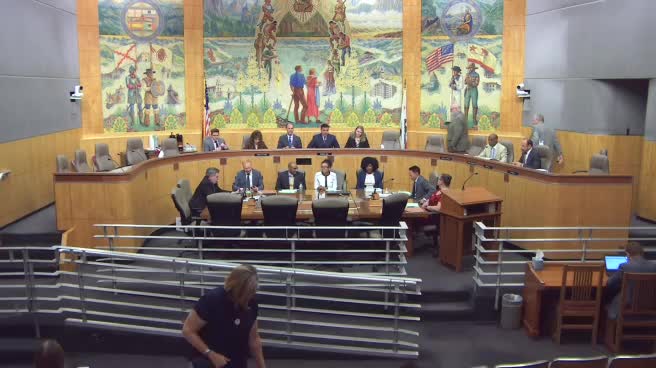 48MIN
Senate Standing Committee on Appropriations
 29SEC
Senate Standing Committee on Appropriations
 1H