SB 821: Emergency notification: county jurisdictions.
- Session Year: 2017-2018
- House: Senate
- Latest Version Date: 2018-09-21
The California Emergency Services Act establishes the Office of Emergency Services in the office of the Governor and provides that the office is responsible for the states emergency and disaster response services for natural, technological, or manmade disasters and emergencies, including responsibility for activities necessary to prevent, respond to, recover from, and mitigate the effects of emergencies and disasters to people and property.
Existing law defines emergency plan for purposes of emergency services provided by local governments and requires each county, including a city and county, upon the next update to its emergency plan, to integrate access and functional needs into its emergency plan by addressing, at a minimum, how the access and functional needs population, as defined, is served by emergency communications, evacuation, and sheltering.
This bill would authorize each county, including a city and county, to enter into an agreement to access the contact information of resident accountholders through the records of a public utility or other agency responsible for water service, waste and recycling services, or other property-related services for the sole purpose of enrolling county residents in a county-operated public emergency warning system. The bill would require any county that enters into such an agreement to include procedures to enable any resident to opt out of the warning system and a process to terminate the receiving agencys access to the residents contact information. The bill would prohibit the use of the information gathered for any purpose other than for emergency notification.
(2)Existing law permits an authorized employee of a county social services department to disclose the name and residential address of elderly or disabled clients to police, fire, or paramedical personnel, or other designated emergency services personnel, in the event of a public safety emergency, as defined, that necessitates the possible evacuation of the area in which those elderly or disabled clients reside. Existing law requires the Director of Social Services to seek any federal approval necessary to implement the disclosure and conditions the implementation on the director executing a declaration stating that any required federal approval has been obtained, and only for the duration of that approval.This bill would recast those provisions to instead permit an authorized employee of a county social services department, to the extent permitted by federal law, to disclose the contact information of persons from the access and functional needs population who are receiving public social services, and the contact information of the designated emergency contacts of those persons, to the above-described entities, in order to protect those persons in the event of a public safety emergency. The bill would revise the definition of public safety emergency, as specified. The bill would limit the use of disclosed contact information to the provision of emergency notification or direct emergency services. The bill would condition the disclosures on a determination that a public safety emergency exists, as specified.(1)The California Emergency Services Act establishes the Office of Emergency Services in the office of the Governor and provides that the office is responsible for the states emergency and disaster response services for natural, technological, or manmade disasters and emergencies, including responsibility for activities necessary to prevent, respond to, recover from, and mitigate the effects of emergencies and disasters to people and property.
Existing law defines emergency plan for purposes of emergency services provided by local governments and requires each county, including a city and county, upon the next update to its emergency plan, to integrate access and functional needs, as defined, needs into its emergency plan upon the next update of its emergency plan. by addressing, at a minimum, how the access and functional needs population, as defined, is served by emergency communications, evacuation, and sheltering.
This bill would authorize each county, including a city and county, to enter into an agreement to access the contact information of resident accountholders through the records of a public utility or other agency responsible for water service, waste and recycling services, or other property-related services for the sole purpose of enrolling county residents in a county-operated public emergency warning system. The bill would specify that require any county that enters into such an agreement would be required to include procedures to enable any resident to opt out of the warning system and a process to terminate the receiving agencys access to the residents contact information. The bill would prohibit the use of the information gathered for any purpose other than for emergency notification.
(2)Existing law permits an authorized employee of a county social services department to disclose the name and residential address of elderly or disabled clients to police, fire, or paramedical personnel, or other designated emergency services personnel, in the event of a public safety emergency, as defined, that necessitates the possible evacuation of the area in which those elderly or disabled clients reside. Existing law requires the Director of Social Services to seek any federal approval necessary to implement the disclosure and conditions the implementation on the director executing a declaration stating that any required federal approval has been obtained, and only for the duration of that approval.
This bill would recast those provisions to instead permit an authorized employee of a county social services department, to the extent permitted by federal law, to disclose the contact information of persons from the access and functional needs population who are receiving public social services, and the contact information of the designated emergency contacts of those persons, to the above-described entities, in order to protect those persons in the event of a public safety emergency. The bill would revise the definition of public safety emergency, as specified. The bill would limit the use of disclosed contact information to the provision of emergency notification or direct emergency services. The bill would condition the disclosures on a determination that a public safety emergency exists, as specified.
The California Emergency Services Act establishes the Office of Emergency Services in the office of the Governor and provides that the office is responsible for the states emergency and disaster response services for natural, technological, or manmade disasters and emergencies, including activities necessary to prevent, respond to, recover from, and mitigate the effects of emergencies and disasters to people and property.
Existing law defines emergency plan for purposes of emergency services provided by local governments and requires each county, including a city and county, to integrate access and functional needs, as defined, into its emergency plan upon the next update of its emergency plan.
This bill would authorize each county, including a city and county, to develop a mechanism to access the contact information of resident accountholders through the records of enter into an agreement to access the contact information of resident accountholders through the records of a public utility or other agency responsible for water service, waste and recycling services, or other property-related services for the sole purpose of enrolling county residents in a county-operated public emergency warning system. The bill would specify that any county that develops enters into such a mechanism an agreement would be required to include procedures to enable any resident to opt out of the warning system and not to a process to terminate the receiving agencys access to the residents contact information. The bill would prohibit the use of the information gathered for any purpose other than for emergency notification.
The California Emergency Services Act establishes the Office of Emergency Services in the office of the Governor and provides that the office is responsible for the states emergency and disaster response services for natural, technological, or manmade disasters and emergencies, including activities necessary to prevent, respond to, recover from, and mitigate the effects of emergencies and disasters to people and property.
This bill would specify that the Office of Emergency Services may assist county jurisdictions in developing effective public emergency warning systems.Existing law defines emergency plan for purposes of emergency services provided by local governments and requires each county, including a city and county, to integrate access and functional needs, as defined, into its emergency plan upon the next update of its emergency plan.
This bill would authorize each county, including a city and county, to develop a mechanism to access the contact information of resident accountholders through the records of a public utility or other agency responsible for water service, waste and recycling services, or other property-related services for the sole purpose of enrolling county residents in a county-operated public emergency warning system. The bill would specify that any county that develops such a mechanism would be required to include procedures to enable any resident to opt out of the warning system and not to use the information gathered for any purpose other than for emergency notification.
The California Emergency Services Act establishes the Office of Emergency Services in the office of the Governor and provides that the office is responsible for the states emergency and disaster response services for natural, technological, or manmade disasters and emergencies, including activities necessary to prevent, respond to, recover from, and mitigate the effects of emergencies and disasters to people and property.
This bill would specify that the Office of Emergency Services may assist county jurisdictions in developing effective public emergency warning systems.
(a)A county, including a city and county, may enter into an agreement to access the contact information of resident accountholders through the records of a public utility or other agency, including an electrical or gas corporation, local publicly owned electric utility, public water agency, or other agency responsible for water service, waste and recycling services, or other related services for a property address, for the sole purpose of enrolling county residents in a county-operated public emergency warning system.
(b)A county, including a city and county, that enters into an agreement to access information pursuant to subdivision (a) shall include procedures to enable any resident to opt out of the warning system and a process to terminate the receiving agencys access to the contact information of the resident from a public utility or other agency, including an electrical or gas corporation, local publicly owned electric utility, public water agency, or other agency responsible for water service, waste and recycling services, or other related services for a property address. A county, or city and county, may not use the information gathered for any purpose other than for emergency notification. The receiving agency shall ensure that the confidentiality of the contact information is protected under reasonable security procedures.
(c)For purposes of this section, contact information means a persons name, address, telephone numbers, and email address.
(d)Notwithstanding any other law, a public utility or other agency, including an electrical or gas corporation, local publicly owned electric utility, public water agency, or other agency responsible for water service, waste and recycling services, or other related services for a property address, shall not be subject to civil or criminal liability for the accuracy of, or any use, nonuse, or improper release of, the contact information it provides to the county under this section, including, without limitation, for any deficiencies or inaccuracies of the contact information provided.
SEC. 2.Section 10850.9 of the Welfare and Institutions Code is repealed.SEC. 3.Section 10850.9 is added to the Welfare and Institutions Code, to read:10850.9.(a)Notwithstanding Section 10850, and to the extent permitted by federal law, an authorized employee of a county social services department may disclose the contact information of persons receiving public social services, and the contact information of the designated emergency contacts of those persons, if any, to police, fire, paramedical personnel, or other designated emergency services personnel, in order to protect those persons in the event of a public safety emergency.(b)Contact information disclosed pursuant to this section shall be used only for the purpose of providing emergency notification or direct emergency services.(c)Disclosures made pursuant to this section shall occur only after the director of a county social services department, or his or her designated representative, has determined that a public safety emergency exists.(d)For purposes of this section, the following definitions apply:(1)Contact information means a persons name, address, telephone numbers, and email address.(2)Public safety emergency means a fire, earthquake, gas leak, bomb scare, heat emergency, or other natural or human-made event that jeopardizes the immediate physical safety of persons within the service area of a county social services department.(3)Persons receiving public social services means individuals from the access and functional needs population, as defined in Section 8593.3 of the Government Code, who are receiving public social services.(a)A county, including a city and county, may enter into an agreement to access the contact information of resident accountholders through the records of a public utility or other agency, including an electrical or gas corporation, local publicly owned electric utility, public water agency, or other agency responsible for water service, waste and recycling services, or other related services for a property address address, for the sole purpose of enrolling county residents in a county-operated public emergency warning system.
(b)A county, including a city and county, that enters into an agreement to access information pursuant to subdivision (a) shall include procedures to enable any resident to opt out of the warning system and a process to terminate the receiving agencys access to the contact information of the resident from a public utility or other agency, including an electrical or gas corporation, local publicly owned electric utility, public water agency, or other agency responsible for water service. service, waste and recycling services, or other related services for a property address. A county, or city and county, may not use the information gathered for any purpose other than for emergency notification. The receiving agency shall ensure that the confidentiality of the contact information is protected under reasonable security procedures.
(c)For purposes of this section, contact information means a persons name, address, phone telephone numbers, and email address.
(d)Notwithstanding any other law, a public utility or other agency, including an electrical or gas corporation, local publicly owned electric utility, public water agency, or other agency responsible for water service service, waste and recycling services, or other related services for a property address, shall not be subject to civil or criminal liability for the accuracy of, or any use, nonuse, or improper release of, the contact information it provides to the county under this section, including, without limitation, for any deficiencies or inaccuracies of the contact information provided.
SEC. 2.Section 10850.9 of the Welfare and Institutions Code is repealed.10850.9.(a)Notwithstanding Section 10850, an authorized employee of a county social services department may disclose the name and residential address of elderly or disabled clients to police, fire, paramedical personnel, or other designated emergency services personnel, in the event of a public safety emergency that necessitates the possible evacuation of the area in which those elderly or disabled clients reside. Those public safety emergencies include, but are not limited to, fires, earthquakes, gas leaks, bomb scares, and other natural or human-made occurrences that jeopardize the immediate physical safety of county residents.(b)The Director of Social Services shall seek any federal approval necessary to implement subdivision (a).(c)Subdivision (a) shall be implemented only if the director executes a declaration, that shall be retained by the director, stating that any federal approval required for implementation of subdivision (a) has been obtained, and only for the duration of that approval.SEC. 3.Section 10850.9 is added to the Welfare and Institutions Code, to read:10850.9.(a)Notwithstanding Section 10850, and to the extent permitted by federal law, an authorized employee of a county social services department may disclose the contact information of persons receiving public social services, and the contact information of the designated emergency contacts of those persons, if any, to police, fire, paramedical personnel, or other designated emergency services personnel, in order to protect those persons in the event of a public safety emergency.
(b)Contact information disclosed pursuant to this section shall be used only for the purpose of providing emergency notification or direct emergency services.
(c)Disclosures made pursuant to this section shall occur only after the director of a county social services department, or his or her designated representative, has determined that a public safety emergency exists.
(d)For purposes of this section, the following definitions apply:
(1)Contact information means a persons name, address, telephone numbers, and email address.
(2)Public safety emergency means a fire, earthquake, gas leak, bomb scare, heat emergency, or other natural or human-made event that jeopardizes the immediate physical safety of persons within the service area of a county social services department.
(3)Persons receiving public social services means individuals from the access and functional needs population, as defined in Section 8593.3 of the Government Code, who are receiving public social services.
(a)A county, including a city and county, may develop a mechanism to access the contact information of resident accountholders through the records of enter into an agreement to access the contact information of resident accountholders through the records of a public utility or other agency agency, including an electrical or gas corporation, local publicly owned electric utility, public water agency, or other agency responsible for water service, waste and recycling services, or other related services for a property address for the sole purpose of enrolling county residents in a county-operated public emergency warning system.
(b)A county that develops a mechanism to access information county, including a city and county, that enters into an agreement to access information pursuant to subdivision (a) shall include procedures to enable any resident to opt out of the warning system and a process to terminate the receiving agencys access to the contact information of the resident from a public utility or other agency, including an electrical or gas corporation, local publicly owned electric utility, public water agency, or other agency responsible for water service. A county, or city and county, may not use the information gathered for any purpose other than for emergency notification. The receiving agency shall ensure that the confidentiality of the contact information is protected under reasonable security procedures.
(c)For purposes of this section, contact information means a persons name, address, phone numbers, and email address.
(d)Notwithstanding any other law, a public utility or other agency, including an electrical or gas corporation, local publicly owned electric utility, public water agency, or other agency responsible for water service shall not be subject to civil or criminal liability for the accuracy of, or any use, nonuse, or improper release of, the contact information it provides to the county under this section, including, without limitation, for any deficiencies or inaccuracies of the contact information provided.
(a)A county, including a city and county, may develop a mechanism to access the contact information of resident accountholders through the records of a public utility or other agency responsible for water service, waste and recycling services, or other related services for a property address for the sole purpose of enrolling county residents in a county-operated public emergency warning system.
(b)A county that develops a mechanism to access information pursuant to subdivision (a) shall include procedures to enable any resident to opt out of the warning system and may not use the information gathered for any purpose other than for emergency notification.
(c)For purposes of this section, contact information means a persons name, address, phone numbers, and email address.
SECTION 1.Section 8585 of the Government Code is amended to read:8585.(a)(1)There is in state government, within the office of the Governor, the Office of Emergency Services. The Office of Emergency Services shall be under the supervision of the Director of Emergency Services, who shall have all rights and powers of a head of an office as provided by this code, and shall be referred to as the Director of Emergency Services.(2)Unless the context clearly requires otherwise, whenever the term California Emergency Management Agency appears in any statute, regulation, or contract, or in any other code, it shall be construed to refer to the Office of Emergency Services, and whenever the term Secretary of Emergency Management or the Secretary of the Emergency Management Agency appears in statute, regulation, or contract, or in any other code, it shall be construed to refer to the Director of Emergency Services.(3)Unless the context clearly requires otherwise, whenever the term Director of Homeland Security or Office of Homeland Security appears in any statute, regulation, or contract, or in any other code, it shall be construed to refer to the Office of Emergency Services, and whenever the term Director of Homeland Security or Director of the Office of Homeland Security appears in any statute, regulation, or contract, or in any other code, it shall be construed to refer to the Director of Emergency Services.(b)(1)The Office of Emergency Services and the Director of Emergency Services shall succeed to and are vested with all the duties, powers, purposes, responsibilities, and jurisdiction vested in the California Emergency Management Agency and the Secretary of Emergency Management, respectively.(2)The Office of Emergency Services and the Director of Emergency Services shall succeed to and are vested with all the duties, powers, purposes, responsibilities, and jurisdiction vested in the Office of Homeland Security and the Director of Homeland Security, respectively.(c)The Office of Emergency Services shall be considered a law enforcement organization as required for receipt of criminal intelligence information pursuant to subdivision (f) of Section 6254 by persons employed within the office whose duties and responsibilities require the authority to access criminal intelligence information.(d)Persons employed by the Office of Emergency Services whose duties and responsibilities require the authority to access criminal intelligence information shall be furnished state summary criminal history information as described in Section 11105 of the Penal Code, if needed in the course of their duties.(e)(1)The Office of Emergency Services shall be responsible for the states emergency and disaster response services for natural, technological, or manmade disasters and emergencies, including responsibility for activities necessary to prevent, respond to, recover from, and mitigate the effects of emergencies and disasters to people and property.(2)The Office of Emergency Services may assist county jurisdictions in developing effective public emergency warning systems.(f)Notwithstanding any other law, this section shall not authorize an employee of the Office of Emergency Services to access criminal intelligence information under subdivision (c) or (d) for the purpose of determining eligibility for, or providing access to, disaster-related assistance and services.(a)(1)There is in state government, within the office of the Governor, the Office of Emergency Services. The Office of Emergency Services shall be under the supervision of the Director of Emergency Services, who shall have all rights and powers of a head of an office as provided by this code, and shall be referred to as the Director of Emergency Services.
(2)Unless the context clearly requires otherwise, whenever the term California Emergency Management Agency appears in any statute, regulation, or contract, or in any other code, it shall be construed to refer to the Office of Emergency Services, and whenever the term Secretary of Emergency Management or the Secretary of the Emergency Management Agency appears in statute, regulation, or contract, or in any other code, it shall be construed to refer to the Director of Emergency Services.
(3)Unless the context clearly requires otherwise, whenever the term Director of Homeland Security or Office of Homeland Security appears in any statute, regulation, or contract, or in any other code, it shall be construed to refer to the Office of Emergency Services, and whenever the term Director of Homeland Security or Director of the Office of Homeland Security appears in any statute, regulation, or contract, or in any other code, it shall be construed to refer to the Director of Emergency Services.
(b)(1)The Office of Emergency Services and the Director of Emergency Services shall succeed to and are vested with all the duties, powers, purposes, responsibilities, and jurisdiction vested in the California Emergency Management Agency and the Secretary of Emergency Management, respectively.
(2)The Office of Emergency Services and the Director of Emergency Services shall succeed to and are vested with all the duties, powers, purposes, responsibilities, and jurisdiction vested in the Office of Homeland Security and the Director of Homeland Security, respectively.
(c)The Office of Emergency Services shall be considered a law enforcement organization as required for receipt of criminal intelligence information pursuant to subdivision (f) of Section 6254 by persons employed within the office whose duties and responsibilities require the authority to access criminal intelligence information.
(d)Persons employed by the Office of Emergency Services whose duties and responsibilities require the authority to access criminal intelligence information shall be furnished state summary criminal history information as described in Section 11105 of the Penal Code, if needed in the course of their duties.
(e)(1)The Office of Emergency Services shall be responsible for the states emergency and disaster response services for natural, technological, or manmade disasters and emergencies, including responsibility for activities necessary to prevent, respond to, recover from, and mitigate the effects of emergencies and disasters to people and property.
(2)The Office of Emergency Services may assist county jurisdictions in developing effective public emergency warning systems.
(f)Notwithstanding any other law, nothing in this section shall not authorize an employee of the Office of Emergency Services to access criminal intelligence information under subdivision (c) or (d) for the purpose of determining eligibility for, or providing access to, disaster-related assistance and services.
|
Date
|
Status
|
|---|---|
| Sep 21, 2018 | Chaptered by Secretary of State. Chapter 615, Statutes of 2018. |
| Sep 21, 2018 | Approved by the Governor. |
| Sep 12, 2018 | Enrolled and presented to the Governor at 5 p.m. |
| Aug 31, 2018 | Assembly amendments concurred in. (Ayes 38. Noes 0.) Ordered to engrossing and enrolling. |
| Aug 31, 2018 | Ordered to special consent calendar. |
| Aug 31, 2018 | In Senate. Concurrence in Assembly amendments pending. |
| Aug 31, 2018 | Read third time. Passed. Ordered to the Senate. |
| Aug 27, 2018 | Assembly Rule 96 suspended. |
| Aug 23, 2018 | From committee with author's amendments. Read second time and amended. Re-referred to Com. on HUM. S. |
| Aug 20, 2018 | Re-referred to Com. on HUM. S. pursuant to Assembly Rule 77.2. |
| Aug 16, 2018 | Read third time and amended. |
| Jun 26, 2018 | Read second time. Ordered to third reading. |
| Jun 25, 2018 | Read second time and amended. Ordered to second reading. |
| Jun 21, 2018 | From committee: Do pass as amended. (Ayes 19. Noes 0.) (June 20). |
| May 3, 2018 | Referred to Com. on G.O. |
| Apr 26, 2018 | In Assembly. Read first time. Held at Desk. |
| Apr 26, 2018 | Read third time. Passed. (Ayes 35. Noes 0.) Ordered to the Assembly. |
| Apr 25, 2018 | Read second time. Ordered to third reading. |
| Apr 24, 2018 | From committee: Do pass. (Ayes 12. Noes 0. Page 4784.) (April 24). |
| Apr 23, 2018 | From committee: Do pass. (Ayes 12. Noes 0.) (April 24). |
| Apr 17, 2018 | Set for hearing April 24. |
| Mar 21, 2018 | Re-referred to Com. on G.O. |
| Mar 12, 2018 | From committee with author's amendments. Read second time and amended. Re-referred to Com. on RLS. |
| Jan 16, 2018 | Referred to Com. on RLS. |
| Jan 4, 2018 | From printer. May be acted upon on or after February 3. |
| Jan 3, 2018 | Introduced. Read first time. To Com. on RLS. for assignment. To print. |
|
Date
|
Description
|
Location
|
Votes
|
|
|---|---|---|---|---|
| Aug 31, 2018 | SB 821 Jackson Senate Third Reading By LIMÓN | Assembly Floor |
Passed |
|
| Aug 31, 2018 | Unfinished Business SB821 Jackson et al. Concurrence | Senate Floor |
Passed |
|
| Jun 20, 2018 | Do pass as amended. | Assembly Standing Committee on Governmental Organization |
Passed |
|
| Apr 26, 2018 | Senate 3rd Reading SB821 Jackson et al. | Senate Floor |
Passed |
|
| Apr 24, 2018 | Do pass | Senate Standing Committee on Governmental Organization |
Passed |
This list shows positions taken on this bill by organizations on the date displayed, which is linked to the original source.
Positions by individuals are not included.
|
Organization
|
Position
|
Date
|
|---|---|---|
| California Municipal Utilities Association | * Indeterminate | Jun 20, 2018 |
| California Professional Firefighters | ** Support | Aug 31, 2018 |
| California State Association Of Counties | ** Support | Aug 31, 2018 |
| Communication Workers of America, District 9 | ** Support | Aug 31, 2018 |
| Pacific Gas And Electric Company | * Indeterminate | Jun 20, 2018 |
| Rural County Representatives of California | ** Support | Aug 31, 2018 |
| Santa Barbara County Board of Supervisors | ** Support | Jun 19, 2018 |
| Southern California Association Of Governments | ** Support | Aug 31, 2018 |
| The Utility Reform Network | ** Support | Jun 19, 2018 |
| Ventura County Board of Supervisors | ** Support | Aug 31, 2018 |
| Ventura County Sheriff's Office | * Support | Apr 24, 2018 |
Office of Senate Floor Analyses (916) 651-1520 Fax: (916) 327-4478 | SB |
UNFINISHED BUSINESS
Bill No: SB 821
:
SENATE GOVERNMENTAL ORG. COMMITTEE: 12-0, 4/24/18
AYES: Dodd, Wilk, Bradford, Cannella, Gaines, Galgiani, Glazer, Hill, Hueso, Lara, Portantino, Vidak
SENATE FLOOR: 35-0, 4/26/18
AYES: Allen, Atkins, Bates, Beall, Bradford, Cannella, Dodd, Fuller, Gaines, Galgiani, Glazer, Hernandez, Hertzberg, Hill, Hueso, Jackson, Lara, Leyva, McGuire, Mitchell, Monning, Moorlach, Newman, Nguyen, Nielsen, Pan, Portantino, Roth, Skinner, Stern, Stone, Vidak, Wieckowski, Wiener, Wilk
NO VOTE RECORDED: Anderson, Berryhill, De León, Morrell
ASSEMBLY FLOOR: Not available
SUBJECT: Emergency notification: county jurisdictions
DIGEST:
This bill authorizes counties to enter into an agreement to access the contact information of resident accountholders through the records of a public utility, as specified, for the sole purpose of enrolling county residents in a county-operated public emergency warning system.
Assembly Amendments
require any county that enters into an agreement to access information pursuant to this bill to include a process to terminate the access to contact information, and require the receiving agency to ensure the confidentiality of the contact information. Additionally, the amendments provide that a public utility shall not be subject to civil or criminal liability for the accuracy of, or any use of the contact information provided pursuant to this bill, as specified.
Existing law:
- Establishes the Office of Emergency Services (OES) in the Office of the Governor and provides that OES is responsible for the state’s emergency and disaster response services for natural, technological, or manmade disasters and emergencies.
- Specifies those events constituting a state or local emergency and provides for specified activities in preparation for, or response to, those events.
- Provides for systems for the public dissemination of alerts regarding missing children, attacks upon law enforcement officers, and missing persons who are 65 years of age or older, among others.
This bill:
- Authorizes counties to enter into an agreement to access the contact information of resident account-holders through the records of a public utility, or other agency as specified, for the sole purpose of enrolling residents in a county-operated public emergency warning system.
- Specifies that any county that enters into an agreement pursuant to this bill is required to include procedures to enable any resident to opt-out of the warning system, and a process to terminate the receiving agency’s access to the contact information of the resident.
- Prohibits, specifically, counties from using the information gathered pursuant to this bill for any purpose other than for emergency notification or direct emergency services, and requires counties to ensure that the confidentiality of the contact information is protected.
- Provides that a public utility, or other agency as specified, shall not be subject to civil or criminal liability for the accuracy of, or any use, nonuse, or improper release of, the contact information it provides to the county pursuant to this bill.
- Defines “contact” information to mean a person’s name, address, telephone numbers, and email address.
Background
Federal Emergency Alert System (EAS). EAS is a national public warning system that requires broadcasters, cable television systems, wireless cable systems, satellite digital audio radio service providers, and direct broadcast satellite providers to provide the communications capability to the President to address the American public during a national emergency. The system also may be used by state and local authorities to deliver Wireless Emergency Alerts (WEAs), such as AMBER alerts, evacuation orders and weather information targeted to specific areas.
Wireless Emergency Alert. Established pursuant to the federal Warning, Alert and Response Network (WARN) Act of 2008, WEA became operational in 2012. WEA is a public safety system that allows customers who own certain wireless phones and other enabled mobile devices to receive geographically-targeted, text-like messages alerting them of imminent threats to safety in their area. Wireless companies volunteer to participate in WEA, which is the result of a unique public/private partnership between the Federal Communications Commission (FCC), Federal Emergency Management Agency, and the wireless industry to enhance public safety.
Current alerting system. For generations, emergency alerts have been sent over television and radio broadcasts, but anyone not watching or listening at the time of the alert is unable to receive the critical and possibly life-saving information. California’s 58 counties have various systems that can send a recorded message to landlines, or to mobile devices through text or email alerts, however the mobile phone user most opt-in to these notifications.
In January, 2018, the state of Hawaii mistakenly warned the public of an imminent missile attack by issuing a false alert to televisions, radios, and wireless phones. This incident prompted the FCC to investigate and begin developing further guidelines on WEAs with stakeholders. On April 10, 2018, the FCC issued an update on improvements that are in the works for the WEA system, including: greater geographic accuracy, enhanced ease of use, more content and reach, and new alerts.
Comments
Purpose of the bill. According to the author, "emergency warning systems in California come in a variety of forms, and each form has specific capabilities and drawbacks. Systems range from relatively low-tech options like making door-to-door announcements on foot, to auto-dialing telephones that can relay detailed emergency information to houses at a block-by-block level."
Further, the author argues that "given the unique ability to target alerts using physical addresses, locally operated telephonic notification systems are among the most precise emergency notification systems in use today, but because registration of mobile phones is not automatic many jurisdictions struggle to get residents to sign up to receive alerts. SB 821 helps ensure that more California residents will receive critical emergency alerts by authorizing county emergency management officials to automatically enroll residents in county-operated emergency notification systems. The bill also protects the privacy rights of California residents by ensuring that individuals who do not wish to receive alerts have the opportunity to opt-out from participating in local warning systems."
Related/Prior Legislation
AB 1877 (Limon, 2018) requires OES, and the governing body of each political subdivision of the state, to translate any emergency communication sent to the public into the most commonly spoken language other than English in the impacted county or counties. (Pending on the Senate Floor)
SB 833 (McGuire, 2018) requires OES, in consultation with specified stakeholders, to develop voluntary guidelines for alerting and warning the public of an emergency, and requires OES to develop an alert and warning training. (Pending in Engrossing and Enrolling)
FISCAL EFFECT: Appropriation: Fiscal Com.: Local:
California Professional Firefighters
California State Association of Counties
Communication Workers of America, District 9
Rural County Representatives of California
Southern California Association of Governments
Ventura County Board of Supervisors
OPPOSITION: (Verified 8/28/18)
None received
ARGUMENTS IN SUPPORT: The California State Association of Counties writes “during the 2017 October wildfires, many residents were first notified of fire by first responders pounding on their doors with only minutes left to escape to safety. Emergency communications are a vital component of every disaster response and the residents of Northern California are not the only ones to face the problem of timely notification. The increasing use of personal cell phones means legacy land line emergency notification systems do not provide the protection they once did. We must adapt to today’s new environment and develop more effective ways of reaching people in danger.”
8/31/18 13:29:29
**** END ****
SENATE THIRD READING
STR Bill Id:SB 821
Author:(Jackson)
As Amended Ver:August 16, 2018
Majority vote
SENATE VOTE: 35-0
Committee | Votes | Ayes | Noes |
Governmental Organization | 19-0 | Gray, Bigelow, Acosta, Aguiar-Curry, Bonta, Cooley, Cooper, Daly, Gallagher, Eduardo Garcia, Gipson, Gloria, Jones-Sawyer, Kiley, Lackey, Levine, Low, Salas, Waldron | > |
SUMMARY: Authorizes a county or a city to access the contact information of residents, through the records of a public utility or county social services department, for the sole purposes of enrolling residents in a county-operated public emergency warning system. Specifically, this bill:
- Authorizes a city or county to enter into an agreement to access the contact information of resident accountholders through the records of a public utility or other agency, including an electrical or gas corporation, local publicly owned electric utility, public water agency, or other agency responsible for water service, waste and recycling services, or other property-related services for the sole purpose of enrolling county residents in a county-operated public emergency warning system.
- Specifies that any county that enters into such an agreement is required to include procedures to enable any resident to opt-out of the warning system and a process to terminate the receiving agency's access to the contact information. Further specifies that a city or county shall not to use the information gathered for any purpose other than for emergency notification and ensure that the confidentiality of the contact information is protected under reasonable security procedures.
- Defines "contact information" to mean a person's name, address, phone numbers, and email address.
- Clarifies that public utility or other agency, including an electrical or gas corporation, local publicly owned electric utility, public water agency, or other agency responsible for water service, waste and recycling services, or other property-related services, shall not be subject to civil or criminal liability for the accuracy of, or any use, nonuse, or improper release of, the contact information it provides to the county under this section, including, without limitation, for any deficiencies or inaccuracies of the contact information provided.
- Allows an authorized employee of a county social services department to disclose the contact information of persons receiving public social services, and the contact information of the designated emergency contacts of those persons, if any, to police, fire, paramedical personnel, or other designated emergency services personnel, in order to protect those persons in the event of a public safety emergency.
- Requires contact information disclosed by a county social services department be used only for the purpose of providing emergency notification or direct emergency services.
- Requires the director of a county social services department, or his or her designated representative, to determine that a public safety emergency exists prior to contact information being disclosed.
- Defines "public safety emergency" as a fire, earthquake, gas leak, bomb scare, heat emergency, or other natural or human-made event that jeopardizes the immediate physical safety of persons within the service area of a county social services department.
- Defines "persons receiving public social services" as individuals from the access and functional needs population, as defined in Section 8593.3 of the Government Code, who are receiving public social services.
EXISTING LAW:
- Establishes Governor's Office of Emergency Services (Cal OES) by the Governor's Reorganization Plan No.2, operative July 1, 2013.
- Requires Cal OES to perform a variety of duties with respect to specified emergency preparedness, mitigation, and response activities in the state, including emergency medical services.
- Specifies that the State Emergency Plan (SEP) shall be in effect in each political subdivision of the state, and the governing body of each political subdivision shall take such action as may be necessary to carry out the provisions thereof.
- Requires the Governor to coordinate SEP and those programs necessary to mitigate the effects of an emergency.
- Requires the Governor to coordinate the preparation of plans and programs for the mitigation of the effects of an emergency by the political subdivisions of the State of California, such plans and programs to be integrated into and coordinated with the SEP and the plans and programs of the federal government and of other states to the fullest possible extent.
- Permits an authorized employee of a county social services department to disclose the name and residential address of elderly or disabled clients to police, fire, or paramedical personnel, or other designated emergency services personnel, in the event of a public safety emergency, as defined, that necessitates the possible evacuation of the area in which those elderly or disabled clients reside.
FISCAL EFFECT: None. This bill is keyed non-fiscal by Legislative Counsel.
COMMENTS:
Purpose of the bill: According to the author: "Emergency warning systems in California come in a variety of forms, and each form has specific capabilities and drawbacks. Systems range from relatively low-tech options like making door-to-door announcements on foot, to auto-dialing telephones that can relay detailed emergency information to houses at a block-by-block level."
Further, the author argues that "given the unique ability to target alerts using physical addresses, locally operated telephonic notification systems are among the most precise emergency notification systems in use today, but because registration of mobile phones is not automatic many jurisdictions struggle to get residents to sign up to receive alerts. SB 821 helps ensure that more California residents will receive critical emergency alerts by authorizing county emergency management officials to automatically enroll residents in county-operated emergency notification systems. The bill also protects the privacy rights of California residents by ensuring that individuals who do not wish to receive alerts have the opportunity to opt-out from participating in local warning systems."
Wildfires: California's 2017 wildfire season will go down as one of the worst in the state's history. From January 1, 2017, through December 31, 2017, over 9,000 fires burned more than 1.2 million acres, an increase from the previous year which brought 6,986 fires burning around 564,000 acres, according to Cal Fire. The total acreage in 2017 included nearly 300,000 acres burned solely by the Thomas Fire, which grew to the largest wildfire in state history in late December.
The Thomas Fire lasted over 40 days, burning 281,893 acres. The blaze began on December 4 in Ventura County and exploded in growth due to strong Santa Ana winds. It destroyed over 1,000 structures and claimed two lives. While the Thomas Fire became the largest California wildfire in recorded history, it was also the seventh-most destructive, in terms of number of structures destroyed. However, two months prior to the Thomas Fire, a new record was set for most destructive wildfire in state history.
In October, the Tubbs Fire, which burned over 36,000 acres in the state's wine country, destroyed 5,643 structures and claimed 22 lives in Sonoma and Napa counties. The number of structures destroyed from the Tubbs Fire alone is more than half of the 10,780 total structures lost to wildfire in 2017 statewide. The 22 deaths also make it the third deadliest wildfire on record in California. Along with the Tubbs Fire, multiple other destructive blazes damaged critical infrastructure and forced evacuations from October 8 through October 31 across seven counties.
In the aftermath of the wildfires, local and state governments have looked for ways to improve response, communication and prevention for future disasters. Communication between emergency officials (local and state) to affected constituents has been flagged as an area in need of improvement. This bill is one of several introduced this legislative session that seeks to remedy the issues that arose relating to communication by authorizing a local government to access contact information of residents through the records of a public utility to increase the database of people that will receive a Wireless Emergency Alert (WEA) in the event of an emergency.
Federal Emergency Alert System (EAS): EAS is a national public warning system that requires broadcasters, cable television systems, wireless cable systems, satellite digital audio radio service (SDARS) providers, and direct broadcast satellite (DBS) providers to provide the communications capability to the President to address the American public during a national emergency.
The Federal Communications Commission (FCC), in conjunction with Federal Emergency Management Agency (FEMA) and the National Oceanic and Atmospheric Administration's National Weather Service (NWS), implements the EAS at the federal level. The President has sole responsibility for determining when the EAS will be activated at the national level, and has delegated this authority to the director of FEMA. FEMA is responsible for implementation of the national-level activation of the EAS, tests, and exercises. The NWS develops emergency weather information to alert the public about imminent dangerous weather conditions. The system may also be used by state and local authorities to deliver WEAs, such as AMBER alerts, evacuation orders and weather information targeted to specific areas.
Wireless Emergency Alert (WEA): Established pursuant to the federal Warning, Alert and Response Network (WARN) Act of 2008, WEA became operational in 2012. WEA is a public safety system that allows customers who own certain wireless phones and other enabled mobile devices to receive geographically-targeted, text-like messages alerting them of imminent threats to safety in their area. Wireless companies volunteer to participate in WEA, which is the result of a unique public/private partnership between the Federal Communications Commission (FCC), Federal Emergency Management Agency (FEMA), and the wireless industry to enhance public safety.
Alerts are broadcast to coverage areas that best approximate the zone of an emergency. Mobile devices in the alert zone will receive the alert, even if they are roaming or visiting from another state. Consumers do not need to sign up for this service, and there is no fee associated with receiving alerts. The alert received by the mobile device is similar to a text message but the phone vibrates with much more force than it ordinarily would, and makes it squawk loudly, alerting the user that the message is no ordinary one.
In January, 2018, the state of Hawaii mistakenly warned the public of an imminent missile attack by issuing a false alert to televisions, radios, and wireless phones. This incident prompted the FCC to investigate and begin developing further guidelines on WEAs with stakeholders. On April 10, 2018, the FCC issued an update on improvements that are in the works for the WEA system:
- Greater Geographic Accuracy: When Wireless Emergency Alerts launched, participating wireless providers were generally required to send the alerts to a geographic area no larger than the county or counties affected by the emergency. As of November 2017, however, all participating wireless providers are required to transmit alerts to a geographic area that best approximates the area affected by the emergency, even if it is smaller than a county. In addition, beginning November 30, 2019, participating wireless providers must improve geo-targeting of alerts even further, with no more than a 1/10th of a mile overshoot from the affected area.
- Enhanced Ease of Use: Nationwide wireless providers are now required to support "clickable" embedded links in alerts so that you can click on a url to see a photo of a missing child, for instance. Participating small and regional wireless providers are required to support "clickable" links by May 2019.
- More Content and Reach: Participating wireless providers must support longer messages (expanding the maximum length from 90 to 360 characters) and Spanish-language messages by May 2019.
- New Alerts: The FCC has added a new alert option—called a "Blue Alert"—to the nation's emergency alerting systems. Blue Alerts can be used by state and local authorities to notify the public of threats to law enforcement and to help apprehend dangerous suspects. Participating wireless providers may begin to transmit these alerts no later than July 18, 2019.
Alerts in California: For generations, emergency alerts have been sent over television and radio broadcasts, but anyone not watching or listening is unable to receive the critical and possibly life-saving information. California's 58 counties have various systems that can send a recorded message to landlines, or to mobile devices through text or email alerts, however the mobile phone user must opt-in to receive these notifications.
Many jurisdictions in California utilize the federal WEA system. Alerts are broadcast to coverage areas that best approximate the zone of an emergency. Consumers do not need to sign up for this service, and there is no fee associated with receiving alerts. The author points out that when the Thomas Fire – the largest fire in California history – broke out, less than 30 percent of residents had signed up to receive county-generated cell phone and email alerts.
Prior/Related Legislation: SB 833 (McGuire) of the current legislative session. Provides state-wide standardization for the issuance of "red alerts," requires all county emergency management agencies to register as federal Wireless Emergency Alert operators, and requires each county emergency management agency to maintain functional and up-to-date software, equipment, and training. (Pending in Assembly Governmental Organization Committee)
AB 1877 (Limon) of the current legislative session. Requires CalOES and the governing body of each political subdivision, including each operational area, to translate any emergency communication into the most commonly spoken language other than English in the impacted county or counties. (Pending in Senate Governmental Organization Committee)
AB 289 (Gray), Chapter 106, Statutes of 2017, required OES to update the State Emergency Plan on or before January 1, 2019, and every five years thereafter.
AB 918 (Cooley) Chapter 187, Statutes of 2013, required OES, on or before July 31, 2015, to update the State Emergency Plan to include proposed best practices for local governments and nongovernmental entities to use to mobilize and evacuate people with disabilities and others with access and functional needs during an emergency or natural disaster.
SB 1047 (Alquist), Chapter 651, Statutes of 2012, authorized a law enforcement agency to request the California Highway Patrol to activate a "Silver Alert" if a person 65 years of age or older is missing.
SB 839 (Runner,) Chapter 311, Statutes of 2010, created the "blue alert" system to notify the public when a law enforcement officer had been attacked.
Analysis Prepared by: Kenton Stanhope / G.O. / (916) 319-2531 FN: 0003972
SENATE THIRD READING
STR Bill Id:SB 821
Author:(Jackson)
As Amended Ver:June 25, 2018
Majority vote
SENATE VOTE: 35-0
Committee | Votes | Ayes | Noes |
Governmental Organization | 19-0 | Gray, Bigelow, Acosta, Aguiar-Curry, Bonta, Cooley, Cooper, Daly, Gallagher, Eduardo Garcia, Gipson, Gloria, Jones-Sawyer, Kiley, Lackey, Levine, Low, Salas, Waldron |
SUMMARY: Authorizes a county or a city to access the contact information of residents, through the records of a public utility, for the sole purposes of enrolling residents in a county-operated public emergency warning system. Specifically, this bill:
- Authorizes a city or county to enter into an agreement to access the contact information of resident accountholders through the records of a public utility or other agency, including an electrical or gas corporation, local publicly owned electric utility, public water agency, or other agency responsible for water service, waste and recycling services, or other property-related services for the sole purpose of enrolling county residents in a county-operated public emergency warning system.
- Specifies that any county that enters into such an agreement is required to include procedures to enable any resident to opt-out of the warning system and a process to terminate the receiving agency's access to the contact information. Further specifies that a city or county shall not to use the information gathered for any purpose other than for emergency notification and ensure that the confidentiality of the contact information is protected under reasonable security procedures.
- Defines "contact information" to mean a person's name, address, phone numbers, and email address.
- Clarifies that public utility or other agency, including an electrical or gas corporation, local publicly owned electric utility, public water agency, or other agency responsible for water service shall not be subject to civil or criminal liability for the accuracy of, or any use, nonuse, or improper release of, the contact information it provides to the county under this section, including, without limitation, for any deficiencies or inaccuracies of the contact information provided.
EXISTING LAW:
- Establishes Governor's Office of Emergency Services (Cal OES) by the Governor's Reorganization Plan No.2, operative July 1, 2013.
- Requires Cal OES to perform a variety of duties with respect to specified emergency preparedness, mitigation, and response activities in the state, including emergency medical services.
- Specifies that the State Emergency Plan (SEP) shall be in effect in each political subdivision of the state, and the governing body of each political subdivision shall take such action as may be necessary to carry out the provisions thereof.
- Requires the Governor to coordinate SEP and those programs necessary to mitigate the effects of an emergency.
- Requires the Governor to coordinate the preparation of plans and programs for the mitigation of the effects of an emergency by the political subdivisions of the State of California, such plans and programs to be integrated into and coordinated with the SEP and the plans and programs of the federal government and of other states to the fullest possible extent.
FISCAL EFFECT: This bill is keyed non-fiscal by the Legislative Counsel.
COMMENTS:
Purpose of the bill: According to the author: "Emergency warning systems in California come in a variety of forms, and each form has specific capabilities and drawbacks. Systems range from relatively low-tech options like making door-to-door announcements on foot, to auto-dialing telephones that can relay detailed emergency information to houses at a block-by-block level."
Further, the author argues that "given the unique ability to target alerts using physical addresses, locally operated telephonic notification systems are among the most precise emergency notification systems in use today, but because registration of mobile phones is not automatic many jurisdictions struggle to get residents to sign up to receive alerts. SB 821 helps ensure that more California residents will receive critical emergency alerts by authorizing county emergency management officials to automatically enroll residents in county-operated emergency notification systems. The bill also protects the privacy rights of California residents by ensuring that individuals who do not wish to receive alerts have the opportunity to opt-out from participating in local warning systems."
Wildfires: California's 2017 wildfire season will go down as one of the worst in the state's history. From January 1, 2017, through December 31, 2017, over 9,000 fires burned more than 1.2 million acres, an increase from the previous year which brought 6,986 fires burning around 564,000 acres, according to Cal Fire. The total acreage in 2017 included nearly 300,000 acres burned solely by the Thomas Fire, which grew to the largest wildfire in state history in late December.
The Thomas Fire lasted over 40 days, burning 281,893 acres. The blaze began on December 4 in Ventura County and exploded in growth due to strong Santa Ana winds. It destroyed over 1,000 structures and claimed two lives. While the Thomas Fire became the largest California wildfire in recorded history, it was also the seventh-most destructive, in terms of number of structures destroyed. However, two months prior to the Thomas Fire, a new record was set for most destructive wildfire in state history.
In October, the Tubbs Fire, which burned over 36,000 acres in the state's wine country, destroyed 5,643 structures and claimed 22 lives in Sonoma and Napa counties. The number of structures destroyed from the Tubbs Fire alone is more than half of the 10,780 total structures lost to wildfire in 2017 statewide. The 22 deaths also make it the third deadliest wildfire on record in California. Along with the Tubbs Fire, multiple other destructive blazes damaged critical infrastructure and forced evacuations from October 8 through October 31 across seven counties.
In the aftermath of the wildfires, local and state governments have looked for ways to improve response, communication and prevention for future disasters. Communication between emergency officials (local and state) to affected constituents has been flagged as an area in need of improvement. This bill is one of several introduced this legislative session that seeks to remedy the issues that arose relating to communication by authorizing a local government to access contact information of residents through the records of a public utility to increase the database of people that will receive a Wireless Emergency Alert (WEA) in the event of an emergency.
Federal Emergency Alert System (EAS): EAS is a national public warning system that requires broadcasters, cable television systems, wireless cable systems, satellite digital audio radio service (SDARS) providers, and direct broadcast satellite (DBS) providers to provide the communications capability to the President to address the American public during a national emergency.
The Federal Communications Commission (FCC), in conjunction with Federal Emergency Management Agency (FEMA) and the National Oceanic and Atmospheric Administration's National Weather Service (NWS), implements the EAS at the federal level. The President has sole responsibility for determining when the EAS will be activated at the national level, and has delegated this authority to the director of FEMA. FEMA is responsible for implementation of the national-level activation of the EAS, tests, and exercises. The NWS develops emergency weather information to alert the public about imminent dangerous weather conditions. The system may also be used by state and local authorities to deliver WEAs, such as AMBER alerts, evacuation orders and weather information targeted to specific areas.
Wireless Emergency Alert (WEA): Established pursuant to the federal Warning, Alert and Response Network (WARN) Act of 2008, WEA became operational in 2012. WEA is a public safety system that allows customers who own certain wireless phones and other enabled mobile devices to receive geographically-targeted, text-like messages alerting them of imminent threats to safety in their area. Wireless companies volunteer to participate in WEA, which is the result of a unique public/private partnership between the Federal Communications Commission (FCC), Federal Emergency Management Agency (FEMA), and the wireless industry to enhance public safety.
Alerts are broadcast to coverage areas that best approximate the zone of an emergency. Mobile devices in the alert zone will receive the alert, even if they are roaming or visiting from another state. Consumers do not need to sign up for this service, and there is no fee associated with receiving alerts. The alert received by the mobile device is similar to a text message but the phone vibrates with much more force than it ordinarily would, and makes it squawk loudly, alerting the user that the message is no ordinary one.
In January, 2018, the state of Hawaii mistakenly warned the public of an imminent missile attack by issuing a false alert to televisions, radios, and wireless phones. This incident prompted the FCC to investigate and begin developing further guidelines on WEAs with stakeholders. On April 10, 2018, the FCC issued an update on improvements that are in the works for the WEA system:
- Greater Geographic Accuracy: When Wireless Emergency Alerts launched, participating wireless providers were generally required to send the alerts to a geographic area no larger than the county or counties affected by the emergency. As of November 2017, however, all participating wireless providers are required to transmit alerts to a geographic area that best approximates the area affected by the emergency, even if it is smaller than a county. In addition, beginning November 30, 2019, participating wireless providers must improve geo-targeting of alerts (https://www.fcc.gov/document/fcc-improves-wireless-emergency-alerts) even further, with no more than a one-tenth of a mile overshoot from the affected area.
- Enhanced Ease of Use: Nationwide wireless providers are now required to support "clickable" embedded links in alerts so that you can click on a url to see a photo of a missing child, for instance. Participating small and regional wireless providers are required to support "clickable" links by May 2019.
- More Content and Reach: Participating wireless providers must support longer messages (expanding the maximum length from 90 to 360 characters) and Spanish-language messages by May 2019.
- New Alerts: The FCC has added a new alert option—called a "Blue Alert" (https://docs.fcc.gov/public/attachments/DOC-348254A1.pdf)—to the nation's emergency alerting systems. Blue Alerts can be used by state and local authorities to notify the public of threats to law enforcement and to help apprehend dangerous suspects. Participating wireless providers may begin to transmit these alerts no later than July 18, 2019.
Alerts in California: For generations, emergency alerts have been sent over television and radio broadcasts, but anyone not watching or listening is unable to receive the critical and possibly life-saving information. California's 58 counties have various systems that can send a recorded message to landlines, or to mobile devices through text or email alerts, however the mobile phone user must opt-in to receive these notifications.
Many jurisdictions in California utilize the federal WEA system. Alerts are broadcast to coverage areas that best approximate the zone of an emergency. Consumers do not need to sign up for this service, and there is no fee associated with receiving alerts. The author points out that when the Thomas Fire – the largest fire in California history – broke out, less than 30% of residents had signed up to receive county-generated cell phone and email alerts.
Prior/Related Legislation: SB 833 (McGuire) of the current legislative session, provides state-wide standardization for the issuance of "red alerts," requires all county emergency management agencies to register as federal Wireless Emergency Alert operators, and requires each county emergency management agency to maintain functional and up-to-date software, equipment, and training. (Pending in Assembly Governmental Organization Committee)
AB 1877 (Limon) of the current legislative session, requires CalOES and the governing body of each political subdivision, including each operational area, to translate any emergency communication into the most commonly spoken language other than English in the impacted county or counties. (Pending in Senate Governmental Organization Committee)
AB 289 (Gray) Chapter 106, Statutes of 2017, required OES to update the State Emergency Plan on or before January 1, 2019, and every five years thereafter.
AB 918 (Cooley) Chapter 187, Statutes of 2013, required OES, on or before July 31, 2015, to update the State Emergency Plan to include proposed best practices for local governments and nongovernmental entities to use to mobilize and evacuate people with disabilities and others with access and functional needs during an emergency or natural disaster.
SB 1047 (Alquist) Chapter 651, Statutes of 2012, authorized a law enforcement agency to request the California Highway Patrol to activate a "Silver Alert" if a person 65 years of age or older is missing.
SB 839 (Runner) Chapter 311, Statutes of 2010, created the "blue alert" system to notify the public when a law enforcement officer had been attacked.
Analysis Prepared by: Kenton Stanhope / G.O. / (916) 319-2531 FN: 0003599
Date of Hearing: June 20, 2018
ASSEMBLY COMMITTEE ON GOVERNMENTAL ORGANIZATION
Adam Gray, Chair
SBPCA Bill Id:SB 821
Author:(Jackson) – As Amended Ver:March 12, 2018
SENATE VOTE: 35-0
SUBJECT: Emergency notification: county jurisdictions
SUMMARY: Authorizes a county or a city to access the contact information of residents, through the records of a public utility, for the sole purposes of enrolling residents in a county-operated public emergency warning system. Specifically, this bill:
- Authorizes each county to develop a mechanism to access the contact information of resident accountholders through the records of a public utility or other agency responsible for water service, waste and recycling services, or other property-related services for the sole purpose of enrolling county residents in a county-operated public emergency warning system.
- Specifies that any county that develops such a mechanism is required to include procedures to enable any resident to opt-out of the warning system, and not to use the information gathered for any purpose other than for emergency notification.
- Defines “contact information” to mean a person’s name, address, phone numbers, and email address.
EXISTING LAW:
1) Establishes Governor's Office of Emergency Services (Cal OES) by the Governor's Reorganization Plan No.2, operative July 1, 2013.
2) Requires Cal OES to perform a variety of duties with respect to specified emergency preparedness, mitigation, and response activities in the state, including emergency medical services.
3) Specifies that the State Emergency Plan (SEP) shall be in effect in each political subdivision of the state, and the governing body of each political subdivision shall take such action as may be necessary to carry out the provisions thereof.
4) Requires the Governor to coordinate SEP and those programs necessary to mitigate the effects of an emergency.
5) Requires the Governor to coordinate the preparation of plans and programs for the mitigation of the effects of an emergency by the political subdivisions of the State of California, such plans and programs to be integrated into and coordinated with the SEP and the plans and programs of the federal government and of other states to the fullest possible extent.
FISCAL EFFECT: This bill is keyed non-fiscal by Legislative Counsel.
COMMENTS:
Purpose of the bill: According to the author: “Emergency warning systems in California come in a variety of forms, and each form has specific capabilities and drawbacks. Systems range from relatively low-tech options like making door-to-door announcements on foot, to auto-dialing telephones that can relay detailed emergency information to houses at a block-by-block level.”
Further, the author argues that “given the unique ability to target alerts using physical addresses, locally operated telephonic notification systems are among the most precise emergency notification systems in use today, but because registration of mobile phones is not automatic many jurisdictions struggle to get residents to sign up to receive alerts. SB 821 helps ensure that more California residents will receive critical emergency alerts by authorizing county emergency management officials to automatically enroll residents in county-operated emergency notification systems. The bill also protects the privacy rights of California residents by ensuring that individuals who do not wish to receive alerts have the opportunity to opt-out from participating in local warning systems.”
Wildfires: California’s 2017 wildfire season will go down as one of the worst in the state’s history. From January 1, 2017, through December 31, 2017, over 9,000 fires burned more than 1.2 million acres, an increase from the previous year which brought 6,986 fires burning around 564,000 acres, according to Cal Fire. The total acreage in 2017 included nearly 300,000 acres burned solely by the Thomas Fire, which grew to the largest wildfire in state history in late December.
The Thomas Fire lasted over 40 days, burning 281,893 acres. The blaze began on December 4 in Ventura County and exploded in growth due to strong Santa Ana winds. It destroyed over 1,000 structures and claimed two lives. While the Thomas Fire became the largest California wildfire in recorded history, it was also the seventh-most destructive, in terms of number of structures destroyed. However, two months prior to the Thomas Fire, a new record was set for most destructive wildfire in state history.
In October, the Tubbs Fire, which burned over 36,000 acres in the state’s wine country, destroyed 5,643 structures and claimed 22 lives in Sonoma and Napa counties. The number of structures destroyed from the Tubbs Fire alone is more than half of the 10,780 total structures lost to wildfire in 2017 statewide. The 22 deaths also make it the third deadliest wildfire on record in California. Along with the Tubbs Fire, multiple other destructive blazes damaged critical infrastructure and forced evacuations from October 8 through October 31 across seven counties.
In the aftermath of the wildfires, local and state governments have looked for ways to improve response, communication and prevention for future disasters. Communication between emergency officials (local and state) to affected constituents has been flagged as an area in need of improvement. This bill is one of several introduced this legislative session that seeks to remedy the issues that arose relating to communication by authorizing a local government to access contact information of residents through the records of a public utility to increase the database of people that will receive a Wireless Emergency Alert (WEA) in the event of an emergency.
Federal Emergency Alert System (EAS): EAS is a national public warning system that requires broadcasters, cable television systems, wireless cable systems, satellite digital audio radio service (SDARS) providers, and direct broadcast satellite (DBS) providers to provide the communications capability to the President to address the American public during a national emergency.
The Federal Communications Commission (FCC), in conjunction with Federal Emergency Management Agency (FEMA) and the National Oceanic and Atmospheric Administration's National Weather Service (NWS), implements the EAS at the federal level. The President has sole responsibility for determining when the EAS will be activated at the national level, and has delegated this authority to the director of FEMA. FEMA is responsible for implementation of the national-level activation of the EAS, tests, and exercises. The NWS develops emergency weather information to alert the public about imminent dangerous weather conditions. The system may also be used by state and local authorities to deliver WEAs, such as AMBER alerts, evacuation orders and weather information targeted to specific areas.
Wireless Emergency Alert (WEA): Established pursuant to the federal Warning, Alert and Response Network (WARN) Act of 2008, WEA became operational in 2012. WEA is a public safety system that allows customers who own certain wireless phones and other enabled mobile devices to receive geographically-targeted, text-like messages alerting them of imminent threats to safety in their area. Wireless companies volunteer to participate in WEA, which is the result of a unique public/private partnership between the Federal Communications Commission (FCC), Federal Emergency Management Agency (FEMA), and the wireless industry to enhance public safety.
Alerts are broadcast to coverage areas that best approximate the zone of an emergency. Mobile devices in the alert zone will receive the alert, even if they are roaming or visiting from another state. Consumers do not need to sign up for this service, and there is no fee associated with receiving alerts. The alert received by the mobile device is similar to a text message but the phone vibrates with much more force than it ordinarily would, and makes it squawk loudly, alerting the user that the message is no ordinary one.
In January, 2018, the state of Hawaii mistakenly warned the public of an imminent missile attack by issuing a false alert to televisions, radios, and wireless phones. This incident prompted the FCC to investigate and begin developing further guidelines on WEAs with stakeholders. On April 10, 2018, the FCC issued an update on improvements that are in the works for the WEA system:
- Greater Geographic Accuracy: When Wireless Emergency Alerts launched, participating wireless providers were generally required to send the alerts to a geographic area no larger than the county or counties affected by the emergency. As of November 2017, however, all participating wireless providers are required to transmit alerts to a geographic area that best approximates the area affected by the emergency, even if it is smaller than a county. In addition, beginning November 30, 2019, participating wireless providers must improve geo-targeting of alerts even further, with no more than a 1/10th of a mile overshoot from the affected area.
- Enhanced Ease of Use: Nationwide wireless providers are now required to support "clickable" embedded links in alerts so that you can click on a url to see a photo of a missing child, for instance. Participating small and regional wireless providers are required to support “clickable” links by May 2019.
- More Content and Reach: Participating wireless providers must support longer messages (expanding the maximum length from 90 to 360 characters) and Spanish-language messages by May 2019.
- New Alerts: The FCC has added a new alert option—called a “Blue Alert”—to the nation’s emergency alerting systems. Blue Alerts can be used by state and local authorities to notify the public of threats to law enforcement and to help apprehend dangerous suspects. Participating wireless providers may begin to transmit these alerts no later than July 18, 2019.
Alerts in California: For generations, emergency alerts have been sent over television and radio broadcasts, but anyone not watching or listening is unable to receive the critical and possibly life-saving information. California’s 58 counties have various systems that can send a recorded message to landlines, or to mobile devices through text or email alerts, however the mobile phone user must opt-in to receive these notifications.
Many jurisdictions in California utilize the federal WEA system. Alerts are broadcast to coverage areas that best approximate the zone of an emergency. Consumers do not need to sign up for this service, and there is no fee associated with receiving alerts. The author points out that when the Thomas Fire – the largest fire in California history – broke out, less than 30 percent of residents had signed up to receive county-generated cell phone and email alerts.
Support: The California State Association of Counties writes in support: “During the 2017 October wildfires, many residents were first notified of fire by first responders pounding on their doors with only minutes left to escape to safety. Emergency communications are a vital component of every disaster response and the residents of Northern California are not the only ones to face the problem of timely notification. The increasing use of personal cell phones means legacy land line emergency notification systems do not provide the protection they once did. We must adapt to today’s new environment and develop more effective ways of reaching people in danger.”
The Ventura County Board of Supervisors writes in support: “Recent emergencies in California reinforce the need for a robust emergency notification system. When the Thomas Fire – the largest fire in California history – broke out in Ventura County, less than 30 percent of the County’s residents had signed up to receive county-generated cell phone and email alerts. The Ventura County Human Services Agency staff spent hours calling vulnerable residents who receive public services, including foster parents and seniors and persons with disabilities, notifying them of the need to evacuate. Notification is such a critical tool to ensure the safety of county residents during a disaster, especially one such as the fast-moving Thomas fire.”
Suggested Amendments: The author may wish to consider accepting the following amendments in committee:
8593.4. (a) A county, including a city and county, may enter into an agreement develop a mechanism to access the contact information of resident accountholders through the records of a public utility or other agency, including an electrical or gas corporation, local publicly owned electric utility or public water agency or other agency responsible for water service, waste and recycling services, or other related services for a property address for the sole purpose of enrolling county residents in a county-operated public emergency warning system.
(b) A county, including a city and county, that enters an agreement develops a mechanism to access information pursuant to subdivision (a) shall include procedures to enable any resident to opt out of the warning system and a process to terminate the receiving agency’s access to the contact information of the resident from a public utility or other agency, including an electrical or gas corporation, local publicly owned electric utility or public water agency or other agency responsible for water service. A county or city and county may not use the information gathered for any purpose other than for emergency notification. The receiving agency shall ensure that the confidentiality of the contact information is protected under reasonable security procedures.
(c) For purposes of this section, “contact information” means a person’s name, address, phone numbers, and email address.
(d) Notwithstanding any other provision of law, a public utility or other agency, including an electrical or gas corporation, local publicly owned electric utility or public water agency or other agency responsible for water service, shall not be subject to civil, criminal or administrative liability or penalty for any agreement entered into under this section, or the use, non-use, or improper release of the contact information it provides the county under this section, including without limitation, for any deficiencies or inaccuracies of the contact information provided.
These amendments:
- Allow a city or county to enter into an agreement with a public utility or other agency, rather than “develop a mechanism” to access costumer contact information. This will allow the sharing utility/agency to develop a mechanism with the city or county to best share private and sensitive information.
- Ensure a public utility or other agency is not held civilly, criminally or administratively liable for any improper use of the contact information it has provided to the city or county.
- Make technical and clarifying changes.
Prior/Related Legislation: SB 833 (McGuire) of 2017-2018 Legislative Session. Provides state-wide standardization for the issuance of “red alerts,” requires all county emergency management agencies to register as federal Wireless Emergency Alert operators, and requires each county emergency management agency to maintain functional and up-to-date software, equipment, and training. (Pending in Assembly Governmental Organization Committee)
AB 1877 (Limon) of 2017-2018 Legislative Session. Requires CalOES and the governing body of each political subdivision, including each operational area, to translate any emergency communication into the most commonly spoken language other than English in the impacted county or counties. (Pending in Senate Governmental Organization Committee)
AB 289 (Gray, Chapter 289, Statutes of 2017) required OES to update the State Emergency Plan on or before January 1, 2019, and every five years thereafter.
AB 918 (Cooley, Chapter 187, Statutes of 2013) required OES, on or before July 31, 2015, to update the State Emergency Plan to include proposed best practices for local governments and nongovernmental entities to use to mobilize and evacuate people with disabilities and others with access and functional needs during an emergency or natural disaster.
SB 1047 (Alquist, Chapter 651, Statutes of 2012) authorized a law enforcement agency to request the California Highway Patrol to activate a “Silver Alert” if a person 65 years of age or older is missing.
SB 839 (Runner, Chapter 311, Statutes of 2010) created the “blue alert” system to notify the public when a law enforcement officer had been attacked.
REGISTERED SUPPORT / OPPOSITION:
Support
California Professional Firefighters
California State Association of Counties
Communications Workers of America, District 9
Rural County Representatives of California
Santa Barbara County Board of Supervisors
Southern California Association of Governments
The Utility Reform Network
Ventura County Board of Supervisors
Opposition
None on file
Analysis Prepared by: Kenton Stanhope / G.O. / (916) 319-2531
Office of Senate Floor Analyses (916) 651-1520 Fax: (916) 327-4478 | SB |
THIRD READING
Bill No: SB 821
:
SENATE GOVERNMENTAL ORG. COMMITTEE: 12-0, 4/24/18
AYES: Dodd, Wilk, Bradford, Cannella, Gaines, Galgiani, Glazer, Hill, Hueso, Lara, Portantino, Vidak
DIGEST:
This bill authorizes a county to access the contact information of residents, through the records of a public utility, for the sole purposes of enrolling residents in a county-operated public emergency warning system.
Existing law:
- Establishes the Office of Emergency Services (OES) in the Office of the Governor and provides that OES is responsible for the state’s emergency and disaster response services for natural, technological, or manmade disasters and emergencies.
- Specifies those events constituting a state or local emergency and provides for specified activities in preparation for, or response to, those events.
- Defines “emergency plan” for purposes of emergency services provided by local governments and requires each county to integrate access and functional needs, as defined, into its emergency plan upon the next update of its emergency plan.
- Provides for systems for the public dissemination of alerts regarding missing children, attacks upon law enforcement officers, and missing persons who are 65 years of age or older, among others.
This bill:
- Authorizes each county to develop a mechanism to access the contact information of resident accountholders through the records of a public utility or other agency responsible for water service, waste and recycling services, or other property-related services for the sole purpose of enrolling county residents in a county-operated public emergency warning system.
- Specifies that any county that develops such a mechanism is required to include procedures to enable any resident to opt-out of the warning system, and not to use the information gathered for any purpose other than for emergency notification.
- Defines “contact information” to mean a person’s name, address, phone numbers, and email address.
Comments
Purpose of the bill. According to the author, “emergency warning systems in California come in a variety of forms, and each form has specific capabilities and drawbacks. Systems range from relatively low-tech options like making door-to-door announcements on foot, to auto-dialing telephones that can relay detailed emergency information to houses at a block-by-block level.”
Further, the author argues that “given the unique ability to target alerts using physical addresses, locally operated telephonic notification systems are among the most precise emergency notification systems in use today, but because registration of mobile phones is not automatic many jurisdictions struggle to get residents to sign up to receive alerts. SB 821 helps ensure that more California residents will receive critical emergency alerts by authorizing county emergency management officials to automatically enroll residents in county-operated emergency notification systems. The bill also protects the privacy rights of California residents by ensuring that individuals who do not wish to receive alerts have the opportunity to opt-out from participating in local warning systems.”
2017 California fire season. California’s 2017 wildfire season was unprecedented, both in terms of scope and destruction. The state faced roughly 9,000 wildfires which burned over one million acres. The fires destroyed nearly 11,000 structures and were responsible for the deaths of at least 46 people. The cleanup and recovery from these devastating fires, and ensuing debris flows, continue to this day. As climate change continues to plague the state, many scientists predict that the 2017 fire season is not an anomaly, and that similar wildfires are likely to continue into the future.
Current alerting system. For generations, emergency alerts have been sent over television and radio broadcasts, but anyone not watching or listening is unable to receive the critical and possibly life-saving information. California’s 58 counties have various systems that can send a recorded message to landlines, or to mobile devices through text or email alerts, however the mobile phone user must opt-in to receive these notifications. The author points out that when the Thomas Fire – the largest fire in California history – broke out, less than 30 percent of residents had signed up to receive county-generated cell phone and email alerts.
Wireless Emergency Alerts. Many jurisdictions in California utilize the federal Wireless Emergency Alert (WEA) system. Alerts are broadcast to coverage areas that best approximate the zone of an emergency. Consumers do not need to sign up for this service, and there is no fee associated with receiving alerts. The alert received by the mobile device is similar to a text message but the phone vibrates with much more force than it ordinarily would, and makes it squawk loudly, alerting the user that the message is no ordinary one.
As a supplement to the WEA system, a number of jurisdictions in California utilize their own telephonic emergency notification systems in order to communicate more precisely with residents during an emergency. These systems can send pre-recorded messages to telephones located within a defined target area, usually based on the physical address assigned to a landline telephone number. Mobile telephones can also receive text and voice alerts from these notification systems, but only if the phone’s user has opted-in and registered their device with their local jurisdiction. During the Northern California wildfires, which resulted in the death of 44 people, timely and accurate notification of residents has also been scrutinized as inadequate, most people were unaware they had to opt-in to receive any alerts.
Related/Prior Legislation
SB 833 (McGuire, 2018) provides state-wide standardization for the issuance of “red alerts,” requires all county emergency management agencies to register as federal Wireless Emergency Alert operators, and requires each county emergency management agency to maintain functional and up-to-date software, equipment, and training. (Pending in the Senate Appropriations Committee)
AB 289 (Gray, Chapter 289, Statutes of 2017) required OES to update the State Emergency Plan on or before January 1, 2019, and every five years thereafter.
AB 918 (Cooley, Chapter 187, Statutes of 2013) required OES, on or before July 31, 2015, to update the State Emergency Plan to include proposed best practices for local governments and nongovernmental entities to use to mobilize and evacuate people with disabilities and others with access and functional needs during an emergency or natural disaster.
SB 1047 (Alquist, Chapter 651, Statutes of 2012) authorized a law enforcement agency to request the California Highway Patrol to activate a “Silver Alert” if a person 65 years of age or older is missing.
SB 839 (Runner, Chapter 311, Statutes of 2010) created the “blue alert” system to notify the public when a law enforcement officer had been attacked.
FISCAL EFFECT: Appropriation: Fiscal Com.: Local:
California Professional Firefighters
California State Association of Counties
Communication Workers of America, District 9
Rural County Representatives of California
Southern California Association of Governments
Ventura County Board of Supervisors
OPPOSITION: (Verified 4/24/18)
None received
ARGUMENTS IN SUPPORT: The California State Association of Counties writes “during the 2017 October wildfires, many residents were first notified of fire by first responders pounding on their doors with only minutes left to escape to safety. Emergency communications are a vital component of every disaster response and the residents of Northern California are not the only ones to face the problem of timely notification. The increasing use of personal cell phones means legacy land line emergency notification systems do not provide the protection they once did. We must adapt to today’s new environment and develop more effective ways of reaching people in danger.”
Further, the Ventura County Board of Supervisors states that “recent emergencies in California reinforce the need for a robust emergency notification system. When the Thomas Fire – the largest fire in California history – broke out in Ventura County, less than 30 percent of the County’s residents had signed up to receive county-generated cell phone and email alerts. The Ventura County Human Services Agency staff spent hours calling vulnerable residents who receive public services, including foster parents and seniors and persons with disabilities, notifying them of the need to evacuate. Notification is such a critical tool to ensure the safety of county residents during a disaster, especially one such as the fast-moving Thomas fire.”
4/25/18 14:35:30
**** END ****
SENATE COMMITTEE ON GOVERNMENTAL ORGANIZATION
Senator Bill Dodd
Chair
2017 - 2018 Regular
Bill No: SB Hearing Date: 4/24/2018
Author: | Jackson, et al. | ||
Version: | Amended | ||
Urgency: | Fiscal: | ||
Consultant: | |||
SUBJECT:
DIGEST: This bill authorizes a county to access the contact information of residents, through the records of a public utility, for the sole purposes of enrolling residents in a county-operated public emergency warning system.
ANALYSIS:
Existing law:
- Establishes the Office of Emergency Services (OES) in the office of the Governor and provides that OES is responsible for the state’s emergency and disaster response services for natural, technological, or manmade disasters and emergencies.
- Specifies those events constituting a state or local emergency and provides for specified activities in preparation for, or response to, those events.
- Defines “emergency plan” for purposes of emergency services provided by local governments and requires each county to integrate access and functional needs, as defined, into its emergency plan upon the next update of its emergency plan.
- Provides for systems for the public dissemination of alerts regarding missing children, attacks upon law enforcement officers, and missing persons who are 65 years of age or older, among others.
This bill:
- Authorizes each county to develop a mechanism to access the contact information of resident accountholders through the records of a public utility or other agency responsible for water service, waste and recycling services, or other property-related services for the sole purpose of enrolling county residents in a county-operated public emergency warning system.
- Specifies that any county that develops such a mechanism is required to include procedures to enable any resident to opt-out of the warning system, and not to use the information gathered for any purpose other than for emergency notification.
- Defines “contact information” to mean a person’s name, address, phone numbers, and email address.
Background
Purpose of the bill. According to the author, “emergency warning systems in California come in a variety of forms, and each form has specific capabilities and drawbacks. Systems range from relatively low-tech options like making door-to-door announcements on foot, to auto-dialing telephones that can relay detailed emergency information to houses at a block-by-block level.”
Further, the author argues that “given the unique ability to target alerts using physical addresses, locally operated telephonic notification systems are among the most precise emergency notification systems in use today, but because registration of mobile phones is not automatic many jurisdictions struggle to get residents to sign up to receive alerts. SB 821 helps ensure that more California residents will receive critical emergency alerts by authorizing county emergency management officials to automatically enroll residents in county-operated emergency notification systems. The bill also protects the privacy rights of California residents by ensuring that individuals who do not wish to receive alerts have the opportunity to opt-out from participating in local warning systems.”
2017 California fire season. California’s 2017 wildfire season was unprecedented, both in terms of scope and destruction. The state faced roughly 9,000 wildfires which burned over one million acres. The fires destroyed nearly 11,000 structures and were responsible for the deaths of at least 46 people. The cleanup and recovery from these devastating fires, and ensuing debris flows, continue to this day. As climate change continues to plague the state, many scientists predict that the 2017 fire season is not an anomaly, and that similar wildfires are likely to continue into the future.
Current alerting system. For generations, emergency alerts have been sent over television and radio broadcasts, but anyone not watching or listening is unable to receive the critical and possibly life-saving information. California’s 58 counties have various systems that can send a recorded message to landlines, or to mobile devices through text or email alerts, however the mobile phone user must opt-in to receive these notifications. The author points out that when the Thomas Fire – the largest fire in California history – broke out, less than 30 percent of residents had signed up to receive county-generated cell phone and email alerts.
Wireless Emergency Alerts. Many jurisdictions in California utilize the federal Wireless Emergency Alert (WEA) system. Alerts are broadcast to coverage areas that best approximate the zone of an emergency. Consumers do not need to sign up for this service, and there is no fee associated with receiving alerts. The alert received by the mobile device is similar to a text message but the phone vibrates with much more force than it ordinarily would, and makes it squawk loudly, alerting the user that the message is no ordinary one.
As a supplement to the WEA system, a number of jurisdictions in California utilize their own telephonic emergency notification systems in order to communicate more precisely with residents during an emergency. These systems can send pre-recorded messages to telephones located within a defined target area, usually based on the physical address assigned to a landline telephone number. Mobile telephones can also receive text and voice alerts from these notification systems, but only if the phone’s user has opted-in and registered their device with their local jurisdiction. During the Northern California wildfires, which resulted in the death of 44 people, timely and accurate notification of residents has also been scrutinized as inadequate, most people were unaware they had to opt-in to receive any alerts.
Prior/Related Legislation
SB 833 (McGuire, 2018) provides state-wide standardization for the issuance of “red alerts,” requires all county emergency management agencies to register as federal Wireless Emergency Alert operators, and requires each county emergency management agency to maintain functional and up-to-date software, equipment, and training. (Pending in the Senate Appropriations Committee)
AB 289 (Gray, Chapter 289, Statutes of 2017) required OES to update the State Emergency Plan on or before January 1, 2019, and every five years thereafter.
AB 918 (Cooley, Chapter 187, Statutes of 2013) required OES, on or before July 31, 2015, to update the State Emergency Plan to include proposed best practices for local governments and nongovernmental entities to use to mobilize and evacuate people with disabilities and others with access and functional needs during an emergency or natural disaster.
SB 1047 (Alquist, Chapter 651, Statutes of 2012) authorized a law enforcement agency to request the California Highway Patrol to activate a “Silver Alert” if a person 65 years of age or older is missing.
SB 839 (Runner, Chapter 311, Statutes of 2010) created the “blue alert” system to notify the public when a law enforcement officer had been attacked.
FISCAL EFFECT: Appropriation: No Fiscal Com.: No Local: No
SUPPORT:
California State Association of Counties
Rural County Representatives of California
Southern California Association of Governments
Ventura County Board of Supervisors
OPPOSITION:
None received
ARGUMENTS IN SUPPORT: The California State Association of Counties writes “during the 2017 October wildfires, many residents were first notified of fire by first responders pounding on their doors with only minutes left to escape to safety. Emergency communications are a vital component of every disaster response and the residents of Northern California are not the only ones to face the problem of timely notification. The increasing use of personal cell phones means legacy land line emergency notification systems do not provide the protection they once did. We must adapt to today’s new environment and develop more effective ways of reaching people in danger.”
Further, the Ventura County Board of Supervisors states that “recent emergencies in California reinforce the need for a robust emergency notification system. When the Thomas Fire – the largest fire in California history – broke out in Ventura County, less than 30 percent of the County’s residents had signed up to receive county-generated cell phone and email alerts. The Ventura County Human Services Agency staff spent hours calling vulnerable residents who receive public services, including foster parents and seniors and persons with disabilities, notifying them of the need to evacuate. Notification is such a critical tool to ensure the safety of county residents during a disaster, especially one such as the fast-moving Thomas fire.”
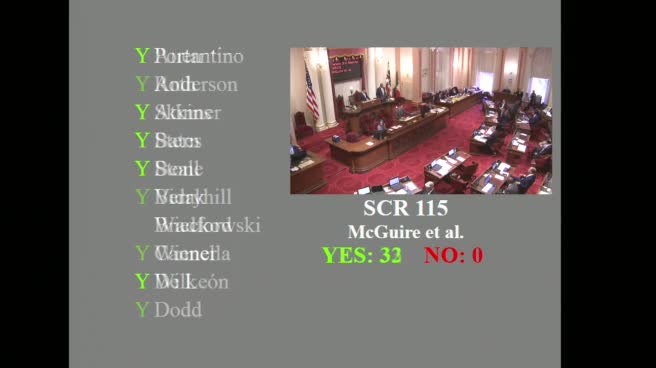
Bill Author

Bill Co-Author(s):
