SB 880: Workers’ compensation.
- Session Year: 2017-2018
- House: Senate
- Latest Version Date: 2018-09-23
Existing law establishes a workers compensation system, administered by the Administrative Director of the Division of Workers Compensation, to compensate an employee for injuries sustained in the course of his or her employment. Existing law governs temporary and permanent disability indemnity payments. Existing law prohibits a disability indemnity payment from being made by any written instrument unless it is immediately negotiable and payable in cash, on demand, without discount, at some established place of business in the state.
Existing law establishes in the Department of Industrial Relations the Commission on Health and Safety and Workers Compensation to conduct a continuing examination of the workers compensation system and of the states activities to prevent industrial injuries and occupational diseases. Existing law authorizes the commission to conduct or contract for studies it deems necessary to carry out its responsibilities and to issue an annual report on the system.
This bill would, until January 1, 2023, authorize an employer, with the written consent of the employee, to deposit disability indemnity payments for the employee in a prepaid card account that meets specified requirements, including, among other things, allowing the employee reasonable access to in-network automatic teller machines. The bill would require employers to provide all necessary aggregated data on their prepaid account programs to the Commission on Health and Safety and Workers Compensation upon request, and would require the commission to issue a report on or before December 1, 2022, to the Legislature regarding payments made to those prepaid card accounts, as specified.
Existing law establishes a workers compensation system, administered by the Administrative Director of the Division of Workers Compensation, to compensate an employee for injuries sustained in the course of his or her employment. Existing law governs temporary and permanent disability indemnity payments. Existing law prohibits a disability indemnity payment from being made by any written instrument unless it is immediately negotiable and payable in cash, on demand, without discount, at some established place of business in the state.
Existing law establishes in the Department of Industrial Relations the Commission on Health and Safety and Workers Compensation to conduct a continuing examination of the workers compensation system and of the states activities to prevent industrial injuries and occupational diseases. Existing law authorizes the commission to conduct or contract for studies it deems necessary to carry out its responsibilities and to issue an annual report on the system.
This bill would, until January 1, 2023, authorize an employer, with the written consent of the employee, to deposit disability indemnity payments for the employee in a prepaid card account that meets specified requirements, including, among other things, allowing the employee reasonable access to in-network automatic teller machines. The bill would require employers to provide all necessary aggregated data on their prepaid account programs to the Commission on Health and Safety and Workers Compensation upon request, and would require the commission to issue a report on or before December 1, 2022, to the Legislature regarding payments made to those prepaid card accounts, as specified.
Existing law establishes a workers compensation system, administered by the Administrative Director of the Division of Workers Compensation, to compensate an employee for injuries sustained in the course of his or her employment. Existing law governs temporary and permanent disability indemnity payments. Existing law prohibits a disability indemnity payment from being made by any written instrument unless it is immediately negotiable and payable in cash, on demand, without discount, at some established place of business in the state.
Existing law establishes in the Department of Industrial Relations the Commission on Health and Safety and Workers Compensation to conduct a continuing examination of the workers compensation system and of the states activities to prevent industrial injuries and occupational diseases. Existing law authorizes the commission to conduct or contract for studies it deems necessary to carry out its responsibilities and to issue an annual report on the system.
This bill would, until January 1, 2023, authorize an employer, with the written consent of the employee, to deposit temporary disability indemnity payments for the employee in a prepaid card account that meets specified requirements, including, among other things, allowing the employee reasonable access to in-network automatic teller machines. The bill would require employers to provide all necessary aggregated data on their prepaid account programs to the Commission on Health and Safety and Workers Compensation upon request, and would require the commission to issue a report on or before December 1, 2022, to the Legislature regarding payments made to those prepaid card accounts, as specified.
Existing law establishes a workers compensation system, administered by the Administrative Director of the Division of Workers Compensation, to compensate an employee for injuries sustained in the course of his or her employment. Existing law governs temporary and permanent disability indemnity payments. Existing law prohibits a disability indemnity payment from being made by any written instrument unless it is immediately negotiable and payable in cash, on demand, without discount, at some established place of business in the state.
Existing law establishes in the Department of Industrial Relations the Commission on Health and Safety and Workers Compensation to conduct a continuing examination of the workers compensation system and of the states activities to prevent industrial injuries and occupational diseases. Existing law authorizes the commission to conduct or contract for studies it deems necessary to carry out its responsibilities and to issue an annual report on the system.
This bill would, until January 1, 2023, authorize the State Compensation Insurance Fund (SCIF), an employer, with the written consent of the employee, to deposit temporary disability indemnity payments for the employee in a prepaid card account that meets specified requirements, including, among other things, allowing the employee reasonable access to in-network automatic teller machines. The bill would require SCIF employers to provide all necessary aggregated data on their prepaid account programs to the Commission on Health and Safety and Workers Compensation upon request, and would require the commission to issue a report on or before December 1, 2022, to the Legislature regarding payments made to those prepaid card accounts, as specified.
Existing law establishes a workers compensation system, administered by the Administrative Director of the Division of Workers Compensation, to compensate an employee for injuries sustained in the course of his or her employment. Existing law prohibits a disability indemnity payment from being made by any written instrument unless it is immediately negotiable and payable in cash, on demand, without discount, at some established place of business in the state.
This bill would, until January 1, 2023, authorize the State Compensation Insurance Fund (SCIF), with the written consent of the employee, to deposit temporary disability indemnity payments for the employee in a prepaid card account that meets specified requirements, including, among other things, allowing the employee reasonable access to in-network automatic teller machines. The bill would require SCIF to issue a report on or before December 1, 2022, to the Legislature regarding payments made to those prepaid card accounts, as specified.
Existing law prohibits a person or entity, other than physicians or attorneys, from advertising, printing, displaying, publishing, distributing, or broadcasting in any manner a statement concerning services or benefits to be provided to an injured worker, which is paid for by that person or entity that is false, misleading, or deceptive. Violation of these provisions is a misdemeanor punishable by incarceration in the county jail for not more than one year, or by a fine not exceeding $10,000, or by both that imprisonment and fine.This bill would make technical, nonsubstantive changes to the above provision and would delete an obsolete provision.Existing law prohibits a person or entity, other than physicians or attorneys, from advertising, printing, displaying, publishing, distributing, or broadcasting in any manner a statement concerning services or benefits to be provided to an injured worker, which is paid for by that person or entity that is false, misleading, or deceptive. Violation of these provisions is a misdemeanor punishable by incarceration in the county jail for not more than one year, or by a fine not exceeding $10,000, or by both that imprisonment and fine.
This bill would make technical, nonsubstantive changes to the above provision and would delete an obsolete provision.
(a)(1)A disability indemnity payment shall not be made by any written instrument unless it is immediately negotiable and payable in cash, on demand, without discount, at some established place of business in the state.
(2)This section does not prohibit an employer from depositing the disability indemnity payment in an account in any bank, savings and loan association, or credit union of the employees choice in this state, provided the employee has voluntarily authorized the deposit, nor does it prohibit an employer from electronically depositing the disability indemnity payment in an account in any bank, savings and loan association, or credit union, that the employee has previously authorized to receive electronic deposits of payroll, unless the employee has requested, in writing, that disability indemnity benefits not be electronically deposited in the account.
(3)(A)An employer may commence a program under which disability indemnity payments are deposited in a prepaid card account for the employee. The employee shall provide written consent to the employer to use a prepaid card account for the employees disability payments. The prepaid card account shall meet the applicable requirements of Section 1339.1 of the Unemployment Insurance Code. For purposes of this section, the terms prepaid card and prepaid card account have the same meanings as defined in Section 1339.1 of the Unemployment Insurance Code. For purposes of this section, a prepaid card shall also meet all of the following requirements:
(i)Allow the employee to withdraw the entire balance on the card in one transaction without incurring fees.
(ii)Allow the employee reasonable access to in-network automatic teller machines (ATMs).
(iii)Allow the employee to make point-of-sale purchases without incurring fees from the financial institution.
(iv)Prohibit a link to any form of credit, including a loan against future payments or a cash advance on future payments.
(B)The fees associated with the use of the prepaid card shall be disclosed to the employee in writing. The only permissible fees associated with the use of a prepaid card are those for a replacement card provided through expedited delivery, out-of-network ATM fees on the third and subsequent withdrawal per deposit, and fees associated with foreign transactions.
(C)If an employee has consented to use the prepaid card payment system under this section, either the employer or the employee may opt to change the method of payment to another method consistent with this section by providing 30 days written notice to the other party.
(D)On or before December 1, 2022, the Commission on Health and Safety and Workers Compensation shall issue a report to the Legislature on payments made to prepaid card accounts. Employers shall provide all necessary aggregated data on their prepaid account programs to the commission upon request. The report shall include, but is not limited to, the following:
(i)The number of employees who elected to receive their disability indemnity payments in a prepaid card account.
(ii)The cash value of the disability benefits sent to prepaid card accounts.
(iii)The number of employees who opted to change the method of payment from a prepaid card account to either a written instrument or electronic deposit.
(E)The report issued pursuant to subparagraph (D) shall comply with Section 9795 of the Government Code.
(b)It is not a violation of this section if either of the following delays occurs in connection with a transaction authorized pursuant to this section, and the delay is caused solely by the application of state or federal banking laws or regulations:
(1)A delay in the negotiation of a written instrument, including a delay in the deposit or electronic deposit of a check to a prepaid card account.
(2)A delay in the deposit of a disability indemnity payment to a prepaid card account.
(c)This section shall remain in effect only until January 1, 2023, and as of that date is repealed.
SEC. 2.Section 4651 is added to the Labor Code, to read:4651.(a)A disability indemnity payment shall not be made by any written instrument unless it is immediately negotiable and payable in cash, on demand, without discount, at some established place of business in the state.
(b)This section does not prohibit an employer from depositing the disability indemnity payment in an account in any bank, savings and loan association, or credit union of the employees choice in this state, provided the employee has voluntarily authorized the deposit, nor does it prohibit an employer from electronically depositing the disability indemnity payment in an account in any bank, savings and loan association, or credit union that the employee has previously authorized to receive electronic deposits of payroll, unless the employee has requested, in writing, that disability indemnity benefits not be electronically deposited in the account.
(c)It is not a violation of this section if a delay in the negotiation of a written instrument is caused solely by the application of state or federal banking laws or regulations.
(d)This section shall become operative on January 1, 2023.
(a)(1)A disability indemnity payment shall not be made by any written instrument unless it is immediately negotiable and payable in cash, on demand, without discount, at some established place of business in the state.
(2)This section does not prohibit an employer from depositing the disability indemnity payment in an account in any bank, savings and loan association, or credit union of the employees choice in this state, provided the employee has voluntarily authorized the deposit, nor does it prohibit an employer from electronically depositing the disability indemnity payment in an account in any bank, savings and loan association, or credit union, that the employee has previously authorized to receive electronic deposits of payroll, unless the employee has requested, in writing, that disability indemnity benefits not be electronically deposited in the account.
(3)(A)An employer may commence a program under which disability indemnity payments are deposited in a prepaid card account for the employee. The employee shall provide written consent to the employer to use a prepaid card account for the employees disability payments. The prepaid card account shall meet the applicable requirements of Section 1339.1 of the Unemployment Insurance Code. For purposes of this section, the terms prepaid card and prepaid card account have the same meanings as defined in Section 1339.1 of the Unemployment Insurance Code. For purposes of this section, a prepaid card shall also meet all of the following requirements:
(i)Allow the employee to withdraw the entire balance on the card in one transaction without incurring fees.
(ii)Allow the employee reasonable access to in-network automatic teller machines (ATMs).
(iii)Allow the employee to make point-of-sale purchases without incurring fees from the financial institution.
(iv)Prohibit a link to any form of credit, including a loan against future payments or a cash advance on future payments.
(B)The fees associated with the use of the prepaid card shall be disclosed to the employee in writing. The only permissible fees associated with the use of a prepaid card are those for a replacement card provided through expedited delivery, out-of-network ATM fees on the third and subsequent withdrawal per deposit, and fees associated with foreign transactions.
(C)If an employee has consented to use the prepaid card payment system under this section, either the employer or the employee may opt to change the method of payment to another method consistent with this section by providing 30 days written notice to the other party.
(D)On or before December 1, 2022, the Commission on Health and Safety and Workers Compensation shall issue a report to the Legislature on payments made to prepaid card accounts. Employers shall provide all necessary aggregated data on their prepaid account programs to the commission upon request. The report shall include, but is not limited to, the following:
(i)The number of employees who elected to receive their disability indemnity payments in a prepaid card account.
(ii)The cash value of the disability benefits sent to prepaid card accounts.
(iii)The number of employees who opted to change the method of payment from a prepaid card account to either a written instrument or electronic deposit.
(E)The report issued pursuant to subparagraph (D) shall comply with Section 9795 of the Government Code.
(b)It is not a violation of this section if either of the following delays occurs in connection with a transaction authorized pursuant to this section, and the delay is caused solely by the application of state or federal banking laws or regulations:
(1)A delay in the negotiation of a written instrument, including a delay in the deposit or electronic deposit of a check to a prepaid card account.
(2)A delay in the deposit of a disability indemnity payment to a prepaid card account.
(c)This section shall remain in effect only until January 1, 2023, and as of that date is repealed.
SEC. 2.Section 4651 is added to the Labor Code, to read:4651.(a)A disability indemnity payment shall not be made by any written instrument unless it is immediately negotiable and payable in cash, on demand, without discount, at some established place of business in the state.
(b)This section does not prohibit an employer from depositing the disability indemnity payment in an account in any bank, savings and loan association, or credit union of the employees choice in this state, provided the employee has voluntarily authorized the deposit, nor does it prohibit an employer from electronically depositing the disability indemnity payment in an account in any bank, savings and loan association, or credit union that the employee has previously authorized to receive electronic deposits of payroll, unless the employee has requested, in writing, that disability indemnity benefits not be electronically deposited in the account.
(c)It is not a violation of this section if a delay in the negotiation of a written instrument is caused solely by the application of state or federal banking laws or regulations.
(d)This section shall become operative on January 1, 2023.
(a)(1)A disability indemnity payment shall not be made by any written instrument unless it is immediately negotiable and payable in cash, on demand, without discount, at some established place of business in the state.
(2)This section does not prohibit an employer from depositing the disability indemnity payment in an account in any bank, savings and loan association, or credit union of the employees choice in this state, provided the employee has voluntarily authorized the deposit, nor does it prohibit an employer from electronically depositing the disability indemnity payment in an account in any bank, savings and loan association, or credit union, that the employee has previously authorized to receive electronic deposits of payroll, unless the employee has requested, in writing, that disability indemnity benefits not be electronically deposited in the account.
(3)(A)An employer may commence a program under which the employer deposits temporary disability indemnity payments are deposited in a prepaid card account for the employee. The employee shall provide written consent for to the employer to use a prepaid card account for the employees temporary disability payments. The prepaid card account shall meet the applicable requirements of Section 1339.1 of the Unemployment Insurance Code. For purposes of this section, the terms prepaid card and prepaid card account have the same meanings as defined in Section 1339.1 of the Unemployment Insurance Code. For purposes of this section, a prepaid card shall also meet all of the following requirements:
(i)Allow the employee to withdraw the entire balance on the card in one transaction without incurring fees.
(ii)Allow the employee reasonable access to in-network automatic teller machines (ATMs).
(iii)Allow the employee to make point-of-sale purchases without incurring fees from the financial institution.
(iv)Prohibit a link to any form of credit, including a loan against future payments or a cash advance on future payments.
(B)The fees associated with the use of the prepaid card shall be disclosed to the employee in writing. The only permissible fees associated with the use of a prepaid card are those for a replacement card provided through expedited delivery, out-of-network ATM fees on the third and subsequent withdrawal per deposit, and fees associated with foreign transactions.
(C)If an employee has consented to use the prepaid card payment system under this section, either the employer or the employee may opt to change the method of payment to another method consistent with this section by providing 30 days written notice to the other party.
(D)On or before December 1, 2022, the Commission on Health and Safety and Workers Compensation shall issue a report to the Legislature on payments made to prepaid card accounts. Employers shall provide all necessary aggregated data on their prepaid account programs to the commission upon request. The report shall include, but is not limited to, the following:
(i)The number of employees who elected to receive their temporary disability indemnity payments in a prepaid card account.
(ii)The cash value of the temporary disability benefits sent to prepaid card accounts.
(iii)The number of employees who opted to change the method of payment from a prepaid card account to either a written instrument or electronic deposit.
(E)The report issued pursuant to subparagraph (D) shall comply with Section 9795 of the Government Code.
(b)It is not a violation of this section if either of the following delays occurs in connection with a transaction authorized pursuant to this section, and the delay is caused solely by the application of state or federal banking laws or regulations:
(1)A delay in the negotiation of a written instrument, including a delay in the deposit or electronic deposit of a check to a prepaid card account.
(2)A delay in the deposit of a temporary disability indemnity payment to a prepaid card account.
(c)This section shall remain in effect only until January 1, 2023, and as of that date is repealed.
SEC. 2.Section 4651 is added to the Labor Code, to read:4651.(a)A disability indemnity payment shall not be made by any written instrument unless it is immediately negotiable and payable in cash, on demand, without discount, at some established place of business in the state.
(b)This section does not prohibit an employer from depositing the disability indemnity payment in an account in any bank, savings and loan association, or credit union of the employees choice in this state, provided the employee has voluntarily authorized the deposit, nor does it prohibit an employer from electronically depositing the disability indemnity payment in an account in any bank, savings and loan association, or credit union that the employee has previously authorized to receive electronic deposits of payroll, unless the employee has requested, in writing, that disability indemnity benefits not be electronically deposited in the account.
(c)It is not a violation of this section if a delay in the negotiation of a written instrument is caused solely by the application of state or federal banking laws or regulations.
(d)This section shall become operative on January 1, 2023.
(a)(1)A disability indemnity payment shall not be made by any written instrument unless it is immediately negotiable and payable in cash, on demand, without discount, at some established place of business in the state.
(2)This section does not prohibit an employer from depositing the disability indemnity payment in an account in any bank, savings and loan association, or credit union of the employees choice in this state, provided the employee has voluntarily authorized the deposit, nor does it prohibit an employer from electronically depositing the disability indemnity payment in an account in any bank, savings and loan association, or credit union, that the employee has previously authorized to receive electronic deposits of payroll, unless the employee has requested, in writing, that disability indemnity benefits not be electronically deposited in the account.
(3)(A)The State Compensation Insurance Fund (SCIF) An employer may commence a program under which SCIF the employer deposits temporary disability indemnity payments in a prepaid card account for the employee. The employee shall provide written consent for SCIF the employer to use a prepaid card account for the employees temporary disability payments. The prepaid card account shall meet the applicable requirements of Section 1339.1 of the Unemployment Insurance Code. For purposes of this section, the terms prepaid card and prepaid card account have the same meanings as defined in Section 1339.1 of the Unemployment Insurance Code. For purposes of this section, a prepaid card shall also meet all of the following requirements:
(i)Allow the employee to withdraw the entire balance on the card in one transaction without incurring fees.
(ii)Allow the employee reasonable access to in-network automatic teller machines (ATMs).
(iii)Allow the employee to make point-of-sale purchases without incurring fees from the financial institution.
(iv)Prohibit a link to any form of credit, including a loan against future payments or a cash advance on future payments.
(B)The fees associated with the use of the prepaid card shall be disclosed to the employee in writing. The only permissible fees associated with the use of a prepaid card are those for a replacement card provided through expedited delivery, out-of-network ATM fees on the third and subsequent withdrawal per deposit, and fees associated with foreign transactions.
(C)If an employee has consented to use the prepaid card payment system under this section, either SCIF the employer or the employee may opt to change the method of payment to another method consistent with this section by providing 30 days written notice to the other party.
(D)On or before December 1, 2022, SCIF the Commission on Health and Safety and Workers Compensation shall issue a report to the Legislature on payments made to prepaid card accounts including, but accounts. Employers shall provide all necessary aggregated data on their prepaid account programs to the commission upon request. The report shall include, but is not limited to, the following:
(i)The number of employees who elected to receive their temporary disability indemnity payments in a prepaid card account.
(ii)The cash value of the temporary disability benefits sent to prepaid card accounts.
(iii)The number of employees who opted to change the method of payment from a prepaid card account to either a written instrument or electronic deposit.
(E)The report issued pursuant to subparagraph (D) shall comply with Section 9795 of the Government Code.
(b)It is not a violation of this section if a delay in the negotiation of a written instrument either of the following delays occurs in connection with a transaction authorized pursuant to this section, and the delay is caused solely by the application of state or federal banking laws or regulations. regulations:
(1)A delay in the negotiation of a written instrument, including a delay in the deposit or electronic deposit of a check to a prepaid card account.
(2)A delay in the deposit of a temporary disability indemnity payment to a prepaid card account.
(c)This section shall remain in effect only until January 1, 2023, and as of that date is repealed.
SEC. 2.Section 4651 is added to the Labor Code, to read:4651.(a)A disability indemnity payment shall not be made by any written instrument unless it is immediately negotiable and payable in cash, on demand, without discount, at some established place of business in the state.
(b)This section does not prohibit an employer from depositing the disability indemnity payment in an account in any bank, savings and loan association, or credit union of the employees choice in this state, provided the employee has voluntarily authorized the deposit, nor does it prohibit an employer from electronically depositing the disability indemnity payment in an account in any bank, savings and loan association, or credit union that the employee has previously authorized to receive electronic deposits of payroll, unless the employee has requested, in writing, that disability indemnity benefits not be electronically deposited in the account.
(c)It is not a violation of this section if a delay in the negotiation of a written instrument is caused solely by the application of state or federal banking laws or regulations.
(d)This section shall become operative on January 1, 2023.
(a)No (1)A disability indemnity payment shall not be made by any written instrument unless it is immediately negotiable and payable in cash, on demand, without discount discount, at some established place of business in the state.
Nothing in this section shall(2)This section does not prohibit an employer from depositing the disability indemnity payment in an account in any bank, savings and loan association association, or credit union of the employees choice in this state, provided the employee has voluntarily authorized the deposit, nor shall does it prohibit an employer from electronically depositing the disability indemnity payment in an account in any bank, savings and loan association, or credit union, that the employee has previously authorized to receive electronic deposits of payroll, unless the employee has requested, in writing, that disability indemnity benefits not be electronically deposited in the account.
(3)(A)The State Compensation Insurance Fund (SCIF) may commence a program under which SCIF deposits temporary disability indemnity payments in a prepaid card account for the employee. The employee shall provide written consent for SCIF to use a prepaid card account for the employees temporary disability payments. The prepaid card account shall meet the applicable requirements of Section 1339.1 of the Unemployment Insurance Code. For purposes of this section, the terms prepaid card and prepaid card account have the same meanings as defined in Section 1339.1 of the Unemployment Insurance Code. For purposes of this section, a prepaid card shall also meet all of the following requirements:
(i)Allow the employee to withdraw the entire balance on the card in one transaction without incurring fees.
(ii)Allow the employee reasonable access to in-network automatic teller machines (ATMs).
(iii)Allow the employee to make point-of-sale purchases without incurring fees from the financial institution.
(iv)Prohibit a link to any form of credit, including a loan against future payments or a cash advance on future payments.
(B)The fees associated with the use of the prepaid card shall be disclosed to the employee in writing. The only permissible fees associated with the use of a prepaid card are those for a replacement card provided through expedited delivery, out-of-network ATM fees on the third and subsequent withdrawal per deposit, and fees associated with foreign transactions.
(C)If an employee has consented to use the prepaid card payment system under this section, either SCIF or the employee may opt to change the method of payment to another method consistent with this section by providing 30 days written notice to the other party.
(D)On or before December 1, 2022, SCIF shall issue a report to the Legislature on payments made to prepaid card accounts including, but not limited to, the following:
(i)The number of employees who elected to receive their temporary disability indemnity payments in a prepaid card account.
(ii)The cash value of the temporary disability benefits sent to prepaid card accounts.
(iii)The number of employees who opted to change the method of payment from a prepaid card account to either a written instrument or electronic deposit.
(E)The report issued pursuant to subparagraph (D) shall comply with Section 9795 of the Government Code.
(b)It is not a violation of this section if a delay in the negotiation of a written instrument is caused solely by the application of state or federal banking laws or regulations.
(c)On or before July 1, 2004, the administrative director shall present to the Governor recommendations on how to provide better access to funds paid to injured workers in light of the requirements of federal and state laws and regulations governing the negotiability of disability indemnity payments. The administrative director shall make specific recommendations regarding payments to migratory and seasonal farmworkers. The Commission on Health and Safety and Workers Compensation and the Employment Development Department shall assist the administrative director in the completion of this report.(c)This section shall remain in effect only until January 1, 2023, and as of that date is repealed.
SEC. 2.Section 4651 is added to the Labor Code, to read:4651.(a)A disability indemnity payment shall not be made by any written instrument unless it is immediately negotiable and payable in cash, on demand, without discount, at some established place of business in the state.
(b)This section does not prohibit an employer from depositing the disability indemnity payment in an account in any bank, savings and loan association, or credit union of the employees choice in this state, provided the employee has voluntarily authorized the deposit, nor does it prohibit an employer from electronically depositing the disability indemnity payment in an account in any bank, savings and loan association, or credit union that the employee has previously authorized to receive electronic deposits of payroll, unless the employee has requested, in writing, that disability indemnity benefits not be electronically deposited in the account.
(c)It is not a violation of this section if a delay in the negotiation of a written instrument is caused solely by the application of state or federal banking laws or regulations.
(d)This section shall become operative on January 1, 2023.
SECTION 1.Section 139.43 of the Labor Code is amended to read:139.43.(a)A person or entity shall not advertise, print, display, publish, distribute, or broadcast, or cause or permit to be advertised, printed, displayed, published, distributed, or broadcast in any manner, any statement concerning services or benefits to be provided to an injured worker, that is paid for directly or indirectly by that person or entity and is false, misleading, or deceptive, or that omits material information necessary to make the statement therein not false, misleading, or deceptive.(b)The administrative director shall adopt regulations governing advertising by persons or entities other than physicians and attorneys with respect to services or benefits for injured workers. In promulgating regulations pursuant to this subdivision, the administrative director shall review existing regulations, including those adopted by the State Bar, to identify those regulatory approaches that may serve as a model for regulations required by this subdivision.(c)A violation of subdivision (a) is a misdemeanor, punishable by incarceration in the county jail for not more than one year, or by a fine not exceeding ten thousand dollars ($10,000), or both.(d)This section shall not apply to physicians or attorneys. It is the intent of the Legislature to exempt physicians and attorneys from this section because the conduct regulated by this section, with respect to physicians and attorneys, is governed by other provisions of law.(a)No A person or entity shall not advertise, print, display, publish, distribute, or broadcast, or cause or permit to be advertised, printed, displayed, published, distributed, or broadcast in any manner, any statement concerning services or benefits to be provided to an injured worker, that is paid for directly or indirectly by that person or entity and is false, misleading, or deceptive, or that omits material information necessary to make the statement therein not false, misleading, or deceptive.
(b)As soon as reasonably possible, but not later than January 1, 1994, the The administrative director shall adopt regulations governing advertising by persons or entities other than physicians and attorneys with respect to services or benefits for injured workers. In promulgating regulations pursuant to this subdivision, the administrative director shall review existing regulations, including those adopted by the State Bar, to identify those regulatory approaches that may serve as a model for regulations required by this subdivision.
(c)A violation of subdivision (a) is a misdemeanor, punishable by incarceration in the county jail for not more than one year, or by a fine not exceeding ten thousand dollars ($10,000), or both.
(d)This section shall not apply to physicians or attorneys. It is the intent of the Legislature to exempt physicians and attorneys from this section because the conduct regulated by this section, with respect to physicians and attorneys, is governed by other provisions of law.
|
Date
|
Status
|
|---|---|
| Sep 23, 2018 | Chaptered by Secretary of State. Chapter 730, Statutes of 2018. |
| Sep 23, 2018 | Approved by the Governor. |
| Aug 24, 2018 | Enrolled and presented to the Governor at 4 p.m. |
| Aug 20, 2018 | Assembly amendments concurred in. (Ayes 34. Noes 0.) Ordered to engrossing and enrolling. |
| Aug 16, 2018 | In Senate. Concurrence in Assembly amendments pending. |
| Aug 16, 2018 | Read third time. Passed. Ordered to the Senate. |
| Aug 9, 2018 | Read second time. Ordered to consent calendar. |
| Aug 8, 2018 | From committee: Do pass. Ordered to consent calendar. (Ayes 17. Noes 0.) (August 8). |
| Aug 6, 2018 | From committee with author's amendments. Read second time and amended. Re-referred to Com. on APPR. |
| Jun 27, 2018 | From committee: Do pass and re-refer to Com. on APPR. (Ayes 13. Noes 0.) (June 27). Re-referred to Com. on APPR. |
| Jun 20, 2018 | From committee with author's amendments. Read second time and amended. Re-referred to Com. on INS. |
| Jun 4, 2018 | Referred to Com. on INS. |
| May 31, 2018 | In Assembly. Read first time. Held at Desk. |
| May 31, 2018 | Read third time. Passed. (Ayes 39. Noes 0.) Ordered to the Assembly. |
| May 29, 2018 | Ordered to special consent calendar. |
| May 25, 2018 | From committee: Do pass. (Ayes 7. Noes 0.) (May 25). |
| May 18, 2018 | Set for hearing May 25. |
| May 7, 2018 | May 7 hearing: Placed on APPR. suspense file. |
| Apr 27, 2018 | Set for hearing May 7. |
| Apr 25, 2018 | From committee: Do pass and re-refer to Com. on APPR. (Ayes 5. Noes 0.) (April 25). Re-referred to Com. on APPR. |
| Apr 20, 2018 | Set for hearing April 25. |
| Apr 19, 2018 | Re-referred to Com. on L. & I.R. |
| Apr 9, 2018 | From committee with author's amendments. Read second time and amended. Re-referred to Com. on RLS. |
| Jan 16, 2018 | Referred to Com. on RLS. |
| Jan 11, 2018 | From printer. May be acted upon on or after February 10. |
| Jan 10, 2018 | Introduced. To Com. on RLS. for assignment. To print. |
|
Date
|
Description
|
Location
|
Votes
|
|
|---|---|---|---|---|
| Aug 20, 2018 | Unfinished Business SB880 Pan Concurrence | Senate Floor |
Passed |
|
| Aug 16, 2018 | SB 880 Pan Consent Calendar Second Day Regular Session | Assembly Floor |
Passed |
|
| Aug 8, 2018 | Do pass. To Consent Calendar. | Assembly Standing Committee on Appropriations |
Passed |
|
| Jun 27, 2018 | Do pass and be re-referred to the Committee on [Appropriations] | Assembly Standing Committee on Insurance |
Passed |
|
| May 31, 2018 | Special Consent SB880 | Senate Floor |
Passed |
|
| May 25, 2018 | Do pass | Senate Standing Committee on Appropriations |
Passed |
|
| May 7, 2018 | Placed on suspense file | Senate Standing Committee on Appropriations |
Passed |
|
| Apr 25, 2018 | Do pass, but first be re-referred to the Committee on [Appropriations] | Senate Standing Committee on Labor and Industrial Relations |
Passed |
This list shows positions taken on this bill by organizations on the date displayed, which is linked to the original source.
Positions by individuals are not included.
|
Organization
|
Position
|
Date
|
|---|---|---|
| American Insurance Association | ** Support | Aug 18, 2018 |
| Anthem | * For If Amend | Apr 25, 2018 |
| California Bankers Association | * Indeterminate | Jun 27, 2018 |
| California Coalition on Workers' Compensation | ** Support | Aug 18, 2018 |
| California Labor Federation | * Indeterminate | Apr 25, 2018 |
| California State Association Of Counties | ** Support | Aug 18, 2018 |
| First Aid | * Indeterminate | Jun 27, 2018 |
| Impact Venture Capital | * Support | Jun 27, 2018 |
| InsureCard | * Support | Jun 27, 2018 |
| Property Casualty Insurers | ** Support | Aug 18, 2018 |
| State Compensation Insurance Fund | ** Support | Aug 18, 2018 |
| Zenith Insurance Company | ** Support | Aug 18, 2018 |
Office of Senate Floor Analyses (916) 651-1520 Fax: (916) 327-4478 | SB |
UNFINISHED BUSINESS
Bill No: SB 880
:
SENATE LABOR & IND. REL. COMMITTEE: 5-0, 4/25/18
AYES: Pan, Stone, Jackson, Mitchell, Wieckowski
SENATE APPROPRIATIONS COMMITTEE: 7-0, 5/25/18
AYES: Lara, Bates, Beall, Bradford, Hill, Nielsen, Wiener
SENATE FLOOR: 39-0, 5/31/18
AYES: Allen, Anderson, Atkins, Bates, Beall, Berryhill, Bradford, Cannella, De León, Dodd, Fuller, Gaines, Galgiani, Glazer, Hernandez, Hertzberg, Hill, Hueso, Jackson, Lara, Leyva, McGuire, Mitchell, Monning, Moorlach, Morrell, Newman, Nguyen, Nielsen, Pan, Portantino, Roth, Skinner, Stern, Stone, Vidak, Wieckowski, Wiener, Wilk
ASSEMBLY FLOOR: 76-0, 8/16/18 (Consent) - See last page for vote
DIGEST: This bill permits the employers to conduct a pilot program on transmitting disability indemnity benefits by a prepaid card, rather than a paper check.
Assembly Amendments
expand the number of participants in the pilot program from State Compensation Insurance Fund (SCIF) to all employers (see below for note), and also expand the benefits which may be delivered by a prepaid card from just temporary disability indemnity benefits to all disability indemnity benefits.
Existing law:
- Establishes a workers’ compensation system that provides benefits to an employee who suffers from an injury or illness that arises out of and in the course of employment, irrespective of fault. This system requires all employers to secure payment of benefits by either securing the consent of the Department of Industrial Relations to self-insure or by securing insurance against liability from an insurance company duly authorized by the state.
- Requires that, if an injury causes temporary disability, the first payment of temporary disability indemnity shall be made not later than 14 days after knowledge of the injury and disability. Each additional payment of temporary disability indemnity benefits must be made as due every two weeks on the day designated with the first payment. (Labor Code §4650)
- Prohibits any disability indemnity payment being made by any written instrument unless it is immediately negotiable and payable in cash, on demand, without discount at some established place of business in the state. (Labor Code §4651)
- Permits an employer to electronically deposit indemnity benefits into an account selected by the employee, provided that the employee has previously authorized to receive electronic deposits of payroll, unless otherwise requested by the employee, as specified. (Labor Code §4651)
- Defines “prepaid card” or “prepaid card account” as a card, code, or other means of access to funds of a recipient that is usable at multiple, unaffiliated merchants for goods or services, or usable at automated teller machines.
(Unemployment Insurance Code §1339.1) - Defines writing as “handwriting, typewriting, printing, photostating, photographing, photocopying, transmitting by electronic mail or facsimile, and every other means of recording upon any tangible thing, any form of communication or representation, including letters, words, pictures, sounds, or symbols, or combinations thereof, and any record thereby created, regardless of the manner in which the record has been stored.” (Evidence Code §250)
This bill:
- Permits the employers to begin a program where disability indemnity benefits may be deposited on a prepaid card account, as defined under existing Unemployment Insurance Code, if the injured worker has provided written consent to receive his or her benefits on a prepaid card.
- Requires that a prepaid card account must meet the following requirements:
- Allow the employee to withdraw the entire balance on the card in one transaction without incurring fees.
- Allow the employee reasonable access to in-network automatic teller machines (ATMs).
- Allow the employee to make point-of-sale purchases without incurring fees from the financial institution.
- Prohibit a link to any form of credit, including a loan against future payments or a cash advance on future payments.
- Prohibits any fees being charged to an injured worker in the use of the prepaid card account except for an expedited replacement prepaid card, out-of-network ATM fees on the third and subsequent withdrawal per deposit, and fees associated with foreign transactions.
- Permits either the employer or the injured worker to opt to change the method of payment to another method consistent with this section by providing 30 days’ written notice to the other party.
- Sunsets the prepaid card account program described above on January 1, 2023.
- Requires the Commission on Health and Safety and Workers Compensation (CHSWC), on or before December 1, 2022, to issue a report to the Legislature on payments made to prepaid card accounts including, but not limited to, the following:
- The number of employees who elected to receive their temporary disability indemnity payments in a prepaid card account.
- The cash value of the temporary disability benefits sent to prepaid card accounts.
- The number of employees who opted to change the method of payment from a prepaid card account to either a written instrument or electronic deposit.
Comments
- Disability Indemnity Benefits and Access to Banking in California
Under existing law, indemnity benefits can only be transmitted to injured workers by either a paper check or direct deposit. Both methods pose unique challenges for unbanked households, or households where no one in the household has a bank account. For unbanked workers, direct deposit would generally not be available. Without a relationship with a financial institutions, cashing a check without significant fees would also prove challenging. For example, Walmart charges $3.00 to cash a check of up to $1,000 (or at least 3%). Similar rates are charged by other grocery stores, with check cashing businesses advertising slightly lower rates. For a worker who is only receiving two-thirds of his or her normal paycheck, paying a 3%+ fee every two weeks may be financially challenging.
According to the 2015 FDIC National Survey of Unbanked and Underbanked Households, 6.2% of all California households are unbanked and 19.1% are underbanked. In the Los Angeles-Long Beach-Anaheim Metropolitan Statistical Area (MSA), the unbanked rate is 8.6%. However, according to the same survey, the national rate of unbanked disabled households is 17.6%. For African American and Latino households, the unbanked rate is 18.2 and 16.2%, respectively. For households where Spanish is the only spoken language, the unbanked rate rises to 31%. This may suggest that for households with injured workers, particularly injured workers of color, the unbanked rate may be significantly higher than average.
- SB 880 and Addressing Unbanked Injured Workers
SB 880 attempts to address the issue of unbanked workers receiving their indemnity benefits without significant fees by permitting SCIF to conduct a pilot program to see if injured workers will elect to receive their benefits on a prepaid card. This pilot is modeled off of the existing UI prepaid benefit card program, where unemployed workers receive their UI benefits on a prepaid card. That program, in turn, was modeled from an existing electronic benefit transfer (EBT) program for individuals to receive CalFresh, CalWORKs, and other food and cash aid benefits.
Similar to the Employment Development Department UI benefit card, SB 880 requires that the indemnity benefit prepaid card be fee-free on domestic purchases, in-network ATM withdrawals, up to three out-of-network ATM withdrawals, customer service, and transfer the funds off of the card altogether. The only permitted fees would be for out-of-network ATM fees beyond three withdrawals, expedited card replacement, and foreign transaction fees. Finally, prior to the sunset of the SCIF pilot program, SB 880 requires CHSWC to report to the Legislature on the utilization of the prepaid card program by injured workers.
- Additional Notes on SB 880 and the Assembly Amendments:
- Who are the ‘employers’ which may participate in SB 880?
Unlike many other provisions of the California Labor Code, the statutes which govern workers’ compensation law broadly interpret who is an employer for the purposes of paying benefits. For example, if a small business secures workers’ compensation coverage through a workers’ compensation insurer, the insurer is considered the ‘employer’ for the purposes of workers’ compensation law. If the insurer were to utilize a vendor, then the actions of the vendor would be lieu in employer: for example, if a small business secured workers’ compensation coverage with an insurer, and then that insurer used a vendor to send paper checks to an injured worker, then the injured worker would have legally received his or her indemnity benefits (assuming the paper check was timely and otherwise in compliance with the law).
SB 880 continues the use of a broad definition of employer by being nested in the California workers’ compensation law. Therefore, the prepaid cards discussed by SB 880 may be supplied by the employer directly, or by an insurer, third party administrator, or vendor acting on behalf of any of the parties listed above.
- SB 880 and Written Consent
As noted above, SB 880 requires that an injured worker provides written consent prior to receiving his or her benefits on a prepaid card. The bill, however, is silent on what constitutes written consent. This will likely be addressed through future regulations from the Department of Workers’ Compensation. However, Evidence Code Section 250 gives some guidance for what can constitute written consent: in essence, anything that denotes consent by recording consent on a tangible thing, including forms, letters, emails, and other forms of electronic communication. What cannot be permitted would be utilizing oral consent to enroll an injured worker in the prepaid card program, or similarly registering consent without the injured worker affirmatively consenting to receive his or her benefits on a prepaid card in a written form.
FISCAL EFFECT: Appropriation: Fiscal Com.: Local:
According to the Assembly Appropriations Committee, SB 880 will result in minor and absorbable costs to CHSWC. Additionally, SB 880 will result in costs to the SCIF in the hundreds of thousands of dollars one-time, which would be by offset by administrative cost savings within three years. SCIF is a quasi-state entity, but is not state-funded outside the funds it receives for administering and paying for workers' compensation benefits for state employees.
American Insurance Association
California Coalition on Workers' Compensation
California State Association of Counties
Property Casualty Insurers
State Compensation Insurance Fund
Zenith Insurance Company
OPPOSITION: (Verified 8/16/18)
None received
ARGUMENTS IN SUPPORT: SCIF supports SB 880, noting that, under existing law, injured workers can only receive their benefits through either a paper check or direct deposit. For unbanked workers, direct deposit isn’t available, but paper checks are also problematic because they can be stolen or lost. Even when received in the mail, SCIF argues that unbanked injured workers can only cash their indemnity checks by paying high fees. SCIF believes that SB 880 helps address the needs of unbanked injured workers by permitting SCIF to offer a prepaid card as a part of a pilot program. SCIF argues that, by prohibiting most fees, offering immediate access to funds, and creating an opt out process, SB 880 protects injured workers, ensures their indemnity benefits can be fully utilized, and improves the cost of delivering workers’ compensation benefits.
ASSEMBLY FLOOR: 76-0, 8/16/18
AYES: Acosta, Aguiar-Curry, Travis Allen, Arambula, Baker, Berman, Bigelow, Bonta, Brough, Burke, Caballero, Calderon, Carrillo, Cervantes, Chau, Chávez, Chen, Chiu, Choi, Chu, Cooley, Cooper, Cunningham, Dahle, Daly, Eggman, Flora, Fong, Frazier, Friedman, Gabriel, Gallagher, Eduardo Garcia, Gipson, Gloria, Gonzalez Fletcher, Gray, Grayson, Harper, Holden, Irwin, Jones-Sawyer, Kalra, Kamlager-Dove, Kiley, Lackey, Levine, Limón, Maienschein, Mathis, Mayes, Medina, Melendez, Mullin, Muratsuchi, Nazarian, Obernolte, O'Donnell, Patterson, Quirk, Quirk-Silva, Reyes, Rivas, Rodriguez, Rubio, Salas, Santiago, Steinorth, Mark Stone, Thurmond, Ting, Voepel, Waldron, Weber, Wood, Rendon
NO VOTE RECORDED: Bloom, Cristina Garcia, Low, McCarty
8/18/18 12:32:59
**** END ****
Date of Hearing: August 8, 2018
ASSEMBLY COMMITTEE ON APPROPRIATIONS
Lorena Gonzalez Fletcher, Chair
SBPCA Bill Id:SB 880
Author:(Pan) – As Amended Ver:August 6, 2018
Policy Committee: | Insurance | Vote: | 13 - 0 |
Urgency: No State Mandated Local Program: No Reimbursable: No
SUMMARY:
This bill allows, until January 1, 2023, employers to issue workers' compensation temporary disability indemnity payments by prepaid card accounts with the injured worker's consent, and specifies such card accounts can be used only if certain conditions are met, including withdrawals without payment of fees and accessible automated teller machines.
It also requires the Commission on Health and Safety and Workers' Compensation (CHSWC) to issue a report evaluating the use of prepaid cards accounts.
FISCAL EFFECT:
- Costs to the CHSWC to issue a report are expected to be minor and absorbable.
- Costs to the State Compensation Insurance Fund (SCIF) in the hundreds of thousands of dollars one-time, which would be by offset by administrative cost savings within three years. SCIF is a quasi-state entity, but is not state-funded outside the funds it receives for administering and paying for workers' compensation benefits for state employees.
COMMENTS:
- Purpose. According to the author, because temporary disability benefits can only be transmitted to injured workers by either a paper check or direct deposit, there are unique challenges for “unbanked” households -- households where no one in the household has a bank account. Although some entities have been using prepaid cards, most others have assumed this was not allowed since it is not expressly authorized in statute. This bill will expressly authorize their use, making it cheaper and easier for people to receive their benefits.
- Background. According to the 2015 Federal Deposit Insurance Corporation (FDIC) National Survey of Unbanked and Underbanked Households, around 6% of all California households are unbanked, and these numbers are even higher among disabled households of which over 19% are underbanked (lacking sufficient access to mainstream financial services). Challenges accessing financial services mean many people may experience check-cashing fees or delays in receiving workers' compensation payments. The state Employment Development Department (EDD) already uses prepaid card accounts to issue unemployment insurance and disability insurance payments.
Analysis Prepared by: Lisa Murawski / APPR. / (916) 319-2081
Date of Hearing: June 27, 2018
ASSEMBLY COMMITTEE ON INSURANCE
Tom Daly, Chair
SBPCA Bill Id:SB 880
Author:(Pan) – As Amended Ver:June 20, 2018
SENATE VOTE: 39-0
SUBJECT: Workers’ compensation.
SUMMARY: Authorizes employers to pay temporary disability (TD) benefits by a prepaid electronic funds card, rather than by a paper check. Specifically, this bill:
- Permits employers (self-insured employers and workers’ compensation insurers) to begin a program where temporary disability benefits may be deposited on a prepaid card account, as defined under existing Unemployment Insurance Code requirements currently in use for unemployment insurance benefits, if the injured worker has provided written consent to receive these benefits on a prepaid card.
- Requires that a prepaid card account must meet the following requirements:
- Allow the employee to withdraw the entire balance on the card in one transaction without incurring fees.
- Allow the employee reasonable access to in-network automatic teller machines (ATMs).
- Allow the employee to make point-of-sale purchases without incurring fees from the financial institution.
- Prohibit a link to any form of credit, including a loan against future payments or a cash advance on future payments.
- Prohibits any fees being charged to an injured worker in the use of the prepaid card account except for an expedited replacement prepaid card, out-of-network ATM fees on the third and subsequent withdrawal per deposit, and fees associated with foreign transactions.
- Permits either the employer or the injured worker to opt to change the method of payment to another lawful method by providing 30 days’ written notice to the other party.
- Sunsets the prepaid card account authorization described above on January 1, 2023.
- Requires the Commission on Health and Safety and Workers’ Compensation (CHSWC), on or before December 1, 2022, to issue a report to the Legislature on payments made to prepaid card accounts including, but not limited to, the following:
- The number of employees who elected to receive their temporary disability payments in a prepaid card account.
- The cash value of the temporary disability benefits sent to prepaid card accounts.
- The number of employees who opted to change the method of payment from a prepaid card account to either a written instrument or electronic deposit.
- Requires an employer that uses a prepaid card program to provide all necessary aggregated data requested by the CHSWC.
- Provides that certain delays in delivering benefits caused by compliance with state or federal banking regulations do not constitute violations of the laws mandating timely delivery of benefits.
EXISTING LAW:
- Establishes a workers’ compensation system that provides benefits to an employee who suffers from an injury or illness that arises out of and in the course of employment, irrespective of fault. This system requires all employers to secure payment of benefits by either securing the consent of the Department of Industrial Relations to self-insure, or by securing insurance against liability from an insurance company duly authorized by the state.
- Requires that, if an injury causes temporary disability, the first payment of temporary disability benefits shall be made not later than 14 days after knowledge of the injury and disability. Each additional payment of temporary disability indemnity benefits must be made as due every two weeks on the day designated with the first payment.
- Prohibits any disability payment being made by any written instrument unless it is immediately negotiable and payable in cash, on demand, without discount at some established place of business in the state.
- Permits an employer to electronically deposit disability benefits into an account selected by the employee if the employee has either already authorized electronic deposit of payroll, or has specifically authorized the electronic deposit of the disability payments.
- Defines “prepaid card” or “prepaid card account” as a card, code, or other means of access to funds of a recipient that is usable at multiple, unaffiliated merchants for goods or services, or usable at automated teller machines.
FISCAL EFFECT: Undetermined
COMMENTS:
- Purpose. According to the author, because TD benefits can only be transmitted to injured workers by either a paper check or direct deposit, there are unique challenges for “unbanked” households -- households where no one in the household has a bank account. For unbanked workers, direct deposit would generally not be available. Without a relationship with a financial institution, cashing a check without significant fees would also prove challenging. For example, Walmart charges $3.00 to cash a check of up to $1,000 (or at least 3%). Similar rates are charged by other grocery stores, with check cashing businesses advertising slightly lower rates. SB 880 is designed to assist these households by starting the process of regularizing the use of prepaid card accounts for TD payment, similar to one of the authorized methods for delivering unemployment insurance benefits.
- Unbanked households. Even in 2018, the number of unbanked households is surprising. According to the 2015 FDIC National Survey of Unbanked and Underbanked Households, 6.2% of all California households are unbanked and 19.1% are underbanked. In the Los Angeles-Long Beach-Anaheim Metropolitan Statistical Area (MSA), the unbanked rate is 8.6%. However, according to the same survey, the national rate of unbanked disabled households is 17.6%. For African American and Latino households, the unbanked rate is 18.2 and 16.2%, respectively. For households where Spanish is the only spoken language, the unbanked rate rises to 31%. This may suggest that for households with injured workers, particularly injured workers of color, the unbanked rate may be significantly higher than average.
- Current Practice. Current statutory requirements specify the methods a payor may use to deliver workers’ compensation benefits. While it seems apparent that current statutes do not expressly authorize payment of TD benefits, the Administrative Director of the Division of Workers’ Compensation under the prior Administration sent a letter to a card service provider that essentially authorized use of prepaid cards. This letter was not widely distributed, but a few payors have been using prepaid cards for several years. Most, however, have been operating on the assumption that use of prepaid cards is not authorized by law, and as a result, the recent amendments expanding the bill from a State Compensation Insurance Fund pilot project to a broad authorization have generated substantial support from insurers and self-insured employers alike.
- Written Consent. Concerns have been expressed that the written consent requirement could be an impediment to delivering improved services to the unbanked population of injured workers. It is not clear, for example, if electronic communications satisfy the written consent requirement. Some payors have pointed out that the use of prepaid cards in the Unemployment Insurance and State Disability Insurance programs is the default method of payment, and thus the issue of written consent does not arise. The author may wish to continue the dialogue with payors to address in more detail how injured workers can opt in to the prepaid card payment mechanism.
REGISTERED SUPPORT / OPPOSITION:
Support
American Insurance Association
California Coalition on Workers' Compensation
California State Association of Counties
Property Casualty Insurers
Zenith Insurance Company
Opposition
None received.
Analysis Prepared by: Mark Rakich / INS. / (916) 319-2086
Office of Senate Floor Analyses (916) 651-1520 Fax: (916) 327-4478 | SB |
THIRD READING
Bill No: SB 880
:
SENATE LABOR & IND. REL. COMMITTEE: 5-0, 4/25/18
AYES: Pan, Stone, Jackson, Mitchell, Wieckowski
SENATE APPROPRIATIONS COMMITTEE: 7-0, 5/25/18
AYES: Lara, Bates, Beall, Bradford, Hill, Nielsen, Wiener
DIGEST:
This bill permits the State Compensation Insurance Fund to conduct a pilot program on transmitting temporary disability indemnity benefits by a prepaid card, rather than a paper check.
Existing law:
- Establishes a workers’ compensation system that provides benefits to an employee who suffers from an injury or illness that arises out of and in the course of employment, irrespective of fault. This system requires all employers to secure payment of benefits by either securing the consent of the Department of Industrial Relations to self-insure or by securing insurance against liability from an insurance company duly authorized by the state.
- Requires that, if an injury causes temporary disability, the first payment of temporary disability indemnity shall be made not later than 14 days after knowledge of the injury and disability. Each additional payment of temporary disability indemnity benefits must be made as due every two weeks on the day designated with the first payment. (Labor Code §4650)
- Prohibits any disability indemnity payment being made by any written instrument unless it is immediately negotiable and payable in cash, on demand, without discount at some established place of business in the state. (Labor Code §4651)
- Permits an employer to electronically deposit indemnity benefits into an account selected by the employee, provided that the employee has previously authorized to receive electronic deposits of payroll, unless otherwise requested by the employee, as specified. (Labor Code §4651)
- Defines “prepaid card” or “prepaid card account” as a card, code, or other means of access to funds of a recipient that is usable at multiple, unaffiliated merchants for goods or services, or usable at automated teller machines.
(Unemployment Insurance Code §1339.1)
This bill:
- Permits the State Compensation Insurance Fund (SCIF) to begin a program where temporary disability indemnity benefits may be deposited on a prepaid card account, as defined under existing Unemployment Insurance Code, if the injured worker has provided written consent to receive his or her benefits on a prepaid card.
- Requires that a prepaid card account must meet the following requirements:
- Allow the employee to withdraw the entire balance on the card in one transaction without incurring fees.
- Allow the employee reasonable access to in-network automatic teller machines (ATMs).
- Allow the employee to make point-of-sale purchases without incurring fees from the financial institution.
- Prohibit a link to any form of credit, including a loan against future payments or a cash advance on future payments.
- Prohibits any fees being charged to an injured worker in the use of the prepaid card account except for an expedited replacement prepaid card, out-of-network ATM fees on the third and subsequent withdrawal per deposit, and fees associated with foreign transactions.
- Permits either SCIF or the injured worker to opt to change the method of payment to another method consistent with this section by providing 30 days’ written notice to the other party.
- Sunsets the SCIF prepaid card account program described above on January 1, 2023.
- Requires SCIF, on or before December 1, 2022, to issue a report to the Legislature on payments made to prepaid card accounts including, but not limited to, the following:
- The number of employees who elected to receive their temporary disability indemnity payments in a prepaid card account.
- The cash value of the temporary disability benefits sent to prepaid card accounts.
- The number of employees who opted to change the method of payment from a prepaid card account to either a written instrument or electronic deposit.
Comments
- Temporary Disability Indemnity Benefits and Access to Banking in California
As discussed above, temporary disability (TD) benefits must be paid by an employer to an injured worker who, due to his or her disability, is unable to work. TD benefits are tax-free, cover two-thirds of the injured worker’s wages, and can be collected for up to two years. Similar to unemployment insurance (UI) or disability insurance benefits, the amount due in TD does not generally vary from period to period.
Under existing law, TD benefits can only be transmitted to injured workers by either a paper check or direct deposit. Both methods pose unique challenges for unbanked households, or households where no one in the household has a bank account. For unbanked workers, direct deposit would generally not be available. Without a relationship with a financial institutions, cashing a check without significant fees would also prove challenging. For example, Walmart charges $3.00 to cash a check of up to $1,000 (or at least 3%). Similar rates are charged by other grocery stores, with check cashing businesses advertising slightly lower rates. For a worker who is only receiving two-thirds of his or her normal paycheck, paying a 3%+ fee every two weeks may be financially challenging.
According to the 2015 FDIC National Survey of Unbanked and Underbanked Households, 6.2% of all California households are unbanked and 19.1% are underbanked. In the Los Angeles-Long Beach-Anaheim Metropolitan Statistical Area (MSA), the unbanked rate is 8.6%. However, according to the same survey, the national rate of unbanked disabled households is 17.6%. For African American and Latino households, the unbanked rate is 18.2 and 16.2%, respectively. For households where Spanish is the only spoken language, the unbanked rate rises to 31%. This may suggest that for households with injured workers, particularly injured workers of color, the unbanked rate may be significantly higher than average.
- SB 880 and Addressing Unbanked Injured Workers
SB 880 attempts to address the issue of unbanked workers receiving their TD benefits without significant fees by permitting SCIF to conduct a pilot program to see if injured workers will elect to receive their benefits on a prepaid card. This pilot is modeled off of the existing UI prepaid benefit card program, where unemployed workers receive their UI benefits on a prepaid card. That program, in turn, was modeled from an existing electronic benefit transfer (EBT) program for individuals to receive CalFresh, CalWORKs, and other food and cash aid benefits.
Similar to the Employment Development Department UI benefit card, SB 880 requires that the TD benefit prepaid card be fee-free on domestic purchases, in-network ATM withdrawals, up to three out-of-network ATM withdrawals, customer service, and transfer the funds off of the card altogether. The only permitted fees would be for out-of-network ATM fees beyond three withdrawals, expedited card replacement, and foreign transaction fees. Finally, prior to the sunset of the SCIF pilot program, SB 880 requires SCIF to report to the Legislature on the utilization of the prepaid card program by injured workers.
Related/Prior Legislation
AB 51 (Yamada, 2011) would have explicitly legalized payroll cards for the purposes of wage payment to workers, regulated the fees the payroll card vendor may charge workers, and also required employee consent for an employer to utilize payroll cards for wages. The hearing for AB 51 by the Senate Banking and Finance Committee was cancelled at the request of the author.
FISCAL EFFECT: Appropriation: Fiscal Com.: Local:
According to the Senate Appropriations Committee, SCIF would experience net savings, as prepaid cards would be significantly cheaper to issue to impacted employees. Specifically, SCIF estimates initial one-time costs of $400,000. Over the full five-year period, however, the project would produce net savings of $300,000 (special fund).
State Compensation Insurance Fund
OPPOSITION: (Verified 5/25/18)
None received
ARGUMENTS IN SUPPORT: SCIF supports SB 880, noting that, under existing law, injured workers can only receive their benefits through either a paper check or direct deposit. For unbanked workers, direct deposit isn’t available, but paper checks are also problematic because they can be stolen or lost. Even when received in the mail, SCIF argues that unbanked injured workers can only cash their TD checks by paying high fees. SCIF believes that SB 880 helps address the needs of unbanked injured workers by permitting SCIF to offer a prepaid card as a part of a pilot program. SCIF argues that, by prohibiting most fees, offering immediate access to funds, and creating an opt out process, SB 880 protects injured workers, ensures their TD benefits can be fully utilized, and improves the cost of delivering workers’ compensation benefits.
5/26/18 15:07:18
**** END ****
SENATE COMMITTEE ON APPROPRIATIONS
Senator Ricardo Lara, Chair
2017 - 2018 Regular Session
SB 880 (Pan) - Workers’ compensation
Version: April 9, 2018 | Policy Vote: L. & I.R. 5 - 0 |
Urgency: No | Mandate: No |
Hearing Date: May 7, 2018 | Consultant: Robert Ingenito |
This bill meets the criteria for referral to the Suspense File.
Bill Summary:
SB 880 would permit the State Compensation Insurance Fund (SCIF) to conduct a pilot program on transmitting temporary disability indemnity benefits by a prepaid card, rather than a paper check.
Fiscal Impact:
Transitioning from issuing paper checks to prepaid cards would result in one-time start-up costs to SCIF to update information technology systems and build integrations with third-party vendors. Over the five-year period of the pilot program (2019 to 2023), SCIF would experience net savings, as prepaid cards would be significantly cheaper to issue to impacted employees. Specifically, SCIF estimates initial one-time costs of $400,000. Over the full five-year period, however, the project would produce net savings of $300,000 (special fund).
Background:
Under current law, temporary disability (TD) benefits must be paid by an employer to an injured worker who, due to his or her disability, is unable to work. TD benefits are tax-free, cover two-thirds of the injured worker’s wages, and can be collected for up to two years. Similar to unemployment insurance or disability insurance benefits, the amount due in TD does not generally vary from period to period.
TD benefits can only be transmitted to injured workers by either a paper check or direct deposit. Both methods pose unique challenges for unbanked households, or households where no member has a bank account. Thus, direct deposit would generally not be available. Without a relationship with a financial institutions, cashing a check generally requires significant fees. For example, grocery stores and check cashing businesses will cash a check up to $1,000, but require a flat fee to do so. Depending on the size of the check, the implied interest rate can be significant. For employees unable to work and receiving a fraction of their regular paycheck, paying these fees can be a financial hardship.
Available data indicate that about 6 percent of households statewide are unbanked, and 19 percent are underbanked. In the greater Los Angeles area, the unbanked rate is nearly 9 percent. Moreover, the data suggest that for households with injured workers, particularly injured workers of color, the unbanked rate may be significantly higher than average. For instance, the national rate of unbanked disabled households is about 18 percent. For African American and Latino households, the unbanked rate is 18 percent and 16 percent respectively. For households where Spanish is the only spoken language, the unbanked rate is 31 percent.
Proposed Law:
This bill would do the following:
- Permit SCIF to begin a program where temporary disability indemnity benefits may be deposited on a prepaid card account, as defined under existing Unemployment Insurance Code, if the injured worker has provided written consent to receive his or her benefits on a prepaid card.
- Require that a prepaid card account must meet the following requirements: (1) allow the employee to withdraw the entire balance on the card in one transaction without incurring fees, (2) allow the employee reasonable access to in-network automatic teller machines (ATMs), (3) allow the employee to make point-of-sale purchases without incurring fees from the financial institution, and (4) prohibit a link to any form of credit, including a loan against future payments or a cash advance on future payments.
- Prohibit any fees being charged to an injured worker in the use of the prepaid card account except for an expedited replacement prepaid card, out-of-network ATM fees on the third and subsequent withdrawal per deposit, and fees associated with foreign transactions.
- Permit either SCIF or the injured worker to opt to change the method of payment to another method consistent with this section by providing 30 days’ written notice to the other party.
- Sunset the SCIF prepaid card account program on January 1, 2023.
- Require SCIF, by December 1, 2022, to issue a report to the Legislature on specified payments made to prepaid card accounts.
Related Legislation:
AB 51 (Yamada, 2011) would have explicitly legalized payroll cards for the purposes of wage payment to workers, regulated the fees the payroll card vendor may charge workers, and required employee consent for an employer to utilize payroll cards for wages. The bill was not heard by the Senate Banking and Finance Committee.
Staff Comments:
As noted earlier, cashing TD checks can highly problematic for injured workers who must turn to alternative check cashing services that subject them to high fees. Additionally, checks can be lost, damaged or stolen, delaying payment. Prepaid cards could streamline benefit processing, resulting in cost savings, and eliminate payment delays due to mailing time, and lost or stolen checks.
SCIF indicates that it estimates the cost to produce a check to be about $2.25. This figure excludes certain fixed costs it cannot quantify, including those related to human resources and information technology networks. The estimated cost for ACH/debit cards would be about $0.65, excluding the one-time startup costs. SCIF indicates that, using standard cost-benefit analysis, the breakeven point for this pilot program would be about 2.5 years.
-- END --
SENATE COMMITTEE ON LABOR AND INDUSTRIAL RELATIONS
Senator Richard Pan, Chair
2017 - 2018 Regular
Bill No: SB 880 Hearing Date: April 25, 2018
Author: | Pan | ||
Version: | April 9, 2018 | ||
Urgency: | No | Fiscal: | Yes |
Consultant: | Gideon Baum | ||
Subject: Workers’ compensation.
KEY ISSUE
Should the Legislature permit the State Compensation Insurance Fund to conduct a pilot program on transmitting temporary disability indemnity benefits by a prepaid card, rather than a paper check?
ANALYSIS
Existing law:
- Establishes a workers’ compensation system that provides benefits to an employee who suffers from an injury or illness that arises out of and in the course of employment, irrespective of fault. This system requires all employers to secure payment of benefits by either securing the consent of the Department of Industrial Relations to self-insure or by securing insurance against liability from an insurance company duly authorized by the state.
- Requires that, if an injury causes temporary disability, the first payment of temporary disability indemnity shall be made not later than 14 days after knowledge of the injury and disability. Each additional payment of temporary disability indemnity benefits must be made as due every two weeks on the day designated with the first payment.
(Labor Code §4650) - Prohibits any disability indemnity payment being made by any written instrument unless it is immediately negotiable and payable in cash, on demand, without discount at some established place of business in the state. (Labor Code §4651)
- Permits an employer to electronically deposit indemnity benefits into an account selected by the employee, provided that the employee has previously authorized to receive electronic deposits of payroll, unless otherwise requested by the employee, as specified.
(Labor Code §4651) - Defines “prepaid card” or “prepaid card account” as a card, code, or other means of access to funds of a recipient that is usable at multiple, unaffiliated merchants for goods or services, or usable at automated teller machines.
(Unemployment Insurance Code §1339.1)
This bill:
- Permits the State Compensation Insurance Fund (SCIF) to begin a program where temporary disability indemnity benefits may be deposited on a prepaid card account, as defined under existing Unemployment Insurance Code, if the injured worker has provided written consent to receive his or her benefits on a prepaid card.
- Requires that a prepaid card account must meet the following requirements:
- Allow the employee to withdraw the entire balance on the card in one transaction without incurring fees.
- Allow the employee reasonable access to in-network automatic teller machines (ATMs).
- Allow the employee to make point-of-sale purchases without incurring fees from the financial institution.
- Prohibit a link to any form of credit, including a loan against future payments or a cash advance on future payments.
- Prohibits any fees being charged to an injured worker in the use of the prepaid card account except for an expedited replacement prepaid card, out-of-network ATM fees on the third and subsequent withdrawal per deposit, and fees associated with foreign transactions.
- Permits either SCIF or the injured worker to opt to change the method of payment to another method consistent with this section by providing 30 days’ written notice to the other party.
- Sunsets the SCIF prepaid card account program described above on January 1, 2023.
- Requires SCIF, on or before December 1, 2022, to issue a report to the Legislature on payments made to prepaid card accounts including, but not limited to, the following:
- The number of employees who elected to receive their temporary disability indemnity payments in a prepaid card account.
- The cash value of the temporary disability benefits sent to prepaid card accounts.
- The number of employees who opted to change the method of payment from a prepaid card account to either a written instrument or electronic deposit.
COMMENTS
1. Temporary Disability Indemnity Benefits and Access to Banking in California:
As discussed above, temporary disability (TD) benefits must be paid by an employer to an injured worker who, due to his or her disability, is unable to work. TD benefits are tax-free, cover 2/3rds of the injured worker’s wages, and can be collected for up to two years. Similar to unemployment insurance or disability insurance benefits, the amount due in TD does not generally vary from period to period.
Under existing law, TD benefits can only be transmitted to injured workers by either a paper check or direct deposit. Both methods pose unique challenges for unbanked households, or households where no one in the household has a bank account. For unbanked workers, direct deposit would generally not be available. Without a relationship with a financial institutions, cashing a check without significant fees would also prove challenging. For example, Walmart charges $3.00 to cash a check of up to $1,000 (or at least 3%). Similar rates are charged by other grocery stores, with check cashing businesses advertising slightly lower rates. For a worker who is only receiving 2/3rds of his or her normal paycheck, paying a 3%+ fee every two weeks may be financially challenging.
According to the 2015 FDIC National Survey of Unbanked and Underbanked Households, 6.2% of all California households are unbanked and 19.1% are underbanked. In the Los Angeles-Long Beach-Anaheim Metropolitan Statistical Area (MSA), the unbanked rate is 8.6%. However, according to the same survey, the national rate of unbanked disabled households is 17.6%. For African American and Latino households, the unbanked rate is 18.2 and 16.2%, respectively. For households where Spanish is the only spoken language, the unbanked rate rises to 31%. This may suggest that for households with injured workers, particularly injured workers of color, the unbanked rate may be significantly higher than average.
2. SB 880 and Addressing Unbanked Injured Workers:
SB 880 attempts to address the issue of unbanked workers receiving their TD benefits without significant fees by permitting SCIF to conduct a pilot program to see if injured workers will elect to receive their benefits on a prepaid card. This pilot is modeled off of the existing UI prepaid benefit card program, where unemployed workers receive their UI benefits on a prepaid card. That program, in turn, was modeled from an existing electronic benefit transfer (EBT) program for individuals to receive CalFresh, CalWORKs, and other food and cash aid benefits.
Similar to the EDD UI benefit card, SB 880 requires that the TD benefit prepaid card be fee-free on domestic purchases, in-network ATM withdrawals, up to three out-of-network ATM withdrawals, customer service, and transfer the funds off of the card altogether. The only permitted fees would be for out-of-network ATM fees beyond three withdrawals, expedited card replacement, and foreign transaction fees. Finally, prior to the sunset of the SCIF pilot program, SB 880 requires SCIF to report to the Legislature on the utilization of the prepaid card program by injured workers.
3. Technical Amendment:
Under existing law, employers who deposit TD benefits into an injured worker’s bank account are not held liable for delays due to state or federal banking laws or regulations. As currently drafted, this is not extended to the SCIF prepaid card pilot, despite the fact that a prepaid card could face similar obstacles. Therefore, Committee may wish to consider the following amendment:
On page 3, line 33, insert “the credit of a deposit or availability of temporary disability indemnity to the employee as authorized under Section 4651(a)(2)” after “instrument”.
4. Proponent Arguments:
State Compensation Insurance Fund (SCIF) supports SB 880, noting that, under existing law, injured workers can only receive their benefits through either a paper check or direct deposit. For unbanked workers, direct deposit isn’t available, but paper checks are also problematic because they can be stolen or lost. Even when received in the mail, SCIF argues that unbanked injured workers can only cash their TD checks by paying high fees. SCIF believes that SB 880 helps address the needs of unbanked injured workers by permitting SCIF to offer a prepaid card as a part of a pilot program. SCIF argues that, by prohibiting most fees, offering immediate access to funds, and creating an opt out process, SB 880 protects injured workers, ensures their TD benefits can be fully utilized, and improves the cost of delivering workers’ compensation benefits.
Anthem takes a ‘support if amended’ position, arguing:
“Anthem Workers’ Compensation supports the use of prepaid benefit cards with the written consent of the injured worker and recognizes the necessity to eliminate the costs un-bankable injured workers’ currently pay to convert checks to cash. To that end, Anthem has taken a Support If Amended position on your SB 880. We believe that prepayment cards are a beneficial and secure method of payment for the injured worker and less costly for employers to administer. Consequently, we proposed amending SB 880 to permit all payers, not just one payer, to use prepaid payment cards going forward without a sunset provision.”
5. Opponent Arguments:
None on file.
6. Prior Legislation:
AB 51 (Yamada) of 2011 would have explicitly legalized payroll cards for the purposes of wage payment to workers, regulated the fees the payroll card vendor may charge workers, and also required employee consent for an employer to utilize payroll cards for wages. The hearing for AB 51 by the Senate Banking and Finance Committee was cancelled at the request of the author.
SUPPORT
Anthem, Blue Cross (If amended)
State Compensation Insurance Fund
OPPOSITION
None on file.
-- END --
Discussed in Hearing
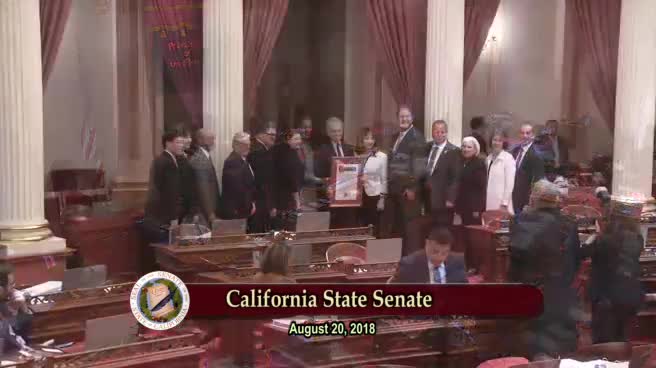 1MIN
Senate Floor
 11MIN
Assembly Standing Committee on Insurance
 7MIN
Senate Standing Committee on Labor and Industrial Relations


Bill Co-Author(s):