SB 919: Water resources: stream gages.
- Session Year: 2017-2018
- House: Senate
- Latest Version Date: 2018-06-27
Under existing law, the State Water Resources Control Board administers a water rights program pursuant to which the state board grants permits and licenses to appropriate water. Existing law, the Open and Transparent Water Data Act, requires the Department of Water Resources, the board, and the Department of Fish and Wildlife to coordinate and integrate existing water and ecological data from local, state, and federal agencies.
This bill would require the Department of Water Resources, Resources and the board, upon appropriation by the Legislature, to develop a plan to deploy a network of stream gages that includes a determination of funding needs and opportunities for modernizing and reactivating existing gages and delpoying deploying new gages, as specified. The bill would require the department, department and the board, in consultation with the board, the Department of Fish and Wildlife, the Department of Conservation, the Central Valley Flood Protection Board, interested stakeholders, and, to the extent they wish to consult, local agencies, to develop the plan to address significant gaps in information necessary for water management and the conservation of freshwater species. The bill would require the department and the board to give priority in the plan to placing or modernizing and reactivating stream gages where lack of data contributes to conflicts in water management actions, as specified, and to consider specified criteria in developing the plan.
Under existing law, the State Water Resources Control Board administers a water rights program pursuant to which the state board grants permits and licenses to appropriate water. Existing law, the Open and Transparent Water Data Act, requires the Department of Water Resources, the board, and the Department of Fish and Wildlife to coordinate and integrate existing water and ecological data from local, state, and federal agencies.
This bill would require the Department of Water Resources, upon appropriation by the Legislature, to develop a plan to deploy a network of stream gages that includes a determination of funding needs and opportunities for modernizing and reactivating existing gages. gages and delpoying new gages, as specified. The bill would require the department, in consultation with the board, the Department of Fish and Wildlife, the Department of Conservation, the Central Valley Flood Protection Board, interested stakeholders, and, to the extent they wish to consult, local agencies, to develop the plan to address significant gaps in information necessary for water management. management and the conservation of freshwater species. The bill would require the department to give priority in the plan to placing or modernizing and reactivating stream gages where lack of data contributes to conflicts in water management actions, as specified, and to consider specified criteria in developing the plan.
Under existing law, the State Water Resources Control Board administers a water rights program pursuant to which the state board grants permits and licenses to appropriate water. Existing law, the Open and Transparent Water Data Act, requires the Department of Water Resources, the board, and the Department of Fish and Wildlife to coordinate and integrate existing water and ecological data from local, state, and federal agencies.
This bill would require the Department of Water Resources, upon appropriation by the Legislature, to develop a plan to deploy a network of stream gages that includes a determination of funding needs and opportunities for reactivating existing gages. The bill would require the department, in consultation with the board, the Department of Fish and Wildlife, the Central Valley Flood Protection Board, interested stakeholders, and, to the extent they wish to consult, local agencies, to prioritize the deployment of stream gages based upon gaps in the existing system of gages and specified considerations. develop the plan to address significant gaps in information necessary for water management. The bill would require the department to give priority in the plan to placing or reactivating stream gages where lack of data contributes to conflicts in water management actions, as specified, and to consider specified criteria in developing the plan.
Under existing law, the State Water Resources Control Board administers a water rights program pursuant to which the state board grants permits and licenses to appropriate water. Existing law, the Open and Transparent Water Data Act, requires the Department of Water Resources, the board, and the Department of Fish and Wildlife to coordinate and integrate existing water and ecological data from local, state, and federal agencies. Existing law provides for the establishment of the California Water Quality Monitoring Council, which is administered by the board, and requires the council to undertake various actions relating to water quality data collection, and to review existing water quality monitoring, assessment, and reporting efforts and recommend specific actions and funding needs necessary to coordinate and enhance those efforts.
This bill would require the board, Department of Water Resources, upon appropriation by the Legislature, to develop a plan to deploy a network of stream gages that includes a determination of funding needs and opportunities for reactivating existing gages. The bill would require the board, department, in consultation with the board, the Department of Water Resources, Fish and Wildlife, the Central Valley Flood Protection Board, interested stakeholders, and, to the extent they wish to consult, local agencies, to prioritize the deployment of stream gages based upon gaps in the existing system of gages and specified considerations.
Under existing law, the State Water Resources Control Board administers a water rights program pursuant to which the state board grants permits and licenses to appropriate water. Existing law, the Open and Transparent Water Data Act, requires the Department of Water Resources, the board, and the Department of Fish and Wildlife to coordinate and integrate existing water and ecological data from local, state, and federal agencies. Existing law provides for the establishment of the California Water Quality Monitoring Council, which is administered by the board, and requires the council to undertake various actions relating to water quality data collection, and to review existing water quality monitoring, assessment, and reporting efforts and recommend specific actions and funding needs necessary to coordinate and enhance those efforts.
This bill would require the board, upon appropriation by the Legislature, to develop a plan to deploy a network of stream gages that includes a determination of funding needs and opportunities for reactivating existing gages. The bill would require the board, in consultation with the Department of Water Resources, to prioritize the deployment of stream gages based upon gaps in the existing system of gages and specified considerations.
The Legislature finds and declares all of the following:
(a)Less than 14 percent of the states significant stream segments are well gaged.
(b)Californias current stream gage network is poorly funded and not well organized, and data on existing gages pertaining to funding, location, and operating condition is difficult to find.
(c)The stream gage network fails to report key variables such as flow, temperature, and drainage.
(d)For a stream gage to be effective in helping inform water management during climate extremes and highly variable flows, it should record quality data, report key variables such as flow and temperature, and make its data accessible to the public promptly.
(e)The largest individual sponsor of stream gages in California is the United States Geological Survey (USGS), which works largely in partnership with a variety of state and federal agencies that provide funding to support gages and at least 57 percent of USGS-funded gages are also funded by a local agency.
(f)The data about which specific agencies are already funding particular stream gages is available for only 20 percent of active gages in California, and to better understand the gage landscape in the state, it is critical to know which agencies are funding particular gages.
SEC. 2.Section 144 is added to the Water Code, to read:144.(a)Upon appropriation by the Legislature, the department and the board shall develop a plan to deploy a network of stream gages that includes a determination of funding needs and opportunities for modernizing and reactivating existing gages and deploying new gages in priority locations across hydrologic regions in the state, including reference sites.
(b)The department, department and the board, in consultation with the board, the Department of Fish and Wildlife, the Department of Conservation, the Central Valley Flood Protection Board, interested stakeholders, and, to the extent they wish to consult, local agencies, shall develop the plan to address significant gaps in information necessary for water management and the conservation of freshwater species.
(c)The department and the board shall give priority in the plan to placing or modernizing and reactivating stream gages where lack of data contributes to conflicts in water management actions, including, but not limited to, actions related to the following:
(1)Water supply management.
(2)Flood management.
(3)Water quality management.
(4)Ecosystem management.
(d)Other criteria to be considered by the department and the board in developing the plan include all of the following:
(1)Opportunities for local agencies to enter cost-share arrangements to install or maintain the stream gage.
(2)Ease of integrating the stream gage into the existing network.
(3)Availability of historic gage data for specific locations.
(4)Availability of temperature data for specific locations.
(5)Degree of water quality and flow impacts related to cannabis cultivation.
(6)Integration with the Open and Transparent Water Data Act (Part 4.9 (commencing with Section 12400) of Division 6).
The Legislature finds and declares all of the following:
(a)Fourteen Less than 14 percent of the states significant stream segments are well gaged.
(b)Californias current stream gage network is poorly funded and not well organized, and data on existing gages pertaining to funding, location, and operating condition is difficult to find.
(c)The stream gage network fails to report key variables such as flow, temperature, and drainage.
(d)For a stream gage to be effective in helping inform water management during climate extremes and highly variable flows, it should record quality data, report key variables such as flow and temperature, and make its data accessible to the public promptly.
(e)The largest individual sponsor of stream gages in California is the United States Geological Survey (USGS), which works largely in partnership with a variety of state and federal agencies that provide funding to support gages and at least 57 percent of USGS-funded gages are also funded by a local agency.
(f)The data about which specific agencies are already funding particular stream gages is available for only 20 percent of active gages in California, and to better understand the gage landscape in the state, it is critical to know which agencies are funding particular gages.
SEC. 2.Section 144 is added to the Water Code, to read:144.(a)Upon appropriation by the Legislature, the department shall develop a plan to deploy a network of stream gages that includes a determination of funding needs and opportunities for modernizing and reactivating existing gages. gages and deploying new gages in priority locations across hydrologic regions in the state, including reference sites.
(b)The department, in consultation with the board, the Department of Fish and Wildlife, the Department of Conservation, the Central Valley Flood Protection Board, interested stakeholders, and, to the extent they wish to consult, local agencies, shall develop the plan to address significant gaps in information necessary for water management. management and the conservation of freshwater species.
(c)The department shall give priority in the plan to placing or modernizing and reactivating stream gages where lack of data contributes to conflicts in water management actions, including, but not limited to, actions related to the following:
(1)Water supply management.
(2)Flood management.
(3)Water quality management.
(4)Ecosystem management.
(d)Other criteria to be considered by the department in developing the plan include all of the following:
(1)Opportunities for local agencies to enter cost-share arrangements to install or maintain the stream gage.
(2)Ease of integrating the stream gage into the existing network.
(3)Availability of historic gage data for specific locations.
(4)Availability of temperature data for specific locations.
(5)Degree of water quality and flow impacts related to cannabis cultivation.
(6)Integration with the Open and Transparent Water Data Act (Part 4.9 (commencing with Section 12400) of Division 6).
The Legislature finds and declares all of the following:
(a)Fourteen percent of the states significant stream segments are well gaged.
(b)Californias current stream gage network is poorly funded and not well organized, and data on existing gages pertaining to funding, location, and operating condition is difficult to find.
(c)The stream gage network fails to report key variables such as flow, temperature, and drainage.
(d)For a stream gage to be effective in helping inform water management during climate extremes and highly variable flows, it should record quality data, report key variables such as flow and temperature, and make its data accessible to the public promptly.
(e)The largest individual sponsor of stream gages in California is the United States Geological Service Survey (USGS), which works largely in partnership with a variety of state and federal agencies that provide funding to support gages and at least 57 percent of USGS-funded gages are also funded by a local agency.
(f)The data about which specific agencies are already funding particular stream gages is available for only 20 percent of active gages in California, and to better understand the gage landscape in the state, it is critical to know which agencies are funding particular gages.
SEC. 2.Section 144 is added to the Water Code, to read:144.(a)Upon appropriation by the Legislature, the department shall develop a plan to deploy a network of stream gages that includes a determination of funding needs and opportunities for reactivating existing gages.
(b)The department, in consultation with the board, the Department of Fish and Wildlife, the Central Valley Flood Protection Board, interested stakeholders, and, to the extent they wish to consult, local agencies, shall prioritize the deployment of stream gages based upon gaps in the existing system of gages. Criteria for prioritization shall include all of the following: develop the plan to address significant gaps in information necessary for water management.
(1)Integrating with the existing gage network.(2)Consistency with the California Water Action Plan.(3)Evaluating conditions, including flow settlements, voluntary flow agreements, and ability to integrate multiple benefit water management strategies.(4)Ability to provide data to help protect threatened and endangered fisheries and wildlife.(5)Ability to provide data to help with drought, floods, and impacts from wildfires and other natural disasters.(6)Ability to provide data to assist with groundwater management.(7)Prioritizing watersheds with historical gage data.(8)Prioritizing watersheds that are included in state wildlife action plans, integrated regional water management plans, or other multibenefit program categories, or areas with approved sustainable groundwater management plans.(9)Prioritizing areas where local agencies may enter cost-share arrangements to facilitate ongoing integration and use of best practices in water management.(c)The department shall give priority in the plan to placing or reactivating stream gages where lack of data contributes to conflicts in water management actions, including, but not limited to, actions related to the following:
(1)Water supply management.
(2)Flood management.
(3)Water quality management.
(4)Ecosystem management.
(d)Other criteria to be considered by the department in developing the plan include all of the following:
(1)Opportunities for local agencies to enter cost-share arrangements to install or maintain the stream gage.
(2)Ease of integrating the stream gage into the existing network.
(3)Availability of historic gage data for specific locations.
The Legislature finds and declares all of the following:
(a)Fourteen percent of the states significant stream segments are well gaged.
(b)Californias current stream gage network is poorly funded and not well organized, and data on existing gages pertaining to funding, location, and operating condition is difficult to find.
(c)The stream gage network fails to report key variables such as flow, temperature, and drainage.
(d)For a stream gage to be effective in helping inform water management during climate extremes and highly variable flows, it should record quality data, report key variables such as flow and temperature, and make its data accessible to the public promptly.
(e)The largest individual sponsor of stream gages in California is the United States Geological Service (USGS), which works largely in partnership with a variety of state and federal agencies that provide funding to support gages and at least 57 percent of USGS-funded gages are also funded by a local agency.
(f)The data about which specific agencies are already funding particular stream gages is available for only 20 percent of active gages in California, and to better understand the gage landscape in the state, it is critical to know which agencies are funding particular gages.
SEC. 2.Section 180 is added to the Water Code, to read:180.(a)Upon appropriation by the Legislature, the board shall develop a plan to deploy a network of stream gages that includes a determination of funding needs and opportunities for reactivating existing gages.(b)The board, in consultation with the department, shall prioritize the deployment of stream gages based upon gaps in the existing system of gages. Criteria for prioritization shall include all of the following:(1)Integrating with the existing gage network.(2)Consistency with the California Water Action Plan.(3)Evalusting conditions, including flow settlements, voluntary flow agreements, and ability to integrate multiple benefit water management strategies.(4)Ability to provide data to help protect threatened and endangered fisheries and wildlife.(5)Prioritizing watersheds that are included in state wildlife action plans, integrated regional water management plans, or other multibenefit program categories, or areas with approved sustainable groundwater management plans.(6)Prioritizing areas where local agencies may enter cost-share arrangements to facilitate ongoing integration and use of best practices in water management.SEC. 2.Section 144 is added to the Water Code, to read:144.(a)Upon appropriation by the Legislature, the department shall develop a plan to deploy a network of stream gages that includes a determination of funding needs and opportunities for reactivating existing gages.
(b)The department, in consultation with the board, the Department of Fish and Wildlife, the Central Valley Flood Protection Board, interested stakeholders, and, to the extent they wish to consult, local agencies, shall prioritize the deployment of stream gages based upon gaps in the existing system of gages. Criteria for prioritization shall include all of the following:
(1)Integrating with the existing gage network.
(2)Consistency with the California Water Action Plan.
(3)Evaluating conditions, including flow settlements, voluntary flow agreements, and ability to integrate multiple benefit water management strategies.
(4)Ability to provide data to help protect threatened and endangered fisheries and wildlife.
(5)Ability to provide data to help with drought, floods, and impacts from wildfires and other natural disasters.
(6)Ability to provide data to assist with groundwater management.
(7)Prioritizing watersheds with historical gage data.
(8)Prioritizing watersheds that are included in state wildlife action plans, integrated regional water management plans, or other multibenefit program categories, or areas with approved sustainable groundwater management plans.
(9)Prioritizing areas where local agencies may enter cost-share arrangements to facilitate ongoing integration and use of best practices in water management.
The Legislature finds and declares all of the following:
(a)Fourteen percent of the states significant stream segments are well gaged.
(b)Californias current stream gage network is poorly funded and not well organized, and data on existing gages pertaining to funding, location, and operating condition is difficult to find.
(c)The stream gage network fails to report key variables such as flow, temperature, and drainage.
(d)For a stream gage to be effective in helping inform water management during climate extremes and highly variable flows, it should record quality data, report key variables such as flow and temperature, and make its data accessible to the public promptly.
(e)The largest individual sponsor of stream gages in California is the United States Geological Service (USGS), which works largely in partnership with a variety of state and federal agencies that provide funding to support gages and at least 57 percent of USGS-funded gages are also funded by a local agency.
(f)The data about which specific agencies are already funding particular stream gages is available for only 20 percent of active gages in California, and to better understand the gage landscape in the state, it is critical to know which agencies are funding particular gages.
SEC. 2.Section 180 is added to the Water Code, to read:180.(a)Upon appropriation by the Legislature, the board shall develop a plan to deploy a network of stream gages that includes a determination of funding needs and opportunities for reactivating existing gages.
(b)The board, in consultation with the department, shall prioritize the deployment of stream gages based upon gaps in the existing system of gages. Criteria for prioritization shall include all of the following:
(1)Integrating with the existing gage network.
(2)Consistency with the California Water Action Plan.
(3)Evalusting conditions, including flow settlements, voluntary flow agreements, and ability to integrate multiple benefit water management strategies.
(4)Ability to provide data to help protect threatened and endangered fisheries and wildlife.
(5)Prioritizing watersheds that are included in state wildlife action plans, integrated regional water management plans, or other multibenefit program categories, or areas with approved sustainable groundwater management plans.
(6)Prioritizing areas where local agencies may enter cost-share arrangements to facilitate ongoing integration and use of best practices in water management.
|
Date
|
Status
|
|---|---|
| Aug 16, 2018 | August 16 hearing: Held in committee and under submission. |
| Aug 8, 2018 | August 8 set for first hearing. Placed on suspense file. |
| Jun 27, 2018 | Read second time and amended. Re-referred to Com. on APPR. |
| Jun 26, 2018 | From committee: Do pass as amended and re-refer to Com. on APPR. (Ayes 12. Noes 2.) (June 26). |
| Jun 12, 2018 | From committee with author's amendments. Read second time and amended. Re-referred to Com. on W.,P., & W. |
| Jun 11, 2018 | Referred to Com. on W.,P., & W. |
| May 29, 2018 | In Assembly. Read first time. Held at Desk. |
| May 29, 2018 | Read third time. Passed. (Ayes 29. Noes 8.) Ordered to the Assembly. |
| May 25, 2018 | From committee: Do pass. (Ayes 5. Noes 2.) (May 25). |
| May 18, 2018 | Set for hearing May 25. |
| Apr 16, 2018 | April 16 hearing: Placed on APPR. suspense file. |
| Apr 9, 2018 | Set for hearing April 16. |
| Mar 15, 2018 | Read second time and amended. Re-referred to Com. on APPR. |
| Mar 14, 2018 | From committee: Do pass as amended and re-refer to Com. on APPR. (Ayes 6. Noes 0.) (March 13). |
| Feb 26, 2018 | From committee with author's amendments. Read second time and amended. Re-referred to Com. on N.R. & W. |
| Feb 23, 2018 | Set for hearing March 13. |
| Feb 1, 2018 | Referred to Com. on N.R. & W. |
| Jan 23, 2018 | From printer. May be acted upon on or after February 22. |
| Jan 22, 2018 | Introduced. Read first time. To Com. on RLS. for assignment. To print. |
|
Date
|
Description
|
Location
|
Votes
|
|
|---|---|---|---|---|
| Jun 26, 2018 | Do pass as amended and be re-referred to the Committee on [Appropriations] | Assembly Standing Committee on Water, Parks, and Wildlife |
Passed |
|
| May 29, 2018 | Senate 3rd Reading SB919 Dodd | Senate Floor |
Passed |
|
| May 25, 2018 | Do pass | Senate Standing Committee on Appropriations |
Passed |
|
| Apr 16, 2018 | Placed on suspense file | Senate Standing Committee on Appropriations |
Passed |
|
| Mar 13, 2018 | Do pass as amended, but first amend, and re-refer to the Committee on [Appropriations] | Senate Standing Committee on Natural Resources and Water |
Passed |
This list shows positions taken on this bill by organizations on the date displayed, which is linked to the original source.
Positions by individuals are not included.
|
Organization
|
Position
|
Date
|
|---|---|---|
| Audubon California | ** Support | Jun 22, 2018 |
| Bay Area Council | ** Support | May 26, 2018 |
| California Advisory Committee On Salmon And Steelhead | ** Support | Jun 22, 2018 |
| California Advisory Committee on Salmon and Steelhead Trout | ** Support | May 26, 2018 |
| California Drought | * Support | Mar 13, 2018 |
| California Ground Water Coalition | * Support | Jun 26, 2018 |
| California River Watch | * Support | Mar 13, 2018 |
| California Salmon And Steelhead Coalition | ** Support | Jun 22, 2018 |
| California Trout | * Support | Jun 26, 2018 |
| Clean Water Action | ** Support | Jun 22, 2018 |
| Community Clean Water Institute | * Support | Mar 13, 2018 |
| Grassland Water District | ** Support | Jun 22, 2018 |
| Green Valley Creek | * Support | Mar 13, 2018 |
| Groundwater Resources Association Of California | ** Support | Jun 22, 2018 |
| Institute of Conservation | * Indeterminate | Mar 13, 2018 |
| League Of California Cities | * Support | Jun 26, 2018 |
| Metropolitan Water District of Southern California, The | ** Support | Jun 22, 2018 |
| Napa County Board of Supervisors | ** Support | May 26, 2018 |
| Nature Conservancy | * Support | Jun 26, 2018 |
| North Country Watch | ** Support | May 26, 2018 |
| North County Watch | ** Support | Jun 22, 2018 |
| Northern California Water Association | ** Support | Jun 22, 2018 |
| Planning And Conservation League | ** Support | Jun 22, 2018 |
| Rural County Representatives of California | ** Support | May 26, 2018 |
| Santa Clara Valley Water District | * Support | Jun 26, 2018 |
| Sierra Club California | ** Support | Jun 22, 2018 |
| Sonoma County Water Agency | * Support | Jun 26, 2018 |
| Sustainable Conservation | ** Support | Mar 8, 2018 |
| Trout Unlimited | ** Support | Jun 22, 2018 |
| Tuolumne River Trust | ** Support | Jun 22, 2018 |
| Water Flows Free | ** Support | Jun 22, 2018 |
Date of Hearing: August 8, 2018
ASSEMBLY COMMITTEE ON APPROPRIATIONS
Lorena Gonzalez Fletcher, Chair
SBPCA Bill Id:SB 919
Author:(Dodd) – As Amended Ver:June 27, 2018
Policy Committee: | Water, Parks and Wildlife | Vote: | 12 - 2 |
|
| ||
|
|
Urgency: No State Mandated Local Program: No Reimbursable: No
SUMMARY:
This bill requires the Department of Water Resources (DWR), upon appropriation by the Legislature, to develop a plan to deploy a network of stream gages. Specifically, this bill:
- Requires the plan to:
- Address significant gaps in information necessary for water management and the conservation of freshwater species, in consultation with the State Water Resources Control Board (State Water Board), Department of Fish and Wildlife (DFW), Department of Conservation (DOC), the Central Valley Flood Protection Board (CVFPB), interested stakeholders, and local agencies.
- Include a determination of funding needs and opportunities for modernizing and reactivating existing gages, and deploying new gages in priority locations.
- Address additional criteria, including, but not limited to, prioritizing placement of gages to address areas where lack of data contributes to conflicts in water management actions.
- Makes findings and declarations regarding stream gages in California.
FISCAL EFFECT:
- Unknown, likely significant cost pressures resulting from plan recommendations to install additional stream gages to address information gaps (GF, bond or special fund). DWR estimates new gages cost between $16,000 and $25,000 each to install, and would require annual maintenance of between $1,000 and $3,000 each.
- One-time GF costs of approximately $500,000 for DWR to research and develop the required plan.
- kjhsdlkfjs;fdkUnknown, one-time costs, likely less than $75,000 for each agency, (GF and various special funds), for staff from the State Water Board, DFW, DOC, and CVFP to consult with DWR on the development of the plan. Unknwo
COMMENTS:
- Purpose. According to the author, understanding the state of our stream flows is critical to preparing for both drought and flood, but the author contends the current stream gage network is inadequate to address this challenge. This bill requires DWR to develop a plan to deploy a network of stream gages, if funding is provided to develop the plan.
- Background. Stream gages measure the hydrologic characteristics of a river or stream at a specific location. They can range from a measuring stick that shows the stage (elevation of the water surface) to automatic gages that measure and transmit highly accurate information on elevation, flow rate, temperature, turbidity, and other water quality indicators.
The Open and Transparent Water Data Act requires DWR, in consultation with the State Water Board, DFG and others, to create, operate, and maintain a statewide integrated water data platform, and to develop a strategic plan to guide program implementation and protocols for data sharing, documentation, quality control, public access, and promotion of open-source platforms and decision support tools related to water data. This bill requires DWR to consider the integration of the stream gage plan with the data platform when developing the plan.
- U.S. Geological Survey (USGS). There is currently no single authoritative database on gage locations in California. Most of the available data sources include similar key attributes, such as active/inactive, flow in cubic feet per second (CFS), temperature, and gage owner/manager. The formats and standards for those values are disparate, and many gages are present in multiple data sources. Access to gage data may be improved once the platform required by the Open and Transparent Water Data Act is available.
According to an analysis by The Nature Conservancy (TNC), there are over 3,600 locations in California where stream gages have been active at some point, but only 54% have been active recently. TNC states that most gages go offline due to a lack of funding. In addition, many of the active gages do not provide real-time reporting.
Gold-standard gages record quality data, report key variables (such as flow and temperature), and make data accessible to the public promptly. The largest individual sponsor of gold-standard gages in California is the USGS, with a California gage budget for fiscal year 2017 of $8.65 million. The USGS works largely in partnership with other agencies to fund gages. At least 57% of USGS-funded gages also receive funding from a local agency.
Analysis Prepared by: Jennifer Galehouse / APPR. / (916) 319-2081
Date of Hearing: June 26, 2018
ASSEMBLY COMMITTEE ON WATER, PARKS, AND WILDLIFE
Eduardo Garcia, Chair
SBPCA Bill Id:SB 919
Author:(Dodd) – As Amended Ver:June 12, 2018
SENATE VOTE: 29-8
SUBJECT: Water resources: stream gages
SUMMARY: Requires the Department of Water Resources (DWR) to develop a plan to deploy a network of stream gages. Specifically, this bill:
- Requires the DWR to develop a plan, upon appropriation of the Legislature, to deploy a network of stream gages.
- Requires the plan to:
- Address significant gaps in information necessary for water management and the conservation of freshwater species, in consultation with the State Water Resources Control Board (SWRCB), the Department of Fish and Wildlife (DFW), the Department of Conservation, the Central Valley Flood Protection Board (CVFPB), interested stakeholders, and local agencies.
- Include a determination of funding needs and opportunities for modernizing and reactivating existing gages, and deploying new gages in priority locations.
- Address additional criteria, including, but not limited to, prioritizing placement of gages to address areas where lack of data contributes to conflicts in water management actions.
- Makes findings and declarations regarding stream gages in California.
EXISTING LAW:
- Creates a water rights program, pursuant to which the SWRCB grants permits and licenses to appropriate water. [Water Code (WC) § 1200 – 1851]
- Requires, through the Open and Transparent Water Data Act, the DWR, the SWRCB, and the DFW to coordinate and integrate existing water and ecological data from local, state, and federal agencies. [WC § 12400 – 12420]
FISCAL EFFECT: Unknown
COMMENTS: This bill requires the Department of Water Resources (DWR) to develop a plan to deploy a network of stream gages.
Author’s Statement:
Stream gages provide essential information about one of California’s most precious resources - water. Comprehensive data on gages does not exist in California. Despite the various efforts to assemble gage data, there is no single authoritative database on gage locations. Although there is a large quantity of data available about gages in California, that data is challenging to harmonize and analyze if one wants a complete survey of California’s gage network.
California must prepare for increases in both droughts and floods, and for more effective water management across all year types to maximize the benefits of its limited water supply. Understanding the state of our stream flows is critical to such preparedness, but our current gage network is inadequate to address this challenge.
Background: Water Resources. Making water management decisions depends upon timely knowledge of the current and projected status of water in the state. According to a report issued by the Center for Law, Energy and the Environment at UC Berkeley School of Law, California’s water management systems are struggling to meet environmental and human needs in the face of stresses from climate, population, and land use changes. Without basic information on where, when, and how much water is available and being used, it is difficult to improve water resource management.
Water Quantity. Stream gages monitor stream flow, the quantity of water moving past a fixed point. Stream flow data support day-to-day decisions about how to manage water and operate water infrastructure. In turn, those decisions have implications for flood control and the water supplies upon which residential, industrial, agricultural, and environmental water users depend. Stream flow information also provides technical insights into basin hydrology, and those insights aid long-term water planning.
Water Quality. Linking water quality measurements with stream flow allows better understanding of aquatic health. Stream gage sites can also be used to measure water quality by collocating additional equipment. Basic water quality data includes measurements such as water temperature and turbidity (a measurement of water clarity). Water quality requirements for human and environmental uses drive many water operations decisions, and understanding stream flows and water quality are both crucial to informing these decisions.
Data Gaps. There is currently no single authoritative database on gage locations in California. Data that does exist is difficult to access and analyze. Most of the available data sources include similar key attributes, such as active/inactive, flow in cubic feet per second (CFS), temperature, and gage owner/manager. The formats and standards for those values are disparate, and many gages are present in multiple data sources. Access to gage data may be improved once the platform required by the Open and Transparent Water Data Act is active.
According to an analysis by The Nature Conservancy (TNC), there are over 3,600 locations in California where stream gages have been active at some point, but only 54 percent have been active recently. TNC states that most gages go offline due to a lack of funding. This results in 86 percent of rivers by length in California being poorly gaged. In addition, many of the active gages do not provide real-time reporting.
Gold-standard gages record quality data, report key variables (such as flow and temperature), and make data accessible to the public promptly. The largest individual sponsor of gold-standard gages in California is the United States Geological Survey (USGS), with a California gage budget for Fiscal Year 2017 of $8.65 million. The USGS works largely in partnership with other agencies to fund gages. At least 57 percent of USGS-funded gages also receive funding from a local agency.
The number of USGS gages is in decline nationwide, though the percentage of gages reporting in real-time has increased. From Water Year 2008 to Water Year 2009, the total number of USGS stream gages fell to 7,825. (A Water Year is defined as October 1 through September 30 of the following year.) From Water Year 2005 to Water Year 2009, 384 long-record stream gages were discontinued. Gage experts agree that existing inactive gage sites should be a priority for reactivation or new gages, especially because historical data is available at those sites.
Open and Transparent Water Data Act. The platform being developed pursuant to the Open and Transparent Water Data Act intends to compile all water data in the state and make that data publicly available in a useable fashion. The act does not directly address data gaps, but created the Water Data Administration Fund for the collection, management, and improvement of water and ecological data. This bill includes integration with the Open and Transparent Water Data Act as part of the development of the stream gage plan.
Committee Amendments: The committee may wish to consider adding the State Water Resources Control Board as a co-developer of the plan with the DWR due to their water quality and water rights management mandates. The committee suggests the following changes to Section 2 of the bill:
Amendment 1: Page 2, line 25 – after “department” insert:
“and the State Water Resources Control Board”
Amendment 2: Page 3, line 1 – after “department” insert:
“and the board”
Amendment 3: Page 3, line 1 – after “with” strike:
“the board”
Prior and Related Legislation:
AB 1755 (Dodd), Chapter 506, Statutes of 2016, requires the DWR, in consultation with the SWRCB, the DFW, and the California Water Quality Monitoring Council (CWQMC) to create and maintain a statewide integrated water data platform by August 1, 2020.
Arguments in Support: Those in support argue that good information and science leads to good public policy on water management. A robust and accurate data collection system will support informed decision-making regarding water management. Having a more reliable and accurate system of stream gages can also help integrate groundwater recharge during high-flow regimes within the system.
Arguments in Opposition: None on file.
REGISTERED SUPPORT / OPPOSITION:
Support
Audubon California
California Advisory Committee on Salmon and Steelhead
California Groundwater Coalition
California Salmon and Steelhead Coalition
Clean Water Action
Grassland Water District
Groundwater Resources Association of California
Metropolitan Water District of Southern California, The
Nature Conservancy, The (sponsor)
North County Watch
Northern California Water Association
Planning and Conservation League
Santa Clara Valley Water District
Sierra Club California
Sonoma County Water Agency
Trout Unlimited
Tuolumne River Trust
Water Flows Free
Opposition
None on file
Analysis Prepared by: Keith Cialino / W., P., & W. / (916) 319-2096
Office of Senate Floor Analyses (916) 651-1520 Fax: (916) 327-4478 | SB |
THIRD READING
Bill No: SB 919
:
SENATE NATURAL RES. & WATER COMMITTEE: 6-0, 3/13/18
AYES: Hertzberg, Allen, Jackson, McGuire, Monning, Stern
NO VOTE RECORDED: Stone, Hueso, Vidak
SENATE APPROPRIATIONS COMMITTEE: 5-2, 5/25/18
AYES: Lara, Beall, Bradford, Hill, Wiener
NOES: Bates, Nielsen
SOURCE: The Nature Conservancy
DIGEST:
This bill requires the Department of Water Resources (DWR), in consultation with the Water Resources Control Board (SWRCB), the Department of Fish and Wildlife (CDFW), the Central Valley Flood Protection Board (CVFP), and other interested stakeholders to develop the plan to address significant gaps in information necessary for water management.
ANALYSIS: Existing law, the Open and Transparent Water Data Act, requires DWR, in consultation with the California Water Quality Monitoring Council, the SWRCB, and CDFW, to create, operate, and maintain a statewide integrated water data platform, and to develop a strategic plan to guide program implementation and protocols for data sharing, documentation, quality control, public access, and promotion of open-source platforms and decision support tools related to water data.
This bill:
- Requires DWR to develop a plan to deploy a network of stream gages that includes a determination of funding needs and opportunities for reactivating existing gages.
- Requires DWR, in consultation with SWRCB, CDFW, CVFP, and other interested parties, to prioritize the deployment of stream gages based upon gaps in the existing system of gages, and specific criteria for prioritization.
In order to manage our water resources, whether for flood management, water supply planning, ecosystem protections, etc., we need to understand how much water flows down our rivers and streams and when those flows occur. Often we also need additional information regarding water quality such as temperature, turbidity, and electrical conductivity. To gather such information, we rely heavily on a system of stream gages.
Stream gages are devices to measure the hydrologic characteristics of a river or stream at a specific location. Some gages are as simple as a measuring stick that must be read manually and which simply show the stage (elevation of the water surface). Others can automatically measure and transmit highly accurate information on elevation, flow rate, temperature, turbidity, and other water quality indicators. According to The Nature Conservancy, such high quality “gold standard” gages cost about $25,000 to install and $15,000 - $20,000 per year to maintain.
Comments
You Can’t Manage What You Don’t Measure. There are over 3,600 locations in California where stream gages have been active at some point, but only 54% have been active recently. While not all those gages may have been necessary on an ongoing basis, it seems likely that such a large drop in active gages has impaired our knowledge of some key aspects of our hydrology.
FISCAL EFFECT: Appropriation: Fiscal Com.: Local:
According to the Senate Appropriations Committee:
- One-time costs of approximately $500,000 to DWR (General Fund) for staff necessary to research and develop the required plan.
- One-time costs, likely under $50,000 each (General Fund and various Special Funds), for staff from SWRCB, CDFW, CVFP to consult with DWR on the development of the plan.
- Unknown significant cost pressures resulting from recommendations for addressing information gaps.
The Nature Conservancy (source)
Audubon California
Bay Area Council
California Advisory Committee on Salmon and Steelhead Trout
California Groundwater Coalition
California Trout
Clean Water Action
Grassland Water District
Groundwater Resources Association of California
Metropolitan Water District of Southern California
Napa County Board of Supervisors
North Country Watch
Planning and Conservation League
Rural County Representatives of California
Santa Clara Valley Water District
Sierra Club California
Sonoma County Water Agency
Trout Unlimited
Tuolumne River Trust
Water Flows Free
OPPOSITION: (Verified 5/25/18)
None received
ARGUMENTS IN SUPPORT: According to the sponsor, “Following a difficult five-year drought, California had one of the wettest winters on record. California is famous for its highly engineered water system, which moves millions of gallons of water from north to south and east to west. Thirty-nine million people and our $47 billion agricultural industry rely on that water, not to mention wildlife from the Sierra to the sea. And yet we have surprisingly little data about how much water is moving through our streams at any given time. There are over 3,600 locations in California where stream gages have been active at some point, but only 54% of this network have been active recently. And even fewer of these gages provide the kind of rich, real-time reporting needed to manage what is arguably our most precious resource for people, farms, wildlife and fisheries.”
“Stream gages provide essential information about California’s water. Gaps in the stream gage network make it difficult to understand stream flow conditions and help ensure that both people and nature are getting water when and where they need it. Senate Bill 919 would help identify which watersheds have the most significant gage gaps, where inactive gages exist, and prioritize funding to deploy stream gages based upon the gaps in the system – and the need for better information for flood forecasting; water diversions; and inform least-impact strategies to protect fish and wildlife.”
5/26/18 14:24:12
**** END ****
SENATE COMMITTEE ON APPROPRIATIONS
Senator Ricardo Lara, Chair
2017 - 2018 Regular Session
SB 919 (Dodd) - Water resources: stream gages
Version: March 15, 2018 | Policy Vote: N.R. & W. 6 - 0 |
Urgency: No | Mandate: No |
Hearing Date: April 16, 2018 | Consultant: Narisha Bonakdar |
This bill meets the criteria for referral to the Suspense File.
Bill Summary:
SB 919 requires the Department of Water Resources (DWR), in consultation with the Water Resources Control Board (SWRCB), the Department of Fish and Wildlife (CDFW), the Central Valley Flood Protection Board (CVFP), and other interested stakeholders to develop the plan to address significant gaps in information necessary for water management.
Fiscal Impact:
- One-time costs of approximately $500,000 to DWR (General Fund) for staff necessary to research and develop the required plan.
- kjhsdlkfjs;fdkOne-time costs, likely under $50,000 each (General Fund and various Special Funds), for staff from SWRCB, CDFW, CVFP to consult with DWR on the development of the plan. Unknwo
- Unknown significant cost pressures resulting from recommendations for addressing information gaps. (See staff comments)
Background:
Stream gages measure the hydrologic characteristics of a river or stream at a specific location. They can range from a measuring stick that shows the stage (elevation of the water surface) to automatic gages that measure and transmit highly accurate information on elevation, flow rate, temperature, turbidity, and other water quality indicators.
The Open and Transparent Water Data Act requires the Department of Water Resources (DWR), in consultation with the California Water Quality Monitoring Council (CWQMC), the State Water Resources Control Board (SWRCB), and the California Department of Fish and Wildlife (CDFW), to create, operate, and maintain a statewide integrated water data platform, and to develop a strategic plan to guide program implementation and protocols for data sharing, documentation, quality control, public access, and promotion of open-source platforms and decision support tools related to water data.
Proposed Law:
This bill:
Requires DWR to develop a plan to deploy a network of stream gages.
Requires DWR, in consultation with the SWRCB, CDFW, CVFP, and other interested stakeholders to develop the plan to address significant gaps in information necessary for water management.
Specifies that the plan include a determination of funding needs and opportunities for reactivating existing gages.
Requires DWR to give priority in the plan to placing or reactivating stream gages where lack of data contributes to conflicts in water management actions
Staff Comments:
DWR’s fiscal. According to DWR, development of the plan will require several staff positions (below) equaling a one-time cost of approximately $443,000.
Classification | No. of staff | Hours | Total Hours | PYs | Total Cost |
Supervising Engineer | 1 | 500 | 500 | 0.25 | $105,000 |
Senior Engineer | 5 | 300 | 1500 | 0.75 | $300,000 |
Research Analysis | 1 | 300 | 300 | 0.15 | $37,500 |
$442,500 |
Staff notes that costs could dramatically increase. At this time, it is not clear how many gages will be needed. However, each gage deployed will result in one-time installation costs of up to $25,000 and annual maintenance costs up to $20,000.
SENATE COMMITTEE ON NATURAL RESOURCES AND WATER
Senator Robert Hertzberg, Chair
2017 - 2018 Regular
Bill No: SB Hearing Date: March 13, 2018
Author: | Dodd | ||
Version: | February 26, 2018 | ||
Urgency: | No | Fiscal: | Yes |
Consultant: | Dennis O'Connor | ||
Subject: Water resources: stream gages
BACKGROUND AND EXISTING LAW
In order to manage our water resources, whether for flood management, water supply planning, ecosystem protections, etc., we need to understand how much water flows down our rivers and streams and when those flows occur. Often we also need additional information regarding water quality such as temperature, turbidity, and electrical conductivity. To gather such information, we rely heavily on a system of stream gages.
Stream gages are devices to measure the hydrologic characteristics of a river or stream at a specific location. Some gages are as simple as a measuring stick that must be read manually and which simply show the stage (elevation of the water surface). Others can automatically measure and transmit highly accurate information on elevation, flow rate, temperature, turbidity, and other water quality indicators. According to The Nature Conservancy (TNC), such high quality “gold standard” gages cost about $25,000 to install and $15,000 - $20,000 per year to maintain.
The Open and Transparent Water Data Act requires the Department of Water Resources (DWR), in consultation with the California Water Quality Monitoring Council (CWQMC), the State Water Resources Control Board (SWRCB), and the California Department of Fish and Wildlife (CDFW), to create, operate, and maintain a statewide integrated water data platform, and to develop a strategic plan to guide program implementation and protocols for data sharing, documentation, quality control, public access, and promotion of open-source platforms and decision support tools related to water data.
PROPOSED LAW
This bill would require DWR to develop a plan to deploy a network of stream gages that includes a determination of funding needs and opportunities for reactivating existing gages.
DWR, in consultation with SWRCB, CDFW, the Central Valley Flood Protection Board, and other interested parties, would be required to prioritize the deployment of stream gages based upon gaps in the existing system of gages, and specific criteria for prioritization.
ARGUMENTS IN SUPPORT
According to the sponsor, “Following a difficult five-year drought, California had one of the wettest winters on record. California is famous for its highly engineered water system, which moves millions of gallons of water from north to south and east to west. Thirty-nine million people and our $47 billion agricultural industry rely on that water, not to mention wildlife from the Sierra to the sea. And yet we have surprisingly little data about how much water is moving through our streams at any given time. There are over 3,600 locations in California where stream gages have been active at some point, but only 54% of this network have been active recently. And even fewer of these gages provide the kind of rich, real-time reporting needed to manage what is arguably our most precious resource for people, farms, wildlife and fisheries.”
“Stream gages provide essential information about California’s water. Gaps in the stream gage network make it difficult to understand stream flow conditions and help ensure that both people and nature are getting water when and where they need it. Senate Bill 919 would help identify which watersheds have the most significant gage gaps, where inactive gages exist, and prioritize funding to deploy stream gages based upon the gaps in the system – and the need for better information for flood forecasting; water diversions; and inform least-impact strategies to protect fish and wildlife.”
ARGUMENTS IN OPPOSITION: None received
COMMENTS
You Can’t Manage What You Don’t Measure. There are over 3,600 locations in California where stream gages have been active at some point, but only 54% have been active recently. While not all those gages may have been necessary on an ongoing basis, it seems likely that such a large drop in active gages has impaired our knowledge of some key aspects of our hydrology.
Gages Should Be Targeted At Answering Specific Question. The bill currently directs DWR to prioritize the deployment of stream gages “based upon gaps in the existing system of gages.” It is not clear precisely what kinds of gaps the author intends to address; e.g., spatial distribution of gages, gaps in the data of one sort or another, etc. It might make sense to amend the bill to focus specifically on gaps in information necessary for water management.
If Everything Is A Priority, Nothing Is A Priority. The bill currently lists 9 different criteria for priority, each criterion presumably equal in priority. It might make sense to make it a priority to place or reactivate stream gages where lack of data contributes to conflicts in water management actions.
SUGGESTED AMENDMENT
On page 3, line 23, delete prioritize the deployment of, delete lines 24 through 39, delete page 4, and insert:
develop the plan to address significant gaps in information necessary for water management.
(c) The department shall give priority in the plan to placing or reactivating stream gages where lack of data contributes to conflicts in water management actions. Such water management actions include, but are not limited to, actions related to the following:
(1) Water supply management.
(2) Flood management.
(3) Water quality management.
(4) Ecosystem management.
(d) Other criteria to be considered in developing the plan include:
(1) Opportunities for local agencies to enter cost-share arrangements to install or maintain the stream gage.
(2) Ease of integrating the stream gage into the existing network.
(3) Availability of historic gage data for specific locations.
SUPPORT
The Nature Conservancy (Sponsor)
Bay Area Council
California Trout
Rural County Representatives of California
Sonoma County Water Agency
Sustainable Conservation
Trout Unlimited
OPPOSITION
None Received
-- END --
Discussed in Hearing
 1H
Assembly Standing Committee on Appropriations
 8MIN
Assembly Standing Committee on Water, Parks, and Wildlife
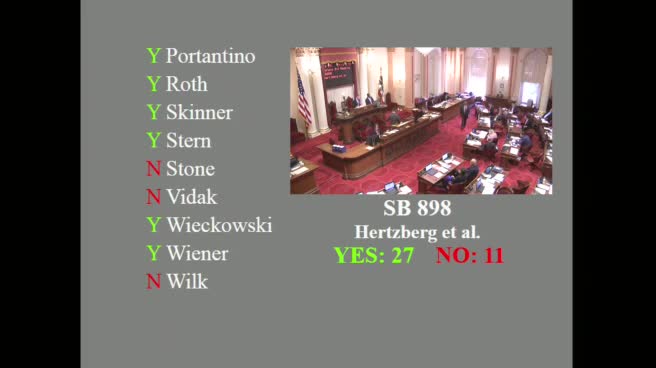 3MIN
Senate Floor
 16MIN

