SB 924: Personal income taxes: exclusion: National Guard.
- Session Year: 2017-2018
- House: Senate
- Latest Version Date: 2018-06-25
The Personal Income Tax Law imposes a tax on individual taxpayers measured by the taxpayers taxable income for the taxable year, but excludes certain items of income from the computation of tax.
This bill would, for taxable years beginning on or after January 1, 2018, and before January 1, 2028, exclude from gross income, income received by a member of the active militia, as described, when that income is derived from his or her position as a member of the active militia while on active service, as provided.
This bill would take effect immediately as a tax levy.
The Personal Income Tax Law imposes a tax on individual taxpayers measured by the taxpayers taxable income for the taxable year, but excludes certain items of income from the computation of tax.
This bill would, for taxable years beginning on or after January 1, 2018, exclude from gross income, income of active duty servicemembers of the National Guard while on active duty in this state, if that income is derived from his or her position as a servicemember of the National Guard. received by a member of the active militia, as described, when that income is derived from his or her position as a member of the active militia while on active service, as provided.
This bill would take effect immediately as a tax levy.
The Personal Income Tax Law imposes a tax on individual taxpayers measured by the taxpayers taxable income for the taxable year, but excludes certain items of income from the computation of tax.
This bill would, for taxable years beginning on or after January 1, 2018, exclude from gross income, income of active duty servicemembers of the National Guard while on active duty in this state, if that income is derived from his or her position as a servicemember of the National Guard.
This bill would take effect immediately as a tax levy.
Gross (a)For taxable years beginning on or after January 1, 2018, and before January 1, 2028, gross income does not include any income received by a member of the active militia, as described in Section 120 of the Military and Veterans Code, when that income is derived from his or her position as a member of the active militia while on active service pursuant to a call by the Governor pursuant to Section 143 or Section 146 of the Military and Veterans Code.
(b)This section shall remain in effect only until December 1, 2028, and as of that date is repealed.
SEC. 2.This act provides for a tax levy within the meaning of Article IV of the California Constitution and shall go into immediate effect.
Gross income does not include any income received by an active duty servicemember in the National Guard, derived from his or her position as a servicemember, while serving his or her active duty in the state. a member of the active militia, as described in Section 120 of the Military and Veterans Code, when that income is derived from his or her position as a member of the active militia while on active service pursuant to a call by the Governor pursuant to Section 143 or Section 146 of the Military and Veterans Code.
SEC. 2.This act provides for a tax levy within the meaning of Article IV of the California Constitution and shall go into immediate effect.
Gross income does not include any income received by an active duty servicemember in the National Guard, derived from his or her position as a servicemember, while serving his or her active duty in the state.
SEC. 2.This act provides for a tax levy within the meaning of Article IV of the California Constitution and shall go into immediate effect.
|
Date
|
Status
|
|---|---|
| Aug 16, 2018 | August 16 hearing: Held in committee and under submission. |
| Aug 8, 2018 | August 8 set for first hearing. Placed on suspense file. |
| Jun 27, 2018 | From committee: Do pass and re-refer to Com. on APPR. (Ayes 9. Noes 0.) (June 26). Re-referred to Com. on APPR. |
| Jun 25, 2018 | Read second time and amended. Re-referred to Com. on V.A. |
| Jun 21, 2018 | From committee: Do pass as amended and re-refer to Com. on V.A. (Ayes 8. Noes 0.) (June 18). |
| Jun 7, 2018 | Referred to Coms. on REV. & TAX. and V.A. |
| May 31, 2018 | In Assembly. Read first time. Held at Desk. |
| May 31, 2018 | Read third time. Passed. (Ayes 39. Noes 0.) Ordered to the Assembly. |
| May 29, 2018 | Ordered to special consent calendar. |
| May 25, 2018 | From committee: Do pass. (Ayes 7. Noes 0.) (May 25). |
| May 18, 2018 | Set for hearing May 25. |
| May 7, 2018 | May 7 hearing: Placed on APPR. suspense file. |
| Apr 27, 2018 | Set for hearing May 7. |
| Apr 24, 2018 | From committee: Do pass and re-refer to Com. on APPR. (Ayes 7. Noes 0.) (April 24). Re-referred to Com. on APPR. |
| Apr 13, 2018 | Set for hearing April 24. |
| Apr 11, 2018 | From committee: Do pass and re-refer to Com. on V.A. (Ayes 6. Noes 0.) (April 11). Re-referred to Com. on V.A. |
| Apr 3, 2018 | Set for hearing April 11. |
| Mar 19, 2018 | From committee with author's amendments. Read second time and amended. Re-referred to Com. on GOV. & F. |
| Feb 1, 2018 | Referred to Coms. on GOV. & F. and V.A. |
| Jan 24, 2018 | From printer. May be acted upon on or after February 23. |
| Jan 23, 2018 | Introduced. Read first time. To Com. on RLS. for assignment. To print. |
|
Date
|
Description
|
Location
|
Votes
|
|
|---|---|---|---|---|
| Jun 26, 2018 | Do pass and be re-referred to the Committee on [Appropriations] | Assembly Standing Committee on Veterans Affairs |
Passed |
|
| Jun 18, 2018 | Do pass as amended and be re-referred to the Committee on [Veterans Affairs] | Assembly Standing Committee on Revenue and Taxation |
Passed |
|
| May 31, 2018 | Special Consent SB924 | Senate Floor |
Passed |
|
| May 25, 2018 | Do pass | Senate Standing Committee on Appropriations |
Passed |
|
| May 7, 2018 | Placed on suspense file | Senate Standing Committee on Appropriations |
Passed |
|
| Apr 24, 2018 | Do pass, but first be re-referred to the Committee on [Appropriations] | Senate Standing Committee on Veterans Affairs |
Passed |
|
| Apr 11, 2018 | Do pass, but first be re-referred to the Committee on [Veterans Affairs] | Senate Standing Committee on Governance and Finance |
Passed |
This list shows positions taken on this bill by organizations on the date displayed, which is linked to the original source.
Positions by individuals are not included.
|
Organization
|
Position
|
Date
|
|---|---|---|
| American Legion - Department of California | ** Support | Jun 25, 2018 |
| AMVETS - Department of California | ** Support | Jun 25, 2018 |
| California Association Of County Veterans Service Officers | ** Support | Jun 25, 2018 |
| California State Commanders Veterans Council | ** Support | Jun 25, 2018 |
| Military Officers Association Of America, California Council Of Chapters | * Support | Apr 24, 2018 |
| National Guard Association Of California | ** Support | Jun 25, 2018 |
| Reeb Government Relations | * Support | Apr 11, 2018 |
| Vietnam Veterans Of America, California State Council | * Support | Apr 24, 2018 |
Date of Hearing: August 8, 2018
ASSEMBLY COMMITTEE ON APPROPRIATIONS
Lorena Gonzalez Fletcher, Chair
SBPCA Bill Id:SB 924
Author:(Morrell) – As Amended Ver:June 25, 2018
Policy Committee: | Revenue and Taxation | Vote: | 8 - 0 |
Veterans Affairs | 9 - 0 | ||
|
|
Urgency: No State Mandated Local Program: No Reimbursable: No
SUMMARY:
This bill excludes from the Personal Income Tax Law any income received by a member of the state’s active militia derived from the Emergency State Active Duty (ESAD) service. This exclusion is available for tax years 2018 through 2027.
FISCAL EFFECT:
General Fund (GF) revenue loss of $2.8 million for every $100 million in wages paid to active militia members called to ESAD. Specific revenue losses associated with this bill will depend on the frequency of calls to ESAD and the number of active militia called to ESAD.
COMMENTS:
- Background. The California active militia consists of three components: the National Guard, the State Military Reserve, and the Naval Militia. When called onto ESAD service by the governor, the militia is funded by the state's General Fund, unless the Governor requests and receives a federal disaster declaration. In FY 2016-17, 4,905 members of the active militia were activated onto ESAD status to assist in various emergencies and disasters.
- Fiscal implications of tax expenditures. Existing law allows for various tax expenditures such as credits, deductions, exclusions, and exemptions for particular taxpayer groups. These features of the tax code can result in significant state costs through foregone tax revenue, and, in many cases, policymakers have little control over the revenue loss that occurs in any given year. As a result, many tax expenditure bills now include provisions designed to give the Legislature more control over costs. Examples of such provisions include placing a sunset date or making a bill’s provisions contingent upon a separate budget appropriation. SB 924 includes a sunset.
- Related legislation. There are a number of bills in the 2017-18 Legislative Session that exclude specified income for members of the military. AB 2394 (Brough) excludes retirement pay from the California National Guard. AB 2590 (Chen) excludes basic pay received by a California National Guard member derived while they are on military orders for a specified time. AB 528 (Gray) excludes a percentage of qualified retirement pay received by a taxpayer from the National Guard under specified conditions. All three bills were held on this committee’s Suspense File.
Analysis Prepared by: Luke Reidenbach / APPR. / (916) 319-2081
Date of Hearing: June 26, 2018
ASSEMBLY COMMITTEE ON VETERANS AFFAIRS
Jacqui Irwin, Chair
SBPCA Bill Id:SB 924
Author:(Morrell) – As Amended Ver:March 19, 2018
SENATE VOTE: 39-0
SUBJECT: Personal income taxes: exclusion: National Guard
SUMMARY: Exempts all income received by a member of the active militia from state income tax when that income is derived from Emergency State Active Duty (ESAD) status. Specifically, this bill:
- Excludes from gross income any income received by a member of the active militia, when that income is derived from his or her position as a member of the active militia while on ESAD service pursuant to a call of the Governor, as specified.
- Limits the exclusion to ESAD service-related income paid to members of the state active militia, which includes all of the following:
- The National Guard;
- The State Military Reserve; and,
- The Naval Militia.
- Applies for each taxable year beginning on and after January 1, 2018.
- Takes effect immediately as a tax levy.
- Sunsets on December 1, 2028.
EXISTING LAW:
- Provides various exclusions from gross income in determining tax liability under the Personal Income Tax Law.
- Excludes from gross income specified death benefits received by the surviving spouse or designated beneficiary of any member of the California National Guard, State Military Reserve, or Naval Militia who dies or is killed in the performance of duty, as specified.
- Establishes a state active militia, consisting of the California National Guard (CNG), State Military Reserve (SMR) and Naval Militia, and the Governor as commander-in-chief.
- Authorizes the Governor to call the active militia onto ESAD, at state expense, to assist in addressing specified circumstances, including natural disasters and civil unrest.
FISCAL EFFECT: According to the Assembly Committee on Revenue and Taxation: Unknown. The Franchise Tax Board states that this bill would result in a loss of revenue; the level of the revenue loss to the General Fund is unknown because of many difficult-to-predict variables, such as how frequently the Governor will need to call the active militia onto ESAD, the number of members that will be called, and how long the members will serve. However, for every $100 million in wages paid to members of the active militia that are called onto ESAD service, it is estimated that there would be a revenue loss of approximately $2.8 million.
COMMENTS: An amendment to the bill taken in the Assembly Committee on Revenue and Taxation imposes a 10-year sunset. The lack of a sunset was noted in that committee’s analysis.
This bill excludes from gross income, for state income tax purposes, any payments received by members of the state’s active militia during their service on ESAD by the Governor.
The Active Militia:
The California active militia consists of three components: the National Guard, the State Military Reserve, and the Naval Militia. The CNG has about 23,000 members, the SMR about 1,500 and the Naval Militia just three. The SMR and Naval Militia are both unpaid volunteer forces, whose members may, however, be called to ESAD.
Emergency State Active Duty:
California Military and Veterans Code Sections 143 and 146 formalize the governor’s authority to call to active duty under defined circumstances members of the state active militia. Those conditions include, but are not limited to riot, insurrection, and catastrophic fire.
The FTB’s analysis of the bill’s potential fiscal impact was based on an anticipated total value of payments made to members of the active militia while on ESAD at $100 million. According to the California Military Department, these are the numbers of active militia members called to ESAD in the three previous fiscal years, along with the cost to the General Fund to pay their wages while on duty:
2016-17: 4,905 personnel, $7.3M
2015-16: 1,067 personnel, $4.3M
2014-15: 1,971 personnel $9.8M
This does not provide a whole picture of the income exempted by the bill, only of that earned directly from service on ESAD. However, it is likely that many members of the active militia called to ESAD will find their civilian earnings reduced.
Precedent
Federal law does not exempt regular pay earned by members of the U.S. Armed Forces, let alone members of California’s active militia who have been called to ESAD. Practices in other states are a complete patchwork; some offer exemptions, some do not.
The FTB surveyed practices in five states selected for the similarity of their economies to that California:
- Illinois law excludes from gross income pay for duty for serving in the U.S. Armed Forces Reserves or a National Guard unit, including a National Guard unit of another state.
- Massachusetts law excludes from gross income compensation earned by members of the armed forces for service in a combat zone to the extent the income is excluded under federal law. Massachusetts has no exclusion similar to the one this bill would provide.
- Michigan law excludes active-duty military pay from gross income.
- Minnesota law allows members of the Minnesota National Guard to subtract federally taxable pay for the following types of service:
- State or federal active service for natural disaster emergency response, missing person searches, and airport security duty.
- National Guard and Reserves duties, annual training and drill weekends. (For National Guard members, this includes training and meetings, whether they occur inside or outside of Minnesota.)
- New York law allows members of the New York State organized militia (which includes the New York Army National Guard, the New York Air National Guard, the New York Naval Militia, and the New York Guard) to subtract federally taxable pay received while on state or federal active duty orders from New York adjusted gross income.
According to the author:
“Our dedicated active militia provide California with an essential state service by serving as the 911 call for 911. When activated on ESAD status, they respond to the most dire situations when existing emergency response resources are insufficient to get the job done. They are called away from their day jobs and stable sources of income to place their lives in immediate danger for the good of the state. How does California reward them for this service? By taxing what little state compensation they receive in full. It is the least we can do to honor their sacrifice to give them a break on the income they receive when called onto ESAD status. SB 924 seeks to empower and reward their fortitude in a simple way.”
Related legislation:
- AB 2394 (Brough) would have, in part, excluded from gross income retirement pay from the California National Guard. AB 2394 was held on the Assembly Committee on Appropriations' Suspense File.
- AB 2590 (Chen) would have, in part, excluded from gross income, basic pay received by a California National Guard member derived while he or she was on military orders for 90 or more consecutive days. AB 2590 was held on the Assembly Committee on Appropriations' Suspense File.
- AB 528 (Gray) would have, in part, excluded from gross income a percentage of qualified retirement pay received by a taxpayer from the National Guard if adjusted gross income, excluding military retiree pay, did not exceed $50,000. AB 528 was held on the Assembly Committee on Appropriations' Suspense File.
Prior legislation:
- AB 944 (Anderson), of the 2007-08 Legislative Session, would have excluded from gross income the first $50,000 of certain income received by California National Guard members who were either deployed oversees in a federal role or stationed 150 or more miles from home in support of a federal or state mission for a period of more than 30 days. AB 944 was not heard by this Committee and returned to the Chief Clerk.
- AB 1766 (Maddox), of the 1999-2000 Legislative Session, would have excluded from gross income any compensation received by an individual for services as a member of the California National Guard, State Military Reserve, or Naval Militia. AB 1766 was held in this Committee.
REGISTERED SUPPORT / OPPOSITION:
Support
National Guard Association of California (Sponsor)
American Legion – Department of California
AMVETS – Department of California
California Association of County Veterans Service Officers
California State Commanders Veterans Council
Military Officers Association of America, California Council of Chapters
Opposition
None on File.
Analysis Prepared by: Christian Burkin / V.A. / (916) 319-3550
Date of Hearing: June 18, 2018
ASSEMBLY COMMITTEE ON REVENUE AND TAXATION
Autumn R. Burke, Chairwoman
SBPCA Bill Id:SB 924
Author:(Morrell) – As Amended Ver:March 19, 2018
Majority vote. Tax levy. Fiscal committee.
SENATE VOTE: 39-0
SUBJECT: Personal income taxes: exclusion: National Guard
SUMMARY: Excludes from the Personal Income Tax (PIT) Law any income received by a member of the state "active militia" derived from Emergency State Active Duty (ESAD) service. Specifically, this bill:
- Excludes from gross income any income received by a member of the active militia, when that income is derived from his or her position as a member of the active militia while on ESAD service pursuant to a call of the Governor, as specified.
- Limits the exclusion to ESAD service-related income paid to members of the state active militia, which includes all of the following:
- The National Guard;
- The State Military Reserve; and,
- The Naval Militia.
- Applies for each taxable year beginning on and after January 1, 2018.
- Takes effect immediately as a tax levy.
EXISTING LAW:
- Provides that "gross income" includes all income from whatever source derived unless specifically excluded. (Internal Revenue Code (IRC) Section 61 and Revenue and Taxation Code (R&TC) Section 17071.)
- Excludes from gross income, under state and federal law, certain types of income for an individual's active service in the Armed Forces, such as military pay for time served in combat zones, disability compensation, and death benefits paid to qualified survivors. Military pay, including National Guard pay, however, is generally taxable under state and federal law.
- Lacks any exclusion from gross income for ESAD service-related income paid to a member of the state active militia.
- Establishes the State Military Department, which includes the California National Guard, the California State Military Reserve, and the Naval Militia, to perform various duties regarding the state militia. The Military Department also includes the Office of the Adjutant General and the California Cadet Corps. (Military and Veterans Code (MVC) Section 51 and Sections 120, et seq.)
- Provides that the state "active militia" consists of the National Guard, the State Military Reserve, and the Naval Militia. (MVC Section 120.)
- Authorizes the Governor to call the active militia into the service of the state when the Governor declares a state of insurrection (such as civil unrest or a riot) by proclaimation. (MVC Section 143.)
- Authorizes the Governor to call the active militia onto ESAD to assist in events such as a public calamity or catastrophe, such as fires, floods, or earthquakes. (MVC Section 146.)
FISCAL EFFECT: Unknown. The Franchise Tax Board states that this bill would have a revenue loss; the level of the revenue loss to the General Fund is unknown because of many difficult-to-predict variables, such as how frequently the Governor will need to call the active militia onto ESAD, the number of members that will be called, and how long the members will serve. However, for every $100 million in wages paid to members of the active militia that are called onto ESAD service, it is estimated that there would be a revenue loss of approximately $2.8 million.
COMMENTS:
- The author has provided the following statement in support of this bill:
Our dedicated active militia provide California with an essential state service by serving as the 911 call for 911. When activated on ESAD status, they respond to the most dire situations when existing emergency response resources are insufficient to get the job done. They are called away from their day jobs and stable sources of income to place their lives in immediate danger for the good of the state. How does California reward them for this service? By taxing what little state compensation they receive in full. It is the least we can do to honor their sacrifice to give them a break on the income they receive when called onto ESAD status. SB 924 seeks to empower and reward their fortitude in a simple way.
- This bill is sponsored by the National Guard Association of California, which in support of this bill states:
Senate Bill 924 would honor the dedicated public servants who are called away from their homes and families in response to state crises. By exempting all National Guard income derived from service under this emergency status from state income tax, this bill will empower and reward their sacrifices.
- The FTB identifies the following implementation and policy concerns in its analysis of this bill:
- "This bill would establish an exclusion from gross income for which federal law has no counterpart, thus increasing nonconformity."
- "This bill lacks a sunset date. Sunset dates generally are provided to allow periodic review of the effectiveness of a tax benefit by the Legislature."
- "If this bill is enacted in late September or October of 2018, the department would have developed the forms and instructions for the 2018 taxable year. Thus, the department may incur additional costs to develop alternative forms and instructions in the short time frame necessary to ensure they are available for taxpayers to comply with the reporting requirement."
- Committee Staff Comments:
- What does this bill do? This bill excludes from gross income, for state income tax purposes, any payments received by persons in the California active militia when called onto ESAD by the Governor to assist with a disaster (fires, floods, and earthquakes) or civil unrest.
- The California active militia and the California Military Department: The California active militia consists of three components: the National Guard, the State Military Reserve, and the Naval Militia. The California Military Department, under the Governor's executive branch, is a state department responsible for the command, leadership, and management of the California National Guard. Most of the California National Guard consists of part-time citizen/soldiers with a force of over 22,000 personnel. Generally, these soldiers work full-time in civilian careers and attend mandatory weekend drill and training sessions for pay. The California National Guard operates under shared federal and state control. When called onto ESAD service by the Governor, they are funded by the state's General Fund (unless the Governor requests and receives a federal disaster declaration from the President). In 2017, the California National Guard conducted a total of 195 missions, including the Oroville Dam Spillway, Central Valley Flood Assistance, Hurricane Harvey, and the many Wildland fires that occurred throughout California.
The California State Military Reserve is a volunteer operational force of about 1,500 people, upon which the California National Guard depends. Military Reserve members operate under state control at all times and can be called to active duty service only by the Governor. The California State Military Reserve is meant to be capable of accomplishing those state emergency responsibilities normally assigned to the National Guard in the event that the Guard is federalized or unavailable. These volunteers attend mandatory weekend drill and training sessions without pay. Only when mobilized onto ESAD do these volunteers receive pay from the state.
The California Naval Militia is the smallest unit, which is currently comprised of three members, and is also a volunteer organization.
- State militia members activated onto ESAD status: The California Military Department estimates that for the most recent three fiscal years (FYs) the following state militia members were activated onto ESAD status to assist in various disasters:
- FY 2016-17: 4,905 members;
- FY 2015-16: 1,067 members; and,
- FY 2014-15: 1,971 members.
- Absence of a sunset: This bill's proposed gross income exclusion, which is a "tax expenditure", lacks an automatic sunset to repeal its provisions, consistent with this Committee's longstanding sunset-date-inclusion policy. Exclusions result in foregone revenue losses. As such, they are characterized as "tax expenditures". Without sunsets, once enacted, tax expenditures may be reviewed infrequently and may result in uncontrolled revenue losses. The Department of Finance's 2017-18 Tax Expenditure Report identifies $61.3 billion in tax expenditures. Moreover, absent a sunset provision, tax expenditures can be conferred by a majority vote but can only be rescinded with a supermajority vote. For these reasons, this Committee's policy is to include a sunset date to allow the Legislature to periodically reevaluate tax expenditure programs. In the case of military-related tax expenditures, this Committee recommends a 10-year sunset provision. For other tax expenditures, this Committee recommends a five-year sunset. As such, Committee staff recommends amendments to include a 10-year sunset.
- The federal government does not exclude National Guard-related pay from federal income tax: California typically conforms to federal law. This bill would establish a gross income exclusion for which federal law has no counterpart, thus increasing nonconformity. The members of the California active militia would continue to be taxed on their compensation at the federal level.
- Precedent setting: This bill would set a precedent that could lead to requests for similar income exclusions for other members of the Armed Forces and/or for members of other worthy professions who place their lives in danger in service to others (e.g., police officers, firefighters, etc.). The cumulative revenue losses resulting from these income exclusions could be substantial.
- Related legislation:
- AB 2394 (Brough) would have, in part, exclude from gross income retirement pay from the California National Guard. AB 2394 was held on the Assembly Committee on Appropriations' Suspense File.
- AB 2590 (Chen) would have, in part, exclude from gross income, basic pay received by a California National Guard member derived while he or she was on military orders for 90 or more consecutive days. AB 2590 was held on the Assembly Committee on Appropriations' Suspense File.
- AB 528 (Gray) would have, in part, exclude from gross income a percentage of qualified retirement pay received by a taxpayer from the National Guard if adjusted gross income, excluding military retiree pay, did not exceed $50,000. AB 528 was held on the Assembly Committee on Appropriations' Suspense File.
- Prior legislation:
- AB 944 (Anderson), of the 2007-08 Legislative Session, would have excluded from gross income the first $50,000 of certain income received by California National Guard members who were either deployed oversees in a federal role or stationed 150 or more miles from home in support of a federal or state mission for a period of more than 30 days. AB 944 was not heard by this Committee and returned to the Chief Clerk.
- AB 1766 (Maddox), of the 1999-2000 Legislative Session, would have excluded from gross income any compensation received by an individual for services as a member of the California National Guard, State Military Reserve, or Naval Militia. AB 1766 was held in this Committee.
- State militia members activated onto ESAD status: The California Military Department estimates that for the most recent three fiscal years (FYs) the following state militia members were activated onto ESAD status to assist in various disasters:
REGISTERED SUPPORT / OPPOSITION:
Support
National Guard Association of California (Sponsor)
AMVETS – Department of California
American Legion – Department of California
California Association of County Veterans Service Officers
California State Commanders Veterans Council
Military Officers Association of America – California Council of Chapters
Opposition
None on file
Analysis Prepared by: RoseMarie Kinnee / REV. & TAX. / (916) 319-2098
Office of Senate Floor Analyses (916) 651-1520 Fax: (916) 327-4478 | SB |
THIRD READING
Bill No: SB 924
:
SENATE GOVERNANCE & FIN. COMMITTEE: 6-0, 4/11/18
AYES: McGuire, Nguyen, Beall, Hernandez, Hertzberg, Moorlach
NO VOTE RECORDED: Lara
SENATE VETERANS AFFAIRS COMMITTEE: 7-0, 4/24/18
AYES: Newman, Nielsen, Dodd, Hueso, Nguyen, Roth, Wilk
SENATE APPROPRIATIONS COMMITTEE: 7-0, 5/25/18
AYES: Lara, Bates, Beall, Bradford, Hill, Nielsen, Wiener
SOURCE: National Guard Association of California
DIGEST:
This bill exempts income received by the state active militia when mobilized onto Emergency State Active Duty from state income tax.
Existing law:
- Provides various exclusions from gross income in determining tax liability under the Personal Income Tax Law.
- Establishes the state active militia, consisting of the California National Guard, State Military Reserve, and Naval Militia.
- Excludes from gross income specified death benefits received by the surviving spouse or designated beneficiary of any member of the California National Guard, State Military Reserve, or Naval Militia who dies or is killed in the performance of duty, as specified.
- Authorizes the Governor to call the state active militia onto Emergency State Active Duty, at state expense, to assist in addressing specified circumstances, including natural disasters and civil unrest.
This bill excludes from gross income any payments received by the state active militia when called onto Emergency State Active Duty.
Background
The California active militia consists of three components: the National Guard (CalGuard), the State Military Reserve (SMR), and the Naval Militia.
CalGuard is the largest component of the active militia. Most of the CalGuard are part-time citizen soldiers. These soldiers work full time in civilian careers and attend mandatory weekend drill and training sessions for pay. The CalGuard operates under shared federal and state control. Most of the time, the CalGuard is under state control. The Governor may call the CalGuard onto Emergency State Active Duty to help with natural disasters (such as fires and floods) and man-made disasters (such as riots). When called onto Emergency State Active Duty, CalGuard is funded by the state’s General Fund. However, the federal government can mobilize CalGuard onto federal active duty, which includes integrating them into the federal military force for operational, active, duty tours. This type of mobilization is both funded and controlled by the federal government, and it’s most commonly used during wartime.
The second largest component of the active militia is the SMR, which is comprised of 1,500 volunteers. These volunteers attend mandatory weekend drill and training sessions (similar to CalGuard), except they do so without pay. The SMR is only paid when mobilized onto Emergency State Active Duty, usually during state emergencies. Unlike the CalGuard, which operates under shared federal and state control, the SMR operates under state control at all times, and has no connection to the federal government.
The third and smallest component of the active militia is the Naval Militia. Currently, the Naval Militia has three members. Like the SMR, the Naval Militia is an unpaid volunteer organization, and may be called onto Emergency State Active Duty by the Governor under state control.
If the Governor orders the CalGuard onto Emergency State Active Duty to meet the demands of a disaster, and the scope and duration of the disaster begin to exceed the state’s ability to cope, the Governor may ask the President to declare a federal disaster. A federal disaster declaration by the President requires the federal government to assume funding the CalGuard. However, operational command and control of the CalGuard stays with the state. The CalGuard is the only member of the state’s active militia that can be federally funded. The SMR and Naval Militia is state funded, no matter how calamitous the disaster.
Currently, military members receive some tax benefits while living in the state. For example: federal law prohibits the state from levying any tax on the purchase of tangible goods at commissaries and ship stores; state law exempts a small business solely owned by a deployed member of the U.S Armed Forces from paying the minimum franchise tax; and a member of the U.S Armed Forces is exempt from use tax when he or she purchases a vehicle prior to the effective date of his or her discharge to the state.
FISCAL EFFECT: Appropriation: Fiscal Com.: Local: No
According to the Senate Appropriations Committee, “FTB has yet to determine its administrative costs to implement the bill. Additionally, FTB Indicates that the bill would result in an indeterminable revenue loss, though California’s active militia are called to ESAD [emergency state active duty] relatively infrequently. To prepare an estimate of the revenue loss, FTB specifically would need to know (1) the frequency of calls to ESAD, (2) the number of active militia called to ESAD, and (3) the amount of service time on ESAD. None of these can be predicted in advance. However, FTB estimates that, for every $100 million in wages paid to members of the active militia who are called to ESAD, there would be a revenue loss of approximately $2.8 million (General Fund). Additionally the bill could lead to General Fund cost pressures to provide similar tax treatment to individuals in similar lines of work (other members of the armed forces, firefighters, police officers, etc). The magnitude of the cost pressure is unknown, but potentially significant.”
National Guard Association of California (source)
American Legion – Department of California
AMVETS – Department of California
California Association of County Veterans Service Officers
California State Commanders Veterans Council
Military Officers Association of America, California Council of Chapters
OPPOSITION: (Verified 5/25/18)
None received
ARGUMENTS IN SUPPORT: According to the author, “SB 924 seeks to provide a tax benefit to the dedicated state service members who help protect and defend California. This bill would exempt all income received by a National Guard member from state income tax when that income is derived from Emergency State Active Duty (ESAD) status.”
5/26/18 15:20:26
**** END ****
SENATE COMMITTEE ON APPROPRIATIONS
Senator Ricardo Lara, Chair
2017 - 2018 Regular Session
SB 924 (Morrell) - Personal income taxes: exclusion: National Guard
Version: March 19, 2018 | Policy Vote: GOV. & F. 6 - 0, V.A. 7 - 0 |
Urgency: No | Mandate: No |
Hearing Date: May 7, 2018 | Consultant: Robert Ingenito |
This bill meets the criteria for referral to the Suspense File.
Bill Summary:
SB 924 would exempt from state income tax income received by the active militia when mobilized onto Emergency State Active Duty (ESAD).
Fiscal Impact:
FTB has yet to determine its administrative costs to implement the bill. Additionally, FTB Indicates that the bill would result in an indeterminable revenue loss, though California’s active militia are called to ESAD relatively infrequently. To prepare an estimate of the revenue loss, FTB specifically would need to know (1) the frequency of calls to ESAD, (2) the number of active militia called to ESAD, and (3) the amount of service time on ESAD. None of these can be predicted in advance. However, FTB estimates that, for every $100 million in wages paid to members of the active militia who are called to ESAD, there would be a revenue loss of approximately $2.8 million (General Fund).
Additionally the bill could lead to General Fund cost pressures to provide similar tax treatment to individuals in similar lines of work (other members of the armed forces, firefighters, police officers, etc). The magnitude of the cost pressure is unknown, but potentially significant.
Background:
The State’s active militia consists of three components: the National Guard, the State Military Reserve, and the Naval Militia.
The California National Guard (CalGuard) is the largest component of the active militia. Most of CalGuard are part-time citizen soldiers, who work full-time in civilian careers and attend mandatory weekend drill and training sessions for pay. CalGuard operates under shared federal and state control. Primarily, CalGuard is under state control. The Governor may call CalGuard onto ESAD to help with natural disasters (such as fires and floods) and man-made disasters (including riots). When called onto ESAD, CalGuard is funded by the General Fund. However, the federal government can mobilize CalGuard onto federal active duty, which includes integrating them into the federal military force for operational, active, duty tours. This type of mobilization is both funded and controlled by the federal government, and it’s most commonly used during wartime.
The second largest component of the active militia is the State Military Reserve (SMR), which is comprised of 1,500 volunteers. Similar to CalGuard, these volunteers attend mandatory weekend drill and training sessions, except they do so without pay. SMR is only paid when mobilized onto ESAD, usually during state emergencies. Unlike CalGuard, which operates under shared federal and state control, the SMR operates under state control at all times, and has no connection to the federal government.
The third and smallest component of the active militia is the Naval Militia. Currently, the Naval Militia has three members. Like SMR, the Naval Militia is an unpaid volunteer organization, and may be called onto ESAD by the Governor under state control.
If the Governor orders CalGuard onto ESAD to meet the demands of a disaster, and the scope and duration of the disaster begin to exceed the State’s ability to cope, the Governor may ask the President to declare a federal disaster. A federal disaster declaration by the President requires the federal government to assume funding CalGuard. However, operational command and control of the CalGuard stays with the State. CalGuard is the only member of the state’s active militia that can be federally funded. The SMR and Naval Militia is state funded, regardless how calamitous the disaster.
Currently, military members receive some tax benefits while living in the State. For example: federal law prohibits the State from levying any tax on the purchase of tangible goods at commissaries and ship stores; state law exempts a small business solely owned by a deployed member of the U.S Armed Forces from paying the minimum franchise tax; and members of the U.S Armed Forces are exempt from use tax when they purchase a vehicle prior to the effective date of their discharge to the State.
Proposed Law:
This bill would exclude payments received by the active militia related to ESAD from gross income. In other words, when the active militia (CalGuard, SMR, or Naval Militia) is mobilized to help with natural disasters or man-made disasters (that are not federally declared disasters), their compensation would not be subject to state income tax. Some examples would be fires, floods, earthquakes, or protests that are not deemed a major disaster by the federal government.
Legislative History: AB 2590 (Chen) would exclude from gross income any basic pay received by a servicemember on active duty in the U.S. Armed Forces, in the reserve component of the U.S. Armed Forces, or in the National Guard, that is derived from their position as a servicemember while on military orders for 90 or more consecutive days. The bill is pending before the Assembly Appropriations Committee.
-- END --
SENATE COMMITTEE ON VETERANS AFFAIRS
Senator Josh Newman, Chair
2017 - 2018 Regular
Bill No: SB 924 Hearing Date: 4/24/18
Author: | |||
Version: | 3/19/18 Amended | ||
Urgency: | No | Fiscal: | Yes |
Consultant: | Wade Teasdale | ||
Subject: Personal income taxes: exclusion: National Guard
DESCRIPTION
Summary:
For the purpose of calculating income tax liability, this bill excludes from gross income any payments received by members of the active militia, when that income is derived from being called onto Emergency State Active Duty (ESAD) status.
Existing law:
State law:
- Provides various exclusions from gross income in determining tax liability under the Personal Income Tax Law. [Revenue & Taxation Code (RTC) Section 17131 et seq.]
- Excludes from gross income specified death benefits received by the surviving spouse or designated beneficiary of any member of the California National Guard, State Military Reserve, or Naval Militia who dies or is killed in the performance of duty, as specified. (RTC Section 17132.4)
- Establishes a state active militia, consisting of the California National Guard (CNG), State Military Reserve (SMR) and Naval Militia, (Military and Veterans Code Section 120), and the Governor as commander-in-chief. (MVC Section 140)
- Authorizes the Governor to call the active militia onto ESAD, at state expense, to assist in addressing specified circumstances, including natural disasters and civil unrest. (MVC Sections 143 & 146)
This bill:
For the purpose of calculating income tax liability, excludes from gross income any payments received by members of the active militia, when that income is derived from being called onto ESAD status.
BACKGROUND
Active Militia. The California Military Department (CMD) is a state department located within the executive branch. According to MVC Code §51, the Department comprises and serves as an umbrella organization for the following state military entities:
- The active militia, which consists of the CNG, SMR, and Naval Militia; and
- Two additional elements: (a) The Office of the Adjutant General and (b) the California Cadet Corps.
Over 90 percent of the CMD’s personnel strength is located in the CNG. Like the National Guards of all other U.S. states and territories, the CNG is a hybrid state/federal entity. The Army National Guard is a formal reserve component of the U.S. Army and the Air National Guard is a formal reserve component of the U.S. Air Force. Whenever the CNG is not on Title 10 (U.S. Code) federal active duty, augmenting the active duty military, it is under the command and control of the Governor of the state. For purposes of state administration, the CNG is located within the CMD. In rare instances where the President and Governor simultaneously desire control of the CNG, federal preemption is the rule.
The SMR is a part-time state force of approximately 1,500 volunteers. The SMR trains and serves unpaid during its part-time drilling status, but its members may be paid when called onto ESAD status. Like the SMR, the Naval Militia is an unpaid volunteer organization, which may be called onto ESAD status by the Governor.
State Active Duty. The State of California has two separate, state-funded military “active duty” programs. They are authorized by different code sections for different purposes. One is full-time and ongoing; the other is temporary and serves emergency needs.
- Emergency State Active Duty: MVC Sections 143 and 146 authorize the Governor to call members of the active militia onto ESAD status to meet certain emergency needs. Examples: fires, floods, earthquakes, civil unrest, etc.
- State Active Duty (SAD) Program: MVC Section 142 authorizes the government to call members of the active militia onto state active service to perform nonemergency duties. Section142 states, in part, that:
(T)he Governor may order the active militia or any part of it to perform military duty of every description, including necessary administrative duties. . . .”
Typically referred to by spelling out each letter of its acronym (S-A-D), the SAD Program provides the CMD with a full-time military cadre culturally equipped to interface with other military organizations. SAD personnel are state employees within the CMD, where they serve alongside regular state civil servants in staffing the needs of the CMD. SAD employees are subject to different job requirements and disciplinary and grievance procedures compared to non-military state civil servants.
Title 32 Active Duty. If the Governor orders the CNG or other elements of the active militia onto ESAD to meet the demands of a disaster, and the scope and duration of the disaster begin to exceed the state’s ability to cope, the Governor may ask the President to declare a federal disaster. A federal disaster declaration by the President may trigger the federal government, under Title 32 U.S. Code, to assume funding the CNG. However, the Governor retains full operational command and control of the CNG.
The CNG is the only member of the state’s active militia that can be federally funded. Because the SMR and Naval Militia have no federal nexus, they always are state funded if called onto ESAD status, no matter how calamitous the disaster.
Similar laws in other states. The Franchise Tax Board (FTB) surveyed five states, which were selected due to their similarities to California’s economy, business entity types, and tax laws. The FTB reported its findings as follow:
- Illinois law excludes from gross income pay for duty for serving in the U.S. Armed Forces Reserves or a National Guard unit, including a National Guard unit of another state.
- Massachusetts law excludes from gross income compensation earned by members of the armed forces for service in a combat zone to the extent the income is excluded under federal law. Massachusetts has no exclusion similar to the one this bill would provide.
- Michigan law excludes active-duty military pay from gross income.
- Minnesota law allows members of the Minnesota National Guard to subtract federally taxable pay for the following types of service:
- State or federal active service for natural disaster emergency response, missing person searches, and airport security duty.
- National Guard and Reserves duties, annual training and drill weekends. (For National Guard members, this includes training and meetings, whether they occur inside or outside of Minnesota.)
- New York law allows members of the New York State organized militia (which includes the New York Army National Guard, the New York Air National Guard, the New York Naval Militia, and the New York Guard) to subtract federally taxable pay received while on state or federal active duty orders from New York adjusted gross income.
COMMENT
- Committee Analysis Comment:
- This bill was approved (6-0) by Senate Governance & Finance on 4/11/18.
- The Background section above explains how to:
- Avoid confusing ESAD with the full-time SAD Program active duty.
- Avoid confusing ESAD with federal Title 32 active duty.
- The need for ESAD and associated costs vary from year-to-year.
- The CMD provided the following estimates for ESAD personnel and costs for the three most recent fiscal years:
- FY 2016-17: 4,905 personnel; $7.3 million
- FY 2015-16: 1,067 personnel; $4.3 million
- FY 2014-15: 1,971 personnel; $9.8 million
- Per CMD, in calendar year 2017, members of the active militia (almost all of AB 2590 (Chen, 2017/2018) would exclude from gross income any basic pay received by a servicemember on active duty in the U.S. Armed Forces, in the reserve component of the U.S. Armed Forces, or in the National Guard, that is derived from their position as a servicemember while on military orders for 90 or more consecutive days. AB 2590 is pending before the Assembly Appropriations Committee. CNG members were activated under ESAD to meet the following challenges:
- February: Oroville Dam Spillway and Central Valley Flood Assistance
- July-September: Wildland fires (counties) – Alamo (San Luis Obispo), Berry (Shasta), Salmon (Siskiyou), Mission (Madera), Peak (Mariposa), Ponderosa (Butte), Detwiler (Mariposa), and Garza (Kings)
- September: Wildland fires – Salmon-August Complex Fire (Siskiyou)
- October-November: Wildland fires (Sonoma and Napa counties)
- December: Wildland fires (Los Angeles, San Diego, Santa Barbara, and Ventura counties)
- The FTB opined: “Since it is difficult to predict the frequency and values of future calls to ESAD, the revenue loss to the General Fund is unknown. However, for every $100 million in wages paid to members of the active militia who are called to ESAD, it is estimated that there would be a revenue loss of approximately $2.8 million.”
- The CMD provided the following estimates for ESAD personnel and costs for the three most recent fiscal years:
- Prior/Related Legislation:
AB 2590 (Chen, 2018) would exclude from gross income any basic pay received by a servicemember on active duty in the U.S. Armed Forces, in the reserve component of the U.S. Armed Forces, or in the National Guard, that is derived from their position as a servicemember while on military orders for 90 or more consecutive days. (Pending, Assembly Appropriations Committee)
AB 321 (Chávez, 2015) would have excluded from gross income any basic pay received by a servicemember in the U.S. Armed Forces, including their federal reserve components and the National Guard, derived from his or her position as a servicemember, while serving his or her "active duty in the state.” (Died, held in Assembly Revenue and Taxation Committee)
AB 505 (Melendez, 2015) would have excluded from gross income any payments – under the concurrent retirement and disability pay program –received by an "eligible individual", defined as an active, reserve, or retired member of the United States military who served on active duty. (Died, held on suspense, Assembly Appropriations Committee)
AB 1275 (Gray, 2015) would have excluded from gross income, for taxable years beginning on or after January 1, 2015, retirement pay received by a taxpayer from the federal government for military service performed in the Armed Forces, the reserve component of the Armed Forces, or the National Guard. (Died, held on suspense, Assembly Appropriations Committee)
AB 2329 (Melendez, 2014) would have excluded from gross income Concurrent Retirement and Disability Pay payments received by an eligible individual, defined as an active, reserve, or retired member of the United States military who served in active duty. (Died, held on suspense, Assembly Appropriations Committee)
AB 1077 (Anderson, 2009) would have excluded from gross income retired pay and survivor annuities received by an individual as a result of the active service of a member of the Armed Forces. (Died, held in Assembly Revenue and Taxation Committee)
POSITIONS
Sponsor: National Guard Association of California
Support:
American Legion – Department of California
AMVETS – Department of California
California Association of County Veterans Service Officers (CACVSO)
California State Commanders Veterans Council
Military Officers Association of America, California Council of Chapters (MOAA)
Oppose: None received
-- END --
SENATE COMMITTEE ON GOVERNANCE AND FINANCE
Senator Mike McGuire, Chair
2017 - 2018 Regular
Bill No: | SB 924 | Hearing Date: | 4/11/18 |
Author: | Morrell | Tax Levy: | Yes |
Version: | 3/19/18 | Fiscal: | Yes |
Consultant: | Brown | ||
Personal income taxes: exclusion: National Guard
Exempts income received by the active militia when mobilized onto Emergency State Active Duty from state income tax.
Background
The California active militia consists of three components: the National Guard, the State Military Reserve, and the Naval Militia.
The California National Guard (CalGuard) is the largest component of the active militia. Most of the CalGuard are part-time citizen soldiers. These soldiers work full time in civilian careers and attend mandatory weekend drill and training sessions for pay. The CalGuard operates under shared federal and state control. Most of the time, the CalGuard is under state control. The Governor may call the CalGuard onto Emergency State Active Duty to help with natural disasters (such as fires and floods) and man-made disasters (such as riots). When called onto Emergency State Active Duty, CalGuard is funded by the state’s General Fund. However, the federal government can mobilize CalGuard onto federal active duty, which includes integrating them into the federal military force for operational, active, duty tours. This type of mobilization is both funded and controlled by the federal government, and it’s most commonly used during wartime.
The second largest component of the active militia is the State Military Reserve (SMR), which is comprised of 1,500 volunteers. These volunteers attend mandatory weekend drill and training sessions (similar to CalGuard), except they do so without pay. The SMR is only paid when mobilized onto Emergency State Active Duty, usually during state emergencies. Unlike the CalGuard, which operates under shared federal and state control, the SMR operates under state control at all times, and has no connection to the federal government.
The third and smallest component of the active militia is the Naval Militia. Currently, the Naval Militia has three members. Like the SMR, the Naval Militia is an unpaid volunteer organization, and may be called onto Emergency State Active Duty by the Governor under state control.
If the Governor orders the CalGuard onto Emergency State Active Duty to meet the demands of a disaster, and the scope and duration of the disaster begin to exceed the state’s ability to cope, the Governor may ask the President to declare a federal disaster. A federal disaster declaration by the President requires the federal government to assume funding the CalGuard. However, operational command and control of the CalGuard stays with the state. The CalGuard is the only member of the state’s active militia that can be federally funded. The SMR and Naval Militia is state funded, no matter how calamitous the disaster.
Currently, military members receive some tax benefits while living in the state. For example: federal law prohibits the state from levying any tax on the purchase of tangible goods at commissaries and ship stores; state law exempts a small business solely owned by a deployed member of the U.S Armed Forces from paying the minimum franchise tax; and a member of the U.S Armed Forces is exempt from use tax when he or she purchases a vehicle prior to the effective date of his or her discharge to the state.
The author would like to offer a tax benefit for the active militia who protect and defend California while mobilized onto Emergency State Active Duty status.
Proposed Law
Senate Bill (SB) 924 excludes payments received by the active militia related to Emergency State Active Duty from gross income. In other words, when the active militia (CalGuard, SMR, or Naval Militia) is mobilized to help with natural disasters or man-made disasters (that are not federally declared disasters), their compensation would not be subject to tax on their state tax return. Some examples would be fires, floods, earthquakes, or protests that are not deemed a major disaster by the federal government.
State Revenue Impact
SB 924 would have a revenue loss, but the amount is unknown. Cases where the California active militia is called onto Emergency State Active Duty are relatively sporadic. Thus, the frequency, the number of active militia, and the amount of service time for each Emergency State Active Duty mobilization is hard to predict.
However, for every $100 million in wages paid to members of the active militia who are called onto Emergency State Active Duty, there is an estimated revenue loss of approximately $2.8 million.
Comments
1. Purpose of the bill. According to the author, “SB 924 seeks to provide a tax benefit to the dedicated state service members who help protect and defend California. This bill would exempt all income received by a National Guard member from state income tax when that income is derived from Emergency State Active Duty (ESAD) status.”
2. Revenue loss. SB 924 creates an income exclusion for wages that are taxable under current law. As a result, the state will have to reduce spending or increase taxes to match the amount of foregone revenue. The Committee may wish to consider whether SB 924 is a cost-effective way to reward dedicated state service members, and whether it’s worth the tradeoff of spending cuts and/or raising taxes to offset foregone revenue.
3. Precedent. Income is generally taxable, regardless of the source derived. If one line of work that provides a direct benefit to the state becomes exempt from income tax, other commendable professions (ex. teachers, firemen, policemen, etc.) could request to be excluded from income tax as well. SB 924 could set a costly precedent for individuals seeking income tax exclusions for working in commendable and service-oriented professions.
4. Preferential treatment. SB 924 allows preferential income tax treatment to members of the active militia, but not to other members of the armed forces. Proponents of SB 924 argue that the active militia, when mobilized onto Emergency State Active Duty, provides services that directly benefit the state. Members of the armed forces, on the other hand, provide services on behalf of the country that indirectly benefit the state. Is it fair to provide preferential treatment to one branch of the military?
5. Conformity issues. In general, state conformity with federal law promotes greater simplicity and eases the burden of administering complex tax law. However, SB 924 would create a difference between federal and state taxation of income received by active militia members when mobilized onto Emergency State Active Duty. While this specific type of income would be exempt for state purposes, it would still be fully taxable for federal purposes. The Committee may wish to consider whether the burden on the administration’s system created by a lack of conformity is worth the tax benefit provided.
Support and Opposition
Support: National Guard Association of California
Opposition: None received.
-- END --
Discussed in Hearing
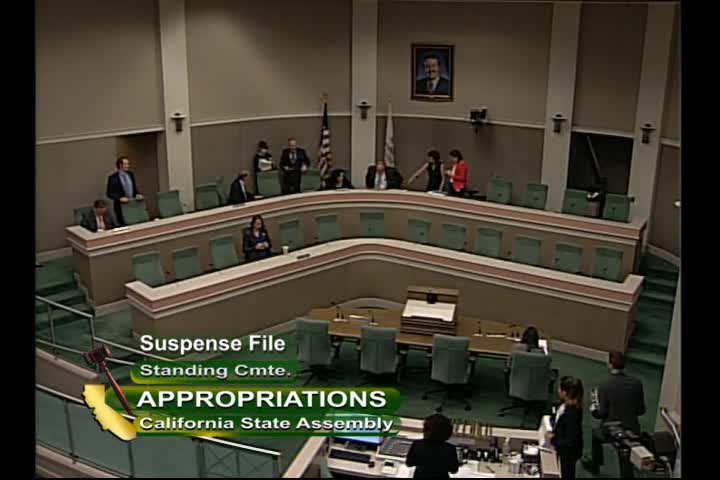 1H
Assembly Standing Committee on Appropriations
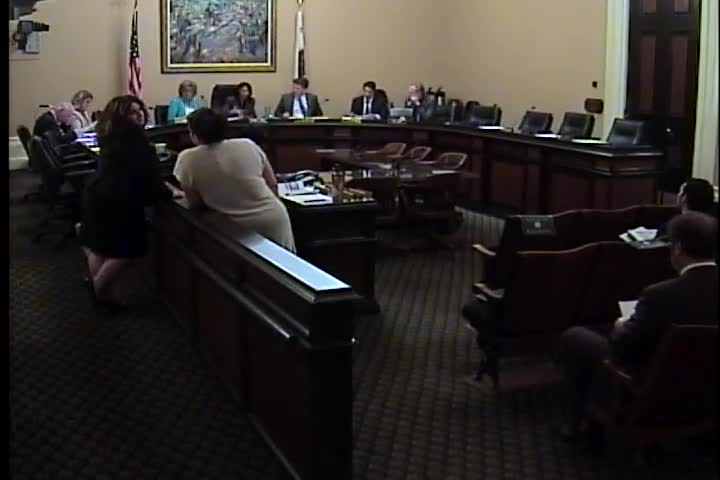 8MIN
Assembly Standing Committee on Revenue and Taxation
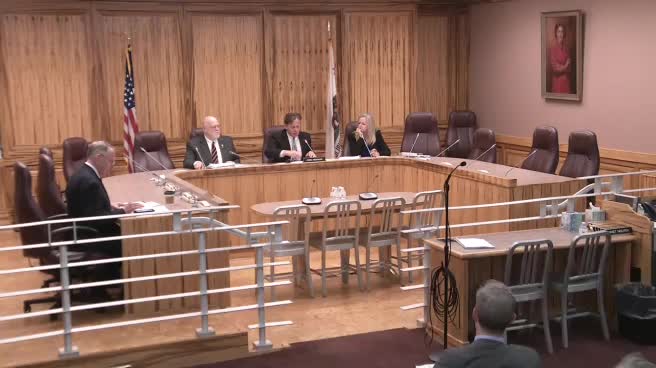 9MIN
Senate Standing Committee on Veterans Affairs
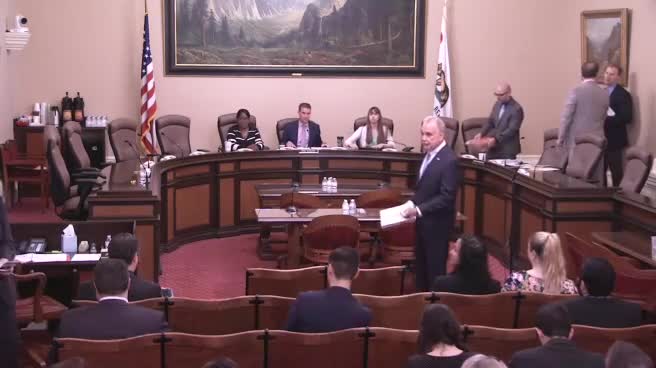 10MIN
Senate Standing Committee on Governance and Finance
Bill Author
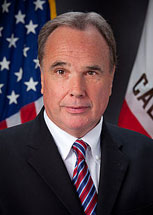
Bill Co-Author(s):